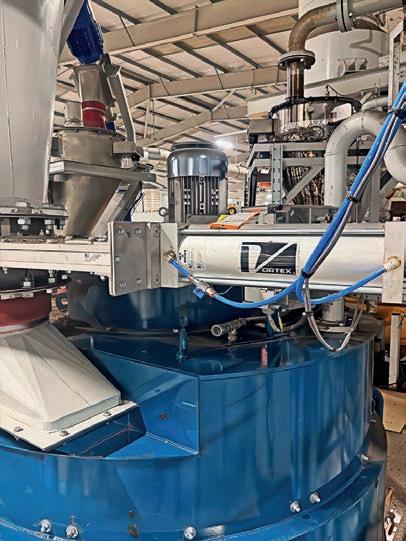
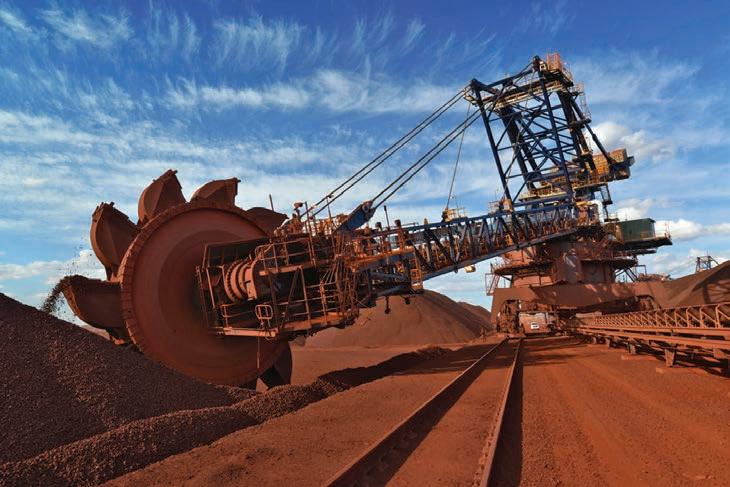
22 Controlling motor in conveyors and crushers to reduce drivetrain stress
24 Survival of the fittest
26 ICBMH heads west
28 New faces, same standards
30 Precision under pressure
32 Closing the conveyor shutdown gap
34 The future of AI belt rip detection
36 Getting to the centre of it
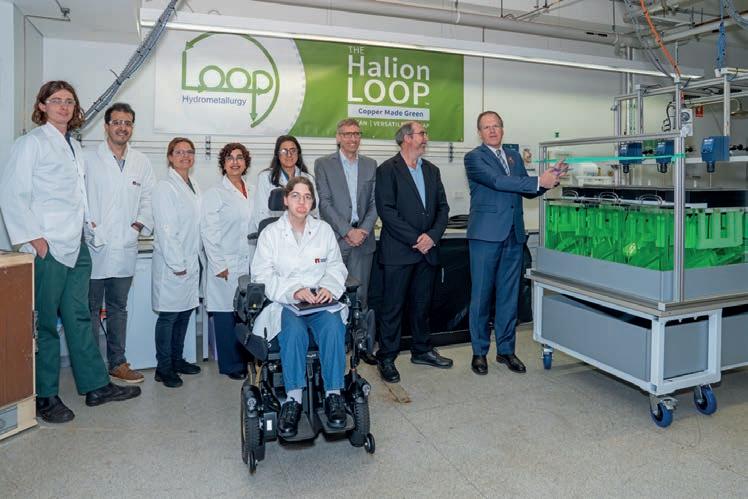
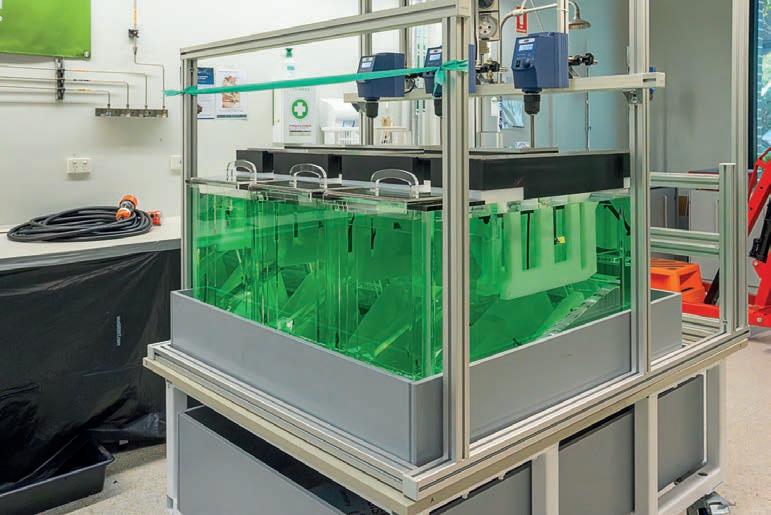
48 Closing the loop on copper
52 Celebrating the women driving change
54 Tackle challenges at Bulk Expo
57 Insights from DEM simulations and fracture tests
38 Low pressure for consistent flow
40 Automation with purpose
42 Keep it moving
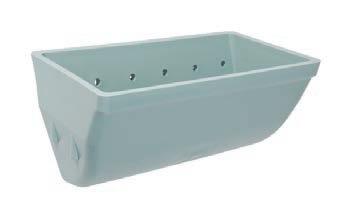
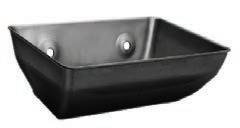
Bucket elevators
44 Better by design
46 An end-to-end approach
Published by:
379 Docklands Drive
Docklands VIC 3008
T: 03 9690 8766
www.primecreativemedia.com.au
COO Christine Clancy
E: christine.clancy@primecreative.com.au
Editor William Arnott
E: william.arnott@primecreative.com.au
Journalist:
Daniel Williamson
E: daniel.williamson@primecreative.com.au
Business Development Manager
Rob O’Bryan
E: rob.obryan@primecreative.com.au
Client Success Manager
Janine Clements
E: janine.clements@primecreative.com.au
Head of Design
Blake Storey
Design
Laura Drinkwater
Subscriptions
T: 03 9690 8766
E: subscriptions@primecreative.com.au
www.bulkhandlingreview.com
The Publisher reserves the right to alter or omit any article or advertisement submitted and requires indemnity from the advertisers and contributors against damages or liabilities that may arise from material published.
Across Australia women have been kicking goals, supporting each other, and growing their professional networks.
To help support outstanding members of the sector, Australian Bulk Handling Review is a proud supporter of the 2026 Women in Industry Awards.
Taking place on 18 June at Doltone House Darling Island Wharf, the Women in Industry Awards provides an opportunity to celebrate industry professionals, senior leaders, and emerging talent in one setting.
This year, the program is proudly supported by the principal partner, Atlas Copco Group, the platinum partner Australian Power Equipment, and gold partners Grundfos Pumps and Kenter.
While award entries are reserved for women, the gala evening is open to everyone who wants to show their support.
The full list of award categories in 2026:
• Rising Star of the Year (30 years and under)
• Business Development Success of the Year Industry Advocacy Award Mentor of the Year
• Safety Advocacy Award
• Excellence in Manufacturing Excellence in Transport Excellence in Engineering
• Excellence in Mining
• Excellence in Construction Excellence in Energy
Marketer of the Year (New for 2026)
• Excellence in Health and Medicine (New for 2026)
• Tradeswomen of the Year (New for 2026)
Rising Women in Leadership: C-Suite Executive Award (New for 2026 Woman of the Year (Chosen from winners of the other award categories)
Tickets are officially on sale for the black-tie awards evening. You can learn more about the event on page 52, or by visiting womeninindustry.com.au
William Arnott Editor - ABHR
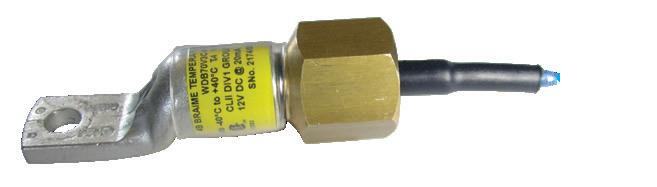
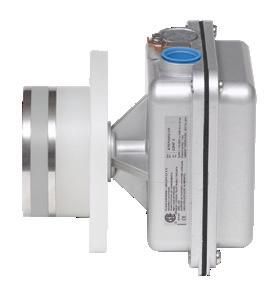
MODELRS
MODELDB
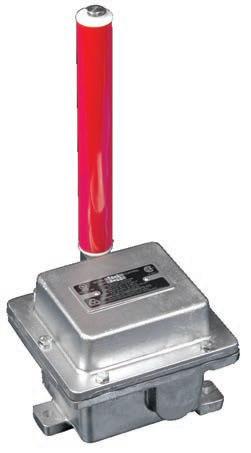
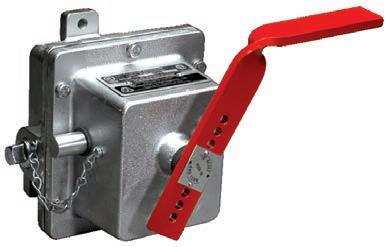
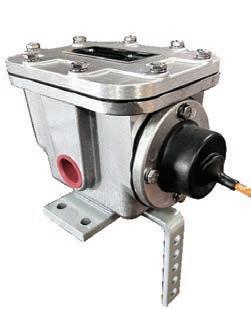
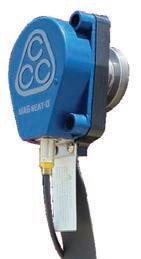
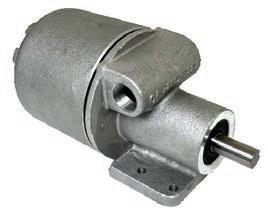
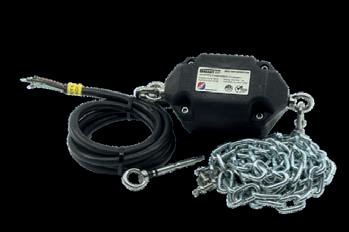
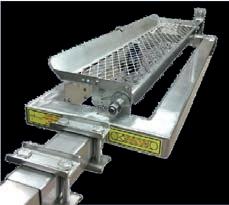
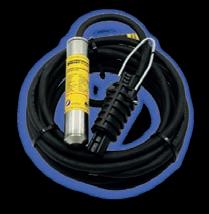
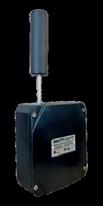
INTRODUCING AN EASY WAY TO PROTECT YOUR WORKERS AS WELL AS PROTECT YOUR INVESTMENT INTO YOUR EQUIPMENT. THE CONVEYOR SAFETY SYSTEM™ IS AN EASY, COST EFFICIENT WAY TO GET PEACE OF MIND AND PROTECTION FOR CONVEYOR EQUIPMENT. BY BUNDLING OUR MODEL RS SAFETY STOP SWITCH WITH OUR MODEL TA BELT ALIGNMENT SWITCH, MODEL DB DAMAGED BELT DETECTOR WE HAVE YOUR WORKERS AND EQUIPMENT COVERED. COUPLE THAT WITH ADDING ONE OF OUR MOTION SWITCHES (MAG-NEAT-O™ OR MODEL CMS), YOU CAN FEEL CONFIDENT KNOWING THAT YOUR SYSTEM AND WORKERS ARE PROTECTED FOR A FRACTION OF THE COST OF DOWNTIME, REPAIRS AND REPLACEMENT EQUIPMENT.
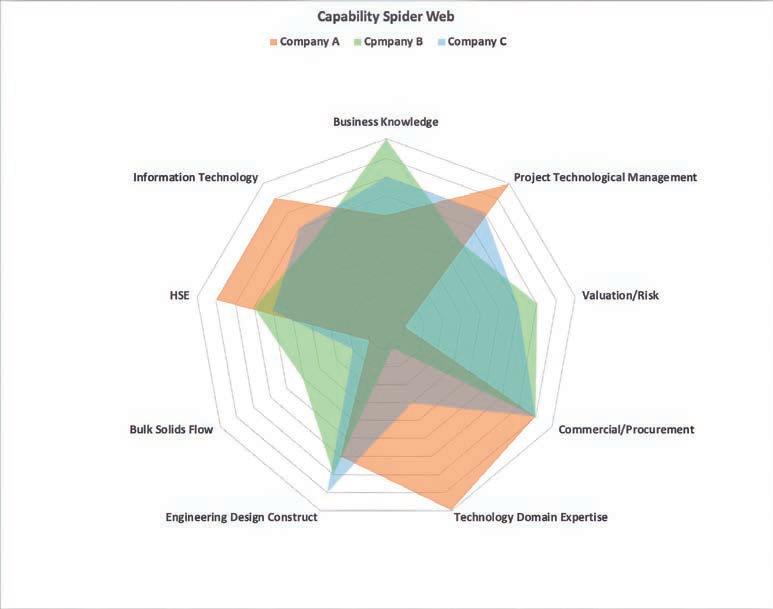
A spiderweb of capability
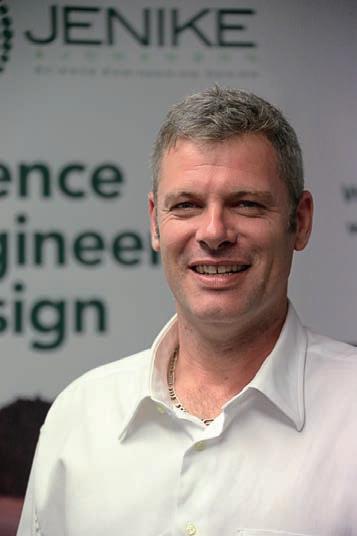
Bulk handling projects rely on a web of interconnected decisions, yet stakeholders often lack engineering expertise. Jenike and Johanson general manager Corin Holmes aims to solve that.
OFTEN IN PRE-FEASIBILITY studies, in reasons why this happens. Perhaps similar equipment worked well elsewhere, or it could come down to
Corin Holmes said this can lead to a
Jenike and Johanson can help companies avoid getting stuck with subpar equipment.
Images: Jenike and Johanson
downstream cost of operation and reduced throughput rate isn’t something that gets considered. There may even be additional maintenance costs and flow issues if the wrong equipment is used further increasing the operational costs.”
Once a decision gets baked into the process, it can be hard to remove. Other equipment and considerations are based on its inclusion, which can create more work and headaches if revisions are required.
As a specialist engineering firm, Jenike and Johanson can help companies avoid getting stuck with subpar equipment. Its specialists use a variety of tests and tools, including discrete element method modelling, physical scale modelling, and flow characterisation using the Jenike Direct Shear tester, to understand the material being handled and then determine which equipment would be optimal.
Holmes said the company is vendor agnostic, meaning it can focus on finding the right tool for the job.
“Once we’ve analysed the system, we present all of the information to the client and inform them of any potential risks and benefits. We leave it up to them to decide, using the information to make an informed decision,” he said.
“The thing we find missing in most projects when the wrong equipment has been baked into the design is a lack of expertise on the spider web of capability.”
Building the web
In order for a bulk handling project to be successful, it requires expertise from a complex network of specialists.
For example, a new mine development will need to incorporate many different fields of expertise.
Homes said most engineering, procurement, and construction (EPC) contractors are driven by reducing upfront costs to remain competitive.
“One of the first things that is taken out is the upfront cost of material characterisation test work , because it’s viewed as something that can happen in the detailed engineering phase,” he said.
“By that time, decisions have already been made and are now much harder to undo or correct.”
For Jenike and Johanson’s engineers, a conversation with the client is the first step.
They learn about the range of materials that will likely be handled, the overall moisture content, and all the factors that define each material.
Then, the company provides characterisation tests to inform a review of the equipment selection.
A key part of this process is determining the flow characteristics, as that helps to assess whether a piece of equipment is fit for purpose.
The company’s size is a major boon for this kind of work. Holmes said Jenike and Johanson is one of the largest
engineering, consulting, and testing companies in the world, with extensive experience with an array of equipment and materials.
“The people we have on staff have been with us for a long period of time,” he said. “People like myself have been with the company for more than 25 years.
“I can look around our global entities and find engineers with decades of experience. We can leverage that to help find solutions.
“For example, I can send an email to our organisation detailing a certain engineering challenge. I can rely on engineers from around the globe to help find previous projects, learn what the pitfalls were, and take advantage of our in-house testing facilities.”
With an 80 per cent retention rate, the company’s customers are keen to stick around.
Holmes said this is because clients see the value of engaging with Jenike and Johanson and continue to engage with is in future projects.
“We’re taking on more complex projects and helping bulk handling businesses make informed decisions,” he said.
“Although here in Australia, we are very heavily mining focused, we service other industries around the world. Our target is to continue to expand across Australia and the pan-Pacific Australasian region, growing our reach globally.”
In order for a bulk handling project to be successful, it requires expertise from a complex network of specialists.
Jenike and Johanson general manager Corin Holmes.
Rethinking bagging performance
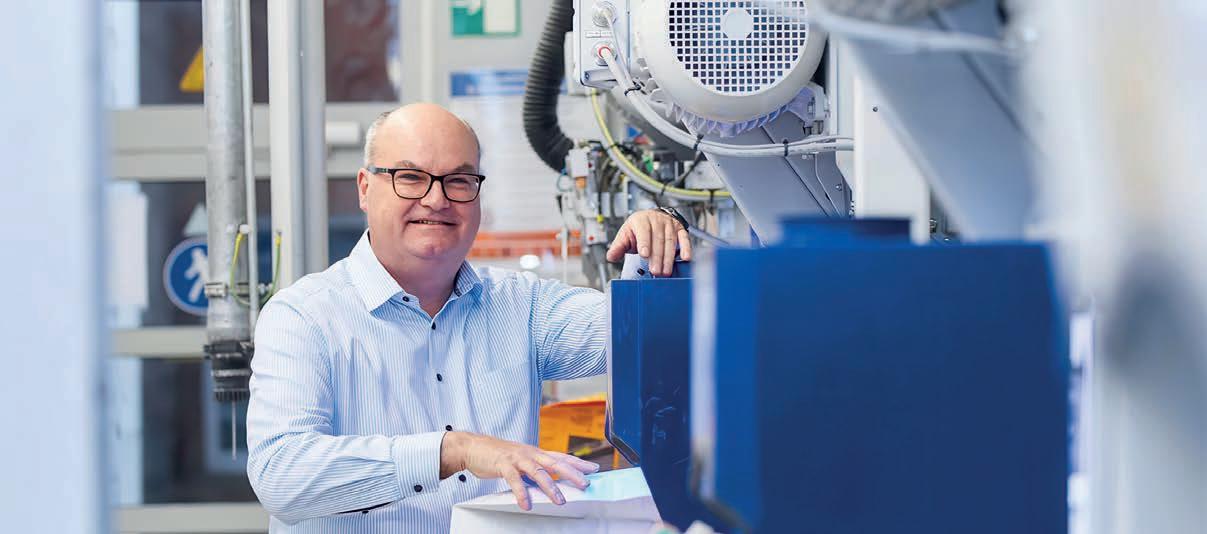
Haver & Boecker Australia’s Alexandre Santi explains why a holistic approach to packing bulk product is essential for optimising operational performance, profit and environmental stewardship.
ACROSS AUSTRALIA’S bulk handling sector - from cement and construction materials to minerals processing and industrial powders - producers are under increasing pressure to improve efficiency while meeting stricter environmental and operational standards.
Dust emissions, product loss, energy consumption, and throughput constraints are no longer isolated technical issues; they are central to both cost control and sustainability. Yet in many operations, decisions are still guided by assumptions rather than data.
As materials become finer and more variable, achieving consistent, highperformance bagging requires a shift in thinking: from component-based fixes to system-wide optimisation.
Moving beyond assumptions in bulk handling
In Australian production environments, common assumptions continue to shape day-to-day decision-making.
When dust appears during filling, the instinct is often to upgrade to a higher-cost bag. When shelf life
becomes a concern - particularly for products exposed to variable climates - users may reduce machine speed to cope with poor de-aeration bags. While these responses are understandable, they can lead to inefficiencies, unnecessary cost increases, and missed opportunities for optimisation.
A more effective approach - used by Haver & Boecker - considers the interaction between three core elements: product behaviour, packaging design, and filling technology, which form the “packing triangle”. Only when these elements are aligned can performance become predictable - and scalable across sites and regions.
A systems approach
Our structured methodology for evaluating bagging performance begins with three interconnected stages: 1. 1. Material analysis – understanding flowability, air retention, and compaction behaviour
2. Packaging evaluation – assessing bag properties such as porosity, strength, and sealing performance
3. Filling validation – testing how product, bag, and machine interact under real conditions
This systems-based approach is particularly relevant in Australia, where producers often operate across diverse climates - from humid coastal regions to dry inland environments - placing additional demands on packaging performance and process stability.
It also reinforces a key insight: packaging is not just a container. It is a technical component of the filling process.
Dust is a process issue, not a cost issue
Dust generation remains a major challenge across bulk handling operations, with implications for workplace safety, environmental compliance, and community impact.
However, the root cause is often misunderstood.
Dust does not originate from the bag itself. Rather, it is driven by air behaviour within the filling process. If air is not effectively managed, fine particles are carried to the surface, resulting in visible
This means that simply specifying a more expensive bag does not guarantee
Instead, effective dust reduction
tanding how much air is
trolling how quickly air escapes ing bags with appropriate
porosity papers, engineered microand integrated venting systems can significantly improve
matched to the specific material and process
System optimisation at the Haver institute.
Images: Haver & Boecker
For manufacturers, this has both efficiency and sustainability implications:
• Reduced dust lowers product loss and improves yield
Cleaner operations minimise housekeeping and downtime
• Improved containment supports compliance with tightening environmental regulations
• Avoiding unnecessary material upgrades reduces resource consumption
In this context, cleaner operations are not achieved by spending more - but by engineering smarter.
Shelf life and throughput:
Not a trade-off
Another persistent belief is that improving shelf life requires sacrificing production speed.
Where products may be transported over long distances and exposed to varying environmental conditions this is especially relevant.
Slower filling is often assumed to reduce residual air and improve stability. However, shelf life is influenced by a broader set of factors, including:
• Residual air within the product
• Moisture interaction and migration
Seal integrity
Barrier performance of the packaging
• Environmental conditions during storage and transport
Filling speed alone is not the determining factor.
In optimised systems, higher speeds can actually improve compaction consistency. This is because compaction depends on controlled energy input and efficient air evacuation, rather than simply longer filling times.
If air is effectively managed and sealing is stable, increasing speed does not necessarily compromise product quality. Conversely, slowing down without addressing underlying issues can reduce output without improving shelf life.
For Australian manufacturers, where logistics costs and throughput efficiency are critical, this insight is valuable:
• Maintaining higher throughput reduces energy consumption per tonne
• Efficient sealing and barrier performance reduce product degradation during transport
Rather than choosing between speed and stability, companies can achieve both through better system design.
The Role of Environmental Conditions
Australia’s diverse climate conditions
- from tropical humidity to arid heatintroduce additional complexity into bulk packaging performance.
Temperature and humidity can significantly affect:
• Moisture uptake
Product stability
Bag integrity and sealing performance
Testing under controlled environmental conditions provides critical insights into how products and packaging will behave along the supply chain. This is especially important for materials transported across long distances or stored in varying conditions.
Designing for these realities ensures that performance is not only achieved at the point of filling but maintained through to end use.
Engineering for efficiency and sustainability
Across both dust control and shelf life, a consistent theme emerges, as performance is driven by system alignment.
For manufacturers, this represents an opportunity to rethink how efficiency
and sustainability are delivered. Rather than relying on incremental upgrades or higher-spec materials, the focus shifts to:
• Data-driven decision-making
• Integrated process design
Validation through testing rather than assumption
This approach delivers tangible benefits:
• Reduced material waste and product loss
Lower operating and maintenance costs
• Improved energy efficiency
Enhanced environmental performance and compliance
• Greater consistency across multiple sites
Importantly, it also supports scalability across Australia’s geographically dispersed operations.
As bulk materials become more complex and sustainability expectations continue to rise, the limitations of assumption-based decision-making become increasingly clear.
Replacing guesswork with structured testing enables manufacturers to move from reactive troubleshooting to proactive optimisation.
Ultimately, our goal at Haver & Boecker is to build systems for our customers that are inherently stable, efficient, and resilient - regardless of product type or operating environment.
For Australia’s bulk handling industry, where efficiency, sustainability, and reliability are tightly linked, this shift is not just beneficial - it is essential.
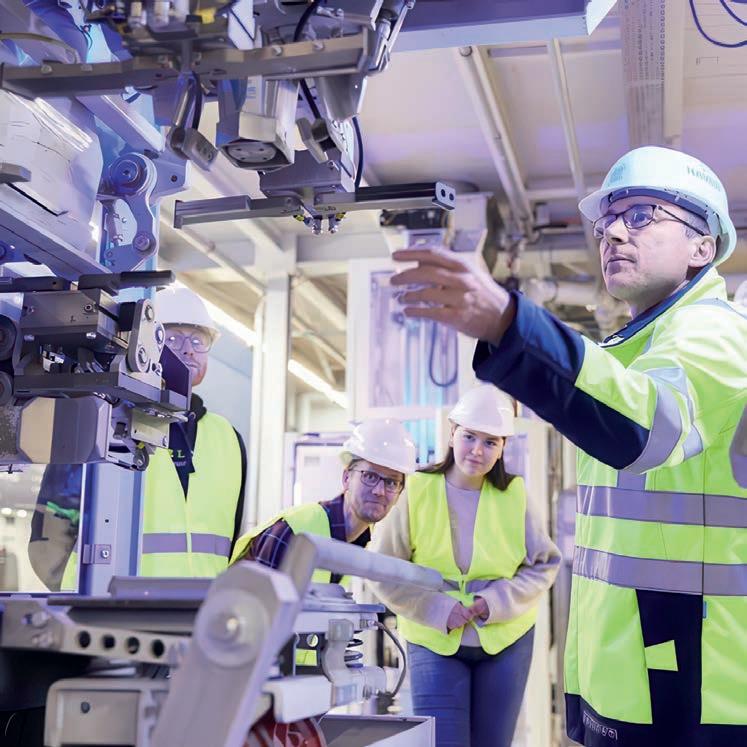
Material analysis at the Haver institute.
Conveyor belt return to efficiency and safety
Martin Engineering process engineer Dan Marshall explains what operators can do to improve belt return from head to tail.
MANY EXPERTS WILL ATTEST
to the fact that efficiency and safe ty are inextricably linked. Thus, an emphasis on safety translates in to reduced operating costs and in creased production.
Clean conveyor belt returns mean less spillage and cleanup under and around the belt, which mitigates labour costs, downtime and exposure to work hazards.
A well-maintained belt return also yields less dust, fewer fouled rolling components, and a centred belt entry from the tail pulley into the loading zone.
The first step is to understand the causes of belt return problems and the solutions based on the material and application
Fugitive material
The fugitive material hazards posed around the belt return begin with the discharge at the head pulley. An insufficiently cleaned belt can cause carryback to drop along the entire belt path and spill into walkways or on the return belt. This produces a trip hazard and a possible violation. In addition, dust can get into cracks and divots in the belt, release along the belt path, and foul gears and bearings of rolling components, causing them to seize and creating a possible fire hazard.
Inadequate cleaning technology and tensioning systems allow carryback to collect directly beneath the discharge zone. If not addressed, material accumulates quickly until the belt runs along the top of the pile, creating carryback across the entire profile while abrasion degrades the belt face and frays the edges. In extreme cases, encapsulation can foul pulley faces and cause them to slip, leading to mistracking and component wear.
Equipment hazard
Many operators focus on carrying-side issues and neglect the return side, where belt tracking should be a pivotal concern. When left unchecked, the belt can drift into the structure, causing fraying and potentially creating a fire hazard. Moreover, if the belt is off-centre on the tail pulley, it will likely enter the loading zone unevenly, resulting in off-centre belt loading and exacerbating carryingside belt tracking issues.
While issues from fugitive material to belt tracking can cause several mechanical problems, each one also represents a safety hazard. If components are not functioning at 100 per cent, there is an increased likelihood of a situation that may put a worker in danger while trying to fix the problem. An operation’s interests are best served by taking actions intended to prevent the mechanical problems and the accompanying potential for injury, rather than just protecting the worker from hazards that will likely be present with guarding.
Safe and efficient cleaning
In the past, belt cleaners were rigid, linear pieces of hardware made from various materials from brick to plastic that earned the name “scrapers” or “wipers” because that’s what they did. They had a low operational life, broke or cracked often, and significantly contributed to belt wear.
Modern primary cleaners are usually mounted at the head pulley, made from engineered polyurethane, which is forgiving to the belt and splice, but still highly effective for dislodging cargo.
Typically supported by mechanical or pneumatic tensioners designed to meet the needs of the application, the require significantly less monitoring maintenance of blade tension.
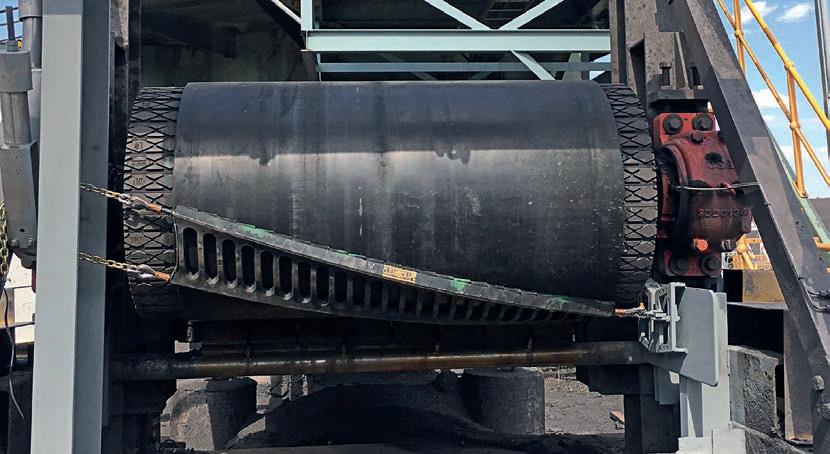
At least one modern primary design requires no tensioning at initial installation. Featuring a matrix of tungsten carbide scrapers installed diagonally to form a three-dimensional curve around the head pulley, it delivers up to four times the service
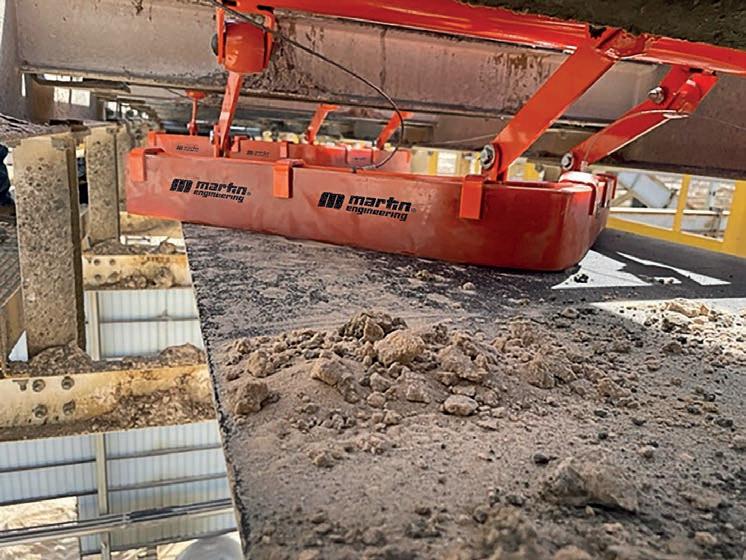
The return side of this belt is completely encapsulated by dust and spillage.
life of urethane cleaners without ever needing re-tensioning.
As conveyor speeds and material volumes increase to meet production demands, secondary belt scrapers are often installed immediately after the belt leaves the head pulley to address dust and fines that escape the primary cleaner. Generally equipped with spring or air tensioners that easily adjust to fluctuations in the belt, secondary cleaners are particularly efficient for applications that produce wet, tacky or dusty carryback.
In most applications, normal belt wear can yield valleys and depressions in the belt. Dust and fines that get into these blemishes often remain even after passing under primary and secondary belt cleaning blades, becoming dislodged by the impact of any return idler the belt meets. This causes dust and spillage in areas away from the head pulley.
In such cases, operations may choose to install a washbox cleaning system,
which combines secondary cleaners with water spray bars enclosed in a self-contained unit that captures residue and drains wastewater safely away from the work area.
Even on a clean belt, mistracking is another concern, especially for operators of long conveyors. Previous belt tracking systems were reactionary pieces of equipment designed to help prevent belt contact with the
mainframe, however these designs have historically experienced problems with friction heat, edge degradation and belt curling.
To avoid these expensive and hazardous consequences, operators can now specify modern tracking equipment designed for the belt return. Shorter single-direction or reversing conveyor systems may only require a crowned roller that uses a ribbed lagging made of durable polyurethane. The moment the belt wanders off-centre, the assembly tilts to the opposing side and steers it back toward the centre.
Some longer systems may require a series of modern upper and lower trackers hung from the mainframe every 21m to 50m and on the return run directly prior to the tail pulley.
These designs utilise multiplepivot, torque-multiplying technology with a sensing arm assembly that detects slight variations in the belt path and immediately adjusts a single flat rubber idler to bring the belt back into alignment.
Tail pulley protection
Fugitive debris on the return side of the belt can rapidly reach the tail pulley. Once caught between the belt and the pulley, these material chunks can recycle through over and over again, each time putting a new divot in the belt, as well as gouging and fouling the pulley face. This material can become ground into fine dust or ejected from the pulley. Plows are often used to clean the inside of the belt and protect the tail pulley and belt from damage.
A V-Plow or diagonal plow can extend the life of the entire system by minimising fouling of the pulley face that can lead to mistracking. Attached to dual steel crossbars bolted to the conveyor frame ahead of the tail pulley, the units employ a unique torsion-arm suspension system that adjusts to fluctuations in belt tension to maintain consistent pressure for effective cleaning at all stages of wear. Lightly riding on the belt, the diagonal design deflects debris away in a specific direction, while the V-plow design deflects debris to either side. Where large lumps or broken idlers are getting on the return side of the belt, a tail protection plow designed for high impact is used, often in addition to or in combination with a return belt cleaning plow.
Installing adequate guarding that encloses the system and has the correct mesh size and mounting distance from the hazard also helps protect workers from fugitive material and reach-in injuries. For systems that are considered “guarded by location” (too high to reach), gates may not be required, although most
countries have standards that require guarding against falling bulk materials.
Return roller guards, though seldom seen except over roads and walkways, improve safety and meet the growing demands of government regulations. Build-up under the conveyor or on work platforms can negate the guarded by location “too high to reach” criteria, so best practice is to guard all known hazards or eliminate the hazard by design.
Conclusion
From head pulley to tail pulley, return side belt care is essential to maintaining an efficient and productive system. By installing modern equipment that helps remedy common return side problems, operators reduce the time workers spend near the system servicing and cleaning it. This mitigates hazards, reduces downtime and improves compliance. These improvements will help prevent injuries caused by incidental contact with a moving belt that can pull a worker into pinch and shear points, some of the most prevalent workplace hazards in bulk handling operations.
Over hundreds of projects that directly address return side issues using modern equipment, operators have reported a quantifiable return on investment. Decreased man-hours for system cleaning and downtime for maintenance enable a lower cost of operation, translating into a return on investment in as little as 12–24 months.
If an injury is prevented, the payback is instantaneous, but even without considering the cost of an injury, the improvements pay for themselves over time.
The workhorse of tail pulley protection, the V-plow safely clears debris without harming the belt.
The workhorse of tail pulley protection, the V-plow safely clears debris without harming the belt.
Driving Australian Industry since 1982
Unleash the power of heavy industrial gears
Local availability and support backed by a global network of expertise
IG Industries
• Mining
• Bulk Materials Handling
• Steel Industry
• Agriculture
• Quarry
• Ports & Logistics
• Sugar Industry
IG Products & Services
• Helical gear units / Helical-bevel gear units
• FleXeDrive
• X.e Series
• Planetary Gear Units
• Segmented Girth Gear
• Drop in Solutions
• DriveRadar ® IoT Suite
Clear the gates
When Instarmac asked Vortex how it can reduce downtime, the company provided a clear answer: Clear Action Gate.
THE
SEARCH FOR TECHNOLOGIES that improve uptime and process efficiency is constant across industries that handle bulk materials.
It is a challenge that Vortex understands well. A specialist manufacturer of flow control equipment, the company developed its Clear Action Gate to address one of the industry’s most persistent issues: unplanned downtime caused by valve failure.
Established in 1977, Vortex has built its reputation on solving difficult material handling problems.
Vortex co-founder and executive chairman Lee Young said customer outcomes have remained central to the business for decades.
“After 40 years of building this business, the most important lesson I’ve learned is to always put the customer first,” Young said.
“When Vortex has a problem with an installation, we work through those problems.”
A recent project with Instarmac Group PLC provided a clear example of that approach in action.
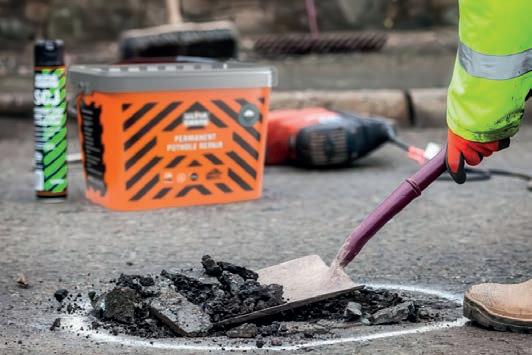
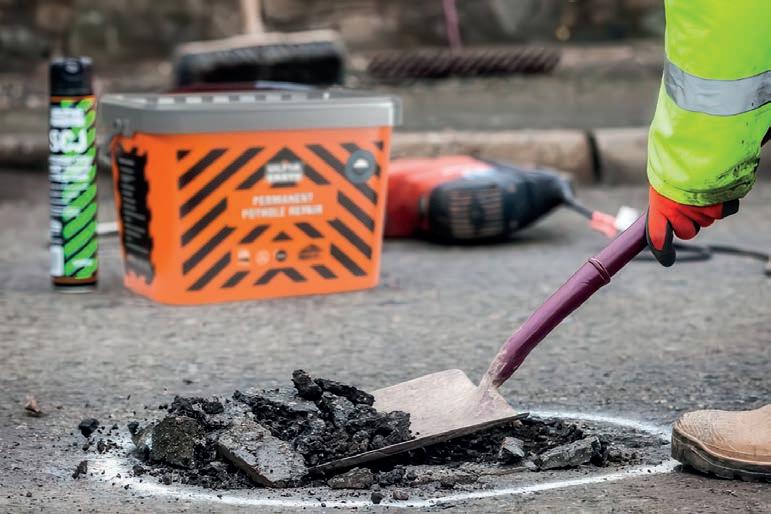
Instarmac required a more reliable solution for one of its core production lines, which produces instant road repair material.
The process relies on the lean-phase vacuum transfer of bitumen-coated limestone, known as ‘skim’, in particle sizes ranging from 3mm to 10mm.
This sticky material is transferred from an external bulk hopper to an internal receiving weigh hopper in batches of up to one tonne.
Once transferred, the material is discharged into a heated mixer, where pigment powders and additional liquid bitumen are introduced to create the final product.
At the centre of the system is the valve positioned on the outlet of the vacuum hopper, a component required to operate consistently under highly challenging conditions.
Previously, Instarmac had been using an inflatable seal butterfly valve in this position.
However, the combination of sticky material and significant headload quickly turned the valve into a source of repeated operational issues and costly maintenance.
The first problem was operational failure.
Images: Vortex Global
Clear Action Gate handling “skim” bitumen coated limestone 3mm to 10mm from a weigh hopper.
The Clear Action Gate is designed to seal against pressure from below.
from the seals during each closing stroke, preventing blockages and build-up. This self-cleaning design makes
customised service inlet, allowing seamless integration into Instarmac’s existing system.
operates at optimal efficiency, while improved limit switch performance has strengthened automation and
DHHI’s local After Sales team supports your operation and equipment throughout its entire lifecycle, providing reliable and cost effective solutions every step of the way.
New Machines
DHHI is a major supplier of balanced machines for Tier 1 and 2 Australian and international mining companies.
End of Life Life enhancements, capacity upgrades and deconstructions.
Spare Parts
Along with low cost sourcing, rotables and service exchange, DHHI’s key strength is manufacturing high-quality and low-cost spare parts for both DHHI and non-DHHI equipment.
Managing and executing high risk maintenance activities, both planned and unplanned.
Engineering and Optimisation
Onshore and offshore structural, mechanical, electrical, control systems and reliability engineering as well as ongoing technical support.
Seismic activity in the Hunter Valley
Earthquakes in the Hunter Valley, NSW, have highlighted the need for ongoing assessment of mining infrastructure, even in regions of relatively low seismic activity. Aspec Engineering’s Claire Abberley explains.
MINING INFRASTRUCTURE
must remain safe and operational under a range of environmental loading conditions. While Australia is generally considered a region of relatively low seismic activity, earthquake events can still affect infrastructure and operational safety, particularly where facilities were not originally designed for seismic loading.
Even moderate seismic events may impact non-structural elements, equipment, and connections, potentially creating safety hazards or operational disruptions. For this reason, mining operations benefit from incorporating seismic considerations into design, inspection, and maintenance practices.
In 2024, a magnitude 4.5 earthquake struck a mine in Muswellbrook, located in New South Wales’s Upper Hunter region. The earthquake, with its epicentre directly beneath the mine at a depth of three kilometres, temporarily halted operations while assessments were conducted.
This event was part of a series of seismic activities affecting the region, including a magnitude 4.7 earthquake in August 2024, followed by a magnitude 4.4.
Following the seismic event, Aspec Engineering was engaged to assess potential damage to the site’s infrastructure.
Two separate inspections were conducted. The first was a high-level structural inspection on the day of the earthquake of structures critical to the operation of the mine including the train loadout bin, export stacker and reclaim tunnel. No damage attributable to the earthquake was found.
A second inspection focused solely on the brick veneer administration building which had sustained widespread visible damage. The inspection scope was to assess the extent of the damage and provide safety recommendations.
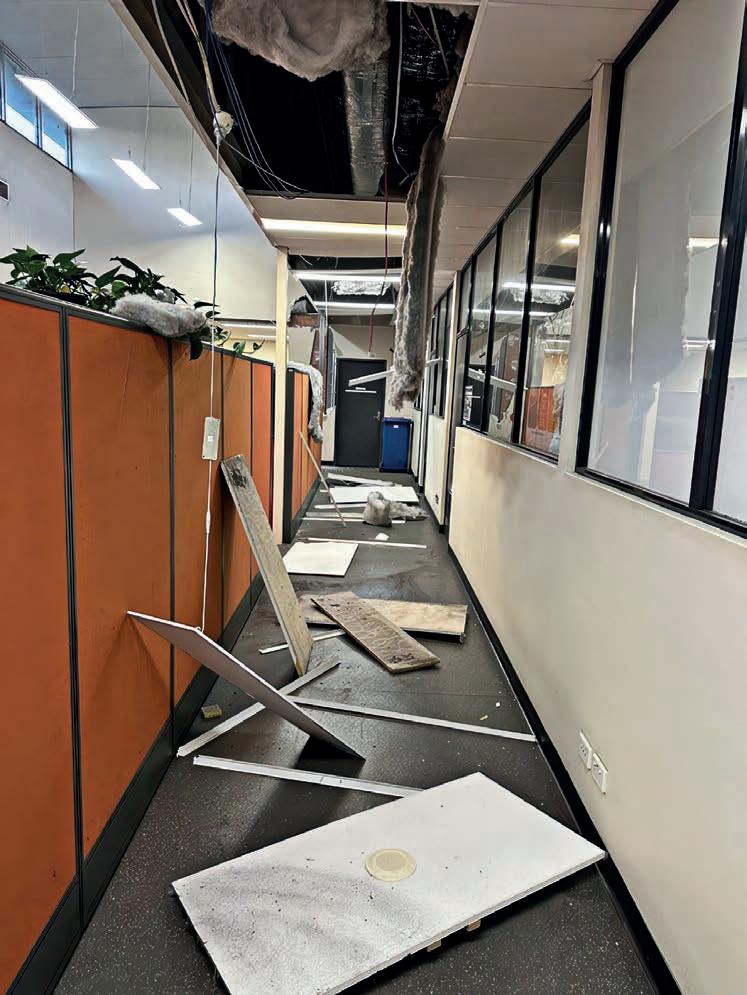
Fortunately, the building was found not to be at risk of total collapse, but Aspec Engineering identified significant damage to secondary structures which greatly impacted the serviceability of the structure, particularly to brickwork, internal walls, firewalls, and ceiling elements, which posed a serious falling hazard.
Aspec Engineering recommended restricting access to the building for safety reasons as the potential for further earthquakes could not be ruled out.
Additionally, the mine operator engaged Aspec Engineering to inspect
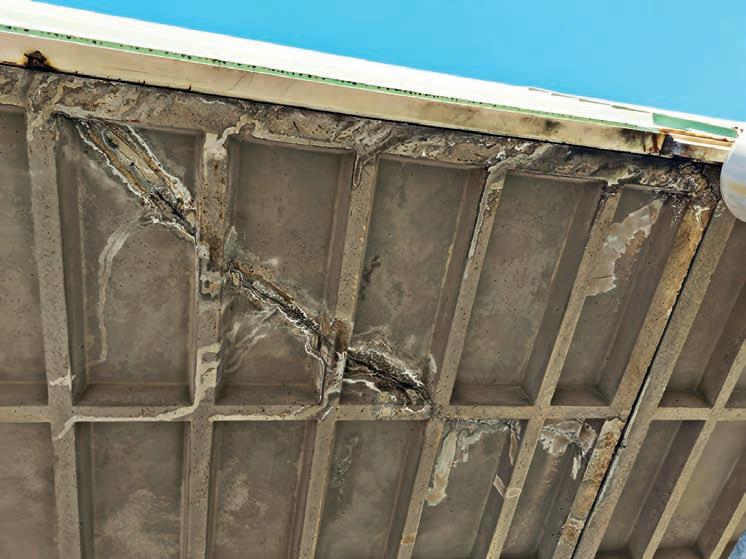
the Redispan conveyor gantry slabs for potential earthquake-related damage. These conveyor structures had preexisting, well-documented concrete cracking. After the August events, assessments confirmed that the damage had not worsened, and the structural integrity remained intact. Aspec Engineering has since worked with the mine operator to advise on a planned repair strategy.
On both occasions, immediate and long-term solutions were provided, allowing the mine to resume safe operations as soon as possible.
Ceiling collapse and debris within office corridor.
Images: Aspec Engineering
The importance of mining infrastructure resilience in seismic zones
According to Geoscience Australia senior seismologist Dr Hadi Ghasemi, over the past 20 years, more than 150 earthquakes have been recorded in the region. Ghasemi said that while earthquakes of this size are uncommon in Australia, no area is completely immune, and Australia experiences an earthquake of this magnitude approximately once every year or two.
Earthquake events, such as those observed in the Hunter Valley, underscore the critical need for mining operations to implement proactive risk mitigation measures. Seismic resilience in mining structures depends on both robust initial design and ongoing maintenance.
This begins with adherence to AS1170.4:2024, which outlines the minimum design
requirements for resisting earthquakeinduced forces.
Section 5.2 of the standard sets out six key design principles for relevant structures, with additional provisions based on the appropriate earthquake design category (Sections 5.3–5.5) and applicable material standards:
• Defined load paths: Structures must include a seismic force-resisting system with clearly defined paths to transfer earthquake forces and gravity loads to the foundation.
Structural tying: Horizontal and vertical ties are required to ensure force transfer to the foundation.
Foundations on low-bearing soils must be laterally restrained, and isolated footings checked for seismic stability.
• Component compatibility: Stiff components must either form part of the seismic system or be isolated to
prevent conflict during movement. All components must function while accommodating deformation.
• Anchored walls: Walls must be anchored to roofs and floors and designed to resist both in-plane and out-of-plane forces.
Diaphragm integrity: Diaphragms must tie the structure and lateral load-resisting elements together, with in-plane deflection limited to ensure connected components maintain integrity and loadbearing capacity.
• Ductility: Structures and foundations must be designed to achieve the intended ductility and perform accordingly under seismic loads.
In addition to meeting design standards, ongoing maintenance and structural health monitoring are essential.
Effective strategies include:
Conducting regular inspections for cracks, corrosion, wear, or other damage
• Monitoring foundation stability, especially on reactive soils
Performing structural assessments following seismic events
• Maintaining and servicing machinery according to manufacturer guidelines
Securing equipment to prevent damage during environmental or seismic events
Scheduling timely repairs or retrofitting of any damaged elements
• Keeping detailed records of all inspections and maintenance
Training personnel to recognise and report structural or equipment issues Earthquake-resistant infrastructure is not merely a precaution, but a necessity for ensuring worker safety, structural integrity, and long-term operational stability in seismically active regions.
To enhance seismic resilience, mine operators and asset owners must also maintain non-structural elements, such as ceilings, cladding, and fixtures, which can pose significant safety risks during seismic events. By combining robust design, routine monitoring, and full compliance with AS1170.4, mining facilities can effectively reduce long-term risk, safeguard personnel, and ensure operational resilience.
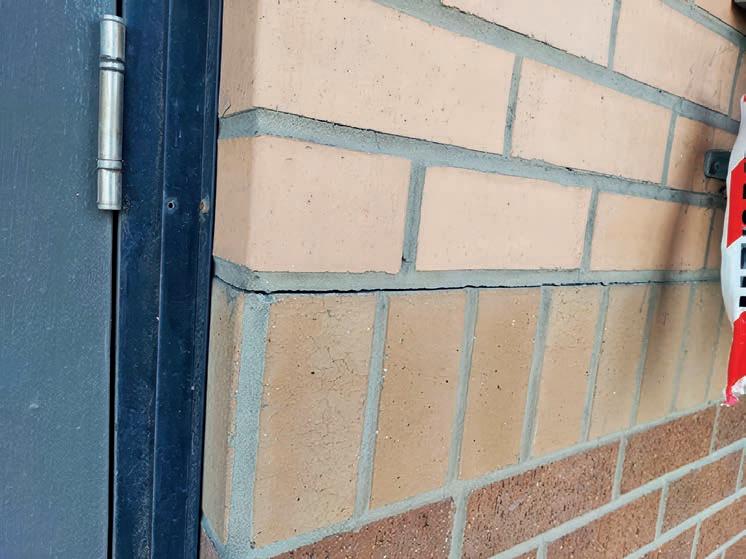
Close-up of horizontal mortar joint cracks.
Close-up of Concrete cracking on conveyor gantry slabs.
REDUCE DRIVETRAIN STRESS IN CONVEYOR SYSTEMS
Controlled motor acceleration and deceleration improves stability in conveyors, crushers and bulk material handling equipment.
Controlled motor acceleration and deceleration reduces drivetrain stress and allows conveyors and crushers to reach operating speed more smoothly. TECO soft starters provide controlled motor starting and stopping solutions designed for demanding material handling systems.
TECO SOFT STARTER SOLUTIONS
• TECO RSXi (18–200 A): Compact soft starter for general motor starting applications.
• TECO TSXi (24–1250 A): Industrial soft starter platform with adaptive acceleration, braking capability diagnostic monitoring and fieldbus communication options (some with Ground Fault Detection as standard).
• TECO TSXi-1200V (202–1092 A): Engineered solution for controlled starting of high-power motors operating at 1000VAC.
Learn more about TECO soft starter solutions. Scan the QR code for further information.
Traksure partners with TS Global
Australian manufacturer Traksure has joined forces with TS Global to help the mining industry tackle conveyor belt mistracking.
TRAKSURE
IS A
NEXT-GENERATION
conveyor belt tracking range, designed to deliver elite performance in the most demanding environments.
When Traksure General Manager Tim Slattery began analysing Australia’s bulk handling sector, he identified belt misalignment as a leading cause of unplanned conveyor downtime.
“When a belt is misaligned, it can result in belt and structural damage, material spillage, increased power consumption, and higher maintenance costs,” he said.
Slattery also noted that while several established companies service the conveyor tracking segment, Australia is often treated as a lower-priority market—resulting in long lead times and inconsistent supply.
“We understand that conveyor operators work to strict maintenance schedules, so dependable delivery is essential,” he said.
“We recognised a gap in the market for an Australian-owned and operated business that prioritises local industry.”
Traksure addresses this need with a streamlined range of high-quality products engineered to meet the demanding conditions of the Australian conveyor sector.
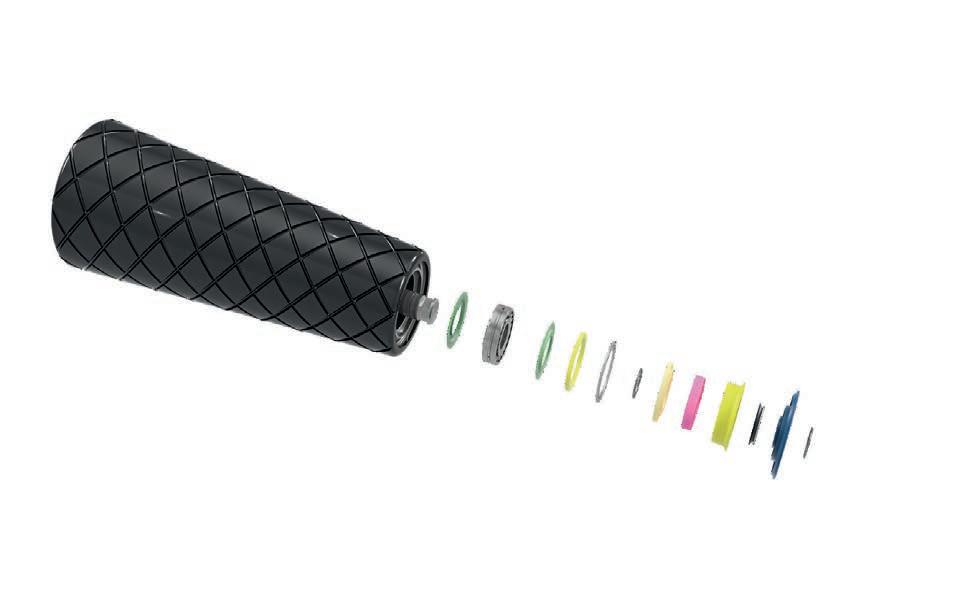
Central to its offering is a range of
“Guide roller frames are common in the market, but they rely on direct contact with the belt, which can lead to edge damage and are slow to react to misaligned belts,” he said.
“Our tapered tracking rollers eliminate the need for guide rollers and respond immediately when misalignment occurs, guiding the belt back to centre.”
All Traksure rollers are heavy-duty and feature injection-moulded lagging for maximum wear resistance, along with specialised fire-resistant antistatic (FRAS) options for underground applications. This ensures consistent performance and long service life across wet, dry, and bi-directional conveyor systems.
The company’s frames are hot-dip galvanised to withstand highly corrosive and acidic environments, while its bearing seal systems are designed to endure extreme conditions, including high-pressure washdowns. This helps prevent contamination and reduces the risk of premature bearing failure.
Local support
As an Australian-based company, Traksure brings a strong understanding of local industry requirements.
To strengthen its national presence, Traksure has partnered with TS
Traksure produces a range of tapered tracking frames and rollers designed for reliable conveyor alignment.
General Manager Graham Holford said the partnership represents a significant opportunity for the TS Global and our clients.
“This is an exciting opportunity for TS Global, the leading Australian-owned manufacturer of conveyor accessories, to partner with a high-quality company such as Traksure,” he said.
“The new Traksure range will deliver our clients an engineered, high-performing solution for conveyor tracking. This addition will also enhance our existing and extensive range of conveyor accessories”.
“TS Global invests heavily in stock to meet our clients’ demands, and Traksure will be no different. We will carry an extensive range of standard products to ensure quick turnaround times, whilst also offering customised solutions.”
Slattery said TS Global’s strong reputation and nationwide customer base made it an ideal partner.
“They have a proven track record in delivering high-quality, safe maintenance solutions, and an established presence across Australia,” he said.
“We see this partnership as a perfect fit to accelerate our growth.
“While we remain focused on our core product range, we are continuing to invest in research and development to enhance performance and reliability. We look forward to announcing new innovations in the near future.”
Traksure’s advanced bearing seal systems are engineered to perform in the harshest operating environments.
Images:Traksure
Controlling motors in conveyors and crushers to reduce drivetrain stress
TECO Australia & New Zealand has launched a new series of motor soft starter to help bulk handling systems maintain reliability.
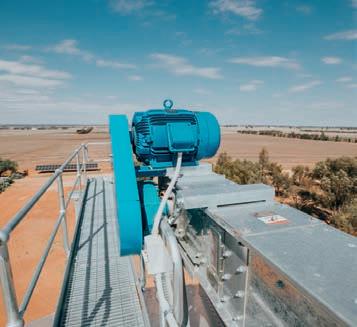
BULK MATERIAL HANDLING plants rely heavily on electric motors to drive conveyors, crushers, mills, pumps and fans across ports, quarries, cement plants and mineral processing facilities. In many of these installations, motors start under load and operate in demanding conditions where reliability and mechanical stability are critical.
“In bulk handling systems, motors frequently start under load and often drive high-inertia equipment such as conveyors or crushers,” TECO Australia & New Zealand product manager – drives and automation Hamish Roberston said. “How the motor starts and stops has a direct influence on drivetrain stress and long-term equipment reliability.”
In many plants, motors are still started using direct-on-line methods. When a motor starts this way, full voltage is applied instantly, producing high inrush current and a rapid rise in torque. For high-inertia equipment such as crushers or long conveyors,
couplings, gearboxes and other drivetrain components.
Soft starters address this by controlling the voltage applied to the motor during startup, allowing current and torque to increase progressively rather than instantaneously. The result is smoother acceleration of the driven equipment which reduces electrical and mechanical stress.
To address different industrial applications, TECO structures its soft starter product range across multiple solution levels.
The TECO RSXi soft starter range is designed for motors from 18A to 200A operating at supply voltages up to 575 VAC. The unit uses a compact closedloop control architecture with two-phase control and internal bypass, allowing the motor to run with minimal heat dissipation once it reaches full speed. Adjustable current ramp and current limit functions allow the start profile to be tuned to the application, while integrated
protection, current imbalance protection and excess start-time protection.
This type of solution is typically used where a controlled start is required but system complexity must remain low, such as pump stations, smaller conveyors or compressor installations.
For larger motors and more demanding industrial systems, the TECO TSXi soft starter range supports currents from 24A up to 1250A and operates at supply voltages up to 690VAC. The platform uses full threephase SCR control and provides multiple configurable start methods including constant current, current ramp and adaptive control.
Stopping behaviour can also be configured using adaptive stop, soft brake or DC brake functions, allowing the deceleration profile to be matched to the behaviour of the driven equipment. This is particularly relevant in conveyors and crushers where controlled stopping can influence
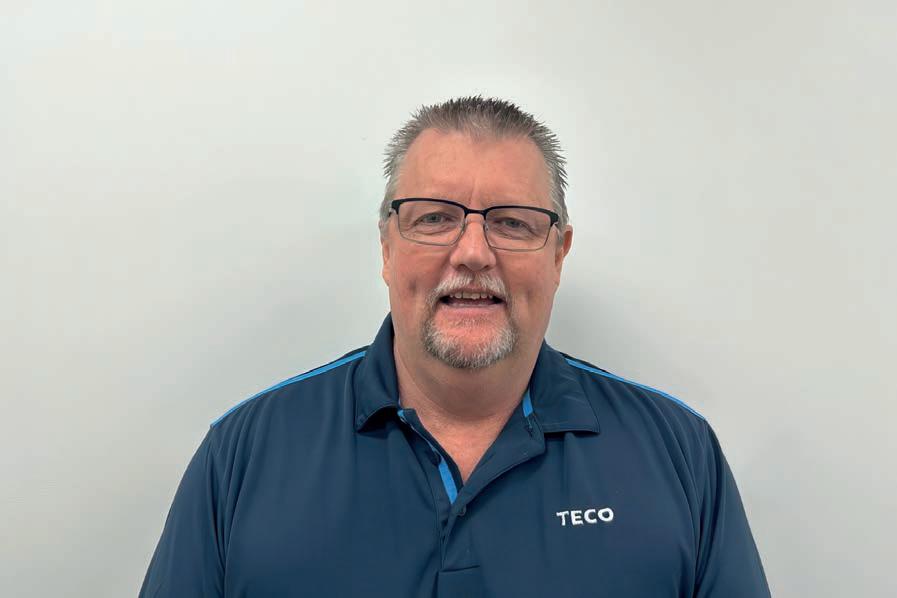
Hamish Robertson emphasised the importance of good motor control.
The TECO RSXi soft starter range is designed for motors from 18A to 200A.
Images: TECO Australia and New Zealand
system stability and mechanical load behaviour.
The TECO TSXi platform also provides event logging, integrated metering and communication expansion modules, enabling integration with PLC and SCADA systems for monitoring and diagnostics.
“In applications such as conveyors or crushers, controlling both acceleration and deceleration can significantly improve how the mechanical system behaves,” Roberston said. “Being able to adjust the start and stop profile allows the motor control system to respond more effectively to the load.”
In large bulk handling plants, particularly those operating heavy conveyors, crushers or grinding mills, motor supply voltages and power levels can exceed the limits of standard lowvoltage motor control equipment. For these installations, TECO offers the TECO TSXi-1200V soft starter, designed for motors operating at 1000 VAC with current ratings from 202A to 1092A.
This solution is designed for engineered motor control systems and requires external bypass and switching devices within the switchboard architecture. Typical applications include large pumps, crushers, mills, heavy conveyors and high-power compressors & Ventilation Fans, where motors drive equipment subject to significant mechanical loads and electrical constraints.
As bulk handling systems continue to increase in scale and throughput, managing how motors start and stop
becomes increasingly important for both electrical and mechanical system performance. An industry where equipment failure and unplanned downtime need to be reduced to meet customer demands. Controlled motor starting allows operators to reduce drivetrain stress, improve equipment behaviour during startup and support more reliable plant operation.
The TECO TSXi soft starter range platform uses full three-phase SCR control and provides multiple configurable start methods.
The TSXi-1200V soft starter is designed for motors operating at 1000 VAC with current ratings from 202A to 1092A.
Survival of the fittest
ContiTech’s Survivor MX is playing a central role in driving efficiency gains for conveyor belt systems.
IN HIGH-THROUGHPUT BULK
handling operations, conveyor belt performance is often the difference between uninterrupted productivity and costly downtime. For operators across Australia’s mining sector, particularly in iron ore, every hour of stoppage carries significant financial consequences.
Against this backdrop, ContiTech’s latest development, Survivor MX, represents a targeted response to evolving operational demands.
Positioned as the next generation in abrasion-resistant conveyor belt compounds, Survivor MX has been engineered specifically for highspeed, high-abrasion applications. The compound builds on the established Survivor series, which has been in
use for nearly two decades. With this latest iteration, ContiTech is aiming to deliver measurable gains in belt longevity while maintaining the impact resistance required in real-world mining environments.
Survivor MX is the third generation of ContiTech’s Survivor compound family, following the original Survivor and Survivor Plus formulations. While each iteration has aimed to improve wear resistance, the MX variant, short for ‘mining extreme’, is designed to push performance further in the most demanding applications.
At a technical level, the improvements stem from refinements in rubber formulation, including adjustments to raw material composition, filler systems, and processing techniques. While the
specifics remain proprietary, these changes enable a more effective balance between abrasion resistance and impact durability, two properties that are often difficult to optimise simultaneously. This balance is particularly important in applications where material size is relatively small but highly abrasive, such as crushed ore or aggregates. In these environments, belts must withstand both continuous surface wear and repeated mechanical stress without premature failure.
Field validation in Australian conditions
To validate the performance of Survivor MX, ContiTech conducted field trials at an iron ore operation in Australia. The trial involved benchmarking the new
Conveyor belt performance is critical to maintaining uptime in highthroughput bulk handling operations.
Image: ContiTech
compound against existing belt materials under identical operating conditions.
It included multiple belt sections running different compounds in parallel, allowing for direct performance comparison. The results demonstrated a service life improvement of up to 30 per cent for Survivor MX, depending on the specific machine and operating conditions.
This gain is significant in the context of mining operations, where even marginal increases in belt life can translate into substantial cost savings. Extended service intervals reduce the frequency of shutdowns, lower maintenance requirements, and minimise the risk of unplanned downtime.
Targeting key applications
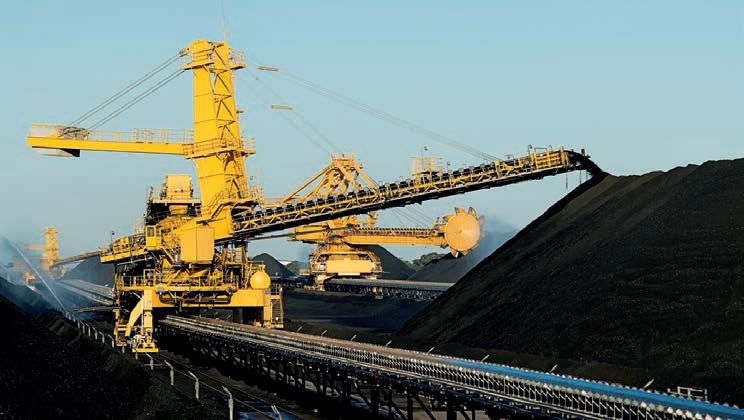
Survivor MX has been developed with a focus on high-speed conveying systems, particularly those operating over short to medium distances. Typical applications include reclaimers and stackers,
equipment that play a critical role in moving bulk materials from processing plants to storage or export facilities.
The compound is also suited to a wide range of industries beyond iron ore, including aggregates, coal mining, cement, and steel production. In each of these sectors, the combination of high abrasion and dynamic loading presents similar challenges for conveyor belt performance.
Importantly, the initial rollout of Survivor MX is centred on the Australian market, reflecting both the region’s demanding operating conditions and its significance as a global hub for bulk materials handling. A broader international rollout will follow in demanding applications globally.
Improvements in belt durability can contribute to more predictable maintenance schedules, reduced operational risk, and improved asset utilisation. For ContiTech, the introduction of Survivor MX is part of
an ongoing effort to refine and evolve its conveyor belt portfolio in response to these changing priorities.
By focusing on real-world performance and field validation, the company is aiming to bridge the gap between laboratory testing and operational outcomes.
Looking ahead
With Australian mining operations continuing to push the limits of throughput and efficiency, innovations that extend equipment life and reduce downtime are likely to remain in high demand. In this environment, incremental improvements, such as a 30 per cent increase in belt service life, can deliver outsized value.
For operators seeking to optimise conveyor performance without major system overhauls, Survivor MX offers a compelling proposition: longer-lasting belts, fewer interruptions, and a more resilient bulk handling operation.
An Australian benchmark for distinctive engineering.
ICBMH heads west
The 15th ICBMH will bring global experts together to explore evolving challenges in bulk materials handling.
The conference has been running since 1983, when it was established by Professor Alan Roberts of the University of Newcastle and Professor Peter Arnold of the University of Wollongong. Since then, the event has been staged every three years, alternating between the two institutions.
For emeritus professor and longtime contributor to the sector Mark Jones, the conference represents more than just a technical gathering. With over 40 years in bulk solids handling, including early research in pneumatic conveying and leadership roles in both academia and industry, Jones has seen firsthand how the event has evolved alongside the industry.
“I’ve always worked very collaboratively with industry,” he said. “And conferences like this are where those collaborations really take shape.”
Jones noted that one of ICBMH’s defining characteristics is its balance between academic research and industrial application. Typically, the conference attracts an even split between industry professionals and academics, a dynamic that ensures both theoretical advances and practical challenges are equally represented.
“There are not many conferences these days that have such a good mix between fundamental academic work and industrial application,” he said.
The 2026 event is expected to feature around 90 technical papers, with approximately one-third
contributed by international authors. Attendance is projected at 130 to 140 delegates, with roughly 40 per cent coming from overseas highlighting the conference’s global reach despite its strong Australian roots.
That local context remains a key differentiator. Unlike similar events in North America or Europe, ICBMH reflects the heavy industrial focus of regions such as Australia, South America, and South Africa, where mining plays a dominant role.
“There’s a strong emphasis on belt conveying and the heavier end of bulk materials handling,” Jones said. “It aligns very much with what you see in the Australian industry.”
This alignment also makes the conference particularly relevant for readers of Australian Bulk Handling Review, offering a snapshot of current technologies and emerging trends across the sector.
Beyond the technical program, Jones emphasised the importance of the conference’s informal elements. Networking and social interaction have long been central to ICBMH, fostering connections that often extend well beyond the event itself.
Close to 150 people are expected to attend the 2026 ICBMH.
Emeritus professor Mark jones said he is impressed with the number and quality of papers submitted to this year’s ICBMH.
“An important part of the conference is the social interaction that takes place outside the formal sessions,” he said.
“We’ve always made the conference a very social event.
“Some of the strongest international collaborations we’ve had over the years have come from this conference.
“By its nature, everyone there shares a common interest in bulk solids, so conversations happen very naturally.”
The 2026 event also marks a historic shift in location. For the first time, the conference will be held in Western Australia, reflecting the state’s significant contribution to the bulk handling and resources sectors. The conference will take place at the iconic Rydges Esplanade Hotel, providing a new backdrop for an established industry gathering.
“Western Australia has such a big profile in bulk handling, so we’re really excited to finally host the event there,” Jones says.
As the industry continues to evolve, driven by advancements in automation, materials science, and system design, ICBMH remains a key forum for understanding where it is headed.
“If you want to understand where the industry is at technically, this is a must-attend conference,” Jones said. “It’s not a business conference per se, it’s a technical conference that will point you in the right direction in terms of where new developments are happening.”
With a strong technical program, international participation, and a renewed geographic focus, ICBMH 2026 is set to reinforce its position as a cornerstone event for the global bulk handling community.
The ICBMH is a place for the industry to converge, connect, and network.
Images: ICBMH
New faces, same standards
As Boral shakes up its leadership team, it also celebrates 80 years in the industry.
BORAL WILL HAVE A NEW FACE leading the company forward in 2026, the same year the company turns 80.
Matt McKenzie is set to take over the reins from Vik Bansal, who has been Boral chief executive officer and managing director since his appointment in 2022.
Bansal will transition to the board of Seven Group Holdings (SGH) as a director, maintaining a connection with the business as it continues its next phase of development.
SGH managing director and chief executive officer Ryan Stokes AO said McKenzie has everything it takes to continue Boral’s next phase of its growth strategy.
“Matt knows this business deeply, has been central to the operational momentum we have built, and has the experience and discipline to take it further,” Stokes said.
“The board has every confidence in his ability to continue delivering for our customers, employees and shareholders.”
Stokes said Bansal has set McKenzie up for great success, and his contribution to Boral has been outstanding.
“Vik took over a business that needed fundamental change and
delivered a stronger more focused performance orientated company,” he said.
“Vik has left Boral in an excellent position to continue delivering on its potential.”
Bansal said it’s been an honour and a privilege to lead Boral to new highs and is excited for a new chapter.
“I am proud of what the Boral team has achieved and leave with great confidence in the business
Matt McKenzie is set to become Boral chief executive officer on 1 April 2026, taking over from Vik Bansal.
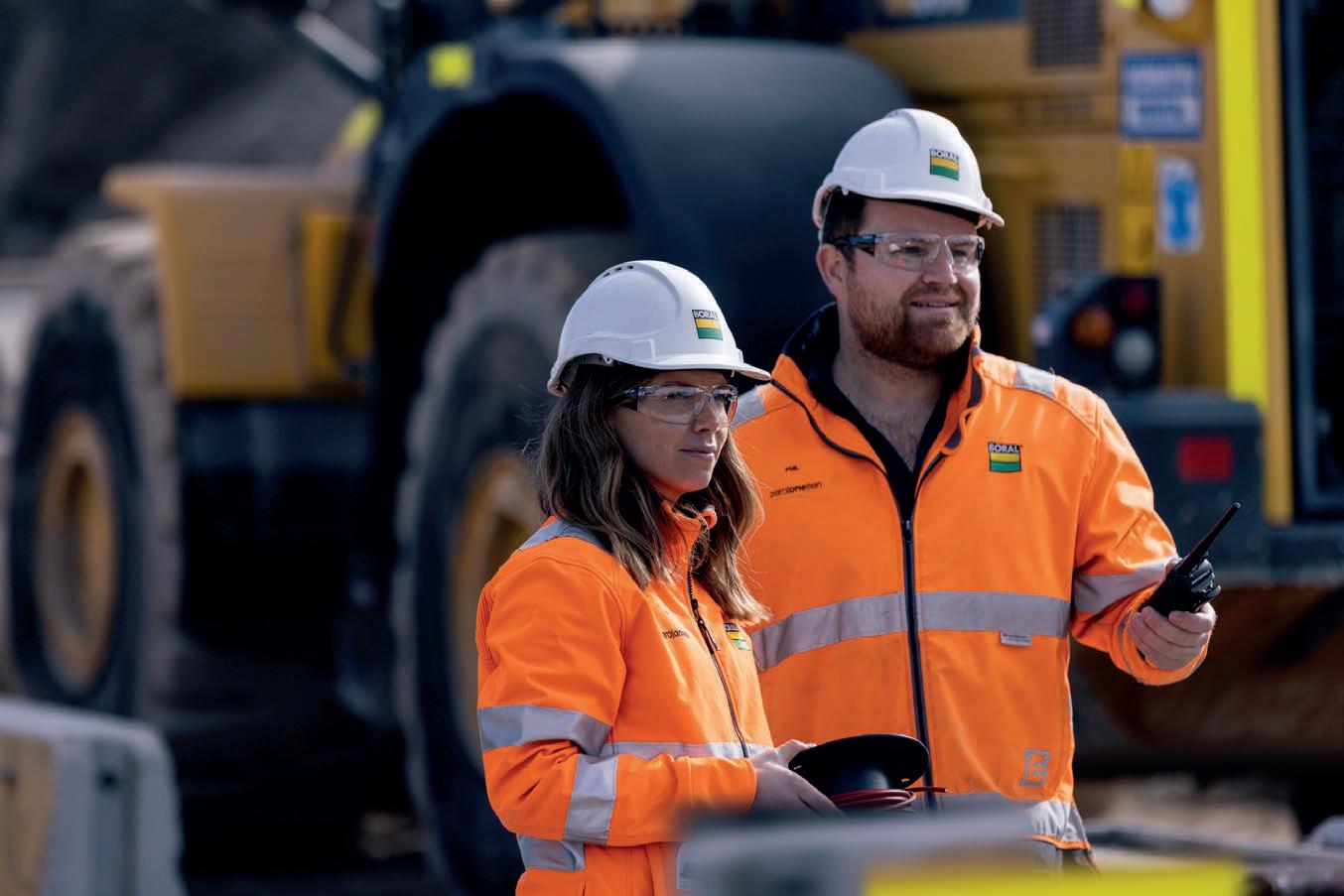
Key to Boral’s 80year tenure is its dedicated staff.
Images: Boral
“The board has every confidence in his ability to continue delivering for our customers, employees and shareholders.”
and in the leadership that will take it forward,” Bansal said.
“I am excited to be joining the SGH board as a director where I can continue to support the growth and performance of the company.”
Before joining Boral, Bansal held chief executive positions at InfraBuild (2021–22) and Cleanaway (201521). Previously, Vik was the chief operating officer of NYSE-listed Valmont Industries, headquartered in Omaha, Nebraska (2010-14).
McKenzie has served as Boral chief operating officer since July 2025, appointed as part of the planned succession process, and prior to that as executive general manager, concrete and quarries (south). He has firsthand experience in operating Boral’s core businesses of concrete, quarries, asphalt and recycling.
Before joining Boral, McKenzie served as general manager, solids waste NSW at Cleanaway, leading a team of over 1,300 people across more than 40 sites. He has also held senior leadership roles at Oracle Utilities and spent 14 years at GE in a range of operational and executive capacities.
McKenzie brings more than 20 years of operational and executive leadership experience across construction materials, transportation, mining and waste services.
McKenzie said he is honoured to take on the role and is excited to lead Boral forward.
“The foundations Vik and the team have built are strong, and my focus is clear to continue improving safety performance, drive operational excellence across every site, and deliver for our customers,” he said.
“I am looking forward to the work ahead.”
The leadership transition comes at a symbolic moment in Boral’s history.
On 19 February 1946, the company’s founder David Craig led a consortium seeking approval to manufacture bitumen from imported crude oil in Sydney.
From those beginnings, Boral has grown into one of Australia’s largest integrated construction materials suppliers, with operations spanning quarries, cement, concrete, asphalt and recycling.
For McKenzie, the challenge will be to build on recent transformation efforts while ensuring the business remains competitive in a changing market, one increasingly shaped by sustainability, circular economy initiatives and large-scale infrastructure investment. With a new chief executive officer at the helm and 80 years of history behind it, Boral’s next chapter appears firmly grounded in both experience and growth.
GET IT FLOWING!
Industries that incorporate bunkers, silos, chutes, transfer points or hoppers into a system encounter bulk material blockages, reducing productivity and, in some cases, bringing operations to a halt.
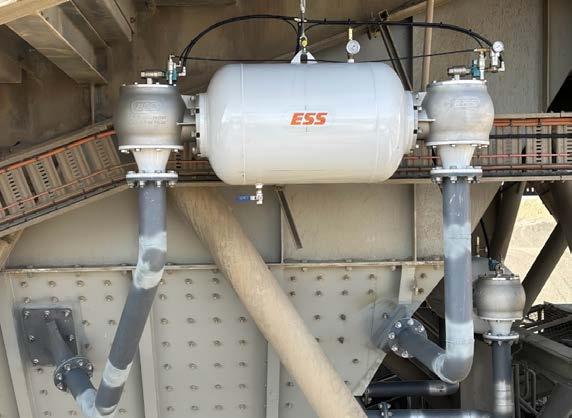
The ESS Air Cannons are pneumatic bulk material flow aid systems that utilise the release of a volume of compressed air.
This sudden release of energy is directed through a transition pipe into compacted material in a bin, silo or stockpile to dislodge that material, restore flow and regain storage capacity.
BENEFITS OF ESS AIR CANNONS:
• Enhanced Material Flow - Effectively clears blockages and prevents build-up.
• Increased Equipment Lifespan - Eliminates components prone to wear, like springs.
• Improved Safety - Reduces hazards with on-demand filling and remote activation.
• Remote Activation - Controlled via a Sequence Controller for precise timing & coordination of multiple air cannons.
• Customisable Solution - Wide range of configurations and tank sizes to meet specific requirements.
Precision under pressure
SEW-EURODRIVE’s precision engineering and cutting-edge technology is creating certainty for Australia’s bulk handlers.
WHEN CRITICAL EQUIPMENT FAILS, the cost of downtime can escalate rapidly. For SEW-EURODRIVE national service manager Robert Justice, the challenge is not just fixing problems, but anticipating them and engineering them out.
Justice oversees a growing national network of service facilities, each designed to support the lifecycle of industrial gear units across some of the country’s most demanding industries. From Mackay to Newcastle, Melbourne to Adelaide, and soon Perth, these hubs form the backbone of SEW-EURODRIVE’s service strategy.
“At a core level, our service offering is about inspection, repair, and remanufacturing of rotating equipment,” Justice said. “That can range from conventional gear motors right through to large, bespoke gearboxes used in mills, crushers, and heavy-duty applications.”
But what differentiates SEWEURODRIVE is not just the breadth of its capabilities, it’s the depth of its engineering approach.
Raising
the bar with load testing
A defining feature of the company’s service operations is its investment in load testing facilities. These highvalue systems are designed to simulate real-world operating conditions before equipment is returned to site.
“We can load gear assemblies up to their rated power and torque,” Justice said. “That gives customers confidence that what they’re getting back has been fully tested and meets performance expectations.”
Facilities in Mackay and Newcastle are equipped with 500kW load testing systems, while the Adelaide site boasts a 1MW system, the largest in the company’s Australian network. These capabilities allow SEW-EURODRIVE to validate repairs and new builds under controlled conditions, effectively eliminating guesswork.
“It’s about quality assurance,” Justice added. “Clients want certainty, and load testing gives them that.”
Another area of growth for SEWEURODRIVE is third-party equipment servicing. While traditionally associated with its own products, the company has expanded its capabilities to service nonSEW equipment, a move driven by market and customer demand.
“There’s a lot of equipment out there that isn’t ours,” Justice says. “But customers still want high-quality service, and we’ve had a lot of success stepping into that space.”
This approach is underpinned by a strict adherence to internal quality standards. Every unit undergoes full disassembly and inspection, and any component that does not meet SEWEURODRIVE’s benchmarks is replaced.
“If it doesn’t meet our standards, it doesn’t go back in,” Justice says. “It’s as simple as that.”
The power of 3D scanning
At the heart of SEW-EURODRIVE’s modern service offering is its use of advanced 3D scanning technology, an innovation that is providing the company new and innovative ways of doing things.
“Scanning has become a critical tool for us,” Justice explains. “It allows us to
capture precise data on components and entire assemblies, even when original drawings no longer exist.”
The technology is particularly valuable in legacy applications, where ageing equipment can present significant challenges. In one recent project, SEWEURODRIVE was tasked with replacing a gearbox and motor assembly that dated back several decades.
“The unit was extremely old, potentially 50 or 60 years, and there were no drawings available,” Justice said. “On top of that, the site was difficult to access, which made traditional measurement methods impractical.”
Using portable scanning equipment, the service team was able to capture a complete digital model of the existing setup, including shaft positions, bolt locations, and surrounding infrastructure. This data was then used to design a “drop-in” replacement, an engineered solution that could be installed with no modification.
“We were able to design a unit that matched the original footprint exactly,” Justice said. “Bolt-for-bolt, shaft-for-shaft.”
The result was a seamless installation
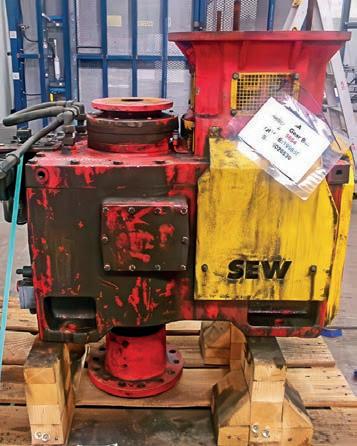
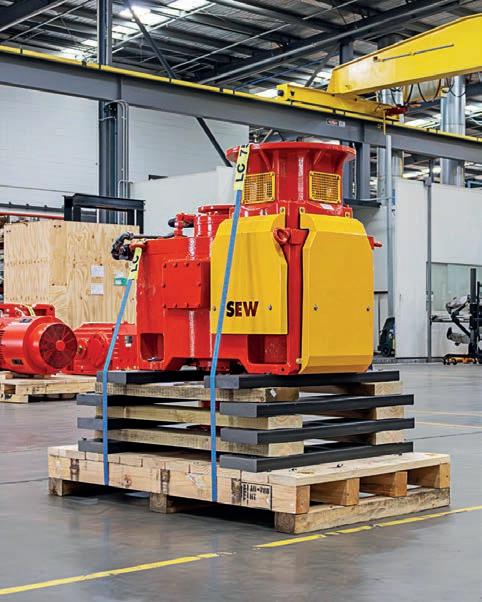
The original legacy gearbox installation, presenting challenges due to age, limited documentation, and site constraints.
The completed drop-in replacement, engineered for precise fitment and improved performance with minimal on-site modification.
Images: SEW-EURODRIVE
“The client was over the moon,” he said. “There’s always a bit of apprehension when you introduce new technology, especially in this industry. But once they saw the outcome, that confidence was there immediately.”
Engineering confidence
While 3D scanning and load testing represent the technological edge of SEWEURODRIVE’s offering, Justice said people remain at the core of the business.
“We’ve got dedicated service engineers, degree-qualified mechanical engineers, working alongside our technicians,” he said. “That’s a key point of difference.”
This combination of hands-on experience and engineering expertise allows the company to go beyond repair work, offering detailed failure analysis and performance insights.
“If a gearbox fails, whether it’s SEW’s or a third party, we can investigate and provide a clear understanding of what
went wrong,” Justice said. “That helps customers make better decisions moving forward.”
A lifecycle approach
SEW-EURODRIVE’s service philosophy extends well beyond the initial repair or replacement. Ongoing support and aftermarket engagement are integral to its operations, ensuring that equipment continues to perform long after it leaves the workshop.
“Our relationship with customers doesn’t end when the job is done,” Justice said. “We stay involved, we monitor performance, and we’re there to support them through the entire lifecycle of their equipment.”
This approach is built on a reputation for quality that the company has developed over decades in the market.
“We’ve always positioned ourselves as a premium provider,” he said. “That’s something we’ve carried through from our new product offering into service.
“It’s about consistency, delivering the same level of quality and reliability across everything we do.”
As SEW-EURODRIVE continues to expand its national footprint, the focus remains on enhancing capability and responding to evolving market needs. The planned addition of a Perth facility will further strengthen its reach, particularly in Western Australia’s resource-heavy regions.
For Justice, the future of industrial gear servicing lies in the integration of advanced technologies with robust engineering fundamentals.
“Technology like 3D scanning is a gamechanger,” he said. “But it’s only effective if you’ve got the expertise behind it to interpret the data and apply it.”
“We’re not just fixing equipment. We’re giving customers confidence that their operations will keep moving, no matter how complex the challenge.”
The Gap Left by Global Suppliers Is Yours to Own
Traditional supply chains are being disrupted by reshoring efforts and geopolitical disruptions. By stepping in to f ill gaps left by disrupted global suppliers, SMEs can secure supply contracts with larger producers, increase market share, and contribute to localized, value-added manufacturing.
Flexicon’s proven solutions, including our modular conveyor technologies, bulk bag f illers, dischargers, and conditioners — empower SMEs to scale agilely and sensibly for a resilient future.
By leveraging today’s CapEx tax incentives to improve eff iciency and throughput, you can lean into the disruption others are bending to.
LEARN MORE
Closing the conveyor shutdown gap
SHUTDOWNS REPRESENT ONE of the most critical, and high-risk, periods in the operational calendar.
With production on hold and tight timeframes in place, the margin for error is minimal. Yet, despite their importance, conveyor systems have often lacked the specialised mechanical focus required to ensure optimal shutdown outcomes.
Belt Wise is aiming to address this gap through the launch of its dedicated shutdown division, Belt Wise Mechanical.
Positioned as a conveyor-focused mechanical specialist, the division has been developed to bring targeted expertise, structured execution and clear accountability to shutdown environments where precision is essential.
At its core, Belt Wise Mechanical is built around a simple premise: conveyor systems are complex, high-value assets that require discipline and technical oversight during shutdowns, not just general mechanical labour.
The division delivers a conveyorexclusive workforce with deep system knowledge, integrating both mechanical trades and belt splicing capability within a single team. This approach is designed to reduce fragmentation on site and ensure that all works are aligned with conveyorspecific requirements, including system geometry and belt dynamics.
Rather than treating shutdowns as isolated maintenance events, Belt Wise Mechanical applies a structured delivery framework that begins well before crews
arrive on site. This includes detailed pre-shutdown planning, Gantt-based scheduling, staging strategies and close coordination with site stakeholders.
During execution, each shutdown operates under defined technical authority, with clear ownership of conveyor assets and work areas. This ensures that mechanical works are carried out to specification, while maintaining strict control over scope, safety and quality.
The emphasis on ownership is particularly significant. By assigning dedicated responsibility for conveyor systems during shutdowns, Belt Wise Mechanical aims to eliminate ambiguity and improve decision-making in highpressure environments.
Quality assurance and control also play a central role. The division integrates inspection and test plans, defined hold points and traceable quality assurance and quality control documentation into every shutdown, aligning with tier one contractor expectations and broader site governance frameworks.
This disciplined approach extends beyond execution. Post-shutdown reporting provides detailed insights into performance, identifying opportunities for continuous improvement and supporting longer-term asset reliability.
From an operational perspective, the outcomes are clear. Structured shutdown delivery can lead to shorter and more predictable durations, reduced premature wear on components, and improved
conveyor alignment and tracking stability. In turn, this reduces the likelihood of unplanned downtime and lowers ongoing maintenance demand.
Safety is another key consideration. With clearly defined processes, task clarity and conveyor-specific expertise, shutdown activities can be performed with greater consistency and reduced operational risk.
Belt Wise Mechanical’s service scope reflects the full lifecycle of conveyor maintenance during shutdowns. This includes roller and idler change-outs, pulley installation and alignment, impact bed upgrades, skirt and sealing system optimisation, chute works, and full conveyor assembly and commissioning across both greenfield and brownfield projects.
The division also supports urgent requirements through dedicated “hot shot” logistics, enabling rapid sourcing and delivery of critical conveyor components when time constraints are tight.
Importantly, the launch of Belt Wise Mechanical aligns with the company’s broader positioning as a conveyor optimisation specialist. Rather than introducing a standalone offering, the division integrates with existing asset management and optimisation strategies, ensuring that shutdown activities contribute to long-term system performance, not just shortterm fixes.
Belt Wise is targeting a critical gap in conveyor shutdowns with a new specialist mechanical division.
Belt Wise Mechanical combines mechanical trades and belt splicing capability within a single team.
The future of AI belt rip detection
Flexco has acquired SHG Conveyor Control GmbH, a technology company taking a bold new strategy to prevent belt rips with artificial intelligence.
analyse the data the client had to find out when the rip happened.”
“The interesting part was that the rip had been preventable. I began digging into the analysis, and based on this, I founded the company with another colleague in 2023.”
At the heart of SHG is artificial intelligence (AI)-powered pattern analysis that detects when a rip is likely to occur.
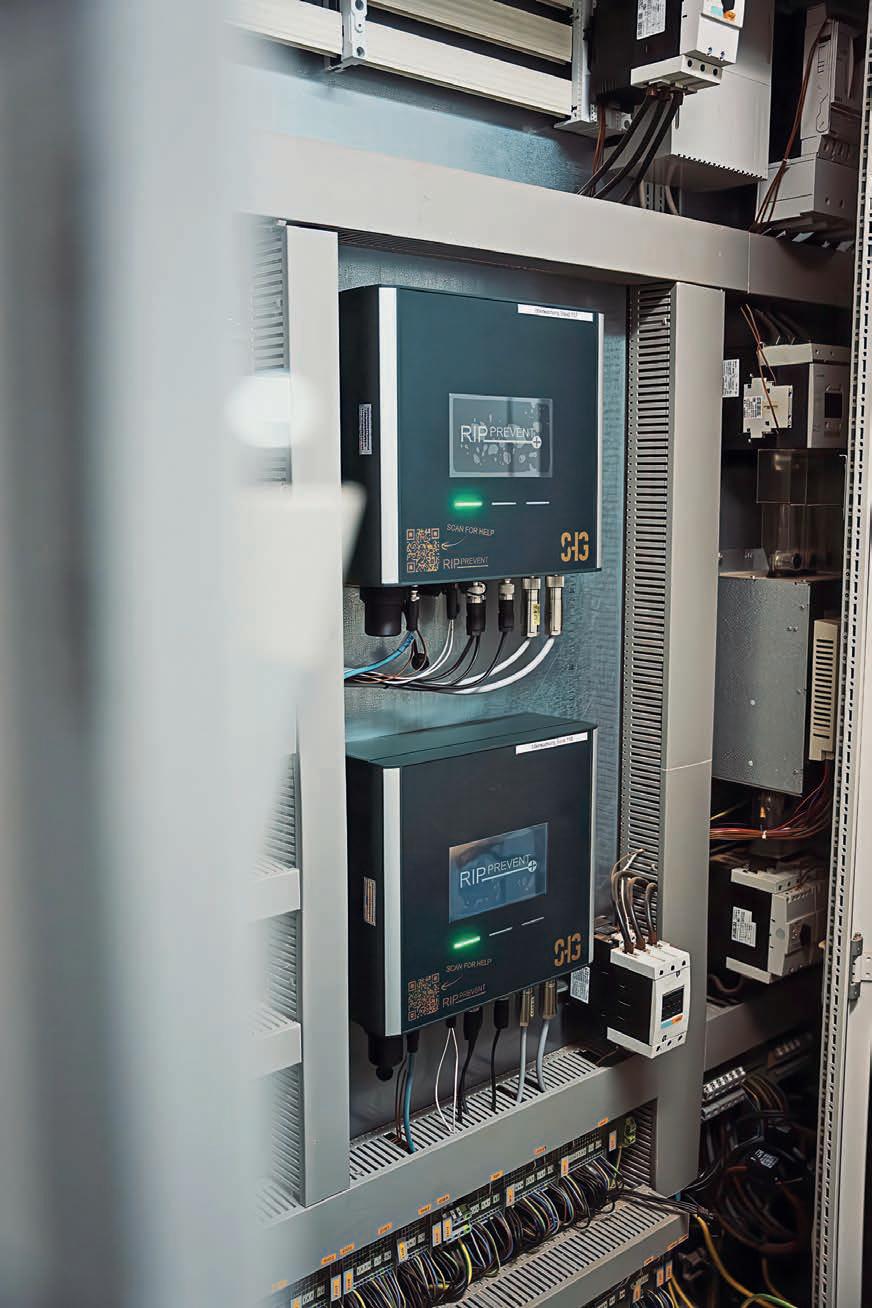
In the event of a rip or anomaly, the Rip Prevent system generates an output signal based on conveyor-specific thresholds. When combined with a programmable logic controller (PLC), it allows a customer to automatically stop a conveyor before the critical rip event even happens.
The calculation model computes the data 50 times per second and can generate a signal to the PLC system in less than a second, minimising the risk of the event.
By taking a predictive approach, mining operations can reduce unplanned downtime and streamline maintenance planning.
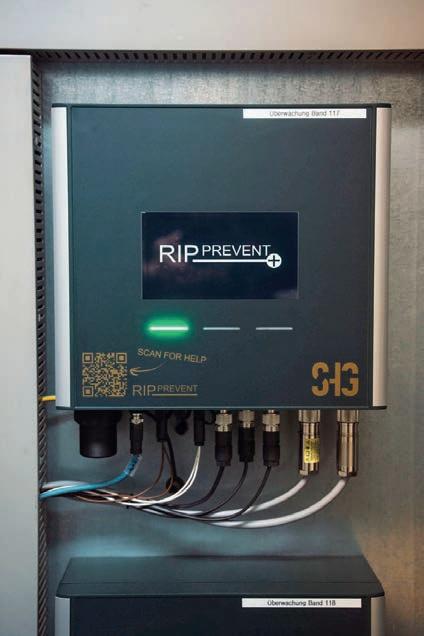
Instead of relying on sensor systems, such as lasers or X-rays, SHG’s Rip Prevent+, now known as the Flexco Elevate Belt Rip Prevention system, connects to the conveyor’s motor to measure the voltage, harmonics, and other electrical information.
Schiller said the data-driven calculation model of the Belt Rip Prevention system has a huge advantage over inductive, magnetic and laserbased systems, because the data-driven calculation model has no risk of wear, is suitable for all conveyor belts, and has low investment costs.
“The motor is the brain of the conveyor,” Schiller said. “A rip has a specific signature, and problems on the electrical side of things also have specific signatures, letting us separate the two events.”
The Rip Prevent system generates an output signal based on conveyor-specific thresholds.
Images: SHG Conveyor Control GmbH
“For example, we had one case where one of the biggest phosphate producers globally installed the Belt Rip Prevention system. It detected a total harmonic distortion failure – the motor was worn out – something that vibration analysis wouldn’t have been able to address.”
The plug-and-play solution has made waves across the industry and is partially why international manufacturer of conveyor products Flexco acquired SHG earlier this year.
The move expands Flexco’s digital portfolio, combining Rip Prevent+ with Flexco Elevate and the Novitool Aero Splice Press with IntelliSplice Technology.
SHG, combined with Flexco’s digital monitoring platform, enables the company to deliver greater value to mining organisations that rely on high productivity.
At first, Schiller had no plans to sell the company he founded but then he saw the opportunities that partnering with Flexco offered.
“They have subsidiaries in Australia, South and North America, Europe, Africa, and have a global footprint. It’s a wellknown brand with global technicians that could support the growth of our technology,” he said.
“The decision was to grow faster, but also to become more stable and robust with a sales and technical network in the background.”
Both companies strongly believe that the future of conveyor belt management is digital, connected and data driven.
“The future of conveyor belt management is digital, connected and data driven,” Flexco Australia managing director Rory Cole said. “Rip Prevent+, combined with our Elevate digital belt cleaner monitoring platform enables us to continue our mission of accelerating our ability to deliver enhanced value to those who rely on us every day as their partners in productivity.”
“The mining industry is facing a growing array of challenges,
from volatile markets and tougher competition to regulatory compliance and decarbonisation, among many others,” Schiller said.
“Many mining companies are already taking advantage of the significant cost, productivity and safety gains from the implementation of emergent technologies like drones, remote operating centres and AI.”
The Flexco Elevate Belt Rip Prevention system connects to the conveyor’s motor to measure the voltage, harmonics, and other electrical information.
Getting to the centre of it
ABHR learns how Belle Banne Conveyor Products’ recent acquisition is helping keep conveyor belts clean.
EVERY CONVEYOR SYSTEM, regardless of size or use, must contend with carryback – the residual material that remains adhered to the belt after discharge, and continues travelling along the return side.
Often caused by moisture, fines or sticky product, this material can quickly accumulate on idlers, pulleys and surrounding infrastructure, creating a chain reaction of maintenance and safety issues. Unchecked carryback contributes to excessive build-up on rollers, belt mistracking, higher maintenance costs, premature equipment wear and, in severe cases, safety risks for site personnel tasked with clean-up. For operators across mining,
latest offering, the newly acquired Profile Clean system.
Acquired by the Australian conveyor specialist in December 2025, the “patented” technology represents a significant addition to BBCP’s belt cleaning portfolio.
Managing director Daniel Weekes said the decision to acquire the product came after seeing its performance firsthand in the field.
“An opportunity arose to purchase Profile Clean, and we seized it quickly,” Weekes said. “I first became aware of it in 2022 on a site that we were supplying our traditional belt cleaners. I noticed the constant tip pressure and the ability to profile to the conveyor.
of conveyor enhancement products. Its heritage, however, stretches much further back.
According to Weekes, Belle Banne products have been used in Australia since 1969, with the original H, P, R and U belt cleaners becoming wellknown across the mining and materials handling sectors.
“I’ve been working in the industry for 25 years and have been the managing director of BBCP for 12 years, during which time BBCP has seen significant growth.”
What distinguishes Profile Clean from more conventional systems is its ability to automatically maintain consistent tip pressure across the entire belt surface, even as the belt wears over time. Global patent approvals also place Profile Clean firmly at the forefront of industry
Traditional belt cleaners often require frequent manual adjustment to compensate for uneven wear patterns, particularly in the centre of the belt where most of the material is carried. Weekes said this is where conventional systems can lose effectiveness.
“In iron ore or aggressive material, instead of a flat belt surface, the belt will start to wear in the centre,” he said.
“Therefore, a traditional belt cleaner is less efficient because you’re applying less load to where there’s the highest wear and more load where there’s less.”
Profile Clean addresses that problem through individual pneumatic rams.
“The Profile Clean uses pneumatic rams across the conveyor which are supplied by a single air source and loads all rams and applies an equal load across all the cushion tip assemblies,”
“Therefore, we can supply equal load across the belt and it’s able to profile to
“We’re getting a consistent load across the belt surface and achieving a higher belt cleanliness.”
Image: Belle Banne Conveyor Products
Belle Banne Conveyor Products acquired Profile Clean after having been impressed with its functionality on site.
This ability to “profile” to a worn or uneven belt is a key point of difference.
Rather than relying on fixed manual tensioning systems, the cleaner continually compensates for belt wear and changing belt profiles, maintaining tip pressure across the full width of the belt for the life of the blade. Profile Clean requires no adjustment between shutdowns and no continual retensioning throughout tip life.
For operators, the benefit is not just cleanliness, but measurable reductions in maintenance. As a result, users can maximise productivity.
“One of the major focuses was to eliminate the manual daily, weekly adjustments to the side assemblies which apply tension to the cleaners,” Weekes said.
“Reducing manual adjustment is very important.”
In high-throughput operations, that reduction in manual intervention can translate directly into labour savings and
lower exposure to maintenance-related safety risks.
Frequent manual cleaner adjustments often require personnel to work in confined areas around moving plant or during shutdown windows, adding complexity to maintenance planning.
To further simplify servicing, Profile Clean incorporates a retractable design that allows the unit to slide in and out for maintenance access, reducing time spent working around the conveyor structure.
By combining automated tip pressure with a retractable maintenance-friendly design, Profile Clean is engineered to reduce these touchpoints while extending the life of downstream components.
“The biggest benefit of it is we can apply equal load across the whole belt and clean where the actual material is,” Weekes said. “It removes material carryback built up on the conveyor, which requires labour to clean up.
“Customers can expect to save time and money using Profile Clean.”
That emphasis on total cost of ownership is becoming increasingly important for bulk handling operators, particularly in sectors such as iron ore, quarrying and ports where conveyor uptime is critical. Carryback-related build-up not only increases clean-up costs but can also accelerate premature belt wear, idler failure, pulley lagging wear and belt damage, all of which have flow-on effects for productivity.
Profile Clean’s consistent tensioning is also designed to help customers extend belt life, an area Weekes said remains a major customer priority.
With over 200 years of combined industry experience across the business, the company is positioning Profile Clean as a next-generation solution for sites seeking lower maintenance effort and improved cleaning performance.
“Customers are loving it,” he said. “They all note that the performance is a step change in maintenance practices for belt cleaning.”
THE WORLDWIDE LEADER IN VIBRATION TECHNOLOGY
Designed for industrial sectors INDUSTRIAL VIBRATORS
OLI is the world’s top selling manufacturer of electric and pneumatic vibrators. The high level of customer service, guaranteed by 18 trading subsidiaries worldwide, and long-lasting and performing products make us always ahead.
Our vibrators are designed for industrial applications in all sectors, from the most extreme environments such as quarries, mines and foundries to the food and pharmaceutical.
Low pressure for consistent flow
Oli Vibrators is helping bulk handling sites get the most out of existing silo infrastructure with a range of effective flow aids.
A LOT OF WORK GOES INTO planning, engineering, and fabricating silos to ensure a consistent flow of material.
Over time the material characteristics or requirements can shift. In many cases, small changes won’t have a larger impact on the bulk material process.
However, in some cases, even a slight change can lead to serious problems such as hang ups and ratholing.
Moisture content is one variable that can make or break the productivity of a silo. Certain materials like cement or flour will naturally begin to form blockages, restricting flow.
Oli Vibrators managing director Mark Thompson said restoring flow in a simple and safe way is vital.
“An outdated and unsafe practice to get material flowing again is to strike the silo or hopper with a hammer or heavy piece of wood, to shake up the blockages,” he said.
“However, this not only does damage to the asset but can also increase the chances of flow problems by creating misshaped areas in the silo.”
“If you’ve got bridging high up in a 30-tonne silo and then it’s suddenly let go, the forces could also jeopardise the structural integrity of the silo, potentially leading to a collapse.”
Oli Vibrators offers a safer and simpler alternative – industrial vibrators
and flow aids. The company has almost 60 years of experience designing and supplying specialist vibrators for the mining, quarrying, mineral processing, grain, animal feed, food processing, waste management and construction sectors.
Working closely with its customers, Oli Vibrators’ team will find out the characteristics of the product being handled, including bulk density, explosive risk, hygiene requirements, whether it is hydroscopic, the vessel it is being stored in, and more.
With this information, its engineers will usually find a solution that will work for the customer within 24 to 48 hours.
Thompson said the company is a keen advocate for innovative research and development in a highly competitive global market.
“The company’s research and development department focuses on the development of cuttingedge technologies towards advanced solutions,” he said.
“Products smaller in size and lighter in weight, yet higher in performance and lower in energy consumption, are the tangible result of Oli’s constant commitment to offering the best deal on the market.”
Recently, the company has noted an increase in clients looking to improve energy conservation.
Instead of using electric equipment, companies are looking for ways to run things pneumatically.
Oli Vibrators range of low-pressure fluidisers are ideal for this kind of application.
Thompson said the cement and concrete industry in particular can benefit from the technology as it minimises the need for pressurised air.
“There are considerable energy savings that can be had when less air needs to be pressurised,” he said.
“Low volume fluidisers also help to conserve air, so you don’t need to run an air compressor for up to six hours per shift to operate valves and other equipment.”
Oli Vibrator’s aim is to provide support ‘when you need it, where you need it’. To deliver on that, the Australian business keeps plenty of spares on hand if required and has a presence in every state in Australia.
Thompson said the company plans to continue growing, especially when it comes to providing solutions for emerging industries.
“Silos are just one use case for fluidisers and flow aids,” he said. “For example, the recycling market handles materials that have a constantly changing characteristics.”
“We are committed to servicing any industry that relies on a consistent flow of material.”
Oli Vibrators has almost 60 years of experience designing and supplying specialist vibrators for the bulk handling sector.
Silos are just one use case for fluidisers and flow aids.
Images: Oli Vibrators
Automation with purpose
New robotic technologies are being deployed in Kotzur’s factories to help the industry remain sustainable.
MARKET CONDITIONS IN
2026 have proven to be volatile, with events around the globe putting pressure on manufacturers.
Kotzur national sales manager
Bevan Austin said the challenge is not simply to produce more, but to do so in a way that is sustainable for customers, employees and the business itself.
“At Kotzur, recent investment in robotic fabrication technology reflects a deliberate strategy of continual improvement and long term capability building,” he said.
The business has recently installed both a new and a second hand robot at its Toowoomba manufacturing
facility, complementing existing robotic systems already operating at Walla Walla.
The introduction of additional robots is about improving the quality of work for employees while creating a more responsive and resilient manufacturing operation.
One of the most tangible benefits has been the removal of highly repetitive fabrication tasks from the workshop floor. These tasks, while essential, can place physical strain on workers and limit opportunities for engagement and skill development over time. By allocating repetitive processes to robotic systems, skilled tradespeople can focus
on more interesting, complex and value adding work.
Austin said this shift supports safer workplaces and more rewarding roles, while reinforcing the importance of human expertise in modern manufacturing.
“Automation does not replace people; it enables them to apply their skills where they deliver the greatest impact,” he said.
From a customer perspective, the additional robotic capability strengthens Kotzur’s ability to scale production in line with market demand.
The investment also supports customer outcomes by improving delivery performance.
Kotzur has recently installed both a new and a second hand robot at its Toowoomba manufacturing facility.
Image:
Kotzur
“By increasing our automated capacity, we’ve been able to bring our lead times back in and respond more effectively to customer demand. That flexibility allows us to scale production when the market requires it and, most importantly, meet our customers’ expectations around delivery timeframes.”
“By increasing our automated capacity, we’ve been able to bring our lead times back in and respond more effectively to customer demand,” Austin said. “That flexibility allows us to scale production when the market requires it and, most importantly, meet our customers’ expectations around delivery timeframes.”
This ability to scale is increasingly important across the bulk handling sector, where delays can have significant downstream impacts on operations. Greater production resilience gives customers confidence that projects will be delivered when promised.
The investment also reflects Kotzur’s approach to reinvesting profits back into the business. Rather than viewing automation as a one off upgrade, the company sees it as part of an ongoing commitment to strengthening infrastructure, improving processes and future proofing operations. The decision to integrate both new and second hand robotic technology demonstrates a practical, value driven mindset focused on outcomes rather than optics.
Importantly, these investments are being made within regional manufacturing centres. Expanding robotic capability in Toowoomba reinforces Kotzur’s
commitment to regional Australia, supporting skilled jobs while ensuring advanced manufacturing remains competitive outside metropolitan areas.
“Across the business, the combination of technology, skilled people and a continuous improvement mindset is creating a stronger foundation for long term success. Knowledge and learnings from multiple sites can be shared, processes refined and capability lifted across the organisation,” Austin said.
“Automation, when implemented with purpose, can improve efficiency while enhancing job quality, strengthening customer outcomes and supporting sustainable growth.
“As market expectations continue to rise, manufacturers that invest thoughtfully will be best placed to lead. Kotzur’s latest step in automation is not just about doing more; it is about doing better, for customers, employees and the industry alike.”
Keep it moving
Managing flow in silos and hoppers is crucial and sometimes tricky, but ESS Engineering keeps it simple.
CONSISTENT THROUGHPUT,
handling iron ore, grain, or cement, is the difference between a smoothrunning plant and costly downtime.
ESS Engineering (ESS) tackles these challenges by considering not only equipment, but also the relationship between material behaviour, plant design, and operational practices.
A common and costly problem
Material build-up in storage vessels is a problem faced across all bulk handling industries, regardless of the commodity or process.
“It’s a common issue,” ESS sales and lead service technician Jerome Reid said. “It could be grain or iron ore, different materials, but similar challenges.”
Moisture is a primary culprit. Even small increases can make materials sticky, causing them to adhere to silo walls and creating build-up that restricts flow. Over time, severe issues like bridging, arching, or ratholing can develop, with material flowing only through narrow channels while the rest remains stagnant.
“These issues can escalate quickly,” Reid said. “You might get a blockage, and when it finally releases, it can
all at once, creating a significant clean-up problem and forcing shutdowns.”
Such disruptions have direct financial consequences. As accounts development manager Tom Stahura notes, if material isn’t moving, it isn’t generating revenue.
“If we’re not putting it on a train or a boat, we’re not getting paid for it,” he said. “It’s a critical issue.”
Understanding the root causes
While moisture is a major factor, other material characteristics like particle size, density, and cohesion, also affect how bulk solids behave in storage.
“Fine materials that get wet become very difficult to move,” ESS sales and service technician Dan Walker said. “Once they stick to the sides, it can be hard to get them moving again, and that’s when problems start to snowball.”
Material properties can shift significantly over the lifespan of a project, often leading to new and unforeseen challenges. For instance, a plant originally designed to handle a particular type of material may experience difficulties if the material’s characteristics change. This commonly occurs in mining operations as extraction
moves deeper below the water table, where higher moisture levels can increase stickiness, reduce flowability, and cause blockages within silos or hoppers.
“Those original flow calculations don’t always hold,” Stahura said. “As conditions change, you need to adapt how you manage the flow.”
Structural factors matter too. A poorly sealed roof can let water in, and silo geometry that doesn’t suit the material can hinder flow and cause build-up.
Maintaining flow isn’t just critical for operations. It also protects product quality and minimises waste. For example, if organic materials sit too long, they can start to germinate. Root systems may bind the material together, worsening blockages and spoiling the product so it can’t be used.
Flow solutions for challenging materials
To keep materials moving, ESS Engineering provides a suite of flow aids to prevent build-up and restore consistent flow. The ESS Air Cannon uses controlled bursts of compressed air to dislodge stuck material before blockages form. For some materials, Industrial Vibrators generate mechanical vibrations along vessel walls
Silos of any kind rely heavily on maintaining flow.
to keep bulk solids moving and prevent compaction. When build-up is severe, the Bin Whip Silo Cleaning System can safely break up hardened deposits without requiring confined space entry. Together, these solutions help operators address everything from minor build-up to major blockages. Air-based flow aids keep the product uncontaminated by avoiding the introduction of water or chemicals, so everything that moves can stay in the process.
“Anything that moves can go straight back into the system,” Walker said. This is essential in industries where even slight contamination or degradation requires the material to be discarded, raising costs and environmental impact. Controlled flow solutions help minimise these risks and reduce manual clean-up.
Safety is a key driver behind the adoption of remote and automated flow solutions. Confined-space entry into silos and hoppers is inherently dangerous and requires extensive planning, and permits.
By eliminating the need for manual intervention, technologies like air cannons and remote cleaning systems significantly reduce exposure to hazards. They also help maintain consistent turnover within storage vessels, preventing the formation of dead zones where material sits unused.
Collaboration as the key to success
While technology plays a critical role, ESS’s team believes successful outcomes depend on close collaboration with clients. Understanding the specific requirements of each operation, from throughput targets to material characteristics, is essential for designing effective solutions.
“We talk to the client, find out what their flow requirement is, and then tailor the solution,” Stahura said.
This collaborative approach extends to ongoing adjustments as conditions change.
World leaders with 50 years’ experience in Bulk Materials Handling Research and Consulting
TUNRA Bulk Solids develops custom solutions to suit the individual needs of our clients.
Services:
Flow Properties and Materials Testing
Dust (environmental) Testing
Wear Testing (Impact, Abrasion and Erosion)
Conveyor Belt, Idler Roll and Pulley Testing
Discrete Element Method (DEM) Modelling
DEM Calibration Testing
Materials Handling Consultancy and Contracted Research
Bin and Stockpile Design
Pneumatic and Hydraulic Conveying
Computational and Scale Modelling
Site Visits
Professional Development Courses
Whether it is modifying firing sequences, repositioning equipment, or adapting to new material properties, flexibility is key.
The value of this approach is reflected in client feedback. One mining project manager described air cannons as “cheap insurance” compared to the cost of plant downtime.
As bulk handling operations become more complex, the challenges associated with material flow are unlikely to diminish.
However, advances in flow aid technologies and a growing emphasis on proactive maintenance are helping operators stay ahead of the curve.
For ESS, the focus remains on combining technical expertise with practical insight, ensuring that materials keep moving, plants stay productive, and risks are minimised.
In an industry where downtime is measured in lost revenue, that combination can make all the difference.
2026 Professional Development Opportunities:
Storage, Feeding, Transfer and Belt Conveying Course: 19-21 May (Brisbane)
International Conference on Bulk Materials Storage, Handling and Transportation ICBMH 2026: 7-9 July (Fremantle)
Storage, Feeding, Transfer and Belt Conveying Course: 17-19 November (Perth)
Better by design
ABHR learns about the latest trends in elevator buckets, and how 4B goes further than just mechanical design.
BUCKET ELEVATORS ARE ONE OF the most efficient methods of vertical transport, but as throughput demands rise, the need for smarter, betterengineered systems is growing.
For 4B Australia, that evolution has long been central to its business.
Part of the international 4B Braime group, the company traces its origins back more than 130 years to the UK, where it began as an engineering manufacturer before developing what became one of the industry’s first seamless steel elevator buckets. Today, 4B is recognised globally for its range of bucket elevator and conveyor components, from buckets and belts through to advanced monitoring systems.
According to Paul Dennis, one of the company’s key strengths lies not only in the products themselves, but in the engineering support that surrounds them.
“We provide a technical support service for all of our products,” Dennis said.
That support has become increasingly important as bucket elevators continue to serve a broad range of industries, each with distinct operating conditions and material profiles.
“At a practical level, duty specification is a big part of it,” he said.
“Building anything is about the material.”
That seemingly simple point is crucial in bucket elevator design. A system handling free-flowing grain, for example, faces vastly different wear and performance demands compared with one conveying abrasive sand, glass or cementitious materials. The company offers one of the world’s largest selections of elevator buckets, with more than 400 sizes and styles across steel, stainless steel and multiple polymer materials, designed for applications spanning agriculture, mining and heavy industry.
For Dennis, selecting the right bucket geometry and material composition is where performance gains are won or lost.
“The selection of material for the right application is extremely important,” he said.
That includes not only the bucket design itself, but also the belting, bolts and overall system configuration.
Unlike conventional conveyors, where increasing speed often directly increases throughput, bucket elevators operate within far tighter engineering tolerances.
“If you change the speed of a bucket elevator, you’re changing the geometry of things,” Dennis said.
Because centrifugal discharge systems rely on a precise relationship between radius, speed and mass, even small changes can alter where material leaves the bucket and where it lands inside the head section.
That can have significant implications for efficiency, spillage and wear.
This engineering precision is one of the reasons bucket elevators continue to hold a critical place in bulk handling infrastructure.
“It’s one of the most efficient ways of vertically conveying material from A to B,” Dennis said. “If you wanted the most efficient way with the least amount of footprint to lift materials vertically, it’s a bucket elevator every time.”
That compact vertical footprint remains particularly valuable in industries where plant space is constrained or where facilities require high-capacity material movement over significant heights.
But increasingly, the discussion around elevator performance extends beyond mechanical design.
One of the strongest trends emerging across the sector is the growing use of condition monitoring and sensor technology.
Historically, monitoring systems in bucket elevators were heavily associated with hazard prevention, particularly in grain handling where dust explosion risks are well documented.
The company has long supplied hazard monitoring systems capable of detecting belt slip, misalignment, bearing temperature issues and plugged chutes.
Now, Dennis said, those systems are being adopted as reliability tools.
“It’s an emerging trend that people are becoming more adept to reliability
Paul Dennis said the Nylathane bucket range features improved abrasion resistance, high impact strength, and significantly lower weight.
4B provides over 400 styles and sizes of high-quality bucket elevators.
and condition monitoring rather than it just being hazard focused,” he said.
This shift reflects a wider industry move toward predictive maintenance and continuous asset visibility.
Among the latest developments is a combined vibration and temperature sensing solution designed for pulley and shaft applications in both conveyors and bucket elevators.
Traditionally, large-scale systems often relied on periodic external vibration testing conducted by specialist technicians, sometimes only on an annual basis.
By contrast, permanently installed sensors allow operators to continuously monitor vibration signatures and temperature changes in real time. That capability can significantly improve maintenance planning and reduce the risk of unexpected downtime.
“It’s really ideal for shaft applications, which is what you would
find on conveyor pulleys and bucket elevator pulleys,” Dennis said.
Importantly, 4B has focused on ease of installation, particularly for retrofit applications.
“The way we’ve designed most of our sensors and monitoring systems has been that it’s very plug and play or easy to retrofit into existing systems,” he says.
For existing plants looking to modernise legacy infrastructure without major redesign work, that retrofit capability could prove especially attractive.
Alongside monitoring technology, materials innovation is also shaping the next phase of bucket elevator development.
Dennis points to advances in composite materials as a major area of focus.
Among these is 4B’s Nylathane bucket range, engineered as a high-performance alternative to conventional nylon and fabricated steel designs. According to the company, the material offers improved
abrasion resistance, high impact strength and significantly lower weight, while remaining suitable for heavy industrial applications including cement, aggregates and fertiliser.
“We were able to provide a product which actually had a greater amount of abrasion resistance for application,” Dennis said.
The lighter weight of composite buckets can also help reduce overall system load, while non-sparking and anti-static properties offer further operational and safety benefits in dustsensitive environments.
This approach aligns with the company’s long-standing philosophy of continuous product improvement.
“One of the things that 4B has as a statement as to who we are is that the company uses the phrase ‘better by design’,” Dennis said.
“What we’re always looking to do is innovate on something that we already have to make it better.”
An end-to-end approach
At WAM Australia, performance is no longer defined solely by moving material; it’s about managing the entire process journey.
MODERN BULK HANDLING
systems rely on a series of important components. Yet in complex engineered systems, the failure of a single link can quickly undermine productivity, disrupt throughput, and increase operational costs.
This leads operators to seek integrated solutions, an area where WAM Australia offers significant expertise. The company provides a comprehensive portfolio of technologies designed to support silos, bucket elevators, and motor-driven systems.
At the heart of many bulk handling plants is vertical transport. WAM’s EC high-capacity bucket elevator has been engineered to handle cereals and similar dry materials, delivering capacities of up to 385 m3/h and discharge heights of up to 44m. Its use of antistatic, oil-repellent, self-extinguishing belts combined with high-density polyethylene buckets ensures safe operation in potentially explosive environments, while integrated sensors continuously monitor belt alignment and rotation.
Crucially, the EC bucket elevator integrates with motor-driven systems, featuring a direct gear motor to optimise energy efficiency while reducing maintenance complexity. In an industry where downtime carries significant costs, this combination of mechanical robustness and intelligent monitoring is key to maintaining continuous flow from intake to storage.
Once materials reach the silo, maintaining consistent discharge is equally important. WAM’s BA bin activators play a key role in ensuring reliable material flow, particularly for powders and granular products prone to bridging or ratholing. By promoting consistent discharge from silo outlets, bin activators help prevent blockages that can disrupt downstream conveying. This is especially relevant in facilities where bucket elevators and screw conveyors rely on uninterrupted feed.
Dust management is an increasingly critical factor for both operational performance and environmental compliance. The WAMAIR Stand Alone polygonal dust collectors are designed to capture airborne particulates generated during silo filling, conveying, and discharge. By reducing dust emissions at the source, these systems not only improve workplace safety but also protect surrounding equipment, including motors and drive components, from premature wear.
During filling operations, air displacement and pressurisation can pose significant risks if not properly managed. This is where WAM’s VHS-C membrane pressure relief valves provide a critical safeguard. Acting as the “last safety net” for silos, these valves respond instantaneously to both excess and negative pressure, ensuring structural integrity is maintained.
Unlike spring-loaded alternatives, the VHS-C uses a double-acting membrane to re-establish pressure balance in real time, allowing air to flow in or out of the silo as needed. This instantaneous response is essential in preventing damage during rapid filling
With features such as a self-cleaning design and reduced emission flow, the system also contributes to lower maintenance requirements and improved environmental performance.
While pressure relief valves provide reactive protection, proactive safety management is equally important. The KCS silo safety system offers a solution for monitoring and controlling silo operations during filling. By integrating components such as level indicators, pressure sensors, alarms, and control panels, the KCS system prevents overfilling and over-pressurisation.
The system’s ability to monitor multiple silos simultaneously and automate functions such as filter cleaning highlights the growing role of intelligent control in bulk handling.
By providing real-time data and automated responses, the KCS system not only enhances safety but also improves operational efficiency, reducing the reliance on manual intervention.
WAM Australia’s solutions are designed to work in unison, supporting efficient material movement while safeguarding people, equipment, and
The WAMAIR Stand Alone polygonal dust collectors are designed to capture airborne particulates generated during silo filling, conveying, and discharge.
SHUT DOWN OPTIMISATION CONVEYOR MECHANICAL SPECIALISTS
Belt Wise Mechanical is the dedicated shutdown and mechanical execution division of Belt Wise, established to support Tier 1 mining and bulk materials operations.
We specialise exclusively in conveyor systems – high-risk, high-value assets where precision execution directly impacts production performance.
Our shutdown delivery framework is structured for control and precision. Every scope is executed through disciplined planning, conveyor-specific technical oversight and controlled QA/QC systems designed for complex operating environments.
Closing the loop on copper
Australian startup Loop Hydrometallurgy said its mine-site process can substantially cut emissions, reduce waste, and recover copper directly from underutilised resources.
LOOP HYDROMETALLURGY,
founded by hydrometallurgist Dave Sammut, has launched a pilotscale electro-winning system capable of producing 20 kilograms of copper per day, marking a key step in its path to commercialisation.
The company, commericialising with the support of the Macquarie University Deeptech Incubator, has progressed the technology from laboratory concept to pilot-scale demonstration. The approach centres on a breakthrough in chloridebased hydrometallurgy, an area long considered promising but commercially unworkable due to difficulties in recovering metals from solution.
In conventional copper processing, ore is mined at low grades, often around 0.5 per cent, and upgraded through flotation to a concentrate of roughly 25 per cent copper before being shipped, typically offshore, for smelting and refining.
This multi-stage process is energyintensive, transport-heavy, and can result in significant metal losses. Recovery rates can fall to 70 to 80 per cent, depending on ore complexity.
Rather than producing a smeltergrade concentrate, the company targets
lower-grade “pre-concentrates,” around eight to 12 per cent copper, that are cheaper and easier to produce.
These materials, often considered unsuitable for traditional smelting, can then be processed on-site into highpurity metal.
“We say: don’t go all the way to a smelter grade,” Sammut said. “Produce a rougher concentrate and let us turn that into high-purity metal directly at the mine site.”
The result, he claimed, is a potential 30 to 40 per cent reduction in operating costs by eliminating transport, smelting charges, and associated penalties.
Solving a long-standing technical barrier
Chloride leaching systems have been studied for decades due to their ability to dissolve a wide range of metals efficiently. However, a critical bottleneck has been the inability to recover copper cleanly from these solutions.
“Again and again, these technologies proved the economics and environmental advantages,” Sammut said. “But nobody could work out an effective, practical way of recovering the copper from a chloride system. Until now.”
The challenge lies in how copper deposits during electro-winning. In chloride systems, it tends to form uncontrolled dendrites, tree-like structures that create handling and quality issues.
Loop’s technology addresses this by controlling how and where copper forms, producing what Sammut describes as a coarse, sand-like product that can be readily processed into standard forms such as rod, wire or ingot.
The breakthrough followed a “eureka moment” in 2021, after decades of research and industry investment failed to solve the issue.
“Within the first hour of running that prototype, we knew that we had cracked the problem,” Sammut said.
Scaling up: From pilot to production
The newly launched pilot, referred to as PEW20, will help advance the technology from laboratory validation to demonstration scale. A larger PEW200 unit, producing 200 kilograms per day, is planned for later this year.
Commercial deployment is targeted for 2027–28, with modular systems designed to scale via multiple electrowinning cells. A full-scale, trademarked, Halion Cell, is expected to produce around two tonnes of copper per day.
This modularity opens up potential beyond individual mine sites. Loop is exploring regional processing hubs, such as a proposed facility near Tennant Creek, where smaller miners could aggregate material for treatment.
“You don’t need a massive piece of infrastructure,” Loop commercial director Heath Warman said. “You can scale up or down depending on the resource.”
A key focus for Loop is material that falls outside conventional processing pathways, low-grade ores, polymetallic deposits, and arsenic-bearing concentrates that attract penalties or are rejected by smelters.
The Loop Hydrometallurgy team following the launch of its pilotscale electro-winning system.
Image: Chris Barlow
“There’s a lot of material that can’t be sold,” Sammut said. “We’re providing a pathway to monetise those resources.”
The process is also capable of recovering multiple metals, including copper, zinc, nickel, and precious metals, from a single feed, further improving project economics.
Importantly, arsenic can be stabilised into environmentally secure forms during processing, addressing a major constraint for many deposits.
Loop estimates its process could reduce carbon emissions by up to 80 per cent compared to traditional routes, driven by lower energy requirements, reduced transport, and fewer processing stages. The chemistry itself is also less energy intensive. According to Warman, the chloride system requires roughly half the electrical input of
noxious gaseous emissions and a closedloop reagent system that produces no liquid effluents.
While full lifecycle analysis is still pending, the company expects further gains when paired with renewable energy sources.
Industry adoption remains the next test
Despite strong early interest, Loop expects industry uptake will take time.
with miners to test their specific ores and demonstrate performance at increasing scales.
Early feedback has been positive, particularly once results are validated.
With multiple pilot programs being explored and commercial partners engaged, Loop Hydrometallurgy is positioning itself as a complementary solution rather than a direct replacement for existing smelter operations.
“Nobody’s asking anyone to switch
Loop Hydrometallurgy is advancing a chloride-based process to produce high-purity copper directly at the mine site.
Good chemistry
Flexicon is helping smaller companies compete with multinationals by offering affordable and semiautomated solutions.
FOR SMALL TO MEDIUM SIZED
chemical companies, it can be difficult to access the finance required for plant upgrades.
Unlike their established multinational competitors, the smaller businesses rely on winning new contracts to access the revenue. However, to win contracts these companies will often need to upgrade their plants to be more competitive.
It’s a challenge that bulk handling equipment manufacturer Flexicon aims to solve.
Flexicon Australia and Pacific operations and business development manager Dominic Greene said it does this through low-cost, scalable, and semiautomated solutions that allow small businesses to increase production with minimal investment and labour.
“We believe it is important that we see the challenges facing our customers from their perspective and with all of their operational realities factored in
before engineering the best solution,” Greene said.
“This takes time and consultation but is the only way we ensure that a solution fits our customers’ reality best. Site visits, drawing on past experiences of similar applications, and an ongoing iterative design process are the norm at Flexicon.
“It is vital, but it is also vital that they do it in a way that leverages the latest technologies and allows for incremental scalable systems that maximise return on investment and allow further growth when more opportunities
This approach was evident when a local manufacturer wanted support to separate hydrogen and high-grade graphene from natural gas feed stock.
It needed a dust tight way of filling small sample bags that they could send to prospective customers to arrange commercial supply agreements.
Once the client had these agreements, it intended to modify the system to transfer the separated graphene to another location in the plant and bag it into flexible intermediate bulk
Flexicon designed a fill head that could be used in the small sample
bagging arrangement and then, subsequent to the client achieving commercial agreements, designed a sealed transfer and FIBC bagging system that used the original sealing unit to retrofit into the new system saving cost.
Greene said Flexicon has dedicated team members in every region it services who are ready to meet one-on-one at customers’ sites whenever required.
“We also have a dedicated team of engineers for each region that uses our knowledge and expertise to tailor a solution for each custom challenge,” he said.
“After sale, we have dedicated project management, controls and service specialists on call, ready to ensure every system meets delivery timelines and performance guarantees and to ensure that the systems keep performing as needed far into the future.”
“We are focusing on helping Australia take advantage of emerging trends around local value-added manufacturing and the need for an alternative supply of critical/specialised minerals and refined products. We are well placed to fill this need and look forward to expanding our region’s supply chain resilience through thoughtful design and implementation for our customers.”
Flexicon Australia and Pacific operations and business development manager Dominic Greene.
Flexicon has dedicated team members in every region it services.
Images: Flexicon
Celebrating the women driving change
Women across Australian industries will be celebrated at the upcoming Women in Industry Awards.
THE NOMINATIONS ARE IN for the 2026 Women in Industry Awards, an event that recognises the exceptional women who are breaking barriers in traditionally male-dominated sectors.
Taking place on 18 June at Doltone House Darling Island Wharf, the event brings together champions of diversity and progress. While award entries are reserved for women, the gala evening is open to everyone who wants to be part of this inspiring celebration.
Prime Creative Media head of events marketing Molly Hancock said each year the Women in Industry Awards highlight the remarkable progress and transformation taking place across these sectors.
“The quality of submissions, combined with the increasing excitement and engagement surrounding the awards, is a clear reflection of how these industries are evolving,” she said.
“It’s inspiring to see not only the depth of talent emerging, but also the strong momentum building as more individuals and organisations champion innovation, diversity, and excellence.”
Not only is the Women in Industry Awards an opportunity to celebrate, but it also gathers industry professionals, senior leaders, and emerging talent in
one vibrant setting. The celebratory atmosphere makes it easier to spark genuine conversations and form meaningful connections beyond the constraints of formal meetings.
“This is more than a typical networking event,” Hancock said. “Even if your business isn’t nominated, the evening provides the time and space for deeper, more valuable conversations. These interactions often lead to new opportunities, collaborations, and longterm professional relationships.”
This year, the awards program has been expanded to reflect growth across several industries in Australia.
Hancock said by introducing new categories such as Tradeswoman of the Year, Marketer of the Year, and Excellence in Health and Medicine, the awards remain relevant and representative of the modern workforce.
“These categories recognise critical contributions that have historically been underrepresented, while also celebrating the depth of talent across industry,” she said.
“Importantly, the addition of the Rising Women in Leadership: C-Suite Executive Award highlights the growing presence and impact of women at the highest levels of leadership. It’s
about showcasing what’s possible and creating visible role models for the next generation.”
At its core, the Women in Industry Awards are about visibility and opportunity. Expanding the program allows it to shine a light on more stories, more achievements, and more pathways into these industries.
This year, the program is proudly supported by the principal partner, Atlas Copco Group, the platinum partner Australian Power Equipment, and gold partners Grundfos Pumps and Kenter.
“The support of our partners demonstrates a collective commitment to driving meaningful change and building a more inclusive workforce,” Hancock said.
The full list of award categories in 2026: Rising Star of the Year (30 years and under)
• Business Development Success of the Year Industry Advocacy Award Mentor of the Year
• Safety Advocacy Award
• Excellence in Manufacturing
Excellence in Transport
Excellence in Engineering
• Excellence in Mining
• Excellence in Construction
Excellence in Energy
Marketer of the Year (New for 2026)
• Excellence in Health and Medicine (New for 2026)
Tradeswomen of the Year (New for 2026)
Rising Women in Leadership: C-Suite Executive Award (New for 2026)
• Woman of the Year (Chosen from winners of the other award categories)
Tickets are officially on sale for the black-tie awards evening, set to take place on 18 June 2026 at Doltone House Darling Island Wharf, Sydney.
Finalists for the award categories will be announced on the Women in Industry website and LinkedIn page.
To purchase your ticket, visit womeninindustry.com.au
Tickets are officially on sale for the black-tie awards evening.
Image: Prime Creative Media
Complete Grain Storage Solutions
Trusted by Industry. Delivered by Satake
With decades of proven experience, Satake Oceania designs and delivers tailored grain silo and storage systems—built to perform, built to last.
We provide end-to-end solutions for every scale and need:
• Small seed storage to large-scale silo complexes
• Grain handling, bulk storage, and full milling systems
• Feedlots, flour, rice, and seed processing solutions
Every project is backed by:
• Local manufacturing in Australia
• Complete design, build, and installation services
• On-the-ground project management and long-term support
Our hands-on approach ensures each solution aligns with your operation—today and into the future.
Oceania.
Tackle challenges at Bulk Expo
Two days in September, Melbourne will become the centre of the bulk solids handling sector.
THE BULK HANDLING TECHNICAL
technical backbone to the show floor.
Conference and Expo (Bulk Expo) lands at the Melbourne Convention & Exhibition Centre on 16–17 September 2026, pulling together the people, systems and ideas that keep materials flowing across the country.
The event connects leading suppliers with senior decision makers, engineers, operators, procurement professionals and contractors from across the country, resulting in a space where ideas move quickly from theory to application.
“The overall aim of Bulk Expo is to get into the detail of what’s actually going wrong on site and what’s working to fix it,” Prime Creative Media head of marketing Molly Hancock said.
“The conference and expo are built to give attendees something they can take straight back to site or into their next project.”
Curated by the Australian Society for Bulk Solids Handling (ASBSH), the program is designed to go beyond surface-level discussion, diving into real-world challenges and innovations that engineers, operators and project teams are dealing with every day.
What gives the event real weight is the breadth of industries in the room. From mining and resources through to agriculture and agribusiness, the mix reflects just how far bulk handling reaches. Food and beverage manufacturing sits alongside cement, concrete and construction materials, while representation from logistics, as well as quarrying and extractives bring a different level of precision to the conversation.
“Bulk handling touches more industries than people realise. One
and that’s the crossover we love to see,” Hancock said.
Backing the event is strong industry support. SRO Technology has come on board as a Platinum Sponsor, hosting the Networking Drinks, which are expected to be a standout moment across the two days. Belt Wise has joined as Gold Sponsor, reinforcing the event’s focus on practical, performance-driven solutions.
Industry alignment runs deeper still, with both the International Cargo Handling Coordination Association and the ASBSH supporting the event as association partners. Their involvement ensures the conference stays closely tied to the needs and direction of the broader bulk handling community.
The Bulk Handling Awards will also return in 2026, acknowledging and celebrating the outstanding achievements and successes of companies and individuals that have demonstrated innovative practices and superior performances across the year.
“For the 2026 event, we have brought together the elements that attendees have historically loved with new and exciting features that are sure to provide value to their businesses,” Hancock said.
“Appetite for the event has already been really strong from both exhibitors and attendees, and we can’t wait to see everyone in September.”
Be part of the conversations shaping the future of the industry. Get tickets at bulkhandlingexpo.com.au/attend/
The conference program is designed to go beyond surface-level discussion, diving into real-world challenges and innovations that engineers deal with every day.
Images: Prime Creative Media
The event connects leading suppliers with senior decision makers, engineers, operators, procurement professionals and contractors.
Bulk Handling Technical Conference
Please be advised that the conference program and titles are not final and are subject to change. Official times to be released soon.
Luna Innovations
HMA
TUNRA Bulk Solids
TUNRA Bulk Solids
Prime Manufacturing
Syntechtron
Hawk Measurement Systems
KOCH Solutions
Intertek
TUNRA Bulk Solids
BFM Australia
Geometrica
University of Wollongong
Worley
Concetti
DICE Computing
Axo33
WGA
LEAP Australia
Australian Weighing Equipment
Anval
Ultra-Dynamics
Ultra-Dynamics
Conveyor belt fire safety - A new proactive way of thinking
Dust explosion protection for bulk handling terminals
Live wear monitoring of wall liners - Experiments and simulations
Safety in bulk solids handling
An engineering solution for multi-path low breakage mechanical conveying based on Z / C type bucket elevators
Mitigating risk of unpredictable loads during storage and while discharging from bulk solid storage
Conveyor monitoring through fibre optic cables
IBEX - The future of deep mining
A unique method of accurate bulk material tonnage assessments
Assessing conveyor belt wear resistance: A critical review of current test methods
From downtime to uptime: Reducing dust leaks and increasing productivity with quality flexible connectors
The Geometrica system for bulk storage solutions
Stability of iron ore stockpiles – Monitoring and modelling methods
Revisiting a 20-year-old 13km overland conveyor: How modern technology transforms energy use, capital cost and lifycycle performance.
Dynamic weighing mastery, precision, speed and sustainability in industrial bagging
Fast coupled solid-fluid solver for industrial bulk design and optimisation
Material quality tracking in the stockyard
Travel system design for mobile ship loading conveyor
Coupled simulation strategies for conveyor belt systems under realistic loading
Instruments and measuring
Wear, flow challenges and engineering solutions
Automation of pug mill operations including water control
Management information system using access to a cloud-based data collection system
artin’s family of QC1+™ primary belt cleaners deliver industry-leading performance for the most demanding bulk material handling operations all over the globe. These cleaners efficiently discharge material from the belt while minimizing the carryback that leads to belt damage and component failure, added maintenance and clean-up, and diminished production.
Featuring Martin's patented Continuous Angle Radial Pressure blade-to-belt technology, application-specific urethane blades, rugged mainframe construction, and easy blade replacement, the innovative QC1+maximizes cleaning effectiveness for all belt sizes and speeds.
QC1+ XHD
Insights from DEM simulations and fracture tests
TUNRA Bulk Solids consulting engineer Daniel Grasser examines how experimental testing combined with advanced simulations could optimise bulk materials handling operations, and how targeted modifications can reduce particle degradation.
IN BULK MATERIAL HANDLING,
particle degradation commonly occurs during operation.
Here, the severity of degradation depends on the type and size of the material, and the material flow regime.
For example, for bulk materials such as limestone, excessive degradation (including particle fracture) can have significant impacts on the product quality, such as changing the size of the particles.
Understanding where and why degradation occurs is essential for applying countermeasures to ensure a consistent product quality.
A combined approach using experimental fracture testing and discrete element method (DEM) modelling provides an effective way to understand particle degradation.
By linking experimental breakage tests with DEM simulations of material flow, it becomes possible to quantify degradation and to identify design improvements.
Material degradation in the operation
Although bulk materials often pass through multiple transfer points in a typical operation, not all contribute equally to degradation.
DEM simulations can help to analyse and compare the critical locations of the operation. For example, the unloading of material from a tipper truck into a hopper can cause severe particle degradation. In this case, degradation happens largely due to the nature of the material flow. Material enters the operation with high kinetic energy, often falling freely into the hopper before being redirected towards
These conditions promote highimpact collisions, particularly against steel surfaces, which can significantly increase the likelihood of particle fracture.
In contrast, downstream transfer points tend to operate under more controlled flow conditions at reduced velocities, where material streams are already partially consolidated and impact energies are lower. As a result, degradation in these areas is
In the experiments, rock samples are dropped from different heights. This can be done for two contact regimes: onto a metal plate and onto a bed of accumulated rocks. For each regime, the resulting mass loss due to impact is used as a measure of degradation. These tests can reveal transitions between mild and severe breakage regimes.
Interestingly, these transitions often can be abrupt. At lower drop heights, particles can experience only minor chipping and surface wear. Beyond a certain threshold, however, the extent of fragmentation suddenly increases.
Experimental fracture tests can support quantifying the influence of contact conditions. For example, impacts onto steel surfaces usually lead to substantially higher degradation than impacts onto other rock particles. This highlights that particle degradation is not governed by the theoretical impact energy alone, but also by the nature of the contact interface, and how the energy is dissipated.
These threshold values can be extracted from the experiments and linked to values obtained from DEM analysis.
Evaluating the material degradation
A key element of assessing particle degradation is the integration of experimental breakage tests with DEM modelling. Here, the material fracture behaviour can be calibrated using laboratory data, ensuring that the predicted degradation mechanisms reflect reality.
By combining experimental thresholds with DEM-derived impact energies, it is possible to quantify the severity of degradation throughout the operation. As an example, a hopper can be found to contain a significant proportion of impacts within a severe particle breakage regime, while downstream equipment contributes relatively little to overall degradation.
In practical terms, this means that a relatively small fraction of highenergy impacts can be responsible for
Schematic of an experimental fracture test (specific impact energy).
Images: TUNRA Bulk Solids
a disproportionate amount of total particle damage within the operation. Targeting optimisation efforts towards a particular piece of equipment can lead to a significant reduction of particle degradation of the whole operation.
Understanding material flow in a hopper
After a DEM model has been calibrated in terms of bulk material flow and particle fracture, the material flow within the operation can be analysed. The DEM simulations provide insights into particle velocities, impact energies and impact locations, throughout the operation.
For example, a tipper truck discharging material into a hopper. Two critical regions were identified. The first occurs during the initial discharge of material from the truck into the hopper. Here, particles fall from significant heights and can impact directly onto steel surfaces or sparsely covered regions of the hopper. These conditions lead to high-energy collisions and increased breakage.
The second critical region is located at the transition between an apron feeder and a conveyor belt. In this area, the material stream accelerates and impacts the chute, again often involving direct contact with metal surfaces. The combination of high velocity and unfavourable contact conditions can make this zone particularly prone to degradation.
Strategies for reduction of material degradation
As examples, several strategies for the reduction of material degradation are outlined for a hopper. These strategies include changes to operational parameters as well as structural design elements. Adjusting the position of the truck during unloading can be found to influence the peak impact energies of the particles and, in addition, the cumulated impact energy of the particles.
For example, positioning the truck further from or closer to the edge of the hopper can reduce the intensity of particle impacts. However, while favourable truck positions exist, the benefits should be assessed case-by-case for each individual operation.
Usually, truck positioning can be considered a useful measure but often is not the primary solution. Moreover, the addition of horizontal bars in the upper section of the hopper can be a measure to reduce the velocity of the material stream.
While this concept has the potential to reduce impact energies, specific configurations need to be assessed for each individual hopper. It is important to test the effect of the bars on particle velocities and the reduction of impact energies, for example, using a calibrated DEM model. Moreover, unwanted accumulation of material on the bars
should be assessed and the suitability of the design confirmed.
Modern DEM simulations enable the comparison of the specific impact energy of different equipment designs.
Summary
Several important insights can be drawn from this example, which are broadly applicable to bulk material handling systems beyond this specific case. A calibrated DEM model can be used to assess the material flow and resulting particle degradation. In the context of particle degradation, calibration includes both experimental fracture tests and material flow calibration.
From this calibrated model, critical values of impact velocities and resulting impact energies leading to degradation can be extracted. Importantly, the impact velocity of particles should remain below a critical threshold value. This threshold depends on the material type.
Particle degradation can happen gradually, however, critical threshold values leading to sudden fracture can occur. Moreover, contact conditions play a crucial role. To reduce particle degradation, often rock-on-rock interactions are favourable, rather than rock-on-metal impacts.
At the same impact energy, a rockon-rock contact may not lead to particle fracture, while a rock impacting on a rigid metal surface may fracture. When combined with experimental calibration, DEM certainly is a useful tool to compare different operational designs in terms of material degradation. It allows engineers to visualise the material flow velocities, identify problematic areas, and evaluate design changes.
Reducing particle degradation in bulk handling systems, such as hoppers, requires an understanding of the material flow velocities, contact regimes and critical impact energies.
Modern DEM simulations enable the comparison of different equipment designs to identify strategies for reducing particle degradation. Therefore, the combination of experimental testing with advanced simulations offers opportunities for the optimisation of bulk materials operations.