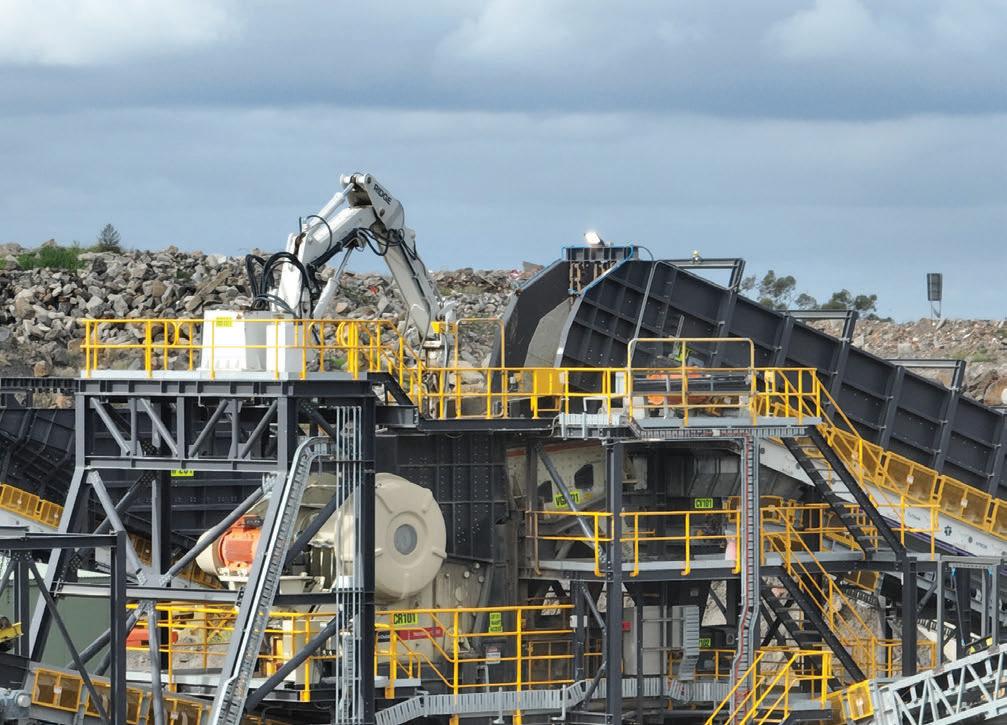
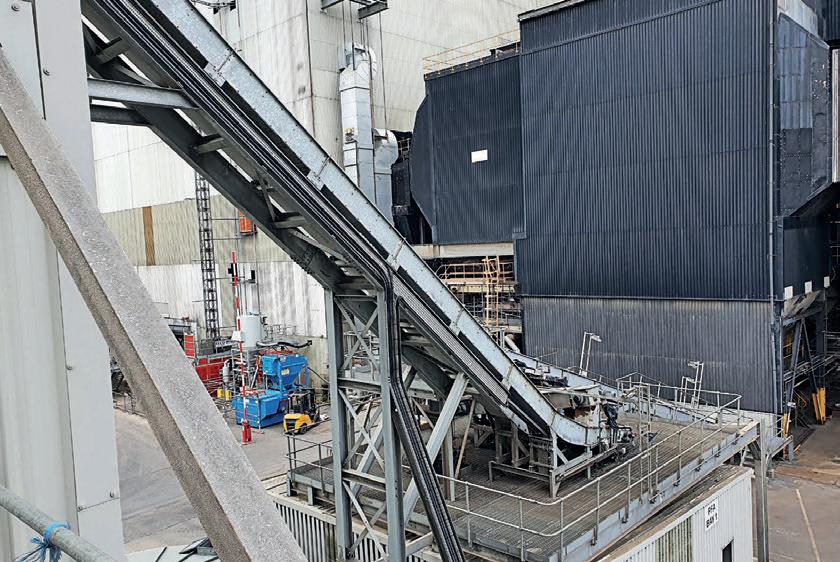
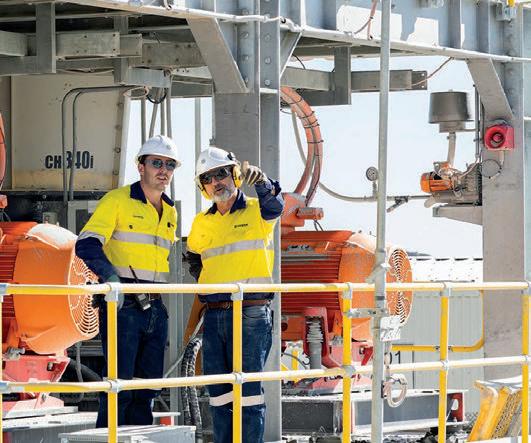
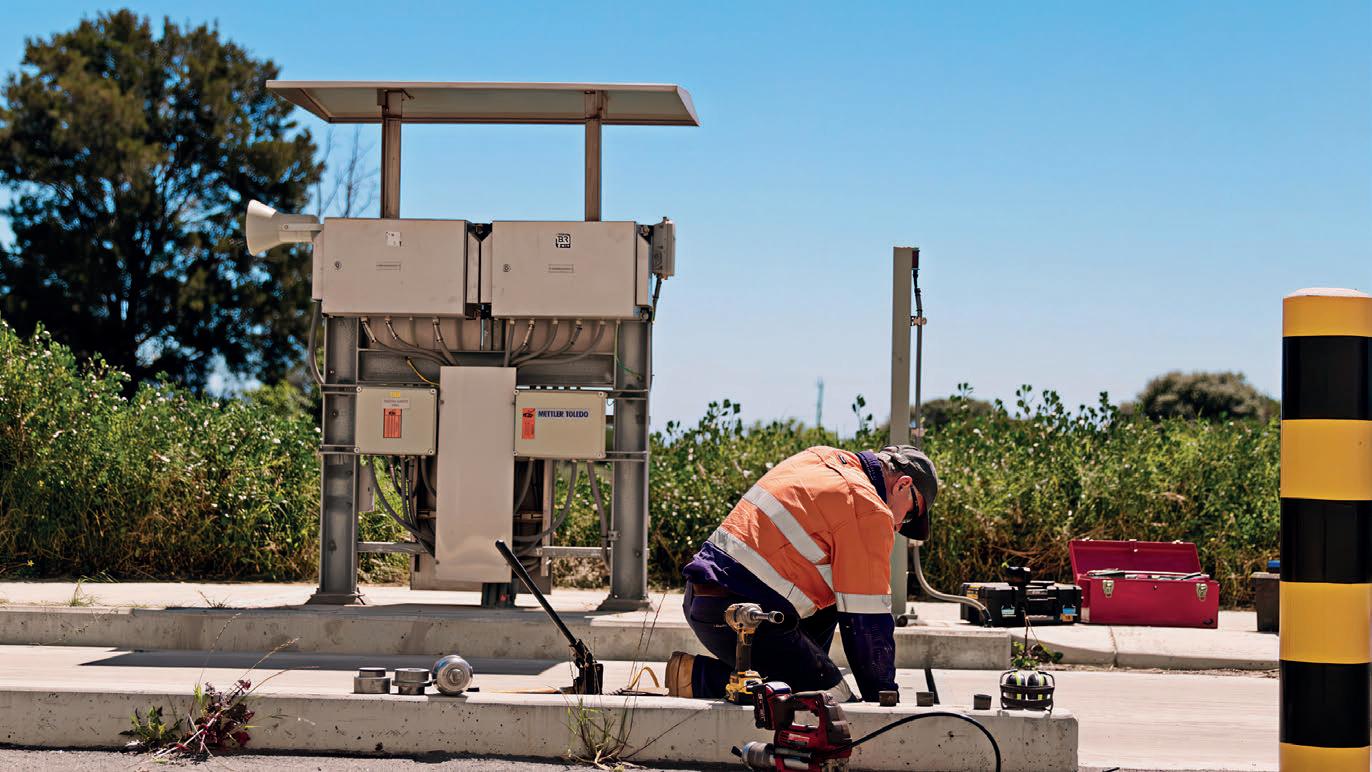
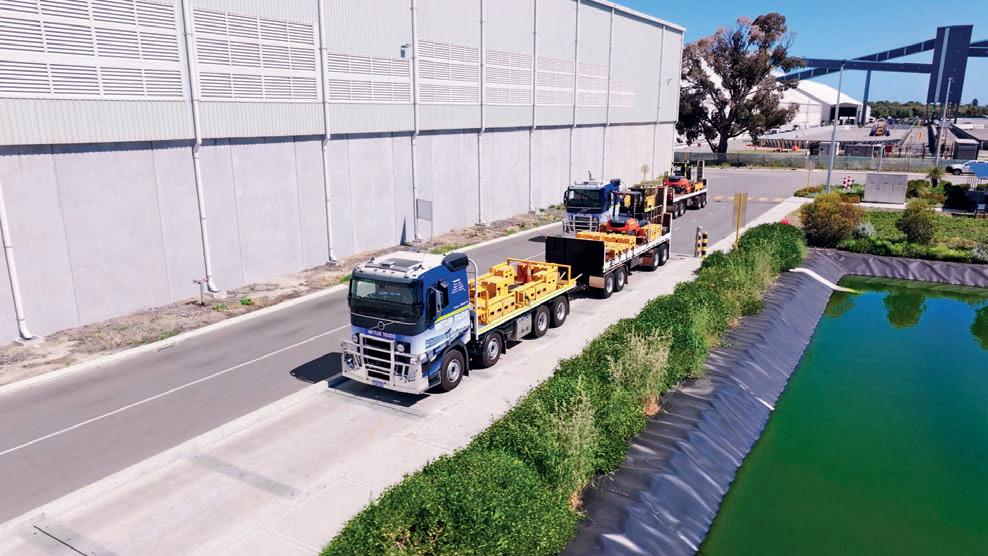
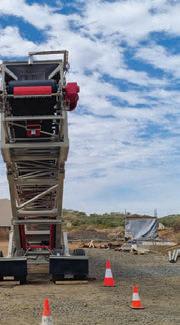
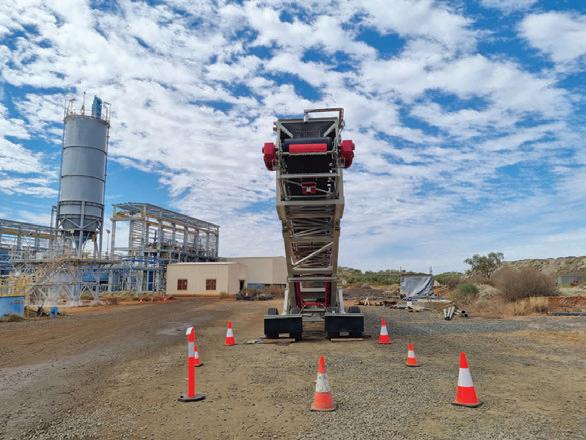
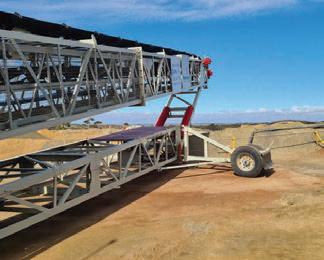
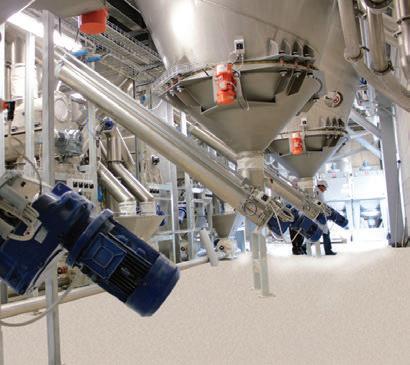
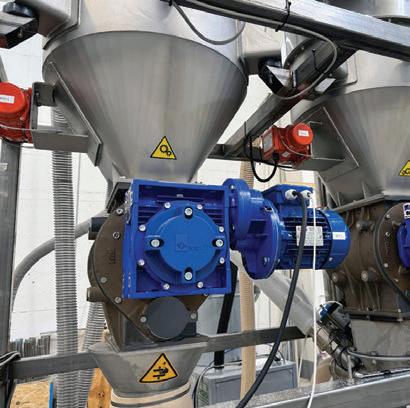
Bulk Handling Technologies draws on deep industry experience to engineer purpose-built, innovative systems that address the specific challenges of each application. From custom bin and hopper design to an extensive portfolio of feeding, conveying and weighing solutions, we deliver complete, reliable packages to handle any bulk material with accuracy and confidence.
We also support our customers with site audits, troubleshooting and practical refurbishment or upgrade solutions to improve performance, extend equipment life and maximise operational e ciency.
Our equipment and solutions are supplied across Australia and to international clients.
8 Extending a 220-year legacy
12 Victorian expansion underway
16 The theory and practice of bulk handling
20 From Australia to Armenia
22 West meets east
24 Beyond shiploading
26 Packing for the future
28 Remote monitoring: Theory versus reality
32 The importance of sampling selection
34 Automation enters the hatch
36 Regional connection, long-lasting relations
38 Home grown rare earth
40 Less downtime, more accuracy
44 Cementing the future
46 Best of both worlds
48 Making more with less
50 Every kilo counts
53 Mobile muscle for o shore wind
56 BULK2026 brings industries together
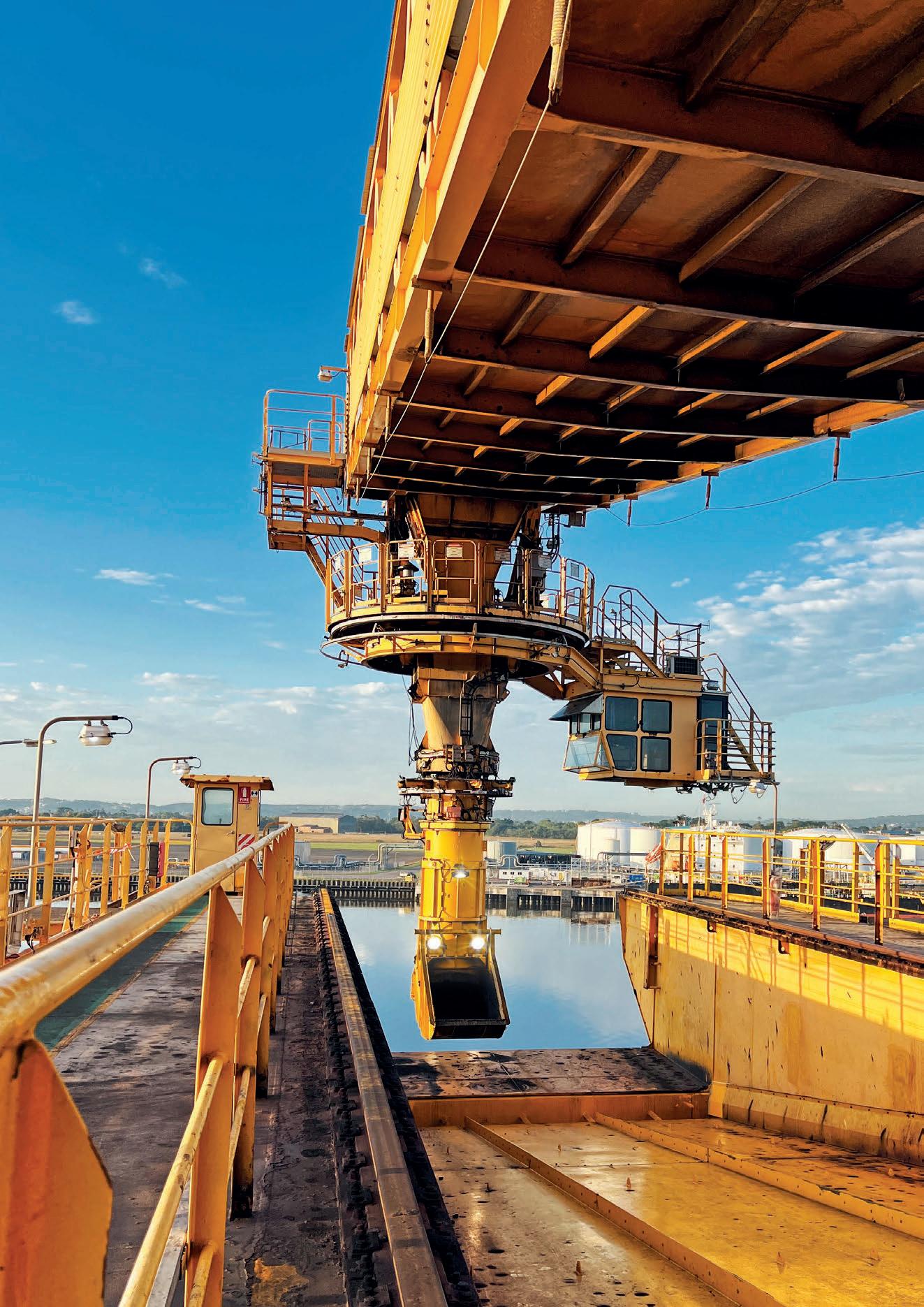
As Australia’s fleet of mining infrastructure grows older, Aspec Engineering is there to support the
and give old equipment new
For the full story, see page 6
Published by:
379 Docklands Drive
Docklands VIC 3008
T: 03 9690 8766
www.primecreativemedia.com.au
COO Christine Clancy
E: christine.clancy@primecreative.com.au
Editor William Arnott
E: william.arnott@primecreative.com.au
Journalist:
Daniel Williamson
E: daniel.williamson@primecreative.com.au
Business development manager
Michelle Verstandiker
E: michelle.verstandiker@primecreative. com.au
Client success manager
Janine Clements
E: janine.clements@primecreative.com.au
Head of design
Clayton Hawley
Design
Laura Drinkwater
Subscriptions
T: 03 9690 8766
E: subscriptions@primecreative.com.au
www.bulkhandlingreview.com
The Publisher reserves the right to alter or omit any article or advertisement submitted and requires indemnity from the advertisers and contributors against damages or liabilities that may arise from material published.
Australia is no stranger to mining booms. In fact, they have made ripples that affected the entire country.
One of the country’s first mining booms since colonisation, the Victorian Gold Rush in 1851 is the perfect example of this. Over a decade, the population of Melbourne ballooned from 77,000 to 540,000, becoming almost half the population of Australia entirely.
According to the Old Treasury Building website, a resident at the time wrote in 1860 that the small, ‘inferior English town’ had transformed into ‘a great city, as comfortable, as elegant, as luxurious as any place out of London or Paris.’
oney from the gold rush filled ictoria’s coffers, leading to grand new public buildings, including Parliament, the State Library, Melbourne University, and Treasury Building.
In a more recent example, the mining boom of the 2000s was one of the largest shocks to the Australian economy in generations, according to The effect of the mining boom on the Australian economy by Peter Tulip.
He reports that the world price of Australia’s mining exports more than tripled over the 10 years to 2012, while spending by the mining sector increased from two per cent of GDP to eight per cent.
When an industry invests that much into infrastructure and equipment at the same time, it leads to a scenario that Aspec Engineering director Adam Mayers outlines in this edition’s cover story.
Mining equipment around the country that was purchased during the height of the mining boom is starting to reach its end of life, at the sametime.
uch of this infrastructure is vital for exports and profitability, posing serious issues for the industry.
This edition of Australian ul andling eview focuses on how mines and ports are evolving. We highlight the Port of Melbourne and Port of Newcastle, look at the changing landscape, and spotlight the emerging technologies that are being used for shiploading across the country.
illiam Arnott ditor A
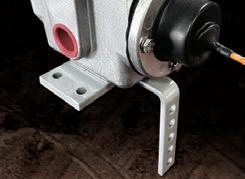
MODELRS
MODELDB
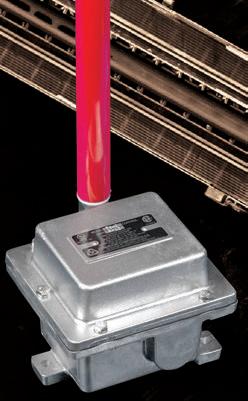
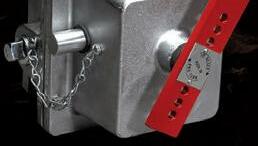
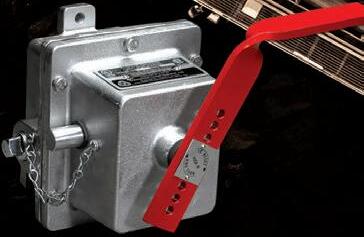
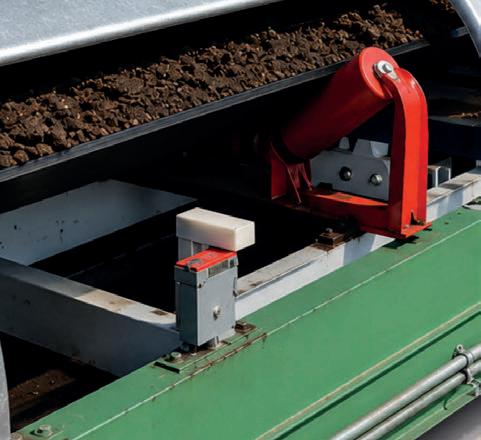
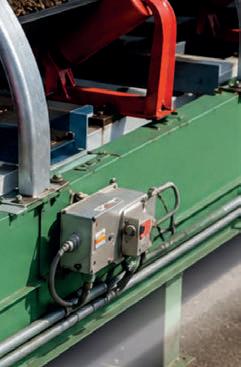
INTRODUCING AN EASY WAY TO PROTECT YOUR WORKERS AS WELL AS PROTECT YOUR INVESTMENT INTO YOUR EQUIPMENT. THE CONVEYOR SAFETY SYSTEM™ IS AN EASY, COST EFFICIENT WAY TO GET PEACE OF MIND AND PROTECTION FOR CONVEYOR EQUIPMENT. BY BUNDLING OUR MODEL RS SAFETY STOP SWITCH WITH OUR MODEL TA BELT ALIGNMENT SWITCH, MODEL DB DAMAGED BELT DETECTOR WE HAVE YOUR WORKERS AND EQUIPMENT COVERED. COUPLE THAT WITH ADDING ONE OF OUR MOTION SWITCHES (MAG-NEAT-O™ OR MODEL CMS), YOU CAN FEEL CONFIDENT KNOWING THAT YOUR SYSTEM AND WORKERS ARE PROTECTED FOR A FRACTION OF THE COST OF DOWNTIME, REPAIRS AND REPLACEMENT EQUIPMENT.
What’s old is new again
As Australia’s fleet of mining infrastructure grows older, Aspec Engineering is there to support the sector and give old equipment new life.
HISTORICALLY, AUSTRALIA’S
mining sector and the nation’s economy have been intertwined.
According to former Reserve Bank of Australia deputy governor Ric Battellino, in his address to the Sydney Institute titled Australian economy been a powerful force in shaping the Australianeconomy.
notable booms whose ripples can still be
felt: one in the late 1970s and early 1980s, and one in the 2000s.
In those times, companies rushed to purchase new equipment.
Aspec Engineering director Adam Mayers said this investment led to one
the end of its life, leaving asset owners grappling with a dilemma.
“There are three choices for these asset owners,” Mayers told ABHR
“The first option is to do nothing and try to maintain equipment, but
Aspec Engineering is a firm that specialises in providing engineering expertise for ports, mines, and heavy industry.
extension upgrade. The third option is to replace the machinery entirely.
“It’s generally cheaper to refurbish equipment, but it can often require an extended outage, and some operationscan’t afford and extended production interruption.”
As components age and break down, spare parts can become hard to come by, especially as the manufacturer stops manufacturing them.
Corrosion is also a creeping problem for mining sites. When exposed to the elements, steel will begin to accumulate rust, and in many cases, sites can’t afford
clients with experienced staff and a large knowledge base.
Mayers said a lot of the company’s work is based on helping mines and ports manage assets towards the end of their lives, and to help owners decide whether a refurbishment or replacement is needed. This includes looking at extending asset life, reducing potential risks and assisting with complex brownfield upgrades.
“From that, we can get a pretty good gauge of how much damage has been done, what’s the rate of fatigue damage accumulation, and then extrapolate how much life the machine has before the damage becomes excessive.
“We also get insight from 3D-scanning and photogrammetry inspections, using drones and cameras to get a detailed understanding of any damage, deformation, or corrosion.”
“We provide engineering assessments to try to understand what the current state of a machine is, in terms of its condition and past utilisation,” he said.
To extend the life of machinery, Aspec Engineering takes a holistic approach, seeking to achieve the best overall outcome in terms of risk vs. reward.
providing engineering expertise for ports, mines, and heavy industry. For more than
“After we get a snapshot of asset status, we then need to figure out what its future requirements are, for example, how long does it need to last for?
“We then attempt to quantify the gap between current state and future requirements and help our clients scope the work needed to bridge that gap. This could be a matter of replacing some components, or it could be major structural works.”
Damage from fatigue is another important factor that Aspec Engineering looks for.
A dynamic machine like a reclaimer or shiploader can exhibit this behaviour; it accumulates metal fatigue, and cracks can begin to form. These cracks pose a serious problem because they can grow unpredictably and quickly. Once the damage is done, it can be difficult to fix.
Aspec Engineering uses machine operational data to help assess equipment health, in particular when it comes tofatigue.
To complement detailed physical inspections, Aspec engineers review machine control systems data, including how it has been operating and the loading cycles, to help inform their assessment.
Mayers said the team often complement on-board control system data by installing additional sensors to get a feel for certain issues.
“For instance, on a fatigue-prone structure, you really want to know the stresses and the cycles that are being experienced in reality to validate design assumptions. In that instance, we would install strain gauges on the machine to monitor and measure the actual stresses in the structure,” he said.
Mayers said because Aspec Engineering isn’t trying to sell equipment, its engineering is based on what provides the best value.
“The quality of the outcome is a really important aspect,” he said. “Refurbishing old equipment doesn’t necessarily reset all the issues. Inevitably, there are compromises.”
“Many older machines are built to a different set of requirements when it comes to health, safety, and the environment. So, clients need to weigh that up and determine whether they can reach these modern standards with existing equipment.”
Over the past few years, Aspec has been heavily involved in refurbishment and replacement projects – a trend that does not look like it will be slowing down any time soon. Often, this work requires a customised approach blending a range of solutions. This may include component replacements, targeted upgrades, structural integrity repairs, strengthening, blasting and painting, ultrasonic impact treatment, and replacing corroded sections.
The company plans to continue growing to support the industry during this time, developing additional capacity in this space. It recently opened an office in Adelaide and is supporting more clients in South Australia with lifeextension works.
Mayers said that for the next decade, there will be a cycle of businesses looking to maintain their existing assets.
“We’re excited to be growing our national footprint so that we can continue to help our clients, and importantly, to continue learning,” he said.
Image: Mike Dark
Extending a 220-year legacy
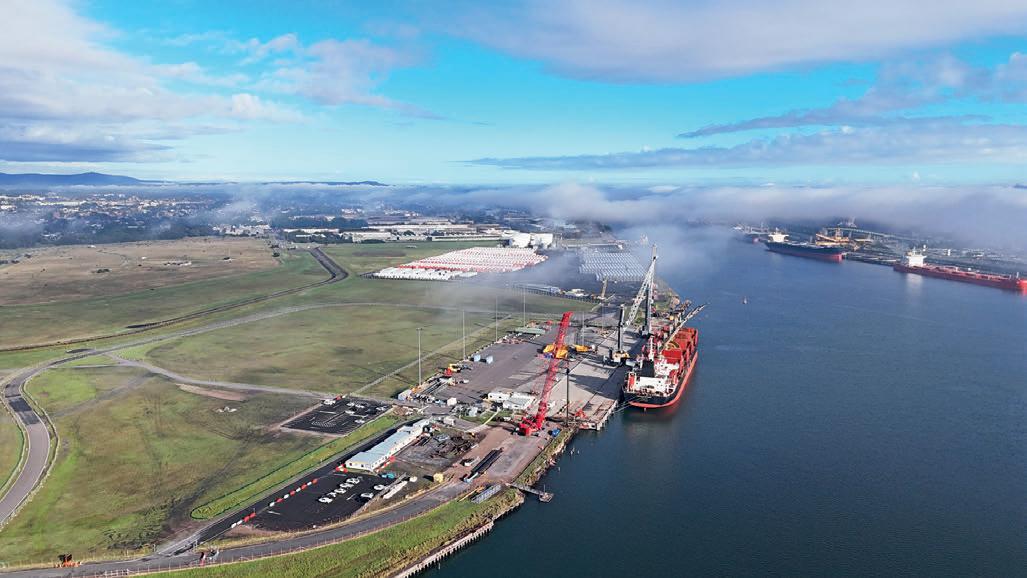
Port of Newcastle is building the infrastructure needed for Australia’s next generation of bulk and project cargo.
SINCE ITS FIRST COMMERCIAL shipment in 1799, Port of Newcastle (PON) has evolved from a regional export gateway into the largest on Australia’s east coast by trade volume.
Today it handles millions of tonnes of cargo annually and serves as a critical connection between Australian producers and international markets.
As global supply and cargo requirements become more complex, the Port is investing heavily in infrastructure designed to support a broader mix of industries. At the centre of this strategy is the continued expansion of the Multipurpose Terminal (MPT) at ayfield, ew South Wales.
The latest step is a $36 million waterside berth extension project that will allow larger vessels to access the terminal, improve cargo handling efficiency and strengthen Newcastle’s position as a key logistics gateway for SW.
While relatively modest in scale compared with some major port developments, the project represents a significant milestone in O ’s long term diversification strategy.
A terminal built for change
Unlike dedicated bulk terminals designed around a single commodity, the MPT
handles a wide range of cargoes including machinery, steel products, agricultural products, breakbulk freight, and renewable energy components.
The terminal has become particularly important as SW embarks on one of the largest renewable energy infrastructure rollouts in its history.
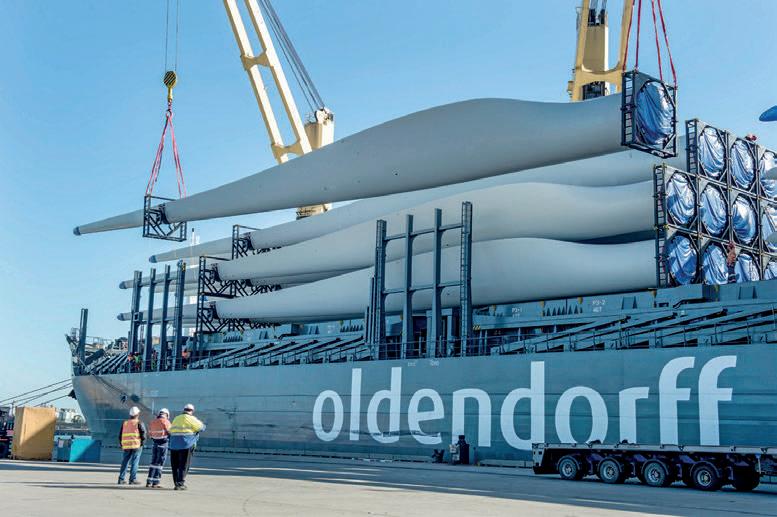
Increasingly, the Port is being called upon to receive oversi ed and over mass cargo destined for renewable energy projects across the state. Wind turbine blades, nacelles, transformers, and otherlarge scale infrastructure components require specialist handling, extensive storage space, and efficient transport connections.
According to PON chief executive officer raig armody, those changing cargo requirements were a major factor behind the decision to expand the facility.
“Being able to accommodate larger vessels at our Multipurpose Terminal will help us meet the growing demand for heavy, oversized and specialised cargo, open up opportunities to service wider trade routes throughout Asia, while strengthening the ort’s role as a long term option for importers and exporters,” armody said.
The current berth configuration limits vessel lengths to approximately 220m.
Once completed, the waterside extension will allow ships of up to 300m to berth at the terminal.
armody said the extension will prove integral for the terminal’s development.
“We’ve been clear that trade diversification is a key strategic objective for PON, and this is a vision that is shared and supported by our partners, our stakeholders, and our community.
“The berth extension project is yet another step in realising this vision for our region.”
Renewable energy opportunities
Few sectors illustrate Newcastle’s diversification ambitions more clearly than renewable energy.
The Port has become a critical logistics hub supporting the development of renewable energy projects throughout SW.
According to a Port of Newcastle spokesperson, it has been identified as the entry point for oversi ed and over mass cargo associated with every project within the entral West Orana Renewable Energy Zone and more than 90 per cent of wind farm projects across the state.
This role extends well beyond vessel unloading. The Port provides storage, staging and heavy lift capabilities that
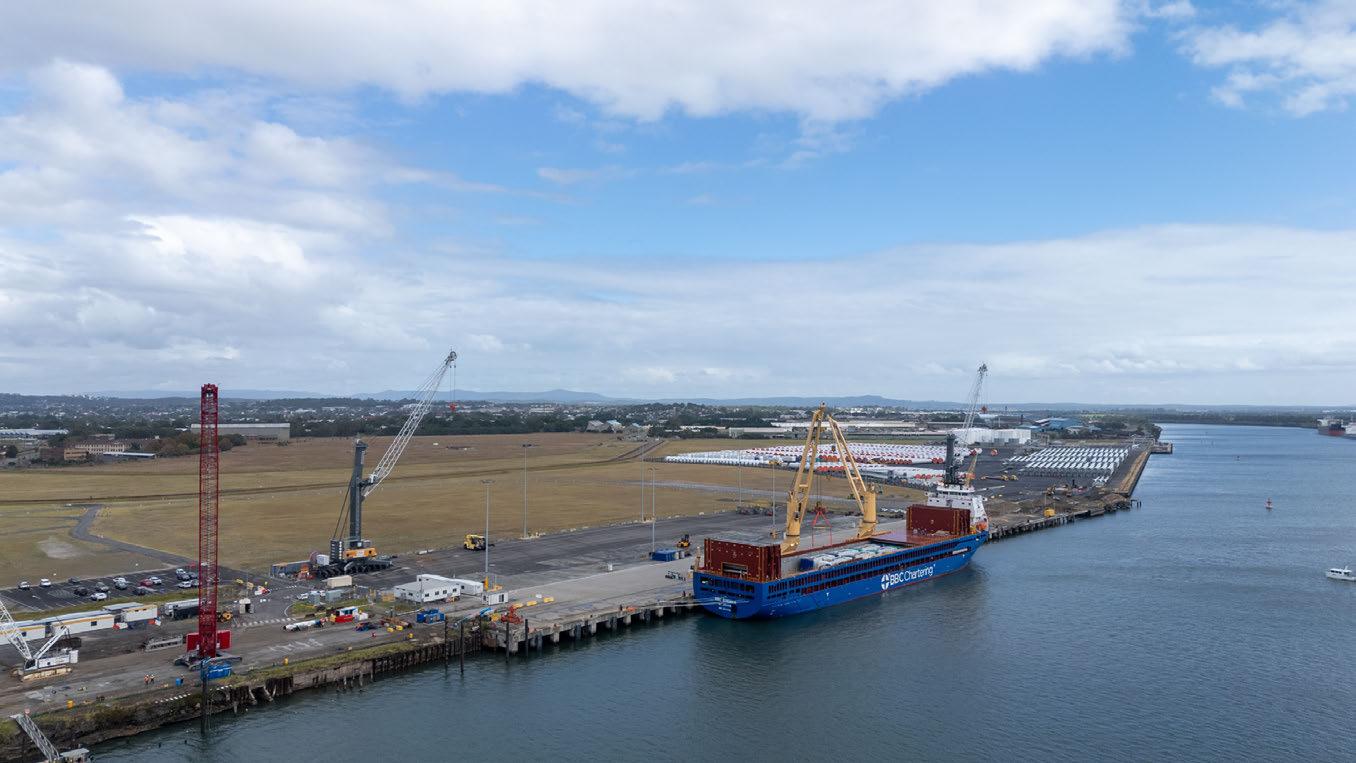
Construction is underway on a $36 million waterside berth extension at Port of Newcastle’s Multipurpose Terminal.
allow project developers to coordinate complex logistics operations before components are transported inland.
As renewable energy infrastructure continues to increase in scale, demand for these services is expected to grow.
The Port is already handling wind turbine shipments at scale, including cargoes destined for projects such as the Uungula Wind Farm.
As turbine blades, nacelles and tower sections continue to increase in size, the ability to accommodate larger vessels at the terminal is expected to become increasingly important for project developers and logistics providers.
Supporting project cargo growth
The significance of the berth expansion extends beyond simply accommodating larger vessels.
Project cargo volumes have increased substantially across Australia in recent years, with PON handling a
of non coal cargo, heavily propelled by equipment required for SW’s Renewable EnergyZones.
Many of these projects rely on imported components which are growing larger and heavier with each generation of technology.
Wind turbine blades are among the most visible examples. Modern blades
significant challenges for ports, transport operators and project developers.
Port infrastructure must not only facilitate vessel access but also provide sufficient crane capability, hardstand space and landside connectivity to move these components safely and efficiently.
Port of Newcastle has been steadily investing across all these areas. The waterside berth extension complements
and deconstructions.
Spare Parts
Along with low cost sourcing, rotables and service exchange, DHHI’s key strength is manufacturing high-quality and low-cost spare parts for both DHHI and non-DHHI equipment. End of Life Life enhancements,
New Machines
DHHI is a major supplier of balanced machines for Tier 1 and 2 Australian and international mining companies.
DHHI’s local After Sales team supports your operation and equipment throughout its entire lifecycle, providing reliable and cost effective solutions every step of the way.
Managing and executing high risk maintenance activities, both planned and unplanned.
Engineering and Optimisation
Onshore and offshore structural, mechanical, electrical, control systems and reliability engineering as well as ongoing technical support.
The berth extension will allow for larger vessels of 300m to call at the berth.
Images: Port of Newcastle
existing investments in mobile harbour cranes, storage facilities and cargo handling equipment, creating a more integrated logistics solution for project cargo operators.
The Port’s ability to leverage its existing crane eet more effectively is expected to deliver additional operational efficiencies once the project is complete.
armody said the project demonstrates the Port’s commitment to turning its diversification strategy into tangible infrastructure investment.
“Through this project, we are turning our diversification commitments into visible delivery.”
For operators handling specialised cargoes, reducing delays and minimising cargo transfers can have a significant impact on project costs.
As supply chains become increasingly complex, ports are being judged not only on vessel turnaround times but also on their ability to function as integrated logistics hubs.
Diversifying beyond coal
While ewcastle’s reputation remains closely tied to its coal exports, the Port’s leadership has been clear about the need to broaden its trade base.
Trade diversification sits at the centre of O ’s long term strategy.
The objective is not to replace existing industries overnight but rather to create a more balanced business capable of supporting regional economic growth through changing market conditions.
The numbers suggest diversification efforts are already gaining momentum. In 2025, Port of Newcastle recorded a record . 2 million tonnes of diversified trade, driven by strong performances across wheat, meals and grains, machinery, project cargo and renewable energy components.
The result demonstrates the growing importance of non coal cargoes within the Port’s overall trade portfolio.
“While we have always and will continue to support traditional industries and the energy security of our customers throughout Asia, the Port is playing an increasingly important role in Australia’s energy future and in supporting the industries shaping its nextchapter,” armody said.
The Port handled 149 million tonnes of coal exports in 2025.
owever, growing diversified trade volumes are creating additional revenue streams and helping position the Port for future market shifts.
The energy transition, changing commodity markets and evolving trade routes are forcing ports to identify new opportunities while maintaining existingstrengths.
For Newcastle, that strategy involves building on its established expertise in bulk logistics while expanding into newsectors.
Engineering for the future
Behind the strategic objectives lies a complex engineering project.
Working within a river environment presents unique construction challenges requiring specialised design and construction methods.
The waterside berth extension project includes approximately 6000m3 of dredging, construction of an 80m piled quay retaining structure and associated foreshore treatment works.
The final design incorporates 1200mm diameter tubular steel piles with clutch connections, creating a durable structure capable of supporting future operationalrequirements.
Australian contractor Brady Marine and ivil was awarded the 6 million construction contract and work is alreadyunderway.
onstruction is expected to take approximately 15 months, subject to weather conditions.
The project is also expected to support around 30 local jobs, including a range of specialist construction roles.
While much of the focus naturally centres on vessel access, the project forms part of a broader program of investment across the terminal.
Additional developments being explored include expanded storage areas and further investment in cargo handlingequipment.
Together, these initiatives aim to create a more capable and competitive logistics precinct at ayfield.
armody said building capacity today is essential to supporting the infrastructure of tomorrow.
“As a critical gateway for project cargo and large scale renewable energy componentry, the $36 million investment we are making in our Multipurpose Terminal will ensure Port of Newcastle has the capacity, capability and exibility to support both traditional and emergingindustries.”
Looking beyond the berth extension, armody said diversification is central to the port’s long termfuture.
“ iversification for us has never beenabout whether we should,butrather how do we do it in a balanced waythat builds on our strengths and delivers lastingeconomic benefits to the unter Region, ew South Wales, andthenation.”
Wind turbine blades and otherlarge-scale components require specialist handling.
Victorian expansion underway
Port of Melbourne is expanding its freight footprint with a $500 million redevelopment that will bring logistics operations closer to the waterfront.
AUSTRALIA’S PORTS ARE THE backbone of its economy.
According to Infrastructure Australia, over 99 per cent of the country’s international trade volume moves through maritime ports. In 2024-25 the Port of Melbourne facilitated $158 billion, connecting domestic industries with global markets and ensuring the steady ow of imports and exports, which supports economic growth.
All Australian-based ports have their specific roles and purposes. The ort of ewcastle is a world renowned export hub for coal, the Port of Hedland is an export hub for iron ore, and the ort of Brisbane is known for container trade.
The ort of elbourne o has built a reputation as the largest Australian container and general cargoport.
According to PoM, it contributes $11 billion to national economic activity and serves as the trade gateway for Southeast Australia.
The port supports nearly 0,000 full-time jobs and handles more than one-third of Australia’s container
trade, making it one of the most important pieces of freight infrastructure in the country.
For o chief executive officer Saul Cannon, maintaining that position requires continuous investment and long-term planning.
“Port of Melbourne is one of Australia’s most critical infrastructure assets, and as a landlord port, we are committed to delivering capacity and supply chain efficiencies to meet the growing needs of our economy,” Cannon told ABHR
“As our population increases, the port’s capacity must grow too, and we will continue to invest in ensuring it can cater to the growing trade demand.”
Planning for future demand
Like many infrastructure operators, PoM faces the challenge of accommodating future growth and maintaining operational efficiency.
Victoria’s population is forecast to continue expanding over the coming decades, with the Victorian Department of Transport and lanning projecting it
will reach roughly 8.6 million by 2041 and surpass 0. million by 20 .
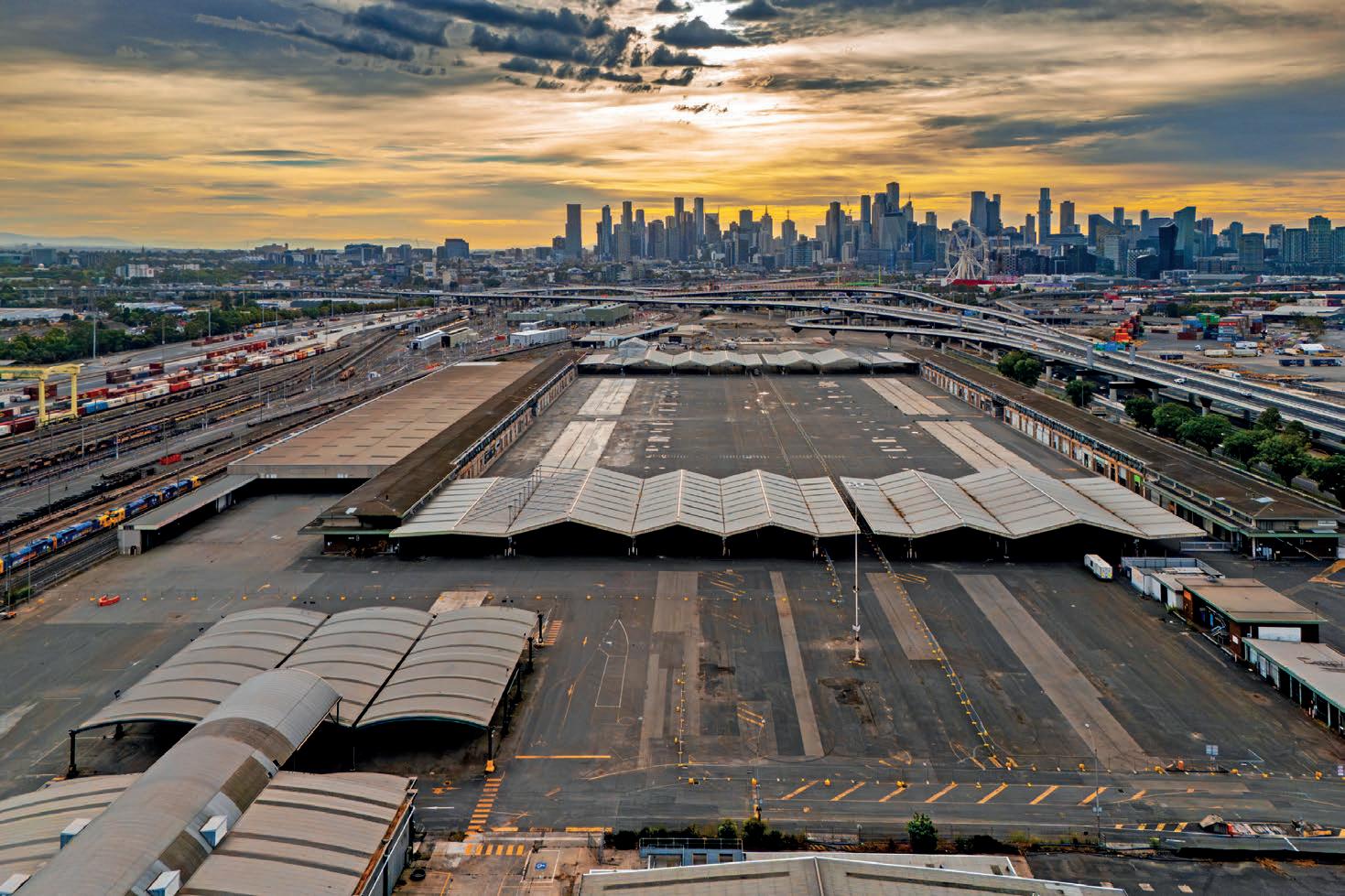
To prepare for this growth, o has unveiled plans to redevelop the former Melbourne Market site, located adjacent to the port’s existing operations.
The project is backed by approximately 00 million in private sector investment and follows the Victorian Government’s decision to lease the 29-hectare site to the PoM until2066.
The redevelopment is expected to become a major logistics and freight hub, creating additional capacity for container handling, transport operations, and supply chain services close to the waterfront.
“This is a very exciting project,” Cannon said. “It’s going to transform about a 29-hectare site and is close in proximity to our existing portoperations.”
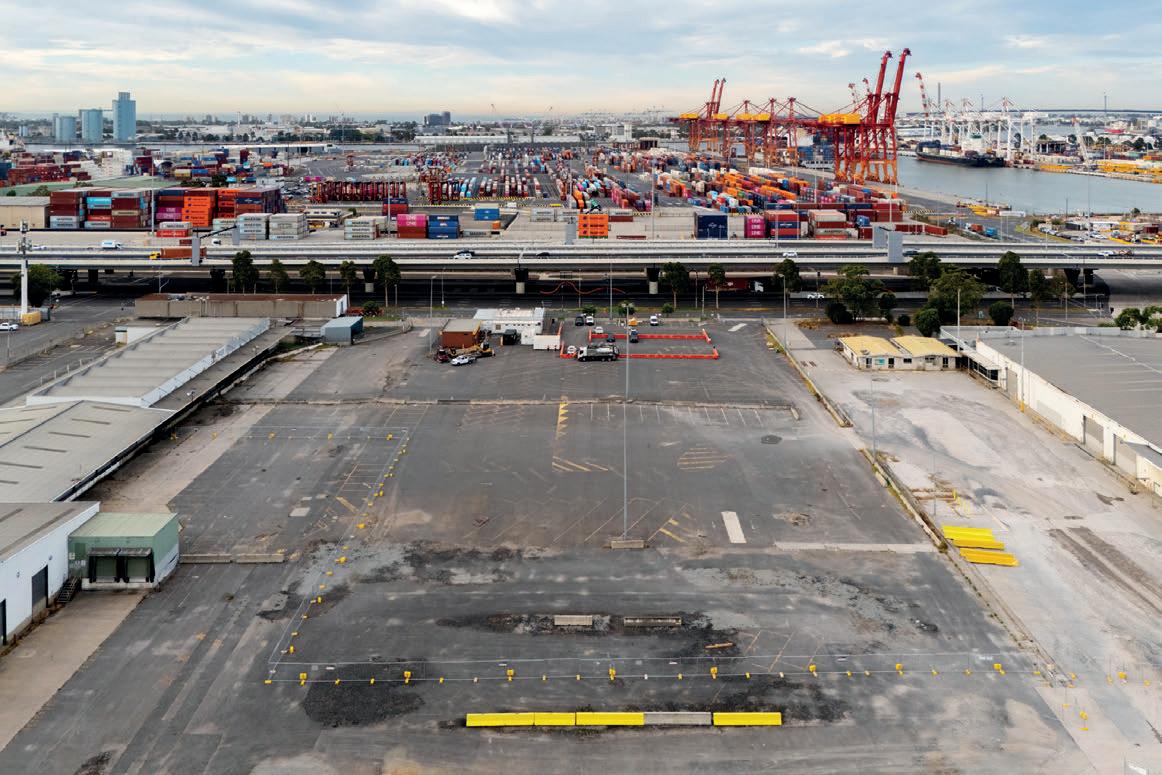
The location offers a significant advantage. By positioning freight and logistics operations immediately adjacent to port infrastructure, operators can reduce unnecessary
The Melbourne Market Site redevelopment is set to reduce freight-related congestion around Melbourne.
truck movements, improve container turnaround times, and create more efficient connections between maritime and landside transport networks.
“We expect the volume of containersto double in the next 0 years, so we need to ensure we have the right capacity and that development is completed at the right time to really underpin that economic activity for Victoria’s future,” Cannon said.
“The site is adjacent to the port, so it’s a very natural extension and well suited to freight and logistics and bulk materials use.
“We expect it to respond well to the need to reduce congestion and minimiseimpacts on surroundingcommunities.”
MEDLOG signs on
A major milestone for the project came with the announcement that MEDLOG will become a key tenant at the site. Part of the Mediterranean Shipping Company
S roup, E LO operates an extensive network of inland logistics, warehousing, and transport services worldwide. The company specialises in
World leaders with 50 years’ experience in Bulk Materials Handling Research and Consulting
connecting maritime freight operations with inland supply chains, helping streamline cargo movements from port todestination.
TUNRA Bulk Solids develops custom solutions to suit the individual needs of our clients.
Services:
Flow Properties and Materials Testing
Dust (environmental) Testing
Wear Testing (Impact, Abrasion and Erosion)
Conveyor Belt, Idler Roll and Pulley Testing
Discrete Element Method (DEM) Modelling
DEM Calibration Testing
Materials Handling Consultancy and Contracted Research
Bin and Stockpile Design
Pneumatic and Hydraulic Conveying
Computational and Scale Modelling
Site Visits
Professional Development Courses
International Conference on Bulk Materials Storage, Handling and Transportation ICBMH 2026: 7-9 July (Fremantle)
Belt and Idler Showcase and Facilities Tour: 13 August (Newcastle)
Storage, Feeding, Transfer and Belt Conveying Course: 17-19 November (Perth)
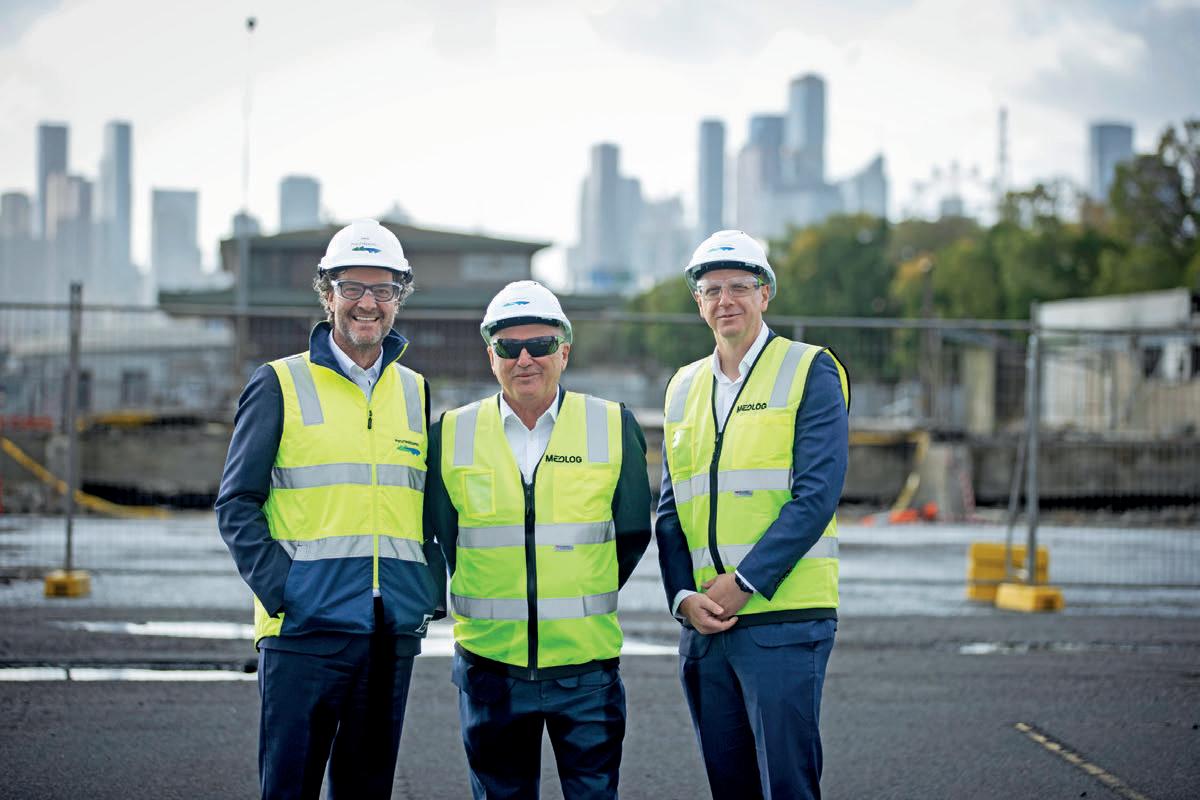
(L-R) Port of Melbourne chief executive o icer Saul Cannon, MEDLOG Oceania group managing director Mark Godfrey, MEDLOG Oceania chief executive o icer Ned Zver.
Images:
Port of Melbourne
Cannon said the partnership re ects the strategic importance of theredevelopment.
“We are delighted to welcome MEDLOG as the major tenant for the Former Melbourne Market site,” he said. “MEDLOG are one of the world’s largest logistics companies, and they’re very much active in land-side logistics.
“They’re part of the S group, the world’s largest shipping line, so they’re a well-aligned strategic tenant to support the market site.”
The arrival of a global logistics operator is expected to strengthen Melbourne’s role as a freight gateway while creating additional opportunities for supply chain integration.
“By bringing global leaders like MEDLOG to Melbourne, we are strengthening our state’s supply chain competitiveness and creating the conditions for more efficient, sustainable growth across the entire freight network,” Cannon said.
MEDLOG SA chairman Giuseppe Prudente said the investment aligned
with the company’s long-term infrastructure strategy.
“This investment re ects E LO ’s long-term commitment to building resilient, port-connected infrastructure that supports global trade and local economies,” he said.
“Our partnership with the Port of elbourne is a natural extension of that strategy — aligning world-class port capability with integrated inland logistics to move cargo more efficiently from ship to customer.”
Reducing congestion and improvinge iciency
One of the key benefits highlighted by both the PoM and Victorian Government is the potential to reduce freight-related congestion around Melbourne.
Historically, containers and freight often travel significant distances between ports. Relocating logistics operations closer to port infrastructure can shorten these journeys.
Victorian ports and freight minister Melissa Horne said the project would
support both supply chain performance and local communities.
“This is about keeping goods moving while taking pressure off local streets cutting truck traffic, improving safety and strengthening Victoria’s supply chains,” she said.
“By bringing freight closer to the port, we’re making the system more efficient and delivering real benefits for communities, the freight industry and businesses right across the state.”
Cannon said the redevelopment re ects a broader commitment to ensuring Victoria’s freight infrastructure keeps pace with economic and populationgrowth.
“Working at the port aligns perfectly with my passion for Victoria’s future and Melbourne’s economic growth,” he said. “Our confidence in continuous trade expansion is firmly underpinned byrapid population growth across thestate.
“To secure this future, the port must grow concurrently to deliver an efficient trade gateway for the region.”
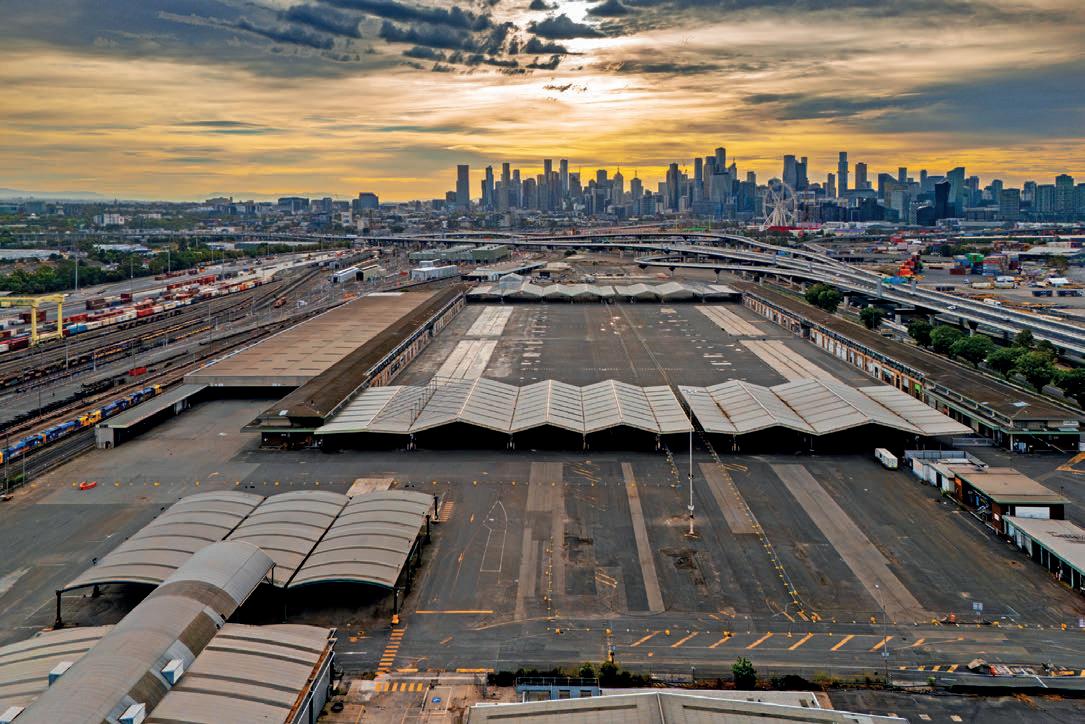
The Port of Melbourne is Australia’s largest cargo and container port.
The theory and practice of bulk materials handling
about his recently published book that addresses the gap between
Why has the bulk materials handling sector been perceived asrelying on trial and error?
Alan W Roberts: What is commonly described as “trial and error” is typically the result of misunderstandings about bulk material behaviour, rather than a suboptimal engineering approach.
Bulk solids behaviour depends on many interacting factors, friction, moisture, consolidation, particle size, and these vary from material to material and from plant to plant, with each installation became its own experiment, you take the theory you have and develop it to suit a particular problem.
TU R identifies that many issues arise from insufficient material characterisation, inadequate measurement, and ingrained organisational practices. By systematically diagnosing these problems and applying rigorous and modelling techniques, TUNRA replaces guesswork with evidence-based design.
These insights are then used to refine engineering procedures and advance bulk solids theory, helping to prevent the repetition of past mistakes. Without continual advancement of theory and practice, industries risk reverting to ineffective design approaches.
TUNRA’s methodology is based on a fundamental understanding of the way bulk materials are handled in industrial operations involving storage, handling, processing and conveying. This approachensures that solutions are grounded in validated material models rather than anecdotal experience.
I have long advocated for the industryto move away from normalisingtrial and error fixes and, instead, adopt first principles designmethodologies.
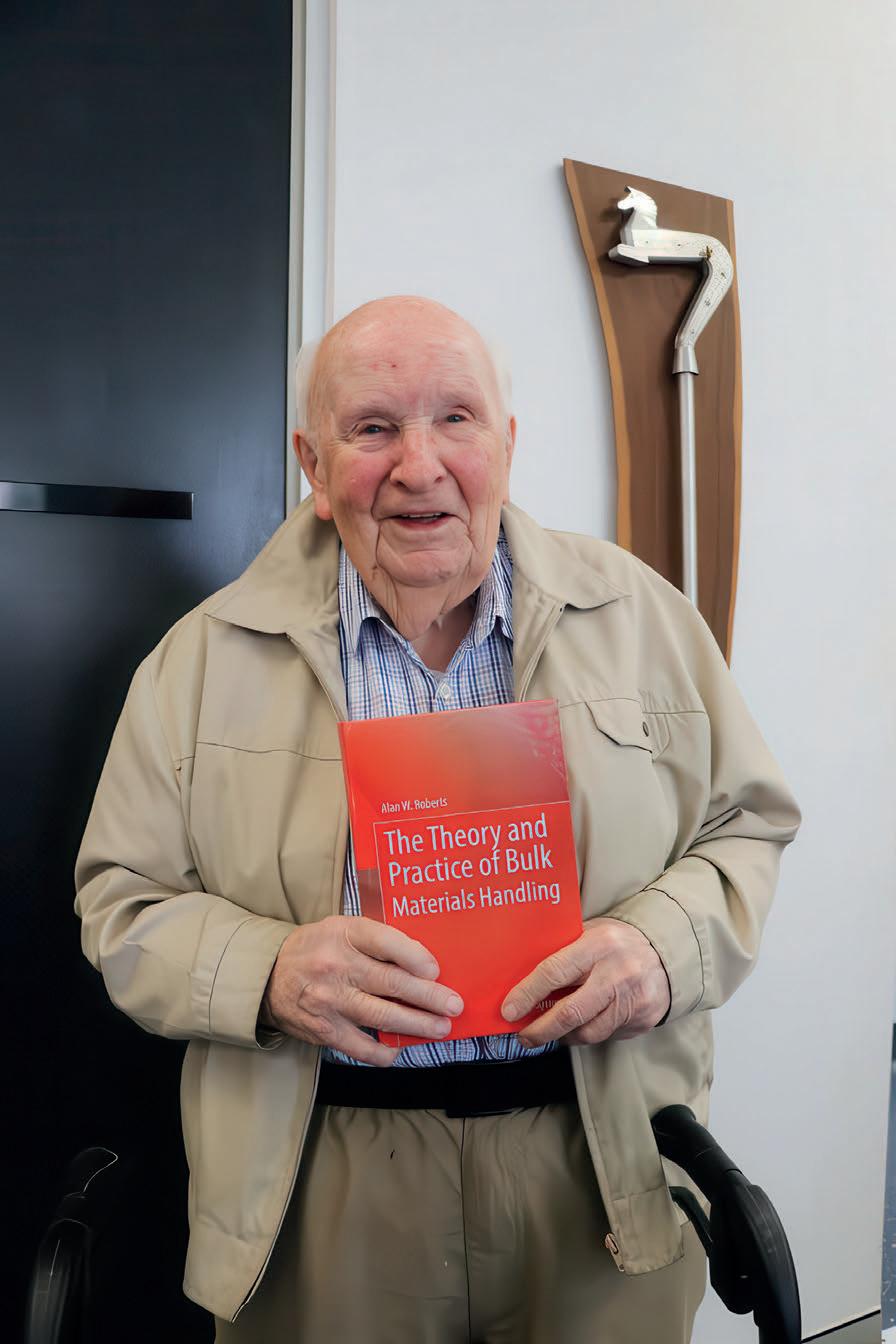
Emeritus professor Alan W Roberts.
Images: Tunra Bulk Solids
What are some of the problems thiscan cause?
AR: This lack of knowledge can lead to silo failures and operational issues, particularly when material properties and environmental conditions are not properly considered. In most cases, failures stem not from the equipment itself, but from mischaracterisation of the material. Ignoring established bulk solids principles can result in ow obstructions, segregation, uncontrolled discharge, accelerated wear, equipment damage, downtime, reduced efficiency, and increased safety risks.
How does the book address the gap between theory and practice?
AR: The book suggests that the gap between theory and practice largely comes down to identifying the true driving force behind progress. Theory is often not fully understood, and in many cases, practice re ects a misunderstanding or misapplication of theories that do not adequately address real-world problems.
A key issue is that industrial problems are typically far more complex than those examined in research. As a result, existing theories may not be sufficient to solve them directly. However, progress occurs when these practical challenges are recognised and used to guide researchefforts. roblems in industry are usually orders of magnitude more difficult thanthe level of research available to solve them.
Industry problems should drive the direction of research. By clearly understanding real-world challenges, theory can evolve in ways that make it more applicable and effective in practice.
There is a well-known observation by Alfred North Whitehead, that in our most theoretical moods we may be nearest to our most practical applications. I have often thought about that in the context of bulk solids handling, and I would suggest it should be reversed: In our most practical applications we may be nearest to our most theoretical solution.
Because it is through real problems, blockages, unstable ow, unexpected loads, that the underlying theory becomes clear. If you consider bulk solids behaviour itself, it is strongly in uenced
“The book represents a long journey rather than a single effort. It brings together decades of research, industrial consulting, teaching, and collaboration with colleagues and students. Above all, it reflects a continuous process oflearning and discovery.”
by their ow properties, such as internal friction between particles, friction at the walls of the storage vessel, and variations in velocity across the owing material and environmental conditions. These effects create shear ones, stress redistribution, and sometimes instability. Unless these fundamentals are understood, the behaviour cannot be predicted reliably.
The book brings these elements together:
• Fundamental mechanics explainsbehaviour
Testing defines material properties
• Case studies demonstrate how those principles apply in practice
Without this integration, the picture remains incomplete.
What has
gone into getting thebookpublished?
AR: The book re ects a lifetime of dedication to the field of bulk solids handling, beginning over 70 years ago, in 1947, when I started my engineering career as an apprentice at Cockatoo Docks while undertaking a five year part time Diploma in Mechanical Engineering.
Then completing a further three years of part-time study to convert my diploma to a Bachelor of Engineering, graduating from the University of New South Wales in 1955 with First Class Honours.
In 6 , I was awarded my h . s part of this work, I submitted a paper titled The performance of grain augers to the Institution of Mechanical Engineers in the UK, which received a prestigious award in 1962 as the best paper in its subject area.
This research, together with my study of Jenike’s Theory (Bulletin 108) and Johanson’s (Bulletin 116), which established the principles of mass ow and funnel ow, inspired me to focus my career on the storage and handling of bulk solids.
The book represents a long journey rather than a single effort. It brings together decades of research, industrial
consulting, teaching, and collaboration with colleagues and students. Above all, it re ects a continuous process of learning and discovery.
How have you drawn on your own experiences for the book?
AR: Most of the examples, the case studies, and the emphasis of particular topics come from real problems encountered in industry. For example, blockages caused by cohesive materials, structural issues arising from misunderstood load conditions, ow instabilities linked to feeder and hopper interaction. These are not theoretical constructs; they are practical experiences. That is important, because bulk solids handling is not an abstract discipline. It is grounded in real materials, real equipment, and real consequences.
In many cases, system failures have provided deeper insights than successful designs, as they necessitate a more thorough understanding of underlying mechanisms. This perspective is informed by extensive consulting experience, where complex problems often emerge beyond the initial design stage.
Bulk solids has kept me engaged — it is my elixir of life, this ongoing work has been central to developing both expertise and insight.
Who is the book for?
AR: Engineers, plant designers, and researchers should read this book because modern technologies can sometimes overshadow the importance of fundamental materials handling principles. The book reinforces these foundations while promoting a structured way of thinking rather than a reliance on prescribed methods alone.
It integrates core theory with practical application, explaining not only how processes work, but why they behave as they do in real-world conditions. For engineers and designers, this contributes to improved system
reliability. For researchers, it identifies areas requiring further investigation and deeperunderstanding.
Additionally, the book emphasises the importance of asking the right questions. Many bulk solids handling issues arise from a poor understanding of the material rather than the equipment. Without formal training in solids ow,engineers may develop a professional blind spot, resulting in repeated errors and over-reliance on trial-and-error approaches instead of science-based design.
How can the knowledge within assist bulk handling businesses?
AR: In very practical terms, it allows businesses to make better decisions at the outset. If you understand how a material behaves, you are no longer reacting to problems, you are anticipating them, and that is a very important distinction. Too often, plants are operated in a reactive way, a blockage occurs, a modification
is made, something else changes, and the process continues. Over time, that becomes quite costly, not only financially, but in terms of reliability and safety. What the knowledge in the book offers is a way to step back and look at the situation more fundamentally. If the ow behaviour is properly understood: •The right equipment can be selected in the first instance
• The system can be designed to operate in a stable and predictable way •Modifications, if required, are based on understanding rather than assumption I have seen many situations where relatively simple changes, once the real cause is understood, lead to quite significant improvements.
What do you hope the industry willlearn from it?
AR: Not to underestimate bulk solids handling, the core hope is simple: that industry treats bulk solids as a science, not an afterthought. Experience shows
quite clearly that problems are rarely isolated, they are connected, sometimes in ways that are not immediately obvious. So, the message is to return tofundamentals:
• Understand the material
• Understand how it interacts with theequipment
Understand how the system behaves as a whole
But equally, it is important to continue building on that knowledge. No matter how much experience one gains, there is always more to learn, new situations, new materials, new interactions. rogress in this field has always come from sharing knowledge, questioning assumptions, and building on what others have done. Thatprocess should continue. Because as understanding develops, many of the problems that once seemeddifficultbecome quite manageable. Thatis what moves the industry forward.
The book reflects a lifetime of dedication to the field of bulk solids handling.
Bringing you our world of expertise
We are now better equipped than ever to help you to optimise your comminution and material handling operations for maximum performance, safety and efficiency.
Our industry leading expertise in crushing, screening, feeding, loading and wear protection allows us to bring you an unrivalled equipment line-up. We underpin this unique offering with our expert process knowledge, full range of digital tools, high quality OEM spare parts, consumables and life-cycle services.
Scan the QR code to discover why we are the industry’s partner in eco-efficient mineral processing.
From Australia to Armenia
Rema Tip Top has drawn on expertise from across the world to deliver a challenging overland conveyor project on a snow-covered mountain.
BEN PERRY IS NO STRANGER TO overland conveyor systems. As Rema Tip Top Australia’s special projects manager, he often assists Australian mining companies install multi kilometre-long systems.
While he’s no stranger to working in 0 heat, surrounded by ies and dust, when Rema Tip Top’s Austrian branch needed his set of skills, he jumped at the opportunity. The European business had recently won a contract to install a 5.5km overland conveyor system at a new gold mine in Armenia.
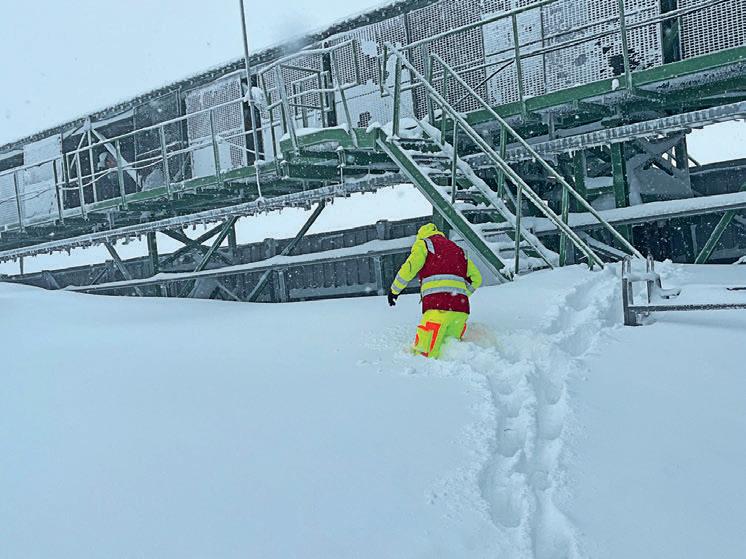
The challenge? The conveyor ran down the side of a snowcoveredmountain.
“They were looking for someone to help them lead the project,” Perry told ABHR. “I put my hand up for it, let the team know I was keen to travel internationally to help, and was excited to learn and share the knowledge.”
Due to the complexity of the project, Rema Tip Top drew on its resources and expertise from around the world to ensure it was completed to the standards the company prides itself on.
Perry was joined by a splice crew from Russia, an engineering team from
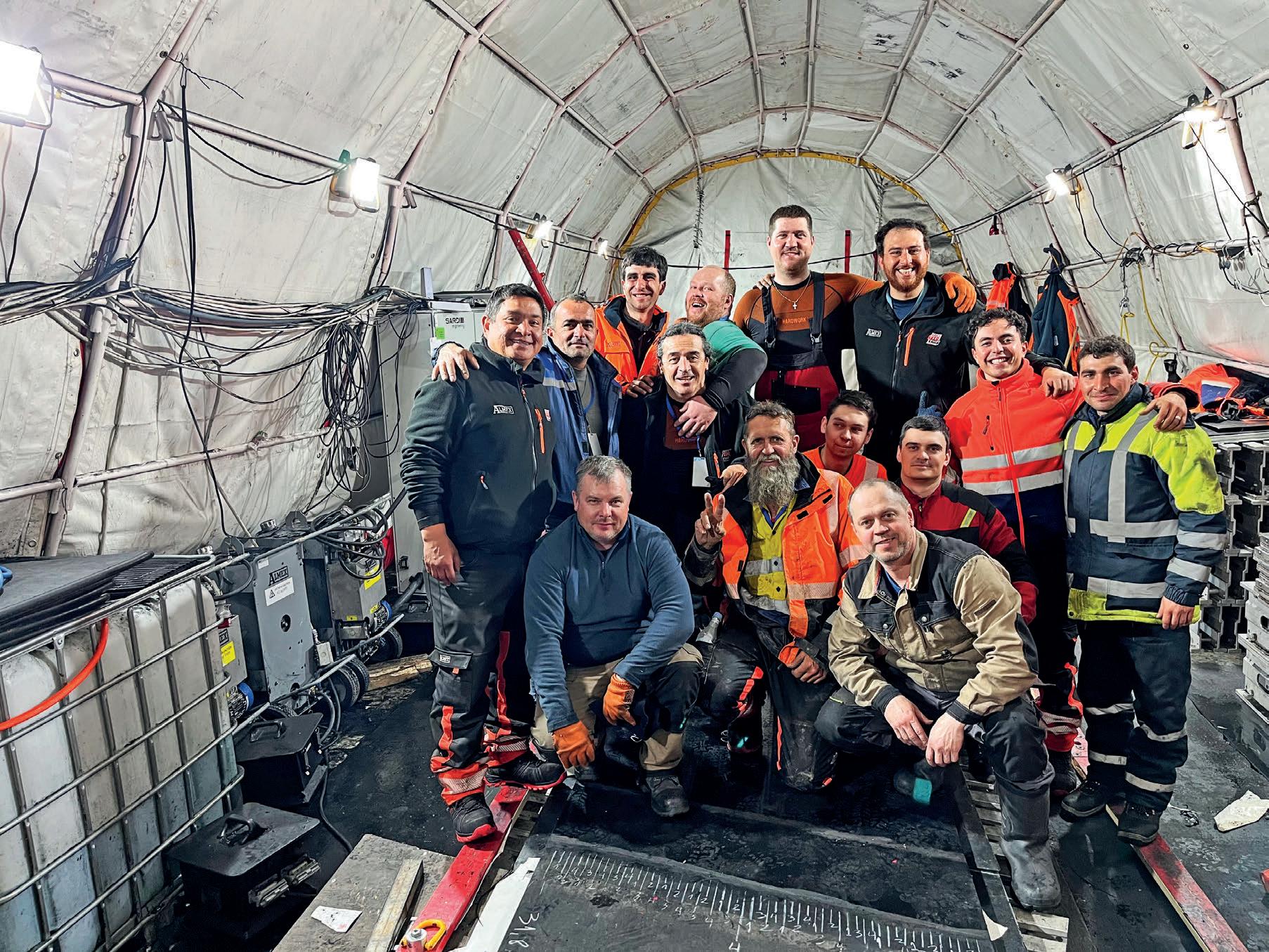
Chile, quality assurance specialists from Poland and Chile and conveyor technicians from Armenia, Austria and Germany. Joined by a translator and a few wild mountain dogs, the Rema Tip Top team from around the world completed an extraordinary beltinstallation.
The new gold mine’s overland conveyor was fitted with over kms of 200mm wide ST6000 belt. The starting height was 2600m above ground and dropped down to 00m above ground at the base.
Perry said his experience working on overland conveyor projects in Western Australia and Queensland had prepared him for a lot, but the snow and ice were constant challenges that needed to be overcome.
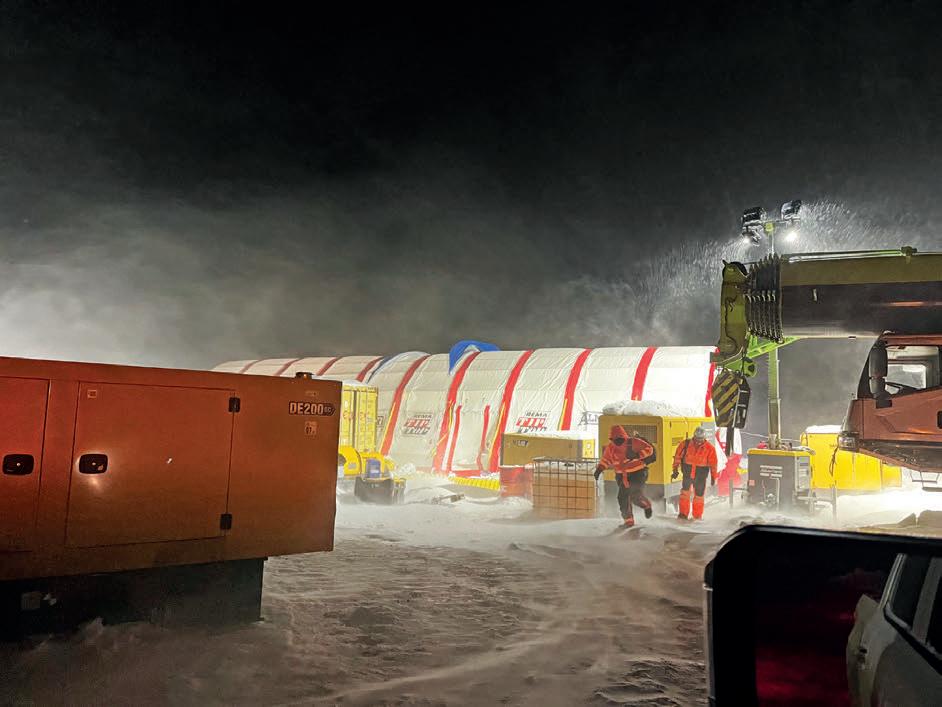
“It’s a totally different environment,” he said. “It was a challenge to set up the winches in a way that they wouldn’t slide, frozen rigging, slippery surfaces, slipping on ice in the morning and ankle-deep mud in the evening.
“Keeping on top of housekeeping was also important. Snow was constantly piling up, so we would be constantly shovelling it away to make sure there’s
no risk of injury from something you couldn’t see.
“We checked that all the rigging was correct, nothing had been damaged, and everything was always safe. There was a lot that went on behind the scenes to keep everything as safe as possible.”
Due to the shear amount of weight from the belt being pulled with downward force from the side of the mountain, a lot of consideration was taken into account when designing the braking structure and installing the belt.
The ice and snow also created a soapy film when it mixed with the wax on the belt, so the braking structure included multiple steps including cleaners and heaters to ensure critical componentry remained warm.
The belt also had to contour to the natural form of the mountain, meaning it wasn’t linear; there were a lot of corners and terrain that had to be considered during the installation.
Perry said the opportunity towork alongside teams from
The conveyor ran down the side of a snowcovered mountain.
Rema Tip Top’s team included experts from across the globe.
value,” he said. “When you’re working with different people from different cultures, everyone has different communication styles. When you’re working with Australians all of the time, you know what to expect, so moving into an environment that was so diverse was a big eye opener.
“The language barrier made things difficult. By the end of it all, oogle Translate was my best friend,” he said
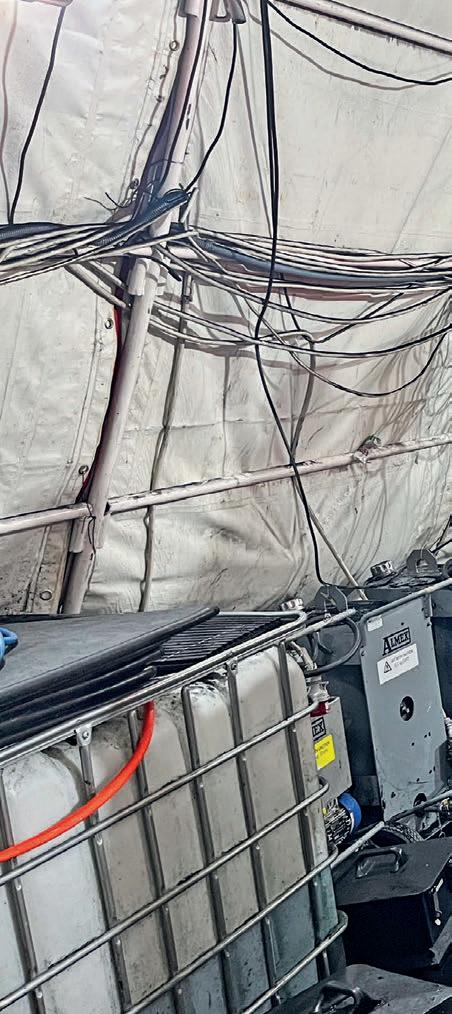
The belt was also vulcanised using Almex Group (a division of REMA TIP TOP) presses. The freezing temperatures of sometimes down to 22 at night meant maintaining high-heat to initiate the chemical reaction required for vulcanisation was difficult.
However, with REMA TIP TOP adhesives, Almex presses and a specialised engineering expertise – the team was able to complete the 2 ,
with heavy snowfall forcing a stop to engineers, productmanagers, quality
The freezing temperatures meant maintaining high- heat to initiate the chemical reaction required for vulcanisation was di icult.
Images:
Rema Tip Top
West meets east
From the east coast to the west coast of Australia, Satake Oceania is bringing innovation to its bulk materials customers.
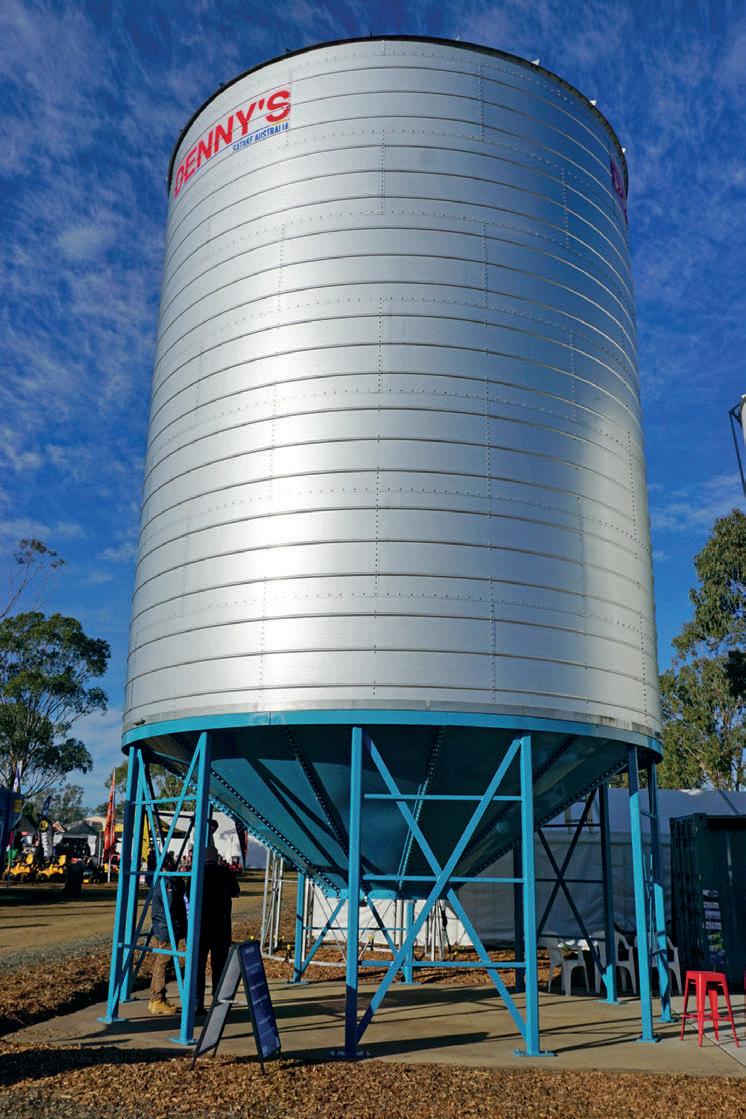
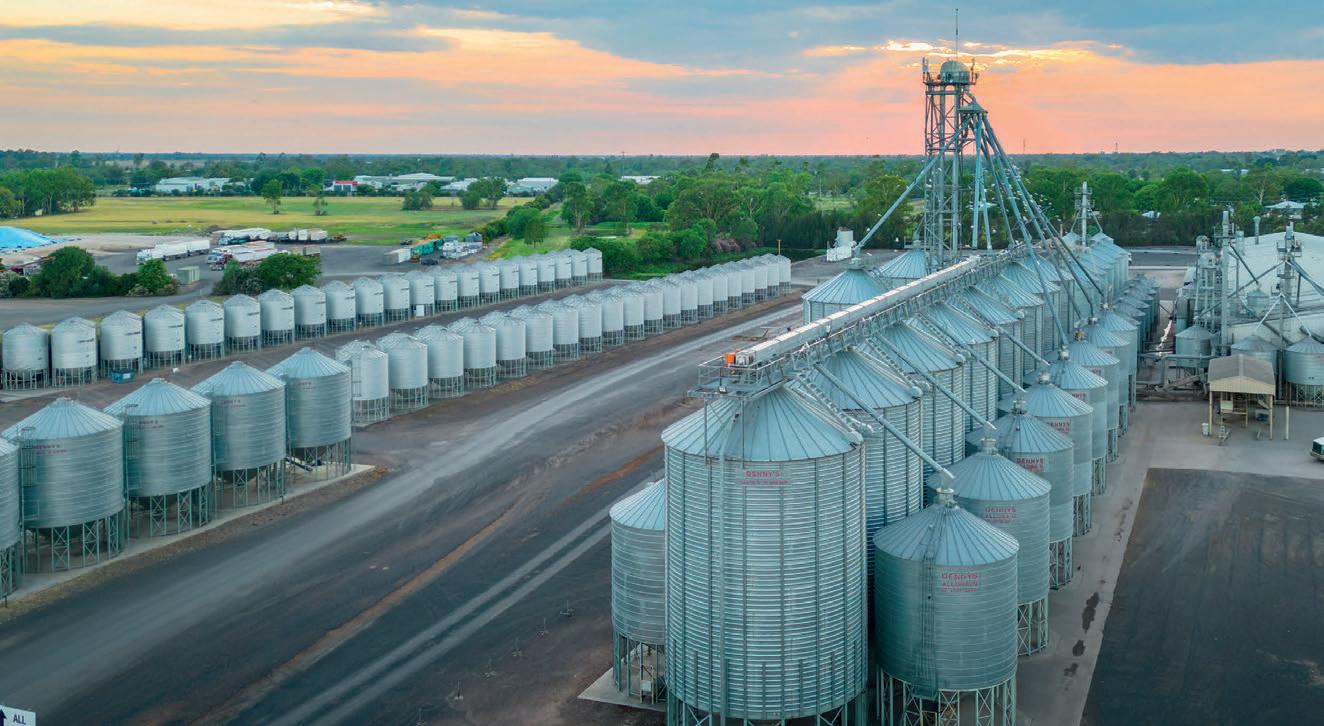
SATAKE OCEANIA HAS BEEN designing, manufacturing, and installing Denny’s silos and grain handling solutions across the country for more than 60 years. The range of Denny’s products, including cone and at bottom silos, has proven popular on Australia’s east coast.
In 2024, Satake Oceania acquired DE Silos, which unlocked a new frontier for the company.
Satake Oceania director Warwick Tickner said the move meant the company could provide more of the enny’s silos to the Western Australian market while
introducing a new brand to the eastern states in DE Silos.
“We now offer a full range of transportable silos through our E silos operations,” he told ABHR
“So now we’re offering the larger enny’s style silos over in the west while bringing E Silos and field bins to the east coast. Denny’s silos use the highest quality materials to ensure they are the strongest they can be. They’re well built and will last for decades. DE Silos make an amazing transportable silo. They’re structurally sound, all hot dip galvanised and made
out of 0 grade incanneal at a very competitive price point.”
emand has been high since the acquisition, with customers in WA ordering several large silos. Tickner said the company had seven 0 tonne silos in production for W , following the delivery of two tonne silos. On the other side of the country, transportable silos in a range of si es have proven popular with local customers and have garnered international interest.
Tickner said Satake’s local and global experience and reach enable the company to offer more solutions and better meet its customers’ needs.
“ cross our team, we have decades of experience and knowledge and can offer the latest in global technology and continue to provide a personal, individual service that is tailored to your needs.”
“We service and support equipment that has been used for decades, with some spare parts available for machinery that is more than 70 years old, a testament to the quality of Satake machinery and our aftersales service.”
The company has a full test facility where customers can send grain samples for tailored results.
The company can build custom silos and provide full turnkey solutions, including catwalks, loading equipment, cleaning systems, and more.
“We can make them from two metres in diameter up to 4.4m in diameter. We can change the outlet heights, change how many sheets are on it, include aeration, fumigation, blow pipes, vent pipes, whatever the customer desires,” Tickner said. “Supporting these silos is a full time maintenance team, though the silos are so well constructed there’s not much need formaintenance.”
“From smaller capacity transportable silos delivered directly to your site, to large scale fully installed complex systems, we have the right storage solution for your business, no matter the si e or requirements,” he said.
Satake’s range of Denny’s products include cone and flat-bottom silos.
Image: Satake
Beyond shiploading
WAM Australia has a range of supporting technologies that enable e icient shiploaders.
EFFICIENT SHIPLOADING DEPENDS
on far more than the shiploader itself. From material conveying and transfer to dust control and environmental compliance, every stage of the bulk handling process contributes to terminal productivity, reliability and operational performance.
WAM Australia, part of the global WAMGROUP network, supplies a comprehensive range of technologies designed to support bulk operations across the mining, cement, grain and industrial processing sectors. By integrating conveying, loading and filtration equipment throughout the material handling chain, operators can optimise throughput while maintaining high standards of safety and environmental performance.
Among the key technologies supporting modern export terminals are loading bellows. The ZX Loading Bellows have been engineered for high-capacity applications such as shiploading, open truck loading and stockpile management. Designed to operate reliably in demanding environments, these telescopic loading
systems facilitate controlled material transfer while minimising dust emissions. With capacities exceeding 850 m3/h and customised solutions available for even higher throughputs, they provide an effective solution for large scale bulk handling operations.
For tanker loading applications, the BELLOJET ZA Loading Bellows combines product loading and dust extraction within a single compact unit. Its integrated filter and fan system capture airborne dust during loading and return the recovered material to the product stream, reducing waste and simplifying plant design. This integrated approach can be particularly beneficial where space is limited or where increasingly stringent environmental requirements must be met.
Material transport between storage, processing and loading areas is equally critical to overall terminal efficiency.
The EC High-Capacity Bucket Elevators provides an enclosed solution for elevating bulk materials where space constraints make conventional conveying systems impractical. By reducing the installation footprint while maintaining
continuous material ow, the system supports efficient plant layouts and streamlined operations.
For horizontal conveying, the T hain onveyors offers a robust and dependable solution for handling abrasive and high-density bulk materials. Its enclosed design helps minimise spillage, protect the product from external contamination and ensure reliable transfer to downstream loading systems,even under demanding operatingconditions.
Complementing these technologies, the CAO Tubular Trough Screw Conveyors delivers exible and efficient transport of powders and granular materials over short to medium distances. Its modular design enables seamless integration with silos, hoppers and shiploading infrastructure, allowing operators to adapt material ow to the specific requirements of each installation.
Dust control remains a key consideration throughout the export process. The WAMAIR Flanged Polygonal Dust Collector is designed to capture airborne particulates generated during conveying, loading and discharge operations. Effective filtration not only supports compliance with environmental regulations but also contributes to improved workplace safety, reduced maintenance requirements and enhanced product recovery.
Together, these technologies demonstrate that successful shiploading is the result of an integrated bulk handling strategy. Loading bellows, conveyors and dust collection systems all play a vital role in maximising throughput, reducing operational interruptions and supporting sustainable terminal operations.
As Australia’s export infrastructure continues to expand and modernise, integrated bulk handling solutions from WAM Australia and WAMGROUP are helping operators achieve safer, cleaner and more efficient movement of bulk materials from storage to vessel.
TCG Chain Conveyors o er a robust and dependable solution for handling abrasive and highdensity bulk materials.
Images: WAM Australia
BELT CLEANER MONITORING.
Hands-on belt cleaner inspections, especially in various hard-to-reach locations, can often expose workers to hazardous conditions which can lead to extended maintenance time.
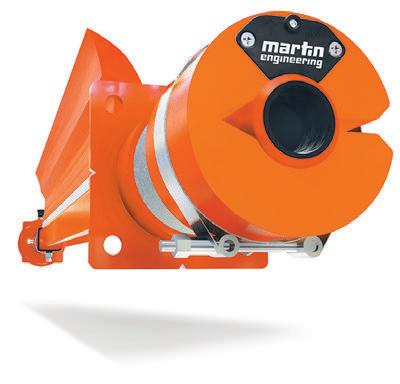
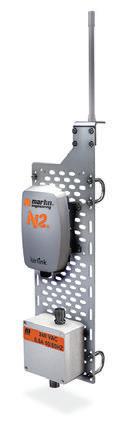
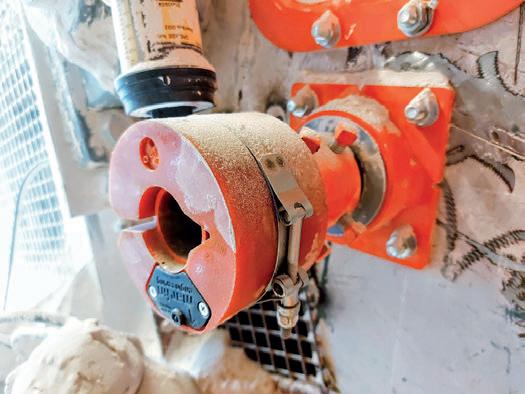
N2® Position Indicators tracks blade tension, wear patterns, and critical mainframe rotation, to minimize inspections and worker exposure. N2 units are easily retrofitted to existing cleaners.
For system-wide data reporting, multiple Position Indicators sync with the N2® Gateway delivering actionable details via our proprietary Smart Device Manager app. Martin Engineering. We keep you connected
Packing for the future
Despite the saying, customers will judge a book by its cover, which is why Haver & Boecker is helping bulk handlers perfect their packaging.
FOR AUSTRALIAN PRODUCERS OF bulk pet food, fertiliser and salt, the bag at the end of the line is far more than a container. It’s the product’s calling card, the thing that must survive a forklift, a long road or rail haul, a humid port and months in storage.
Get the packaging right and the product sells itself. Get it wrong and even a first rate product can be undermined before it reaches the customer.
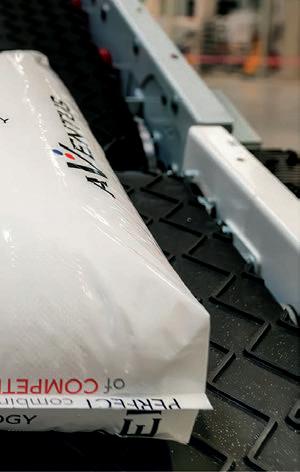
German engineering company AVENTUS is dedicated to helping producers get packaging right with its range of packaging machinery and logistics solutions for free owing bulk materials.
The company is the joint venture of two global market leaders, Haver & Boecker and Windmöller & Hölscher.
In Australia, AVENTUS technology is represented and supplied by Haver & Boecker’s local team, which has been supported local processing and packing operations since 2012.
The Australian team gives customers direct access to the wider group’s filling, palletising and loading technology, with the benefit of local expertise, sales, spare parts and service support.
Across the whole value chain
What distinguishes AVENTUS is its ability to cover the complete packaging chain.
Filling is anchored by the TOPAS family of form fill seal FFS machines, a scalable range designed so the technology matches the duty. TO S L is the high speed solution designed for demanding, continuous, high output operation. TO S L is the balanced performer for plants that need high throughput, stable processes and the exibility to handle product variety in everyday production.
TO S is the cost efficient entry point for lower or uctuating volumes, smaller batch sizes and frequent product changeovers. The FFS 600 rounds out the range for low volumes with demanding special requirements.
Where producers load trucks, railcars or containers directly, the AVENTUS Bulk Loading Unit applies the company’s proven net weigher dosing technology to high accuracy, multi stage filling, handling roughly 80 to 90 tonnes per hour depending on product, with deviation under 25kg at a 25t target weight.
Because it integrates onto the upper level of modern multi storey silo systems,
it needs no additional infrastructure, keeping both investment and operating costs down.
The company’s palletising portfolio encompasses AURUM for demanding high performance duties, R US for precise, smooth stacking, and TERRAM for compact footprints with user friendlyoperation.
The R O stretch hood system then secures the load, because a well stacked pallet is only truly protected once it is properly wrapped.
Why FFS and why it matters here
For free owing bulk materials, FFS technology offers a compelling mix ofadvantages.
Tightly sealed, compact polyethylene bags protect the product, support storage stability and present well at point of sale, while robust film and secure sealing guard against moisture for long storage periods.
The process is resource efficient, supporting reduced material consumption and the use of films with high recycled content. A high degree of automation, low wear and low maintenance design, and space saving machine concepts keep running costs down, and intuitive operation, good machine access and low noise make daily life easier on the plant oor. rucially for diverse producers, the technology can change between different products and film types, with mobile machine versions also available.
Those strengths can assist Australian industries, such as Local salt producers. Salt is a product that is hygroscopic and unforgiving in transport.
E TUS has a salt friendly design. Any part that would contact the product is high quality stainless steel, hard anodised or coated aluminium. Bearings are protected and vibrator units stop deposits forming, with food grade options where required.
For fertiliser producers, accurately weighed and cleanly stacked bags
Protecting the product from the plant to the customer requires seamless integration between precise filling and automated bag palletising.
protect a product that is essential to Australian agriculture, while recyclable bagging materials and energy efficient components answer the sector’s sustainability pressures.
For Australia’s pet food and animal feed manufacturers, packaging mustkeep product fresh and undamaged, provide barriers against moisture,oxygenand ultraviolet light where needed, and increasingly offerrecyclable materials with easy open, easy close convenience without the packaging ever interacting with thecontents.
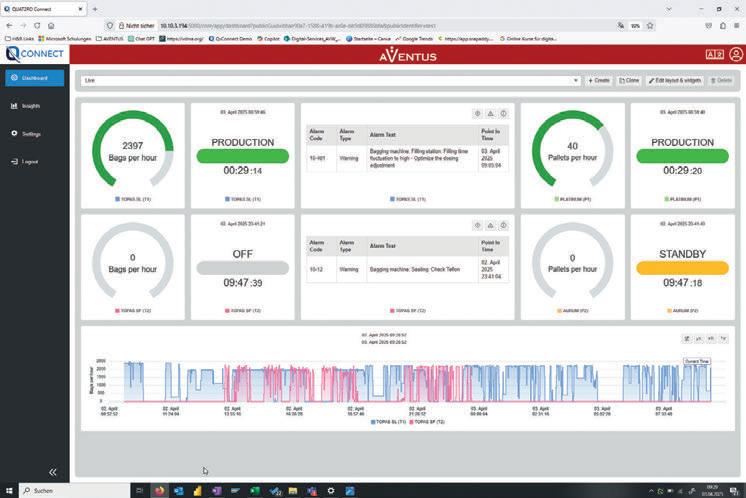
A digital layer over the whole line AVENTUS’s digitalisation platform, onnect, is a central analytics system that can run in the cloud or locally and connects machine data across the entire line.
For bulk operations chasing uptime and traceability, that transparency is fast
becoming as important as the mechanical performance of the machines themselves.
For AVENTUS, the technology ultimately serves a simple end.
MakeYourSucessPortable
“Good packaging is more than a process,” AVENTUS sales director Till Martens said.
“It is a promise to the customer that their product will arrive safely, efficiently and ready for the future.”
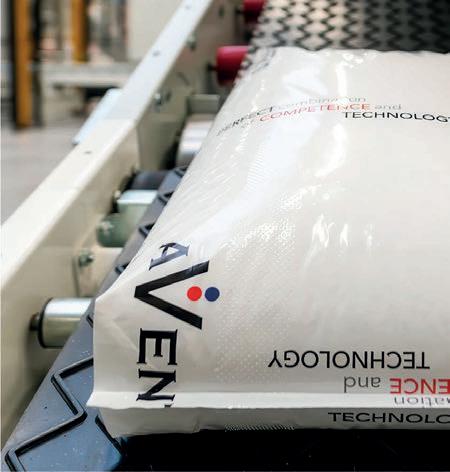
High-speed FFS packaging lines ensure free-flowing bulk materials are packed securely to survive rough handling and long-distance transport.
Images: Haver & Boecker
Remote monitoring: Theory versus reality
The benefits and the unintended consequences of adopting advanced technologies in bulk materials handling.
By Robert Whetstone, Martin Engineering vice president
of Europe, Middle East, Africa, and India region.
THE POTENTIAL OF REMOTE monitoring and machine learning to enhance performance in the mining industry is exciting, with promises of impressive time and cost savings.
However, practical implementation of such technology often reveals a more complex picture.
While remote monitoring systems can address significant challenges for production managers and maintenance teams, they can also introduce newissues.
Traditional inspection regimes not only introduce unnecessary operating costs but also needless exposure to safety risks.
That’s why remote monitoring is especially effective, particularly in caseswhen:
• Equipment is so far away that inspection time is a fraction of the time to get there.
Inspection involves complex procedures and supervision to organise safe access. The operation needs to shut down just to inspect one area or piece ofequipment.
• Inspecting every conveyor takes days but no maintenance is actuallyneeded.
maintenance inspections go to the bottom of the ‘to do’ list, and maintenance only becomes a priority when there’s a problem that needs fixing.
Short-term targets frequently mean that systems ‘run to failure’ rather than being run to maximise long-term, costeffective productivity.
Components like belt cleaners, which may not be seen as critical to productivity compared with other parts of the operation, are among the first to beoverlooked.
Martin service technicians (MSTs) are often called upon to react to a problem rather than prevent one. Ignoring maintenance for too long results in higher costs and more downtime in thelong-term.
Remote monitoring mechanisms not only reduce labour but curtail unsafe behaviours such as taking shortcuts to access equipment to save time, ignoring inspection schedules and risk assessments, or engaging in quick fixes with inadequate tools rather than planning safe maintenance during designated downtime.
cloud-based technology.
The data collected from sensors can help to predict when servicing may be required, giving operators enough time to arrange an inspection, order the required parts and book contractors to carry out maintenance during scheduled downtime.
The development of viable remotemonitoring
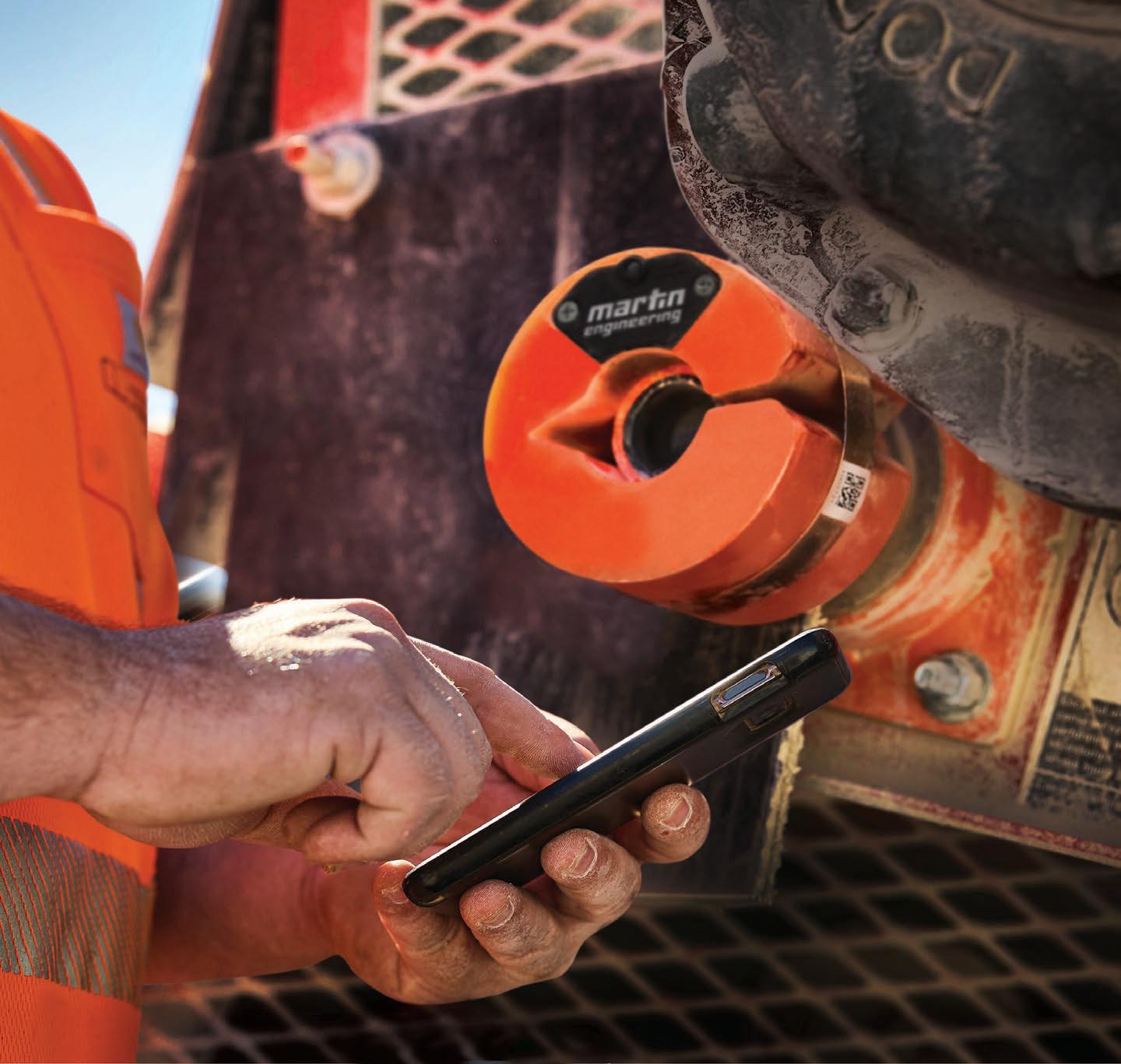
artin Engineering developed the first N2 position indicator (PI) for monitoring polyurethane conveyor belt cleaners with the goal of making the device affordable, accessible, reliable, and easy to install.
The conveyor belt cleaners’ performance and condition information is transmitted via a central ‘gateway’ to the cloud. Data is then clearly presented and easily accessed via a dedicated mobile app or desktop platform.
Martin’s N2 PI is the ideal solution for drastically reducing inspection time, andthe more difficult and time consuming the belt cleaners are to inspect, the greater the potentialfor time savings. Essentially,if you know the condition of
Martin’s Centre for Innovation at its headquarters in Neponset, Illinois, USA.
the belt cleaner blade from the app, there is no need to visually inspect it.
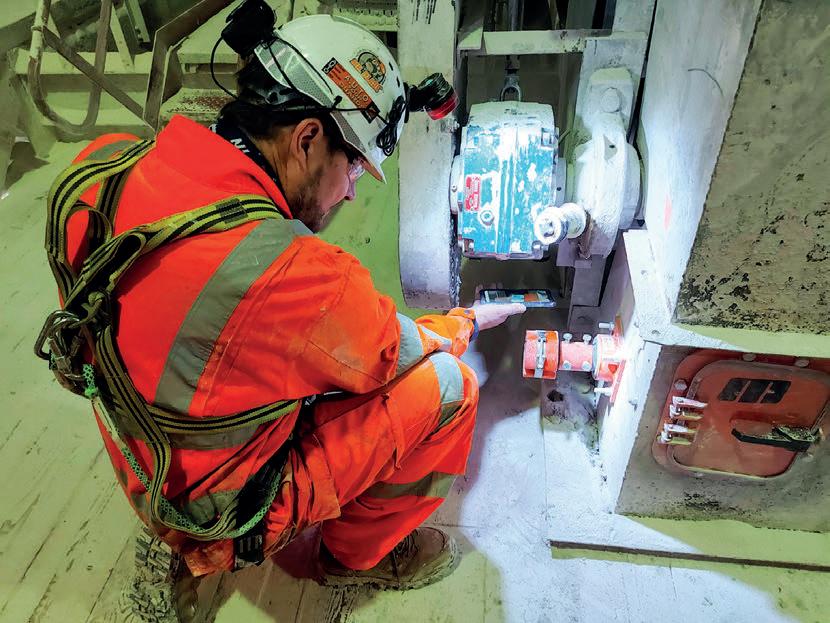
Live installations show that PI can reduce inspection time by up to 90 per cent, thereby reducing exposure to the safety risks associated with accessing conveyors. Additionally, remote monitoring eliminates the guesswork around belt cleaner servicing – the condition of the blade is based on data-driven facts rather than human observation and perception. That opens up the prospect of true preventive maintenance and, over time, predictivemaintenance.
As a result, since the introduction of the PI, there are now thousands of devices installed at more than 40 mineral processing operations worldwide.
While operators monitored the performance of equipment, Martin monitored the performance of the PI and discovered that it might not be the right fit for some operators remote monitoring of wear parts can also be the source of some frustrations.
Working closely with customers, Martin Engineering’s design engineers identified four key areas to consider with the implementation of a remote monitoring system:
1) Does it address your pain points?
Martin Engineering’s design engineers think a lot about pain points. The company’s core mission of “cleaner, safer and more productive” operations drives the design and engineering of its extensive catalogue of products.
During Martin’s initial research, it was clear that many technological solutions falter because they do not address real pain points. In other cases, developers fail to clearly explain to operators how their innovative solution addresses their problems. Perhaps worst of all are those examples where new technology introduces new pain points that have been overlooked during development and testing.
It was critical for Martin’s designers to ensure that the N2 PI supported the identification of key performance indicators (KPIs) to ensure the right pain points were being addressed. Unique to each operation, these KPIs focus on production inefficiencies and
the operational discrepancies between individual belt conveyors.
For example, the PI system is designed to show if there’s a problem with a belt cleaner blade on each conveyor. For some maintenance managers that’s useful for them to take urgent action. For others it’s just another notification about another task on an already too-long list of jobs, so remote monitoring is only useful if internal maintenance team has the bandwidth to keep up.
In other examples, such as a site where the production team continually conducts walk-rounds and visual inspections of the whole operation, remote monitoring is not valued to the same extent as sites where a walk-round is done infrequently. Data from the sensors is telling them what they already know so having to consult the app is itself a pain point.
2) Does it deliver useful, actionable data?
In a major bulk handling operation, there’s a risk that remote monitoring solutions may lead to data overload. It’s easy to fall into the trap of thinking that having access to lots more information is the goal, rather than the decisions and actions we take based on that information.
No matter how impressive any technology may be, or how interesting remote monitoring metrics may be, data collection alone doesn’t achieve better productivity. The information therefore needs to be helpful, accurate and presented in a way that helps decisionmaking. Equally, having the wrong KPIs can switch focus away from the desired outcome and skew decision making in a way that is ultimately detrimental toproductivity.
The Martin OnSite mobile app and OnSite dashboard provide a series of clear charts with actionable information that’s
Installing remote monitoring for belt cleaners significantly reduces physical visits to each conveyor.
Images: Martin Engineering
automatically analysed, interpreted, and presented in a way that makes decisionsstraightforward.
3) Are you willing and able to change?
One of the biggest barriers to advancement is the inability or unwillingness to change. This comes in two main forms – business processes and people. Firstly, long-established business processes can be rigid, engendering ways of working that become ingrained over decades. Secondly, people are generally resistant to change in their daily routines, regardless of inefficiency or safety.
Introducing any technology requires change management. The installation and integration of the system must ensure the benefits of the change are well-anticipated and understood by stakeholders, and the new work ows are less onerous than the current regime.
For example, workers in mining operations often provide pushback believing that technology could make their jobs redundant. This is not wholly unfounded, after all, on a large-scale operation N2 PIs could replace what a typical worker does for a up to a whole day each week.
In some cases, conveyor belt maintenance teams who aren’t aware that sensors are fitted, or aren’t trained how
then function, have had negative impacts on monitoring systems because they have failed to reset them correctly.
Elsewhere, there has been deliberate tampering of monitoring devices, and in one case, the workers believed the new tech installations would be used to ‘spy’ on their behaviour, damaging theirmorale.
So, like all new systems, those involved must be prepared and trained in the right way, including explaining the rationale for installing remote monitoring systems, as well as providing reassurance about motives.
When people are required to learn something new, without understanding why they are being asked to change, resistance is likely, and failure is probable. Such resistance can also be diminished and overcome by ensuring any new technology is easy-to-use, intuitive, and even preferable.
4) Does it integrate with existingsystems?
The 2 I is designed to be retrofitted to belt cleaners without any other upgrades to the system. It’s also scalable across operations of all sizes, types and ages without incurring additional cost.
However, there may be numerous physical obstacles ranging from
accessibility and available space to legacy steelwork that needs refabricating.
Once the central gateway is installed and powered, each 2 I can be fitted and paired in just a few minutes.
A single gateway can handle thousands of PI sensors, so expanding the N2 network doesn’t require further investment in the communicationinfrastructure.
If an operation already has centralised remote monitoring for other components, N2 data can integrate with existing systems, although it may require additional work to ensure compatibility.
To avoid data overload, it is recommended to begin with simple core actionable KPIs such as status and wear times, then expand from there asrequired.
Expanding on success
Martin Engineering works closely with customers’ production and maintenance teams to resolve teething issues.
As a result, it has developed other N2 conveyor products that work with the same gateway, including the new ow aid sensor, which launched in 2026.
To achieve the desired productivity improvement, it is imperative to understand the potential pitfalls that accompany change.
Most importantly, having the right conversations, listening to understand the true pain points, embracing the challenge,and working together are critical to transforming this huge opportunity into action and delivering tangible results.
Once the central Gateway is installed and powered, each N2 PI can be fitted and paired in just a few minutes.
Martin’s N2 Position Indicator provides data on the condition and performance of each belt cleaner.
Complete Grain Storage Solutions
Trusted by Industry. Delivered by Satake
With decades of proven experience, Satake Oceania designs and delivers tailored grain silo and storage systems—built to perform, built to last.
We provide end-to-end solutions for every scale and need:
• Small seed storage to large-scale silo complexes
• Grain handling, bulk storage, and full milling systems
• Feedlots, our, rice, and seed processing solutions
Every project is backed by:
• Local manufacturing in Australia
• Complete design, build, and installation services
• On-the-ground project management and long-term support
Our hands-on approach ensures each solution aligns with your operation—today and into the future.
Oceania.
The importance of sampling selection
Material characterisation testing is essential for the proper design of bulk solids handling equipment. However, how can one ensure that the samples selected for testing and design are truly representative of the bulk solid under consideration?
BULK SOLIDS EXHIBIT
substantial variability in their material properties, including particle size distribution, particle density, bulk density, particle shape, fragility, porosity, and more.
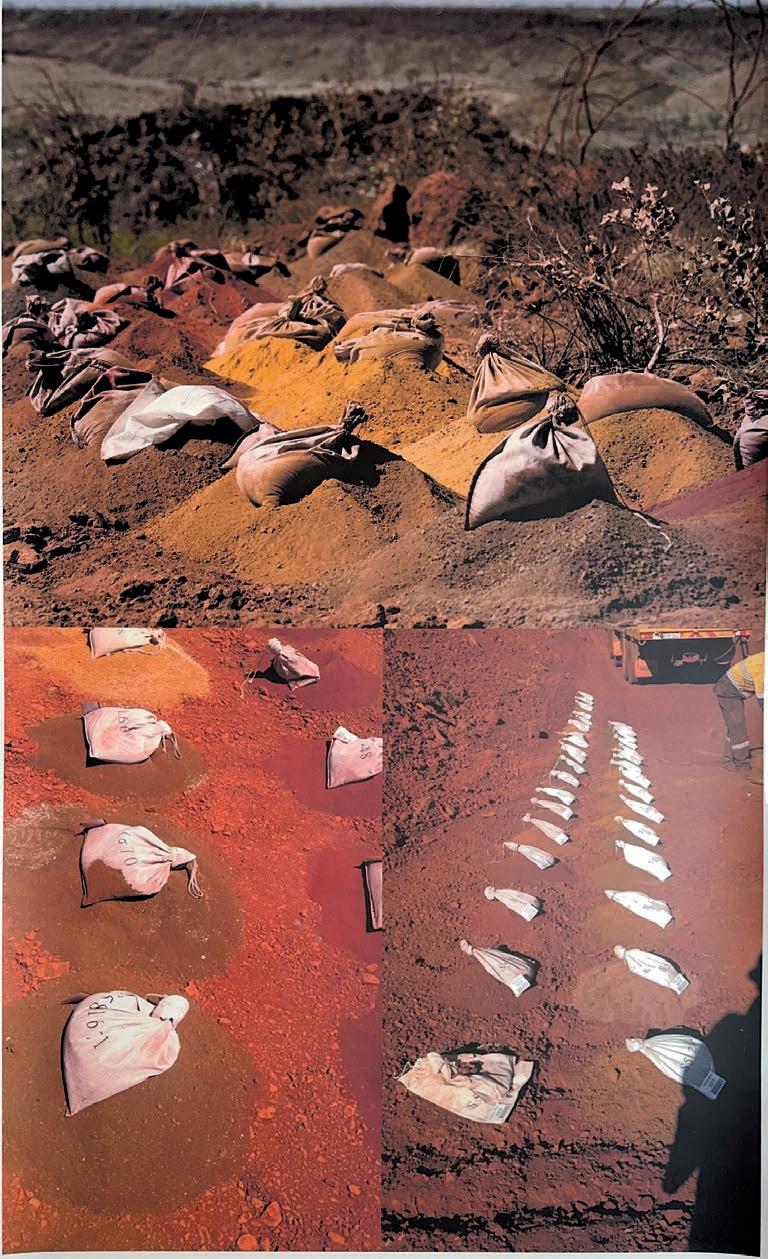
These characteristics may change throughout the process. For instance, particle size distribution may be altered by size reduction during crushing. Similarly, during stockpile formation, particle size distribution may vary spatially within the pile due to sifting segregation that occurs during stacking or withdrawal. Consequently, collecting a sample from a single location in the stockpile is unlikely to provide a representative sample.
Sampling from a specific stage of the process may not be appropriate for the intended testing objective. For example, collecting samples after primary
project engineer at Jenike & Johanson. With over 10 years of industry experience, he started his career in design and fabrication, where he developed a strong foundation in creating practical, e icient systems that improve flow and streamline construction and maintenance. His passion for solving complex material flow challenges led him to join Jenike & Johanson, where he now combines handson design expertise with scientific insight into bulk material behaviour.
screening and using the resulting test data to determine the minimum outlet dimensions required to prevent cohesive arching in a bin located downstream of tertiary crushing may lead to inaccurate design conclusions. This is because the material properties at that later stage will likely differ significantly from those of the sampled material.
To add additional complexity, process conditions must also be considered, particularly variations in moisture content resulting from the addition or removal of water during processing, as well as seasonal uctuations that may alter the material state. Accordingly, a representative sample is one that preserves the properties of the in-situ material throughout collection, handling, transfer, and introduction into the laboratory equipment ultimately used for characterisation test work. Achieving this sample requires a sufficiently detailed sampling program that addresses not only sample collection, but also the procedures used for transfer and preparation prior to any test work. Any mishandling after sample collection may alter the material characteristics and, consequently, bias the laboratory results and the design conclusions derived from them.
How should a representative sample be collected for testing?
The selection of the sampling time and location must account for temporal and spatial variations in material properties. If operating conditions are not yet fully defined, or if they are expected to change over time, realistic yet conservative assumptions should be established to evaluate the difference between the sample that can be practically obtained at present and a truly representative sample that re ects the full range of anticipated operating conditions in the future. Once the appropriate sampling time and location have been identified, the next step is to establish a
sampling procedure capable of yielding a representative sample. Numerous techniques are available for materials that are susceptible to segregation. Common methods include:
• uartering aterial is first poured to form a conical pile then attened and divided into four quarters. Opposing quarters are removed. The sample is then poured into a conical pile again and the process is repeated until the target sample weight is obtained. Moving stream: Extracting the entire cross-section of a free-falling material stream such as at a discharge point. Thieving: A hollow, typically cylindrical device containing multiple cavities is inserted into a static pile or collected sample to withdraw material from several depths.
Ri e splitting The sample is passed through a mechanical splitter with alternating chutes that divide the material stream into two equal and representative fractions. For larger sample volumes, more advanced equipment, such as spin ri ers, may be employed.
The sampling procedure should include a deliberate assessment of whether sampling should be performed from a moving material stream or from a static source, such as a collection port or storage bin. Sampling from moving streams often reduces the complexity associated with static sampling methods and can improve sample representativeness. One widely used technique is cross-cut sampling, in which a collector traverses the entire crosssectional area of the material stream to obtain a representative increment.
Bulk solids exhibit substantial variability in their material characteristics, and this variability directly in uences bulk ow behaviour. For example, the presence of fines, as determined through particle size distribution analysis,
generally increasesthe likelihood of cohesion andincreased ow problems. onsequently, ow property testing used to determine minimum outlet dimensions and wall angles for reliable discharge form acritical component of a testingprogram.The reliability of material characterisation test data used for equipment design depends fundamentally on the representativeness of the sample used for analysis. As bulk solids can vary significantly in particle and bulk properties across processing stages, storage conditions, and environmental in uences, sample selection cannot be treated as a routine step in the testing program. Instead, it must be approached through a carefully defined sampling strategy that accounts for spatial and temporal variability, the intended design application of the test results, and the potential effects of sample handling and transfer prior to laboratory analysis.
SMARTER PLANTS
Sampling must be approached through a carefully defined strategy that accounts for spatial and temporal variability.
Images:
Jenike
Automation enters the hatch
ABHR spoke with Luke Bennett from Koch Solutions to learn why port automation is becoming more prominent.
AUTOMATION IS ALREADY HELPING
ports improve reliability, but for some in the industry, the ability to move more material without expanding existing infrastructure is turning heads.
Koch Solutions head of sales Luke Bennett said many of Australia’s major export terminals are currently focused on sustaining throughput rather than significantly increasing it.
“Everyone’s still going strategically about it, ‘I’ve got so many tonnes going out the door, what infrastructure do I need to keep those tonnes going out the door?’,” Bennett told ABHR
“No one seems to be adding any tonnes. It’s all about sustaining the tonnes going out the door and doing it more efficiently and more reliably.”
The trend is particularly evident across Australia’s bulk commodity ports, where operators are investing heavily in refurbishment and life-extension projects for existing assets.
Bennett pointed to several major shiploader projects currently underway across the country, including ongoing upgrades at in Newcastle, new shiploader procurement activities in Queensland and refurbishment programs in WesternAustralia.
However, something all these projects share is a specific, broader industry challenge: ageing infrastructure. A significant proportion of ustralia’s bulk handling equipment was installed decades ago and remains central to export operations today.
Replacing these assets outright can involve substantial capital expenditure and downtime, making refurbishment and technological upgrades an increasingly sought after option.
One of the most significant developments emerging from these projects is the growing use of semiautonomous shiploading systems.
Unlike stackers and reclaimers, which have largely transitioned to autonomous operation in many bulk handling
facilities, shiploaders continue to require operators due to the complexity of loading directly into vessels.
Bennett said operators are increasingly being supported by sophisticated automation technologies designed to optimise performance.
“A lot of clients are starting to use automation when they’re loading a hatch,” he said.
“They have a hatch-loading programme that contains the optimum loading sequence. The operator positions the machine into the hatch and then the autonomy takes over and loads thehatch.”
The technology combines a range of sensors and monitoring systems, including high definition cameras, infrared imaging, radar and laser scanning technologies.
Together, these systems create a detailed picture of the vessel and cargo hold, allowing software to determine the most efficient loading pattern.
“One operator might be smooth on the controls, and another operator might be a lot harsher,” Bennett said.
“Automation makes the operation consistent. Everything becomes quite standardised in how the machine is beingused.”
For port operators, consistency translates directly into productivity.
Loading programs can optimise the filling of vessel hatches, reduce unnecessary machine movements and shorten vessel turnaround times. Thatcan deliver meaningful commercialbenefits.
“If you can turn vessels around quicker, you improve your tonnes out the door,” Bennett said.
“In some cases, operators can potentially increase outgoing capacity without needing major infrastructure expansions.”
Bennett said semi-autonomous operation can also play an importantrole in extending equipment life. By removing operator inconsistencies and reducing sudden or unnecessary machine movements, automated systems can reduce mechanical stresses placed on ageingequipment.
Ports across Australia are becoming increasingly reliant on semiautonomous shiploading systems.
Images: Koch Solutions
“If you’ve got an ageing machine, a way to alleviate potential unwanted stresses during operation is to have those operations done autonomously,” he said. “The machine is being operated in a more controlled and consistent way.”
This capability is becoming increasingly attractive as operators seek to maximise the value of existing infrastructure investments.
The technology is already being deployed at several Australian ports.
Many of the new shiploaders being requested from the industry are advanced hatch-loading automation, while similar systems are also being adopted at major iron ore export facilities in Western Australia.
As the industry continues to balance rising throughput demands with ageing infrastructure challenges, automation appears set to play a growing role in Australian ports. For companies such as Koch Solutions, which specialise in the design, refurbishment and optimisation
of bulk materials handling equipment, the shift represents an opportunity to combine traditional engineering expertise with emerging digital technologies.
“Our expertise is understanding how the entire machine functions as a system,” Bennett said.
“These machines aren’t just conveyors or chutes on wheels. Everything moves together and performs as a system.
“To successfully integrate these technologies, you need to understand how the whole machineworks.”
STOP ROLLER FAILURES. START RUNNING SMARTER.
Koch Solutions has been supporting a range of port operations across Australia.
Regional connection, long-lasting relations
From sporting clubs to emergency services, Bunge-backed funding initiatives are helping farming communities beyond the paddock.
IN REGIONAL AUSTRALIA,
community halls and sporting clubs are often more than places to gather. They are social lifelines, volunteer hubs, and support networks that help keep small towns connected.
That is particularly true in the South Australian coastal township of Port Kenny, where the local sports centre has become the focal point of community life.
The Port Kenny and Districts Sports Centre has recently received a $3000 community donation from Bunge, following a nomination by local farmer Craig Kelsh through the company’s postharvest survey initiative.
The donation forms part of a broader regional support programme run by the agribusiness giant, which merged with Viterra in 2025 to create one of the world’s largest agricultural supply chainnetworks.
Port Kenny and Districts Sports Centre president Nathan Little said the club played a critical role in maintaining social connection in the area.
“The Districts Sports Centre really is the backbone of our region, there’s no other place for people to come together,” he said.
“The Port Kenny and Districts Sports Centre plays a major role in keeping us connected socially.
“Our building has just doubled in size, and we’re looking forward to continuing improvements, from general maintenance to upgrading our amenities.
“We’re extremely grateful to Craig for taking the time to nominate us and help us make things even better.”
Located on the western side of the Eyre Peninsula, Port Kenny has long been tied to South Australia’s grain and agricultural industries.
Historically established as a shipping point for grain and wool,
the town todayremains closely connected to farming and fishing, with many residentsrelying on community organisations to maintain social connection across the sparsely populatedregion.
For the volunteer-run sports centre, the funding will help support ongoing upgrades and maintenance following a recent expansion of thefacility.
The initiative highlights the increasingly important role agribusiness companies are playing in supporting regional communities beyond core grain handling and export operations.
Bunge, which now operates Viterra’s extensive South Australian storage, handling and port network, has expanded its community engagement activities across regional Australia as part of its integration strategy.
The company said many of its employees, growers and suppliers are based in regional areas, making local investment a key priority.
The company’s operations across South Australia and western Victoria include grain receival sites, logistics infrastructure and export terminals
that connect Australian growers with international markets.
Bunge has alsocontinued to invest heavily in supply chain infrastructure, recently committing $65 million to upgrades across its network ahead of the 2025–26 harvestseason.
Under the postharvest survey programme, growers and carriersare invited to provide feedback onharvest operations while nominating local organisations to receive fundingsupport.
Bunge central region operations manager Jack Tansley said the programme was designedtoboth improve operational performance and support the communities underpinning the agricultural sector.
“After each harvest we spend time reviewing our operations and services to ensure we continue to meet farmers’ needs, and help us plan for future harvests,” he said.
“Offering a community donation is also a great way for us to further support regional communities and thank customers for their valuable insights.”
Bunge has expanded its community engagement activities across regional Australia, especially in South Australia.
AIMEX RELAUNCHED
GET INVOLVED, EXHIBIT NOW
MINING A SMARTER FUTURE
Home grown rare earth
Bulk Handling Technologies is helping secure supply chains for vital components used in electric vehicles, wind turbines, defence technologies, and advanced electronics.
WESTERN AUSTRALIA IS HOME
to a growing number of rare earth refineries, where raw mined ores are separated and purified into individual rare earth elements.
ue to the chemical similarity between these elements, the refining process is highly complex, involving multiple stages of cracking, leaching, solvent extraction, and mineral separation. s critical minerals production continues to scale up, reagent preparation systems, such as occulant mixing plants, are becoming increasingly important to maintaining efficient processing operations.
Flocculant mixing plants are used to prepare and deliver occulant solutions throughout a plant, helping operators separate fine mineral particles from liquids and waste streams during processing. While the concept itself may sound straightforward, the engineering behind these systems can become significantly more complicated dependingon site requirements and process conditions.
ustralian original equipment manufacturer Bulk andling Technologies B T recently experienced this firsthand after being tasked with supplying two occulant mixing plants for a major rare earth refinery project in Western ustralia.
B T project manager onrado Be erra said the project seemed relatively standard until a major process change midway through delivery forced the engineering team to rapidly redesign large sections of the plant.
“The two occulant plants that we supplied for this customer are responsible for providing a occulant solution as part of a reagents plant,” Be erra said.
“Flocculant is received in dry form and then, through our plants, is mixed with water to create a solution. That solution is then supplied to the customer’s process and stored in larger tanks.”
lthough occulant systems are widely used throughout the mining and
minerals sector, Be erra said the project became more technically demanding after the refinery’s water supply specification changed during the design phase.
“The interesting aspect of this project was that the water changed halfway through,” he said.
“The original design was based around a different water source, but we were later advised the plant would instead use high purity water.”
igh purity water can create significant engineering challenges in industrial applications because of its reactive nature. ccording to Be erra, the new process conditions meant B T had to completely reassess the materials used throughout the system to prevent contamination and maintain processintegrity.
“To my understanding, high purity water is quite reactive because it’s mainly just 2O in a very pure form,” he said.
“We had to ensure the process uids were insulated from contact with any
foreign materials or contaminants that could potentially exist within the tank walls or enclosure surfaces.”
The original system had been designed as a compact carbon steel plant featuring a mixing tank mounted above a storage tank, with painted internal and external surfaces. owever, the revised water specification forced the company to revisit the design entirely.
“Initially, we assessed changing the surface treatment and coating specification to create a better seal internally,” Be erra said.
“But because the plant was quite compact, we couldn’t really achieve the quality control requirements we needed with that approach. So instead, we completely changed the material of construction from painted carbon steel to stainless steel.”
The redesign extended well beyond the tanks themselves, with all associated pipework and interconnecting systems also requiring modification to comply with
The team completed the redesign with minimal impact on overall project delivery schedules.
the client’s specifications for stainless steel fabrication and process piping.
“ s soon as we changed the material to stainless steel, a whole new set of specifications applied,” Be erra said.
“We had to revisit all of the client specifications in detail, assess the application again, and come up with a fully compliant solution within the required timeframe.”
espite the late stage engineering changes, B T managed to complete the redesign with minimal impact on overall project delivery schedules. Be erra said the company’s in house engineering capability played a critical role in allowing the project team to respond quickly.
“We were able to dynamically assess the problem, review the specifications, validate a new solution, and deliver it within the client’s timeframe,” he said.
“That ability to quickly adapt and navigate detailed mining specifications was probably the key strength B T demonstrated during this project.”
The completed systems have since been fully installed and commissioned at the refinery, with commissioning completed earlier this year.
“Our understanding is the systems have been working really well,” he said.
“We only had a couple of minor questions from the client’s electrical engineers after commissioning, but otherwise we haven’t heard of any issues.”
While occulant mixing systems may not attract the same attention as crushers, conveyors, or large scale processing infrastructure, Be erra said they remain essential to mineral processing operations.
“In mineral processing, you’re trying to separate the valuable minerals from the waste material,” he said.
“You need equipment to crush, si e, separate, and convey material throughout the process. Flocculants are one of the reagents used to help separate those minerals and create the end product.”
Without properly prepared occulant solutions, operators can struggle to
achieve efficient separation performance during thickening, clarification, and water recovery stages.
“To add occulants into the process, you can’t just buy them ready to use,” Be erra said.
“You need a dedicated plant to mix the dry powder with water, create the correct solution, and maintain that solution in a stable condition.”
Looking back on the project, Be erra said a key lesson learned was the importance of selecting the right material strategy early in the design process when dealing with highly sensitive uids.
“If we were designing another plant for the same sort of application, one of the takeaways would be to explore alternative materials of construction earlier rather than relying on specialised surface finishes,” he said.
“That approach would likely create a more cost effective solution, streamline quality control processes, and reduce overall lead times.”
Less downtime, more accuracy
Why calibration practicality is integral in conveyor belt scale performance.
By David Hyer, Thayer Scale President David Hyer.
AS MANUFACTURERS OF CONVEYOR belt scales, we tend to spend a great deal of time discussing the physics of accuracy. That is appropriate. Belt scale accuracy is affected by belt tension, idler alignment, weighbridge geometry, conveyor design, speed sensing, material loading, and the mechanical behaviour of the belt itself. These factors matter, and any serious discussion of high-accuracy belt weighing must begin with them.
However, in many real-world installations, the larger challenge is not deciding which weighbridge design is superior, nor is it simply achieving accuracy during startup or commissioning. The more important question is whether the system can maintain that accuracy after it has been placed into service and continue doing so for many years.
A useful distinction can be made between designed accuracy and maintained accuracy.
Designed accuracy is the performance a belt scale can achieve when properly selected, installed, aligned, calibrated, and commissioned. Maintained accuracy is the performance the plant can maintain over months and years of operation. Both are important, but they are not the same problem.
A belt scale may be well-designed, properly installed, and successfully material tested. But once the system is operational, the conveyor still exists in the real world. Material may build up on the weighed structural elements. Idlers may wear or be replaced. Belts may stretch or be changed. Maintenance activity may alter alignment. Environmental conditions may change.
Operating rates may need to be modified. In that environment, accuracy is not a one-time achievement. It is a condition that must be rigorously maintained.
Routine calibration is one of the primary tools plants use to maintain confidence in the measurement output of a belt scale. Yet calibration is often treated as a procedural detail rather than as part of the measurement system itself.
That is a mistake.
If a calibration method is difficult, time-consuming, unsafe, or disruptive, it is less likely to be performed at proper intervals. And when calibration intervals slip, the plant loses one of its most important safeguards against measurement drift.
In practical terms, the best calibration method is not simply the one that looks most complete in a manual. It is the one that plant personnel can perform safely, repeatably, and often enough to protect and maintain the accuracy of theinstallation.
Calibration practicality determines calibration frequency
Most plants do not struggle with routine calibration procedures because they are unaware that calibration matters. They struggle because calibration must compete with production schedules, maintenance priorities, access limitations, safety procedures, and available personnel.
In theory, calibration intervals can be established by procedure, quality requirements, regulatory expectations, or the criticality of the measurement. In practice, the actual intervals are strongly in uenced by how difficult the calibration process is to perform.
If calibration requires multiple people, special lifting equipment, work at elevation, difficult access to the conveyor, extended downtime, or handling heavy test equipment, it becomes less likely to be performed as often as intended.
Continuous material weighing demands a rigorous, ongoing commitment to calibration.
Images: Thayer Scale
Even when the procedure is technically sound, the practical burden can create a significant disincentive. alibration gets delayed until the next outage, the next maintenance window, or the next time a problem is suspected.
That delay matters.
Because conveyor conditions can change gradually, routine calibration becomes one of the most practical ways to detect drift before it affects production, inventory, quality, or reporting confidence. This is why calibration practicality should be considered part of the measurement strategy rather than anafterthought.
Di erent calibration methods answer di erent questions
n effective calibration strategy must consider more than whether a method is technically valid. It must also consider what the method verifies, how closely it re ects operating conditions, and how practical it is to perform at the required interval. No single calibration technique provides the best answer in every situation. The most common belt scale calibration methods are best understood by asking what each method proves, and what it does not.
Material testing
Material testing remains one of the most direct ways to validate the totalised performance of a belt scale under actual operating conditions. When material is weighed across the belt scale and then compared to a certified reference weight, the test evaluates the complete measurement system in the closest approximation to normal use.
In simple terms, material testing asks: does the complete system agree with a known reference under actual operating conditions?
For certified for trade applications, custody transfer, regulatory reporting, or critical inventory measurements, material testing can be essential. However, material testing is also one of the most difficult methods to perform frequently. It may require trucks, bins, certified reference scales, coordinated material handling, production interruptions, and significant personnel involvement. For that reason, material
testing is often used as a commissioning, certification, or periodic validation tool rather than as a routine day-to-day calibration method.
Test chains
Test chains provide another common approach. They offer a moving, mechanical simulation of loading over the belt scale and can be useful when properly selected, maintained, stored, and applied. Their advantage is that they exercise more of the weighing system than an electronic check alone.
However, it is important to recognise what a test chain does and does not prove. A test chain places a known moving load over the scale, but it does not create the same belt tension conditions that exist when the conveyor is carrying a full material load. During actual operation, the belt is subjected to the tensions, de ections, loading patterns, and dynamic effects created by the conveyed material. During a test chain calibration, the conveyor is typically running without the equivalent material load. s a result, the test may confirm scale response to a moving simulated load, but it does not fully duplicate the mechanical environment present during normal operation.
This distinction matters because belt tension effects are one of the practical
reasons material testing remains important, particularly in high-accuracy or certified applications. Test chains can be a useful intermediate calibration tool, but they should not be viewed as a complete substitute for material testing when the objective is to validate totalised performance under real operatingconditions.
The practical challenges remain as well. Test chains can be heavy, awkward, and difficult to deploy. They must be stored, transported to the scale location, placed correctly, and removed safely. On elevated conveyors or hard-to-access installations, this can become a significant burden. s with any calibration method, if the process is difficult enough, it may discourage the calibration frequency needed to protect long-term accuracy.
Calibration test weights
Static test weights are also widely used. Their value is that they apply a known load to the weighing mechanism and allow the scale response to be checked in a controlled and repeatable way. Static weights ask: does the weighing mechanism respond properly to a known applied load?
However, like test chains, static test weights do not fully duplicate the mechanical environment present
The best calibration method is one that plant personnel can perform safely, repeatably, and o en enough to fully protect the installation.
during normal operation. They do not create the belt tension conditions, belt de ection, material loading profile, or conveyor dynamics that exist when the conveyor is carrying material. For that reason, static weights are best understood as a mechanical span check rather than a complete substitute for material testing when the objective is to validateperformance under actual operating conditions.
Depending on the scale design, the
somearrangements, large weights may need to be hung from the weigh carriage or scale structure. This can introduce storage, handling, safety, and access concerns.
In other designs, mechanical leverage is incorporated into the calibration system so that a smaller physical test weight can apply a larger effective load to the weighing mechanism. This type of arrangement can preserve the benefit of a true
Electronic calibration
Electronic or resistor calibration methods are also common. These methods can be convenient and useful for checking portions of the signal chain. They may help confirm that the instrumentation responds correctly to a simulated electrical input.
Electronic calibration asks: does the instrument and signal chain respond properly to a simulated electrical input?
That is a useful question, but it is not the same question answered by a mechanical calibration. An electrical check does not confirm that the
weighbridge, load transmission structure, pivots, suspension elements, or other mechanical components are responding properly under applied load.
For this reason, the most effective calibration programs often use a hierarchy of methods.
Electronic checks may support troubleshooting or instrumentation verification. Static weights or test chains may provide routine mechanical spanchecks.
Material testing may be used for commissioning, certification, or periodic validation of thecomplete system.
The key is to understand what each method proves, what it does not prove, and how practical it is to perform at the required interval.
Access, safety, and automation
The physical location of a belt scale can make calibration practicality especially important.
or periodic material testing. But it can help establish whether the measurement system has remained stable over time.
This is particularly important in applications where belt scale data is used for inventory control, blend control, production reporting, environmental reporting, or commercial transactions. In these cases, the value of the measurement depends not only on its initial accuracy, but also on the plant’s ability to demonstrate continuing confidence in that measurement.
Calibration practicality ispart of accuracy
Belt scales are often installed on elevated conveyors, in galleries, above process equipment, outdoors in difficult weather, or in areas that are physically distant from normal operator workstations. In those cases, even a reasonable manual calibration procedurecan become difficult to perform consistently.
Access platforms, lockout procedures, environmental conditions, available maintenance personnel, and the need to move test equipment to the scale location all in uence whether calibration is performed at the intended interval.
For these installations, automated test weight application can provide a meaningful practical advantage. In one common arrangement, a pneumatically actuated mechanism applies and removes the test weight without requiring personnel to physically handle the weight at the scale location. Systems of this type, sometimes referred to as automatic test weightlifters, can be integrated with the scale instrumentation to support more frequent calibration checks, reduce exposure to difficult access points, and improve the consistency of the calibrationprocedure.
The important point is not automation for its own sake. The important point is that a calibration method becomes more valuable when it is both mechanically meaningful and practical enough to use regularly.
onveyor belt scale accuracy will always begin with sound engineering. Weighbridge design, conveyor geometry, belt behaviour, idler alignment, speed sensing, installation quality, and material testing all play important roles in determining how well a system can perform.
But once the scale is placed into service, accuracy becomes more than a design objective. It becomes an operating condition that must be maintained in an environment of constant change.
That is why calibration practicality deserves more attention than it often receives. A calibration method may be technically valid, but if it is difficult, unsafe, time-consuming, or disruptive, it may not be performed at the interval required to maintain confidence in the measurement. In that situation, the calibration method itself becomes part of the accuracy risk.
The best approach is usually not a single method used in isolation, but a practical hierarchy of checks that fits the application, the accuracy requirement, the conveyor layout, and the operating realities of the plant.
Modern instrumentation can also improve the discipline of calibration by helping document results. When calibration checks are easy to perform and integrated with the control system, the results can be recorded more consistently. This provides useful history for maintenance teams, quality systems, regulatory reporting, and troubleshooting. A calibration record does not eliminate the need for sound mechanical design, proper installation,
In the end, the question is not only, “How accurate can this belt scale be?”
The equally important question is, “How reliably can this accuracy bemaintained?”
For plant operators, engineers, and maintenance teams, that distinction matters. A calibration method should not become the reason calibration is delayed or avoided. It should be designed into the system in a way that supports safe, repeatable, and routine verification.
Simplifying calibration methods ensures they are performed safely, repeatedly, and at proper intervals.
Cementing the future
A construction materials manufacturer has turned to Kinder Australia for support on a greenfield conveyor project.
CEMENT IS A FINE MATERIAL
prone to spilling off conveyor belts, whichcan lead to dust and pose a safety ha ard.
Western ustralian cement manufacturer was looking to nip this problem in the bud early, before it became a bigger headache.
The company planned to build a greenfield facility to handle clinker, slag, gypsum, and limestone for the cementindustry.
The conveyor systems were engineered to accommodate belt widths from 00mm to 00mm, operate at speeds from 0. to 2. metres per second and achieve a throughput capacity of between 2 0 and 200 tonnes per hour.
Kinder ustralia was selected to provide a complete package of rotating equipment and conveyor technologies, including skirting, pulleys, idlers, belt cleaners, and safety switches.
Kinder ustralia business development manager Bart Fox said supporting companies with this equipment is a core part of Kinder’sbusiness.
“Our focus is on providing a full package of products for conveyors, specified to meet the needs of each application,” he said.
“Each site has its own individual complexities, even if they are dealing with similar problems. For example, dust and spillage at a grain handling site would require different solutions compared with a copper or iron ore processing facility.
“Kinder’s engineering department and field application specialists have a broad range of experience with a full suite of product groups. We have a deepunderstanding of what works andwhat doesn’t.”
The project required Kinder to collaborate with an external engineering company responsible for the structural design elements, such as ground works, plant structures, and transfer chutes.
This required a highly coordinated approach to ensure all mechanical and structural components integrated seamlessly from the outset.
Kinder worked closely with the engineering company to align the conveyor pulley and idler designs with conveyor layouts and structural constraints. omponent mounting points were made compatible with supporting structures, and safety systems, such as pull wire and belt rip detection devices,
Kinder to identify and resolve challenges early to minimise the chance of rework during installation.
“Internally, Kinder’s engineering, drafting, and quality teams operated in parallel, ensuring efficient progress while maintaining strict quality control,” he said.
“This integrated approach enabled a cohesive design outcome across alldisciplines.
“Kinder is agile enough to be able to respond to multiple stakeholders, providing input into design reviews, risk assessments, and guidelines to make sure the project succeeds.”
Kinder’s solutions
Kinder’s K onveyor ulleys were engineered to meet the operational load requirements of the project. The pulleys are manufactured for maximum service life and, where required, undergo ultrasonic testing after machining to ensure quality and strength. They can be built to meet customer specifications using the latest software and comply with S 0 .
dditionally, the project uses Kinder’s irscrape, K ontainment seal, and K Sure belt support system, a highly effective combination of products that help eliminate dust emissions at transferpoints.
irScrape is a contact free conveyor skirting and sealing system that acts as a side seal, suspended over the conveyor belt. Its unique diagonal arrangement of hardened lamellae creates a powerful suction as air is drawn from the outside into the centre of the belt.
The material movement, together with the moving belt, increases the venturi effect of the irScrape, and forces fine dust particles to remain in the conveyor load one.
Because the skirting and sealing system hovers above the conveyor belt, skirt friction and belt damage are drastically reduced, improving the service life of other conveyor components.
Kinder’s skirting and sealing system hovers above the conveyor belt.
Supporting the irscrape is the K ontainment seal a primary containment system design to enhance the outer seal’s effectiveness by reducing the high internal pressure in the chute and protecting the irScrape from damage.
Belt sag can lead to spillage, no matter how effective the sealing system is, which is why the K Sure belt support system provides consistent, stable support.
Fox said that combining these products ensures they are working as effectively as possible to really eliminate the root causes of spillage, skirt wear and fugitive dust.
“The irscrape system is extremely effective at reducing dust on site, but it works most effectively when coupled with the right primary containment and belt support systems,” he said.
Kinder also included electrical safety, belt cleaning and other conveyor equipment in the design
“ ot only does the Kinder suite of equipment work better in tandem, but it
also means we are a one stop shop for clients. We can have the full picture, so there’s nothing to get lost in translation.
“It also makes life easier for customers when it comes to long term support, spare parts, and upgrades.”
The results
Kinder’s collaborative approach andability to adapt to design changes minimised installation risks and supported a streamlined constructionphase.
fully integrated, compliant conveyorcomponent package was delivered to the new materials handling facility, with all equipment manufactured to S S and ISO standards and meeting strict quality requirements.
Kinder’s equipment enhanced efficiency and capacity by reducing spillage, minimising tracking issues, and preventing bottlenecks.
Fox said the high quality components improved durability and reduced unplanned downtime.
“ ost savings were achieved through reduced maintenance and extended belt life, while time savings resulted from decreased manual cleaning and fast access to locally stocked spare parts,” hesaid.
“Overall, the project demonstrates Kinder’s capability to deliver complex, high performance conveyor solutions in greenfield environments, providing both immediate construction benefits and long term operational value.”
The K-Containment seal is a primary containment system design to enhance the outer seal’s e ectiveness.
Best of both worlds
Ridge is helping the bulk materials handling industry deliver complex systems, from design through to delivery.
RYAN ELDRIDGE GREW UP IN the bulk materials handling sector, spending his early years helping his father at his quarry in Victoria. It was later, while working as an engineer in the industry, that he identified a gap in the market.
He found that most small-to medium-sized bulk-handling projects lacked the engineering, procurement, and construction management (EPCM) expertise that existed at the top of themarket.
“Companies either engaged a small-scale contractor to undertake the works with limited design capacity, or a large EPCM model where costs and durations were significantly higher” he told would endup with a lesser or far more expensive product.”
To close this gap, Eldridge founded Ridge, a specialist engineering and construction firm that supports the mining, quarrying and bulk materials handling sectors.
The company designs, manufactures, and constructs turn-key systems for small to medium-sized mining enterprises. Typically, the company’s clients are businesses with small or limited in house engineering capacity.
“If you work alongside companies like Rio Tinto or BHP, they have created their own standards that contractors align themselves with in design,” Eldridge said.
“For the projects we’re involved in, we come on board to demonstrate our standards and best practices, and work with the client to get a deep understanding of the project requirements. We can then merge these two and push that through our design process and roll straight into the construction phase.”
As an EPC contractor, Ridge provides a complete turnkey solution. The company takes a holistic approach, encompassing earthworks, civil works,
structural, mechanical, piping, electrical instrumentation, all the way through to commissioning and handover - making it as easy as possible for the client.
The company’s ability to handle multi-disciplinary projects is where they provide the most value.
For every company that Ridge works with, clients provide a brief or detailed scope.
The company’s engineers then review and clarify the requirements to ensure alignment, before providing input on
areas for improvement and insights from previous project successes.
Eldridge said this process provides a clear understanding of project objectives from the outset, enabling Ridge to develop a solution tailored to the client’sneeds.
“Our design team is very dedicated to the process and making sure we understand what the project needs to achieve,” he said. “ s we are responsible for the commissioning and performance of the plant, we have in-built
Ridge Projects managing director Ryan Eldridge.
Images: Ridge Projects
contingencies to make sure we get the plant to perform as required.
“We use multiple standard designs for different configurations of similar, but different plants. This process allows us to invest more time in creating a smarter, more resolved final product that may not have been affordable if it were designed as a one off product.”
This design process also speeds up the overall project delivery time. For the clients that Ridge serves, this is important, as it allows them to start producing more effectively and earning money faster.
Delivering these complex projects requires a steadfast team, which is why Ridge has focused on selecting staff whohave a customer and product focusedmindset.
Eldridge said this approach has seen the company take on bigger and more complex projects.
“This year is fairly well booked out with both design and construction.
We have two more projects to commission for the second half of this year and several new projects, both EPC and standard products, that we will commence as well.
“Because we have both engineering and construction capabilities, we work across multiple disciplines and deliver highly technical solutions.”
A 250tph rock crushing plant and 400tph recycled concrete plant.
Making more with less
Sandvik is helping mines minimise energy consumption with a process that is up to 10 times more e icient than conventional grinding.
AS THE WORLD MOVES TOWARD carbon neutrality, the need for minerals, especially those critical to a transition to net-zero carbon emissions is also growing.
The mining industry is highly energy intensive. According to Sandvik, the industry’s direct consumption represents 6-7 per cent of the world’s total energy usage. The company said almost half of this energy is consumed in the comminution process– crushing, screening, feeding and milling.
Considering the energy consumed in comminution and the increasing energy per tonne of final product produced, the need for process efficiency has never been more important.
Sandvik rock processing business area president Richard Harris said the company’s advanced technologies can significantly enhance the efficiency and sustainability of mineral processingoperations.
“Not only is our latest equipment easy to operate, manage, maintain and service, but it also contributes to our industry’s need to reduce its environmental impact,” Harris said.
“Through our close partnerships with customers and our unwavering focuson innovation, we are shaping a future where rock processing
crushing is up to 10 times more energy efficient than conventional grinding. By crushing more and providing a finer feed to the milling circuit, significant efficiency gains can be made in the overall comminution process.
The Sandvik 800i cone crusher series can be tuned to output a very fine product, which can significantly reduce the load on the downstream grinding process. Leading gold producer Gold Fields was able to take advantage of this in its new crushing and screening plant at the Agnew gold mine in Western Australia. According to Gold Fields senior management, the finer feed from their new crushing and screening circuit has improved downstream mill performance, increasing the maximum throughput rate from 155–170 tph. The company conducted a comminution crushing and grinding survey which indicates that the new circuit is around 18 per cent more energy efficient than the previous one.
Maximising e iciency
Like crushing, screening and feeding also play a critical role in mineral processing. Vibrating screens and feeders operate in extremely harsh environments
accelerating massive loads of highly abrasive materials with forces of up to5G.
Perfectly adapted to the world’s toughest mineral processing applications, Sandvik’s extensive line-up of heavyduty vibrating screens, feeders and screening media includes machines capable of throughputs of up to 8000 tonnes per hour.
Optimal screening efficiency requires the right machine and the right screening media. Choosing the best time to replace screening media is also critical to process efficiency. Replacing too early can be a waste of money but waiting too long can lead to process inefficiencies. The worst-case scenario is unexpected panel failure which can catastrophically impact operational efficiency.
Screening media maintenance and replacing screening media at just the right time has always come down to the experience and judgement of plant maintenance personnel – something of a ‘dark art’.
DeckMapp is Sandvik’s new digital platform for screen deck maintenance. The company said this cloud-based software solution is set to transform screen deck maintenance and drive substantial improvements in the efficiency and operational performance of mineral processing plants.
Accessible via laptop, tablet or mobile phone, DeckMapp captures, stores and shares real-time data to present a reliable, single source of truth for all activities within the screen medialifecycle.
Sandvik digital solutions product manager Matt Cutbush said DeckMapp empowers teams engaged in screening operations with comprehensive tools to view deck history, share deck plans, visualise panel wear patterns and capture feedback, as well as access maintenance plans and activity reports.
“By guiding operators through maintenance updates and wear assessments, DeckMapp ensures consistent data entry across the board, resulting in robust, reliable historical
Highly energy intensive, mining accounts for six to seven per cent of the world’s total energy consumption.
Images: Sandvik
wear data for every screen in your operation,” Cutbush said.
“DeckMapp enhances data quality and formalises maintenance processes, thereby eliminating information inconsistencies that can adversely affect production and profitability due to rework and extended task durations. DeckMapp delivers real-time updates to ensure all team members are aligned, further reducing the risk of miscommunication and operational inefficiencies.”
A key feature of DeckMapp is the optional add-on WearApp, an innovative wear assessment system powered by artificial intelligence. With Wear pp, users capture images of worn screening media panels with a smartphone or a tablet.
WearApp then applies AI to automatically assess each aperture calculating amount of wear, panel efficiency and remaining wear life. Cutbush said this revolutionary application not only saves substantial time but also delivers far greater accuracy over traditional manual wear assessment methods.
With DeckMapp and WearApp, plant operators can leverage data-driven insights to make smarter, more efficient maintenance decisions, and significantly reduce cost overruns associated with screen deck maintenance. Cutbush said
Grinding consumes a significant amount of the industry’s total energy.
these enhanced capabilities will allow processing plant operators to make more informed decisions regarding their screening media maintenance strategies, such as determining optimal replacement times based on actual open area rather than individual aperture wear.
The Sandvik range of screens and feeders has been enhanced by ACS-s, a condition monitoring system that allows operators to keep an eye on the condition of their machines, 24–7.
Errors in maintenance and operations can lead to component damage. Early detection and diagnosis are vital in the prevention of catastrophic machine failures and protracted plant downtime.
ACS-s is designed to alert plant personnel to small problems, before they can become big ones which is critical to maximising plant efficiency.
a comprehensive overview of the entire operation. Plant operators can monitor equipment status, communicate across teams, receive alerts and notifications as well as proactively order spare parts, all from a centralised platform.
Sandvik said its solutions are engineered to reduce energy consumption, minimise waste and optimise operational efficiency. These advancements can assist companies seeking to improve their environmental footprint while delivering outstanding performance.
Fine crushing can improve overall processing plant e iciency.
Every kilo counts
How a few simple changes to a weighbridge can save operations thousands of dollars.
A FEW KILOGRAMS DIFFERENCE here and there on an 80,000kg load might feel trivial. However, multiply that by dozens of trucks per week and the impact becomes tangible for the business.
How many full truckloads are being inadvertently given away simply because the weighbridge isn’t accurate?
aving a legal for trade certified weighbridge is important, as it demonstrates that a weighbridge meets the minimum requirements and is compliant. But these minimum
requirements were designed for broad regulatory purposes, not for optimising the profitability of business operations.
It is normal that weighbridge accuracy drifts over time. Factors such as temperature and moisture uctuations, heavy truck volumes, and normal wear all contribute to the accuracy of a weighbridge. Even if a weighbridge passed inspection today, it could be out of tolerance weeks later.
It is important to note that not all load cell systems respond the same to these factors. The type and design of the load cells will in uence both accuracy and maintenance needs of a weighbridge.
A robust calibration and inspection routine goes beyond a simple “pass or fail.” It includes a visual inspection, such as deck, cabling, junction boxes, and load cells, monitoring for corrosion, debris, bumpering adjustment, binding or physical damage.
Some governments mandate annual checks, others more frequently, and some require checks only every few years. However, it is important to not confuse legal intervals with optimal intervals.
Another factor is the number of trucks that drive over the weighbridge. Higher truck volumes increase wear and the likelihood of the accuracy of a weighbridge drifts, therefore requiring more frequent calibrations.
Fluctuations in temperature as well as moisture and humidity can cause the steel in a weighbridge to expand and contract. Seasonal shifts can reveal vulnerabilities that only appear in those specific conditions, such as problems in load cell junction boxes, cables and bumpering adjustments for the weighbridge.
Additionally, an eccentricity test will be conducted, where the reading of the same load is analysed when placed in different positions on the deck. Other tests that should be completed include error of indication and repeatability tests.
A quality service provider will supply ‘as found’ and ‘as left’ readings after every calibration. Those numbers indicate how much error accumulated between checks and help determine calibration intervals.
Automated and centrally managed reporting minimises errors and can beanalysed.
This analysis could reveal seasonal effects, progressive drifts, and the real cost and benefit of more frequentcalibration.
Routine calibration is a proactive profit strategy, turning standard data into a competitive advantage.
The load cells are also of critical importance as they have a material impact on accuracy, calibration frequency and reliability. Although analogue cells are tried and tested, they are passive and sensitive to temperature, moisture and electrical interference.
PDX Powercell load cells contain active sensors with local processing and compensation algorithms.
Mettler Toledo’s service records found PDX units hold accuracy far better between calibrations, are less sensitive to environmental effects, and allow for more precise digital calibration adjustments rather than coarse hardware tweaks.
Calibration can be crude, and accuracy often drifts faster. Similarly, even though digital load cells offer more stable signals than analogue, many are passive and their central processing can mask the issues of individual cells.
Debris removal, lubrication of contact points and cabling inspections are simple steps that extend useful life. Service contracts and extended warranties can smooth the financial impact of repairs and recalibrations and, crucially, protect profitability from the repeated losses
thataccrue when a weighbridge is o ine or inaccurate.
Weighbridges aren’t glamorous. They’re concrete and steel, sensors and cables. But they are also the gatekeepers of value. It is important to treat them as the critical financial asset they are.
Images:
Mettler
Toledo
Mobile muscle foro shore wind
As Australia’s o shore wind sector gathers momentum, the infrastructure required to support these large-scale developments is evolving just as rapidly.
EAST ARM RESOURCES, A
Tasmanian based quarry supplying high quality crushed rocks, specialty products and aggregates to northern Tasmania, is preparing to support future offshore wind developments by supplying and loading large armour rock onto specialist vessels.
The task requires highly specialised equipment, and a traditional shiploading conveyor couldn’t meet the requirements.
Lincom Group and Thor Global provided a solution, of a custom-built ThorStacker T170x54 ship loader, paired with a purpose built vibratory pan feeder. Both featuring on board power and heavy-duty track-mounted drive units for mobility.
Lincom Group product manager Alan Dunbar said, “the machines had to be strong, fast, and mobile, because of limited available space at the Bell Bay
“Our customer required a complete mobile solution that can also manage the speed and exibility of a traditional mobile shiploader,” Dunbar said.
“Both the ship loader and the feeder must be able to move independently of each other.”
Unlike traditional large-scale feeder systems that often rely on fixed ramps or permanent infrastructure, the Thor solution was designed to load directly from ground level without the need for additional civil works.
“The ThorStacker can be loaded by a wheeled loader from the ground without ramps,” Dunbar said.
That mobility requirement also pushed Thor into new engineeringterritory.
To handle the significant weight of the equipment, the company developed a
Thor TRAX design capable of supporting the machines while maintaining manoeuvrability around the site.
The entire system is remotely operated, allowing operators to control the equipment safely from the ground or directly from the vessel itself.
Handling armour rock of this scale also presents major durability and safety challenges for bulk handling systems.
With rocks in the 300mm-375mm si e range dropping onto conveyor infrastructure, impact protection became a critical design consideration.
“That is very destructive,” Dunbar said. “We have special custom-built impact beds inside the machines to keep them alive.”
Thor also incorporated specialised scrapers, reinforced structures and extensive side protection systems to
Lincom Group opened its Tasmanian branch earlier in 2026.
“We had to include spillboards down the sides to protect operators and plant, in the event something did come of the side it is contained,” Dunbar said.
The custom-built vibratory pan feeder acts as the first impact point when material is transferred from excavator buckets into the system. According to Dunbar, ensuring that component could withstand continuous heavy impact loading was essential to the project’s long-term reliability.
The Bell Bay project also builds on Thor’s international experience designing bulk handling systems for similar applications overseas.
Dunbar said the company has previously worked alongside stevedore customers globally to develop one of the world’s first dedicated armour rock stackers after competing systems failed under operational conditions.
Thor’s response involved a collaborative trial process where the equipment was supplied and intentionally overloaded and pushed to failure to identifyweaknesses and improve the design to make sure it was ready for liveservice.
“The intention was to live trail the machine, a torture test to locate potential failure points the FE finite element
analysis] missed or could not foresee in real operation,” Dunbar said.
The lessons learned from those trials directly in uenced the latest Bell Bay system, which unbar described as the strongest and most advanced armour rock stacker Thor has produced to date.
“The Bell Bay version is kind of the newest generation,” he said.
“It’s the strongest of all the three units suppled this year and it also has its custom built feeder as well.”
Importantly, the Bell Bay system is also fully self-propelled, a feature that distinguishes it from earlier stationary or towable systems deliveredinternationally.
The specialist vessels used to place armour rock offshore are expensive, highly specialised assets that require consistent material loading rates to operate efficiently.
Without dependable loading systems in place, project costs can escalate rapidly.
“If you’re not loading, if the boat’s just sitting there empty waiting for equipment availability, it’s just going to cost you a fortune,” Dunbar said.
“It’s what Thor banks their business on. When you buy a Thor product, you improve reliability and uptime.”
Reliability was also a major factor in East Arm Resources’ decision-making
process, alongside Lincom Group’s local Tasmanian support capabilities.
The company recently expanded its presence in Tasmania with a newworkshop and service facility, allowing it to provide spare parts and technical support closer to the Bell Bayoperation.
“In remote places like Bell Bay, you can’t just grab a new part if something goes wrong,” unbar said.
“With the new workshop in Launceston, our spare parts and service are never too far, offering quick turnaround to our local customers.”
The equipment was shipped from Canada in 13 containers Lincom Group will oversee the full on site assembly and commissioning process at the port itself.
With operations expected to begin later this year, the project highlightsthe increasingly important relationship between bulk handling infrastructure and ustralia’s renewable energy transition.
s offshore wind developments continue to expand, specialised material handling systems like the ThorStacker T170x54 are likely to become an increasingly common feature across Australian ports and marine construction sites.
Operations have improved since East Arm Resources began using the ThorStacker.
BULK2026 brings industries together
BULK2026 is set to bring a set of familiar and new faces together for the premier bulk handling event in Australia.
ACROSS 16-17 SEPTEMBER AT THE Melbourne Convention and Exhibition a meeting point for industries that move material in bulk, including quarrying,
“It’s our first time attending BULK2026, and I love that the event
A shared space for bulk industries
Bulk materials handling sits at the centre of operations for quarries across Australia. From conveyors and weighing systems to instrumentation and automation, the sector relies on accurate measurement and efficient movement ofmaterial.
Events like BULK2026 offer quarry
“What excites me is the sheer variety of expertise coming together under one roof,” he said. “You aren’t just looking at solutions for one niche; you’re seeing a huge range of applications that can be adapted from one industry to another. That kind of crossover is where the real value is.”
By working with customers across
for our team,” Rowett said. “It brings our entire world together in one place, allowing us to catch up with a diverse group of customers and really understand their evolving needs.”
A central meeting point
Location also plays an important role in the event’s appeal.
Melbourne sits within reach of many of Australia’s key quarrying regions, particularly across Victoria, South Australia and southern New SouthWales.
Rowett said the central location made it easier for customers and suppliers alike to connect.
Exhibitors old and new are looking forward to another successful BULK2026 Expo.
Images: Prime Creative Media
“We have a significant customer base across Victoria, South Australia, New South Wales and Queensland, and it all funnels down to south-eastern Australia for an event like this,” he said.
For quarry businesses that rely heavily on supplier relationships, this kind of in-person interaction remains valuable despite the growth of digitalcommunication.
Trade exhibitions provide a chance to have detailed technical conversations, see equipment firsthand and build stronger relationships with suppliers and partners.
Collaboration across bulk industries
SRO Technology managing director Pete Seligman said the event aligns closely with the company’s broader vision of supporting industries that handle bulkmaterials.
“The way that I’ve always looked at our business is as bulk materials measurement,” Seligman said.
“When we first became involved with the business, it was heavily exposed to mining and quarries. Since then, we’ve invested significant time and energy into expanding our reach across the movement of any material in bulk form.
“For me, this event is a great alignment with our long-term goals: extending and transferring our skills and experience in bulk handling across other verticals.”
The cross-industry approach creates opportunities for operators to learn from different sectors facing similar operational challenges.
“I think there are lessons to be learned between those verticals,” Seligman said. “There are insights they can bring from either side.”
Showcasing technology andcapability
At BULK2026, SRO Technology plans to highlight several products and services relevant to bulk materials operations.
Rowett said SRO Technology intends to display a range of the Ramsey products, including the Oretronic IV Metal Detector and Ramsey Flex Belt Weighing Integrator, alongside elements of its static weighing solutions.
“We’ll be looking to feature a Ramsey Oretronic IV Metal Detector
and Ramsey belt weighing system,” he said. “We will also showcase our static offering, including our weighbridge software and other components related to staticweighing.”
For quarries, weighing systems play a critical role in production management and compliance. Accurate measurement supports inventory control, product quality assurance and financial reporting.SRO Technology has been working to expand its offering in thisspace.
“We want to get out and show our customers that we don’t just offer one solution,” Rowett said. “We provide a holistic solution for their site.”
Another focus for the company is the reintroduction of the Ramsey instrumentation brand to the market.
“We acquired the Ramsey product line from Thermo Fisher back in 2024. Since then, we’ve been rebuilding that supply chain from the ground up to ensure we can once again provide Ramsey solutions to our customers,” Seligman said Seligman also noted the project has become a major global initiative for the company.
Building stronger industryconnections
While equipment and technology are a major focus of exhibitions, many attendees say the real value lies in the
relationships built during the event.
Rowett emphasised that networking, learning, and strengthening partnerships are key objectives for the SRO team.
“Like any expo, you want to walk away with new networks and stronger relationships,” he said. “Finding new opportunities and learning from others are the key things we want to achieve.”
Seligman added that these interactions also allow companies like SRO to better understand the unique challenges their customers face.
“Often when you’re on a stand or you’re a sponsor at these events, it’s easy to get trapped into thinking that you’re there purely to pitch what you’ve got,” he said.
“But we spend a lot of our time asking the customer what it is that they’re looking for and what problems they’re facing.”
Ultimately, Seligman said events like BULK2026 play an important role in strengthening the broader bulk materials community.
“Through the accuracy and reliability of our instruments, we can support better decision making within our customers,” he said.
“Supporting this event is also abouthelping that customercommunity come together and learn how to make their operationsbetter.”
BULK2026 provides a perfect platform for the bulk handling industry to network .