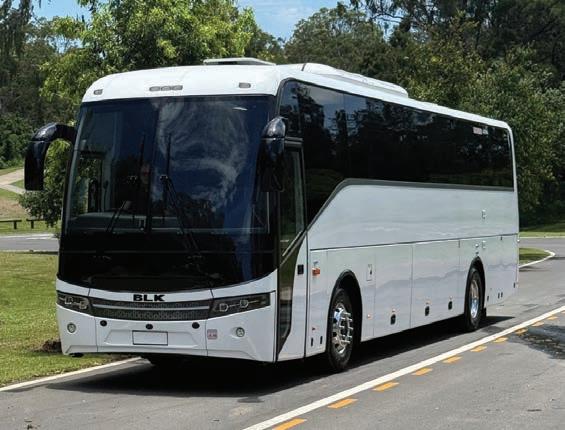
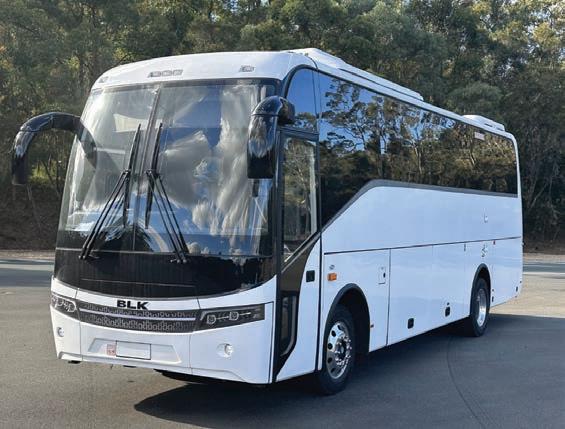
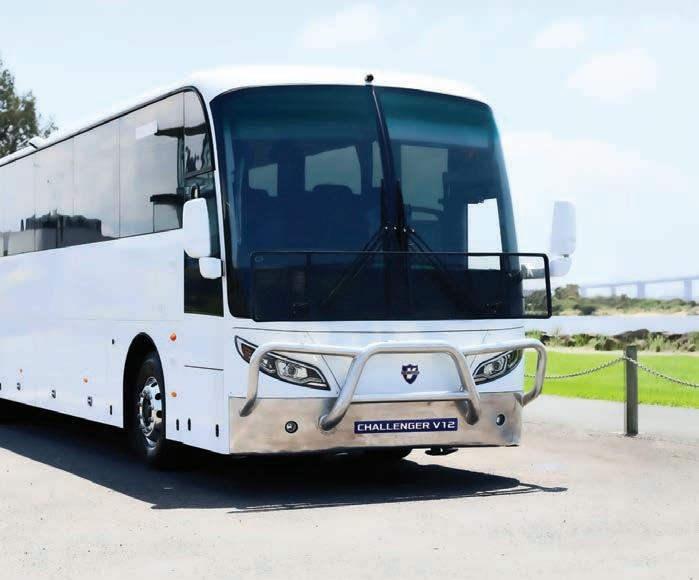
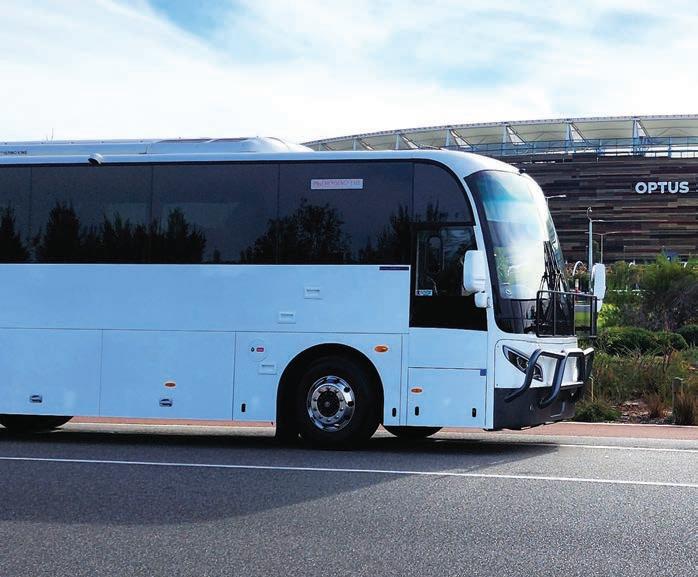
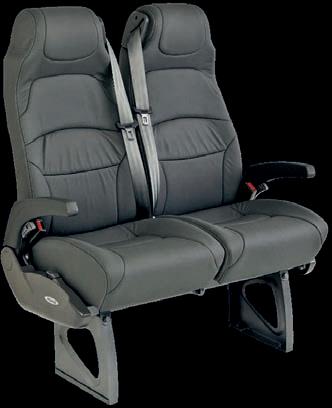
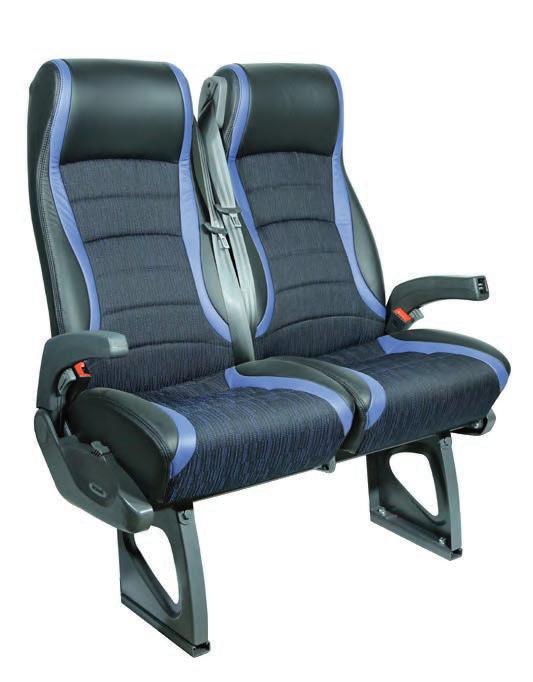
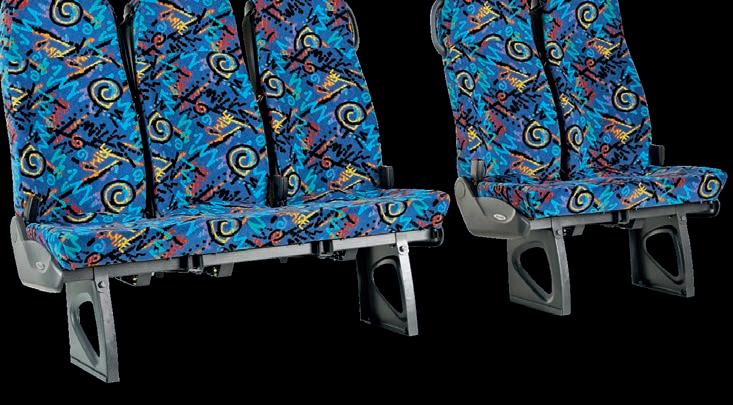
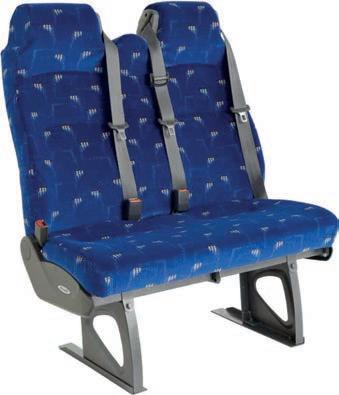
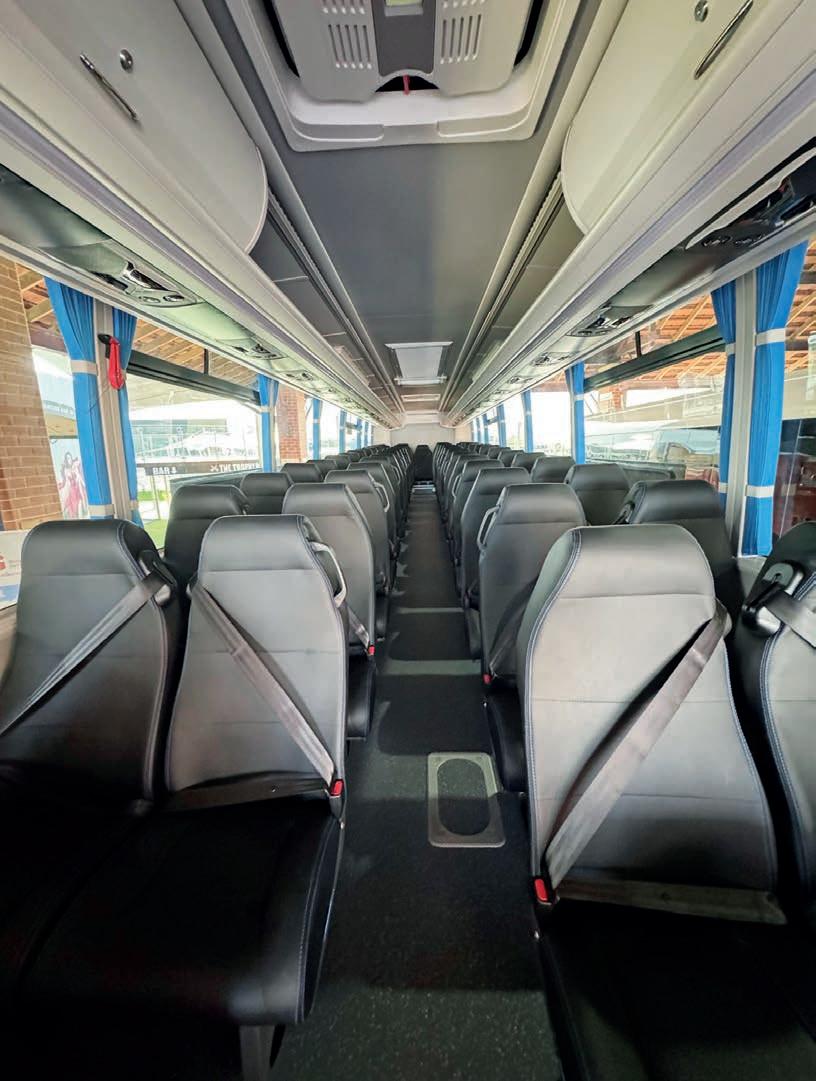
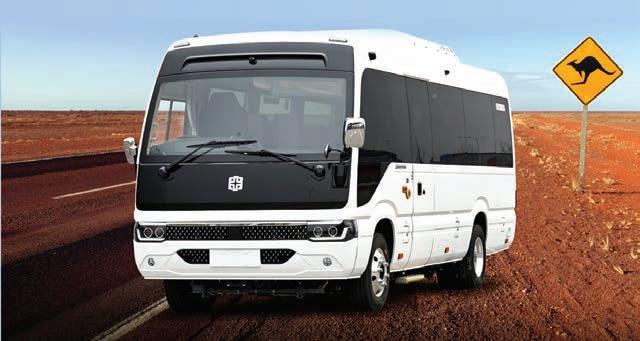
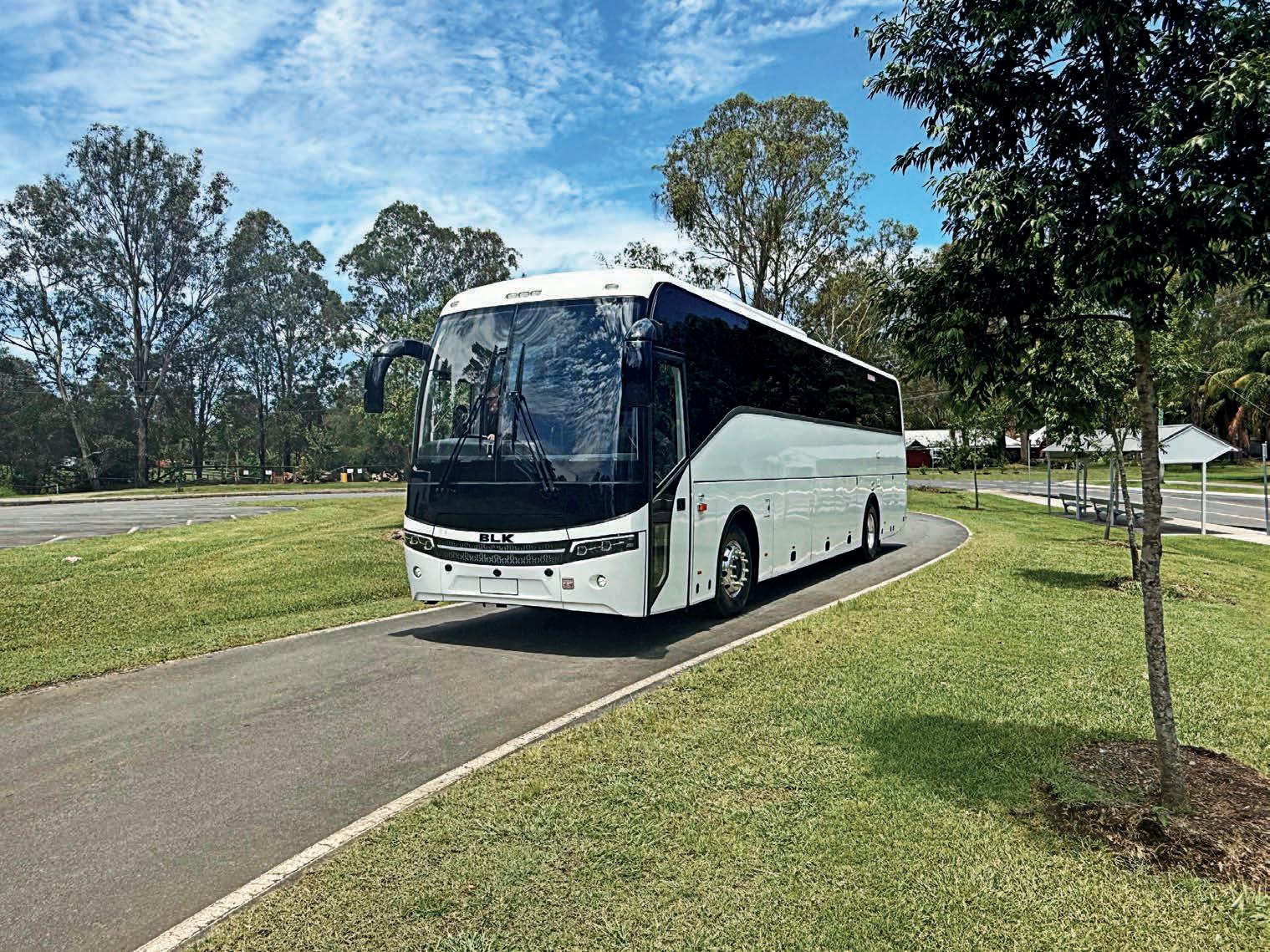
Our flagship President 2 Coach, trusted by operators across Australia for its durability, comfort, and value.
■ Available in 53 & 57 seater variants
■ Designed & Engineered in Australia for Australian conditions
■ Ideal for touring, charter, school and regional operations
■ Backed by BLK’s national support network
Celebrating 20 Years of BLK in Australia 2006–2026
Twenty years of partnerships. Twenty years of experience. A future driven by quality and confidence
NO BACKORDERS. NO DELAYS. IMMEDIATE DELIVERY.
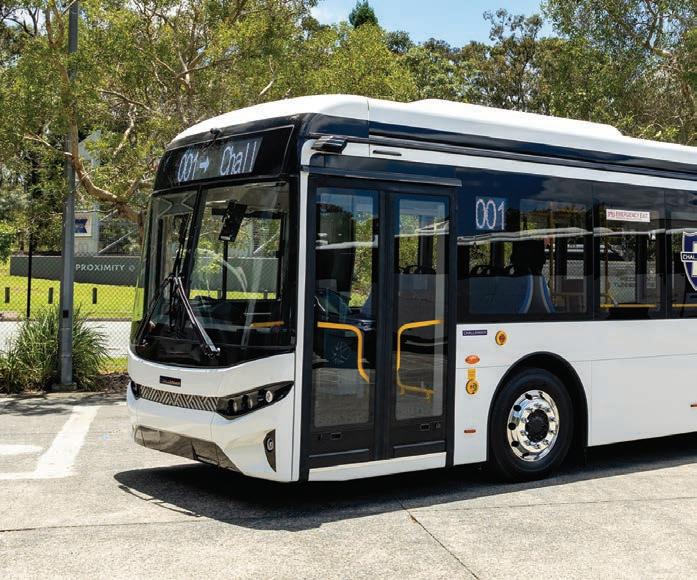
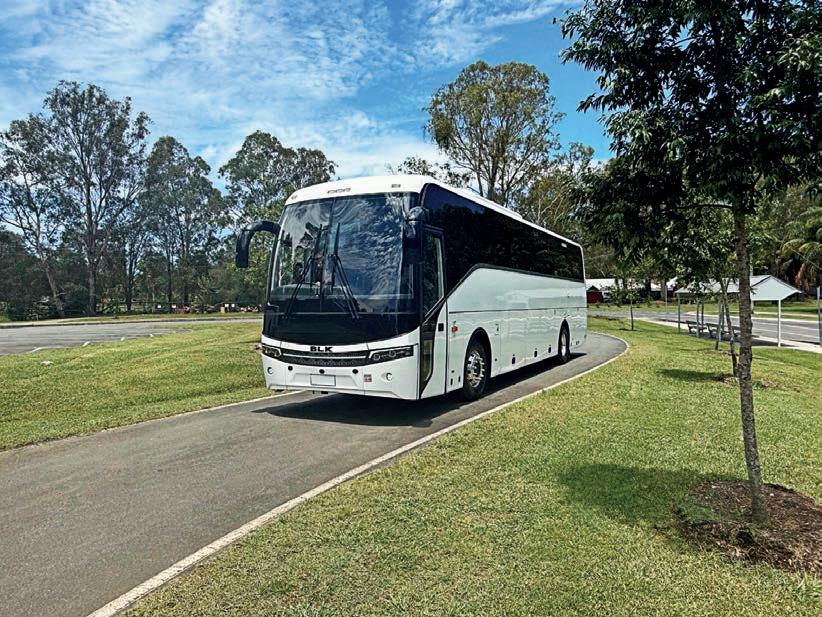
PRESIDENT 10
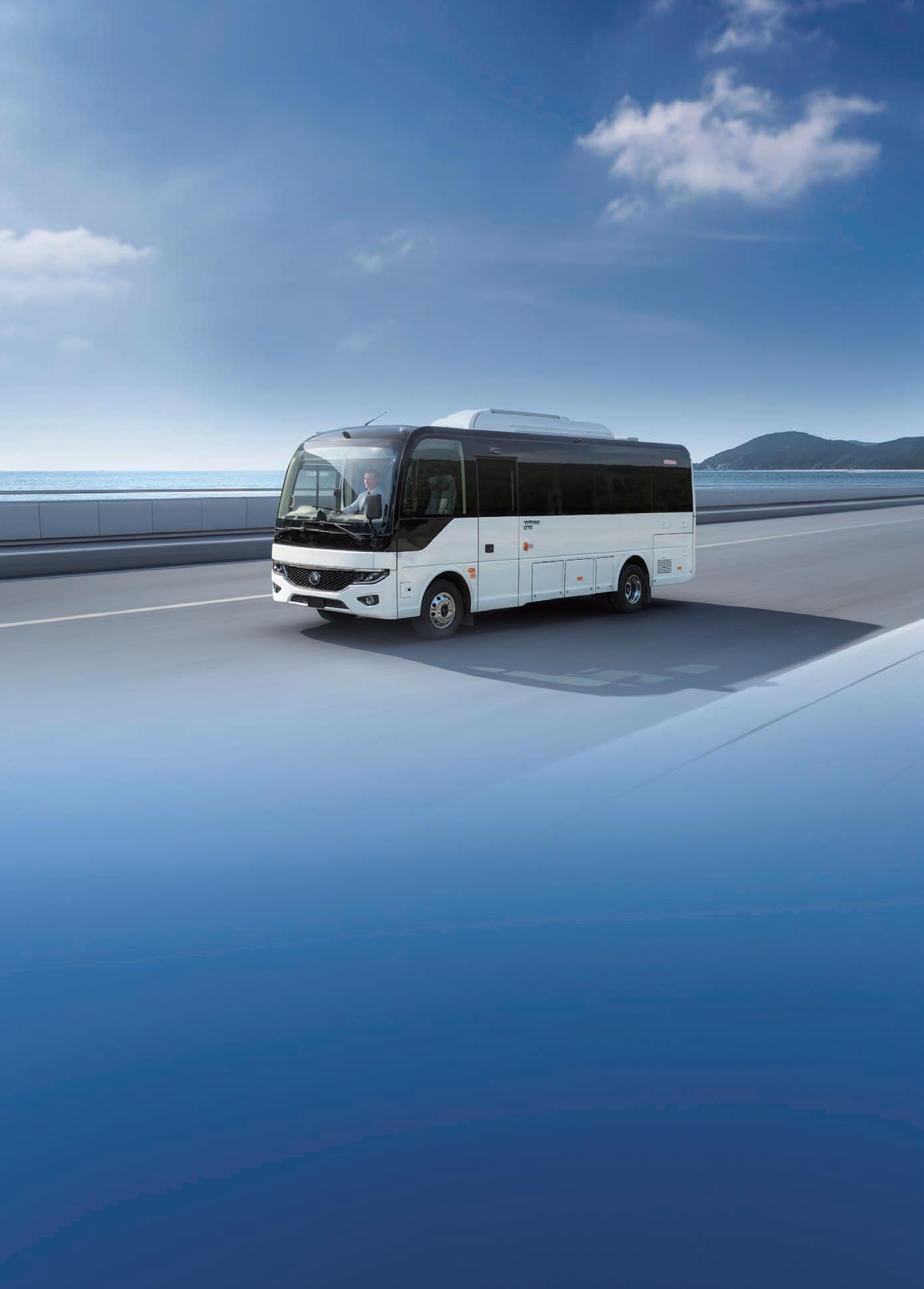
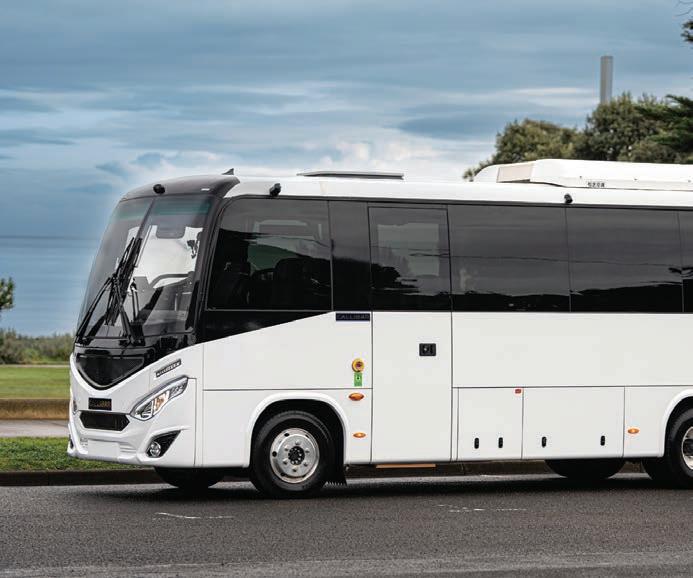
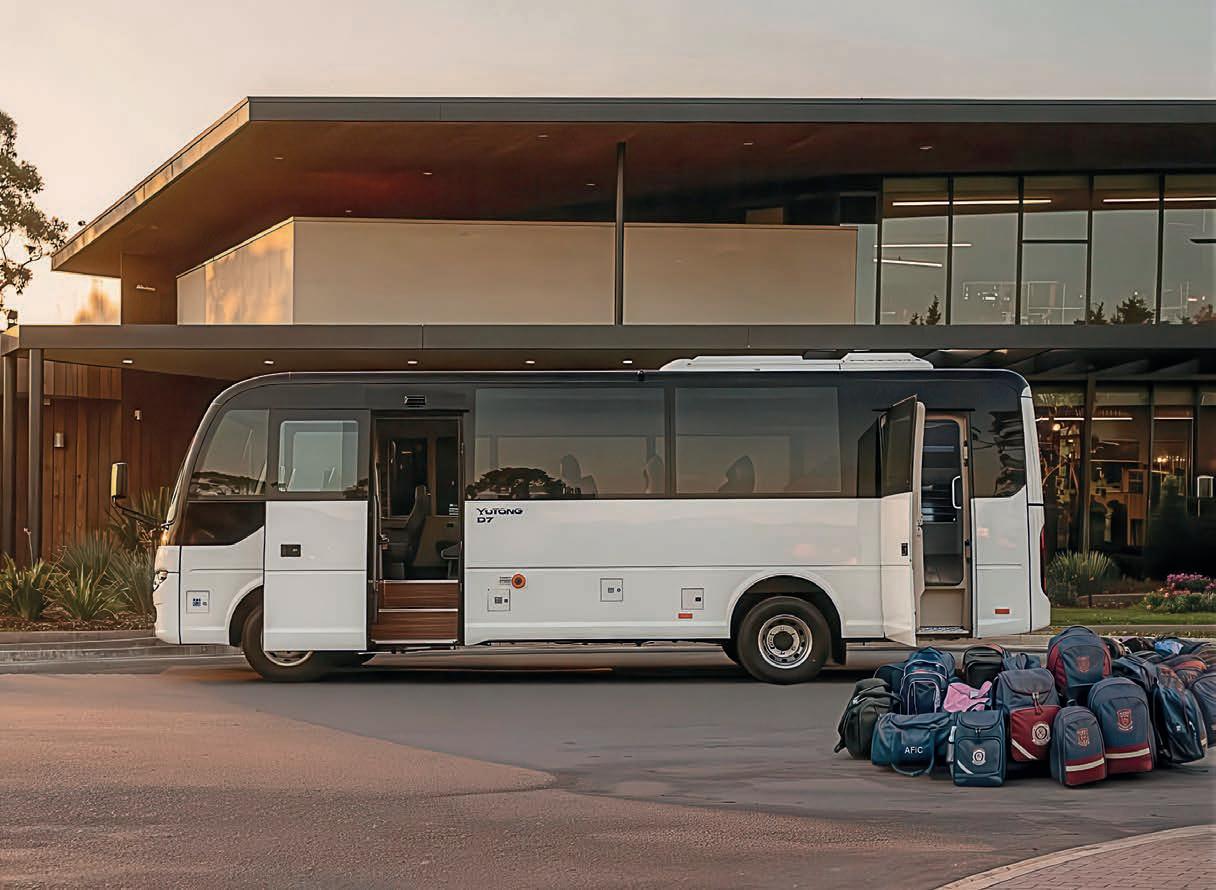
Sophisticated Modern Midi Coach
■ 41 seater
■ Premium interior and passenger comfort
■ Efficient driveline options
■ Built for operators who demand more
■ Ideal for touring, charter, school and regional operations
■ Leading 5 year Warranty
For two decades, BLK has supported Australian operators with quality vehicles, dependable aftersales support, and long-term value.
Time of flux
The local bus and coach sector is fully committed to seizing a unique opportunity in front of us, but we’ll only do it in the way we know best – together
The positivity of the Australasian bus and coach industry never ceases to amaze me. Whenever there’s an issue, the sector has a funny habit of mobilising quickly, banding together and finding solutions with rapid efficiency.
The mind only has to be cast back to recent issues like COVID lockdowns and the Greta bus crash for signs of the industry putting their heads and hearts together quickly to produce long-term solutions that have made the public transport space a better place. This is currently in full effect during the fuel price rise issue, with operators not wasting time to latch onto the unique opportunity that awaits the industry.
The hard work of operators means politicians have also cottoned onto the bus industry’s latest move to welcome more patrons onboard services. It was a pleasure to attend the recent PTAANZ Public Transport Symposium in Melbourne, with the Victorian public transport minister Gabrielle Williams pointing out the way operators are turning fuel price pain into chances for growth.
“Despite rail getting lots of attention in Victoria, bus is also hugely important,” she said to a packed house.
“We’ve seen patronage skyrocket overnight, sometimes by as much as 300 per cent. This is helping build increased loyalty to public transport use, as these routes deliver a service people need.
“We’re chatting to operators about the opportunity in getting people to change patterns of behaviour and to use PT when they might not have previously.”
funding. The Victorian government unveiled its Budget in early May, headlined by a ‘bus bonanza’ of almost $100 million in network funding alongside free and half price fare measures. That hasn’t stopped underrepresented parts of the state’s bus industry from pushing for their fair share – head to page 42 to check our latest in-depth feature on the township of Shepparton and its ongoing wish to receive a belated bus network review.
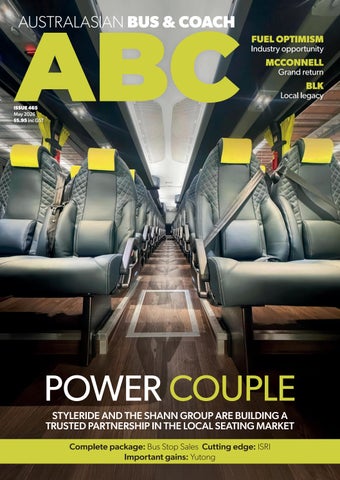
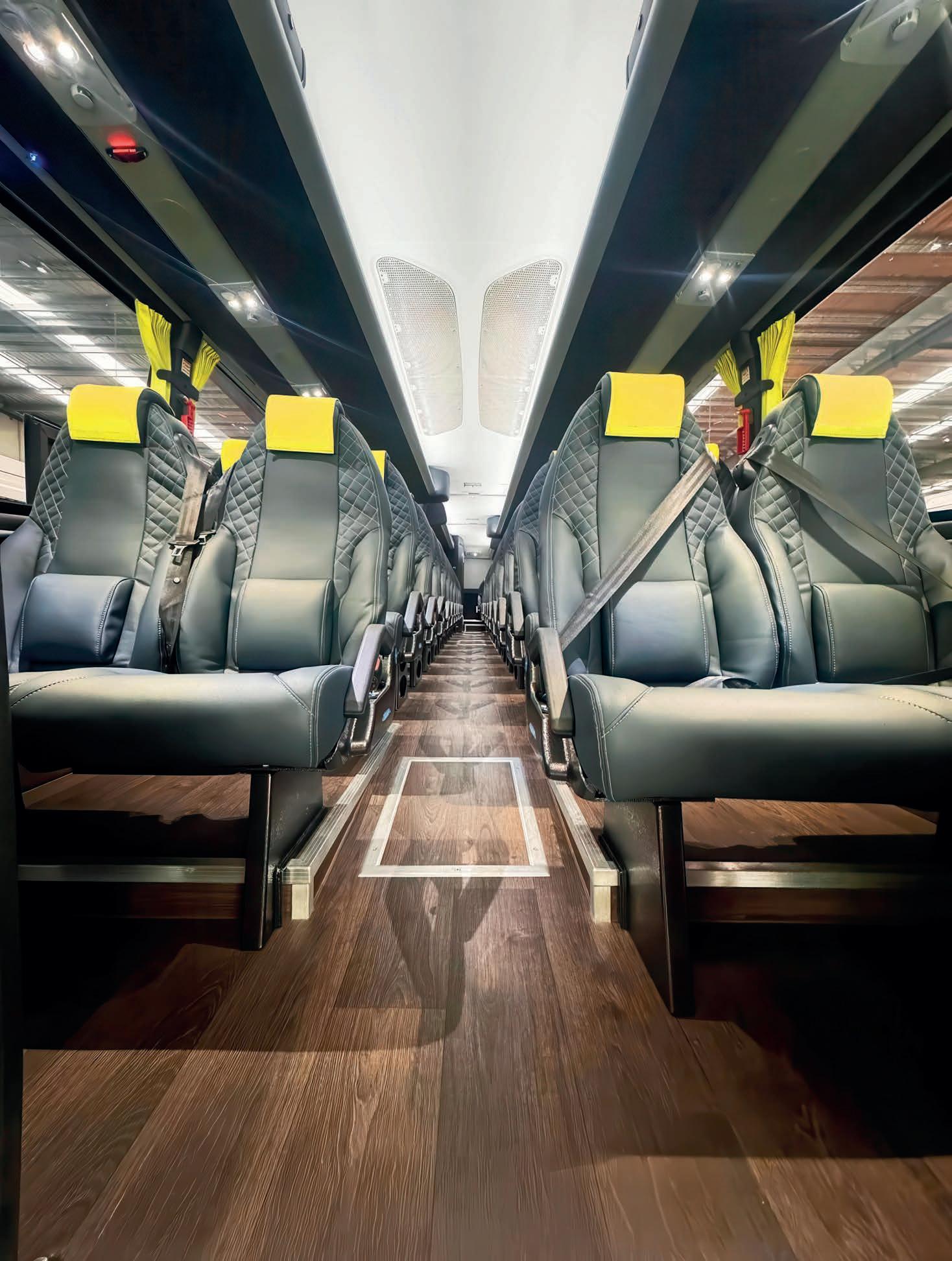
As always, this industry is built on partnerships, and it’s a unique characteristic that defines it in the light of other transport markets. Our cover, courtesy of StyleRide, is a fine representation of this trait, with the seating supplier strengthening its partnership with a Victorian family fabric business to evolve its latest seating products. From page 22, we chat to both parties about the pair’s plans for the future amid special milestones.
This May edition of ABC, positioned on the precipice before we dive into July’s Expo, is all about seats and flooring. ISRI kicks us off with a look at their latest models on offer in Australia from page 30, while McConnell reintroduces the industry to a favourite son returning to the market leader on page 32. Camira’s fabrics continue to lead the way following centuries of experience (page 34), while McNaughtans is fine-tuning its dominant flooring option for the local market on page 36.
As always, this industry is built on partnerships, and it’s a unique characteristic that defines it in the light of other transport markets
Secretary of the Department of Transport and Planning Jeroen Weimar had also noticed the shift happening in the bus sector, saying public transport has a “heaven-sent opportunity” to permanently alter passenger behaviour for the better.
It was wonderful to chat to some of Australia’s biggest operators about this opportunity occurring with ongoing fluctuating fuel prices and what it means for the industry, as well as state patronage statistics to support this boom period.
This sense of opportunity is currently rich in the local bus and coach sector, and recent Budget announcements show policy-makers may just be following suit with subsequent
Throw in our deliveries data, Best Bus winner and a variety of other features from some of Australasia’s largest bus and coach suppliers and it makes for an edition of ABC brimming with optimism. Now, let’s play our part in taking the opportunity ahead of us.
Sean Mortell EDITOR, ABC
in the know
4. editorial | ignition TIMEOFFLUX
The local bus and coach sector is fully committed to seizing a unique opportunity in front of us, but we’ll only do it in the way we know best – together
8. news | all aboard
Check out the latest news from around Australia and the world
features
20. cover story | styleride GREATMATES
A blossoming partnership between StyleRide and fabric supplier Shann Group is leading to strong results in the local bus and coach market as the former grows its presence in the seating sector
24. feature | patronage boost BIGBREAK
As fuel prices continued to rise in recent months, bus networks across Australia saw increased patronage. Major operators argue the industry now has a golden opportunity to shift bus behaviours forever across the country
26. feature | mcnaughtans FIRST-CLASSFLOORING
As McNaughtans celebrates a global milestone this year, the local arm is looking towards a leading flooring range to continue growing the brand in Australia’s bus and coach industry
28. feature | isri SITTINGONHISTORY
More than three decades since the global seating brand formed an Australian subsidiary, ISRI continues to innovate for the local bus and coach market
30.feature | mcconnell REWARDINGRETURN
A well-known member of McConnell Seats Australia over the years is back with the business as the seating manufacturer prepares to unveil a new model range later this year
32. seating feature | camira BIGGERPICTURE
A recent streamlining of operations in Australia is allowing global fabric giant Camira to improve its offerings for local bus and coach operators
34. feature | yutong LITTLEWINS
As the local transport industry searches for the slightest improvements in fuel efficiency, Yutong’s range combines a variety of systems into one groundbreaking platform
36. feature | blk BUILDINGBRILLIANCE
As BLK celebrates 20 years in the Australasian market, the milestone represents far more than longevity – it reflects a combination of trust, reputation, resilience, credibility and operator partnerships
38. feature | bus stop WHOLE-OF-LIFEDECISION
At the recent QBIC Conference, Bus Stop Sales’ Pete White discussed the important procurement and engineering decisions that lay ahead of progressive bus and coach operators
40. feature | shepparton BONANZAORBUST?
For nearly 20 years, Greater Shepparton has been waiting for a state government bus network review to revitalise its services. After missing out on funding in the recent state Budget’s ‘bus bonanza’, local leaders are continuing to hold onto hope
44. feature | zbus DIZZYINGHEIGHTS
In just over a year, Australian Transit Group’s Karratha fleet has grown rapidly. The recent addition of Zhongtong buses has provided the unit with a point of difference as it eyes further expansion in the Pilbara
47. competition | best bus PRIZEDPOSITION
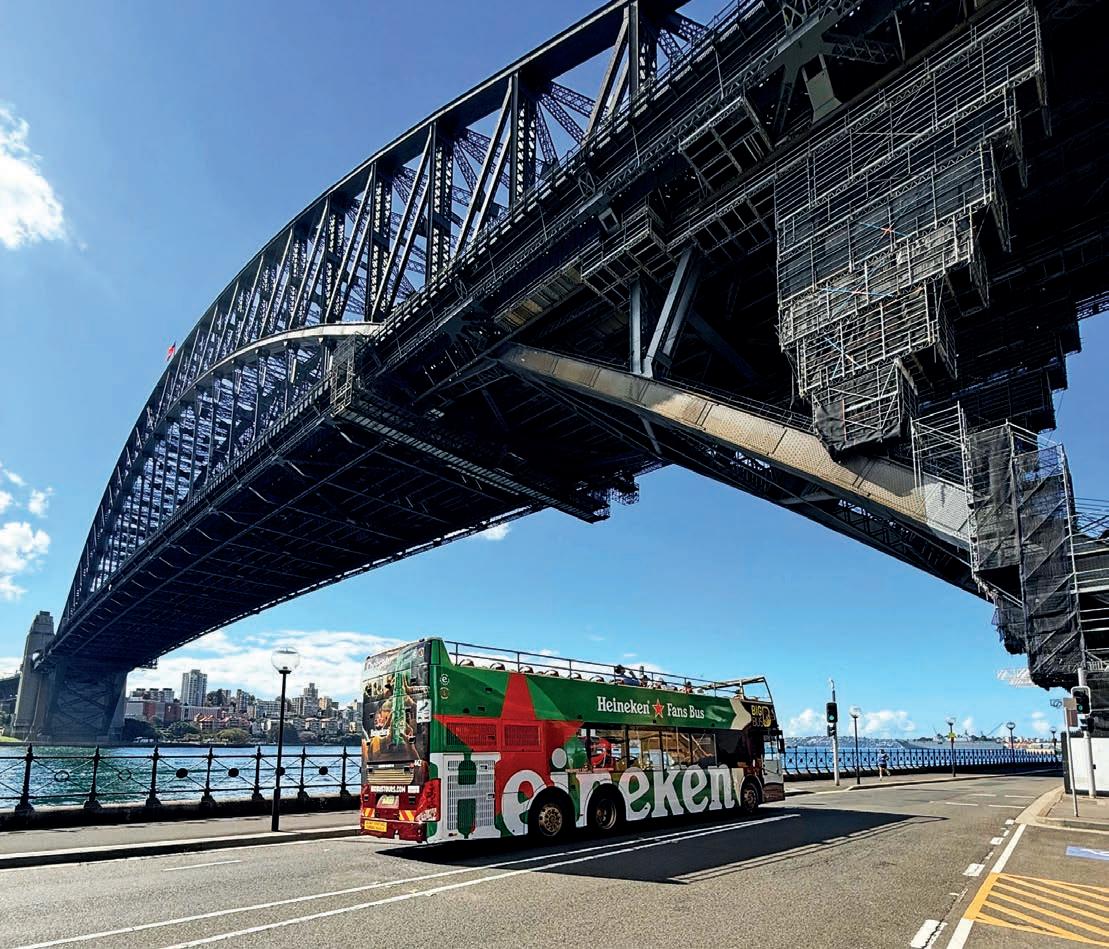
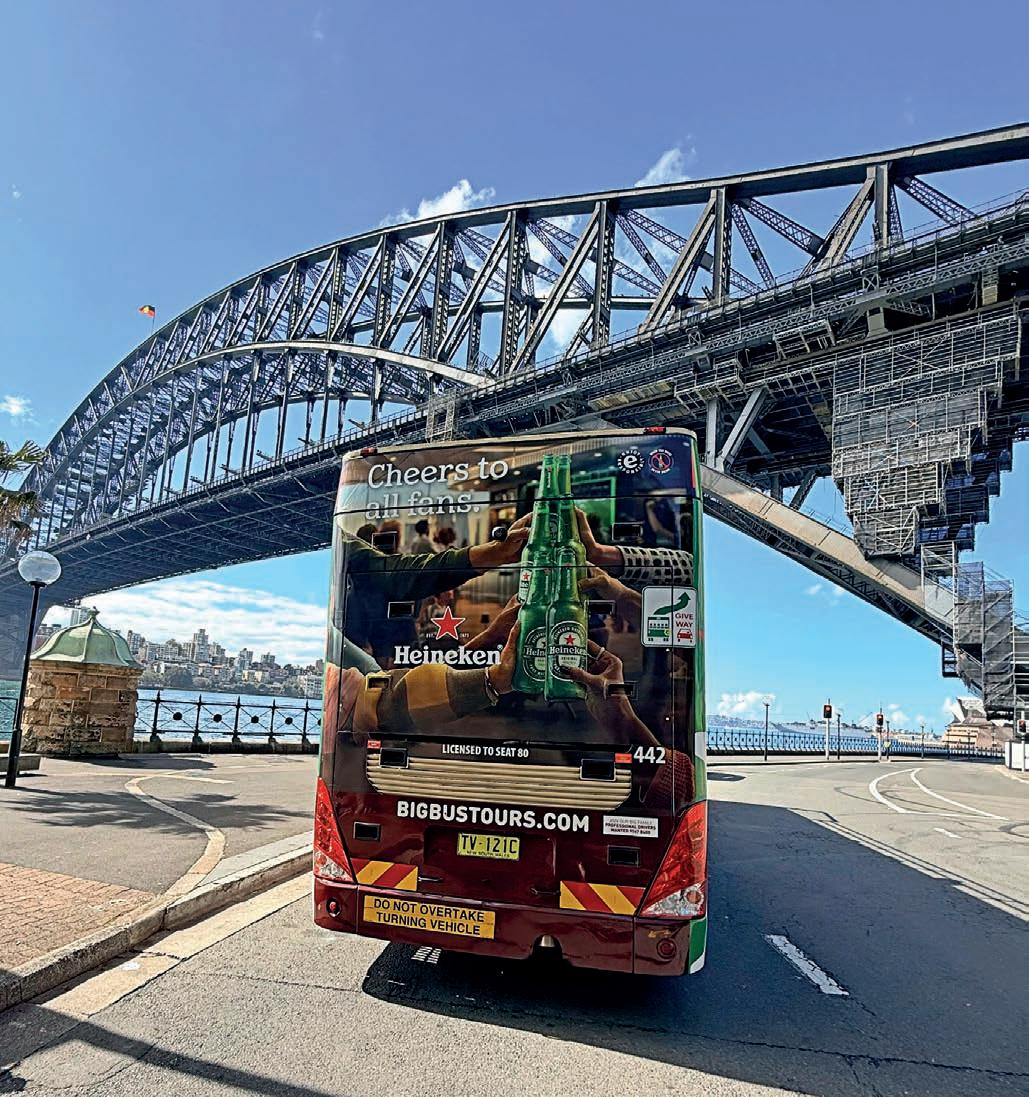
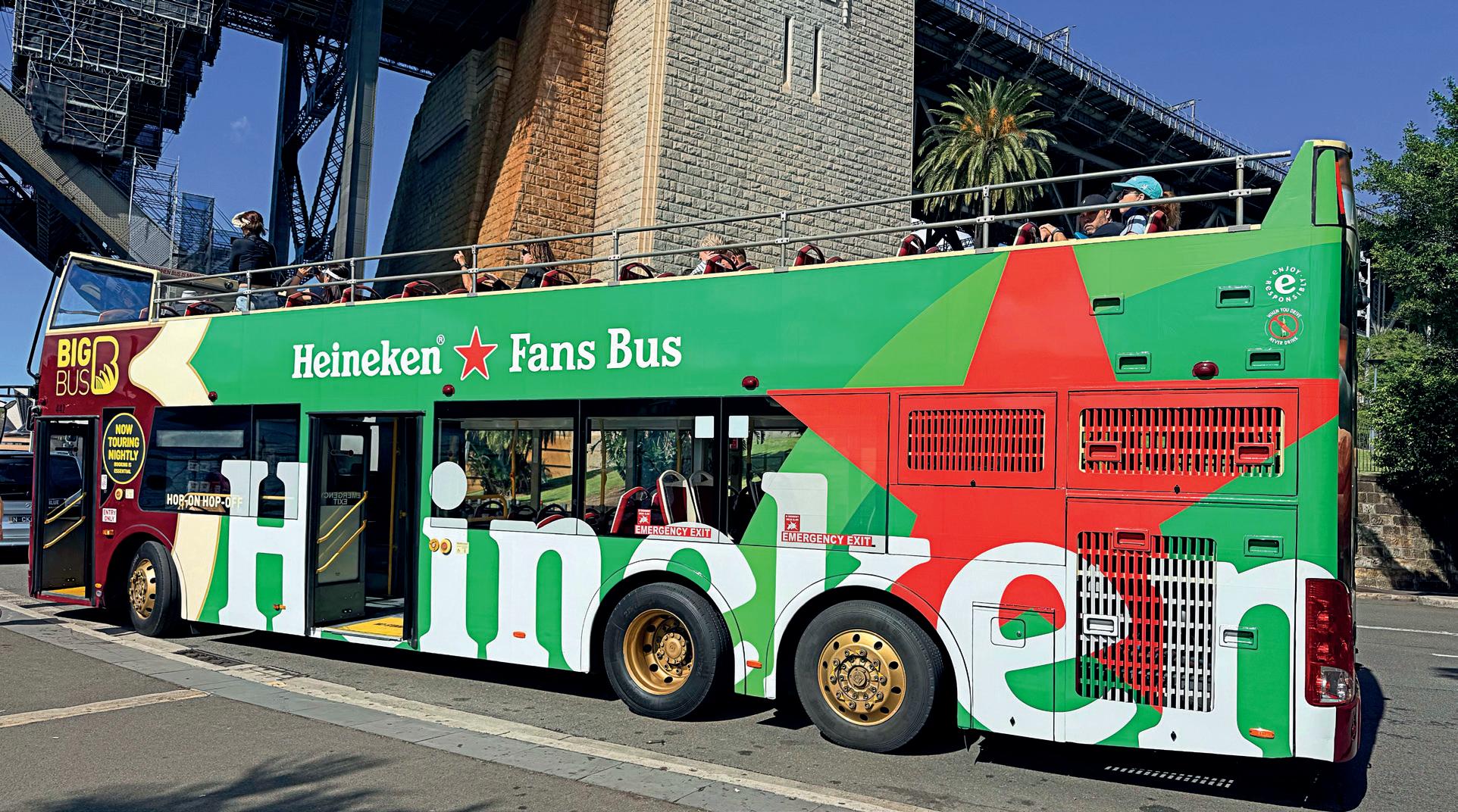
The Best Bus winner for May takes us into the big smoke and directly under one of Australia’s biggest landmarks
departments
50. factory facts | bus deliveries HECTICRHYTHM
Check out the latest bus and coach supplier sales data collected and recorded for you to review and see how the market fared in April
54. back seat | wa bus FUTUREPARKEDINTHEPAST
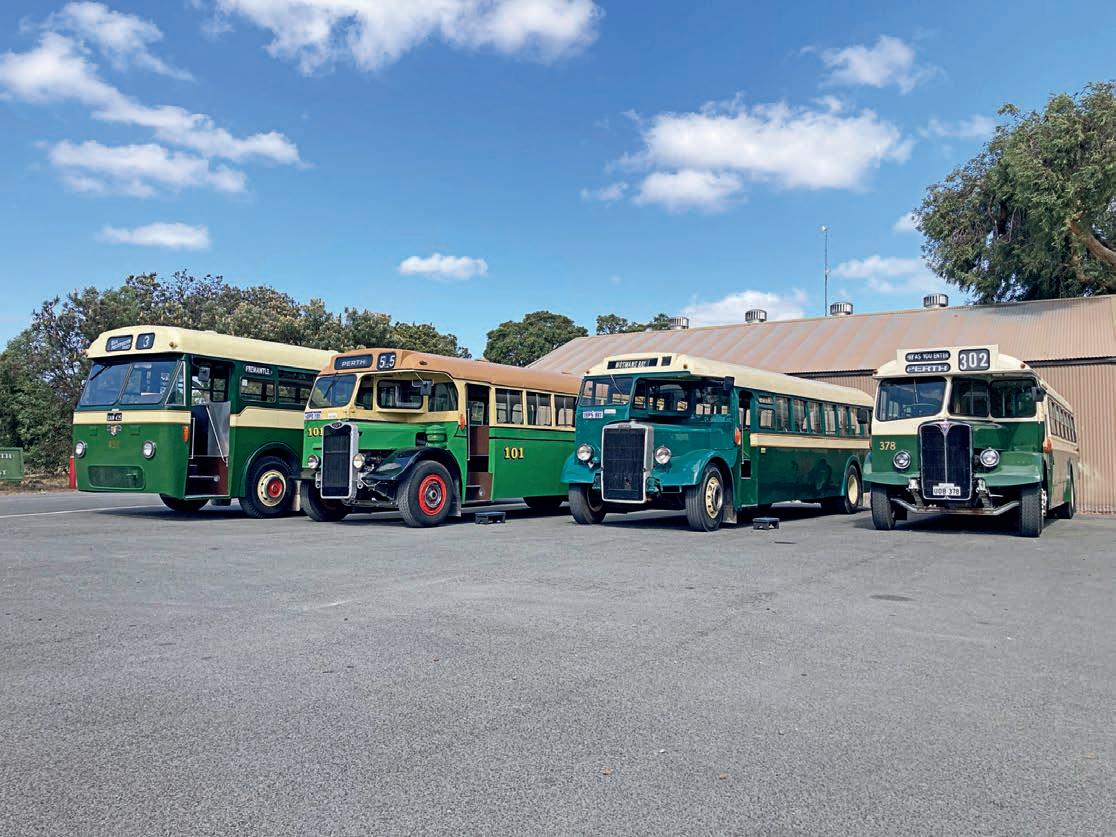
A growing fleet and shrinking space are pushing WA’s bus preservationists toward a bold next step: a public museum to secure the past and inspire future generations
Overseas: $A170 (Australian air-mail only) *price includes GST
Cover image: StyleRide
Image: BLK
Creating Australia’s best seats.
Designing and Manufacturing seats in Australia for over 60 years
McConnell is the largest designer and manufacturer of transport seating in Australia.
Achieving this level of success while remaining a locally operated company is a testament to the quality of our product and the integrity and service of our dedicated team.
Victorian Budget backs buses
The Victorian government has released its Budget for 2026/27, putting buses and public transport at the centre of its leading agendas through new funding for specialist school services, route upgrades and fare relief across the state.
The Budget includes $39 million to support free travel for students attending specialist schools, helping cover existing services, higher fuel and operating costs, and new buses to replace older vehicles that are less safe or no longer fit for purpose.
The funding will support bus services to existing specialist schools, which currently assist about 60 per cent of students, with additional services expected from 2027 to meet growing demand.
The specialist school bus investment forms part of a broader $2.2 billion package to support students with disability in Victorian public schools, including accessibility upgrades, specialist staff, teacher training and individualised care for students with high and complex needs.
Premier Jacinta Allan says the funding was designed to help students receive the support they need.
“We’re supporting every student to get the very best education, whatever their additional needs are,” Allan says.
Above: The Budget’s bus funding has received mixed reviews. Image: Victoria’s Big Build
“It means children with a disability can access care close to home at no cost, so families can focus on what matters.”
Buses also feature in the government’s wider cost-of-living package, with free public transport extended until the end of May before half-price fares begin from June 1 and continue until the end of 2026.
The fare reduction applies across trains, trams and buses, cutting the full daily fare from $11.40 to $5.70 for travel anywhere in Victoria.
The government says the measure will save the average daily commuter more than $850 between June and the end of the year, while also helping reduce fuel demand and encouraging more people to use public transport.
Victorian public transport minister Gabrielle Williams says the fare cut will give passengers more affordable travel options.
“Half-price fares deliver even greater savings for commuters –giving you more options to leave the car at home,” Williams says.
Public transport will remain permanently free for under 18s and free on weekends for seniors, carers and disability support pensioners.
Beyond fares, the Budget includes almost $100 million for new bus services in Melton South, Casey, Dandenong and Drysdale, along with
upgrades to 20 other routes across the wider state bus network.
That investment positions buses as a major part of Victoria’s response to growth in outer suburbs, where access to frequent and reliable public transport remains a key issue.
The Fix Dandy Buses campaign has welcomed funding for a seven day service on Dandenong bus routes 802, 804 and 885 announced in the Budget.
The community group understands that the upgrade will introduce a seven day service and extend operating hours on these popular Dandenong area bus routes.
Convenor Peter Parker says this will be a big uplift given current limited timetables had remained static for years, while service frequencies will also improve.
Parker listed Dandenong Market shoppers, Dandenong Hospital visitors, Monash University students and weekend Chadstone workers as being the biggest beneficiaries from the 802 and 804 upgrades. In addition, the route 885 upgrade will improve access to Springvale and Glen Waverley.
“As seen with 2024’s route 800 upgrade, seven day bus services change lives and save people money. The 802, 804 and 885 boosts will do the same for many more, notably in Dandenong North and Mulgrave,” he says.
“We are particularly gratified that this upgrade completes the job of delivering seven day services on all routes to Dandenong Market, Dandenong Hospital, Oasis Pool, Monash Clayton, Oakleigh Station, Chadstone Shopping Centre and more.
“I commend Gabrielle Williams and the state government for heeding the community’s call for better buses in the under-served south-east. We look forward to a speedy implementation so the benefits start as soon as possible.”
buses”, with a major ticketing overhaul set to deliver more accurate real-time tracking and a more reliable daily travel experience.
The NSW government has announced the next phase of its Opal upgrade, with new technology designed to address long-standing frustrations around bus reliability while improving fare access and passenger information.
At the centre of the changes is a focus on fixing phantom or ghost buses. These services appear on apps but fail to arrive, undermining commuter confidence and making journey planning difficult.
Passengers waiting at stops will receive more accurate updates on upcoming services, supported by improved tracking systems and onboard technology.
NSW transport minister John Graham says the issue has been a persistent problem for bus users.
“So-called ‘ghost buses’ have been a bugbear for Sydney commuters, and this solution is going to end that era once and for all,” he says.
The improvements are tied to better
changes. Image: arliftatoz2205/ stock.adobe.com
that disruptions are communicated to passengers more accurately.
The upgrade includes the rollout of digital information screens across 5,000 buses, providing real-time updates on stops and travel times, alongside onboard audio announcements.
This is expected to improve both passenger awareness and operational coordination, particularly on high-frequency urban routes.
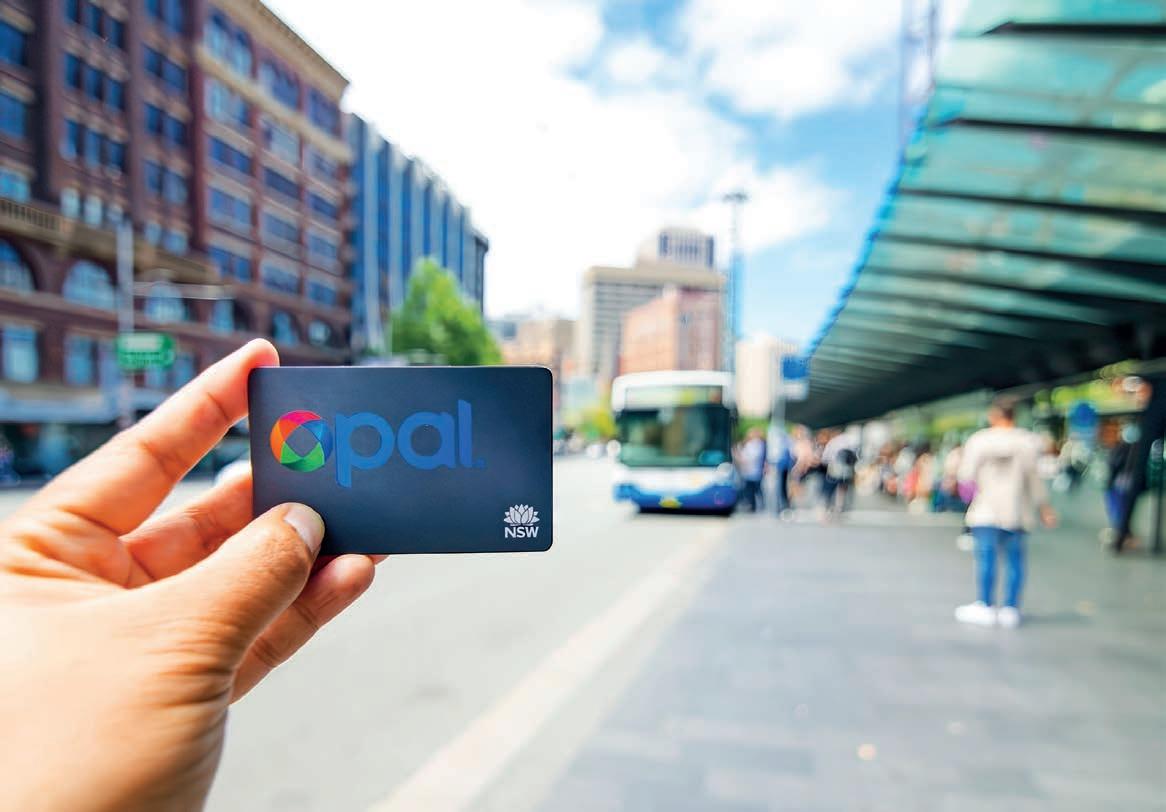
The overhaul, known as Opal 2.0, also introduces a new account-based ticketing system, digital Opal cards and an upgraded mobile app, designed to make bus travel easier to access and more responsive to passenger needs.
Under the broader upgrade, nearly one million passengers, including students, job seekers, seniors and concession holders, will be able to link their entitlements to contactless payment methods, allowing them to tap on with a bank card or device without losing their discount.
This addresses a common issue where passengers opted for convenience but missed out on
feature, with adults capped at $50, concessions at $25 and seniors paying no more than $2.50 per day once thresholds are reached.
These measures, combined with more accurate service data, are expected to improve the overall value proposition of bus travel, particularly as cost-of-living pressures continue to influence transport choices.
The system will also deliver faster and more accurate patronage data, enabling passengers to see how busy upcoming bus services are before they arrive. This could mean better decisions about when and how to travel, reducing overcrowding and improving comfort.
The upgrade is part of a broader shift in investment toward everyday transport services, particularly buses, which form the backbone of Sydney’s public transport network.
Premier Chris Minns says the focus is on improving the reliability of services people use most.
“This upgrade is about improving the everyday experience, making it easier to get around, to save money and easier to rely on public transport.”
Kinetic secures GC on-demand contract
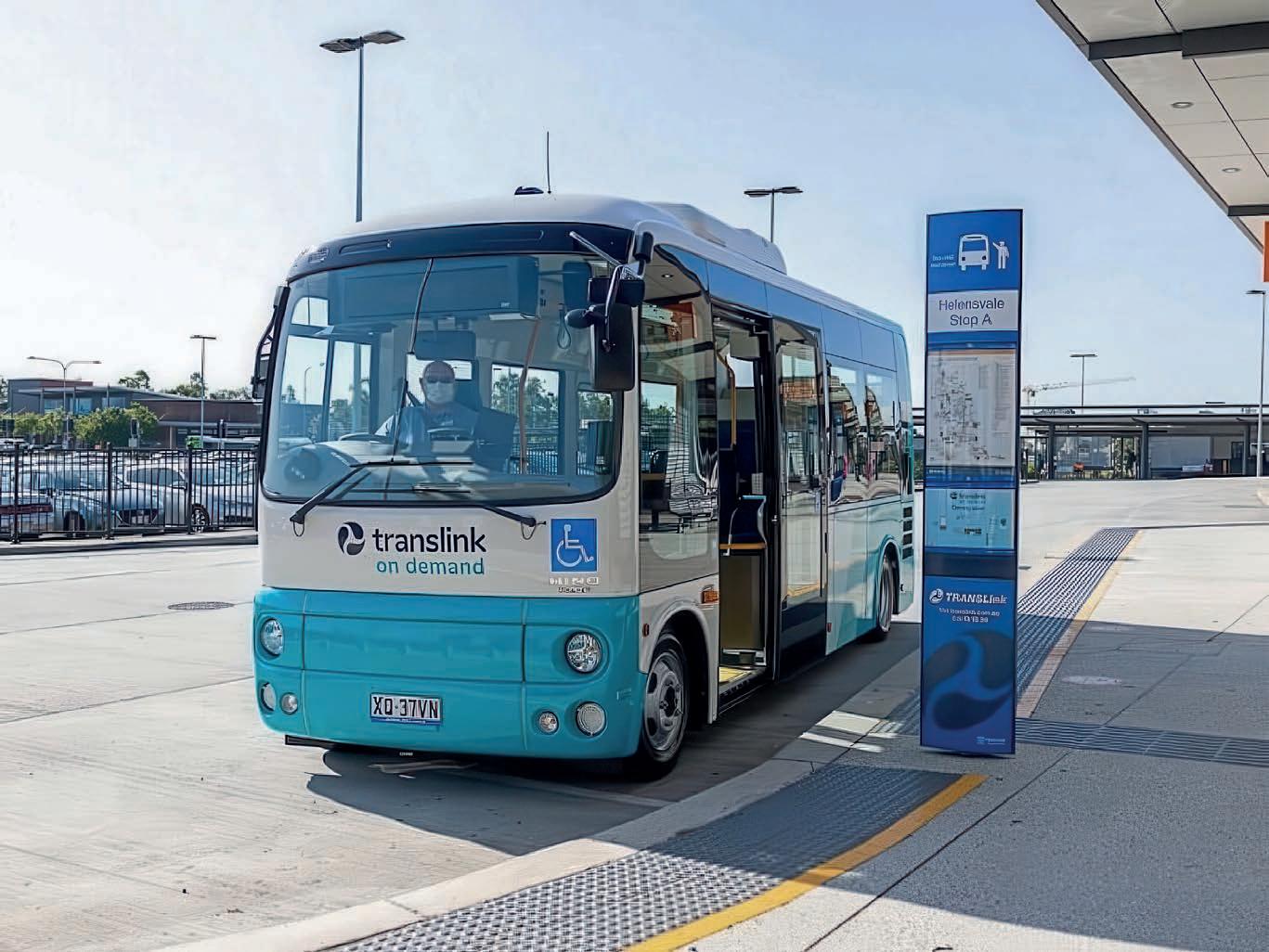
The operator is celebrating the contract that makes the on-demand trial permanent, with new electric buses set to be delivered this year
Australian bus and coach operator
Kinetic has been awarded a long-term contract to deliver on-demand transport on the Gold Coast, with electric buses to be introduced to the network this year.
Kinetic has secured a new five-year deal to operate on-demand services on the Gold Coast, securing the future of the service that was made permanent by the Queensland government in October last year.
The Department of Transport and Main Roads awarded the contract to allow Kinetic to continue delivering flexible and accessible transport on the Gold Coast from May 1.
Passengers book trips through the Translink On Demand app, with access to real-time service tracking, notifications and journey planning across the broader Gold Coast public transport network.
Below: The on-demand trial has been made permanent on the Gold Coast.
Image: Kinetic
More than 320,645 passenger trips have been completed to date, with more than 1.7 million kilometres travelled across the network.
Kinetic says the service has proven a critical connector with high-frequency public transport, with passengers using ODT to link with bus services, heavy rail and light rail.
Kinetic will introduce two new zero-emission buses to the Gold Coast ODT fleet in September, which will be fully accessible. The new electric buses mark a significant step towards a cleaner on demand network on the Gold Coast.
Kinetic general manager (Gold Coast) Matt Thompson says the contract award recognises Kinetic’s commitment to delivering high-quality on demand services.
“We’ve been proud to operate this service since its trial began in 2022,
and securing this contract means we can continue to invest in the service and the community it supports,” he says.
“The Gold Coast community has backed ODT all the way, and the numbers speak for themselves.
“What started as a trial has become an essential part of how people get around, connecting them with trains, light rail and bus services across the region, and the introduction of zero-emissions buses to our on-demand fleet is an exciting step for green transportation on the Gold Coast.
“On demand transport plays an important role in connecting passengers to the broader public transport network, and we look forward to continuing to work with the Queensland government to grow and enhance the service.”
SA family operator shuts doors
The
third-generation family operator has officially ceased services, with a fellow operator picking up
A third-generation South Australian family-owned bus business has announced it has permanently closed its doors.
The Kent Group, which incorporates Spencer Gulf Coaches, Port Pirie Bus Services and A.R Kent Garage, officially closed its doors as of May 3.
As a proud third-generation family-owned and operated business, the operator says it’s been an “incredibly difficult decision” and “not one that has been made lightly”.
“For many years, we have had the privilege of serving our community – supporting local schools, sporting clubs, community organisations, families and businesses across the region,” Port Pirie Bus Services says in an online post.
essential community
“It has been an honour to be a part of so many journeys and milestones over the years. We are extremely proud of what our team has achieved over the years and the role the Kent Group has played in the community.
“To our staff, we extend our sincere gratitude for your hard work, loyalty and dedication. You have been the heart of this business.
“To our valued customers, clients, and the wider community, thank you for your trust, support and friendship
over many years.”
From May 3, the Port Pirie Town Bus, School Buses 1-4, Assisted Access and Southern Flinders Connector are operated by Des’s Transport.
The operator extended its thanks to Des’s for “supporting the continuation of essential public transport services” in the local community.
“Clients with existing charter bookings will be contacted directly regarding their travel arrangements. We kindly ask that you check your email correspondence for further information,” the operator says.
“While this is not the ending we had hoped for, we leave with immense pride in what has been built and genuine appreciation for everyone who has been a part of our story.”
Left: The Kent Group has officially closed. Image: Kent Group
tenure, driving meaningful progress across the business and leaving a strong foundation for what comes next.
“We wish David every success in his new role within the transport sector, and we are grateful for the dedication and expertise he brought to CDC NSW.”
Peacock brings more than 25 years of experience in the transport and logistics sectors to the role.
Yap says his “extensive operational leadership” in large-scale environments positions him well
to drive CDC NSW’s next phase of development across public transport and charter operations.
ComfortDelGro Corporation Australia (CDC) is one of Australia’s leading transport providers, operating in seven states and territories, employing more than 5,800 people and operating a total fleet of more than 11,500 vehicles nationally.
The brand’s operations include public transport in NSW, Victoria,
the Northern Territory, Queensland and the ACT, while non-emergency patient transport services are provided in Victoria, NSW and Western Australia.
CDC has also added A2B Australia to its ranks to become a leading Australian taxi network, operating taxi services brands 13cabs, Silver Service and Swan Taxis as well as a booking dispatch platform MTI and the Cabcharge payment solution.
Above: CDC NSW CEO Joshua Peacock. Image: CDC NSW
“Love listening to Australian Truck Radio. Such a great mix of music with loads of Slim, plus it has heaps of trucking industry news. Great radio for what I do 24/7!”
CLARE TEMBY OWNER DRIVER, TEMBY’S CONTRACTING
has found a unique way of assisting the prolonged driver shortage on Sydney’s Northern Beaches, bringing in drivers from New Zealand.
With three in 10 bus service cancellations in Sydney occurring on Northern Beaches routes due to the area struggling to attract and retain enough drivers, the state government has turned to New Zealand for drivers.
The state government says Sydney’s bus driver deficit blew out past 500 after previous governments privatised bus services, with the state government saying the deficit is down to 179 drivers last month as recruitment campaigns, free training and cash sign-on bonuses of up to $3,000 have been introduced.
Due to its comparatively high housing costs that price many workers out of the area, the bus driver shortage at Northern Beaches depots has remained persistent over years and its services most susceptible to last-minute cancellation.
To address this, Transport for NSW has gone further afield than ever before in its recruitment search and has so far assisted 17 qualified bus
Kiwi drivers
fix bus driver droughts. Image: 孤飞的鹤/ stock.adobe.com
behind the wheel for private operator Keolis Downer in Region 8 which encompasses the lower north shore, Manly and Palm Beach.
Transport for NSW says another 10-20 bus drivers are currently being recruited.
“Australians have a tradition of adopting New Zealanders as our own – think Russell Crowe, Neil Finn and Sam Neill. But if you’re waiting for a bus on Pittwater Road, the Kiwi driving the next service may just become your favourite import yet,” NSW transport minister John Graham says.
“We have worked overtime to reduce the bus driver shortage we inherited, but the deficit on the Northern Beaches has remained intractable. This is a special situation that has required a special fix.
“The Minns Labor government wants to send a big kia ora to the 17 drivers from New Zealand who have so far helped us out with their experience and professionalism.”
Kiwi drivers willing to answer NSW’s call have had their airfare paid and six weeks accommodation in the area provided rent-free.
recognition arrangements between our two countries, but they don’t qualify for the $2,000-$3,000 cash sign-on bonuses offered to new and experienced Australian drivers.
Overall, bus driver job vacancies across Sydney have fallen from around 500 in April 2023 to 162 this month, and cancellations are down to 1.54 per cent of all scheduled services.
“This is a practical, targeted initiative that will help address driver shortages in one of the most challenging parts of the network to recruit for,” Transport for NSW coordinator general Howard Collins says.
“Our door is always open to men and women who are interested in becoming bus drivers in NSW, and we encourage people from all backgrounds to consider this rewarding and essential career.
“By bringing in qualified drivers who can transition quickly into service, we’re strengthening reliability for passengers while continuing to build a sustainable local workforce.”
to
Auckland Transport appoints interim chief executive
The well-respected organisation leader has taken over the top job on an interim basis
Auckland Transport has announced a new interim chief executive, with Stacey van der Putten to take over as the next temporary leader of the organisation.
According to RNZ, Van der Putten has assumed the role in May, building on her involvement with Auckland Transport after joining in 2017.
Starting as the manager of metro facilities, she has risen to being an executive general manager of safety and public transport services before becoming the organisation’s director of public transport and active modes.
Auckland Transport board chair Andrew Ritchie says she brings a wealth of knowledge to the role.
“The board and I are thrilled Stacey
has accepted the role, which comes at a critical moment as we prepare for upcoming changes to transport governance in Auckland,” Ritchie says.
“Stacey is a highly respected transport leader who has served in a number of roles at Auckland Transport since 2017.
“She has a deep understanding of the transport system in Auckland and is highly regarded locally and across the sector.”
Auckland mayor Wayne Brown backed the appointment, saying van der Putten has done “a great job” as the director of public transport and active modes.
“She is well versed on the complexities of the transport transition
programme, and the expectations of what we want out of this reform, which is to ensure AT is ready to be strictly a delivery agency for public transport,” Brown says.
“This will be crucial as AT goes through change. I look forward to continuing to work closely with her.”
Van der Putten took over from outgoing chief executive Dean Kimpton on May 1, with Ritchie paying tribute to Kimpton.
“Dean has made a significant contribution to AT over the past three years. The AT Board wishes Dean all the very best for his future endeavours and thanks him for his leadership and delivering outcomes for Aucklanders,” Ritchie says.
Airport to Botany busway locked in
Auckland’s busway route has been confirmed, paving the way for faster, high-capacity bus services between the airport, Manukau and Botany
Auckland’s next major rapid transit corridor has taken a significant step forward, with the route for the Airport to Botany busway now formally protected.
Announced on April 14, the 18-kilometre busway will connect Auckland Airport, Manukau and Botany, creating a dedicated corridor designed to deliver faster and more reliable bus services across southeast Auckland.
Auckland Transport and NZ Transport Agency Waka Kotahi have confirmed designations for 15 kilometres of the route, with the remaining section located within the Auckland Airport precinct.
Route protection secures the land needed for future construction, allowing the project to be delivered more efficiently once funding and
detailed design are finalised.
Auckland Transport Programme Director Andy Huang says the milestone reflects years of planning work.
“Airport to Botany is ready to be Auckland’s next busway,” he says.
“The hard planning work to decide the best route, identify the properties
required and get a designation in place is complete.
“Confirming route protection is a major milestone towards delivering bus rapid transit between the Airport, Manukau city centre and Botany that supports Auckland’s growth and provides reliable travel options. There would be a reliable 34 to 38-minute journey between Botany and the airport on buses separated from other traffic.”
The busway is expected to be delivered in stages, with Puhinui Station already operational and interim improvements planned to extend Airport Link bus services to Botany ahead of full construction. These early upgrades aim to deliver faster bus journeys sooner, particularly along key corridors such as Te Irirangi Drive.
Auckland shapes up fuel flexibility
Auckland bus reform sharpens focus on service delivery while monthly fuel adjustments support operators under pressure
New Zealand’s bus operators are set to face a changed operating environment, with the government pairing short-term fuel cost flexibility with major reforms to Auckland’s transport governance.
Transport minister Chris Bishop has confirmed NZTA will move to monthly interim fuel price adjustments across public transport, construction and maintenance contracts, giving bus and ferry operators faster relief as fuel prices rise.
The change comes as landmark Auckland transport reforms pass their third reading, shifting most transport functions from Auckland Transport to the Auckland Council and narrowing Auckland Transport’s role to public transport delivery.
Together, the measures place bus operations, service reliability and
contract management firmly in the spotlight.
Bishop says rising fuel prices were putting pressure on businesses across the transport sector, including operators who keep buses and ferries running.
“Most NZTA contracts already include fuel price adjustment mechanisms, but they’ve typically only been applied quarterly. When prices move quickly, as they have recently, that creates cashflow pressure for operators and contractors who have to carry those higher costs until the next adjustment,” Bishop says.
“We’re fixing that. NZTA is moving to monthly interim fuel price adjustments across its public transport, construction and maintenance contracts so operators
and contractors are not left waiting months to recover rising costs.”
The government says the change will not increase overall contract costs, but will smooth cash flow and reduce risk, particularly for smaller operators with less capacity to absorb sharp fuel price movements. That support is especially relevant for bus operators, with rising fuel prices and increased public transport demand placing pressure on service delivery.
“Public transport operators play a vital role in keeping our cities moving every day. This change gives them greater certainty and helps ensure services remain reliable for passengers, especially important when Kiwis are increasingly choosing to take public transport in response to rising fuel prices,”
Above: The route for the busway has been confirmed. Image: Auckland Transport
Cricket crowds drive smarter UK bus planning
Bus network planning evolves with digital twin modelling in the UK, using event travel data to improve efficiency and cut emissions
Using cricket match-day crowds as a live test case, researchers from Durham University are developing a new tool to improve how cities plan and optimise bus services while cutting transport emissions.
The study, published in Urban Science, examines how up to 25,000 spectators travel to Edgbaston Stadium in Birmingham, where buses play a critical role in moving large volumes of passengers on event days.
These journeys can account for as much as 80 per cent of an event’s total emissions, making them a high-impact target for intervention.
Despite regular bus links from Birmingham city centre, Edgbaston is effectively a “transport desert” for many passengers travelling from other parts of the city.
Rail stations are at least a 30-minute walk away, and road closures during major events can disrupt access, placing even greater pressure on bus networks to absorb demand.
The research positions buses as a key lever in reducing emissions through modal shift. By improving service design, frequency and connectivity, planners can reduce reliance on private cars while maintaining accessibility.
Proposed interventions include additional shuttle buses, improved
rail-to-bus connections, park-and-ride services and better integration with active transport options.
Each of these scenarios directly affects how bus services are deployed, scheduled and coordinated on high-demand days.
At the centre of the study is a five-step framework designed to support the creation of “digital twins”, virtual models of real-world transport systems.
These models allow planners to test “what if” scenarios before making changes on the ground, using real-time and historical data to simulate outcomes.
“Decarbonising transport in cities is complex. Digital twins can help us understand this complexity,” lead author Dr Heather Steele says.
“But we need to know how planners would practically use them, starting with what real-world scenarios they want to test.”
The framework focuses on five core elements: impacts, interventions, location types, data sources and feedback mechanisms.
One of the key advantages of the digital twin approach is its ability to incorporate real-time bus data, including passenger loads and congestion patterns.
This enables more dynamic decision-making, such as adjusting services during peak demand or responding to disruptions as they occur.
Left: Cricket is leading the bus planning test. Image: bardhok/ stock.adobe.com
Camira is the trusted fabric partner for the Australian bus and coach industry. Our Melbourne team is on hand to provide quick turnaround times, with stock readily available here in Australia. From routine maintenance to unexpected repairs, Camira supports vehicles throughout their lifetime.
operators combining to drive forward safety developments, chassis and body manufacturers working on the latest models and suppliers interweaving with these members throughout. While StyleRide is renowned in the local industry for being a loyal partner to many manufacturers and operators, its
in Chadstone, Victoria. While the Melbourne suburb is popularly known for being home to the largest shopping centre in the Southern Hemisphere, it also serves as the start of Shann’s presence in the fabric game. In 1956, Frank sold sewing thread and zips out of the family home, with his wife and children
industry, specifically through the bus sector and StyleRide, has become another key pillar for the Victorian business.
“Shann is one of Australasia’s leading suppliers to manufacturers–key industries include industrial fabrics, print media, windows, furniture, marine, bedding, clothing,
retail craft and automotive, including caravans, RV and transport seating customers,” Shann Group national product and marketing manager Melissa Vine told ABC
“We operate across Australia and all of Shann’s branches are full service, including warehouse and office space. Shann has grown to have more than 15,000 square metres (161,000 square feet) of warehouse space in seven branches across three countries in our region, holding over 30,000 stock keeping units (SKUs).”
As the business has grown, it expanded into wider circles, including the transport industry. Central to this foray has been Shann’s partnership with StyleRide – an Australian seating supplier with rich global history supporting its local growth.
Vine says StyleRide has quickly become an “important customer” for Shann for many years now. Combined with Shann’s own strength – its diversity of products that allows Shann to act as a one-stop shop for its customers across a variety of sectors and its full service branches offering top notch service in a localised and structured way across Australia’s major hubs – StyleRide has been able to forge a strong local partnership in the transport sector.
“This is certainly one of the strengths of our business with StyleRide – we supply them with a number of quality products including canvas, genuine leather, accessories and Vegas, one of our flagship products,” Vine says.
The Vegas offering has become a popular part of the Australasian bus and coach industry. Vine says the Vegas microfibre leather product is the market leader and is perfect for upholstery applications.
“StyleRide loves working with it, so much so that recently we worked together, and with our Vegas supplier, to attain CRIB 7 certification,” she says.
“CRIB 7 is a stringent flammability standard that measures the ignitability of upholstered products. Vegas’ successful development to this standard allows the versatile material to be used in projects for transport
seating where compliance is an uncompromisable requirement – an important category for StyleRide.”
From the seating supplier’s perspective, the growing partnership between the two Australian businesses has been important. StyleRide national business development manager Troy Wells says the flexibility of the pair has allowed them both to provide exciting seating options to the local transport market.
“It’s been a fantastic relationship to date between StyleRide and Shann,” he told ABC
“They’ve supported us every step of the way. If we’ve made requests to them, they’ve helped us out quickly.”
A key example of this occurred recently when StyleRide requested Shann to manufacture fabric with a specific colour that was new to the Victorian business. While the colour wasn’t in its current range, Shann went out of its way to produce it for StyleRide.
We operate across Australia and all of Shann’s branches are full service, including warehouse and office space
“The product itself has proven to be very reliable, while it’s cost effective too,” Wells says.
“The feedback from customers about our Shann fabrics has always been very good.”
This dependability has seen the partnership flourish, with Shann’s presence in StyleRide’s various seating models continuing to rise. Wells says there’s been “dramatically more” StyleRide seats being made currently that use Shann’s fabric, specifically its popular Vegas range.
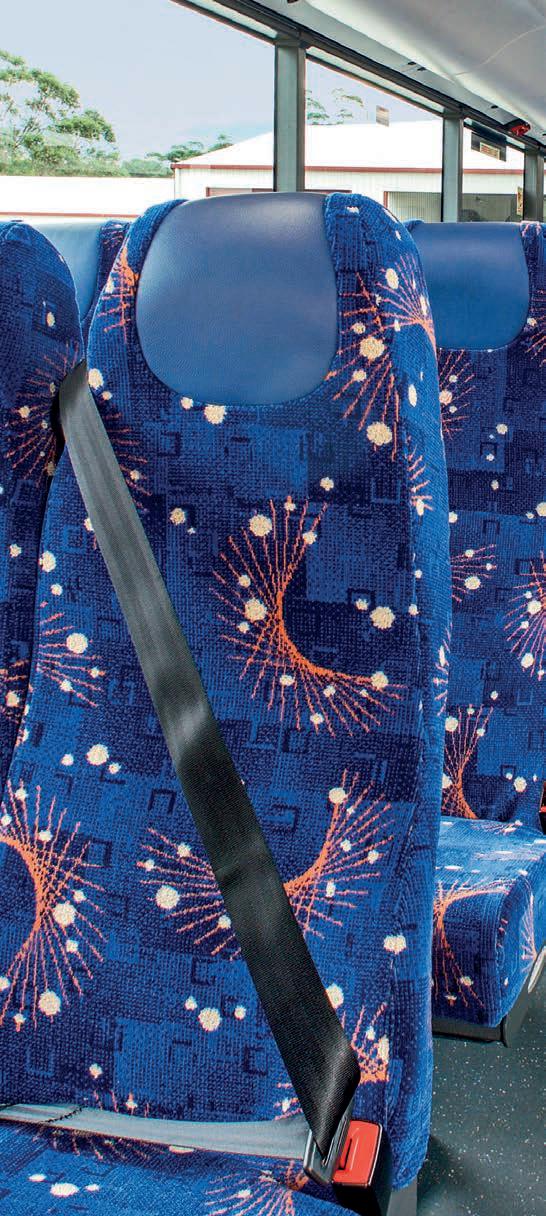
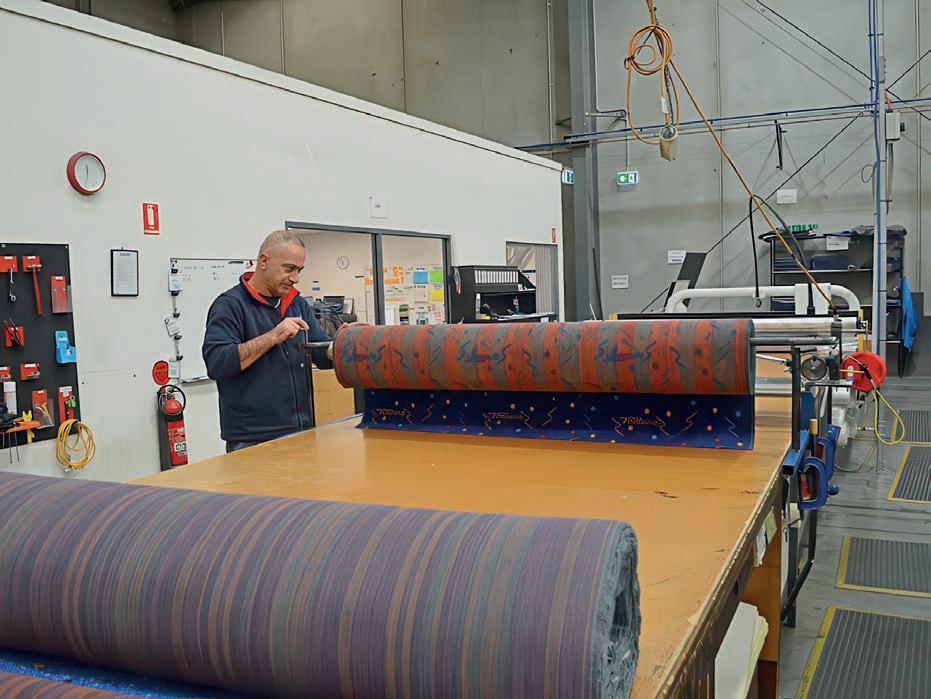
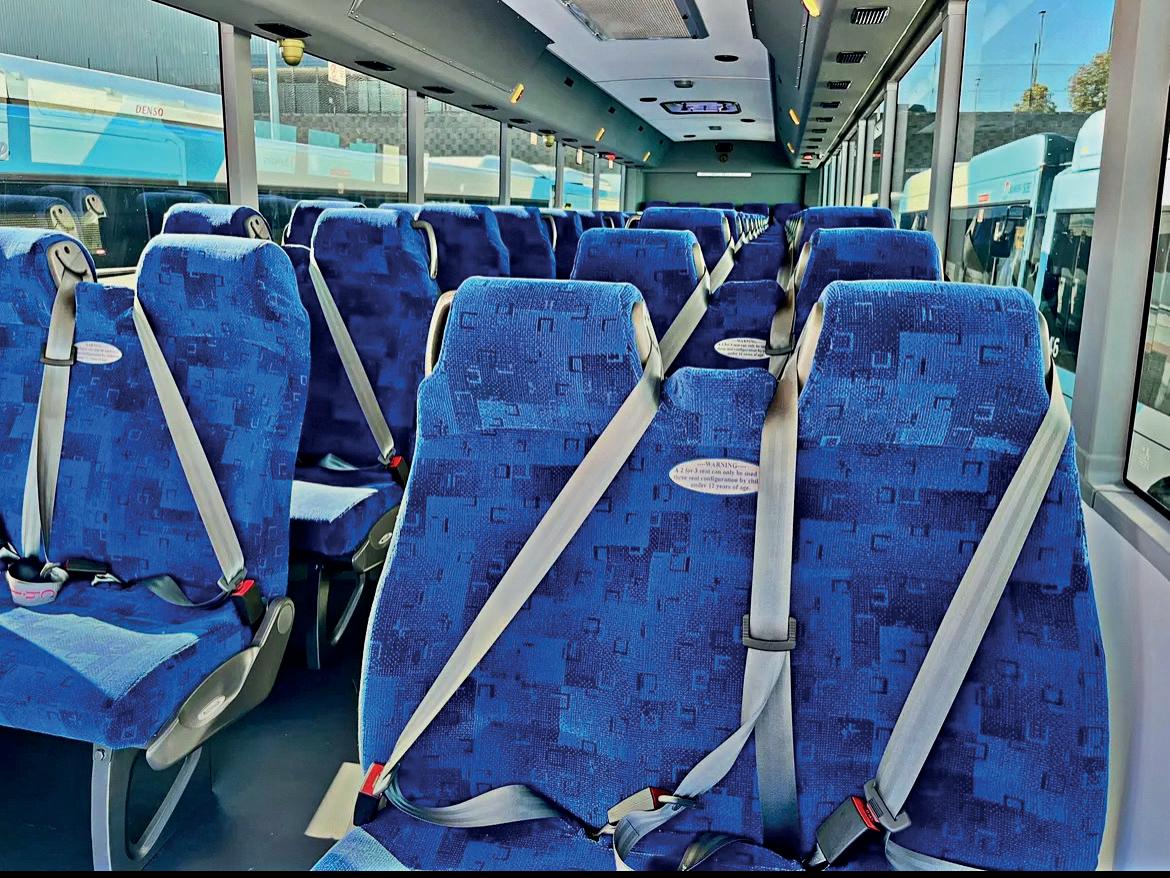
StyleRide product using Shann fabric.
“The relationship is ongoing and it has proven reliable over the journey –
Shann has been terrific,” he says.
“We don’t receive any complaints from anyone on these fabrics.
Shann’s materials are used in a wide range of our products, from our school bus seats, all the way through to our premium offerings.
“Customer feedback has been fantastic – people are impressed by the quality of the fabric, the look and feel of it and how easy it is to maintain.”
Another important stepping stone in the pair’s blossoming partnership has been capitalising on any opportunities that have presented themselves. From Shann’s perspective, the fabric supplier recalls a particular highlight being when it could help find the right colour fabric for StyleRide seats as part of the brand’s growth in the New South Wales bus and coach market.
“Shann and StyleRide worked together to create a custom colour popular in bus and coach seating that was perfectly suitable for NSW transport,” Vine says.
“Vegas now ticks all the boxes to generate important new opportunities for StyleRide and Shann.”
This growth in NSW hasn’t just been linked to metro and school bus opportunities. In the middle of last year, global tourism and charter transport provider Flix announced it would be launching in Australia. By the end of the year, various operators, including Deanes Coaches, Sunbury Coaches and Bundaberg Coaches, had launched maiden Flix runs, with new buses being supplied as part of the milestone. With these latest vehicles came an opportunity for StyleRide, with the help of Shann fabrics, to supply top quality seats.
“These new Flix services, whether it be through Deanes, Sunbury or Bundaberg Coaches vehicles, now use Vegas on their seats,” Wells says.
“We look forward to what lay ahead and tackling the challenges that may arise – we’re very appreciative of the support from our customers in the industry and the
grow.”
Flexibility and pouncing on opportunity – it’s a perfect summary of how the two local brands have worked together to grow and thrive in the local bus and coach sector. This dynamic nature has allowed Shann to reach a special milestone in its history in 2026, with the Victorian business in the midst of celebrating its 70th anniversary since Frank O’Shannassy first started sewing zips and threads out of the Chadstone family home.
The business used the anniversary to launch a new logo but reiterates its value and commitment to customers and staff remains unchanged.
“With a team built upon decades of industry knowledge and experience, backed by a comprehensive inventory of around 30,000 SKUs, you can rely on the quality and expertise we, and our products, deliver,” Vine says.
“We’re also very proud to have over a third of current Shann personnel
service.”
Anniversaries are often a time for reflection, with both Shann and StyleRide looking back on a flourishing partnership that’s paying dividends in the Australasian bus and coach market. But neither Shann nor StyleRide are spending much time stopping and smelling the roses –Shann will launch an updated colour range for Vegas in the back half of this year, meaning innovation and opportunities will continue taking both Shann and StyleRide forward in 2026 and beyond.
“The future is really bright –StyleRide is an innovation leader with its seating solutions,” Vine says.
“Its commitment to quality and forefront design matches our own. Shann offers an exceptional product range to StyleRide that helps it to meet the comfort, reliability and intelligent design that it’s known for in the local transport market.”
been able to excel in the NSW market
Big break
As fuel prices continued to rise in recent months, bus networks across Australia saw increased patronage. Major operators argue the industry now has a golden opportunity to shift bus behaviours forever across the country
It presented itself as a disaster. Fears of heavy vehicles across Australia and the world grinding to a halt. Connections lost. Networks neutralised. People isolated. Freight unable to get to supermarkets, lockdown conversations returning. When the price of diesel jumped in the early months of this year, it signalled many implications for people. None of them were positive.
As global conflict caused both the price and supply of diesel to Australia and New Zealand to come into question, the bus and coach sector didn’t lament on the harmful impacts it may have. Instead, a potential serious challenge to the industry’s viability soon became an opportunity to work together and keep communities connected while elevating the standing of bus and coach transport in the region.
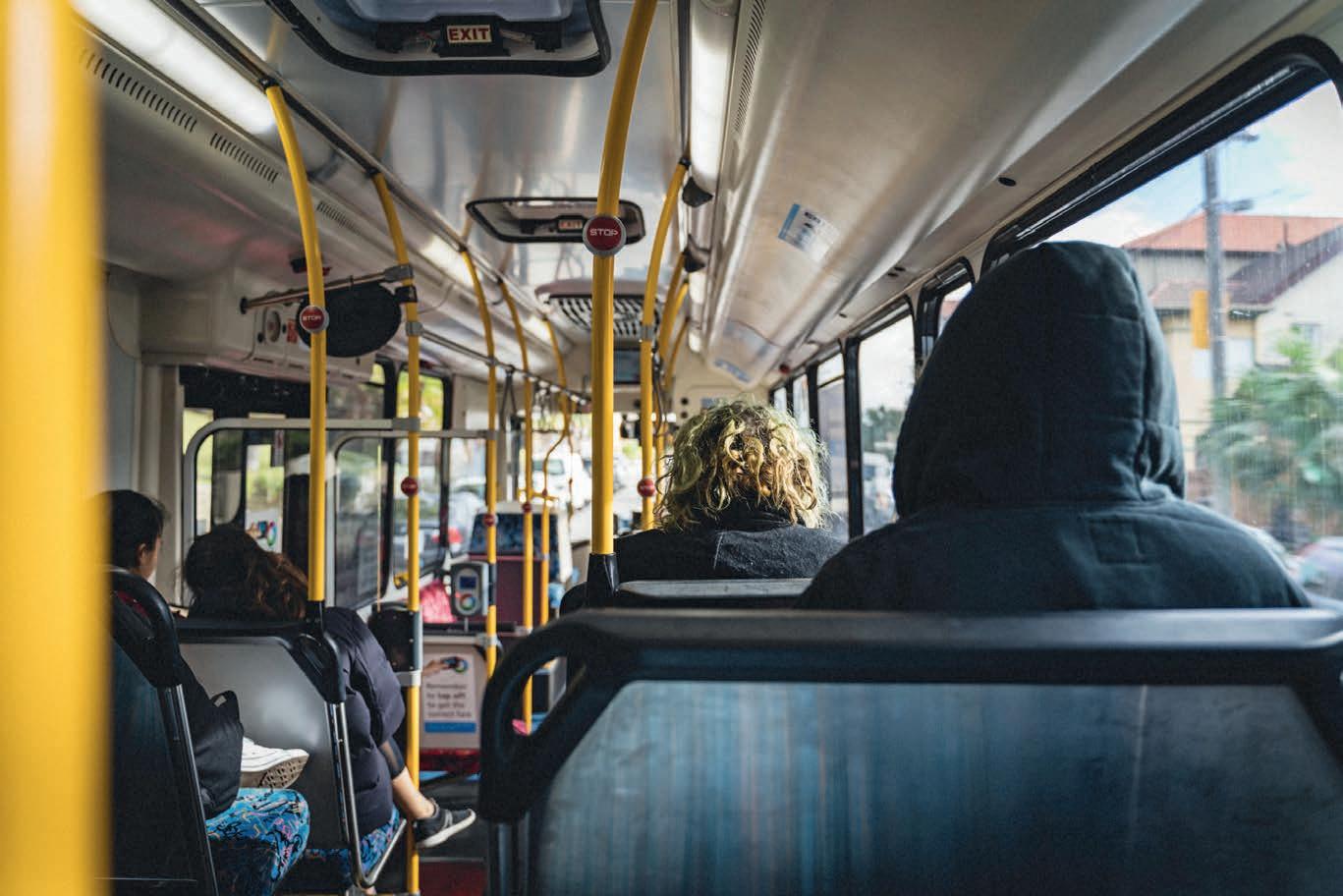
In the current Australian environment, where cost-of-living pressures are front of mind, we’re now seeing a clear shift in how people choose to travel – and the data says they’re choosing buses and public transport.
The growth in patronage, alongside positive customer feedback, reinforces that ongoing collaboration between government, industry and operators is delivering real results in dynamic economic times.
Transit Systems CEO Michael McGee represents plenty in the public transport industry currently identifying rising fuel costs as an opportunity to reset attitudes towards public transport in Australia.
As a leading zero-emissions operator in the country, prior to the recent fuel price spike, he says the case for public transport in the country was framed around sustainability, congestion and
long-term city planning. What’s changed is now the argument has evolved beyond this to focus on household budgets.
By bringing transport from a background cost into a front-of-mind pressure, the argument powering public transport forward is that people now have to evaluate their own behaviours. This is where buses have an opportunity to welcome more people onboard permanently.
“Australians have historically shown a strong preference for private vehicles, even in cities with established public transport networks. The equation has shifted and, with that, an opportunity to support public transport behaviour change has arrived,” McGee told ABC.
“When weekly fuel costs creep into the $100–$200 range, before accounting for tolls, parking,
maintenance and insurance, the private car begins to look less like freedom and more like a financial liability. By contrast, public transport can been seen as materially cheaper for users. It can serve as a broader proof point – when price signals are strong enough, people respond.
“The fuel price cannot be about forcing mode shift, but it is about making the alternative viable enough that people choose it today and tomorrow.”
This is already being seen across the nation as numerous states report increased patronage in recent months. In both Victoria and Tasmania, this has been boosted by free public transport measures – the former has made PT free until the end of May before it’s half-price until the end of 2026 while Tasmania has made fares free until the end of the financial year. In data obtained by ABC, the Victorian Department of Transport and Planning says more than 33.5 million public transport trips were taken in the first three weeks of free public transport – a roughly 10 per cent increase compared to the month prior.
“We have seen more Victorians using public transport during this period of free travel, with regular travellers saving $228,” a Department spokesperson told ABC
“We are running more services than ever with more than 24,000 bus services, 3,500 train services and hundreds of tram services added to the network in the last decade.”
In Tasmania, around 5,000 additional passengers boarded Metro buses in Hobart on the first day of free travel compared with the previous week, confirming strong uptake in line with the initiative.
“We know the rising cost of fuel is impacting the family budget, and
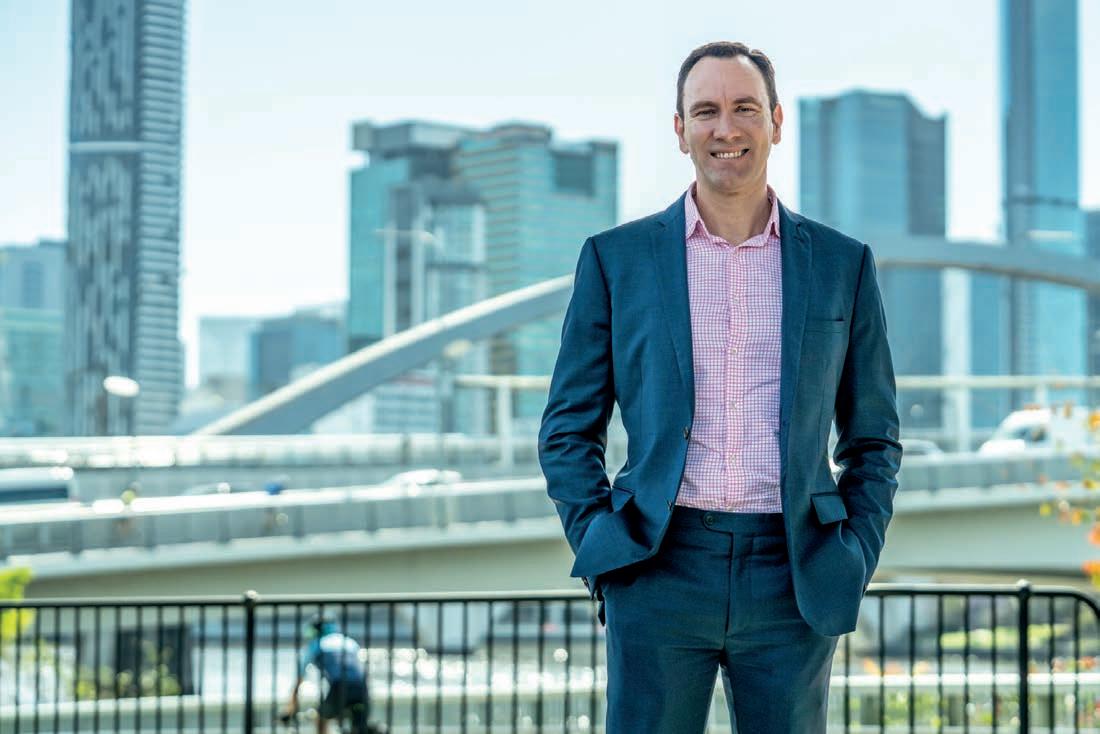
Above: Transit Systems CEO Michael McGee. Image: Transit Systems
why we have again taken strong action,” Tasmanian infrastructure and transport minister Kerry Vincent says.
“Tasmanians are showing with their feet they’re keen to take advantage of free public transport.”
But it’s not just the states where recent fare announcements have been made that are enjoying a patronage boost. In New South Wales, the Opal public transport network recorded an average of approximately 2.210 million weekday trips in the middle of April, up from around 2.101 million trips in the equivalent period last year and representing a 5.2 per cent year-on-year increase. In Queensland, the same period in April saw public transport patronage rise by 3.3 per cent in the state’s south-east compared with the same week last year, while in Western Australia patronage has also jumped as fuel prices skyrocketed.
“Public transport boardings in March increased compared with the same period last year, with passenger growth influenced by a number of factors,” a Public Transport Authority (PTA) spokesperson told ABC
“This includes the opening of new METRONET train lines and stations, the rollout of the Go Anywhere Fare which has made public transport more affordable, and the rollout of contactless payments, making it easier than ever to jump on board.
“It follows a record year of patronage in 2025 with boardings surpassing 150 million for the first time.”
It’s not just the numbers showing this rise in patronage that coincides with the increase in fuel costs –Kinetic Australia managing director Matt Campbell says services across the board are rising and drivers are reporting fuller buses.
“From our perspective this is currently a purple patch for public transport, particularly bus,” he told ABC
“We’ve seen our number of services that are full buses grow by roughly four times compared to the same time both last year and last month. We’re seeing a lot more people use buses for the first time and on the roads
there’s less traffic and congestion for our drivers to deal with, leading to improved performance and reliability.”
Campbell says this gives the bus industry the opportunity to provide a permanent solution for people to make a mode shift from cars to public transport. Much like others in the industry, Campbell says Kinetic is focusing on its service to capitalise on the current opportunity being provided to bus operators across the country.
“It’s a great chance for operators to give people a reliable, friendly and safe service that encourages them to stick with us, even if and when free fares are done,” he says.
Outside of this, Campbell says Kinetic is also banking on its growing fleet of zero-emissions vehicles as another reason why people should consider making the permanent switch to taking the bus. With 450 zero-emissions buses across Australia and New Zealand, Kinetic wants to showcase a new-look bus network that won’t be impacted by any global oil disruptions.
“The decisions we’ve made early on to invest in this infrastructure and to actively pursue a zero-emissions bus fleet are paying dividends for us right now as we’re more protected from these issues,” Campbell says.
“We’re now ensuring we allocate more zero-emissions buses on routes that can run on electric rather than diesel. Being Australasia’s largest bus operator, we have well established fuel contracts that has also given us a real advantage in uncertain economic times. Combine this with a zero-emissions bus network and it’s a great chance to show what we’re about.”
These sentiments are echoed by McGee, who says this increased patronage is starting a chain that allows bus networks to continue growing and improve. He adds as more discretionary users (not just those without alternatives) hop on bus services, utilisation increases, thus resulting in economic and operational justification for more services.
“This is the often-missed dynamic –public transport becomes more useful
Tasmanians are showing with their feet they’re keen to take advantage of free public transport
as more people use it,” he says.
“Higher volumes support increased service frequency, more efficient asset utilisation, improved reliability through simplified scheduling and better data to inform network planning.”
McGee says the greatest strength allowing the bus industry to seize this golden opportunity ahead of it in Australia is its simplicity and scalability. Unlike rail, bus networks don’t require decades of planning or billions of dollars in infrastructure to establish or upgrade.
He says while the immediate driver to these increased services and patronage may be cost-of-living relief, the secondary benefits are substantial – reduced congestion for essential vehicles, lower demand for road repairs and improved travel time reliability are three key arguments he makes.
McGee acknowledges fuel prices will inevitably fluctuate – already by the time of publication, the excise cuts have resulted in baseline prices of diesel and petrol dropping. However, the Transit Systems CEO says the question is whether the current behavioural shift occurring around Australia can outlast this price cycle. To McGee, this is the critical variable.
“By aligning responsive pricing with increased service frequency, we’re not only meeting rising demand but improving the overall customer experience,” he says.
“Combined with our zero-emissions capabilities, we’re delivering a solution that responds to both economic and environmental priorities.
“It’s an encouraging position to be in and a powerful proof point that when industry, operators and government work in step, we can create a public transport system that is reliable, sustainable and increasingly the first choice for Australians.”
First-class flooring
As McNaughtans celebrates a global milestone this year, the local arm is looking towards a leading flooring range to continue growing the brand in Australia’s bus and coach industry
For decades, McNaughtans has been a quiet achiever in Australasia’s bus and coach industry. The automotive parts and bus and coach flooring supplier has enjoyed steady growth over the past few decades in Australia after first being founded in South Africa back in 1951. With the brand celebrating its 75th anniversary in 2026, it’s looking locally towards its leading range of transport flooring solutions to continue its enduring legacy.
“In response to growing international demand and to better serve the Australasian market, McNaughtans ended up launching operations in Australia in the early 2000s,” McNaughtans national sales manager Steve Cieslak told ABC “This move allowed us to localise supply chains, offer faster service and more closely collaborate with OEMs and bus builders across the region.”
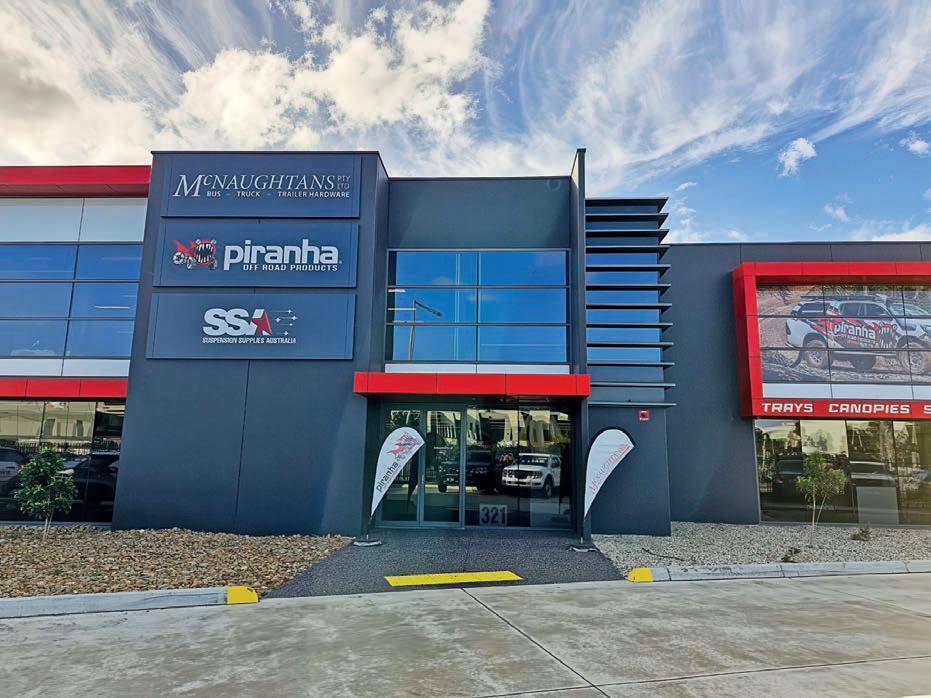
Since opening an Australian owned company in 2003, McNaughtans has developed an expansive network in the country that includes branches throughout the majority of states and a supply distribution into New Zealand. Through this, McNaughtans has been allocated a number of supply distributorships for world-class products, enhancing its rich experience in the bus, truck and trailer sectors. With the backing of its international expertise, Cieslak says the Australian arm of McNaughtans has developed its own local experience to provide professional and quality service to the Australasian bus and coach industry.
At the core of McNaughtans’ bus offering is the TARABUS floor covering range, manufactured by Gerflor, a global leader in transport flooring solutions. Products such as Tarabus Design – featuring digitally printed flooring and custom logo tiles
– are renowned for their durability, versatility and visual appeal.
With a self-adhesive backing for streamlined installation, Cieslak says TARABUS delivers an ideal balance of functionality and aesthetics.
“It’s an incredibly popular product and is used by an estimated 80 per cent of bus builders worldwide,” he says.
“Its high slip resistance, ease of maintenance and compliance with international safety standards make it the preferred choice for both public and private operators.”
Further strengthening its market offering, McNaughtans has partnered with Prima Automotive as an authorised distributor, bringing a premium range of European-engineered bus components to the Australian market. This strategic partnership significantly enhances McNaughtans’ ability to deliver integrated, high-performance solutions to bus manufacturers, body builders and fleet operators.
The Prima Automotive range includes Inst-a-Stop wireless push buttons, interior and exterior handles, bus door systems and components, interior accessories, HVAC air diffuser components, and interior lighting and service sets — all engineered for reliability, safety and long-term performance in demanding transport environments.
For customers, Cieslak says this partnership means simplified sourcing, improved component compatibility and access to a broader, more cohesive product ecosystem through a single trusted supplier. It reduces procurement complexity, streamlines supply chains and ensures operators can specify components with confidence, knowing they meet consistent European quality standards.
In addition, McNaughtans continues to supply a comprehensive range of bus components, including locks, latches, hinges, gas struts, pinchweld rubber, vents, stop buttons, mirrors, Southco hardware
Above: McNaughtans’ TARA BUS is leading the way in local bus and coach flooring. Image: McNaughtans
components — widely used across bus interiors and exteriors — and Tru Vision wiper systems.
Outside of the TARABUS range, McNaughtans is continuing to push these options, specifically the Tru Vision wipers and Southco components, to position McNaughtans as a leader in flooring and hardware supplies.
“Our range is carefully selected for performance, reliability and compliance with the demanding requirements of the bus and coach industry,” Cieslak says.
“Customers rely on McNaughtans because they know they’re investing in solutions built to last, supported by a team that stands behind every product.
“Our Gerfloor Tarabus floor coverings are made specifically for city bus applications, while the Southco access hardware covers locks, latches, hinges and more.”
A key factor behind McNaughtans’ long-standing customer relationships is the company’s depth of expertise and commitment to service. From the initial enquiry, the team prioritises understanding each customer’s specific requirements, providing clear, accurate product and pricing information to support confident decision-making.
“Whether it’s sales, warehousing or technical support, every part of our business plays a role in delivering the level of service that keeps customers coming back,” he says.
Over the years, McNaughtans has grown from a small operation into a national business with more than 90 employees across Australia, expanding its presence across multiple transport sectors. As the business now celebrates a global milestone, Cieslak is looking to local partnerships and innovations as the next stage of the brand’s growth in the Australasian bus and coach market.
“In an industry that demands both innovation and dependability, McNaughtans continues to deliver,” he says.
“With a strong focus on product quality, trusted supplier partnerships and exceptional customer service, the company is well positioned to support the next generation of bus and coach solutions.”
Above: McNaughtans’ range is purposely chosen to meet local bus and coach requirements. Image: Nick/stock. adobe.com
More
ISitting on history
than three decades since the global seating brand formed an Australian subsidiary, ISRI continues to innovate for the local bus and coach market
t’s been over 30 years since a wholly-owned subsidiary of ISRINGHAUSEN was established in Australia to serve the local transport market. The move came after ISRI seats were first sold in Australia by a licensee from 1977 to 1993, with the creation of ISRI Australia seeing the famous German
seating brand strengthen its local representation in a growing market. It followed a trajectory that first started back in 1919 when ISRI began building bicycle seats and springs. By 1972, the brand became popular for designing the first automatic self-levelling air suspension seat for commercial vehicles, with ISRI seats being specified as original equipment by major European truck, van,
and bus operators, ISRI is now progressing forward with its seating technology.
It all started with the NTS2 seat in Europe just under a decade ago, with ISRI’s Australian team working hard to see the model brought to Australia. It’s been five years since ISRI Australia got its wish, bringing in a new model for the brand to sell and support among the local bus scene.
“When we saw the NTS2 product released in Europe and other plants, we moved forward to bring this to Australia,” ISRI Australia general manager Ashley Thomas told ABC
“Although the NTS1 has served us very well, the next step was to introduce this new design and platform to local operators.”
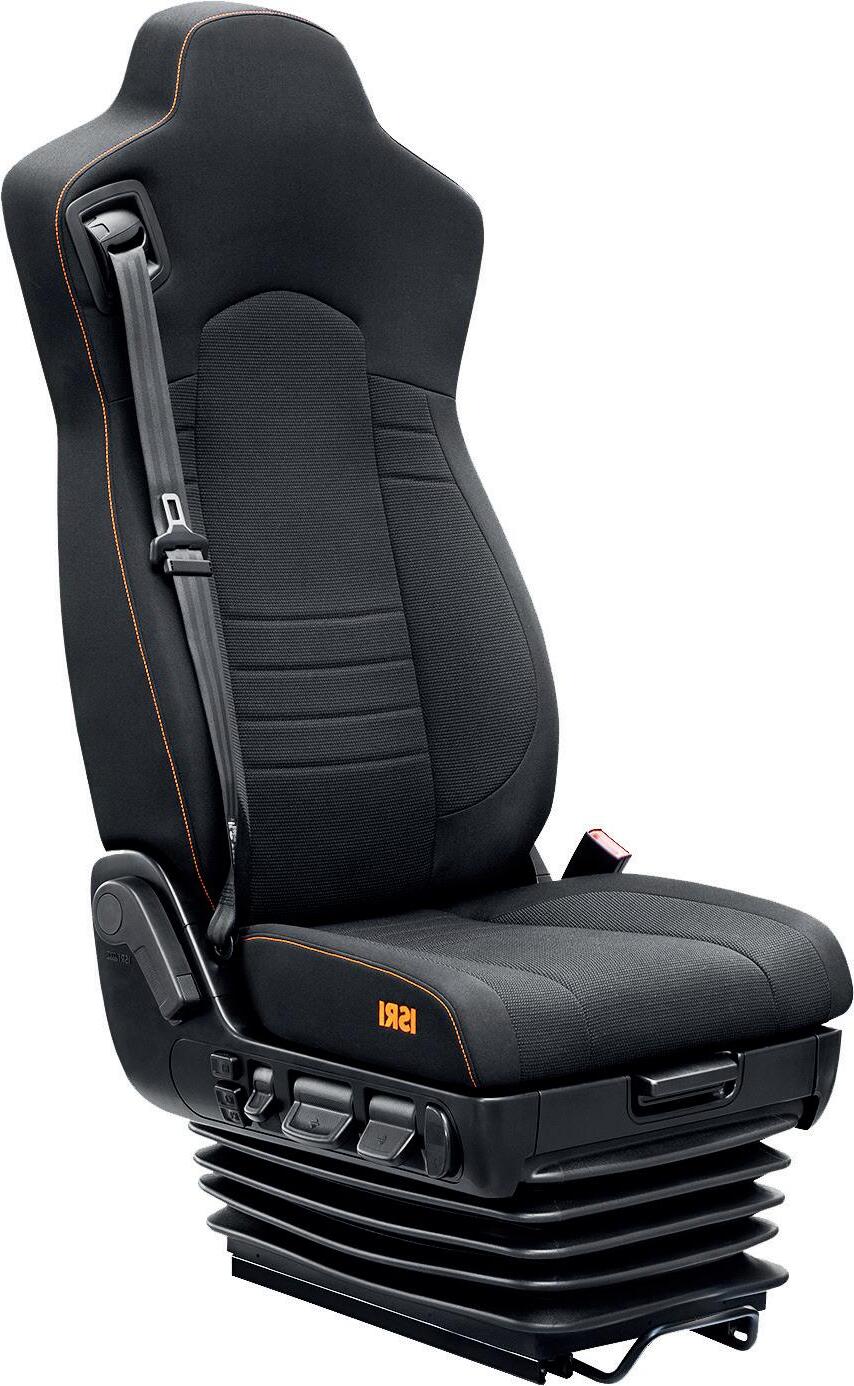
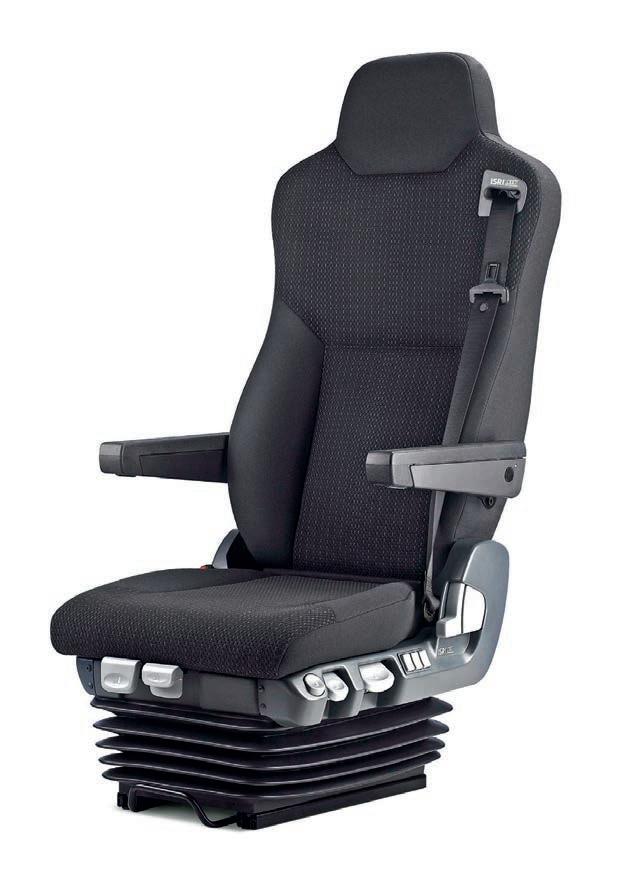
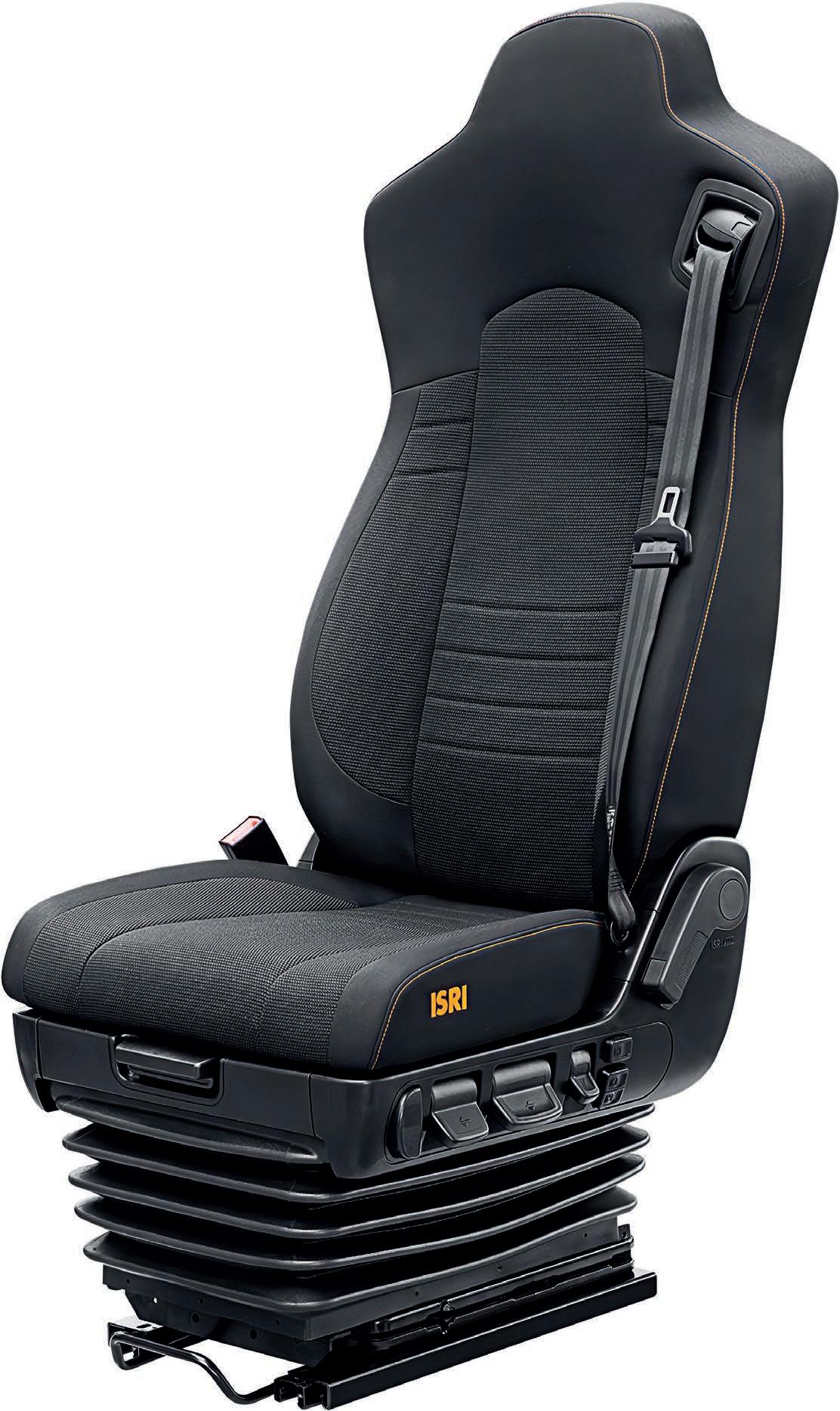
Above, left: ISRI’s latest range of seats are all about driver comfort and safety
Images: ISRI Australia
Distributed out of ISRI Australia’s warehouse in Sydney’s Wetherill Park, the NTS2 has become a permanent fixture for many buses and coaches across the country. ISRI has worked both directly to OEM customers and through a dealer network, as well as to aftermarket and trade customers, to ensure the updated model has graced many new heavy vehicles.
While the NTS2 can no longer be considered a brand new seating model, many of its benefits still ring true today. Unlike its predecessor, the latest ISRI NTS2 bus seat comes with an updated range of key features as standard equipment.
Thomas says the NTS2 has optional safety systems such as Lane Guard warning and seat detection sensors to keep safety at the forefront of ISRI’s product range. These additions have joined ISRI’s already built in three-point integrated seatbelt system and optional contact switches to create plenty of options to offer local bus operators in Australia.
“This warning system connects with the chassis’ system within the bus and you have the ability to select optional swivel, heating, cooling and even ventilation for the seats,” Thomas says.
“All of these safety features, including occupancy warnings with seatbelts, are key to our NTS2 platform.”
With an effective operating weight range of 50kg to 150kg, the NTS2 product also features a pneumatic suspension system and pneumatic height adjustment, with an adjustable vertical shock absorber maximising driver comfort. In an environment where managing driver fatigue is so important, the integrated pneumatic lumbar and side bolster support, as well as simple horizontal and tilt adjustments, ensure those behind the wheel can emerge from the driver’s cabin fresher than ever at the conclusion of a shift.
An array of adjustments for head, backrest and shoulders hammers home the comfort
focus on these seats, with the finished product coming trimmed in breathable Inka/Laos cloth to help handle the many hot days of an Australian summer. Optional extras include a set-up for lane assistance system, heaters and swivels for selected variants only.
The NTS2 range is diverse, including unique seated cushion foam and breathable seat fabric that are an improvement on recent seat comfort developments. While it is available in different forms across the truck and transport industry, Thomas says the NTS2 seat is perfect for buses.
But this isn’t the only member of ISRI’s growing heavy vehicle seat fleet. The NTS1 bus model comes with many similar benefits to the NTS2 variant, except it comes trimmed in breathable charcoal cloth. Optional extras include red webbing seatbelts, a seatbelt buckle contact switch and a swivel, as well as accessories like armrests and floor mounting brackets.
Alongside these two popular seats, the ISRI 6500 continues the brand’s trend of ensuring maximum safety and comfort. The two-point seatbelt anchorage points and integrated pneumatic lumbar support means that although the 6500 model may not be as large and strong as the NTS1 and NTS2 versions, it still allows for a cozy seat with plenty of safety features built in.
It all forms part of a product suite that ranges from static seats to fully-featured air suspension seat with integrated lap-sash seatbelts and driver adjustable shock absorbers. Now, with more than 100 years of seating system legacy behind its back, the Australian arm of ISRI is looking to continue bringing the same high standards of safety and comfort to the local bus and coach industry.
“These updates go to show that we’re not sitting still in terms of development and that we continually look at developing new product ranges,” Thomas says.
“We like listening to the industry and developing seats that suit platforms. We’ve just surpassed 30 years in Australia and will continue pushing forward with seats like the NTS2 model.”
Right: The NTS2 features the latest safety technology
Rewarding return
A
well-known member of McConnell Seats Australia over the years is back with the business as the seating manufacturer prepares to unveil a new model range later this year
Everyone loves a grand return. Opening the arms again to a favourite, welcoming them back through the doors as they slip back into familiar rhythms.
At Australian bus and coach seating giant McConnell, this very feeling was recently experienced as the team saw a long-time leader return to the fold. Just over a year ago, Darcy Grant departed McConnell after spending almost two decades at the seat manufacturer to take up a role with Scania Australia in Western Australia. In the state, he became the vehicle OEM’s newest account manager, taking his talents from the seating side to vehicle sales at Scania.
Now, after a year spent enjoying his time with the global OEM in WA, Grant has recently returned to McConnell Seats Australia as the brand’s new national sales manager.
While Grant admits he’s rapt to be back in the McConnell fold, he is quick to say that he loved his time with Scania in WA.
“I started back at McConnell only a month ago and it’s wonderful to be back,” he told ABC
“My time in WA with Scania was fantastic. My reason for coming back to McConnell, where I started as an apprentice, was to relocate my family to the eastern seaboard, where all of my family is based.
“We want the support of our family, so when the national sales manager role came up at McConnells, I jumped at it.”
It sees Grant and McConnell complete a full circle journey together. Nearly 20 years ago, Grant first started at the seating manufacturing giant as an apprentice motor trimmer before graduating to sales around eight years ago. By the time he decided to depart McConnell for the Scania opportunity just over 12 months ago, Grant was looking after sales in New South Wales, Queensland and over in New Zealand.
While he admits the new national
Above: Times are changing at McConnell.
role is a “step up” from what he was doing before departing McConnell, he’s excited to be back with the brand that he called home for so many years.
“It’s all worked out really well for my family and myself,” he says.
“I really loved being with Scania and WA was a beautiful place to live, but it feels special to be back at McConnell after starting my career in the bus industry here.”
Grant’s return to McConnell comes at a poignant time for the seating manufacturer, with the brand in the midst of farewelling another favourite member. Upon McConnell Seats Australia first appointing a national sales manager late last year, long-standing sales leader Matt Arthur was beginning his wind down to retirement.
Now, nearly six months down the track, the McConnell stalwart has officially wrapped up with the business, handing over the reins to Grant for the next phase of the business’ growth plans.
“Matt’s been a stalwart of the industry and has gone over and above for McConnell for many years,” McConnell Seats Australia general manager James Lowe told ABC
“We’re very sad to see him depart, but grateful he’ll remain connected to the business as he transitions out.”
Much like Grant, Arthur has also had a lengthy stint with the seating brand, helping McConnell grow in the local market amid remarkable industry changes. Having started with McConnell in 2007, Arthur saw the business evolve from a second generation family business to a global force courtesy of the APM Automotive Group buying the business in 2014.
“At that time, the operators were all family run businesses, much like us suppliers,” Arthur told ABC
“I’ve been able to see that transition and develop lifelong friendships along the way. It’s been an honour.”
As Arthur officially departed the business at the start of May, Grant was back into the swing of things at McConnell, jumping back into the schedule of orders to come. Grant is forthcoming when discussing what the year ahead has in store for McConnell as the seating market
leader in Australia looks to bring more business into the fold before a new generation of seating models hit the local market.
“We want to get back to where we were in some markets – we’ve lost some business to other suppliers and we’re looking to get key customers in major markets back,” Grant says.
“It’s good to be back, and being in the national role is an honour. We know in certain markets we are still the leader, such as the low-floor city
bus non-seatbelted seat sector, but we now want to grow our coverage in the coach and charter sectors too via a next-generation seating model that will come to Australia later this year.”
These new models are set to be displayed at July’s Bus & Coach Expo in Sydney, setting the scene for McConnell to expand its reputation in various Australian bus and coach markets. Grant says these next-generation seats will be “noticeably more modern” than existing models in the same sphere, with McConnell developing a lighter model that offers more value for customers.
For Lowe, Grant’s return comes at a pivotal time for McConnell as it prepares to launch new products and continue its growth journey in the local bus and coach market.
“We’re delighted to have Darcy back at McConnell Seats Australia and we’re very proud of him,” he says.
“Having started his working career here as an apprentice motor trimmer to holding senior roles within the manufacturing department to now being our national sales manager is a testament to Darcy’s drive and ability.
“That drive will be invaluable as we launch our next generation of seatbelted seats into the Australian and New Zealand markets later this year.”
Above: The seating supplier remains at the forefront of local bus seat technology.
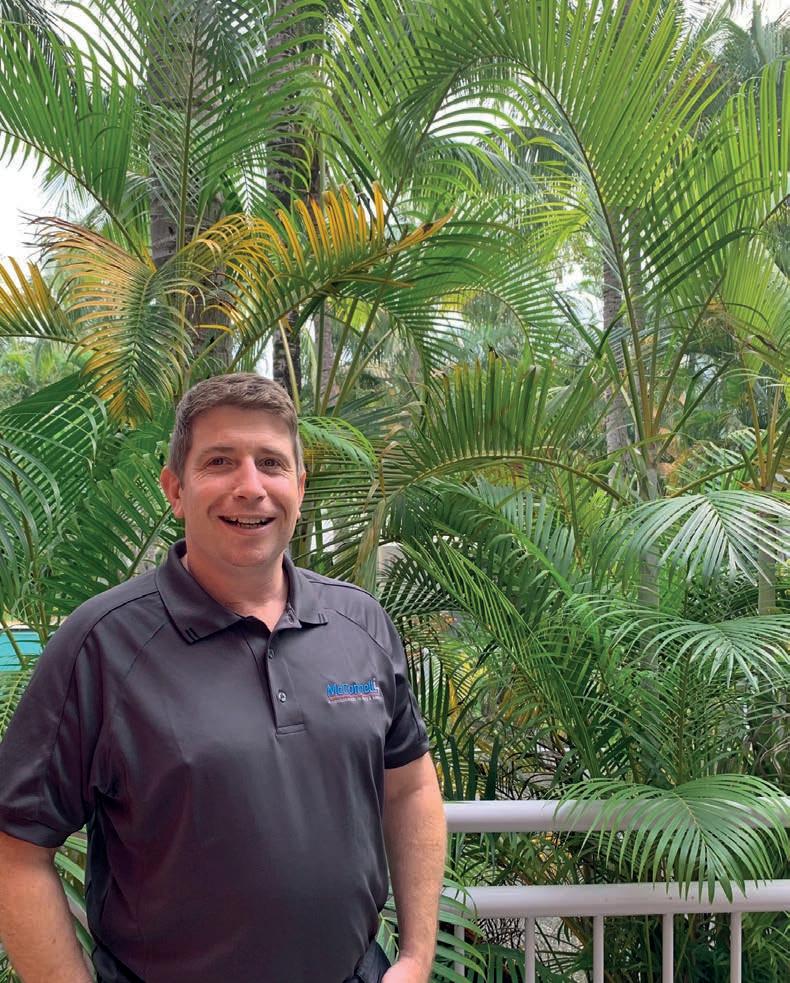
Below: Darcy Grant. Image: McConnell Seats Australia
Bigger picture
A
recent streamlining of operations in Australia is allowing global fabric giant Camira to improve its offerings for local bus and coach operators
The legacy of Camira Fabrics is so illustrious that it started long before Australia officially became a nation.
The English textile business was first founded in 1822 in the UK town of Halifax when John Holdsworth started his own worsted spinning mill, creating John Holdsworth & Co, and has grown over the years to become an innovative textile leader globally in the public transport market. The Camira name came into effect in 2006 through a management buyout, continuing the brand’s ongoing fabric legacy.
The ‘Holdsworth legacy’ of wool moquette is well respected globally in the public transport industry and lives on with the Camira brand through continual improvement to its products, specifications and environmental impacts.
The Australian brand is part of the greater and larger Camira entity, which has shown resilience and growth in the very competitive global textile market. The textile manufacturing brand is split into two main segments, being the commercial/contract and ‘transport’ sectors. With the commercial or contract side, Camira globally supplies fabrics for offices, auditoriums, hotels, homes and public areas, just to name a few. The greater majority of the approximately eight million metres of fabric produced by Camira services this commercial industry. On the flipside is the transport sector, which represents around a quarter of Camira’s business. Despite being in a smaller silo of a much larger company, the production capabilities of Camira’s public transport space
Above: Camira is bringing more than 200 years of experience to PT fabrics
aren’t to be discounted, including historical long-term supply, particularly moquette, into globally recognised transport networks like the London Underground, London double decker buses and many core transit networks globally.
Of that public transport production, roughly 15 per cent services Camira’s Australasian operations. It’s just another case of Australia and its surrounds commanding plenty of attention despite holding a smaller population than many other global regions.
“We’re going very well in a global setting considering Australia is a large country geographically, but with a smaller population,” Camira area business manager for APAC (transport) Rodney Peterson told ABC
“In a metre per head of population perspective, Camira performs quite well in Australia.”
intentions to remain and continue to be relevant in bus and coach market supply chains for the long term. We’ve made the conscious decision to constantly invest in stock to allow for the quick turnaround and responses on products to service the sector as is demanded.”
At the heart of Camira’s operations in Australasia is its facility in Tullamarine, right near Melbourne Airport. Until mid-2025, the Camira sales office was situated separate to the Tullamarine warehouse, but recently the company took the opportunity to relocate its office under the one roof for efficiencies in communication, stock movement and product servicing.
“It gives us more control over the total process from sales enquiry to order fulfilment and allows us to make response times quicker for our customers,” Peterson says.
Another part of Camira’s ongoing legacy that is often overlooked in the local market is the depth of work that goes into producing high-quality fabrics. As Peterson explains, to have a fabric ready to deliver from its Tullamarine warehouse, the process of starting from scratch begins by dyeing the yarns, then heads onto the weaving process, final inspection and the application of treatments (if necessary) before the finishing. It’s only then ready for despatch
from England. It takes between six and eight weeks for fabric to be manufactured before being readied for transport to Australia and then distributed to the industry.
“This highlights how Camira having stock on-hand locally doesn’t just happen – it requires deep planning, strong organisation and good industry forecasting,” he says.
“To service the Australian industry, from manufacturers for new vehicles to operators who need a few metres for repairs, we hold around more than 100 fabric patterns in Melbourne alone and constantly take into consideration each of these patterns on how much is needed per week, per month and per year so we can determine what we need to manufacture and get delivered into Tullamarine for ‘just in time’ supply to our customers.
“It can be very challenging at times, particularly with disruption caused by the COVID pandemic, logistics issues such as Evergreen blocking a major transit channel and the economic effects and disruption of the current Middle East crisis, but we manage our best endeavours to meet the industry’s expectations.
“We look forward to continuing to service enquiries and develop supply lines worldwide from our manufacturing facilities in West Yorkshire, England.”
Peterson says Camira’s Australian office isn’t just focused on Australia – the scope sees Camira supply a variety of fabric options to customers in the APAC region. From ferries in Fiji and transport networks in the Middle East to manufacturers in northern China or operators in the south of Tasmania, these geographical areas
Camira’s Australia office. While it may sound like a lot (which it is for a small
recent relocation to its distribution
internal systems and communication
Above: The global giant covers an extensive range from its Australasian centre
Below: A range of fabrics are available from Camira’s Australasian facilities
cleaner, greener and future-proofed as ‘NitroPhlam365’, which is an organically based fire retardant, as well as strategically removing Forever Chemicals (PFATS) from our processing routes,” he says.
In keeping with Camira’s longevity, it’s poised to continue leading the way in the local public transport space.
“We have quite a few exciting and innovative fabrics in development that will support and diversify seat fabric options to operators,” Peterson says.
“At Camira we pride ourselves on having 200 years of textile manufacturing history and the strong and long-lasting relationships that we enjoy with Australia’s bus and coach industry.”
Images: Camira Fabrics
Little wins
As the local transport industry searches for the slightest improvements in fuel efficiency, Yutong’s range combines a variety of systems into one groundbreaking platform
When it comes to essential resources, the world has plenty of them. Water. Air.
Time. Precious diamonds. Gold. For the current state of the Australasian bus and coach market, it’s hard to argue there’s a more precious resource than fuel.
As fuel price rises have impacted numerous transport operators to start 2026, the industry has been looking at ways to maximise every single drop of diesel. Now, global bus and coach manufacturers like Yutong are bringing the most fuel-efficient models in its stable to Australia to make day-to-day operations more affordable and reliable for the nation’s
“Yutong responds with a clear focus on real-world operational value. We support customers in making better decisions, achieving stronger returns and sustaining reliable, long-term operations backed by consistent and dependable service.”
How Yutong does this is by creating a customer-centric system that spans the entire lifecycle of a vehicle, from the right solution to advanced fuel saving and energy efficient technologies. When it comes to building fuel saving technology into its growing fleet of vehicles, Yutong has focused on precise powertrain matching and effective control of energy losses, including cooling and aerodynamic drag to foster consistent
even on identical routes. To counter this, Yutong’s fuel efficiency focus is all about system discipline, more than just a component upgrade. Its fuel-saving solution is built around real operating conditions, covering the vehicle, scenario and driver.
“Our solution is structured in three core elements – a high-efficiency powertrain that optimises how power is generated and transmitted, energy management to minimise energy loss across the vehicle system and our BlueCore fuel saving system to achieve optimal fuel efficiency,” Liang says.
When it comes to the high-efficiency powertrain, Yutong treats the engine as only the starting point for fuel
Key pillars of the powertrain include high-efficiency components that maximise value from every drop of fuel at the source and working with globally recognised platforms like Cummins, Yuchai and Weichai to build with engines that feature high torque at low speeds, advanced combustion technologies and lightweight architectures. By pairing these with transmissions and axles from ZF, Fast, Molead and other leading suppliers, Yutong then also integrates this technology with low rolling-resistance tyres to create a total system of efficiency.
“At a system level, Yutong combines global sourcing with in-house optimisation. Engines comply with Euro III, V and VI emission standards,” Liang says.
“Electronically controlled high-pressure common rail systems precisely manage fuel injection timing and volume, low-friction structures reduce internal losses and aluminium components lower overall weight, while integrated modular design reduces system complexity.”
Adding to this is Yutong’s targeted system optimisation that it applies to its technology. For example, in the intake and exhaust system, reduced pipe length and curvature minimise airflow resistance, optimised intercoolers reduce intake losses and optimised exhaust silencers lower backpressure. These allow the engine to work more smoothly, further reducing energy loss.
“High-efficiency components are not defined by individual specifications alone, but by how engine thermal efficiency, driveline efficiency, rolling resistance and airflow management work together to minimise loss at every stage,” Liang says.
The push to make the latest buses and coaches more fuel efficient in Australia goes beyond power, with Yutong instead concentrating on ensuring powertrains are better aligned with real-world conditions. An engine achieves peak efficiency only when it’s within specific speed and load ranges, meaning the transmission gearing, axle ratio and tyre specifications have to be
A lighter vehicle does not mean fewer features. It means eliminating unnecessary load, with every kilogram reduced supported by engineering precision
in sync. It’s this knowledge that has spurred Yutong to match its engine, transmissions and axle ratios based on real route data, targeting more operation within the optimal efficiency range.
This is then supported by a variety of standardised operating conditioning models and real-vehicle data collection from customer routes, taking in gradients, traffic signs, congestion and high-speed segments that are then translated into simulation inputs.
“A truly fuel-efficient vehicle isn’t defined by its engine alone, but by a powertrain system precisely matched to its operating conditions,” Liang says.
When it comes to energy management, Yutong’s motivation has been to turn both visible and invisible losses into fuel-saving opportunities. In operation, energy is consistently dissipated through aerodynamic drag, vehicle weight and thermal systems. Yutong addresses these losses through a system-level approach, focusing on low drag, light weight and thermal management.
Aerodynamic drag becomes a dominant factor when a heavy vehicle travels at high speeds – Yutong’s data suggests up to approximately 50 per cent of fuel consumption is used to overcome air resistance when one of its buses using Yutong’s platform travel at more than 70km/h. By optimising airflow across the entire vehicle, reduced flow separation, turbulence and pressure drag creates an environment that uses less fuel to travel at efficient speeds.
On the vehicle weight side, Yutong’s analysis suggests every one-tonne reduction in vehicle weight in urban stop-and-go operations can lower energy consumption by between three and seven per cent. By streamlining design, materials and manufacturing processes, Yutong is ensuring lightweight vehicles are created without sacrificing performance.
“A lighter vehicle does not mean fewer features. It means eliminating unnecessary load, with every kilogram reduced supported by engineering precision,” Liang says.
A well-known factor in vehicle efficiency when it comes to zero-emissions buses is thermal management. However, this also has an important impact on fuel efficiency for diesel buses. Yutong’s second-generation thermal management flicks to a demand-based system that delivers the exact required airflow when cooling is needed. Between two and six small electric fans (depending on the platform) use an intelligent management system to reduce fuel consumption by up to three to eight per cent.
“From continuous operation to demand-based control, the cooling system becomes part of the efficiency solution, not a source of loss,” Liang says.
In a modern world where fuel-saving methods are a dominant discussion point, Yutong’s global capabilities are allowing the brand to produce efficient models in a time of need. For Australasian customers, this means vehicles at the cutting edge of bus technology filled with numerous smaller benefits to lower diesel use. It’s in these little wins that Yutong has built a system capable of meeting the calls for fuel efficient heavy vehicles.
“Fuel efficiency isn’t defined by a single component, it’s the result of a fully integrated system,” Liang says.
“From high-efficiency engines and precise powertrain matching, to aerodynamic optimisation, lightweight design, second-generation thermal management and BlueCore intelligent assistance, every element is engineered to reduce consumption under real operating conditions. The objective is to ensure that every unit of fuel contributes directly to productive, measurable value on the road.”
FBuilding brilliance
As BLK celebrates 20 years in the Australasian market, the milestone represents far more than longevity – it reflects a combination of trust, reputation, resilience, credibility and operator partnerships
rom day one, BLK’s strategy centred on more than simply importing buses and coaches. The brand was established with a clear vision – to provide competitively priced, quality vehicles backed by genuine local aftersales support, technical expertise, one of the largest stock holding of parts and ongoing engineering collaboration with operators.
“The early years required us to help reshape perceptions around Chinese-built vehicles,” Bonluck Bus director of overseas sales Ken Lee told ABC
“We worked hard to listen to customer feedback and continually improve the product. Using Australian DuraGal steel in our builds and having
Australian staff based within the factory were strategically important in building confidence and ensuring vehicles met customer expectations.”
That willingness to collaborate directly with operators quickly became one of BLK’s defining characteristics. Australasia effectively became a proving ground for product development and continuous improvement.
BLK national sales manager Mark Nichols says this operator-driven philosophy helped BLK steadily evolve from an emerging market entrant into a recognised supplier supporting operators across Australia and New Zealand.
“Australasia became central to the ongoing development of the product,” he told ABC
“Every generation of vehicle benefited from direct customer feedback, helping improve engineering integration, durability and operational performance.”
BLK’s growth accelerated through the mid-to-late 2010s as the industry increasingly recognised the value proposition being offered. This meant modern coach and bus platforms featuring globally recognised driveline components, strong aftersales support and practical fit-for-purpose designs tailored to Australasian conditions.
As emissions standards and operator expectations evolved, so too did the BLK product range. Modern Euro 6 compliant platforms featuring enhanced safety systems, improved emissions performance
Above: Quality has always been at the heart of BLK’s Australian operations
and higher specification levels were progressively introduced to the local market.
BLK achieved several significant industry milestones, including delivering the first pure electric coach and first pure electric city bus into the Australian market, positioning the business at the forefront of emerging low-emission transport solutions. BLK also supplied hybrid buses as well as building the first hydrogen fuel-cell coaches into Australia.
“These developments positioned the BLK platform at the forefront of alternative energy transport solutions in Australia,” Nichols says.
Today, BLK offers a broad range of vehicles spanning compact midi coaches through to full-size touring and low-floor city buses, double decker coaches including diesel, battery electric, hybrid and hydrogen as well as European chassis integration options. Across the business, significant investment has also been made into facilitating national parts holdings, technical expertise and aftersales support to ensure operators receive whole-of-life vehicle backing.
The evolution of the business itself has mirrored the development of its product offering.
“The transition from our beginnings in 2006 through to BLK in 2026 reflects the evolution of being just a supplier through to fully integrated
Our ambition remains clear. We want to be recognised not simply as a vehicle supplier, but as a trusted long-term transport partner for operators across Australia and New Zealand
industry partner,” Nichols says.
“That now includes vehicle sales, engineering collaboration, technical aftersales support, spare parts and long-term customer partnerships.”
Operations manager Kylie Bellamy has been a constant figure in BLK’s continual growth over the years.
She says the brand has excelled by committing to working with fellow industry partners to shape the sector’s future.
“We’ve always focused on long-term partnerships with operators and practical, fit-for-purpose vehicle design,” she told ABC
“Strong aftersales support, parts availability, continuous improvement through customer feedback and transparency in delivery expectations have all been critical factors in building long-standing relationships with operators across Australia and New Zealand.”
Importantly, many of BLK’s strongest relationships today are with operators who initially took a chance on the brand many years ago and have continued expanding their fleets over time.
“Repeat business remains one of
the strongest indicators of trust in our product and support capability,” BLK sales and special projects manager David Jiear told ABC
“The growth of BLK has been shaped by operators willing to collaborate with us, provide honest feedback and grow alongside the brand.”
As part of the company’s 20-year celebrations, BLK recently hosted a group of Australian operators at the BLK manufacturing facility in China. The visit provided customers with first-hand insight into engineering capability, production processes and ongoing investment supporting the Australasian market.
Operators were able to inspect vehicles in production stages before export to Australia while engaging directly with engineers and technical teams regarding future product development and operational requirements.
“The feedback from the tour was extremely positive,” Jiear says.
While BLK proudly reflects on the past 20 years, the company remains firmly focused on the future. After two decades of growth, innovation and industry collaboration, BLK’s message to the market remains straightforward – continue listening, improving and delivering transport solutions backed by BLK’s aftersales, technical and spare parts operation department team.
For a company that began by challenging perceptions and entering a highly competitive market, reaching the 20-year milestone is both a significant achievement and a reflection of the trust placed in the brand by operators throughout Australasia.
“Our ambition remains clear,” Jiear says. “We want to be recognised not simply as a vehicle supplier, but as a trusted long-term transport partner for operators across Australia and New Zealand.”
Below:
The delegation that recently headed to BLK’s manufacturing facility in China
Whole-of-life decision
At the recent QBIC Conference, Bus Stop Sales’ Pete White discussed the important procurement and engineering decisions that lay ahead of progressive bus and coach operators
Australia’s bus industry is in the middle of its biggest transition in 50 years. The procurement window is closing fast, and operators who get the next decade right have the chance to choose engineering and aftersales already proven in service, not the ones still being tested.
At the QBIC Gala Dinner at SeaWorld on the Gold Coast last month, Pete White, sponsor of the night and managing director of Bus Stop Sales, took the lectern and, instead of running through the usual congratulations, asked the room to think for a moment about what 50 years in this industry actually means.
Fifty years of difficult contracts. Fifty years of finding the money for payroll on weeks the cash flow was not cooperating. Fifty years of managing drivers, mechanics, schools, families. Fifty years of watching government expectations evolve, compliance regimes thicken, the cost of running a bus rise faster than fares ever rose to meet it.
“The Clarks have done 50. The
Haidleys 60. Polley’s Coaches, founded by Roland Polley in Gympie in 1954, is into its 70th year,” White says.
“Several Queensland names go back further. None of those families got there by accident, and none of them will get to the next milestone the same way they got to the last.”
That was the quieter conversation underneath the celebration – White says the work of the next decade is going to look different from the work of the last 70.
Australia’s bus market is now well into the largest fleet renewal in a generation, and the procurement window is shorter than most operators currently appreciate. Between the 2030 sustainability deadlines now embedded in state government tender criteria, the 2032 Brisbane Olympics and the steady tightening of zero-emission standards across every metropolitan and intercity contract, there is a clear end-date on diesel-only fleet renewal.
White says an operator specifying diesel-only product from this point
on will be running half-depreciated assets in a procurement environment that has lost interest in them. He says the decisions made in the next 12 to 18 months will determine which operators are still competitive in 2032 and the years that follow.
“The capital exposure has changed too. A zero-emission bus is now a capital decision approaching a million dollars before financing – a diesel bus considerably less, but heading the same way as compliance costs accumulate – multiplied across however many depots and however many vehicles a fleet runs,” White says.
“What still gets underweighted at the procurement table is everything that follows the keys-on-the-counter moment: parts, warranty, servicing, software, technician training, the morning a vehicle is off the road and the depot manager needs someone to answer the phone. That is where the actual cost of owning a fleet is decided.”
He says the leading Chinese bus manufacturers have spent the past
Above: Bus Stop’s rich experience is proving to be a local leader. Image: Bus Stop Sales
two decades building their platforms on the best component each continent produces, not on closed in-house parts cabinets. He says King Long is the clearest expression of that approach. The battery on a King Long EVolution chassis is CATL — the world’s largest manufacturer of electric vehicle batteries, the global leader in lithium iron phosphate, supplied to most of the major Western premium brands. The drive axles and transmissions are ZF, out of southern Germany, the company most European bus operators have spent forty years standardising on.
For the diesel platforms, the powertrain is Cummins, which Bus Stop runs as its standard across both low-floor and high-floor product. Spheros HVAC is fitted where the specification calls for it. The chassis is engineered and assembled in Xiamen on one of the most experienced electric bus production lines anywhere in the world.
The body, in the Australian market, is built or finished by Volgren, Global Bus Ventures or Express Coach Builders. White says the supplier mix is, broadly, the supplier mix sitting behind every premium European city bus – engineered to the same standard by an OEM that has held its place at Busworld Brussels for 20 consecutive years and has been the leading Chinese bus exporter for 13 of them.
“The most recent platform upgrade is worth pausing on. King Long has moved away from the previous Dana drive motor to its own newly developed motor, built around flat-wire architecture, delivering an eight per cent efficiency improvement over the unit it replaces,” White says.
“On a vehicle running 15 hours a day for 15 years, eight per cent stops being a specification line and becomes a sustained reduction in the energy bill, the brake wear and the thermal load on the battery. Whole-of-life engineering, year by year, looks like that.
“King Long has been a serious global manufacturer for more than three decades. It did not, however, become a powerhouse in the Australian market until Bus Stop
Sales took the reins. The product was always there. The distribution architecture, the parts depth, the workshop network, the technical training, the warranty discipline and the operator relationships were not –and have been built, over the better part of two decades, by the team at Bus Stop.”
This has led to there now being more than 800 King Long buses in Australian service, working route, school, charter, council and zero-emission city duties in every state. Six King Long EVolution low-floor electric chassis entered SkyBus Tullamarine service with Kinetic in September 2025 and have been running 24/7 since on what White labels “the most demanding electric duty cycle in the country”.
King Long zero-emission buses are also running 24/7 on metropolitan services in Perth. A nine-metre electric King Long is going into private operator service on a Canberra university contract. Hillcrest Christian College on the Gold Coast has been running an electric King Long school bus for two years.
Across the deployments, White says dispatch reliability has matched or exceeded the diesel fleets the buses are replacing – no missed dispatches on the SkyBus deployment to date, and the same operating discipline showing up everywhere else.
“Bus Stop Sales – Australian-owned, family-built, the largest dedicated bus sales and service operation in the country – is the next chapter of the White family in Australian bus distribution, a continuity that goes back to Dick White’s MotorCoach in the early 1980s,” he says.
“We have three sites in Rocklea, Auburn and Epping, supported by a national parts distribution network, delivering more than 250 units a year. Rocklea is the centre of zero-emission readiness in the Australian industry, with on-site public superchargers, a major solar array, a battery energy storage system and the soon-to-open Zero Emission Training Academy.
“Auburn is positioned for a Phase Two expansion into a King Long Drivable Knock Down assembly, conditional on operator purchase
commitments and the level of state-level support that follows.
The QBIC Environmental Innovation Award in 2023 recognised the Rocklea programme on the public record.”
But White says the aftersales investment is where it shows most. Bus Stop has been recruiting, and the four senior specialists who now make up the national aftersales support team have all come across from established European bus brands.
White says Bus Stop and King Long are presently the only known partner in the Australian bus market operating at premium A1 support level – full standing aftersales coverage, technical resourcing on retainer and parts depth held continuously rather than ordered in. He says most other brands run aftersales on case-by-case engagement, which means the operator with a vehicle off the road waits for support to be triggered before it begins. That distinction tends to matter most when something goes wrong.
For operators thinking about where to put their next 10 years of capital, White believes the case is now visible enough to act on – King Long for heavy-duty city and route work, including the new MU12E launched at Busworld Europe 2025. White says then I-Bus on the Isuzu chassis for the regional and rural end of the market –the schools, the community transport runs and the long-haul tourism work that keeps the country moving outside the capital cities, where charging infrastructure is still a future conversation.
“The figures are public. The buses are running. The components are best-in-class. The aftersales bench has been recruited from the European brands that wrote the standard. The company itself is a family business, 40 years in the industry, no other line of work to fall back on,” White says.
His point at the lectern was that 50 years on the road is not a souvenir, it’s a record of choices made carefully, one decade at a time. He says the operators making the next set of those choices, between now and 2032, will be the ones still on the road afterwards.
Bonanza or bust?
For nearly 20 years, Greater Shepparton has been waiting for a state government bus network review to revitalise its services. After missing out on funding in the recent state Budget’s ‘bus bonanza’, local leaders are continuing to hold onto hope
Shane Sali has seen Greater Shepparton change dramatically in his lifetime. Born and raised in the Victorian regional town of Shepparton, north of Melbourne and not far from the New South Wales border, he’s seen the hub rise and swell through growth and challenges. As the town has evolved through an influx of people and businesses, he says one key issue has prevented Greater Shepparton from realising its true potential.
“The bus network has been a talking point in Greater Shepparton for a number of years,” he told ABC “This has been amplified over the
past 10 years as we’ve seen significant residential growth into new estates, while some of our key employers have expanded their footprint.
“It means we haven’t been able to deliver a flexible or accessible public transport network for quite some time.”
Now in his fourth year as the Mayor of Greater Shepparton, Sali is one of many in the region pushing for changes to be made to the bus network. It’s been 18 years since the Victorian government and its Department for Transport and Planning (DTP) conducted a bus network review in the Greater Shepparton area. In that time, the
Above: Shepparton locals have been calling for a bus network review for years. Image: nilsversemann/ stock.adobe.com
entire township has changed. Sali says the current bus network devised from the last review in the late 2000s now ends halfway through fast-growing estates, meaning many residents can’t access public transport.
“This significant growth across our residential estates and our manufacturing businesses means our existing bus stops end in the middle of large established estates – people can only get halfway into an estate nowadays,” he says.
“As our workforce increases, more people want access to public transport but can’t get near buses to go to work at some of our largest employers.”
Sali says advocacy first started for a new bus network review as the COVID pandemic lockdowns came to a close. In mid 2022, the Greater Shepparton City Council acknowledged the need to review its bus network, with the council paying for the delivery of its very own independent bus review.
This told the council what it already knew by that point – a greater bus network with more services and stops was needed to properly serve Greater Shepparton residents. Since the review came to a close in early 2023, the council has been consistently calling for the state government to begin the process of conducting its own review into the regional bus network.
“At each Budget since our review was finished, we’ve advocated for the state to conduct its own network review into Greater Shepparton,” Sali says.
“The way the process works is that we can’t get any substantial changes made to our bus services until the Victorian government conducts its own review, but unfortunately funding for the review wasn’t included in either the 2025/26 or 2026/27 state Budgets.”
The latest state Budget, unveiled by Premier Jacinta Allan’s government in early May, was headlined by an almost $100 million ‘bus bonanza’ funding package featuring expanding hours, more weekend services, new and upgraded routes in suburbs and better bus connections in regional areas. The result was a new route connecting Drysdale and Ocean Grove, an additional return trip each date on route three between Castlemaine and Harcourt and more Bass Coast Coach routes running from Cowes and Inverloch to Dandenong. There was nothing in the Budget for the northern regional expanses, including Greater Shepparton.
“What this means is every Budget cycle we go through where funding for a review isn’t included pushes us back by at least 12 to 18 months,” Sali explains.
“The best case scenario is we’re now two-and-a-half years away from getting details of a bus network
review which would then need to be presented to the state government for any investments to be made into bus network alterations.”
Even if the network review was part of the 2026/27 ‘bus bonanza’, it would still be nearly 20 years since there had been a major bus network review in Greater Shepparton. It’s leaving many in the region, including Sali, frustrated by the slow moving nature of bus network change.
“We don’t expect a review to be undertaken every 12 months, but what we expect is when it’s been this long since we’ve had a significantly detailed review that would tell you loud and clear that the network is ineffective, it should happen quickly,” he says.
“We have had a bus network not delivering a public transport service to the level that it should for quite some time, and it’s only amplified when the state government announces free or half price fare measures – it’s great to listen to, but when you can’t access buses, it drives frustration.”
Sali says Greater Shepparton’s
transport woes means it currently takes residents two hours to catch a bus into town from an estate where it takes, at most, 20 minutes to drive. The network also currently doesn’t have a bus running out of Mooroopna, the second major hub in Greater Shepparton alongside Shepparton itself, on weekends.
It’s not just Sali leading the fight in the region. Nationals member for Shepparton Kim O’Keeffe, a former Mayor of Greater Shepparton too, slammed the state government’s ‘bus bonanza’ Budget announcements. She says the promise of new and expanded bus services across the state only includes three related service announcements in rural and regional Victoria, all of which are in Labor-held seats.
“The minister for public and active transport Gabrielle Williams has ignored our pleas for increased public bus services,” O’Keeffe says.
“Infrastructure Victoria, in its Victoria 2025-2055 Infrastructure Strategy, recommended Shepparton as the number one area in its report last year to be provided with more
Nationals member for Shepparton Kim O’Keeffe is also pushing for a network review.
Image: Kim O’Keeffe
public bus services, and the Greater Shepparton City Council also have this in their top ask of government priorities.
“It has been over 18 years since we
This significant growth across our residential estates and our manufacturing businesses means our existing bus stops end in the middle of large established estates
train services at Werribee, Tarneit and Wyndham Vale stations, as well as local shopping centres.
some form of network upgrade after years of advocacy. He says the Greater Shepparton City Council will continue to speak regularly with the state government to make it clear a and service planning are siloed apart from each other in Victoria, in contrast to international best practice.”
The Victorian government
The state government also pointed to ongoing bus network
Dizzying heights
In just over a year, Australian Transit Group’s Karratha fleet has grown rapidly. The recent addition of Zhongtong buses has provided the unit with a point of difference as it eyes further expansion in the Pilbara
Time has flown for Melody Faulkner. Just six years ago she started working with renowned operator Australian Transit Group (ATG), starting in the southern expanses of Western Australia like Busselton, Bunbury and Margaret River. Now she’s the operations manager of ATG’s Karratha network, leading a fleet that has quicky surpassed 65 buses.
How did Melody get there – from the south of WA to the Pilbara region and with a fast emerging number of buses under her leadership? It’s a question even she’s still trying to find the answers to.
“I’ve been working with ATG, one of Australia’s largest operators, for six years now, and it’s gone so quickly,” she told ABC “I started mainly down south but I’ve worked in various parts of the business. In December 2024 I moved into the north-west area. It was very different and it introduced me to the resources side of Western Australia, which includes a very different climate and environment to run bus operations in.”
It also signalled a change for the broader ATG network. Previously built on school runs, ATG has recently expanded into the state’s various mining and resources sites, offering transport operations in a number of regions. A primary focus has been on the Karratha network, with this attention to the Pilbara quickly paying off for Melody and her growing team.
When Melody first made the trip north to lead the Karratha operations, the area had only the 17 buses under the ATG banner. In just over a year, this has sharply increased, with a roughly 53 per cent annual increase seeing ATG’s Karratha depot now run 68 buses. While settling into the area and learning about the different operational requirements, Melody and her team also had to welcome a new bus every week for around 20 consecutive weeks – she says in some weeks they had up to three deliveries coming through for the team to process.
“In Karratha we mainly focus on resources transport, which is different to what ATG has been built on,” she says.
“I’ve been lucky to have the backing of ATG and its extensive policies and safety procedures to make the growth as smooth as it could be. I’ve got everything at hand to run a safe operational depot in Karratha, despite being in a remote region.
“It’s been very exciting and humbling to have grown our operations to the point where we’ve had new buses coming from Perth to inspect and use so often. When I drive around Karratha I often see our buses out on the roads, and they look so good and it makes me proud. They’re like my babies.”
This exhilarating rush of rapid growth has been built on understanding – learning the local routes, the unique requirements and the crazy conditions that shape resources operations in the Pilbara. From Melody’s perspective, she’s had to quickly adapt to the particular specifications required to safely and efficiently run bus services in and around Karratha.
“I’ve been busy learning what specifications the buses need in order to go to certain sights, as well as what
Above: ATG has grown its Pilbara services and welcomed new ZBus models to the fleet. Image: Australian Transit Group
the drivers need to operate in various conditions,” she says.
“There’s a lot of construction occurring in Karratha currently, meaning the roads aren’t as well maintained as in metro areas. There’s also a lot of heavy haulage and wide berths present, so there’s more types of risk to manage here.”
To put it into perspective, it’s not a rare occurrence for a bus service to be held up by a cow walking across the road at any time of the day. It’s also common for a bus to be stuck behind a road train ambling along the road. As Melody says, “anything can happen”.
This doesn’t just apply to the natural obstacles that emerge in the Pilbara. The different weather conditions, ranging from scorching summer days to cyclones, also impact how ATG can run buses in Karratha. When it comes to sourcing and operating heavy vehicles, it leads to a complex set of requirements.
“Consider the heat – we have roughly four months where the temperature is over 40 degrees Celsius every single day,” she says.
“This has a huge toll on buses, meaning there’s a lot of factors to consider. Mining and resources companies have lofty expectations for our buses, and we have to tick a lot of boxes when it comes to safety and compliance. We meet all of this while ensuring our buses are constantly serviced to remain up to date with all timetables.”
When these factors pertain to a rapidly growing number of buses that is soon to surpass 70 vehicles, having suppliers to rely on has also been critical for ATG’s Karratha unit. Since ATG CEO Ben Doolan first scoped out Karratha as a potential place for expansion into the resources sector, he has been consistently present in the region, so much so that Melody says he’s often mistaken for a driver “doing a two-week swing”. This hasn’t changed as Melody has headed up operations, with Ben often travelling to visit her and learn how the developing network is fairing. On one of these numerous journeys, Melody was introduced to a new supplier partner that has already had a positive impact on her fleet.
“One day Ben came to me and told me about new buses coming to us that were from a different company –Zhongtong,” she says.
“He showed me some photos and described them to me, and I thought they looked really good. When the first model arrived in town, courtesy of ZBus, it was a very exciting day.
“We’d received roughly 40 new buses into the yard before we got out first Zhongtong, and when I first stood on the bus I instantly had this feeling that it was wider, longer and more spacious than any other bus we’d received at that point.
“It was deceiving. With overhead luggage removed, I noticed the difference straightaway.”
The first two Zhongtong buses to be deployed were promptly branded with ATG’s joint venture partner, Murujuga. The 50:50 joint venture, Murujuga Commercial Transport, sees ATG working closely with resources sector clients to deliver personnel transport services across Karratha and the broader Pilbara region.
A significant portion of this work involves servicing routes to Murujuga National Park, more commonly known as the Burrup Peninsula, where blue-chip clients such as Woodside and Perdaman have engaged ATG, via the joint venture, to transport their substantial workforces.
Locally, it has a reputation as one of Karratha’s busiest and most intensively used construction zones, meaning buses used on these runs are rigidly inspected prior to entering service.
Melody recalls the supervisor completing the heavy duty inspection of the two Zhongtong buses and being “instantly impressed” by what he saw.
“I called him a couple of days later to see how the buses were going, and he told me nobody but him had driven the vehicles so far because he was in love with them,” she says.
“The drivers were all fighting over who got to drive it – he told me he had no faults with the buses at all. Having worked with other bus companies in the past, he said he noticed a difference with these buses automatically.”
They also noted the smoothness of the bus to drive – when you sit behind the wheel, it feels so nice to drive and has an amazing turning circle
A recent inspection of the buses, which are now in full service, has shown immediate durability.
Melody says the driver cohort have raved about the quality of the air-conditioning units and their ability to withstand the scorching Pilbara days, while passenger comfort has been a major boost.
“They also noted the smoothness of the bus to drive – when you sit behind the wheel, it feels so nice to drive and has an amazing turning circle,” she says.
“The safety features built in are also wonderful. Hats off to the Zhongtong designers, as the seatbelt alarms stand out, with all of the added safety systems being perfect.”
With these initial two Zhongtong buses now out on rotation, Melody and her team have plans to welcome more vehicles from the supplier in the near future. A particular goal is to add a smaller 22-seater model to the fleet from ZBus, bringing the badge’s classy features to different operations in Karratha.
Much like Melody’s time at ATG, life with the two Zhongtong buses has flown by. Already half a year in with the pair of vehicles, Melody is excited about what the future holds for ATG’s Karratha unit and their impending future with ZBus.
“Our focus is 100 per cent on growing our fleet more, meaning we have more buses to introduce,” she says.
“We would love to introduce other Zhongtong models of various sizes to bolster our fleet. I’m not one to sit still, and I’m always looking for ways to grow – we’ve handled the hardest part of our initial growth and now I’m dedicated to building on it and helping grow the Zhongtong brand in our region.”.
Send in your best bus or coach photos to feature in next month’s magazine.
WINNER
Prized possession
The Best Bus winner for May takes us into the big smoke and directly under one of Australia’s biggest landmarks
For many of our ABC Best Bus winners over the years, the picturesque landscapes of regional Australia and New Zealand have proven to be a handy factor. Whether it be the Outback, coastal hotspots or awe-inspiring mountains and national parks, the backdrops have illuminated the region’s very best buses and coaches to produce stunning photos.
This can mean the very best city landmarks are often overlooked, but not this month. In a shift, the winner of ABC Best Bus for May is sitting right underneath perhaps the country’s most famous tourist destination.
The Best Bus May winner comes courtesy of Go Transit Media Group’s Michael Desiere, who sent through an array of shots of some intriguing bus wraps travelling under the Sydney Harbour Bridge. One particular photo stood out in a smaller but strong field of entrants to win the top prize.
“This entry showcases Go Transit Media Group’s latest premium execution on the Big Bus Sydney, following our newly secured exclusive advertising rights to the fleet,” he told ABC
“Wrapped for Heineken, this large-format, double-decker asset delivers standout impact across some of Sydney’s most iconic routes, moving through the CBD, Circular Quay, the Opera House and out to Bondi. It’s a true “moving billboard”, combining scale, motion and high-frequency exposure across both tourist and commuter audiences.
“More than just a great-looking bus, it represents the continued evolution of transit media into high-impact, city-defining formats that brands can’t be ignored on. With consistent presence in high-footfall environments, this execution is a strong example of how transit can deliver both reach and real-world attention at scale.”
Desiere says the brand is proud to launch the bus alongside partners Heineken, Big Bus Tours and EssenceMediacom.
Outside of Desiere’s incredible winning photo, there was another set of entries listed as a finalist that nearly stole the win. Keolis Downer’s Stephen Lucas nearly won with two separate entries – one of a LinkSA service near Tantanoola, South Australia and a Torrens Transit bus tackling Adelaide’s O-Bahn. You can check out both finalists on the next page.
As the winner of Best Bus May, Desiere received a free 12-month subscription to ABC magazine, while the winning photo is also being shown off as ABC ’s Facebook cover photo for the whole of the month.
Don’t forget to send through your Best Bus photos for June and throughout 2026 via email and keep an eye on our Facebook page for more details!.
Above:
This stunner proved too good to not win Best Bus May. Image: Michael Desiere
Above & below: A variety of shots of buses and coaches working hard in SA. Images: Stephen Lucas
Right & below: More of the winning bus out under the bridge. Images: Michael Desiere
Hectic rhythm
It’s official – the nation’s bus and coach deliveries numbers are in no way slowing down after a fast start to 2026. The latest Australian bus and coach deliveries data, courtesy of ABC, recorded a further 158 deliveries in April.
While it may not rival the eye-popping heights of 199 deliveries in March, it still sits as the second highest month of 2026 to date and is also ahead of April last year and its 144 recorded deliveries.
It was an incredibly tight chassis sector in April, with Volvo returning to the top with 35 deliveries. Coming in a very close second was Yutong, who continued its stellar start to 2026 with 22 heavy bus and 11 light bus deliveries. Scania sat in third once again with 30 deliveries, while BYD shot up the rankings to claim fourth with 21 units. Custom Denning kept ahead of Zhongtong and Odin with seven deliveries apiece, while I-Bus’ four light bus deliveries saw it come ahead of four brands all tying on three units each, with Challenger (one) closing out the market.
There was no closeness at the top of the bodybuilder market, with Volgren returning to its very best courtesy of
71 deliveries. Yutong’s combination of 22 heavy and 11 light bus deliveries allowed it to sit peacefully in second, with the next best being shared by Irizar and Custom Denning (eight deliveries apiece). Wisdom Motors and Zhongtong both had the seven deliveries, while BLK (six) stayed ahead of BCI (four) and I-Bus (four light bus). From there, the final 10 deliveries were split across six brands. A similar dominance could be seen in the seating market as McConnell flexed its muscles with 75 deliveries. The next best, StyleRide, couldn’t reach a third of McConnell’s score, recording 24 units, however it did enough to finish ahead of fellow competitors Yutong (20) and Sege (16). Fainsa (eight) and Zhongtong (seven) were the next best behind the pack, ahead of APM (four) and King Long (three), while both Fainsa and Marcopolo recorded solitary units. This all culminated in a tie at the top of the air-conditioning segment, as Cling-Yutong and Coachair couldn’t be split with 33 units apiece for April. They had clear air, before the fight resumed between Hispacold (23), Thermo King (22) and Spheros (20) for second. Tongsun and Denso similarly
couldn’t be separated with seven deliveries each, while I-Bus stayed ahead of an even BCC, Valeo and King Long, each recording three units.
State of Origin mustn’t be too far away, as New South Wales and Queensland came in the top two spots of the state-based battle. It was the former who won this month easily, recording 59 units ahead of Queensland’s 37. Outside of the sky blue and maroon, Western Australia came in third with 28 deliveries, while South Australia (20) snuck ahead of Victoria (13) and the Northern Territory lodged a singular delivery. This was perhaps the largest month yet for zero-emissions bus deliveries in Australia, with 72 out of the 158 deliveries being electric buses. In that growing market, BYD was supreme in April with 21 deliveries, ahead of Scania (15), Yutong (13), Volvo (eight), Custom Denning (eight) and Odin Motors (seven). Out of the 86 diesel deliveries lodged, Volvo (27) led the likes of Yutong (20) and Scania (15). Turn overleaf for comprehensive bus and coach delivery information for April. Please note all data is as supplied from manufacturers, at their discretion.
Above: McConnell was the dominant force in the seating market for April. Image: Prime Creative Media
Tambitious transport stories. Inside a cluster of workshops, surrounded by steel, oil and decades of engineering evolution, the Bus Preservation Society of Western Australia is racing time itself.
For president Ian Kerr, the society is about restoring buses so that people still care about the state’s transport legacy in 20 years’ time.
The society’s roots stretch back to 1969, when Perth’s trolleybuses were withdrawn and a small group of enthusiasts set out to preserve what remained of the city’s electric transport history. That early focus eventually split, leaving buses to carve out their own path. Decades later, that path has led to a sprawling collection of around 25 licensed, restored or display-ready vehicles, alongside another 40 to 50 awaiting attention or serving as parts donors.
But space has become the defining constraint.
“We’re really kind of at the stage now, where if we restore any more vehicles, we’ve got nowhere to put them, nowhere to display them,” Kerr says.
That limitation is shaping the Society’s next chapter: a dedicated museum designed to bring the
early mechanical oddities to more recent compressed natural gas and electric vehicles.
“Well, the museum building is an important part of that, because we need to put these buses on display to show the public the development of public transport in Western Australia,” Kerr says.
“It paints that picture of the history of buses, and that needs to be displayed to people and shown to people.”
For anyone who has wrestled with an ageing vehicle, the appeal is obvious. The society’s oldest motor bus, a 1929 Leyland, features a crash gearbox and an unconventional pedal layout that makes modern driving feel like a luxury. It’s a hands-on reminder of just how far vehicle design has progressed, and how quickly those advancements risk being forgotten.
Yet the museum is about more than static displays. Kerr sees it as a bridge to a new generation, one that currently feels disconnected from the hands-on nature of restoration work.
“Our biggest challenge is getting
Right now, much of the society’s expertise sits with an ageing cohort of former mechanics and bodybuilders, many of whom learned their craft in an era where fabrication and improvisation were essential skills. Replicating those capabilities is becoming increasingly difficult.
The proposed museum offers a way to transfer that knowledge before it disappears.
Funding remains the final hurdle. The society has committed significant internal resources and is awaiting the outcome of a Lotterywest grant application, a decision that could determine whether the vision becomes reality.
For Kerr and his team, the stakes are clear.
“We’re really excited about what the future may bring if we can get this Lotterywest grant approved,” he says.
In a workshop already filled to capacity, the future of bus preservation in Western Australia may depend not on what’s been saved, but on what can finally be seen.