Celebrating 20 Years of BLK in Australia 2006–2026
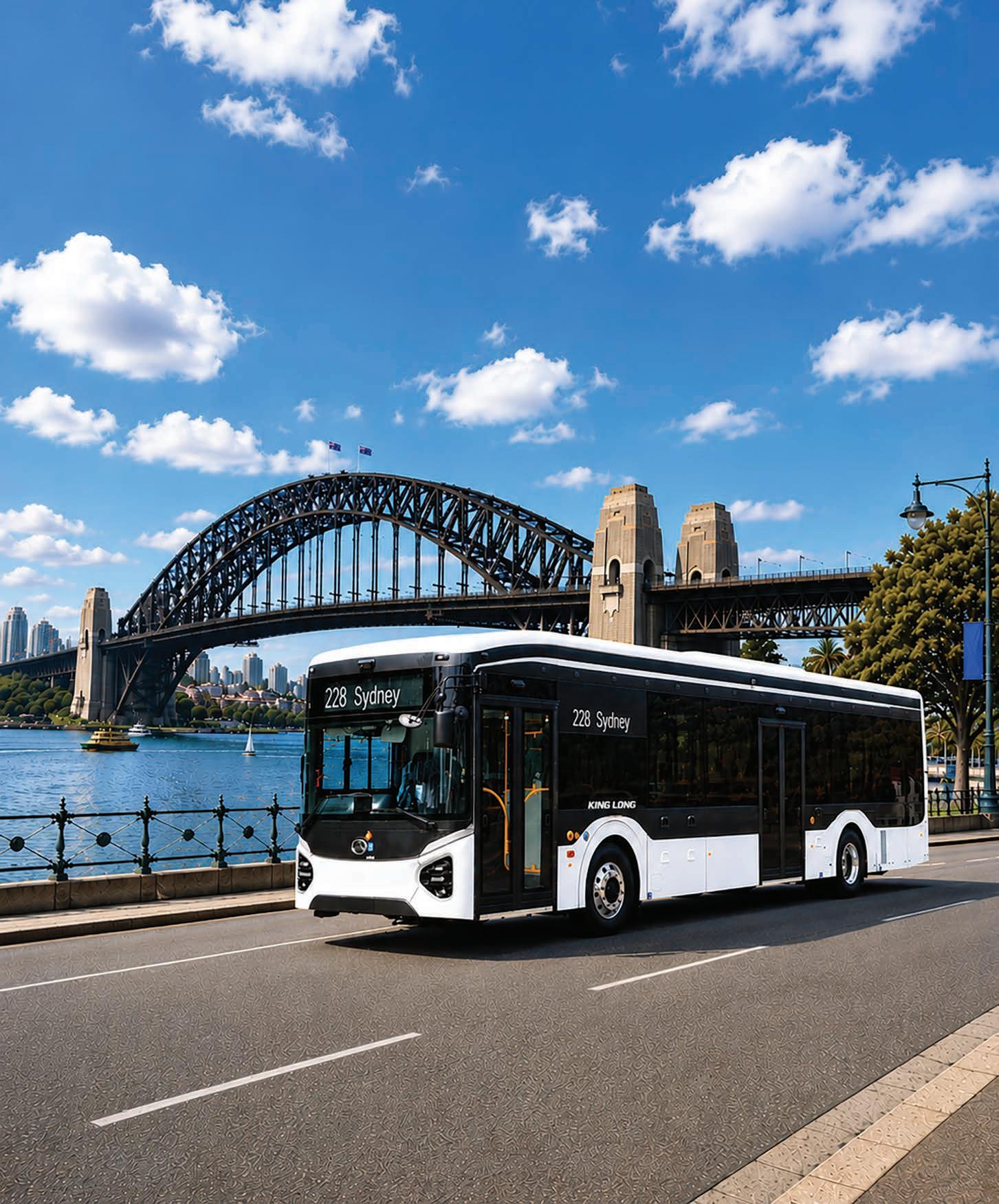
BLK provides a full range of purpose-built transport solutionsfrom midi buses to full-size coaches - delivering safety, durability, and value.
Twenty years of partnerships.
Twenty years of experience. A future driven by quality and confidence SEE US AT in the dome at the Bus & Coach Expo in July.
Time to show
ABC has officially launched its new Bus News podcast featuring the very best operator tales, while the industry is raring to go for a jampacked Expo
By the time you pick up this edition of ABC Magazine, the 2026 Bus & Coach Expo will be all but upon us as an industry. Whether you’re reading this within the walls of Sydney Showground, preparing to check out the latest and greatest industry technology, or catching up on the news in the wake of the whirlwind event, it’s an important time for the market. From new vehicles to a wonderful opportunity to catch up, the Expo comes at a time of boom for the industry.
Within ABC ’s own walls, we have recently launched the Bus News podcast, starting with our first episode featuring Emerald Coaches owner Michael Baulch. With more episodes planned with popular members of the operating class, don’t forget to view the industry podcast by heading online to busnews.com.au!
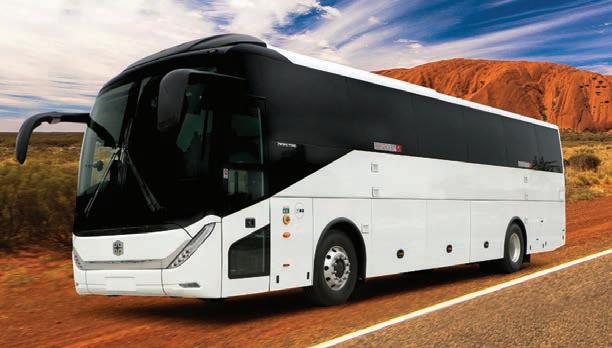
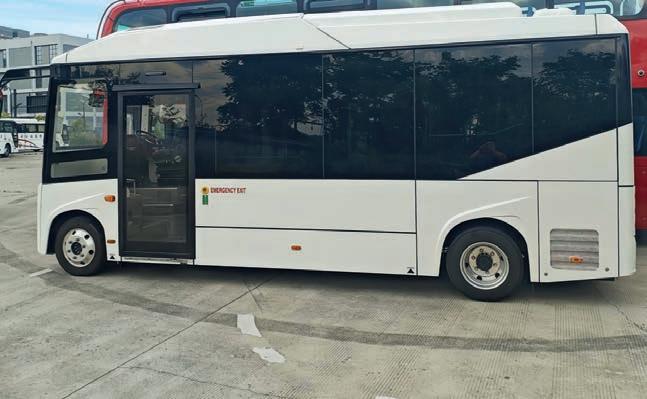
Now, the industry can enjoy an Expo filled with the latest technology, all of which is being previewed in this edition of ABC. A new entrant at the Expo, and our cover story for this month, is ZBus, with the Zhongtong supplier in Australia innovating for future-focused operators wanting to run a mixture of hybrid, diesel and electric vehicles. Head to page 17 for its latest bus on trial with a well-known family operator looking to lead the way in sustainability.
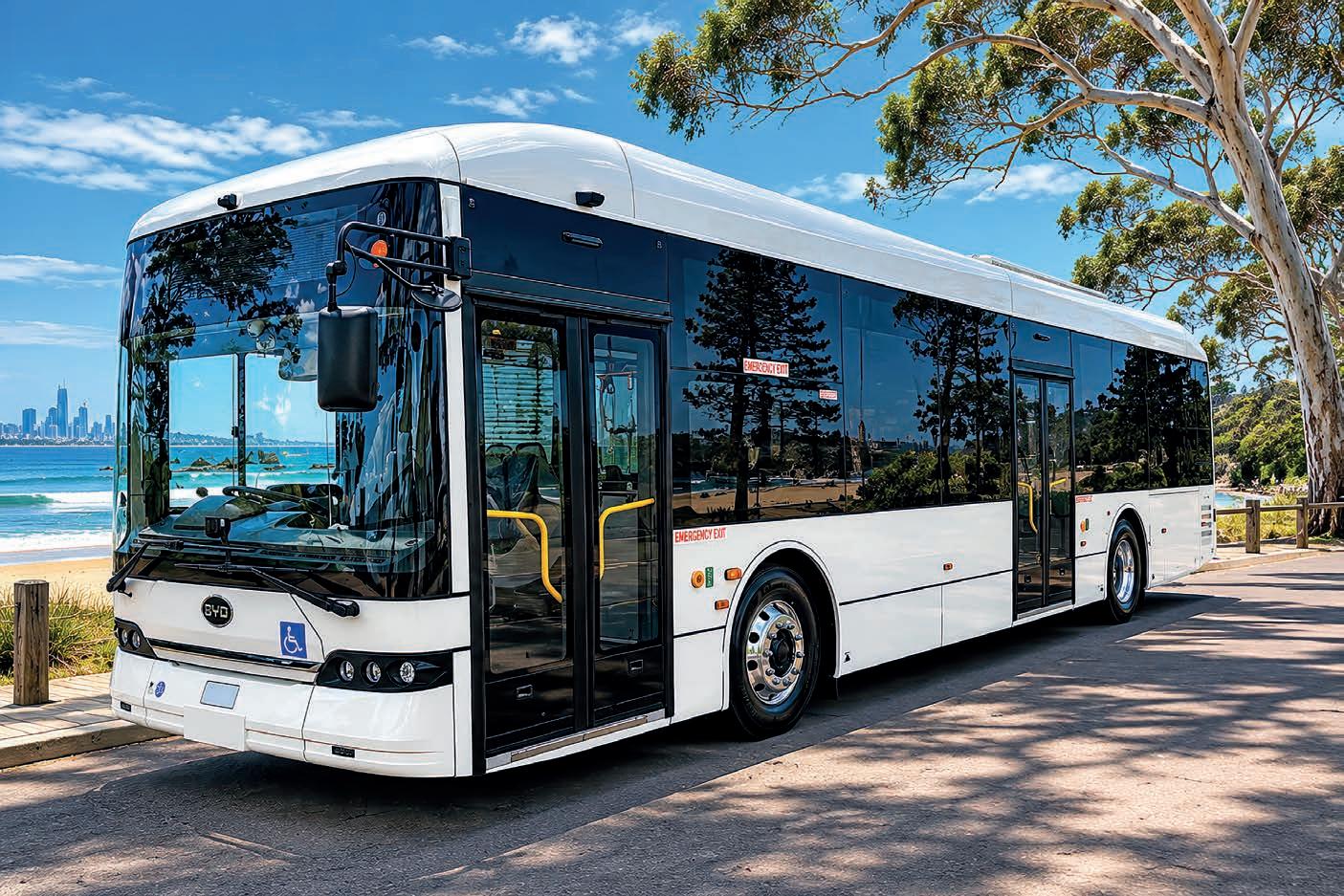
Bus Stop Sales will have a major presence at the industry event courtesy of its growing range of zero-emissions bus solutions, including a popular electric low-floor model. Head to page 25 to find out more about this modern bus and what it means for urban low-floor services. As it welcomes its three-axle coach to the industry in Sydney, Challenger (from page 29) is reiterating the quality behind all its vehicles.
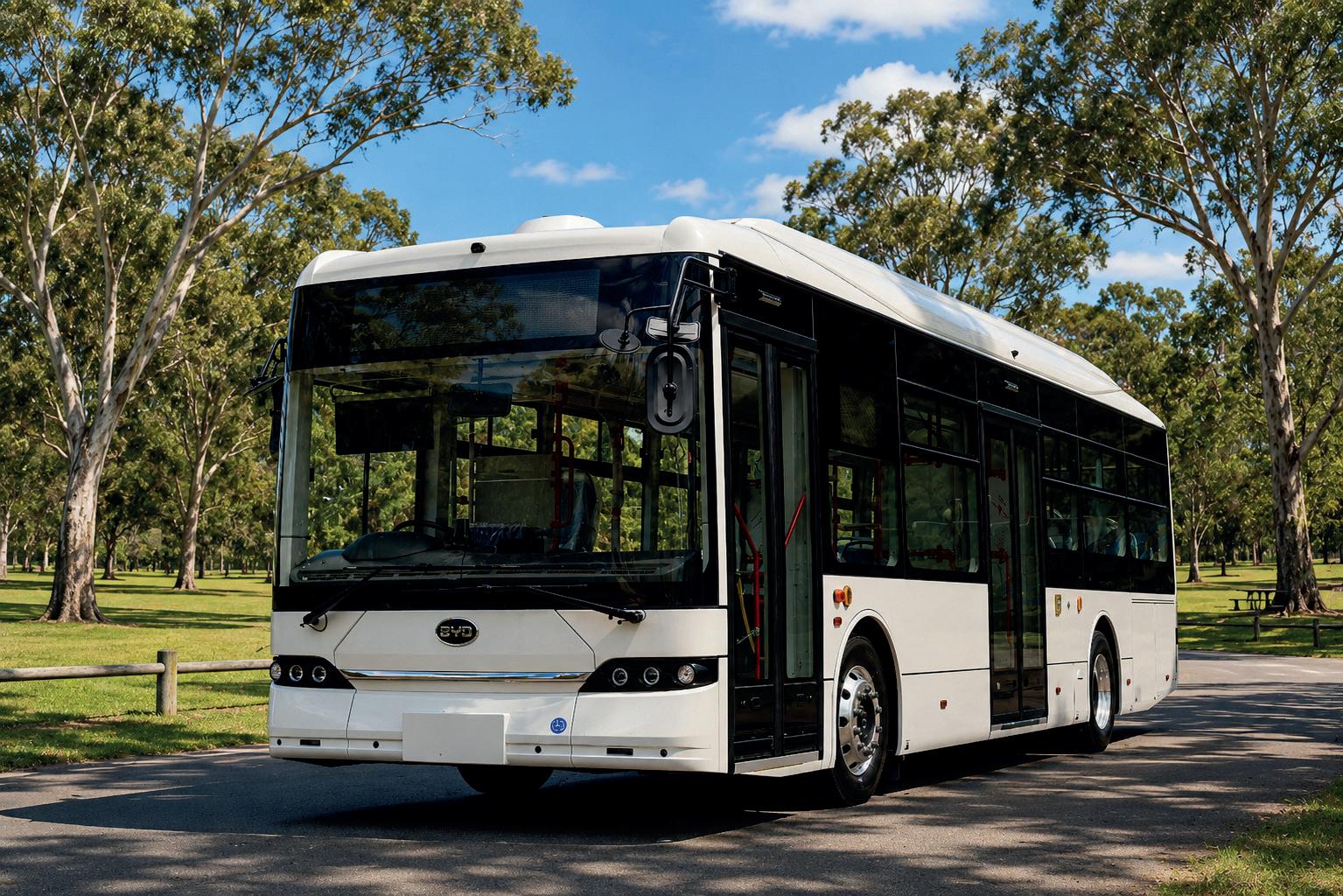
Foton Mobility Distribution is another emerging OEM that has made a name for itself in the zero-emissions market, but its new model, as can be seen on page 34, sees it expand into the diesel coach market in an exciting move for the industry. With a renewed global focus, Wrightbus will be another welcome entrant to the Expo in 2026, with its Australian line-up in full flight from page 38. Flick over to page 40 to check out the three new models BYD has planned as it builds deliveries momentum.
Within ABC’s own walls, we have recently launched the Bus News podcast, starting with our first episode featuring Emerald Coaches owner Michael Baulch
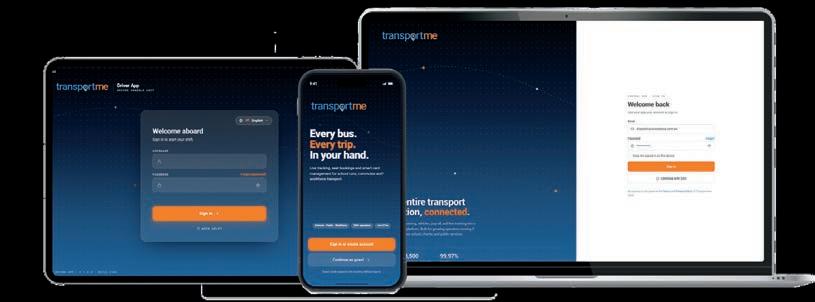
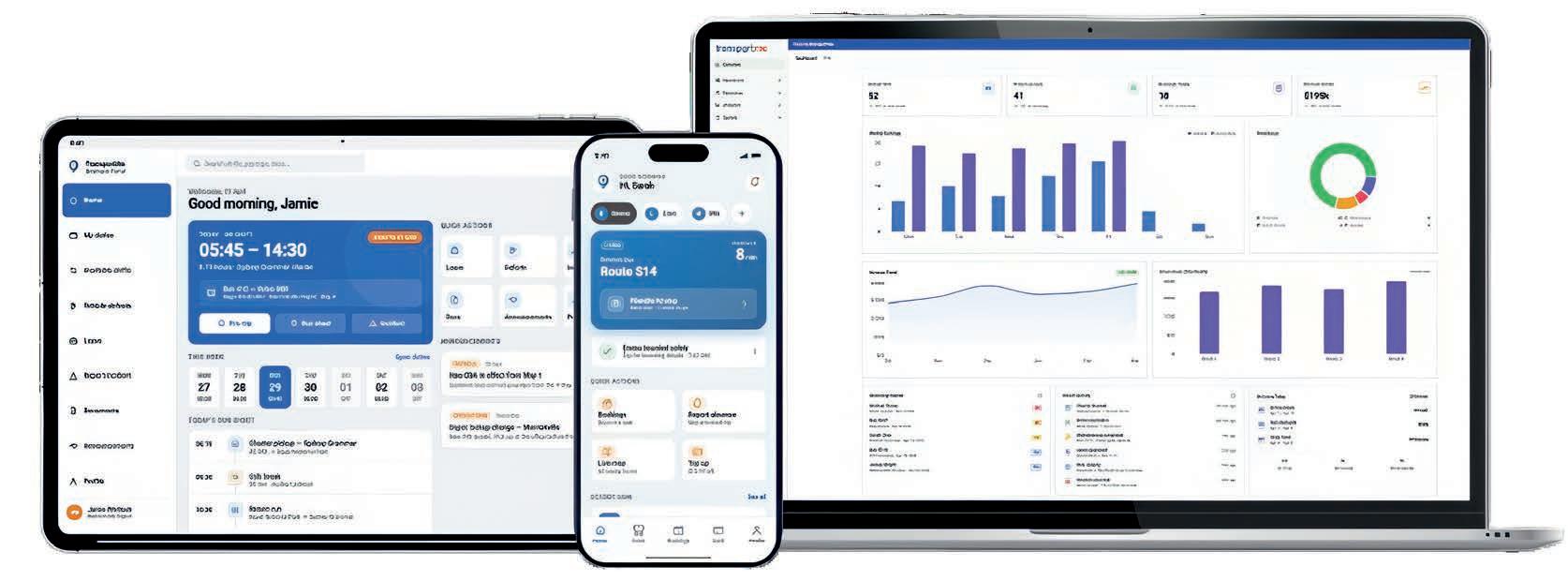
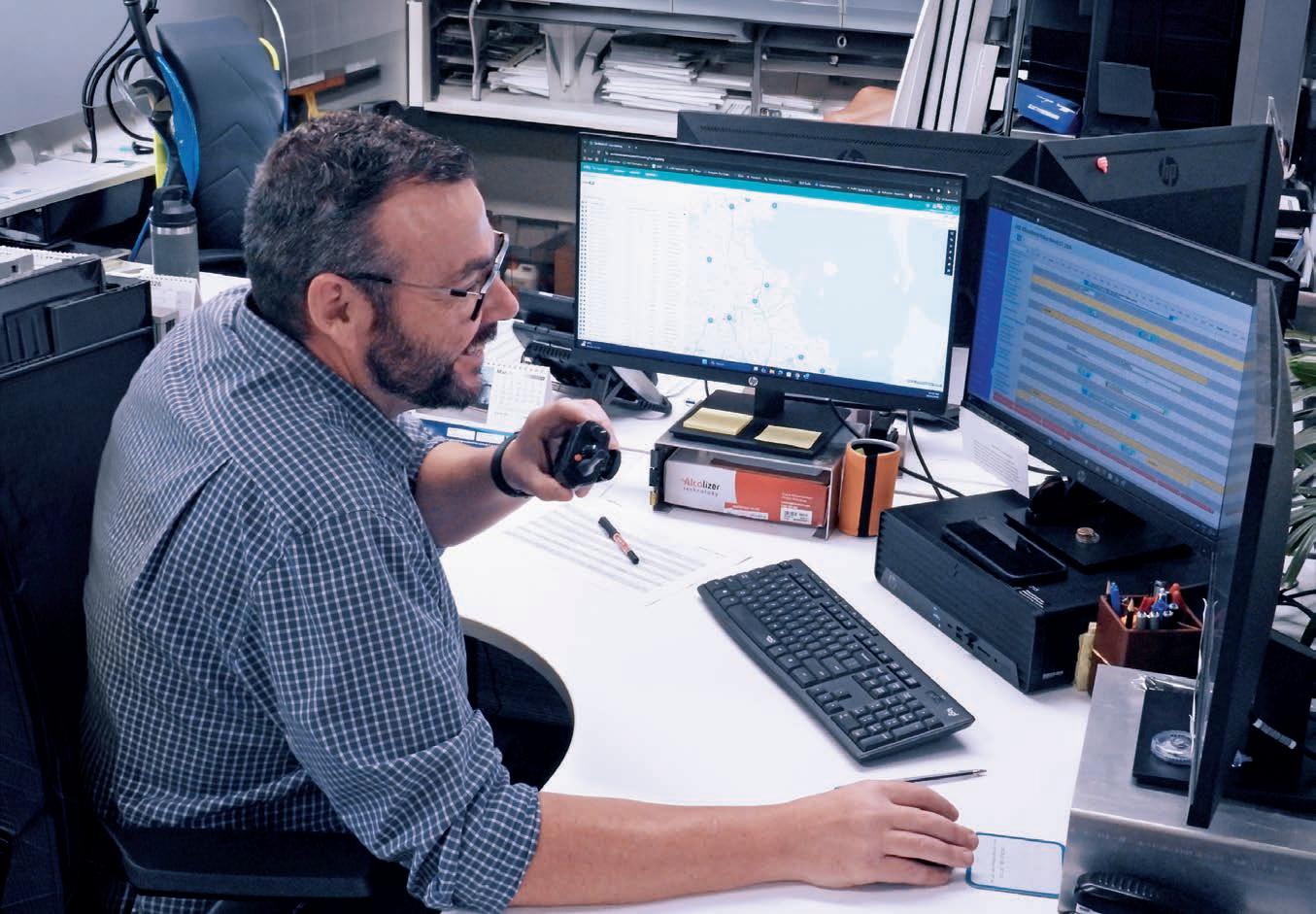
Volvo’s Expo stand will be more about its overall package, combining quality vehicles from page 42 to a growing commitment to aftersales care and training. On the technology side, a variety of software providers will be showcasing the rapid development of that market in Sydney. It starts with Busable (page 36), who has updated its fleet management system to maintain its flexible approach to helping Australian operators. Fast forward to page 44 and transportme reveals its new generation of cloud-native, AI-powered technology, all integrated into the one ecosystem, while Triple D Software’s complete system is providing a point of difference for operators wanting to retain and recruit drivers. Outside of this, don’t miss the latest developments from the likes of Charge Hub (page 46), Ventura (page 50), Kempower (page 52) and Camira (page 54).
We hope you enjoy this read and the Expo, and don’t forget to check out the first episode ’s new Bus News podcast!
Sean Mortell EDITOR, ABC
in the know
04. editorial | ignition TIME TO SHOW
ABC has officially launched its new Bus News podcast featuring the very best operator tales
08. news | all aboard
Check out the latest news from around Australia and the world
features
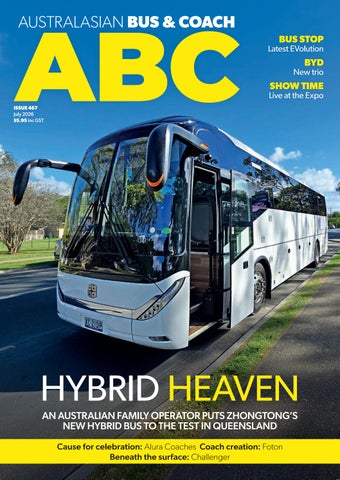
17. cover | zbus BRIDGE TO THE FUTURE
After already enjoying the ZBus product, east coast operator Cavbus Group is continuing its family legacy with a trial of Zhongtong’s hybrid bus model
20. feature | alura coaches FAMILY MATTER
In 1926, Sydney Crowther first ran a bus service in NSW’s Illawarra region. Now, 100 years on, the latest generations of Alura Coaches are reflecting on an important milestone for the family business
25. feature | bus stop EVOLVING THE EVOLUTION
As electric buses become part of everyday fleet operations, Bus Stop Sales says the industry’s focus is shifting
29. feature | challenger WHAT LIES BENEATH
Ever since it first emerged in the local market, Challenger has prided itself on building durable premium buses and coaches
34. feature | foton COMING IN HOT
As Foton Mobility Distribution continues to excel in the zero-emissions bus market, a new release on the coach side will see it expand its wider capabilities
36. feature | busable PAVING THE WAY
Busable is continuing to pioneer the use of cuttingedge technology in the Australasian bus and coach industry
38. feature | wrightbus LOCAL CELEBRATIONS
As it celebrates 80 years of building buses, Wrightbus is focusing on the Australian market to continue growing its global presence
40. feature | byd MOMENTUM BUILDER
BYD Australia will unveil a trio of new bus models at the Expo to further enhance its vehicle range
42. feature | volvo RESHAPING EXPECTATIONS
Volvo Bus Australia’s growing commitment to aftersales care and training is proof the industry is enhancing its perspective
44. feature | transportme
ONE PLATFORM, EVERY JOURNEY
A new generation of cloud-native, AI-powered technology is reshaping how Australian bus operators manage their fleets and people
46. feature | charge hub DELIVERING THE FUTURE
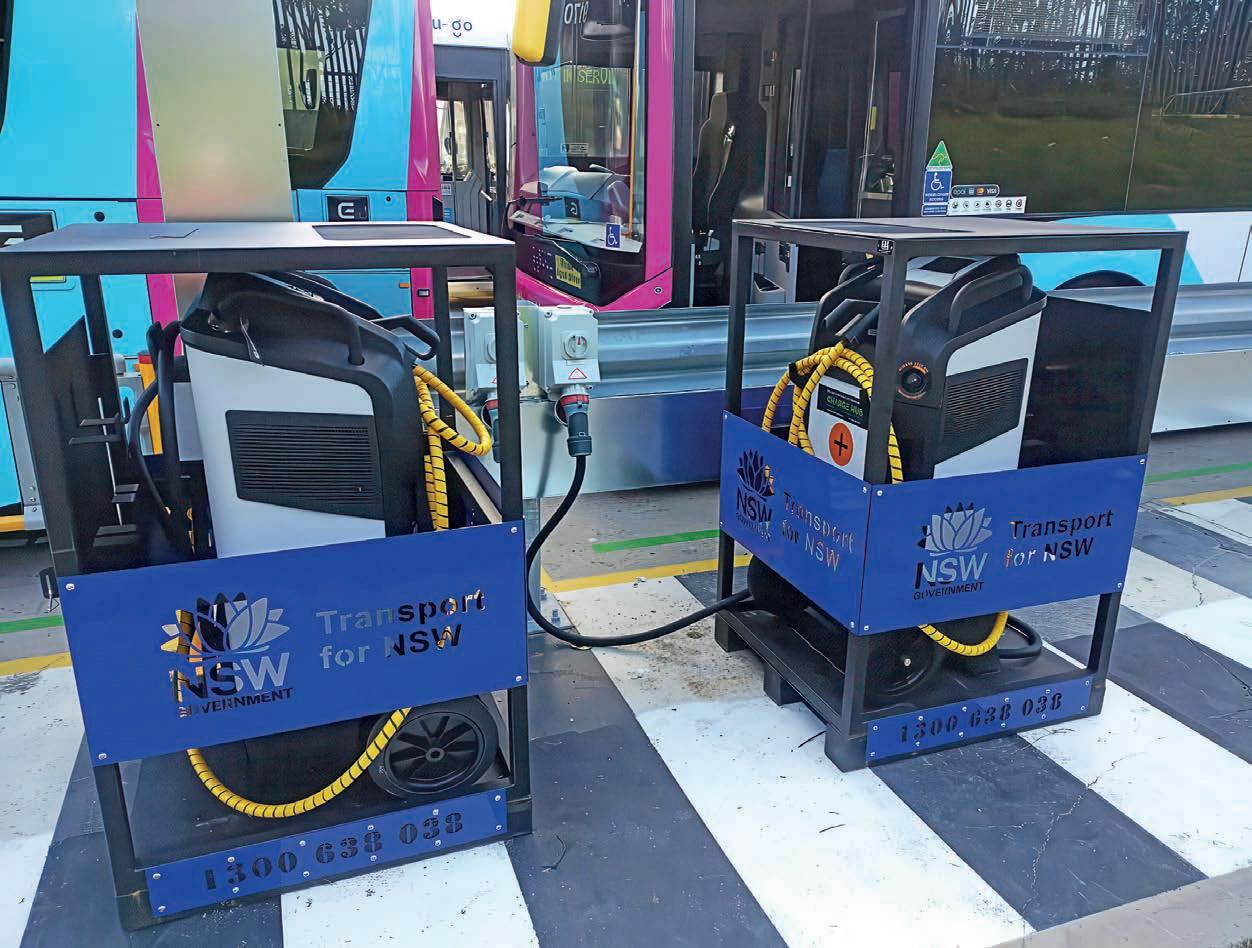
With a new industry leader appointed and growth on the horizon, Charge Hub is continuing to answer the next generation of questions
48. feature | triple d software ONE CONNECTED PLATFORM
Triple D Software’s complete system is allowing operators to retain and recruit new drivers through a seamless end-to-end fleet management product
50. feature | ventura STEPPING STONE
As the global door supplier celebrates a decade in the local bus and coach market, Ventura Systems Australia will unveil its latest technology at the Expo
52. feature | kempower SETTING BENCHMARKS
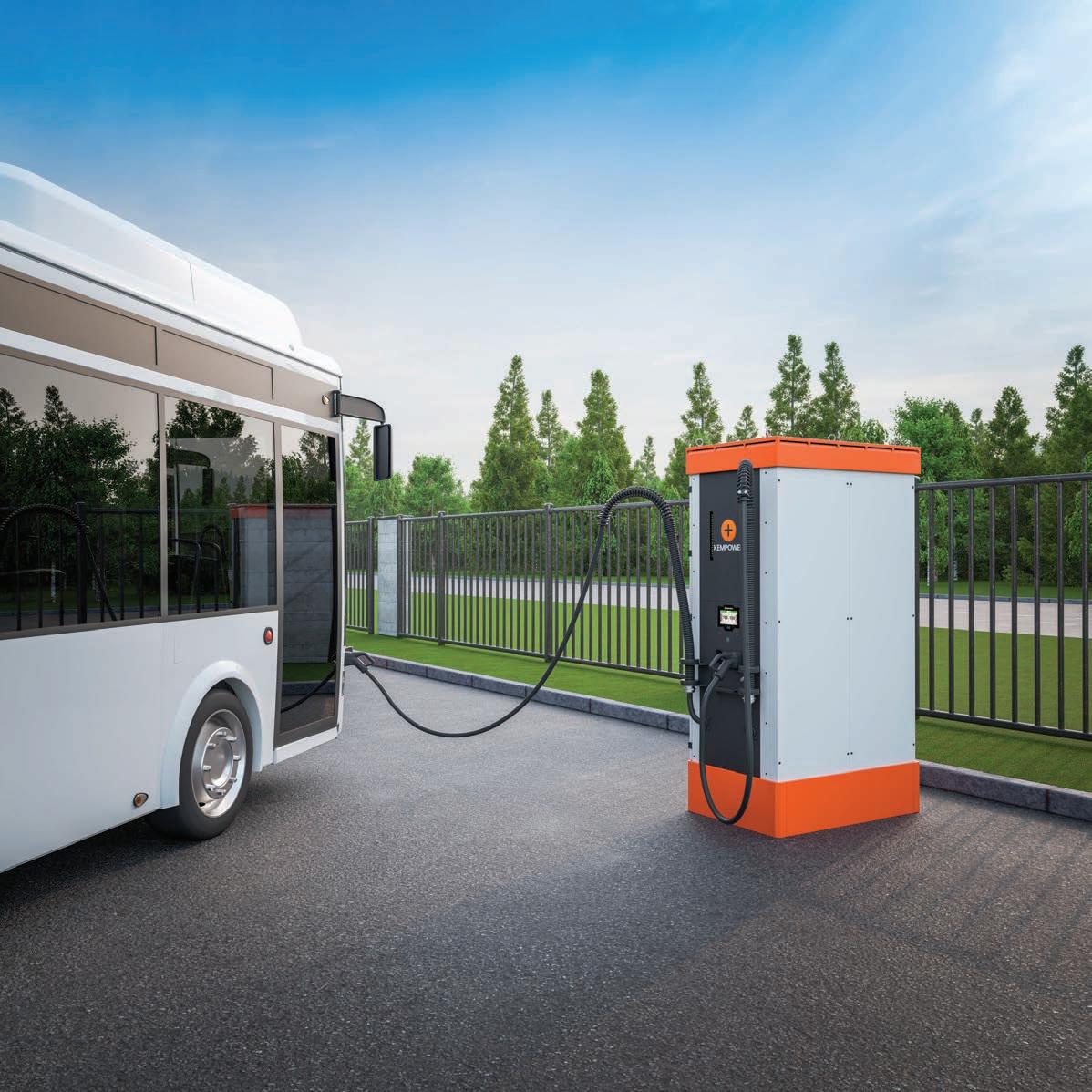
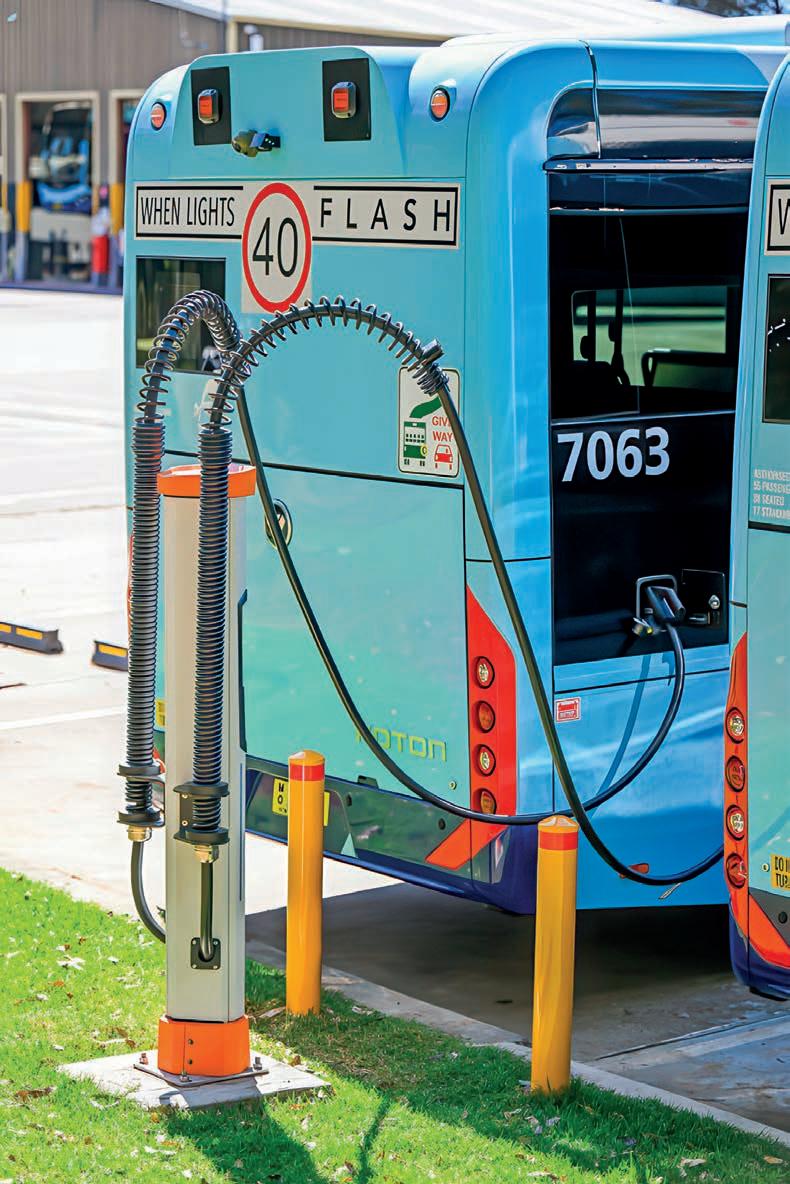
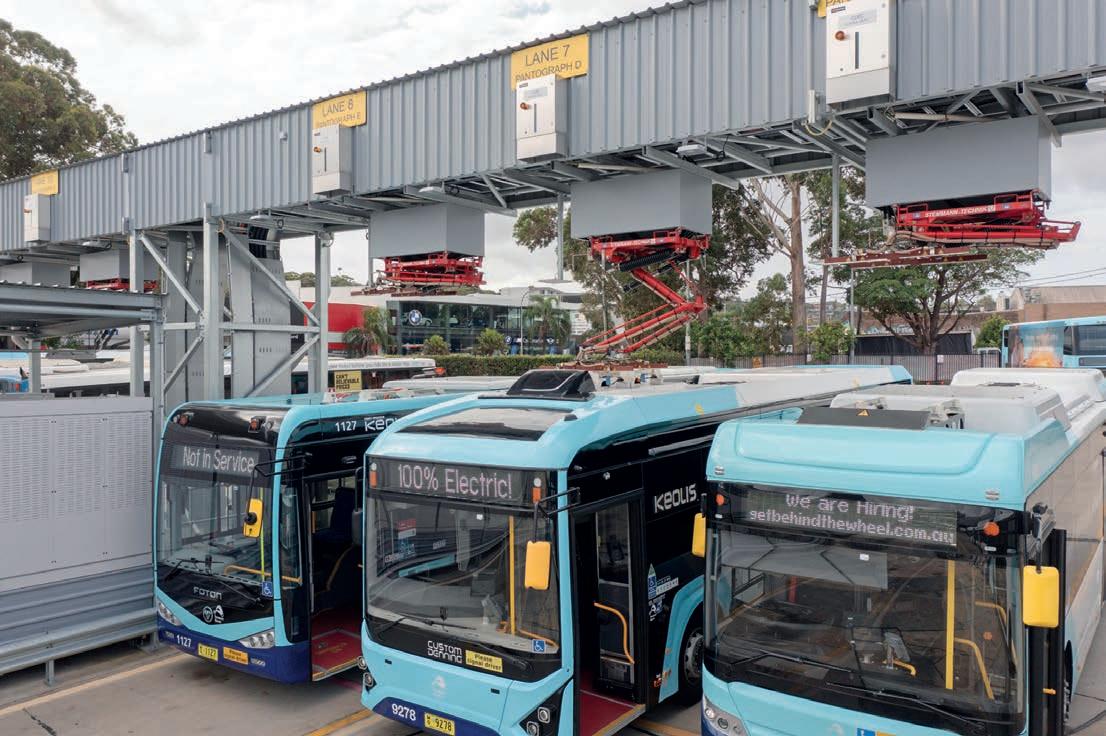
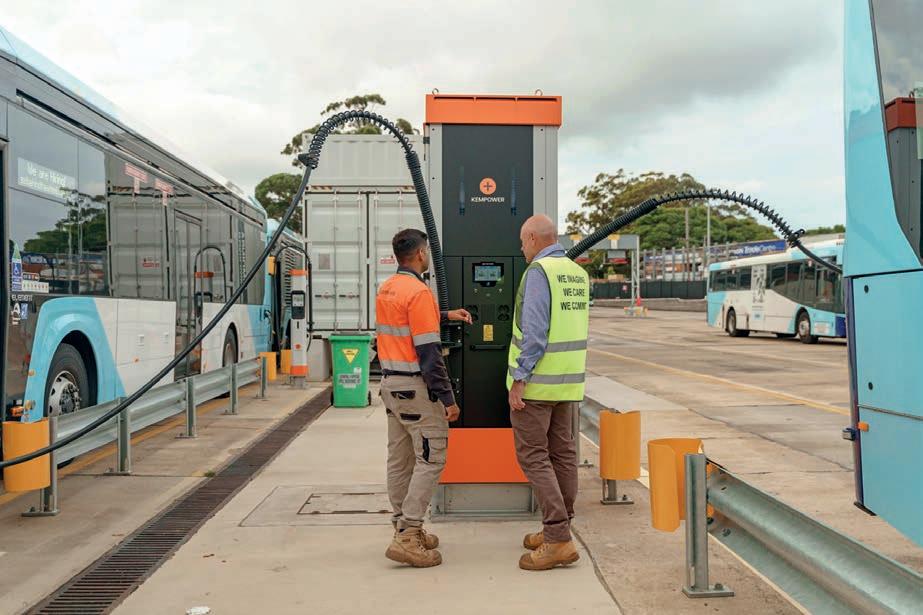
Australia’s first pantograph-down electric vehicle bus charging depot at Brookvale has been launched, powered by Kempower technology
54. feature | camira CHANGING THE GAME
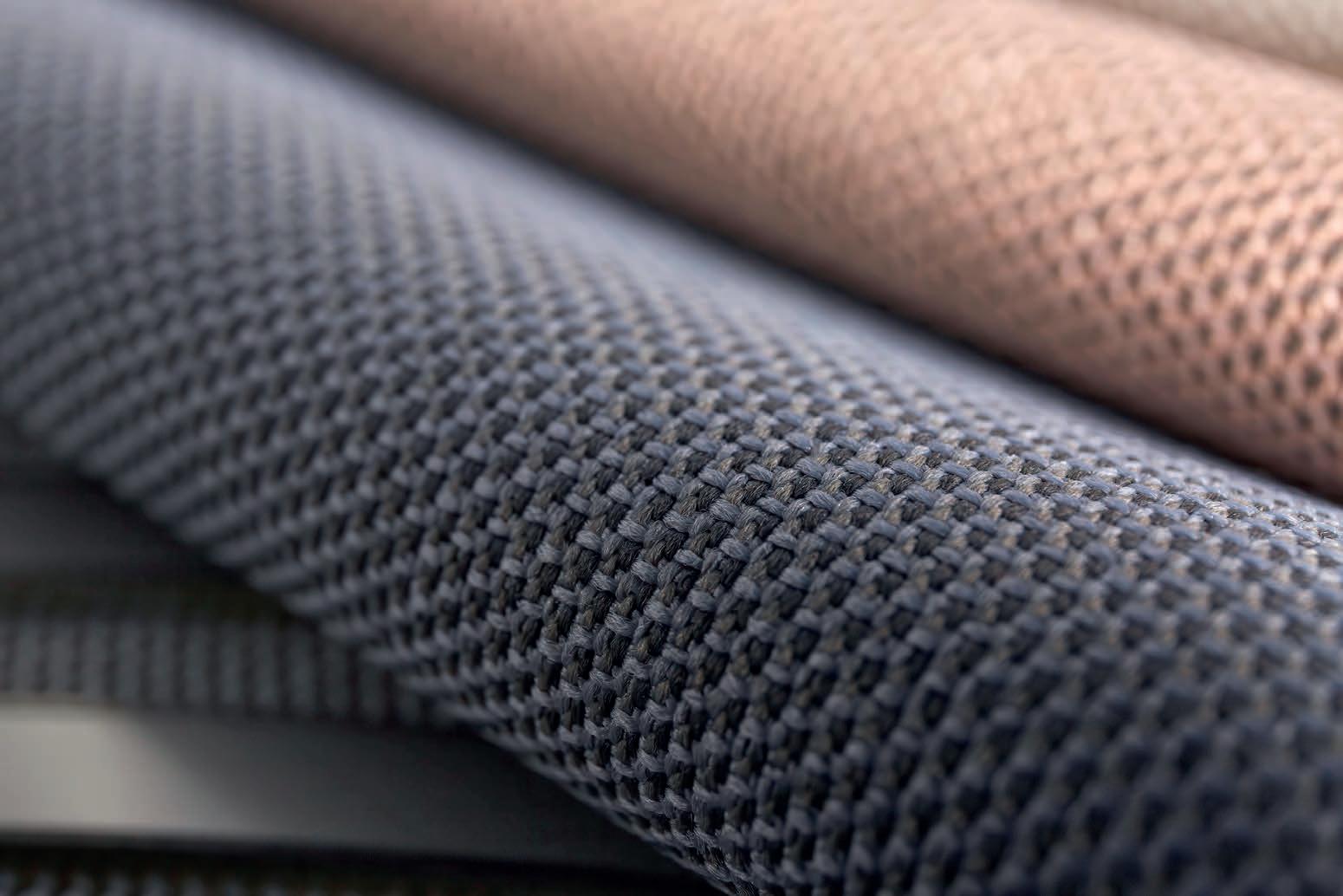
A new range of sustainable transport fabrics will result in three new Camira products being on display at this year’s Bus & Coach Expo
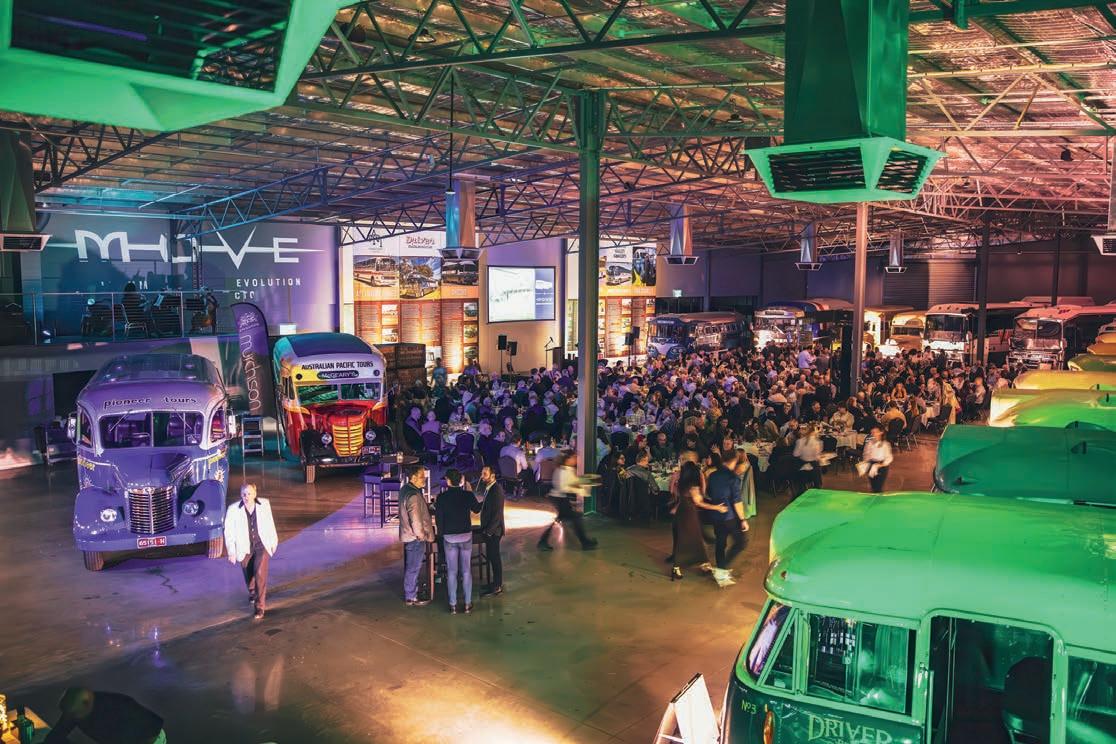
58. back seat | move museum STORIES ON WHEELS
MOVE’s expanded bus and coach collection is preserving community memories
Since 1991, BCI’s journey has been driven by connection, innovation and purpose.
Over 35 years, we have grown into one of Australia’s leading bus manufacturers, delivering vehicles built for the roads, climates and communities of this country. From city streets to regional routes, every BCI bus reflects experience, pride and a commitment to keeping Australia moving— coast to coast, every day.
Dysons celebrates home base anniversary
The well-known Victorian operator has marked two decades since it opened its innovative head depot in Melbourne’s north
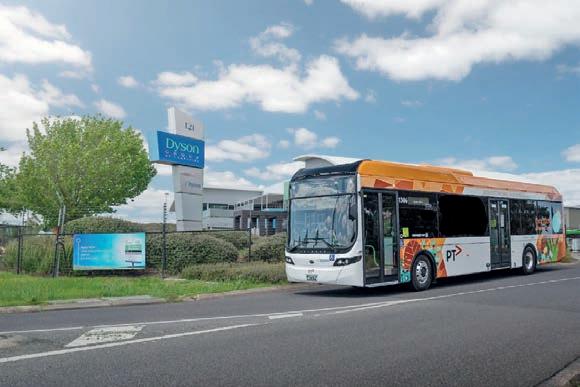
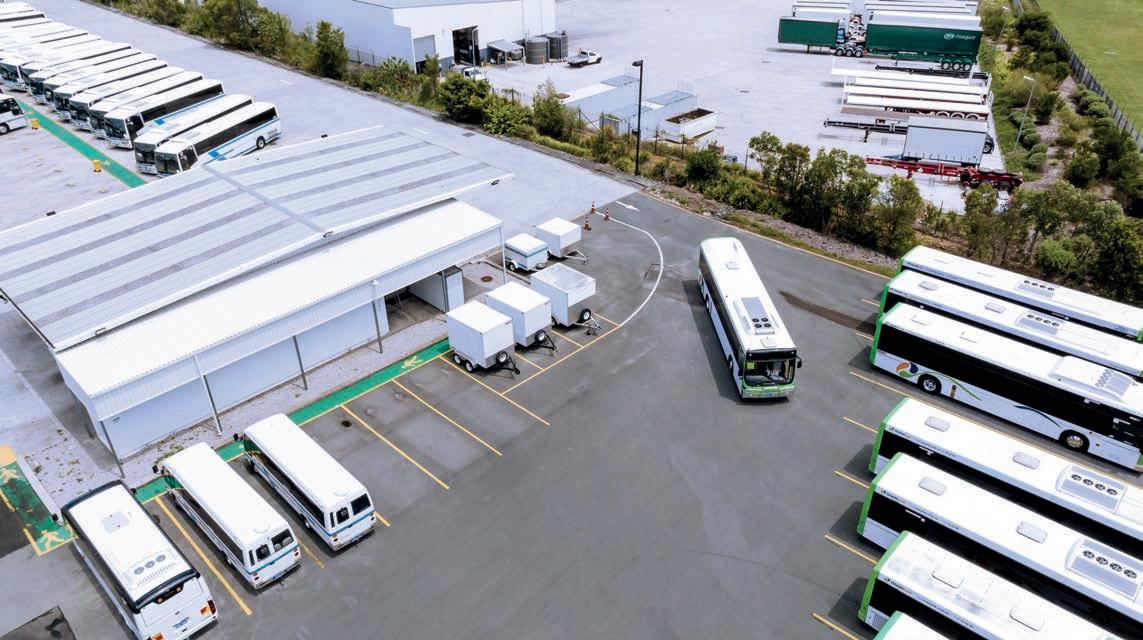
Victorian operator Dysons has marked 20 years since its head office and main depot in Melbourne’s north was opened.
On June 3, 2006, the Bundoora depot and head office was built at a former quarry site, roughly a kilometre west of its 1982 Bundoora depot that was also located on McKimmies Road near RMIT University.
At the time, the Bus and Coach Society of Victoria says the new Bundoora depot allowed Dysons
to consolidate its original depot on Plenty Road in East Preston/Reservoir, while it also cleared space for Dysons’ entire fleet of 235 buses based in Melbourne at the time.
This allowed Dysons to continue expanding, including its acquisition of Northern Bus Lines in 2008 alongside new routes in Wollert and Mernda and an addition of school charter routes.
The Bus and Coach Society of Victoria says the site set a new benchmark for bus depots in Victoria, with the depot’s opening coinciding with the 2006 Commonwealth Games in Melbourne and Dysons’ purchase of Kyneton Bus Lines, as well as the launch of its new corporate livery.
The depot has also recently been the home of the brand’s innovation, with the operator last year officially kicking off construction on the depot’s electrification.
The upgrade, delivered in
partnership with global electrification specialists Zenobē and long-time construction collaborators Dzine, will transform the existing depot into a smart-charging facility capable of supporting a 188-strong electric bus fleet as part of the Metropolitan Zero Emissions Bus Franchise (MZF).
“This project brings to life our commitment to sustainable transport and will ensure Bundoora is equipped to support the next generation of zero-emissions buses,” Dysons CEO Andrew Jakab said at the time.
“For the last 73 years, Dysons has established a reputation as a very accomplished operator of diesel buses. But the reality is, after time we had to change, and we had to make the transition to become an accomplished operator of zero-emission buses.
“To do that, you need to be able to transform your depot and your infrastructure to accommodate a once-in-multi-generation change.”
Victoria goes contactless with ticketing
Tap and go ticketing technology has been switched on across the state’s public transport network following trials
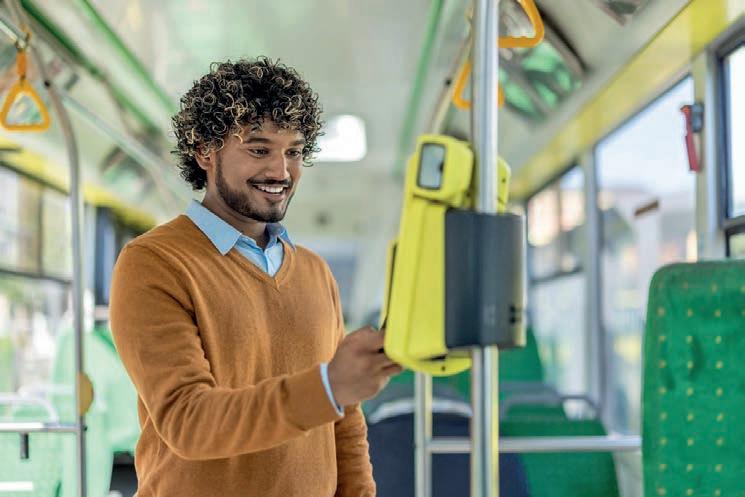
Public transport in Victoria is currently undergoing a transition to contactless ticketing, with tap and go being switched on in stages.
Starting on the rail network before it transitioned to bus and coach services, tap and go has been allowed in stages, with various train lines receiving the contactless ticketing system from June 7.
From June 14, other lines also received the extended tap and go measure, which all started with a successful trial on the Craigieburn, Upfield, Ballarat and Seymour lines, as well as City Loop stations.
Following this roll-out, passengers are able to tap on and travel using a
bank card, smartphone or smartwatch at every myki-enabled train station
More than 88,500 tap and go trips have been taken since trials began in March, with four in five of those made
The state government says it’ll have “more to say” about the next stage of
“Victorians are already saving money with half-price fares. Now we’re making public transport easier to use too,” Victorian public transport minister Gabrielle Williams says.
“Tap and go means one less card in your wallet and one less thing to worry about on your journey.”
Above: Dysons’ head depot. Image: Dysons
Western Sydney gains 24/7 bus routes
Two new 24/7 bus routes have gotten underway, providing Western Sydney passengers with frequent all-day links
Western Sydney passengers have gained two 24-hour bus services with new Route 52 and upgraded Route 80 set to provide frequent all-day links through Parramatta.
The changes return a direct bus link between Parramatta, Ryde and the Sydney CBD while also upgrading the T-way service between Parramatta and Liverpool.
Route 52 replaces Routes 500X and 500N and operates via Victoria Road, connecting Parramatta, Ryde and the Sydney CBD, joining the All Day Frequent Network.
Services on Route 52 are running every 10 minutes or better during the day, every 20 minutes or better in the early morning and late evening and every 30 minutes overnight.
The route operates 24 hours a day, seven days a week, using high-capacity bendy buses, including 13 of the 50 new buses being rolled out across some of Sydney’s busiest routes.
The T80 is also renumbered as Route 80 and upgraded to operate 24 hours a day, seven days a week between Parramatta and Liverpool via the T-way.
Route 80 runs every 10 minutes during the day, every 20 minutes in the early morning and late evening and every 60 minutes overnight.
The two routes place Parramatta at the centre of a stronger 24-hour bus network. Route 52 restores a direct east-west link to the CBD through Ryde, while Route 80 strengthens north-south movement between Parramatta and Liverpool.
The recent changes form part of wider bus updates across Greater Sydney, including timetable and route changes in South West Sydney, the North West and Hills District, and the North Shore and Northern Beaches.
Other North Shore and West changes include improved peak frequencies on Route 521, longer operating hours on routes 523 and 524 and a more direct Route 546 in North Parramatta.
For Western Sydney passengers, the headline change is simple: two corridors that previously relied on limited or less direct service patterns will now have all-day and overnight coverage.
The 24/7 upgrade is also significant for shift workers, airport and hospitality workers, students and passengers travelling outside traditional peak periods, giving more people a public transport option when standard daytime timetables do not match their working hours.
Several connecting services have also changed, with Route 501 being adjusted to operate between West Ryde Station and Central, no longer operating to Parramatta. Route 525 operates between Parramatta and Lidcombe, with its evening frequency improving from every 60 minutes to every 30 minutes.
Below: More buses are running in Western Sydney. Image: steve/ stock.adobe.com
Support where it matters
With an asset life built to last and a partner committed to the distance.
Running a successful bus operation takes more than the right vehicles - it takes the right people alongside you. Volvo Buses works with Australian operators for the long term, with training, technical support, preventative maintenance, and service solutions tailored to your operation. And with a Volvo asset life exceeding 20 years, the partnership you build from day one is just as important as the product you buy. It’s not just about getting the right bus - it’s about having the right partner behind it. With Volvo, it’s more than just the bus.
Find our team at the 2026 Bus & Coach Show at Sydney Showground, 15-16 July, 2026.
The Wright choice for a greener Australia
Founded in 1946, Wrightbus is the UK market leader in zero-emission buses with over 3,000 in service. With a choice of BEV and FCEV technologies, our double and single deck buses have covered over 200 million km. That gives us the experience to smoothly manage your transition from diesel to zero-emission fleets. And when it comes to support, we have a highly experienced team based in Australia, supported by mobile service engineers, while our sister company FUZE offers a turnkey solution of vehicles, infrastructure and maintenance. For more information, contact: julian.gurney@wrightbus.com
Townsville Airport to receive new service
The Townsville new Route 222 airport bus is now underway, linking the airport with the CBD
Townsville has gained a new airport bus service, with Route 222 connecting Townsville Airport with the city centre and key local destinations.
The new Townsville airport bus operates hourly between 4am and 11pm, seven days a week, excluding Christmas Day and Good Friday, in a service that’s funded by the Queensland government and operated by Kinetic.
Route 222 links Townsville Airport with the Townsville City bus hub, The Strand, Breakwater ferry terminal and the Palmer Street entertainment precinct. The timetable has been designed to cover the main operating hours of scheduled flights and the shift times of airport workers.
The service also connects passengers into the wider Translink network, giving travellers and airport staff a public transport option between the airport and the heart of the city.
Under Queensland’s permanent 50-cent fares policy, passengers can travel to and from the airport for 50 cents.
Queensland transport and main roads minister Brent Mickelberg says the new service responds to local calls for better airport access.
“Adam Baillie’s (member for Townsville) advocacy has made it clear there is strong community support for a bus to improve access to the airport,” Mickelberg says.
“That is why the Crisafulli government is getting on with delivering a brand-new airport bus, to plug the missing link between Townsville Airport and the heart of the city.”
Camira is the trusted fabric partner for the Australian bus and coach industry. Our Melbourne team is on hand to provide quick turnaround times, with stock readily available here in Australia. From routine maintenance to unexpected repairs, Camira supports vehicles throughout their lifetime.
Family operator honoured with award
As senior members of the family business undertake an anniversary roadshow, other members of the family accepted the awards in Hobart
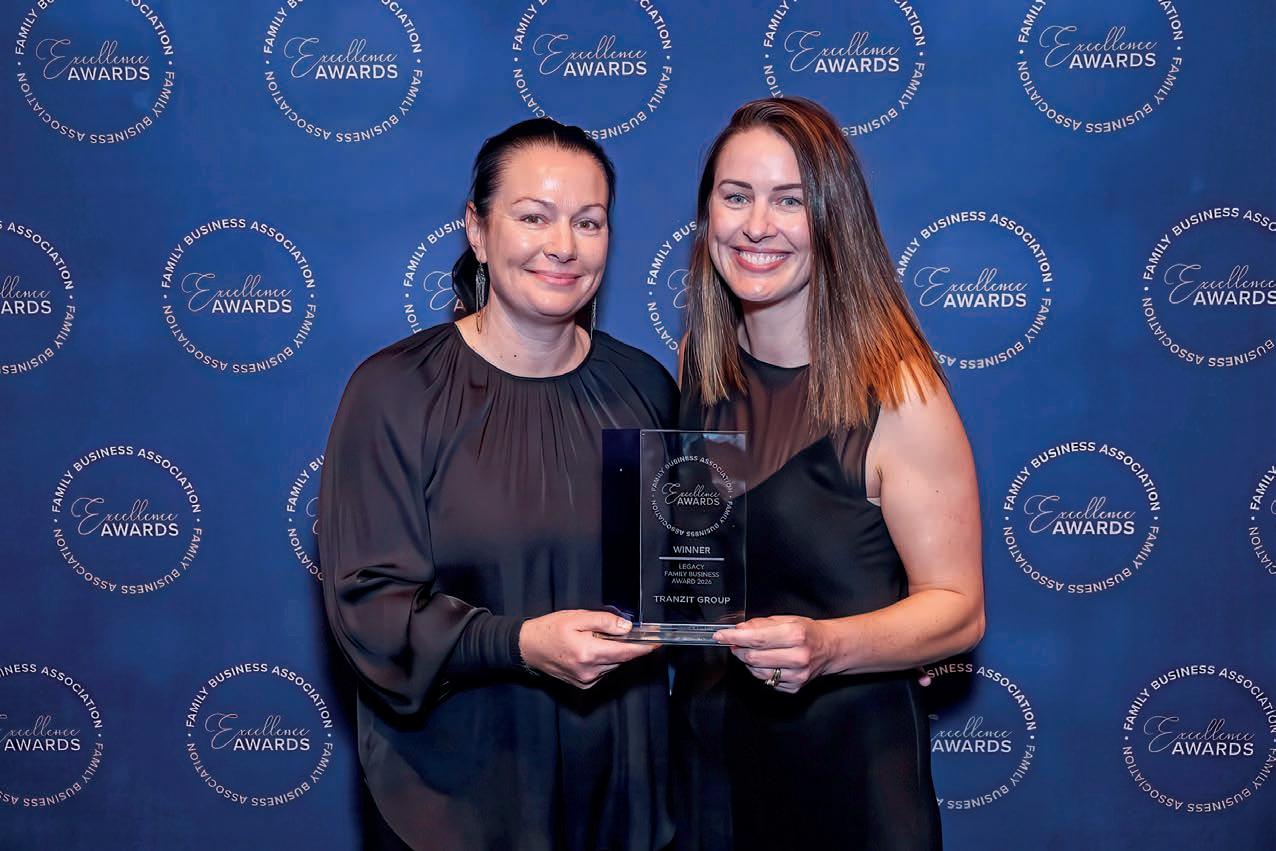
New Zealand family-owned transport and tourism company Tranzit Group has been crowned the 2026 Family Business of the Year and received the Legacy Family Business Award at the recent Family Business Excellence Awards, hosted by the Family Business Association in Hobart, Australia.
Unlike many business awards, the Family Business Excellence Awards specifically recognise the strength of multi-generational businesses and the governance, succession planning and long-term thinking required to sustain them across generations.
For Tranzit, this recognition marks a significant milestone as the business continues its centenary celebrations, recognising its scale built over 100 years, as well as its values, leadership and long-term stewardship that continue to shape the company today.
Renee Snelgrove, Tranzit Group director, and Jenna Snelgrove, general manager of Tranzit Group’s Coaching, InterCity and Tourism division, accepted the awards on behalf of their family and of their 2,800-strong team.
“While Tranzit has grown significantly, we are most proud that it has always been built on people and a pioneering spirit,” Jenna says.
From one man, one bus and one simple idea of connecting communities in 1925, Tranzit has grown into a national business with more than 3,000 vehicles and a team of 2,800 people operating across public transport, school transport, tourism, charter and event transport, and vehicles rentals.
“Just as importantly, these awards acknowledge that Tranzit’s success has always been built on people, innovation and purpose. We’ve stuck to our values and we’re building a legacy for the future with the fifth generation now working in the business,” Jenna says.
During the award ceremony, Jenna also acknowledged her father and
The Snelgroves
managing director Paul Snelgrove and uncle, transport director Keven Snelgrove, who are currently travelling New Zealand as part of Tranzit’s Centenary Roadshow that celebrates the people who’ve played a key part in the company’s journey.
This 22-stop Roadshow is being staged in Tranzit’s latest three-axle CRRC electric bus that has been transformed into a “mini museum” housing a colourful display of memorabilia, story boards and uniforms that trace Tranzit’s history.
A selection of the 100 original oil paintings of the company’s vehicles, completed by former team member and artist Wally Trickett, are also on display.
Tranzit joined the Family Business Association in 2025 – through the association, the business has connected with other family enterprises, learned from shared
challenges of balancing family, governance and long-term business success.
“It is incredibly valuable to be part of a network that understands the dynamics, responsibilities and opportunities that come with running a family business. We have found the association to be practical, relevant and genuinely useful, and I would absolutely encourage other family businesses to engage with it,” Renee says.
Catherine Sayer, CEO of the Family Business Association, says the awards highlight the exceptional leadership and contribution of family-run organisations.
“Family businesses are central to New Zealand’s economic strength and community identity. These awards honour the vision, resilience and commitment that family business leaders bring to their work every
Below:
to the future
After already enjoying the ZBus product, east coast operator Cavbus Group is continuing its family legacy with a trial of Zhongtong’s hybrid bus model
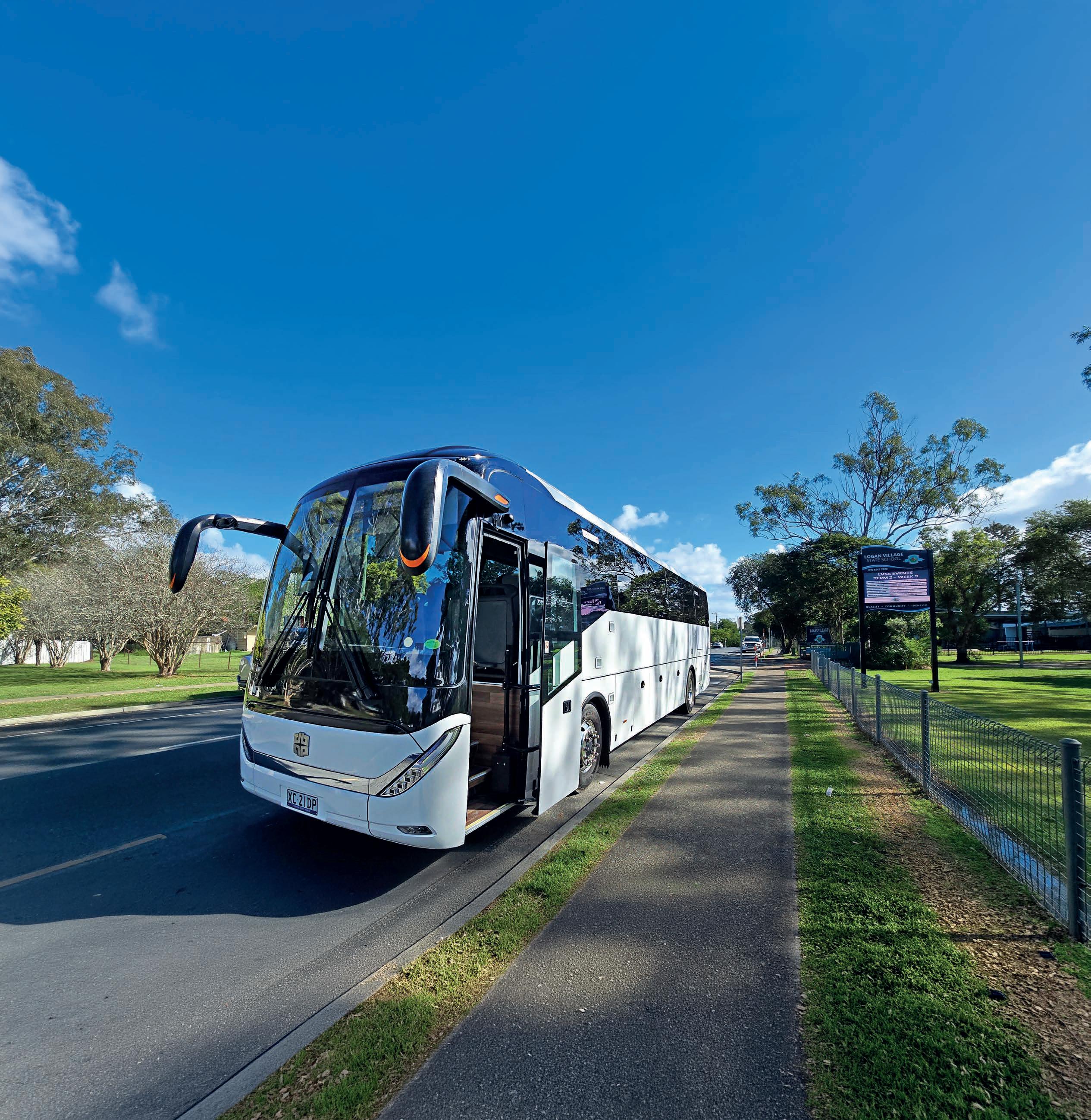
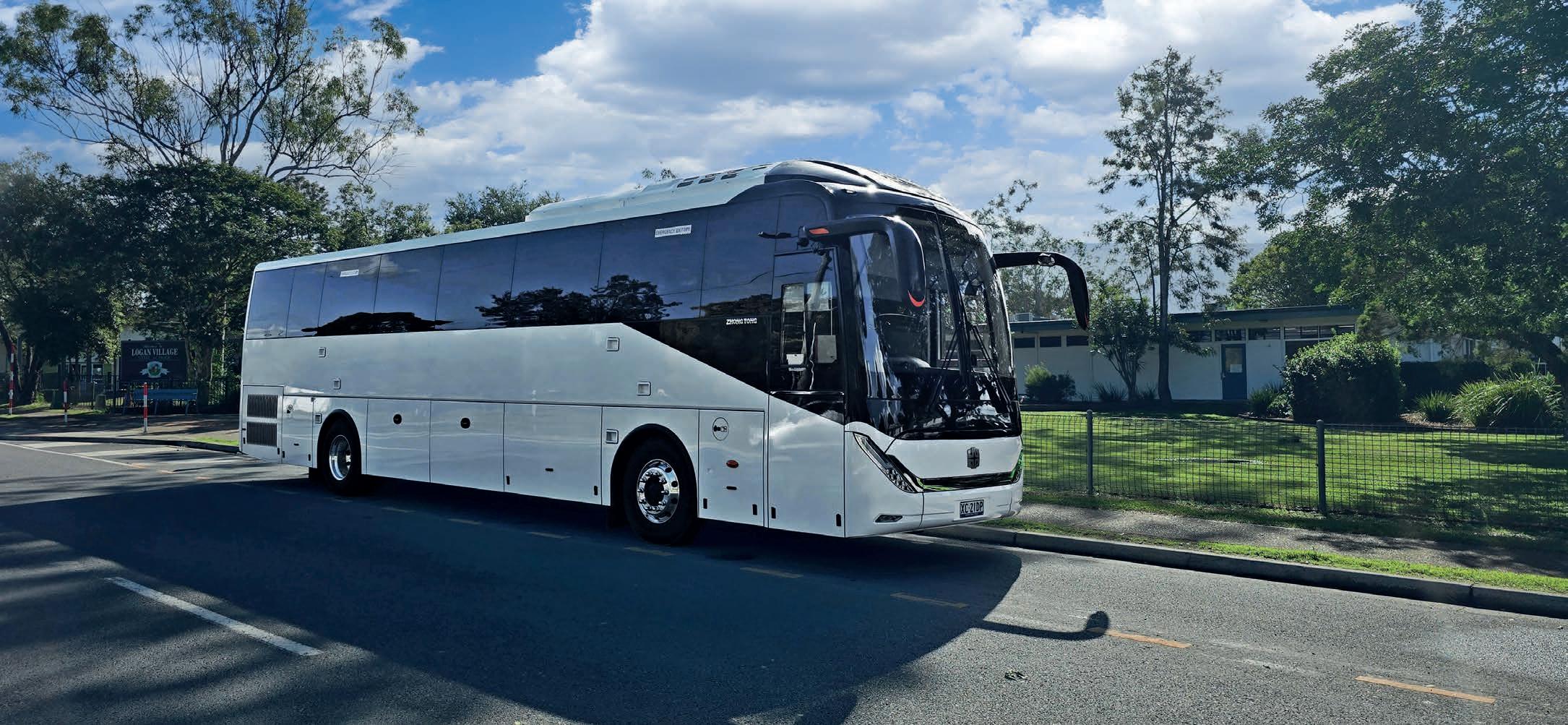
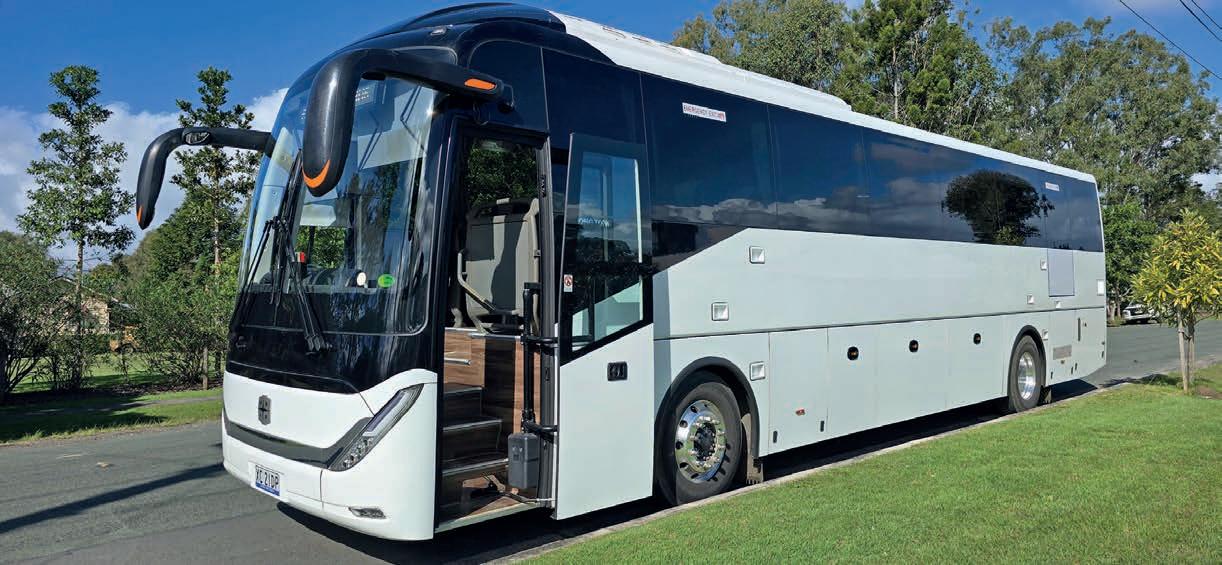
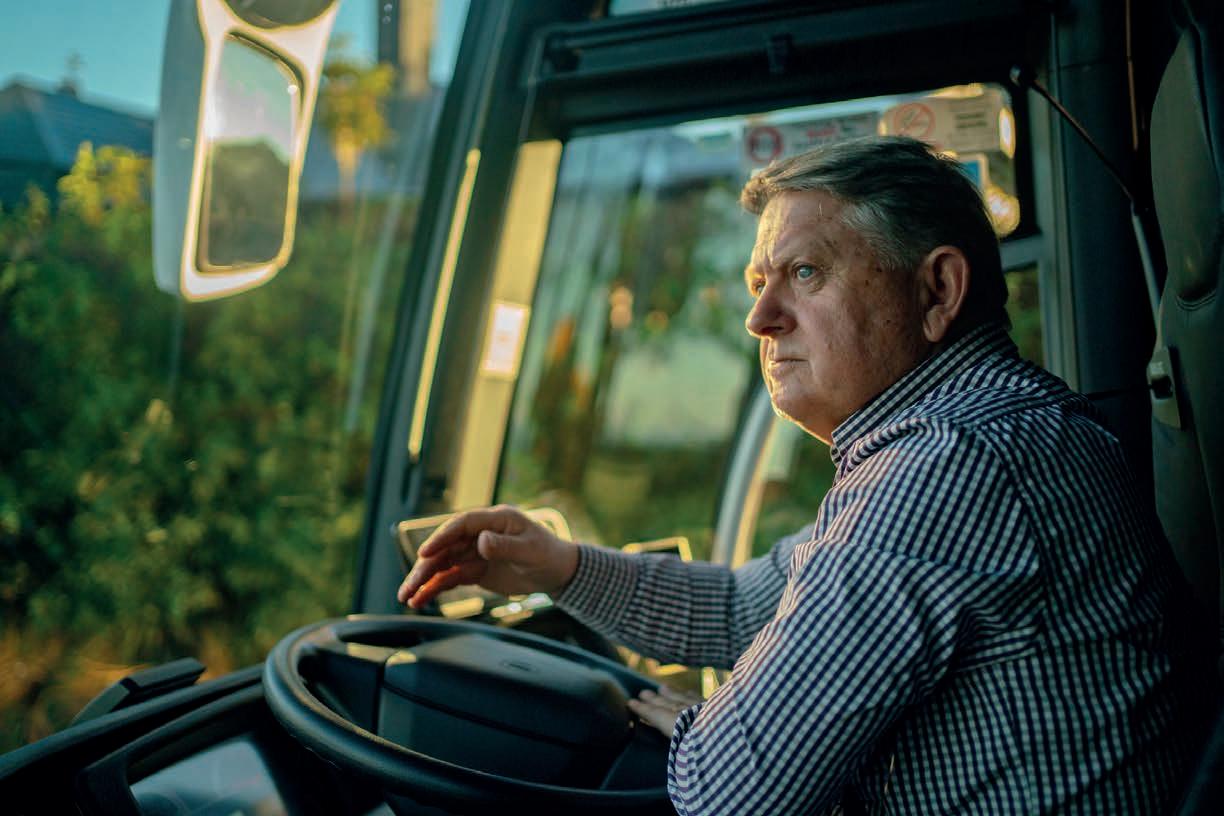
Logan Coaches, tendered and won the first fully electric bus route within the Translink network from Yarrabilba to Loganlea Railway Station in a move that was embraced and supported by the local community. Now, the operator is trialling a hybrid bus alongside Zhongtong, through ZBus. The H12 Hybrid trial builds directly on Cavbus’ established track record of innovation, offering the natural next step in Cavbus fleet’s natural eco-friendly transition to deliver a reduction in measurable emissions and fuel savings while using existing depot infrastructure.
Howell says this trial will generate real-world Queensland performance data needed to inform future full-electrification decisions across the contracted school bus sector when
The Hybrid model on trial with vbus Group
utilising green energy technology.
For the Cavbus Group and its 158-strong staff, its trust for a sustainable future is firmly based on ZBus. The global heavy vehicle manufacturer has sold more than 300,000 buses to date, of which more than 100,000 are new energy.
Howell says its wide-ranging, versatile product line-up features more than 140 models – four of these are currently available in the local market for Australian operators, including the H12 hybrid plug-in variant.
Cavbus recently decided to start the search for a hybrid vehicle with suitable range and distance capabilities to trial in its fleet. Having recently received new school bus models from Zhongtong, through ZBus, and been impressed by them, further conversations with the ZBus team led to Cavbus taking on a H12H hybrid bus to run around South-East Queensland.
Howell says Cavbus chose ZBus for its bus capabilities, school bus safety and enhancement of the transportation experience.
“When it comes to bus capability, the Zhongtong plug-in Hybrid H12 school bus is capable of using its small diesel engine as a generator to charge its electric batteries to power the vehicle,” he says.
“Regenerative braking optimises efficiency, resulting in fuel savings of up to 35 to 45 per cent.
Zhongtong plug-in Hybrid buses have been operating successfully in
Singapore since July 2023.
“Queensland’s school runs, on average, are under 150 km per day and this bus can deliver this on the battery. The Hybrid bus will be able to do the morning and afternoon school services in electric mode without using any diesel, while the diesel would be used as a back-up to ensure the guaranteed optimal operation of services if charging facilities are not available or you have additional charter services.”
In present trials, Zhongtong’s bus data indicates a combined battery and diesel range of up to 1,550km. These buses have also been built for Australian conditions and designed by bus operators to be a school safe bus operating with the latest advances in safety and technology.
Howell says Cavbus enjoys that safety is a top priority for the business, forming one of the main reasons Cavbus chose the school bus as the operator carries the most precious passengers possible in children. These safety features include the Check Mate Alarm System, a Seatbelt Passenger Alarm System, Lane Departure Warning, Lane Deviation Vibration, telematics, Driver Fatigue Monitoring and a TS160 door to prevent student entrapment and vehicle runaway. Then there’s also a bin door alarm system to prevent movement while the bin door is open, daytime running lights, school flashing lights, hill hold, blind spot warning and CCTV interior student monitoring.
Above:
Zhongtong’s bus technology has proven to be a winner for the local operator
As standard, a wider array of safety systems, from Advanced Emergency Braking System and Electronic Stability Control to regenerative braking and NVH performance to create class-leading cabin noise and vibration reduction, are available to offer a variety of benefits.
“The safety and environmental impact of school buses are increasingly scrutinised by parents and educational institutions alike, with Zhongtong’s advanced safety features and ultra-quiet operation ensuring a secure and comfortable travel experience for students,” Howell says.
“The low emissions produced by these buses contribute to cleaner air around schools, ensuring healthier environments. Furthermore, the reduced noise levels and improved travel experience make school journeys safer and more enjoyable for students.”
The battery charge on the model allows the vehicle to run for around 150km on battery power. When the battery is flat, operators can then rely on onboard diesel engines with a longer extended range.
“The H12 hybrid model is our larger option at 12.3 metres long,” ZBus national corporate sales manager Glenn Davidson told ABC
“The addition of a battery allows us to make it a little longer than the diesel version and seat a few more people, courtesy of a totally flat floor with the engine at the back. We’re at
Images:
Cavbus Group
a good price point – the product is really good and they are great value for money.”
Davidson says the hybrid option of the H12 model comes with a 176 kWh battery. The variant’s popularity inspired ZBus to release into the Australian market its L8 Hybrid Minibus with 29 seats in a is fully ADR compliant model. He says the 12-metre models within the ZBus range have been leading initial sales due to their customisable nature.
“Being able to customise each bus has been popular among operators,” he says.
“We have different paint options included in our price, all fitted in the factory. We can tailor our options for operators, small, medium and large.
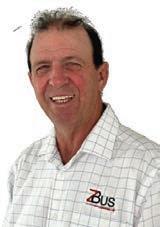
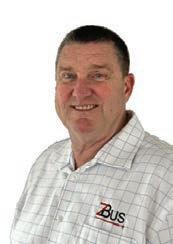
“We have a lot of standard options built into the models that other manufacturers only have as optional add-ons. Barry and I have drawn from our extensive experience in customer service over the years and in our
talks with bus operators around the country.
“A lot of people have so far been willing to try the unit and haven’t developed any issues, leading to repeat orders. We’ve had a lot of interest to date, as we are the only Chinese manufacturer bringing a full plug-in hybrid option to Australia with ADR Compliance.”
Howell says Cavbus is looking at bringing this new technology into its school runs where diesel may not be the answer due to its price and supply challenges, whereas with the hybrid, this allows the group to remain flexible.
“With a hybrid, our thoughts have been that we can keep running the bus in these periods while we can also use the electric side, particularly when diesel prices are high,” he says.
He says hybrid buses, compared to diesel buses, have lower maintenance costs and fuel savings of 35 to 45 per cent. As one of the lucky team
members who’s gotten the chance to trial the hybrid bus, Howell says he’s enjoyed how quiet, smooth and comfortable the model is on the road.
The H12 Hybrid’s parallel drivetrain is designed for fully transparent driver operation – the hybrid system manages the transition between electric and diesel power automatically, with no additional driver inputs required beyond conventional diesel operation.
“At the moment we’re looking to grow with ZBus, and they like listening to us – we have ideas to tweak some designs and customise,” he says.
“The brand’s strength is in listening and providing options best suited for our conditions and needs.
“We’re extremely happy with the current proven Hybrid data and we have now placed additional Hybrid orders with ZBus to continue to move forward and stay ahead of the game.”
Zbus will show a H12 Hybrid model at the Expo on stand 174.
Family matter
In 1926, Sydney Crowther first ran a bus service in NSW’s Illawarra region. Now, 100 years on, the latest generations of Alura Coaches are reflecting on an important milestone for the family business
Throughout the illustrious history of Australasia’s bus and coach industry, many giants of the sector have emerged from humble beginnings. A simple bus run picked up, the chance acquisition of an old used coach. The stories vary, but perhaps none are as fascinating as the origins of the Crowther family in the local bus scene.
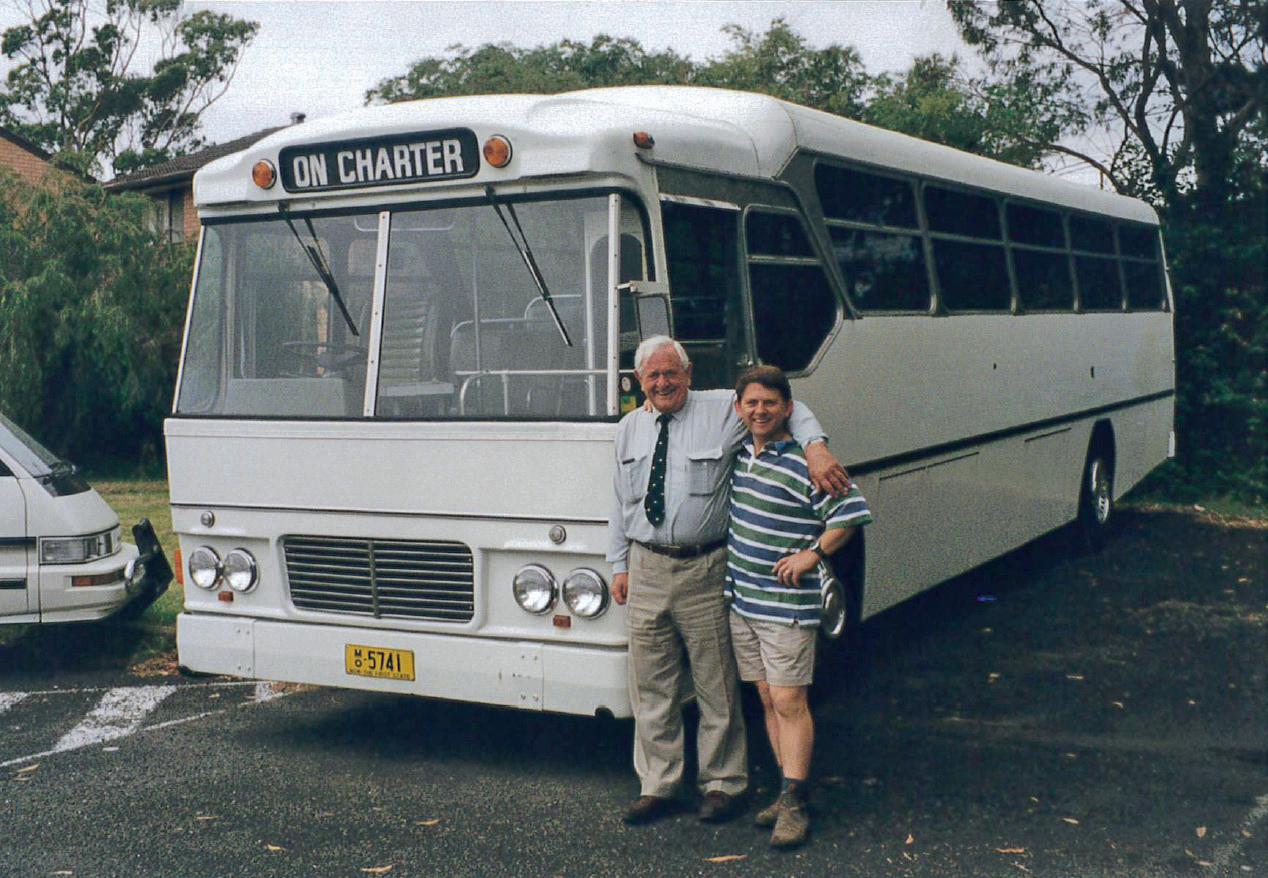
The year was 1926 and Sydney Crowther decided to try something new, running a bus between Austinmer and Clifton in New South Wales’ Illawarra region. Carrying
predominantly school children and coal miners, this simple start for what was known as Crowther’s Coaches has flourished over the decades.
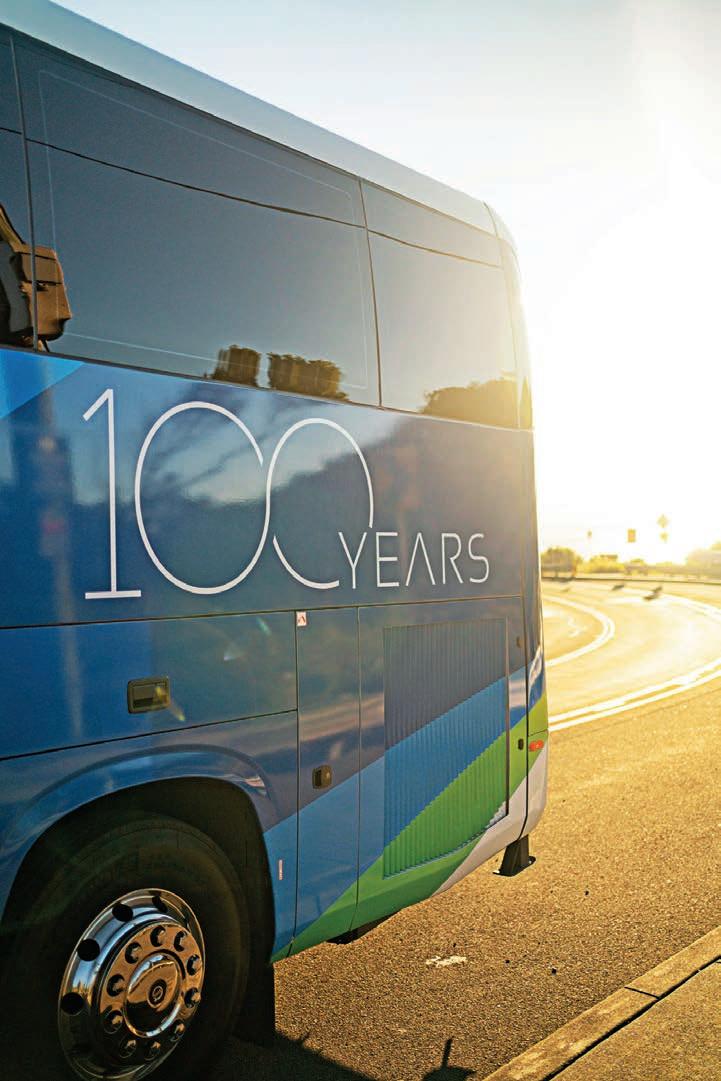
Now, the third and fourth generations of Crowthers have banded together in 2026 to celebrate the 100th anniversary of Alura Coaches as an established and beloved bus and coach operator in NSW, the ACT and along the east coast.
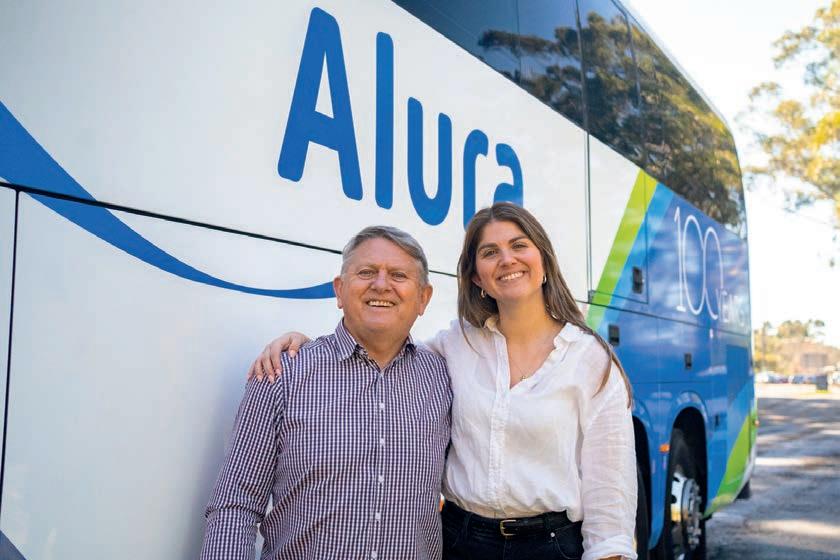
“Alura Coaches is one of Australia’s longest-standing family-owned transport companies, proudly approaching 100 years of service in 2026,” Alura Coaches sales and
marketing manager Caitlin Crowther told ABC.
“Established in 1926 by Sydney Crowther, the business has grown and evolved through multiple generations of Crowthers, continuing to offer safe, reliable and high-quality group transport across Australia.”
Nowadays, Alura Coaches offers a range of services from school travel runs to luxury coach charters and hire, as well as retiree and group tours. Back in the origins, Sydney Crowther’s operations were specific and small before an expansion to the fleet in the 1930s. The growth
Above: Alura Coaches has emerged as a popular member of the NSW industry
of vehicles in the depot meant more local services, including the introduction of a tourist service to Sydney’s Kingsford Smith Airport to fly with Charles Kingsford Smith. The ‘40s saw diversification, with a new bus service between Wollongong and Dapto being boosted by a range of runs from transport to the Armed Forces during the Second World War to late night transport to and from moving picture theatres as they became more popular.
A major milestone in Sydney Crowther’s venture arrived in the wake of the war, with the acquisition of Cronulla Bus Company in the 1950s continuing to grow the Crowther coverage. Now, Crowther’s buses could be seen across the Sydney southern beachside suburb of Cronulla and its local picture theatre. This led to the addition of new
increasing demand in the region as the brand added second generation members Barry and Bruce Crowther to the fold.
Now nearly half a century into
the operator. The expansion of local bus services to include Sutherland Hospital and Miranda Fair Shopping Centre was soon overshadowed by the decision to run tourist coaches for local groups to the NSW ski fields and throughout eastern Australia. Incorporating Jet Air, curtains and tinted windows to keep the saloon area cool, the Crowther’s Charter Coaches were soon leading the way in tour coach standards.
These innovations in charter coaches were only the start of the business’ focus on evolving vehicle technology, with the Crowthers brand starting to import tourist coaches from the UK in the 1980s that included refrigerated air-conditioning, panoramic windows and carpet flooring. This paved the way for these tourist vehicles to become a prominent part of the inbound tourist market. The Crowthers coach fleet was soon improved on again in the ‘90s through the introduction of automatic transmissions, seatbelts and fabric seats.
While working through these expanded coach fleets and their exciting technology, the operator also bought the Kurnell Bus Company to once again grow its local bus network. It was all well positioned for the brand, through its iconic green and blue kangaroo, to play a key role in the 2000 Sydney Olympic Games. During both the Olympics and the Paralympics, Alura Coaches managed a fleet of 126 coaches and 230 drivers, with this rich experience
A special milestone or a special operator
Above: Paul (left) and Caitlin (right) Crowther
FEATURE ALURA COACHES
leading to a raft of developments at the start of the century. Six years after the Olympics were done and dusted in Sydney, the brand founded the ‘One Life One Chance’ shuttle bus to provide safe transport for youth late at night.
All of this culminated in a 60th
service to commence operating Sydney day tours for APT while purchasing school travel business Unearth-Ed. By the 2010s the operator was running Sydney to Cairns services, as well as a return tourist service on behalf of APT through the third generation, led by
local Sydney charter and interstate travel fleet while also welcoming Volvo vehicles, the Crowther tradition of installing pioneering bus and coach technology continued with the introduction of GPS tracking to all coaches.
By the 2020s, this Mercedes-Benz coach fleet included Euro 6 technology, low emissions, collision preventative technology, all leather seats and wheelchair lifts. In 2023, just years before the centenary milestone, the company was renamed to Alura Coaches, with Alura embodying the essence of the company as it continued striving for safe, reliable and comfortable transport services while nurturing a sense of adventure and elegance.
“With the fourth generation joining the business in 2025, we’re driving forward with a deep respect for our legacy and a clear focus on sustainable growth and modernisation,” Caitlin says.
“As a family-led business, we maintain a strong family focus, not just within our own family, but in supporting the families of our team as well. That sense of care and stability flows through everything we do and is
Below:
The Crowthers have
Above:
The Crowther family is a strong part of Australia’s rich bus history
“What sets us apart is our unwavering commitment to service and the long-term relationships we’ve fostered with our communities.”
There’s been a plethora of achievements that the Crowther family and Alura Coaches have celebrated over the decades. Leading vehicle technology. An expansion into tour and charter excellence.
Growing fleet sizes and workers. But perhaps none resonate as strongly to this day as the brand’s innate ability to
As the next generation steps forward, we remain committed to delivering the same trusted service our community has come to know and rely on
rationing to GPS-tracked, air-conditioned coaches, our business has watched Australia become the country it is today. Four generations of our family, and the incredible staff that we’ve had work with us, have
behind us, this milestone represents more than just continuity, it’s a testament to the enduring values, passion and dedication that have driven Alura since the very beginning,” he says.
Kempower’s modular DC fast chargers are powering electric bus depots across Australia and beyond.
Built for scale, engineered for uptime — and designed with real-life operators in mind.
Discover more at kempower.com
Evolving the EVolution
As electric buses become part of everyday fleet operations, Bus Stop Sales says the industry’s focus is shifting from proving the technology to delivering practical outcomes
The time has come for the next stage. After years of pilot programs, demonstration vehicles and early fleet deployments, Australia’s bus industry is at a critical point in its zero-emissions transition, with electric buses increasingly become part of everyday operations across metropolitan route networks, airport shuttle services, school transport applications and institutional fleets.
“That shift is changing the conversation,” Bus Stop Sales managing director Pete White told ABC.
“A decade ago, discussions around electric buses largely centred on whether the technology could meet the demands of Australian operations. Battery capacity, charging infrastructure, range and vehicle performance dominated industry conversations as operators, governments and manufacturers worked to understand how the technology would perform in local conditions.
“Today, the market is in a very different position. Electric buses are no longer viewed as emerging technology. Operators across Australia are already running them in daily service and accumulating valuable operational experience. As deployments continue to expand, attention is increasingly turning towards the practical realities of long-term ownership and operation.”
White says the challenge for operators is now about integrating electric buses into existing operations while maintaining service reliability, managing infrastructure investment and developing the skills required to support a changing vehicle landscape.
Now government policy is also outlining a clear way forward – New South Wales is progressing the transition of more than 8,000 buses
towards zero-emission technology, Queensland now requires all new Translink-funded buses to be zero-emissions and Victoria continues expanding deployment programs.
At the same time, operators are balancing a range of competing priorities, including rising labour costs, driver shortages, ageing fleet replacement cycles, infrastructure upgrades and increasing passenger expectations.
As a result, White says procurement discussions are becoming more sophisticated.
“Vehicle technology remains important, but operators are increasingly looking beyond specifications and focusing on practical outcomes,” he says.
“Workshop readiness, technician training, parts support, charging infrastructure, lifecycle performance and long-term service capability are becoming just as important as battery capacity or range.”
The Bus Stop leader points to recent deployments across airport operations, school transport services and metropolitan networks
that demonstrate the capability of electric buses to meet a range of Australian duty cycles. This has allowed the discussion to focus on implementation, support and long-term fleet integration rather than technical feasibility.
When it comes to this conversation, White says the Australian industry must juggle a variety of climate, distance and operational factors.
“This diversity places a premium on flexibility,” he says.
“Operators are increasingly seeking platforms that can adapt to different operating environments while delivering consistent performance and support throughout their service life. Durability and climate resilience remain critical considerations, particularly as electric vehicles move from controlled trials into mainstream operations.
“Passenger expectations are evolving just as quickly. Accessibility, comfort, safety and ride quality are increasingly viewed as standard requirements rather than premium features.
“Driver expectations are changing
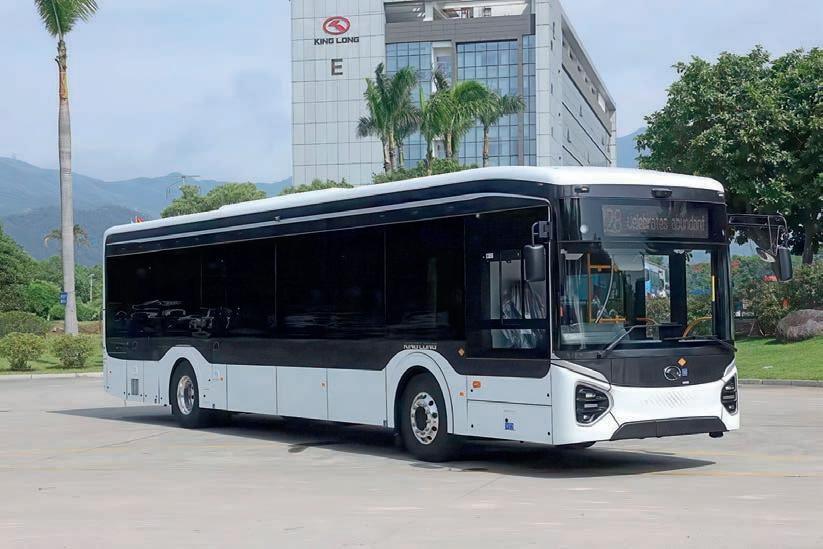
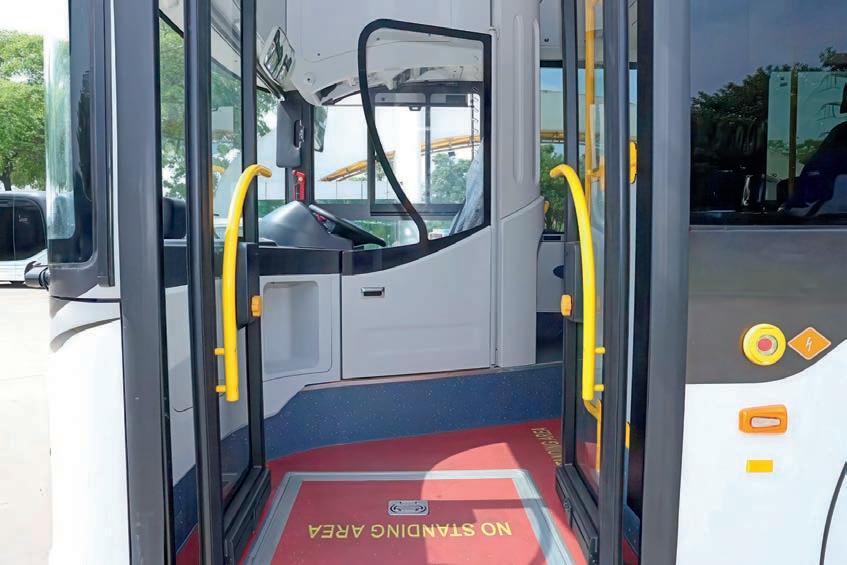
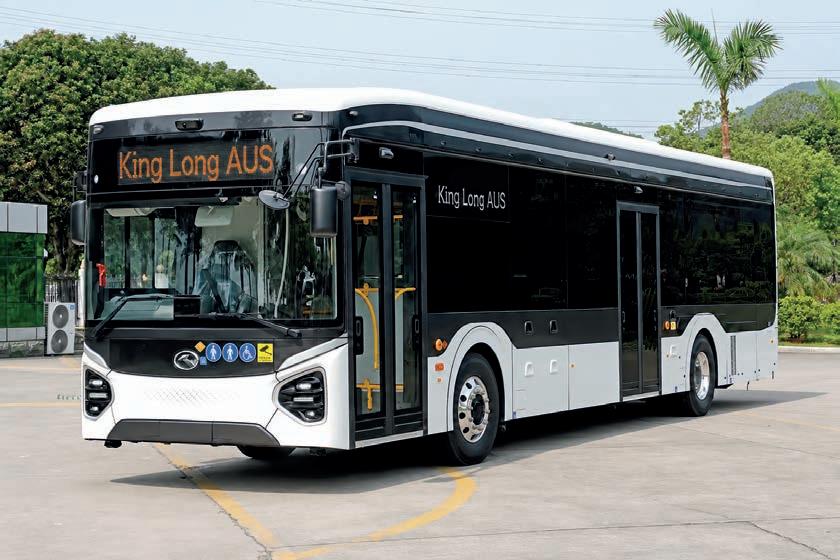
Above: King Long’s latest technology is set to feature at the Expo
Images:
Bus Stop Sales
as well. In a market where attracting and retaining skilled drivers remains an ongoing challenge, vehicle ergonomics, visibility, seating comfort and overall workplace design have become important operational considerations.”
This expanded focus beyond the vehicle itself means more attention is on the broader ecosystem surrounding the product. White says technical training, workforce capability, parts availability, engineering support and infrastructure planning are becoming increasingly important components of procurement decisions.
These shifts have also transitioned expectations placed on zero-emissions vehicle manufacturers in the region, with operators now looking for partners that provide more than a vehicle. White says King Long is one manufacturer seeking to meet these expectations.
“Today, King Long supplies vehicles into more than 140 countries and regions, serving applications ranging from urban transit and school transport through to airport operations, tourism and long-distance coach services,” he says.
“Established in 1988, the company has grown into one of the world’s largest bus and coach manufacturers and has invested heavily in electrification over the past decade.
“Operating at this scale provides access to significant engineering resources, continuous product
development and operational feedback from some of the world’s most demanding transport environments. The company’s investment in electric mobility has accelerated in recent years, with product development increasingly focused on vehicle efficiency, battery performance, intelligent vehicle systems, lifecycle optimisation and long-term serviceability.”
For Australian operators, White says this global footprint provides access to technology and engineering capability refined through deployment across a broad range of operating environments rather than developed solely for a single market.
It is against this backdrop that King Long Australia will use the 2026 Bus & Coach Expo in Sydney to showcase the latest evolution of its EVolution low-floor electric bus platform. The EVolution isn’t a new concept, having featured at previous instalments of industry shows, but now White is adamant its latest updates meet customer expectations for the modern market.
“The latest EVolution platform incorporates a range of refinements developed through operational feedback and customer experience,” he says.
“While the underlying philosophy remains unchanged, particular attention has been given to accessibility, passenger flow, driver ergonomics, maintainability and operational efficiency. These are areas that have become increasingly important as electric buses move from demonstration projects into everyday service.
“In many respects, the latest EVolution reflects the broader direction of the industry itself.”
White says early programs of the EVolution model focused on proving the technology – now he says operators are looking for products that seamlessly integrate into existing operations. This is where he believes the electric platform is suited to many transport businesses.
“Developed around accessibility, passenger comfort, driver experience, operational efficiency and flexible localisation pathways, EVolution
reflects many of the priorities now shaping fleet investment decisions across Australia,” he says.
“The platform combines globally developed technology with the flexibility to support varying levels of Australian completion and local industry participation where required.
“Rather than presenting a single approach, it’s been designed to support different customer objectives, allowing operators and procurement agencies to balance global technology with local capability where appropriate.”
Supporting the introduction of the EVolution is Bus Stop Sales and Service’s growing national capability. At the centre of that investment is its 40,000sqm headquarters at Rocklea in Queensland. The site incorporates vehicle preparation, service operations, national parts distribution, technical support, charging infrastructure, workforce development and future assembly capability within a single location.
Additional operations in New South Wales and Victoria provide national coverage, while ongoing investment in training, apprenticeship programs, assembly readiness and zero-emissions vehicle support reflects the growing importance of capability across the industry.
“The significance of facilities such as Rocklea extends beyond vehicle delivery. Successful fleet transitions depend as much on people, skills and support infrastructure as they do on vehicle technology,” White says.
“Twenty years ago, the differences between manufacturers were often quite obvious. Today the gap has narrowed significantly. That’s good for operators because it means there is genuine choice.
“What it also means is that support, training, responsiveness and relationships have become increasingly important. Products have improved enormously over the past decade. The challenge now is making sure the industry improves with them.”
He says the conversation about vehicle technology has grown to include capability, with operators needing confidence that the product, support network, parts support and
Above: Comfortable and accessible vehicles from Bus Stop Sales
training are all in place to suit the fleet.
“The other change we’re seeing is that customers no longer view local content and global technology as competing priorities – they want both,” he says.
“They want proven products, but they also want local capability, local support and local people standing behind those products.”
White says the latest EVolution platform is one example of how manufacturers are responding to that reality by refining and improving models following operational experience, customer feedback and continuous development.
The Bus Stop leader says he expects the next stage of the zero-emissions transition to be shaped by the collective efforts of operators, governments, manufacturers and support organisations working to turn policy objectives into practical outcomes. In that context, he’s confident the latest EVolution platform
reflects the growing maturity of a market that has moved beyond proving the technology and is now focused on making it work at scale.
“For operators, that means access to better products, greater choice and stronger support than ever before,” he says.
“For the industry, it signals a transition from experimentation to implementation.
“And for manufacturers, it is a reminder that success will increasingly be measured not only by the vehicles they build, but by the capability they provide to support them.”
Above: Prepare to see the updated EVolution in Sydney
Built in. Not bolted on.
Triple D’s cloud-based passenger transport software brings operations, maintenance, sales, people and compliance together in one system.
Each module is powerfully connected, breaking down information silos and helping your teams make better, faster decisions across the business.
What lies beneath
Ever since it first emerged in the local market, Challenger has prided itself on building durable premium buses and coaches. But what exactly does that entail? ABC discovers the brand’s unique design and manufacturing process
There’s no shortage of brands supplying buses and coaches to Australasian operators in the modern market. Unlike the days of yesteryear that were dominated by a handful of businesses, recent diversification within the industry means there’s now a plethora of options to choose from when it comes to buying a new vehicle.
To stand out in the current market, emerging brands like Challenger Bus & Coach have turned to durability and build quality to distinguish themselves from other suppliers.
“The price of our buses may be higher than other manufacturers, but it’s because our vehicles are built
better,” Challenger Bus & Coach founder Greg Sloan told ABC
“What makes Challenger vehicles different from other buses and coaches is that we focus on using quality materials for longevity – at 20 years of age there shouldn’t be any real corrosion issues on our vehicles.”
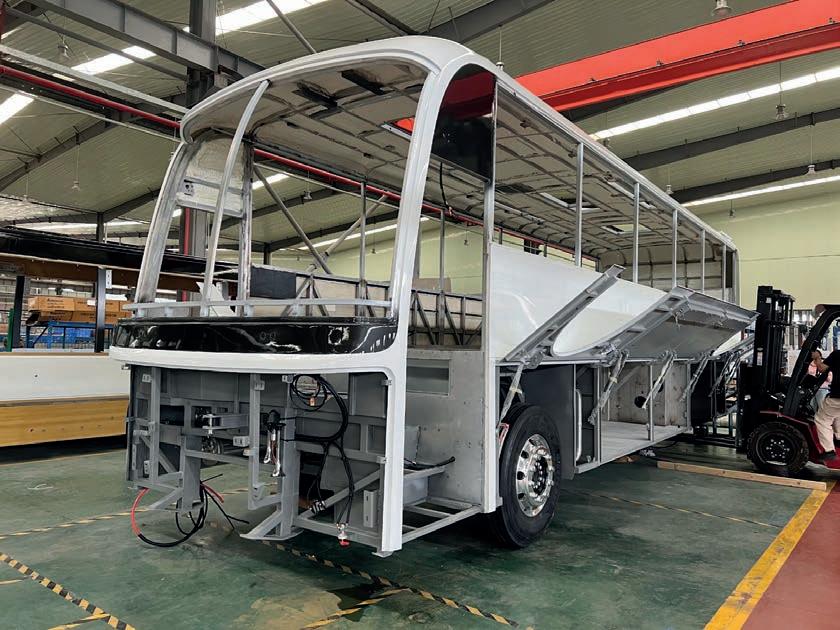
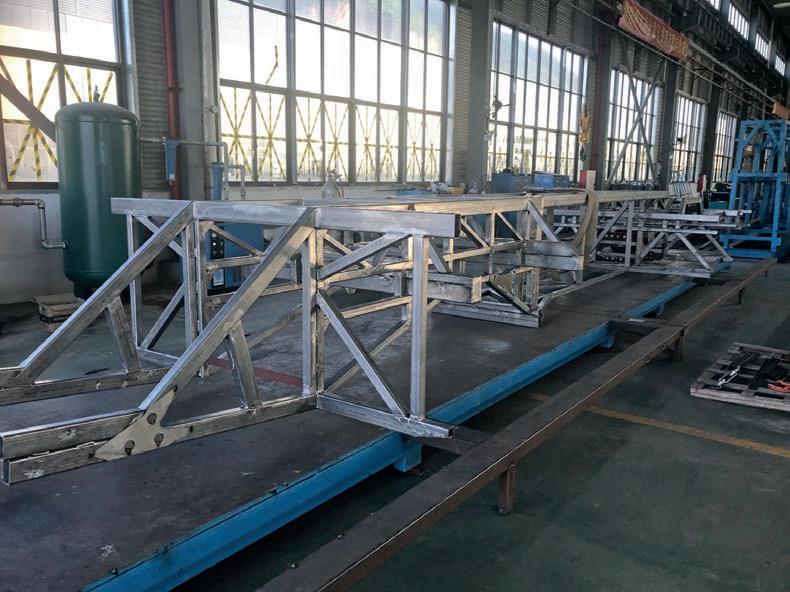
This quality focus charts back to Challenger’s origins and its initial models built and delivered to the local market. The brand’s V10 and V12 vehicles, as well as its newest model in the three-axle coach, use a stainless steel chassis and body frame, with stainless steel and aluminium panels prominent throughout the entire vehicle.
Above: All of Challenger’s range is built on a high quality design
Standard industry practice when it comes to manufacturing heavy vehicles has been to use electro plating or an electrophoretic ‘dip’ to prevent vehicles from rusting. In contrast, Challenger’s manufacturing process involves using lean Duplex stainless steel for the framing work, stainless steel screws and corrosion-resistant bolts.
“Building with stainless steel as well as using fibre glass and aluminium panels rather than carbon steel means we can ensure our vehicle has a long service life, as well as higher residual value and low long-term maintenance requirements,” Sloan says.
“We choose aluminium body
panels as they are naturally corrosion resistant and lightweight, which improves vehicle efficiency.
“In other buses you may find compressed bamboo flooring, but in a Challenger bus or coach, you will find a compressed PVC sheet that is corrosion resistant and will never rot. It has better moisture resistance, is generally lighter and has a long service life, making it great to use in buses running school, route or high utilisation fleet operations.”
What makes stainless steel such an important part of the Challenger build? Sloan says stainless steel remains “one of the most robust solutions available” for operators seeking maximum durability and longevity. Unlike e-coated carbon steel, the corrosion resistance of stainless steel is inherent to the material itself, rather than dependent on a protective coating. Compared with aluminium and fibreglass, Sloan says stainless steel offers superior structural strength, impact resistance and long-term durability.
For this reason, he says many premium bus manufacturers utilise stainless steel structures to deliver extended vehicle life, reduced structural maintenance, superior resistance to Australian environmental conditions, strong residual values and lower lifecycle operating costs.
“Other advantages include corrosion resistance, extended
service life, reduced maintenance cost, superior structural strength, improved safety and structural integrity,” he says.
The Challenger concentration on quality doesn’t end with the use of stainless steel – Sloan says the brand also uses UV stabilised materials on the dashboard and in plastic componentry that can withstand the test of time. If vehicles are left in the sun, this means materials won’t fade or deteriorate over time, maintaining its appearance.
On the topic of componentry, Challenger has constantly chosen to use Thermo King HVAC systems
throughout the majority of its bus range. By partnering with a premium global brand with a strong local support network, Sloan says this has led to excellent cooling performance, strong parts availability, advanced diagnostic capabilities and proven reliability on a range of Challenger builds.
“The Thermo King national support network also significantly reduces downtime and maintenance complexity,” he says.
When it comes to the driveline, Challenger uses independent front suspension (IFS) across its coach range to deliver improved ride quality, driver comfort and vehicle handling. Unlike conventional solid front axle systems, IFS allows each front wheel to react independently to road conditions, helping reduce the transfer of road shocks and vibrations throughout the vehicle and creating a smoother and more comfortable journey for both passengers and drivers.
“We choose to use IFS over an I-Beam front suspension because it has better ride comfort, excellent steering and handling, a better turning circle capability, lower driver fatigue and lower road shock transfer through improved road contact,” Sloan says.
“We also use a camera monitor system over conventional exterior mirrors due to the improved aerodynamics and fuel efficiency, as well as an enhanced field of vision.
Below:
The structure is corrosion resistant and lightweight
Above: Challenger’s stainless steel frame
“This system also improves safety in bad weather conditions as the screens aren’t impacted by water or fog, while there’s better night and low light performance and improved blind spot management through constant 360-degree cameras around the vehicle.”
Another facet of Challenger’s industry partnerships to create a unique quality vehicle range includes its work with global OEMs like engine supplier Cummins, who constantly provides guidance around the best engine and transmission combinations to provide each model with the best possible efficiency. This conversation led to Challenger recently moving from an Allison to an Eaton transmission in its V12 and three-axle coach models.
“The collaboration between Cummins and Eaton truly is a match made in heaven,” Sloan says.
“By creating a joint venture, these two industry giants have seamlessly
integrated legendary Cummins engines with advanced Eaton automated transmissions to produce a best-in-class, fully optimised heavy-duty powertrain.”
The key message from Challenger when it comes to the hard work done behind the scenes on each vehicle is that the brand chooses each material for a reason. Each Challenger bus or coach is built through careful selection of what the Challenger team want the vehicle to have, with the company also having the flexibility to tell its factory exactly what it wants to use and how.
This includes a variety of items as standard inclusion instead of leaving them for operators to add as an extra
expense, ranging from bullbars, stone guards and electric mirrors to PVC flooring, high-capacity fuel and AdBlue tanks and independent suspension. For the emerging brand, it’s all about putting in the effort to make a new age of buses and coaches that redefine quality and durability.
“This means we know each Challenger model is manufactured using better quality products such as stainless steel and premium componentry in consultation with leading global OEMs like Cummins and Allison,” Sloan says.
“Our vehicles are built with the operator in mind, and every decision we make is made with purpose and reason.”
Most super funds, including Team Super, offer a range of insurance options designed to protect you and your family in the event something happens to you. If you’re a Team Super member and have a super account, this insurance is automatically added when you become eligible (and you can change or cancel it at any time).
Common questions about insurance in super Team Super tip
Under the law, super funds will cancel insurance on inactive super accounts that haven’t received contributions for at least 16 months. Your super fund should contact you before your insurance is about to end.
2. Dangerous occupations
If you haven’t needed to make a claim before, you may not have given much thought to exactly what type of cover you have or how much, and whether it suits your needs. Let’s check out three common questions that people ask about insurance through super.
1. Is it worth having insurance?
Life insurance provides a financial safety net for you and your loved ones. It can help you keep up with medical costs and living expenses if you get sick or injured, as well as enabling your family to maintain their standard of living if you pass away. If and how much cover you’ll need depends on your personal situation. Team Super offers members:
• Death and Terminal Illness (DTI) Cover – provides a lump sum payment if you die or become terminally ill.
• Total and Permanent Disablement (TPD) Cover – provides a lump sum payment if you’re unlikely to ever work again due to an illness or injury.
• Income Protection (IP) insurance – provides a temporary income if you’re unable to work due to an illness or injury.
While most super funds offer insurance cover to their members, they may not cover people working in a job that’s considered ‘dangerous’. If you work in transport, mining or
Below: There’s plenty to learn when it comes to insurance in super
a related industry, jobs commonly excluded from insurance cover include miners, truck drivers, loaders, mechanics, flight crew and store persons.
At Team Super, our insurance caters for members working in such high risk or ‘dangerous’ occupations who can find it hard to obtain adequate and reasonably priced insurance elsewhere due to their jobs.
3. How much does insurance cost?
The cost of your insurance depends on the type and amount of cover you
have, as well as other factors including your age, gender and smoker status (as applicable). For Team Super members, it also depends on which insurance Division you’re in and the type of job you do. One of the main benefits of insurance through super is hassle free payments – your insurance is easier to manage as the premiums are automatically deducted from your super account, so you don’t need to worry about budgeting or making payments.
4. Can I change my cover?
Yes! You can change your cover, as it’s not set and forget. And things like your salary and the type of job you have can have flow on impacts to how much you
pay and what you’re covered for.
Team Super members can update their insurance at any time to change things like your Occupation Group or reducing or cancelling your cover. You can also apply for new insurance or top up your existing cover or take advantage of special offers to increase your cover (if eligible within a specified period).
Remember, it’s important to regularly review your insurance cover to ensure it’s right for your needs. Already a member of Team Super? You can view and manage your insurance online! Simply grab your member number from your last statement and log in via teamsuper. com/login.
Not yet a member? Learn about the benefits of joining Australia’s top specialist fund for transport, energy and mining. Visit teamsuper.com/ join.
Team Super is Team Super Pty Ltd AFS licence 246864, the trustee for the Team Superannuation Fund. Refer to the PDS and TMDs on Team Super’s website at teamsuper.com when considering if their financial products are right for you. Any financial advice in this article does not take into account your financial situation, needs or objectives, and you should consider these factors before taking any action.
Above: Team Super’s insurance caters for members working in high risk or dangerous occupations
Coming
As Foton Mobility Distribution continues to excel in the zero-emissions bus market, a new release on the coach side will see the emerging force expand its wider capabilities
It’s been just over five years since Foton Mobility Distribution announced it would be entering the Australian bus market. Since late 2020, the brand has unveiled an electric bus model for city route applications (now in service with several NSW operators), trialled and sold hydrogen city buses across Australia and broken ground on a bus manufacturing facility in Nowra, New South Wales.
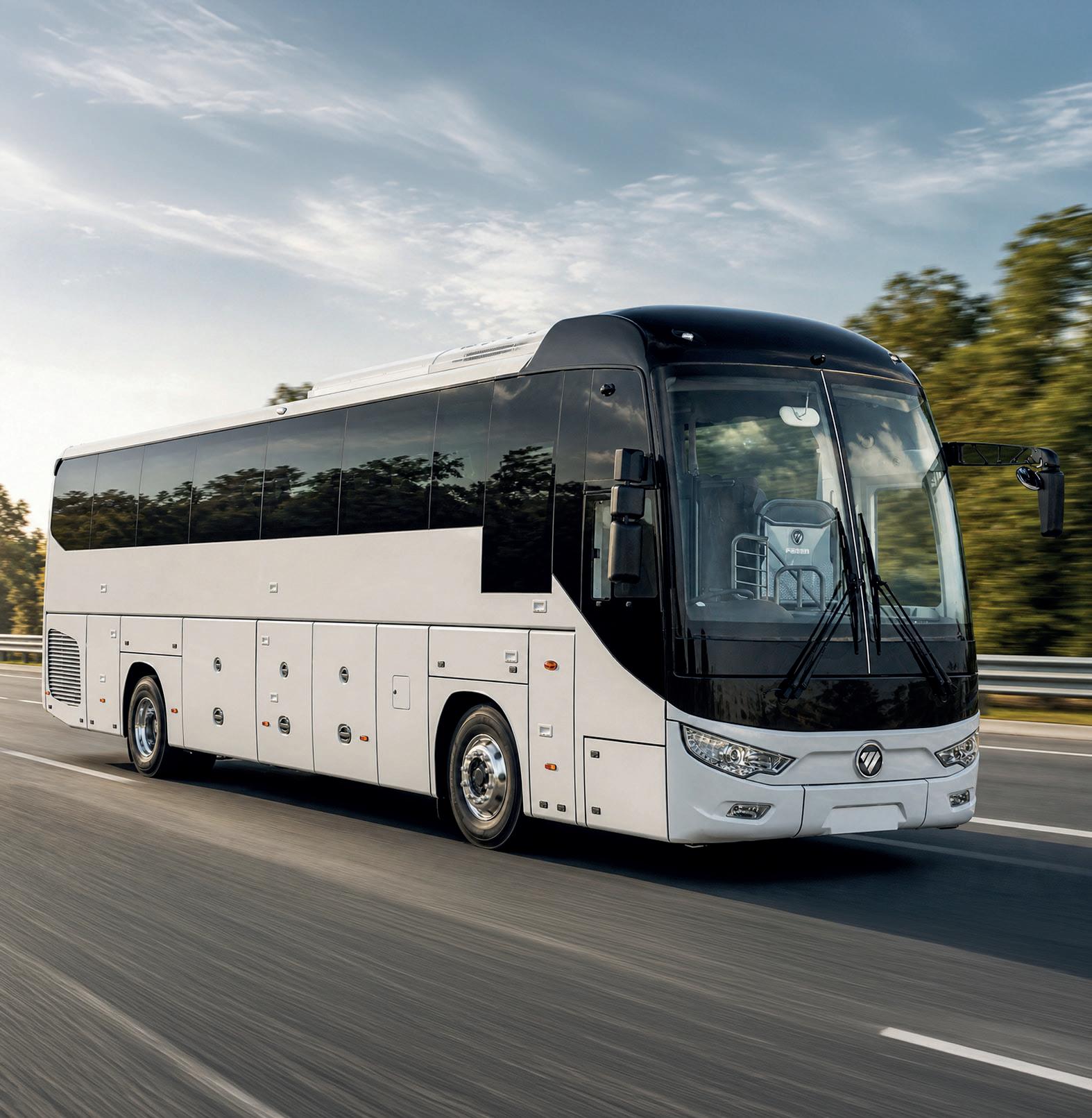
But this is set to be overshadowed by FMD’s latest move, with the emerging bus force set to add the coach tag to its growing fleet. The distributor is introducing a new Foton Euro 6 Coach designed specifically
for the Australian school, charter and workforce transport markets.
“Combining proven driveline technology, exceptional passenger comfort, practical design features and outstanding value for money, the Foton Euro 6 Coach will set a new benchmark in the industry,” FMD founder Neil Wang told ABC
It’s the first time FMD has ventured outside of its zero-emissions sphere in Australia, with the heart of the new Foton Euro 6 Coach being an X11, 10.5-litre Foton Cummins Euro 6 diesel engine that Wang describes as “powerful and reliable”. Coming paired with the renowned ZF EcoLife 2 automatic transmission, the
Above:
driveline combination is set to deliver smooth gear changes, improved fuel efficiency, reduced operating costs and dependable performance across a wide range of operating conditions.
“Whether you’re transporting school students, charter groups or FIFO workers, the Foton Euro 6 Coach is engineered to perform,” Wang says.
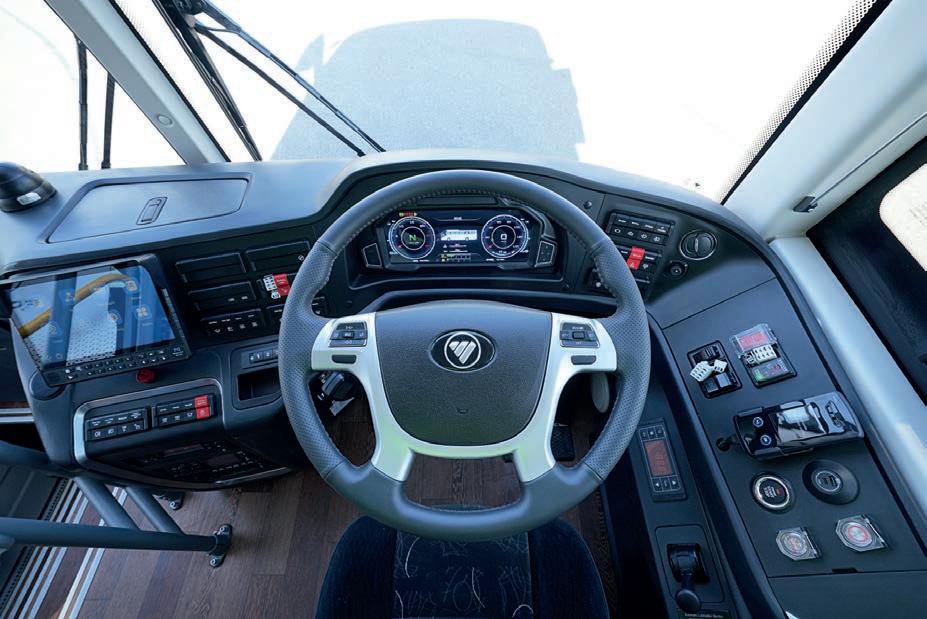
“Every aspect of the coach has been designed with operators in mind. The sleek exterior styling incorporates pantograph luggage bin doors, providing easier loading and unloading while significantly reducing the risk of injury associated with traditional swing-out bin doors.
Introducing the new Foton Euro 6 Coach
Images: Foton Mobility Distribution
“With a market-leading 10.5 cubic metres of luggage space, operators can carry more without compromising passenger capacity.”
It’s this operator focus that particularly excites FMD, with Wang saying bus and coach businesses have been pivotal in shaping the design and components of the coach. Featuring a combined 100 years of industry experience, this collective of bus industry professionals have played a leading hand in designing and specifying the Foton Euro 6 Coach for Australian conditions.
“From long-distance highway operations along Australia’s east coast to demanding FIFO applications on unsealed roads in Western Australia’s mining regions, the coach has been engineered to handle the unique challenges of Australian transport operations,” Wang says.
While it might be a sign of vehicle diversification from FMD, the same Foton trademarks still apply to the coach. This includes safety standards, which remain at the forefront of Foton’s design philosophy.
Standard features including seatbelt warning systems on every passenger seat, numbered seating throughout the vehicle, ergonomically designed driver cockpits with all controls positioned within easy reach and a focus on driver visibility and comfort. With optional safety technology such as a child check system to ensure no passengers are inadvertently left onboard and an alcohol interlock tester that prevents vehicle start-up until a valid breath test has been completed, the Foton coach is all about providing operators with confidence and support for their duty of care obligations.
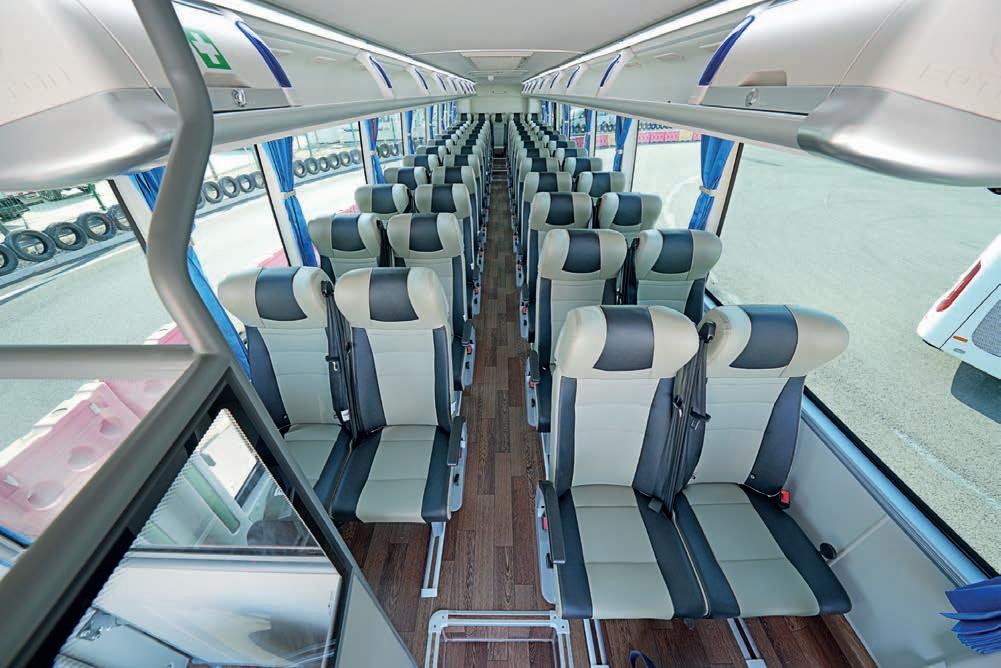
“The passenger experience is also critical and the Foton Euro 6 Coach delivers exceptional comfort from front to rear,” Wang says.
“The well-insulated rear engine compartment minimises cabin noise, while independent front suspension combined with full air suspension provides a smooth and comfortable ride for every journey.”
To make rides comfortable and smooth for passengers, every seat comes equipped with individual
reading lights, adjustable air-conditioning vents and USB-A and USB-C charging ports as standard. Recognising that every operation has unique requirements, FMD also offers flexible seating configurations tailored to customer needs.
FMD has also put in the hard yards behind the scenes, backing the product’s quality with a five-year or 300,000km bumper-to-bumper warranty to provide peace of mind and confidence for operators.
Wang says FMD’s Australia-wide dealer and service network, dedicated spare parts warehouse and inventory management system result in nationwide support for customers, maximising vehicle uptime and minimising disruption.
It’s the key to this groundbreaking vehicle release for FMD, with the growing brand combining premium features, proven driveline technology and advanced safety systems with passenger comfort and an overall value proposition that extends beyond the coach.
“For operators seeking maximum sacrificing quality, performance
most compelling offerings in the Australian market today,” Wang
consideration for your next fleet arrange a demonstration and discover why more Australian operators are choosing Foton for their school, charter and workforce transport needs via Iain Dorward at iain.dorward@
Below: The passenger experience is front of mind on this new model
Above: A comfortable and spacious driver’s space for those behind the wheel
Every operation
Busable discusses how it’s transforming the Australasian bus and coach industry by replacing fragmented systems with a single source of truth
The Australasian bus and coach industry has long grappled with a familiar challenge: too many systems, too much manual work and not enough time. Operators juggling rostering software, compliance tools, maintenance logs, booking platforms and dispatch systems have historically done so across a patchwork of disconnected applications, each demanding its own data entry, its own training and its own margin for human error.
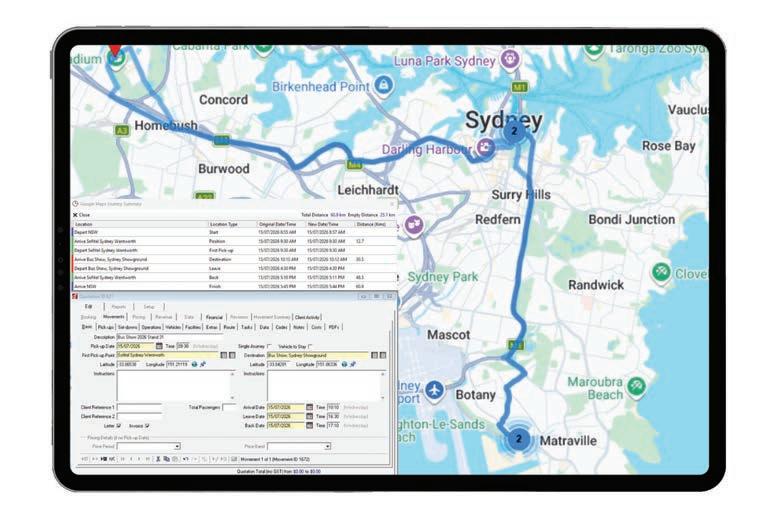
Busable is changing that. With its all-in-one bus management platform, Busable is giving operators across Australia and New Zealand something they’ve been asking for in a single, unified system that manages every aspect of their operations from scheduling and bookings through to compliance, fleet maintenance and staff management without the need to toggle between tools or reconcile conflicting data.
“The biggest piece of feedback we’ve received from operators through our numerous discovery sessions is that they’re all looking for a complete platform to manage bus operations from,” Busable co-founder Heroly Chour told ABC
“A lot of operators run up to 30 fragmented systems at a time, so they now want to consolidate these key functions into one integrated technology platform.”
The core value of the Busable platform is straightforward: everything in one place, always accurate, always current. Rather than data living across spreadsheets, standalone apps and manual records, operators gain a unified operational picture from the bus to the back office and the workshop.
This has immediate impacts on the time operators spend managing
their businesses. Manual data re-entry, cross-checking between systems and chasing information are replaced with automated workflows and real-time visibility. The result is a significant reduction in man hours spent on administration, freeing up operational staff to focus on running services rather than managing software.
The platform spans the full end-to-end spectrum of bus and coach operations. Scheduling,
allocation, fleet maintenance, school and public transport compliance, and award and fatigue management all sit within the one system that’s configurable to each operator’s specific requirements.
“Our customers have different combinations of services – some run contracted routes while others handle rail replacement, and then some do charter work,” Chour explains.
Busable latest technology is combining operator functions into one system. Image: Busable
“The beauty of what we have is a collection of modules that can seamlessly integrate into their operations. It’s like building a depot from the ground up – operators choose the infrastructure that fits their operation today, with room to expand as their fleet grows.”
This modular approach means businesses can scale their capabilities as they grow, adopting new functions when they’re needed without being locked into a onesize-fits-all solution.
Among the platform’s most in-demand capabilities is its rostering and scheduling system, which handles the complexity of enterprise awards and fatigue management regulations that are “too complex for any human to memorise and consistently apply” according to Chour.
The platform automates award interpretation and applies the relevant industrial relations requirements directly to rosters and payroll calculations, giving operators confidence they’re meeting their obligations and giving drivers confidence in the accuracy of their pay.
“The legislation falls into operators’ hands, but we provide a tool they can use,” Chour says.
Fleet maintenance management is another area generating operator interest. The upcoming release of a dedicated maintenance module – to be showcased at the industry Expo in July – will integrate directly with rostering and vehicle allocation systems, removing the manual communication that currently flows between maintenance teams and operations staff.
“This module works hand-in-hand with our rostering and allocation systems to remove manual communication, putting it all into one platform,” Chour says.
The result is a maintenance workflow that is proactive rather than reactive, connected to the broader operational picture rather than siloed in a separate system.
Underpinning the platform’s ability to manage this level of operational complexity is AbleAI – Busable’s
artificial intelligence capability that works within the system to surface insights, automate routine decisions, and help operators act on information faster.
Rather than being a standalone AI product, Able AI is woven into the fabric of the platform. It can power AI agents tailored to a specific business and its employees, draw on data from across the system to flag issues before they become problems and support operators in making better decisions with less manual analysis.
“The system can be used to either increase revenue or find more efficient ways of operating, while operators can also use our modules to decrease risk,” Chour says.
“Our AI capabilities feed into this, generating an AI agent for a business and employees that works with data already in the platform.”
A key reason for the platform’s growing adoption is how it has been developed – not in isolation, but in close collaboration with the operators who use it. Busable’s growing team of product designers and software engineers invest time at depots, observing workflows first-hand and translating real operational problems into human-centric solutions.
This philosophy is reinforced by the recent appointment of Jeff Neill as industry lead. As a former general manager at Ogden’s Coaches and manager of Dubbo Buslines, he brings more than four decades of bus industry experience to the role. Neill came to Busable as a customer before joining the team, experiencing the platform’s impact directly during a contract negotiation process.
“The fundamental philosophy at Busable of building a best-in-class platform stood out to me from the outset,” Neill told ABC
“Whether it be software, ticketing, telematics or hardware, it’s been magical to combine my operational experience with what Heroly and the Busable team have been building.”
Neill’s appointment strengthens Busable’s ability to continue
The system can be used to either increase revenue or find more efficient ways of operating, while operators can also use our modules to decrease risk
developing the platform from the operator’s perspective –understanding not just what the technology can do, but what bus and coach businesses actually need it to do.
“We’re committed to the wellbeing and profitability of operators,” he says.
“The speed of development has been astounding. A key benefit of Busable throughout is how we work with operators to personally help with onboarding and product development supercharged by a talented local technical team with decades of engineering experience building some of the most complex transport systems for governments”
With roughly 80 per cent of operators in growth mode despite tightening margins, the pressure to find operational efficiencies has never been greater. A unified platform that reduces administrative burden, connects every part of the operation and applies intelligent automation where it adds the most value is no longer a luxury is fast becoming a competitive necessity according to Chour. For Busable, the mission is clear.
“Real innovation comes from bringing a diverse mix of people with diverse domain experience and expertise together,” Chour says.
“We’re in a maturity stage of business. For operators, this means more and more will be made available to them to keep bus depots running efficiently while unlocking superpowers for staff members. We want to continue pioneering this technology for the bus industry.”
Local celebrities
As it celebrates 80 years of building buses, Wrightbus is focusing on the Australian market to continue growing its global presence
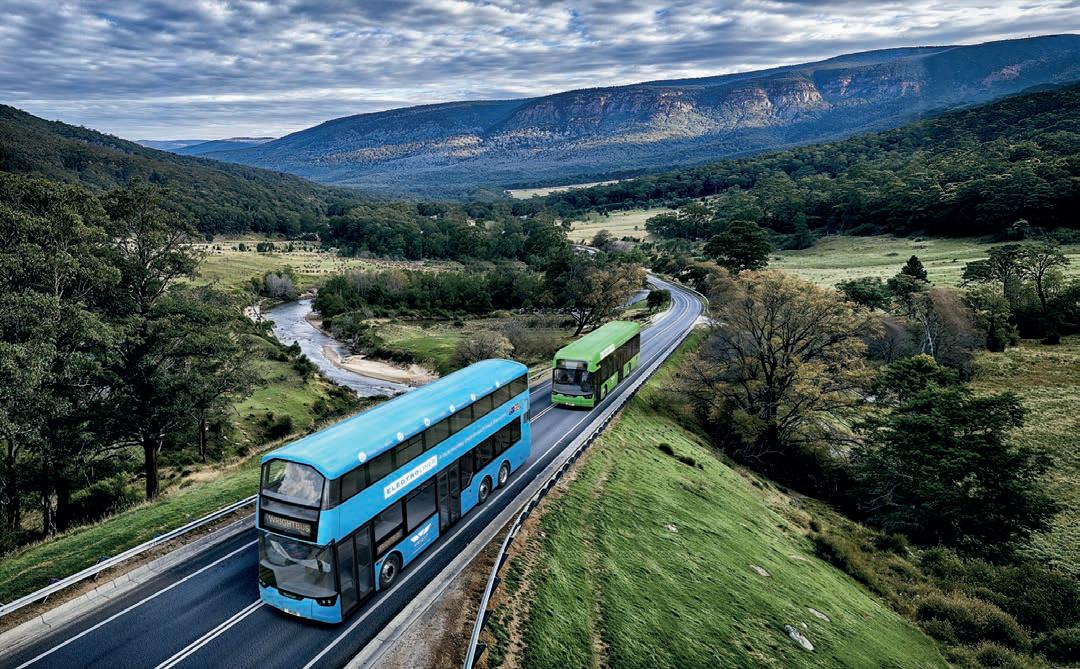
The year 2026 marks a defining year for Wrightbus in the local bus and coach market. As the Northern Irish based bus manufacturer, known as the pioneer of the low-floor bus, celebrates its 80th anniversary this year, the brand will also arrive in Sydney for the Expo with ambitions to unite UK and Australian partners.
It’ll do so with a range of products, services and solutions to manage the transition from diesel to zero-emissions buses, with its plans for the Expo being far from a standing start for Wrightbus in Australia.
Alongside its eight-decade legacy and a 3,000-strong zero-emission fleet in operation across the world –clocking up 200 million emission-free kilometres – Wrightbus has two of the region’s leading industry professionals at the forefront of
the Australian business in Daniel Castro and Julian Gurney, combining worldwide expertise with local on-the-ground knowledge.
“The Sydney Expo has always been the place to be and we are excited to showcase not only our vehicles but the support solutions we have in place,” Castro told ABC
“Wrightbus has 80 years of experience in this industry, but what impresses me most is that it’s always willing to listen, learn, develop and innovate.”
Innovations have come thick and fast during the company’s proud history, with Wrightbus pioneering aluminium framing and low-floor technology while it also built the world’s first hydrogen double-decker and the iconic London ‘Boris’ Routemaster bus. More recently, the company secured a landmark order
Above: Decades of manufacturing history are being brought to Australia courtesy of Wrightbus
from Asia for its groundbreaking 6x2 StreetDeck Electroliner zero-emissions double-deck bus, with Hong Kong’s Citybus ordering 20 of the buses, heralding the first global order for the new triple-axle vehicles nearly a quarter of a century after the company’s buses first landed in the region.
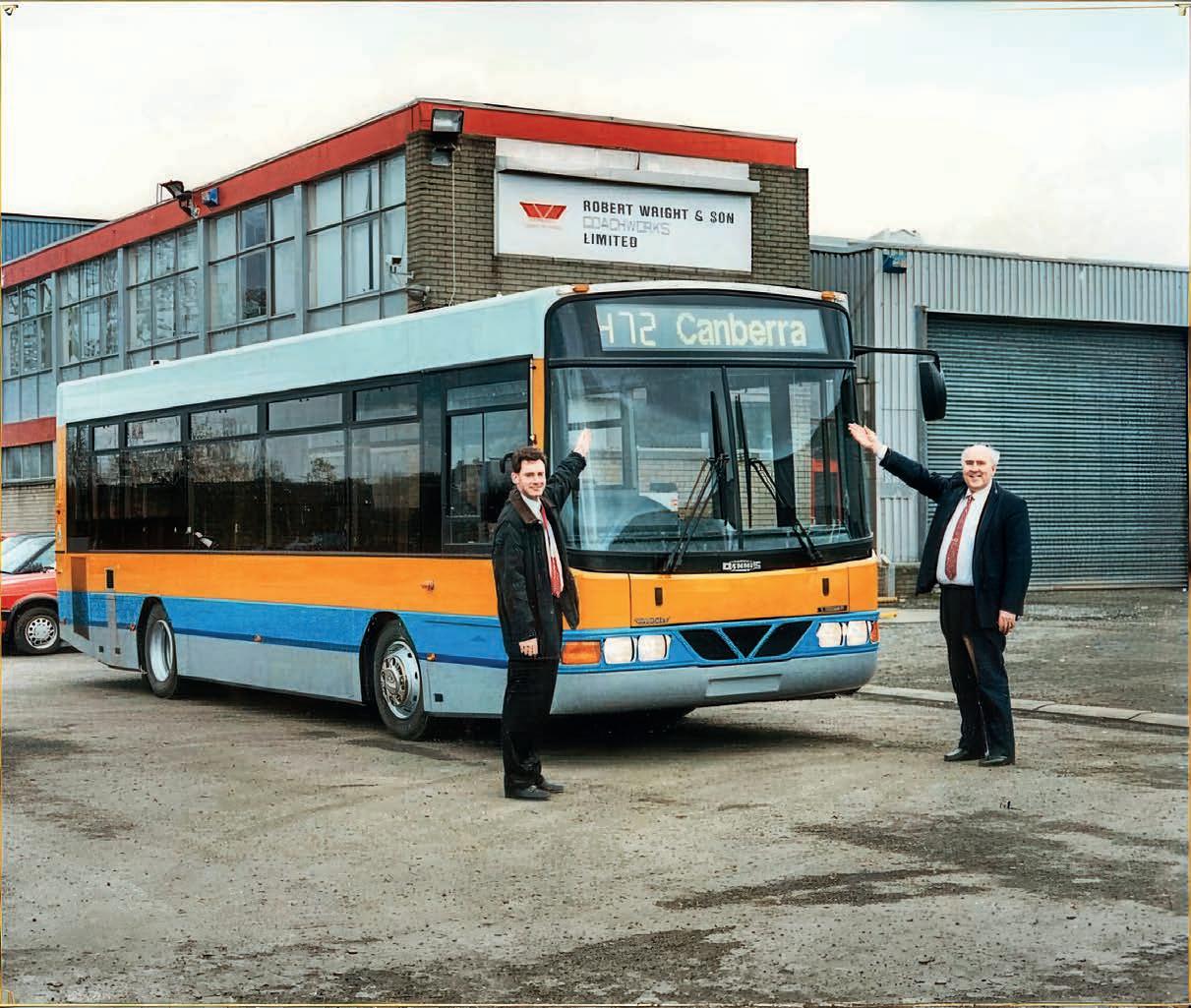
The brand’s Australian story goes back even further, with 2026 marking the 30th anniversary of its first export sales in the region when 25 Crusader-bodied Dennis Dart SLF buses were shipped to Canberra. Orders to Singapore followed in the late 2000s through a deal to supply 150 tri-axle air-conditioned buses to SBS Transit in tandem with Volvo on its B9TL chassis.
Currently the Wrightbus factories in Northern Ireland and Malaysia employ more than 2,300 people, providing jobs for a further 7,500 in
Images: Wrightbus
the supply chain, while its European service centre in Germany provides a platform for large-scale orders into the continent. At the heart of its success is Jo Bamford CBE, the green entrepreneur who bought the business out of administration in 2019 and transformed it into a global powerhouse.
His passion for clean energy and clean air stems from a family packed with pioneers, with his grandfather and namesake establishing construction giant JCB in 1945 - just 12 months ahead of Wrightbus - while his father Lord Anthony Bamford has followed Jo’s lead in green energy with a £100m commitment to developing a hydrogen combustion engine. To add to the family legacy, his mother Lady Carole Bamford founded one of the UK’s largest and best-known organic farms centred entirely around sustainability.
“I am proud that our world-leading fleet of zero-emission buses are in operation across the world and we are investing heavily in our Australian operations in order to continue that expansion,” Bamford told ABC
“The StreetDeck has become the leading double-deck bus in the UK, and we are proud to now be bringing that proven technology and operational experience to customers in Australia and across Asia.
“Today, more than 3,000 Wrightbus zero-emission buses are already in service, collectively covering over 200 million kilometres. That experience, across both battery-electric and hydrogen fuel cell technologies, gives operators confidence that our vehicles are reliable, efficient and fully supported by expert engineering and field service teams.”
Throughout its product range, all Wrightbus models have been designed around a modular platform that shares 85 per cent of components regardless of whether the customer needs EV, hydrogen or diesel. This reduces complexity around servicing and parts and gives engineers the ability to gain forensic knowledge on every aspect of the bus.
The same problem-solving approach has been taken to help operators with all the other associated aspects of the net zero transition: Bamford has unveiled FUZE, a one-stop-shop to make fleet decarbonisation work as one simple, integrated, accountable system, from planning all the way through to infrastructure, logistics and operations.
Alongside developing next-generation technology, Wrightbus has also worked on programs to
Below:
I am proud that our world-leading fleet of zero-emission buses are in operation across the world and we are investing heavily in our Australian operations in order to continue that expansion
provide operators with a complete end-to-end solution, focusing on interoperability during the net-zero transition. The new platform works hand-in-hand with high-level telematics to give operators instant feedback, analysis and data on their vehicles at the touch of a button, thanks in part to a world-leading development programme forged in partnership with Queen’s University Belfast.
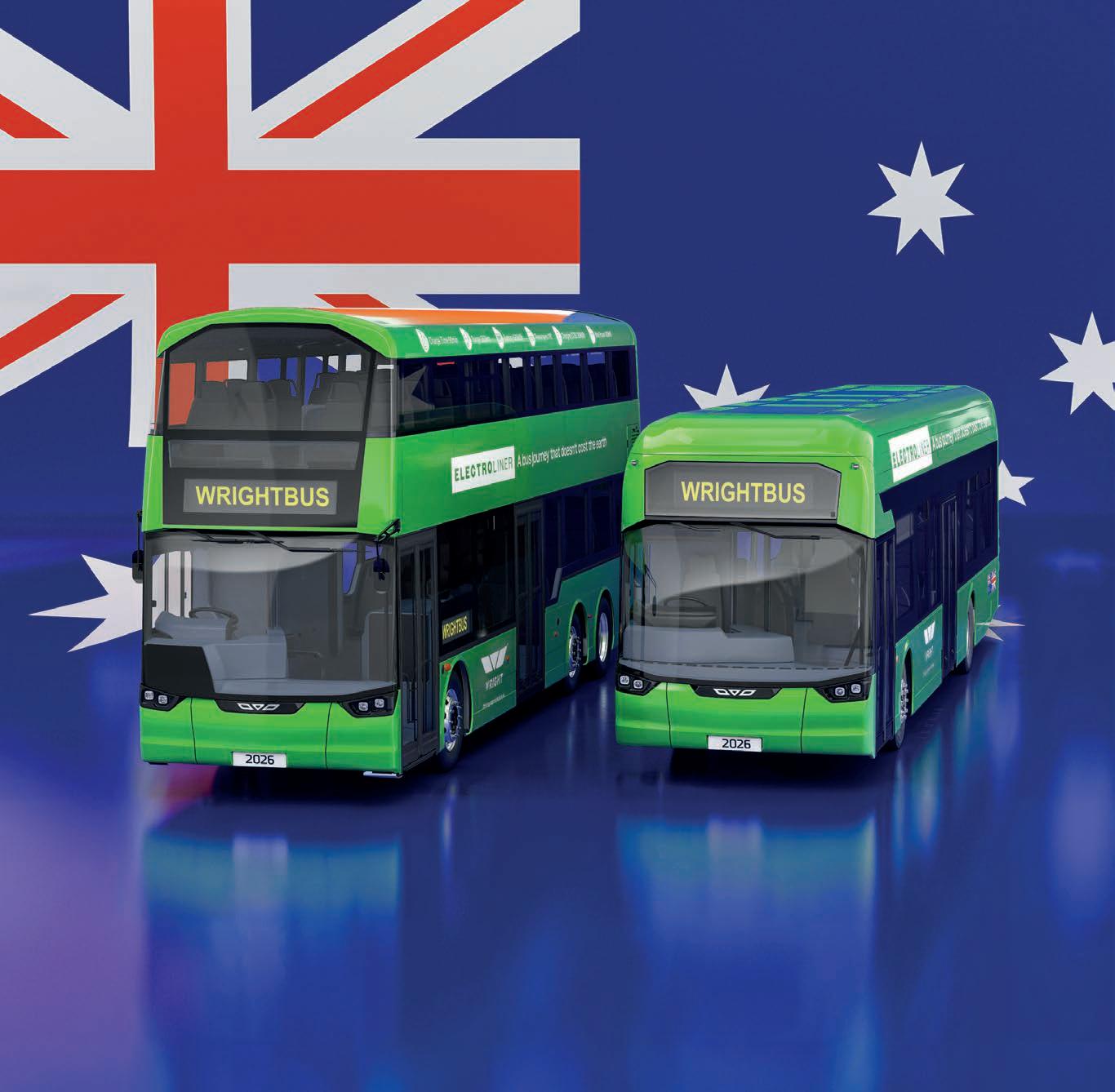
As it celebrates its ongoing success in the global bus industry, Wrightbus’ presence at the Expo will look to highlight the features and benefits of three vehicles that will be introduced into the Australian market – the single-deck Kite BEV, single-deck Kite FCEV and the double-deck StreetDeck BEV 6x2. The single-deck Kite FCEV is already approved on the panel for Transport for New South Wales.
“I’m delighted to be back at the Sydney Expo, meeting up with lots of customers that I’ve had the pleasure to work with over the past 20 years in my previous roles as well as my involvement on the board of the Bus Industry Confederation (BIC),” Gurney told ABC
“It’s a privilege to be working with Wrightbus – a truly historic company – as it seeks to work with operators and partners in Australia and help them deliver their vision for a cleaner, greener transport network.
“Australia is a highly respected, mature and professional market and it’s really defining its own future. Daniel and I, along with the rest of the Wrightbus team are fully committed to supporting its decarbonisation goals.”
Wrightbus has produced some famous models over the years
Momentum builder
As it continues excelling with local deliveries in 2026, BYD Australia will also unveil a trio of new bus models at the Expo to further enhance its vehicle range
They say a picture paints a thousand words. For the bus and coach industry, seeing a vehicle in the flesh – being able to walk around it and observe with hands behind one’s back and a discerning expression, to touch it and step inside, to inhale the fresh smell of leather and rubber – is the ideal test when it comes to a product being released. At this year’s Bus & Coach Expo, BYD will provide attendees with this very opportunity to see three new models live and up close as it launches a trio of vehicles for the local market.
“We’ll be launching three new vehicles at the Expo, all using our own aluminium body,” BYD Australia commercial vehicles director Jon Tozer told ABC
“From smaller buses to a 12.5-metre bus, operators will be able to check out our new range in person.”
When it comes to unveiling products at the Expo, many exhibitors tend to opt for one. BYD Australia isn’t one of these, with Tozer saying the brand is
balancing recent deliveries with the opportunity to showcase its latest Australasian technology at the major industry event.
On display in Sydney will be BYD’s B70A02, a seven-metre low entry bus specifically designed for the Asia Pacific market. The electric bus was designed to suit the market’s need for a smaller, electric bus that can run both last mile and on-demand services, as well as the usual ‘pubs and clubs’ community services.
“The B70, with its low floor design and overall length of seven metres, comes with a seating capacity of up to 18 passengers, or 16 with a wheelchair,” BYD Australia commercial vehicles sales executive Steve Glenny told ABC
“Based on tried and tested, last-mile and first-mile feeder routes using similar-sized bus platforms throughout Europe and Asia, the BYD B70 appeals to a broad market, from local government to small shuttles and the private sector.”
Below:
The B70 is one of three models to be displayed at the Expo
Following the B70 on the BYD stand will be the B10A01, a 10-metre low entry city bus designed to suit smaller demanding routes of outer metro and rural and regional city services in Australia. The B10 is a fully integrated zero-emissions electric bus engineered to deliver improved performance, safety and passenger comfort.
“With the introduction of zero-emissions buses, we have a clear opportunity to rethink our approach,” Tozer says.
“Operating large 12.5-metre buses
Above: New BYD technology is on the way
Images: BYD Australia
where patronage does not justify the capacity is inefficient –we are effectively carrying unused space.
A shift to a 10-metre overall length represents nearly a 20 per cent reduction in size, delivering meaningful advantages in lower capital costs, reduced vehicle weight and decreased air-conditioning demand.
“This, in turn, enables smaller battery capacity while maintaining the same range and lowers total cost of ownership through reduced rear body damage and less expensive mid-life battery replacements. The benefits of adopting this smaller bus configuration strongly outweigh any potential drawbacks.”
A high-capacity 314 kWh BYD Blade battery, alongside dual 150 kW motors, allows for powerful performance and durability, with the B10 designed with low-entry and premium seating. Throw in the latest round of advanced driver safety systems, the B10 is poised to be another strong entrant in the growing zero-emissions low-floor route bus market.
The last, and largest, of the three unveilings at BYD’s Expo stand is the B12A05. The 12.5-metre two-axle integral bus follows on from the B10, offering strong performance, safety and comfort through a model purpose-built for modern urban networks. As per BYD’s usual standards, the B12A05 combines the BYD aluminium body on the current BC12A06 chassis with the BYD advanced battery technology.
With 382 kWh BYD batteries along with dual 150 kW motors, it comes combined with the globally proven BYD aluminium body and is built to meet the requirements of the NSW Panel 4 specifications, including the
fire ratings. The low-entry bus features 43 seats, Coachair air-conditioning and the following ADAS systems as standard – AEBS, FCW, ISA, MOIS, BSIS, LDW, DDAW and the option of an alcohol interlock. USB/USB-C ports are available at every seat and a driver’s drink holder warms or chills their drink. Other features include a choice of Hanover or Luminator destination signs, seats either BYD standard, McConnell or StyleRide, signage, CCTV and other passenger comforts.
“The key to these three buses are that they are all built with a BYD aluminium body, making them fully integral. By being our own body, we’re offering a very cost competitive product with a highly corrosion resistant body that matches what we already sell in places like South America and the Nordic region,” Tozer says.
The impending release of the three models comes at a landmark moment for BYD in Australia’s bus market. After facing challenges in recent years, the brand has over 200 buses to deliver this year to local operators – a much loftier number than the three it delivered in 2025. As it continues pushing more of its leading bus technology to Australasian roads, BYD’s focus is on introducing the latest global innovations in battery electric buses to the market for a future filled with momentum.
“Our strong emphasis on aftersales support and training, combined with the introduction of the BC12A06 chassis, is gaining clear traction in the market,” he says.
“Real-world operational results show energy efficiencies of approximately 0.8 kW/km, while driver feedback has been consistently outstanding. Coupled with the benefits of purchasing directly from the OEM, these factors are strengthening industry confidence and building long-term trust in our brand at BYD.
“With 60 buses already delivered, we’ll be delivering 30 a month for the next few months, so we’re excelling and the release of three buses at the Expo will allow us to gather more steam in the back half of 2026.”
Left: BYD’s battery technology is part of the latest vehicles
Above: BYD is looking to various operations with its new models
Reshaping expectations
Volvo Bus Australia’s growing commitment to aftersales care and training is proof the industry is enhancing its perspective on what a modern supplier should do for operators
In years gone by, the supplier and operator relationship was all about the bus itself. The glittering unveiling of the vehicle, proudly fitted out to suit an operator’s requirements. From there it was a case of shake hands, thanks for your business, call us when you need another. A quick nod goodbye and hop in the car to leave.
This is far from the case for Volvo Bus Australia, with the vehicle supplier having dedicated plenty of time over the years to bolstering its aftersales team and capabilities. To align with its 15th year as a market leader in supplying buses in Australia, Volvo has also been a leader in training, parts availability, warranty, aftersales support and remote diagnostics for a similar period of time. It’s in these areas where Volvo Bus Australia is excelling as a leading overall bus and
coach supplier in the region.
“Running a successful bus operation takes more than just the right vehicles – it takes the right people alongside you,” Volvo Bus Australia acting general manager Sarah Forbes told ABC
“Volvo Buses works with Australian operators for the long term, with training, technical support, preventative maintenance and service solutions tailored to operations.”
This focus on servicing customers beyond the bus starts with the key pillars of a partnership post-delivery – aftersales. Hot on the heels of recently appointing Joshua Smith as its new national quality, technical and competence manager, the Volvo aftersales team is continuing to grow its capabilities. Leading a team of five dedicated regional service managers across Australia’s eastern states,
this group is embedded in their set markets and are responsible for the day-to-day dealer relationships that keep the wider Volvo Bus Australia network running. With access to the latest technical information and product updates, this forms a critical function of Volvo’s recent emergence in the zero-emissions bus market.
A key cog in this team is industry stalwart David Woodward, the popular and dedicated competence development manager. Within his role, Woodward is responsible for delivering training sessions to Volvo customers across Australia, all at no additional cost. This all stems from Volvo’s unique approach to electrifying buses in the local region, with Forbes saying Volvo views electrification as a transition that must be supported by specialist electromobility support, such as planning,
Above: Volvo is going above and beyond for local operators
integration and aftersales.
This idea of reliability has extended beyond the initial delivery to now encompass a whole-of-life commitment, including training, service networks, parts and diagnostic support as key offerings to its customers. When it comes to tendering for new electric bus networks, Volvo has sought to keep it simple and allow its operator partners to deliver on promises and secure more contract wins.
The goal is to combine local partnerships with local capabilities to reduce the risk of downtime, particularly on expensive assets like electric buses. Since its first local foray into zero-emissions buses nearly five years ago, Volvo Bus Australia has looked to create a total network of parts and support for electric customers. By publicly documenting local manufacturing and partnership arrangements, such as its connection with Volgren to support local content ambitions, Volvo is looking to enhance its “real-world operations” with local build integration, parts flow, fast response times and technician capabilities.
hosted a Customer Forum in New South Wales, bringing together key decision makers from across the state to discuss how Volvo can support their journey to a cleaner future.
Throughout Volvo Bus Australia’s various networks, technical support and service solutions continue to grow, carried through by an emerging team of aftersales specialists. This has allowed Volvo Bus Australia to enhance its preventative maintenance focus, ensuring the growing number of Volvo buses and coaches on Australian roads remain constantly supported.
This focus was rewarded at the 2026 Queensland Bus Industry Council (QBIC) awards, with Volvo Bus Australia being named the supplier of the year. The brand was acknowledged for its consistent industry engagement, market leadership in Queensland and collaborative delivery of large-scale fleet programs aligned to the state’s transport objectives.
“This recognition means a great deal to the entire Volvo Bus Australia team. Supplier of the Year is not an award you win by showing up once –
delivering free training for operators, particularly during the industry’s ongoing transition to sustainable technology, Volvo Bus Australia is pulling out all the stops to lead the way as a modern supplier. It’s
Above: Major customers include Queensland’s Kangaroo Bus Lines
One platform, every journey
A new generation of cloud-native, AI-powered technology is reshaping how Australian bus operators manage their fleets, their people and their passengers – all from a single integrated ecosystem
For decades, Australian bus operators have been stitching together a patchwork of disconnected fleet management systems. A platform for scheduling, another for compliance, then maintenance and spreadsheets to fill the gap in between. This has led to a history of inefficiency, risks and ongoing pressure to do more with less.
A new generation of transit management is changing the state of fleet management systems. The next-generation platform emerging from transportme, purpose-built for Australian operators, schools and government agencies, offers a new option for the future of transit management software.
“Rather than digitising old workflows, the platform was designed from the ground up around real operational outcomes,” transportme founder
Nigel Tooth told ABC.
At the heart of the new platform is a tightly integrated ecosystem built around three core components – the control hub, the driver console unit (DCU) and the passenger app. Tooth says each is independently powerful, but together they create a total package for operators.
The control hub is the operational command centre that’s fully cloud-based and accessible from any browser, anywhere, on any device. From a single interface, operators manage the full breadth of their business, from routes, stops, ticketing, vehicles and drivers to real-time GPS tracking with a live map view and on-time running management, as well as ingestion and exports using TODIS, Hastus and GTFS datasets. It also includes account-based smartcard management and electronic student
Above: One combined ecosystem includes all of the brand’s capabilities. Image: transportme
manifests, digital handbooks, fleet communication and passenger app push notifications, as well as a full operational and contractual reporting suite that meets the compliance obligations of government and school transport contracts alike.
At the heart of the system is a real-time dispatch capability that gives controllers a live picture of every service as it unfolds. Real-time timeline boards display the status of every run, every driver and every vehicle simultaneously, giving dispatchers the situational awareness to act on exceptions the moment they occur. Roster and shift scheduling is built around template-based duty management, allowing operators to define standard duty patterns once and apply them at scale, reducing the time spent rebuilding schedules from scratch each week.
Driver compliance and safety are managed end-to-end within the control hub. Licence classes, medical certificates, accreditations, induction records and all associated documentation are held centrally in the integrated HRM module, with automated alerts ensuring nothing goes unnoticed. NHVR fatigue management rules are embedded directly into the scheduling workflow, monitoring accumulated hours, rest periods and shift length against configurable rule sets and flagging risks before a driver gets behind the wheel.
The clear-of-bus check safety system provides operators with a real-time confirmation layer at the end of every trip, while role-based user access controls ensure the right people see the right information across every level of the organisation. For operators who need to go further, an open data connection provides full database access for custom reporting and integration with third-party tools.
In the cab, the driver console unit (iOS and android) connects drivers into the ecosystem through purpose-built hardware that puts everything a driver needs at their fingertips. Ticketing is fully covered, with both cash and cashless tap-and-go payments being handled via integrated payment terminals and smartcard functionality and passenger loading capture built in. Tooth says transportme partners with leading payment providers to deliver domestic and international ticketing
and payment solutions. Drivers select their shift, route and trip directly from the DCU, with turn-by-turn route guidance keeping them on track without distraction. Real-time GPS tracking feeds back to the control hub continuously, with on-time running feedback displayed in-cab so drivers can self-manage their schedule performance without waiting for a dispatcher call.
When it comes to driver compliance tasks and safety checklists, these are presented at the appropriate point in the shift – pre-departure checks, mid-trip requirements and end-of-trip procedures are all prompted and recorded through the device. For school and charter services, electronic student manifests with boarding and alighting capture replace paper-based processes entirely, giving operators and parents real-time accountability for every student on every run. Push-to-talk over cellular via Zello integration keeps drivers connected to dispatch throughout their shift, with Bluetooth handpieces available for hands-free operation. At the end of every trip, the clear-of-bus PIN verification system requires drivers to retrieve a PIN from the rear of the vehicle before the run can be closed.
Completing the loop is the passenger app, available as both free and premium apps on the Apple Store and Google Play. It’s designed to keep travellers connected to their service throughout the journey, with passengers able to track their bus in real time on a live map, receive on-time and delayed notifications for saved routes and stops and manage their smartcard account including top-ups via Stripe.
“Three components, one ecosystem. Every operator, driver and passenger connected in real time,” Tooth says.
With much made about AI’s potential to transform the industry, Tooth says this is becoming reality already in transport management. The new Transportme platform embeds AI as a foundational layer that runs continuously in the background, learning, alerting and optimising. Across the platform, AI connects fleet health signals, driver behaviour data, passenger load information and schedule performance into a single intelligent layer.
“Predictive compliance, intelligent rostering, automated anomaly detection – AI is delivering outcomes operators can see on their bottom line,” Tooth says.
Sitting across the three core components is a suite of purpose-built modules that extend the platform into every corner of an operator’s business – operations, fleet and passenger management.
“Operations, fleet, passengers – three modules, purpose-built for the realities of running local bus services,” he says.
He says one of the more significant shifts in the new platform is its treatment of drivers and operational staff not merely as subjects of management, but as active participants in the ecosystem. The employee portal gives staff self-service access to rosters, payslips, compliance documents, training certifications and shift management, all from their own device, without needing to call the office.
“When drivers have visibility and control over their own working lives, everyone benefits – operators and passengers included,” he says.
Safety is also woven through every module, with the clear of bus PIN generator enforcing end-of-trip safety checks that alert management for any failed or missed checks. Role-based access controls, AWS-hosted infrastructure and Privacy Act-compliant data handling give operators confidence that their systems are secure and their obligations are met.
For operators working under government contracts or school transport arrangements, this level of auditability is not optional –and the platform makes it automatic.
“Safety and compliance aren’t features to be configured – they’re built into every layer of the platform from day one,” he says.
Tooth says the local bus industry is at an inflection point, with technology moving faster than ever to meet rising regulatory expectations. He says the new transportme platform is built for operators wanting to redefine management systems and move into an integrated future.
“The technology is here. The question now is simply how quickly the industry moves to embrace it,” he says.
Delivering the future
With a new industry leader appointed and growth on the horizon, Charge Hub is continuing to answer the next generation of questions in the industry’s decarbonisation process
As the transport industry accelerates towards zero-emission fleets, the conversation among the bus and coach fraternity is rapidly changing. Now, instead of being ‘why electrify?’, the question has shifted to ‘how do we make it work reliably at scale?’.
For electric charging solutions provider Charge Hub Group, that question sits at the centre of everything the business does. Charge Hub has quickly established itself as one of Australia’s leading specialists in heavy vehicle charging infrastructure, supporting bus operators, fleet owners and infrastructure partners through every stage of the electrification journey. From early planning and energy strategy through to charger supply, installation oversight, commissioning, software integration, maintenance and ongoing operational support, the business focuses on delivering complete end-to-end solutions.
“With offices across Brisbane, Sydney, Melbourne, Perth and London, Charge Hub now supports projects throughout Australia, New Zealand and the United Kingdom,” Charge Hub Australia managing director Paul Guy told ABC
“The company works closely with some of the world’s leading charging technology manufacturers and software providers, delivering high-power charging infrastructure designed specifically for demanding commercial fleet environments.”
Guy says Charge Hub has been involved in some of the largest and most technically challenging bus depot electrification projects delivered in Australia and United Kingdom to date, including large-scale multi-megawatt connected charging depots supporting the transition
of metropolitan bus fleets to zero-emission operations.
From the company’s perspective, Charge Hub is firm in its belief that successful electrification requires far more than simply installing chargers. Guy says reliable fleet charging outcomes depend on understanding energy supply constraints, fleet operations, software integration, future expansion requirements, maintenance strategies and long-term operational reliability.
“This practical operational focus has become one of Charge Hub’s key differentiators,” he says.
“Beyond charger supply, the business works closely with contractors, operators and OEMs to ensure installations meet manufacturer requirements and local compliance obligations, providing specialist technical training, commissioning oversight, preventative maintenance programs, remote diagnostics and operational
Above: Charging underway at Transit Systems’ Bradbury depot
Images:
Charge Hub
support services designed to ensure infrastructure continues performing reliably long after installation is complete.
As more operators move beyond pilot programs into full fleet electrification, the complexity of projects is increasing significantly. Guy says grid limitations, charging demand, operational scheduling, staged infrastructure deployment and future scalability are now becoming critical considerations for operators planning depot upgrades. Depot layouts, route lengths, charging windows, energy availability and future fleet growth all influence the charging strategy ultimately deployed at each site.
Charge Hub’s experience across both Australian and international projects has reinforced the importance of taking a long-term operational approach to infrastructure planning rather than focusing solely on charger hardware selection.
To support the next phase of growth, Charge Hub has strengthened its leadership capability with the addition of industry leader James McCarthy. Guy says James
brings extensive experience from a customer’s perspective across transport infrastructure, operational delivery and large-scale project environments, adding further depth to Charge Hub’s capability as the business continues expanding both locally and internationally.
“His appointment comes at a pivotal time for the industry, with operators increasingly looking for experienced delivery partners capable of managing the technical and operational realities of large-scale electrification projects,” Guy says.
“Fleet electrification is now ramping up into full operational deployment. Operators are making infrastructure decisions today that will shape fleet operations for decades, increasing the importance of scalable, reliable and operationally focused charging solutions.”
Guy says Charge Hub believes one of the industry’s biggest challenges moving forward will be ensuring long-term operational reliability as charging infrastructure scales across larger fleet environments. That means focusing not only on charger
hardware, but also on broader lifecycle considerations including software interoperability, remote support capability, spare parts management, contractor competency, preventative maintenance and staged infrastructure planning.
With the business continuing to invest heavily in technical capability, training and operational support systems, Guy says Charge Hub will ensure customers receive long-term value from their infrastructure investment.
“As the transition towards zero-emissions transport continues accelerating across Australia and overseas, Charge Hub remains focused on delivering practical, operator-focused solutions that support reliable fleet operations today while preparing operators for the demands of tomorrow,” he says.
“Because ultimately, successful electrification is not just about installing chargers – it’s about reliability, building confidence and keeping fleets moving.”
Below: Charge Hub’s capabilities on display at U-Go Mobility’s Marrickville depot in NSW
Connected platform
Triple D Software’s complete system is allowing operators to retain and recruit new drivers through a seamless end-to-end fleet management product
For most bus and coach operators, a single working day is a relay of information. A change to a charter booking needs to reach the allocations team, workshop needs to know of a change in vehicle utilisation, the driver needs to be notified of an update to their run and the accounting team need to know of changes to the invoice. Traditionally, each of those hand-offs happen across different systems, emails or phone calls, and it is precisely these hand-offs where things can fall apart.
This is the problem Triple D Software has spent years designing out. Triple D Software chief technology officer David Cook says the platform has been built as one system from the ground up to cover quoting, allocating, fleet maintenance, compliance, driver
Above: Triple D’s software addresses the issue of combining numerous operational systems
management and now finance rather than a set of separate products wired together after the fact.
“Built-in means the information just flows,” he told ABC
“A change in one team is instantly true for every other team because it is one platform – not several systems trying to keep each other up to date.”
Over the past 12 months, Triple D has pushed the single platform further into operators’ businesses than ever before, guided by two priorities. The first is easing the strain of the driver shortage, while the second is making the whole process run end to end through one system.
When it comes to easing the driver shortage and the constant pressure to retain drivers, Cook says Triple D’s system features new turn-by-turn navigation built into the Onboard Kiosk – the in-bus tablet mounted
in each vehicle. This allows a new driver to hop behind the wheel,
Images:
Triple D Software
“New starters can drive an unfamiliar route with confidence from their very first shift.”
“Easing the driver shortage is about making a new driver productive on day one and giving drivers control of their work-life balance so they stay,” Cook says.
By lowering the barrier to entry, onboarding is faster and a wider pool of people can be hired. From a retention perspective, drivers also get their schedule in real time, push notifications when things change, and the ability to easily enter leave and availability through the Driver’s App – which they can use from home, rather than having to be at the depot.
“This all provides drivers with control of their work-life balance while keeping them engaged with the operator,” he says.
For the second priority of making the process run end-to-end through one system, Cook says the real test is whether a piece of work can travel from the person who starts it all the way to wherever it needs to land, without being printed, emailed, re-keyed or chased along the way. Too often, he says, processes start in one tool and finish in another, opening opportunities for information to leak at every hand-off.
“Take the workshop, which many operators still run on paper,” he says.
“We have moved it onto the tablet
is captured as the work happens and is instantly visible to workshop admins and operations.
Drivers can feed the workshop directly too. Minor incidental damage – the everyday knocks can be logged on the in-bus Onboard Kiosk and lands straight on the workshop’s tasks list, ready to action.
More serious incidents take a different path. A driver records an incident such as an accident in the Driver’s App and takes photos at the roadside and it flows automatically to operations as an incident plan, where the team manages the follow-up with assigned tasks. There’s no phone relay and no detail lost between the road and the depot.
Finance is connected the same way. Integration with Xero and MYOB Acumatica automatically pushes accounts receivable and accounts payable invoices through, so the booking that earned the revenue is the same record that raises the invoice, with no re-keying required. Timesheets feed into Xero payroll as well, so the hours a driver actually works flow through to their payslip –closing the loop from the shift worked to the wage paid.
Cook admits it’s easy to describe a connected platform, but where it really clicks for operators is when they can watch one change ripple across the sales, operations,
of software, but instead short of connection between their software. By combining every link in the chain from quoting, booking and allocating to compliance, invoicing and payroll, this built-in system keeps data constantly shared instead of having to be synced.
The July Bus & Coach Expo will see Triple D Software showcase this unified system in the flesh for operators to check out. Cook says now is the time for operators to see how much time their teams could win back by letting one connected platform do the work that the gaps between disconnected tools currently create.
“Our main idea is providing a single connected platform that features built-in systems, not bolted on ones,” he says.
“This concept allows operators to have full confidence that they can run daily services in a way that secures critical information and encourages more drivers to work for them.”
Check out Triple D Software at the Expo or on their refreshed website at tripledsoftware.com.au
Left: The technology makes managing bus operations easier
Above: Staff from across the business can access the system
Stepping stone
As the global door supplier celebrates a decade in the local bus market, Ventura Systems Australia will unveil its latest technology at the Expo
Ventura Systems Australia will return to the Australasian Bus & Coach Expo this year with more to celebrate than usual. While it exhibits at the show, the brand is also marking 10 years of supporting the region’s bus industry. Celebrating a decade of growth, innovation and local commitment, the company’s presence at the show reflects how far it has come since its establishment in 2016.
“The milestone comes at a significant time for the business, with Ventura opening a new office and warehouse in Queensland,” Ventura Systems Australia general manager Wolter Meijerhof told ABC “The new facility represents the next step in the door supplier’s long-term commitment to the region, increasing its ability to support
customers with service, spare parts and local technical expertise.”
He says this investment reflects Ventura’s confidence in the Australasian market and its continued growth. As bus fleets across the region transition towards zero-emissions transport, the requirements placed on vehicle systems remain evolving, meaning door systems must not only be reliable and safe, but also suited to demanding local conditions, from heat, dust and storms to intensive urban operation and specific regulatory requirements. Ventura has grown alongside the industry to match this demand, working closely with OEMs, operators and industry partners. Over the past decade, the company has supplied door systems for a wide range of public transport vehicles, including electric
buses, export vehicles and specialist applications, while Ventura was also one of the pioneers in supplying electric door systems for electric buses and has continued to prioritise this technology in its development efforts.
“At the Bus & Coach Expo, Ventura Systems Australia will demonstrate a selection of its latest door system technologies,” Meijerhof says.
“On display will be the Inward Gliding ‘lift’ door system, the outward Rapid Sliding door system and the outward Plug Sliding door system, including LED boarding communication features designed to improve passenger flow and communication.”
The Inward Gliding ‘lift’ door system will be shown as an Australian premiere ahead of its planned introduction to the local market
Above: Ventura has now been in the local market for a decade
Images: Ventura Systems Australia
following extensive testing and validation. Built on a proven public transport concept, the system is designed to offer advanced sealing, quieter operation and reduced maintenance. Meijerhof says its lifting kinematics help compensate for floor inclination, supporting passenger comfort while minimising the ingress of water, dirt and noise.
The Rapid Sliding door system will be presented as a strong alternative for applications requiring fast, reliable operation and excellent sealing performance. Ventura’s outward Plug Sliding door system will also be showcased, highlighting the company’s established expertise in entrance solutions for urban transport.
Beyond the physical products, Ventura Systems Australia will use the show to share developments in functional safety, second-generation door control units, remote door system monitoring and future sensor-based door adjustment. These developments underline the company’s focus on shaping the next generation of safe, reliable and intelligent door systems, and mark the future for the growing door systems supplier.
“As Ventura Systems Australia enters its second decade, the business is focused on expanding its capabilities, growing its team and continuing to support the market with future-ready door system technology,” Meijerhof says.
“The 10-year anniversary is not only a celebration of what has been achieved, but also a clear signal of Ventura’s ongoing commitment to the industry, its customers and the future of public transport in the region.”
Below: Ease of access is a key part of new door systems
Above: Ventura Systems is paving the way for Australasia’s bus future
Setting
Australia’s first pantograph-down electric vehicle bus charging depot at Brookvale has been launched, powered by Kempower technology
New South Wales’ Brookvale bus depot is setting a new benchmark for electric bus infrastructure as Australia’s first pantograph-down EV bus charging system, supporting the transition of 229 diesel buses to battery electric. Powered by 13 of Kempower’s 450 kW pantograph chargers and JET Charge’s intelligent load management, the solution delivers fast and reliable charging at scale to keep fleets ready for daily operations.
The achievement is the result of close collaboration with multiple project partners, marking a significant milestone in Australia’s journey toward electrified public transport. Kempower’s sales and service partner, Australian EV infrastructure provider JET Charge, played a key role by providing charging equipment and system integration, along with commissioning expertise.
The project brought together Keolis Australia as depot operator, Downer EDI Engineering as principal contractor, bus OEMs Custom Denning, Yutong and Foton Mobility Distribution and Transport for NSW.
Kempower says electrifying 229 diesel buses at Brookvale required operating within a depot with limited space for traditional plug-in charging infrastructure, with an additional advantage lying in the driver experience. For bus drivers, pantograph charging helps streamline the charging process by reducing manual steps and minimising driver interaction, supporting smoother day-to-day operations at scale.
The project also needed to support a high-capacity five MVA grid connection, integrate back-up generation to ensure uninterrupted operations, accommodate multiple bus OEMs and meet a strict requirement for
zero charging downtime. To address these challenges and maximise available space while maintaining efficient depot operations, the site was equipped with a Kempower high-power pantograph-down charging solution, including 13 of Kempower’s 450 kW Power Units paired with 850 A pantograph-down chargers. The solution enables fast, automated and reliable charging at scale, while intelligent load a comprehensive design and testing
Images:
Kempower
program to ensure smooth delivery.
JET Charge designed the charging system for 99.9 per cent uptime, supported by a proprietary energy management system, in-house testing and ongoing monitoring through its asset management platform Illuminate to ensure consistent performance and rapid maintenance response.
A complete charging system was air freighted early in the project and installed at Custom Denning’s manufacturing site, where JET Charge enabled full integration testing prior to deployment. This approach ensured the project was delivered on time, avoiding any construction delays.
To protect the depot’s electrical infrastructure and maintain reliability, the JET Charge’s load management system was customised with a newly developed I/O expander. This enables real-time monitoring of high-voltage protection devices and dynamic adjustment of charging loads, ensuring safe operation while maximising available power.
Brookvale now stands as Australia’s first fully operational pantograph-down charging depot, purpose-built to support over 200 zero-emissions buses. With live, intelligently managed Kempower
pantograph chargers, the system delivers seamless daily operations for a large fleet.
“For Kempower, it is a privilege to have been selected as the DC fast-charging hardware supplier for this flagship project, supporting the efforts of Transport for NSW and Keolis in advancing the adoption of zero-emission buses in Australia, together with the combined capabilities of Kempower, JET Charge and Downer,” Kempower business development manager, fleets (APAC) Dylan Perera says.
The project supports Transport for NSW’s Zero Emission Bus Transition Plan while providing a proven and scalable model for future depot electrification. Early integration with multiple bus OEMs ensures the system meets the operational demands of a live depot while supporting long-term electrification goals.
With monitoring and maintenance support in place, Kempower says Brookvale is now a future-ready depot, setting a new benchmark for electric bus infrastructure in Australia.
“JET Charge working with Downer EDI has proven to be a world-class partnership, providing exceptional knowledge and capability to deliver a first-of-kind bus depot electrification conversion,” Keolis director energy transition Nick Carne says.
For JET Charge CEO Tim Washington, the focus is on making the transition to electric straightforward.
“We remove complexity so our customers can act with confidence. We’ve delivered this at scale across the country by investing more than a decade in deep expertise across hardware, electrical, software, firmware and energy systems,” Washington says.
“That depth of capability, combined with Kempower’s leading charging technology, has been critical to delivering a first-of-its-kind project like Brookvale.”
Below: The latest charging technology forms part of the layout
Above: Pantograph charging dominates the depot
Changing the game
A
new range of sustainable transport fabrics will result in three new Camira products being on display at this year’s Bus & Coach Expo
For years, Camira has been well-known for its wool rich moquette. In the fabrics game, the material is lauded for its durability, fire resistance and comfort. It’s been a key reason why wool moquette remains the core product for Camira despite there being many choices nowadays for transport fabrics. But now it’s time for change at the fabric business.
“Camira also produces and supplies many fabric ranges for the ‘contract/ commercial’ market, which are quite at home in the bus and coach sector,” Camira area business manager for APAC (transport) Rodney Peterson told ABC
“With clean crisp designs and appearances, Camira certainly has options to modernise interiors and, in keeping with the company’s ideology of reducing environmental impact, reduce waste, using natural fibres wherever possible.”
As it continues searching for greener textile solutions, Camira is in the midst of launching three new innovative products for the local transport market. Plastic is one of the world’s most resilient waste materials, with Camira transforming it into a fabric as fluid as the waves. Already used in automotive and commercial interiors, now, for the very first time, recycled
Above:
SEAQUAL fabrics are available for bus and coach interiors.
“The SEAQUAL Collection offers operators a greener textile solution without compromising on performance or style,” Peterson says.
“In partnership with the global SEAQUAL Initiative, each metre of Camira’s new Oceanic and Quest ranges contains up to 35 plastic bottles and a fully upholstered coach interior diverts as many as 2,435 bottles from marine ecosystems.”
Then there’s the Oceanic range, where one half of the collection is a multi-tonal fabric featuring a diagonal twill weave that contrasts a light warp with a deeper dyed weft.
Three new fabrics will be available to inspect at the Expo
The other half of this is the Quest range, which showcases a balanced hopsack weave enhanced by discat-dyed SEAQUAL yarn to create an understated aesthetic that brings a subtle touch of the ocean’s natural beauty to transport interiors.
“With public transport safety in mind, the Oceanic and Quest ranges feature Camira’s patent-pending Eco FR technology – a lightweight, halogen-free flame retardant backing which inhibits burning, forming a protective char to ensure fabrics are safe, strong and environmentally conscious,” Peterson says.
He says many companies use recycled plastic to create textiles, but most focus on so-called ocean bound plastic waste which are said to be at risk of reaching the ocean but often found as far away as 50km inland. Instead, the SEAQUAL Initiative takes it further by targeting plastic at its most critical point – waste already polluting our oceans, rivers and shorelines, posing an immediate threat to marine life. Peterson says this creates a dynamic of ‘ocean found’ rather than ‘ocean bound’.
with the performance of an athlete, leading Camira’s fabric future in the sector.
Among the many products
“A knitted appearance in a woven fabric, together with two-tone micro
Eco FR technology – a lightweight, halogen-free flame-retardant backing.
plastic bottles, RePlay Zero meets bus and coach specifications using Camira’s
Above: A variety of options and colours are available
Below: Camira is making transport fabrics more sustainable
Images: Camira
“Love listening to Australian Truck Radio. Such a great mix of music with loads of Slim, plus it has heaps of trucking industry news. Great radio for what I do 24/7!”
CLARE TEMBY OWNER DRIVER, TEMBY’S CONTRACTING
Get safety off the shelf
QBIC’s Jason O’Dwyer discusses how safety systems can no longer be a folder on the shelf for modern bus and coach operators
Asecond recent fatal bus crash at Gumlu in North Queensland is a tragic reminder that safety in the bus and coach industry is not theoretical. While investigations must be allowed to run their course and no assumptions should be made about the cause of any particular incident, events of this nature rightly focus the attention of governments, regulators, passengers, the media and the community on the systems operators have in place to manage risk.
For bus and coach operators, the message is clear: safety systems must be current, practical, documented, understood by staff and actively used in day-to-day operations. A safety management system that exists only as a manual in the office, or as a document prepared for accreditation, is not enough now more than ever.
Across the country, regulators are moving toward a more formalised and evidence-based model of safety assurance. The NHVR Master Code, work health and safety obligations, Chain of Responsibility duties and state-based passenger transport safety frameworks are all pointing in the same direction. Operators must be able to show that they have identified the risks, assessed, implemented controls, trained their people, monitored compliance and reviewed the system when circumstances change.
Recent regulatory action against an operator, where a provisional improvement notice (PIN) resulted in services being suspended until safety issues were addressed, should be a wake-up call for the industry. It appears to be one of the clearest examples we have seen of a regulator moving quickly to stop services where it was not satisfied that the operator could continue safely. Whether that becomes more common will depend on the circumstances, but the signal is
unmistakable: regulators are prepared to act quickly where they believe passenger, driver or public safety is at risk.
Operators should not wait for an incident, audit, complaint or regulator visit before reviewing their safety arrangements. Now is the time to test whether your systems would withstand scrutiny.
At a minimum, operators should be asking themselves:
• Are our fatigue management processes practical, documented and followed?
• Are vehicle maintenance records complete, current and easy to produce?
• Do we have a clear process for defect reporting and removing vehicles from service?
• Can we demonstrate that drivers are safe, trained, competent and fit for duty?
• Are route risks, road conditions and remote operations properly considered?
• Are incident reporting and escalation processes understood by staff?
• Do managers and supervisors know their responsibilities under WHS, HVNL and passenger transport safety laws?
• Are subcontractors, labour hire drivers and third-party maintenance providers covered by our safety controls?
• Do we review near misses, complaints, breakdowns, telematics and defects as safety intelligence?
• Can we prove that our safety system is used, not merely written? This does not mean every operator needs a large corporate safety department. Many bus and coach businesses are small, family-owned and regional. But smaller operators still need a system that is fit for purpose. It can be simple, but it cannot be informal. It can be scaled
Across the country, regulators are moving toward a more formalised and evidence-based model of safety
assurance
to the size of the business, but it must still be real, documented and used.
All bus or coach crashes are another painful reminder of the consequences when something goes wrong in passenger transport. The NHVR, WHS regulators and state transport departments are all placing greater emphasis on formal safety systems, active risk management and evidence of compliance. Operators should treat this period as a line in the sand. Make sure your board, owners and senior managers understand that safety duties sit at the top of the business, not just with the driver at the wheel.
The industry has every reason to be proud of its safety record and the professionalism of its operators and drivers. But pride is not a safety system. Good intentions are not a control measure. Verbal assurances are not evidence.
The standard now being expected is clear: identify the risk, control the risk, document the process, train the people, monitor the outcome and act when something is wrong. That is the practical test operators must be ready to meet when things go wrong. A failure to plan is a plan to fail. Ultimately the consequences will be determined by courts and regulators who have little regard as to how big, small or long you have been in business when their focus is on protecting the public passengers and employees.
TStories on wheels in Shepparton
They’re the vehicles that took them to school, carried them to town, brought them home from holidays or sat in the background of daily life until memory gave them new weight.
That familiarity sits at the centre of MOVE’s expanded Bus & Coach Collection in Shepparton. Paul Kennelly, secretary of the Bus and Coach Society of Victoria (BCSV), says the collection gives Victoria a permanent home for an industry history that has long relied on private owners, operators and enthusiasts.
“I think buses are the glue that holds the transport system together,” Kennelly told ABC
“They’re sort of there in the background in many ways, and people don’t notice them clearly. They go up and down people’s streets every day.”
The idea grew from a smaller display of eight buses. Kennelly says MOVE found that even visitors who did not board buses often spent more time with them than expected
from local body builders to operators linking towns, schools, depots and capital cities.
“There is that personal connection, making sure that when people come to the museum, they can recognise some of the vehicles from their past lives,” Kennelly says.
“They can then connect with their country town, their service or operators that they might have used on school trips.”
Most vehicles in the collection operated in Victoria, although some also worked interstate. Kennelly points to buses bodied by Commonwealth Aircraft Corporation (CAC) and used for school buses from the 1950s, ‘60s and ‘70s as vehicles many visitors will recognise.
His own memories are tied to Ventura’s Centre Road depot in Oakleigh, where he would ride his bicycle as a child. That gives particular meaning to a CAC-bodied OB Bedford
Kennelly says buying an old bus can be
restoration skills and parts supply often become the real barriers.
The next stage in the Bus Pavilion project at MOVE is a holding shed at the rear of the MOVE site. It will allow more buses to be housed, protected and rotated through the Pavilion display. Kennelly says the museum has room for 20 buses, but at least double that number deserve to be shown.
The pavilion itself will be fitted with memorabilia in 2027, along with touch screens and a large video screen. The aim is to let visitors follow family, operator and town histories, not only vehicle specifications.
For Kennelly, the opening night proved how strongly those stories still resonate.
“It’s been a fantastic collaborative effort with the people at MOVE,” he says.
“The grand opening was a wonderful occasion. We wanted it to be something special, and it was.”
Coach Society of Victoria
Meet the fifth generation Inward Gliding door system
Step into the next generation of Inward Gliding doors
At the Australasia Bus & Coach Expo, Ventura Systems unveils its fifth-generation Inward Gliding door system. It introduces a unique approach to door kinematics that improves comfort for both passengers and drivers. At the core is the signature lifting movement: the door leaves lift smoothly to compensate for the inclination of the vehicle floor, then move downward in a controlled motion to close precisely. This creates a tight, durable seal without brushes, deformable rubber, or sliding parts, while keeping out water, dirt, and noise.