
































The Australian Arbor Age is published bimonthly by Prime Creative Media Pty Ltd.
Chairman
John Murphy
CEO
Christine Clancy
National Advertising Manager
Joanne Davies
P: +61 434 785 611
joanne.davies@primecreative.com.au
Editor
Tom Foster tom.foster@primecreative.com.au
Client Success Manager
Justine Nardone justine.nardone@primecreative.com.au
Design
Jacqueline Buckmaster, Danielle Harris
Subscriptions
P. +61 3 9690 8766
subscriptions@primecreative.com.au
Website arborage.com.au
Copyright
The Australian Arbor Age magazine is owned by Prime Creative Media and published by John Murphy. All material in The Australian Arbor Age magazine is copyright and no part may be reproduced or copied in any form or by any means (graphic, electronic or mechanical, including information and retrieval systems) without written permission of the publisher.
The editor welcomes contributions but reserves the right to accept or reject any material.
While every e ort has been made to ensure the accuracy of information, Prime Creative Media will not accept responsibility for errors or omissions, or for any consequences arising from reliance on information published.
The opinions expressed in The Australian Arbor Age magazine are not necessarily the opinions of, or endorsed by, the publisher unless otherwise stated.
© Copyright Prime Creative Media, 2026
Articles All articles submitted for publication become the property of the publisher. The editor reserves the right to adjust any article to conform with the magazine format.
Head O ce
379 Docklands Dr, Docklands VIC 3008
P: +61 3 9690 8766
info@primecreative.com.au www.primecreative.com.au
Sydney O ce Suite 11.01, 201 Miller Street North Sydney, NSW. 2060. Australia
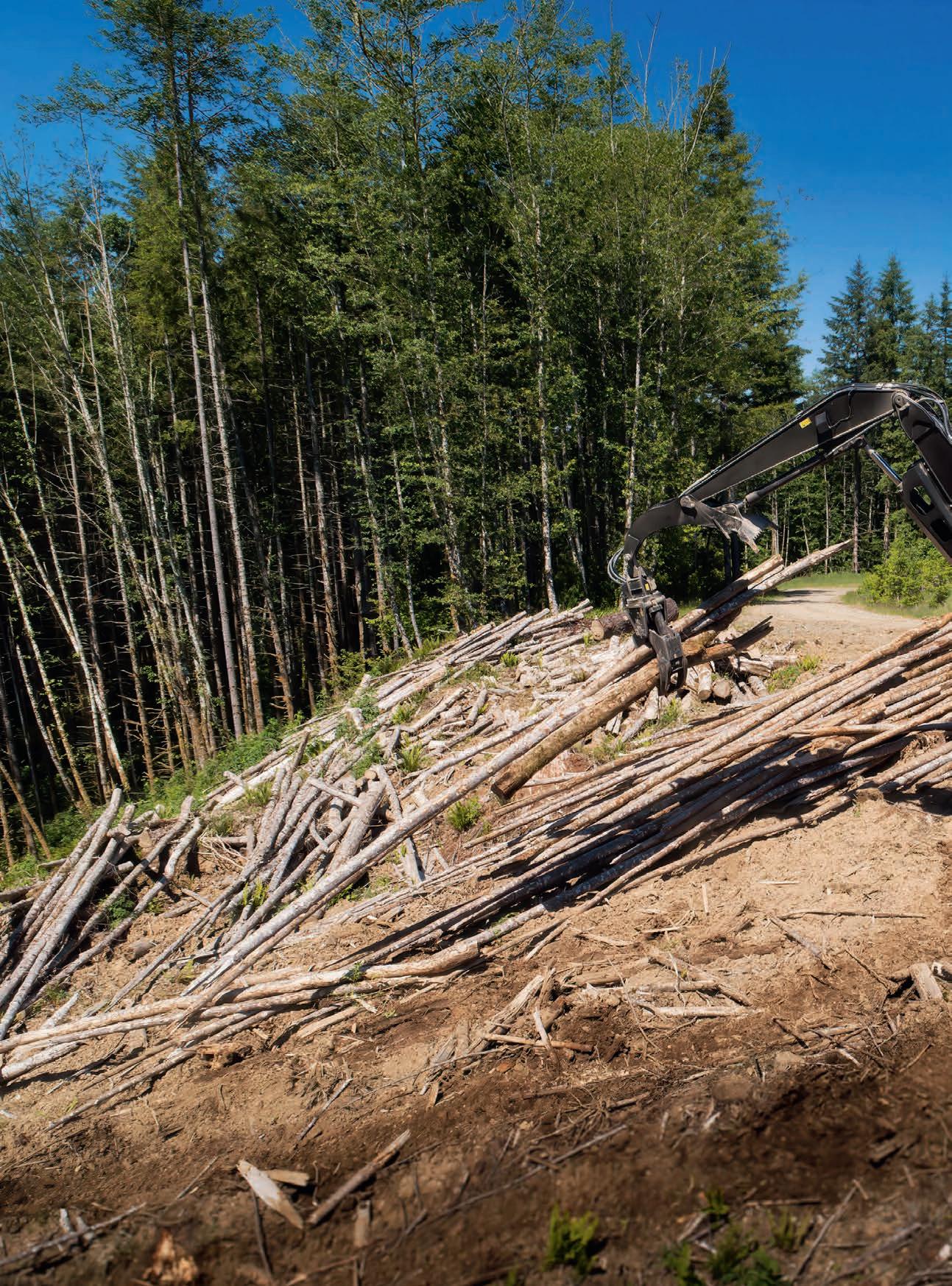
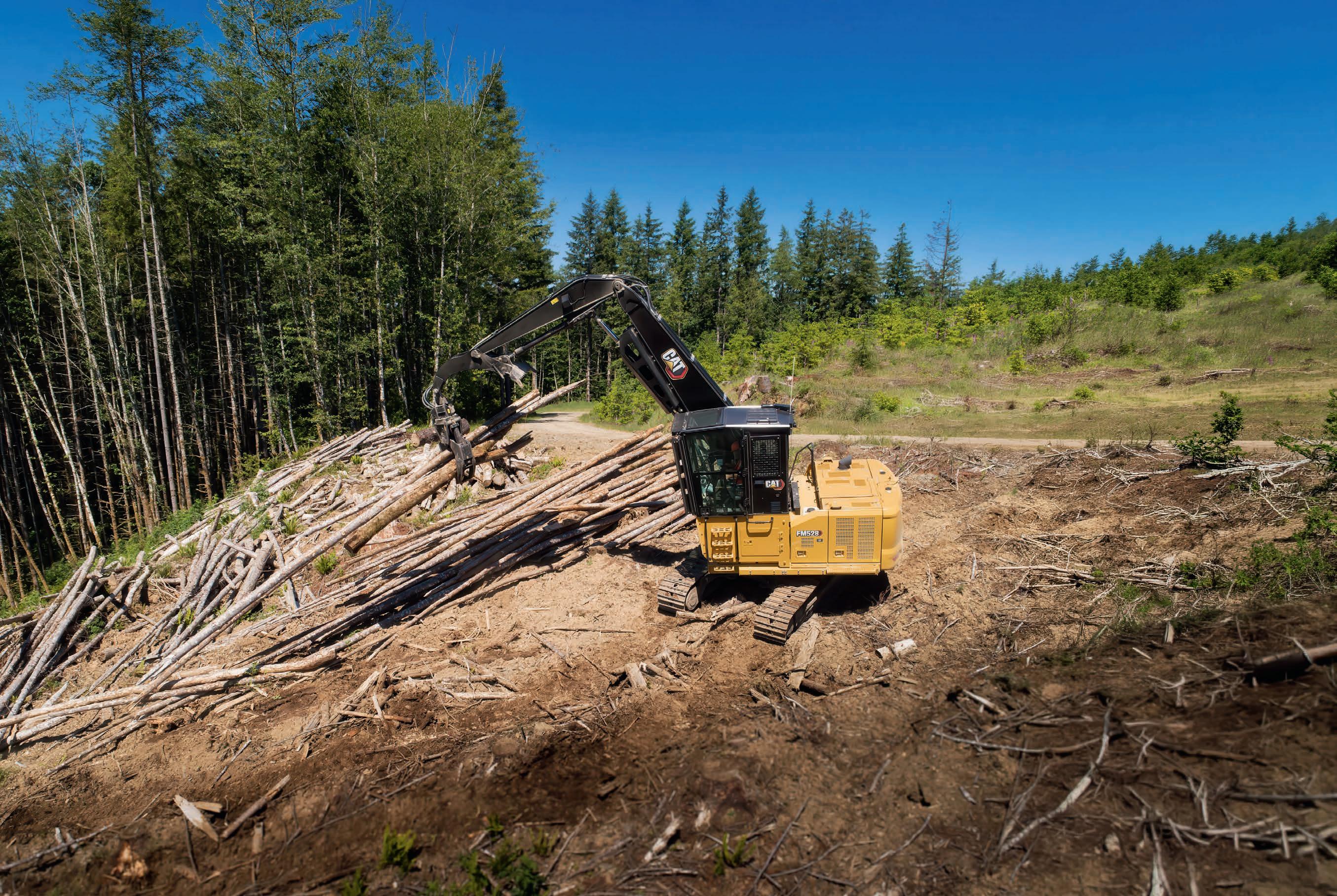
Being purpose-built means this dedicated forestry machine is designed for forestry applications from the ground up



Jim McArdle
B.Ed. Sc (Sydney), Dip. Arb. (Ryde), VTRA@ QTRA quali cations. Director at McArdle Arboricultural Consultancy and TCAA President, Jim’s career spans across almost 40 years and focuses on consulting and reporting in tree risk protection and management plans, and tree impact assessments.
















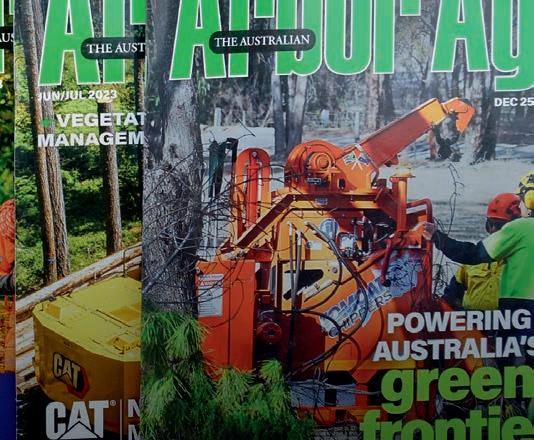
There’s a lot of arbor knowledge and history between these covers. Image:




In all the hustle and bustle of daily work
I missed an important milestone: The Australian Arbor Age magazine has just ticked over 30 years as Australia’s voice of arboriculture.
The rst issue went on sale in March 1996, and by the end of the second week the title had 200 subscribers. Since then, through all the economic and social challenges, this magazine has found a way to grow, adapt, and continue representing an industry and community for which resilience and adaptability are day-to-day necessities. That’s a good feeling for those of us who put the magazine together.
Give it some thought: three decades of continuous publishing. That’s an achievement, for sure.
It’s also the cause of a little discomfort for me, because I remember working on the issue celebrating two decades, and I wasn’t a young man then. Perhaps that makes me a good t for a magazine that


has as its subject a life form whose time in this world can span centuries.
The 30-year mark also makes me take stock and wonder what’s ahead for both the magazine and the arboriculture community.
I have to say, the future is looking positive on both counts. Since ‘Arbor Age’ came to Prime Creative Media around ve years ago, it’s had the support only a large company sta ed with capable people can o er. The arboricultural world has also matured, and by just about any measure is looking strong. Associations are actively promoting tree care as a career, competitions are gaining momentum, and Australian arborists have earned a great deal of respect internationally in recent years.
Our climbers do well, but Husqvarna’s nurturing of gifted arborists through its H-team ambassador program has highlighted some gifted Australian arborists to the rest of the world. More

widely viewed, but with a less focused audience, the success of Aussie teams in STIHL’s Timbersports events has brought the high standard of Australia’s arborists and forest workers international attention in the best possible way.
There are a few challenges confronting arborists at the moment, but there’s nothing new in that, and I have little doubt the arbor community will adapt and overcome. You can be sure The Australian Arbor Age will do the same and will continue to support Australia’s tree-care industries – hopefully for another three decades.
Let’s see how we go.
Tom Foster Editor


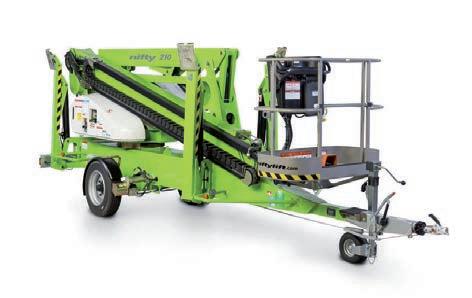
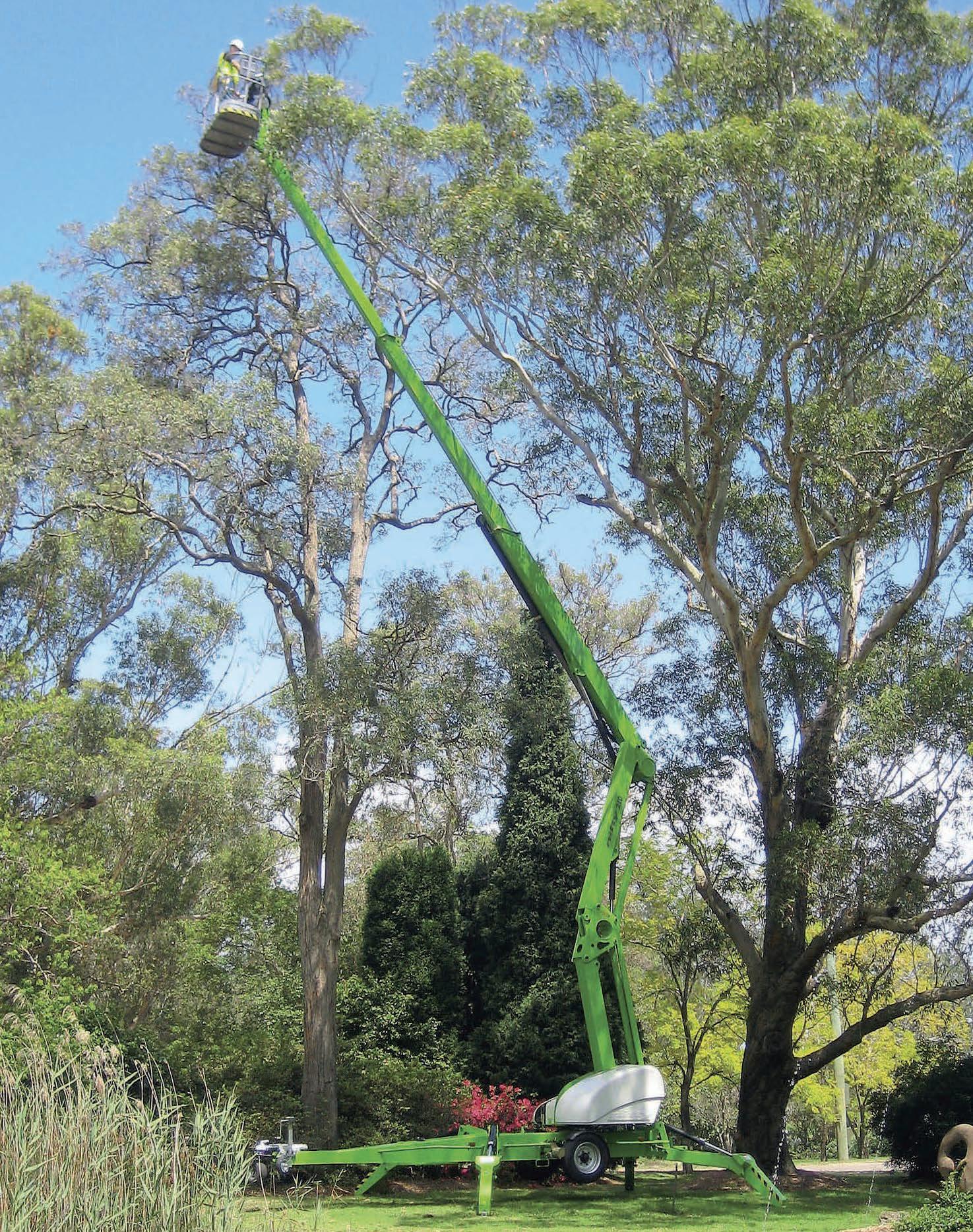
Working Height: 21m
Working Outreach: 12m
Safe Working Load: 225kg
+ Designed & Built in UK
+ Local Support Teams
Best Outreach in its Class
+ Low-Weight Chassis
+ Outstanding Safety Technology
+ Diesel and AC Power
+ Multi-Award Winning

Spain’s Dragon Tree features on the country’s 1000-peseta note.
Believed to be the world’s largest and oldest living specimen of Dracaena draco, the Dragon Tree has stood for centuries in Tenerife, Spain.
Nobody’s sure how many centuries, and the academics get a little heated when it comes up for discussion. A 1907 estimate by the Polytechnic School of Zurich put the tree’s age at 2500 years. But then, in 1975, paleobotanist
Karl Mägdefrau believed it was only 350 years into maturity.
That didn’t win him many amigos among the Spanish tourism people, we can tell you.
We’ll go with ‘several’ centuries to avoid controversy.
Height and circumference are both around 20 metres, and it’s estimated to weigh around 140 tonnes. When it owered in 1995 it had 1800 owering branches, with its weight increasing by 3.5 tonnes during the fruiting season.
Declared a national monument in 1917, the trunk contains a six-metre-high cavity in which a forwardthinking arborist installed a mechanism to circulate air and prevent fungal growth.
So although Spain’s Dragon Tree may not be universally well known, it does have at least one fan.
El Drago, also known as ‘Drago Milenario’ and ‘Drago de Icod de los Vinos’, is the oldest known specimen of Dracaena draco.
Image: AlexanderNikiforov/stock.adobe.com


A hundred years ago, we created the first chainsaw. Since then we have become synonymous with tools that make working in nature easier. Built with legendary performance and enduring quality, our roots in professional forestry have evolved into a broad range of tools that have been designed for those who demand the best.
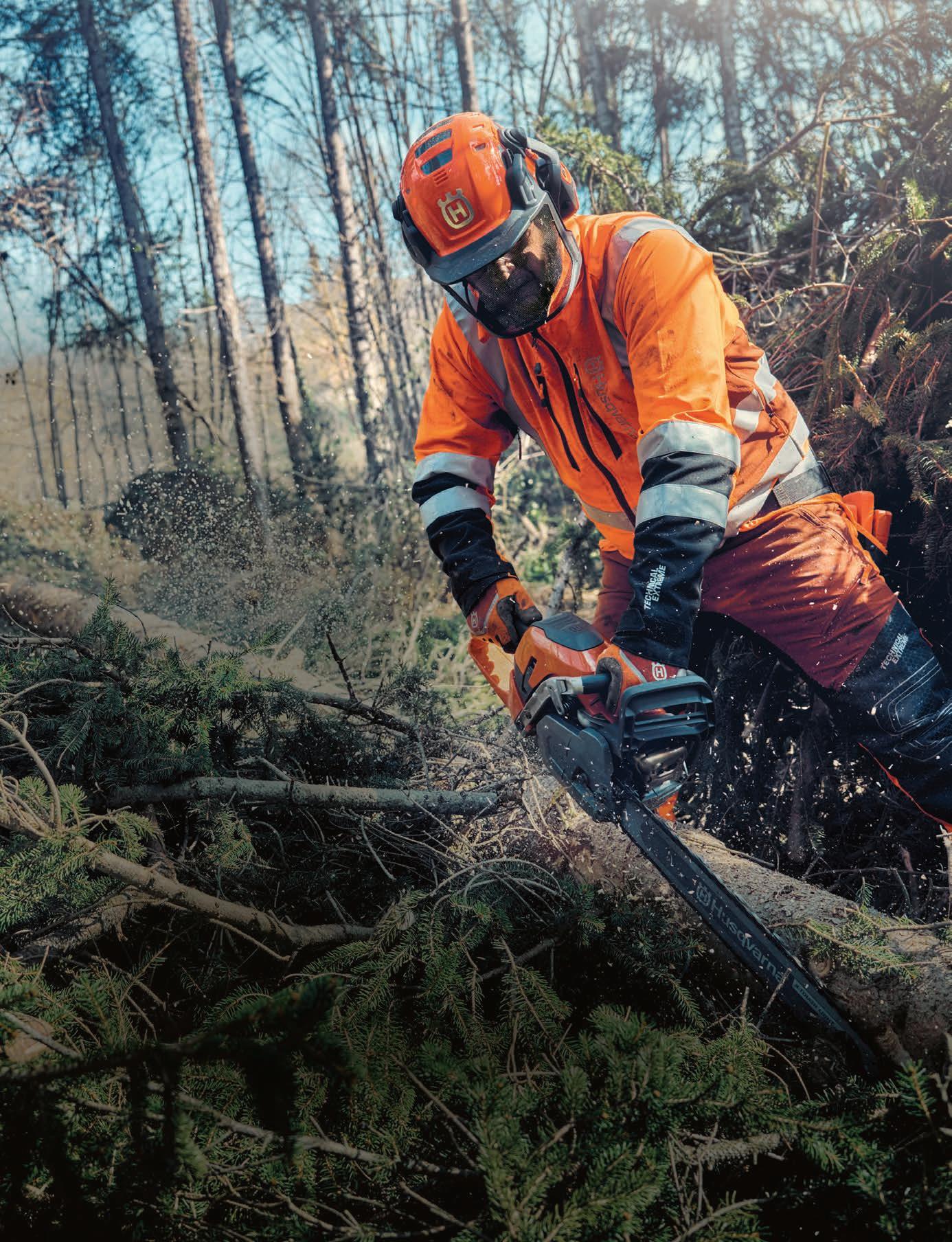
Husqvarna’s rst fuel-injected chainsaw has carved out a place in Australian arboriculture.

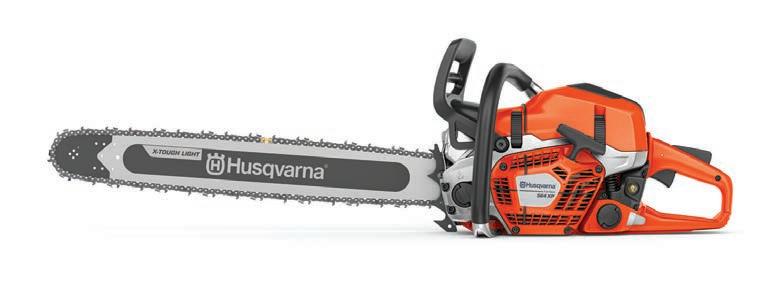
Husqvarna, a global leader in outdoor power products, is proud to present the Husqvarna 564 XP® fuel-injected chainsaw. Output shaft power is a hefty 4.0kW, while chain speed around the 15”-24” bar reaches 21.3m/s.
The 564 XP® delivers an innovative combination of advanced technologies, including the fuel-injection system, and a new engine for instant acceleration and maximised productivity throughout the workday. Furthermore, the user experience is re ned with an easy starting procedure and low vibrations, reducing strain on the operator’s body for less fatigue and stress.
The Husqvarna 564 XP® is a gamechanger in its class.
Thanks to its fuel-injection system and new engine layout, the 564 XP® o ers e ortless handling across a range of tasks.
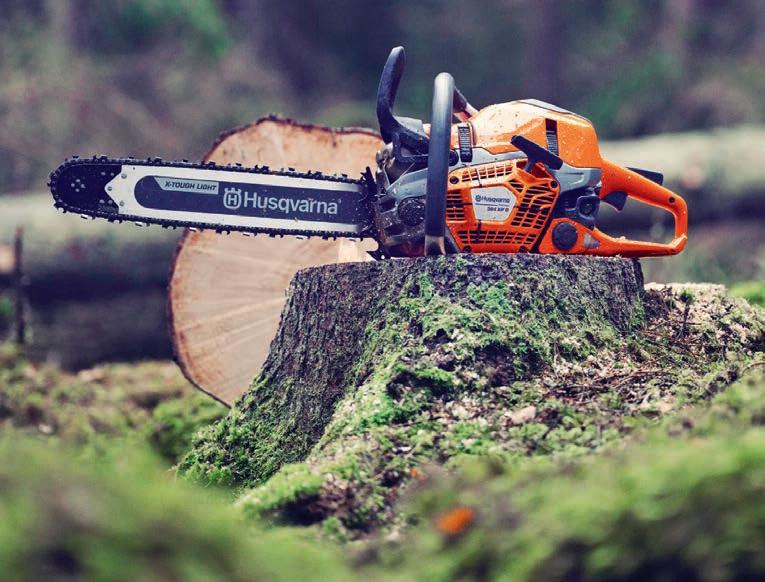
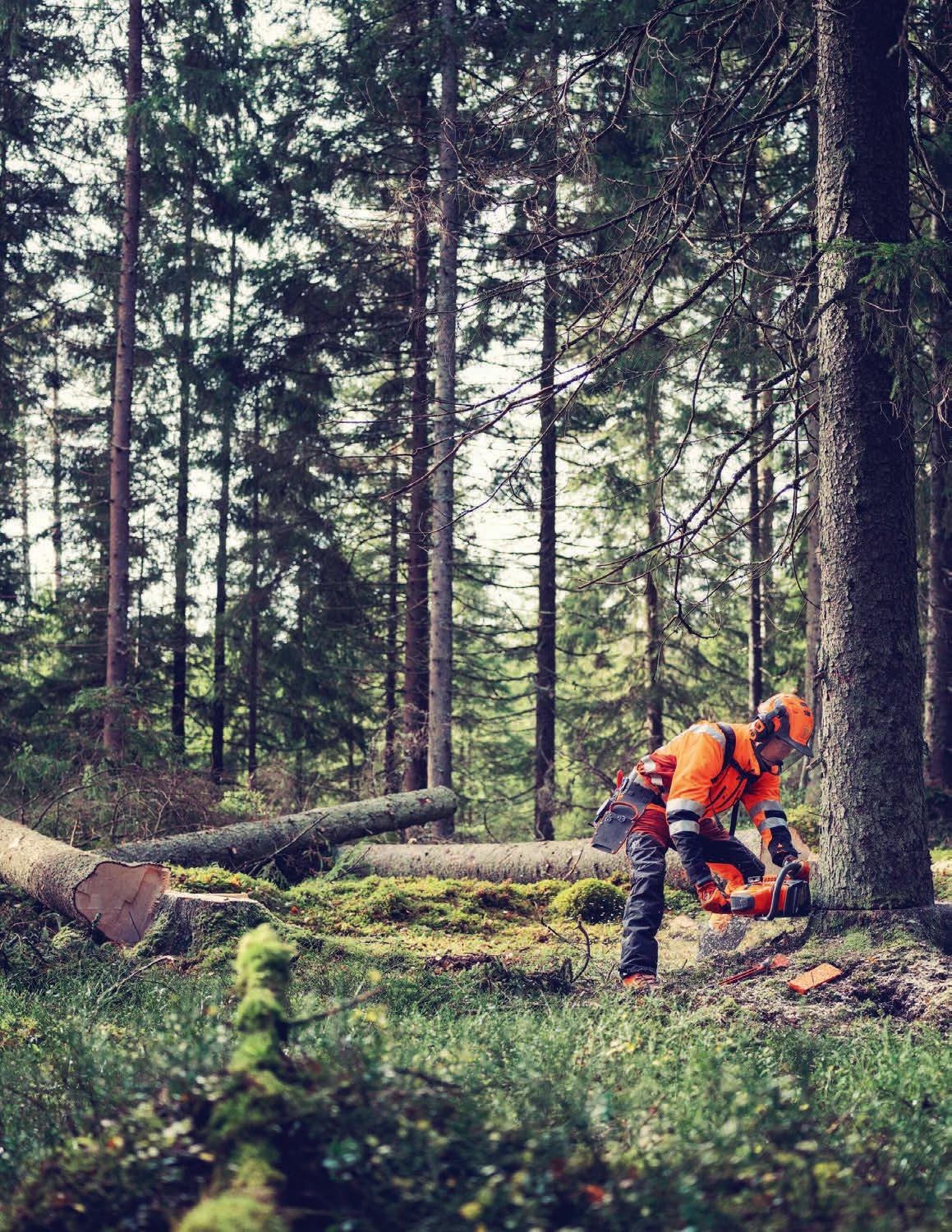
“The Husqvarna 564 XP® will be an instant favourite among tree professionals,” said Gabriele Dovier, tree-care professional and H-team ambassador. “It’s incredibly compact, yet powerful, with a power-to-weight ratio that makes an impression.
“Add in the smooth starting procedure and low vibrations and you have a saw that professionals will trust for long workdays.”
To learn more about the Husqvarna chainsaw range, visit husqvarna.com/au/chainsaws.
Husqvarna 564 XP® features
• Fuel injection
• Outboard clutch
• Short stroke engine
• Slimmed-down design
• Lightweight mu er
• Ability to carry longer bars
• Magnetic lter
• Air injection lters 98% of incoming dust
• Flip-up tank cap
• Snap-lock cylinder cover
• 2K moulded fuel window
• Low vibration
• X-CUT chain®
• Captive bar nuts
• Improved serviceability
• Made for professional use
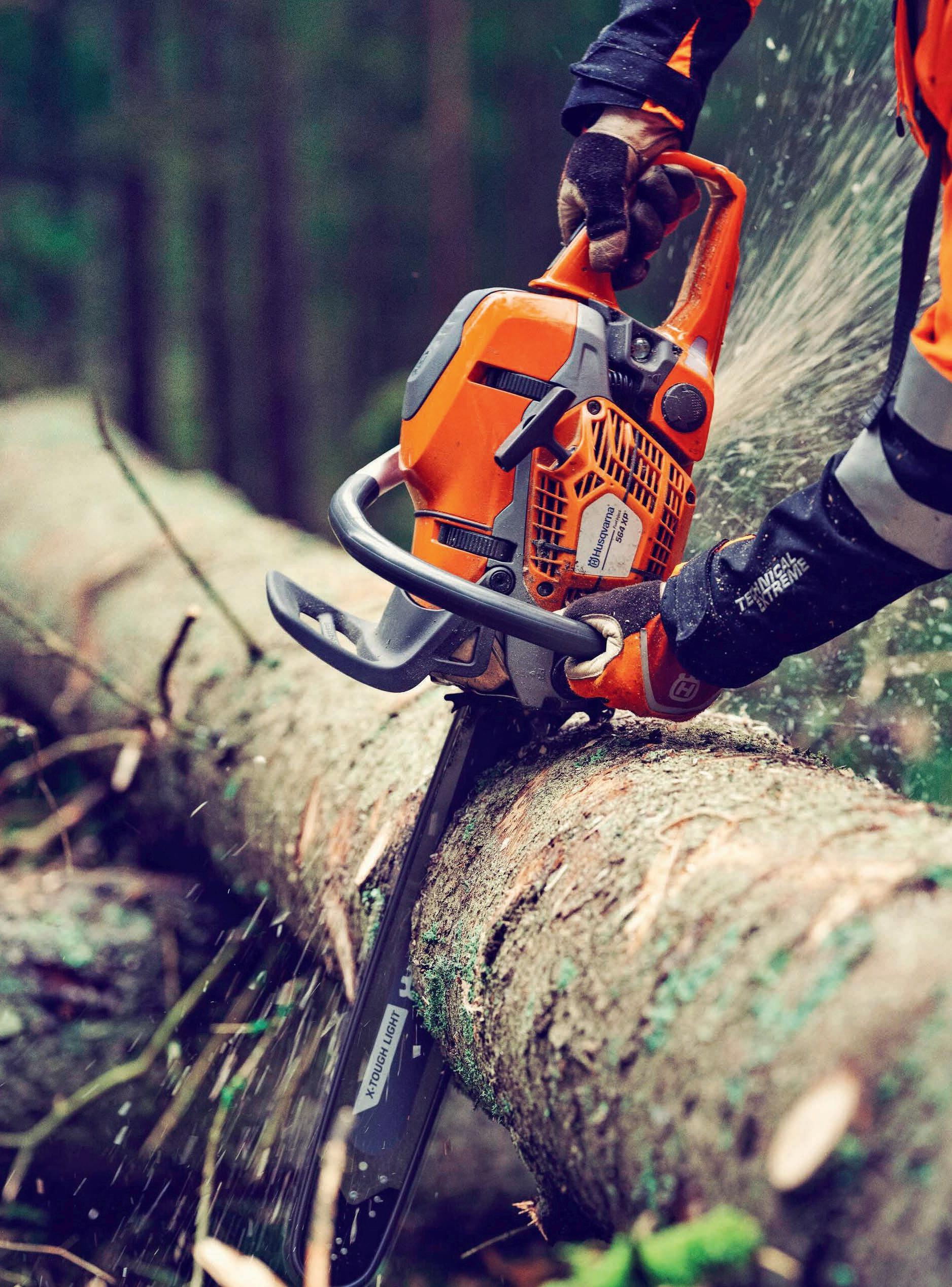
Chain speed at maximum power is 21.3m/s.



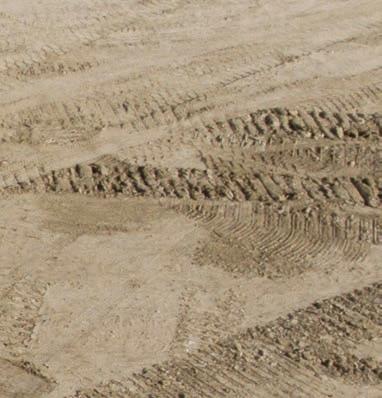
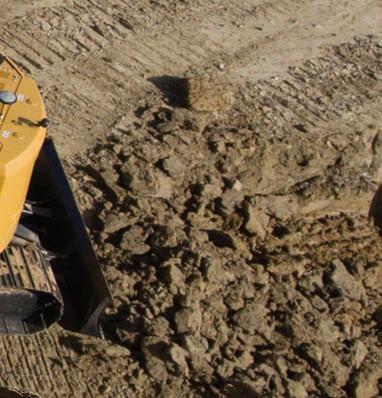








Mike Ellison of Quanti ed Tree Risk Assessment outlines the challenges of establishing and managing trees in our urban environment.
Urban arboriculture is being reshaped by two accelerating forces: climate change and the spread of exotic pests. These two factors increase the physiological and structural stresses on trees. They can reduce the lifespan of urban tree plantings and increase the likelihood of their failure. At the same time, cities are becoming increasingly reliant on trees to mitigate the urban heat-island e ect. Hard surfaces like roads and buildings absorb and trap heat while tree cover is limited.
For arborists, the challenge is managing risks to and from existing trees while ensuring new plantings are resilient enough to survive in harsher future conditions. Here are some of the key implications of climate change and exotic pests for urban trees, and how high-quality planting and maintenance,
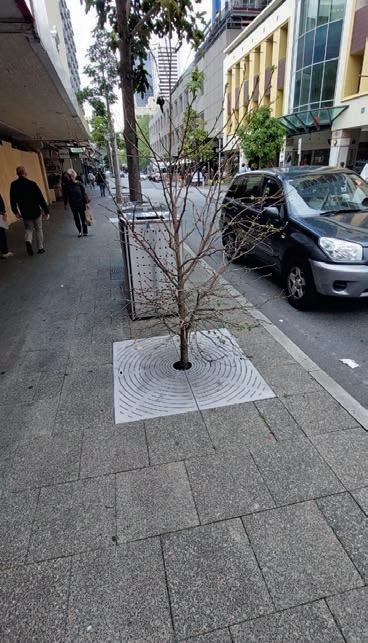
particularly tree selection and belowground design, can help establish more resilient cities.
Climate change is increasing the risk of mortality in urban trees
Urban trees are experiencing unprecedented temperatures. Heatwaves are longer and more frequent, and the urban heat-island e ect raises temperatures even at night. Research indicates many tree species cannot physiologically acclimatise to elevated temperatures, meaning their thermal tolerance does not increase in line with warming conditions.
For arborists managing urban trees, this translates into more frequent canopy decline and dieback, increased water stress – especially in con ned rooting environments – susceptibility to disease and insect pests, a potentially higher incidence of sudden branch drop during and after hot and dry conditions, and potentially reduced growth rates and shorter lifespans.
Heat-stressed trees might show subtle early symptoms, such as reduced leaf size and density or premature leaf senescence. Those symptoms can impact the tree’s resilience to hot, dry conditions, and that can sometimes lead to a spiral of decline.
Drought is a climate-driven stressor for trees, limiting ne-root development and the uptake of water and mineral nutrients. In urban settings, where soil volumes and conditions are often already sub-optimal and a limitation on growth, drought stress can escalate quickly. Higher temperatures can increase pest reproductive rates and reduce winter mortality. Urban heat islands may create microclimates where exotic pests that vector fungal pathogens, such as the Polyphagous Shot Hole Borer, can thrive outside their natural range.
Arborists managing urban tree populations should expect more trees to experience physiological stress and greater vulnerability to secondary pathogens that exploit droughtweakened trees.
Many urban tree populations rely heavily on a small range of tree species. This creates vulnerability to speciesspeci c pests and disease. Arborists can play a key role in advising councils and clients on diversi cation strategies that reduce pest-related risk.
Trees are our most e ective natural tool for mitigating urban heat. They provide shade and reduce surface temperature, and evapotranspiration has a direct cooling e ect. However, these bene ts depend on large, healthy, long-lived trees. Short-lived and poorly established trees contribute minimal bene ts.
While the urban heat-island e ect increases the need for trees, it also increases the di culty of establishing and maintaining them. This makes highquality planting in a sustainable rooting environment even more important.
Arborists are uniquely positioned to in uence planting standards, species selection, and below-ground design, and can guide clients toward species that demonstrate:
• High thermal tolerance;
• drought resilience;
• pest and disease resistance;
• strong structural form;
• proven performance in comparable climates; and
• diversity of interest.
Species selection should consider future climate projections, not just current conditions, and this may require introducing new species and reducing reliance on species proven vulnerable
to the e ects of climate change. Even within a species, selecting plants of a known provenance and proven resilience in hotter, drier conditions should be a priority.
Diverse plantings reduce the likelihood of catastrophic pest outbreaks and improve overall resilience of urban tree populations, so seeking to reduce reliance on a small range of species is essential.
On the fringes of urban developments is the interface with native ora and fauna where we should not lose sight of the interdependency of those coevolved species. Even where native trees are experiencing decline, wherever possible, we should seek to retain them for the bene t of other species, particularly fungi and invertebrates, which often rely on species-speci c habitats including hollows and cavities, dead wood and decay.
Most urban-tree planting failures originate below ground.
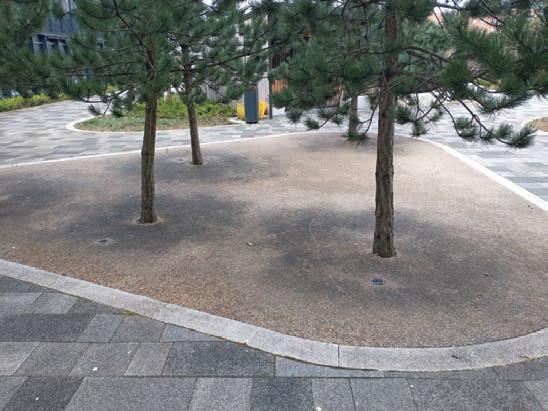
To provide optimal bene ts, tree planting must include adequate soil volume to allow root growth under pavements and adjacent to infrastructure. Specialised load-bearing systems should be used where necessary to enable the provision of rootable soils without compromising load bearing capacity. Soil conditions must provide water and mineral nutrients, but also drainage and aeration. Compromise on any of these elements will result in suboptimal conditions for the tree.
Passive irrigation systems (stormwater harvesting and kerb inlets such as those developed by treenet.org) can improve establishment and long-term health.
Climate change and exotic pests are increasing some of the risks to and from urban trees, but they also highlight the importance of trees as critical urban infrastructure. For arborists, the challenge is to manage these risks while ensuring new plantings are designed and maintained to thrive in hotter, more variable climates.
By focusing on resilient species, diverse plantings, and high-quality below-ground conditions, arborists can help cities build urban forests that are safer, cooler, and more sustainable for decades to come. As an industry, we can guide urban designers towards more successful tree establishment and management solutions.
Long-term survival must trump aesthetic design.










Multifunction machines can improve safety.
A
focus on operational factors can improve safety and performance when servicing road shoulders and adjoining areas.
Crews maintaining roadsides and right-of-way corridors manage uneven terrain, seasonal workload shifts, and equipment limitations, often while working with tight budgets and small teams. Multifunction machines can improve safety and e ciency in those circumstances.
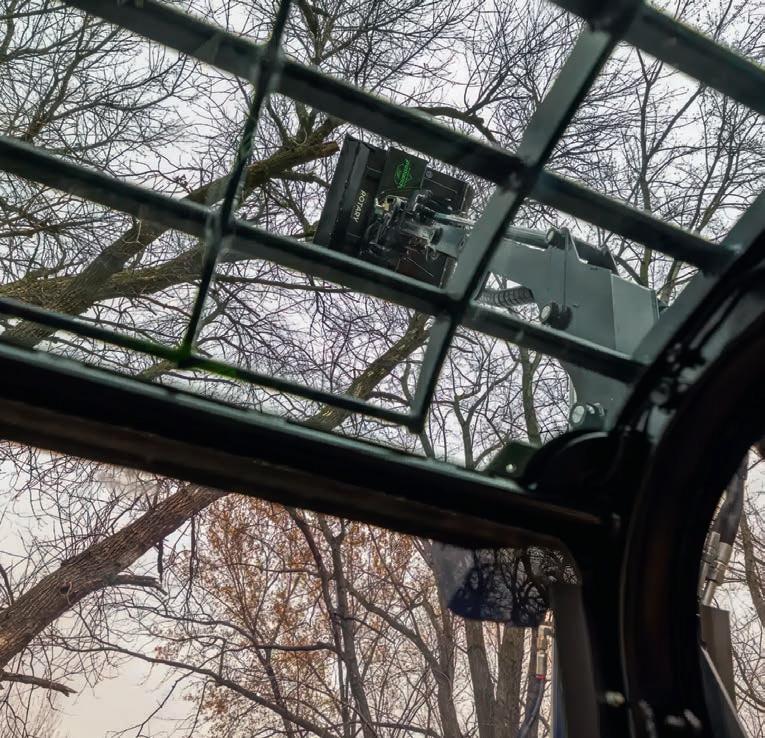
Roadside work zones underscore the importance of visibility and operator awareness. One of the immediate ways teams can improve both safety and e ciency is by reducing blind spots and improving operator sightlines.
In right-of-way work, visibility directly a ects both operator awareness and work-zone control. Limited sightlines can make it harder for operators to monitor what’s happening immediately around the machine and maintain a clear view of the cutting head, often forcing personnel to reposition equipment or rely on spotters. Over time that can reduce e ciency, increase fatigue, and make it more di cult to maintain safe, controlled work zones. Multifunction machines designed with strong vertical sightlines and
overhead views help operators keep both the cutting head and surrounding work zone in view without constantly repositioning the carrier.
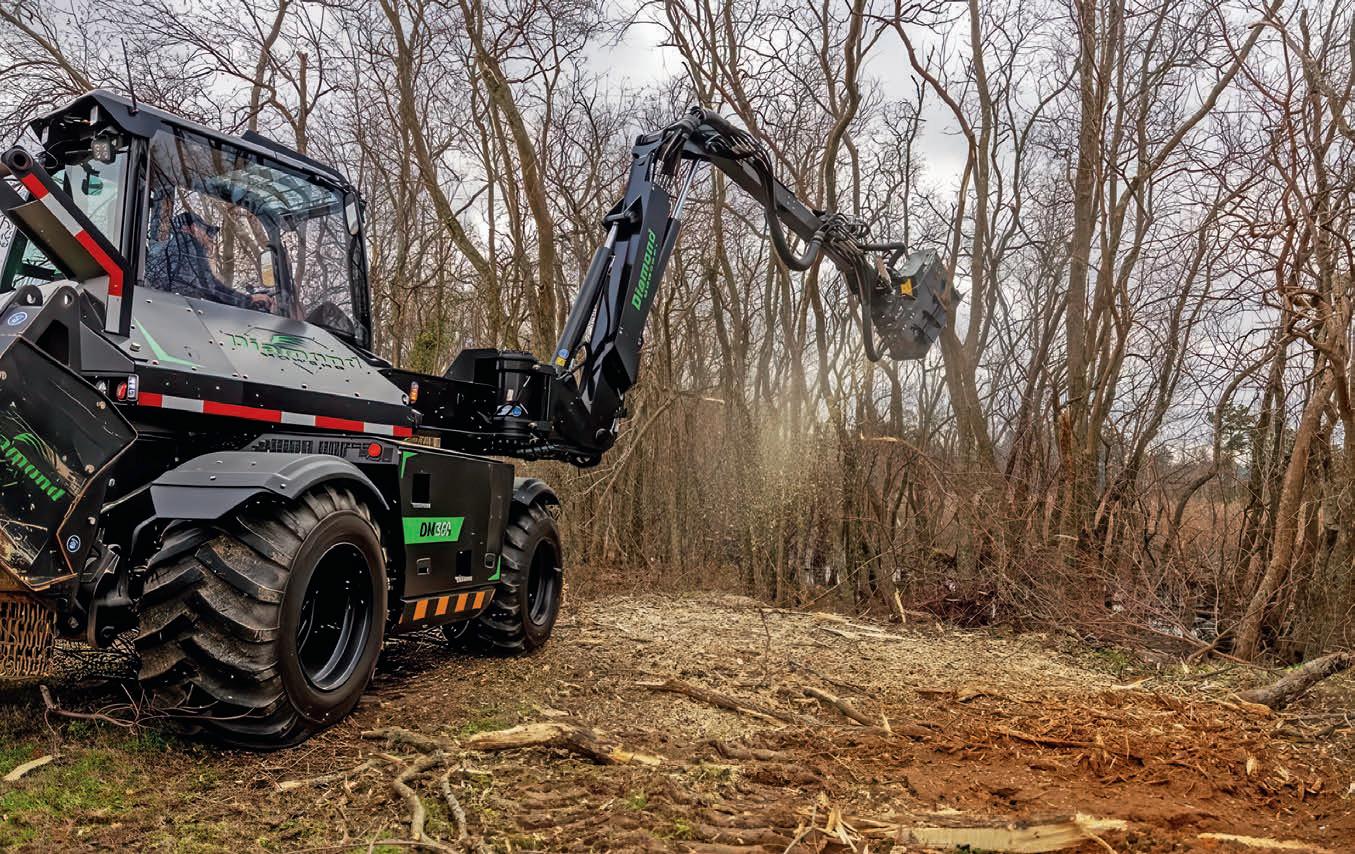
Platforms with rotating cab and boom con gurations, like Diamond Mowers’ DM360™ multifunction machine, allow users to stay aligned with the cutting path while maintaining awareness of nearby tra c and hazards.
By reducing the need to reposition equipment or make multiple passes, these capabilities can also help crews cover more ground in less time.
Visibility is critical, but the way a unit handles uneven terrain can have just as much impact on its performance.
Roadsides rarely o er ideal operating conditions. Soft shoulders, drainage ditches, steep slopes, and uneven ground can introduce stability challenges, so systems designed for right-of-way applications should emphasise balance and weight distribution. Lower engine placement, reinforced chassis structures, and stabilising axles all contribute to a machine’s control, but one of the
biggest di erentiators in roadside stability is how counterweights behave in relation to the boom. Counterweights that move with the boom and remain opposite the work head as the machine rotates help keep weight positioned where it is most e ective for balance and control. The DM360 was designed with this in mind from the start, pairing the lower engine placement with a boom-responsive counterweight system to help maintain more consistent stability and reduce strain on hydraulic systems and components.
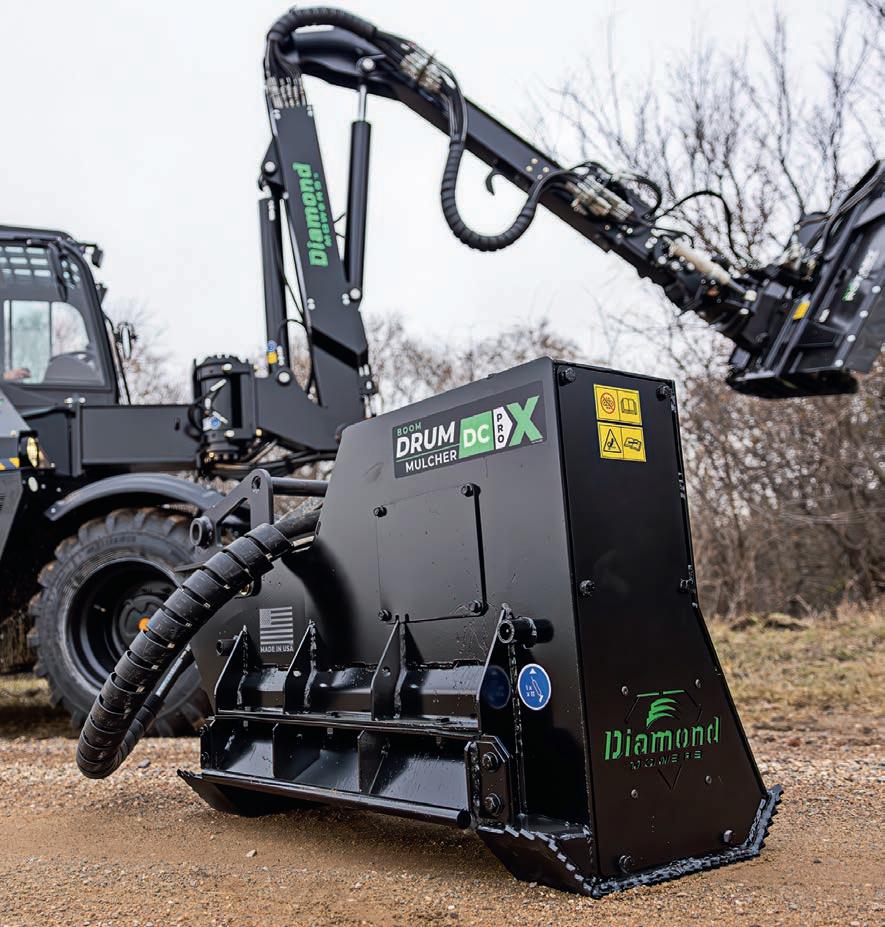
To improve return on investment, many organisations look for machines that support multiple implements. Depending on con guration, multifunction machines may support boom mowing, brush cutting, ditch clearing, mulching, stump grinding, and snow removal. While the DM360 is a strong example of a exible boom machine, the DM360X™ extends that versatility with a universal skid-steer hitch and variable high- ow hydraulics that allow it to run a wider range of skidsteer attachments.
Vegetation management often requires long shifts operating along highways and thoroughfares, so machines designed with comfort in mind can have an impact on productivity and safety.
The DM360 o ers functional seating, intuitive control layouts, and simpli ed interfaces that help workers maintain consistent performance throughout the day. Joystick steering and responsive hydraulic controls also improve manoeuvrability when working along tight corridors.
Once the right multifunction machines are in place, day-to-day operating habits become the next driver of e ciency. There are several simple practices that can help improve output in roadside environments, including:
• Setting boom reach and attachment angles before entering work zones;
• planning work routes to stay aligned with tra c ow;
• conducting daily inspections of hydraulic lines, cutting heads, and boom pivot points;
• adjusting travel speeds based on vegetation density rather than running at maximum RPM; and
• tracking operating hours across seasons to identify under-utilised equipment.
As roadside-maintenance demands grow, contractors are placing greater emphasis on eet tools that support safer, more e cient operations across a variety of tasks. Dedicated carriers designed for roadside environments are gaining attention for their ability to combine operator visibility, vehicle stability, and attachment exibility. Roadside maintenance will always present di cult terrain, changing conditions, and demanding workloads, but when crews combine purpose-built equipment with disciplined operating practices, they can work more e ciently while maintaining safer roadside conditions.
Diamond Mowers are available in Australia through Colbrook Industries. Visit colbrookindustries.com.au to see the range.
EWP manufacturer Niftylift has taken out a top honour at a European award ceremony.
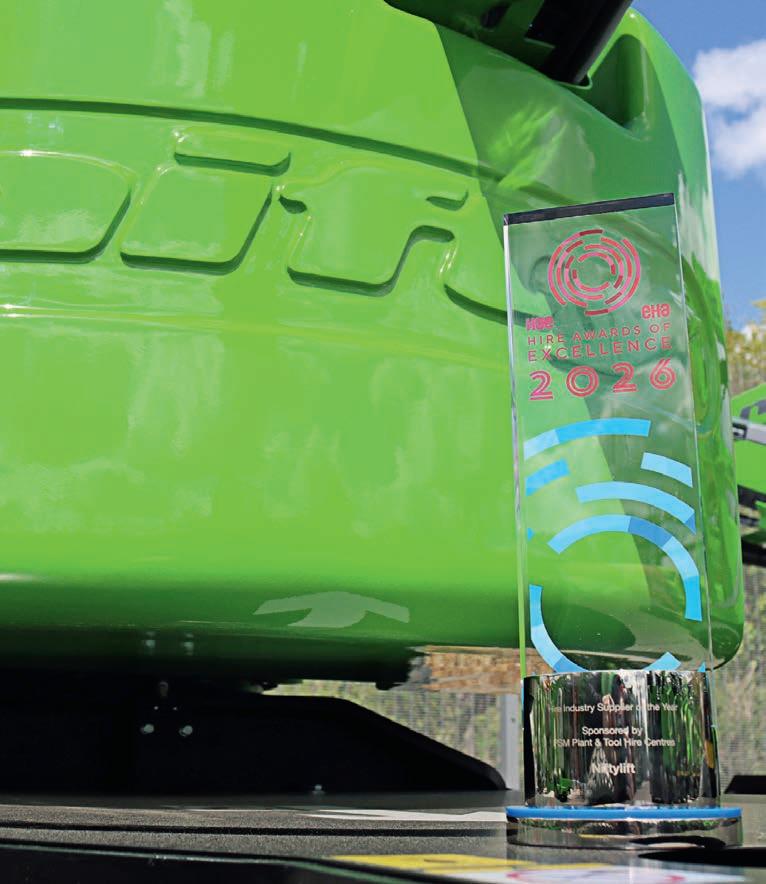
After being shortlisted in two categories at the 2026 Hire Awards of Excellence, Niftylift emerged from a strong eld as winner of the Hire Industry Supplier of the Year.
The Hire Awards of Excellence celebrate the success of companies and individuals across the plant, tool, equipment and event hire industries. Organised by Hire Association Europe (HAE) and the Event Hire Association (EHA), the awards recognise innovation, outstanding products, and the organisations that continue to raise standards across the hire sector.
The awards ceremony in April 2026 was staged at Grosvenor House, Park Lane, London, where leading gures from across the hire industry celebrated excellence and achievement.
Being shortlisted for both Hire Industry Supplier of the Year and Hire Industry Product of the Year highlighted Niftylift’s continued focus on delivering innovative access platforms while supporting rental companies with reliable, e cient and sustainable solutions.
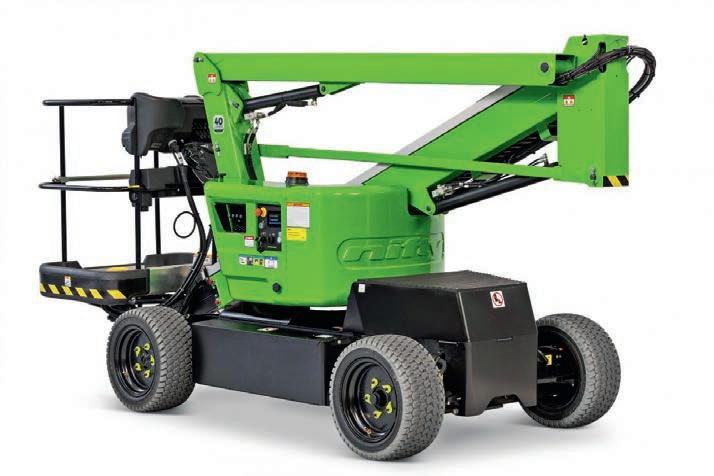
The Product of the Year nomination recognised the impact of the HR12N (MK3) narrow electric boom lift, the latest generation of Niftylift’s compact access platform. Designed to deliver e ciency, low-weight construction, and enhanced operator capability, the EWP gives rental companies a versatile, zeroemission solution suited to indoor and con ned working environments.
The HR12N (MK3) is part of Niftylift’s range of compact self-propelled boom lifts designed for working at height in warehouses, factories and other con ned indoor environments.

Niftylift has built its reputation on designing machines that combine performance, low-weight engineering, and safety technologies. These innovations help rental companies maximise utilisation, reduce operating costs and improve productivity across a range of working environments.
The Supplier of the Year shortlist also re ected Niftylift’s broader commitment to customer support, engineering excellence, and long-term partnerships with hire companies across the industry.
The Hire Awards of Excellence are regarded as one of the most respected annual events within the European hire industry, recognising the organisations and individuals who have made outstanding contributions over the previous year.
Niftylift was recognised among this year’s shortlisted companies and was named Hire Industry Supplier of the Year.
“To be recognised as Supplier of the Year for the third year running is a fantastic achievement for the whole team,” said a company spokesman. “It re ects the hard work, dedication, and commitment Niftylift puts into supporting its customers and delivering products that meet the needs of the hire industry.”
The
Niftylift has been named Supplier of the Year at the 2026 Hire Awards of Excellence for the third consecutive year.

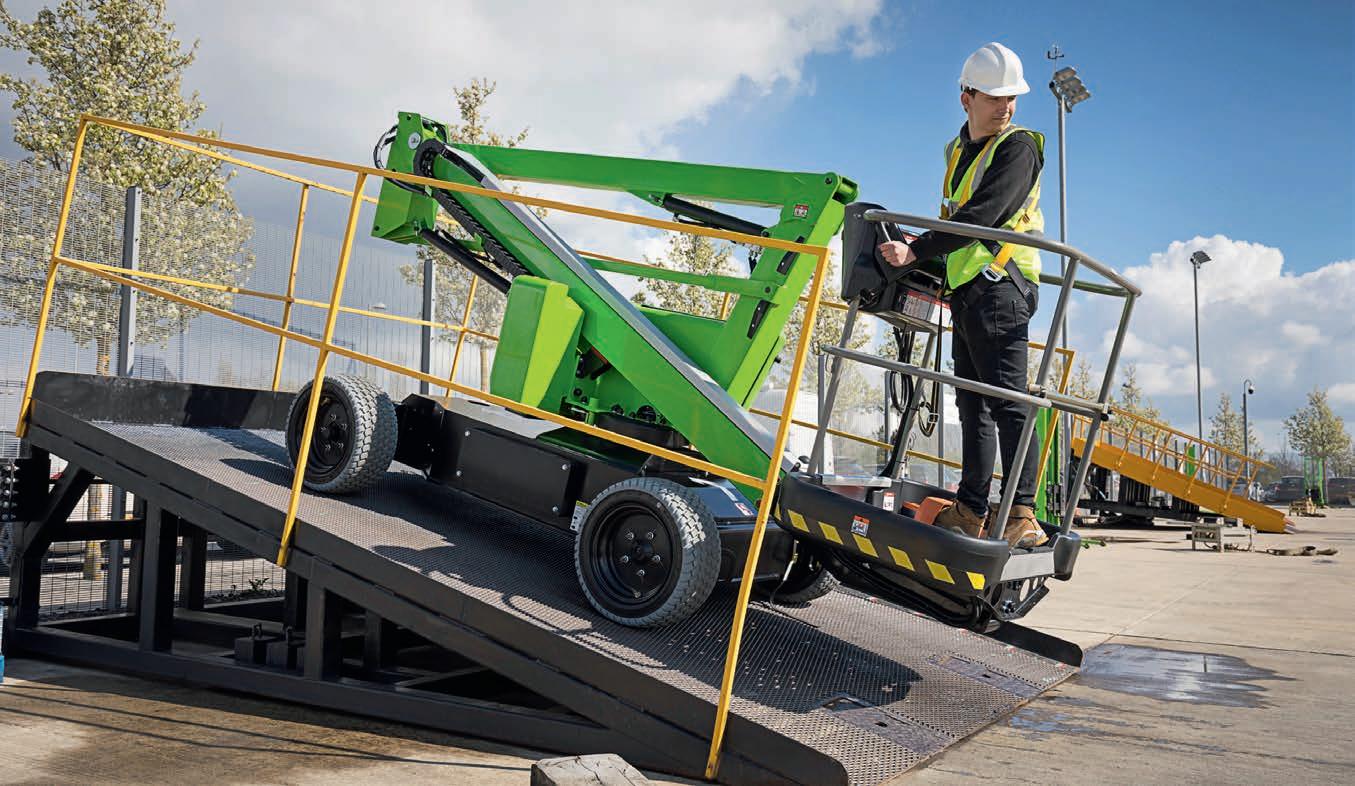
While the MK3 isn’t available in Australia at the time of writing, Niftylift Australia does o er the HeightRider 12 Narrow Electric (HR12NE), a 12.1m self-propelled, zero-emission EWP that can be driven from the cage while elevated or lowered. It also delivers a wide working envelope from a narrowaisle, manoeuvrable chassis.
The HR12NE’s compact dimensions make it ideal for working where narrow-aisle operation is required, and e cient all-electric drive motors provide power and gradeability. A compact turning circle makes manoeuvring easy. Its low weight coupled with compact dimensions can also reduce transportation costs by allowing the use of a smaller, more e cient site-to-site transport vehicle.
The HR12NE utilises an e cient battery power system with an allelectric drive. It has a standard duty cycle of 75, allowing the HR12NE to work up to ve days on one charge, and the impact-resistant ToughCage can accommodate two people and their tools.
The HR12NE features Niftylift’s multi-award-winning Sustained Involuntary Operation Prevention System (SiOPS®), which instantly stops all machine functions if the operator is pushed onto the cage control console by an obstacle, preventing serious injury.
For more information on the HR12NE, visit niftylift.com.au.
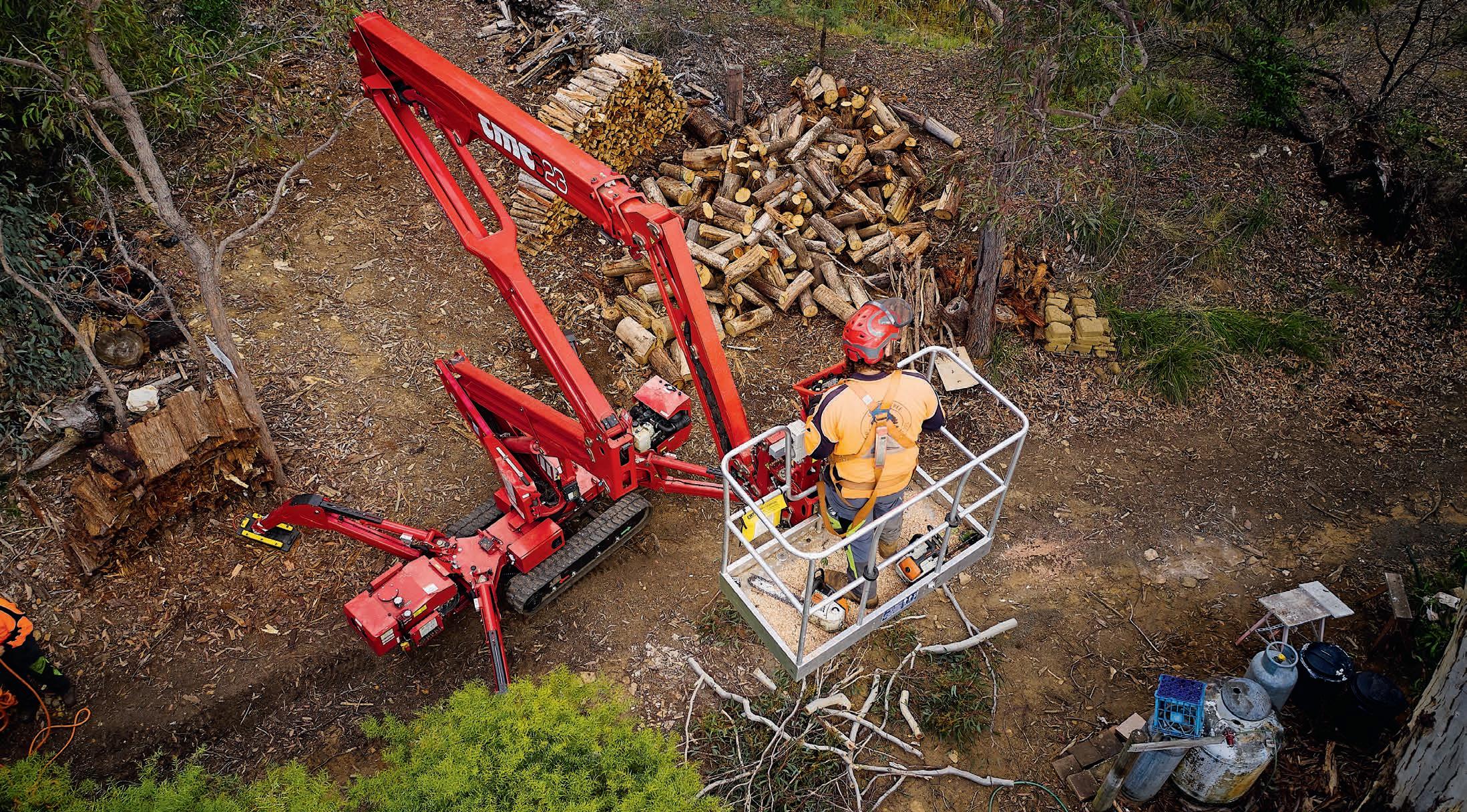
Height, outreach, and tight-access capability make CMC’s S23 a strong t for arbor work. Monitor Lifts’ Chad Firth explains why.
One of the characteristics that draws arborists to the S23 is that it’s one of the highest-reaching lifts you can tow on a 4500kg GVM trailer,” said Firth, National Sales Manager at Monitor Lifts. Monitor specialises in supplying access, lifting, and tree-care equipment. With ve brands of spider lift under Monitor’s care – including CMC – Firth’s unlikely to play favourites. But even so, he has a clear view of what makes the CMC S23 such a practical option for Australian tree-care workers.
“It’s ideal for arborists thanks to its compact dimensions,” he said. “When you start thinking about tight access, you can get the S23 down to 850mm wide, and the double-articulated boom means it has excellent up-and-over
reach. There’s about nine metres of clearance when the bottom boom is fully extended.”
Firth went on to explain that with the nine metres of clearance, the operator in the basket is at around 11 metres up and able to take advantage of a full 12.4 metres of horizontal outreach.
“That’s unrestricted outreach with 200kg in the basket,” he pointed out.
The compact overall size of the S23 is another point in its favour. It’s not only the 850mm width that works on restricted-access sites, as Firth pointed out.
“Being under two metres tall means you can get through almost any
CMC S23 spider lift features
• Double pantograph platform with articulated arms and jib
• Light, geometric platform
• Well-balanced weight, strength, and working height
• The most compact platform with the longest outreach in its class
• Equipped with the Self Control System by CMC for automatic stabilisation, manoeuvring speed, automatic closure of the aerial part, and collision prevention
• Can be transported on a 4500kg GVM trailer
• Radio remote control or wire control
• Can perform simultaneous manoeuvres
• Smooth and precise track movement
• Maximum working height of 23 metres and a maximum outreach of 12.4 metres
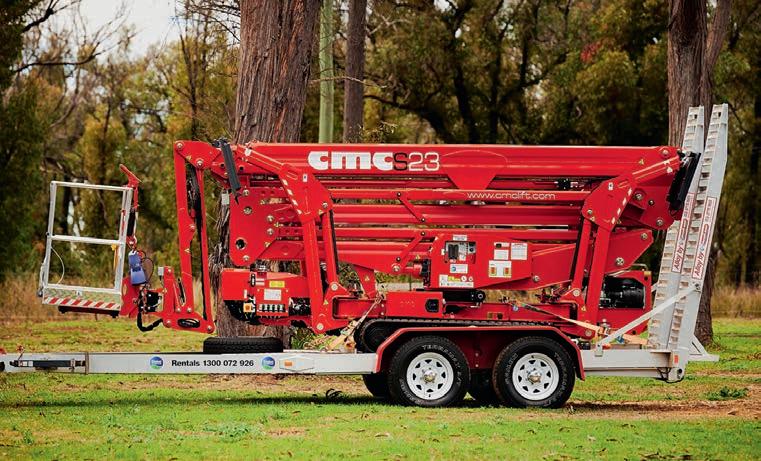
domestic gateway,” he said. “We’ve even seen them make their way under garage doors to access trees in backyards.”
Once the S23’s in place, the technology and build come to the fore, as Firth explained.
“There are several leg positions on the CMC,” he said. “It can be set up in the ‘narrow’ or ‘wide’ leg positions. There’s a lot of outrigger travel if it’s needed, and it runs a radio-controlled remote, so the operator can drive and position the machine from a distance. It’s an advantage when the S23 needs to be sited in a tight spot. The operator can walk around the machine ensuring exact placement while keeping an eye on obstacles or structures.
“The CMC can also be driven from the basket and is renowned for its fast set up. It has auto-levelling outriggers. It only takes the push of a button and the work can start in no time.”
While the speci c traits of the S23 show it to be suited to arbor work, there’s still the basic consideration of whether the machine itself is a sound investment.
“The build quality on the S23 is excellent,” said Firth. “The Italians are producing quality machinery, even down to the Kubota diesel. It’s an engine well-known for its longevity and reliability, and the spider lift itself is built with quality steel that’s both light and durable.”
Being under two metres tall means you can get through almost any domestic gateway “ ”
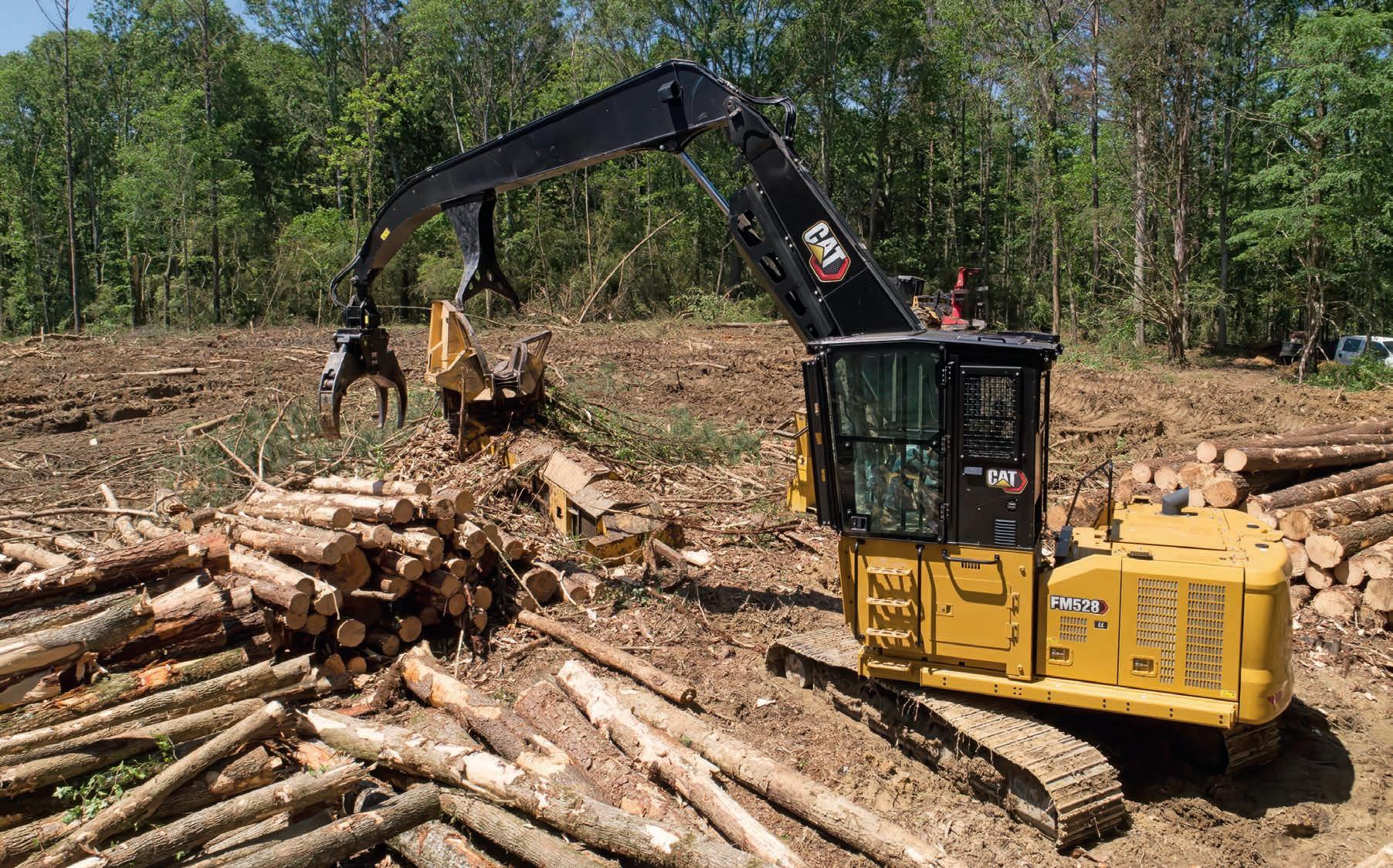
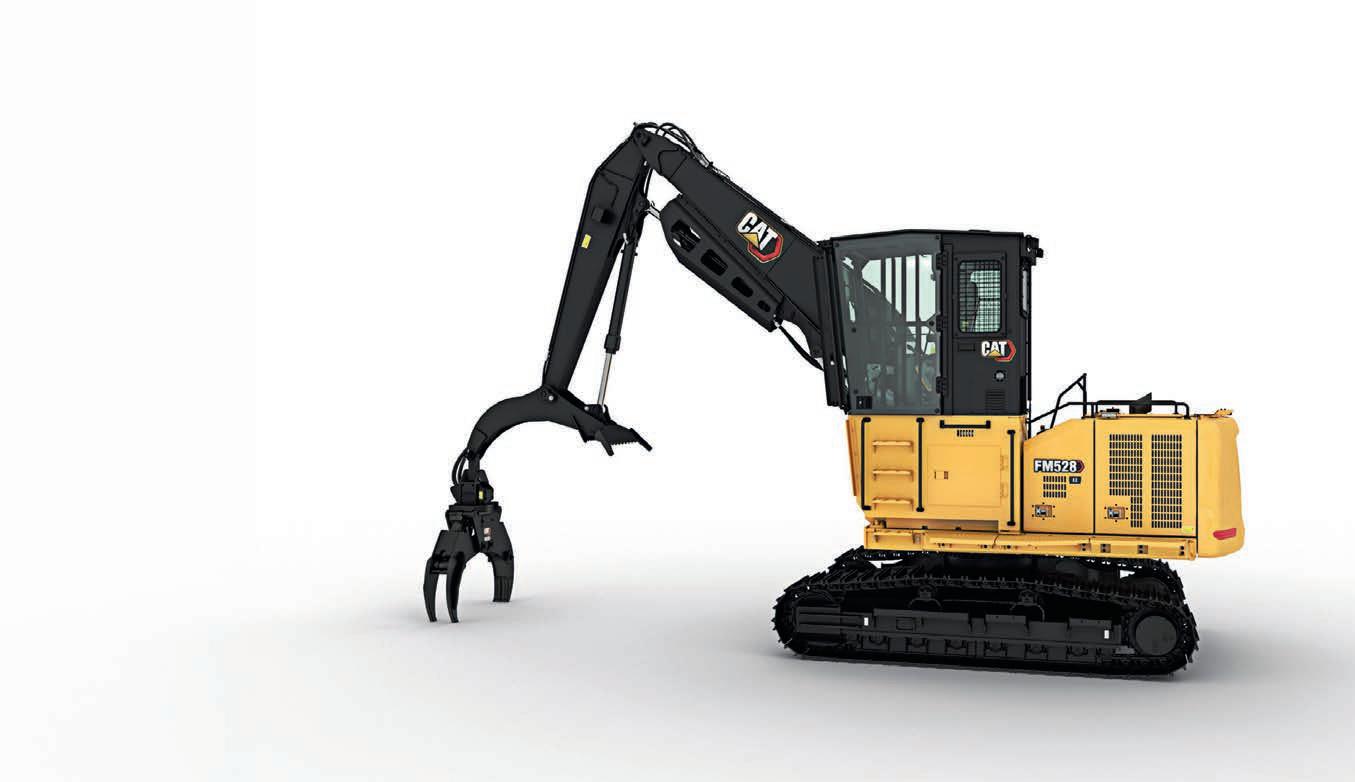
The Cat FM528, a dedicated and purpose-built forestry machine, is built for working in the bush.
The FM528, whether con gured as Log Loader (LL), or General Forestry (GF), can be used for truck loading, sorting, mulching, processing and land clearing. For mulching requirements, the FM528 can be paired with the Cat HM2615 Forestry Mulcher.
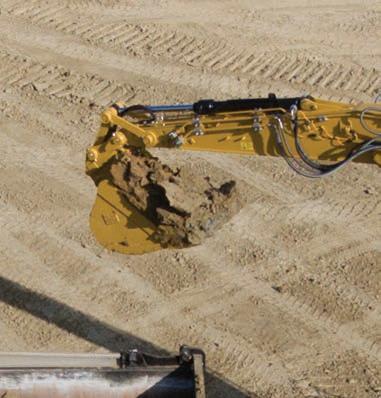
A rst-ever feature on Caterpillar’s forestry machines, the FM528 provides a hydraulic blade tted to the undercarriage, allowing operators to push dirt during road building, and provides an anchor while working on steep slopes.
The FM528, when con gured as a Log Loader, features a 360-degree rotating head and live heel for loading on challenging terrain.
Powerful and e cient
Powered by a 129kW (173hp) Cat C4.4e TTA diesel engine, the FM528’s electrohydraulic system ensures smooth and precise operation, while the engine works at low RPMs,
Caterpillar FM528 General
Forestry/Log Loader features
• Side-entry Next Generation Certi ed Forestry cab with a reinforced structure, a 1.25-inch (32mm) thick polycarbonate windshield, narrow cab pillars, large panoramic windows, and a at engine hood
• Fixed or live heel-and-blade option
• A Cat C4.4 173 hp (129 kW) engine and electrohydraulic system that provides high power at low RPM
reducing wear and tear and helping to lower maintenance costs.
Being purpose-built means this dedicated forestry machine is designed for forestry applications from the ground up. It may appear similar to an excavator from a distance, but it’s vastly di erent.
A high and long undercarriage with heavy duty guards, cab riser, forestry cab, higher swing torque, and added component protection are built into the machine at the factory, providing a ready-to-go solution for customers.
Lower maintenance costs
Caterpillar has designed the FM528 to share common parts and service requirements with its Next Generation excavators, ensuring ready availability of replacement parts and helping reduce downtime.
With these features the Cat FM528 is designed for demanding forestry applications.
Find out more about the FM528 General Forestry/Log Loader at cat.com/en_AU.
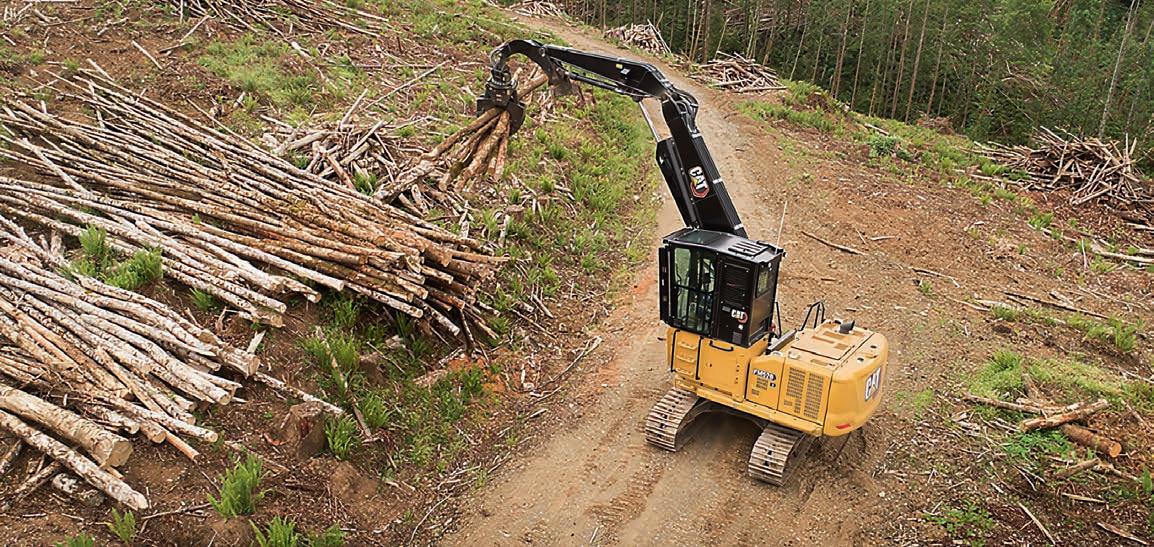
A xed or live heel-and-blade con guration helps operators handle steep terrain, heavy logs, and sorting tasks.
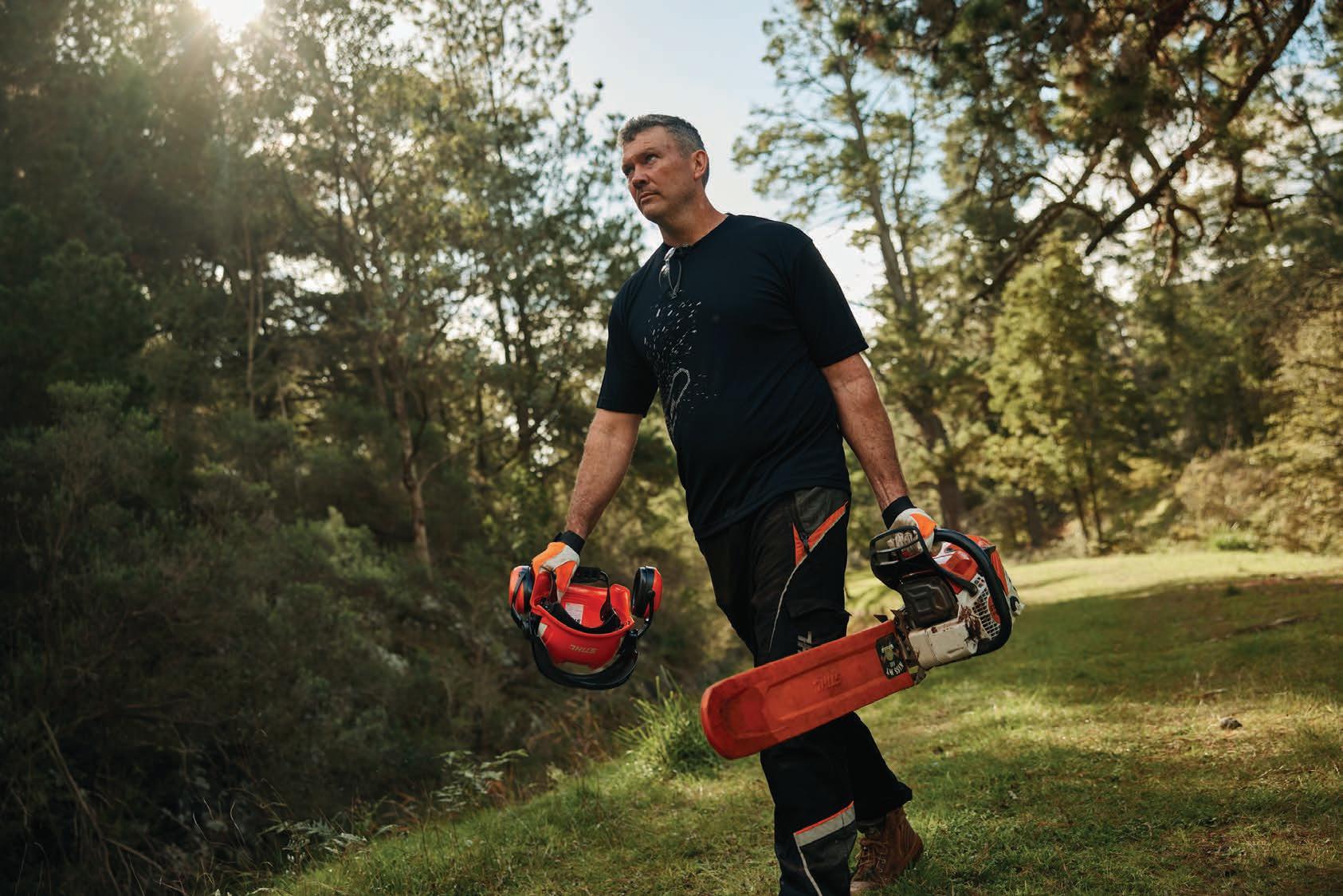
STIHL Australia has stepped up its commitment to Chainsaw Safety Week, partnering with Timbersports champion Laurence O’Toole.
In 2026 Chainsaw Safety Week runs from June 14 to June 19, and while safety precautions should never be relaxed around power tools, the potential severity of chainsaw injuries justi es highlighting their correct use and the importance of chainsawspeci c PPE.
Who could be better prepared to speak to the arbor industry about those things than a quali ed arborist who’s also a world-champion woodchopper, Hot
Saw competitor, and two-stroke tuning specialist?
That’s Laurence O’Toole, STIHL’s 2026 Chainsaw Safety Week ambassador.
In a good place
Based in Preston, Victoria, Level 3 arborist and third-generation timber worker O’Toole owns and operates O’Toole Tree Solutions. The Australian Arbor Age caught up with the champ on a busy workday when he took the time to
down tools and chat about his work and passion for chainsaw safety.
“My father had a business and I started working for him in the 1980s,” he said. “Since then I’ve always worked for him. I nished school and did my Cert 3, and now Dad’s retired and I run the business.
“It’s starting to ramp up a fair bit. My woodchopping has taken a bit of a back seat.”
While the business does take a fair slice of O’Toole’s time, he’s still a world-class
competitor with both axe and chainsaw and has to balance his commitments.
“O’Toole Tree Solutions has been running 40 years and it’s the best job I could have,” he told The Australian Arbor Age. “Working in arbor lets me go chopping around the world and come and go as I need to. I’m not pushing to expand the business too much because I still like to get away and chop and I don’t want too much stress in my life.”
Busy he may be, but O’Toole can nd time for chainsaw-related activities, especially when it comes to their safe and correct use.
“I actually asked STIHL for the ambassador’s job,” he said.
“STIHL has always had sports-celebrity representation, and I suggested instead of footballers or other sports people,
maybe I could do it. I thought my arborist and competition background would be suitable. I suggested I could talk from a hands-on point of view, and I’ve experienced a lot of scary things with chainsaws. I have a personal belief that it’s an important topic.”
With a lifetime in tree work and with chainsaws, we wondered what safety trends had caught O’Toole’s eye. PPE
came up straight away.
“The younger generation are great with PPE and safety,” he said, “but a lot of the older people aren’t so much. My dad never wore chainsaw pants in his whole life. He still doesn’t. He comes to work with me and I’m like, ‘C’mon, Dad.’”
And while the professional user is at risk and needs to be as careful and aware as anyone else, O’Toole wants the amateurs to pay attention to the STIHL Chainsaw Week message as well.
O’Toole’s a world-class competitor with both axe and chainsaw. Image: STIHL Timbersports


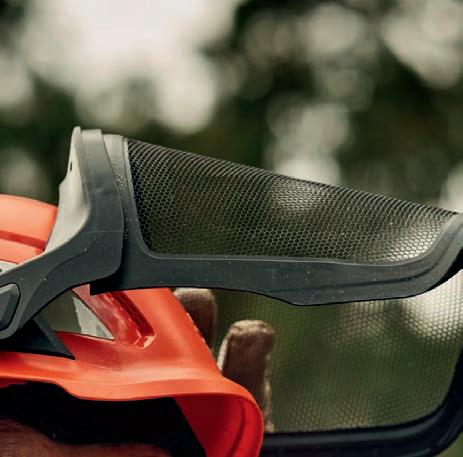
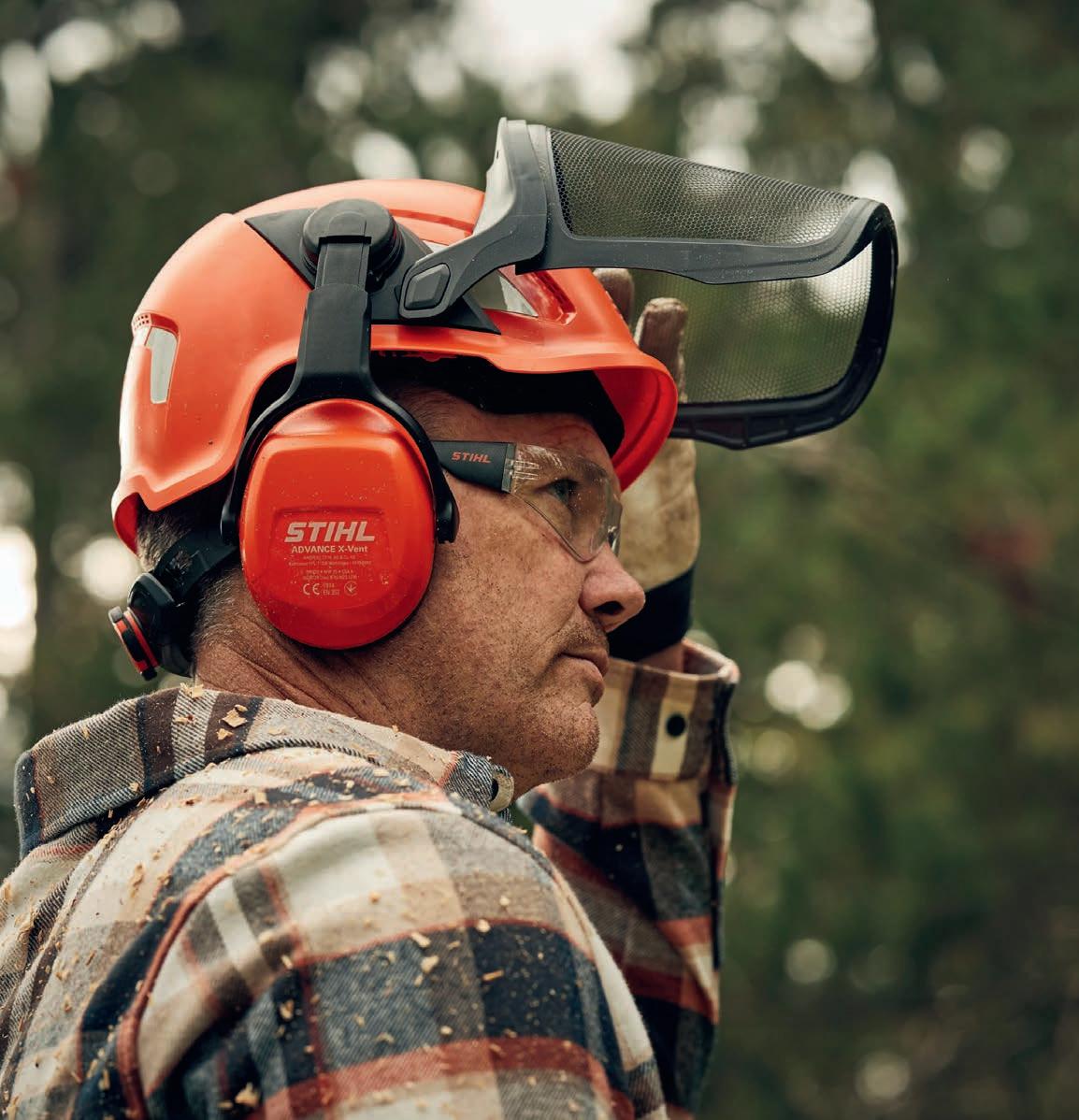
Wearing the right protective gear and knowing how to handle your saw safely is nonnegotiable. Image: Hugh Davies
“How many times have you seen typical Aussie blokes cutting rewood wearing shorts and a singlet and no chainsaw protection?” he o ered. “They have no fear. A chainsaw is a dangerous piece of equipment. It’s almost like anyone can buy one and you’re away.
“You have to be certi ed to enter a chainsaw competition, but a domestic user can go buy a chainsaw and use it in the backyard, even if they’ve never
used one before. Those people need to be made aware of the protocols and practices that could avoid serious injury.”
When we asked about O’Toole’s thoughts on electric chainsaws, his focus was clear: “Petrol or electric, the risks are the same.”
O’Toole’s an international celebrity in his own right in the world of woodchopping,

O’Toole’s top chainsaw safety rules
• Suit up for survival: Never cut without the essentials. This includes cut-retardant chainsaw chaps or trousers, steel-capped boots, heavy-duty gloves, and a safety helmet equipped with a face visor and hearing protection.
• Beware the kickback zone: Kickback happens in a fraction of a second when the upper tip of the guide bar hits an object. Always maintain a rm, two-handed grip and ensure the chainsaw’s chain brake is fully functional.
• Keep it sharp: A dull chain is a dangerous chain because it forces the operator to apply excessive pressure. Let the saw do the work. Ensure your chain is properly sharpened and tensioned before every use.
• Clear the drop zone: Always ensure you have a clear, safe retreat path before felling a tree, and never operate a chainsaw above shoulder height or while standing on a ladder.
but his involvement with Timbersports and the Chopperoos catapulted him into the public eye and led to him rethinking some of his competition priorities.
We asked how that step came about.
“I was already chopping here in Australia and already had a world championship,” he said. “I saw Timbersports in America and thought it was a bit ashy and a bit ‘TV-ish’, and I wasn’t a big fan of the Hot Saw discipline.
“But things progressed, and I’m now one of the world’s foremost Hot Saw builders and I’ve won some of the biggest international Hot Saw events. The chainsaw disciplines are now my favourites.
“I started in the US series before Timbersports came to Australia. Several of us were chosen from there to kick o an Australian series, which has now gone global.
“It was a transition into something new and exciting for me.”
“You have to be certi ed to enter a competition, but a domestic user can buy a chainsaw and use it, even if they’ve never used one before. Those people need to be made aware of the protocols and practices that could avoid serious injury” “ ”
There must’ve been plenty of opportunity to trial and assess other makes of equipment during a stellar international career, but O’Toole is rm in his allegiance to STIHL.
“I can tell you in all honesty why I use STIHL,” he said. “It’s because my dad used it before me and we never had a problem with STIHL equipment in the business. We’ve always had a great run and always stayed true.”
And the main message on chainsaw safety?
“Know your abilities to start with, and have the right tool for the job,” he said. “Make sure your equipment is well maintained. If your gear’s up to scratch and everything’s good, it’s a good start. After that, think safety the whole time.”
For more information on Chainsaw Safety Week, educational videos featuring Laurence O’Toole, or to find your local STIHL dealer, visit stihl.com.au.
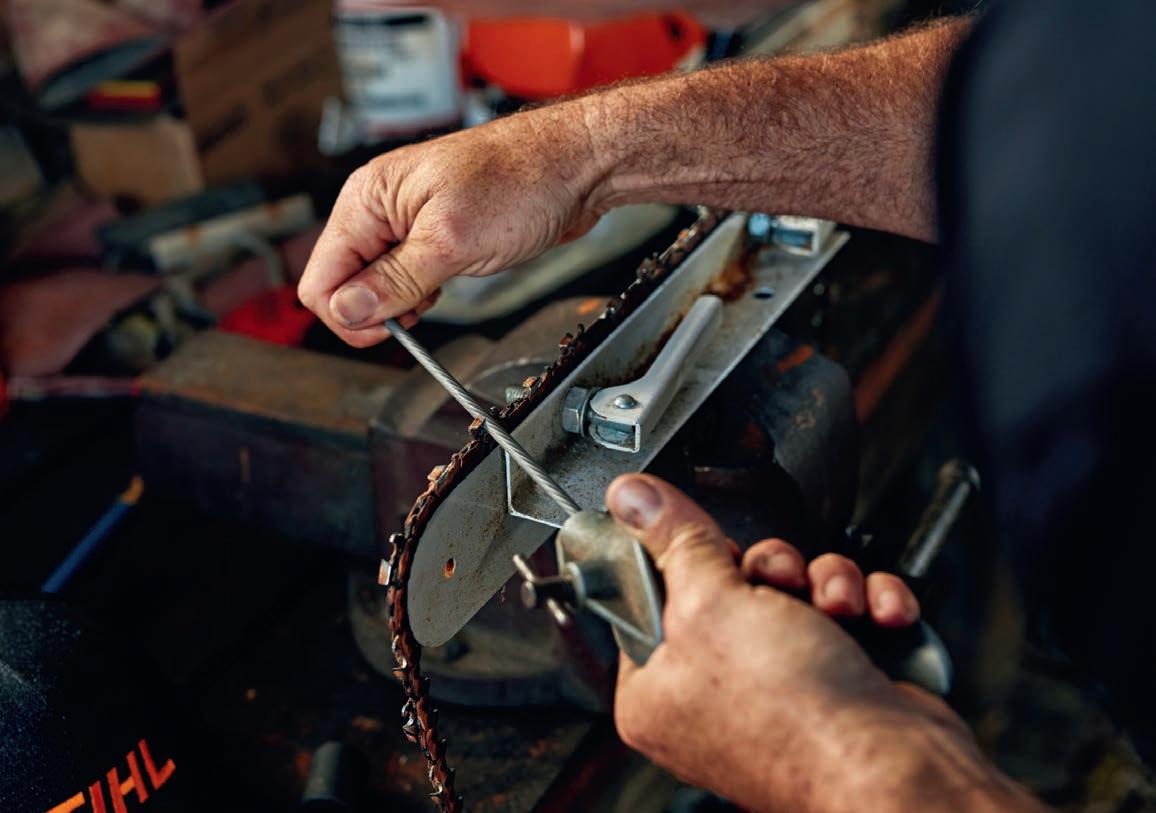
A dull chain is a dangerous chain. Image: Hugh Davies
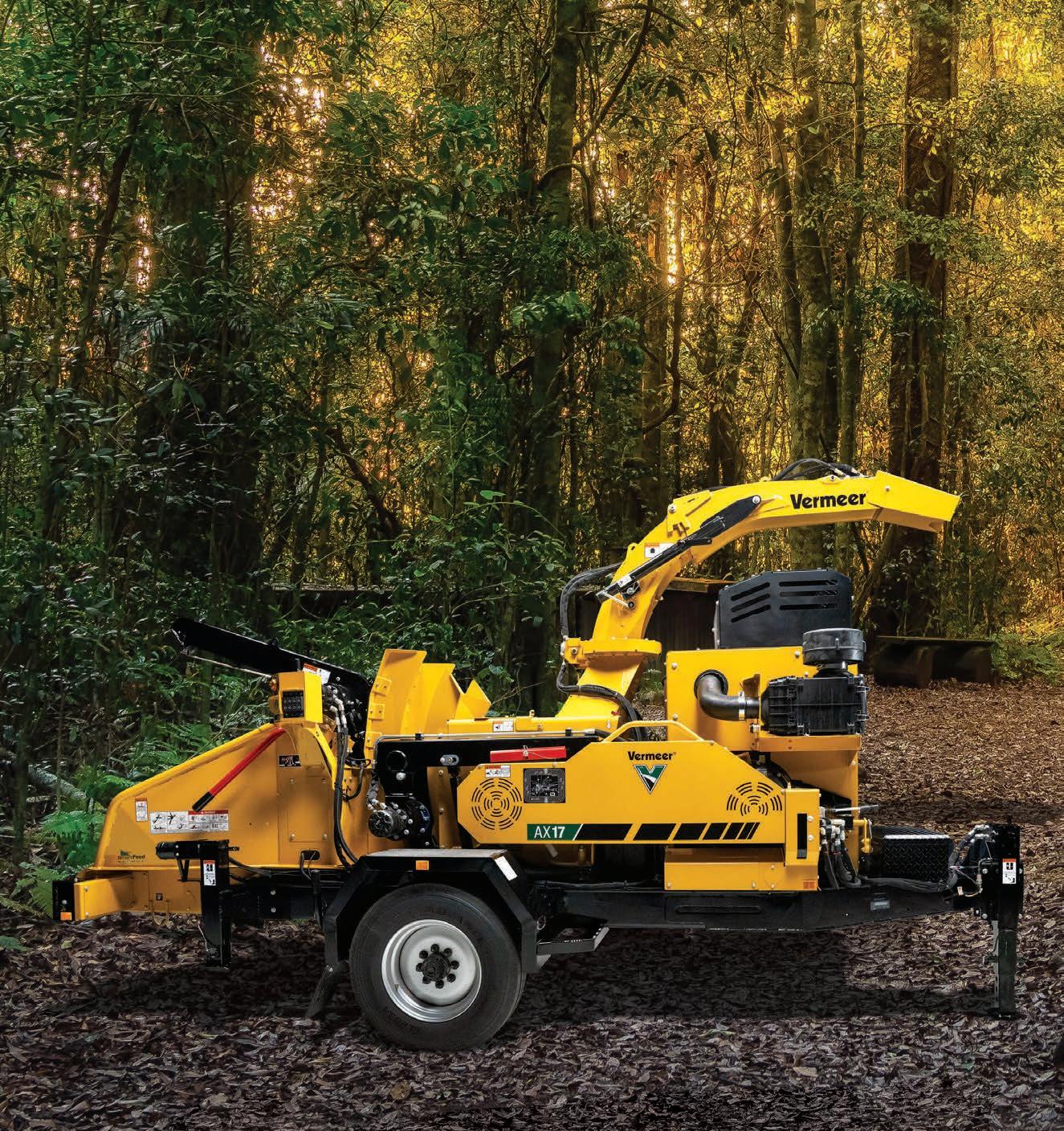
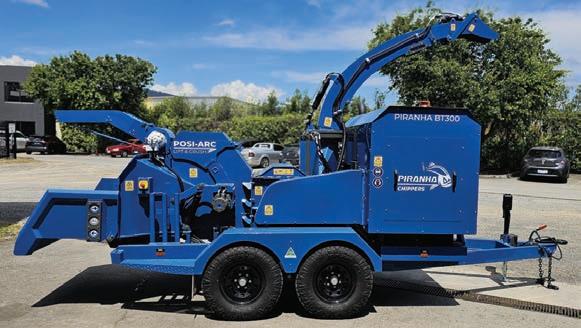
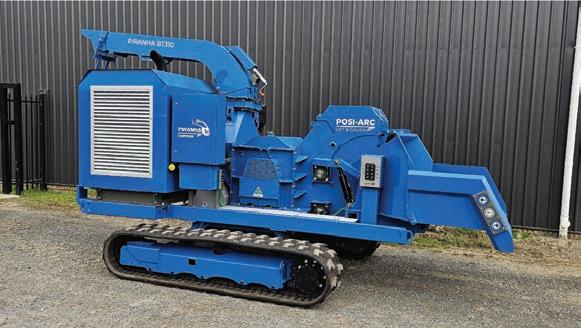
Feeding the wrong type of wood into a chipper can cause damage, downtime, and even safety hazards. Here’s a breakdown of woods you should and should not chip.
Chippers are an essential tool for arborist and tree-care professionals to manage tree debris e ciently. Knowing the types of timber waste that can and can’t be processed by a chipper can make for smarter work, protect equipment, and support maximum e ciency.
Freshly cut wood from tree pruning or removal is ideal for processing with woodchippers. It retains moisture, making it softer and easier to process. It also produces high-quality mulch that decomposes quickly and enriches the soil.
Examples of suitable tree types include eucalyptus, pine, oak, maple, gum, and fruit trees. Green wood is much easier on chipper blades than dry, hardened timber.
Older, dried-out wood can be chipped, but it’s harder on blades due to its density. It often results in ner chips that can take longer to decompose.
It’s also worth considering that, generally, dry or seasoned timbers will require a more powerful machine to deliver quality chips, and operators should avoid processing large amounts of seasoned timber. It’ll dull chipper knives faster than green timber. Ideally, mix batches of green and seasoned wood when chipping.
Typically, seasoned timber includes dried hardwood logs, old branches, and rewood scraps.
Both soft and hard timbers can be chipped, but hardness a ects e ciency. Softwoods like pine, cedar, and r chip more easily and quickly than hardwoods like oak, gum, acacia, and ironbark. Harder timbers require more power
and sharper blades but produce denser, longer-lasting mulch.
Small branches and twigs are ideal for small to mid-sized woodchippers and are great for creating ne mulch and improving soil aeration. They’re easily fed into most machines without causing blockages.
Tree limbs and small logs generally require a commercial-grade chipper, and larger, heavier limbs and logs, like large ironbark or jarrah pieces, will need a high-powered unit for e cient chipping.
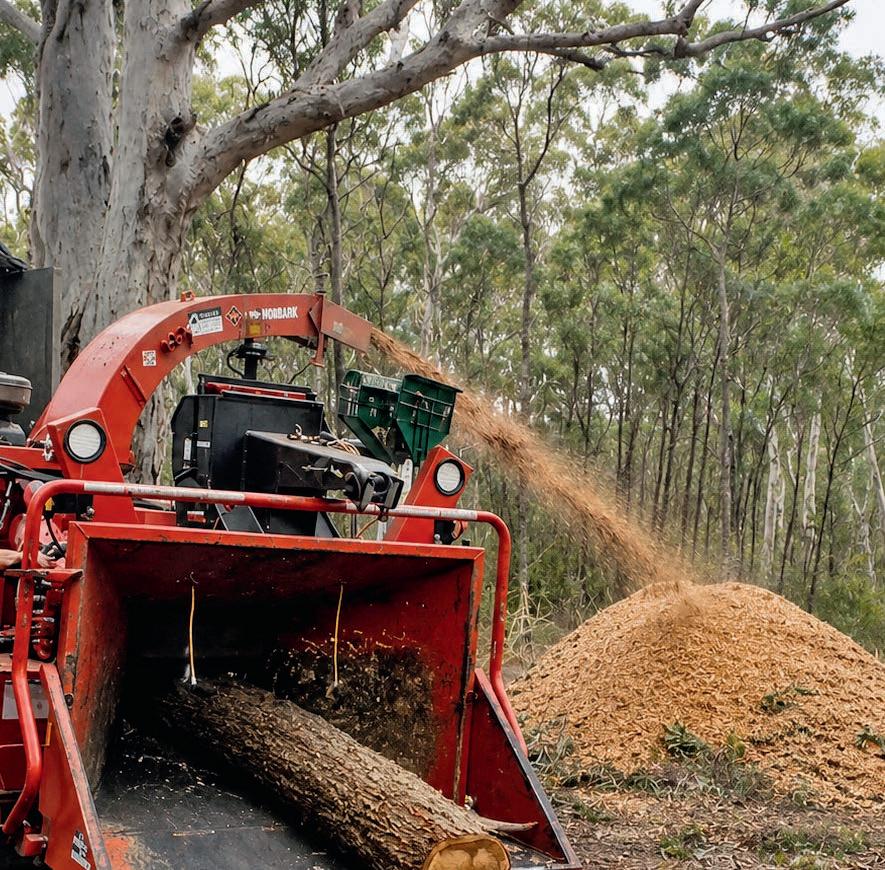
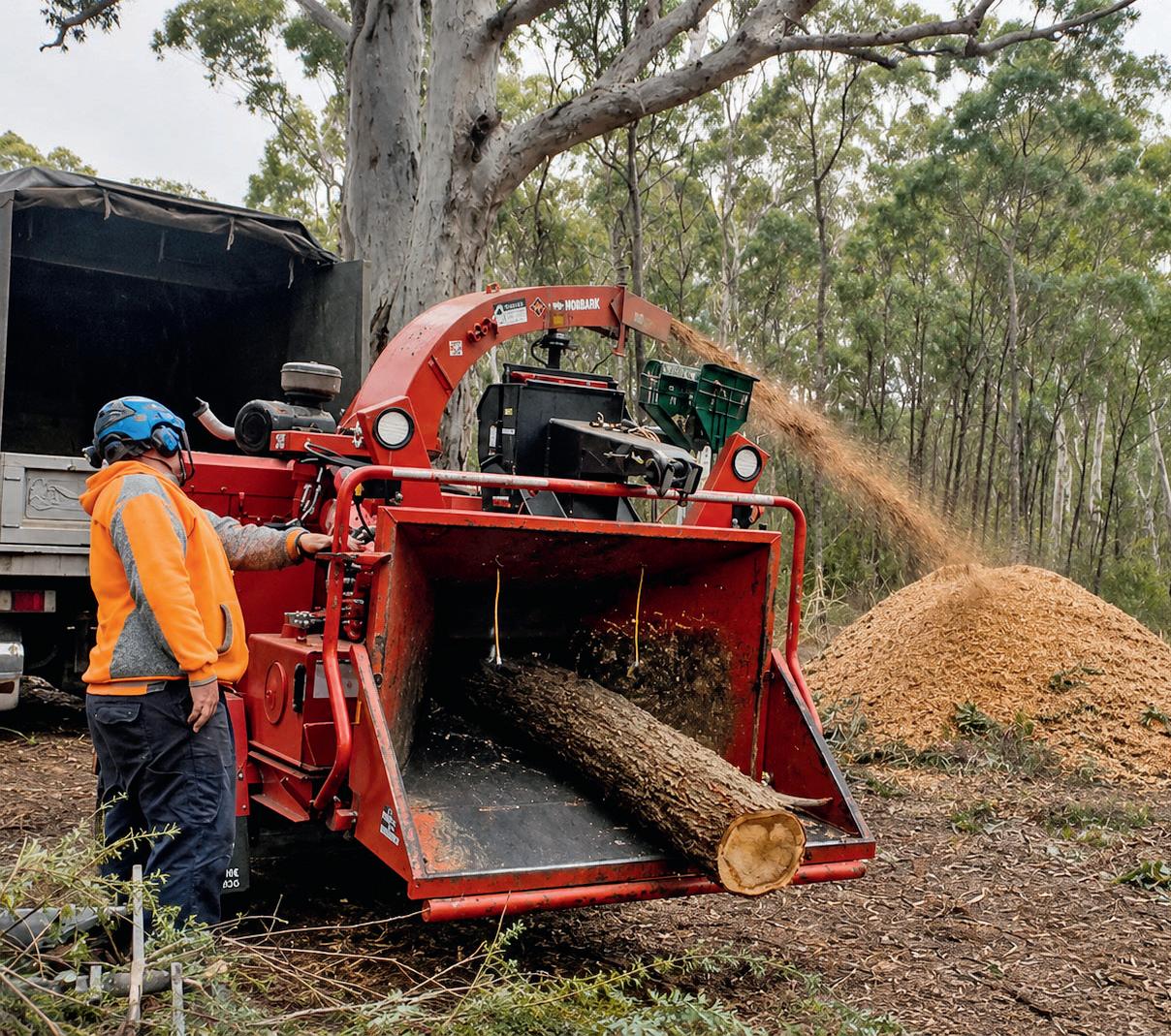
Operators should always check the chipper’s maximum diameter rating before feeding in logs.
There are instances where it’s best not to feed timber waste into a chipper. Rotted wood can clog a machine and tends to break down into mush rather than clean chips. If a tree stump or branch is falling apart, composting may be a better option.
Treated or painted timber shouldn’t be processed through a chipper, either. Pressure-treated wood, pallets, and old furniture contain chemicals that release toxic fumes when chipped, and painted wood may contain lead or harmful compounds. This group includes things like railway sleepers, fence posts, treated pine, and old decking timber.
If they are chipped, there’s always the chance they’ll be mistaken for garden-ready mulch, and their chemical treatment could have adverse e ects on gardens and soils..
Excessively knotted wood or burls (irregular growths) are unpredictable and tough on chipper blades, too. They can cause kickbacks or damage to the cutting mechanism, and some species of exotic hardwoods should be treated with care. Timbers like ebony, teak, or
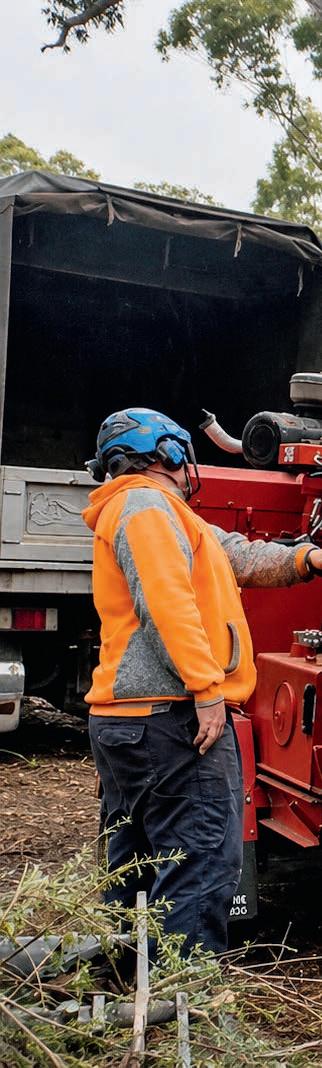
Operators should always check the chipper’s maximum diameter rating before feeding in logs. Images: Monitor
Husqvarna 564 XP® chainsaw with fuel injection
It’s an immediate feeling. The power and acceleration. The speed. Husqvarna 564 XP® is your shortcut to the pure joy of cutting. Innovation at its very best. With Husqvarna Fuel Injection technology, you get to enjoy instant acceleration and power delivery, all wrapped up in a tight, slim package. The power of a 70cc Husqvarna saw with the size of a Husqvarna 50cc saw. A groundbreaking landmark that will make you feel unstoppable. An instant winner. Feel it, try it, run it. Go. husqvarna.com/au/chainsaws/564xp-fuel-inject/
Australian ironwood are so dense they can dull or even damage commercial chipper knives. These woods are better suited for milling or rewood.
For operator safety and preventing damage to a machine, always check the wood before chipping. Remove nails, screws, or metal fasteners hidden inside logs, and look for signs of decay, pests, or excessive moisture.
Every chipper has a maximum diameter it can handle. Exceeding this can jam or damage the machine. Most consumer models handle 5-10cm (2-4 inches), while industrial machines can process up to 50cm (20 inches). Make sure the chipper’s capacity guidelines are followed and keep the blades sharp. Dull blades make chipping slower, require more fuel, and can damage a machine over time. Regular sharpening ensures clean cuts and reduces strain on the motor.
Operators should feed a chipper at a steady pace. Rushing can lead to jams, while slow feeding optimises chipping e ciency.
Choosing a machine to suit the material and desired chip type and size will have an impact on the result. Small electric chippers are great for light pruning, debris, and home landscaping. Mid-size petrol chippers are ideal for arborists handling moderate tree work, and heavy-duty diesel chippers work best for tree-removal companies, commercial landscapers, and large-scale clearing.
What size wood can a commercial woodchipper handle?
Most professional-grade chippers can process logs between 6 and 20 inches in diameter, but it depends on the model. Always check a machine’s rated infeed capacity before chipping large branches. Can chipper blades cut through nails or metal?
No, and they shouldn’t. Running wood with nails, screws, or embedded metal through a chipper can destroy blades and cause dangerous kickback. Always inspect logs before feeding them in. How long do woodchipper blades last for arborists?
Arborists using chippers daily should sharpen or replace blades every 20-40
hours of operation to maintain e ciency and prevent stress on the engine. Why do palm fronds clog a woodchipper?
Palm fronds are brous, and instead of turning into clean wood chips, they shred into long strands that wrap around the drum or blades, causing jams. Use a shredder, not a chipper, for palms.
A woodchipper is a valuable tree-care tool, but knowing what type of wood to process is crucial for safety, e ciency, and machine longevity.
Following best practices and choosing the right type of wood for a machine will help ensure smooth operation, extend a chipper’s lifespan, and produce highquality mulch for landscaping needs.
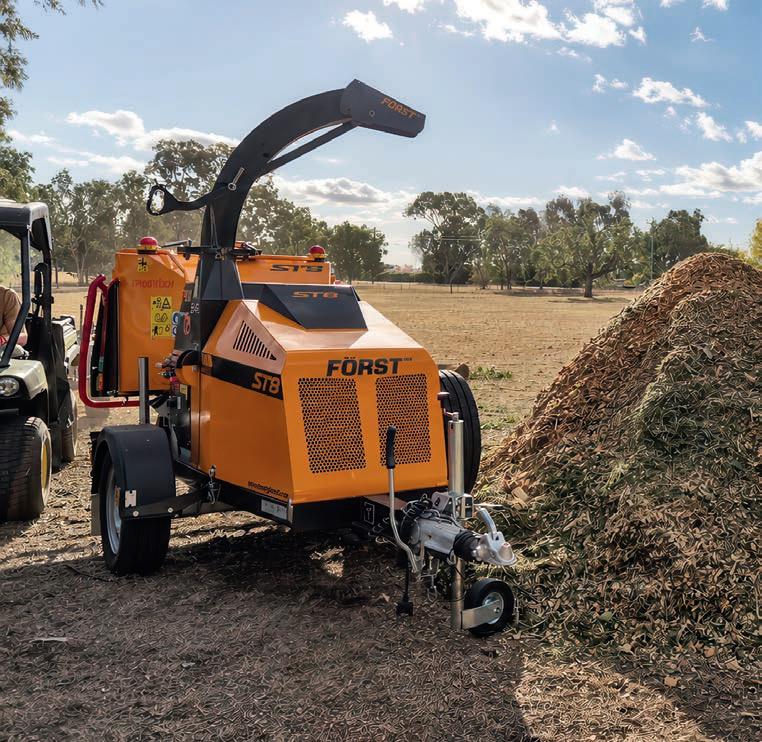
If you’re looking for an entry-level woodchipper that’s tough and reliable, the Först range of tracked brush chippers is ideal. They can enter sites with the tightest access, and the disc chipper design means they’re almost unblockable. Först chippers can handle even palms and other wetter plant material with ease.
The Först chipper’s clutchless design
means a streamlined startup every time – just turn the key and it’s ready to work. Features include:
• Dual feed rollers that pull through brous, wet material;
• an open-top ywheel that maintains consistent throughput without blockages; and
• producing a denser chip, improving truck load capacity.
With nearly 60 years of ideas, invention and growth, Morbark is recognised as a designer of robust, rugged, and reliable commercial woodchippers.
Designed for the arborist segment, Morbark drum chippers are larger machines that throw chip harder – which means less chance of blockages.
Monitor supply Morbark woodchippers ranging in size from 8 inch to 20 inch in diameter. Powered by CAT or Cummins engines in 97HP to 400HP, Morbark machines chip strong, grind strong, and work strong.
For expert recommendations on commercial-grade chippers, call Monitor on 1800 025 024 or visit monitor.net.au.
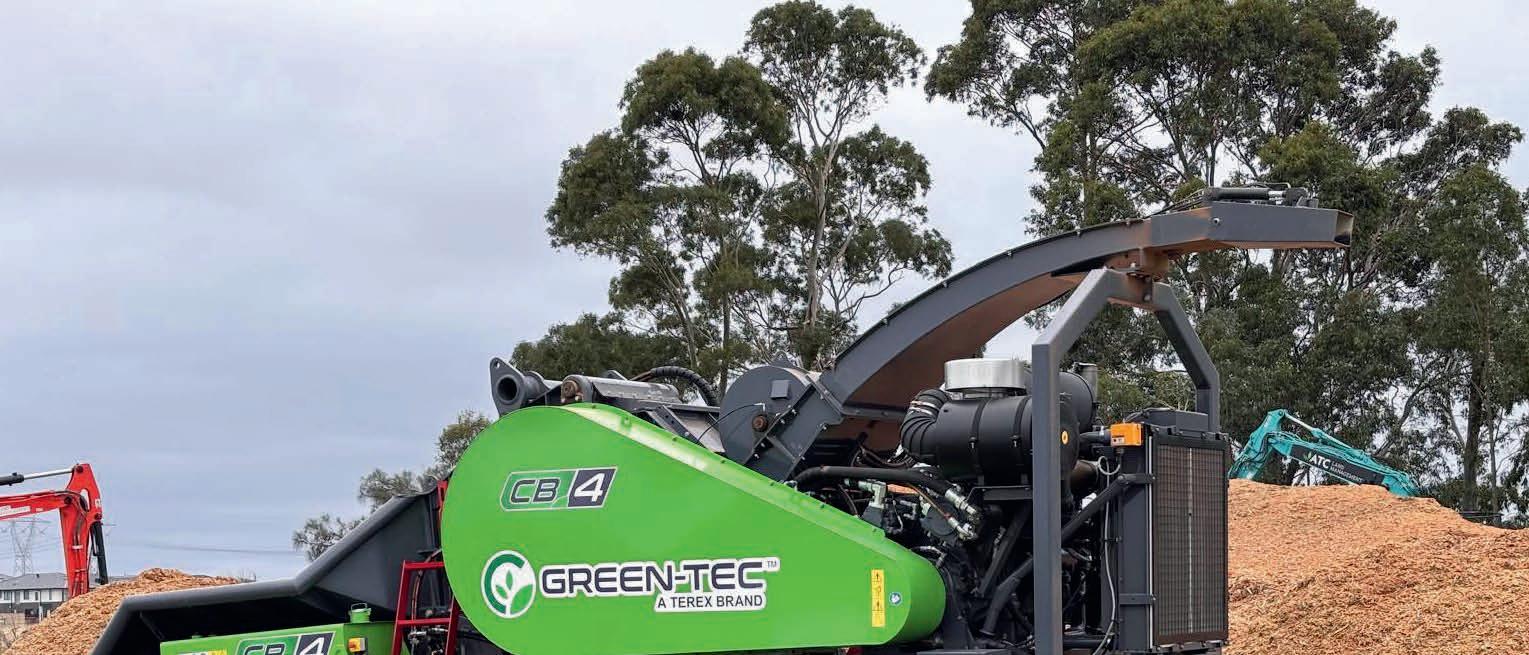
Fitted with a 12-30mm, nine-pocket rotor, and capable of processing trees up to 24 inches, the CB4 is a powerhouse. Images: Paci c Materials Handling
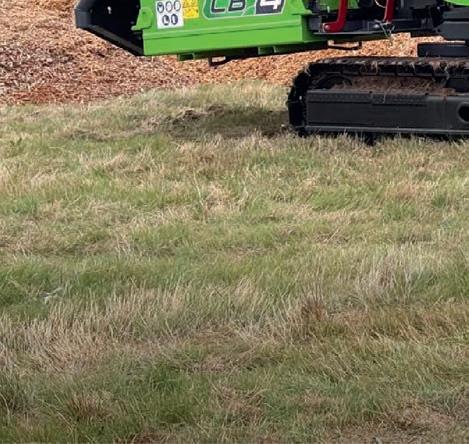
Paci c Materials Handling recently put its Biomass and Whole Tree Chipper through its paces.
The Green-Tec CB4 Biomass and Whole Tree Chipper is designed and built in the USA with input from forestry and wood-waste professionals. Fitted with a 12-30mm, nine-pocket rotor, and capable of processing trees up to 24 inches, the CB4 is a powerhouse.
The chipper tackled a land-clearing job in Melbourne with ATC Land Clearing. Owner/Director Tom Salt summed up his rst impressions with the comment, “It looks strong and robust – a typical US solid construction.”
The CB4 weighs in at a little more than 20 tonnes with its tracked undercarriage, and for the trial with ATC Land Clearing, the machine was set up to produce a consistent 1012mm chip from whole trees.
A Cat C18 engine provides smooth power to the rotor via a wet clutch and eight V belts, while the feed roller and
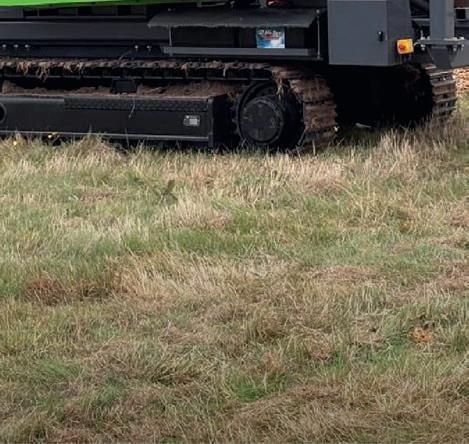
box-chain feed system are hydraulically driven, allowing simple electronic adjustment for any feed material. The box chain also acts like a pre-screen, allowing dirt to fall away from the material, increasing blade life and reducing wear and tear on the blades and rotor. The rotor itself is tted with an impact sensor that immediately stops processing if it senses a hard object in the material.
Chip size is adjustable via the knife pockets on the rotor and the anvil gap. The blades are tted with screws that allow adjustment for wear after sharpening without special tools.
The chute geometry of the CB4 enhances chip throw for e cient trailer loading, while a standard chip accelerator optimises performance across various chip sizes. A service platform next to the engine provides a convenient workspace for routine maintenance.
Salt was impressed with the CB4’s performance and said, “The production
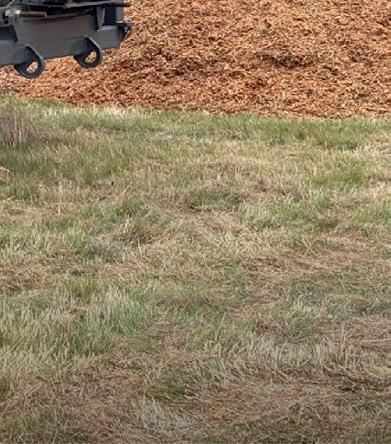
rate and consistent chip quality are great. We were able to ll a 35m3 truck in about 15 minutes, and access was simple and easy.”
The CB4 has three possible con gurations from the factory – truckmounted, tracked, and wheeled (not currently ADR compliant) – and there are two chute options, either top-loading (to load trailers from above) or the more typical end-loading.
A Cat C18 T2 diesel engine powers the machine, boasting 765HP, and is fed by twin saddle-mounted fuel tanks with a combined capacity of 814 litres.
The main controller is mounted on the side of the machine away from danger areas, with easy access from ground level. Settings are accessed via the touchscreen panel with easy-to-follow symbols, and operators work with an ERGO-S remote that can control start/ stop, E-stop, feed roller, feed-chain conveyor, tracking and more.
When the day was done and the dust settled, Salt summed up his thoughts on the CB4.
“I’m generally impressed with the product quality and production capability,” he said. “This machine would increase my productivity and reduce my chipping time overall.”
When asked how the CB4 might a ect his day-to-day work, Salt said the CB4 would allow him to get through more work faster while maintaining a quality product output.
“I would have to adjust my operation, in a positive way, due to the high throughput,” he said. “This would ultimately have a bene cial e ect on the business.”
If you would like to trial the CB4 Biomass and Whole Tree Chipper, get in touch with your local Paci c Materials Handling branch or visit paci cmh.com.au.
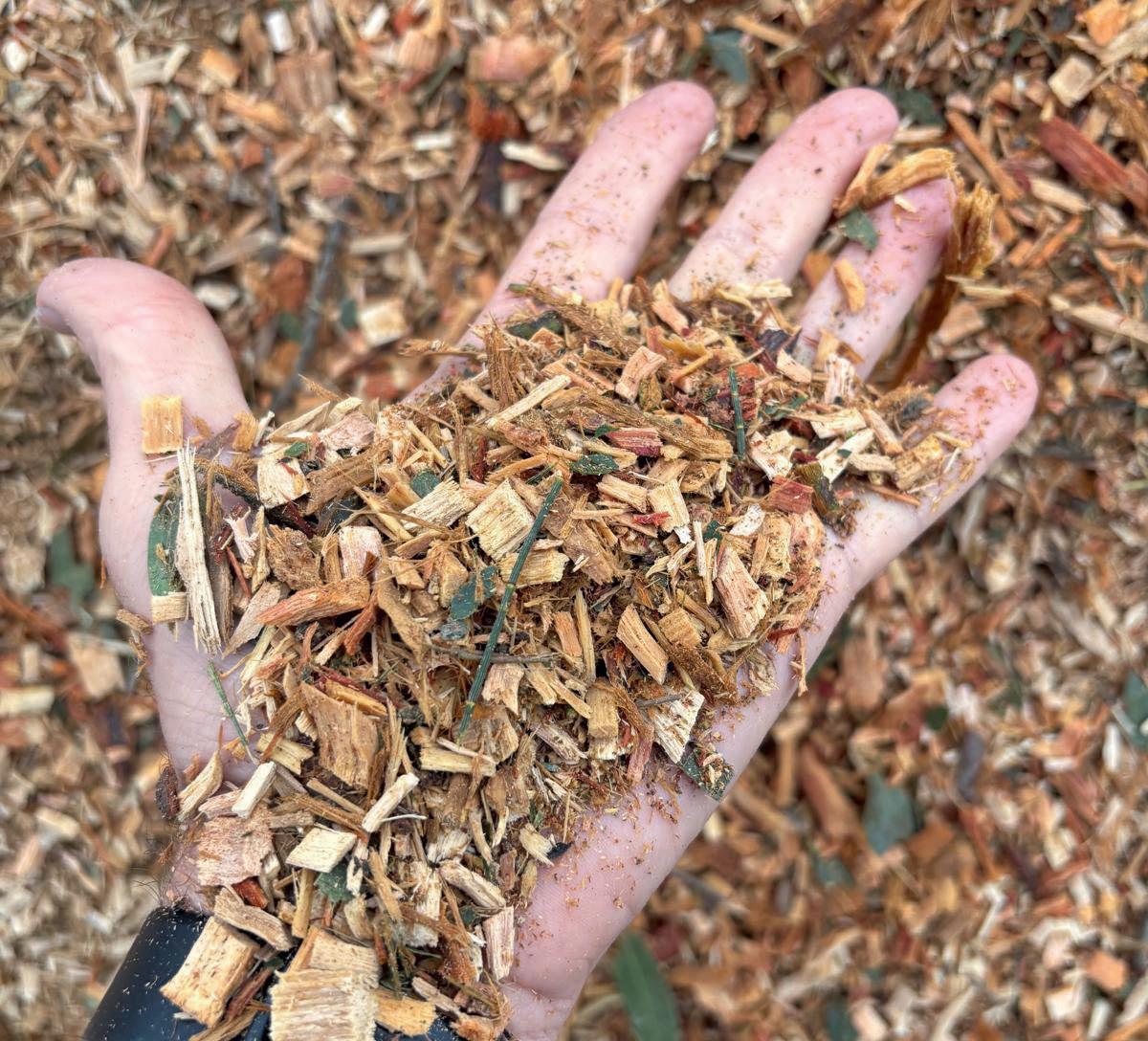







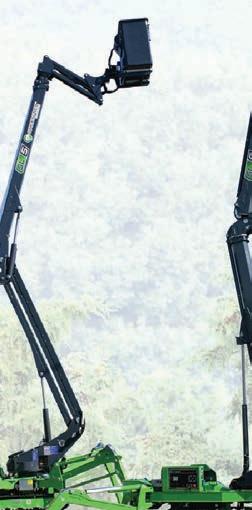











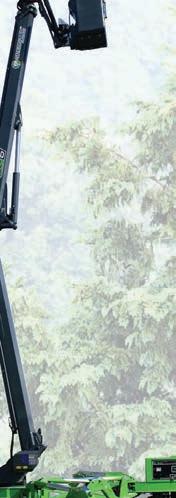








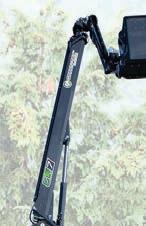


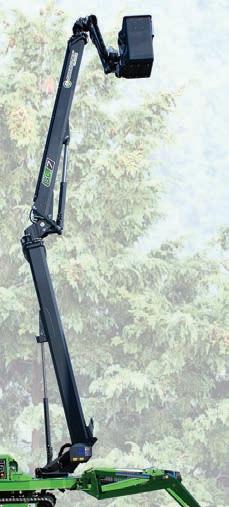








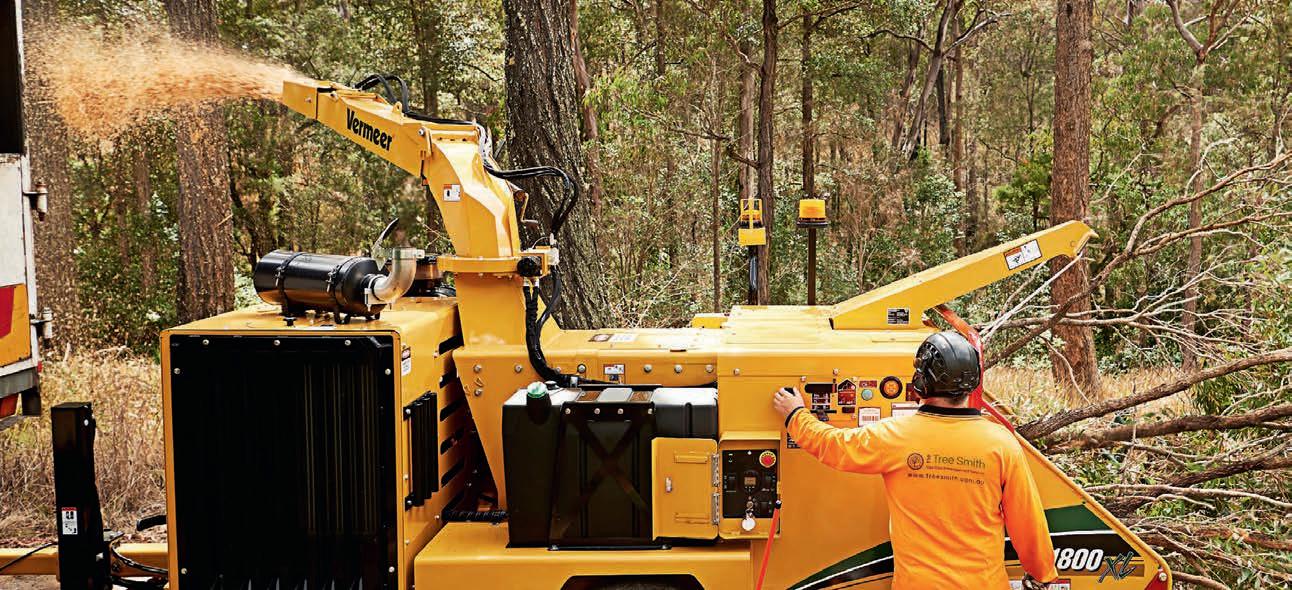
Vermeer Eco Idle reduces machine-related losses without compromising performance or safety.
Idle time is one of the biggest silent costs in arboriculture. Between chipper feed cycles, loading brush, repositioning trucks, and waiting on crew coordination, engines can spend a surprising amount of time running without doing productive work. Beyond fuel burn, prolonged idling contributes to unnecessary engine hours, increased wear, and higher emissions – issues that matter more than ever in a costconscious and environmentally aware industry.
Vermeer’s Eco Idle system is an automatic engine-management feature available on selected Vermeer brush chippers. When the machine detects that it has been idling for a predetermined period without load input, the engine speed automatically drops to a lower RPM. As soon as material is fed back into the machine, or an operator command is given, the engine immediately returns to full operating speed, with no switches to ip and no production delays.
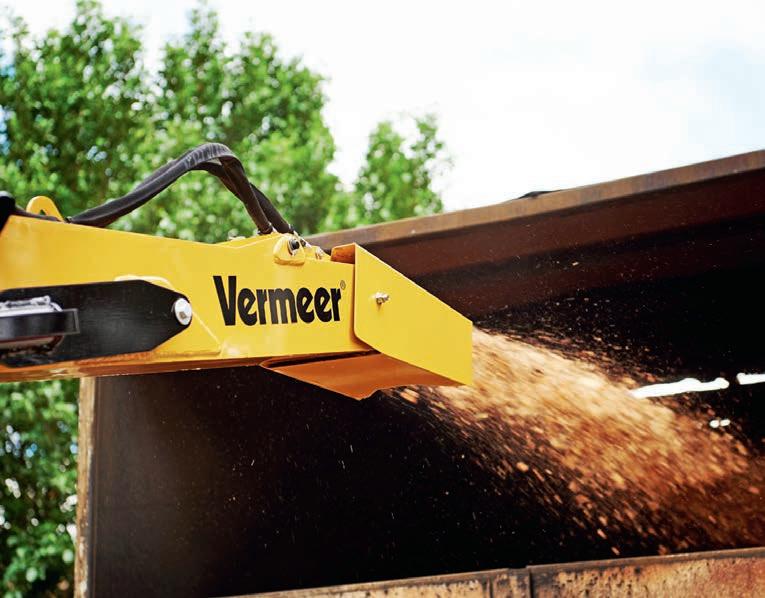
Even small-percentage savings in fuel can make a meaningful di erence to operating costs.
Images: Vermeer Australia

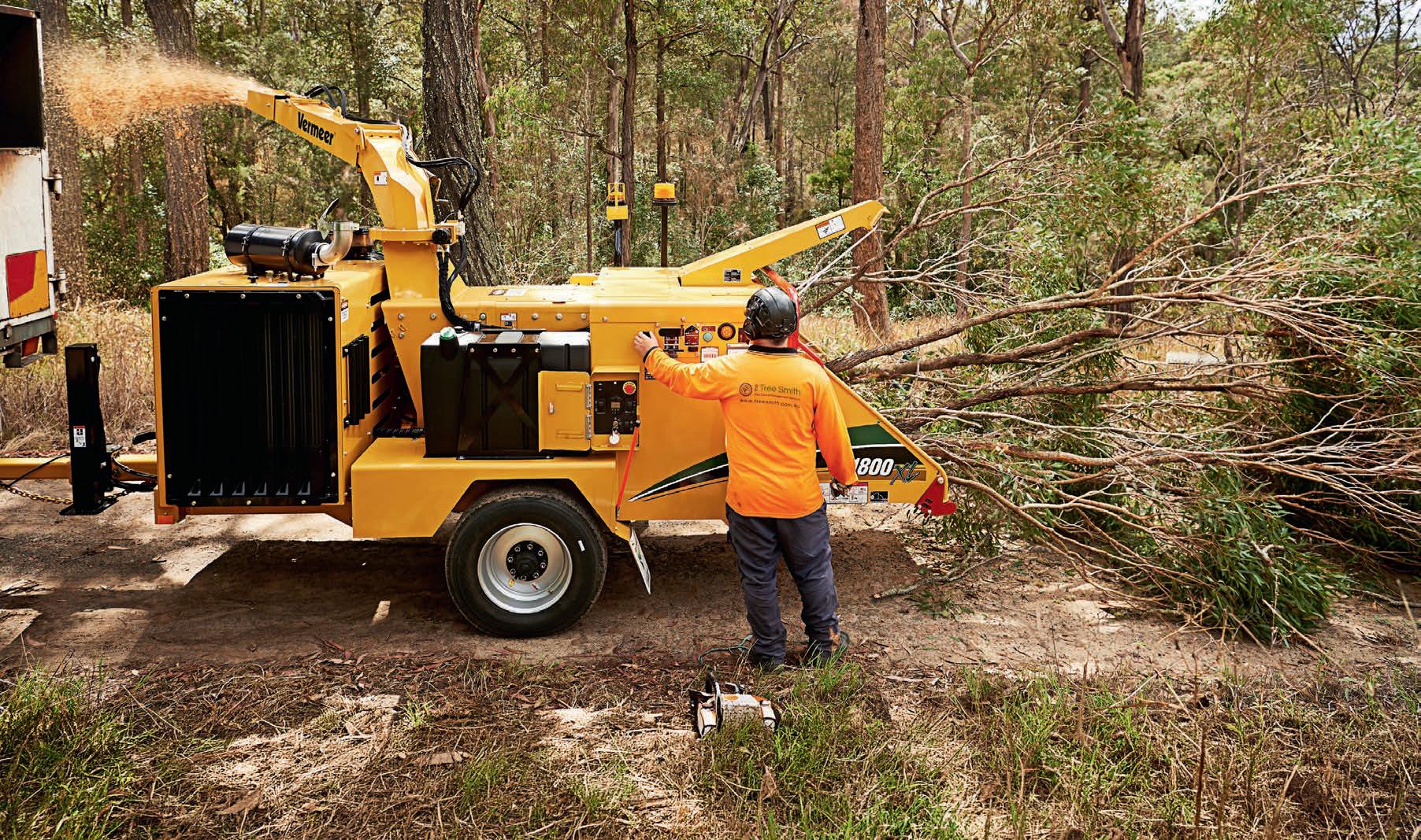
For arbor crews working in urban and residential environments, the features of Vermeer’s Eco Idle system are noticeable. Lower idle RPM means reduced fuel consumption during downtime, which can add up quickly across long days and multiple machines. Over a season, even small-percentage savings in fuel can make a measurable di erence to operating costs, particularly while diesel prices remain volatile.
Reduced engine speed during idle also means less heat and stress on major components. Engines that spend less time idling at high RPM tend to accumulate fewer unnecessary hours. That can extend service intervals and contribute to longer overall engine life. For contractors who rely on chippers as core production assets, that reduction in wear translates to improved uptime and stronger resale value over the life of the machine.
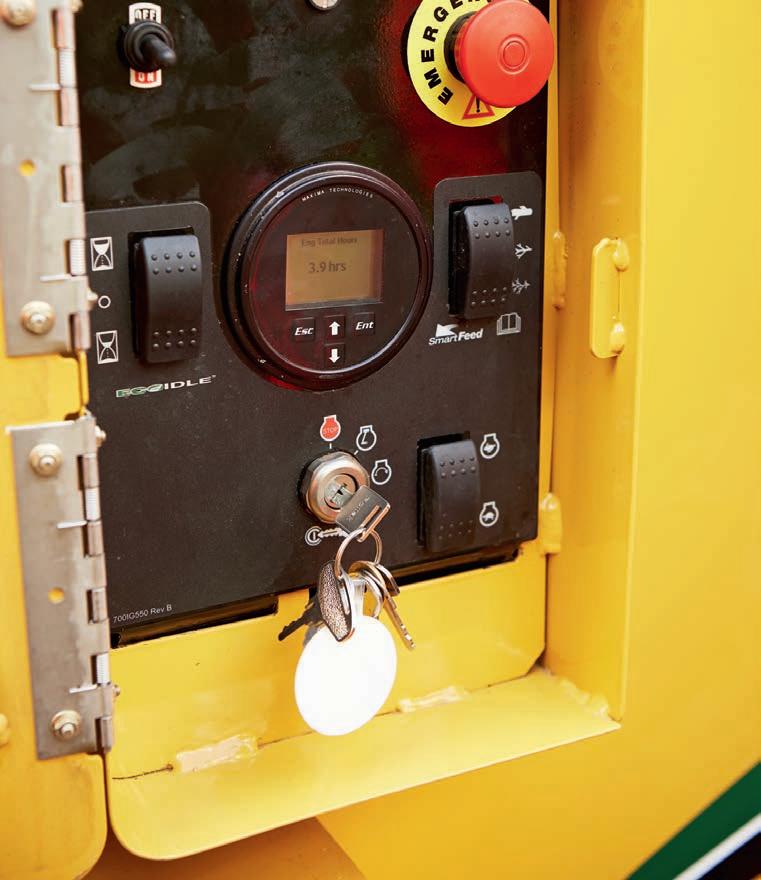
Noise reduction is another feature that should not be overlooked.
Arborists work under rigorous local noise restrictions, especially in metropolitan areas. By lowering engine speed during idle periods, Eco Idle helps reduce background noise on site, improving conditions for operators and ground crew while helping contractors maintain a more neighbour-friendly presence.
Eco Idle does not interfere with productivity. Because the system reacts instantly when chipping resumes, operators are not forced to choose between fuel savings and work ow e ciency. The transition back to full RPM is automatic and seamless, ensuring the chipper is always ready when material hits the infeed.
From a sustainability perspective, features like Eco Idle re ect broader
Engines that spend less time idling at high RPM tend to accumulate fewer unnecessary hours.
changes in the arbor and vegetationmanagement sector. Councils, utilities and commercial clients are paying closer attention to emissions, machine e ciency and environmental impact. While Eco Idle is a relatively small feature in isolation, it contributes to lower overall fuel use and reduced exhaust output, supporting contractors aiming to meet modern environmental expectations without major changes to equipment or work practices.
In a challenging market, the smartest gains are often found in small e ciencies constantly repeated. Vermeer Eco Idle is an example of practical engineering focused on real-world jobsite conditions, quietly reducing costs, wear, and emissions in the background while arborists focus on the work that matters.
Find out more at vermeeraustralia.com.au.
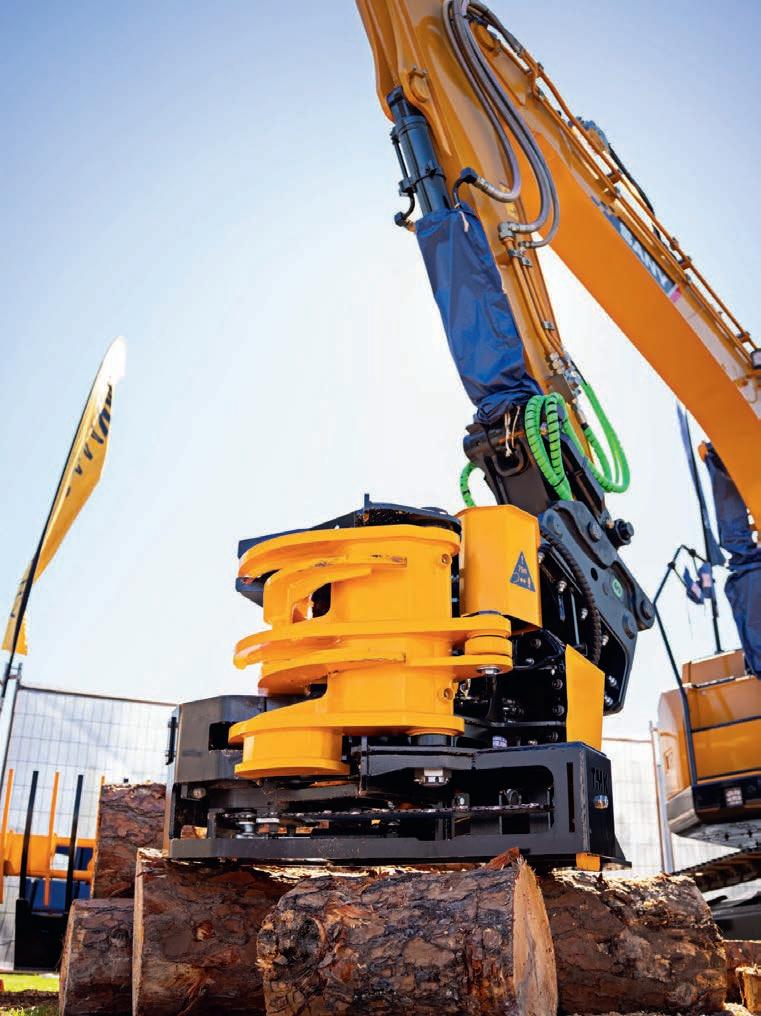
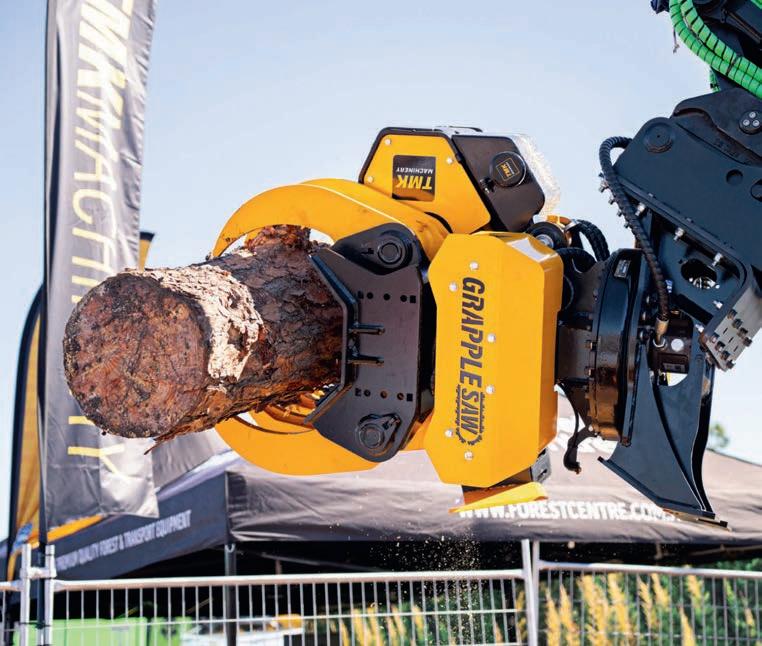
Strong grip, a quality JPS saw unit, a tough frame, and an optional rotator all point to the TMK Grapple Saw being a durable and cost-e ective attachment.
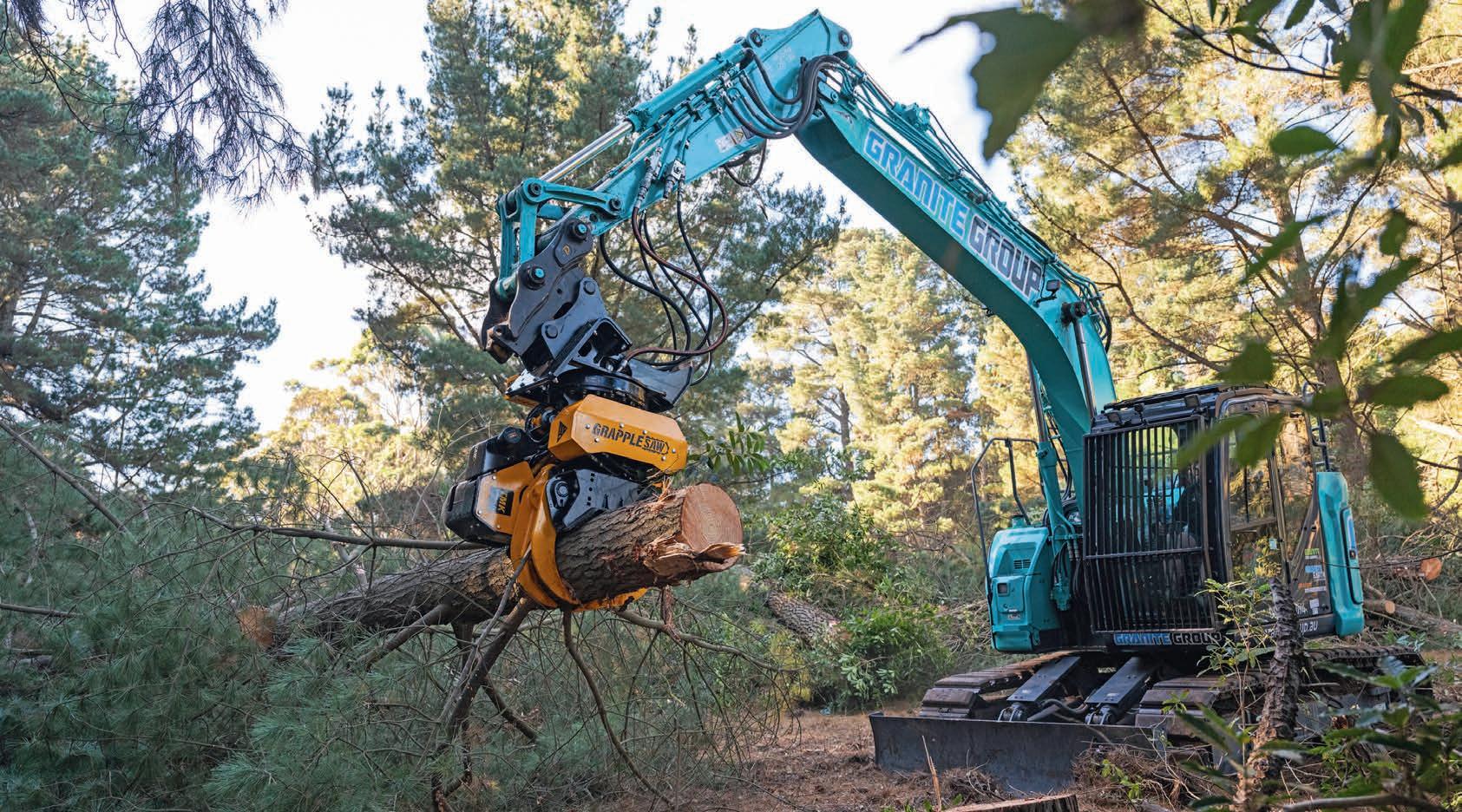
Forest Centre launched the TMK Grapple Saw in Australia at the 2026 National Diesel, Dirt & Turf Expo in Sydney with live demonstrations on a 15-tonne excavator. Representatives from the TMK sales and marketing team were in attendance and later incorporated a couple of customer visits into their itinerary.
The TMK received plenty of attention as it went through its paces, but it was on the work site that it showed its quality.
Features
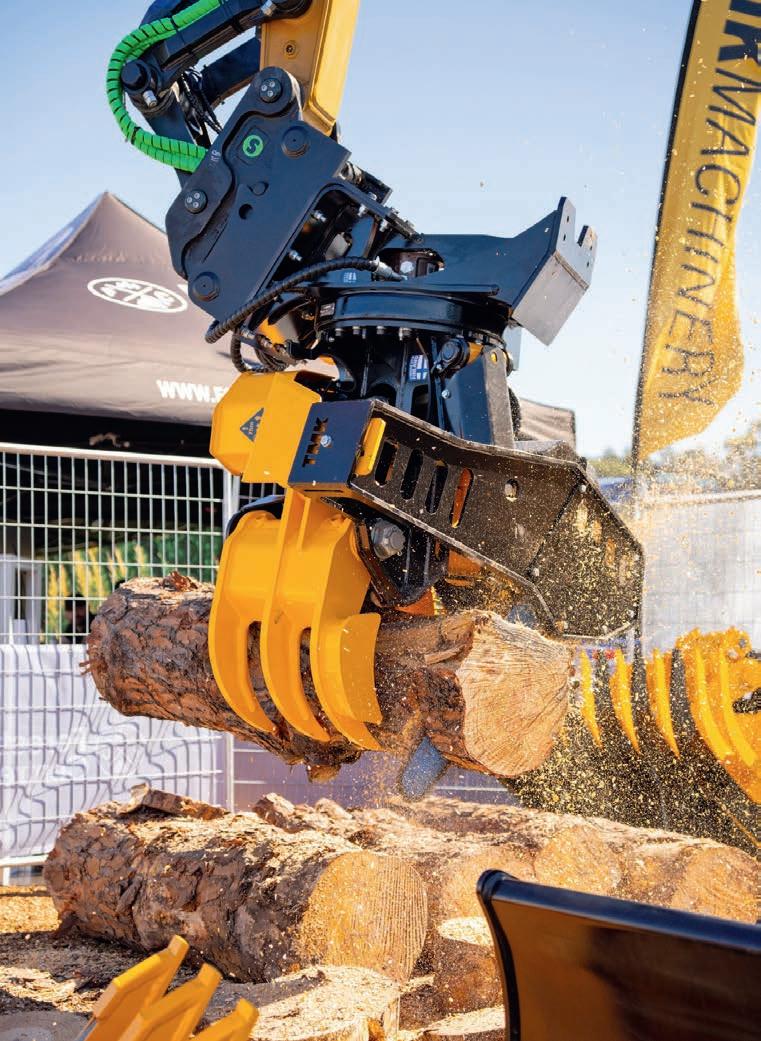
“The TMK Grapple Saw is a good match for 14-20-tonne excavators here in Australia,” said Rey Kell, Director at Forest Centre in Tumut, NSW. “It’s ideal for anyone who needs to get to work quickly and easily cutting trunk and branch sections up to 650mm diameter.”
There are several features of the TMK Grapple Saw that make it simple to set up for commercial arbor work, including:
• A host machine needs only a case
drain line and two work-tool hydraulic circuits for the TMK – one dedicated to the 360-degree rotator and the other delivering oil to the grapple function by default;
• TMK’s own switching valve, housed on the grapple frame, is activated by the operator with added joystick buttons to swap from grapple to saw-related functions;
• the function changeover is controlled via TMK’s wireless kit, pre- tted as
The process of swapping the grapple saw over to another machine with the same quickhitch specs, either within the eet or if upgrading, is straightforward “ ”
standard on the grapple, and powered by the customer’s choice of DeWalt, Milwaukee or Makita 18V batteries;
• a supplied cabin kit includes the wireless transmitter, with a wiring harness for power connection and additional joystick switches. Spare buttons on the factory controls can be used if available, or, if necessary, the hand pieces can be upgraded; and
• the control components are included in the OEM supply scope and covered accordingly in the user manuals for safety and compliance purposes.
Saw-chain tensioning normally falls under two categories for this type of
attachment: via a screw adjustment –like a handheld chainsaw, only larger; or with hydraulic tensioning that applies constant pressure while the saw function is activated. TMK has tted a proven saw unit from JPS Sweden, with a hydraulic manual tensioner the operator can activate from the cab at the push of a button to tighten and, conveniently for maintenance tasks, slacken the chain.
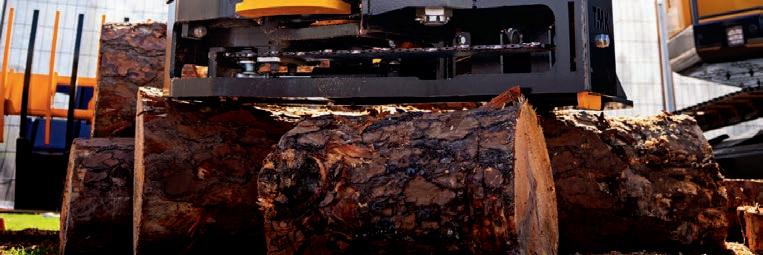
A discreet rectangular cut-out just above the saw unit houses a sharpened Hardox blade – a hydraulic-cylinder-driven shear capable of cutting stems up to 150mm diameter, activated by one of the TMK wireless add-on switches. Having
the option of using the shear o ers relief from the frustration of time lost retting derailed saw chains – a common occurrence when cutting smaller pieces with a saw-cutting unit.
The maximum distance between the jaws of a grapple when fully opened can be an important metric to compare attachments. Forestry bunching or loading grapples have long curved jaws with the widest possible opening distance and a large, circular gripping area when closed around a load.
The jaws of the TMK are a di erent shape and relatively short compared to those of a log grapple. The gripping area when closing is almost triangular for most of the jaw’s travel, and the grapple geometry is optimised for secure holding of a single branch or trunk section, while also allowing easier manoeuvrability with the attachment in the tree.
It’s something to consider when weighing up the balance of working tasks for a new attachment – how much it will be working from the tree versus working on the ground in sorting, cleaning up, loading, and related tasks.
“There’s a lot of value packed into this unit,” said Kell, “and at this price and feature level the TMK Grapple Saw may be attractive to businesses growing into the mechanised tree-care space.
“While still ticking boxes for build quality and being t-for-purpose, there’s a lower level of commitment here in nancial and practical terms for installation on one machine. This could be an important factor for operators not cutting full time, and more frequently tasking excavators with other work tools. Thanks to the TMK wireless system, the process of swapping the grapple saw over to another machine with the same quick-hitch specs, either within the eet or if upgrading, is straightforward,” he said.
The features all sounded great as Kell explained them, but the real test was when the attachment was handed over to Jon Rogash, Director at Granite Group.
There’s a lot of value packed into this unit “ ”
The price and feature level mean the TMK Grapple Saw may be attractive to businesses growing into the mechanised tree-care space.
Rogash and Granite Group were introduced to The Australian Arbor Age magazine back in the August/September 2024 issue when he’d just taken delivery of a Woodcracker CS750 Smart grapple saw from Forest Centre, and then in August/September 2025 when he put a 365HP chipper to work. He was happy to share his thoughts on the new gear.
When someone with that kind of experience has something to say about equipment, it’s worth hearing.
“We’re always upgrading and moving forward at Granite Group,” said Rogash, “and Rey asked if we’d like to trial the TMK. The TMK guys were here from Finland, and they were amazing. They’re the only manufacturer we’ve had come out of their factory to get to know the
people using their equipment. Along with Rey from Forest Centre, they made the e ort to travel down here to Victoria so I could run the grapple saw.
“We rigged it up on our 14-tonner and we’ve been running it for a couple of weeks.
“It has good grip strength, and the angle of the tines allows it to hang on to the logs. It also has the shear blade, so instead of activating the saw for smalldiameter timber or bunches of small stu and throwing chains, you can activate the shear. I thought that was a good feature.”
Rogash was impressed with the ease of tting the TMK as well. With other equipment he’s had to upgrade electronics or hydraulics, but with the TMK it’s relatively straightforward.
“There are ve hoses,” he said. “The two main hoses, the two low-pressure hoses for rotation, and a case drain. The simplicity is just there. It’s easy and quick to hook up.”
Build quality received the Rogash nod of approval, and the Mornington Peninsula tree worker had a high opinion of the TMK Grapple Saw after his time working it.
“We’re really impressed,” he said. “I’d give it 8.5 out of 10.” A solid rst impression for the new release, and from a manufacturer most widely known for its innovative tree shears.
For more information on the TMK Grapple Saw, visit tmkmachinery.com or reach out to the Forest Centre team.





Western Australia’s City of Mandurah has moved to preserve a much-loved ancient after requests from residents.

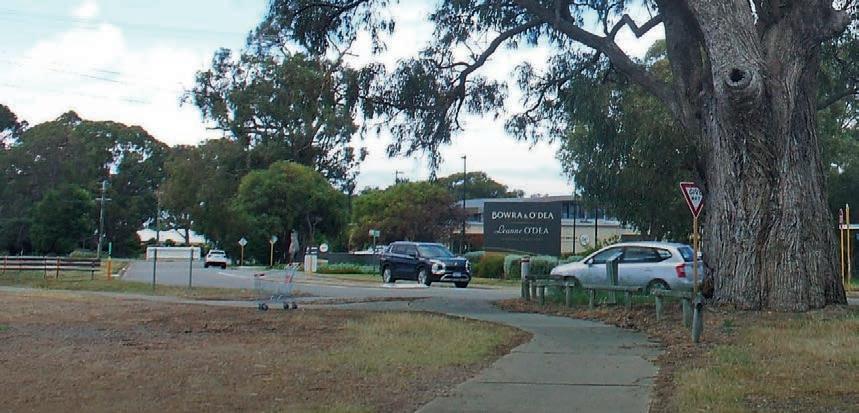
Big Tree’, a landmark tuart (Eucalyptus gomphocephala) in Mandurah, Western Australia, has been admired by locals for generations, having stood tall for over 200 years.
When a large crack was discovered in its trunk, the city listened to community concerns and worked with experts to nd the best way forward.
About 30 per cent of the canopy was removed in 2022 to reduce the load on the trunk and to keep the tree healthy and safe. Now, in 2026, a special support system is being installed to help the fondly named eucalypt stand strong for many more years.
The old tuart (Eucalyptus gomphocephala) has stood tall for more than 200 years.
Image: City of Mandurah
Fun facts about ‘Big Tree’:
• The canopy is now around 18m tall;
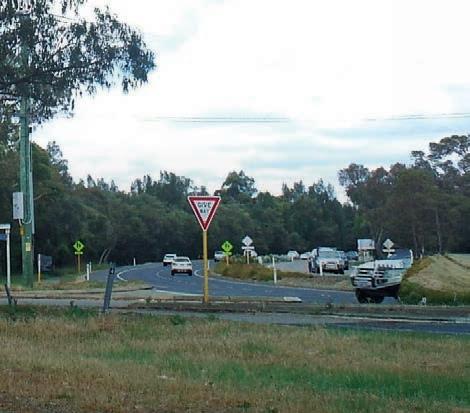
• the trunk is 288cm wide – about the size of a medium trampoline; and
• it’s listed on the Signi cant Tree Register, an initiative under City of Mandurah’s local planning scheme to protect trees of signi cance in the community.
The City of Mandurah stated on social media that saving the tree is ‘all about community pride, protecting our natural heritage, and supporting local wildlife’.
Could timber-processing byproducts like woodchip power Australia’s future industries?
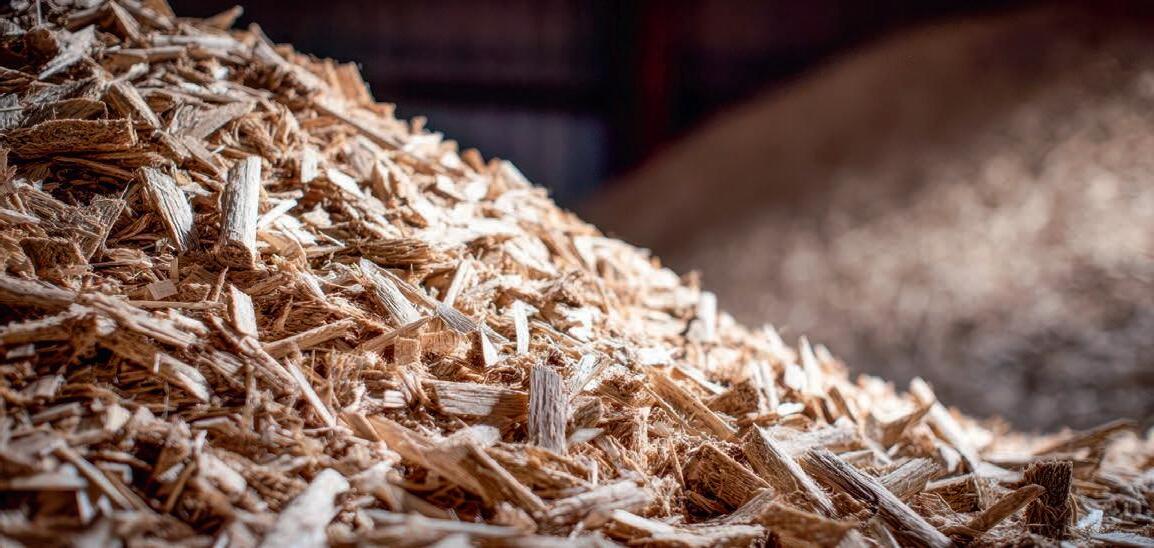
The Australian Forest and Wood Innovations (AFWI) Centre for Sustainable Futures (AFWI-CSF) is backing a national initiative led by HAMR Energy to convert Australian forestry residues into low-carbon fuels.
Suitable for aviation, shipping, and chemicals, the innovation would be a step towards linking Australia’s renewable energy and sustainable forestry sectors.
The Fibre to Fuels (F2F) project – recently approved for funding by the AFWI-CSF for Sustainable Futures, hosted at the University of the Sunshine Coast – will validate the technical, commercial and emissions-reduction potential of producing methanol from key forestry residue streams via entrained- ow gasi cation. The project directly aligns with a key AFWI goal of making the most of available wood bre.
The announcement came as the Australian Government con rmed a new commitment to cleaner fuel production pathways, including the
expansion of domestic sustainable fuel manufacturing, outlined in the Minister for Infrastructure’s recent release, Fuelling the future: $1.1 billion to power cleaner Aussie fuel production
HAMR Energy Director Alex Smith said the Fibre to Fuels project will demonstrate that forestry residues from plantations across Australia – including in the Green Triangle, Tasmania, and Western Australia – can be converted into low-carbon liquid fuels using proven technology.
“The ndings will help forestry businesses unlock new value from their plantations, support Australia’s renewable fuels industry, and help reduce emissions from aviation and shipping,” Smith said.
HAMR Energy has brought together a consortium of multiregional forestry stakeholders and Australian researchers from CSIRO, the University of the Sunshine Coast and the University of South Australia.
Professor Mark Brown, Director of the AFWI Centre for Sustainable Futures,
The Fibre to Fuels (F2F) project aims to convert forestry residues into low-carbon liquid fuels. Image: Darya/stock.adobe.com
said this kind of translational research and industry partnership is at the core of AFWI’s national mission.
“Forestry residues are a high-quality resource that can become a valuable domestic feedstock for renewable fuel production,” Professor Brown said.
“Fibre to Fuels exempli es the type of commercially minded innovation that can move Australia to the forefront of low-carbon manufacturing, delivering regional bene ts, building sovereign capability, and contributing to the decarbonisation of hard-to-abate sectors.”
The Fibre to Fuels project is part of a new round of approved AFWICSF research projects designed to strengthen Australia’s forest, wood and bre sectors. The work will accelerate innovation across bio-based materials, renewable energy and climate-resilient forestry, and help position Australia as a global leader in sustainable, low-carbon manufacturing.
To stay in touch with the progress of Fibre to Fuels, visit unisc.edu.au.
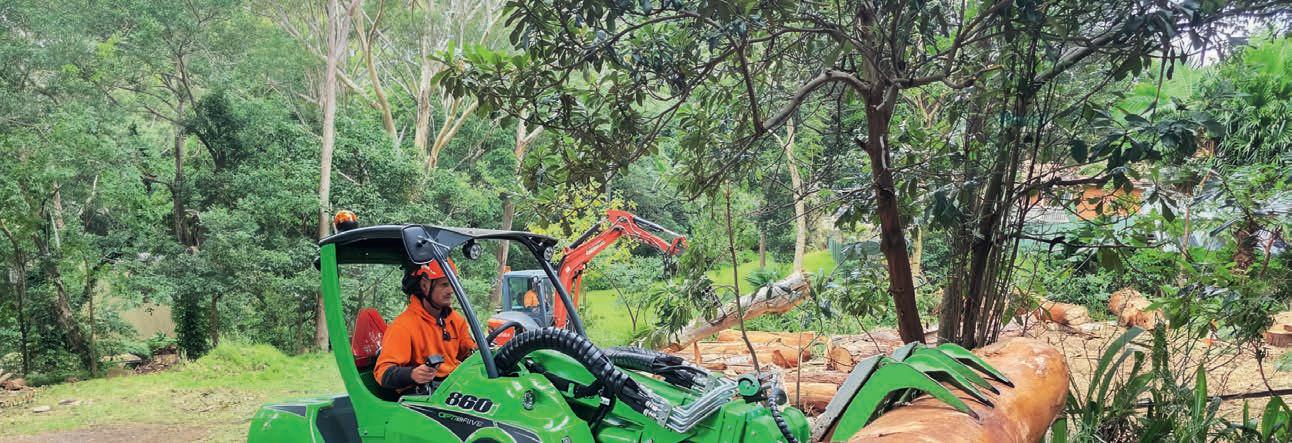
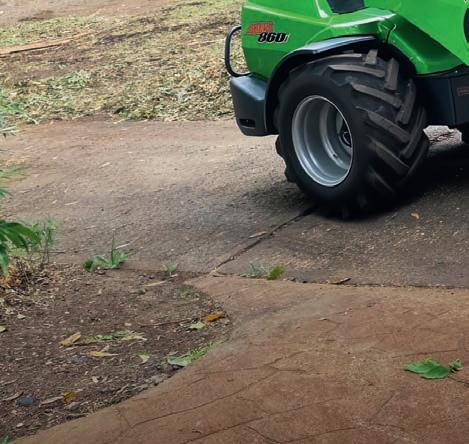
The Australian Arbor Age magazine has been appointed media partner of a new industry expo scheduled for August this year.
Australia’s tree-care sector is on the cusp of an expansion. Driven by infrastructure investment, urban greening initiatives, and major civic upgrades, demand is increasing for contractors who can deliver projects faster, more e ciently, and at tighter margins.
The conditions for doing business are becoming more challenging. Labour shortages persist, input costs remain high, timelines are tightening, and expectations around sustainability, compliance, and quality continue to rise.
Against this backdrop, many contractors are asking how they can stay competitive while protecting pro tability.
One answer may lie in stepping o -site for a short time.
A focus on operational gains
Greenscapes + Green Expo positions itself less as a traditional trade show and more as a practical business tool for the landscaping and tree-care industries.
The event, scheduled for August 5 and 6 at the Brisbane Convention & Exhibition Centre, is built around the premise that small improvements in how projects are delivered can have a measurable impact
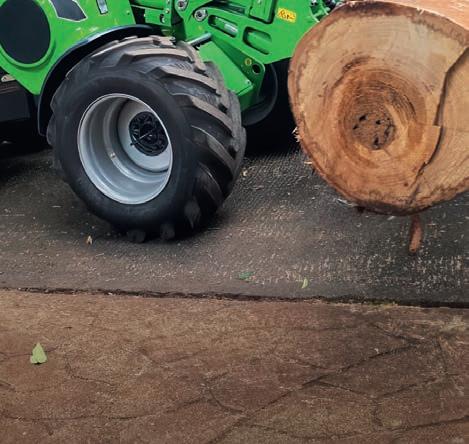
on margins and outcomes.
With more than 200 brands exhibiting, the businesses in the arbor and greenspace industries will have the opportunity to compare machinery, tools, irrigation systems, and construction solutions side-by-side. For those used to assessing suppliers across multiple meetings, sites, or online research, being able to evaluate options in one location o ers both time saved and sharper decision making.
It could mean nding equipment that reduces labour requirements, installation methods that speed up delivery, and materials that o er better longevity and improved cost performance.
One of the de ning features of Greenscapes + Green Expo is its integration of the full greenspace supply chain.
Beyond machinery and construction solutions, the event will showcase a dedicated greenlife and grower zone, showcasing plant stock, trees, turf, and living elements. This crossover between ‘hard’ and ‘soft’ greenspace remains relatively uncommon in trade events,
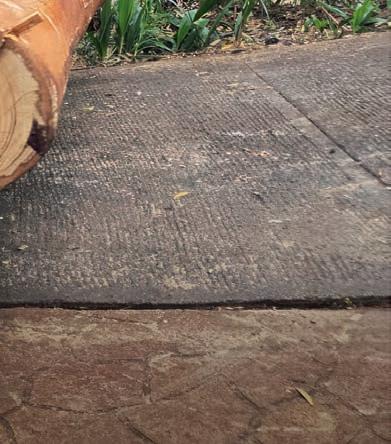
Brands including STIHL, Kress, Straightcurve, Chervon, and Avant Equipment are among those expected to demonstrate products.
but re ects how projects are delivered on site.
For tree-care contractors and arborists, the bene t is that a single visit can support more cohesive project planning, supplier comparison, and sourcing decisions.
A drawcard will be the Live Demo Arena, where exhibitors move beyond static displays.
Brands including STIHL, Kress, Straightcurve, Chervon and Avant Equipment are among those expected to demonstrate products. Seeing equipment operate and having the opportunity to question suppliers provides a more reliable basis for investment decisions than brochures or online content alone.
In an industry where a single purchasing decision can in uence labour, speed, and cost outcomes across multiple jobs, it’s a valuable opportunity.
Alongside the exhibition oor, the event will host a series of practical sessions and discussions examining where the sector is heading.
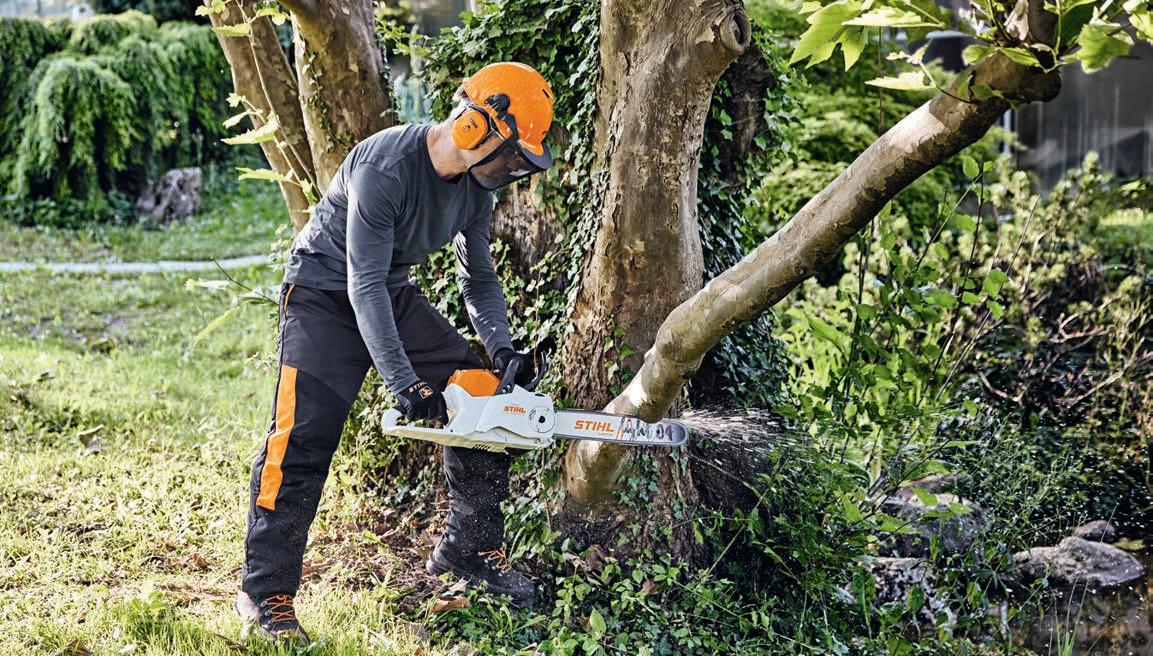
Topics are expected to include water-sensitive urban design, irrigation integration, evolving sustainability requirements, and strategies for more e cient project delivery.
While not positioned as academic, the program is designed to provide applied knowledge contractors can take back to current and future projects.
Equally important is the opportunity to engage with the broader project ecosystem.
With councils, developers, designers, growers, and suppliers attending, the event creates space for conversations beyond immediate procurement. For many contractors, these interactions can lead to improved supplier terms, early visibility of upcoming work, or partnerships that streamline delivery.
In a competitive market, these relationships can be as valuable as any product innovation.
Perhaps the most compelling aspect of the event is its accessibility – attendance is free.
For contractors weighing up the cost of time away from projects, the proposition is straightforward: if one new supplier, product, or process improvement delivers even a modest gain, the return on time investment becomes immediate.
As the greenspace sector continues to grow at an accelerating rate, businesses that re ne how they work – not just how much work they take on – will be best positioned to bene t.


The 12-month countdown is on for one of Australia’s biggest vocational education and skills excellence competitions.
Held every two years, the 2027 WorldSkills Australia National Championships and Skills Show will be hosted by the South Australian Government at the Adelaide Showgrounds in the rst week of June.
Over three days, high-achieving competitors from across the country will showcase and benchmark their skills on the national stage, competing against their industry peers for the chance to represent Australia internationally in 2028.
Qualifying for the event is already underway, with regional competitions running in every state and territory throughout 2026.
The National Championships are the focal point of the WorldSkills Australia two-year cycle and represent the biggest stage on which to celebrate skills excellence among the next generation of apprentices, trainees and students.
The scale of the National Championships is hard to describe without witnessing it.
The Adelaide Showgrounds oorspace is 17,000m2 and more than 700 competitors are expected across 67 skills in front of more than 25,000 spectators. Online, social media and streaming coverage could achieve more than 20,000 views.
With skills ranging from those valued by established sectors such as bricklaying and automotive mechanics, through to those coming to the fore in IT and additive manufacturing, the full breadth of Australian vocational education and training (VET) will be on display.
But what’s almost more impressive is the amount of support the competition receives.
The numbers
WorldSkills Australia relies on around 250 volunteers as judges, experts, and general event support. There are also hairdressing models, restaurant patrons,
The 2027
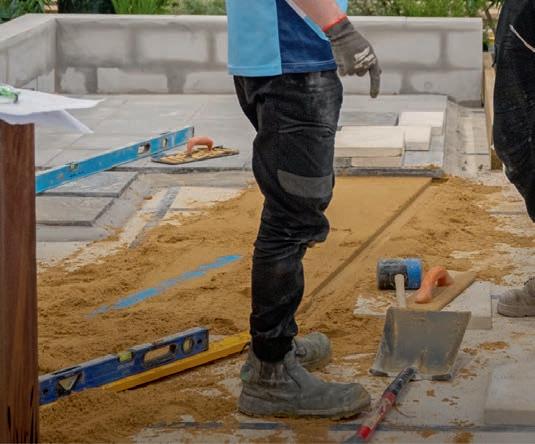
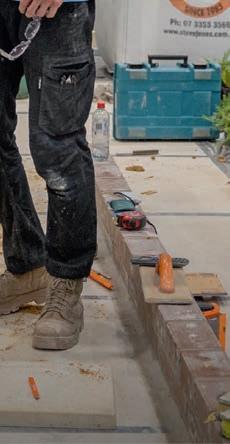
and those who volunteer to have their beard trimmed or receive a massage. There are dozens of companies and businesses providing support via the supply of equipment and materials for the competitors to utilise as they put their skills to the test. Among that long and varied list of requirements, the event has partners providing 12 tonnes of bricks, 500 eggs and 50 welding machines.

The range of support from across the VET sector and all parts of the broader business community is a testament to the shared recognition of the value of the National Championships. The skills developed bene t the whole Australian economy.
Learn more about WorldSkills Australia at worldskills.org.au.
Eucalyptus bark could be repurposed to help clean polluted water, lter dirty air and capture carbon dioxide, according to new research.
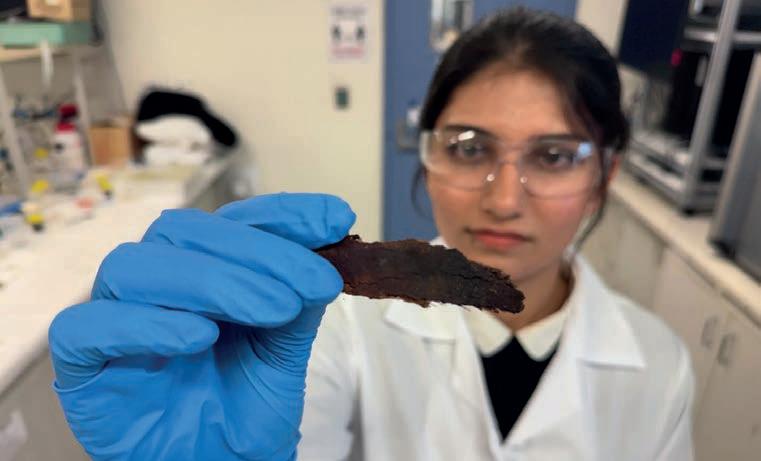
Researchers at Melbourne’s RMIT University have shown eucalyptus bark can be converted into a porous form of carbon that traps pollutants as water or air ows through it. The ndings point to a practical way of turning a common forestry by-product into a useful environmental material using a simple processing method.
Porous carbon materials are used in water lters, air puri ers and industrial gas treatment systems. Their e ectiveness comes from their structure rather than the source material itself. These materials contain a network of microscopic pores, and as air or water passes through, unwanted molecules are captured and held within the tiny spaces.
PhD researcher Pallavi Saini, who led much of the experimental work, said the performance of eucalyptus bark was unexpected.
“It is usually treated as low-value waste, but with a simple process we were able to convert it into a porous material with strong adsorption performance,” Saini said. “It highlights how overlooked biomass can be transformed into something useful.”

Plant-waste-based carbons are being studied worldwide using feedstocks ranging from agricultural residues to forestry and industrial waste. These materials are assessed based on availability, sustainability, processing complexity, and performance.
RMIT’s Dr Deshetti Jampaiah said eucalyptus bark compared favourably on several of these measures, particularly in Australia.
“The strength of this approach lies in its simplicity,” Jampaiah said. “We are converting a widely available waste material into a functional carbon with promising performance, without relying on complex processing steps. That makes it highly relevant for real world environmental applications.”
Australia is home to more than 900 species of eucalypt and related trees. As a next step, the researchers plan to work with First Nations people and organisations with knowledge of eucalyptus species to help identify which may be best suited for this type of application.
The team said there is potential to further optimise the material by understanding species-speci c chemical
and structural characteristics, guided by both scienti c analysis and ecological knowledge.
Because the bark comes from existing forestry operations, it does not compete with food production and aligns with circular-economy and waste-reduction goals.
In time, eucalyptus bark-derived porous carbon could potentially support:
• Water puri cation, including treatment of contaminated groundwater and wastewater, air puri cation and industrial gas ltration;
• point-of-use ltration systems in regional and remote communities; and
• carbon dioxide capture, where pore structure, regeneration and material cost are critical considerations.
Any real world use would depend on further work to assess durability, regeneration, and performance in operating systems.
Professor Suresh Bhargava AM said the research demonstrated how waste materials could be reimagined as part of environmental solutions.
“This work shows how eucalyptus bark can be transformed into materials that support cleaner water, cleaner air and carbon capture,” said Bhargava, Director of the Centre for Advanced Materials and Industrial Chemistry (CAMIC) at RMIT. “At CAMIC, we combine circular economy innovation with real societal impact, while mentoring the next generation of researchers to ensure the work remains purposeful.”
To follow more research at RMIT, visit rmit.edu.au.
Sustainable valorisation of eucalyptus bark waste into microporous carbon materials for e cient CO₂ capture is published in the international journal Biomass and Bioenergy (DOI: 10.1016/j.biombioe.2026.109242).

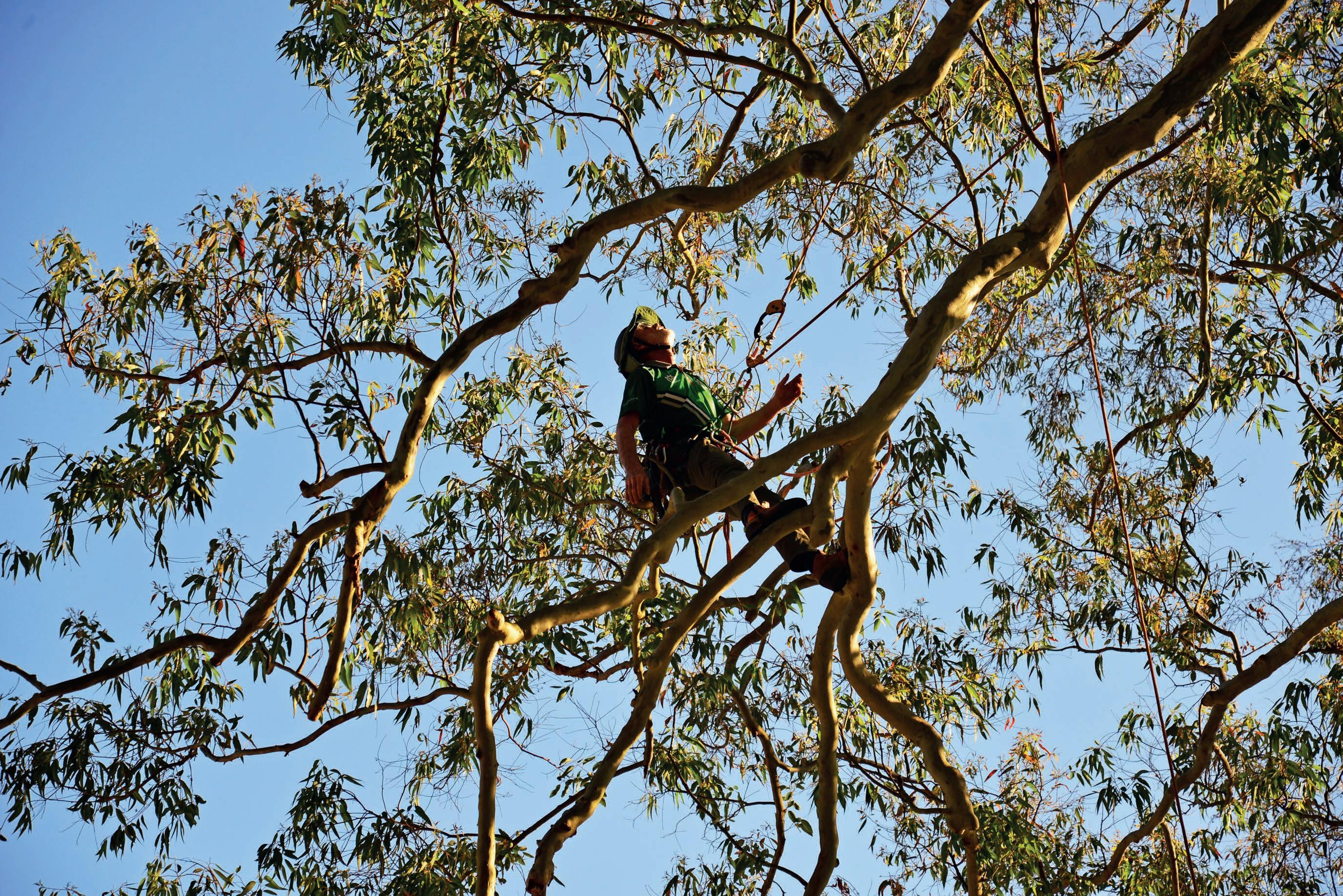







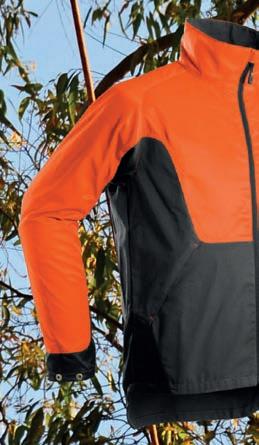

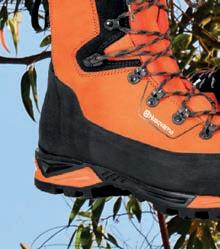







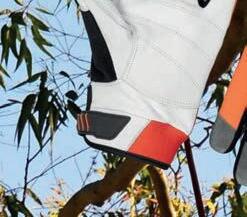








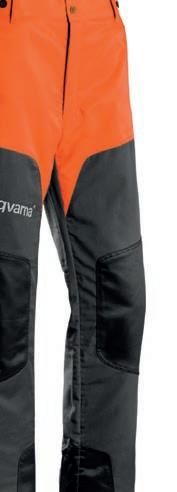





























The Tree Contractors Association of Australia annual presentation was an instructive and informative occasion.
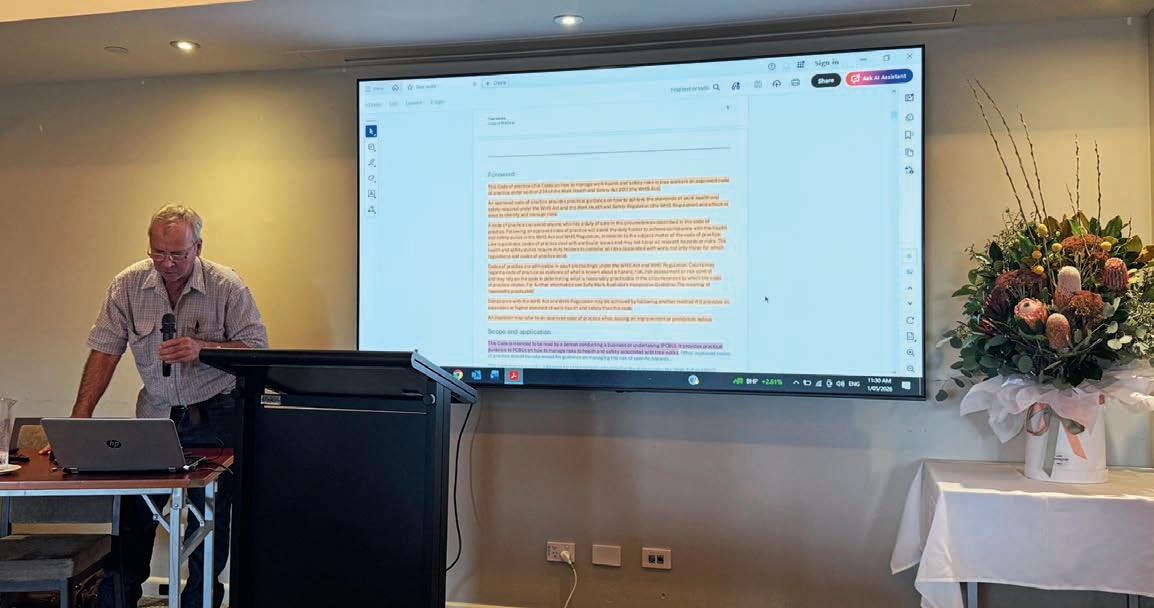
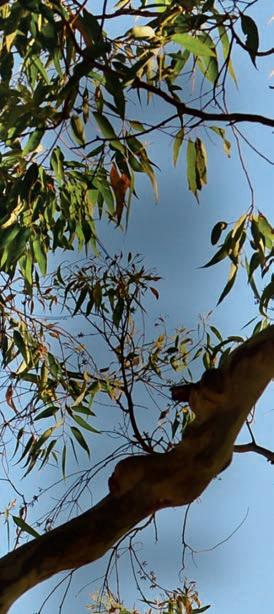
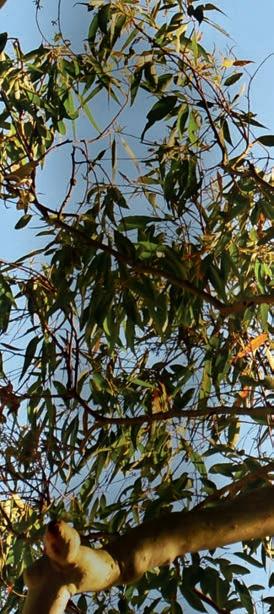
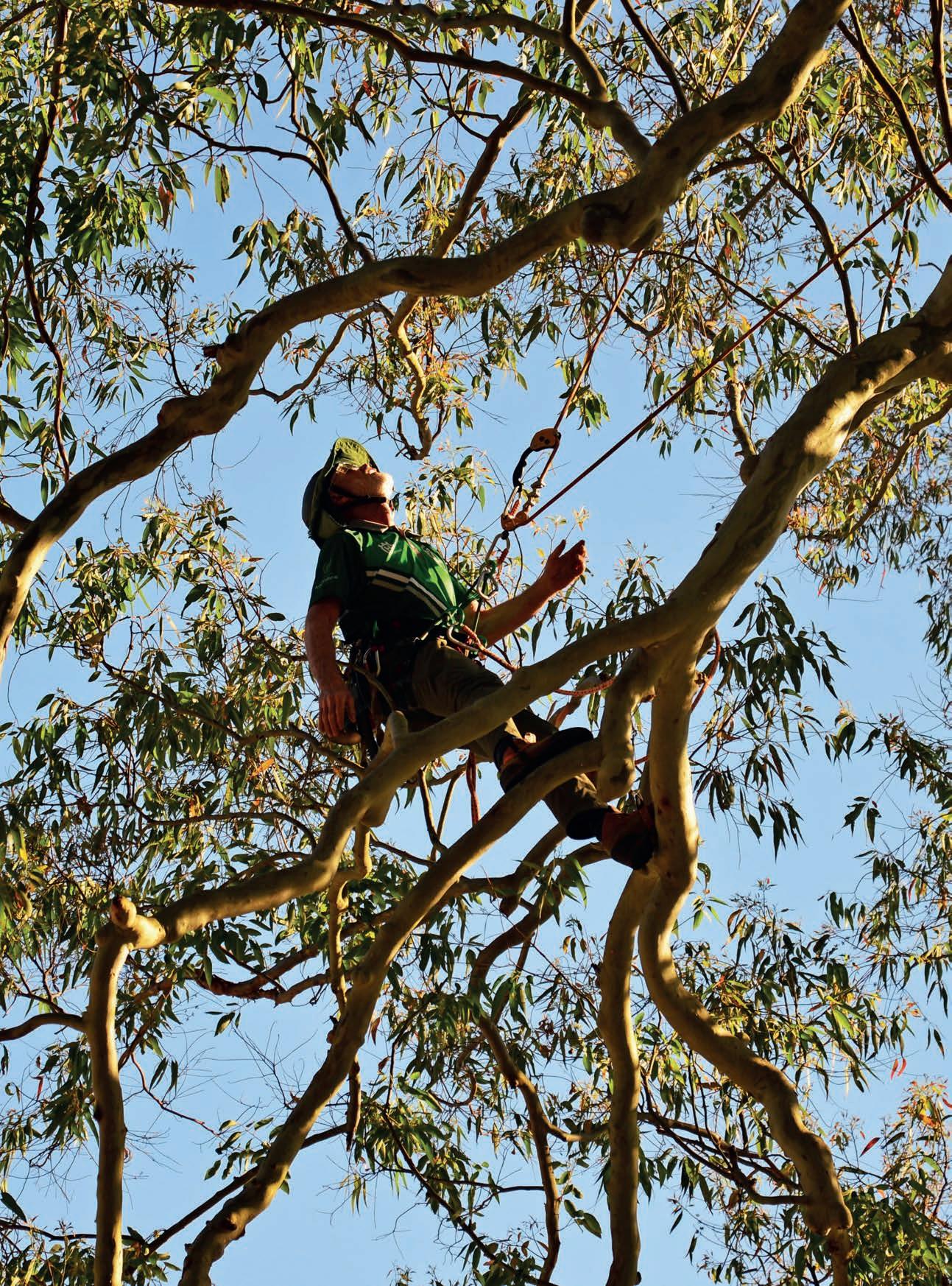
In May 2026 the Tree Contractors Association of Australia (TCAA), in line with its licensing and registration requirements, held a training and presentation day at Hornsby RSL, in Sydney’s north.
Quality presenters on the day included:
• Bill Sullivan, an AQF 6, on vTRA risk assessment;
• Dan McArdle from McArdle Tree Services on the new Code of Practice 2026 with its implications for businesses and workers; and
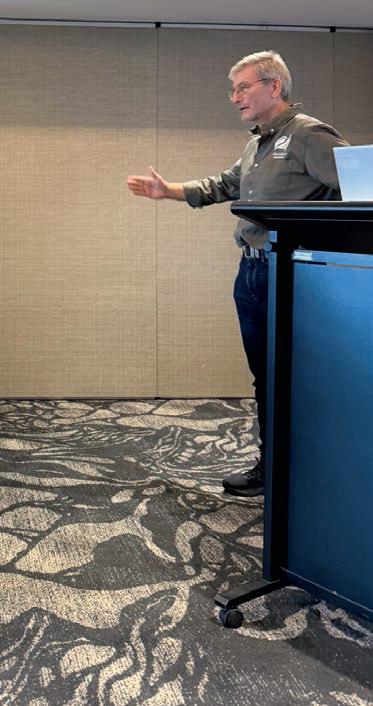
• Simon Strauss, Arboriculture Australia board member, on AANZAA/Value 26.
The occasion o ered outdoor work to assist attendees in completing risk assessments for various quali cations, and the networking opportunity was enjoyed by members, friends and guests. Stories and knowledge were shared for everyone’s mutual advantage.
A particular high was 92-year-old Jim McArdle (senior) being given a rockstar’s standing ovation when he entered the room, in recognition of his being the only life member of the TCAA.
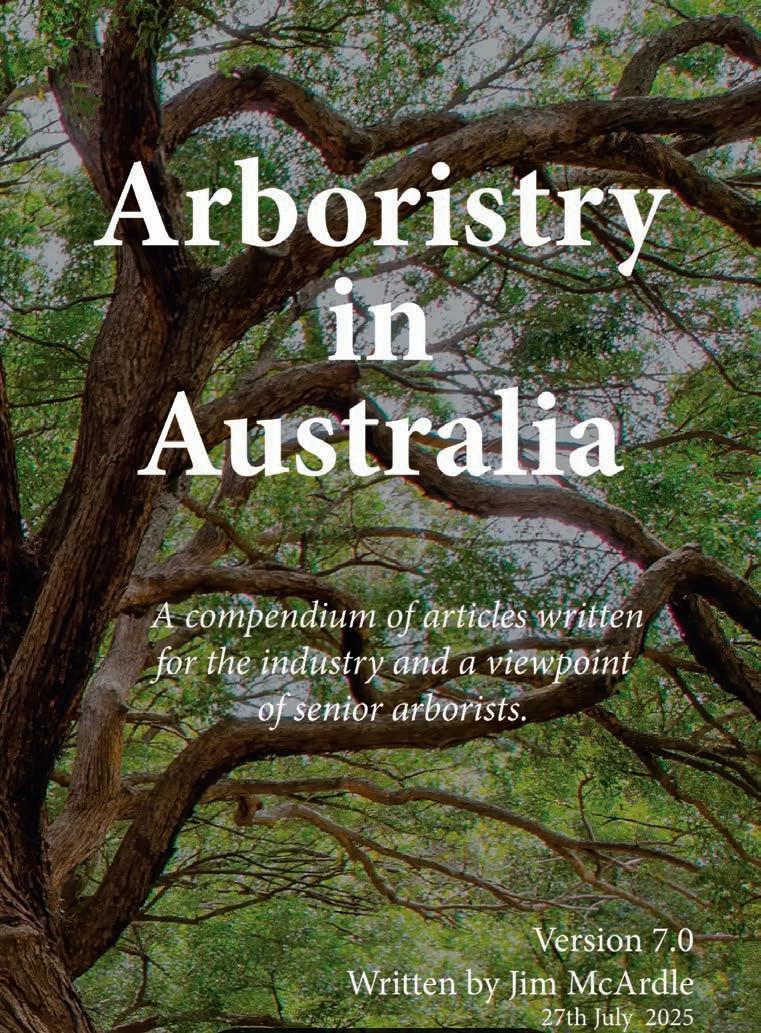
It was an ideal opportunity to release the younger Jim McArdle’s new book Arboristry in Australia, which was well received.
Venue and catering were both unanimously applauded, resulting in the venue being booked for the 2027 event.
Each speaker covered their topic and displayed expert knowledge. Bill Sullivan’s main points included:
• Professional indemnity relying on the quality of a report;
• that no one can de ne a tree as safe or not safe; and
• the Matrix vTRA system being based on an arborist’s knowledge, experience and training.
Dan McArdle’s years of experience in shaping arboricultural codes of practice and operating systems were evident as he outlined:
• A code of practice may be required in court to determine what is reasonably practical;
• the code should include all persons who work with trees, builders, developers and horticulturists;
• consultation is important with the team on worksites, as stated in the code; and
• a ‘competent person’ in the context of the code is someone who is skilled, knows the job and can relay the job role, or a competent hands-on person who is quali ed to train the skills being assessed.
Dan also reinforced the importance of an arborist being able to present proof of having kept up with their training.
Simon Strauss spoke knowledgeably on risk versus bene t and better management of trees, covering:
• The tree valuation book and TRIMS app;
• that lower socio-economic population areas have less trees;
• that property valuation gives a dollar value to trees;
• how the speci c value of tree inventory can be done remotely with Nearmaps, MetroMaps, ArborCarbon, and urban heat-management mapping;
• the place of tree-valuation use in risk versus bene t; and
• how future costs may be avoided by timely action.
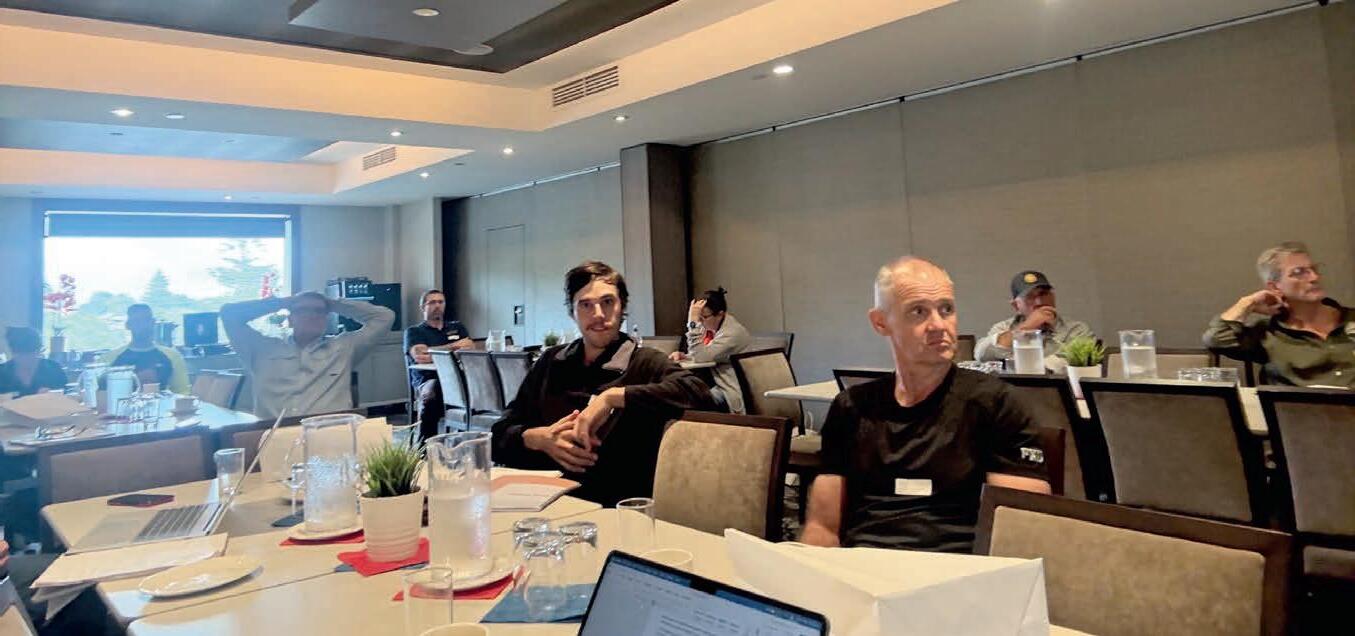
Arboriculture Australia board member Simon Strauss o ered information on AANZAA/Value 26.
By the book
Jim McArdle presented his new book and entertained the group with highlights from the 30-year history of the TCAA. He also outlined how belonging to an association allows best practices to ourish and develop.
Jim’s book Arboristry in Australia is an ideal text for AQF 3 and AQF 5 arborists, and for arboricultural businesses or students of arboriculture. Copies are available from the TCAA. Visit tcaa.com.au.
Research suggests genomic markers may help control a fungal pathogen.
BY SAM CARR, QAA MEMBER AND DIRECTOR AND SENIOR CONSULTANT AT QUEENSLAND’S SPECIALIST ARBOR SERVICES.
Myrtle Rust (Austropuccinia psidii ) is a biotrophic fungal pathogen that a ects more than 480 species of Myrtaceous plants globally. It was rst discovered in Australia in 2010, and given the lack of coevolution within the native populations of Myrtaceae, infection susceptibility was high and the pathogen spread rapidly. Within 12 months of emergence, containment was deemed unachievable and current e orts to save susceptible trees aimed to focus on resistant genotypes and pathogen biological control.
The pathogen
Through genetic analysis, genetic markers con rm the A.psidii found in Australia originated from Brazil. Research using scanning electron microscopes examined how the rust fungus infects leaves. Results concluded there were no obvious di erences in the development of infectious structures (urediniospores) of A.psidii, regardless of whether the plant was completely resistant, hypersensitive, or susceptible in the eucalyptus species studied.
Germinating urediniospores penetrate the leaf cuticle in susceptible specimens, but not in completely resistant varieties, indicating the resistance within specimens may lie within the genome responsible for morphological features of the leaf. Given the high pro le of A.psidii and the impacts on ecology and economics it can have, scienti c research into the disease has been extensive. Researchers agree the pathogen can be highly adaptable due to the transposable-rich genome (TRG).
TRGs are genomes with have highly mobile DNA sequences that can move to alternate positions within the
chromosome. This can cause insertions, deletions and other rearrangements that can in uence pathogen adaptability, indicating an evolutionary capacity and the potential to infect new hosts, or overcome resistant specimens.
Given the lack of coevolution of modern Myrtaceae – such as Eucalyptus spp. planted within Brazil or native populations of Myrtaceae within Australia – the rust fungus spread rapidly within the naïve populations and has resulted in near extinction levels in some highly susceptible species.
Historically, Myrtaceae occupied the ancient land of Gondwana. When Gondwana split, the trees in the Americas and Australia evolved into their own species. It is theorised these ancient trees may have coevolved with the disease, resulting in some modern specimens demonstrating resistance. Theoretically, modern species could carry ancient or fossil genes deep within the conserved architecture of the genome. Research and genomelevel analyses of molecular markers suggest the presence of these ‘R’ genes may be conserved within the genome of some resistant specimens. However, the speci c gene, genomic region, or single-base variation of a detectable locus responsible for an ancestral resistance gene has yet to be identi ed and con rmed.
Early research deliberately infected 23 clones of various eucalyptus species from ve provenances with A.psidii The results demonstrated neither provenance nor species equated to
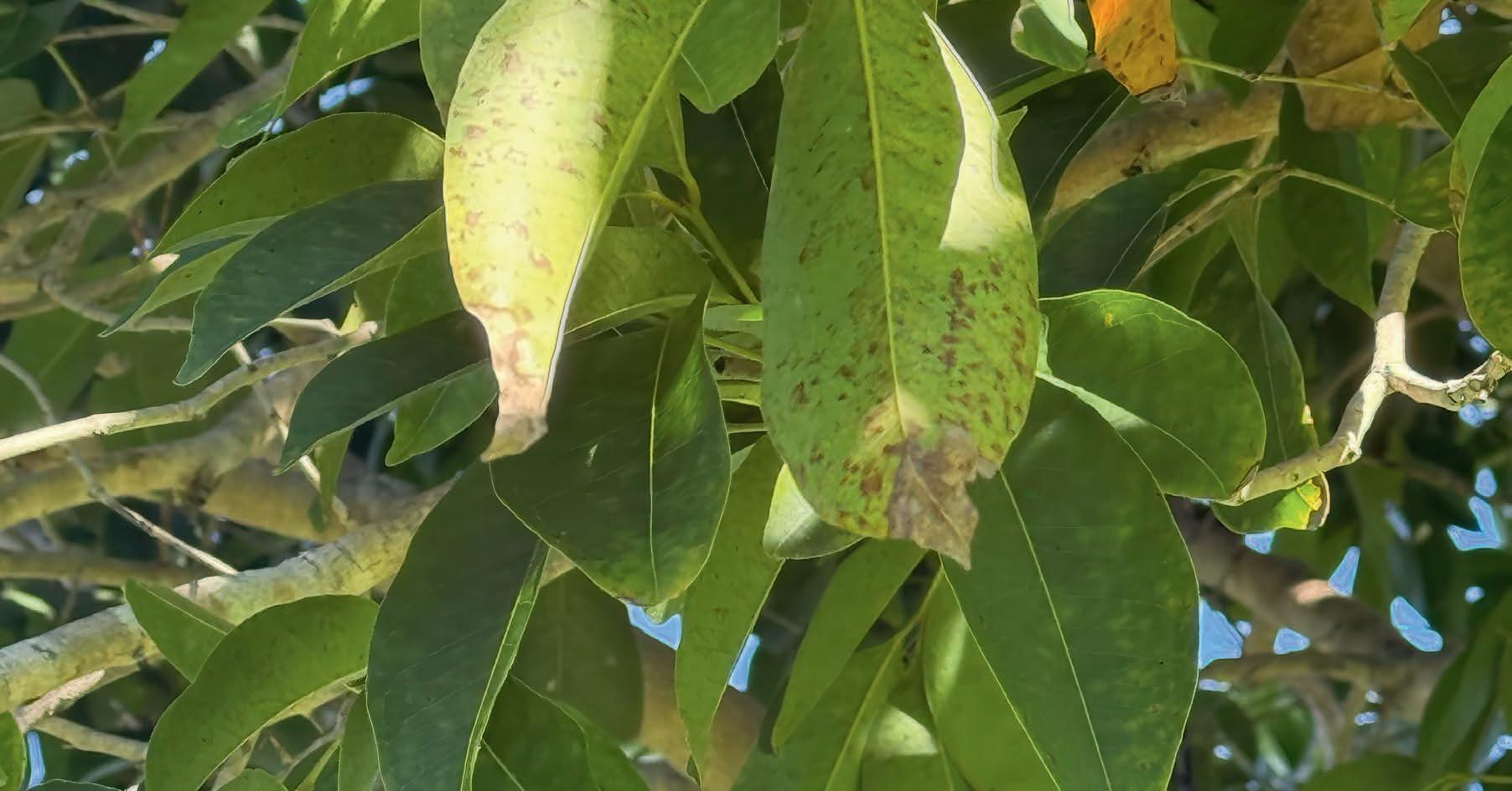
de nite resistance or susceptibility. Varying levels of both resistance and susceptibility were noted during the phenotypical response, and no obvious indicators were drawn from the experiment. This helped direct the research to genetic testing on plants demonstrating phenotypical responses of resistance, and to compare those genomes with specimens with phenotypically susceptible traits, to attempt to identify the expression of di erent genes or loci responsible for the desired trait.
Genetic studies of the selected Myrtaceous species aim to clarify to the mode of resistance within these trees by examining variations in genetics at multiple genomic levels:
• Complete genome mapping;
• loci identi cation;
• identi cation of individual genes (functional DNA sequence); and
• Single Nucleotide Polymorphism (SNP) – a change of a single nucleotide in a sequence that helps map areas of interest, or a change in the genes due to a change in alleles within a suspected gene responsible for resistance.
One method to aid in identi cation of such expressed genes is a genome-wide association study (GWAS).
A GWAS can test thousands of genetic variants within a chosen population, enabling di erences within DNA sequences across specimens or populations to be identi ed and statistically associated with resistance. This enables genomic regions to be identi ed and candidate genes to be evaluated to help con rm pathogen resistance.
The GWAS found a commonality between phenotypes (observable expression of a trait) and genotypes (genetic makeup that produces that trait) suggesting specimens with improved resistance were linked to both loci and polymorphic genes (genes that vary due to changes in alleles).
Patterns of genes suspected of being responsible for a desirable trait, such as pathogen resistance, are known as Quantitative Trait Loci (QTLs). QTLs are the genomic regions consisting of multiple genes or multiple loci within
the genome acting together that are suspected of being responsible for a trait. These areas within the genome have been mapped via Single Nucleotide Polymorphism (SNP)-based analysis.
SNPs are single-nucleotide di erences within a DNA sequence. These changes in the DNA sequence may or may not in uence the way a gene is expressed, but can be used to identify the QTLs, allowing evaluation of the genes present in those loci.
The research concluded there are the ve major loci that may in uence varying levels of rust resistance within Eucalyptus grandis, Eucalyptus globulus, and E obliqua. Given the consistent evidence these regions are linked to rust resistance within these species, the mapped regions can then be applied to, and compared with, new species to determine if they are present within related tree species.
Transcriptomics can be implemented to determine if candidate genes are functional during myrtle rust infection.
Transcriptomics is the process of measuring RNA molecules in tissue samples at a chosen time before and after infection. Due to the unstable nature of RNA, it must be converted to complementary DNA (cDNA). The cDNA is then sequenced using high throughput platforms, which allows comparison across samples.
These results are compared to a reference genome, other resistance specimens, and susceptible specimens. The loci and/or genes of interest can then be compared and analysed to determine if the genes within the QTLs exhibit di erential expression. The rate of activation can also be monitored over speci c time intervals, which can also indicate how resistant a specimen may be. This analysis helps recognise highcon dence candidate genes.
Concurrent research of an alternative mode of protection using genomedriven science has been implemented to target the pathogen directly. This involved spraying double-strand RNA (dsRNA) onto leaves of susceptible tree species.
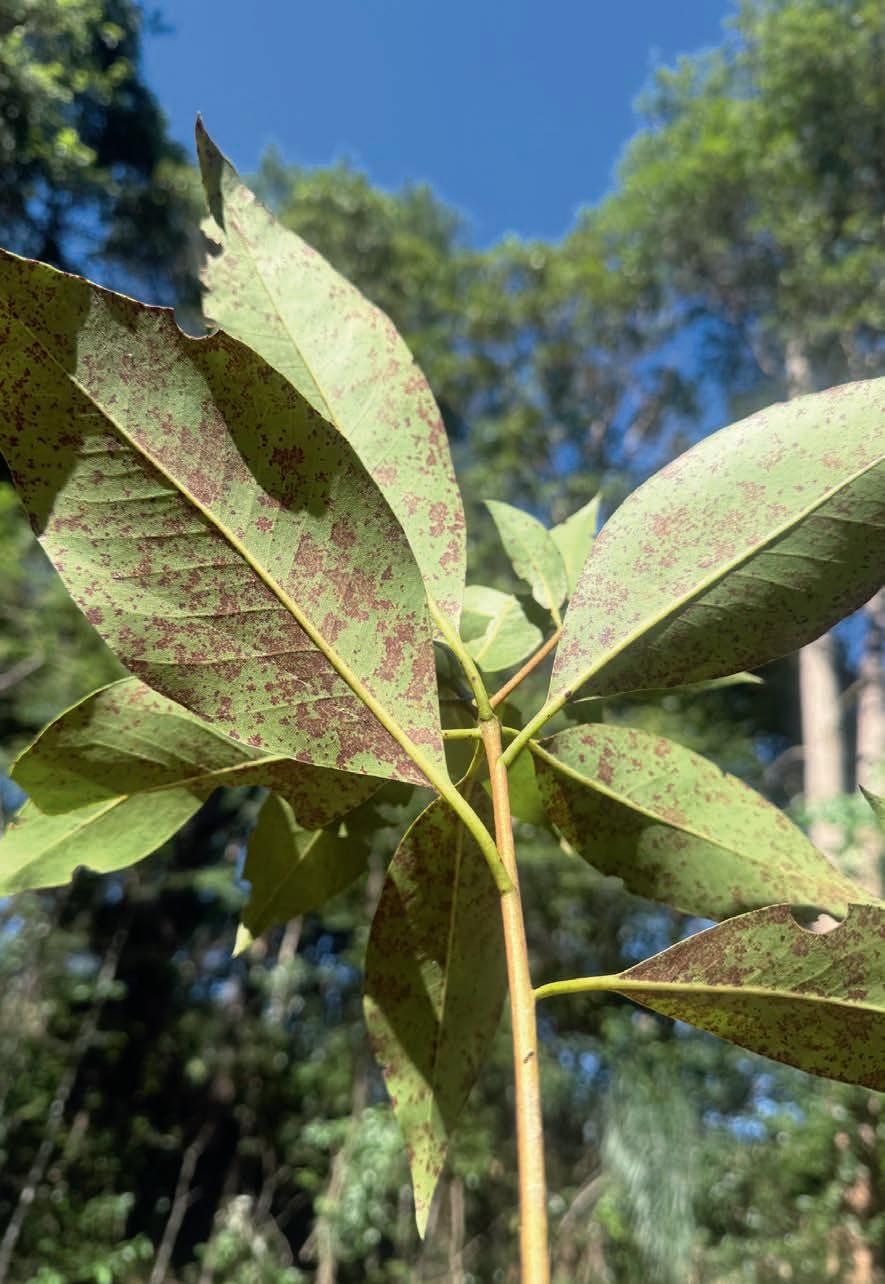
The dsRNA is created to invoke a defence response in the pathogen and intercept messenger RNA coding for infection methods such as haustoria development. Once bonded to the speci c mRNA molecule, the dsRNA silences it, restricting the pathogen from infecting susceptible leaves. The dsRNA is speci cally created to target a known gene of the pathogen and therefore will not a ect the broader biome of the treatment area. The dsRNA can also be modi ed as the pathogen evolves, enabling active genes in new strains to be silenced faster than the development of new resistant trees.
Tremendous e ort has been invested in understanding myrtle rust resistance through genomic mapping, QTL analyses, and associated research. These approaches have highlighted several genomic regions likely to contain genes contributing to reduced disease severity; however, no study has yet isolated a single causal gene or locus, nor has any breeding program produced genotypes demonstrating complete, heritable resistance. Two theories of broad resistance mechanisms acting on rust resistance within the genome have been proposed: ancestrally
conserved resistant loci and more recently adapted quantitative immune responses.
Current evidence cannot yet con rm whether resistance re ects an inherited mechanism present across the family, or whether it arises from multiple loci acting in combination through quantitative, polygenic resistance, or natural variations of alleles within the plant defence systems. Further comparative work across diverse Myrtaceae lineages is required to resolve whether these defence responses in resistant specimens exhibit a shared ancestral trait, independent multilocus adaptations, or both acting independently or cohesively to increase resistance.
Recognising the genomic diversity within the Myrtaceae family, and the complexity of the interacting mechanisms that are yet to be con rmed for rust resistance, evidence suggests developing reliable resistant specimens will take time. Even if future research con rms stable resistance pathways and selective breeding programs succeed in producing more tolerant genotypes, the highly adaptable nature of Austropuccinia psidii raises concerns that the pathogen will eventually overcome these resistant trees due to the highly adaptable transposable genome of the pathogen.
Combining targeted dsRNA-based suppression of Austropuccinia psidii with continued genomic research to identify and validate resistance loci is essential for protecting ecologically and economically important Myrtaceae species. More genome mapping and functional validation are required before breeders can reliably produce genotypes with stable, heritable resistance.

Mild symptoms of Myrtle Rust on Weeping Lilly Pilly (Waterhousea oribunda).
This article was the result of collating research from a variety of respected authors. Sam Carr would like to acknowledge the following:
• Arriel, D.A.A., Guimarães, L.M. da S., Ma a, R.G., Zauza, E.Â.V. and Alfenas, A.C. (2024). Early selection for rust resistance in eucalypt progenies and implications for other traits of interest in tree breeding. Southern Forests: a Journal of Forest Science, 86(3), pp.204–213.
• doi:https://doi.org/10.2989/20702620.2024.2346333.
• (Arriel et al., 2024)
• Beenken, L. (2017) Austropuccinia: a new genus name for the myrtle rust Puccinia psidii placed within the rede ned family Sphaerophragmiaceae (Pucciniales). Phytotaxa, 297(1), pp. 53–61.
• Available at: https://doi.org/10.11646/phytotaxa.297.1.5
• (Beenken, 2017)
• Berthon, K.A., Nielsen, L.R., Lee, D.J., Pegg, G.S. & Carnegie, A.J. 2019, Biology and host range of the rust fungus Austropuccinia psidii in Australia, Frontiers in Plant Science, vol. 10, article 273.
• https://doi.org/10.3389/fpls.2019.00273 (doi.org in Bing)
• (Berthon et al. 2019)
• Carnegie, A.J. & Lidbetter, J.R. (2015) Rapidly expanding host range of Puccinia psidii sensu lato in Australia. Plant Disease, 99(7), pp. 1116–1127. Available at: http://dx.doi. org/10.1094/PDIS-04-
• 14-0353-RE
• (Carnegie and Lidbetter, 2015)
• Chawla, H.S. (2009). Introduction to Plant Biotechnology. 3rd edn. En eld, NH: Science Publishers. (Chawla 2009)
• Chen, S.H., Yap, J Y.S., Viler, V., Stehn, C., Sandhu, K.S., Percival, J., Pegg, G.S., Menzies, T., Jones, A., Guo, K., Giblin, F.R., Cohen, J., Edwards, R.J., Rossetto, M. & Bragg, J.G. (2025).
• Pathways to Recovery: Genomics and Resistance Assays for Tree Species Devastated by the Myrtle Rust Pathogen. Molecular Ecology, 34(16), e70030. https://doi.org/10.1111/ mec.70030
• (Chen et al. 2025)
• Degnan, R.M., Carroll, B.J., Shuey, L.S., Radford-Smith, J., Gardiner, D.M., Mitter, N., McTaggart, A.R. & Sawyer, A. (2023). Double-stranded RNA prevents and cures infection by rust fungi. Communications Biology, 6, Article 1180. https://doi.org/10.1038/s42003023-05618-z
• Degnan et al. (2023)
• Guimarães, L.M.S., Titon, M., Lau, D., Rosse, L.N., Oliveira, L.S.S., Rosado, C.C.G., Christo, G.G.O. & Alfenas, A.C. 2010, Eucalyptus pellita as a source of resistance to rust, ceratocystis wilt and leaf blight, Crop Breeding and Applied Biotechnology, vol. 10, pp. 124–131.
• (Guimarães et al. 2010)
• Junghans, D.T., Alfenas, A.C., Brommonschenkel, S.H., Oda, S., Mello, E.J. & Grattapaglia, D. 2003, Resistance to rust (Puccinia psidii Winter) in Eucalyptus: mode of inheritance and mapping of a major gene with RAPD markers, Theoretical and Applied Genetics, vol. 108, pp. 175–180.
• https://doi.org/10.1007/s00122-003-1415-9 (doi.org in Bing)
• (Junghans et al. 2003)
• Morin L, Aveyard R, Lidbetter JR, Wilson PG (2012) Investigating the Host-Range of the Rust Fungus Puccinia psidii sensu lato across Tribes of the Family Myrtaceae Present In Australia. PLoSONE7(4):e35434.doi:10.1371/journal.pone.0035434
• (Morin et al. 2012)
• Naidoo, S., Slippers, B., Plett, J.M., Coles, D. & Oates, C.N. 2019, The road to resistance in forest trees, Frontiers in Plant Science, vol. 10, article 273.
• (Naidoo et al. 2019)
• Pegg, G., Carnegie, A., Giblin, F. & Perry, S. 2018, Managing myrtle rust in Australia, Plant Biosecurity Cooperative Research Centre, Canberra.
• (Pegg et al. 2018)
• Tobias, P.A., Guest, D.I., Külheim, C., Hsieh, J-F. & Park, R.F. (2016) A curious case of resistance to a new encounter pathogen: myrtle rust in Australia. Molecular Plant Pathology, 17(5), 783–788.
• https://doi.org/10.1111/mpp.12331
• (Tobias et al., 2016)
• Thumma, B., Pegg, G., Warburton, P., Brawner, J., Macdonell, P., Yang, X. & Southerton, S. (n.d), Molecular tagging of rust resistance genes in eucalypts Canberra: CSIRO Plant Industry, Plant
• Health Australia Ltd (n.d.).
• (Thumma et al., Nd)
• Xavier, A.A., Alfenas, A.C., Matsuoka, K. & Hodges, C.S. 2001, Infection of resistant and susceptible Eucalyptus grandis genotypes by urediniospores of Puccinia psidii, Australasian Plant Pathology, vol. 30, pp. 277–281. https://doi.org/10.1071/AP01038
• (Xavier et al. 2001)
• Yong, W.T.L. (2018) Genetics of myrtle rust resistance in Eucalyptus. Doctor of Philosophy thesis, School of Ecosystem and Forest Sciences, Faculty of Science, The University of Melbourne.
• (Yong et al., 2018)
• Yong, W.T.L., Ades, P.K., Runa, F.A., Bossinger, G., Sandhu, K.S., Potts, B.M. & Tibbits, J.F.G.
• 2021, Genome-wide association study of myrtle rust (Austropuccinia psidii) resistance in Eucalyptus obliqua (subgenus Eucalyptus), Tree Genetics & Genomes, vol. 17, article 31.
• https://doi.org/10.1007/s11295-021-01511-0 (doi.org in Bing)
• (Yong et al. 2021)
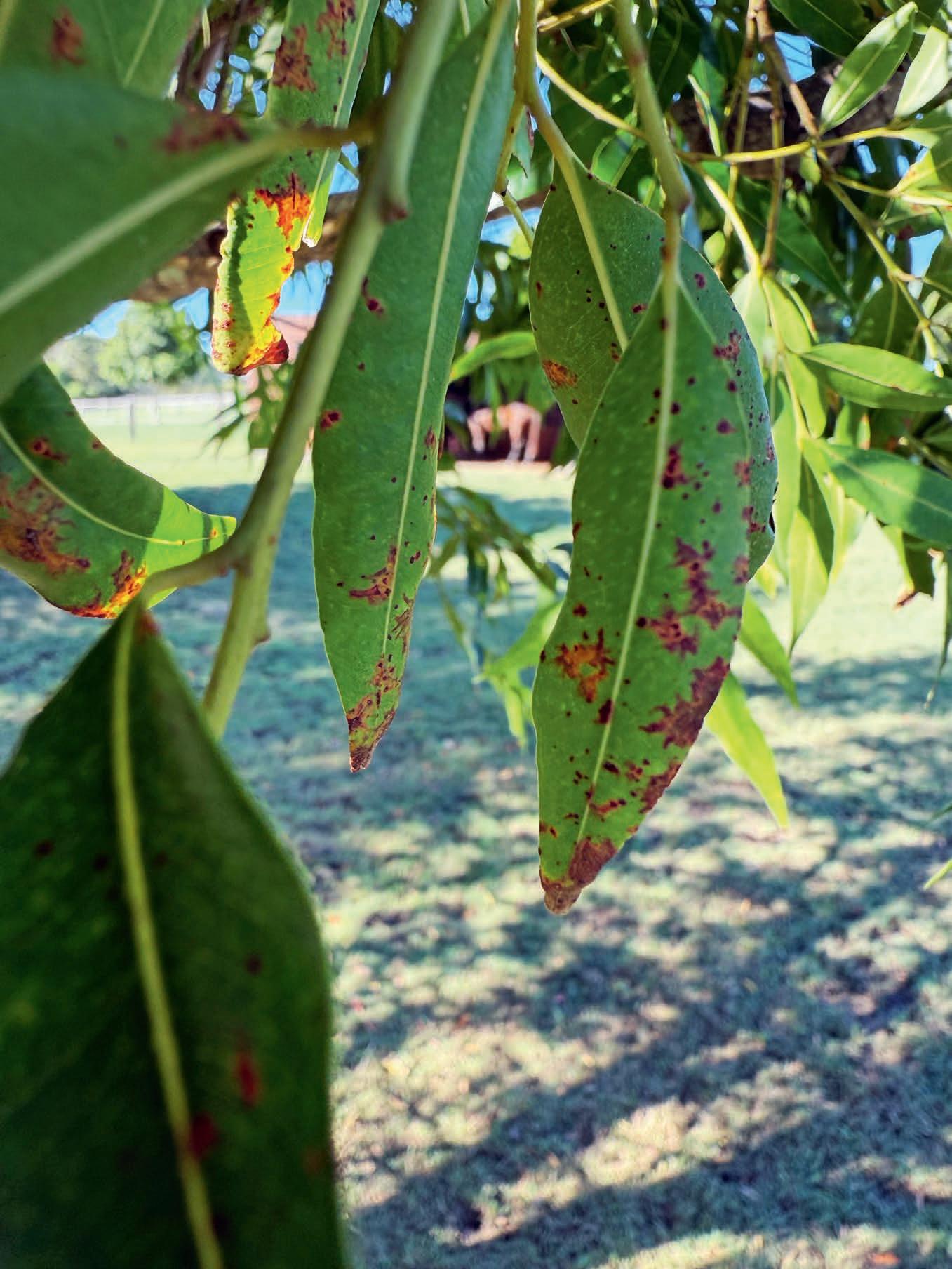
A new tree risk-assessment method has been introduced to the Australia and New Zealand arboriculture sector.
Arboriculture Australia (Arb Aus), in collaboration with the New Zealand Arboricultural Association, has introduced the AANZAA Tree Risk Assessment Method. AANZAA Risk has been developed in response to requests from arborists across both countries. It’s a modern, evidence-based, defensible, and user-friendly approach for everyday professional use, designed for local species, landscapes and risk contexts. AANZAA Risk provides a balanced framework that recognises both the community value of trees and the need for public safety, helping arborists communicate risk to clients.
The accompanying AANZAA app, TRIMS, supports the method by enabling arborists to collect data in the eld and generate reports that can be sent directly to a client from a mobile device. The TRIMS app will be available for free download and reports will be available to purchase in blocks of 15 for $15 USD.
Members of Arb Aus will receive one block of 15 reports free each month, giving practitioners an e cient tool to produce high-quality results.
The combination of method and app empowers arborists to take a more streamlined approach to tree-risk work without unnecessary complexity.
Arb Aus has con rmed that o cial AANZAA Tree Risk Assessment training will commence in 2026, marking the beginning of a new chapter in arboricultural practice across Australia and New Zealand.
Training will be delivered in tiered formats suitable for di erent experience levels, and all pathways lead to the same AANZAA Tree Risk Assessment veri cation. For example, a half-day course will be o ered for those with TRAQ, a full-day course for those with a Diploma in Arboriculture, and in 2027, a two-day course will be o ered for those with a Certi cate III in Arboriculture. Course numbers will be limited

to ensure high-quality learning experiences for participants and will be advertised through the Arb Aus website, e-newsletter and socials. Training will include access to resources and use of the TRIMS app, and participants should bring their usual data-collection device and photos of trees they wish to discuss during the course.
AANZAA Risk veri cations will be valid for seven years, and Continuing Education Units (CEUs) are available for the training, ensuring long-term professional value.
Arb Aus will support both established and emerging practitioners through this new methodology, which is expected to lift the standard of risk-assessment practice and client communication across the industry.
Arb Aus recognises there are multiple tree-risk assessment methods available and supports any method arborists have demonstrated to be t for purpose in various scenarios. The development of the AANZAA Tree Risk Assessment method is another tool in an arborist’s toolkit.
The most common risk-assessment methods in use in Australia and New Zealand, in order of historical introduction, are:
• QTRA: Quanti ed Tree Risk Assessment (Ellison, 2005);
• TRAQ: Tree Risk Assessment Quali cation (Dunster et al., 2013, ISA); and
• VALID: Tree Risk-Bene t Management & Assessment (validtreerisk.com).
AANZAA Tree Risk Assessment is a quantitative method. It requires an arboriculture quali cation appropriate to the level of assessment. A suite of free-to-download tools and training materials is available via trees.org.au/ tree-risk-assessment.
AANZAA Risk’s focus on evidence, structure, and robust practice addresses long-standing issues in the unregulated Australian arboriculture sector. By delivering a consistent approach, the method helps arborists translate complex biological and structural observations into clear, practical recommendations.
For clients – homeowners, councils, schools or utilities – this means greater clarity, greater trust and more consistent information upon which to base decisions.
For arborists, AANZAA Risk o ers a reliable, modernised platform that supports professional credibility, continuing education, and the ability to demonstrate industry-accepted competence.
Like other tree-risk assessment methods, participants will receive a certi cate. Arb Aus members are also o ered an e-badge on completion of training. It is intended the e-badge for AANZAA Risk will tie into a broader veri cation system being proposed to industry. If accepted, it will expand and improve recognition of the arboriculture industry and skills.
Alongside the rollout of AANZAA Risk and other initiatives to recognise industry skills and education, Arb Aus is proposing an important initiative: a national industry veri cation system for arborists.
This proposed system is available now for stakeholder consultation and feedback. You can have your say via the Arb Aus website. If supported, the proposed system is designed to:
• Recognise the diversity of skills and roles within arboriculture;
• validate quali cations and experience through a transparent vetting process
• provide the public with a straightforward way to check arborist competency; and
• support professionalism, accountability and ongoing learning.
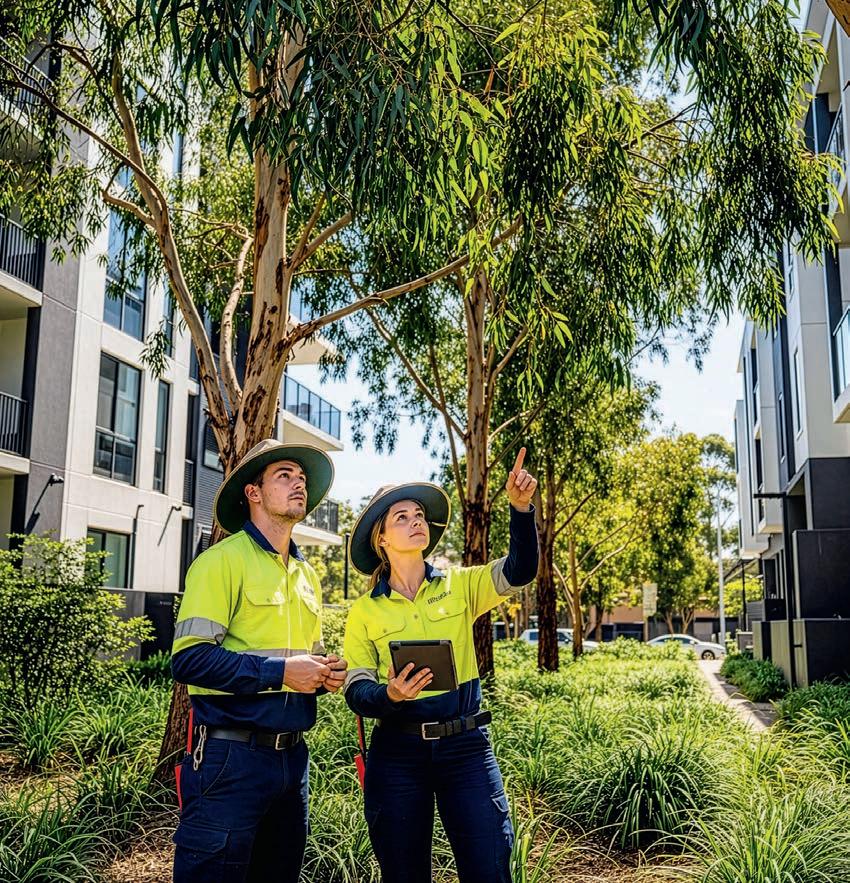
The proposed veri cation system must be achievable, practical and enduring –one that Arb Aus can deliver well. It will not be a licensing regime, a compliance body, or a regulatory system, which Arb Aus does not have the capacity to deliver.
The aim is to recognise and endorse, not to regulate; to support practitioners, not to exclude them. The goal is a trusted, accessible framework that lifts the profession without creating barriers or unrealistic expectations.
Veri cation will recognise existing quali cations, industry-based training, and relevant experience, with the potential for future pathways, such as a Master Arborist category. The intent is to unite a fragmented industry by providing shared benchmarks that are respected, accessible and understood.
Engagement with stakeholders across industry, government and education is underway and will continue throughout 2026 to re ne the model, gather feedback, and ensure broad support before implementation.
2026 will be a milestone year. With the launch of AANZAA Tree Risk Assessment training and the industry-wide
AANZAA Risk/26 provides a balanced framework that recognises both the community value of trees and the need for public safety.


consultation on the veri cation system, Arb Aus is working to build a future where arborists are more trusted, more visible and more professionally supported.
Alongside AANZAA Risk, Arboriculture Australia is also piloting training on AANZAA Value, a tree valuation system that supports quantifying the bene ts of trees in dollar terms and is a companion to AANZAA Risk.
These initiatives aim to give arborists tools, not rules. The goal is to help practitioners get the recognition they deserve, while giving clients the con dence they need.
Arb Aus looks forward to working with its members, partners and the wider industry as these important steps are taken.
For updates, visit trees.org.au, follow the Arb Aus socials, or subscribe to the e-newsletter via the website.

Brian Beecroft, CEO of the Timber Trade Industrial Association, o ers guidance on handling a potentially di cult situation.
Medical certi cates are generally accepted as proof of illness, but there are limited circumstances where employers may challenge their validity. Here are some examples of the evidence required and the risks employers need to manage when challenging or assessing a medical certi cate.
A recent enquiry concerned an employee who applied for three weeks’ annual leave that was refused due to operational requirements. The employee was subsequently absent, claiming personal leave for the period originally requested as annual leave. The employee told his immediate supervisor he had a medical certi cate covering the absence. The supervisor suspected the employee was overseas on a holiday, as did his work colleagues.
The query was: if the employee produced a medical certi cate, could the company challenge its validity, or must it be accepted as irrefutable proof of the employee’s claimed illness?
To successfully challenge a medical certi cate’s accuracy in this case, the onus is on the employer to produce evidence that refutes the accuracy of the medical certi cate. Hearsay from another employee would not amount to reasonable evidence, unless more substantial evidence was forthcoming that proved the employee was overseas during the claimed period.
It should be noted an employee has several statutory protections under the Fair Work Act. These include ‘unfair dismissal’ and ‘action under general protections’, which relates to the employee exercising a workplace right (personal or carer’s leave), or dismissal due to a temporary absence from work due to illness or injury.
The onus of proof in a ‘general protections’ claim lies with the employer.
The Australian Medical Association (AMA) Guidelines for Medical Practitioners on Certi cates Certifying
Illness 2011: Revised 2016 state that the usual requirements for a medical certi cate are:
• The name and address of the medical practitioner issuing the certi cate;
• the name of the patient;
• the date on which the examination took place;
• the date on which the certi cate was issued; and
• the date(s) on which the patient is or was un t for work.
Guideline 2.4 states: ‘Where a third party (such as an employer) contacts the doctor to verify the veracity of a medical certi cate (e.g. to determine if it is fraudulent in any way), the doctor should verify the third party’s identity, ask for a copy of the certi cate and con rm the veracity of the certi cate. The doctor should not provide any other information about the patient without the patient’s express consent.’
The AMA guidelines also provide the following requirements in relation to the
issuing of a carer’s certi cate:
• A carer’s certi cate may be required by a third party where an individual needs to take time away from a particular activity to care for the patient (often an immediate family member) who is sick or injured;
• only the patient’s treating doctor should issue a carer’s certi cate; and
• the treating doctor has a responsibility to ensure the patient requires or required care by the carer, but it is not the treating doctor’s responsibility to determine who may qualify as a carer.
There have been instances before industrial courts and tribunals where an employer has successfully challenged a medical certi cate used by an employee as evidence in respect of an absence from work due to personal illness. The subsequent dismissal was ultimately justi ed on the grounds of serious misconduct. Examples include:
• An employee who produced a medical certi cate as proof of illness was not dismissed unlawfully because of temporary absence from work due to illness when the employer discovered

A medical certi cate is generally regarded as irrefutable proof of an employee’s illness or injury. Image: wutzkoh/stock.adobe.com
he attended a football match on that day.
• The (then) Australian Industrial Relations Commission found an employee who manually altered a medical certi cate to claim additional sick leave was guilty of misconduct that amounted to a serious breach of an employee’s duty of honesty and constituted a valid reason for dismissal.
• An employee who had a plausible reason for the alteration of a medical certi cate was deemed to have been dismissed unfairly. The issue of the medical certi cate was used by the employer as a pretext to dismissal because the employee had been on light duties, but the employer was deemed to have not carried out a proper investigation of the facts.
• An employer dismissed an employee who presented a false medical certi cate in claiming one week of personal/carer’s leave. The employee’s manager checked the surgery and was informed the doctor had neither seen the employee nor provided the medical certi cate. Employment was terminated
because the dishonest and fraudulent conduct had breached the employer’s standards according to its code of conduct, and the employer was deemed to have a valid reason for the dismissal. The employer had noti ed the employee of the reason for the termination and had given the employee an opportunity to respond. Fair Work Australia was satis ed the employer had no option but to terminate the employment because it had lost its trust in the employee due to his dishonesty.
• An employee who altered a medical certi cate so she could return to work sooner than a doctor ordered was fairly dismissed for serious misconduct. The Fair Work Commission concluded the employee had engaged in misconduct by falsifying the medical certi cate, even though it had caused the employer no harm and given the employee no advantage. Altering a medical certi cate could undermine an employer’s con dence in such important documents.
While a medical certi cate is generally regarded as irrefutable proof of an employee’s illness or injury, the employer may challenge the validity of a medical certi cate where there is su cient objective proof that contradicts the certi cate.

The Arboricultural Association of Western Australia’s Pia Finnigan suggests working smarter as winter approaches.
As Western Australia moves out of bush re season and into the cooler, wetter months, the focus for many contractors shifts from re mitigation to storm preparedness.
The same vegetation that posed a re risk over summer can soon become a hazard in high winds and heavy rain. Fallen limbs, blocked access tracks, and unstable trees create safety and operational challenges, and for arborists, winter storms can mean long days responding to emergency callouts, clearing access, and managing hazardous trees under di cult conditions.
Arborists and landowners are turning to mechanised solutions to stay ahead of the workload. Many are using forestry mowers, mulchers and specialised attachments to not only construct and maintain compliant rebreaks, but to
prepare sites for winter weather and rapid response.
The right equipment, servicing, and planning can help businesses prepare for whatever the next season brings.
Heavy timber, saturated ground and unstable trees can make even routine tasks complex and dangerous.
“During storm clean-up, arborists are often dealing with di cult ground conditions, unstable trees, unpredictable loads, and tight-access sites that can increase the risk of bogging or surface damage,” explained Vernon Gage, Sales Manager at Avant Equipment. “The combination of heavy timber, poor ground conditions, and urgency increases risk.”
Storm-response work often needs to be carried out quickly to restore access
or remove hazards. When crews rely on manual lifting and handling, fatigue can quickly set in, increasing the likelihood of injuries or mistakes.
Compact machinery is changing the way arborists approach storm-damage work. Equipment designed for con ned spaces and uneven terrain allows crews to move large volumes of timber without relying on physical labour.
“Using an articulated Avant mini loader with the correct attachments –grapple buckets, log grabs, and winches – allows operators to lift, carry, and stack material mechanically rather than by hand,” said Gage. “Its 4WD system provides strong traction in poor ground conditions, and its rigid chassis provides stability on uneven terrain when
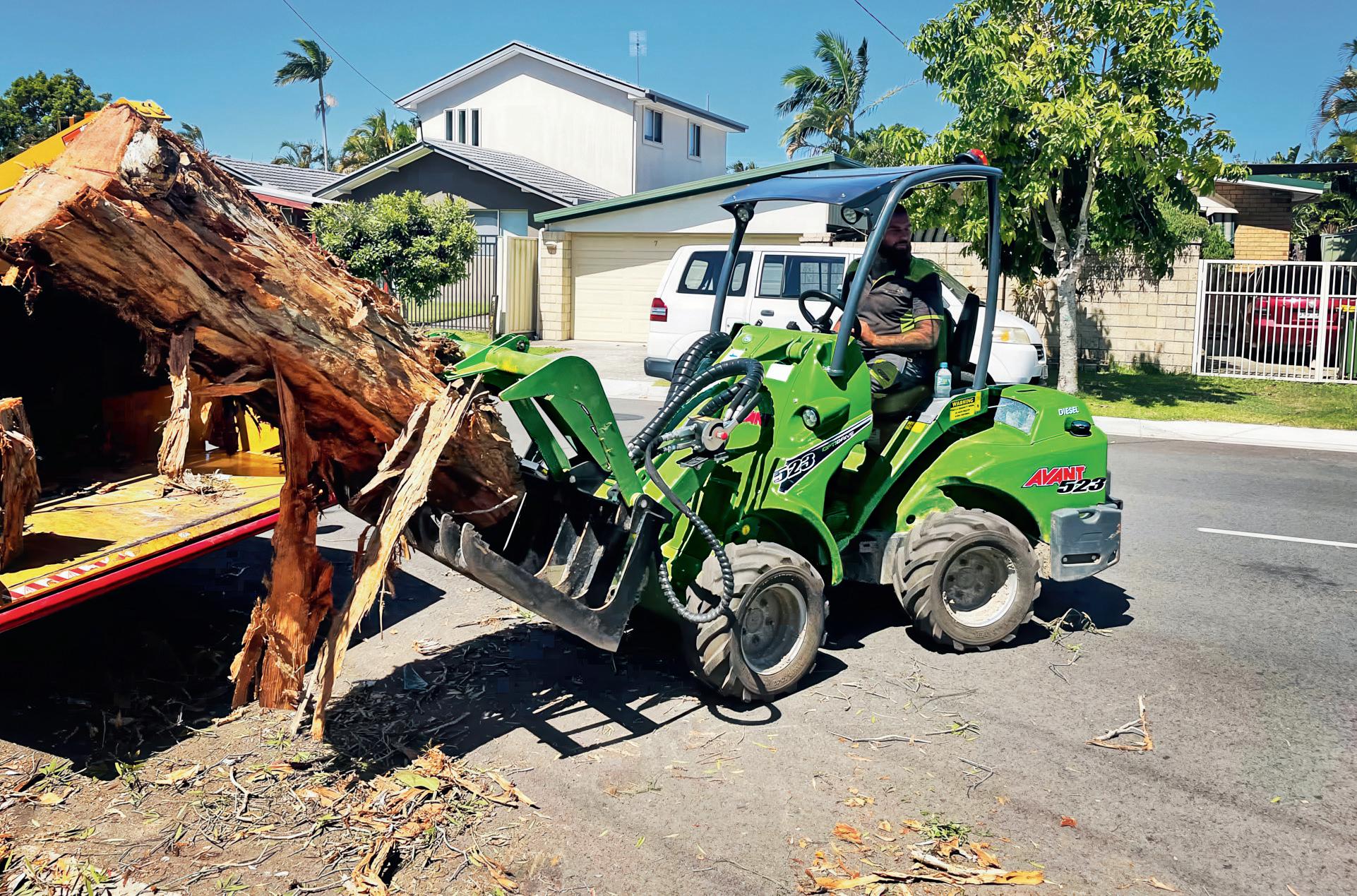
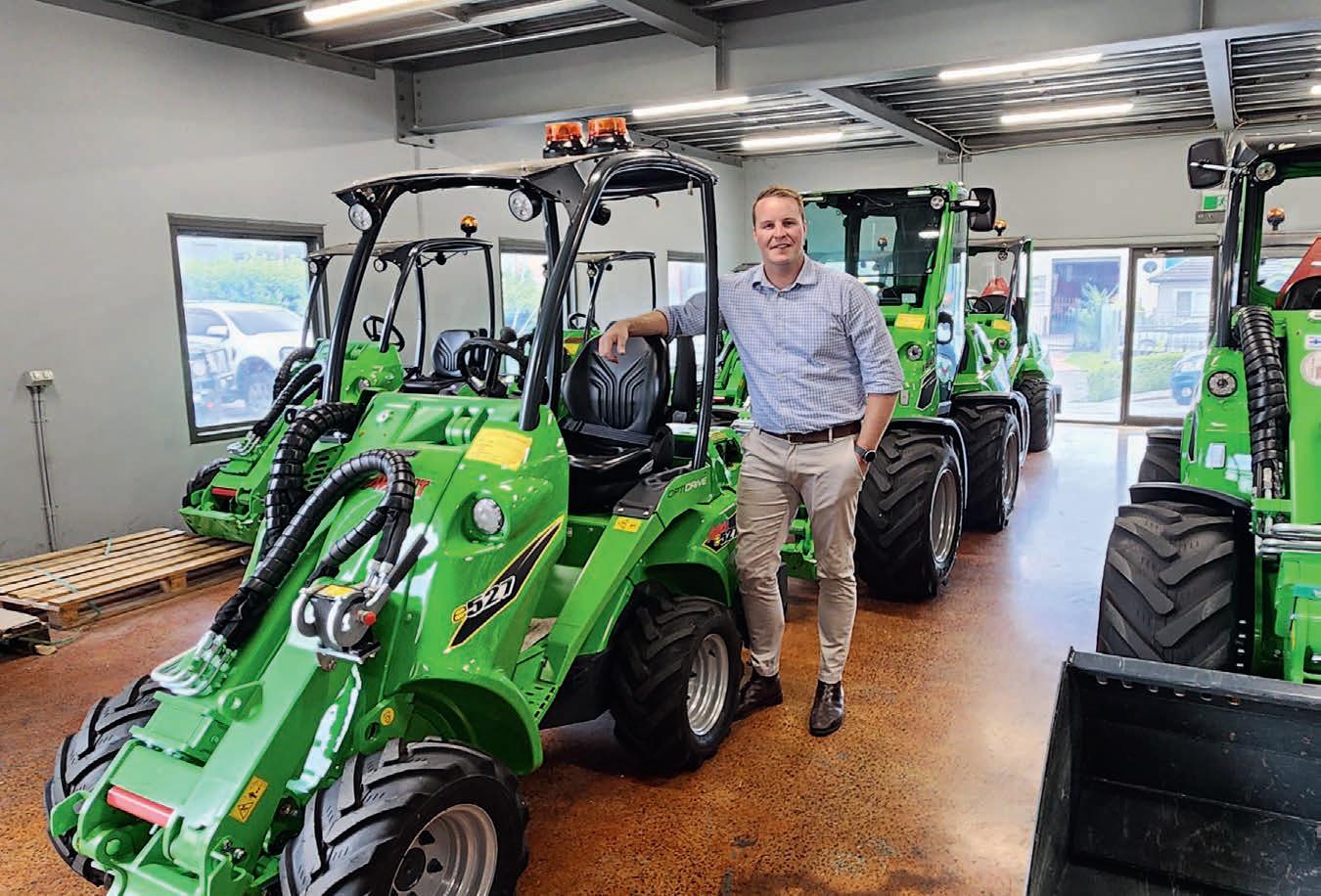
handling heavy logs, allowing arborists to keep working during storm clean-up.
“Using the right machinery reduces manual handling, cuts fatigue, and improves overall site safety.”
For many arborists, compact loaders have become an essential part of storm preparation and response, assisting with:
• Transporting timber and debris;
• winching and lifting heavy logs;
• clearing blocked access tracks; and
• reducing physical strain on workers.
While storm response often receives the most attention, preparation before the weather turns is just as important. Clearing access tracks, managing vegetation around buildings, and maintaining rebreaks can reduce the impact of severe weather.
Forestry mulchers and mowing attachments allow operators to manage vegetation across large areas, particularly on rural or semirural properties with access tracks and rebreaks to be maintained year-round. Regular maintenance ensures emergency vehicles can reach properties if required.
Equipment suppliers such as Scha er Loaders Australia and Digrite provide machinery and attachments designed to reduce manual labour while improving e ciency during both preparation and clean-up work.
Digrite supports contractors, councils, and land managers with specialised vegetation and earthworks equipment for both preventative land-management and post-storm recovery. Machines equipped with forestry mulchers, grapple attachments, and compact
loaders process fallen timber, clear access tracks and remove debris quickly while reducing manual handling and improving safety.
Digrite equipment can assist with:
• Vegetation management and fuelload reduction;
• rebreak construction and maintenance;
• clearing fallen trees and storm debris; and
• restoring access tracks and rural roads.
Digrite is a practical partner for bush re mitigation, storm recovery, and ongoing land management.
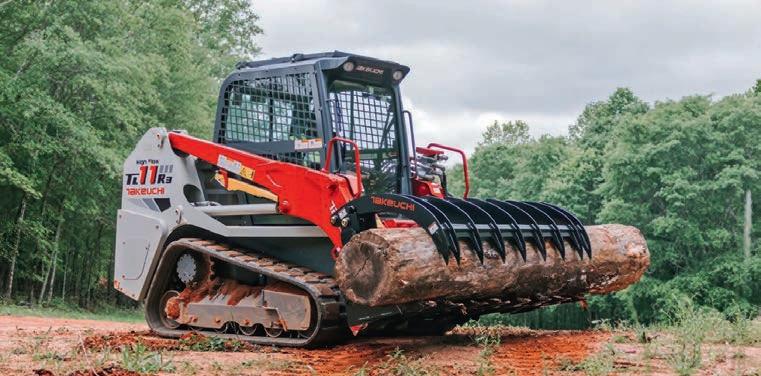

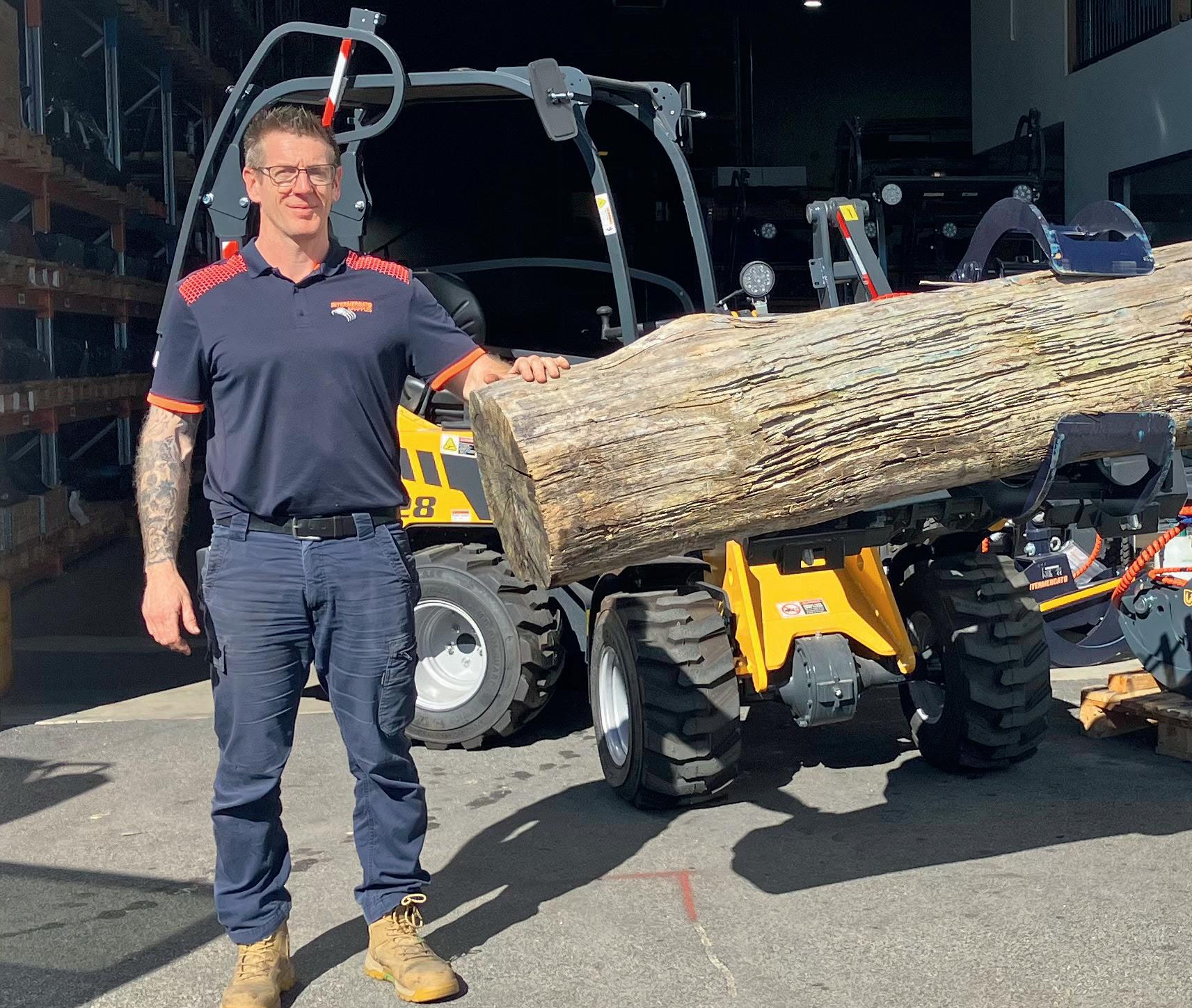
Rob Thompson from Scha er Loaders Australia said compact articulated loaders are valuable for arborists responding to storm damage.
“Their design allows access to tight backyards and soft, waterlogged ground with minimal surface disturbance,” he explained. “Attachments like grapple buckets and log-skidding grapples make lifting and stacking heavy, stormdamaged timber safer and faster.”
With machines to handle the lifting, arborists can avoid unnecessary manual handling and keep crews away from potential crush zones while clearing debris.
“Preparing equipment before storm season is also critical,” Thompson added. “Contractors should inspect hydraulic hoses, tyres, uids and safety
systems, and refresh operator training on safe load handling and wet-weather operation. Preparing early helps minimise downtime and improves safety when storm work ramps up.”
Storm preparation is not only an issue for contractors. Property owners can take simple steps before winter to reduce risks around their homes.
Before storm season arrives, homeowners should consider:
• Inspecting large trees near buildings, driveways or powerlines;
• removing dead or damaged limbs;
• seeking professional advice for trees showing structural defects; and
• arranging pruning or risk assessments where required.
Quali ed arborists can provide professional assessment and management advice to ensure trees remain healthy while reducing the likelihood of storm damage.
As the seasons shift, arborists across Western Australia are once again preparing for the unpredictable nature of winter weather.
For many businesses, the key to managing storm season successfully lies in planning ahead, ensuring equipment is serviced, attachments are ready, and crews have the right tools.
With increasing demand for rapid storm response and safe work practices, mechanised solutions are becoming an important part of modern arboriculture.
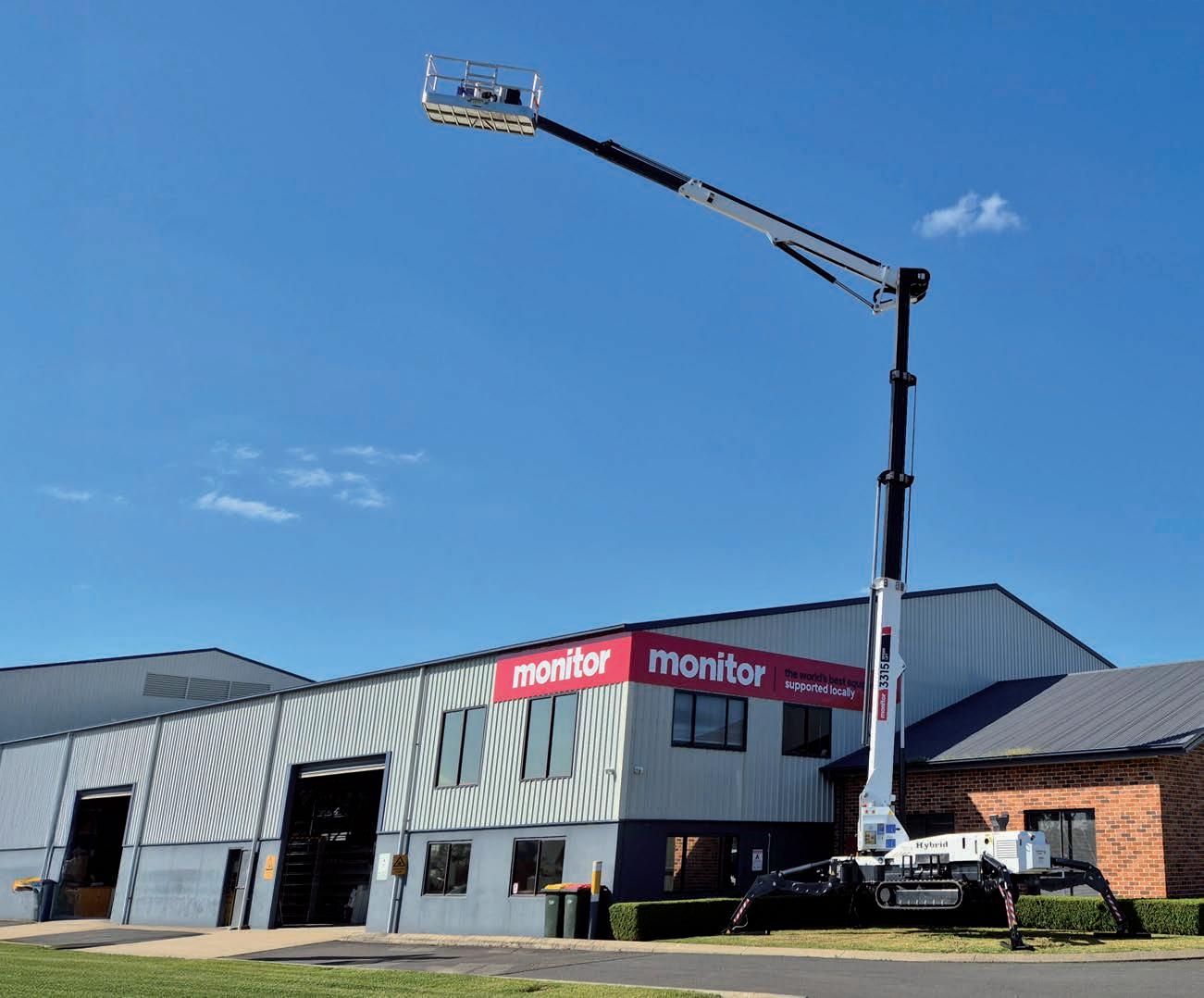
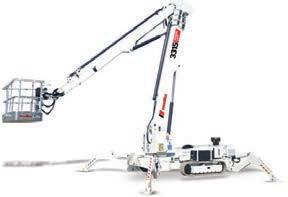


COMING SOON TO