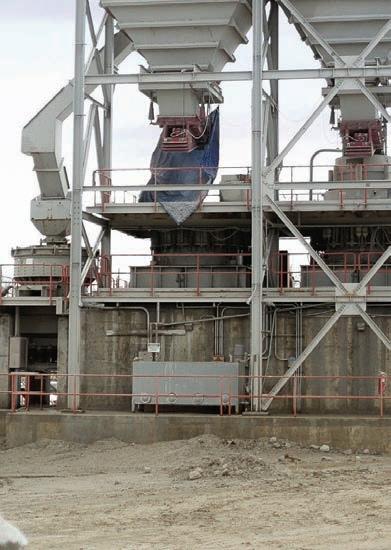
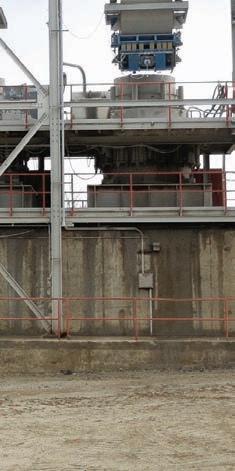
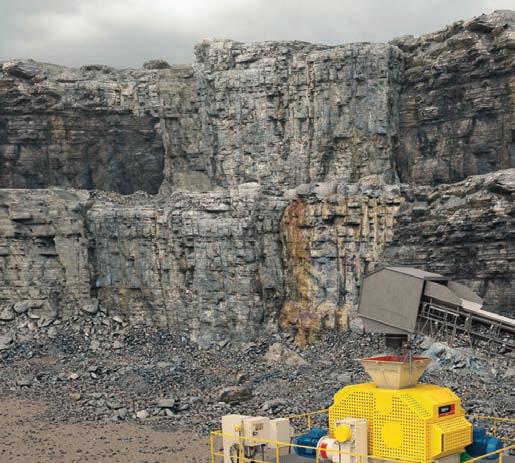
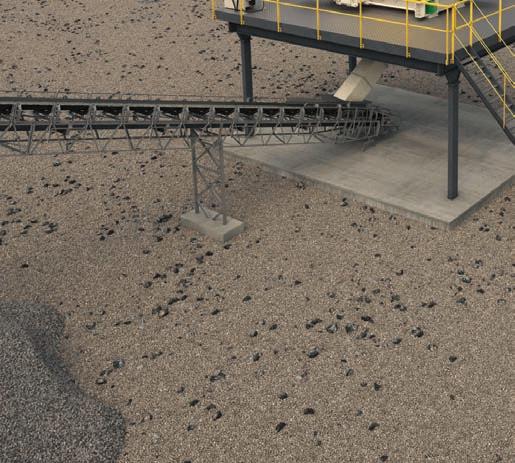
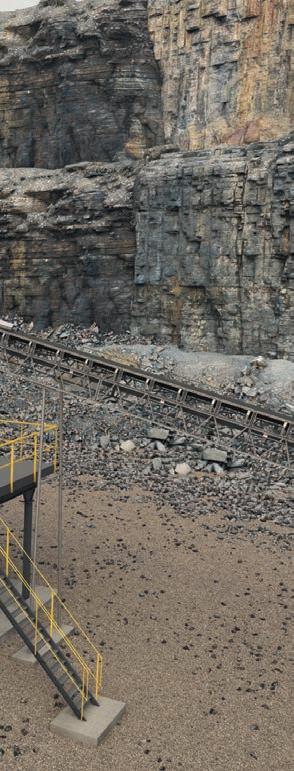
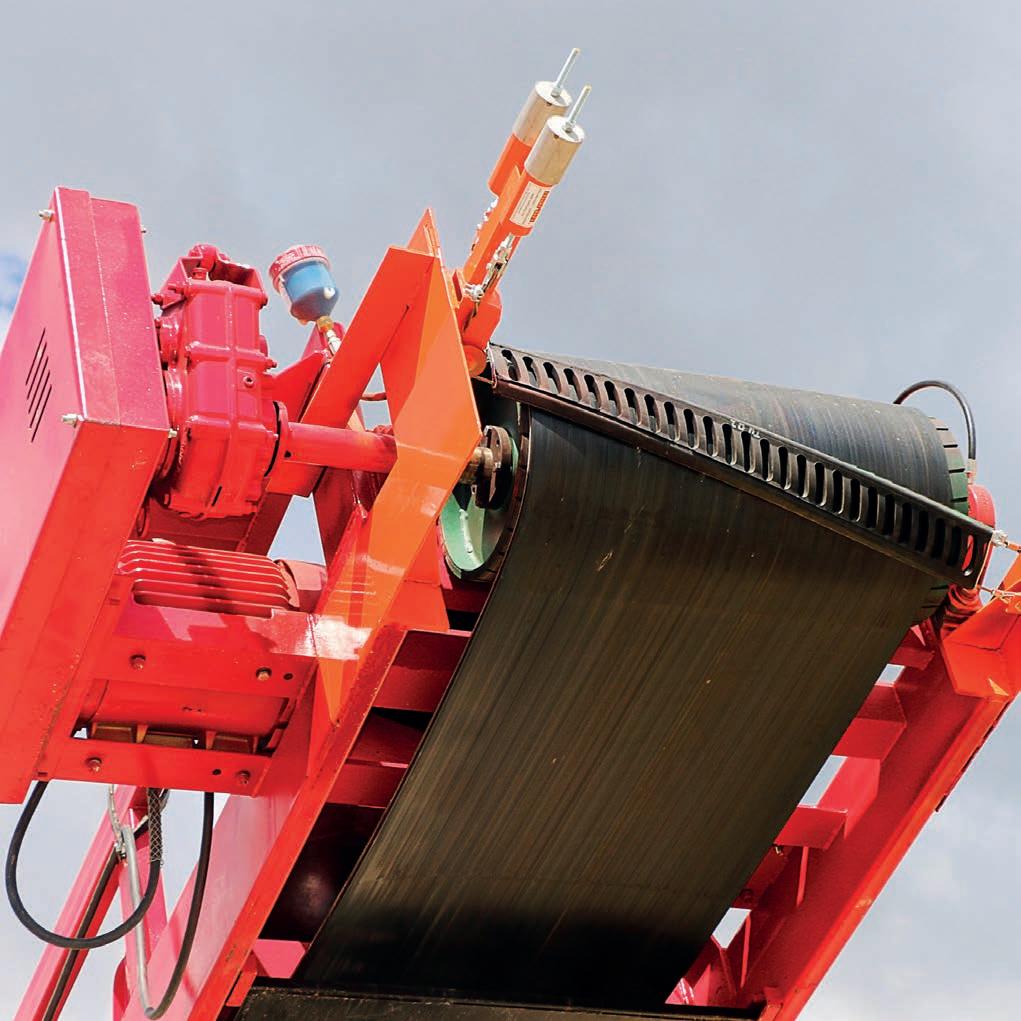
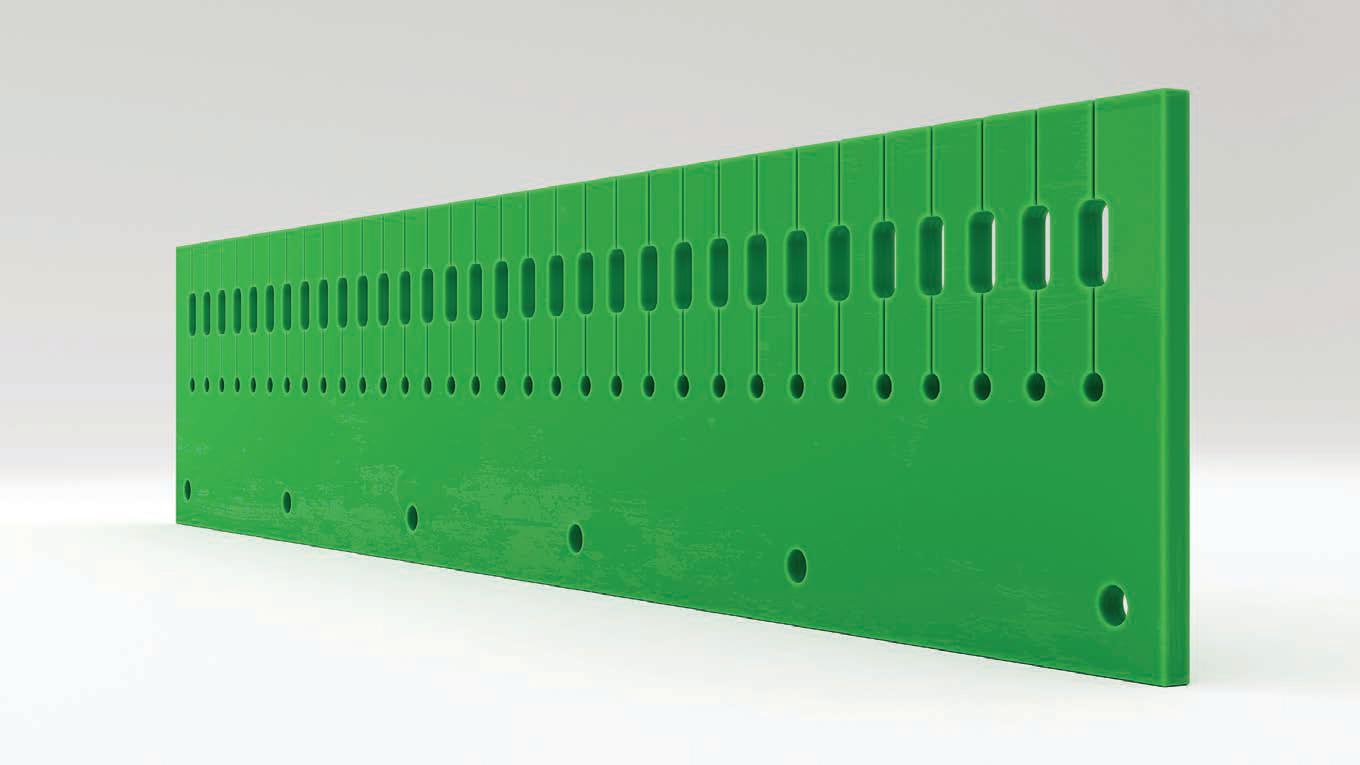
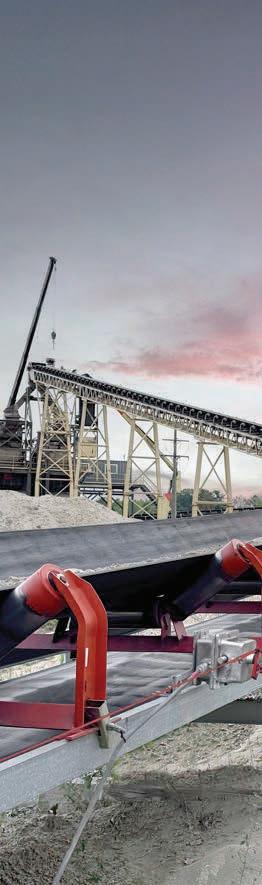
Martin’s family of QC1+™ primary belt cleaners deliver industry-leading performance for demanding bulk material handling operations all over the globe.
Featuring Martin's patented Continuous Angle Radial Pressure blade-to-belt technology, our application-specific urethane blades, rugged mainframe construction, and easy blade replacement design, these cleaners maximize cleaning effectiveness for all belt sizes and speeds.
Not only does the QC1+™ efficiently discharge material from the belt, it minimizing the carryback that causes belt damage, component failure, added maintenance, and lost production.
March 3-7, 2026
Las Vegas, Nevada Booth #C30148
QC1+™ XHD
“I’ve lived on both sides of the country, and I think there’s a lot of opportunity for Canada to be pioneers of
Regulars
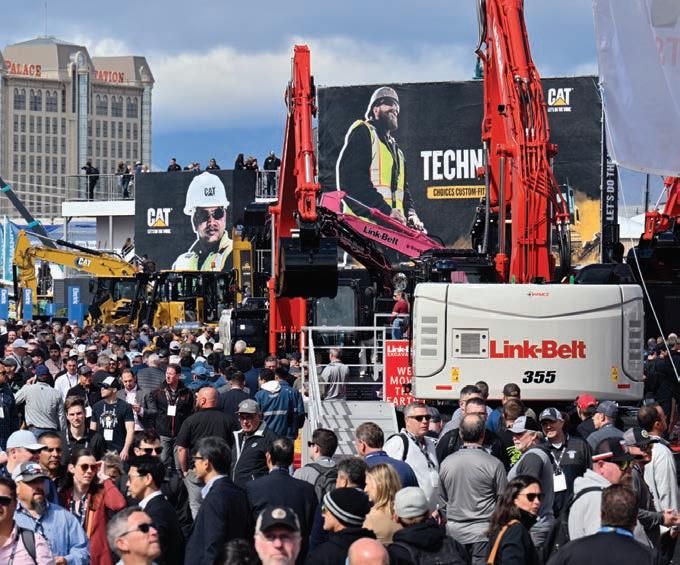
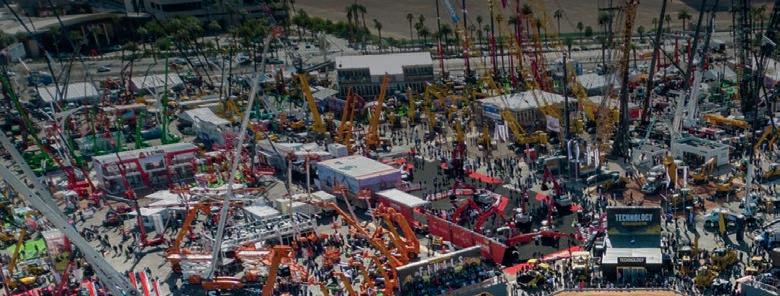
The US is set to host many showpiece events as ConExpo/Con-Agg returns.
All the key events in the quarrying and aggregates world.
Smiley Monroe has turned its focus to supporting US quarrying and aggregates customers.
APAC president Brent Morrey discusses the key trends shaping the Canadian aggregates sector. 12 INTERVIEW
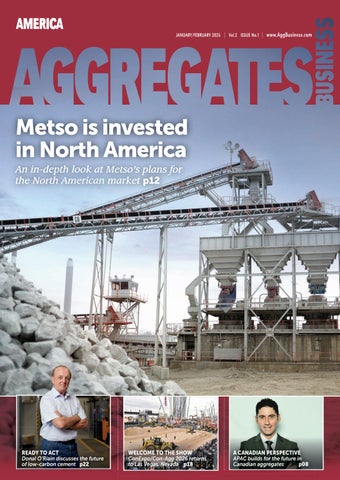
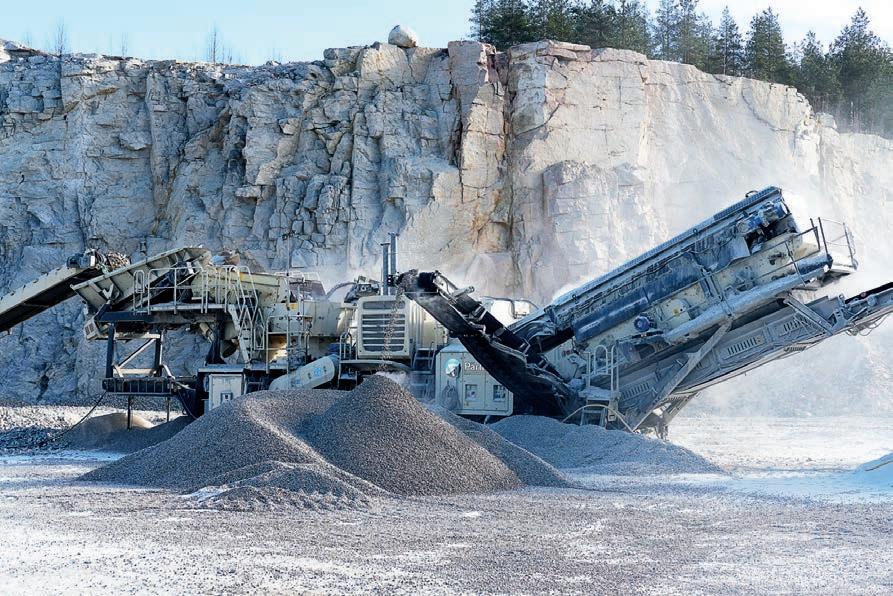
Metso vice president for Americas distribution Steve Cianci looks at the North American quarrying and aggregates sector.
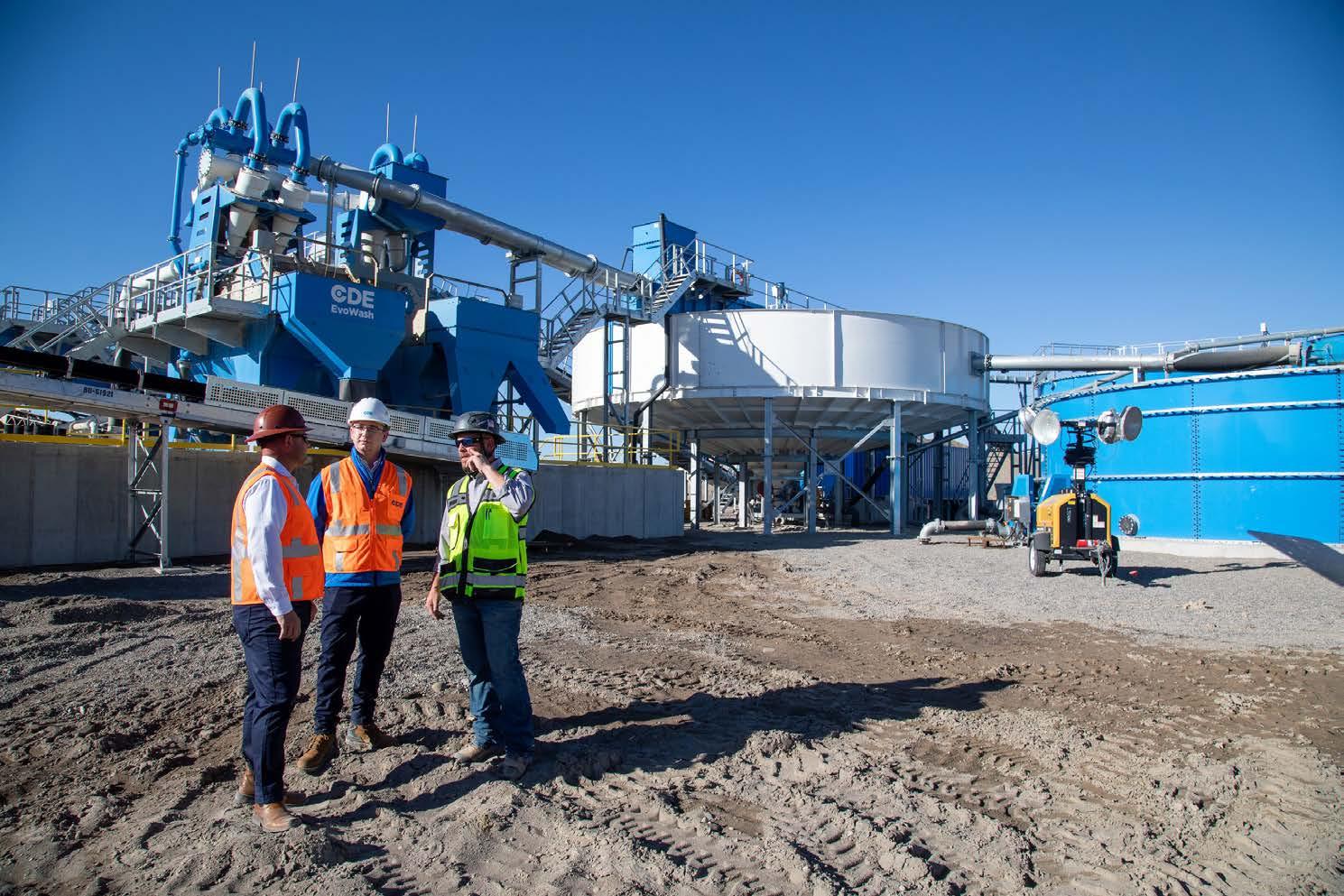
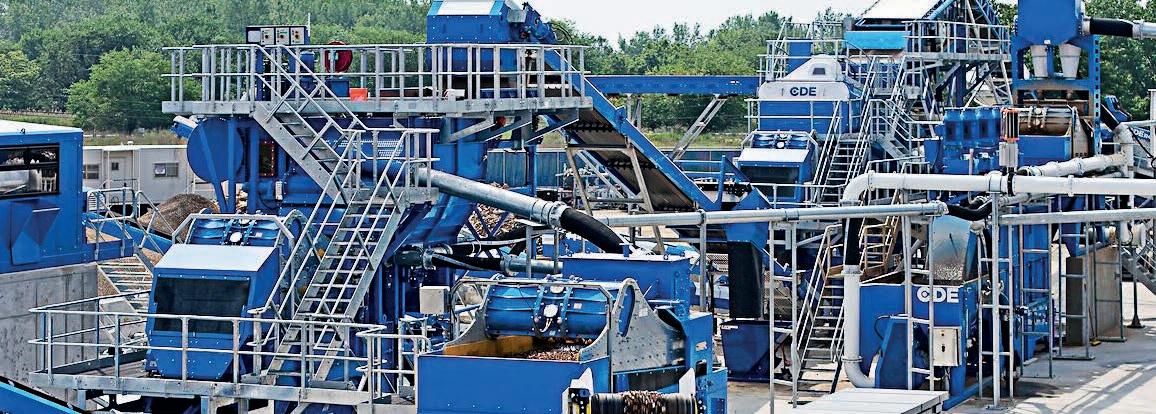
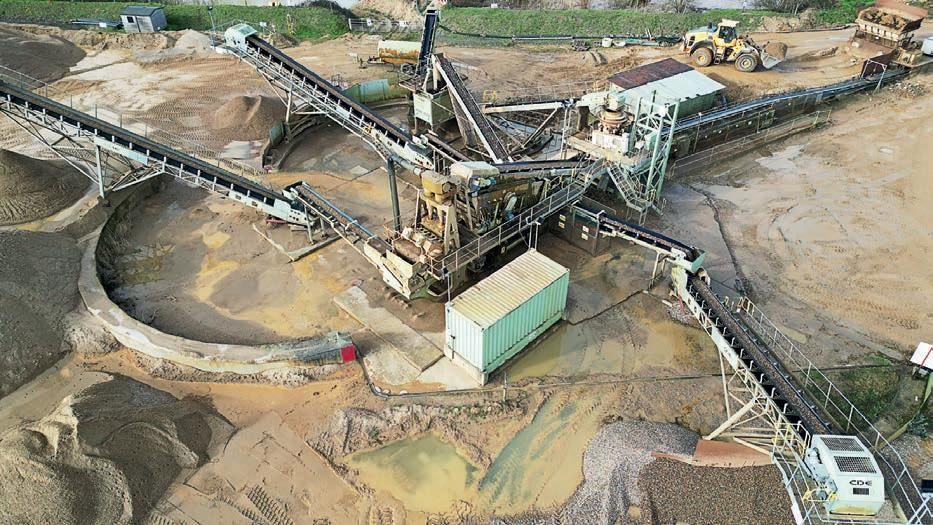
CDE has supported Granite Construction in installing a new wash plant to improve its Utah operation. 18
A roundup of the key brands exhibiting at ConExpo/Con-Agg 2026.
Kleemann screening plants are delivering high output in Connecticut.
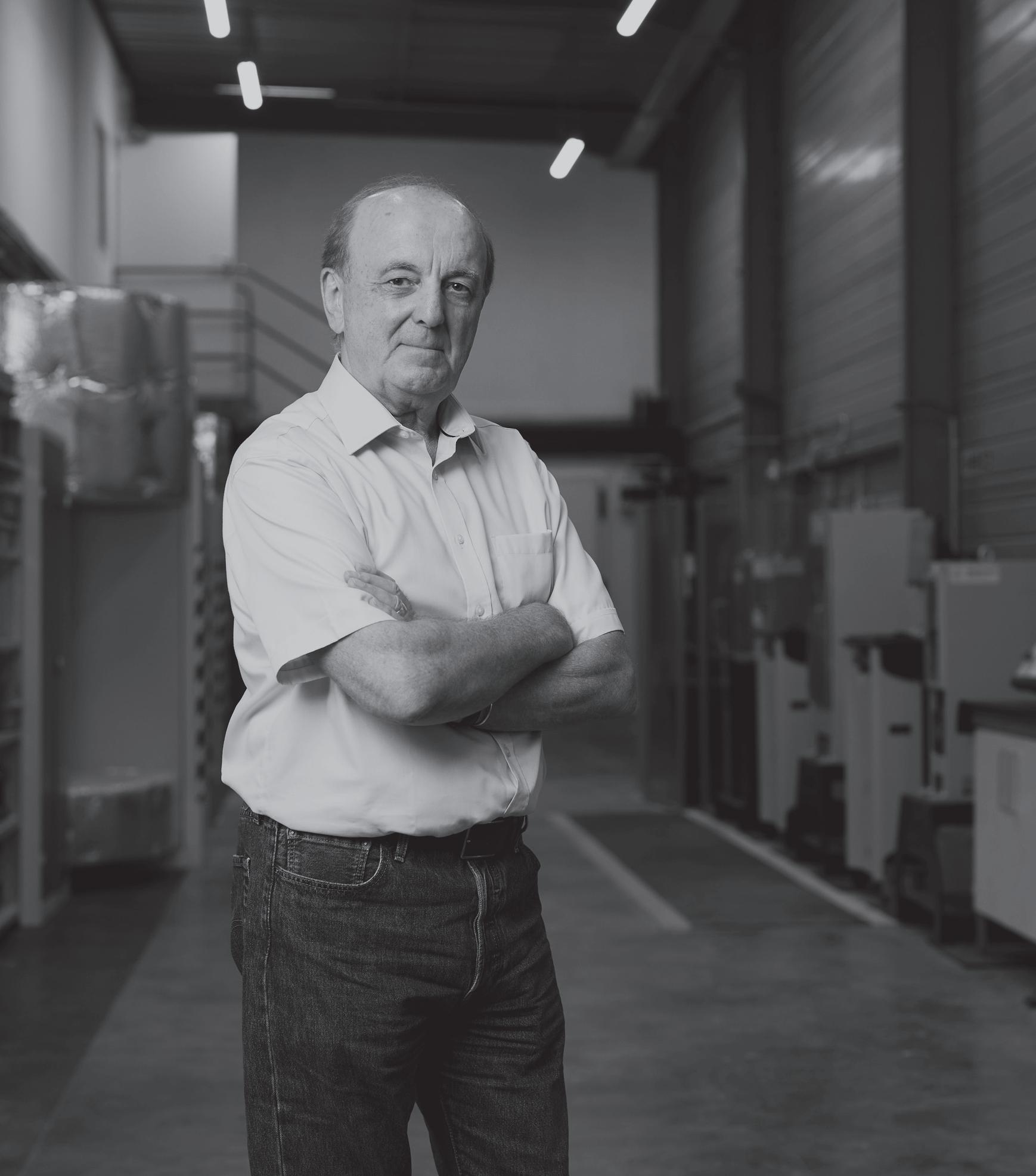
Ecocem founder and managing director Donal O'Riain talks about the company’s bright future in construction materials.
The latest updates and innovations in crushing and screening equipment and services.
Customer demands continue to shape the future of loading equipment.
Hauling equipment is playing a key role in these quarrying customer success stories.
Conveyor solutions are becoming increasingly pivotal to successful quarry operations.
As prices rise, rebuild and remanufacturing solutions are becoming prominent in the sector.
From buckets to other attachments, operators are looking for
Strong innovation continues at a pace for global tyre manufacturers.
Digital technology is defining a new era of quarry management.
Steve Nendick shares his insights into the rise of renewable fuel in the quarrying sector.
Aggregates Business source for up-to-date news and views on the American aggregates and building materials sectors. Our wide-ranging features line-up includes in-depth articles on the latest loading, hauling, and crushing and screening machines.
ART DIRECTOR Michelle Weston COVER IMAGE CREDITS Metso Ecocem ConExpo/Con-Agg APAC SUBSCRIPTIONS subscriptions@primeglobalpublishing.com
No part of this publication may be reproduced in any form whatsoever without the express written permission of the publisher. Contributors are encouraged to express their personal and professional opinions in this publication, and accordingly views expressed herein are not necessarily the views of Prime Global Publishing. From time to time statements and claims are made by the manufacturers and their representatives in respect of their products and services. Whilst reasonable steps are taken to check their accuracy at the time of going to press, the publisher cannot be held liable for their validity and accuracy.
PUBLISHED BY Prime Global Publishing
AGGREGATES BUSINESS USPS: is published six times a year.
ONLINE: ISSN 2057-3405
LIAM MCLOUGHLIN
BRINGING CANADA’S AGGREGATES SECTOR TOGETHER
The Aggregate Producers Association of Canada (APAC) has only been in existence since 2019, but in that relatively brief time, it has already played a huge role in bringing the nation’s aggregates and quarrying professionals together.
APAC is headed by Brent Morray, a highly experienced aggregates industry professional, who has grown the association’s membership and impact from his base in the US, where he has worked since 2019 as Colas USA director of aggregates performance.
Morray is the subject of one of this issue’s major interviews and gives a fascinating insight into the evolving opportunities and challenges facing Canada’s aggregates industry.
He said the sector is eager to see some improvement in obtaining operating permits for quarrying operations. In 2022, the biggest problem facing APAC’s regional association members was the labour shortage. In APAC’s latest member survey conducted in 2025, the biggest identi ed challenges were gaining access to resources and environmental compliance.
Another key interview in this issue is with Metso vice president for Americas distribution, Steve Cianci, who told Aggregates Business America about Metso’s plans for the North American quarrying and aggregates sector.
Cianci gives a positive outlook for the industry and said key drivers in uencing current demand for aggregates in North America include continued infrastructure funding from federal programs, steady construction activity, tariffs, and ageing equipment eets. He said that if federal and state infrastructure spending proceeds as expected and the US continues securing trade agreements, aggregates demand is expected to remain at the current robust level or even increase slightly in the next six to 12 months.
This edition also highlights a sand and aggregates processing success story from Utah, where CDE has supported Granite Construction in installing a 550-tonne-per-hour wash plant to enhance its quarry operations in the state.
Using CDE’s SmartTech monitoring platform, the difference for Granite Construction has been transformative.
With SmartTech’s real-time insights and consistent support from CDE engineers, the facility has quickly reached and maintained its full capacity.
In March, many professionals from the North American quarrying and construction sectors will come together for the latest edition of ConExpo/Con-Agg in Las Vegas (March 3-7).
Smiley Monroe will be presenting its key conveyor solutions and US capabilities at the show. The company said it continues to strengthen its presence across North America with an expanded product range, increased manufacturing capabilities, and strong partnerships with major equipment manufacturers.
Smiley Monroe recently invested in a state-of-the-art computer numerical control machine at its Kentucky facility, enabling fast production and local supply of precision-cut rubber and plastic components.
As the new editor, I would like to pay tribute to Guy Woodford, who has moved to a new senior editorial position in the quarrying and aggregates publishing sector after 11-and-a-half very successful years as editor of Aggregates Business. Many of you will have met Guy and know all about his expertise and enthusiasm for the quarrying and aggregates sector. I spent six hugely enjoyable years working alongside him as the assistant editor of Aggregates Business from 2018 to 2024, and it’s great to know he will not be lost to the industry. Best wishes for the future, Guy. LM liam.mcloughlin@primeglobalpublishing.com
All smiles in Vegas
Smiley Monroe will showcase its high-performance conveyor belt solutions and its expanded US manufacturing capabilities at ConExpo/Con-Agg 2026.
Smiley Monroe will present its key conveyor solutions and capabilities for the US market at ConExpo/ Con-Agg 2026 in Las Vegas.
The company continues to strengthen its presence across North America with an expanded product range, increased manufacturing capabilities, and strong partnerships with major equipment manufacturers. At this year’s show, Smiley Monroe will highlight three agship offerings:
• ToughFlex:
ToughFlex is engineered for the harshest conditions, delivering tear, impact, and rip resistance.
Designed for long service life, it supports demanding applications across quarrying, mining, recycling, and aggregates.
• Zip Clip:
Zip Clip continues its rapid adoption across the Americas.
The company now supplies Zip Clip to equipment dealers and end users in 48 US states and in Central and Latin America.
Zip Clip’s ready-to- t design means it can be running in as little as one hour, signi cantly reducing downtime and enhancing operational ef ciency.
• Integracleat:
Smiley Monroe offers one of the widest varieties of cleated belt patterns in the US.
ToughFlex o ers tear, impact, and rip resistance.
With all patterns integrally moulded onto the belts’ carrying surface, customers can be assured that cleat failure will not cause machine downtime. Customers will be able to explore Smiley Monroe’s range of patterns in the Central Hall.
“Our growth in North America re ects our long-term commitment to supporting customers with localised manufacturing, innovative belt technologies, and responsive service,” Smiley Monroe vice president Morgan Walker said.
“We are excited to showcase our products at ConExpo/Con-Agg 2026 and continue building strong partnerships across the Americas.”
Major US Investment
Smiley Monroe is well-known for its conveyor belt manufacturing and precisioncut rubber and plastic components for the materials processing sector. With facilities in the UK, Ireland, India, and the United States, the company supports major equipment manufacturers and distributors worldwide.
Smiley Monroe recently invested in a state-of-the-art computer numerical control machine at its Kentucky facility, enabling fast production and local supply of precision-cut rubber and plastic components, such as:
•Gaskets
•Seals
•Skirting rubber
•Wear parts
•Custom shapes
This expansion supports customers in the Americas with shorter lead times and localised production capacity, which their European and Indian counterparts already bene t from.
Endless belt supply
Smiley Monroe continues to supply endless belts to major North American equipment manufacturers, delivering consistently highquality products built to original equipment manufacturer speci cations.
This commitment to reliability and customisation has helped strengthen longstanding partnerships with leading brands across the materials processing sector.
The company welcomes visitors to meet the Smiley Monroe team, attend product demonstrations, and learn more about its expanding North American offering. AB
Booth Number: C32562 – Central Hall
Location: Las Vegas Convention Center
Dates: March 3–7, 2026
Zip Clip is one of Smiley Monroe’s most popular solutions.
Las Vegas Las Vegas
MARCH 1-3
MARCH 3-7
BRENT MORREY
A unified approach
Aggregate Producers Association of Canada president Brent Morrey discusses the key trends shaping short-, medium-, and long-term demand for Canadian aggregates.
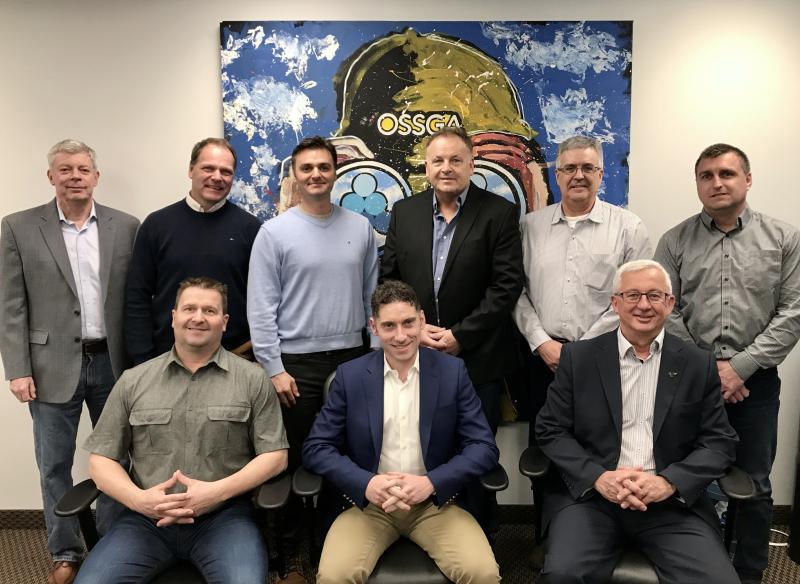
APAC president Brent Morrey.
Images: APAC
While the global Covid-19 pandemic of early 2020 triggered an international public health emergency, it was also pivotal in uniting aggregates producers across Canada.
Formed in 2019 and headquartered in Edmonton, Alberta, the Aggregate Producers Association of Canada (APAC), a voluntary coalition of industry associations representing crushed stone and sand-andgravel producers, was in its infancy in 2020. Its mandate was to share news, economic trends, and solutions to conserve Canada’s aggregate supply and provide the best possible service for Canadians.
“As APAC, we reached out to the federal government in response to Covid-19, urging them to invest in construction and infrastructure while allowing our industry to continue to operate by navigating social distancing rules,” APAC president Brent Morrey said.
“All the provincial associations were suddenly at the same level and asking, ‘How are we going to deal with this?’ They were all very interested in speaking with one another. We had more frequent exchanges, which were great for APAC, enabling provinces to recognise the value of learning from one another and to see how the association could facilitate this.
“Our last meeting in September [2025] was very good. It was a scheduled half-day meeting that ran until 7pm, and some of the comments were, ‘We need to make this meeting longer.’ Attendees saw so much value in our discussions. When you see that engagement and desire to learn and exchange ideas, and when you see people leaving meetings with notes on how they want to do things differently, it motivates me to do more.”
APAC’s member associations are British Columbia Stone, Sand, & Gravel Association; Alberta Sand & Gravel Association;
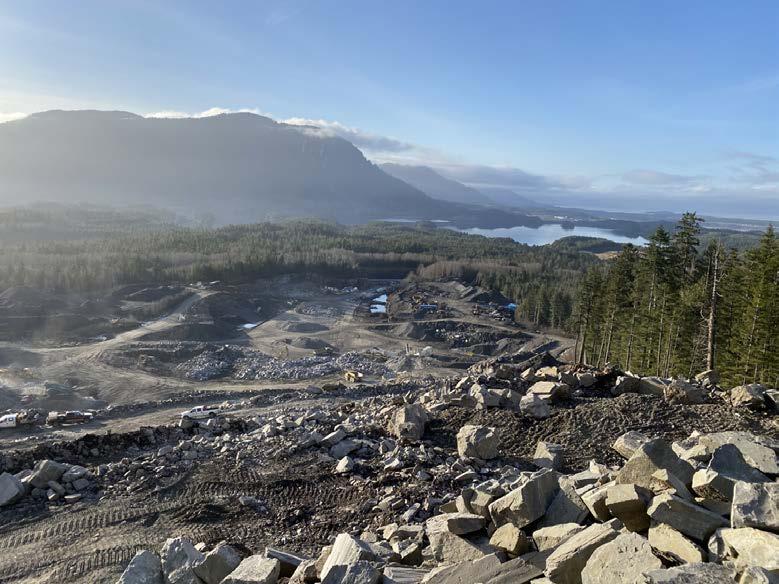
An Adventure Construction quarry in British Columbia.
Saskatchewan Heavy Construction Association; Manitoba Heavy Construction Association; Ontario Stone, Sand, & Gravel Association; L’ Association des Constructeurs de Routes et Grands Travaux du Québec; New Brunswick Road Builders and Heavy Construction Association; Nova Scotia Road Builders Association; Heavy Civil Association of Newfoundland & Labrador; and Prince Edward Island Road Builders and Heavy Construction Association.
This gives APAC approximately 95 per cent representation of the Canadian aggregates industry.
“At the beginning of APAC, not all provinces saw value in having a national aggregates association, and a few even opposed the formation of APAC. We assured them that we were not looking to compete for their members or to be a competing industry voice for the government to listen to; we are focused on an informal exchange of knowledge and support,” Morrey said.
“British Columbia has doubled its provincial association membership over the past three years, increasing from 150 to 300 members. They have many small, independent company members and have taken a somewhat different approach by offering membership tiers ranging from small producers to large.
“Some provinces don’t have dedicated aggregates industry associations, but have construction and road builder associations with their own aggregate committees.
“When aggregate provision-linked issues arise, they call on aggregate producer members within their committees to address them, which is a little more reactive than proactive. Being part of APAC is a de nite bene t for those construction associations.”
A highly experienced aggregates industry professional, Morrey has grown APAC’s membership and impact from his base in the US, where he has worked since 2019 as Colas USA director of aggregates performance.
Colas USA is part of the Colas Group, which is active in the building and maintenance of road, air, rail, and maritime transport infrastructure, as well as in urban development projects and recreational facilities.
“While I’m living and working in the US, it’s great when I have people from APAC provincial association members saying, ‘Hey, thanks for doing a great job in bringing people together.’ I think keeping APAC informal has, if you like, created an industry buddies’ club, which has been key to its success,” Morrey said.
Morrey said demand for aggregates in Canada has been relatively stable during his tenure, despite external factors like Covid19. During that time, production has been around 400 million tonnes annually, with the heaviest demand being in the major population centre of Ontario.
“Recently, we saw a decline of around ve per cent nationwide over the last year. We’ve seen double-digit growth for the last couple of years in our maritime provinces, Nova Scotia and New Brunswick,” he said.
“There’s a lot of development there, and [2026] looks good – but these are small provinces. Ontario and British Columbia are two major provinces that have seen a recent decline [in aggregate demand] and are speaking loudly to their provincial
APAC members at an association meeting.
governments to continue to invest in roads and infrastructure to keep that demand going. Overall, we’re still 400 million tonnes [of annual demand], which is around 10 tonnes per capita. Much of the demand is driven by [extreme weather] seasonality, as our roads don’t last as long, creating a need to resurface and refurbish.
“For Alberta, it's important to have clients beyond the Americans. Managing the [US] tariff situation has created a little bit more unity among Canadian provinces, which are now exporting more to other countries. That’s good for Canada long term.”
He said the Canadian aggregates industry, like its New Zealand counterpart, needs to consult with Indigenous communities to mitigate potential disruptions from industry operations.
“The complexity of getting an operating permit or extension is a real headache for the industry. If things do not improve, it will be disastrous. We are going to run out [of aggregates]. There is less replenishment than there is depletion,” he said.
“APAC has surveyed its provincial association members, asking them to identify the biggest issue their producers face. In 2022, the biggest problem was the labour shortage. We conducted a similar survey a few months ago, and the biggest challenges were overwhelmingly gaining access to resources and environmental compliance.
“We learned something interesting at the last APAC meeting. In British Columbia, it has one governing body that issues permits with its ministry of mines. In most other provinces, you’re dealing with two or three, including your environment ministry and your municipality.
“It’s the same with bridges. It’s also based on a strong economy and signi cant the pipeline opposition.
Public–private partnerships (P3s) are becoming increasingly prevalent in some Canadian provinces. They are commonly used for transport infrastructure projects and
“The rules of the game are not clear. Many permits remain abandoned because companies can’t afford to invest and wait for someone to step in. Clarity around this, and a
other aggregates markets, like Europe.
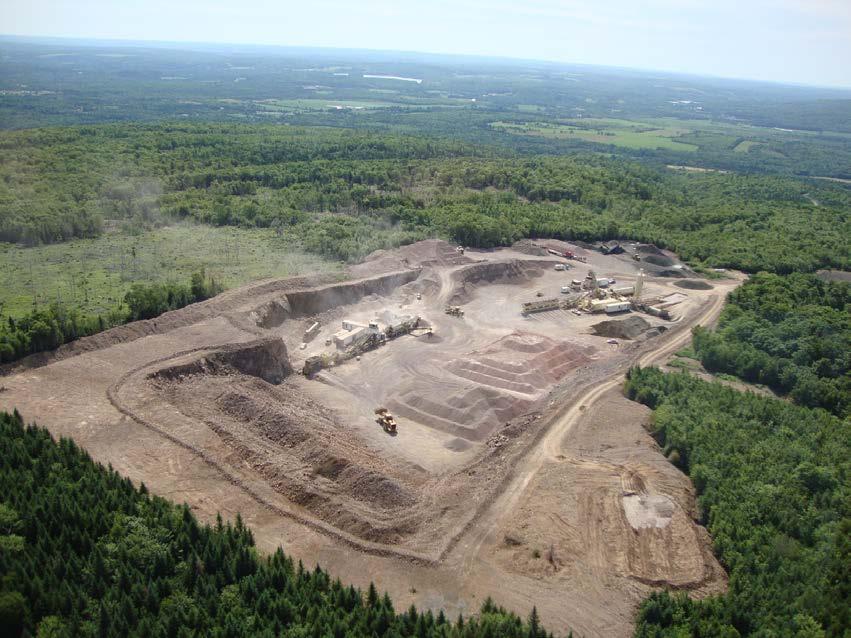
A Dexter Construction quarry in Nova Scotia.
Image: Dexter Construction/APAC
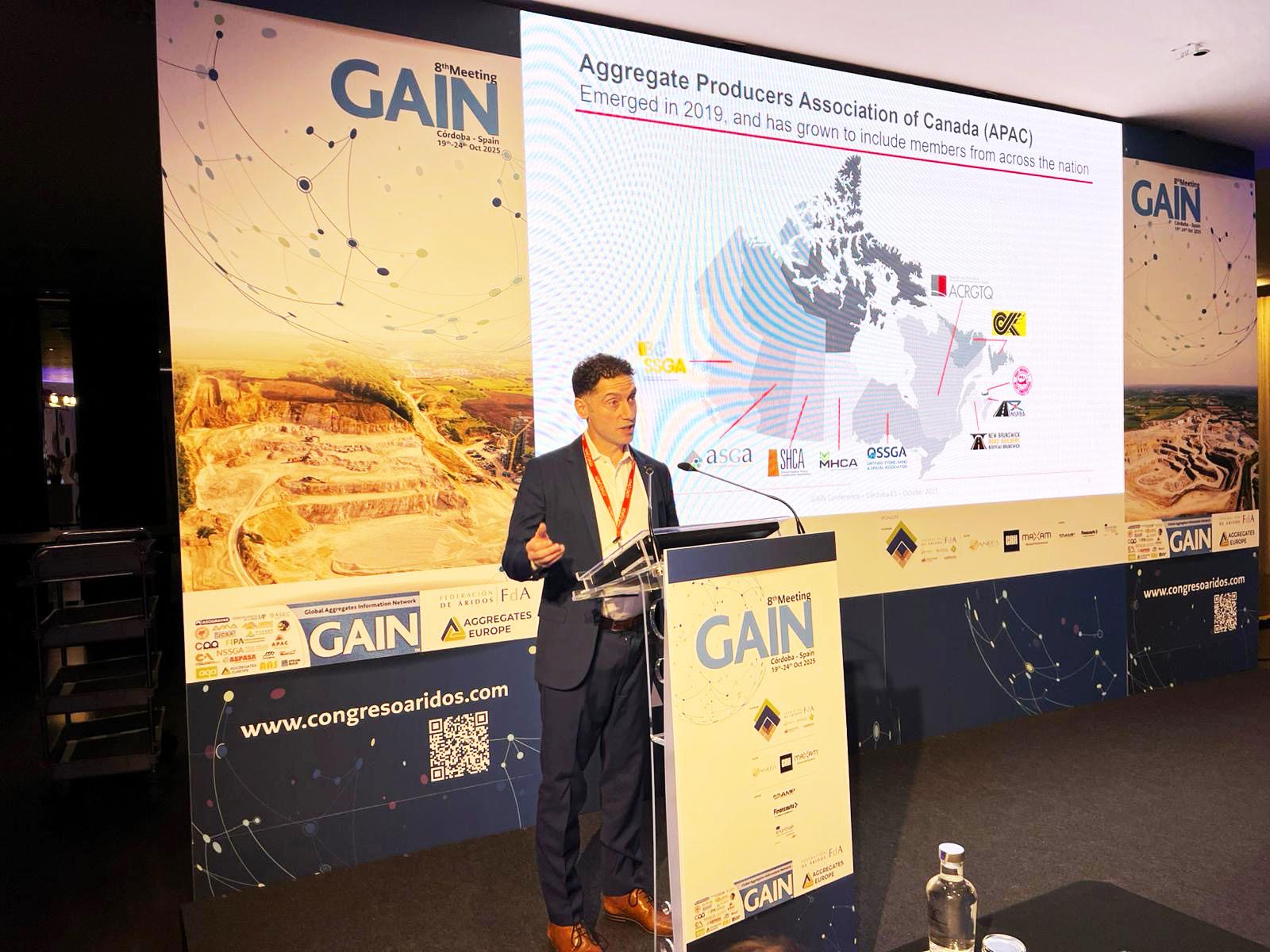
Brent Morrey speaking at the eighth GAIN meeting in Córdoba, Spain.
Image: Brent Morrey
Morrey said part of the reason is technical standards, but nancial incentives could increase the production of recycled aggregates.
“It is only really apparent in major cities where they accept it. Some major cities, like Winnipeg, are still struggling to get crushed concrete accepted as a road base product. With the exception of private work here and there, recycled aggregates are basically irrelevant. Even RAP [reclaimed asphalt pavement] use is at a much lower percentage than in many other major countries,” he said.
“Producers are making efforts to demonstrate the technical standard for recycled aggregate, but it’s been a hard sell. The one that indirectly promotes it is a nancial incentive. Every province except British Columbia has a tax on aggregates. For natural resources out of the ground, for gravel and crushed stone, you can be paying from 25 cents a tonne to as much as 75 cents a tonne. For recycled aggregates, you don’t pay anything, and it’s closer to the market, representing a multi- nancial gain.”
Morrey said there was a growing presence of automation in the Canadian aggregates sector, led by the cautious adoption of arti cial intelligence (AI) technology.
“From an automation and technology standpoint, Covid-19 expedited a lot of things – like remote ticketing and doing away with cash at a lot of sites,” he said.
“Instead of submitting tenders in an envelope and racing to get to the of ce to hand it in, it is now done electronically, which was long overdue. Regarding automation, it’s far more prevalent in xed [aggregate] plants. In Canada, most production is done with portable facilities that move from site to site. We don’t have many fully automated sites.
“With AI, producers are generally still learning what it can do, and it has been a growing topic for speakers at our provincial conferences. Our industry is still a little old-fashioned, and people in it want to talk to someone. They don’t want automated agents answering calls.”
Morrey has been keen to share expertise and news from the global aggregates industry with APAC provincial association members through his prominent role in Global Aggregates Information Network (GAIN), a worldwide network of national aggregate associations that share best practices to promote sustainability in the aggregates industry. He delivered a Canadian aggregates market overview at the eighth GAIN Meeting in Córdoba, Spain, held on October 19—21, 2025. Morrey also attended Áridos 2025, the VII National [Spanish] Aggregates Congress (October 21—23), where he participated in an international industry expert panel discussion titled “The Aggregates Industry Worldwide: Its Weaknesses, Threats, Strengths, and Opportunities.”
“I’ve been to four GAIN meetings now. The rst time I was there, I thought we [Canadians] were operating at a very high level,” he said.
“I quickly realised that we’re somewhere in the middle: ahead of the game on some things, but de nitely behind on others, where we have a lot to learn.
“In many aspects, Europe is leading, and it’s exciting to see what China is doing with automation and AI. That’s the beauty of GAIN. I think it’s very important that Canada is represented at its events, and the provinces really appreciate the knowledge and resources I bring back.”
After growing up in Brantford, Ontario, Morrey plays a key role in shaping the future of Canada’s aggregates sector.
He sees a bright future for the voluntary APAC organisation as it continues to advocate for the sector on the national level.
“It means a lot to me personally. I have relocated to the United States for work, but I am Canadian, and very true to my roots,” he said.
“Eventually, I do intend to move back to Canada. I’ve lived on both sides of the country, and I think there’s a lot of opportunity for Canada to be pioneers of more positive global aggregate industry change.
“I’d say it’s a success that APAC is continuing and not fading away.” AB
Steady US demand STEVE CIANCI
Metso vice president for Americas distribution management Steve Cianci discusses the North American quarrying and aggregates sector.
Metso vice president for Americas distribution management Steve Cianci.
Images: Metso
What is the current demand for new machines among North American quarrying and aggregates customers?
Steve Cianci: In the rst half of 2025, we saw strong, stable demand across North America, especially in infrastructure-driven regions such as the West, Texas and parts of the mid-Atlantic. State and federal investments, along with continued residential and commercial development, are driving steady activity in the aggregates sector.
We have seen some uncertainty, with a limited number of customers favouring project delays, but most businesses have not stopped. Producers’ demand remains healthy, with a focus on maximising productivity and reducing operating costs. Many are pushing ahead with upgrades and full replacements. This keeps investments in ef cient, highoutput crushers and screens a top priority.
What factors are in uencing the current demand level, and is demand likely to change over the coming 12–18 months?
Key drivers include continued infrastructure funding from federal programs, steady construction activity, tariffs that suddenly change the value proposition overnight, and ageing equipment eets. If federal and state infrastructure spending proceeds as expected and the US continues securing trade agreements, we expect demand to remain at the current robust level or even increase slightly in the next six to 12 months. In ation and interest rates remain watchpoints, but overall indicators are so far positive.
What Metso machines are in the highest demand? How do they stand out from similar competitor machines?
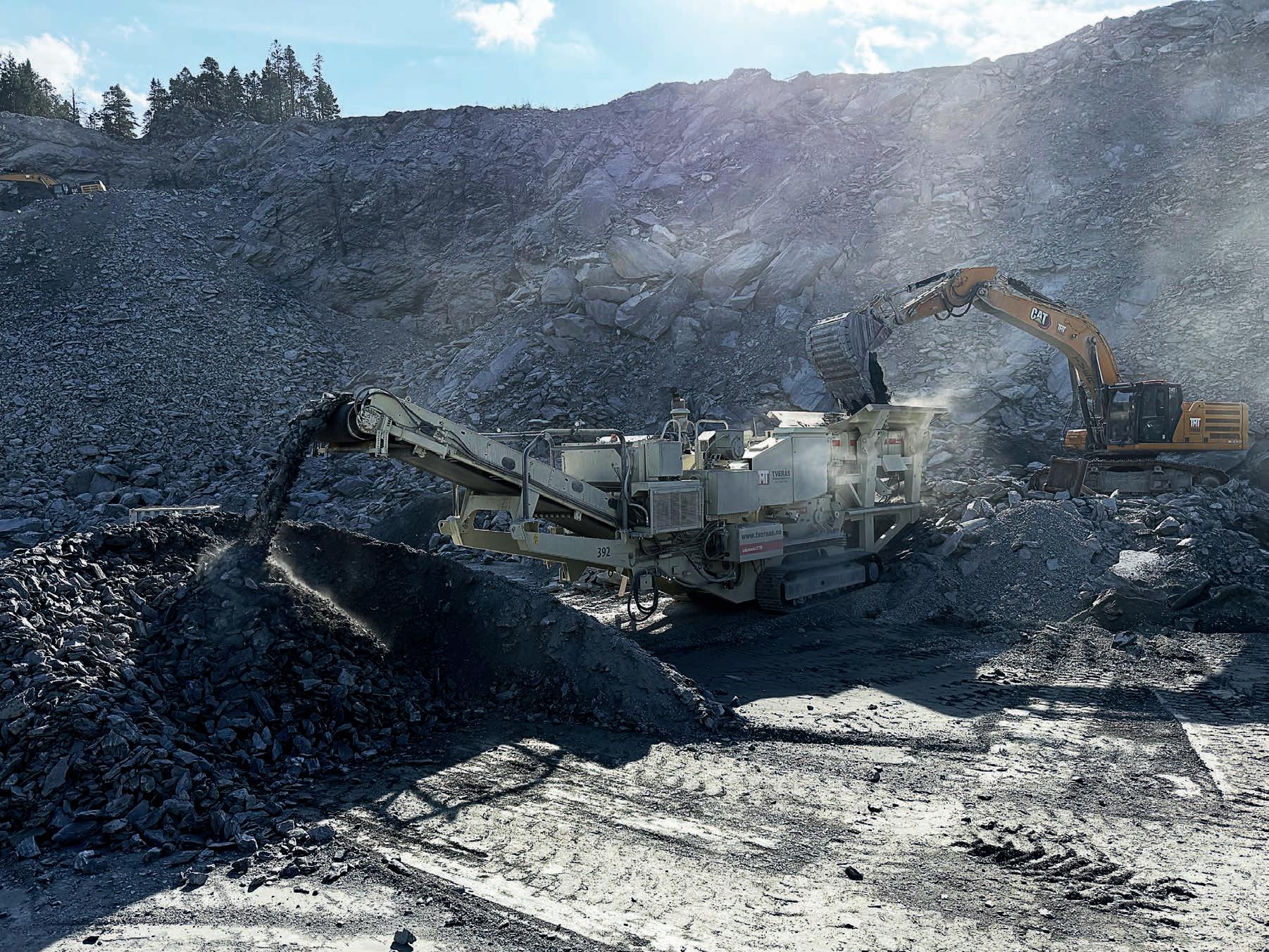
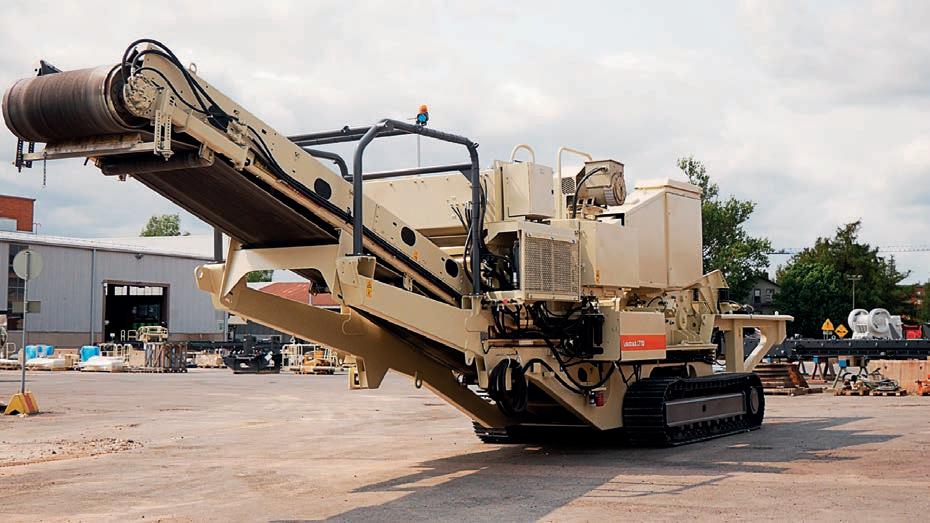
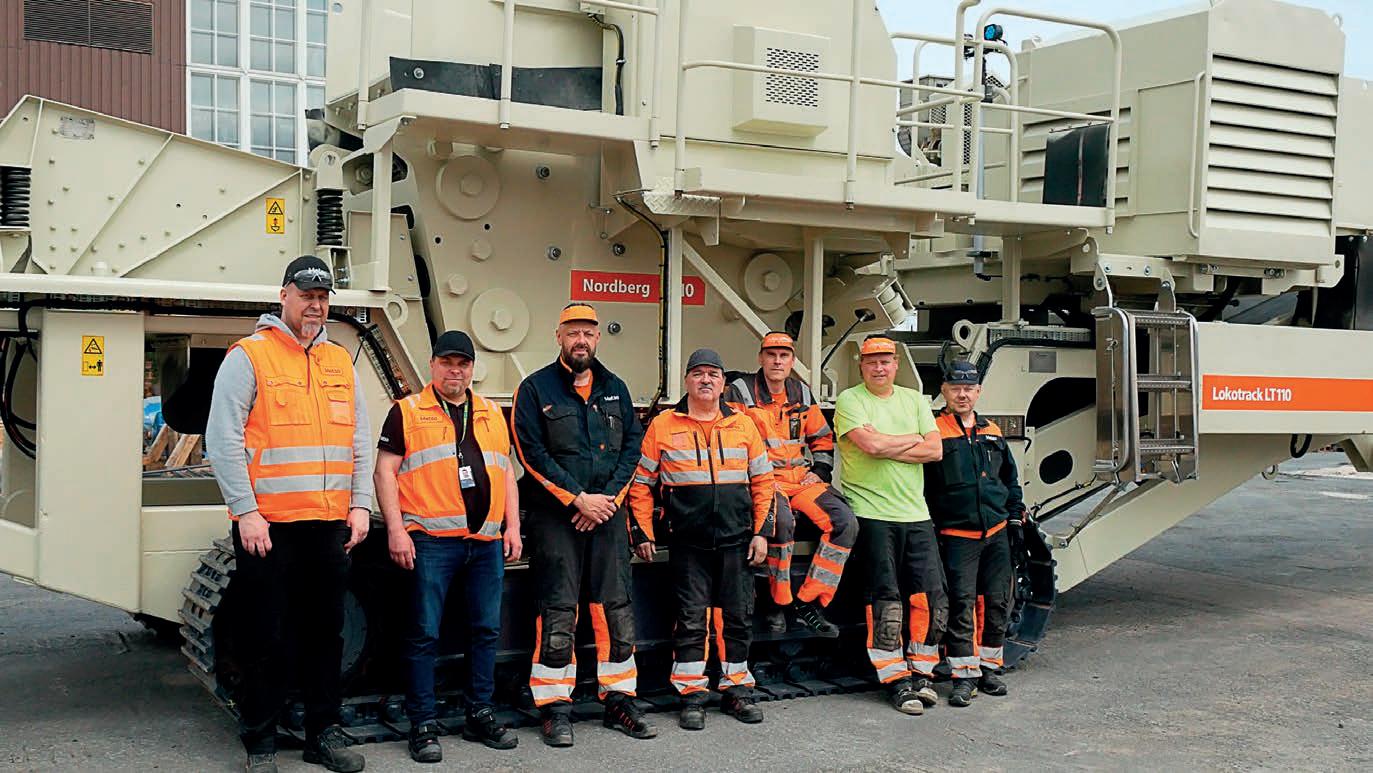
Our Lokotrack mobile crushers and screens remain in high demand. The Lokotrack machines are known for their reliability, fuel ef ciency, and compact design, making them ideal for both urban and remote sites. Many customers, particularly on the east coast, can run a Lokotrack for at least a full year straight without a single unplanned stop.
But it’s not just the machines, it’s the people behind them. Our success is built on the strength of the dealer network, whose local expertise and commitment to customer service ensure that every machine performs at its best.
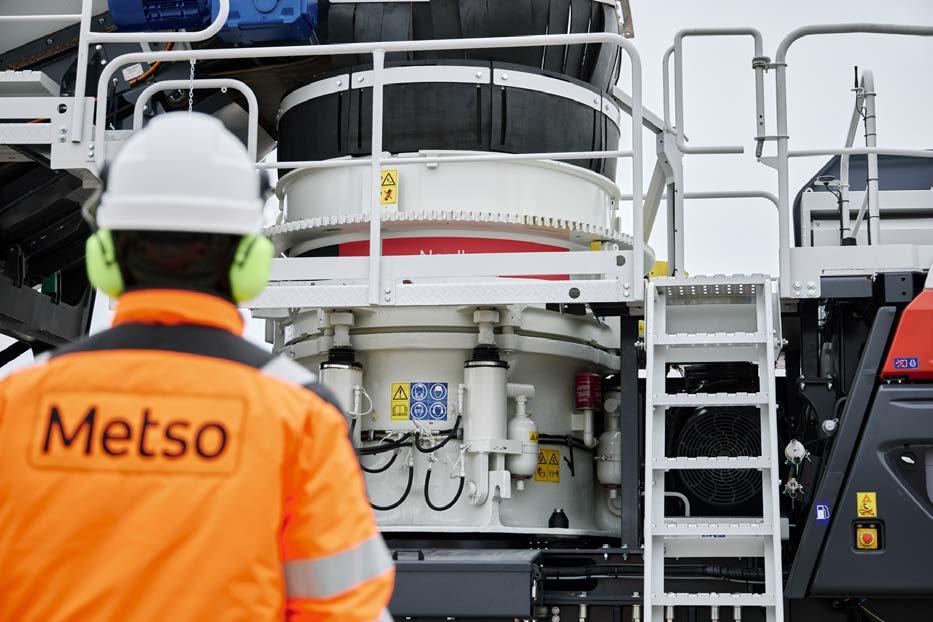
The Nordberg new HPe cone crushers, building on the HP legacy, are also popular due to their high capacity, reduced downtime, and consistent end-product quality.
Finally, we’ve seen wild success with the Metso HRC 8 high-pressure grinding rolls for manufactured sand and other waste materials. What sets us apart is our commitment to continuous innovation, excellent quality, and support. Our machines integrate smart automation and telematics and are backed by a strong service network that is powered by our dealers.
What new or recent Metso models do you have high market expectations for?
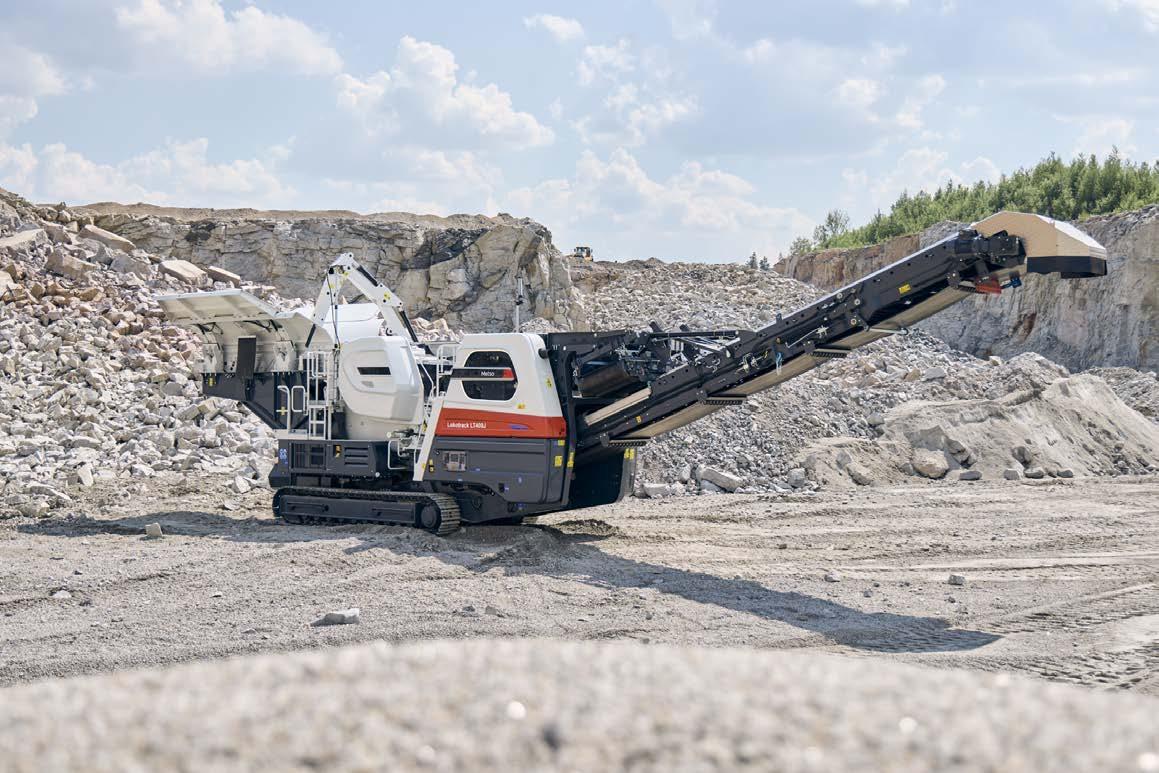
We’re very excited about the new Lokotrack EC range, especially the LT400J mobile jaw crusher. It introduces a new diesel-electric power line, including Nordberg C120 jaw crusher, with all the process functions being electric, and unseen usability improvements.
The LT400J can be upgraded to meet evolving mobile crushing requirements,
An HRC 8 high-pressure roll crusher.
The Lokotrack LT400J jaw crusher can be upgraded to adapt to evolving mobile crushing requirements.
ensuring lower operating costs and reduced CO2 emissions.
The new HPe upgraded series of cone crushers is in very high demand in our market, as well as the HRC8 roll crushers.
What does Metso offer on the aftermarket side of its quarrying and aggregates business?
The aftermarket business is a core pillar of our value proposition. We provide comprehensive services from all sorts of wear parts to suit all different applications – addressing soft rock and the harshest applications, including spare parts stocked in the US and elsewhere in the region – to analytical maintenance capabilities and the best eld support in the industry.
If a machine goes down, we can often have the right part in their hands the next day, or even the same day in some cases. In recent years, we've expanded our service personnel and capabilities, optimised and boosted local inventory, and introduced digital tools such as Metso Metrics, our remote monitoring solution. This makes it easier for customers to optimise performance and avoid unplanned downtime.
How is Metso’s North America supply chain? Are there current challenges, and how is the company working with its suppliers to overcome them?
The supply chain has stabilised compared to the peak disruption periods of the last few years, but we still face some uncertainty and challenges due to geopolitical tensions as well as tariffs.
We're mitigating this through supplier diversi cation, regional sourcing where possible, and increased safety stocks of key components. We've also strengthened partnerships with key vendors to assist with better forecasting and responsiveness.
What impact have the US trade tariffs had on Metso’s North America business? The tariffs led to increased costs on certain components and materials, which in some cases had to be passed along.
We've worked very hard to localise sourcing where possible to cushion
What impact do you think the One Big, Beautiful Bill Act (OBBBA) will have on the demand for quarrying and aggregates machinery?
The OBBBA, with its focus on infrastructure modernisation, coupled with the remainder of the Infrastructure Investment and Jobs Act
The Metso aftermarket business is a core pillar of its value proposition.
A Metso plant setup for Heidelberg Materials North America.
projects will mean increased demand for raw materials. And in turn, the equipment needed to produce them will also be in demand.
We anticipate a heightened need for both stationary and mobile crushing and screening equipment.
How is Metso’s North America dealer and distributor network performing? Are there plans to expand it?
Our dealer network is performing very well, and we've made solid strategic additions and changes in underserved markets to strengthen coverage. Also, consolidation at the dealer level continues, and we expect that to continue moving forward.
Training, digital support tools, and inventory sharing systems have all been improved or are expected to be implemented. We plan to continue expanding our presence and capabilities - ensuring faster service, better support, and greater local expertise.
How is digitalisation impacting the performance of quarrying and aggregates machinery? How popular is this technology among North American customers?
Digitalisation is transforming the way customers operate. Our Metso Metrics platform provides real-time data on machine performance, utilisation, and maintenance needs. North American customers are increasingly adopting this technology, especially eet operators and performancedriven contractors. It’s also a great tool for managing rental eets.
The result is smarter decision-making, lower operating costs, and extended machine lifecycles.
How signi cant a factor is sustainability in North American quarrying and aggregates customers' unit purchase or rental decisions?
From Metso’s perspective, sustainability in aggregates isn’t an ‘add-on’; it’s built into how we design and operate our equipment.
In North America, sustainability as a standalone value may not always be the main purchase driver, but the things that make operations more sustainable, like lower fuel consumption, improved process ef ciency, and reduced downtime, are universally welcomed because they directly improve the bottom line.
Our Metso Plus label guarantees that selected equipment and consumables are demonstrably more energy-ef cient, reduce CO2 emissions, or lower pollution compared to industry benchmarks. In aggregates, this applies to electric units, optimised wear parts, and digital solutions, all of which help customers lower their environmental footprint while improving resource ef ciency.
While price and productivity remain top priorities, more producers are recognising that energy-ef cient machines, optimised wear life, and better resource utilisation not only cut environmental impact but also reduce total cost of ownership.
That’s where Metso’s value comes in; we can help customers meet their production targets while also moving them toward a lower-impact, more cost-ef cient operation.
What do you enjoy about your senior role at Metso? What are the biggest challenges you face, and how do you plan to overcome them?
What I enjoy most is that this position affords me the opportunity to build strong relationships and partnerships, with our dealers, customers, and Metso’s internal teams, and help them succeed and prosper.
One achievement I’m proud of is how we’ve transformed our distribution model in North America over the past ve years to deliver better national and local service and develop even closer customer proximity, particularly with our key accounts.
We did this in cooperation with our dealers in the industry, who we believe are some of the nest dealers in the market.
Another achievement is navigating and overseeing several strategic consolidations at the dealer level. These consolidations have made Metso much stronger for the future.
The biggest challenges are the current changes tariffs bring and their impacts, navigating periodic global supply chain disruptions, staying competitive while promoting the Metso value proposition, and general shifting market conditions.
We overcome these by staying agile and close to the market, listening to their needs, supporting our dealers and looking for ways to continuously improve.
What ambitions are you still to achieve in your current leadership role?
I’m focused on continuing to expand Metso’s market share in the entire Americas.
That means further developing our dealer network, growing our digital services, launching the most innovative and high-quality products, and accelerating our aftermarket products and support capabilities.
None of this would be possible without the incredible people at Metso and within our dealer network. Their dedication, expertise, and passion for serving our customers are what truly set us apart. I’m proud to work alongside such a talented and committed team.
There’s a lot of opportunity ahead—and I’m excited to lead the team through it.
If by 2030, people in the industry say, ‘Metso has the absolute best team with the most knowledge, the most innovative and cost-ef cient quality products around, and the nest aftermarket support in the business,’ I’ll know we’ve done our job. AB
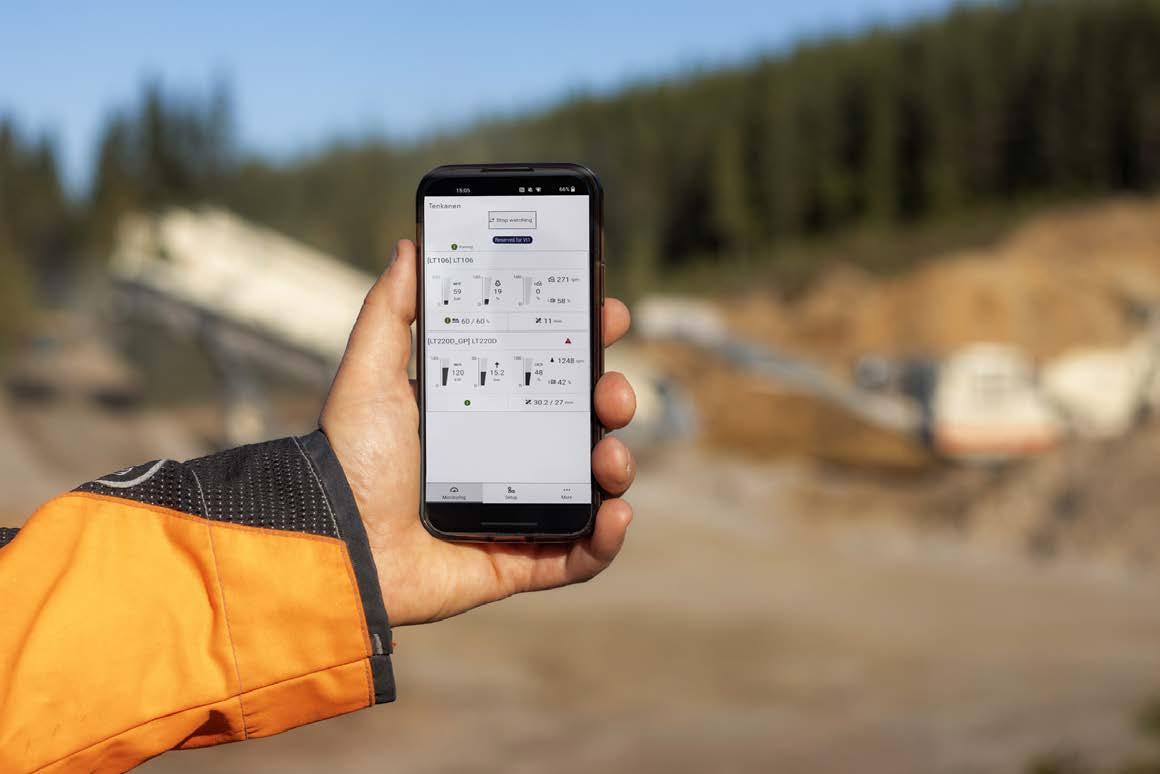
The Metso Remote IC app lets operators remotely monitor and control Metso Lokotrack crushers and screens from a mobile phone or tablet.
Success in Utah
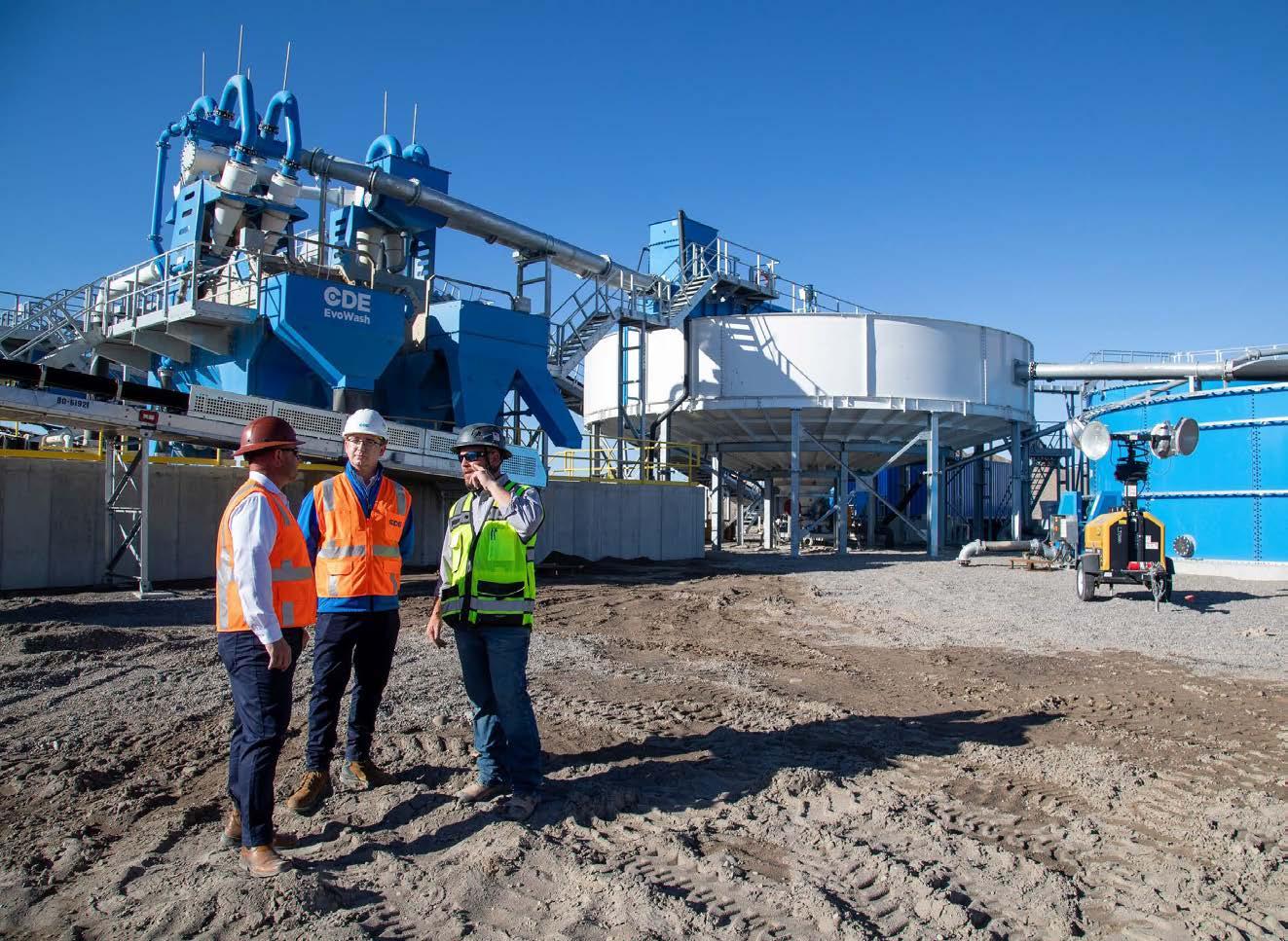
CDE has supported Granite Construction to install a 550-tonnes-per-hour wash plant in Utah.
In the competitive world of sand and aggregate processing, up-time and ef ciency are paramount, and that’s exactly what the team at CDE are said to have delivered when they partnered with Granite Construction to install a 550-tonnesper-hour (tph) wash plant in Utah.
Granite’s ambitious timeline meant the plant needed to perform – and fast.
With hands-on, expert support, CDE’s CustomCare team was involved very early in the process to ensure a smooth setup and valuable optimisations that helped the plant reach its full capacity sooner rather than later.
The CustomCare team ensured installation and commissioning went smoothly and that production issues were detected early.
One of the rst challenges was that the plant was operating below the expected tph.
However, using CDE’s SmartTech monitoring platform, engineers pinpointed variability in the feed material as the cause of
Without early intervention, enabled by CDE’s proprietary technology, thousands of tonnes of feed material could have been lost
“CDE technical advisors came in to balance the plant and optimise it. Can’t say enough about how excellent they’ve been,” Granite Construction manager Ric
The CDE SmartTech platform enables customers to understand their plant’s performance, schedule maintenance, and order parts. It equips operators, managers, and owners with real-time data and insights to facilitate informed decision-making that can increase productivity, improve operational ef ciency, and maximise up-time.
Sensors tted to a plant provide up to 300 precise data points, continuously streaming real-time, in-depth performance reports.
Providing a full, transparent overview of a plant’s health, this live feed is accessible 24/7 to customers via a handy mobile app.
Additionally, CDE has dedicated staff remotely monitoring overall equipment effectiveness data to identify trends and provide advice on proactive maintenance and plant optimisation.
CDE CustomCare manager for the US Andrew Bunting said the technology ensured consistency during operation.
“Our focus is helping customers hit their target tonnes per hour, every hour, every day. It’s about using real-time monitoring to sustain optimal performance over the long term,” he said
In a typical construction and demolition waste recycling plant operating at 150tph, CDE estimates an eight per cent decline in throughput over the course of a year. In hard economic terms, that can mean revenue losses of $US185,000 to $US215,000, equivalent to about $US16,000 per month.
For the Granite plant, the difference has been transformative. With SmartTech’s realtime insights and consistent support from CDE engineers, the facility today not only reaches, but maintains its full capacity.
“The aftercare so far that we’ve seen has been invaluable,” Granite Construction plant manager Stormy Watne said.
For aggregate producers considering a performance upgrade, the message is clear.
The right service partnership can translate high capability into high performance. AB
CDE partnered with Granite Construction to install a new wash plant.
Images:
CDE
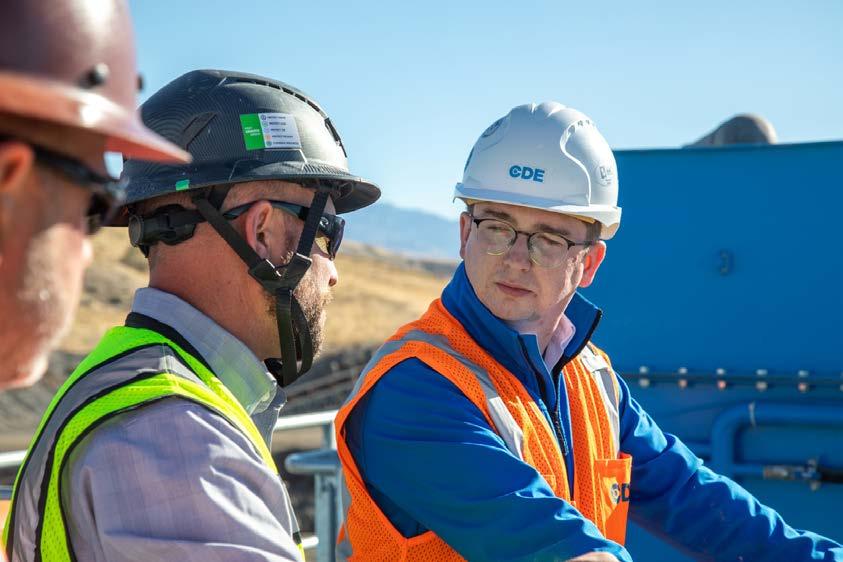
CDE’s team of experts provided hands-on support for Granite Construction in Utah.
Caterpillar is bringing the Global Operator Challenge to ConExpo/ Con-Agg 2026.
The Las Vegas stage
The biggest trade show in North America is here, and the biggest brands from the quarrying and aggregates sector are lining up to showcase their innovations for the market.
Every two years, the eyes of the quarrying and aggregates community turn to Las Vegas, Nevada, as ConExpo/Con-Agg takes place.
The biggest North American trade show has returned once again with attendees from across the globe descending on the Las Vegas Convention Center to take in the spectacle.
The 2026 iteration will feature around 2000 exhibitors across 2.9 million square feet of exhibit space and 50 educational sessions, including the sector’s biggest manufacturers and distributors.
“ConExpo/Con-Agg brings the industry together to see the innovations, connect with the leaders and meet the makers who are rede ning how the world is built,” ConExpo/ Con-Agg show director Dana Wuesthoff said.
“This is where you see how technology, equipment and people are transforming infrastructure, workforce development and community impact. It is not just about observing the future. It is about standing in the middle of it and connecting with the industry leaders who are building it.
“ConExpo/Con-Agg gives you a single, powerful platform to see equipment, experience technology, and learn from innovators across every segment of construction.”
McLanahan
McLanahan celebrated its 190th anniversary in 2025, and now the US-headquartered manufacturer is prepped for a major 2026.
The company will showcase its range of C&D recycling equipment, as well as the latest crushing, screening, washing, and tailings solutions for the aggregate industry. It will also showcase equipment
for wet and dry processing of sand, stone, gravel and other aggregate materials at booth C30415 in Central Hall.
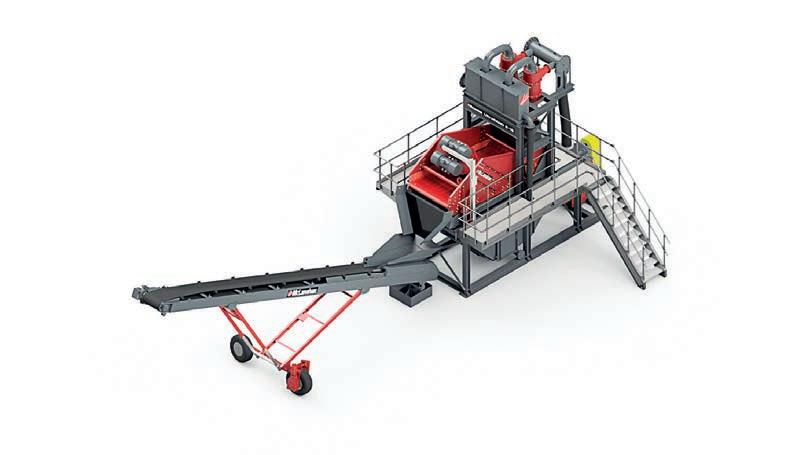
The McLanahan stand will include an UltraSAND plant, a redesigned impact crusher, a horizontal screen, a new hard metal pump, and a Hydrocylcone and separator. Live demonstrations of the patents-pending QUICKCHANGE Rapid Filter Cloth Changeout System will be available. Customers can see rsthand how the system allows lter cloths to be changed at ground level, with only one side of the lter cloth needing to be changed at a time.
McLanahan vice president of business development Mark Krause will also lead an educational session, Crushing 101. The session will explore different types of crushers used for material size reduction, the pros and cons of each, how to choose the perfect crusher, and strategies to keep it running.
Caterpillar
Caterpillar is looking to “reshape what’s possible” in the quarrying, aggregates and construction sectors as part of its ConExpoCon/Agg show.
Caterpillar will host the nale of its Global Operator Challenge (GOC) at the operator stadium situated in its Festival Grounds exhibit (F29929). Nine nalists will compete in the third-ever GOC in challenges of their skill and precision. The company will also showcase its compact construction equipment at its West Hall display (booth W40416) and its industrial diesel engine developments in its South Hall exhibit (S80229). Caterpillar will showcase its technology solutions including the remotecontrol, semi-autonomous and autonomous capabilities of Cat Command.
The latest VisionLink platform will be on show with improvements in equipment management, productivity and safety. The full eet solutions with Cat Grade will also be demonstrated for attendees. New grader and dozer models will be included in Caterpillar’s exhibition, including the next generation Cat 150 motor grader offering both joystick and lever controls, and the next generation 160 motor grader with joystick control.
“We look forward to giving attendees an up-close look at Caterpillar’s latest advancements and groundbreaking technologies in the construction industry through our demos, hands-on experiences and interactive exhibits,” Caterpillar group president Tony Fassino said.
“Visitors will see how Caterpillar can solve their toughest challenges as we reshape today’s worksite while providing them an understanding of what is possible in the future.”
Volvo Construction Equipment
Volvo Construction Equipment (Volvo CE) has con rmed several machines will make their debut at ConExpo/ConAgg.
Volvo CE will also host interactive service areas for attendees, where they can access more than 100 product experts at its booth (F24029) in the Festival Grounds.
Image: Caterpillar
Equipment on display at the McLanahan booth includes the UltraSAND Plant.
Image: McLanahan
“‘Power Your Ambition’ represents the spirit of people in the construction and mining industries,” Volvo CE head of region for North America Scott Young said.
“They’re driven to grow their skillsets and their businesses, and Volvo CE is committed to partnering with them to nd solutions that help them overcome challenges and reach their goals.”
The Volvo CE booth is set to feature nearly 20 machines, including 14 new or rst-looks, and an operating pit in the middle of the booth where attendees can test internal combustion and electric excavator models. The manufacturer has con rmed the 60-tonne A60 articulated hauler and the 70-tonne R70 rigid haul truck will make their show debuts at ConExpo/Con-Agg 2026 with additional product launches taking place at the show.
Metso
Metso is preparing for a major exhibition of its solutions for aggregates producers which it has said will ‘shape the future’ of aggregates processing.
“ConExpo is the perfect stage to demonstrate Metso’s commitment to shaping the future of aggregates processing. Innovation isn’t a slogan for us – it’s the standard our customers rely on,” Metso senior vice president for products business line Vincent Celsi said.
“This year, we are proud to showcase breakthroughs that re ect our core promise: Power you trust. Innovation you expect. From the new Lokotrack EC range and the 50-year legacy of our Nordberg C Series crushers to the launch of our expanded digital portfolio, the new HRC 10 high-capacity roll crusher, and next-generation wear solutions, every advancement we are unveiling is designed to deliver more uptime, more sustainability, and more value.”
At Metso’s booth in the Central Hall (C31832), aggregates contractors and quarry owners can discover solutions to boost productivity and lower their cost per tonne.
Metso will launch its renewed digital portfolio for the aggregates sector. enabling AI-powered predictive maintenance, improving mobile crushing performance and accessing Metso’s products and services.
Metso will debut the new HRC 10 highcapacity roll crusher for aggregates production.
The Lokotrack EC range will be expanded with the introduction of the rst cone crusher in the range, the Lokotrack LT350C. The Lokotrack LT350C features the Nordberg HP350e cone crusher and is designed for secondary and tertiary crushing applications. Metso will also showcase a range of screening solutions, including its TSE Series screen and screen media options, at the booth.
ProStack
In an industry where ef ciency and mobility de ne operational success, ProStack has introduced a solution purpose-built for the North American market.
The TW 36-150 radial telescopic conveyor combines impressive capacity
with the practical mobility that modern quarrying and mining operations demand. Stretching 150 feet, the TW 36-150 has been engineered from the ground up to meet the requirements of multiple applications across the aggregates sector.
Built at ProStack's North American manufacturing facility in Mount Vernon, Missouri, the TW 36-150 re ects a comprehensive understanding of the challenges facing operators in this market.
With a stockpile height of 48 feet 10 inches, the TW 36-150 enables operators to create stockpiles with an approximate capacity of 102,696 cubic yards at a standard throughput of 800 tonnes per hour.
For operations where ef cient material stockpiling is critical, this capacity translates directly into enhanced productivity and reduced handling costs.
However, raw capacity means little if deployment becomes a bottleneck. ProStack has addressed this challenge by engineering the TW 36-150 to be deployed without tools. This streamlined approach extends to the anchor pad system, where pads rotate and self-lock into position. The result is dramatically reduced setup time and minimal crew involvement, allowing operators to focus on productivity rather than wrestling with deployment procedures.
The TW 36-150 is road transportable across North America. Unlike other radial telescopic conveyors that require dismantling and reassembly with each relocation, the TW 36-150 can be moved intact between jobsites. This mobility fundamentally changes the economics of stockpiling equipment, making it viable for projects where traditional systems would be impractical.
The aggregates industry will have its rst opportunity to see the TW 36-150 in person at ConExpo/Con-Agg 2026. ProStack will be showcasing the conveyor at Booth SV2357 in the Silver Lot, where visitors can learn more about the TW 36-150.
CDE
CDE plans to showcase how its expertise in the sand and aggregates market and how its solutions continue to unlock value from waste materials.
The CDE team will be located at booth C30272 in the Central Hall. CDE founder and chief executive of cer Tony Convery said the sand and aggregates market in the US is ever-changing, and now, businesses operating in the sector are having to adapt.
“As the industry moves, so do we. We’re continuing [to] see intense growth in the waste recycling space, and we’re keen to showcase how our solutions have been supporting our customers over the years to transform waste material into valuable products for use in the construction industry,” Convery said.
“We know that across the globe sand resources are dwindling. We all have a role to play in creating a circular economy and for us at CDE that role is providing robust solutions that can enable materials processors to provide high-quality recycled aggregates.”
CDE’s stand will feature some of its pioneering technologies. This will include its EvoWash, a Rotomax, and a Fine Screen, as well as incorporating VR technology on the stand, and showing presentation sessions throughout the show on topics such as premature wear and processing tough materials. AB
Attendees will be able to see Volvo CE’s models up close and talk to the company’s experts.
Image: Volvo CE
Image:
CDE
CDE is set to showcase its US capabilities at ConExpo/ Con-Agg 2026.
The Connecticut connection
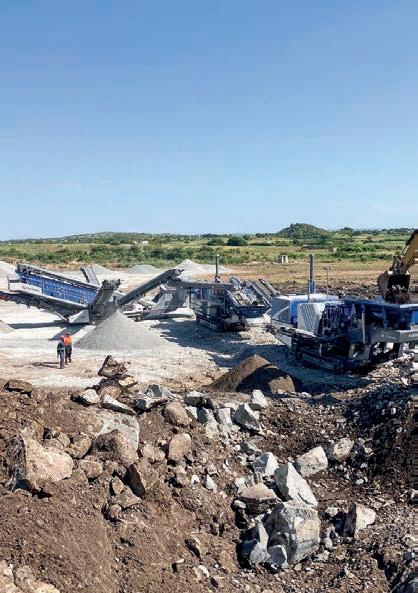
Kleemann screening plants are demonstrating reliability and high output in Connecticut.
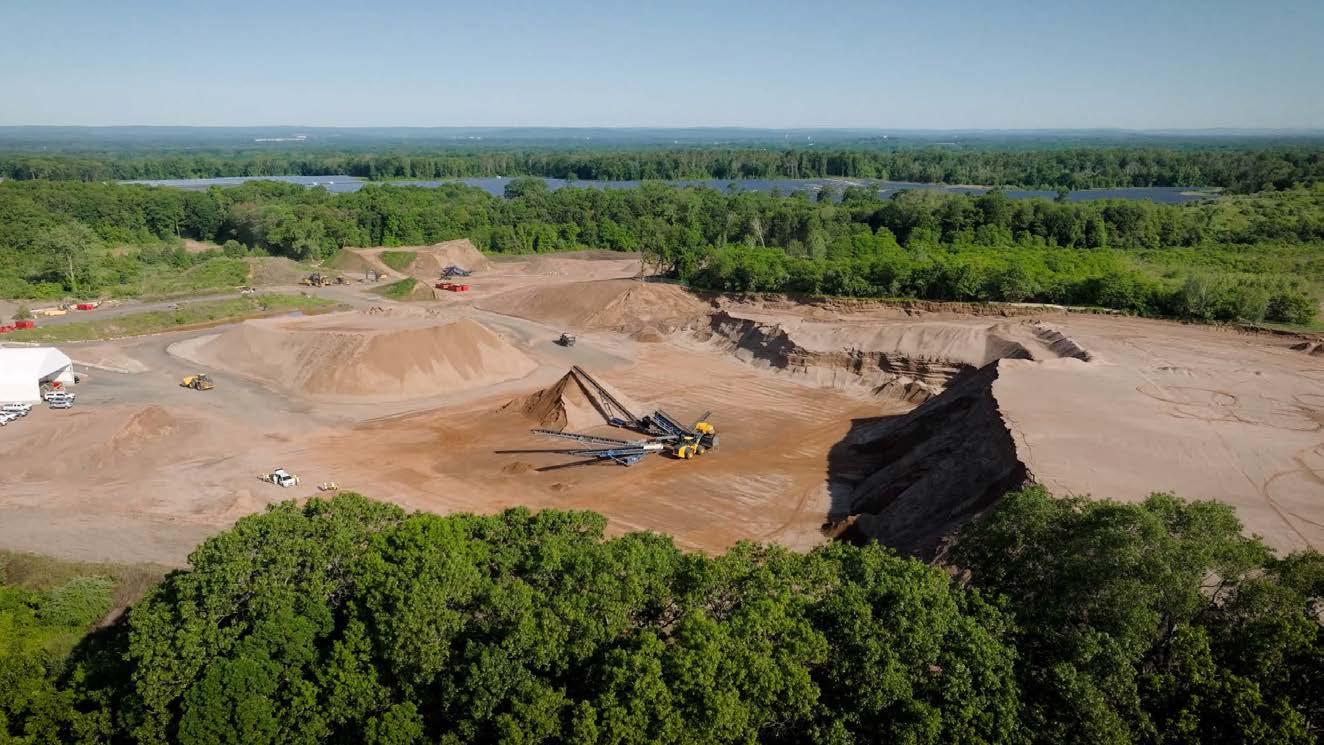
Sand, gravel, and topsoil are being processed at an open-pit operation in Broad Brook, Connecticut. There, two Kleemann mobile screening plants ensure optimal output and high-quality results, processing material for asphalt, concrete, and bedding sand.
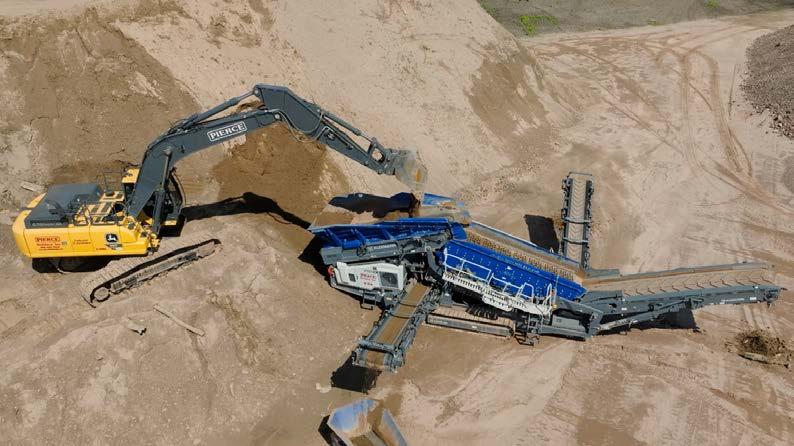
Two mobile screening plants from Kleemann are at the centre of Pierce Builders’ operations in Broad Brook: the MOBISCREEN MSC 953 EVO classifying screening plant for sand production, and the MSS 802 EVO scalper for screening topsoil and gravel.
Both plants were originally rented but later became permanent. Pierce Builders was so impressed with the performance of the two mobile screening plants that it purchased additional Kleemann plants very quickly.
The screening plants are complemented by MOBIBELT mobile stockpile conveyors, which streamline construction-site logistics and increase productivity.
For more than two years, Pierce Builders has been operating the sand and gravel pit in Broad Brook. Owner Alescia Pierce manages the operation and also lends a hand herself on the machines. Alongside her, other women also work the machines and assist with the organisation.
Reliable and ef cient
The MOBISCREEN MSS 802 EVO is primarily used for processing topsoil and gravel.
Manual removal of root parts and clogged hoppers is a thing of the past.
For Pierce, the MSS 802 EVO “is the best machine available for this purpose”, due to its performance and handling.
“I love the scalping screen. I have years of experience in screening topsoil – and then along comes this screen and everything just tumbles through it,” she said.
The MOBISCREEN MSC 953 EVO is used to produce various sand types for asphalt, concrete, and ballast. Its strength is its high output combined with its simple operation.
With dry feed material, output can reach up to 3000 tonnes per day; with wet material, approximately 1500 tonnes.
The average daily fuel consumption is just around 40 gallons (151 litres). Operation is managed via a mobile control device meaning the days of lever operation are over.
Trouble-free processes
The plants are loaded by John Deere wheeled loaders and excavators. Three mobile Kleemann stockpile conveyors assist with material stockpiling.
For construction site logistics, Pierce Builders generally relies on state-of-the-art technology like the John Deere Operations Centre to guarantee trouble-free processes.
The central platform for managing entire construction sites serves as an interface between operators and machines on-site and the of ces of site managers and dispatchers.
Excellent service
Apart from machine quality, the deciding factor for Pierce Construction in favour of Kleemann was the service provided by the regional US dealer for the Wirtgen Group in WI Clark.
“We work very closely together and are delighted when we nd good solutions for the dedicated team,” WI Clark sales representative Greg Hurlburt said.
Pierce said she is very satis ed with the cooperation of WI Clark and Wirtgen.
“We have a great combination of excellent machines, state-of-the-art construction site logistics, and fast, uncomplicated support,” she said. AB
The MOBISCREEN MSC 953 EVO excels in sand production.
Images: Kleemann
The MOBISCREEN MSS 802 EVO is primarily used for processing topsoil and gravel.
Ready to ACT DONAL O’RIAIN
Ecocem is poised for an exciting future, with its innovative ACT technology set to be a key part of its global growth strategy.
Donal O’Riain said Ecocem’s investment in new technologies has enabled the company to obtain numerous lowcarbon SCM patents.
Image: Ecocem
Friday 28 November 2025 was a good day for an hour-long conversation with Donal O’Riain, coming just over a week after the major European supplier of low-carbon cement technologies had staged its Materials Science Symposium in Paris, France.
At the symposium's conclusion, Ecocem established a Materials Science Advisory Council to support the development and adoption of low-carbon cement solutions globally.
Comprising 11 of the world’s foremost materials scientists, drawn from top global institutions, the council will build on Ecocem’s longstanding collaboration with the scientists whose research has already contributed to the company’s cutting-edge ACT technology.
Cement accounts for eight per cent of global CO2 emissions, and the council’s mandate is to deliver an annual statement of research and innovation priorities to decarbonise cement and concrete production globally, review and exchange insights from global research programmes, and identify new avenues for collaboration. The council will also provide independent scienti c perspectives on materials and processes to policymakers, standards bodies, and industry groups.
“If we take the right action now, the cement industry can decarbonise globally by 2040, 10 years ahead of schedule, without excessive cost and without carbon capture,” O’Riain said.
“We can already deliver a 70 per cent reduction in CO2 without additional cost.
”What the industry needs is urgent alignment between research, regulation, policy, and practice, to move from demonstration to full-scale, global adoption.
“Policy ambition drives progress and focuses resources and funding. Current policy supports only carbon capture, a single, expensive solution, rather than enabling a range of solutions which together can accelerate CO2 reduction.
“The Materials Science Advisory Council will work to build awareness and provide the independent scienti c insight needed to maximise the industry’s potential to achieve decarbonisation of the sector ten years ahead of schedule.”
Over the past decade, Ecocem has invested more than €70 million in research and development, including its newly opened state-of-the-art Research and Innovation Centre in Chilly-Mazarin, a southern suburb of Paris, France.
Other recent milestones include a new €50 million ACT production plant in Dunkirk, northern France, a further €170 million investment to construct four new ACT production lines in France by 2030, achieving ASTM C1157 certi cation for ACT Technology in the US, af rming its performance, durability and reliability for use in the American market, and partnerships with leading construction rms such as Sisk, Cemex France, Bouygues Construction, Vinci Construction, CB Green, and the Greeceheadquartered Titan Group.
O’Riain said that Ecocem is not a new player on the lower-carbon cement technology scene.
For 25 years, the company has developed and supplied low-carbon cement solutions across Europe. It operates from two plants in France, as well as sites in the Netherlands and Ireland, producing two million tonnes of low-carbon cement each year, 90 per cent of which is ground slag, a ne, grey powder made from water-quenched iron blastfurnace by-product, used as a sustainable substitute for Portland cement in concrete, mortar, and grout. The remaining ten per cent are conventional CEMIII-range cements.
Ecocem’s technology has supported major infrastructure projects, including Le Grand Paris Express, Dublin’s Aviva Stadium, the Paris 2024 Athletes’ Village, and the UK’s HS2. To date, it has helped avoid 18 million tonnes of CO2 emissions, equivalent to the annual absorption of over 800 million trees.
Investors include Saint-Gobain Group, Breakthrough Energy Ventures, and ArcelorMittal.
For a quarter of a century, Ecocem has developed and supplied low-carbon cement solutions across Europe.
In 2025, Ecocem, which has locations in Ireland, France, the UK, the Netherlands and the US, announced more than €220 million of investment in new production capacity and research and innovation facilities to accelerate the commercialisation of ACT and support its ‘Beyond Clinker’ strategy.
O’Riain said that by replacing up to 70 per cent of clinker – the key polluting ingredient in cement – with low-carbon supplementary cementitious materials (SCMs), ACT, the result of a decade of research, signi cantly lowers the carbon footprint of cement (approximately 200kg eqCO2 per tonne compared to 600kg eqCO2 per tonne), while achieving the required strength, durability, and workability in the concrete it is used to make.
O’Riain said low-carbon cements have been used effectively for decades, but scaling them has been a challenge. This, he said, makes ACT a ‘breakthrough’ technology precisely because it multiplies the low-carbon bene ts of traditionally used low-carbon cements, as well as new ones, and allows them to scale as never before.
Unlike many low-carbon cements or carbon capture and storage (CCS) solutions still in early development stages, O’Riain said ACT is built for real-world deployment – fast, scalable and designed to work within today’s infrastructure.
ACT is said to cut clinker use by up to 70 per cent, replacing it with abundantly available, low-carbon materials such as limestone and SCMs. O’Riain said each deployed low-carbon material and SCM is optimised, with combined synergies maximised, allowing the resulting ACT-based product to be utilised far more ef ciently. O’Riain said that ACT delivers cement with the required strength, workability, and durability without changing manufacturing or jobsite practices or incurring a green premium. He said ACT’s compatibility with global standards and infrastructure makes it viable across mature and emerging markets. O’Riain said ACT will accelerate access to scalable low-carbon, low-clinker, competitive cement technology and, if rapidly adopted, can deliver a 50 per cent reduction in CO2 by 2030.
“I remember 35 years ago when people in this industry were saying, ‘There’s no point playing around with this technology. We know how to make money from making cement. We’re more worried about pricing and about disruptors entering the market and taking market share. That’s what we need to concentrate on’,” O’Riain said. “Technical innovation departments didn’t exist in the cement industry.
“When you looked at the cost of CO2 [emissions], it didn’t gure at all. When cement companies looked at the marginal cost of production, they saw something like €20 to €25 per tonne, and that’s all they had to take into account. Now CO2 alone can comfortably add €60 to €80 to that. You’re talking, in today’s market, of €100 per tonne being your marginal cost of production.
“That changes everything in the business, a fundamental structural change. If a cement business tries to operate in the same way with the same technology it’s always used, it will cease to exist.”
O’Riain said the 1997 adoption of the Kyoto Protocol to address climate change by setting the world’s rst legally binding targets for industrialised countries to reduce greenhouse emissions by an average of ve per cent below 1990 levels between 2008 and 2012 was a carbon emissions mindset gamechanger for the global cement industry.
“The cement industry suddenly had a huge problem as a big emitter of CO2. It was saying, ‘What are we going to do?’ I thought good quality alternatives, like slag, would have a tremendous market,” he said.
“It was a good time to get into the cement industry with a low-carbon product, and I thought, in the long term, that it would be a valuable product to have. I wanted to be in control of the decisions around that, so I set up Ecocem and created a completely new team.”
O’Riain said that for the last quarter of a century, the global cement industry has relied on one technology that converts blast furnace slag into a ne ground powder and supplies it as an alternative to cement.
“It’s a very solid business model as the quality of cement outperforms in terms of strength and durability any other types of cementitious materials. In a world without CO2, it would be a very nice technology to stick with,” he said.
“However, we could see 10 to 15 years ago that the lessons we could apply, others could too, so it was a much more competitive environment when it came to getting access to raw material to enable that business model. We knew we had to add some strings to our bow. We started to work on developing new technologies, at rst to optimise what we could do with blast furnace slag, then to apply those lessons much more widely to low-carbon, supplementary cementitious materials.”
O’Riain said the level of resources Ecocem has invested in developing its new technologies over the past decade has led to the company obtaining “well into double gures” of patents in the eld of low-carbon SCMs.
“We still have several patents pending in that area,” he said. “When we went into that area [low-carbon SCMs], we found that no one else was working seriously in it, so we necessarily did new things; there was nobody to copy. There was plenty of opportunity to obtain patents, but we wanted to be selective, as securing patents is expensive.
“All our key technology developments have been patented.
“We now have [ACT] technology that can deliver an up to 70 per cent reduction in the carbon footprint of cement, 90 per cent of which is clinker, at relatively modest cost. It’s a much more competitive solution than anything else out there.
“The only alternative solution is carbon capture and storage, which is not a viable option for the global cement industry because it is too expensive. It’s too dependent on available storage capacity and very generous governments that are going to build infrastructure to transport the CO2 over huge distances to storage locations.”
Securing the wider use of ACT technology in the global cement industry over the next ve years will, O’Riain said, “buy 10 years” for Ecocem and others to nd a rapidly deployable and cost-effective way to cut the nal 30 per cent of cement CO2 emissions without using unaffordable carbon capture and storage.
“We know how to cut two-thirds of emissions, and now we go for the remaining third. We need to change the policies and global consensus around carbon capture and storage,” he said.
“All the conversation is around it, but it’s a waste of time and money to talk about it and invest in it.
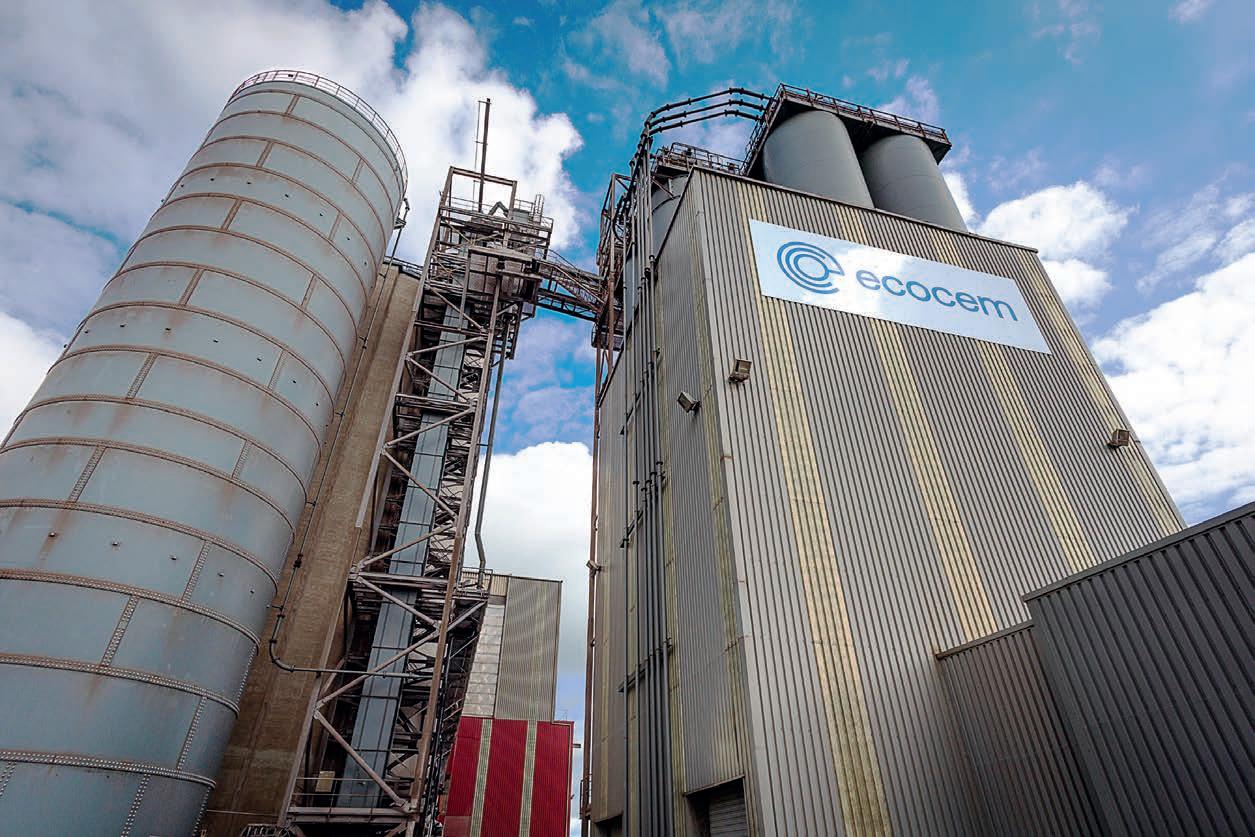
An Ecocem production plant in Dunkirk, France.
“You cannot lock everyone in that box and throw away the key.
“We need a much broader range of technological solutions. My own feeling is that we’re at a tipping point as an industry, with carbon capture and storage dying a natural death in two to three years.
“No one likes to be dragged out of their comfort zone, and, in the cement industry’s case, that’s producing Portland clinker [cement]. The industry needs to learn new tricks and skills, understand them at a high level, and apply them ef ciently at scale. That scale-up effort will be a challenge, and government policy can legitimately support it. It’s not about securing large capital grants; it’s about encouraging the adoption of new technologies and further innovation. Then the industry will be able to deploy costeffective new technologies rapidly.
“For market access, we have to change industry standards, including the European harmonised cement standard, EN 197. If that doesn’t recognise your product, it is very dif cult to get it into the market. We now have a decision from the European Commission to revise EN 197, with the new norm being introduced by the middle of 2027, giving all our [low-carbon cement] technologies access to the market. That was a long, hard battle which we’ve won. In parallel, we are not waiting until 2027, as we are building our industrial capacity to produce ACT at scale in Dunkirk, which will be operational by the end of 2026. While we won’t have the European [harmonised cement standard] norm at that stage, we have already achieved technical certi cation in France [to produce and sell ACT cement nationally].”
O’Riain said it is important for Ecocem to handle the “burden of being leaders” in low-carbon cement technologies and to demonstrate how effective they can be for existing and new customers.
“In parallel, we are very comfortable with licensing our ACT technology to anyone seriously interested in using it. What we are saying to the cement industry is, ‘You can try and invent this technology yourself, allowing ten years for that, and make sure you avoid the patents we already have in place.’ Alternatively, sit down and talk with us, and we’d be very happy to license our technology to you. We are having meaningful discussions with a double-digit number of cement companies on that,” he said.
In April 2025, Titan Group, a leading international business in the building and infrastructure materials industry, became the rst cement major to license Ecocem’s ACT technology.
The licensing agreement will see Titan and Ecocem co-develop and deliver a bespoke, general-purpose cement version of ACT, initially for Titan’s Greek domestic market.
Ecocem has also welcomed the December 2025 publication of the new European Assessment Document (EAD) on blended cements.
The EAD provides regulatory clarity, con rming that Ecocem’s breakthrough ACT technology meets recognised technical requirements for the European construction market.
This enables Ecocem and other providers of low-carbon cement technologies to pursue the European Technical Assessment (ETA) route and obtain CE marking, thereby bringing these innovative technologies to market.
Developed by the European Organisation for Technical Assessment (EOTA), the EAD is a harmonised technical speci cation that formally de nes the rules, methods, and criteria for assessing the performance of blended cements in Europe.
This EAD 150080-00-301 on blended cements with high ller content, ground granulated blast-furnace slag, pozzolanic material, or both, and clinker has been cited in the Of cial Journal of the European Union.
Ecocem obtained ETA 23-0877, issued by Cerema in December 2023, which allows the company to submit its CE marking application to bring its ACT technology to market.
“The publication of this EAD is a milestone for Ecocem, our ACT technology and for the wider cement and construction industries. It means the performance, durability and safety criteria for this technology are now formally de ned under a recognised European regulatory route,” O’Riain said.
“We are accelerating the commercial rollout of ACT in Europe and forging the pathway for global deployment, including in developing countries where low-carbon cement solutions are urgently required.” AB
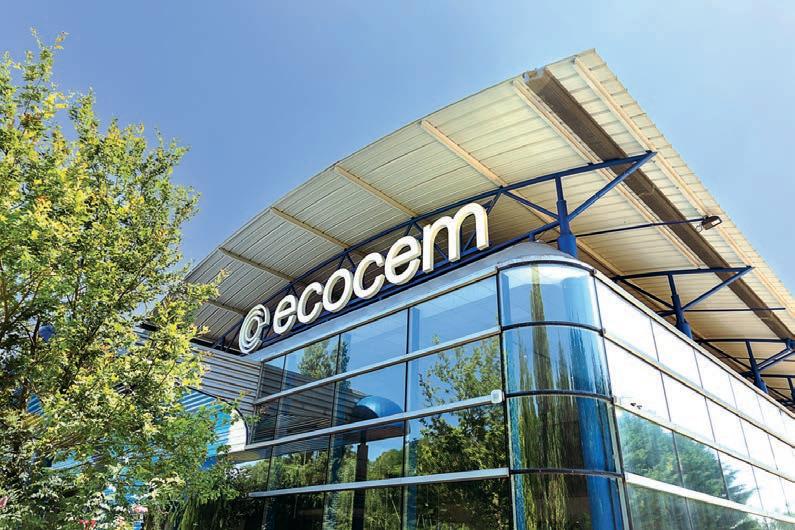
1. Ecocem’s headquarters is in Dublin, Ireland.
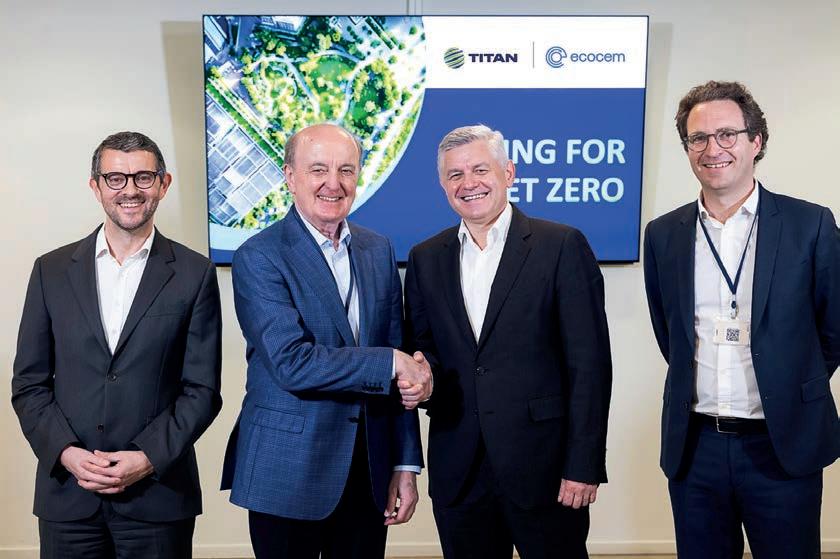
2. Ecocem’s Donal O’Riain and Marcel Cobuz (centre right), chairman of the Titan Group executive committee, mark the start of the ACT technology licensing agreement.
McLanahan’s crushing, washing and screening solutions support all phases of the concrete recycling process.
Crushing support for concrete recycling
E cient and modern crushers can provide vital support for the recycling of concrete from construction and demolition waste streams.
Concrete remains the world’s most widely used construction material and, unsurprisingly, one of the largest contributors to construction and demolition (C&D) waste streams. Across Europe, ageing infrastructure, urban renewal and redevelopment mean that demolition residues, once considered waste, are increasingly regarded as valuable raw materials.
Crushing and screening plant manufacturer McLanahan has said that recycling concrete is no longer a fringe activity. With land ll capacity constrained, growing environmental regulation, and increasing demand for sustainable materials, concrete recycling is rapidly becoming a core component of modern construction logistics. The process not only reduces environmental impact but also provides high-quality recycled aggregates that can be reused, closing the loop on material supply.
Each year, Europe generates roughly 450-500 million tonnes of C&D waste, with at least one third of this being concrete, according to the European Circular Economy Stakeholder Platform. This demonstrates both the scale of the challenge, and the opportunity presented by effective recycling.
McLanahan showcased that recycling concrete can effectively be used as recycled concrete aggregate (RCA), involving a multistage process outlined in its blog posting, titled “C&D Recycling – Breaking Down Concrete”:
1. Collection and sorting – concrete elements collected from demolition or renovation sites. Embedded metals (rebar, mesh), plastics and unsuitable materials removed.
2.Primary crushing – large concrete pieces are broken down using crushers (jaw, impact, or hammermill types).
3.Secondary crushing and screening –material is further reduced and screened to the required particle sizes.
4.Washing and classi cation – optional but recommended to remove nes, dust, and contaminants, producing cleaner, more consistent RCA.
5.Stockpiling and grading – material is separated into de ned gradations for different uses (eg road base, drainage, back- ll).
McLanahan’s equipment supports all these phases. From heavy-duty crushers to modular wash plants and classi cation screens, it can supply end-to-end systems tailored for large and small-scale C&D recycling operations alike.
McLanahan said the business case for recycling concrete pays. By recycling on–site or near-site, projects cut haulage and disposal costs, often substantially when virgin aggregate or land ll tipping fees apply.
In regions with high aggregate-levies or land ll taxes, using RCA signi cantly reduces operating costs and enhances pro t margins. This is one reason recycled aggregates uptake is growing in the UK, according to analysis by Future Market Insights on the recycled concrete aggregates market.
Using RCA reduces demand for quarried rock, sand and gravel – preserving nite natural resources and extending the life of quarry reserves.
It avoids energy-intensive mining, crushing and transport of virgin aggregates.
Shorter transport distances and re–use of local demolition material cut carbon emissions considerably, supporting European carbon–reduction targets under climate and sustainability policies.
While the upside of concrete recycling is considerable, McLanahan said that there are practical and regulatory challenges.
Quality and consistency of RCA must be controlled carefully. Proper crushing, washing and screening is essential to meet speci cations for structural or drainage uses.
Regulatory and standard compliance is a key consideration. Not all recycled materials are acceptable for high-spec applications, standards like EN 206 for concrete mixes or EN 13242 for aggregates must be satis ed.
Data tracking and traceability of demolition, processing and reuse, especially in larger countries or across regional jurisdictions, is needed to avoid “hidden waste”. The lack of consistent, transparent data remains a complaint across the European sector.
Market acceptance and perception is a challenge as some contractors still prefer “virgin” aggregates for structural projects, seeing RCA as inferior. Modern processing methods are actively shifting this assumption.
“At McLanahan, we believe concrete recycling is central to Europe’s sustainable construction future. By providing robust and exible crushing, washing and screening solutions, we help unlock the true value of demolition material, reducing waste, cutting costs, and delivering a circular supply of aggregate,” McLanahan business line director David Hunter said.
McLanahan has said that its role is to give contractors and recyclers the tools they need to process concrete waste into
Crushing and screening plant manufacturer McLanahan says that recycling concrete is no longer a fringe activity.
quality recycled aggregate, with the same performance, wherever they are in Europe or around the world.
The European Union’s C&D waste statistics and circularity analysis explain how, as Europe embraces circular economy policies, concrete recycling stands as a pillar of resource ef ciency. With potentially 150–170 million tonnes per year (assuming one third of C&D waste is concrete) available for recycling, the aggregate potential is vast.
McLanahan has said that concrete recycling is no longer a niche or optional activity. For contractors, recyclers and infrastructure customers across Europe, recycled concrete aggregate offers a viable, scalable and cost-effective alternative to virgin materials.
Excelling in Finland
Metso crushing and screening equipment is helping southern Finland-based Pärhä produce high-quality concrete aggregates. Pärhä uses Metso’s Lokotrack solutions to ensure ef ciency and superior end-product quality.
Metso’s two-stage crushing process, combined with electric-driven screens, delivers signi cant fuel savings and improves the cubicity of the nal product.
The Lokotrack LT330GPSE provides power not only for its own crusher and screens but also for a separate ST4.10 mobile screen.
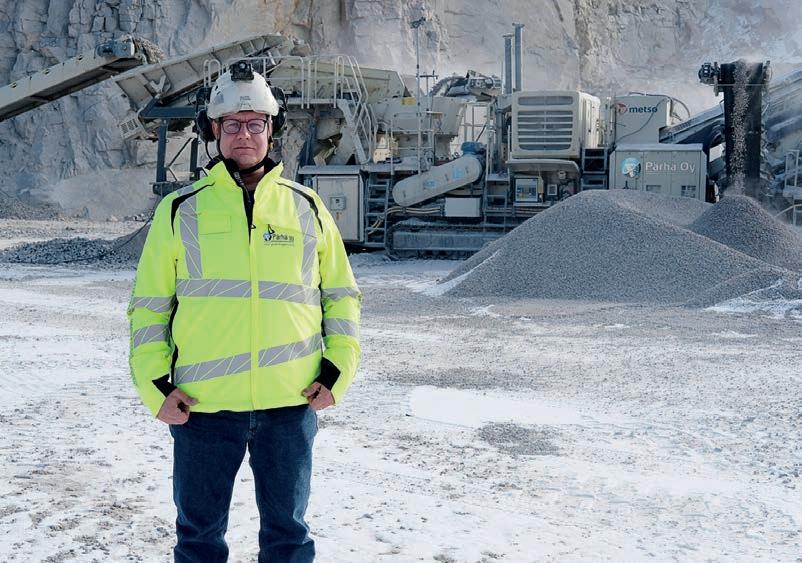
“The Lokotrack secondary crusher is a true powerhouse. Its robust diesel engine drives a generator that supplies power to the unit’s own equipment: the pre-screen, the cone crusher, and a large two-deck screen. Thanks to a connecting cable, surplus power also runs a separate large three-deck screen for nal product separation,” Pärhä owner Jari Pärhä said.
He said that he is more than satis ed with the cost-ef ciency of Metso’s two-stage plant and mobile screen.
The primary crushing is handled by the diesel-electric Lokotrack LT120E jaw crusher, followed by the electrically powered LT330GPSE cone crusher-screen unit, and precise nal classi cation is done by the e-Power Lokotrack ST4.10E three-deck screen.
“We calculated that all Metso crushing and screening units powered by diesel-generated
Metso’s diesel-electric Lokotrack LT330GPSE cone crusher-screen plant in the background.
Images: McLanahan
electricity, plus two-wheel loaders on site, consume about 0.7 litres of fuel per produced tonne of aggregate – which is quite a modest gure,” Pärhä said.
Pärhä’s partnership with Lokotrack began in 2013 with the purchase of an LT106 jaw crusher. Four years later, capacity was increased with the diesel-electric LT120E jaw crusher and LT330GPSE cone-screen plant. In 2024, the primary unit was upgraded to a new model based on excellent performance.
Automation has also advanced signi cantly, making operators’ work easier. Additional features such as Remote IC remote control improve equipment management and enhance safety. Pärhä applies a method familiar from Norway and Sweden, where the LT120E jaw crusher operates separately, about 20 meters away from the secondary crushing and screening units. A wheeled loader picks up the primary crushed rock and feeds it into the LT330GPSE via a feed hopper.
The secondary crusher differs from mainstream set-ups: material passes through a pre-screen before entering the cone crusher, allowing nes and selected fractions to be removed when needed.
“For concrete aggregates, quality is more important than quantity. With the feed hopper and pre-screen combination, we ensure a steady, continuous feed to the secondary crusher, which stays consistently full. This improves cubicity and extends the wear life of parts,” Pärhä said.
“The LT120E is also powerful enough that in separate operation, we don’t need to run it at full capacity all day.”
Based in Heinämaa, Orimattila, Pärhä Oy is recognised as a specialist in concrete aggregates. The family-owned company operates six quarries in the Päijät-Häme region, producing mainly crushed aggregates for concrete plants.
In March 2025, Metso’s two-stage plant and mobile screen were completing a 35,000tonne contract at the Pennala quarry south of Lahti. In addition to 6–12mm and 12–16mm aggregate sizes, the process produces stone dust and 3–6mm grit for winter sanding.
The reddish rock is crushed in two shifts, including necessary maintenance work.
“We produce about 3000 tonnes of smaller concrete aggregates per day. For larger sizes, the output would be even higher. Finished aggregates are delivered within a radius of about 100km,” Pärhä said.
What will Lokotrack and other quarry equipment look like in 40 years?
“Rocks will still be reduced in jaw and cone crushers. Automation will make work even easier, lowering the threshold for new people to join the industry. Remote operation will become more common, and quarry equipment will be controlled more from monitoring rooms than from machine cabins,” Pärhä said.
In separate news, Metso is expanding its screening portfolio with Grande Series screens to maximise productivity and exibility for customers.
The launch of the Grande Series by Metso marks a major advancement for customers,
delivering high-performance screening solutions speci cally engineered to maximise productivity and ef ciency in mining and aggregates operations, and to meet the most demanding screening requirements.
Covering three new stationary screen types – GLH, GMF and GFF – the new series is designed to help customers handle even the most challenging, high-capacity applications. The larger screen sizes within the Grande Series enable customers to take advantage of enhanced capacity, reduced downtime, and greater operational exibility to support their business targets.
“It’s all about helping our customers succeed with the right tools for their unique needs. With the newly launched Grande Series, customers gain more exibility, easier screen replacements, and access to solutions for even the most demanding screening tasks,” Metso screening business line vice president Jouni Mähönen said.
The GLH Series horizontal screens are engineered for, among other things, heavyduty slurry and water handling in demanding mining environments.
The GMF Series multi-slope banana screens offer high-capacity screening of both ne- and near-size particles.
These new additions bring exible engineered-to-order (ETO) con gurations and very large-screen designs to Metso’s portfolio.
The GFF Series, featuring ip- ow technology, enables ef cient screening of challenging materials and ne separation.
The Grande Series also includes Trellex screening media compatibility, ensuring customers bene t from a complete solution that integrates seamlessly with Metso’s broader offering.
Top tips
Wire-based screening media manufacturer Major has provided three tips for effective maintenance of screen media.
Do not slack on installation
It’s not uncommon for an operation to send a new crew member to complete the undesirable job of screen media change-outs, but the task bene ts from more experience. The best screen media in the world will not do any good if it’s installed incorrectly. This could mean improper tensioning or even installing it the wrong way around. The resulting issues can include accelerated wear, panels broken too soon and just overall inef cient screening.
In addition to a bi-power Metso Lokotrack ST4.10 mobile screen, Finnish concrete producer Pärhä operates two Lokotrack ST2.8 direct-feed screens, one equipped with e-Power.
While speci cs vary, there are a few best practices for screen media installation. To start, clean and check the condition of components that touch the screen, ensure the screen panel matches what was ordered, and install the screen based on instructions from the manufacturer. During installation, make sure each support bar touches the screen and the tension matches manufacturer recommendations.
Consider looking into installation and maintenance training to prolong screen life. Manufacturers often offer the service via site visits or a nearby dealer. The bene t will be a crew with shared knowledge of proper installation that could prevent downtime.
Keep an eye on the screen
Once installed correctly, it’s still best to check screen media at least weekly to make sure tensioning is proper, and the panels are not showing unusual signs of wear. A little bit of extra time during routine preventative maintenance can have a noticeably positive effect on pro ts.
While checking tension, also look at the clamp bars themselves. Check for wear, corrosion or cracks and examine the rail for straightness, which is necessary for even tension. Examine all nuts and bolts and replace any that are worn, stripped or corroded. Shaker bolt threads with excess build-up can be cleaned by running them across a wire wheel. Also, replace clamp bars that are thin or caving in to greatly improve screen media wear life and be sure to choose original equipment manufacturer versions.
Utilise diagnostic tools
Diagnostics systems can help prolong media life and improve screening by checking and monitoring a machine’s health. Use a vibration analysis system to inspect the machine for balance and excessive vibration, which can lead to screen media failure or unintended machine wear.
Vibration analysis systems are becoming easier to use. Some only require a single, wireless sensor and allow access to results via a smartphone or tablet. AB
Image: Metso
New-generation loading
Production rate and lower fuel consumption are the name of the game following the latest updates from loading equipment manufacturers in the quarrying and aggregates sector.
As the quarrying and aggregates sector seeks to increase production rates and lower production costs, including fuel consumption, manufacturers are shaping their equipment to meet these demands.
Volvo Construction Equipment (Volvo CE) has unveiled a short-swing excavator model, the Volvo ECR255 short-swing crawler excavator, as part of its CONEXPO-CON/AGG 2026 showcase.
According to Volvo CE, the new model prioritises high production rates and lower fuel consumption in operation, with a seven per cent increase in lifting capacity and a 10 per cent reduction in fuel consumption compared to previous models. Available in the North America, Europe, Oceania, Turkey, Korea, and Japan markets, the 25-tonne excavator replaces the previous generation’s ECR235E as an option for contractors working in con ned-space applications and needing compact equipment. The ECR255 joins the large ECR355, mid-size ECR145 and compact ECR90 excavators in Volvo CE’s short-swing excavator models.
“This launch means Volvo now offers a comprehensive range of short-swing models in our new generation of excavators, giving customers the exibility to choose the right machine for their application without compromise,” Volvo CE chief project manager Jaesu Kim said.
“It’s designed to help customers do more in con ned spaces thanks to its reduced tail swing, increased lifting capability, lower fuel consumption and industry-leading operator environment.”
With features including auto-idling, automatic engine shutdown, customisable work modes, and an advanced electrohydraulic control system, the ECR255 provides a smoother, more fuel-ef cient operation. The ECR255 features a redesigned structure and a heavier counterweight, increasing its lifting capacity. Combined with advanced features such as Volvo Active Control, the operator can automate boom and bucket movements, enabling precise digging and grading. Due to the operator’s ability to set boundary limits, the ECR255 excels in con ned-site applications.
CONEXPO-CON/AGG attendees can see the ECR255 in-person at Volvo CE’s booth (F24029) at the Festival Grounds.
Building in the US
Develon has started construction of a new training centre for construction equipment, which will play a key role in supporting its customers with training and education.
Located in Tucson, Arizona, the HD Construction Equipment (HDCE) Real Operation Centre (ROC) replaces the previous facility and will host customer training sessions across the current and new Develon heavy and compact equipment range, as well as dealer and customer events.
“For the past 15 years at our former facility, we hosted thousands of construction equipment owners, operators and dealer representatives for hands-on training, product testing and special events,” Develon senior director of dealer development and marketing Morgan Stallings said.
“The new facility will build upon its success and support our North American dealers.
The generation 8 crawler excavators were launched in 2019.
“It will have acres of open operation area where visitors can come year-round to see and feel what makes Develon machines different from other brands.”
Develon broke ground on the facility in October 2025, with plans to build a permanent facility that includes service bays for dealer training and maintenance. Attendees can learn from Develon’s team of experts on how to use key Develon features, including the transparent bucket and aroundview monitor camera system.
“The training facility plays a key role in what we do. It helps our sales team get hands-on equipment experience and gives us a place to test machines and gather real data,” Best Line Equipment vice president of sales Armand Cencetti said.
“And it lets us bring in customers to see and demo Develon equipment in person, building stronger, long-standing relationships along the way.”
Signi cant developments
Liebherr has unveiled a series of “signi cant” developments for its eighth-generation crawler excavators, including new settings and greater availability of assistance systems.
The new settings are available across Liebherr’s R 922 to R 945 G8 crawler excavators. Liebherr has said the new updates are designed to meet customers’ demands for performance, energy ef ciency and ease of use.
A key upgrade is the Liebherr Power Ef ciency (LPE) mode - Liebherr’s patented system for energy management - which has been integrated as standard on R 922 to R 945 G8 models. According to the manufacturer, the LPE optimises the excavator’s hydraulics and diesel engine to reduce fuel consumption by 10 per cent while maintaining high production levels.
Liebherr has also made the Leica 2D control system standard across the R 922 to R 945 G8 crawler excavators.
The system, integrated into the main display, provides operators with clear, colourcoded visuals for levelling and earthmoving tasks. The 2D system can be expanded via “3D ready” options from Leica, including passive 3D or semi-automated 3D functions for greater precision.
The Liebherr generation 8 crawler excavators have become relied upon in many applications since their global launch in 2019.
“From the R 922 to the R 945, the generation 8 range combines outstanding performance with reduced fuel consumption, supported by a comfortable operator environment and simpli ed, safe maintenance access,” Liebherr said in its release.
“Proven in diverse applications worldwide, this generation continues to evolve, driven by Liebherr’s commitment to providing customers with the highest possible performance and long-term reliability.” AB
Develon is investing in a new training centre for its North American customers.
The ECR255 excels in confined-space applications.
Liebherr has announced several updates for its generation 8 crawler excavators.
Image:
Liebherr
A Rokbak RA40 hauling overburden in Alberta, Canada.
Strong ADT demand
Conditions are challenging, but hauling manufacturers say markets such as the UK, Africa and Italy o er major opportunities going forward.
Articulated dump truck (ADT) manufacturer Rokbak has said that demand for its articulated haulers remained strong in 2025 despite the challenging market conditions seen in the construction equipment industry.
The Scotland-based company celebrated milestones, new dealers and lots of Rokbak trucks out working for customers on demanding job sites around the world. Rokbak has said the total global articulated hauler market was expected to close at over 9000 units for 2025, which is down on the previous year when 10,300 trucks were sold across all brands. Some markets have declined, such as North America, which is by far the biggest market for articulated haulers, while others, such as the UK, Africa and Italy, increased. Despite the global reduction, 2025 was still a good year for Rokbak with customers choosing the company’s ADTs for their reliability, durability and low fuel consumption.
There were sizable orders – such as 25 RA30s sold to an infrastructure contractor in the US – and expansion into new markets thanks to new dealer partnerships. During 2025, Rokbak continued to strengthen its European dealer network in line with its expansion plans.
Rokbak partnered with DIR International Trading in Spain and Portugal and Idromac in Italy, where demand for ADTs has risen steadily since 2021, increasing by around 10 per cent annually. The expectation for Italy was that, by the end of 2025, more than 100 units across all brands would have been sold nationwide.
Rokbak said the appointment of Idromac as its of cial dealer in Italy means it is ready to meet rising ADT demand across the country with proven, dependable articulated haulers and strong aftersales support.
Idromac previously toured Rokbak’s Motherwell factory in preparation for the heavy equipment dealer to bring Rokbak articulated haulers to its Italian customers.
Idromac chief executive of cer and founder Francesco Casillo recognised that Italy’s changing job site requirements created a clear need to introduce a premium articulated hauler brand to its offering.
The company has long specialised in heavy equipment, and adding proven ADTs to its portfolio represented a natural step.
“Construction transport in Italy is changing rapidly,” Casillo said.
“Dump trucks are no longer con ned to quarries, they are playing a decisive role in roadwork and earthmoving operations across the country.
“To keep pace with this market evolution, we needed a proven, reliable articulated hauler brand that aligned with our values and ambitions. Rokbak matched our vision perfectly.”
In the US, similar comments were made about three RA30s working on a residential development where the trucks were praised for their reliability, low fuel consumption and uptime.
Another highlight in 2025 for Rokbak in Europe was the expansion of its dealer in Northern Ireland, Sleator Plant, which now covers the entire Irish market with the establishment of a specially designed €1.2m
depot in north Dublin, built to enhance accessibility and support for customers throughout Ireland.
While at a quarry in Northern Ireland, an RA30 has been called out for its ef ciency and productivity, helping to support continued business success.
“As quarry manager, I know rst-hand that you have to get the right plant for the job,” Loughran Rock quarry manager Colin Loughran said. “You want something reliable – the less downtime the better. The RA30 has been nothing but reliable, with minimal maintenance requirements and prompt support from the dealer, Sleator Plant, when needed.”
In 2025, Rokbak marked 75 years of manufacturing at its Motherwell facility. The company also recently won the Made in Scotland award for its outstanding contribution to manufacturing. From this, Rokbak was shortlisted for the Made in Britain awards.
A slightly different application that showcases the versatility of the Rokbak RA30 and RA40 is the Hydex adaptation of the ADTs into high-capacity water trucks to meet the growing demand for dust suppression across North America. The venture between Hydex and Rokbak dealer Hills Machinery sees the trucks up tted with highperformance water tanks for deployment across quarries, mines and infrastructure projects under the Hydex banner.
“This is about using a proven platform to meet a pressing and growing need,” Rokbak director of sales for the Americas Robert Franklin said.
Images: Rokbak
“The RA30 and RA40 give contractors the power, manoeuvrability and durability they need in a base machine – and now, with this adaptation, we’re showing just how far that platform can go.”
Other highlights from Rokbak’s year included meeting customers and dealers at shows, where visitors could see the trucks up close and talk to the Rokbak team.
At Nigeria Mining Week, Rokbak and its West Africa dealer HMD presented the RA40, which attracted substantial interest. The Scottish-made haulers are fast proving to be popular in the African mining, quarrying and infrastructure sectors thanks to the trucks’ reliability and durability. Earlier in 2025, Rokbak and HMD also met with customers at Mining Indaba in Cape Town, South Africa.
“We see a lot of opportunities in West Africa with the mining, quarrying and construction industries performing well,” Rokbak global sales director Guy Wilson said.
“It has been a strong market for us this year, and we expect to see this continue next year.”
The RA30 was also at Le Dig Tour in Lyon, highlighting Rokbak's ongoing commitment to the French market, and the Balmoral Show, Northern Ireland’s largest agricultural and machinery event.
One of the rst events in Rokbak’s calendar for 2026 is AED in the US, where the company will meet with its North American dealers and potential new dealer partners.
Welcome delivery
Stevens Equipment Rental (SER), based in Cumbria in north-west England, has added
11 new Liebherr TA 230 Litronic ADTs to its eet following customer feedback.
The delivery was SER’s third major eet enhancement in 2025, meaning it’s now the largest ever in the company’s 50-year history, with further expansion planned for 2026.
It follows other recent additions from Volvo Construction Equipment and Caterpillar, designed to ensure high machine availability and support for SER’s growing national customer base.
By working with multiple original equipment manufacturers and their dealers, SER sales manager for the North and Scotland Mark Neeld said it can ensure timely deployment and provide reliable, responsive service.
“Our customers’ projects are our top priority. When demand is as high as it is now, being agile is crucial,” he said.
“Our multi-brand approach means we have the exibility to secure the best equipment to meet our customers’ schedules. It’s about ensuring we can say ‘yes’ and deliver a high-quality, reliable machine that’s well supported with parts and service, no matter where the site is in the UK.”
The decision to invest in further Liebherr ADTs was based on the performance of the rst TA 230 Litronic units, introduced to SER’s eet in 2023. These initial machines underwent a two-year real-world evaluation with customers.
“The feedback from the customers who ran the rst Liebherr trucks was extremely positive, particularly on their high uptime and low fuel consumption,” SER sales manager for the South Ben Beard said.
"That experience, combined with the fantastic back-up support we’ve received from Liebherr so far, gave us the con dence to add further units. The TA 230 Litronic has proven to be a great product and is a perfect example of our dedication to nding solutions that work for our customers.” AB
Rokbak managing director Paul Douglas and Idromac CEO and founder Francesco Casillo.
A Liebherr TA 230 Litronic ADT from the SER fleet.
E cient by design
Conveyors are the backbone of material handling operations, including in the quarrying sector. Manufacturers are preparing to showcase their latest innovations for 2026.
Martin Engineering president emeritus Todd Swinderman shares key tips and practices to make conveyor belts last longer.
State of play
Most conveyor belts in quarries are considered to be operating in “severe duty” and typically don’t just wear out.
They are exposed to raw materials and punishing weather conditions, so they're more often subject to a shortened life from catastrophic events, whether it’s a signi cant impact, splice failure, or piercing damage. Or they suffer from chronic issues such as mistracking or frozen idlers.
In addition to correcting such problems to extend belt life, a concern for many bulk material handling operations is damage from loading, belt wear from cleaning devices, and the dif culty of cleaning damaged belts.
Properly positioned and tensioned primary and secondary cleaners mitigate belt wear issues commonly associated with cleaners.
Belt wear from loading
Since the belt is a major cost element in the process of conveying bulk materials, much attention is focused on reducing wear and damage.
In general, loading wear occurs over a long period of time from the discharge of material onto the belt and from contact with conveyor components such as idlers and belt cleaners. Belt wear from loading includes both impact damage and frictional wear.
Damage to the belt can be a single event, such as that from tramp metals or oversized lumps in the material ow stream.
Such sudden damage can result in catastrophic failure that requires immediate attention, demanding a system shutdown.
The negative effects of long-term wear are less dramatic, and replacement can generally be scheduled for planned outages to avoid affecting conveyor availability.
One key to understanding belt wear from loading is the chute. The development of discrete element modelling (DEM) as applied to conveyor loading chutes has given the industry a valuable tool for verifying chute designs and predicting conveyor belt wear. A survey of the literature yields evidence indicating belt life improvements of 40–300 per cent from using DEM to optimise chute designs.
The primary objectives of chute design are to direct an uninterrupted ow of the bulk solid from the chute to the receiving belt, centred in the direction of belt travel and as close as possible to the speed of the receiving belt.
While the interaction between the belt and the bulk material is complex, in general, troubleshooting belt wear caused by chute design can take advantage of some simple relationships. The rst is the general relationship between material impact angles and the wear rate of rubber. Figure 1 shows that as the impact angle increases, the wear generally decreases.
The second fundamental principle that can be applied to chute design to minimise belt wear is the speed of the bulk material stream, which is affected by friction and acceleration due to gravity as the load falls onto the belt. The coef cients of friction between the bulk material, chute and belt are important parameters that are utilised in DEM programs to optimise the shape of the chute, producing the desired exit velocity and direction of the discharged bulk material.
Common chute con gurations include rock boxes, inclined at chutes and curved chutes, as shown in Figure 2. Ve is the exit velocity of the bulk material stream from the chute, and Vb is the belt speed.
Other factors to consider when designing the optimum chute for a given application include drop height and preferred liner materials, but in general, belt wear from the choice of chute design is greatest with rock boxes, which do little to slow the material’s velocity and introduce a large amount of disruption as the load cascades from one shelf to the next, then lands on the moving belt at a near-perpendicular angle.
Flat inclined chutes help shift the load in the general direction of the receiving belt’s travel but can involve even greater impacts than a rock box, depending on the drop height. The violent landing takes a constant toll on the belt, often creating signi cant amounts of fugitive material in the form of dust and spillage.
Belt wear from loading impact is generally minimised when using curved chute designs, as the bulk material stream’s velocity can be most closely matched to that of the belt with curved chutes.
ABOVE: Figure 1 shows the general wear of rubber based on impact angle.
RIGHT: Figure 2 shows a comparison of loading velocities and vertical components.
Figure 3 shows the relative differences in loading velocity vectors. Vey is the bulk material stream velocity perpendicular to the belt and is the primary factor in belt wear. The wear of the belt is proportional to the magnitude of Vey, so minimising this component through chute design is a focus of a DEM analysis.
Figure 2 is a generalisation, but it shows that the exit velocity of a curved chute is the lowest of the three design choices. This is due in part to the force resulting from the curved chute, which tends to reduce the impact velocity (Vey) relative to a at chute, even if the basic discharge angles are similar. Rock boxes may reduce chute liner wear, but can create signi cant belt wear due to the relatively high vertical velocity and the resulting shearing action between the bulk material and the belt as the load gets up to belt speed. While belt wear is the main concern, a signi cant amount of attention should be paid to the selection of liners to prolong chute life. Given the relative cost of the belt compared to the chute in most applications, the wear liners should be considered sacri cial components, and attention would be better spent on improving chute design, selecting lower-friction liners, and making the liners easier and quicker to change. Some manufacturers have engineered new designs for liners that can be serviced from outside the chute, for example, eliminating the need for con ned space entry and drastically reducing replacement time.
Cleaning damaged belts
Cleaning ef ciency is related to the material properties extracted from the mine, the number of belt cleaners, the mechanics of a particular belt cleaner design and the belt surface, among a host of other variables.
It’s common to expect a conveyor belt to be cleaned with an ef ciency approaching 100 per cent, but even a brand-new belt has macro and micro defects that make achieving 100 per cent practically impossible.
These imperfections can result in as much as 60g/m2 of carryback passing a belt cleaner station with a new belt.
When the belt surface is damaged, the amount of carryback that can be shielded
gouges can be even more signi cant, on the order of 100–200g/m2. The US Mine Safety and Health Administration (MSHA) estimates that 85 per cent of all conveyor problems, including wear, come from fugitive materials.
Fugitive materials are those that escape the conveyor other than at the discharge, including spillage, dust and carryback.
Since carryback is a signi cant source of fugitive materials, which in turn contribute to belt and component wear, it makes sense to focus on adequate belt cleaning.
Cleaning damaged belts is best done with water and mechanical scrapers.
In severe cases, brush cleaners are effective at removing material from damage such as skirtboard grooves, but they require more frequent adjustment and replacement than mechanical scrapers.
With a belt in good condition and professional maintenance, a belt cleaning station can usually control carryback to within 10–100g/m2.
The Conveyor Equipment Manufacturers Association (CEMA), in its seventh edition of Belt Conveyors for Bulk Materials, has established a system for rating the dif culty of the belt cleaning application and for desired levels of carryback exiting a cleaning station to aid users in specifying belt cleaning performance, rather than making decisions based on brand preference or price alone.
Take aways
•Curved chutes are effective in minimising belt wear from loading.
•Belt cleaners do wear the belt, but at a much lower rate than loading.
•Rather than focusing on extending the life of sacri cial wear materials, making the service of wear materials easier and faster should be the goal of design and maintenance engineers.
More uptime, less disruption
Smiley Monroe has over 45 years of experience in belt conveying, supplying major equipment manufacturers and supporting sites across varied material-handling applications. Their team regularly sees the same core issues across industries: spillage, carryback, belt damage, and the pressure to get lines up and running again quickly after a failure. While rips, breakages, and blockages can occur in any operation over a belt’s lifespan, their frequency increases wherever materials are abrasive, heavy, ne, wet, oily, sharp-edged, or inconsistent in size.
Across fast-paced industrial environments, conveying equipment is the backbone of consistent output. Whether you’re handling aggregates, waste, grain, or compost, unexpected conveyor issues can rapidly turn into lost time and lost revenue. With throughput targets rising and
Below are some practical steps to reduce these risks and maximise machinery uptime.
Tackle material spillage
Skirting rubber should be installed so it lightly contacts the belt surface: tight enough to contain material, but not so tight as to increase friction or damage the belt cover.
A key rule of thumb is to choose skirting with a lower shore hardness than the belt cover. That way, the skirting wears rst, protecting the belt and extending its working life.
Keep conveyor belts clean
Carryback, material sticking to the belt after discharge, is another common issue across industries. It leads to buildup on return rollers and structures, increases spillage, and can create secondary blockages that unexpectedly bring everything to a halt.
Installing belt cleaners is a simple preventative measure that removes carryback while the conveyor is running. Cleaners can be speci ed for different belt types, including at and chevron patterns, and matched to your material characteristics.
For applications involving oily, sticky, or chemically aggressive materials, choosing the right belt cover grade also matters. Oil-resistant belts, for example, help slow down degradation when belts are exposed to oil-based products (synthetic or natural), reducing premature replacement.
Smiley Monroe’s Zip Clip replacement conveyor belt is designed for rapid, safe belt changes without specialist tools or a vulcanising crew. Because it’s ready-to- t, teams can quickly swap belts on site and get machinery back into service.
Zip Clip can typically be tted from ground level in around an hour or less, helping sites avoid the extended downtime associated with traditional vulcanised splicing. This also removes common installation bottlenecks, like waiting for specialist vulcanising teams, managing lifts or scaffolding, and coordinating shutdown windows.
Keeping a spare belt in stock works much like a spare tyre: if a belt fails, you t the spare and restart production, then reorder another spare to restore your contingency.
It reduces operational stress and gives teams con dence that a breakdown will not turn into an all-day shutdown.
Book a site survey
Every conveying application is slightly different. Material type, loading method, belt speed, environment, and output demand all affect wear patterns and failure risk.
Ready-to- t replacement
One of the most effective uptime strategies is keeping a mechanically strategies are essential to keeping operations
Material spillage is a widespread problem in bulk handling and processing environments, and it’s one of the biggest contributors to downtime. Spillage can cause belt mistracking, accelerated wear, blocked rollers, extra clean-up, and even safety hazards. A strong rst defence is conveyor skirting. Well- tted skirting prevents material
Even with excellent maintenance, failures can still happen—and the speed of recovery often makes the biggest difference to total downtime.
Smiley Monroe works closely with customers to understand these variables and ensure the belt speci cation and components are matched precisely to your application.
A site survey helps identify weak points before they become stoppages, whether that’s a skirting set-up, belt cleaner choice, splice type or belt grade.
With the right combination of belt and conveyor components, sites can improve
Smiley Monroe has developed a wide range of solutions for conveyor belt systems after more than four decades in the industry.
Zip Clip is a popular solution from Smiley Monroe.
Image: Smiley Monroe
Rebuild revolution
Remanufacturing and rebuilding is becoming increasingly prominent in the quarrying and aggregates sector as customers look to cut down on expenditure.
Metso’s Lokotrack is one of the leading mobile crusher brands, renowned for its robust design and features. A great example of this is a 20-year-old Lokotrack LT110 jaw crusher, which the Norwegian crushing contractor Tverås Maskin gave a new life to through a total overhaul at Metso's repair facility.
This sturdy, 2005-manufactured Lokotrack jaw crusher has broken hard Norwegian stone for around two decades. During this period, approximately four million tonnes of rock have gone through the sturdy Nordberg C110 jaw crusher cavity. Like most Norwegian crushing contractors, Tverås Maskin has primarily used its LT110 jaw crusher as a standalone primary crusher, with feeding done by an excavator.
One of the main locations during this Lokotrack’s career has been Balhald quarry in Stjørdal, near Trondheim in central Norway.
One of the leading crushing contractors in Norway, Tverås Maskin had kept good care of its 20-year-old Lokotrack. All inspections and servicing were carried out on time, supported by the Metso Norway maintenance crew.
In late-2024, the company faced two options: either to purchase a new primary crusher or to have Metso maintenance specialists perform a complete overhaul at the company’s Tampere repair shop in Finland.
“After considering the options available and discussing with Metso experts in Norway and Finland, the decision was quite simple – we wanted to keep our old, trusted Lokotrack,” Tverås Maskin
crushing operations manager Vidar Bjerkås said. “In fact, I believe this old Lokotrack LT110 to be the best jaw crusher that Metso has ever built.
“We took care of refurbishing the feeder section ourselves, and Metso Finland's repair workshop took care of the thorough overhaul of the rest of the Lokotrack.”
Bjerkås said the lifetime of LT110 will be extended by another 10–15 years with the complete overhaul. After the major renovation, the crusher was successfully restarted in August at Balhald quarry.
Fed by an excavator, the average capacity is 400 tonnes per hour.
It’s always a matter of discussion whether a 20-year-old crusher is worth overhauling.
To make the decision easier, Metso’s Tampere repair shop experts paid a visit
Remanufacturing is becoming increasingly in demand with quarrying customers.
to the Norwegian quarry site to see the Lokotrack LT110 jaw crusher in operation.
“After inspecting the unit, the decision was clear. This LT110 has been kept very well-reserved, serviced in a timely manner, and clearly a good case for a total overhaul,” Metso repair shop manager Petteri Piirainen said.
In early 2025, the Lokotrack was transported from Norway to Metso’s Tampere workshop, which features approximately 3400 square metres of premises, state-of-theart machinery, and skilled personnel.
The workshop can accommodate six Lokotrack crushers for simultaneous servicing. After disassembling all Lokotrack parts to achieve a skeleton-looking frame for sandblasting, the main focus was on rebuilding the robust C110 jaw crusher, the heart of the Lokotrack.
“We rebuilt the jaw crusher by replacing all the necessary worn parts of the jaw, like side plates, pitman bearings, clamping bolts, belt guards and other wear parts,” Piirainen said.
“During the renovation, we could utilise the old crusher end plates, pitman and bearing housings that we welded and machined in new condition.
“Thanks to the professional work, this over 20-year-old jaw was rebuilt as good as a brand new crusher, ready to carry on crushing tasks ef ciently and safely.”
The rebuild also included the renovation of the main electrical switchboard and the renewal of all cables. Regarding hydraulics, all hoses were replaced, and the hydraulic tanks and coolers were cleaned.
The original Cat C12 diesel motor and gearbox were completely overhauled.
As the nal touch, the jaw crusher got fresh, original beige paint. Just after midsummer 2025, the new-looking Lokotrack LT110 was transported by truck back to Norway.
From the customer side, Vidar Bjerkås of Tverås Maskin was happy with the outcome of the demanding achievement.
“Our co-operation with Metso Norway and Finland worked well. We always received the necessary information on how the renovation was proceeding,” Bjerkås said.
Rebuilt and better
During an Aggregates Business visit to Finning UK & Ireland’s Leeds facility in November 2025, Finning UK & Ireland product manager for aftermarket Mark Tudball said there rise in customers working in industries such as quarrying who are opting for certi ed FinningCat machine rebuilds. Tudball said that machine rebuilds can support customers on their ‘sustainability journey’. Rebuild options offer exible scopes of work to suit customer needs, and certi ed Caterpillar three- to ve-year warranties are available. Machine upgrades include part numbers and the latest upgrades. Furthermore, Caterpillar remanufactured parts help customers reduce carbon emissions by reducing raw material use. Rebuilds also deliver greater costeffectiveness than buying new.
In late June 2025, the fully overhauled Lokotrack was transported by a truck back to Norway.
The professional team from the Metso Tampere workshop oversaw the complete overhaul of the over 20-year-old Lokotrack LT110 jaw crusher.
“We have had more Cat D6 dozer customers who previously opted for only component rebuilds now taking the certi ed powertrain and hydraulics option after dealer feedback led Caterpillar to set a price point at which we could offer it, along with an undercarriage rebuild and a ve-year, 8000hour warranty. It’s a promotional offer that equates to a customer spending 55 per cent or less on a new machine,” Tudball said.
“We aim to achieve the ‘55 per cent or below of the cost of a new machine’ on most rebuild models, but it’s not possible for all. The ‘55 per cent or below’ gure is based on new machine sales.
“Together, with our partners Caterpillar, we worked towards a customer-focused solution and offered the rst CHR [Certi ed Hydraulic Rebuild] completed on a wheeled loader.”
This ensured the asset gained a second life, with the hydraulic system rebuilt and the powertrain scope reduced, adding value through the certi ed equipment protection plans.
Tudball said that Finning UK & Ireland typically orders parts from Caterpillar ahead of each scheduled rebuild, with Finning's response repair and rebuild facilities (RRR) targeting a 12-week rebuild-to-return-tocustomer time for each machine.
Tudball said that more than 43,000 machines, powertrains and components have been rebuilt by Caterpillar and Cat dealers since 1985.
He said that Finning UK & Ireland’s rebuild program can improve parts sustainability by reducing carbon emissions, energy use, and raw material consumption. He does this by charting a part’s journey from its installation, through performance, owner maintenance, maturation, replacement, return to Caterpillar, disassembly and cleaning, inspection and salvage, remanufacture and assembly, testing, and, nally, re-entry into the supply chain.
“Rebuilds are a great way of maintaining the residual value of the machine,” Finning UK & Ireland marketing manager Tracey Earp said.
“The way we got to all the rebuild options is that Mark [Tudball] and his team got lots of feedback from customers as to what they wanted for their business.”
Finning UK & Ireland’s Leeds site opened on 5 June 1958 as a major eld service and repair workshop for the northeast of the UK. The branch was extended with the opening of the component rebuild centres rebuild workshop in January 1979. The site’s uid analysis lab was moved off-site in 2013 due to capacity and capability constraints, and to support growth plans. Currently, there are 135 staff and engineers based at the Leeds facility, including employees in the sales and service of ce.
On an Aggregates Business tour of the rebuild workshop, two Caterpillar trucks, a 772 and a 775, owned by a leading UK building materials supplier, were nearing completion of their rebuilds.
At the Finning UK & Ireland Leeds workshop, customer service manager Mike Sanderson led the workshop tour and also showcased a recently rebuilt Cat D6 dozer, which was about to be returned to its owner.
“Everything from a Cat 775 down will pretty much t in one [workshop] bay,” he said.
“We had a Cat 992 [large wheeled loader] last week. Anything that comes through the Leeds workshop is largely a complete rebuild. We get the odd repair to do via a eld service team member who has to bring a machine in, and we’ll create a space for it, like that [Cat] D6 [dozer] over there, which is having an undercarriage repair.
“We get machines from all over the country, such as the [Cat] 992 that was here last week, which came up from Somerset. It’s partly about nding a [Finning UK & Ireland RRR] facility that can take the machine, but customers aren't always open to that. They want the machine to go to their most local site, which we’ll accommodate where possible. We nd that customers like the xed price they’re quoted.
“We are looking to recon gure the workshop to create what we call ‘super bays’. It will mean pretty much getting rid of the current walkways and having four super bays. You’d still have a central area to walk around the workshop, and it will enable us to have more working space and accommodate a higher volume of machines.”
Reborn in Malaysia
A Volvo L220G wheeled loader in Malaysia has been restored through the Volvo Certi ed Rebuild Program, undergoing a signi cant overhaul from the engine to the cab using only genuine Volvo remanufactured parts.
The rebuild delivers near-new performance, extended machine life, and substantial cost and sustainability bene ts.
A Volvo L220G wheeled loader in Malaysia has undergone a full transformation through the Volvo Certi ed Rebuild Program. Volvo said the project demonstrated a way customers can access cost ef ciency, technical expertise and support sustainability.
Mark Tudball is pictured next to a rebuilt Cat C27 engine for a Cat 775 truck Images: Prime Global Publishing
The Volvo Certi ed Rebuild Program is designed for customers who want to extend the working life of their machines without compromising on performance or reliability. By restoring a machine to meet original factory speci cations, using only genuine Volvo CE parts, the program delivers the productivity of a new machine at a fraction of the cost.
The transformation of the L220G began, as every Volvo certi ed rebuild does, with a comprehensive inspection.
This in-depth assessment, conducted by experienced Volvo-certi ed technicians, evaluates the machine’s overall condition and determines the optimal level of refurbishment to deliver the best results for the customer.
Every major system and component is thoroughly checked, from the engine to the hydraulics, allowing customers to choose from a range of rebuild options, including targeted component repairs and a full machine overhaul.
For the L220G, the decision was made to go all in. After 10 years in service and over 25,000 operating hours, this heavyduty wheeled loader remained a reliable workhorse but was ready for a second life. The plan called for a signi cant rebuild, restoring every aspect of the machine to meet original Volvo CE factory speci cations.
The process began with the careful disassembly of key systems. The original Volvo D13H six-cylinder turbo diesel engine was removed, cleaned, and completely rebuilt. Critical parts such as pistons, liners, turbocharger, and fuel injectors were either replaced with new genuine Volvo components or remanufactured to as-new condition. All seals, gaskets, and lters were replaced, while the cooling system was pressure-tested to ensure optimal performance under heavy loads.
The transmission, one of the most vital components in any wheeled loader, was replaced with a fully remanufactured Volvo unit. Far more than a simple repair, a remanufactured transmission is stripped down to its core, meticulously cleaned,
rebuilt, and tested to ensure it performs exactly like a brand-new component.
This guarantees smooth shifting, strong power delivery, and maximum reliability.
The drive shaft was disassembled, balanced, tted with new universal joints, and realigned to prevent vibration and premature wear.
The axles, wheel hubs, and brake systems were overhauled to ensure safety and control, critical for handling heavy loads in demanding quarrying and materialhandling applications. While the mechanical work was underway, the exterior received equal attention.
Every panel was cleaned, repaired, repainted, and resealed with fresh decals to protect against the elements.
Inside the cab, the operator’s environment was restored to a like-new state – clean, comfortable, and ready for long shifts, with all controls and displays functioning as intended.
Finally, the rebuilt L220G underwent a rigorous pre-delivery inspection and testing phase to con rm it met Volvo CE’s exacting standards for quality and performance.
Only once it had passed every check was it returned to the customer, ready to deliver many more years of productive service.
“Central to Volvo CE’s sustainability strategy is a strong emphasis on resources, adopting a ‘reuse, reduce, remanufacture, and recycle’ methodology,” Volvo CE Malaysia head of aftermarket Yee Kam Hoong said.
“The Volvo Certi ed Rebuild Program and our genuine Volvo reman parts allow customers to maximise machine life, reduce costs, and minimise environmental impact, all while maintaining the quality, reliability, and performance Volvo machines are known for.” AB
The Finning UK & Ireland Leeds RRR facility
Image: Finning UK & Ireland
Exploring new frontiers
Manufacturers continue to modernise their screening bucket and bucket attachment ranges as quarry operators seek versatile options.
When Simex looked at the common pain points its customers were facing, selective separation and on-site screening kept coming up.
The twin issues were not con ned to a single sector. The quarrying and aggregates sector was increasingly looking to screen waste materials, including construction and demolition waste. Earthmoving operations sought to clean and reclaim topsoil from debris, especially as green-space restoration projects became increasingly popular.
Through its market research, Simex understood that the more customers could screen materials on-site, the greater savings they would make over time. Especially as recovering all valuable materials from waste aggregates reduces disposal costs and increases the amount of “sellable” material available for operations.
Following the extensive research, Simex designed a solution to solve these pain points: the VSE Tornado screening buckets. The VSE Tornado range can separate different materials on-site, including damp materials that contain moisture. Due to its three-shaft con guration with star-shaped attachments, processing is faster, supporting overall ef ciency.
“Simex has been investing in screening buckets for years, though the focus has traditionally been on recovering heavy
aggregate materials from demolition and crushing,” Simex research and development project engineer Nicola Sisti said.
“In recent years, however, the market has increasingly expressed the need for on-site soil cleaning and recovery. I’m referring to urban green maintenance, compost aeration, gardening, and small private worksites. The goal is to clean the soil from stones and debris, avoiding total disposal in land lls and reusing directly on-site.”
The VSE Tornado range is suited to mini and midi excavators ranging from 1.5–10 tonnes. It excels in applications involving debris, stones, and gravel, as well as for compost aeration. The standard output particle size is 0–20mm, however, by adjusting the spacers, it can be reduced to 0–10mm or increased to 0–30mm.
The VSE Tornado Buckets feature a quickchange system, which means the whole shaft or individual screening elements can be replaced. This minimises downtime and ensures greater uptime on-site. The buckets can also be equipped with polyurethane tools when dealing with wet or sandy applications as well as steel tools when working with heavy-duty or abrasive materials.
New quick coupler
Steelwrist has expanded its SQ technology range with the launch of the SQ40 automatic coupler for compact excavators.
Steelwrist has designed the SQ40 so it can be quickly changed using high- ow-powered work tools. SQ technology means hydraulics and electrical signals can be connected in a single movement, and operators can change the tool without leaving the cabin.
It follows Steelwrist's 2017 launch of the SQ auto connection system for quick couplers and tiltrotators. Since launching the technology, Steelwrist has expanded the SQ range to include eight models, from the SQ40 to the SQ90, covering excavators from 2–70 tonnes. The SQ40 is speci cally designed for compact excavators from 2–7 tonnes.
“Since we introduced SQ40 at bauma there has been a lot of interest for the product from many customers, and with the introduction of the SQ40 quick coupler we can also offer a sandwich tiltrotator installation. This is bene cial when you want to easily disconnect the tiltrotator to use for example a breaker,” Steelwrist chief executive of cer Stefan Stockhaus said.
“For the past two years, I have been running the SQ40 size on my own excavator, and once you get used to not having to leave the cab when changing hydraulic-powered work tools, you never want to go back.”
According to Steelwrist, the SQ40 coupler is optimised to achieve a ow of 70 litres per minute with Steelwrist’s coupling providing 40 per cent more ow area compared to
Simex has launched the VSE Tornado.
Images: Simex
a standard 3/8” coupling. Alongside the SQ40, Steelwrist has also introduced the H6 electrical connector as an upgrade on the Open-S V14 electrical connector.
The H6 is a six-pin electrical connector that is fully integrated into the SQ40 locking wedge and has a moulded design. It features large contact surfaces and strong springloaded pins ensuring reliable electrical transmission and high current capabilities.
More organisations join Open-S
The Open-S alliance has welcomed three new members: attachment manufacturers Epiroc and Genesis Attachments, and equipment rental company Kanamoto.
The alliance now has 23 members after welcoming nine members in 2025 including companies from the Asia Paci c, Europe and North America, who support creating an open industry standard for automatic couplers and work tools. It would mean that customers are not restricted by proprietary solutions when choosing work tools and attachments for their excavators.
Epiroc’s con rmation is a major boost for the Open-S Alliance and comes after Epiroc acquired ACB+ with Epiroc/ACB+ now an associate member of the alliance.
“By joining the Open-S Alliance, we reinforce our commitment to delivering open, compatible solutions that empower customer freedom of choice,” Epiroc vice president for the hydraulic attachment tools business line Predrag Petrovic said.
“This shared standard is not just about technology, it’s about building a more ef cient, connected, and sustainable industry.”
Genesis Attachments has also joined the Open-S Alliance as an associate member. The US-based manufacturer specialises in designing and manufacturing hydraulic mobile shears, grapples, concrete processors and specialty attachments for scrap processing, demolition, material handling and offshore decommissioning applications.
“The standards set forth by
The VSE Tornado was designed in response to customer feedback.
Open-S are a foundation to maintain the best interests of the owners and operators, which perfectly coincide with Genesis’ focus,” Genesis Attachments director of engineering Roger Johnson said.
“The information shared through Open-S will ensure that Genesis can continue to offer advanced attachment solutions that seamlessly integrate with supplementary equipment in the eld.”
Kanamoto has joined the Open-S Alliance as a supporting member, committed to promoting the alliance’s principles through its construction equipment rental business, with a presence in Japan, Southeast Asia, and the Oceania region.
“Kanamoto places great importance on improving the compatibility of hydraulic excavator attachments used at construction sites.
“By joining the Open-S Alliance, we expect to create an environment where attachments can be used regardless of model or manufacturer, thereby enhancing user convenience,” Kanamoto board of directors member Jun Watanabe said.
Stockhaus, who also serves as the Open-S Alliance chairman as well as CEO of Steelwrist, welcomed the three appointments.
“We are thrilled to welcome Epiroc and Genesis, both well-known brands and benchmarks for quality, as members of the organisation and supporters of our vision for an open industry standard,” he said.
“It is a true pleasure and an honour to welcome them on board, and I am convinced their participation will help propel the next phase of our growth.
“With Kanamoto, the Open-S Alliance welcomes yet another member in Japan, a testament to the international expansion of our ambition to create a global standard.” AB
The VSE Tornado enables on-site screening.
Steelwrist has debuted the SQ40 automatic coupler.
Opportunities emerge in new markets
O -the-road tyre manufacturers are targeting new frontiers, with key trends including increased infrastructure development, mining, and construction projects in emerging economies.
Global off-highway tyre manufacturer BKT (Balkrishna Industries) has further extended its original equipment (OE) division by appointing two new specialist gures for South America and one for France.
BKT has said the appointments mark a further step towards its long-term objectives outlined in the company’s 2030 growth vision and strategic roadmap.
The BKT announcements come as a new report from consulting company MarketGenics said the global off-the-road (OTR) tyre market is likely to grow from $US3.3 billion in 2025 to $US4.5 billion in 2035. This will be driven by an increase in infrastructure development, mining, and construction projects in emerging economies and developed economies.
The growing urbanisation and industrialisation, especially in Latin America and the Asia Paci c, are creating the need for heavy machinery that uses strong OTR tyres.
As part of BKT’s global OE deployment and to scale operations in the key business region of South America, BKT has announced the arrival of two senior professionals for South America.
The rst is Cadu Accica, who has been appointed as head of original equipment manufacturing (OEM) for South America and brings 19 years of experience in the specialty tyre industry, with a proven record in business development, marketing, and sales. At BKT, Accica will lead OE partnerships, delivering value through customer proximity and long-term collaboration.
The second appointment is Lincoln Sugimoto, who joins BKT as OEM technical manager for South America. With a strong background in engineering and project management and 15 years of experience, including key roles in the specialty tyre and material handling industries, Sugimoto will ensure that OEMs in South America receive best-in-class technical support, fostering innovation and operational excellence in every partnership.
France-based Rémi Morin has been appointed as brand speci cation manager.
Morin brings in over 12 years of experience with a major global OEM and a decade of international leadership across smart farming, mobility, and innovation to this role.
BKT has said the move re ects its commitment to aligning product development even more closely with the needs of OEMs, dealers, and end-users - ensuring innovation is driven by the real-world demands of the eld.
OTR tyre manufacturer BKT has made two new appointments in the expanding South American market.
Following recent strategic additions to the OE teams across Europe, Africa, and the Middle East, BKT said it is now in a uniquely strong position to scale its OE business across all segments – OTR, agriculture and industrial - unlocking new growth opportunities, reinforcing its global vision, and fully in line with its ambitious 2030 strategic plan.
In a separate move, BKT Europe has announced a revision of the organisational structure within the global OEM sales organisation of the India-headquartered off-road tyre manufacturer.
Under the new model, the various regions will report directly to BKT Europe managing director Lucia Salmaso to simplify decision-making ows and streamline commercial governance.
Transparent solution
Retreading and sustainable tyre solutions provider Marangoni has said it is now one of the rst manufacturers in the industry to make CO2 emissions data available for its complete Ringtread product portfolio.
With this initiative, Marangoni said that it provides customers, partners, and eet operators with a reliable tool to quantify the environmental bene ts of retreading and to integrate this knowledge into their sustainability strategies.
The disclosure of CO2 emissions values is a key element of Marangoni’s long-term sustainability commitment.
Compared to new tyres, retreaded tyres signi cantly reduce raw material and energy consumption, while contributing to a circular economy, according to Marangoni.
“Transparency is the key to trust and sustainable progress,” Marangoni director of sales and marketing Ronny Dietsch said.
“By openly sharing the carbon footprint of our Ringtread products, we empower our customers to base their choices on solid data and together accelerate the transition towards a lower-emission future.”
Marangoni said the CO2 emissions data for its Ringtread product line is based on calculation methods aligned with international standards so customers can con dently conduct their environmental, social and government reporting.
New appointment
Triangle Tyre has appointed Vaculug as distributor for its OTR tyre segment in the UK after-market, succeeding RH Claydon.
Vaculug will focus its sales of Triangle Tyre’s product range on key OTR sectors, including quarrying, mining, port operations, materials handling, and heavy industrial applications.
“We are truly excited by the opportunity to enter the market with an agreement with such a leading brand,” Vaculug managing director Jorge Crespo said
“We are looking forward to building a strong relationship with Triangle and serving both our current customers as well as new ones with quality products.”
Established in 1950, Vaculug produces high-quality OTR and truck retread tyres for eets across the UK, while offering effective and practical eet management solutions to its customers.
Since the beginning of its European operations in 2017, Triangle Tyre has focused heavily on re ning its distribution model across Europe and appointed distributors in key segments, including the OTR, passenger car radial, and truck, bus and radial segments.
Triangle Tyre Europe OTR director Luca Mai welcomed the announcement.
“Vaculug’s professionalism, infrastructure, and customer-driven approach make them the ideal partner for Triangle in the UK,” he said.
“We thank R.H. Claydon for their successful collaboration over the past years and look forward to building the next chapter of growth with Vaculug.” AB
BKT has a global presence in the tyre sector.
BKT has appointed Cadu Accica as head OEM South America.
Entering a digital age
Digital technology solutions are fast becoming a trusted part of site management in the global quarrying and aggregates sector.
The aggregates, asphalt, and readymix concrete sectors are entering a period of rapid transformation driven by arti cial intelligence (AI) and intensifying pressure to deliver materials in an ef cient and sustainable way.
For decades, dispatching was dominated by manual processes and legacy software. But today’s operating environment, marked by complex delivery constraints and regulatory demands, requires a fundamentally new approach.
AI business software provider INFORM showcases how operators who modernise
stand to gain operational, nancial, and environmental advantages.
Legacy dispatching
It is essential to understand the limitations of the systems still used by many producers. Legacy dispatching tools, often based on spreadsheets or basic heuristics, were not built for the complexity modern planners face. Balancing truck capacities, driver availability, haul distances, loading times, customer windows, and unpredictable traf c requires evaluating millions of scenarios in real time. Legacy tools cannot do this.
As a result, dispatchers are forced to rely on reactive, manual planning.
When conditions change, and they always do, schedulers must recalculate routes, shift orders, and update timelines by hand. This reactive posture leads to inef ciencies, including low truck utilisation, oversized eets, and inconsistent service quality.
These hidden costs accumulate daily; meanwhile, companies that adopt AI-powered scheduling often see double-digit improvements in loads per truck, on-time performance, and logistics unit cost.
Simulation studies comparing legacy plans with AI-generated ones routinely reveal striking differences in eet ef ciency and cost per tonne delivered. Many organisations hesitate because they fear disruption or underestimate the nancial upside. But the biggest risk is the cost of staying with systems that can no longer keep up.
Fortunately, modernising is far simpler than many expect. AI-based planning tools integrate smoothly with existing enterprise resource planning (ERP), scale, telematics, and weighbridge systems. Implementation can be phased and simulation studies allow producers to quantify the bene ts before committing. INFORM has said, for most organisations, the business case quickly becomes undeniable.
Planning
Once organisations move beyond legacy tools, the true value of AI becomes clear. Unlike generic AI models, INFORM’s
advanced transport optimisation for aggregates logistics is built on operations research, machine learning, and mathematical algorithms engineered speci cally for multi-constraint planning. These systems analyse countless permutations of eet, order, and routing data long before the rst truck leaves the yard. They automate the most intensive aspects of planning while giving dispatchers full visibility and control. Instead of spending the day re ghting, dispatch teams focus on communication, service quality, exception management, and continuous improvement.
According to INFORM, one European producer, producing 580,000m³ of ready-mix concrete annually, achieved nearly 25 per cent productivity gains and saved €2.2 million annually after implementing INFORM’s AI-based dispatch software. That’s nearly a 23 per cent drop in logistics costs. Gains of this magnitude are no longer the exception, according to INFORM.
AI also improves upstream processes. When order takers have real-time visibility into feasible delivery slots, they avoid overpromising and reduce unnecessary strain on the eet. Rather than replacing planners, AI augments their capabilities, handling computation while humans apply judgment. This combination of mathematical rigour and human expertise produces resilient transport plans that withstand real-world volatility.
The driver shortage
Driver scarcity continues to threaten delivery reliability across Europe and beyond. The issue is not limited to licensing numbers. Many licensed drivers have left the profession due to dif cult working
INFORM’s solutions can support planning activities in a quarry set-up.
conditions, unbalanced hours, and compensation that is misaligned with the demands of the job. As experienced drivers retire, younger generations are not entering the profession in suf cient numbers.
While autonomous trucks fuel speculation about long-term solutions, they remain years away from widespread use in open-road construction materials logistics.
However, limited autonomy is gaining traction in controlled environments such as mines and quarries, where repetitive haul cycles and de ned routes create ideal conditions for automated haulage.
In the near term, the most realistic and impactful tool for mitigating the driver shortage is AI-powered optimisation.
By improving utilisation and reducing empty mileage, AI helps producers deliver the same, or greater, transport volume with fewer active vehicles. Fewer trucks needed means fewer drivers required. This ef ciency relieves pressure on the workforce without compromising service reliability.
Importantly, AI also strengthens dispatcher–driver collaboration.
Planning automation frees dispatchers to focus on supporting drivers, thereby improving communication, streamlining operations, and ensuring safer deliveries.
Electri cation
Alongside AI, electri cation is reshaping the future of aggregates logistics. With the European Union’s strengthened CO2 reduction targets, eet decarbonisation is shifting from optional to inevitable. Early pilot programs
Images: INFORM
have demonstrated the viability of batteryelectric trucks for short-haul aggregate and ready-mix deliveries, especially in urban zones where diesel restrictions are expanding.
Yet electri cation introduces a new layer of planning complexity. Unlike diesel trucks, electric vehicles (EVs) require dispatchers to consider:
•Battery range and charging time
•Charger availability and depot grid capacity
•Weather impacts on energy consumption
•Route elevation and load weight
•Time-of-day energy pricing
These factors directly in uence truck selection, scheduling, and routing.
Traditional systems cannot incorporate these variables dynamically, making AI indispensable for managing mixed diesel EV eets. AI can optimise where EVs should be deployed, when trucks should charge, how many chargers each depot requires, and how charging aligns with delivery cycles.
These insights help producers avoid bottlenecks, minimise energy costs, and plan charging infrastructure strategically.
With electri cation accelerating, dispatching will only become more complex. AI is emerging as the critical tool for ensuring sustainability goals can be met without sacri cing pro tability or service reliability.
A path forward
INFORM has said AI-powered transport planning, paired with electri cation readiness and enhanced human-machine collaboration, offers the most practical and pro table path to navigating this transition.
For producers still relying on outdated dispatching systems, the message is clear: modernisation is no longer a luxury. It is operationally essential.
According to INFORM, the companies that act now will lead the industry into a new era of ef ciency, sustainability, and competitive advantage. Those who wait may discover that the greatest risk is standing still.
Enhanced capabilities
CheckProof has launched its new risk assessment capability through its platform and app. According to the Swedish SaaS company, the integrated addition simpli es and strengthens safety management. The tool enables organisations to replace manual, disconnected safety processes with a fully digital, traceable, mobile- rst solution, allowing teams to proactively identify, mitigate, and monitor risks across their operations.
“Many teams still rely on annual paperbased risk assessments. Our platform allows everything, from large-scale project risk assessments to quick ‘Take 5’ checks, to be managed seamlessly in one place,” CheckProof chief executive of cer Håkan Holmgren said.
Holmgren said this addition will give teams a faster, more consistent way to identify risks, document controls, and take action before issues escalate.
Key bene ts of CheckProof’s risk assessment feature include:
•Mobile- rst assessments – eld teams can quickly identify hazards, assess probability and consequence, and log actions directly from their devices.
•Action and accountability – assign responsibilities, set deadlines, and monitor mitigation measures in real-time.
•Residual risk evaluation – verify the effectiveness of safety actions with follow-up assessments, ensuring risks are reduced, and progress is fully traceable.
•Elevated compliance and documentation – all assessments, actions, and results are digitised, stored, and fully traceable, creating a historical record and enabling quicker responses to high-level risks.
CheckProof said the tool is designed for daily use yet robust enough for complex projects. The feature supports pre-work risk assessments, dynamic risk checks, generic risk assessments, and brief safety moments such as Take 5 or Take 1.
This ensures frontline teams and management have full visibility, enabling proactive safety, compliance, and operational ef ciency. AB
INFORM is a trusted partner for quarries looking to upgrade to digital site management solutions.
PNG
Fuelling demand
Renewable fuels are likely to play an increasing role in the quarrying and aggregates sector now and into the future.
The construction and quarrying sectors are major consumers of fossil fuels. Diesel-powered machines, including excavators, loaders, and dump trucks, are prevalent on construction sites worldwide. Environmental concerns over greenhouse gas emissions and air pollution are prompting site owners and managers to adopt greener practices. Renewable fuels produced from sustainable resources offer a quick and straightforward solution to begin the path towards a zero-emissions future.
The bene ts of adopting hydrotreated vegetable oil (HVO) include strong greenhouse gas (GHG) emission reductions when using waste-based feedstocks. As a drop-in fuel, renewable diesel requires no engine modi cations and can be blended easily, offering a pragmatic path to decarbonisation. They will also extend the life of the current proven engine technology for some years to come.
Shell views renewable diesel, alongside sustainable aviation fuel (SAF), bioethanol, and renewable natural gas, as crucial tools for reducing emissions in hard-to-decarbonise sectors such as aviation and commercial transport. These fuels are valued for their ability to blend seamlessly into existing fuel infrastructures with minimal adjustments.
Shell decided late in 2021 to build a major biofuels facility at its Rotterdam Energy and Chemicals Park, intended to produce up to 820,000 tonnes per year of SAF and renewable diesel. This would be enough to avoid 2.8 million tonnes of CO2 emissions annually.
This plant was also connected with carbon capture infrastructure to store emissions offshore. In July 2024, Shell temporarily paused construction of the Rotterdam biofuels plant due to technical issues, higher costs and a weaker renewable fuel market. This enables Shell to review the project’s commercial viability and assess future risk. Even with this move, Shell reaf rms its commitment to achieving net-zero emissions by 2050 and considers low-carbon fuels, including renewable diesel, as a key part of its strategy. Falling mandates and regulatory delays in Europe have weakened demand and depressed margins for renewable fuels. This is evident in Shell’s pause and re ected in its leadership priority changes, trimming investments in some renewables while bolstering oil, gas, and LNG assets to improve pro tability.
So what are Shell’s competitors doing about renewable diesel?
As of early 2025, As of early 2025, BP has scaled back its investment in renewable energy, reducing annual green transition spending from approximately $US5 billion to $US1.5–2 billion. Oil and gas investment has increased to $US10 billion per year. Its Cherry Point, US, facility has undergone a $US50 million upgrade to enable the processing of approximately 7000 barrels per day of renewable diesel, resulting in a reduction of CO2 emissions by 600,000 tonnes annually. In 2022, BP acquired a 30 per cent stake in Green Biofuels Ltd, the UK’s largest HVO provider. Their fuel, HVO Gd+, offers up to 85 per cent reductions in particulates and up to 30 per cent lower NOx emissions while delivering lifecycle GHG savings of around 87 per cent, and it’s engine-drop-in ready.
BP remains engaged with renewable diesel through targeted investments.
There is increasing customer demand for biofuels.
However, its broader strategy appears to be shifting back toward its traditional oil and gas operations. Net zero by 2050 remains a stated goal, but with a more cautious approach to low-carbon spending. They look to be scaling back overall, with targeted cautious investments in projects like Cherry Point and HVO partnerships.
Neste remains one of the world’s largest and most advanced producers of renewable diesel, with facilities in Finland, Singapore, and Rotterdam, as well as a joint operation in Martinez, California. Total nameplate production reaches 5.5 million tonnes per year. They stand out as a frontrunner in renewable diesel, are deeply committed, highly capable, and technically advanced. Processed with its proprietary NEXBTL technology, Neste MY Renewable Diesel can reduce greenhouse gas emissions by up to 90 per cent* or by up to 75 per cent** when emissions over the fuel’s life cycle are compared to fossil diesel.
Neste’s fuel has excellent cold properties and is fully compatible with current diesel engines and energy infrastructure, so quarries do not need to make any investments or modi cations to their vehicles or equipment. Neste’s renewable diesel can be used neat or blended with fossil diesel at any ratio. More than 90 per cent of their feedstock is waste and residue oils and fats, such as used cooking oil and animal fat waste. They also research emerging sources like novel vegetable oils produced with regenerative agricultural practices, lignocellulose, and even lique ed waste plastics. To meet the global demand for renewable diesel, Neste has invested over the past several years to increase its production capacity. For example, the expansion of its Singapore re nery, completed in 2023; the joint operation with Marathon Petroleum in Martinez, California, in 2022; and the ongoing expansion of the Rotterdam re nery, which will increase annual nameplate capacity to 6.8 million tonnes in 2027.
As one of the renewable diesel leaders in the US, Valero operates, through its Diamond Green Diesel (DGD) joint venture, two Gulf Coast plants with a combined annual production capacity of approximately 1.2 billion gallons. In October 2024, Valero completed a SAF project at Port Arthur, producing 235 million gallons per year of SAF, which cuts GHG emissions by 74–84 per cent compared to conventional jet fuel. Major airlines, such as Southwest and JetBlue, are already on board. Valero is a signi cant North American player in renewable fuels, particularly in renewable diesel and SAF, and is rapidly expanding its operations.
Enerkem (Canada) is collaborating with Shell and others to construct a new biofuel facility in Varennes, Quebec. This plant will convert 200,000 tonnes of residual biomass into 125,000 tonnes of biofuels annually starting in 2025.
BP, along with Johnson Matthey, is backing the Louisiana Green Fuels project, which aims to produce renewable diesel from forestry waste using advanced FischerTropsch technology, targeting carbon-negative fuel outputs.
Biodiesel is an area of increasing innovation by manufacturers.
For all suppliers, the primary limitation on growth in renewable diesel production is feedstock constraints. The availability of truly low-carbon feedstocks, such as used cooking oil, is limited. Rapid scale-up risks shifting toward virgin vegetable oils, which may lead to deforestation and biodiversity loss, potentially negating GHG bene ts. Shell and BP are maintaining a presence, but broader shifts in strategy and shareholder pressure around pro tability have dampened their momentum. Neste and Valero are rapidly scaling. Neste is demonstrating strong emissions reductions through its advanced feedstock strategy and expertise in drop-in fuels.
Enerkem and its allied rms are innovating in feedstocks and process technology.
Making the transition to HVO
Enerkem and partners are advancing innovative biofuel technology via joint ventures and plants like Varennes and Louisiana to produce sustainable diesel from waste or feedstock. Valero is producing large volumes of renewable diesel and SAF in the US, serving airlines and eet markets.
So a quarry’s transition from standard fossil diesel to renewable diesel does not have to wait on Shell, BP or the majors.
Many eet operators in the construction, mining, and aggregates industries are already taking advantage of this independently to reduce their carbon emissions and bene t their businesses. It also provides consistency to these businesses, enabling them to utilise their valuable assets for many years to come. AB
Many eet operators across the construction, mining, and aggregates sectors are already transitioning from standard fossil diesel to renewable diesel (HVO100).
How should a quarry make the move?
1 Check the technical feasibility
Renewable diesel (HVO100) is a drop-in fuel approved by most original equipment manufacturers (OEM), including Caterpillar, Volvo CE, Komatsu, Liebherr, Scania, and others. No retro tting is needed; just a check against the required fuel speci cations.
Once con rmed, the machines can run on 100 per cent HVO or on blends with HVO and standard diesel. They can also switch between them without mechanical risk. Therefore, no equipment modi cations are required; only validation is needed, following OEM guidelines and warranty conditions. The results are cleaner combustion and potentially less maintenance.
Manage the fuel supply
Arrange with local distributors who can source from major companies, such as Shell and BP, or from independent suppliers, such as Neste, Greenergy, Preem, World Fuel Services, or regional biofuel distributors. Supply options should align with the current diesel supply, either through bulk deliveries into onsite tanks or direct supply via mobile bowsers. Feedstock shortages and policy volatility can impact fuel prices and availability, so a quarry should consider locking into supply contracts where possible.
*) In Europe and Asia-Pacific, the calculation method EU RED III (revised RED EU/2018/2001)
**) In the US, the calculation method for the US California LCFS GHG emission reductions vary depending on region-specific legislation that provides the calculation methodology, as well as the raw material mix used to manufacture the product in each market.
Taking centre stage
Some of the biggest quarrying and aggregates events are coming up and provide a perfect opportunity to engage with other industry professionals.
MARCH
3–7
ConExpo-Con/Agg
Show producer: Association of Equipment Manufacturers
Show owners: Association of Equipment Manufacturers, National Stone, Sand and Gravel Association (NSSGA) and National Ready Mixed Concrete Association
Tel: +1-(866) 236-0442
1–4
NSSGA Annual Convention 2026
Organiser: National Stone, Sand and Gravel Association (NSSGA)
Tel: (703) 525-8788
MAY
6–9
SaMoTer 2026
Organiser: Veronafiere
Telephone: +39 045 11176091
JUNE 23–25
Hillhead 2026
Organiser: The QMJ Group
Tel: +44 (0)115 945 4367
JULY 1–2
PNG Expo
Organiser: Prime Creative Media
Tel: +61 03 9690 8766
OCTOBER 6–8
IQA National Conference
Organiser: Institute of Quarrying Australia
Tel: +61 (02) 9484 0577
Combining the resources of our respected editorial team with the knowledge and insights of some of the best and brightest minds in the sector, Mining keeps you up-to-date with the latest news, discussions, innovation and projects in the Australian mining sector.