Inquiring Minds
News from Primary Ethics
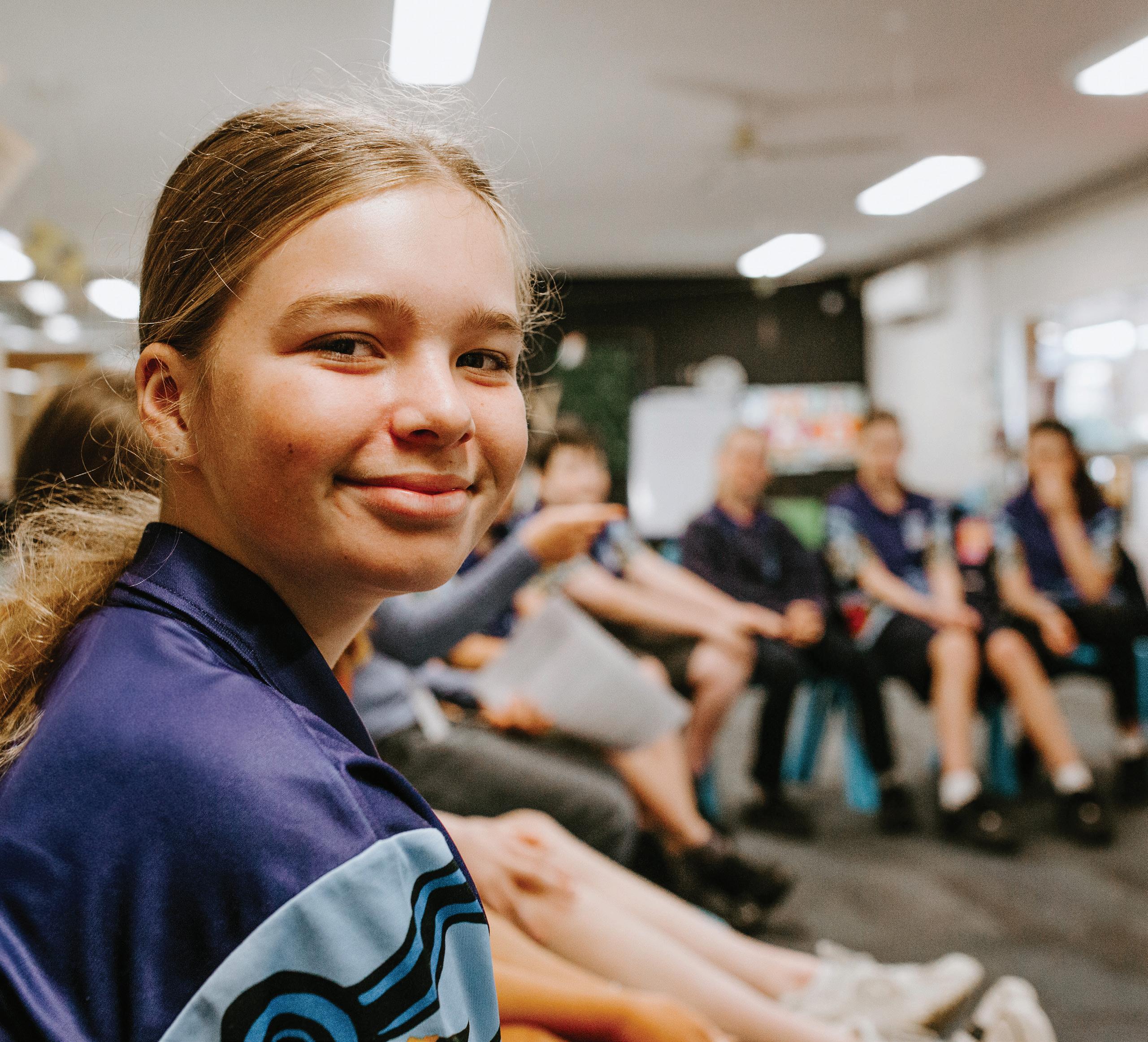
Eli, 11, on the value of ethics class
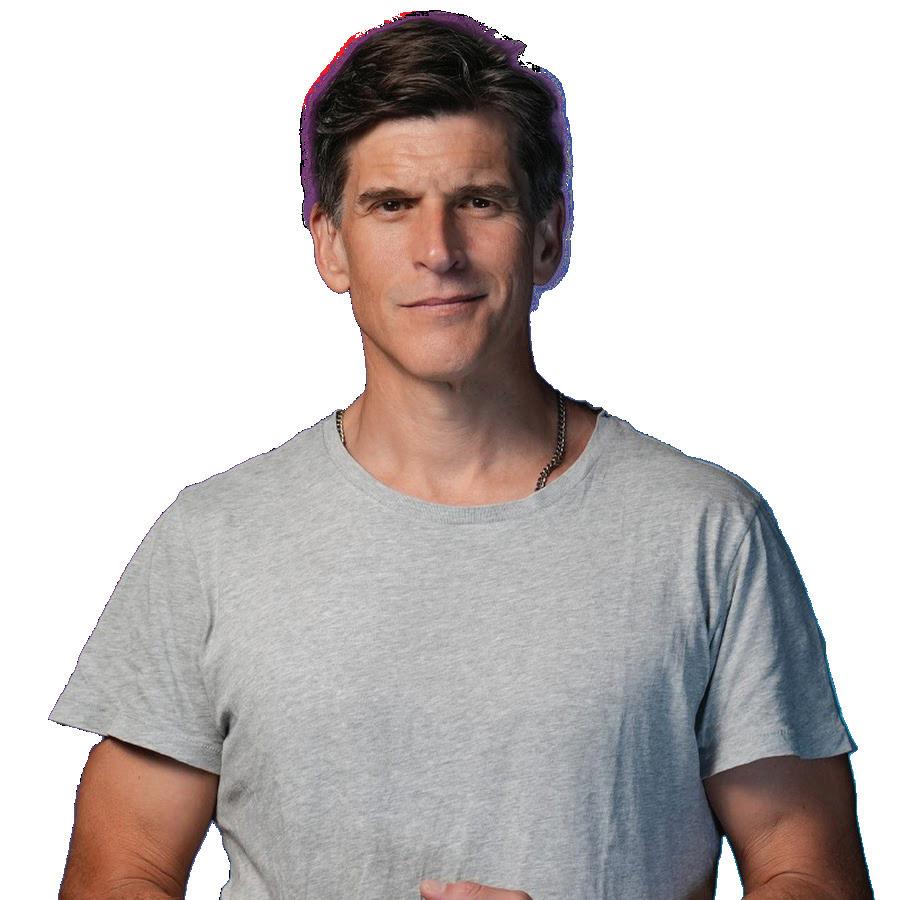
Osher Günsberg, ethics volunteer
Renowned philosopher AC Grayling
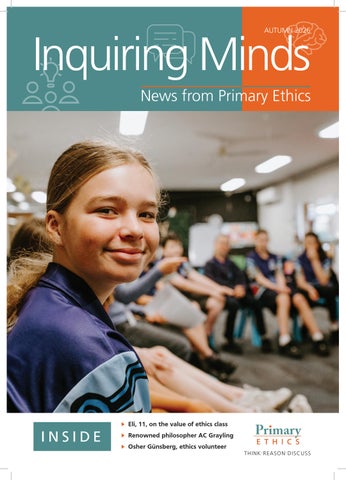
Eli, 11, on the value of ethics class
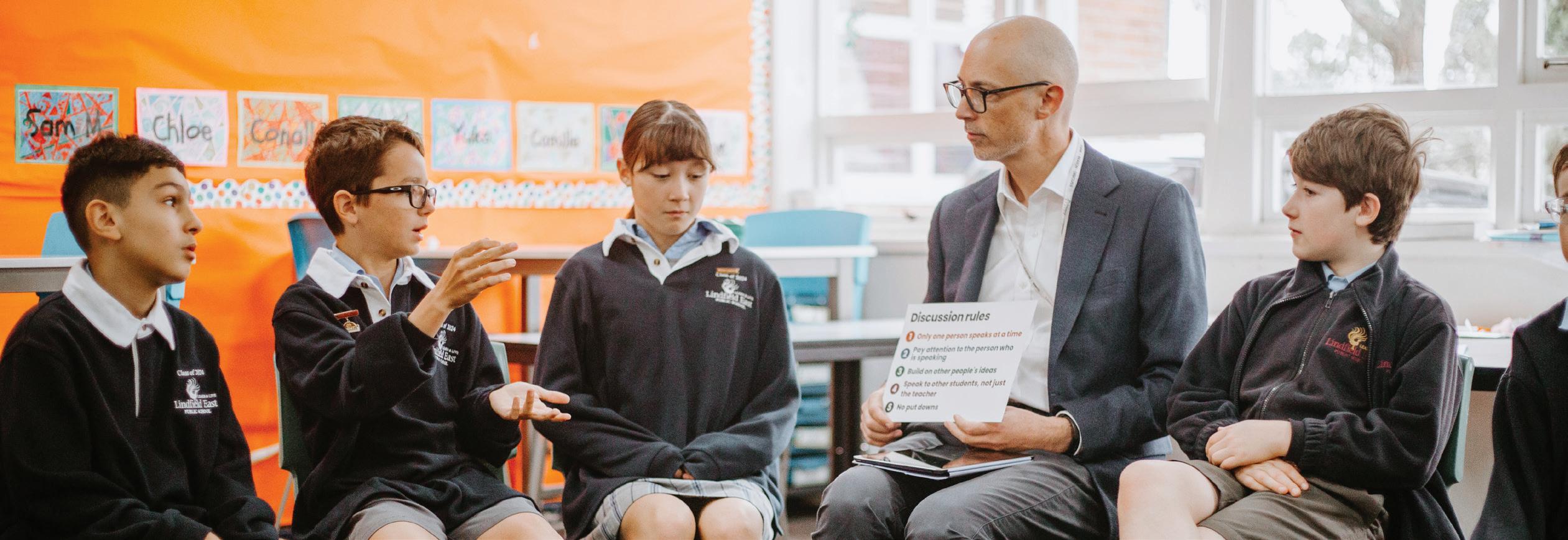
Osher Günsberg, ethics volunteer
Primary Ethics was delighted to welcome Laura Ramos as our new Chief Operating Officer in January.
Originally from Puerto Rico, Laura has called Sydney home since the early 2000s. She’s held executive roles at the NSW Department of Education and Department of Family & Community Services and Services Australia. She has led strategy as CEO, Schools Industry Partnership and as CMO at Achieve Australia. Laura has also worked in the startup sector developing innovative services to support older women and people living with cognitive impairment.
What drew you to this job? Knowing about the amazing work of the organisation and the opportunity to be part of the next chapter!
I knew of ethics education from when my daughters (both now at university) were in primary school. They still have positive memories of ethics lessons.
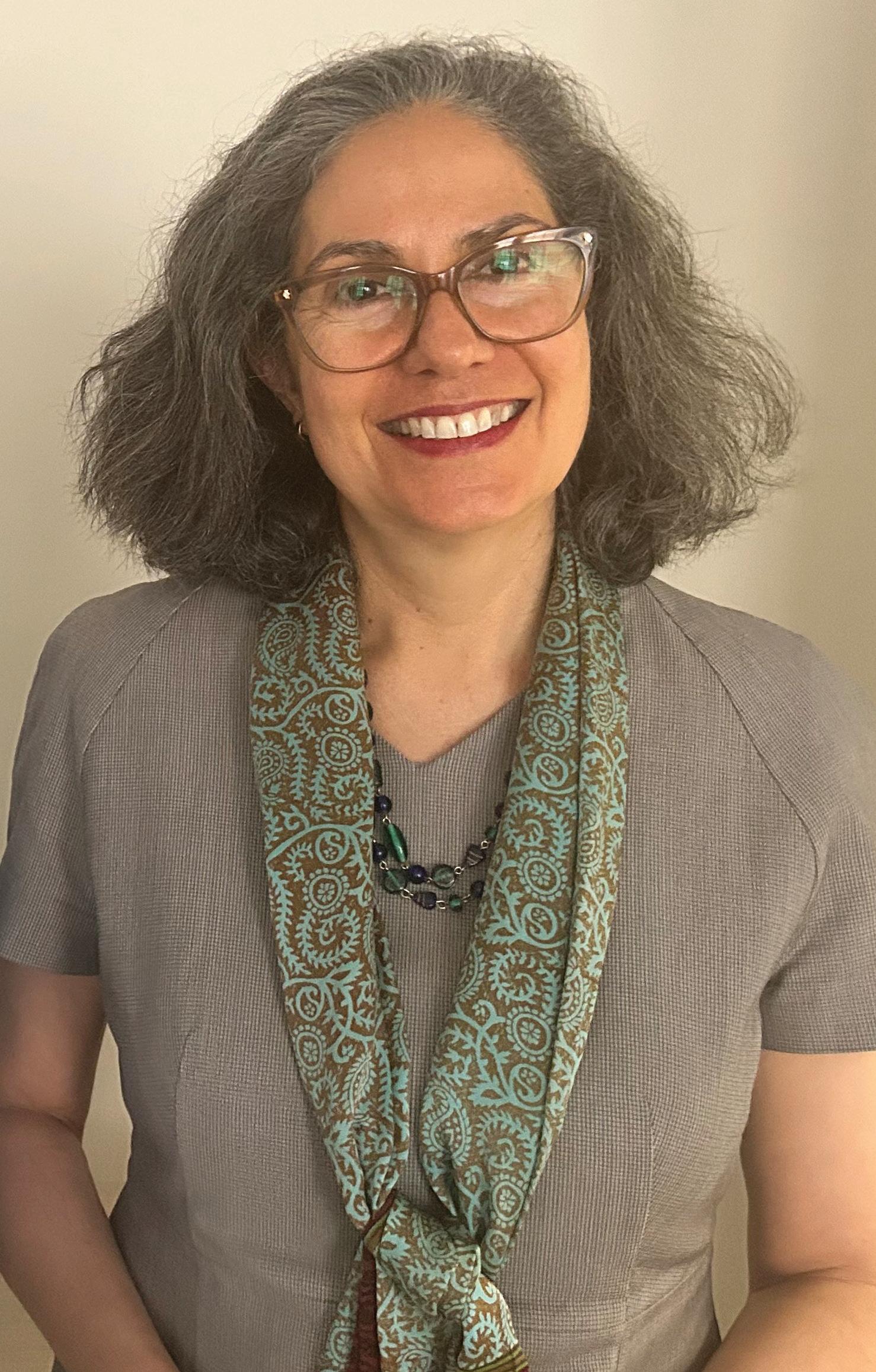
You’ve done the ethics teacher training, how did you find it? I can confirm it is thorough! Our trainer was phenomenal; she was super methodical in pointing out where we demonstrated the right teaching skills, when we needed to finesse and when we needed to try again. From seeing how training happens, I have a far greater appreciation of the care that goes into every aspect of our program.
You’re originally from Puerto Rico and the US, have you come across anything like Primary Ethics over there? I wish! I haven’t seen any program offer ethics education to students at the scale that we can, with the breadth and depth of topics and the rigorous approach to curriculum and pedagogy. Our program is pretty unique as far as I’m aware.
What have been the highlights of the job so far?
• Being blown away by the rigour and excellence built into our program.
• Developing deep respect for every one of our volunteers, because they make the magic happen in schools.
What’s the best story about ethics you’ve heard so far? I have a new one every day. Today it was a side conversation where we speculated what Socrates might have done with social media. Who says we can’t have fun with ethics?
Osher Günsberg, radio and tv presenter and popular podcaster, joins the ranks of ethics volunteers.
Osher Günsberg, radio and television presenter and now popular podcaster, has joined the ranks of ethics volunteers at his son’s school.
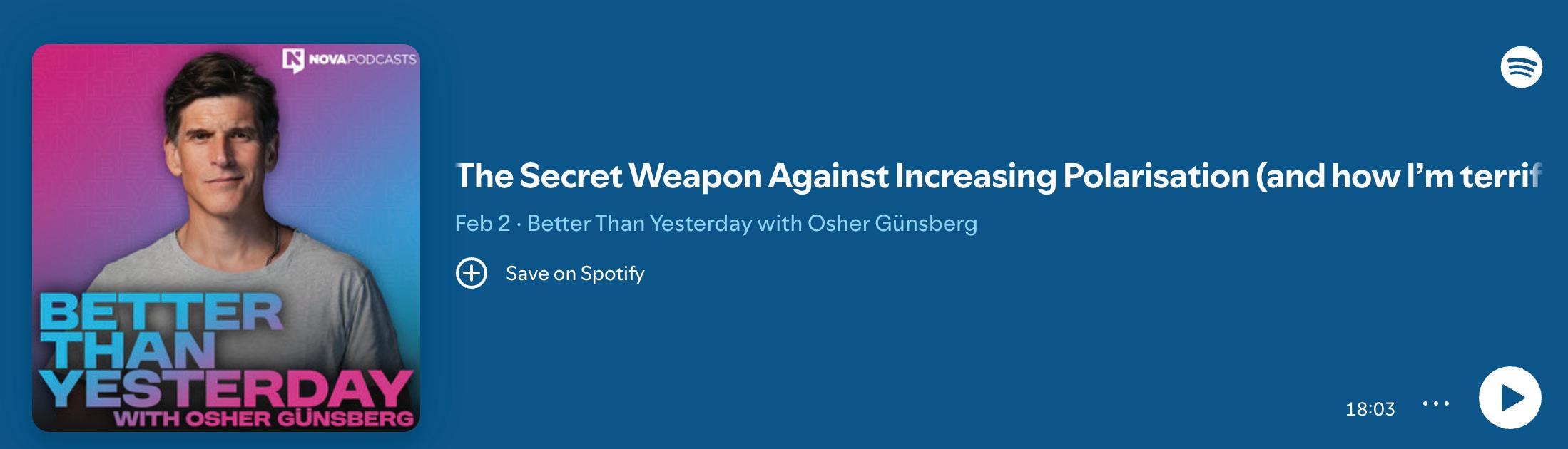
In a February podcast called The Secret Weapon Against Polarisation (and how I’m terrified of it), Osher says: “When I open my phone, it explodes in a cascade of fear, fury and furphies… leaving me spinning in a tizz of desperation and powerlessness. … yet I think I have found something that makes that feeling less intense and instead gives me the feeling that I am actually doing something that will make a difference in a significant way.”
This secret weapon to make a difference is ethics volunteering!
Osher had noticed that his young son was making some interesting inquiries and considered remarks about the motivations and feelings of other people. He’d also noticed this in his stepdaughter, who was 11 when they met. She was able to consider other people’s point of view and disagree in a measured way. Osher discovered that both children had done or were doing ethics at school. Then other parents began mentioning how much they loved ethics volunteering and recommending it for Osher. So he stepped forward.
At his in-person training session, Osher was taken aback by what he heard – that other trainees were also motivated by the same wish for children to learn how to listen empathetically and respectfully disagree.
You’re not teaching them what to think, but you’re teaching them how to think
.
Osher says he felt a mix of excitement and grief on this realisation. “Excitement because I could see the effort being put in by this bunch of volunteers. I could envisage the flow-on effect of how this would affect public discourse once these kids grew up. But also grief –that this was something I was never taught, something I had to learn.
“It’s incredible that there are literally hundreds of volunteers who go out there every week to teach kids how to do this.
“As you get older it’s important to do things that are harder. Becoming an ethics teacher intimidates me but I want some of that deeper connection I’ve heard other volunteers talk about.”
Prominent British philosopher Professor AC Grayling’s niece is an ethics teacher at her children’s school, Dulwich Hill Public School in inner-west Sydney. We were delighted when Catherine, in collaboration with the school and Primary Ethics, invited her uncle, in Sydney for the Writers Festival, to address an audience of parents, children, ethics volunteers and supporters. The subject was children and critical thinking. First Professor Grayling was introduced by some young students who told us what they especially value about ethics.
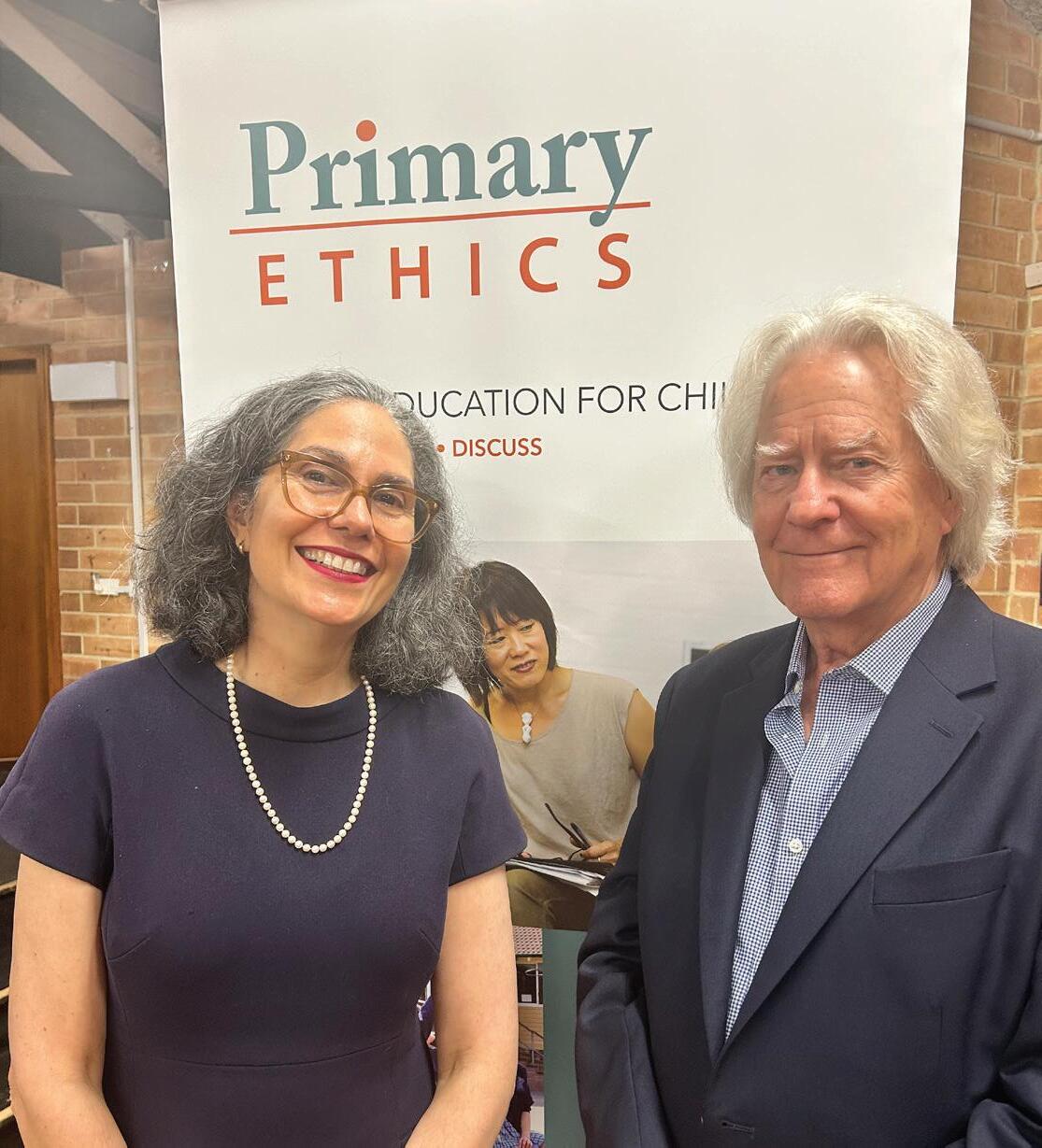
Catherine Grayling: I did really love hearing from the students and was so proud when my uncle acknowledged them and said that clearly the ethics program is working. Each week I am amazed at how thoughtful and engaged the children are and I agree with my uncle that the Primary Ethics materials are “marvellous”!

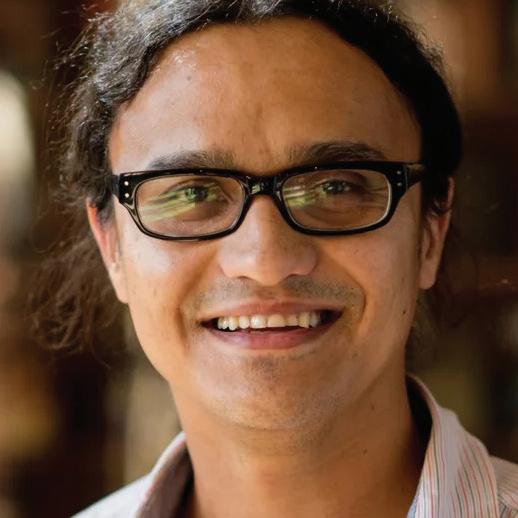
Bruce Isaacs: AC Grayling was able to speak about some of the deepest ideas in the history of philosophy, and especially ethics, and to make those ideas so accessible for the audience – and that included my 10 year-old! What the event showed me was how relevant, and even vital, ethical studies are for young people who are growing into themselves.
Rousseau Anais: This talk was very nourishing for the mind! One of the things that stood out for me was his explanation of what ethics means. Ethics isn’t teaching students specific rules of behaviour (which is morality) but helping them to cultivate character. In our lessons, this is developed through students learning together how to articulate their thoughts about what constitutes ethical behaviour, actively listening and conducting a respectful dialogue. His comments highlight the urgency of ethical education in today’s world where there are many societal problems that can only be tackled on the level of ethics, including AI.
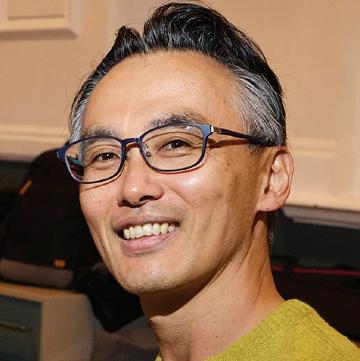
Eleven-year-old Eli welcomed Professor AC Grayling to the stage with these thoughts about being an ethics student.
Here at Dulwich Hill Public, some of us are lucky enough to do ethics classes on a Wednesday. I’ve had Catherine Grayling teaching me ethics since Year 2. I am now very ethical.
I think these classes give us some really important skills. Usually, Catherine gives us a dilemma and draws out our different opinions. She asks us whether our views change with new information. She teaches us to listen to what other people have to say, even if we don’t agree with them – because that helps us make our ideas better or more nuanced.
Sometimesitcanbehardtolistentosomeonethatyoudon’tagree withorwhenyouthinkthey’rewrong.Butwhenyoudolisten, sometimesyoulearnsomethingthatyoudidn’tknoworhadn’t thoughtof,orinworkingoutwhyyoudon’tagreewiththem,it strengthensyourownreasoning.
In one class last year, Catherine asked us about palm oil and whether it was justified to cut down palm trees to make oil. Some people thought it was - it meant people could make money and then use the cleared land to build homes or schools and that would help grow and strengthen their community. Other people didn’t agree at all, because of the impact on the environment and animals. As I sat there and listened to all the different ideas, I could see that there was merit to most of them, which then made me wonder whether there could be a solution that protected the animals and helped the people.
Understandingcompetinginterestscanbeaverypowerfultool,as candevelopingadvocacyskills.Bothareprovingquitehandywith myparents.
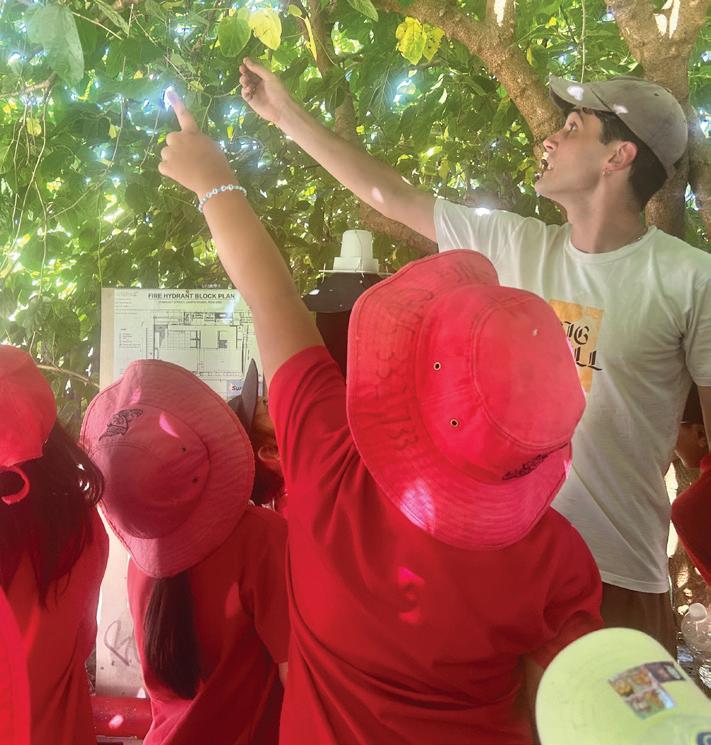
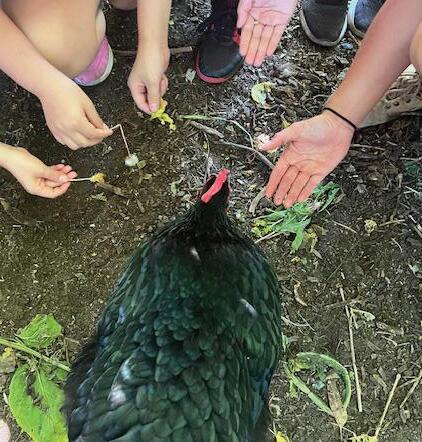
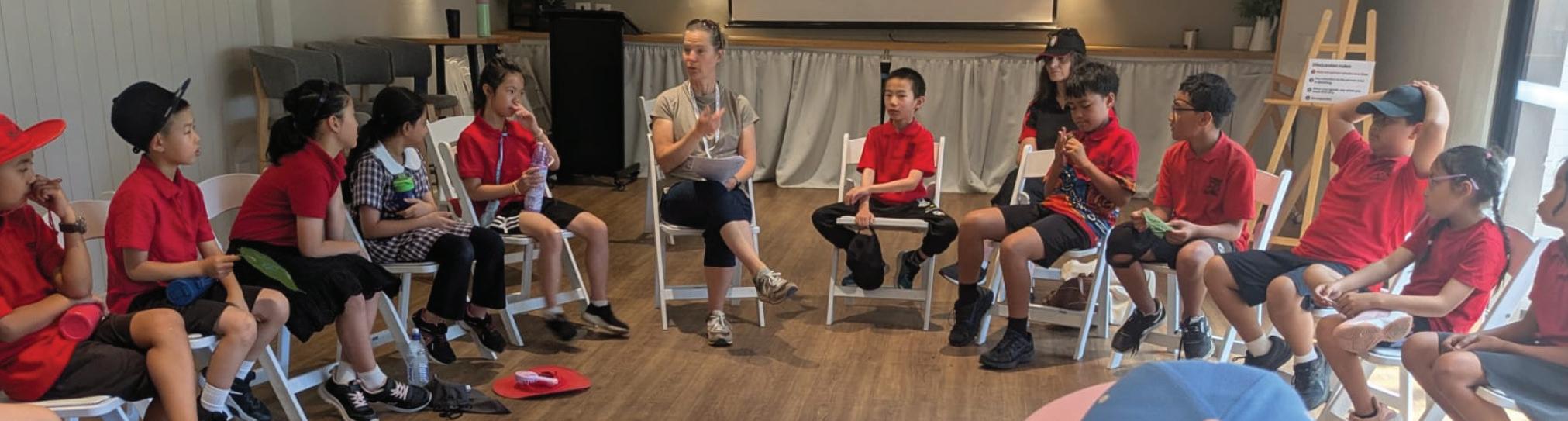
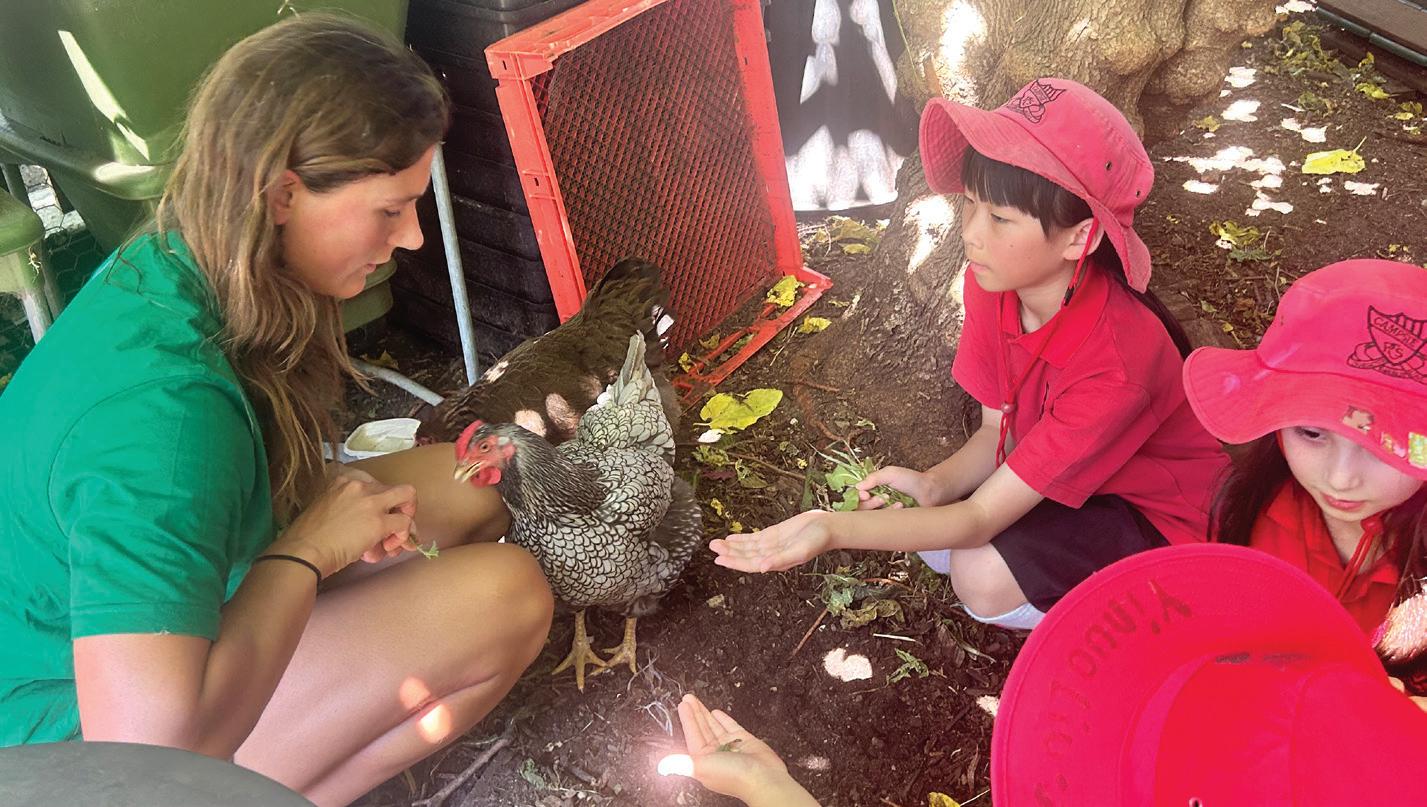
Primary Ethics collaborated with Pocket City Farm, in inner-urban Sydney, to create a half day of education about the ethics of sustainability. The pilot ran on two days last November, with visits from Y3 and Y4 students from Campsie Public School in Sydney’s south.
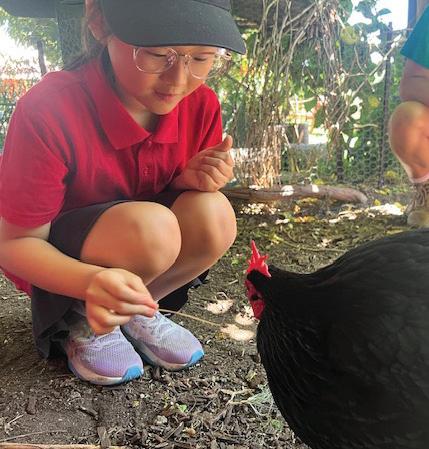
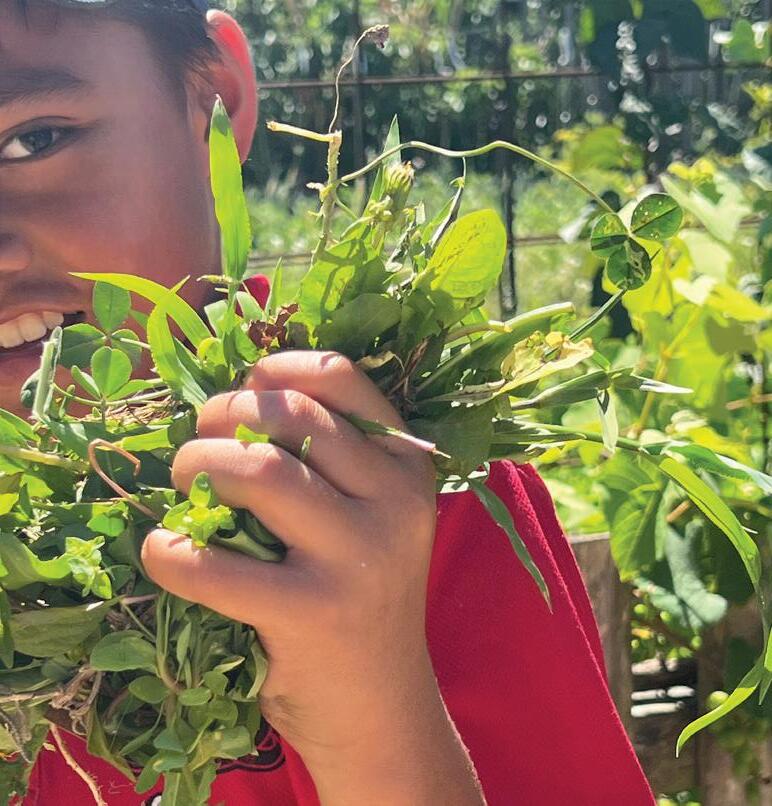
Sessions for groups of children were run by Farm educators and ethics teachers. The children moved around the farm, learning about forests, feeding weeds to chooks and discovering how the web of life keeps us all connected. Then in specially written ethics lessons, they explored protecting their environment.
Both days were very hot but the students were highly engaged – especially in the chookyard!
For Seniors Week in early March, we asked some of our older volunteers to tell us about their particular challenges and rewards. Their answers stressed the ‘joy’, ‘delight’, ‘pride’ and strong sense of community they find in teaching ethics.
Primary Ethics keeps me in touch with the rising generation – their innocence and awareness of so many things about the world is a delight to observe.
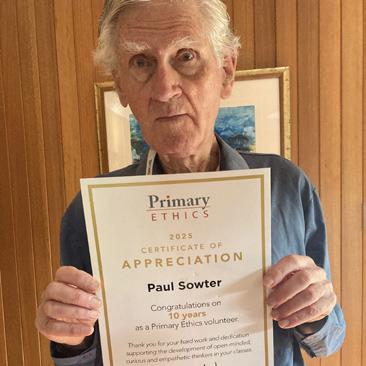
As my hearing worsens with advancing age, soft voices can be a challenge. I am now employing an app on my iphone to improve my reception through airpods. The kids like being the monitor who delivers the iphone to the chosen speaker!
The most consistent advice I see given to seniors to maximise health and wellbeing is to maintain social engagement and mental stimulation. Being a volunteer ethics teacher provides both. The kids’ openness to ideas, joie de vie and capacity to think seriously about quite demanding concepts is a joy to behold. I also find the syllabus we teach stimulating and thoughtprovoking for me.
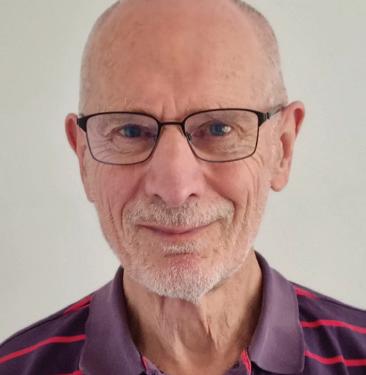
Over the years I have always found my Primary Ethics journey stimulating, being challenged to think deeply about the philosophy and research behind contemporary issues. Over the past four years I have been through some tough times personally as I journeyed with my husband in his serious illness until his recent death. The care and support from my team and the school have made a real difference for me. The camaraderie has been incredibly uplifting. I realise as I look back that this community building is at the heart of my Primary Ethics experience and it is so good to feel that the lessons we provide are assisting students to do that in their own worlds.
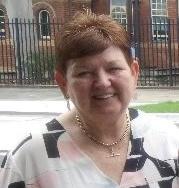
The social engagement does not end with the students. As an old person it’s a treat to be involved in a group [of volunteers] with an age range from parents of Kindy children to long-retired persons. Who wants to be confined to old peoples’ groups where the conversation inevitably turns to ailments, infirmities and funerals? Not me!
I was drawn to this role because teaching ethics offered the chance to teach my grandchildren. But I discovered early on that this is much more than that. Becoming an ethics teacher is an investment of our time, our expertise and our belief in the importance of contributing to future generations.
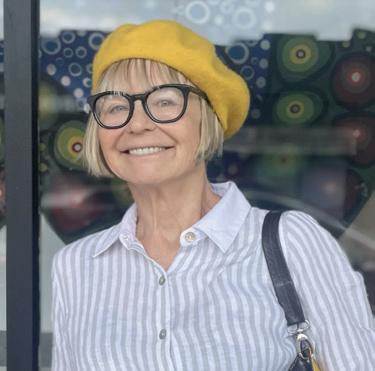
I’m proud to be investing in them through rigorous teaching practice and a thoroughly researched ethics curriculum which reflects values similar to my own.
Your support underpins our unique ethics education program. We build skills in critical thinking, respectful disagreement and ethical decision-making.
Primary Ethics is the sole provider of ethics education in NSW public schools. We receive no government funding. Your donation directly helps shape the next generation of ethical decision-makers.
Donate now: primaryethics.com.au/support-us/ Donations of $2 and over are tax deductible.
For more information please contact: Georgie McGrillen Fundraising Manager
Email: georgie.mcgrillen@primaryethics.com.au

Facebook: www.facebook.com/primaryethics
Insta: @primaryethics
LinkedIn: www.linkedin.com/company/primary-ethics/
W: primaryethics.com.au
E: helpdesk@primaryethics.com.au
P: (02) 8068 7752
Legion House, Level 2/161 Castlereagh St, Sydney NSW 2000