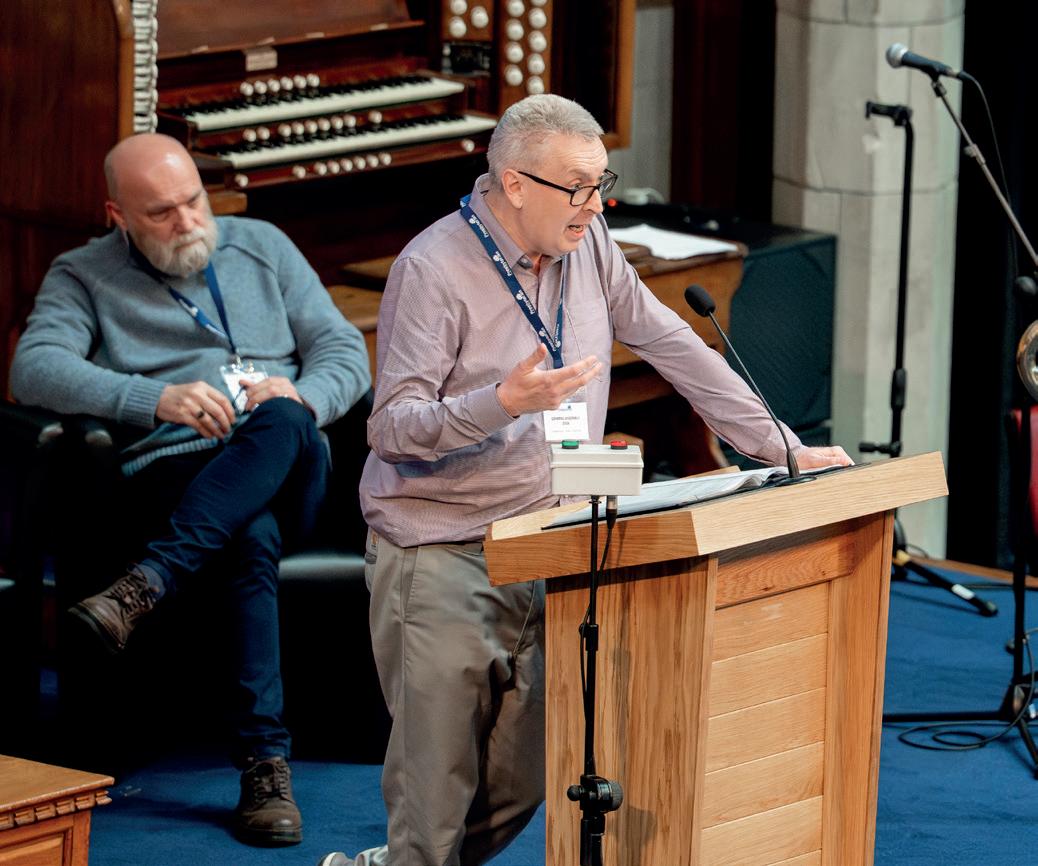
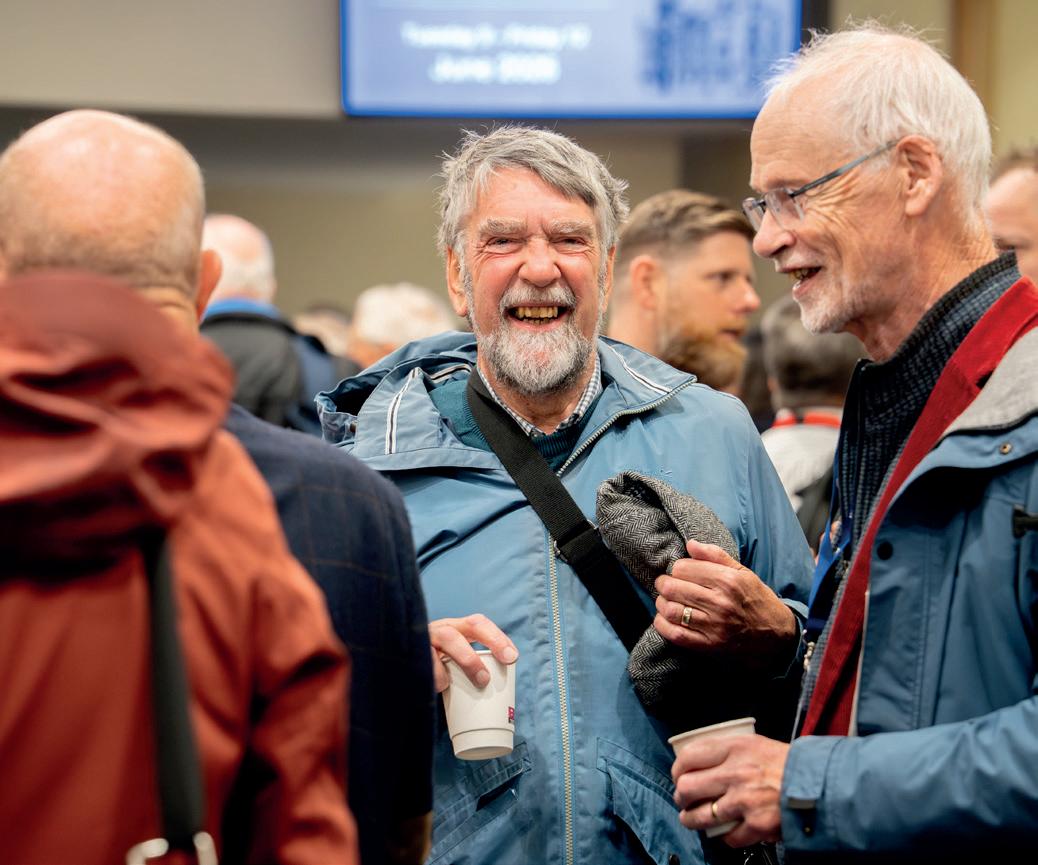
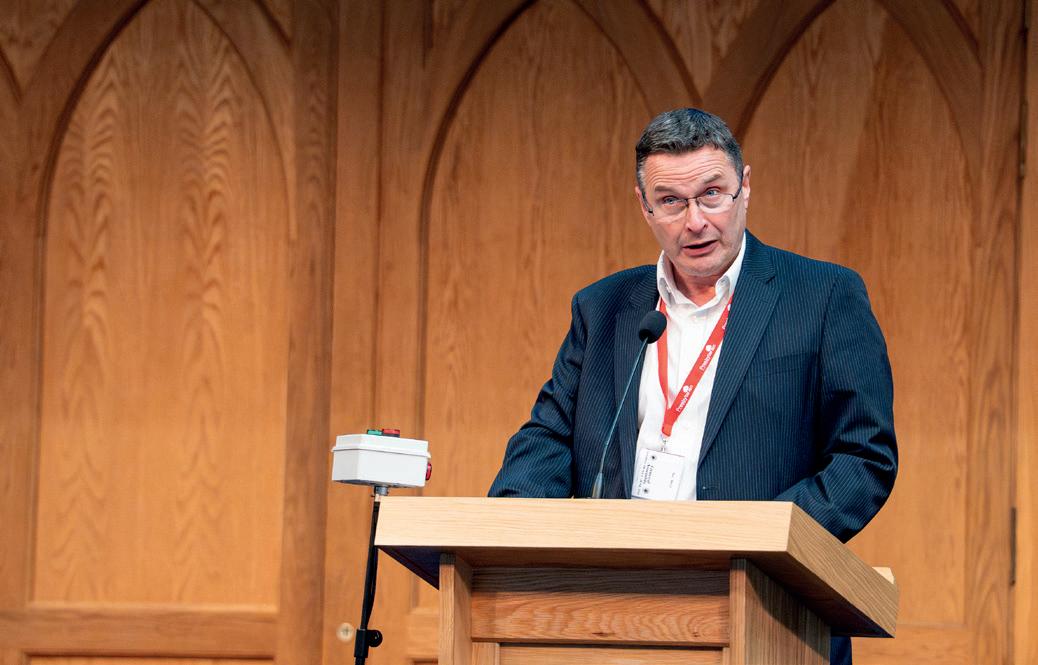
The former UK Prime Minister Harold Macmillan is reputed to have said, “Events, dear boy, events”, when describing how external events can trash even the best laid plans.
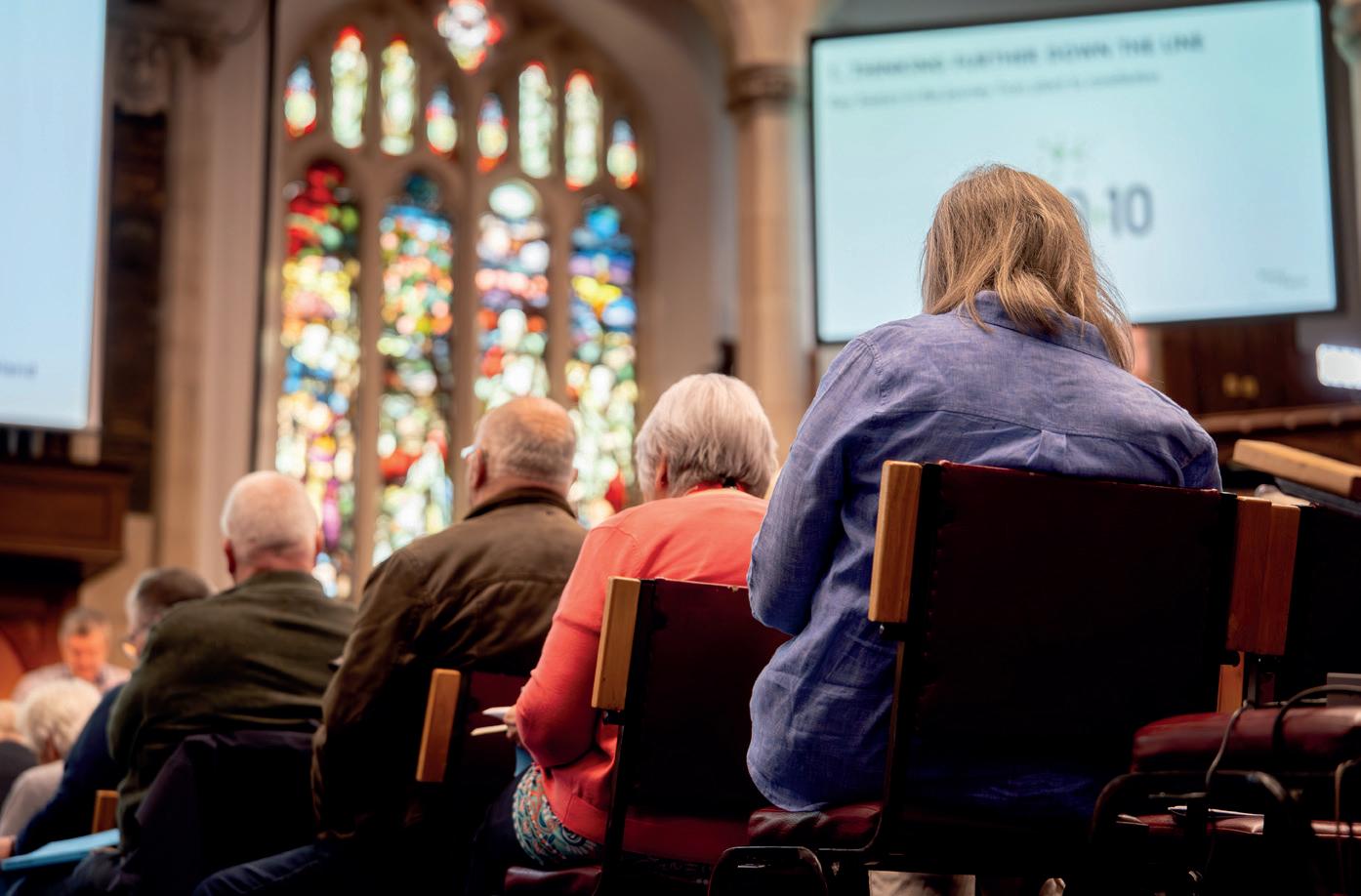
General Assembly 2026 will be remembered for many things, but the disorder on our streets and the threat of disorder and the disruption to public transport, were the events that saw business curtailed, the installation of the Moderator rescheduled, with the close of the Assembly being late on Friday afternoon and not neatly tied up at lunchtime as planned.
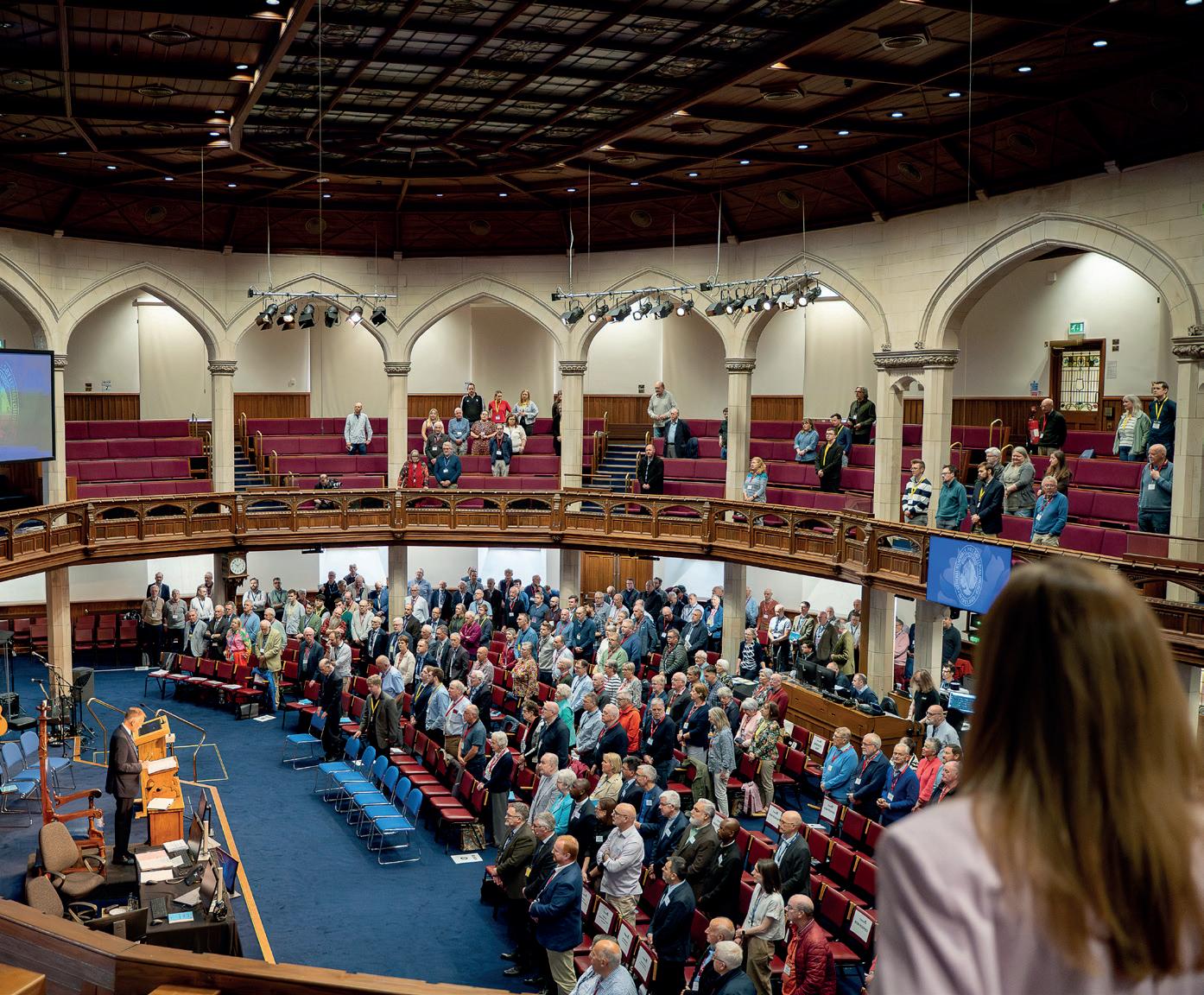
As an Assembly we were aware of God’s presence and sovereignty
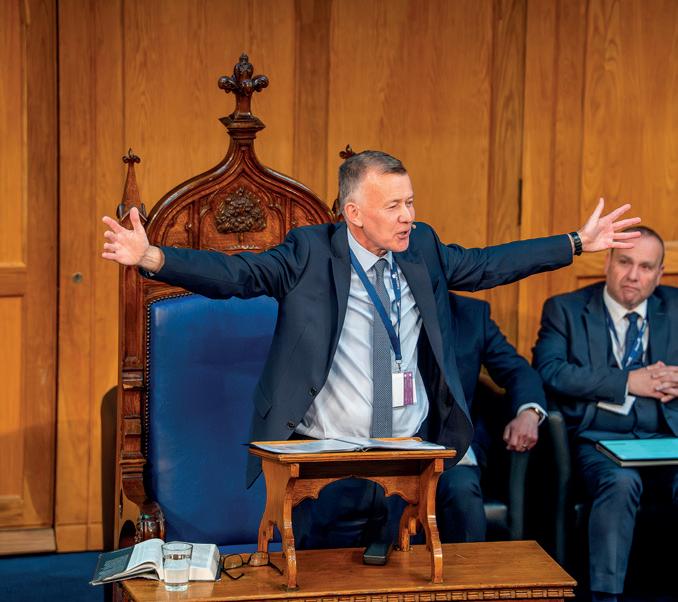
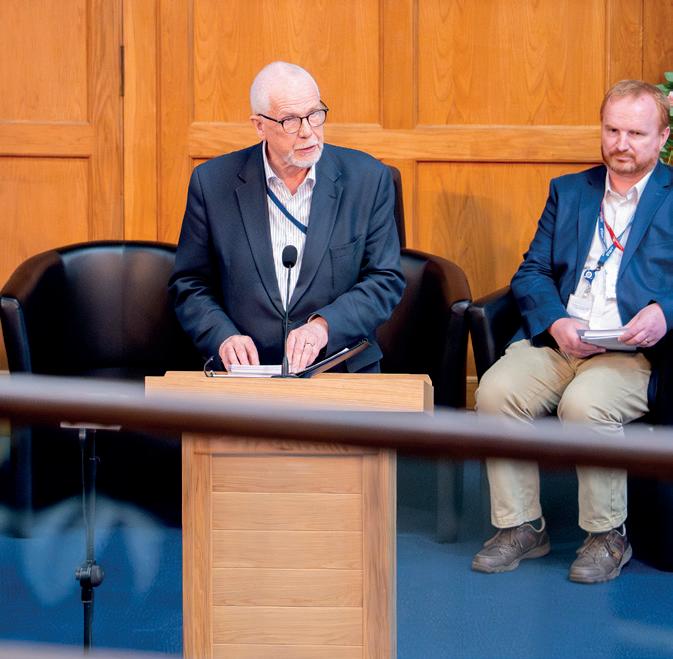
outgoing Moderator, Dr Richard Murray, and the incoming Moderator, Dr Richard Kerr, made strong statements condemning the violence on our streets. They both prayed for the victim of the vicious knife attack that triggered the protests, and they took time to pray for the police and emergency services that were so stretched across the city and in various towns.
In relation to the external events, both the
Even so, as an Assembly we were aware of God’s presence and sovereignty. While our plans may have been disrupted, we still saw the mighty hand of God leading and enabling the work of his Church in this place.
A Moderator reflects
It was very personal. And while in previous addresses to various General Assemblies and public statements Dr Murray had spoken about those most affected by PCI’s safeguarding failings, he hadn’t spoken of the effect it had had on him.
Speaking before the Assembly’s Service of Installation, he said, “The first thing I want to do is to thank Almighty God for the help he has given me during one of the most challenging, demanding, and stressful times of my life.”
Pausing for five or six seconds, as if to steady himself, Dr Murray continued, “On the eve of the Special Assembly in December, a very dear friend called at our manse to pray with me. And I’m not ashamed to say, I sat and wept because of the enormity of the task. But God helped me…” He then went on to personally thank a long list of people who had supported him, beginning with his wife Lynn, who had been “a tower of strength”.
In his address, his successor, Dr Richard Kerr, thanked him for his Godly wisdom, pastoral concern, willingness to go the extra mile and calm leadership. “I know it wasn’t a role you sought…But when we as a denomination needed you, you answered the call and returned to lead us through these past tumultuous months.” The House responded with a long, and heartfelt standing ovation for Dr Murray.
A recording of the installation, as well as the business sessions of the 2026 General are available on the PCI website, presbyterianireland.org/ga26 or click here.
APPOINTMENTS
The General Council made three proposals to the General Assembly, re appointments.
The first was an extension of the Rev Professor Michael McClenahan as Principal of Union Theological College for a further year. This was agreed with acclamation by the House.
The second appointment, that of the Rev Jonathan Boyd to the post of Clerk to the General Assembly of the Presbyterian Church in Ireland. This was also agreed with no opposition, except for the sadness of the congregation of Killyleagh, and those in the Down Presbytery, who are losing Jonathan from their midst. The House was unanimous in its approval.
The final appointment was that of Rev Dr David Allen becoming the Assistant Clerk of the General Assembly. In approving the latter appointment, the House showed its expressed gratitude to Dr Allen for his leadership and commitment, particularly over this last year, thanking him most sincerely for all he had done for the Church in these particularly difficult times.
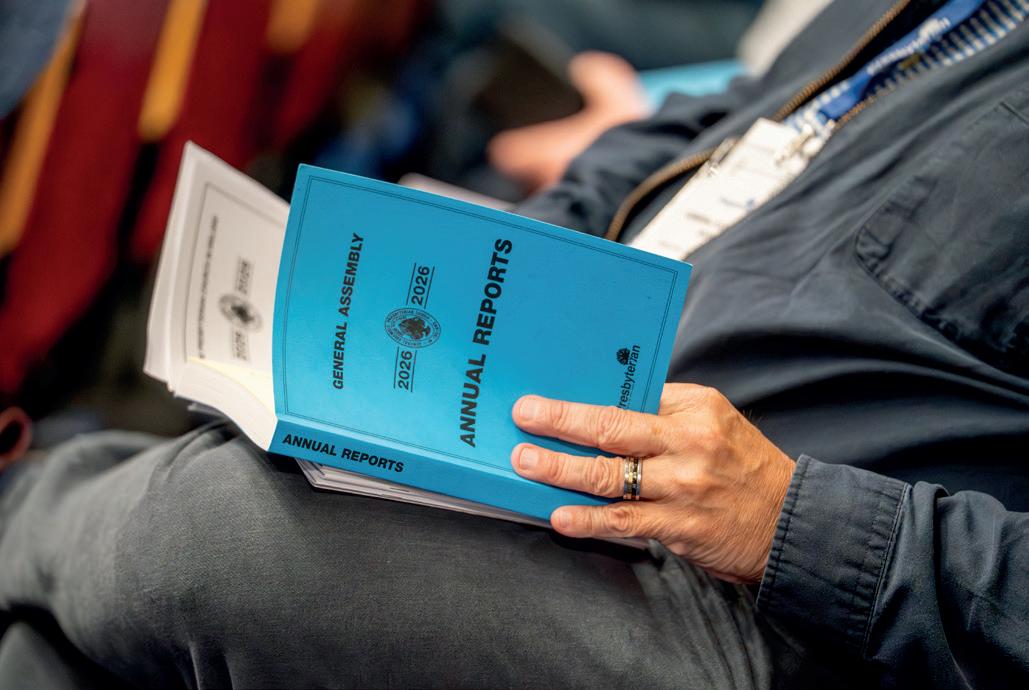
Read the Council’s report and resolutions on pages 46-55 and 322 of the Blue Book here
New Clerk
In accepting the role of Clerk to the General Assembly of the Presbyterian Church in Ireland, (and not as moderator, as Dr Murray accidentally suggested) Rev Jonathan Boyd spoke of being humbled by the appointment.
Addressing the House, the new Clerk said, “I certainly don’t think I could possibly be in this position if the Lord wasn’t opening doors and shoving me through them and I trust that when he calls someone to serve, he also equips them. I’m very grateful that he has already raised up many wise and experienced men and women in the Church who I can learn from and many good, Godly people who have offered their prayerful support.”
He committed himself to take time to listen to people – to their ideas, their questions, their
concerns and their stories
He thanked his congregation of Killyleagh for their love and support and asked the Assembly to pray for him and his family as he takes on this new role. The new Clerk thanked his wife Jane for all her love and support and asked the members of the House to also to pray for them as they adjust to a new home, new schools and a new church.
In closing, he committed himself to take time to listen to people – to their ideas, their questions, their concerns and their stories. He also committed himself to rebuilding trust in the leadership positions in the denomination.
Openly, honestly and without hiding
On the opening morning of the General Assembly, following the adoption of the Business Committee report, the Very Rev Dr Frank Sellar addressed the House on the issue of unsolicited emails
being circulated from a group styling themselves ‘Troubled Presbyterians’.
Dr Sellar drew an analogy between those wearing balaclavas in street protests and those using anonymity in sending “unsolicited emails” to all ministers, which he described as a sinister method of communication, which did not offer the courtesy of being able to unsubscribe.
The former Moderator
appealed to those sending the emails to come forward and use either the courts of the church, or the floor of the Assembly to air their points of view, where with openness, honesty and without hiding, the merits or otherwise of their complaints could be addressed.
In closing he asked those sending these emails to please stop. The House strongly endorsed Dr Sellar’s sentiments with sustained applause.
SAFEGUARDING DEVELOPMENT COMMITTEE
In proposing the resolutions with regards to the Safeguarding Development Committee, Very Rev Dr David Bruce, the convener of the General Council, reminded the House that the church, continues to walk in what the Psalmist described as a dark valley.
Dr Bruce reflected on the ongoing pain and hurt being felt by many, and reassured the House that as part of the continuing work involved in dealing with the safeguarding crisis, was the continued need to listen to, and engage with, those that have been hurt. Dr Bruce reiterated the need for continued prayer and support of those that have been harmed.
Commission for Northern Ireland, via the independent Safeguarding and Governance Review being carried out by INEQE.
...part of the continuing work involved in dealing with the safeguarding crisis, was the continued need to listen to and engage with those that have been hurt.
Additionally, Dr Bruce reminded the House that much work had been done in updating and modernising the safeguarding policies and procedures of the Church. He proposed that the “Protocol for the Immediate Management of Safeguarding Concerns, which had been approved as guidelines by the General Council, would now become part of our Safeguarding Policies and Procedures.”
He confirmed PCI’s ongoing cooperation with the inquiries of the PSNI and the Charity
The new Safeguarding Department
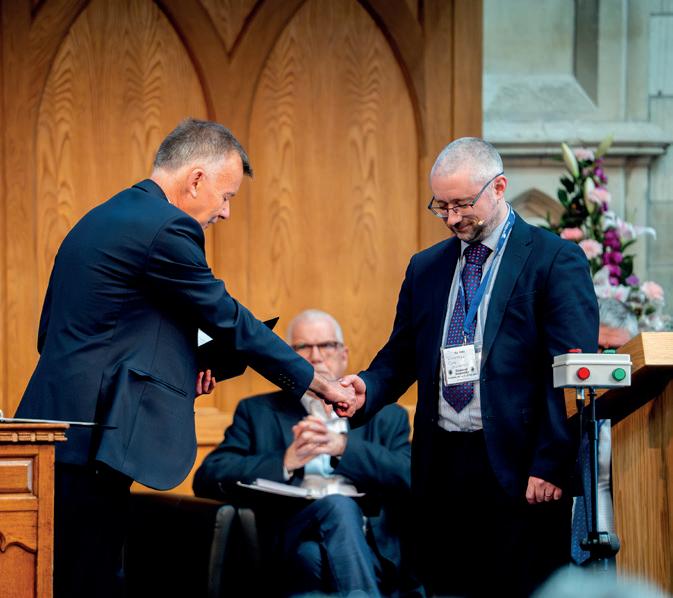
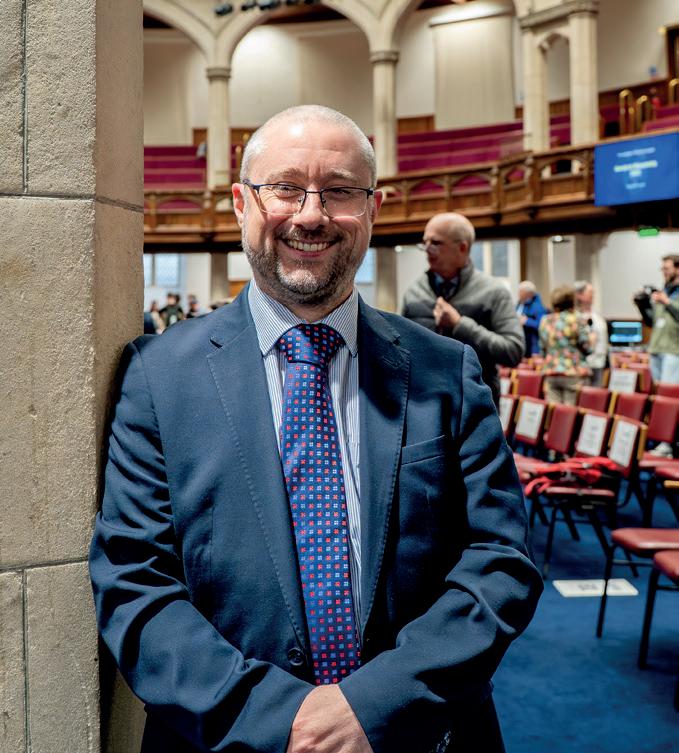
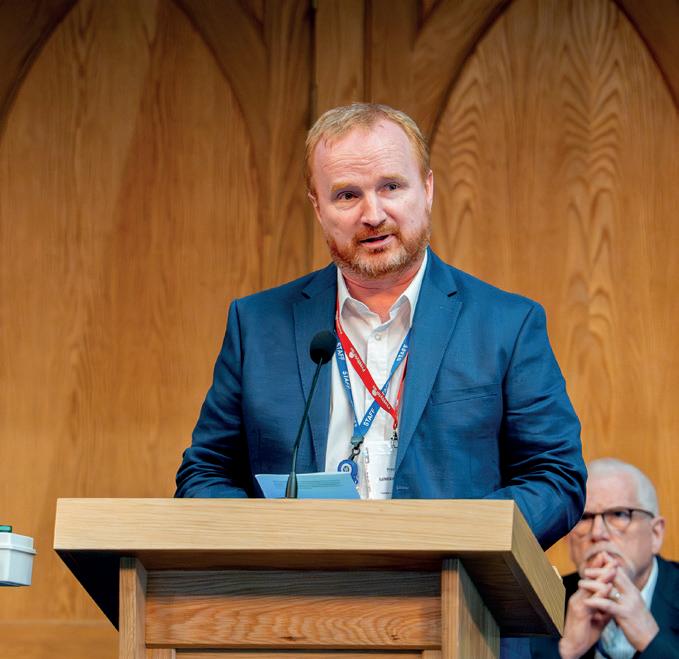
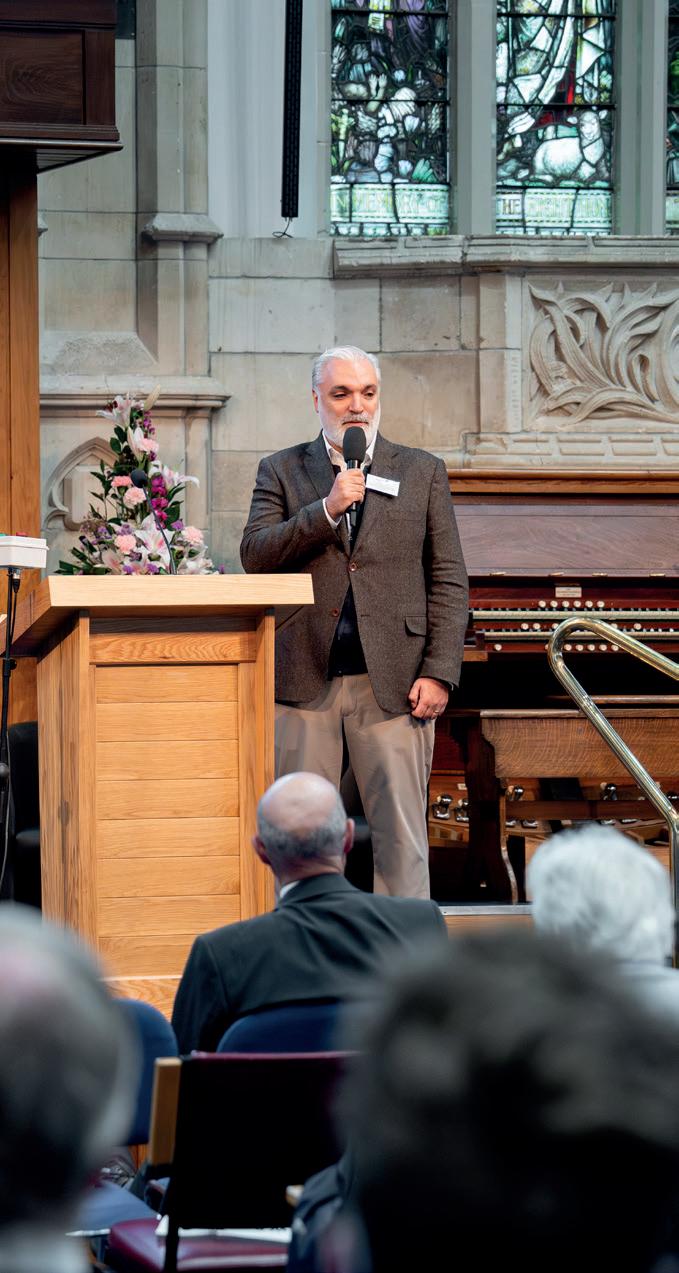
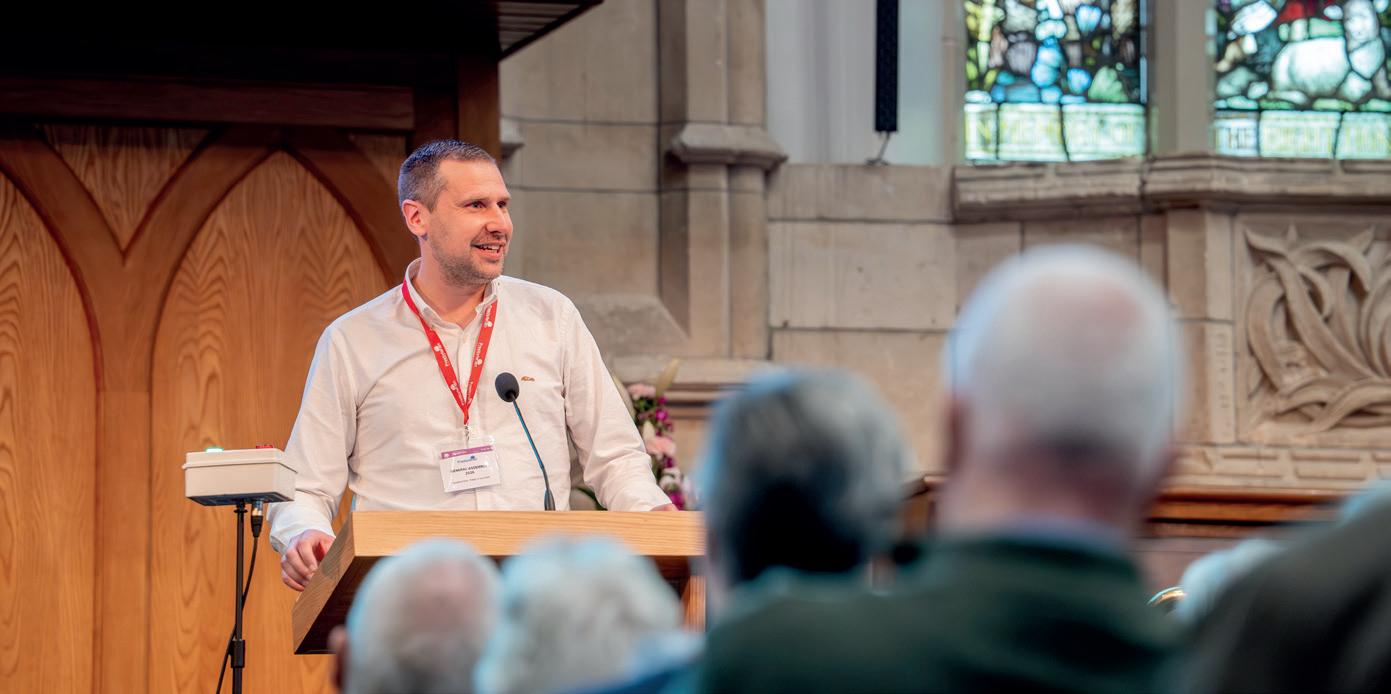
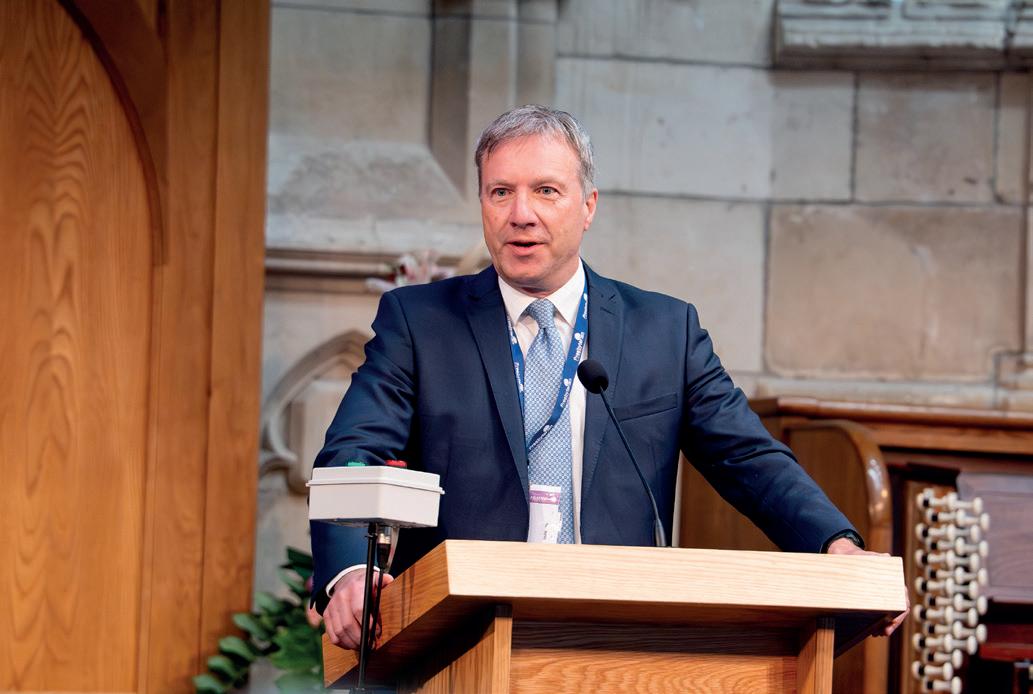
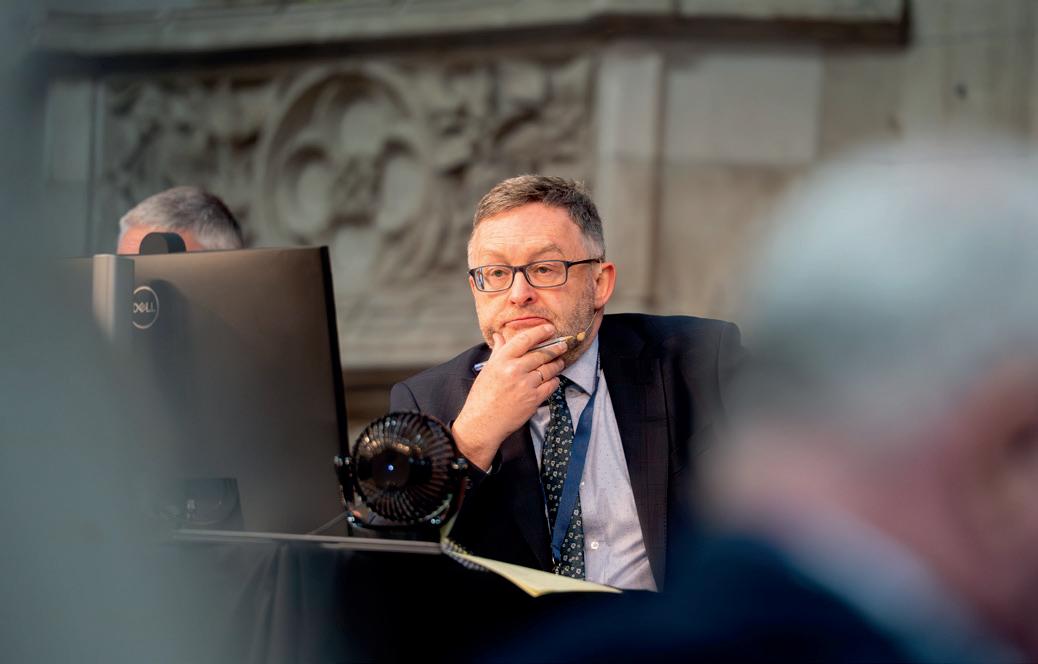
In seconding the report of the General Council regarding Safeguarding, the new Director of Operations, Ken Swarbrick (pictured bottom right), gave details of the work and operation of the new Safeguarding Department.
In detailing its work, he informed the House that the new department has currently nine staff, some full-time and others part-time. As the denomination hasn’t, as yet, appointed a permanent Head of Safeguarding, the House was informed that Geoff Marshall is currently the temporary safeguarding lead and that a new Safeguarding Training Officer had been appointed and would be starting in July.
Following supportive contributions from the floor, and a reminder of the need to use language that reflects all those who serve within PCI, the resolution was passed.
Being a ‘good’ Presbyterian, Ken followed on from his first point – personnel, with reference to another ‘P’, programmes, making clear that so far, over 3000 volunteers and 1400 elders had been trained in the last few months, but that this will only increase as the Department continues to work with congregations and presbyteries.
In his final point – processing, he referred to the ongoing workload in relation to AccessNI checks. He pointed out that with over 1000 applications processed in May; the rate of requests was higher than the Department’s ability to process them. However, Ken assured the House that these would be done, but what was needed were an additional two ‘P’s’ –Prayer and Patience.
He commended the work of the Safeguarding Department to the Assembly.
Read the Council’s report and resolutions on pages 35-45 and 321 of the Blue Book here.
CSW – A CHANGING LANDSCAPE
The foundation of the Council for Social Witness (CSW) has always been to demonstrate the compassion of Christ through practical service. However, while that calling has not changed, the world around it has.
In March 2026 the Council received an unexpected and disappointing financial report for 2025 with a cumulative end of year deficit of £3.68m (€4.7m).
Having recognised for some years the need for a recovery plan, which would include a re-structure, CSW has welcomed the engagement with the Structures and Resources Review Panel. Therefore, over the next 12 months PCI will discuss the future of CSW. Its report outlined three options to consider:
1. An agency linked to PCI
2. An independent agency
3. A sell-off to others
Of the three options, it is as an agency linked to PCI that the Council wants to pursue. The Council is confident that recovery is possible and has already begun this journey.
Caroline Yeomans, CSW Interim Director, told the Assembly that this may mean new models of service; greater emphasis on community-based ministry and support, releasing resources from areas that are no longer sustainable, and investing in areas where need is greatest.
Read the Council’s report and resolutions on pages 184194 and 325 of the Blue Book here and their Supplementary Reports on S7 and S19 here.
Moderator appeals for calm
Opening the second day of the Assembly, the Moderator, Dr Murray, made a statement on the overnight violence that took place in Belfast and other towns in Northern Ireland.
“I want to appeal to the wider community for peace and calm, and for sense to prevail”
Speaking to the Assembly, he said, “The vicious assault on the gentleman in North Belfast has, I am quite sure, left us all appalled, and in a few moments, we will be praying for him. But the rioting has also left us appalled. And whilst in a democracy, people have the right to protest, they don’t have a right to riot, or to intimidate, or to threaten, or even to take life.
“We commend the PSNI for their work in protecting people and property, as well as the other emergency services, and as Moderator speaking on behalf of this denomination, I want to appeal to the wider community for peace and calm, and for sense to prevail.”
Dr Murray went on to lead the General Assembly in prayer.
Welcoming overseas friends
In a week that saw the violent targeting of people not from these shores, and the burning of their homes, the Moderator formally welcomed visitors from PCI’s overseas partner churches and organisations.
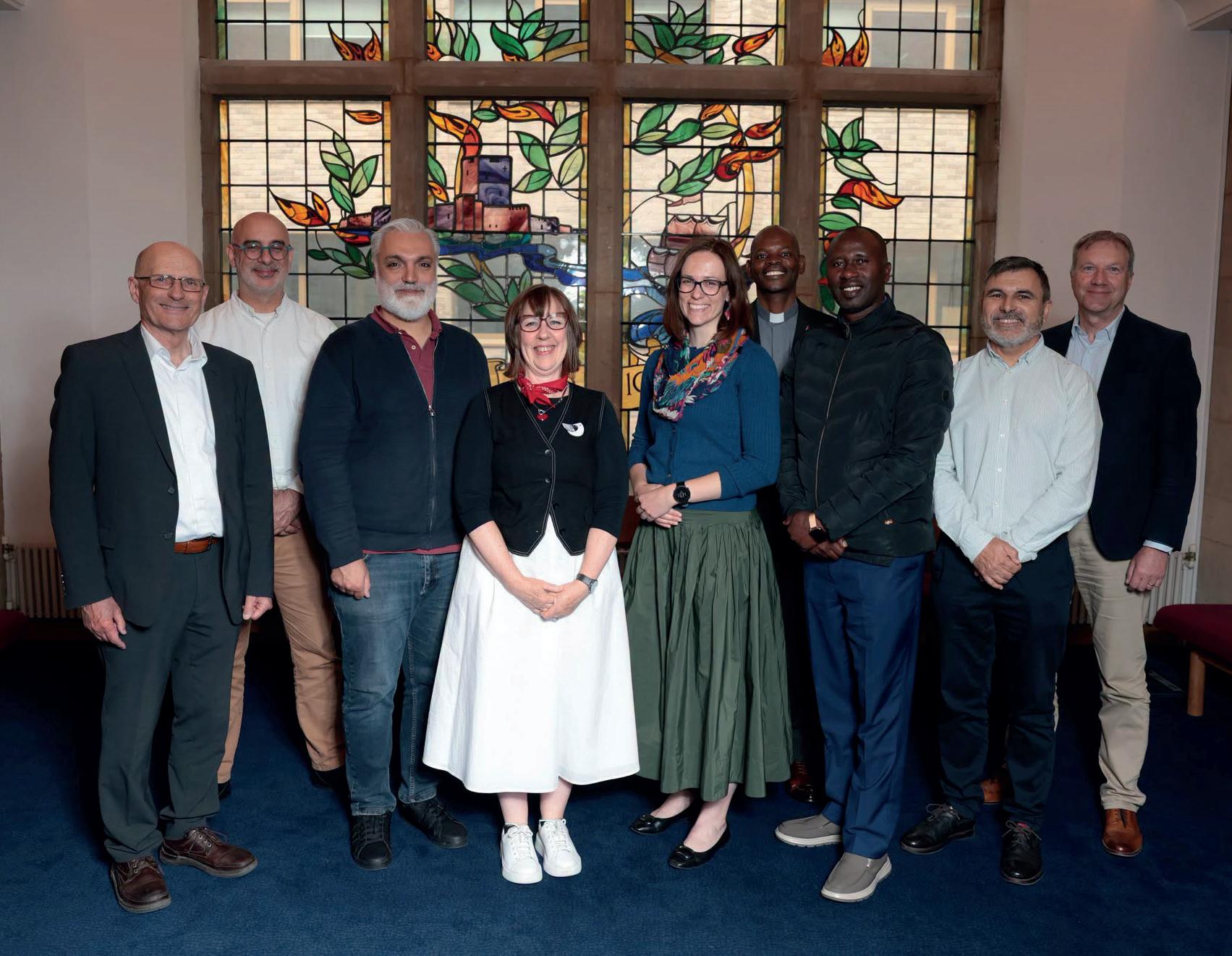
Dr Murray welcomed six visitors from the Middle East, Africa and Europe, representing the Near East School of Theology in Lebanon, the National Evangelical Church of Syria and Lebanon’s Compassion Protestant Society, the Presbyterian Church of East Africa, the Church of Central Africa Presbyterian (CCAP), the Reformed Church of Spain and the Reformed Church in Hungary (RCH).
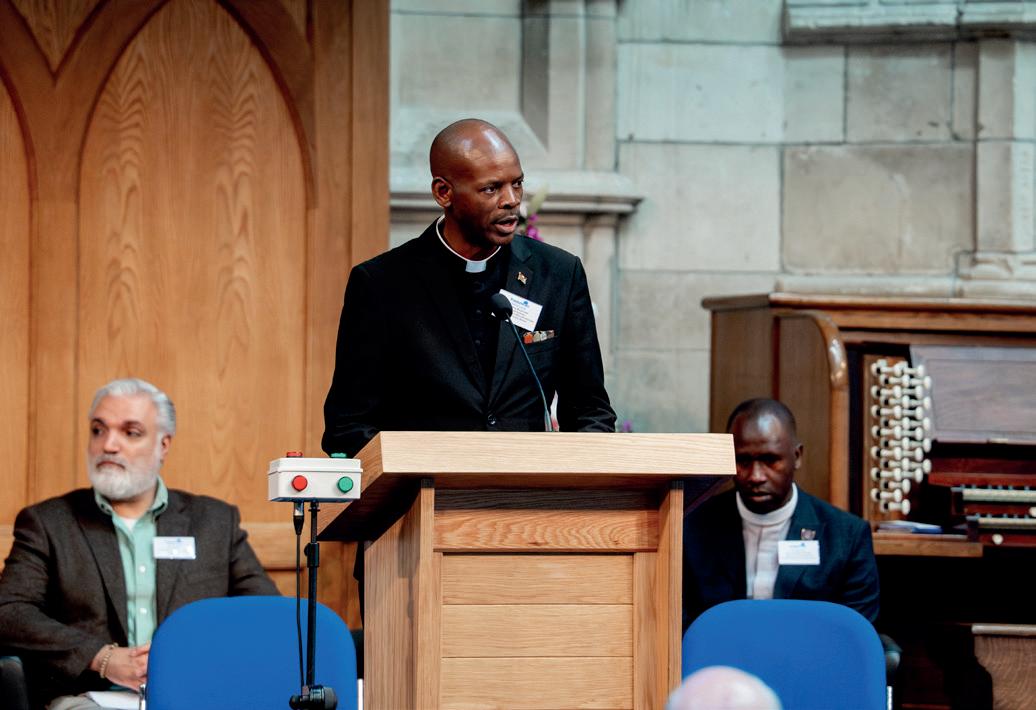
Speaking on behalf of delegates from beyond Europe, Rev Brian Kamwendo, General Secretary of the CCAP’s Nkhoma Synod in Malawi, spoke of his gratitude for PCI’s partnership.
“Many of our churches were planted, discipled, and strengthened through missionaries and relationships that began or grew through Ireland”
“Many of our churches were planted, discipled, and strengthened through missionaries and relationships that began or grew through Ireland. We do not take that heritage lightly,” he said.
Júlia Berecz brought greetings on behalf of the RCH (which has congregations in Transcarpathia, western Ukraine) and the European delegates. She too thanked PCI for its partnership, but spoke of “living under the realities of a full-scale war” and how “uncertainty and anxiety are a lived reality for many…”
Ms Berecz continued by saying that Jesus “calls us to become firmly rooted in the hidden power of his Kingdom. Because it is the power of the Kingdom of Heaven that brings new and life-giving order and true growth…This is what our neighbours need and thirst for, even unknowingly.”
Working for the Kingdom...
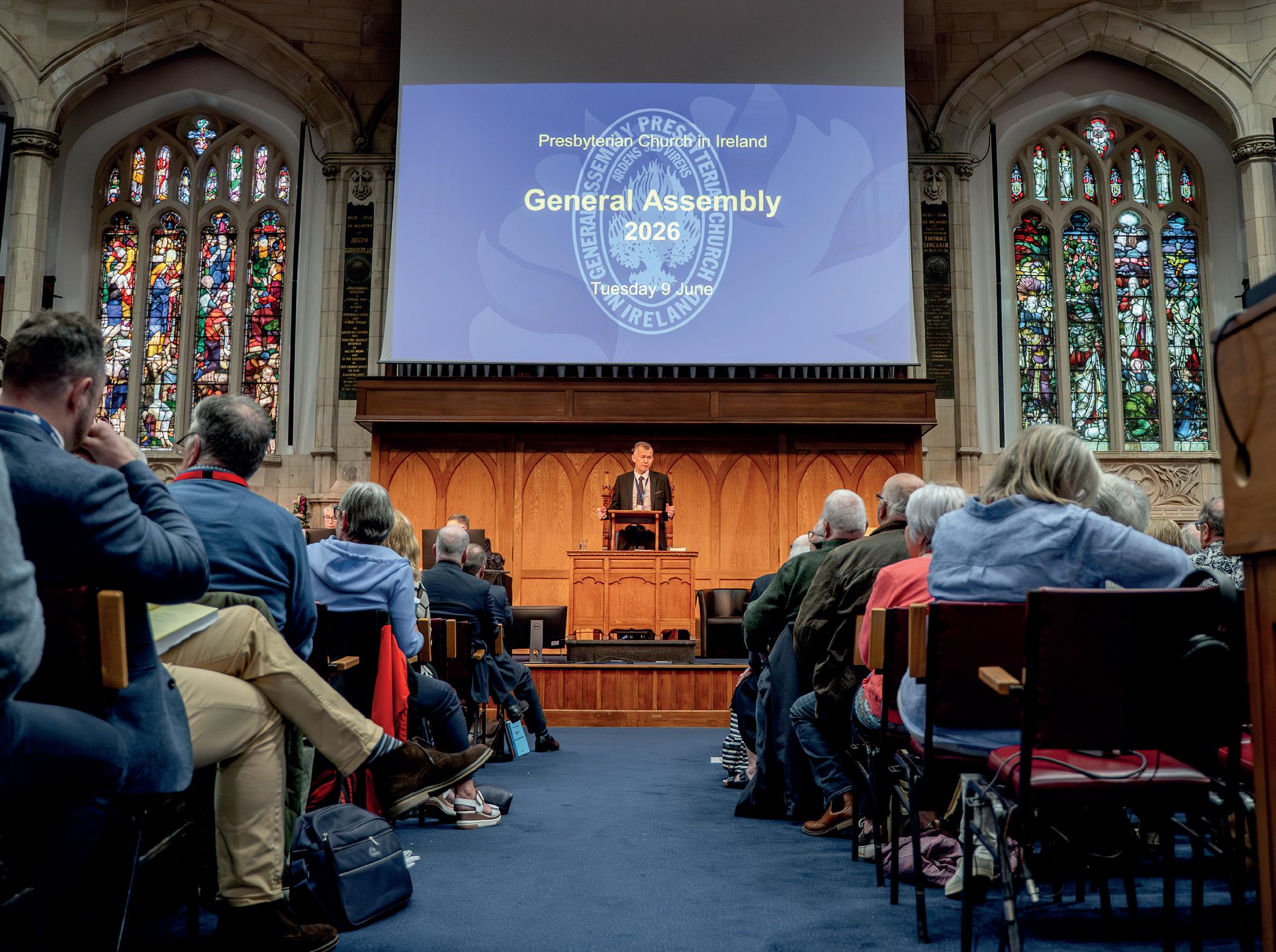
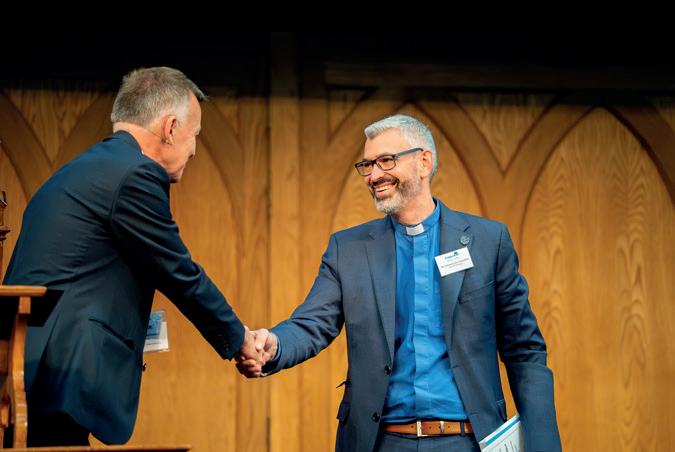
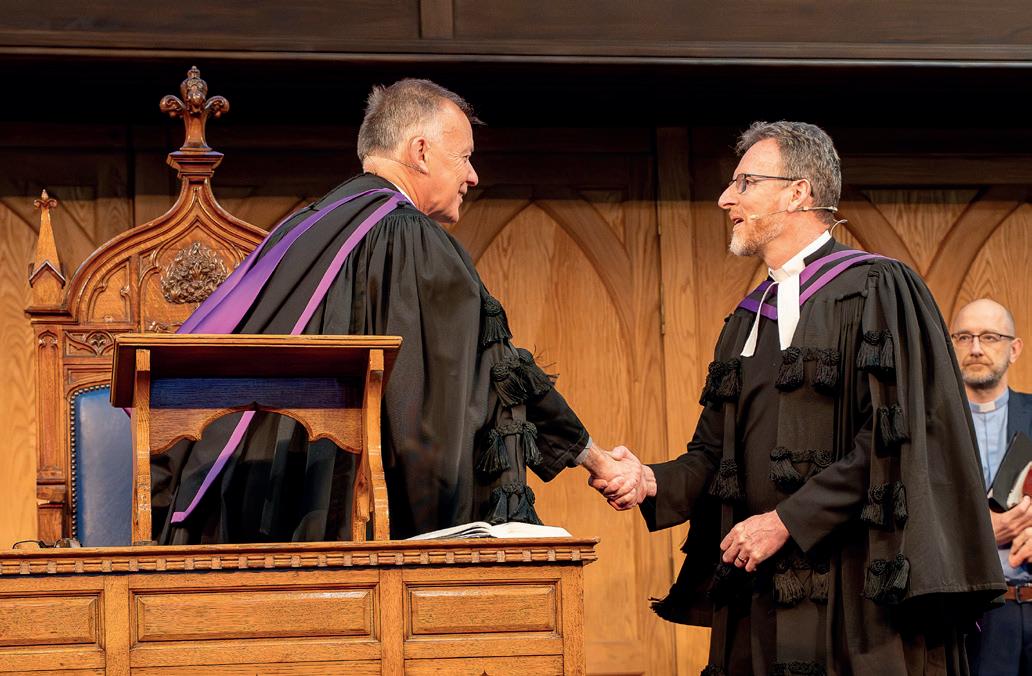
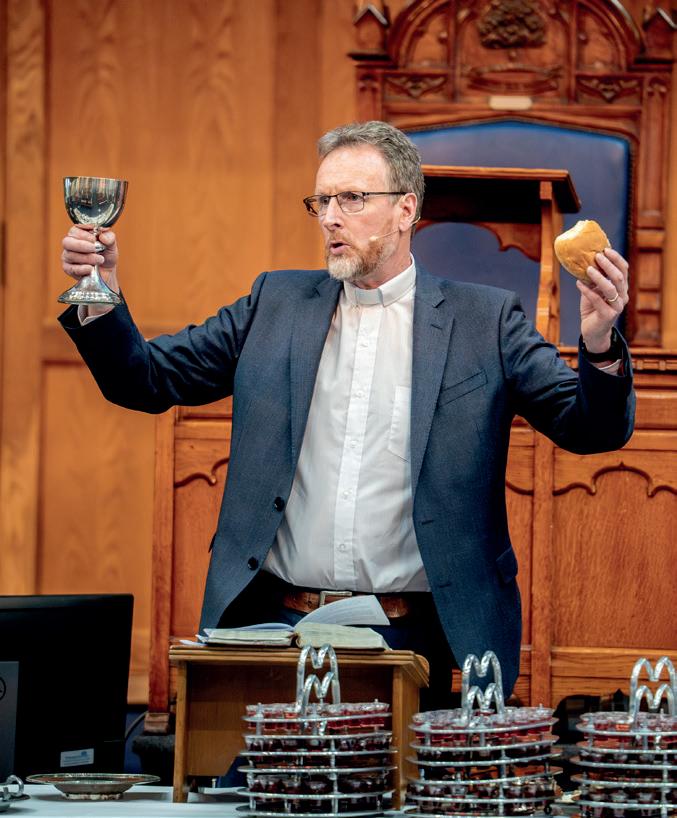
Templepatrick’s minister became only the third Moderator to be installed at a special Service of Installation, since the new format was introduced in 2024 with Richard Murray’s installation - and it was Dr Murray who installed another Richard, Dr Richard Kerr, to PCI’s highest office.
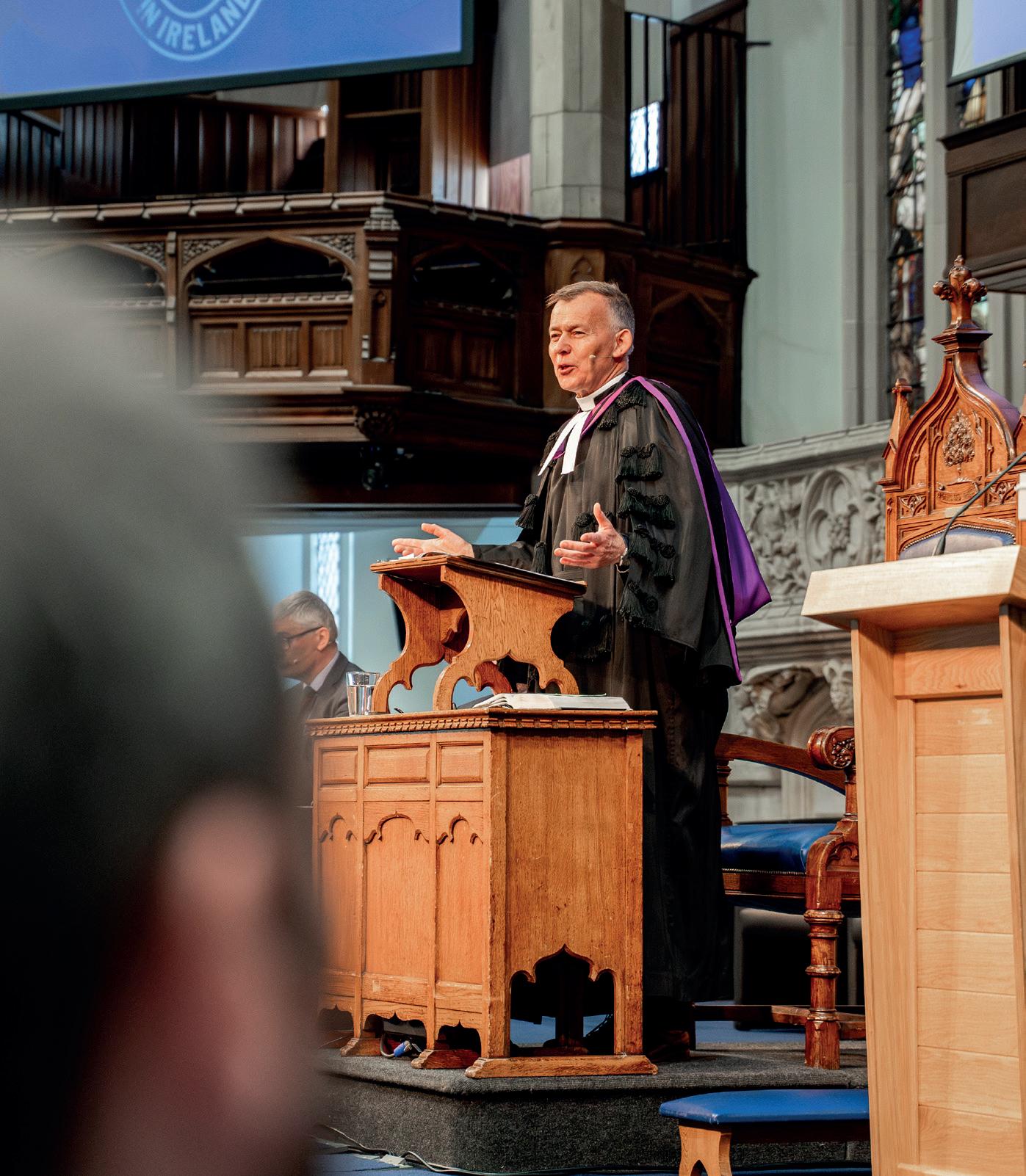
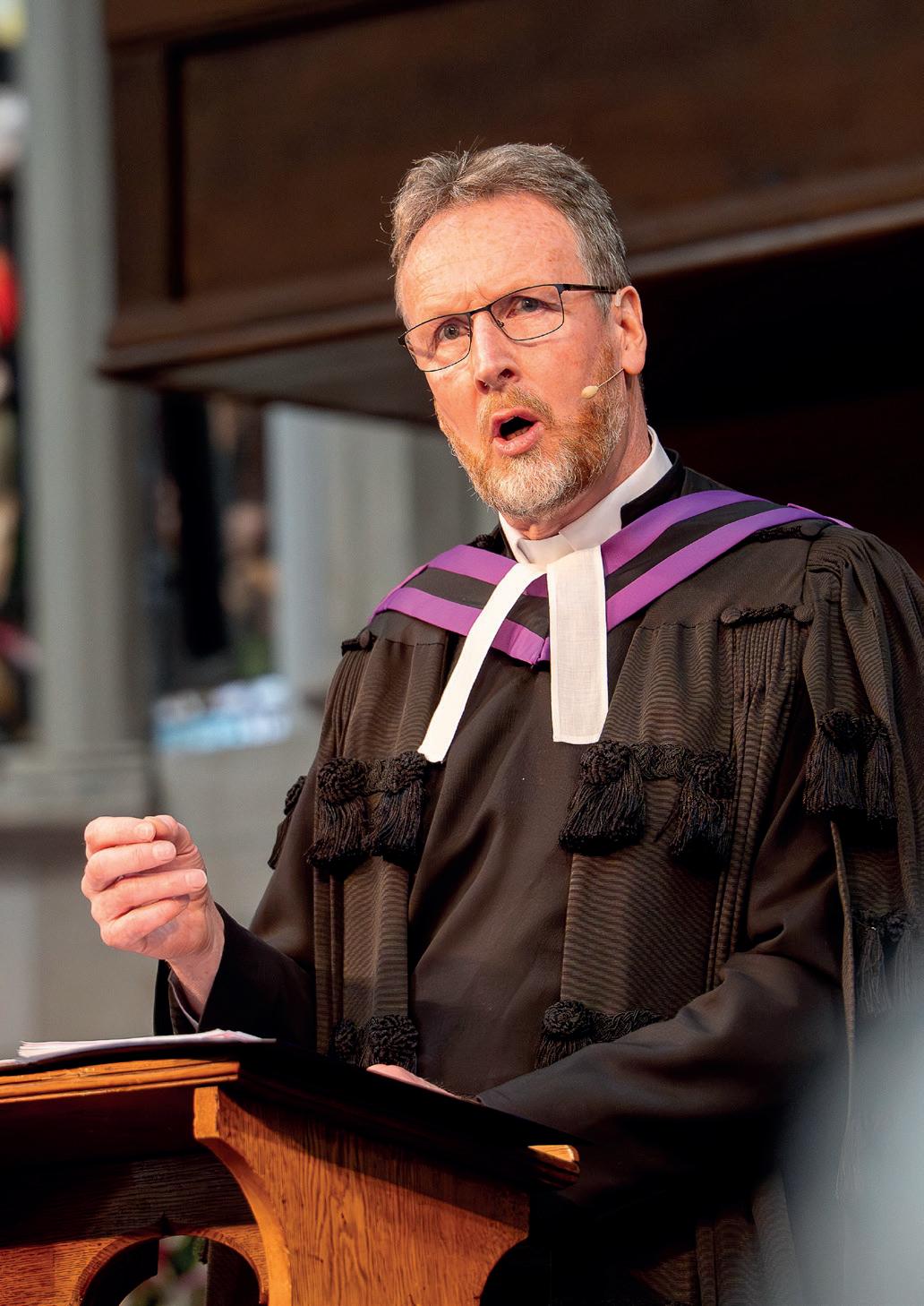
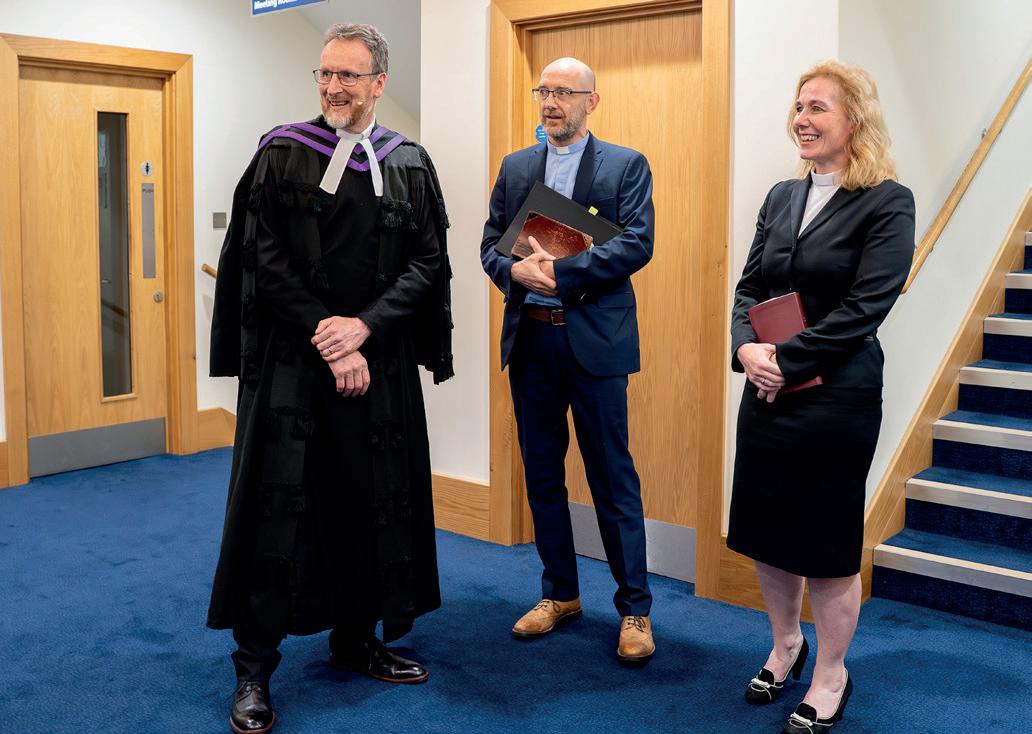
Like most of this year’s ‘stop ‘n’ start’ General Assembly, due to events outside the Assembly Hall, the installation had been postponed from the previous day. Attended by his chaplains, Rev Dr Karen Campbell and the Rev James Rogers, he preached to a full House, unveiling his theme, ‘For God so loved…’ which he had taken from John 3:16.
to Malawi, condemned the incident in North Belfast three nights before, calling it “horrific, barbaric and evil”. Dr Kerr added, “We must also condemn the actions of those who would manipulate people’s concerns and indiscriminately tar whole communities with one brush, causing fear and consternation among ethnic minorities… The Gospel calls us not to take sides, but to work for a kingdom that brings hope and life, and reconciles people to God and to each other.”
“It’s a phrase that invites us to refocus. To return to what is at the core of our Christian faith, the lavish love of God, the centrality of Christ, the ongoing work of the Holy Spirit. This is who we are,” he said.
Addressing recent events, the former missionary
As Moderator, he also said that he hoped “to meet with people who have been hurt by our [safeguarding] failings, support those who have felt let down, listen to those who are dealing with brokenness and pain. It’s not that I have all the answers, but I want to listen and seek to understand. Most of all, I want to say God cares. God understands. God wants to bring His healing – and we are deeply sorry.”
Watch a recording of the installation, at, presbyterianireland.org/ga26 or click here
From the smallest of seeds
The theme of this year’s ‘Listening to the Global Church’ came from Matthew 13:32, and saw delegates from Lebanon, Syria, Spain and Kenya speak about the seeds being planted in their home countries.
Amir Bitar, Executive Director of Compassion Protestant Society of the National Evangelical Synod of Syria and Lebanon, shared about the Christian experience in the two countries. He spoke earnestly about the many people facing displacement, saying that in Syria especially, Christians are “condemned at best to be second class citizens” and that “those who stay are those who couldn’t leave”.
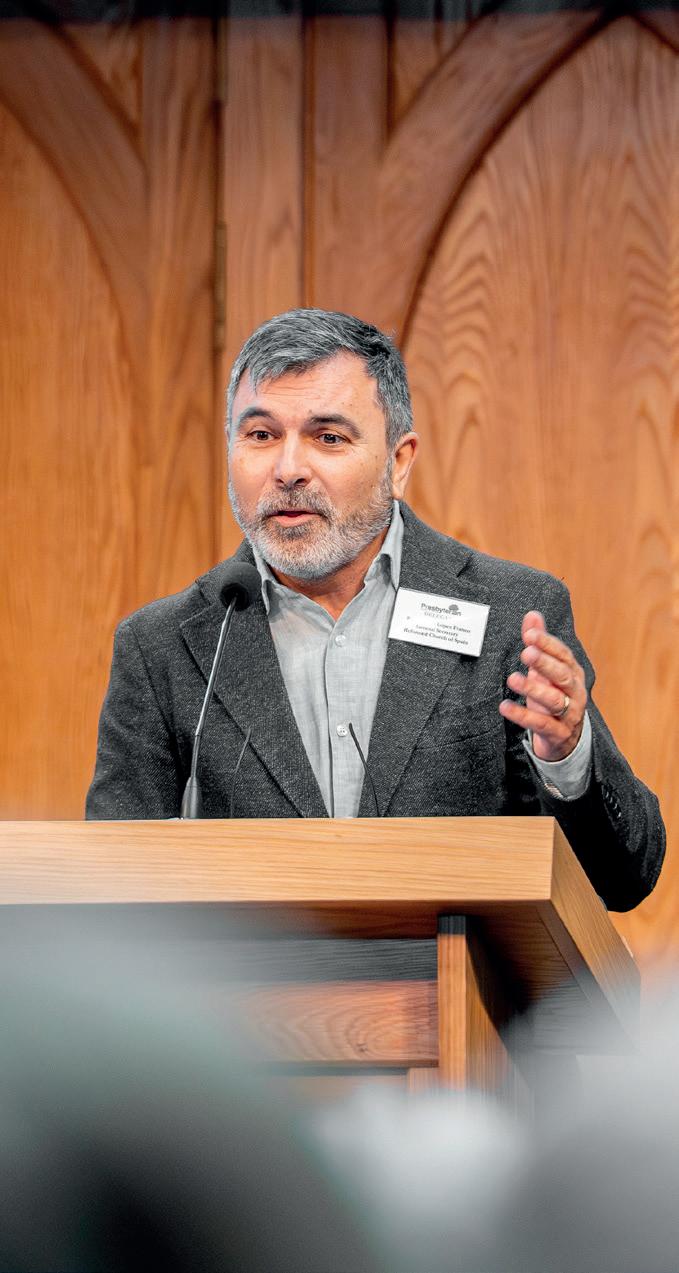
Rev Manuel López Franco, General Secretary of the
Reformed Church of Spain, shared encouraging reports of growth in an increasingly secular country.
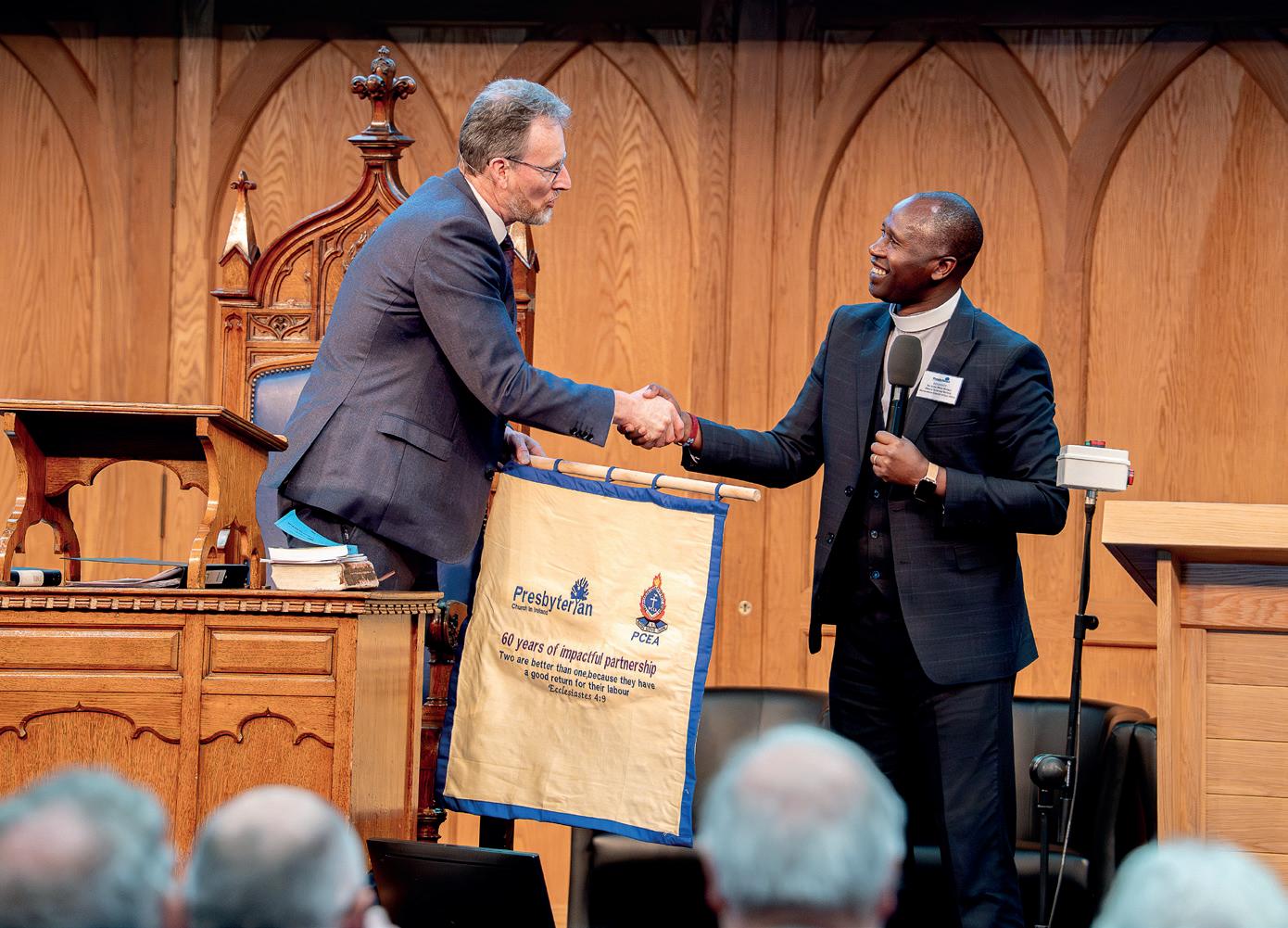
Finally, Rev John Mbae, Deputy Secretary General of the Presbyterian Church of East Africa (PCEA), highlighted alcoholism as a significant challenge facing Kenya. He concluded the session by presenting the Moderator, Dr Kerr, with a banner to mark 60
“a tiny gospel seed, planted in faith, has the power to change the world”
years of partnership between PCI and PCEA.
Despite facing various challenges, the speakers expressed deep appreciation for the support and partnership of PCI over the years. As Rev Stephen McCracken commented, “a tiny gospel seed, planted in faith, has the power to change the world”.
Read a full report on Listening to the Global Church here
The good news people
The Assembly was asked to consider a number of education related resolutions in the report of the Council for Public Affairs (CPA), including one on palliative care - the events of the previous 48 hours weren’t far away either.
Condemning the overnight violence and the attack that had precipitated it, CPA’s convener, Rev Daniel Kane, offered “our prayers to the victim and his family – and everyone who has been affected by the very upsetting scenes of violence, especially those forced from their homes…” He also urged that protests remain peaceful.
“We have a vital missional role to ensure that gospel truths remain ingrained in our society”
and heard at decision-making tables up and down our land… [and] the vision of the Council continues to be graciously confident Gospel engagement in the public square…We’re good news people and this report is a good news story as we seek to model a different kind of political engagement – that is one marked by humility and grace.”
In his speech, he explained that the Council’s clear endeavour was to “ensure that the values of a Christian worldview are clearly articulated
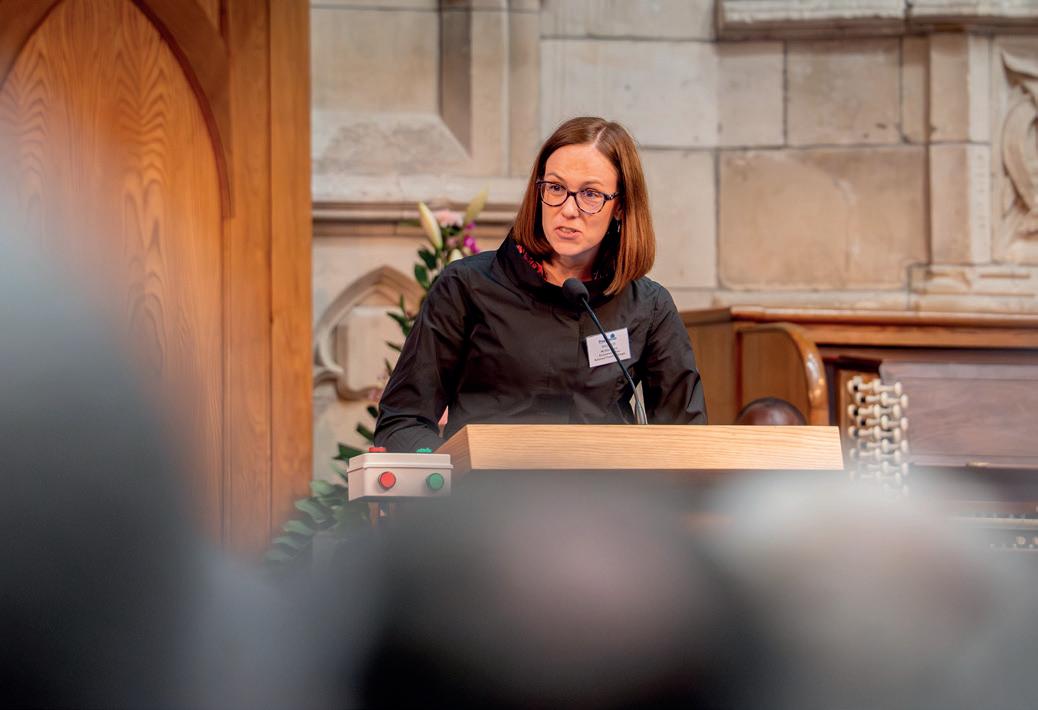
Addressing the Assembly, Dr Rebecca Stevenson, PCI’s Public Affairs Officer, said, “In a society that is continuing to question the role and influence of Christians and the Church in public policy, we have a vital missional role to ensure that gospel truths remain ingrained in our society.” On education, Dr Stevenson expressed the Council’s “sincere thanks” to all those involved in the sector.
A REVIEW TO BE REVIEWED
The report of the General Assembly Structures and Resources Review panel (GASRRP), states that “the scale and complexity of this work have been significant”.
That work stems from a 2023 report on what is termed ‘Reconfiguration of Ministry’, which is looking at how the Church ministers and resources mission across Ireland. The 2023 recommendations led to the 2024 report that put structure to the process. It was also extended to look at PCI’s central structures.
Very Rev Dr William Henry, GASRRP Convener, told the Assembly “…this panel’s work arises out of the debate on reconfiguration and the perceived
Read the Council’s reports and resolutions on pages 236244 and 327 of the Blue Book here and on page S8 of the Supplementary Report here.
need to rationalise because of a shortage of ministers and declining numbers and resources. It was stressed then that what is provided centrally should be the right size to resource and enable the Church to fulfil the gospel call in the Great Commission.”
An amendment to the report’s accompanying resolution (rare at this year’s Assembly, but passed by the Assembly), altered the information to be shared in the presbytery consultation process initially envisaged by the GASRRP. It also altered the process itself, with the prospect of a special General Assembly to discuss the panel’s final recommendations.
Read the full report and relevant resolutions on pages100-130 and 323 of the Blue Book here.
DON’T BE AFRAID OF RECONFIGURATION
The convener of the Linkage Commission, Rev Ker Graham, reported a busy 12 months, with Leave to Call granted to 20 congregations. As the reconfiguration of ministry process continues, the convener described how some congregations had caught its vision, even commenting, “Why didn’t we do this years ago?”
Rev Stuart Morrow, minister of Portstewart, commented that what began as reconfiguration of ministry, has become a reconfiguration of congregations, arguing that if all we do is close, merge, or link, and nothing else changes, then we may still be facing the same issues in a few years’ time. He maintained that how we do ministry also needs to be examined.
Meanwhile, Rev Neil Stewart shared the prayerful positivity of three kirk sessions involved in a merger when they realised God was in it. He urged the Assembly not to be afraid of reconfiguration.
Details of the updating of the ‘leadership’ section of presbytery comment forms to include safeguarding questions were highlighted, as well as the importance of seeking approval from the Commission’s Church Architects and Manses panel prior to purchasing a manse.
Read the full report and resolutions on pages 245-263 and 327 of the Blue Book here.
Evangelists at work
Following the close of the debate of the Council for Mission in Ireland (CMI) the Moderator, Dr Richard Murray, paid tribute to the Council’s work and highlighted its role in “doing the work of the evangelist.”
With a focus on the island of Ireland, the General Assembly welcomed progress in CMI’s vision for new church planting, along with progress in a new initiative in south-west Ireland and more established mission projects. The House expressed its gratitude for the vital ministry PCI’s chaplains carry out in different sectors, which were described as a ‘ministry of presence’ on behalf of the Church.
During the debate, one of the Church’s forces chaplains spoke, outlining some of the challenges, changes and opportunities they have as chaplains “to show the light of Christ to all”.
On church planting, CMI Secretary, Rick Hill said the Church was prayerfully carrying the ‘10 + 10 in 10’ vision to see 10 newly constituted congregations plus 10 new church planting projects in the next decade. He gave thanks for the establishment of the newest PCI congregation, Central Belfast, and spoke about eight further church planting projects within the denomination.
“Whether in the north-west, the south-east, or the southwest, the Council is thinking strategically about how to develop the Church’s witness and offer the good news of Jesus in each corner of this island,” he said.
Read the full report and resolutions on pages 195-225 and 325-326 of the Blue Book.
Declaring good news
The Council for Global Mission’s (CGM) report highlighted PCI’s commitment to sharing “God’s heart for the world, declaring good news, [and] demonstrating God’s love”.
Proposing the report, CGM convener, Rev Stephen McCracken, reflected on the church at Antioch as an example of outward-looking witness and commended the Council’s new Sending Strategy for 2026–2028. He reminded the Assembly that sending has been part of PCI’s identity since its formation in 1840 and extended his thanks to the global mission workers around the world.
Sending has been part of PCI’s identity since its formation in 1840
Mr McCracken also highlighted the value of PCI’s global partnerships, welcoming representatives from Syria, Lebanon, Malawi, Kenya, Hungary and Spain. He thanked congregations for their generous support of the United Appeal, which had led to a grant of £830,000, and acknowledged the contribution of Presbyterian Women and the Global Mission Department staff.
Seconding the report, CGM Secretary, Rev Uel Marrs encouraged members to listen to those directly affected by conflict and highlighted ongoing work arising from the Stewardship of Creation report. He also noted that the 2025 World Development Appeal, ‘Hives of Hope’, had raised £393,038(€456,023) to date in support of development projects around the world.
Read the full report on pages 291-312 and resolutions on page 328 of the Blue Book here.
INTER CHURCH RELATIONS
The resolution instructing the General Council to appoint a task group to examine the principles that should underlie PCI’s engagement with ecumenical bodies, drew a lively and constructive debate. While it was pointed out during the debate that the House was being asked
only to appoint a task group to examine the issues of principle, it was clear that this topic had already engaged members, with several seeking to question PCI’s participation in certain bodies, particularly where these bodies adopt positions which differ to the views expressed by PCI.
Several speakers raised issues with the expressed views of the World Communion of Reformed Churches,
particularly in relation to abortion and its gender justice policy. Other speakers cautioned PCI from becoming separatists.
Following a positive engagement from all sides of the issue, the resolution was put to the House with clear support for a task group to be established enabling an in-depth report to be brought forward to a subsequent General Assembly.
Life and witness on the ground
The theme of the report of the Council for Congregational Life and Witness (CCLW) was one of ‘ground level’ and ‘getting alongside’ a congregation – its leaders and its members – to support the development of its life and witness.
In recent years CCLW has moved away from running large scale, annual, denominationwide events, towards enabling and delivering simpler local responses at the request of presbyteries and congregations on the ground – ground level. The Council also reported on the value of presbytery
partnership – getting alongside. Presbyteries working together with Council staff to help explore and discuss options, as well as reflecting on how best to achieve what they sense God
inviting other voices to come alongside to help PCI as a church consider, in particular, parenting, discipleship, and outreach and evangelism.
Together they were able to achieve what neither the Council nor presbytery could do on their own
is calling them to do. Together they were able to achieve what neither the Council nor presbytery could do on their own.
Looking ahead to the next church year, CCLW will be
Rev David Thompson, Council Secretary, reminded the Assembly that CCLW is always open to suggestions and is there to support congregations. As a Council, it wants its focus and priorities to continue to be shaped by the wider Church.
Read the full report and resolutions in the Blue Book on pages 266-290 and 328 here.
NEW CANDIDATES IN TRAINING
The Council for Training in Ministry reports were lapsed on Tuesday evening but were rescheduled and taken when opportunity arose.
In his report, Rev Andrew Faulkner thanked God for the ongoing service and dedication of both the staff of Union Theological College and those that helped in the process of interview and selection. He was delighted to report that a total of 11 candidates will be entering training this September, including two candidates who have joined PCI from other denominations.
In his remarks, he highlighted the unsettling nature of the current and ongoing review. Necessary as it was, he noted that his Council prays that this review will come to a swift conclusion so that the current state of flux can be replaced by a concentration on training and preparing candidates to serve the Church of Jesus Christ as teaching elders in the denomination.
In concluding, Mr Faulkner encouraged the House to keep praying that God would continue to send workers into his plentiful harvest.
Read the full report and resolutions in the Blue Book on pages 226-235 and 326 here.
OPEN DISCUSSION ON NDA s
Non-Disclosure Agreements (NDAs) will not be used as a “matter of course”, Members of the Assembly agreed, following a debate on the report of the Compromise Agreements task group, which approved a draft Employee Compromise Agreement Policy.
The report came out of December’s Special General Assembly, which set up the Task Group to consider PCI’s use of Compromise Agreements, which may involve NDAs. It also set out “the limited circumstances in which an NDA will be considered”, underlying principles, their governance, and approval.
With speakers taking part from both sides of the debate, Director of Operations, Ken
Supporting the Church
General Council Section 5 covered two main topics: the Support Services Committee (SSC) and United Appeal for Mission.
Hugo Wilson proposed the report by providing an update on behalf of the SSC, which has been conducting a salary scale review. Currently, there are two categories of staff split over several pay bands with overlapping scale points, as well as multiple definitions of a full-time contract.
“look around at the work that God is doing through United Appeal and through men and women across this island”
It was agreed that salaries should more closely reflect general market salaries, and that full-time contracts are to be standardised at 37.5 hours per week. Mr Wilson emphasised that these changes should not affect PCI staff negatively.
In seconding the report, PCI’s Director of Operations, Ken Swarbrick urged the Assembly to “look around at the work that God is doing through United Appeal and through men and women across this island.”
He highlighted the joy that it is to hear how the funding is used, from Rural Chaplains to Global Mission Workers. He finished by echoing Mr Wilson’s thanks to the Support Services staff.
Read the Council’s report and resolutions in full on pages 145-169 and 323-324 of the Blue Book here.
Swarbrick, informed the House that “The vast majority of employees will have no interaction with compromise agreements throughout their entire career. In a PCI context, our ‘level of usage’ numbers are included in the report - we have put agreements in place for less than 1.4% of employee exits in the last 5 years - 9 agreements compared to over 650 leavers.”
He also said, “You are not being asked to approve a policy to facilitate deceit and coverup...You are being asked to assure your staff that you care about them and will protect them as they do their jobs.”
Read the Council’s report and resolutions in full on pages 133-144 and 323 of the Blue Book here.
Call goes out to be part of the workings of the Church
The Nominations Committee exists to oversee the advertisement, interviewing and nomination of candidates for vacant convenerships, as well as membership of councils, commissions and committees.
On Friday afternoon, committee convener, Rev Tom Greer highlighted the challenge to fill vacancies in committee membership, urging ministers to inform and moreover, encourage, members of their congregation to consider applying to be members. It was suggested that the process of nominations be part of the wider structures review.
Rev Jonathan Boyd seconded the report and updated the Assembly on the work of the Guidelines Review task group.
Given the mammoth job of taking the many decisions of past General Assemblies and turning them into a new format of regulations, guidelines and guidance, the task group decided to categorise the existing reports and decisions instead.
Most decisions fell into the category of guidelines or guidance. So, rather than ‘do this’ or ‘don’t do that’, the task group found a wealth of wisdom about best practice and good advice for the Church as it grapples with various issues.
Now largely complete, discussions about moving this information online, in what will become a new document area on the PCI website, have taken place.
Further information can be found on pages 170-179, 324-325 of the Blue Book here, and page S13 of the Supplementary Report here.
Search for ‘Presbyterian Church in Ireland’
2027 General Assembly
When Dr Kerr officially dissolved the General Assembly, he declared that it would reconvene in Belfast on Tuesday, 15 June 2027.