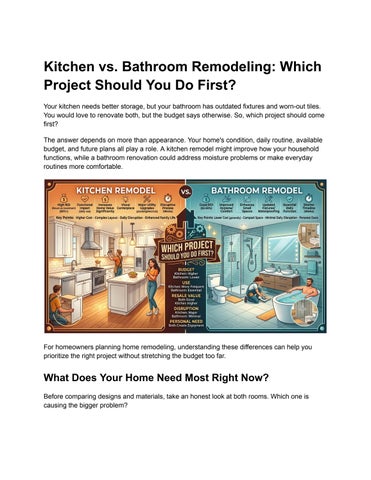
Kitchen vs. Bathroom Remodeling: Which Project Should You Do First? Your kitchen needs better storage, but your bathroom has outdated fixtures and worn-out tiles. You would love to renovate both, but the budget says otherwise. So, which project should come first? The answer depends on more than appearance. Your home's condition, daily routine, available budget, and future plans all play a role. A kitchen remodel might improve how your household functions, while a bathroom renovation could address moisture problems or make everyday routines more comfortable.
For homeowners planning home remodeling, understanding these differences can help you prioritize the right project without stretching the budget too far.
What Does Your Home Need Most Right Now? Before comparing designs and materials, take an honest look at both rooms. Which one is causing the bigger problem?
A kitchen may need attention if cabinets are falling apart, appliances are unreliable, counter space is limited, or the layout makes cooking difficult. A bathroom may deserve priority if you notice persistent leaks, water-damaged walls, poor ventilation, or deteriorating plumbing. Functionality matters just as much as appearance. A 2026 kitchen trends study found that homeowners often renovate because of kitchen deterioration, functional problems, or outdated styles. The practical rule: Address problems that could become more expensive or damage your home before investing in cosmetic upgrades.
Kitchen vs. Bathroom Remodeling: How Do the Costs Compare? Budget is often the deciding factor. However, kitchen and bathroom renovation costs can vary considerably depending on the room's size, material choices, labor, and project scope. Professional kitchen remodels commonly range from $14,592 to $41,619, with an estimated average of $26,990. Its 2026 bathroom remodeling estimates put many bathroom projects between $6,651 and $17,659, with an estimated average of $12,154. These are national estimates, not guaranteed prices for your home. Large kitchen renovations and extensive bathroom projects can cost considerably more. A kitchen budget may include: ● ● ● ●
Cabinets and countertops Appliances and lighting Flooring and backsplashes Plumbing or electrical changes
Bathroom expenses may include: ● ● ● ●
Showers, tubs, and vanities Tile, waterproofing, and flooring Fixtures and ventilation Plumbing repairs and demolition
If you're researching bathroom remodel pricing, compare written estimates with the same level of detail. One contractor's quote might include demolition and material disposal, while another may list those costs separately.
Where Can You Save Without Cutting Corners?
You do not always need a complete renovation. Refinishing suitable cabinets, changing hardware, updating lighting, or replacing worn fixtures can refresh a room without changing its entire layout. Set aside money for unexpected repairs, too. Once old flooring or walls are removed, hidden water damage or outdated plumbing may become apparent. A realistic budget accounts for those possibilities instead of assuming every surface underneath is in perfect condition.
How Will Each Remodel Affect Your Daily Routine? Imagine trying to prepare dinner while your kitchen cabinets, sink, and countertops are being replaced. Now imagine losing access to your only shower during a bathroom renovation. Both projects disrupt daily life, but the impact depends on your household. Kitchen remodeling may require temporary meal-preparation arrangements, alternative food storage, or occasional takeout. Bathroom remodeling can be more challenging when there is only one bathroom in the home. Before starting, consider these questions: 1. Can your family manage without the kitchen for part of the project? 2. Is another bathroom available for everyone to use? 3. Do children, older adults, or household members with mobility needs require special arrangements? 4. Can the contractor explain how the work will be scheduled to limit disruption? For homeowners considering bathroom remodeling Montgomery services, it is worth discussing access, scheduling, and household needs before construction begins. A little planning can make the experience much more manageable.
Which Renovation Could Add More Value to Your Home? Both kitchens and bathrooms can influence a buyer's impression of a home. However, spending more on a renovation doesn't automatically mean you'll recover more when you sell. A midrange minor kitchen remodel recouped approximately 113% of its cost, while a midrange bathroom remodel recouped around 80% at resale. These figures provide a useful starting point for homeowners planning renovations in 2026, but they are national estimates, not guaranteed returns. Local housing conditions, project quality, material choices, and buyer preferences can all affect the outcome. Consider your long-term plans, too. If you're staying in your home for several years, a kitchen that improves everyday cooking and storage may be worth prioritizing. If you plan to sell soon,
practical updates that address visible wear and improve functionality may make more sense than an expensive luxury renovation.
Which Project Should You Do First? There is no universal winner. Use this quick guide to make the decision easier. 1. Choose the kitchen first if its layout, storage, or failing appliances are making everyday life difficult. 2. Choose the bathroom first if leaks, water damage, plumbing failures, or ventilation problems need attention. 3. Consider the budget if one room can be improved meaningfully while the other can safely wait. 4. Think about the future if you plan to sell, accommodate changing family needs, or improve accessibility. 5. Ask a professional if both rooms need major work and you're unsure how to sequence the projects. Never postpone a repair that could allow water damage or another serious problem to worsen simply because the other room looks more outdated.
Why Tile, Waterproofing, and Ventilation Deserve Attention If the bathroom is your first project, look beyond the tile color and design. Proper preparation is essential for a durable finish. Planning Tile installation Montgomery County work? Make sure the project accounts for appropriate substrate preparation, compatible installation materials, and moisture protection. The Tile Council of North America's installation handbook explains the importance of properly designed and prepared surfaces. Ventilation matters, too. The U.S. Environmental Protection Agency's remodeling guidance explains that bathroom exhaust should remove moisture to the outdoors. Leaks and wet wall cavities should also be addressed to help prevent mold and mildew problems. These details may not be the most exciting part of a renovation, but they help protect your investment.
Can You Remodel Both Rooms at Once? Yes, provided the budget and schedule allow it.
Coordinating both renovations may help you plan contractor visits, material deliveries, and related plumbing or electrical work more efficiently. On the other hand, both rooms being out of service can create significant disruption. Before combining projects, compare the cost and schedule of one coordinated renovation against two separate projects. Ask for a clear scope of work so you understand what is included and when each area will become usable again.
How to Plan Your Remodeling Project in Montgomery County A successful renovation starts before demolition begins. Whether you're updating one room or planning a broader project, follow these steps: 1. Define your priorities. Separate necessary repairs from upgrades you can postpone. 2. Set a realistic budget. Include materials, labor, permits where required, and a contingency for unexpected work. 3. Compare contractors. Review relevant experience, references, insurance, and applicable licensing. 4. Get everything in writing. Your agreement should explain the scope, payment schedule, timeline, and how changes will be handled. 5. Check permit requirements. Rules depend on your exact jurisdiction and the work involved. Confirm requirements with your local building department before construction starts. The National Association of Home Builders' remodeler checklist offers useful questions to ask before hiring a contractor. A carefully planned Montgomery County home remodeling project should balance the condition of your home, the needs of your household, and the money you are comfortable investing.
Make Your Next Remodeling Project Count Choosing between a kitchen and bathroom renovation comes down to what your home needs most. Fix urgent problems first, compare realistic estimates, and focus on improvements that make daily life easier. With the right priorities and a clear plan, your next renovation can be a more manageable investment in your home's comfort and long-term usefulness. Premier Home Solutions is a family-owned remodeling company serving Wilmington DE, and surrounding areas. With over 10 years of experience, the team offers bathroom remodeling, tile
installation, flooring, interior painting, plumbing, electrical work, and window and door replacements. Ready to improve your home? Call (302) 464-5665 or email info@premierhomesolution.com to discuss your project and request a quote.
FAQs 1. Is kitchen remodeling more expensive than bathroom remodeling? It often is for comparable midrange projects, but the final cost depends on size, materials, labor, and the amount of plumbing or electrical work involved.
2. Which remodeling project should I complete first? Prioritize the room with urgent repair needs. If neither has a serious problem, compare your budget, daily routines, and long-term plans.
3. Can I renovate my kitchen and bathroom at the same time? Yes. Coordinating both projects may make scheduling easier, but it requires a larger budget and careful planning to limit disruption.
4. Which renovation adds more resale value? Returns depend on the project and local housing market. Functional improvements and sound workmanship are generally sensible priorities, but no renovation guarantees a particular return.
5. How long does a kitchen or bathroom remodel take? The timeline depends on the project's size, material availability, and any plumbing or structural changes. Smaller updates may take a few days, while full renovations can take several weeks or longer.