ADVENTURE
REFLECTING, INNOVATING, AND LOOKING TO THE FUTURE
REFLECTING, INNOVATING, AND LOOKING TO THE FUTURE
As a coalition of North American tourism associations committed to open borders, accessibility and safety, the Beyond Borders Tourism Coalition recognizes the tourism industry’s pivotal role in fostering vital economic stability & growth, cultural exchange and environmental stewardship. As we move into 2025, the industry faces a dynamic landscape of challenges and opportunities that call for innovative solutions and unified action.
Current government trade and border crossing policies are creating an environment of instability in the travel sector, which is creating many hurdles. These challenges threaten not only the financial health of countless businesses but also the livelihoods of millions of workers who rely on a thriving tourism industry. Indigenous communities, which are increasingly benefiting from a growing demand for authentic cultural experiences, also face heightened risks as economic pressures mount. Nowhere is this pressure greater than between Canada and the United States. Each country counts the other as its most significant trading and travel
partner – with the recent declines impacting businesses and communities on both sides of the border. This is especially true throughout Indigenous communities who remain connected through kinship and culture regardless of borders. The importance of sharing culture and place remains strong through Indigenous lands and people, who have also created an important Indigenous cultural tourism economy which is now facing negative impacts.
Despite these U.S. and Canadian tourism industry challenges we have formed a coalition committed to work together as the Beyond Borders Tourism Coalition to ensure we support tourism opportunities between our great countries. We know that by committing to work together we bring our countries closer together. The elimination of barriers and easing of cross-border tourism is critical for revitalizing global tourism economies. Air and ground transportation facilitates integration into the global economy and generates trade, promotes tourism, and creates employment opportunities. Policies that
We will leverage our collective resources to raise awareness among our members, policymakers and the public about the important work that needs to be done. Please share this message widely, including on social media, with your elected officials, partners and those in the hospitality sector, colleagues, customers, travelers. Together, we can ensure that our industry empowers safe, accessible, and enriching travel experiences for generations to come.
simplify visa processes and enhance cross-border collaboration can foster economic growth while encouraging cultural exchange and understanding, helping dispel damaging stereotypes. The travel industry’s interconnected nature demands unified voices and actions to tackle shared challenges arising from the current unprecedented situation. Speaking with one voice amplifies our influence, ensuring we are not ignored. Tourism has the power to bridge borders, drive economic growth, link people together and champion environmental stewardship. By embracing collaboration and innovation, we must build a resilient future that benefits travelers and global communities. As a coalition of Canadian and US based associations, we stand together and united at a time when our economies and purchasing power are in turmoil.
Recent reports from The Washington Post and Forbes highlight a decline in international travelers. The most recent data from Stats Canada shows this past February, there was a 13.1% decline of Canadians flying back from the U.S. compared to the same month in 2024. According to projections, this trend could lead to significant economic repercussions. For the US alone, foreign tourist spending is expected to fall by 11%, representing an $18 billion loss in 2025. The decline in international tourism, coupled with a potential
Join the Adventure Travel Trade Association to level up and grow your adventure travel opportunities. www.adventuretravel.biz or info@adventuretravel.biz to learn more.
decrease in domestic travel, could result in a staggering $64 billion loss for the U.S. travel sector by the end of 2025. For April, air travelers hold fewer than 300,000 advanced bookings between Canada and the U.S., OAG found, down more than 75% year-over-year. For each month from May through September, advanced bookings are down between 71.4% and 72.2%.
Canada is also facing reductions in US visitors for the 2025 year. Visitors from the US spend an estimated $13 billion in Canada providing important sustainability for jobs and thousands of tourism operators throughout Canada. Issues such as increased tariffs, thickening of the border, reduction of air capacity, and growing US negative sentiment to Canada may result in modest losses to the Canadian tourism industry in the short and potentially major losses in the long term.
Shannon Stowell leads the ATTA as CEO after re-starting the organization in 2004 pursuing the vision that it could be a powerful force for good in the tourism industry. More than 25 years of business experience in adventure travel, e-commerce, outdoor retail, and environmental science have prepared him well to serve and head the organization.
Adventure travel is evolving beyond its roots of rugged itineraries and physical challenge, emerging instead as a more thoughtful, purpose-driven way to explore the world. In this edition, four industry leaders share their perspectives on how the sector is shifting, from redefining luxury and sustainability to empowering local communities and designing journeys that resonate long after the trip ends.
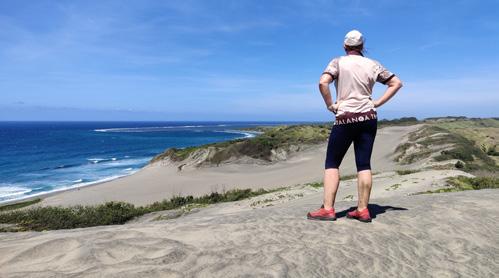

Marita Manley Director and Principal Consultant at Talanoa Consulting
What’s one thing operators often misunderstand about working with local communities?
There’s a narrative within the tourism sector that implies that communities should somehow be grateful for being part of the industry. That ‘giving back’ as part of your trip is charity. For us, if we are serious about supporting communities that want to be part of the industry to do so, it shouldn’t be about finding ways to give back or donate—but about building equitable systems from the beginning. This means supporting communities to develop and run their own businesses on their terms, to decide when and how they want to host visitors, and to benefit meaningfully from tourism. When we first started hosting familiarization trips and media, we were really grateful to be able to show people the reality on the ground, but we were never going to ask our community partners to host for free. Nurturing connections to community means adhering to the values of equitable systems. Where the system is inequitable, change it.
“Sustainable tourism” is often overused. What does it actually look like when it’s done right?
Sustainable tourism is a term that has definitely been overused, and I fear that we’re going the same way with regenerative tourism too, as the latest buzzword. For us, to sustain anything means people want it to continue and invest in making that a reality for future generations. For our environment that means supporting the health and restoration of our ecosystems so that they can continue to deliver clean water, healthy food and coastline protection for communities. For society, it means equitable systems that ensure those that are investing time in delivering services are valued. This means also supporting systems that enable remote and marginalized communities, and indigenous-led enterprises to thrive. When done well, tourism is shaped by the communities delivering the experiences. They are supported to develop and grow their own businesses and have equitable partnerships with other actors in the value chain.
When done well, tourism is shaped by the communities delivering the experiences. They are supported to develop and grow their own businesses and have equitable partnerships with other actors in the value chain.
www.talanoaconsulting-fiji.com
How do you measure whether tourism is delivering real benefits, especially for women and marginalized communities?
Measuring impact is a really important topic for the industry right now. For us, we’ve always invested in making our accounts open to our partners, and in regular review meetings that discuss progress, we discuss the financial and non-financial benefits that communities are seeing. This can include leveraging additional finance for community-led conservation. We have an ongoing partnership with NatureFiji-MareqetiViti supporting agro-forestry and grassland rehabilitation led by our Trip Leader and Conservation specialist, Jake Taoi. Measuring all of this is challenging for small businesses. Larger businesses with dedicated sustainability departments can invest in measurement tools. But that’s not an excuse—simple google sheet monitoring systems are better than nothing and help shine the light on where everyone has more to do in terms of creating impact.
Where do you see the biggest gaps between sustainability commitments and reality?
Impact measurement is important, but just because an organisation can measure how much water they lose when someone gets into a pool, or the amount of food waste their buffet breakfast creates, this shouldn’t be used to elevate a large organisation trying to reduce their enviornmental impact above a small enterprise that doesn’t have a pool and produces no food waste as it as used in their gardens. Don’t get me wrong—from an environmental perspective I absolutely want to see the large entities in the tourism space on a trajectory of improved performance—but I cringe when I see them shouting about their certifications, and using it as part of their marketing. Introduce the systems to measure, tell your guests you are doing it, be accountable for your operations, but the moment you’re using it as part of your marketing strategy it is no longer about sustainability—it is greenwashing.
Fernando Diez Marketing Director, Quasar Expeditions
How can tour operators better communicate sustainability without sounding performative?
Too many travel brands today use sustainability as a marketing layer, and travelers are increasingly skeptical of that. In the Galapagos, for example, there are cruise companies that claim to be sustainable because they donate one cabin on a cruise per year to a nonprofit auction. That may support a good cause, but on its own, it does not make a company sustainable. If your internal processes are wasteful, if you are careless with resources, or if you are not taking proper care of your people and your community, then the larger claim begins to ring hollow. One of the simplest ways to do that is to ask direct questions. Ideally, ask them in conversation, not just by email, where it is easier to polish a response. Ask what projects the company supports in each destination.
Are today’s high-end travelers looking for comfort, exclusivity, or deeper meaning, and how do you balance all three?
I would say they are looking for all three, but deeper meaning is increasingly what justifies the other two. Comfort still matters, and exclusivity certainly still matters. A few years ago, for many high-end travelers, that may have been enough. But for the kind of Guest Quasar attracts, those qualities are no longer enough on their own. Our travelers want a journey to feel worthy not only of the financial investment, but also of their time, anticipation,
and emotional investment.
That is especially true because many high-end travelers lead full, demanding lives. Their most valuable non-renewable asset is not money, but time. What they are really seeking is a meaningful use of that time, and for a trip to feel truly meaningful, it has to leave a lasting mark. At Quasar, we describe it as adventure with ease, quiet luxury with heart, and comfort rooted not in hardware alone, but in connection.
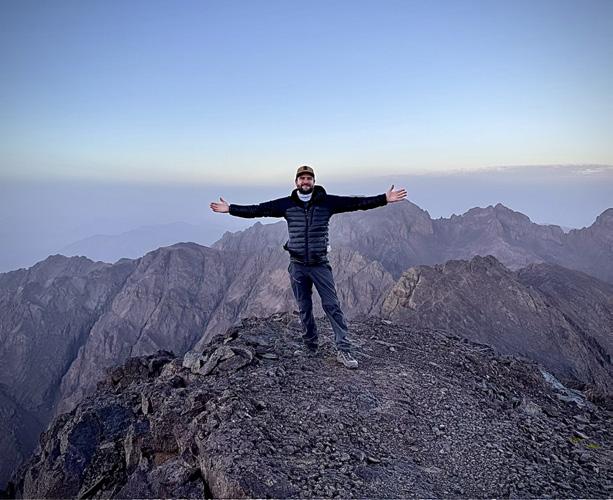

“How has demand for small-ship and intimate experiences evolved in recent years?
I know everyone in travel is tired of talking about COVID, but I do think it was the biggest catalyst for change here. It shifted small-ship and intimate experiences from being a niche preference to becoming a much more widely understood value proposition. For years, small-ship travel mostly appealed to travelers who already knew exactly what they wanted. Now, more people understand the difference almost immediately. They have experienced overcrowding, rigid schedules, long lines, and the impersonality that often comes with larger travel formats. COVID also caused many people to reevaluate their lives and place a higher value on their leisure time, especially when spent with loved ones. As a result, when travelers hear “small ship” or “intimate expedition,” they increasingly associate it with access, flexibility,
Rendering of the North Gate for the Salt Lake Temple. Photo courtesy of The Church of Jesus Christ of Latter-day Saints.
For high-end travelers, the most valuable non-renewable asset is not money, but time. What they are really seeking is a meaningful use of that time, and for a trip o feel truly meaningful, it has to leave a lasting mark.
quasarex.com
depth, and peace of mind. The overall cruise market remains strong, but at the same time, luxury and experiential travel trends continue pointing toward more personalized, less crowded, and more meaningful experiences. We have seen this firsthand in the Galapagos, where even larger cruise brands that historically had no presence in the region have begun pursuing the kind of intimate, destination-led experiences that have always defined it.
Where do you see the biggest gaps between intention and action in sustainable travel?
The biggest gap is convenience. I choose to believe that most travelers want to make better choices, but cost, clarity, and ease still drive behavior. People may care deeply about sustainability, but when the better option feels harder, more expensive, or less clear, many fall back on habit. Sustainable travel often asks people to accept trade-offs: stricter rules, fewer departures, longer, more immersive itineraries, or less of the excess that has traditionally defined luxury travel. Quasar often asks this from its Guests, and in a place like the Galapagos, those trade-offs are not a flaw. They are part of protecting what makes the destination worth visiting in the first place. The future of sustainable travel depends on reducing this friction.
Willem Niemeijer
Founder of Khiri Travel and CEO of YAANA Ventures
You founded Khiri Travel in the early days of experiential travel. How has the definition of “adventure travel” changed since then?
When we started, adventure travel was often defined by physical challenge, trekking, diving, remote locations, and with that, a degree of discomfort. Today, with an explosion of comfortable accommodations, much better regional infrastructure, and quality service providers, it has broadened significantly. Adventure is increasingly about cultural depth, unique environments, and experiences that educate and bring travelers and the destinations closer together, a shift from “seeing” to “understanding.” Travelers want context, stories, and connection. Compared to the early days, comfort is no longer the opposite of adventure; you can have high levels of comfort while still being in very remote or meaningful places. We’re actively helping to make this happen, with for example Visama Explorer Nan, a luxury tented camp of just eight units, in a remote corner of Northern Thailand.
What trends are you seeing across Asia that global tour operators should be paying attention to?
One of the most important trends is visitor dispersion. Governments and communities are actively looking to spread tourism beyond hotspots. Indonesia, for example, continues to struggle to attract travelers beyond Bali, while in the Philippines, tourism was once so concentrated in Boracay that the island had to be temporarily closed to recover from overuse. This creates real opportunity. In Indonesia, destinations like Sumba, Flores, and Sulawesi offer
compelling alternatives.
In the Philippines, Cebu, Negros, and Northern Luzon provide rich experiences while reducing reliance on domestic flights. We’re also seeing strong growth in high-end, experience-led travel—clients are willing to spend more but expect depth, exclusivity, and purpose. Sustainability is increasingly a baseline expectation.

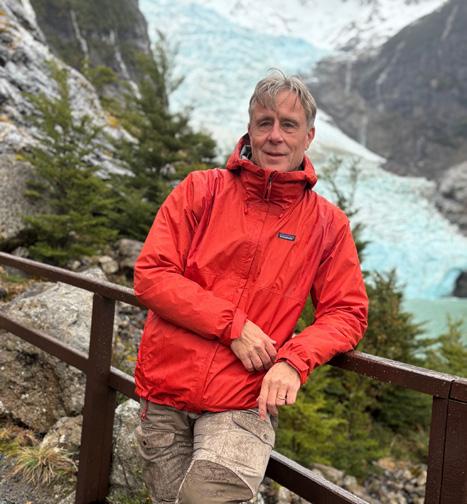
Can you share an example of a tourism business that is truly getting sustainability right—and why? Fortunately, many examples exist. One is the community of purpose-driven tourism businesses within The Long Run, which has built a framework around the 4Cs—Conservation, Community, Culture, and Commerce—to drive positive impact. Members include Tahi, a New Zealand-based sanctuary where 100% of profits are reinvested into biodiversity, and Estancia Cerro Guido in Chile, which protects over 100,000 hectares while reinvesting in conservation. Both Cardamom Tented Camp and Khiri Travel are also members. What these examples share is that guests don’t just hear about conservation or community—they experience it directly. What makes it work is alignment: the business model, conservation goals, and guest experience all reinforce each other.
What are the biggest sustainability mistakes you still see in adventure travel today?
One of the biggest mistakes is treating sustainability as a marketing exercise rather than an operational reality.
“ Comfort is no longer the opposite of adventure; you can have high levels of comfort while still being in very remote or meaningful places.
www.khiri.com
Certifications can play an important role here: when applied properly, they provide a framework to genuinely transform a business. For us, conservation and community have always been central, but culture is often overlooked—and not always easy to integrate in a commercial context. We’re addressing this through initiatives like an artist-in-residence program at Cardamom Tented Camp, and by working with the Thai Film Archive to showcase classic Thai films in the silent “cinema paradiso” at Visama Explorer Nan. There’s also a tendency to underestimate the importance of community engagement. If local communities don’t see clear benefits, tourism becomes extractive rather than regenerative.
With operations spanning multiple countries, how do you ensure local communities genuinely benefit from tourism? It starts with hiring and sourcing locally wherever possible—this creates immediate economic impact. Beyond that, we focus on long-term relationships: training, career development, and working with local suppliers who grow with us over time. We also support grassroots initiatives through our Khiri Reach program, where staff actively engage with community and environmental projects, often co-funded with our travel trade partners. Importantly, we aim to direct tourism into less-visited areas, where it can have a more meaningful impact. Ultimately, it’s about consistency—small, ongoing actions across all destinations that together create lasting benefits.
Lykke Geisler Yakaboylu
Founder and Owner of Sila Greenland DMC
What role do local communities play in shaping the experiences you offer?
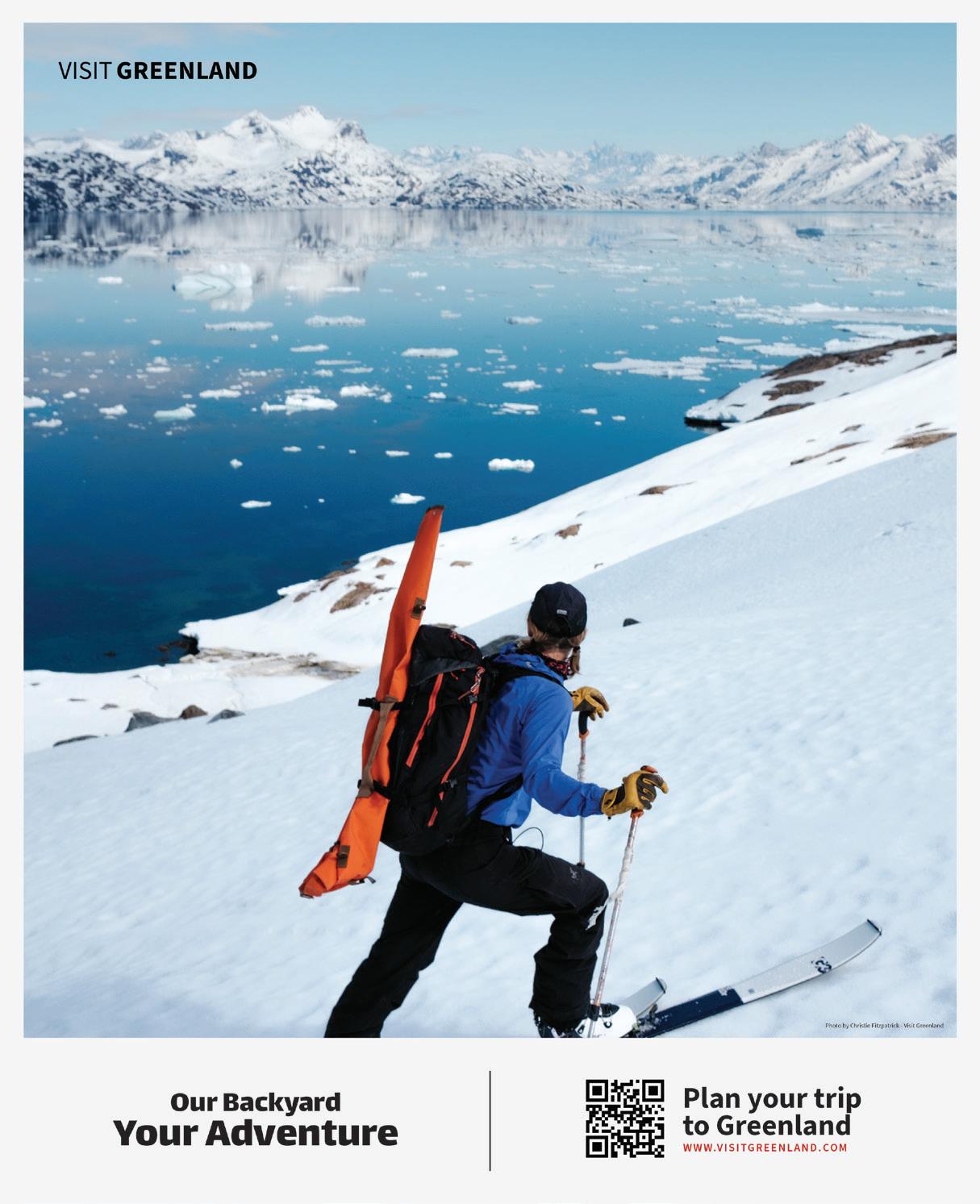
I work with local operators who are born and raised in Greenland, where nature is part of our daily lives. We all hunt and fish to fill the freezer and know exactly where to go for Arctic Char or cod. We have no roads connecting our towns and settlements, and we have more boats than cars. This means that to experience Greenland, you will need to take boat tours to explore its natural beauty. With local operators, you will get a lot of knowledge about what it is like to live in the Arctic. I create bespoke itineraries that can include fishing or collecting mussels to be prepared with your guide or host in nature. The local operators are proud to showcase Greenland to visitors and offer truly unique experiences.
How do small-group, bespoke trips help support a more sustainable model of tourism?
Greenland has always been an expensive destination due to the logistics, limited accommodation, and operator capacity. When I left Visit Greenland in 2018 after 20 years, I knew I wanted to create bespoke trips for small groups rather than compete with the many agents who offer scheduled departures. I also understood that it is difficult for travelers (and agents) to put together itineraries
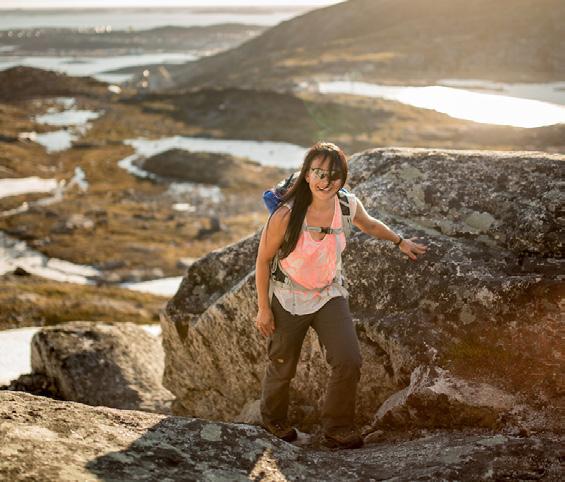

across destinations in Greenland. Due to the distances in Greenland, one operator typically offers tours only in their local area. I had a client in 2019 who wanted to visit the world’s northernmost inhabited place, a tiny settlement called Siorapaluk, north of Qaanaaq. There is one flight a week to Qaanaaq, and he asked if they could charter a helicopter. It was not until I told him that the distance between Ilulissat and Qaanaaq is the same as from Chicago to New York that he understood.
How do you work with local operators to ensure authenticity while maintaining high standards for international clients?
I work to manage expectations on both sides, which isn’t always easy. International clients need to understand that standards in Greenland are not the same as those they experience in most other places. We don’t have 5-star hotels, but we have 5-star experiences. It is magic when the local operator and the guests have authentic experiences together. Like when you are visiting a village and are invited to a local celebration for a birthday or confirmation. These things are actually happening in Greenland. Or when a humpback whale appears in front of your kayak and the Northern Lights appear just after you finish your dinner. We often have delays due to bad weather or technical
“We don’t have 5-star hotels, but we have 5-star experiences.
silagreenland.com
issues. The operators do their best to accommodate the clients and offer other experiences or rearrange the program, so that you visit the museum instead of going kayaking in high waves. The local operators need to be good communicators, and the clients need to be patient. I sometimes have clients calling to say the driver hasn’t arrived to pick them up for their activity, 5 minutes before they are supposed to be picked up. The drive is usually no more than 5-10 minutes, simply because we have a limited road network. But of course, the operator should inform the client of a delay.
What advice would you give to others looking to build tourism businesses in remote or emerging destinations?
When dealing with tourism in remote destinations, it’s essential to listen to the local knowledge and explore how tourism can support the preservation of nature and culture. For example, I’m working with Greenland Dog Adventure to preserve the dog-sledding culture through tourism in Sisimiut. Genetically, the Greenland sled dog is the world’s oldest dog breed. With modern technology, we don’t need dogs the way we did 50 years ago, when my grandparents used sleds for transportation and hunting. In some areas, this is still the case, but the number of sled dogs is decreasing. Through tourism, we can give the dog a new purpose and preserve the dog as well as the knowledge about how to build sleds.
What are the most important travel essentials for an adventure trip? Depending on the weather, destination, type of travel, and length of trip, a complete packing list could fill a small novel. But our editors believe there are four things that transcend every journey. I’ll only mention brands I’ve used extensively.
By Shannon Stowell

1. Reliable, functional bags.
Every time I see a piece of luggage with a missing wheel, a broken handle, or a split seam — and I’ll admit this freely — I feel a small, private delight that my gear doesn’t do that. Spending a bit more on quality travel bags can feel like a luxury until you’re huffing through an airport looking for duct tape or a replacement bag. Think of it as insurance. My personal favorite for adventurous travelers, and has been for more than a decade, is Eagle Creek. One underrated feature of their larger bags: they don’t fall over and whack your neighbor with the upright handle. You know that person at baggage claim — the one whose bag keeps toppling and claiming victims while they stare at the ceiling? Don’t be that person. The thoughtful pocket design and rugged construction mean your bag simply stays off your mind, which is exactly where it belongs. Fair warning: once you go down this road, you may develop an insufferable amount of travel-gear-arrogance. Other excellent options: The North Face and Osprey.
2. An easy-to-use water filter/purifier. I don’t care if I’m heading to New York City, Tokyo, Mexico City, or Mumbai — this one is non-negotiable. In major developed cities, I use it to cut chlorine. Everywhere else, it’s about not dying of dysentery on the Oregon Trail.
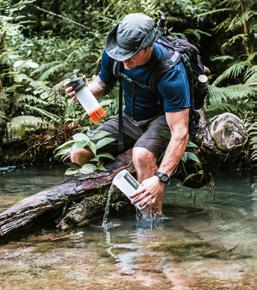
My filter of choice is the GRAYL. I’ve used it to drink from the Amazon, the Ganges, the Panama Canal, streams in Colorado and Japan, and — don’t judge — a swimming pool at a hotel in India. Never got sick once. If you’re not a GRAYL convert yet, Lifestraw is a solid alternative.
3. A multi-tool.
If you skipped item number one, this becomes even more critical as you attempt to screw your failing luggage back together mid-trip (true story) or cut off the tattered, hanging fringe that used to be a zipper pull. Or start that survival fire. But jokes
aside — a multi-tool will quietly earn its place on almost every trip, handling the myriad things that need to be pried, cut, removed, fixed, or smoothed. Leatherman is my hands-down favorite. Victorinox makes excellent pieces as well. Important note: do not forget to check this piece in your luggage unless you’re into donating knives.
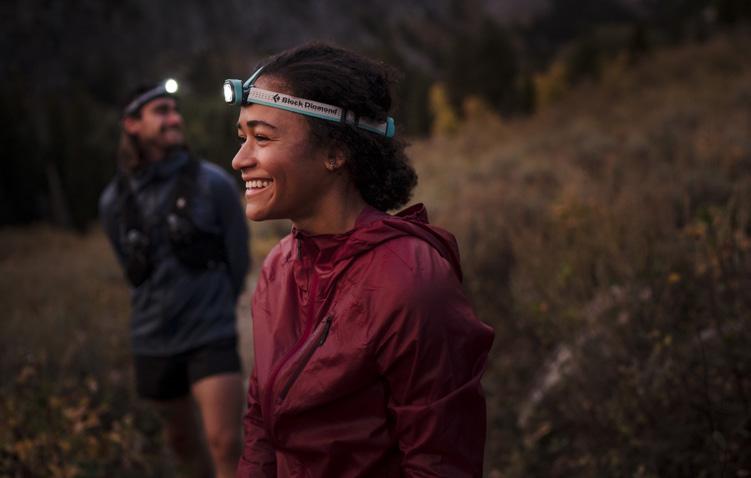
4. The wildcard- A headlamp.
Years ago, I was invited to hear a former CIA agent speak about travel safety at my local travel attorney’s office. It was a wild evening full of stories most of us will thankfully never face firsthand. But beyond the “keep your head on a swivel” refrains about situational awareness, the one piece of gear the agent said he always had on him was a headlamp. Lights go out in hotels, on planes, on ships, in restaurants. If you have light, you have eyes. And if you’re walking to the eco-lodge bathroom at night, let’s make sure we don’t step on a snake or sit on a cockroach. I carry a Black Diamond lamp in my pack everywhere I go. Petzl makes fantastic options as well. There’s plenty more that matters on any serious adventure trip — layers, waterproof-breathable jackets, good footwear, sun protection — but never forget the Big Four. At some point on some trip, one or more of them will quietly save the day.
In an AI-saturated landscape where content is infinite and attention is fleeting, true competitive advantage shifts to trust
When you’ve been in this industry long enough, surprises are rare. The Adventure Travel Trade Association (ATTA) surprised me. I initially assumed it was simply another showcase platform for operators and destinations, another stage, another marketplace. What I discovered instead was something far more powerful: a community.
For some time, I’ve believed the next evolution of marketing is not advertising, and not even storytelling, but trust operating at scale within defined communities. Advertising still matters. Storytelling still matters. But neither sits at the top of the strategic hierarchy anymore. As AI accelerates and content volume explodes, what was once scarce is now infinite. Stories, education, information, they are everywhere.
They are not always accurate or valuable, but they are constant. In a saturated environment, scarcity shifts. What becomes scarce is trust.
This is not theoretical. It is visible in audience behavior and in how purchasing decisions are made in a digitally dense world. There
was a time when storytelling differentiated brands. It was expensive, deliberate and editorially disciplined. Distribution required infrastructure and craft required experience. When done well, it built identity, loyalty, and conversion. Today, AI can generate endless narratives across every platform. Volume has replaced scarcity. Storytelling alone is no longer a durable competitive advantage. Without trust, it carries little weight. AI can produce limitless copy and deliver education on demand, but it operates within parameters. It does not create serendipitous exchange, manufacture lived credibility or compress decades of reputation into a prompt. It does not build community. Community exists only when real people show up and participate, and it is from community that trust grows.
Marketing itself has undergone a structural shift. It was once interruption-based: magazines, newspapers, television, and radio pushed messages outward in one direction. You bought space, filled it with noise, and hoped repetition converted into belief. Today marketing is participation-based. It is built on direct relationships with defined audiences. Communication flows both ways. Trust is earned before transaction is expected, and credibility compounds through ongoing interaction rather than occasional campaigns. Reach without engagement is noise. Engagement without trust is temporary.
Groups such as ATTA foster trust within a defined ecosystem, and that trust becomes commercial leverage. It converts attention into influence, influence into action, and action into measurable return. As AI scales content production and automates persuasion, credibility becomes the enduring advantage left to human-led brands. When content becomes infinite, belief becomes scarce, and scarcity is where economic value concentrates. Visibility can be purchased. Belief must be earned. For decades, businesses operated on the advantage of information asymmetry. What you knew that others did not know gave you leverage. But AI has changed that equation. Tools, frameworks, analysis, even strategy can now be generated instantly. Knowledge is widely accessible. The advantage is no longer what you know; it is who trusts you.
That is where ATTA thrives. The most effective operators I’ve encountered through the network are rediscovering offense not through secrecy, but through collaboration. They are leaning into community, sharing selectively, learning collectively, and raising standards together. AI has democratized knowledge, but in doing so it has made human trust more valuable. In a world generating thousands of confident answers every minute, the real question is no longer “What is correct?” but “Who do I believe?” Community becomes the human filter: context, lived experience, reputation tested in public.
When I attended my first ATTA event in Fiji, what struck me was not competition
but cooperation. Media, operators, and destinations connected over shared challenges and shared ambition. Peer-to-peer exchange carried weight because people were willing to bring mistakes and practical insight into the open. Within ATTA networks, including the ATTA Heroes WhatsApp group, I’ve seen simple operational questions generate generous, practical responses. Historically, that knowledge might have been guarded as competitive advantage. Within a trustbased ecosystem, it circulates because collective strength benefits everyone.
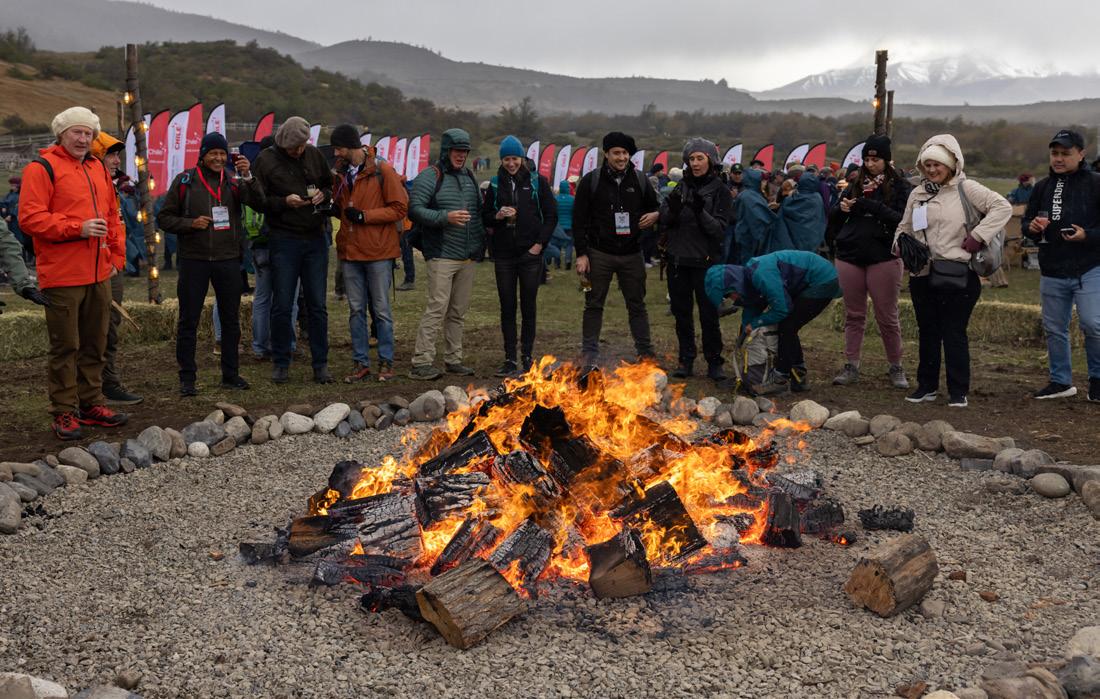
After the Adventure Travel World Summit in Chilean Patagonia, conversations continued long after the event closed. Operators asked how to manage journalist relationships. Journalists asked how to work more constructively with destinations. People were comfortable enough to ask directly, and others were willing to share not out of obligation, but because contributing strengthens the whole. Community concentrates leverage because it aggregates trust. Capital can buy exposure and scale can deliver visibility, but neither guarantees belief. A trusted network of aligned participants generates advocacy that money alone cannot purchase. We are witnessing a structural change, not a passing phase. The age of attention-buying defined the past. The age of community-centered leverage defines what follows. Advertising remains a tool and storytelling remains essential, but the durable metric moving forward is simple: Does the audience trust you enough to act? That is the advantage communities create, and that is where the real leverage now lives.

As geopolitical uncertainty, economic pressure and shifting traveler perceptions reshape global tourism, adventure travel continues to prove its resilience
By Shannon Stowell, CEO of the Adventure Travel Trade Association www.adventuretravel.biz
“Adventure travel will save the world” has long been a tongue-in-cheek saying within the Adventure Travel Trade Association (ATTA) community. While somewhat playful, it reflects a deeper belief: that adventure travel holds values—and potential solutions—relevant to some of the world’s toughest challenges. It sits at the intersection of conflict and peace, exploitation and sustainable use, wealth concentration and distribution, overtourism and healthy tourism, division and respect.
At the same time, the global travel landscape is being reshaped by rising geopolitical instability, increased costs,
shifting safety perceptions, and fluctuating confidence in long-haul travel. Conflicts in Europe, Asia and the Middle East, alongside broader tensions in Asia, have heightened traveler sensitivity to risk. Perception often outweighs reality; entire regions can see demand drop not because they are unsafe, but because they are perceived to be so. For adventure travel—often operating in remote or misunderstood destinations— this perception gap can either suppress demand or redirect it elsewhere.
Long-haul hesitation is also changing behavior. Higher fuel costs and concerns about disruption are pushing travelers
toward closer-to-home experiences. This has fueled growth in “near-haul adventure,” with destinations like Latin America for North Americans or North Africa for Europeans gaining traction. Even within the United States, travelers are rediscovering domestic wilderness as a substitute for more complex international itineraries. A bit of deja vu from the COVID-19 pandemic.
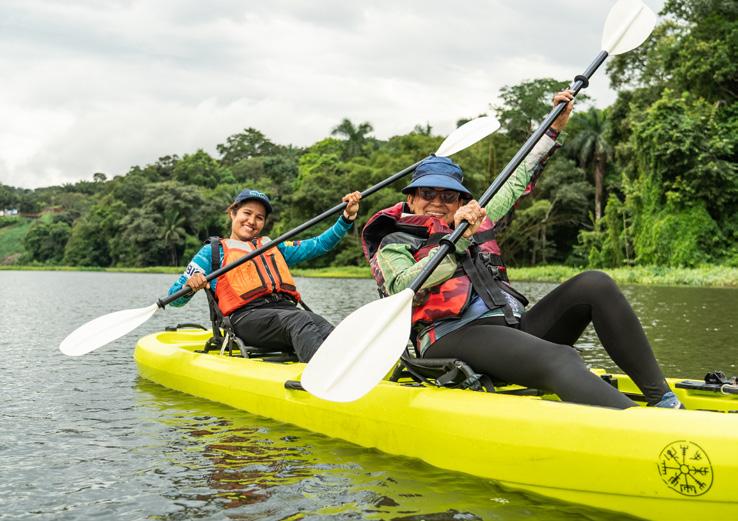
Despite these headwinds, adventure travel continues to demonstrate resilience. Its strength lies in its purpose-driven appeal. Adventure travelers are motivated by meaning rather than convenience; they seek transformative experiences that
justify greater effort and uncertainty. This creates a traveler who is more adaptable and less deterred by friction—provided the reward feels worthwhile. Adventure travelers often define themselves by their passions: “I am a hiker,” “I am a mountain biker,” “I am a birder.” Rarely do we hear someone say, “I am a fly-and-flop traveler who drinks on beaches.”
Operationally, the sector is built for agility. Smaller group sizes, flexible itineraries, and deep local partnerships allow operators to respond quickly to changing conditions. In a volatile world, the ability to pivot—rerouting trips, adjusting activities, or shifting destinations—is a significant advantage over more rigid forms of tourism with heavy capital investments like large hotels.
There is also a lingering preference for space and nature. Post-pandemic, many travelers still associate remote, outdoor environments with safety and well-being. A trek in the Himalayas or a safari in Namibia can feel more controlled and less risky than crowded urban centers, even if the logistics are more complex.
Still, the sector is not immune to vulnerability. Adventure travel depends heavily on destination perception, and negative nar-
ratives—whether accurate or not—can have outsized impacts. It also relies on long-haul travel for many of its most iconic experiences, leaving it exposed when confidence drops. Economic pressures add further complexity, as many adventure trips are discretionary and sensitive to shifts in consumer spending.
ATTA’s nearly 20 years of annual tour operator surveys reflect these dynamics. For the first time, the only destinations in the negative perception zone are the United States and Russia, while Canada ranks fourth in traveler interest. This is not a North America problem, but a specific global reaction to the policies and tone of the U.S. administration—alongside Russia’s ongoing actions. Meanwhile, Northeast Asia, Scandinavia, and South America hold the top three trending spots, with Western Europe and the Mediterranean close behind.
What emerges is a paradox. Adventure travel reflects values that can help address global challenges—fostering peace, supporting sustainable livelihoods, and encouraging cultural understanding. At the same time, it operates within the very systems of uncertainty and perception that shape those challenges.
As ATTA Board member and founder of Imagine It Tourism Group Malia Asfour recently highlighted in a great essay, the adventure industry’s most essential contributors—especially freelance tour guides and small local providers—are also its most vulnerable during crises that don’t attract global attention or where crisis fatigue has set in. When instability and conflict cause tourism to quietly decline, these individuals lose income overnight despite being central to delivering meaningful travel experiences. Guides, drivers, artisans, and small businesses form the human ecosystem of tourism, shaping authenticity and connection, yet their value is often overlooked when demand disappears.
To put a ‘face’ on it, consider for example a small ecolodge in Jordan that supports a network of bakers, drivers, guides and farmers. When demand falters, the ripple effects can be devastating. And, the industry risks losing not just capacity but cultural knowledge and identity—ultimately rebuilding tourism without the very people who give it meaning.
Recently I passed on a request from an advisor looking for some Tibet travel options. An ATTA inbound operator said they had shut down almost all their former Tibet trips. When I asked why, he said that the mini-infrastructure of small operators, lodges, restaurants, etc., had never recovered from COVID and those operators just “eddied out” to work in other opportunities, many never to return. What makes destinations so special—those touches and experiences offered by local people and small businesses—can be damaged or lost when tourism stops.
Adventure travel’s future will depend on trust, resilience, transparency, and adaptability. If the industry continues to communicate clearly, distribute benefits locally, and offer meaningful alternatives in a shifting landscape, it may not “save the world.” But it can offer something that people want—an experience that is not shrink-wrapped or templated but deeply meaningful and sometimes serendipitous experiences of a lifetime—and be a driver of good at the same time.