

























1 COMPANY MAGAZINE | WORLDWIDE EDITION N°5 | Q2 2020 INFORMATION AT THE SERVICE OF THE PRAYON STAFF HOW DID YOU EXPERIENCE THE LOCKDOWN? SPECIAL EDITION COVID-19
N°5 | Q2 2020
CONTRIBUTORS TO THIS ISSUE
Vincent Moes, Richard Lecocq, Alexy Bastin, Diana D’Amario, Pierre Dugardin, Richard Zajaczkowski, Frédéric Gevers, Florence Pirotton, Georges Cechagias, Michaël Cazzella, Marion Demortier, Ivan Piessens, Benny Van der Trappen, Jente Vanden Bergh, François Baudry, Julien Fulchiron, Pauline Boyer, Sylvie Couderc, Laetitia Dalicieux, Stéphanie Coutarel, Gisèle Veyre, Carol Arcache, Frédéric Simoës, Jean-Christophe Guyon, Emeline Comte, Guillaume Gelas, Nicolas Tripier, Kateline Gouny, Fabien Perret, Jean-Michel Royer, Abdelwahab Naadji, Cédric Sachau, Beth Allen, Giovanni Crescenzi, Paul Balot, Radka Dudlova, Marcelo Mendez, Javier Mogollon, François Welsch, Michael Hamlin, Nicolas Lambert.
EDITORIAL COORDINATION
Caroline Elaerts
EDITORIAL MANAGER
Renaud Dechamps
LAYOUT
Globule Bleu
Any total or partial reproduction, printed or computerized of texts, photographs or illustrations making up this document is strictly prohibited without the prior written consent of Renaud Dechamps.
We attach the greatest importance to the accuracy of the information disseminated in the OneP and on the Intranet. However, we do not intend to replace the field professionals who must remain your privileged interlocutors, especially when it comes to security-related questions.
The nature of OneP and the Intranet means that neither the natural persons nor the legal persons who supply these information media can in any way be held responsible, directly or indirectly, for the damages that could result from information and / or misinterpretation of these two media.
Editorial
04 Vincent Moes - Analytical Laboratory - Engis
05 Richard Lecocq - Product Management - Engis
06 Alexy Bastin - Customer Service - Engis
08 Diana D’Amario - Logistics - Engis
10 Pierre Dugardin - Purchase of raw materials - Engis
12 Richard Zajaczkowski - IT - Engis
14 Frédéric Gevers - Legal Department - Engis
16 Florence Pirotton & Georges Cechagias - Planning & Financial Control - Engis
18 Michaël Cazzella - P2 - Engis
19 Marion Demortier
36
WORLDWIDE EDITION | N°5 | Q2 2020 Summary
- PTA - Engis 20 Ivan Piessens - Pre-treatment division - Puurs 22 Benny Van der Trappen - Shipping dock - Puurs 23 Jente Vanden Bergh - Purified acid department - Puurs 24 François Baudry - QEA Division - Les Roches 25 Julien Fulchiron - Maintenance division - Les Roches 26 Pauline Boyer - New Construction Division - InvestmentLes Roches 28 Sylvie Couderc, Laëtitia Dalicieux, Stéphanie Coutarel & Gisèle Veyre - HR division - Les Roches
31 Carol Arcache - Les Roches Production Management - Les Roches
32 Frédéric Simoës - Logistics division - Les Roches
Roches
Emeline Comte
Administration
Les Roches
Guillaume Gelas,
IT
Les Roches
33 Jean-Christophe Guyon - Forklift operator manager - Les
34
-
-
35
Nicolas Tripier & Kateline Gouny -
division
Fabien Perret,
Royer,
& Cédric Sachau -
- Les Roches
Beth Allen - VP Finance & Administration Prayon Inc. - Augusta
Giovanni Crescenzi - Augusta Production Management - Augusta
Paul Balot - Country Manager - Prayon Iberica 44 Radka Dudlova - Regional Sales Manager - Prayon EMEA (Hongrie) 46 Marcelo Mendez - Regional Sales Manager - Prayon Latam (Brésil) 48 Javier Mogollon - Regional Sales Manager - Prayon Latam (Pérou)
François Welsch - Regional Sales Manager - Prayon France
Michael Hamlin - VP Sales & Marketing- Prayon Inc.
Jean-Michel
Abdelwahab Naadji
Manufacturing & Packaging team
38
40
42
49
50
COVID-19 emerged in the Chinese city of Wuhan in late 2019. By January 2020, the first cases were being reported in Europe. Little did we realize then that we were on the verge of a global pandemic and that six months on, the virus would still not be under control. Clearly, we were not prepared for a crisis on this scale.
At Prayon, our main task was to look after the health of our staff and to ensure the survival of our business. This meant responding quickly and flexibly, trying to anticipate how the situation would develop, and taking a number of – sometimes very stringent – measures.
This goal is one we are all pursuing together, day after day, and it seems that our collective efforts are paying off. So I would like to say a big thank you to you all, and to pay tribute to your flexibility and solidarity in the face of this crisis. Many of you have helped out in other teams and departments when these were understaffed. A lot of you have also had to learn to work differently, away from your usual work environment, getting to grips with new IT tools while also home schooling your children.
Because we are far apart and focused on our own work, we are not always aware of these realities. Which is why, on top of our
well-being campaign, we have decided to devote this special edition of our magazine OneP entirely to you and your experiences of life during COVID-19. The accounts come from employees from around the world, and really bring the OnePrayon spirit to life. They also show that as long as we all pull together, it is possible for social and economic interests to go hand in hand.
I hope you will enjoy this magazine!
Geoffrey Close CEO
3
Editorial
Vincent Moes Analytical Laboratory
After the management announced that as many staff as possible should work from home and that production would be restricted, the lab, in consultation with the workshops, also decided to scale back its operations.
As soon as social distancing started to be discussed, we began disinfecting the scales, apparatus, and PCs after every use, and then adapted our working practices in line with subsequent recommendations. The layout of the lab and the smaller number of chemists working on site allowed us to limit direct contact and hence reduce the risk. We also provided the chemists with more soap and hand sanitizer, as well as preparing mild bleach solutions for all departments working on site.
This entailed roughly halving the number of staff working in the central laboratory (with the rest of the staff either working remotely or placed on stand-by and subsequently furloughed). The continuous flow manufacturing laboratory continued to operate at full capacity in order to support P2/FTP/D1/Zeoline/Bi production.
We regularly adjusted the staff schedule so that only seven or eight daytime chemists needed to be on site (rather than the usual 15). These chemists were able to carry out all the priority analyses (total analyses were reduced by approximately 40%, including R&D). We were able to handle all of the analytical requests without too much delay, although we did have to put all equipment development and upgrades on hold. Working arrangements at the lab were regularly adapted to allow staff to balance work with outside commitments (childcare, for example). In the end, we moved towards a system of working two to three days a week on site and spending the rest of the time at home, bearing in mind that lab work can’t be done remotely.
As regards the continued operation of the lab, our biggest fear was that stocks of essential products or equipment such as gloves and reagents would run out (items that we needed either to keep us safe or to carry out priority analyses). On this score, we owe a debt of gratitude to the Technical Procurement Department and the General Warehouse.
For my part, the hardest thing was juggling all the schedules (Prayon, my partner’s job, nursery, school (daycare)) and trying to explain to my three- and six-year-old daughters why they were no longer allowed to see their friends and grandparents.
As for the months ahead, we’ll wait and see what future measures are introduced and adapt to each situation accordingly (in terms of masks and so on), pending the return to normal production conditions. Wondering what we’ll be able to do tomorrow is something we’re going to have to live with for some time to come, I think.
WORLDWIDE EDITION | N°5 | Q2 2020
We were able to handle all of the analytical requests without too much delay, although we did have to put all equipment development and upgrades on hold.
Richard Lecocq Product Management
As soon as we learned that the virus was spreading and a lockdown was going to be imposed imminently, we made arrangements with IT so that we’d be ready on the day we had to leave the premises.
That enabled us to start working from home very quickly, which was vital because our workload turned out to be much heavier than normal. The level of demand was very high and looks set to remain that way in the coming months. With demand outstripping our production capacity in most cases and transport being more difficult to arrange, the challenge is to find solutions that allow our customers to continue their operations, most of which are linked to the food sector.
We’re in constant contact with sales staff, the Management Control Department, Production, and other departments so that we can discuss changes in demand and act swiftly. Thanks to Teams, we’re able to communicate quickly and relatively efficiently. It’s no substitute for face-to-face discussion, but it does mean we get to see our colleagues sometimes looking more relaxed in their home environments.
In my team, the first few weeks were tricky because my immediate co-workers were forced to rest for several days after showing COVID-19 symptoms, which meant getting through some of this challenging period with a smaller team than normal.
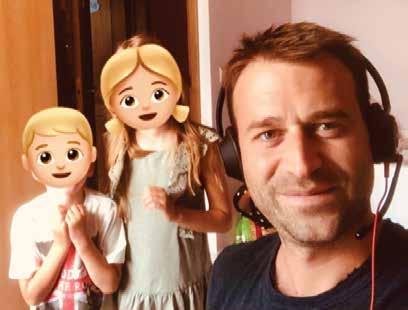
From a personal point of view, like many parents working from home, the hard part for me has been keeping my children (aged four and six) occupied – they require a lot of attention – while also trying to focus on work with the sound of Netflix Kids in the background.
At the same time, I’m aware I’m lucky that I can continue working from home and that business at our company is brisk enough to allow it. Some people I know aren’t finding things so ‘simple’.
That said, I’m really looking forward to having non-video contact with friends and colleagues again, but I realize that patience remains the watchword…
5 ENGIS
At the same time, I’m aware I’m lucky that I can continue working from home and that business at our company is brisk enough to allow it. Some people I know aren’t finding things so ‘simple’.
Alexy Bastin Customer Service


On what was - or at least should have been - a day just like any other, we watched our colleagues come into the office, greeting us with a wave of the hand. It may sound trivial, but the few minutes spent each morning greeting our co-workers with a kiss on the cheek was our little ritual and meant a lot to us. Nevertheless, we all adhered rigorously to the required measures, including washing hands, cleaning work equipment, and maintaining social distancing.
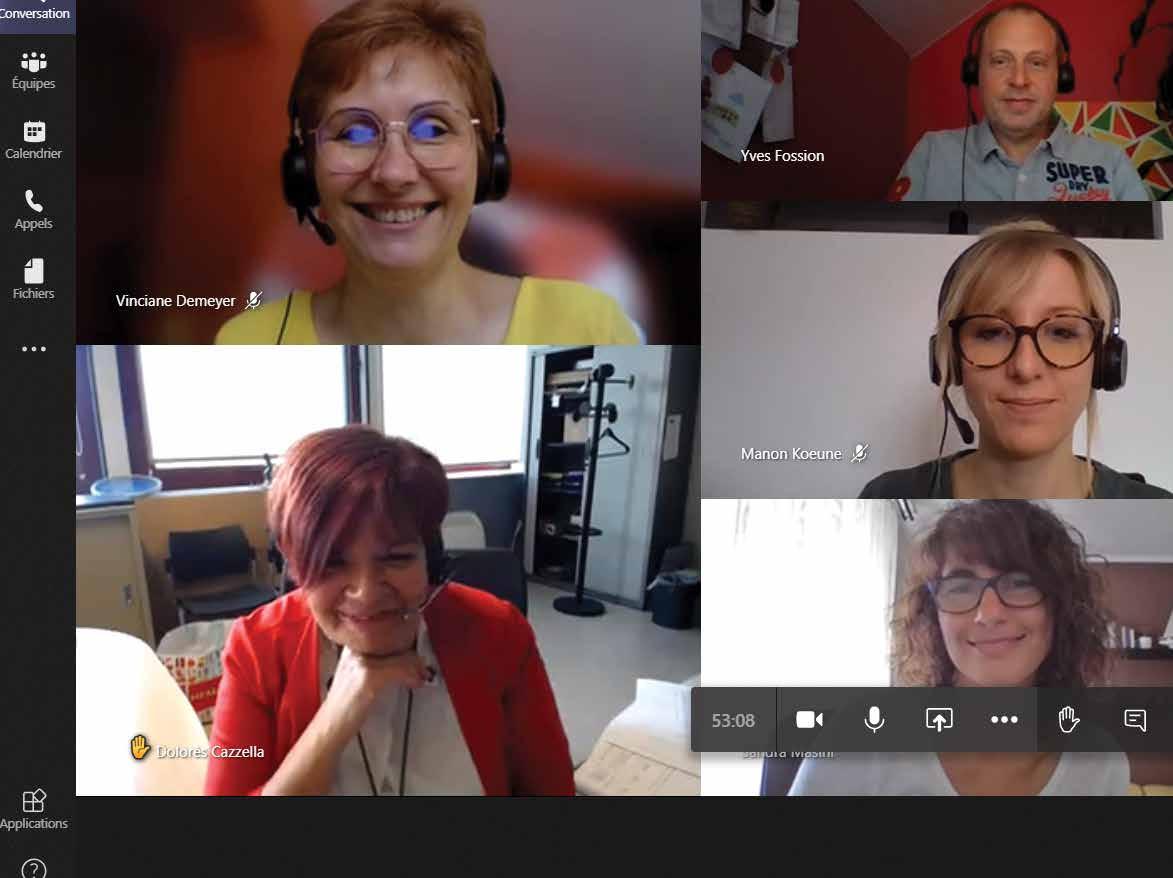
As the days passed, we started to calm down, and although it wasn’t what we were familiar with, we all got used to the new way of working.
Social distancing was the start. As the days went by, we could all feel the tension starting to build. The media reports were confusing and we didn’t know where we were heading. The possibility of remote working started to be discussed but we were pretty skeptical about its feasibility and effectiveness.
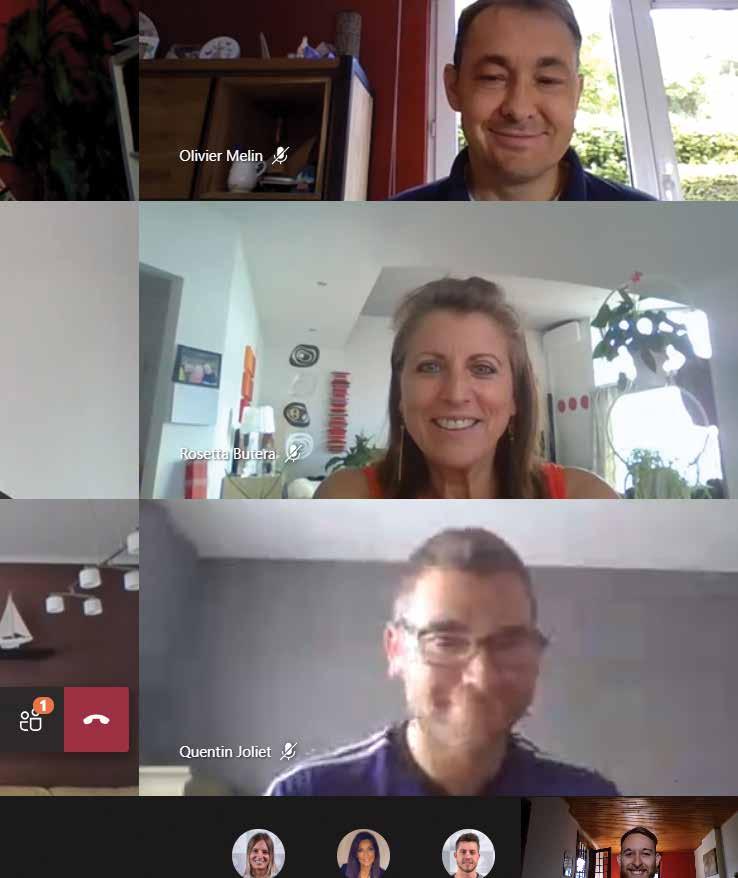
March 18, 2020 was when everything changed. The day started with a lot of uncertainties and unknowns. We knew that our department was going to have to arrange to work from home but we weren’t really prepared for it yet. Some people were stressed, while others were upbeat and tried to ease the tension and help their more panicky colleagues.
The IT Department supplied us with the necessary equipment and we took the time (among ourselves) to check that everyone was confident about using the
only place where we had any hope of being able to concentrate - concentration being the hardest thing to find when working from home.
tools at home as if they were still in the office. Once we’d done that, we set off home and settled down beside the basket of laundry waiting to be ironed, or next to our partner who was already working from home, or maybe just in the one and
Another issue with working remotely is the printouts to be stamped, signed, and scanned. We need them to complete our customers’ files and they are also essential for getting goods through customs. We therefore arranged to take turns to go into the office, according to a set schedule, to take receipt of the original documents from the various bodies we work with and complete the files in the proper way.
As the days passed, we started to calm down, and although it wasn’t what we were familiar with, we all got used to the new way of working and felt more comfortable. Even though we were locked down at home, we had all the support we needed from our colleagues, friends, and the entire line management.
The volume of work hasn’t decreased, contrary to media reports about companies that have seen their business tail off over the weeks. Will there be an impact in the months ahead? I don’t have the answer to that, unfortunately. But we are confident, confident in the knowledge that we’ll all get through this together.
7
ENGIS
We are confident, confident in the knowledge that we’ll all get through this together.
Diana D’Amario Logistics


WORLDWIDE EDITION | N°5 | Q2 2020
And to think I’d been dreaming for years of trying out teleworking!
Lockdown and logistics? A logistical challenge, to say the least! How did it all start? To begin with, when they asked us not to kiss or shake hands with our colleagues, we found it mildly amusing. We thought it might be a little premature. But within a few days everything took off.
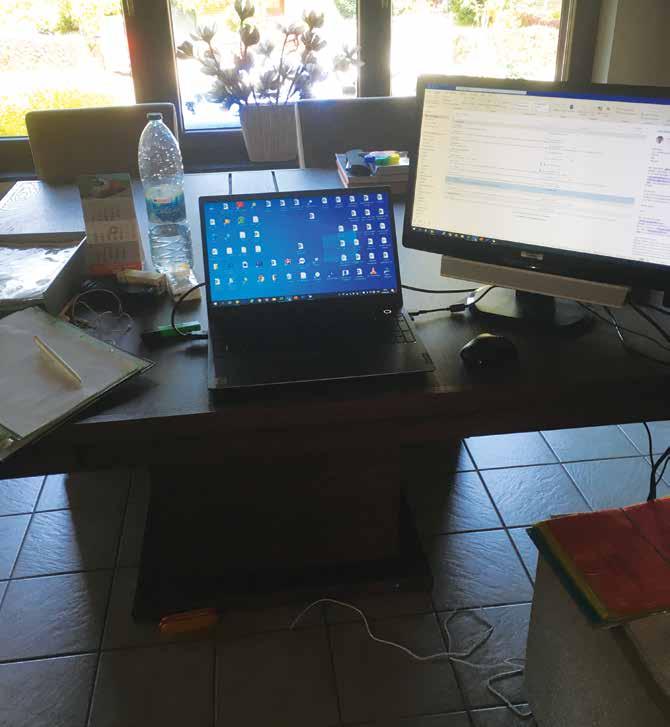
The first colleagues abandoned ship to lock down at home and by the next day, March 19, I too was hunkered down with my equipment in my new home office, aka the living room. And to think I’d been dreaming for years of trying out teleworking at least one day a week! Well, it’s been a few weeks now and I can tell you it isn’t everything it’s cracked up to be. I miss office life: seeing colleagues, hearing phones ringing or the sound of printers – things we can often find annoying but which we end up missing when we’re far away from them.
But going back to the beginning, I’d like to say a huge THANK YOU to our IT team who helped get us set up at home quickly and professionally by ordering PCs at lightning speed, setting them up even faster, and helping us out with even the slightest problem or if we made a mistake. That happened to me a couple of times when I did something wrong and couldn’t log in. They’ve been available around the
clock, and with me in control of remote connections, they’ve definitely had their work cut out!
At a time when we’re all trying to minimize our paper consumption, Logistics has taken things to the next level. IT already helped us a lot by providing tools to avoid printing
We’ve gotten used to communicating via Teams, Skype, WhatsApp, and email, and departmental meetings are going very well. The Logistics team has a meeting with the boss every afternoon so that any problems can be dealt with right away. Our carriers also respond very quickly, as do our colleagues at Prayon. There’s a real sense of cohesion within our company, a determination to get through this and a willingness to put in the resources needed.
From a ‘personal’ point of view, I’ve now gotten into a routine: when I get up, I no longer panic about whether I can get online or whether my inbox is exploding... I’m in the rhythm and if, as some people predict, this teleworking is going to last for a long time, I think we’ll all be able to cope with it in our own way. Personally, I still get down sometimes when I think about the future, the global economy, and all those people who won’t be lucky enough to hold onto their jobs. It’s very hard not knowing where we’re heading and when we’ll be able to get back to a normal life.
out transport documents or whenever there are extra transport costs, changes, or cancellations, but after six weeks of teleworking, we’ve found that many other tasks can be done entirely electronically without the need for any printing.
I hope that you, my Prayon colleagues, and your families are all doing well. Stay safe, and I very much hope I’ll be able to see and talk with you again very soon.
9 ENGIS
I’d like to say a huge THANK YOU to our IT team who helped get us set up at home quickly and professionally.
Pierre
 Dugardin
Purchase of raw materials
On Monday, March 16, it was decided that all staff in our division should work from home. What many had no doubt considered a ‘complicated’ undertaking suddenly became doable thanks to the dedication of everyone involved and the support and equipment provided by the IT Department.

WORLDWIDE EDITION | N°5 | Q2 2020
Despite not being IT nerds, we were all fully able to operate remotely!
All phone lines were redirected to our cell phones and the new arrangements soon became clear to our partners, both those within the company and also our raw materials suppliers, commercial subsidiaries, customers that buy our products (NP 12/27,96.5% and dilute H2SO4, gypsum, etc.), and carriers, with whom we are in constant contact.
Fortunately, our department already had shared EDM tools in place for managing schedules, orders, files, and record-keeping. A few minor adjustments to go 100% paperless and we were away! Despite not being IT nerds, we were all fully able to operate remotely! We’ve found that the vast majority of our contacts, both suppliers and customers, have very similar setups in place, but so far we’ve been very lucky that our business has not been affected.
However, the crisis has generated significant tensions as regards two key raw materials, sulfur and soda lye, which we need to manage optimally so that the plants can run at capacity, given the positive business conditions Prayon is experiencing.
The sulfur comes mainly from oil refineries, which have had to reduce their capacity following the sharp drop in consumption of their derivatives due to the suspension of air travel (jet fuel), the decline in road traffic (gasoline and diesel), and so on. In the case of soda lye, the shortage is owing to weak demand for chlorinated derivatives (vinyl, PVC, isocyanates, etc.) in the construction, furniture, and automotive sectors, in particular. This has had the effect of reducing the capacity of electrolysis units, resulting in a sharp decline in the amount of soda lye produced (a by-product of chlorine production) and an increase in market prices.
We’re a small team, so communication among department members wasn’t an issue; it worked well right away. All the same, we started holding weekly meetings on Teams where anyone who wants to can discuss any issues they have, whether work-related or otherwise (kids, school, family, contacts, internal measures, masks received or made, whether or not to wear them and the implications… even hairdressers, in some cases).
As with the other support departments, we have of course had to take days of furlough/leave, while always maintaining a staff presence and continuing to provide a service for our external customers and the production teams during April and May.
While everyone agrees that it feels like ages since we were last in the office together, we’re also all fully aware how important it is to follow the rules in view of the circumstances, because all of us have loved ones who are unfortunately considered to be ‘at risk’ and it is vital to safeguard everyone’s health.
June is almost upon us already, along with the vacation period, and some major uncertainties remain: the very partial re-opening of schools, vacation camps for the kids, whether or not to take vacations abroad, coping with the heat in the office if you can’t run the air conditioning during the summer months, working in a mask, the risk of quarantine and of putting real strain on a system that has coped well so far... in short, a host of legitimate questions are being asked by the division’s staff.
But there is one thing everyone agrees on: the post-COVID-19 world is sure to be a very different place!
11 ENGIS
However, the crisis has generated significant tensions as regards two key raw materials, sulfur and soda lye, which we need to manage optimally so that the plants can run at capacity, given the positive business conditions Prayon is experiencing.
Richard Zajaczkowski IT
On Monday, March 16, I was taking my usual lunch break away from the Engis site to clear my head. My mind was wandering, busily putting the world to rights, when all of a sudden my cell phone rang.
It was Marc Senterre. “Richard... We’re expecting you at the meeting!”
Back to reality with a thud! The reality of a missed appointment..... and a missed lunch.
I arrived in the meeting room a few minutes later, as Marc Senterre was saying: “Are we all now agreed on the urgency and importance of this meeting?”
And that’s when I realized that due to COVID-19, we were going to have to introduce mass teleworking and provide laptops for around 150 people, all in the space of a week.

Easier said than done! We’d never envisaged this possibility from a technical point of view, meaning we had to draw up plans from scratch in just a few hours. It was the start of a crazy race against time, one in which we knew where we were going but not how to get there.
I went into a military mindset, holding a flash meeting with my team at which we made technical decisions and assigned everybody roles within a few minutes. The innovative, high-profile nature of our response to COVID-19 added an element of risk that we now had to face up to. The bar was high.
The tight deadlines meant that we had to bypass conventional procedures. Orders were placed during the meeting by speaking directly over the phone to a

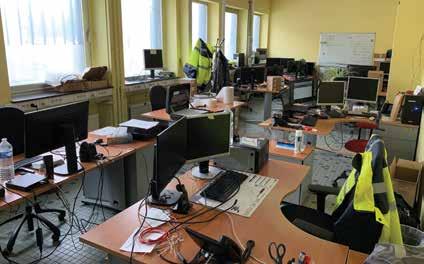
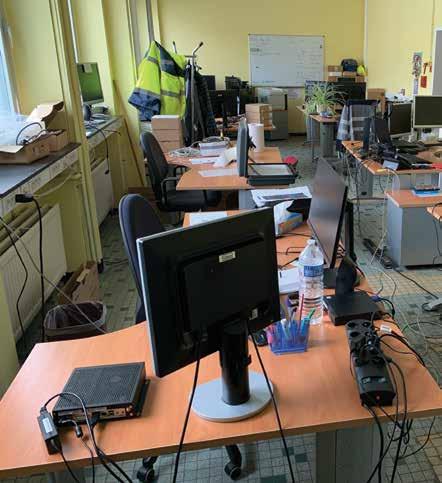
preferred supplier and taking whatever stock they had available. We had to be the first to reserve the equipment we needed. For several days, deliveries were made in my car, which was packed to capacity. Laptops were set up here at Prayon, in parallel flows, with all available space and power sockets requisitioned. There were

WORLDWIDE EDITION | N°5 | Q2 2020
It was the start of a crazy race against time, one in which we knew where we were going but not how to get there.
laptops everywhere – in the offices, the machine room, and the workshop. In the end, we ordered, set up, and delivered 174 laptops in five days. A record!
As teleworking ramped up, two problems soon became increasingly serious and began to give us real cause for concern.
First, processor and memory use levels at our data center had to be raised several times until we reached a critical hardware
threshold. Thankfully, the thoroughness and sophistication of our morning and end-of-day maintenance procedures allowed us to overcome this challenge.
Second, support requests from our teleworking customers increased as rapidly as our deliveries. We’d thrown them in at the digital ‘deep end’ and had to make sure that no one went under. Working together closely as a team allowed us to adapt our response to the circumstances.
After three very hectic weeks, the situation began to stabilize. The messages of encouragement and thanks we received from all sides illustrated how effective our response had been. Mission accomplished!
This successful outcome was the result of team work, where everyone played their role to perfection.
Today, Prayon staff are still working from home, and we’re very proud to be ensuring the smooth digital operation of all the company’s work flows.
But secretly I’m touching wood and crossing my fingers. It’s not over yet…
13
Support requests from our teleworking customers increased as rapidly as our deliveries. We’d thrown them in at the digital ‘deep end’ and had to make sure that no one went under.
ENGIS
Sunday, April 5, 2020.
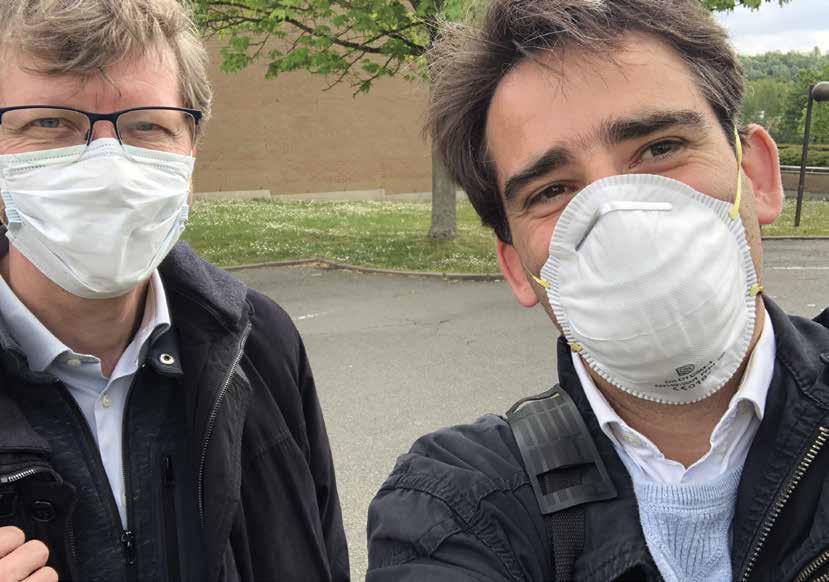
The sun is shining, it looks set to be a beautiful day. It’s already been three weeks since lockdown started.


The days are punctuated by Teams meetings.



Frédéric Gevers Legal Department





The Legal Department has reorganized, and its four members are now working entirely from home. As well as handling its own cases, the department continues to provide a support function, despite working remotely. We try to answer day-to-day questions and requests as well as dealing with the new issues raised by COVID-19. (Can Prayon make its own sanitizer gel? Can Prayon force an at-risk employee to stay at home? What happens if COVID-19 leads to inflation? Do we need to include a ‘pandemic’ clause in all future contracts? etc.) The days are punctuated by Teams meetings, and meanwhile an acquisition project is in the offing that would see Prayon buy the assets of EcoPhos, a company recently declared bankrupt…

WORLDWIDE EDITION | N°5 | Q2 2020
After a hearty breakfast, I switch on my phone... Message from Marc Collin at 11:04 PM the previous evening:
“Would
you be available tomorrow for EcoPhos?”
Unbeknownst to us, that message was to mark the start of an intense period for the department, over three weeks focusing on plans to acquire patents, brands, equipment, and debts, as well as a Bulgarian subsidiary TechnoPhos.
The final takeover bid had to be submitted to the administrator by Monday, April 6, with April 30 set as the deadline for finalizing the deal.
Between that Sunday and April 30, the race was on to complete the full takeover of the desired assets by Prayon – and all while we were in lockdown! This kind of acquisition normally
takes several months, with multiple visits to the various sites, endless legal and commercial discussions, the negotiation of numerous agreements, including with the company’s creditors, banks, and so on.
Back to that Sunday: our first task is to convince our two shareholders of the benefits of the acquisition and the need to significantly increase our initial offer to secure the deal.
Following various discussions in small committees and plenary meetings, an agreement is reached at the end of the day. Our shareholders agree to back our takeover plans, meaning that we can up our offer – due in the next morning – and hopefully win out over the several rival bids, including the one favored by the creditors.
The offer was submitted on April 6, and on April 7 Prayon received confirmation that its bid had been successful.
There’s no need to go into the details of everything that happened in the days that followed.
Suffice to say, at 8 PM on April 30 the deal was finalized.
This successful outcome, achieved under both time pressure and the constraints of lockdown, is testament above all to the exemplary collaboration, input, and creativity of all the parties involved, including IT, PRT, R&D, Finance, Patents, the Technical Procurement Department, HR,… and not forgetting the Legal Department, of course, all coordinated by Marc Collin, who worked tirelessly on all fronts, day and night.
Between that Sunday and April 30, the race was on to complete the full takeover of the desired assets by Prayon!
15
ENGIS
This successful outcome, achieved under both time pressure and the constraints of lockdown, is testament above all to the exemplary collaboration, input, and creativity of all the parties involved.
Florence Pirotton & Georges Cechagias Planning & Financial Control
On Friday, March 13, with almost the entire team present at Engis, we learned about the measures the government would be introducing that evening… Together with Olivier Descamps, we set about making working arrangements for the department for the weeks ahead, compiling a list of colleagues who would need a computer in order to work from home in line with the lockdown measures (some already had computers, but others didn’t), creating groups on Teams to facilitate discussions between ourselves and with other Prayon staff, organizing everybody’s tasks, and answering questions from team members.
Given the limited time available, we decided that everyone would come in to Engis on Monday, March 16, so that we could finalize the arrangements.
On Tuesday, March 17, our new way of working took effect. Everyone was at home, some settled comfortably, others less so, with their own computer or one provided by the IT Department (the computers were delivered in record time – everyone had one by Thursday at the latest) set up on a desk or the dining room table; some sitting on ergonomic office chairs that Dr. Deru would have approved of, others perched on wooden dining chairs with stiff backs, all trying to work.
Since then, we’ve discovered IT features we barely knew existed. Over time, we’ve become pros at holding meetings on Teams and Skype, either alone or surrounded by our new interns, i.e. our babies, toddlers, kids, tweens, or teenagers,
who don’t always operate to the same schedule as us but still have to be kept occupied (age-appropriately).
This new profession of home-working parent and teacher isn’t always an easy combination, but we do our best. My son (editor’s note: Florence’s), for example, who is only nine months old, has become addicted to videoconferencing and attends almost all my Teams meetings (when I don’t manage to schedule them during his nap time). And they say we’re supposed to keep young children away from screens! Some colleagues have to supervise schoolwork while fielding work-related requests and queries from co-workers. Others, whose children are too young to have homework, have resorted to working staggered hours (very early and very late). Georges, meanwhile, had to prepare for the ‘lockdown’ birth of his first child, who arrived in late April.
Despite this, most of the routine meetings we used to hold in person still go ahead and our day-to-day work continues to get done, almost as if nothing out of the ordinary was happening.
Also, we all try to maintain social ties by making video rather than audio calls, by saying a virtual ‘hello’ every morning on Teams, by regularly organizing virtual coffee breaks or chats, and so on. For all that, this experience has given us a new-found appreciation for the coffee from the Management Building coffee machine and the snacks from the local Pita restaurant. We can’t wait to try them again!
No one in our department has been back to work on site since March 17, and that looks set to continue until at least the beginning of June.
WORLDWIDE EDITION | N°5 | Q2 2020
This new profession of home-working parent and teacher isn’t always an easy combination.
17 ENGIS
Since then, we’ve discovered IT features we barely knew existed. Over time, we’ve become pros at holding meetings on Teams and Skype.
Michaël Cazzella P2
As with many other people, the start of the COVID-19 crisis created considerable confusion among the P2 teams. The expert forecasts were alarming, the news coming from countries like China and Italy was catastrophic, and our government seemed to be downplaying the risk by not making decisions aimed at protecting the public.
Once this initial period of confusion was over and the National Security Council had been set up, the measures taken by Prayon, both to protect its workforce and to ensure business continuity, actually came as a relief to us. For example, before those measures were introduced, it had been hard to resist the urge to greet each other with a handshake or a kiss on the cheek, but once the rules were in place, we no longer saw this absence of physical contact as a lack of respect for others but rather as a necessary means of protecting ourselves and each other. It was reassuring to see all relevant parties within the plant putting in place solutions for our own good and that of the company.
As soon as we started to run low on disinfectants for our workstation or sanitizer gel, they were replenished. And while communicating effectively in a mask was often tricky, due to not seeing the expressions on people’s faces, we realized
that this was going to be necessary for a long while yet.
We were particularly worried about one member of our team, who was vulnerable to contracting the virus. Luckily, the plant’s medical department decided that because of this she should stay away from the site, which came as a great relief to us all.
Seeing the maintenance staff regularly disinfecting our work areas with smiles on their faces and seeing everyone pull together to keep the plant running, despite the often sombre mood outside, kept our spirits up at the start of each day. Not to mention the sandwiches that awaited us whenever we did a night shift, which the previous shift teams had pre-ordered for us.
In the end, this unprecedented and, on the face of it, painful experience has actually turned out to be very positive, both on a human level and professionally.
WORLDWIDE EDITION | N°5 | Q2 2020
The measures taken by Prayon, both to protect its workforce and to ensure business continuity, actually came as a relief to us.
Marion Demortier PTA


We’d just completed an industrial trial (TSP) when the first COVID-19 measures were introduced. We found them slightly amusing, or at most, were mildly put out at not being able to greet each other with the usual kiss on the cheek. It was only when the government officially announced the lockdown measures that the mood changed somewhat and the seriousness of the situation really hit home.
In FTP, the measures ordered by Prayon were implemented quickly, the main ones being reorganizing the control room (plexiglass, distancing) and the canteen, and introducing remote working, while also halving the on-site supervisory team.
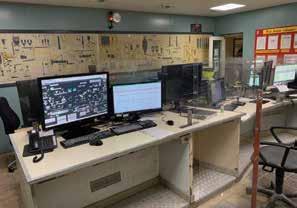
As far as the equipment is concerned, the plant continues to operate smoothly, although equipment maintenance and servicing needs are growing due to the reduced operator workforce. The situation should improve in the coming weeks, as the day teams gradually return to work. As for sales, they remain in line with the budget (no doubt some of our output has been put to good use by aspiring home-bakers during the lockdown…).
As for the most recent measures (such as wearing face masks), I realize that they are likely to last for some time, along with remote working. We just have to put up with them and think of the colleagues in other departments who no doubt want to return to the site. Here in Production, the lockdown hasn’t been too drastic because we’ve been coming in to Engis and seeing other people besides our immediate family – for me it was a real need, but others found it more of a hardship, given their fear of catching the virus.
A certain routine has now set in as the weeks have passed. I organize my work differently depending on whether I’m working from home or on site. The plant is starting to come back to life a bit as the teams, other departments, and contractors gradually return. But we still have to remain vigilant. Some people can find it hard to accept yet more new measures, but the measures are consistent with government recommendations and we mustn’t forget that they are there to protect our health and for the good of the company.
The impact of the lockdown on the department is still difficult to assess, and the coming months could be difficult. Several projects will have been delayed by almost three months, but they will now be able to resume.
In conclusion, FTP is staying the course and weathering the storm, hoping that things will calm down again soon.
19 ENGIS
No doubt some of our output has been put to good use by aspiring home-bakers during the lockdown…
The world we live in has changed overnight and we all know the reason why: COVID-19. A minuscule virus from faraway China has managed to turn the world upside down in just three months. We asked a group of employees at Prayon’s Puurs site what this intense period has been like for them.
Ivan Piessens Pre-treatment division
It was fascinating to see how the plant could operate with nine people working on a weekend regime.
What was life like for you in the period before the lockdown began on March 13, 2020?
I only started working at Prayon on Monday, March 2, so just before the lockdown. I’d been through a period of personal transition and was really happy to get back to work. It was a new challenge for me, having never worked in a Seveso establishment before. The first few days were pretty exciting, finding out all about phosphoric acid and how hazardous it is, and the risks involved in the job. I started my training full of enthusiasm. My field operator took me under his wing right from the start and explained the tricks of the trade. There’s so much to learn. A good field operator needs a wide range of knowledge and skills to control the process. Even just taking samples during the production process is a complex business.
How was the lockdown for you?
The announcement of the lockdown and the changes to how work was organized came as a real shock to me. Suddenly the whole plant was operating on a skeleton staff and I wasn’t allowed to come to work. I kept wondering how it would all pan out, what would happen with my training and how I was going to organize my working life. At home, we adhered strictly to government measures and kept our social bubble as small as possible. I only left the house to go shopping – wearing a face mask and gloves, of course. I didn’t want to take any unnecessary risks. Otherwise, I spent a lot of time with my little family, which was also a special experience.
How did things go
after that?
After two weeks, my foreman called me and asked if I wanted to continue with my training. Only a few members of the personnel were working and they could
could. Later on there were enough masks for everyone. What really did impress me was the envelope containing fabric masks: Prayon’s masks were distributed earlier than the government ones. Good job! They came in really handy at home for my family.

use some help. Without hesitation I said ‘yes’. So by early April I was back at work. Being back at the plant was an experience in itself. It was fascinating to see how the plant could operate with nine people working on a weekend regime. We carried on with the training as best we could. It wasn’t always easy to have things explained through a face mask or while keeping a distance of 1.5 meters. Some parts of the plant are noisy and there isn’t much room between some of the equipment, but we made the best of it. I’m very grateful to my field operator for all his help.
How did you find the measures introduced by the company?
I had every confidence in the measures the company took. We all knew we had to minimize the risks of COVID-19 contamination, so we adhered to the agreed measures as much as possible. To start with, there weren’t enough face masks available – unsurprisingly, of course, because they were in great demand worldwide. So we observed physical distancing as much as we
Another thing I’d like to say is that the free sandwiches were a real class act! Even my friends who work at other factories couldn’t believe it when I told them. So thank you for that.
Were you ever scared?
No, not really. We made the best of the situation. Plenty of hand-washing, disinfecting, physical distancing, and so on. And over time you get more used to dealing with the risk. So no, I wasn’t afraid.

In two weeks, I’ll have completed my training as a field operator in pre-treatment and will change shifts, joining a new process operator’s team. I’m looking forward to it.
Ivan, we wish you all the best for the future. Thanks for talking to us and for being so open.
21 PUURS
Suddenly the whole plant was operating on a skeleton staff and I wasn’t allowed to come to work.
The tipping point for me was watching [political discussion show] De zevende dag on Sunday, March 8. I got the impression that politicians and the media were playing things down a lot, and that
Benny Van der Trappen Shipping dock
To begin with, COVID-19 didn’t seem relevant to me. It was just some virus in China. Even when it arrived in Europe, it still felt a long way away. In any case, I didn’t think it would be that bad – it seemed like just a lot of media hype.
How was the lockdown for you?
In the beginning I did worry a bit, about how it would affect my personal life, and
company
the situation wasn’t being taken seriously enough. When [Belgian Health Minister] Maggie De Block announced the full lockdown on Thursday, March 12, I knew that something big was happening. And that news wasn’t exactly reassuring.
above all my work situation. Would we be left without an income? Would I be made technically unemployed? Might there even be redundancies due to the economic slowdown? My whole family was suddenly stuck at home and I saw how much my children missed their friends. It was pretty tough. I kept working the whole time because the ships kept coming in of course. As quay operators we’re a vital part of the process. No raw materials mean no production. We complied fully with the measures right from the outset:
not shaking hands, disinfecting everything thoroughly, and keeping as far apart as possible. It wasn’t easy.
How did things go after that?
As I said, I kept working the whole time. We’d arranged to keep things running on a skeleton staff, of course. We also adhered strictly to all the other recommended measures. It was quite a challenge because we had to completely change the way we worked – with the ships’ crews, for example. No more checking papers and filling in checklists in the ship’s wheelhouse! Crews can sometimes be isolated on board a vessel for months at a time, which makes them quite susceptible to illness. This means they definitely want to avoid any risk of infection, so we often worked outside at a table or on the gangway. This worked out fine because everyone came well prepared to the han-
WORLDWIDE EDITION | N°5 | Q2 2020
The
acted very swiftly.
dovers, so we actually ended up saving time. We also communicated more by radio. It might be an idea to continue doing that in the future, post-coronavirus.
How did you find the measures introduced by the company?
The company acted very swiftly. We switched to a skeleton staff pretty early on, and there were enough disinfectants available fairly quickly. I would’ve liked the doors to be opened a little earlier in various parts of the plant, because touch-
ing door handles is always risky. But that measure was introduced after a slight delay. All in all, I’m satisfied with how the company responded to the crisis.
Were you ever scared?
I was never really scared, but I did feel a bit worried. Watching the news twice a day didn’t exactly help. It kind of unsettles you. So I stopped after a while.
Several more ships are due in this week, and as usual we in the quay department will be working hard to load and unload them safely. No raw materials mean no production.
Benny, we wish you all the best for the future. Thanks for talking to us and for being so open.
Jente Vanden Bergh Purified acid department
I won’t forget the start of the coronavirus crisis in a hurry: I was at home with a viral infection. The question I got asked the most was: “You don’t have coronavirus, do you?” As there was no large-scale testing at that time, I guess I’ll never know the answer. Luckily, I recovered relatively quickly and was hoping to return to work, but unfortunately that was when the new measures came into force and working from home became the new norm. The first week of the lockdown was a time of adjustment for everyone, but for me it was really about trying to find the right rhythm and work out what tasks I could do from home. I looked for somewhere suitable to work and within a few days I was getting better and better at structuring my day. Things got very quiet in the neighborhood. With no cars on the roads and empty streets, society literally came to a complete standstill. Fortunately, things at Prayon kept going pretty well and we didn’t have to worry about being furloughed. I was surprised how easily people managed to adapt. Keeping
1.5 meters apart, washing hands, avoiding unnecessary travel, holding meetings via Teams, Zoom, and Skype – we gradually got used to it all. I enjoyed working from home, but, little by little, normal life started to resume and I was back in my car again, driving to Prayon every morning. Having so many people around took some getting used to, but the measures that had been introduced soon put me at ease. It was nice to be in different surroundings again and I’d missed having a chat with colleagues.

23 PUURS
The question I got asked the most was: “You don’t have coronavirus, do you?”
François Baudry QEA division
But it also has its downsides: for me, the main one is the lack of social contact. I don’t at all envy people who work remotely all the time. Fortunately, alternating with Vanessa means I get to return to the plant regularly and share a few jokes with colleagues (funnily enough, my wife and kids aren’t always quite as receptive to my jokes). Coming on site also allows me to stay in touch with what’s going on on the ground, which is important in my job.
That said, switching between workplaces like this has the additional drawback of requiring you to communicate constantly within the department on every single subject. Communication is good, but it’s also time-consuming.
The health crisis arrived, and with it the lockdown. We were asked to work from home as much as possible. This was obviously possible in the QEA Department because much of our work is done at a computer screen. However, some of the work also requires us to be on site (releasing batches, processing complaints, investigating causes, etc.). Vanessa and I agreed to alternate between days on site and days working from home.
You hear all sorts of things about teleworking (especially from people who don’t do it), so I’d like to give you my take on the experience. Obviously, it may be completely different for someone in different circumstances.
Teleworking has its benefits, chief among them being that you avoid exposure to the virus. Also, working from home can be quite pleasant provided the house is quiet (I don’t have young children any more). If the weather is good, you can even work outside.
As far as work at the plant is concerned, things have changed. We reduce ‘contacts’ by limiting the number of people in meetings and at coffee breaks. We open doors and windows as much as possible. However, it’s impossible not to cross paths with people in the corridors…
To conclude, I’d like to take my hat off to the IT team and thank them for doing their utmost to ensure that we can carry on working effectively (teleworking, Teams meetings, etc.).
Stay safe!
WORLDWIDE EDITION | N°5 | Q2 2020
Coming on site also allows me to stay in touch with what’s going on on the ground, which is important in my job.
Julien Fulchiron Maintenance division
Back in early March, with the technical shutdowns of TriKason and Hagan fast approaching, our partners and providers kept asking me whether the shutdowns would be going ahead. In the end, we decided to push ahead with the Kason shutdown, which started on March 16, but not with Hagan. We’d identified that the Kason shutdown would involve few concurrent activities, which wasn’t the case with Hagan. The workforce was nervous, with the government announcement due that same evening, but everyone turned up nonetheless.

After the announcement, suppliers and service providers told us they were scaling back their operations, so scheduled work was postponed and delivery times extended. Some suppliers didn’t even give us a delivery date! This meant added stress as we waited for urgent parts to be delivered. There was a period of uncertainty, with some people taking the matter less seriously than others. Then, after Prayon’s first rules were issued on March 17, we had to make sure that the operational staff could work in the best possible conditions. Masks were
available, but there weren’t enough for all the staff involved. Following ‘feedback from the field’, a meeting was held on the subject and we decided to issue personnel with Idra helmets or visors if they would be unable to comply with the 1.5 m safety distance while working. This reassured them and allowed them to work safely.
After lockdown started, we made greater use of DECTs. Regular update meetings involving several people took place outside in the sunshine!
Today, with hindsight, I think we coped with this unprecedented period rather well. The Kason shutdown went very well in the end, and the other production lines also remained in service. Service providers and suppliers are gradually resuming work, which means we’ll finally be able to get back to ‘normal’ activity and start the Hagan shutdown, which is scheduled for early June, without too much stress.
LES ROCHES
The workforce was nervous, with the government announcement due that same evening, but everyone turned up nonetheless.
Pauline Boyer New Construction Division - Investment
I’d done some teleworking before, but never for more than one day. So working from home for weeks on end, what with my children being there as well, took some getting used to!
My colleagues and I managed to get to grips with videoconferencing on Teams – even those who were a bit longer in the tooth pulled this off! We also used the accompanying chat function a lot when working on projects. While we missed our office coffee breaks, we did sometimes all have a mug in hand as we sat in front of our cameras. We got a bit of a peek into our colleagues’ home lives too, as we saw their partners, children, or pets passing by! You could hear the whirring of a blender, the doorbell ringing as the mail arrived, the sound of a lawnmower, or the cheeping of the suppliers’ canaries, to name but a few examples. This all added a touch of humor to it all!
We also had to think about our children: the vagaries of everyday life, the kids’ homework, making their breakfast during meetings, and breaking up their fights. My kids hid to try and avoid their schoolwork, or else they’d come and ‘attend’ meetings by taking up position behind my chair!
My daughter even took hold of the microphone when I was on a video call, but she ran off when my colleagues started speaking to her!
I used the moments of respite they did give me to take various matters forward.
In short, it’s not easy doing this every day, but we were safe and sound, and we thought a lot about our colleagues who weren’t so lucky. Personally, I’m looking forward to getting back to the site, going around the various the units, and breathing the phosphate-tinged atmosphere of Les Roches again, albeit now wearing a mask and visor and regularly cleaning my hands with sanitizer gel!
Fingers crossed that I can soon swap my ‘work’ slippers for safety shoes and see my main co-workers in the meeting rooms again! And I’ll do so knowing from my experience in recent weeks that I haven’t missed my calling as a teacher.
WORLDWIDE EDITION | N°5 | Q2 2020
My daughter even took hold of the microphone when I was on a video call, but she ran off when my colleagues started speaking to her!

27
LES ROCHES
Sylvie Couderc, Laëtitia Dalicieux, Stéphanie Coutarel & Gisèle Veyre HR division
It all began on March 13... On the calendar, March 13 was a Friday just like any other, except possibly for those of a superstitious nature!



Who would have thought that it would see some of the staff in the Management Building embarking on the first of a long series of telephone campaigns to contact all Prayon staff and find out what arrangements they would be putting in place, with schools closing and a lockdown due to be announced?
That day was the start of a new setup for everyone, with work and home life being reorganized in response to the unprecedented crisis overtaking the world.
The first duty of Prayon’s Management, primarily through the HR Department, was to protect employees’ health and safety. This meant setting up emergency teleworking where possible, and adapting work spaces and workstations to enable social distancing and compliance with safety measures on site. Particular attention had to be paid to the most vulnerable staff, and those with children who were no longer attending school. We also had to monitor
the situation on a daily basis and communicate effectively, and on practical matters, with employees and trade unions. There were many questions from individuals to be answered too. Dealing with all of these issues meant a lot of hard work for HR staff.
But how exactly did the members of the HR Department cope with all this?
The HR Team at Les Roches had to be proactive and get organized pretty quickly.
In the end, this social and economic tidal wave is going to shake things up in the company for a long time to come, but isn’t this also an opportunity for HR to question some parts of the way we work?

WORLDWIDE EDITION N°5 | Q2 2020
The first duty of Prayon’s Management, primarily through the HR Department, was to protect employees’ health and safety.
Teleworking, work-life balance

“It’s funny how attracted children are to the screen that is monopolizing their parent’s attention! After a few weeks of lockdown, the faces of everyone’s kids were a familiar sight to us all!”
“Suddenly having to set up a shared office with your partner in a ‘quiet’ corner of the house in order to carry on working, while also standing in as a teacher, requires a certain degree of adaptability. But we always emerge stronger from a crisis and in a way this has shown me where my skills don’t lie: I now know I could never be an elementary school teacher or a stay-at-home mom!”
Working as a team on site and remotelyTime management

“Although many staff were working from home, the HR Department set up an on-site duty team comprising Sylvie, Stéphanie, and Gisèle to answer employees’ questions, reassure them, inform them of the measures being taken to protect them, enable them to stay with their children, and ensure their own safety… It was the right thing to do.”
Laëtitia

“Congratulations to the whole team for their professionalism and their proactive approach in finding ways to ensure that Prayon staff had the information they needed at the right time, without suspecting all the hard work that this entailed.”
“Working together as a group is positive and rewarding. I found it very satisfying to be able to show that each member of the team could adapt flexibly, help out the others, and take on other jobs as and when required. Such strong cohesion is ideal.”
29
Sylvie
Laëtitia
Stéphanie
Gisèle
LES ROCHES
Remote management

“It quickly became obvious that I needed to get the team working collectively to provide support to Prayon staff and that I had to be able to tell people which services they could count on receiving. During the first phase of the lockdown, staff no longer worked in specific HR domains, but all came together around a shared mission. This was the first role that the HR Department had to perform. Being able to adapt to the situation was also vital: with everyone suddenly working from home, we weren’t more efficient than we were in the office, but the team’s commitment and dedication made up for that. In return,
it was important to leave some flexibility in the way things were organized: in any case, the team stayed the course and kept the show on the road!
I’d like to say a big thank you to everyone, especially for their support during a difficult episode I went through in my personal life.”
Going digital Dealing with the emotional side of things
Sylvie Stéphanie Stéphanie
“We had to do a lot of things in a hurry and come up with novel solutions… we sent out direct mail via text message and email so that Prayon staff could come into work…”

“We’re being told that the country is at war and we have to stay at home, but actually, no, we also have to go to work. We’re scared stiff because we don’t know what’s going on with this virus and the media is stoking our anxiety.”
Laëtitia Laëtitia
“We liaised closely with the Les Roches and Group IT departments to come up with ways to carry on ‘business as usual’ when things were anything but usual. Personally, I found a small piece of e-signature software extremely useful. Thank you, Richard! Teams also arrived just at the right time!”
“What about mail, how do we deal with that? Can the virus survive on envelopes? We have no idea… We decide to leave it for a few hours before opening it, as a ‘decontamination’ measure, as well as washing our hands before and especially afterwards, of course. Luckily there isn’t too much!”
“Personally, I felt very guilty towards my colleagues, because I started teleworking immediately on March 16 so that I could carry on working while looking after my children who were off school, whereas Sylvie, Stéphanie, and Gisèle were taking it in turns to go into work.”
WORLDWIDE EDITION | N°5 | Q2 2020
Carol Arcache Les Roches Production Management
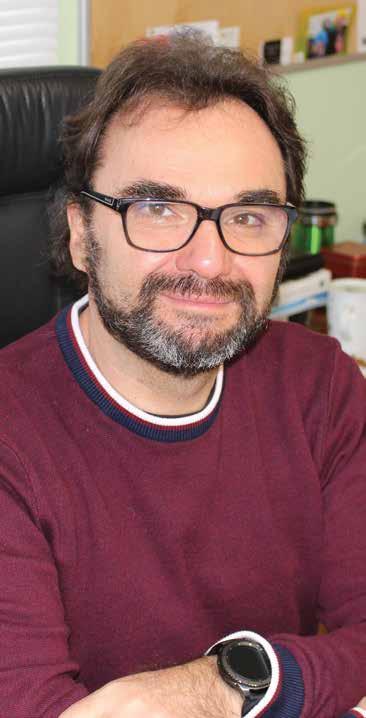
Since March 16, COVID-19 has been all we ever hear about: we live it, we talk about it, we hear others talk about it, we breathe it (with or without a mask), we work the COVID way, we lock down the COVID way, we emerge from the COVID lockdown… basically, the world seems to have come to a standstill, literally and figuratively, as a result of COVID-19!
At the very least, the COVID crisis has really shaken things up in terms of work, organization, and life priorities.
The major benefit of this crisis is that it has put people and health center stage again, pushing economic imperatives to one side. This has been the case nationally and indeed pretty much internationally.
It has also reminded us how fragile we human beings are, and how we need to appreciate the small gifts that life gives us each day and seize the day – CARPE DIEM.
At this site, I’ve greatly appreciated the dedication, the courage that some people have shown in overcoming their fears, as well as the mutual support and solidarity of all employees in helping to keep the plant running as smoothly as possible in these difficult conditions.
This is an important life lesson that we mustn’t forget when the crisis is over…
31
LES ROCHES
The major benefit of this crisis is that it has put people and health center stage again, pushing economic imperatives to one side.
Frédéric Simoës Logistics division
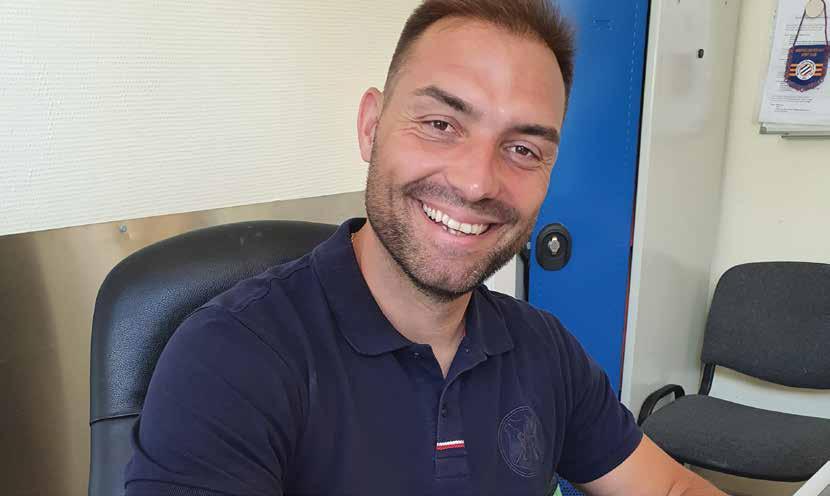
In practical terms, the first two weeks were pretty tough as we had to reorganize both our private and our professional lives. We were all a bit lost. People had very different reactions to the virus. Some were scared, while others were unconcerned or, rather, didn’t quite realize the gravity of the situation. That’s why the number of people coming into work gradually dwindled – that, and the support measures introduced by the government (e.g. time off work to look after children or due to illness).
The first week, almost everyone came into work, but people were anxious and everyone was asking lots of questions. To begin with, I had trouble understanding the way some people were reacting or behaving, but I see now that everyone was trying to protect themselves.
The warehouse team was soon reduced by half. There was a lot of concern within their department, since they frequently have to deal with people from outside the company, including a lot of drivers from Italy.
I think it was their warnings that prompted Prayon to put the first safety measures in place.
Over time, the team stabilized. Régis had to hold the fort alone for almost two weeks, which he did by working overtime and getting lift truck and tank operators to help him as required.
In the shipping section, only one person had to go off work sick. The team held up really well, considering that lift truck operators also have a lot of contact with people from outside the company (dri-
vers), who come from all over Europe. It’s true that people were worried, but we talked a lot and rolled out the necessary protective equipment and measures.
The Safety Department responded to the situation really quickly, supported by Daniel Ghedifa (Adisseo), who provided us with our first protective equipment (sanitizer gel and spray).
And while all this was going on, activity levels were higher than ever for two months, posing an additional challenge for the operational teams.
WORLDWIDE EDITION | N°5 | Q2 2020
As for the rest of the team – I don’t like to say ‘the administrative staff’, because everyone has to do at least some work in the field, even if some do it less than others – we hit a snag when both of the packaging coordinators had to go off work for health-related reasons at the same time. The only person left who knew how to do the job was Pascal, who had worked as a packaging coordinator a good ten years ago.
Suffice to say that we really couldn’t afford for Pascal to get sick too, because then there would have been no one to provide packaging instructions and production would have had to stop.
So Pascal stepped in at short notice. He taught me how to prepare packaging instructions, and depending on where we were busiest, I either issued the instructions or filled in as inventory manager, along with Guillaume.
But I have to give most of the credit to Pascal, who was very quick to adapt to his new role.

As for Guillaume, he was acting as Jean Marc’s ‘eyes’, since Jean Marc has working remotely since the start of the lockdown for personal reasons. Jean Marc could actually have gone off work sick if he’d wanted to, but he chose to keep working.
It wasn’t easy, since there were fewer people working and there were various restrictions on the site due to factors like the extended shutdown of the Hagan line. This meant that Jean Marc had to change and adjust the production program several times. He also had to review the mixer schedule to cope with very high demand from one of our customers in the agrifood industry.
We worked really closely with the Production Department, namely with Julien, Fabien, and Dany, and of course Ahmed, who was with us every day to give us his expert input and help make decisions.
And last but not least, Thierry was there 99% of the time. He was both doing his
own job and filling in for Eric Esparron every morning, as Eric had had to rearrange his schedule and was working from home in the mornings. I contributed by taking over the export side of things.
So in a nutshell, job changes, flexibility, and team spirit have helped us get through this difficult period, which, of course, isn’t over yet.
“I took a positive approach to the situation, remembering that if we wanted to reduce the mental strain our people were under, we’d have to do more to fight the psychological impact than the disease itself. Our watchwords very quickly became team spirit, support, and adaptability. We already promote these values on the lift truck team, but they became all the more important in view of the crisis. My team had no trouble understanding that they and the company both needed the same thing: to keep working so that we could make it through the crisis. Everyone pitched in: people did different jobs and worked overtime to make sure that shipments could still go out, as well as supporting other teams, like the tank operators and the production team, when they were short-staffed – which we were too, as it happens. I’m really proud of my team. I think we coped really well!”

33
JEAN-CHRISTOPHE GUYON FORKLIFT OPERATOR MANAGER
LES ROCHES
So in a nutshell, job changes, flexibility, and team spirit have helped us get through this difficult period, which, of course, isn’t over yet.
Emeline Comte Administration

We’ve been working from home since March 17, and there’s no doubt that it’s completely changed the way we operate.
Initially, it was quite overwhelming and stressful as we’d never experienced this kind of situation before, but it was just a question of getting used to it and putting the right arrangements in place.
I’d say that the biggest downside is the lack of interaction. But here in the Sales Department, we’ve been able to adapt. We see and speak to each other every day on Teams, which makes us feel less isolated and replicates some of the interaction that we have in the office. Remote working also gives you a bit more of an insight into people’s home life, which allows you to build up a different kind of relationship with your co-workers.
Because our customers operate in a range of different sectors, our workload has remained pretty much the same. We therefore need to be well organized in order to keep delivering a high-quality service. Although phone conversations are less frequent now, we make a real effort to keep in touch with our customers and there’s a great deal of good will towards everyone.
That said, it can be difficult to manage work effectively while at home, especially for those with young children.
In my case, I’ve managed to adapt by setting myself goals, especially for all aspects relating to current projects. In my opinion, working remotely enables you to concentrate better and feel more independent, which is a good thing.
It’s also definitely better for managing day-to-day stress. Not having to commute means that we have more time to devote to our family, to cook proper meals, or even to get back into sport! We feel more relaxed.
All in all, I’d say it’s been quite a pleasant experience.
WORLDWIDE EDITION | N°5 | Q2 2020
In my opinion, working remotely enables you to concentrate better and feel more independent, which is a good thing.
Guillaume Gelas, Nicolas Tripier & Kateline Gouny IT division
“For years, part of our job, at the Les Roches IT Department, has been to enable users to work off site.

That said, teleworking was still the exception rather than the norm, so our ADSL entry points were geared up for a limited number of transactions such as occasional connections to work with SAP, exchange files, and so on.

In a few hours/days, we had to plan, reorganize, and adapt a sustainable technical solution that would allow over 30, or even as many as 40, simultaneous connections.
It wasn’t all plain sailing but with a lot of determination we got there.
I’m very happy with the work our team did and am proud of how everyone behaved: responding flexibly, taking it in turns to be on site, adapting to remote working, in some cases while looking after children (meaning less divide than normal between work and family life), holding Teams meetings to share ideas and solutions, and so on.”
“We had to make a quick decision that we would allow people to take their PCs home with them and set up a Virtual Private Network (VPN) for them. Seeing that connections on the ADSL entry points weren’t going to hold out, we set up a VPN through our entry point with the greatest bandwidth. After that, a new protocol was created to allow the VPN (SSTP) and enable routing and network traffic, so that staff could access all applications such as SAP, antivirus, Z, etc.”
“I was pleasantly surprised by how quickly users adapted to this new way of working (including those who said they weren’t good with computers).”
35
Guillaume
Nicolas
Kateline
LES ROCHES
In a few hours/ days, we had to plan, reorganize, and adapt a sustainable technical solution that would allow over 30, or even as many as 40, simultaneous connections.
Manufacturing & Packaging team
 FABIEN PERRET DAYTIME SUPERVISOR, PRODUCTION LEADER
“For me, the biggest challenge has been managing the teams, with 30% of staff off work at the peak. I therefore decided to keep in regular contact with all the teams so that I would know about everyone’s availability in real time. Balancing the jobs on a day-to-day basis required more mental gymnastics and agility than ever before. Though time-consuming, this work was vital. People’s versatility in doing different jobs really helped, as we had to keep production going with a minimum of Prayon staff available. Luckily, everyone was very flexible, and showed plenty of solidarity and team spirit.
When I was working from home, I was contacted less but I had to keep in constant touch with my staff. I also had a steep learning curve with our time management tool Kelio. Looking on the bright side, I’m now quite a pro!
I’m very proud of all the teams and would like to thank them wholeheartedly for taking on whatever I asked them to do.”
 JEAN-MICHEL ROYER STAND-IN HEAD OF THE PACKAGING TEAM
“I’m used to standing in for team leaders for long periods, so that wasn’t a problem for me. What was more challenging was having to cope with the crisis, without being fully prepared. Interventions by outside companies started to get tricky and also to generate anxiety, so after consulting my operator colleagues and stand-ins, I put a table in place to block access to the control room, and work orders were signed outside. As the days went by and more people were away from work (we were down to four staff instead of seven), the pace of work became very intense and we were under a lot of pressure. We also had to deal with a lack of face masks and hand gel. We had to constantly adapt to changing circumstances, in conditions that weren’t always optimal. However, despite the fears, we knew that we had to remain vigilant, careful, and professional at all times, not give way to panic or paranoia, and keep the team working calmly and efficiently. By doing that we got through it!”

WORLDWIDE EDITION | N°5 | Q2 2020
Luckily, everyone was very flexible, and showed plenty of solidarity and team spirit.
ABDELWAHAB NAADJI PACKAGING OPERATOR

“I work in the Packaging Department. When I turned 30 this April, I decided to follow the government’s advice and not celebrate my birthday until further notice! Woe betide anyone who wishes me a happy birthday!
In Packaging, as in all the departments, we had a lot of challenges to contend with: production levels were high and our workforce was reduced due to people’s individual circumstances. We had to pull together, be responsible, and use personal and collective protective equipment to keep the invisible but very real virus at bay.
For me the lockdown period has been particularly trying. My wife and two children went to visit some relatives in Algeria in February and were due to return on March 22. That was a week before the borders closed, and unfortunately all scheduled flights back were cancelled. As I write this, it’s been over three months since I saw them in the flesh. Luckily, we can communicate using technology, which goes some way to alleviating their absence and my loneliness.
I’d like to share a little anecdote with you. My five-year-old son didn’t understand why he couldn’t come and see me and I couldn’t come and see him, so he said, ‘Daddy, why don’t you
buy an airplane and come get us?’
So I’m appealing to your generosity to help me buy a plane – preferably a red jet because red is his favorite color. I don’t know which part of the plant we’d need to sell to buy it, I’ll leave that up to you. I’m joking, of course! (Meryam, Ines, Ilyas)
I’d like to end by quoting some beautiful words my father said to me one time: ‘After every difficulty there is ease, and however long the night, the sun will always rise!’
Take care of yourselves and your family, because they’re the most precious thing there is.”
CÉDRIC SACHAU PRODUCTION OPERATOR
“Before the crisis hit, I was training to operate both the TriKason and Hagan lines. My line manager asked me to put my training on hold and instead provide backup in the Mixer plant, on the bagging side, where there was a shortage of staff. Naturally, I agreed. For me, that’s part of my job. I didn’t regard it as a chore, and in fact I performed that role for a month and a half. I felt safe there.”
37
My wife and two children went to visit some relatives in Algeria in February. As I write this, it’s been over three months since I saw them in the flesh.
LES ROCHES
Beth Allen VP Finance & Administration Prayon Inc.
Coronavirus first started to affect life in Augusta at the beginning of March. At that time, there were only a little over 100 deaths in the U.S. and most of those on the West Coast. At that time, only a small majority of the population took Coronavirus as a serious threat to our , once the Coronavirus became a global pandemic, Prayon Inc banned both international and domestic travel, as well as non-business critical visitors to our site.
WORLDWIDE EDITION | N°5 | Q2 2020
Due to the long lead time to get a sufficient quantity of masks, several of the Administrative employees sewed cloth masks for employees as well as their families.
As new cases continued to mount, Prayon Inc allowed administrative workers to telework. Approximately 10 of Prayon Inc’s 120 Augusta based employees have been working from home since that time but it is not mandatory. With schools and daycares closed, this put a huge burden on working parents to home-school their children as well as complete their work for Prayon. In order to keep teleworkers engaged, there are daily morning meetings on Teams. We have also encouraged employees to come in a few times a week as needed in order to prevent social isolation.
By the end of March, Prayon Inc mandated temperature checks prior to beginning work. Shortly after, the Governor of Georgia issued a Shelter in Place for all residents. Restaurants, bars, retail stores, and most service industries were forced to close. However, because Prayon Inc is considered a critical business for food, pharmaceutical, and cleaning supplies, we remained open. In response to the
Shelter in Place, people quickly began to inundate grocery stores to stock up on food, paper products and other essentials. By this time, there was a sense of panic among many Georgians as they feared for their safety and that of their families.
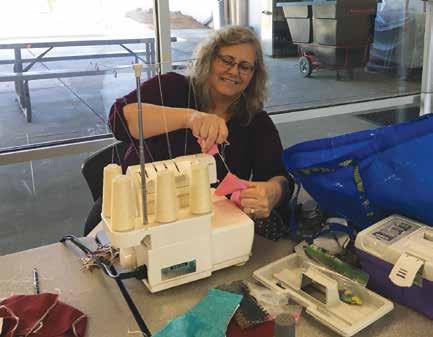
By the end of April, new measures were needed at the site to ensure a higher level of protection for our employees. We instituted a mandatory mask policy for anyone entering our facility. Due to the long lead time to get a sufficient quantity of masks, several of the Administrative employees sewed cloth masks for employees as well as their families. This enabled us to deploy the masks quickly. Over the course of the next several weeks, we have gotten in new varieties of masks, from lighter weight cooling tunnels to adjustable microbial masks. Masks were a big adjustment to ever day work-life and there was resistance at first but we all soon got used to this as part of everyday life. What was a rare sight in public a few months earlier, has become the norm to see most people wearing masks.
One way Prayon Inc is recognizing their employees for their efforts is having a monthly Employee Appreciation Lunch, where we bring a food truck on site to recognize the employees for their efforts in protecting themselves and the business. Also, there is a daily trivia game for employees (called COVID games) where employees test their knowledge on subjects from music to entertainment to food. Participating employees go into a weekly drawing for a gift card. We are currently on Week 9 of games!
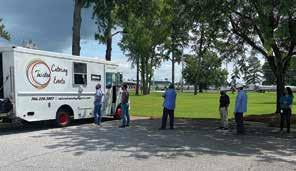
While many of the state mandates were lifted in the middle of May, many restaurants, retail stores and service industries remain closed, either because they wish to protect their customers or they are not certain whether financially it makes sense to re-open only to be mandated to 50% occupancy rates.
Life after COVID still remains uncertain but most are trying to slowly go back to a “normal” life while remaining vigilant. New cases of COVID are going down, especially in Georgia. In Augusta, we have 535 cases thus far and 19 deaths. To date, there have been no confirmed cases of COVID-19 at our site.
39
AUGUSTA
There is a daily trivia game for employees (called COVID games) where employees test their knowledge on subjects from music to entertainment to food.
Giovanni Crescenzi Augusta Production Management
In the early days of the virus, a lot of fear was expressed by some employees. There was a lot of talk surrounding the fact that we didn’t know how the virus spread, how lethal it was or how we could protect employees. Some questioned why we were staying open and risking exposing employees at the workplace.
Fear of the health impacts of the virus changed over time and became more about fear of the economic damage that we would face as the virus spread throughout the country. Again, there were many conversations: How will Prayon weather the COVID-19 storm? Will there be any layoffs? Will there be any pay raises? If we shut down for a long time, will the company survive?
I think we are past most of the fear now and our employees have adopted more of a positive attitude. Seeing how many Americans are now unemployed and how many companies have filed for bank-
ruptcy, it is reassuring to employees that they are working for a company that is still going strong.

The fear of the disease has now changed into frustration at not being able to live normally. Many of the activities that are popular in the area, such as attending church, golfing, fishing and shopping were temporarily halted and are only resuming now, but to a limited extent. Everyday inconveniences include having to wear masks at work and in many stores, limited seating in restaurants, closed parks, hardto-find toilet paper and sanitation wipes, and low inventories in stores.
I think there will be a second wave in the fall. But now that we have lived through the first wave, I think there will be much less fear during the second wave.
WORLDWIDE EDITION | N°5 | Q2 2020
Augusta, like many of the country’s rural areas, has not been much impacted by COVID-19 infections or government restrictions. But the fear of the disease was very real and is still affecting how we are living our lives.
I think we are past most of the fear now and our employees have adopted more of a positive attitude.
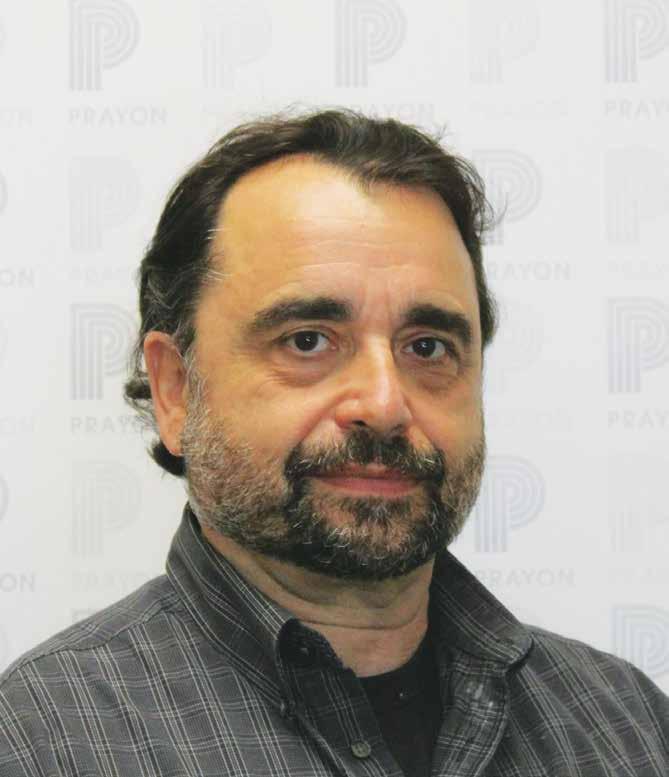
41 AUGUSTA
Seeing how many Americans are now unemployed and how many companies have filed for bankruptcy, it is reassuring to employees that they are working for a company that is still going strong.
Paul Balot Country Manager


As you know, Spain has been one of the countries hit hardest by COVID-19, with as many as 25,000 deaths so far. The measures the Spanish authorities took to stem the pandemic were also among the most draconian in Europe.
Prayon Ibérica decided to move into lockdown very quickly, encouraging staff to work from home as soon as it became clear that the virus was spreading. This was made easier by the fact that we had launched the Sierra project in 2019, with a view to digitalizing the sales and finance departments’ activities. We’ve made so much progress made in this area that 98% of these activities are now digitalized and working from home almost comes as second nature. This way of working now seems very much accepted by the whole team, but there is of course

We’re also using these unusual times to get the teams working on new projects. An example is the STORM project, created in collaboration with the logistics team at the Engis site.
an understanding that the facilities employees have at home will vary depending on their family circumstances. It’s not always easy to reconcile your work with home schooling for your children.
The level of business has remained very buoyant, in particular for acid and foodgrade salts. We even had to turn down sales in soluble fertilizers because, in the absence of Chinese products, the market is in a state of flux, which also brings with it new opportunities. The second quarter of the year already looks promising, with the first sales of MAP from OCP being made to new customers. Indeed, not far off 2,000 metric tons extra were sold in Q2 just for this one product. We’re
STORM project
also using these unusual times to get the teams working on new projects. An example is the STORM project, created in collaboration with the logistics team at the Engis site.
Of course, the period ahead won’t be the same as before the crisis. There’ll be a pre-coronavirus situation and a post-coronavirus one, and the specter of the 2008 crisis in Spain remains a very vivid memory for those who experienced it. It’s still too early to judge, but we must be prepared for this. We see these as crucial times but also as an opportunity, given that Prayon Ibérica will be celebrating its 50th birthday in 2024. By boosting our reputation for quality and reliability,
which we maintained throughout this crisis, we’ll hopefully be even better set for the years to come.
All this is only possible because of the constant activity going on at our plants, plus the fact that logistics has remained operational, despite some disruption. People clap at eight o’clock every evening, not only as a sign of their appreciation for care workers, but also because this is a means of venting their uncertainty about their future, both at work and in their private lives. Prayon will be by their side all the way. That’s more or less the mindset we want to convey on the market today and tomorrow.
Those are the new challenges that lie ahead of us in the coming days. As for me personally, one of the first things I need to do is make an appointment with the hairdresser...
The idea is to optimize the supply chain for phosphoric acid by pinpointing alternative storage options in both Motril and Barcelona. This will mean we’re in a better position when we have to renegotiate the existing contract for the Tarragona tank, while offering price reductions for transportation to our customers in the south.
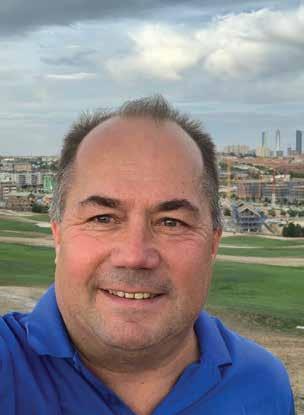
43
PRAYON IBERICA
People clap at eight o’clock every evening, not only as a sign of their appreciation for care workers, but also because this is a means of venting their uncertainty about their future, both at work and in their private lives.
Radka Dudlova Regional Sales Manager
In late February I travelled to Hungary for KUKing XXL academy, a great distributor event attended by people from various European and Asian countries. We were joking around about the coronavirus, but no special measures were taken at the time (apart from the provision of hand sanitizer).
While returning from Hungary, I was listening to the radio and the situation started to get serious: we could be facing a very dangerous situation that we were not ready for, since we didn’t have any protective equipment. The national stores were empty: the last protective masks, protective clothing, gloves, etc. had all been sent to China a few days earlier. Our people couldn’t buy anything.
Once this became known, the panic started. The shops were deluged:
people bought up all possible (not-perishable) foodstuffs and disinfectants. Sales skyrocketed. Customers started to call me. They wanted to increase their purchases and they were asking about our capacity.
On March 2, the first sick people appeared in the Czech Republic and the first university was closed.
Just a week later, all the universities and schools were closed. Teaching could only
be done online (and that is still the situation today)
The situation was disorganized and the atmosphere was tense. Shop assistants were collapsing, the onrush of shoppers continued and sales continued to rise.
During the second week of March, I started working from home and the Czech government declared an emergency.
WORLDWIDE EDITION | N°5 | Q2 2020
We are still in the touch with our customers thanks to online tools. We miss the ability to speak face-to-face, but communication is still good and sales are still high.
All of our neighboring countries confirmed new cases of infection and transport became complicated due to border controls and, in some cases, border closures.
The need for more goods for food producers continued because of the ongoing increase in sales to end consumers in shops.
Communication was possible via Skype, WhatsApp and Teams. That was better for everyone. All staff had already started working from home, including our assistants. Everybody was doing their best to cope with rising demand. The volume of work was bigger than usual.

On March 14, the Czech government declared a quarantine, closed the borders and closed the airports except for repatriation flights. As of that day, nobody was allowed to go out except for essential reasons (food and medical care). When leaving home, masks had to be worn. Everything was closed, except for food shops, drugstores, and pharmacies.
Mandatory masks? Impossible to buy them, so what could we do? The prices online jumped 10x with no information given about when they would be delivered. The only thing people could do was to start sewing their own.

The universities were also very helpful: doctors, nurses, shop assistants, firemen, army, police – nobody had protective equipment, so the universities offered free of charge the program for 3D-printing face shields. In addition, a lot of producers with flexible production schedules switched to manufacturing the equipment needed. Ultimately, the government was able to buy from China, but the quality was ‘Chinese’, prices were exorbitant and, once again, the general population was left behind.
Due to the closed border, trucks had to wait for many hours in long queues stretching 10 or 20 kilometers. Regular deliveries were threatened. The worst situation was at the borders between Germany and Poland, Germany and Austria, Germany and the Czech Republic, the Czech Republic and Slovakia as well as between Austria and Slovakia and Hungary.
In early April, customers started talking more often about delaying payments, starting the insolvency domino effect.

Central and Eastern Europe was not impacted very strongly, but all countries had and still have very strict restrictions. Compared to Western Europe, the number of infections and fatalities is low. Russia and Ukraine saw a little bit of a lag in the increase in the number of infections. In late May, they were still waiting for the peak. The situation in Hungary was also dramatic, because the prime minister invited the army to ‘help’ strategic companies (a list of such companies was issued). Nobody understood what it meant. Ultimately, our customers confirmed that they really helped out with organizational matters.
We are still in the touch with our customers thanks to online tools. We miss the ability to speak face-to-face, but communication is still good and sales are still high.
After a very rough start to the epidemic (second half of March), April was quiet – there were restrictions, but it was quiet. Early May was already tense again because of the first signs of economic impact began to be felt and the governments were being pushed to prepare a program for easing the restrictions. Nobody knows how deep the crisis will be or just how much tourism will be destroyed, as well as all the sectors and services related to tourism. The countries outside the euro zone (like the Czech Republic, Poland, Hungary, etc.) have been suffering because of the weak state of their local currencies.
At this time, all predictions are nothing more than predictions. The questions of what will happen to the economy and when will the next wave of COVID-19 arrive remain unanswered. All we have are new experiences that might be useful in the future if a new wave comes.
45 PRAYON EMEA
Hungary
All we have are new experiences that might be useful in the future if a new wave comes.
Marcelo Mendez Regional Sales Manager
Early on (late January and into February), when the virus was only in China, the situation led to some unexpected additional sales. With China in difficulty, some customers came to us. We delivered on this demand in March and April. Once China was back producing and shipping, aggressive prices started to appear and Chinese customers went back to their suppliers.
The impact of the virus started being felt in Brazil in the second half of March. Since then, the number of people infected and dying has continued to rise. We have not yet reached the peak. The first steps I took were to cancel all faceto-face meetings (flights, hotel reservations), acquire protective equipment (alcohol gel, protective masks) and start social distancing.
WORLDWIDE EDITION | N°5 | Q2 2020
In-country there is no lockdown, only restrictions on movement.
In-country there is no lockdown, only restrictions on movement. Only a few cities were the situation was very serious implemented a lockdown. Like most places in the world, stores, shops in general and non-essential services were closed and the population asked to stay home (those who could) and leave home only for what was strictly necessary. Many lost their jobs. Families were impacted financially and psychologically. All this led to a major drop in consumption in general.
Some plants slowed production and others stopped running. As a result, they are not buying raw material and are postponing deliveries. I noticed a drop in demand in April. The situation in May was worse. Let´s see what happens in the months to come. The expectation is that in June we will have better industrial activity, since several plants have modified their internal process so that they can resume production, generally at lower capacity.
As Regional Coordinator based in Brazil I work from my home office. I used to travel to visit customers at least every other week. Depending on the destination the trip could last the whole week. With the pandemic, this has dropped to nothing. I now work 100% from my home office.


Confinement is not easy. My mood is quite changeable. There are normal days, better days and other days when I absolutely have to take a deep breath and remind myself that this situation will pass and we’ll move on. Since I’m at home, I take breaks to play with our baby, which helps my wife and helps lift my spirits. During the week and weekend it’s also
important for me to take my mind off things by watching a movie, reading a book or listening to music, and to get some exercise. It’s not very crowded in my region, so it’s is easy to go out for a walk or a cycle ride while complying with social distancing rules.

My parents are over 80. Fortunately they are doing well and are healthy, but they are in an at-risk group. We live in the same city. Since March, I’ve only visited them twice and had to comply with social distancing rules, wearing a mask and no kissing or hugging. My last visit was in late April. They are fine. Frankly I was very worried after those visits (even though we took all necessary precautions), because I didn’t know if I was contaminated and not yet showing symptoms or if I was asymptomatic.
My father-in-law is seventy and diabetic, and my mother-in-law is over sixty.



Basically we no longer visit each other because we want to protect our family and ourselves. I haven’t seen my sisters, brothers-in-law, nephews, uncles, cousins and friends since the beginning of the pandemic.

I don´t know what the coming months will bring. Locally, I expect the situation will be better in July with a drop in the number of cases and the reopening of non-essential shops and services, and also a return to a reasonable level of business activity.


I believe the only way we can get back to ‘normal’ is by vaccinating the entire global population.


47 PRAYON LATAM
Brazil
The impact of the virus started being felt in Brazil in the second half of March. Since then, the number of people infected and dying has continued to rise.
Sales Manager
The region I’m responsible for includes Argentina, Chile, Ecuador and Peru.
I’m based in Peru, where the first COVID-19 case was confirmed on March 6 by our president along with a recommendation for voluntary quarantine and social distancing. Since the people did not comply with this initial request, nine days later our government declared a national health emergency starting on March 16: the borders were closed, a mandatory quarantine was implemented and a curfew was imposed from night until early morning. These restrictive measures were initially implemented for two weeks, but as the end of that period approached they were extended for two more weeks and then for another two weeks and so on – until the last government announcement on May 22 that extended the health emergency until June 30 because the number of confirmed cases was still growing instead of falling as had been expected.
As only people working in key sectors (such as food, health, and banking) were allowed to travel with special permits, teleworking was suggested wherever possible. This measure didn’t affect me very much as I’ve worked from home since my first day at Prayon, but on a personal level the limited contact with friends and loved ones was hard (video calls help but are not the same).
From a sales point of view, we saw and are still seeing some positive impacts such as spot orders from a customer that normally purchases from China, the opportunity to relocate product that became available due to lower demand in other regions. However, there have also been negative impacts, such as postponed orders due to lower demand and customs restrictions due to COVID-19 measures.
Expectations for the coming months? I’m confident that we will eventually overcome this tough situation. The big question is when, but in the meantime we must be resilient and flexible in coping with the new ‘normal’ and, most importantly, we must stay safe and healthy.
WORLDWIDE EDITION | N°5 | Q2 2020
PRAYON LATAM
We saw and are still seeing some positive impacts such as spot orders from a customer that normally purchases from China.
Peru
Javier Mogollon Regional
François Welsch Regional Sales Manager
On March 17, 2020, the day the lockdown came into effect in France, we embarked on a 48-hour overhaul of how the sales department was organized.
David Pierron and I have been working from home for many years (17 years in my case), so this wasn’t an adventure into the unknown for us.
However, it was a different picture for Customer Service France, but with the help of the IT department at Les Roches, the appropriate IT arrangements were made in next to no time. Everyone had what they needed to telework properly.
I should point out that because our operations are paperless, all our documents are available to everyone via our EDM solution and OneDrive.
Some adjustments were made in the first few days, but at no point did we lose touch with our customers: we kept right on managing orders, following up on deliveries, and so on. After all, communication is vital!
We fulfilled almost all orders on time with the assistance of the plants and logistical support.
We’re proud to have received a lot of customer feedback thanking us for Prayon’s collaboration during this period.
Yanick organized daily updates with the team to share and exchange ideas and make improvements to our arrangements. What was most important, though, was to make sure no one felt isolated.
As for our industrial operations, they remained strong in strategic areas such

as food and stopped almost completely or were dramatically reduced in the case of technical applications. Things started picking up again – albeit tentatively – a few days ago. We’ll see whether that continues through June.
The worst thing is that we haven’t been able to make any visits to customers. We’ve built up and gained many customers’ trust with our presence on the ground – email just isn’t the same!
On a personal note, my preparations for the latest of my many marathons were cut off after I’d been training for some weeks. But I’m sure it’ll only be a temporary reprieve!
49 PRAYON FRANCE
We’re proud to have received a lot of customer feedback thanking us for Prayon’s collaboration during this period.
Michael Hamlin VP Sales & Marketing
We are now working to get back to normal schedules, back to our offices, and back to a more normal, but still safe, way of working.
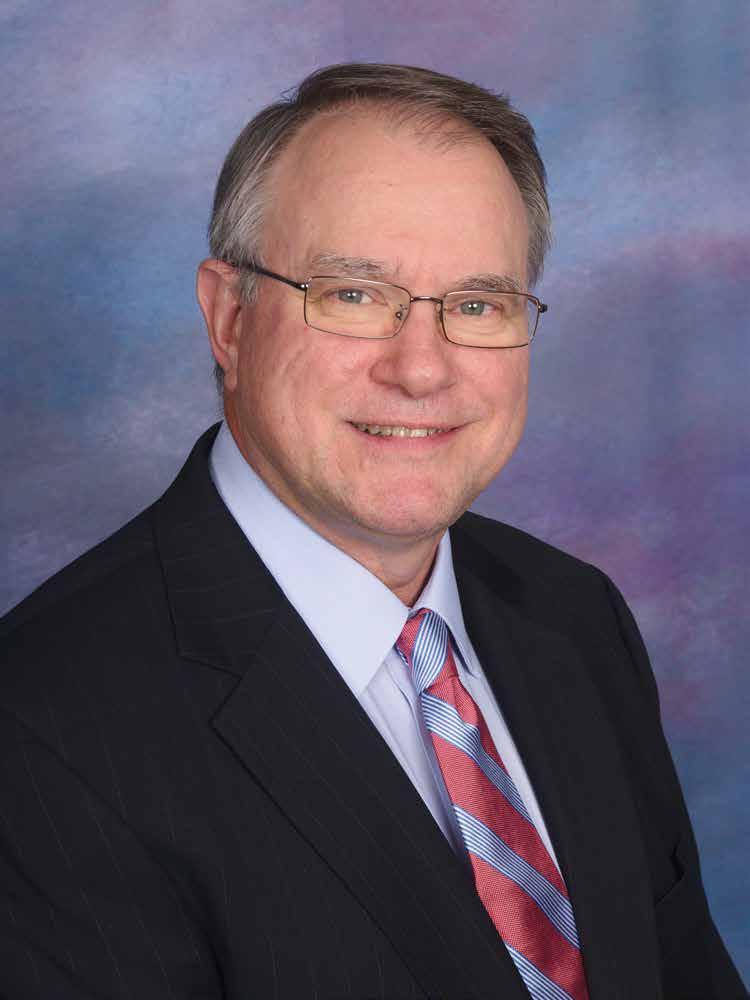
WORLDWIDE EDITION | N°5 | Q2 2020
Prayon Inc.’s response to COVID-19 began late February, as Customer Service and Technical Service began receiving inquiries regarding Prayon’s vulnerability and actions.
At the time, and even into early/midMarch, we oriented our responses towards exposure to travel to and from China and to raw materials sourced from China. That would soon change, however, as the virus spread, and we learned more about it.
We began our formal communications with a notice to employees and to customers sent on March 3, identifying precautions Prayon and employees were taking, as well as safety tips and legal rights of employees. At this time, we also limited travel to business essential travel only, requiring any out of town travel to be approved by an SLT member. That policy was short-lived, however, as we quickly moved to eliminate all travel, asking the commercial team to work exclusively from their home offices and to keep in touch with the market via e-mail, phone, and video conferences. This travel ban struck a couple of high profile events for the commercial team, forcing cancellation of a global CTM, cancellation of a North American CTM, cancellation of our customer event at The Masters, and cancellation of two very important customer contact events, the International Seafood show in March and the IFT in July.
The commercial team, including me, typically travel weekly to maintain contact with the marketplace, so this is, even now, a learning experience. Many customers
have banned visitors to their facilities, as we have in Augusta, and most states have limited travel and closed non-essential businesses, including hotels and restaurants. Some, like my home state of Delaware, have imposed mandatory quarantines on any visitors from other states. So the new way of working was not totally of our own making, it was a necessary step to protect our people, to protect our facility, and to comply with legal restrictions across the country.
Overall, a lot of things have changed in the way we work at the Augusta plant, as well, and many of our managers and staff have worked long and hard to make sure we have the procedures, supplies, and equipment to keep our team safe. We have had frequent updates from the COO, have rearranged seating in break areas, added markings on floors, posted occupancy ratings where needed, and implemented employee screening procedures, mandatory mask wearing in the plant and offices, and daily sanitizing of office areas, commons, and plant common areas. We also found it necessary to ban customer and social visits, and to enforce rules limiting delivery drives to their vehicle or a designated area. On top, we have encouraged employees who could work from home to do so, especially when their work environment made maintenance of adequate social distance difficult or impossible.
The learning curve has been steep, but the SLT has worked to protect the site and our teammates as efficiently as possible. We’ve been largely successful, as there has been minimal direct impact on our business. In fact, since over half of our sales are to food, pharma, oral care, and pet food, we’ve enjoyed very strong demand for our products in Q1 and Q2, keeping Manufacturing and Supply Chain challenged to maintain inventories while supplying enhanced demand due to changed buying patterns. While we expect to see a significant decline in H2 because of COVID, we are now working to get back to normal schedules, back to our offices, and back to a more normal, but still safe, way of working. And maybe, just maybe, our commercial team can get back to normal customer contact to make sure that we are the first phosphate supplier in the mind of our customers as they get back to normal as well.
51 PRAYON INC.
We also found it necessary to ban customer and social visits.
Sanitary measures applied at Prayon
REMARKS / QUESTIONS / SUGGESTIONS Inform the communications department: communication@prayon.com
care of yourself and your loved ones.
Take