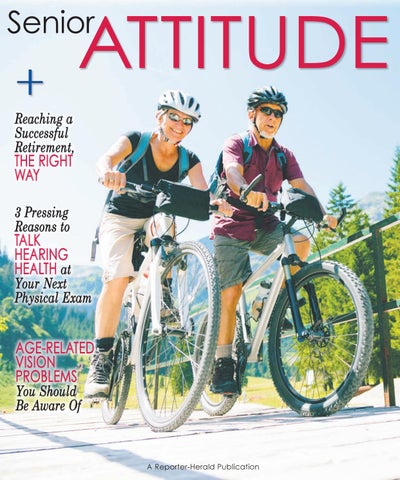
ATTITUDE +
Senior Reaching a Successful Retirement,
THE RIGHT WAY 3 Pressing Reasons to
TALK HEARING HEALTH at
Your Next Physical Exam
AGE-RELATED VISION PROBLEMS You Should Be Aware Of
A Reporter-Herald Publication
2 SENIOR ATTITUDE
Reporter-Herald – ReporterHerald.com
October 29, 2017
WINNING ROUTINES for warding off winter weight gain (BPT) - With cold weather and short days, it’s easy to fall off healthy eating and exercise routines. Here are tips on how to eat right and stay motivated to exercise during the winter months from a leading nutritionist and a top celebrity trainer.
EAT RIGHT
Dr. Michael Roussell holds a degree in biochemistry from Hobart College and a doctorate in nutrition from Pennsylvania State University. He is a nationally recognized nutrition consultant and nutrition adviser to Men’s Health, as well as the best-selling author of The MetaShred Diet (2017). “It’s easy to fall into eating calorie-loaded or nutrient-empty comfort foods in the winter, but take time and plan ahead. The optimum winter foods for weight loss and maintenance are packed with nutrients and filling fiber, so we feel full longer and eat less. Here are five suggestions for your shopping list.”
Pistachios.
The fiber-rich green nut makes the perfect wintertime snack for many reasons. Research shows that pistachios promote healthy, stable blood-sugar levels and can help improve various risk factors for heart disease when snacked on regularly.
Winter squash.
Butternut squash delivers a sweet, nutty flavor for fewer carbs and more fiber than you would expect. It is rich in beta-carotene and vitamin C, both antioxidants that will help keep your immune system in top shape. October 29, 2017
Mushrooms.
Mushrooms are a great coldweather food. They are not only a unique source of a potent antioxidant called ergothioneine, but they are also a low-calorie, appetite-filling food that can be roasted, braised or sauteed.
Cabbage.
Cruciferous vegetables like cabbage are fibrous low-calorie foods perfect for winter. They also contain powerful antioxidants like glucosinolates that help reinforce your body’s cellular detoxification pathways.
Green tea.
Green tea is one of the few truly fat-burning foods. The antioxidants in green tea increase the amount of calories that your body burns while also stimulating the liberation of stored fat in your body.
STAY FIT
Julie Diamond of Julie Diamond Fitness is a highly regarded personal fitness trainer with more than 20 years of experience empowering clients to reach their maximum fitness
potential. She trains clients at all fitness levels and ages. “Every year as the weather gets colder, I hear the same thing: It’s too hard to get motivated to exercise on cold, dark mornings, and by nighttime I just want to get home and eat something warm. But there are tricks to staying motivated to move during the winter months.”
Set a new goal and reward yourself.
Whether you want to lose weight, get stronger or move faster, set reasonable goals that involve numbers or tangible accomplishments. Once you’ve attained your
For group exercise classes and classes that are educational, Chilson Recreation Center offers several options specifically for seniors. Chilson Recreation and Senior Center 700 E 4th St, Loveland, 970.962.2383 cityofloveland.org/departments/parksrecreation/chilson-recreation-center Reporter-Herald – ReporterHerald.com
goal, treat yourself with whatever tickles your fancy.
Find a workout buddy.
Accountability is a great way to stay on track. Make a commitment with a friend or personal trainer. This not only forces you to show up, but it can also make you push harder - and it’s fun!
Think outside the box.
Do something different like a dance class, join a running group, or grab friends and go ice-skating.
Dress the part.
Invest in some new gear. It’s a known fact we perform better in the appropriate attire.
Amp up your playlist.
Create a bunch of playlists that get you up and going. Play songs as you get ready.
Focus on nutrition.
Every week, set yourself up with healthy snacks that you can grab and go, such as portable pistachios, hard-boiled eggs or chopped vegetables. SENIOR ATTITUDE
3
AARP survey suggests engaging in brain-stimulating activities may
HELP IMPROVE BRAIN HEALTH Staying Sharp by AARP provides holistic approach and tools to help keep the brain active According to AARP’s recently released survey of more than 1,100 Americans over age 40, those who participate in cognitively stimulating activities (CSAs) self-report improved cognitive functioning, health, and well-being than those who don’t participate in CSAs. CSAs examined in the survey include musical and creative activities, educational activities, physical exercise, socializing, and playing games and puzzles. Adults over age 40 engage in an average of eight CSAs per week. Those who rate their cognitive abilities as being “excellent” engage in a greater than average number of CSAs than those who
rate their status as “poor.” “Put simply, this survey is telling us that, if you work your brain, your brain will work for you,” said Gary Small, M.D., director of the UCLA Longevity Center at the Semel Institute for Neuroscience and Human Behavior. “Working your brain is easy and involves simple activities like taking a walk, spending time with
WE SPEAK RETIREMENT FLUENTLY
THANKS LOVELAND
FOR VOTING US “BEST FINANCIAL SERVICES” IN THE READERS CHOICE Contact Kevin Dunnigan or Natalie Shamley today. Appointments are free and the coffee is on us.
(970) 622-2366
300 E. 29th St – Loveland Inside the Guaranty Bank and Trust Building www.HelpWithMyInvestments.com Investment Centers of America, Inc. (ICA) member FINRA/SIPC and a Registered Investment Advisor, is not affiliated with Guaranty Bank and Trust Company. Securities, advisory services and insurance products offered through ICA and affiliated insurance agencies are *not insured by the FDIC of any other Federal Government agency *not a deposit or other obligation of, or guaranteed by any bank or their affiliates *subject to risks including the possible loss of principal amount invested.
4 SENIOR ATTITUDE
friends or reading a book. AARP’s Staying Sharp and other great resources can help inform you on how to keep your brain active and sharp.” Key findings from AARP’s 2017 Cognitive Activity and Brain Health Survey:
Most Popular Activities
According to survey respondents, the most popular CSAs include: consuming news (81 percent), cooking/ preparing meals (78 percent), reading (66 percent), exercising or physical activity (56 percent), and socializing (50 percent).
Women More Engaged
Women engage in CSAs more often than men, at a weekly average of 9.2 vs. 7.5. Women also have a greater intent than men to add more mentally-stimu-
Reporter-Herald – ReporterHerald.com
lating activities into their routine, at 50 percent vs. 39 percent.
Opportunity to Educate
When asked about the barriers that keep them from participating in CSAs, the highest number of survey respondents noted that they were unsure which activities help promote brain health (35 percent). The second most frequently selected response was lack of social support (26 percent). Staying Sharp is a subscription-based brain health platform from AARP featuring science-based activities, challenges, recipes and articles to help promote brain health. Some of the key takeaways from the survey can be addressed by the content and features of the platform, including: October 29, 2017
Detailed, Practical Information on CSAs
understand how their brain functions in different areas, receiving personalized recommendations for promoting brain health. These and more tips and information can be found at stayingsharp.org.
ABOUT STAYING SHARP
Staying Sharp is a subscriptionbased platform from AARP. This product is part of AARP’s
Categorized under commitment to provide reliable NOURISH (diet), MOVE (exercise), RELAX (maninformation on brain health. aging stress), DISCOVER Staying Sharp uses a holistic approach to (learning new things) provide science-based, personalized tools and and CONNECT (being recommendations that allow social), there are a number of arsubscribers to track and measure ticles, videos and What if you could live in a place that was their brain health progress using five activities to help geared to keeping you active, physically key focus areas or “pillars”: NOURISH inspire activity and mentally, and living your life to its fullest (eating right), MOVE (keeping fit), to promote brain potential? You can do all that and more at health. RELAX (managing stress), DISCOVER Affinity Living Communities. More community
(learning new things), and CONNECT (being social). To learn more, go to stayingsharp.org.
Affinity Living Communities
*AARP Survey was fielded online, May 3-18, 2017 among a nationally representative sample of 1,140 Americans age 40+. For further information: Eden Godbee, (202) 4342687, egodbee@aarp.org
700 E 4th St, Loveland, 970.962.2383 affinityforliving.com
The Wexford
Independent Living
Lakeview Commons Assisted Living
North Shore Health & Rehab Facility
Skilled Nursing
A C C E P T I N G N E W PAT I E N T S !
Expert Eyecare for Active Adults
Specializing in Cataract Care
See all that you can
Developed by scientists, this is made up of a series of questions and tasks that help people
room for social activities, including a gym, pub and theater on campus, give residents 50 + plenty of options for staying sharp.
Kirk Eye Center
Brain Health Assessment
✓ Board Certified Surgeon ✓ Thousands of successful procedures
✓ No-stitch, no-patch cataract surgery
John W. Colvin, OD & John D. Kirk, MD
✓ Advanced surgical techniques ✓ Expert use of monofocal & multi-focal intraocular lens
...and Other Common Eye Conditions ✓ Glaucoma ✓ Diabetic Retinopathy ✓ Retinal Disease
✓ Macular Degeneration ✓ Dry Eye ✓ Specialized contact lens fittings
On-Site Surgery Center for Great Patient Care CALL TODAY!
669-1107 3650 East 15th Street • Loveland
Our Loveland Residents October 29, 2017
Voted Best Eye Clinic for 12 consecutive years, Reporter-Herald’s Readers Choice Award.
KirkEyeCenter.com • Facebook.com/KECLoveland Reporter-Herald – ReporterHerald.com
SENIOR ATTITUDE
5
AGE-RELATED VISION PROBLEMS You Should be Aware of, and How to Treat Them
A
s people grow older, it’s more important than ever to have yearly eye exams. “The biggest thing seniors will say is, ‘I see just fine and I don’t need an eye exam,’” said John Kirk with Kirk Eye Center. However, common eye
diseases can start appearing in individuals over 40, and the damage can sometimes be irrevocable if not caught early enough. Kirk said the three most common eye diseases that cause eye damage are cataracts, macular degeneration
and glaucoma. People with cataracts or macular degeneration might notice that things gradually get more difficult to see.
Symptoms
Cataracts comes on gradually over the course of years.
Let’s Talk About You… Here to help life go right TM
Mitch Rogers
• Medicare Supplements • Long Term Care • Annuities • Life Insurance
Treatment
Buy one at MSRP,
Thanks For Voting State Farm “BEST INSURANCE COMPANY”!
5110 Granite Street – Suite C Loveland, CO 80537 (970) 776-9180 Mitch.rogers.e9yb@statefarm.com www.MitchRogersSF.com
6 SENIOR ATTITUDE
“People start noticing they can’t see, they might have more glare or trouble with fine print. Sometimes it seems like there’s a film in their vision,” Kirk said. With macular degeneration, people might notice they cannot see fine print, or it might take their eyes a long time to adjust from bright light to a darker room. “Over time, you begin losing more and more of your central vision,” Kirk said. Interestingly enough, he said it does not affect peripheral vision. Glaucoma will only be noticeable in a person’s eyesight when it is too late to help the vision. Doctors can detect signs of glaucoma before a person knows they have it, and treat the issue to minimize further damage.
get second free. • Over 75 years in business Any Beltone Legend™. Connects To Smartphones! • Free hearing tests (Must mention ad when calling. • Most insurances accepted Expires 11/30/17) • New rechargeable battery hearing aids • Nationally Board Certified Audioprosthologist • Free programming and adjustments for life • Hearing instruments starting at $42/month
LOVELAND 1135 N LINCOLN 80537
FORT COLLINS 2000 S. COLLEGE STE. 200. 80524
www.beltonehearingctr.com (970) 292-8023
Reporter-Herald – ReporterHerald.com
Kirk said that in the case of cataracts, the lens behind the pupil near the front of the eye starts to get cloudy. It’s not a worry if it’s a little cloudy, but when it gets really cloudy, and the patient can’t read, drive, or watch television, then it’s time to take care of it because it will get worst. “Once you have a problem, you do surgery,” Kirk said. October 29, 2017
“Whether you can see or not with glasses doesn’t tell you if your eyes are healthy,” “We take out the cloudy lens and replace it with a lens implant.” He said lens implants have been done since the 1970s. “I did my dad’s cataract surgery in ‘88,” Kirk said. “I grew up never seeing my dad without glasses on. Now because of the type of lens he’s got, he drives down the interstate without glasses and he reads menus without glasses. He used to wear trifocals and that’s all fixed.” He said that it can be better than laser vision correction,
since lasers can’t fix reading problems. However, it’s much more invasive than laser vision correction. “If you have to have a cataract surgery, you might as well correct vision at the same time,” he said. There are two types of macular degeneration; a person might have either dry macular degeneration or dry and wet macular degeneration. With the first type, vitamins can be helpful. The second type is more treatable. Medicines can be injected in the eye that make a big difference. Kirk said they didn’t have this type of medication 10 years ago. He said there are other methods of treatments out there. However, they’re still in the research and experimental phases, and not widely avail-
able. Glaucoma is eye pressure on the eye. People all have eye pressure to a certain degree, but some might have it to an increased degree, or they might have eyes that are more sensitive to eye pressure. “The inflated pressure of the eye is too high for the eye to tolerate (in the case of Glaucoma patients),” Kirk said. This eye pressure causes damage to the optic nerve. Doctors can detect evidence of damage way before the patient notices symptoms. The doctor uses a camera-like tool to look at the optic nerve - which is made up of 1.2 million fibers. If the optic nerve is dwindling, or atrophying, the patient might have Glaucoma. If the doctor notices the problem early enough, he or
she can prescribe eye drops to minimize further damage caused by the pressure. “In most cases, we can prevent them (patients) from having any noticeable vision loss,” Kirk said. Kirk advised that people over 40 schedule yearly eye exams to prevent serious diseases from causing lasting damage. He also said that people at any age with diabetes should always be checked once a year because diabetes can cause eye problems that other people don’t get. He said that glasses are also just a tool, and they do not keep eyes healthy. “Whether you can see or not with glasses doesn’t tell you if your eyes are healthy,” Kirk said.
We “Focus”
On Comprehensive Eye Health & Vision Care
Dr. David Banford
Dr. Corey Bernhardt
Dr. Jennifer Everett
• • • • •
Dry Eye Cataracts Glaucoma Diabetes Macular Degeneration
NOW ACCEPTING NEW PATIENTS Call today to make your appointment
We Now Accept
ASSOCIATES IN FAMILY EYECARE P.C. 2249 W. Eisenhower (next to Safeway on Hwy. 34) • (970) 669-4587 October 29, 2017
Reporter-Herald – ReporterHerald.com
SENIOR ATTITUDE
7
Seniors on Fixed Incomes Can Find
HELP WITH RISING COSTS
Modernized BenefitsCheckUp.org makes it easy to research and apply for national and state benefit programs Living on a fixed income is a challenging reality for millions of older Americans. Social Security provides most retirement income for about half of households aged 65 and older. And approximately half of households aged 55 and older have no retirement savings in a defined benefit plan or IRA. Programs that older adults rely on like Medicare, Medicaid, and Social Security could undergo changes this year that would affect their expected budgets. Which means, now is the time for older adults to fortify their fixed incomes by finding benefits programs. For many low income older adults, 8 SENIOR ATTITUDE
tell us they need just a little extra money added to their budget, so they don’t have to worry about paying for their basic needs. But they also tell us they aren’t sure where to turn for information,” said Leslie Fried, Senior Director of the NCOA Center for Benefits Access. “BenefitsCheckUp® is the solution. Seniors or their loved ones can use the free, confidential screening tool to see if they’re eligible for help and get all the information they need to apply.” The most accessed programs on BenefitsCheckUp® help seniors pay for medications, health care, housing, utilities, and nutrition. However, the resource library on the website now makes it even easier to search programs by state and get information on other programs, such as: • Tax relief to help pay property taxes and/or prevent foreclosure
teer programs • Income assistance to help meet basic needs • Veterans programs such as housing assistance and educational grants “Older adults are tech savvy, and they’re comfortable using websites to find answers for themselves,” said Marlene Schneider, Vice President of NCOA Decision Support Services. “The updated BenefitsCheckUp. org makes benefits programs and resources easy to understand and access. There is something for everyone at BenefitsCheckUp®.” Older adults and their loved ones can find benefits programs by visiting www. benefitscheckup.org and answering a few questions to get started. At the end, they will receive a personalized report with programs they likely qualify for, along with contact information, and next steps.
there are federal and state programs that can supplement their fixed incomes, but often they are unaware of them. The National Council on Aging’s (NCOA) recently updated website, BenefitsCheckUp.org, is the go-to resource available to easily see if an older adult qualifies for more than 2,500 of these federal, state, and private programs. BenefitsCheckUp®, the nation’s oldest and most successful public online benefits • Employment and volunscreening tool, has helped more than 5.5 million people find ABOUT NCOA more than $18 billion The National Council on Aging (NCOA) is a respected in benefits. The website has a new modern national leader and trusted partner to help people design that facilitates a aged 60+ meet the challenges of aging. Our mission is simple process for conto improve the lives of millions of older adults, especially sumers to learn about those who are struggling. Through innovative commuprograms available to nity programs and services, online help, and advocacy, them, easily find out NCOA is partnering with nonprofit organizations, governif they qualify, and ment, and business to improve the health and economic quickly get connected security of 10 million older adults by 2020. Learn more at with the application ncoa.org and @NCOAging. process. “Many older adults Reporter-Herald – Repo orterHerald.com
October 29,, 2017
How to plan for
MEDICAL AFTER CARE “If the unfortunate happens and you’re not prepared, it’s much worse to have no help when you need it, than too much.” —Cindy Benfield
By Emma Castleberry for Senior Attitude
Along with the inevitability of aging comes an increased likelihood that one will have to undergo a major medical event such as surgery, stroke, or cardiac incident. And with any major medical event, one must consider after care. There are a variety of after care options to consider. While your physician can provide guidelines, there are also several decisions that fall into the hands of the patient. In order to make the best decision about your after care, it’s important to understand all the options available. Most seniors will require either in-patient or outpatient rehabilitation after a major medical event. If one opts for in-patient rehab, that person resides at a skilled nursing facility or rehab center for the duration of their rehab. Out-patient is just the opposite: patients live at home and travel to and from the facility for appointments. October 29, 2017
Post-surgery mobility plays a major role in the decision between out-patient and inpatient rehab. If a patient’s mobility is greatly reduced— such as after a knee or hip replacement—in-patient rehab is a better choice. If a person can comfortably travel and manage daily tasks, then out-patient rehab might be an option. The frequency and intensity of the rehabilitation will also influence the decision. “In-patient therapy will give you up to seven days a week of therapy with up to a few hours in each treatment daily,” says Cindy Benfield, health care administrator at Good Samaritan Society–Loveland Village. “With out-patient you will likely only receive therapies two to three times a week.” When making arrangements for after care, Benfield says one should err on the side of caution. “I would suggest that one consider arranging the highest levels of support first, and then tapering back to independence as able,”
she says. “If the unfortunate happens and you’re not prepared, it’s much worse to have no help when you need it, than too much.” Some patients choose to utilize home care after an inpatient rehab stay. Insurance will often cover this care if the patient is truly homebound, meaning they cannot leave for any purpose other than doctor’s visits. Home visits are often three times a week for an hour or two each time, providing therapy and nursing services that aid in recovery. While unpleasant to
consider, it’s also important to recognize that an aging individual might never recover fully to their pre-event health. Long-term care can provide full-time nursing and daily living support for seniors who are no longer able to fully care for themselves. Columbine Health Systems’ North Shore Health and Rehab is one such facility. North Shore furnishes long-term skilled nursing care and rehabilitation services, as well as hospice care. Unlike many nursing homes, North Shore is staffed daily by nurse practitioners ensuring top-level medical care, regardless of the length of the stay. These facilities are often recommended for seniors who need help caring for themselves more than three times daily. Above all, after care requires careful planning and an “expect the worst but hope for the best” attitude. Learn about your options for medical after-care and advocate for your health and well-being.
Dementia and hearing loss • Adults with mild hearing loss are two times more likely to develop dementia. • Adults with moderate hearing loss are three times more likely to develop dementia. • Adults with severe hearing loss are five times more likely to develop dementia.
2902 Ginnala Dr., #3 • Loveland, CO 80538
Call us today at (970) 744-2754 to receive your FREE hearing screening with one of our hearing experts! Johns Hopkins Medicine. (2011). Hearing Loss and Dementia Linked in Study. Retrieved from: http://www.hopkinsmedicine.org/ news/media/releases/hearing_loss_and_dementia_linked_in_study © 2017 Starkey Hearing Technology. All Rights Reserved. 10/17
Reporter-Herald – ReporterHerald.com
SENIOR ATTITUDE
9
3 pressing reasons to talk HEARING HEALTH at your next physical exam When was the last time you and your doctor talked about your hearing? The fact is, only about 3 in 10 adults who had a physical exam in the last year say it included a hearing screening, according to research conducted by the Better Hearing Institute (BHI). That’s a shame, because research shows that hearing health is more closely tied to whole health and quality of life than previously understood - which means that diagnosing and treating hearing loss early may be beneficial on many fronts. To help people take charge of their hearing health, BHI has created a free digital flipbook, “How to Talk to Your Doctor About Hearing Loss,” which anyone can view and download at www.betterhearing.org/news/ how-talk-your-doctor-abouthearing-loss. The flipbook provides pertinent information to help consumers start the discussion, which is especially important because research shows that patients are more likely to initiate the conversation about hearing than their doctors are. To go along with the free flipbook, BHI has put togeth10 SENIOR ATTITUDE
er this short list of reasons to speak up and start the conversation on your hearing:
1. Leaving hearing loss untreated may come at a financial cost.
Most hearing aid users in the workforce say it has helped their performance on the job. In fact, BHI research found that using hearing aids reduced the risk of income loss by 90 to 100 percent for those with milder hearing loss, and from 65 to 77 percent for those with severe to moderate hearing loss. People with untreated hearing loss can lose as much as $30,000 in income annually, the BHI research found. Health care spending may also be affected. For instance, middle-aged adults (55-64) with diagnosed hearing loss had substantially higher health care costs, according to a study published in JAMA Otolaryngology-Head
& Neck Surgery, indicating that hearing loss may place patients at risk for increased health care use and costs. The study authors suggested that early, successful intervention may prevent future hearing-related disabilities and decreased quality of life.
2. Addressing hearing loss often has a positive impact on quality of life.
Most people who currently wear hearing aids say it has helped their general ability to communicate, participate in group activities and their overall quality of life, according to BHI research. The research also shows that people with hearing loss who use hearing aids are more likely to be optimistic, feel engaged in life, get more pleasure in doing things, have a strong social network and are more likely to tackle problems actively. Many even
Reporter-Herald – ReporterHerald.com
say they feel more confident and better about themselves as a result of using hearing aids.
3. Hearing loss has been linked to other significant health issues. In recent years, a flurry of studies has come out showing a link between hearing loss and other health issues, including depression, dementia, cardiovascular disease, diabetes, moderate chronic kidney disease, rheumatoid arthritis, sleep apnea, obesity, an increased risk of falls, hospitalization and mortality, and cognitive decline. With so much new and emerging research, it makes sense for people to talk with their doctors about their hearing as a routine part of their medical care. For more information on hearing loss, visit BetterHearing.org. October 29, 2017
WHAT’S THAT, YOU SAY? Are you tired of missing half of the conversation? Maybe it’s time to have a different conversation. These Loveland businesses can help you find a way back to better hearing.
Connect Hearing 1440 W. 29th St., Ste 300, (970)461-7905 connecthearing.com
Hearing Healthcare Center 2902 Ginnala Dr.,#3 (970)593-1509
hearinghealthcarecenters.com
Beltone Hearing Care Center 1135 N Lincoln Ave #2, (970) 292-8023, beltone.com
Protect your hearing while hunting Mayo Clinic News Network (TNS) For many people, autumn colors and cool mornings in September signal the beginning of the long-awaited hunting season. Gun safety is important to most hunters, but some other lesser-known precautions are overlooked. “I’m an avid sportsman, and I’m amazed by how many people don’t wear hearing protection when they shoot guns,” says Thomas Lowry, M.D., an otolaryngologist at Mayo Clinic Health System. “I see patients every week with hearing loss, and a large number of those patients have a history of noise exposure without the use of hearing protection.” Studies show that people who use guns are more likely to develop permanent hearing loss than those who don’t. Shooting without hearing protection practically guarantees you will suffer at least some degree of hearing loss in your lifetime. Aging and heredity also contribute to hearing loss, but exposure to noise, espe-
cially noise from guns, is the one preventable variable that you can control to reduce your risk of hearing loss. To put things into perspective, the Occupational Safety and Health Administration recommends that on-the-job noise exposure to a level of 115 decibels not exceed 15 minutes per day. A .22-caliber rifle produces a noise level of 140 decibels, and a typical deer rifle can produce noise greater than 175 decibels. Sound levels can increase at firing ranges where sound waves bounce off walls. Permanent hearing loss can occur with a single shot if no hearing protection is used. In addition to hearing loss, tinnitus — or ringing in the ears — can develop temporarily or permanently.
WE LOVE TO SEE YOU SMILE!
Here Yesterday… Here Today… Here Tomorrow… Serving Our Neighbors.
Mel Hildebrand, DDS
NEW PATIENT GIFT
59
$
Complete Exam X-Ray and Routine Cleaning
Valid in the absence of periodontal disease. Limited time only. Not valid with insurance or other offers.
• Friendly & Compassionate Staff • Emergency Appointments Available • Implants
• Fillings, Crowns & Root Canals • Custom Dentures • Insurance, Flexible Financing
.......................................................................... Dr. Hildebrand
274 E. 29th St., Loveland, CO 80538 T: 970-744-2345 • F: 970-685-4310 www.LovelandDentistryandDentures.com Locally owned dental office
October 29, 2017
“The good news is that noise-induced hearing loss is preventable,” adds Lowry. “Wearing hearing protection, such as earplugs or muffs, allows you to still hear soft sounds, while preventing damage to your ears from loud noises, especially with some of the more expensive options.” Lowry says you also could wear hearing protection around your neck while in the woods and quietly put it in place just before the shot. Your local sporting goods store usually carries an assortment of inexpensive, effective products. Lowry suggests hunters should set a good example and wear hearing protection when hunting with family and friends. This will help children or grandchildren know the importance of wearing hearing protection — similar to wearing a helmet when riding a bike. “Hearing protection is necessary when using guns,” Lowry says. “Make the effort to bring hearing protection for all shooters and bystanders when target shooting and hunting. Believe it or not, once you make this a habit, you’ll be surprised how little it affects your hunting experience.”
Your Hometown Funeral Home 1616 N. Lincoln 970-679-4669 www.ViegutFuneralHome.com
Reporter-Herald – ReporterHerald.com
Viegut Funeral Home is continuing our long tradition of serving the families of our community. We’re here now and we will be here tomorrow. Our sincere thanks to the community for voting us the “Best Funeral Home” for six years in a row. SENIOR ATTITUDE
11
ORGANIC FOODS
that aren’t worth organic prices By Morgan Quinn, GOBankingRates.com (TNS)
While there are many benefits to eating organic, the biggest downside is often cost. According to Consumer Reports, organic foods are 47 percent more expensive than their conventional counterparts, usually because of costs associated with certification and farming practices. Not only does it take more time to raise food this way, but farmers also can’t cut corners by using pesticides to kill weeds or control infestations. Moreover, organic foods spoil faster because they aren’t treated with waxes or preservatives, so farmers have to absorb greater losses. While some organic produce is safer than its non-organic counterparts, that isn’t the case for all your favorite fruits and veggies. Before you blow this month’s grocery budget, avoid these organic foods to save money.
FRUITS WITH INEDIBLE PEELS
Buying only organic fruits with inedible peels is one of the costliest mistakes you can make when grocery shopping. When it comes to fruits with inedible peels — like avocados, oranges, melons, bananas, mangoes, pineapples and kiwis — you don’t have to buy organic to indulge. While you should ideally eat organic versions of fruits with soft or edible peels, it’s generally safe to eat non-organic fruits with inedible peels, because pesticides rarely get transferred to the fruit inside. In fact, the biggest difference between organic and non-organic avocados is the price: Organic avocados cost, on average, $2.99 each, while non-organic avocados cost $1 less. Additionally, organic pineapples cost $4.20 more than non-organic. While it’s OK to buy the conventional versions of these fruits, you should still wash the peels before cutting into them to avoid transferring potentially harmful residues that can linger on the outside.
VEGETABLES WITH THICK SKINS You can save money at the farmers
12 SENIOR ATTITUDE
market if you keep this tip in mind: Thick-skinned vegetables like onions, cabbage, sweet corn, eggplant and sweet peas don’t necessarily have to be organic to be healthy. Just like fruits with inedible peels, vegetables with thick skins don’t absorb as many pesticides. Additionally, people remove many of the “dirty” layers before consuming the produce. Layers of onion and cabbage have to be peeled away; sweet corn needs to be husked; sweet peas must be shelled; and eggplant has a tough exterior that needs to be cooked down to consume. Carrots even make the list of safe veggies, if you take the time to peel the skin, where pesticide residue can linger. On the other hand, experts advise eating organic versions of veggies without peels, as well as those with soft exteriors. Many of these foods are included on the Environmental Working Group’s 2017 “Dirty Dozen” list, which includes celery, spinach, sweet bell peppers and tomatoes. Along with being safe to eat, nonorganic vegetables with thick skins are significantly cheaper than their organic counterparts. For example, organic yellow onions cost around three times more per pound than non-organic onions.
QUINOA
Once a niche ingredient, quinoa has become a popular source of protein. You don’t need to buy organic quinoa to partake, though. Because quinoa has a natural coating that tastes bitter to pests, farmers don’t spray this crop with pesticides. Most quinoa packagers remove the coating during production, but it’s wise to give the grain another rinse before you cook it. Non-organic and organic quinoa have the same nutritional profiles — it’s actually the color that makes the difference. While red and white quinoa have similar calorie counts, vitamins and minerals, red quinoa is a better source of riboflavin — it has a whopping 15 percent of the Reporter-Herald – ReporterHerald.com
daily value per serving, based off a 2,000 calorie diet. The cost of quinoa, organic or not, has skyrocketed in recent years due to limited supply from importers, according to The Washington Post. Currently, Eden Organic red quinoa costs $8.15 a pound, while regular red quinoa from Amazon is only $3.13 a pound.
MAPLE SYRUP
Organic and regular maple syrup are produced in basically the same way and usually don’t require pesticides or fertilizers. Both non-organic and organic maple syrup producers are required to have state licenses and be inspected by the USDA. Currently, a 12-ounce container of organic Crown Maple Syrup costs nearly $22, while roughly the same amount of MacDonald’s Maple Syrup is about $8. That’s a $14 difference. Because there is little nutritional value in buying organic, maple syrup lovers should consider saving their money.
SEAFOOD
If you see organic seafood for sale, be wary — there are no federal regulations that make seafood organic. And because organic seafood isn’t regulated, that means it might not have been tested for chemicals. Hence, you’re paying a pretty October 29, 2017
penny for a potentially false claim. Labeling farm-raised seafood as wild-caught is an issue that dates back at least a decade. In 2005, The New York Times ran a story revealing that fish sold as wild salmon by several high-end New York City markets was actually farm-raised and selling for as much as $29 a pound, while real farmed salmon sold for $5 to $12 a pound. And last year, Time reported on an Oceana study claiming that almost half the “wild” salmon collected from restaurants and grocery stores was mislabeled. The USDA is working to create INGREDIENTS guidelines that would • 2 Eggland’s Best eggs allow for the sale (large) of certified organic • 1 large (or 2 small) seafood, but that sweet potatoes, could be a few years washed and sliced thin away. For now, if you • 1 tablespoon olive oil want to eat seafood • 1 teaspoon salt, divided that’s safe for you and your family, look for • 1 teaspoon pepper, divided varieties that are low in mercury — such as • 3 tablespoons milk salmon, trout and cat• 1/4 cup shredded fish — and focus on cheddar cheese buying seafood that’s • 1/2 cup black beans, caught using sustaindrained and rinsed able practices.
Recipe
———
GOBankingRates.com () is a leading portal for personal finance news and features, offering visitors the latest information on everything from interest rates to strategies on saving money, managing a budget and getting out of debt.
• 1/4 cup finely shredded red cabbage • 2 tablespoons fresh cilantro, chopped
4 TIPS FOR A BETTER BREAKFAST
Want to amp up your breakfast? Simply follow these four tips:
Plenty of protein Protein is an important building block for the body, helping support bones, muscles, cartilage, skin and blood. Try adding protein-packed foods to your breakfast, such as meat, beans, nut butters and eggs.
Necessary nutrients By swapping out ordinary eggs for Eggland’s
Best eggs, you’ll get six times more vitamin D, 10 times more vitamin E, double the omega-3s, double the vitamin B12, plus 25 percent less saturated fat.
Fresh produce Add lettuce and sliced peppers to your egg sandPREPARATION Preheat oven to 400° F. Place sweet potatoes on a sheet pan in a single layer, drizzle with olive oil and sprinkle with half the salt and pepper. Don’t overcrowd the pan. (You may need two pans.) Bake for 15-20 minutes. Flip sweet potatoes and bake for another 10 minutes or until potatoes are crispy. Coat a skillet with cooking spray and bring to medium heat. Scramble eggs with milk and remaining salt and pepper, and pour into skillet, stirring often until cooked through. Set aside. Remove sweet potatoes from oven and top with half of the cheese, followed by the eggs and beans. Top with remaining cheese.
• 1/4 cup guacamole
Place back in the oven until cheese is melted about 5-10 minutes.
• 1/4 cup pico de gallo or salsa
Remove from oven and place on serving dish.
• Sour cream, jalapeños for serving if desired
Top with cabbage, cilantro, guacamole and salsa. Serve immediately.
wich. Top your oatmeal with chopped peaches or favorite seasonal fruit. Become a mix-master by blending smoothies in endless combinations to satisfy taste buds.
Whole grains
Whole grains help you to feel satisfied longer. To boost your breakfast, choose wholegrain cereals, stuff a wholegrain tortilla with scrambled eggs or top whole-grain toast with nut butters.
The Chilson Senior Advisory Committee THANKS these generous donators for helping to make the 2017 Harvest Bazaar a GREAT SUCCESS!
Good Samaritan Society - Loveland Village, Safeway, Loveland Board of Realtors, UCHealth Aspen Club, Loveland Housing Authority, Dr Ted Mioduski Jr, DDS, North Shore Health & Rehab, The Wexford, Sam’s Club, Lulu’s Farm, Palombo Farms, Glade Road Orchard LLC/U Pick It, Miller Farms, Eden Valley, Palizzi Farm, Walgreens, Big Willy’s Farm LLC, Pourhouse Bar & Grill, Cactus Grille, The Coffee Tree, Bonefish Grill, 4th Street Chophouse, Massage Heights, Park Regency Loveland, Candlelight Dinner Playhouse, Black Steer, Loveland Historical Society, Vi Niedermayr, Barbara Babcock, Micky Murata, Dave Kathka It was a fun-filled day for the whole family! CityofLoveland.org/HarvestBazaar October 29, 2017
Reporter-Herald – ReporterHerald.com
SENIOR ATTITUDE
13
Reaching a Successful Retirement,
L.L. Charles, Senior Attitude
We all dream of a happy retirement. Having the time and resources to enjoy travel, spending time with the grandkids or pursue a new pastime sounds wonderful. But when it comes to making your actual retirement plans, knowing what to do – and when – can make all the difference. The professional financial advisors at Loveland’s Investment Centers of America are experts at estate planning, to help you manage your transition to the rewards of a full and productive retirement. There are many opportunities today to invest your money into a wide range of financial products. But not all are right for you and your goals. Investment Centers’ mission is to be the premier, trusted financial planning organization in Northern Colorado. They provide a comprehensive approach in helping people and organizations during all
14 SENIOR ATTITUDE
THE RIGHT WAY
“There are many ways today to invest your money. Investment Centers of America helps people in all stages of life make intelligent decisions about their finances.” life stages make intelligent decisions about their finances. You may have already gone through an initial financial plan, but would just like a second look from another advisor. That’s actually a prudent choice when it comes to decisions on this scale. “If you have reached the point where you are getting ready to stop working, we can help evaluate the best timing for this to maximize your benefits,” explains Natalie Shamley, ICA investment advisor representative. “We’ll sit down with you and look
at your social security history to see how much you will receive, then we will look at your investments and suggest how we can organize them so that you can receive enough additional income to meet your total needs. We will evaluate if you need long-term care insurance and help get quotes to add this to the equation. Sometimes we may suggest that you keep working a short while longer to qualify for significantly better benefits.” Taking your social security benefits at age 62, for instance, can result in your getting 25 percent less than if you wait until full retirement age. “That doesn’t mean you can’t take it then, but we just want you to have the facts so you can make the best choices,” says Shamley. A comprehensive estate plan should include as much financial information as you can provide. “It’s a lot like going to the doctor… you get better results from a complete health record. We are most effective when we can work with a comprehensive history of your finances,” Shamley says. “This includes everything that you own, whether your house is paid off, the lifestyle you desire, and what will it cost for you to live this way. Then we put together a plan to help you get there.” However, your ICA advisors can start with just your social security documents if that is all that is available. The
Reporter-Herald – ReporterHerald.com
important thing is to not wait too long to get your plans in place. It’s never too early to start saving for your retirement, of course. But by the age of 60, it’s time to get started on your review so you will still have a few years to make any final adjustments that can make a big difference. Investment Centers of America provides a wide range of financial services and products to help you meet your financial goals: • Financial planning • Estate planning • Employee retirement accounts • Charitable gifting • IRAs and IRA rollovers • 401k retirement plan rollovers • Mutual funds • Annuities (fixed and variable) • Stocks • Corporate, municipal and government bonds • Life insurance and Longterm care insurance Kevin Dunnigan, certified financial planner, is also a principal in the Loveland office and one of the founders of Investment Centers of America. To arrange for a financial review with Natalie Shamley, contact the Loveland office of Investment Centers of America at 970.622.2366. Financial plans and second opinions are provided at no cost or obligation, as a service to you. You will also find a wealth of educational investment information on the company’s website at HelpWithMyInvestments. com. October 29, 2017
SOCIAL SECURITY:
By Nicole Tiggemann Tribune News Service (TNS)
Is Social Security a topic in your conversations these days? Are you familiar with the lingo used to describe Social Security benefits, or does it sound like a new vocabulary to you? Social Security employees strive to explain benefits using easy-to-understand, plain language. But if a technical term
or acronym (an abbreviation of the first letters of words in a phrase) that you don’t know slips into the conversation or appears in written material, you can easily find the meaning in our online glossary at www.socialsecurity.gov/agency/ glossary. Social Security acronyms function as verbal shorthand in our financial planning conversations. If you’re nearing retirement, you may want to know what PIA (primary insurance amount), FRA (full retirement age), and DRCs (delayed retirement credits) mean. These terms involve your benefit amount based on when you decide to take it.
FRA and PIA
If you take your retirement
Learning the lingo
benefit at FRA, you’ll receive the full PIA (amount payable for a retired worker who starts benefits at full retirement age). So, FRA is an age and PIA is an amount.
DRC
What about DRCs? Delayed retirement credits are the incremental increases added to the PIA if you delay taking retirement benefits beyond your full retirement age. If you wait to begin benefits beyond FRA — say, at age 68 or even 70 — your benefit increases.
COLA
Once you receive benefits, you get a COLA most years. But don’t expect a refreshing drink — a COLA is a Cost of Living Adjustment, and that
will usually mean a little extra money in your monthly payment. Knowing some of these terms can help you fine-tune your conversations about Social Security. If one of those unknown terms or acronyms does come up in conversation, you can be the one to supply the definition using our online glossary. Sometimes learning the lingo can deepen your understanding of how Social Security works for you. Discover more at www.socialsecurity.gov. ———
ABOUT THE WRITER Nicole Tiggemann, Social Security spokesperson.
FREE Hearing Evaluation
Take a proactive approach to your hearing health. Visit today and enjoy $500 in FREE services: • FREE Video Otoscopy* • FREE Hearing Screening and Real Ear Measurement** • FREE Product Demonstration • FREE 2-Week Trial*** • FREE Hearing Instrument Clean & Check
Connect Hearing 1440 W. 29th St., Ste. 300 Loveland, CO 80538
Call 970-461-7905 or visit ConnectHearing.com now to book your appointment. *Video Otoscopy not available at all locations. **Real Ear Measurements not available at all locations. ***Certain types of hearing loss may require a hearing instrument model that is not appropriate for the 2-Week Free Trial. Complimentary Hearing Evaluation required. See clinic for details. Lyric excluded.
October 29, 2017
Reporter-Herald – ReporterHerald.com
SENIOR ATTITUDE
15
INTRODUCING A COMPLETELY NEW LIFESTYLE CONCEPT FOR PEOPLE 55+.
INTRODUCING AFFINITY
Our communities attract people who are looking to get the most out of life. Rent includes all utilities and 30,000 square feet of extra living space! 55+ and considering a move? You’re invited to a FREE event— and check out our amazing move-in offer!
ROCKIN’ THE HOUSE ‘60s CELEBRATION
Affinity at Fort Collins—Tuesday, November 7 • 12–2pm Affinity at Loveland—Thursday, November 9 • 12–2pm Rock on! Join us for music by Gary Camp’s Duo, appetizers and cold drinks.
AFFINITY CHILI AND BEER FEST
Affinity at Fort Collins or Affinity at Loveland—Friday, November 17 • 12–2pm Warm up at Affinity! Come enjoy delicious hot chili, cornbread and ice cold beer.
Please RSVP 24 hours prior to events by calling (844) 326-8087 for Affinity at Fort Collins and (844) 368-6343 for Affinity at Loveland. MOVE-IN SPECIAL: FREE RENT*
For a limited time, Fort Collins is offering one month FREE and Loveland is offering up to two months FREE on select units. *Restrictions apply; call for details. Studio, 1- & 2-Bedroom Apartments • Utilities, WiFi & TV Paid • Garages & Carports Available • Internet Café • Indoor Heated Saltwater Pool & Spa • Fitness Center Community Garden, BBQ & Fire Pit • Theater • Library • Woodworking Shop • Arts & Crafts Room • Dilly Dally’s Pub • Pet Friendly
Affinity at Fort Collins
Affinity at Loveland
(844) 326-8087
(844) 368-6343
4201 Corbett Drive Fort Collins, CO 80525 AffinityatFortCollins.com
16 SENIOR ATTITUDE
3415 N. Lincoln Avenue Loveland, CO 80538 AffinityatLoveland.com
Reporter-Herald – ReporterHerald.com
October 29, 2017