


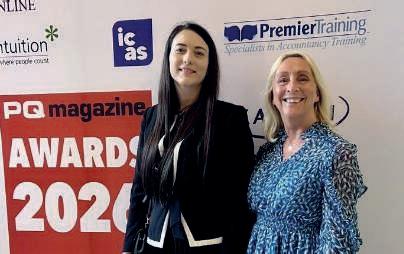







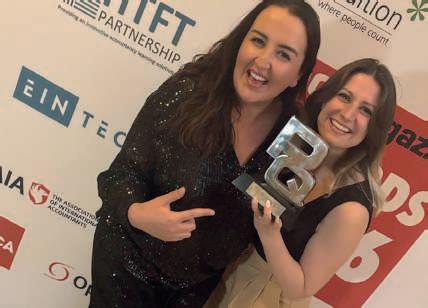




























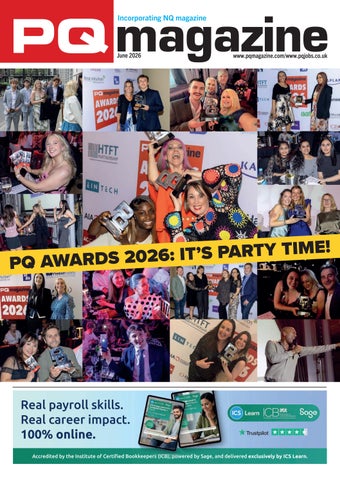

Seriously, who doesn’t love a PQ magazine awards night. It’s packed full of laughter and tears – and yes, Emma-Louise, it’s your fault I cried! But what a worthy winner of our inaugural Student Champion award you are. Don’t forget to check out all the great pictures from the night (starting on page 17); we even have some of the best photobooth pictures on page 38. I also went along to the first-ever national CIPFA graduation ceremony this month, and what a fantastic event that was, too. Well done Susanna Farrell and the CIPFA Student Network team for making this happen.
In the news, we highlight the fact that the CIPFA’s merger with ICAEW might take a bit longer than everyone expected – members won’t be voting on it until the autumn.
We have all the latest exam pass rates from AAT, CIMA and the ICAEW, and tips for the June ACCA exams.
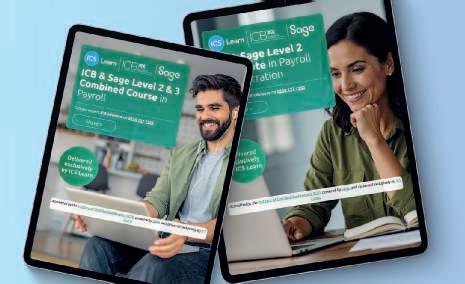
ICS Learn, along with Sage and the ICB, have launched a new payroll qualification – they are cleverly bringing learning, software and accreditation together. Read more on page 20
The move comes at just the right time, as Reed CEO Jame Reed (page 5) says there needs to be a total rethink our approach to education, skills and career progression.
Enjoy the read, and don’t forget to tell your fellow PQs about this great free resource…
Graham Hambly, Editor and Publisher, PQ magazine
News
4 PQ awards
This year’s awards went with a swing, with 24 ‘PQs’ heading out of the building. There’s more reports on pictures starting on page 17
5 The jobs market
‘White collar recession’ is hitting younger workers and new graduates

6 ACCA exam advice
We point to some of the common mistakes that cost students easy marks
8 New degree launched
An affordable BSc in Applied Finance and Accounting has been launched by the University of Greenwich
9 AAT exam results
The latest set of results are out now – so what was good and what wasn’t?
10 ICAEW results
Pass rates are now out – for both the new syllabus and the old
12 Tech news
Use of AI continues to rise at a rapid pace, new survey finds Features, etc
14 The PQ Digest
In an era of seismic tech-driven change, is ‘lean into soft skills’ really good advice for young accountants
17 PQ awards night
Our photographer Phil Gammon captured all the actions from accountancy’s best party. So who won this year’s awards?
20 Payroll
We profile the new payroll qualification from ICS Learn, Sage and ICB
22 AAT exams
Everything you need to know about the new AAT Level 4 Diploma for Professional Accounting Technicians
23 AAT Q2022 pass rates
We run the rule over the latest set of results to highlight where the problems are
24 Viewpoint
Sean Freeland reflects on the feedback void that ACCA and tuition providers both ignore
26 ACCA exam tips
We’ve got four pages of tips and advice on the forthcoming Applied Skills exams. See our website for more on the Strategic papers
30 CIPFA spotlight
The institute recently held its first-ever national graduation ceremony – and here’s the pictures to prove it!
31 ACCA spotlight
A rundown of ACCA’s many free resources to help you study effectively
32 ACCA SBL exam
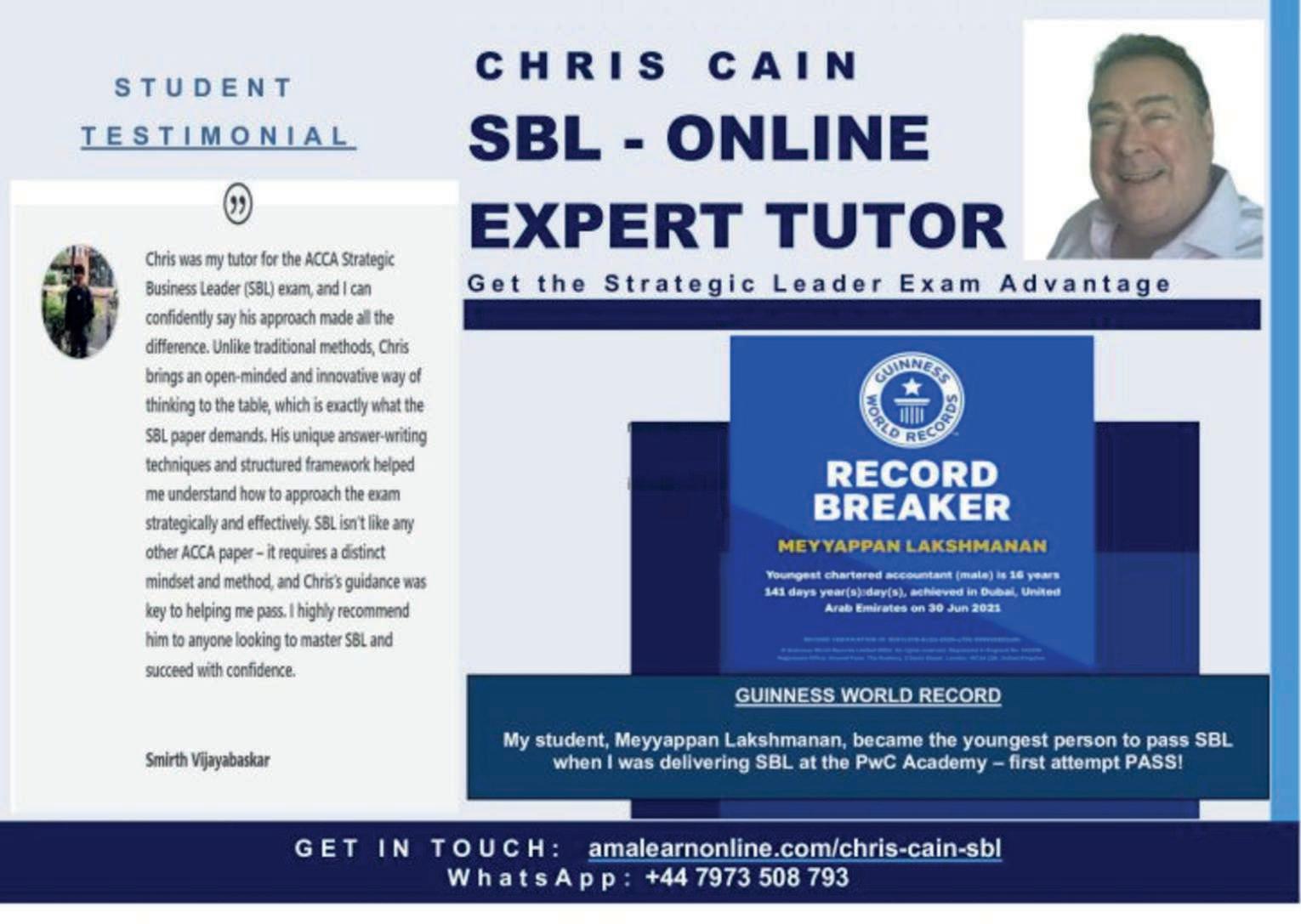
Chris Cain explains the importance of the ACCA SBL Syllabus and Study Guide
33 AAT exams
Karen Groves explains how to account for inventory
34 CIMA spotlight
CIMA answers one of the most commonly asked questions about the objective test exam
36 CIMA initiative
CIMA launches virtual, immersive work experience module in joint venture
37 Careers
The highlights of our latest roundtable discussion on money laundering; our Agony Aunt stresses the importance of good habits; and our Book Club review
38 Fun
The PQ awards photo booth proved a big hit with partygoers – can you spot yourself?
The columnists
Rachel Harrison Why feedback is vital for exam success 4
Sunil Bhandari Open book will not open the door to a pass 6
Prem Sikka Corporate offenders must be held accountable 8
Stuart Pedley-Smith NotebookLM is AI that makes a difference 10
Rachel Harris Five ways AI can help you study 12





Make the most of feedback
Feedback is a vital tool on the road to exam success, and it can come in various forms:
• Workplace: reflect on feedback from your manager about your written communication. Do you communicate in a clear and concise manner? Are you able to explain ideas clearly to a junior and communicate key points to someone more senior?
Good written communication skills and the ability to express complex ideas concisely are vital for exam success, especially where professional marks are available. Use feedback from your job role to help sharpen these skills.
• Tutors: if you are studying using a tutor-led course, listen carefully to feedback given in the classroom. Often this is given to the whole class: get in the habit of asking yourself how you can apply this feedback to your work.
• Practice assessments: when reviewing marked assessments, resist the temptation to only look at the mark you achieved. Use the marker feedback comments on your script so you know how to improve next time round.
• Examiner feedback: most institutes publish feedback from previous sittings covering the overall strengths and weaknesses of all candidates. Read this feedback to understand what the marking team are looking for in a strong candidate, as well as to understand common pitfalls to avoid in your exam. Next time you receive feedback write down three changes you will make as a result.
While steady progress is being made on the proposed integration with ICAEW, regulatory approval is taking a bit longer than first anticipated, says CIPFA. It means the extensive member engagement planned, with multiple opportunities for questions and feedback ahead of a membership vote, will not take place until after the regulatory phase. The vote is now not expected until the Autumn – so no earlier than September. Not everyone, it appears, is happy
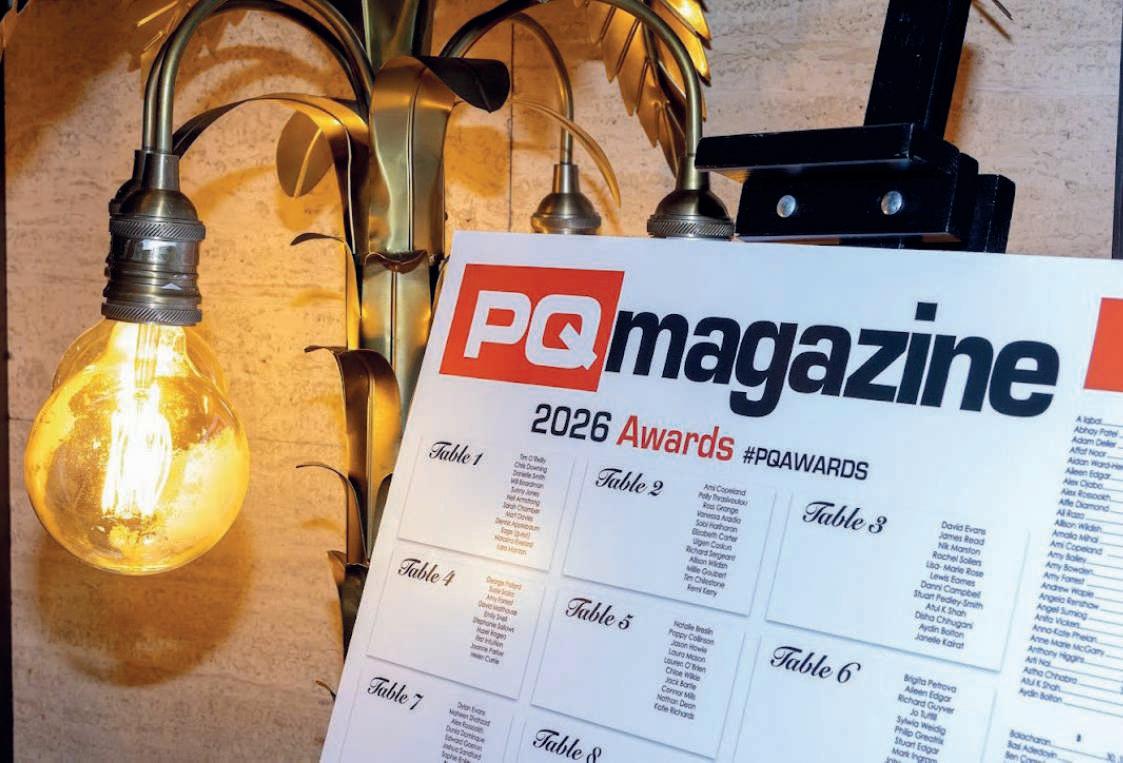
It was a night to remember for many, as PQ magazine put on the glamour. The glittering backdrop of the Bloomsbury Ballroom was this year’s awards venue, and the jam-packed evening of fun, frolics and dancing also saw 24 shiny PQ trophies heading out of the building!
It was a night to bring your mum, and many PQs on our shortlist did just that.
The PQ of the Year award went to Tim Mickleburgh, who is no stranger to a PQ trophy – he won Accountancy Graduate of the Year a few years ago. The judges said Tim was an exceptional young talent and a true role model. Tim told us that the awards have been ‘life-changing stuff’.
Jo Wood and Zoe Whitman picked

two prizes on the night – one for Hey Monika, and another for their Bookkeepers’ podcast, but they were beaten to the Personality of the
Kim Stroud, Jo Walters and Emma Birch (pictured) celebrated becoming CIPFA qualified at the recent graduation ceremony. Their story is one of true collaboration, where they studied together to achieve their end goal – getting qualified.
The three all worked for Portsmouth City Council as PQs, and would go into the office every
Saturday leading up to exams, creating their own study room. OK, Kim would be there at 8.30am on the dot, and Jo and Emma would often rock up with a McDonald’s breakfast just a bit later, but it worked, and they would study from 8.30am until 2 or 3pm.
All have families, and they admitted being away from them even for that short time meant they
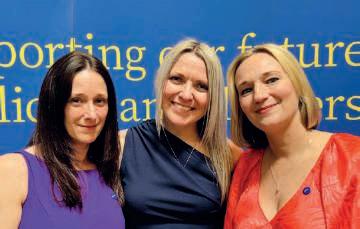
could concentrate on what they needed to learn.
They have become life-long friends, and are now planning a holiday together.
It was a case of ‘two out of three ain’t bad’ for the February case study results.
The Operational case pass rate was up a healthy three percentage points on November 2025 results – at 73%. The Management case study results also moved in the right direction, rising from 63% at the last sitting to 65% in February.
The only disappointment was the Strategic case study results, which saw pass rates slip to 55% this time around.
with this explanation. One member said: “I don’t feel better informed after reading this. What is, and is not, going on? CIPFA must publish everything, including the alternatives to merger and why these were rejected.”
Women make up nearly half of the accounting workforce in the UK, but few ever make it to the top, says AAT CEO Sarah Beale. She revealed that just 12% of
the UK’s top 100 accounting firms currently have female leaders, which year-on-year is a drop of 20%. The latest figures come as the proportion of women appointed to leadership roles in the UK overall has declined for the third successive year.
Beale stressed it is the role of leaders in the industry to ensure gender does not limit opportunity, and the collective drive for equity has to continue.
KPMG US has announced it is
laying off 4% of its staff in its advisory business, closing its federal audit practice and cutting one in 10 of its audit partners.
The 100 or so partners are being forced out after a year-long push for voluntary early retirements didn’t achieve the cuts needed.
In a statement the Big 4 firm said: “This action is connected to a multiyear strategy to align the size, shape and skills of our team to the power of our audit platform to best serve our clients and protect the capital markets.”
The accountancy profession is in the midsts of a ‘white-collar recession’, with entry-level and process-driven finance jobs being consumed, says Reed CEO James Reed.
These routes are the traditional gateways for many professionals starting their careers, and Reed believes their rapid decline poses a significant threat to social mobility and future workplace development.
He explained: “The very nature of what constitutes a ‘good job’ is being redefined before our eyes. Roles that once seemed secure and promised a stable career path are now vulnerable to automation.”
It means we have to totally rethink our approach to education, skills and career progression.
Reed said nowhere is this shift more acutely felt than among younger people and recent graduates. And he stressed the data is deeply concerning. He said that the number for graduate jobs advertised on Reed.co.uk has plummeted, from around 180,000

just a few years ago to a mere 50,000 at the end of 2025. Other job sites are reporting similar, sobering figures. This is not just a dip; it is a collapse in the entry-level market.
This ‘graduate crunch’ is creating a generation of highly educated individuals who are struggling to find a foothold in the professional world. Nearly half of all jobs lost since mid-2024 have been among those under 25, and youth



unemployment has soared to its highest level in a decade, excluding the pandemic period standing at 15.3%.
The UK’s top 100 employers reduced their graduate hiring by 14.6% in 2024, the steepest fall since the 2009 recession.
For those who do manage to secure a role the rewards are often diminished. We are seeing entry-level graduate jobs offering salaries that are perilously close




to the minimum wage, especially when factoring in the long hours often expected of new recruits. This situation challenges the longheld assumption that a university degree is a guaranteed ticket to a prosperous career.
Reed’s Alan Myers is worried how the next generation of accountants will ‘break in’. He said: “The industry has not yet found a clear solution. It’s possible that roles currently considered mid-level, such as assistant management accountant, will become the new entry-level positions. This would require newcomers to possess a higher baseline of skills, particularly in data analysis, from the very beginning. Apprenticeship schemes may also need a radical overhaul, shifting focus from transactional basics to technology implementation and strategic thinking.”
You can download Reed’s 2026 accountancy & finance salary guide here


















The recent ACCA Global Educators Conference (GEC) delivered a significant announcement: from September 2027, the strategic level exams will transition to an open book format.
Many students may now assume that passing the exams will become easier. It is easy to believe that simply having the study text available will serve as a reliable source of information, providing a crutch to lean on throughout the exam.
Furthermore, there is an expectation that exam preparation will be less demanding. Some may think that memorising theory topics is no longer necessary; they just need to know where to find the relevant information within the text.
In truth, the strategic level exams are designed to assess the application of knowledge and the demonstration of skills in response to the examiner’s requirements. Simply reproducing content from the study text will not secure any marks.
This issue is particularly relevant for the AFM exam. Accessing an online study text will not guide candidates on how to convert data from an exam exhibit into calculations such as APV, futures hedge or purchase consideration. The skill lies in interpreting the data and applying the correct methodologies, not in locating information in a textbook.
The move to open book exams will not guarantee success. Passing will continue to depend upon the ability to apply knowledge, demonstrate skills and manage time wisely.
The ACCA PM examiner has stressed that careless mistakes are common in Section A. You should always re-check whether the question asks for cost per unit, total cost, or a variance figure, as incorrect interpretation of the requirement is a frequent reason for losing easy marks.
It is also easy to get caught up in a tough calculation, but you must remember it will only be worth two marks. So, the mantra you need when tackling section A is never spend more than five minutes on any question.
Meanwhile, FR candidates
continue to find the interpretation question challenging, say BPP’s experts. In both single entity and group interpretation questions candidates must avoid making generic statements about the movement in ratios and instead focus on using the information in the question.
FR candidates should also check out the recent clarification emphasising the importance of the statement of cash flows in interpreting financial statements, and expect a question on this area.
Check out all your Applied Skills tips on page 26

A new suite of online payroll qualifications has been launched, bringing together learning, software and professional accreditation into a single connected programme.
ICS Learn, winner of PQ magazine’s 2026 award for Online College of the Year, has developed these qualifications in partnership exclusively with Sage and the Institute of Certified Bookkeepers (ICB) to address a structural gap between payroll training and workplace readiness.
The qualifications are designed for a broad range of learners: those entering the

payroll profession for the first time, finance and bookkeeping professionals expanding into
Reed Business School have opened a new campus in the heart of Liverpool city centre, on Renshaw Street, close to Lime Street Station. It will house in-person delivery for both AAT and ACCA qualifications, including apprenticeships.
The newly refurbished sixth floor
AAT salaries on the up
AAT student salaries increased by 11% between 2023 and 2025, according to the latest AAT salary survey. MAATs reported a 9% salary increase, while FMAATs saw a 14% rise over the past two years.
That means the medium salary for a Level 2 AAT is £27,000. For Level 3 the average is £27,331, and for Level 4 it is £28,750. The survey found 67% of students saw an increase in salary in the past year, which is down on
the 74% in 2023 (the last time the survey took place).
More next month on these stats.
ISSB focuses on nature
The International Sustainability Standards Board (ISSB) has agreed new requirements for nature-related disclosures in the form of an IFRS Practice Statement.
The new Practice Statement will complement IFRS S1 General Requirements for Disclosure of
of the Watson Building contains state-of-the art teaching facilities, where staff can offer advice and guidance on qualification pathways.
Reed Business School, known for its longstanding partnerships with employers and professional bodies, is expanding its in-person provision
Sustainability-related Financial
Information and IFRS S2 Climaterelated Disclosures, without changing the requirements in the Standards. When a company needs to provide information about nature-related risks and opportunities in accordance with IFRS S1, the Practice Statement would explain how to do this. This form of standard-setting therefore minimises disruption, which is particularly important because companies and jurisdictions are in the process of implementing and
payroll, and individuals already delivering payroll who want to formalise their expertise through recognised accreditation.
ICS Learn’s Danielle Smith (pictured) said: “The challenge facing the profession is not access to content. It is how effectively learning translates into real capability. By bringing learning, software and accreditation together into one connected experience we give learners the opportunity to build confidence through application from day one. That is what employers need and it is what learners deserve.”
Click here for more details.
away from its traditional Cotswolds base.
Chantel Carpenter, AAT’s Commercial Director said: “Reed Business School’s new Liverpool campus is an exciting development, creating more opportunities for people across the city to access high-quality learning in person.”
To learn more about the new RBS Campus email Jo Murphy
Accountancy firm JF Hornby & Co has launched a new initiative, the ‘Calculator Club’, to support pupils as they work towards their maths GCSE.
It has pledged to provide hundreds of scientific calculators to secondary schools across Cumbria to ensure no pupil goes without one in the vital years leading up to the Year 11 exams.

BSc (Hons) Applied Finance and Accounting
Awarded by the University of Greenwich. Delivered by GEMS

A one-year top-up programme designed for professionals who hold a recognised accounting or finance qualification but have not previously completed a bachelor’s degree. The programme converts professional expertise into a full UK Honours degree, opening access to postgraduate study, degree-filtered roles, and points-based immigration pathways in the UK, Canada, Australia and the UAE.
•ACCA Affiliates and Members
•ACA / ICAEW Qualified Members
• CA (ICAS) Qualified Members
• CAI Chartered Accountants Ireland
• CIMA / CGMA Qualified Members
• CIPFA Qualified Members
•AAT (Level 4 and above)
• Recognised international CPA bodies (case-bycase)
A professional qualification is the entry requirement.
Four modules at Level 6, 30 credits each: Investment Management; M
Quantitative Finance Research; and Corporate Governance, Ethics & Sustainable Practices Assessment is entirely by coursework, with written academic feedback on every submission.
Graduates receive the s
h’s on-campus students; the
ifi
state “online”. They may attend the official graduation ceremony at the Old Royal Naval College on the Thames and join the University’s alumni network of 21,000 graduates across 140 countries.
01 academic year 100% online £2,000 No total tuition examinations


Corporations and their controllers are the new rulers. They commit crimes but rarely face the consequences. Here for three examples.
In 2017, 72 people died in the Grenfell Tower fire in London. An inquiry found that suppliers of cladding panels cheated, lied and deliberately misrepresented the safety of their products. No company or executive has been charged or prosecuted.
Since privatisation in 1989, England’s water companies have paid over £85bn in dividends and neglected investment. They routinely dump sewage in rivers and have 1,200 criminal convictions to their names. To manage public opinion, occasionally fines on companies are announced but are subsequently waived or deferred. No company has had its licence to operate withdrawn. No executive has been fined or prosecuted.
The Post Office scandal centred on faulty data produced by Horizon and Capture accounting systems. Hundreds of postmasters were wrongly convicted of fraud. Thousands of lives have been shattered. An inquiry revealed that it was assisted by IT supplier Fujitsu, lawyers and business advisors. The public purse has paid nearly £1.5bn in compensation to victims. No corporation or corporate executive has been fined or prosecuted. Fujitsu and others have made no contribution to compensations.
The lust for higher profits, executive pay and dividends has created a class that has little hesitation about inflicting death and pain on others. What kind of society has eliminated humanity and honesty from business dealings?
Prem Sikka is Emeritus Professor of Accounting at the University of Essex
jailed
The bosses of a corrupt payroll company that stole millions of pounds of VAT have been jailed for more than 22 years.
West Lothian-based Linear Services handled payroll for 27 employment agencies but didn’t hand over the VAT they owed to HMRC over a two-year period.
Graeme Cullen, Leslie Thompson, Graham Newall and Martin Lang ran the firm that charged VAT on invoices totalling £8.8 million
An affordable University of Greenwich BSc in Applied Finance and Accounting has been launched for qualified and affiliate accountants.
In effect, your professional qualification is the entry requirement, and allows you to convert your hard work into a full UK honours degree.
Delivered by GEMS, the degree takes one year to complete; all assessments are via coursework so there are no exams. Students are expected to produce applied financial analysis case study evaluations, business reports,
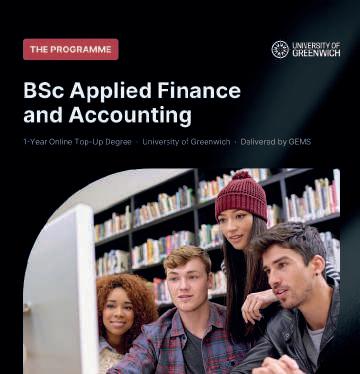
Python-based data tasks, and an independent research dissertation. Written academic feedback is provided for every submission.
There have been major technical issues with the Association of Tax Technicians’ new exam platform, TestReach.
Exam sitters struggled over the first two exam days, and after careful consideration ATT announced it had made the decision to postpone exams on 7 May 2026 – that is Paper 3 Business Compliance and Paper 6 VAT.
ATT said the decision was not taken lightly, but it believed it is in the best interests of candidates while the issues are ongoing.
The Association said it will now be working to offer another sitting for these papers ‘very soon’, and further information will be provided to candidates once this is available.
PQ magazine has been told of frozen screens, with exams ending suddenly before the allotted time.
And the cost of your BSc (Hons)? Just £2,000.
The study modules do not re-teach what the professional qualification has already tested. The aim is for the new modules to build new capabilities, and they cover machine learning in Fintech, quantitative finance research investment management, and corporate governance, ethics and sustainable practices.
The programme is aimed at accountancy professional who do not hold a bachelor’s degree. To find out more go to: www.financetopup.com

There was also no ‘exam ended’ message, as promised.
There have also been reports on social media that some CTA exam sitters had issues with Exam 4, which meant they couldn’t access their legislation.
ICAEW is now looking after more than 200,000 members and students. The latest annual report shows membership stands at 173,804, with a total 37,834 ACA students.
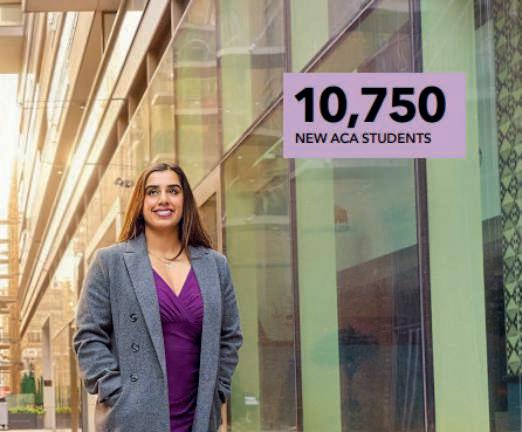
CEO Alan Vallance said 2025 was a defining year for ICAEW, as it launched the Next Gen ACA
between 2015 and 2017. The court heard the gang lived extravagant lifestyles with huge amounts of money spent on expensive homes, holidays, diamonds and even gold bullion.
Is HMRC chasing wrong target?
HMRC is letting small businesses ‘get away’ with evading tax by focusing on the very wealthy, says Blick Rothenberg.
Fiona Fernie, a partner at the firm, said: “The proposed extension of
to modernise the flagship qualification. He also stressed interest in the qualification remains high, with 10,750 new students joining during the year.
Among the
financial highlights was the increase in operational income from £136.1m to £149.7m.
the Uncertain Tax Treatment (UTT) regime is an example of HMRC’s focus on the very wealthy. But HMRC’s own statistics show that 60% of the UK’s 46.8 billion tax gap is attributable to small businesses and only about 5% to the wealthy. This risks being perceived as HMRC unfairly targeting one group, and allowing the other to ‘get away with’ not paying its dues.”
The government could come under
Exam fees brought in £18.8m, with sale of learning material adding £8.3m, and student fees and charges another £5.6m. That adds up to £32.7m, over £3m more than the previous year.
The exam running costs are put down as £12.7m.
As part of its commitment to pay transparency the ICAEW voluntarily publishes details of the CEO’s pay ratio. Vallance was paid £535,033 for his work in 2025, which equates to an average pay ratio of 8:1.
increasing pressure to reconsider planned fuel duty increases as new data reveals declining revenues and continued strain on motorists, warns the Association of Taxation Technicians (ATT).
Fuel duty has remained frozen at 52.95p per litre since 2011. However, at last year’s Budget the Chancellor increased the rate by 5p per litre (to come in stages). This would see a 1p rise in September 2026, followed by an additional 2p rise in December 2026 and another 2p added in March 2027.
The latest set of AAT pass rates for the year ending 31 December 2025 are now out. They show the global CBA pass rates are up in three levels and holding steady in the other.
The Level 4 pass rates (71.4%) are again higher than those achieved at Level 3 (69.4%).
The four assessments UK students seem to struggle with most are AMAC (62.1%), MATS (63%), FAPS (63.9%) and AMAC (67.4%). One worry for AAT will

be the gap in the AMAC pass rates between the UK and Rest of the World (RoW) sitters – 62.1% compared with just 38%.
The Audit and Assurance
assessment is a good news story this time around, with the pass rate jumping from 77.3% to 81.3%. The pass rate for the RoW was also up, but only to 41%.
AAT handed out more merits and distinctions this year for its Level 4 Diploma in Professional Accounting. But getting a distinction is still tough, with just 3.94% of students awarded one at Level 4.
Check out the full results on page 23
Guernsey-based chartered accountant Matthew Hart has lost his ICAEW membership following his conviction of cannabis production and possession of both Class B and Class C drugs.
Several years ago, when Hart was staying in Thailand, police executed a search warrant on suspicion that cannabis was being grown at his Guernsey home. They found four cannabis plants, a quantity of cannabis (with a
street value of over £15,000), and prescription drugs Alprazolam and Gabapentin.
Hart was found guilty of production of the controlled Class B drug at the Royal Court of the Island of Guernsey, and sentenced to 240 hours of unpaid community service as an alternative to twoyears’ imprisonment.
Hart self-reported to the ICAEW after being sacked by his firm for his criminal convictions. An ICAEW

tribunal committee sat on 1 April this year, and ordered that Hart be excluded from membership and fined £5,342.
ICAS has announced two senior appoints to its leadership team.
Cat Devaney (pictured) has been promoted from Director of Professional Qualifications to Executive Director of Learning.
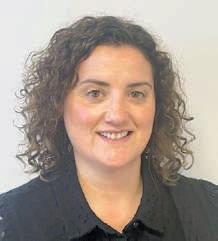
She has spent the past 20 years at ICAS, and is widely recognised for her leadership and commitment to learning innovation. Most recently, she led the development and delivery of the new CA qualification and student experience as part of a three-year learning transformation –an industry first that ICAS pioneered in shaping a new approach to training chartered accountants.
Devaney, said: “I’m passionate about ensuring our learning reflects the realities of modern business and continues to meet the evolving needs of our students, members, firms and wider economy.” ICAS also has a new Executive Director of Engagement, with the appointment of Geoff Day.


Take note of NotebookLM
The AI landscape can feel overwhelming when you’re trying to balance studying with work commitments. A new tool seems to launch every week, and it’s tempting to keep experimenting. But when AI is used well it can help you learn far more effectively and improve your chances of passing.
So the advice is simple: pick one tool, use it a lot and get good at it. For exam preparation and learning generally my advice is to use NotebookLM, Google’s AI-powered assistant.
Unlike ChatGPT or Gemini, which draw on the entire internet, NotebookLM works exclusively with the documents you upload, your study notes, technical articles, past papers or syllabus guides. This significantly reduces the risk of inaccurate information.
Once your materials are loaded, NotebookLM will start by producing a summary, providing you with an excellent overview. From there you can ask questions to dig deeper into anything you don’t fully understand. Then the magic happens. You can generate an audio overview for your commute, flashcards to drill key facts, quizzes to test your recall, mind maps to see how topics connect, and infographics to make complex information visual.
What sets NotebookLM apart is that you control the data set, so the AI works only with accurate, relevant information. And, unlike most tools worth using, it’s free.
• Stuart Pedley-Smith is an accountancy lecturer, education advisor, author and blogger
The latest ICAEW March results are out, with both the old and new syllabuses running side by side.
Some 1,961 students sat the first-ever Fundamental Case Study, and the pass rate was an impressive 91.5%. Even more remarkable was the pass rate for the new Assurance,
Improving social mobility in the accountancy profession is central to the agenda of ICAS’s new President, David Cruickshank (pictured).
He said: “You can’t be what you can’t see, and I’m determined to help more young people from all backgrounds see what it means to be a chartered accountant and understand the opportunities that are within their reach with the CA
The ‘Rebel Accountant’, aka Andy Oury, took to the road recently for a special one-off event, blending rap music with tax education, with the aim of showing tax doesn’t have to be… taxing!
Attendees experienced a mixture of live performance, myth-busting and commentary on how SMEs can better manage their financial
Risk and Reporting paper, where 94.1% passed. The Business and Digital Strategy was another popular paper with 796 sitters; the pass rate was 90.2%. The lowest pass rate of the new papers was Tax Compliance Planning where 77.8% came home with a pass.
qualification.
“A more diverse profession is a stronger one, which is why we must do more to promote accountancy to talented young people who may not yet see it as an option. Throughout my career I’ve seen first-hand how diverse teams deliver better outcomes. By removing barriers and widening access to the CA qualification we can help talent from all backgrounds thrive, while

Those sitting the papers from the old syllabus did not fare so well. The Financial Management March paper pass rate was just 56,3%, and 62.3% of those sitting Tax Compliance paper were awarded a pass.
ICAEW PROFESSIONAL LEVEL MARCH EXAM

demonstrating how relevant a career as a CA is to the issues young people care about today –from sustainability and technology to ethical leadership.”
position.
Oury, who is owner-partner of legal and accounting firm Oury Clark, said: “The Rebel Accountant project is really about making tax accessible and cutting through the myths that surround it for entrepreneurs and SMEs who would rather spend their time building businesses than decoding legislation.
“For many business owners, the system is complicated and the language around it can feel inaccessible. If we want people to engage with tax properly, we need to explain it in a way that is clear and digestible.”


Big are getting bigger
Market capitalisation of the world’s top 100 companies grew by 22% year-on-year, equivalent to $9.2tn, reaching a record $51.8tn, according to PwC’s latest Global Top 100 companies by market capitalisation report.
Growth was driven primarily by the United States, which remains the largest contributor to the Global Top 100, ahead of China and Saudi Arabia.
Despite falling to fifth place, the UK saw growth of 24% in its aggregate market capitalisation from the previous year. Four companies are represented in the Top 100,
spread across financial services (HSBC, +39%), healthcare (AstraZeneca, +33%), energy (Shell, +31%) and materials (Linde, +4%).
Only one in 10 would go electric
Just 11% of UK consumers would choose a fully electric car for their next vehicle, says the Deloitte Global Automotives Consumer Study. However, a quarter (27%) would opt for a hybrid electric vehicle, and one in 10 for a plug-in hybrid.
The main reason for going electric is lower fuel costs (50%), followed by environmental concerns (39%) and the driving experience (34%).
The big negative is still the cost of battery electric vehicles. Other concerns are driving
range (48%), time required for charging (43%) and the cost of replacing batteries (43%).
Geopolitics tops CEO agenda
CEOs are doubling down on disciplined growth and long-term transformation through AI and strategic transactions despite heightened geopolitical risk and macroeconomic uncertainty. This is according to the latest EY-Parthenon CEO Outlook Survey, a quarterly survey of 1,200 global CEOs across 21 countries.
Not surprisingly, geopolitical uncertainty has taken centre stage in the CEO agenda with more than half of respondents (56%) identifying it as the most significant risk to their business over the next 12 months, up 28 percentage points since September 2025.

Five ways AI can work for you
The UK is adopting artificial intelligence (AI) at pace, with AI now embedded across everyday consumer services and workplace tools, according to new findings from the EY AI Sentiment Index 2026.
Everyone is talking about AI. But if you’re mid-way through your studies you’re probably wondering whether it’s actually relevant to you right now, or if it’s just another thing to add to the pile.
AI won’t do your studying for you, but used well it can make it significantly less painful.
First, use it to explain concepts differently. If a topic isn’t clicking from your study text ask AI to explain it another way, with a real-world example, or as if you’re completely new to it.
Second, use it to test yourself. Ask AI to quiz you on a topic, mark your answers, and tell you where your reasoning broke down.
Third, use it to summarise long technical documents. Standards, legislation, examiner reports: paste them in and ask for the key points relevant to your level. Don't skip the source material entirely, but use AI to navigate it faster.
Fourth, use it to practise written answers. Write your answer, then ask the AI to critique it against the marking criteria. Brutal, useful –and free.
Finally, use it to build your commercial awareness. Ask it to explain a news story in accounting terms, or how a recent Budget change affects a specific type of business. That kind of context impresses in interviews and keeps cropping up in case study exams.
Rachel Harris is the founder of striveX and @accountant_she
Drone deliveries piloted
Amazon has begun delivering parcels by drones, with Darlington in County Durham acting as the pilot for the new service.
Anyone who lives within the 7.5mile radius of the fulfilment centre can now have items under 5lbs flown directly to them. Operators will send 10 drones an hour into the sky, which would allow for as many as 100 deliveries a day during weekends.
Amazon said the trial is designed
Nearly three-quarters (74%) of UK respondents said they had used AI in the past six months. For many, AI is now part of everyday life, supporting routine activities such as accessing customer support (35%), navigating the best driving or travel routes (31%), or helping to identify potential medical symptoms (26%).

However, trust in the institutions responsible for governing AI remains low. Just 43% of respondents said they trust companies, and only 41% trust governments, to manage AI related
London’s bookkeeper jobs are among the most exposed to generative artificial intelligence (GenAI), alongside admin professionals and brokers, according to a new report from the Greater London Authority
Author Jeff Dwab-O’Reilly, says: “Most bookkeeping tasks closely
overlap with GenAI capabilities, with little variation across tasks.” That means bookkeepers are potentially most at risk of automation as a large share of dayto-day work being potentially affected.
There are an estimated 313,000 Londoners working as admin professionals,
Some two-thirds (66%) of 18–24-year-olds would be willing to pay more for an insurance policy if it guaranteed greater human involvement in claims handling, the most of all age groups.
New research from KPMG UK shows that human interaction remains central to trust in the claims process. Across all age groups, 90% say human interaction is important when it comes to claims handling and almost two-thirds (64%) believe
to see how autonomous deliveries could operate at scale in the UK. The company uses MK30 drones, which have onboard sensors, GPS technology and autonomous navigating systems.
Is AI too good?
The release of Anthropic’ s latest AI model Mythos has been put on hold, because of its ability to hack the security systems of major financial institutions.
It appears Mythos is better at attacking systems than any AI is at
data effectively. Notably, scepticism is often highest among those who use AI most frequently, particularly educated, white collar workers –suggesting that familiarity often brings higher expectations, not reassurance.
EY UK and Ireland AI Leader, Matthew Ringelheim (pictured), said: “AI adoption in the UK is rapidly advancing, but trust is not keeping pace with technological capability. Whilst consumers are engaging with AI every day, many still want greater clarity about who is accountable when decisions are made on their behalf.”
bookkeeper and brokers. Most at risk are women, and both young and older workers, who are disproportionally concentrated in these roles.
Dwan-O’Reilly stressed that high exposure to GenAI does not signal definitive job losses, nor does low exposure guarantee job or occupational security. He emphasised that roles requiring high-stakes judgements, accountability and client interaction are considered less directly automatable.
claims need to be primarily handed by humans.
Confidence in technology-only outcomes is particularly low. Just 5% say they are ‘very confident’ that technology alone would deliver a fair and accurate settlement. This is far lower than the trust levels seen in AI in other areas. In a separate KPMG study, which asked UK consumers about their general views on AI unrelated to insurance or financial services, 42% said they are willing to trust AI.
defending them, and during testing it found vulnerabilities in many major operating systems.
This has reportedly led to crisis meetings among finance ministers, central bankers and financiers, concerned about possible holes in their cyber-security systems.
A report from the UK’s AI Security Institute said: “Our testing shows that Mythos Preview can exploit systems with weak security… and it is likely that more models with these capabilities will be developed.”

Law firm admits ‘hallucinations’
Top US law firm Sullivan & Cromwell has been caught using AI ‘hallucinations’ in a bankruptcy case. The firm was forced to apologise to a federal judge for fabricating citations and misquoting statues.
On LinkedIn, solicitor Matthew Letts asked: “If a trainee had filed that document, would we be calling it a hallucination? We all know the answer. Failure to verify. Supervision breach. In some cases, negligence.”
Zoe Whitman, CEO, Hey Monika: “LinkedIn published its Grads’ Guide UK 2026 recently. The headline advice, effectively, was to ‘lean into soft skills’. I read it in between meetings and nodded along.
“Nodding along, given the current state of global politics, is now my cue to stop and check what I’m actually agreeing with.
“Because... if the advice to the graduates of 2026 is ‘lean into the soft skills’ the next question is obvious, and nobody in my industry seems particularly keen to answer it. What, exactly, is the exam testing?
“It’s easy to think that the problem with trainees is that the exam is not keeping up with the work. Then there’s this other problem that software (and AI) can do the entry level work, so the work is getting too senior, too fast. Now, I think the exam can never catch up with the
Free subscription: www.pqmagazine.com/subscribe/
Delivery problems or need a change of
work.
“The case for education changing is obvious. The exams still test the bit technology does now. You can pass your finals without ever having handled a real conversation with a client who doesn’t want to hear the thing you’ve got to tell them. You can be brilliant on paper and freak out when the office phone rings. A graduate with a degree in Applied Accounting probably isn’t hired to do the thing you’re hiring them to do. To make a point here, my dissertation was on Herzberg’s Two Factor Theory (motivation theory – NOTHING to do with my degree in Applied Accounting), case in point.
“Here’s the real case for change in my opinion. Soft skills are not the finish on top of the technical training. They are the training. The technical is the bit that is becoming the finish.
email address: admin@pqmagazine.com
Website: www.pqmagazine.com
Editor: Graham Hambly
Email: graham@pqmagazine.com
Associate editor: Adam Riches
Art editor: Tim Parker
Each month we look at the accountancy stories that have made waves on social media
“You can’t teach the confidence bit out of a textbook. You can’t test it in a three-hour written paper. You can’t really even teach it in the classroom, because the moment a tutor is watching you, the stakes change.
“Which brings me back to LinkedIn, nodding at the Grads’ Guide, wondering whether ‘lean into soft skills’ is really good advice. Because if the exam still tests the bit the machine does, and the job still demands the bit the machine can’t, then the advice is not really to the grads at all. It is to the firms hiring them, the bodies training them, and everyone still holding a syllabus written for a job that no longer exists in the shape it used to.
“The machine can populate and submit the tax return. It cannot, yet, be the person someone trusts at half past four on a Tuesday. That is the work. That is what we should be training.”
Read the full, unabridged article here
Develop the accounting leaders of tomorrow. Digitally upskill your team through funded degree apprenticeships
Available in:
•Data Scientist
•Digital and Technology
Solutions Professional
•Project Manager
• Delivered primarily online with flexible, asynchronous learning
• Funded through the Growth and Skills Levy, levy transfer, or government co-investment

2026 October intake now open for applications
D Deadline: 28th August






















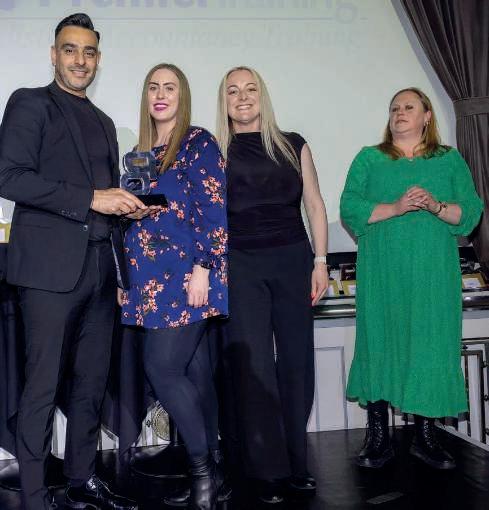
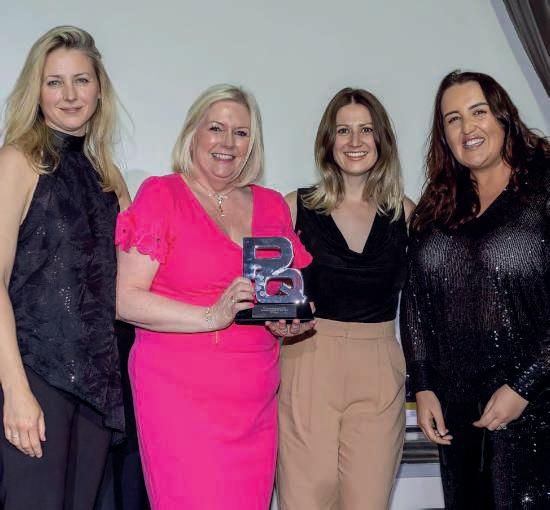
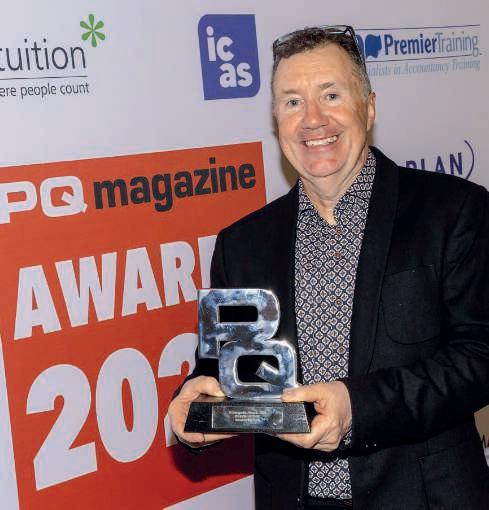
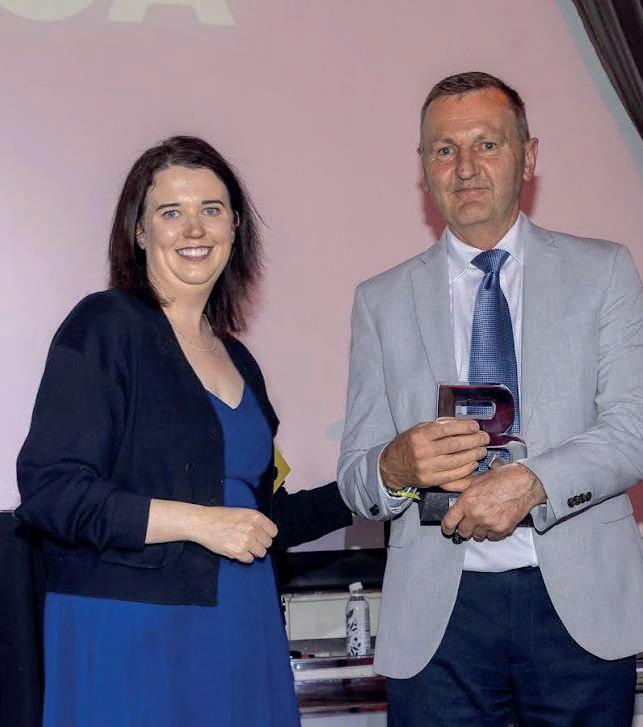
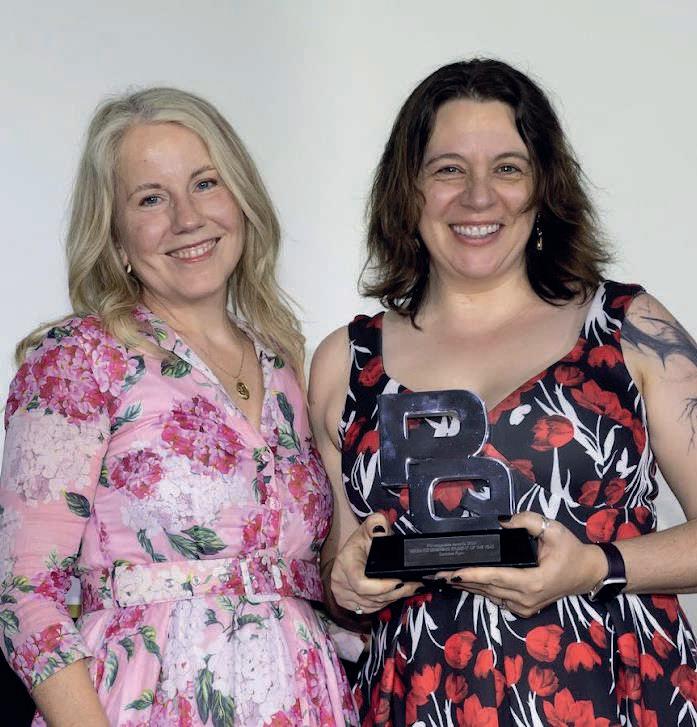
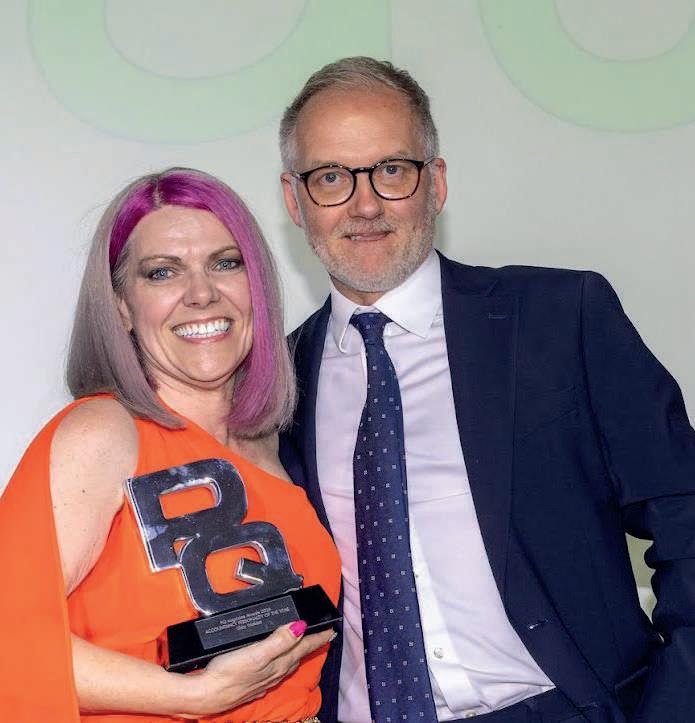
Check out all the action from the recent PQ magazine awards.
It was the PQ magazine awards, so naturally there was dancing, singing and moving to the music!
The new venue for the 23rd awards night was the glamorous Bloomsbury Ballroom, and the ‘sold out’ crowd were entertained by the amazing Jonny Woo and Jean-Paul Noel-Cephise.
So, who walked off with a shiny PQ?
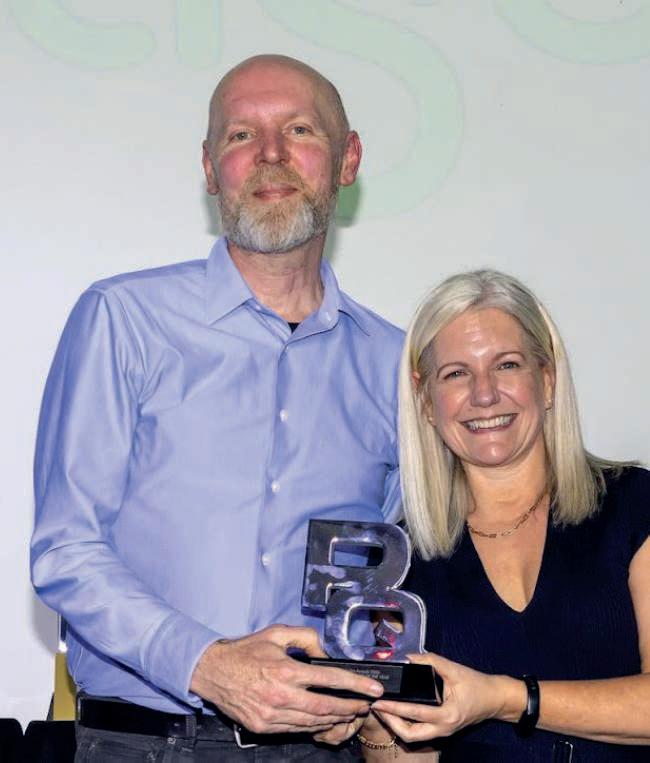
The big winners on the night were Jo Wood and Zoe Whitman, who took home two awards: one for The Bookkeepers’ Podcast and one for Hey Monika, their training academy.
Accountancy Body of the Year went to the AIPCA & CIMA. They also had a very special night as our NQ of the Year, Diego Trucco, is CIMA qualified, and PQ of the Year Tim Mickleburgh is studying for his CGMA.
Stuart Pedley-Smith was inducted into the PQ magazine Hall of Fame, and an Editor’s Special Award went to AAT tutor James Read, who works at HTFT while also undertaking humanitarian work in Ukraine. The other Editor’s Special Award went to ACCA’s YouTube channel.
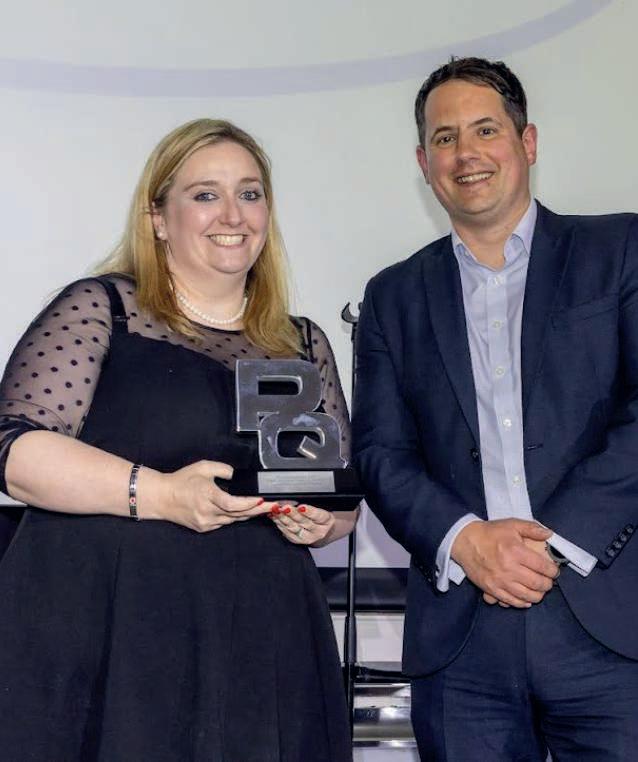
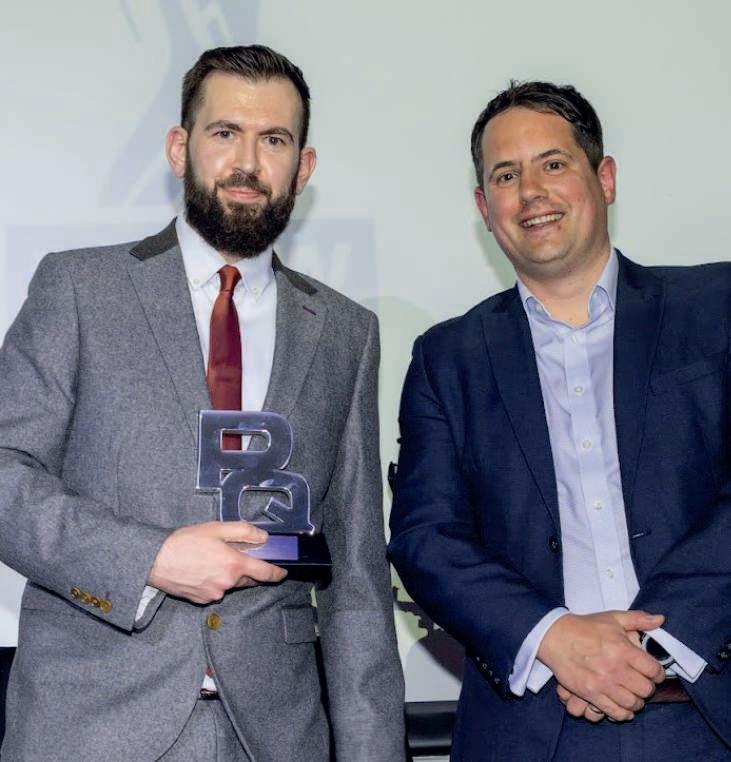
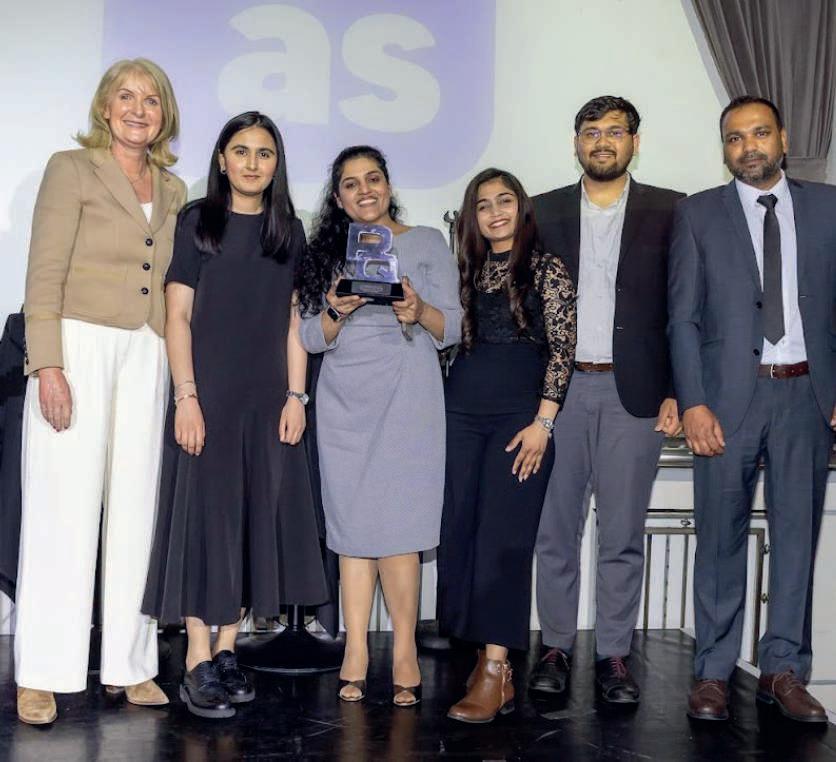
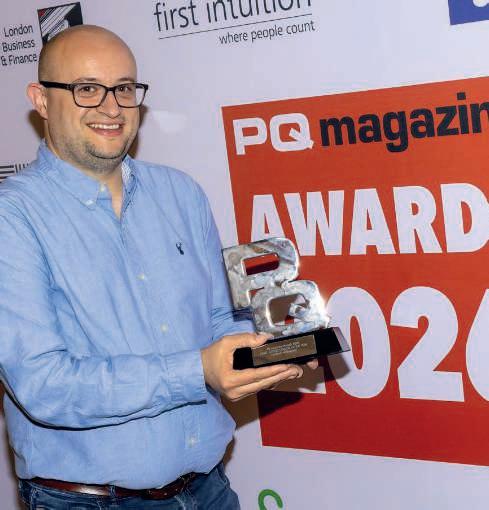
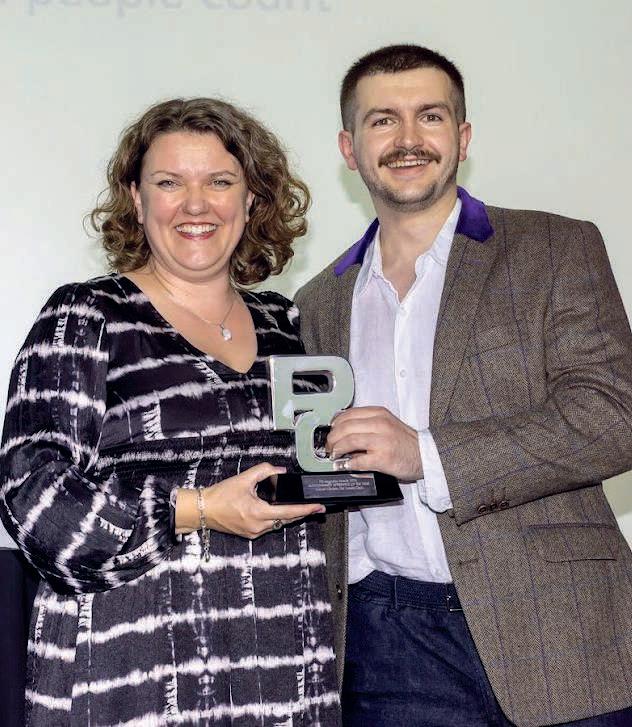
The first-ever Student Champion was EmmaLouise Waple, and the Distance Learning Student of the Year was Lorriane Flynn, who studies with aCOWtancy. Turn the page to check out all the winners, and see our fun page (page 38) for loads of fun photo booth pix!
Photos by Phil Gammon





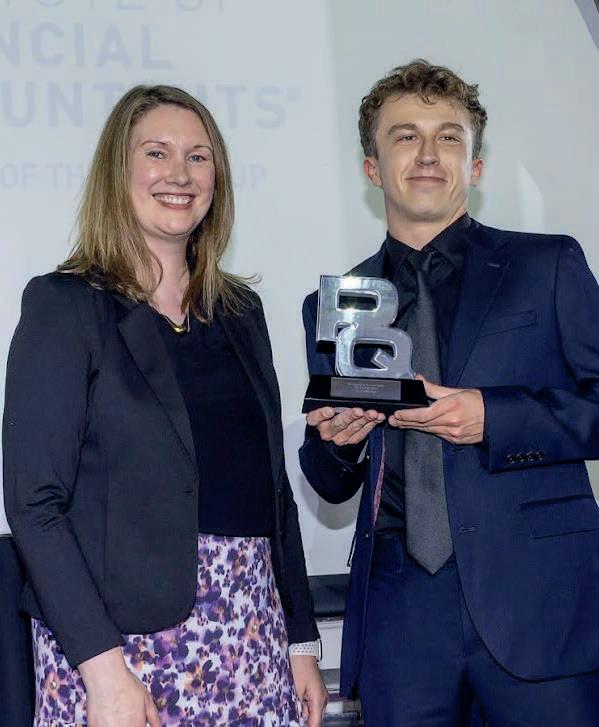
The PQ magazine 2026 winners in full are:
STUDENT BODY OF THE YEAR
Accounting/Business Students, University of Reading
ACCOUNTANCY BODY OF THE YEAR
AICPA & CIMA
PRIVATE SECTOR COLLEGE OF THE YEAR
e-Careers
PUBLIC SECTOR COLLEGE OF THE YEAR
University of Liverpool
ONLINE COLLEGE OF THE YEAR
ICS Learn
PRIVATE SECTOR LECTURER OF THE YEAR
Ben Campbell, Training Link
PUBLIC SECTOR LECTURER OF THE YEAR
Catriona Hyde, University of Leicester
STUDY RESOURCE OF THE YEAR
Skills Bootcamp, Future Connect Training & Recruitment
INNOVATION IN ACCOUNTANCY
Accounting Café
BEST USE OF SOCIAL MEDIA
Crowe UK
PODCAST OF THE YEAR
The Bookkeepers’ Podcast
TRAINING MANAGER/MENTOR OF THE YEAR
Fiona Jones, striveX Accountants
ACCOUNTANCY TEAM OF THE YEAR
Logic Manufactured Bespoke Ltd
GRADUATE/APPRENTICE TRAINING PROGRAMME OF THE YEAR
Hey Monika (The Bookkeeper Training Academy Ltd)
ACCOUNTANCY PERSONALITY OF THE YEAR
Libby Walklett
STUDENT CHAMPION OF THE YEAR
Emma-Louise Waple
EDITOR’S SPECIAL AWARD #1
James Read, HTFT
EDITOR’S SPECIAL AWARD #2
ACCA Student Study YouTube Channel
PQ HALL OF FAME
Stuart Pedley-Smith
ACCOUNTANCY APPRENTICE OF THE YEAR
Edward Gleeson, PKF Francis Clark
DISTANCE LEARNING STUDENT OF THE YEAR
Lorraine Flynn
ACCOUNTANCY GRADUATE OF THE YEAR
Hannah Adedoyin
NQ OF THE YEAR
Diego Trucco
PQ OF THE YEAR
Tim Mickleburgh









Danielle Smith explains why now is the right time to sign up for the all-new payroll qualification from ICS Learn, Sage and ICB
The accounting and finance profession is evolving at pace. But the route into it doesn’t always reflect how those roles are actually performed.
Across the sector learners are navigating multiple pathways. They build knowledge in one setting, encounter software in another and are then expected to bring those elements together in the workplace. While each part has value, the gaps between them are where progress slows and potential can be lost.
When I joined ICS Learn my focus was clear. I wanted to enhance the quality of our accountancy and finance provision, while expanding the portfolio in a way that was meaningful for learners and for the profession. Payroll was high on that agenda, but from the outset I knew that adding another course to the market wasn’t the answer. The market doesn’t need more courses. The model itself needed to change. It didn’t sit right that learners were expected to bridge that gap between learning and real-world application.
Research from ADP indicates that over 80% of organisations are expanding their payroll teams, yet nearly two-thirds report skills shortages already impacting service quality. Within the profession, 63% of practising members of the Institute of Certified Bookkeepers (ICB), the world’s largest bookkeeping organisation, are already providing payroll services to their clients. Payroll may sit as a specialism, but it is increasingly a core capability across many accounting and finance roles and the gap between demand and readiness remains.
That pressure is intensifying. Increasing regulation, Making Tax Digital and rising client expectations mean payroll is becoming more complex and more visible within a business. As automation and AI continue to handle routine processing, the expectation on professionals to deliver accuracy and informed judgement is only growing. For bookkeepers and finance professionals, adding payroll capability is increasingly a natural extension of the role. That context shaped everything about what we set out to build. Not a qualification that teaches payroll in the abstract, but a programme that immerses learners in it. One designed to work for those entering the profession, for existing finance professionals looking to expand their capability

and for those already delivering payroll who want to formalise and strengthen their expertise.
Achieving that required bringing together the right partners, for the right reasons.
Working with Sage and ICB, we developed a payroll programme built around three principles: simplicity, relevance and real-world application. These weren’t values chosen after the fact. They were the design brief from the start and every decision about how the programme works was made against them.
This isn’t three components brought together. It’s one model designed to work as a whole.
Sage is widely used across the sector, which means the proficiency learners build during study is directly relevant to the environments they’re likely to operate in. They’re not learning about payroll systems in theory and then encountering the reality later. They’re building those skills in the same context in which they will ultimately use them. For employers, that means individuals who can contribute from day one, not after a period of translation or retraining.
On completion, they achieve an ICB-accredited outcome that carries genuine weight with employers across the finance sector. What makes
this model different isn’t any single component. It’s the alignment between them. Sage brings the industry-standard software. ICB brings the professional accreditation framework that gives the outcome real meaning. ICS Learn brings the delivery infrastructure to make this accessible to people balancing study alongside work and other commitments.
For too long these elements have operated separately, and learners have been left to bridge the gaps themselves. This model removes that burden entirely. They’re not studying payroll in the abstract. They’re doing it within a single, connected experience where the tool, the training and the credential work together.
This reflects a wider shift in how accounting and finance education needs to develop. The future isn’t about more content. It’s about better connection between learning and practice.
The profession doesn’t have a knowledge gap. It has an application gap. Bringing learning, software and accreditation together is how we close it.
•
For more click here
Danielle Smith, Head of Accountancy and Finance Qualifications at ICS Learn

















Here’s everything you need to know about the new AAT Level 4 Diploma for Professional Accounting Technicians

AAT is updating its Level 4 qualification to ensure it remains industry-relevant, integrating essential digital skills, sustainability, and mandatory tax, business and audit modules to meet today’s employer demands.
For learners, this new syllabus offers a clear, direct route to qualification, with enhanced funding options and a course specification focused on the most sought-after skills.
Launching on 1 September 2026, the Level 4 Diploma for Professional Accounting Technicians (Level 4 PAT) is more structured and better aligned with the skills employers are looking for. What is changing? And why should you consider making the new Level 4 PAT your next career move?
Perhaps the most significant change is the official recognition of the new Level 4 PAT as a Higher Technical Qualification (HTQ).
This status, granted by the Institute for Apprenticeships and Technical Education (IfATE), places the AAT Level 4 qualification firmly within the government’s framework for higher education, ensuring it’s mapped against current Occupational Standards developed with direct input from employers.
1. Enhanced prestige: It confirms that the qualification delivers a standardised, high level of competency, bridging the gap between academic theory and essential workplace skills like advanced data analytics and risk management.
2. Better funding opportunities: As HTQs are central to the government’s mission to tackle the UK skills gap, students may find it easier to access tuition fee loans via Student Finance England, similar to those studying for a university degree. This could make your journey to professional qualification much more financially accessible.
3. Clearer progression: It provides seamless alignment with other Level 4 and 5 qualifications,
such as foundation degrees, making your future academic or professional progression clearer and more respected.
The current Level 4 qualification (known as Q22) uses a mix of mandatory and optional units, requiring students to choose two electives. The new Level 4 PAT simplifies this by moving to a fully standardised and compulsory structure.
Under the new syllabus, all students will study five compulsory units:
1. Financial Accounting: Focuses on preparing and understanding company financial accounts within the framework of IFRS standards.
2. Management Accounting: Encompasses the key areas of planning, control, decision making and liquidity management.
3. Audit & Internal Controls: These two critical areas are combined into a single, mandatory unit, reflecting the real-world link between assurance and governance.
4. Principles of Taxation: This streamlines the previous structure by merging personal and business tax into one essential compulsory exam.
5. Advanced Business Awareness: This new unit is specifically designed to elevate your commercial understanding, covering critical areas like business context, professional ethics, sustainable development goals, and the impact of digital technology. This unit ensures you don’t just understand the numbers but also the environment in which the business operates.
The curriculum has been heavily updated to embed skills that employers are now demanding:
• Regulation: Encompassing a range of standards and regulations that accountants must follow.
• Digital innovation: A stronger focus on the use of technology, software, and data analysis tools in accounting.
• Sustainability: Understanding the role of
an accountant in non-financial reporting and environmentally conscious business practices.
• Ethics: Essential for all professional accountants.
• EDIB (equality, diversity, inclusion and belonging): A core focus on professional behaviours and the importance of fostering an inclusive work environment.
• Communication: A key skill for effectively supporting managers and clients.
By making all units mandatory, AAT ensures that learners emerge with a powerful, standardised skill set that is immediately valuable to employers.
How you’ll be assessed is also changing, and the updates are overwhelmingly positive for students:
1. 100% computer-marked assessments: All five assessments will be entirely computer-marked. This eliminates the components that previously required human marking, leading to a much faster and more objective process.
2. Rapid results: The most immediate benefit of the computer-marked system is speed. Results will typically be confirmed by the next working day after you sit the assessment, allowing you to move quickly onto your next unit or qualification.
3. Interactive, workplace-style formats: Expect to see fewer traditional, long-form written responses. The new assessments will utilise more interactive, digital tasks that simulate the work you would perform in a modern accounting role, testing practical application of knowledge rather than just memory recall.
The transition to the new syllabus is structured to be as smooth as possible, whether you’re starting fresh or part-way through Level 4.
• New students: If you register for Level 4 from 1 September 2026 onwards, you will automatically follow the new Level 4 PAT syllabus.
• Current students (Q22): You can register for the existing Q22 syllabus until 31 August 2026. You then have a substantial period, until 31 July 2028, to complete all your assessments under the Q22 syllabus.
• Transfer arrangements: If life gets in the way and you are unable to complete Q22 by July 2028, AAT has a transfer system in place. For a small fee (around £50) you can transition to the new syllabus, and any relevant Q22 units you have successfully passed may be credited against the corresponding new modules (conditions apply).
If you are considering starting AAT Level 4 or progressing from Level 3, make sure you research your preferred training provider’s approach to the new syllabus.
Mindful Education’s new course will cover all five mandatory units, plus additional support units such as ‘Writing to Learn,’ to help students hone their exam and revision skills. Our awardwinning Online and On Campus courses are delivered through a blended format – a combination of online study and regular lessons on campus. Find out more here.
• Thanks to Mindful Education for this article
The latest pass rates have landed for the year ending 31 December 2025 – we run the rule over the results to see where the problems are
The AAT pass rates for 2025 are out, and the good news is that pass rates for Level 4 and 3 rose ever so slightly when compared with the last set of yearly results.
The CBA pass rate for Level 4 now stand at 71.4%, and for Level 3 it is 69.4%.
It’s still almost impossible to get a distinction for the Level 4 Diploma in Professional Accounting, but even this figure rose to the heady heights of 3.94%.
Looking at the individual assessment pass rates it was great to see the jump in the Audit and Assurance assessment, from 77.3% to 81.3%. There are four other assessments with pass rates above 80% – BUSK (88.4%), BKFN (83.8%), ITBK (82.9%) and INAC (82.6%).
Level 4’s Applied Accounting Management has the distinction of having the lowest pass rate for the year, at 62.1%. There are three other assessments with pass rates below 70% – MATS (63%), FAPS (63.9%) and PNTA (67.4%).
Note: Pass rates are only published for assessments that have been available for at least 12 months or where there has been a minimum of 500 sitting. The pass rate shown are the rates for assessments between 1 January 2023 and 31 December 2025.

Qualifications awarded by AAT include four graded qualifications. The table below shows a global summary of the grades awarded for each qualification between 1 January 2025 and 31 December 2025.
The following table shows the pass rates for the End Point Assessments for year-ending 31 December 2025.
note that the
ÒIwas sure I’d passed.” Then comes the number: 49.
There is usually a pause after that, then a quieter admission: “I don’t know what I did wrong.” It is not said with anger, more with confusion. The script felt complete. The preparation had been thorough. And yet the result suggests something has been missed, something specific but difficult to see.
This is now a familiar pattern at Strategic Professional level, particularly in Advanced Audit & Assurance. Students on their third or fourth attempt often describe the same experience: extensive syllabus coverage, consistent question practice, and a genuine sense that this sitting will be different. The result, more often than expected, sits in the same narrow band — 45 to 49. Close enough to suggest capability, but not enough to pass.
For most, the preparation model is logical. Attend lectures, build notes, practise past questions, repeat. It is a sensible approach, one that works well earlier in the qualification, but it begins to fracture at this level. The assumption is that sufficient coverage will translate into performance. At Strategic Professional, that relationship becomes less reliable. Knowledge remains necessary, but it is no longer the differentiator. What is being assessed is how that knowledge is applied: how points are selected, how they are structured and how conclusions are drawn under time pressure. The difficulty becomes more apparent after the exam. Students expect some form of clarity – an indication of where marks were gained, where they were lost, and why. Instead, what they receive is a mark and, at best, a set of broad comments. These may be directionally helpful, but they rarely connect directly to the student’s own script. The detail that matters – the points where marks were withheld, the moments where an answer fell just short, is not visible.
Without that visibility, improvement becomes uncertain. A student scoring 49 may adjust their approach for the next sitting, then return with 48, then 46, each time making changes without knowing whether those changes are actually relevant. The process begins to feel less like progression and more like repetition. The underlying issue is not effort, nor even understanding of the syllabus. It is that students are being asked to diagnose their own performance without ever having seen how it was assessed in the first place. The standard they are aiming for is described, but rarely demonstrated in a way that is personal to them. Examiner reports outline what a good answer looks like in general terms, but they do not show how that standard applies to a specific script. The distinction is subtle but important. Professional judgement, in this context, is not an abstract idea. It shows up in the small details: how an answer begins, how risks are framed, how points are prioritised, and how conclusions are expressed. These

are the areas where marks are won and lost, and they are most visible in the margins of a marked script, the annotations, the ticks, the brief comments that explain a decision. Without access to that level of feedback students are left to infer what went wrong.
This matters more now than it perhaps did in the past. It is increasingly common to see students reaching their third or fourth attempt already fatigued. The language shifts slightly: “I’m exhausted.” “I don’t have the energy for another sitting.” At the same time, the way students prepare has changed. Much of the learning environment has moved online. Content is more accessible than ever, lectures, notes, question banks, all readily available. In some respects, this has improved access. In another, it has made the absence of personalised feedback more noticeable, because the system is built around delivering content at scale rather than reviewing individual performance in detail. There is also a broader shift taking place. As knowledge becomes easier to access, the difference between candidates is less about what they know and more about how they use it. The ability to interpret a requirement, to select what matters and to express it clearly under pressure has become central. These are not
skills that develop through exposure to content alone. They require an understanding of how answers are evaluated in practice, not just what is correct, but what is considered sufficient.
This is not to suggest that students need to work harder or cover more material. In many cases, they are already doing both. The more relevant question is whether they have any real clarity on what was missing from their previous attempts. Without that, additional effort risks being misdirected. Progress, at this level, is less about accumulation and more about refinement – about seeing, with some precision, where an answer fell short and why.
Until that visibility exists, capable students will continue to find themselves in a familiar position: close to passing, but not quite there, repeating the process with increasing effort and diminishing certainty. And until students can see what went wrong in their own answers, progress will continue to feel less like improvement and more like guesswork repeated.
• Sean Freeland is a lecturer and module leader on the PwC Flying Start programme at Queen Mary University of London. He also teaches Strategic Business Leader and Advanced Audit & Assurance

It’s time to apply yourself to the Applied Skills papers. With BPP’s help we’ve put together guidance and tips for what lies ahead this June. Go online to www.pqmagaine.com for all the Strategic tips
Section A: Three mini case-style scenariobased questions each with five two-mark questions based on the scenario (total 30 marks). Each mini case question will test single topic areas of the syllabus and so will either test syllabus area A, B, C, D or E. We would particularly expect questions in section A to focus on syllabus areas A and E.
Section B: Q16: One 30-mark question. Q17, Q18: Two 20-mark questions.
All three questions in Section B will be broken down into sub requirements and be scenario based. Most marks in each question will test syllabus areas B, C and/or D.
Areas expected to be tested in questions 16 to 18 include:
• Audit planning.
• Audit risk (identification and explanation of audit risks from a scenario and explanation of the auditor’s response to each risk).
• Internal audit.
• Internal controls (identification and explanation of deficiencies in internal control and the recommendation of suitable internal controls; and identification and explanation of direct controls and description of tests of controls).
• Corporate governance (identification and explanation of corporate governance deficiencies and recommendations to address the deficiencies).
• Audit procedures (substantive procedures and tests of controls).
The exam is a computer-based exam and can cover any part of the syllabus.
General advice: Where questions are based on a scenario it is essential that you use the information in the scenario to score the identification marks and then develop this to score the explanation marks.
The exam often provides a table for you to complete your answer. For example, audit risk questions will have a table with two columns: one for ‘audit risk’ and one for ‘auditor’s response’, with each properly explained point being worth one mark. Using this tabular approach encourages you to answer both parts of the question, therefore maximising your marks.
Pay attention to the verbs used in question requirements as these indicate the number of marks available. For example, the verb ‘explain’ requires a sentence and will score one mark if properly explained, whereas the verb ‘list’ requires you to list out information with no further explanation and this will score ½ mark per point.
Finally, it is essential that you read the Examiner’s Reports, which are issued twice a year (after the June and December exam sittings). These are an invaluable source of advice and provide a sample section A OTQ case style exam question, as well as three constructed response questions from

the March/June and September/December sittings. They provide example questions accompanied by a commentary from the examining team, which gives guidance on interpreting the question requirements and common mistakes/areas of weakness noted during the marking process. These reports can be found on the ACCA website.
Performance Management (PM)
Section A: This has 15 two-mark objective test questions on a wide range of topics. It is essential to have a broad syllabus knowledge and to do plenty of question practice to score
well in this section.
Expect a mix of calculation and discussionbased questions; note that there are no marks for workings in this section.
Good time management is essential as it is easy to get caught up in a tough calculation which ultimately will only be worth two marks. Never be tempted to spend more than two minutes on any question in this section.
Recent examiner feedback stresses that careless mistakes are common in Section A. Always re-check whether the question asks for cost per unit, total cost or a variance figure, as incorrect interpretation of the requirement is a
frequent reason for losing easy marks.
Section B (case questions): Three separate scenarios with five objective test questions on each scenario; each question is worth two marks.
Questions are not dependent on each other and can be answered in any order. Each scenario could be a mix of topic areas or focused on one topic and will usually consist of two/three calculations and two/three narratives.
The examining team have highlighted that weaker candidates often lift words from the scenario without applying their knowledge. Stronger answers demonstrate why the information in the scenario is relevant and link it to the theory or calculation.
Section C (constructed response questions): Two 20-mark questions which could be from but not limited to: budgetary systems; planning and operational variances; mix and yield variances; and evaluation of the company performance (either as a whole or on a divisional basis).
Familiarity with the CBE software is important as you may be expected to use both a word processing and spreadsheet format for your answer.
Learn standardised layouts for calculations such as variances, learning curves and limiting factors. This will save you time in the exam and mean that you are less likely to make mistakes. The split of marks tends to be approximately
40% calculations and 60% discussion, so don’t neglect the written elements of this paper. Make sure that you always fully explain your ideas.
Interpretation and application are important skills that are tested in this paper so make sure you make full use of the scenarios that you are given in the exam. Examiners have commented that many candidates can perform the calculations but then fail to discuss their meaning. To score well you must explain what the figures imply for management and link back to the organisation’s objectives or performance.
Professional skills are increasingly expected even at PM level: good structure, clarity of communication and logical argument will all help you secure higher marks.
Time management is another common weakness. Stronger candidates allocate their time proportionately (e.g. 36 minutes for each 20-mark question) and ensure they attempt all requirements rather than leaving parts blank.
Section A: This has 15 objective test questions (OTQ) worth two marks each. Questions often test your knowledge of key technical terms and will balance out the questions in sections B and C of the exam to make sure that all aspects of the syllabus are examined. Therefore questions will often test your understanding of financial management and
objectives (including ratio analysis), as well as the economic and financial environment (financial markets, fiscal and monetary policies).
Section B: Three 10-mark mini case studies each containing five OTQ questions. Commonly examined areas are working capital management (e.g. the operating cycle, the impact of a change in credit period or accepting a factor’s offer); business or security valuations; and risk management (currency and interest rate risk).
Section C: Two 20-mark questions. Questions will be broken down into discussion and numerical requirements based on a common scenario; marks will be split evenly between calculations and discussion.
These questions will focus mainly on syllabus sections C (working capital), D (investment appraisal) and E (business finance). Whichever of these three topics does not feature in section C is more likely to be tested in section B of the exam.
Questions from syllabus section C (working capital) are likely to be broad ranging so a broad knowledge of this syllabus area is important. Candidates are sometimes caught out by section C questions so make sure you practise this type of question as part of your final revision.
Questions from syllabus section D (investment appraisal) are likely to feature
Continued on page 28 ☛

NPV with inflation and tax; however, it is important to also be able to answer questions that include risk, uncertainty, leasing, asset replacement and capital rationing.
Questions from syllabus section E (business finance) often test the calculation and analysis of a company's cost of capital. Candidates often assume that business finance questions will always test this area, but questions also frequently test the evaluation of financing options (debt or equity) which sometimes catches candidates out – make sure you practise this type of question as part of your final revision.
Section A: Fifteen two-mark objective test questions on a wide range of topics, including areas such as consolidation and interpretation of financial statements that will also be covered in detail in section C.
Expect a question or two on non-core areas (e.g. sustainability following the issue of IFRS S1).
Read the scenario, requirement and answer options carefully and ensure you capture the correct information from the scenario to answer the requirement.
Don’t leave any questions unanswered –there is no negative marking so guess if you are unsure of the correct answer.
Section B: Three separate case-study scenarios with five objective test questions on each scenario; each question is worth two marks.
Each scenario could be a mix of topic areas (for example, revenue and receivables are often related, as are property, plant and equipment and leases) or focused on one topic and will usually consist of two/three calculations and two/three narratives.
Questions are not dependent on each other and can be answered in any order.
Don’t leave any questions unanswered –again, guess if you are unsure of the correct answer.
Section C: Two 20-mark constructed response (long form) questions, one covering the interpretation of financial statements, and the other the preparation of financial statements.
One question will be in the context of a single company and the other will be in the context of a group, so you could be faced with a single company interpretation question and a group accounts preparation question, or vice versa.
Both questions will require knowledge from other areas of the syllabus, particularly
the accounts preparation question which will have a range of adjustments covering various areas.
Accounts preparation questions may require full financial statements or extracts, so read the requirement carefully. Candidates commonly expect questions on the statement of profit or loss and statement of financial position, but shouldn’t forget about other comprehensive income, the statement of changes in equity and the statement of cash flows.
These tips should only be used in conjunction with proper study. We cannot guarantee that these topics will appear in the actual exam as we have not seen the exam papers. Examiners are not predictable so it is vital that all core syllabus areas are revised fully.
A single entity accounts preparation question could be preparation from a trial balance or restatement of given financial statements with common adjustments being for depreciation, revaluation and current/ deferred tax (including deferred tax on revaluations). There will also be a mixture of adjustments on other syllabus areas, e.g. leases, substance over form issues, financial instruments (change in fair value or amortised cost), share issues, government grants, inventory valuation, and revenue recognition. Group accounts preparation questions will provide the separate financial statements (or extracts thereof) of the parent and relevant subsidiary(ies) and associate. Candidates should be prepared to set out the standard workings for goodwill, non-controlling interest, movements in net assets, and retained earnings as those are commonly examined. Other common adjustments are intra-group sales of goods, intra-group sales of assets, dividends and fair value adjustments.
ACCA has previously clarified that a consolidated financial statements preparation question could include up to two subsidiaries and one associate which allows additional scope for examining the disposal of a subsidiary (including as a discontinued operation). Be prepared for such a question. Make sure that you use the ACCA’s Practice Platform to familiarise yourself with the spreadsheet tool you will need to use when answering accounts preparation questions. This can be found on the ACCA’s website. Candidates continue to find the
interpretations question challenging. In both single entity and group interpretation questions candidates must avoid making generic statements about the movement in ratios and instead focus on using the information in the question to, for example: identify key changes in the period (e.g. change in sales mix, closed down an operation, purchased a new subsidiary); identify transactions that would cause inconsistencies between periods or between balances (e.g. revaluation of assets for the first time, particularly if the revaluation was at the end of the period); identify any changes in accounting policies or estimates, or classification (e.g. one company presents expenses as part of cost of sales whereas another presents as part of administrative expenses).
ACCA has previously clarified syllabus wording to emphasise the importance of the statement of cash flows in interpreting financial statements. Candidates should be prepared for such a question.
Section A: This has 15 objective test questions (OTQs). It is important to remember that section A offers the TX examining team an opportunity to test the whole syllabus, so practising on all kinds of TX questions from the practice and revision kit will help build on and complement your existing knowledge.
You should expect at least a couple of these OTQs to be devoted to the administration of income tax and corporation tax. So, candidates should ensure they are comfortable with the following:
• Due dates for the payment of income tax (including payments on account).
• Due dates for the payment of corporation tax (including instalments for large companies).
• Filing dates for the income tax and corporation tax returns.
• Penalties and interest for late payments and returns.

Also likely to be tested in section A are the following topics:
• VAT rules on registration, impairment loss (bad debt) relief, and the SME schemes relating to cash accounting, annual accounting and flat-rate schemes.
• Inheritance tax due on lifetime transfers both in the donor’s life and on death.
• Statutory residence tests for individuals.
• Identification of groups of companies for corporation tax loss reliefs and gains.
• Trading loss reliefs for both companies and sole traders.
Section B: Three scenarios each with five OTQs. In section B the questions will be like those of section A but there will be a longer scenario to deal with. This means a slightly different exam skill is necessary as you have more information to work through and each OTQ will require you to find the relevant information or data in that scenario. It is not a difficult skill, but we would hope you have had time to practice an extensive range of section B questions from the practice and revision kit before attempting the real exam.
Section C: Three constructed response questions; two worth 15 marks and one worth 10 marks. In section C you will face the longer, constructive response questions with scenarios and much more open requirements. Your answers will need not just sound technical knowledge, but also the application of that knowledge to the question you have been asked. Furthermore, your answer will have to be
presented logically so the marker can follow your thought processes. At least 50% of your revision time should be spent answering the section C questions in the practice and revision kit to build up confidence and speed in a way that will also maximise marks.
1. Remember to learn your income tax and corporation tax pro formas.
2. Calculations that would require no more than two or three entries into a calculator can be included in the relevant cell of your pro formas (e.g. time apportioning a salary). Calculations which are more complex (e.g. company car benefits) need separate workings which are properly referenced (W1, W2, etc.) and have a heading. Use the cell formulae to link the workings answer into your pro forma – then if you change the working the main body will automatically update.
3. Attempt the narrative parts of the requirement – aim for as many sentences as there are marks, with each sentence containing something technical. Keep your paragraphs to no more than three sentences.
4. Your exam will be via the CBE software and the spreadsheets have some difference to the software you may be accustomed to, so it is crucial you practise using the CBE software especially for section C type questions.
5. Remember you cannot insert rows into the CBE spreadsheets. So, leave plenty of space on the page (especially when setting up pro formas). You may need to add something in and you can
always go back and move workings up the page. Show workings down the page rather than across the page as it makes them easier to mark. Wellspaced answers are also easier to mark – and you always want to keep your marker happy! We know that the two longest questions will focus on income tax and corporation tax. These are likely to include:
• Employment benefits.
• Property income.
• Relief for pension contributions.
• Adjustments to profit to arrive at trading income for both companies and sole traders – in past sittings we have seen a number of questions in which you have to correct errors in computations included in the scenario.
• Capital allowance computations.
• Chargeable gains calculations.
So, remember to cover the whole syllabus when using the practice and revision kit.
General advice: Finally, remember the pass mark is 50% – you don’t need to be perfect. If you don’t know something have a guess and move on. Sometimes you have to do that in order to get follow-through marks in section C questions. If you make a mistake and then use that incorrect figure later in a subsequent calculation that’s fine – you can only lose the mark once. In sections A and B never leave an OTQ unanswered − have a guess, you might be right!
• For your strategic level tips go to www.pqmagazine.com

CIPFA Student Network President Susanna Farrell celebrates the next generation of public finance professionals
CIPFA, in partnership with the CIPFA Student Network, hosted its first national graduation ceremony in early May, welcoming CIPFA graduates from across the UK to celebrate the important milestone of achieving qualified status.
Held at the historic Chartered Accountants’ Hall in London, one of the profession’s most recognisable venues, its remarkable architecture provided a fitting backdrop for such a significant milestone, immediately setting the tone for a memorable and inspiring event.
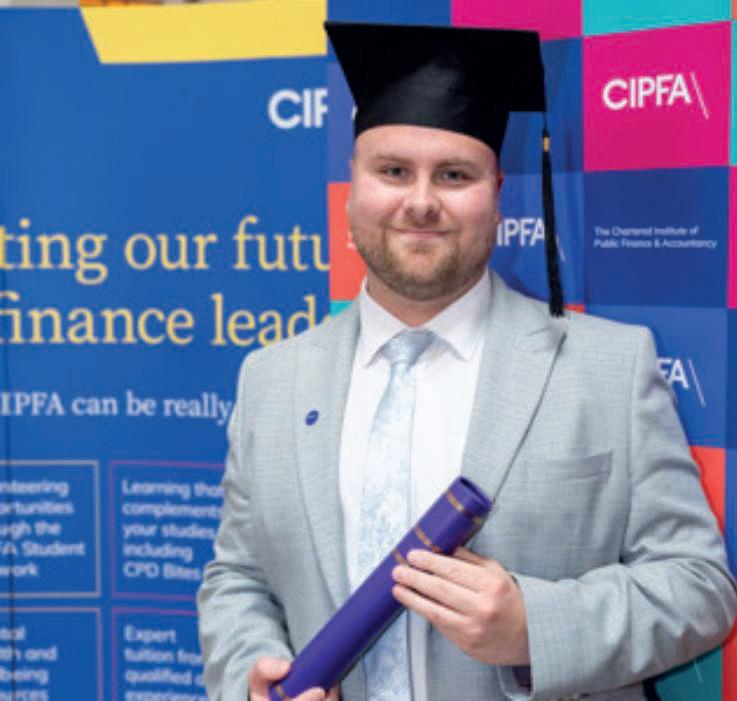


As CIPFA’s first national graduation ceremony, the event was a landmark moment, offering graduates the opportunity to come together from across the country to celebrate their achievements in one shared, meaningful occasion. It was wonderful to see attendees building new connections as they marked the moment.
More than 50 graduates took to the stage in front of their friends and family in an atmosphere filled with pride, achievement and support. The event recognised the hard work it requires to
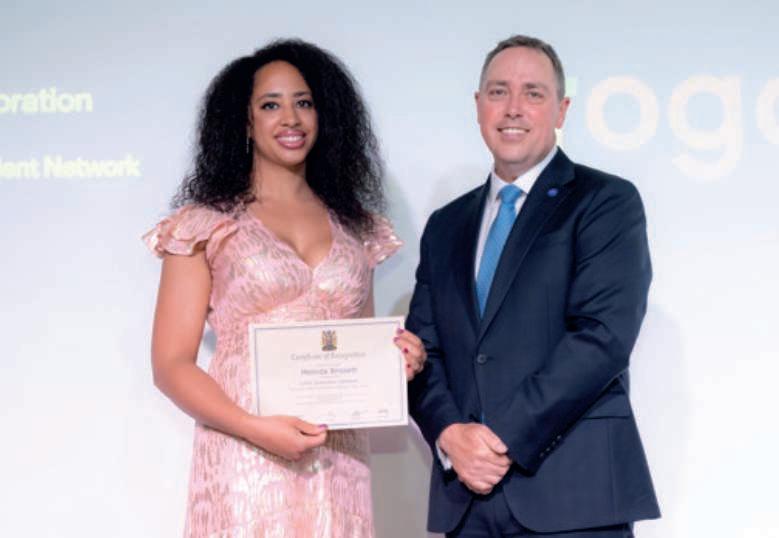

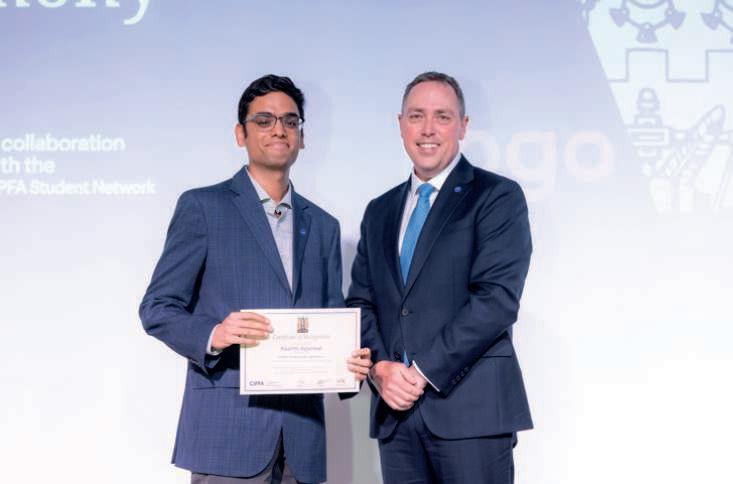
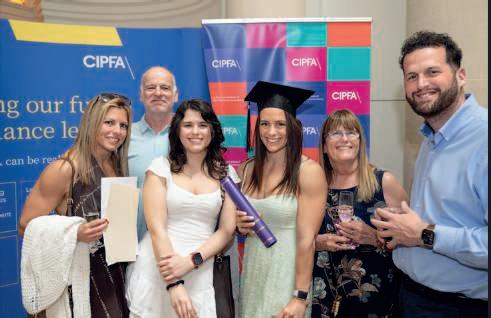
become a CIPFA-qualified accountant, and the support networks that help to make it possible.
CIPFA President Sir Mark Lowcock opened the ceremony with reflections on his own route into the profession. This was followed by my thanks as President of CSN to everyone who had come together to celebrate the graduates’ achievements.
CIPFA CEO Owen Mapley then took to the stage, reaffirming his support for the graduates and highlighting the lasting value of a CIPFA qualification. The hall rung with applause and cheers for each graduate crossing the stage!
The ceremony concluded with a reception, giving graduates, families, friends and colleagues the opportunity to celebrate together and reflect on the beginning of the next stage of their professional journeys across public finance.
Many congratulations to all the graduates – I wish you all the very best in your public finance futures!

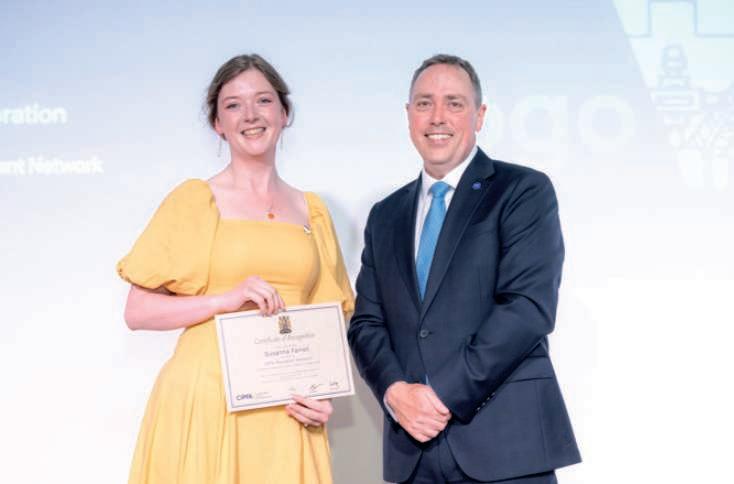
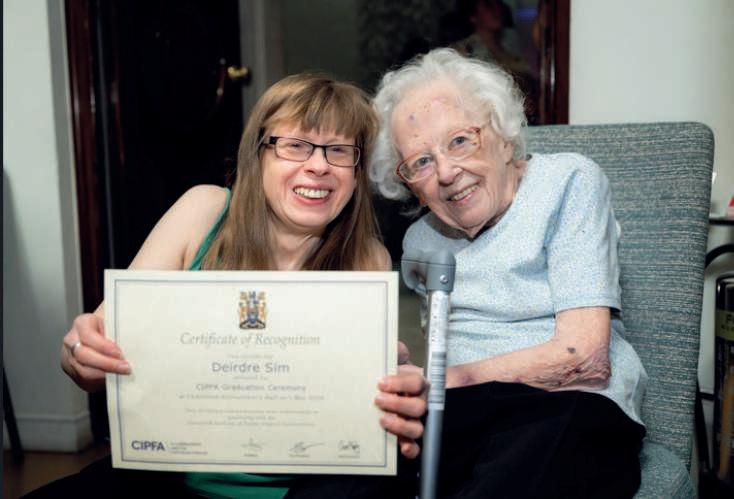
The ACCA has many free resources to help you study effectively, master complex concepts and ultimately prepare for exam success
The Study Hub offers free access to courses for all exams. And, because it’s developed by ACCA, all content in the hub is accurate and aligned with the latest syllabus. You can be confident you’re studying the right material – no guesswork, no outdated notes.
Its structured learning helps break down the syllabus into manageable chapters, while short quizzes help you to test your understanding before you move on.
Practice questions: Use the Study Hub’s practice questions to apply your knowledge in a range of scenarios. Discover how to use constructed response questions to plan your answers and debriefs from a model solution.
Flashcards: You can test your understanding of key definitions using the ACCA Study Hub’s flashcards feature. The flashcards work equally well on desktop and mobile.
For each flashcard you can rate your understanding against the definition. The rating of your last attempt will appear the next time you view that card.
The ACCA Study Hub is accessible via MyACCA
It goes without saying that question practice is an essential part of exam preparation. Being able to practise in the exam environment provides a fantastic opportunity to prepare fully prepared for the real exam.
The ACCA Practice Platform emulates the live exam environment for Applied Skills and Strategic Professional exams. This helps you familiarise yourself with the exam format, functionality and exam-standard practice content.
The platform contains a range of content that allows you to attempt questions to time and then mark and debrief your answers. It also contains a blank workspace that allows you to answer constructed response questions from other sources in the exam environment.
So, if you haven’t already, take the time now to really understand the CBE environment and practise using the live exam format, layout and functionality.
Doing so now will help your confidence and ultimately save you time in the exam, leaving you to focus on answering the exam questions.

Watch our videos to help you get the best out of the ACCA Practice Platform
Our analysis shows that students who use the ACCA Study Hub and Practice Platform together have a 24% higher pass rate than those who don’t (March 2026 exam session).
An award-winning resource, having taken the Editor’s Award at this year’s PQ awards, the ACCA Student Study Support YouTube channel has firmly established itself as a central part of the student experience.
It is the go-to for high-quality, syllabus-aligned content that directly supports success throughout the qualification journey.
The channel hosts a variety of content, including:
• tricky topic explainers
• exam playlists
• on-demand webinars
• exam tips and study advice
• Ethics and Professional Skills module (EPSM) and practical experience requirement (PER) support, and
• live events with the ACCA team.
If you haven’t already, subscribe now to be notified about further content on the Student Study Resources YouTube channel as we continue to support you on your ACCA journey.
As an exam session approaches, staying organised and focused becomes more important than ever. That’s where the Student Accountant app comes in, with its targeted, practical support for students preparing for their upcoming exams.
Once you’ve notified us within the app that you are preparing to take an exam, it will deliver tailored guidance and support through push notifications, so you’re always aware of what needs to be done and when.
In the lead-up to exam day, the SA app will help you stay on track by:
• reminding you about the latest exam-specific webinar(s) relevant to your studies, hosted by an expert tutor to deepen your understanding of key syllabus areas;
• alerting you to the availability of mock exams and debrief videos;
• equipping you with essential tips straight from the examining team relevant to your studies; and
• providing links to technical articles, which will help sharpen your knowledge and address any areas of weakness identified in your mock exams.
The SA app is available for free on the App Store and Google Play
Wherever you are in your journey, these tools are designed to give you an edge and maximise your chances of exam success.
• Thanks to ACCA for this article


Chris Cain explains the importance of the ACCA SBL Syllabus and Study Guide
One of the most important documents for students to read, understand and implement is the ‘SBL Syllabus and Study Guide’ (SG). This article explains the key areas on which to focus for your forthcoming SBL examination.
Firstly, if you are in the position of having to re-sit SBL, the good news is that the syllabus has not changed recently and will not be changing for the period of June 2026 through to June 2027 (see page 18 of the SG). For those planning to take the September 2027 exam you must read the September 2027 to June 2028 guide once it is released by the ACCA. I am expecting a number of significant changes.
Secondly, Section 3 of the SG explains the three capabilities (levels) which can be examined:
• Level 1: Knowledge and comprehension.
• Level 2: Application and analysis.
• Level 3: Synthesis and evaluation.
Linking Section 3 with Section 5 of the SG will show that Level 1 is not directly examined in SBL, which is why the SBL examiners tell students that “there are no marks for knowledge unless applied”.
What you will see in Section 5, therefore, is that none of what I call ‘learning outcomes’ are examined at Level 1. All the Learning Outcomes in Section 5 are either Level 2 or 3.
This means that you must be able to apply


knowledge to the examination ‘tasks’ and be able to analyse and evaluate effectively. I say that “synthesis is about connecting dots”. This involves relating points in the pre-seen with points in the exhibits (and your knowledge) to create arguments and justifications when answering certain tasks.
Note that analysis and evaluation are specifically named as Professional Skills in the SG (page 16) and are examined separately in the SBL exam (up to four marks for the demonstration of each professional skill). Synthesis, however, is not specifically named as a separate professional skill but is a requirement for passing SBL.
For example, the learning outcome in syllabus area D (Risk) 1f (page 12 of the SG) reads: “Discuss the dynamic nature of risk and the ways in which risk varies in relation to the size, structure, industry, sector and development of an organisation.”
This is a Level 2 learning outcome and a task appeared in September 2023 that included:
“Draft an email response which the CFO can send to the risk manager which: (i) Discusses the dynamic nature of Corjetz’s principal risks.
(6 marks)”
This sub-task clearly links to the wording in the learning outcome and was examined at Levels 2 and 3 because the professional skills to this stated: “Professional skills marks are available for demonstrating evaluation skills in using professional judgement in assessing the dynamic nature and consequences of the principal risks highlighted by the risk manager. (4 marks)”
Finally, Section 7 of the SG is also very important reading if you have never studied SBL before because it informs you about the structure of the exam, which is very different to all the other ACCA Professional Level papers.
In summary, my advice to all students preparing for SBL is to ensure that you or your tutor is fully on top of the ACCA SG and undertake as much practice as you can with feedback from experts.
• Chris Cain is an SBL tutor with online learning provider AMA
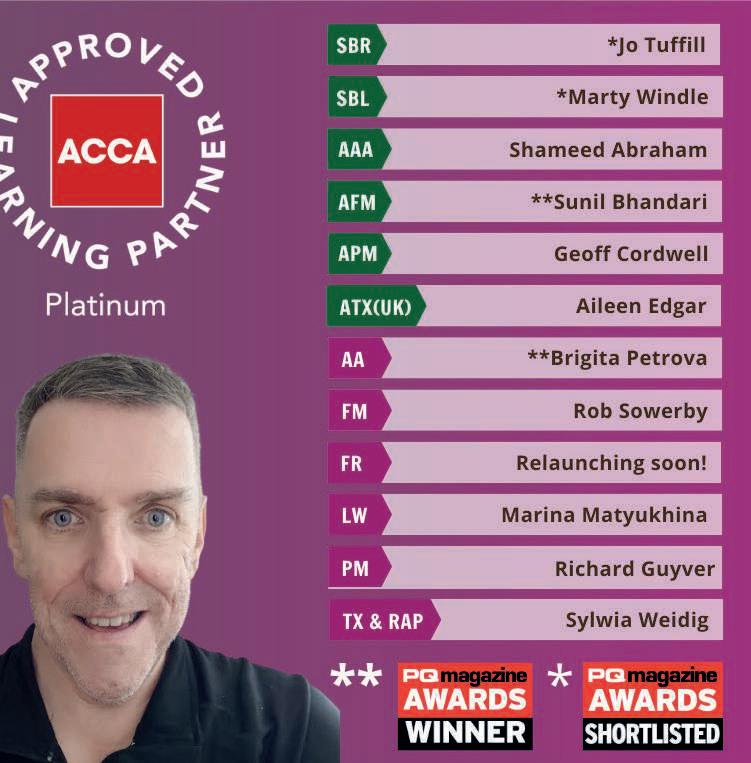
Karen Groves explains how to account for inventory in line with the international standard IAS 2
As part of your AAT studies you will need an understanding of how to account for inventory, which can include both raw materials and goods that are held for resale. Inventory is a current asset and must be included in the financial statements to reflect this.
IAS 2 Inventory states that we should recognise inventory at ‘the lower of cost and net realisable value’. The cost includes the purchase cost, costs to bring the inventory to its present location and any conversion costs. The net realisable value (NRV) is the estimated or actual selling price minus any costs to sell, for example selling and distributing.
At the end of an accounting period the inventory is counted and valued. Inventory is shown in both the Statement of Profit or Loss (SPL) and Statement of Financial Position (SFP). Let’s look at the Statement of Profit or Loss:

The cost of sales includes the opening inventory (this would be the previous year’s closing inventory), plus purchases, minus closing inventory. The closing inventory is deducted as this inventory will be carried forwards into the next accounting period.
The closing inventory will also be entered in the Statement of Financial Position, as a current asset.
The double-entry to account for the closing inventory would be:
Debit – Closing Inventory (SFP) Credit – Closing Inventory (SPL)
Example
EC manufacture shirts. The following information has been provided:
Cost per shirt
Selling price per shirt
Selling price
The value for each shirt in inventory would be as follows:
- £2) 13
Each shirt in inventory would therefore be valued at £8, being the lower of cost and NRV. Usually, the inventory will sell for a profit, so the NRV will be higher than cost. If inventory was valued at the NRV, this would include a
profit element which is not allowed under IAS2. Occasionally, a loss could occur if the NRV was lower than the cost and, in this situation, the NRV amount would be used as the inventory valuation.
IAS2 also states that each inventory line should be valued separately, and not merged.
Example
There are two lines of inventory for company A. The details of the cost and NRV are as follows:
Question
There are three lines of inventory for company B. The details of the cost and NRV are as follows. Calculate the inventory valuation:
Product C has a lower NRV than cost, so this must be used for the valuation.
CIMA’s Nasheen Wuisman answers one of the most commonly asked questions on the objective test exam
Question: I heard the best way to prepare for the objective test exam is to just keep practising questions. I have practised hundreds of questions and still keeping getting so many wrong. It takes me a long time to work through the questions as well. It’s so frustrating. How can I get better at this?
Answer: I completely understand your frustration. There are a few components to successful preparation for CIMA’s objective tests (OTs) and devoting time to each component is important to be able to see yourself progress. So, what is the best way to approach them? Be comfortable with the format: It is key to familiarise yourself with the format of the software, and the ways in which questions are presented to you, before the exam. The time you have spent practising goes a long way. The
more different types of question you see before the exam, the less fazed you will be – there is enough pressure of just being in the exam to face already.
Nail the material: This is something that can easily be overlooked. You simply cannot apply knowledge that you do not yet know. It is key not to rush into question practice; focus on grasping and learning the syllabus. Make sure you have a decent understanding of the concepts behind the calculations. This will allow you to answer a range of questions in that topic. For example, in P1 it is easier to calculate overhead absorption rates if you understand the principles behind absorption costing. Without this underpinning knowledge no amount of question practice will allow you to progress and prepare for the exam.
Looking at the same topic from different angles is a good way to master it, so try to vary the sources you use for your learning. Textbooks are great, so are some YouTube videos. Tuition providers always have a variety of support to offer – some is free, so check out whether they have what you need.
The pressure of knowing the syllabus can be overwhelming, but remember you do not need to know the entire syllabus, and there are always going to be topics that will be challenging. A sound grasp of the majority of the syllabus is good gauge of whether you are exam ready.
Once you have done this to the best of your ability you should start doing more practice questions. This will start to build confidence in applying technical knowledge to questions –which is what the examiner expects from you in the exam.
Be time savvy: CIMA’s OT exams are strictly limited to 90 minutes, managing this time effectively to maximise your score is vital. We have already mentioned being confident with knowledge and practicing questions to build familiarity – these are your first steps to managing your time in the exam. An economical tip is to go through the questions in the exam and answer all the easy ones first. This makes sure you don’t miss out on the easier marks.
Splitting your exam preparation time out between these components will put you in a much more proficient place to attempt your next OT exam.
• Nasheen Wuisman, Senior Manager of Global Academic Progression at AICPA & CIMA, together as the Association of International Certified Professional Accountants
CGMA® Finance Leadership Program (CGMA FLP) — learning that fits your schedule.
CGMA FLP is your flexible path to CIMA® membership and the CGMA designation. The CGMA FLP can be accessed from anywhere with an internet connection, so you don’t have to sacrifice more time in your busy schedule to upskill professionally.











CIMA has launched virtual work experience module Springpod, providing students with an immersive, real-life experience, writes
Claire du Rose
Students today are making career decisions in a very different environment from previous generations. Long before they reach university or professional training, many begin thinking about their options, often based on what feels visible, accessible and achievable. Careers that are unfamiliar or poorly understood can easily be ruled out simply because students do not know where to go or how to find out more.
At the same time, students’ expectations are shifting. They want to explore careers actively, not through leaflets or one-off talks, but through experiences that feel real, relevant and flexible enough to fit around their studies. They want to engage, test ideas, make decisions and understand how work actually happens.
Yet access to those experiences is becoming harder. Traditional pathways such as work placements at GCSE and Alevel are in short supply, or only accessible to students that already have the right personal network or live in the right area. For those considering professional qualifications, practical exposure is not a ‘nice to have’ – it is essential to understanding whether a career is right for them.
This challenge is particularly acute in finance, where careers can still be perceived as solitary or repetitive. In reality, finance sits at the heart of every organisation, from global corporations
and public sector bodies to start-ups, social enterprises and digital businesses, providing the insight and judgement that keep organisations running.
That’s why CIMA has renewed its collaboration with Springpod, the free online careers platform, to offer an enhanced CIMA Virtual Work Experience. The aim is simple: to demystify careers in finance and make them accessible to a wider and more diverse group of students.
Springpod provides virtual, interactive career experiences for students aged 13 to 24 – this is especially beneficial for students choosing GCSE options and A-Level students weighing up an apprenticeship or going to university. For students without access to professional role models or traditional networks, these experiences offer a practical and inclusive route into career exploration.
Virtual experiences remove many of the barriers that prevent students from gaining insight into professional careers. Accessible regardless of location, background or personal connections, the CIMA Virtual Work Experience can provide students with their first meaningful opportunity to explore what a career in finance actually involves.
CIMA’s enhanced virtual modules take things
a step further; rather than simply describing management accounting it invites students to step into the role.
The CIMA Virtual Work Experience goes beyond explanation and observation, placing students into practical business simulations where they tackle real-world challenges faced by finance professionals. These include pricing and cost management, cash flow versus profit, risk, ethics, sustainability and strategic decision-making.
Crucially, students are not passive observers: they are making choices, weighing trade-offs and seeing the impact of their decisions across sectors including manufacturing, technology, the public sector and not-for-profits.
In doing so, outdated ideas fall away, replaced by a clearer understanding of the role of the modern finance professional as an influential business partner who drives performance, shapes strategy and help organisations balance commercial success with longterm sustainability.
Early exposure to how finance roles actually operate builds confidence, motivation and a clearer understanding of what skills employer’s value, long before exams or applications begin.
By combining CIMA’s professional expertise with Springpod’s digital platform and reach, students have control over their learning and gain insight into real careers, with tools and experience they can carry forward into their future.
The enhanced CIMA Virtual Work Experience is not about short-term recruitment into the profession. It is about widening access, supporting young people to make informed choices and strengthening the long-term future of the profession.
Find out more here
• Claire du Rose, Lead Manager, Student Recruitment, UK, at CIMA
Ask PQ’s very own agony aunt Karen Young when you need advice from a real expert. Email your dilemma to graham@ pqmagazine.com, and he will pass on the best ones to Karen

THE DILEMMA
I’m trying to build good habits early in my PQ journey. With so much to learn, what should I be doing weekly (or monthly) to stay organised and develop professionally?
KAREN’S RESPONSE
You’re right to focus on habits at this stage – they shape how confident, capable and in control you feel as your career develops. The good news is that strong habits don’t need to be complicated; it’s consistency that counts.
On a weekly basis, organisation is key. Set aside time to review your workload, upcoming deadlines and any study commitments so nothing catches you off guard. A short weekly planning session can reduce stress and help you manage competing priorities more effectively. It’s also helpful to build in a moment of reflection: what went well, what felt challenging and what you might approach differently next week.
Weekly habits should also include staying connected to the profession. Reading industry news, institute resources or internal updates helps build commercial awareness and confidence.
On a monthly basis, it’s important to zoom out. Take time to review your progress against goals such as exams, competencies or development plans. Are you on track, or do you need to adjust your approach? This is also a good opportunity to seek feedback from your manager or mentor and ask questions before small issues become bigger problems.
Finally, remember that habits should support your wellbeing as well as performance. Building habits is a gradual process, but starting early gives you a strong foundation for the future.
• Karen Young is a director at Hays. She is passionate about helping people to find the right job and companies the right person
It pays to be good at the admin if you want to stay ahead of the anti-money laundering regulator
Onboarding new practice clients is not just about due diligence and copies of passports and utility bills, IFA’s Tim Pinkney told attendees at the latest PQ magazine Live roundtable.

It is also vital you understand the nature and operational model of the business you are going to be working for. He said that means you
Apprentice to partner in 10 years
Fabio Riccio joined accountants BKL as a school leaver in 2016 as part of its social mobility apprenticeship programme. Now, 10 years on, he has been appointed Accounts and Business Service Partner.
In 2025, Riccio was among the winners of the Accountancy Age 35 under 35, which recognises young UK accountants who are making an outstanding contribution to the profession. This latest promotion makes him BKL’s youngest partner.
Riccio said: “After beginning my accountancy career with BKL 10 years ago I’m proud to call myself a BKL partner. I’ve always aspired to work hard towards my goals, strive for excellence and find opportunities to grow – and to help clients and colleagues do the same.”
must know the source of funds, and who ultimately owns it.
Then it’s a case of documenting everything; Pinkney said his team have
a saying: “If it is not written down it didn’t happen!” Never meeting your client also makes you vulnerable, he suggested.
Problems with customer due diligence – not checking for
AICPA and CIMA have launched the AI Accelerator Skills Program – groundbreaking training designed to prepare accounting and finance professionals to lead confidently in an AI-enabled world.
Developed for CFOs, finance leaders and accounting professionals at all levels, the AI Accelerator recognises that transformation success depends far more on skills, leadership and culture than on tools alone. It builds AI fluency across finance and accounting teams, helping organisations move beyond experimentation to scalable, ethical and effective AI adoption.
The AI Accelerator is structured around three progressive learning tiers, ensuring relevance and impact across the organisation.
changes and beneficial owners – is the most common problem area for members, said AAT’s Rebecca Robert-Hughes. Poorly documenting risk is the second most common mistake, with the third of organisations not reviewing polices and processes often enough.
Check out the full video, brought to you by PQ magazine and Rogo, here
Our panel on the day were Tim Pinkney, director of professional standards at the Institute of Financial Accountants; Caroline Fox, Ethics Moderator for the ICAEW; and Rebecca RobertHughes, executive director of strategy and compliance.
AAT partners with RQ
RQ, the referral management platform for professional firms, has unveiled a partnership with AAT, giving licensed members access to the platform at a 50% discount.
With referral work an important source of growth for smaller firms, the partnership is designed to help accountancy practices move away from spreadsheets, inbox chains and informal introductions. Instead, it helps them take a more structured and proactive approach, enabling them to act on opportunities faster, strengthen relationships and drive more consistent business growth.
AAT licensed members can find out more about the RQ partnership and available discount here
I Need a Job! By Gary Burnison (Wiley, £22)
If you are looking for a job then author Gary Burnison says you’ll need an acronym (accountancy loves them) to start – ACT, which means you have to be Authentic, make Connections, and give others a Taste of who you are. He believes the way you ACT truly will be the key to getting the job!
Burnison said the more the world changes, with AI and all the rest, the more we need to return to the basics: who we are and how we can connect with others.
One worrying stat he highlights is the fact that 70% of positions are now being filled by internal candidates or someone who has been referred (these are US stats, but there is no reason to believe the UK is any different).
Burnison asks you ‘to get to know yourself’, and pleads with us not to skip this bit. For him, the most important foundation for career development is selfawareness.
After a quick look in the mirror we went to the next chapter! That is all about assessments. This is where the

‘A’ in ACT comes into play, and he stressed authenticity must rule – that means accepting no one is perfect. He also explains that the minute you upload your CV to a potential employer you are entering the world of AI. Remember, the first contact you have with them is probably with a chatbot!


PQ RATING 5/5: The graphics and layout of this book are fab, and we loved all the illustrations and boxes. Nice work.