The Planned Parenthood of Michigan Education team created this workbook in response to a youth survey we conducted in 2020. The Planned Parenthood of Michigan Youth Advisory Council asked young people ages 12-21 about how COVID-19 has a ected their lives. At the time, over 90 percent of participants were enrolled in online learning, and reported feeling isolated while spending all their time at home. They struggled with the loss of family, jobs, and for some, safety. Their social media presence increased, but many people still missed connecting with others in-person
We created this journal to o er people of any age a place to reflect, process feelings, practice resilience, and develop new tools for coping with hard feelings and life’s transitions. We filled this journal with information about the importance of caring for your mental health, exercises for self-reflection, space to create and practice your self care plans, and lots of other activity sheets and coloring pages for when you just need a little break!
Please keep in mind, this is not a replacement for attention from a trained healthcare provider or other mental health professional. It’s okay to accept help when you’re feeling overwhelmed, and it’s a good idea to talk to an adult you trust, and maybe ask for help finding a therapist you like! If you’re experiencing over whelming feelings or need immediate help, call your local emergency line (like 911) or the National Suicide Prevention Lifeline at 1-800-273-8255.
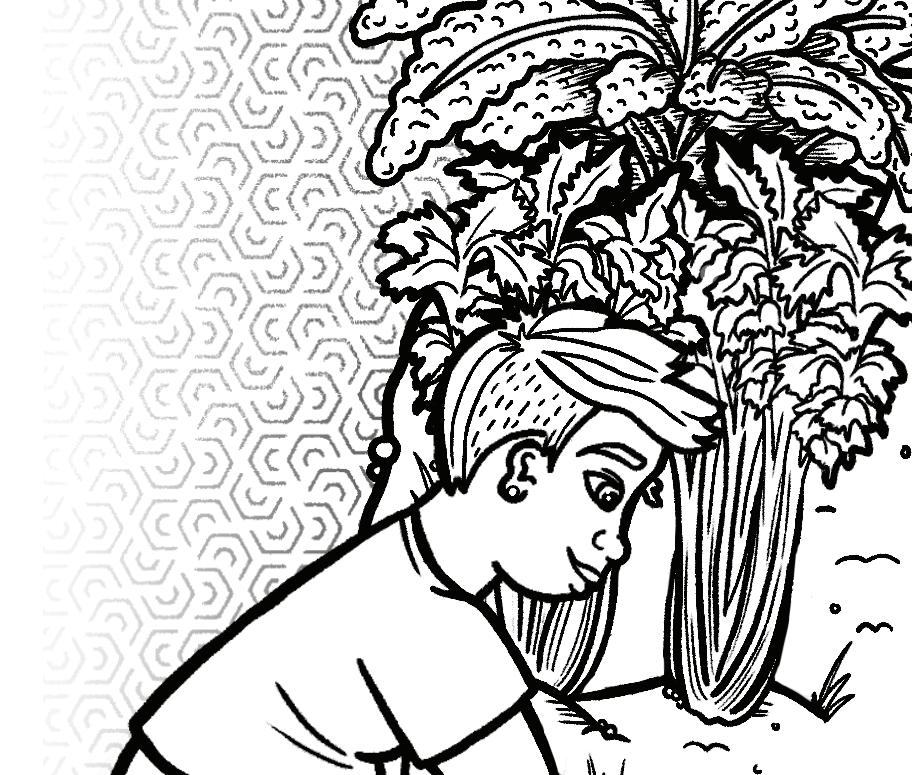
Imagine that taking care of yourself is like taking care of a garden. There are a lot of ways a garden needs to be cared for, like weeding, watering, or fertilizing the soil. What’s happening in a garden might not always be clear to people who are not responsible for taking care of it. What might look like a patch of dirt to one person might be rows of carefully planted seeds to the person caring for them. And what might look like a thriving garden to someone else could be infested with bugs. You know your own garden best.
Like a garden, your own well-being requires all di erent kinds of care, or “self-care.” Self-care is the practice of actively protecting your own well-being and happiness, particularly during periods of stress. Everybody needs something a little di erent, just like every garden is cared for a little di erently depending on things like its climate, sunlight, or the time of year.
Self-care might sound like something glamorous or expensive, but it does not have to be! Self-care can be as simple as taking time to acknowledge how you feel, or keeping a routine that makes you feel good, or spend ing time with people who make you feel appreciated. We need di erent things at di erent times.
We outline five elements to think about when you think of your self-care routine: physical self, mental self, emotional self, spiritual self, and social self! Each of these elements has a few pages of information, activities, and reflection for you to grow your self-care garden.
Before we start...
You might find this journal to be a useful tool when you are having a rough day, or when you feel a little down. Some times, tough times feel like more than you can process on your own—and that is okay! Like we’ll talk about later in this workbook, as social creatures, humans need each other! Sometimes we need the support of a parent, a therapist, an advocate, or a crisis support line to gather the tools we need to tend to our gardens. a
Here is a list of some (not all) experiences that might be a good sign that it is time to ask a supportive person for help:
Can’t eat or sleep
Don’t feel like performing daily tasks, like going to school
Don’t want to hang out with your friends or family
Not interested in things you usually enjoy
Fighting a lot with family and friends
Feeling like you can’t control your emotions
Feeling numb or like nothing matters
Having low or no energy
Feeling hopeless
Can’t stop thinking about a certain memory or feeling
Feeling confused, forgetful, edgy, angry, upset, worried, or scared
Wanting to harm yourself or others
Having random aches and pains
Smoking, drinking, or using drugs to try and feel better
We have put some resources on the last few pages of this workbook that might be a good starting point if you aren’t sure where to seek help. Since this workbook is designed for any young person in Michigan, many of the resources we included are statewide or national resources. Local resources might feel more comfortable and easy to use, even though you might have to do a little research to find them. Statewide or national resources are often able to connect you to people who can help in your community, so they aren’t a bad place to start!
SELF CARE CHECK IN
Everybody needs something a little di erent in their self-care routine. This is a little self care inventory you can use to think through what makes you feel good, and what belongs in your own self-care routine. You can use the scale we provided if you’d like (a “1” might mean something needs a little work, and “5” means you’re nailing it)! There is no final “score” or answer key. This is just a tool to help you figure out what is going well, and where you can grow. Before each section, we describe a little more about each dimension of self-care.
PHYSICAL SELF
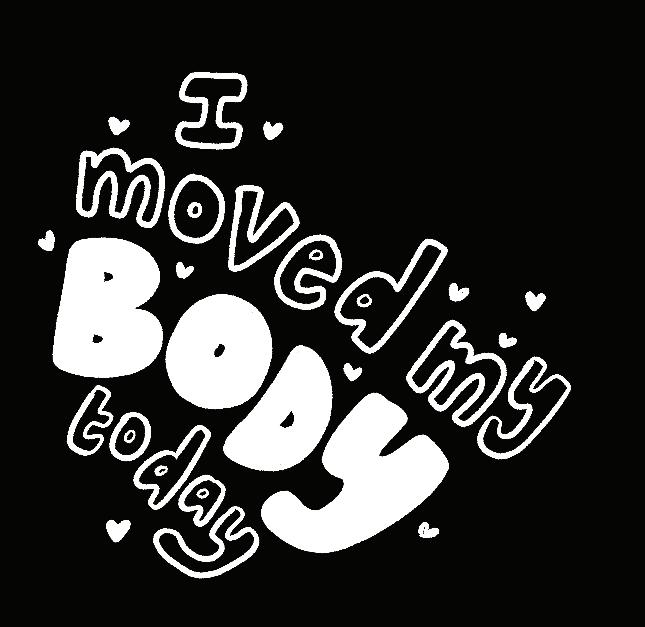
Physical self-care is all about how your body feels, and how you take care of it. This might include how much sleep you get, how you move your body, or whether you’re getting the medical care you need.
Do you feel well-rested when you wake up in the morning?
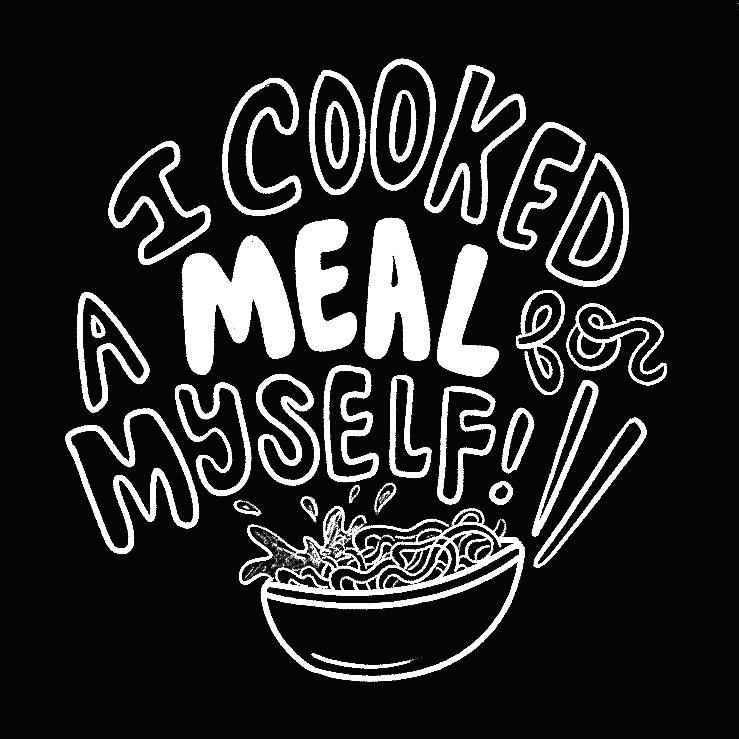
Do you eat foods you like, that fuel you, and make you feel good?
Do you get to move your body every day in a way that makes you feel good?
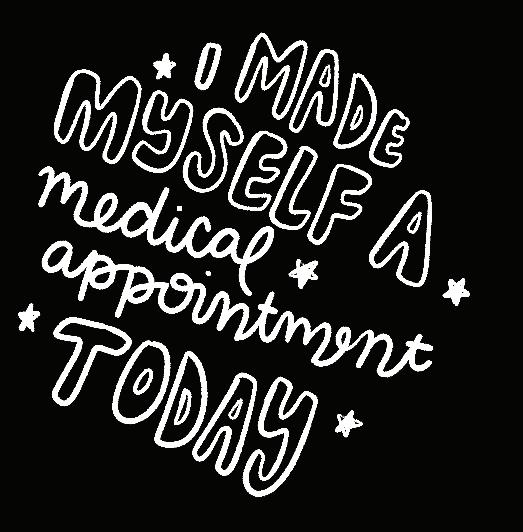
Are you on top of things like going to the doctor, dentist, or a therapist when you need to?
MENTAL SELF
Your thoughts and feelings play a big part in your over all well-being! Mental self-care is about caring for your own mind so that it feels engaged and interested most days, and having a plan for resetting or processing days that are hard or mentally exhausting.
Do you feel like you get enough me-time every day?
When you’re down, do you have a plan of things you do that help you feel better?
When it’s hard to feel better on your own, do you have an adult you can talk about your feelings with (like a therapist, parent, or guardian?
EMOTIONAL SELF
Your emotional self might need care after dealing with uncomfortable emotions, like anger, grief, anxiety, or sadness. Emotional self care is about how you process and express your feelings.
When your emotions are intense or you’re feeling down, do you have a plan for coping with them?
Do you take time to process your emotions every once in a while (maybe by journaling, making art, meditating while you take a jog, etc.)?
Do you have a person you can talk to about your feelings and emotions authentically?
SPIRITUAL SELF
Your spiritual self-care doesn’t have to involve religious practices at all, though it can. Your spiritual self is your own deeper sense of who you are, what your values are, and what connects you to the universe. Spiritual self-care keeps you grounded in those values and connections.
Do you feel confidence and comfort in your values and beliefs? 1 2 3 4 5
Do you feel good about the amount of time you spend reflecting on your spiritual self? 1 2 3 4 5
SOCIAL SELF
Social self-care is all about the connections you build with other people! Humans are naturally social creatures, we rely on social connections to survive and thrive. Some people get a lot of energy from time spent with others, and some people need some time to recharge after time spent being social. Social self-care is about sensing what you need to feel connected and “charged.”
Do you feel good about the amount of time you’re able to spend talking to or being with people you are close to? 1 2 3 4 5
Do you feel a balance between the support you give and receive in your relationships (not just romantic relationships—friends and family too)? 1 2 3 4 5
Physical self-care is about taking care of your whole body! How you fuel, move, and rest your body are all ways you take care of your physical self. Attending doctor’s appointments, taking your medications as they’re prescribed, and going to the dentist are all examples of physical self-care!
We split up physical self-care into four categories: hygiene (how we keep ourselves clean), exercise (how we move our bodies), nutrition (how we put food and drinks we put in our bodies) and medicine (how we seek care for our bodies from doctors, dentists, and other health care providers).
Even though we all deserve them, we don’t always have all the tools we need, like space to exercise outside, a fridge full of fruits and veggies, or a doctor we feel comfortable talking to. These are good things to talk to a supportive adult about, because physical self-care is just as important as your mental, social, spiritual, and emotional self care too. It is okay to do the best you can, even when you wish you could do more.
Check out these next few pages with some tips for taking care of your physical self!
HYGIENE
Hygiene is all about how you keep yourself fresh and clean. Not taking as good of care of your hygiene as you usually do can be a good sign that you’re feeling overwhelmed or upset lately. We have some tips to share with you below, but first we’d like to define a few words we’ll use that might need explaining:
VULVA: Refers to all of the external parts of a person’s genitalia when they have a vagina. Often people who have a vulva identify as female, but not always.
PENIS: The external genitalia of a person with testicles and sperm. Often people who have penises identify as male, but not always.
CLITORAL HOOD: The fold of skin that surrounds and protects the external part of the clitoris (which is called a glans).
DOUCHE: A device and method used to wash out a vagina or anus, usually with a mixture of water and vinegar or other chemicals. Douches are not a necessary part of keeping bodies clean.
TIPS FOR BUILDING A HYGIENE ROUTINE:
Clean yourself regularly. Most dermatologists (skin doctors) recommend people clean up with water every day or every other day, and use soap in their armpits, between butt cheeks, and in the genital area.
If you have a vulva, there is no need to do anything special. You can use soap on the external skin, and wash around the clitoral hood gently with water. Soaps and douches should not be used inside a vagina (which cleans itself!).
If you have a penis and foreskin, make sure to retract the foreskin and wash the head of the penis with water.
Shaving your body is a personal decision, and having body hair doesn’t make you any dirtier or cleaner. Shaving the genital area can leave small cuts in the area, which can increase the risk of transmitting some STIs.
How often you clean yourself might depend on the kinds of things you do during the day. How much you sweat, how warm or cool your home is, how often you move during the day, or how much dirt and grime you interact with during the day all influence how often you might need or want to clean yourself. Here’s a tool to make a hygiene plan!
HOW MANY TIMESAWEEK DOI WANT TO:
you like to)
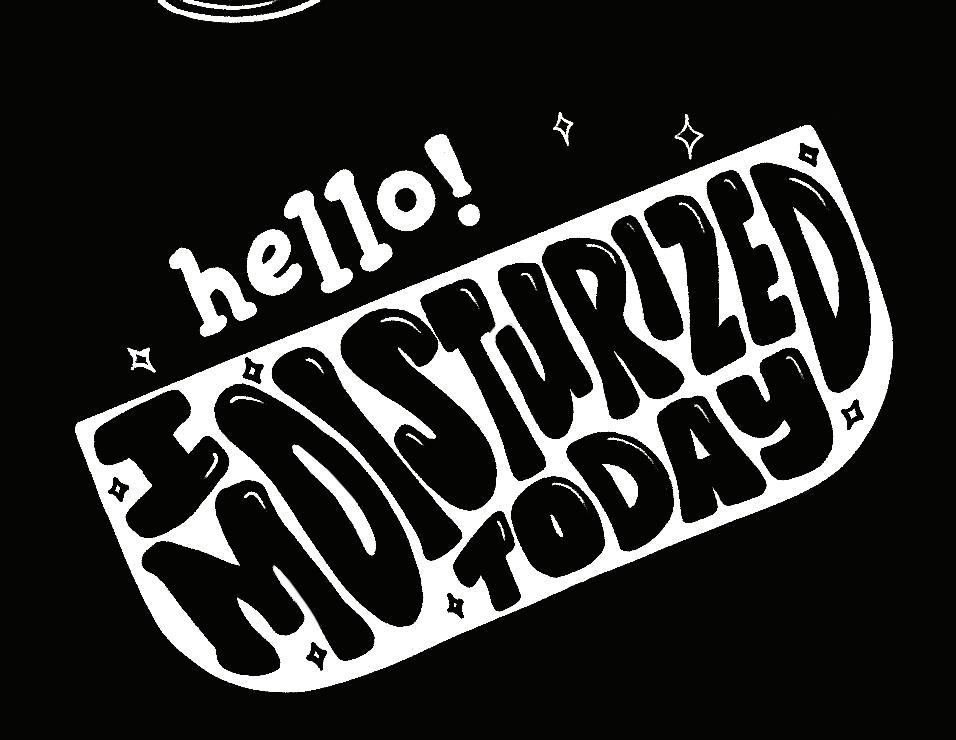
Your skin is the largest organ on the outside of your body. Hydrating your skin with moisturizers (like lotion or body butter) keeps it healthy and elastic, and prevents dry and chapped or cracked skin. Sunblock with an SPF between 30 and 50 keeps your skin protected from harmful UV rays that can cause cancer and skin damage. Sunblock goes on any part of your skin that is exposed when you go outside, and should be used every day no matter the season or the color of your skin.
WHAT DO YOU LIKE TO USE TO MOISTURIZE?
EXERCISE
HERE’S SOME OTHER HYGIENE HABITS YOU MIGHT WANT TO (OR ALREADY DO) MIX INTO YOUR ROUTINE:
wash hair
condition hair
brush/comb hair
brush teeth
change clothes
moisturizing masks
mouthwash/floss
deodorant clip nails
Moving your body can be a great stress reliever that also gives you time to focus on yourself. Exercise can also feel hard to do when you’re feeling overwhelmed. You don’t have to be the fastest, strongest, or most coordinated to move your body around. Whatever feels accessible and fun to you is exactly what you should do! Lots of doctors suggest people move around for about 30 minutes three times a week.
If you’re getting your body back into movement, or you’re starting a new exercise routine, start slow! There’s no need to rush, and you should always stop and rest when things hurt or you’re feeling dizzy. Ask your doctor before you start things like supplements, protein shakes, or other helpers.Sometimes they can be good for you, sometimes not.
NUTRITION
Nutrition refers to how you nourish your body: or what you put inside it. There is no one best way to eat and drink, and the person who knows your body best is you! Everybody eats a little di erently depending on their culture, their lifestyle, their appetite, and other factors. So how do you decide what’s right for you?
Here are some tips:
STAY HYDRATED!
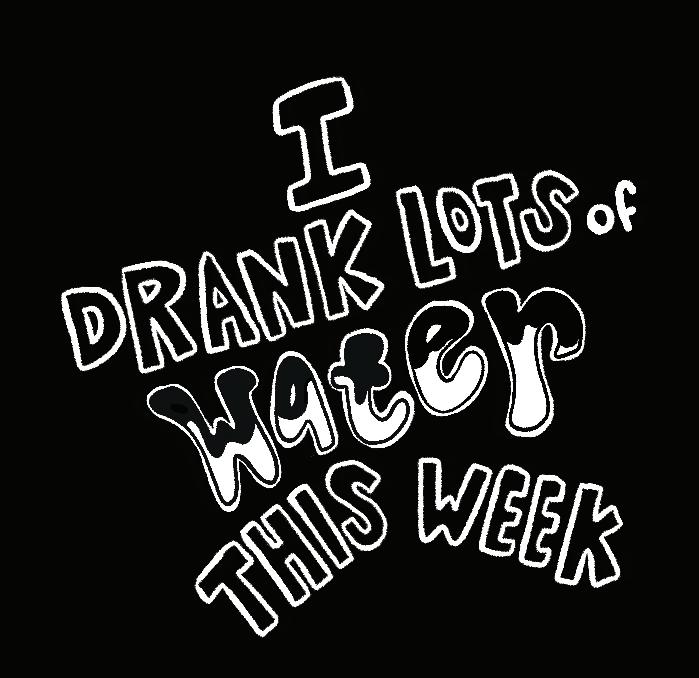
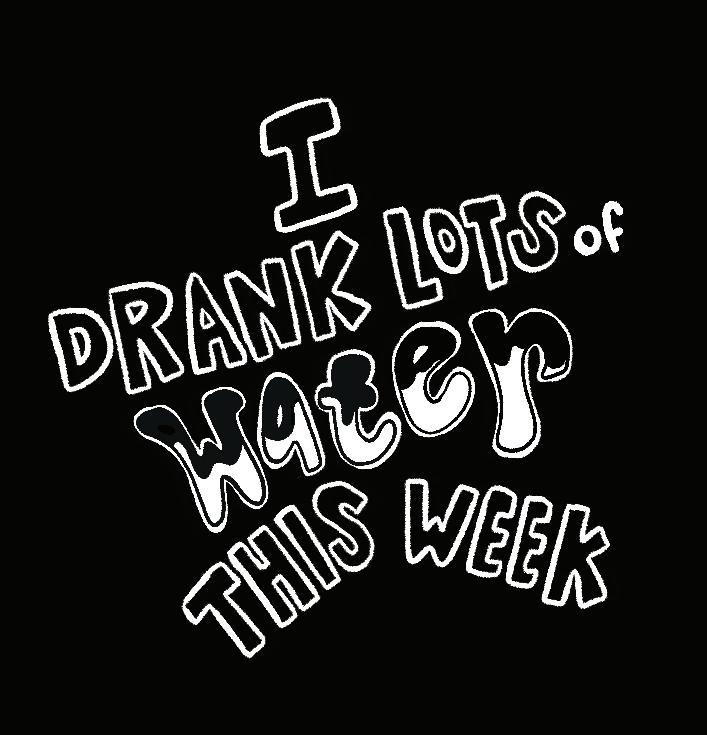
Health care experts recommend 8 cups (or 64 ounces) of water every day. Water hydrates you better than anything. Juices or soft drinks (soda pop) are not as great of sources of hydration, but they make a good treat now and then!
ADD COLOR TO YOUR MEALS
Great meals include a variety of fruits and vegetables (about half the food on your plate). A good way to keep track of this is by trying to eat di erent colors throughout the day (for example, eating some leafy greens, red fruits, white eggs, etc.) Your health care provider is a great person to turn to for advice on what kinds of foods will keep you healthy and strong!
BE WARY OF FAD DIETS
Fad diets are popular diet plans, often seen on social media or in magazines. Fad diets usually promise dramatic weight loss, and might include eating specific diet foods or drinks, or eating on a specific schedule. It can be harmful to attempt dramatic diet changes without talking to a medical provider, because fad diets are not always based on accurate nutritional science. Your health care provider is a great resource for determining what your nutritional needs are!
MEDICINE
You’re not alone in taking care of your health! Your doctor, dentist, physical therapist, or other health care providers appointments are all part of taking care of your physical health. The medicine you take is part of your physical health too! Regularly visiting your medical provider(s) is an important part of staying physically healthy. Medical visits are a good chance for your providers to make sure you’re staying healthy, and it gives you a good chance to bring up questions you might have, or problems you might want to talk about.
It’s good to go to your medical provider and your dentist at least once a year. If you’re sexually active, make sure you ask your medical provider for STI (sexually transmitted infection) testing! At your medical visits, check to make sure you are caught up on all of your vaccines, which help to prevent certain illnesses.
WE WISH WE COULD GIVE YOU REAL STICKERS, BUT INSTEAD YOU CAN FILL IN AND CUT OUT THESE PHYSICAL SELFCARE "STICKERS" WHEN YOU NAIL ONE!
Having feelings or emotions is a part of life! Experiencing positive emotions, like joy, happiness, or excitement can light up our whole week. How you deal with harder emotions, like sadness, anger, or fear is called “coping.” Developing a plan to cope with stressful or overwhelming days is just as important as doing things that make you happy, and that’s what we want to talk about.
Your body naturally produces its own chemicals, called hormones, that help regulate how your body operates. Some of those hormones (happy hormones) increase when you’re in a good mood. Even when you’re not in a good mood, there are some things you can do to increase your happy hormones and be on your way to a better day.
WRITE IT OUT
What does feeling safe mean to you? What does safety feel like in your body? How can you tell the di erence between feeling safe and feeling comfortable?
TRY KEEPING TRACK OF YOUR MOOD!
Coloring in one of these leaves every day to keep track of your mood can help to see how you have been feeling lately. You might surprise yourself! Make a “key” by filling in each of the circles with the colors you’ll use to fill in each leaf. We left some circles unlabeled so you can pick your own mood categories too!
I KNOW I'M OVERWHELMED WHEN:
Bummer days happen. Here’s an activity page to help you think through some strategies for coping with the cloudy days.
SOME ACTIVITIES I LIKE THAT HELP ME RELAX:
THINGS I CAN DO THAT HELP ME FEEL BETTER WHEN I'M READY:
Sometimes it can feel like there isn’t anyone to talk to on a bad day, but there are still some good options! You might call your therapist, a parent, or you can call a hot line just for youth, like the Trevor Project Lifeline, the National Suicide Prevention Lifeline, or Loveisrespect.org
TRUSTED PEOPLE I CAN TALK TO ON A BAD DAY:
Spiritual self-care is all about the sense of connection you feel to the world and universe around you. Spiritual self-care could include religious or faith-based practices, but it doesn’t have to. Regularly reminding yourself of what matters most to you, what motivates you, and what your biggest goals and dreams are is an important part of self care! Good spiritual self care means that even on your hardest days, you can always remember who you are and why you’re here.
I know I matter because:
I feel the most alive when I’m: My biggest life goals right now are to:
The things that matter most to me are:
Meditation is simply the practice of focusing your mind on something specific. There are a lot of di erent ways to meditate, and many of them have their roots in di erent religions all around the world. We’re going to focus on one specific kind of meditation: mindfulness meditation. Imagine that you’re having a chaotic day, and you feel like you’re rushing around everywhere. Then imagine finding a nice, comfy spot to sit down. You close your eyes, and just focus on your breathing. You notice your mind keeps trying to run through your to-do-list, and you notice that every time you do this, your muscles tense up a little. That bothers you, so you focus all your attention on taking deep breaths instead. When you open your eyes again, you feel more relaxed.
That’s mindfulness meditation! A lot of people find mindfulness meditation really useful when they’re feeling overwhelmed, overstimulated, or stressed. Some people like to take time to meditate every day even when they’re feeling great! Mindfulness meditation is a great way to slow down and take a little you-time.
Check out an easy meditation practice you can try on the next page!
BOX BREATHING:
A SIMPLE MINDFUL MEDITATION PRACTICE
Box breathing is a simple form of mindfulness meditation that focuses on your breathing. You can do box breathing anywhere, for as long or as little as you’d like. If you’re not sure where to start, try setting aside 2 minutes to practice. Find a calm, distraction-free place to sit or lay, and close your eyes.
HOLD YOUR BREATH
Start by picturing a box. Start on the left slide, climbing the box and slowly counting to 5 while you inhale. At the top of the box, hold your breath for 5 counts. Climb back down the box while you exhale for 5 counts. Finally, close the box by pausing before your next inhale for another 5 seconds. Repeat several times until your time is up, or until you’re feeling more relaxed and calm.
While you’re box breathing, you can focus on clearing your mind, paying attention to how your body feels, or thinking of something you’re really grateful for. Use this technique in whatever way works best for you! This box breathing technique comes from Sunnybrook Hospital in Toronto, Canada. If you scan the QR code on the corner of this page with a smartphone camera, you can watch the full box breathing video!
Where is your favorite place to go when you want to relax?
Where are some other places and times of day that you could try a meditation exercise like box breathing?
Whether you’re the kind of person who likes to spend a lot of time around others, or a person who mostly likes to spend time alone, one thing is true for all of us: we need other people! We’re social by nature, meaning that we need the company of other humans one way or another to be content. Regardless of how we like to spend our time, having relationships is important for being able to share experiences and feelings, the good and the bad.
Being social doesn’t have to mean attending lots of parties or other big social events, there are a lot of unique ways to spend time with other people! Making meaningful connections with the people you care about looks di erent for everyone, and you get to decide what you need.
We came up with some more low-key or unique ideas for hanging out with others. Add your own too!
Watch a TV series together from start to finish (either in-person or long distance!)
Pick a place you’ve never been and go explore together
Visit the local pet store to see all the cute animals!
Start a book club with a friend, or a few friends
Or just hang out together while you read or do homework!
Make powerpoints for each other about things you love and have a presentation night
Write each other letters, even if you live nearby!
WRITE IT OUT
Describe someone who . makes you feel appreciated. What do they do and say that make you feel good?
There are a lot of things that can get in the way of spending in-person time with the people you dig the most. There are also a lot of clever ways to stay connected when you can’t be face to face!
Check out our list and if you think of more, add your own!
Play games together!
There are, of course, video games, but there are also multiplayer phone games and messenger app games to check out too!
Watch parties!
Use internet browser extensions like Teleparty and GroupWatch to throw a virtual watch-party with friends, and watch a TV show or movie together!
Video chats, of course!
Hey, we love a good old video chat on Facetime, Zoom, GoogleMeet, Houseparty, or another platform any time.
Shared playlists!
Start a collaborative playlist with your friends that you can all add your favorite songs to, or make specific playlists for your friends to share with them individually!
A dedicated meme chat!
Keep a chat going with a couple of friends and share whatever made you smile on the internet that day with each other!
Draw it, borrow traits from people you already have in your life, whatever you want! Picture your ideal companion and use this space to describe what makes them so cool!
20 DAY MENTAL HEALTH CHALLENGE
Challenge yourself to 20 days of focusing on yourself once a day. Write out your plan for each day in the boxes below, and check out some of our ideas for each day on the bottom!
16 DAY 17 DAY 18 DAY 19 DAY 20 make your plan!
9
cook a meal for yourself / call someone who brings you joy / organize your closet / stretch all your muscles / give yourself a lazy day / try a food you’ve never eaten before / go on a solo date / listen to the album you were obsessed with when you were little / try a DIY project / watch your favorite movie / read a new book / take a nap! / start a new hobby / create something new
A rmations are positive, present tense statements you tell yourself or someone else, and they are especially helpful when you or someone else wants to feel empowered or needs a confidence boost!
Repeating an a rmation to yourself regularly is a great way to stay reminded of all the great things about you, even on bad days.
Here are some examples of a rmations:
I am strong I am loved I am capable I will be okay I believe in myself
I deserve joy I am enough
A rmations can be specific to your skills and talents, too! “I am a great dancer,” “I am a skilled writer,” or “I am capable of acing this test,” are all examples of specific a rmations people can tell themselves when they need it.
Write down the a rmations you need. Copy them to a sticky note you can put on your mirror to see every day, or write them down in a planner or journal you can revisit every day. You can repeat these a rmations regularly, especially when you need them!
What // goals do you have today? What about next week? Next month? Use this space to write out your goals, starting with the small ones and working your way up to big ones! Breaking big goals into smaller parts makes them a little easier to get to!
We hope one of the things you take away from this workbook is that you are not alone, and there are places to go for help when you need it! This resource guide is short and does not include everything, but we hope you’ll find it to be a useful place to start.
REGIONAL RESOURCES
A rmations advocacy, support, and community for LGBTQ youth (248) 398-7105 / goa rmations.org
Ferndale, MI
The Bridge: Arbor Circle shelter and crisis support (616) 451-3001 / arborcircle.org
Grand Rapids, MI
Child and Family Psychological Services
mental health support (269) 372-4140 childandfamilypsych.com
Kalamazoo, MI
The Children’s Center mental health and crisis services for youth (313) 324-8557 thechildrenscenter.com Detroit, MI
The Corner Health Center mental health and medical support (734) 484-3600 / cornerhealth.org Ypsilanti, MI
The Firecracker Foundation support for survivors of child sexual abuse (517) 742-7224 thefirecrackerfoundation.org Lansing, MI
Family and Children Services mental health and crisis support (269) 344-0202/ fcsource.org
Kalamazoo, MI
Hope Network mental health and crisis support (616) 301-8000/ (248) 338-7458 hopenetwork.org
Grand Rapids and Pontiac, MI
Ozone House crisis, mental health, and houseless ness support (734) 662-2222 / ozonehouse.org
Ypsilanti, MI
Reach Us Detroit 24/7 line for support and resources (313) 488-HOPE / reachusdetroit.org Detroit, MI
Ruth Ellis Center trauma-informed health and crisis services for LGBTQ youth (313) 252-1950 / ruthelliscenter.org Detroit, MI
NATIONAL RESOURCES
Crisis Text Line
24/7 crisis support crisistextline.org
Go Ask Alice
A question and answer database for mental and emotional health goaskalice.columbia.edu
Love is Respect support and education dating violence and safety
1 (866) 331-9474 loveisrespect.org
National Sexual Assault Hotline
24/7 support for survivors
1 (800) 656-4673
National Suicide Prevention Hotline
24/7 crisis line and chat
1 (800) 273-8255
Planned Parenthood sexual and reproductive health care and health education plannedparenthood.org
Scarleteen
Sex and body education for teens, texting service, online chat, and message boards scarleteen.com
Therapy for Black Girls
therapist database and resources for Black girls, women, and femmes therapyforblackgirls.com
Trans Lifeline
trans peer support line and resources
1 (877) 565-8860 translifeline.org
Trevor Project
24/7 crisis line for LGBTQ youth and young adults
1 (866) 488-7386
University of Michigan
Depression Center resources and education about depression depressioncenter.org
Find a Planned Parenthood of Michigan health center near you for all your sexual and reproductive health care and education needs! Locations in:
Ann Arbor, Detroit, Ferndale, Flint, Grand Rapids, Jackson, Kalamazoo, Lansing, Livonia, Marquette, Petoskey, Traverse City, and Warren!
A LIST OF OUR HEALTH CARE SERVICES:
STI testing and treatment
HIV anonymous and confidential testing
Pregnancy testing
Prenatal services
Medical referrals
Emergency contraception
A ordable contraceptives, free condoms
PrEP and PEP prescriptions
Physical wellness exams
Pap tests and other cancer screenings
Infertility resources and education
Erectile dysfunction support
OF MICHIGAN
UTI (urinary tract infection) testing and treatment
HPV vaccine
What Are You Planting? is a project put together in 2021 by a whole team of sexual health educators and young people at Planned Parenthood of Michigan. This workbook features written contributions from Natalie Elliott, Bailey Krestakos, Angela Cardozo, Becky Harrison-Brzezinski, and Ellie Grossman, with illustrations by Bailey Krestakos.
There were a few useful resources we checked out as we were making this workbook that we’d recommend you check out too:
The Centers for Disease Control and Prevention MentalHealth.gov
The Mindfulness Center
If you’d like to follow more of the cool work the Planned Parenthood of Michigan Education team is up to, you can:
Follow us on Instagram, Facebook, Twitter and Tiktok at @ppofmi
Check out ppmi.org and click the education tab
Sign up for one of our education workshops like Making Proud Choices or INclued, or programs like Peer Education and Sexual Health Ambassadors!