CONNECTING THE DOTS




a style guide on the link between recovery and sex
Planned Parenthood of Michigan, 2024
Planned Parenthood of Michigan, 2024
A heartfelt thank you to Planned Parenthood of Michigan’s Sexual Health Ambassadors (SHAs) Jennifer Stratton, Kim Johnson, Margaret Shamel, Ben Lamerand, Jeff Lange, and Marina Bigger for their incredible vulnerability, honesty, trust in the process, and commitment to this work; especially to Jen and Kim who have been with SHA since the beginning and have shown us what true dedication looks like.
To our Style Guide Advisory Board: Becky Harrison-Brzezinski, Dana Greensky, Laura Conrad, and Psalm Bingham; thank you for skillfully weaving a bunch of ideas into something so profound and beautiful. This work is a reflection of you and a testament to your bravery and strength.
Staci, Megan, Becky, Renita, Lauren, and Bailey—you cannot be thanked enough. None of this could have been done without you. Your hard work, guidance, support, and massive amounts of encouragement have been the driving force behind this project.
Finally, we acknowledge that none of this work would have been possible without PPMI’s Traverse City Educator Carrie Ullery-Smith. Carrie’s unwavering commitment to providing affirming and inclusive sexual health education that supports and honors the lived experience of individuals with substance use disorder is the core of the SHA program and this guide.
This guide is dedicated to Margaret Shamel, who lived her life in service of those with substance use disorders. You are missed every single day.
Connecting the Dots: The Link Between Recovery and Sex style guide was made possible by the Planned Parenthood Federation of America’s Fund for the Future grant in 2023. Planned Parenthood of Michigan is the author and owner of Connecting the Dots: The Link Between Recovery and Sex, and its contents are subject to copyright. © Planned Parenthood of Michigan, 2024
a program of planned parenthood of michigan
The Planned Parenthood of Michigan (PPMI) Sexual Health Ambassador (SHA) program was created to provide people with substance use disorders (SUD) who are in early recovery an opportunity to learn about sexual health from people in long-term recovery from SUDs.
This guide was created by SHAs in coordination with an advisory committee of SUD experts and PPMI education staff. It is intended for individuals who work with people in recovery, including Peer Recovery Coaches, regional and state agencies, health care workers, educators, providers, and professionals serving individuals in early recovery from SUD. The purpose of this guide is to highlight the unique role that sexual health plays in recovery from SUD, reduce stigma, and center sexual health as an essential part of long-term recovery from SUD.
Planned Parenthood of Michigan
A Statement About Self-Care for You and Your Clients
Sex and Stigma
Sex in Recovery is Normal
Creating Safer Spaces
Let’s Talk Sexuality and Gender Understanding Sexuality, Gender, SUD, and Recovery
We want to:
1
Help you understand why addressing sexual health as part of treatment and recovery programs is important.
2
Empower you in your efforts to talk about sexual health with your clients by giving you the language and resources you need.
In this guide, we talk about substance use disorders, recovery, sex, sexual health, consent, and sexual assault. These topics can bring up unexpected and uncomfortable emotions for both you and your clients.
Often it is during treatment or early recovery when past traumas begin to surface and be processed.
For some, this means traumas related to sex—whether it was childhood sexual abuse, sexual assault, or instances where, through education, there is a realization that consent was not always given when under the influence.
By learning and talking about sexual health, you are giving yourself and your clients the opportunities and tools needed to break down feelings of guilt and shame.
Because of this, please practice self-care as you review this guide. Self-care is about maintaining behaviors that keep us physically, mentally, and emotionally well. Check in with yourself and your clients regularly and find self-care options that work for you.
Ideas for self-care:
Set boundaries
Go for a walk
Go to a meeting
Call a friend, your recovery coach, your sponsor, or therapist
Meditate
Exercise
Take a nap
Journal
Sex, sexuality, and SUDs have long been stigmatized throug shaming those who engage in behaviors that others don’t understand or can’t relate to. Stigma makes people feel that they have to live in the shadows and can lead to debilitating shame, ruining self-esteem and negatively impacting a person’s ability to move forward in any meaningful or healthy way.
Just as with SUDs and recovery, when we destigmatize sex, sexuality, sexual orientation, and gender identity, we are giving people the freedom to take back their own narrative, to distance themselves from hurtful messages that they began believing about themselves. Destigmatizing sex and sexuality also leads people down a much healthier path — one where they can feel good about having open and honest conversations with partners, feel confident in their ability to set their own sexual and relationship boundaries, and seek out regular sexual health care.
Abstinence-only messages contribute to the stigma of sex those who want to engage in sexual activity feel ashamed of a very natural desire. Instead, adopting a trauma-informed and inclusive approach to working with clients that includes not just abstinence messages, but education about sexual health, sexual orientation and gender identity, consent, and building supportive relationships, are important steps in reducing stigma and shame.

Some recovery programs ask individuals early in recovery to abstain from sexual activity or new intimate relationships for a year. Remaining abstinent may work for some, but those who do choose to have sex or enter a new relationship during that time may feel ashamed of having “failed” their recovery program, which could lead to a recurrence of their SUD symptoms.
Instead of putting the sole focus on abstinence, it is important to give folks the tools and information they need, while still in their treatment program to learn positive, healthier sexual and relationship behaviors.
The importance of sexual health education in early recovery can be summed up by PPMI Sexual Health Ambassadors, who describe that recovery is not a piece of their relationships, but rather their relationships are a piece of their recovery. Ambassadors and other members of the SUD community insist that learning ways to build relationships that support the work of recovery is essential for long-term success.
The idea of sex in recovery may feel scary for some. Let’s face it; intimacy can be awkward and may be harder if someone has spent a lot of time numbing hard and uncomfortable feelings with drugs or alcohol. Just the idea of having to deal with the emotions of an intimate, physical connection with another person may feel overwhelming. This is why creating opportunities to talk about sexual health and supportive relationships while a person is in early recovery is so important. See the section on how to answer difficult questions from clients on page 15.

























































Sex is normal. Sex in recovery is normal. This means that it’s important to educate your staff about what it takes to create safe spaces to talk openly and honestly about sex.
One of the most effective tools in creating spaces where your clients feel safe to open up about their sexual health is with the words you use. There is a lot of stigmatizing language that can create barriers to good care, supportive relationships, and safer sexual behaviors.
Let’s look at how the words we use can reduce the stigma and shame that sexual behavior can carry. We will start with establishing some basic definitions of terms related to sexuality and gender.
Everybody has a sexuality and gender, even if they’re not things they think about very much. We’ll cover some basic terms about gender identity and sexuality below, but definitions change over time. You might look at this section in a few years and think, “This isn’t how we talk about this word now!” That’s okay. Use a sticky note to update it with its new meaning.
Biological Sex: A person’s sex is determined by their internal reproductive and sexual organs, external genitalia, hormones, chromosomes, and secondary sex characteristics (hair, chest development).
Sex Assigned at Birth: The label someone is given when they are born based on their biological sex. There are three categories of sex: female, male, and inter sex.
Gender Identity: One’s authentic sense of self as being a man, a woman, both, neither, or somewhere in between. Gender identity may or may not be the same as one’s sex. Some terms that describe gender identity are:
Pronouns are words we use to talk about people or things instead of their names. For example, “that is her water bottle,” or “they would like some water, it is in the pitcher.”
We show others respect when we use the pronouns they choose for themselves. You have pronouns too! Pronouns can stay the same your whole life, or they can change over time. When you introduce yourself, you can share your pronouns.
For example, “My name is Dan, and I use he/him pronouns.” People should only share pronouns when they are comfortable and consent to sharing, and sharing pronouns can help make environments more inclusive and safe for transgender and non-binary people.
A person’s gender expression is how they show the world their gender through their actions, clothing, appearance, demeanor, etc., and how that’s interpreted by others based on gender norms society’s expectations for how people of different genders look and behave. For example, associating pink with girls and blue with boys. Some forms of gender expression are:
A person’s sexual attraction describes the sexual feelings they have toward others. Romantic attraction describes the romantic feelings people have toward others. Sometimes romantic and sexual attraction are the same, sometimes they’re different.
Labels can help describe sexual identities, gender, gender expression, and more. But they don’t tell the whole story. Labels have different definitions depending on who you ask, and a person’s identity is different than how they behave. For example, a person who identifies as gay might have sex with people with penises and people with vaginas. The best way to get to know a person and understand their identity and interests is by talking to them with respect.

According to the Substance Abuse and Mental Health Services Administration and the National Institute on Drug Abuse, folks who identify as lesbian, gay, bisexual, transgender, questioning, intersex, or asexual (LGBTQIA+) are regularly faced with discrimination, stigma, harassment, and violence and experience a higher than typical rate of substance use. The rate of SUDs among LGBTQIA+ folks is also nearly double the rate of the general population, so it is exceptionally important to create inclusive and affirming spaces for people to receive the care they need in recovery. This can be done through interpersonal interactions (how you treat people) and through organizational policies and procedures.
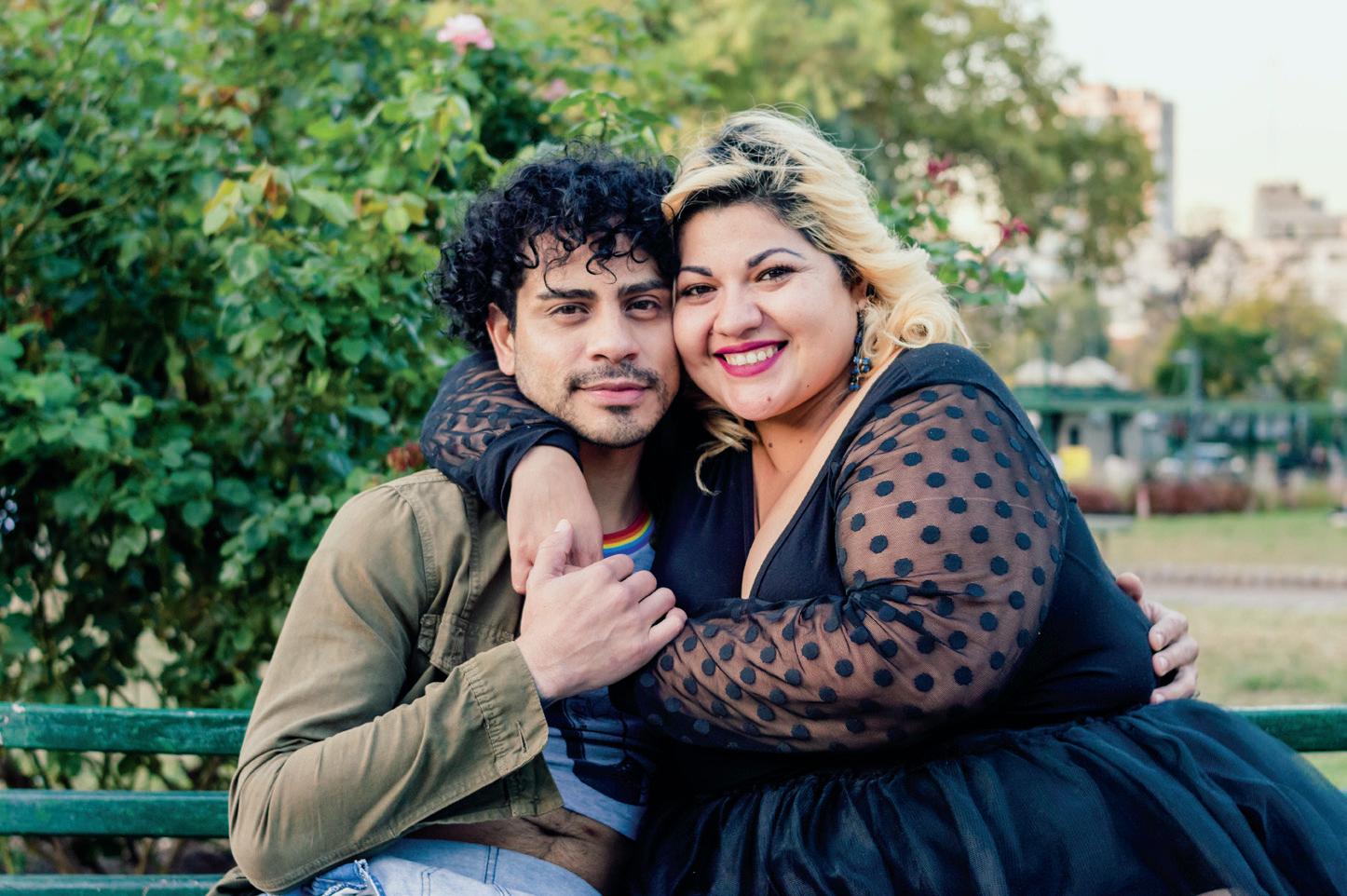
Adopting inclusive, affirming, and culturally-responsive organizational policies and procedures is a great first step in helping LGBTQIA+ people feel more safe and affirmed. Here are some examples:
Adopt inclusive, affirming, and culturally-responsive organizational policies and procedures
Provide sexuality education and trauma-informed training for staff
Update gendered language in educational/patient materials and intake forms
Adopt a zero-tolerance policy for harassment and discrimination that includes protections for LGBTQIA+ people
Update policies to allow folks to join outpatient programs according to their identity rather than strictly by sex assigned at birth
Planned Parenthood of Michigan

Person-first language is commonly used when discussing aspects of a person’s identity, such as race or gender. It promotes inclusivity and respect and is a more empathetic way of communicating about and with folks across experiences and backgrounds.
Recovery looks different for everyone, which is why even the language that people use to describe their own recovery is different from how others may describe theirs. That’s okay. Sometimes people need to reclaim words that have been used to harm them. While working one-on-one with a client, it’s okay to use the terms they are most comfortable with using for themselves. While working with clients in a group setting, it’s important to use terms that are inclusive.
Check out the chart over the next few pages of stigmatizing language, inclusive words and phrases to use instead, and why that language change is important.
Person/individuals with substance use disorder Addict, junkie, substance abuser, drunk
Sex worker Prostitute, stripper, hooker
Terms like “addict” assume that the behavior of substance use is intentional and places blame on the individual rather than acknowledging that SUD is a brain disorder.
The term “prostitute” has long been associated with negative stereotypes and stigmatization. Using the term “sex worker” helps reduce the judgment and discrimination faced by people who voluntarily engage in sex work.
Living with, diagnosed with Infected with, suffers from, spreads
A person who has sex with multiple partners Slut, promiscuous
Prevent Protect against
Neutral yet descriptive language such as: “Oral sex is mouth on genitals,” or, “The results of their test show they do not have HIV.”
Normal
Safer Safe
When was your last STI test, or when was the last time you used a substance? Are you clean?
Folks, friends, you all, y’all, everyone
Guys, ladies and gentlemen, sir, ma’am
These terms, when used to describe people who are HIV positive, for example, or diagnosed with another condition, are dehumanizing and label people according to an action or illness.
Words like “slut” are used to stigmatize and shame people who have sex. Taking a more sex-positive approach will come across less judgmental. These terms are also overly vague descriptions that are unlikely to provide complete and useful information.
Focusing on “protecting” people against something can give the impression that people living with STIs or illnesses are dangerous.
The word “normal” can be othering and excluding to those outside the stated “norm.”
Saying “safer” rather than “safe” acknowledges that there may still be some risk, even if precautions have been taken. It helps set realistic expectations and encourages people to remain cautious.
Using a word like “clean” implies that people with STIs or SUDs are dirty. Try and replace them with more neutral and accurate terms.
Words like folks and friends are gender-neutral and do not assume gender identity.
Planned Parenthood of Michigan
Describe body parts or actions such as: “A condom worn on a penis,” or, “pap tests are for people who have a cervix”
Use the term each person uses to self identify, like: non-binary, Two-Spirit, gay, lesbian, bisexual, trans, pansexual, queer, etc.
Partner, spouse
Sexual orientation
Gendered descriptions such as “male condom,” or “pap tests are for women”
Homosexual, homo, dyke, transvestite, other outdated or offensive identity slurs
Wife, husband, boyfriend, girlfriend
Sexual preference, or gay lifestyle
Transition, gender affirming care/interventions
Sex change operation or pre-/post-operation
Using gendered terms and descriptions makes the education you are providing only relevant to select groups. Gendered language ignores and voids the humanity of those who do not align with the gender identity others expect them to have.
Indigenous to North America, Native American
Indian, when referring to Native populations in the U.S.
Using terms that folks use to self-identify is a way to respectfully acknowledge their humanity and not cause harm.
Transgender, trans
Transgendered, a transgender, tranny, transsexual, transvestite
Using a term like partner is an inclusive way to acknowledge another person’s important relationship without making assumptions about their or their partner’s gender or sexuality.
The words “preference” or “lifestyle” imply choice and are not appropriate ways to describe a person’s identity.
Gender affirming surgery can mean a lot of different things, so saying something like “sex change operation” is simplifying medically and emotionally complex procedures. Also, a person’s medical history is private, so do not ask unless your client brings it up first.
The use of the term “Indian” for indigenous people is inaccurate and rooted in stereotypes .
Using grammatically incorrect or outdated terms for transgender people can reveal a person’s unfamiliarity with or bias against trans folks. Honoring the humanity of trans people requires some practice working correct terms into your everyday language.
Language is always evolving. It used to be okay to say “addiction,” and now we say substance use disorders. A person used to go to “detox”; now they go to withdrawal management.
You are not expected to be perfect. Mistakes are opportunities to do better next time. According to the Human Rights Campaign, here is what you should do if you make a mistake:
A. Apologize
B. Correct your mistake
C. Move on
D. Practice using correct terms, pronouns, etc.
Example 1: You misgendered a client during a group session and approach them in private afterward.
“I’m sorry, Chris. I just realized that I used the wrong pronouns when referring to you today during the session. You have my sincere apologies for any discomfort or harm I may have caused. I know that you use they/ them pronouns and am committed to using your correct pronouns in the future.”
Example 2: You referred to a sex worker as a prostitute.
“I’m sorry, Sam! That was a mistake. I should have said sex worker. I am very sorry I made you feel uncomfortable and caused you harm. I will do better next time.”
CHECK YOUR IMAGES, TOO!
Be intentional with images your organization chooses to use in your educational and marketing materials. We recommend using images that include representation across ethnicities, gender identities, income brackets, ages, abilities, sexual orientations and more. Be mindful that your intended audience is reflected in the images you use. We also recommend not using images that depict substances or substance use (including images of needles/syringes) as they may negatively impact the reader.
Planned Parenthood of Michigan
Just as recovery looks different for everyone, so does sex in recovery. These are examples of potential questions your clients may ask you and potential responses you could give. We recommend asking your clients what they want to know.
How do I even begin a relationship?
Start with disclosing that you are in recovery and go from there. A person who is supportive of your recovery journey is likely to also be supportive of your journey to discover who you are sexually without the use of drugs or alcohol.
Sexual experiences can feel overwhelming and awkward at first. You will have to figure out your sexual likes and your dislikes again. Practice setting boundaries and take things slow if you need to. Allow yourself to be in the moment and face whatever emotions surface. If you are in a relationship, talk to your partner(s). Get to know them and allow them to get to know you. Ask for help when you need it.
How do I rediscover sexual experiences without using substances?
Alcohol and drugs numb us and can mask feelings of insecurity. Feeling hyper-aware of everything that is going on during sex is normal without the use of substances. As you experience new things and feelings, check in with yourself and your partner. It is always okay to say no if you are uncomfortable. I will be way too self-conscious to have sex! What should I do?
What if the person I’m with wants to have sex and I’m just not ready yet?
Use your voice! Sex requires that people give and get consent. You have the right to say no to anything you don’t want to do, and so does your partner. Your partner needs to respect your sexual boundaries, otherwise it’s assault.
An unsupportive relationship has the potential to lead to a recurrence of the symptoms of your substance use disorder. Make recovery your number one priority and surround yourself with people who will support that. If you need help ending an unsupportive relationship, see our resources on page 18.
My partner is not supportive of my recovery. What should I do?
Sexual consent is an agreement to participate in a specific sexual activity. Before being sexual with someone, you need to make sure they want to be sexual with you too. Consent is the most important aspect of sex because it allows us to set boundaries and practice respecting the boundaries of others. Sexual activity without consent is rape or sexual assault.
Teaching your clients the basics of consent is a crucial first step to talking about sexual health. You can learn more about consent at PlannedParenthood.org



So, how do you put all that you’ve learned into practice? Here are six ways you and your organization can become more trauma-informed:
Adopt affirming and culturally-responsive policies that reflect your program’s commitment to equity, inclusion, and minimizing harm.
Give folks an opportunity to choose for themselves which outpatient programs or groups they attend rather than assigning by gender.
Talk about sex. Ask questions about sex. Address your clients’ questions and worries about sex in recovery.
Be prepared to offer support to clients who have unexpected or strong emotional reactions to talking about sex and whose sexual trauma needs to be addressed.
Provide opportunities for staff to receive training on sexual health topics to increase comfortability and awareness. Our SHA program can help you with this.
Provide opportunities for clients to receive education on sexual health topics that include supportive relationships and consent. SHAs can help with this too.
For more information about staff and client presentations on sexual health topics, please contact Planned Parenthood of Michigan’s Sexual Health Ambassador program:
TCMQT.education@ppmi.org
(734) 548-6454 ext. 4605
Sexual Health Resources
Planned Parenthood of Michigan ppmi.org
hand/heart PP icon
Planned Parenthood plannedparenthood.org
Black Women’s Health Imperative bwhi.org
BOOKS:
Just Medicine: A Cure for Racial Inequity in American Health Care by Dayna Bowen Matthew
Reclaiming Two-Spirits: Sexuality, Spiritual Renewal + Sovereignty in Native America by Gregory Smithers
National LGBTQ+ Resources
The Trevor Project thetrevorproject.org
PFLAG pflag.org
National Sexual Violence Resources
RAINN rainn.org
National Sexual Violence Resource Center nsvrc.org
Planned Parenthood of Michigan