ALSO INSIDE:
• GREENBELT TRAINING HEADS ACROSS THE DITCH
• CHINA’ S COLOUR BOOM
• TACKLING COMMON CLEARCOAT ISSUES
• VIBRANCE GROUP GETS BACK TO BASICS
ALSO INSIDE:
• GREENBELT TRAINING HEADS ACROSS THE DITCH
• CHINA’ S COLOUR BOOM
• TACKLING COMMON CLEARCOAT ISSUES
• VIBRANCE GROUP GETS BACK TO BASICS



Surface finishing solutions

Mirka’s latest power tools: polishing, sanding, and detailing
Rebuilt from the inside out
See how Premier Panel Services has transformed into one of Adelaide’s most well-equipped collision repair workshops
Triple M Tray Bodies
From backyard operation to Australia’s bodybuilders of the ute world
Let’s get clear
Learn about common clearcoat application issues and how to fix them
What’s all the fuss about low-VOC?
Do low-VOC coatings perform as well as solvent-based products? We ask the experts
State-of-the-art repairs
Royans is keeping the heavy vehicle industry moving in New Zealand with its brand-new facility in Christchurch 4 6 10 16 20


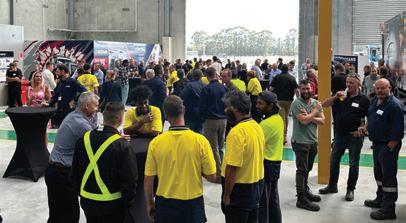
PPGCustomer Night is back in New Zealand, and this time it headed south for the first-ever South Island event.
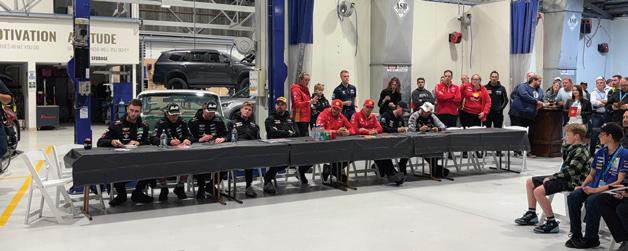
Hosted by Rosiez Collision Repair in Christchurch, around 120 guests turned out to mingle with the stars of the Supercars Championship. Customers enjoyed photographs, autographs, and a Q&A
session with some of their favourite drivers. Plus, there were awesome prizes up for grabs, including tickets to the first Supercars race at Ruapuna Raceway.
“This event was a fantastic opportunity to bring together our PPG customers for a relaxed night of networking,” said PPG Business Manager and New Zealand Country Manager Ernest Dumper. “It was the first time we’ve held the event on the South Island and the first time a PPG customer has hosted the event at their
The iconic PPG livery will return for nine major races across the NTT® INDYCAR® SERIES and NASCAR® Cup Series as Team Penske celebrates its 60th anniversary. The PPG colours will be showcased with an expanded lineup of drivers from Team Penske, including Josef Newgarden, Scott McLaughlin and Austin Cindric. In addition, Josh Berry will represent PPG with Wood Brothers Racing, which maintains a technical alliance with Team Penske.
PPG will also continue as an associate partner across Team Penske’s INDYCAR and NASCAR programs, reinforcing a
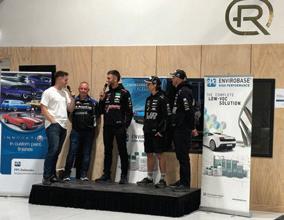
workshop. Brendon Rosie and his team at Rosiez Collision Repair provided a fantastic venue and atmosphere.
The night was emceed by refinish industry mogul and race car driver Steve Noyer and Ronan Murphy, son of Kiwi Supercars legend Greg Murphy. The thing I think the customers enjoyed most was the access they had to the drivers. Hearing their insights and experiences firsthand is something our customers don’t usually get the chance to do.” R
Brad Jones Racing – Andre Heimgartner, Macauley Jones, Cameron Hill; Walkinshaw TWG Racing – Chaz Mostert, Ryan Wood; Dick Johnson Racing – Rylan Gray, Brodie Kostecki; Blanchard Racing Team – Aaron Smith, James Golding; Matt Stone Racing – Zach Bates, Jack Le Brocq; Tickford Racing – Cam Waters, Thomas Randle.
relationship that began in 1984 and is one of the longest-standing partnerships in motorsports.
In the INDYCAR Series, PPG will be featured on the No. 12 Chevrolet driven by David Malukas, who joins the team for the 2026 season. In the NASCAR Cup Series, PPG will appear on
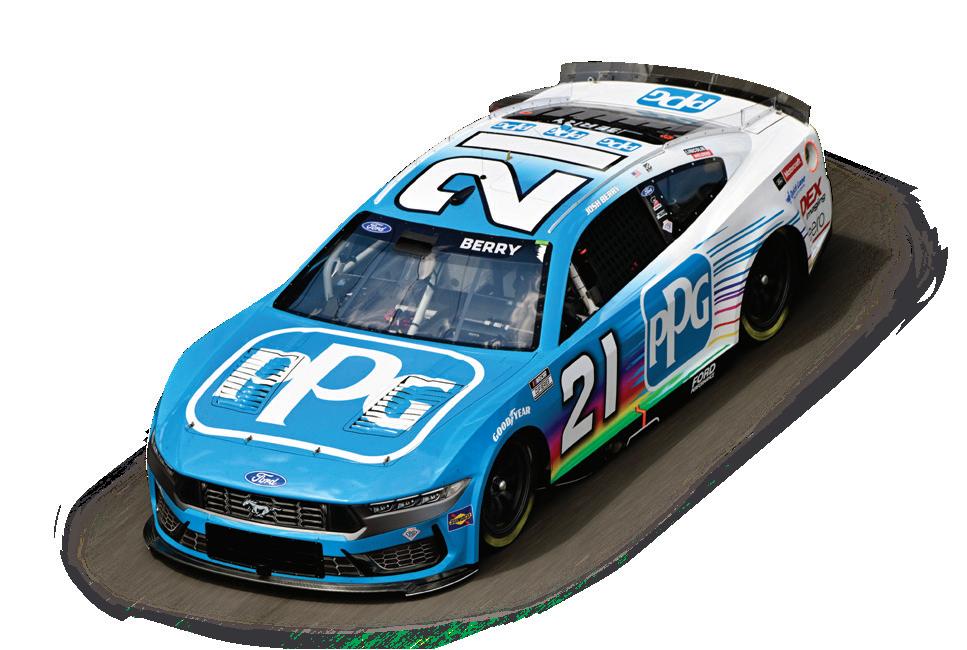
the No. 12 Ford Mustang Dark Horse, driven by 2023 NASCAR Cup Series champion Ryan Blaney, and the No. 22 Ford Mustang Dark Horse, driven by three-time NASCAR Cup Series champion Joey Logano. R
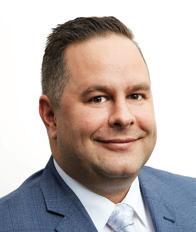



“Advancements in this industry are often measured by the next product, the latest technology, or a new facility. Look closer, and a deeper truth becomes evident: true advancements continue to be rooted in basics. Process over shortcuts. Scientific understanding. Surface preparation. Skill.
Whether it is clearcoats, low-VOC systems, bare metal preparation, or increasingly complex OEM colours, the principle remains the same. Consistent, high-quality results start with a solid foundation.
That thinking runs through every story in this issue of Refinisher. From the workshop floor to the racetrack, from small family operations to global laboratories, there is the desire to learn, to work together, and to think ahead. It shows in the custom car builder who creates a masterpiece. In the engineers refining formulas over years, not months. In the next generation, stepping into modern production environments. And in the global teams working behind the scenes, so repairers here at home can focus on their work. Enjoy the stories and take pride in the results being achieved in our industry.”
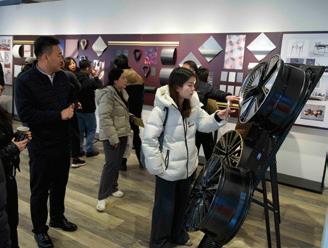
In February, PPG announced the launch of its annual automotive colour report in a briefing in Shanghai, headlined by the 2026 global design theme “Parallels,” which reflects the duality of global influences and personal expression.
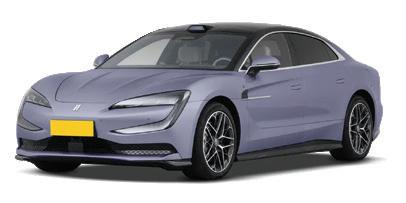
Hosted by the company’s Automotive OEM Coatings global colour styling team, key highlights included the launch of a joint colour creation lab with Chery, the development of the custom-tailored Argyle Purple colour for BYD Yangwang, and a collaborative project with Xiaomi to design 100 new colours over the next three years.
PPG showcased its expertise in specialised styling through custom presentations focused on luxury vehicles, as well as the design of wheels and automotive
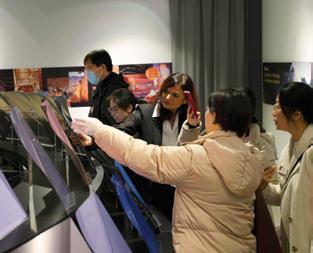
parts. The briefing also provided PPG with an opportunity to demonstrate its strategic commitment to the Chinese market through these high-profile, localised collaborations. R
PPG has received its fourth consecutive Gallup Exceptional Workplace Award (GEWA). This award recognises the most engaged workplace cultures in the world and highlights those that set the standard for building thriving, high performing organisations.
In 2025, PPG achieved record-setting engagement results, the highest since the
company began participating in the survey in 2014. Its frontline employees also achieved record engagement for the second year in a row. Gallup’s meta-analysis on team engagement and performance is the most comprehensive workplace study ever conducted, with data on more than 3.3 million employees in 347 organisations across 53 industries and 90 countries.
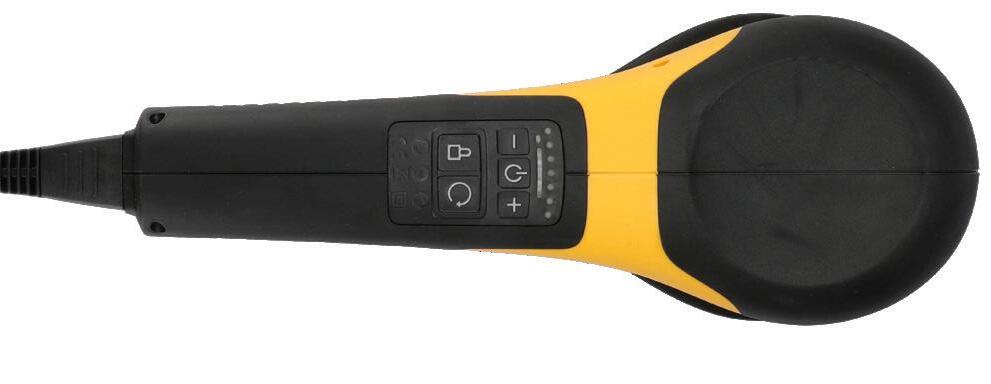
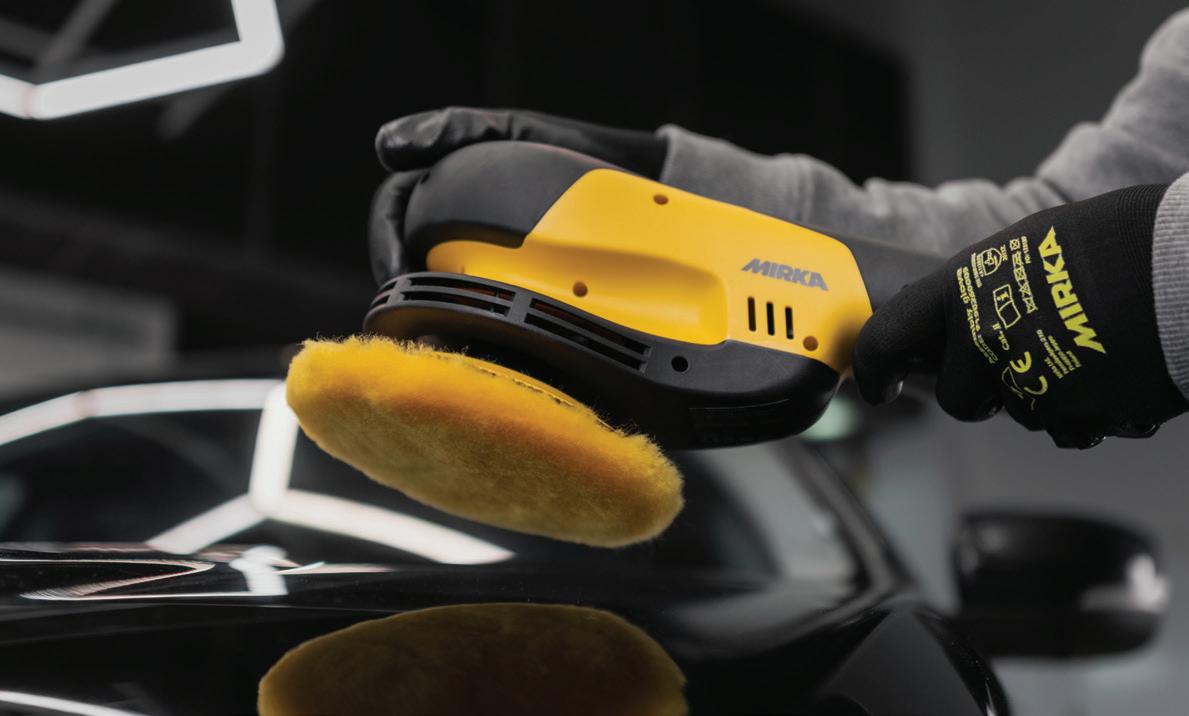

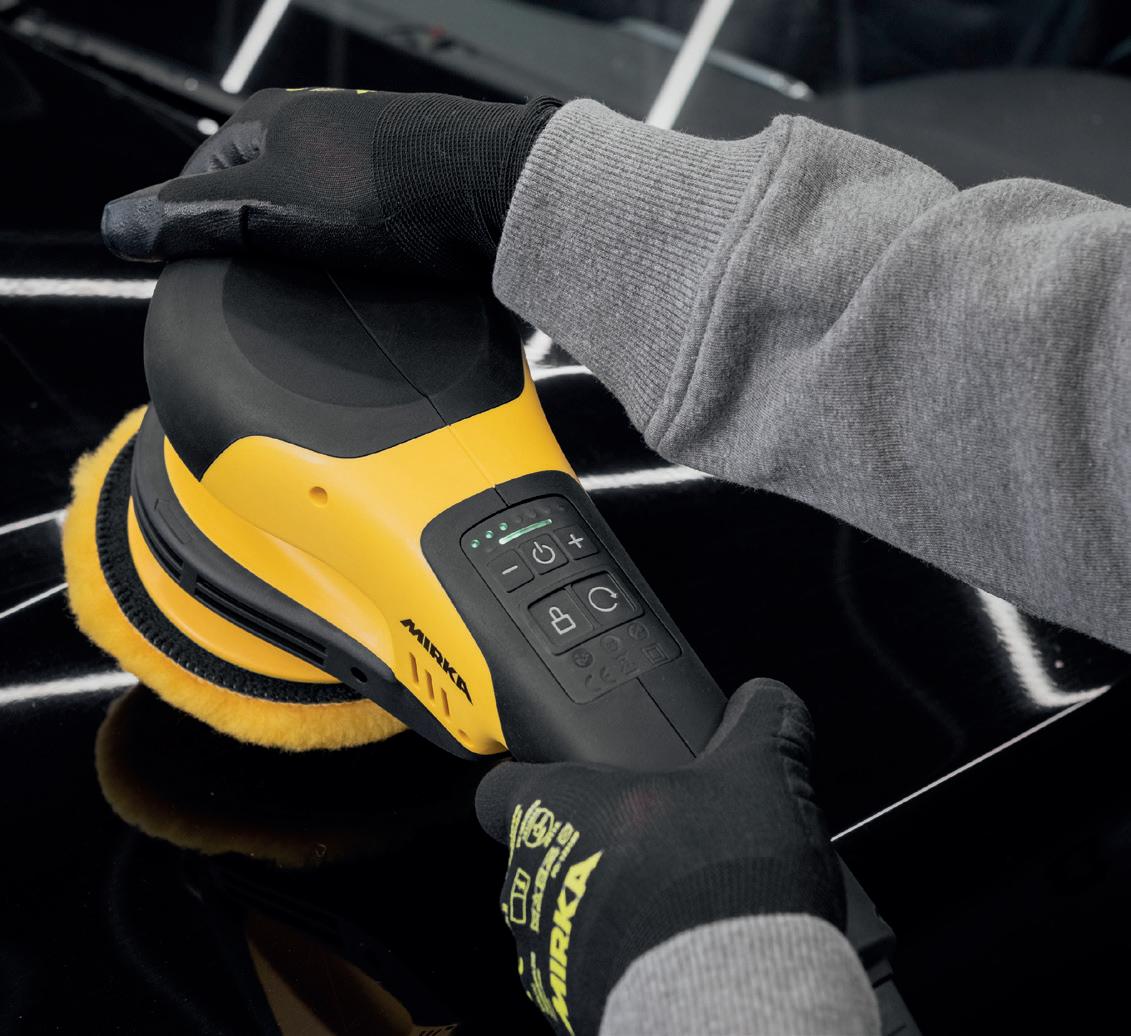
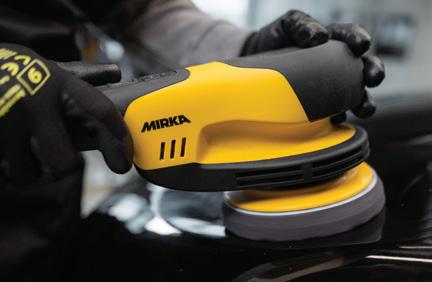
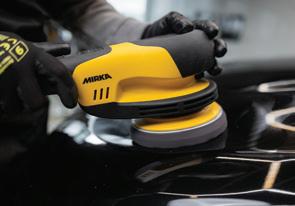
Take a closer look at two Mirka® surface finishing solutions: one focused on high-performance polishing, the other an all-in-one kit for precision sanding, polishing, and detailing.
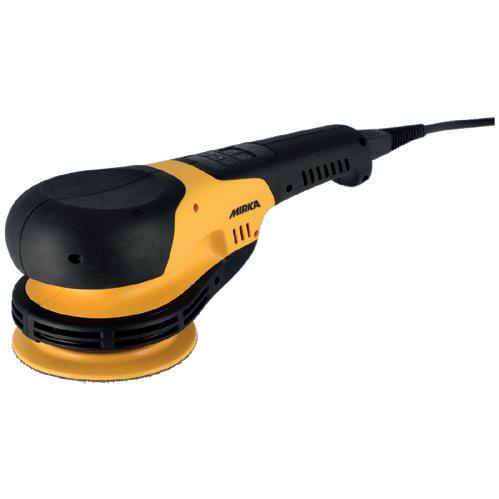
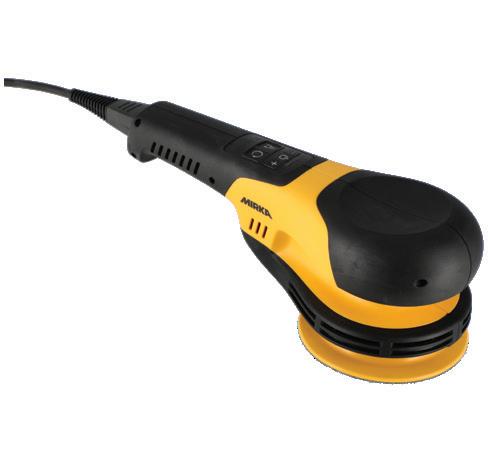
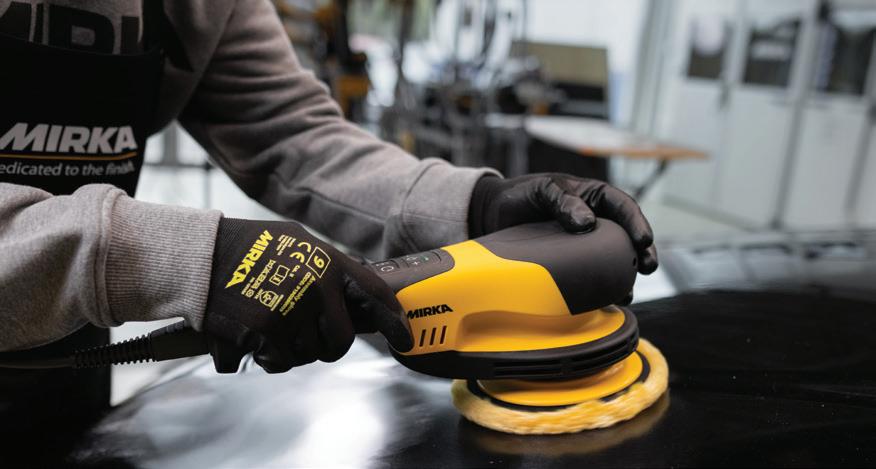
The Mirka POLAROS RP 600 redefines rotary polishing with a user-first design and modern features. It’s built to eliminate the technical challenges of polishing and deliver a steadier, more predictable result.
At its core is a 150mm rotary polisher with a noticeably different feel in the hand. The short, compact body and centrally positioned handles keep your grip close to the surface, which makes a difference when working on edges, tighter panels, or refining a finish. It avoids the top-heavy feel common in traditional rotary machines and instead keeps the operator balanced and in control.
It provides smarter power with the Ramp Up function, which gradually increases rpm as pressure is applied, reducing splash and keeping the job cleaner from the start. The Ramp Down function steps in when excess pressure is detected, automatically lowering rpm to protect both the surface and the tool. It is a simple concept, but in practice, it helps reduce mistakes that can lead to rework.
Despite running a 750W brushless motor, the POLAROS keeps things quiet,
with a maximum noise level under 60dB. For workshops where polishers are in use for long periods, that reduction in noise adds up. Less fatigue, better concentration, and a more comfortable working environment.
Key features:
• Ergonomic, compact design for improved handling and reduced strain
• Ramp Up and Ramp Down functions to manage speed
• Ultra-low noise operation at around 58dB
• Lightweight build at 1.75kg for extended use
• 750W brushless motor for consistent performance
• Bluetooth connectivity to the myMirka app for monitoring and custom settings
• Soft backing pads as standard
Matched with Mirka’s range of foam and wool pads and Polarshine compounds, the POLAROS can handle any job. Whether cutting or finishing, you’ll get a clean, high-gloss result on paint, clearcoat, or gelcoat.
The Mirka Denibbing Kit offers all the sanding and polishing equipment you need in one handy kit. Built as a complete, portable, and ready-to-go solution, it brings together sanding, denibbing, polishing, and finishing in one organised setup.
The standout features of the kit are the cordless, battery-powered Mikra AOS-B
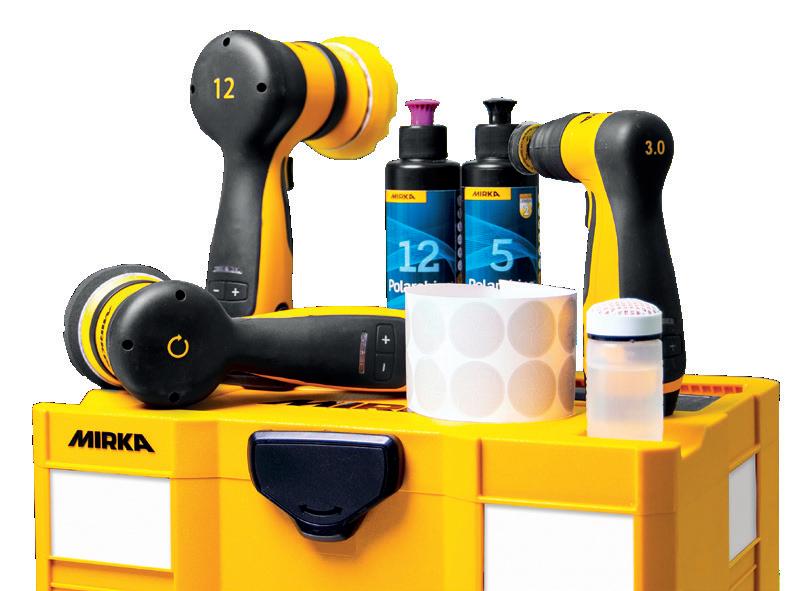
AROP-B polishers. Equipped with a 5.0Ah battery, there are no hoses to manage and no cords dragging across panels.
Each tool is designed for compact, controlled work. They are light, ergonomic, and ideal for spot repair sanding and polishing, but provide high torque and optimal rpm.
The smaller pad sizes and lightweight builds make it easier to target defects without disturbing the surrounding area.
The brushless motors across the range keep maintenance low and deliver quieter
Included in the kit:
• AOS-B 130NV 32mm 10.8V sander
• ARP-B 300NV 77mm rotary polisher
• AROP-B 312NV 77mm polisher
• IRIDIUM SR abrasives (5μ and 7μ)
• Polarshine 5, 12, and 45 compounds
• Polarshine liquid wax
• Lambswool and foam polishing pads
• Microfibre cloths and finessing damper
• 5.0Ah heavy-duty battery
• Durable storage case
All components stored in a durable, portable case R
Please contact your PPG Distributor for more details on the Mirka POLAROS RP 600 and the Mirka Denibbing Kit.

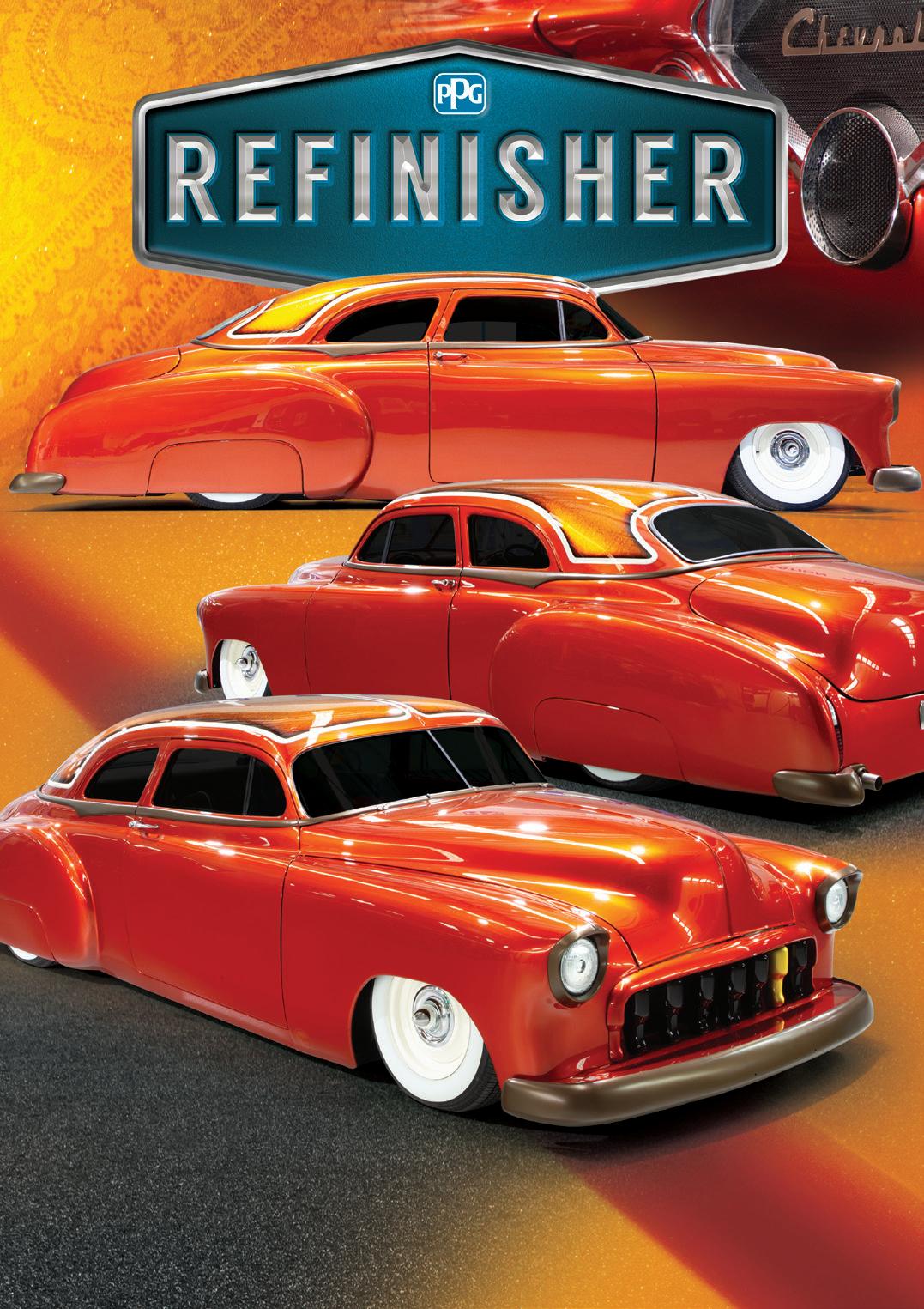
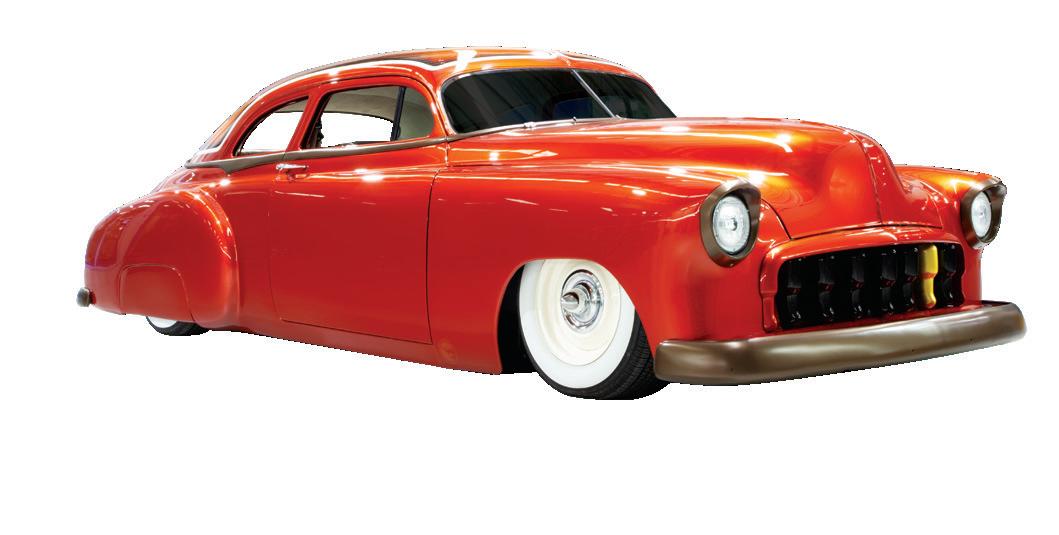
Fourteen years, one PPG expert, one very supportive wife and family, and a custom 1950 Chevrolet Styleline was born.
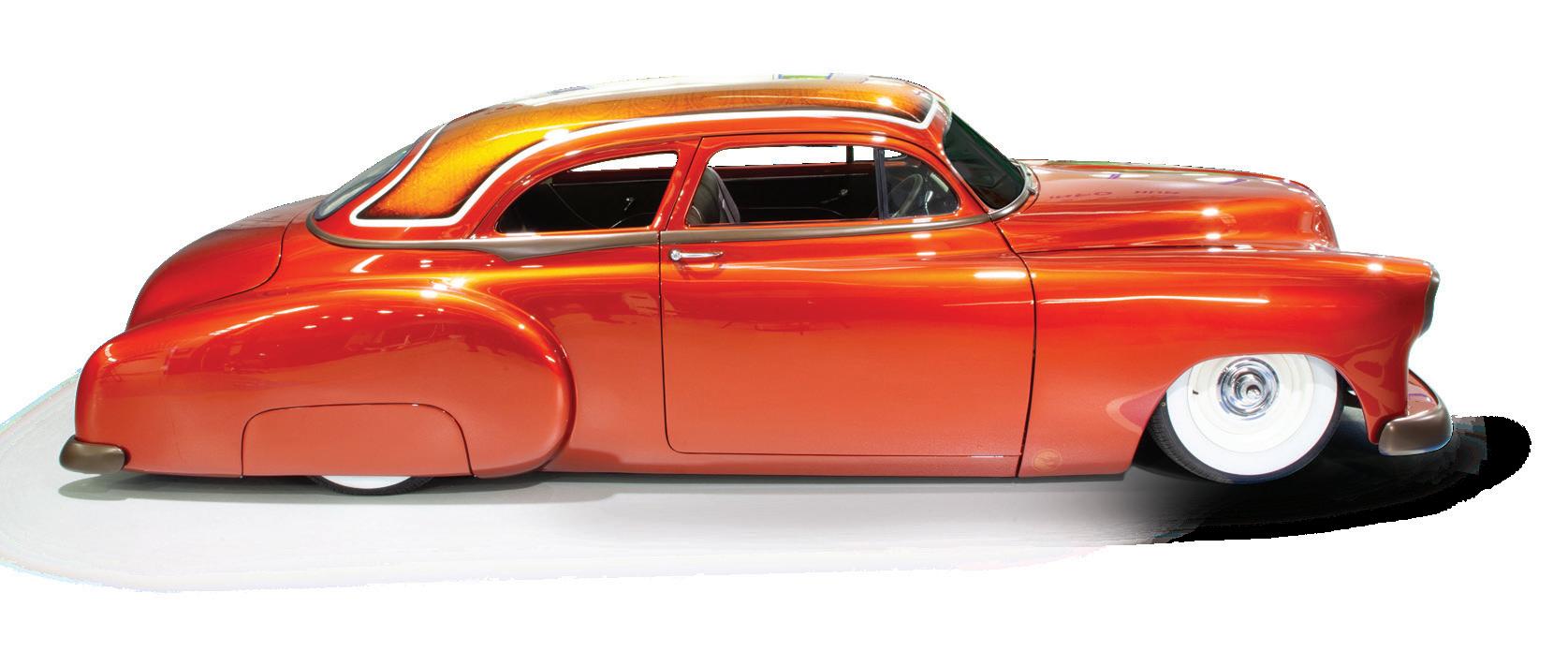
Aspray painter by trade before joining PPG almost eight years ago, Senior Territory Manager for Northern and Eastern Sydney Sam Minter has spent his life and career around cars. While Sam had done many custom builds in the past, his most recent custom project was special. It wasn’t about building a flashy show car to sit in a trailer and never see the open highway; it was about creating a car he could drive, enjoy, and share with his family.
“I always wanted this type of ‘Lead Sled’ to create a customer ride,”
says Sam. “I actually found this car when a Just Cars ad popped up while I was on eBay. But I’d just got married, bought a house, and was starting a family, and I wasn’t sure if I’d have the money to do it. But I thought, you know what, you’ve got to take a chance.”
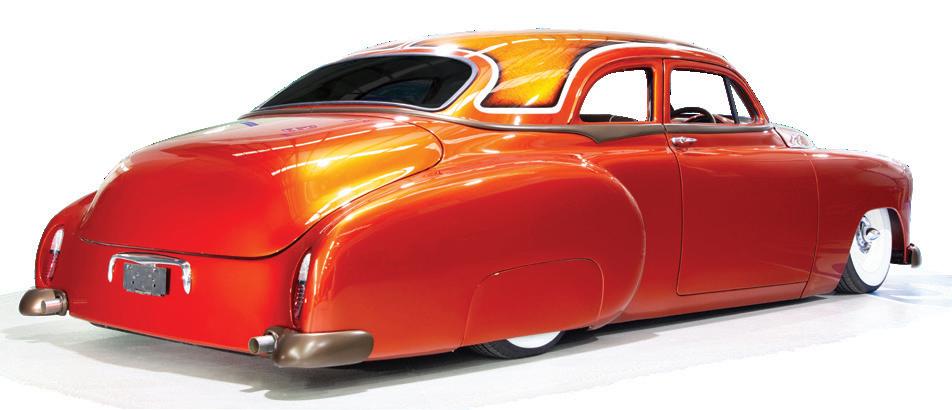
That chance was a 1950 Chevrolet Styleline, originally manufactured as a practical four-door family sedan. Today, it’s anything but. The car has been transformed into a sleek two-door coupe. “I cut the front doors in half, added another set of front doors and extended them by eight inches, then shortened the rear doors and welded them up. You get that sporty look that’s much more desirable than four doors.”
Ironically, the transformation began as a birthday surprise. “I had the car for a little while before I actually started working on it, and I owe that starting point to my wife, Sonia. She secretly organised with a mate of mine to get the two-door conversion and roof chop done for my 30th birthday. She gave me clues every day leading up to the big day. There were scissors, a Lego roof, and a chocolate number two. I didn’t get it at all until she laid it out: two-door roof chop. That’s what kick-started the build.” Like many long-term builds, life dictated the timeline. Marriage, children, and building a home meant the Chevrolet often waited patiently in the background. “I actually got a lot of work done on it during COVID. I was in one of the most affected areas of Western Sydney and was in lockdown. So, I was like, no excuses. But when
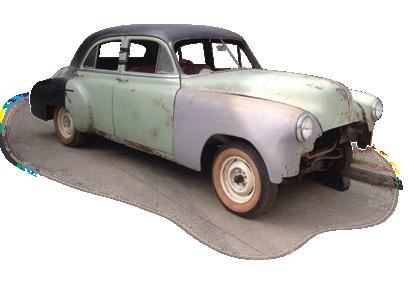
A close friend of mine, Aaron, handled the heavy metal fabrication, but I did most of the other work. My background is in preparing metal for paint, so I did all the bodywork, with a little bit of help from my brother, who is a panel beater. I prepared all the metal for epoxy primer to seal it and protect it from rust.
Then the next stage was body filler, smoothing out the lines, finessing everything, getting the gaps right, and setting the doors correctly. You bolt the car together multiple times and make sure things open and close without touching.”
From the beginning, Sam made a conscious decision about how the car would be used, which meant mechanical components had to be reliable, safe, practical, and easily sourced.
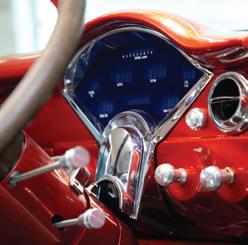
I can just go down to Supercheap Auto and grab it. I also wanted something reliable and comfortable that I could drive with the kids, get ice cream, and enjoy. So, it’s got a lot of luxuries like power steering and airconditioning.”
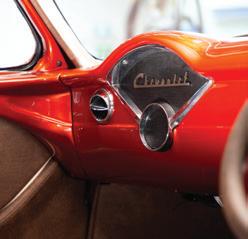
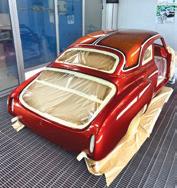
The paintwork reflects Sam’s professional expertise in refinish and custom finishes. With support from PPG National Training Manager Trevor Duke, the Styleline was completed using PPG’s Deltron solvent product line to enable the use of a variety of custom pearl and candy colours.
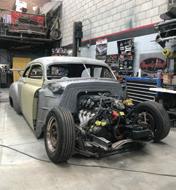
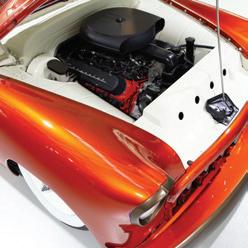
“I wanted a car that’s user-friendly. Not something that sits in a trailer and collects dust. I wanted to get in it, turn the key, and drive. So, I sourced a complete LS1, 5.7L motor and basically everything else from a hail-damaged donor vehicle, including the radiator, gearbox, engine harness, parts of the exhaust, fuel tank, and brakes.
I wanted to build something that if it breaks or something needs replacing,

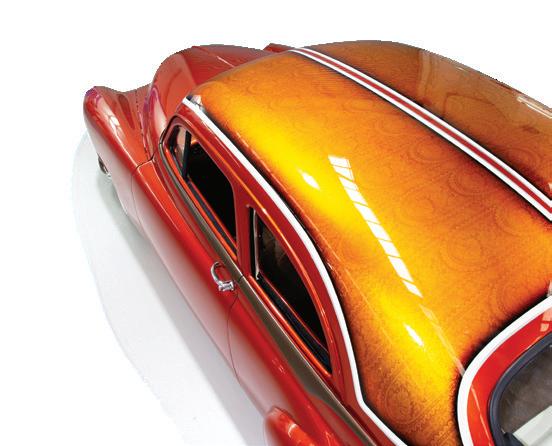
“It actually started as a Mitsubishi Triton orange, but I left some tinters out, added candies, and used products from the Vibrance Collection® to create something unique but easy to apply. I wanted a colour that looks custom, but that’s still practical. If it gets a stone chip, I can repair it easily and get it back on the road.”
Look closer, and the car reveals special personal touches. One of the most meaningful is a subtle tribute
to Sam’s lifelong passion for collecting Hot Wheels cars. “Some Hot Wheels have a little gold logo on them, which means they’re the rare treasure hunt cars.
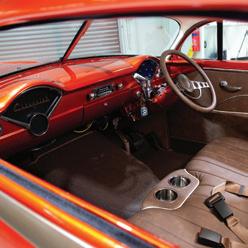
Even the interior carries nostalgic links, including a Rodeo bench seat that nods to Sam’s long history with Holden mini trucks, having owned nearly every Rodeo model produced.
After 14 years, 2026 marks the official completion year of the Chevrolet. For Sam, trophies and accolades were never the motivation for building the car. “The two trophies I want from this car are memories with my kids and stone chips, because stone chips mean it’s getting driven.”
The first drive is already planned, and it perfectly reflects the spirit of the build.
“One of my bucket list things is to go to the old drive-in cinema with my wife and kids and have popcorn and choc-tops.
I’ve even got the original window trays that came with that particular model and hook onto the doors. So, I’m going to paint those to match the car. That’s the dream. Just a simple night out with the family.” R
I’ve got that little gold logo ghosted into the pearl coat on the driver’s guard because this represents the fact that this is one-of-a-kind.”
Six years ago, Premier Panel Services was a very different operation. The bones were there, but little else had kept pace with the demands of a modern repair business.
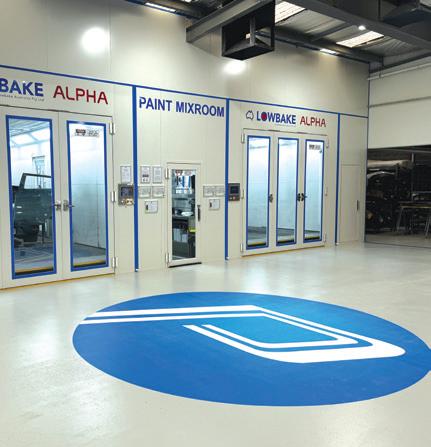
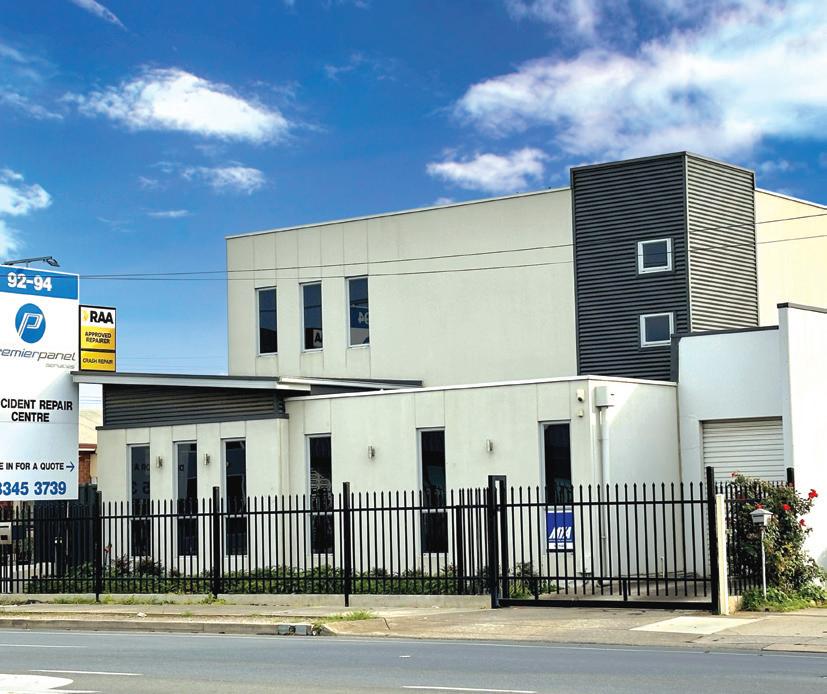
Today, it stands as one of Adelaide’s most considered and well-equipped repair facilities. Now under the direction of Managing Director Paul Whelan, the Premier Panel Services workshop has been rebuilt from the inside out. Not just refreshed, but fundamentally rethought, with a focus on technology, efficiency, sustainability, and people.
beater, moving into insurance, then back into the workshop in leadership roles, he had already built businesses and seen what worked and what didn’t.
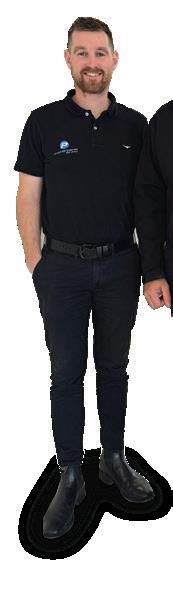
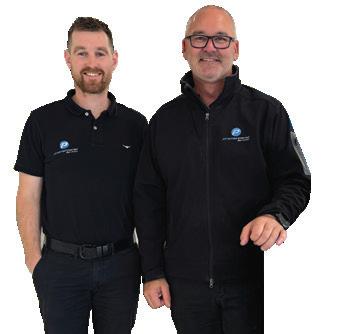
Paul didn’t walk into the opportunity blind. He brought with him years of experience across both the workshop floor and the insurance side of the collision repair industry. Starting on the tools as a panel
“I’m a panel beater by trade,” says Paul. “When I left school, I didn’t really know what to do, but Dad wouldn't let me sit on my hands. So, I started out sweeping floors in a crash repair shop, then went on to complete an apprenticeship in panel beating and working in several different shops to gain as much experience as I could.
I then moved into the insurance industry, working as a motor assessor before progressing to an assessing manager role, where I spent a number of years. Eventually, I returned to my roots in repair shops, this time in management, helping build and grow new businesses. After that, I decided it was time to branch out and do my own thing.”
The purchase of Premier
Panel Services was made with his cousin, who is a silent partner. They approached the owners, who were looking to retire, and decided to take the leap. It came with risk, but Paul knew exactly what changes needed to be made.
“We bought this business two months before COVID. We didn’t rename it, but we rebranded it and gave it a fresh new look. It needed a lot of work because all the infrastructure was old and had never really been updated.”
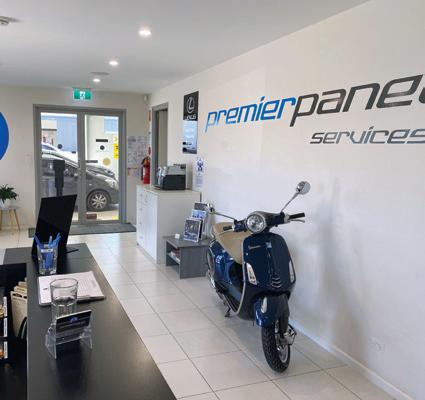
They originally looked at buying the property next door to expand the shop’s footprint, but instead invested in improving the layout and updating equipment. They also spent time planning so they knew exactly what they needed to achieve before a single dollar was spent.
“We didn’t just go out and spend on a renovation and hope for the best; we sat down with the accountant and worked on our business model. Our work varies depending on the size of a repair job, so we looked at the value of repairs we needed to do per week, rather than the total number of repairs.”
The transformation of Premier Panel Services didn’t happen in one hit. It came in two distinct stages, starting with what Paul calls “the clean-up”.
“The initial clean-up took around three months. We got rid of all the rubbish, painted the place, and redid the floors. I wanted to get it to the point where the shop was clean and presentable.”
The real change came three years later with a full-scale internal redevelopment that took around six months to complete. What set the project apart is how it was delivered. There was no shutdown and no disruption to customers.
“You can’t just shut the business down for four or five months, so we kept everything running and staged the renovation. We redesigned the shop and built internally without stopping repairs from being completed.”
In collaboration with Lowbake, we began with a vision, designing and 3D modelling the entire shop to reimagine its layout and
flow before a single wall was moved. Those digital blueprints became the foundation for our transformation.”
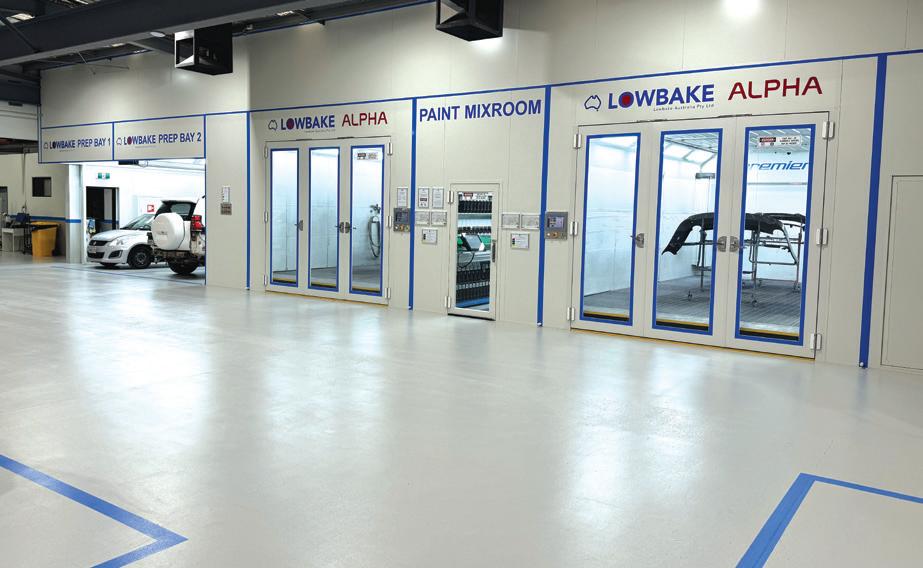
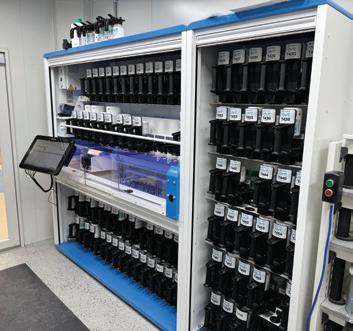
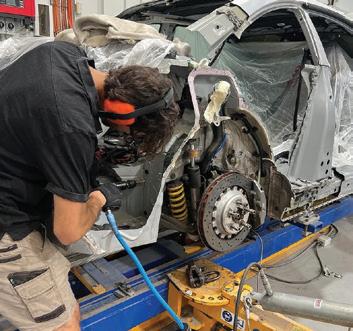
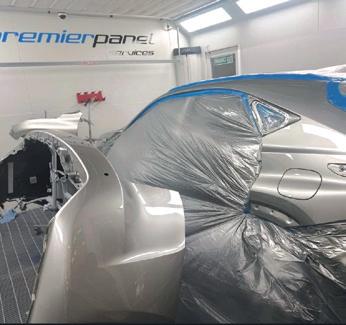
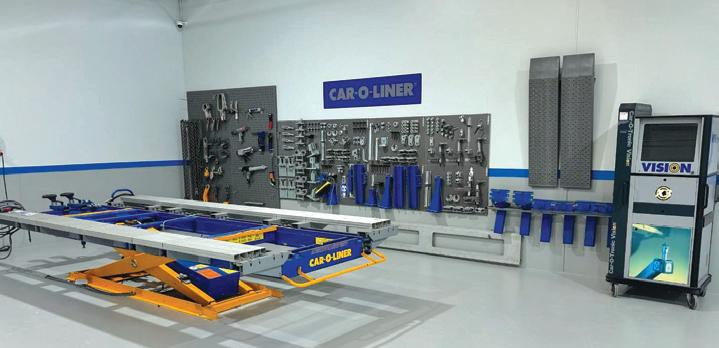
The result, two state-of-the-art Lowbake Alpha spray booths, two new prep bays featuring integrated UV and electric IR units, a dedicated Lowbake wash bay, and a purpose-built structural area. “Now, we’re repairing more cars than before, but we haven’t changed our footprint.”
For Paul, keeping up with the latest technology is not optional. It is fundamental to staying relevant.
“If you stand still in this industry, people go past you. The technology in these cars is now unbelievable, so you need the latest equipment to repair them properly, from colour to structure and electronics.
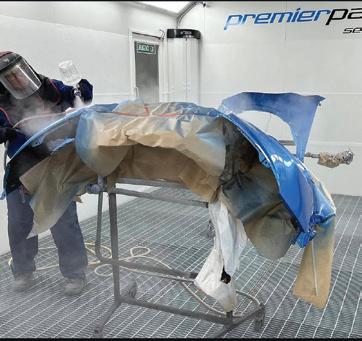
When we bought the shop, it wasn’t using PPG, but we had some issues with a pretty average job that came out of the booth. Our supplier couldn’t provide technical support, so we called PPG, and they had it sorted within a couple of hours. That was a turning point.
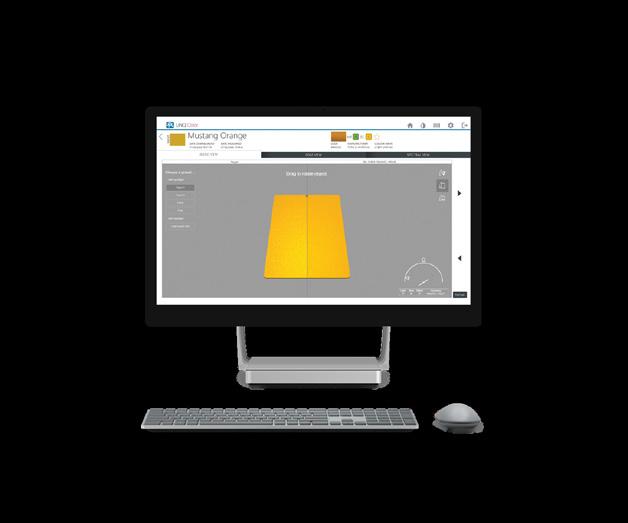
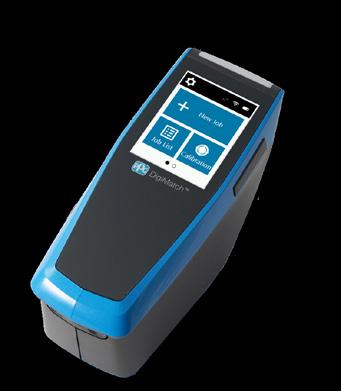
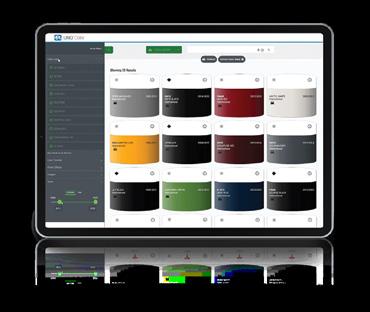
PPG showed us how easy their product was to use and how good the colours were, and we’ve been with them ever since. Now, we’ve added PPG DIGIMATCH™, LINQ™, and the MOONWALK™ automated mixing system, which is integrated into the prep area.”
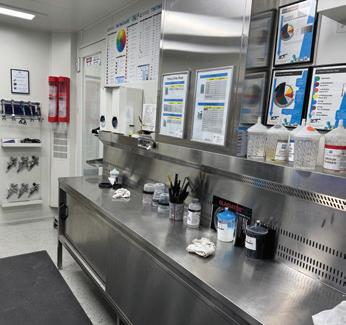
Premier Panel Services takes waste management seriously, and environmental performance has become a key part of how the shop operates, not just from a compliance perspective but also as a practical business decision.
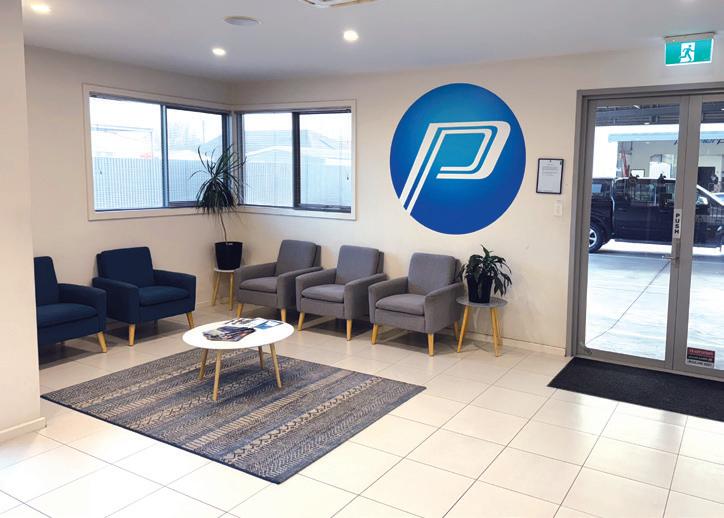
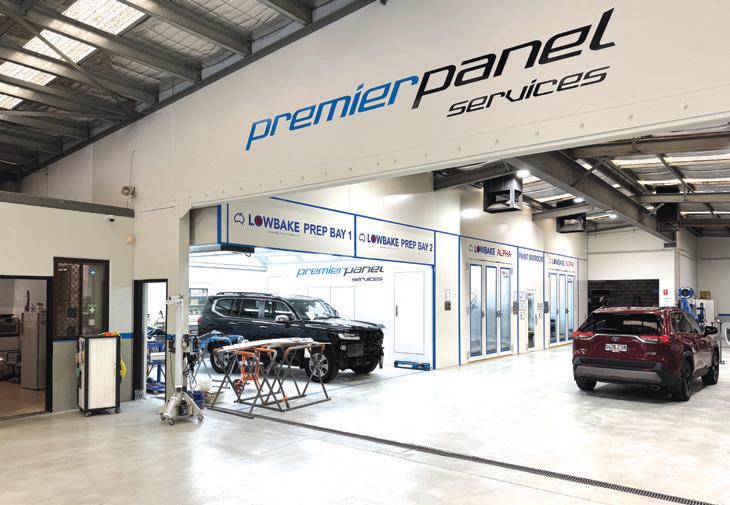
“We’re using PPG waterborne products, Envirobase® High Performance air-dry primers and fast-drying clears. While paint costs are increasing, product developments are saving us in other areas.
For example, by using the fast-dry clear, we’ve halved our gas usage.”
The business also holds MTA Green Stamp accreditation. This is a voluntary environmental program for Australian automotive businesses that recognises eco-friendly practices such as proper waste disposal, energy conservation, and pollution prevention.
“Our industry produces a lot of waste – cardboard, plastics, paint. A lot of it is hazardous, and it needs to be disposed of properly. There are still too many people not doing the right thing, so we pride ourselves on making sure we are doing our bit for the environment.”
Like many businesses in the refinish industry, staffing remains an ongoing challenge, but
Premier Panel Services Owner:
Paul Whelan Staff: 13
PPG Product: Envirobase®
High Performance Territory Manager:
Peter Mennillo
Paul believes the approach taken at Premier Panel Services has made a difference.
“People say it's hard to get good tradespeople, but I think retention also comes down to how people are treated. If you look after people, pay them properly, give them a good environment, and make them feel welcome, they’re more likely to stay. And, if your staff are happy, I think
that is reflected in the quality of work they produce, which has a flow-on effect to our customers. It’s taken six years to get to where we are with our staff, training, and processes, and I don’t think there’d be many shops in Adelaide with the same level of tradespeople we’ve got.”
For Paul, there is a great pride in delivering quality to his customers, and he enjoys training the next generation of collision repairers.
“I get a buzz out of delivering really high-quality work. When you take a heavily damaged car and bring it back to its former glory, and the customer is wrapped when they pick it up, that’s a great feeling.
Seeing the next generation develop is really important to me as a business owner as well, and I enjoy watching the younger people build their skills and become experts in the trade.”
The latest addition to PPG’s low-energy portfolio, the Envirobase® High Performance
LVP-567 Air Dry G7 Primer has been launched, giving workshops a new G shade option.
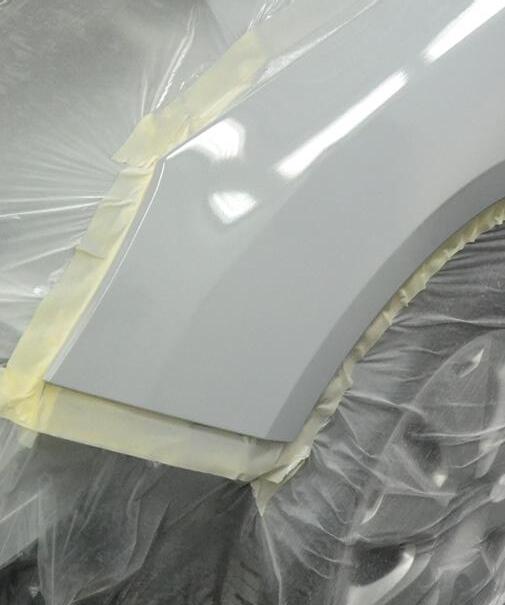
Building on the release of the LVP-565 Air Dry G5 primer in late 2024, the new G7 is a darker tint option, allowing painters to select the appropriate grey shade base for modern colour requirements.
Like its G5 counterpart, the LVP-567 Air-Dry Primer is a low-VOC, fast-drying, high-build primer designed to reduce energy consumption and optimise the primer process in the workshop.
“The driving factors behind the development of any new product are sustainability, improving efficiency in the workshop, and reducing operating costs, while maintaining quality,” says PPG Collision/CT Operational Product Manager Nick Blake. “The new G7 reduces drying and curing times, improves sandability, and is more efficient when working with colours that require deeper undercoat tones.
Normally, a painter will put down the primer, then a wet-on-wet primer, and then
put the colour over the top. While we still recommend this process to help cover imperfections, this product eliminates the need for a wet-on-wet process. Removing that extra stage means less handling, fewer materials, and faster turnaround.”
Other benefits include:
Low-energy cure Fast drying Applied in a single visit
No flash off between coats
Excellent sanding properties
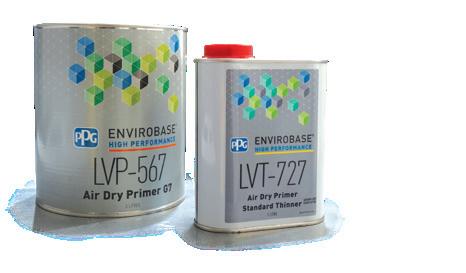
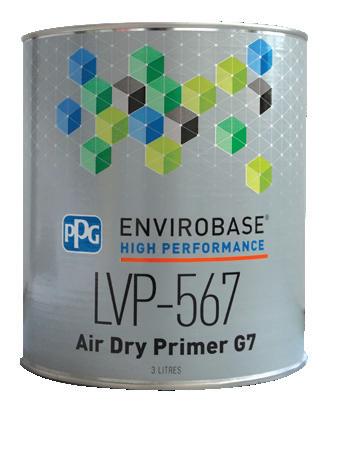
Available in three-litre cans, the Envirobase High Performance LVP-567 Air Dry G7 Primer expands the options available to workshops.
Please contact your distributor or PPG territory representative for more information about Envirobase® High Performance LVP 567 Air Dry G7 Primer. R
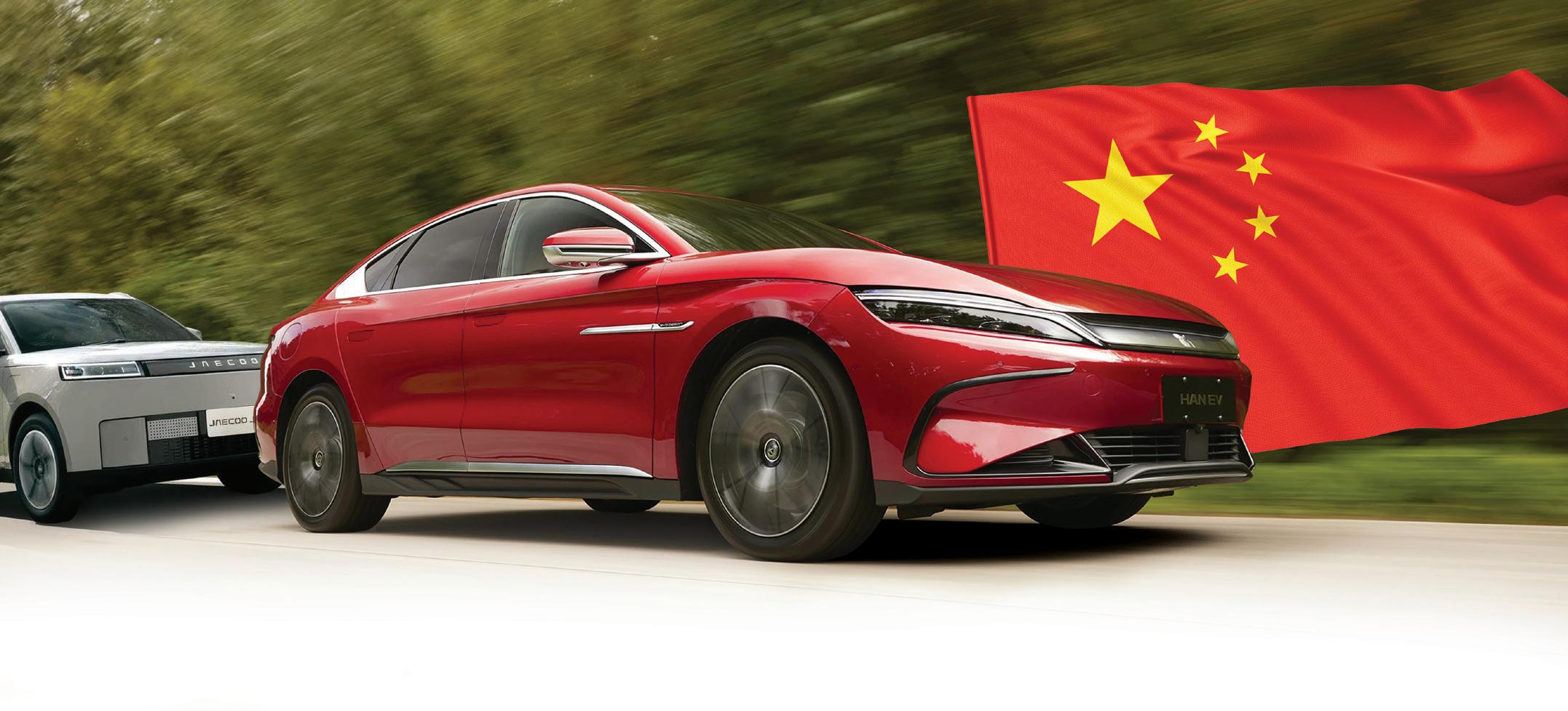
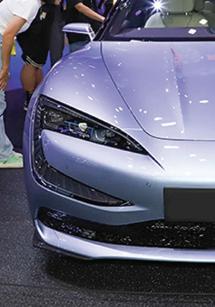
Chinese vehicle brands are no longer emerging players in Australia; they’re a major force. For the refinish industry, that rapid rise brings a new level of complexity when it comes to colour.
Atotal of 221,699 Chinese-made cars were sold in Australia in 2025, which is around one in five new cars.
That equates to approximately 18 per cent of new vehicle sales; up from around 14 per cent in 2024. Both the number of brands
Behind the badges lies a vast, fastevolving manufacturing base. “You’re not dealing with five or six manufacturers anymore,” says PPG National Sales Director John Hristias. “There are around 110 Chinese OEMs, each with multiple brands,
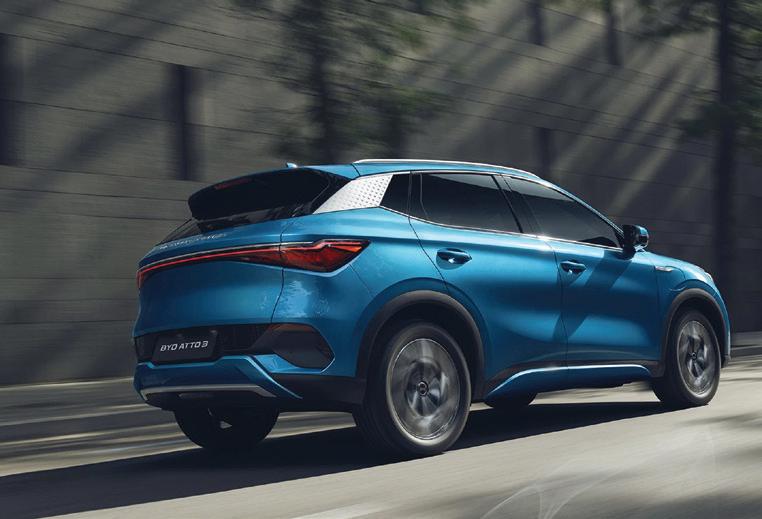
“We’re seeing brands come in through an importer, test the waters, and then very quickly set up their own operation selling directly to the consumer. BYD is a good example of this.
The challenge for us is keeping up with the speed, the scale, and the everdeveloping colour ranges of these OEMs and being able to serve our refinish customers.”
PPG’s response is a strategic commitment to the Chinese market through high-profile, localised collaborations. It has built long-standing relationships with Chinese OEMs, supported by teams working directly within manufacturing plants and alongside colour styling departments.
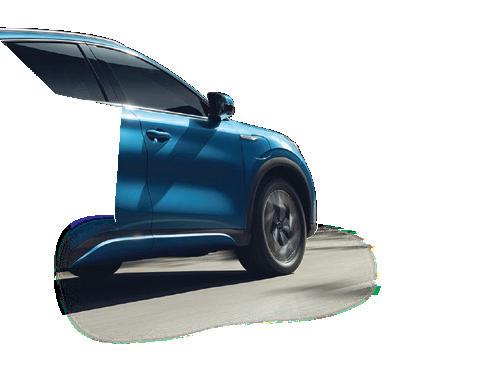
In early 2026, PPG announced the launch of a joint colour creation lab with Chery, the development of the custom-tailored Argyle Purple

“We’ve been working with a lot of these brands for a long time. I remember going to China in the early 2000s and seeing BYD when it was a very different company. PPG has grown up with these brands, and we’ve kept pace with what they’re doing.”
colours are introduced, it’s up to our teams working with OEMs to communicate what new colours are on the way, what pigments are being used, what our refinish customers need to be ready for.”
For repairers, the expectation is simple: when a vehicle arrives, the colour formula needs to be available, accurate, and supported. PPG’s focus is on ensuring that happens seamlessly.
Having a presence on the ground in China matters. It allows PPG to be involved early in the process, working with OEMs as colours are developed, approved, and prepared for production. So, when those vehicles come into markets like Australia, we already have the formulas ready to go.”
“OEMs are designing colours to sell cars; repairability comes second. Our job at PPG is to bridge that gap. As new
Interestingly, while Chinese manufacturers are pushing boundaries in colour styling, they are not necessarily introducing entirely new pigment technologies.
“They’re definitely more daring with colour. We’re seeing brighter, more standout finishes compared to some of the more muted European palettes. But they’re generally achieving that with existing pigment technology, which actually helps from a refinish perspective.”
“The work is being done behind the scenes so that for our customers, it’s a straightforward process. When a Chinese vehicle comes in, the formula should be available so repairers can get on with the job.
But if a formula isn’t available or a variant is needed, our dedicated colour laboratories and technical teams here in Australia can respond quickly. And once that colour is matched, it’s shared across the network so everyone benefits.”
As the Australian automotive market continues to change, PPG is working to ensure its customers are never left behind, with global teams and local support keeping pace with every new colour on the road. R
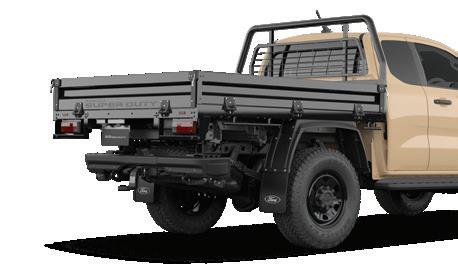
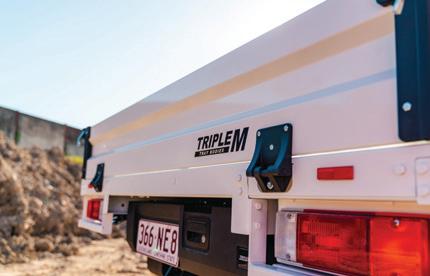
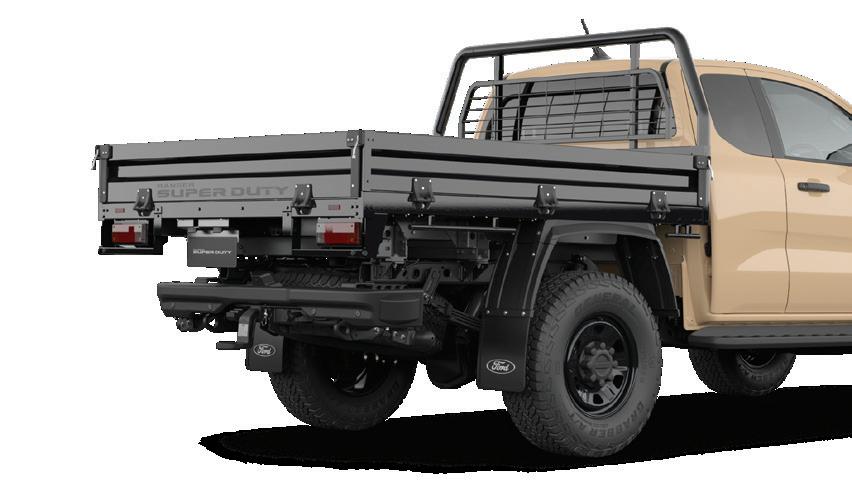
The ute tray body is a familiar sight around Australia, from construction sites to service fleets; they’re designed to withstand the country’s harsh work conditions and terrain.
While the rest of the world largely sticks to standard pickup ‘tubs’, Australian trades have long preferred the practicality of a flat tray. It's no surprise then that the leading designer and manufacturer of tray bodies is an Australian business.
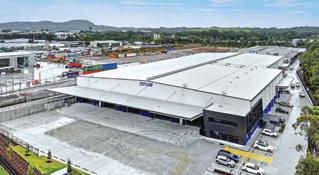
At Stapylton on Queensland’s northern Gold Coast, Triple M Tray Bodies has built one of the country’s largest tray body manufacturing operations, supplying genuine tray bodies to most of Australia’s biggest automotive brands. Today, the company produces tens of thousands of units each year and holds around half of the national tray body market. But the business itself began in far humbler surroundings.
Triple M was founded in 1967 by Gene Thompson, a fitter and turner/toolmaker who started the business from the back of his house in Queensland.
“When Gene finished his apprenticeship, he started his own business at his home in South Brisbane,” says Triple M Tray Bodies GM/Director Michael Fletcher. “He specialised in repairing and manufacturing equipment, but then saw an opportunity in mass-producing furniture components. The company name Triple M stands for manufacturing, maintenance, and machining, which were the services Gene offered.
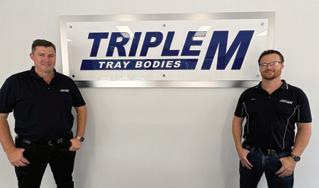
When the furniture industry began importing its equipment, Gene turned his attention to producing aluminium tray bodies, building five in his first year, then 10, and growing it from there. Over time, the company introduced the steel tray body. Then in 1991, it had grown and expanded to the site here at Stapylton.”
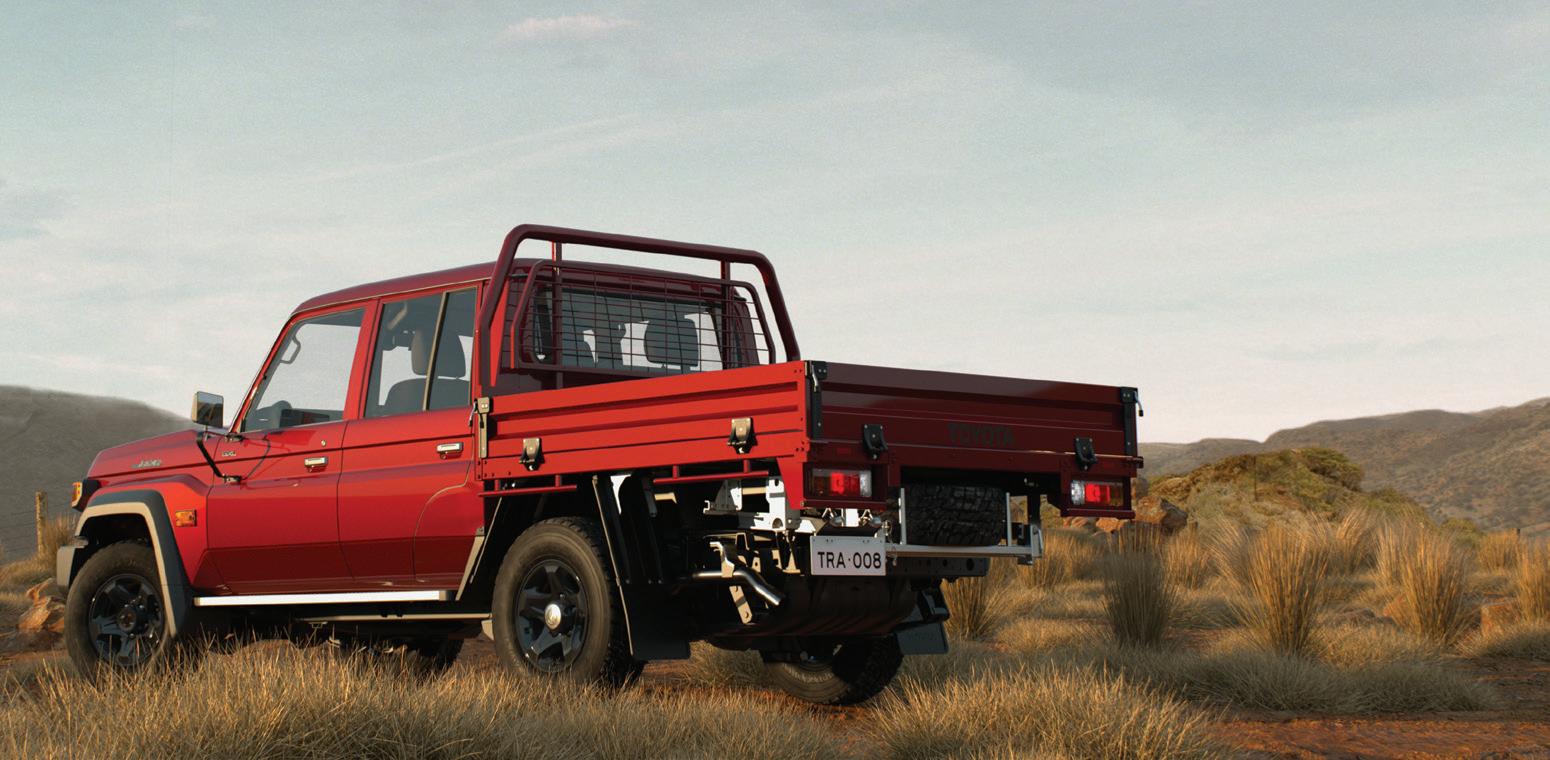
Today, Triple M designs and manufactures tray bodies for the largest car companies in the world.
“In 1998, we started supplying to OEMs directly. Nissan was the first customer, followed by Mazda. But it was the arrival of Toyota in the early 2000s that really accelerated the business. Now we provide services to nearly every manufacturer in the market that sells a cab chassis vehicle, and our market share is about 50 per cent of the Australian tray body industry.”
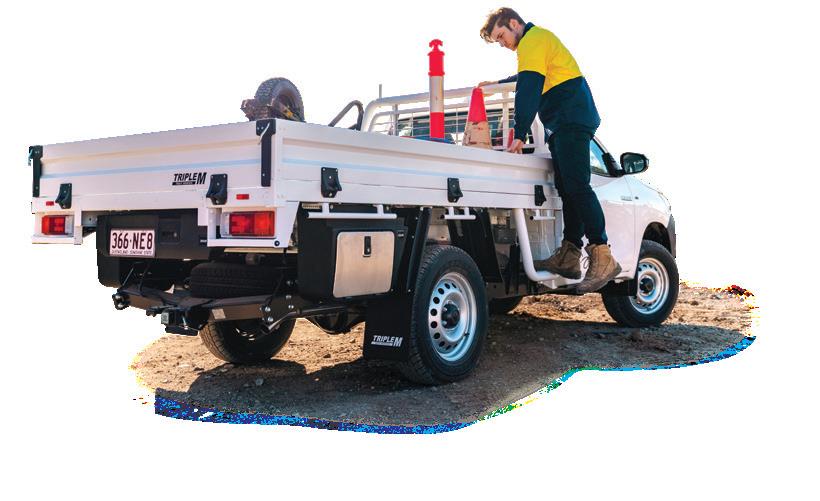
What many people also don’t realise is how far in advance Triple M Tray
Bodies works with vehicle manufacturers before a new model reaches the showroom. “We work closely with an OEM for up to two years, designing and integrating our tray body, ensuring durability and compliance before the vehicle is launched into the market.”
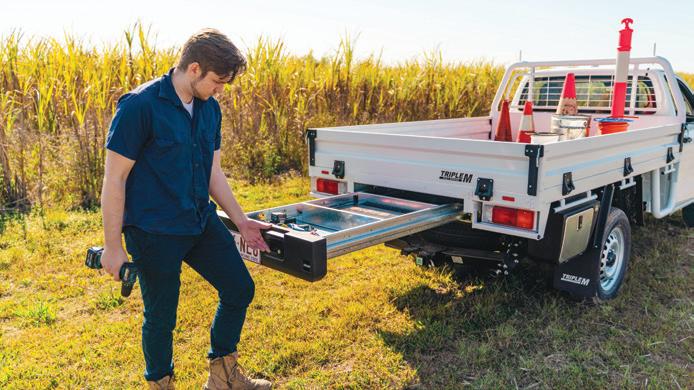
About 10 per cent of Triple M’s business is branded aftermarket products, which are sold directly to customers and fleets. They also produce a range of accessories, including ladder racks, water tanks, toolboxes, and underbody drawers, to name a few.
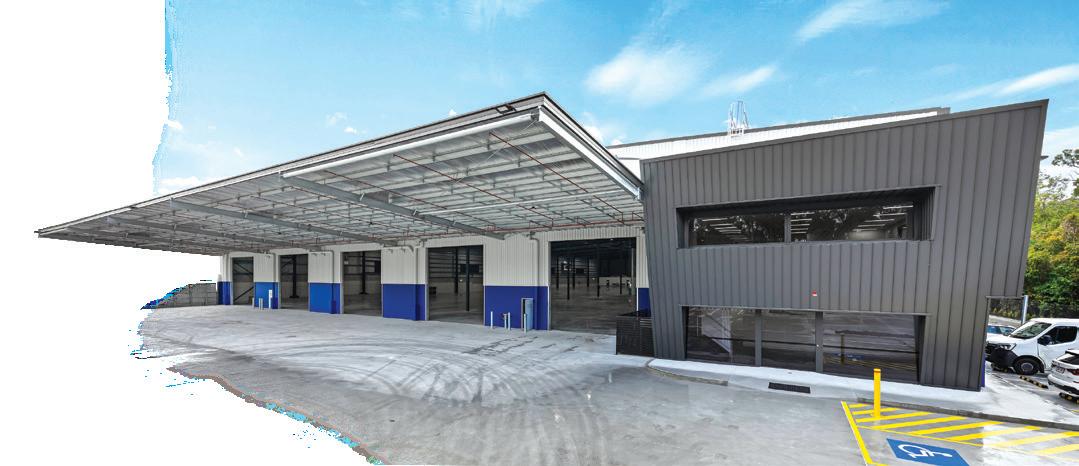
From humble beginnings in a Brisbane backyard, Triple M Tray Bodies has grown into a national
manufacturing operation with seven warehouse sites across Australia. Its biggest production year was 2023/24, when the company produced 44,000 tray bodies.
To support continued growth, the business expanded its main manufacturing facility at Stapylton in August 2025. Michael says the upgrade has significantly increased the site’s capacity.
“We now have 25,000m2 under roof, and we're producing around 160 to 170 trays per day. Now that we have the new facility and
additional production lines, we plan to increase that to around 220 trays per day.”
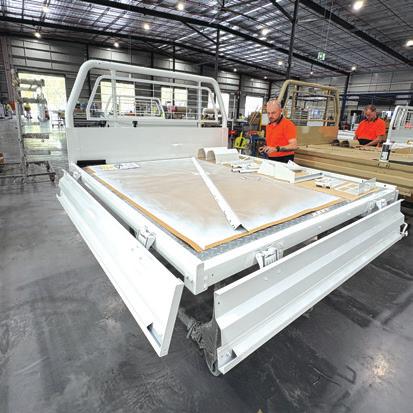
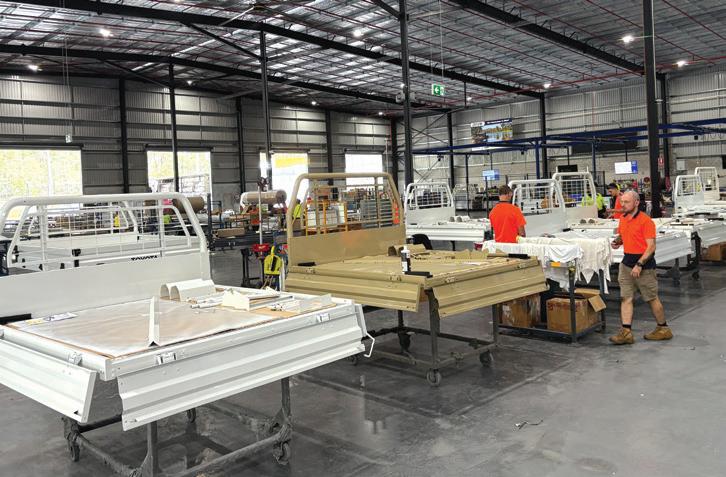
All of Triple M’s manufacturing takes place at the Stapylton facility, with completed tray bodies shipped to its warehouses around the country in flat-pack form. From there, trays are assembled and, where required, painted before being delivered to customers.
SHOP FACTS
Triple M Tray Bodies Owners: Triple M Holdings (privately-owned) Staff: 400
PPG Product: Autothane®, Deltron® GRS basecoat, Delfleet® 4949 primer, Etch

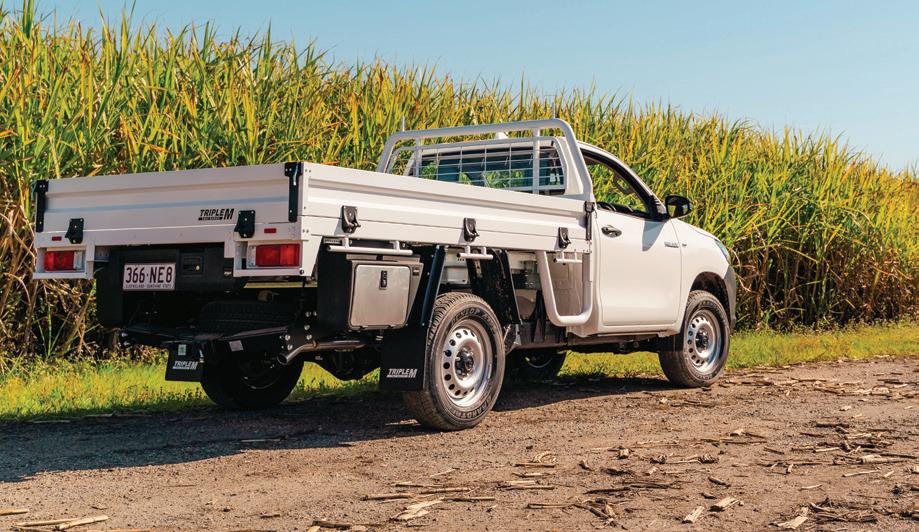
Gene’s vision was clear from the start: we build the knowledge, we build the skills, we do everything ourselves. A vision that proved invaluable for the company, particularly through the COVID years.
“Approximately 95 per cent of the components that go into the tray body, we manufacture in-house. We also design and manufacture the majority of our own tooling, including press tools, dies, jigs, etc,” says Triple M Tray Bodies Production Manager Brett Johnstone.
“We purchase very little from external companies that isn’t raw material, which makes us self-sufficient and able to supply in times of crisis. Parts that we do purchase are also manufactured locally by other local manufacturers, such as injection-moulded components and aluminium castings.
All of our production ERP systems are bespoke and developed in-house by our IT team. Our work is so specialised and varied that having custom-built software
Many hours have gone into developing systems to ensure we have oversight on everything we need to track. That development is a continuous project that is always evolving. We have 400 staff nationwide, and it’s really important to develop skills here in Australia, not only to support the local economy and create employment, but also to secure the future of our industry. Our business encompasses a wide range of skillsets and qualifications, including design and mechanical engineers, machine operators, packers, assemblers, human resources, sales, marketing, and maintenance.”
Efficiency is central to Triple M’s operation. Each day, production supervisors receive detailed reports measuring the performance of different sections of the factory. The data helps identify inefficiencies and opportunities for improvement. “Everything we do, we aim to be as efficient as possible,” says Brett.
“When we built our new facility, the layout was redesigned to improve workflow. The process flow before was a bit like a spider web, but the factory now follows a far more logical path from raw material intake through to assembly, painting, and final dispatch.”
Automation is also gradually being introduced. While robotic welders have been part of Triple M’s operations for about three decades, the company is now exploring the potential for robotic painting systems. If successful, the technology could significantly improve efficiency in one of the more labourintensive areas of production. “If we make this work, it’ll be a game changer for us.”
Triple M’s relationship with PPG began in 2016 after a competitive tender process. Michael says one of the key factors in Triple M’s selection of PPG was the company’s Australian manufacturing capability.
“One of the reasons for selecting PPG was not only the quality of their products, but that they formulate them here in Australia. And that decision proved valuable when supply chains tightened during COVID. In addition, PPG also provides unmatched technical support and training on systems and processes so we get the best results from the products.”
In terms of coatings, Triple M uses a combination of PPG systems based on the required finish. Autothane solid-colour trays, while metallic finishes are produced using Deltron GRS basecoat paired with Autothane clearcoat. All trays begin with Delfleet® 4949 primer and Etch, which provide corrosion protection and strong adhesion across the steel and aluminium components before colour application.
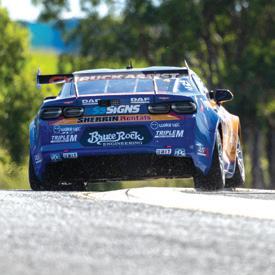
on the rear of the car, with both companies supporting the team.
Outside the factory, Triple M has found a unique way to connect its workforce across the country through motorsport. In 2024, the company began sponsoring Matt Stone Racing in the Supercars Championship, a partnership that grew from a chance meeting but
For Michael, the real value isn’t just seeing the Triple M name on the car, but what it means for the company’s 400-plus employees spread across Australia. “Supercars events give staff the chance to attend races, tour the team’s workshop, and meet the drivers, turning the sponsorship into something tangible for our staff.
We have people working for us all around the country, and Supercars races in those same towns. It creates a bit of buzz in the company and gives the staff something they can be proud of.”
Like most manufacturers today, Michael points out that labour and recruitment are ongoing challenges. “Labour is a key focus for us right now. Tight employment markets have made it harder to find skilled workers, particularly in manufacturing and painting roles. So, we’re looking at different ways to recruit personnel and monitor our retention.
In terms of manufacturing, now that we have more space, we want to increase our production and the range of products we offer. We’d also like to expand our warehouses around the country to hold more stock, so that’s something we're working on this year.”
More than half a century after Gene began repairing equipment behind his house, the business he created has grown into a cornerstone of Australia’s tray body industry. With expanded facilities, strong OEM relationships, and plans to increase production, Triple M is well-positioned for the next stage of its growth. R
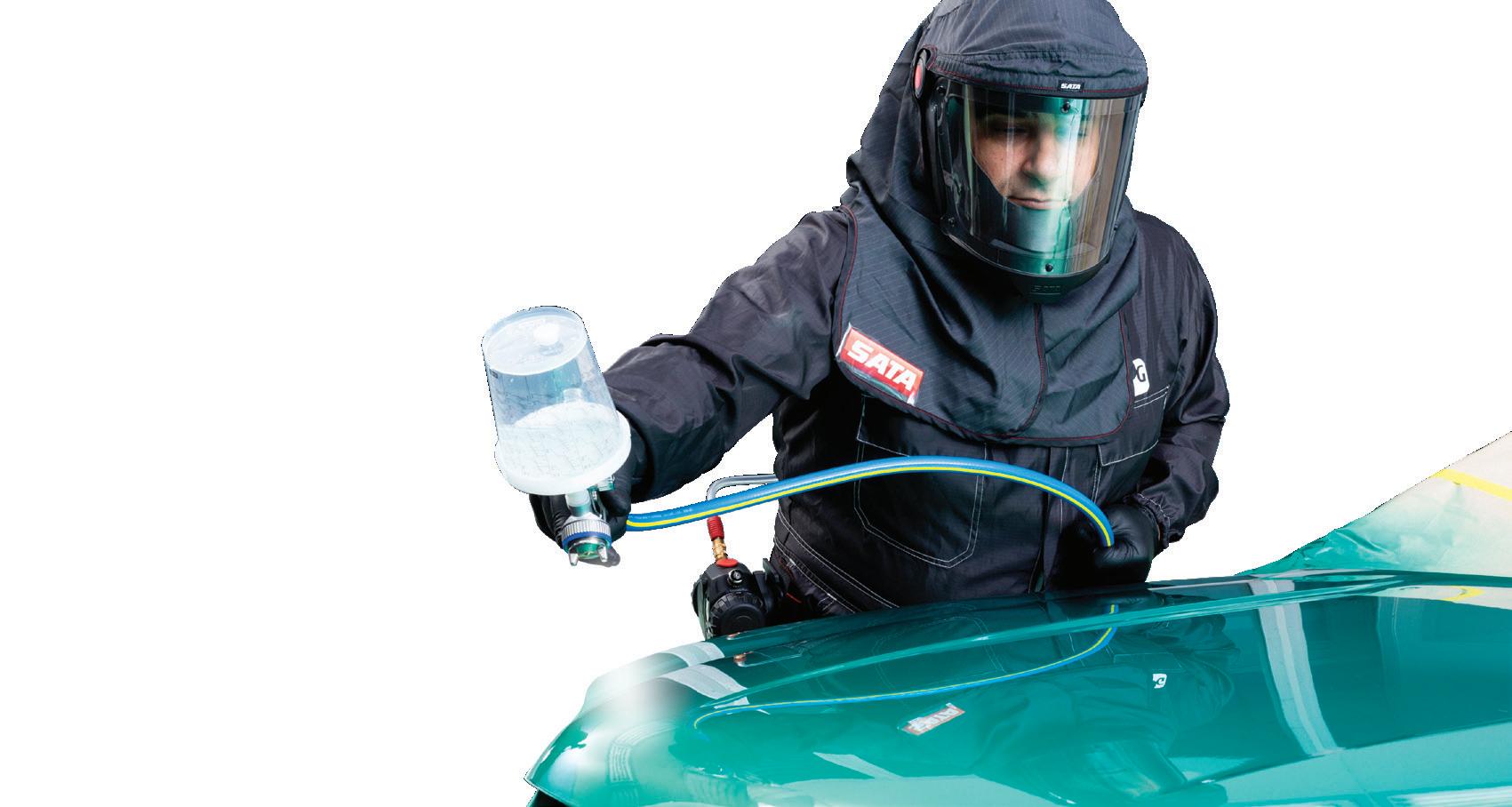
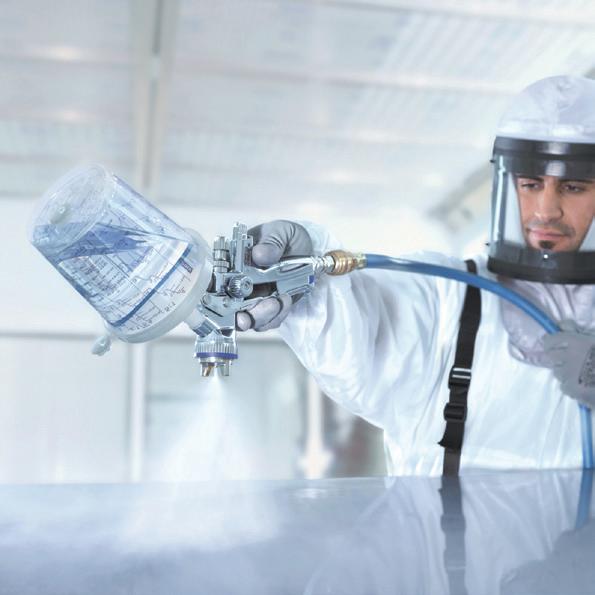
When clearcoat goes wrong, issues usually stem from application. From loss of gloss to soft finishes, mistakes in equipment setup, mixing, or application can have a big impact.
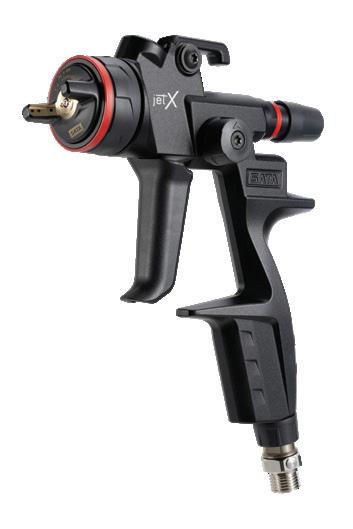
Q What are the biggest issues you’re seeing with clearcoat application?
A It usually comes down to not setting up the equipment correctly and not using the product as recommended.
Spray gun configuration is critical. PPG provides spray gun charts outlining nozzle
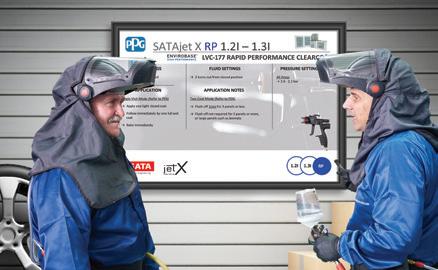
size, fan adjustment, and air pressure to ensure the product atomises correctly. Those settings apply right through the system, from primers to basecoat and clearcoat.
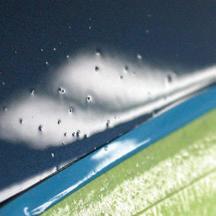
But the main issue we see is how the product is applied. We see a lot of overapplication. Some painters think more is better, but that’s where problems start. If you overload the clearcoat, you get solvent boil and a loss of gloss. If there’s softness in the clearcoat, there’s too much film build, and many issues are related to that.
If repairers use the right equipment and apply the product correctly, they’ll achieve the correct film build and get the best result.
Q Is clearcoat application always the root cause of finish issues?
ANot always. Clearcoat is where the issue shows up because it’s the final layer, but the cause can stem from earlier stages of the process.
For example, overapplying wet-on-wet primers can create excessive film build early on. If the primer layer isn’t applied or dried correctly, and the basecoat and clearcoat are applied over it, you end up with a loss of gloss.
Problems caused by too much or too little film build can appear days, weeks, months, or even years down the track.
Q How much does mixing play a role in finish quality?
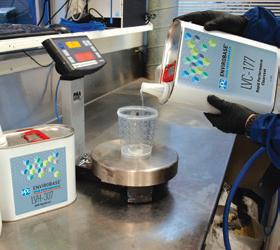
A Mixing is another common issue. Some paint technicians aren’t using scales or our Paint Manager RFU program

to work together are mixed, the results can be significantly impacted.
Q What support does PPG provide to help repairers get it right?
A
and are mixing by eye, using a stick or cup. That leads to incorrect ratios. The product can end up being over- or under-catalysed or over-thinned, affecting its performance. Even small variations can lead to an undesirable outcome.
Q What about combining different products?
A
Cross-mixing products is a big one. Using cheaper hardeners or thinners to save money might seem like a good idea, but it creates a chemical mismatch. Products are designed to work together. If components that weren’t designed
Q Can curing and bake cycles also impact the outcome?
A
Yes, definitely. Bake cycles and cure times are important.
For example, an oven might not actually be at the temperature the operator thinks it is; metal temperature is key, which can affect how the clearcoat cures and performs.
Q What are the benefits of following the recommended process?
A
Firstly, cost. If you’re not overusing the product, it’s saving the business money on product.
Secondly, efficiency. When clearcoat is applied correctly, it cures properly, improving turnaround times and workshop productivity.
Every PPG product has a technical data sheet. That includes recommendations for spray guns, tip sizes, application methods, and the number of coats.
We also run courses at our training centres that cover everything from primers through to clearcoats, including equipment setup and application techniques.
On top of that, we have territory managers and technical demonstrators out in the field visiting workshops. If a customer is having issues, they’ll identify the cause and help them fix it. More often than not, it comes back to over-application or not following the data sheet.
Q What’s the key takeaway for repairers?
A
Use the product as it’s designed. Follow the data sheets, set up your equipment correctly, apply the right amount, and don’t substitute different products. If you get those basics right, you’ll get consistent results. R
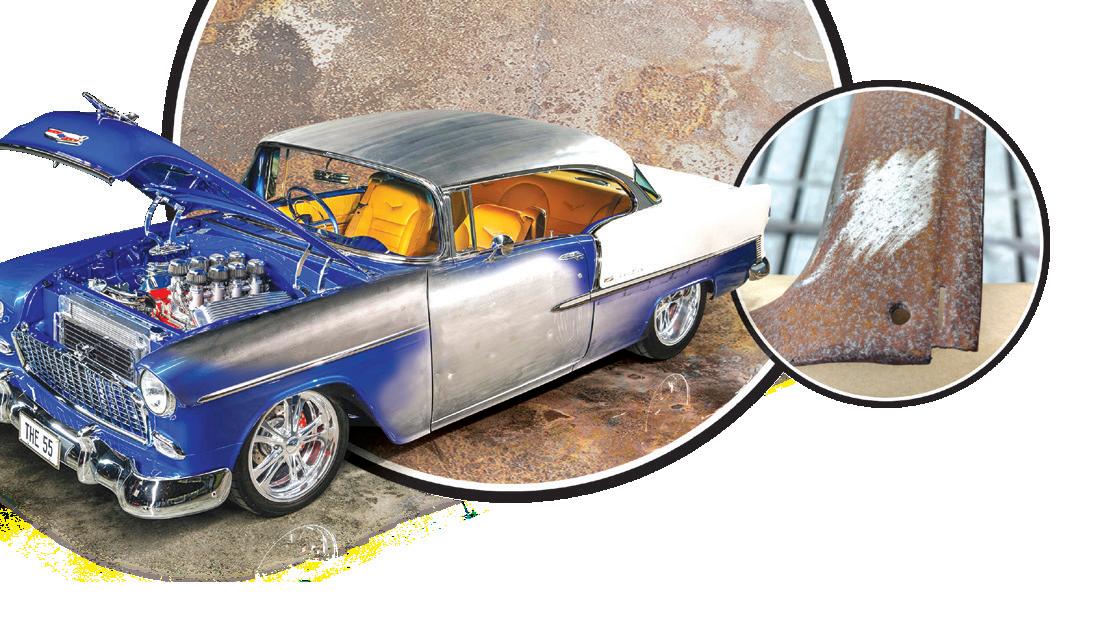
VPPG’s Vibrance Group is back in 2026.
ibrance Group workshops are designed to bring together industry leaders and experts to deepen product knowledge, strengthen application skills, and align with industry leading standards. They also allow industry peers to network and build relationships within the group, exchange ideas, and engage with the PPG leadership team.
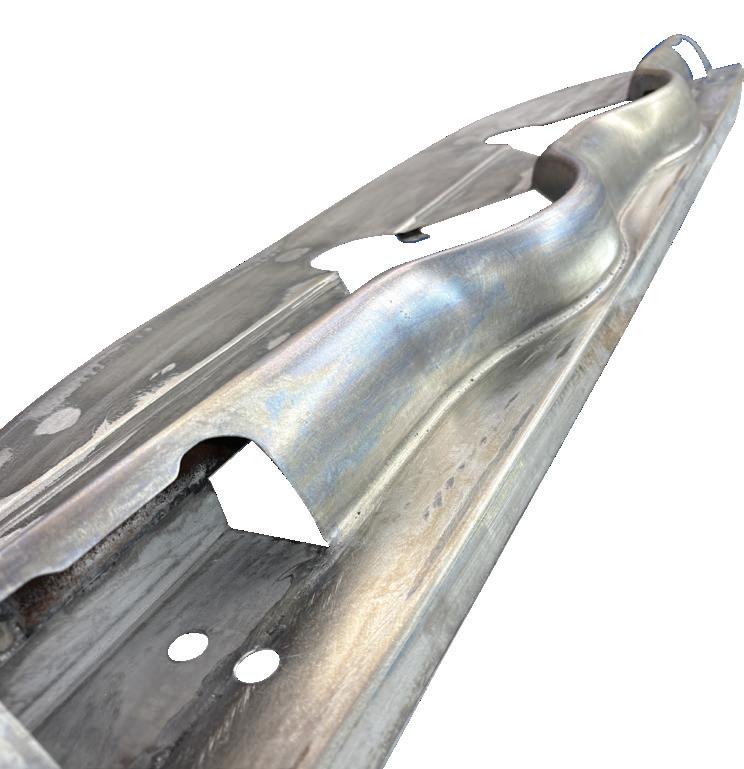
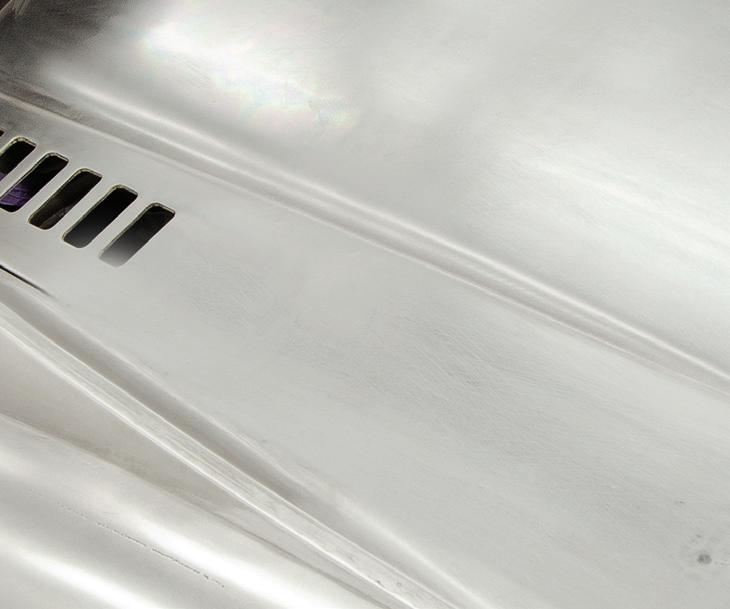
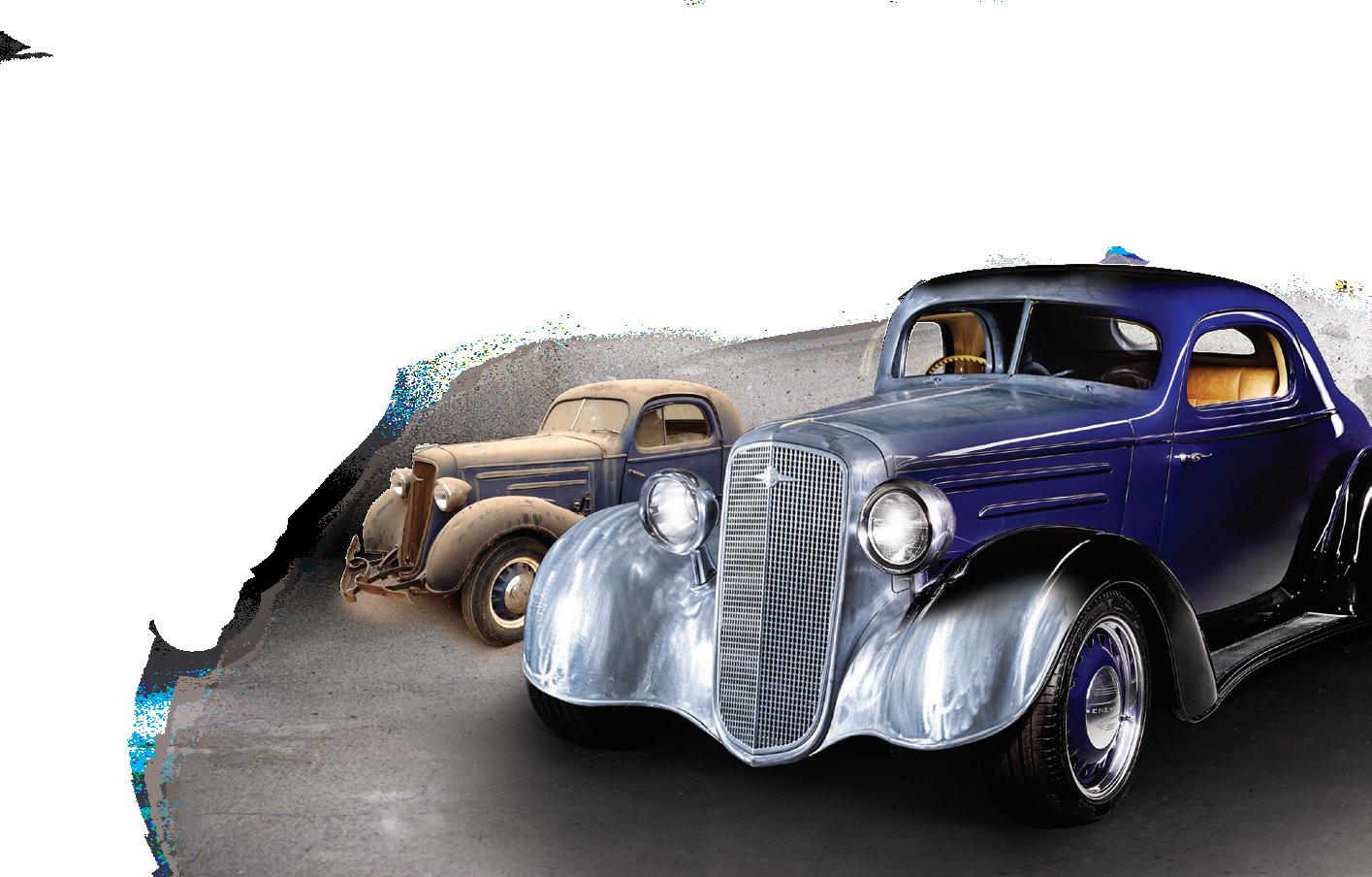
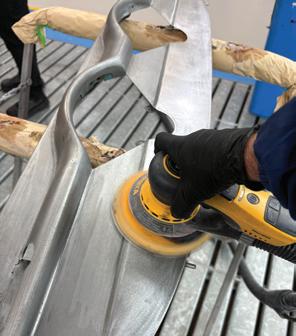
Importantly, the content will not be limited to Vibrance Group members. Similar training sessions will be available through PPG’s training centres, giving the broader refinish industry access to the same level of practical guidance.
Roni Tarabay, owner of Macarthur Autobody in Minto, New South Wales, was invited to join the Vibrance Group last year, taking part in both the Impala project and the first 2026 session.
With more than 20 years in the trade, Roni’s business specialises in restoration and smash repair. For him, being part of the Vibrance Group is an opportunity to learn and sharpen his skills in a workshop environment alongside other industry experts.
Roni says there was real value in training and comparing approaches with other experienced builders.
“Everyone’s got their own way of doing things, so it was good to get into the training centre, be around other people in the industry that do this type of work, and see the way they approach it.
You get a lot of knowledge from these workshops, and you see what other people do, what works and what doesn’t work.
It’s both a reassurance and a refresher on these skills.
That open exchange is a defining part of the Vibrance Group. Despite working in the same industry, Roni says there is no sense of competition. “Everyone’s there to learn and help one another. We don’t see it as competition.
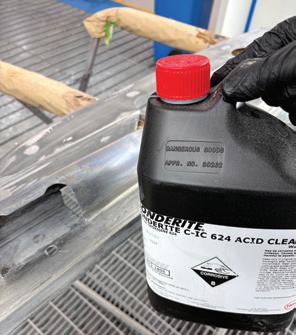
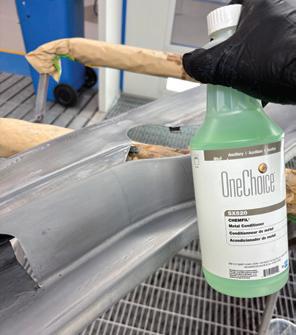
The focus on bare metal also reinforced just how critical the early stages are to the final result. How we prep the metal is everything. If the foundation is right, the end result is going to be right.”
Hands-on learning was also a key part of the training session, particularly for new products and processes. “For me, the only way to learn something properly is not by watching but by actually doing it. Getting hands-on is critical.”
With more sessions planned throughout the year, Roni is already committed to what comes next.
“As a long-time PPG customer, I’ve got a lot of respect for the PPG brand and the training team. If I ever have an issue, they’re there for me. The backing you get from PPG is second to none, and the Vibrance Group is another great example of that support they offer.
Whatever I can gain to help my business grow, I’m willing to get involved in. I’m 100 per cent committed to this group.” R
Contact Trevor Duke or your local PPG representative with an expression of interest in joining the PPG Vibrance Group. To be eligible to join the Vibrance Group, individuals and paint shops must use all PPG products for their custom work/ restorations and be willing to share their knowledge and expertise.
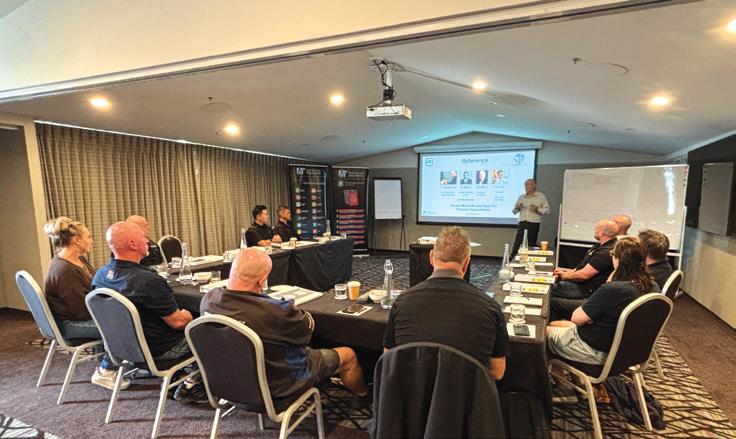
For the first time, PPG’s MVP Business Solutions team has delivered Green Belt Training to a keen group
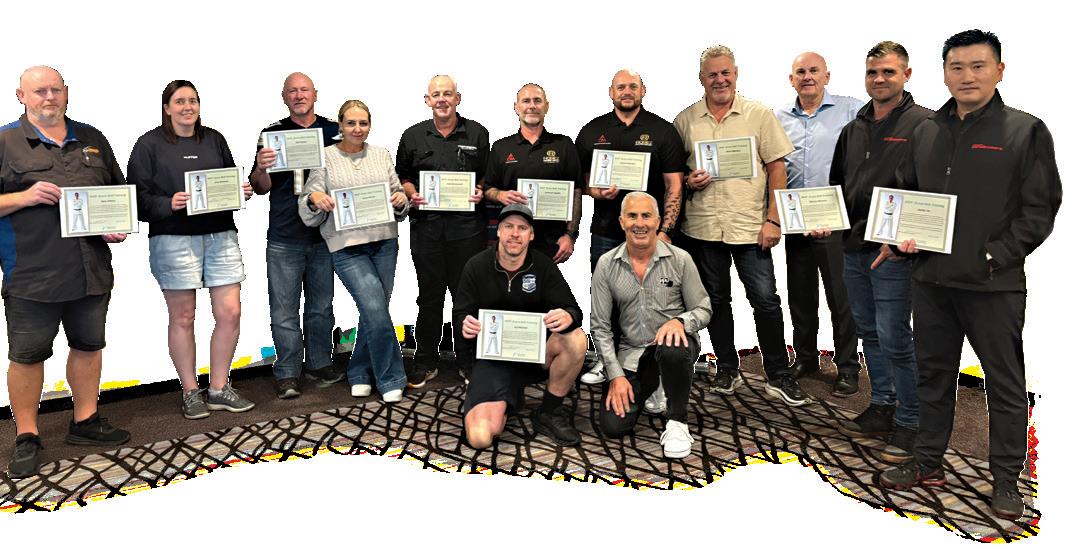

had the opportunity to complete the two-day business course, designed to give shops the tools to increase production without increasing staff workload.
“In April, 14 participants, including business owners and managers, gathered in Auckland to participate in the muchanticipated training,” says PPG Business Solutions Manager NZ Nigel Hamilton. “They were all there with a common goal of improving their processes and future-proofing their businesses to ensure long-term success.
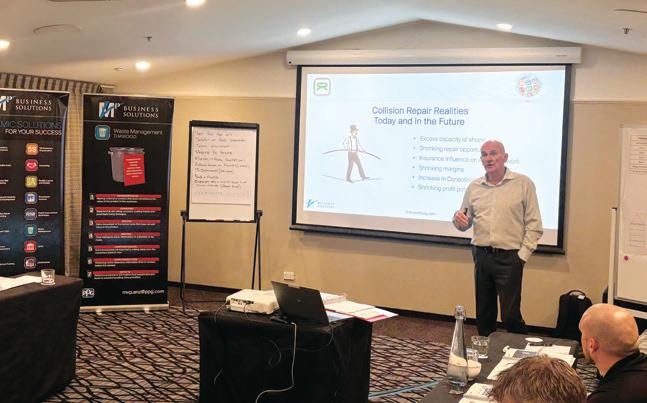
Our industry is facing a skills shortage, and Green Belt Training
processes, and find solutions that work for their individual business.
It’s about learning to work smarter and not harder, and sometimes that’s getting back to basics and ensuring the foundations of good business practice are in place.”
The course, which aims to give shops a competitive advantage in terms of quality, efficiency, and cost control, was presented by PPG National Business Solutions Manager Greg Tunks and delivered practical, easy-to-understand information and proven strategies, including:
• Paradigm pioneers
• Lean for collision fundamentals
• Little’s Law
• 5S and visual control
• Value stream mapping
• X-ray Repair Planning
• Process design and resource planning
• Leadership and leading change
• Standard implementation approach
“Along with the theory components, Green Belt training allowed participants to interact with their peers, share experiences, and learn what processes are delivering results in other businesses.
The other great thing about Green Belt training is that participants earn points towards gaining I-CAR Gold Class status.”
Across three sites in Sydenham, Sockburn, and Rolleston, Rosiez Collision Repair in Christchurch has built a sizeable operation, employing around 40–45 staff. As a long-standing member of the PPG MVP Business Solutions Round Table Group, owner Brendon Rosie saw Green Belt Training as a natural opportunity to invest in his leadership team.
At the Sydenham site, Branch Manager James Chandler brings more than two decades of experience to the role. James, along with Rolleston Branch Manager Cameron Staple, attended the Green Belt training as part of a broader focus on continuous improvement across the business.
“At the start of each year, we sit down and look at what we did well, what we didn’t do so well, and what we want to work on,” says James. “One of my goals was to be a better manager, and this course really opened my eyes to how I can be more of a problem solver by working smarter, not harder.
It also brought the question into focus: as a business, how can we streamline our operations? Instead of just saying, ‘this is how we’ve always done it’, the course explored ways to change the things we can control. Focus on one thing, drive that change, and once that’s working, move on to the next. Don’t try to fix everything at once.
The industry is changing so quickly, so the learning never stops. There are new car brands, higher customer expectations, and pressure from insurers. We’re always looking to improve efficiency so we can get the car back to the customer as quickly as possible while still delivering a quality job, and this course provided practical solutions.
Greenbelt Training taught us how to reduce wasted time and improve touch time, change from the push method to a pull method, and roll out new processes so the whole team is aligned.
Having the opportunity to speak with our industry peers was also a really positive experience. It was good to hear we’re not the only ones facing certain challenges.
You start to see how others deal with problems, which makes you think differently and look for solutions where you might not have looked before. For anyone in a leadership role or a position to make changes within a business, Greenbelt Training would definitely benefit them.”
And while much of the Greenbelt training focused on improvement, James says one message really stood out.
“We spend a lot of time talking about problems in the industry, but we also need to celebrate the wins. That’s a really important message that I took away from the training. At the end of the day, we’ve got highly-skilled people in the workshop doing a really good job, and that’s worth recognising.” R
PPG’s MVP Business Solutions program is available as part of PPG’s comprehensive support package. It aims to help customers improve performance across the full spectrum of business activities to enhance profitability. Enquire at mvp.anz@ppg.com or PPG’s customer service hotline 13 24 24 (AUS) or 0800 320 320 (NZ).
After more than three decades with PPG, Product Development Chemist Paul Finn hung up his lab coat in March this year, bringing to a close a career defined by curiosity, learning, and persistence.
“Paint wasn’t a vocation. It just happened,” says Paul.
“I left high school and was going to do the science stream in photography at RMIT, but it was expensive, and I had just bought a car, so I needed to earn some money. I applied for jobs and was offered a Trainee Chemist role at Dulux. While working full-time, I studied part-time at Swinburne University to complete a Diploma in Applied Chemistry.
In 1984, I decided to take a year off to travel abroad, but that turned into seven years. I travelled through Asia, then caught the Trans-Siberian Railway
to Moscow before heading on to the UK and travelling through Europe. When I returned, I worked as a conservator of wall paintings and sculpture. I rejoined PPG in 1992 as a Technical Officer in the Refinish laboratory.”
In his most recent role at PPG before retirement, Paul provided technical support to commercial transport customers, ensuring that large truck and trailer manufacturers had the products they needed to keep up with production.
“I loved developing new or existing coatings to help our customers improve their processes or the quality of their product. It was exciting to start with a new formula and refine it in the laboratory until it was ready for field trials with the customer. The thing I will miss most about my time at PPG will be the people and the teamwork.”
Outside the lab, Paul’s interests are diverse. He has also completed a Graduate Diploma in Conservation of Rock Art at the University of Canberra, won three silver medals at the 8th Wudang Tai Chi International Fellowship Competition in China, and earned a Degree in Wine Science.
“At one point, I discovered wine and decided I would rather make wine than paint. Unfortunately, the wine industry was less stable, so I didn’t make the full-time switch, but I have grown grapes and made wine every year for 25 years. I’ll have a lot more time for that now.” R



Time is money. Specifically developed for the commercial vehicle sector, the advanced DELFLEET Evolution® paint system offers a complete range of high productivity solutions that are easy to use and achieve exceptional results. To boost throughput and get vehicles on the road faster, complete with outstanding durability, colour and gloss, Delfleet Evolution is perfect for the long-haul! Follow us online!
PPG Refinish Australia & New Zealand

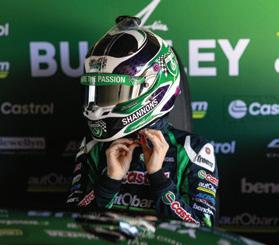
“I don’t want to be the best female driver; I want to be the best driver.”
It’s a mantra that cuts straight to the core of who Alice Buckley is as a racer.
At just 18, the Gold Coast race car driver has already built an impressive motorsport résumé, and not because she’s a female, but because of her results.
“Racing alongside men is just a normal day in life for me,” says Alice. “I’ve never known anything different. When I look at a list of drivers, it’s just a list of drivers, and I want to win no matter what. Not because I’m beating a particular group of people, but because I’m winning overall.”
In 2025, Alice delivered a breakout season. She won on debut at Ipswich in the TA2 Muscle Car Series and became the first female to pole and win in the category worldwide. She then went on to win the Tag Team Enduro event alongside codriver Supercars race winner Tim Slade against the likes of James Golding, Brodie Kostecki, and Craig Lowndes. To top things off, she became the first female champion of the Toyota GAZOO Racing Australia Scholarship Series against a strong field of 32 drivers.
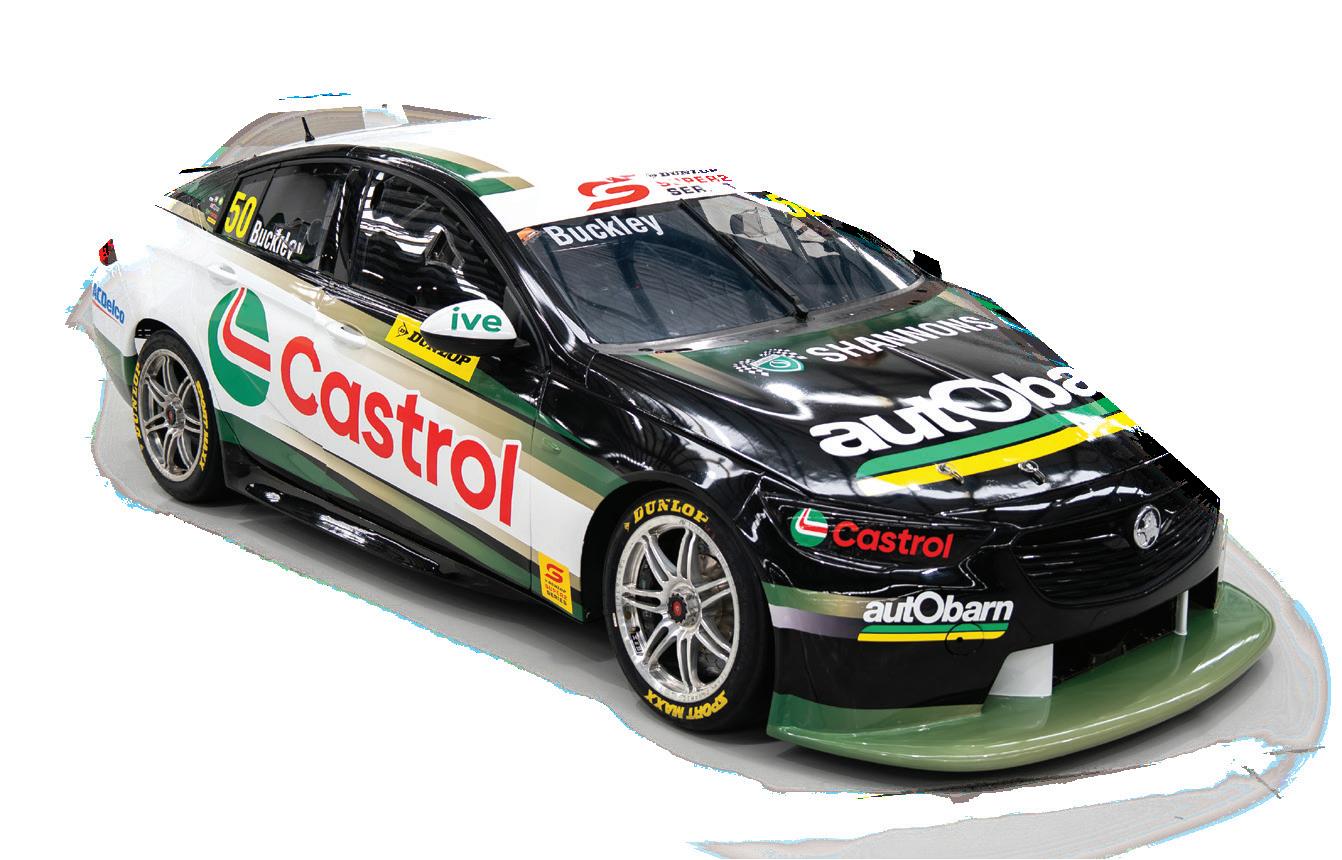
Those performances earned her a well-deserved place in the 2026 Dunlop Super2 Series, where she will become the first woman to contest a full campaign
Alice grew up in a family where motorsport was a shared pursuit, but it was Alice’s mum who was the reason she first got behind the wheel. “When my Dad decided to take my younger brother Patty racing, it was my mum who said, ‘If he’s getting a go, then all the girls are having a go too’.
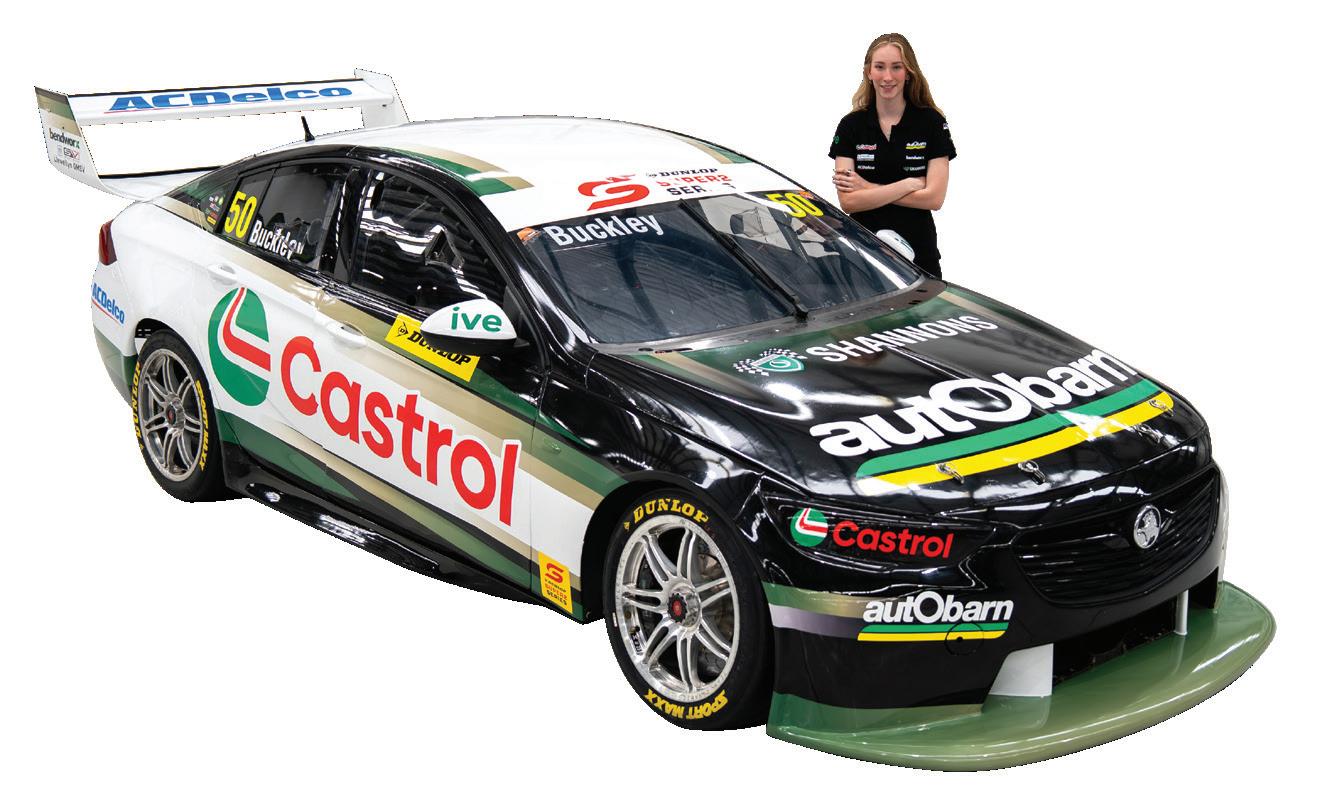
development program. Under the arrangement, Matt Stone Racing provides support across the season, giving Alice access to valuable experience needed to fast-track her development while still operating an independent team. With Matt Stone Racing’s long-standing partnership with PPG, the alignment places Alice within a performancedriven environment that’s backed by one of the refinish industry’s leading names.

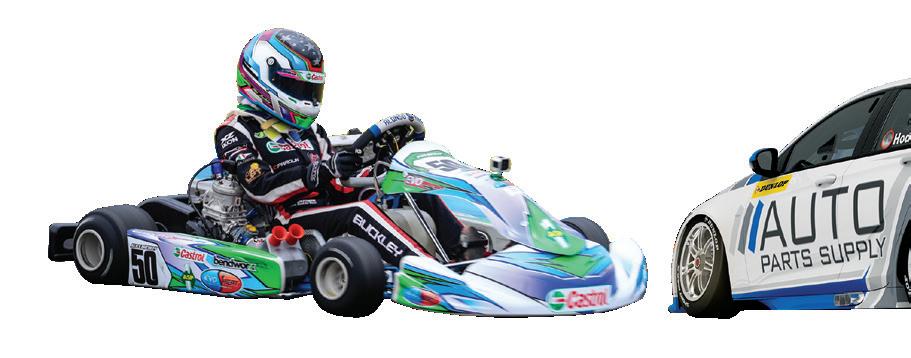
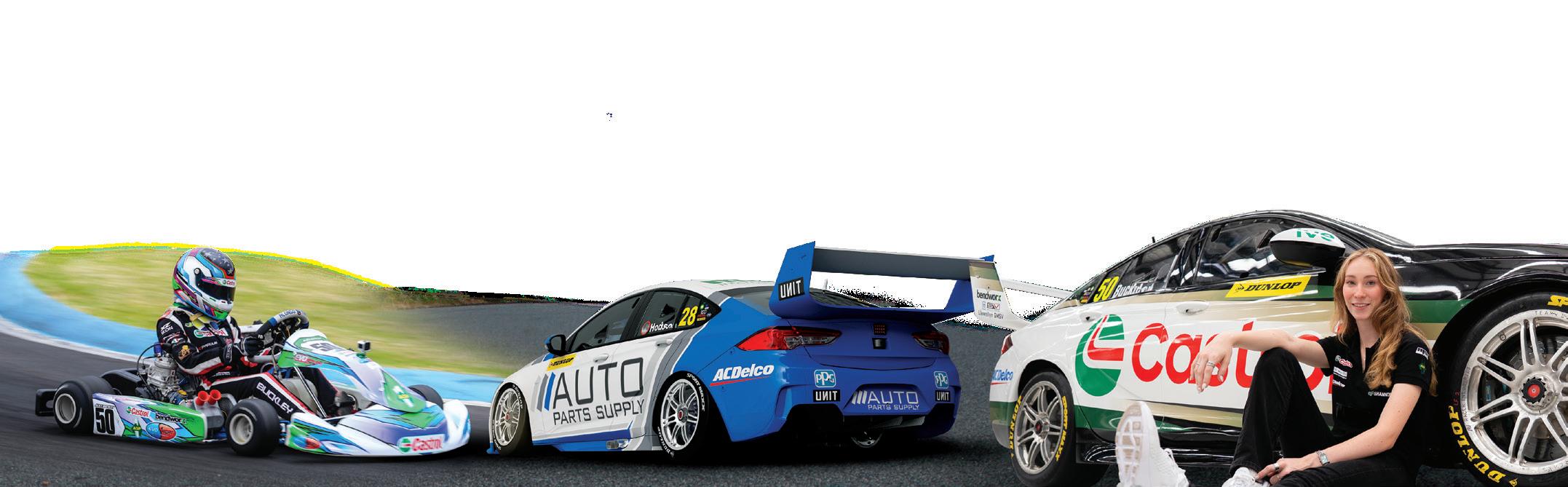
I am so lucky that my family are all really supportive. Mum and Dad have sacrificed so much time and money. My sisters have also given up a lot so my brother and I can race, as have my grandparents, cousins, aunts, uncles; everyone’s invested in it. I started go-karting at six in the slowest kart you could get. I fell in love with it straight away and started competing when I was seven. I still drive a go-kart even today for fun and to keep sharp.”
By the age of nine, Alice was racing with James Courtney’s JC Kart team, and at 12, was selected to represent Australia in the FIA Girls on Track program in France. While the experience was delayed due to COVID, that pathway opened another door to go back and compete in both karting and Formula 4 at Paul Ricard Circuit against 20 top females from around the world. She was shortlisted as one of four to be invited to trial for the Ferrari Driver Academy in
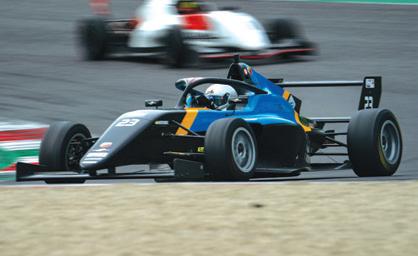
“I went to Europe and drove Formula 4, which was an amazing opportunity. Unfortunately, I was not selected for the category, but it helped me focus on the direction I wanted my driving career to take and the experience shaped where I am today.
I realised I loved the tin-tops more than the open-wheelers and decided I didn’t want to chase Formula 1 or the F1 Academy. Instead, Supercars was the pathway I wanted to pursue.
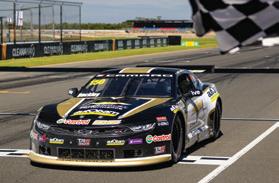
So, I came home and started racing cars instead of karts when I was 14 years old.”
From there, Alice’s progression followed a clear philosophy. “Our family has always been of the mindset that you don’t move categories until you win the one you are competing in. The belief is you can’t take that next step until you’ve proven yourself.”
That approach paid off, culminating in a rapid rise through the ranks and her 2025 successes. Technical understanding is something Alice also takes seriously. Alongside her racing, she is also an apprentice mechanic and works with her team in between commitments.
“It helps a lot with feedback. If there’s a mechanical issue, I can help narrow down the problem.
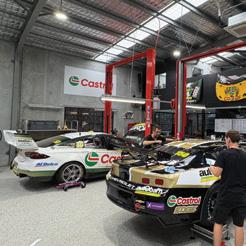

My job is to drive, but the more I understand the car, the better I am overall, and I am still learning.”
That knowledge has been critical as she steps into Super2 machinery for the first time. “The Super2 cars are very physically challenging. There’s a lot more going on with rollbars and brake bias, so it’s good to have that solid understanding of all the components and how they work.”
Looking ahead, Alice is clear on what she wants to achieve in her first full Super2 campaign. “The goal this year is to be Rookie of the Year, and I want to be finishing consistently in the top 10 by the end of the year. After that, we’ll reassess and hopefully push towards a top five or a championship in years to come.”
It is a measured approach, but one built on momentum, discipline, and a track record of delivering when it matters. And if her career to date is any indication, Alice Buckley is a name to watch in Australian motorsport. R





Low-VOC and sustainable coatings have moved from being an alternative option to widely used high-performance systems that deliver strong results in quality, efficiency, and workplace safety.
The shift has largely been driven by regulation, industry demand, and advances in coating chemistry, but for workshops, the question has always been whether these products can match or exceed traditional solvent-based systems.
So, what is all the fuss about low-VOC coatings, and do they really perform as well as traditional solvent-based products?

VOC stands for volatile organic compounds.
In paint, VOCs are solvents and are measured in grams per litre (g/L). They play a critical role in traditional coatings by lowering the viscosity, which helps paint flow through the spray gun and onto the panel.
Once applied, the solvents evaporate into the atmosphere.
The chemistry behind waterborne coatings
Some of the biggest emitters of greenhouse gases and solvents are typically transport and energy, but paint is also high up in the rankings. In other industries, VOCs are captured and burned, but in the refinishing industry, solvents are emitted into the atmosphere.
Waterborne coatings reduce VOC emissions by replacing most of the solvent content with water. While much less solvent is used, they are not completely solventfree. But if you compare a solvent-based product like the Deltron tinter system that contains 750g/L VOC to PPG Envirobase® High Performance range, which has 50g/L VOC, that’s millions and millions of litres less of solvent going into the atmosphere.
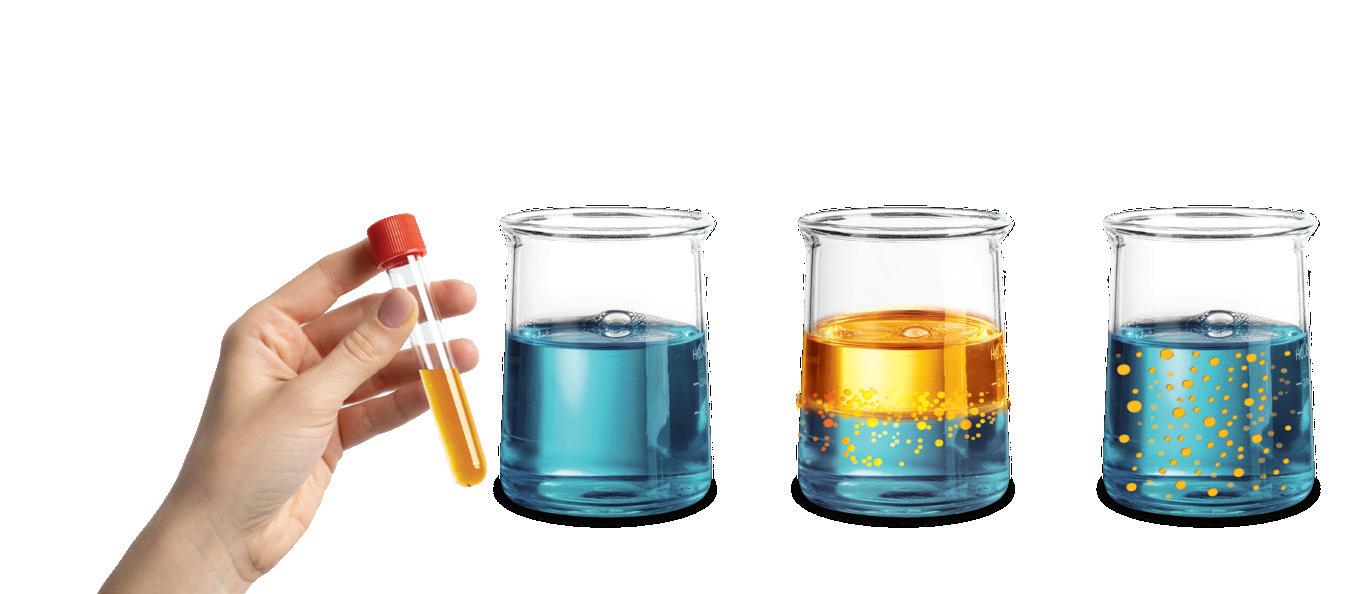
Solvents or water play an essential role in controlling viscosity for spray application. If a coating is too thick, you can’t spray it. But water-based formulas are a lot more complicated to develop than solvent-based formulas, as water and resin (binder) don’t easily mix.
Think of oil and water. To mix these, a detergent, which acts as a surfactant, is required to reduce the tension between the two liquids. In water-based coatings, the resin is like the oil, so additives (surfactants) and special cosolvents are used.
The short answer is yes. “The technology has come a long way, and PPG’s Envirobase system is now a tried and tested product,” says PPG Collision/ CT Operational Product Manager Nick Blake. “We’re seeing sales shift to waterborne products for a number of reasons.
Waterborne basecoats can be forcedried (for example, using RADS), making them more efficient and cost-effective. These products are not just better for the environment, they’re also better for humans, as you aren’t exposed to as many chemical solvents.”
Early waterborne coatings were often criticised for being slower or harder to use, but modern systems have evolved significantly. While waterborne coatings require some adjustment in technique, most painters are now familiar with their application.
Globally, regulatory pressure continues to accelerate the transition to low-VOC products. Europe has led the way, with VOC limits as low as 420g/L for some coatings, compared to older technologies that reached 700–800g/L. While waterborne coatings represent a significant step forward, research at PPG’s Milan laboratory continues into even lower-emission technologies. Could there ever be solvent-free coatings? UV-cure paints are a likely answer, but are still a long way from development. For now,
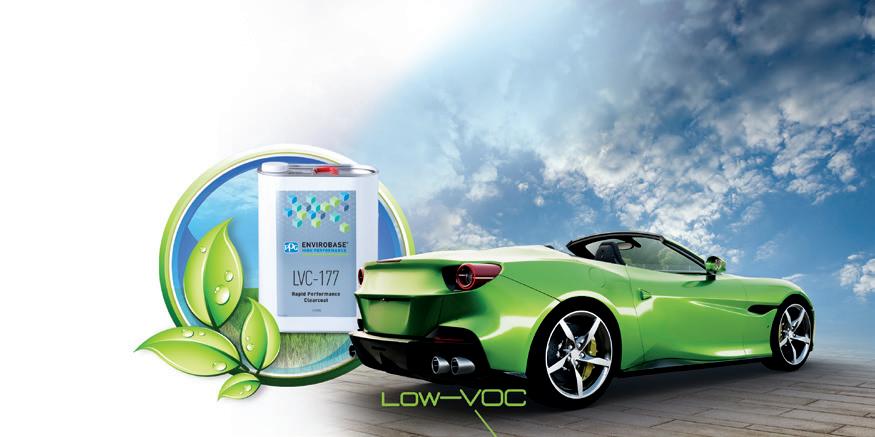
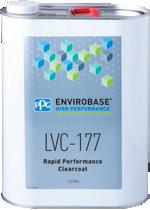
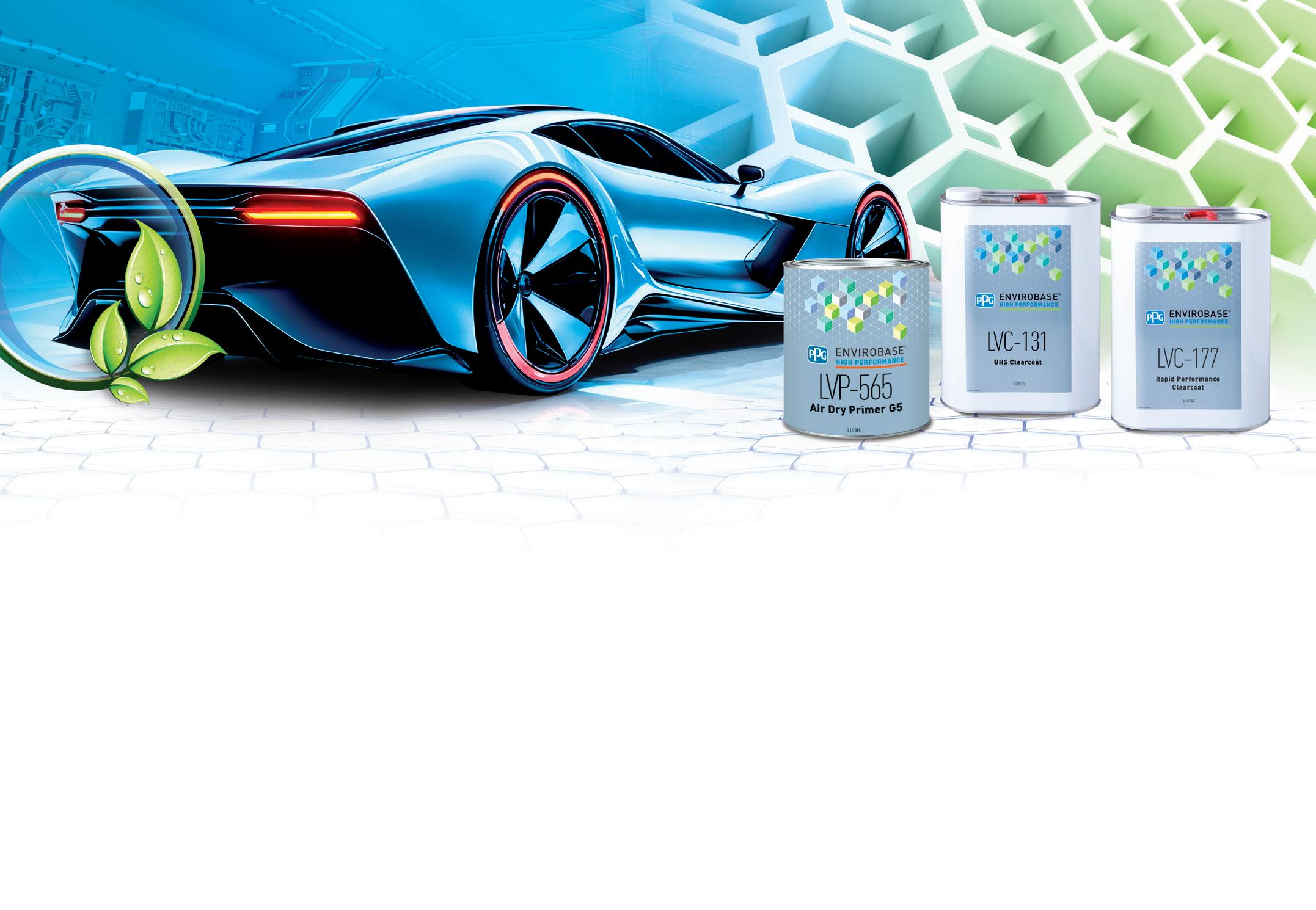
low-VOC systems such as PPG’s Envirobase High Performance LVP-565 Air Dry Primer G5 and G7, LVC-177 Rapid Performance Clearcoat, LVC-131 UHS Clearcoat, and MaxMeyer basecoat systems represent the current benchmark in balancing environmental responsibility with performance. R
Contact your PPG territory representative or PPG distributor for more information on low VOC coatings, including PPG’s Envirobase® High Performance and Max Meyer ranges.
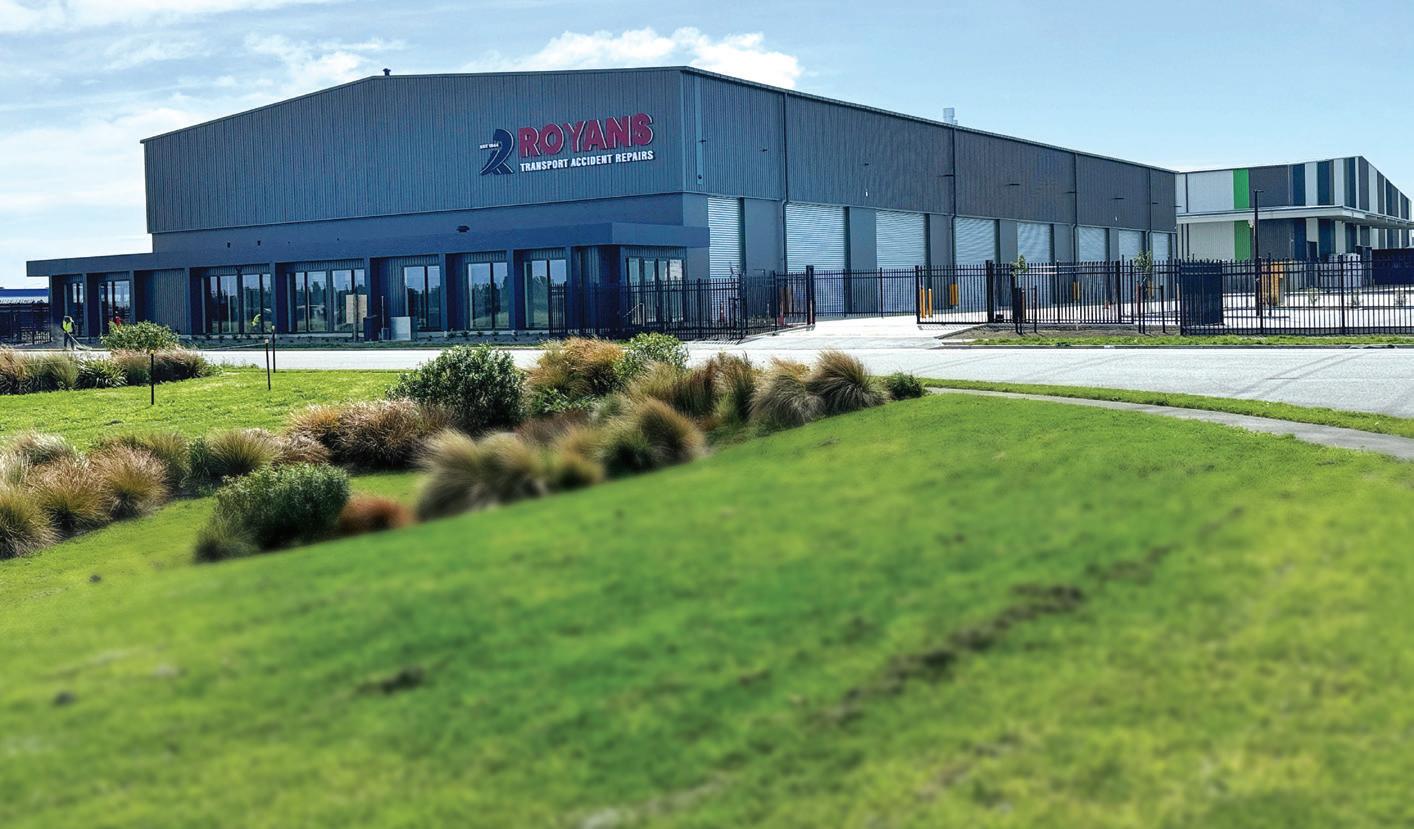
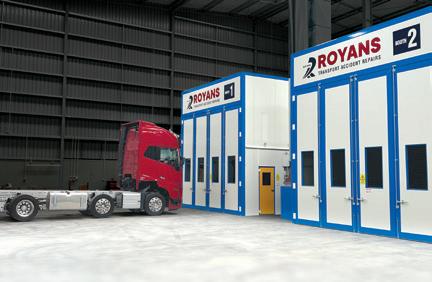
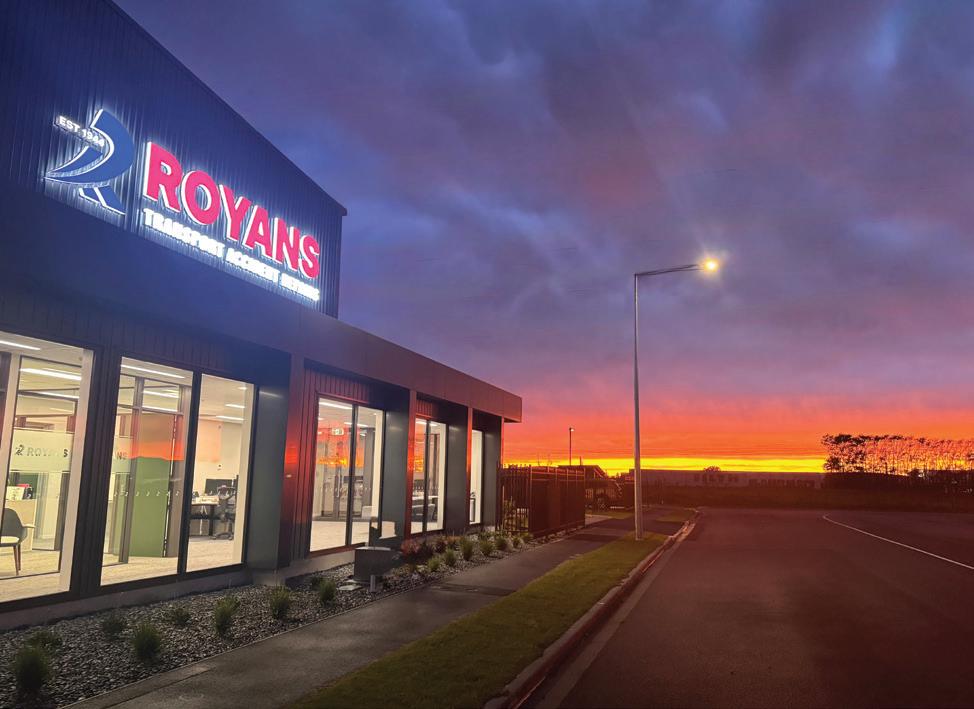
Keeping commercial vehicles moving in the Canterbury region of New Zealand has just become a whole lot easier, with the opening of Royans’ state-of-the-art heavy vehicle repair centre.
Having recently merged the two Christchurch branches, Royans now operates six branches across both the North and South Islands, providing heavy vehicle repair services for trucks, trailers, buses, coaches, motorhomes, and industrial equipment.
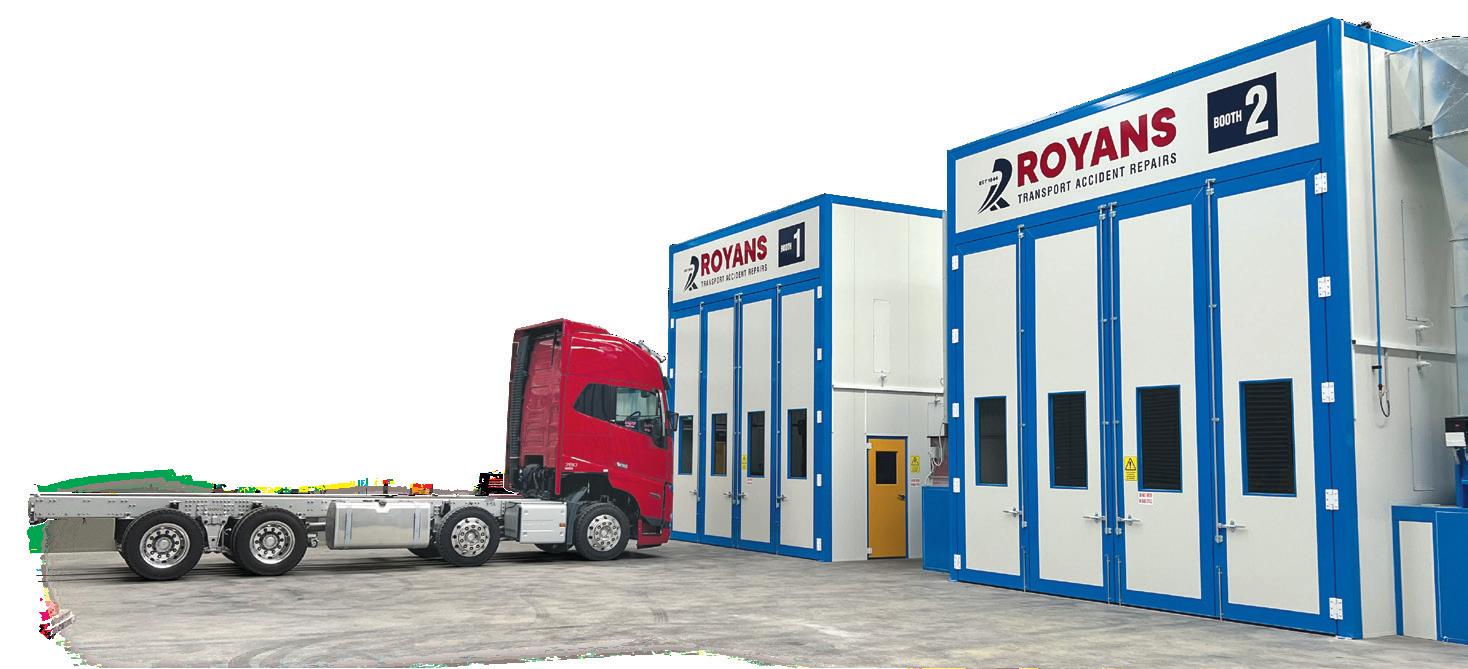
The new Christchurch site has been designed specifically for the type of work Royans does every day and represents a significant change in its scale and capability.
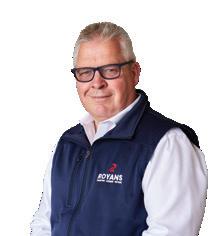
“Our core business is repairs for heavy vehicles, from about 33 tonnes upwards. That can include everything from articulated trucks and trailers to farm machinery, earthmoving equipment, and the occasional unusual project like coffee carts.”
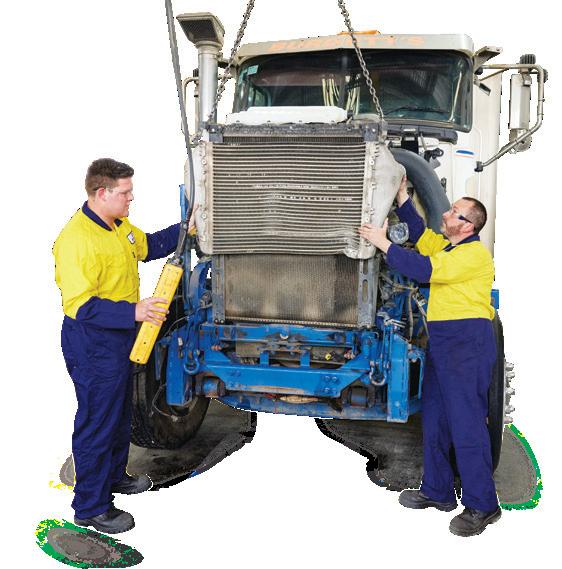
To handle that range of work, the new Christchurch facility is equipped with:
When Royans looked to expand into New Zealand, what they discovered was a familiar landscape: well-established family businesses approaching succession points and looking for the right buyer to carry their legacy forward.
“When committed to entering the New Zealand market, what we found were good family businesses up for sale,” says Graeme. “They were looking at retiring or getting out of the business. We acquired six branches, which grew to seven over the following two years.”
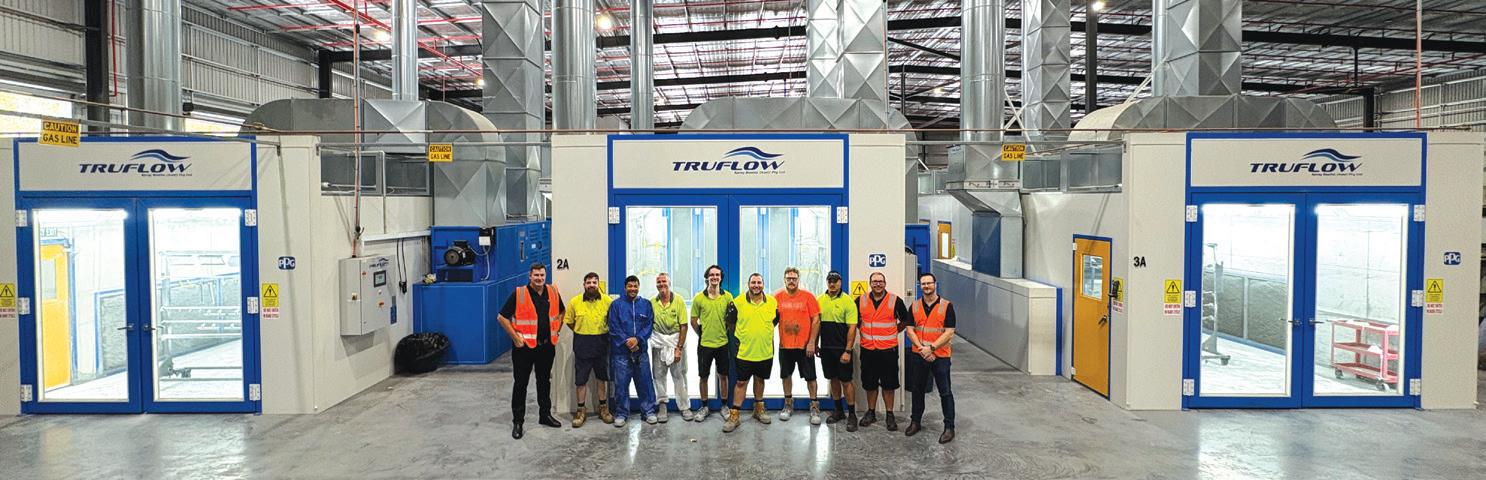
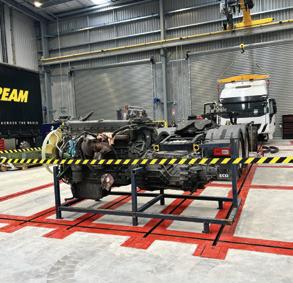
Two full-sized truck spray booths, including an 18m Turflow semi-downdraft booth and a 20m Turflow full downdraft drive-through booth with split wall capability.
Two Josam chassis frame alignment systems.
A Josam cab alignment tower.
Overhead cranes for lifting truck cabs and heavy components.
A full suite of heavy transport repair equipment.
The design also improves day-to-day workshop efficiency. “There are roller doors down each side of the building for easy access to the building. Once a vehicle goes into a bay, that’s where it can stay. If a truck isn’t drivable, the overhead cranes come to it, and we can lift the cab off.
All this cuts down a lot of movement in the workshop, and there aren’t as many forklifts moving trucks around. The result is a smoother workflow and, importantly for customers, quicker turnaround times.”
Royans has long been known for its ability to handle large and complex repairs, but the company has now built what Graeme describes as a “one-stop shop” for heavy vehicle customers. At the new Christchurch site, Royans can manage everything from collision repairs and refinishing to sandblasting, fleet imaging, and signwriting.
“Historically, a truck might move between multiple businesses during the repair process, from panel shops to painters, mechanics, and signwriters. We provide less runaround for our customers by doing it all in-house. It’s all about reducing downtime for the customer, because when a commercial vehicle is not running, it’s losing money.”
Attention to finish quality remains a priority, which is one reason Royans has maintained a relationship with PPG for more than three decades, using not only paint products but allied equipment and products across the refinishing process.
Royans is also a member of PPG’s Fleetpool Network, a group of trusted specialist repairers across Australia and New Zealand that provide painting, repair, livery, and refurbishment of commercial vehicles.
The Christchurch facility is expected to grow from around 25 staff today to as many as 40 or 50 in the coming years.
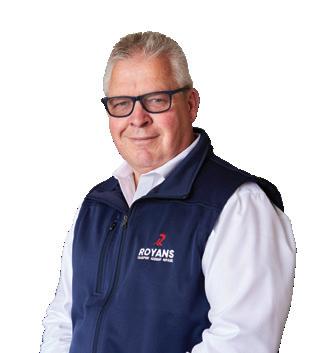
Graeme believes the new environment will play a major role in attracting those workers.
“Without the staff, you haven’t got a business. And one of our biggest challenges is recruiting people to the industry. New facilities attract people. Nice lunchrooms, new equipment, a modern workshop — it makes a difference.”
The investment also delivers benefits to the wider community. “It’s good for the area too because we’re creating jobs, especially at a time when some people have been struggling with the recession and layoffs.”
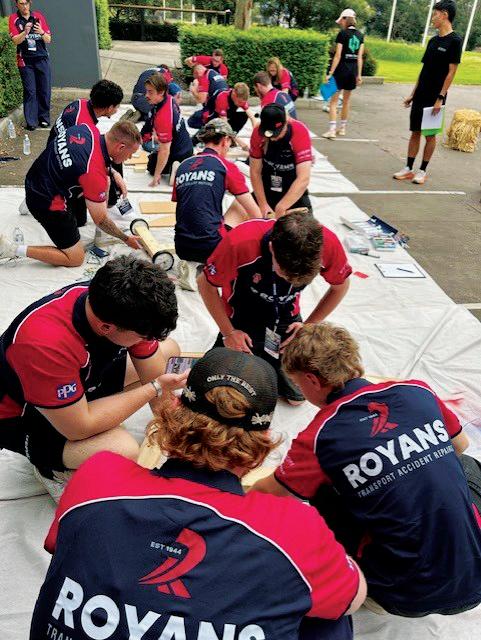
Another way Royans is attracting staff to the company and the industry is through the Royans Apprenticeship Academy, which brings together the company’s apprentices from across Australia and New Zealand for training and mentoring.
“The Academy started about three years ago and now runs an annual multi-day program that covers workshops, mentoring, and teambuilding activities.
The most recent program attracted around 50 apprentices.”
Alongside apprenticeships, Royans is also investing in leadership development, identifying younger staff with potential and helping them move into management roles as the company grows.
The ability to move between branches on either side of the Tasman is also proving to be a strong drawcard for tradespeople.
“You might be in Australia and decide you want to move to our new facility in Christchurch, or vice versa. Because it’s the same company, everything carries over, and there’s the ability to move within the company.”
For Royans, the new Christchurch site represents more than just a building. It’s a statement about the company’s long-term commitment to New Zealand and to the commercial vehicle repair industry that keeps the country moving. “We’re still a family business at heart, and we’re always looking at how we can do things better for our customers and our people.”
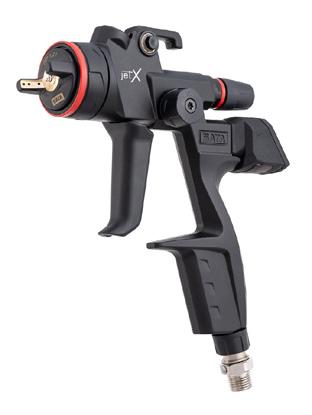
The new jet X DIGITAL pro. It comes with a completely new nozzle concept. The digital unit offers an unprecedented range of functions. Packed with features that make the difference. We did all this for one reason alone: To make it easier for you to be better. jet X. Works for you. You give your best every day. Here is ours.