
Summer Music




























THE PROOF IS IN THE NUMBERS.
• Zach Smith has 21+ years’ experience selling Teton Valley real estate and has closed more than 340 transactions in Victor alone
• Represented clients in over 590 closings
• $248 million in sales

“Zach did an outstanding job assisting us in the sale of our home. He demonstrated a command of market expertise, customer service and professionalism throughout the entire process. He was very responsive to our needs and always worked in the capacity of maximizing our homes sales potential. We have had the privilege of working with Zach on the multiple homes we have purchased in the valley. We frankly would not work with anyone else. He is an amazing person and exceptional at his craft. We love Zach!”
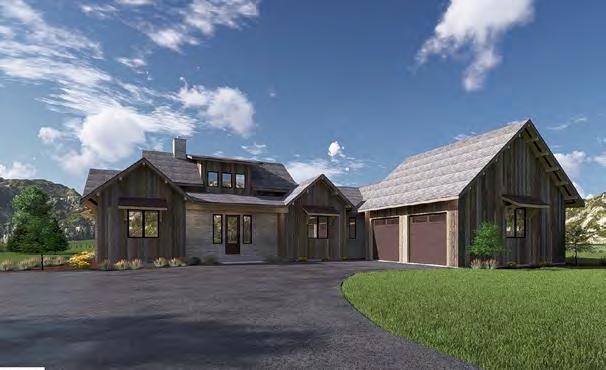








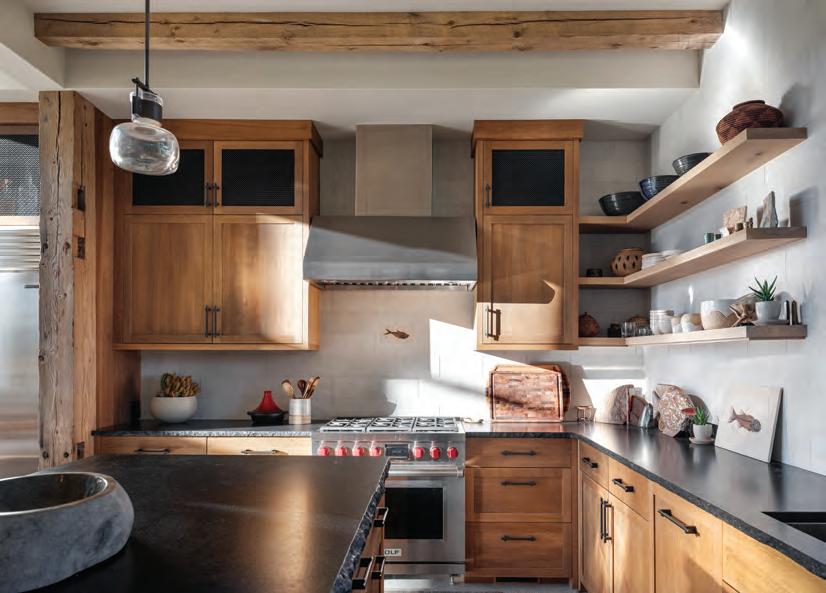
ENGLE BUILT
SOVEREIGN HOMES SUSTAIN LIFE
PRIORITIZING HEALTH, RESILIENCE & ELEGANCE
EMF MITIGATION OFF GRID OPTIONAL NON TOXIC MATERIALS
WATER / AIR TESTING & FILTRATION HEALTH & SECURITY FOCUSED BUILDING
HELP THEMSELVES.

Call for more information on our services:


crctv.org | (208) 354-0870 1420 N Hwy 33, Suite 204, Driggs, ID M-F 10am-4pm *By appointment only

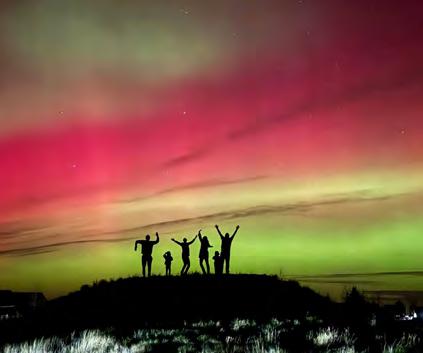
This past November just after dinner, the dishes were almost put away and bedtime for our two kiddos, Nate and Annie, was just around the corner. Then, my husband Kenny and I heard our phones ding. And ding. And ding … Variations of “Go look at the sky!” and “Hurry! You can see the northern lights!” came in one after the other from friends and neighbors. We bolted to the porch. There, dancing in hues of pink, purple, and green, were the illustrious northern lights. The bold colors were so strong that night, it was clearly visible to the naked eye and amplified through a cell phone’s photo. Teton Valley always seems to surprise us with the unexpected.

Aurora borealis has been more active in the past two years thanks to a strong geomagnetic storm from recent solar activity and to see it is truly spectacular. Maybe just as remarkable to me as the collision of these charged particles from the sun with atoms in our atmosphere, was the shared excitement pulsating through the valley that night and in the days after. The next day at preschool drop-off, Nate and his friends spouted facts they had learned. Adults shared photos. It was all anyone could talk about, it seemed. It felt, in retrospect, like our own local version of the recent collective awe and joy the nation shared watching Artemis II complete its ten-day lunar flyby mission. Both have been a needed reason to find a common thread in the beauty and wonder happening around us.
As you dive into this edition, I hope you find moments to sit back and savor the wonder of this place. Whether it’s revisiting November’s northern lights and learning how to best spot them for yourself (page 104), discovering the incredible behind-the-scenes research taking place in Yellowstone National Park (page 84), or finding must-see concerts to add to your summer calendar (page 76), you’ll find Teton Valley is special for so many reasons.
There is also plenty to celebrate. July 4 marks the semiquincentennial of the signing of the Declaration of Independence—America’s 250th birthday. To commemorate this occasion, writer Tom Hallberg shares a refresher on what our local elected officials actually do and don’t do (page 70). Who is in charge of fixing potholes, anyhow?
Here’s to a wonderful summer in the Tetons. I hope these pages help you uncover something unexpected.
Happy reading!

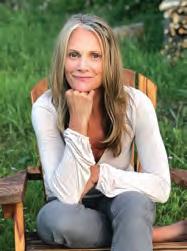
Publishers Sage Hibberd and Kate Hull
PHOTO: LARA AGNEW



Publisher + Editor in Chief kate@powdermountainpress.com
Publisher + Art Director sage@powdermountainpress.com
Nancy McCullough-McCoy
Design Advisor
Linda Grimm
Copy Editor
Chloe Eichler
Contributors
Molly Absolon
Jeanne Anderson
Peter Anderson
Camrin Dengel


Christina Shepherd McGuire Teton



Molly Absolon

Molly Absolon (A Celebration of the Season, page 42, and Power to the Pelvis, page 50) covers everything from outdoor risk and adventure to lifestyle and the arts in order to support her own mountain adventures. She lives in Victor with her husband—her daughter, Avery, is now working in Vermont—and supplements her writing work with occasional outdoor education gigs. Molly has found a new passion in wing foiling (although she still can’t turn around without falling!).
Peter and Jeanne Anderson

The lifelong quests of Peter and Jeanne Anderson (Nomadic World Wanderers, page 110) have centered on books, writing, and travel. Pieces they authored have appeared in Teton Valley Magazine periodically since the magazine launched. The couple has also appeared in a number of stories throughout the years. Examples include a profile of their business Dark Horse Books and the inclusion of Peter in a piece about valley residents who telecommute. His two novels, Follower (2019) and Viewfinder (2023), published by Limberlost Press of Boise, have also been spotlighted in Teton Valley Magazine
Alex Nabaum

Illustrator Alex Nabaum (Who’s Running This Place?, page 70) grew up in Colorado and Utah, but currently skis in Wydaho. He has worked as a treadmill tester, caricature artist, T-shirt designer, newspaper artist, and, for the last eighteen years, freelance illustrator. His illustrations have appeared in the pages of the Wall Street Journal, New York Times, National Geographic, and Backcountry Magazine and on the cover of Newsweek, Forbes, and ESPN The Magazine. However his favorite subject to illustrate is skiing at www.skiposters.art.

David Stubbs
David Stubbs (Art Fair Jackson Hole, page 92) is an award-winning documentary filmmaker, photographer, editor, and producer based in Jackson Hole, Wyoming, since 1999 when he arrived for a newspaper job. Trained in photojournalism and feature writing, he focuses on human and environmental stories to produce striking content for editorial, commercial, and nonprofit clients. Whether shooting documentary work or directing commercial campaigns, David’s diversity and authentic style have propelled a twenty-year freelance career spanning twenty countries for clients including The New York Times, The Wall Street Journal, Le Monde, National Geographic, Reuters, NBC News, PBS, Vice, and Showtime. Something Changed in the Room, a documentary film produced, directed, and edited by David, is airing as a PBS special on broadcast and digital channels throughout 2026.
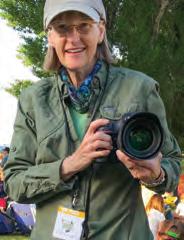
Linda M Swope
Linda Swope (Nonprofit Hub, page 36, and Summer of Music, 76) got her first camera at age ten. By twenty-four, after earning degrees in psychology and sociology from the University of Texas, she began a full-time photography career that has lasted more than forty years. She has shot everything from Harrison Ford as a wedding groomsman and rodeo to the San Antonio Spurs. Linda discovered Jackson Hole in 1988 and moved to the Tetons, where she pioneered the destination photography business and shot thousands of portraits, action, and events in the region. She came to Teton Valley ten years ago and now devotes her time to fine art photography and photographing for nonprofits. Look for Linda out following sandhill cranes and swans across the big valley skies.





















































2026
july 2 - august 15
Music Director Sir Donald Runnicles
Renowned maestro. World-class musicians. Unforgettable music in the mountains.
featuring more concerts in Teton Valley than ever before!

explore season 65









Ways to Play 30

SIT OUTSIDE with a matcha at Rise Coffee House in Driggs—enjoy live music on weekends
SIP LOCALLY ROASTED BREW from Victor’s Alpine Air Café, perfectly paired with sweet and savory toast offerings
LOOK TO THE SKY at sunrise to spot hot air balloons—book yours with Elevated Ballooning
STOCK UP ON HIKING GEAR from Yöstmark, then explore the Teton Canyon trails
SNAG A TREAT from Early Bird Bakes and shop for local produce at Driggs’ farmers market
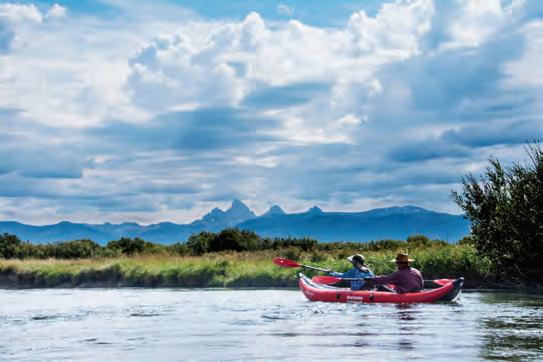
FLOAT YOUR CARES AWAY on the Teton River with a kayak rental from Teton River Supply
ORDER A FRESH BAGEL with schmear from Driggs’ Pearl Street Bagels (more on page 114)
LOOK FOR AL FRESCO ARTISTS during the Driggs Plein Air Festival, held July 26 – August 1
SPOIL A GOOD WALK (as Mark Twain would say) by golfing at one of our three public courses
PAMPER YOURSELF with a manicure and facial at Victor’s Renew Salon & Spa





STOCK UP on specialty groceries like Italian pasta, olive oil, and more at Food Shed Idaho
EXPLORE THE WILD WONDERS of Yellowstone National Park on a day trip (more on page 84)
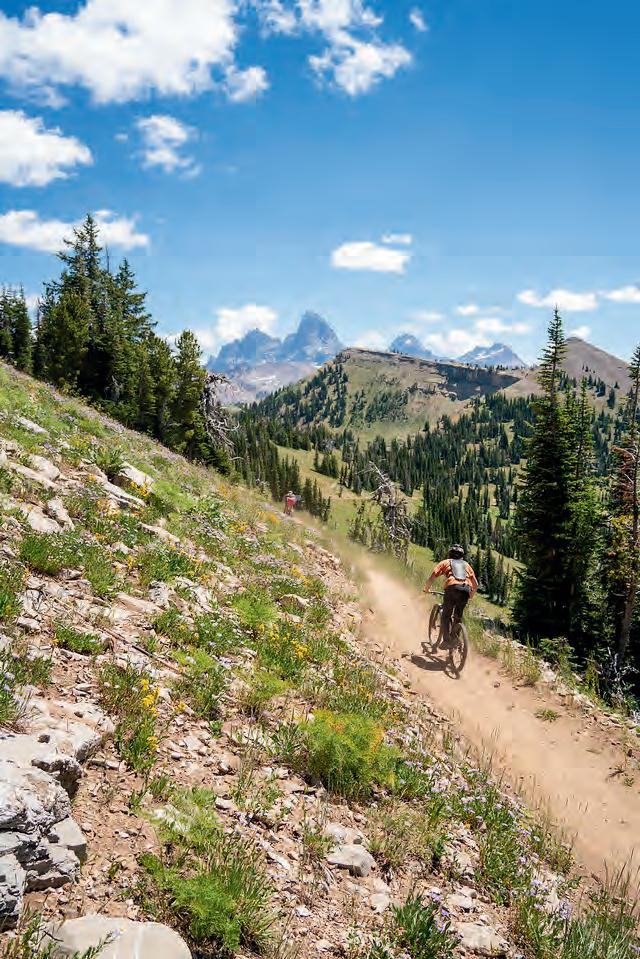
RENT A MOUNTAIN BIKE and brush up on your skills with a lesson from Grand Targhee Resort
PACK A PICNIC with hearty sandwiches and homemade chips from Figgie’s Deli & Market
DELVE INTO THE CHARACTER of the valley at the Teton Geo Center and the Teton Valley Museum
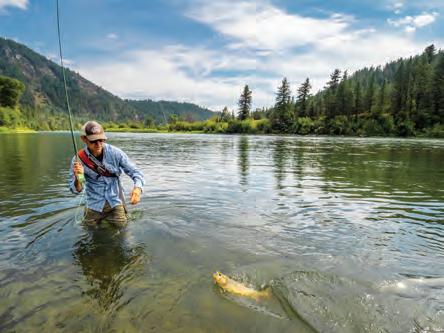
CAST A LINE during a guided fly fishing excursion with WorldCast Anglers’ seasoned pros
COOL OFF with a huckleberry shake from the Victor Emporium or a lime freeze at Corner Drug in Driggs
LISTEN FOR THE BUGLE calls of sandhill cranes before they head south for the winter
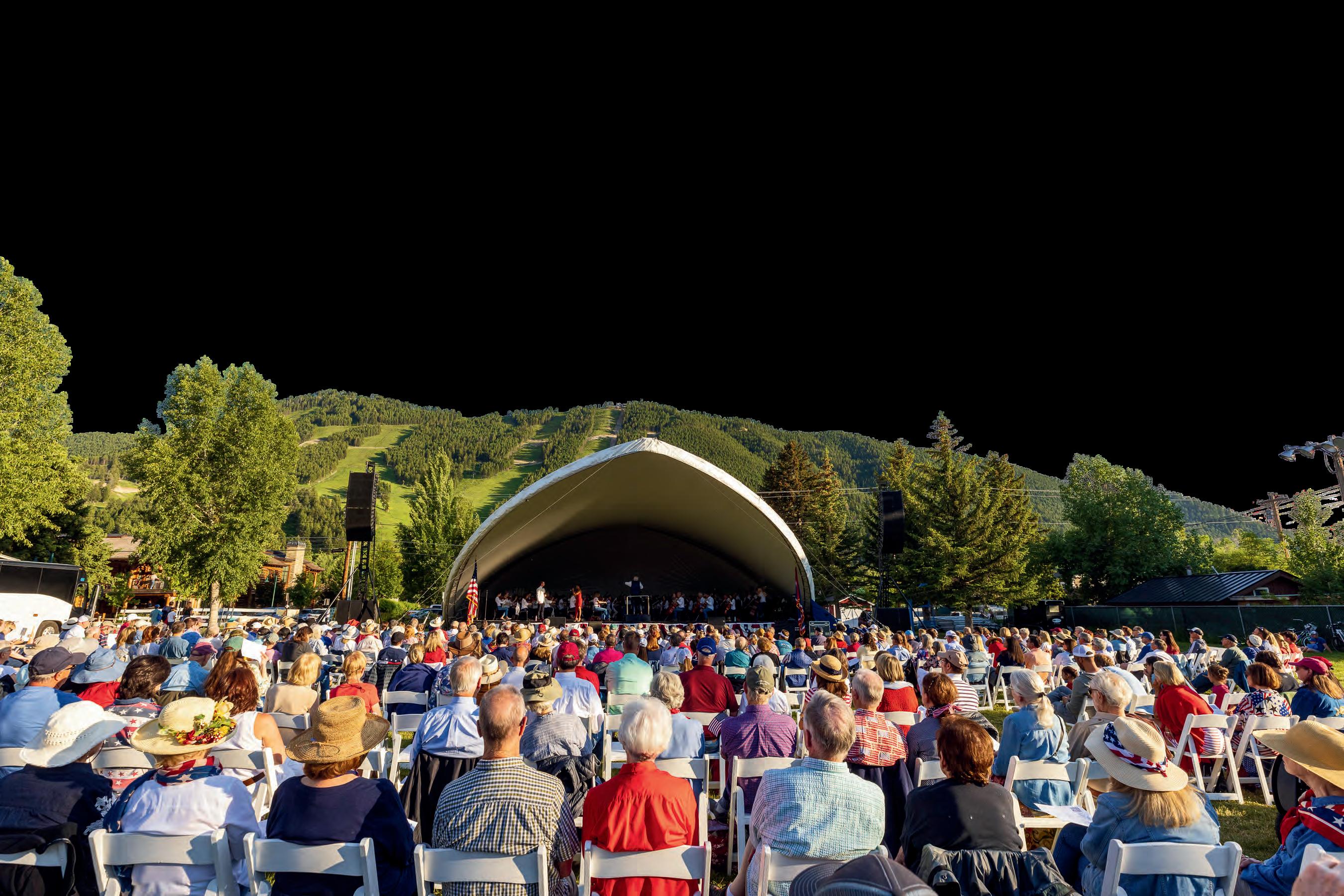
MAKE PLANS to experience some stellar live music—find inspiration in the Summer of Music photo essay (more on page 76)
ENJOY A POST-HIKE ICE CREAM at Wydaho Roasters, featuring small-batch favorites like maple walnut and salted caramel


WATCH THE HEARTPOUNDING ACTION Friday nights at the Teton Valley Rodeo
PUT YOUR KNOWLEDGE to the test at Maison’s trivia night and enjoy wine, beer, and bites
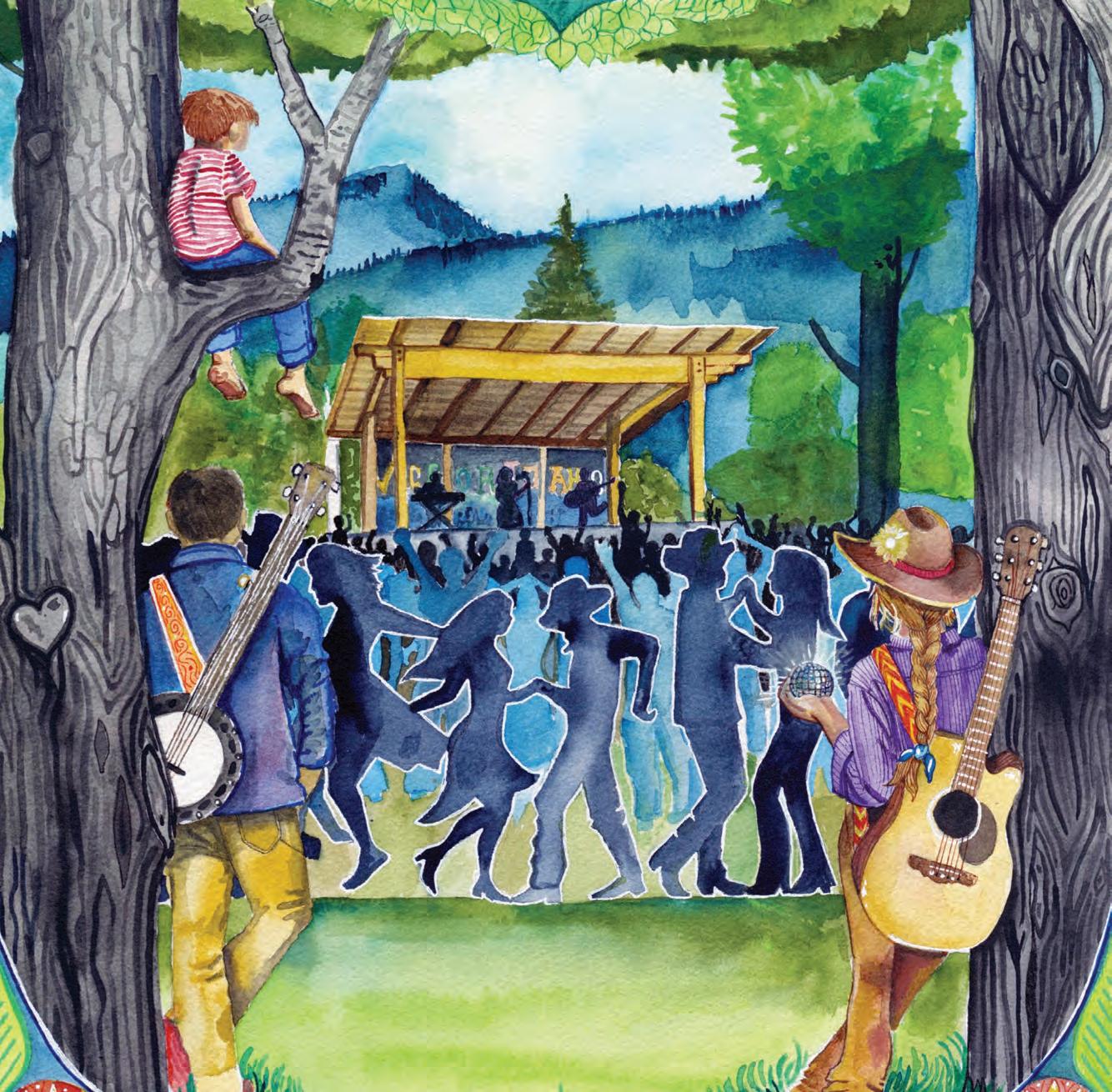
CELEBRATE THE SEASON and dance the night away on Thursdays at Music on Main in Victor
SAVOR DELICIOUS Italian fare at Pizzeria Alpino in Driggs—save room for Chef John’s famous cheesecake
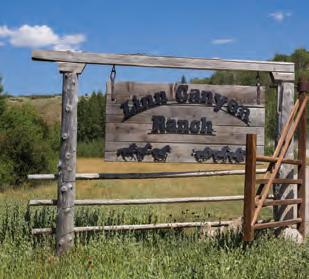
SHARE A SPECIAL DINNER with family and friends at Linn Canyon Ranch
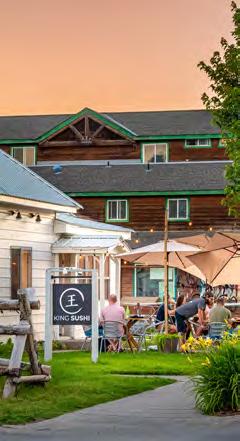
SOAK UP THE SUNSHINE with sushi and sashimi on the patio at King Sushi in Driggs
KICK OFF HAPPY HOUR at Grand Teton Brewing with burgers on the lawn from Otto’s Kitchen
STARGAZE AND SPOT the Milky Way over the Teton Range after the sun goes down
HANG WITH LOCALS at the Royal Wolf, where “snow sagas and fish tales are told nightly”
ENJOY LIVE MUSIC over cocktails at the Tetonia Club or Victor’s Knotty Pine Supper Club
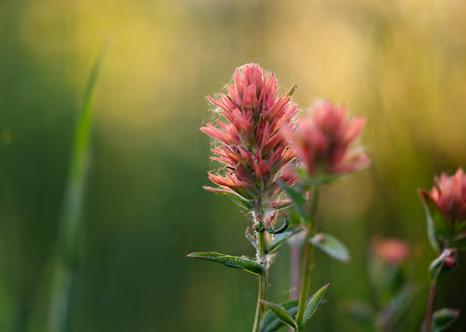
Bee Happy Plants
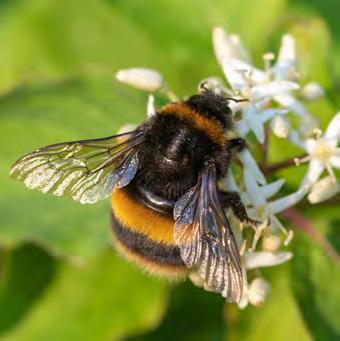
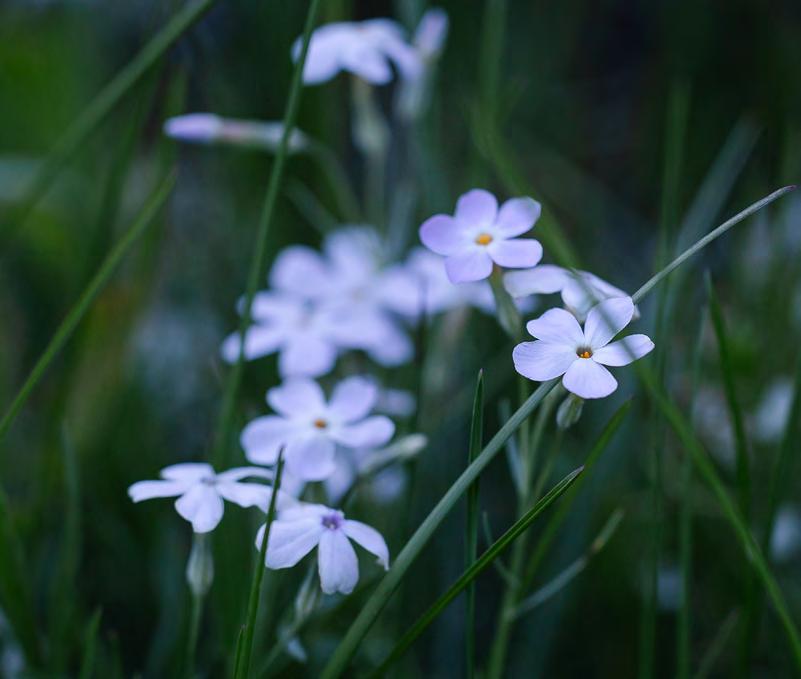
LOCAL EFFORTS TO PROTECT, restore, and grow more native plants that attract and help pollinators will be in full swing this summer. Nonprofit group B on 33 is working to enhance native pollinating plants and flowers along the highway between Driggs and Victor. Wildlife and conservation groups provide information on native plants; and Jennifer Werlin, educator with the University of Idaho Extension Service, also offers suggestions, such as leaving or letting part of your yard go wild. Bare areas give pollinators a place to nest, she notes, and a diversity of native plants helps feed many different helpful species.
Monarch butterflies are iconic pollinators, but other butterflies, bees, hummingbirds, moths, wasps, and even bats and beetles can transport the pollen necessary for the fertilization and seeding of
plants. June is National Pollinator Month because it is a prime time in many places for blooms. But you can support the cause beyond the start of the season with native plants, fresh water, and chemicalfree yards.
Here are a few native plants and the winged animals they attract:
• Blue flax: Bees, butterflies, flies, hummingbirds, and moths. It can also selfpollinate.
• Showy milkweed or whorled milkweed: Monarch and hairstreak butterflies, honeybees, and bumblebees, among others.
• Silky lupine: Bumblebees and other bees, butterflies, hummingbirds, and moths.
• Western coneflower: Bumblebees, butterflies, hummingbirds, other insects, and moths.
Victor Tees Up

A NEW 9-HOLE DISC GOLF course at Sherman Park in Victor offers Frisbee-throwing fans a par-3 layout with long tees on concrete pads. The course, which opened last summer, was designed by the Teton Disc Golf Club to suit different skill levels and mesh with the park’s other amenities, which include a bike course, dog park, playground, and ballfields.
The club created the course with assistance from the City of Victor Public Works Department and a group of sponsors. Discs can be rented for free at Valley of the Tetons Library in Victor.
Locals Welcome
THE MESS HALL , the new restaurant at Victor’s Teton Valley Resort, serves tasty comfort food, delectable cocktails, and good times. Reminiscent of the resort dining room in the film Dirty Dancing, the Mess Hall was designed as a place to gather, catch up, wind down, and maybe even dance a little. By the pool, customers can order beef sliders, garlic-Parmesan fries, or jalapeño cheddar bites. Food and beverage manager Michael Rowshan also brought signature items with him last year from New Orleans: short ribs and the Wildflower 75 cocktail, his twist on a French 75 that features elderflower liqueur. You can find the Mess Hall behind the resort’s office at 1208 Highway 31, west of Victor. messhallbistro.com
PHOTOS: FLOWERS, LARA AGNEW
WORDS BY CAROL LICHTI

Celebrating America 250

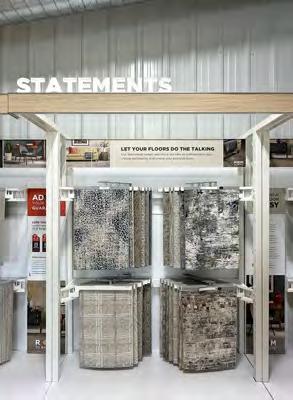




Grand Floor &

WALK INTO THE NEW showroom at Grand Teton Floor & Window Coverings in Driggs and you can browse through samples of carpeting, hardwood flooring, and window coverings. Many of those materials can be found next door in the company’s new 6,000-squarefoot warehouse.
The business has come a long way since its start twenty-one years ago in a van.
Today, Kirsten Gelber owns the company that entrepreneur Jim Schulz founded, which has grown to serve customers on both sides of the Tetons. Kirsten worked alongside Jim to develop the showroom in Jackson and took over ownership in 2023.
The Driggs building, located at 1365 Ben Olive Street, was finished last fall. Before that, the company had a showroom and staging area
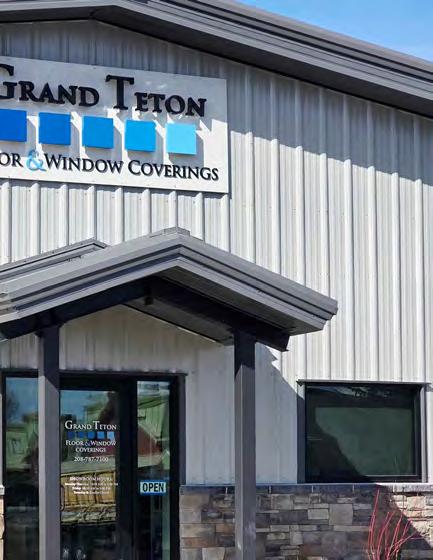

Teton Window

in Jackson but operated out of a small building in Victor.
“We were in desperate need of a warehouse and a proper showroom,” Kirsten said.
Now she’s excited to learn what inventory customers and builders will want so she can stock those items. Grand Teton Floor & Window Coverings has about a dozen employees, with several working remotely.
Kirsten’s husband, Sean, also works for the company. They split their time between Jackson and Teton Valley to handle whatever needs to be done. Fittingly, the couple’s home, where they raise their two children, is located between Victor and Driggs.
“We work hard,” Kirsten says, “and we play hard.”
Learn more: grandtetonfloors.com.




& Dinner at the Barn
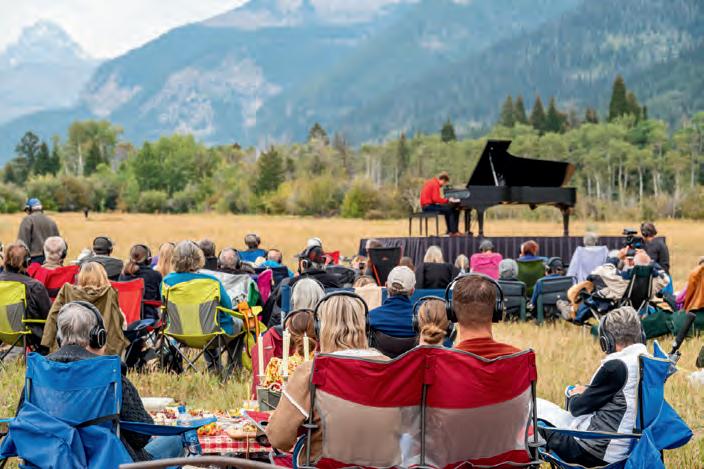
Outdoor concert series featuring pianist Hunter Noack and inspiring landscapes across the American West. Join us at Six Springs Ranch for an evening of music set against the Teton Valley landscape. Following the performance, we’ll come together at 6:30 PM for Dinner at the Barn, including drinks, dinner, a live auction, and paddle raise.
*Please note that dinner tickets are sold separately
June 24 | Six Springs Ranch Driggs, ID | 4–8 PM



Ridgeview Pro Rodeo
SADDLE UP, PARDNERS. Teton Valley’s first ever Professional Rodeo Cowboys Association (PRCA) and Women’s Professional Rodeo Association (WPRA) rodeo—Ridgeview Pro Rodeo—is coming to Driggs June 12 and 13 bringing elite-level competition and heartpounding action to the Teton County Fairgrounds.
“Rodeo is deeply rooted in western culture, and towns like Driggs don’t just watch rodeo—they live its values: hard work, grit, and tradition,” says James Miller, the Senior Vice President of Teton Ridge. “Hosting a professional rodeo validates that identity and puts the town on the map in a meaningful way.”
Presented and funded through the Teton Ridge Ranch Foundation, the Ridgeview Pro Rodeo will feature two nights of rodeo action plus a concert from Grammynominated country favorite Midland. The event is a celebration of the deep-seated western heritage that this region is known for, while bringing the best cowboys and cowgirls in the sport to show their stuff and compete for the rodeo purse, valued at $250,000. “For residents of Driggs, that means seeing world-class athletes perform live without traveling far,” James says. “Events like this bring people together—families, neighbors, and visitors—all gathering for something fun and memorable.”
Proceeds from the event will go back into the community, benefiting local ag-based clubs like Teton County 4-H and the Future Farmers of America. Learn more: ridgeviewprorodeo.com
Photo Credit: Linda M. Swope



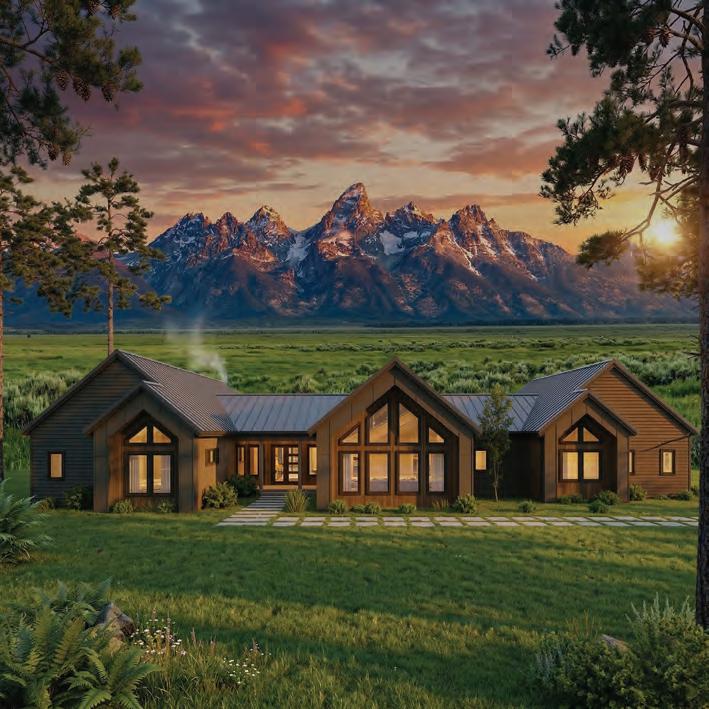



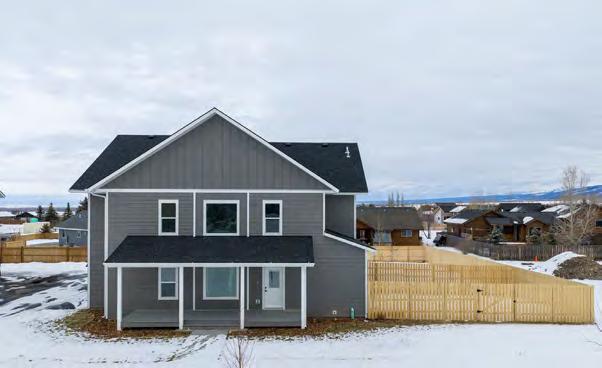
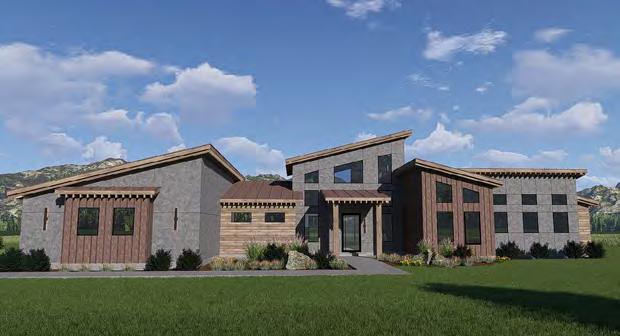
Custom homes from $300–$400/ft2 (vs. $600–$1,000+ in Jackson Hole)
Special 4.99% (5.87% APR) financing through Basis Home Loans
Faster build times: move in within 6–7 months!
Local expertise, 50+ years of experience, and 24,000 homes built mean you can build with confidence— without the Jackson Hole price tag.







Thirty Years of Cosmic
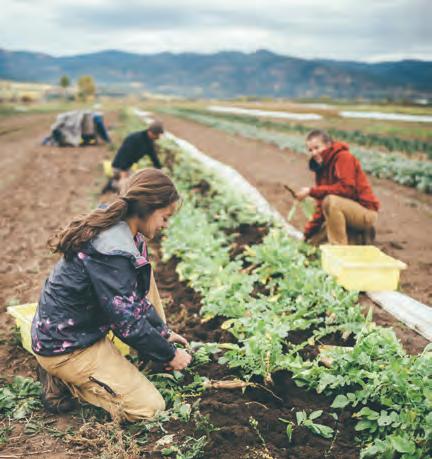
IT ALL BEGAN WITH FRESH BASIL grown for area restaurants, a love of high-quality local produce, and eight members in a Community Supported Agriculture share.
Now, thirty years later, Jed Restuccia and Dale Sharkey have turned Cosmic Apple Gardens—their 50-acre organic and biodynamic farm—into a household name in both Teton Valley and Jackson Hole. Dale calls the smile on people’s faces when they receive their veggies the most rewarding part. When asked the key to their longevity? “Sheer stubbornness,” she jokes. “And a dedication to real food, the satisfaction of a hard day’s work, and the excitement that we still have so much to learn.”
Cosmic Apple sells vegetables, herbs, and flowers, as well as beef, pork, and eggs through a CSA program and at farmers markets in Driggs and Jackson Hole. Stop by this summer to stock up on their incredible produce, try their Cosmic Tallow Balm moisturizer, and meet the dedicated team behind the scenes. Learn more: cosmic apple.com






Teton Valley’s Cutting Edge
Meet the Makers of New West KnifeWorks
Sponsored Content | Presented by New West KnifeWorks
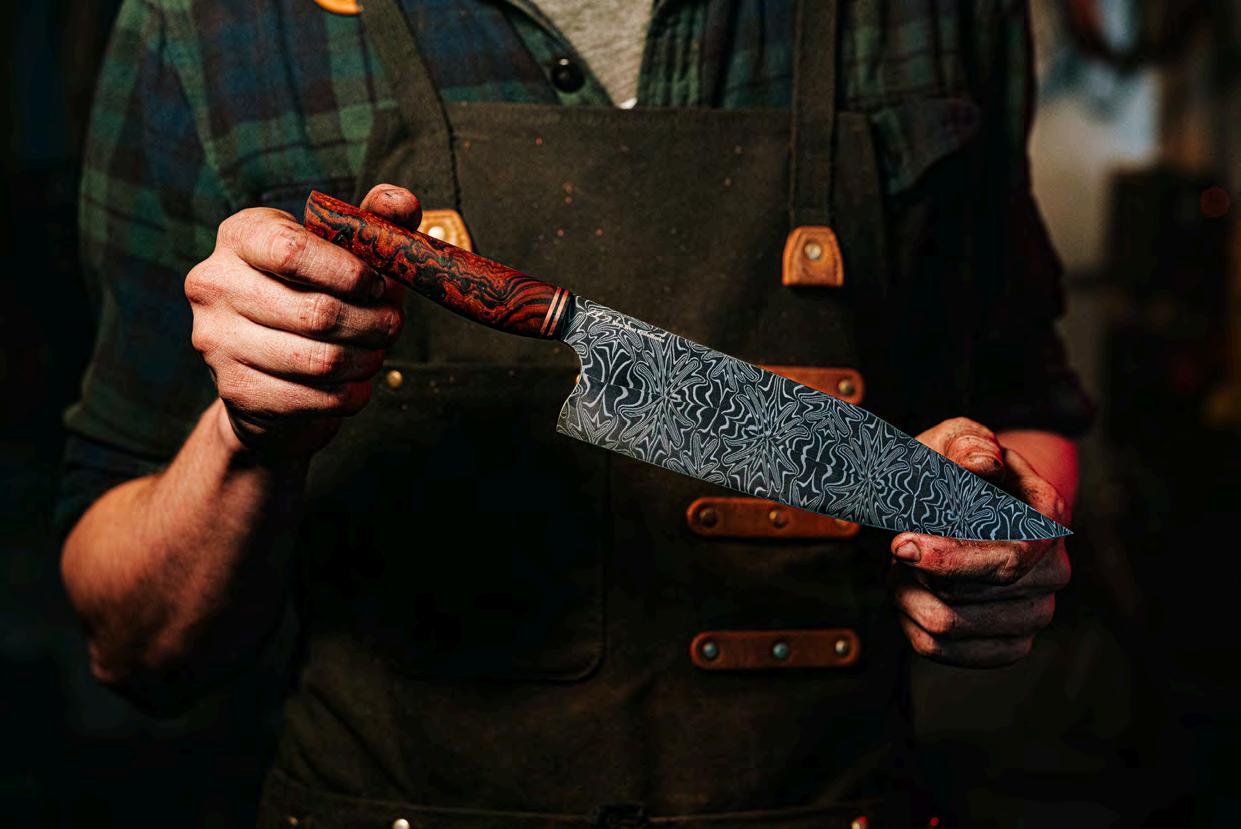
Behind the Scenes of New West KnifeWorks factory in Victor.
Step inside the New West KnifeWorks factory in Victor, Idaho, and one thing becomes immediately clear: this is not a typical manufacturing floor.
Yes, there are high-tech CNC machines shaping steel and cutting handle materials. But that’s only the beginning. What defines a New West knife happens after the machines stop—when it passes into the hands of a maker.
“We’re trying to make the finest knives in the world by whatever means necessary,” says founder Corey Milligan. “And we haven’t found a machine that can replace touch.”
Milligan built New West KnifeWorks on a simple but stubborn idea: performance and beauty should coexist. A knife should feel as good as it looks—and it should feel right the moment it hits your hand. That philosophy runs counter to much of modern manufacturing, where the goal is often to minimize human involvement. In Victor, the opposite is true. Every knife is assembled, shaped, and finished by a single craftsperson—not passed down an assembly line. It’s a slower, more deliberate process, and it shows up in the details you can feel but not always see.
That process is led by Brian Hady, the factory’s production manager and a craftsman in his own right. If Milligan defines the vision, Hady ensures it’s executed—consistently, precisely, and without compromise.
There is no part on this blade that we do not touch by hand,” Hady explains.
After the initial machining, each knife returns to what the team jokingly calls a “hot mess”—glue, rough edges, proud rivets. From there, it’s all handwork. Makers grind, shape, and refine every surface: smoothing the spine, rounding the choil, blending the handle into the steel until the entire knife feels like a single, seamless piece.
The goal is subtle but critical: a knife that feels soft in the hand, even though it’s made of hardened steel.
Each maker develops that feel over time. Techniques are learned in weeks, refined over years. Even within the same model, no two knives are exactly identical—because no two hands shape them in quite the same way.
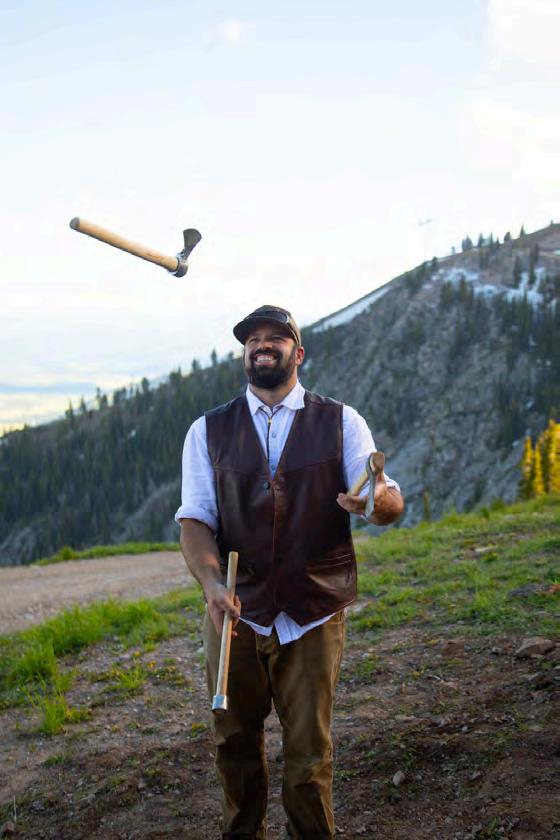
For production manager Brian Hady, the work is a balancing act—of tools, hands, and precision—which suits a guy who juggles tomahawks.

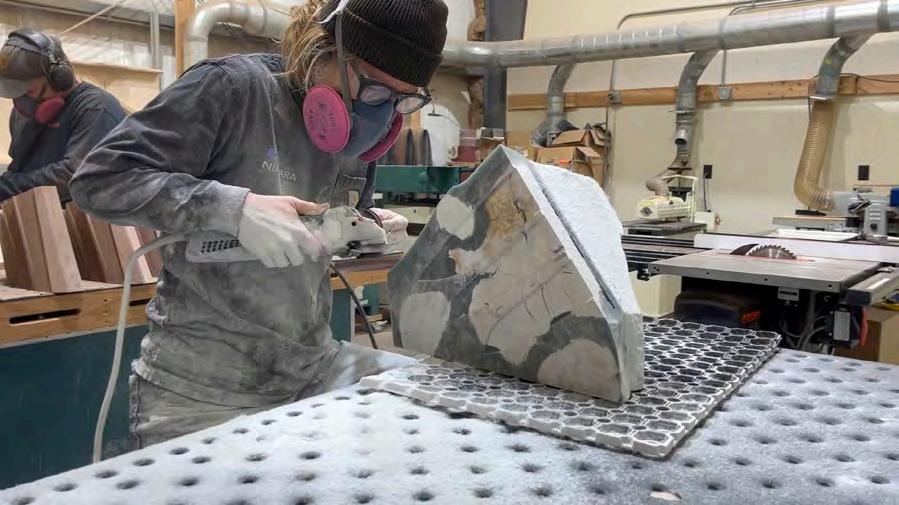
Artist Sarah Gage turns knife storage into functional sculpture—each Rock Block is a one-of-a-kind expression of color, material, and form.
“The West’s Best Knives.” Sunset Magazine
The final step is the edge. Every knife is sharpened by hand, a process Milligan considers the hardest—and most important—part of knifemaking. It’s the moment where everything comes together, and the difference is immediate the first time you slice.
Within that disciplined process, individual makers bring their own voice. Custom knifemaker Jack Rellstab approaches his work like a pursuit—an ongoing refinement of form, balance, and performance. His one-of-akind knives are equal parts tool and heirloom, shaped by patience and a relentless attention to detail.
In another corner of the shop, Sarah Gage is working in a different medium entirely. Her Rock Blocks—bold, sculptural knife stands— transform storage into functional art. Each one is unique, blending color, material, and form into something that lives as comfortably on a countertop as it would in a gallery.
Together, these makers represent the full spectrum of New West KnifeWorks: precision and process, artistry and expression, all grounded in the same commitment to craft.
And it’s all happening right here in Teton Valley.

The Victor factory isn’t hidden away—it’s part of the community. Visit the factory store to experience the finished work firsthand—where the results of countless hours of craftsmanship come together in tools designed to be used, shared, and passed on.
Because in the end, these aren’t just knives. They’re the result of human hands and a belief that the best things are still worth making the hard way.
New West KnifeWorks is now beginning to offer limited factory tours for locals. To learn more or request a visit, reach out to info@newwestknifeworks.com
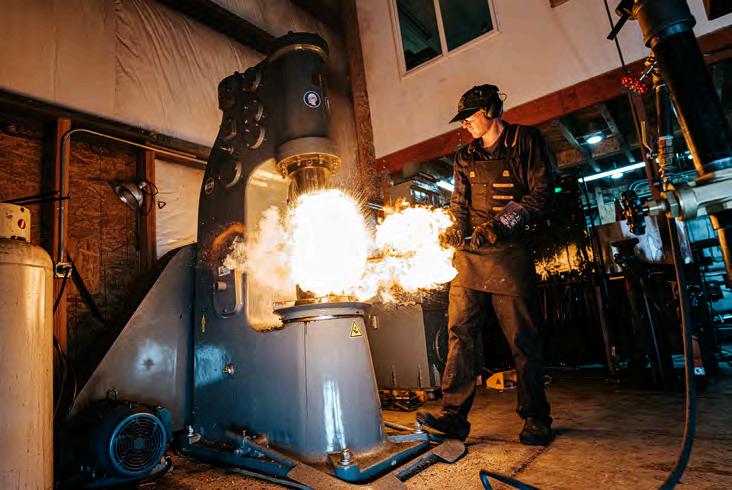
Custom knifemaker Jack Rellstab approaches each piece as a pursuit—crafting heirloom-quality knives defined by precision, balance, and feel.
Visit the New West KnifeWorks factory store just off the highway at 7667 Lupine Lane in Victor, or stop by one of our knife galleries in Big Sky, Denver, Park City, Napa Valley, or our flagship store on Jackson’s Town Square.


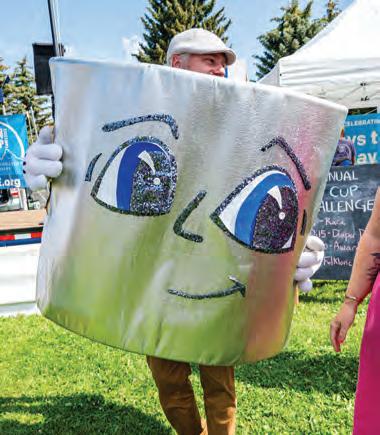





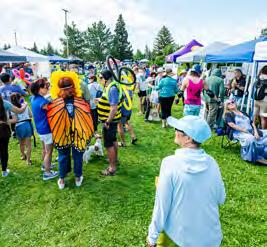
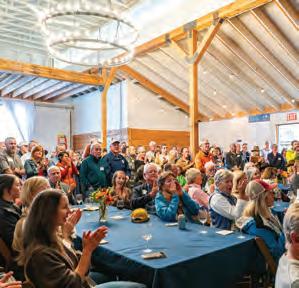
With over sixty participating nonprofits, the Tin Cup Challenge fundraiser embodies the generosity that the Community Foundation of Teton Valley is all about.
Nonprofit Hub
Community Foundation of Teton Valley's quest to help the helpers
BY KRISTEN POPE PHOTOGRAPHY BY LINDA M SWOPE
In June 2024, a large chunk of earth slid off Teton Pass, bringing a section of the roadway down the mountain and severing a vital artery between Teton Valley and Jackson Hole. Commuters were left in the lurch, facing four or more hours of driving a day, along with the financial load of suddenly becoming supercommuters. To ease the burden on valley residents, the Community Foundation of Teton Valley provided emergency grant funding to the Community Resource Center of Teton Valley (CRCTV) to purchase gas cards for commuters in need.
Meeting such emergent needs of local nonprofits is just one of many ways the Community Foundation benefits organizations in Teton Valley.
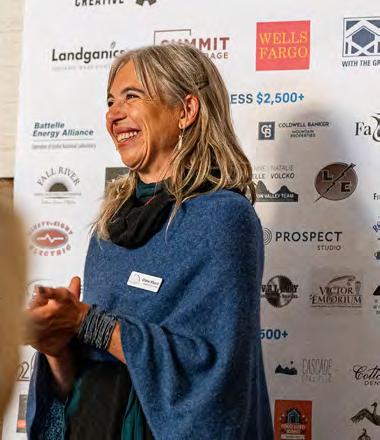
“We think of ourselves as the hub of local nonprofits, and our mission is to elevate philanthropy, build community, and promote collaboration,” says Bonnie Self, executive director of the Community Foundation of Teton Valley.
The foundation provides an array of grant opportunities, training, workshops, and resources like a conference room space for meetings and rentable event equipment, and it organizes the Tin Cup Challenge fundraiser each year. The organization also assists donors in meeting their philanthropic interests, and it holds agency funds for nonprofits that may not have the infrastructure to invest their own dollars in capital campaigns and endowments.

Established in 2007 as an affiliate of the Community Foundation of Jackson Hole, the foundation has been working to become an independent entity for some time. The transition was completed in spring 2026.
“We’re really excited about being autonomous and being able to be really responsive to Teton Valley needs,” Bonnie says, adding that the two foundations will continue to work together.
Teton Valley’s needs include not only headline-making emergencies like the Teton Pass closure, but also everyday problems like those CRCTV works to solve.
“Everything that we do is in service of ensuring that community members are able to access and secure their most basic needs,” says Alex Bontecou, execu-
Program manager
Brian Thysell (far left) and executive director
Bonnie Self (center) with board members (left to right) Marie Zolezzi, Tina Culman, Jeannette Chiari, Thad Nosal, and Scott Pierson at the 2025 Tin Cup Challenge.



tive director of CRCTV. The organization has received funding and assistance from the Community Foundation in a variety of ways, from a competitive grant to assist with a housing security deposit program to helping find and fund storage for free firewood they distribute to residents for winter heating. Alex says she sees the nonprofit as a robust support system for all the other organizations in the valley.
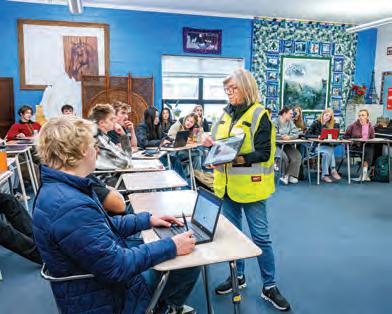
The Youth Philanthropy program allows local students to learn about the impact of nonprofits. Some even go on to volunteer for organizations they really connect with.
The Community Foundation’s competitive grant program funds a wide array of nonprofit programming each year. In 2025, the Family Safety Network received funding for their emergency housing expansion project and Teton County Idaho Search and Rescue was awarded a grant for swiftwater rescue training.
The Youth Philanthropy program brings the Community Foundation into Teton High School, where staff members talk with the students about the organization's mission and let the teens decide how to allocate $10,000 to local nonprofits. Last year, students opted to fund a variety of initiatives, including the purchase of a rugged, trail-worthy wheelchair for Seniors West of the Tetons, support for a program that helps new high school students, donations for the Teton Valley Food Pantry, and a contribution to Subs for Santa—the final a program where the high schoolers helped with shopping for fellow teens in need.
“Our [youth program] really is an amazing experience, because they not only learn about the impact of local nonprofits—they often connect with them, too,” Bonnie says, noting that students create a relationship with the nonprofits and sometimes even volunteer with the groups they fund.
The annual Tin Cup Challenge is the foundation's largest opportunity for connection and is the flagship event, similar to Jackson Hole’s very popular Old Bill’s Fun Run, coordinated by the Community Foundation of Jackson Hole. The col-
“We’ve seen incredible growth, but we’ve also seen incredible need, and so we want to continue to have the impact to keep up with that.”
Bonnie Self Executive Director
laborative fundraiser, which involves a six-week-long giving period, is wildly successful, with one-third of valley households donating. On the third Saturday of July each year, around a thousand participants come out to enjoy the festivities, which include a fun run and roughly fifty nonprofit booths serving up friendly information and activities.
“It’s a really impressive feat of philanthropy in action,” says Claire Vitucci, who works in marketing and communications for the foundation.
Since its inception in 2008, the Tin Cup Challenge has brought in $30.8 million for area nonprofits, with $3.88 million raised in 2025 alone. The funds must be spent in the valley within eighteen months. It is unrestricted funding that can go toward operating costs, which are often difficult for nonprofits to raise. The Community Foundation's board also works year-round to build up the Challenger Fund, to create a match pool





Designing and creating conservation-minded projects that encourage a sense of community. Experience collaboration that enhances value, ensures better results, offers seamless communication and focuses comprehensive attention on your project.


Civil

*and

incentivize community giving.
“I think it’s Teton Valley at its finest,” Alex says.
Beyond funding opportunities, the Community Foundation also provides nonprofits with resources and support, including a listserv to share information like event dates and job and volunteer boards. Since many local organizations
Every

have limited office space and cannot easily accommodate meetings, the foundation offers a free meeting room, which was reserved more than 160 times last year alone. It also has a lending library of equipment like tents, tables, chairs, and projectors.
Additionally, the Community Foundation provides learning opportunities and ways for nonprofits to exchange business knowledge with one another. Workshops, as well as “pocket talks,” bring in local experts like certified public accountants to share advice on such topics as how to classify staff versus contractors.
Alex appreciates the training she has received in communications, finance, and presentation skills. “It’s not the caliber of training I feel like would have been accessible to me or to most small nonprofit directors otherwise,” she says.
With its newfound independence, the organization is looking ahead to continue making spectacular improvements in Teton Valley. “We’ve seen incredible growth,” Bonnie says, “but we’ve also seen incredible need, and so we want to continue to have the impact to keep up with that.”
Every skyline in Teton Valley tells a story.
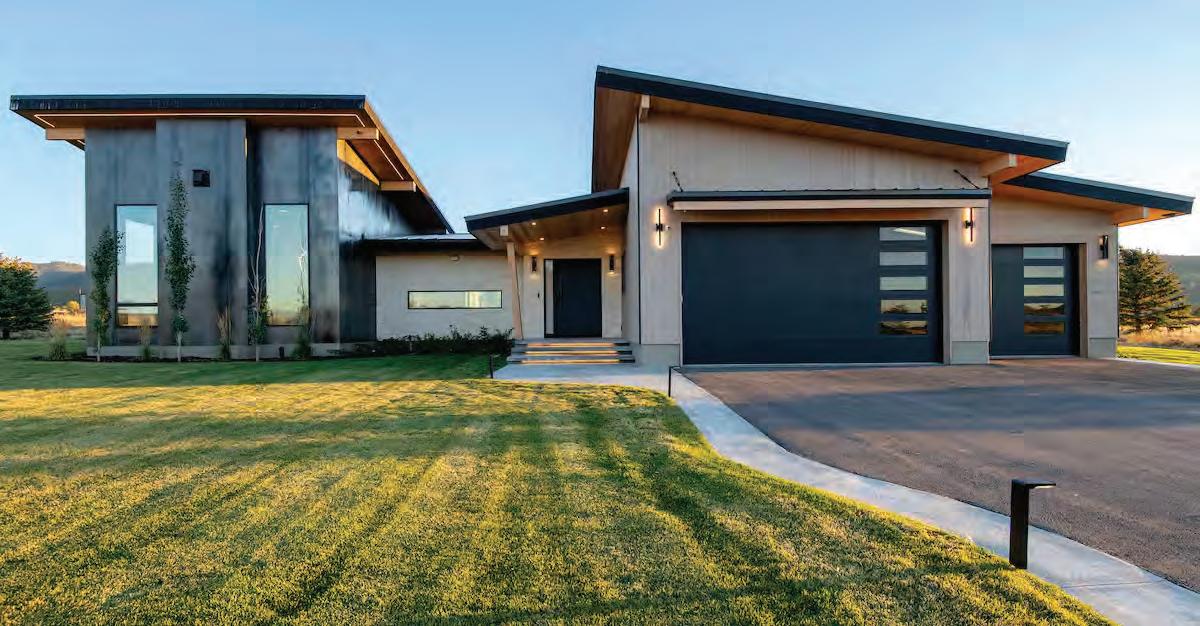
Manuel “Manny” Garcia began writing his with a hammer in hand as a laborer in 1997. Through dedication and skill, he rose to become a lead carpenter and a respected framing contractor, building a reputation for integrity and quality that would become the foundation of his future.
In 2014, that foundation solidified with the launch of his own company, 307 Builders. Named for the local area code, the company is a testament to Manny’s deep commitment to this community. His vision, however, stretched beyond building structures to building neighborhoods. He strategically transitioned from contractor to developer, successfully completing projects like a 16-unit apartment complex and several single-family homes, reinvesting every success back into the valley he calls home.
This brings us to his latest legacy-in-the-making: Lucy Meadows Subdivision.
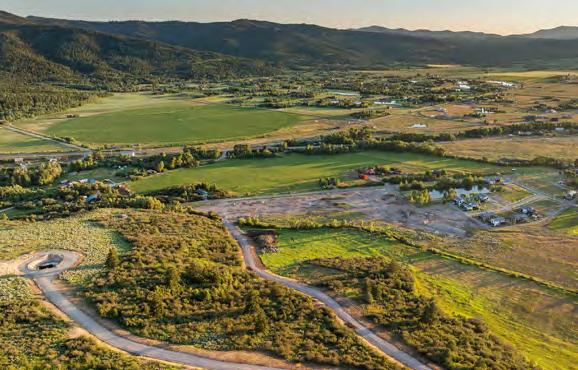
Lucy Meadows is the culmination of Manny’s decades of experience—a thoughtfully planned community on 80 acres of pristine land, where the infrastructure is
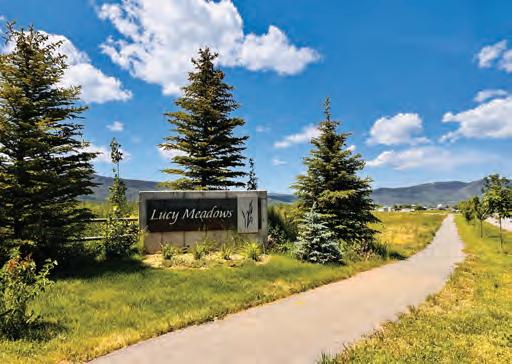
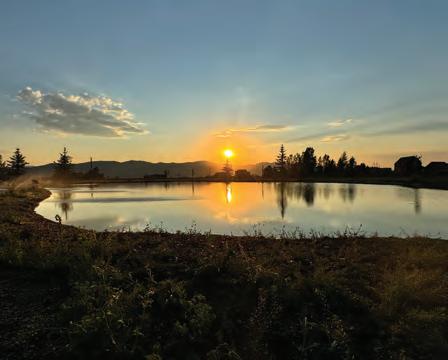
complete and the vision is clear. At the heart of the subdivision lies a beautiful pond, offering peaceful water views and unforgettable Teton Valley sunsets that bring neighbors together and create a truly special place to call home. It represents the 307 Builders philosophy: to create beautiful, valuable spaces that enhance our community.
The wait is over. A limited number of lots in the acclaimed Lucy Meadows Subdivision are now available.
We invite you to experience the vision firsthand. Please contact us (307) 413-6858 to schedule a visit and tour the first home built in the subdivision by 307 Builders LLC.
Your dream lot awaits.
Explore the opportunities at www.lucymeadow.com



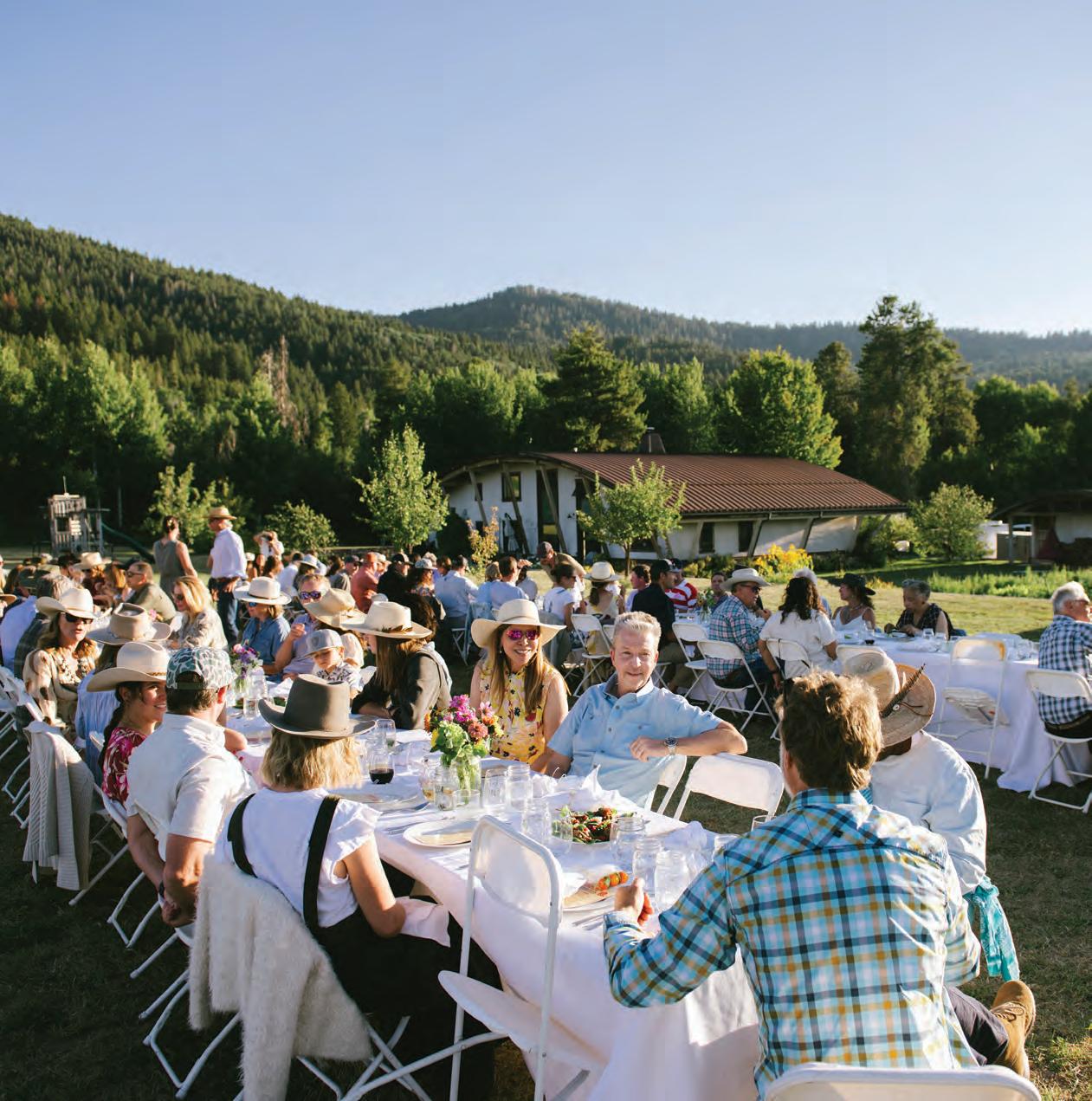
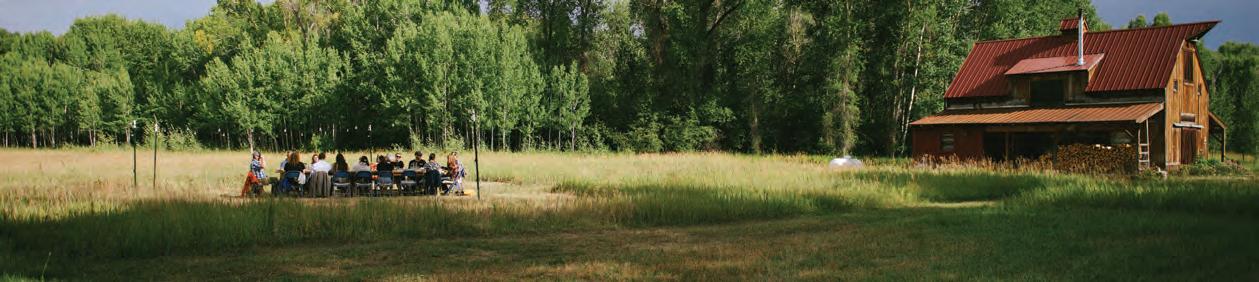
The farm-to-table movement may have started far away, but a group of local growers and foodies believe that nowhere is better suited to eating fresh than Teton Valley.
A Celebration of the Season
Bringing the table to Teton Valley's farms
BY MOLLY ABSOLON PHOTOGRAPHY BY CAMRIN DENGEL
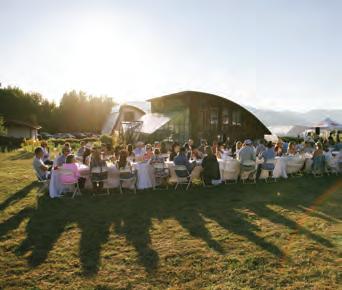
It’s the golden hour in Teton Valley. The sun sits low on the horizon, illuminating wisps of clouds in soft pinks and oranges. A hundred people gather around two long tables decorated with fresh flowers and white linen tablecloths. The conversation buzzes. Plates mounded with food pass from hand to hand as the guests serve themselves from the bounty before them: crisp green and maroon lettuces bedecked with slices of pale cucumbers and earthy beets; roasted pig surrounded by heaps of baby onions fresh off the grill; and baskets of homemade bread.
For the past five years, Slow Food in the Tetons and New West KnifeWorks have hosted a farm-to-table dinner at Canewater Farm in Victor to raise money for the organization’s mission “to grow the local and regional sustainable food economy by supporting producers, educating consumers, and connecting them to good, clean, and fair food.”
The meal, however, is more than a fundraiser. It is a celebration of the season’s work and a way to pay it forward. These feasts of abundance—whether a ticketed event like Canewater Farm’s and north-end's Owl Meadow Farm's monthly peak-season meals, or a fundraiser combining a love of home cooking and animal rescue at Aska's Animals—are all at their core a way to connect the community with an eating ethos: farm-to-table.
The farm-to-table movement has been around since the 1970s, but its arrival in the Tetons is more recent. Corey

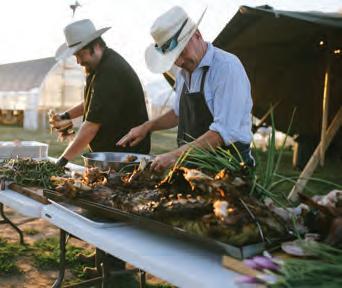
New West KnifeWorks and Canewater Farm’s local food extravaganza and Owl Meadow Farm's intimate dinners allow for melding passions: growing local food, celebrating the land, and gathering with community.
Milligan, the founder of New West KnifeWorks and the self-proclaimed “chief purveyor” for the farm-to-table dinner at Canewater, says when he first moved to Jackson in the 1990s, the local food movement was in its infancy.
During a stint in Ventura, California, in the early 2000s while his wife was working for Patagonia, Corey became enamored with the access to endless local produce. “When I moved back to Jackson, not much had changed,” he says. “So, I became a gardener.”
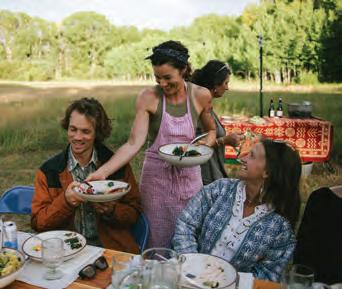

Corey is zealous about fresh food. He says he has no credentials as a chef, but he’s a foodie who for years helped host the traditional postgame feast for the Jackson Hole Moose Rugby Football Club. The club became famous for its pig roasts, and Corey began scheming other ways to share and promote the region’s fresh food.
In 2020, he teamed up with Canewater Farm’s Rafe Rivers and Slow Food in the Tetons to put on a local food extravaganza at the farm known as New West

Thomas Crompton





KnifeWorks and Canewater Farm present: A Dinner for Slow Food in the Tetons. The sixth annual event will take place August 21.
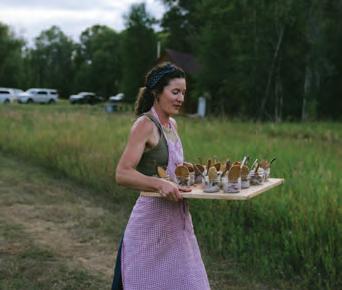
Sarah Parker creates seasonal dishes using ingredients either grown at Owl Meadow Farm or foraged. Her serviceberry ice cream (top) uses local berries, and heirloom tomatoes (bottom) are topped with gooseberries from Teton Valley.
“We have a rule,” he says. “Three things can come from outside: salt, vinegar, and olive oil. Now, Rafe is involved in making and importing olive oil, so while it’s not made here it has a local connection. Otherwise, there’s no cheating. I’m fanatical.” (Last year, however, Corey made the vinegar.)
Canewater Farm provides the vegetables and greens. Lark’s Meadow Farms supplies cheeses, milk, and other dairy products. For the past couple of years, Corey has raised goats and pigs to supply meat for the dinner. He butchers the animals and prepares the meat himself with the help of friends and New West’s culinary crew. Next year, he may buy an animal from a local 4-H kid, but the meat will always come from the valley.
“The meal is all about sustainable, local, fresh food,” Corey says. “That’s the thing with farm-to-table, we eat what is in season. That’s what it’s all about.”
Corey’s partner in the farm-to-table meal, Rafe Rivers, founded Canewater
Farm with his wife Ansley in 2019, relocating to the valley from Georgia with their two children.
Like Corey, Rafe is passionate about growing beautiful, healthy food in a way that sustains and supports the earth and his community. Canewater is certified organic, and Rafe works hard to be able to pay his workers a living wage. He grows a mix of vegetables on thirteen acres and says the farm is cranking nonstop from March 1 until October 31, supplying thir-

“That’s the thing with farm-to-table, we eat what is in season. That’s what it’s all about.”
Corey Milligan
“Chief Purveyor,” A Dinner for Slow Food in the Tetons
ty vendors and restaurants a week, and staging booths at three farmers markets in Jackson and Teton Valley. The farm-totable dinner allows him to showcase the results of that effort to diners up close.
“Hosting farm dinners provides special moments where we can share what we do with the community,” Rafe says.
Rafe has found inspiration from the partnership and hopes to host more farm dinners in the future. “It’s incredible to see so many volunteers from both sides of the Tetons come together to create such a special night for a cause we all champion,” he says.
Aska's Animals Field of Dreams dinner, which takes place in August, also combines a love of food with an immersive dining experience to celebrate the animal rescue.
“We have worked with Teton Full Circle Farm to incorporate local ingredients, and we’ve sourced flower arrangements from Red House Flowers,” says Lantz Hartley, executive director of Aska's Animals. “Keeping everything close to home feels right for an event like this, as we get to shine a light on the power of community coming together. This includes everything from the food we eat to the animals we save to the humans we meet along the way.”
Up at the other end of Teton Valley,
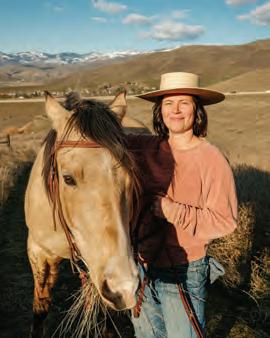











Sarah Parker, of Owl Meadow Farm, began offering farm-to-table dinners last summer. Sarah’s inspiration was a friend who works for a gleaning organization in California. To glean is to gather leftover grain, fruits, vegetables, and other
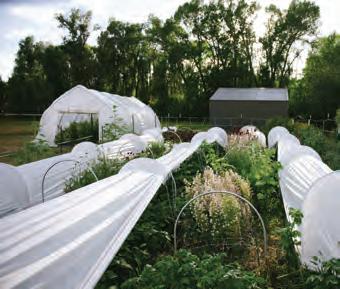

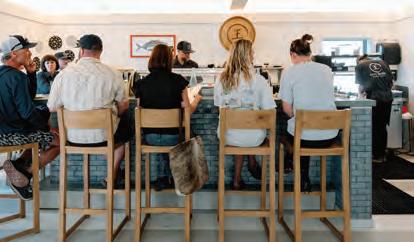
Somewhere between a philosophy and an experiment, farm-totable has little to do with traditional agribusiness. Some farmers host dinners without making a cent.
surplus crops to distribute to people with limited access to fresh food.
“I thought that was so great,” Sarah says. “And then I thought about my own situation. I have access to this gorgeous land, I’m able-bodied, the thing I can do is help feed people.”

She says farming gets her away from her day job, lets her spend time outdoors, and brings her joy. She feeds herself and her husband from her garden, and donates the rest to the Teton Valley Food Pantry and Community Resource Center of Teton Valley's food rescue program, Food for Good.
Sarah decided last summer to host farm-to-table dinners to increase awareness of her work and maybe, eventually, raise some money to support her cause. For now, she’s happy not to lose money on the endeavor.


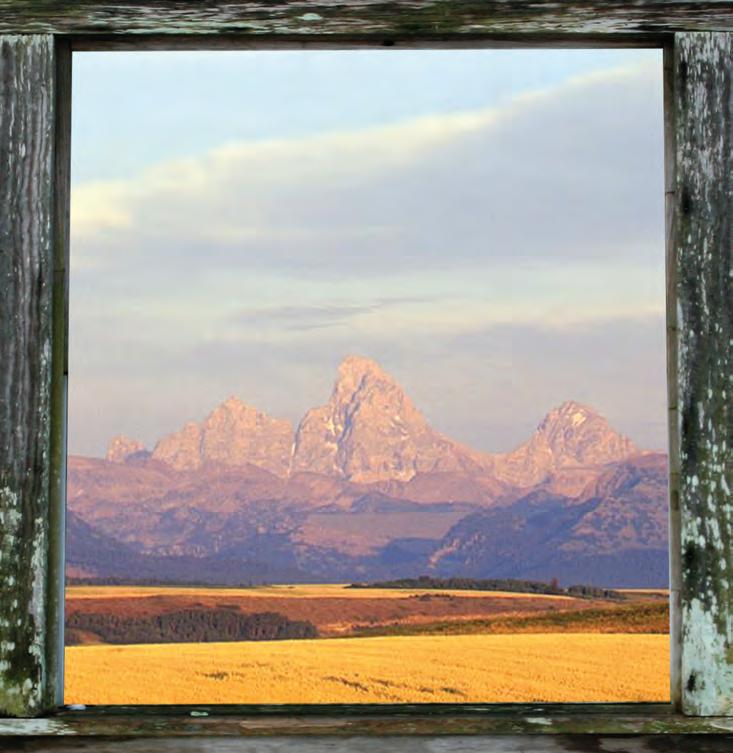


“[My husband] Parker and I did some traveling in Europe,” Sarah says. “We stayed in a lot of agritourism B&Bs in Italy, and I was inspired by the way local agriculture is entwined into the community there. When I came back, I started thinking about ways to use the farm to build community.”
In 2025, Sarah hosted three farm-totable dinners with sixteen people each.

This summer she hopes to offer more.
Corey Milligan and Rafe Rivers have one rule at their annual farm dinner: only three things can come from outside—salt, vinegar, and olive oil.
“The meals are all vegetarian and feature anything I can produce from the garden or using local products,” Sarah says. “I bought local milk and made ricotta cheese and yogurt. I make my own pasta and bread using flour from the area. But the real stars of the show are the vegetables.”
Her menu comprises three main dishes and a dessert. Offerings include heirloom tomatoes with gooseberries, shaved radish, and fresh herbs; homemade pasta with caramelized fennel, fried zucchini, Lark’s Meadow Dulcinea cheese, and sourdough crumbs; and charred sugar snaps and kale with tomato vinaigrette and baked goat cheese; followed by serviceberry ice cream with tulsi basil meringue and rye shortbread. The food is colorful, plentiful, and delicious.
The area’s harsh climate has always made raising food in Teton Valley a challenge, but today’s farmers are determined and excited about its potential. The farm-to-table movement is a way to share the bounty and educate people about the opportunities available here, literally in their own backyards.
DRIGGS, IDAHO
Offering inspired sushi, sashimi, and rolls on both sides of the Tetons.
98 E. Little Avenue Driggs
Built to Spill
June 25
Trish Toledo
July 9 Orquesta Akokán
July 16
Fireside Collective
Deltaphonic
July 30
The White Buffalo
August 6 Madeline Hawthorne & Dug
August 13 Afrosonics
Big Hole Arts
August 2nd Big Hole Arts Sunday Brunch 1:00 pm Hillfolk Noir & John Németh
COMMUNITY SUPPORTED MUSIC SINCE 2006
Thursdays at 5 pm Victor City Park • $5 Donation







Dr. Kelly Sadauckas is on a mission to demystify all things pelvic floor. She uses expertise and humor to help people across the globe through physical therapy, workshops, and more. all in a
Power to the Pelvis
Armed with humor and costumes, Dr. Kelly Sadauckas wants to talk about your pelvic floor
BY MOLLY ABSOLON PHOTOGRAPHY BY LARA AGNEW
Many people have some sort of issue with pooping, peeing, or sexual intimacy. But do you actually know of anyone personally who is struggling? Probably not. We don’t talk about these vital, daily activities.
Dr. Kelly Sadauckas is trying to change this, as she says, “one pelvis at a time.”
“We don’t talk about peeing and pooping because we have some level of shame,” she says. “Maybe it’s our Puritan heritage. Perhaps it’s because we think that part of our body is gross. But it shouldn’t be. Our pelvic floor is amazing. It keeps us alive.
“When we view something as shameful, our brain’s reaction is to ignore it,” Kelly says. “In this attempt to protect us, the brain ends up ignoring important nerves that control pelvic floor muscle sensation and function. As a result, we end up with pelvic floor muscles that are constantly tight, causing various issues with urination, defecation, and intimacy. We often don’t realize that tight muscles, not ‘weak’ and ‘sloppy’ ones, are to blame.”
Dr. Kelly, as her clients call her, has been a doctor of physical therapy and a board-certified specialist in orthopedics and pelvic health for more than twenty years. Her business, Pelvic Floored, is a pelvic floor physical therapy and wellness practice in Driggs that offers inperson care as well as online coaching and courses. Pelvic specialists like Kelly are rare. There are only one hundred or
so physical therapists in the world who are similarly certified in both orthopedics and women’s health. She has trained other physical therapists in the Pelvic Floored method and runs clinics and workshops worldwide.
In an average month on Instagram, Kelly reaches more than 100,000 people. Some months more than a million people see her posts. She attributes her reach to being herself.
“I try to make people comfortable talking about topics that are perceived as uncomfortable,” Kelly says. “Literally everyone poops. Everyone has had the feeling, ‘Oh my gosh, am I going to poop my pants?’ So, I try to capture that feeling, then offer tips like, ‘Here’s how not to poop your pants.’”
The pelvic floor consists of the muscles that stabilize the body’s core and assist with essential bodily functions. Like all muscles, they can be strained, tight, weakened, or injured. Physical therapy can help restore normal function and lessen pain. It seems simple, but Kelly says people are embarrassed and hesitant to seek help. In fact, the name of the nerve that runs through our pelvic floors and external genitalia—“pudendal”—is derived from the Latin “to be ashamed of.” This reflects our cultural bias.
“We all talk about our bad backs, but no one talks about peeing in their pants,” Kelly says. “But peeing our pants is common. Common does not mean normal, however. People say incontinence never

killed anyone, but it can really destroy someone’s quality of life.”
Dr. Kelly Sadauckas sees no need for sugarcoating or euphemisms. “Our pelvic floor is amazing. It keeps us alive,” she says.
Kelly first became aware of the prevalence of incontinence in athletes while she was working on her doctorate in physical therapy at Marquette University in Wisconsin. A number of women on the school’s track team confided in her that they peed in their pants when running, and that sexual intercourse and using tampons hurt.
“I didn’t know how to help them at the time,” Kelly says. “We barely talked about pelvic floor muscles in traditional physical therapy training.”
Kelly ended up pursuing special training. During her first pelvic floor workshop, the instructor asked Kelly to be her model while she performed a vaginal exam on her in front of the class. Kelly remembers thinking that her discomfort would help her be more empathetic with future patients, so she marched to the front of the room, lay down on the exam table, and became the icon for her peers’ initiation into everything pelvic. Now Kelly is on a mission to educate the world about the benefits of pelvic floor
2026 Teton Valley Farmers Markets

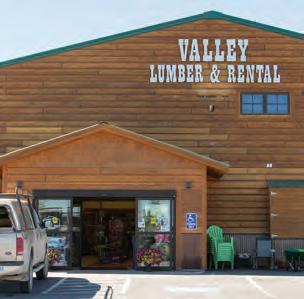
Our name says “lumber” but we do so much more. We sell the biggest names in hardware, hand and power tools, indoor and outdoor paint, and power equipment. We also carry a full range of rental equipment.




“I try to make people comfortable talking about topics that are perceived as uncomfortable.”
Dr. Kelly Sadauckas Pelvic Floored
physical therapy, which she says helps give people back their lives.
“I am passionate about this because it works,” Kelly says. “There’s tremendous ground to be made up. You would never have knee surgery or shoulder surgery and expect to ‘just rest six weeks and be good to go.’ And yet that is still the general expectation for a woman after she has a baby. To this day, despite it being the recommended standard practice, most women are not referred to pelvic PT after having a baby.”
It’s also not just postpartum women. Kelly says cancer survivors, both men and women, have a higher rate of pelvic pain, incontinence, and constipation than average, and yet they are rarely told that improving pelvic floor health can help with these conditions. A 2008 study following cancer patients before and after prostate removal showed that a single pre-op session of pelvic physical therapy brought the men back to continence faster.
Kelly’s goal is not to conjure up more patients. She has plenty. Instead she wants to end the silence and shame associated with basic, vital bodily functions, and she’s found humor is her best weapon in that mission. Her print ads are especially irreverent. One example readers likely spotted in past issues of this magazine declares: “Let NASA explain Mars, I’ve got your anus.” Another

Three ways to test your deep core and pelvic floor IQ
1
Can you engage your deepest, lowest tummy muscles? Kelly says to envision that she is standing behind you with a crochet hook, trying to pull a spot below your belly button toward your spine an inch or two. This test allows you to see if you are able to engage a greater percentage of your deep core muscles, which support the bladder and rectum, as well as the uterus and vagina.
2 Can you hold those deep core muscles in, and still breathe into your lower ribcage for two or three breaths?
This tests your brain's understanding of the difference between those muscles and your diaphragm, which is for breathing. A majority of incontinence problems stem from the brain not understanding that you should be able to engage those tummy muscles and still be totally free to breathe.
3
Now, can you draw in your lower abdominal muscles, breathe, and still keep your pelvic floor totally relaxed? Kelly’s favorite way to determine if you’re doing this correctly is to ask you to pretend "her finger is in your butthole." Your goal is to be able to draw in the lowest front tummy muscles without squeezing her finger, and keep your pelvic floor muscle pulled up and inward to support the bladder, all while continuing to breathe. This checks to see if your brain can figure out that your pelvic floor muscles are separate from both your deep abs and your diaphragm. And if you fail this test? No problem, according to Kelly. Our brains are easily trained with a little practice.


Scenic Flights

Airplane Scenic Flights
Your visit to Teton Valley is not complete until you have experienced the surroundings from the air. Teton Aviation offers scenic flights that cater to the customer’s interests.

Learn to Fly in the Tetons
Turn your dream of flying into a reality! Flight instruction offered with the Teton Mountains as your training ground.

reads: “Poop happens every day, but if it doesn’t, I have a course for that.”
On Instagram, Kelly dances around in a vivid pink, custom-made vulva costume. She talks about farting and incontinence, and promotes sitting on a “Cooch Ball” to help people relax their pelvic floor muscles. She has blog posts on everything from how to handle bowel movement urgency, to weight training after pregnancy, to hormone replacement therapy. She’s open, funny, cheeky, and extremely informative.
“Humor is my natural disposition, but I also think it is necessary to get people to talk about their pee, poop, and intimacy,” Kelly says. “If I sit down and say in a very clinical, serious tone, ‘Let’s talk about urinary frequency,’ or ‘Tell me about your poop type,’ people shut down. Humor allows people to open up.”
What excites Kelly most about her work is that her clients see results fast. She claims a 94 percent success rate, often within as few as three or four visits. That, she points out, is a lot quicker than orthopedic physical therapy. She’s so fervent about her mission that
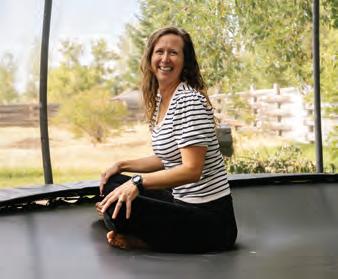
Kelly preaches that strengthening the pelvic floor can benefit anyone. With a little work, most of us can jump on a trampoline again, she says.
she’s begun offering a $9.99 monthly subscription for a bundle of online courses, a price point she’s found to be viable for most people. She’s sold twice as many courses since she began offering what she calls “Dr. Kelly’s Treasure Chest.”
Kelly also has a scholarship fund to allow people with limited resources access to her work. Most of Pelvic Floored’s clients are women, but that may be because women tend to be more willing to seek care. There’s enough information




out in the world about urinary issues related to pregnancy that women are more likely to acknowledge issues with incontinence or pain. But most of them still think pregnancy is the main culprit. That, Kelly says, is not the case.
Many issues can be traced to a tight pelvic floor that puts pressure on the bladder and anus, disrupting normal function.
According to Kelly, the fix can really be
Kelly educates her clients about pelvic floor health with tools they can take home with them, like 'Cooch Balls' and diagrams that spare no detail.

quite simple: you just have to learn how to relax your pelvic floor muscles.
Men also experience issues related to their pelvic floor, including pain, incontinence, urinary urgency or frequency, and sexual dysfunction, but they tend to be a bit more reticent about seeking care.


“You’ll hear men say peeing frequently is just a part of aging,” Kelly says. “But it’s not. Just like with women, many of the symptoms men experience are due to a tight pelvic floor.”
Typical Teton Valley immigrants, Kelly and her husband Jim came here from Wisconsin for the skiing. They were on vacation looking for their “forever home,” she says, and ended up at Targhee. Conditions that day weren’t great, but for Kelly and Jim it was the best day they’d ever had.
Skiing continues to be a draw, but Kelly says Teton Valley’s community and biking opportunities have equal appeal for her family these days. Plus, there’s her business, which has taken off. The only downside to that success? Kelly is currently unable to accept new patients. But you can still get plenty of information on her website, from a course, or by visiting her Instagram feed.




“Deliver the Love™ Foundation believes every girls’ strength, voice, and passion matter. We’re building a community where girls can grow, chase big dreams, and feel proud of their unique journey. ”
- Jaelin KaufFoundation Founder 3x Olympic Medalist




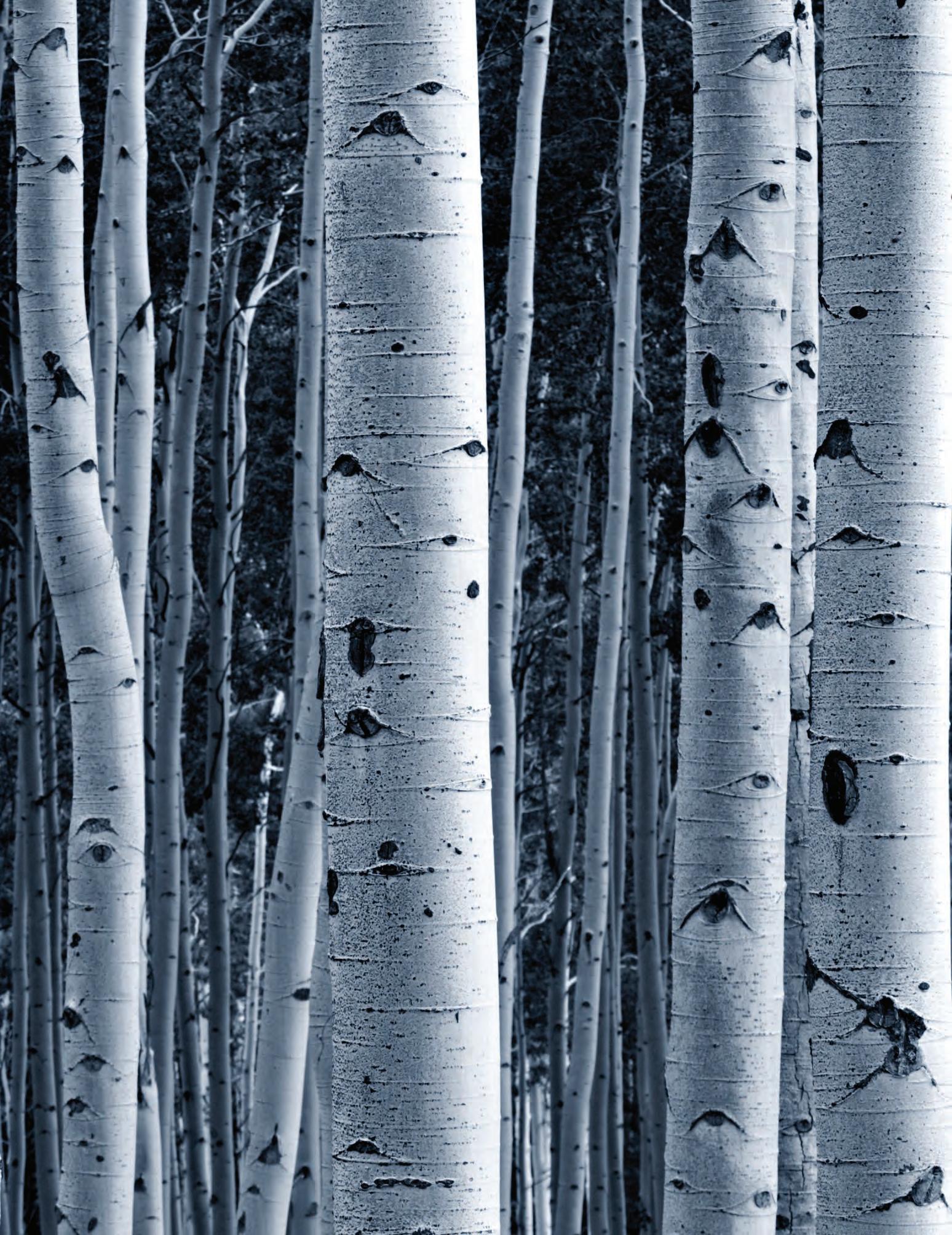
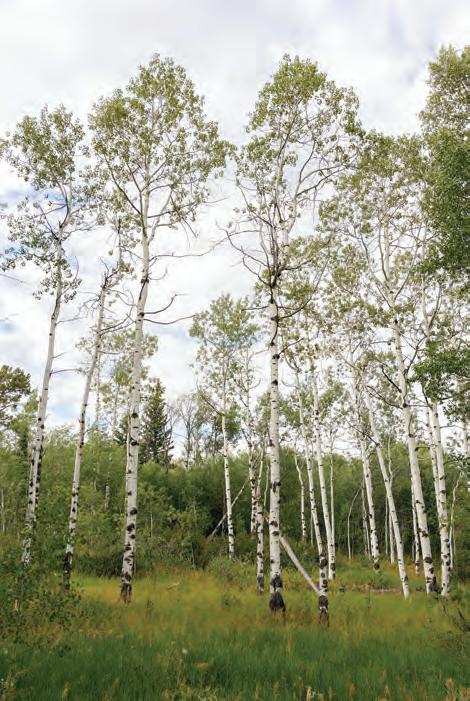
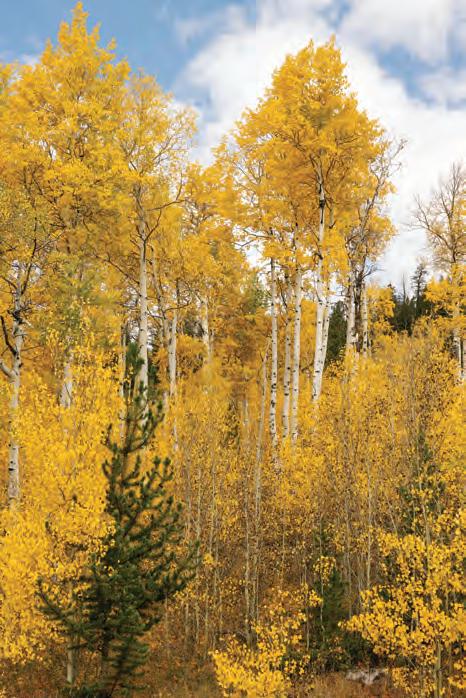
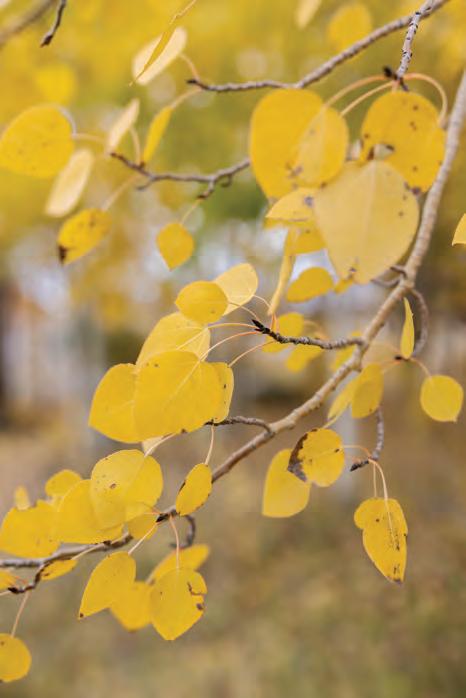
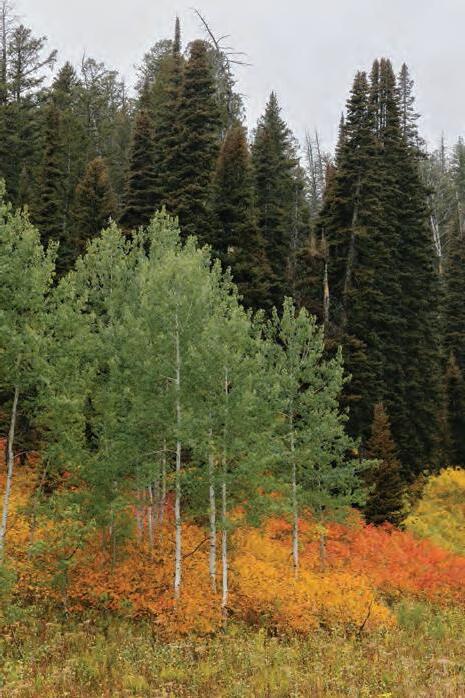
The world's largest tree hid in plain sight for thousands of years, until two aspen ecologists discovered the extent of its reach in 1976.
The Quaking Aspen
A
closer look at
the intricacies of this iconic Mountain West tree
BY MICHAEL MCCOY
PHOTOGRAPHY BY LARA AGNEW
June 18, 2025
Fishlake National Forest, Utah
The afternoon is hot, even here at 8,500 feet above sea level. I’m happy to be relaxing in the copious shade of tall quaking aspens, sunlight bouncing off their trembling leaves overhead. Their foliage creates shadow-dancing on the beefy trunks of trees farther away. Black nubbins and fissures appear where branches once extended or injuries occurred. Black blotches on white trunks—zebra trees. Young aspen shoots boast large leaves that shiver alongside the smaller, more static sagebrush. Short aspens and tall sagebrush reach to similar heights of three to four feet; Populus tremuloides joining forces with Artemisia tridentata to create the understory. A brilliant male mountain bluebird pops out of a cavity near the base of one neighboring tree, close enough to hit with a pine cone if I wanted to (which I don’t). The large hollow may be the result of trauma, perhaps a lightning strike. Roughly half the circumference of the trunk base is gone, yet the tree appears to be thriving.
Sage and aspen blanketing a south-facing foothill slope: A ballet of birdsong, fluttering foliage, and upslope breeze. It’s a song and dance of the Mountain West.
This could have been any old runof-the-hill aspen grove whose sights, sounds, and shade I was enjoying. But it wasn’t. I was immersed in Pando, an organism so special and spectacular that it has sprouted its own nonprofit organization (friendsofpando.org). Possibly 10,000 years old—although the oldest trees, or “branches,” seen standing above ground are likely no more than 150 years of age—and the largest known tree on Earth, Pando encompasses more than a hundred acres and 47,000 branches, or stems. While these appear to be individual trees, they are actually components of
a single giant organism that is connected by a colossal, intertwined root system.
Discovered only fifty years ago, Pando’s fitting handle is Latin for “I spread.” Like other, smaller aspen stands, Pando is technically a clone, which means it can reproduce by self-replicating through suckers, or shoots that sprout from the roots. Botanists tell us that every part of Pando is genetically identical to the seed that marked its creation thousands of years ago. As such, its millions of leaves emerge at the same time in the spring and simultaneously turn their unique shade of yellowish orange in the fall.
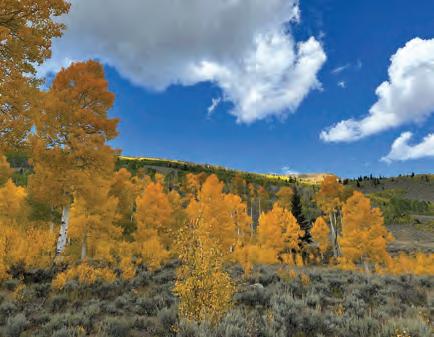
Pando's success reflects the ways in which aspen trees are singularly suited to the West's mountains.
We may not have a Pando in Teton Valley, but we have plenty of smaller groves of Populus tremuloides. They are abundant with wildlife. To watch a mule deer bounding through such a grove is something to see. Mixed forests of aspens and conifers also host moose, mountain lions, bears of both the black and grizzly variety, elk, pine martens, red squirrels, red fox, porcupines, weasels wearing their wintery ermine coats of white; and birds: warblers, pileated woodpeckers, northern goshawks, great grey owls, ruffed grouse, ravens, and so many others.
The groves are also fruit stands, marked most deliciously by the bounty of huckleberry patches they hide in late summer. And they served as living pharmacies and construction centers long before Walgreens and Home Depot. Prehistoric indigenous people recognized aspen bark's soothing properties and used it to treat fevers, indigestion, heart conditions, poor appetite, and even fussy infants.

Healing Begins Here


Your destination for cryotherapy, infrared sauna, quantum bed therapy, and next-generation recovery.
Offering
• Whole-Body Cryotherapy
• Localized Cryotherapy
• BEMER PEMF Therapy
• Infrared Sauna
• Tanning
• and more!

25 E. Wallace Ave. in Driggs (208) 354-3796
bodywiseidaho.com @bodywisedriggs

The inner bark was a sweet treat, and the white powder on the bark’s surface acted as a precursor to modern antiperspirants. Aspen logs were used to make temporary shelters and deadfall traps for animals. Knots in the trees could be fashioned into drinking cups, and the bark could be turned into cording.
The aspen is the most widespread deciduous tree in North America. Aspen habitat stretches to Alaska, central Mexi-


While [aspens] appear to be individual trees, they are actually components of a single giant organism that is connected by a colossal, intertwined root system.
co, California, and throughout the Northeast. They prefer damp, well-draining soil and require abundant sunshine.
Smooth, roundish leaves, thin and firm, attach to a small stem that is flat along its entire length. This structure enables the characteristic foliagequaking of the aspen. In even the slightest of breezes its leaves tremble and flicker, like the wings of a billion butterflies. Wind moving through the leaves creates a mellow rustling sound unique to aspen stands.
Aspens grow constantly. Lying beneath the white outer bark is a thin photosynthetic layer that permits the tree to produce sugars when other hardwood species are dormant. This sugary layer provides nutrients to wildlife such as elk and deer in harsh winter conditions.
Snowshoe or cross-country ski through a winter stand of aspen, and you’ll be struck by the sight of white trunks—with contrasting black blem-
ishes—on white snow. Despite the cold, the scolding of a red squirrel might come from above. The first budding in May lends a hint of green to the Big Hole and Teton foothills so faint that at first you might think you’re imagining it. But within days, the ghostly, dichromatic hillsides of winter color up, saying, “We’re ready for four months of summer!” In the fall, individual clones turn their unique hues at different times,
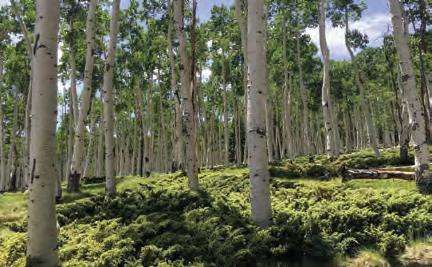
transforming into islands of gold, butter yellow, and orange among the conifers.
If killed by fire, or impacted by insects or disease, aspen stems release hormones that stimulate buds in the root system to start growing. This trait, along with a fast rate of growth, allows the trees to quickly recover. In fact, prescribed fire is a tool used to promote aspen growth. Its rapid growth also makes aspen one of the softest “hardwoods.” Tender new shoots are especially rich in sugars, and are a nutritious food source for wildlife large and small—from moose to a variety of insects, which in turn provide sustenance to warblers and other birds.
My favorite stand of aspens, hidden on a hillside in the Big Holes, has only four trees … er, stems. It was a beautiful, peaceful place to bury the ashes of Lulu the Labrador and Eddie the spaniel, our Henderson Canyon dogs who, I’m convinced, enjoyed the place as much as we did. I still miss them, but I’m glad they’re where they are.
An aspen grove like Pando is a special, magical place. Food for the soul; good for a stroll. It can even inspire poetry. On the spot I compose a rhyme sure to compete (I tell myself, tongue in cheek) with the best of Wordsworth or Frost: “I know it depends on who you’re askin’, But to me nothin’s prettier than a grove of aspen.”







Focus On e Moment

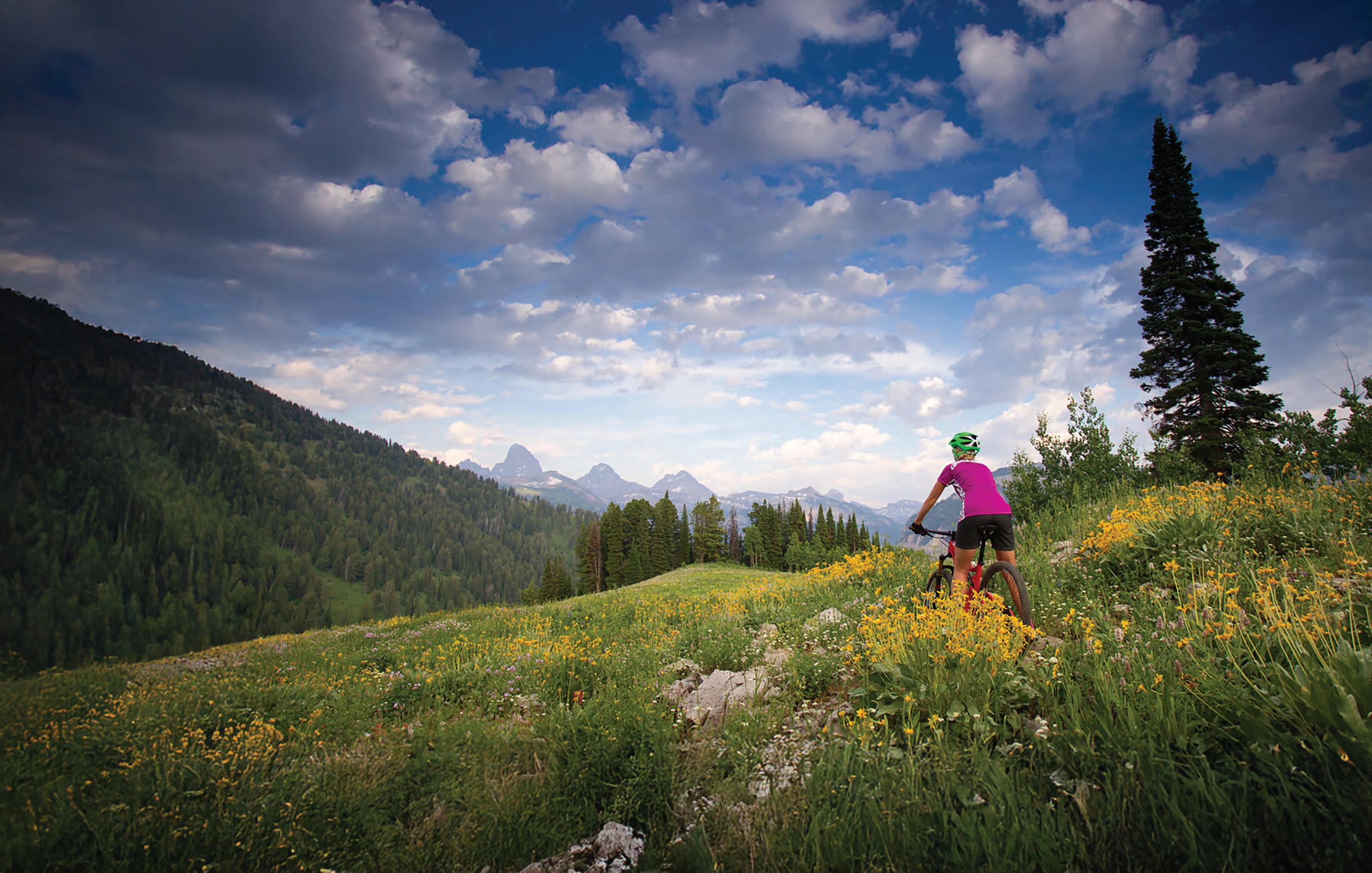

Raised Trail Raised Trail by the by the
Teton Valley’s Youth Cycling Movement Teton Valley’s Youth Cycling Movement


BY CHRISTINA SHEPHERD MCGUIRE
PHOTOS FROM LEFT TO RIGHT: BRIAN KOHAGEN @IDAHOBIKEBRIAN;
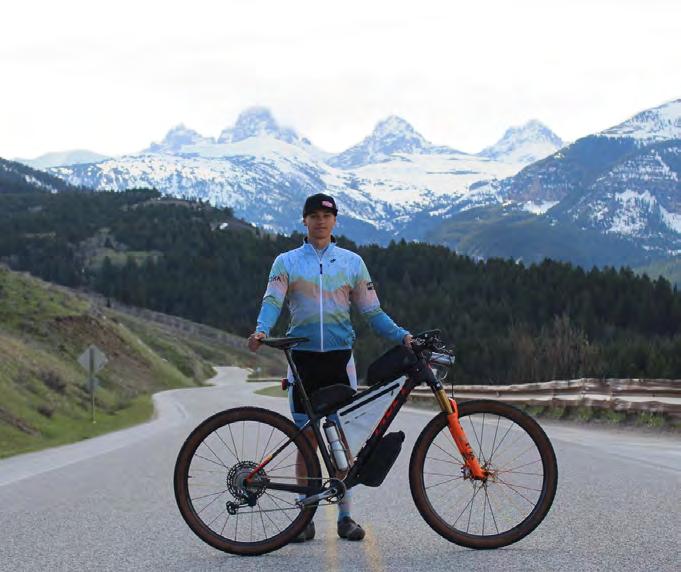
Twenty-year-old ultracyclist Jacob Hora doesn’t worry about the weather when he’s riding his bike long distances. It's a trait he attributes to growing up in Teton Valley.
“A lot of my [cycling] peers complain when the weather is bad,” he says. “For me, it could always be worse. It might be snowing, but at least it’s not windy. It might be windy and snowing, but at least it's not thirty below … It is what it is, and you just do it.”
Fostering Grit
Jacob, who is also a collegiate mountain bike racer, attends Fort Lewis College in Durango, Colorado, where he trains with his varsity cycling team, attending seven to ten races a year. He also competes in three to five ultraraces annually, and says he shines in events over twentyfour hours long (which equates to a little over three hundred miles of riding).
“They have a way of getting kids introduced to racing, while making it fun and not intimidating,” he says. By ninth grade, Jacob had picked up a few sponsors, a private coach, and a trainer and was doing it all— gravel biking, mountain biking, and fat biking in the winter. That’s when he met Jay Petervary, organizer of the local Backyard Series races, including the Fat Pursuit fat bike winter event in Island Park. Jay became Jacob’s mentor and racing partner, and the two completed Jacob’s first 450-mile ultrarace as a team when he was just fifteen.
“I was, for sure, the youngest one doing those races; I’ve always been the youngest one,” Jacob says. “We would ride for the majority of the day, then sleep for five hours, ride and sleep again, and then finish early the next morning.”
“The feeling of finishing one of these events is next level,” he says, when asked where he gets his drive. “There’s something very different about putting it on the line for an hour and putting it on the line for six days … When you recount the distance your legs pushed you, it’s just an amazing feeling, even if you didn’t get the time you wanted. I rarely run into a rider who is disappointed. You’re just stoked that you finished. That’s why we’re all out there.”
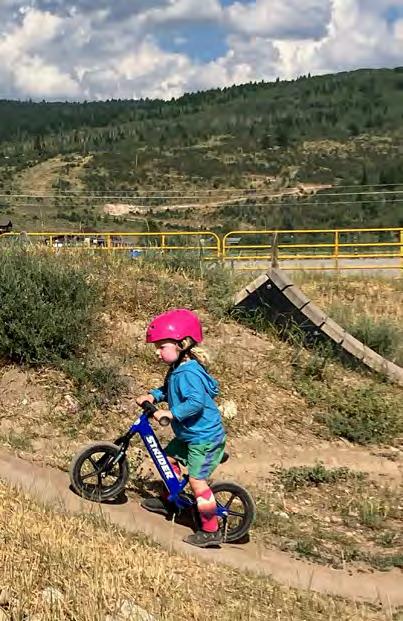
Like many other Teton Valley kids who grew up in cycling families, Jacob started riding a Strider scoot-bike when he was three, and just learning to walk. He got his first pedal bike when he was five, and started racing when he was twelve. In the seventh and eighth grades, Jacob rode his bike every day from his home in Victor to the Teton Valley Community School (now Mountain Academy of Teton Science Schools)—about six miles round-trip.
As Jacob explains, there is no junior category in ultraracing. Still, he’s logged a couple of podium performances in the male division—in the Fat Pursuit and in the Ascend Armenia, a 1,200-kilometer, selfsupported ultra-distance bikepacking race, where he finished third. Jacob has raced in six foreign countries, including Kyrgyzstan, Morocco, Greece, Armenia, Canada, and, as of this past February, New Zealand.
When asked how Teton Valley helped him develop his love for the sport, Jacob says, “We have a strong cycling community. We also have different trail systems for different skills. The level of progression is really nice. A lot of other places don’t have easy zones or progressive lines.”
Establishing the LinEs

Jacob attributes his mountain biking passion to his dad, Derek, with whom he would often ride when he was younger. He says the Teton Valley Composite Mountain Bike Team was the driving force behind his interest in racing.
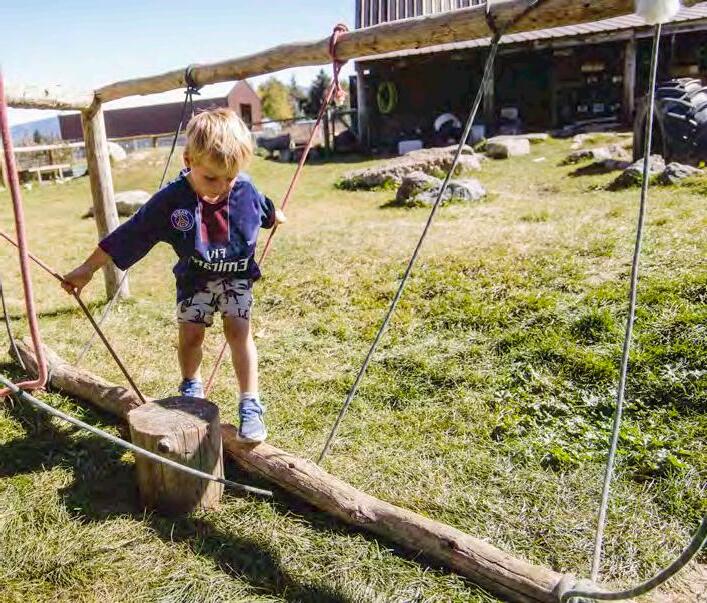
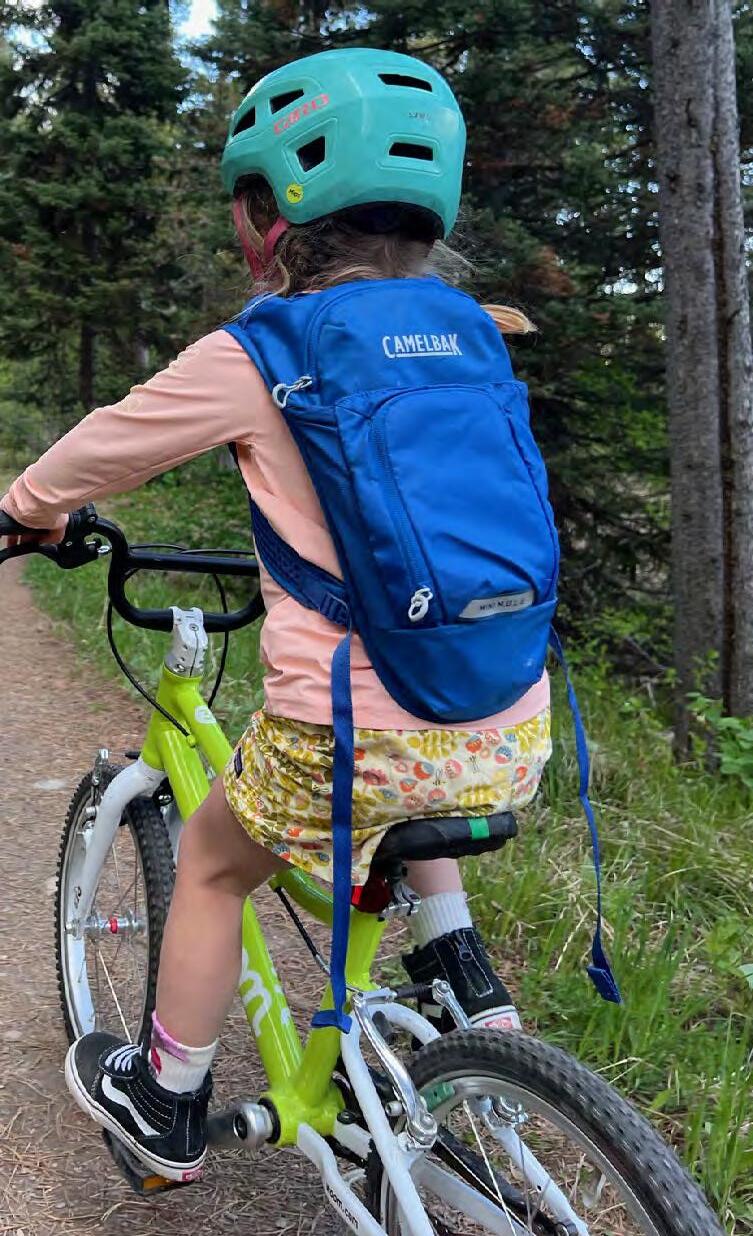
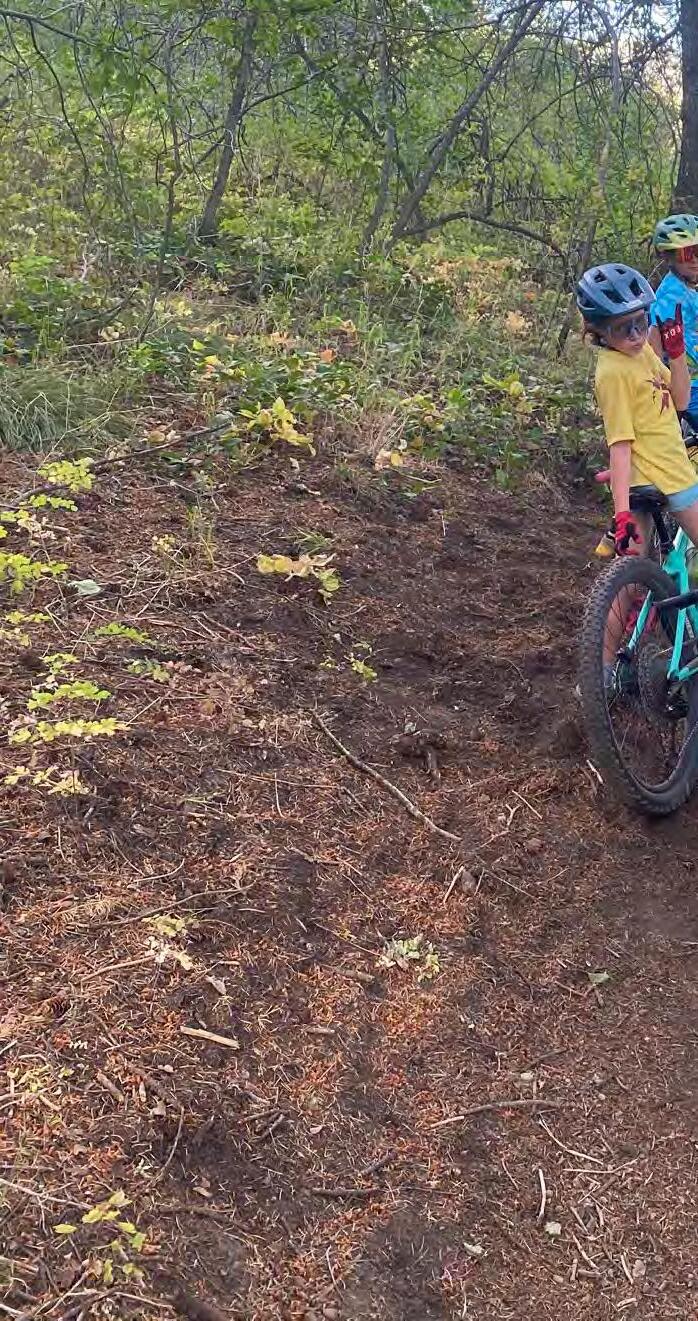
Chris Brule, executive director of Mountain Bike the Tetons (MBT), is all about breaking down the barriers to entry for youth mountain biking, from ensuring the valley has approachable trails and bike parks to designing programs for the youngest enthusiasts. The organization offers successive programs according to age: Teton Junior Riders (ages 4 to 5), Teton Riders (ages 6 to 9), and Teton Ride Crew (ages 9 to 12).
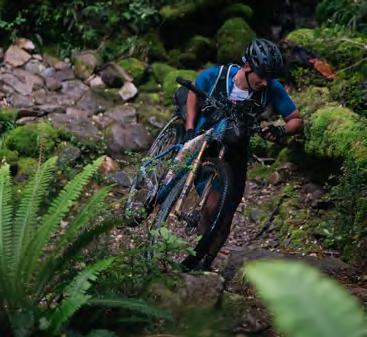
With mountain biking's increasing popularity, organizations have begun offering classes for children as young as four.

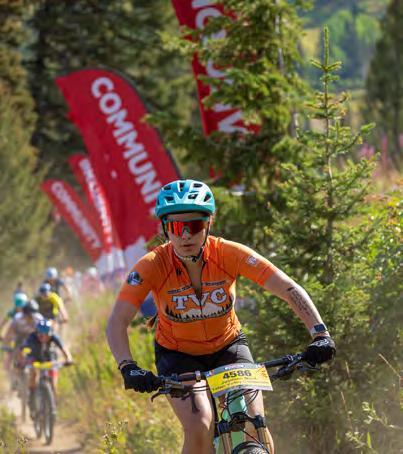
“Our stoke and energy are so high, people really love to be part of the TVC community. And when you love something, you want to bring other people in to share that.”
Jerai Moulton, TVC Team Director

“As mountain biking progressed in the valley, we saw a need to start earlier,” says Chris.
He explains that MBT’s youngest program, Teton Junior Riders, “is all about learning to ride on dirt—teach- ing the foundations of riding and rid- ing in a group setting.” Participants should be able to ride a two-wheeled pedal bike with hand brakes and be proficient on the pavement. This group mostly rides the Victor Bike Park and light, easy singletrack with little elevation gain.
The next age bracket, Teton Riders—MBT’s most popular program —expands the students’ skill develop- ment and “teaches trail respect.” This group utilizes a wider range of trails on both sides of the hill.
The Teton Ride Crew program “provides technical skill growth, while introducing more of a team aspect, as well as trail stewardship,” Chris says. This group rides more advanced trails in Horseshoe Can- yon and down Mill Creek, and par- ticipants looking to dabble in com- petition can sign up and train for the Mike Harris Mini Enduro race.
Chris explains that MBT is an of- ficial Sprockids Leader, a program offered by Giant Bicycles and Liv Cycling, that sends instructors to train MBT’s coaches, including head coaches Andrew Howe (Teton Valley) and Noah Rial (Jackson), on their cur- riculum.
“We’ve seen a lot of kids progress through the program since we intro- duced it in 2018,” says Chris.
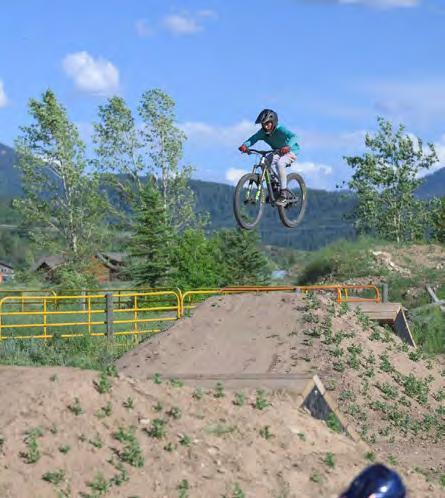
In addition to offering youth les- sons and maintaining the region’s robust singletrack network, MBT’s flagship family-friendly venue is the Victor Bike Park. MBT completed a Phase 1 revival—a $100,000 project— that expanded the park’s footprint to add a skills loop, and rebuilt the exist- ing dirt jumps.
Phase 2, a $175,000 project for which the organization has raised partial funding, includes redesigning and reconstructing the pump tracks.
In Phase 3, MBT will partner with the City of Victor and the Victor Skatepark Foundation to add infra- structure like bathrooms, water foun- tains, a pavilion, shade structures, garbage cans, and landscaping.
The [Victor Bike Park] is definitely meant for all ages,” says Chris. “My kids started riding the park when they were two years old on kickbikes … There are also fifty-year-olds riding the jumps and the pump tracks. It’s a great place for early- and late-season riding and developing skills.”
MBT is poised to provide future outreach programs to local public schools, offering safety information for elementary and middle-school- aged kids, as well as teaching basic bike repair, which they have already incorporated into their Teton Riders program.
As far as the best singletrack rid- ing for kids, Chris says the Southern Valley Trails are fantastic. “The trails are not super technical, and there are smaller loop options.”
He also says he loves taking his kids up to Grand Targhee. Ava, age seven, is already participating in the MBT programs, and he says the social aspect of riding “makes a big differ- ence.”
Chris’ son Thatcher, age three, is just learning to pedal a bike, and Chris says the key is to “keep it light” and have ample gummy bears and chocolate in his pack.
“It can be challenging to get the kids out the door,” he says, “but once they're on their bike, it’s all good. It’s kind of like skiing—it’s an investment in their recreational future.”
Building Community
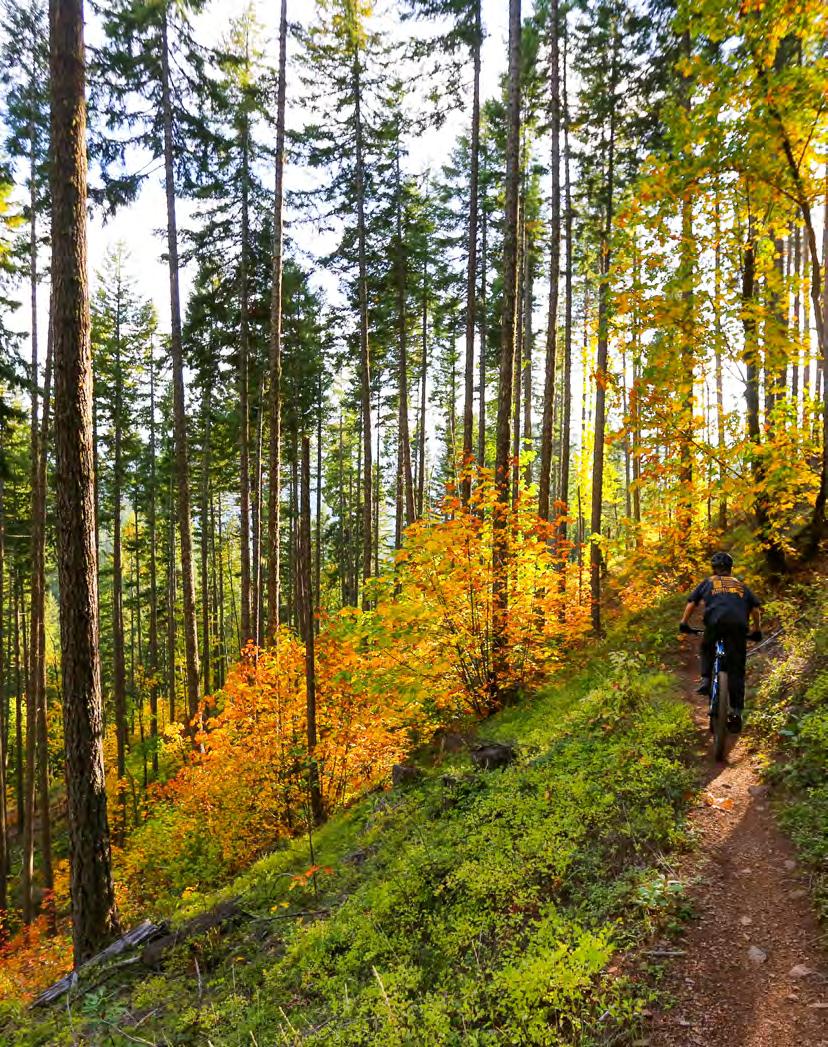
“The goal is to develop a resource that involves an asphalt pump track that’s more inclusive and progres- sive, and requires less maintenance,” says Chris.
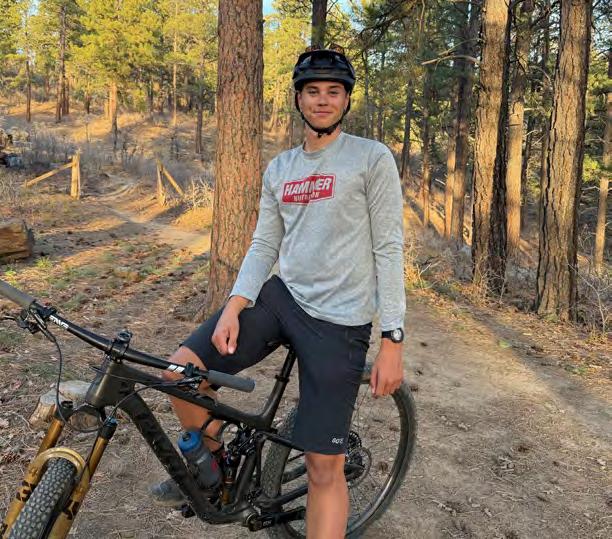
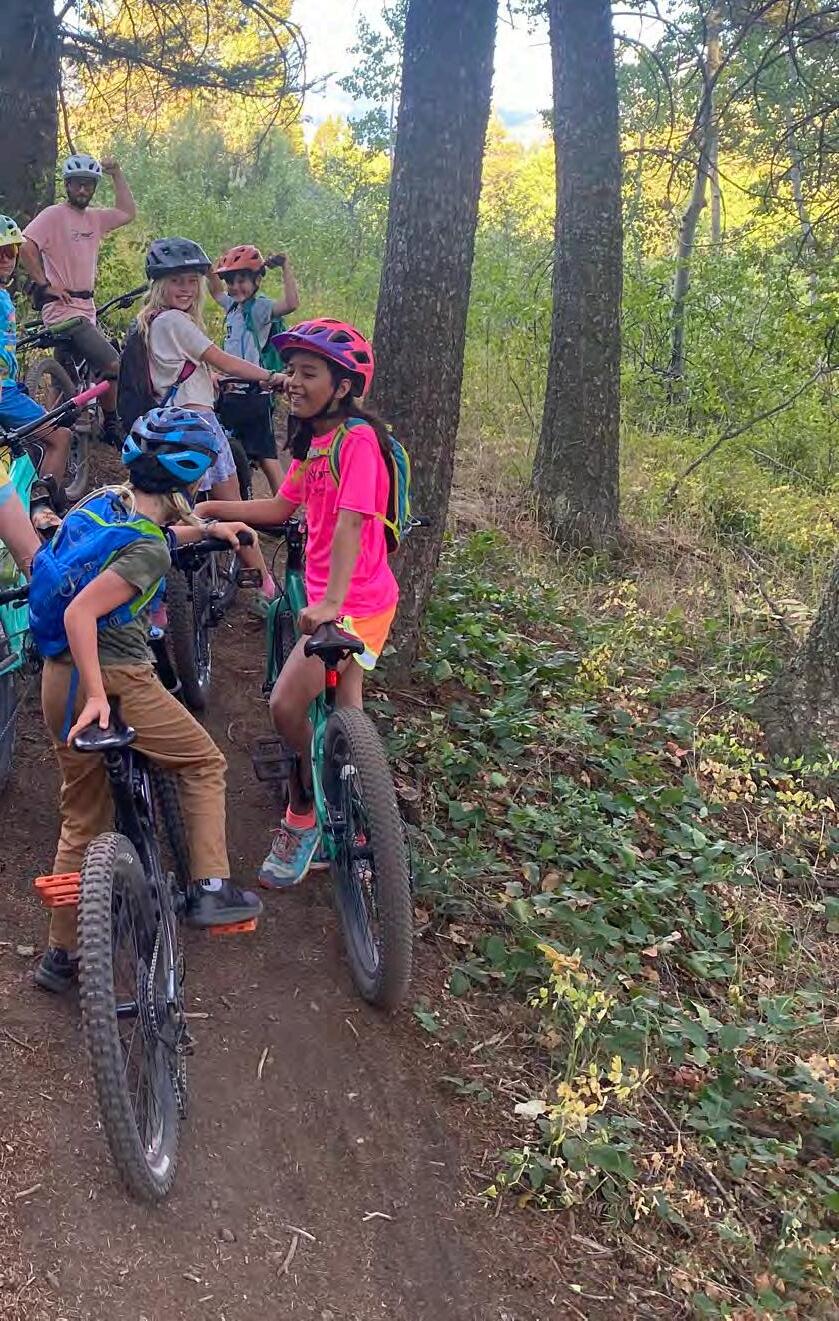
Inclusivity forms the backbone of the Teton Valley Composite Moun- tain Bike Team (TVC). This group of sixty-seven kids, grades sixth through twelfth, trains all summer long in preparation for the NICA (National Interscholastic Cycling Association) races that start in the fall. Still, kids don’t have to compete to be on the team—they don’t even need prior mountain biking experience.
“We train any level at any age,” says John Kromis, TVC’s head coach.




“We’ve had high schoolers come in who have never ridden a bike before—it’s cool to watch them progress so fast.”
There is no separate registration for competitive versus non-competitive team. Often non-racing kids experience the excitement at the season’s kick-off race at Grand Targhee and end up wanting to join in.
Team director Jerai Moulton says TVC’s biggest draw is word of mouth, and the team kids and their parents form one big “mountain biking family.”
“Our stoke and energy are so high, people really love to be part of the TVC community,” she says. “And when you love something, you want to bring other people in to share that.”
Part of TVC’s vision of “empowering youth in cycling” involves removing the financial barrier. The team offered three scholarships last year and is prepared to offer more, should demand increase. TVC also provides loaner bikes and has mechanics on hand (like Frank, a former team manager and lead mechanic for Giant on the pro mountain bike circuit) who encourage upgrades and help source parts.
“Last year, we had kids show up on unsafe bikes, and others that were on bikes that were too small, ” says Jerai. “It’s great to have the loaner fleet to take the pressure off of parents who may wonder if their kid is going to take this seriously.”
The team trains on the Southern Valley Trails and at Grand Targhee, with optional high school racetraining days. And if you’ve ever shared the trail with them, as I have, you’ve heard their hoots and hollers as they come around the bend. The stoke truly is contagious, and being part of this team is an important part of their development as both athletes and people.
Frank Trotter, coach and father of TVC team members Anika, age fifteen, and Tyler, age seventeen, agrees.
“Prior to our kids joining NICA, they had a narrow friend group, and then the team expanded their friends tenfold,” he says. “That was so valuable in the development of our kids, because now they have a family through the team. It really got them out of their box.”
Jerai says it’s fascinating to see the older athletes’ influence on younger riders, and that the spirit is always positive.
John Kromis says it’s “awesome” to watch the team at their home race weekend at Grand Targhee. He notes that, while the TVC team is not the biggest, “we are definitely the loudest.” To which Jerai adds, “the kids take pride in wearing their jerseys and screaming for everyone, not just their teammates.”
Even though TVC is not directly affiliated with the high school, the kids still get high school varsity letters. To earn their letter, they need to volunteer at trail days. As such, the team spends time digging, shoveling, and building trails for the community. Jerai says being a trail steward means “having some skin in the game.”
“There are all the highs and lows,” says Frank, “and when your kids are on the podium, it’s pretty amazing to see that the work they put into it paid off on the course.” He says his best days on the trail involve ending practice with a Mill Creek downhill lap with his kids.
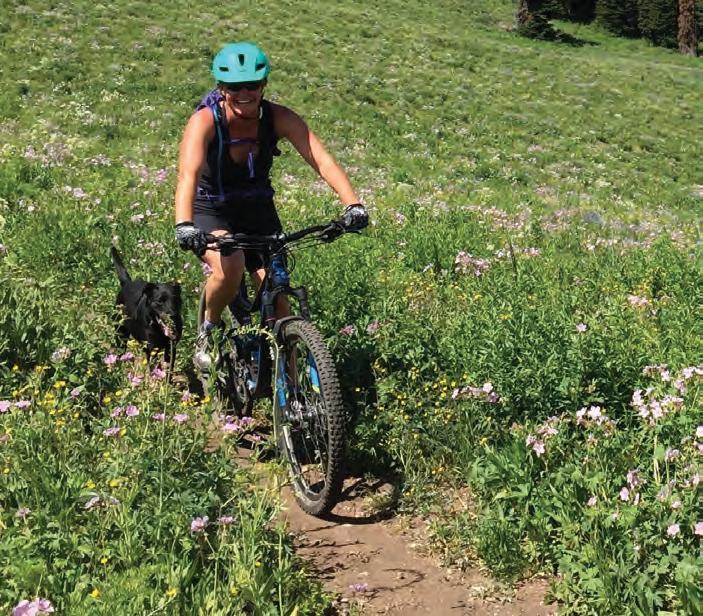
Similar to skiing expectations, some of these Teton Valley mountain bikers didn’t have a choice early on when it came to getting on their bike.
“It’s cool to watch the kids if they are ‘sessioning’ something, because everyone gets off their bike and cheers on that rider. It’s like that support of ‘catch me if I fall,’” she says. “It creates a really safe place to learn and grow.”
But today, Anika and Tyler, along with Jacob and the entire TVC team, show that a little power of suggestion, combined with amazing resources and camaraderie, can create a lifelong love of cycling—one that cannot exist separately from place.
One idea that parents and instructors alike emphasize again and again is the camaraderie that young cyclists find with their teams.
Who’s Running this Place?

America’s birthday this year is a big one. Two hundred and fifty years since the signing of the Declaration of Independence. Remember high school civics? Separation of powers, three branches of government, power of the purse. These are all terms you hopefully learned when a tired educator taught you about the system the founding fathers put in place: federalism. Under federalism, states manage their own affairs, but voters elect the president, senators, and congressional representatives to oversee the federal government. Think of it like a school: The principal runs the building, but teachers manage their own classrooms. Did civics teach you about local government? Hopefully yours did, but many don’t get into the nitty-gritty. That’s frustrating, because local officials have way more impact on our daily lives than those inside the Capital Beltway do. I’ve had to learn, as a community member and journalist, how the layers of local government do and don’t overlap. In case this is new to you, or if you just need a refresher, let’s talk about who’s running what around here.

LOCAL CIVICS 101: A primer in hometown politics
BY TOM HALLBERG ILLUSTRATION BY ALEX NABAUM

County Officials
BOARD OF COUNTY COMMISSIONERS
CONSTITUENTS: All county residents, but the commissioner must live in their district TERMS: Two or four years, staggered so that no more than two seats are on the ballot in any given year
Every eligible Teton Valley resident can vote in all county commission elections, though an elected commissioner must reside in the district they represent (this is true for many county seats). Commissioners approve the county budget, and they oversee building, public works, and emergency management. They can pass legislation to change county laws and regulations, including local land use. You might feel inclined to yell at them about potholes, but first check out where the divots are. Commissioners are only responsible for fixing county roads, not those in cities (blame city council and the mayor) or major highways (blame the Idaho Transportation Department).
ASSESSOR
CONSTITUENTS: All county residents TERM: Four years
Assessors assign the value to all property, essentially figuring out how much property tax money the county will take in each year. However, assessors don’t set the level of taxes—county commissioners and the voterapproved taxing districts determine your total bill.
CLERK
CONSTITUENTS: All county residents TERM: Four years
Teton County Clerk Kim Keeley says her office encompasses five jobs: Clerk of the District Court, Auditor, Recorder, Clerk of the Board of County Commissioners, and Chief Elections Officer. The position oversees records like passports and marriage licenses, creates the county’s annual budget, manages the district court, facilitates elections, and helps run public meetings. It’s the busiest county office that you never think about. “It's a lot of stuff that, if it doesn't get done, the county grinds to a halt,” Kim says.
TREASURER
CONSTITUENTS: All county residents
TERM: Four years
The treasurer sends you mail each year. Nice, right? Their office puts out property tax bills, then collects the funds. You can’t blame them for your tax hit, either. They’re simply the bank teller and don’t set tax rates or amounts. That’s still on county commissioners and voters themselves.
SHERIFF
CONSTITUENTS: All county residents
TERM: Four years
Even if you live in Victor, Driggs, or Tetonia, the sheriff is your top lawman or -woman. Teton County’s cities don’t have their own police departments, so they contribute money to the Teton County Sheriff’s Department to cover countywide enforcement costs. The sheriff oversees a team of deputies who do most of the on-theground police work. He or she also sets policies for community engagement and enforcement priorities, and is the intermediary for the county commission.
PROSECUTING ATTORNEY
CONSTITUENTS: All county residents
TERM: Four years
The prosecuting attorney handles civil and criminal cases for the county and the City of Victor from both sides of the coin, prosecuting accused offenders and defending the county in lawsuits. The office provides legal advice and support to other arms of county government and works closely with the sheriff’s department, with lawyers available twenty-four hours a day for deputies to consult. When asked, the attorney’s office also researches and writes new ordinances for commissioners to consider, as happened with the recent juvenile curfew and runaway laws.
CORONER
CONSTITUENTS: All county residents
TERM: Four years
The coroner’s main role is to determine the manner of any death that occurs absent a primary care physician—so, in cases of homicide, suicide, and other unexplained deaths. They do not need to perform autopsies and can order a medical examiner to do them. Coroners work with families to obtain legal documentation and navigate the process when someone dies. As an elected official, they are not required to have medical credentials, though they must complete annual continuing education. So, anyone can be coroner. Maybe even you.

“The most rewarding part is meeting with constituents, community partners, and our county staff. We have so many wonderful, devoted people in this community, and it's a pleasure to get to work with them.”
TETON COUNTY COMMISSIONER DAN POWERS
City Officials
(Victor, Driggs, and Tetonia)
MAYOR
CONSTITUENTS: All residents within city limits
TERM: Four years
“The mayor is the CEO of the town,” says Driggs Mayor August Christensen. Mayors oversee the staff in each city department, like public works, and are tasked with managing large-scale projects. For example, August recently shepherded plans for a new wastewater treatment plant. The mayor acts as the city’s representative in front of local, regional, and state entities, from other city councils to associations of water users. “I advocate for our town’s people and businesses,” August says. It’s important to note that while the mayor runs city council meetings, he or she only votes on legislative or development matters when the four-person council is tied in a 2-2 vote.
CITY COUNCIL
CONSTITUENTS: All residents within city limits; elected at-large in Teton Valley TERMS: Four years, with two seats on the ballot every two years
City councilors are the main decision-makers in Idaho towns. They hold legislative and quasi-judicial power, so they pass budgets, create new laws, approve development proposals with the advice of their respective planning and zoning boards, and appoint members of volunteer boards. Within the bounds of the Comprehensive Plan, they direct development and community amenities for their cities. Like other elected officials, they sometimes catch the ire of constituents in public comment when residents disagree with their decisions.
“I want people to know that, at this level, we are just your neighbors, not ‘government.’ I wish the public understood that a lot of their frustrations and complaints are due to policy and statute at a state level.”
TETON COUNTY TREASURER LIZ CARD
District-Level Elected Boards
TETON COUNTY RECREATION DISTRICT
CONSTITUENTS: Voted on by all county residents; commissioners must live in their district
TERM: Four years
Representing Teton Valley’s newest taxing district, this board allocates money for recreation resources to city and county government, as well as to nonprofits that provide recreational services. Commissioners have broad authority to decide how money is spent and what falls under the definition of recreation. So far, this body plans to act as a pass-through that distributes money but doesn’t run programs.
TETON SCHOOL DISTRICT 401 BOARD OF TRUSTEES
CONSTITUENTS: District residents
TERMS: Four years
The Teton School District 401 Board of Trustees approves the budget, hires teachers, and sets policies for schools across the district. Principals and teachers manage their individual schools based on guidance from the board. For a corporate-minded analogy, the superintendent is the manager, the principals and teachers are the employees, and the school board is the board of governors.

TETON
COUNTY FIRE PROTECTION DISTRICT
CONSTITUENTS: Residents of their specific district; three districts in Teton County
TERM: Four years
Much like the sheriff’s office, the Teton County Fire Department covers the entire county, including the cities of Victor, Driggs, and Tetonia. It is a taxing district that raises funds, sets the budget, and runs the day-to-day operations. It might be safer than rushing into burning buildings, but, for commissioners, navigating complex intergovernmental relationships is its own kind of heat.
Five Steps for Getting Involved
1. Find issues or projects you are interested in.
2. Read agendas and meeting materials on the city or county website for those issues.
3. Prepare testimony that is fact-based and will outline your concerns in less than three minutes at the microphone. Bonus points for finding inconsistencies with city or county code.
4. Attend meetings when officials are reviewing projects or issues you care about.
5. Give testimony during public comment.

“The biggest challenge I face as mayor is making sure I am keeping the sewer working, the water running, and the roads in good shape with our limited budget. It is difficult to learn about each facet of running a city so that I can make good decisions. Meeting our residents' many needs is sometimes a challenge. Preparing for growth can also be a challenge.”
TETONIA MAYOR BRENT SCHINDLER

BY
TETON VALLEY SUMMERS REVERBERATE WITH LIVE MUSIC, FROM TOP-TIER FESTIVAL ACTS TO COFFEE SHOP CROONERS.

While Teton Valley summers are celebrated for scenic hiking, endless mountain biking, renowned fly fishing, and outdoor fun for all, another draw is quickly rising to the top of the list: the live music scene. Mainstays like Teton Valley Foundation’s Music on Main and Grand Targhee’s Bluegrass Festival (along with the return of Targhee Fest!) have long anchored the local music landscape, and the calendar is also jam-packed with events worthy of breaking out your lawn blanket and dancing shoes.
From Rise Coffee’s concerts on the lawn and Wydaho Roasters' talent-packed open mic nights to Downtown Driggs Association’s Downtown Sounds and the Tetonia Club and Knotty Pine's rocking late-night shows, there is live music of all genres and concert vibes. Photographer Linda Swope captures an at-a-glance look at the excitement and color radiating from Teton Valley’s live music scene. We’ve only just scratched the harmonious surface!
KATE HULL PHOTOGRAPHY BY LINDA M SWOPE

The Driggs City Center stage comes alive during DOWNTOWN SOUNDS. This summer music series features an eclectic lineup paired with a laid-back atmosphere, creating a community favorite each season.


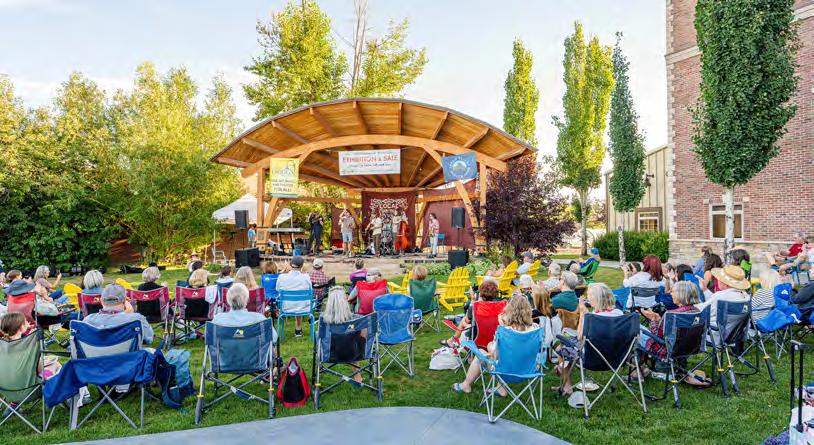
In addition to their world-class summer schedule of classical music held in Jackson, GRAND TETON MUSIC FESTIVAL hosts special events in Teton Valley to bring classical music to both sides of the Tetons.
RISE COFFEE HOUSE hosts Music in the Garden most weekends in the summer with acts like The Balsamroots, Henry Pepin, and more. Order a coffee and take in local talent.

PHOTO:
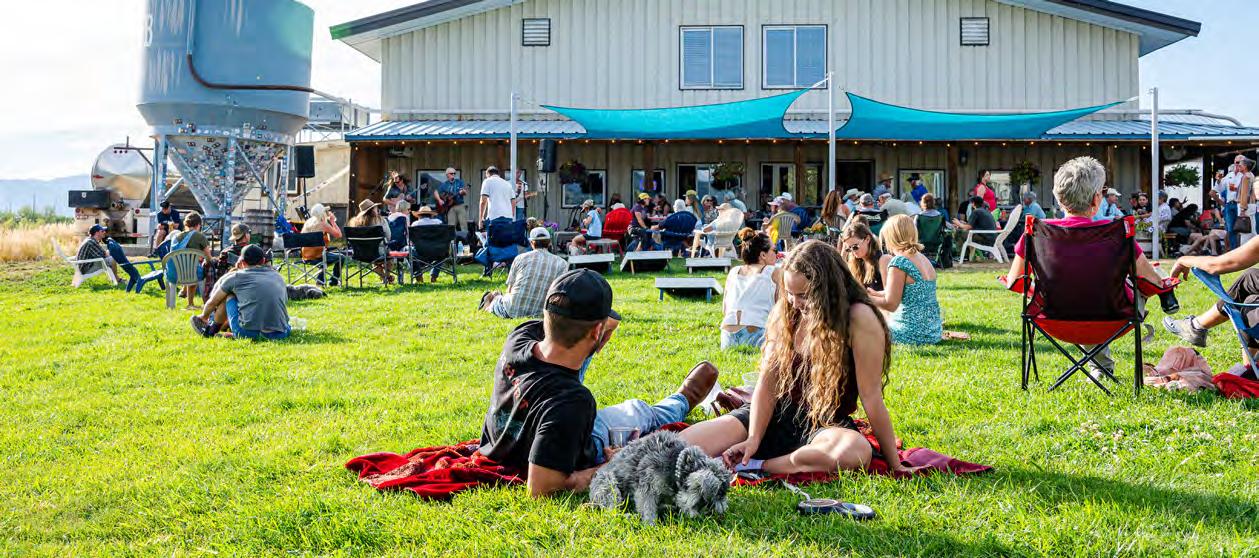


Catch A Show
The calendar is indeed packed with must-see music! Here are some highlights for a rocking good time in Teton Valley.
Teton Valley Favorites
MUSIC ON MAIN
Victor City Park
Thursdays, June 18 – August 13
Teton Valley Foundation’s communitysupported music series is the epitome of summer nights in Victor. Expect diverse performances, tempting food trucks, and a family-friendly evening.
DOWNTOWN SOUNDS
Driggs Plaza
June - September
Downtown Driggs Association’s (DDA) summer music series features eight free concerts on the Driggs Plaza. Don’t miss their collaboration with the Grand Teton Music Festival on July 20 or the Big Hole Arts Festival in July and August, in partnership with Teton Valley Foundation. Save the date for July 26: DDA is kicking off the 15th Annual Driggs Plein Air Festival with a night of high-energy gypsy jazz by Aaron Ashton Band beginning at 6 p.m.
LIVE ON THE LAWN
Grand Teton Brewing, Victor
June – August
Grand Teton Brewing’s summer concert lineup is perfectly paired with a local brew and burgers from the on-site food truck, Otto’s.
It’s not just movies on the big screen at PIERRE’S THEATRE. Performances by renowned classical musicians and intimate concerts frequent the calendar lineup.
It’s a rocking good time during GRAND TETON BREWING’S Live on the Lawn concert series. Live music plays while Otto’s Kitchen serves up delicious food.
Coffee shop crooners hit the stage at WYDAHO
. Open mic nights with incredible local talent are held weekly on Wednesday evenings.





From the TETONIA CLUB’S late-night shows to special events at VICTOR’S GUIDEPOST BREWING, there’s so much live music to choose from in Teton Valley.
ROASTERS
2026 kicks off the twenty-first season of Teton Valley Foundation’s MUSIC ON MAIN outdoor concerts. The lineup features a diverse range of genres from Cuban mambo to southern rock and soulful R&B.



TETONIA CLUB
Tetonia
A year-round calendar of live performances makes this a hot spot for music lovers. Come summer, shows rock the outdoor stage late into the night. Catch regional acts, open mic nights, intimate sets, and more at Teton Valley’s first bar.
KNOTTY PINE
Victor
A long-time Teton Valley live music hub, catch incredible acts this summer like James McMurtry and Andy Frasco and the U.N. after a plate of Kansas City-style barbecue.
RISE COFFEE HOUSE
Driggs
Sip a coffee and enjoy live music in the garden weekends from 10 a.m. to noon during the summer.
WYDAHO ROASTERS
Driggs
Locals take the stage at open mic nights on Wednesday evenings, while acoustic singersongwriters delight with regular performances best enjoyed over a latte.
GUIDEPOST BREWING
Victor
Don’t miss rotating live shows and open mic nights, as well as swing dancing nights.

This summer marks the return of one of the best festivals in the West: TARGHEE FEST, featuring two days of rocking performances by national acts like Charley Crockett and the Wood Brothers.

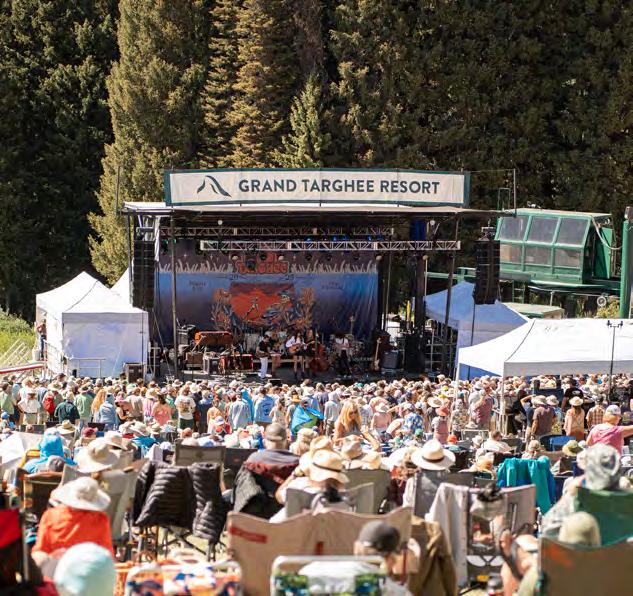
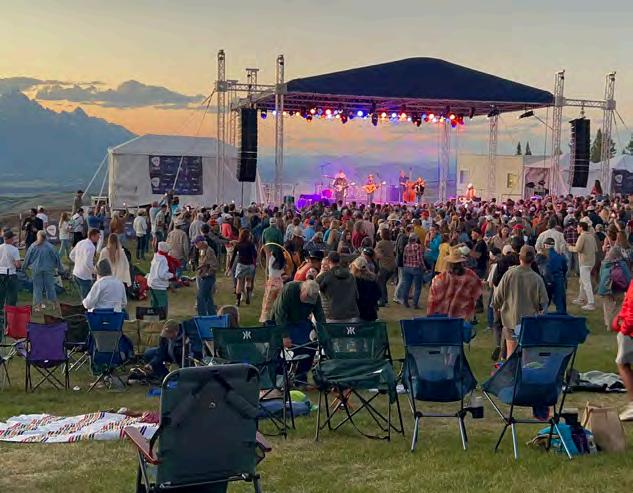
GrandResortTargheeFestivals
Alta, Wyoming
TARGHEE FEST
July 10 & 11
The long-awaited return of one of the best festivals in the Mountain West! Two days of incredible performances from Ryan Bingham, Marcus King Band, Larkin Poe, and more.
TARGHEE BLUEGRASS FESTIVAL
August 7 – 9
Three days of some of the hottest bluegrass acts like Tim O’Brien, Yonder Mountain String Band, and Sierra Ferrell.
Over the Hill: Jackson Staples
GRAND TETON MUSIC FESTIVAL
Teton Village, Wyoming
July 2 – August 15
Experience seven weeks of world-class chamber music led by Music Director Sir Donald Runnicles, now celebrating its 65th season. Highlights include performances by world-class soloists and ensembles, free family-friendly concerts, and events at venues throughout the Tetons while the famed Walk Festival Hall is under renovation.
KING CONCERTS
Jackson, Wyoming
June - August
For this summer series, getting there is part of the experience. Soar up the scenic gondola ride to the summit of Snow King Mountain for the show. This year's line up includes celebrated acts like Alabama Shakes, the Black Keys, O.A.R., and more.
CONCERTS ON THE COMMONS
Teton Village, Wyoming
Sundays, July – mid-August
Top off a summer day with free live music in the outdoor music venue at the base of Jackson Hole Mountain Resort.
TETON COUNTY FAIR
Teton County, Wyoming, Fairgrounds
July 22
Trailblazing guitarist, singer, and Grammywinning songwriter Molly Tuttle will kick off the evening before musical standout Charles Wesley Godwin takes the stage, bringing his raw, soulful sound to the Teton County Rodeo Arena for a fun, music-filled night at the fair.
Research conducted in Yellowstone has effects both inside and beyond the national park’s borders
The S cience Yellowstone
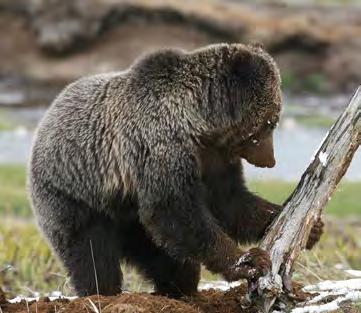

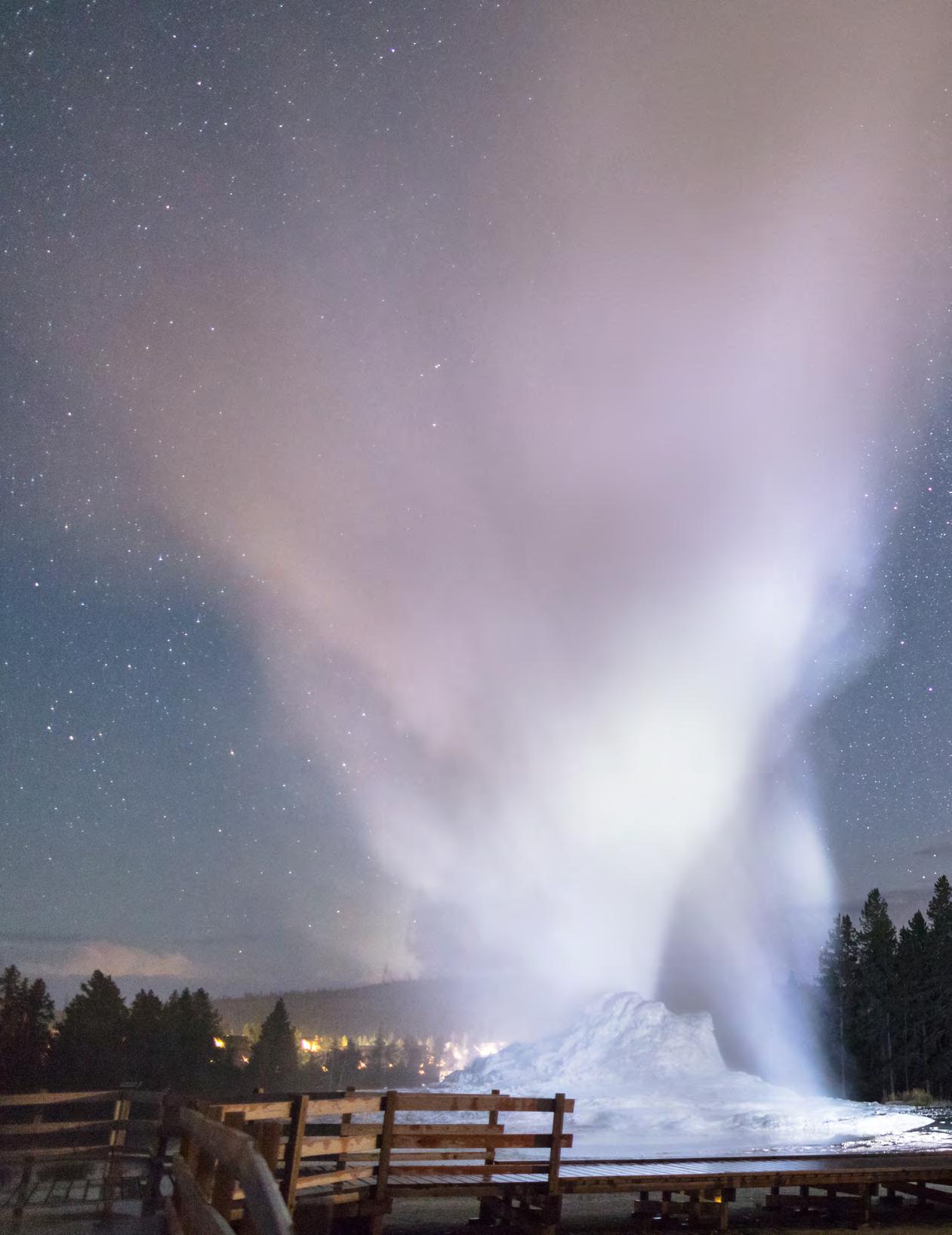
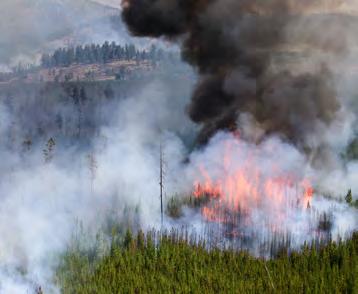
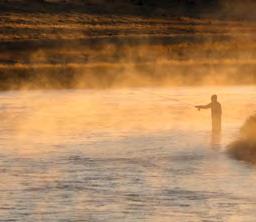

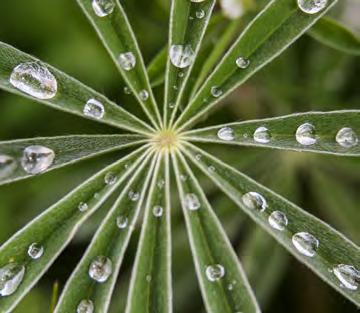
cience of Yellowstone
BY KRISTEN POPE
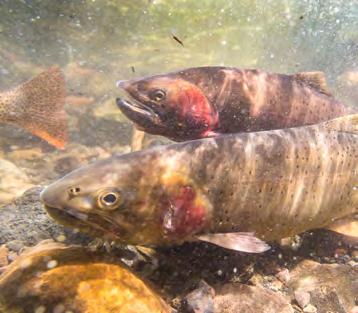
NPS/NEAL HERBERT
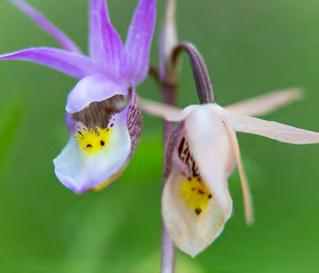
NPS/JACOB W. FRANK

NPS/NEAL HERBERT
NPS/JACOB W. FRANK NPS/NEAL HERBERT
FRANK

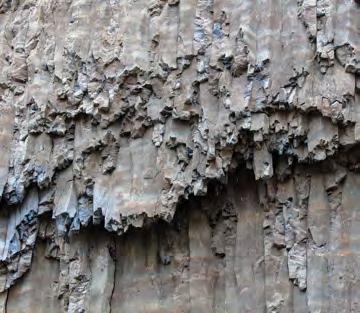
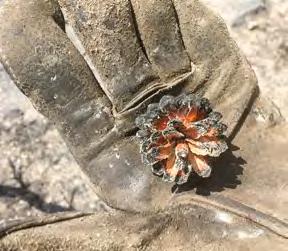
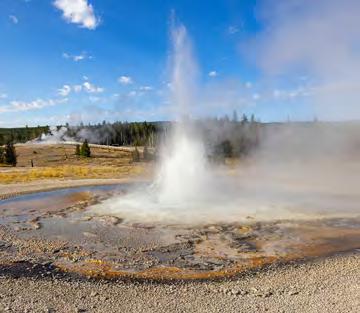
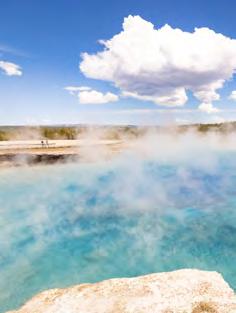
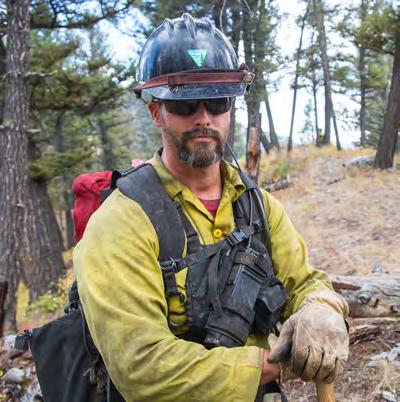

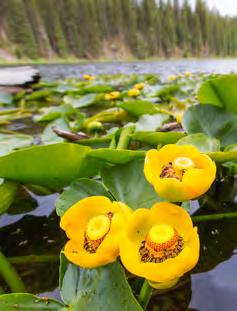
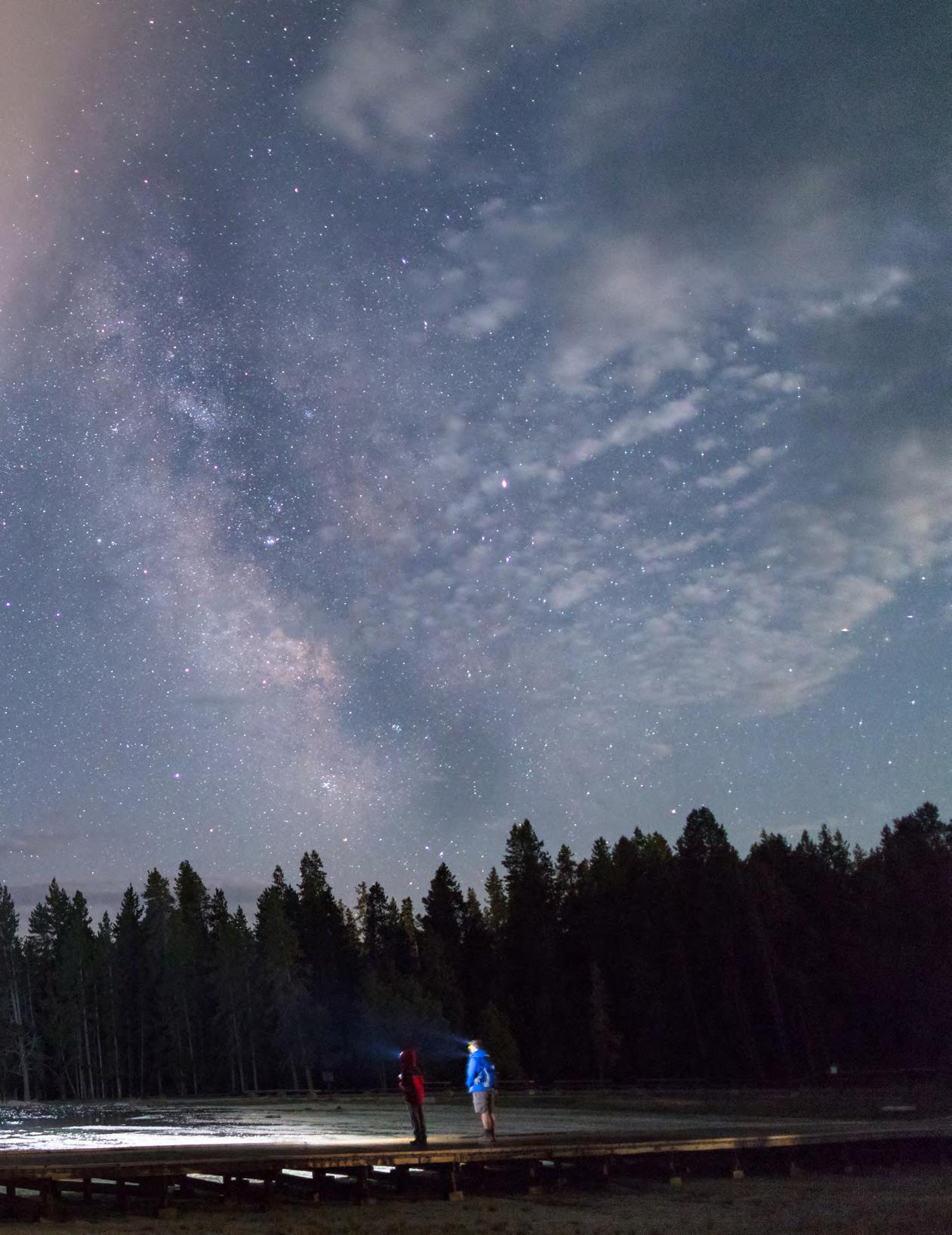
W. FRANK

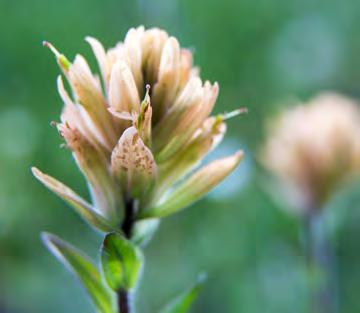
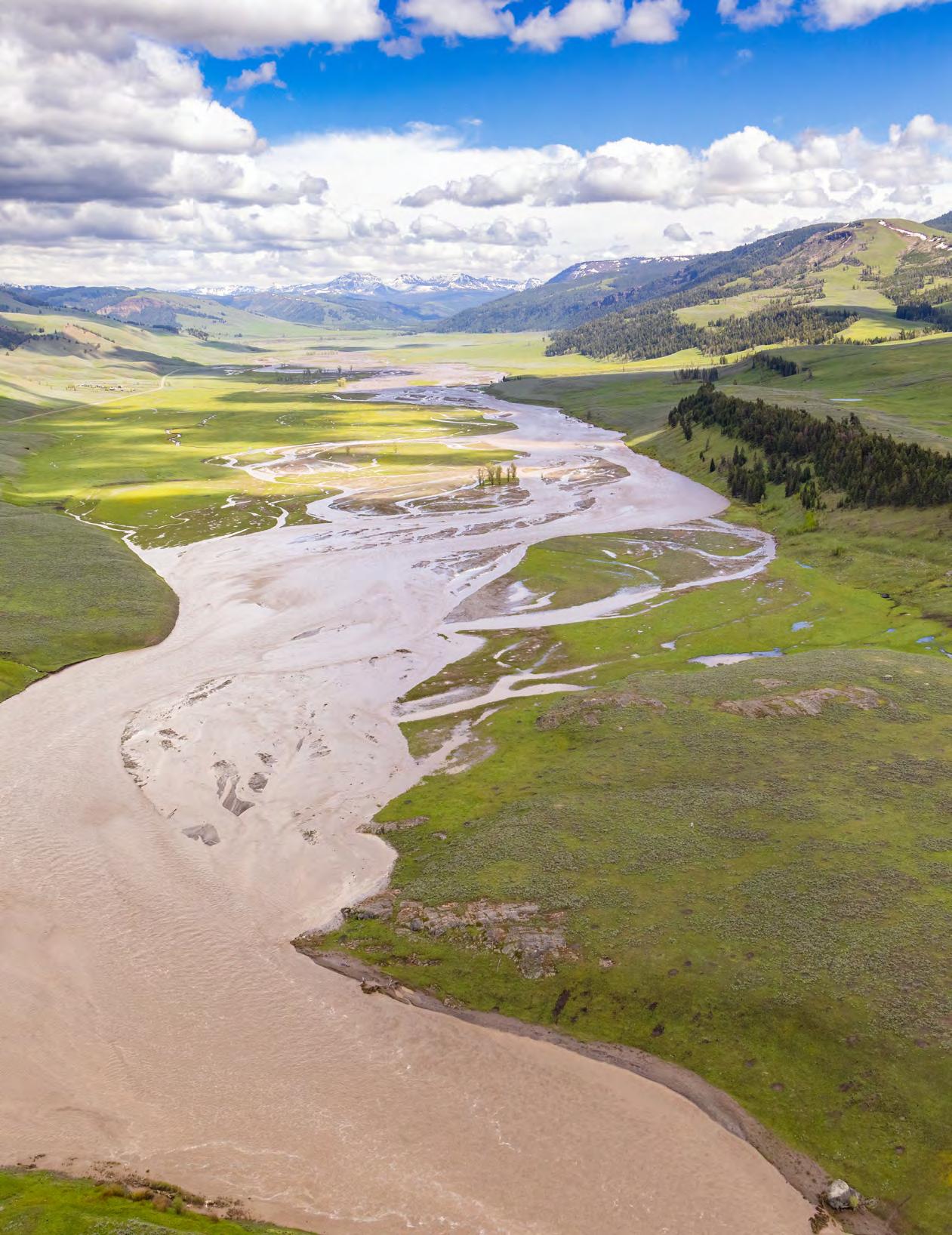

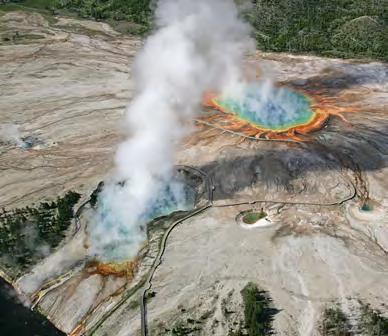
NPS/NEAL HERBERT
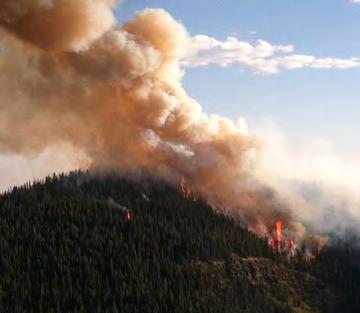

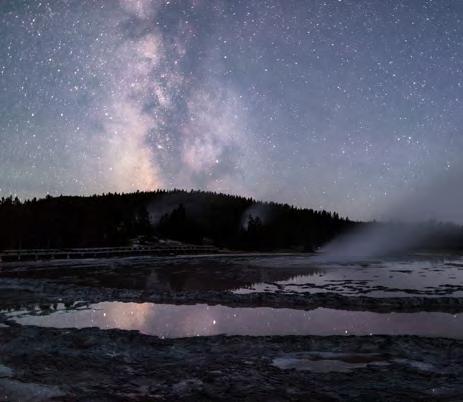
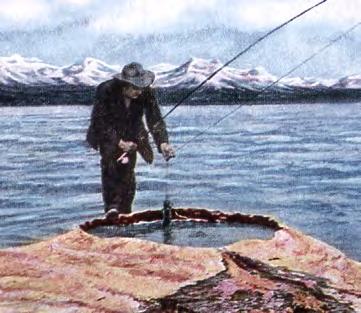

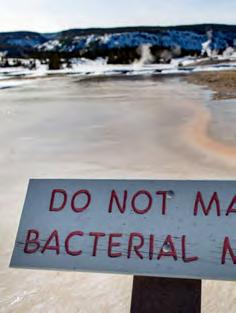
With its vast diversity of flora and fauna both mini and mega—from wild white geraniums to whitebark pines; hummingbirds to bison herds—along with more than ten thousand hydrothermal features, Yellowstone National Park is an incredible and unique place to visit. More than 4.7 million visitors came to explore in 2024 alone. It is also an invaluable resource and living laboratory for scientific study
Scientists research an array of topics in Yellowstone, including wildlife evolution and adaptation, seismic activity and volcanism, and the microorganisms thriving in the park’s hydrothermal features. Work here has led to scientific predictions and breakthroughs, and even a Nobel Prize in Chemistry.
Each year, more than a hundred research permits are issued to scientists, who work under the supervision of National Park Service staff to conduct studies in biology, microbiology, ecology, geology, physical sciences, and more. Many additional scholars utilize the resources housed in the Yellowstone Heritage and
Research Center in Gardiner, Montana. Among other features, the center includes a strictly monitored herbarium that boasts more than 17,000 current and historic specimens of fungi, lichens, and plants. These are available to loan to accredited institutions.
Keeping people safe in the park is a key objective of much of the research that takes place in Yellowstone, from learning the best practices for managing wildlife, to monitoring geologic activity, to planning infrastructure in light of potential climate-related environmental changes.
NPS/JACOBW. FRANK;
NPS/JACOBW. FRANK
NPS/JACOB W. FRANK
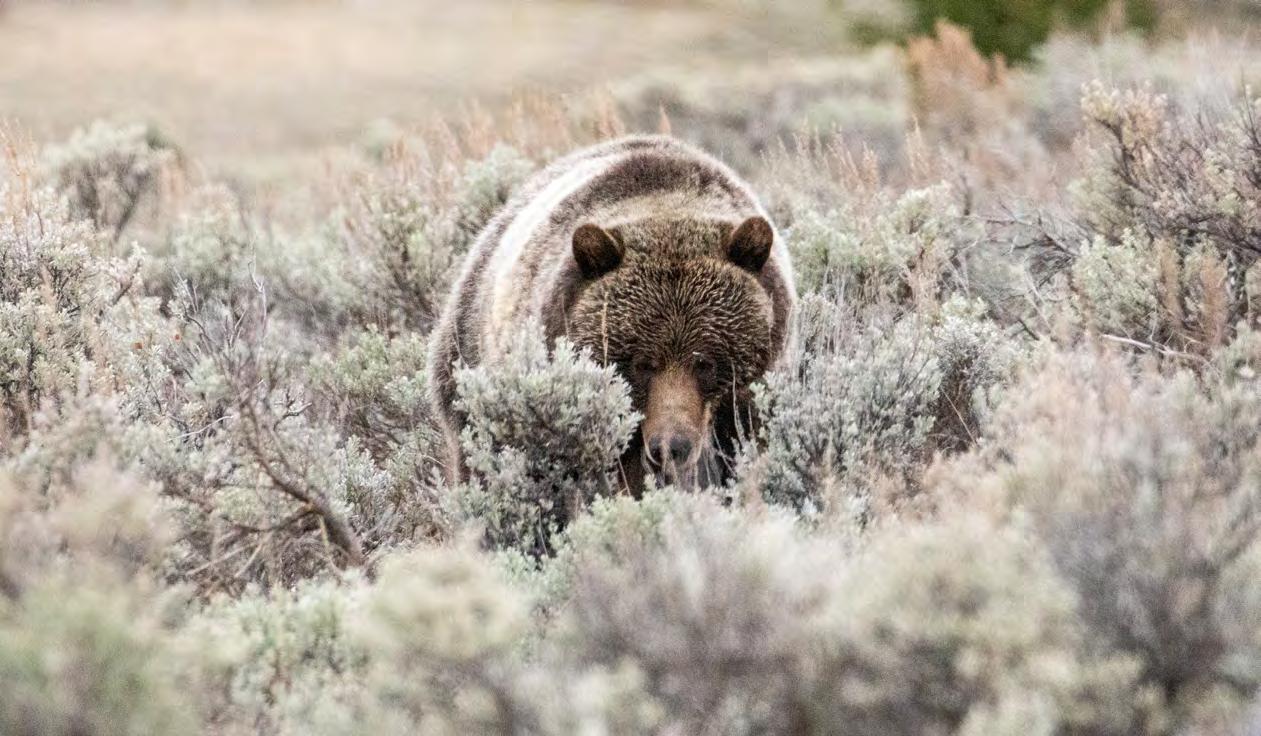
“Yellowstone National Park is a great lab for looking at how systems work without much human influence.”
Kerry Gunther, bear management biologist
Sanctuary for Wildlife
With herds of free-roaming wild bison and elk, the rare wolverine, bald eagles, and bears—both black and grizzly—Yellowstone is a renowned haven for wildlife, making it one of the best places in the world to research certain species and how they interact with their ecosystem.
visits a year now, almost all of that visitation is just roadside and [at] developments, so the backcountry is still pretty wild and pristine,” he says. “The park is a great lab for looking at how systems work without much human influence.”
FRANK
“We have the whole suite of wildlife that was here even before the park was established,” says Kerry Gunther, bear management biologist for the park. “Wolves and grizzly bears and cougars have been eliminated from a lot of places in the country. We still have all those carnivores as well as the ungulates that they prey on.”
Kerry, who began working in park bear management in 1983, points to Yellowstone’s massive size. The park encompasses more than 2.2 million acres, less than one percent of which has been impacted by roads and other human development. “Even with over four million
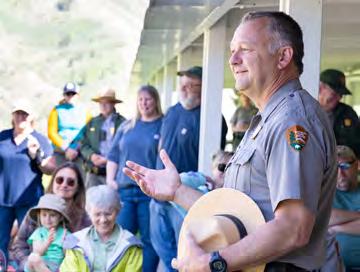
Although Yellowstone National Park receives millions of visitors each year, only 1 percent of the park's 2.2 million acres are touched by roads, minimizing the impact of humans on the wildlife and ecosystem.
Bear management is, of course, a big piece of the puzzle. In Yellowstone, overseeing the big beasts often comes down to people management instead. Kerry notes that the roughly seven months per year when bears are active, and gorging on a full year’s worth of nutrition, are the same months of peak human visitation. This creates a situation ripe for conflict.
Bear management has changed considerably over the years. Once, bears scavenged in the park dump and were fed by staff and visitors alike. Not surprisingly, that situation led to injuries, deaths, and property damage, so in 1970 a new plan was implemented. Today's bear management focuses on reducing interspecies conflict by educating visitors and preventing bears from accessing human food or garbage.
Kerry’s team works on a number of projects related to how bears and humans interact. They are also working on estimating the density of grizzly and
NPS/JIM PEACO
black bear populations using a system of trail cameras and mathematical modeling. They conduct observation flights aimed at counting females and cubs to estimate populations, and by research trapping and radio-collaring individual bears. They monitor important food sources, like the seeds of whitebark pine and spawning cutthroat trout, and examine bear reproduction and how it may change in different climate scenarios.
During summer, their busy field season, the team collects data and hazes bears out of developed areas like campgrounds when necessary. “We do a lot of preventive management to prevent human-bear conflicts,” Kerry says. This can involve posting warnings or temporary closures when recent bear activity has been reported near a trail or campsite. “If an ungulate, such as [an] elk, deer, or moose, dies in a visitor-use area, we'll move the carcass so it doesn't draw bears into developments or roadsides or campgrounds or trails. We actually spend a fair amount of time moving carcasses.”
After a busy summer, Kerry’s team spends the winter analyzing the data they've amassed and learning more about the bears in the park—and in the Greater Yellowstone Ecosystem, a surrounding collection of watersheds com-
Tprising more than 34,000 acres in Wyoming, Montana, and Idaho. It’s a massive region roughly ten times the size of the national park at the center of it all.
Geologic Wonders
With more than ten thousand hydro thermal features, from geysers and hot springs to mudpots, travertine terraces, and fumaroles, Yellowstone is literally a hotspot for researchers. Here scientists can study the constant volcanic unrest responsible for so much of the park’s intrigue. This includes seismic activity—including two different types of earthquakes—as well as hydrothermal features and the fascinating “extremophilic” microorganisms that thrive in their conditions.
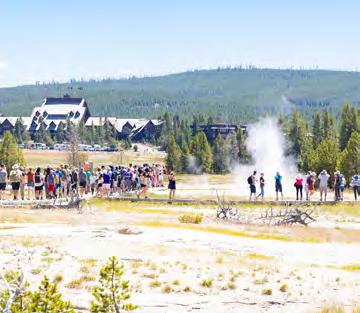
Thermophiles are organisms that can survive and grow in severely hot temperatures. Extremophiles, as the name suggests, thrive in even more extreme environments, such as springs with scalding water that is either highly acidic or highly alkaline. In Yellowstone, you can see these organisms as mats of color in certain hydrothermal features. Researchers studying them have made important, often surprising, discoveries. Dr. Kary Mullis received the Nobel Prize in Chemistry in 1993 based on a bacterium found in Yellowstone’s wa-
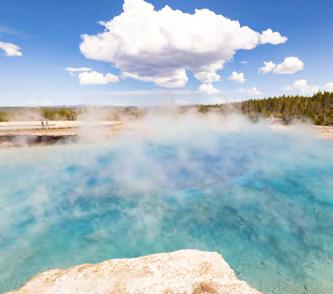
Yellowstone is home to more than ten thousand hydrothermal features from geysers to mudpots. The seismic activity in the park is a focal point of study for many scientists.
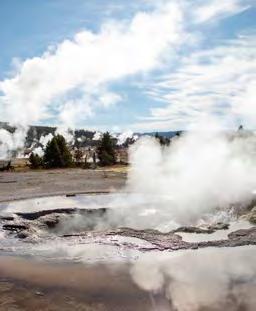
ters. He received the award for developing the polymerase chain reaction (PCR) method, which is now frequently used in medical research, genome mapping, and even crime scene investigations. The PCR process was developed using a bacterium that Dr. Thomas Brock and colleagues isolated from a park hot spring in 1966. The enzyme’s heat tolerance was key to its success at replicat-
hroughout biology and geology there is so much that we learn from this system. It’s incredible how much there is to just learn from this area and how best we interact with this area, too, so we don’t put people or communities at risk.”
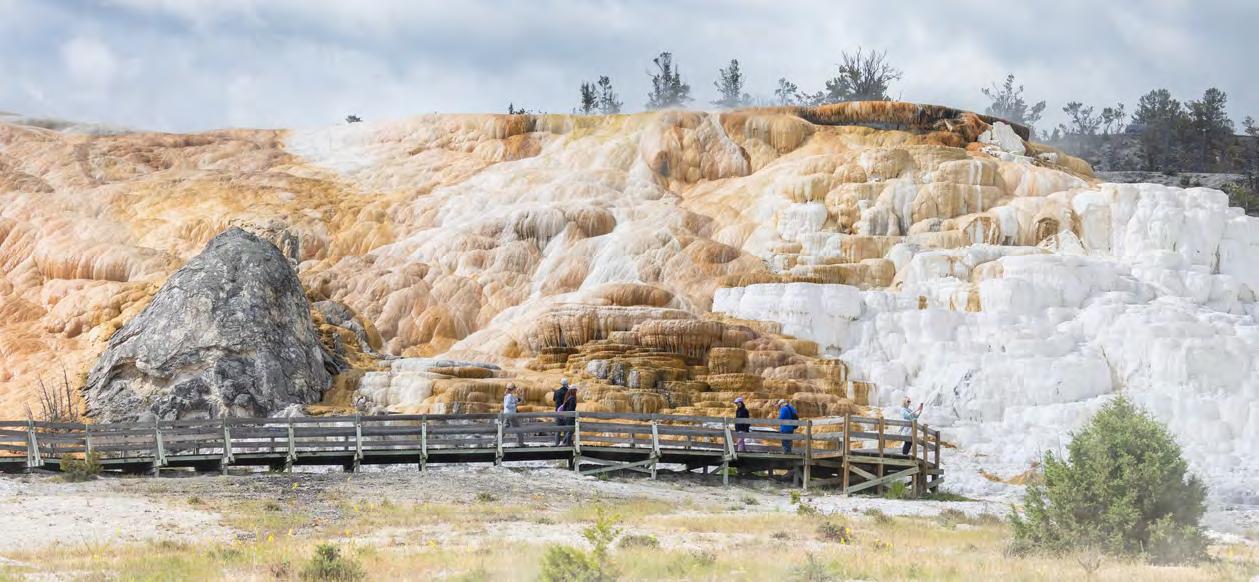
Jefferson Hungerford, geologist, Yellowstone National Park
NPS/JACOB W. FRANK
ing DNA strands at high temperatures, which led to Dr. Mullis’ invention.
With the world's highest concentration of certain hydrothermal features at hand, Yellowstone researchers are focused on the past and present of the underlying geology, as well as on the massive super volcano lying underneath the park. Over the past 2.1 million years, the volcano has had three major eruptions, but scientists say there is no imminent risk of another.
“I think the biggest misconception … is probably the idea that we're going to have a big volcanic eruption any time soon,” says Jefferson Hungerford, a park geologist who has worked in Yellowstone for eight years. However, he differentiates the large eruptions people repeatedly ask about from hydrothermal explosions, which are more common.
In July 2024, there was a hydrothermal explosion at Biscuit Basin that shot steam and debris hundreds of feet in the air and destroyed a nearby boardwalk. While it tossed rocks around, no one was injured. The area was soon closed to visitors. This explosion, Jefferson explains, was shallow and the result of boiling water converting to steam within a confined space, rather than volcanic activity.
Scientists analyze water chemistry to find any recent increases in volcanic activity. With more than a hundred hydrothermal areas in the park—many located far away from boardwalks and
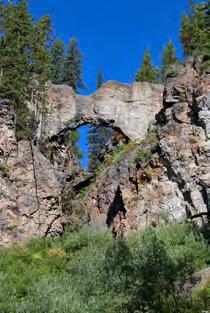
trail systems—attempting to monitor them all is a daunting challenge.
Yellowstone contains around five hundred geysers, a handful of which, like Old Faithful, are relatively predictable. The park publishes eruption times for a few geysers (with a range of variation from a few minutes to a three-hour window), including Old Faithful, Castle, Grand, Daisy, Riverside, and Great Fountain.
“We use statistical means to look at previous activity and we just project that out into the next eruptions,” Jefferson says. “It's simple statistics. You just look at old behavior, and you use that to model new behavior.”
At the same time, Yellowstone is very seismically active, with two different types of earthquakes: Tectonic quakes involving earth movement, and quakes related to the volcanic system. Every year, anywhere from seven hundred to three thousand earthquakes occur in the park, many in swarms. But most are so small visitors don't even notice them. The park has seen some big ones, however, including the 7.3-magnitude Hebgen Lake Earthquake in 1959 that killed twenty-eight people and created a new water body, dubbed Quake Lake.
An array of fifty seismometers, part of the Yellowstone Seismic Network, monitors nearby activity. They are a collaboration with the U.S. Geological Survey and the University of Utah.
“Throughout biology and geology there is so much that we learn from this system,” Jefferson says, pointing to the well-studied volcanic system, seismic arrays, rocks ranging from three billion years old to those being created today, geomorphic change, landslides, flood events, and more. “It's incredible how much there is to just learn from this area and how best we interact with this area, too, so we don't put people or communities at risk.”
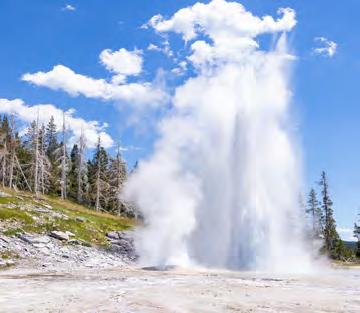
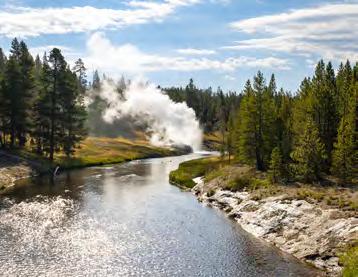
“
Fires are a big agent of change. As we get warmer and drier summers, we have this potential for bigger fires.”
Ann Rodman, Yellowstone National Park supervisory GIS specialist
A changing environment
Amid Yellowstone's vast undeveloped area, researchers focus on one area of study that touches nearly every other field: climate change. This issue affects everything, from fire risk to bridge planning to bear behavior.
The Greater Yellowstone Climate Assessment, released in 2021, delves into “past, present, and future climate change in Greater Yellowstone watersheds.” The paper notes that while temperatures will continue to rise, snowpack and summer runoff will decrease significantly (though precipitation will increase slightly), and the growing season will lengthen by up to forty days by 2100.
A longer growing season and other factors, including reduced water availability, will contribute to increased fire risk. This is likely to lead to more frequent larger forest fires, which affect the ecosystem in many ways.
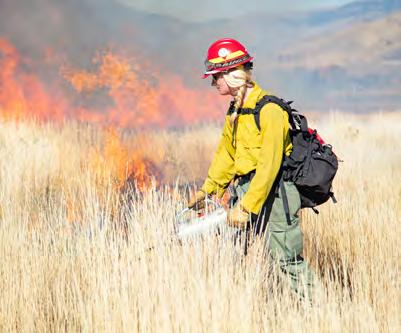
Hotter summers and less moisture continue to heighten the threat of fire season. Climate scientists are exploring how these shifts will impact the Greater Yellowstone Ecosystem over time.
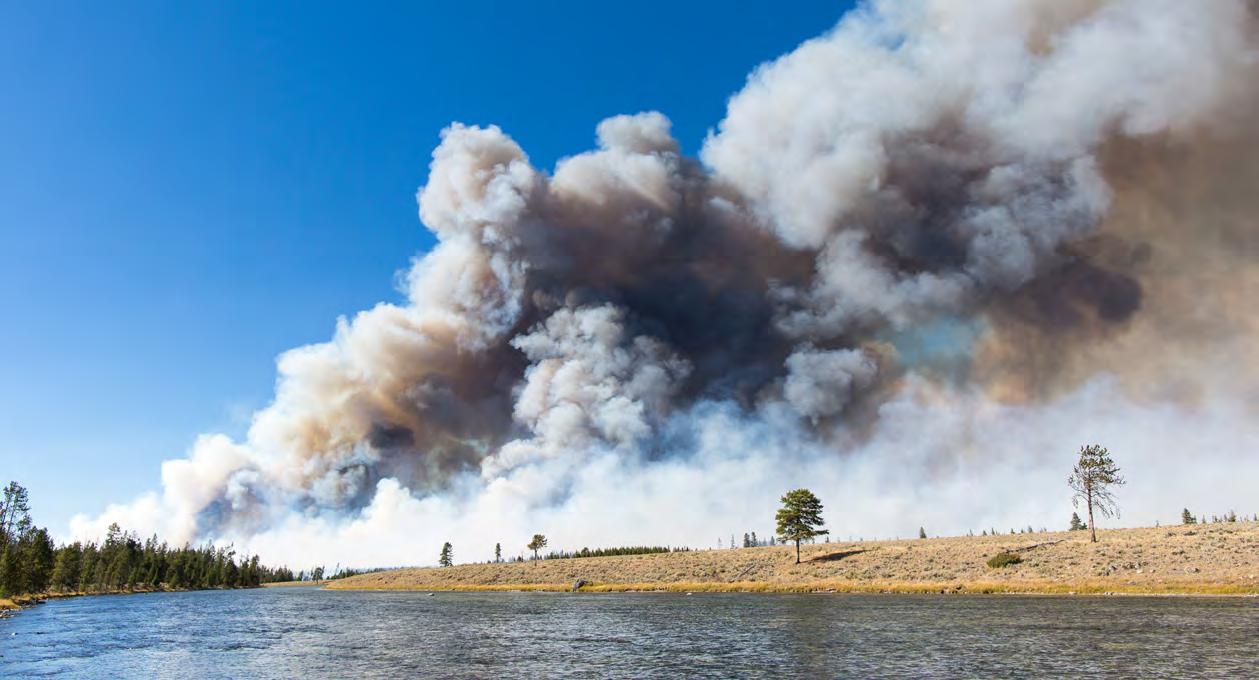
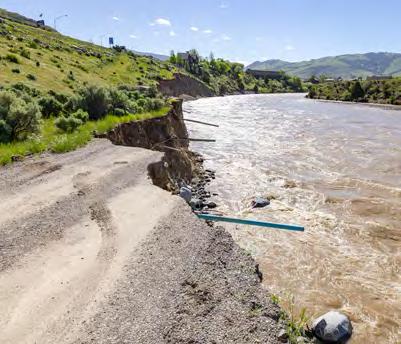
“Fires are a big agent of change,” says Ann Rodman, Yellowstone National Park supervisory GIS specialist, who coordinates efforts involving climate scientists and the ecosystem. “As we get warmer and drier summers, we have this potential for bigger fires… the conditions that supported the 1988 fire season, where we had really big fires that burned a lot of acreage. Those same conditions are going to become more likely.”
Climate change also shifts the timing of snowmelt. Warmer temperatures lead to faster snowpack loss, which means a rush of early season water followed by diminished rivers later in the summer. This creates warmer streams, which harm the native trout that thrive in cold water chilled by snowmelt.
Other animals are likewise impacted by changes in the snowpack and rising temperatures. Wolverines need deep snow to construct dens, wolves use deep snow to help with hunting, and pikas have a narrow range of temperature tolerance. Amphibians and birds will likely lose important wetland habitat, and many species will face changes in food availability, which could reduce reproductive success.
Plants are also vulnerable, with climate change leading to more insect outbreaks, including western spruce budworm and bark beetle infestations. Changing conditions make it easier for invasive plants to thrive and eventually push out native grasses and threaten the ecosystem. Highly flammable invasives like cheatgrass also contribute to fire danger. Researchers are working on ways to detect the spread of cheatgrass early, including using drones and satellite systems, so they can prioritize mitigation. Park officials are also working to incorporate projected climate change into plans for future infrastructure work. In 2022, the park experienced a fivehundred-year flood event, with some areas receiving 7.5 to 9.5 inches of rain in the span of twenty-four hours. Massive flooding, exacerbated by the rainfall’s effect on snowmelt, washed out roads and
closed the park for days. Ann describes this as “climate-amplified change,” with extreme rainfall at a time of very high runoff. The park is adjusting for these types of future hazards with its preventative measures. This includes things like installing larger culverts and building higher bridges to anticipate larger floods. Similarly, managers are considering the addition of air conditioning to park housing in areas that never needed it before.
“People are much more aware of climate change than they were ten years ago; [we are] thinking about it and [are] much more knowledgeable,” Ann says. “People with expertise in all kinds of areas are incorporating climate change into their research.”
This living laboratory known as Yellowstone National Park has yielded hundreds of scientific findings, from the renowned to the virtually unknown. Researchers continue learning more, and who knows what impact future discoveries may have? Protecting and preserving this place is important not just for its recreational offerings, but to safeguard the treasure trove of science within, for today and tomorrow.
Editor-at-large Michael McCoy contributed to this story.
NPS/JACOBW. FRANK
NPS/NEAL HERBERT


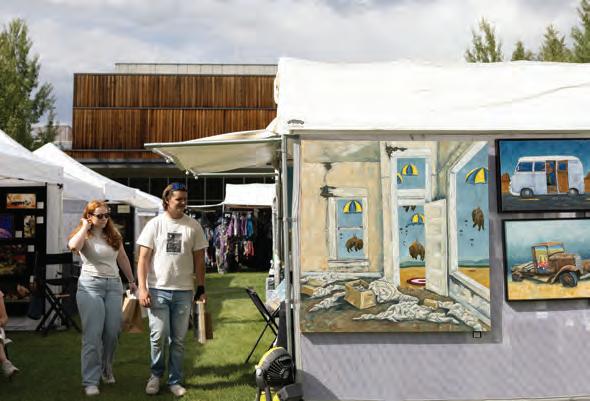


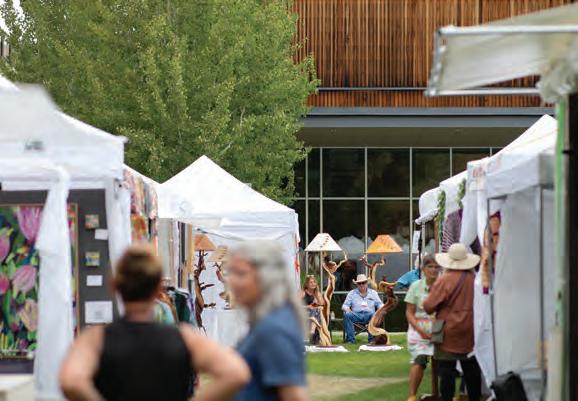



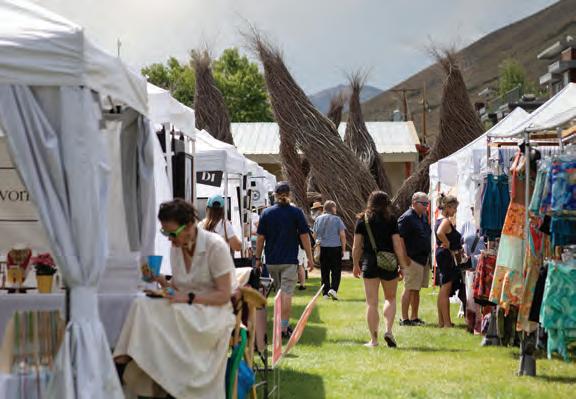
Art Fair Jackson Hole features a lively mix of expert crafting and fine art in the rugged mountains. The fair attracts artisans from Washington State to Florida.
Art Fair Jackson Hole
Connecting hands and hearts for nearly sixty years
BY KATE READY PHOTOGRAPHY BY DAVID STUBBS
Every summer, artisans from throughout the country descend on Jackson Hole. Their sights aren’t set on summiting craggy peaks or hooking into shadowy river hogs. Their destination is a flat, green lawn beneath Snow King Mountain where a city within a city sprouts: Art Fair Jackson Hole.
It’s a place where woodworkers, embroiderers, potters, and jewelers all become neighbors. There are marble boardgame makers from Sandy City, Utah, and colorful quilts crafted in Lander, Wyoming. You’ll find organic soap that makes your nostrils sing from Helena, Montana; glass creations from Hotchkiss, Colorado; and handcrafted leather goods from Salmon, Idaho. That’s not even touching on the photographers and painters of all stripes, flourishes, and backgrounds.
This city is brought to life every year by the nonprofit Art Association of Jackson Hole. According to its marketing manager, Josie Weiland, some artists plan their year around the Art Fair, traveling from homes in Oregon, Washington, California, Missouri, Virginia, and Florida to showcase their artistic souls.
The media, similar to the cast of characters, are diverse: some hands take up bygone practices by weaving sheep’s wool or working leather. Others delve into new, less-charted territories such as infrared photography. Still others dig into the humble and find fertile creative
ground in refining everyday objects such as feathers or tree stumps.
The Art Fair has been around as long as the Art Association has: nearly sixty years. It springs up for two weekends every summer in July and August. Artists set up shop Friday, Saturday, and Sunday.
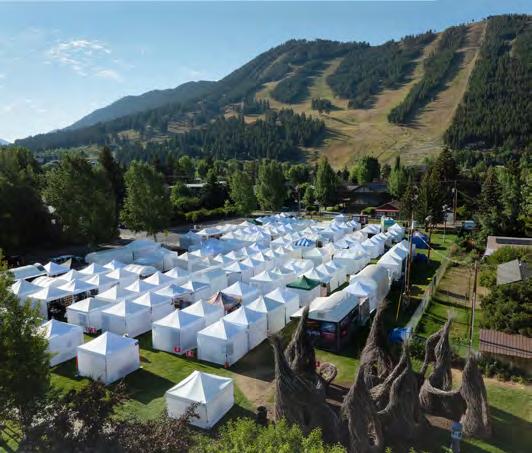
The Association’s origin story stems from a dearth of art programming in Jackson Hole, coupled with a lack of space for local artists to showcase their creations.
“Mothers in this community saw a need for supplemental arts education for their children,” Josie says. “That snowballed into adult classes, and then into local makers needing the opportunity to sell their work. There was a gap that needed to be filled.”
Where the Art Fair blooms has changed over the years. Now it’s firmly planted on the Center for the Arts lawn, where the Association has found a stable home for creators to connect with five thousand valley dwellers and tourists each weekend.
“It’s grown in attendance and participating artists,” Josie says. “Jackson Hole has really built notoriety as a wonderful
The fair has grown in both diversity and reach since its inception nearly sixty years ago. It is such a sought-after event for artists, that not every applicant can claim a spot.
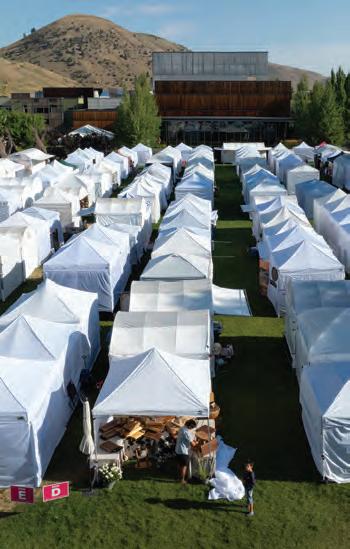


Fine photography, handmade jewelry, and traditional housewares peek out from side-byside tents.




arts oasis in the West.”
Word of mouth has propelled interest. Every year, the Art Association thoughtfully selects from the many submissions the one hundred and fifty artists who will participate.
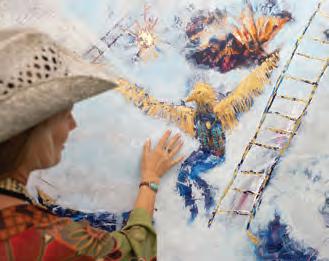
“It’s a juried show with an anonymous application, and not everyone is accepted,” Josie says. “We want to present the very best artists at a variety of options, mediums, and price points.”
Josie says she loves to take a break from working the event to wander around, get lost in the sights, and maybe grab a bite from one of the food trucks.
“The end result is so fun, there’s such

Particularly impactful for Josie is the artist of El Huizache Studio, from Santa Ana, California, who comes year after year. Alejandro Mendoza makes artisanal woven rugs using natural dyes derived from botanicals, an ancient method from his Mexican tradition. Inside his tent, art fair-goers can find live demonstrations.
“The artist said that this technique has been in his family for many generations,” Josie says. “This ancient methodology is incredible to see in 2026. There are jars of botanicals for the natural pigments. Grasses, insects, and sunflowers all lend to their dyeing.”
The fair provides a rare space for lesserknown artists to connect with people through their work. This is the guiding light driving Josie through the labor of love it takes to bring the Art Fair to life each summer.
“There’s such great camaraderie among artists. All of the artists are exchanging numbers and buying each other’s pieces,” she says. “It’s so fun to see folks leaving with their new jewelry, new scarf, or a new five-foot-tall piece. There’s a real exchange between the community and our artists.”
She hopes the Art Fair inspires people to create; to see that there is no hier-
“It’s grown in attendance and participating artists. Jackson Hole has really built notoriety as a wonderful arts oasis in the West.”
Josie
Weiland Marketing Manager, Art Association of Jackson Hole
archy of media or competition between forms. All can coexist.
high energy. It’s almost like walking into a market in a big city … you can get lost wandering.”
The price to wander is $6 for adults and free for kids twelve and under. It’s the Art Association’s largest fundraising event of the year, with the money going toward its mission: to offer community art classes and events, and to support artmaking in Jackson Hole.
“Maybe you see different applications of a medium that you’ve tried before or you see someone create etchings into a scratchboard, and then fill in the etchings with pigment,” Josie says. “Inspiration is all around.”
In 2026, Art Fair Jackson Hole will run July 24–26 and August 14–16. Friday and Saturday hours are 10 a.m.–5:30 p.m.; Sunday hours are 10 a.m.–4:30 p.m.








When the Teton Dam broke in 1976, its waters flowed for seventy miles before being contained. The damage was considered unprecedented.
When Teton Dam Failed
A look back at the catastrophic collapse fifty years later
BY JUDY ALLEN
Traveling on Highway 33 to and from Teton Valley, most people won’t notice the inconspicuous sign just east of Newdale that indicates the Teton Dam site, one and a half miles up a side road to the north. While old-timers recall the tragic events of June 5, 1976, many newer residents have never heard the astounding story of the Teton Dam failure, which marks its fiftieth anniversary this summer.
Construction of the dam was controversial from the start. With plans and federal funding announced in the early 1960s, the earthen dam was intended to create a reservoir to supply water for agriculture, as well as provide for recreation. Environmental concerns stalled construction until 1971. Detractors noted the disruption, and voiced warnings about the challenges of securing the dam into the porous, volcanic rock surrounding the proposed location. But work on the 305-foot-high, 3,100-foot-wide structure proceeded, including complex grouting into the weak basalt ground that required over half a million cubic feet of cement. Upon completion, the reservoir began to fill in October 1975. Plans called for a gradual fill, but with a heavy snowpack that winter, the reservoir neared capacity by June of 1976.
Saturday, June 5, 1976, dawned a picture-perfect summer day. Upper valley residents were mowing lawns, planting gardens, and enjoying the sunshine. A few days prior, out at the dam site, personnel had noticed some small springs
several hundred feet downstream. No one thought much of it. But early Saturday morning, the chief engineer saw a small wet spot on the dam’s dirt face, which continued to grow. Mid-morning, Jay Calderwood, a Teton Valley native and the dam’s foreman of excavation, got the call to report immediately to the site.
“I told the wife I’d be back in a couple hours,” he said, as documented in a dramatic video interview with East Idaho News. But when he arrived, the leak on the face had widened to ten feet. “I seen that hole in the side of the dam where it was washing out, and I thought, ‘Oh man, I don’t know that we’re going to be able to stop this.’”
Calderwood and co-worker Jay Hatch drove out onto the dam in a pair of Caterpillar D9 bulldozers and began to push mediumsized stones called riprap rock into the hole. A giant whirlpool had formed a fifty-foot-wide, twentyto thirty-foot deep funnel, “like pulling the plug out of a bathtub,” Calderwood said in the interview. “We’d get a dozer full of that big riprap and push it off into the whirlpool … We didn’t figure we’d stop it, hoping we’d slow it down enough … so it wouldn’t wash the dam out.”
dozer, he said, “My knees were so weak, I couldn’t stand.”
Word down below had begun to get out a few hours earlier. The Teton Dam was officially breached at 11:57 a.m.
From his now-safe vantage point at the top of the dam, Calderwood was one of the first to observe the massive flood that followed the failure. “That water going down the canyon was mowing those huge, big old cottonwoods like it was mowing alfalfa,” he recalled. “It was a really frightening experience to see how much power [the water] has.” The Bureau of Land Management estimates the initial release at over one million cubic feet per second. Witnesses gauged the wall of water at twenty to thirty feet tall.
The raging flood first demolished the
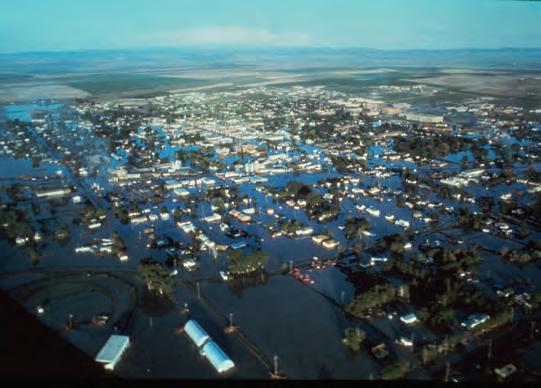
But the hole kept growing, and suddenly the ground settled severely. On the bank, superintendent Lew Payne frantically waved the dozer operators back, and then took off running. As Calderwood retreated, he witnessed huge chunks of earth caving in just behind him. “I thought, ‘Boy, I’m not gonna make it, this is it.’” When he finally reached safe ground and climbed off the
The flooding spread out to a seven-mile-wide path, reaching Rexburg (pictured above).

St. John's Health OB/GYN
Comprehensive women's health services including:
• Annual exams
• Prenatal care
• Gynecologic surgery
• Family planning
• Menopause management
• and more
Providers:
• Dr. Timothy Bussert
• Dr. Natalie Meadows Eggleston
• Joanna Sheets, CNM
Now scheduling: 307-739-4880 www.stjohns.health/obgyn
555 E Broadway, Suite 108 Jackson, Wyoming

tiny community of Wilford, directly in the river’s path, then moved on to Sugar City. Traveling at an estimated sixty miles per hour, flood waters ripped houses off their foundations, swept away livestock, took out utility poles and phone lines, and crumbled roads and railroad tracks. In a time before cell phones, residents were warned by emergency TV and radio alerts, as well as by neighbors rushing
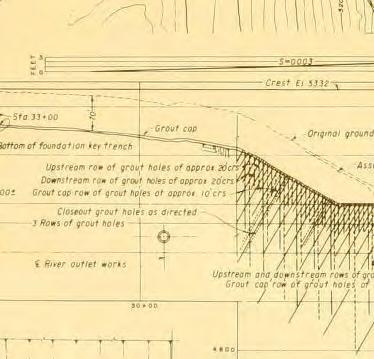
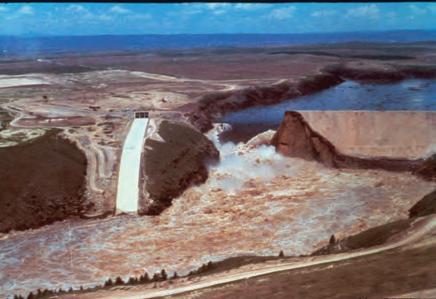
Data later emerged to describe the catastrophic losses: Eleven deaths, 3,500 farm buildings, 250 businesses, 13,000 to 20,000 head of livestock, damage to nearly 4,000 homes, all in all totaling $1 to $2 billion in damages.
door-to-door. From a distance, the wave of water looked like a massive dust cloud. As the flooding reached Rexburg, almost twenty miles away, it had spread out to a seven-mile-wide path.
Nestled against the foothills, Ricks College (now BYU-Idaho) in Rexburg occupied higher ground and became the gathering point for those fleeing floodwaters. The Church of Jesus Christ of Latter-day Saints and the Red Cross immediately set up relief headquarters on campus. On Saturday afternoon, Teton Valley native Michael Whitfield, who was 29 at the time, traveled backroads to Rexburg and witnessed the scene firsthand.
“It was chaos,” he says. “I saw houses floating down Main Street, horses on the steps of the courthouse, and cows wandering around.”
The Fluffy Cow is a hidden gem, tucked inside the historic Rustic Pine Tavern. We’re a small, family-owned restaurant serving food with soul: classics
The stench of mud, dead animals, and toxic chemicals was horrible. Mud and water coated buildings several feet high. A Louisiana-Pacific lumber mill east of town had stockpiled thousands of Douglas fir logs, which in the flood became battering rams, lodged into structures and strewn around the community.
Rexburg lost entire neighborhoods, with water remaining in the area for several days. Ricks College became the headquarters for rescue and relief.
An employee of the United States Forest Service (USFS), Michael had been
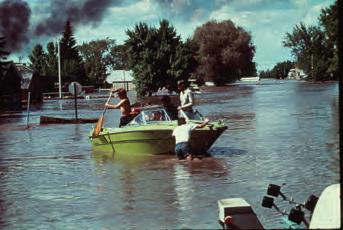
sent to locate displaced fellow employees. With all communications down, the task proved difficult. Most heartwrenching of all, he says, it was his job to tell USFS dispatcher Jay Benson that his son, David, had been killed while fishing on the Teton River when the dam broke. Michael, along with hundreds of residents, then began the tedious job of clearing massive piles of mud and debris.
Floodwaters, their pace of flow tempered only slightly, continued along the path of the Snake River to Idaho Falls. Given a day’s notice, citizens there began filling sandbags by the thousands, and building banks eight feet high. When water threatened to overflow the Broadway Bridge, workers trenched a canal around it as a bypass route.
Further downstream, Blackfoot suffered more serious flooding. Three days after the dam breach, Teton floodwaters
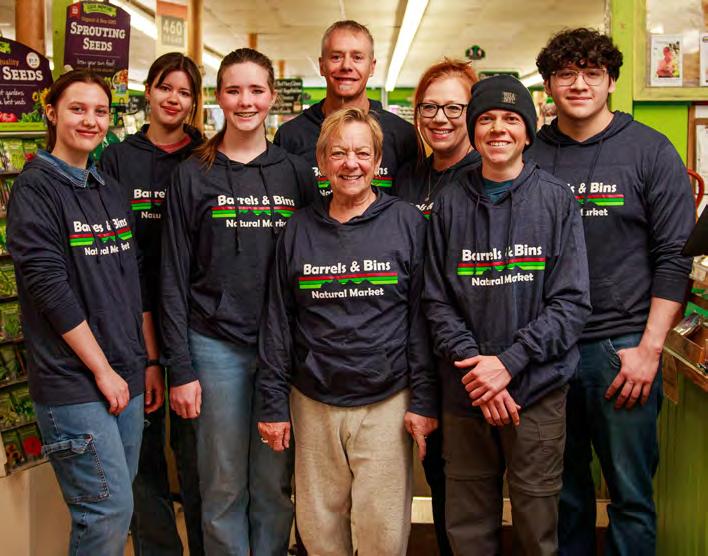









38 West Birch Street, Victor violetvolumes.com 208-497-4718



Teton Valley &
Hole Jesscurrenphotography.com @jesscurrenphotography



reached American Falls, where reservoir capacity was barely adequate to contain the still-substantial flow.
Data later emerged to describe the catastrophic losses: 3,500 farm buildings, 250 businesses, 13,000 to 20,000 head of livestock, 100,000 acres of topsoil, and damage to nearly 4,000 homes, totaling $1 to $2 billion in damages. Eleven people were killed. Floodwaters also damaged the ecology of the lower Teton
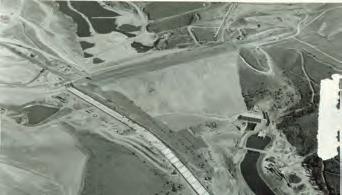
Will Teton Dam Rise Again?
With extended droughts and a burgeoning population in Eastern Idaho, water demands have grown in recent years. New talk of rebuilding the Teton Dam has emerged.
Back in 2007, the Idaho Department of Water Resources identified a new Teton Dam as a possible water storage solution. In spring 2025, Republican State Senator Kevin Cook of Idaho Falls sponsored a proposal for a Teton Dam rebuild. It passed the Idaho House and Senate unanimously in November of last year. Its supporters are now seeking federal funding.
Proponents of a new dam cite an urgent need for more water, for both agricultural and domestic use. Conservation advocates disagree, predicting major impacts on Yellowstone cutthroat trout populations, nesting bald eagles, wintering trumpeter swans, and mule deer and elk winter habitat.
Whatever decision is made on the dam, everyone agrees that safety is paramount. While new technology may mitigate some risks, environmental factors, like the porous rock that caused the original dam’s historic failure, still exist. How to work around this conundrum of geology is still unknown.
Photos by Jess Curren
Jackson
PHOTO:

















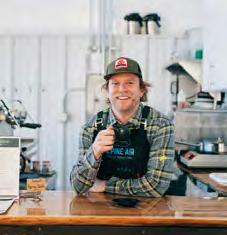


and Snake rivers and habitat of the native Yellowstone cutthroat trout, with riparian areas washed away and sediment engulfing stream sections.
In Rexburg, the tremendous relief effort continued throughout the summer. Displaced families were housed, clothed, and fed in the Ricks College dormitories. LDS church volunteers contributed over one million man-hours, arriving by busloads from Utah and other parts of Ida-

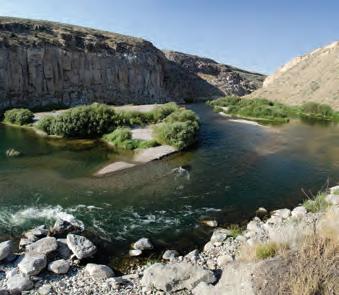
The flood caused significant damage to the ecology of the lower Teton and Snake rivers, washing away riparian areas that took years to recover.
ho. Utility crews worked around the clock to replace thousands of utility poles and two-hundred miles of wire. The U.S. Department of Housing and Urban Development provided trailers for families who had lost their homes. Many homeowners rebuilt, and a construction boom ensued.
Numerous state and federal agencies investigated the cause of the dam failure. While rapid spring filling of the reservoir was initially thought to be the culprit, final reports revealed that the catastrophe was precipitated by a combination of extensive fracturing in the surrounding volcanic rock abutments, and inadequate grouting in those areas, as well as cracking in the internal, finegrained sediment core of the dam face itself.
So, the next time you drive out below toward Rexburg, consider making the short detour to view the Teton Dam site. Flowing placidly around the vertical scar of the demolished dam, the Teton has reclaimed the chasm. But memory preserves the fury and damage done by the river that would not be contained.







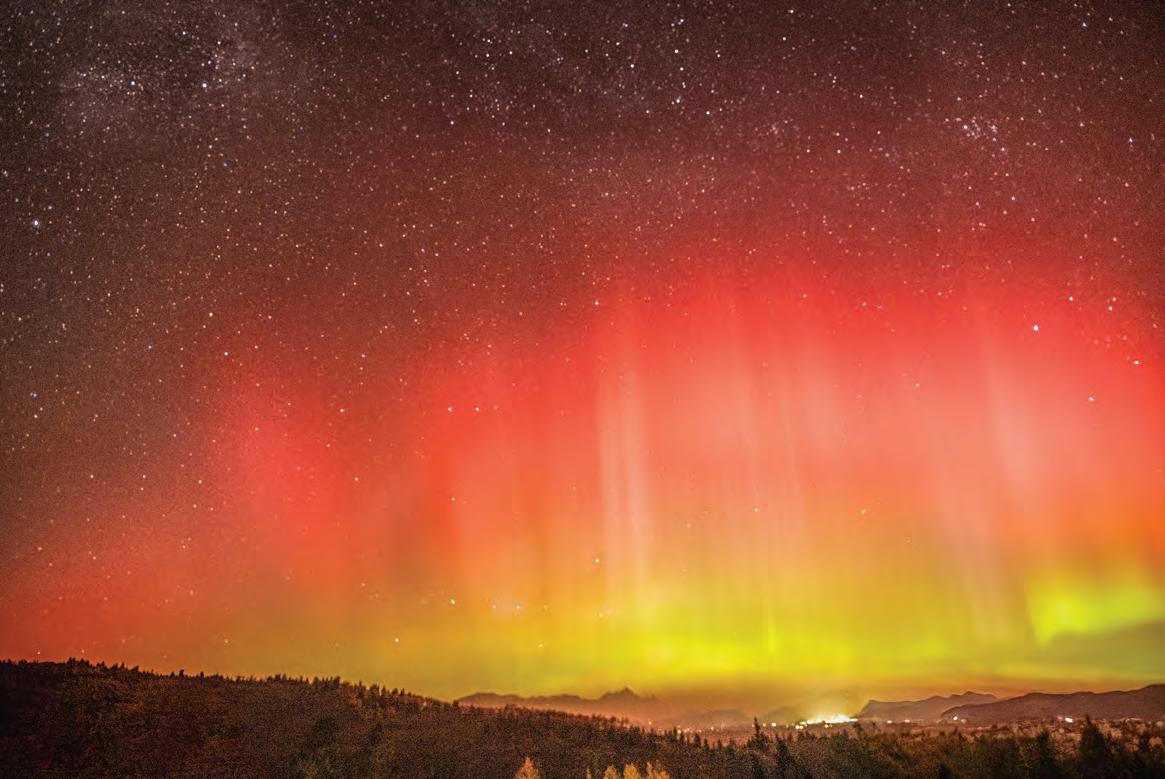

Usually a rare visitor to
the lower 48, the aurora borealis put on a spectacular show in Teton Valley this year. Locals had a front row seat from their own backyards.
Chasing the Aurora
Teton Valley’s northern lights-loving residents celebrate the rare phenomenon
BY KRISTEN POPE
Just after sunset on a mid-November night, Teton Valley’s sky started glowing red. A flurry of texts, calls, and Facebook posts swept through the valley as people urged their loved ones to go outside and look up. For hours, people marveled as the aurora borealis danced in the night sky, with curtains of reds, purples, and greens shifting and changing overhead.
It is rare to see the aurora borealis (also known as the northern lights) in Teton Valley. The sun’s solar cycle is approximately eleven years long, and only when it peaks—as in recent years—does local auroral activity increase.
“It’s one of the many things in Teton Valley that make it very special to be here,” says Bruce Mason, the area’s genial weatherman and the mastermind behind the highly regarded Teton Valley Weather Facebook page. “Most places you live, there’s just no chance of seeing the aurora. It’s too bright, too far south. But there are so many things here about Teton Valley that make weather and space weather unique.”
While receiving a text is fun, there are plenty of scientific ways to predict auroral activity. The aurora occurs when the sun ejects charged particles into space, which then interact with Earth’s atmosphere and release the “extra” energy as light. The color of the aurora is related to the type of gas and the altitude of this interaction. Green is the most common color, and it occurs with oxygen about 60 to 120 miles above Earth’s surface, while
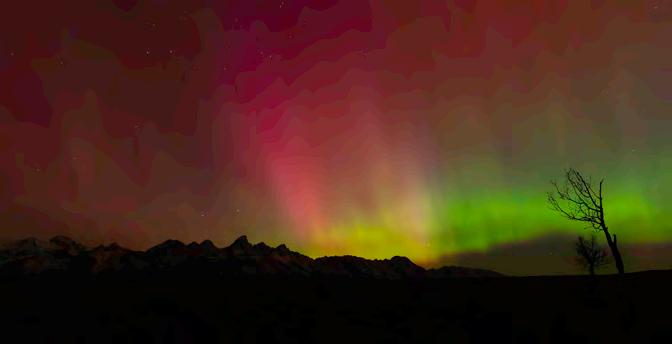
red comes from oxygen more than 120 miles up. Nitrogen produces blues above the 60-mile mark, and a range of reds, purples, and pinks below it.
Northern regions in the “auroral oval,” such as Alaska, Canada, Iceland, and parts of northern Europe, are generally the best places to see the lights. However, if you get too close to the poles, you may end up above the oval and unable to see the aurora. The same phenomenon also takes place in the Southern Hemisphere, where it is called “aurora australis” or southern lights.
The northern lights are especially likely to occur following periods of increased solar activity such as coronal mass ejections, when large amounts of magnetized plasma erupt from the sun. Since solar particles can take some time to reach Earth, we often have a bit of warning.
A number of websites, including NOAA’s Space Weather Prediction Center and Space Weather Live, can provide information about auroral possibilities. Bruce also typically updates followers on Teton Valley Weather when the odds are good. After a sighting, the page is flooded with photos from enthralled viewers.
Dark skies are vital to seeing the lights. “We see [auroras] mostly in the winter, because we have more hours of darkness then,” Bruce says. “This creates a better window for seeing the aurora.”
Once you know there is solar activity, and you’ve found a good dark location to wait and watch, look first with your eyes, then through the lens of a camera or cell phone. These devices can draw in a lot
The vivid colors are caused by different kinds of atomic reactions in the atmosphere, spurred by solar activity millions of miles away.
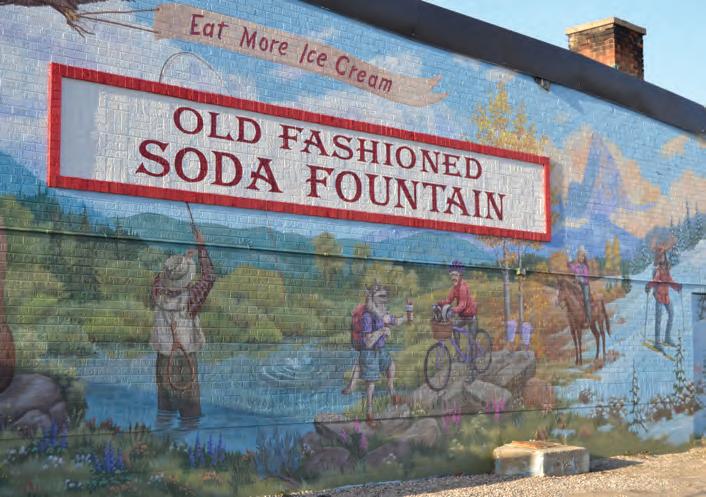
IDAHO SOUVENIRS & TEES • SUNGLASSES GIFTS • CLOTHING • HATS
FOOTWEAR • ESPRESSO
20 8 -78 7- 22 21
Located in downtown Victor,ID Open 7 d ay s a wee k ~ Ju st 30 mi nu tes from downtown Ja ckso n Hole ~
WILDWOOD
Reunions
for Rent, Year Round
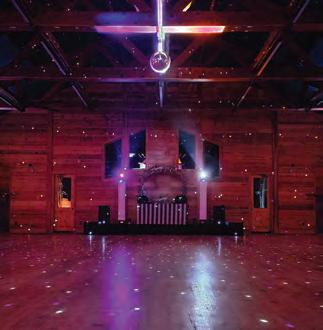
more light than your unaided eye, and they can make a faint aurora—or even one you can’t see with the naked eye— appear far more vibrant. “Be patient,” Bruce says, “and look toward the north because that’s where the aurora is the strongest.”
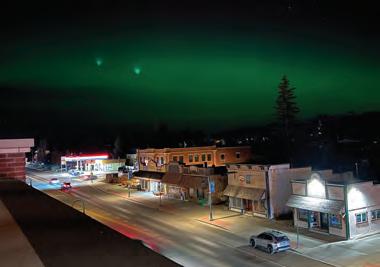
While it’s amazing to see the aurora in different locations around the world, it’s incredibly special to see it right here at home in Teton Valley.
Some valley residents travel to more aurora-prone destinations for a greater viewing probability. Michael Adler, who lives on the east side of Teton Pass in Wilson, Wyoming, is an astrophotographer who captures nebulas, galaxies, and all sorts of phenomena associated with the night sky. He photographs the aurora whenever and wherever he can. Michael has shot plenty of images right here in the Tetons, and has also traveled to places like Iceland.
Michael suggests, when planning a trip to see the northern lights, aiming for a moonless period if possible. Heading north also helps, but be mindful of sunrise and sunset times. High-latitude locations have longer days in the summer, making it potentially too bright to see the aurora. Weather can also interfere with viewing, so planning a lengthier trip will allow for better viewing odds.
The northern lights as seen from Tatanka Tavern in Driggs. A rare late evening sighting gave everyone in town a chance to take in the stunning display.
TEVA
Aventura
Pistil
Smartwool
Skida
Pendleton


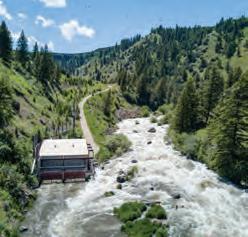
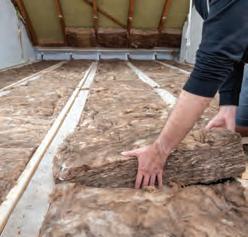
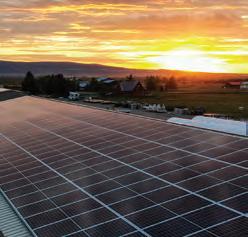
While it’s amazing to see the aurora in different locations around the world, it’s incredibly special to see it right here at home in Teton Valley.
“Teton Valley is where we get a
Check out our daily specials and events at davestetonia.com! @davespubb | 208-456-2789 | 6290 N Main St, Tetonia
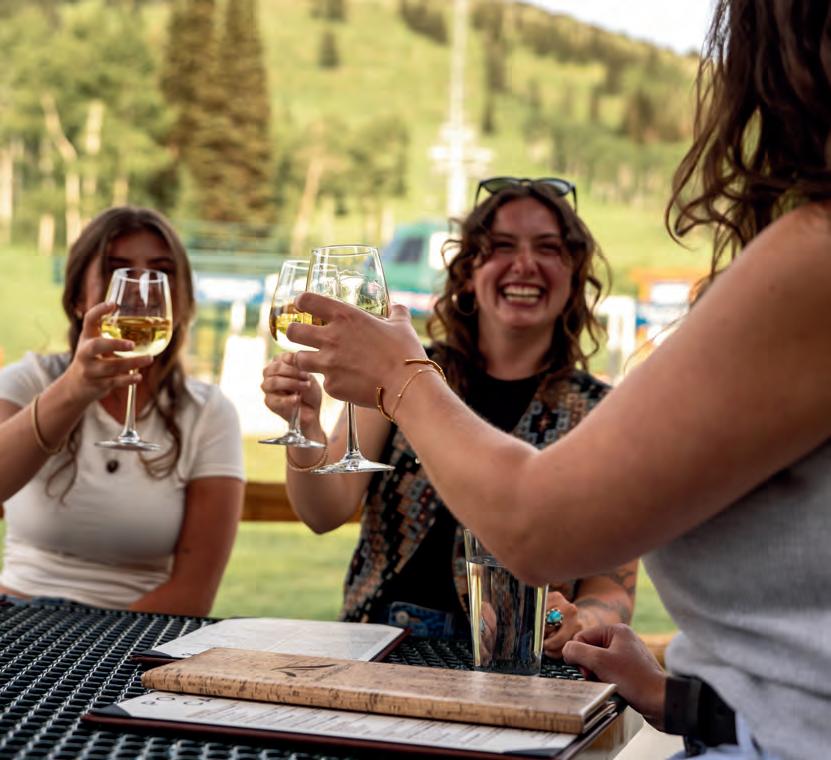

“Once you have them, operate the camera manually, setting the exposure you worked out. Any exposure longer than thirty seconds will blur the stars. Also, the aurora is constantly changing, so a relatively fast exposure is best.” Come Experience The Authentic OPEN DAILY, 4PM


with the ISO and exposures to get them right,” Michael says.


PHOTO: JANSEN GUNDERSON
























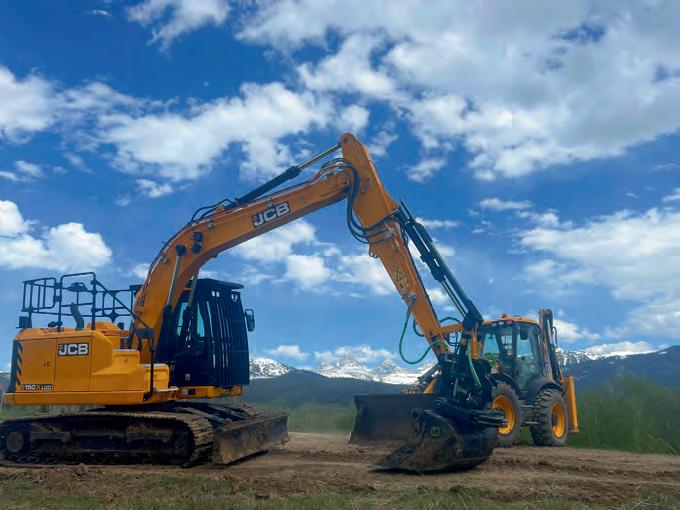

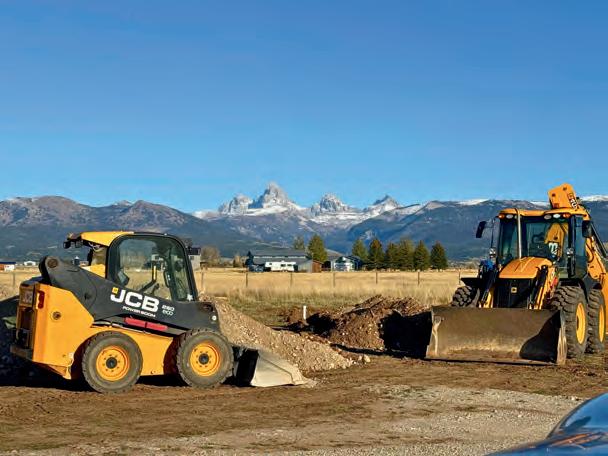
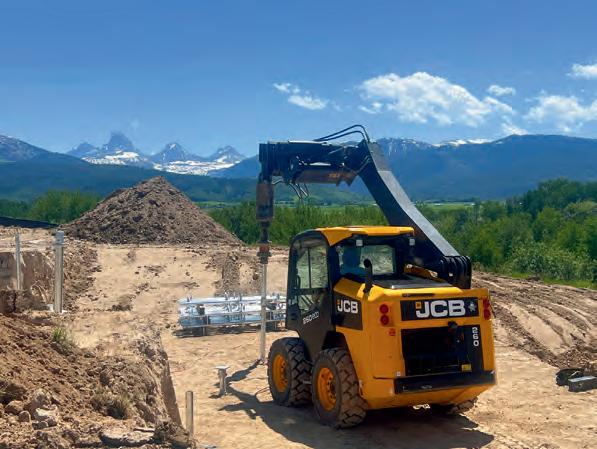








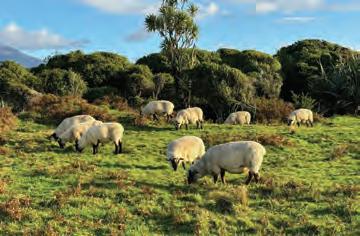

“When in doubt, have a coffee.” Not a nomad mantra, but something we often do when we are tired of walking around, need a little pick-me-up, or want to “sit and scribble” in our journals. There are many places we have long dreamed of seeing; when we are standing in front of one, we take deep breaths and relish the moment. Our photos might suffer but the experience never does.
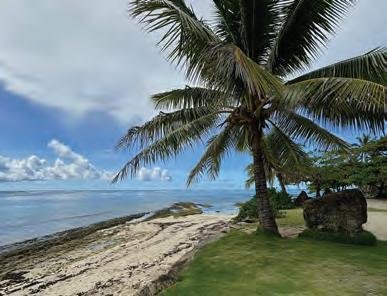





Beaches, icebergs, landmarks, monuments, waterfalls, and mountains— such are the iconic places of our journey.


Musings NomadicofWorld Wanderers
Peripatetic former valley couple somewhere today, gone tomorrow
PHOTOGRAPHY AND STORY BY PETER
& JEANNE ANDERSON
In 2023, thirty-year Teton Valley residents Peter and Jeanne Anderson sold their home north of Driggs and adopted the international nomad lifestyle, living from a few days to several weeks in a single location before moving on. Over the past twoplus years, they have visited more than thirty countries. Below, the couple share observations and musings of living life without an address.
If you’ve ever considered becoming a permanent nomad, we’re not here to persuade you one way or another. We’re not going to offer advice on drifting untethered around the world. Our avenue, of unceasing wandering, is certainly not for everyone.
But we can describe what our meandering path has offered us, and what it has required of us.
My wife, Jeanne, and I recently entered our third year of living nomadically. After three decades in Teton Valley, and almost fifty together, we sold or gave away nearly everything: our house, cars, and most of our accumulated possessions. At a time when many couples downsize, we obliterated. Examining each thing we owned, we asked, What for? We held onto a few sentimental items, though even those few things seem now to have little point and may soon also become history.
Our possessions include passports, small suitcases, light waterproof daypacks, some clothing, and odds and ends for living. We wear the same handful of outfits day after day. We dress well, not fancy. Perpetual anonymity suppresses
any tendency toward style-awareness. Our oft-repeated mantra: No one knows us; no one cares
This brings us to our first observation on soul-level gain and loss. When one lives as we do, never in one place for more than a few weeks and often only a few days, agility is paramount. Translation: minimalism. One pair of shoes, a few socks and underwear, some tops, a sweater, a rain jacket, a couple of scarves; our wardrobes evolve, but don’t grow. If we like an article, we keep it. If it wears out, disappoints, or bores, we replace it. But one possession departs for each gained.


You may remember Peter and Jeanne Anderson as longtime Teton Valley residents and the duo behind the beloved Dark Horse Books. Now, they’re collecting passport stamps across the globe.
In our homebound past, we tended to accumulate multiples of things. Nomadism squeezed acquisitiveness out of us. Since we cannot possess much, possessing things has lost value. For us, the mere idea of owning a car, for instance, with all that entails, has vanished, and welcome riddance. We’d both had cars since we were sixteen; now we take public transport or walk. The renunciation of one form of

People-watching is the sport of the day in an outside cafe. That, and trying to solve the world’s problems — not yet accomplished.





freedom can open pathways to others.
Having experienced abundance and parsimony in turn, we’ve decided this mandatory minimalism has had a positive effect, a net gain. We glow with our nothingness.

We can manage for two weeks with just our backpacks, but we typically carry them and a rolling carry-on-size suitcase. Jeanne also wears a cross-body for travel days, where we can fit our journals, books, water bottles, and snacks.

Exotic places, like Bali in Indonesia and the Batu Caves in Malaysia, often scream with color, statues of unfamiliar forms, and unusual fellow-patrons, like monkeys.


Here’s the second point about a traveler’s soul. If a person exists as half of a pair—a couple—nomadism stipulates a specific condition: solidity. A couple must be together and aligned in a deeper sense. Fortunately for us, our current life trajectory has been our intended endstate since we met in the ’70s. Travel formed and defined each of us since childhood. World-wandering and the curiosity and sense of wonder underlying it were our foundation and framing. So, for us, it was not a relationship strain to upand-leave for good.
But we’ve met or known of many couples who only discover on the road,
A nomad-by-choice is someone whose lifetime hope is to wake each morning and think, joyously: This is my life. I am here today. I may not be here tomorrow. This is a wonderful place for many reasons.
that they were not on the same page after all. Setting off on indefinite wandering together because you both like to travel makes as much sense as opening a restaurant because you both like to cook. Comfort, noise tolerance, activities
enjoyed and disdained, energy levels, preferred climates—these and many more parameters must be in sync. Wandering travel will test your partnership and display the results daily, like an oscilloscope whose evanescent lines indicate the weaving dance of your respective souls.
It goes without saying: Your adorable and sometimes exasperating partner, at times fearless and rock-like, also billows moods, expressions, frayed jokes, tiresome hair, gimcrack comments, harangues, and personal-isms. Perhaps she overrates her likability, and he his profundity, or vice versa. Being on the road together, strangers in a strange land, is the definition of togetherness.
We both love ancientness, public art, grand buildings, and languages we don’t understand. Neither of us cares for tropical heat or air travel.
Neither of us has gravitations at home, namely children, grandchildren, or aging parents. The pull of these orbs usually disarrays a couple’s thoughts of indefinite travel, we’ve observed. Intended wandering becomes yo-yo tourism. Nothing wrong with that, but there is a soul-level difference between traveling a lot and having no home address.
A third and rather obvious requirement of the peripatetic life is an innate comfort with adapting. Consider lodging: With no end in sight, every few days or weeks a new accommodation for your hands, eyes, feet to learn—new layout, kitchen, doors and locks, furniture, smells, switches, mattresses, toilet and faucets, heat, colors and textures, and domestic rituals.
To successfully navigate nomadism, a traveler must constantly adjust tactics. One cannot be a hammer, for which every problem is a nail. One must be all tools used in life’s bricolage.
Finally, a comment about a nomad’s aspiration. A nomad-by-choice is someone whose lifetime hope is to wake each morning and think, joyously: This is my life. I am here today. I may not be here tomorrow. This is a wonderful place for many reasons. But I may never see this place again (and probably won’t). Today is enough.
Honestly, we’re not sure that anyone does attain that zen-like peace within motion. But we’re close. Perhaps as close as we’ll ever be.
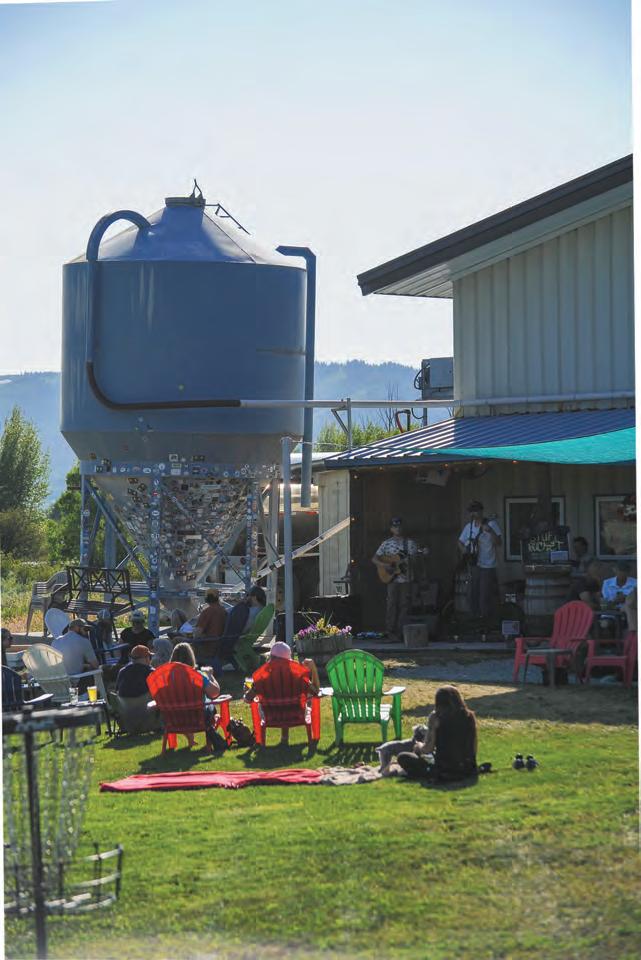



Teton School District 401’s Music Department inspires excellence at every level, from the first notes in kindergarten to awardwinning performances. Through dedicated instruction and diverse opportunities, students build confidence, creativity, and a skillset that extends far beyond the stage.
Pearl Street Bagels on Main
Rings of dough baked fresh daily

When it opened in Jackson Hole in 1990, Pearl Street Bagels was the only bagel shop in Wyoming. Now they have multiple locations and a new town to feed: Driggs.
BY CAROL LICHTI PHOTOGRAPHY BY LARA AGNEW
Amelia Lohrenz walks from the bakery room at Pearl Street Bagels and drops five hot everything bagels into a bin behind the front desk. She returns with four plain ones; then, she’s back again with a flavored variety, spinach feta.
It’s mid-morning at the Driggs shop, and customers are lining up. The North Main Street store, open since December 2024, was scouted as a backup location for the flagship Jackson eatery on Pearl Street because of uncertainty about the lease renewal at the original. Teton Valley marks the third location.
The Driggs location on Main Street had previously been a gas station, creamery, and, most recently, a butchery. “It’s got character and history,” owner Heather Story Gould says. “It needed some love and the right fit. Hopefully, that’s us.”
It appears to be.
Amelia, or one of her colleagues on the baking team, shows up at 4 a.m. each day to concoct muffins, cookies, and breakfast sandwiches, allowing the oven temperature to eventually kick up to 465 degrees. That is what’s needed for the bagels. The rings of dough are boiled first, then baked.
The shop opens at 6:30 a.m. First up are the commuters. Then, it’s the local


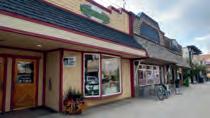




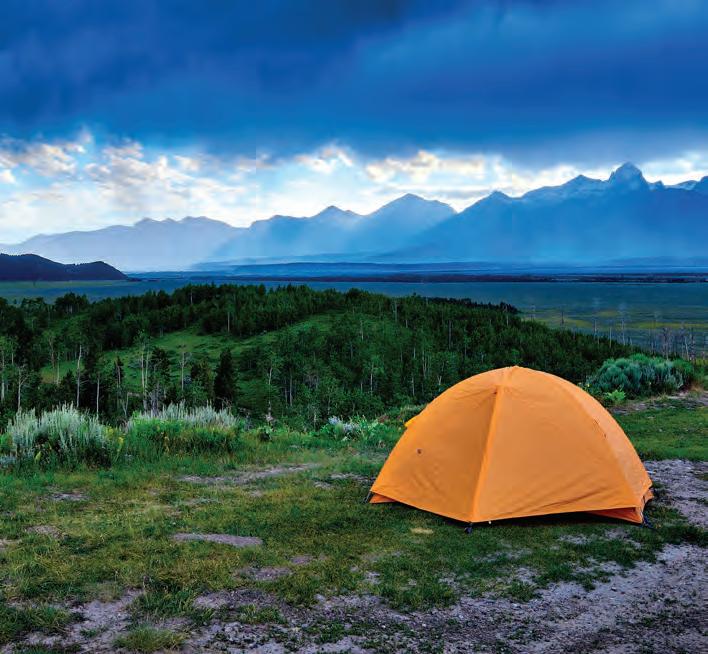
GEARUPAND GETOUT
They have lots of choices, with a dozen bagel varieties available. Here’s a tip: find out what’s hot. Then decide, savory or sweet? A mere smear of house-made cream cheese—or more? Lox with capers and cream cheese? Additions of veggies, avocado, or pesto? The options are plentiful and all delicious.




Toasted?
Not happening. That’s a no-no that began with founder Maggie Gibson, who started the business in 1990 with her husband, Les. Their shop was based on a favorite place in Vermont, where fresh bagels were never toasted. Heather, who began as a barista at the Wilson location in 2004 and is now the owner, knows that no toasting is controversial, but she has stuck with the philosophy.
Everything bagels are the most popular savory variety; cinnamon-raisin, the top sweet choice. Jeri Harrison, a Big Apple transplant now living in Tetonia, is a fan of the everything. She offers an endorsement: “It takes me back to New York.”
Her friend, Lina Marquis, goes for the cream cheese on her own everything bagel. Lina moved from Jackson to Victor and is grateful to have access to her favorite bagels in Idaho. “I’m glad they still taste the same,” she says.
About three hundred to four hundred bagels are made each day, but the number’s always a guess. Most days, a few are left when the store closes at 2:30 p.m., and those extras are sold the next day at a discount.
And, yes, those bagels can be taken home and toasted, if you wish.
Pearl Street Bagels sticks to the traditional East Coast method of boiling, then baking their bagels, creating an irresistible crunchy crust.
Float Smart. Float Kind.
More than 65,000 visitors enjoy the Teton River each summer. With that many people on the water, every choice you make adds up. Help us keep this river wild, healthy, and welcoming for everyone — people, wildlife, and fish.
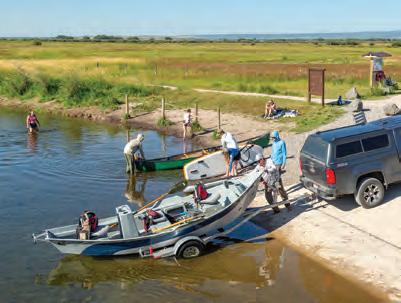
LAUNCH READY
Get Organized at the Access
• Gear up before you approach the water.
• Boat ramps are for vehicles with trailers –keep small watercraft to the side, move through quickly.
• Use the restroom before you launch.

ON THE WATER
Stay Cool on the River
• Share the river - be courteous to anglers, other floaters, and wildlife.
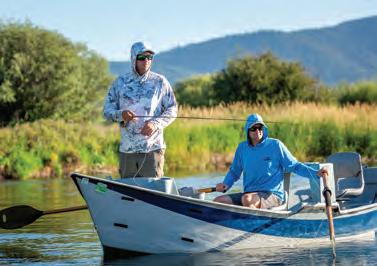
• Respect private land - most banks along the Teton River are privately owned. Stay on the water or on beaches and cobble bars.
• Dress for all conditions – always bring a layer and rain gear.

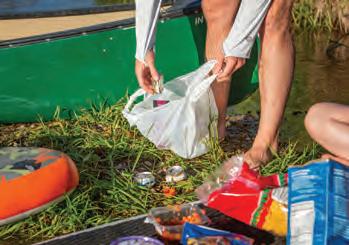
LEAVE IT BETTER
Be a Good River Neighbor
• Pack out everything you pack in.
• Dispose of human and dog waste properly.
• Keep dogs under control. Dogs chasing wildlife harms the river ecosystem.
• Leave every spot cleaner than you found it. The next visitor – and the river- will thank you.
Check out our float guide and download the Upper Teton River recreation map!
friends of the
Photos by: Thom Carroll

Alpine Air Coffee
Roasting & Cafe
175 West Center Street, Victor Open Mon–Sun 7am–1pm alpineaircoffee.com
Alpine Air Coffee Roasting was born from a long-time passion for coffee, an eco-conscious drive to provide packaging that won’t stay on Earth forever, and a desire to share just how great one of the most consumed beverages in the world can be. Stop by our café and roastery for fresh coffee drinks, bagged coffee roasted in-house, and gourmet toasts, burritos, and baked goods. All Alpine Air coffee is sourced responsibly. Online ordering now available through our website! [p. 102]

Barrels & Bins
Natural Market
36 South Main Street, Driggs 208-354-2307
Open Daily 8am–7pm barrelsandbins.market
Teton Valley’s source for all-natural and organic products including local and organic produce, meats, cheeses, and bulk food; 460 Bread baked fresh daily; beer and wine; nutritional supplements; health and beauty products; all-natural pet foods; and much more! Juice & Smoothie Bar is open 9:30am to 1:30pm daily. Check in for sandwiches, soups, and salads, as well as other grab-and-go takeout options. [p. 99]

Butter Cafe
57 South Main Street, Victor 208-399-2872
Visit website for menus, hours, and online ordering butterinvictor.com
Butter Cafe in Victor, Idaho, offers a brunch experience that blends traditional comfort food with globally inspired flavors. With a diverse menu and warm atmosphere, Butter Cafe is a must-visit for those seeking a unique and flavorful brunch. Whether you’re a local food enthusiast or a curious traveler, stay connected with us on Instagram for the latest updates on hours, specials, and menus, and embark on a flavorful journey with Butter Cafe. [p. 100]

Citizen 33 Brewery & Restaurant
364 North Main Street, Driggs 208-354-2073
Open Daily 4pm–9pm citizen33.com
From the team behind Forage Bistro and Tatanka Tavern, Citizen 33 in Driggs is your go-to spot for fresh, locally sourced food and beer in the heart of Teton Valley. Brew Master John Able keeps the taps rotating with creative craft brews, while our Chef serves up a delicious menu featuring elevated bar bites—like local fried cheese curds and craveworthy smashburgers—and hearty, flavorful entrées. Built for both locals and visitors, Citizen 33 is a place to gather, share a meal, and raise a glass to life on Route 33. Cheers to the citizens! [p. 38]
Dave’s Pubb
6290 North Main Street, Tetonia 208-456-2789
Open Daily, 4pm davestetonia.com
Dave’s Pubb has been the local watering hole of Teton County for decades, known as the place where cowboys, plowboys, and hard working locals gather for great drinks, friendly company, and real Idaho authenticity. Dave’s serves a full menu of spirits, beer, wine, champagne, seltzers, and tobacco. Grab your friends any day of the week, bring dinner for a night out, munch on light bar food, and enjoy a wide variety of entertainment from pool, darts, and cornhole to karaoke, free live music, DJ dance parties, dance classes, and more. A truly authentic experience in a rapidly changing world—preserving the spirit of the West, one drink at a time. [p. 108]

Figgie’s Deli & Market
528 Valley Centre Drive, Driggs 307-284-9577
Open Mon–Sat 11am–4pm figgiesdeli.com
Fuel up for your summer adventures at Figgie’s Deli, serving gourmet sandwiches, salads, homemade soups, and fresh baked cookies. Stop by for lunch inside or grab a mouthwatering sandwich to go with a side of house-made chips. Try a favorite like the Stallion, featuring pepperoni, salami, ham, pickled red onion, pepperoncini, mayo, provolone, shaved parm, tomato, lettuce, and Italian vinaigrette stacked on a 460 ciabatta. We even have vegan options, such as the Faux Bear with house-made tofu bacon, arugula, caramelized onions, roasted tomatoes, and vegan smoked pepper aioli on 460 multigrain bread. Enjoy daily specials or build your own sandwich. Online ordering now available!
The Fluffy Cow
At The Rustic Pine Tavern 123 East Ramshorn Street, Dubois, WY 307-455-3000
Open Tues–Sat, 11am–2pm, 5pm–8pm fluffycow.com
The Fluffy Cow is a hidden gem, tucked inside the historic Rustic Pine Tavern. We’re a small, family-owned restaurant serving food with soul: classics done right, inventive twists you won’t find anywhere else, and sauces made fresh in-house every day. For two decades, Chef Whitney Hall defined Wyoming resort fine dining at Brooks Lake Lodge. In a very short time, she’s leveraged skill to create one of Dubois’ favorite dining spots. [p. 98]
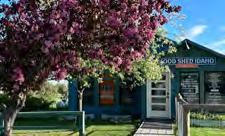
Food Shed Idaho
139 West Center Street, Victor 208-787-7695
Open Thurs–Mon, 12pm–6pm Online ordering 24/7 @ foodshedidaho.com
Featured in the Wall Street Journal, March 2025. Unique chef-curated specialty grocer featuring local grass-fed meats, charcuterie, and the best imported pasta, olive oil, vinegar, tinned fish, chocolates, and more. House-made cookies and brittle. Gift baskets, mail order, and local delivery available. [p. 21]

Forage Bistro & Lounge
253 Warbird Lane, Driggs 208-354-2858
Open Daily 12pm–8pm Reservations Recommended forageandlounge.com
Located at the Driggs Airport, Forage Bistro offers a unique dining experience with views of the Tetons and a front-row seat to arriving and departing planes. Enjoy a tour of historic Warbird aircrafts before settling in for seasonal mountain comfort food and expertly crafted cocktails. Whether you’re stopping in for lunch, happy hour, or dinner, Forage blends cozy flavors with chef-driven creativity—making it a must-visit spot in Teton Valley. [p. 38]

Grand Targhee Resort
3300 Ski Hill Road, Alta, WY 800-TARGHEE (827-4433) grandtarghee.com
This summer, swing by the Powder Cache Bar & Grill—a true Targhee gem tucked into the Tetons. Kick back, take a breath, and settle into mountain time with big views, warm hospitality, and a patio that practically begs you to linger a little longer. Inside or out, it’s the kind of place where the food hits right and the pace slows down. Just across the way, the Trap Bar & Grill brings the energy with local brews on tap, crowd favorites like the legendary Wydaho Nachos, and a sun-soaked patio perfect for après anything. Need a quick start or mid-day reset? Snorkels has you covered with strong coffee, Wyoming-style breakfast burritos, grab-and-go lunch, and a well-earned scoop of ice cream. Good food, cold drinks, and mountain views—just the way summer at Targhee should be. [BC]
4/29/24,
Grand Teton Brewing
430 Old Jackson Hwy, Victor grandtetonbrewing.com
Grand Teton Brewing: Raising a glass to the Tetons since 1988! Bring the family and enjoy our green space, sunshine, and award-winning beer. Grab a smashburger from Otto’s Kitchen for lunch or dinner—order online to save time! Follow us on our social channels to stay up to date on our latest beer releases, live music schedule, case of the week promos, and special events. Cheers! [p. 113]
King Sushi
98 East Little Avenue, Driggs 208-354-5464
Open Tues–Sun 4:30pm–9pm kingsushijh.com
A sushi staple on both sides of the Tetons, King Sushi offers an inspired menu featuring sushi, sashimi, and rolls along with cocktails, wine, and sake crafted by head chef and James Beard nominee, Jason King. Enjoy an ever-changing specials menu with seasonal rolls, delicious nigiri, and more. Located on Little Avenue just off Main Street; stop by for happy hour and grab a seat at the bar or book a reservation at resy. com. Walk ins welcome. [p. 48]
Linn Canyon Ranch
1300 East 6000 South, Victor 208-787-LINN (5466) linncanyonranch.com
Join us for an exceptional dining experience! We’ll greet you at the lodge with cocktails and hors d’oeuvres before being seated at your private table in the historic lodge. Experience the fine hospitality and elevated dining the Linn family is known for. Advanced reservations are required. For holiday and private parties, please call to inquire. [p. 40]

Mama Su
18 North Main Street, Driggs
Open Daily 4pm - 9pm mamasudriggs.com
From the team behind Teton Thai, Mama Su brings a lively take on American Chinese favorites to downtown Driggs. Lo Mein, Wonton soup, Szechuan dumplings, and Sweet and sour chicken alongside house-brewed beers, sake, and crafted cocktails. Dine in or take out. [p. 32]
Pearl Street Bagels
80 North Main Street, Driggs 208-970-2259
Open Daily 6:30am–2:30pm pearlstreetbagels.com
After 35 years in Jackson Hole, Pearl Street Bagels is excited to now be serving Teton Valley from its new downtown Driggs location. Offering traditional boiled and baked bagels, sandwiches, salads, organic coffee, and espresso drinks. Order in person or online at pearlstreetbagels. com. [p. 53]

Pinky G’s Pizzeria
37 South Main Street, Victor 208-787-PINK (7465)
Open Daily 11:30am–10pm
Delivery 12pm–9pm, Victor and Driggs, order online pinkygs.com
Pinky G’s Pizzeria has brought New York-style hand tossed pizza to Victor, Idaho, with take-out and delivery throughout Teton Valley to Victor and Driggs. Founded in Jackson Hole in 2011, Pinky G’s rocketed to fame a year later, when Guy Fieri shot an episode of Diners, Drive-Ins, and Dives there and was blown away by their hand tossed New Yorkstyle pizzas. Stop by the newly renovated downtown Victor location for dining on the outdoor patio. Enjoy house-made dough and marinara made from scratch daily, with specialty pizzas like the Abe Froman, topped with spicy Italian sausage, fresh mozzarella, fresh chopped basil, and a balsamic drizzle; or try Guy’s Pie, invented by Guy Fieri himself. Order online at pinkygs.com. [p. 46]
DRIGGS, IDAHO

Pizzeria Alpino
165 North Main Street, Driggs 208-354-8829
Open Tues–Sun 4pm–8:45pm pizzeriaalpino.com
Open for dinner. Pizzeria Alpino is proud to offer Teton Valley fresh and delicious Italian-inspired Rocky Mountain fare. We are grateful to showcase house-made pasta and pizza served in a cozy historic Teton Valley home turned restaurant. Please come join us on the deck or in the dining room. Reservations are recommended and can be made at pizzeriaalpino.com

Rise Coffee House
40 Depot Street, Driggs 208-354-RISE
Open Daily 7am–2pm risedriggs.com @risedriggs
Rise Coffee House is a place where Teton Valley rises. If you are looking for a beautifully crafted espresso drink, breakfast, brunch or mouth-watering baked good, you’ll be sure to find it here. Come enjoy culture, community, and excellent coffee. This summer, enjoy live music in the garden on weekends from 10am-noon. Cheers! [p. 28]

Tatanka Tavern
18 North Main Street, Suite 315 Colter Building, Driggs 208-227-8744
Open Daily 4pm–9pm tatankatavern.com
Tatanka Tavern offers wood-fired artisan pizza, salads, and the finest of craft cocktails, beers, and wines. Bring in the family for a night out or grab a seat at the bar and watch the game. Enjoy local favorites like the Big Poppa with tomato sauce, fresh mozzarella cheese, parmesan cheese, fresh basil, and olive oil or build your own for dinner daily. [p. 38]

Teton Thai
18 North Main Street, Driggs 208-787-THAI (8424)
Dinner Daily 4:30pm–9pm tetonthai.com
A Teton Valley staple, Teton Thai has earned its “Best Restaurant” title from the Jackson Hole News&Guide with bold, flavor-driven dishes like Pad Thai, Fried dumplings, Pineapple fried rice, Bison pho, and Tom Kha. The bar offers a curated selection of beer, wine, and specialty cocktails. Dine in or take out. [p. 32]

Victor Emporium
45 North Main Street, Victor 208-787-2221
Open seven days a week
Over one million served! For more than seventy-five years, the Victor Emporium Old Fashioned Soda Fountain has served delicious milkshakes, including the World-Famous Huckleberry Shake. Gourmet coffee and espresso served daily. The Emporium is also a great place to pick up those unusual gifts. Where the locals meet before enjoying the great outdoors here in Teton Valley. [p. 106]

Wydaho Roasters Coffee House
495 S Main Street, Driggs 208-500-2349
Open Daily 6am–9pm wydahoroasters.com
Crafting connections—one cup, one bite, and one cone at a time. Nestled near downtown Driggs, Wydaho Roasters Coffee House is more than a coffee shop—it’s a scratch bakery and homemade ice cream haven. We roast our coffee beans on-site for freshness, offering a full array of espresso and coffee drinks that showcase the best of Teton Valley. Whether you’re here to relax, work, or study with free WiFi, you’ll find comfort in every corner—and every bite. Our baked goods are made from scratch daily, including buttery croissants, rustic galettes, tender muffins, savory quiche, and more. Enjoy flavorful sandwiches on fresh baguettes, plus soups and salads. And when you’re ready to treat yourself, our house-made ice cream delivers pure joy by the scoop. Come for the coffee, stay for the craft. Every sip, bite, and cone is a celebration of homemade goodness. [p. 13]

Grand Targhee Resort
3300 Ski Hill Road
Alta, WY
800-TARGHEE [827-4433] grandtarghee.com
After a full day on the mountain—whether you’re chasing singletrack or just soaking in those Tetons—it’s time to slow things down. Settle into one of our slopeside accommodations, where the pace is easy, the air is crisp, and the views don’t quit. Rooms range from cozy setups for a small crew to larger spaces that fit the whole family. The Sioux Two Bedrooms come with a handy kitchenette and plenty of room to spread out after a big day outside. Bringing the pup? Good call, we’re dog friendly, so they can join the adventure, too. Unpack, unwind, and stay awhile. Call 800-TARGHEE to book your stay. [BC]
Linn Canyon Ranch
1300 East 6000 South, Victor 208-787-LINN [5466] linncanyonranch.com
Our lodging combines the best of luxurious accommodations with nature’s simple pleasures. Sleep peacefully in one of our luxury platform tents, or indulge yourself in creature comforts and rustic elegance in our artisan-built timberframe cabin. Our guests feel relaxed and inspired in our cozy mountain sanctuary. When you make your lodging reservation, we will also book your riding and dining activities at the ranch. We are also happy to help you reserve off-site adventures such as floating, fishing, hiking, and sightseeing. [p. 40]

Teton Homestead
57 South Main Street, Driggs 800-746-5518 mail@tetonhomestead.com tetonhomestead.com
Discover the property management experience you’ve been waiting for with Teton Homestead. Locally owned and operated, we don’t just manage properties—we create effortless, stress-free experiences for homeowners and guests alike. From high-performing vacation homes to detailed caretaking and pristine housekeeping, every service is designed to maximize your property’s potential and your peace of mind. Launching winter 2025/2026, the Elevated Collection showcases Teton Homestead’s most exceptional homes—where refined design, elevated service, and mountain luxury meet. Expect more. Earn more. Choose Teton Homestead. [p. 15]
Teton Valley Cabins
34 East Ski Hill Road, Driggs 208-354-8153
stay@tetonvalleycabins.com tetonvalleycabins.com
Nestled in the heart of Teton Valley, our family-owned cabins welcome you for special getaways, vacation home base, family or group reunions, and more. Quaint charm, rustic cabins, and affordable rates await! Enjoy locally owned restaurants and shops, along with easy access to Yellowstone National Park, Grand Targhee Resort, and Jackson Hole Mountain Resort. Staying at Teton Valley Cabins means you don’t have to leave your furry friends behind. We offer various room types equipped with microwave, fridge, satellite TV, WiFi, and pet friendly room accommodations. Check out our website for trip planning and activities in Teton Valley. We can’t wait to see you! [p. 12]

Teton Valley Property Management
253 South Main Street, Driggs 208-354-3431
info@tetonvalleypm.com tetonvalleyvacationrentals.com
Allow us to find that perfect home or condo to make your vacation memorable. All our homes are nicely furnished, meticulously maintained, and fully equipped to accommodate your group at a fraction of what you would pay for hotel rooms. All homes come complete with linens, kitchen necessities, smart TVs or satellite TV service, highspeed internet, soaps, and paper products. Book online and receive all the conveniences of home, away from home. [p. 8]

Wydaho Property Management
465 South Main Street, Driggs 208-999-3387
support@wydahoproperties. com
Wydaho Property Management is Teton Valley’s premier full-service vacation rental and home management company. Our mission is to provide a seamless, worry-free experience for both homeowners and guests. Combining hospitality expertise, advanced technology, and a deep love for the Teton Valley community, we deliver exceptional service and unforgettable stays. From cozy cabins in Driggs to luxury retreats with sweeping Teton views, we create the perfect mountain escape—and help homeowners unlock the full potential of their properties. [p. 13]
Church of Jesus Christ of Latter-day Saints
Teton Valley is home to three meetinghouses of The Church of Jesus Christ of Latter-day Saints. All visitors are welcome.
Sunday worship services are held in Victor (87 East Center Street; 9am, 10:30am, and 12pm), Driggs (225 North 1st Street; 9am, 10:30am, and 12pm), and Tetonia (209 South Main Street; 9am and 10:30am). Worship services are centered on the partaking of the bread and water of the sacrament. This one-hour meeting includes congregational hymns, prayers, and brief sermons focused on the love of God and atoning sacrifice of Jesus Christ. Following this meeting, visitors of all ages are invited to attend a one-hour Sunday School class, divided by various age groups. Additional information can be found by calling Jeff Jordan (801-623-1294), JR Berezay (307-690-2803), or by visiting ChurchOfJesusChrist.org
Church in the Tetons
Driggs City Center | Driggs | 208-354-4673 churchinthetetons.org, churchinthetetonsidaho@gmail.com
We gather for worship in the Driggs City Center at 10am on Sunday mornings. We celebrate the Lord’s Supper once a month. On months with five Sundays, we go out as the hands and feet of Jesus to serve our neighbors however we are able. We are a biblically grounded, Christ-centered, mission-focused, gospel-centric community that exists to serve Teton Valley and the world to the glory of God. We are often described as authentic, relational, genuine, and honest. Our new pastor, Pastor AJ Shortley, and his wife are here to serve the Church in the Tetons and the community. Education is provided for kids three and over. Everyone is welcome.
Good Shepherd Catholic Church
2559 South ID-33 | Driggs | 208-354-1771 uppervalleycatholic.com
Good Shepherd is a Roman Catholic Church serving the needs of the faithful. We welcome all in participation in our liturgies, devotions, ministries, and activities. Sunday mass includes a 9am mass in English and an 11am mass in Spanish with Reconciliation after each. Adoration of the Blessed Sacrament is held on Wednesdays from noon to 5pm, and Holy Mass on Wednesdays at 5pm and Thursdays at 9am. Reconciliation is offered on Wednesdays, 3:30-4:30pm. Preparation is offered for all the Sacraments. The church is open for prayer during the day. We would love for you to join our Catholic community.
Headwaters Calvary Chapel
500 Ski Hill Road | Driggs | 208-354-WORD [9673] headwaterschurch.fun
Our vision is to Simply Teach the Bible Simply—and thus, our pattern of study is verse by verse, chapter by chapter, book by book, right through the whole Bible. Sunday service starts at 10am and Wednesday service starts at 7pm. Visitors are warmly welcomed. For additional information, please call or visit our website: headwaterschurch.fun. From the stoplight in Driggs, head east on Ski Hill Road for one mile and the church will be on your left as you round the turn.
Teton Valley Bible Church
265 North 2nd East | Driggs | 208-354-8523 tetonvalleybiblechurch.org
Teton Valley Bible Church exists to glorify God and exalt Jesus Christ as Lord through Holy Spirit-empowered living and worship. Our mission is to make disciples through gospel-centered outreach, the spiritual building-up of believers, and living in loving fellowship with one another. We gather together to worship the Lord on Sunday mornings; please visit the website for service times. Pastor Jim Otto (MDiv) is committed to expositional preaching and Biblical theology. Childcare is available and all are welcome. [p. 48]
The Learning Academy of Teton Valley 1480 South 500 West | Driggs | 208-354-7898 admissions@learningacademyschool.com learningacademyschool.com
The Learning Academy of Teton Valley is an independent Preschool–Grade 8 school rooted in over twenty years of whole-child education. Set on a beautiful campus with a school farm, greenhouse, and yurt, LATV offers a nurturing, nature-based environment where children are free to explore, create, and grow. With small class sizes, warm child-centered learning spaces, and individualized learning paths, each student is deeply known and supported. Honoring the wonder of childhood, LATV emphasizes imaginative play, outdoor learning, and meaningful connection to the natural world. Through hands-on experiences and a supportive, close-knit community, students develop academically, socially, and emotionally while building curiosity, confidence, and a lifelong love of learning. Summer programs, hybrid homeschooling options, and tuition support are available. [p. 29]
Mountain Academy of Teton Science Schools Grades Early Childhood–8th Grade Victor, Idaho, and Jackson, Wyoming | 307-732-7743 mountainacademy.org
At Mountain Academy of Teton Science Schools, learning is in our nature. We are an independent day school serving students from early childhood through 8th grade. Mountain Academy provides an exceptional education that engages all aspects of the individual child. Whether you’re returning or considering joining us for the first time, there’s never been a better moment to be a part of our vibrant community. [p. 61]
Teton School District 401
District Office: 208-228-5923
tsd401.org
Empowering our students to reach their full potential—Teton School District 401 provides a safe and exceptional learning environment where career and college readiness are the academic cornerstones of a relevant and progressive education. [p. 113]
Teton High School
Grades 9–12 | 208-228-5924 ths.tsd401.org
Basin High School
Grades 9–12 | 208-970-6061 bhs.tsd401.org
Teton Middle School
Grades 6–8 | 208-228-5925 tms.tsd401.org
Rendezvous Upper Elementary Grades 4–5 | 208-228-5926 rues.tsd401.org
Teton K-3 Elementary Schools
Victor 208-228-5929 | Driggs 208-228-5927 | Tetonia 208-228-5930 ves.tsd401.org, des.tsd401.org, tes.tsd401.org

Targhee Fest Returns
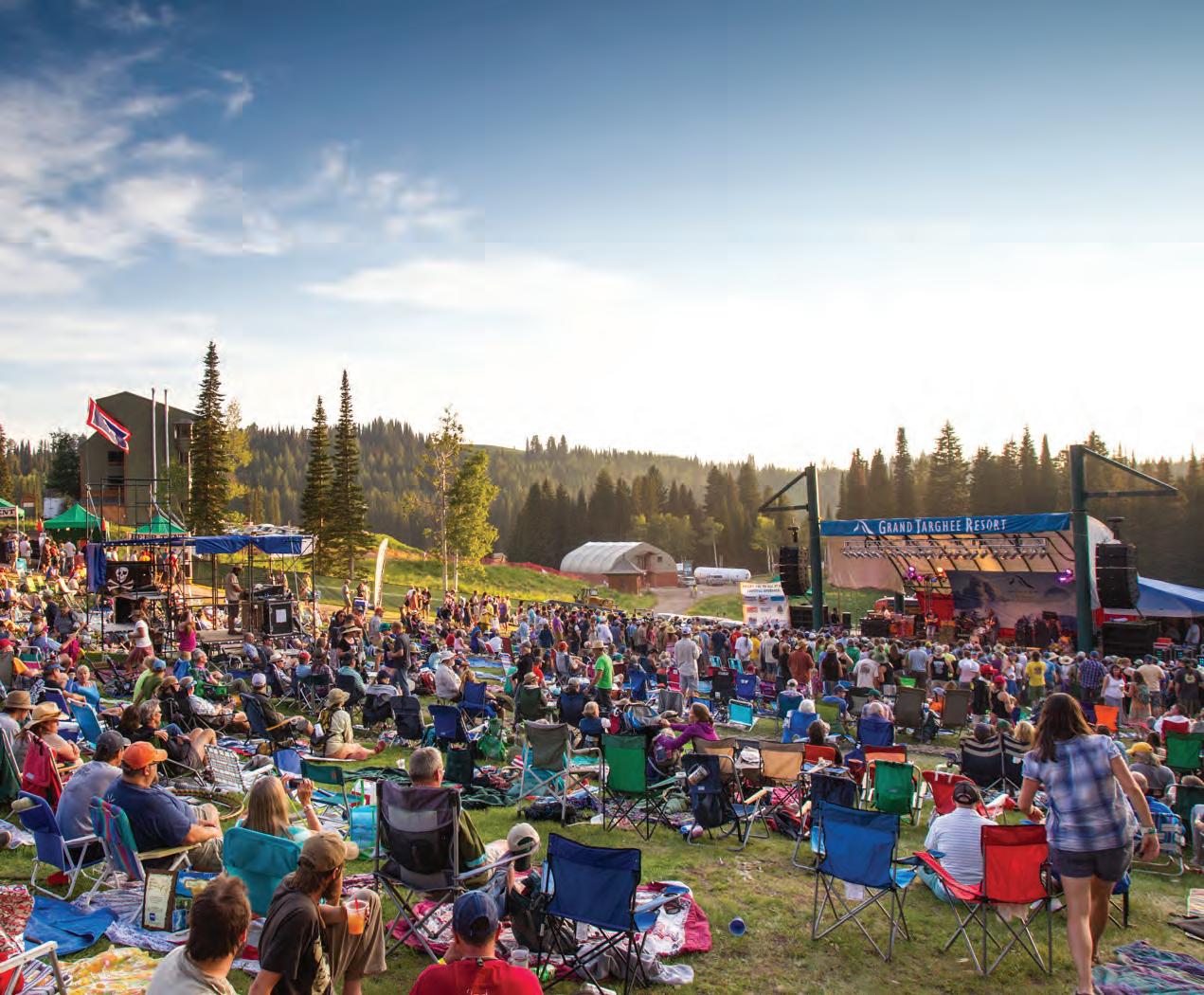
THE LAST TARGHEE FEST WAS SEVEN YEARS AGO, when Grammy winners Ryan Bingham and Larkin Poe performed. This summer, they’ll be back.
On July 10, Larkin Poe will join headliners Lukas Nelson, another Grammy winner, and the Marcus King Band on the Targhee Fest stage at Grand Targhee Resort. Ryan Bingham & The Texas Gentlemen will perform the following day with headliner Charley Crockett, a 2026 Grammy nominee.
Before the pandemic hit, the festival was an annual event for more than a decade, and fans kept asking for its return. The ski resort’s other major music event, the Targhee Bluegrass Festival—this year on August 7, 8, and 9—returned in 2023. Bluegrass headliners are Railroad Earth, Jesse Welles, and Sierra Ferrell.
Whether a fan of bluegrass or rock and everything in between, each festival is sure to be a night (or two or three) to remember. For tickets and more, visit grandtarghee.com/targheefest.
PHOTO COURTESY OF GRAND TARGHEE RESORT

Your trust inspires our performance
$75,062,000 59 41
JHSIR Teton Valley Sides and Volume 2025 Closed Sales Volume Transaction Sides Years of Experience
The mountains have always attracted people who know what they want. Over the years, we have built our practice on that same clarity, delivering results for buyers and sellers who expect nothing less.
Each transaction is different. Each client is different. The commitment never is.
We know this valley. We know its value. And we show up every single time.
The Cisco Group. Here for what’s next.