CAITLIN CLARK Women’s Basketball’s Newest Sensation
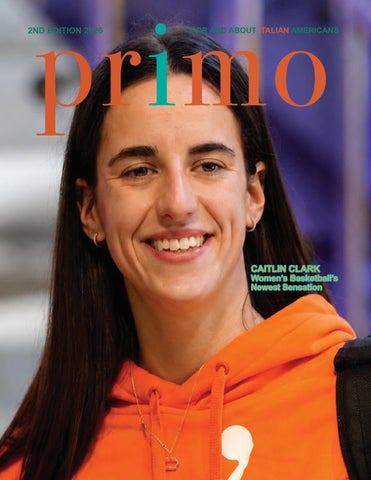
CAITLIN CLARK Women’s Basketball’s Newest Sensation
Women’s
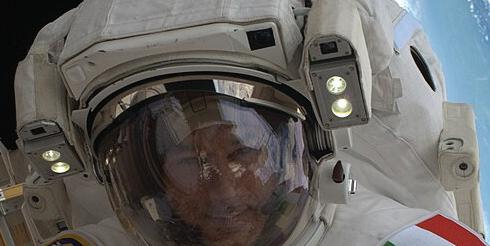
ITALIAN ASTRONAUTS
24
2ND EDITION 2026
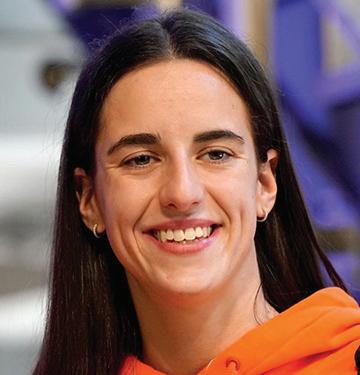
Cover: Caitlin Clark
Women’s basketball’s newest sensation
We take a look at the men and women of Italy who traveled to space.
38
A Letter from the Editor 5
The Pope Confronts AI Travel/Hidden Treasures 8
Rome’s Palazzo Zuccari
Language 10
How Italy Inspired Willa Cather
Wine & Spirits 16
Borghetti—Coffee Liqueur Readers’ Corner 18
Food Recipes 56
Pollo al Balsamico, Ravioli Ricotta e Spinaci al Burro e Salvia, Insalata di Ceci, Crostini con Pancetta e Ricotta, Torta di Pan di Spagna alle Fragole e Panna, Granita al Caffè Reviews 62
48
President Trump remakes the nation’s capital to fully emulate Ancient Rome. 32

NATIVE FLOWERS OF ITALY
The beautiful blooms cultivated on the peninsula, depicted in art.
56 contents
44
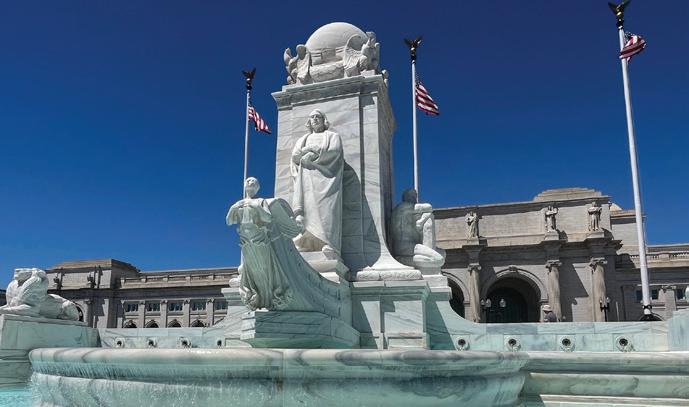
ANCIENT ROME REDUX
54
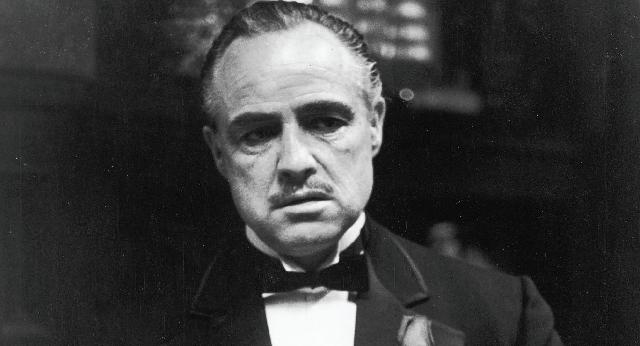
MYTHS OF “THE GODFATHER”
We separate fact from the fiction of the famous film and novel.
AMERICA’S ARCHES
Trump’s proposed Roman arch will be one of many in the United States.
JOYS OF SUMMER
As the weather heats up, the food becomes more comforting.
PUBLISHER
Reem Nourallah
EDITOR
Truby Chiaviello
PUBLISHERS EMERITUS
Herve van Caloen
Francis L. DeFabo
CIRCULATION MANAGER
John Desaro
DESIGN & LAYOUT
Thomas Jenkins
CONTRIBUTING WRITERS
Rami Chiaviello
Truby Chiaviello
Eugene Nelson
Reem Nourallah
Margo Sorenson
ADVERTISING SALES
Truby Chiaviello
2125 Observatory Place, N.W. Washington, D.C. 20007
202.363.3741 editor@flprimo.com
Ask about our print and online advertising packages.
The magazine F&L PRIMO, (USPS 019-892), (ISSN 15361543), 2ND EDITION 2026, Volume 26, Issue Two, is published by Potomac Media. Six issue subscription is $27.95. Periodicals’ postage paid at Washington, D.C. and at additional mailing offices. Copyright F&L PRIMO 2026. All rights reserved. Mail editorial and letters to: PRIMO, 2125 Observatory Place, N.W., Washington, D.C. 20007, editor@flprimo.com. Subscription inquiries: Call 202-3633741 help@flprimo.com.
POSTMASTER: Send address changes to F&L PRIMO, 2125 Observatory Place, N.W., Washington, D.C. 20007. Mailing label should accompany request. Subscribe by logging on to www. primomagazine.com or call 202-363-3741.
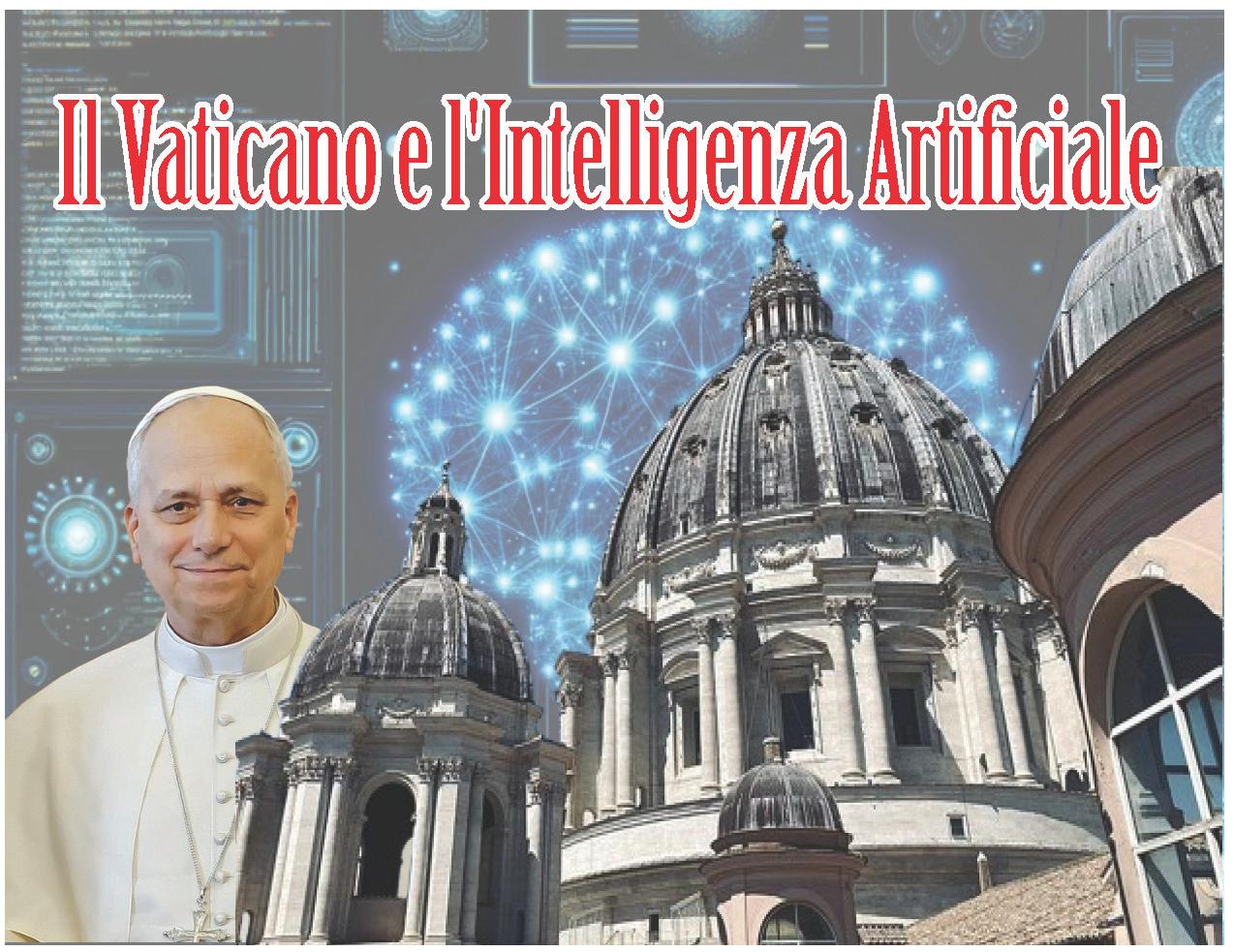
He knows computers. A graduate of Villanova University, in 1977, with a BS degree in mathematics, Pope Leo XIV comes to us with a deep understanding for logic, reason, and the analytical thinking to fully grasp the digital age. No wonder then, his first encyclical, published May 25, titled Magnifica Humanitas (“Magnificent Humanity”) was to confront artificial intelligence.
Papal encyclicals are among the highest forms of Catholic teaching. Such documents allow popes to offer moral and spiritual guidance on matters affecting the Church and the wider world. Available on the Vatican’s website to be read by anyone, the pope’s encyclical is divided into two parts. The first is a reflection on the promises and risks of artificial intelligence. The second—a condemnation of global conflict and a call to end the Christian principle of “just wars.”
A
The pope recognizes the vast potential of artificial intelligence to enhance human life, advance scientific research, and assist in solving complex problems. This new technology can help further teach the faith and inform Catholics about the Gospel.
At the same time, however, the pope cautions that technological progress must always remain subject to ethical principles and respect for human dignity.
Drawing upon Scripture, Pope Leo reflects on lessons found in the Book of Genesis and the Book of Nehemiah.
The pope relays the story of the Tower of Babel.
After Noah’s flood, human civilization rebounded with mastery of brick making and civil engineering. The people constructed a massive tower to reach heaven. The story serves as a warning against human pride and human power.
The builders wanted greatness apart from God, only to see their ambitions frustrated, when God dispersed them with different languages.
The pope uses the Book of Nehemiah to contrast the lesson from Babel. Jewish refugees return to Jerusalem to rebuild the temple in humility, faith, and service to God.
The pope suggests that the development of artificial intelligence presents a similar choice: whether humanity will employ its knowledge in cooperation with God’s purposes or pursue technological mastery detached from moral responsibility.
Pope Leo XIV calls upon governments, businesses, and international institutions to establish ethical safeguards for the use of artificial intelligence. He warns against replacing human beings with robots and androids in the workplace.
The pope reminds us that human effort contains value and dignity consistent with God’s plan.
Magnifica Humanitas then pivots from the overlying message. The pope’s encyclical confronts a greater evil than unrestrained use of artificial intelligence. He makes a plea to end all war.
The encyclical ponders weapons manned by artificial intelligence. The pope sees military decision-making relying on algorithms instead of field commanders. Unmanned weapons will dominate the battlefield, he says. The next phase could be countries declaring war on others based on what they are told—not
by advisors—but by artificial intelligence. The pope says decisions concerning war and peace must always remain in human hands.
Magnifica Humanitas continues the overall purpose of the Vatican of the last 80 years. The pope maintains the religious cause to stop a recurrence of World War II.
Since 1945, institutional guilt has deeply permeated the Vatican. Catholicism proved entirely powerless against a global conflict that claimed roughly 60 million lives.
World War II erupted from violence engineered by historically Catholic nations. The Nazi Holocaust unfolded across these very lands.
This profound institutional failure pushed Archbishop Angelo Roncalli—who covertly rescued endangered Jews in Bulgaria—to demand systemic change. As Pope John XXIII, he ushered Vatican II reforms to address these failures. The Holy See established enduring global initiatives to prevent the underlying causes of human violence and permanently prevent another global conflict.
The pope uses the threat of artificial intelligence to proclaim the era of Christian “just wars” is over. He delivers a radical ultimatum: humanity must pursue peace at any expense— even if it means pulling the plug on the computers driving the modern world.


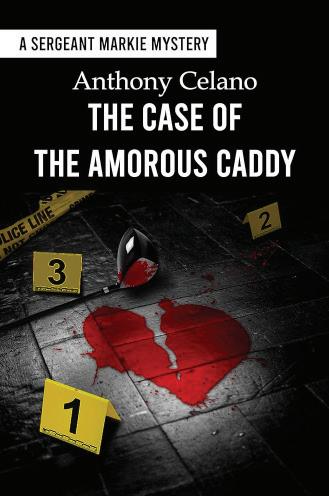
Anthony Celano delivers a smart, unsettling, and finely crafted noir that lingers long after the final page. It’s a cautionary tale about delusion and desire—and a reminder that beneath the quiet surface of ordinary life, danger often lurks in the most unexpected places.
primo magazine
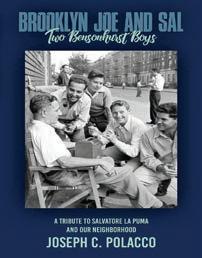
By Joseph C. Polacco
Hidden above the Spanish Steps in Rome stands one of the city’s strangest and most fascinating buildings: Palazzo Zuccari, the famed structure known as “House of Monsters.”
Unlike the elegant Renaissance palaces that surround the area, Palazzo Zuccari seems almost to belong to a dream—or nightmare. The home’s exterior serves a buffet of sculpted decorations to horrify onlookers. There are a giant gaping mouths, bulging eyes, and grotesque stone faces that appear ready to swallow visitors whole.
The palace was built around 1590 by the celebrated Mannerist painter and architect Federico Zuccari. One of the most successful artists of his age, Zuccari worked on commission throughout Italy and even in England and Spain. Yet for his personal residence and studio in Rome, he rejected conventional beauty and symmetry. Instead, he created something theatrical, eccentric, and unforgettable.
The palace rises near Via Gregoriana, overlooking Rome from the slopes once occupied by the ancient Gardens of Lucullus. The structure appears elegant enough until the visitor notices the monstrous entrances.
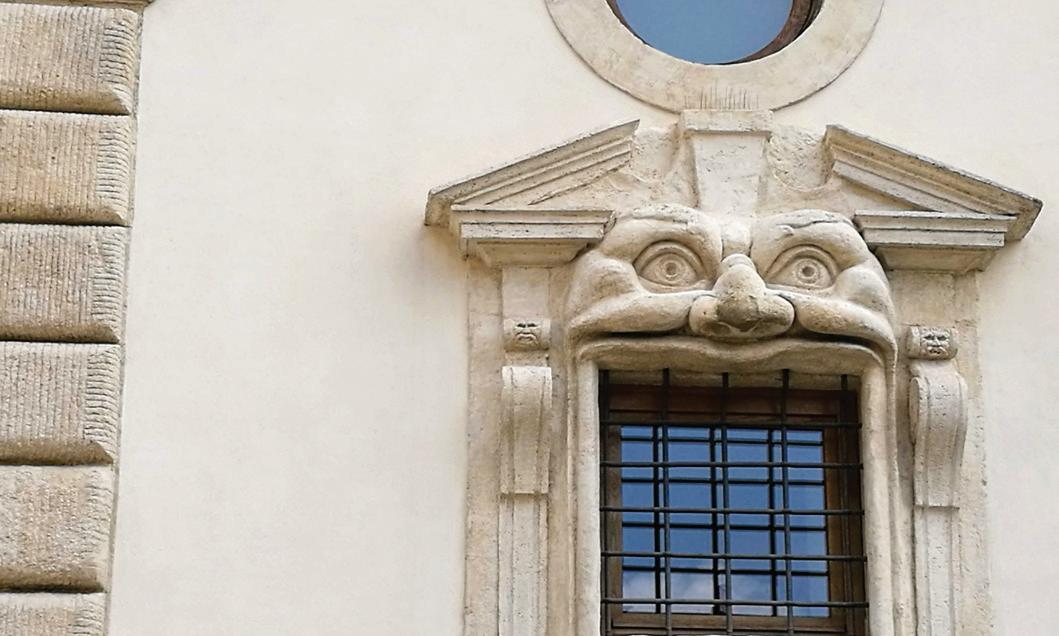
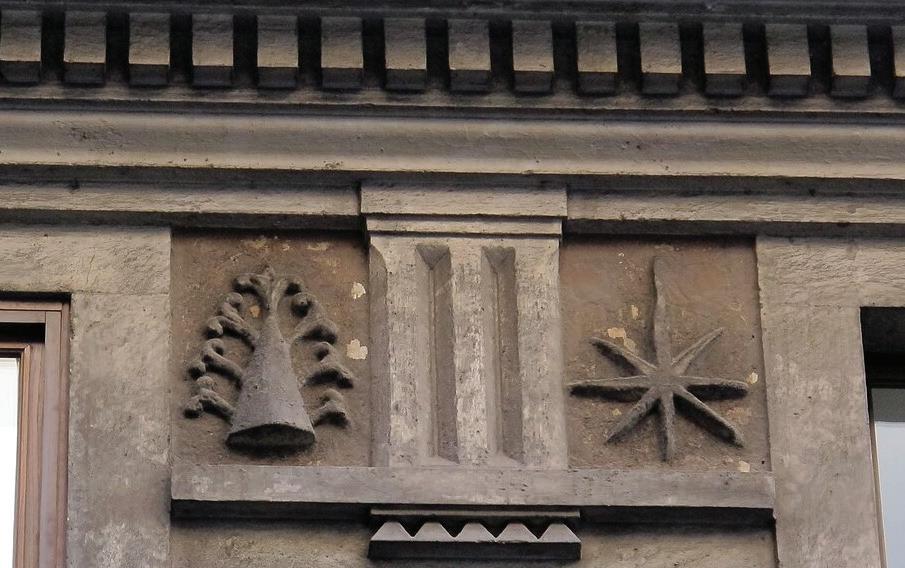
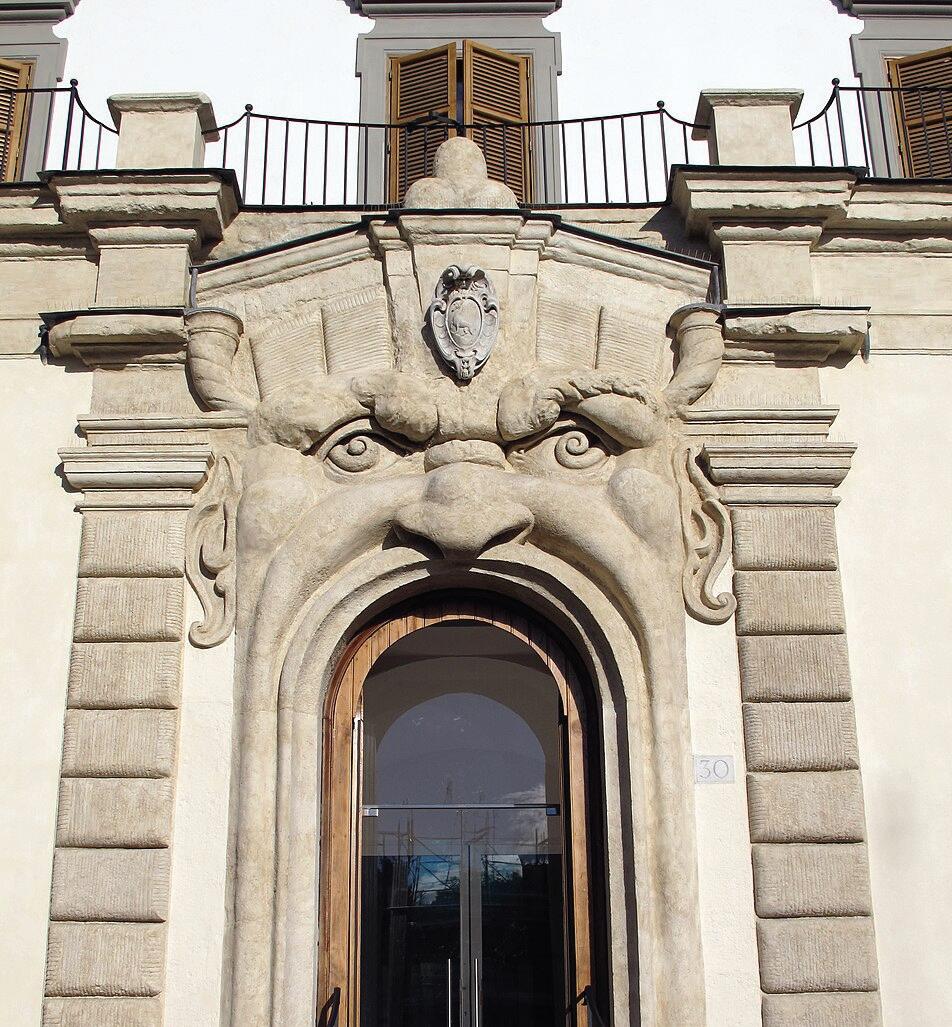
The photographs, beginning right, clockwise, show the front entrance of Palazzo Zuccari, where a gaping mouth greets visitors, exterior classical motifs, and other gaping mouths surround the windows.
Huge stone mouths form the doorways and windows, their jagged teeth and distorted expressions create an atmosphere somewhere between mythology and horror. These grotesque masks were inspired partly by the bizarre sculptures of the Sacro Bosco, or Monster Park, in Bomarzo, north of Rome.
The monsters are not meant to represent specific demons or mythological beasts. Rather, they belong to the artistic spirit of the late Renaissance known as Mannerism. A host of artists and sculptors who came after the great masters took a more rebellious turn at creation. They delighted in distortion, surprise, tension, and fantasy. They deliberately broke away from the calm balance of the High Renaissance. In Palazzo Zuccari, art became spectacle. The building itself turned into a stage set.
Some scholars see symbolic meaning in the giant mouths. In medieval religious art, hell was sometimes depicted as a gigantic devouring jaw awaiting sinners to be devoured in eternal punishment. Others believe the palace symbolizes the passage into the mysterious world of artistic imagination.
To enter the building is to leave ordinary reality behind and step into the realm of creativity and illusion.
Over the centuries the palace attracted important residents and visitors. The exiled Polish queen Marie Casimire once lived there. During the era of the Grand Tour, artists and intellectuals gathered within its walls. The palace even entered literature when Gabriele D’Annunzio used it as the residence of Andrea Sperelli in his decadent novel Il Piacere Today, the palace serves a very different purpose. It houses the Bibliotheca Hertziana, part of the Max Planck Society, one of the world’s leading institutes for the study of Italian art history. Scholars now quietly work behind the monstrous facade, surrounded not by terror, but by books, archives, and centuries of artistic scholarship.
The strange power of Palazzo Zuccari remains undiminished. In a city filled with glorious churches, fountains, and classical ruins, the House of Monsters is a hidden treasure for visitors to marvel at the beauty of macabre.
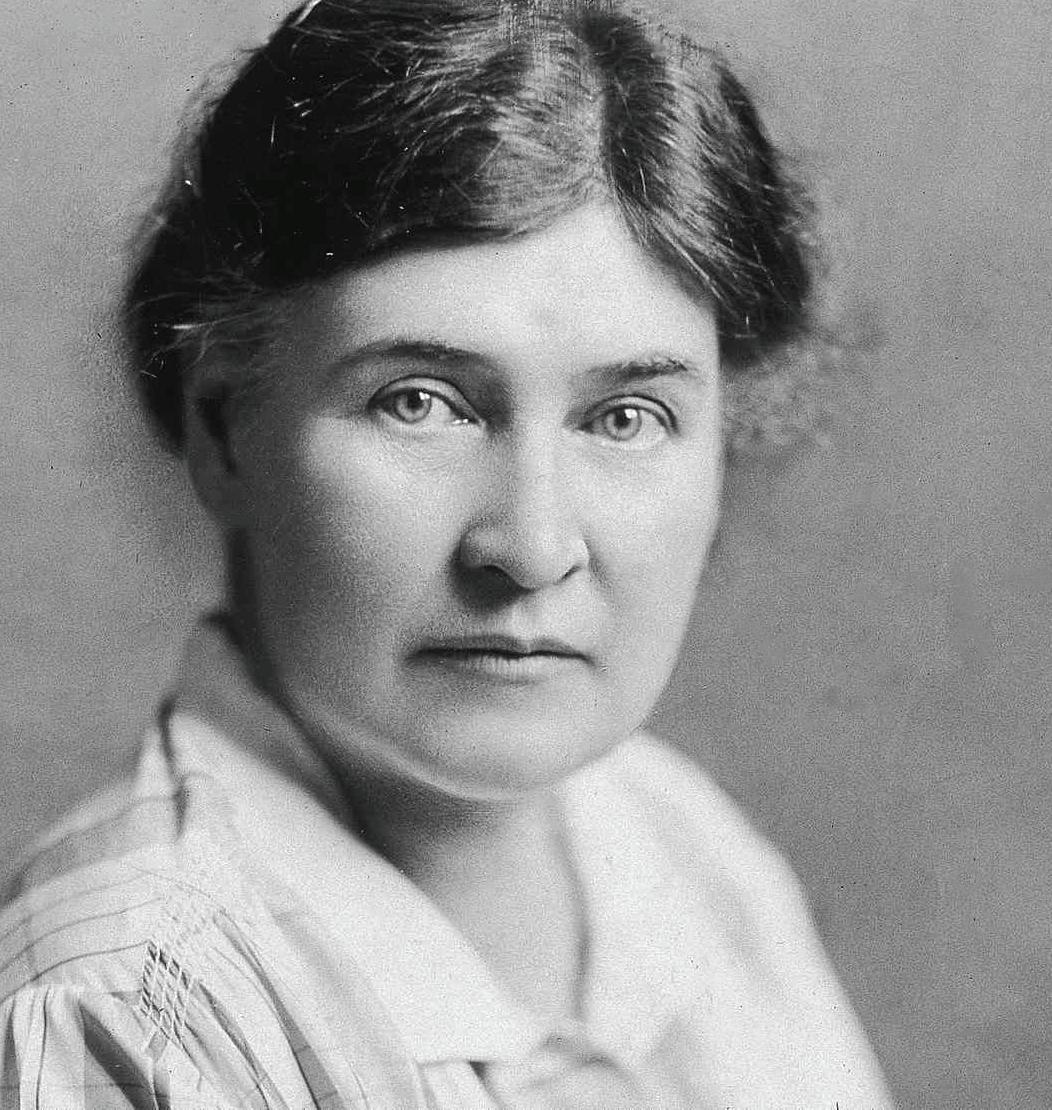
FFor the great American novelist Willa Cather, Italy was more than a destination.
Ancient Italian cities, old churches bathed in candlelight, the sculpted hills of Tuscany, and the echoes of Rome’s past stirred something deep within Cather’s imagination.
Born on December 7, 1873 in Virginia, Cather was raised in Nebraska after her family moved there when she was nine years old. She is best remembered for her portrayals of the American frontier. Her reputation as one of America’s best authors was well-established by the time she died on April 24, 1947 in New York.
Cather first visited the Italian peninsula in 1902 while working as a journalist and teacher. So entranced by the country, she returned there several times, for rest, inspiration, and distance from the pressures of American literary life. Italy offered her what she could not always find at home: continuity with history, beauty rooted in tradition, and a civilization where art and faith were inseparable.
Cather was especially drawn to the Italian countryside where she encountered a living connection to antiquity and Christianity. She admired the way Italian culture preserved memory through architecture, painting, ritual, and storytelling.
For Cather, Italy’s old churches, Renaissance frescoes, and quiet monasteries contained centuries of accumulated human experience.
Italy’s influence can be felt most directly in her 1927 novel Death Comes for the Archbishop, widely regarded as one of her masterpieces. Though set primarily in the American Southwest and centered on French Catholic missionaries in New Mexico, the novel possesses a distinctly Mediterranean and Catholic sensibility. The book moves slowly and contemplatively, almost like an Italian fresco unfolding in prose.
Cather emphasized atmosphere and sacred space over conventional action. The novel’s main character, Bishop Jean-Marie Latour, is a European figure transplanted into the harsh American landscape. His appreciation for beauty, architecture, and spiritual order reflects values Cather deeply associated with Italy. One can sense the shadow of Roman basilicas and Tuscan monasteries cast over the adobe churches of New Mexico.
Cather admired Italy’s artistic heritage for its clarity, balance, and devotion to craft. Critics have often noted that her prose shares qualities with Renaissance painting: careful composition, luminous detail, and restraint.
Cather built scenes patiently and deliberately. Her descriptions of landscape frequently possessed the stillness and precision of visual art. Venice especially enchanted her. The city’s fading grandeur and melancholic beauty resonated with Cather’s recurring themes of memory, decline, and the passage of time. She was sensitive to civilizations in transition and to cultures struggling to preserve themselves against modernity. Italy strengthened Cather’s understanding of the immigrant experience in America. Many of the European settlers she portrayed in novels such as My Ántonia and O Pioneers! carried with them memories of ancient homelands. Traveling through Italy helped her appreciate how old-world traditions could survive in new landscapes. She understood that immigrants were not merely laborers or pioneers; they were inheritors of cultures stretching back centuries.
Italy gave Willa Cather a deeper artistic vocabulary. Though she remained profoundly American in subject matter, Italy illuminated the deeper currents beneath her work through memory, faith, and art.
On the pages to follow is an excerpt from her novel—what many consider to be her best— Death Comes for the Archbishop, in English and Italian

One summer evening in the year 1848, three Cardinals and a missionary Bishop from America were dining together in the gardens of a villa in the Sabine hills, overlooking Rome. The villa was famous for the splendid view enjoyed from its terrace. The hidden garden in which the four men sat at table lay some twenty feet below the southern end of the terrace and was merely a ledge of rock, suspended above a steep slope planted with vineyards. A stone staircase connected it to the promenade above. The table was set in a sanded space among pots of orange and oleander trees, in the shade of broad ilex oaks growing out of the rock overhead. Beyond the balustrade there was the sheer drop into the air, and far below the landscape stretched soft and undulating; nothing interrupted the gaze until it reached Rome itself.
It was still early when the Spanish Cardinal and his guests sat down to dinner. The sun would continue to shine for another hour in supreme splendor and, across the luminous folds of the countryside, the low profile of the city scarcely rippled the horizon — indistinct except for the dome of St. Peter’s, bluish-gray like the flattened top of a gigantic balloon, with only a flash of copper light upon its soft metallic surface. The Cardinal had the eccentric preference of beginning dinner at that late-afternoon hour, when the vehemence of the sun suggested movement. The light was full of action and possessed a peculiar quality of culmination — of magnificent completion. It was at once intense and soft, with a redness like that of countless burning candles, an aura of crimson within its flames. It penetrated among the ilex trees, illuminating their mahogany-colored trunks and softening their dark foliage; it warmed the bright green of the orange trees and the pink blossoms of the oleanders until they turned to gold; it cast trembling spiral patterns upon the damask, the silver, and the crystal. The churchmen kept their rectangular clerical caps upon their heads to protect themselves from the sun. The three Cardinals wore black cassocks with crimson piping and buttons; the Bishop a long black coat over his violet vest.
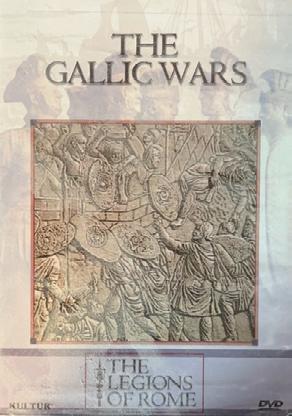
An outstanding documentary that recounts the invasion of Gaul by Julius Caesar and his Roman Legions.
___ Yes, please send me the dvd documentary, "The Gallic Wars," for $19.95. Free shipping and handling.
TPayment by __Check __ Money Order __ Credit Card
CC:_________________________________________ Exp Date: _________
Name:_______________________________________ Sec. Code: ________
Please detach and complete the form and mail with check made to PRIMO, money order or credit card information to: PRIMO, 2125 Observatory Place, N.W., Washington, D.C. 20007, or call 202-363-3741; www.onlineprimo.com
hey were discussing business; indeed, they had met to consider an anticipated request from the Provincial Council of Baltimore concerning the establishment of an Apostolic Vicariate in New Mexico — a part of North America recently annexed to the United States. This new territory was vague to all of them, even to the missionary Bishop. The Italian and French Cardinals spoke of it as “Le Mexique,” while the Spanish host referred to it as “New Spain.” Their interest in the proposed Vicariate was lukewarm and had to be continually revived by the missionary, Father Ferrand; Irish by birth, French by ancestry — a man of long wanderings and notable achievements in the New World, an Odysseus of the Church. The language spoken was French — the time had already passed when Cardinals could conveniently discuss contemporary matters in Latin.
Unasera d’estate dell’anno 1848, tre Cardinali e un Vescovo missionario d’America cenavano insieme nei giardini di una villa sui colli Sabini, dominando Roma. La villa era famosa per la splendida vista che si godeva dalla sua terrazza. Il giardino nascosto in cui i quattro uomini sedevano a tavola si trovava una ventina di piedi sotto l’estremità meridionale della terrazza ed era una semplice sporgenza di roccia, sospesa sopra un ripido pendio coltivato a vigneti. Una scalinata di pietra lo collegava alla passeggiata sovrastante. La tavola era apparecchiata in uno spazio cosparso di sabbia, fra vasi di aranci e oleandri, all’ombra di ampi lecci che crescevano dalla roccia sopra di loro. Oltre la balaustra vi era il precipizio nell’aria, e molto più in basso il paesaggio si distendeva dolce e ondulato; nulla arrestava lo sguardo fino a raggiungere Roma stessa.
Era ancora presto quando il Cardinale spagnolo e i suoi ospiti si sedettero per la cena. Il sole avrebbe brillato ancora per un’ora di supremo splendore e, attraverso le luminose pieghe della campagna, il profilo basso della città appena increspava l’orizzonte — indistinto tranne che per la cupola di San Pietro, grigioazzurra come la cima schiacciata di un enorme pallone, con appena un lampo di luce ramata sulla sua morbida superficie metallica. Il Cardinale aveva l’eccentrica preferenza di iniziare il pranzo a quell’ora del tardo pomeriggio, quando la veemenza del sole suggeriva movimento. La luce era piena d’azione e possedeva una particolare qualità di culminazione — di magnifico compimento. Era insieme intensa e morbida, con un rossore simile a quello di innumerevoli candele accese, un’aura di rosso nelle sue fiamme. Penetrava fra i lecci, illuminandone i tronchi color mogano e sfumando il fogliame scuro; scaldava il verde brillante degli aranci e il rosa delle fioriture d’oleandro fino a trasformarli in oro; tracciava motivi spiraliformi tremolanti sulla damasca, sull’argento e sul cristallo. Gli ecclesiastici tenevano sul capo i loro berretti rettangolari per proteggersi dal sole. I tre Cardinali indossavano talari nere con profilature e bottoni cremisi; il Vescovo un lungo abito nero sopra il suo panciotto viola.
Parlavano d’affari; si erano infatti incontrati per discutere una prevista richiesta del Concilio Provinciale di Baltimora riguardante la fondazione di un Vicariato Apostolico nel Nuovo Messico — una parte dell’America del Nord recentemente annessa agli Stati Uniti. Questo nuovo territorio era vago per tutti loro, persino per il Vescovo missionario. I Cardinali italiano e francese ne parlavano come di “Le Mexique”, mentre l’ospite spagnolo lo definiva “Nuova Spagna”. Il loro interesse per il progettato Vicariato era tiepido e doveva essere continuamente ravvivato dal missionario, Padre Ferrand; irlandese di nascita, francese d’origine — uomo dai lunghi viaggi e dalle imprese notevoli nel Nuovo Mondo, un Ulisse della Chiesa. La lingua parlata era il francese — il tempo in cui i Cardinali potevano discutere comodamente di questioni contemporanee in latino era ormai passato.

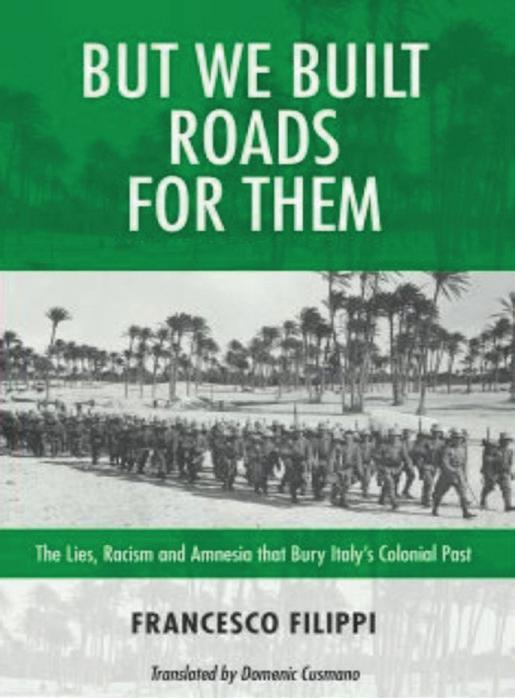
From the author of “Mussolini Did Some Good”
“...relying on a large amount of research reinterpreted in the light of some brilliant personal insights. In this way the author retraces the short parable of Italian colonialism.”
L’indicie dei libri del mese
“Filippi’s... book warns us against ‘prejudice’ from believing we know when we don’t know…” Giovanni de Luna, La Stampa
“I applaud Cusmano for his luminous rendering of Filippi’s incendiary truth telling.”
George Elliott Clark, Accenti Magazine
Please buy today
BUT WE BUILT ROADS FOR THEM

Distributed by IPG
Francesco Filippi is a historian of mentalities and an educator who has specialized in the relationship between memory and the present. "Mussolini Also Did A Lot of Good" is his first book to appear in English. He lives in Trento, Italy.

What does it take for an Italian to find the American Dream?
“Giovanni: Street Urchin of Naples” is a decades’ long saga for the Italian immigrant experience to coincide with key historical events such as World War I, the 1929 Stock Market Crash, The Great Depression, World War II and the social turmoil of the Cold War years, up to 1969.
Can a man truly escape his modest origins, no matter how far he climbs? An extraordinary saga to give us the soul-stirring answer. “Giovanni: Street Urchin of Naples” is awesome and inspiring.
primo magazine
“Giovanni: Street Urchin of Naples Buy it today Avilable at Amazon.com



WWhen most Americans think of coffee liqueur, one name usually comes to mind: Kahlúa.
Yet, long before the Mexican favorite became a staple in cocktails and desserts, Italians were already transforming their beloved espresso into a distinctive liqueur of their own. That spirit is known as Borghetti, a rich coffee liqueur that has been delighting Italians for more than 160 years.
The story begins in 1860 with Ugo Borghetti, a businessman and entrepreneur who operated a café in the central Italian city of Ancona. At the time, Italy was in the midst of unification. Seeking a refreshing and invigorating drink, Borghetti experimented with combining authentic espresso coffee with alcohol, creating a liqueur to capture the flavor and aroma of freshly brewed Italian coffee.
The product was an immediate success when introduced in Italy. At first, a popular after-dinner digestivo, Borghetti became an ingredient for desserts and cocktails. Today, Caffè Borghetti remains one of Italy’s most recognized coffee liqueurs, yet, still lags way behind Kahlúa
Unlike many flavored spirits that rely heavily on artificial ingredients, Borghetti is made with real espresso coffee, giving it a robust and authentic flavor profile. Rich notes of roasted coffee beans are balanced by a gentle sweetness, creating a smooth and versatile spirit.
In Italy, Borghetti is often served chilled after a meal. Some enjoy it poured over gelato or vanilla ice cream, where its coffee flavor creates a simple yet elegant dessert.
Bartenders frequently incorporate Borghetti into espresso martinis, not to mention White Russians, and other coffee-based cocktails. It can even be added to a shot of espresso for an extra kick.
Borghetti reflects Italy’s enduring coffee culture—a tradition built on neighborhood cafés, lively conversations, and the daily ritual of sharing an espresso with friends and family. In a country where coffee is not merely a drink but an institution, it was perhaps inevitable that someone would eventually transform espresso into a liqueur.
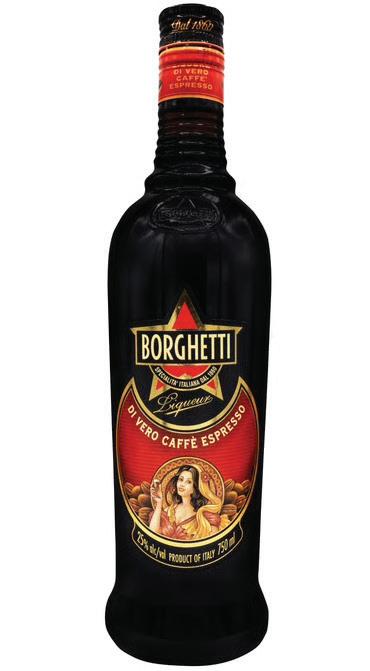
Coffee culture is thriving worldwide. Espresso martinis have become one of the most fashionable cocktails in bars and restaurants. Yet many consumers remain unaware that Italy has its own historic coffee liqueur tradition. Borghetti offers an opportunity to discover that heritage while enjoying a spirit that is both authentically Italian and remarkably modern.
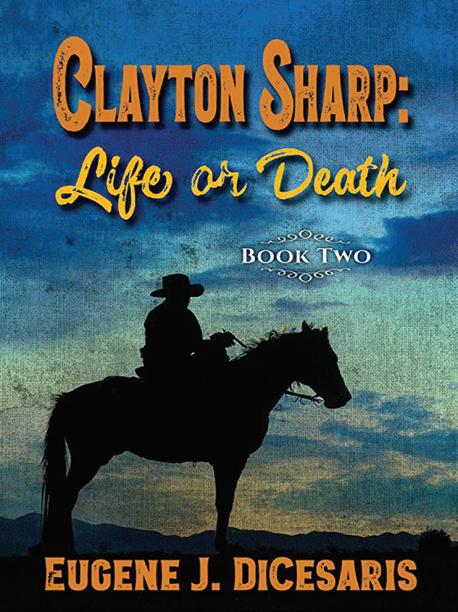
Eugene DiCesaris has developed an enticing series with his second book, “Sharp: Life or Death.” The titled character is the noble gunman in the western genre tradition. New characters are continuously introduced as Clayton Sharp confronts violent outlaws, renegade Indians and corrupt lawmen. A great western series!
primo magazine
Ride the trail with a man haunted by the past and driven by faith to make things right. Courage. Love. Forgiveness. The West has never felt more real—or more human.
CLAYTON SHARP: LIFE OR DEATH Book Two
By Eugene J. DiCesaris
Buyiton Amazon.comToday!

by Nino Provenzano
Translated into English Verse by Gaetano Cipolla
Nino Provenzano presents a collection of poems rooted in the Arbëresh culture of Sicily, exploring family, memory, faith, and the passage of time. Written in a language and tradition preserved for centuries, these verses reveal the beauty of everyday life while celebrating the customs and values of a remarkable people. Presented in both the original language and English verse translation, this volume opens a unique window into a living heritage.
This bilingual paperback is now available $16 plus $4.00 for shipping from Legas, P.O. Box 149, Mineola, NY 11501.
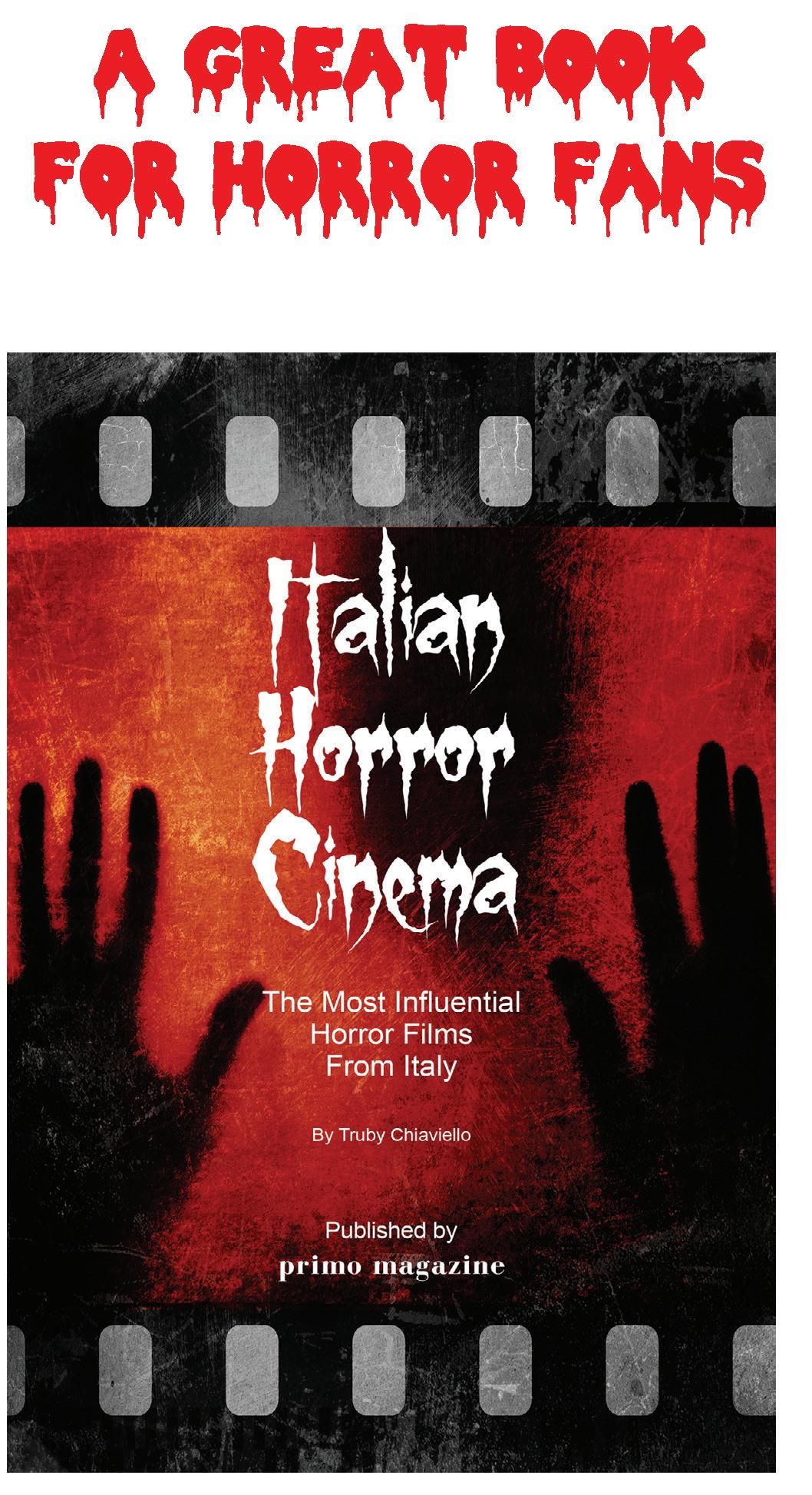
Yes, please send me the book, “Italian Horror Cinema,” for $19.95 plus $4.00 for shipping and handling
Full Name: _________________________
Address: ___________________________
City: ______________________________
State:_____ Zip: ____________________ Phone: ____________________________ Email: ____________________________
Credit Card #: Exp. Date: __________ Sec Code: ________
Please complete the above form and mail the flyer with check, money order or credit card information to: PRIMO Magazine, 2125 Observatory Place, N.W., Washington, D.C. 20007.
By Eugene Nelson
In November 2018, my wife and I sold my parents’ home at 1272 Cass Street in Green Bay, Wisconsin.
My father, Edmund Erdmann Nelson, died in 1976 and my mother, Michelina Amalia Nelson, died in 2000. My father was born and raised in the Polish neighborhood in Green Bay and my mother was born and raised in Torrice, Italy, 62 miles south of Rome.
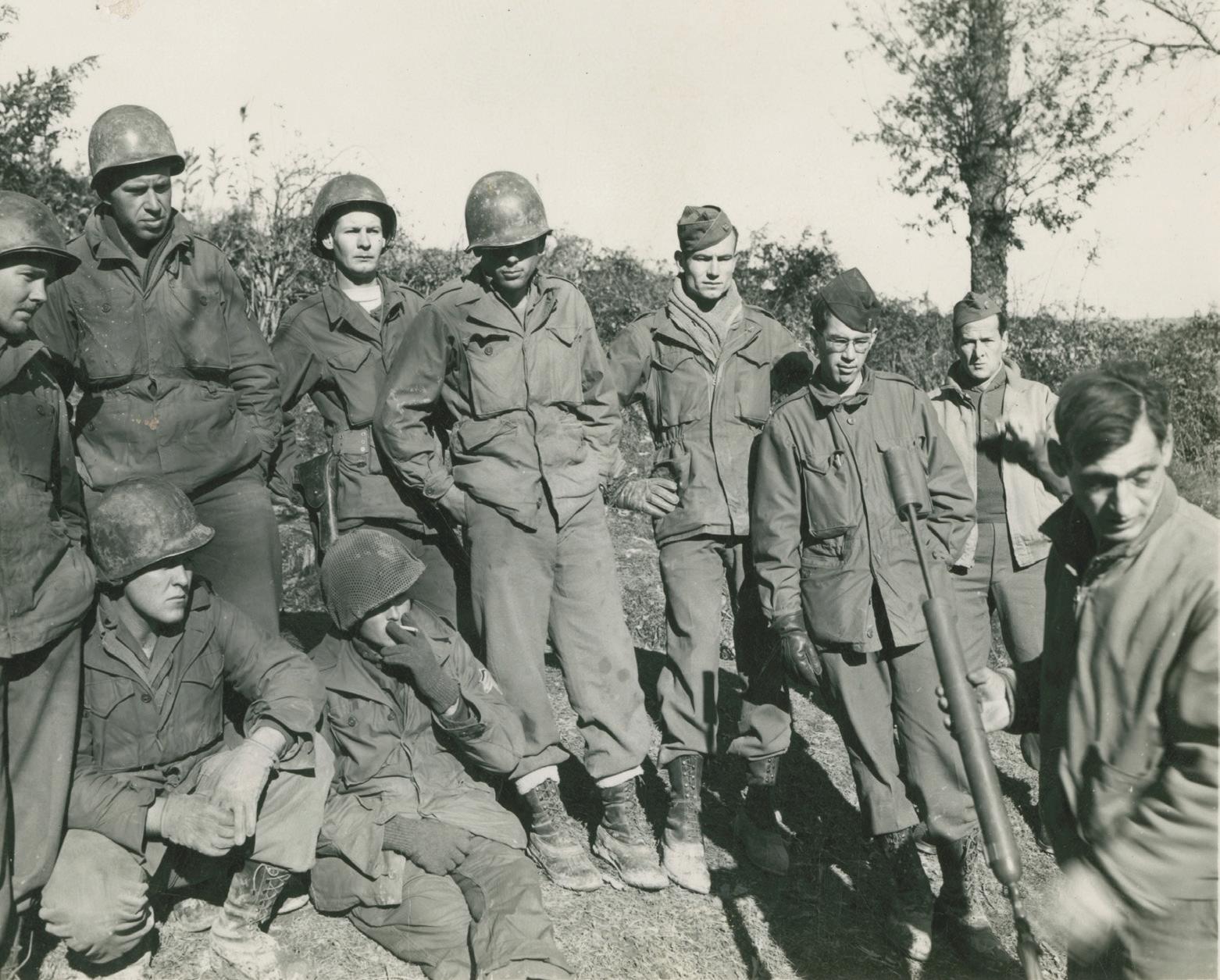
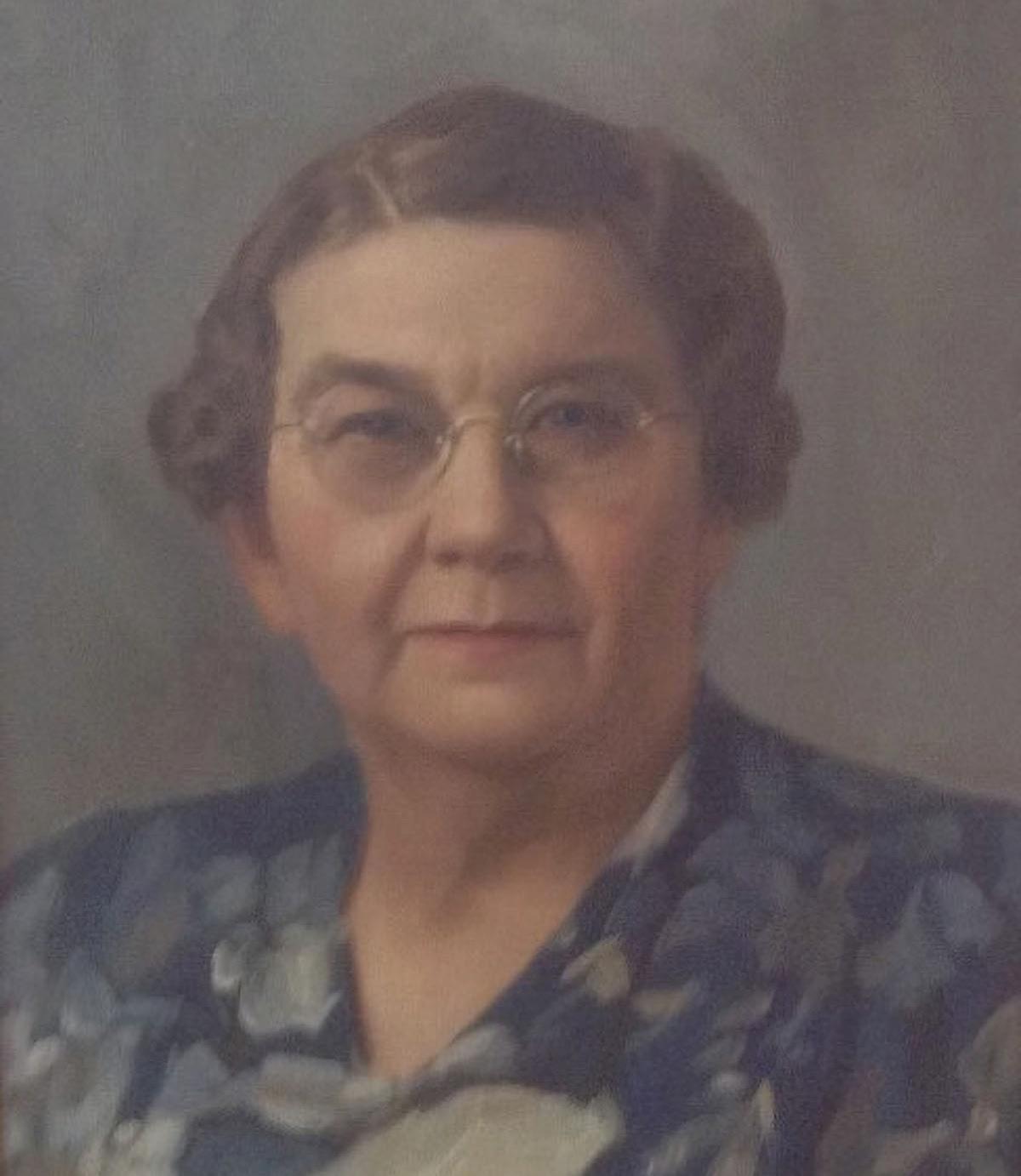
In selling my parents’ home, I had to review their possessions. Among them was a black and white photograph of my grandmother, Mary Gierzcak Nelson, my father carried with him
while stationed in Italy in World War II.
On the reverse side my dad had written in Italian my grandmother’s physical features, the color and ornaments of her dress. I could see my dad with this photo talking in Italian to the artist whom he commissioned for the painting of my grandmother.
My father was born on October 5, 1918, into a family of two older brothers and three older sisters. In 1923, another brother was born. My grandmother also raised a grandson, Francis Jessogne, who was born in 1925. In 1930, during the Great Depression, my grandfather Martin Nelson died at
the age of 45 when my father was only 9 years old.
On September 16, 1940, my dad was drafted. He appealed the order claiming he was the only adult male in the household after his older brothers were married and his youngest brother and nephew were still in high school. His appeal failed, and he entered the army in March 1941. One of his older brothers was also drafted. My dad’s younger brother, after graduating from high school, enlisted in the US Marines Corps. His mother had to sign (X) permission papers to allow him to enter the military. My grandmother’s grandson, Francis
Fortunately, my dad, his two siblings and nephew returned safely to Green Bay after the end of WW II to help my grandmother.
Each day I see this beautiful painting hanging on the wall of my living room.
Jessogne, enlisted in the US Army Air Corps in November 1943. Overall, my grandmother had three sons and one grandson who served in World War II.
As a First Lieutenant in the 5th US Army Military Police (MP) in Italy, my dad learned Italian. In 1945, he met my mother, Michelina, who was working in Rome at the time. During World War II my mother’s oldest brother, Salvatore Vincenzi, was an Italian soldier who was captured by the Allies in North Africa. Salvatore was sent to the Italian POW Camp in Bayonne NJ and was released in 1945 when the war ended. He subsequently returned to Italy.
My parents were married on June 8, 1946, at the Santa Maria Regina degli Apostoli Church in Rome. Their wedding was blessed by Pope Pius XII (Eugenio Pacelli), who is my namesake.
Through a referral from a fellow military officer, my father went to a local Italian artist to have a portrait done of his mother. He wanted this painting to be a gift to her because she had suffered immensely throughout her entire life. The painter used the 3x5 black and white photo to paint the portrait.
Completed on August 2, 1946, my dad transported this framed painting from Italy to Ft. Dix, New Jersey where he was stationed
until his discharge on December 30, 1946. My parents brought this painting with them to Green Bay in January 1947.
My dad gave his mother this precious painting, which was hung on the wall in her home. My parents proceeded to live for the first years in the apartment on the second floor of the home of my grandmother at 1350 Chicago Street.
Within two years, my parents bought a home at 1349 Chicago Street, across the street from my grandmother. Until my grandmother’s death in April 1952, my parents helped my grandmother in many ways such as getting my dad’s family to help dig, by hand, a basement beneath her house.
Fortunately, my dad, his two brothers, and his nephew returned safely from the war to Green Bay to help my grandmother.
My parents have told me many times the story of this painting and its significance in our family.
After my grandmother’s death the artwork remained hung on the wall in our homes in Green Bay. I brought this precious painting cautiously to my home in San Diego.
Each day I see this beautiful painting hanging on the wall of my living room. The artwork is an important and inspirational reminder of my Polish, Norwegian and Italian heritage.
By Margo Sorenson

Some 5 million people speak Italian in the United States, according to the latest census. Top states for Italian speakers are: New York, Pennsylvania, New Jersey, Massachusetts, Rhode Island, Illinois, Florida, California, and Nevada.
There are many ways to keep the Italian language alive. As you well know, the U.S. has been blessed with several generations of Italian Americans, and the U.S. is also a tourist destination for many Italians. All we have to do is keep our ears tuned to catch snatches of Italian in conversation.
Italian is not taught in American schools as frequently as are other languages—(luckily, that’s changing, thanks to organizations like the Italian Language Foundation)—so it is still unusual to hear it spoken. Because of that singularity, an immediate bond can spring up between casual passersby, upon hearing each other using the mellifluous sounds of Italian.
The welcoming nature of Italians can encourage us to connect with a fellow speaker. It’s a unique way to affirm home and heritage.
One of the first times this happened to me was in Minnesota (yes, far from the Italian sunshine and olive groves!). I was just leaving a department store when two gentlemen and a lady walked through the entrance. “Dove sono le scarpe?” (“Where are the shoes?”) one of them wondered aloud. Immediately, I took a chance, smiled, and said, “Il pianoterra.” (“Ground floor.”)
They were astounded and asked how I knew Italian. We struck up a conversation, making connections, reveling in a shared language so far from home.
Italians seem always delighted when someone speaks—or tries to speak—their language. They willingly forgive grammar errors—of which I make many!
We can’t always assume that someone doesn’t speak Italian. For example, I discovered that Katalin Szegedi, the talented, Budapestbased, Hungarian illustrator of two of my picture books, Ambrose and the Princess and Ambrose and the Cathedral Dream, had studied in Firenze for a year. She loved to keep up her Italian (who wouldn’t?). We emailed each other—in Italian—from Hungary to Minnesota, about the stories, (which were written in English) illustrated with Hungarian castles and Czech cathedrals.

Many times, friends will say, “Oh, my nonna spoke Italian and I can understand, but not speak it.”
There are many ways to keep Italian alive even if we can’t be in Italy. Because there are so many Italian Americans in the U.S., it can be enjoyable to recognize an Italian surname and strike up a conversation by asking where in Italy the family originated. There are so many commonalities—the “Ah!” of mutual recognition is precious. The strong sense of American patriotism created by the opportunity to come to America has strengthened the bonds of the Italian American community. Many times, friends will say, “Oh, my nonna spoke Italian and I can understand, but not speak it.” In our area, we have a number of friends who have an Italian heritage, and it is a fun gesture
of friendship to greet each other with a “Ciao, come stai?” and exchange abbracci with a double kiss. When exclamations are called for, “Allora!” evokes smiles and chuckles. At the golf course, as our friends roll to the first tee, “Ciao, ciao!” will be echoed with grins. In an exercise class, “Sono stanca!” (“I’m tired!”) is greeted with an affirming giggle.
Sharing Italian meals with “Cincin” tossed into the conversation is a prime opportunity for bonding. “Benvenuti! Entri come amici, andate via come famiglia” (“Welcome! Come as friends, leave as family”) is so true. If a friend wants to practice her Italian, a lunch together comes with a wellthumbed Italian-English dictionary.
There are community “Italian Meet-Up” groups to convene inperson for Italian conversation. As out-of-town visitors, we once enjoyed a meet-up group in Santa Barbara, at an Italian restaurant that came with a bocce court and bocce leagues. It’s fun to share emails with information about Italian food and culture with friends who treasure their Italian heritage, or who are fans of bella Italia. With the importance of family, friends, and a common heritage all combining to forge such strong ties among Italians, fans of Italia, and Italian Americans, it is truly rewarding to keep communicating in the wonderful, melodic Italian language, keeping the spirit of la bella Italia alive. Forza Italia!
We enjoy the benefit of hindsight... the luxury of looking back with certainty at a journey our ancestors undertook with great uncertainty! The Story of a Village in Abruzzo
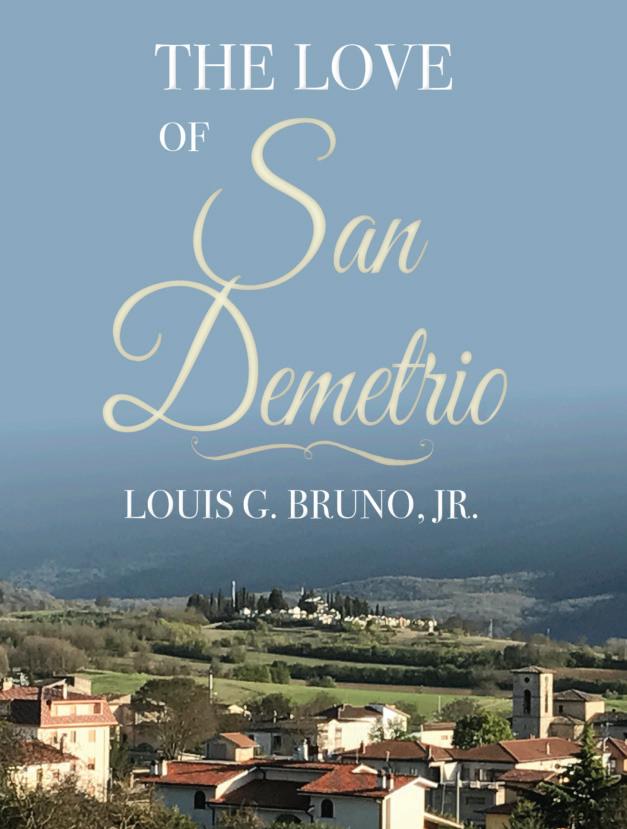
Bruno’s writing is both evocative and accessible, painting vivid pictures of both the Italian village and the American steel town... Readers will find themselves immersed in the sights, sounds, and emotions of the era, fostering a deep connection to the characters and their experiences.
primo magazine
By Louis G. Bruno, Jr. Buyiton Amazon.comToday!
Vercessi’s novel is a thoughtful and well-crafted mystery anchored by a memorable protagonist and enriched by the author’s firsthand knowledge of the naval world. It’s a smart, grounded entry into military crime fiction—and a promising start to what could be a compelling series.
primo magazine
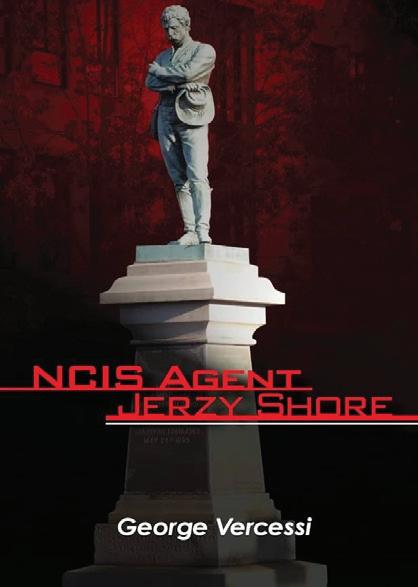
NCISAgentJerzyShore
By George Vercessi BuyitonAmazon.comToday!
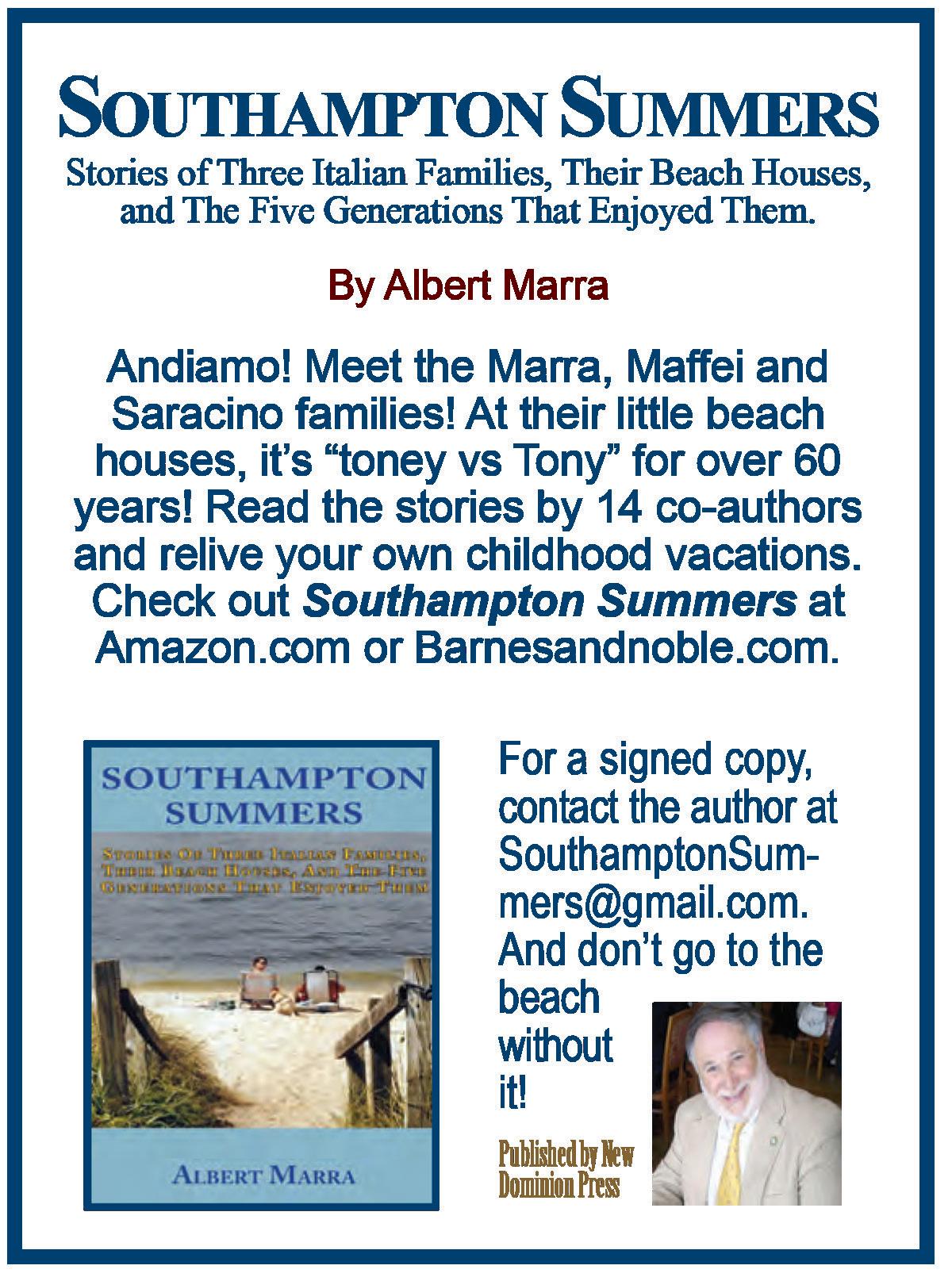
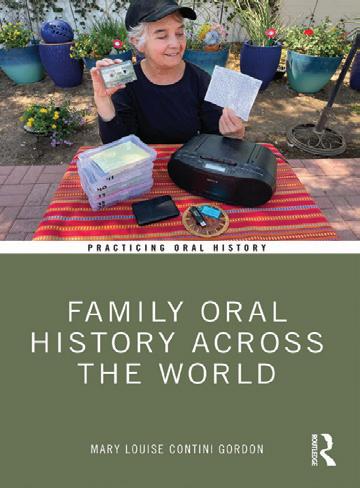
The book serves a most valuable service. The rapidly changing times make it increasingly harder for families to stay together. As we travel farther away from home, we lose our roots and risk losing our legacy. Mary Gordon guides us in the journey ahead with a timeless book on how to keep our family identity for posterity.
PRIMO Magazine
This is important book ... Gordon provides numerous suggestions on how to conduct family oral histories, preserve and use them, protocols to consider, and recording techniques.
Prof. Clifford E. Trafzer, UC Riverside
Nothing defines the Italian American experience more than the cherished attribute of family.
Discount code 25AFLY1 at checkout. Good to end of June 2025 www.routledge. com/9780367654801

Grand Lodge of Virginia Italian Heritage Lodge of Fairfax #2517 was chartered in 1981. Our monthly events are mostly held at the Knights of Columbus Hall (behind St. Leo the Great Catholic Church) 3702 Blenheim Blvd, Fairfax, VA 22030. New members are always welcomed!
Visit our website at https://italianheritagelodge.org
President: Dawn Falsinotti falsinotti@yahoo.com (703) 362-1724
Past State President: Joseph Scafetta Jr. joseph.scafetta.jr@gmail.com (703) 533-8064

defi,nes the ltalin.n

When Neil Armstrong and Buzz Aldrin took humanity’s first steps on the Moon in 1969, few people realized that Apollo 11 carried an Italian connection.

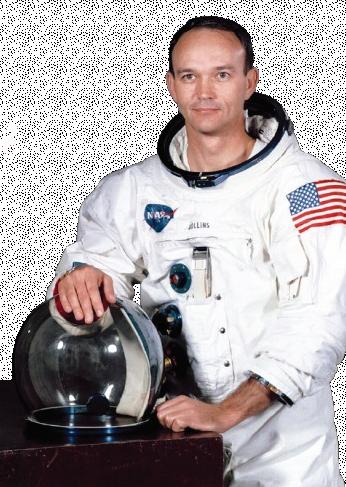
Michael Collins, the astronaut who remained in lunar orbit while Armstrong and Aldrin explored the surface, was born in Rome—October 31, 1930—during his father’s military assignment to Italy.
NASA recently announced the crew of Artemis III, the next major mission in an effort to return humans to the moon. Among the astronauts selected is Luca Parmitano, the veteran Italian astronaut from Sicily who is a former commander of the International Space Station.
AAn astronaut born in Rome helped bring Apollo 11 home. Today, an astronaut from Sicily is preparing for the Artemis era. Between them stand generations of Italian scientists, engineers, and explorers whose work has reached from Earth orbit to the threshold of the Moon.
As NASA and its international partners prepare for humanity’s return to deep space, Italy is no longer simply watching history unfold. It is helping write the next chapter.






The Artemis II blasts off to fly around the “dark side” of the moon on April 1, 2026.
1969
Michael Collins, born in Rome, pilots the Apollo 11 command module Columbia around the Moon during the first lunar landing.
1992
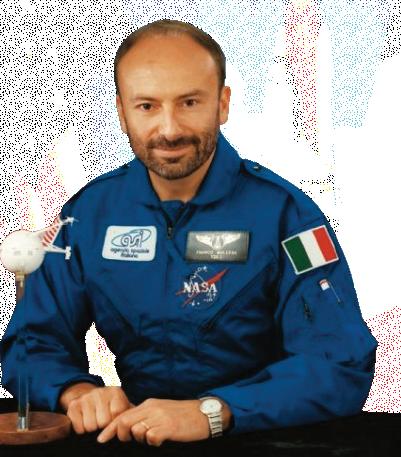
Franco Malerba becomes the first Italian citizen in space aboard Space Shuttle Atlantis.
1996
Maurizio Cheli, Italy’s second astronaut in space, flies aboard Space Shuttle Columbia
2001
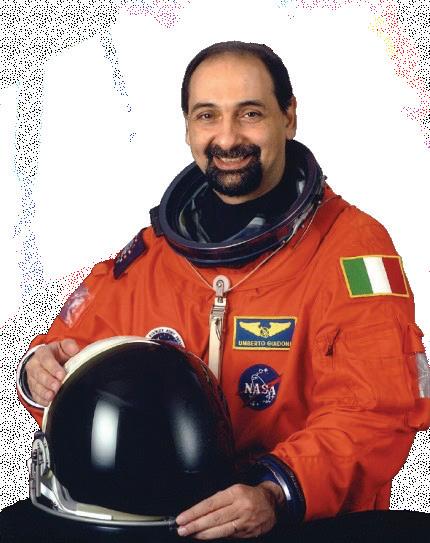
Umberto Guidoni is the first European astronaut in the International Space Station.
2002–2011
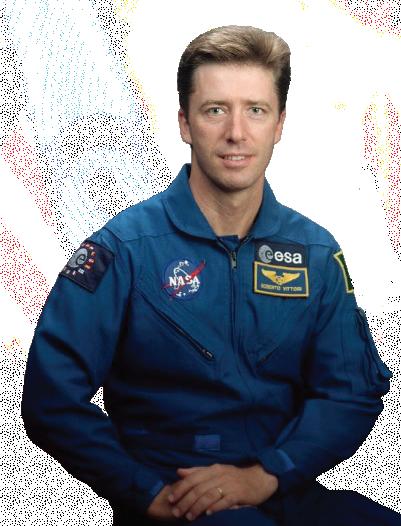
Roberto Vittori completes three space missions to help strengthen Italy's role in international spaceflight.
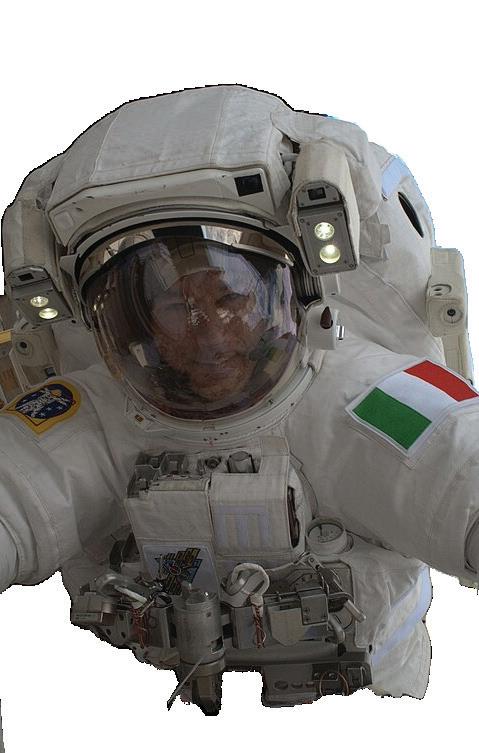
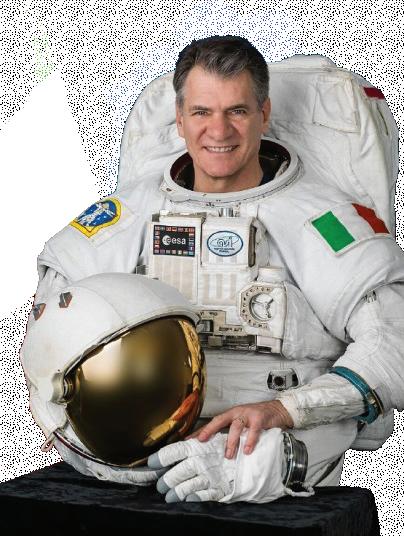
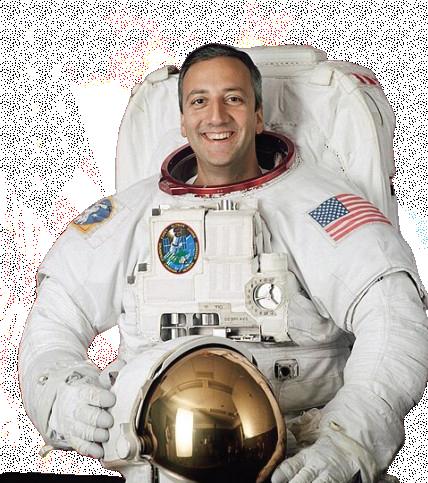
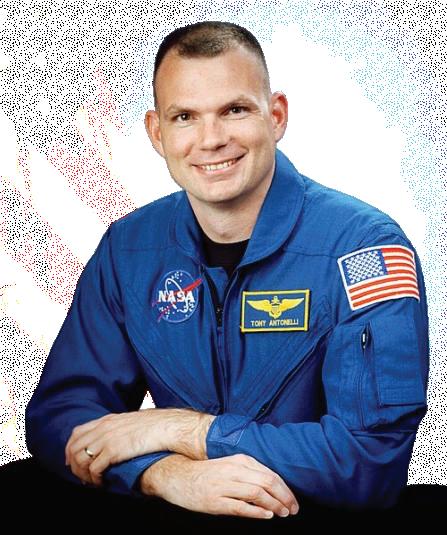
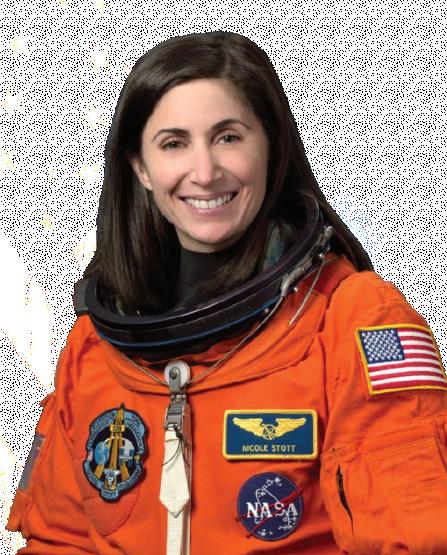
Pictured clockwise from top left:
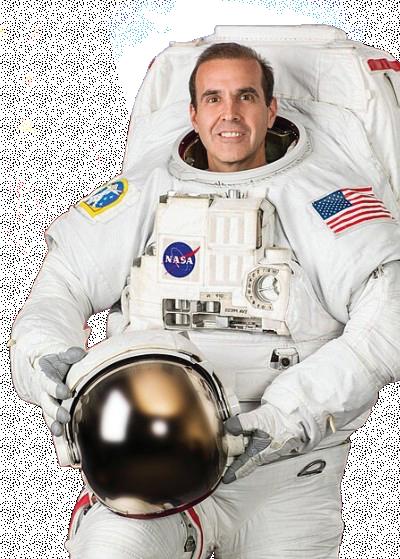
Michael Massimino — Perhaps the best-known Italian American astronaut of recent decades. The son of Italian immigrants, he flew two Space Shuttle missions and helped service the Hubble Space Telescope. He later became a popular science communicator.
Dominic “Tony” Antonelli — He piloted the space shuttle in 2009 and 2010 and spent a total of 24 days in space.
2007–2017
Paolo Nespoli flies three missions and accumulates more than 300 days in space— the longest for any Italian.
2013
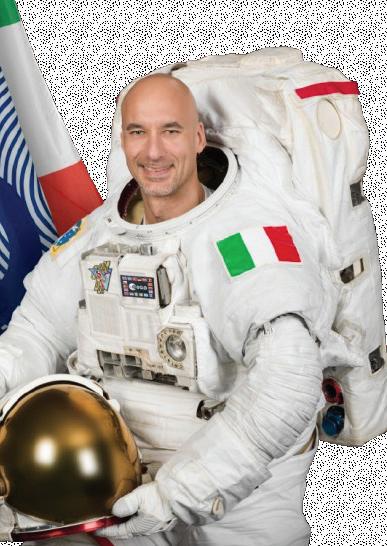
Luca Parmitano becomes the first Italian astronaut to perform a spacewalk.
2014
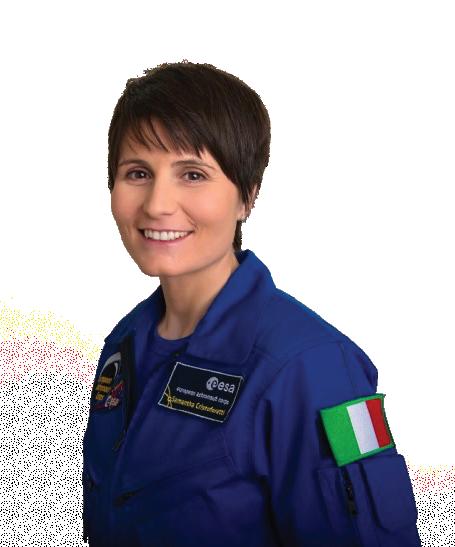
Samantha Cristoforetti becomes the first Italian woman in space.
2022
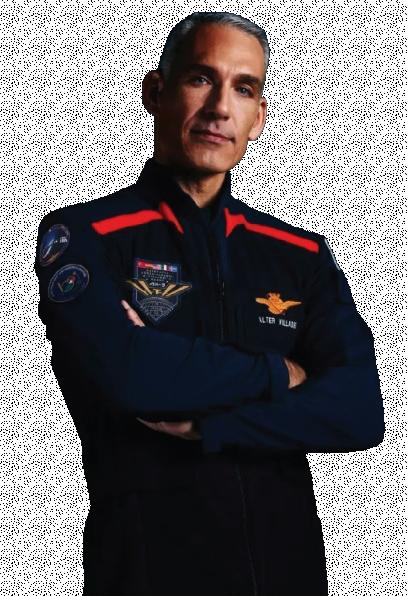
Walter Villadei reaches space aboard Virgin Galactic, joining a new generation of Italian space travelers.
2026
NASA names Luca Parmitano to the Artemis III crew, making him the first Italian astronaut assigned to the Artemis program.
Richard Mastracchio — Flew four missions, conducted spacewalks, and spent more than 228 days in space.
Nicole Marie Passonno Stott — She spent 103 days in space over two missions, the first in 2009 and the second in 2011. She was the first astronaut to paint with watercolors in space.

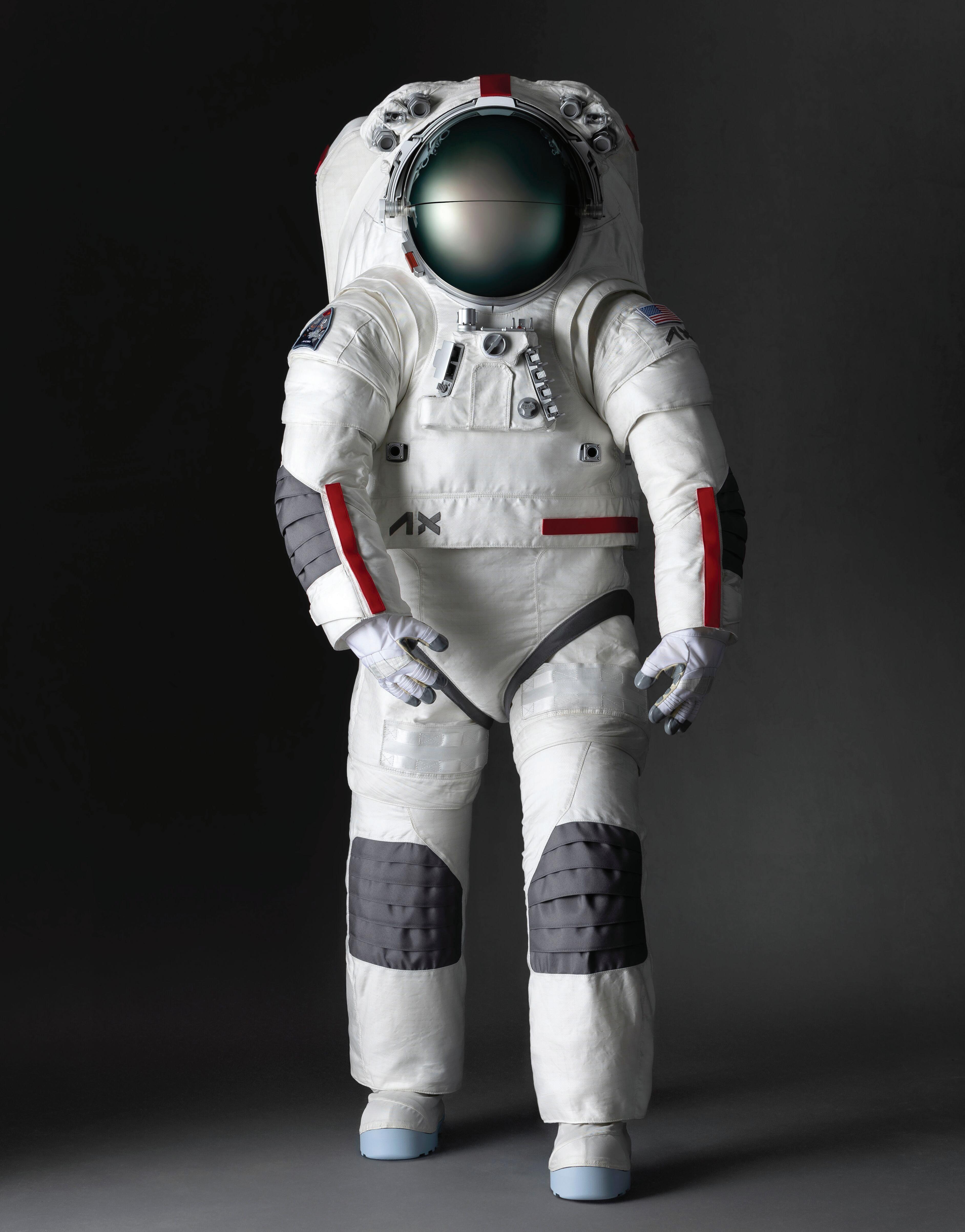
Prada has dressed celebrities, business leaders, and style-conscious consumers around the world. Now, the Milan-based fashion house has turned its attention to the surface of the moon.
Prada has joined forces with American aerospace company Axiom Space to help develop the next generation of lunar spacesuits for NASA's Artemis program. Astronauts must be protected from extreme temperatures, abrasive lunar dust, radiation, and the vacuum of space. The spacesuit calls for unique materials and specialized stitching. Prada has been recruited by NASA to provide their expertise. Their spacesuit will better protect astronauts from the harmful effects of space while allowing them to move comfortably and efficiently on the surface of the moon.
Prada's engineers and materials specialists have worked alongside Axiom to refine components of the new lunar spacesuit, known as the AxEMU, or Axiom Extravehicular Mobility Unit. The suit is a significant advancement over those during the Apollo program.
Prada's involvement adds a distinctly and unexpected Italian dimension to these efforts.
The image of astronauts walking across the moon in spacesuits shaped by Italian designers may seem surprising, yet the need for fashion excellence is consistent with Italy's long tradition of combining beauty with innovation.
From Renaissance workshops to modern fashion houses, Italians have often demonstrated how form and function need not be separated.
The next time astronauts step onto the lunar surface, they will carry with them the work of scientists, engineers, technicians, and designers from around the world. Among those contributors will be a famous name from Milan, better known for fashion shows than rocket launches.
Prada clothes have been worn by people walking the streets of New York, attending parties in Milan, dining in fine Parisian restaurants, walking the red carpet of the Oscars. Now, add the surface of the moon to Prada’s predominance.

By Truby Chiaviello

In basketball’s past, greatness often arrived with a certain inevitability. A towering center dominated the paint. A muscular forward controlled the boards. A polished guard slowly climbed toward stardom through years of apprenticeship.
Then came Caitlin Clark.

Caitlin Clark did not merely enter women’s basketball. She exploded onto the scene to the
With a flick of the wrist from thirty feet away, Clark transformed arenas into theaters. Her presence on the court turned ordinary regular-season games into national events. Television ratings soared. Jerseys disappeared from shelves. Little girls began practicing longrange jump shots in suburban driveways.
With Caitlin Clark, entire sports networks reorganized coverage around her. Women’s basketball, long respected but too often marginalized, suddenly stood at the center of the American sports conversation.
The phenomenon became known simply as “The Caitlin Clark Effect.”

Clark still carries something unmistakably grounded about her — something Midwestern. — somthing Italian American.
Clark’s story is one of heritage, competition, family, and the relentless drive to excel.

Born and raised in West Des Moines, Clark grew up in a sports-centered household where competition was woven into daily life. Her mother, Anne Nizzi-Clark, comes from an Italian American family with Sicilian roots. Hard work was emphasized. Loyalty, toughness, and perseverance were the topics of daily lessons. Family gatherings revolved around sports, stories, food, and spirited conversation.
Clark’s older brother, Blake, helped sharpen her competitive instincts early. Winning mattered in family games. Caitlin learned quickly that talent alone was never enough. She had to fight for it. That fierce competitive spirit became one of her defining characteristics.
Clark was already playing— in elementary school. She possessed not only elite handeye coordination, but an uncanny sense of timing and anticipation.
Clark rose through Iowa basketball circles to dominate the sport in high school. She was covered regularly in local news.
A number of universities wanted her. She stayed closed to home to play at the University of Iowa. She went from elite recruit to national phenomenon. She played the game with audacity. Clark launched shots from distances once considered reckless. She threaded impossible passes through collapsing defenses like a quarterback reading a defense at the line of scrimmage.
The comparisons began immediately. Some saw shades of Stephen Curry in her deep shooting range and improvisational style. Others compared her competitiveness and Midwestern charisma to Larry Bird. Still others detected her unique greatness in the model of Michael Jordan.


The Caitlin Clark Effect was on. College arenas overflowed. Television audiences surged into the millions. Iowa women’s basketball games suddenly rivaled or surpassed many men’s broadcasts in ratings. Casual sports fans who had never watched women’s basketball tuned in simply to see what Clark might do next.
Would she pull up from 35 feet? Would she deliver a no-look pass through traffic? Would she score 40 points?
With Clark, every possession carried the possibility of spectacle. She controlled the emotional rhythm of games. She accelerated the pace when opponents looked fatigued. She manipulated defenders. She ruled the court.


Passingmay actually be Clark’s greatest skill. She understands geometry. She sees angles invisible to others. Defenses become stretched. Clark exploits them by passing to an open teammate for a quick lay up.
Critics occasionally focused on her defensive limitations. She was not a dominant lock down defender in the mold of Bill Russell. Opponents sometimes targeted her physically. Yet Clark competed relentlessly, rebounded aggressively.
By the end of her college career, Clark had become the all-time leading scorer in NCAA Division I basketball history — men or women.
The accomplishment alone secured her place in basketball history. Yet, her true legacy went beyond numbers.
For decades, women’s basketball fought for broader recognition despite extraordinary talent.

Casual sports fans who once ignored the WNBA suddenly knew players’ names, standings, and playoff races.
Clark arrived at precisely the right historical moment. She became the perfect catalyst in the age of social media.
When the Indiana Fever selected Clark with the first overall pick in the WNBA Draft, expectations bordered on impossible. Every arena sold out. Celebrities appeared court side. Rumors were that Barron Trump, the towering son of the president, had eyes for Caitlin. He was seen sitting in the stands whenever her team came to town.
National sports debate programs suddenly discussed WNBA strategy and ratings. Clark’s rookie season was among the most remarkable. She shattered records, led the league in assists, and transformed Indiana from struggling franchise into playoff contender.
Clark brought new audiences into the league. Young girls wore her jersey. Fathers brought daughters to games.
Modern sports culture thrives on debate, and Clark quickly became one of the most discussed athletes in America. Some argued that media attention surrounding her overshadowed veteran stars who had long carried the league. Others believed the physical treatment she received from defenders reflected resentment toward her popularity. Broader cultural discussions about race, marketing, fame, and representation swirled. Clark rarely engaged publicly in those debates. Instead, she continued playing.
Such restraint may be one reason many fans admire her so deeply. In an age where celebrity often eclipses substance, Clark still appears fundamentally obsessed with basketball itself. Her post-game interviews remain remarkably grounded. She speaks frequently about teammates, preparation, and improvement rather than fame.
There is something oldfashioned about her approach. There is something Italian. She resembles classic American sports icons from earlier eras.
Longbefore Caitlin Clark became one of the most famous athletes in America, there was Bob Nizzi—her grandfather.
In Iowa sports circles, Bob Nizzi was already well known as an old-school football coach, athletic administrator, and mentor whose reputation stretched across decades of high school athletics.
Nizzi coached football at Dowling Catholic High School and later served in school administration, becoming a respected figure in the state’s deeply competitive Catholic sports culture.
Nizzi was one of the first to recognize Caitlin’s greatness.
He was watching Caitlin play as a little girl in a youth basketball game against boys several years older than her. Rather than shrinking from physical play, she became angry and more determined. It was an early glimpse of the fiery competitiveness that would later captivate millions of basketball fans nationwide.
Italian Americans have long excelled in boxing, baseball, football, and entertainment. Basketball has produced important Italian American figures as well, but relatively few women athletes have emerged as defining national basketball superstars.
Clark’s story mirrors familiar themes within Italian American life. She embodies a kind of bluecollar excellence that resonates far beyond sports.
Even her style of play reflects this spirit.
Clark is dazzling, yes, but beneath the flair lies extraordinary preparation. Her long-range shooting is not reckless improvisation. It is repetition, conditioning, timing, and confidence built through thousands of hours of work.
Caitlin Clark—an Italian American superstar who shines in the arenas, who carries herself as queen of the court.


By Reem Nourallah
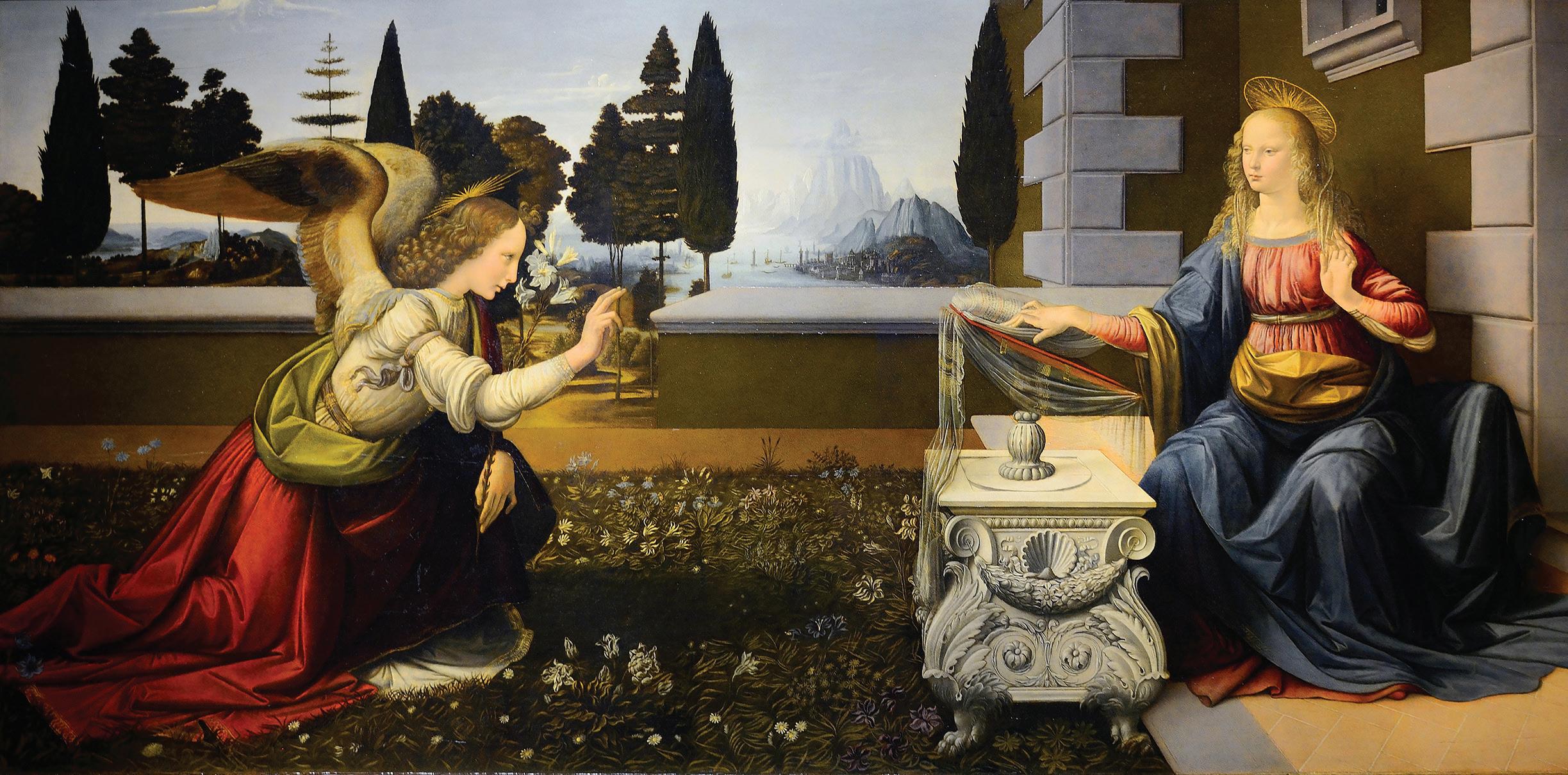
Blooming in late spring and early summer, the Madonna Lily remains a beloved flower throughout Italy. Known in Italian as the Giglio della Madonna, the flower has long been associated with the Virgin Mary to symbolize purity, virtue, and spiritual devotion. During the Renaissance, Italian painters frequently included Madonna lilies in religious works depicting the Annunciation, the moment when the Archangel Gabriel informed Mary that she was to become the mother of Christ. The flower's pristine white blossoms served as a visual reminder of Mary's purity and grace.



By Leonardo da Vinci
The Annunciation, painted around 1472–1475, depicts the moment when the angel Gabriel announces to the Virgin Mary that she will become the mother of Christ. The white lily carried by Gabriel symbolizes Mary's purity and is one of the painting's most recognizable features. Today, the masterpiece is housed in the Uffizi Gallery and is considered one of Leonardo's earliest surviving works.
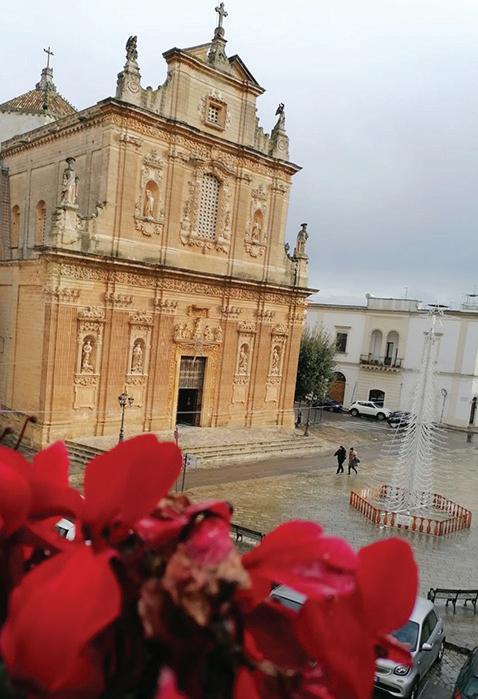
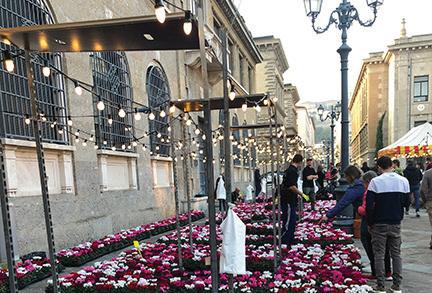
Left page: The Italian cyclamen is a delicate wildflower capable of flourishing on rocky hillsides and in shaded forests. Its vivid red blossoms stand in sharp contrast to the Santuario del Santissimo Crocifisso della Pietà in Galatone, while colorful cyclamen brighten an open-air market in Bergamo.




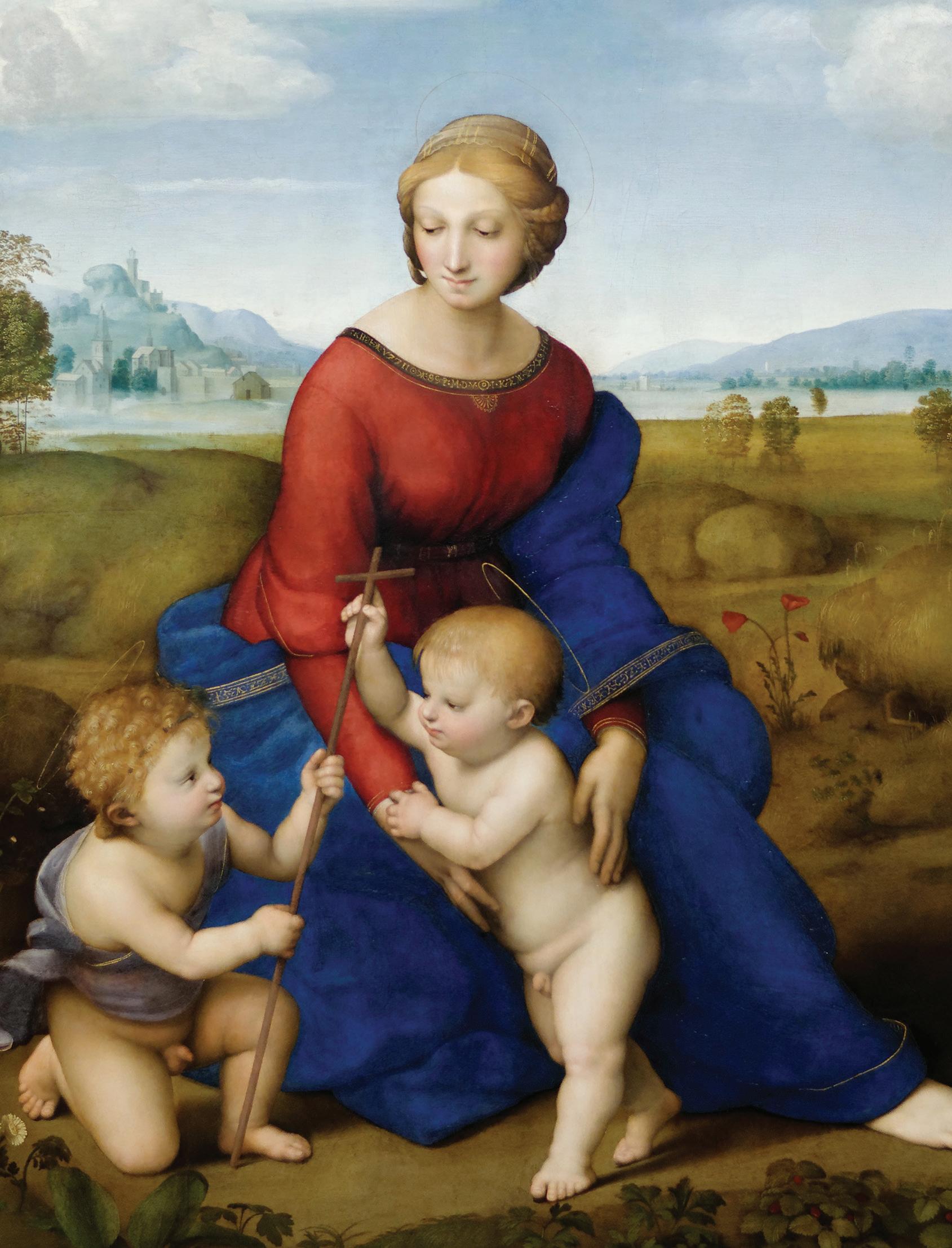
By Raphael
Painted around 1505–1506 by Raphael, Madonna of the Meadow shows the Virgin Mary with the Christ Child and John the Baptist in a flower-filled landscape. Art historians have identified several symbolic flowers in the meadow, including red blossoms that are often interpreted as poppy anemones, foreshadowing Christ’s future Passion and sacrifice.
Native to Italy, the flower, top and clockwise left, flourishes in open fields, hillsides and olive groves, creating brilliant displays of red, blue, purple, and white blooms that have become a familiar part of the Italian spring landscape. Its resilience and vibrant colors have made it one of Italy's most beloved wildflowers.
The plant grows naturally from crevices in stone walls and cliffs, where it produces masses of delicate starshaped blue, lavender, or white flowers throughout the summer. Its hardiness, long blooming season, and graceful appearance have made it a cherished symbol of the Italian countryside and a favorite in gardens around the world. Pictured: flower in white and in containers in Naples.

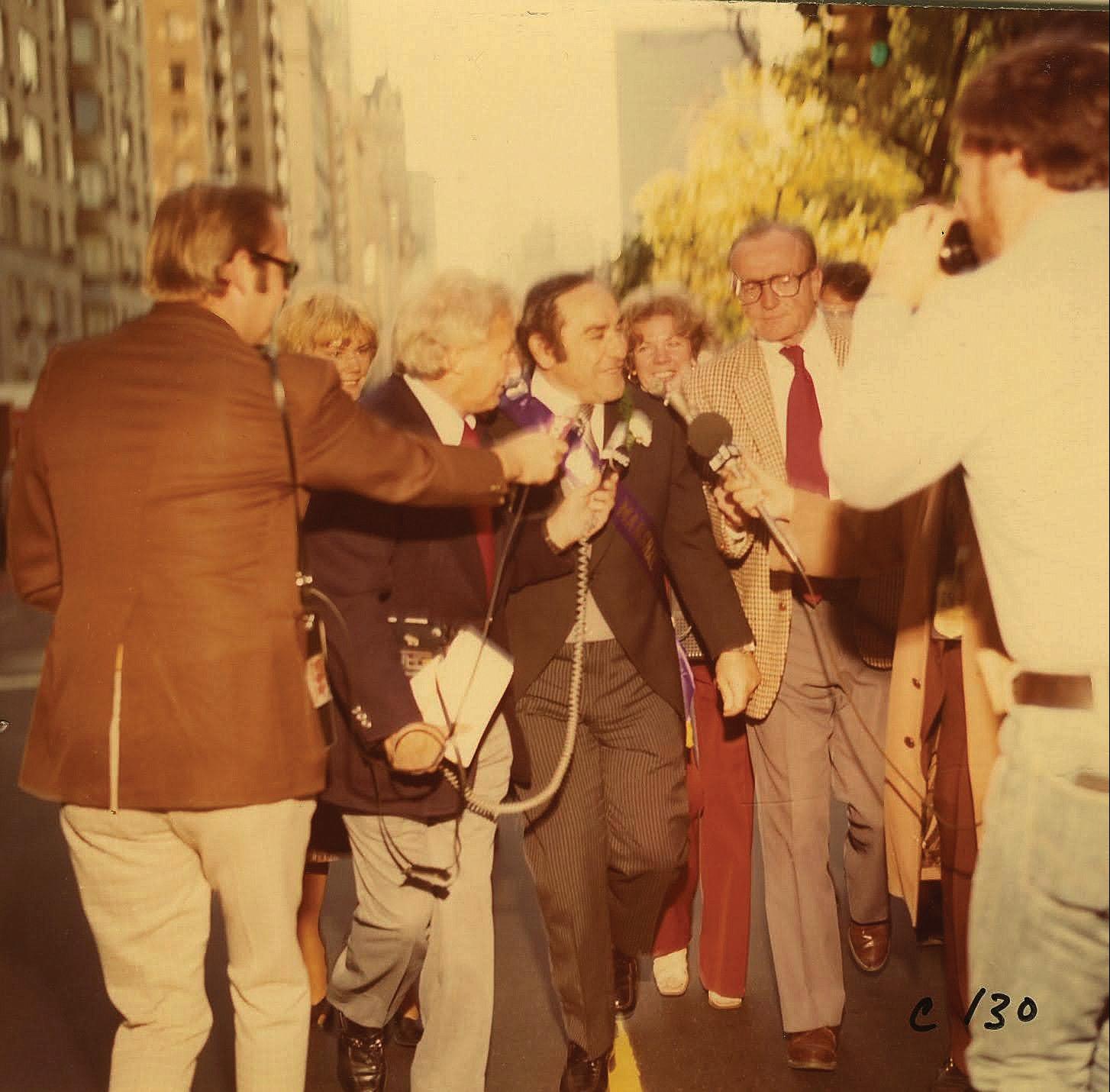
In 2022, film enthusiasts celebrated the 50th anniversary of The Godfather . Two years later, in 2024, attention turned to the 50th anniversary of The Godfather Part II . Together, the two films stand among the greatest achievements in American cinema.
Directed by Francis Ford Coppola and based on Mario Puzo's bestselling novel, The Godfather won the Academy Award for Best Picture in 1972. Marlon Brando won the Oscar for Best Actor for his unforgettable portrayal of Don Vito Corleone. The Godfather Part II repeated the feat in 1974, winning Best Picture and earning Robert De Niro an Oscar for Best Supporting Actor for his portrayal of the young Vito Corleone.
More than half a century after their release, the films remain enormously popular. Yet, they have also generated countless misconceptions. Some involve Italian Americans, others concern the actors, the novel, and organized crime itself.
Here are five of the most common myths surrounding The Godfather and The Godfather Part II.


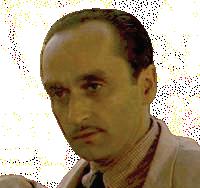
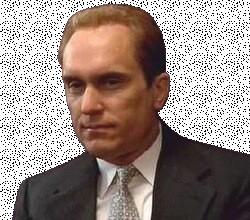



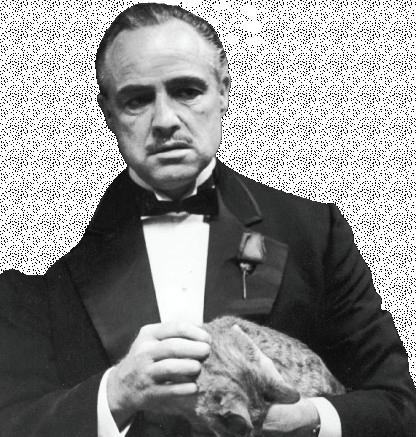
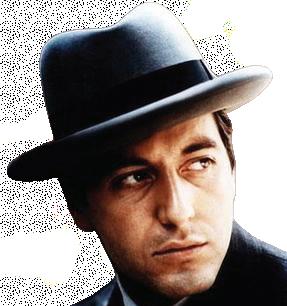
One of the most persistent claims is that Italian Americans overwhelmingly opposed The Godfather and viewed the film as an insult to their heritage.
There is some truth behind this assertion. During the film's production, Joe Colombo, the reputed boss of the Colombo crime family, led protests through the Italian-American Civil Rights League. Colombo argued that depictions of organized crime reinforced harmful stereotypes about Italians and Italian Americans.
However, the idea that Italian Americans as a whole rejected the film is simply not true.
Millions of Italian Americans watched The Godfather in theaters and later on television. The film became a cultural phenomenon to transcend ethnic boundaries. Although centered on organized crime, the film portrayed family loyalty, sacrifice, immigration, tradition, and the struggles of assimilation. Italian Americans could take pride that the director, screenwriters, key actors, and music composer were of Italian ethnicity. Together, they made an exceptional film.
The real problem was never the movie, itself. Rather, it was the tendency of some people to stereotype all Italians based on fictional depictions of organized crime. That remains a concern today and is one reason why organizations such as the Conference of Presidents of Major Italian American Organizations, Italian American One Voice Coalition, National Italian American Foundation, UNICO National, Order Sons and Daughters of Italy in America, the Italian Sons and Daughters of America, and other advocacy groups continue their work.
Italian Americans did not reject The Godfather. Like countless other Americans, they embraced it as a well-made and compelling film.
Many people assume Marlon Brando was Italian.
His portrayal of Don Vito Corleone was so convincing that audiences often believed he must have shared the character’s ethnic background.
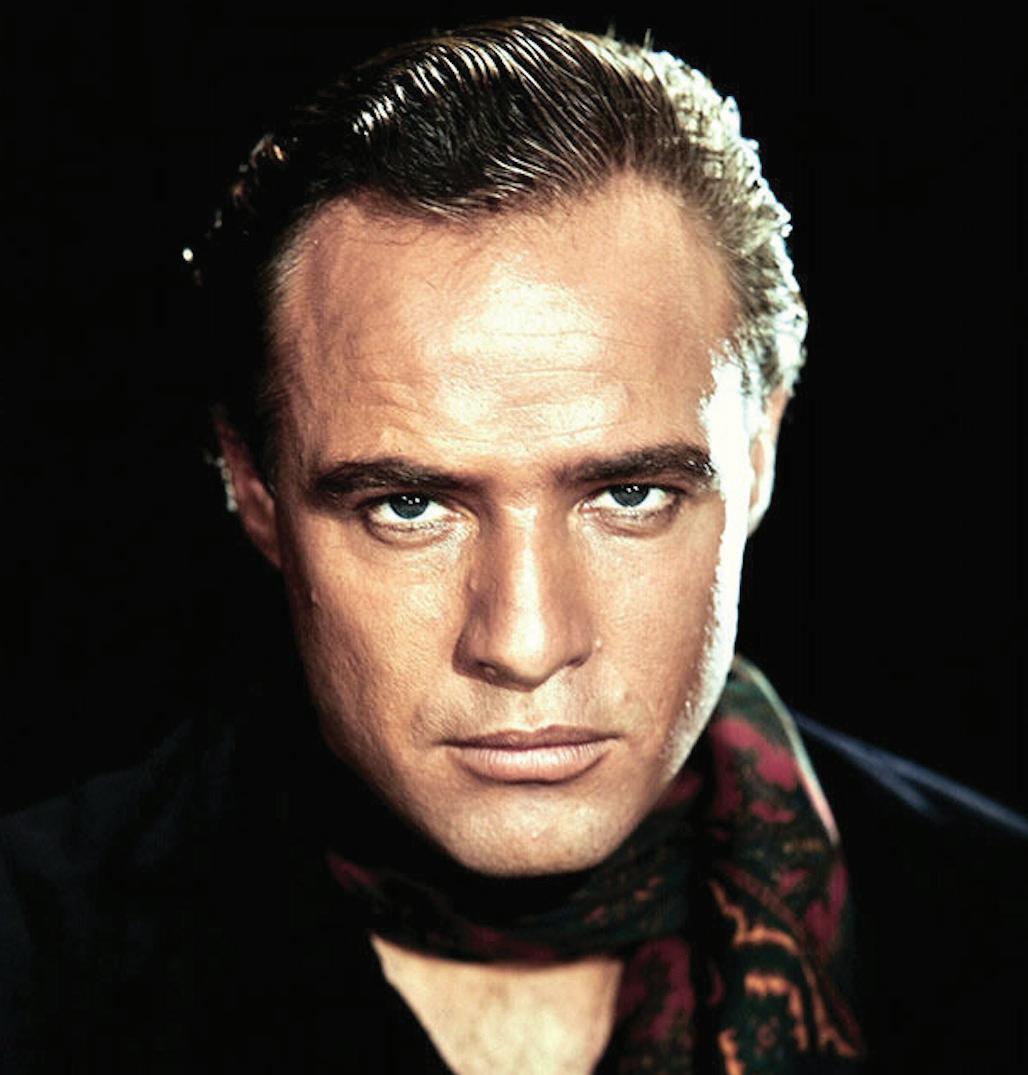
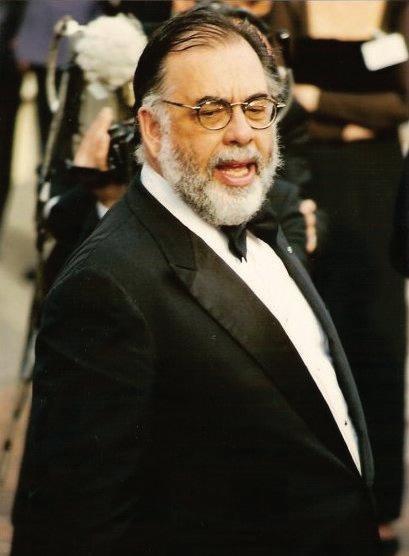
Yet, Brando was not Italian. Born in Omaha, Nebraska, the actor came from a mixed European heritage of German, Dutch, English, and Irish ancestry. His family name, Brando, derived from Brandau, may have sounded Italian to modern ears.
Brando’s portrayal of Don Vito Corleone embodied qualities familiar to many Italian Americans. He embodied traits associated with those belonging to an immigrant generation who built families, businesses, and communities across America.
Brando’s performance remains one of the greatest in film history. It was so authentic that many viewers still assume he was Italian. In reality, he was simply one of the finest actors ever to step before a camera.
Film critics often praise The Godfather as a masterpiece while dismissing Mario Puzo’s novel as merely the source material.
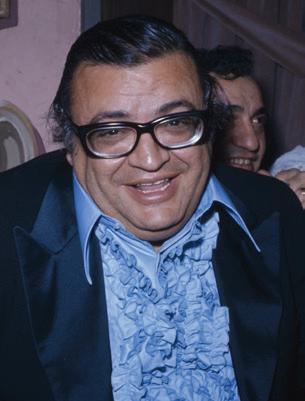
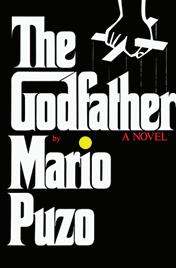
That view shortchanges Puzo’s extraordinary accomplishment. The novel and the film are deeply intertwined. Nearly every major character, storyline, and dramatic turning point originated in the book. Don Vito Corleone, Michael, Sonny, Fredo, Tom Hagen, Clemenza, Tessio, Sollozzo, and the rival crime families all came directly from Puzo’s imagination. The film’s most memorable scenes—the wedding sequence, Michael’s assassination of Sollozzo and Captain McCluskey, Sonny’s murder at the tollbooth, and Michael’s exile in Sicily—were adapted closely from the novel.
The film deserves praise for its visual storytelling, performances, and direction. Yet the foundation was already present in Puzo’s work, first published in 1969.
Rejecting the notion that the movie outshines the book, the best perspective sees the film and novel as equally flawless companion pieces. One excels as literature, the other as cinema.
Many viewers believe The Godfather was simply a fictionalized version of real Mafia conflicts occurring during the 1950s and 1960s.
On the surface, The Godfather looks to be culled from eal events and real organized-crime figures, most notably Joseph Bonanno, reputed mob boss who fought the other families and moved from New York to Arizona in the 1960s
Yet, in many ways, the story seems to be a modernized retelling of two books in the Old Testament: First Book of Kings and Book of Ecclesiastes.
Vito Corleone resembles King David when he prepares Michael to take over the reigns of power after his death.
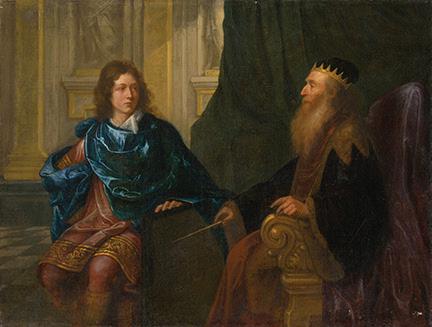
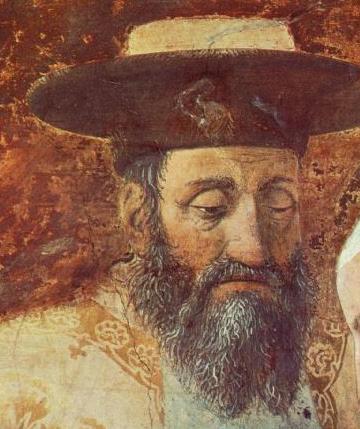
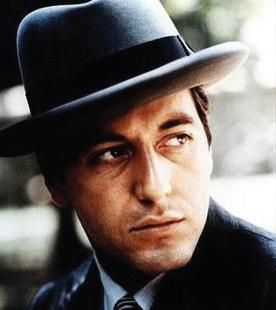
Solomon was told to “be strong and show yourself a man.” King David instructed his son to deal harshly with their family’s enemies such as Joab for past murders in peacetime and Shimei who had cursed David. Solomon consolidates power by eliminating these threats after his father dies. Michael does the same. One swift move by him after the death of Don Corleone eliminates all enemies as Solomon did in the Book of Kings.
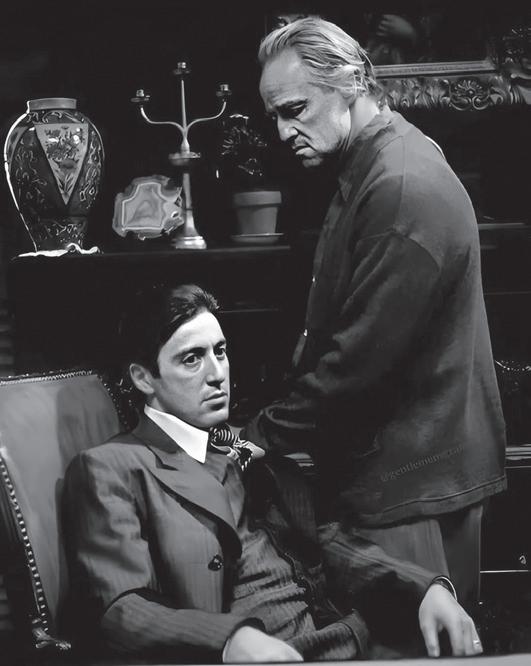
As Michael continues to lead the Corleone family in The Godfather Part II, he becomes despondent and depressed, as did King Solomon, who wrote the Book of Ecclesiastes. A tome of melancholic wisdom, Solomon realized human striving led to emptiness with “nothing new under the sun.” No lasting satisfaction comes with great achievement because of the cost to succeed. Michael defeats his enemies but does so by killing his brother and banishing his wife in the second film. Isolation, paranoia, and moral erosion underscores the meaningless of the struggle. At the end, Michael sits alone, in the dark.
Whether or not Puzo consciously modeled every aspect of the narrative on the Old Testament, the story clearly operates on a biblical level to speak to the universal human experience beyond a crime saga.
The central conflict of The Godfather revolves around Virgil “The Turk” Sollozzo and his proposal to expand the narcotics trade with the support of the Corleone family.
Many viewers come away believing that organized crime traditionally avoided drug trafficking and that narcotics represented a new and controversial development.
The historical reality is more complicated.
Long before the events depicted in the film, organized crime figures were involved in various forms of illicit trade, including narcotics. While some crime bosses may have viewed drug trafficking as risky, the enormous profits made involvement difficult to resist.
As transportation networks expanded and international smuggling routes became more sophisticated after World War II, narcotics became an increasingly lucrative business.
The debate depicted in The Godfather was not simply about morality. It was also about politics, law enforcement scrutiny, public perception, and the balance of power within organized crime.
The notion that organized crime uniformly rejected narcotics is therefore largely a myth. Like any criminal enterprise, organized crime followed opportunities for profit wherever they appeared.
The Godfather remains one of the defining works of American culture. The film went beyond the gangster genre to convey a family saga of power and succession, and a meditation on the price of ambition. More than half a century later, the Corleone family still commands our attention. The Godfather continues to stand among the greatest films ever made.
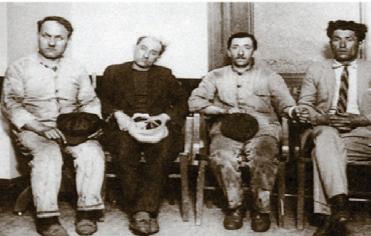
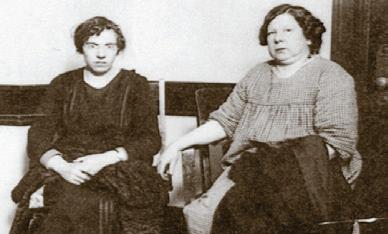
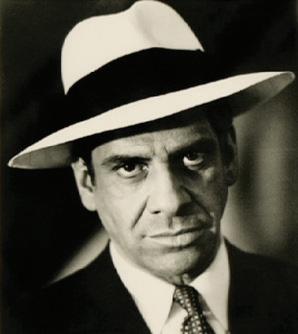
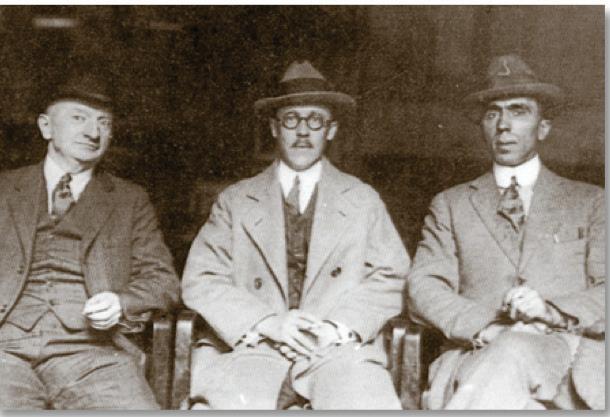
Al Lettieri played Sollozzo, a character in the film who sought to establish a drug trade in New York in the 1940s. Historical photos show Italian drug smugglers captured in the 1920s by Salvatore Pacetta, a case agent, sitting far right, for the Federal Narcotics Control Board.

How Ancient Italy
Shaped Trump’s Vision to Restore Washington, D.C.
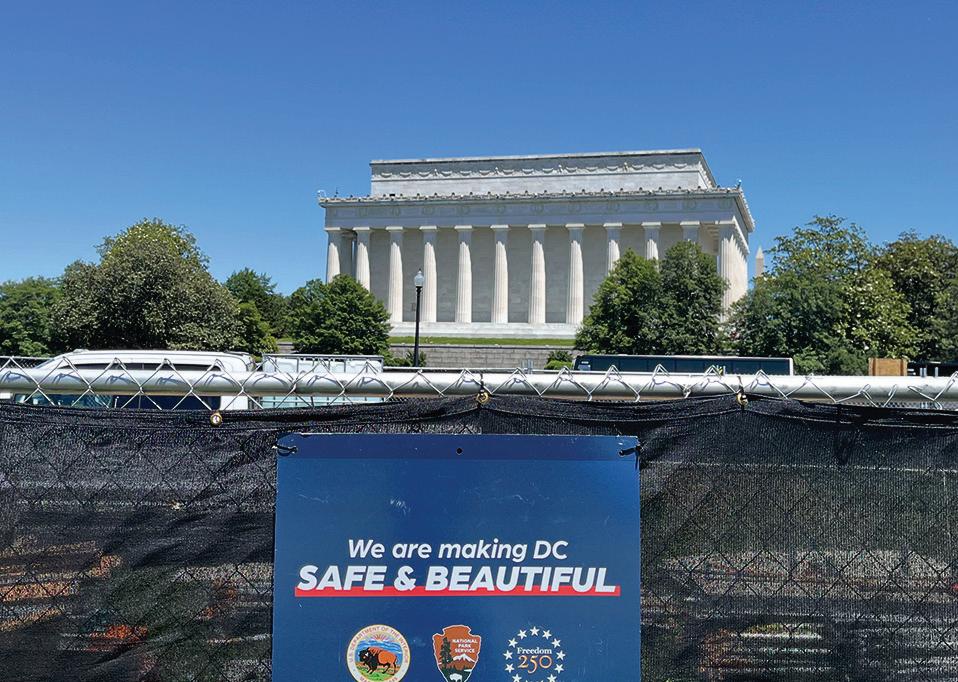
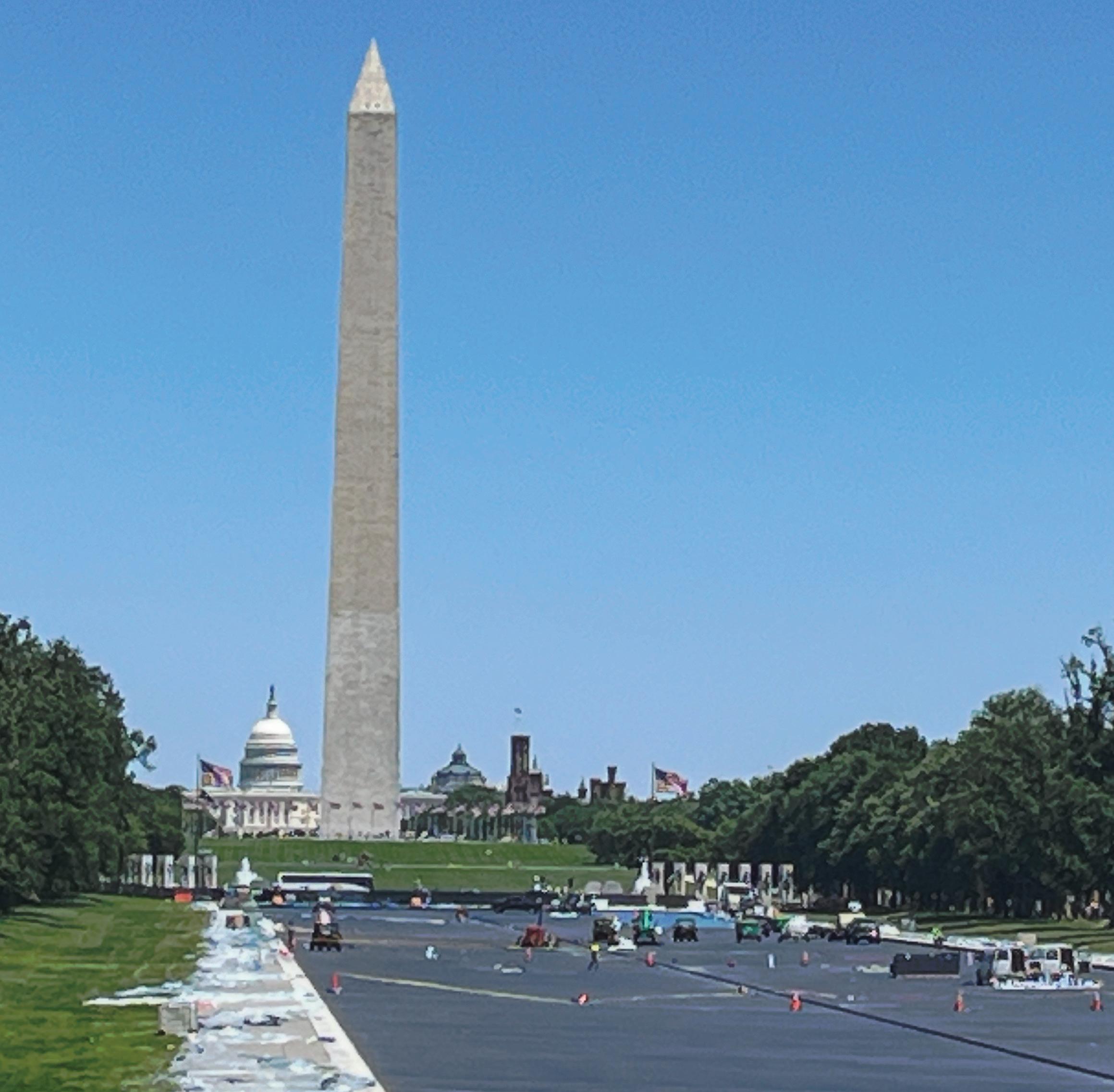
On a warm Saturday afternoon, visitors strolling between the Lincoln Memorial and Arlington National Cemetery could witness something unusual: construction crews, restoration projects, and ambitious proposals that together evoke a larger vision of Washington, D.C. as America's modern Rome.
President Donald Trump's plans to restore and improve several iconic landmarks—including the Reflecting Pool, Union Station, the World War II Memorial, and the Columbus Fountain—as well as his proposal for a monumental triumphal arch near Memorial Bridge, have sparked debate. Yet one theme unites many of these projects: their roots in the architectural traditions of Ancient Rome and Renaissance Italy.
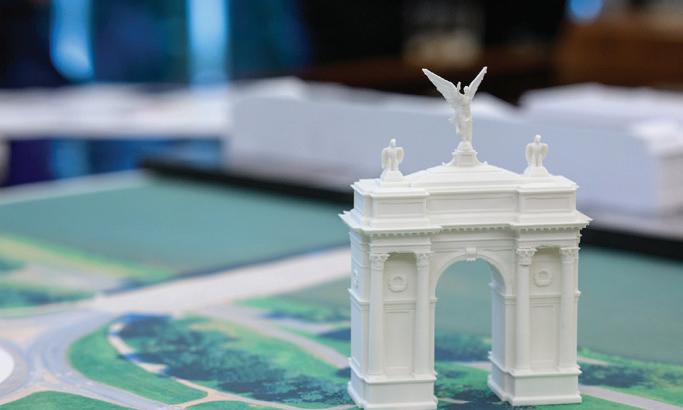
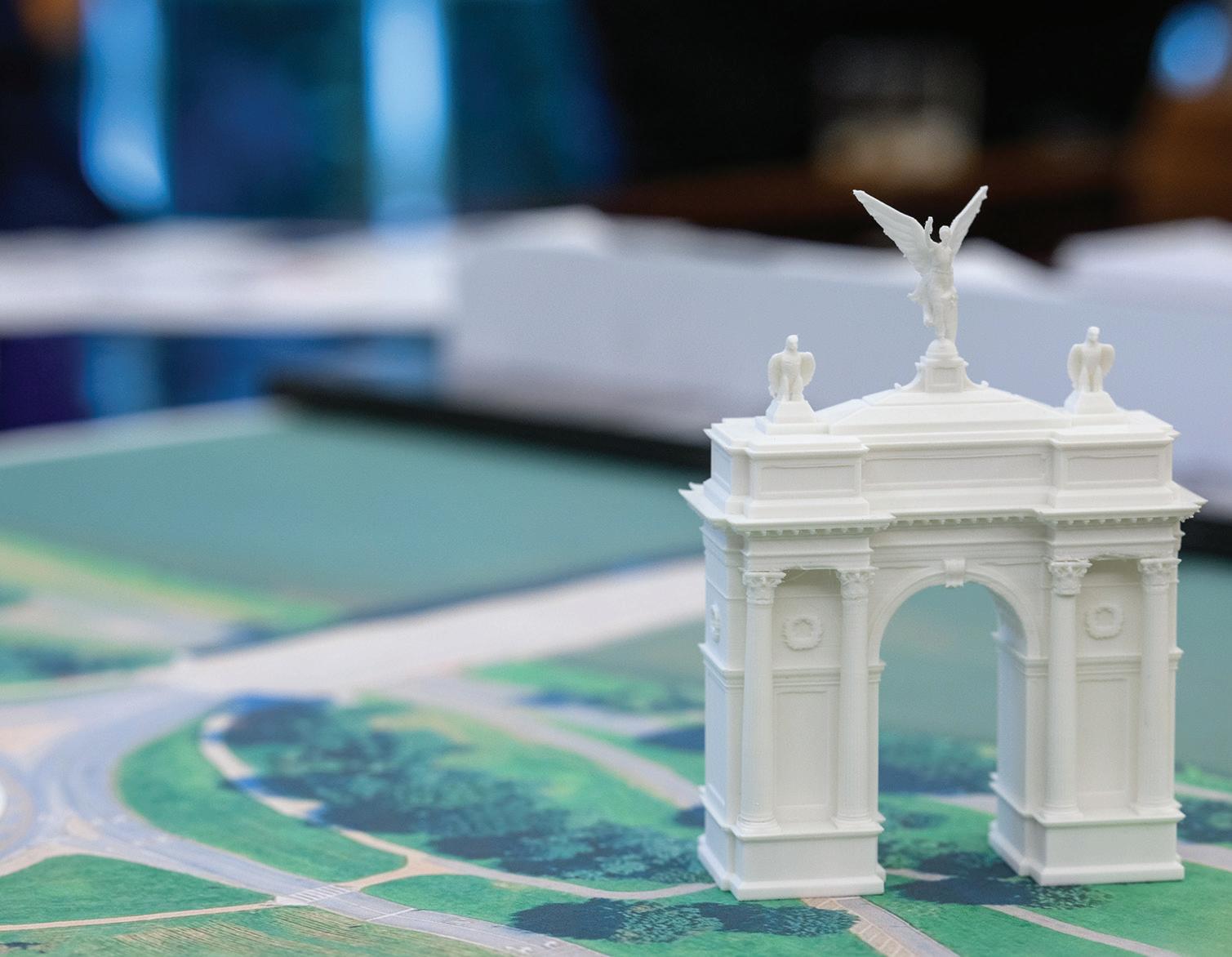
Trump’s most ambitious proposal is the construction of a triumphal arch inside Memorial Circle at the western end of Memorial Bridge, adjacent to Arlington National Cemetery.
The concept is directly inspired by the triumphal arches of Ancient Rome, structures erected to celebrate military victories and national achievements. The most famous examples include the Arch of Titus, Arch of Septimius Severus, and Arch of Constantine, all of which still stand in Rome today.
For nearly two thousand years, these arches have symbolized national strength, sacrifice, and civic pride. Similar monuments later appeared throughout Europe, including Paris's Arc de Triomphe, itself modeled on Roman precedents.
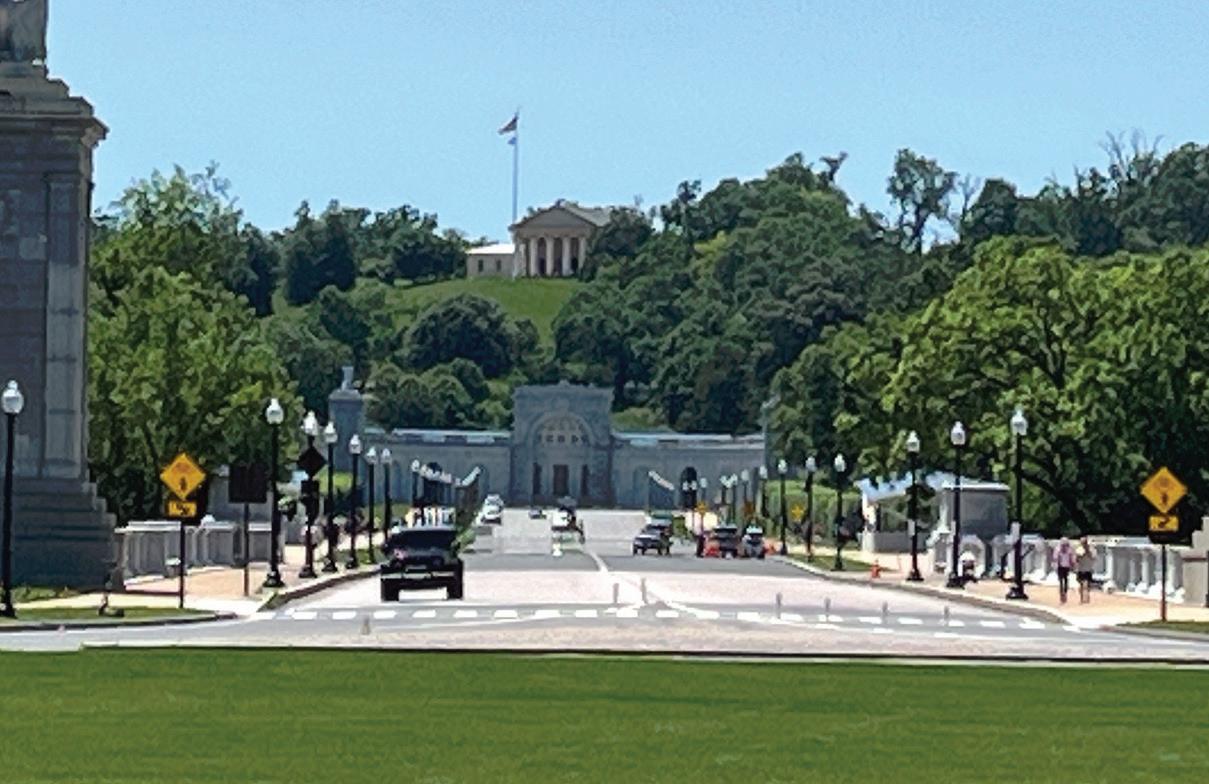
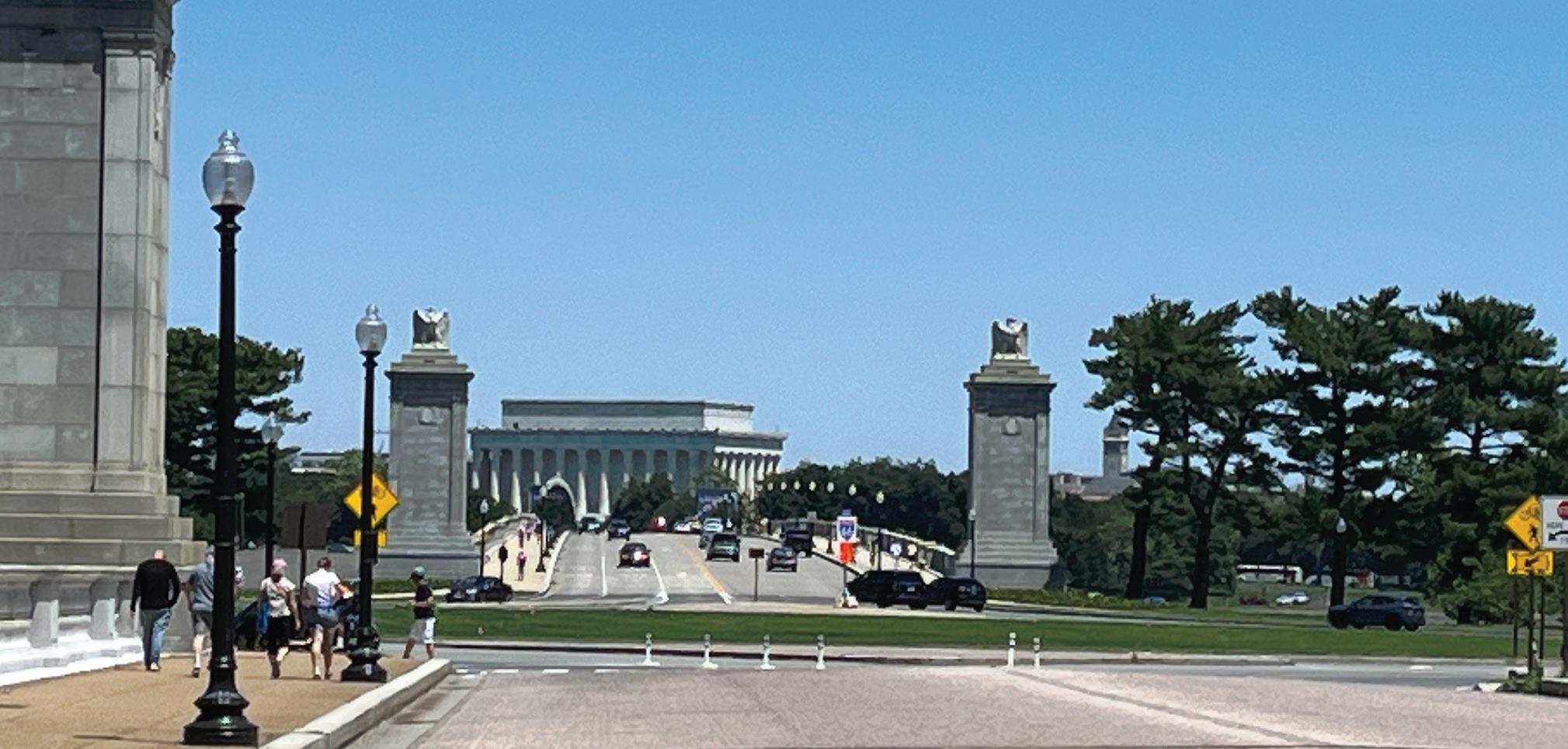
Pictured is the model of the arch the White House displayed to the press. The two photographs show a view west and east from the center of the circle where the arch is to be constructed. One view leads to the Arlington National Cemetery where the home of Robert E. Lee still stands versus the second, toward the Lincoln Memorial.
Work continues on repairs to the Reflecting Pool stretching between the Lincoln Memorial and the Washington Monument.
Though often viewed simply as a decorative feature, the pool belongs to a long tradition of monumental water architecture that originated in ancient Rome.
The Romans were master hydraulic engineers who constructed aqueducts, fountains, pools, baths, and reflecting basins throughout their empire. Renaissance architects later revived these ideas in Italy’s villas and formal gardens.
The Reflecting Pool, completed in 1923, uses water not merely as ornament but as a design element that amplifies architecture to create dramatic visual perspectives—a concept familiar to anyone who has visited Rome’s great fountains or the gardens of the Italian Renaissance.
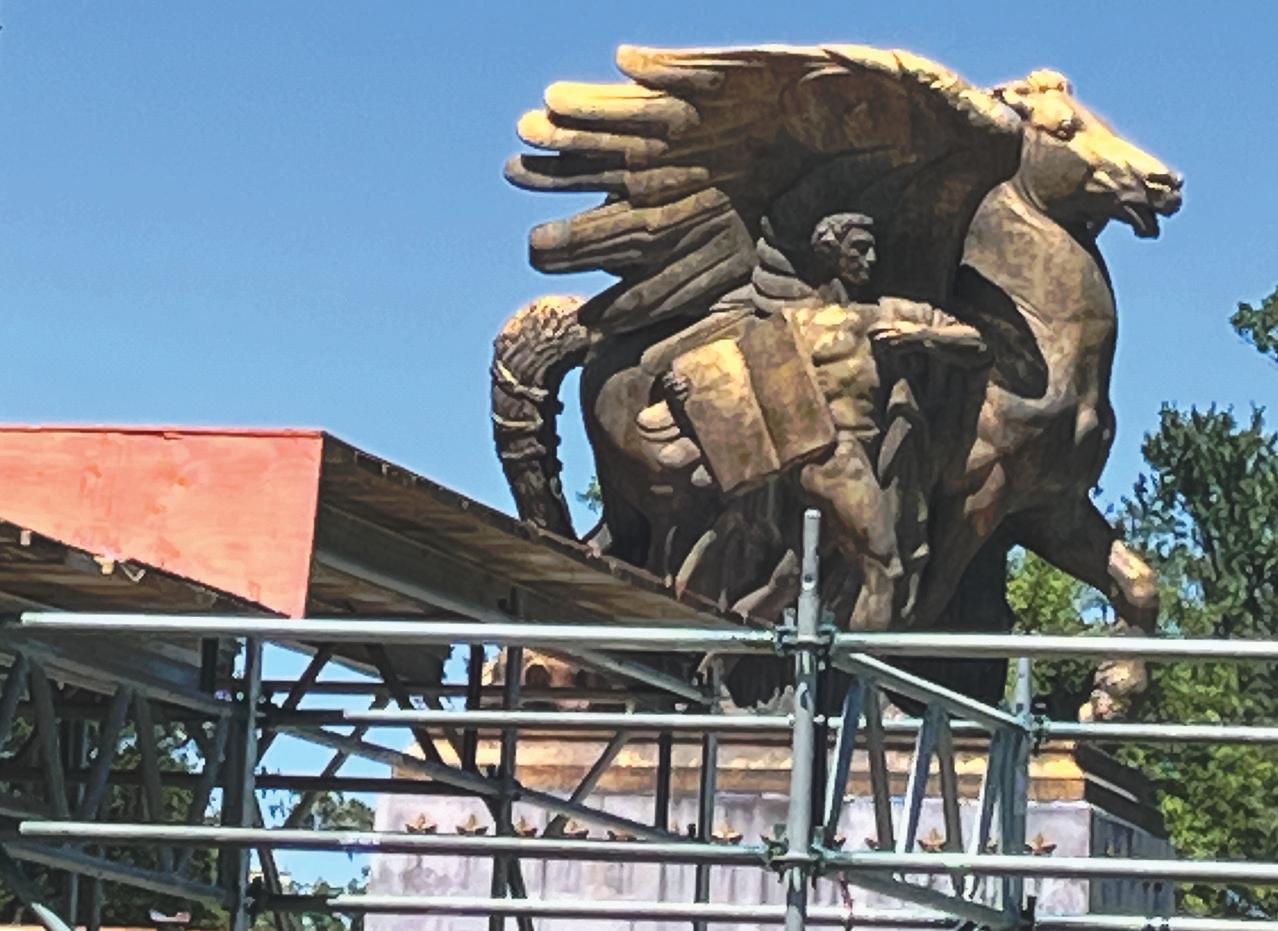
Near the entrance to Arlington Memorial Bridge stands one of Washington’s lesser-known masterpieces: the gilded equestrian sculpture Arts of War, currently undergoing restoration.
Created by sculptor Leo Friedlander, the monumental ensemble features heroic figures restraining powerful horses, symbolizing the disciplined use of military strength. Cast in Italy by the Ferdinando Marinelli Artistic Foundry in Florence, dedicated in 1951, the statues were a gift from Italy.
The sculpture reflects artistic traditions dating back to imperial Rome when emperors commissioned equestrian statues to represent order and leadership.
The gold leaf currently being restored recalls the rich decorative traditions employed in both ancient Rome and Renaissance Italy.
Opened in 2004, the National World War II Memorial was designed to evoke classical grandeur.
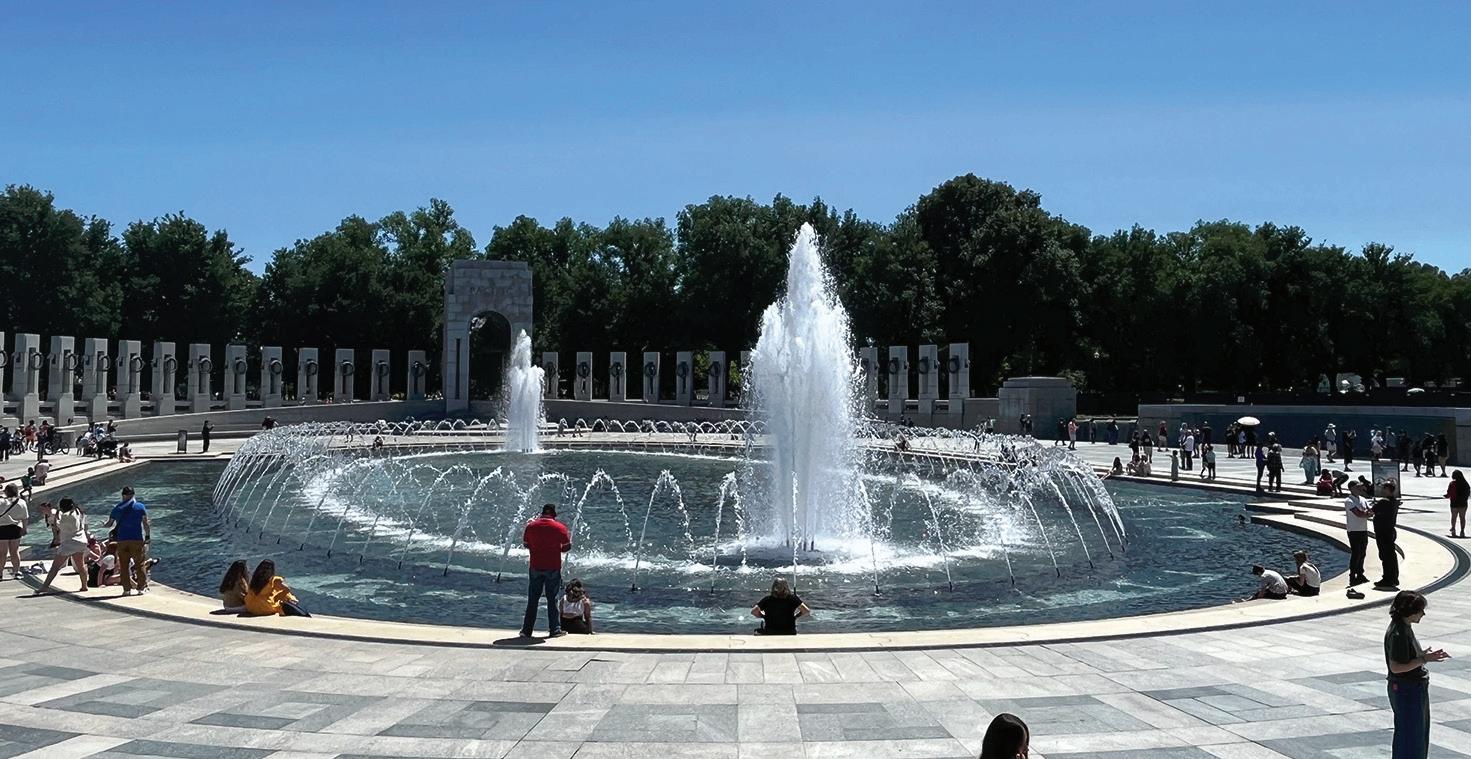
The memorial's triumphal arches, ceremonial plaza, columns, and fountains draw heavily from Roman imperial architecture. Visitors entering the site pass through monumental gateways reminiscent of the arches that once commemorated victories throughout the Roman Empire. Its architect, Friedrich St. Florian, employed classical proportions and spatial organization that intentionally connect the sacrifices of the "Greatest Generation" to the enduring traditions of civic remembrance established by Rome.
Proposed repairs and maintenance efforts seek to preserve these architectural elements for future generations.
No Washington landmark better demonstrates Rome’s influence than Union Station.
Completed in 1907 and designed by architect Daniel Burnham, the station was inspired directly by the Baths of Diocletian in Rome, one of the largest public buildings ever constructed in the ancient world. The soaring barrel-vaulted ceilings, monumental arches, coffered spaces, and grand ceremonial scale all reflect Roman precedents. Burnham believed American public architecture should embody dignity, permanence, and civic pride. He famously drew upon the principles of the City Beautiful movement, which itself looked to classical Rome for inspiration.
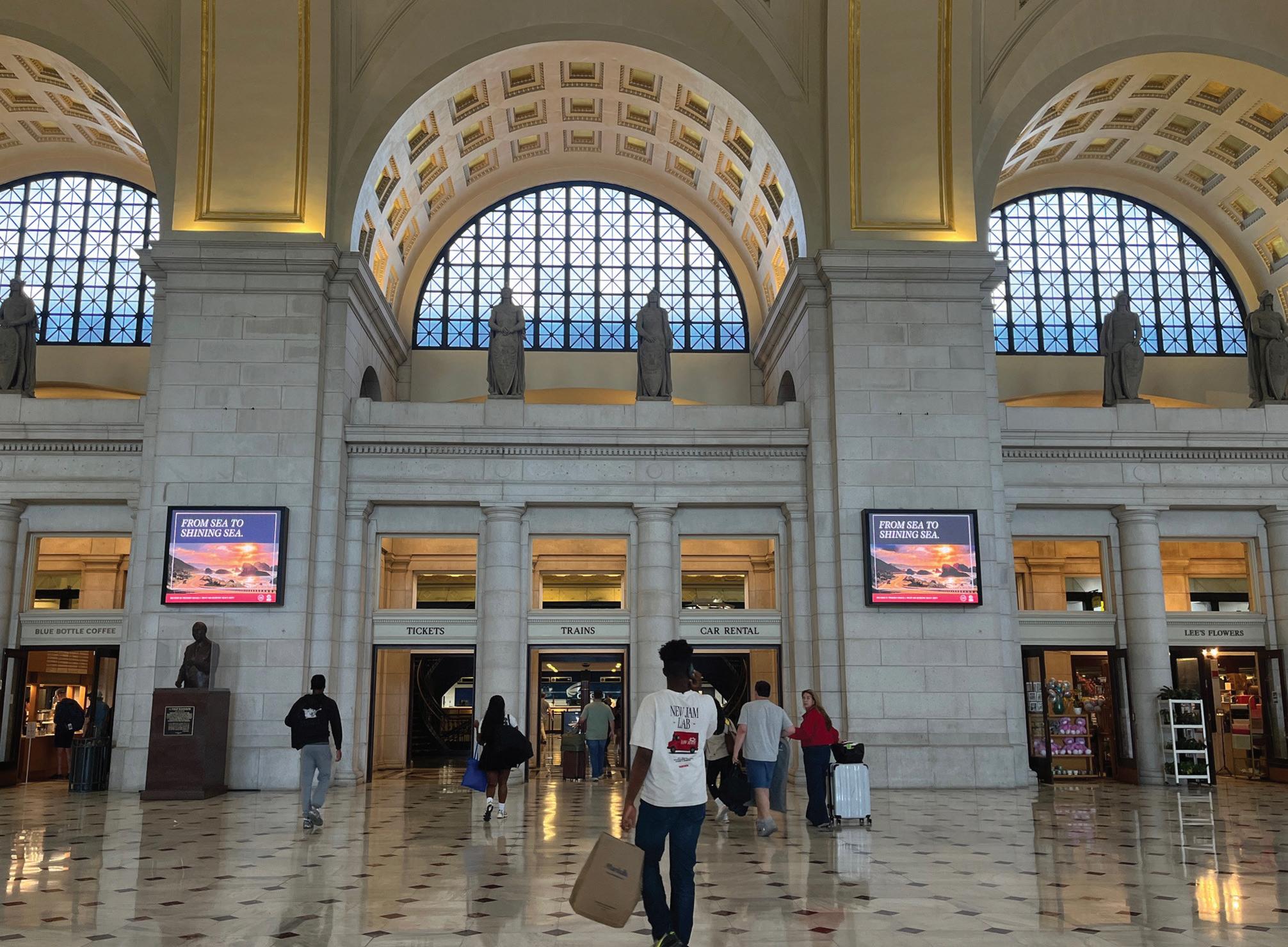
Today, efforts to restore and modernize Union Station continue a tradition of preserving one of America’s finest examples of Roman-inspired architecture.
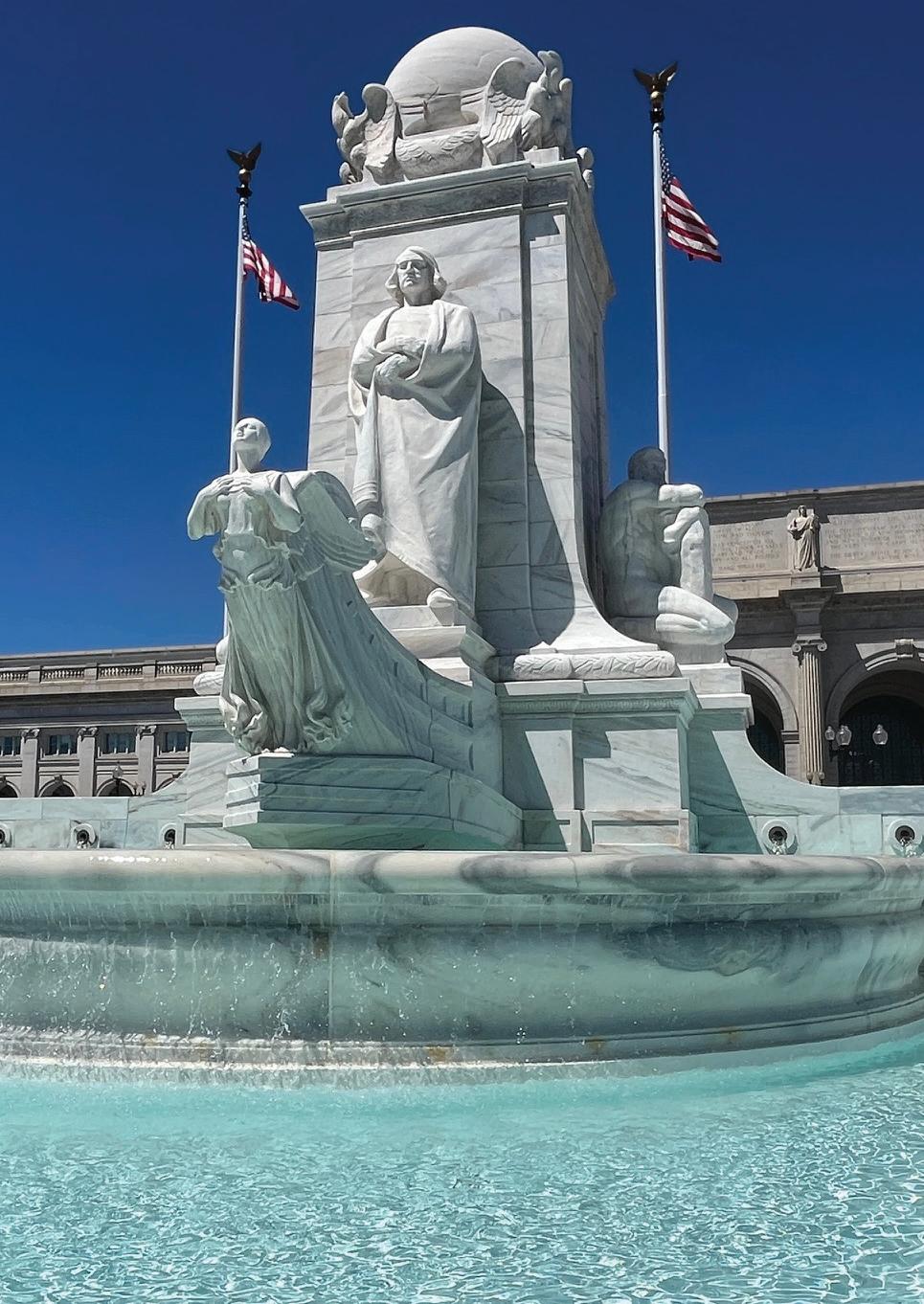
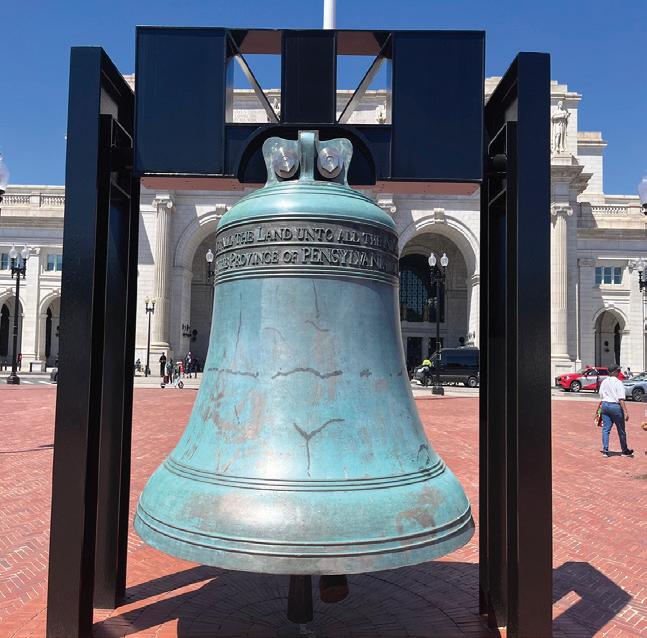
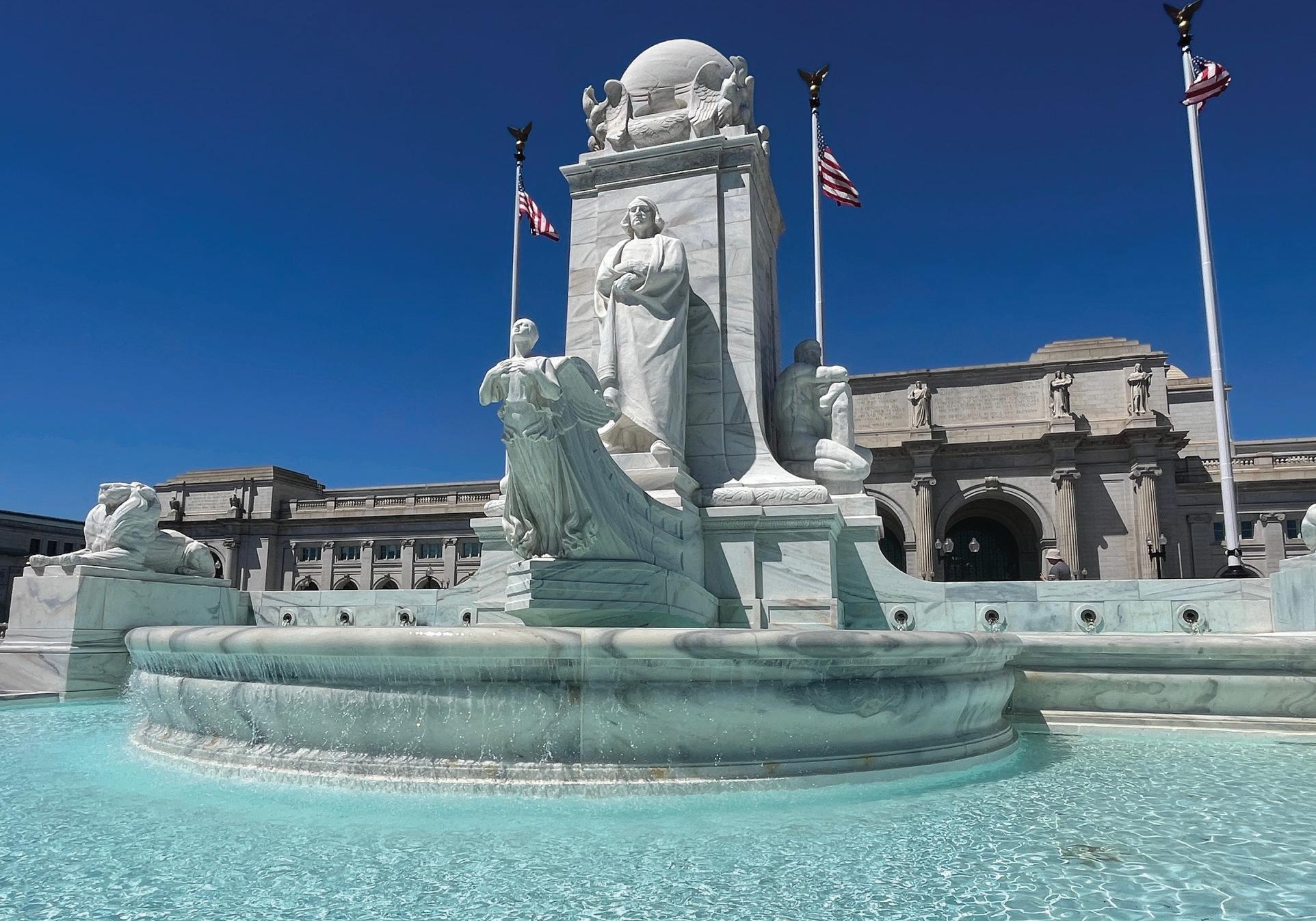
Perhaps no restoration better illustrates Washington’s Italian heritage than the rehabilitation of the man the city—District of Columbia—is named after—Columbus Fountain at Union Station.
Dedicated in 1912 and designed by renowned sculptor Lorado Taft, the fountain honors Christopher Columbus while incorporating allegorical figures, maritime imagery, and classical design motifs.
The monument reflects both Renaissance and Roman artistic traditions. Its recent restoration has revived details that had been obscured by decades of weathering and neglect.
For many Italian Americans, the restoration represents more than preservation. It symbolizes recognition of the cultural contributions of Italians and Italian Americans to the nation’s history.
Washington, D.C. was never intended to be merely another city. From its earliest plans, the capital was envisioned as a monumental center reflecting the ideals of republican government.
To achieve that vision, architects repeatedly turned to Rome.
The arches, fountains, plazas, sculptures, and grand civic spaces that define Washington all owe a debt to ancient Italy. Whether one supports or opposes the current restoration proposals, they remind us that the architectural language of Rome continues to shape America’s capital more than two centuries after its founding.
As workers restore monuments and planners debate future projects, Washington remains what many generations of architects intended it to be: a modern republic built in conversation with the eternal city.
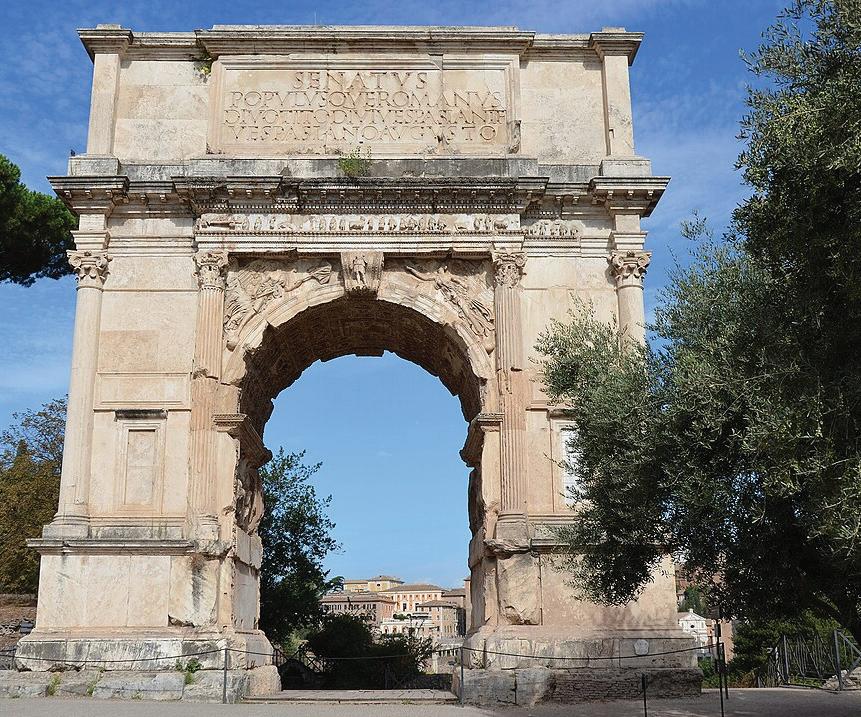
Long before skyscrapers defined American cities, builders looked to Ancient Rome for inspiration. Among Rome's most enduring architectural forms remains the triumphal arch, a monumental gateway erected to commemorate military victories, national achievements, and historic events.
The tradition began nearly 2,000 years ago with the Arch of Titus (A.D. 81), the Arch of Septimius Severus (A.D. 203), and the Arch of Constantine (A.D. 315). These monuments celebrated emperors, military campaigns, and the power of Rome.
America adopted the form during the late nineteenth century, when architects influenced by classical and Beaux-Arts design sought to express national pride through monumental public architecture.
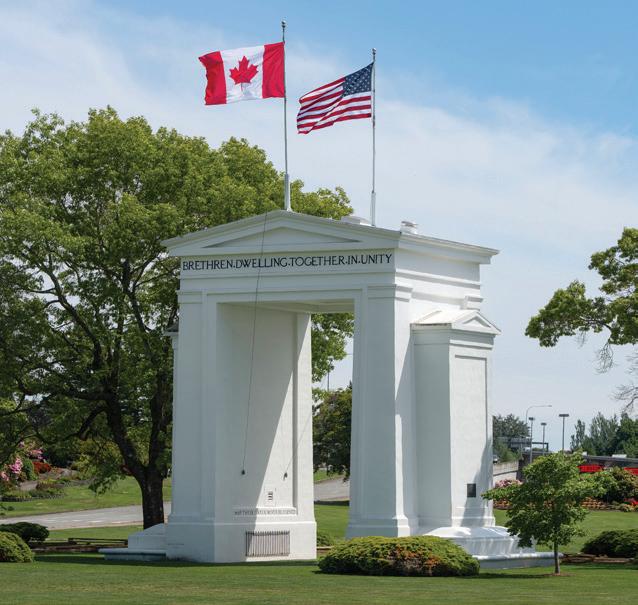
Unlike most triumphal arches, the Peace Arch celebrates not military victory but friendship. Erected on the international boundary between the United States and Canada, it commemorates more than a century of peaceful relations between the two nations.
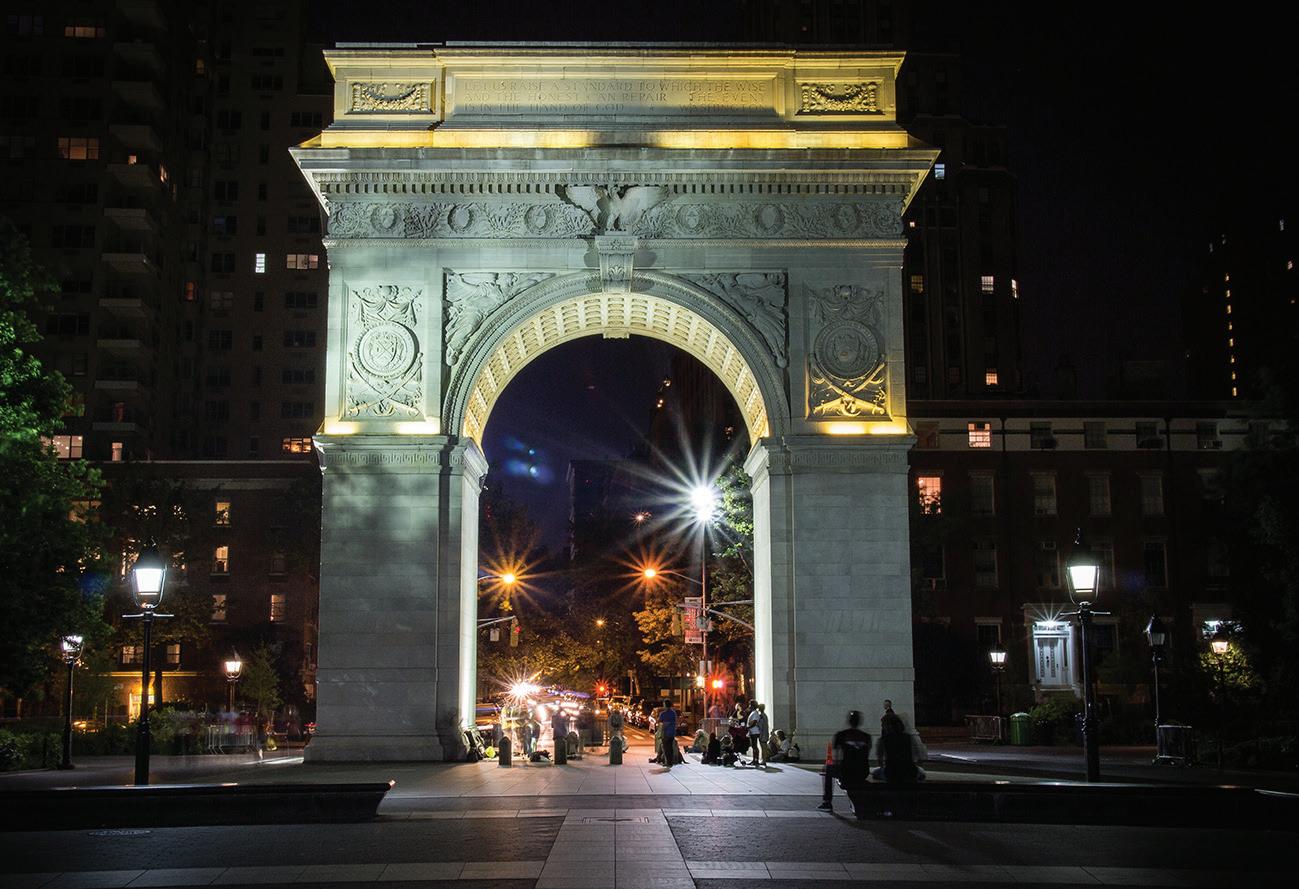
Perhaps America's most recognizable triumphal arch, the Washington Square Arch was designed by celebrated architect Stanford White. Built to commemorate the centennial of George Washington's inauguration as president, the marble structure was inspired directly by Rome's Arch of Titus. Today it serves as the iconic entrance to Greenwich Village and one of New York's most photographed landmarks.
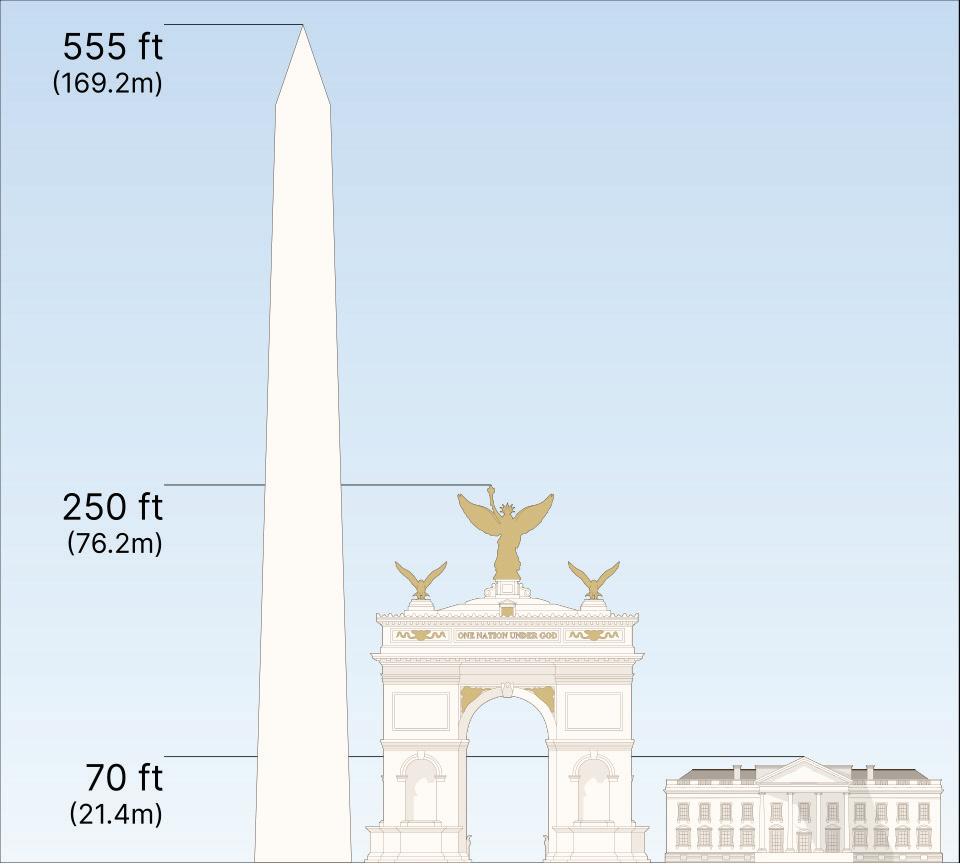
President Donald Trump's proposal to construct a monumental triumphal arch near Arlington Memorial Bridge would bring the Roman tradition directly to the nation's capital. If built, it would become one of the largest triumphal arches in the Western Hemisphere and place Washington among the world's great capitals that feature Roman-inspired ceremonial gateways.
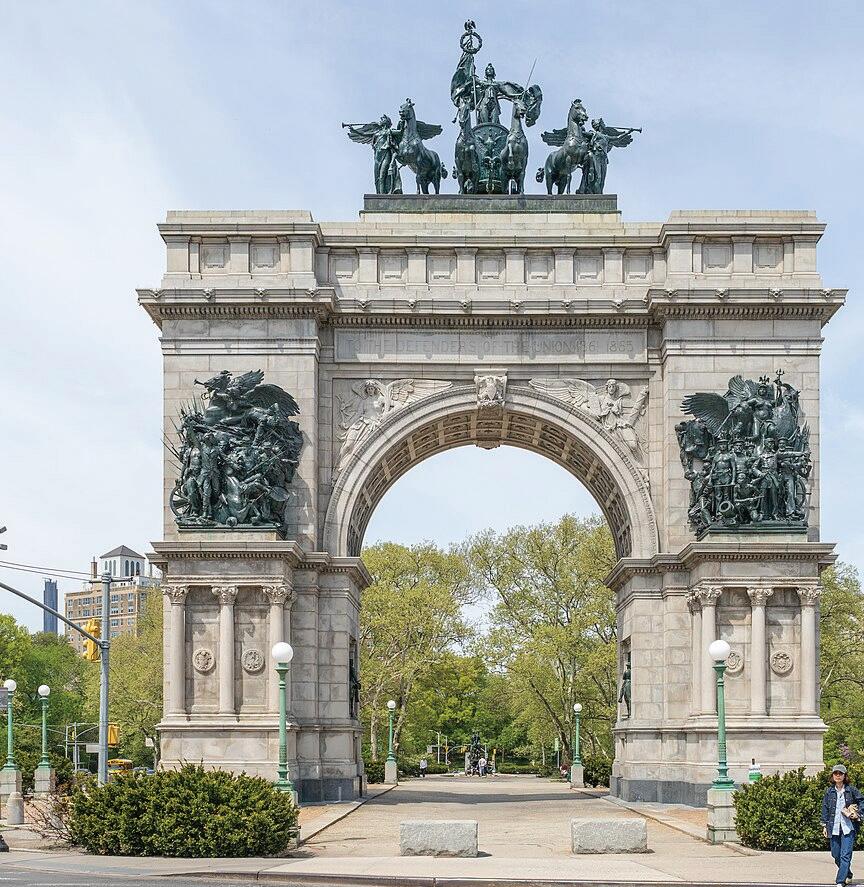
Standing at Grand Army Plaza, at the entrance of Prospect Park, Brooklyn's Soldiers' and Sailors' Arch honors Union soldiers and sailors who fought during the Civil War.
The structure’s three-arched design and sculptural decoration reflect the influence of Roman imperial monuments, not to mention the Arc de Triomphe in Paris. Atop the structure is the quadriga—a four-house chariot and a winged female figure to represent Columbia. At 80 feet tall, the Brooklyn arch is now one of the largest triumphal arches in the United States. However, Trump’s proposed arch will be quite larger, at 250 feet in height.
The Brooklyn arch was unveiled in October, 1492 to coincide with a citywide celebration of the 400th anniversary of the discovery of the New World by Christopher Columbus.
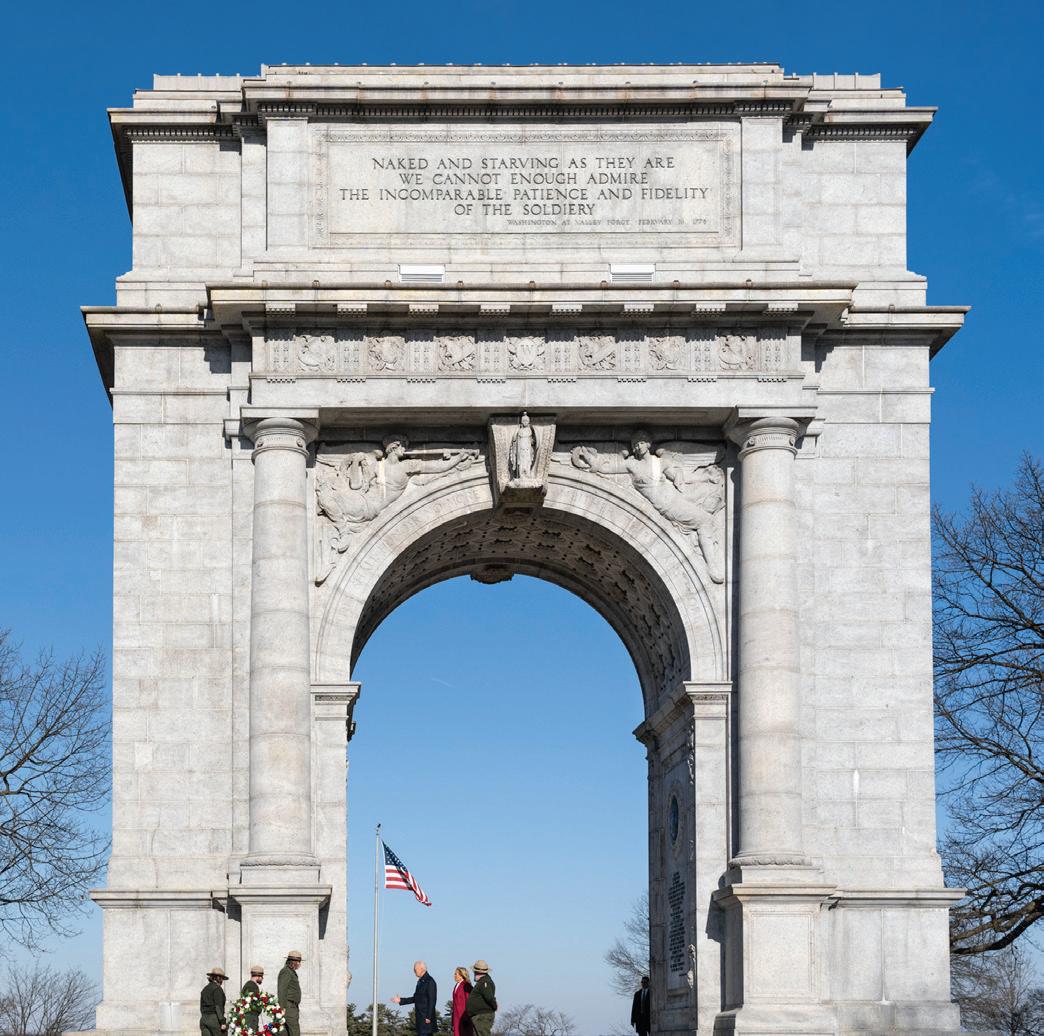
Constructed to honor George Washington and the Continental Army, the National Memorial Arch marks the site where American troops endured the harsh winter of 1777-78. The granite monument bears the inscription: "Naked and Starving as They Are, We Cannot Enough Admire the Incomparable Patience and Fidelity of the Soldiery."
Know of a notable arch in your community? Send a photo and brief description to potompub@aol.com, and we may feature it on the PRIMO website
The doors are open. Light pours into our kitchens. The gardens are full. The markets overflow with color. We gather on porches and patios under evening skies. We pass the bread. We pour the wine. The season invites us to slow down, to savor, to celebrate. Summer has arrived.
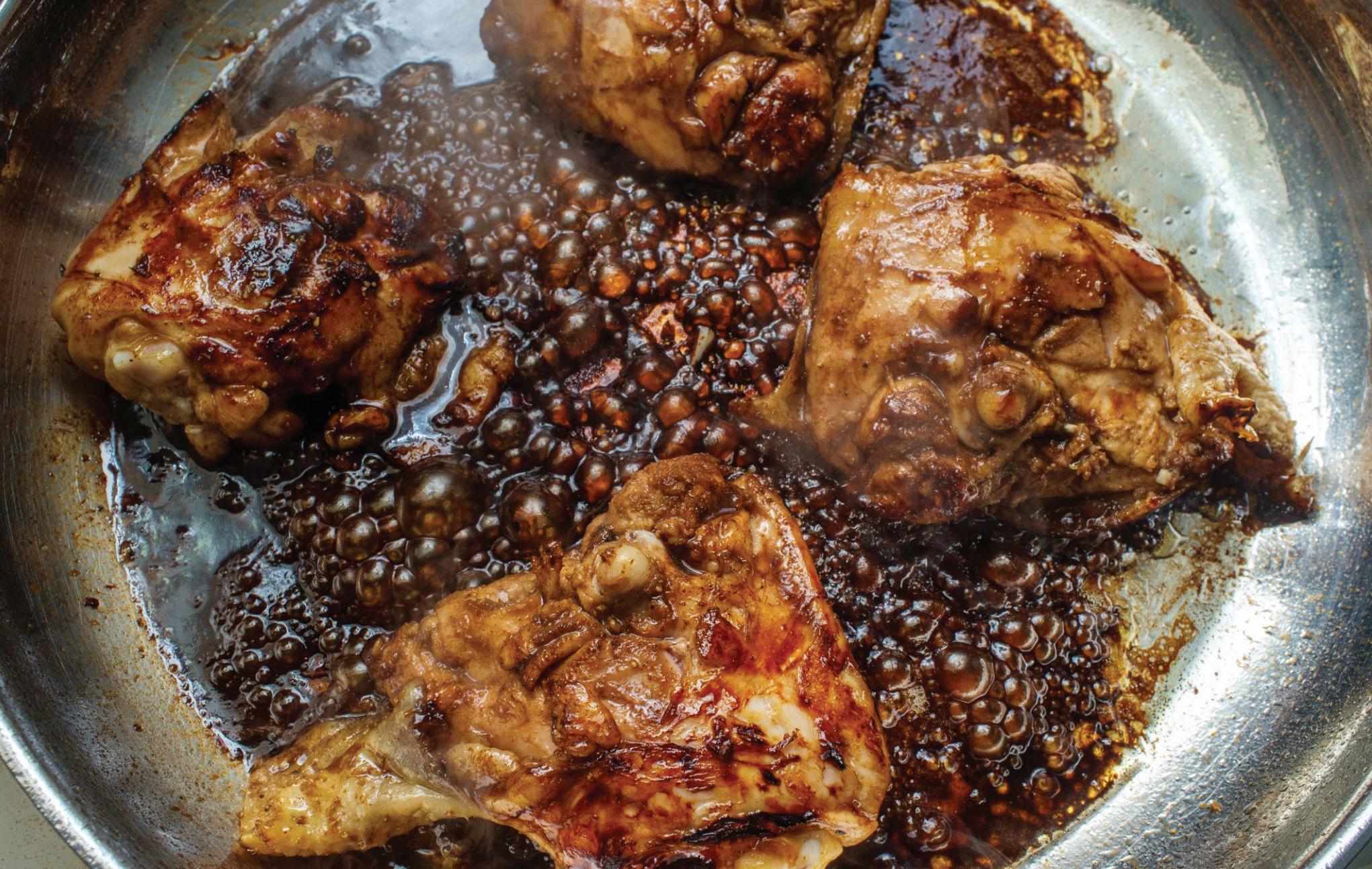
Ingredients: 4 chicken thighs, 2–3 tbsp Aceto Balsamico di Modena, 2 tbsp olive oil, 2 cloves garlic (smashed) 1/2 cup chicken broth or white wine, 1 tsp. fresh rosemary or thyme
Salt & pepper to taste.
Instructions: Season chicken with salt and pepper. Heat olive oil in a pan and sear skin-side down until golden and crispy. Flip and cook another 3–4 minutes. Remove and set aside. In the same pan, add garlic and herbs. Deglaze with broth or wine—scrape up those browned bits. Stir in the balsamic vinegar. Return chicken to the pan. Cover and simmer 20–25 minutes until cooked through. Uncover at the end to reduce the sauce into a glossy glaze.
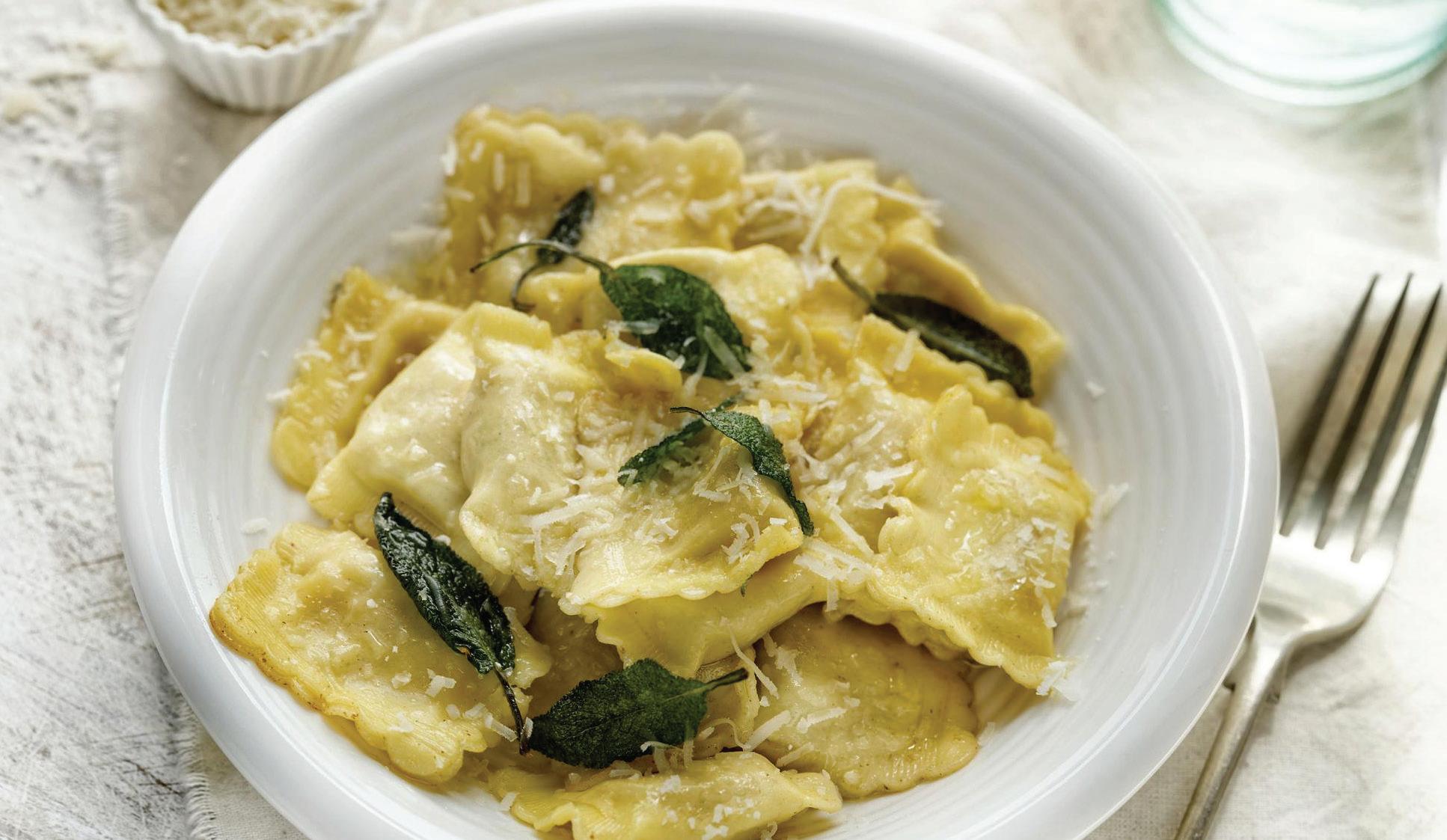
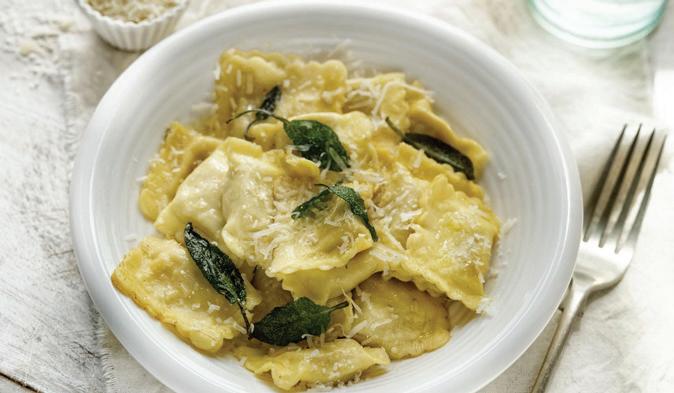
Ingredients: For the dough—2 cups all-purpose flour, 3 large eggs, pinch of salt. For the filling—1 cup ricotta cheese, 1 cup cooked spinach (well drained & chopped), 1/2 cup grated Parmigiano-Reggiano, 1 egg yolk, salt & pepper, pinch of nutmeg. For the sauce—4 tbsp butter, fresh sage leaves, extra Parmigiano for serving
Instructions: Make a mound of flour, create a well, crack in eggs. Mix and knead until smooth (about 10 minutes). Wrap and let rest 30 minutes. Mix ricotta, spinach, Parmigiano, egg yolk, salt, pepper, nutmeg. Keep it thick—not watery. Roll dough into thin sheets. Place small spoonfuls of filling spaced apart. Cover with another sheet, press out air, seal edges. Cut into squares or circles. Boil ravioli in salted water (3–4 minutes, until they float). Melt butter, add sage until fragrant. Toss ravioli gently in the sauce. Top with more Parmigiano and a crack of black pepper.
Ingredients: 1 can (15 oz) chickpeas (or 1½ cups cooked dried chickpeas), 2–3 tbsp extra-virgin olive oil, juice of 1/2 lemon (or a splash of red wine vinegar), 1 small garlic clove, finely minced, 2 tbsp fresh parsley, 1/2 cup sliced olives (black or Kalamata), chopped, salt and black pepper to taste, thinly sliced red onion or scallions
Instructions: Drain and rinse the chickpeas well. In a bowl, combine olive oil, lemon juice, garlic, salt, and pepper. Add chickpeas and toss to coat evenly. Stir in parsley and optional onion. Let it sit for 10–15 minutes so the flavors come together.


Ingredients: Sliced rustic bread, ricotta cheese, crisp pancetta, honey or balsamic vinegar.
Instructions: Toast bread slices, spread ricotta generously, top with pancetta and a light drizzle of honey or balsamic glaze. For a balsamic glaze—simmer 1 cup balsamic vinegar in a small saucepan until reduced by half and thick enough to coat a spoon. Cool before drizzling over the crostini.

Ingredients: For the cake—1 cup all-purpose flour, 3/4 cup sugar, 3 eggs, 1 tsp baking powder, zest of 1 lemon, pinch of salt. For the filling/topping—1 lb. fresh strawberries, sliced, 1 cup heavy cream (whipped), 2–3 tbsp sugar (for the berries)
Instructions: Make the sponge cake—Beat eggs and sugar until pale and fluffy (this is key—gives the cake its lightness). Fold in flour, baking powder, lemon zest, and salt gently. Pour into a greased pan. Bake at 350°F for about 25–30 minutes. Let cool completely. Prepare the strawberries—Toss sliced strawberries with sugar.. Let sit 15–20 minutes to release their juices (this becomes a natural syrup). Assemble—slice the cake horizontally into two layers. Spread whipped cream and strawberries on the bottom layer. Replace the top layer and decorate with more strawberries. Chill for at least 1 hour before serving.
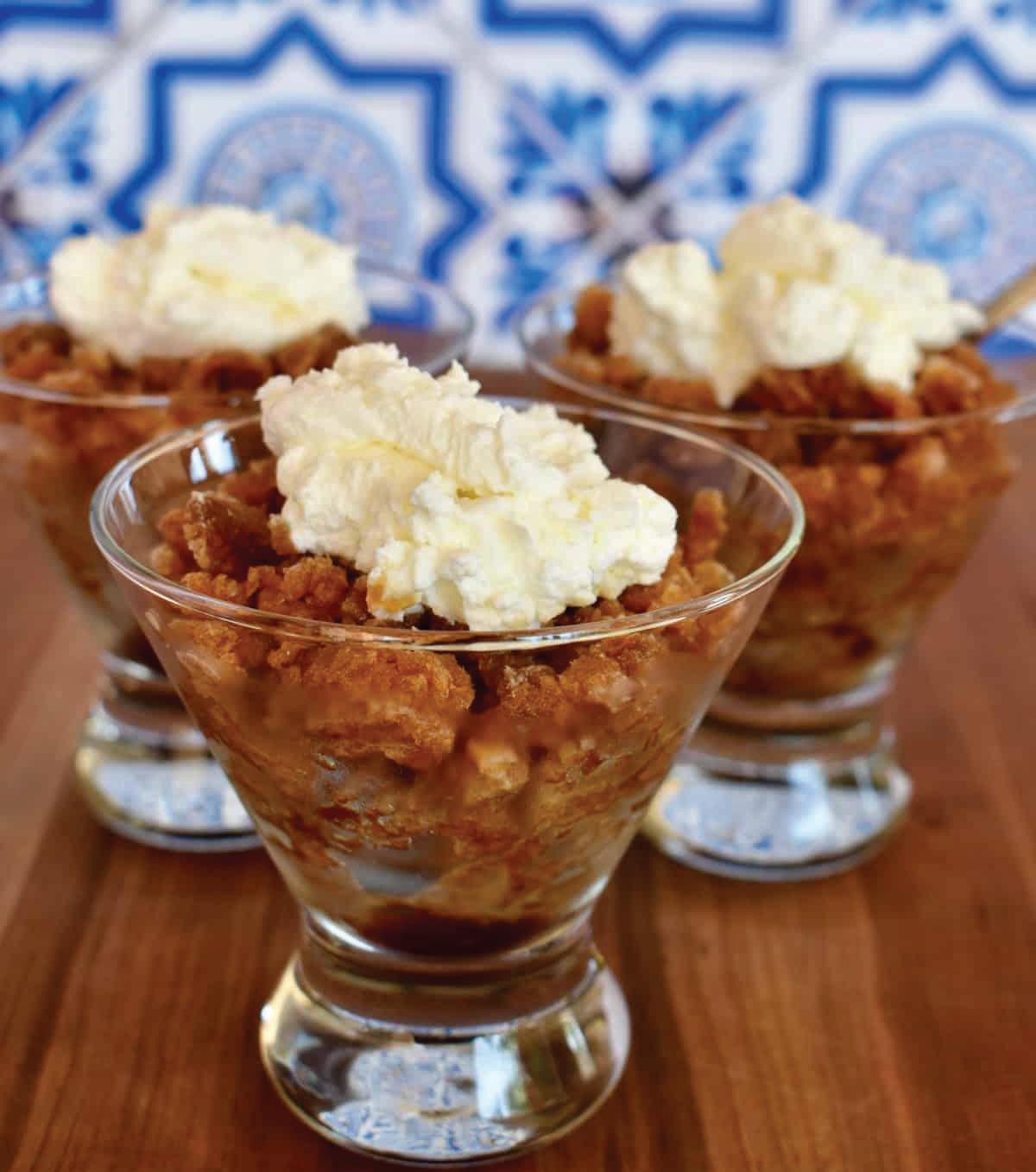
Ingredients: 2 cups strong coffee (espresso or strongly brewed coffee), 3–4 tbsp sugar (to taste), optional whipped cream
Instructions: Stir sugar into hot coffee until dissolved.. Let cool, then pour into a shallow dish. Freeze, scraping with a fork every 30 minutes for 2–3 hours. Once fluffy and crystalline, serve in a glass. Top with whipped cream if desired.
By Anthony Celano
Available at Amazon.com www.anthony-celano.com
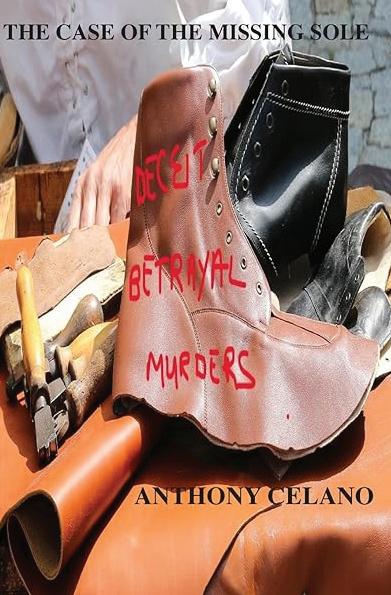
Anthony Celano’s newest offer is The Case of the Missing Sole, an old-fashioned mystery novel wrapped in the gritty atmosphere of New York’s immigrant neighborhoods and shoe manufacturing trade.
The Case of the Missing Sole is the eighth installment in Celano’s Sergeant Markey mystery series. The new novel combines murder, greed, business intrigue, and family conflict into a fast-moving detective story that keeps readers engaged from beginning to end.
The book’s story centers on Dario Tengo and Victor Spinello, two young Italian immigrants from Milan who arrive in New York to carry their ambition with a potentially revolutionary invention — a shoe sole capable of adding height to the wearer.
Partnering with Italian American shoe factory owner and real estate investor Richard Frantellini, the men hope to build prosperous new lives in America. Yet, the dream quickly sours when Dario realizes that language barriers and inexperience have left the two Italians with only minority ownership in the business while Frantellini controls the company and makes most of the money.
Celano skillfully develops the growing resentment between the partners. Matters become even more volatile after Victor develops a second invention — a medical shoe sole with therapeutic value. Dario sees the new creation as an opportunity for the two to break free and strike it rich elsewhere. Victor, however, values security and stability over risk. He wants to them to stay with Frantellini and share with him the new invention. The tension between the two men explodes in a dark corner of Washington Heights, leading to a sudden act of violence to launch the novel’s central murder investigation.
The murder scene itself is memorable and symbolic: a loose shoe sole stuffed into the victim’s mouth — a grim touch that ties directly into the book’s title.
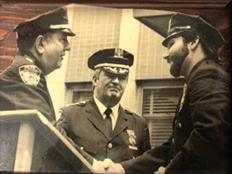
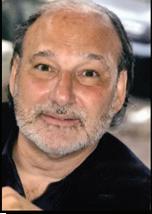
The photograph shows the author—Anthony Celano—while employed as a policeman in New York City; and bottom left, a recent photograph of the author.
Themes of betrayal and ambition are paramount in this extraordinary novel.
Veteran detective Sergeant Al Markey and his loyal partner Oliver Von Hess soon enter the story. Celano, a former NYPD detective and Detective Squad Commander, clearly draws upon his reallife law enforcement experience. The investigative procedures, interrogation scenes, and interactions among detectives feel authentic and grounded in the realities of police work rather than televisionstyle fantasy.
What begins as a murder case soon broadens into a larger struggle over money, inheritance, and power. Following the death of Richard Frantellini, a fierce battle develops between his daughter Maria and his younger widow Ronnie Borden. Celano creates a layered web of shifting alliances, legal maneuvering, and hidden motives that adds depth to the story beyond the initial crime.
One of the novel’s strengths is Celano’s ability to manage a large cast of characters without confusing the reader. Despite the many competing personalities and subplots, the story remains organized and easy to follow. Celano also maintains a brisk pace throughout the novel, consistently moving the action forward while building tension around Victor’s fate and Markey’s pursuit of justice.
Celano’s background adds additional credibility to the work. A former NYPD detective assigned to organized crime and narcotics investigations — including the Colombo Organized Crime Task Force during the Colombo wars of the 1990s — he brings firsthand knowledge of criminal investigations and New York street life into his fiction.
The Case of the Missing Sole will appeal to readers who enjoy traditional detective fiction, New York crime stories, and mysteries rooted in working-class life and immigrant ambition. Anthony Celano delivers—once, again—an entertaining and well-crafted mystery filled with deception, conflict, and suspense.
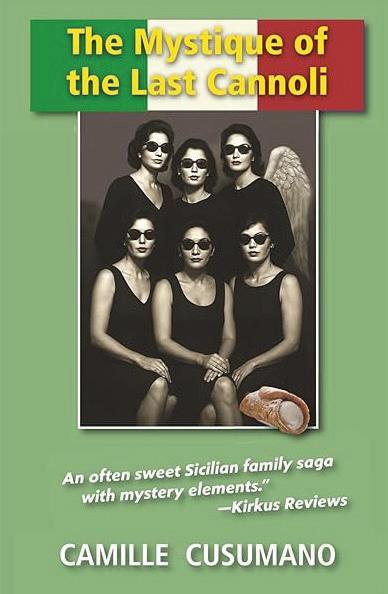
By Camille Cusumano
Published by Centanni Publications
Available at Amazon.com www.camillecusumano.com
Camille Cusumano’s The Mystique of the Last Cannoli is a richly textured novel of a Italian American family that blends humor, memory, spirituality, Old World tradition, and mystery into a heartfelt story set largely in Elizabeth, New Jersey.
Rooted in Sicilian heritage, the novel succeeds as an engaging narrative on memory, grief, and cultural identity.
The story centers on Carmela Donitella, the youngest daughter in a sprawling Sicilian American family headed by Vincent and Magdalena Donitella. Carmela narrates much of the novel in a lively firstperson voice that is observant, sentimental, and often humorous. Through her eyes, readers are brought into the crowded kitchens, family arguments, rituals, and ambitions of an Italian American household shaped by love and hardship.
At the symbolic center of the novel is the “Last Cannoli,” a pastry preserved in the family freezer since 1941, the year Vincent and Magdalena married before Vincent departed for World War II. What might initially sound whimsical gradually becomes one of the novel’s most moving symbols. The frozen cannoli represents continuity, remembrance, luck, sacrifice, and the stubborn determination of families to preserve the past against the erosion of time.
Cusumano handles this symbolism beautifully. Early in the novel, Carmela describes the cannoli as “sacred with time,” a confection that survives for decades while preserving the emotional memory of the family itself. In many ways, the cannoli becomes a vessel carrying grief, hope, and ancestral memory across generations.
The novel’s plot gains momentum through Vincent Donitella’s dream of purchasing and restoring the abandoned Mariners Mansion in order to establish an orphanage. He is portrayed as compassionate, idealistic, and deeply guided by faith. Yet his dream is endangered by local criminals who blackmail him through stolen contraband connected to his modest produce stand business. Determined to save her father’s vision, Carmela recruits her older sisters — humorously referred to as the “Sister Mob” — to help untangle the scheme and somehow raise the money needed to restore the mansion.
Cusumano balances the novel’s suspenseful elements with warmth and comedy. There is a genuine affection in the way she portrays the Donitella family.

One of the book’s greatest strengths lies in its dual narrative structure. Alongside Carmela’s narration are italicized chapters conveying the inner reflections and experiences of her mother Magdalena, particularly following the devastating death of her daughter Madeleine in 1970. These passages provide the novel with emotional and spiritual depth. Magdalena’s subsequent journey to Sicily transforms her. The homeland of her ancestors awakens in her a more independent and reflective sense of self while reconnecting her to ancestral roots.
The alternating perspectives work remarkably well. Carmela’s narration provides immediacy and youthful energy, while Magdalena’s voice introduces melancholy, wisdom, and philosophical reflection. Together they create a multi-generational portrait of women navigating loss, family expectations, faith, and personal transformation.
Cusumano’s prose is thoughtful and often filled with unique epiphanies about memory, family, and identity. She captures the emotional texture of Italian American life without romanticizing it. Her New Jersey neighborhoods feel lived-in and authentic, populated by parish culture, old-country traditions, ambitious dreamers, and flawed but deeply human characters.
The author’s literary background is evident throughout the novel. Cusumano, who has written for major publications including The New York Times, The Washington Post, and National Geographic Traveler, brings a polished literary sensibility to the story while maintaining warmth and accessibility.
Ultimately, The Mystique of the Last Cannoli is a novel about preserving what matters most — family memory, cultural roots, and hope itself. Camille Cusumano has crafted a moving and original work that will resonate strongly with readers interested in Italian American heritage, women’s voices, and stories that bridge America and Sicily across generations.

Written by George Vercessi
Illustrated by Hatidza Mulic Available at Amazon.com www.vercessi.com
Everybody Here Has A Sick Foot by George Vercessi is a thoughtful and compassionate illustrated children’s book that introduces young readers to the difficult subject of strokes and recovery in a way they can understand.
Illustrated by Hatidza Mulic, the book balances fear, confusion, hope, and healing through the eyes of two young brothers coping with a family crisis.
The story centers on 11-year-old Jamie Roberts, who finds his mother incapacitated while his father and younger brother are away on a camping trip. Acting quickly, he calls 911, and his mother is rushed to the hospital. The sudden emergency creates an atmosphere of anxiety and uncertainty that feels authentic and emotionally grounded.
Their elderly neighbor, Mrs. Farrell, comforts the boys while they wait for news. Later, their father explains that their mother suffered a stroke — described to the children as a “brain attack,” similar to a heart attack but involving the brain and oxygen deprivation. Doctors explain that recovery will take time and that their mother will suffer from aphasia, a condition affecting speech and communication.
One of the book’s strengths is its ability to show how frightening medical terminology can sound to children. After hearing the phrase “brain attack,” one of the boys becomes so frightened he believes he may be having one himself. His father gently reassures him, creating one of the story’s most touching moments. Vercessi effectively captures the anxiety children feel when illness suddenly enters a household.
The illustrations by Mulic complement the narrative well, presenting hospitals and rehabilitation centers in a softened, approachable manner. During visits to the recovery center, the younger brother remarks that “everything is slow — even the elevator,” an observation that subtly conveys the emotional heaviness surrounding rehabilitation.
When their mother eventually returns home, the family faces new frustrations. The boys are eager but feel helpless when her progress seems uneven. She experiences mood swings with long stretches of silence, realities many stroke families experience but which are rarely addressed in children’s literature.
The story takes a hopeful turn when two women who are stroke survivors visit the family to offer practical advice and emotional support. The boys’ mother soon regains the ability to speak and walk independently.
By the conclusion, Everybody Here Has A Sick Foot succeeds as both an educational tool and a heartfelt family story. The book sensitively teaches adults and children about illness, patience, recovery, and the importance of family support.
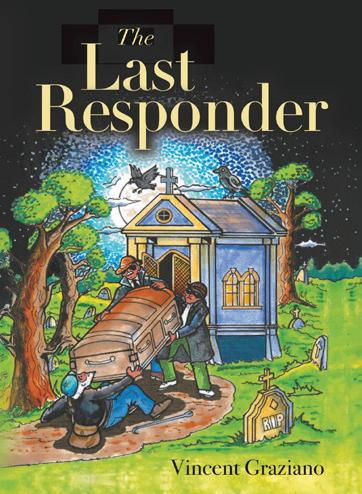
By Vincent Graziano Available at Amazon.com v.graziano53@gmail.com
Vincent Graziano’s The Last Responder, is a warm, witty, and surprisingly poignant sequel to his 2020 novel The Romeo Club. Readers unfamiliar with the earlier book can still enjoy this latest installment while those who followed the original “Romeos” will appreciate the return of beloved characters whose friendships have only deepened with age.
The title builds upon the events of The Romeo Club—an acronym for “Restless Old Men Eating Out”—a group of late-middle-aged friends. In that story, they joined forces to save one of their own, Tim Collins, after he became entangled with organized crime. They faked Tim’s death to hide him in Italy, though the victory came at a heartbreaking cost when Dr. Claudio Odelli, a member of the informal club, chose to end his life rather than endure the final stages of ALS.
Tim returns to America under the alias Bobby Reynolds in The Last Responder. He settles into a second-floor apartment above Johnny Paradise’s Italian restaurant in Westchester. Armed with the proceeds of a life insurance payout, Tim sets out to breathe new life into his friend’s struggling establishment. He installs a bocce court, builds a pizza oven, hires an attractive but inexperienced pizza maker, and launches a high-stakes Super Bowl pool.
Perhaps his greatest success is Open Mic Monday when local singers, comedians, and magicians flock to the stage. The only problem is finding the right master of ceremonies—a role eventually filled by Frankie Grace, the funeral director and longtime friend whose unrealized dream of becoming a stand-up comedian still lingers beneath the surface.
Frankie’s storyline provides the emotional heart of the novel. Beneath the humor lies a thoughtful examination of depression, aging, and regret. Years spent working among the dead have taken their toll. Sleepless nights, dark thoughts, and disturbing dreams force Frankie to confront difficult truths about his life and future. Graziano handles these themes with sensitivity while never allowing the story to become overly heavy.
What makes The Last Responder especially enjoyable is Graziano’s sharp dialogue and keen sense of humor. The banter among old friends feels authentic and affectionate, filled with playful insults and funny one-liners. At the same time, the novel captures contemporary America with an observant eye, reflecting changing demographics, technology, and social attitudes.
Part crime caper, part comedy, and part meditation on growing older, The Last Responder succeeds on every level. Graziano combines film-noir style storytelling with heartfelt humor. The result is an outstanding sequel to an already excellent novel that leaves readers hoping these old friends still have another adventure ahead of them.