



9 New laws to shut down dodgy high street shops in crime crackdown 11 Crime victims’ compensation lags 30 years behind inflation
13 Your expert must really know the business
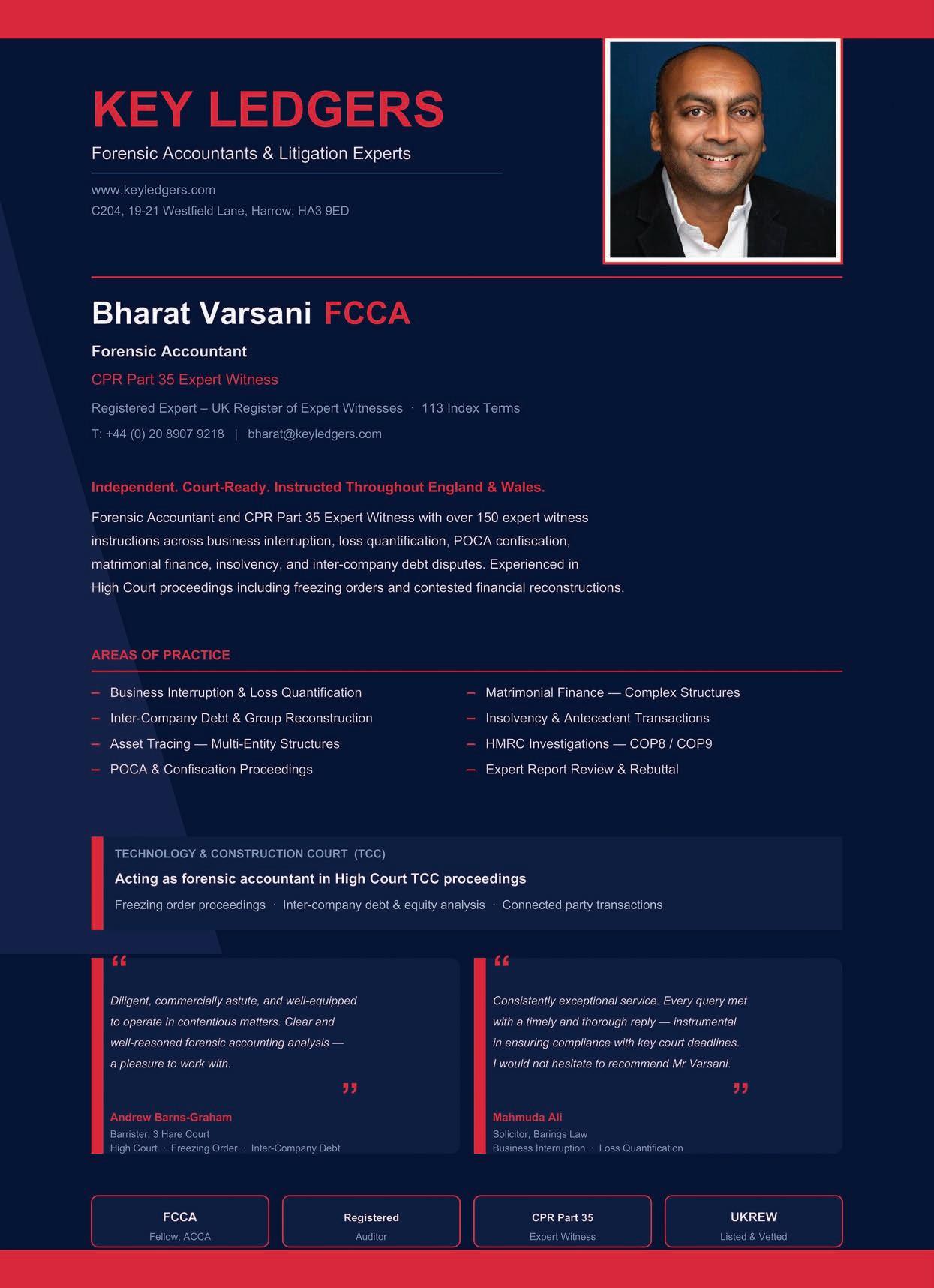
15 Expert evidence in financial disputes: independence and transparency are crucial
17 Questions are still to be answered following Vashi collapse
19 Largest crackdown on late payments in over 25 years as landmark Bill enters parliament
19 Investment firm CEO imprisoned for contempt of court
DIGITAL FORENSICS
21 Trust and authenticity in a digital age: evaluating digital evidence in litigation
PROPERTY, CONSTRUCTION & ENGINEERING
23 Damp and mould claims: understanding the environment is crucial
25 When the duty to review becomes critical in construction projects
27 Construction company fined after man died on ‘death trap’ site
27 RICS responds to government call for evidence
FIRE INVESTIGATION
29 Fire safety litigation comes under increasing scrutiny
30 Fire safety and property investment: the hidden costs developers can’t ignore
IMMIGRATION PRACTICE
33 BBC investigation finds UK companies linked to small boat payments
OIL & GAS
35 Offshore failures and the legal consequences
35 Arbitration can resolve complex disputes
MARITIME DISPUTES
36 Baltic Exchange talks sanctions, geopolitics and FFAs at its Posidonia Risk Forum 2026
37 Determining fault in maritime collisions
COLLISION INVESTIGATION
38 Detailed analysis is crucial in collision investigation
TREES AND THE LAW
39 Being an effective expert witness can require thinking outside of the box
TRANSLATING & INTERPRETING
41 When the words don’t match, neither does justice

their


NEWS
51 Better patient care as NHS set to introduce single patient record
53 Doctors could face negligence claims over AI errors, report warns
55 NHS Resolution publishes report on early onset claims
55 RCP responds to publication of latest NHS England waiting time statistics
57 Small differences can trigger major complications, lawyers warn
59 AI to speed up cancer diagnosis for millions of NHS patients
61 Care home fined after resident choked to death on meal
61 Value of compensation brought to life in new film
63 Cardiff University fined £280,000 after two employees develop occupational asthma
65 NHS hospitals shouldering digital prescribing safety risks
67 500 days since missed commitment, Stroke Association urges Health Minister to act now
69 NHS to offer ‘multi-beam’ precision radiotherapy to thousands of prostate cancer patients
71 NHS Trust admits liability for seven-month delay in tongue cancer diagnosis
ORTHOPAEDICS
73 BASK respond to arthroscopic knee meniscectomy surgery research
75 The hindsight trap: when complications are mistaken for negligence
HAND SURGERY
77 The origins of British hand surgery and its importance in medicolegal practice
TRICHOLOGY
78 Alleged incompetence is on the rise in trichology claims
NON-SURGICAL AESTHETICS
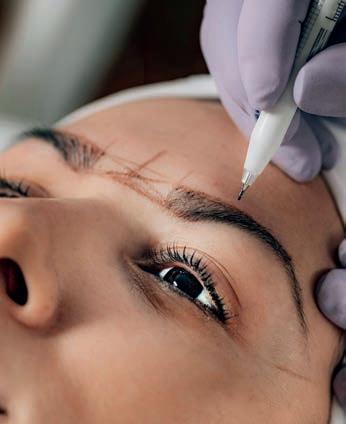
79 When beauty treatment becomes a legal issue
A&E MEDICINE
81 The importance of time-critical decision making in the A&E department
OPHTHALMOLOGY & OPTOMETRY
83 Understanding oculoplastic and lacrimal evidence
83 New clinical framework supports better glaucoma care
85 Glaucoma and the challenge of diagnosis
87 College welcomes changes to ophthalmology tariffs
87 GOC meets all PSA standards of good regulation for fourth consecutive year
SEPSIS
89 Sepsis: the rights and wrongs in clinical decision making
HAEMATOLOGY
91 Haematology in the courtroom and allegations of mismanagement
VASCULAR SURGERY
92 Leg ulcer confusion
UPPER GASTROINTESTINAL SURGERY
96 Upper GI surgery has inherent risks
PAIN MEDICINE
97 CRPS: a challenging condition

OBSTETRICS & GYNAECOLOGY
99
Obstetrics and gynaecology litigation through the eyes of an expert witness
101 Litigation, psychological safety and NHS maternity care
101
Senior midwife has worldwide experience
UROLOGY
103 Bladder dysfunction – symptom recognition can be crucial
ENDOCRINOLOGY
104 Serious harm caused by misdiagnosis of diabetes
NEPHROLOGY
104 When kidney care becomes a legal issue
GENERAL PRACTICE
106 Delayed diagnosis in GP litigation
PSYCHIATRIC & PSYCHOLOGICAL ISSUES
107 Veterans’ mental health: choosing the right expert
109 How does an ADHD diagnosis impact personal injury and clinical negligence claims?
111 ADHD and sleep disorders: why adults with ADHD struggle to rest
113 BPS welcomes NHS Modernisation Bill
113 RCPsych president gives evidence at Nottingham Inquiry
115 Assessing mental capacity after traumatic brain injury
115 Complex neurodivergence can lead to school non-attendance
NURSING
117
Nurses are on the front line of care
GERIATRIC MEDICINE
119 Mental capacity is central in disputes over elderly care
DENTISTRY & MAXILLOFACIAL SURGERY
121 GDC publishes most detailed fitness to practise report to date
121 Public point finger at NHS dentistry, not dentists
CARDIOLOGY
125 Almost one in 10 people in high-risk groups may have had a hidden heart attack, study suggests

[IN THIS ISSUE of Your Expert Witness we explore a broad spectrum of disciplines that together reflect the growing complexity of modern litigation and the increasingly central role of expert evidence. Whether in financial disputes, technical construction claims or international maritime cases, the demand for clear, independent and robust expert analysis continues to rise. Across every sector, courts are being asked to interpret issues that rely heavily on specialist knowledge.
• This is particularly evident in forensic accountancy, where independence and transparency remain fundamental. Financial disputes now routinely involve complex corporate structures, cross-border transactions and contested valuations. The ongoing questions following the collapse of luxury jewellery retailer Vashi illustrate the difficulties that can arise when governance and oversight fail, while cases involving senior executives facing contempt proceedings highlight the courts’ increasing focus on accountability.
• As financial systems become more intricate, the role of digital forensics has expanded significantly, with courts increasingly reliant on electronic data to establish facts. The challenge now lies not only in retrieving digital material but in assessing its authenticity and reliability. In an era where data can be manipulated or fragmented across multiple platforms, expert analysis is essential in determining whether digital evidence can be safely relied upon.
• In the built environment, construction and engineering disputes frequently turn on detailed technical assessments. Issues such as damp and mould illustrate how environmental factors must be properly understood before liability can be determined. Regulatory scrutiny from bodies such as RICS, alongside prosecutions arising from fatal incidents, reflect the heightened expectations placed on professionals operating in this sector.
• Fire investigation is an area where litigation increasingly focuses on prevention and risk management. Cases often reveal not only technical breaches but also significant commercial and human costs, particularly within property development and investment portfolios. This emphasis on accountability aligns with broader trends across regulated industries, where risk is expected to be actively managed rather than retrospectively addressed.
• Internationally, expert evidence continues to play a vital role in immigration-related investigations, offshore and maritime disputes. Whether examining alleged payment flows linked to migration routes or resolving complex oil, gas and shipping conflicts, experts are required to navigate multi-jurisdictional evidence and politically sensitive contexts. In maritime collision investigations, precise reconstruction of events remains essential to determining liability and causation.
• Even in niche areas such as translation and interpreting, the importance of accuracy cannot be overstated. Small errors in interpretation or technical assessment can have significant legal consequences. One principle remains constant throughout: expert witnesses are essential in transforming complexity into clarity, ensuring that justice is informed by reliable, objective and comprehensible evidence. q
Ian Wild, Director of Business Development Your Expert Witness




[DODGY SHOPS will be forced to close their doors as police work to put criminal bosses behind bars under new legislation to be introduced later this year.
Police and local authorities will be equipped with stronger powers to close rogue businesses for longer as they pursue prosecutions to put criminal bosses in jail.
While existing powers allow premises to be closed for up to six months, businesses can often reopen before investigations have concluded, allowing criminal activity to resume and creating additional burdens for local authorities, police forces and the courts.
Under plans, the government will double the maximum duration of closure orders in order to give investigators more time to gather evidence, pursue prosecutions and identify the criminal bosses directing activity from behind the scenes, while also preventing rogue operators from simply reopening and resuming illegal activity. The government will introduce secondary legislation this year.
The Home Secretary has also instructed officials to urgently review the presence of vape shops, barbers and car washes on the skilled worker sponsorship list, following concerns about potential misuse of the system. Any businesses seeking to abuse the system will have their licences revoked.
This follows the launch of a new national crackdown on organised crime operating across high streets at barber shops, vape stores, minimarts and sweet shops.
£30m of new funding will boost police and trading standards’ response to organised crime, with thousands of businesses expected to be raided, hundreds of arrests made and millions in cash seized.
Home Secretary Shabana Mahmood said: “High streets across the country have been hijacked by criminal gangs operating in plain sight – running vape stores, dodgy barbers and nail salons to launder their dirty money.
“I have launched a nationwide crackdown to raid and close thousands of illegal businesses, arrest bosses and seize their dirty cash. But I will go further – introducing new laws to close these shops for good and put criminal bosses behind bars.”
The new measures build on changes made through the Crime and Policing Act, which increased the duration of closure notices from 48 hours to 72 hours, helping councils to gather enough evidence to shut down shops for longer.
As part of a rapid review into local responders’ powers, the government will explore a new and longer temporary closure power to specifically tackle shops involved in criminality, meaning that local authorities don’t need to rely on evidence of anti-social behaviour alone to shut down these shops.
Criminals operating these businesses often go to significant lengths to conceal their identities and financial activity, making investigations complex and time-consuming as law enforcement agencies follow money trails and build cases against those responsible.
These measures will give the police and local authorities stronger tools to disrupt organised crime, prevent repeat offending and protect honest businesses. It will also reduce the burden on the police and the courts by ending the need for repeated applications to extend closures.
John Herriman, Chief Executive at the Chartered Trading Standards Institute (CTSI), said: “CTSI welcomes the government’s intent to strengthen enforcement powers across England and Wales, particularly regarding closure orders, which is an issue we have been actively campaigning on recently. Closure orders are a key enforcement tool for Trading Standards Officers in tackling ‘dodgy shops’ but our members have made us aware of challenges that limit their current impact.
“Strengthening enforcement powers, including extending the duration of closure orders, is an important first step in addressing those issues. Stronger enforcement powers will allow officers more time to
investigate criminality, prevent criminals from using a premises to break the law and, crucially, safeguard local communities from the serious risk these groups pose.
“CTSI is encouraged by the government’s intent to strengthen enforcement powers, and we look forward to engaging with the consultation process to ensure the powers are as robust as possible to help crack down on criminals and safeguard local communities.”
Josh Nicholson, Head of Housing and Communities, Centre for Social Justice, said: “For too long, organised criminal gangs have hijacked shopfronts on our high streets and got away with it. These gangs sell illegal tobacco, traffic drugs and facilitate immigration crime from the heart of our communities, undermining the foundations of safe community life.
“Enforcement agencies tell us that they need stronger and faster powers to shut down these criminal shops for good. We welcome the Home Secretary’s commitment to strengthening closure orders which will give law enforcement the tools they need to crack down on the organised criminals who operate across Britain’s high streets.”
The new measures will be taken forward following a consultation with interested parties, with regulations to extend closure orders expected to be laid by the end of 2026.
The new High Street Organised Crime Unit will work across government to drive further interventions to strengthen the local and national response to organised crime on the high street. It comes as the National Crime Agency estimate at least £12bn of criminal cash is generated in the UK each year, with £1bn laundered through high street businesses like minimarts, barber shops, vape stores and sweet shops. q


[
VICTIMS OF VIOLENT CRIME who suffer life-changing injuries receive less than half the financial support today than those in the 1990s because a compensation scheme has been ‘left to fester’.
“The highest payment in the Government’s Criminal Injuries Compensation Scheme (CICS) was set at £500,000 in April 1996 and has not been uprated in line with inflation since,” said Kim Harrison, immediate past president of the Association of Personal Injury Lawyers (APIL).
APIL’s analysis reveals that had the payment been increased by inflation, as measured by the Consumer Price Index, it would now be just over a million pounds at £1,015,284.
“The payment is for victims of crime with the most catastrophic injuries, including brain damage and paralysis, who need compensation to support their care and equipment needs. It might be hard to believe but the money does not stretch a long way,” said Ms Harrison.

“While having a cap on compensation for survivors of crime is not perfect, at the very least it should be recognised that the amount established when the cap was set in 1996 will not go as far in today’s money, three decades on.
“This small, vulnerable, group of people who deserve help have been overlooked for too long. Other government support schemes for people in need are reviewed and uprated but the provision for injured victims of crime has been left to fester,” she went on.

“The situation puts into stark light how much the CICS is not working properly and is in need of a full review. There are many areas where this scheme is falling short, including in terms of eligibility, time limits on bringing claims and keeping in-step with modern crimes including online grooming,” Ms Harrison said. q


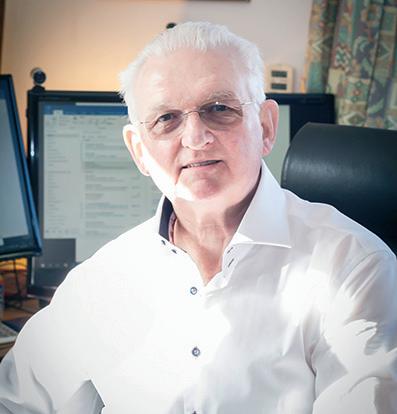
By Chris Makin chartered accountant, accredited civil mediator and accredited expert determiner
[SO MUCH OF MY WORK as an expert involves a business, obviously, since that falls directly into my expertise as a chartered accountant. But so often I come across opposing experts who haven’t taken the trouble to really know the business. And it’s not difficult.
Let me give an example: a farmer, a tower of a man, who was a workaholic; he ran an arable farm of 180 acres, laid his own hedges and cleared his ditches – and made a modest profit.
But he also had a plant hire business: he renovated plant and traded in anything from lawn mowers and tractors up to tower cranes; he converted disused farm property into habitable cottages for rent; he converted disused buildings into science parks for rent; and he was even, at the time of the RTA, renovating the family’s Grade IIlisted mansion.
After the accident he still had all his business ideas and connections, but could no longer do the heavy physical work at the same rate as before – typically 100 hours each week.
My opponent looked at the farm and plant hire accounts, saw a modest profit, and said that this should be the multiplicand for future loss; but this approach ignored all the other work being done by the claimant, particularly the creation of future rental income by conversion of property into science parks.
I recognised that he still had his business ideas and his mobile, and was able to do deals, but physical labour was beyond him. So my approach was obvious: buy him a man and the status quo ante would
[ CHRIS MAKIN was one of the first 30 or so chartered accountants to become an Accredited Forensic Accountant and Expert Witness –see www.icaew.com/about-icaew/find-a-chartered-accountant/find-anaccredited-forensic-expert
He is also an accredited civil and commercial mediator and an accredited expert determiner. Over the last 30 years he has given expert evidence at least 100 times and worked on a vast range of cases. For CV, war stories and much more go to the website at www.chrismakin.co.uk – now with videos! q


be restored. I reckoned that a lump sum from the Ogden tables to produce £18,000 per annum would put him right.
My opponent took the easy route; I took the trouble to understand the business. And the judge agreed with me, to the penny.
Some months later, I was at a conference at a solicitor’s office in St Albans. He specialised in motorcycle accidents – a fertile field – and this poor chap suffered a complete deglove of his leg, which ended his career as a hypobaric deep sea diver. The solicitor, his partner, the client and I waited for the QC to arrive. When he came in, he immediately said: “Hello Chris. How are you?”
I had to say that I regret I didn’t recognise him. He replied that if he put on his judge’s wig, would I recognise him then? He said: “You were the expert in that farming case in Derby. You were impressive.”
What an introduction! The point was that I had taken the trouble to understand the farmer’s business and meet the test in Bradburn v Great Western Railway [1880] 5 App Cas 25 at 39, where Lord Blackburn, using suitable Victorian language, said this:
“I do not think there is any difference of opinion as to its being a general rule that, where any injury is to be compensated by damages, in settling the sum of money to be given for reparation of damages you should as nearly as possible get at that sum of money which will put the party who has been injured, or who has suffered, in the same position as he would have been in if he had not sustained the wrong for which he is now getting his compensation or reparation.
”If you want a potted guide to understanding a business, why not ask me to send to you my chapter which appeared for many years in Kemp & Kemp The Quantum of Damages? It’s free, it’s only 11 pages long and it provides a guide to loss of income by the self-employed and the family company director. And it is of relevance to many kinds of litigation, not just personal injury.
Happy reading! q
[EXPERT EVIDENCE now occupies a central position in the resolution of financial services disputes. Whether the issue concerns the forensic analysis of transactions, compliance with regulatory obligations or the calculation of losses arising from allegedly unsuitable financial products, the courts increasingly depend upon specialist knowledge that falls outside ordinary judicial experience. As financial products and regulatory structures become more sophisticated, so too does the role of the expert witness.
The courts have consistently emphasised that an expert witness is not an advocate. Their role is to provide objective and unbiased assistance on matters requiring specialist expertise. These requirements are especially important in disputes involving financial modelling and valuation evidence. Cases concerning derivatives, investment products, pensions, company valuations or projected future earnings frequently depend upon assumptions relating to market conditions.
Two experienced experts may arrive at markedly different conclusions while using broadly similar methodologies because they apply different assumptions or weigh competing risks differently. In such circumstances, the court is not merely comparing mathematical calculations but assessing the quality and reasonableness of the judgment exercised by each expert.
Accordingly, credibility often turns on the expert’s willingness to explain openly why particular assumptions have been adopted and how alternative assumptions might affect the outcome. Courts are generally more persuaded by balanced and carefully reasoned evidence than by rigid or overly partisan conclusions. An expert who acknowledges uncertainty and addresses weaknesses candidly is often regarded as more reliable than one who appears determined to defend a predetermined position.
The issue becomes even more complex in the context of international arbitration. While many arbitral institutions have introduced procedural rules governing expert evidence, the safeguards found in English litigation are not always replicated consistently across jurisdictions. The phenomenon frequently described as the ‘battle of the experts’ remains a prominent feature of large-scale international financial disputes. Competing experts may produce lengthy reports based upon entirely different valuation frameworks or regulatory interpretations, leaving tribunals to determine which evidence is genuinely independent and methodologically sound.
Academic commentary and judicial observations alike have noted that the increasing reliance upon expert evidence has not always been matched by sufficiently rigorous mechanisms for testing reliability and impartiality. This is particularly significant in financial services disputes, where the technical nature of the evidence can make effective scrutiny difficult without a strong procedural framework. As a result, tribunals and courts tend to place the greatest weight on opinions that are grounded in recognised professional practice, supported by transparent reasoning and capable of withstanding detailed cross-examination.
The instruction of an expert therefore requires careful management from the earliest stages of the dispute. Selecting an expert should involve far more than simply identifying an individual with impressive qualifications or industry experience. The proposed expert must also demonstrate an understanding of their duties to the court and an ability to provide measured, analytical and impartial evidence.
Clear instructions are equally essential. Legal representatives should distinguish carefully between factual assumptions, legal issues and matters falling within the expert’s independent judgment. The scope of the engagement should be defined precisely to avoid the expert straying into areas outside their expertise or beyond the issues genuinely in dispute. Early engagement also allows sufficient time to
identify evidential gaps, refine the issues requiring expert input and ensure that the methodology adopted is appropriate to the case.
While lawyers are entitled to review draft reports for clarity, consistency and procedural compliance, they must avoid influencing the substance of the opinion itself. Judicial criticism frequently arises where there is evidence that an expert’s conclusions have been shaped by those instructing them rather than by independent analysis. Preserving the integrity of the expert’s evidence is therefore both an ethical requirement and a practical necessity.
Procedural developments such as joint expert statements, concurrent evidence and, in some cases, court-appointed experts are increasingly used to narrow disputes and assist decision makers in understanding complex financial issues. These mechanisms can be particularly valuable where the disagreement lies not in overarching methodology but in the factual assumptions used within competing models. By isolating the true points of disagreement, the court is better positioned to assess the evidence efficiently and fairly.
Ultimately, expert evidence in financial disputes derives its value from independence, transparency and intellectual rigour. As financial disputes continue to grow in complexity, courts and tribunals will expect ever higher standards from those presenting specialist evidence.
Legal practitioners who instruct and manage experts effectively therefore play an important role not only in advancing their client’s case, but in maintaining confidence in the integrity of the expert witness process itself. q

[THE COLLAPSE of luxury jewellery retailer Vashi has emerged as one of the most striking alleged investment scandals in recent years, leaving creditors facing losses estimated at around £170m and prompting serious questions about corporate oversight, investor due diligence and the response of law enforcement authorities.
Founded by entrepreneur Vashi Dominguez, the company built its reputation on the promise of making high-end diamond jewellery more accessible through a modern retail experience. Customers visiting Vashi stores in London, Birmingham and Manchester were encouraged to participate in the design process and observe jewellery being crafted on site. The brand cultivated an image of exclusivity and innovation, attracting wealthy investors along with widespread media attention.
For a period, the business appeared to thrive. In 2021, Vashi opened a lavish flagship store in Covent Garden. Investors were presented with ambitious growth projections and accounts suggesting annual revenues exceeding £100m. Among those persuaded to back the venture were experienced entrepreneurs and senior business executives, many of whom believed they were investing in a rapidly expanding luxury retail brand with substantial assets.
However, former employees and investigators now allege that much of the apparent success was carefully staged. According to accounts given by former staff members in a BBC Panorama investigation, employees were instructed to pose as customers whenever potential investors were expected to visit stores. Staff who lacked jewellery-making experience were allegedly told to sit at workbenches pretending to craft pieces in order to create the impression of a busy and thriving operation.
Former employees have also alleged that customers were misled regarding the quality and certification of diamonds being supplied. Industry-standard diamonds are typically accompanied by grading reports issued by organisations such as the Gemological Institute of America, commonly known as GIA certificates. Staff claimed that lower-grade or smaller stones were at times substituted for those purchased by customers, with identifying inscriptions allegedly removed from the diamonds.
The most serious allegations, however, concern the company’s financial reporting. Documents reviewed by investigators reportedly showed a substantial discrepancy between the turnover figures presented to investors and the company’s actual sales performance. While accounts filed at Companies House suggested revenues in excess of £100m during 2021, internal records allegedly indicated genuine sales closer to £5m.
The collapse came in April 2023, when the company entered insolvency proceedings. Investors initially believed that significant diamond stock holdings would provide some protection against losses. Valuations circulated shortly before the collapse suggested that the company possessed diamond assets worth approximately £157 million.
Yet when independent specialists were instructed to examine the inventory, the findings were dramatically different. According to those involved in the liquidation process, the actual value of the remaining diamonds was only a fraction of the amount previously represented, reportedly closer to £100,000 than the hundreds of millions investors had expected.
The liquidator overseeing the administration of the failed business has stated that creditors are owed approximately £170m, with more than £100m believed to be owed directly to investors. Efforts to recover funds have been complicated by the disappearance of Mr Dominguez, who is understood to have left the UK around the time the company was wound up.
Despite the scale of the alleged losses, neither the Metropolitan Police nor the Serious Fraud Office has launched a formal criminal investigation at this stage. The Serious Fraud Office has reportedly
stated that it only takes on a limited number of major economic crime cases each year, while the Metropolitan Police indicated that it had not received the necessary referrals to begin a full investigation.
That position has caused considerable frustration among investors, many of whom question how such substantial alleged fraud could occur without attracting a coordinated criminal inquiry. Attention has also focused on the role of professional advisers connected to the business. The company’s accounts had been signed off by an external accountant, who later stated publicly that he had not been aware the figures supplied to him were inaccurate and would not have approved the accounts had he known otherwise. Questions regarding auditor responsibilities, verification procedures and corporate governance are therefore likely to remain central to any future legal proceedings.
The collapse of Vashi serves as a stark reminder of how image, reputation and apparent commercial success can influence investor confidence, even among experienced business figures. The combination of luxury branding, ambitious expansion plans and carefully cultivated prestige appears to have masked deep financial problems for a prolonged period.
Whether the affair was the result of a business that spiralled beyond control or a deliberately orchestrated deception from the outset may ultimately be determined only through future litigation or regulatory action. What is already clear, however, is that tens of millions of pounds have disappeared, investors have suffered devastating losses and one of Britain’s most high-profile jewellery entrepreneurs remains beyond the reach of those seeking answers. q


[SMALL BUSINESSES will no longer be left chasing money they are already owed, as landmark legislation was introduced in May to end the scourge of late payments and back millions of sole traders, freelancers and family firms across the country.
The Small Business Protections Bill (formally known as the Commercial Payments Bill) delivers the toughest crackdown on late payments in a generation – putting a clear duty on large firms to pay smaller suppliers on time and giving small businesses the certainty they need to keep investing, supporting jobs and growing their communities.
Late payments close 38 businesses every single day. That’s the equivalent of 266 a week, and well over a thousand in any given month. For business owners, the impact is immediate and personal –forcing them to spend hours chasing invoices instead of running their businesses and putting jobs and livelihoods at risk.
The Bill fundamentally changes how businesses pay each other, putting an end to excessive delays and unfair practices that hit small firms hardest, through sweeping new reforms.
Prime Minister Keir Starmer said: "Small businesses are the backbone of our economy – run by people who take risks, create jobs and keep communities going. This government is firmly on their side.
“Too many small business owners are spending hours chasing money they are owed and when payments don’t come through, the cost is personal. It’s about whether you can pay your staff, keep the lights on, or invest in your future.
“Today we’re changing that with the toughest action on late payments
[FORMER Chief Executive Officer of collapsed investment firm
London Capital & Finance Plc (LCF) Michael Thomson, and his wife Debbie Thomson, have been sentenced following action by the Serious Fraud Office (SFO) for selling restrained luxury items such as horse saddles and a hot tub.
Michael Thomson received a six-month prison sentence. Thomson’s wife Debbie, who also admitted to breaches, was sentenced to six months, suspended for a period of two years. In his remarks, the judge called the breaches an attack on the administration of justice.
Michael Thomson admitted to recklessly breaching an SFO restraint order twice and Debbie four times by receiving a £2,000 holiday refund and selling items – including a hot tub and horse saddles – with a combined value of nearly £5,800.
Mr Thomson was already serving a suspended sentence at the time of the offending for a previous breach, having transferred £95,000 to his wife to conceal funds from investigators.
Mr Thomson’s assets are subject to restraint proceedings imposed to protect assets as part of an ongoing SFO investigation into suspected fraud and money laundering at LCF.
To date, SFO investigators have revealed that the Thomsons’ actions have resulted in the dissipation of over £100,000 in assets. The SFO has an ongoing investigation into the activities of LCF that led to 11,000 investors losing over £237m between 2014 and 2019.
Paul Napper, Head of the Proceeds of Crime and International Assistance Division at the SFO, said: “Today’s outcome sends a clear message that attempting to frustrate an SFO investigation carries serious consequences. We continue to advance our inquiry into LCF on behalf of the thousands of investors who lost everything through its abrupt collapse.” q
in a generation, so small businesses get paid on time and get the backing they need to grow, create jobs and serve their communities.”
Reforms include a clear 60-day cap on payment terms on all large firms paying smaller suppliers, mandatory interest on late payments, set at 8% above the Bank of England base rate, and a ban on the practice of withholding retention payments under construction contracts.
On top of this, the Small Business Commissioner is getting major new powers to investigate poor payment practices, adjudicate disputes and fine the worst offenders – with potential fines that could be worth tens of millions for persistently late payers.
The Office of the Small Business Commissioner has already recovered more money for small firms in the last year than in the previous four years combined.
Business Secretary Peter Kyle said: “Costing the UK economy £11bn every single year, late payments choke growth, cost jobs and force too many good businesses to close. That ends today.”
The Bill builds upon and strengthens legislation first laid out in the 1998 Late Payment of Commercial Debt Act, over 25 years ago, to give the UK the strongest legal framework on late payments in the G7.
After working closely with the Federation of Small Businesses (FSB), the Bill will also ensure boards or audit committees of persistently late-paying large companies publish clear explanations of poor payment performance and the steps they are taking to improve it.
FSB Policy Chair Tina McKenzie said: “Tackling late payment is one of the biggest things the government can do to help small businesses grow. Giving audit committees a clear role in payment practices is a vital step in changing late payment culture.” q

By Ryan Shields,
[ LEGAL DISPUTES turn on digital evidence. Documents, emails, messages, photographs, audio, video and system data are routinely relied upon to establish what happened and when. In many cases, they are more contemporaneous and persuasive than witness recollection.
Yet reliability can no longer be assumed from appearance alone. A document may look final and authoritative but represent only one version of a wider drafting history. A message thread may appear complete but omit surrounding context, deleted content or other participants. Visual or audio evidence may seem compelling but has been altered, selectively edited or generated.
The issue is not that digital evidence is inherently unreliable. Rather, its reliability depends on what can be established about its origin, integrity and completeness. For lawyers, experts and decision makers, the question is not simply what the evidence appears to show, but how much weight can be placed on it.
The changing reliability of digital evidence
Documents and communications have long been central to disputes. They establish timelines, record decisions and provide insight into intent. However, both are susceptible to manipulation or selective presentation that may not be immediately visible.
In litigation, parties may receive material as screenshots, PDFs, exports or standalone documents. These formats can be useful, but they are often several steps removed from the underlying source. A screenshot of a message exchange may reflect what appeared on a device at one point in time, but it may not show whether the conversation is complete, whether messages were deleted or whether the image has been altered.
The same applies to documents. Without metadata, version history or surrounding records, it may be difficult to establish when a file was created, who edited it, whether earlier drafts existed or whether it has

S-RM
been selectively disclosed. Media evidence carries similar risks. The accessibility of manipulated and synthetic media means photographs, audio and video should be approached with caution where they are central to a contested issue.
From accepting evidence to testing it

Digital evidence should be tested rather than accepted at face value. This does not mean treating every item as suspicious. It means applying a structured approach to assess how reliable it is likely to be.
First, consider provenance. How was the material obtained? Evidence collected directly from source systems or devices by forensic experts will generally carry more weight than material provided informally or selectively by a party.
Second, assess integrity. Are there indications that the material may have been altered? This may include inconsistencies in metadata, formatting, timestamps, file properties or content. Not every inconsistency proves manipulation, but unexplained anomalies should be understood before conclusions are drawn.
Third, evaluate completeness. What is missing? In communications, this may include surrounding messages, participants, attachments or deleted content. In documents, it may include drafts, version history or supporting materials. Gaps are not always problematic, but they should be factored into the evidential assessment.
Not every dispute requires detailed forensic examination. Proportionality remains important. However, early expert input can be valuable where digital evidence is central to the case, where there are inconsistencies between sources, where material has only been provided in screenshot or extracted form, or where there are concerns about alteration, deletion or selective disclosure.
Early involvement can also help preserve evidence before it is lost. Devices may continue to be used, system logs overwritten, cloud data deleted and accounts may become inaccessible. Once that happens, later analysis may be limited or inconclusive.
The distinction between ‘authentic’ and ‘inauthentic’ is often too rigid for digital evidence. A more useful approach is to express findings in terms of confidence, supported by clear reasoning.
A complete message exchange extracted from a source device will usually carry more weight than screenshots provided by one party. Both may point in the same direction, but the evidential strength is different. Courts and tribunals need to understand not only what the evidence suggests, but how robust that assessment is.
Digital evidence remains central to modern disputes. But its value depends on careful handling. In a digital environment where evidence can be fragmented, curated or manipulated, reliability must be demonstrated, not assumed. q

By Neil Lofting BSc(Hons) MRICS MCABE MEWI Chartered
Building Surveyor, director at West One Surveyors and specialist in damp and mould issues.
[ ANY SURVEYOR or housing professional accepting expert instructions on disrepair will be very familiar with the number of alleged damp and mould claims. While writing this article, I went back through my last 50 instructions and 47 referenced damp and mould to one degree or another –that’s a colossal 94%.
So how does mould occur in a residential property? Mould can occur over a wide temperature range of 0ºC to 35ºC, but generally requires a relative humidity (RH) in excess of 60% to occur. Relative humidity is a bit of red herring and is not a particularly accurate measurement of moisture content of the air. The reason being, is that the warmer air gets, the more moisture it can hold. So air at 20ºC can hold a lot more moisture than air at 5ºC.
The relative reading is a percentage of the potential maximum amount of moisture that air can hold. So while a reading of 85% RH at 10ºC sounds high, the air could well be drier than a 60% RH at 25ºC – but many will only focus on the 85% figure.

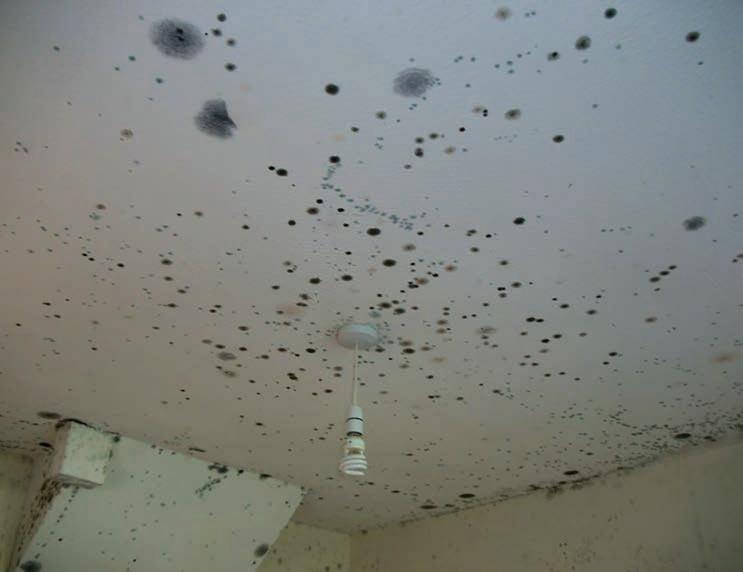
Reducing moisture vapour in air will significantly reduce the potential amount of condensation that can occur and with it, the potential for mould growth.
Sources of moisture include breathing, bathing, cooking, drying clothes and general living. The landlord will have little control over the moisture produced in a property, but owns and manages a building that should be able to control the day-to-day moisture produced.
The provision of a well-maintained building, trickle vents to windows, good mechanical extraction and adequate levels of heating will go a long way to enabling suitable management of moisture vapour. Unfortunately, this also relies on regular use by the tenant. Far too often I see trickle vents closed, fan light windows closed, mechanical extraction turned off at the isolator and heating turned off. All catalysts to raise the dew point and potentially cause condensation.
So while the landlord has an obligation to provide a building capable of managing day-to-day moisture produced by a tenant, it is the tenant’s obligation to appropriately use the facilities provided. For years this has been a blame game – landlords blaming tenants and vice versa – and so the pendulum swings.
Awaab’s Law has brought this to the front of everyone’s attention, largely because the pendulum has now swung significantly back to the landlord, placing time restricted obligations on landlords to investigate and remedy claims of damp and mould.
So what impact does this have on the expert surveyor?
Understanding building construction, psychrometrics, damp and mould is a critical element of disrepair surveys.
Mould of varying extremities may be encountered on an inspection, but scheduling a mould wash is not, in my opinion, an acceptable remedy on its own without understanding how the mould has occurred in the first instance.
There are a number of points the expert should be taking into account, including the building’s structure and how it has been built – solid wall, cavity or cavity fill – and whether it is potentially defective. Thermal imaging can be invaluable in helping locate hidden defects such as gaps in cavity wall insulation or roof insulation, thermal bridges and the like. Only after a thorough assessment of the as-built construction and condition of the property can defects be understood and assessed.
Other than the construction, the expert surveyor should consider what the dew point is, how far above the dew point various surface temperatures are and, as such, how much of a risk condensation is. How much moisture is in the air and how efficient the extractor fans are will help diagnose the cause of the condensation and mould. The psychrometric readings will, of course, vary day to day and throughout the year, but will nonetheless give the expert an indication if there are inherent issues in the property.
Understanding the environment inside and outside the building is invaluable in determining the cause and likely severity of condensation and mould issues. The surveyor should be recording psychrometric readings. These readings then need to be collectively considered. For example, if the surface temperature is below the dew point, then condensation will occur. But if the air is dry, there is not a lot of moisture to actually condensate, so it may not be so much of an issue. q


[ THE RECENT Technology and Construction Court decision in Carrington v American International Group UK Ltd provides significant guidance on the scope of an architect’s duty to review design information during the progress of construction works. Although often overlooked in practice, the judgment demonstrates that this obligation can become central when projects encounter delays, technical uncertainty or contractor disputes.
The case arose from a residential refurbishment project in Devon that experienced serious difficulties during construction. The claimant alleged that the architect, appointed under a full RIBA stages A–L appointment, had prepared planning and tender information but failed to provide sufficient construction-level detail for the contractor to complete the works properly. As problems mounted, the contractor eventually left the site, citing inadequate technical information among the reasons for doing so.
A key issue before the court was whether the architect owed a continuing duty to review the adequacy of the design information as the project progressed. The defendant sought summary judgment and strike-out on the basis that no such duty could arise because detailed construction drawings had never been produced. The argument advanced was that if there was no completed design to revisit, there could be nothing capable of being reviewed. The court rejected that approach.
His Honour Judge Stephen Davies held that where an architect is retained not only to design but also to supervise or inspect works, it is reasonably arguable that a duty to review arises whenever circumstances indicate that the available information may be insufficient for construction purposes. Crucially, this duty can exist even where no detailed construction drawings have been prepared at all.
In an important passage at paragraph 79 of the judgment, the Judge stated: “In my judgment there is no obvious distinction in principle between someone who is contracted to design but does not in fact do so, and someone who is contracted to design and does so, whether competently or negligently.”
The court explained that if circumstances arise making it necessary or prudent to consider whether adequate design information exists, the architect may be required to address that issue regardless of whether they had previously produced detailed drawings.
This represents a practical and commercially realistic approach. Construction projects are rarely static, and difficulties often emerge progressively as works proceed. Delays, contractor queries, uncertainty regarding technical details or an inability to continue construction safely may all indicate that the existing information requires reassessment.

The judgment also addressed causation. The defendant argued that even if there had been a breach of duty, the claimant could not establish loss because the contractor would allegedly have failed to complete the project in any event.
Again, the court adopted a broader analysis. The proper question, it held, was not simply whether the contractor would have completed the works, but whether the contractor should have been capable of doing so had adequate information been provided following a proper review.
That distinction is significant in professional negligence claims. It prevents consultants from avoiding potential liability simply because other parties involved in the project may also have acted inadequately. If a competent review would have resulted in sufficient information being issued, and if a competent contractor should then have been able to proceed, causation remains an arguable issue for trial.
The decision reinforces the principle that an architect’s supervisory obligations are active rather than passive. Professionals involved in inspection and contract administration must remain alert to developing site conditions and cannot necessarily rely upon the absence of completed design work as a defence.
More broadly, the judgment reflects the courts’ willingness to examine construction projects in a practical context rather than through narrow technical arguments. The duty to review is therefore not merely an administrative exercise but an important safeguard intended to ensure that projects can proceed safely, efficiently and with adequate design support as circumstances evolve. q




[A CONSTRUCTION COMPANY has been fined after a man drowned when he fell into an exposed excavation hole described as a ‘death trap’ at a building site in Hertfordshire.
Mykhalio Hustei had been working for Alchemist DB Limited as a labourer on a project building several flats on the High Street in Bovington. The 35-year-old had been living in a property adjoining the site when he attempted to make his way home from a night out on 22 October 2021. However, as he tried to access his own home he fell into one of the exposed excavation holes that was filled with rainwater. His body wasn’t found until around 2pm the following day.

An investigation by the Health and Safety Executive (HSE) found that Alchemist DB Limited had been acting as a contractor to build the flats as part of a family-run property development business. New excavation foundations had been dug for the building footings. However, they were criss-crossing the construction site without any designated safe walkways.
The investigation also found the company had failed to take
[THE Royal Institution of Chartered Surveyors (RICS) has responded to the UK Government’s call for evidence on the future regulation of professions, including proposals that could shape the future oversight of the built environment and construction sector.
The call follows the Government’s announcement in December last year of its goals for reform, including proposals for the creation of a Single Construction Regulator. These include ensuring that buildings and built environments are safe, high-performing, healthy, accessible, secure and sustainable for occupants.
The Government’s objectives aim to enable companies and individuals to thrive while operating in the interests of current and future building users; ensuring building products are fit for purpose and supported by accurate information; and building trust in a system that prioritises the safety and needs of occupants.
RICS CEO Justin Young, said: “RICS supports the Government’s ambition to develop a coherent, future-fit system for the built environment that focuses not only on regulation, but on the skills, behaviours and professional judgement of those working across the full building lifecycle.
“This call for evidence rightly recognises that improving outcomes depends on understanding how people and organisations operate in practice, including the barriers, interdependencies and incentives that shape decision-making. Any effective reform must therefore be grounded in the collective expertise of industry, professional bodies, clients and regulators. q

appropriate precautions to ensure the safety of those moving around and working at the site. At best, large boards and planks were used as bridges over excavations. The boards and planks were slippery and bowed when walked across. The site was also open to the weather, making it highly likely it would be slippery after rain, increasing the risk to those at site. There was also no dedicated lighting to the site and the boards and planks didn’t have handrails and weren’t secured.
The company only made the site safe after HSE inspectors visited the site following Mr Hustei’s death and took enforcement action. This included them installing dedicated walkways bridging over exposed excavations using scaffolding framework to prevent falls.
HSE guidance clearly states that no work should take place until all excavations are made safe. This includes protecting the edges of excavations with substantial barriers where people are liable to fall into them.
Alchemist DB Limited were sentenced in absence for breaching Regulation 22(2) of the Construction (Design and Management) Regulations 2015. The company was fined £20,000 and ordered to pay £5,000 costs at a hearing in Luton Magistrates Court on 29 May 2026. Since the incident, the company is now in liquidation.
HSE inspector Rauf Ahmed said: “As always, our thoughts remain with the family of Mr Hustei, a young man who was just setting out on his career in construction. He had been simply returning to his flat after socialising with friends.
“However, the site was quite literally a death trap. The measures put in place by the company after his tragic death are a crude reminder about what could and should have been done in the first place. We will always take action against those who fail to protect people from risk.” q

[FEW AREAS of expert witness work have developed as rapidly in recent years as fire safety litigation. What was once often viewed as a largely regulatory or compliance-based discipline has now become a major source of complex disputes, enforcement proceedings and technical investigations involving a wide range of professionals across the construction and property sectors.
Following several high-profile fire safety failures, scrutiny of building safety standards has intensified significantly. Courts are increasingly being asked to examine whether fire protection measures were appropriate, whether risks were properly identified and managed, and whether failures in design, inspection or maintenance materially increased the likelihood or consequences of fire.
In this environment, fire safety expert witnesses play a critical role in helping the courts interpret highly technical information that can rarely be understood without specialist knowledge and practical experience.
A substantial part of the expert’s work centres upon the detailed analysis of fire risk assessments. These documents are often the starting point in determining whether foreseeable hazards were properly identified and whether suitable control measures were implemented. Experts may examine whether assessments were sufficiently thorough, whether recommendations were acted upon and whether the responsible parties complied with prevailing guidance and statutory obligations.
Inspection records and compliance documentation also form a key part of many investigations. Fire door inspections, alarm testing records, emergency lighting maintenance logs, compartmentation surveys and evacuation procedures may all become central to determining whether a building was being managed safely. Even relatively minor omissions in record keeping can become highly significant when viewed in the context of a later incident.
Building design information frequently requires equally detailed scrutiny. Experts are regularly instructed to examine architectural drawings, fire strategies, material specifications and construction methods to assess whether buildings complied with applicable fire safety standards at the time of construction or refurbishment. In many disputes, the interaction between design decisions and fire spread becomes one of the central issues in the litigation.
Post-incident analysis presents another highly specialised area of expert evidence. Following a fire, experts may be required to assess fire development, smoke spread, compartmentation failure and the performance of passive and active fire protection systems. Their conclusions can prove vital in determining whether alleged defects or failures genuinely increased risk or contributed materially to loss.
The continuing volume of cladding and remediation disputes has further expanded the role of fire safety experts. Litigation concerning external wall systems, combustible materials and remediation responsibilities remains widespread. Experts are frequently called upon to assess compliance with historical guidance as well as current safety expectations.
At the same time, enforcement action by regulators has become more prominent. Prosecutions and enforcement notices relating to fire safety breaches increasingly rely upon expert interpretation of technical standards, risk management practices and industry guidance.
For solicitors handling these matters, the ability of an expert witness to present clear, balanced and technically robust evidence is essential. Fire safety litigation rarely turns on a single issue alone. Instead, cases often involve a combination of design, management, maintenance and compliance failures that require careful analysis and objective explanation before the courts. q

Brad Crisp, Commercial & Specification Manager at Sertus, the UK’s leading smoke ventilation manufacturer, explores how property developers and contractors can mitigate hidden fire safety costs, by addressing concerns during the early planning stages.
[MANY STRATEGIC DESIGN DECISIONS will have an impact on fire safety, including building height, layout, façade systems and structural materials. These are early-stage decisions and will shape many other decisions as the project progresses. But if key design decisions are taken without considering fire safety and escape strategy, fundamental changes may need to be made once that safety lens is applied at a later point.
This can impact every other aspect of the process. For example, if fire compartmentation has not been properly considered, or allowances for the smoke ventilation is not included, key aspects of layout may have to be entirely re-worked.
When it comes to insurances, as well as in the cases where a project requires financing, early-stage fire safety planning can help to reassure lenders and insurers that all precautionary and regulatory measures are in place. This is particularly pertinent for residential and high-rise schemes.
Construction stage fire risk should also not be ignored, as partially completed buildings can be vulnerable due to temporary electrics and exposed materials. A comprehensive safety strategy could protect developments before completion, as well as after.
The worst offenders for spiralling costs are, of course, late-stage design changes. And the later this happens in the process, the higher those costs usually end up being – up to, and including, having to disassemble completed work and start again.
When layouts, stair cores, façade materials and services routes don’t meet safety regulations, the knock-on effects to design are wide-reaching. And, of course, every single change that is required will come with a price tag. For example, you might need to completely rip out walls that are already installed if they are non-compliant for the services penetrating them.
The cost is not only of having to re-commission work that has already been paid for and rebuild to meet regulations, but it also comes in the guise of significant programme delays. These can also be costly, while also causing secondary consequences for the project supply chain, leading the delayed completion.
Where including fire safety early can enable architects and designers to be creative with solutions that work within regulations, late-stage safety additions can often interfere with planned design features. Having to add fire stopping, compartmentation or smoke control systems can add cost, while also diminishing design impact in some cases.
According to GOV.UK, costs for fire safety remediation work can scale extremely quickly with the following figures quoted as a rough estimate:
• Minor fire strategy and design tweaks: £10,000-£30,000
• Moderate redesigns, including system or layout changes: £30,000£150,000
• Late construction rework: £100,000-£500,000 plus Common fire safety problem areas that cause costs to increase include:
• Compartmentation and fire stopping: when these areas are ignored, there is clear risk to life from rapid smoke and fire spread. It might be that these are considered thoroughly at one stage of the project, but then ignored at another, for example when pipework, ducts or cabling compromises fire-rated walls and floors.
• Façade and external wall compliance: this can be an incredibly costly aspect to resolve or change if fire safety has not been central to decision making about cladding, insulation and cavity barriers. This is not only in the specification phase, but also in the installation phase, where missing cavity barriers or incorrect installation can require significant work to remedy.
• Alarm, detection, smoke control, and suppression systems: when considered early, it is possible to ensure that these are integrated into building services. It is vital that these life safety systems are designed for and installed in the building with long-term safety as a focus, which includes access for regular testing and maintenance.
With ever-increasing scrutiny on meeting safety standards, modern building safety protocols require detailed design evidence before construction can proceed, as well as demonstration of compliance at multiple stages along the way. When design records are vague, or when there are sign-off challenges at any of these gateway approval points, resolving and retrofitting safety measures can cause unwelcome delays.
The surefire way to get around these issues is including fire safety planning from the earliest stages, and maintaining the focus on them throughout the build. This smooths the path to regulatory sign-off and safe buildings.
Where projects fail to meet safety regulations at a late stage, incurring costs and causing delays to completion, the parties involved will be aware of potential damage to reputation. With building regulations so fundamental to the process, making sure that fire safety measures are fully integrated, rather than only addressed as an after-thought, is important to demonstrating professionalism and reliability. Beyond reputational risk

alone, developers can find themselves liable for safety shortcomings. By engaging expert fire safety advice early in the design process, including a comprehensive fire strategy for the building, all aspects of the development can comply with regulations, ensure safety and pass inspections to keep the project on track.
Fire engineers can support with the shaping of building layouts, evacuation strategies, smoke control and fire resistance from the outset of the project. Ongoing collaboration with architects and engineers can help identify risks and remedy issues before costly construction begins.
Once the build is underway, regular monitoring in advance of gateway site inspections can make sure that regulations are complied with, and no remedial actions are required post inspection. Once complete, fire engineers can verify that the life safety systems in use are installed correctly, and perform as they need to before occupancy. q


[A BBC INVESTIGATION has uncovered evidence suggesting that people smugglers are using a network of UK-registered businesses to receive payments for illegal Channel crossings.
Over a three-month undercover operation, BBC researchers documented multiple methods allegedly used by smugglers to collect fees for crossings, including cash deposits in UK shops and bank transfers routed through companies listed on the UK’s official register at Companies House.
In one instance, undercover filming at a mobile phone shop in Woolwich, south-east London, showed staff indicating that nearly £3,000 in cash could be handed over and forwarded to smugglers operating in France.
The shop owner later denied any involvement in money transfers for smuggling networks when approached again by investigators, stating: “We don’t move money… we have only phone shop.” The BBC did not hand over any cash during the investigation.
The inquiry also traced links to a smuggler operating from northern France who gave undercover researchers bank details for two UK-registered businesses – one a wholesale company in Newcastleupon-Tyne and the other a car wash in Cambridgeshire – which he claimed could receive payments for Channel crossings. The BBC verified that the bank details provided matched those businesses.
The smuggler, who identified himself as ‘Ahmad’ and said he was from Afghanistan, also provided details of additional payment routes, including cash-based transfers through businesses in Europe such as a car wash in Antwerp and a restaurant in Paris, as well as individual bank accounts across the UK and mainland Europe.
During separate undercover contact in a migrant camp in Dunkirk – known locally as ‘the jungle’ – researchers also spoke to another smuggler named ‘Zia’, who described how payments could be made through money exchange shops in the UK. He said he would be notified once funds had been received and released after a successful crossing. Zia referred to the crossing as ‘the game’, a term commonly used by smugglers and migrants attempting the journey across the Channel in small boats.
The BBC investigation also found that some UK businesses named in the smuggling conversations are officially registered with Companies House, although it remains unclear whether the companies or their owners were knowingly involved in any criminal activity. One Newcastle-based wholesale business said it ‘strongly rejects’ any suggestion that we have knowingly or negligently enabled criminal activity’ and pledged to cooperate with authorities. The Cambridgeshire car wash did not respond to requests for comment.
Experts say the findings suggest a worrying level of openness in how smuggling networks are operating. Tom Keatinge of the Royal United Services Institute said the evidence pointed to a ‘brazen attitude’ among smugglers. “It is a concern that... people feel sufficiently confident they can be out in the open,” he said, adding that such methods had not previously been widely observed in this form. He also suggested smugglers may believe enforcement efforts are not disrupting their financial systems effectively.
The UK government has made tackling smuggling networks a policy priority, with ministers repeatedly stating that the goal is to ‘smash the gangs’ by targeting their financial structures. In January 2025, Prime Minister Sir Keir Starmer said: “If you're going to smash a gang that is driven by money, follow the money.”
Despite this, the BBC’s investigation highlights ongoing challenges in tracing and recovering profits from organised smuggling operations. Court data obtained from the Crown Prosecution Service (CPS) shows that since 2020, authorities have identified more than £16m in criminal benefit from convicted people smugglers, but only £2.9m has been

subject to confiscation orders, with around £1.6m actually recovered. This represents roughly 10% of the estimated criminal proceeds identified in those cases.
The CPS said it seeks to deprive criminals of their earnings ‘wherever possible’ but noted that confiscation is limited to assets that are available at the time of proceedings.
In one recent case, two smugglers jailed in Cardiff were found to have moved most of their profits overseas, with little recoverable in the UK. The National Crime Agency (NCA) said funds were largely transferred out of the country, limiting enforcement action.
Authorities say they are stepping up efforts to target financial networks. The NCA currently has around 100 active investigations into higher-level smuggling gangs and individuals. Deputy director Dan Cannatella-Barcroft said: “We are in no doubt that we are making the UK a more difficult place for them to target and operate in.” q




[OFFSHORE OIL AND GAS operations are built around precision, planning and strict safety control. Every task, from drilling and lifting operations to diving support and subsea intervention, is governed by layers of regulation and technical procedure.
Yet when a serious incident occurs, the consequences can be catastrophic, both financially and in terms of human safety. It is in such circumstances that offshore expert witnesses become central to the legal process.
Courts dealing with offshore disputes are frequently presented with vast quantities of technical information. Engineering reports, maintenance histories, inspection records, permit-to-work documentation and incident investigation findings can quickly become overwhelming without specialist interpretation. Offshore experts are therefore instructed not simply to give opinion evidence, but to explain complex operational realities in clear and practical terms.
Many disputes stem from platform and rig incidents where there are allegations of safety failures, inadequate maintenance, defective systems or breaches of offshore regulations. In other cases, experts may be asked to examine marine operations, subsea construction activity, lifting procedures, pipeline works or equipment failure involving specialist machinery.
What makes offshore litigation particularly challenging is the number of parties often involved. Operators, contractors, subcontractors, vessel owners and equipment suppliers may all have overlapping responsibilities. Establishing where the duty of care lay, whether procedures were followed correctly and whether an incident could reasonably have been prevented often requires detailed technical reconstruction supported by industry experience.
Expert witnesses in this sector commonly review operating procedures alongside what actually occurred offshore in practice. A permit-to-work system may appear compliant on paper, for example, but fail operationally because of communication breakdowns, inadequate supervision or failures in risk assessment. Experts are often required to bridge the gap between documented procedure and real-world operations.
The growing age of offshore infrastructure has also contributed to increased litigation. Many installations operating today were designed decades ago and now face issues involving corrosion and deferred maintenance. Decommissioning projects have added further complexity, generating disputes relating to engineering standards, inspection obligations and contractor performance.
At the same time, regulators continue to apply closer scrutiny to offshore operations following major incidents worldwide. Compliance with Health and Safety Executive guidance, international offshore standards and industry best practice is now examined in considerable detail during litigation. Expert witnesses are frequently asked whether operational decisions reflected accepted offshore practice or departed from recognised safety standards. Claims involving historic exposure remain another significant area of work. Offshore personnel exposed to asbestos, hydrocarbons, chemicals or other hazardous substances may bring actions many years after employment ended. These cases often rely heavily upon expert analysis of historic working environments and safety arrangements.
In many respects, offshore disputes sit at the intersection of engineering, safety management and human decisionmaking. Expert witnesses are tasked with untangling these issues objectively and presenting conclusions the courts can properly understand. As offshore operations continue to evolve, and as ageing assets and regulatory pressures increase, the importance of experienced offshore experts within litigation is only likely to grow further. q
[THE OIL AND GAS SECTOR is one of the most frequent users of international arbitration, with disputes often involving governments, multinational energy companies, contractors and investors. Given the high value of projects and long-term contractual commitments involved, arbitration has become the preferred method for resolving complex energy disputes.
International arbitration provides parties with a neutral forum outside domestic courts, which can be particularly important when disputes arise between foreign investors and host states. Organisations such as the International Chamber of Commerce, the London Court of International Arbitration and the International Centre for Settlement of Investment Disputes regularly hear oil and gas cases involving billions of pounds in claimed losses.
Common disputes include production-sharing agreements, exploration rights, pipeline construction contracts, licensing arrangements, expropriation claims and the impact of sanctions or regulatory changes.
In recent years, a growing number of disputes have concerned renewable energy investments, carbon reduction commitments and changes to government energy policies.
One of the most significant advantages of arbitration is that awards can often be enforced internationally under the New York Convention, which is recognised by more than 170 countries.
This provides a degree of certainty that is particularly valuable in international energy projects where assets may be spread across multiple jurisdictions.
Expert evidence frequently plays a central role in these proceedings. Arbitrators often rely on geologists, accountants and energy market experts to assess valuation disputes, lost profits and operational performance. The complexity of modern oil and gas projects means that expert testimony can be decisive in determining liability and quantifying damages.
As geopolitical tensions and energy security concerns continue to shape the sector, international arbitration remains a critical mechanism for resolving disputes and protecting commercial interests within the global oil and gas industry. For energy companies operating across borders, understanding the arbitration process is increasingly essential to managing both risk and opportunity. q
[
BALTIC EXCHANGE once again kicked off the festivities at Posidonia as it welcomed more than 160 attendees of the global shipping industry to its latest Risk Forum, which this year focused on key sanction and geopolitical challenges impacting the industry, both today and in the future.
Coming together at The Margi Hotel in Vougliameni on a warm Monday afternoon in Athens, owners, charterers, brokers and other key industry professionals joined for a much needed coffee and pastry to start the day before Mark Jackson, CEO of Baltic Exchange, welcomed everyone to the flagship forum.
Stephen Aitchson, Senior Freight Market Assessor, then showcased some of the recent developments to the Baltic's routes and assessments, including the launch and cessation of notable global routes, as well as the forecast for future changes to the Panamax, Supramax and Handysize sectors.
In the first panel discussion of the day, Jos Standerwick, Head of Membership at Baltic Exchange, welcomed Tim Wilkins, Managing Director of INTERTANKO, and Siiri Duddington, Head of Sanctions at Hill Dickinson for a expert discussion on the current sanctions landscape, including the evolving regulatory landscape for Russian oil cargos.
Simon Ward, Director of Ship Sales & Purchase at URSA Shipbrokers, then hosted the second panel discussion on the
evolving geopolitical challenges and headwinds facing today's shipping and trade market. In a lively and enthusiastic discussion, Simon was joined by Eva Tzima, Head of Research & Valuations at Cass Technava; George Mangos, Co-Founder and Director of SOKANA; Alex Haubert, Director at Hong Glory Bulk; and Athanasios Platias, Professor of Strategy at the University of Piraeus.
This panel, in particular, drew a large amount of audience inputs as many continue to be impacting by geopolitics and trade disputes around the world on a daily basis.
In the final session, Nadia Mirza, Head of Business Development at Baltic Exchange, held an extensive panel discussion on the evolving strategies facing the FFA market across dry, tanker and container shipping, as well as how to use FFAs to help navigate global volatility. She was joined by Vassilis Karakoulakis, Executive Director at Propel Shipping; Kyriakos Attikouris, Chief Risk Officer at CQuake Shipping Fund; Pheobus Kaloudis, Head of Business Development at SSY Futures; Demetris Polemis, Co-Founder of Paralos Fund; and Emily Driver, Head of Dry FFA at Clarksons.
Following an excellent and engaging forum, Baltic Exchange hosted all its guests for a well-deserved lunch break underneath the warmth of the Greek sun, with many attendees having the chance to network and enjoy the opportunity to continue their discussion. q
[WHEN VESSELS COLLIDE at sea, establishing fault is rarely straightforward. Maritime collision investigations often involve a complex assessment of navigation decisions, vessel movements, environmental conditions and compliance with international regulations.
In many cases, expert witnesses play a pivotal role in helping courts and insurers understand exactly how an incident occurred and whether negligence or operational failures contributed to the collision or grounding.
At the centre of most investigations are the International Regulations for Preventing Collisions at Sea, commonly known as the Collision Regulations or COLREGs. These internationally recognised rules govern vessel conduct, navigation lights, lookout requirements, safe speed and responsibilities between vessels in different situations. Determining fault frequently begins with examining whether one or more parties breached those regulations.
A key aspect of any collision investigation is the reconstruction of events leading up to the incident. Experts analyse voyage data recorder information, radar recordings, electronic chart systems, AIS tracking data, bridge audio recordings and engine logs to establish vessel positions, headings and speeds. This technical evidence allows investigators to build an accurate timeline and determine whether evasive action was taken appropriately and in sufficient time.
Bridge procedures and crew conduct are also closely scrutinised. Investigators will assess whether proper lookouts were maintained, whether officers followed navigational procedures correctly and whether fatigue, distraction or poor communication played a role. In some incidents, failures in bridge resource management have proven central to establishing liability, particularly where critical warnings were missed or navigational decisions were delayed.
Environmental and operational conditions can significantly influence collision liability. Poor visibility, heavy traffic, adverse weather and tidal conditions may all affect vessel manoeuvrability and decision-making. However, difficult conditions do not remove responsibility. Instead, investigators examine whether masters and officers adjusted speed and navigation practices appropriately for the circumstances.
Mechanical or technical failures may also contribute to collisions. Steering defects, propulsion failures, radar malfunctions or communication system problems can become critical issues during litigation. In such cases, marine engineers and technical experts may be instructed to determine whether equipment failures resulted from poor maintenance, manufacturing defects or inadequate inspection regimes.
Human factors remain one of the most common contributors to maritime collisions. Fatigue, inadequate training, complacency and misinterpretation of radar or AIS information continue to feature prominently in accident reports worldwide. Increasingly, legal proceedings are focusing not only on individual actions but also on wider organisational failings, including insufficient safety management

systems, inadequate crew training and commercial pressures that may have influenced operational decisions.
Liability in maritime collision cases is not always assigned entirely to one vessel. Admiralty courts frequently apportion blame between parties where both vessels are found to have contributed to the incident. This process involves detailed technical analysis and often competing expert evidence regarding navigation decisions and compliance with COLREG requirements.
As shipping operations become increasingly reliant on sophisticated navigation technology, collision investigations are becoming more datadriven and technically complex. Expert witnesses therefore remain essential in interpreting navigational evidence, reconstructing incidents and assisting courts in determining whether actions taken at sea met the standards expected of competent maritime operators. q

[AS ROAD TRAFFIC COLLISIONS
become increasingly complex, the role of collision investigators and forensic engineers has evolved into one of the most technically demanding areas of expert witness work.
In both civil and criminal proceedings, courts are now frequently reliant upon highly detailed scientific analysis to establish not only how a collision occurred, but also issues surrounding liability, causation and the consistency of witness evidence.
Modern collision reconstruction extends far beyond the traditional assessment of skid marks and vehicle damage. Today’s experts are expected to undertake comprehensive scene examinations, analyse vehicle dynamics, interpret CCTV footage and photographic evidence, and produce accurate scale plans and technical drawings capable of assisting the court in visualising the sequence of events.
One of the most significant developments in recent years has been the growing use of Incident Data Recorder (IDR) evidence. Often referred to as a vehicle’s ‘black box’, these systems can provide critical information regarding speed, braking, steering input, throttle position and seatbelt usage in the moments immediately preceding a collision. When combined with physical evidence from the scene and vehicle examinations, IDR data

can provide a highly detailed reconstruction of vehicle movements and driver behaviour.
The increasing sophistication of modern vehicles has also expanded the scope of forensic engineering investigations. Experts may now be required to examine advanced driver assistance systems, lighting systems, braking performance, tyre conditions and electronic control modules. In some cases, subtle technical defects or system failures can become central to determining liability or causation.
Collision reconstruction experts are particularly valuable in cases involving conflicting witness accounts. Human recollection following traumatic events can often be incomplete or inconsistent, especially where speed estimation, visibility or reaction times are concerned. By applying scientific
methodology and established engineering principles, reconstruction specialists can provide independent analysis based upon measurable evidence rather than assumption or speculation. Visibility studies and reaction time analysis remain especially important in both pedestrian and vehicle collisions. Experts may assess factors such as lighting conditions, sight obstructions, stopping distances and driver response times in order to determine whether a collision could reasonably have been avoided. Similarly, detailed damage analysis can assist in establishing impact angles, relative vehicle positions and the severity of forces involved.
In criminal proceedings, reconstruction evidence can prove pivotal in cases involving allegations of dangerous or careless driving and in fatal road traffic offences. In civil litigation, expert analysis is frequently central to disputes regarding contributory negligence and quantum. Ultimately, the role of the collision investigator is in translating highly technical engineering evidence into clear, impartial and understandable conclusions. As vehicles, road systems and digital evidence continue to evolve, the demand for experienced forensic engineers and reconstruction specialists is likely to increase further, reinforcing their importance in modern litigation. q
By Mark Chester, of Cedarwood Tree Consultants
[ WHEN I AM INSTRUCTED as an expert witness, especially with valuation claims and those involving enforcement, it is important to understand what the client is seeking, and the outcome they are satisfied with. This can inform the evidence being gathered. It is also important to ensure the client is realistic.
In cases where trees may have been felled or damaged, the feature may not be replaceable and some compromise is needed. Often, in such cases, the claimant has suffered an emotional loss, which is difficult to apply a value to. I need to explain that the value of the loss of the tree asset needs to be sufficient for them to be satisfied.
It can be interesting when evaluating the merits of a claim because, as an expert witness, I am instructed to provide independent and impartial counsel. This can include, when instructed by the defence, asking why the claimant considers they have a claim of merit.
There have been multiple occasions when the claimant has provided incomplete or out of date evidence to support the value of their claim. In several valuation cases, the claimant was unable to practically implement what they sought due to lack of access to the affected site.
Sometimes, my work includes identifying practical solutions to ensure resolution. One case involved a contractor undertaking highways maintenance work who accidentally felled trees in a forest plantation. Unauthorised felling can result in significant fines by the Forestry Commission and the land owner presented a claim which included being indemnified against such a claim. Knowing that enforcement was very unlikely, the utility company was unwilling to settle on this basis, so the suggestion of a written indemnity if enforcement happened helped to reassure and ensure the matter was resolved.

felled trees, either accidentally or because it made sense as part of land management. A settlement becomes inevitable, whether financial or the planting of replacement trees. This may grate with the client, who is most reluctant to part with money in such a situation, or to plant trees to the requirements of another.
Being prepared to take a deep breath and do the undesirable can be the most practical, cost-effective and pragmatic way forward, especially when compared to the costs of on-going litigation. In such situations, remaining emotionally detached is so important, even if it is challenging.

I also need to remain as a detective throughout the process, in order to identify key issues and advise objectively. In one case where I advised the claimant, I was in receipt of the detailed report of the defendant’s specialist. As I read through pages of detailed text, explaining why vegetation at a property had been damaged, I couldn’t understand why there was an issue.
Reading the final page of conclusions, I realised that the specialist was writing as an expert in the subject, and not as an independent expert witness. Their final conclusion was written to support the view of the defendant and countered much of the earlier text. I am careful to avoid such an outcome.
Carefully analysing the merits of a case is a valuable exercise. It helps to ensure the legal team has properly appraised their client’s case. It can be easy to go down rabbit trails exploring evidence not pertinent to a claim. In one case recently settled, the legal team realised that their client’s case rested on one specific issue and, with clear focus, they achieved the desired outcome.
There have been a number of cases recently when landowners have damaged or felled trees on public land, and the relevant local authority has sought to recover costs associated with the value of the trees. This is possible using a valuation methodology called CAVAT (Capital Asset Valuation of Amenity Trees). It is a recognised method.
However, in representing clients facing such claims, I have asked the question of what the local authority was seeking with the claim. Valuing trees is not a scientific exercise as a range of factors need to be explored, including the qualities of the affected trees and what the local authority is seeking to do with the funds.
Sometimes, and especially with public sector enforcement, the valuation applied can be used as a deterrent. Providing it is evidencebased, this approach can have merit. It has been used when trees have been felled or heavily pruned to facilitate increases in property values or to ease planning consents.
As an expert, I do my best to represent my client. However, regardless of the case, I am unable to guarantee an outcome. This is true whether the case is a planning application, a planning enquiry or working with a client facing enforcement.
Sometimes, it best suits the interests of a client by providing the truth in an unglossy, real way. There are those, usually a party who have
My aim is to represent my clients with impartial advice and counsel. Asking why they consider their case has merit, and the desired outcome, can seem obvious questions. Their omission can be costly, their inclusion invaluable. That is the benefit of the independent expert witness. q


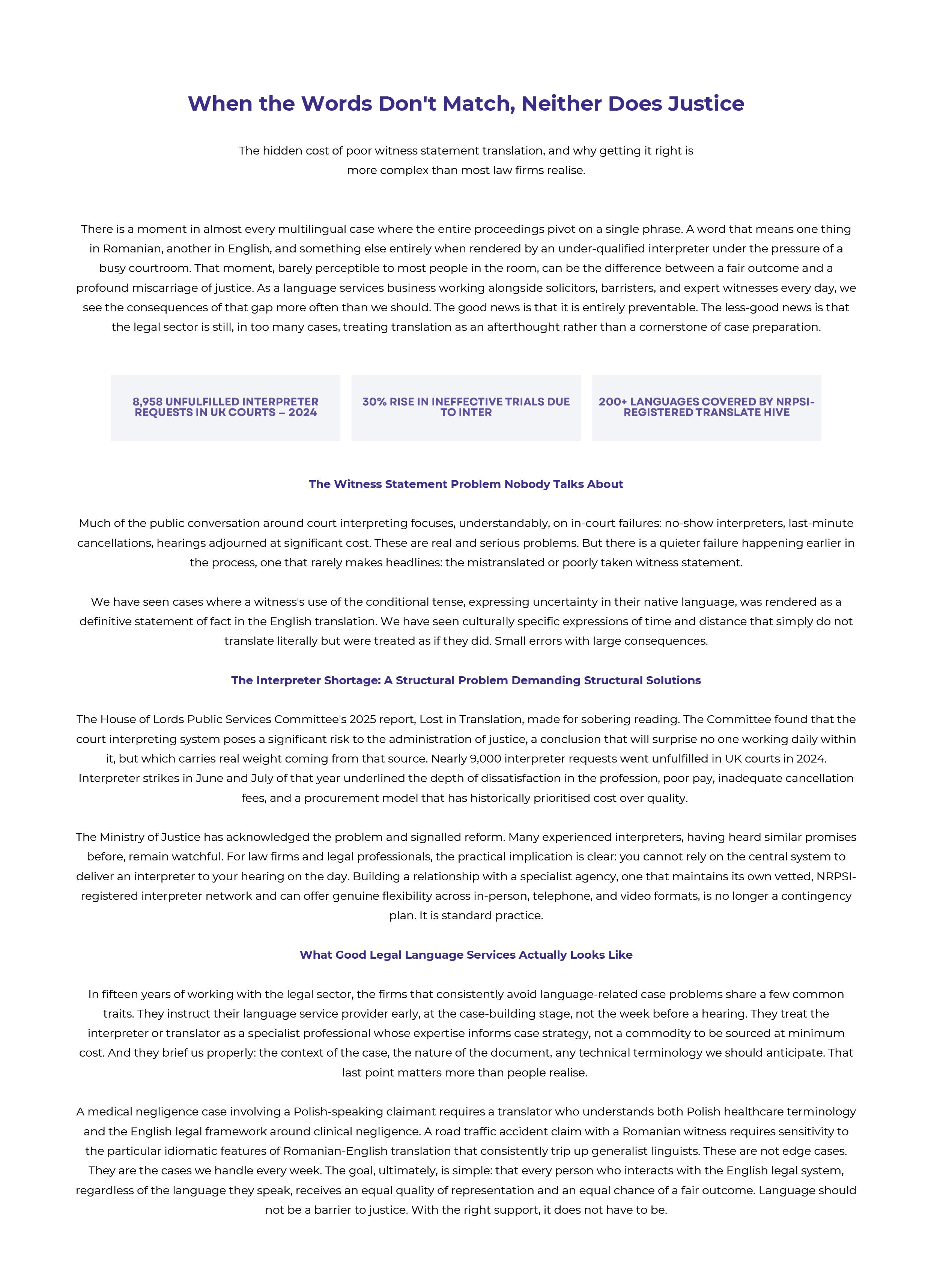
















COLLISION INVESTIGATION & RECONSTRUCTION
COMPLIANCE CONSULTANTS


COMPUTER & MOBILE FORENSICS


DIGITAL TECHNOLOGY

ENERGY CONSULTANTS







SERVICES



GARDEN CONSULTANTS

MECHANICAL & PROCESS ENGINEERING









Andrew F Acquier BA FRICS
Chartered Art & Antiques Surveyor
Expert witness reports and representation at court for matters involving:
• Divorce settlements • Insurance valuation disputes • Arts litigation
• Contentious Probate • Associate member of Resolution for many years
www.andrewacquier.co.uk
Clarke Gammon
Chartered Surveyors with experience in All Aspects of Property • Residential property values
• Asset valuations • Land values and more www.clarkegammon.co.uk
Crowe Expert Witness Services
Forensic and Tax Resolutions Specialists Audit / Tax / Advisory / Consulting Smart decisions. Lasting value. www.crowe.co.uk
DRC Forensics Limited




DRC Forensics Limited offers the complete range of forensic accounting & litigation support: • Fraud • Money laundering
• Partnership disputes • Loss of profit • Professional negligence www.drcforensics.co.uk
FHDI - Kathryn Thorndycraft-Pope
Examining documents & handwriting • to determine authenticity • to expose forgery • to reveal aspects of origin. Forensic Equipment: ESDA, VSC and Mi-Scope. www.forensichandwriting.co.uk
Mr Roger Flaxman ACII MAE

Chartered Insurance Practitioner with more than two decade’s experience serving as an expert witness in matters of insurance practice, broker’s duty of care, insurance market procedure and as an advocate in the resolution of disputed insurance claims.
www.flaxmanpartners.co.uk

Forensic Collision Investigation & Reconstruction Ltd Specialists in the analysis of road traffic collisions
• Collision Reconstruction • Expert Witness
• Vehicle Examinations www.FCIR.co.uk
Formedecon Ltd
Forensic & Investigative Services to the Legal Profession
• All Aspects of Forensic Work Undertaken
• LAA and Privately Funded
Dr Dan Jones PhD, MSc, BSc, MA, MEWI Cert
Foremost international Japanese Knotweed, Himalayan Balsam and Giant Hogweed expert.
• Residential, commercial, government • Independent audit
• Engineering & construction • Industrial & infrastructure
www.advancedinvasives.com
Mr Chris Makin
• Chartered Accountant • Accredited Civil Mediator
• Accredited Expert Determiner

Andrew Smith FPC III CeMAP
Financial Conduct Authority Compliance & Risk Consultant
Cases relating to FCA compliance in consumer credit and mortgage lending.
• Mediation • Arbitration • Adjudication • Expert Determination
www.chrismakin.co.uk www.paxen.co.uk
Simon Quinton Smith BSc FRICS MI Hort Expert Witness to the Garden Centre & Horticultural Industry • Rent Reviews
Lease Renewals
Valuation
Planning
Compensation
Tax Issues
Free Estimates www.Formedecon.com www.quintonedwards.co.uk

Todd – Fire Safety Expert
Fire safety management
Means of escape
Fire protection of buildings • Fire engineering


Site visits & investigations
Desktop analysis & review of documents • Specialist reports • Species identification
Application of fire safety legislation • Fire detection and alarm systems www.cstodd.co.uk www.woodexperts.com
Timber Consultancy and Training since 1991



[A SERIES OF DEVELOPMENTS illustrate how rapidly healthcare systems are evolving and how those changes are reshaping the legal landscape in which clinical negligence claims arise. The planned introduction of the NHS Modernisation Bill and the single patient record is intended to improve patient care, yet it also raises questions about data accuracy and accountability. As digital integration increases, so too does the need to understand how information is recorded, shared and later relied upon in litigation.
• Building on that digital transformation, attention turns to the expanding role of artificial intelligence in clinical practice. A report warning that doctors could face negligence claims arising from AI errors highlights a shifting boundary between human and machine decision making. That is reflected in reporting on early onset claims and waiting times which demonstrate how systemic pressures continue to affect patient outcomes. Even small variations in clinical care are now being scrutinised more closely, as lawyers warn that minor differences can lead to major complications.

• That scrutiny becomes even more significant when considering how innovation is being deployed to improve diagnosis and treatment. AI-assisted cancer diagnosis and the introduction of precision radiotherapy for prostate cancer patients show the potential for earlier intervention and improved outcomes. However, these advances also introduce new legal complexities, particularly where delays, system failures or unexpected outcomes raise questions of consent and causation. From here, the focus naturally shifts to how institutions are managing these risks in practice.
• Regulatory and organisational responses are therefore critical. Care providers facing enforcement action, concerns over digital prescribing safety and professional bodies responding to NHS performance statistics all illustrate a healthcare system under pressure. These developments are reinforced by warnings from policy makers about longstanding gaps in treatment pathways, where delayed intervention continues to have significant consequences.
• As those systemic issues filter down into specialist practice, claims relating to orthopaedics and hand surgery demonstrate how easily clinical outcomes can be misinterpreted through the lens of hindsight. The distinction between recognised complications and negligent care remains central – a theme that continues across A&E medicine, where time-critical decisions can be crucial.
• That emphasis carries through into ophthalmology, sepsis management and haematology, where diagnostic uncertainty and evolving presentations often underpin disputes. Similarly, vascular, gastrointestinal and pain medicine highlight the challenges of managing complex conditions where causation is rarely straightforward.
• From there, the discussion moves into urology and endocrinology cases, where misdiagnosis and long-term harm frequently intersect with profound personal impact. These issues naturally extend into psychiatric and psychological fields, where capacity, cognition and behavioural factors further complicate assessment of care. Finally, nursing and geriatric medicine bring the focus back to frontline delivery, where documentation and communication remain central.
• Across all of the disciplines featured in this issue, the thread is consistent: as medicine becomes more complex and interconnected, the role of the expert witness in clarifying evidence and context is not only valuable, but indispensable. q
[PATIENTS will receive safer, quicker and more accurate healthcare thanks to new legislation marking the next step in the government’s modernisation agenda.
The NHS Modernisation Bill, brought forward in May, will introduce the single patient record, allowing fragmented health information to be joined up around the country, and will cut layers of bureaucracy so more time and money can be spent on frontline services.
The single patient record will mean all NHS providers – including hospitals and GPs – will have to share data so the right doctors, nurses and specialists across England can securely see a patient’s full medical history, no matter where they are treated. Clinicians will benefit from improved access to records as early as 2027 for specialties including maternity and frailty care.
For patients, this means they will not have to repeat their story unnecessarily. It will result in safer, more co-ordinated care, with clinicians having the full picture when and where it’s needed. It will support better care closer to home – joining up community services and helping people manage their conditions.
Patients will also have more control over their care and transparency, with clear safeguards, audit trails and choice over how their data is used.
For clinicians it means no more working with missing information or having to check in multiple places to find the same data, while it will mean greater efficiency and fewer costly mistakes for the NHS as a whole.
The Bill will also formally transfer NHS England’s functions into the Department of Health and Social Care (DHSC) and the wider system, ensuring the NHS is there for patients when they need it, is a better place for staff to work and offers better value for taxpayers.
Health Minister Karin Smyth said: “The NHS Modernisation Bill paves the way for the single patient record, enabling patients to have real control over their care through a single, secure and authoritative account of their data for the first time ever.
“It will be a game changer that means NHS staff can see patients’ medical records, allowing them to deliver better care faster and more conveniently, and even saving lives. We will also strip back bureaucracy by abolishing NHS England, empowering frontline staff as part of our 10 Year Health Plan.”
The Bill will enable information related to a patient’s health and care to be processed for the purposes of establishing and operating the single patient record but will be robust to the threat of data breaches, with the public and healthcare professionals consulted throughout its design.
Dr Alec Price-Forbes, National Chief Clinical Information Officer at NHS England, said: “The single patient record will revolutionise patient care – giving all health and care professionals across the country a detailed record of a patient’s care in one place.
“For too long, patient information has been held in silos, leading to patients having to repeat their story multiple times in different care settings, creating the potential for duplication or gaps in understanding by those treating them – and understandable frustrations and a poor experience for patients.
“The single patient record will be available to all health and care staff in real time, meaning patients get higher quality, safer, joined-up and more personalised care.
“Robust protections will be built in, including different levels of access to reflect different needs and clear audit trails – ensuring the public can trust that their data is always secure.”
Alongside enabling the single patient record, the aim of the Bill (formally called the Health Bill) is to reduce bureaucracy by simplifying the NHS structure. Abolishing NHS England will reduce duplication and free up resources to be reinvested in the frontline, with less time spent on administration and more time focused on delivering care.
Changes will be made to streamline and strengthen the patient safety
landscape, embed patient voices at the heart of national and local decision making and empower integrated care boards and foundation trusts to deliver for patients.
Jacob Lant, Chief Executive at National Voices, said: “Creating a single patient record across the NHS could be a game changer for patient safety and experience. Done well, it should reduce the burden on people having to repeat their story, help clinicians access the information they need, and support patients to feel that the NHS knows who they are and what matters to them.
“This is a significant opportunity to make better use of existing patient data to support high-quality clinical research and improved service design. But any use of data beyond direct care must have clear safeguards, transparent rules on who can access information and why, and meaningful ways for people to exercise their rights.
“It is therefore absolutely right that the creation of the single patient record is set out in the NHS modernisation bill, which means – unlike previous NHS data-sharing plans – this move can be properly scrutinised by Parliament, providing the transparency and accountability needed to build public confidence and trust.”
Dr Jeanette Dickson, Chair of the Academy of Medical Royal Colleges, said: “The Bill finally delivers the possibility of a joined-up, comprehensive single patient record which will not only improve patient safety but also patient experience by enabling clinicians to access patients’ records, wherever the patient is.
“No more repeating the same story every time you go to a hospital or GP and no need to repeat tests because the doctor ‘can’t see’ the result.” q
[
DOCTORS AND NHS ORGANISATIONS
could find themselves facing medical negligence claims for mistakes made by artificial intelligence systems, according to a new report that is urging ministers to modernise legislation before AI becomes even more deeply embedded in healthcare.
The warning comes from the Medical Protection Society (MPS), which represents doctors accused of wrongdoing and provides legal support to healthcare professionals. The organisation believes current laws have not kept pace with advances in artificial intelligence and could leave clinicians unfairly exposed when technology makes mistakes that result in patient harm.

AI is already being used throughout the NHS for a wide range of functions. These include analysing X-rays and scans, generating summaries of consultations between doctors and patients, and drafting letters and other correspondence. While such systems have the potential to improve efficiency and support clinical decision-making, concerns are growing over who should be held responsible when the technology fails.
Under existing legislation, doctors and healthcare providers may be liable for injuries or deaths suffered by patients, even where an AI system was responsible for the error that led to the harm.
The MPS warns that clinicians could become the ‘liability sink’ for mistakes made by AI, effectively making them the primary target of clinical negligence claims despite having little control over the technology itself.
“The law has always struggled to keep up with technological change. But with AI, the pace of change is so rapid that this gap feels less like a step and more like a widening gulf,” said Dr Sarah Townley, the MPS’s deputy medical director.
The report highlights several examples of how AI-related errors could potentially affect patient outcomes. One scenario involves an AI system reviewing a chest X-ray and failing to identify a tumour in a patient's lung. Such an error could provide false reassurance, resulting in delayed treatment and allowing the cancer to spread. In the most serious cases, the patient could die as a consequence.
Another example concerns patients receiving warfarin, a bloodthinning medication commonly prescribed for the heart condition atrial fibrillation. If an AI system incorrectly recommended increasing a patient's dosage, the result could be severe bleeding requiring surgery and treatment in intensive care.
According to the MPS, situations such as these create a significant legal risk for clinicians. “Under the current product liability framework in the UK, there is a risk that clinical negligence claims could be brought against the clinicians in these cases and that they would be held wholly liable,” it warns.
To address the issue, the organisation is calling on the government to reclassify AI systems and tools as products under the Consumer Protection Act 1987. The MPS believes such a move would help ensure responsibility is more appropriately shared when technology contributes to patient harm and would reduce the likelihood of doctors and NHS organisations carrying the full burden of liability.
The concerns are being echoed across the medical profession, where there is growing unease about doctors being blamed for mistakes generated by AI systems developed and supplied by third parties. Some clinicians also fear that public confidence in medicine could suffer if accountability remains unclear and AI developers are not held responsible where appropriate.
Dr Ragit Varia, president-elect of the Society for Acute Medicine, stressed the importance of ensuring regulation keeps pace with innovation. He said: “Innovation and patient safety should move
forward together. If AI is advancing at Formula One speed, then legislation, regulation and governance cannot be left sitting in the pit lane.
“Clinicians should not find themselves holding a liability hot potato when decisions have been influenced by AI systems developed, supplied and implemented by others without the appropriate structure. We must avoid creating an accountability vacuum where responsibility for harm is unclear.”
Meanwhile, NHS Resolution, the body responsible for handling negligence claims against NHS organisations in England, is developing guidance on AI liability according to the Department of Health and Social Care (DHSC). A spokesperson said: “We welcome the MPS’s report and will review its recommendations to ensure patients continue receiving the benefits of AI in healthcare safely and quickly.”
Ahmed Binesmael, a senior policy analyst at the Health Foundation think tank, also emphasised the importance of maintaining public confidence as AI use expands across healthcare, saying: “Our research consistently shows that public confidence in AI depends not just on the technology itself, but on the safeguards and oversight that accompany it.
“As AI adoption grows across the NHS, ensuring clear accountability and robust governance will be essential to maintaining public trust and confidence.” q
[ NHS RESOLUTION has published a new report examining clinical negligence claims related to early onset Group B Streptococcal (GBS) disease in neonates.

[THE ROYAL COLLEGE OF PHYSICIANS (RCP) has responded to new figures, announced in May, showing that the NHS has met the 18-week referral-to-treatment target.
Professor Mumtaz Patel, RCP president, said at the time:
“This week’s announcement that the NHS has met the 18-week referral-to-treatment target is progress. A reduction of more than 312,000 people on the waiting list over the past year, and nearly half a million fewer patients waiting beyond 18 weeks, represents a significant milestone and reflects the commitment of NHS staff working under sustained pressure.
“However, demand for services continues to rise and workforce pressures remain acute. The overall waiting list standing at 7.1 million still represents a considerable ongoing challenge.
“The RCP will continue to press for investment in the medical workforce and the conditions needed to sustain and build on these gains over the long term.
“We also look forward to the publication of corridor care data this month as promised – a vital step in understanding the scale of the problem and the solutions required.” q
The analysis reviewed 19 closed claims notified between January 2016 and March 2023, of which 11 were settled with damages paid. The total cost of these closed claims was £1,430,894, including claimant legal costs, NHS legal costs and damages.
GBS is the leading cause of serious bacterial infection in newborns during the first few weeks of life. The report identifies key themes from the claims data, including the importance of effective communication of test results, timely administration of antibiotics and early recognition of sepsis.
The key findings include:
• 76% of babies showed symptoms within the first 24 hours of life
• Only 25% of babies received antibiotics within one hour of sepsis being suspected
• Claims often related to the management of GBS test results rather than the decision to test
The report makes practical recommendations for maternity and neonatal services, including improved triage systems, robust processes for tracking and communicating test results, and enhanced staff training in recognising signs of sepsis.
The findings were developed with input from clinical experts and align with existing national guidance, including recommendations from the Royal College of Obstetricians and Gynaecologists, the Health Services Safety Investigations Body and NHS England’s perinatal safety initiatives.
The full report is available on the NHS Resolution website at resolution.nhs.uk/resources/ q
[MEDICAL NEGLIGENCE and product safety lawyers have warned that small differences between medical devices can lead to serious complications, following urgent advice from the UK’s medicines regulator on intravenous (IV) infusions.
The alert follows a serious incident in which an IV giving set was mistakenly used during a baby’s blood transfusion, contributing to severe brain damage.
The Medicines and Healthcare Products Regulatory Agency (MHRA) has raised concerns about the risk of serious harm if an IV giving set is used instead of the correct blood transfusion set.
The key difference is that blood transfusion sets include a larger filter designed for blood, while standard IV sets use much smaller filters intended for fluids and medication. Using the wrong set could reduce the amount of blood delivered or damage the components in blood such as red blood cells. This means that life-saving blood transfusions can be ineffective and increases the risk of serious harm.
The MHRA has urged healthcare professionals to ensure staff understand the difference between the two types of equipment, and that this information is shared with non-clinical staff who may handle the devices.
The regulator also warned that using the wrong set can slow or restrict the flow of blood, meaning patients may not receive the required amount in time.
It also noted that manufacturers do not use consistent colour coding to distinguish between the sets, making it even more important to check equipment carefully before use.
Leigh Day clinical negligence solicitor Camilla Browne said: “This announcement raises serious patient safety concerns. Healthcare providers

must ensure that adequate training, equipment labelling and robust systems are put in place to avoid such a tragic incident being repeated.”
Philippa Wheeler, a solicitor in Leigh Day’s product safety team, added: “This announcement shows how a small difference in a product can lead to serious consequences. It is concerning that there is no consistent colour coding to help distinguish between giving sets. While it is encouraging that the MHRA is working with manufacturers, it is clear that more needs to be done to prevent this happening again.” q
[ MILLIONS OF PATIENTS will receive faster diagnoses thanks to almost £30m of government funding on artificial intelligence across the NHS. This funding will expand proven AI technology to every NHS Trust in England while piloting the next generation of digital innovation, marking the latest step in the government’s drive to modernise the NHS and reduce waiting times.
AI-powered X-ray tools that act as a virtual ‘second pair of eyes’ for radiologists will be rolled out to all NHS trusts in England by 2029, backed by £20m of government funding – meaning faster diagnoses and quicker treatment for patients.
This technology, currently available in half of England’s NHS trusts, is already transforming care for patients, helping more than four million receive a faster diagnosis or all-clear for lung cancer by improving patient care routes.
Early data shows the technology helps radiologists analyse scans in an average of just four days, compared to eight days for the most complex cases previously. By helping clinicians manage growing demand for imaging services more efficiently and easing pressure on radiology teams, the technology is enabling patients to receive follow-up diagnostic tests sooner, helping speed up diagnosis and access to treatment.
Health and Social Care Secretary James Murray said: “For too many patients, a cancer diagnosis tragically comes too late. These AI tools are already changing that – giving radiologists a sharper eye, cutting waiting times and getting people the lifesaving treatment they need faster.
“Rolling this out to every NHS trust in the country means millions more patients will benefit, and that is exactly the kind of change this government is determined to deliver – regardless of where you live.”
Chest X-rays are one of the most important tools in diagnosing England’s biggest cancer killer, lung cancer, with over seven million performed across the NHS each year. By cutting the time it takes to analyse them, the tools are expected to help more patients begin treatment within 62 days of a GP referral. This is in line with cancer waiting time standards and a key commitment set out in the National Cancer Plan.
This funding forms part of the AI Diagnostic Fund, a key component of the Prime Minister’s AI Exemplars programme – which is harnessing AI to improve public services, modernise the systems and support clinicians to diagnose patients more quickly and reduce the diagnostic backlog.
Ian Murray, Minister for Digital Government, said: “AI is not a future promise – it is already saving lives in our NHS today. For someone waiting to find out whether a shadow on their lung could be cancer, getting that answer in four days instead of eight means four fewer days of uncertainty – and a much quicker path to treatment or reassurance.
Peter Allinson, a 59-year-old regular hill walker from Manchester, was referred urgently to Manchester University NHS Foundation Trust (MFT) by his GP after experiencing severe breathlessness while on a routine hike. Peter was assessed at MFT using the AI chest X-ray tool, which helped clinicians reach a rapid diagnosis. He was diagnosed with sarcoidosis and started on treatment within two weeks, helping to prevent further progression of his condition.
Peter said:“ When I collapsed on that hillside, I genuinely thought my life was over. To go from that terrifying moment to having a diagnosis and being on treatment within two weeks was just remarkable. I’m so grateful for how quickly everything moved and
for the care I received. The speed of the diagnosis made a real difference – I feel like I’ve been given my life back.”
Additionally, six innovative AI and digital technologies will also be developed and tested at 12 NHS trusts and one GP partnership across England and Scotland. This will be backed by £8.1m of government funding through the National Institute for Health and Care Research (NIHR).
The technologies will support NHS staff to analyse CT scans, ECGs and X-rays, offer digital therapy, and identify the most urgent cases for prioritisation. If successful, they could deliver faster, better care for patients with heart failure, stroke, lung cancer, lung infections and tic disorders and ultimately save lives.
Technologies that prove effective will be rolled out more widely across the NHS, following the same path as the AI X-ray tools that have already helped over four million patients.
Professor Lucy Chappell, Chief Scientific Adviser to the Department of Health and Social Care and CEO of the NIHR, said: “By backing these six digital research projects, the NIHR is helping to drive the fundamental shift from an analogue to a digital health service and deliver the government’s 10 Year Health Plan.
“This important investment in AI and innovation will cut NHS waiting times, fast-tracking diagnoses and ensuring patients receive more accessible, efficient and high-quality care.” q
[ A SELKIRK CARE COMPANY has been fined after a resident choked to death on food that had not been prepared in accordance with his dietary requirements.
Selkirk Sheriff Court heard that on 25 May 2023, Thomas Telford, known as Barry, aged 86, choked during lunch at Riverside Healthcare Centre in Selkirk. Mr Telford had been a resident at the home since 9 May 2023, having been admitted directly from Kelso Community Hospital. He had a complex medical and a welldocumented history of dysphagia – difficulty swallowing – that had been identified as far back as November 2019.
Mr Telford had been assessed as requiring a Level 5 (minced and moist) diet under the International Dysphagia Diet Standardisation Initiative (IDDSI), meaning all food should be minced into small moist pieces no greater than 15mm in length and 4mm wide. His care plan also required that he be supervised at mealtimes due to his tendency to overfill his mouth and eat quickly, and he had been identified as being at high risk of choking.
At lunchtime on 25 May 2023, Mr Telford was served a meal of beef, mashed potato and cabbage. The beef served to him had not been prepared in accordance with his Level 5 dietary requirements. A carer supervising the dining room noticed his lips turning blue and immediately raised the alarm. Backslaps and abdominal
[ A DEEPLY MOVING new short film lays bare the life-changing impact that the law on personal injury compensation can have for families whose lives are torn apart by negligence.
Kayleigh and her 11-year-old son Charlie, who suffered a significant hypoxic brain injury at birth and has cerebral palsy affecting all four limbs, are the focus of the public awareness film for APIL’s Rebuilding Shattered Lives campaign.
“Shining a spotlight on a clinical negligence case like Charlie’s is incredibly significant, now in particular,” said APIL’s chief executive Mike Benner. “Spending on NHS negligence claims is under substantial scrutiny, including by the Public Accounts Committee and Department of Health and Social Care.
“Injured victims of negligence must be at the centre of any dialogue or policymaking which affects them. The film is a powerful reminder that the numbers represent real lives, and that victims need and deserve full and fair redress,” he added.
In the film, titled Charlie’s Story, Kayleigh shares how making a claim for compensation has been ‘life-changing’. She also commends being able to fund Charlie’s private therapies, which are a crucial part of the lifelong support that he needs.
Rebuilding Shattered Lives is a long-term campaign to tackle misconceptions about personal injury claimants and their representatives.
“Negative perceptions among the public remain a problem for the PI sector. They can lead to bad legislation which undermines access to justice, and even put injured people off seeking the redress they need,” said Mike Benner.
“Most people have not suffered harm because of negligence, and don’t expect ever to be a claimant. But our polling shows that people who do turn to PI lawyers have positive views of them and the system, in polar contrast to the wider, uninjured public.” q
thrusts were administered and an ambulance was called. He was pronounced dead at Borders General Hospital at 14:00 hours.
An investigation by the Health and Safety Executive (HSE) found that Riverside Care Limited had failed to ensure a sufficiently robust system of work for the preparation and serving of texturemodified meals. Whilst the home operated a broadly suitable system of serving either normal or modified meals, and staff had received training on dysphagia and the IDDSI framework, that system had failed on the day in question. As a result, Mr Telford was served food that was not safe for him to consume.
Employers providing care to individuals with swallowing difficulties must ensure that systems for preparing and serving texture-modified diets are sufficiently robust to guarantee that only appropriate food is served to those who require it, at every mealtime without exception.
On Tuesday 3 March 2026, Riverside Care Limited pleaded guilty to breaching Section 2(1) of the Health and Safety at Work etc. Act 1974. The company was fined £16,000 at Selkirk Sheriff Court.
After the hearing, HSE Inspector Robbie Morrison said: “Mr Telford’s need for a texture-modified diet was well documented and well known to those caring for him. He had a history of dysphagia and had been clearly identified as being at high risk of choking.
“This was a tragic and entirely preventable death. We hope this case serves as a reminder to all care providers of their responsibility to ensure that residents with complex dietary needs receive only food that is safe for them.” q
[ CARDIFF UNIVERSITY has been fined £280,000 after two employees developed occupational asthma because of exposure to animal allergens in the workplace.
Britain’s workplace regulator, the Health and Safety Executive (HSE), found that between 2008 to 2025 the university failed in its duty to identify and implement suitable controls to prevent employees’ exposure to animal allergens. Both employees affected have been left with lifelong conditions as a result, and one was unable to continue in their employment.
In a statement, one of the affected employees said: “I was diagnosed with occupational asthma and occupational rhinitis, and my lung function has been permanently decreased by 33 percent.
“As a result, my breathing has been terrible and I struggle walking any distance. Going upstairs is really difficult. I have to take steroid inhaler, a nasal spray and a bronchodilator throughout the day as I need it.
“I become breathless when having long conversations and I am unable to walk and

talk at the same time anymore.”
HSE’s investigation found that Cardiff University had failed to put in place adequate measures to protect workers from exposure to animal allergens, despite relevant legislation being in place since 1989 under the Control of Substances Hazardous to Health Regulations (COSHH) and specific guidance relating to laboratory animal workers being available since 2011.
Occupational asthma is a recognised
work-related disease that can have serious and permanent consequences. Employers working with animals or other biological agents must assess and control the risks of exposure to allergens and ensure appropriate protective measures are in place.
Cardiff University pleaded guilty to breaching Section 2(1) of the Health and Safety at Work etc. Act 1974. The university was fined £280,000 and ordered to pay £11,745 in costs at Cardiff Magistrates’ Court on 30 April 2026.
After the hearing, HSE inspector Janet Hensey said: “This was a case of Cardiff University failing to properly deal with very real risks to employees working with animals and not putting suitable controls in place to prevent exposure.
“The fact this went on for 15 years is truly concerning. Occupational asthma is a recognised work-related disease with potentially disabling consequences. HSE will not hesitate to take action against organisations which do not do all that they can to keep people safe.” q
[ A NEW REPORT by the Health Services Safety Investigations
Body (HSSIB) warns that NHS trusts are managing complex digital safety risks related to electronic prescribing and medicines administration (ePMA), with significant unwarranted variation in how this software is designed, procured and regulated across acute hospitals. This could increase the risk of medication-related harm to hospital patients if it’s not addressed.
The report comes at a time of significant national focus on digital transformation, including the drive towards a single patient record as part of the 10 Year Health Plan for England. While this presents opportunities to improve patient care, the HSSIB has warned that the current framework does not adequately support safe adoption of digital technologies.
According to the HSSIB: “ePMA software is widely used to prescribe and record medication given to patients during hospital stays. While ePMAs can reduce certain types of medication error, our investigation found there are no core national patient safety standards guiding their design or procurement. This has led to wide variation in how they function, creating challenges for NHS staff when prescribing and administering medication to patients.
“There are legally mandated NHS standards for digital clinical safety and interoperability that apply to software, including ePMAs. However, the report identifies unwarranted variation in how NHS hospitals comply with these standards, alongside a lack of national oversight or assurance to ensure consistent implementation.
“The investigation also highlights confusion about the roles and responsibilities of national bodies, including the Care Quality Commission and the Medicines and Healthcare products Regulatory Agency, in overseeing patient safety in this area. This lack of clarity contributes to gaps in accountability and assurance.
“We found that patient safety learning about ePMAs is not consistently identified or shared across the healthcare system. Instead, learning often relies on informal networks, meaning important safety insights may not reach all organisations or inform system design and procurement decisions.
“The responsibility for managing these safety risks largely falls to individual NHS hospital trusts. However, many trusts do not have the necessary resources, skills or support to robustly assess and manage the safety risks associated with ePMAs.”
The HSSIB have made a series of safety recommendations to national bodies, including calls to:
• Develop a national framework for core ePMA safety
• Improve regulatory clarity on when ePMAs should be classified as a medical device
• Introduce national assurance mechanisms for digital clinical safety and interoperability standards relating to ePMA
• Provide additional support to NHS acute hospital trusts to improve access to digital clinical safety capability and capacity
• Support the integration of digital safety and patient safety across the healthcare system.
Clare Crowley, Senior Safety Investigator at HSSIB, said: “ePMA is a core component of modern healthcare, but its safety depends on how it is designed, implemented and overseen. Our patient safety investigation highlights the need for greater clarity, consistency and national coordination so that ePMA software reliably supports safe care for patients.
“In the absence of this, NHS hospital trusts are being asked to carry the responsibility of assuring themselves that the ePMA software they

choose to use is safe. This is a complex and resource intensive task. Not all trusts have the capacity, capability or support they need to do it robustly.
“As the NHS continues its rapid shift towards digital care and a single patient record, it is essential that patient safety is built in from the outset, rather than relying on individual organisations to identify and manage the risks.” q
[
STROKE SURVIVORS and healthcare professionals from across Northern Ireland gathered at Stormont in May to urge the Health Minister to deliver 24/7 thrombectomy services, over 500 days after the commitment was made in the Executive’s Stroke Action Plan.
Under the 2022 Stroke Action Plan, the Executive committed to introducing a 24/7 thrombectomy service by the end of 2024. But 500 days have since passed and there remains no clarity on when patients can expect full round-the-clock access.
Thrombectomy is a game-changing treatment to remove the blood clot which causes a stroke. 1.9 million brain cells are lost every minute after a stroke, so the quicker someone receives the treatment, the better chance they have of making a good recovery. When delivered in a timely manner, the procedure can save brain function, reduce disability and ultimately change lives as well as being cost-effective for long-term care and rehabilitation.

Stroke survivors who support a 24/7 thrombectomy service
Yet around 140 patients each year in Northern Ireland are missing out, as the procedure isn’t available 24/7, so the Stroke Association NI is campaigning to improve access to thrombectomy. Currently, it is only available between 8am and 5pm, so anyone admitted to hospital outside these hours would have to wait until the following morning – which can make a huge difference to the impact of their stroke and recovery.
More than 30 healthcare professionals, stroke survivors and their loved ones convened at Stormont to raise awareness of this missed deadline. They called on the Health Minister Mike Nesbitt to provide the funding needed, so every patient can assess thrombectomy services, no matter the time of day.
Lauren Shaw, Policy and Influencing Lead at the Stroke Association, said: "Thrombectomy is a remarkable treatment, but its impact depends on patients being able to access it quickly. Clinicians in Northern Ireland are doing exceptional work, but every day without 24/7 provision means more patients risk missing their chance of making the best possible recovery.
“More than 500 days after the Department of Health missed its Stroke Action Plan commitment to a 24/7 thrombectomy service, patients and their families are still waiting. The Health Minister must now back our stroke teams and deliver appropriate funding so that no one misses out on life-changing treatment because of the time of day their stroke happens."
Gemma O’Hara, from County Antrim, had a stroke seven months ago at just 39 years old. She had just returned from a holiday in Turkey and had a shooting pain down her neck, her heart was racing and her eyes were stinging. She then felt a tingling sensation down her left-hand side and told her partner to phone an ambulance as she knew she was having a stroke.
Gemma said: “It was a very scary experience as I felt like I was trapped in my own body. I couldn't speak and I could barely walk. I couldn’t communicate how I was feeling.”
When Gemma arrived at Antrim Area Hospital she received thrombolysis medication, which dissolves the clot, and was then sent to the Royal Victoria Hospital, where she was fortunate to receive a thrombectomy.
“They call it a miracle treatment and for me it was. I feel I must use
my voice for others who won't be able to,” she said. “Just because you have a stroke during the night should never be a factor in receiving such life-changing treatment. Thrombectomy saved my life and it should be available 24/7. I can’t imagine what my life would be like now if I hadn’t received the thrombectomy in time.” q
[THOUSANDS OF MEN diagnosed with prostate cancer are set to benefit from a pioneering radiotherapy treatment being introduced across the NHS in England. The advanced technique, known as stereotactic ablative radiotherapy (SABR), will offer eligible patients a more targeted form of treatment while significantly reducing the number of hospital visits required.
NHS England has announced that, for the first time, eligible men with early-stage prostate cancer will be able to access SABR routinely through the NHS. The treatment delivers a higher dose of radiation directly to the tumour with exceptional accuracy, helping to avoid damage to surrounding healthy tissue.
Unlike conventional radiotherapy, which typically involves at least 20 treatment sessions, SABR is generally delivered in just five doses over a two-week period. This means patients can complete their treatment much more quickly while spending less time travelling to and from hospital appointments.
The treatment works by directing radiotherapy at the tumour from multiple angles, enabling clinicians to target cancer cells with greater precision. The approach has been shown to be highly effective in controlling localised prostate cancer while reducing the risk of the disease spreading or returning.
The introduction of SABR is expected to benefit thousands of men every year. Prostate cancer remains the most common cancer affecting men in the UK, with more than 55,000 new diagnoses annually and around 12,300 deaths each year.
In England alone, approximately 17,500 men are diagnosed annually with low or intermediate-risk prostate cancer and could be eligible for the new treatment option. NHS modelling suggests that around 3,500 men – almost one in five of those eligible – may choose SABR as part of their treatment plan.
The rollout is expected to take place across all 48 radiotherapy providers in England, with the first centres beginning treatment from mid-June. The expansion has been made possible through government investment in new linear accelerator machines and forms part of a wider NHS and government programme to transform cancer care.
Sir Jim Mackey, NHS chief executive, said: “This cutting-edge approach will transform treatment for thousands of men with prostate cancer, helping the NHS provide far more powerful and convenient care to stop their cancer spreading.
“Having been proven effective in keeping cancer under control, this technology will not only help reduce the risk of certain side effects but also the major ‘to-and-fro’ burden of hospital treatment, which can be really draining for so many patients and their families.”
The NHS believes the shorter treatment schedule could free up approximately 50,000 prostate cancer treatment appointments every year, creating additional capacity within cancer services and helping reduce waiting times for patients.
Professor Peter Johnson, NHS national clinical director for cancer, said: “This technology lets us focus a powerful and precise beam of radiotherapy directly onto the cancer, limiting the damage to healthy cells – and the fact it can be delivered in 15 fewer doses will help men get back to living their lives far more quickly.
“It is an important step to make this pioneering treatment available on the NHS, following trials that were led by the UK – although it is not suitable for everyone with localised prostate cancer, we’d encourage anyone with questions about their treatment options to speak to their specialist team.”
The government has also emphasised the role that innovation will play in improving cancer outcomes and patient experience. The introduction of SABR follows a £70 million investment in radiotherapy equipment across England and supports broader ambitions outlined in the forthcoming National Cancer Plan.
James Murray, Secretary of State for Health and Social Care, said: “Thousands of men with prostate cancer will benefit from this pioneering precision radiotherapy, helping them access faster, more effective treatment while reducing the strain that cancer care can place on patients and their families.
“Backed by the Government’s £70m investment in radiotherapy machines, this treatment targets tumours with greater accuracy, helping to reduce side-effects and allowing many patients to complete their treatment in a fraction of th e time compared with conventional radiotherapy.
“This is an important step in delivering our National Cancer Plan, expanding access to innovative cancer treatments ensuring more patients benefit from the latest advances in cancer care closer to home.” q

[ A MAN FROM KENT has received a six-figure sum after King’s College Hospital NHS Trust admitted liability for delays in diagnosing his tongue cancer.
The 48-year-old man, who we will refer to as Neil, developed a tongue ulcer in June 2017. He has Chronic Obstructive Pulmonary Disease (COPD), a group of lung conditions which causes breathing difficulties. His ulcer became more painful and he found eating to be challenging due to the pain.
Neil lost weight rapidly and, by October that year, his sister wrote to his GP expressing her worries about his wellbeing.
In January 2018, Neil’s dentist referred him to the Oral Medicine Department at Queen Mary’s Hospital in Sidcup, south east London as he had been suffering from his ulcer for six months and the pain was not improving.
A biopsy was taken the following month in February to test Neil’s tongue for cancer. He was later told that the biopsy results came back as normal. Despite these results, he continued to experience severe pain from his ulcer.
Neil was advised to stop smoking and to use a steroid spray on his tongue, which did not improve his symptoms.
By May 2018, Neil’s health had deteriorated significantly, and he was only able to walk 45 to 50 metres at a time. He had stopped using inhalers that he had been prescribed for his COPD due to concerns that they may be worsening the pain from the ulcer.
The pain progressed further and, in July 2018, Neil could not think of much else. His prescription-strength painkillers did little to ease his symptoms and the pain spread to the left side of his head.
Neil’s symptoms took a toll on his mental wellbeing. He had no energy, no appetite and was in constant pain. He was struggling to speak due to the pain and had to write to communicate to his family.
Between March to September 2018, Neil’s weight dropped to around 44kg . At a routine dental appointment on 11 September 2018, Neil’s dentist was concerned by Neil’s poor health and contacted Queen Mary’s Hospital for an urgent appointment.
Three days later, Neil was seen by a consultant at the Oral Medicine Clinic at Queen Mary’s Hospital. The consultant was alarmed by Neil’s health and referred him to the emergency department at King’s College Hospital for pain control and fluids, as he was dehydrated and malnourished.
Neil was transferred onto the hospital ward and given IV fluids, high calorie drinks and liquid oxycodone – a strong opioid medication given to manage severe pain.
An urgent biopsy on 21 September 2018 discovered that Neil’s tongue ulcer was Stage 3 invasive squamous cell carcinoma, a type of tongue cancer. His original biopsy from March 2018 was re-reported and was found to contain Stage 1 cancer.
The following month, Neil underwent surgery to remove the tumour which involved removing part of his tongue, a neck dissection to remove affected lymph nodes and a reconstruction of the area inside his mouth. He also had multiple teeth removed.
Neil then underwent a six-week course of post-operative radiotherapy which adversely affected his speech, led to painful swelling and neck tightness. Due to the amount of tissue removed from his tongue, he was unable to take food orally and was fed liquid food through a radiologically inserted gastrostomy (RIG), directly into his stomach for over 18 months.
He further developed multiple infections in his jaw and was diagnosed with osteoradionecrosis, a rare complication from radiotherapy where the bone dies due to radiation exposure.
Neil continues to suffer from long-term complications including difficulty speaking, neck swelling, neck tightness from scarring, persistent pain in his left jaw and osteoradionecrosis.
In 2020, Neil approached the Leigh Day medical negligence team to investigate his case. Liability was admitted and the focus of the legal investigation turned to quantifying Neil’s claim for damages. Sadly, in March 2024, as his legal team were finalising expert evidence about his current condition and future prognosis, Neil was diagnosed with a recurrence of cancer on the right side of his neck.
This led to a further surgery, radiotherapy and insertion of another RIG for feeding. Medical experts re-examined Neil to update their advice on his condition, prognosis, ongoing needs and life expectancy.
The case settled in March 2026 for a substantial six figure sum. Leigh Day medical negligence partner Angharad Vaughan said: “This was a tragic case. The six-month delay in diagnosing Neil’s tongue cancer had devastating consequences. Had his original biopsy been reported correctly, his cancer would have been diagnosed much earlier and he would have had far less invasive treatment which would have led to a much better outcome in terms of survival and quality of life.
“Whilst no amount of money could ever truly compensate Neil for what he has been through, I hope that this settlement will give him financial security going forward.” q
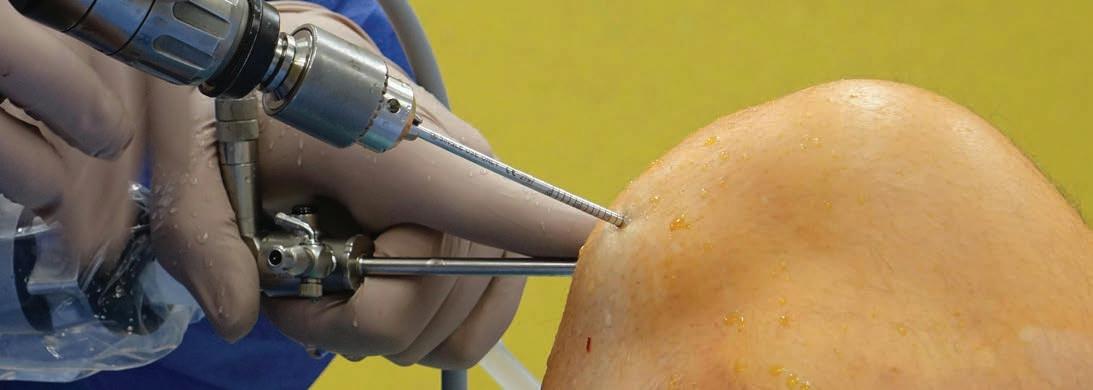
[ THE GUARDIAN NEWSPAPER has published an article on the results of a 10-year study on arthroscopic knee meniscectomy surgery for a meniscus tear. The findings of the report suggest that the surgery does not benefit all patients equally.
Mark Bowditch, consultant knee surgeon and immediate past president of the British Orthopaedic Association, said in the article that best practice guidelines had changed in the last 15 years to reflect evidence concerns about the limited benefits of meniscectomy surgery in middle aged or old patients. This included extending the recommended waiting period to see whether symptoms resolved with non-operative treatment and physiotherapy, and more targeted surgical indications.
He said that in the past, three-quarters of patients might have had surgery, but now it’s closer to a quarter. “For these degenerative tears we have an approach of ‘think before you strike’. Surgery should usually not be the first step,” he added.
However, he said there were subsets of patients who may still benefit, based on his clinical experience. “If you’re operating to treat pain, that can be unpredictable,” he said. “But there’s a group who may have repairable tears or a mechanical sensation of something catching – that may have a more predictable benefit.”
In response to the article the British Association for Surgery of the Knee (BASK) has said it welcomes the long-term follow-up of this research but is concerned that the reporting does not reflect the limited scope of the study population, and that patients who genuinely need surgery may now delay or decline treatment on the

basis of findings that do not apply to their condition.
BASK states that the study examined one specific type of patient: those with degenerative meniscal tears arising from wear and tear, in middle age, with no injury history and no joint locking. It excluded, by design, patients with traumatic or injury-related tears and those with true mechanical locking. These are precisely the patients in whom surgery is most clearly beneficial, and the study cannot and should not be used to guide their treatment. q
By Professor Paul Y F Lee, Consultant Orthopaedic Surgeon, Honorary Professor of Sports Medicine and expert witness
[ SURGICAL COMPLICATIONS
remain part of the inherent risk of modern orthopaedic surgery despite advances in surgical technique, technology and peri-operative care. Even in technically well-performed procedures, complications such as infection, nerve injury, stiffness or failure of repair may still occur despite appropriate decision making and postoperative management. The distinction is whether the outcome reflects accepted surgical risk or negligent care.
Yet once those complications arise, the interpretation of events often changes dramatically. What may initially have been understood as accepted clinical risk can later become viewed through the lens of negligence, particularly when outcomes are poor.
This phenomenon may be described as the hindsight trap: the distortion that occurs when known risks, accepted complications or complex biological responses are viewed retrospectively as evidence of negligence simply because the outcome was unfavourable.
That distinction is critical. Complications and negligence are not synonymous, and the occurrence of a recognised complication does not automatically establish breach of duty.
A central challenge in these cases is that outcomes are visible and emotionally compelling, whereas clinical reasoning is often nuanced and less obvious in retrospect.
An infection following joint replacement, a nerve injury after knee surgery or a tendon re-tear after repair may immediately appear unacceptable to a patient. However, the presence of a complication alone does not establish breach of duty.
The focus then becomes not simply what happened, but whether the decisions, technique, consent process and postoperative management fell below a reasonable standard of care at the time they occurred.
That distinction matters because medicine is judged by reasonableness, not perfection.
The double edge of hindsight Hindsight has an important role in medico-
legal analysis, but it must be used carefully. A recognised complication does not automatically establish negligence simply because the outcome was poor.
In many cases, the more important question is not whether the complication occurred, but whether it was properly discussed beforehand, recognised afterwards and explained honestly when it did occur.
Complications are part of the statistical reality of surgery: eventually, recognised risks will happen to some patients. What matters medico-legally is often the omission rather than the complication itself – failure to disclose, failure to consent, failure to respond or failure to explain.
One of the most important safeguards against hindsight bias is mechanism-based analysis. A complication is best understood by examining how, when and why it occurred.
A post-operative nerve injury, for instance, may arise from direct surgical trauma, excessive traction, patient positioning, swelling, scar tissue formation or even patient-specific anatomical variation. The medico-legal analysis therefore depends on mechanism, timing and surgical context rather than the existence of injury alone.
Similarly, infection after surgery does not automatically imply substandard sterility or poor surgical practice. Infection is a recognised risk of virtually all invasive procedures, even in modern operating environments with appropriate protocols and precautions.
The key question is whether reasonable steps were taken to minimise risk and whether the response to complications was timely and appropriate once recognised.
A recognised complication that is identified early, investigated appropriately, communicated honestly and managed promptly may remain within the spectrum of accepted surgical risk.
However, difficulties arise when complications are missed, dismissed or poorly managed.
Delayed recognition of compartment syndrome, failure to investigate worsening

pain following joint replacement or failure to escalate neurological deterioration may shift the issue from unavoidable complication towards potential negligence.
In many cases, the breach lies not in the occurrence of the complication, but in the failure to respond reasonably once warning signs emerged.
Modern orthopaedic surgery has become increasingly complex, with rising patient expectations and growing scrutiny of complications. Yet medicine remains inherently imperfect.
Not every complication represents negligence and not every poor outcome reflects a breach of duty. The challenge is to ensure that retrospective review does not lose sight of the clinical context in which decisions were made.
For clinicians and expert witnesses, the task is therefore to examine events within their true clinical context – grounded not in outcome alone, but in mechanism, reasonableness and the realities of medical practice.
Complication and negligence are not interchangeable, and understanding the difference between the two remains fundamental to a case. q
• Professor Paul Y F Lee is a consultant orthopaedic surgeon, Honorary Professor of Sports Medicine and expert witness specialising in biomechanics, imaging and causation analysis. He and his team at MSK Doctors operate across London and Lincolnshire, with offices in London, Marylebone and near Liverpool Street Station. Urgent expert opinion can be provided by prior agreement
[IN 2026, the British Society for Surgery of the Hand (BSSH) marks the 70th anniversary of the first meeting of the Second Hand Club, the organisation that ultimately evolved into the modern BSSH. While the anniversary rightly celebrates the surgeons who helped establish hand surgery as a recognised speciality in the United Kingdom, it also highlights the lasting influence these pioneering clinicians continue to have in modern medico-legal and expert witness work.
The inaugural meeting of the Second Hand Club took place at the Midland Hotel in Derby on 11 May 1956. Yet the story of British hand surgery begins earlier, with the formation of the original Hand Club in London in 1952.
Importantly, the principles established by the Hand Club remain highly relevant to contemporary expert witness practice. The club’s stated objective was ‘to stimulate interest in hand surgery’, while maintaining equal representation between orthopaedic and plastic surgery disciplines. This collaborative approach reflected an understanding that successful hand treatment often requires multidisciplinary thinking, something that remains central in modern clinical negligence and personal injury litigation involving hand injuries.
Hand surgery itself emerged from the experiences of the Second World War. During the conflict, devastating injuries to the upper limb created an urgent need for advances in reconstructive and orthopaedic techniques. In the United States, the speciality was driven forward by pioneering surgeon Sterling Bunnell, whose work in reconstructive centres treating wartime injuries led to the publication of his influential textbook Surgery of the Hand in 1944 and the formation of the American Society for Surgery of the Hand in 1946.
These developments inspired many young British surgeons. Several travelled to the United States in the post-war years to study evolving techniques before bringing that knowledge back to the UK. The wartime experiences of the founding Hand Club members themselves also proved hugely influential. Many had served in military surgical units where they encountered severe trauma cases requiring innovation, precision and practical problem-solving under difficult conditions.
For modern expert witnesses, these historical roots remain significant. Hand surgery continues to be one of the most technically demanding and litigation-sensitive areas of medicine. Claims involving tendon injuries, nerve damage, fractures, compartment syndrome, delayed diagnosis, postoperative complications and workplace trauma frequently require detailed expert evidence from specialist hand surgeons. The speciality’s emphasis on function, dexterity and long-term disability means even relatively small injuries can have major financial and occupational consequences.
The pioneering surgeons of the Hand Club helped establish standards that continue to underpin expert analysis today. Their collective legacy extends well beyond clinical treatment. In medico-legal practice today, expert witnesses in hand surgery are frequently required to assess whether surgical techniques, rehabilitation pathways and standards of care met accepted professional expectations. Many disputes centre not simply on whether complications occurred, but whether those complications were recognised and managed appropriately.
Hand surgery experts are often instructed in high-value personal injury claims involving industrial accidents, machinery injuries, road traffic collisions and sports trauma. Equally, they play a key role in clinical negligence cases concerning delayed diagnosis of tendon injuries, poor fracture management, avoidable nerve damage or failures in post-operative rehabilitation. In such cases, the detailed anatomical and functional understanding developed within the speciality becomes critical to the court’s assessment of breach of duty and causation.
The collaborative ethos first established by the Hand Club and later developed by the Second Hand Club also mirrors the modern realities of expert witness work. Complex cases frequently require joint evidence from orthopaedic surgeons, plastic surgeons, therapists, pain specialists and
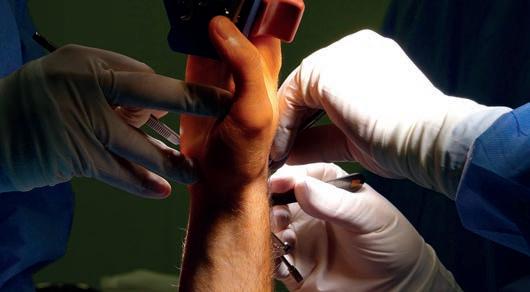
rehabilitation experts. The multidisciplinary foundations laid during the 1950s remain highly relevant in today’s litigation environment.
Although the original Hand Club has sometimes been overshadowed by the later success of the Second Hand Club and the eventual formation of BSSH in 1968, its contribution deserves recognition. Its members created a professional environment in which hand surgery could begin to emerge as a distinct speciality, while fostering the exchange of ideas that would later shape both clinical practice and medico-legal standards.
As BSSH celebrates its history, the speciality’s continuing role within expert witness practice serves as a reminder that the work of those early pioneers continues to influence not only surgical treatment, but also the legal scrutiny of standards of care across modern healthcare. q
[THE RAPID GROWTH of the hair restoration industry has led to a corresponding increase in litigation involving alleged incompetence in hair and scalp transplantation procedures. While many procedures achieve satisfactory cosmetic results, claims can arise where patients suffer avoidable complications, poor aesthetic outcomes or permanent damage following treatment.
Hair transplantation is a highly specialised field requiring careful patient assessment, surgical planning and technical precision. Allegations of incompetence may involve both medical practitioners and unregulated providers operating in the sector. In many disputes, expert evidence is required to determine whether the standard of care fell below that expected of a competent practitioner.
One of the most common causes of litigation is poor patient selection. Not all forms of hair loss are suitable for transplantation and failure to identify cases when a procedure may be inadvisable can lead to harmful outcomes.
Patients with unstable hair loss patterns, scarring alopecia or underlying dermatological conditions may experience poor graft survival or worsening scalp damage if inappropriate
procedures are performed. Claims may allege that practitioners failed to conduct adequate medical history taking, scalp examination or diagnostic assessment before proceeding.
Technical errors during surgery are another frequent source of complaints. Hair transplantation requires accurate harvesting and implantation of follicular grafts while preserving blood supply and minimising trauma to the scalp. Incompetence may result in excessive scarring, uneven hair density, unnatural hairlines, graft necrosis or permanent donor site damage. Overharvesting of donor hair can leave visible thinning and cosmetic deformity that may be difficult to correct.
Infection control failures can also lead to legal claims. Inadequate hygiene standards, poor sterilisation practices or inappropriate postoperative care may result in infection, folliculitis or delayed wound healing. In severe cases, patients may suffer permanent scarring or irreversible hair loss.
A growing number of claims involve procedures carried out overseas or in highvolume clinics where elements of surgery are delegated to unqualified staff. Patients may allege they were not informed who would
perform the procedure or that technicians carried out surgical aspects beyond their competence.
Issues surrounding informed consent are therefore central to many cases. Courts may examine whether patients were properly advised of risks, likely outcomes, limitations of surgery and potential need for future corrective treatment.
Photographic evidence often plays an important role in trichology litigation. Pre- and post-operative images may assist experts in assessing graft placement, scarring, density and cosmetic outcome. Advertising materials may also be scrutinised to determine whether unrealistic expectations were created.
Psychological harm is frequently significant in claims. Patients undergoing hair restoration procedures are often seeking improvement in confidence and self-image. When procedures fail, the emotional impact can be considerable, leading to anxiety, depression and social withdrawal.
As demand for cosmetic hair restoration continues to rise, litigation involving alleged incompetence in hair and scalp transplantation is likely to remain an important and expanding area of medico-legal practice. q
[THE MODERN AESTHETICS INDUSTRY sits at an unusual intersection between consumer service, beauty therapy and medical practice. As demand has grown for non-surgical enhancement and corrective procedures, so too has the number of legal disputes arising from complications, dissatisfaction and questions around consent and competence.
Litigation in this field now routinely spans general beauty treatments, permanent make-up, medical tattooing and non-surgical facial aesthetics –each bringing its own evidential and regulatory challenges.
At the foundation of many claims is general beauty practice. These treatments are often perceived as low risk, yet they can still result in significant harm if performed incorrectly or without adequate precautions. Procedures such as chemical peels, waxing, microdermabrasion, lash and brow treatments and basic skin rejuvenation techniques may lead to burns, allergic reactions, infection, scarring or pigmentation changes.
In many cases, disputes arise not from rare complications but from relatively basic issues: inadequate hygiene, inappropriate product selection, failure to carry out patch testing or treating clients with sensitive or compromised skin.
From an expert’s perspective, these cases are often assessed against standards of reasonable practice within the beauty industry. The key question is whether a competent practitioner would have identified risks such as skin sensitivity or allergy potential and adjusted treatment accordingly. Record keeping and aftercare advice are frequently central, particularly where there is limited documentary evidence of what was discussed with the client.
Permanent make-up, or cosmetic micropigmentation, raises the stakes due to its semi-permanent nature. Pigment is implanted into the dermal layer of the skin to enhance or replicate features such as eyebrows, eyeliner and lip definition. Once performed, results are long-lasting and difficult to reverse without further intervention or corrective procedures.
Litigation in this area commonly involves asymmetry, pigment migration, unexpected colour change, scarring or infection. A key issue is often expectation management. Courts and experts will examine whether the client was properly advised that outcomes may vary, that colour can fade or shift over time, and that further top-ups or corrective sessions may be required. The adequacy of consent is therefore central, particularly where clients believed results would be precise or permanent.
Medical tattooing sits slightly closer to clinical practice. It is commonly used for areola reconstruction following mastectomy, scar camouflage and correction of skin discolouration after trauma, surgery or illness. In these cases, the procedure is often part of a wider rehabilitative process rather than purely cosmetic enhancement, which can heighten sensitivity around outcomes.
Expert evidence in medical tattooing cases typically focuses on whether the practitioner had appropriate knowledge of skin healing, pigment selection, infection control and contraindications. Certain conditions, such as radiotherapy-affected skin or a tendency towards keloid scarring, may significantly alter expected outcomes. Where complications arise, issues such as delayed healing, infection or poor pigment retention may be scrutinised to determine whether they were foreseeable or the result of substandard technique.
Non-surgical facial aesthetics is currently one of the most active areas of litigation in the wider cosmetic sector. Procedures such as dermal filler injections, botulinum toxin treatments, skin boosters, thread lifts and fatdissolving injections are widely offered in both medical and non-medical settings. This variability in provider background contributes to inconsistent standards and, in turn, disputes.
A significant proportion of claims involve dermal fillers. Complications may include vascular occlusion, tissue necrosis, nodules, asymmetry, overcorrection or product migration. In more serious cases, intravascular injection can lead to vision loss or skin necrosis, making anatomical knowledge critical to safe practice. Expert assessment often focuses on whether recognised safety protocols were followed.
Consent is a recurring legal issue across all aesthetic procedures. Patients

must be informed of material risks and reasonable alternatives in a way they can understand – this includes not only common side effects but also rare, high-impact complications that may be particularly relevant to the patient’s decision making.
Documentation is frequently decisive. Proper consultation notes, consent forms, product traceability, treatment records and aftercare instructions can significantly influence the outcome of a claim. Where records are incomplete or absent, courts are often required to rely heavily on witness accounts, increasing uncertainty around key factual issues.
Ultimately, litigation in beauty and aesthetic practice reflects a rapidly evolving industry where consumer expectations, medical technique and regulatory oversight do not always align. Expert evidence provides the framework for assessing what was reasonably expected, whether harm was avoidable, and where responsibility lies when outcomes fall short of expectation. q

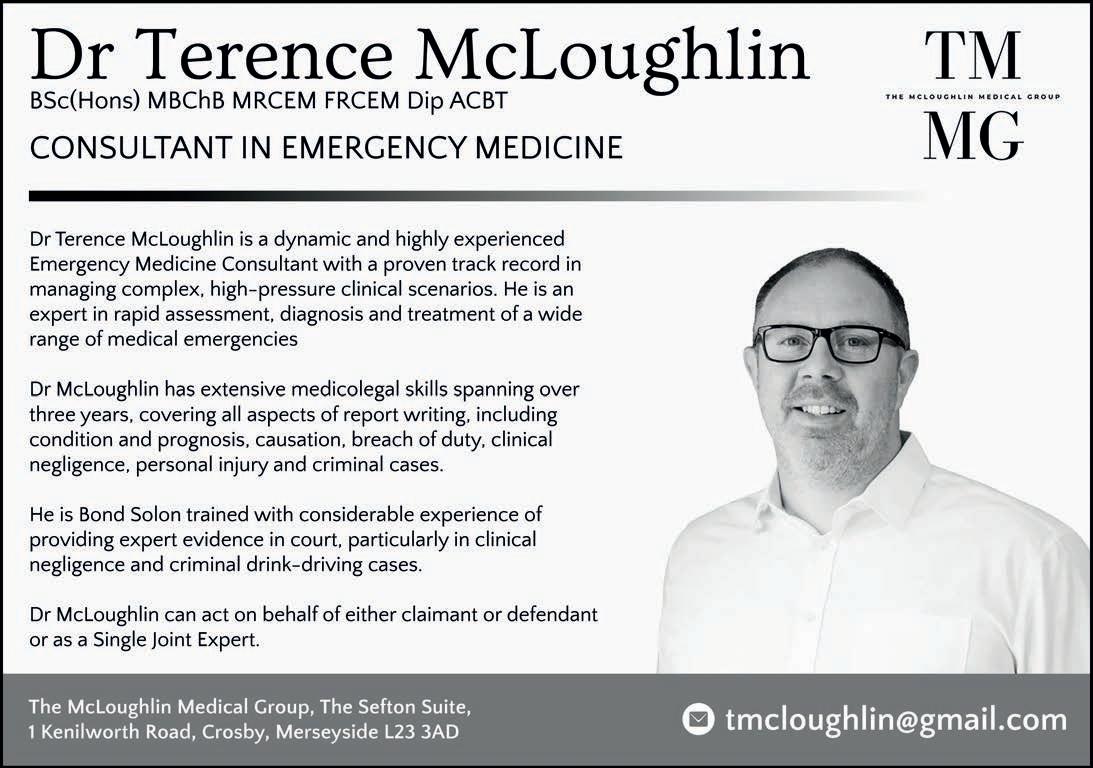
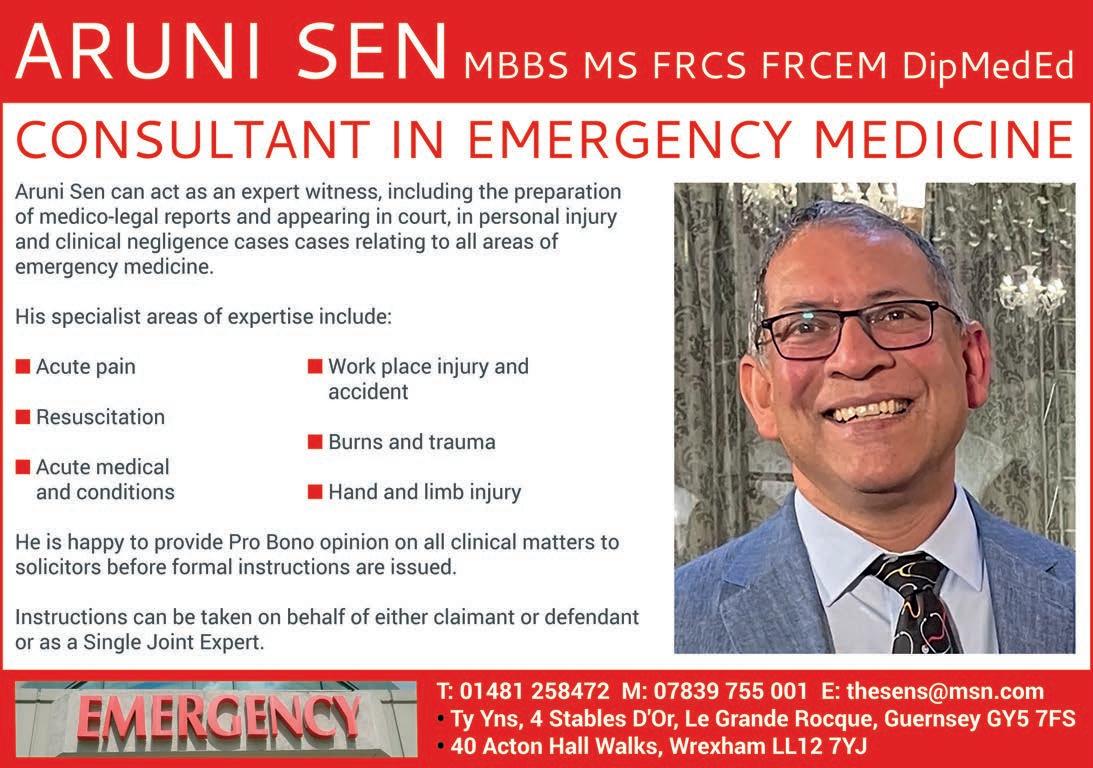
[ EMERGENCY MEDICINE is defined by time pressure. Nowhere in clinical practice is the margin between timely intervention and adverse outcome narrower than in the A&E department.
From a medico-legal perspective, time-critical decision making is often the central axis upon which questions of breach of duty, causation and prognosis turn. In many cases, it is not a lack of clinical knowledge that leads to poor outcomes, but rather delays or errors in prioritisation when seconds and minutes matter.
The A&E environment is inherently complex. Clinicians must rapidly assess undifferentiated patients, often with incomplete histories, limited diagnostic data and competing clinical priorities. Against this backdrop, the ability to make timely decisions is not simply desirable; it is fundamental to safe practice. Delays in recognition or escalation of serious conditions such as sepsis, stroke, myocardial infarction and internal haemorrhage remain recurring themes.
From a legal standpoint, the standard of care is judged against what a reasonably competent emergency clinician would do in the same circumstances. It recognises the realities of emergency care: uncertainty, workload pressures and imperfect information. However, it does not excuse avoidable delay where clear red flags are present. The critical question in many cases is whether the clinician acted with appropriate urgency given the clinical picture available at the time, rather than in hindsight.
One of the most frequent areas of scrutiny is triage and prioritisation. Effective triage is the gateway to time-critical care pathways. Patients presenting with subtle but serious conditions may initially appear stable, yet deteriorate rapidly if those conditions are not recognised and escalated. Failure to prioritise such patients appropriately is a common thread in claims where deterioration occurs in the waiting area or shortly after initial assessment.
Another key element is diagnostic speed versus diagnostic certainty. Emergency medicine often requires clinicians to act before a definitive diagnosis is established. The expectation is not perfection in diagnosis, but reasonable suspicion leading to timely action. When a patient may have suffered a stroke, delays in CT scanning, thrombolysis assessment or referral to stroke teams can have profound long-term consequences. Similarly, in major trauma cases, adherence to structured protocols should minimise delay in identifying life-threatening injuries.
Escalation of care is another critical decision point. Junior clinicians must recognise when senior input is required. Many adverse outcomes stem not from a single decision, but from a series of missed opportunities to escalate concerns. The absence of senior review in deteriorating patients, or failure to activate critical care pathways, often becomes central in cases relating to breach of duty.
Communication plays a pivotal role in time-critical decision making. In busy departments, handovers, referrals and interdepartmental communication must be clear and concise. Delays caused by miscommunication can significantly alter outcomes. In medico-legal analysis, documentation often becomes a key tool in reconstructing whether appropriate urgency was communicated and acted upon.
Resource constraints are frequently cited in emergency settings, but from an expert witness perspective, they do not remove the obligation to prioritise risk. While systemic pressures may explain delay, they rarely justify it where high-risk features are evident. Courts typically distinguish between unavoidable delay due to capacity issues and avoidable delay arising from clinical misjudgement or failure to escalate.
Importantly, time-critical decision making is not solely about speed; it is about appropriate speed. Over-rapid decisions without adequate assessment can also lead to harm, particularly where unnecessary interventions or premature discharge occur.
Ultimately, the role of the emergency clinician is to make the right

decision at the right time, often with incomplete information and under significant pressure. From an expert witness perspective, many cases do not hinge on clinical errors, but on delays in recognising severity or in acting on warning signs.
Time-critical decision making, therefore, sits at the heart of emergency medicine both clinically and legally. It is the thread that links assessment, action, escalation and outcome. Where it is executed well, patients recover from conditions that might otherwise be fatal. Where it falters, the consequences are often irreversible. q
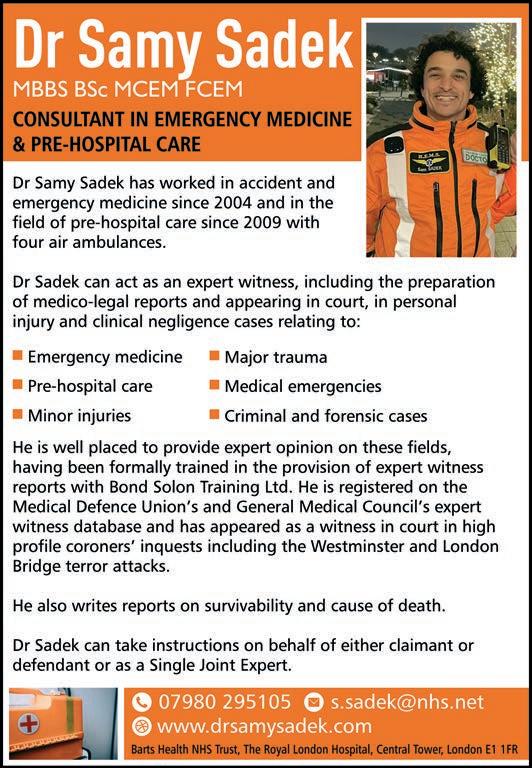
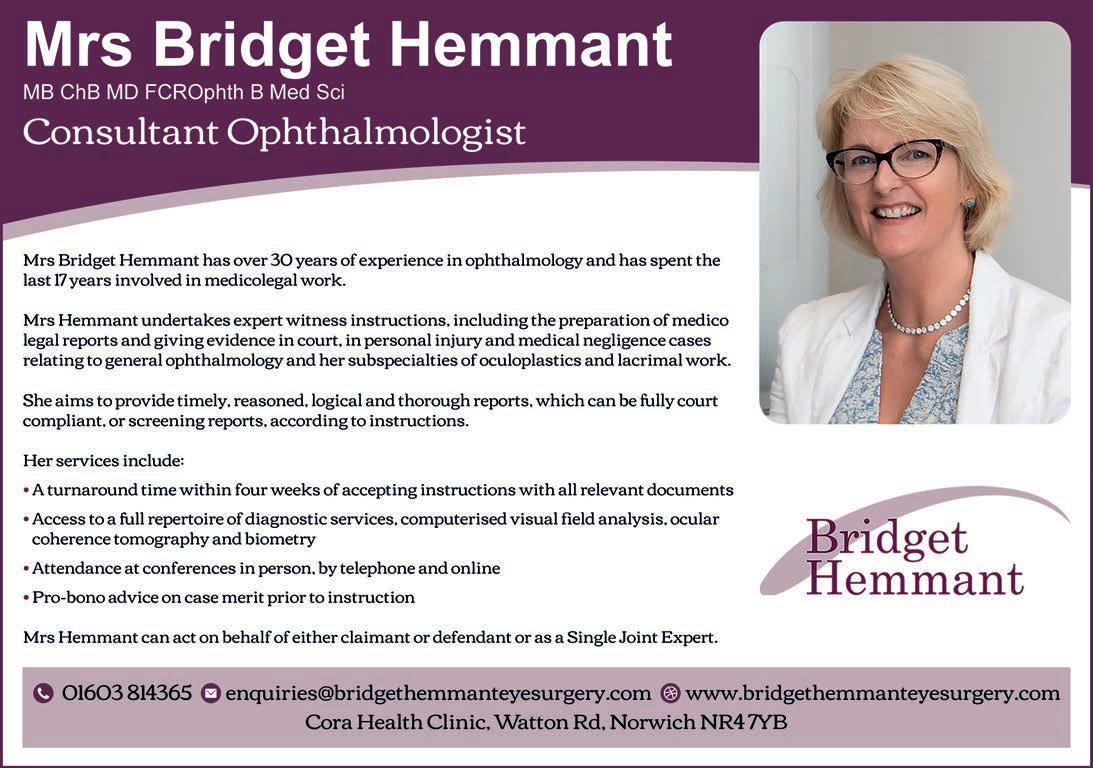
[WHEN SOLICITORS THINK of ophthalmic litigation, the immediate focus is often on vision loss, cataract surgery or retinal disease. Yet some of the most complex and challenging cases involve the structures surrounding the eye rather than the eye itself.
Disorders affecting the eyelids, tear drainage system and orbit can leave individuals with lasting physical, functional and psychological consequences, making specialist expert evidence essential.
The field of oculoplastic and lacrimal surgery sits at the intersection of ophthalmology and reconstructive surgery. Specialists in this area diagnose and treat conditions affecting the eyelids, eye socket, tear drainage system and surrounding facial tissues. Their expertise is frequently called upon in both personal injury and clinical negligence claims where questions arise regarding diagnosis, treatment and longterm outcome.
These cases can be particularly challenging. The anatomy is complex, the injuries are often highly individual and the impact on a claimant's quality of life may extend far beyond the immediate physical symptoms. An injury that affects the eyelids or tear drainage system may not threaten sight directly, but it can result in chronic discomfort, facial asymmetry, scarring, excessive tearing and significant emotional distress.
Clinical negligence claims commonly arise from delayed diagnosis or treatment. A missed eyelid tumour, an undiagnosed orbital fracture or a failure to recognise a serious infection can have lasting repercussions for a patient. In some cases, earlier intervention may have prevented the need for more extensive surgery or reduced the severity of longterm complications. Determining whether the standard of care fell below that expected of a competent practitioner requires specialist expertise.
[ THE Royal College of Ophthalmologists is backing new guidance from NHS England’s Getting It Right First Time (GIRFT) programme aimed at reducing the risk of avoidable sight loss through a clinical framework for the delivery of glaucoma care in England. It prioritises early detection, accurate referrals and lifelong continuity of care.
The GIRFT Best Practice for Glaucoma Services guidance, which is also supported by the College of Optometrists, the Royal National Institute of Blind People, Glaucoma UK, the UK Ophthalmology Alliance and the Independent Healthcare Providers Network, supports the standardisation of local delivery pathways to ensure the risk of irreversible sight loss is minimised for glaucoma patients.
In line with the 10 Year Health Plan, the guidance demonstrates the importance of digitally enabled pathways and provision of care closer to home.
For new patients, this will involve additional testing in the community before they are referred to hospital: to help ensure they need the referral.
For patients needing glaucoma follow up this will mean more efficient services delivered on time: through high-volume virtual pathways, with diagnostics and review being conducted in the hospital and the community, as well as in primary care settings.
For patients who no longer need follow up, they will be more likely to be discharged. q
Surgical claims are equally complex. Oculoplastic procedures are often performed within millimetres of critical anatomical structures. Even where surgery is technically successful, patients may remain dissatisfied with the cosmetic or functional outcome. Litigation frequently centres on whether complications were unavoidable risks of treatment or whether they resulted from substandard care. Such distinctions can only be properly evaluated by a specialist with direct experience of the procedures involved.
Personal injury practitioners will also encounter oculoplastic issues following road traffic collisions, workplace accidents and assaults. Orbital fractures, eyelid lacerations and damage to the lacrimal drainage system can result in long-term symptoms that affect both appearance and day-to-day function. Assessing prognosis, future treatment requirements and the impact of permanent scarring requires specialist input.
Another recurring issue is consent. Because many oculoplastic procedures have both functional and cosmetic objectives, patient expectations play a significant role. Disputes may arise where individuals believe they were not fully informed about potential risks, complications or alternative treatment options.
Obtaining expert evidence at an early stage can help clarify the key issues and provide a realistic assessment of the merits of a claim. Whether the case concerns delayed diagnosis, surgical complications or traumatic injury, the oculoplastic and lacrimal expert plays a vital role in helping the court understand highly specialised medical evidence.
As claims involving facial and periocular injuries continue to evolve, the importance of selecting the right expert from the outset cannot be overstated. In many cases, their opinion will form the foundation upon which the entire claim is built. q
[ GLAUCOMA REMAINS ONE of the most frequently litigated conditions in ophthalmology, largely because its progression can be insidious, its diagnosis is often delayed and its outcomes are highly dependent on timely intervention and sustained long-term management.
Glaucoma-related claims commonly centre on alleged failure to diagnose, inadequate monitoring, delayed escalation of treatment and avoidable visual field loss leading to permanent impairment or blindness.
At the heart of most glaucoma litigation is the challenge of diagnosis. Primary open-angle glaucoma in particular may develop gradually and remain asymptomatic until significant optic nerve damage has occurred. Patients may attend optometry or ophthalmology services for years with raised intraocular pressure, suspicious optic disc cupping or borderline visual field defects before a definitive diagnosis is made.
outcome. Expert evidence therefore frequently involves modelling disease progression and assessing whether the timing of diagnosis or treatment made a material difference to visual field preservation or risk of blindness.

Claims frequently allege that abnormal findings were either not acted upon or were not appropriately investigated, resulting in avoidable progression of disease.
Expert ophthalmology evidence typically focuses on whether there was a reasonable and timely response to clinical signs. This includes consideration of whether intraocular pressure measurements were interpreted correctly, whether optical coherence tomography findings were appropriately evaluated and whether visual field testing was repeated and tracked over time. The standard of care is judged against accepted clinical practice at the time, not with hindsight based on disease progression.
A significant proportion of glaucoma claims involve delayed referral from primary care into secondary ophthalmology care. In such cases, the key issue is often whether a reasonably competent practitioner would have recognised red flag features requiring urgent specialist assessment. These may include markedly elevated intraocular pressure, progressive optic nerve cupping, asymmetric disc appearance or reproducible visual field loss. Where referral is delayed, claimants often argue that earlier intervention would have preserved visual function.
Once a diagnosis is established, litigation may shift to the adequacy of ongoing monitoring and treatment. Glaucoma management is inherently long term, requiring regular assessment of intraocular pressure, optic nerve appearance and visual fields. Allegations in this context often include insufficient frequency of follow-up appointments or failure to escalate treatment when pressure targets are not achieved.
Surgical and procedural interventions themselves can give rise to claims. Trabeculectomy, glaucoma drainage devices and laser trabeculoplasty all carry recognised risks, including hypotony, infection, bleb failure and vision loss. In litigation, the key question is often whether risks were properly explained and consent appropriately obtained. Courts will examine whether the claimant had been informed of material risks and reasonable alternatives.
Another recurring theme is postoperative complication management. Elevated intraocular pressure following surgery, bleb leaks or infection require prompt recognition and treatment. Delays in identifying complications may be alleged to have materially worsened the outcome. Expert witnesses are often asked to determine whether deterioration was an unavoidable complication of treatment or whether it resulted from substandard postoperative care.
Causation is often a particularly contentious issue in glaucoma litigation. Unlike many acute conditions, glaucoma damage is typically irreversible and progression may continue despite appropriate treatment. This makes it difficult to establish whether earlier intervention would have significantly altered the long-term visual
In many cases, defendants argue that even with optimal care, some degree of visual deterioration would have occurred due to the chronic and progressive nature of the disease. Claimants, however, may point to missed opportunities for earlier treatment escalation or more aggressive pressure control that could have slowed progression. Courts must therefore weigh competing expert opinions on likely disease trajectory.
Documentation also plays a critical role in glaucoma-related claims. Inadequate recording of optic nerve assessments, visual field results or patient discussions regarding risks and treatment options can significantly weaken a defence. Clear evidence of clinical reasoning, informed consent discussions and patient engagement is often decisive in determining liability.
Overall, glaucoma litigation reflects the intersection of subtle clinical presentation, long-term disease management and irreversible outcomes. Expert ophthalmology evidence is essential in distinguishing between unavoidable disease progression and potentially preventable visual loss. As diagnostic technology improves and expectations around timely intervention increase, scrutiny of glaucoma care is likely to remain a persistent feature of ophthalmic litigation. q
[FOLLOWING REPRESENTATIONS
made over many years, The Royal College of Ophthalmologists (RCOphth) has welcomed the news that NHS England has listened and made a significant change that will incentivise NHS trusts to better prioritise more complex ophthalmology care.
From 1 April changes to the NHS Payment Scheme, which determines what providers are paid in England for delivering different NHS ophthalmology services and treatments, have seen prices paid to cataract services providers cut by 20%. Most of the resultant savings will be used to increase payments for more complex ophthalmology care.
The college hopes this will enable NHS organisations to better prioritise treatments for patients who are at risk of irreversible sight loss, including those with conditions such as wet age-related macular degeneration and complex glaucoma.
They would, however, have liked NHS England to introduce differential tariffs for
NHS and independent sector providers performing cataract surgery, reflecting the additional costs incurred by the NHS providing a 24/7 emergency eye care service, treating more complex patients, managing post-surgical complications, delivering research and education, and cross subsidising loss-making services.
They also believe that NHS England should create an ophthalmology transformation fund to recycle savings, supporting a national rollout of proven local innovations such as the model of high-volume outpatient care pioneered by the One Devon Elective Pilot.
In its impact assessment, NHS England estimates that in 2026/27 independent sector providers will lose £45m as a result of changes to the NHS Payment Scheme.
The RCOphth have consistently argued that it is vital that the NHS makes best use of the limited funds available. Comprehensive NHS ophthalmology services focused on preventing avoidable irreversible sight loss
need to be resourced with the right staff, space and physical and digital infrastructure.
Commenting on the decision, RCOphth President Professor Ben Burton said: “This is a victory for common sense. Over-incentivising cataract surgery has led to huge resource being diverted to this treatment, particularly in the independent sector, at the expense of more clinically urgent care. This change should reduce profits made by private providers and redirect the money to patient care.
“We hope this sensible decision by NHS England will lead to trusts better resourcing their comprehensive ophthalmology services, so we as ophthalmologists can do more to prevent people permanently losing their sight.
“I also hope this paves the way towards the government reviewing the commissioning framework that integrated care boards operate in, which can lead to perverse outcomes where commissioners struggle to be allowed to organise the services their patients need.” q
[THE Professional Standards Authority for Health and Social Care (PSA) has published its review of the General Optical Council’s (GOC) performance in 2024/25. For the fourth year in a row, the GOC has met all 18 of the PSA’s Standards of Good Regulation.
The report covers the period between 1 January and 31 December 2025 and highlights several areas of work where the GOC has performed well, including:
• Its ongoing commitment to equality, diversity and inclusion (EDI), including its adoption of a broader definition of vulnerability used in the new Care of patients in vulnerable circumstances guidance and the work of its Unfair Outcomes Working Group.
• Research with the public as part of its business regulation consultation to obtain a wide range of views to inform its final proposals.
• The evaluation of the impact and success of its new Continuing Professional Development scheme and identifying learning for future cycles.
• Support for education and training providers through the extension to the contract for the Sector Partnership for Optical Knowledge and Education (SPOKE) Knowledge Hub, which has been well-received by stakeholders.
• Sustained performance in responding to illegal practice cases, consistently closing all illegal practice cases within six months of receipt and closing more cases than received each month.
The report also noted that the GOC’s median timeframes in fitness to practise investigations remain some of the best among the health and social care regulators. The GOC will continue to work to maintain and improve the timeliness of its fitness to practise cases, in line with its commitment in the Strategic Plan 2025-30 and through its fitness to practise improvement programme.
Chair of Council, Dr Anne Wright CBE, said: “I am pleased that the PSA’s latest report recognises the hard work of everyone across the GOC, and I would like to thank our staff, Council, Committee and panel members, and workers for their sustained commitment to discharging our regulatory responsibilities, which has ensured we continue to meet all 18 of the Standards of Good Regulation.
“The report highlights our ongoing commitment to EDI as well as the work undertaken to increase timeliness in closing illegal practice cases since introducing an updated illegal practice protocol in 2022. We will also carefully consider the recommendations made by the PSA to make further improvements.”
Leonie Milliner, Chief Executive and Registrar, said: “I am delighted that for the fourth year in a row we have met all 18 of the PSA’s Standards of Good Regulation. Meeting the standards provides patients and the public, our registrants and stakeholders assurance that we are on the right path to delivering safe and effective eye care for all.
“The report highlights things we are doing well, as well as where we can make further improvements, and I’d like to thank the PSA for their thorough appraisal of our operations, as well as Council, our members, workers and all GOC staff for their hard work to help us meet the standards.
“We will continue to develop our people and continuously improve our systems and processes to ensure we meet the standards as we enter the second year of our 2025-30 corporate strategy, and as the PSA work to introduce new Standards of Good Regulation.” q
[ FOLLOWING ON from our last issue where we explored the importance of recognising the signs, sepsis remains one of the most time-critical and legally sensitive conditions encountered in the Emergency Department (ED).
While public and professional awareness has improved significantly over the past decade, claims continue to arise from delayed recognition, inappropriate initial management and failures in escalation. Where, in our last issue, discussion focused on identifying sepsis, the equally important question is how it is managed once suspected – and where clinical practice can either meet or fall short of accepted standards.
At its core, sepsis management is defined by urgency. National guidance emphasises early recognition, prompt administration of intravenous antibiotics, fluid resuscitation where indicated and timely senior review. In medico-legal terms, these steps form the backbone of what is considered reasonable and responsible care. However, claims often arise not from a complete absence of action, but from delays, partial implementation or misjudged clinical priorities.
One of the most frequent areas of concern is delay in administering antibiotics. Once sepsis is suspected, broadspectrum antibiotics should generally be given within one hour, particularly in cases of high-risk or septic shock presentation. In practice, delays may occur due to diagnostic uncertainty, waiting for investigations or difficulties obtaining intravenous access.
While some degree of clinical caution is understandable, failure to recognise the overriding importance of early antimicrobial therapy is often difficult to defend if harm ensues. The key question is whether the delay was justified by the clinical picture or whether it represented a departure from accepted standards.
Fluid resuscitation is another area where both undertreatment and over-treatment can become problematic. The ‘right’ approach is not uniform: it depends on patient factors such as age, comorbidities and response to initial intervention. However, failure to administer adequate fluids in hypotensive or perfusion-compromised patients can amount to a breach of duty if deterioration follows. Conversely, indiscriminate fluid administration without reassessment may contribute to pulmonary oedema or cardiac decompensation, particularly in elderly or frail patients.
Escalation of care is another critical domain. Sepsis is not a condition that should be managed in isolation or without senior input. Failure to involve senior clinicians in a timely manner can significantly alter outcomes. In litigation, a recurring theme is the ‘failure to escalate’ despite clear physiological warning signs. Documentation is particularly important here: evidence of discussions with seniors often becomes central in determining defensibility.
Investigations also require balanced clinical judgement. While blood cultures, lactate measurements and imaging studies are important, they should not delay immediate treatment. A common pitfall in suboptimal care is the prioritisation of diagnostic completeness over therapeutic urgency. The courts have repeatedly emphasised that sepsis management is a ‘treat first, investigate in parallel’ scenario. Deviations from this principle are closely scrutinised, particularly where delays are linked to avoidable deterioration.
Another issue that arises in expert analysis is the recognition of atypical presentations. Elderly patients, immunocompromised individuals and those with non-specific symptoms often present without classic signs such as fever or marked hypotension.
Failure to appreciate these subtleties can lead to under-triage and delayed treatment. Whether this amounts to negligence depends on whether an ED clinician should have identified sepsis earlier given the available information.
Communication and documentation underpin every aspect of safe sepsis management. Poorly recorded observations or absent escalation notes significantly weaken a defendant’s position. Conversely, clear documentation of clinical reasoning, even where outcomes are poor, can demonstrate that appropriate thought processes were applied.
Ultimately, sepsis management in the ED is judged not by perfection, but by reasonableness in a high-pressure, timesensitive environment. The ‘rights’ lie in rapid recognition, prompt treatment, timely escalation and continuous reassessment. The ‘wrongs’ typically emerge from delay, underestimation of severity or fragmented care.
For expert witnesses, the central task is to reconstruct whether the management trajectory aligned with accepted standards at each decision point, or whether missed opportunities cumulatively led to avoidable harm.
As sepsis pathways continue to evolve, so too does the medicolegal scrutiny applied to them. What remains constant is the expectation that clinicians act decisively, proportionately and without unnecessary delay when faced with a condition where every hour matters. q
[ HAEMATOLOGY is one of the most diagnostically demanding specialties in medicine, dealing with disorders of blood, bone marrow and coagulation. In medicolegal proceedings, that complexity translates directly into evidential difficulty.
Haematologists are routinely instructed as expert witnesses to interpret clinical decisions, laboratory data and treatment pathways in cases where blood disorders, clotting abnormalities or transfusion events are alleged to have been mismanaged.
Unlike many other fields, haematological conditions often evolve subtly, with early signs easily mistaken for benign or self-limiting illness. That makes the question of ‘when should action reasonably have been taken?’ central to many cases. Expert evidence is therefore not simply about identifying error, but about reconstructing clinical reasoning at the time decisions were made.
One of the most frequent areas of dispute involves delayed or missed diagnosis of haematological malignancies. Leukaemia, lymphoma and myeloma can initially present with vague symptoms such as fatigue, recurrent infections, weight loss or unexplained bruising. These features may lead to repeated primary care attendances before abnormal blood results trigger specialist referral.
Haematology experts are often asked to examine whether full blood count abnormalities were appropriately acted upon, whether persistent anomalies were correctly followed up and whether referral thresholds were met.
A recurring difficulty in these cases is causation. Even where delay is established, the clinical question remains whether earlier diagnosis would have altered outcome. Some blood cancers respond well to early intervention, while others progress rapidly despite treatment. Expert opinion must therefore separate ‘lost opportunity’ from inevitable disease course – often under conditions of significant uncertainty.
Anaemia-related claims form another substantial category. Iron deficiency anaemia is particularly common, but its underlying causes may include gastrointestinal malignancy, chronic disease or nutritional deficiency.
Claims often arise where anaemia is treated without adequate investigation, or where abnormal results persist over time without escalation. Expert haematologists will typically assess whether investigations such as ferritin testing, endoscopy referral or bone marrow examination were appropriately considered and interpreted in context.

Clotting disorders and thrombotic disease introduce a different set of risks. Venous thromboembolism – including deep vein thrombosis and pulmonary embolism –is a well-recognised area of litigation. Claims may involve failure to assess risk factors in hospitalised patients, inadequate thromboprophylaxis or delayed recognition of symptoms such as leg swelling, chest pain or breathlessness. Expert evidence focuses on whether accepted guidelines were followed and whether clinical signs were reasonably acted upon.
Bleeding complications are equally significant. These may arise in patients with inherited disorders such as haemophilia, or more commonly in those receiving anticoagulant therapy, antiplatelet drugs or with underlying liver dysfunction. Cases frequently involve perioperative bleeding, gastrointestinal haemorrhage or intracranial bleeding.
The expert’s role is to determine whether coagulation status was correctly assessed before procedures, whether abnormal results were investigated appropriately and whether reversal strategies or blood products were administered in line with accepted practice.
Anticoagulation therapy is a particularly high-risk area and a frequent source of negligence claims. Drugs such as warfarin, direct oral anticoagulants and heparin require careful dosing, monitoring and review. Cases may involve over-anticoagulation leading to haemorrhage or under-anticoagulation resulting in thrombotic events. Experts will be asked to evaluate prescribing decisions, drug interactions, monitoring intervals and adherence to recognised protocols. Such
cases often turn not on obvious error, but on whether clinical judgement fell within a reasonable range of acceptable practice.
Transfusion medicine also generates a significant proportion of haematologyrelated litigation. Although modern blood transfusion practice is highly regulated, errors can still occur, ranging from transfusion reactions to incorrect blood component administration. In the most serious cases, ABO incompatibility errors can result in life-threatening consequences.
Expert analysis typically examines whether identification checks were properly performed, whether indications for transfusion were appropriate and whether national and hospital protocols were followed. Documentation and traceability are often decisive.
Chemotherapy-related complications represent another complex area. Patients with haematological malignancies frequently receive cytotoxic therapy that suppresses bone marrow function and increases infection risk. Adverse outcomes may include neutropenic sepsis, organ toxicity or severe myelosuppression. Claims may arise where dosing is incorrect, monitoring is inadequate or early signs of toxicity are missed. Expert witnesses assess whether treatment regimens were appropriate for the patient’s clinical status and whether complications were managed promptly and effectively.
Across all areas of haematology litigation, interpretation of laboratory data is fundamental. Blood results are dynamic and often require trend analysis rather than isolated interpretation. Experts are frequently required to reconstruct sequences of results over time to determine whether abnormal patterns were recognised and acted upon appropriately.
Communication failures and system delays also feature prominently. Laboratory reporting delays, breakdowns in referral pathways or failure to escalate abnormal results can all contribute to harm. While individual clinical decision making remains central, many cases involve systemic rather than purely individual error.
Ultimately, the haematologist acting as an expert witness provides the court with structured interpretation of complex biological data and nuanced clinical decision making. Their role is to distinguish acceptable clinical variation from negligent care and to assess whether any breach materially altered outcome. In a specialty where subtle abnormalities can signal serious disease, their evidence is often critical to the resolution of disputed medical facts. q
By Philip Coleridge Smith DM MA BCh FRCS, Consultant Vascular Surgeon, Medical Director of the British Vein Institute and Emeritus Reader in Surgery at UCL Medical School
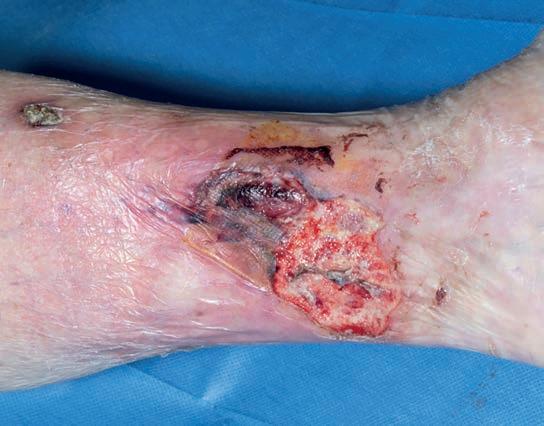
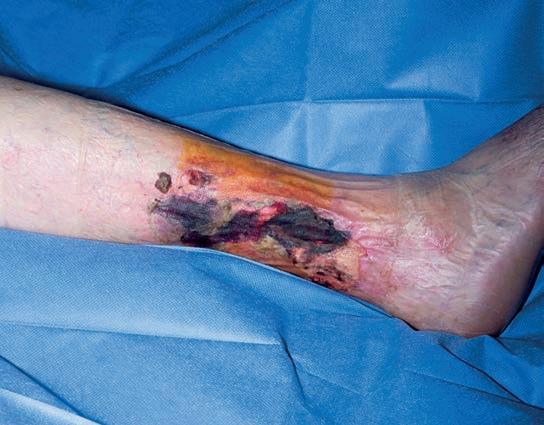
Examples of ischaemic leg ulceration. Ulcers should be investigated by evaluation of blood flow in the arteries and veins using ultrasound imaging
[ LEG ULCERATION is a common problem that can arise from a number of causes. Difficulty in distinguishing the causal factor may lead to critical delay in the management of limb ischaemia leading to loss of the limb or loss of the patient.
This is illustrated in the cases described below. Leg ulceration leads to substantial costs to the NHS as a result of the need for regular ulcer dressings. It is estimated that chronic wounds, most due to treatable lower limb venous disease, cost the NHS £3 billion per year.
Causes of leg ulceration
The more frequent causes of leg ulceration, which frequently coexist, are:
• Venous disease such as varicose veins or previous deep vein thrombosis – present in 60-80% of cases
• Arterial disease due to blocked arteries – present in 10-20% of cases
• Diabetes arising from damage to peripheral nerves from diabetes – present in 15-25% of leg and foot ulcers
• Trauma – injuries to the leg
• Rheumatoid arthritis causing ‘vasculitis’ in the skin which damages tiny blood vessels
• Cancer of the skin
Each of these conditions has specific tests which can be used to identify the problem, so the diagnosis can be made and appropriate treatment instigated.
A 70-year-old gentleman presented with a history of previous vascular surgery for lower limb arterial disease due to smoking a decade earlier. He had also suffered a stroke to the left side of his body several months earlier. He reported onset of pain in the ankle to his GP and this was attributed to the earlier stroke. Symptomatic treatment was prescribed.
His ankle pain persisted and three months later a further GP appointment was arranged but no diagnosis was reached. He then attended the A&E Department and was thought to have been injured in a fall. The cause of leg pain was not established.
After a further appointment another GP recorded a history of severe pain in the foot which was worse at night. A clinical examination was done during which tenderness of the foot was found and a diagnosis of plantar fasciitis was made.
Further consultations with his GPs as well as two attendances in the A&E Department took place over the next two months. Increasingly potent analgesia was prescribed for the foot pain. An ulcer developed over the lateral aspect of the foot. Eventually a vascular cause for the foot ulcer was suspected and a vascular clinic appointment was requested.
The symptoms had persisted for six months without a diagnosis being established. The limb circulation had not been assessed by palpation of pulses or Doppler ankle blood pressure measurement.
One month later the patient was admitted to hospital in a collapsed state. Extensive ischaemic ulceration was found in the left lower limb with gangrene due to occluded leg arteries. He died three days later from septicaemia.
Comment: This case illustrates that failure to take an adequate medical history (of previous vascular surgery) and to examine the lower limb pulses led to failure to diagnose limb ischaemia. Palpation of pulses and Doppler ultrasound would have revealed the presence of severe ischaemia. This led to death of the patient. Most patients with severe limb ischaemia can be treated by endovascular surgery which will avoid the need for limb amputation in the majority of patients as well as death.
Claimants for whom delayed diagnosis of limb ischaemia results in a poor outcome can refer to published guidelines of the Vascular Society of Great Britain and Ireland which state that all doctors should be able to identify the presence of severe limb ischaemia by clinical examination, since this is a common condition. Where a limb is lost due to delayed diagnosis, a claimant may have a robust case in civil litigation.
A 55-year-old patient with a smoking history presented to the A&E Department with recent onset of pain in the foot. This was associated with ulceration at the ankle. Clinical examination
demonstrated loss of pulses below the femoral in this limb. He was referred to the Vascular Surgery Department where CT angiography confirmed that limb ischaemia was present. Endovascular surgery was undertaken which led to improvement in his symptoms.
However, two years later painful ulceration at the ankle persisted despite normal blood flow in the arteries at the ankle. Eventually, examination of the lower limb veins was done using Duplex ultrasound imaging. The great saphenous vein in the affected limb was greatly dilated with vascular incompetence which is a frequent cause of varicose veins. Varicose veins are a common cause of leg ulceration and are readily treated by endovenous vascular surgery, usually under local anaesthetic. Eventually the patient underwent this treatment leading to healing of the leg ulcer and relief of his symptoms three years after his original presentation with a leg ulcer.
Comment: Venous and arterial disease are both commonly associated with leg ulceration. All doctors should be aware of this. Evaluation of both systems should be done in leg ulcer patients in order to avoid incorrect or incomplete treatment being provided. In this case, failure to treat large varicose veins allowed a leg ulcer to persist needlessly for three years despite adequate treatment of the arterial system.
Conclusions
A number of common medical conditions give rise to leg and foot ulceration. Specific treatment is required for the cause of the ulcer. Making the assumption that a leg ulcer is caused by a venous problem, without proper evaluation of the limb circulation to assess the arteries and veins, risks missing a clinically significant arterial disease. Other important causes of the ulcer may also be missed, such as malignant disease.
A claimant may have a valid case where incorrect or delayed treatment has been provided as the result of incorrect diagnosis. q
David Berry PhD FRC Path MFSSoc MRSC
Independent Toxicology Consultant
Specialist in Clinical and Forensic Toxicology with particular emphasis on drugs (both illicit and therapeutic) and alcohol. www.toxicologyservices.co.uk
Mr Timothy Burge MBChB FRCS FRCS(Plast) DMCC MSc
Consultant Burns & Plastic Surgeon
• Cosmetic and aesthetic surgery of the breast and trunk
• Burns • Trauma • Scars
Clinics in Birmingham, Bristol, Cardiff, London and Salisbury. www.clifton-plastic-surgery.co.uk


Professor Paul J Ciclitira MB PhD FRCP MRCS FRCP AGAF
Professor of Gastroenterology with particular interest in food allergy, including Coeliac disease, peptic ulcer, inflammatory bowel disorder and hepatology. www.profpaulciclitira.co.uk
Mr Philip Coleridge Smith DM MA BCh FRCS
Consultant Vascular Surgeon 20 years of:
• Defendant instructions • Claimant instructions
• Single joint expert • Court experience


Dr Sam Creavin MPhil MBChB MRCP(UK) MRCGP PhD CUBS
General Medical Practitioner

• Delayed diagnosis: cancer, sepsis, spinal disorders, ectopic pregnancy, diabetes, heart disease • Instructed by GMC and NHS resolutions 60/40 split • Quick turnaround. Authoritative, logical and reasoned reports. www.gpexpertwitness.com
Chris Dawson MS FRCS LLDip
Consultant Urologist with 22 years experience of medico legal report writing and expert witness work and has completed over 2,100 reports. He also regularly completes Fitness to Practice reports for the General Medical Council.
www.chrisdawson.org.uk
Mr Mark Duxbury MA (Oxon) DM FRCSEd (Gen Surg)
Consultant Hepatobiliary, Pancreatic & General Surgeon
• General & emergency surgery • Hernia surgery
• Liver & pancreatic surgery • Gallbladder & biliary surgery
• Laparoscopic surgery • Hepatobiliary surgery www.markduxbury.info/medicolegal
Equip2Speak
Medico-legal Consultancy for Assistive Technology (AT) & Speech and Language Therapy (SLT)
• Specialists in Brain and Spinal Injury
• Justified Evidence & Expertise in Immediate & Lifetime Needs
• Experienced in Complex & High-Value Claims
• Claimant/Defendant/Joint Instruction
Dr Lance N. Forbat BSc (Hons) MD FRCP FRCP (Glasgow)
Consultant Cardiologist
Experienced in writing medico-legal reports on all aspects of adult cardiology – specialising in angina, heart failure, arrhythmias and pacing.



Mr Kim Hakin FRCS FRCOphth
Consultant Ophthalmic Surgeon and Expert Witness on ophthalmological matters
www.kimhakin.com

Mr Vijay Joshi MBChB, LL.B (Hons), FRCSEd (C-Th), PGCert (Medical Law)
Consultant Thoracic Surgeon
Personal injury and clinical negligence cases relating to diseases and injuries of the chest. Preparation of medicolegal reports and giving evidence in court.
www.thoracicexpertwitness.co.uk
Atul Khanna FRCS (Plast)
Consultant Plastic, Reconstructive and Hand Surgeon
• Hand surgery • Soft tissue injury • Burns management
• Medical negligence in cosmetic surgery www.atulkhanna.co.uk/expert-witness/
Dr Raj Kumar – Dental Expert
Causation and Liability and Condition and Prognosis Reports
• General dentistry • Cosmetic dentistry • Patient consent
• Dental implantology
• Orthodontics • Facial aesthetics
07802 456 804 | info@dentalexpert.me | www.dentalexpert.me
Kulvinder Lall Consultant Cardiothoracic Surgeon Instructions taken in cases relating to cardiac and thoracic surgery, including aspects relating to surgical care and those following trauma to the structures of the chest. www.kulvinderlall.com




Consultant Ophthalmic, Oculoplastic & Orbital Surgeon
www.heartattacksymptoms.co.uk

Mr Brian Leatherbarrow BSc MBChB DO FRCS FRCOphth
• Complications of cosmetic eyelid surgery • Eyelid reconstructive surgery • Eyelid and orbital tumours and trauma • Loss of an eye / socket reconstructive surgery • Thyroid eye disease • Ptosis surgery
www.medicolegalophthalmology.co.uk
Mr Richard Matthews MB BS FRCS FRCSE MAE
PLASTIC & HAND SURGEON
Mr Matthews is well versed in the provision of Medical Reports relating to Personal Injury ranging from scarring through trauma, including burns and scalds, to non-bony hand injuries.
www.richardmatthewsmedicolegal.uk
Mr Lindsay Muir MB MCh(Orth) FRCS(Orth)
Consultant Hand Surgeon
• Amputation • Nerve injury • Dupuytren’s disease
• Scaphoid fracture • Finger fracture • Tendon injury
• Hand surgery • Wrist fracture www.tmhc.co.uk
Mr Abraham Odumala
MBBS M.MedSci FWACS FRCS FRCS(Tr & Orth)
Consultant Orthopaedic Surgeon – Upper Limb Specialist. Expertise in all upper limb conditions and treatment. Shoulder, elbow, wristand hand injuries. www.yorkshire-upperlimb.co.uk www.adsummedicolegal.com & www.britishveininstitute.com




Dr Shanthi Paramothayan
BSc PhD MBBS LLM MScMedEd FHEA FCCP FRCP
Consultant Respiratory Physician specialising in negligence cases relating to all aspects of respiratory medicine. www.paramothayan.com
Jonathan Park Consultant Ophthalmologist
MB ChB (Hons) BSc (Hons) FRCOphth
Clinical negligence (ophthalmology) and personal injury (non-surgical ocular trauma) cases. Can act on behalf of either claimant or defendant or as a Single Joint Expert. www.jonathan-park.co.uk
Dr Nick Plowman MA MD FRCP FRCR
Consultant in Clinical Oncology
Specialist areas of expertise include radiation therapy, chemotherapy, immunotherapy and genomics as well as delay in diagnosis. This applies to adults and children. drnickplowman.com
Dr Stuart Porter Chartered Physiotherapist
PhD MCSP HCPC BSc Hons Grad Dip Phys MLACP PGCAP Cert.MHS SFHEA Specialist areas of expertise include: • Clinical negligence
• Breach of duty • Allegations of inappropriate contact
• Assessment of adults • HCPC investigations. https://physiowitness.co.uk/
Dr Samy Sadek MBBS BSc MCEM FCEM
Consultant in Emergency Medicine & Pre-Hospital Care
• Minor injuries • Major trauma
• Medical emergencies
• Criminal and forensic cases
• Reports on survivability and cause of death. www.drsamysadek.com
Mr Sameer Singh MBBS BSc FRCS Orth
Consultant Orthopaedic Surgeon • All aspects of trauma – soft tissue and bone injuries
• Upper and lower limb disorders and injuries
• Whiplash injuries • Expert Witness for defence and claimant Clinic locations – London, Milton Keynes and Bedford





Prof. Elizabeth J. Soilleux MA MB BChir PhD FRCPath PGDipMedEd
Expert Witness Pathologist with a particular interest in haematopathology. Short reports on specimens, full court compliant reports and expert biopsy reporting. www.expertwitnesspathologist.co.uk

Mr Bernard Speculand MDS FDS FFD FRACDS (OMS) Consultant Oral and Maxillofacial Surgeon. Personal injury and clinical negligence cases for claimant, defendant and as Single Joint Expert. Special interest is TMJ Surgery.
Yvette Young (Secretary) T: 0121 605 1884 E: info@medsecadmin.co.uk www.birminghamtmj.co.uk
Dr Ian Starke MSc MD FRCP
Stroke Medicine and Medicine for the Elderly Reports and examinations for clinical negligence and personal injury cases in stroke medicine and geriatric medicine www.expertwitnessinstrokes.co.uk
Mr. William E G Thomas Bsc, MBBS, FRCS, MS Consultant Surgeon specialising in general surgery, hernia surgery, gastrointestinal surgery, hepatobiliary-pancreatic surgery, laparoscopic surgery and endocrine surgery T: 0114 262 0852 E: wegthomas@btinternet.com W: www.wegthomas.com
Lymm Eye Clinic
Lymm Eye Clinic are a team of leading, independent ophthalmology experts covering all aspects of ophthalmology. www.lymmeyeclinic.co.uk www.orthopaedicexpertwitness.net

DR S V MEDICALS (Mr Sen Venkat)




MSc Ortho (London) FRCS Consultant Orthopaedic Surgeon
• Whiplash injuries • General trauma • Sports injuries
• Clinical negligence work • Joint replacement surgery of hip and knee • Hand, shoulder, elbow and wrist injury www.drsvmedicals.co.uk
Ms Leyla Ziyal MPhil AFBPsS CPsychol
HCPC Registered clinical Neuropsychologist
• Neuropsychological assessment and rehabilitation
• Depression • Occupational stress • PTSD • Anxiety www.accentpsychology.co.uk



[
UPPER GASTROINTESTINAL (GI) SURGERY involves procedures on the oesophagus, stomach, gall bladder, pancreas and upper small bowel. Although many operations are performed successfully with good outcomes, complications remain an inherent risk.
As a result, upper GI surgery is a frequent focus of clinical negligence litigation, where issues commonly centre on diagnosis, consent, intra-operative decision making and post-operative care.
Patients may undergo upper GI surgery for a range of benign and malignant conditions, including severe reflux disease, hiatal hernias, gallstone disease, peptic ulcer complications and obesity. Bariatric surgery, such as gastric bypass and sleeve gastrectomy, is increasingly undertaken to manage morbid obesity and its associated comorbidities, including Type 2 diabetes and cardiovascular disease.
Careful pre-operative assessment is essential. Investigations such as endoscopy, oesophageal pH studies and manometry help confirm diagnosis and assess suitability for surgery. In bariatric cases, selecting the appropriate procedure requires consideration of patient factors, expected outcomes and surgical expertise. In medicolegal claims, criticism often arises from alleged failures in pre-operative evaluation or inadequate informed consent regarding risks and alternatives.
Although upper GI surgery is generally safe, complications may still occur. Early post-operative problems include bleeding, wound infection, anastomotic leak and venous thromboembolism. One of the most serious bariatric complications is leakage at the surgical join leading to peritonitis. Diagnosis can be challenging, particularly in obese patients where classical signs of peritoneal irritation may be absent. Delay in recognition may rapidly progress to sepsis, multi-organ failure and even death.
Expert witnesses are frequently asked to consider whether deterioration was appropriately recognised and managed. Key issues include the adequacy of postoperative monitoring, escalation of care, timing of imaging
and whether surgical review or re-intervention occurred promptly.
Thromboembolic complications such as deep vein thrombosis and pulmonary embolism are also well-recognised risks. Preventative measures, including anticoagulation, compression devices and early mobilisation, are widely accepted standards. Claims may arise where it is alleged that these measures were not implemented or monitored appropriately.
Some complications present late. Internal hernias, adhesions and small bowel obstruction may develop months or years after bariatric surgery, often presenting with non-specific abdominal pain. Failure to investigate persistent symptoms appropriately can result in delayed diagnosis of bowel strangulation or necrosis, with severe consequences. Expert evidence is often required to determine whether earlier intervention would have altered the outcome.
Long-term nutritional issues represent another important medicolegal issue. Altered gastrointestinal anatomy may impair absorption of vitamins and minerals, leading to anaemia, osteoporosis, vitamin deficiencies and neurological complications. Lifelong supplementation and monitoring are frequently required. Litigation may arise where patients were not adequately informed of these risks or where follow-up care was substandard.
Infections can also be significant. Disruption of gut flora and compromised physiological barriers can increase susceptibility to bacterial and fungal infections, particularly in immunosuppressed or critically ill patients.
All of these complications require detailed analysis of complex medical records, operative notes and postoperative data. Expert witnesses play a crucial role in determining breach of duty, causation and prognosis. Despite advances in minimally invasive techniques, upper GI surgery continues to carry significant risks, making expert interpretation essential in resolving disputed clinical issues. q
[COMPLEX REGIONAL PAIN SYNDROME (CRPS) remains one of the most challenging conditions encountered in personal injury and clinical negligence litigation. As there is no single definitive diagnostic test, disputes frequently arise regarding both diagnosis and causation. For defendants and their expert witnesses, careful scrutiny of the medical evidence is therefore essential when assessing the validity and severity of a claim.
CRPS is characterised by chronic pain, sensory disturbance and functional impairment, often following injury or surgery. However, symptoms can vary considerably between individuals and are heavily reliant upon subjective reporting. This creates significant difficulties within litigation, particularly in high-value claims where future care, loss of earnings and disability costs may be substantial.
A thorough review of the claimant’s medical records is one of the most important aspects of defending a CRPS claim. Claimants may have been assessed by multiple clinicians including GPs, orthopaedic surgeons, pain specialists, physiotherapists and psychiatrists. Crossreferencing records can reveal inconsistencies in the chronology, severity or progression of symptoms. Experts will also consider whether alternative diagnoses were explored and whether the reported presentation genuinely aligns with recognised CRPS criteria.
Neurological investigations and pain assessments require particularly careful interpretation. As many findings are subjective, experts must assess whether examination results are consistent across different consultations. In some cases, repeated consultations with multiple specialists in search of a preferred diagnosis may also raise concerns regarding symptom exaggeration or fabrication.
The possibility of malingering is frequently discussed in chronic pain litigation, although proving deliberate fabrication remains difficult. Many experts are understandably cautious about making direct allegations of malingering, preferring instead to highlight inconsistencies and allow the court to draw conclusions. Nonetheless, discrepancies between reported disability and objective evidence can be highly significant.
Functional assessment often plays a key role in this process.
Surveillance evidence, social media activity and witness accounts may all assist in establishing a claimant’s true level of daily functioning.
A substantial difference between what a claimant reports and what they are observed doing may indicate exaggeration of symptoms. Social media evidence can be especially revealing, as claimants may unintentionally provide evidence of activities inconsistent with the limitations described in medical reports.
Another important consideration is the issue of pre-existing vulnerability. Defendants may argue that the claimant had underlying psychological or medical factors predisposing them to chronic pain regardless of the index event. Even where causation is accepted, experts may conclude that symptoms would likely have developed at some stage in any event, thereby limiting the extent of damages.

The prognosis for CRPS can also be difficult to predict. Some claimants experience long-term symptoms with little improvement, while others show gradual recovery, particularly where psychological factors are prominent and appropriate treatment is provided. It has also been observed that symptoms sometimes improve following the conclusion of litigation, when stress and focus upon the claim diminish.
For solicitors defending CRPS claims, expert medical evidence is therefore critical. Pain medicine specialists, psychiatrists, neurologists and rehabilitation experts may all contribute to assessing diagnosis, causation, prognosis and functional impact. Given the subjective nature of CRPS, these cases often require particularly detailed analysis of both the medical records and the claimant’s day-to-day activities.
Until more objective diagnostic tools become available, CRPS litigation is likely to remain a complex and contested area of medicolegal practice, where the quality and detail of expert witness evidence can be decisive. q
[ WORKING AS AN EXPERT WITNESS in obstetrics and gynaecology brings with it a unique level of responsibility. Many of the cases involve life-changing injuries, emotionally traumatic outcomes and clinical decisions made under immense pressure. Unlike some other medico-legal disciplines, obstetric and gynaecological claims frequently affect not only one patient, but entire families whose lives may have been altered in a matter of minutes.
From an expert’s perspective, the role is not to criticise poor outcomes simply because complications occurred. Pregnancy and childbirth are inherently unpredictable, and even wellmanaged care can result in adverse events. The task instead is to examine whether the clinical team acted in a way that would be considered reasonable, competent and defensible by accepted professional standards.
One of the most common instructions received by obstetric experts relates to labour and delivery management. Cases frequently involve allegations of delayed caesarean section, failure to recognise foetal distress or inappropriate management of prolonged labour. Reviewing these claims often requires detailed analysis of cardiotocography traces, labour records, staffing pressures and the timing of clinical interventions.
Patients are entitled to be informed of material risks and reasonable alternatives in a way that allows them to make informed decisions about their care. Experts are frequently asked to examine not only the procedure itself, but also the quality of the consent discussion beforehand. Medical records, clinic letters and patient information leaflets may all become important pieces of evidence when assessing whether informed consent was properly obtained.
A central part of the expert witness role is addressing the four key medico-legal issues: duty of care, breach, causation, and condition and prognosis.

The difficulty is that many decisions in obstetrics are made rapidly and in evolving circumstances. Hindsight can make certain outcomes appear obvious, but an expert must assess the situation based on the information available to clinicians at the time. Courts rely heavily on independent experts to explain these realities fairly and objectively.
Birth injury claims remain among the most serious and technically demanding cases. Allegations involving cerebral palsy, hypoxic brain injury or shoulder dystocia can result in substantial damages because of the lifelong care needs involved. In these cases, experts may spend many hours reconstructing labour events minute by minute to determine whether earlier intervention would probably have prevented injury.
Maternal injury claims are equally significant. Delayed diagnosis of sepsis, postpartum haemorrhage, ectopic pregnancy or pre-eclampsia can have devastating consequences and may raise difficult questions about monitoring, escalation and communication between clinical teams. Expert witnesses are commonly asked to determine whether warning signs were appropriately recognised and whether accepted protocols were followed.
Delayed diagnosis plays a major part in negligence cases. Claims involving ovarian cancer, cervical abnormalities or endometriosis often centre on whether symptoms were adequately investigated and whether referrals or imaging should have taken place sooner. Experts may be required to review years of medical records to assess whether opportunities for earlier diagnosis were missed.
Surgical complications also feature prominently. Laparoscopic procedures, hysterectomies and pelvic floor surgery all carry recognised risks, but claims may arise where there are allegations of avoidable injury to the bowel, bladder or ureters. An expert’s role is to distinguish between known surgical risk and negligent technique or decision-making.
Consent has become another increasingly important area.
Duty of care is usually straightforward in hospital and clinical settings. More challenging is the issue of breach – whether the treatment provided fell below the standard expected of a reasonably competent obstetrician or gynaecologist.
Causation is often the most heavily disputed aspect of a claim. In many obstetric cases, for example, experts must consider whether earlier delivery would genuinely have prevented neurological injury or whether the damage had already occurred before intervention became possible. Similarly, in gynaecological oncology claims, earlier diagnosis may not necessarily have altered long-term prognosis.
Condition and prognosis assessments may include future fertility issues, chronic pain, psychological trauma, repeat surgery or longterm disability affecting both mother and child.
The preparation of CPR Part 35-compliant reports requires absolute independence and attention to detail. Courts expect experts to provide balanced opinion evidence rather than advocacy for either side. Joint expert meetings and trial cross-examination can place opinions under intense scrutiny, particularly in high-value claims where multiple specialties are involved.
An effective obstetrics and gynaecology expert must therefore combine strong clinical knowledge with the ability to communicate complex medical issues clearly and fairly. Ultimately, the expert’s role is not only to assist solicitors, but to help the court reach informed conclusions in cases that are often deeply personal and profoundly significant for everyone involved. q
By Dr Lorin Lakasing, author of ‘Delivering the truth: Why NHS maternity care is broken and how we can fix it together’
[ IN OCTOBER 2025, the National Audit Office reported that the government liability for clinical negligence claims in England was a staggering £60 billion. Maternity claims account for 62% of cases, potentially costing the taxpayer £37.5 billion.
Understandably, malpractice settlements acknowledge the pain, loss and suffering to the patient when compensation is awarded. But there is scant recognition for the huge psychological toll on frontline staff involved in an adverse event, or indeed simply working in an environment which is perpetually under scrutiny.
The phrase ‘psychological safety’ was coined in the early 1990s by Amy Edmondson, a Professor of Business Studies at Harvard University. She observed that successful organisations cultivated environments where workers felt accepted, respected, and able to raise concerns or question processes without fear of repercussion.
The fate of whistleblowers in the NHS is well documented: first, they’re ignored, then they’re silenced, and then if they do not concede they are actively punished for speaking out. So frontline staff tell patients what they want to hear rather than what they need to know, fearing accusations of coercion, dismissiveness, racism or scaremongering.
The psychological cost of this enforced silence is devastating. Studies show that 18% of frontline staff involved in poor outcomes suffer from PTSD. One in nine middle-grade doctors report having suicidal thoughts.
But the consequences extend far beyond individual suffering. When staff can't speak honestly about problems, root causes remain unaddressed, deficiencies in training go unreported, teamwork
[ MS NIKKI KHAN is a senior midwife with over 35 years of continuous clinical experience and a medicolegal practice spanning more than 15 years.
She qualified as a Registered General Nurse in 1988 and as a Registered Midwife in 1989, going on to gain a Certificate in Tropical Diseases in 1992 – a qualification that took her to senior midwifery posts in Hong Kong, Saudi Arabia and the Middle East before she returned to the UK to hold senior roles at the Portland Hospital, Chelsea & Westminster and Kingston Hospital NHS Trust, as well as other various NHS Trusts over the years. Alongside her clinical career, Nikki completed a 2:1 BSc (Hons) in Anthropology at UCL and the Legal Practice Course at Guildford College of Law, maintaining her career without a break in service for over 15 years.
Since 2015, Nikki has worked as an expert witness in midwifery, preparing CPR Part 35-compliant reports on maternal and birth injuries across a wide range of obstetric cases, including birth injury, cerebral palsy, perineal trauma, shoulder dystocia, stillbirth and wrongful birth. She accepts instructions from claimant and defendant solicitors and as a Single Joint Expert.
Nikki is also a Trustee of Aching Arms and a Champion for Make Birth Better. q
issues fester unresolved, senior mentorship disappears as experienced staff retreat into non-clinical roles, paranoia looms large as everyone waits and watches to see ‘who’s next’, and service development is arrested as everyone awaits the findings and recommendations of the next investigation which can take months or even years.

The result is a cascade of dysfunction. Diagnostic errors increase as staff practice defensively according to national protocol rather than intuitively according to an individual patient’s need.
Simply recruiting more midwives and obstetricians into this psychologically toxic space won't solve the staffing crisis. Until we fix the fundamental problems, we're just cycling through more casualties.
For frontline staff, the primary goal has become simply surviving each shift intact. Excellence and innovation can't flourish when your main concern is making it through the day without being blamed for something going wrong.
Meanwhile, service organisers operate according to different priorities which relate, directly or indirectly, to healthcare commissioning and regulation. Their operational templates are dictated by the myriad of financially driven incentive schemes, all crucial to maintaining CQC ratings which, in turn, is intrinsically linked to continued funding of the unit.
As for service users, they increasingly arrive with predetermined expectations that may conflict with clinical reality. In the absence of clarity, honesty and time with experienced clinicians, they turn to online narratives that promote ideological experiences over evidence-based care, most of which goes unchallenged by a service conscious of constantly being accused of ‘not listening to mothers’.
The result is a wholly unsatisfactory system of care for all stakeholders. Until we create an environment where all stakeholders feel psychologically safe to contribute honestly to improving care, we're condemned to repeat the same cycles of blame, investigation, and futile reorganisation. q
• Dr. Lorin Lakasing is an NHS consultant in obstetrics and fetal medicine. She draws on her 30 years of clinical experience in maternity care to give an insider’s view of the current worrying situation and its development.

[ BLADDER DYSFUNCTION is an issue that arises in a wide range of personal injury and clinical negligence cases, often carrying profound physical, psychological and social consequences for claimants.
Whether resulting from spinal injury, neurological disease, pelvic trauma, surgical error or delayed diagnosis, bladder problems can significantly affect quality of life and may form a central component in high-value litigation. For solicitors handling such cases, expert medical evidence is essential in establishing causation, assessing prognosis and quantifying long-term care and treatment needs.
Bladder dysfunction can take many forms. Some patients experience urinary incontinence, urgency and frequency, while others suffer urinary retention, recurrent infections or complete loss of bladder control. In severe cases, long-term catheterisation or surgical intervention may become necessary. The underlying causes are equally varied and may include spinal cord injury, cauda equina syndrome, pelvic nerve damage, multiple sclerosis, childbirth injury or complications arising from orthopaedic, urological or gynaecological procedures.
One of the most commonly litigated conditions associated with bladder dysfunction is cauda equina syndrome. This rare but serious neurological condition occurs when the bundle of nerves at the base of the spinal cord becomes compressed, often due to a prolapsed lumbar disc. Red flag symptoms can include severe back pain, leg weakness and bladder or bowel disturbance. Delayed diagnosis or failure to urgently decompress the affected nerves can lead to permanent dysfunction.
Bladder dysfunction also features prominently in claims involving pelvic surgery. Procedures such as hysterectomy, prolapse repair, colorectal surgery and prostate surgery all carry recognised risks of nerve or structural injury affecting bladder function.
From a medico-legal perspective, bladder dysfunction claims are often highly complex because symptoms can be difficult to measure objectively. Urodynamic testing, imaging, neurological examinations and continence assessments may all form part of the evidential picture, but expert interpretation is crucial. Specialists are frequently asked to distinguish between symptoms caused directly by injury and those arising from unrelated pre-existing conditions, ageing or psychological factors.
The impact upon a claimant’s daily life is often substantial. Many individuals experience embarrassment, social isolation, sleep disruption and loss of confidence. Employment may become difficult or impossible, particularly where regular access to toilet facilities or catheter management is required. Intimate relationships and mental health can also be severely affected. As a result, psychiatric evidence is sometimes obtained alongside physical injury evidence, particularly in cases involving anxiety, depression or adjustment disorders linked to chronic continence problems.
The financial implications of bladder dysfunction can also be considerable. Claims may include adaptations to accommodation as well as future treatment costs. In more serious neurological injury cases, lifelong care packages may be required.
Nursing experts can play an important role in these matters. Continence specialists are often instructed to assess whether appropriate bladder management strategies were implemented, whether catheter care met accepted standards and whether opportunities for earlier intervention were missed. In hospital negligence claims, nursing records frequently provide key evidence regarding fluid monitoring, toileting assistance and escalation of deteriorating symptoms.
Bladder dysfunction may also arise in personal injury claims. Road traffic collisions, workplace accidents and falls can all result in spinal or pelvic injuries leading to permanent continence problems. In such cases, expert witnesses may need to address both the mechanism of injury and the long-term functional consequences for the claimant.
The selection of appropriately qualified experts is crucial. Depending upon the circumstances of the case, this may involve urologists, spinal surgeons, neurologists, rehabilitation specialists or psychiatric experts. The multidisciplinary nature of bladder dysfunction litigation means coordinated expert evidence is often necessary to provide the court with a complete picture of the claimant’s condition and prognosis.
As healthcare litigation continues to evolve, bladder dysfunction remains an area where expert witness evidence is frequently decisive. These claims often involve life-changing injuries with significant personal and financial consequences, requiring careful analysis of medical records, clinical decision-making and long-term functional impact. q
[DIABETES is one of the most common long-term health conditions in the UK, yet misdiagnosis and delayed diagnosis remain significant issues in clinical negligence cases. When diabetes is not identified promptly, or when patients are incorrectly diagnosed, the consequences can be severe and, in some cases, life-threatening.
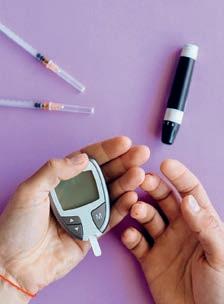
Both Type 1 and Type 2 diabetes can present with symptoms that are initially mistaken for other illnesses. Excessive thirst, fatigue, unexplained weight loss, blurred vision and frequent urination may be attributed to stress, viral infections or lifestyle factors. In children and young adults particularly, delayed recognition of Type 1 diabetes can rapidly lead to diabetic ketoacidosis, a medical emergency requiring urgent treatment.
One of the most serious problems arises when Type 1 diabetes is misdiagnosed as Type 2 diabetes. Patients may receive inappropriate oral medication instead of urgently needed insulin therapy, placing them at risk of collapse, coma or permanent organ damage. Delayed treatment can also result in extended hospital admissions and long-term complications affecting the kidneys, eyes, nerves and cardiovascular system.
Misdiagnosis can occur for several reasons. Clinicians may fail to recognise symptoms, overlook abnormal blood test results or inadequately investigate high-risk patients. Communication failures between healthcare providers can also contribute to delays, particularly where patients attend multiple appointments before receiving a correct diagnosis.
Expert witnesses are often instructed to determine whether healthcare professionals acted in accordance with accepted clinical standards. Endocrinologists, general practitioners and emergency medicine experts may assess medical records, blood glucose readings, referral pathways and treatment decisions to establish whether earlier diagnosis would likely have prevented injury.
The long-term effects of diagnostic errors can be substantial. Poorly controlled diabetes may lead to sight loss, neuropathy, vascular disease, limb amputation and increased risk of stroke or heart attack. Patients may also suffer psychological harm arising from avoidable deterioration in health and lifestyle limitations.
As diabetes rates continue to rise across the UK, accurate and timely diagnosis remains essential. Where failures occur, expert medical evidence plays a critical role in helping courts assess causation, liability and the extent of avoidable harm suffered by patients. q
[ RENAL MEDICINE CASES can present some of the most technically complex issues encountered in clinical negligence and personal injury litigation. The kidneys play a critical role in regulating fluid balance, blood pressure, electrolyte levels and waste removal, meaning that failures in diagnosis or treatment can rapidly lead to serious consequences.
As a result, expert evidence from specialists in renal medicine is frequently required where questions arise regarding standards of care, causation and long-term prognosis.
Claims involving acute kidney injury are increasingly common. In many cases, allegations centre on delayed recognition of deteriorating renal function in hospital settings, inadequate monitoring of blood results, failures to manage dehydration or sepsis appropriately, or the prescription of medications known to impair kidney function. Expert nephrologists are often instructed to determine whether earlier intervention would have prevented permanent damage or reduced the severity of injury.
Chronic kidney disease also features prominently in litigation. Patients with diabetes, hypertension and cardiovascular disease require careful monitoring to identify progressive renal decline. Failures to refer patients to specialist renal services, delays in arranging dialysis or errors in medication management may all become the subject of legal scrutiny. In such cases, renal experts assist the court by analysing medical records, laboratory trends and accepted clinical guidelines to establish whether treatment was of an acceptable standard.
Dialysis-related claims represent another significant area
of dispute. Haemodialysis and peritoneal dialysis are highly specialised treatments that require precise management. Litigation may involve allegations relating to vascular access complications, infection control failures, incorrect fluid management or inadequate supervision during treatment sessions. Renal medicine experts are often asked to comment on whether complications were unavoidable risks or preventable failures in care.
Kidney transplantation cases can also give rise to complex medico-legal questions. Disputes may concern donor assessment, post-operative monitoring, immunosuppressive therapy management or delays in identifying transplant rejection. Because transplant patients often have multiple co-existing medical conditions, expert evidence is essential in determining causation and assessing the extent to which outcomes may have been influenced by underlying disease processes.
Beyond clinical negligence, renal physicians may also provide expert evidence in occupational and toxic exposure claims where kidney damage is alleged to have resulted from chemicals, heavy metals or medication misuse. In personal injury matters, nephrologists may be instructed to assess whether trauma or crush injuries contributed to long-term renal impairment.
Given the complexity of renal physiology and the potentially devastating consequences of kidney failure, courts rely heavily on independent renal medicine experts to provide clear, balanced and evidence-based opinions. Their role is central in helping the courts understand whether treatment was appropriate, whether injury could have been avoided and what future care a claimant may require. q

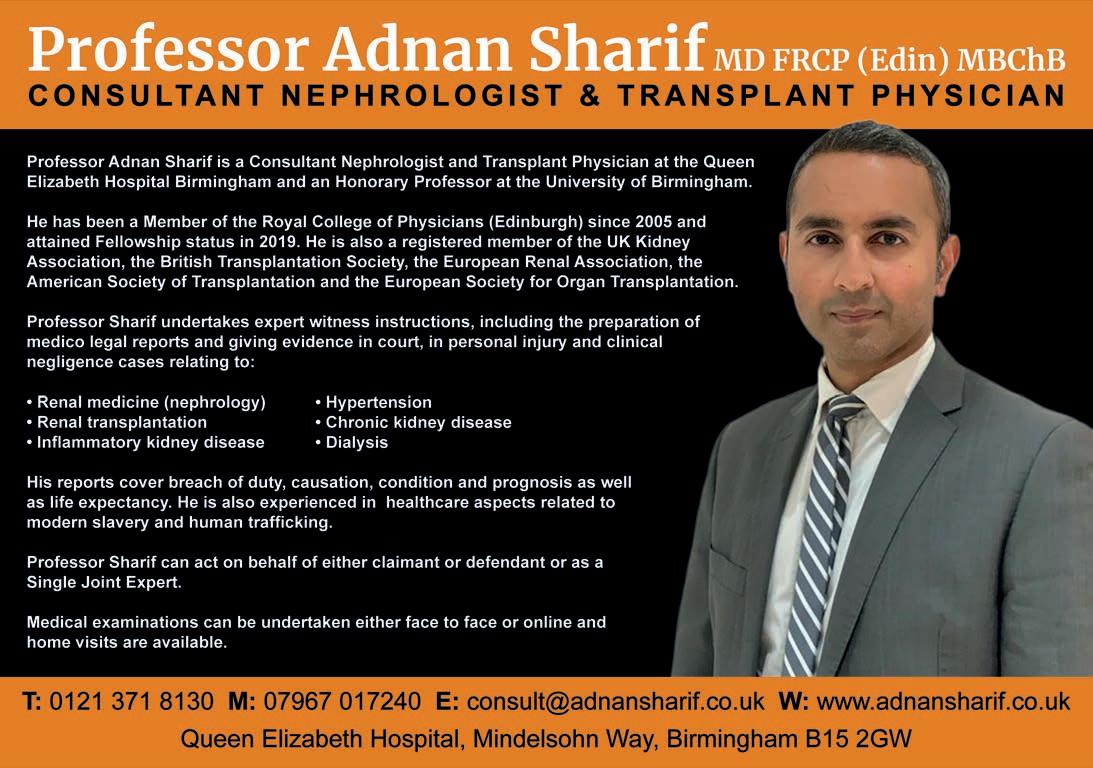
[ GENERAL PRACTITIONERS sit at the frontline of healthcare and are responsible for assessing an enormous range of symptoms and conditions, often within limited consultation times and with incomplete clinical information.
As pressures on primary care services continue to increase, cases relating to alleged failures in general practice have also become more prominent, particularly those concerning delayed diagnosis.
Evidence from experienced GPs now plays a central role in helping courts determine whether the standard of care provided in primary care settings was reasonable and whether earlier intervention would have altered the outcome for the patient.
Many claims involving general practice arise from allegations that important symptoms were not recognised, investigated or referred appropriately. Delayed cancer diagnoses remain among the most common examples. Patients may present with symptoms that appear vague or non-specific in the early stages, yet questions later arise as to whether warning signs should have triggered further investigation or an urgent referral pathway.
Expert GP witnesses are frequently instructed to review consultation records,
referral decisions and prescribing history to establish whether the management was consistent with accepted practice.
Sepsis, meningitis, cardiovascular disease and neurological conditions also feature heavily in primary care litigation. In these cases, expert witnesses are often asked to assess whether ‘red flag’ symptoms were overlooked, whether safety-netting advice was adequate and whether the patient should have been referred for emergency assessment sooner.
The issue is rarely judged with hindsight alone: rather, the court considers what a reasonably competent GP would have done based on the information available during the consultation.
Telephone and remote consultations have introduced further considerations. Since the widespread expansion of remote triage systems, disputes have emerged concerning the limitations of telephone assessments, missed opportunities for physical examination and communication failures. GP experts may be required to consider whether a face-to-face appointment should have been arranged.
Medication management is another significant area of litigation in primary care. Claims may involve allegations of
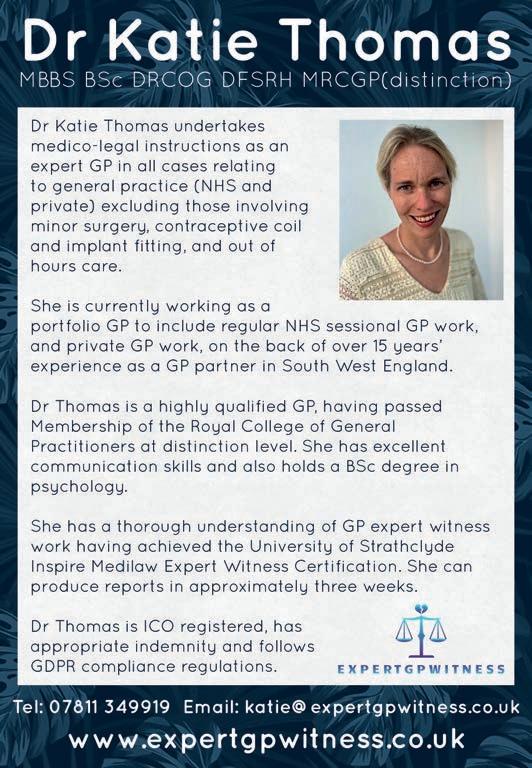
prescribing contraindicated medication, failures to monitor high-risk drugs or delays in recognising adverse reactions. General practice experts help determine whether appropriate monitoring systems were in place and whether follow-up arrangements met accepted standards.
In many cases, causation becomes the key legal issue. Even where shortcomings in care are identified, the court must decide whether earlier diagnosis or treatment would have changed the patient’s outcome. GP experts therefore often work alongside specialists in oncology, cardiology, neurology or infectious disease to assess the extent to which any delay materially affected prognosis.
General practice litigation can be particularly complex because primary care clinicians are required to balance risk management with proportionate use of healthcare resources. Symptoms may evolve gradually over multiple consultations, and many serious co\]nditions initially resemble minor illness.
Expert GP evidence helps place these clinical decisions into their proper context, providing the courts with an objective assessment of what was reasonably expected from a practitioner working within modern primary care pressures. q
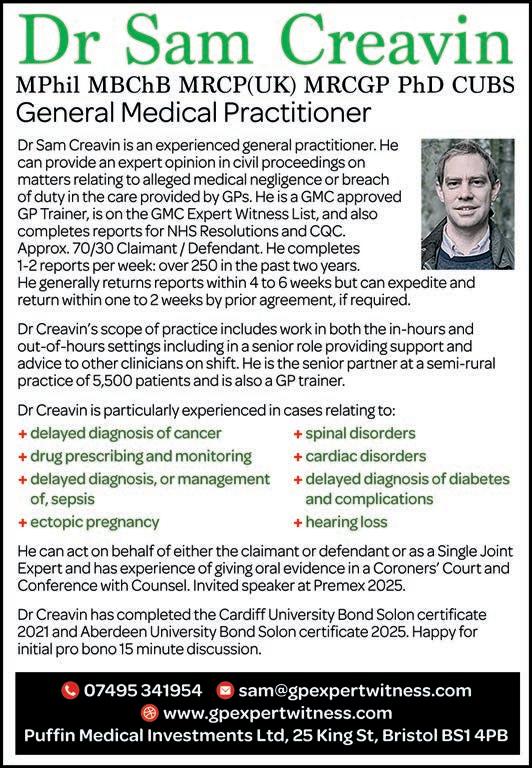
By Dr Peter McAllister MB BS MSc MBA FHEA FRCPsych, Independent Consultant Forensic & General Adult Psychiatrist
[
STEREOTYPING IS UNHELPFUL! We all have a mental image of a UK veteran, be that a Chelsea Pensioner in their scarlet tunic or a young man living on the street. Powerful though these images may be, they do not reflect the whole veteran population.
In the UK veteran status is awarded to anyone who has served a single paid-day in the Royal Navy, the British Army or the Royal Air Force. This title is applied both to the recruit who took their own discharge in the first week of basic training, just as it is to those who served a full career.
Most find the experience of military service enriching and the rate of mental health conditions reflects the general population from which the veterans are drawn, with a few significant exceptions that can be related to military service.
Like any organisation, the military has its own traditions, language and culture –with a range of fascinating and historical subdivisions that still exist today. In common with group theory, lots of characteristics are seen as positive within the group and less positive outside of the group. However, there are almost endless
subdivisions: serving v veterans; one service v another; one corps v another; and one platoon/squadron v any other. But as you cast the net wider, there remains a strong sense of both belonging and identity for most.
This sense of identity can be a source of pride but for some it is a mark of shame, a sense of failure – and associated with trauma. So, helping a veteran negotiate the legal system is a challenging mission.
There is strong evidence that veterans like to talk to veterans, seen in the flourishing of veterans’ breakfast clubs across the country, along with social media groups to maintain those links. It is difficult enough to come forward and ask for help, without having to explain every third word or TLA (three-letter acronym) that you use to tell your story.
As such, having an expert witness with experience of the Forces, as well has having the cultural knowledge of the life the veteran has left behind, provides an invaluable shortcut to improving communication.
To have been there, and experienced the same things, paves the way for a thorough and detailed assessment and understanding of the issue and current circumstances, all

within the cultural context.
Equally there is the danger of the expert being seen as part of the organisation that let down or harmed the claimant – which brings with it a range of judgements and some resistance. However, psychiatrists are trained communicators, skilled at understanding what is being said and not said, as well as calling out the issues in the room – all for the benefit of the veteran before us.
When I was a serving psychiatrist of reasonably senior rank, and faced with a very junior soldier in distress, I would explain that we could use my rank to try to resolve their issue – which alone they had failed to fix.
The same is true today with my experience of military psychiatry and the veterans I see for court reports. q
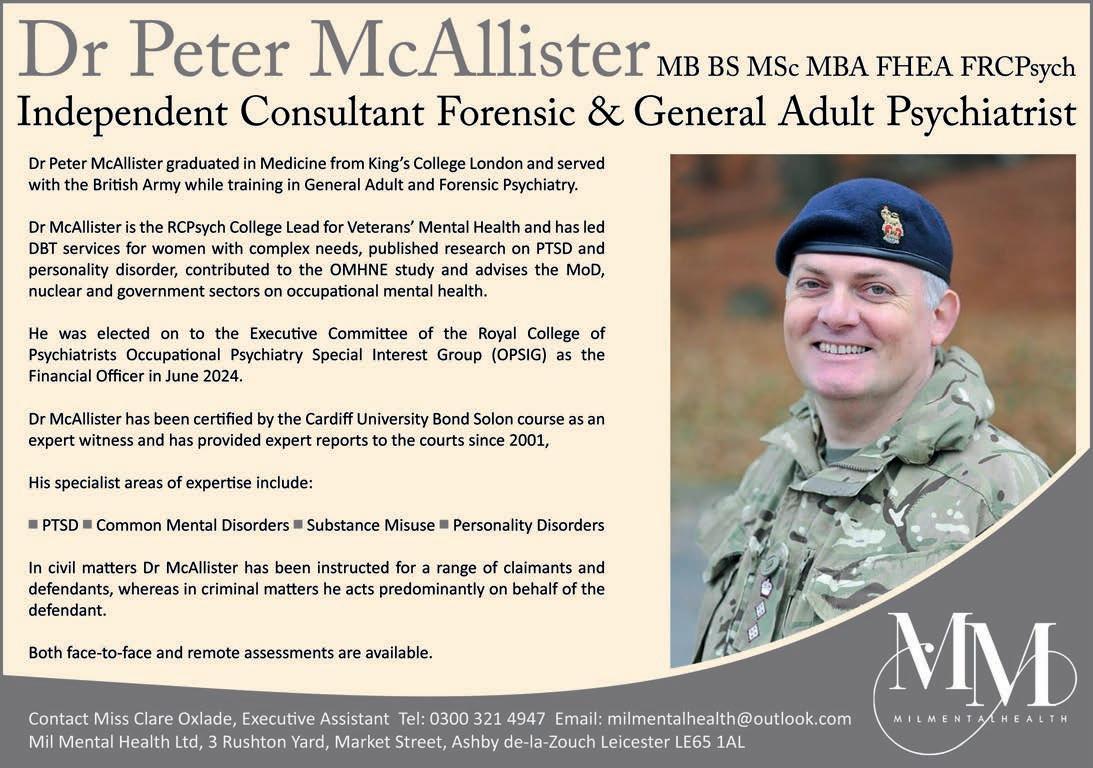

By Dr Priscilla Kent, Consultant Psychiatrist
[ ATTENTION DEFICIT HYPERACTIVITY DISORDER (ADHD)
is a common condition, affecting around 5% of children. However, this is likely to be an underestimate as diagnosis rates are low. It is characterised by periods of inattention, hyperactivity and impulsivity, which are severe enough to interfere with daily functioning.
In most patients, the symptoms start before the age of 12, leading to the traditional belief that ADHD is a childhood condition, although nowadays, it is increasingly being recognised that symptoms can persist into adulthood. ADHD can be managed through lifestyle adjustments, changes at school or work to accommodate the patient’s condition, and medication.
In the UK, if certain criteria are met, ADHD can be recognised as a disability under the 2010 Equality Act. Therefore, its presence should not preclude an individual from launching a legal case following personal injury or medical negligence. However, ADHD can complicate the process and there are several issues to be aware of. It can be much more difficult to get consistent evidence from a patient with ADHD, due to lack of attention and memory span. In severe cases, this may lead to the limitation period during which litigation must be commenced to be extended from the usual timeframe of three years. Should a case come to court ‘necessary adjustments’, including more rest breaks, may have to be made so that the patient can participate as fully as possible in the legal process.
If a case is successful, the presence of ADHD can significantly affect the level of damages awarded. Where a patient with a pre-existing neurological condition like ADHD subsequently suffers an injury such as a traumatic brain injury, disentangling the effects of the two conditions can be extremely challenging. It is even more difficult in young patients, where the brain is still developing and it is unclear how they would have performed in the future if the injury had not occurred.
In almost all such cases, the defendant will try to claim that the pre-existing ADHD will impact the patient’s future progress more than the injury caused by their negligence. Reports from a number of experts, including neurologists, neuropsychiatrists, neuropsychologists and educational psychologists, may be required to make a reasonable prediction of the patient’s prognosis, both with and without the injury. While ADHD often negatively affects a patient’s educational achievement and ability to work, a brain injury may increase their vulnerability further, leading to a worse outcome.
Similar problems are encountered when existing ADHD symptoms are exacerbated by the accident or injury, and robust evidence is required to distinguish between pre-existing and new symptoms. Any rehabilitation requirements that relate specifically to new or exacerbated ADHD symptoms can be added to the claim.
The issue of liability is complicated by the fact that individuals with a diagnosis of ADHD experience higher rates of unintentional and accidental injuries. They also suffer from higher levels of morbidity and mortality following these incidents. This risk is associated with the age of the patient, peaking in children aged 9-12 years and again in adolescents aged 18-25. Although the type of accident or injury also changes with age, this appears to be due to the situational nature of these incidents. Thus, the increase in drivingrelated incidents in older patients merely reflects the fact that only adults are allowed to drive.

The mechanisms behind the increased risk of accidental injury are not clear. There is some evidence implicating the core ADHD symptoms of inattention, hyperactivity and impulsivity, but other factors, including daytime sleepiness, psychosocial stress and driving while under the influence of drink or drugs may also play a role. Comorbidities, such as mental disorder, conduct disorder, oppositional defiant disorder, antisocial personality disorder, depression, autism spectrum disorder, reading disability and adolescent substance or alcohol abuse are also risk factors for accident and injury risk.
The persistence of ADHD symptoms into adulthood further increases the risk of accidental injury. In addition, the risk of death is higher in patients diagnosed in adulthood compared to childhood. This suggests that adult ADHD represents a more severe form of the condition. In contrast, ADHD medication has been shown to lower the risk of accidental injury and this effect does not appear to be dependent on age. However, the beneficial effects of medication on injury risk are less prominent in female patients.
ADHD is associated with longer recovery times following accidents and injuries, although this finding is not universal and has been disputed in the scientific literature. Multiple studies have reported that patients with ADHD take longer to recover from concussion than neurologically normal patients. Furthermore, post-concussion testing reveals differences in neurocognitive and psychological parameters in the ADHD population, who are at higher risk of experiencing undetected post-injury symptoms.
Thus, understanding the impact of ADHD on specific measures of concussion may assist in interpreting the results of clinical tests and ensuring appropriate care. However, claiming increased recovery times due to the presence of ADHD remains controversial. ADHD impacts on claims for personal injury or medical negligence in several ways. In particular, the increased likelihood of injury or accident in this population complicates the issue of liability. Increased recovery time and specialised rehabilitation needs may add to the amount claimed. However, none of these factors should preclude a patient with ADHD from making a claim if it is justified. q
• Dr Priscilla Kent is a Consultant Psychiatrist, currently providing clinical lead to a busy Community Mental Health Team in South Hackney, London.
In her current role, Dr Kent assesses new patient referrals and provides follow up with patients with severe mental illness, including patients on restriction orders and community treatment orders. She also works alongside inpatient colleagues to provide continuing care, including home visits, outpatient appointments and online assessments.
Dr Priscilla Kent has completed Bond Solon training and also has experience providing medical reports for court to support immigration appeals. She accepts instructions for personal injury and clinical negligence cases for both claimant and defendant. She has particular interest in psychotherapeutic approaches as well as working within the biopsychosocial model.
Email info@medicolegal-partners.com for further information
By Dr Naveen Sharma , Consultant Psychiatrist
[FOR ADULTS WITH ADHD difficulties with sleep are not just about ‘staying up too late’. Many experience chronic insomnia, restless nights or irregular sleep patterns.
Research suggests that up to 70% of adults with ADHD report sleep disturbances. Poor sleep doesn’t just make a day harder – it exacerbates ADHD symptoms, including:
• Inattention and poor concentration
• Emotional dysregulation and irritability
• Impulsivity and difficulty planning
• Fatigue and low motivation
Sleep difficulties can create a vicious cycle: ADHD makes sleep harder, while poor sleep intensifies ADHD symptoms.
Several factors contribute to sleep problems in ADHD:
Neurobiological differences: adults with ADHD may have delayed circadian rhythms, meaning they feel alert late at night and struggle to fall asleep at typical times.
Restless mind: racing thoughts, hyperfocus on tasks or rumination can make it difficult to ‘switch off’ at night.
Co-occurring conditions: anxiety, depression or mood disorders –common in ADHD – can further disrupt sleep.
Behavioural factors: irregular routines, caffeine overuse or latenight screen time can exacerbate difficulties.
Types of sleep disorders seen in ADHD
Some common patterns include:
Insomnia: difficulty falling asleep or staying asleep
Delayed sleep phase syndrome: naturally late sleep onset and wake-up times
Restless leg syndrome (RLS): uncomfortable sensations in the legs, often linked to ADHD
Sleep apnoea: breathing interruptions that reduce sleep quality, sometimes co-occurring
Sleep deprivation can mimic or worsen ADHD symptoms:
• Reduced attention and focus
• Greater irritability and emotional sensitivity
• Increased impulsivity
• Difficulty with executive functioning – planning, organisation and decision-making
In adults who are already struggling, chronic sleep problems can significantly impact work, relationships and wellbeing.
While some sleep difficulties are biological, there are practical and evidence-based strategies that can help:
Consistent sleep routine and wind-down
Aim for regular sleep and wake times – even on weekends. Reduce stimulating activities before bed: screens, caffeine, and high-intensity tasks.
Whilst a good sleep routine and evening wind-down is generally helpful, for some a good pattern is to go to sleep when they feel tired, as otherwise their mind does not feel ready to go to sleep and does

not switch off. This tends to set off racing thoughts and delay sleep further. Building a routine that allows you to consistently feel tired and ready to sleep at a particular time could take time but would be helpful in the long-term.
Try to build this pattern based on your own productivity and worklife pattern rather than aiming for a particular time. Be mindful that the earlier that you can start to wind-down, the earlier you would eventually be able to sleep, which would allow you to get the required amount of sleep through the night.
Keeping a note-pad next to you in the evening to note down any thoughts or ideas that you are thinking about could help you bank these for the next day and help you not worry about these.
Environment adjustments
Keep the bedroom dark, cool and quiet. Consider blackout curtains if needed. External noise in the form for any white noise, other sounds, audio podcasts or videos that you have watched before multiple times (so you don’t have to pay active attention) can be a helpful way to distract from your own busy thoughts, thus allowing your mind to gradually relax and switch off. Try different things to see what works best for you.
Mindfulness and relaxation
Breathing exercises, progressive muscle relaxation or guided meditation can calm a busy mind. These could seem too difficult in the beginning, so try what works for you and practise to develop consistency.
ADHD-focused interventions
Clinically, addressing ADHD symptoms directly – through medication, therapy or behavioural strategies – often improves sleep patterns.
Physical activity / exercise
Plan and build regular exercise in your routine. Exercise would help you feel tired and also benefits ADHD symptoms in other ways.
If sleep difficulties are persistent, worsening ADHD symptoms or impacting daily life, a professional assessment is important. A psychiatrist or sleep specialist can:
• Assess whether ADHD or co-occurring conditions are contributing
• Screen for other sleep disorders, such as sleep apnoea or RLS
• Develop a personalised plan combining behavioural, psychological and pharmacological strategies
Sleep is often overlooked in adults with ADHD, yet it is fundamental to cognitive, emotional and physical wellbeing. Understanding the interaction between ADHD and sleep is the first step toward breaking the cycle of fatigue, inattention and emotional strain.
With the right strategies and professional support, adults with ADHD can improve sleep quality, restore energy and enhance overall daily functioning. q
• Dr Sharma offers comprehensive adult ADHD assessments and personalised treatment plans, including support for sleep difficulties and co-occurring mental health conditions. Contact us to learn more or book an online appointment – email enquiries@expertinmind.co.uk, call 01424 444130 or visit www.expertinmind.co.uk

[ THE NHS MODERNISATION BILL will introduce the single patient record, which aims to produce safer and more co-ordinated care for patients.
Responding to the publication of the Bill in May, Dr Roman Raczka, President of the British Psychological Society (BPS), said: “Any reforms which can potentially help patients access the care and support they need before they reach crisis point are always very welcome.
“The introduction of a single patient record may well ensure professionals in clinical settings have all the information they need by the time a patient is seen. This could remove the need for patients having to repeat themselves at every new appointment and at a time when they are likely to be mentally vulnerable.
“The NHS in England will only be fit for the future, if people can access the support they need and deserve in a timely manner. If the introduction of the single patient record can significantly cut waiting times for those who need support, this has the potential to make a meaningful difference for improving patient outcomes.” q
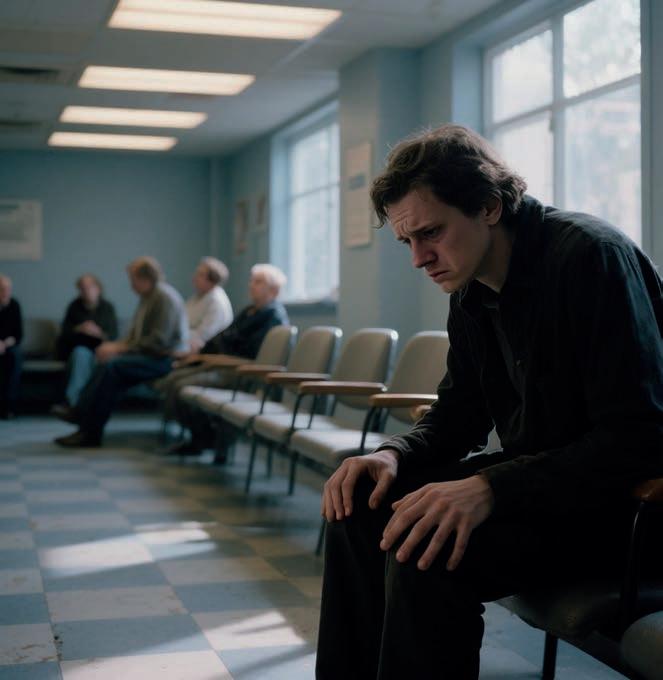
[ THE NOTTINGHAM INQUIRY , which was established to build a clear understanding of the events that led up to the tragic homicides in Nottingham in June 2023, started on 23 February 2026.
Since it began, a range of witnesses have been called to appear before the Inquiry: members of the victims’ families, individual healthcare professionals, including members of the Royal College of Psychiatrists (RCPsych), and representatives from various organisations.
In June, RCPsych President Dr Lade Smith CBE gave expert evidence on behalf of the college and the profession. She answered questions about how people with severe mental illness should be treated, commenting on best practice around risk assessment, restrictive practice and information sharing. She also spoke about the college’s role in delivering training and producing guidance to support clinicians and mental health services and was further questioned on the wider challenges facing services in regard to funding and workforce shortages.
Dr Smith’s first witness statement and second witness statement are both available on the Nottingham Inquiry website. A recording of this and all the hearings can be watched online, and a transcript of her session is also available.
Stephen McGowan, Clinical Advisor to the National Clinical Audit of Psychosis and Chair of the Early Intervention in Psychosis Network, which are both run by the College Centre for Quality Improvement (CCQI), also provided the Inquiry with a witness statement.
The Nottingham Inquiry is expected to publish a final report with its findings by May 2027. q

[ TRAUMATIC BRAIN INJURY (TBI) can have profound and lasting consequences that extend far beyond the initial physical trauma. While some effects are immediately visible, many of the most significant challenges arise from cognitive, behavioural and psychological changes that may not be readily apparent.
In legal proceedings, one of the most important issues that can emerge is whether an individual retains the mental capacity to make decisions about their health, finances or welfare. In such cases, neuropsychologists play a vital role as expert witnesses.
Mental capacity is a decision-specific concept. An individual may be capable of making certain decisions while lacking the capacity to make others. Following a traumatic brain injury, difficulties with memory, attention and reasoning can all affect a person's ability to understand information, retain it long enough to make a decision, weigh relevant factors and communicate their choice.
These are the key principles that underpin capacity assessments under the Mental Capacity Act 2005.
Determining whether a person has capacity is rarely straightforward. The effects of TBI can fluctuate over time and may vary depending on the complexity of the decision
being considered. Individuals may appear articulate and independent in everyday conversation while experiencing significant cognitive deficits that impair judgement and decision-making. As a result, capacity assessments require detailed and specialist evaluation rather than reliance on general observations alone.
This is where neuropsychologists provide invaluable assistance to the courts. Through comprehensive neuropsychological assessment, they examine a range of cognitive functions, including memory, attention, information processing speed, problem-solving abilities and executive functioning. They also consider behavioural and emotional factors that may influence decision-making capacity.
As expert witnesses, neuropsychologists translate complex clinical findings into clear, objective opinions that assist the legal profession in understanding the real-world impact of brain injury. Their reports are based on clinical evidence, standardised testing, medical records and behavioural observations, ensuring that conclusions are impartial and legally relevant.
In proceedings in the Court of Protection, neuropsychological evidence can be critical. Expert testimony may help determine
whether an individual can manage financial affairs, conduct litigation, consent to medical treatment or make decisions regarding their care and accommodation. Where capacity is found to be lacking, neuropsychologists may also provide recommendations to support best-interest decision making.
The significant contribution neuropsychologists make in cases involving traumatic brain injury and mental capacity is invaluable. Their expertise provides the court with a detailed understanding of how cognitive impairments affect everyday functioning and decision making, helping to ensure that vulnerable individuals receive the protection, support and fair outcomes they require within the legal system. q
[ THE INCREASING PREVALENCE of school non-attendance among children has become a significant concern for healthcare professionals and legal practitioners alike.
While school refusal has traditionally been viewed through the lens of anxiety or behavioural difficulties, child psychologists are increasingly recognising the role that complex neurodivergence and trauma can play in a child’s inability to engage with formal education. Neurodivergence encompasses a range of developmental differences, including autism spectrum disorder, ADHD, sensory processing difficulties and dyslexia. For some children, particularly those with multiple overlapping neurodevelopmental conditions, the school environment can become overwhelming. Sensory overload, communication difficulties and rigid educational expectations may create levels of distress that make regular attendance extremely difficult.
In many cases, school non-attendance is not a matter of choice. Rather, it represents a child’s attempt to protect themselves from environments they experience as unsafe or intolerably stressful.
Child psychologists specialising in complex neurodivergence often observe that prolonged exposure to such stress can result in emotional exhaustion, heightened anxiety, depression and, in some instances, trauma responses.
Narrative therapy has emerged as a valuable therapeutic approach for supporting these children and their families. Rather than viewing the child as the problem, narrative therapy seeks to separate the individual from the difficulties they are experiencing.

Through guided conversations, children are encouraged to explore and re-author the stories they tell about themselves, their challenges and their strengths. This approach can be particularly beneficial for neurodivergent young people who may have developed negative self-perceptions following repeated experiences of misunderstanding, exclusion or academic failure.
For psychologists with a specialist interest in trauma, understanding the interaction between neurodivergence and adverse experiences is essential. Traumatic experiences do not always arise from a single event. Chronic stress, repeated school-related distress, bullying, social isolation and unmet support needs can all contribute to trauma-like presentations. Identifying these factors is often crucial when assessing a child’s psychological functioning and future needs.
From a medico-legal perspective, child psychologists can provide valuable insight into the causes and consequences of school non-attendance. Their assessments may assist the courts in understanding the impact of neurodevelopmental conditions, the presence of trauma-related symptoms, appropriate therapeutic interventions and the likely long-term prognosis. Such evidence can be particularly important in cases involving family proceedings and matters concerning a child’s welfare.
As awareness of neurodiversity continues to grow, psychological expertise will remain central to ensuring that vulnerable children receive the understanding and support they require to thrive. q

[IN MODERN clinical negligence litigation, the role of the nursing expert witness has become increasingly important. While medical experts are often central to proceedings, many claims ultimately turn on issues of nursing care and patient management.
From hospital wards and community settings to care homes and specialist units, nurses are frequently the professionals most directly involved in day-to-day patient care. As a result, their evidence can prove pivotal in determining whether acceptable standards were met and whether any breach contributed to injury or deterioration.
For solicitors, the early instruction of an experienced nursing expert can provide valuable clarity at the outset of a case. Nursing experts are uniquely placed to assess the practical realities of patient care and whether nursing staff acted in accordance with accepted professional standards. They are able to evaluate not only what was done, but also what should reasonably have been done in the circumstances.

Nursing negligence claims can arise across a broad range of scenarios. Common allegations include failures in monitoring and observation, inadequate risk assessments, poor record keeping, medication errors, failures in pressure sore prevention, delayed escalation of deteriorating patients, discharge planning failures and communication breakdowns between clinical teams. In care home litigation, nursing experts may also examine issues surrounding falls prevention, nutrition, hydration and staffing levels.
A nursing expert’s role is to provide an independent, objective opinion based upon their professional expertise and experience. To do so effectively, the expert will carefully review medical records and any other relevant documentation. They will then consider whether the care delivered fell below the standard reasonably expected.
In many cases, nursing evidence can be particularly influential because their records often provide the most detailed account of events. Observation charts, care plans and handover notes may all become critical pieces of evidence. An experienced nursing expert is able to identify omissions, inconsistencies and failures in documentation that may otherwise go unnoticed.
One area where nursing experts are frequently instructed is in claims involving pressure ulcers. Here, the expert may assess whether appropriate risk assessments were undertaken, whether repositioning schedules were implemented and whether pressurerelieving equipment was used correctly. Likewise, in medicationrelated claims, a nursing expert may examine drug administration procedures, compliance with protocols and whether concerns were escalated appropriately.
The increasing complexity of healthcare delivery has also expanded the scope of nursing expertise in litigation. Specialist nurses working in intensive care, oncology, emergency medicine, mental health and neonatal care are now regularly instructed in highly technical disputes. Their practical insight can assist the court in understanding how systems, staffing pressures and clinical decision-making operated in practice.
Early instruction is often crucial. A nursing expert can help identify the strengths and weaknesses of a potential claim before significant costs are incurred. In some matters, early input may support settlement discussions or assist in narrowing the issues in dispute. Conversely, it may reveal that a claim lacks sufficient merit to proceed. Either outcome can save considerable time and expense for all parties involved.
Solicitors should also remain mindful of the practical demands expert witness work places upon clinicians. Many nursing experts continue to practise clinically alongside their medico-legal work, meaning availability can be limited. Tight court timetables, large volumes of medical records and the preparation of CPR-compliant reports can place significant pressure on an expert’s workload.
Delays in instruction may therefore create difficulties later in proceedings, particularly when reports are required urgently or where a specific sub-specialism is involved.
Choosing the right expert is equally important. In addition to relevant clinical experience, the expert should possess a clear understanding of their duties under the Civil Procedure Rules and be capable of presenting complex issues in a balanced and understandable manner. Strong report-writing skills and confidence under cross-examination are essential qualities in any effective expert witness.
As healthcare litigation continues to evolve, the contribution made by nursing experts is likely to become even more prominent. Their evidence often bridges the gap between medical decision-making and the realities of frontline patient care.
For solicitors handling clinical negligence matters, timely instruction of a suitably qualified nursing expert can therefore prove invaluable in establishing whether standards were met, where failures occurred and how those failures may have affected the outcome for the patient. q
[LITIGATION INVOLVING older patients has become increasingly prominent across clinical negligence cases. As life expectancy rises and more individuals live with multiple long-term conditions, the interface between geriatric medicine, elderly care provision and questions of mental capacity has grown significantly more complex.
In this context, expert evidence from geriatric medicine specialists is often central to understanding both clinical decision-making and whether legal standards have been met.
Geriatric medicine is distinct in its holistic approach to patients, typically managing frailty, multimorbidity and functional decline rather than isolated disease processes. Older patients frequently present with overlapping conditions such as dementia, cardiovascular disease, diabetes, chronic kidney disease and mobility impairment.
This complexity can make clinical decisionmaking challenging, particularly in acute hospital settings where time pressures and incomplete histories are common. In litigation, the key issue is often whether a reasonable body of clinicians would have acted differently in the same circumstances, taking into account the patient’s age, comorbidities and overall prognosis.
A significant proportion of disputes involving elderly patients concern mental capacity. Capacity is not a fixed state: it is decision-specific and can fluctuate over time, particularly in conditions such as delirium or progressive dementia. The legal framework is set out in the Mental Capacity Act 2005, which establishes that an individual must be presumed to have capacity unless it is proven otherwise. It also requires that all practical steps are taken to support a person in making their own decisions before a finding of incapacity is made.
In practice, litigation frequently examines whether proper capacity assessments were

undertaken and adequately documented. Disputes may arise in relation to consent to medical treatment, discharge from hospital and decisions about long-term care placement. Expert evidence may be required to analyse whether cognitive impairment was correctly identified, whether delirium was distinguished from dementia and whether clinicians appropriately escalated concerns or sought specialist input.
Elderly care settings, including hospitals and care homes, are a frequent focus of negligence claims. Falls represent one of the most common allegations. Older patients are particularly vulnerable due to reduced balance, impaired vision, frailty and sedative medications. Expert witnesses are often asked to consider whether falls risk assessments were completed appropriately, whether care plans were implemented effectively and whether supervision or mobility assistance was adequate.
Importantly, not every fall is preventable and a key legal question is whether reasonable preventative measures were in place rather than whether harm could have been entirely avoided.
Medication management is another critical area. Polypharmacy is common in geriatric populations and the risk of adverse drug reactions increases with age. Negligence

claims may involve anticoagulants causing bleeding events, insulin errors leading to hypoglycaemia or sedatives contributing to confusion and falls. A geriatric expert will often assess whether prescribing was appropriate, monitoring was adequate and warning signs of deterioration were acted upon in a timely manner.
Delayed or missed diagnosis also features heavily in elderly care claims. Symptoms in older adults may present atypically or be attributed incorrectly to ageing itself. Conditions can be overlooked or diagnosed late, particularly in patients with baseline cognitive impairment. Expert analysis typically focuses on whether the clinical presentation should have triggered earlier investigation and whether any delay materially affected outcome or prognosis.
Ultimately, litigation involving geriatric medicine requires a careful balance between recognising the inherent vulnerability of older patients and acknowledging the clinical complexity faced by healthcare professionals. Expert witnesses play a crucial role by providing objective, evidence-based opinions on capacity, standards of care and causation. As the demographic shift towards an ageing population continues, the importance of specialist geriatric expertise in legal proceedings is only likely to increase. q
[PERFORMANCE has been improved in three of the four stages of the fitness to practise (FtP) process, according to the General Dental Council (GDC) annual Fitness to Practise Statistical Report for 2025.
For the first time, the report covers all four stages of the FtP process: initial assessment, assessment, case examiners and hearings. It includes comparison data from previous years and breaks down cases by informant type, country, registrant type, sex, time on the register, region of qualification and ethnicity
The report demonstrates progress against the GDC strategy, Trusted and effective: A strategy for dental regulation 2026-2028, which acknowledges that a climate of fear has grown within dentistry, driven in part by mistrust of the FtP process. The strategy commits to less adversarial ways of handling concerns, resolving them quickly and proportionately, and reducing the impact of investigations on dental professionals’ mental health and wellbeing.
Theresa Thorp, Executive Director of Regulation at the GDC, said: “We know that fitness to practise investigations can take too long, feel overly complex and cause real fear and distress. While the rise in concerns is a trend we’re seeing across healthcare regulation, our focus remains firmly on reducing that fear and improving the experience for everyone involved.
“Despite receiving 26% more concerns in 2025, we reduced the time to reach a final case examiner decision from 50 working weeks to 36, and the time from case examiner decision to Practice Committee hearing is now at its lowest in five years. That progress matters, but we know fear of the process remains real and we're determined to continue our work to address it.”
The report found that 1,766 concerns were received in 2025 – a 26% rise on the previous year. Of every 100 cases received, on average 81 progressed to assessment, 34 to case examiners and 15 to a Practice Committee hearing.
In 2025, 1,293 assessments were completed, almost identical to the 1,294 completed in 2024, and 110 Practice Committee hearings were held, a 50% increase on the 73 held in 2024. 18 dental professionals were removed from the register, the same number as in 2024, representing 0.01% of all registered dental professionals.
In 2025, 19% of new concerns were closed at the initial assessment stage, more than at any point in the previous four years, reflecting the GDC’s work to identify and resolve less serious concerns earlier in the process.
The assessment caseload rose by 35% to 761 open cases by year end, a direct result of the surge in concerns received. The number of case examiner decisions rose by 9% on 2024, yet the time it took to complete cases was reduced at every stage of the FtP process.
According to the report, the average time to complete the assessment stage increased from 76 working weeks in 2024 to 78 in 2025. However, the average time from assessment decision to final case examiner decision dropped from 50 working weeks to 36. The time from final case examiner decision to an initial Practice Committee hearing dropped from 81 working weeks to 57 – its lowest in five years.
A streamlined approach for single patient clinical concerns has almost halved the time to complete the assessment stage for these cases, from 30 to 16 weeks. The average time from the decision to refer to an initial Interim Orders Committee hearing rose slightly, from 16 to 19 working days.
Patients remain the largest single source of concerns, making up 45% of all concerns received in 2025, though that proportion dropped from 51% in 2024 despite the actual number of patient concerns rising by 86. Those acting in a public capacity, including employers and NHS bodies, raised 54 more concerns in 2025 than in 2024. Whistleblower referrals almost doubled, rising from 3% to 5% of all concerns received.
Dentists made up 77% of all concerns, with the remaining 23% relating to dental care professionals. Concerns about dental professionals who had been on the register for less than five years grew from 19% in 2024 to 22% in 2025.
The proportion of concerns relating to UK-qualified dentists dropped below 60% for the first time, to 57.5%, reflecting the growing number of
internationally qualified dentists joining the register. Concerns relating to EEA-qualified dentists increased by 36%, the sharpest rise of any group, while those relating to overseas-qualified dentists increased by 32% compared to 2024.
149 registrants were referred to the Interim Orders Committee in 2025, more than in any of the last three years. Of those, 70% resulted in an order being placed on the registrant's registration, up from 62% in 2024. Cases combining clinical and conduct issues were the most common type referred, with 83% resulting in an order.
The report detailed EDI analysis, which the GDC use to identify any issues of discrimination, bias or racism in the reporting or referral of FtP concerns, and to ensure their processes remain fair. Asian or Asian British dentists make up 31% of the register but made up 36% of new concerns received in 2025.
Dentists who identified as White make up 46% of the register and made up 35% of new concerns. Since 2022, the proportion of assessment stage cases closed for dentists who identified as White dropped from 42% to 35%, while the proportion closed for dentists who identified as Asian or Asian British increased from 26% to 36% over the same period. q
• The full report can be downloaded at www.gdc-uk.org
[NEW POLLING commissioned by the British Dental Association (BDA) is offering a vote of confidence from the public in the profession. While recent data has shown patient satisfaction with NHS dentistry has fallen to a record low of 20%, the YouGov poll is showing views of the care delivered by their dentists is sky high.
85% of patients are satisfied with the dental care they have received in the last five years, with 38% indicating they are very satisfied. Among those who identified as seeing either an NHS or private dentist in the last five years, net satisfaction stood at 84%.
This infers that the responsibility for the crisis in care rests with government. BDA members are delivering the very best that they can, often under very difficult circumstances.
“Satisfaction with NHS dentistry is on the floor, but beneath the surface there’s a very different story,” said BDA Chair Eddie Crouch. “Satisfaction with dental care is sky high. Both private and NHS, the picture is unrelentingly positive. Patients agree, the problem isn’t their dentist: it’s NHS dentistry. The public don’t have any love for broken systems, but they value the teams on the front line. These numbers reflect what dental teams are managing to achieve, in spite of everything.” q



[A ‘SHOCKING’ PROPORTION of over-50s with common health problems like high blood pressure are having undetected heart attacks, based on a snapshot of a study funded by the British Heart Foundation (BHF) and Innovate UK and presented at the British Cardiovascular Society annual conference in June held in Manchester.
The BHF’s Laura Piercy says that the discovery was made when researchers looked at early data from volunteers in the ongoing community-based EARLY-HF study in Greater Manchester.
When heart scans were offered to the 550 volunteers aged over 50 with cardiometabolic issues, researchers discovered that nearly one in 10 people (9%) had already suffered a heart attack without realising it.
Undetected or poorly managed
Almost a quarter (23%) had undetected or poorly managed heart or circulatory problems which required medical attention.
To take part in the study, people had to have at least two health issues from a list of seven which affect millions of people in the UK. These included high blood pressure, type 2 diabetes, coronary heart disease, the lung condition chronic obstructive pulmonary disease, the heart rhythm problem atrial fibrillation, obesity and chronic kidney disease.
The most common issues for study participants were pre-existing high blood pressure, which had already been diagnosed in 88% of the study group, and obesity, which affected 70%. Meanwhile 42% of the volunteers had diabetes.
Researchers wanted to understand the rate of hidden illness which had been unrecognised and untreated in this group. They discovered almost two-thirds (60%) had high blood pressure which was not under proper control or being effectively managed, raising their potential risk of a heart attack or stroke.
Among the study volunteers, 34% were classified as living in an area that is among the top 20% most deprived in England, while 28% lived in an area among the 20% least deprived. There were more men than women in the study, with males making up 59% of volunteers.
The researchers suggest the rates of undetected health problems found in Greater Manchester are likely to be reflected in communities across the UK.
Dr Nicholas Black, British Heart Foundation Research Fellow at Manchester University NHS Foundation Trust and The University of Manchester, helped to run the study and presented the findings at the BCS conference in Manchester. He said: “My colleagues and I were shocked by just how much unrecognised disease we found. While our study involves people who would be considered at higher risk of cardiovascular disease, finding so many people who had experienced a heart attack and didn’t know it was not something we ever anticipated going into this study.”
The Detecting EARLY Heart Failure in Greater Manchester (EARLYHF) study aims to detect people at risk of developing heart failure earlier, within socioeconomically and ethnically diverse communities who may have reduced access to healthcare.
Heart attacks and other heart and circulatory issues, like those discovered in the study so far, can lead to heart failure – a condition which affects more than a million people in the UK and means the heart cannot pump blood properly, which can cause severe breathlessness and fatigue.
Most study participants (81%) were recruited via their GP surgery, with another 12% signing up after seeing a social media advert, and others recruited through community events or signposted to the project by family and friends.
Everyone involved in the study had blood tests, an ECG and a cardiac MRI scan, and answered questions about their health and medical history. These tests revealed that 125 people out of 550 (23%)
had a heart or circulatory issue that required medical attention.
On cardiac MRI scans, signs of scarring suggested that 46 people (9%) had previously had a suspected heart attack. These diagnoses were confirmed by a consultant cardiologist, who looked over every scan. Letters were sent to people’s GPs and they were then referred on for further tests and treatment.
Researchers found that 331 people in the study (60%) had a blood pressure reading of 140/90mmHg or higher – the usual threshold for a diagnosis of high blood pressure (hypertension).
While 27 of these were undetected cases of high blood pressure, 304 people (92% of them) were known to have it when they joined the study, with 224 already taking blood pressure-lowering medication. The researchers say this suggests their treatment plan was inadequate, as it had not brought their blood pressure down to a normal level.
Blood tests revealed 162 people (30%) had elevated levels of the protein NT pro-BNP – a sign that their heart was under strain.
The study continues to recruit people in Greater Manchester with at least two cardiometabolic conditions – related to the heart, blood vessels or metabolism.
Professor Bryan Williams, Chief Scientific and Medical Officer at the BHF, said: “These shocking findings should ring alarm bells for our healthcare leaders. They show that our current approach to prevention isn’t fit for purpose, and too many people are slipping through the gaps as a result.
“All too often we see patients too late, when years of living with treatable risk factors like high blood pressure or high cholesterol have built up, leading to heart attacks or heart failure. We have made huge strides in our ability to treat cardiovascular disease over the past 65 years, but right now we’re missing opportunities to prevent it in the first place. The picture this study paints won’t improve without a radical shift in how we identify and treat people at risk of cardiovascular disease.”
Professor Chris Miller, Professor of Cardiovascular Medicine and Consultant Cardiologist at The University of Manchester and Manchester University NHS Foundation Trust, who leads the EARLYHF study, said: “These findings underscore the need to address disparities in cardiovascular disease detection, healthcare access and outcomes, including by engaging people through non-traditional channels such as text messaging and social media.”
The EARLY-HF study is supported by Innovate UK Greater Manchester Innovation Accelerator, AstraZeneca and British Heart Foundation. The sponsor of the study is Manchester University NHS Foundation Trust. q
ACCIDENT & EMERGENCY MEDICINE
CARDIOLOGISTS & CARDIOTHORACIC SURGEONS

DENTAL & ORTHODONTIC EXPERTS


HAEMATOLOGY
GASTROINTESTINAL & COLORECTAL SURGEONS
GENERAL SURGEONS
MEDICAL NEGLIGENCE

NEONATAL MEDICINE
NEUROLOGY
NEUROSURGEONS
NEUROTHERAPY
NURSING, CARE & REHABILITATION CONSULTANTS


OCCUPATIONAL MEDICINE & THERAPY








PSYCHIATRISTS & PSYCHOLOGISTS




SPEECH & LANGUAGE THERAPY
THORACIC SURGEONS


EXPERTS FOR MEDIA is a regular section in Your Expert Witness for experts who wish to offer their views and the benefit of their experience to the vast range of print and broadcast media.
Ever wondered how news teams find the experts they consult to explain the ramifications of breaking news stories, seemingly at the drop of a hat? Or how the producers of TV drama series ensure their stories are accurate and reflect the realities of the professions they portray?
The fact is that researchers consult registers of experts and expert periodicals just as lawyers do. In fact, Your Expert Witness is receiving an increasing number of enquiries from media researchers and public relations agencies looking to locate appropriate experts to inform their clients.
Experts for Media is therefore an ideal space to attract their attention. For prices and to book your space, contact Ian on 0161 710 3880 or via ian@dmmonline.co.uk
Joanne Caffrey Expert Witness & Trainer
Ms Joanne Caffrey undertakes expert witness instructions in cases relating to the following police topics:
• Use of force
• Custody procedures
• Drink/drug driving
• Ligature deaths
T: 07528 800 720 E: joanne_caffrey@sky.com


Mr Jonathan Luck FRCS FRCOphth Consultant Ophthalmologist
Mr Jonathan Luck has over 20 years of experience in medicolegal work. Experience of giving evidence in court including cross examination. Rapid turnaround of reports. Full consulting and diagnostic facility for Condition and Prognosis reports. Holder of the Bond Solon Cardiff University Civil Expert Witness Certificate.

E: jon.luck@nhs.net W: www.jonathanluckmedicolegal.org.uk
Professor Stephen Clark
BMedSci(Hons) BM BS DM FFST MAMSE RCPathME FACS FESC FACC DLM FRCP FRCS Consultant Cardiothoracic & Cardiopulmonary Transplant Surgeon
Professor Clark has extensive experience in medicolegal and coronial expert witness work. He can be instructed nationwide in personal injury and clinical negligence cases relating to all aspects of cardiothoracic surgery and transplantation.
T: 0191 213 7445 M: 07779 273388 E: stephen.clark18@nhs.net and clarkmedicolegal@icloud.com

Mr Jeremy Crew
MA MD BChir(Cantab) FRCS(Urol) Consultant Urological Surgeon
Mr Jeremy Crew has offered a medicolegal service for over sixteen years. He provides expert medical opinion, medico-legal reports and court attendance on all aspects of urology including clinical negligence, personal injury and criminal matters.
T: 01865 307433 or 07508 617949 E: jeremycrew@urologyoxford.com W: www.oxfordurology.co.uk
Dr Dan Jones PhD MSc BSc MA MEWI Cert Ecological Consultant

Dan is the UK’s foremost authority on the ecology and management of Japanese Knotweed, Himalayan Balsam, and Giant Hogweed. Dan is the lead author of the world’s largest field trial on Japanese Knotweed control, a study that has fundamentally changed how government and industry manages infestations. As a Full Member of The Academy (MA) and a Certified Expert Witness (MEWI Cert), he provides ‘commercially independent’ testimony that is indispensable for both claimants and defendants in civil claims. T: 07967 408844 E: daniel@advancedinvasives.com W: www.advancedinvasives.com
Laird Assessors Automotive Expert
Laird Assessors are the UK’s leading independent automotive expert witness firm supporting claimant, defendant and criminal solicitors – from instruction to court. Laird provide intelligence to the automotive world predominantly relating to crashed vehicles.

T: 0151 342 9961 E: enquiries@laird-assessors.com
W: www.laird-assessors.com
Chris Makin FCA FCMI FAE QDR MCIArb Chartered Accountant • Accredited Civil Mediator
• Accredited Expert Determiner
Chris Makin was one of the first chartered accountants to become an Accredited Forensic Accountant and Expert Witness. He is also an accredited civil and commercial mediator and an accredited expert determiner. Over the last 30 years he has given expert evidence at least 100 times and worked on a vast range of cases.
T: 01924 495888 or 07887 660072 E: chris@chrismakin.co.uk W: www.chrismakin.co.uk

Mr Luke Meleagros BSc MBBS MD FRCS Consultant Surgeon
Mr Meleagros Completes 3-4 expert reports per month on medical negligence cases and abdominal injury/major abdominal trauma cases. He has reported extensively on cases involving abdominal laparoscopy surgery and hernia surgery.
T: 0208 527 0977 E: L.Meleagros@btinternet.com Sec: jawdobson@gmail.com

Kathryn Thorndycraft-Pope Examination of Documents and Handwriting

FHDI provides an independent document examination service, giving unbiased professional advice for criminal or civil litigation.
• Handwriting • Alterations • Indentations • Authenticity
T: 01569 764508 M: 07710 655838 E: fhdi@icloud.com W: www.forensichandwriting.co.uk
Mr Dmytro Tupchiienko Forensic Accountant and Forensic Linguist


Dmytro Tupchiienko is a forensic criminologist, forensic linguist, forensic accountant and forensic IT specialist focusing on risk and compliance issues and regulatory work. He is a Certified Expert Witness for civil cases and criminal cases in England and Wales (holder of Cardiff University Bond Solon Expert Witness Certificate) and in Scotland (holder of the University of Aberdeen Bond Solon Expert Witness Certificate).
T: 07824 612 873 E: d.tupchiienko@gmail.com W: mondale.uk