
[ EARLIER THIS YEAR the Fundraising Regulator announced a new research partnership with BMG Research Limited to look into the complaints that charities receive directly about their fundraising activities. Since then, they have been working closely with their research team to get ready to start inviting charities to take part in the project.
The research will look into fundraising complaints that charities receive between April 2026 and March 2027. It replaces the data collection carried out in-house by the Fundraising Regulator for their previous Annual Complaints Report (ACR Part 2).
Claire Herbert, Policy Specialist at the Fundraising Regulator, wrote in her blog on the regulator’s website: “An important part of looking into the types of complaints charities receive is to be able to share research findings with the whole sector. By understanding more about complaints, we can all learn more about how fundraising for valuable and vital charitable causes can be made more effective. Where certain fundraising approaches prove more challenging and provoke complaints, this research will help us and the sector better understand why.
“Our previous ACR Part 2 research took a survey approach. This new project will be similar, but an online portal has been designed as a data collection tool. Participant charities will have the chance to prepare the data requested in advance and then submit via the portal. Each participating charity will first be asked to respond to some simple screening questions, which will make the research experience more bespoke for each charity.
“To save time, charities will only see requests for data relating to the type of fundraising they carry out.
“From mid-May 2026 a sample of around 500 large fundraising charities, registered with the Fundraising Regulator as levy payers, will be contacted via email by BMG who will provide more information about taking part and the data collection process. The Fundraising Regulator will not know which charities agree to take part in the research.
“We have worked hard with BMG to develop a simplified, accessible and efficient online portal for charities to get involved. It has been important to us to make joining in as easy as possible. The more charities that agree to take part, the more we can all learn about current fundraising practices. We therefore hope as many of the charities contacted by BMG as possible get involved and share their experience.
“Although only large charities are being invited to join in right now, later in the project medium sized and small charities will also have the chance to participate. We will announce more about that in the coming months.
“In the meantime, we are asking all Fundraising Levy payers to look out for an email from BMG Research Limited. If you get one, it means you have been selected to be in the research sample. Taking part is likely to be of particular interest to charity complaints, compliance or supporter relations teams so please encourage your staff to pass the invitation on to the most appropriate person when it arrives.” q
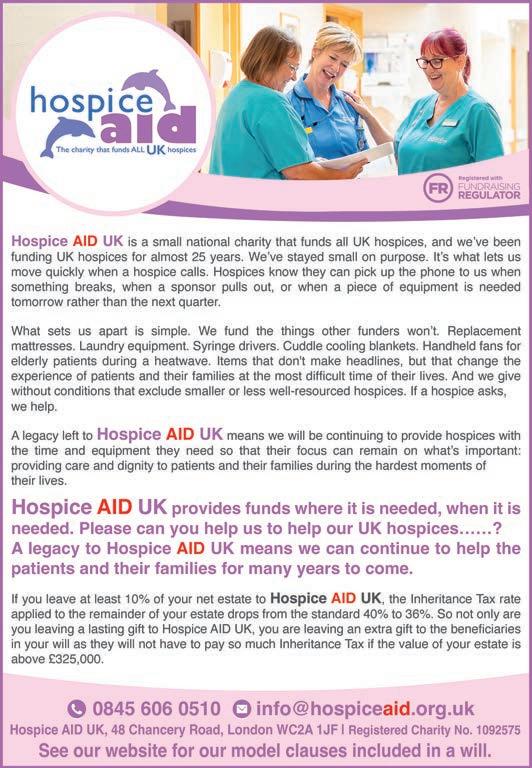
[HOSPICE AID UK was built around a principle that still guides it today: hospices know what they need and our job is to help them get it quickly.
The charity's CEO Jo Gratze said: “When a hospice contacts us about urgent equipment needs or emergency funding, we respond fast. That might mean funding a new specialist bed that helps someone spend their final days comfortably or emergency funding when unexpected needs arise – perhaps a hospice vehicle breaking down or essential equipment requiring urgent replacement.
“Every grant we make comes from the kindness of people who understand that supporting hospices means supporting their entire community. Our donors include families who’ve experienced hospice care themselves, healthcare workers who know the challenges hospices face and simply compassionate people who want to help when it matters most.
“Hospice AID UK gives help where it is needed, when it is needed!” q
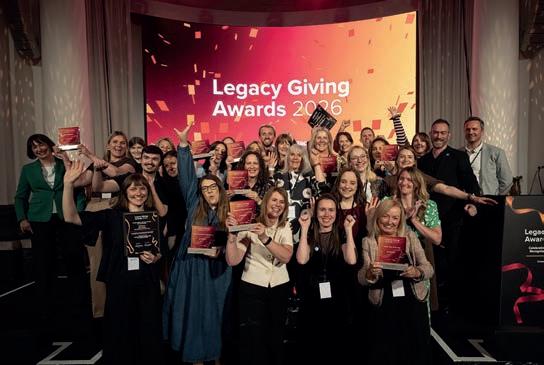
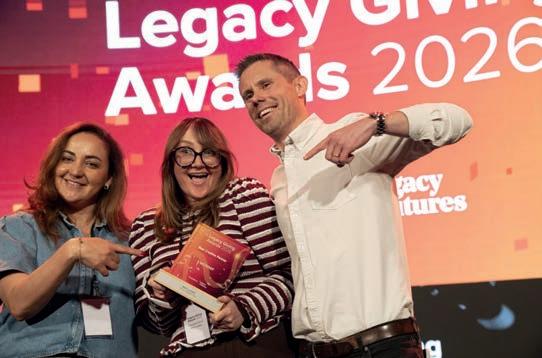
[ THE WINNERS of the prestigious Smee & Ford Legacy Giving Awards were announced in April at a ceremony held on Northumberland Avenue in London.
Now in their fourth year, the awards celebrate excellence, innovation and impact across the UK legacy giving sector, recognising the individuals, teams and organisations driving forward this vital income stream for charities.
Attendees enjoyed extended opportunities to connect, alongside inspiring expert speakers and exclusive insights from the Legacy Giving Report 2026. The awards ceremony itself recognised outstanding contributions and achievements across the legacy community.
Fourteen winners, selected from 91 finalists, were revealed during the ceremony, showcasing the extraordinary contributions of legacy professionals and partners from across the sector. The winners were chosen by an expert judging panel of 15 leading figures from the legacy giving community, who assessed entries based on ambition, excellence and achievement.
Legacy giving continues to play an increasingly important role in supporting the UK’s charitable sector, with gifts in wills projected to reach nearly £5 billion annually by 2030. This year’s awards highlight the sector’s ongoing evolution, with a strong focus on digital

[FAILING EYESIGHT is nothing short of a personal catastrophe. Do you have a family member, friend or neighbour who is gradually losing their sight?
Reading, recognising friends and living skills are all affected as your sight is going – and it’s much harder if you live alone.
The National Federation of the Blind of the UK (NFBUK) keeps its members in touch with general information, help and updates on what’s going on.
The charity produces bi-monthly news magazines and circulars in audio, braille or electronically, which members can read independently. It also encourages blind and partially sighted people to play a fuller part in society. q
• For further information contact NFBUK on 01924 291313, email admin@nfbuk.org or visit www.nfbuk.org
innovation, stewardship, collaboration and leadership.
The 2026 winners represent a diverse range of charities, agencies and partners, from national organisations to specialist causes, all demonstrating outstanding commitment to engaging supporters and maximising the impact of legacy giving.
Polly Avgherinos, CEO at MiExact, owners of Smee & Ford, said: “Congratulations to all of this year’s winners and highly commended organisations. The scale and quality of entries we received is a testament to the dedication and expertise across the sector.
“It was fantastic to come together and celebrate the achievements of so many organisations and individuals who are pushing boundaries and delivering real impact through legacy giving.”
Ashley Rowthorn, Executive Director at MiExact’s Legacy Futures and Smee & Ford, added: “The calibre of entries this year has been exceptional, reflecting a sector that continues to grow in confidence, innovation and impact.
“It is especially meaningful to mark the 10th anniversary of the Crispin Ellison Bursary, which plays an important role in supporting professional development and nurturing future talent within legacy administration. Together, the winners and finalists demonstrate the strength and ambition of the legacy giving community.” q

[PEOPLE THINK OF A LEGACY as organising finances to look after their loved ones. What we normally don’t think about is that a legacy is also the impact we have on people’s lives – the wonderful memories we create over our lifetimes.
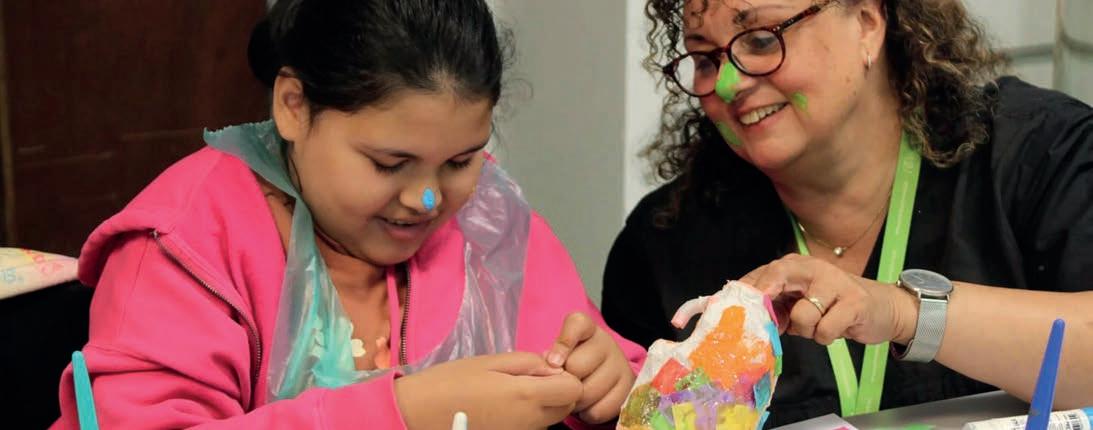
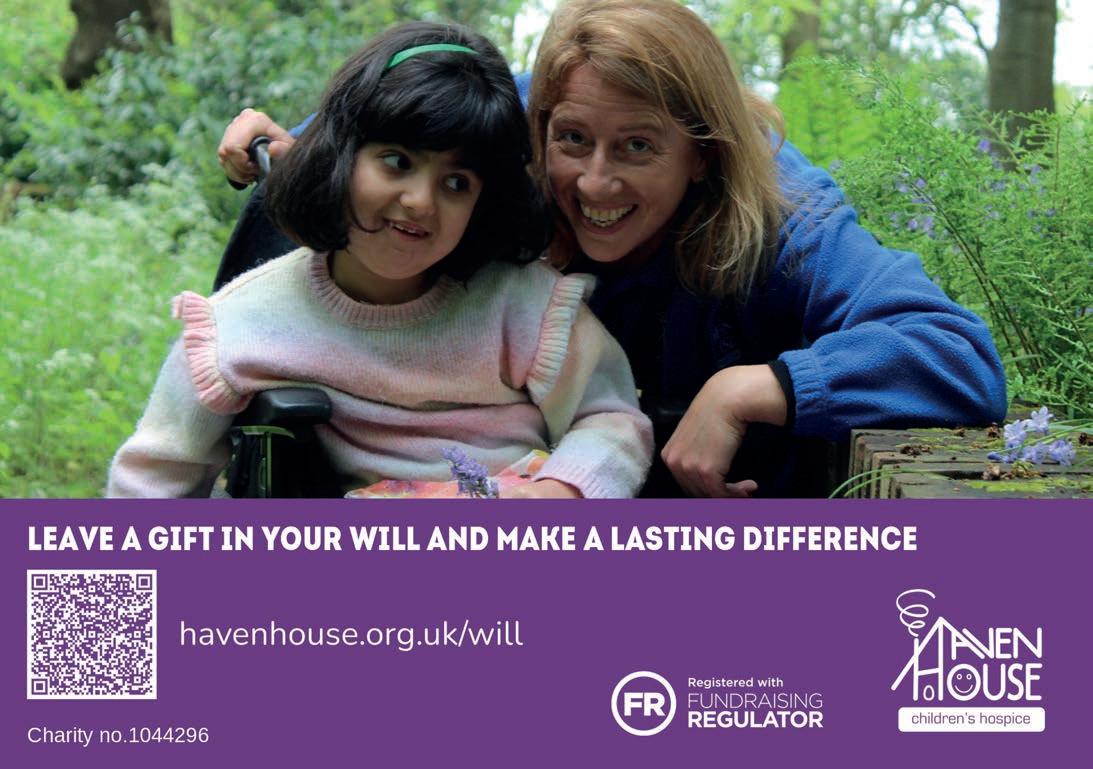
Will you write a gift in your will to Haven House Children’s Hospice? You would be leaving a lasting legacy to local families who we support. Being told that your child is seriously ill is devastating. That is why Haven House is here. Our support is a vital lifeline to 438 children and their families in our local community. Our care is unique, just like our families. Our compassionate, physical and practical care helps these extraordinary children make the most of every day.
Many families are left to cope on their own, which can place immense strain on them, compounded by the anxiety that accompanies a serious illness.
After remembering your loved ones, a gift in your will to Haven House will make sure that, for families who feel alone, we are there so they will have the best possible support.
No matter how big or small, a gift in your will is a wonderful act of kindness that will enable families to have the support they desperately need.
Everyone who leaves a gift in their will to Haven House is acknowledged with a gold leaf on our tree of recognition, along with a message of thanks.
Make your will for free online in three easy steps. By leaving a gift in your will, we will be able to continue supporting seriously ill children. q
• To find out more please visit www.havenhouse.org.uk/will or call 020 8505 9944
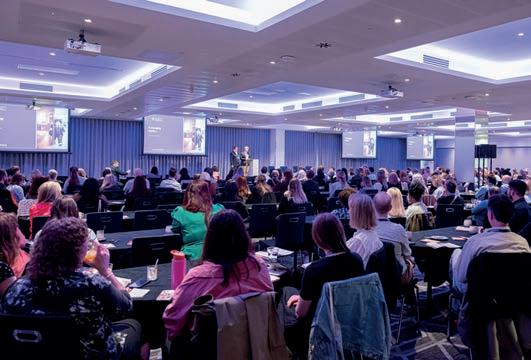
[THE Institute of Legacy Management (ILM) Conference 2026 was certainly one to remember. From ABBA costumes and futuristic avatars to a live auction and The Price is Right game show, all sprinkled with thought-provoking and actionable insights from some of the country’s leading experts from across the sector, delegates have hailed it one of the best ILM conferences to date.
More than 350 attendees packed the Convene 133 Houndsditch venue in May to enjoy a day of learning and networking. Alongside members were corporate partners and sponsors, together with sector partners.
ILM CEO Matthew Lagden and Chair James Stebbings opened the conference with a look back at some of the ILM’s highlights from the past year, including the launch of the new ILM member portal and successful lobbying with Remember A Charity and the Law Society on pensions and IHT. Matthew highlighted the importance of collaborative relationships with their sector partners and thanked them for their ongoing support.
A look to the future
Matthew and James continued with a look at how the ILM is adapting to meet the future and announced some exciting things to come in the next year.
Matthew announced the development of a new Legacy Management Apprenticeship, pointing out this will be the first officially recognised qualification route into legacy management. The development and
[ZANE: ZIMBABWE A NATIONAL EMERGENCY is a UK registered charity working to help the most destitute, vulnerable and impoverished people in Zimbabwe. It is the largest supplier of financial aid to elderly people in Zimbabwe who lost their life savings and pensions in the economic collapse and subsequent hyper-inflation.
This includes over 440 frail veterans and their widows who fought for the Crown. ZANE assists with rent, medical bills and food –and, crucially, also provides comfort, advice and support.
In addition, ZANE funds a clubfoot correction programme, successfully treating over 6,600 children to date. ZANE also funds education programmes including the provision of pop-up classrooms in a high-density township for children who would otherwise not receive an education. It runs creative therapy workshops for women living in extreme poverty who are victims of political violence and trauma. Zimbabwe remains a country in crisis. With some of the highest inflation and unemployment rates in the world, Zimbabwe’s economy teeters on the brink of collapse. Coupled with a woefully inadequate healthcare system, the need for ZANE is greater than ever for the most destitute people in Zimbabwe. q

© www.tellingphotography.com
roll-out will be supported by the newly appointed Head of Professional Development, he told delegates.
In another big announcement, Matthew shared that the ILM will be launching a completely rebuilt website by the end of 2026. He told delegates that they could help shape this by sharing their thoughts with the web development company who were in attendance on the day.
Matthew and James concluded that none of this would be possible without the continued support of ILM members, corporate partners, the ILM Board and staff. They highlighted that the ILM is an organisation with big ambitions, but run by a very small team who work very hard to make things happen, which was met with a round of applause from delegates. q
• To find out more about the work of ZANE visit www.zane.uk.com

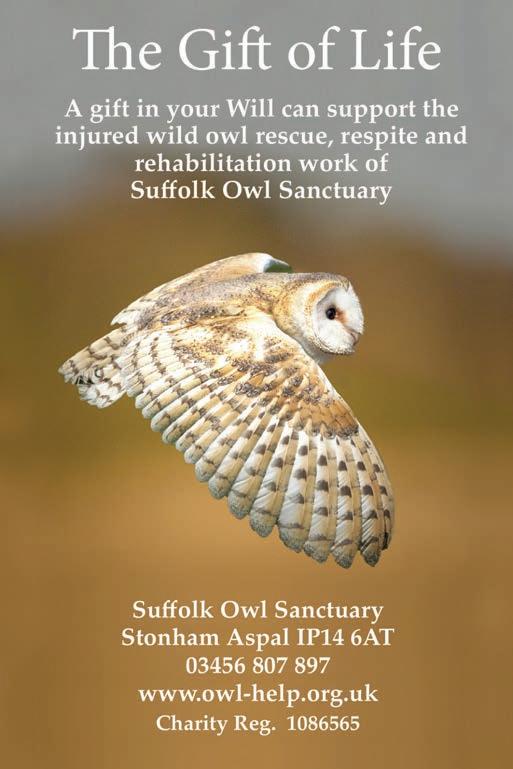
[ESTABLISHED IN 2001, the Suffolk Owl Sanctuary – known affectionately as S.O.S. – operates a comprehensive facility for the rescue, care and rehabilitation of owls and other birds of prey across East Anglia. It also promotes the need for the conservation of threatened raptor species throughout the UK with its Saving Britain’s Owls initiative.
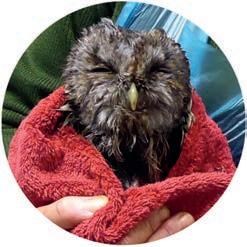
The S.O.S. Raptor Hospital at Stonham Aspal is unique in the region. It is specially equipped for the care and treatment of the many injured wild owls and other birds of prey it receives every year as a result of road traffic accidents, mishaps, starvation, trauma, disease, poisoning and sometimes even shooting or trapping.
Many of the birds can be given a recuperative, short-term pick-me-up before being re-released into the wild, whilst those that are more seriously injured but stand a chance of recovery are given medical aid and/or surgery, as determined by their vet.
The birds are then allowed space and time to fully recuperate in one of the secluded recovery aviaries before being carefully returned to the wild.
S.O.S. operates a wild owl nest box scheme that includes building, locating, curating and repairing environmentally friendly nest boxes in appropriate locations to replace the gradual erosion of natural nesting sites.
S.O.S. is funded purely by donations and, as a small charity, the legacies it receives play an important role in enabling it to sustain the resources needed to actively promote the conservation of owls and other birds of prey throughout the UK. q
[
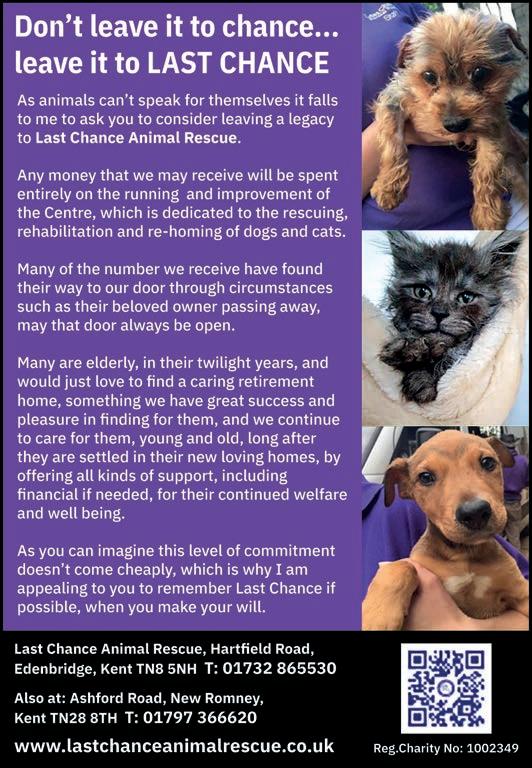
LEGACIES MEAN SO much to the team at Last Chance Animal Rescue. These wonderful gifts have helped them to rescue, rehabilitate and re-home so many abandoned, abused and unwanted dogs, puppies, cats, kittens, rabbits and guinea pigs who otherwise would have had no future.
The charity understand the wishes of its kind benefactors who have considered them in their Wills. A spokesperson said: “We know they want their generous gift to us to be used directly to save lives, provide the very best of care and to find loving homes.
“Legacies really do provide the gift of life and Last Chance Animal Rescue can now, after much planning and prudent use of funds, offer our life saving services to so many more needy pets. We are delighted to announce we now have a second rescue and rehoming centre in Kent, giving hope and a true last chance to so many.
“Sadly we cannot thank those who have enabled this wonderful achievement but are extremely grateful to all those who are currently considering helping us now and in the future to continue our work.”

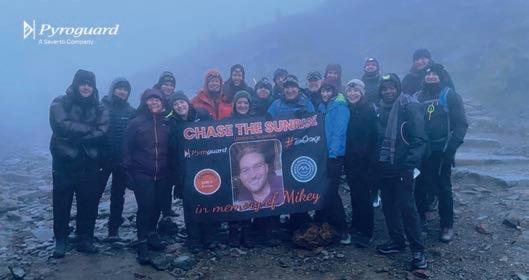
[ PYROGUARD has raised over £4,000 for Men’s Minds Matter after a team of employees completed a sunrise ascent of Yr Wyddfa (Snowdon) to shine a light on men’s mental health.
Twenty employees took on the nine-mile overnight hike to the summit of Wales’s highest mountain, setting off before dawn and reaching the top in time for sunrise, pausing for a moment of reflection at the peak.
The challenge was organised in memory of colleague Mikey Shoer, Pyroguard’s former Technical Sales Manager for Ireland. Mikey was widely respected across the business and wider industry and known for his positivity, dedication and the lasting impact he had on those around him.
Neil Tilsley, Pyroguard’s COO, said: “I couldn’t be prouder of the team’s effort and unity. Reaching the summit at sunrise was a powerful moment and a true reflection of our team spirit. Mikey was a valued colleague and friend, and we’re honoured to support Men’s Minds Matter in his memory while raising awareness of men’s mental health.”
Men’s Minds Matter is a UK-based suicide prevention charity dedicated to saving lives through psychological support, education and early intervention. The organisation works to support individuals experiencing suicidal thoughts, while also equipping families, friends and professionals with the tools to provide effective help.
Pyroguard remains committed to supporting initiatives that promote mental health awareness and encourage open, honest conversations across the workplace and wider industry. q
• For more information visit www.pyroguard.eu
[ THIS YEAR’S Remember A Charity Week runs from 7 to 13 September 2026.
The annual campaign is designed to raise awareness about the importance of leaving a gift to charity in your will, encouraging people to consider supporting their favourite causes after looking after family and friends.
Last year’s campaign celebrated the funny moments, interesting hobbies and unique quirks that we remember and cherish about our loved ones.
For more information or to see how you can get involved this year visit the official Remember A Charity website at www.rememberacharity.org.uk. q

[HESSILHEAD WILDLIFE RESCUE TRUST is situated near Beith, in North Ayrshire. It was set up as a charity in 1986, although its founders Andy and Gay had been caring for injured and orphaned wildlife since 1970, when they rescued a fox cub from a gamekeeper and his dogs. As the number of casualties increased year on year, Andy and Gay needed financial and practical help.
Once the trust was set up, new aviaries and enclosures were built. A membership scheme proved popular and many volunteers were recruited. The Centre now occupies a 20-acre site, including woodland, marsh and open water, this gives a variety of release sites for its patients.
Approximately 3,500 wildlife casualties are now treated each year, with the aim of returning them to the wild. Among the many hedgehogs, foxes and familiar garden birds, there are deer, otters, badgers and seals. In addition, swans are treated regularly, along with buzzards, peregrines, herons and sea birds.
The centre operates a 24-hour rescue service and there are more than 60 enclosures and aviaries, a hedgehog hospital, a seal/swan unit and intensive care facility. It also offers training courses on the handling, care and treatment of wildlife casualties.
Spring and summer are especially busy, with hundreds of nestling birds being hand reared. Care is taken to rear all youngsters with minimum human contact. That prevents wild birds and mammals becoming too used to people, so giving them a good chance of survival in the wild.
Hessilhead is primarily a voluntary organisation. Its volunteers help in many ways: fundraising, building and maintenance, driving patients to the centre and daily cleaning and feeding. q

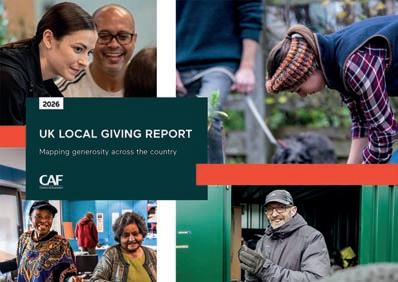
[ ONE IN SIX PEOPLE in the UK want more opportunities to engage with their local community, with even higher demand in some urban areas, according to new research by the Charities Aid Foundation (CAF).
CAF’s UK Local Giving Report, which looks at levels of charitable giving, community engagement and local pride in every UK constituency, found that just 37% of people engaged in their community last year, while only half (52%) felt a sense of local pride.
The report highlights the virtuous circle that when people engage in their local communities, they are more likely to donate to charity and feel a sense of local pride. Engagement includes activities such as helping in their local area, taking part in a local campaign, supporting someone who is vulnerable or maintaining public spaces.
The areas with the greatest appetite for getting involved include urban, lower income areas such as Birmingham Ladywood, Manchester Rusholme and Liverpool Riverside where the number of residents keen for more opportunities to connect rises to more than one in five. Those who want to engage tend to be younger, educated renters in cities, but cite their main barriers are a lack of time, uncertainty about where to begin, and not knowing others to participate with.
“When we are facing a sustained trend of declining donations, part of the solution to unlocking greater giving lies in understanding the power of place and community. It might seem obvious, but places matter to people. This report shows that when people are engaged in a local area, they tend to give more. It tells us that the people in areas with low levels of engagement and giving aren’t disinterested – they need and want more opportunities.
“We need targeted investment and collaboration from government, philanthropists and businesses to revitalise local cultures of giving and encourage community connections, helping to strengthen charities and the places they support, for the future.”
Civil Society and Youth Minister
Stephanie Peacock said: "We welcome the findings of this report, which underline the importance of fostering a strong culture of giving in local communities.
Giving from the UK public is declining, with people donating an average of 0.9% of their income compared to 1.1% the previous year.
CAF’s UK Giving research published earlier this year, found that the amount donated to charity in 2025 dropped for the first time in five years. However, this new research also reveals that when people see the positive impact of charities in their local community, they are much more likely to donate overall, twice as likely to give locally and three times as likely to volunteer.
CAF’s UK Local Giving Report also found that:
• Community engagement: the most engaged region was the South West where almost half of people (47%) engaged with their community, compared to the East of England and the North East, where less than a third did (30% and 31% respectively). The constituency with the highest levels of local engagement was Bristol Central where 59% of people engaged with activities in their local community.
• Local pride: most of the ten constituencies with the greatest levels of pride are higher income areas in the North of England, where around seven in 10 people claimed a strong sense of belonging to their local community and satisfaction with their local area. This contrasts with constituencies in the Midlands, which have some of the lowest levels of local pride, and experience significant deprivation. In Wolverhampton South East, just 28% of residents say they are satisfied with their local area and feel a sense of belonging to it.
• Giving to charity: people in the UK donated 0.9% of their incomes to charity, a decline from 1.1% in 2024. Sheffield Hallam is the most generous constituency in the country, with residents donating 1.6% of their incomes. Higher income areas are likely to have more donors and generate larger donation totals but rank much lower in terms of percentage of income given. For instance, people in Kensington & Bayswater donated the most between them, at an estimated £41.7 million, however that equates to just 0.29% of the average income in that area.
Mark Greer, Managing Director of CAF, commented: “Charities are at the core of our communities. Through their work up and down the country, they strengthen local areas and support those in need.
“It rightly highlights how giving back builds pride, connection and belonging in the places people call home. Through our plan for place-based philanthropy, Our Place to Give, we will strengthen links between donors and communities, deepen partnerships and unlock further investment across the country. We look forward to working with partners across the sector to deliver this vision and ensure every region has the resources and opportunities it needs to thrive.” q
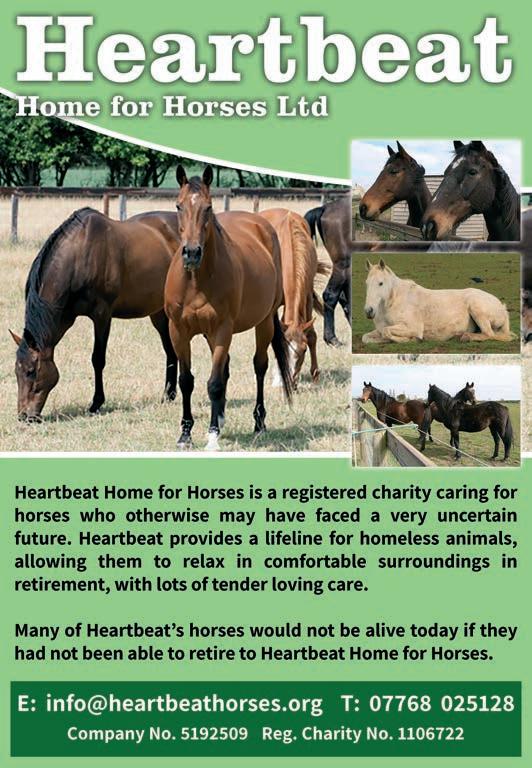
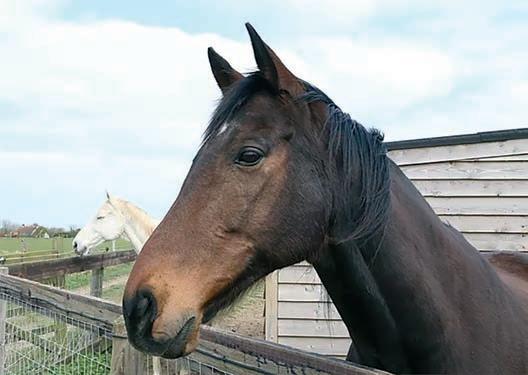
[ THE HEARTBEAT HORSES now live in a new home at Sink Farm in Woodbridge, Suffolk and are cared for alongside the wonderful Suffolk Punch horses.
Sink Farm is the colony stud for the Suffolk Punch Trust charity, who continue their important and essential work in preserving this unique breed. q
• For more information on either charity please contact Tracey Pettitt, stud manager or David Clarke, finance director, on 07768 025128. Heartbeat Homes for Horses, Sink Farm, St David’s Lane, Hollesley, Woodbridge, Suffolk IP12 3JR
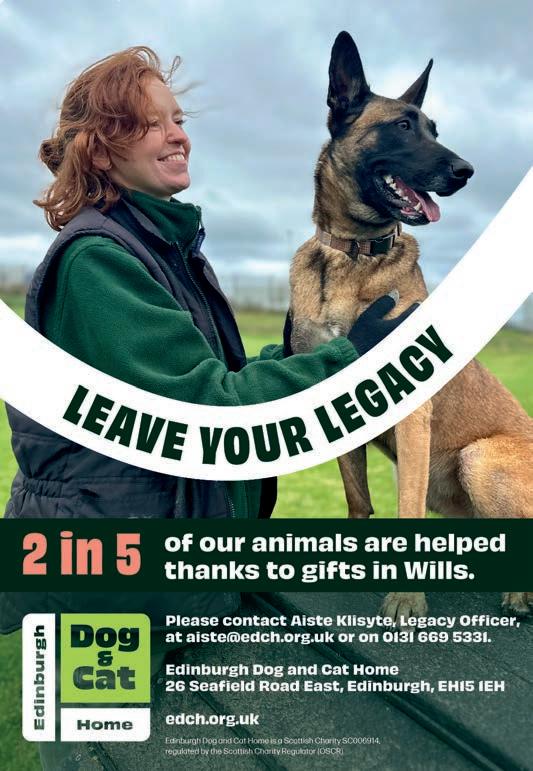
For 140 years Edinburgh Dog and Cat Home has been there for the dogs and cats who need us.
From food and veterinary care to training, enrichment and love, we give everything we can to help our animals find their forever home.
Two in five animals cared for at the Home are supported by the generosity of legacy gifts. Thanks to these funds, hundreds of dogs, cats and their owners have had the chance to form bonds that last a lifetime.
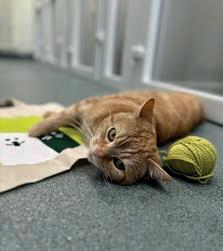
By leaving a gift in your Will to Edinburgh Dog and Cat Home, you’ll be part of something extraordinary. You’ll help give vulnerable, lost or struggling animals the second chance they deserve, leaving a legacy of love.
The Home works with solicitors and executors to ensure every gift is managed with transparency, respect and a deep appreciation for those who have chosen to support our work in this lasting way.
If you’re considering a gift in your Will, we would be honoured to talk it through with you, with no pressure and no obligation. It’s your legacy, and we’re here to help you shape it.
For further information, including a short video, please visit edch.org.uk/gifts-in-wills
[ MUSIC-LED SESSIONS for older people in South Queensferry are set to return after a charitable donation from a major housing developer.
A £2,500 contribution from Cala Homes (East) was given to Manor Estates Housing Association (MEHA) and its community fund following the final handover of 25 social rent properties at the Queensferry Heights housing development.
The full amount has been awarded to Queensferry Churches Care in the Community (QCCC) to restart popular music sessions that had been scaled back due to financial pressures.
Derek Lawson, Strategic Land Director at Cala Homes (East), said: “We are pleased to see this community benefit donation support such a worthwhile, local cause. At Cala, we are committed not only to delivering high-quality homes, but also to making a positive contribution to the communities in which we build.
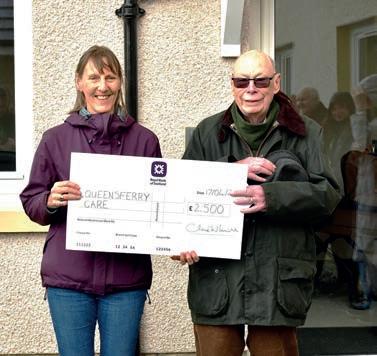
“It is particularly rewarding to know this donation will help QCCC continue its valuable work supporting older people and reducing social isolation.”
QCCC supports around 400 older people each year across South Queensferry and surrounding communities, helping to reduce isolation
and improve wellbeing through a range of services and activities.
The organisation had been forced to scale back some of its music-based sessions due to financial pressures, despite their proven benefits for emotional wellbeing, memory stimulation and social connection.
Claire Ironside, CEO of Manor Estates Housing Association, said: “We know just how beneficial these sessions are, particularly for older people. To be able to help bring them back through this funding is incredibly rewarding and shows the value of partnership working in action.”
The latest handover between Cala and Manor Estates brings Cala’s total delivery to 44 affordable homes across the development, forming part of a wider commitment tied to the site and local community.
The homes include a mix of houses and flats designed to meet a range of housing needs, helping to address ongoing demand for highquality affordable housing in the area.
Claire added: “It has been hugely reassuring working with Cala throughout this development. The quality has been consistent from start to finish, and the finished homes are ones we are genuinely proud to offer to tenants.” q
[IN A HIGHLY CRITICAL REPORT published in May, the Charity Commission’s inquiry found serious mismanagement at the Players Foundation, previously known as the Professional Footballers’ Association Charity.
This included £1.9m which was transferred from the charity’s bank account to a trade union, The Professional Footballers’ Association, without adequate explanation or governance. Additionally, the charity allowed the union to occupy its properties rent free, some for over a decade, resulting in significant financial loss to the charity.
Both the £1.9m, plus interest, and the outstanding rent plus interest (£627,000) were subsequently repaid to the charity during the inquiry once the Commission had raised concerns.
The Chief Executive and Director of Finance at the connected union were also trustees of the charity. The Commission’s intervention ensured that their remuneration was transparently disclosed in the charity’s accounts as related party transactions, which was not previously the case.
As a result of these and other findings relating to the charity’s relationship with the trade union, the regulator issued an Official Warning to the charity on 7 September 2022 for mismanagement that had taken place from its incorporation in 2013 to the beginning of 2019.
The inquiry uncovered a pattern of poor oversight and financial mismanagement that put charitable funds at risk over several years. It found that:
• Through a longstanding but informal arrangement, the charity paid approximately 80% of the trade union’s annual operating costs – around £6m annually, including £5m on union staff salaries. In return, the union provided coaching and training to further the charity’s aims. This arrangement operated for years without any contractual agreement, proper review, or value-for-money assessment until the Commission raised concerns in April 2019.
• £1.9m of funds the Football Association deposited in the charity’s bank account was transferred from the charity to the union in two separate transactions, without a clear explanation for the action. In the report, the Commission is highly critical of trustees’ failure to spot the huge reduction in funds during their reviews. The funds plus interest were only returned after the Commission raised concerns.
Subsequently, an alternative explanation was provided by trustees, who suggested that the funds belonged to the union but were held by the charity pending confirmation of their donation to the charity by the union. The inquiry found that the changing explanation provided regarding the £1.9m demonstrated poor financial management and controls at the charity.
• The charity owned several properties in Manchester and London and allowed the union and its trading subsidiary to occupy these rent-free for several years. When interest was included, this cost the charity over
[THE MISSION of Three Counties Dog Rescue is to accept, care for and find homes for unwanted, lost and stray dogs and cats and to ensure their wellbeing afterwards. The charity was founded in 1971 and since then they have improved the lives of over 7,800 dogs and cats.
Before rehoming, all animals are vet checked, neutered, vaccinated, microchipped and kept in suitable conditions. Rehabilitation costs are a major part of the charity’s annual expenditure of over £200,000.
Healthy animals are never put down. As part of that non-destruction policy, several elderly dogs are kept in long term foster care. However, this means that the charity can incur large veterinary costs to maintain a dog’s health while they await a new permanent home. They now provide boarding and cremation services with profits supporting the Rescue.
Every penny raised goes to improving the lives of dogs and cats. Three Counties Dog Rescue is run entirely by voluntary and unpaid helpers, who also meet their own expenses. q
£627,000 in unpaid rent, which was subsequently repaid after the Charity Commission’s intervention.
• Multiple trustees held positions within both the charity and the trade union – two trustees held senior union salaried positions, whilst three others sat on the union’s Business Advisory Committee, which set salaries for union staff. This created inherent conflicts of interest, particularly as the charity funded union salaries to the sum of £5m annually.
• The charity also failed to properly disclose related party transactions in its published accounts, reducing transparency for the public and regulators. Whilst trustees placed reliance on professional advisors, they failed to fulfil their fundamental duty to actively oversee and review the charity’s operations and relationships.
As a result of the inquiry’s findings, the Commission has taken the following action:
• One trustee, Darren Wilson, has been disqualified from being a trustee or holding a senior management position in any charity for four years after the Commission found him responsible for misconduct and/ or mismanagement in the administration of the charity. At the time of his trusteeship, he was also Director of Finance of the union. The inquiry found he had a greater culpability than the other trustees, due to his role as a qualified director of finance.
The Commission took action to suspend Mr Wilson as a trustee until any disqualification took effect. Mr Wilson appealed against his suspension and disqualification, resulting in hearings over the course of several years, with the appeal. ultimately withdrawn in January 2025. The period of disqualification is ongoing and will end on 14 August 2027.
• The Commission issued an Official Warning in September 2022 to the charity for mismanagement during the period from when it was incorporated in 2013 to the beginning of 2019.
• Remedial actions have now been implemented at the charity, including proper separation from the union, appointment of new trustees, and establishment of a distinct identity for the charity. It has also adopted a new funding model, after the Football Association and Premier League stopped funding of the charity upon its separation from the union.
Angela Ascroft, Critical Case Lead at the Charity Commission, said: “In this case, the lines between the charity and Professional Footballers’ Association union were blurred beyond distinction, resulting in the multiple instances of conflict of interest and mismanagement at the charity. Charity trustees have a duty to act in the best interests of their charity, but trustees at the Players Foundation fell dismally short of this expectation and, as a result, let down the players they were supposed to be helping.
“The Charity Commission’s extensive regulatory involvement led to the disqualification of trustee Darren Wilson. Since then, the Players Foundation is more separated from the union and can now focus on helping those it was set up to serve.” q

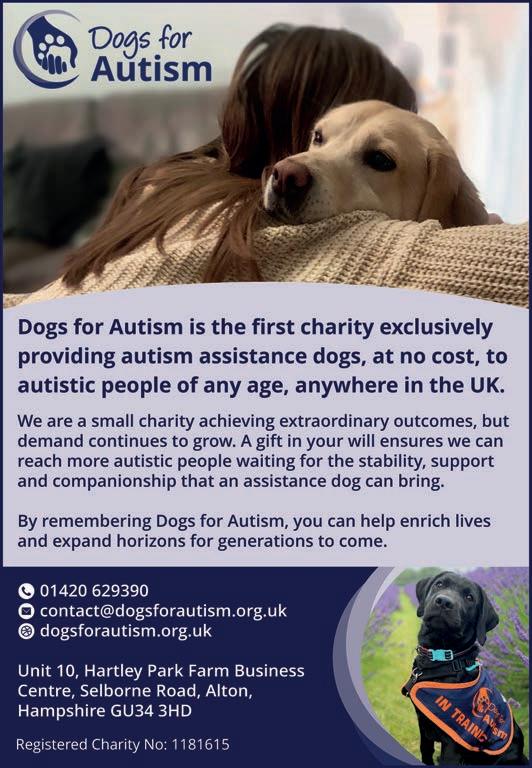
[DOGS FOR AUTISM is a pioneering charity transforming the lives of autistic people through highly-trained assistance dogs. Based in Hampshire, we provide life-changing partnerships to autistic children and adults across the UK, free of charge and tailored to each individual’s needs.
Although understanding of neurodiversity is increasing, many autistic people still face daily barriers affecting confidence, communication and independence. Our assistance dogs offer consistent, practical support, accepting their handler exactly as they are and helping everyday life feel calmer, safer and more predictable. Our dogs are trained to support a wide range of needs, from road awareness and safety to deep pressure therapy during periods of overwhelm. They can interrupt repetitive behaviours, help their handler leave overwhelming environments and provide reassurance during heightened anxiety.
Our dogs are also trained to sense emotional changes early, giving a subtle cue before a meltdown so situations can be managed before reaching crisis point. Each dog is carefully prepared for their future partner, ensuring every partnership is built to last.
The impact is far-reaching: calmer homes, safer outings, fewer crisis moments and renewed confidence, opening up everyday experiences once thought impossible. By providing practical early intervention, we also help reduce pressure on public services.
As a small charity with increasing demand, gifts in wills are crucial to our long-term impact. By leaving a legacy to Dogs for Autism, you help secure the future of our work, enabling more autistic people to receive highlytrained assistance dogs and lifelong support. q
• For further information visit dogsforautism.org.uk or call 01420 629390
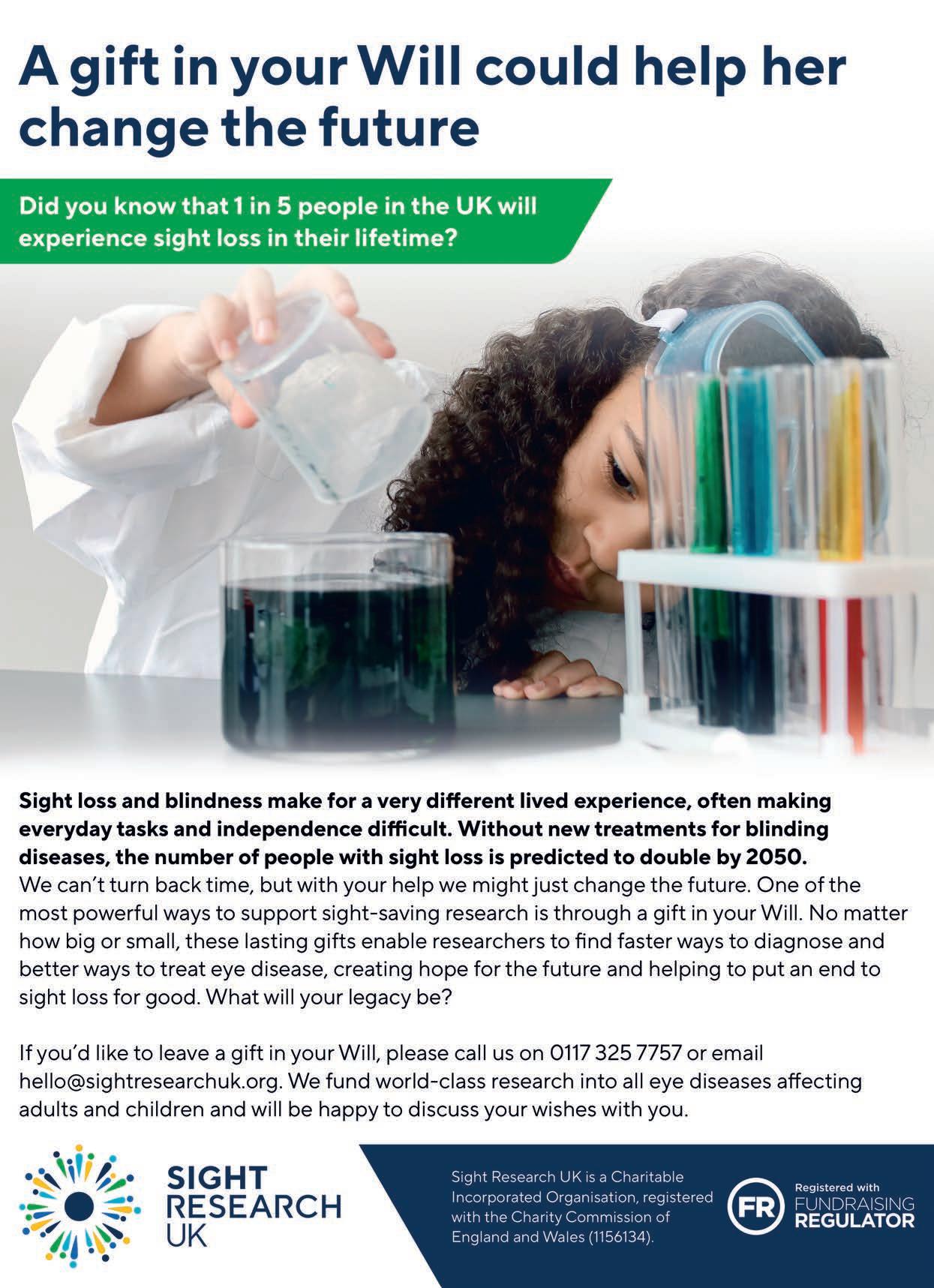
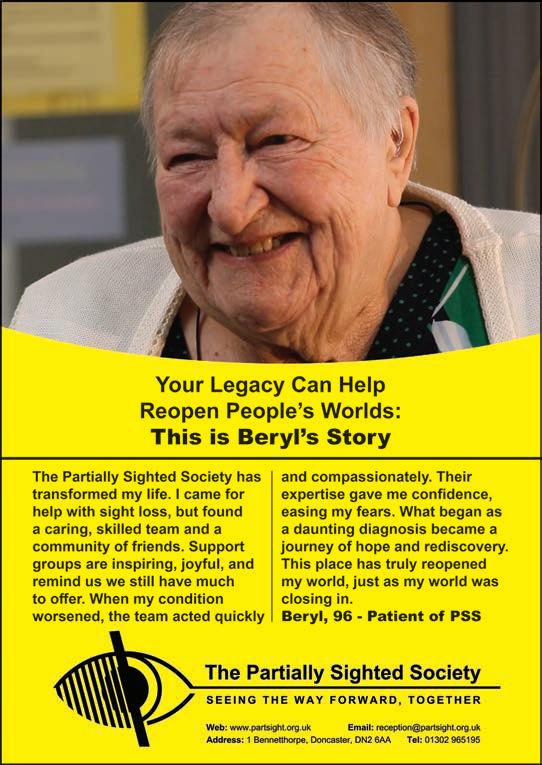
[OVER TWO MILLION PEOPLE in the UK are living with sight loss – and that number is expected to double by 2050. A diagnosis of sight loss is life-changing, not just for the individual, but for their families too.
The Partially Sighted Society understands the challenges that come with sight loss – because they’ve been supporting people through them for over 50 years.

As a national charity, they provide specialist services that make a real difference every day. From custom-designed school exercise books for children to low vision assessments, assistive equipment and emotional support, their goal is simple: to help those affected by sight loss live as independently and fully as possible.
They also offer a range of social activities and support groups to combat the loneliness and isolation that often accompany sight loss –because no one should face it alone.
By leaving a gift in your will, you can help ensure that no one has to navigate sight loss without the support they need. Your legacy could bring hope, dignity and independence to thousands of people for years to come.
Even a small gift can make a powerful difference. Please consider remembering The Partially Sighted Society in your will – and help them continue transforming lives, long into the future. q
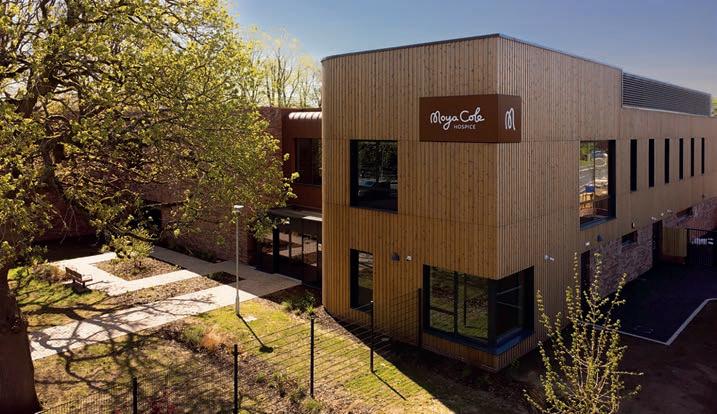
[CADDICK CONSTRUCTION has completed work on the new Moya Cole Hospice in Heald Green, Cheshire enabling the charity to provide outstanding inpatient and outpatient care, and bereavement support for those impacted by life limiting illnesses across Greater Manchester.
The new development, located within the boundary of the Cheadle Royal conservation area, is made up of two buildings connected by a linked corridor, featuring a modernised 27-bedroom inpatient unit. Work also included the creation of dedicated bereavement and family support spaces.
Moya Cole Hospice, formerly St Ann’s Hospice, and named in memory of founder Dr Moya Cole OBE, funded the new £27m development, in part thanks to the incredible support of the community with amazing fundraising efforts and generous public donations, raising over £2m as part of the Build it Together appeal.
Caddick Construction has supported the charity and contributed to its appeal, raising money prior to work commencing and throughout the project, which has resulted in a total donation of £95,000 to the hospice.
Caddick Construction North West team’s efforts included a charity golf day and taking on challenges, including a 220-mile cycle ride from
Llandudno to Cardiff. The team also climbed Snowdon, involving colleagues, clients and supply chain partners from across the region.
Rachel McMillan, Chief Executive of Moya Cole Hospice, acknowledged the work carried out by Caddick on the new hospice building: “Throughout the project, Caddick has demonstrated a professional and collaborative approach to delivering the building. They have helped us bring a long-held plan to completion, and we appreciate the part they have played,
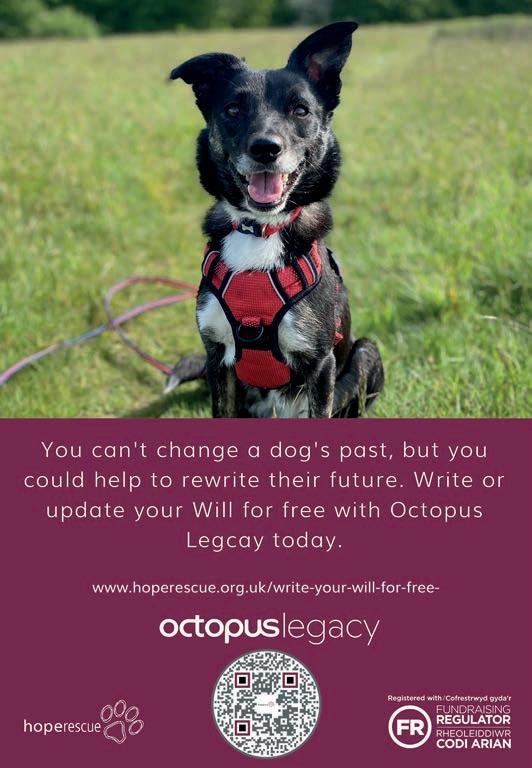
[ HOPE RESCUE are committed to taking all the stray dogs from six local authorities in South Wales – Caerphilly, Merthyr Tydfil, Blaenau Gwent, Rhondda Cynon Taf, Bridgend and the western half of the Vale of Glamorgan, resulting in around 1,000 dogs a year entering the rescue centre. That’s three dogs a day on average.
With only half of stray dogs being collected by their owner, every single day Hope Rescue are picking up the pieces. Resources are being stretched, but they are determined to be there for every dog that needs them.
Head of Operations Sara Rosser said: “This is my 25th year working in animal rescue and I’ve never known it as busy as it is now. We have seen a rise in elderly and sick dogs being deliberately abandoned, which is heartbreaking. The dogs deserve so much better than being deserted when they are most in need of support.
“With an increase in medical care and the cost of everything going up and up, we really need your support more than ever.
“If you’re interested in helping, please consider volunteering, fostering, adopting or donating – get in touch with the team via the email below. Together we can make sure that no dog is left behind.” q
• Find out more about how you can support Hope Rescue at www.hoperescue.org.uk or contact fundraising@hoperescue.org.uk.

alongside the valuable contribution of our architects, PRP.”
Dave Saville, Regional Managing Director of Caddick Construction North West commented: “We’re extremely proud to hand over the new hospice to the team at Moya Cole, marking the completion of this very special project.
“The vital care and support this development will provide the community has always been at the forefront of our work, ensuring it is delivered to the highest standards.” q
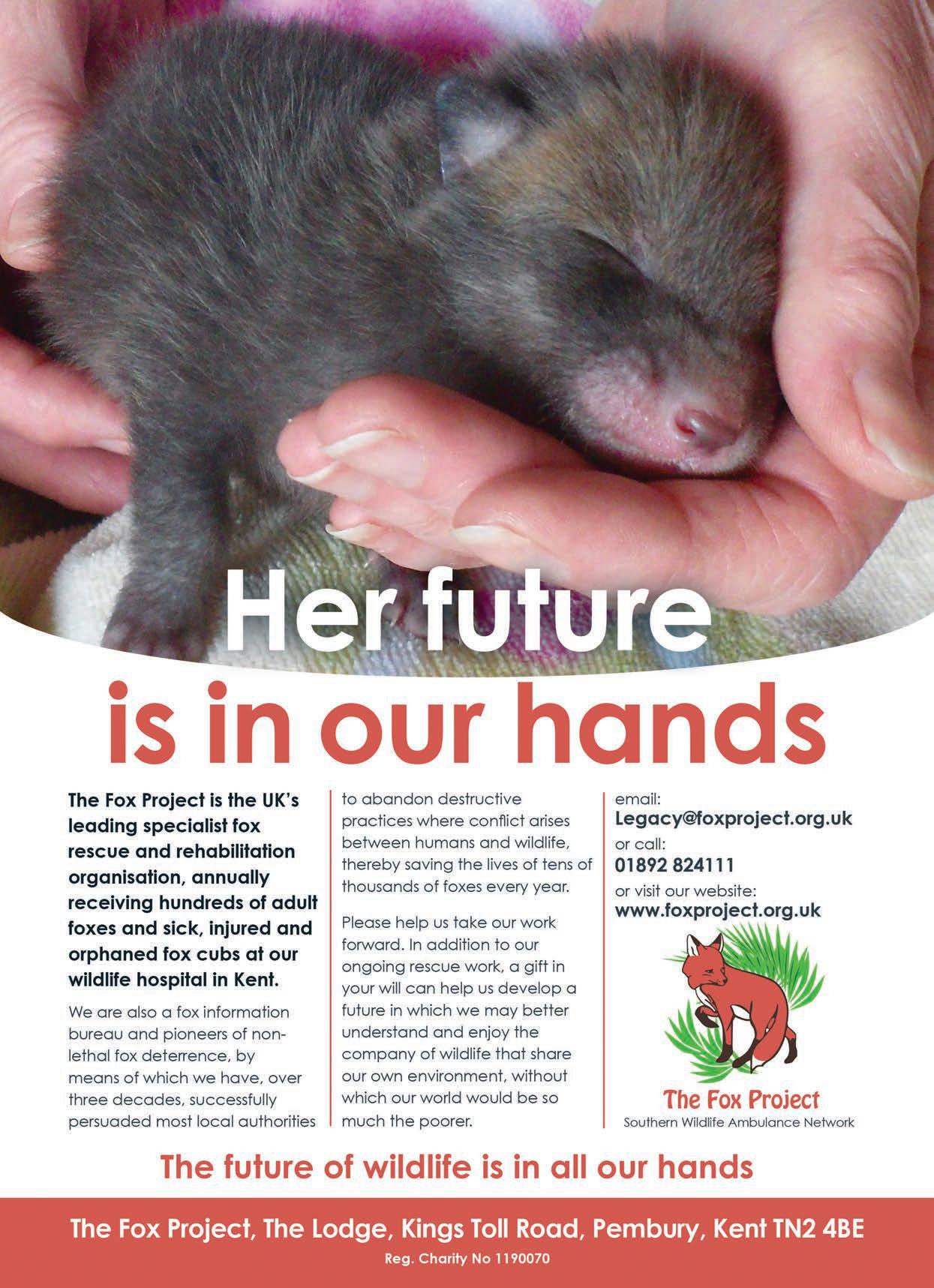
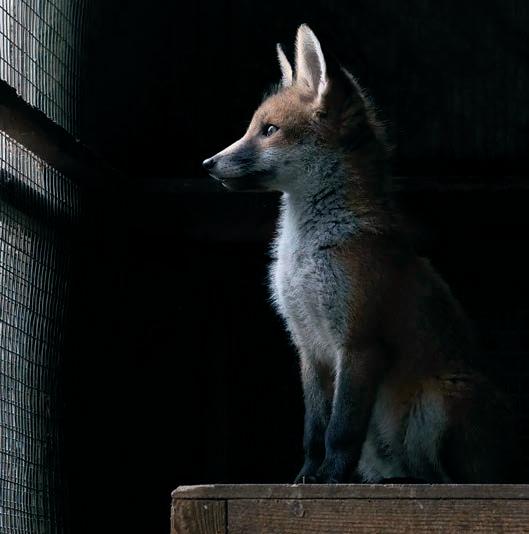
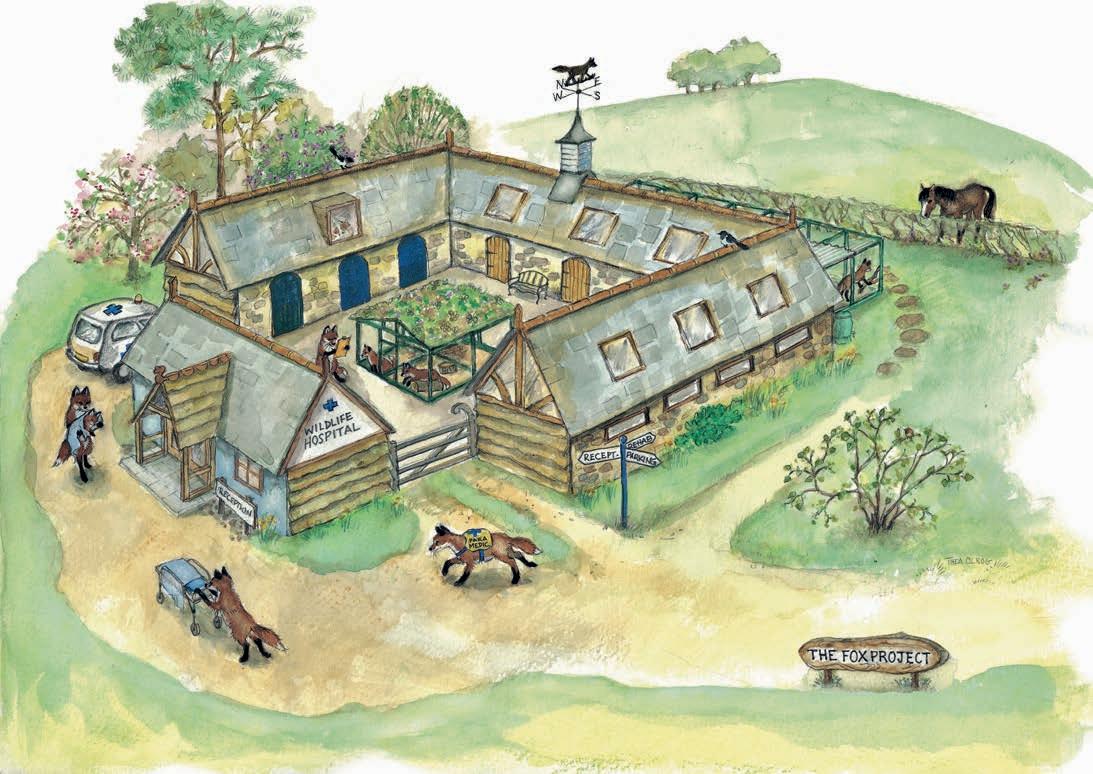
[ IN THE BEGINNING, The Fox Project operated from a garden shed where, if they were hard pressed, two or three fox cubs might be under their care. Fast forward 34 years and you find them spread over multiple sites with an annual rescue total of over 1,400 foxes.
Currently, the operation revolves around a hospital unit in Paddock Wood near Tunbridge Wells in Kent and a cub unit at nearby Pembury – both rented – plus around 20 home foster units run by volunteers. The system works well, but capacity is reaching its limit and building their own hospital would allow the charity to bring together the main units with a small office, overnight staff quarters, storage space and a workshop.
While the hospital project is vital to their future, and to the futures of countless sick and injured foxes and orphaned cubs, they have no illusions that some of them will have more grey hair at the end than they started out with! Just finding a place to call home will be the first hurdle. Affording it will be the next.
Although the proceeds of a couple of significant legacies have been ring fenced for the purpose, the charity find themselves competing for land that keeps rising in value – and against housing developers and property investors who, inevitably, have more funds and resources available than they do.
Your legacy could help swing the odds in their favour and guarantee The Fox Project and its many patients a secure future. q
[NEW RESEARCH FROM Tesco Insurance shows two thirds (68%) of British people wouldn’t know what to do or would be unsure about managing financial admin after a bereavement.
While many organisations need to be notified after a loved one’s death, just a quarter (26%) of people have any sort of plan in place for a relative’s financial admin, like dealing with bank accounts or insurance policies.
Six in ten (60%) say they would be unsure where to even start and nearly half (49%) expect they’d be overwhelmed by the amount of paperwork to be done. Just one in eight (13%) would feel ‘confident and in control’, compared to 57% who say it would cause them stress and anxiety.
Ban Mahsoub, Partnerships Director at Tesco Insurance, said: “We understand how difficult it is when you lose someone close. Sorting out their finances can often feel overwhelming, but taking it step by step can help make the process more manageable.”
Experts at Tesco Insurance have answered five of the most common insurance-related questions people ask after a bereavement.
• What insurance policies should you look for?
A loved one may have had several insurance policies in place, including life, home, motor, pet and travel. Checking paperwork can be time-consuming but it’s an important first step when establishing what policies the person had. If you can’t find the paperwork, then check their bank statements to see which insurance companies have been paid.
• How quickly do you need to inform the insurance companies? It is important to notify insurers as soon as possible, as delays can
affect some policies. This is especially important if a home becomes unoccupied, as an empty property can affect the validity of home insurance.
• What information will you need?
You will usually need to provide insurers with key personal details like the person’s name, address and date of birth. To close or transfer policies, or to make a claim, you will also need their death certificate.
• What is still covered by insurance after someone dies?
Cover can change depending on the policy. To find out what is and what isn’t covered after the death of a loved one, you should contact the insurance company directly. People will often need to transfer cover into someone else’s name.
• How should I deal with their possessions?
Many people compile a list of their possessions before they pass away, and some even have them valued. If they haven’t done this, you should create an inventory of valuable items like jewellery and electronics.
• Is there any support in place for dealing with financial admin after a loved one’s passing?
When dealing with highly stressful moments, such as the death of a loved one at the same time as notifying insurance providers, it is important to have the right support.
Established insurance providers are experienced in handling these instances, both sensitively and with professionalism through valuable guidance during the entire claims process. q
• For more information visit www.tescoinsurance.com
[THE CHARITY COMMISSION has published updated guidance for charity trustees on conflicts of interest, with research by the regulator suggesting many trustees are unsure how to recognise a conflict.
The redesigned guidance helps trustees identify and manage both financial conflicts – where a trustee or someone connected to them stands to gain money or other value – and conflicts of loyalty – where obligations to another person or organisation could influence a trustee’s judgement.
It comes as figures reveal a sharp rise in cases of alleged private benefit abuse at charities, many linked to unmanaged conflicts of interest.
In its first ever Charity Sector Risk Assessment, published last year, the Commission found that compliance cases involving the alleged abuse of charitable status for private benefit had risen by almost a quarter (23%) in a single year. Figures to be published later this year suggest that the upward trend may be continuing.
Conflicts involving trustees and their private interests were a recurring factor in many of these cases, representing an ongoing risk to the public’s trust in the wider charity sector.
While the total number of relevant cases still represent a very small percentage of charities overall, the regulator is keen to help trustees mitigate against the risks of such problems occurring.
The report found that conflicts involving trustees and their private interests were a recurring factor in many of these cases, and represent an ongoing risk to the public’s trust in the wider charity sector.
The updated Charity Commission guidance for trustees, known as CC29, is intended to help trustees identify and manage conflicts of interest and, in doing so, protect their charities from harm.
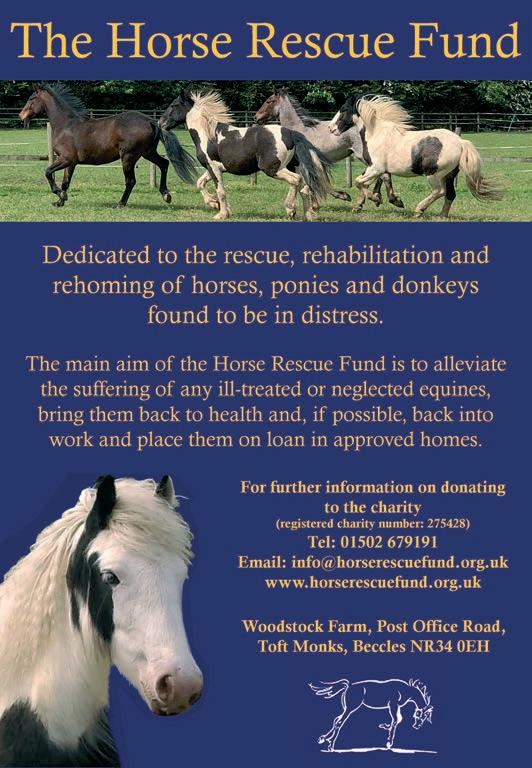
[THE HORSE RESCUE FUND is a long-established equine charity which, in 2025, celebrated 75 years of service to equine welfare. Founded when many deliveries were still using horses, the charity stepped in to save many from a bleak fate rather than imaginary happy retirement. The charity has a colourful history of pioneering work in changing attitudes towards equine welfare and transportation.
In the years since the Walbancke family established the charity, hundreds of horses have been given a second chance at life. From beginning in their back garden to the purpose-built yard occupied today, the ethos has remained the same – Rescue, Rehabilitate, Rehome.
The charity currently has over 60 horses out in homes and can house up to 20 horses, ponies or donkeys on the yard. These horses, once in their care, are treated as individuals – staying at the yard until they are emotionally and physically ready for rehoming. As a smaller charity, although not trying to turn over numbers they can make a real difference to the individual horse, offering a lifetime of ongoing care and support.
This winter, due to the poor harvest, the price of both hay and straw has rocketed, quickly using the extra funds raised in its 75th anniversary fundraising campaign, so the charity is now extending its Winter Hay Appeal. Support, via donations and legacies, is even more vital for the continued well-being of the horses in its care at present and those yet to arrive.
The charity has recently launched its monthly lottery, with big prizes and free membership of the Gourmet Society on offer. Full details of the lottery or how to simply donate can be found on the Horse Rescue Fund social media and their website. q
Analysis drawn from the Commission’s casework further suggests that most unmanaged conflicts of interest arise from or are facilitated by a lack of awareness, rather than deliberate wrongdoing.
Trustees, most of whom are volunteers, are often unable to identify a conflict when it arises and therefore fail to take steps to protect their charity’s assets or reputation.
This is confirmed in the Commission’s published research with trustees, which found that many trustees are unsure about how to recognise and deal with a conflict. The updated guidance is shorter, clearer and includes common examples of situations in which a conflict of interest can arise in a charity.
Rachel Wenstone, Assistant Director of Policy at the Charity Commission, said: “The vast majority of trustees give their time freely and generously, and we want to give them clear, practical guidance to help them do their jobs well. Our refreshed guidance will enable trustees to identify and manage conflicts of interest when these, to best protect themselves and their charities.
“This matters: the trust that the public place in charity can be shattered by the perception that some amongst those entrusted to protect a charity may be abusing it for personal gain. Trustees who fail to manage conflicts of interest, even unintentionally, risk becoming part of that problem, and our guidance will help them to avoid this.”
The Commission stresses that decisions made without properly managing a conflict of interest may be legally invalid, which may result in the charity losing money and the trustees being deemed jointly liable to cover the loss from their own money. The Commission may also consider it as evidence of misconduct or mismanagement. q
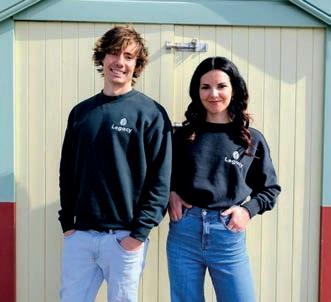
[A NEW APP DEVELOPED in Hove is on a mission to make charitable giving feel less like a one-off decision and more like a rewarding part of everyday life.
The Legacy app, built by a local non-profit team, is designed to simplify how people support the causes they care about. Instead of managing multiple donations across different websites, users can set a single monthly amount, split it between charities of their choice and see the difference their generosity is making.
The idea is simple: remove the friction that often gets in the way of good intentions. “Most people want to help,” said co-founder Herbie Wildwood, “but life gets busy. It can feel time-consuming to research charities, set up donations, and keep track of everything. We wanted to make it as easy as possible to follow through.”
The app allows users to adjust, pause or rebalance their donations at any time, offering a level of flexibility that traditional giving methods often lack. For the team behind Legacy, that sense of control is key to giving people the comfort needed to set-up a donation in the first place.
“Giving shouldn’t feel like a rigid commitment,” added co-founder Maria Wildwood. “It should adapt to your life. If your circumstances change, you can update all donations instantly at the click of a button.”
Legacy brings together more than 11,000 UK charities, giving users the ability to support a wide range of causes, from national organisations to smaller, lesser-known groups. The platform also focuses on helping people discover charities that align with their interests, making the experience feel more personal and relevant.
But beyond simplicity, the app is also designed to make giving feel
more rewarding. Users can access a newsfeed of charity accomplishments and see the difference that their money is making. The Legacy app also has an impact page, showing users the tangible items that their money can buy for their chosen charities, anything from a warm blanket for a rescued cat to an hour of nursing care for a cancer patient.
The team is also keen to strengthen connections between donors and local charities over time, making it easier for people to support causes closer to home alongside national and global efforts.
At its core, Legacy operates as a nonprofit, meaning any surplus generated by the platform is redistributed back to charitable causes. For the founders, this structure was a deliberate choice.
“We wanted to build something that’s fully aligned with the people using it and the organisations it supports,” said Herbie. “Legacy is built for good, not for gain.”
The timing may be right. Charities across the UK have faced increasing financial pressure in recent years, while donor behaviour continues to shift towards digital and mobile-first experiences. At the same time, many people – particularly younger generations – are looking for ways to give that feel flexible, rewarding, and easy to manage.
As Legacy prepares for their public launch, the team remains focused on their mission: empowering people with the tech to make giving an easy, inspired and rewarding part of everyday life. The waiting list is open now at www.givewithlegacy.com q
[KIDNEY KIDS SCOTLAND, a very small charity with a huge heart, has for the last 26 years supported Scottish children with renal and urology conditions. The main aim of the charity has always been to enable these children to receive treatment as close to home as possible and minimise disruption to the family unit.
In addition the charity helps hospitals all over Scotland, supplying them with much needed equipment and funding posts recognised as being essential. Chronic Kidney disease is a condition that has no cure and that children and their families must learn to live with.
IMAGINE your child only being able to drink 400mls in one day That’s less than two cartons of juice – a can of juice is 500mls.
IMAGINE being a parent where you must be home before 8pm every single night to ensure your child gets their daily home dialysis.
IMAGINE not being able to take your family abroad or too far away from the hospital because your child cannot go without their dialysis. This HAS to happen in hospital 3 or 4 times EVERY week.
IMAGINE your child missing out on school education, social activities, family members’ birthday celebrations, a sibling’s sports day or a family wedding because you need to make sure they receive their life saving dialysis treatment.
IMAGINE your child spending their birthday and/or Christmas Day in hospital and not being able to see their friends from week to week. q
IMAGINE LIVING WITH KIDNEY DISEASE
For more information about Kidney Kids Scotland please visit our website at www.kidneykids.org.uk, call 01324 555843 or email office@kidneykids.org.uk
Kidney Kids Scotland can help in many ways
The range of charities which depend on legacies to carry out their valuable work is a broad one. Those that are represented in this publication are listed below, grouped according to the area of activity in which they operate.

Friends of the Animals 4/5
Catholic Concern for Animals 6
Essex Horse and Pony Protection Society 6
British Chelonia Group 7
Animal Action Greece 8
Birmingham Dogs Home 9
Suffolk Owl Sanctuary 18
Last Chance Animal Rescue 18
Hessilhead Wildlife Rescue 19
The Lord Whisky Sanctuary Fund 20
Southern Thailand Elephant Foundation 20
Shire Horse Society 21
Heartbeat Home for Horses 22
Edinburgh Dog and Cat Home 22
Tiggywinkles 23
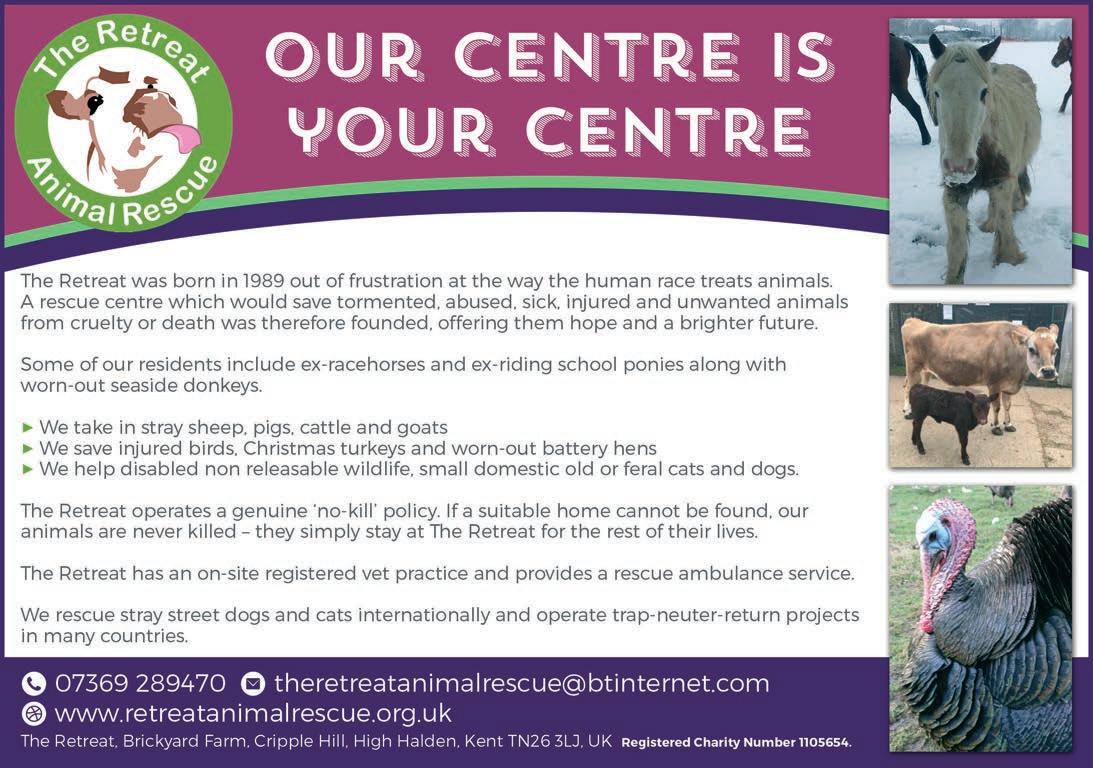
The Retreat Animal Rescue 24
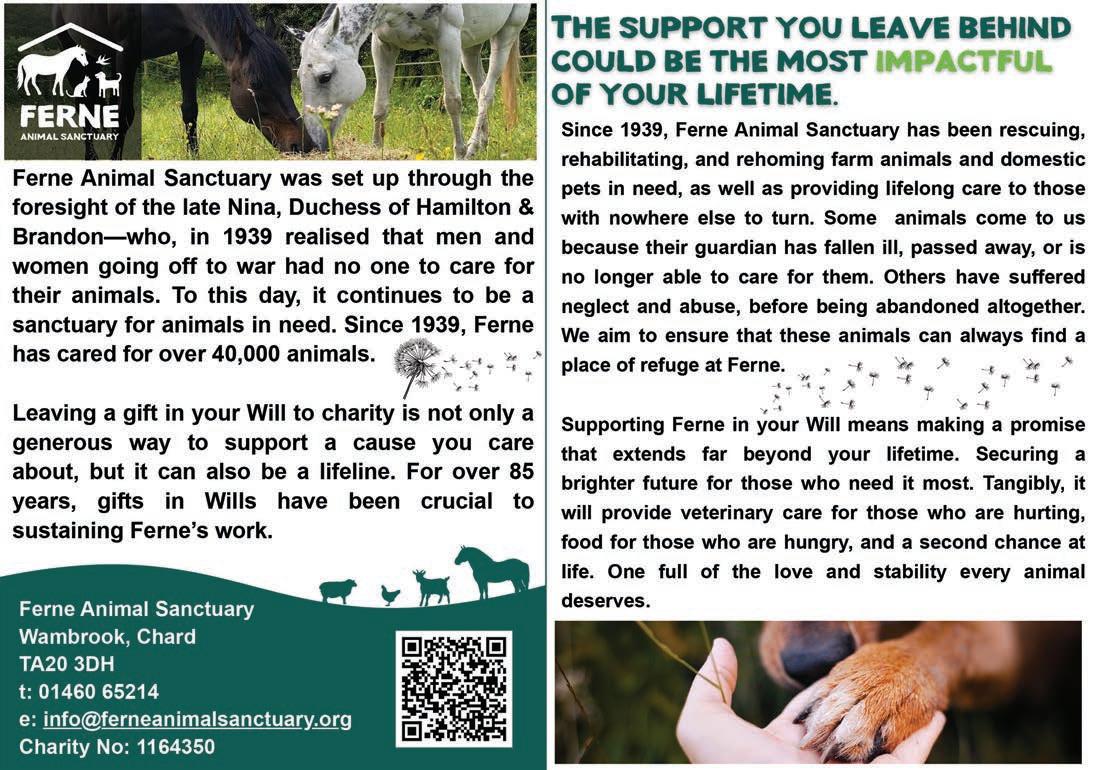
Ferne Animal Sanctuary 24
Three Counties Dog Rescue 25
Hope Rescue 27
The Fox Project 28/29
World Horse Welfare 30
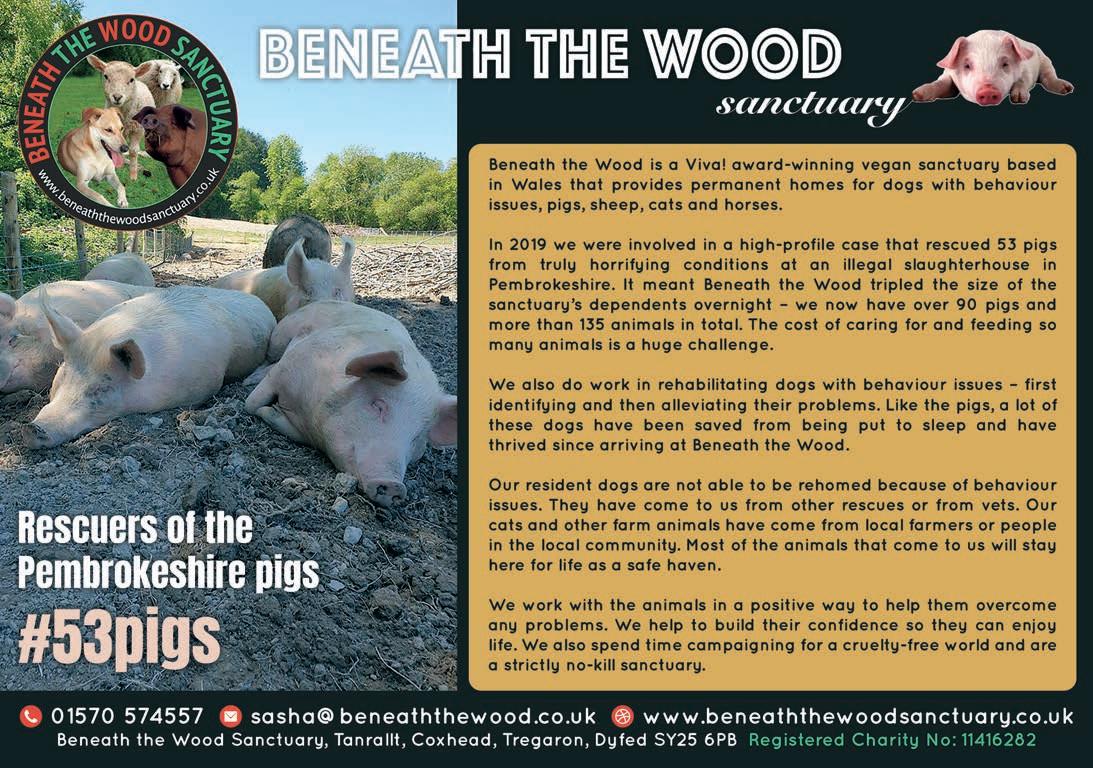
Beneath the Wood Sanctuary 31
Paws2Rescue 32
The Horse Rescue Fund 33



Prostate Cancer Research 1
Pain Relief Foundation 2
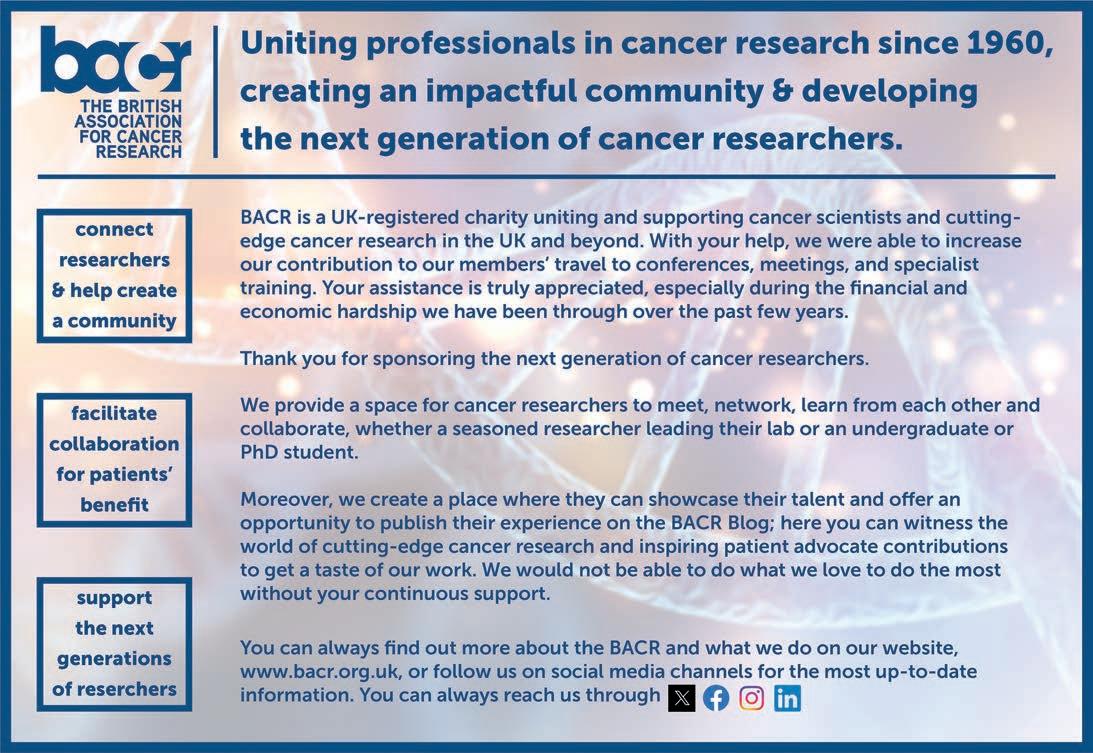
The British Association for Cancer Research 10
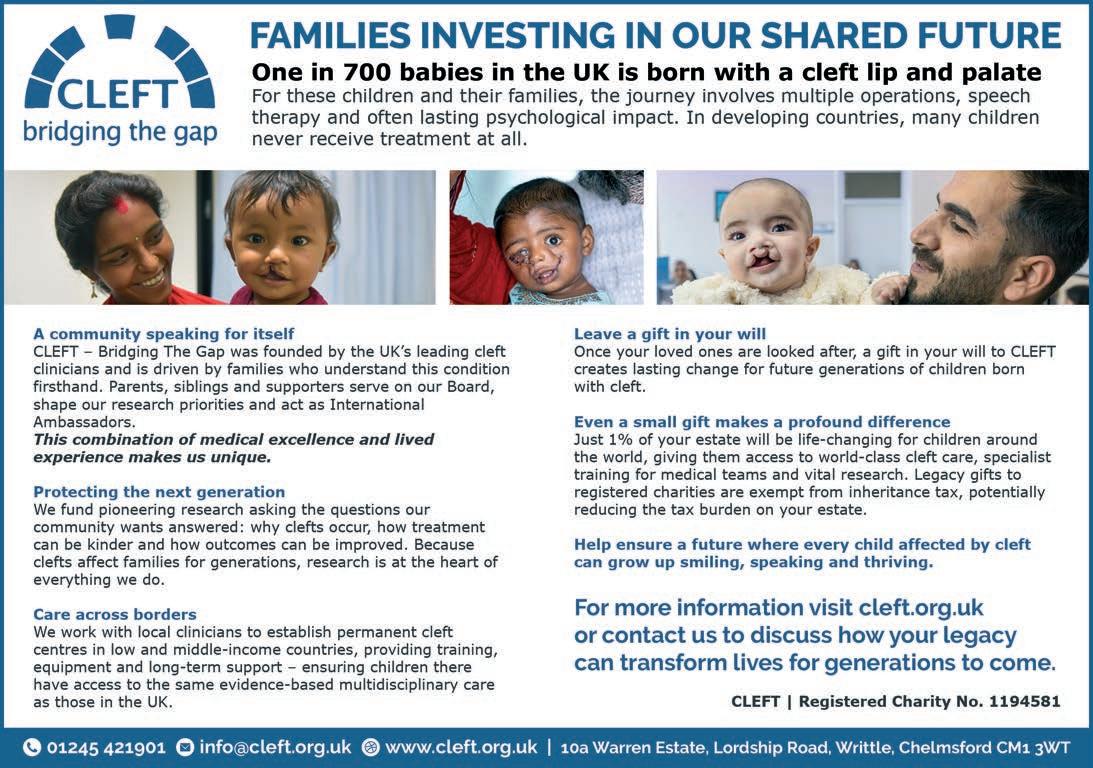
CLEFT 10
Hospice Aid UK 11
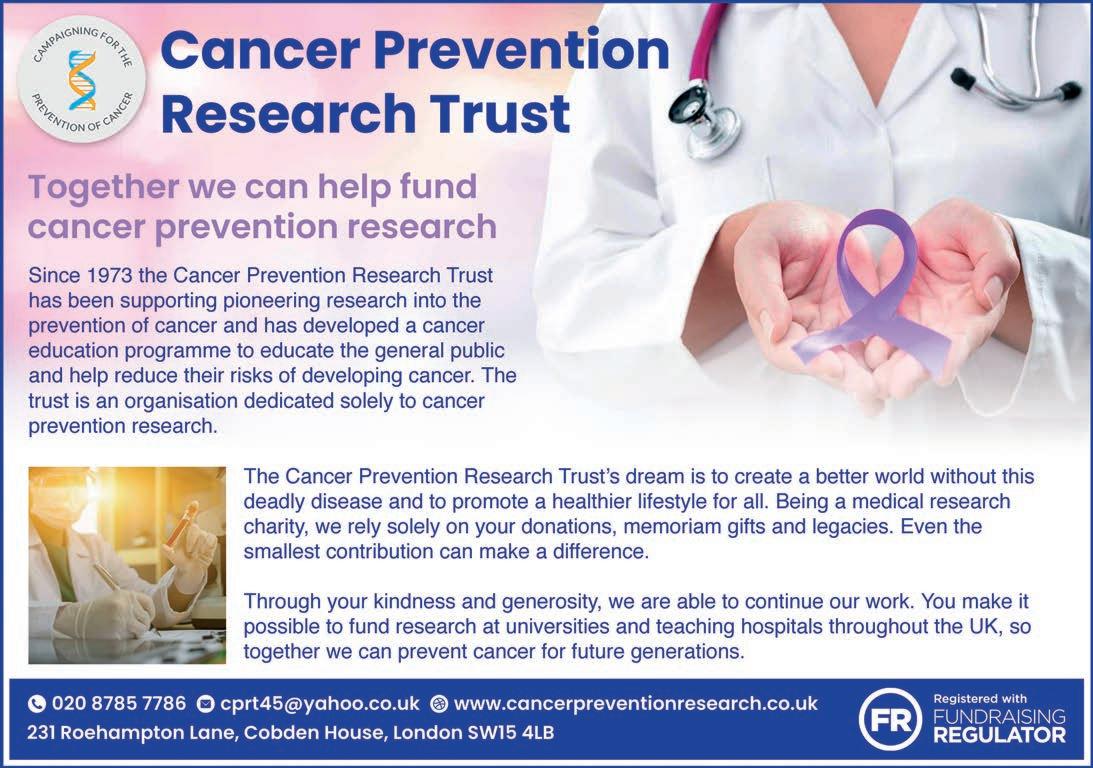
Cancer Prevention Research Trust 14
Sight Research UK 36
Haven House Children’s Hospice 16
Kidney Kids Scotland 34
The Respite Association 12/13
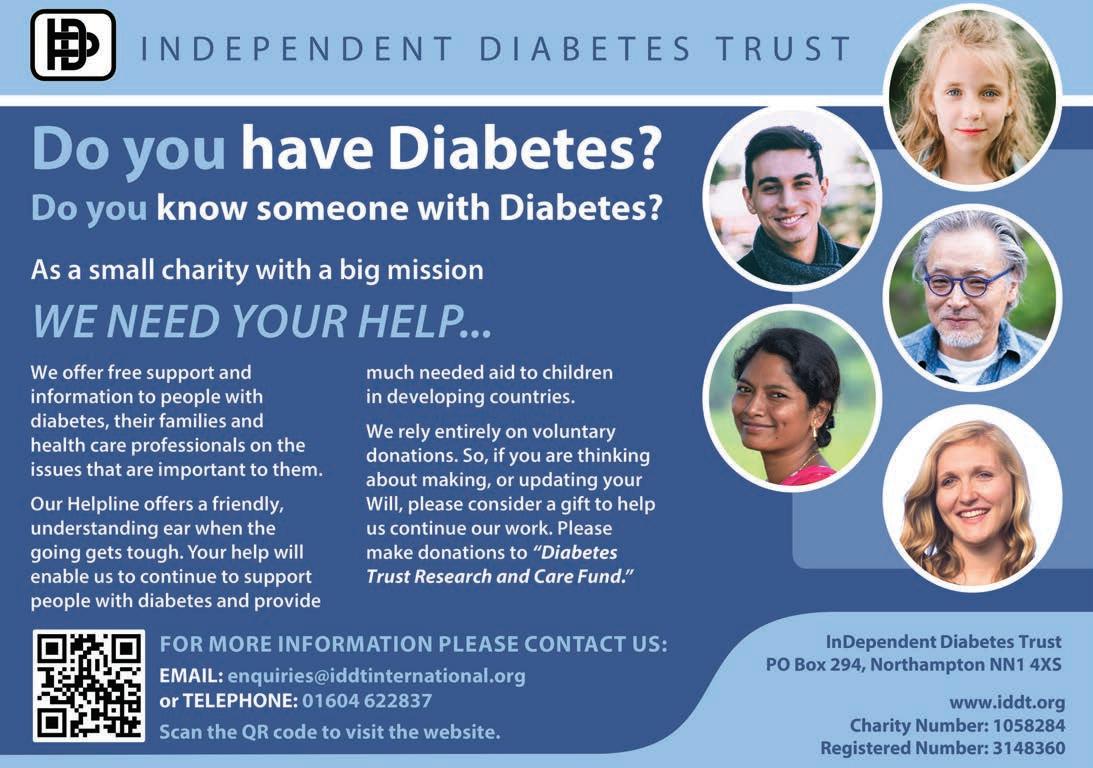
Independent Diabetes Trust 14
National Federation of the Blind of the United Kingdom 15
Dogs for Autism 26
The Partially Sighted Society 26
ZANE: Zimbabwe A National Emergency 17

Eden Project 2