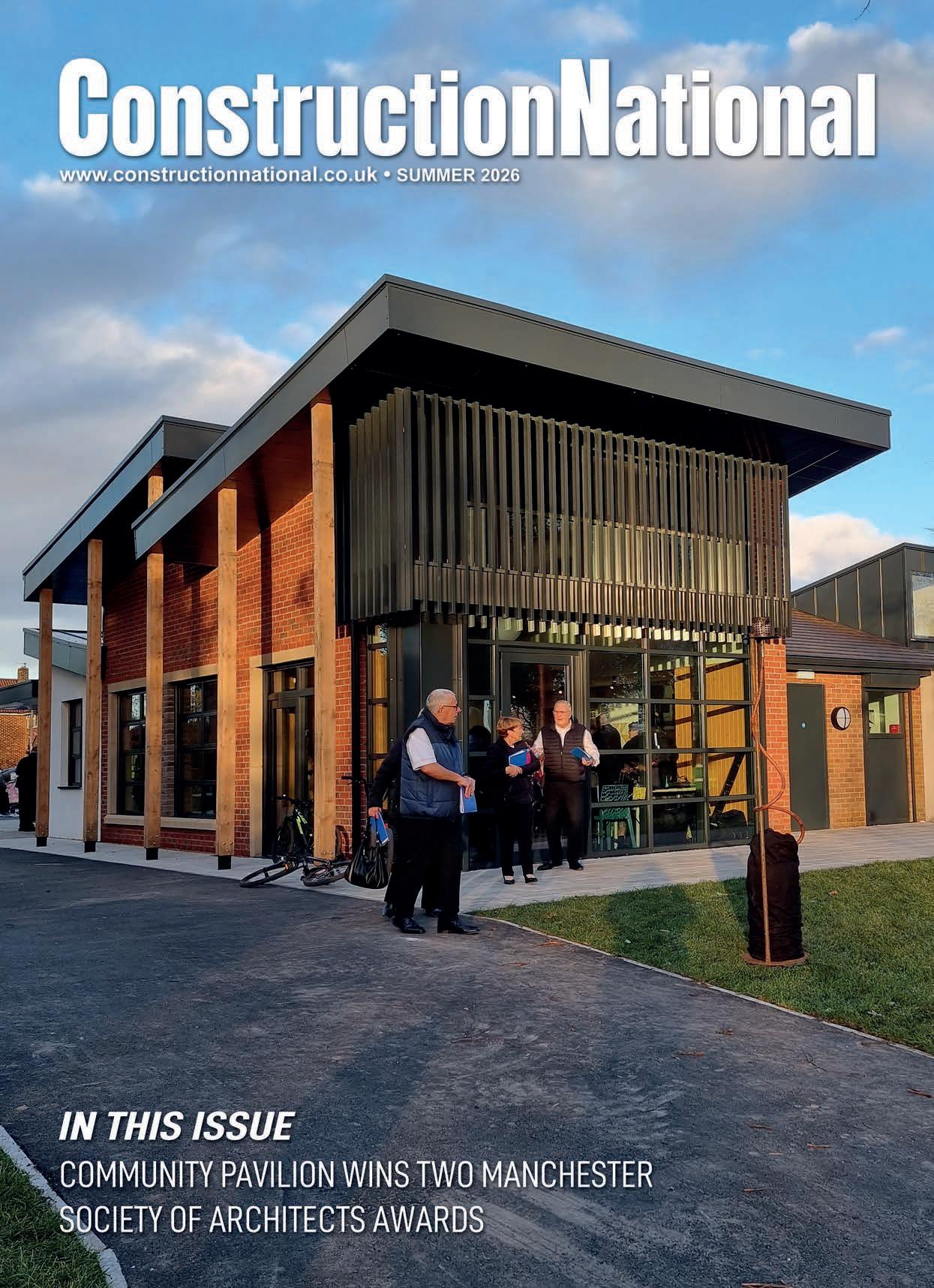


The front cover of this issue features Peel Park Pavilion in Little Hulton, Salford. The project won two awards for Architecture Unknown Ltd at the Manchester Society of Architects awards held in June. The community building’s WikiHouse design scooped prizes in both the ‘Best Built Community Project’ and ‘The Judges’ Choice Design Innovation’ categories for the Manchester-based practice, which recently marked ten years in business.
The pavilion gave local people a direct role in the regeneration of their own community space with over 100 volunteers helping on site, including around 60 children from two local schools taking part in the early construction activity.
Read the full story on page 9.



10 One in three UK contractors may be underinsured, warns Insure24
10 Balfour Beatty awarded £325m SSEN contract to deliver Netherton Hub
11 HS2 lifts first huge beams for Birmingham’s Curzon Street station
13 McLaren Construction completes flagship Panattoni Park Swindon development
14 FMB builders and architects connect at successful Shetland breakfast networking event
14 Travelodge granted planning permission for St Paul’s office-to-hotel conversion
15 Managing lightning risk through surge protection maintenance
16 CITB publishes Construction Workforce Outlook 2026-2030
16 Driving net zero: building the skilled workforce for district heat networks
17 Brickwork talent on display as New City College hosts Greater London Skills Challenge
18 Building Britain’s future workforce – one skills event at a time
19 Accelerated Apprenticeships will address skills shortages
19 Shaping the next phase of construction skills in the South West
20 Building the future workforce: why apprenticeships make good business sense
21 SkillBuild 2026 national finalists announced
21 Supporting industry through change: training for Amendment 4 and beyond
22 Next generation of builders graduate from landmark skills program
22 FMB says no to merger between CITB and ECITB WORKING AT HEIGHT
24 Zero fatalities among NASC members as membership numbers reach record levels
24 NASC launches new TG4 update to support anchor tie safety
25 Thousands take part in No Falls Week height safety campaign
25 NFRC launches Don’t Fall for Fragile campaign
LONDON BUILD 2026
27 Registration opens for the UK’s leading construction & design event
LEGAL ISSUES IN CONSTRUCTION
28 Construction company fined after man died on ‘death trap’ site
28 RICS responds to government call for evidence
29 Crackdown on dangerous rented homes as new £7k fines kick in
29 Councils launch legal challenge to stop cuts in affordable housing
HERITAGE
30 More heritage funding to tackle rising cost and climate challenge
30 Headline sponsor announced for Heritage Network Conference 2026
31 Young people get hands-on heritage experience
FIRE SAFETY
33 Fire safety and property investment: the hidden costs developers can’t ignore
HEALTH & SAFETY
34 HSE says no dry cutting of engineered stone ahead of inspection crackdown
35 BW rolls out raspberry hi-vis to strengthen site visibility and accountability
35 Report highlights mental health challenges for young construction workers
ENVIRONMENTAL ISSUES
36 The Pallet LOOP celebrates two years driving circularity in construction
36 FMB calls for licensing to raise retrofit standards
37 Businesses are overpaying for heat pump system replacement, warns UK HVAC expert
37 More homes to benefit from lower bills through plug-in panels
38 Why fabric first is key to facade remediation
HOUSING
39 Construction starts on affordable housing development in Lewisham
39 Completion of South Queensferry homes triggers charity donation
40 UK’s best site managers recognised
40 Harron Homes hat-trick: housebuilder celebrates triple win
41 Infrastructure is not a back-office function – it’s defining the future of housing
TRANSPORT & INFRASTRUCTURE
42 Final phase of highways works underway on popular Leeds route
42 Next phase of A23 Streatham Hill improvement work to start





[ THIS ISSUE of Construction National arrives at a time when the industry is balancing significant opportunity with persistent challenge. Across every sector of the built environment, the pace of change continues to accelerate – whether driven by infrastructure investment, housing demand, skills shortages, regulatory reform or the ongoing transition to a lower-carbon economy. What remains clear is that construction is no longer simply delivering buildings and infrastructure; it is increasingly shaping social outcomes, environmental performance and long-term economic resilience.
• On the front cover, we feature the award-winning Peel Park Pavilion in Little Hulton, which has secured both ‘Best Built Community Project’ and the ‘Judges’ Choice Design Innovation Award’ at the Manchester Society of Architects awards. Delivered by Architecture Unknown Ltd, the project is a powerful example of how community-led design, low-carbon construction and innovative methods such as WikiHouse can combine to deliver meaningful social impact.
• Throughout our news pages, the breadth of activity across the sector is apparent. Major infrastructure milestones such as HS2 lifting the first huge beams for Birmingham’s Curzon Street station sit alongside significant contract awards, including Balfour Beatty’s £325m Netherton Hub project in Aberdeenshire. Meanwhile, McLaren Construction’s completion of the flagship Panattoni Park Swindon development highlights continued strength in logistics and industrial delivery, even as other parts of the market face uncertainty.
• However, alongside this progress, the industry also faces growing pressure to address risk and compliance. Concerns such as underinsurance – highlighted in this issue by Insure24’s warning that one in three UK contractors may be underinsured – serve as a reminder that financial resilience is as critical as operational delivery.
• Skills and workforce development remain central to the industry’s long-term success. From CITB’s Construction Workforce Outlook 2026-30 to apprenticeship programmes, training reforms and competitions such as SkillBuild, there is clear recognition that attracting and retaining talent is one of the sector’s defining challenges. Initiatives across education, apprenticeships and early careers demonstrate encouraging progress, but the pipeline of skilled workers must continue to grow to meet future demand, particularly as the industry adapts to new technologies and net zero requirements.
• Health, safety and working practices also remain firmly in focus, with campaigns addressing everything from working at height and lightning protection to mental health awareness and hazardous materials. At the same time, environmental responsibility continues to shape decision making, whether through circular economy initiatives like The Pallet LOOP, retrofit licensing discussions from the FMB or emerging technologies such as plug-in solar and heat pump optimisation.
• We are also pleased to confirm that Construction National is once again a media partner of London Build, reinforcing our ongoing commitment to supporting one of the UK’s leading construction and design events as well as the wider conversation around innovation across the built environment.
• Taken together, this month’s coverage reflects an industry in transition – innovating, adapting and responding to pressures on multiple fronts. The challenge ahead lies in ensuring that progress is not only sustained, but delivered safely, sustainably and with long-term resilience at its core. q



[ARCHITECTURE UNKNOWN LTD scooped ‘Best Built Community Project’ and ‘The Judges’ Choice Design Innovation Award’ at the Manchester Society of Architects awards in June as the Ancoats-based practice marked 10 years in business.
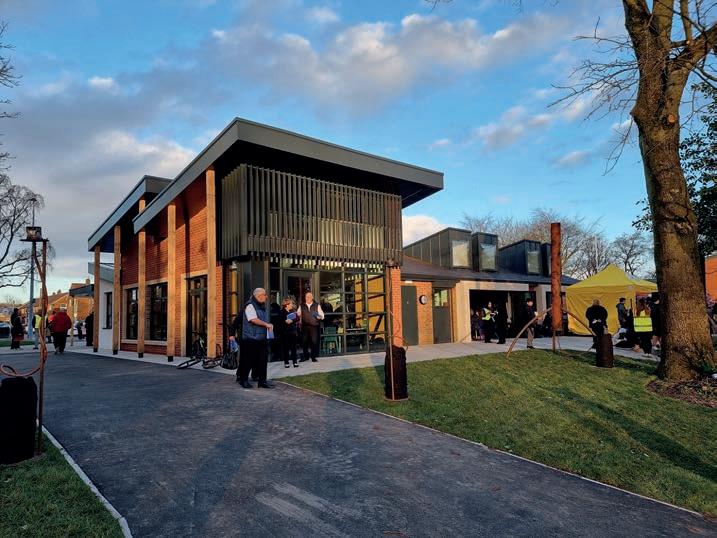
The double win saw Architecture Unknown’s circa £1.2m Peel Park Pavilion project in Little Hulton recognised not only as the standout completed community building, but also as the most innovative design from across all 110 entries submitted to this year’s awards.
The Salford community pavilion has transformed an unloved park building into a fully completed community hub, with a park café, offices, meeting rooms and flexible spaces for local activities, services and groups.
But what makes the project stand out is how it was built. Using WikiHouse, a low-carbon modular construction system often described as the ‘IKEA of construction’, the pavilion gave local people a direct role in the regeneration of their own community space.
More than 100 volunteers from Little Hulton helped on site, with around 60 children from The Lowry Academy and St Edmund’s RC School taking part in early construction activity.
Innovation Award is something very special.
For Architecture Unknown, the double win marks a major milestone in the practice’s tenth year in business, cementing its reputation as one of the region’s most distinctive practices and celebrating a decade of work rooted in community-led architecture, sustainable construction and hands-on local involvement.
Designed for CommUNITY Little Hulton, Peel Park Pavilion now provides a purpose-built permanent home for the organisation, supporting its work with local families, young people and residents, including food clubs, youth clubs, social groups, family services, forest school sessions, community cooking and wider activities across the area. To date, the building has been an incredible success, helping the charity expand their reach more than they could have imagined.
Charlie Butterwick, Director of Architecture Unknown, said: “These awards mean so much because Peel Park Pavilion was never just a building dropped into a community. It was built with the community, by the community and for the community.
“To win Best Built Community Project is an incredible moment for everyone involved, but to also receive the Judges’ Choice Design

“Peel Park Pavilion represents exactly why Architecture Unknown exists. It is community-led, low-carbon, hands-on and deeply rooted in the place it serves. Local children, residents and volunteers helped physically build it, which means this space belongs to Little Hulton in a very real way.”
The project was funded by The Albert Gubay Charitable Foundation and developed with CommUNITY Little Hulton, which has been working in the area since 2017 to improve opportunities for local residents, with a particular focus on children, young people and those from deprived backgrounds.
Architecture Unknown first secured planning permission for the site in 2021, before the project was delayed by Covid-19. Construction began in April 2024, with the pavilion opening to the public in February 2025.
Co-founder for Architecture Unknown, Daniel Kelso, added: “As a smaller practice, we have always believed meaningful design does not have to come from the biggest names or the biggest teams. To be recognised in this way, in our tenth year in business, feels like a huge endorsement of that belief and of the power of doing architecture differently.
“This project has taken an extraordinary amount of commitment from the community, the client, funders, collaborators and volunteers. Winning these awards feels like a celebration of not only our work, but of the people of Little Hulton, who made the building what it is.”
The Manchester Society of Architects awards are one of the region’s leading celebrations of architectural excellence, recognising exceptional buildings, practices and projects that make a positive contribution to Greater Manchester’s built environment.
Held annually since 1995, the awards spotlight design quality, innovation and social impact across the city region, with the 2026 awards attracting 110 submissions from across the architectural community.
The awards cement Architecture Unknown’s position as one of the region’s most distinctive emerging practices, with a growing reputation for sustainable, community-led buildings and specialist expertise in WikiHouse design and delivery. q
[ COMMERCIAL INSURANCE BROKER INSURE24 is warning that many UK contractors could be operating with insurance arrangements that no longer reflect the scale, cost and complexity of modern construction projects.
The warning comes as contractors across the UK continue to face rising material costs, increased labour pressures, subcontractor exposure, tool theft and growing liability risks across construction and trades sectors.
According to Insure24, many contractors arranged cover years ago and may not have reviewed policy limits, contract requirements or operational risks as their businesses expanded. The broker says this can create significant exposure where businesses are undertaking larger projects, employing more staff, using subcontractors or handling higher-value equipment and materials than originally declared.
Salvatore Scarpato, Director at Insure24, said: “We are seeing increasing pressure across the contractor sector from inflation, higher rebuild costs, rising liability awards and more demanding contract requirements. Many contractors arranged cover some time ago and may not realise that project values, turnover, staffing or working practices have changed significantly since then. Even relatively small gaps in cover can create major financial exposure if a serious claim occurs.”
Insure24 says some of the most common issues affecting contractors include insufficient public liability limits, outdated plant and tools valuations, uninsured subcontractor exposure, inadequate contract works cover and a lack of business interruption protection.
The broker also notes that more principal contractors and commercial clients are demanding higher levels of cover and stricter evidence of insurance compliance before awarding contracts.
In addition to traditional construction risks, contractors are increasingly facing cyber, contractual and supply chain exposures

which many smaller firms may not have considered previously.
Tool theft continues to remain a major issue across the UK construction sector, with rising replacement costs placing additional pressure on smaller businesses already dealing with tight project margins.
Insure24 believes many SMEs would benefit from reviewing insurance arrangements annually to ensure policies continue to reflect current business activities, turnover, staffing levels and contract obligations.
The company has also launched additional online guidance to help contractors better understand key areas of exposure including public liability, employers’ liability, contract works, tools and plant insurance. q
• Further information can be found on Insure24's Contractor Insurance page at www.insure24.co.uk
[BALFOUR BEATTY, the international infrastructure group, has been awarded a two-year contract worth £325m by Scottish and Southern Electricity Networks (SSEN) to deliver the Netherton Hub in Aberdeenshire.
The award, secured through SSEN’s Accelerated Strategic Transmission Investment Offshore Framework, builds on Balfour Beatty’s earlier appointment in 2025 to deliver enabling works at the site.
The Netherton Hub will strengthen the UK’s grid and enable renewable energy from northern Scotland to be transmitted efficiently to demand centres nationwide. Balfour Beatty will deliver the earthworks and civil infrastructure, including five platforms to support the two substations and three converter stations, as well as an operations base and associated facilities.
Philip Hoare, Balfour Beatty Group Chief Executive, said: “Securing this contract reinforces Balfour Beatty’s position at the forefront of the UK’s energy infrastructure market.
“The Netherton Hub will play a pivotal role in enabling the delivery of secure, homegrown, low-carbon power at scale. We are proud to be working with SSEN to deliver infrastructure of such
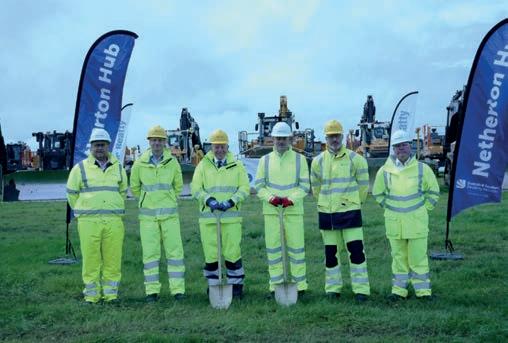
Balfour Beatty representatives at the groundbreaking ceremony
national importance – drawing on our proven expertise in complex, large-scale projects.”
A workforce of over 800 will be employed at peak construction with a commitment to create local jobs and ensure that over 5% of the workforce is made up of apprentices and graduates, in line with the company’s commitment to The 5% Club. q
[THE CONSTRUCTION of an enormous deck that will help support the platforms at Birmingham's new HS2 station has begun with the first of more than 556 concrete beams lifted into position.
The huge horizontal beams – up to 34 metres long and weighing as much as 58 tonnes – will support the seven platforms being built at Curzon Street station. Each one of the reinforced concrete beams is being precast off-site before being moved into position in a meticulously planned operation.
It underlines the scale of the progress being made on the station which will be covered by a huge arched roof the size of London’s St Pancras International. In March, HS2 Ltd announced that all 2,011 concrete piles that form a key part of the station’s foundations had been completed.
Once complete, the station will stretch for around 450 metres between Moor Street and Millennium Point with easy onward connections to the city centre, Digbeth and Eastside. A new tram stop will also be built under the station as part of the line currently under construction towards Digbeth and the site of Birmingham City’s new football stadium.

Construction of the terminus is being led by HS2’s construction partner, Mace Dragados, which is working with specialist subcontractors MPB to lift the concrete beams into place. This work is initially focused on the area where the tram will pass under the station, so it can be handed over to Midlands Metro Alliance to begin laying track as early as possible.
Jonathan Berry, HS2 Ltd’s Project Client Director for Curzon Street, said: “We’ve been making good progress with the construction of the station, but up to now, it’s mostly been beneath the ground – focused on the piling and foundations that will underpin the building.
“That’s why it’s great to see the first beams in position as we begin to assemble the enormous deck that will support our seven high speed platforms. Once complete, Curzon Street will become a new gateway to Birmingham, offering easy access to the city centre and connections to onward destinations, via tram, bus and rail, improving journeys and supporting growth across the West Midlands.”
For most of their length, Curzon Street’s seven platforms will be built on a viaduct-like structure supported by 188 concrete piers. These will form a huge 13,370 square metre deck – the size of two football pitches – which will support part of the platforms and connect to the viaducts coming into the station from the east.
The beams – which are between 7 and 34 metres long and weigh between 14 and 58 tonnes – are being manufactured in a factory in

by road. To avoid traffic, the deliveries are meticulously planned and timed to arrive early in the morning when the roads are quiet. They are made up of 488 U-beams and 68 narrower L-beams.
While most of the beams will be lifted directly into position with large crawler cranes, up to 120 of the beams, which are closer in proximity to the existing railway, are being lifted onto a specialised piece of equipment called a self-propelled modular transporter (SPMT) to be moved into their final position.
Supported by 96 wheels, these highly manoeuvrable machines lift the beams to be lifted from underneath and place them precisely into position. This avoids the risk of using cranes next to the railway and allows services to keep running into Birmingham New Street during the work.
Martyn Woodhouse, Project Director at Mace Dragados, said: “Lifting these first beams into place is a major logistical and engineering achievement, and a testament to the coordination across our teams and supply chain. Each installation has been carefully planned to ensure it’s carried out safely and efficiently, particularly in such a constrained and operational environment.
“This work is laying the groundwork for the platforms and brings us another step closer to delivering a world-class station for Birmingham.”
Beneath the station, more than 2,000 piles, ranging from 6 to 24 metres deep, have been sunk into position by Mace Dragados, working with specialist subcontractor Keltbray. An 8-metre-high retaining wall has also been built at the western end of the site – where the land rises up towards the city centre – and 47,000 cubic metres of material excavated to create a level base for the platforms.
At the peak of the work, more than a thousand people are expected to be employed on the Curzon Street project, both directly and via Mace Dragados’s UK supply chain. To accommodate the growing workforce, construction teams will soon begin moving into a new temporary office block opposite Millennium Point, which will be the nerve centre for the next stage of the project.
Once complete, the high-speed line between London and the West Midlands will become an integral part of the UK rail network, helping to improve journeys and free up space on the existing West Coast Main Line for more freight and local services.
The programme is now undergoing a fundamental reset led by Mark Wild, Chief Executive of HS2 Ltd, to ensure that the railway is delivered as efficiently as possible and for the lowest reasonable cost. q

[ MCLAREN CONSTRUCTION (MIDLANDS AND NORTH) has completed the flagship industrial and logistics facility at Panattoni Park Swindon, delivering the major scheme and marking a significant milestone in the regeneration of the site.
The 545,000 sq ft speculative development has been delivered within a 39-week construction schedule, forming part of the wider regeneration of the former Honda manufacturing site, transforming a historic brownfield location into a high-quality logistics and employment hub for the South West.
The project was designed around a structured and collaborative delivery strategy to meet timescales, with early supply chain engagement across key packages including steel frame and cladding, to ensure all partners were aligned to the programme from inception.
The programme involved working to ensure successful on-time completion, supported by planning and consistent communication with key contractors, maintaining momentum throughout every stage of the build.
During the delivery, the scheme set a new internal benchmark for quality and sustainability achieving a BREEAM ‘Outstanding’ rating and targeting net zero upfront embodied carbon.
A range of sustainability measures were integrated without impacting the programme, including the use of cement replacement in concrete, the incorporation of recycled steel and the use of modern methods of construction such as precast concrete walling, lift cores and stair units.


The team also implemented robust environmental practices, including segregated waste streams and smart waste management, while reusing excavated materials through a carefully engineered cut-and-fill balance refined at design stage.
Alongside delivery, McLaren Construction maintained a strong focus on social value and responsible construction, and the project achieved an excellent score of 43 out of 45 in its Considerate Constructors Scheme assessment, with a high score for community engagement environmental management and workforce wellbeing.
The report highlighted the team’s proactive communication with stakeholders, robust environmental processes, and a strong commitment to workforce welfare including mental health support and high-quality site facilities.
McLaren Construction (Midlands and North) also supported skills development throughout the programme with apprentices across multiple trades, including five scaffolders and two electricians, as well as work placement opportunities.
The completed building offers high-specification logistics space with premium office accommodation, including a main reception area, feature link bridge and high-quality internal finishes including bespoke kitchenette areas with custom Corian worktops, glass splashbacks and feature staircases with glass balustrades.
Luke Arnold, Regional Director at McLaren Construction Midlands and North, said: “Delivering Panattoni Park Swindon is a fantastic achievement and a real credit to the entire project team. From the outset, this was an ambitious schedule, and through careful planning, strong collaboration and the commitment of our trusted supply chain, we’ve been able to complete the project on time and to an exceptional standard.
“I’d like to thank Paul, Gareth and the wider project team, along with our supply chain partners, whose dedication and coordination were critical to maintaining momentum throughout. This project demonstrates what can be achieved when the right team is aligned behind a clear programme and shared goal.”
Peter Carter Wall, Construction Director at Panattoni, said: “McLaren Construction delivered the first building on our flagship development site which is the first to implement our new interior design concept and finishes. The team took an aspiration to create something special and delivered an impressive reality that has been widely admired. It has been a pleasure working with the team, and this building stands as a showpiece achievement everyone involved should be very proud of.”
[BUILDERS AND ARCHITECTS from across Shetland came together for a breakfast networking event aimed at strengthening collaboration between the two professions.
The event, held at Trondra Hall in Shetland, was co-hosted by the Federation of Master Builders (FMB) and the Royal Incorporation of Architects in Scotland (RIAS), bringing together members of both organisations for a morning of networking and continuing professional development (CPD).
Attendees heard from FMB Scotland Director Gordon Nelson and RIAS Head of Practice Zoe Black, who opened proceedings with introductions to their respective organisations. The event also featured a guest presentation from Scott Waldie of Shetland Islands Council's Building Standards Division, who provided an update on recent changes to Scottish Building Standards and relevant legislative developments.
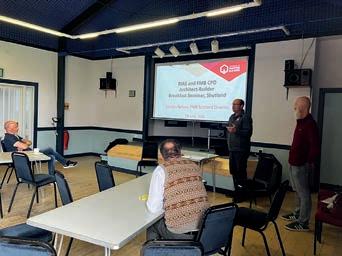
Following breakfast and informal networking, the session closed with an audience Q&A, giving builders and architects the chance to raise questions directly with the speakers and explore opportunities for closer working relationships.
Commenting on the event, Gordon Nelson, FMB Scotland Director, said: “We brought together Shetland's master builders and chartered architects to discuss the common challenges they face in construction. Shetland’s geography and formidable weather may be unique, but the open communication and collaboration between FMB and RIAS members here does not have to be. Builders and architects across the rest of the country have much to learn from the approaches taken in the northern isles to delivering exceptional buildings.
“With unwelcome changes to how construction training is supported in Shetland, builders will now need to redouble their efforts in recruiting
and developing skilled tradespeople, both to ensure new homes are built to a high standard, and so that the thousands of existing homes across the islands can be refurbished and upgraded.”
Zoe Black, Head of Practice at RIAS, added: “It was refreshing to hear about the excellent working relationships already established in Shetland between chartered architects and skilled master builders. The issues raised underlined the particular challenges that can arise in interpreting Scottish Building Regulations in a remote island setting, where the availability and cost of materials can create unique pressures.
“Architects are keen to support builders in making the case for funding to train new craftspeople and upskill existing trades, so that Shetland can continue to deliver high-quality construction that meets, and exceeds, current energy standards with excellent design.
“We also heard clearly about the need for more affordable homes for local communities, with local chartered architects well placed to provide economic designs and work collaboratively with contractors ready to deliver excellent construction.
“Additional resources within the Planning Department would also make a meaningful difference, together with addressing local authority public procurement processes that appear to discriminate against local SME practices. We hope MSP Hannah Mary Goodlad might engage in future discussions to address the important issues raised.”
The event forms part of ongoing efforts by the FMB and RIAS to foster stronger working relationships between builders and architects, helping to improve project outcomes and support best practice across the construction industry in Scotland. q
[TRAVELODGE, the UK’s first budget hotel brand, which operates 631 hotels across the UK and Spain, has been granted planning permission by The City of London Corporation for the conversion of its property on Godliman Street, St Paul’s into a new 95-room hotel.
The consented scheme will bring the 24,000 sq ft building back into full productive use and will see the change from restaurant and office space to Travelodge London St Paul’s. The work will see a hotel with bedrooms on all floors finished to Travelodge’s latest brand standard, along with a ground floor reception and 85 Bar Cafe.
The approved scheme will also include bringing the building up to Travelodge’s latest sustainability standards. The hotel will be built to achieve an EPC rating of A and an Excellent BREEAM rating, and will feature upgraded facades, new windows and sustainable roofing systems designed to manage urban stormwater runoff and improve building efficiency.
The designs will also feature solar PV panels and air source heat pumps. A wide

range of water saving measures will also be incorporated, meaning the upgraded building will be significantly more sustainable than the existing office building.
Travelodge’s retained Planning Consultant, Nick Jenkins of Smith Jenkins, acted as the planning agent for the successful application, with plans prepared by sector-leading architects, Studio Moren.
This milestone follows Travelodge’s acquisition of this freehold property in November 2024, and represents a significant
advancement in the delivery of another Travelodge in The City of London, where the company already operates three hotels.
The property’s location, at 17 Godliman Street, is just 150m from St Paul’s Cathedral and the Millennium Bridge, providing easy walking access to some of London’s major tourist attractions, including Tate Modern and Shakespeare’s Globe.
Construction is expected to commence later in 2026, with further updates to follow in due course.
Steve Bennett, Chief Property Officer said: “This is an important milestone for our development pipeline in London. Our team has done a fantastic job in securing planning permission for a high-quality, sustainable design that will bring a largely redundant building back into productive use.”
The development forms part of Travelodge’s wider strategy to grow its estate through the conversion of under-utilised office and retail buildings, supporting sustainable expansion in high-demand urban locations. q
[
LIGHTNING IS ONE of the most powerful natural hazards affecting construction sites, and although strikes in the UK are relatively infrequent, the consequences can be severe. Modern construction environments rely heavily on temporary electrical systems, exposed steelwork and sensitive electronic equipment – all of which increase vulnerability to lightning-induced electrical surges.
An electrical surge is a sudden, short-lived increase in voltage that travels through an electrical system. While it may last only a fraction of a second, it can be powerful enough to destroy control panels, damage generators, corrupt data systems and halt site operations. On construction sites, where electrical installations are frequently altered as work progresses, this risk is amplified.
Lightning is a major cause of high-energy surges. A direct strike to a structure can inject enormous electrical energy into conductive materials and wiring systems. However, damage does not require a direct strike.
They also check for signs of wear, overheating or failure and determine whether replacement is required to maintain protection levels.
This process is particularly important on construction sites, where electrical systems are temporary and constantly changing – as projects progress, cabling routes are altered, distribution boards are relocated and new equipment is introduced. Each change can affect earthing arrangements and increase exposure to surge risk.

Indirect lightning effects, such as electromagnetic induction, can create dangerous voltage spikes even when storms are several miles away. As a result, a site can experience electrical damage without being directly hit.
Internal site operations also contribute to surge risk. The switching of heavy plant such as cranes, hoists, compressors and generators can cause sudden fluctuations in electrical load. Although these surges are typically smaller than lightning-induced events, repeated exposure can still degrade sensitive equipment and reduce overall system reliability.
To control these risks, surge protection devices are installed within electrical systems. Their role is to detect excess voltage and divert it safely to earth before it reaches connected equipment. In effect, they act as a protective barrier between unstable electrical conditions and essential site systems.
There are three main types of surge protection used in construction environments. Type 1 devices protect against high-energy surges, including direct lightning strikes. Type 2 devices manage indirect lightning effects and switching surges, while Type 3 devices provide localised protection for sensitive equipment such as IT systems, monitoring equipment and control panels. Used together, they create a layered defence system.
However, surge protection is not a permanent safeguard that can be installed and forgotten about. These devices degrade over time, particularly after absorbing repeated surge events. While many include visual indicators, these alone cannot guarantee full operational effectiveness. Without regular inspection, a device may appear functional while offering significantly reduced protection.
That is why annual testing and maintenance are essential. During inspections, qualified electricians verify that surge protection devices are correctly installed, properly earthed and compliant with codes of practice.
G & S Steeplejacks Ltd
Over 30 years experience in the Design & Installation of Lightning Protection Systems.
• Annual Testing
• Inspection & Maintenance
• Surge Protection
• Height Safety Systems Schools, Hospitals, Universities, Colleges, Churches






The consequences of inadequate maintenance can be serious. A single surge event can damage critical equipment, stop construction activity and lead to costly delays. In more severe cases, electrical failure can contribute to fire risks or compromise safety systems relied upon by site workers.
Annual maintenance also supports compliance with the Electricity at Work Regulations 1989, which require all electrical systems to be kept in a safe condition. Surge protection forms an important part of this obligation, particularly in high-risk environments where exposure to weather and changing conditions is unavoidable.
In conclusion, lightning-related electrical surges present a genuine risk to construction sites, but effective surge protection combined with regular annual maintenance can significantly reduce that risk. Ensuring these systems remain fully operational is essential for protecting equipment, maintaining productivity and keeping workers safe. q

[THE Construction Industry Training Board (CITB) has published its Construction Workforce Outlook for 2026-30. The annual report sets out expected construction demand over the next five years and the implications for the construction workforce.
The report shows growth is expected to return to the industry over the medium-term, but that it continues to face ongoing pressures in recruiting and retaining the workforce it needs. The short-term picture for construction is challenging, with uncertainty and cost pressures affecting activity.
Meeting future demand will require sustained focus on recruitment, training and supporting people into construction jobs. This includes both attracting new entrants and replacing workers leaving the industry, and will require collaboration across industry, stakeholders and Government to meet the demands of the workforce.
The Outlook provides a UK-wide view, alongside insights for nations and regions, helping industry and stakeholders understand where demand is likely to be strongest and how workforce needs may change over time.
CITB has been producing the Construction Workforce Outlook since 2006/2007 to provide evidence and insights into the number of workers needed to meet forecasted demand. It is still the only report of this type for the construction industry and is compiled using a range of both backward- and forwardlooking data. Having a view on changes in the construction workforce and the need for extra workers is a core part of helping CITB better understand future training needs.
The Construction Workforce Outlook represents a significant component of CITB’s Industry Picture that explains the current and
future circumstances of construction, the skills and people needs and where targeted action can have the greatest impact.
As set out in Industry Picture, too few people are entering the sector, too many experienced workers are leaving, and productivity improvements have not been sufficient to close the gap. This will increasingly put a strain on the industry’s capacity to deliver on housing, infrastructure and retrofit commitments.
However, recent initiatives, such as the government’s £600m investment to support construction training and alongside additional funding such as the Youth Guarantee and Jobs Guarantee to help younger people into work, demonstrate a willingness to support the industry.
Tim Balcon, CITB CEO, said: “Our latest Construction Workforce Outlook highlights where construction skills demand is expected to grow, offering the evidence needed to guide workforce and skills planning in a period of significant opportunity and challenge.
“The construction industry is faced with balancing short-term business uncertainty while ensuring there are enough skilled workers to meet the expected demand for longer-term opportunities.
“Together, alongside government and industry stakeholders, we can ensure the construction industry is equipped to deliver for the UK’s future.”
Mark Reynolds CBE, Co-Chair of the Construction Skills Mission Board, said: “The CITB Construction Workforce Outlook provides the industry with a vital insight into the workforce required to meet the capacity for the most critical trades and professions, across the country over the next five years.
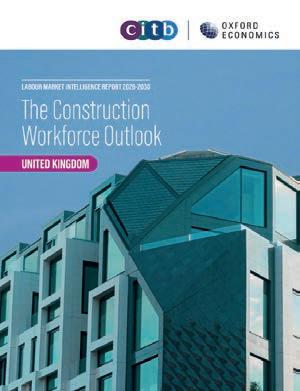
“It demonstrates that there remains significant demand for new people to join our industry and will hopefully give employers more confidence to employ and train new entrants for the sector to continue to grow meet its capability and capacity demands.”
Mark Farmer, member of the Construction Skills Mission Board and Construction Leadership Council, said: “There’s never been a more important time to be thinking about the strategic outlook for the industry and its workforce needs. This ultimately is a data driven exercise of balancing both current and future supply and demand.
“The latest Construction Workforce Outlook published by CITB indicates that despite industry currently grappling with challenging economic conditions, longer-term needs to replenish and sustainably grow the workforce remain. Bridging the gap between current capacity to employ and train and the imperative to build a future ready workforce remains the central challenge.” q
[ AS THE UK ACCELERATES towards its net zero ambitions, district heat networks are becoming a cornerstone of the low-carbon energy transition. By distributing heat from a centralised source through insulated pipework, these systems offer a highly efficient and sustainable alternative to traditional heating – particularly in dense urban environments.
However, the rapid growth of this sector brings a critical challenge: the need for a skilled workforce capable of delivering, operating and maintaining this complex infrastructure at scale.
From design engineers and installation specialists to maintenance technicians and project managers, the success of district heat networks depends on developing talent with the right technical expertise and industry understanding.
South & City College Birmingham (SCCB) is proud to be leading this agenda as the only provider in the UK delivering specialist training in district heat networks. Through close collaboration with
employers and industry partners, SCCB is equipping learners with the practical skills and knowledge required to support the continued expansion of this vital sector.
With a new cohort starting in the upcoming academic year, the college is strengthening the pipeline of future-ready professionals who can contribute immediately to industry growth, innovation and sustainability.
District heat networks are not just an infrastructure solution – they are an opportunity to build a skilled, future-focused workforce that will underpin the UK’s transition to net zero. q
• If you’re an employer interested in supporting this emerging sector or finding out more about how you can engage with the college’s district heat network training provision, please contact the Employer Engagement Team at South & City College Birmingham. Call 0121 694 5066 or email business.dev@sccb.ac.uk

[ STUDENTS FROM ACROSS THE CAPITAL put their skills to the test as New City College (NCC) hosted an exciting brickwork challenge as part of the Greater London Skills Competition – the largest inter-college skills event in London.
Endorsed by WorldSkills UK, the initiative showcased the exceptional talent of London’s learners and highlighted the vital role colleges play in developing the industry-ready skills needed to tackle workforce shortages across the construction sector.

Hosted at NCC’s Rainham Construction and Engineering Campus, the Brickwork Skills Competition challenged students to complete a complex brickwork task within a four-hour time limit.
Designed to test precision, technique and time management, the task required competitors to carefully plan and construct a detailed brick structure while being assessed by a panel of external professionals.
They had to follow drawings, measure accurately, demonstrate competence with tools, keep their work stations clean and tidy, and adhere to health and safety rules at all times.
New City College were delighted that after an intense day of building and judging, their student Aidan Hennem-Morrissey, based at Rainham, was crowned the winner of the Level 1 competition. Oliver Thorne-Ford from London South East Colleges won the Level 2 category.
The event was sponsored by Grayson Building Products, with judges from Super Trowel, Lee Marley Brickwork, GSQ Brickwork and Joe Short assessing the students’ work.
Steve Brayshaw, Group Curriculum Director for Construction and Engineering at New City College, said the competition highlighted the impressive technical ability of the students.
He said: “This was a fantastic competition with some extremely skilled students. Not only are these types of inter-college competitions beneficial for students’ development, they also highlight the role of skills and elevate their importance to a broader audience, shining a spotlight on the current strong demand for skilled bricklayers.” q
• For more information call 020 7613 9416 or email employability@ncclondon.ac.uk
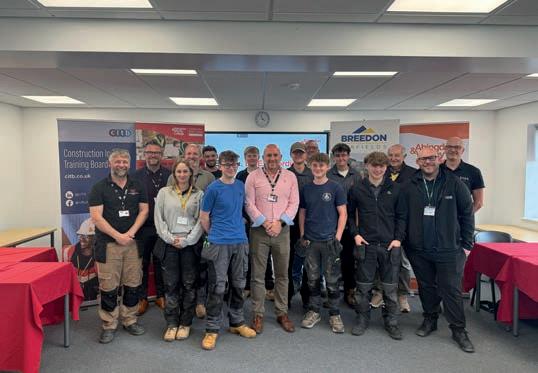
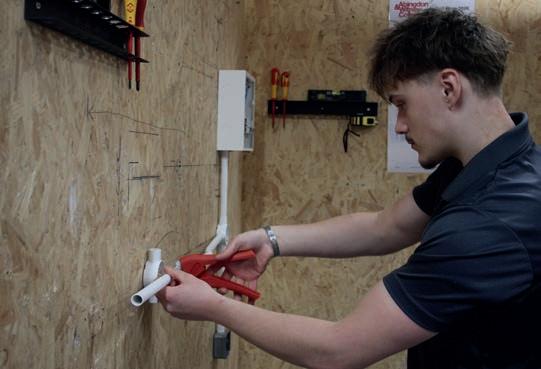
[AT A TIME when the UK construction industry faces persistent skills shortages and mounting productivity pressures, initiatives that bridge education and employment are no longer optional – they are essential. The recent Construction Trade Skills Event at Abingdon & Witney College offers a strong model for how this can be achieved.
Bringing together apprentices and full-time learners from multiple campuses, the event challenged participants with realistic tasks across electrical installation, plumbing, carpentry, design and surveying. These were not theoretical exercises; learners worked under time constraints, adhered to industry standards and demonstrated the technical and professional skills expected on site.
This kind of applied, immersive learning is exactly what the sector needs. Too often, training becomes disconnected from workplace realities. By contrast, the college’s approach ensures learners experience the pressures, expectations and teamwork of modern construction environments before entering the workforce.
A key strength of the event was the depth of industry involvement. It was supported by a wide range of employers and national partners, including VitrA, MKM Building Supplies, GLT Electrical Wholesalers, the Jim Cousins Trust, Breedon’s, Beard Construction, CITB, CIPHE, Screwfix and Henstridge Construction. Through judging, sponsorship of materials and prizes, their contribution ensured the competition reflected current industry standards while giving learners valuable opportunities to engage directly with employers.
Equally important is the meaningful connection fostered between students and industry. With partners actively involved throughout, learners gain insight into career pathways while employers identify emerging talent early. This mutually beneficial relationship is vital in addressing recruitment challenges and building a sustainable workforce pipeline.
The integration of apprentices and full-time students also deserves recognition. By narrowing the perceived divide between these routes, the event reinforces a vital truth: with the right training, both pathways produce highly capable, work-ready professionals.
Perhaps most encouraging is the initiative’s broader ambition. Plans to expand the event into an annual, multi-discipline fixture reflect a commitment to continuous improvement and deeper collaboration. As construction rapidly evolves – embracing new technologies and sustainability goals – this kind of forward-thinking educational leadership is essential. If replicated at scale, initiatives like this could play a transformative role in reshaping how the UK trains, attracts and retains its construction workforce. The message is clear: when education and industry build together, the foundations for success are far stronger. q
• For further information email Will.Gibbs@abingdon-witney.ac.uk or visit the website at abingdon-witney.ac.uk

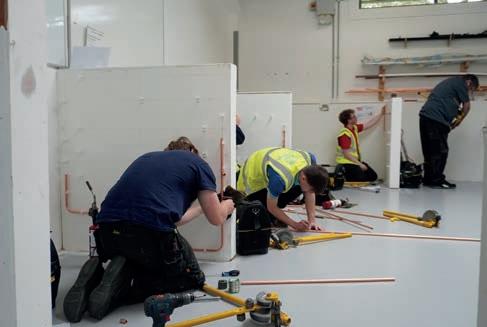

[THE Construction Industry Training Board (CITB) has launched a new Accelerated Apprenticeships programme to help deliver the Government’s goal to build 1.5 million new homes by 2029 while addressing regional skills shortages across the construction industry.
Part of CITB’s wider homebuilding support package, the programme aims to deliver 1,680 Accelerated Apprenticeship starts across four years and is designed to increase the pipeline of skilled workers in key homebuilding trades, including bricklaying, carpentry and roofing.
An initial five Accelerated Apprenticeship programmes will be established through further education colleges and training providers, with a further 15 programmes planned by mid2029. These will be located in areas of highest housing demand, ensuring training provision is aligned to local labour market needs.
The initiative introduces a new approach to apprenticeship delivery, enabling trainees to complete their training in as little as 14 to 18 months, compared to the traditional two to three years. This is achieved through a flexible model that combines intensive early-stage learning with structured block release training
alongside on-site experience, helping to speed up completions, improve efficiency across the system and put trainees in the best possible position to secure long-term work in the homebuilding sector.
Crucially, by facilitating apprenticeships to be completed quicker, the programme is designed to reduce the cost of delivering apprenticeships while responding to regional variations in demand, enabling more new entrants to train and join the industry.
The first phase will focus on five regions with high levels of homebuilding activity and identified training gaps: Greater Manchester, West Yorkshire, the West Midlands, Kent, and Bedfordshire and Hertfordshire.
By expanding accelerated, block release apprenticeship provision in these areas, CITB aims to increase apprenticeship uptake, boost completion rates and ensure a steady flow of skilled workers into the construction industry.
The programme also places a strong emphasis on long-term employment outcomes, providing employers with a quicker and more flexible model to convert trainees into full-
time workers. Consequently, performance measures will track not only enrolment and completion, but progression into sustained employment in construction.
CITB will support the partnering colleges and training providers with an initial set-up fund of up to £33,625 per programme. CITB will also provide apprenticeship funding along with ongoing assistance from its New Entrant Support Team, helping employers recruit candidates, access funding and deliver highquality training.
Tim Balcon, CEO at CITB, said: “Meeting the scale of the UK’s housing need requires a step change in how we train people for construction careers. Accelerated Apprenticeships are a key part of that shift – helping more people gain the skills they need more quickly, and in the areas where they are most needed.
“But it’s not just about getting people through training faster. As an industry, we need to place greater focus on outcomes – ensuring that apprenticeships lead to sustained, high-quality employment. That’s how we build a workforce that is not only larger, but more resilient for the future.” q
[THE South West Construction Technical Excellence College (SW CTEC) is entering an important next phase, with a renewed focus on strengthening the construction workforce through targeted investment in people, partnerships and progression routes.
A key priority is tackling one of the sector’s most pressing challenges: the recruitment of further education (FE) construction teaching staff. As demand for training grows, so too does the need for skilled professionals to step into teaching roles.
For those working in the trades, teaching offers a rewarding and often overlooked career pathway. Many FE tutors come directly from industry, bringing valuable real-world experience into the classroom.
It also provides the opportunity to step away from the physical demands of site work, with added benefits such as greater job stability, paid holidays and pension schemes, while remaining closely connected to the trade.
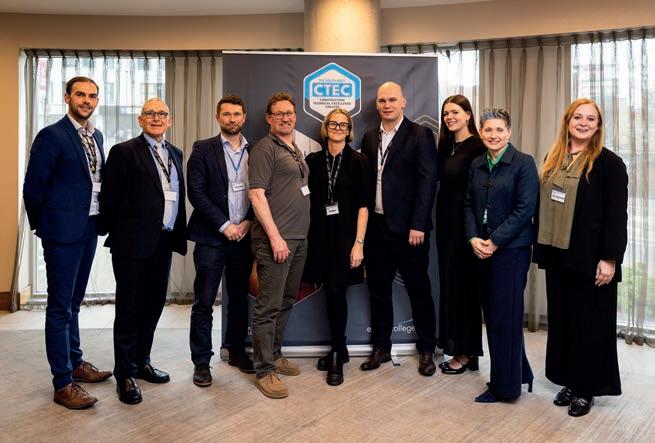
Alongside recruitment, SW CTEC is enhancing staff CPD and driving improvements in teaching and learning to ensure provision reflects current and emerging industry practice across the region. A key focus is curriculum and skills development within FE – working with colleges and employers to align training with real-world needs, address skills gaps and ensure learners are job-ready.
Looking ahead, a new Teacher Industry Exchange initiative will support industry professionals to contribute to FE provision while enabling teaching staff to spend more upskilling time in industry.
Supporting apprenticeship vacancies also remains central, with continued work to strengthen links between employers and training providers and create accessible pathways into construction careers. Collaboration sits at the heart of this next phase, bringing together partners to build a more responsive, future-focused skills system and a resilient workforce for the sector. q
• To keep up to date with all the latest developments, follow: Linkedin.com/company/south-west-ctec/ or visit the website at southwestctec.ac.uk

[ IN A RAPIDLY evolving construction industry, attracting, developing and retaining skilled talent has never been more important. Apprenticeships provide employers with an effective way to address workforce challenges while investing in the long-term success of their business.
For construction businesses looking to strengthen their workforce, apprenticeships offer access to motivated individuals who can develop the skills, knowledge and behaviours needed to support current projects and future growth. Apprentices learn while they work, applying their training directly within the workplace and becoming productive members of the team from the outset.
At UCS College Group, they work in partnership with employers of all sizes – from local SMEs to national contractors – helping them develop talent pipelines that meet the needs of the industry.
Through their collaborative approach, employers can shape training around their business requirements, ensuring apprentices gain relevant, practical skills that add real value to their organisation.
UCS College Group offer a comprehensive range of Construction and Civil Engineering apprenticeships, including:
• Plumbing and Domestic Heating Technician
• Installation and Maintenance Electrician
• Water Network Operative
• Groundworker
• Civil Engineering Technician
• Quantity Surveyor
• Carpentry and Joinery
• Painter and Decorator
• Bricklayer
• Formwork Operative
• Steel Fixer
• Construction and the Built Environment
Whether you are looking to recruit new talent
or upskill existing employees, apprenticeships provide a flexible and cost-effective route to workforce development. UCS College Group’s team works closely with employers to create tailored training solutions that align with business objectives, project demands and future skills requirements.
By investing in apprenticeships today, construction employers can help secure the skilled workforce needed to deliver the projects of tomorrow. q
• To find out how UCS College Group can support your business, visit the website or contact their Business Development team to discuss your workforce and training needs. Visit the website at ucscollegegroup.ac.uk , call 01278 655111 or alternatively email business@ucscollegegroup.ac.uk
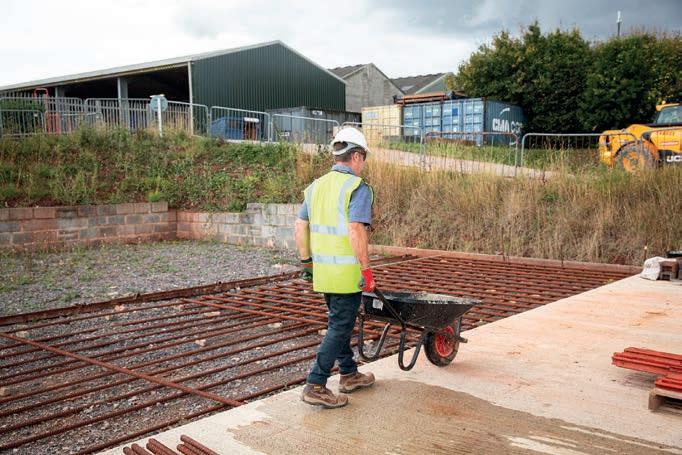
[ THE SkillBuild 2026 National Finalists have been announced. After competing among the best of the best at this year’s SkillBuild Regional Qualifiers, the finalists from across the UK will fight for the winning place at the SkillBuild National Finals in November.
Delivered by CITB, SkillBuild is the largest and longest-running industry skills competition in the UK and has become a flagship event for showcasing talent in the construction industry.
Around 700 students battled it out across 10 construction trade categories, including bricklaying and carpentry, during the 17 Regional Qualifiers this year. Each competition was one day long, in which participants completed a task relevant to their chosen trade.
The top eight highest scorers in each of the categories will go head-to-head in the National Final at the Arena MK, Milton Keynes on November 17-19, where the 10 winners will be crowned top of their trade.
The final is three days long and will see competitors constructing a project within 18 hours. There will be a panel made up of expert judges who will be assessing them on a number of characteristics, including technical ability, time management, problem solving, working under pressure, and compliance with health and safety requirements.
Earlier this year, CITB released its Industry Picture 2026, which highlights that, to secure the construction industry’s future and deliver on national ambitions, the sector must invest more in people, modernise its approach to skills and training, and work collaboratively across the sector. Events such as SkillBuild are only made possible through a unified effort between industry stakeholders and educators and are more important than ever to showcase the talent within the industry and spotlight the opportunities available.

Robert Smith, Product Manager (Careers) at CITB, said: “A huge congratulations to all the competitors that have earned their place at the 2026 SkillBuild National Final – it’s a great achievement and a testament to their hard work.
“With the increased demand for construction skills, events like SkillBuild are more important than ever to highlight the industry and wide variety of career choices and our shared role in building a stronger workforce.
“The quality of the participants this year is truly amazing. I am looking forward to the National Final and wish all the competitors the best of luck.” q
[ FIFE COLLEGE is supporting construction and electrical employers across Scotland as the industry responds to the introduction of Amendment 4 (2026) to the 18th Edition BS 7671 IET Wiring Regulations.
The latest update introduces important changes to electrical safety and installation standards, reinforcing the need for ongoing workforce training and compliance across the sector.
As regulations, technologies and industry expectations continue to evolve, employers are increasingly looking for flexible training solutions that help maintain compliance while supporting workforce development.
Working closely with businesses across the construction sector, Fife College delivers industry-focused commercial training designed to meet both operational requirements and long-term skills needs.
To support organisations adapting to the new regulations, the college offers both a one-day Amendment 4 update course and a three-day full 18th Edition course, alongside a wider portfolio of construction and health and safety training. Provision includes site management and supervisory training, working at height, manual handling, first aid and tailored closed-company courses delivered either on campus or directly within the workplace.
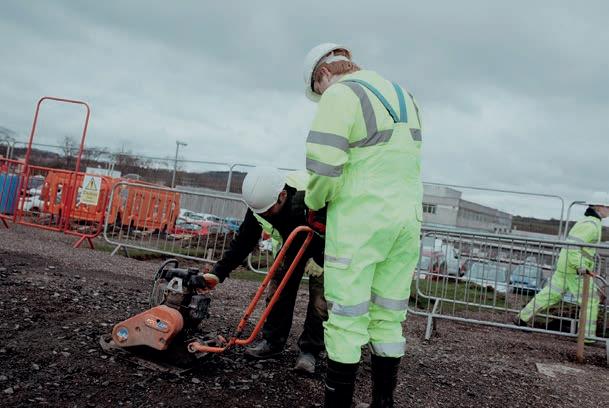
Alongside electrical training, Fife College continues to support construction employers through a broad range of commercial health, safety and workforce development programmes designed to help businesses invest in their teams while minimising disruption to day-to-day operations.
By strengthening partnerships with employers and aligning training with current industry standards, the college remains committed to supporting safer workplaces, developing skilled workforces and helping address wider construction skills challenges across Scotland. q
• To discuss your organisation’s training requirements, speak to a member of Fife College’s Business Development team on 0344 248 0128 or email sales@fife.ac.uk
[ STUDENTS HAVE GRADUATED from Build Academy, a landmark pilot program developed by members of the Federation of Master Builders (FMB), funded by the Construction Industry Training Board (CITB) and delivered in partnership with Shooters Hill Sixth Form College, to create a new pipeline of skilled tradespeople.
The graduation ceremony at Shooters Hill Sixth Form College celebrated a major milestone for the program, which was purpose-built to tackle one of the biggest threats facing British construction: a chronic shortage of site-ready workers entering the industry, with 61% of FMB member firms struggling to recruit skilled tradespeople.
Build Academy takes a radically different approach to construction education. Rather than a traditional college setting, students spend their time in a purpose-built workshop environment that mirrors a real working day on site – developing practical skills across bricklaying, tiling, plastering, painting and decorating, and carpentry. The curriculum was designed and executed by FMB members, ensuring graduates leave site-ready for work.
The program forms part of the CITB's RMI (retrofit) Sector Skills Plan, launching this July, which sets out a national framework for growing the pipeline of tradespeople needed to deliver Britain's retrofit and repair ambitions.
For many of Build Academy’s first cohort, the program has been transformational not just professionally, but personally. Holly Bennett arrived at Shooters Hill Sixth Form College in September 2024 having enrolled on a Level 1 multi-trade course. When Build

Academy tutors spotted her potential and encouraged her to apply, she seized the opportunity. At the graduation, she said: ”Before I joined, I would never have imagined being capable of producing work to such a high standard. Carpentry has become my passion and I’m especially proud of the projects I’ve completed.
“The Academy completely transformed me, my confidence, my skills, my ambitions. Teamwork was something I always struggled with, but working alongside others on real, hands-on projects taught me the value of communication, cooperation and supporting the people around you.
“To any young person wondering whether to join, I would recommend it without hesitation. It has had a lasting impact on my life and I will always be grateful for the opportunity.”
Brian Berry, Chief Executive of the Federation of Master Builders, added: “Build Academy is proof that when the industry takes ownership of the skills challenge, real change is possible. We cannot build the homes we need without the tradespeople to build them and for too long, we have failed to show young people that a career in construction is
something to aspire to. Today’s graduates are an inspiration. The FMB will keep pushing to scale this model across other sites, to give other young people a chance to take up a career in construction.”
Tom Peardon, London Director at the Federation of Master Builders, said: “These graduates have done something remarkable. They came in as young people who had never set foot on a building site and they left as skilled, site-ready tradespeople who London’s builders will be lucky to have.
“Build Academy works because it was designed by builders, for builders and because the young people who came through it gave everything. We now need more London firms to step up and offer these graduates the apprenticeships they have earned.”
Tim Balcon, Chief Executive of CITB, concluded: “Programs like the Build Academy show what can be achieved when employers take a leading role in shaping how we train the next generation of construction workers. Giving young people the opportunity to develop real, site-ready skills in a working environment is crucial if we are to tackle the skills challenge facing our industry.
“We know there is no single solution to closing the skills gap, but initiatives like this play a hugely important role. The focus now needs to be supporting learners into long-term careers and ensuring employers continue to create the opportunities that allow them to progress. If we can replicate this approach at scale, it will mean a much brighter and stronger future for the construction workforce.” q
[ THE Federation of Master Builders (FMB) has rejected the proposal from the Department for Work and Pensions to merge the Construction Industry Training Board (CITB) with the Engineering Construction Industry Training Board (ECITB).
The FMB responded to the Government’s consultation on the future of the industry training boards, warning that a merger between CITB and ECITB risks weakening the voice of small building firms unless major reforms are built into the new structure.
The FMB has said there is no clear evidence that a single, unified training board would improve skills outcomes for small and micro building companies. It argues that the biggest risk is that the needs of SMEs, which make up most construction businesses, could be pushed aside in a larger, more centralised organisation.
The FMB is also clear that reform is needed regardless of whether the merger goes ahead. If the Government proceeds, the new body must be set up in a way that gives smaller firms a stronger voice and delivers better value for levy-paying employers. That means formally integrating Prescribed Organisations into the governance structure,
improving accountability and transparency around decision making and levy spend, and creating a more collaborative, industry-first culture.
Brian Berry, Chief Executive of the FMB, commented: “Small building companies are not convinced this merger is being driven by what is best for them or for construction skills more broadly.
“The Government has not made a clear case for how merging CITB and ECITB would improve outcomes for small builders, and there is a real risk that the voice of smaller firms will be diluted even further in a larger organisation with the introduction of large multinational engineering firms.
“If the Department for Work and Pensions is determined to press ahead, it must ensure the new organisation is built around the reality of the construction sector. That means giving representative bodies a formal place in governance, being far more transparent about how decisions are made and how levy funding is spent and shifting to a culture that listens to and works alongside the industry.
“Without those changes, small builders will once again be asked to pay in without getting the support they need back out.” q
Abingdon & Witney College
Tel: 01235 541 111
E: apprenticeships@abingdon-witney.ac.uk
W: www.abingdon-witney.ac.uk
126 Churchill Road, Bicester OX26 4XD
Exeter College
T: 01392 400500
E: info@exe-coll.ac.uk
W: exe-coll.ac.uk


Exeter College, Hele Road, Exeter, Devon EX4 4JS
Fife College
Tel: 0344 248 0132
E: sales@fife.ac.uk
W: www.fife.ac.uk

Dunfermline City Campus, Calaiswood Crescent, Dunfermline KY11 8WH
T: 0330 135 9000
E: info@ncclondon.ac.uk
W: www.ncclondon.ac.uk


Epping Forest | Hackney | Havering | Redbridge | Tower Hamlets
South Hampshire College Group
> Apprenticeships
> Technical & Professional Training
E: info@shcg.ac.uk
W: www.shcg.ac.uk

South & City College Birmingham
T: 0121 694 5066
E: business.dev@sccb.ac.uk
W: www.sccb.ac.uk

Digbeth Campus, High Street Deritend, Digbeth, Birmingham B5 5SU
The South West CTEC
T: 01392 400500
E: ctec@exe-coll.ac.uk
W: southwestctec.ac.uk


Exeter College, Hele Road, Exeter, Devon EX4 4JS
University Centre Somerset College Group
T: 01278 655004
E: CSIC@btc.ac.uk
W: www.ucscollegegroup.ac.uk
Bath Road, Bridgwater, Somerset TA6 4PZ


[NATIONAL ACCESS & Scaffolding Confederation (NASC) members recorded zero operative fatalities in 2025, according to the NASC Safety Report 2026 published in June, which also shows accident rates remain among the lowest in its recorded history.
The report is based on RIDDOR data submitted by all NASC contractor members and shows 82 recorded reportable accidents across a combined workforce that has hit new records in 2025. Indeed the statistics suggest that among NASC members there was one RIDDOR for every 470,000 hours worked by operatives.
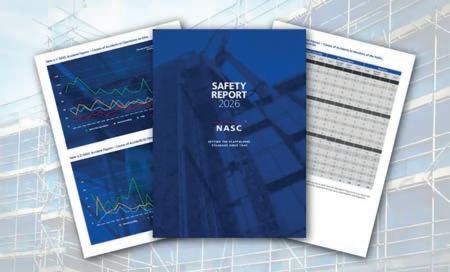
The Accident Incident Rate (AIR) of 4.07 and Accident Frequency Rate (AFR) of 0.21 compare favourably with the 10-year averages of 5.2 and 0.26 respectively and stand in stark contrast to both historic scaffolding industry figures and the wider construction sector.
The scale of progress is brought into sharp focus by comparison with the industry's own past. In the 1980s, scaffolding-related fatalities were recorded at a rate of almost one per week. Today, with NASC member companies employing more operatives than at any point in NASC history, the data shows a major reduction in RIDDORs caused by falls from height.
That progress comes against a sobering backdrop. According to data from the No Falls Foundation and the Health and Safety Executive, falls from height in Great Britain in 2025 recorded 35 lives lost across the construction industry, accounting for 28% of all workplace fatalities nationwide.
Construction recorded the highest number of fatal injuries of any industry sector in 2025. NASC’s figures suggest that member companies operating within a rigorously audited framework and supported by sector-specific guidance may be helping to reduce risk.
Mark Collinson, Head of Technical at NASC, said: “Recording
zero operative fatalities among NASC contractor members in 2025 is a significant and encouraging outcome, especially as our contractor member workforce has grown to record levels.
“These results reflect NASC members’ commitment to recognised best-practice guidance, investment in competence and high standards on site. But safety is never something we can take for granted. Every RIDDOR affects a person, a family and a workforce. The report gives us useful insight, but what matters most is how we act on it: identifying trends, improving guidance, sharing learning and supporting members to keep improving.”
The report highlights that membership of NASC grew by 11% in 2025 with the total operative workforce hitting levels that NASC describes as ‘reflecting growing industry confidence in the value of NASC standards’. All contractor members are independently audited against stringent compliance criteria, making NASC the only UK scaffolding trade body to operate in this way.
Clive Dickin, Group CEO for NASC and CISRS, said: “The progress shown in this report is the result of decades of effort by NASC members, committees, clients, training partners and the wider industry. It demonstrates what can be achieved when high standards are placed at the centre of scaffolding operations.
“There is no room for complacency. Falls from height remain the leading cause of workplace fatalities in our country, and the sector must keep raising standards. NASC will continue to lead by refining guidance, strengthening standards and listening to members about the challenges they face on site every day.”
The NASC Safety Report 2026 was published to coincide with NASC Safety Day – an annual event bringing together member companies, safety professionals and industry experts for a day of live demonstrations, talks and collaborative discussion. q
[THE LATEST VERSION of TG4 Anchorage Systems for Scaffolding was issued in 2025 and NASC has now built on this with a TG4 User Guide and TG4 Poster to create a complete suite of guidance for the industry.
Understanding the importance of ties is fundamental to scaffolding safety, as James Attridge, Chair of the NASC Technical Committee, explained: “Ties play a critical role in ensuring the stability of scaffolding structures. Façade access and other scaffolding configurations are typically tall and narrow and therefore rely on secure attachment to a ‘permanent’ building or structure to maintain stability. To achieve this, anchors are often installed into existing masonry or concrete structures to provide an effective means of tying.”
The new TG4 suite has been designed for everyone across an organisation, from directors, managers and supervisors at scaffolding contractors through to scaffolders on site and the client's project team.
The main guidance note, TG4:25 Anchorage Systems for
Scaffolding, provides detailed technical guidance on tie loads, anchor selection, proof testing and related considerations. Sitting alongside it, the TG4 User Guide is an A6 pocket booklet aimed specifically at scaffolders, highlighting the key information needed for the effective fixing of anchors, along with the factors and precautions required to ensure their integrity. It has been developed as a practical, easy-to-use pocket reference for anyone responsible for installing and testing drilled and cast in anchors.
Finally, the TG4 A2 Poster has been created to raise awareness at site level of just how important anchor ties really are, with the poster prominently stating that anchor ties play a critical role in ensuring the stability of scaffolding structures and preventing structural failure or collapse. A QR code on the poster links directly to further information on the NASC
NASC hopes this new suite of TG4 guidance will raise the profile of anchor tie safety across the whole industry and help drive further improvements in standards on site. q
[NO FALLS WEEK, the annual safe work at height campaign from the No Falls Foundation, has seen record levels of engagement and participation in its third year, which ran from 18-22 May.
Launched in 2024, No Falls Week is a week-long campaign that takes place each year in May, with a simple yet crucial mission: to raise awareness about the importance of safe working at height, prevent falls and ensure everyone who works at height goes home safely at the end of each shift.
This year, more than 2,600 organisations across a wide range of sectors – including construction, manufacturing, utilities, agriculture and education – formally signed up to take part to help shine a spotlight on safe work at height. It brings the total number of participants over the last three years to almost 7,000. In addition, there were almost 40,000 visits to the No Falls Week website this year alone, which resulted in over 10,000 resource downloads.

The No Falls Foundation once again joined forces with the Access Industry Forum – the forum for the ten principal trade associations and federations involved in work at height, whose members provided a host of free online resources, including toolbox talks, posters, factsheets, checklists, videos and interactive quizzes to help organisations get involved.
Hannah Williams, Charity Manager at the No Falls Foundation, said: “We’ve been absolutely delighted with the number of organisations actively taking part in this year’s No Falls Week, all showcasing their commitment to keeping people safe when working at height. We’ve seen organisations down tools for safety stand-downs and demos, deliver toolbox talks and even hold bake sales to raise awareness and vital funds for the charity.
[FALLS THROUGH fragile roofs and rooflights remain the leading cause of fatality in the workplace and contribute to a high percentage of workplace injuries.
National Federation of Roofing Contractors (NFRC) is calling on the roofing sector and wider industry to take the necessary steps to identify risk and prevent falls from height, driving positive change through practical action.
‘Don’t Fall for Fragile’ is a campaign to help contractors, clients, designers and building owners identify fragile roof risks early, plan work properly and stop unsafe shortcuts before someone gets hurt.
“Every year, workers are killed or seriously injured after falling through fragile roofs and rooflights. These incidents are entirely foreseeable and preventable,” explained Gary Walpole, Technical Safety, Health and Environment Officer at NFRC.
“The purpose of NFRC’s ‘Don't Fall for Fragile – Step Back & Plan’ campaign is simple: encourage everyone involved in roof work to stop, assess the risks properly and put effective controls in place before anyone sets foot on the roof.
“Don’t Fall for Fragile is about challenging assumptions. A roof that looks safe may not be safe. That's why this campaign focuses on planning, competence and making the right decisions at the earliest stage of a project.”
The campaign asks those working at height, or anyone involved in the planning of works at height, to pledge their commitment and reinforce safer planning, access and working practices across their workforce and supply chain.
“Clients, designers and contractors all have a role to play. The principles of prevention tell us that risks should be eliminated or reduced at the earliest opportunity. The safest solution is rarely found once work has already started,” continued Gary.
The launch of Don’t Fall for Fragile follows NFRC’s recent Cut the Dust campaign, forming part of a wider strategy centred around health, safety and wellbeing and providing practical guidance and solutions to enable individuals, employers and clients to act in accordance with health and safety best practice, driving a positive change in culture and the mindset of those within the built environment.
“The statistics for falls from height are devastating,” said Gary, “and we must come together to change that. Don’t Fall for Fragile echoes the fantastic work of No Falls Foundation by providing people education, guidance and practical steps to take. I really encourage anyone involved with working at height to get behind this campaign and pledge their support.”
Those who pledge will receive a PDF poster to print and display at their workplace, a certificate, NFRC guidance and a social media pack. To find out more visit nfrc.co.uk/step-back-and-plan q
“Unlike some other workplace injuries, falls from height can have longterm, life-changing consequences for the person involved, their families, friends, colleagues and the wider community. That’s why we need No Falls Week: to raise awareness of the risks when working at height, spark important conversations that continue throughout the year and encourage positive change in the workplace to prevent falls from height.
“We’d like to thank all members of the Access Industry Forum for again providing the campaign resources and toolkits, as well as our No Falls Supporters for their continued support.”
No Falls Week will return 17-21 May 2027. For further information on No Falls Week, and to sign up to get involved, visit nofallsweek.org q

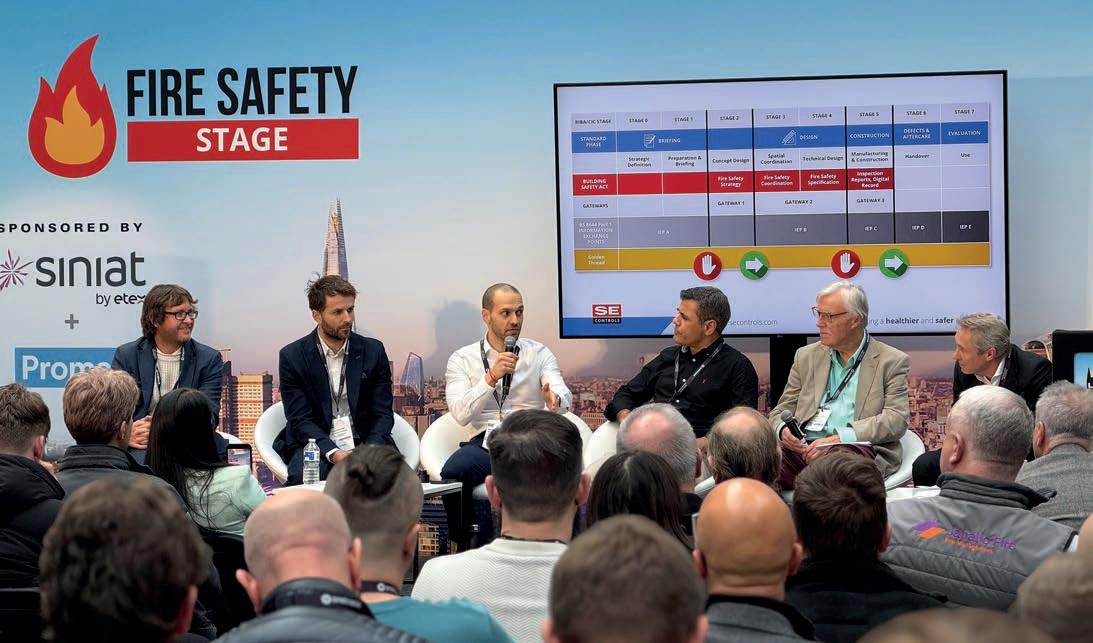
[THE UK’S most comprehensive construction and design show is back. London Build, taking place at Excel London on 25 and 26 November 2026, will bring together the entire built environment industry for two days of networking, innovation, entertainment and business opportunities.
Co-located with elementalLONDON, the event will unite construction, design, real estate, engineering, fire safety, digital construction, sustainability and HVAC professionals under one roof at the UK’s ultimate built environment event.
With over 25,000 attendees, 650 exhibitors and 900 plus speakers across 17 CPD-accredited stages and over 40 networking events, London Build is more than just an expo – it’s a Festival of Construction. Expect live music, entertainment, DJs, interactive workshops, an Architect’s Hub, a Government Hub, start-up showcases and thousands of opportunities to connect with the industry’s leading professionals.
Visitors can now register for their free ticket, providing two-day access to the latest innovations, products, technologies and insights shaping the future of construction and the built environment.
This year's conference programme will explore the biggest trends, opportunities and challenges shaping the built environment – including Sustainability and Net Zero, AI and Digital Construction, Fire Safety, Modern Methods of Construction (MMC), Housing and Infrastructure, Diversity and Inclusion, Skills and Workforce Development, Architecture and Design Innovation, and much more.
The first of over 150 thought leaders announced for London Build 2026 include:
• Luke Hands, Director of Health, Safety, Environment & Quality –Ardmore Group
• Ilka van Heerden, Head of Preconstruction – Structure Tone UK
• Charlotte Sargeant, Head of Land and Partnerships, East Midlands
– Keepmoat Homes
• Neville Grunwald, Director Facades & Roofs – Wates Construction
• Andrew J Taylor, Group Planning and Sustainability Director –Vistry Group
• Diana Otieno, Head of Resident Engagement and Compliance (Fire Safety) – Peabody
• Nicola Forest, Head of Sustainability – Structure Tone London
• Lucy Thomas, Marketing Director – Landsec
They are joined by senior representatives from leading organisations including Bovis, Purcell, BAM, Sisk, Places for People, Notting Hill Genesis, Graham, Bellway, London Councils, Brent Council, RIBA, Pascall+Watson and many more across the UK built environment sector.
A major meeting place for the built environment
The show is expected to welcome over 25,000 visitors from contractors and subcontractors, developers and housebuilders, architects and designers, structural and civil engineers, sustainability and technology teams, consultancies, local authorities and housing associations.
Attendee job titles include CEOs, Managing Directors, Construction Managers, Design Managers, Digital Construction Managers, Directors of Sustainability and other key decision-makers from across the industry.
The types of company you'll meet from across the built environment include Balfour Beatty, Mace, AECOM, Multiplex, Morgan Sindall, Bouygues, BDP, Willmott Dixon, Skanska, Bellway, Wates, BAM UK, McLaren, Lendlease, Laing O’Rourke, Costain, Arup, Zaha Hadid Architects, Taylor Wimpey, TfL, Tilbury Douglas, as well as many other top companies who are all looking for the latest products and services.
The 2026 event will feature more than 650 exhibitors, bringing together leading manufacturers, suppliers, technology providers and innovators from across the construction and built environment sectors.
Confirmed exhibitors include: Quelfire, Ryno, Siemens, Simpro, ASFP, Bosch, JamesHardie, Polypipe, Howdens, Rockwool, ELTA, Smeg, Armatherm and Baldwin Boxall. q
• Visit London Build on 25-26 November at Excel London. For more information visit www.londonbuildexpo.com or email marketing@londonbuildexpo.com

[A CONSTRUCTION COMPANY has been fined after a man drowned when he fell into an exposed excavation hole described as a ‘death trap’ at a building site in Hertfordshire.
Mykhalio Hustei had been working for Alchemist DB Limited as a labourer on a project building several flats on the High Street in Bovington. The 35-year-old had been living in a property adjoining the site when he attempted to make his way home from a night out on 22 October 2021.
However, as he tried to access his own home he fell into one of the exposed excavation holes that was filled with rainwater. His body wasn’t found until around 2pm the following day.
An investigation by the Health and Safety Executive (HSE) found that Alchemist DB Limited had been acting as a contractor to build the flats as part of a family-run property development business. New excavation foundations had been dug for the building footings. However, they were criss-crossing the

construction site without any designated safe walkways.
The investigation also found the company had failed to take appropriate precautions to ensure the safety of those moving around and working at the site. At best, large boards and planks were used as bridges over excavations. The boards and planks were slippery and bowed when walked across. The site was also open to the weather, making it highly likely it would be slippery after rain, increasing the risk to those at site. There was also no dedicated lighting to the site and the boards and planks didn’t have handrails and weren’t secured.
The company only made the site safe after HSE inspectors visited the site following Mr Hustei’s death and took enforcement action. This included them installing dedicated walkways bridging over exposed excavations using scaffolding framework to prevent falls.
HSE guidance clearly states that no work should take place until all excavations are
made safe. This includes protecting the edges of excavations with substantial barriers where people are liable to fall into them.
Alchemist DB Limited were sentenced in absence for breaching Regulation 22(2) of the Construction (Design and Management) Regulations 2015. The company was fined £20,000 and ordered to pay £5,000 costs at a hearing in Luton Magistrates Court on 29 May 2026. Since the incident, the company is now in liquidation.
HSE inspector Rauf Ahmed said: “As always, our thoughts remain with the family of Mr Hustei, a young man who was just setting out on his career in construction. He had been simply returning to his flat after socialising with friends.
“However, the site was quite literally a death trap. The measures put in place by the company after his tragic death are a crude reminder about what could and should have been done in the first place. We will always take action against those who fail to protect people from risk.” q
[ THE Royal Institution of Chartered Surveyors (RICS) has responded to the UK Government’s call for evidence on the future regulation of professions, including proposals that could shape the future oversight of the built environment and construction sector.
The call follows the Government’s announcement in December last year of its goals for reform, including proposals for the creation of a Single Construction Regulator. These include ensuring that buildings and built environments are safe, highperforming, healthy, accessible, secure and sustainable for occupants.
The Government’s objectives aim to enable companies and individuals to thrive while operating in the interests of current and future building users; ensuring building products are fit for purpose and supported by accurate information; and building trust in a system that prioritises the safety and needs of occupants.
RICS CEO Justin Young said: “RICS supports the Government’s
ambition to develop a coherent, future-fit system for the built environment that focuses not only on regulation, but on the skills, behaviours and professional judgement of those working across the full building lifecycle.
“This call for evidence rightly recognises that improving outcomes depends on understanding how people and organisations operate in practice, including the barriers, interdependencies and incentives that shape decision-making. Any effective reform must therefore be grounded in the collective expertise of industry, professional bodies, clients and regulators.
“RICS plays a vital role in this system through independent regulation, global standards, competence frameworks and disciplinary oversight. Government should build on this established infrastructure – including proportionate models such as designated professional bodies to strengthen capability and accountability without unnecessary duplication.” q
[ PRIVATE RENTERS will see stronger action on dangerous problems like severe damp and mould, following a new government crackdown. Councils can now issue fines of up to £7,000 if landlords refuse to fix poor conditions.
The fine will apply to 21 types of hazard that are found to be serious – the most dangerous level – which include freezing conditions, faulty electrics, fire hazards, structural issues and unsafe layouts. Around 10% of private rented homes are estimated to have at least one of these health and safety problems classified as serious.
The new penalty sits alongside existing powers councils can use to tackle unsafe homes that put tenants at risk. These include forcing repairs, carrying out emergency works and recovering costs from landlords who fail to act.
In June the Housing Secretary wrote to mayors across England urging councils to use all powers at their disposal to tackle unsafe housing and protect tenants.
Housing Secretary Steve Reed said: “Renters deserve a safe, secure place to call home and our landmark Renters’ Rights Act gives councils more options to take speedy action against rogue landlords.

“These include the new power to issue a £7,000 penalty to a landlord when there is a hazard like severe damp or mould in a privately rented home – a situation that no family should have to live with.”
Alongside the new fines, this government is updating the Housing Health and Safety Rating System for the first time in 20 years. This important system is used to assess health and safety in all types of housing, making it simpler to identify dangerous risks and take action.
The improved final framework came into force on 23 June and will support quicker enforcement, helping to ensure hazards such as damp, fire risks and unsafe electrics are addressed more effectively.
Ben Twomey, Chief Executive of Generation Rent, said: “Homes are the foundations of our lives, and no renter should have to live alongside mould, dampness and other risks to our health.
“The council being given the power to fine landlords up to £7,000 if they ignore repairs is an essential step towards raising the quality of rented homes. For renters to feel the benefit, though, councils must seek out and take action against those landlords who ignore unsafe conditions and profit from misery.”
Clara Collingwood, Director at the Renters’ Reform Coalition, said: “Home is where you should feel safest, but for far too long hundreds of thousands of renters have been living in substandard homes that undermine our health and cause serious harm to children and vulnerable adults. It’s great that authorities have new powers to tackle this, and they must start using them immediately to crack down on landlords who profit from unhealthy homes.
“And now that we have new rights as renters, we need to use them – any tenant living with serious disrepair or damp and mould should know they don’t have to put up with it any longer. With new rights and protections, and Section 21 evictions scrapped, we can’t be evicted for complaining and shouldn’t be afraid to report dodgy landlords to the council.” q
[ THREE LONDON COUNCILS – Tower Hamlets, Hackney and Lewisham - have launched a legal challenge to stop the Mayor of London’s planned cut to the affordable housing quota from 35% to 20%. Seven councils are backing the legal action in total, with Lambeth, Southwark, Waltham Forest and Haringey councils formally supporting the legal challenge.
Evidence prepared as part of the Judicial Review claim, which has been filed with the High Court and served on the Greater London Authority, highlights the detrimental impacts that the Mayor of London's policy would have on the ability of councils to deliver the highest levels of affordable housing for their residents.
The legal challenge relates to the Mayor of London’s attempt to reduce the current 35% affordable housing quota in the London Plan without using the proper statutory process for amending that plan. It also relates to the lack of a fair consultation before the policy change was made, including a lack of evidence justifying the blanket reduction to 20% affordable housing in all London boroughs.
The three councils which are the joint claimants in the legal challenge are all led by Executive Mayors, who are directly elected by residents in their boroughs. q

[HISTORIC ENVIRONMENT SCOTLAND (HES) is increasing the maximum grant funding available per project from £500,000 to £750,000 to better support projects with increased construction and running costs.
HES is the second largest funder of heritage in Scotland, investing around £12.4m in grant funding in 2024-25 on behalf of the Scottish Government to projects that protect and promote the country’s historic environment. HES funding delivers strong returns: in 2024-25 for every £1 of investment an additional £5.24 was invested, showing the impact that HES financial commitment has on the projects supported.
The increased grant ceiling will better equip projects to tackle the increased costs they face due to the cost-of-living crisis and climate change. Construction projects have been significantly impacted by the increased cost-of-living and global supply chain disruptions, particularly after the COVID-19 pandemic. At the same time, climate change is driving the need for more robust and resilient solutions, often requiring more expensive techniques and materials.
As a funding body, HES is already widely recognised as an expert
in built heritage, and it has a sizeable impact on the projects funded through its grants programmes. Increasing the maximum award will allow HES to continue shaping more positive outcomes for Scotland's historic environment and ensure its grant priorities, such as climate action and community benefit, remain key to project planning from the outset.
Dr Susan O’Connor, Head of Grants at HES, said: “HES awarded its first £500,000 grants in 1990, and the limit has not increased since. It is time for us to join other funders in recognising the toll that the cost of living and climate change has taken on projects and offer greater support.
“In addition to our financial support, we also offer technical guidance and support as part of our funding process. Because we conduct our own quality processes, we are uniquely able to identify and help mitigate risk for capital projects. We are confident that our enhanced funding will allow us to support Scotland’s heritage even more effectively than before.”
Applications for the Historic Environment Grants Programme are now open and the increased amount of up to £750,000 can be applied for.
For more information visit the Grants and Funding web pages at www.historicenvironment.scot/grants-and-funding q
[HERITAGE NETWORK have announced that the headline sponsor for this year’s conference is the Architectural Heritage Fund (AHF).
The headline sponsor is a major presence across the three-day event, speaking during the main session, delivering a workshop and exhibiting at the conference expo. It means that delegates can network with the headline sponsor as well as participate in their workshop.
The AHF is a registered charity, working since 1976 to promote the conservation and sustainable reuse of historic buildings for the benefit of communities across the UK, particularly in economically disadvantaged areas. This year, the AHF is celebrating its 50th anniversary.
Kelcey Wilson-Lee, Director of Programmes and Deputy CEO at the Architectural Heritage Fund, said: “We are so pleased to be the headline sponsor of the Heritage Network Conference again this year. Events like this are crucial to the development of the heritage sector – it brings together a mix of like-minded people from across the UK to explore and celebrate the impact of community-led heritage regeneration on people and places.”
The Heritage Network Conference takes place every year and

focuses on the impact of community-led heritage on people and places. Important topics such as funding and business planning, community engagement and access and inclusion are covered in sessions and workshops, and there’s the chance to visit different sites in the host city and learn about their work.
Delegates from all areas of community heritage attend – community heritage leaders, major heritage agencies and funders, local authorities, heritage businesses and early career professionals –making it the perfect opportunity to network and make the connections you need, whatever your role.This year’s conference will be held in Belfast and Armagh from 27-29 September. q

[SCHOOL PUPILS from across Edinburgh swapped their classroom for the castle in May to try their hand at construction and traditional skills through a Build Your Future event.
Historic Environment Scotland (HES), in partnership with Scottish Traditional Building Forum and The City of Edinburgh Council, held the event for nearly 100 pupils on 27 and 28 May. The two-day skills taster event was designed to inspire the next generation of craftspeople, construction professionals and heritage specialists by giving young people the chance to try a range of practical skills.
Across the two days, pupils rotated through five interactive skills stations, with demonstrations and mini masterclasses delivered by industry specialists. Activities included roof slating stonemasonry, painting and graining, timber joinery, and technology in construction such as thermal insulation – showcasing both traditional craft skills and modern construction techniques, and demonstrating how they work together to maintain, repair and future-proof Scotland’s historic buildings.
The National Federation of Roofing Contractors (NFRC), who first supported the inaugural Build Your Future skills demonstration at Edinburgh Castle in 2012, returned this year to lead the roof-slating activities and share their expertise with pupils. There was also insight from industry body Women in Property who were able to share experience and advice with pupils.
HES craftspeople led behind-the-scenes tours of Edinburgh Castle, giving pupils a rare and unique insight into the conservation and construction work required to care for a world-famous heritage site.
Colin Tennant, Interim Director of Cultural Assets at HES, said: “Seeing young people
get hands-on with these skills is a fantastic reminder of why this work matters. Scotland’s historic environment depends on a strong pipeline of traditional and emerging skills, and inspiring young people to see the opportunities available to them in the sector is essential.
“At HES, we’re committed to playing a leading role in tackling the skills gap –investing in training, supporting innovative programmes like Build Your Future, and working closely with partners across education, industry and local authorities. But we cannot do this alone. Transforming Scotland’s skills landscape needs sustained support and collective effort. With continued engagement across the sector and beyond, we can build the skilled workforce Scotland needs now and for the future.”
Construction apprenticeships currently see a significant drop-out rate, with just over half of apprentices completing their training each year. Partners believe this is often due to young people entering apprenticeships without a clear understanding of the wide range of roles available. Build Your Future aims to change this by giving pupils early, practical experience and helping them choose the right pathway from the outset.
Joann Russell, Chair of the Scottish Traditional Building Forum, said: “We are delighted to return to Edinburgh Castle to deliver a Build Your Future event. This model of school engagement started at Edinburgh Castle in 2012 and has evolved significantly with the feedback from education and industry.
“It is a young person-focussed approach to promote the many and varied careers in construction to provide young people with insights to help them in their career choices. This has been done with numerous stakeholders across construction and we look
forward to continuing to work with them for the mutual long-term aims of addressing the skills gap in construction.”
The event at Edinburgh Castle built on the success of a wider National 5 pilot programme. The pilot programme embeds teaching of construction and traditional skills directly into the school timetable to create a clear pathway towards a National 5 qualification and beyond.
The pilot, running across several schools in the city, has supported young people to gain early experience in heritage and construction careers, with several pupils progressing into apprenticeships.
Councillor James Dalgleish, Education, Children and Families Convenor, said: “This event has been a great opportunity for young people to explore and try out a range of specialist and practical skills, all under the supervision of industry experts. Against the backdrop of Edinburgh Castle, school pupils were given a glimpse into the craftsmanship involved in conserving such a historic landmark too.
“In Edinburgh, we’re focused on improving outcomes for all learners and our innovative pathways work offers tailored routes for all young people – whether further education, an apprenticeship or the world of work.
“By partnering with organisations like Historic Environment Scotland and Scottish Traditional Building Forum we want to inspire young people interested in a career in construction or conservation by showing them all that’s on offer.” q
• Find out more about traditional skills and training. Employers and schools interested in opportunities to participate can contact the team at skills@hes.scot
are one
directed to that company’s website.
To get your company’s website listed on this page just















Brad Crisp, Commercial & Specification Manager at Sertus, the UK’s leading smoke ventilation manufacturer, explores how property developers and contractors can mitigate hidden fire safety costs, by addressing concerns during the early planning stages.
[EVERY BUILDING PROJECT INVOLVES the coordination of a huge number of decisions, skills, people and timelines. It can be easy to think of fire safety as just one of a long list of things to tick off. Taking a delayed or inconsistent approach to fire safety can lead to significant problems in property development – in the shape of time and money.
From the point of view of property developers, asset owners, contractors and engineers alike, there are clear benefits to including life safety measures from the earliest stages of planning.
Risks to core development and construction
Many strategic design decisions will have an impact on fire safety, including building height, layout, façade systems and structural materials. These are early-stage decisions and will shape many other decisions as the project progresses. But if key design decisions are taken without considering fire safety and escape strategy, fundamental changes may need to be made once that safety lens is applied at a later point.
This can impact every other aspect of the process. For example, if fire compartmentation has not been properly considered, or allowances for the smoke ventilation is not included, key aspects of layout may have to be entirely re-worked.
When it comes to insurances, as well as in the cases where a project requires financing, early-stage fire safety planning can help to reassure lenders and insurers that all precautionary and regulatory measures are in place. This is particularly pertinent for residential and high-rise schemes.
Construction stage fire risk should also not be ignored, as partially completed buildings can be vulnerable due to temporary electrics and exposed materials. A comprehensive safety strategy could protect developments before completion, as well as after.
The worst offenders for spiralling costs are, of course, late-stage design changes. And the later this happens in the process, the higher those costs usually end up being – up to, and including, having to disassemble completed work and start again.
When layouts, stair cores, façade materials and services routes don’t meet safety regulations, the knock-on effects to design are widereaching. And, of course, every single change that is required will come with a price tag. For example, you might need to completely rip out walls that are already installed if they are non-compliant for the services penetrating them.
The cost is not only of having to re-commission work that has already been paid for and rebuild to meet regulations, but it also comes in the guise of significant programme delays. These can also be costly, while also causing secondary consequences for the project supply chain, leading the delayed completion.
Where including fire safety early can enable architects and designers to be creative with solutions that work within regulations, late-stage safety additions can often interfere with planned design features. Having to add fire stopping, compartmentation or smoke control systems can add cost, while also diminishing design impact in some cases.
According to GOV.UK, costs for fire safety remediation work can scale extremely quickly with the following figures quoted as a rough estimate:
• Minor fire strategy and design tweaks: £10,000-£30,000
• Moderate redesigns, including system or layout changes: £30,000£150,000

• Late construction rework: £100,000-£500,000 plus Common fire safety problem areas that cause costs to increase include:
• Compartmentation and fire stopping: when these areas are ignored, there is clear risk to life from rapid smoke and fire spread. It might be that these are considered thoroughly at one stage of the project, but then ignored at another, for example when pipework, ducts or cabling compromises fire-rated walls and floors.
• Façade and external wall compliance: this can be an incredibly costly aspect to resolve or change if fire safety has not been central to decision making about cladding, insulation and cavity barriers. This is not only in the specification phase, but also in the installation phase, where missing cavity barriers or incorrect installation can require significant work to remedy.
• Alarm, detection, smoke control, and suppression systems: when considered early, it is possible to ensure that these are integrated into building services. It is vital that these life safety systems are designed for and installed in the building with long-term safety as a focus, which includes access for regular testing and maintenance.
Regulatory and approval risks
With ever-increasing scrutiny on meeting safety standards, modern building safety protocols require detailed design evidence before construction can proceed, as well as demonstration of compliance at multiple stages along the way. When design records are vague, or when there are sign-off challenges at any of these gateway approval points, resolving and retrofitting safety measures can cause unwelcome delays.
The surefire way to get around these issues is including fire safety planning from the earliest stages, and maintaining the focus on them throughout the build. This smooths the path to regulatory sign-off and safe buildings.
Where projects fail to meet safety regulations at a late stage, incurring costs and causing delays to completion, the parties involved will be aware of potential damage to reputation. With building regulations so fundamental to the process, making sure that fire safety measures are fully integrated, rather than only addressed as an afterthought, is important to demonstrating professionalism and reliability. Beyond reputational risk alone, developers can find themselves liable for safety shortcomings.
By engaging expert fire safety advice early in the design process, including a comprehensive fire strategy for the building, all aspects of the development can comply with regulations, ensure safety and pass inspections to keep the project on track.
Fire engineers can support with the shaping of building layouts, evacuation strategies, smoke control and fire resistance from the outset of the project. Ongoing collaboration with architects and engineers can help identify risks and remedy issues before costly construction begins.
Once the build is underway, regular monitoring in advance of gateway site inspections can make sure that regulations are complied with, and no remedial actions are required post inspection. Once complete, fire engineers can verify that the life safety systems in use are installed correctly, and perform as they need to before occupancy. q
[THE Health and Safety Executive (HSE) has announced a major package of measures to protect workers from the dangers of engineered stone dust, including silicosis – a deadly-but-preventable lung disease caused by breathing in silica dust released during stone cutting.
The package includes the publication of new guidance making clear that dry cutting of engineered stone is unacceptable and that water suppression techniques, already used by many industry leaders, are how businesses should meet the legal requirement.
The guidance, launched in May ahead of the Stone & Surfaces Show, will be backedup by a nationwide inspection programme. Over the next 12 months, HSE inspectors will conduct more than 1,000 visits to fabricators across Great Britain, with enforcement action taken against those failing to meet the required standards. The first inspections are already underway.
The deaths of two young workers from silicosis in recent years prompted calls for action on engineered stone cutting from MPs, trade unions and medical professionals. In response to these emerging cases, HSE undertook a two-year process of research and industry engagement and has concluded that the most effective and proportionate action is to make sure proper controls are in place and actively enforced.
The research found that dry fabrication typically results in exposure to respirable crystalline silica (RCS) five to ten times higher than wet methods using equivalent tools. It also found that lower-content silica engineered stone is available at the same quality, removing any reason for businesses not to switch to less dangerous products. On the back of this evidence, HSE is acting decisively to ensure those controls become universal across the industry.
To provide clarity to businesses and workers, HSE has published its first-ever COSHH (Control of Substances Hazardous to Health) guidance sheet specifically for engineered stone. The guidance sets out in plain English what employers must do: switch to engineered stone with a low silica content; use on-tool water suppression, control mist; provide appropriate respiratory protective equipment; and carry out regular health surveillance. These are legal requirements.
Mike Calcutt, Deputy Director in HSE's Engagement and Policy Division, said: “Today’s guidance marks our most significant intervention in the engineered stone sector to date, and not without good reason. Silicosis is incurable, but it is entirely preventable. No

worker should lose their life to a lung disease caused by their job, and that is why we have taken this action.
“We have spent the past two years conducting extensive research and industry engagement to understand the scale of this risk. What we found was stark. Many businesses are not putting the right controls in place, they are still using engineered stone with high silica content, and dry cutting, which must stop.
“To every employer in this sector: the guidance is now published, the expectations are clear, and our inspectors are coming. Those who are cutting corners are not just putting their workers at risk – they are undercutting the businesses doing things properly. We will create a level playing field.
“To workers handling engineered stone: know your rights and know the controls that should be keeping you safe. If you have concerns, contact HSE.”
Engineered stone, widely used in kitchen and bathroom worktops, can contain up to 95% crystalline silica. Unlike natural stone, where silica-related disease typically takes decades to develop, recent cases have suggested that exposure to engineered stone dust can cause silicosis in a matter of months or years. Workers can suffer permanent and irreversible lung damage before experiencing any symptoms. By the time symptoms appear, it may be too late.
Sir Stephen Timms, Minister for Social Security and Disability, said: “Every worker deserves to come home safe, without fear of losing their life to a preventable, deadly lung disease caused by their job.
“This new guidance gives businesses clear, unambiguous instructions on what the law requires, and this spring and summer HSE will carry out more than 1,000 inspections across the industry to make sure
those standards are enforced, and the lives of workers protected.”
Kevin Bampton, Chief Executive Officer of the British Occupational Hygiene Society, said: “While the cause of headline-grabbing acute silicosis lies with businesses which blatantly flout the law and exploit workers, HSE’s revised guidance provides muchneeded clarity for the mainstream industry and for the professionals supporting it.
“As the UK’s leading scientific organisation on health protection in the workplace, we are grateful to HSE’s science team for addressing previously unanswered questions about the effectiveness of controls. The guidance reflects this evidence base and brings clarity to what is needed to help protect workers.”
Nigel Fletcher, Operations Officer at the Worktop Fabricators Federation (WFF), said: “We welcome HSE’s new guidance, which clarifies what good control looks like when working with engineered stone. The WFF is committed to advancing worker safety in the fabrication industry by training and education of control measures, reducing dust exposure and addressing other critical hazards.
“Consumers and designers can be assured that WFF membership signifies responsible practices that ensure worker well-being throughout the process, which is why we created the WFF quality mark. Only fabricators meeting rigorous standards will be granted permission to display the WFF quality mark. More than a logo, it demonstrates a company's commitment to health and safety and reflects their investment in resources and dedication to reputable practices.”
The inspection campaign forms part of HSE's wider programme of work in the sector running through 2026 to 2027, which includes continued engagement with employers and trade bodies to drive compliance and raise awareness of legal duties. q
[BW: WORKPLACE EXPERTS (BW) is introducing mandatory raspberry hi-vis for subcontractor operatives across all its new fit out projects, creating a standardised identification system which is currently spanning 14 live sites and 137 supply chain partners.
The London-based fit out contractor is implementing the raspberry hi-vis for all subcontractor operatives working across its new project sites, forming part of a three-colour identification system. BW project teams wear black hi-vis, visitors wear white and subcontractor operatives wear raspberry.
In the past 30 days alone, more than 1,660 operatives from 137 partner companies have signed in across BW sites, accounting for almost 19,000 individual site entries by its supply chain.
On active fit out and refurbishment projects, where multiple trades and subcontractors often work simultaneously, clear identification plays an important role in supporting day-to-day coordination, emergency response and workforce wellbeing. BW’s colour-coded system gives site teams an immediate reference point to understand who is on site and their relationship to the project.
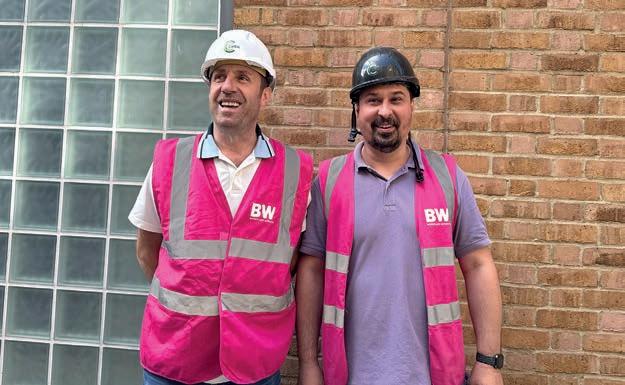
visual cues every day, raspberry is an unmistakeable signal of a BW site member. It stands out.
Lorna Killick, Head of Business Transformation at BW, said: “On a busy site, you can have dozens of people from different companies working in the same space. Knowing who is on site, who they work for and whether they’re supposed to be there is an important part of running a safe, well-managed project.
“We wanted a system that reinforced our commitment to defect free project journeys by enhancing the full site experience from day one. Where safety messages sometimes blend into the background, particularly in environments where people are exposed to the same
“This isn’t about changing hi-vis for the sake of it. It’s about creating consistency across our projects and supply chain. The colour is becoming a shorthand for accountability, familiarity and looking out for each other.”
Unlike project-specific branded PPE, which is commonplace in the industry, the standardised raspberry hi-vis can be used by operatives as they move between BW projects. This creates a consistent experience for returning supply chain partners while reducing the waste associated with single-project PPE that cannot be used elsewhere. q
[A REPORT, sponsored by the Joint Contracts Tribunal (JCT) and published by the Construction Leadership Council (CLC) as part of their Mental Health Project, has highlighted the mental health challenges facing young workers in the industry and makes several key recommendations to provide solutions and improvements.
Understanding the wellbeing experiences of young construction workers in England: what are the challenges and what should the industry do about them? was carried out by the University of Warwick and Mates in Mind, a registered charity set up to improve mental health in construction.
The report had three specific objectives:
• Identify the key factors that young construction workers perceive as influencing their wellbeing at work
• To examine how they perceive the availability, accessibility and effectiveness of wellbeing related support in the industry
• To gather their suggestions for improving workplace wellbeing within the industry
The research conducted interviews with 20 young construction workers, aged 18-25 years, with the data analysis formed into the following six themes:
• Starting out: negotiating industry pressures as a young construction worker
• Challenges impacting mental health and wellbeing
• Consequences of industry pressures on young workers’ lives
• Barriers to speaking up and seeking support
• What young workers appreciate: sources of support and positive workplace experiences
• Young workers’ perspectives on how the industry can improve Key issues included workflow problems, long hours, low raise and recognition, learning on the job with limited support or training, age/experience hierarchies, discrimination and inequality on the basis of age, race and gender. The report also highlighted positive reports of good practice and workplace initiatives that benefited wellbeing.
Among the key suggestions for improvements were ensuring young workers feel like valued members of the team, strengthening early career training for young workers (including for nonapprentices), reducing harmful work pressures and tackling discrimination and building an inclusive workplace.
JCT’s sponsorship of the research is part of their commitment to support the CLC’s initiative regarding mental health in construction.
JCT chair, Karen Kirkham, said: “JCT is delighted and proud to support this research which is an important step towards understanding, and therefore being able to address, the very real mental health issues in our industry today, particularly for young workers.”
[ CIRCULAR PALLET recovery scheme The Pallet LOOP is celebrating two years of operation with major milestones achieved.
Since launching in 2024, The Pallet LOOP has issued more than three million of its iconic green pallets and collected over 1.8 million of them from construction projects across the UK and Ireland. Through its innovative returnable pallet scheme, the company has already paid an estimated £1.4m back into the sector.
The Pallet LOOP incentivises pallet returns through a simple, costeffective scheme that pays registered partners £2 to £4 for every pallet returned. Combined with a fast and efficient collection service, the system encourages construction businesses to recycle pallets, reducing waste and improving sustainability in the sector.
The Pallet LOOP has partnered with some of the construction industry’s biggest manufacturers, including British Gypsum, Isover, Superglass by Etex, Wienerberger, Barratt Redrow and CEMEX. The business is also expanding across Ireland, securing partnerships with Gyproc through its LOOP partners in the Republic of Ireland and Northern Ireland, CJ Sheeran.

Economy Innovation of the Year Award at the edie Awards 2025. Most recently, The Pallet LOOP secured two accolades at the Hardware Association Ireland Innovation Awards & President’s Ball 2026, winning both the Best Build Product Award and the Overall Sustainability Award.
Further momentum came with the launch of the company’s free three-day collection service, designed to make pallet returns faster and easier for contractors and builders.
The Pallet LOOP’s progress has been recognised through a series of major industry awards and shortlistings. Achievements include winning the Builders Merchants Federation Sustainability Award 2025, Supplier of the Year at the Builders’ Merchants News Awards, and the Sustainable Materials Award at The Supply Chain Excellence Awards 2025 in partnership with Scott Pallets.
The company has also been shortlisted for the Green Business Award at the British Business Awards 2025 and the Circular
Andy Williamson, Managing Director of The Pallet LOOP, said: “Over the last two years, we’ve shown that a circular approach to pallet use in construction is not only possible, but commercially viable and scalable too. The industry has really embraced the concept of recovering, repairing and reusing pallets, and the momentum we’re seeing across the supply chain is incredibly encouraging.
“Every pallet returned is reducing waste, cutting carbon and helping construction businesses operate more sustainably, which is exactly what The Pallet LOOP was created to achieve.” q
• For more information visit www.thepalletloop.com
[ THE Federation of Master Builders (FMB) has backed Government plans to reform consumer protection in the retrofit market. This comes as the Government launches a consultation on overhauling the consumer protection framework for home upgrade schemes as part of its Warm Homes Plan.
The proposals are designed to tackle long-standing issues in the market, including unclear accountability and inconsistent oversight, which have contributed to poor-quality installations and damaged confidence among both consumers and industry.
Central to the consultation is a move towards a simpler, more joined-up system, including a single consumer protection service and stronger oversight of installers. The FMB says these measures could help professionalise the sector and support competent builders.
Brian Berry, Chief Executive of the FMB, said: “The FMB strongly supports efforts to improve consumer protection in the retrofit market. Too many households have been let down by poor-quality work, damaging trust across the sector. A simpler, clearer system that ensures work is done right first time, and gives consumers confidence in where to turn when things go wrong, is essential to scaling up retrofit and meeting our net zero goals.
“It is also significant that the Government is considering whether more trades should be subject to mandatory registration and licensing, as this is something the FMB has long called for. Done right, this could deliver real change for the industry. However, any new framework must work for small, local building firms, avoiding excessive costs or complexity that risk driving good builders out of the market.” q
[ UK ORGANISATIONS may be overspending to replace their heat pump systems when they reach end-of-life, warns a leading UK renewable energy pioneer.
Heat pumps, an efficient and cost-effective heating system that extracts ambient heat from the air or ground, usually last 15-20 years in a commercial setting before needing to be replaced.
Now Chris Reilly, founder of West Midlands-based Zeuner, is urging asset and site managers to investigate tailored solutions that update and optimise existing systems cost-effectively.
He said: “Wider awareness of the lowcarbon, high-efficiency benefits of heat pumps has triggered a spike in the uptake of the technology over the past decade and many systems are now approaching end-oflife and need replacing – a process that can cost millions.
“However, there is an often-overlooked alternative, a tailored system that replaces the existing systems, such as those manufactured by Water Furnace, and optimising them with new, more efficient technology.
“Zeuner can assess an existing system following a consultation and provide replacement components that fit seamlessly into the existing real estate, even if the original manufacturer has gone out of business or left the UK market.”
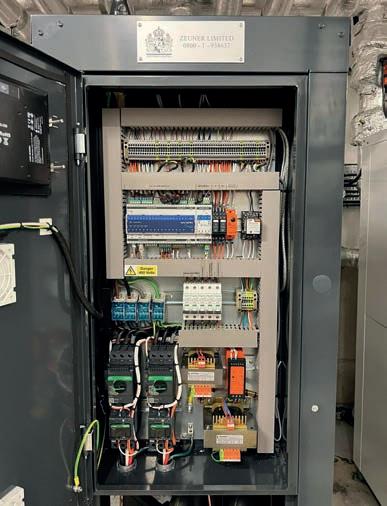
The cost of a replacement heat pump system is driving some commercial property owners to seek out last-gen alternatives that are less efficient and sustainable.
“Environmental legislation surrounding buildings is tightening, so adopting carbonintensive and inefficient legacy systems is a retrograde and shortsighted solution,” Chris added.

“A tailored, consultative heat pump solution can meet any building load requirement, saves money over time and helps organisations fulfil their sustainability and CSR obligations.
“The process is also effective for complex installations and layouts, which some of our competitors won’t even quote for.” q
[ MORE FAMILIES are set to save money on bills as flagship retailers Currys, B&Q, Amazon and Lidl join government plans to bring plug-in solar panels to UK homes.
At a roundtable of some of the biggest retailers in the country, with a combined total of almost four thousand stores and significant online presence, Minister for Energy Consumers Martin McCluskey discussed the crucial role of plug-in solar in the clean energy revolution.
Those in attendance included Amazon, Asda, B&Q, Currys, Screwfix and Wickes, who discussed the technology and how it can offer a cheaper route for people to save money on bills.
This follows rule changes announced by the government earlier this year that will allow UK homeowners to self-install plug-in solar panels in the coming months and builds on savings of up to £480 consumers can already make from rooftop panels.
Martin McCluskey said: “Plug-in panels can be transformative for renters or those on lower incomes, so I welcome the conversation today with household names such as B&Q and Currys showing a huge amount of support for getting the panels in people’s homes. This easy-to-install tech can cut people’s bills and help make the
UK less reliant on global fossil fuel markets.”
This technology, already widely used by households throughout Europe, is easy to install and could save many households significant amounts on their energy bills, while helping make the UK less reliant on global fossil fuel markets.
The low-cost panels can be put on balconies or in any outdoor space, providing free solar power that can be used directly through a mains socket like any other device, without an installation cost, thereby reducing the amount of electricity taken from the grid.
Alongside the roundtable, the government has launched a consultation seeking industry views on enforcing the rules so consumers can safely install plug-in panels in their homes.
Households across Britain are already embracing solar power in record numbers. 2025 saw a record 269,000 solar installations completed in the UK – the highest total ever recorded in a calendar year and 37% larger than the year before.
Around 255,000 of these were rooftop solar – meaning at least 95% of all new solar was installed on homes, businesses and other buildings. That equates to a new rooftop solar installation every two minutes throughout 2025. q
By Barry Clark, Regional Director at Hamilton and board member at the Insulated Render and Cladding Association (INCA)
[
ACCORDING TO THE UK Green Building Council (UKGBC), roughly 80% of the homes we will be living in by 2050 are already standing today. The problem is that nearly two-thirds of these properties are stuck with an EPC rating of D or worse. This means millions of people are dealing with draughty rooms and soaring energy bills.
For the UK to hit its climate targets, closing this performance gap in our existing housing stock isn’t just an option, it is a necessity.
Recent analysis from the Insulated Render and Cladding Association (INCA) in its publication Why Fabric First is Right also highlights the challenges of the UK's ageing housing stock, persistent fuel poverty and the central role of building fabric in achieving net-zero targets.
Facade remediation discussions are rightly dominated by postGrenfell safety mandates and net-zero carbon deadlines. Compliance is non-negotiable; however, I believe that the most significant and lasting value for building owners and residents is generated when a project maximises performance through a fabric first strategy.
The reality is that many of our high-rise and social housing blocks were built long before today's energy standards existed. This legacy of poor thermal performance has left us with buildings that are prone to damp and mould.
Evidence in the INCA study shows the scale of this issue with around a third of UK residents reporting mould in their homes. In addition 2.73 million households in England were living in fuel poverty in 2024 meaning that poor building performance is now a serious social and health concern as well as an energy challenge.

Fabric improvements and renewable energy are perfect partners. Renewables are at their most effective when the building is efficient. If we fix the envelope first, we can create a stable environment that allows green technologies to thrive.
Successful remediation should be about a holistic approach that balances safety with comfort and asset value.
The benefits of this approach include:
• Lower energy bills for residents
• Reduced carbon footprint
• A boost in internal comfort and health
• Protection against the elements
• Reduced long-term maintenance costs
• An extended lifespan for the entire building
According to national energy efficiency analysis that is referenced in the INCA report, improving the UK’s least efficient homes to EPC C could eliminate around 97 million tonnes of CO2 emissions and targeted improvements in fuel-poor housing could save households around £480 per year on energy bills.

When you consider that 71% of built environment emissions come specifically from heating and cooling, it is clear that fixing the envelope of the building is the most logical starting point. Renewable energy options such as heat pumps and solar panels are vital, but a high-tech heating system can only do so much if the building itself isn’t retaining energy efficiently.
In short, we need to focus on retaining heat before we consider how we generate it, and that is why a fabric first strategy is needed.
To put it simply, fabric first means making the building’s outer shell work harder. If you prioritise insulation, permeability and moisture control, you create a structure that naturally stays comfortable while reducing the heavy lifting required by mechanical systems.
A fabric first strategy focuses on:
• Upgrading external wall systems for better protection
• Installing high-quality external wall insulation
• Minimising air leakage and addressing thermal bridging
• Ensuring robust weather resistance and moisture management
• Improving the overall durability of the building envelope
Findings from the INCA publication show that up to 35% of heat loss occurs through walls with a further 25% through the roof and 15% through the floor. This is why fabric first interventions remain a vital part of improving energy efficiency in existing buildings.
Remediation projects give us an opportunity to go beyond just ticking a compliance box by allowing us to genuinely improve how people live while extending the life of the asset.
The implications from a health perspective are huge. Cold homes are strongly linked to respiratory and cardiovascular illness, poor mental health and developmental issues in children. With nearly 70% of excess winter deaths associated with these conditions, the case for improving building fabric extends beyond energy efficiency alone.
When we use compliant cladding and modern insulation systems correctly, they are designed to last for decades.
Fabric first underpins our approach. A project in Leeds with Equans saw our teams install external wall insulation across six high-rise towers in six months, transforming the thermal performance of hundreds of homes.
We saw similar results at the DoubleTree by Hilton in Kingston upon Thames (pictured). The challenge was balancing architectural aesthetics with a high-performing building envelope and Hamilton delivered exceptional results.
As an industry, we need to pull together to make our existing buildings safer and more efficient. Renewables are an absolute necessity, but their success rests entirely on the quality of the building's envelope.
The INCA research highlights the scale of opportunity with UK homes accounting for roughly a quarter of total energy use, which means that improving efficiency can strengthen energy security and reduce reliance on imported fuels. A fabric first approach allows us to ensure that today's buildings are ready for a truly sustainable future.
Ultimately, facade remediation should be viewed as far more than a compliance exercise. By prioritising a fabric first strategy, building owners can improve safety, reduce carbon emissions, tackle fuel poverty, enhance resident wellbeing and future-proof their assets for decades to come.
As the INCA research in Why Fabric First is Right makes clear, improving the building fabric remains the most effective foundation for a low-carbon built environment. q
[WORK HAS STARTED on site to deliver 102 new affordable homes as well as new local jobs and opportunities in Lewisham.
Ladywell Park Gardens is being built on the former Ladywell Leisure Centre site on Lewisham High Street, as part of the council’s homebuilding programme to meet urgent local need for affordable housing.
The lead developer/contractor Higgins Partnerships was appointed earlier this year and started the main works in May, with the homes expected to be built by summer 2028.
Ladywell Park Gardens will deliver 102 new homes across four buildings. Of these, 47 will be social homes for families on the waiting list and 55 will be for shared ownership. Eleven homes will be wheelchair accessible.
The development also creates opportunities for local people. Higgins are offering six apprenticeships, 20 T Level placements and 16 work experience placements, and have donated £13,000 to local charity, Urban Synergy.
The blocks will have new landscaping, a new public garden and children’s play area. There will be living roofs, sustainable drainage systems (SuDS) to reduce flood risk, and cycle storage to support greener and healthier transport, helping create a more sustainable and resilient development.
Cllr Daniel Dream, Lewisham Council Cabinet Member for Inclusive Regeneration, Planning and Housing Delivery, said: “It’s excellent to see work underway on these urgently needed affordable homes, which will give 102 families the security of a long-term place to call home.
“Delivering affordable homes for local people is my top priority, and while there are challenges, we are using new ideas and different approaches to keep things moving at pace.
“Just as importantly, this development will benefit the wider community too, creating opportunities for 40 local people to learn

new skills through apprenticeships and placements."
David Martin, Regional Director for Higgins Partnerships, said:
“We are delighted to be working in partnership with Lewisham Council to deliver these much-needed affordable homes for the borough. Alongside creating high-quality new homes, we will work collaboratively with our partners and the local community to deliver lasting social value. We are proud to be supporting urban synergy and to welcome our first apprentice onto site.”
The front portion of the site is currently occupied by PLACE/ Ladywell. As Ladywell Park Gardens will be constructed to the rear of the site, the council has worked closely with Higgins to ensure the continued operation of the PLACE/Ladywell building, including an extended lease ending in March 2027, to continue their important work. The council has and will continue to support Lewisham Donation Hub to find a suitable new home. q
[ MUSIC-LED SESSIONS for older people in South Queensferry are set to return after a charitable donation from a major housing developer.
A £2,500 contribution from Cala Homes (East) was given to Manor Estates Housing Association (MEHA) and its community fund following the final handover of 25 social rent properties at the Queensferry Heights housing development.
The full amount has been awarded to Queensferry Churches Care in the Community (QCCC) to restart popular music sessions that had been scaled back due to financial pressures.
Derek Lawson, Strategic Land Director at Cala Homes (East), said: “We are pleased to see this community benefit donation support such a worthwhile, local cause. At Cala, we are committed not only to delivering high-quality homes, but also to making a positive contribution to the communities in which we build.

“It is particularly rewarding to know this donation will help QCCC continue its valuable work supporting older people and reducing social isolation.”
QCCC supports around 400 older people each year across South Queensferry and surrounding communities, helping to reduce isolation
and improve wellbeing through a range of services and activities.
The organisation had been forced to scale back some of its music-based sessions due to financial pressures, despite their proven benefits for emotional wellbeing, memory stimulation and social connection.
Claire Ironside, CEO of Manor Estates Housing Association, said: “We know just how beneficial these sessions are, particularly for older people. To be able to help bring them back through this funding is incredibly rewarding and shows the value of partnership working in action.”
The latest handover between Cala and Manor Estates brings Cala’s total delivery to 44 affordable homes across the development, forming part of a wider commitment tied to the site and local community.
The homes include a mix of houses and flats designed to meet a range of housing needs, helping to address ongoing demand for highquality affordable housing in the area.
Claire added: “It has been hugely reassuring working with Cala throughout this development. The quality has been consistent from start to finish, and the finished homes are ones we are genuinely proud to offer to tenants.” q
[THE Pride in the Job 2026 Quality Award winners have been announced by the National House Building Council (NHBC). Thousands of inspections have taken place to determine the 449 winners from a field of 7,500 sites, representing the top 6% of UK site managers.
Widely considered the ‘Oscars’ of the house-building industry, Pride in the Job celebrates site managers’ dedication to raising standards, showcasing best practice and rewarding excellence.
The competition covers England, Wales, Scotland, Northern Ireland and the Isle of Man and is open to NHBC registered builders of all sizes. Judging is rigorous, with assessment across six key areas: consistency, attention to detail, leadership, interpretation of drawings and specifications, technical expertise and health and safety.
Commenting on the awards, Cassandra Codling, Senior Regional Director at NHBC, said: “Winning site managers demonstrate incredible dedication, passion, commitment and leadership to produce homes of exceptional quality. The judges look for site managers who go beyond strong performance and demonstrate qualities that lift a good site manager to an exceptional one.
“The competition is at the heart of NHBC’s core purpose to raise standards in house building. It inspires site managers to make their mark on the industry, earning the respect of their peers and leaving a legacy of homes built to the highest quality standards.”
The Quality Award winners will now go on to compete for Seal of Excellence and Regional Awards in the autumn, with the national Supreme Award winners unveiled in January 2027. q
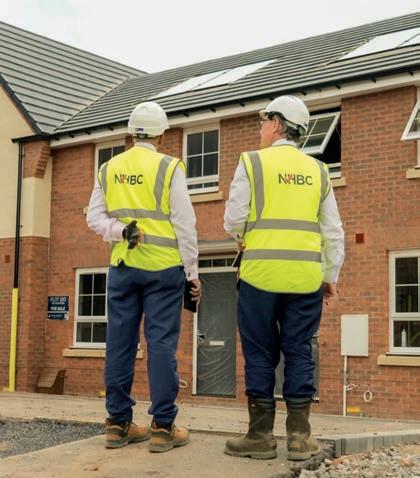
[THREE HARRON HOMES site managers have been recognised among the best in UK housebuilding after each winning an NHBC Pride in the Job 2026 Quality Award.
Paul Jezusek at De Maulay Manor in New Rossington, Steve Jones at Nevison’s Fold in Barnsley, and Wayne Schofield at Sandlands Park in Hucknall, have all received the award in recognition of the consistent standards being delivered across their developments.
For Paul Jezusek, the award marks his third consecutive Pride in the Job Quality Award, following a coveted Seal of Excellence in 2025, while Steve Jones previously received the award in 2016 before joining Harron in 2025, and Wayne Schofield is celebrating his first Pride in the Job win.

Paul, 49, from Sheffield, started in the construction industry straight out of school and worked his way up from apprentice joiner to site manager. He joined Harron Homes seven years ago and was promoted to site manager after just two and a half years.
His third consecutive Pride in the Job Quality Award win underlines the consistent high standards he sets at De Maulay Manor and the strength of the team he leads.
Paul said: “To win this award three years in a row is an incredible feeling and something I’m really proud of. Pride in the Job is such a respected award in the industry, so to be recognised again by the NHBC means a great deal.”
Wayne Schofield, who lives in Sheffield, works at Harron Homes’ Sandlands Park development in Hucknall. He previously worked for Harron Homes in 2018 before returning in 2023 as site manager at Sandlands Park, where he’s continued to demonstrate exceptional site standards.
Wayne said: “It’s a fantastic feeling to receive my first Pride in the Job award. The recognition of all the hard work that I’ve put into my role and Harron Homes really means the world to me.”
Steve, who is originally from Barnsley and now lives in Liversedge, joined the team at Harron in May 2025. He previously won an NHBC Pride in the Job award in 2016. “I’m completely over-the-moon to have


won this award,” said Steve, “I put my all into this role, and it makes all the hard work worth it.”
“My favourite part of working at Harron Homes is the sense of accomplishment that I get when we see what we’ve provided for the community. Delivering high-quality homes is what I want to do, that’s what it’s all about.”
James Poynor, Group Managing Director of Harron Homes, said: “We’re incredibly proud of Paul, Steve, Wayne and their teams. To have three site managers recognised in the same year is a fantastic achievement and a clear reflection of the standards being delivered across our North Midlands and Yorkshire developments.
“Pride in the Job is one of the most respected awards in the industry, and these wins recognise the leadership, attention to detail and commitment to quality that Paul, Steve and Wayne bring to their sites every day. Their success is also testament to the wider teams behind them, whose hard work is essential to delivering homes of the highest standard.”
Cassandra Codling, Senior Regional Director at NHBC, commented: “Congratulations to Paul, Steve and Wayne, who have demonstrated incredible dedication, passion, commitment and leadership to produce homes of exceptional quality.” q
By Anthony Lowe, Director of GTC Construction
[FOR YEARS, utility infrastructure sat quietly in the background of residential development. Essential, but not always strategic. Electricity, water, gas and communications were treated largely as operational tasks to complete before attention moved elsewhere. Success was measured by connection dates and handovers – once the lights and heating came on and the water flowed, the conversation ended.
Today, much has changed, and infrastructure is one of the major forces shaping the viability, pace and long-term success of housing delivery across the UK. Developers and housebuilders are facing a multitude of pressures: constrained electricity capacity, the transition to low-carbon heating, tighter regulation, digitalisation, planning complexity and increasing pressure on margins and cash flow.
What has changed most dramatically is that utilities can no longer be viewed as isolated systems. Electricity networks are intrinsically linked to heating strategy. Reliable fibre connectivity is essential for the operation of intelligent energy management systems. Solar PV, battery storage and EV charging must operate together within developments that are increasingly expected to function as connected ecosystems, rather than simply collections of individual homes. At the same time, residents expect reliability, transparency and seamless service from day one.
Housebuilders are now looking beyond simple installation capability. They need to work with utility partners that have delivery coordination, programme certainty, financial strength and long-term accountability. In a market where delays, fragmented responsibility and rising infrastructure costs can quickly impact project viability, the ability to align infrastructure strategy with wider development goals has become critical.
One of the biggest challenges facing developers today is the growing financial burden associated with upfront utility investment. Modern housing schemes, particularly those designed around electrification and low-carbon heating, require significant infrastructure capacity. Managing that capital exposure while maintaining build momentum is becoming increasingly difficult as projects increase in scale and complexity.
This is why long-term infrastructure models are becoming more prevalent across the sector. Increasingly, developers are seeking arrangements where networks are designed, funded, constructed, owned and operated by a single accountable organisation. That approach changes the economics of delivery by reducing upfront capital requirements and creating greater certainty across the lifecycle of a development. It also changes incentives.
Infrastructure decisions driven purely by short-term cost reduction can create operational and reputational problems years later. Networks designed for minimum compliance rather than long-term resilience rarely age well. By contrast, when organisations retain long-term operational responsibility, infrastructure is more likely to be engineered with durability, reliability and future performance in mind from the outset.
That long-term perspective is particularly important as the industry navigates the transition toward low-carbon housing. The Future Homes Standard is not just another layer of regulation. It mandates a shift in how homes are powered, heated and connected. Electricity capacity, once viewed as a relatively straightforward utility requirement, has become one of the biggest constraints affecting residential development in many parts of the UK.
The electrification of heat, combined with EV charging demand and the growing integration of renewable technologies, is reshaping energy requirements within new communities. In some areas, securing sufficient grid capacity now directly influences development viability and build-out speed.
As a result, infrastructure planning has become far more strategic. Housebuilders require greater flexibility around points of connection,

substation delivery, capacity ramping and network coordination to maintain programme certainty. Delays linked to electricity infrastructure are no longer isolated operational issues: they can have significant commercial consequences across an entire scheme.
Low-carbon heat networks provide another example of why long-term operational thinking matters. The transition away from traditional gas heating presents both opportunity and risk for developers. Technologies such as networked air source and ground source heat pumps can deliver significant carbon reductions, but long-term performance depends heavily on design quality, operational management and ongoing maintenance.
Historically, construction and operation have often been fragmented. One organisation installs a system; another adopts it later. That separation can create conflicting priorities, delays at handover and uncertainty around accountability. It can also encourage design decisions focused on short-term delivery rather than long-term operational performance.
Integrated infrastructure models help remove that disconnect by creating continuity between design, construction and operation. Networks are engineered not simply to pass inspection at completion, but to perform efficiently over decades. That continuity provides greater clarity commercially, operationally and technically, particularly as developments become more complex.
The value of joined-up delivery becomes even clearer when considering the realities of construction on site.
Fragmented utility provision has long been accepted as standard within residential development. Multiple providers, separate contracts, repeated excavation works and overlapping delivery schedules have traditionally been viewed as unavoidable. Yet the inefficiencies associated with that fragmentation are substantial.
Every additional interface creates another potential delay. Every design revision can trigger multiple approval cycles. Different providers operate to different timelines, priorities and communication structures. As plans evolve during construction, complexity escalates quickly.
Coordinated multi-utility delivery offers a far more efficient alternative. Delivering electricity, water, wastewater, fibre and low-carbon heat infrastructure through a single integrated framework simplifies one of the most operationally challenging aspects of development delivery.
One design strategy, one programme structure and one accountable organisation can significantly improve coordination across build phases.
Scale and resilience matter too. As infrastructure demands increase, developers are placing greater value on organisations with the financial strength, operational maturity and long-term capability required to support large-scale residential growth. Funding certainty and regulated operational expertise are becoming increasingly important in a market defined by volatility and delivery risk. Ultimately, residential development is entering a new phase. One where infrastructure strategy and housing strategy are becoming inseparable.
The industry is moving away from transactional procurement toward long-term infrastructure partnerships. Housebuilders are no longer simply asking who can install a network fastest or cheapest. They are asking who can reduce complexity, protect programme certainty, support future compliance and remain accountable long after construction ends. Because infrastructure risk does not end at installation. In many ways, that is where responsibility truly begins.
And as the future of housing becomes increasingly connected, electrified and low carbon, the organisations best placed to support residential growth will be those capable of thinking beyond handover – and designing infrastructure for the lifetime of the communities it serves.
[
THE A660 is a busy route with pedestrians and cyclists, seeing over 1,000 cyclists using it daily. Regrettably, injury collisions involving these groups are high, with improved infrastructure needed.
Leeds City Council, alongside partners the West Yorkshire Combined Authority, have started to undertake the remaining phase of the £10.4m major works on the road with completion expected by June 2027.
Funded by Active Travel England’s Active Travel Fund, the highways improvements will bring the route up to the Department for Transport’s latest design guidance to create high-quality, safe infrastructure for people who walk, wheel and cycle.
The scheme aims to improve bus reliability on this busy corridor into and out of the city centre, reduce road deaths and serious injuries on the A660, in line with the council’s Vision Zero 2040 Strategy, and entice more residents to take up walking and cycling –working towards Connecting Leeds’ Transport Strategy targets.
The route was consulted on with the public in 2023, with 63% of respondents backing the proposals.
Construction works will be between Hyde Park Corner and Spenceley Street, including the Clarendon Road junction. Traffic will continue to flow in both directions on A660 Woodhouse Lane. Access to businesses will be maintained during their opening hours, and local and emergency access will continue throughout.

Construction designs have been updated since the consultation, with officers now removing the central reservation in the road to create a fully segregated cycle path on Avenue Walk (adjacent to Woodhouse Moor). Additional pockets of greenery and floating bus stop bypasses are also included in the plans – in line with Department for Transport’s guidance on cycle and bus stop provision.
Councillor Peter Carlill, Leeds City Council’s executive member for transport and planning, said: “Our Vision Zero Strategy data shows that over 70% of people involved in collisions along this route are vulnerable road users – people walking, wheeling and cycling –showing an essential need for us to create safer ways for people to travel.
“I’m pleased to see the start of the final
phase of works beginning and hope the improvements help to encourage even more people to choose active and sustainable methods of travel which can boost health and wellbeing, and help tackle climate change.
“This route into Leeds is undergoing major changes with important schemes currently happening and planned to commence later in the year. Our engineers and contractors across the schemes are working hard to ensure traffic and buses are kept moving throughout, often undertaking night works when there is less demand on the network.
“I would like to thank local businesses and residents for being patient whilst these works are happening, and, like many of you, look forward to the A660 scheme completing next year.” q
[ WORK ON THE NEXT PHASE of improvements on the A23 Streatham Hill will begin shortly. Phase four of the project will see the construction of new central islands as part of a wider transformation of the road. These will provide safer waiting areas for pedestrians crossing the road and help separate traffic flows.
The improvements will include protected cycle lanes, new pedestrian crossings and continuous bus lanes, designed to reduce road danger and make it safer and easier for people to walk, cycle and use public transport.
Will Norman, London’s Walking and Cycling Commissioner, said: “The A23 has a poor safety record, and has seen a high number of collisions in recent years, which have sadly led to injuries and even people losing their lives. These improvements to cycle lanes, bus lanes and crossings will make the area safer for everyone and help us move towards our goal of eliminating deaths and serious injuries from London’s roads.”
Julie Lewington, TfL’s Head of Programme Delivery, said: “We’re making important progress on transforming the A23 in Streatham Hill to make it safer for everyone travelling through the area. This next phase of work is a key step in delivering new pedestrian crossings, protected space for cycling and more reliable bus journeys.
“While we have done everything we can to mitigate it, we know this work will cause disruption, particularly while traffic is reduced to one lane in each direction, and we’re asking people to plan ahead and allow extra time for their journeys.”
The improvements form part of TfL’s plans to make the A23 safer. The road has seen 72 collisions in the three years to October 2024, with 75 people injured, and safety improvements are a key priority. TfL will monitor traffic conditions closely throughout the works and make adjustments where possible, including changes to traffic signal timings to help manage congestion and support bus reliability. The full programme of work is expected to be completed in spring 2027. q