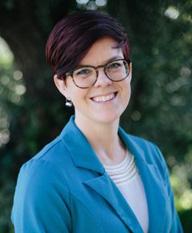
By Carla Thomas
By Post Staff
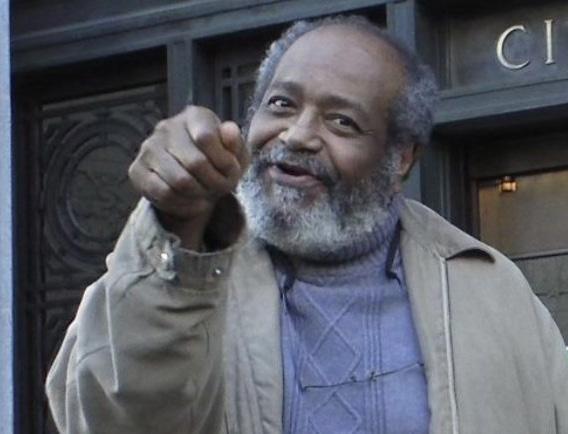
Wilson Riles Jr., Oakland police commissioner, former city councilmember, and community leader working for social justice for decades, died this week, according to his family.
“It is with deep sorrow that we share that my stepfather Wilson Riles transitioned to the ancestors last night,” Karissa Cole wrote Wednesday on Facebook.
“Wilson was such a force – in our family, our city and broader community,” she wrote. “His legacy stretches over decades of good
work focused on seeing the best in us and how we hold each other. His work sought to transform systems so that we could live up to our vision of a more just world.
“He is a big part of the reason why not only I but countless others found their purpose in our movement and committed our lives to do the work of freedom fighting.”
Current and former Oakland City officals expressed their condolences and admiration on Facebook.
Former Oakland Mayor Jean
A packed Joyce Gordon Gallery in downtown Oakland became a living testament to perseverance on Thursday, April 16, as five pioneering artists returned to tell the story and remind a new generation that nothing replaces the original.
About 75 guests including emerging artists, collectors, and peers filled the colorful space,
drawn by a reunion that felt less like a formal program and more like a homecoming. Seated at the front were five artists who had been making their way through the Bay Area art world since before some in the audience were born: Kelvin Curry (mixed media), Randolph Belle (painting), Patricia Patterson (photography), Candi Farlice (painting), and Raymond Holland (multi media).
They are “The Original Newcomers” building a legacy as the original members of both Colors of Black and The Art of Living Black (TAOLB).
The story began in 1989, when artist and professor Marie Johnson Calloway organized a salon she called Colors of Black, planting the seed for what would become one of the most visible artistic communities in the region. Seven years later, Jan Hart-Schuyers and Rae Louise
Ghanaian Cardinal Peter Turkson Addresses Global Leaders at Oakland Forum on Climate, Equity and Economic Development
By Carla Thomas
‘Africa & California: Capital, Climate, Community,’ a landmark forum on impact investment, equitable economic development, and climate resilience brought
global leaders, policymakers, and community advocates to the Oakland Museum of California (OMCA) on May 4, highlighting the Bay Area’s growing role as a hub for partnership between Af-
By Carla Thomas
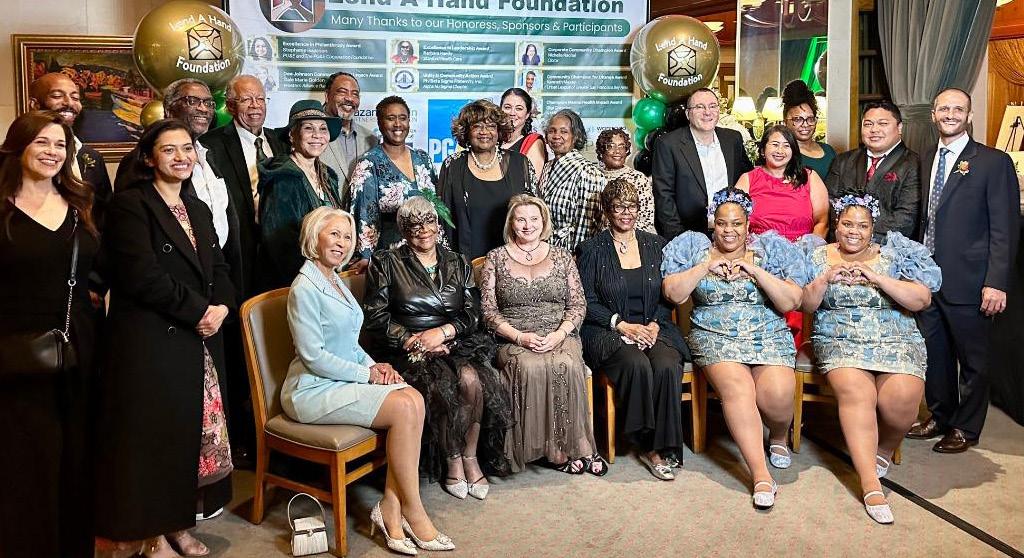
Lend A Hand Foundation hosted its “Stay in School Program: Beyond the Backpacks” Awards Gala on Friday, April 24, marking 29 years of service to children, youth, families, and seniors across Alameda County.
cluding time with six teams and an All-Star selection in 1992—Roberts delivered an inspiring message rooted in discipline, teamwork, and long-term strategy, including reflections from his tenure with the Oakland A’s.
By Brandon Patterson
CHICAGO — A historic mo-
end of slavery in the United States and underscoring the deeper meaning behind the center’s mission.
By Carla Thomas
The National Coalition of 100 Black Women, Inc., Oakland Bay Area Chapter (NCBW OBAC), brought together community leaders, educators, entrepreneurs, advocates, and supporters for its 28th Annual Madam C.J. Walker
Business & Community Recognition Luncheon & Empowerment Forum recently at the Oakland Marriott City Center in downtown Oakland.
Themed “Legacy in Motion: Celebrating Resilience and Im-
By Marbella Daniel Special to The Post
LaTasha and Katherine Brown have been showing up for the Women’s Cancer Resource Center (WCRC) for 21 years.
Held at Scott’s Seafood Bar and Grill at Jack London Square, the event was emceed by KTVU Channel 2 News anchor and community advocate Dave Clark, with a keynote address from Major League Baseball All-Star and strategist Leon “BIP” Roberts.
Drawing from his 12-year Major League Baseball career—in-
It started in 2005, when Katherine was finishing her master’s in Public Health at San Francisco State University and found her way to WCRC through her research. LaTasha joined her sister soon after, drawn in by an organization whose mission felt deeply personal to them both.
Cancer had moved through their family quietly and relentlessly for more than a decade. Their grandmother. Aunts and
Honoree Stephanie Isaacson of PG&E received the Excellence in Philanthropy Award. Isaacson oversees PG&E’s $30 million annual giving program, directing strategic investments that advance community safety, sustainability, and economic vitality.
Nichelle Rachal of the Clorox Company was honored with the Corporate Community Champion
ment rooted in both Black political achievement and community legacy is set to unfold this summer, as the Obama Presidential Center opens on Chicago’s South Side on June 19.
After years of development, the 19-acre campus in Jackson Park will debut with a multi-day celebration beginning June 18 and culminating in a public opening on Juneteenth—a date marking the
uncles. Most of them in their 60s. Lung cancer, pancreatic cancer, breast cancer. One after another—and almost no one talked about it. “It was like a secret,” she says. The losses that stayed with them the most were the ones that did not have to happen. Their great-uncle had been showing symptoms for months before anyone persuaded him to go to the hospital. By then, it was Stage IV.
Their aunt, Dimple, was the picture of health, running Lake Merritt in her 60s until she quietly stopped coming to Sunday family gatherings. One month after her diagnosis, she was gone.
LaTasha and Katherine witnessed their family avoid doctors, hide conditions, and go without the information that might have changed everything. So, when they found WCRC, they poured themselves into making sure oth-
“This is not a monument to the past,” former President Barack Obama said. “It is a living, working center for citizenship—a place where young people can come to be inspired and empowered to change the world.”
For many, that vision is deeply tied to the South Side itself—not only where Obama launched his political career as a community or-
on page 8
ers did not have to navigate cancer alone.
LaTasha and Katherine gravitated to ‘Sister to Sister,’ WCRC’s outreach program offering support groups, cancer education, and community programming specifically for African American women. They helped facilitate events that made early detection feel accessible rather than fright-
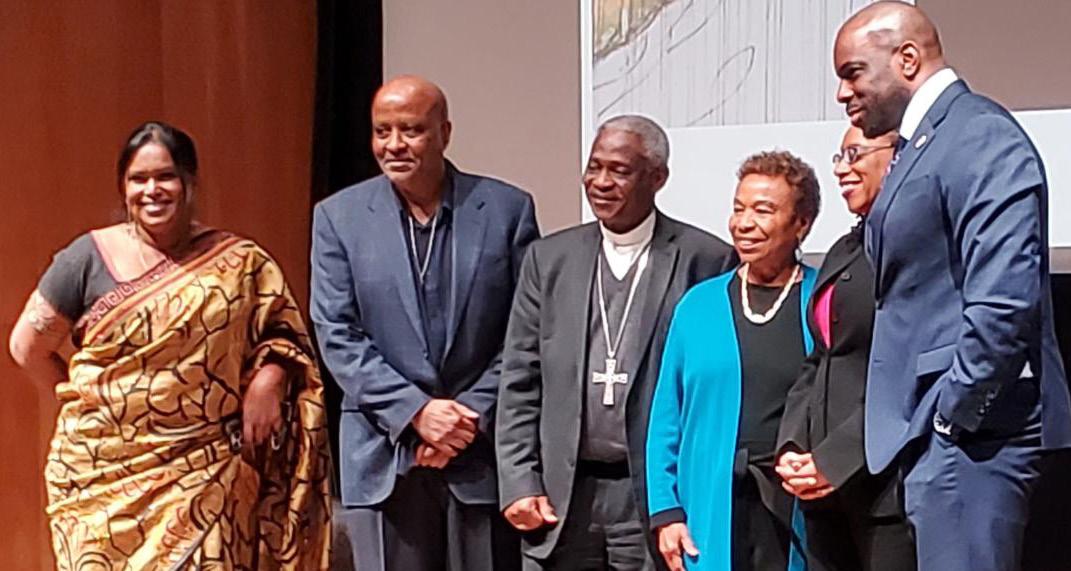
ECHo Executive Director Prishani Satyapal, developer Alan Dones, His Eminence Cardinal Peter Kodwo Turkson, Oakland Mayor Barbara Lee, Congresswoman Lateefah Simon, and California Secretary of Transportation Toks Omishakin attend the ‘Africa and California: Capital, Climate, Community’ forum at the Oakland Museum of California. Photo by Carla Thomas.
Curry created this mixed media piece. Courtesy photo.
Gala. Photo courtesy LAHF.
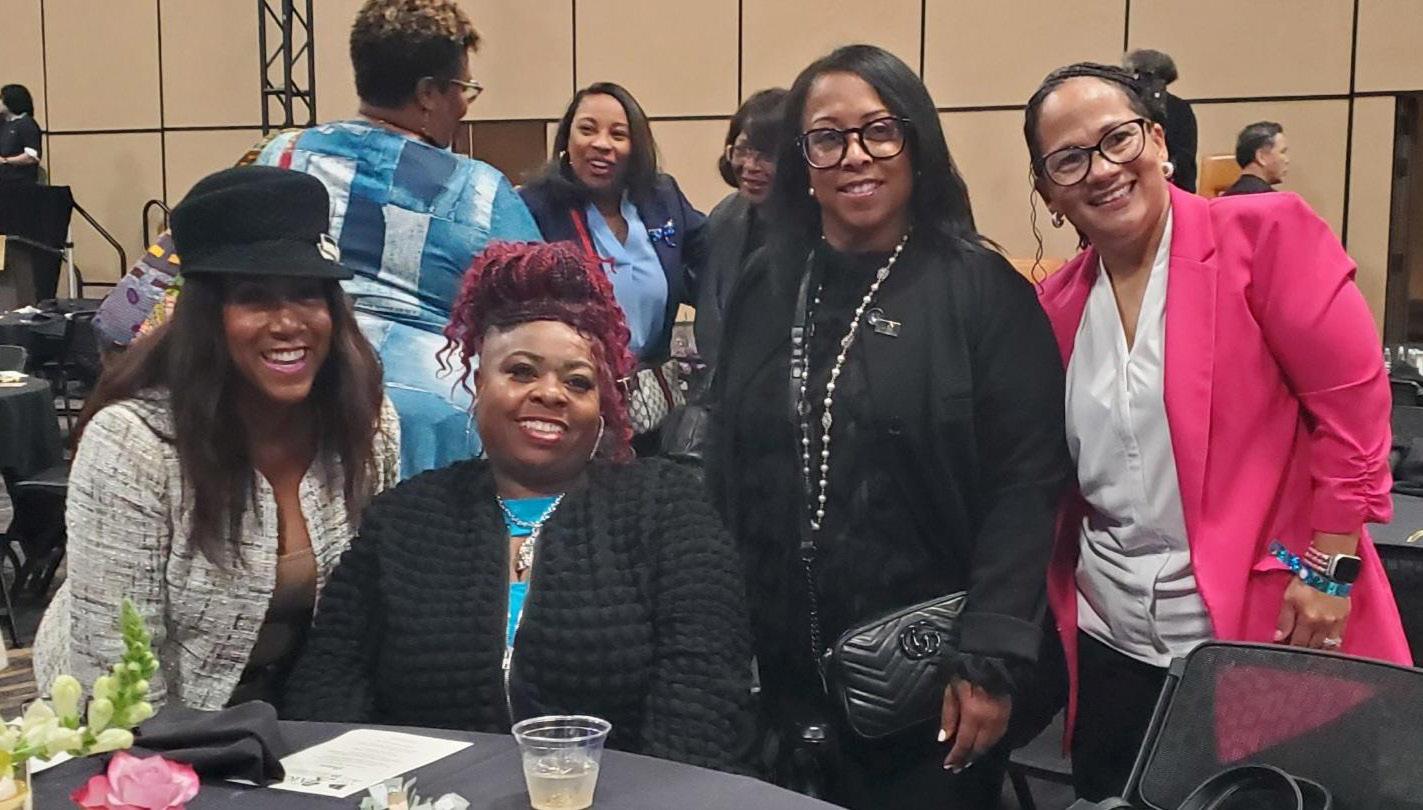
(l.-r.) Lynell Bevels, LuTillian “Tilly” Hudson, Aisha Brown, and Patrice McElroy enjoy the 28th Annual Madam C.J. Walker Business & Community Recognition Luncheon on Friday, April 10, at the Oakland Marriott City Center in downtown Oakland. Photo by Carla Thomas.
LaTasha and Katherine Brown began working with WCRC in its ‘Sister to Sister’ program. Photo courtesy LaTasha Brown.
Wilson Riles Jr. Courtesy photo.
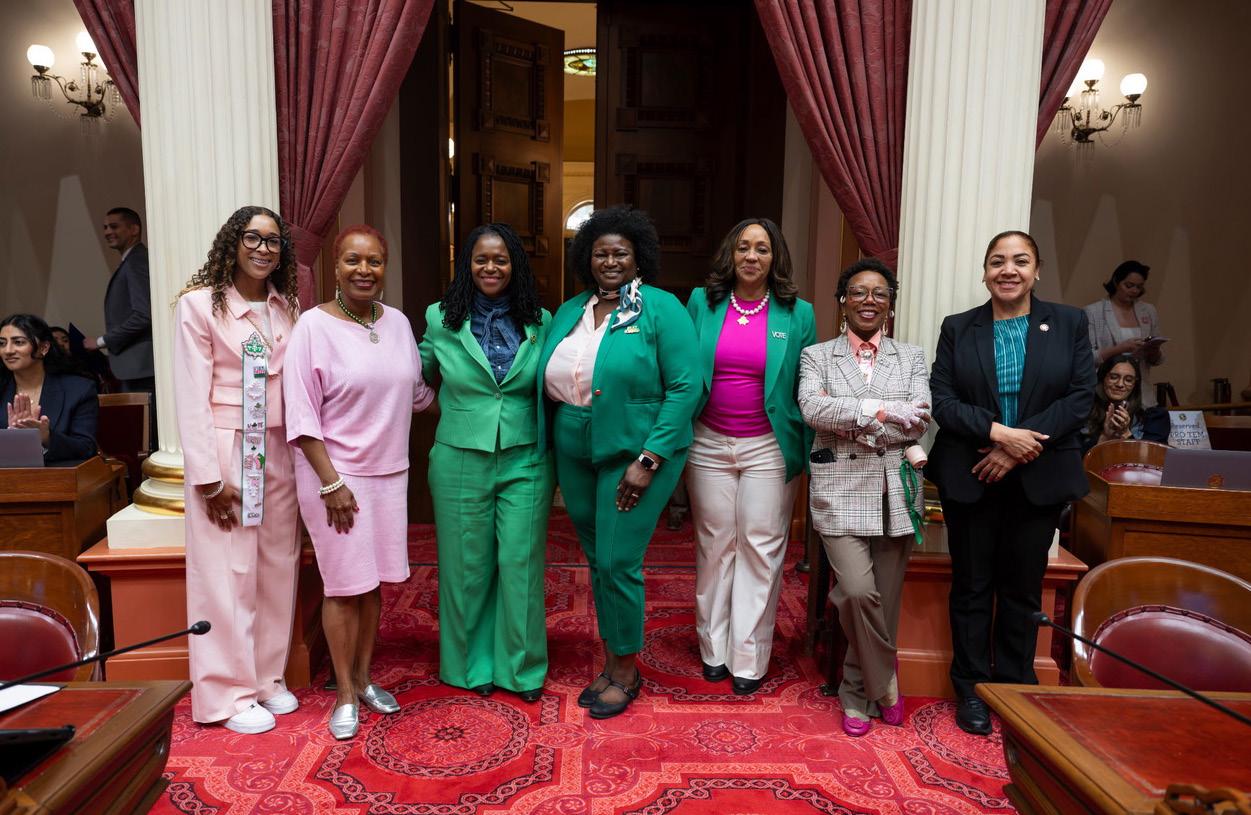
DisAKAs, Zetas and Sigmas Rally at State Capitol to Advocate for Legislative Priorities ... see page 2
Protecting What You’ve Built: Why Businessowners Should Think About Their Succession Plan
By J.P. Morgan Wealth Management
Business owners often have a million things to juggle with day-to-day operations. Have you taken the time to slow down and think about what you can be doing now to prepare yourself and your business for later in life? If the answer is no, you aren’t alone. Although 76% of business owners plan to transition over the next 10 years, only 35% of businesses have a formalized succession plan in place.
You’ve worked hard to grow your business, so it’s important to think about what will happen when you want to move on from the company – whether that’s retirement, selling the business or trying something new. Thoughtful planning in advance can help give business owners peace of mind knowing that both you and your business will be cared for in
Asian Americans Aren’t the Exception ...
Continued from page 2
long kept shut.
Asian Americans benefited from struggles other communities fought first. That history matters.
We use labels like AAPI, APA, and AANHPI, but Asian America is not one story. It’s many stories — different languages, histories, cultures, and class experiences.
Too often, those differences become divisions.
But outside the community, nuance disappears. You’re simply “other.”
Black America understands that reality deeply.
Coalition isn’t charity. It’s survival.
Asian Americans today are successful, visible — and uneasy.
That should sound familiar.
retirement. A plan can also ensure your employees are cared for and, if you choose, allow your business to continue serving the local community.
Here are some tips for business owners to consider:
Having a plan is key Planning ahead can help give you peace of mind and avoid unnecessary stress in the future. Everyone’s situation is unique, so make sure your plan incorporates your personal needs and desires. A financial advisor can be a helpful partner in putting together your plan. They can also identify how you can work towards your personal and retirement goals, separate from equity you may have in your business.
Also consider working with an estate planning attorney to help incorporate your business into your estate plan. A basic estate plan for most business owners should include: a revocable trust,
Because the fight over voting rights, identity, and belonging isn’t just an Asian American issue. It’s an American one. And Black Americans have been living it longer than anyone.
The real question isn’t whether Asian Americans should worry.
It’s whether communities targeted by the same politics are ready to stand together.
Because if voting rights weaken, representation shrinks, and identity gets erased, nobody wins.
Not Black Americans. Not Asian Americans. Not anyone who has ever had to fight to prove they belong.
About the Author
Emil Guillermo is an awardwinning journalist, commentator, and comic monologist. He hosts a micro-talk show on YouTube at @ emilamok1 and will perform at the San Diego International Fringe Festival in May.
a will, a financial power of attorney, a health care power of attorney and beneficiary designations.
Make sure to review these documents periodically with your attorney to ensure they still reflect your wishes.
Build a trusted team
Assembling a team of trusted professionals can play a big role in making sure your preferences
Legislative Advocacy Days ...
Continued from page 4
legislation was placed in the Assembly Appropriations Committee’s suspense file.
Finally, they lobbied lawmakers on AB 2383, authored by Assemblymember Rick Zbur (DWest Hollywood). That legislation aims to protect residential electricity ratepayers by creating a special rate structure for “large energy use facilities,” such as data centers. As of April 14, the bill was approved by the Assembly Utilities and Energy Committee with a 16-1 vote. It has been referred to the Assembly Appropriations Committee.
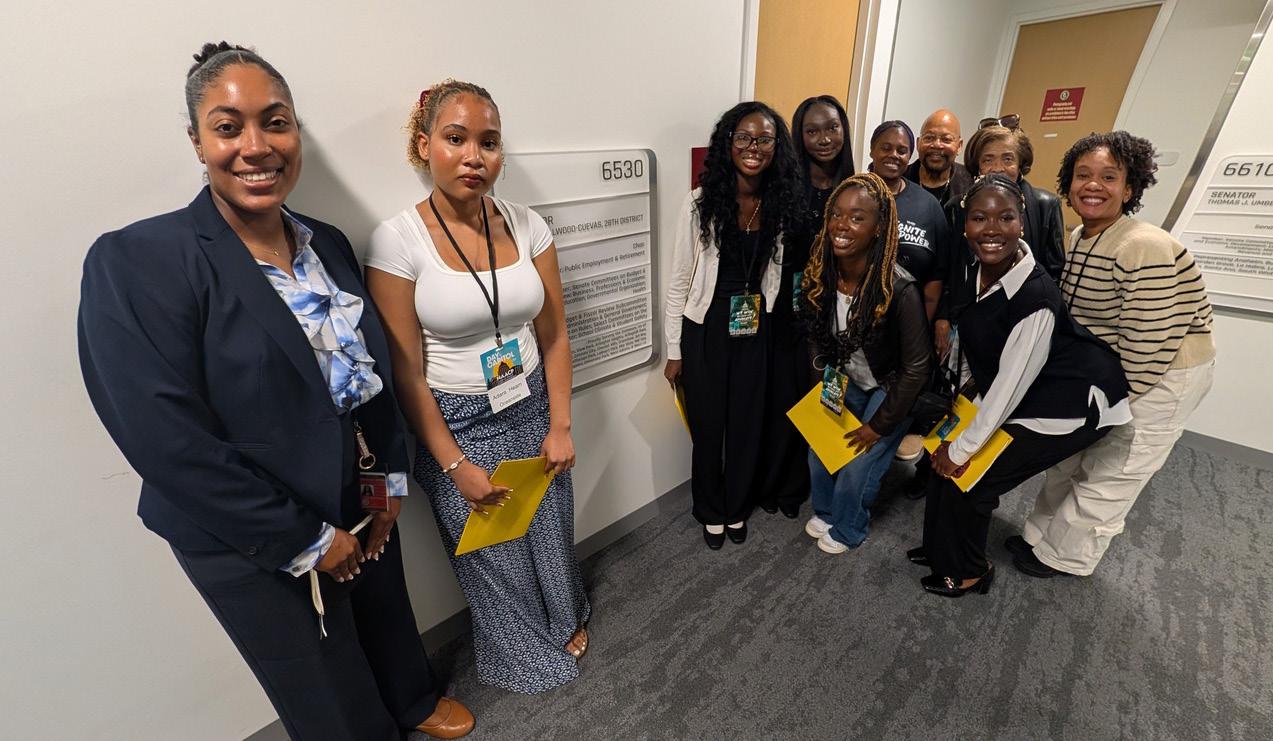
On April 27, BWOPA was at the California State Capitol for its annual Legislative Day of Advocacy and Action.
BWOPA is a statewide nonprofit advocacy organization in
are honored after you transition away from the business. They can also help evaluate the value of your business, which can be important to know in the succession planning process.
Consider including your financial advisor, certified public accountant, business and estate planning attorney, insurance advisors, business valuation profes-
California, dedicated to training, empowering, and engaging Black women and youth in the political process.
Langston Notto Bennett, a member of the Los Angeles NAACP Youth Council, said AB 2383 intends to manage the massive energy demands of data centers.
Bennett, who will enroll at Morehouse College next fall, learned something about the bill that he shared with other youth.
“I never knew California as a whole was becoming a hub for AI. I always knew the San Francisco Bay Area was a part of the AI culture because a lot of companies are moving towards AI,” Bennett said. “I also learned that it takes a lot to understand these bills and to go up there to talk to legislators. It’s a powerful moment for sure.”
sional, investment bankers and/or business brokers. Spending time, effort and money now to build a team of people you trust can help drive more favorable outcomes in the end.
Don’t forget about your own retirement
When it comes to investing for retirement, the sooner the better –whether you are a business owner or not. Starting with investing now can give your money more time to potentially grow.
If you don’t have a company-funded 401(k), there are other retirement planning options for business owners to consider, like an IRA or solo 401(k). Make sure to consult your tax advisor, as they can help you understand the tax implications of each option and identify which one may be right for you.
Securing your legacy
Taking the time now to thoughtfully plan for your retirement as a
business owner may seem daunting, but it can help ensure peace of mind later in life. There’s a lot to consider, so staying informed is key. If you’re looking for more resources in your financial journey as a business owner, visit our library of free educational content at chase.com/theknow.
JPMorgan Chase & Co., its affiliates, and employees do not provide tax, legal or accounting advice. You should consult your own tax, legal and accounting advisors before engaging in any
nancial transaction.
Black Leaders Warn of ‘Attack’ on Voting Rights; Call for Urgent Action
By Edward Henderson
California Black Media
Black elected officials, civil rights attorneys, and grassroots organizers from across California convened in a virtual conference on May 1 to sound the alarm following an April 29 U.S. Supreme Court decision they say has severely weakened a cornerstone of the Voting Rights Act — warning that the ruling poses a direct threat to minority voting power and representation.
The discussion, moderated by civil rights attorney Nicole Carmen-Cox, brought together voic-
Photo courtesy of Pixdeluxe/ E+ with Getty Images
es from government, legal advocacy, and community-based organizations to outline the stakes and chart a path forward.
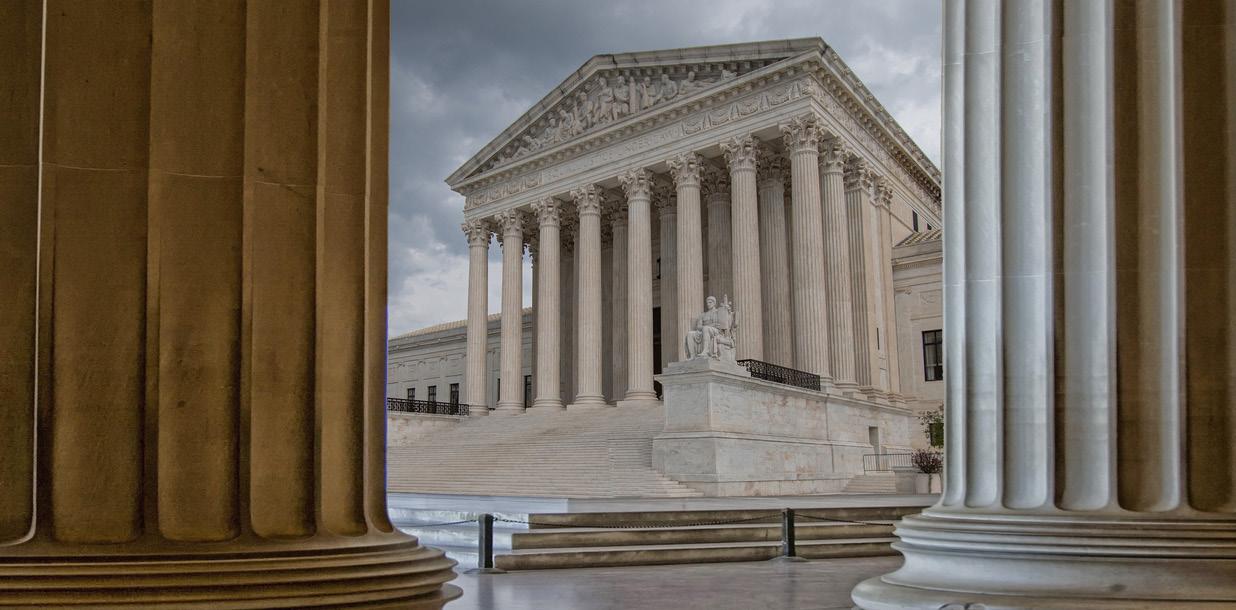
At the center of concern is the Supreme Court’s ruling in Louisiana v. Callais, which limits how Section 2 of the Voting Rights Act can be used to challenge racially discriminatory voting maps. For decades, Section 2 has served as a key legal tool to combat practices that have historically disenfranchised Black voters.
Speakers said the ruling raises the bar for proving discrimination by allowing states to justify inequitable maps as partisan decisions rather than racial ones.
“This decision is not just about one state, one map, or one election,” said Rick Callender, president of the NAACP CaliforniaHawaii State Conference. “It’s about whether Black voters and other historically excluded communities will have a fair opportunity to be heard, counted, and represented.”
“This is not just a policy fight. It’s a fight over whether democracy is dismantled or expanded,” said Kristen Nimmers of the California Black Power Network, a coalition of dozens of Black-led grassroots organizations across the state.
Speaking during a Congressional Black Caucus press conference in Washington, D.C., Rep. Sydney Kamlager-Dove (D-CA37) said the Supreme Court’s decision is a “call to action.” She encouraged voters to take a stand against forces “continuing to demoralize and marginalize the Black vote.”
“Let’s be clear, in California,
for example, the three U.S. House seats that are held by Black people are not in majority African American districts. We have proven that we can represent districts that are not majority Black. So, let’s not have a binary conversation that only Black people can represent Blacks because when we do represent a district the entirety of the district rises,” she said.
Assemblymember Mike Gipson (D-Carson) also spoke to the urgency of the situation.
“What can we do as Californians to make sure that Black people can still have a vote for who we want in office? I’m willing to do whatever we can while I still have the eight months I have in office,” he said.
Some Black commentators applauded the Supreme Court’s decision. Conservative Commentator Craig DeLuz, who was not on the virtual briefing, called the decision “remarkable.”
“Consider what the Louisiana court-ordered map actually looked like. To manufacture a second majority-black congressional district, a court forced the state to draw a district stretching roughly 150 miles (from New Orleans to Shreveport) carving through the heart of the state to stitch together Black populations in communities more than a hundred miles apart,” said DeLuz.
On the virtual call, speakers also emphasized that California is not immune to these trends, despite its reputation as a progressive state.
“We have seen Black elected officials targeted at the local level through recalls and other tactics,” said Kelly Todd Griffin of the California Black Women’s Collective Empowerment Institute. “This will impact us every single day.”
New Poll: Most Black Californians Remain Undecided in California Gubernatorial Race
By Bo Tefu
California Black Media
A CBS News poll, conducted from April 23 to April 27, finds that Black voters in California remain largely undecided in the state’s gubernatorial race, signaling a key opportunity for candidates competing for support ahead of the election.
According to the survey, 30% of Black likely voters said they are still undecided, a larger share than any individual candidate has secured so far. The data suggests the race remains fluid, with no clear front-runner emerging among this critical voting bloc.
Among those who have chosen a candidate, Tom Steyer leads with 18%, followed by Matt Mahan at 15%, an unusually strong showing compared to his support among voters overall. Katie Porter received 13%, while Xavier Becerra garnered 9%. Tony Thurmond and Antonio Villaraigosa trailed with 7% and 5%, respectively.
Republican candidates registered minimal support among Black voters, with Steve Hilton receiving 1% and Chad Bianco at 2%, reflecting the party’s ongoing challenges in making inroads into the Black community.
The poll highlights the importance of Black voters in a crowded Democratic field, where candidates are competing to build broad, diverse coalitions. Analysts say the high undecided rate may reflect limited engagement so far or a wait-and-see approach as campaigns roll out policy proposals and increase outreach.
Key issues for Black voters include economic opportunity, housing affordability, education,
Business, Consumer Services, and Housing Secretary Tomiquia Moss. “Through CA vs Hate, Californians have a trusted place they can turn to, and thousands of people have already reached out. From mental health counseling
to legal assistance, the hotline is a nation-leading example of how we can drive real impact when we work together with our local partners.”
According to the 2024 California Health Interview Survey from UCLA, nearly 3.1 million Californians ages 12 and over experienced hate acts in the previous year, with 31% reporting unmet support needs. Anonymous reports, including those like Arendse’s, help strengthen data collection and improve prevention and response strategies.
“People have expressed a feeling of empowerment,” she said. “It’s important to be able to say that something happened and to have that recorded and validated.”
Equality California’s work builds on decades of advocacy. In the early 2000s, the organization helped push the marriage equality debate forward by sponsoring legislation and advancing legal protections for same-sex couples, efforts that helped shift public opinion despite initial legislative setbacks.
health care access, and criminal justice reform. Advocates say candidates who directly address these concerns and demonstrate consistent engagement may be best positioned to win support.
With months to go before Election Day, the findings suggest campaigns still have time to shape voter preferences. The large share of undecided voters underscores that the race remains open, and that Black voters could play a decisive role in determining who ultimately leads California.
The group has since backed a range of policies, including expanding domestic partnership rights, protecting transgender Californians, improving support for older LGBTQ+ residents, and recognizing LGBTQ+ contributions to the state.
After voters approved Proposition 8 banning same-sex marriage, Equality California led opposition efforts and legal challenges. The issue was ultimately resolved by the U.S. Supreme Court’s 2015 Obergefell v. Hodges decision legalizing samesex marriage nationwide.
Still, advocates say progress has not been linear.
The 2016 election ushered in a resurgence of anti-LGBTQ rhetoric, prompting Equality California to open a Washington, D.C. office in 2017 to counter federal policy threats. At the local level, tensions have also surfaced.
“A lot of school board meetings were totally overrun by antiLGBTQ activists and specifically anti-trans organizers who would just say some of the most horrific things,” Arendse said. “A lot of school board trustees just simply were not prepared to deal with that level of vitriol in a school board meeting.”
In response, Equality California, which has received support from California’s Stop the Hate Program, has worked with school districts to manage disruptions and protect students, while expanding education and training efforts. The organization has trained more than 5,000 health and human service providers on inclusivity and cultural competency.
Matt Pennon, who has overseen diversity, equity and inclusion programs at both the County and City of San Luis Obispo, said those trainings have had a measurable impact.
“The resounding feedback was ‘Wow, I actually did get something from this,’” Pennon said.
“Even the folks that maybe don't fully agree said they developed a better sense of respect,” he added. “This is about really highlighting the differences between all of us as humans and how those differences are actually strengths.”
More recently, Equality California has raised concerns about federal policy shifts affecting transgender healthcare access.
“We're talking access to mental health supports and basic healthcare that everybody deserves
At the same time, advocates are revisiting past victories to ensure they are protected. After the fall of Roe v. Wade, Equality California moved to safeguard marriage equality at the state level.
“When Roe fell, we knew we had to codify these things into law, because we can't just rely on a Supreme Court case to protect our rights,” Arendse said.
The organization sponsored a constitutional amendment to enshrine marriage equality into California law. Proposition 3 passed in 2024 with more than 62% voter support.
For Equality California, the arc of progress requires constant attention.
“Fortunately, we have that great
protection in place now,” Arendse said. “I can't believe we're doing this again, but here we are.” Get Support After Hate: California vs Hate is a nonemergency, multilingual hotline and online portal offering confidential support for hate crimes and incidents. Victims and witnesses can get help anonymously by calling 833-8-NO-HATE (833866-4283), Monday to Friday, 9 a.m.–6 p.m. PT, or online at any time. Anonymous. Confidential. No Police. No
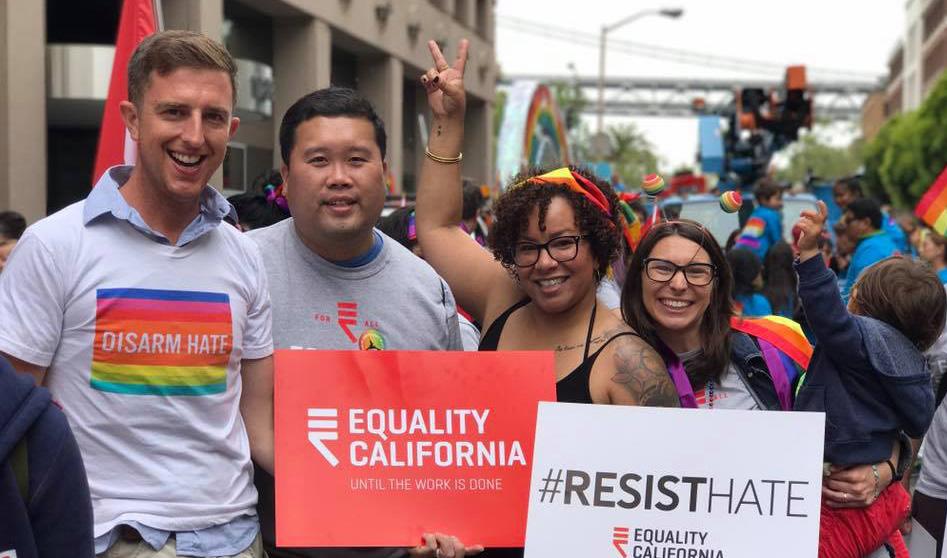
Erin Arendse. Courtesy of EQCA.
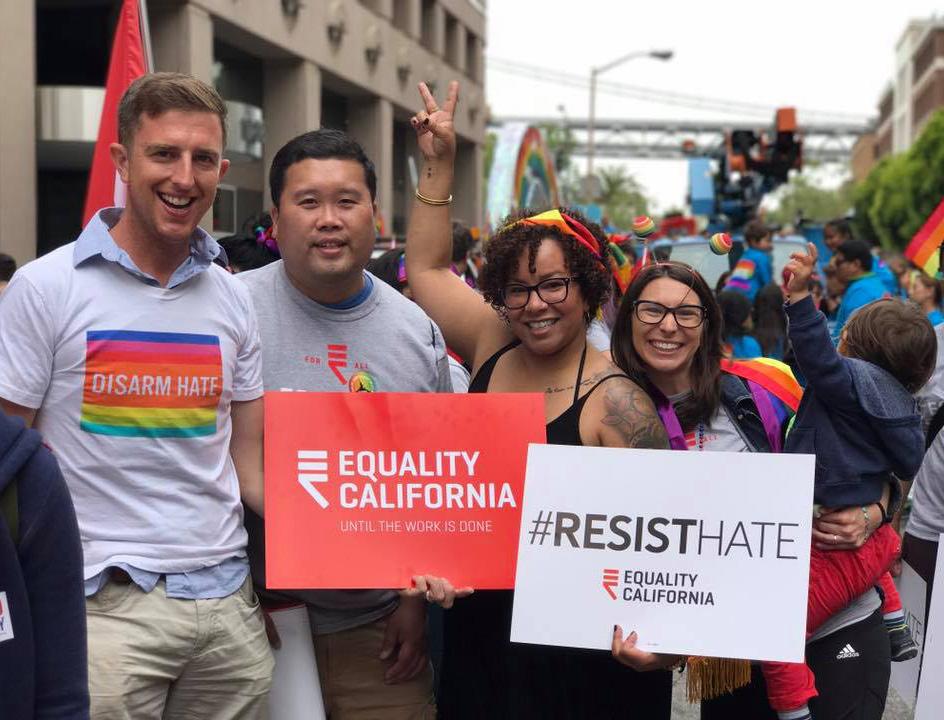
EQCA at the Los Angeles LGBT pride parade in 2011. Photo courtesy of Wiki Commons
28th Annual Madam C.J. Walker Business & Community Recognition Luncheon ...
Continued from page 1
pact,” the luncheon honored the spirit of Madam C.J. Walker while celebrating women whose leadership continues to move the Bay Area forward.
Walker (1867-1919) was an entrepreneur, philanthropist and activist who built an empire with specialized hair care and cosmetic products for Black women that made her the first female millionaire in the U.S.
The program reflected NCBW OBAC’s ongoing commitment to advocacy, empowerment, and positive change for Black women, girls, families, and the broader community.
This year’s honorees represented excellence across education, business, philanthropy, culture, and community development.
Sonya Simril, principal of St. Leo the Great Catholic School in Oakland, received the Advocacy Honoree recognition for her dedication to students and families. With 40 years in education and 34 of them at St. Leo’s, Simril said that her greatest honor was “impacting the lives of children.”
She also teaches and lives by, “Do your best, and let God do the rest.”
Ay’Anna Moody, executive director of the Golden State Warriors and Valkyries Foundation was recognized as the Corporate Honoree for her work connecting sports, service, and community impact. Moody thanked the NCBW for mentoring her as a teenager and said, “When God gives you something, it’s not all for you, but the people you serve. The next Black girl doesn’t have to wonder if there’s a pathway for her.”
Entrepreneur Honoree Michele McQueen, owner of Town Fare, was celebrated for her contributions to Oakland’s culinary and business landscape.
“Madam C.J. Walker reminds us that success is not about what you build, but who you bring along the way,” said McQueen.
Carolyn “CJ” Johnson, chief executive officer of the Black Cultural Zone, received the Lucy Blue Pioneer Honoree recognition for her visionary leadership and
dedication to preserving and uplifting Black culture, commerce, and community in East Oakland.
Hayet Akuaku, a small business banker at Wells Fargo, was named Honoree for the Corporate Impact Award. Akuaku, originally from Ghana, praised God and thanked her three children and supportive husband.
Dr. Michelle Hector II, a leadership scholar and business educator, served as mistress of ceremonies and encouraged the audience to “be intentional” with their lives and “own your power.”
The keynote speaker, Tina Lifford, brought an inspiring message rooted in resilience, healing, and personal power. Lifford, an award-winning actress, author, and founder and CEO of The Inner Fitness Project, shared wisdom from her work advancing emotional intelligence through accessible, everyday inner practices.
Guests witnessed firsthand the compassionate insight that has defined Lifford’s career and made her a respected voice in entertainment, wellness, and personal transformation. Her remarks encouraged attendees to honor their inner strength, embrace legacy as an active responsibility, and continue building communities grounded in purpose.
Lifford paused and acknowledged the beauty of over 1,000 professional women in the room.
“You are full, purposeful, and worthy. If 25% of the people in this room said ‘yes’ to themselves, the ripple (of power in the community) would be unstoppable.”
The event also highlighted NCBW OBAC’s Positive Steps Mentoring Program and Scholarship Program. Funds raised through the luncheon supported scholarships for students pursuing higher education and helped sustain mentoring opportunities for young people in the community.
The program also recognized winners of the Positive Steps Essay Contest, highlighting the chapter’s commitment to youth voices, academic achievement, and future leadership.
Wilson Riles Jr., 79 ...
Continued from page 1
Quan said: “This has been a hard year. We have lost many local heroes. This week, former Oakland City Councilmember and Police Commissioner Wilson Riles Jr. passed.” Quan said that when she and her husband, Floyd Huen, decided to make their home in Oakland, “our first political campaign was for his mayor’s campaign. He was a major force for peace.”
“I wish I had the words to express what a loss this is for Oakland,” said Oakland District 3 City Councilmember Carroll Fife. “I am deeply grateful for Wilson Riles’s example and constant encouragement. I know exactly what he would be fighting for right now and I intend to carry that work forward.”
At the time of his passing, he was at home in the care of his family after being hospitalized with a major stroke on Jan. 30.
Riles, who was born in May 1946, served as a member of the Oakland City Council for 13 years, from 1979 to 1992, representing District 5. While in office, he supported affordable housing development in the city, implemented
Lend A Hand Foundation’s Fundraising Gala ...
Continued from page 1
Award. Rachal leads The Clorox Company Foundation’s initiatives, including grantmaking, employee giving, disaster response, and volunteer engagement.
Dale Marie Golden of Western Alliance Bank received the Dee Johnson Community Spirit Legacy Award. For nearly two decades, Golden has supported the nonprofit sector and championed minorityowned businesses through financing, mentorship, and board service.
Barbara Hardy of Stanford Health Care was presented with the Excellence in Leadership Award. She currently serves as Executive in Residence for the Joint Venture Cancer Center at Stanford Health Care, contributing her leadership to advancing healthcare innovation and collaboration.
The Unity in Community Action Award was given to Phi Beta Sigma Fraternity, Inc., Alpha Nu Sigma Chapter. Alongside the Bay Area Sigmas Foundation, the chap-
ter continues to uplift communities through scholarship, service, and civic engagement.
Gigi Crowder of NAMI Contra Costa received the Champion Mental Health Impact Award. A longtime advocate, Crowder has served as a foster parent and mentor to many young people. She has also dedicated more than 33 years to Alameda County Behavioral Health Care Services, including nine years as Ethnic Services Manager.
Lend A Hand Executive Director Dee Johnson said, “As the needs in our community continue to grow, so must our vision. Tonight, we have the opportunity to celebrate those who make our work possible.”
The evening also featured entertainment by Top Shelf and a special performance by Carla Service and her Dance-A-Vision students, adding energy and celebration to a night centered on impact and community.
Obama Presidential Center ...
Continued from page 1
the city that shaped the Obamas’ lives and careers.
Ghanaian Cardinal Peter Turkson ...
Continued from page 1
rica and California.
His Eminence Cardinal Peter Kodwo Appiah Turkson, chancellor of the Pontifical Academies of Sciences and Social Sciences in Ghana, gave the keynote address at the high-level convening and platform for advancing practical, equity-centered solutions.
Discussions focused on expanding energy access, strengthening climate sustainability, and increasing economic participation for underinvested communities facing climate and economic disruption across California and Africa.
Turkson joined California Secretary of Transportation Toks Omishakin and Congresswoman Lateefah Simon in a conversation underscoring the moral and political urgency of building infrastructure that supports both human dignity and economic growth. Their discussion explored public investment, transportation equity, and the human cost of inaction.
“the upside to equity,” reflected in his Leadership in Engineering Equitable Participation rating system for embedding social equity into development projects, including West Oakland’s Mandela Station.
ECHo Executive Director Prishani Satyapal presented current and future projects, illustrating the real-world impact of energy inequity.
Through images and storytelling, she highlighted how routine tasks, such as rice-sorting and milk preservation, become laborintensive without electricity. She noted that some universities rely heavily on costly diesel fuel due to limited alternatives. With targeted investment and collaboration, Satyapal emphasized, communities can reduce child labor, support small business growth, and redirect institutional spending toward education.
funding for school programs, defeated a private detention facility proposed in Oakland, was a leader in the Oakland anti-apartheid movement, and fought for a nuclear-free zone ordinance.
He was the son of Wilson Riles (June 27, 1917 - April 1, 1999), who was state superintendent of Public Instruction and the first African American ever to be elected to a California statewide office.
A graduate of Stanford University, Riles served in the Peace Corps from 1968 to 1970, working as a teacher in Sierra Leone, West Africa.
He was a founder of the Community Bank of the Bay, lectured at New College on the history of race and worked for 10 years for the American Friends Service Committee.
He unsuccessfully ran for mayor of Oakland.
Remaining active in the community, he was serving on the Oakland Police Commission at the time of his passing.
He is survived by Patricia St. Onge, his partner for more than three decades, as well as five children and five grandchildren.
ganizer, but also where former first lady Michelle Obama was raised. She grew up in the nearby South Shore neighborhood, just minutes from Jackson Park, a connection that shaped the decision to locate the center there.
“We wanted to build something right here on the South Side because this community helped make us who we are,” Michelle Obama said in earlier remarks about the center.
“I want young people from neighborhoods like South Shore to walk through these doors and feel like they belong here—that their stories matter, too.”
Opening on Juneteenth adds powerful symbolism, linking the center to the long struggle for Black freedom and progress.
Valerie Jarrett, CEO of the Obama Foundation, emphasized that connection, calling the center “a beacon of hope” and adding, “This is a place that will inspire people to believe in their own power—to see that change doesn’t come from the top down, it comes from all of us.”
Jarrett also underscored the broader impact the center aims to have: “We want visitors to leave here not just moved by history but motivated to take action in their own communities.”
For Barack Obama, the center is intentionally forward-looking.
“The goal here isn’t just to commemorate what we achieved,” he said. “It’s to inspire the next generation of leaders—especially young Black leaders—to take up the baton and push this country closer to its ideals.”
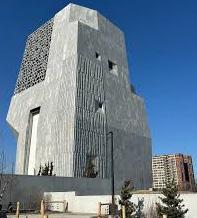
At the heart of the campus is a 225-foot museum tower housing four floors of exhibits tracing Obama’s journey—from his early days organizing on Chicago’s South Side to his historic presidency.
Inside, visitors will encounter immersive exhibits, personal artifacts, and multimedia storytelling, including a full-scale replica of the Oval Office. A top-floor “Sky Room” offers sweeping views of
The broader campus includes a Chicago Public Library branch, gardens, walking paths, public art and gathering spaces designed to serve the surrounding community—much of it free and open to the public.
“This isn’t just a museum,” Obama said. “It’s a place where people can come together, exchange ideas and build the kind of future we all want to see.”
The opening celebration begins June 18 with a dedication ceremony expected to feature national leaders, artists, and community voices. The following day, Juneteenth, the campus opens to the public with performances, storytelling, food, and cultural programming that reflect the richness of Black culture in Chicago and beyond.
Organizers say the weekend is designed to feel like a communitycentered celebration rather than a formal unveiling.
While the outdoor campus is free, admission to the museum requires timed tickets. Prices are set at $26 for Illinois residents and $30 for non-residents, with discounts for children and free admission for those under 2. Illinois residents will also have free museum access on Tuesdays.
Additional free entry is available for educators, veterans, first responders and qualifying low-income families.
For many Black communities— from Chicago to Oakland—the Obama Presidential Center represents more than a tribute. It reflects possibility grounded in community roots.
“As much as this is about my presidency,” Obama said, “it’s also about all the young people out there who are going to write the next chapter of our democracy.”
The Chicago Sun-Times, WTTW News, and press releases from the Obama Foundation are the sources for this report.
Women’s Cancer Resource Center ...
Continued from page 1
ening. The goal was to create space for open conversations where women could walk in uninformed and leave with the tools to advocate for themselves and their families.
Building on that work, they’re planning a health fair at their family reunion next year that will have blood pressure screenings, open conversations about the family’s health history, and a chance to make sure the younger generations know what has run through their bloodline before they ever step into a doctor’s office.
“You need to have that conversation, so the next generation knows their history,” LaTasha says.
Swim A Mile | Move A Mile for Women with Cancer has become another way to keep that conversation going. Each year, they return to the pool not only to raise funds for WCRC’s free services, but to honor the family members they have lost and support others who
are facing cancer now.
This weekend, LaTasha and Katherine will show up at the Trefethen Aquatic Center at Northeastern University in Oakland, formerly Mills College. Although they have supported WCRC in other ways, this will be their 11th year participating in the annual fundraiser.
“Get the education and talk to people,” says LaTasha. “There are people going through this journey who can help you. It’s better to know than not know.”
Swim A Mile | Move A Mile for Women with Cancer is WCRC’s annual fundraiser supporting the free services WCRC provides to East Bay women and families facing cancer. Participants swim or move a mile in solidarity with those in treatment and those impacted by cancer.
To learn more about WCRC and how to participate or get support, visit www.wcrc.org.
Reflecting his dedication to those living in under-resourced communities facing what he described as a “deficit in dignity,” Turkson said “Adelphi (brothers) and adelphē (sisters), we are of the same womb and deserving of dignity.”
The event was spearheaded by developer Alan Dones, cofounder and chairman of Earth Our Common Home / Changing the Orbit of Human Dignity (ECHo) and managing partner of Oakland-based Strategic Urban Development Alliance (SUDA).
Dones outlined ECHo’s mission, inspired by Pope Francis’ 2015 encyclical Laudato Si’, to deploy solar-powered microgrids and climate-resilient infrastructure across Africa through Catholic Church networks.
He described partnerships with bishops, governments, and investors including collaborations with the Ghanaian government and Economic Community of West African States to deliver clean energy to clinics, schools, farms, and community facilities serving vulnerable populations.
The ECHo Impact Investment Fund, he said, is designed to scale these upgrades to thousands of medical facilities across the continent. Dones also connected this work to his broader philosophy of
Continued from page 1
Hayward formalized that spirit at the Richmond Art Center, founding The Art of Living Black in 1996 to sustain and celebrate artists of African descent. The organization, which renamed itself Art of the African Diaspora in 2019 to reflect a wider vision, is now nearing its 30th year. It is the longest-running event of its kind in the Bay Area. Its 2026 exhibition ran January through March at the Richmond Art Center with satellite shows continuing across the Bay through June.
The five panelists, guided by two moderators, covered the arc of their shared history with candor and humor. They spoke about how they met, leaned on one another, and how their work drew from a deep well: Bay Area mentors, the Los Angeles art scene, the Harlem Renaissance, and the New York art world.
They shared their inspirations, style, and how they entered the world of art. The conversation turned pointed when the subject of artificial intelligence arose. The panelists were unambiguous: AI can copy an artist, they said, but it cannot erase original art or diminish the relevance of the human hand behind it. Original work only grows
Oakland Mayor Barbara Lee, who has traveled to Ghana more than 50 times, reflected on California’s evolving relationship with the African continent and emphasized the need for stronger economic and cultural ties.
Simon spoke to the historical and cultural significance of those connections. “In our lifetime, we will see our people moving back to a place where we were banished,” she said.
Omishakin shared that Gov. Gavin Newsom has authorized efforts to explore expanded partnerships between California and African nations. Reflecting on his recent trip to the continent, he described it as transformative and reaffirmed his commitment to addressing global inequities. “In the same family, you will have members who drive a Bentley and others who don’t know where their next meal will come from,” he said.
Dones closed the forum by urging the community to collaborate and invest in expanding their ventures on the continent.
The forum was presented by ECHo and the Bay Area Council, with OMCA as supporting sponsor, the Oakland African American Chamber of Commerce (OAACC) as community sponsor, and the Museum of the African Diaspora (MoAD) and NorCal MLK Foundation as community partners.
in value over time.
Artist Randolph Belle of RBA Creative Studios addressed the economics of an artist’s life without flinching. Commercial work, he said, had kept him financially viable through the years when fine art sales alone could not.
He spoke honestly about the market: the Black community at large is not yet purchasing fine art in high volume, but in most major American cities, there is an enclave of a committed community that actively supports Black artists. Belle’s mother, an avid supporter, knew her son would be a success.
The panel shared their vulnerable moments when finances weren’t flowing, or friends and family doubted their career path. However, when faced with the private moments of self-doubt that every artist knows, the message from all five was the same: keep creating. Don’t stop. Don’t give up. For the emerging artists in the audience, it was less a piece of advice and more a passing of the torch, and a reminder that Black art not only matters but is an integral cornerstone of the community.