



By Ken Epstein
The Oakland City Council this week unanimously approved a 2024 Disparity Study that exposes entrenched systemic discriminato-

ry practices in how the city awards public funds to small and minority contractors, particularly excluding African American- and womenowned businesses in Oakland.
In a 7-0 vote, with one absence, the Council approved the findings
and recommendations contained in the study and agreed to create a working group that includes local business leaders to begin the pro-
cess of reforming how the city does business.
The Disparity Study showed that over a five-year period, 20162021, the city spent almost a half
billion dollars, which went overwhelmingly to a handful of white, male-owned companies that were based outside of Oakland, according to the 369-page report produced for the city by Mason Tillman Associates, an Oakland-
based company that performs statistical, legal, and economic analyses of contracting and hiring.
Speaking to the Council on

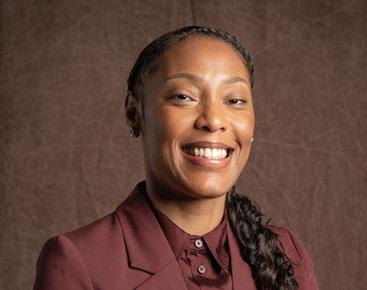
Tuesday, Dr. Eleanor Ramsey, founder, and CEO of Mason Tillman Associates, said that Mason Tillman’s team found that the city has good contracting policies, but
they are circumvented by city departments, where most decisions to hire contractors are made.
Ramsey’s company has conducted four studies for Oakland in the past 20 years, and all of them found the same disparities.
“You are aware that we have a constitutional amendment that says you cannot engage in preferential treatment, but as you see from these findings, preferential treatment is afforded to those nonminority contractors who received the majority of your contracts,” said Ramsey.
“(These conditions) have persisted for over two decades, and the small, local business program, which was established in 2003, a quarter of a century ago, is still
artist Le’Andria Johnson turned the gala into a moving worship experience. As she sang “Deliver Me (This Is My Exodus)” and “Better Days,” her powerful, soulful vocals washed over the room.
Many guests stood, swayed, lifted their hands, or simply closed their eyes as tears flowed. The energy the singer brought into the venue felt like a collective exhale, offering a spiritual release. She also sang Sam Cook’s “ A Change is Gonna Come.”
Keynote speaker Dr. Cornel West appeared via video, offering words of encouragement, honoring the Grant family and the foundation for transforming personal tragedy into an organized, sustained struggle for justice.

Special to the Post
By Carla Thomas
The Oscar Grant Foundation
hosted its annual Legacy Gala at Scott’s Seafood Restaurant in Oakland’s Jack London Square on Saturday, Feb. 28, drawing a sold-out crowd of family members, elected officials, faith leaders, organizers, and community supporters.
The evening served as a powerful reminder of how Oscar Grant’s life and tragic death continue to shape
local and national conversations about police accountability, community safety, and justice. The event was also a fundraiser for the foundation’s educational, athletic and mental health programming.
From the start, the atmosphere inside Scott’s blended elegance with a sense of sacred remembrance. Each table was decorated with vases of white flowers and dangling crystals. A special performance by gospel
“The spirit of Oscar Grant lives on through the great work of the foundation. I encourage you to continue doing exactly what you’re doing: gather, mobilize, and organize with the determination to be a force for good,” he said.
Dr. West also addressed the ongoing crisis facing the Black community, including the escalation of white supremacy via the White
By Post Staff
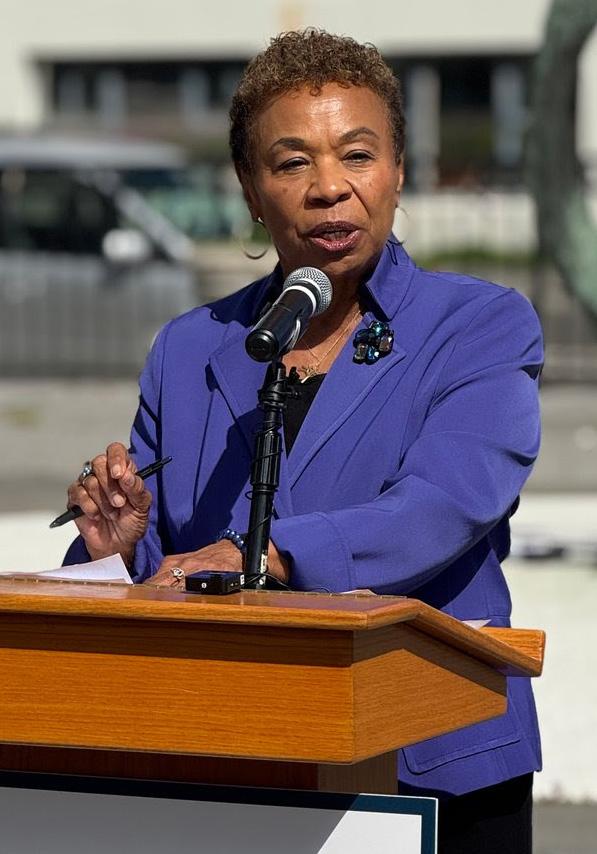
As the federal government cuts aid to homeless families, children, and seniors, Mayor Barbara Lee announced this week that Alameda County is stepping up to meet the challenge, welcoming the county’s $53 million award from the Measure W Home Together Fund Multifamily Homelessness Solutions Program to nonprofit groups that will lead the development of supportive housing for people experiencing homelessness.
“On behalf of the residents of Oakland, I want to express my sincere gratitude to the County for allocating Measure W funds toward permanent supportive housing in our city,” said Mayor Lee.
The funding, a joint effort of Alameda County Health’s Housing and Homelessness Services (ACH&H) and Alameda County Housing and Community Development (HCD), will expand the region’s supply of permanent supportive housing.
The awarded projects are expected to deliver over 900 new permanently affordable homes countywide, including up to 346 units for people experiencing homelessness. In Oakland, the investment will help build 319 affordable housing units, including 96 units for residents experiencing or at risk of homelessness.
Approved by voters in 2020, Measure W is the County’s primary local funding source for addressing homelessness through housing, health services, and system infrastructure. A core strategy of the Home Together Fund is to expand the County’s permanent supportive housing inventory, and this competitive request for proposals was specifically designed to accelerate the development of projects that are ready to move forward and deliver long-term housing stability..
“Oakland is home to 54% of all unhoused individuals in Alameda County, and 74% of the county’s unhoused Black residents,” Mayor Lee said. “That is not a coincidence — it is the product of decades of redlining, disinvestment,
Oakland is taking action to stop illegal dumping and help keep our communities clean. One of the important steps in making sure abandoned trash doesn’t end up on our streets, sidewalks and parks is making sure people have access to, and know about, the proper way to get rid of excess waste. Fortunately, in Oakland, all homeowners can get access to schedule a Free bulky waste pickup, from your house or apartment, every year. This service is available to both homeowners and to renters, and every household can reach out to Waste Management, to schedule this free service, each year. Oakland residents can call 1-888-WM-BULKY to arrange their free pickup of bulky
waste. It has to be scheduled in advance, so make sure to plan ahead, and don’t put waste out until you have a scheduled date. In addition, each resident can get one free drop-off each year to bring your household waste to the Davis Street Transfer Station for disposal. For this option too, schedule in advance by calling 1-888-WMBULKY.
And now, the City of Oakland, in partnership with community-based organizations, is working to spread the word, to help clean up the town, and let everyone know about using this free bulky waste removal service. One of the ways this information is being shared is through murals. Painting murals is a way

By Post Staff
Oakland Mayor Barbara Lee this week joined State Senator Jesse Arreguín (D-Oakland), Assemblymember Mia Bonta, Alameda County Supervisor Nate Miley, and other community leaders to announce the new Senate Bill (SB) 1218, which would require the Department of Motor Vehicles (DMV) to refuse to renew registration of a vehicle if the registered owner or lessee has outstanding illegal dumping penalties.
“Our neighborhoods deserve better than to be treated as dumping grounds – and for too long, serial illegal dumpers have faced little to no real deterrence, getting cited, walking away, and leaving our communities to absorb the damage. This bill changes that,” said Lee.
“By tying outstanding fines to vehicle registration, we are creating a consequence that is clear, enforceable, and impossible to ignore. That is the kind of accountability our residents deserve – and frankly, it is long
overdue,” she said. The legislation, authored by Arreguín, builds on an existing enforcement model already used by the DMV, which currently denies vehicle registration renewals for delinquent parking tickets and similar fines. SB 1218 expands

By Bo Tefu California Black Media
A new ballot measure set to appear on the November 2026 ballot for California voters would allow cities, counties, districts, and the state to establish public campaign financing systems designed to amplify small-dollar donors and limit the influence of wealthy special interests.
The California Clean Money Action Fund, California Common Cause, and the League of Women Voters of California launched the campaign and will serve as chairs of the new ballot measure committee, Californians for Fair Elections.
If approved, the California Fair Elections Act would repeal the statewide ban on public financing and give local communities the option to implement systems that strengthen accountability, enforce spending limits, and protect taxpayer funds. Participation would remain voluntary, and programs would include strict criteria for candidates to qualify
By Edward Henderson California Black Media
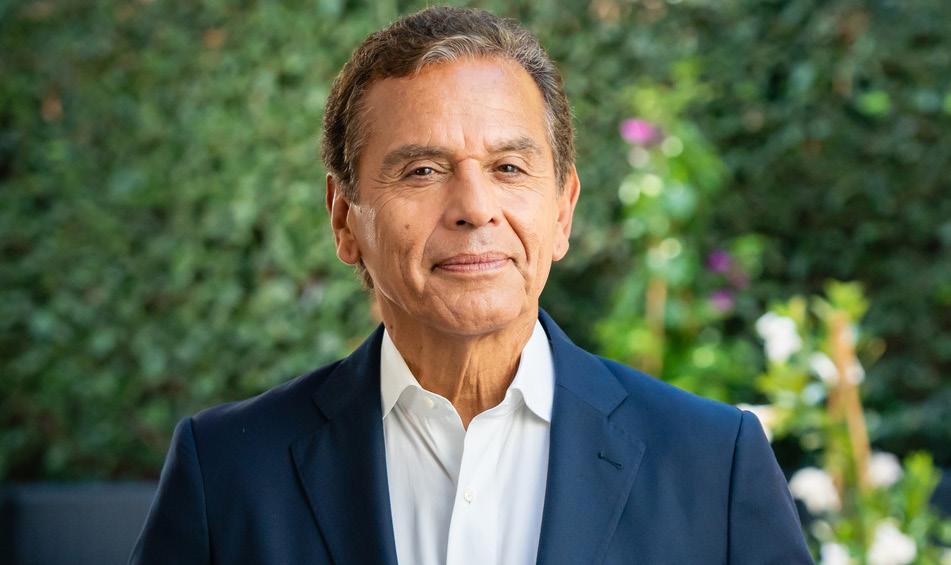
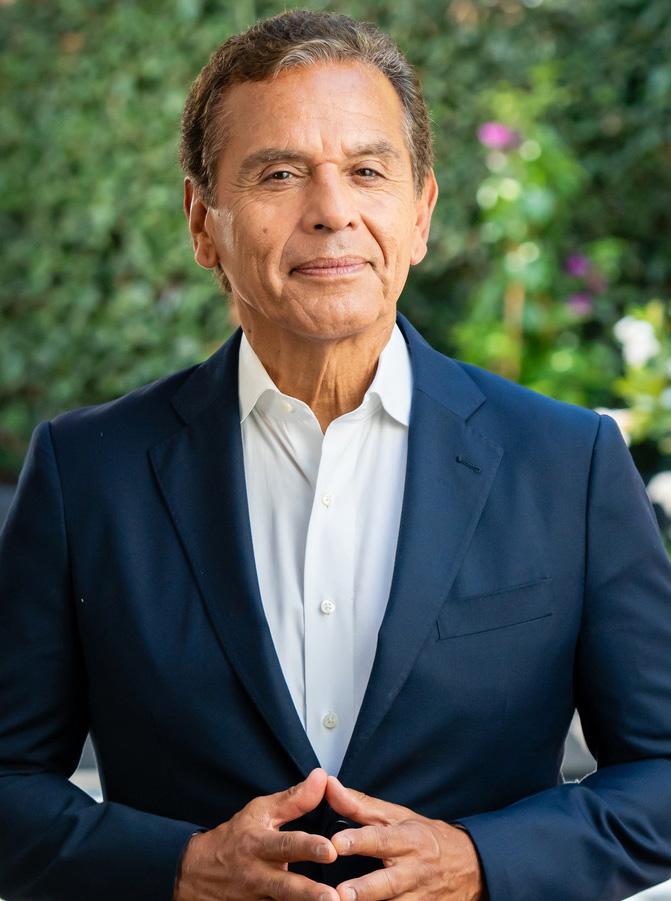
Antonio Villaraigosa, former state Assembly Speaker and former mayor of Los Angeles, entered the race for California governor in 2024. Although he has not emerged as a leading contender among the crowded field of candidates, he has maintained a steady position in the middle, with his household name recognition and 14 years of experience in California politics.
This is Villaraigosa’s second run for governor. His first attempt was in 2018.
California Black Media spoke with Villaraigosa about his platform, his endorsement from Mayor Karen Bass, and his dedication to coalition building among Black, Brown and other California communities.
His answers have been edited for length and clarity.
for public funding. Public funds could not be used for legal defense fees or fines.
Supporters argue the reform is needed because California campaigns are dominated by big money. Since 2020, more than $1 billion has been spent on state-level campaigns, and polling shows 81% of California voters believe large donors exert too much influence over elected officials. Five charter cities, including Los Angeles, San Francisco, Oakland, Berkeley, and Long Beach, already run public financing programs that give everyday candidates a chance to compete. The measure would expand those opportunities statewide.
“The California Fair Elections Act is about restoring trust, strengthening accountability, and making sure everyday Californians have a real say in who represents them,” said Trent Lange, California Clean Money Action Fund’s executive director. Common Cause California
Executive Director Darius Kemp added, “This measure opens the door for teachers, nurses, small business owners, and community leaders to run competitive campaigns and win.”
Legislative supporters highlighted the potential for broader representation.
“The California Fair Elections Act puts power back in the hands of the people,” said Sen. Tom Umberg (D-Santa Ana), author of SB 42, which placed the measure on the ballot.
Assemblymember Alex Lee (D-San Jose) said, “Public financing is the reform we need to bring power back to the people and level the playing field for grassroots candidates.”
The measure is backed by a coalition of state, local, and national organizations, including the ACLU, AFSCME, Asian Law Caucus, California Environmental Voters, California Nurses Association, California Labor Federation, and others.
California Sets Historic Goal to Secure 9 Million Acre-Feet of Water by 2040

By Bo Tefu
California Black Media
For the first time in state history, California has a statewide water supply target: 9 million acre-feet by 2040.
On Feb. 26, Gov. Gavin Newsom formally launched the California Water Plan 2028, calling it the most ambitious water planning effort in state history and a critical response to climate changedriven droughts and floods.
“California is committed to protecting the water that families, farmers, and communities depend on for generations to come,” Newsom said in a statement. “The 2028 Water Plan is a commitment to every Californian that we will capture, store, and conserve the water our state — the 4th
largest economy in the world — needs to thrive, no matter what climate change throws at us.”
The plan begins implementation of Senate Bill 72, authored by State Sen. Anna Caballero (D-Merced), which mandates modernization of the state’s water blueprint through improved data collection and measurable supply targets.
“For the first time, we are setting a clear statewide target of 9 million acre-feet of additional water supply and establishing measurable benchmarks that hold us accountable,” Caballero said. “California must plan with discipline and act with urgency to secure a reliable water future for every part of our
state.”
The 9 million acre-feet target — roughly equal to two Shasta Reservoirs or enough water for 18 million homes — reflects what the state could lose as shrinking snowpack and intensifying drought strain supplies.
“California’s hydrology is changing,” said Department of Water Resources Director Karla Nemeth. “Extreme wet swings to intensely dry within the same season. The work of crafting the next California Water Plan will help us plan smarter to deal with the way climate change is testing our water systems.”
The Department of Water Resources will convene a diverse advisory committee in April, including urban and agricultural water suppliers, tribal representatives, labor, environmental justice advocates and business leaders.
The California Water Commission will serve in a formal advisory role.
“We applaud the launch of the California Water Plan 2028 and the collaborative framework envisioned under SB 72,” said Commission Chair Fern Steiner, pledging support for “sustainable water solutions for all Californians.”
State officials say the plan will focus on improved data, localized supply targets and practical adaptation strategies — with progress tracked publicly through a new project website.
What inspired you to run for governor?
This state and this country have given me more than I could have ever hoped for. It’s a state with enormous challenges as well. We are the world’s fourth-largest economy but we are tied with Louisiana for the highest poverty rate in the nation. It’s a state of innovation, a state of hard-working people who come from every corner of the world. But it’s also a state where people are feeling like we’ve got big issues, and we need someone to take on those issues. We need a problem-solver, a proven one, someone who’s got the record. I decided to come in because of that.
You received an endorsement from Mayor Karen Bass in front of the L.A. Sentinel headquarters. What did that moment mean to you?
It always puts a smile on my face. Putting back together the coalition that elected me as mayor, and even as a state Assemblymember and a City Council member, the coalition has always been broad. And it’s always included the African American community. Both Karen and I, who’ve known each other for more than 50 years, have always understood that together we’re stronger. Getting the endorsements of The L.A. Sentinel, Mayor Bass, Council President Marqueece Harris Dawson — and Councilmembers Megan Kerr, Curren Price and
Heather Hutt — means a lot.
These are people who say, ‘I know him, I’ve worked with him, I trust him.’
You often speak of unity when it comes to Black and Brown communities. What do you think is key when it comes to fostering this type of unity amid lingering tensions and infighting?
It’s hard work. Unfortunately, a lot of times we all work in an insular way. Karen and I were a little different. Our work was al ways across racial borders. Since we were kids, we were in the Co alition Against Police Abuse — in 1973. We need the kind of unity.

What do you see as the largest issue Black Californian’s face? How will you address it?
It’s affordability. I want to be clear. If there’s any community where the issue of affordability is predominant, primary, it’s in the African American and Latino communities. Our big issues are health care, housing, the high cost of rent, the high cost of gas and utilities. The loss of health care funding for Medi-Cal and other services is going to be very pronounced in the African American and Latino communities.
What do you love most about California?
Our people and our cultural, economic and geographic diversity. I love the opportunity here. I love our global leadership in technology, innovation, entertainment, agriculture and more.





Adult Day Program
Dedicated staff needed to work with individuals with developmental disabilities in communitybased settings, or environments. Qualifications: High school or equivalent. Driver’s license. Dependable and efficient. Background check. Physical exam and TB test. Training available. Decent wages. Please call (510) 690-9570.
ENGEO, Inc. has Staff Engineer openings in Oakland, CA. Wage Offer: $134,763/yr. Prfrm engnring duties in plning, desgnng, & field geotchncl engnring obsrvtion wrk. Telcmmtng permssble up to 20% of week. To apply, email resume and cover letter to resumes@engeo. com and reference job title. EOE. Principals only.



CITY OF OAKLAND ADVERTISEMENT
REQUEST FOR QUALIFICATIONS (RFQ) FOR PROFESSIONAL SERVICES FOR THE HUMAN SERVICES DEPARTMENT
Contract Amount: Varies by project
Term: Various dates between July 1, 2026 – June 30, 2031
Project Description: This RFQ is being issued by the City of Oakland Human Services Department (HSD) to identify qualified agencies, firms, project teams or individuals to solicit Statements of Qualifications (SOQ) to provide a variety of consulting services to help implement programs that enrich the lives for children, youth families, single adults, and aging adults, in Oakland. HSD collaborates with a diverse group of local community-based organizations to provide programs and services that address the changing and emerging needs of the community.
Pre-Proposal Meeting (Voluntary): Wednesday March 17, 2026, 11:00 a.m. PST https://oaklandca.zoom.us/webinar/register/WN_y_ xSBQoMTyehtgxCJIcEKQ
Proposal Submittal Deadline: Friday, April 10, 2026, by 5:00 P.M. via iSupplier.
Reminders:
• All who wish to participate in this RFQ must register (at least 5 days prior to submittal due date) through iSupplier at (https:// www.oaklandca.gov/services/register-with-isupplier) to avoid last minute submittal complications and receive addenda/ updates on this RFQ. For additional help registering and submitting your proposal to iSupplier please watch the user guide videos at (https://www.oaklandca.gov/documents/ isupplier-user-guides). Receipt of a confirmation email indicates that a proposal was successfully submitted.
• Did not receive and invitation? Start Early with iSupplier
registration. Upon completion of registration, send an email to iSupplier@oaklandca.gov listing “RFQ for HUMAN SERVICES DEPARTMENT” as the subject and request an invitation to the RFQ. The Contract Analyst will add your business to the RFP invitation.
• The following policies apply to this RFP: Equal Benefits • % L/ SLBE (varies, see RFQ) • Living Wage • Campaign Reform Act
• Professional Services Local Hire • Prompt Payment • Arizona Boycott • Dispute Disclosure • Border Wall Prohibition • Sanctuary City Contracting and Investment Ordinance.
Answers to Questions:
1. For project-related questions contact ContractAdmin@ oaklandca.gov
2. For iSupplier related questions after registration contact iSupplier@oaklandca.gov
Asha Reed, City Clerk and Clerk of the City Council (Friday, March 6, 2026)
By Antonio Ray Harvey California Black Media
Wicks delivered her remarks at the one-day event organized by Capitol Weekly and the University of California Student and Policy Center.
“We can do so in a way that still respects our environmental values,” Wicks said in her remarks.
Assemblymember Buffy Wicks (D-Oakland), the keynote speaker at “A Conference on Housing” in Sacramento on Feb. 24, says solving California’s housing crisis at all levels — and providing affordable, environmentally responsible homes for low-income families and communities of color — can go hand in hand.
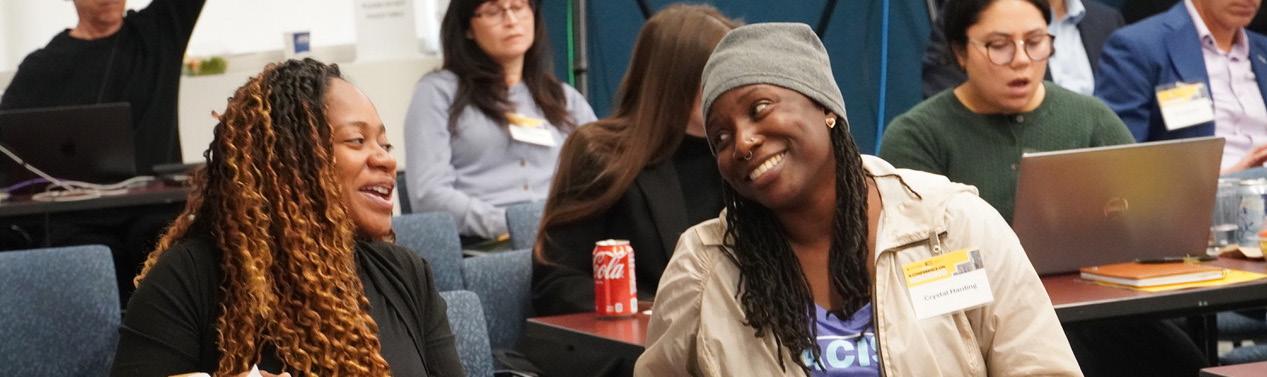
The conference explored solutions focused on increasing supply, improving financing, and addressing labor shortages to make housing more affordable and accessible.
Wicks told California Black Media (CBM) that there is “not a single bullet to solve the housing crisis,” but the solutions require
building for all income levels, including affordable housing for low-income residents and middleincome, market-rate housing for professionals.
“I think we fundamentally need 2.5 million homes,” Wicks told CBM. “We need low-income subsidized, we need the missing mid-
Continued on page 8


By Bo Tefu California Black Media
California Gov. Gavin Newsom is pushing back against accusations of racism after conservatives criticized comments he made about his academic struggles during a public appearance in Atlanta tied to his new book.
The backlash followed a conversation on Feb. 22, between Newsom and Atlanta Mayor Andre Dickens, where the governor spoke candidly about scoring a 960 on the SAT and continuing to struggle reading prepared speeches.
“I’m not trying to impress you, I’m just trying to impress upon you I’m like you, I’m not better than you,” said Newsom. “You’ve never seen me read a speech because I cannot read a speech. Maybe this is the wrong business to be in.”
Conservative commentators and Republican officials quickly circulated the clip, claiming that the governor’s remarks were racially offensive because Newsom was speaking to a Black elected official. Fox News host Sean Hannity shared the video and claimed Newsom “thinks a 960 SAT makes him ‘like Black Americans.’”
Newsom fired back, accusing critics of hypocrisy and selective outrage.
“You didn’t give a s*** about
Continued from page 7
dle, the market rate, we need multifamily, single-family, and workforce housing.”
Last year, Wicks introduced Assembly Bill (AB) 1021 to accelerate the construction of affordable housing for educators and school employees on land owned by local educational agencies (LEAs).
Co-authored with Assemblymember Al Muratsuchi (D-Torrance), the bill streamlines development, provides property tax exemptions, and eases California Environmental Quality Act (CEQA) requirements to tackle recruitment challenges. The bill was signed into law by Gov. Gavin Newsom on Oct. 10, 2025.
According to an October 2024 report by the Public Policy Institute of California (PPIC), approximately 35% to 37% of Black households in California own their homes — a rate significantly lower than the state’s overall homeownership rate of around 55% to 56%.
This rate has shown little growth over the past decade, placing it among the lowest for Black homeownership in the U.S. The California Housing Finance Agency (CalHFA) reported that for the entire 2010s, the state’s Black homeownership rate was lower than it was in the 1960s, “when it was completely legal to discriminate against Black homebuyers,” the report stated.
Black Californians frequently rent rather than own, with a home-
the President of the United States of America posting an ape video of President Obama or calling African nations s***holes,” Newsom said. “But you’re going to call me racist for talking about my lifelong struggle with dyslexia? Spare me your fake f***ing outrage, Sean.”
Newsom was referencing a Truth Social post shared by former President Donald Trump depicting former President Barack Obama and former first lady Michelle Obama as apes. The post was later deleted after bipartisan backlash.
Republican Sen. Tim Scott of South Carolina criticized Newsom, saying he suffers from the “bigotry of low expectations” and admonished the governor for “using your mediocre academics as a way to patronize communities.”
Dickens rejected that interpretation, writing online, “That wasn’t an attack on anyone. It was a moment of vulnerability about his own journey.” He added, “We don’t need anyone to tell us when to be offended.”
Newsom’s office called the criticism “fake MAGA-manufactured outrage,” noting the governor has discussed his dyslexia and SAT scores publicly for years as he begins a national book tour that is fueling speculation about a possible 2028 presidential run. ‘Fake
ownership rate of about 41% compared to 68% for White residents.
Assemblymember Tina McKinnor (D-Inglewood) is an outspoken proponent of increasing housing supply and improving homeownership rates for Black Californians.
McKinnor, a member of the California Legislative Black Caucus (CLBC), noted that California has some of the most expensive rental costs in the nation. Citing real estate brokerage Redfin, she reported that in April 2025, median rents were $3,417 in San Francisco; $3,285 in Los Angeles; $3,116 in San Diego; and $3,011 in San Jose.
“We can solve California’s housing crisis through partnerships between government, developers, and nonprofit and faithbased organizations,” McKinnor stated.
Wicks said she is awaiting results for the Affordable Housing Bond Act of 2026 (AB 736), a proposed $10 billion bond measure designed to fund the construction and preservation of affordable housing.
AB 736, authored by Wicks, requires approval by California voters on the June 2026 ballot. The legislation aims to fund affordable housing to address the state’s severe shortage.
“I’m done with bill-signing ceremonies,” Wicks said. “I want ribbon cuttings, because ribbon cuttings mean we’re actually moving people into homes. I’m done with all the performative bulls*t.”
By Post Staff
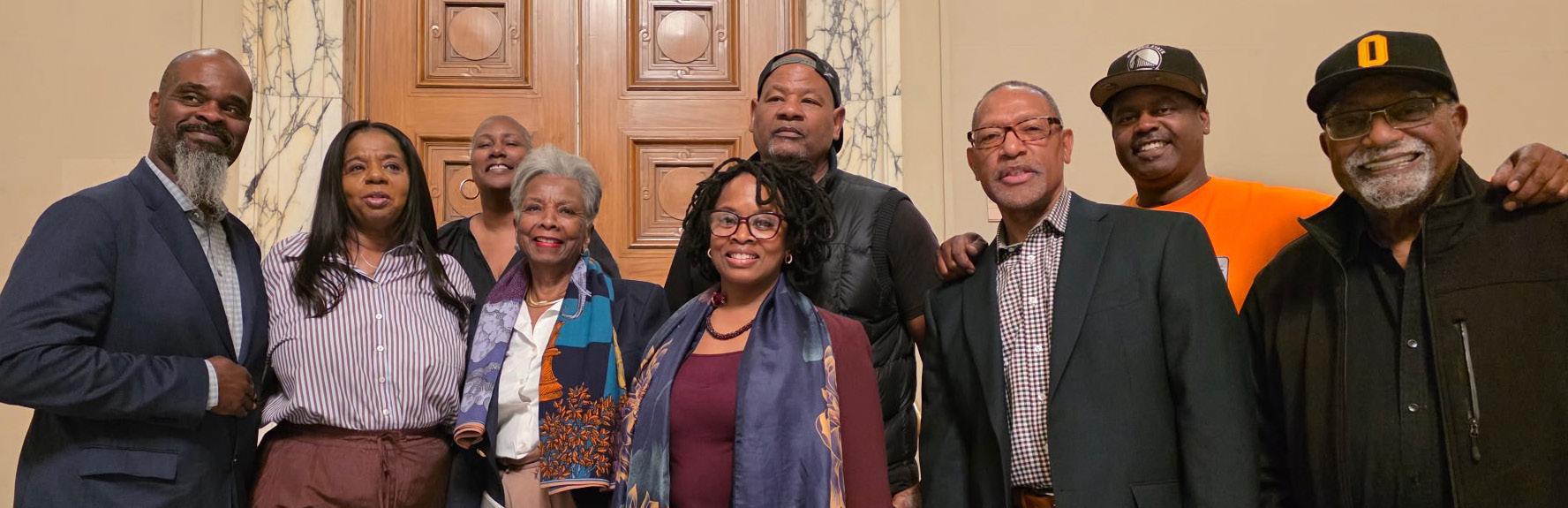
The National Probate Reform Coalition (NPRF) made small but significant progress in their mission to inform judicial officials of their concerns regarding abuses in the probate court system.
Coalition member Nedra Jones says, “The Post Newspaper’s commitment to address abuses on a national level has raised members’ issue of probate abuse to a more visible level, and by inviting the people responsible for oversight and legislation to our town halls is powerful. For change to occur, our coalition recognized we had to start with officials that have power and oversight of the court system.”
Three months in, the coalition is starting to see results, at least in Alameda County. The organization reached out to presiding Judge Michael Markman and administrative officer Chad Finke and a positive dialogue has started.
Venus Gist, a coalition facilitator said that as individuals reaching out to various court officials they were hearing “crickets.”
And it’s still difficult as a coalition. We’ve reached out to the State Bar Association, Alameda County Presiding Judge Michael
Markman, the Judicial Council, the Commission on Judicial Performance, Court Administrator Chad Finke, U.S. Senators Alex Padilla and Adam Schiff, U.S. Rep. Lateefah Simon, and (state Assemblymember) Mia Bonta, Governor Newsom, and Attorney General Rob Bonta – all have been invited to our March 5 town hall. At this time the only response we’ve received is from Court Administrator Chad Finke.
“As the administrative officer of the court, Finke plays an instrumental part of what we’re dealing with regarding the administrative and judicial side of the issues and Mr. Finke has informed us he also represents Judge Markman. All branches matter, and we’re grateful that Mr. Finke is responding and recognizes that the court should be working for the people. We’re also extremely grateful to have Alameda County Supervisor Nate Miley supporting us 100%.”
Tanya Dennis, organizer of the coalition added, “These officials are overwhelmed with their official duties and things get overlooked. If we don’t request that they do their jobs, we get overlooked. These officials are responsible for oversight and hold the strings to the pocketbook that funds the courts, pays their salaries.
“Our attempts at reform, reaching out to attorneys, guardians and judges have been futile,” Dennis continued. “Our focus is top officials, and we won’t stop until all of them are aware of what’s going on. That’s where the power is and that’s where accountability starts.”
Coalition members throughout the nation were invited to follow the same plan, invite and inform, then, if ignored, incite and fight.

By Bo Tefu California Black Media
California’s violent and property crime rates declined sharply in 2024, marking the first statewide decrease in violent crime since the COVID-19 pandemic, according to a new report from the Public Policy Institute of California (PPIC).
The report found that California’s overall violent crime rate fell 5.3% in 2024, dropping from 508 crimes per 100,000 residents in 2023 to 481. Despite the improvement, violent crime remains 9.8% higher than in 2019, reflecting a sustained increase that followed the pandemic.
Several major violent crime categories saw notable declines. Homicides decreased by 13.5% in 2024, while reported rapes fell 1.2%. Robberies dropped 7.5%, and aggravated assaults declined 4.8%. Even with the year-over-year reduction, aggravated assaults remain 22% above pre-pandemic levels, highlighting uneven recovery across crime types.
The report notes that California’s violent crime trends follow long-term historical patterns. After peaking in the early 1990s, violent crime fell steadily for two decades, reaching a 50-year low in 2014. Rates then began rising again in the

The Richmond Standard
The Golden State Warriors recently named Keycha Gallon an Impact Warrior Honoree during a ceremony at Chase Center. The award celebrates her work as the executive director of Keyz 2 the Future, a nonprofit dedicated to supporting youth in Richmond.
The recognition took place during Black History Month in front of thousands of fans, with Gallon’s name illuminated on the massive arena scoreboard.
Gallon’s leadership grew out of personal tragedy and a desire to
help others. After her brother Ernest Neff and some of her cousins lost their lives to gun violence, she decided to build the resources she felt her neighborhood lacked.
Keyz 2 the Future is a grassroots nonprofit dedicated to helping youth impacted by trauma, violence, and systemic inequity reclaim their futures through mentorship, leadership development, literacy, and healing-centered programming.
Gallon is expanding her efforts as a community advocate. She is currently running for a seat on the Richmond City Council.

By
Carla Thomas Democratic gubernatorial candidate Tom Steyer launched his statewide Shared Prosperity Town Hall Tour at Oakstop in Oakland on Feb. 24, drawing a strong crowd while President Donald Trump State of the Union address was broadcast.
The event marked the beginning of Steyer’s effort to hear directly from Californians about how state government can deliver tangible improvement lowering costs, expanding affordability, and working better for the people it serves.
late 2010s before surging during the pandemic years.
Property crime also declined significantly in 2024. The statewide property crime rate fell 9.9% to 2,084 incidents per 100,000 residents, the lowest level recorded since 1985. Larceny thefts and burglaries dropped 7.1% and 11.8%, respectively, and both are now well below their 2019 levels.
Auto theft declined 16.7% in 2024 but remains 19.3% higher than before the pandemic. Shoplifting continued to rise, increasing 14.2% last year and standing 48% above its 2019 rate. Theft of car accessories, including catalytic converters, fell 27%, marking the second consecutive decline since 2020.
Crime trends varied widely by region. The lowest violent crime rates were reported along California’s southern coast and border counties, while the San Joaquin Valley recorded the highest violent crime rate. Property crime was lowest in the Sierra region and highest in the San Francisco Bay Area.
Most of California’s 58 counties saw declines in both violent and property crime in 2024, including the majority of the state’s largest counties, signaling broad but uneven improvements in public safety statewide.
Speaking to the audience, Steyer outlined his policy priorities while emphasizing his commitment to transparency and public engagement. He also framed his campaign around delivering results quickly and efficiently, particularly on housing, climate change, and economic equality.
On his ambitious pledge to build 1 million homes in four years, Steyer said he is focused on moving beyond bureaucratic gridlock. “We are on a different timetable,” he said. “Time is money. And we need a government that understands that building houses is about getting things done on time, cheaper, and delivering them to people.”
Steyer also addressed the public skepticism of electing another wealthy executive to high office.
“We don’t need a billionaire running the state,” he told the crowd. “But do we need someone who will get results, who’s truly progressive, who has no conflicts and a vision for working people.”
Turning the discussion to artificial intelligence and Big Tech, Steyer criticized corporate control over data and energy costs.
“The idea that data centers run by the richest corporations in the world can raise electricity rates
for working Californians? No way,” he said. “These companies are trying to control democracy itself, deciding what information we see and shaping it for their own reasons.”
In discussing climate action and innovation, Steyer called for embracing new technologies to fight climate change and cut costs for families. “The world is deteriorating fast, but the actual tech is incredible,” he said. “Much of it comes from California, and we’re building great companies and great jobs around those technologies. We just have to take on the money interests.”
Throughout the evening, Steyer fielded questions on a range of issues, including housing, the abolition of ICE, and economic inequality. He reiterated that California’s No. 1 challenge is affordability.
“People simply can’t afford to live here, and that’s what we have to fix first.”
Steyer also spoke passionately about reparations for Black Americans, saying that both financial restitution and public acknowledgment are essential for national healing.
“Americans were terribly harmed over centuries, and the idea that that should go unacknowledged and uncompensated doesn’t make any sense,” he said.
Drawing parallels to South Africa’s Truth and Reconciliation Commission, Steyer added, “Until we have the conversation openly, acknowledge it, apologize, pay for it, and move forward, we’ll never overcome our inability to discuss race honestly in this country.”
The Shared Prosperity tour will continue across California, with planned stops in Los Angeles, Fresno, San Diego, and Sacramento.
CITY OF OAKLAND NOTICE OF ELECTION
CALL FOR DIRECT ARGUMENTS AND REBUTTALS FOR AND AGAINST MEASURES
NOTICE IS HEREBY GIVEN that Direct Arguments For and Against the measures below to be submitted to the qualified electors of the City of Oakland at the Special Municipal Election to be held on June 2, 2026 are due to be filed in the Office of the City Clerk no later than 5:00 p.m. on Wednesday, March 18, 2026.
Pursuant to the Elections Code the city elections official shall fix a date as a deadline after which no argument for or against any city measure may be submitted for printing and distribution.
The Oakland City Council approved the call of an election and authorized the following ballot measures to be placed before the electorate of the City of Oakland:
Resolution No. 90987
C.M.S., Passed On December 16, 2025 – A Resolution (1) Calling And Giving Notice For The Holding Of A Special Municipal Election On June 2, 2026 For The Purpose Of Submitting To The Voters A Measure To Amend The City’s Business Tax Ordinance (Oakland Municipal Code Chapter 5.04) To Provide Business Tax Exemptions For Certain Small Businesses And New Businesses Opening Locations In Commercial Spaces; And (2) Requesting Consolidation Of The Special Municipal Election With The Statewide Direct Primary Election To Be Held In The City Of Oakland On June 2, 2026; (3) Directing The City Clerk To Take Any And All Actions Necessary Under Law To Submit This Measure To Voters At The June 2, 2026 Election; And (4) Making Appropriate California Environmental Quality Act Findings
Resolution No. 91013
C.M.S., Passed On January 6, 2026 – A Resolution (1) Calling And Giving Notice For The Holding Of A Special Municipal Election On June 2, 2026, For The Purpose Of; Submitting To The Voters A Measure That Would Amend City Charter Article XXVI Section 2601 To, Among Other Things (A) Expand The Eligibility For Members Of The Police And Fire Retirement System Board; And (B) Change The Board Meeting Frequency From Monthly To No Less Than Quarterly; (2) Requesting Consolidation Of The Special Municipal Election With The Statewide Direct Primary Election To Be Held In The City Of Oakland On June 2, 2026; (3) Directing The City Clerk To Take Any And All Actions Necessary Under Law To Submit This Measure To Voters At The June 2, 2026, Election; And (4) Making Appropriate California Environmental Quality Act Findings
Resolution No. 91063
C.M.S., Passed On March 3, 2026 – A Resolution (1) Calling And Giving Notice For The Holding Of A Special Municipal Election On June 2, 2026 For The Purpose Of Submitting To The Voters Proposed Ballot Measures; (2) Requesting Consolidation Of The Special Municipal Election With The Statewide Direct Primary Election To Be Held In The City Of Oakland On June 2, 2026; And (3) Directing The City Clerk To Take Any And All Actions Necessary Under Law To Submit This Measure To Voters At The June 2, 2026 Election DIRECT ARGUMENTS
Direct Arguments for or against measures that will be submitted to the qualified electors of the City of Oakland at the Special Municipal Election to be held on Tuesday, June 2, 2026, are due for filing in the Office of the City Clerk no later than 5:00 p.m. on Wednesday, March 18, 2026 specifically for the above-referenced ballot measures. Direct Arguments cannot exceed three hundred (300) words.
REBUTTAL ARGUMENTS
Pursuant to Elections Code Section 9285 when the arguments for and against the measure have been selected, the City Clerk shall provide a copy of the argument in favor to the author of the argument against and a copy of the argument against to the author of the argument in favor. The authors may then prepare rebuttal arguments. Rebuttal arguments cannot exceed two hundred and fifty (250) words. Rebuttal arguments are due for filing in the Office of the City Clerk no later than 5:00 p.m. on Wednesday, March 25, 2026
Visit https://www.oaklandca.gov/Government/Elections to obtain the 2026 Argument and Rebuttal submittal form and for more information on the measure.
Asha Reed City Clerk and Clerk of the Council (Polls will open at 7:00 a.m. and close at 8:00 p.m.)
Asha Reed City Clerk and Clerk of the Council Friday, March 6, 2026
Q&A
‘California Needs a Governor
By Joe W. Bowers Jr.
California Black Media
Tony Thurmond says California is at a crossroads and needs leadership grounded in lived experience, accountability and practical problem-solving.
A former social worker and former state assemblymember representing Richmond and parts of Contra Costa County, Thurmond is serving his second term as California’s state superintendent of public instruction.
California Black Media (CBM) spoke with Thurmond about his campaign and priorities. His answers have been edited for length and clarity.
What made you decide to run for governor?
The affordability crisis. People can’t afford to pay for anything and they’re going to be driven out of the state.”
I plan to provide a tax credit to working people and middle-class people in our state, so they would have more in their pocket to pay for the high cost of gas, groceries and housing.
I look back on my own experience as someone born in this state into a family that struggled. We depended on public assistance, food stamps, free lunches and government cheese.
You’re entering a crowded field with several well-known candidates. What sets you apart?
I’ve got specific plans for housing, specific plans for helping to address homelessness, and specific plans to create job opportunities that are good-paying jobs so that Californians can stay here.
Last year, Gov. Newsom pushed to redraw California’s congressional maps. Did you support that effort?
I supported Prop. 50 whole-

heartedly. I sponsored the legislation to help it get on the ballot. I campaigned up and down the state for Prop. 50. I believe in it. Immigration enforcement is a major concern. What role should the state play?
California must continue to protect immigrant families. We have to make sure that families feel safe sending their kids to school and accessing services.
There’s growing momentum around reparations in California. Do you support moving those recommendations?
I support reparative justice and believe California has a responsibility to address historic and ongoing harms.
We have to acknowledge the harm and make real investments in housing, education, mental health, and economic opportunity.
Crime and public safety remain top concerns. What is the state getting right?
The only way we’re going to really address crime issues is to have a combination of police officers who are accountable to the community and intervention programs that create job opportunities. I don’t think we can police


our way out of all the challenges.
Addressing mental health and economic instability is also essential to long-term safety.
Housing costs and affordability continue to push families out of California. What would you do differently?
I have a plan to build 2 million housing units by the year 2030, using the surplus property that exists on school district land in every county in this state.
I’m working on a $10 billion plan to build affordable housing. Families should not have to leave California to find stability and opportunity.
What do you love most about California?
Our state’s promise of opportunity.
If you’re elected governor, how do you want Californians to remember your leadership?
I hope to be remembered as an honest and caring leader.
I want the 40 million people in this







Opera Parallèle presents an astonishingly original production of the classic Beauty and the Beast tale that blurs the distinctions between cinema and live opera, merging Jean Cocteau’s surrealist 1946 film with Philip Glass’ mesmerizing 1994 score.
Mar 13–14
ZELLERBACH HALL, BERKELEY

Visionary musician Rhiannon Giddens leads an accomplished collection of performers steeped in American, South Asian, West African, and southern European musical traditions, in an interactive presentation that explores music as a medium for healing and connection across cultures.
Mar 19–20 ZELLERBACH HALL, BERKELEY


By Carla Thomas
On Feb. 19, Democratic gubernatorial candidate Tom Steyer stood alongside a dozen leaders of the California State Employees Association (CSEA) at Hotel One on San Francisco’s Embarcadero to unveil a plan to close what he calls the “Trump Tax Loophole.”
Steyer argued that this decadesold property tax provision has enabled billionaires and large corporations to dodge billions in tax obligations — money that, he says, should have been invested in California’s public schools, healthcare, and local services.
Steyer described how the loophole has functioned for decades, benefiting the ultra-wealthy while depriving local governments and students of essential resources. He pledged that, if elected governor, he would push to eliminate the loophole and redirect the lost funds toward strengthening the state’s education system and public infrastructure.
“Donald Trump is the prime example of a person who doesn’t pay his fair share,” Steyer said. “He brags about cheating the system, calls it smart, and shows open hostility to California. We’re talking about billions of dollars that could lift up our communities, create opportunity, and give every child in this state the education they deserve.”
According to Steyer, the socalled loophole has previously drained between $10 and $15 billion annually from California’s revenue base – although his most recent analyses puts the figure closer to $22 billion.
According to Steyer, his proposal aims to close the tax gap by ensuring that corporations and the billionaires who control them contribute their fair portion to the state
economy.
CSEA President Adam Weinberger, representing 250,000 public workers statewide, voiced strong support for Steyer’s plan.
“If there is no loophole, there’s more money for public education, our students, and our schools,” Weinberger said. “Education is the greatest equalizer, no matter your background or income level. Everyone deserves the best education we can offer.”
Letetsia Fox, CSEA’s First Vice President and president of the Los Angeles Unified School District’s Chapter 500, echoed the sentiment.
“We support candidates who stand with working people, with labor, with educators,” Fox said. “Those who earn more should pay more. It’s that simple.”
CSEA Area F Director Kellyanna Miller spoke to the direct impact that underfunded schools have on education workers and students alike.
“We have layoffs and school closures while staff are being asked to do more with less,” she said. “From paraeducators to janitors to cafeteria workers, we’re the backbone ensuring students can learn and thrive in a safe and supportive environment. Closing this loophole is about giving back to them.”
Helena Perkins, CSEA Area D Director, said the union’s local and statewide endorsement of Steyer reflects his alignment with their values.
“We endorsed Tom on paper, and now we wanted to do it in person, to let people know where we stand,” she said.
Steyer concluded by reaffirming his commitment to a more equitable tax system.
“I strongly support a system that taxes the rich and big corporations more,” he said.
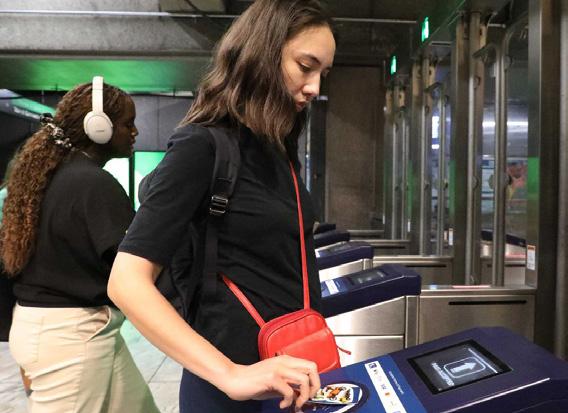
The Richmond Standard BART rolled out new fare gate tones on Monday to help riders navigate stations more easily. The new sounds are designed to be more pleasant and audible over background noise compared to the previous beeps. The update specifically aims to assist blind and low-vision riders in identifying when a gate has successfully opened.
To hear the new chime, a rider must hold their Clipper card, phone, or contactless bank card on the reader for one extra second. An ascending chime plays when entering a station, while a descending chime plays when exiting.
Oakland’s Lack of Race and Equity Inclusion ...
Continued from page 1
ineffective in achieving parity for businesses that wish to do business with the city and are available to do business with the city,” she said
“Over 50% of the prime contract dollars were awarded to 27 businesses who control most of your subcontract awards,” she said. “And it’s important to note that nearly 65% of the city’s prime contracts were awarded to nonOakland businesses.”
Cathy Adams, president of the Oakland African American Chamber of Commerce, speaking for a coalition of organizations that include the National Association of Minority Contractors, said, “The 2024 disparity study confirms what our businesses have long known and experienced for years. Oakland’s public contracting system operates as a closed network. Public dollars are concentrated among a small group of firms, many of them non-local, while qualified minority- and women-owned firms remain underutilized despite documented availability and capacity.”
This study must serve as a “mandate for reform not a document that sits on the shelf,” Adams said. She called for specific actions, which were reiterated by other speakers and adopted by the Council.
She emphasized that city leadership must:
• “Accept the disparity study findings, not symbolically but with acknowledgement that disparities exist and require correction.”
• “Create a business-led and staffsupported task force to recommend structural procurement reforms.”
• “Produce an implementation roadmap within 60 days.”
In remarks to the Council, Oakland Post Publisher Paul Cobb said, “As Ralph Williams, who was the unofficial mayor of West Oakland where I was born, used to say: ‘It’s time to stop studying the studies, researching the research, and do something that is requires some action.’”
Continuing, he said, “I think we should commend Eleanor Mason
Ramsey for this wonderful, thorough study that has researched and exposed all the wrongs of the city, especially since the Libby (Schaaf) era that was studied so thoroughly. We need to be liberated from all of that.
“I am an advocate for those who want to work and live and stay and make money in Oakland. We need to reverse the cash flow characteristics and stop subsidizing the suburbs with our money,” he said, also commending Councilmember Carroll Fife for her leadership.
Fife, who worked with city staff to bring the disparity to public awareness, thanked those who came to the meeting to speak out.
“My heart is full for all the people who came to support and who haven’t given up on this issue. I’m just honored to be a reflection of the fight that you all have been in to push us to do what we’re supposed to do as a body.”
She told Dr. Ramsey, “I’m over the moon, in awe of your persistence and diligence in this work.”
“This is not about Black people; we can’t even say that legally. This is about doing the right thing because it’s the right thing to do,” she said. “There are good people who work for the city, (but) when discrimination is built into the system, you can have good people perpetuate bad policy, and it recreates systems that are problematic for generations to come.”
Councilmember Ken Houston said he knows about discrimination firsthand from the work he did in the past. “It’s disturbing; this is criminal in my opinion,” he said. “it’s 23 years after (good small business policies) were put in place, and we’re in worse condition than we were then.”
“It doesn’t matter what color you are, what’s right is what’s right,” he said.
Cobb has announced that the Oakland Post, in collaboration with Councilmember Fife, is organizing a Post Salon community gathering to discuss what the community members can do to ensure that meaningful change is implemented. Details will be announced soon.
Special to the Post
The City of Oakland announced a coordinated set of community safety and operations improvements on Friday and Saturday nights along Telegraph Avenue and Broadway, helping to ensure that residents and visitors can fully experience Oakland’s Arts and Entertainment District in a safe, fun and inclusive way.
and the soul of this community. It belongs to the people, and these enhancements are about making sure every Oaklander and every visitor can experience that magic safely and fully. Oakland is on the move – and we are committed to safe, thriving, joy-filled events as proof,” said Oakland Mayor Barbara Lee.
$53 Million in Measure W Funds for Housing ...
Continued from page 1
and displacement. The homelessness crisis in Alameda County is, at its root, a racial equity crisis. Every solution must be built with this reality, and we will move forward boldly with racial equity as our North Star.”
To date, Alameda County has committed $146 million in Measure W Home Together Fund in-
Continued from page 1
to beautify our city, clean up buildings, and also share this useful information to help people clean up the responsible way. The organization Keep Oakland Beautiful has worked
Continued from page 1
moved 15 million pounds of trash as a result.
“For too long, illegal dumpers have treated fines as optional while our neighborhoods pay the price,” said Arreguín. “SB 1218 ensures real accountability by tying unpaid dumping violations to vehicle registration. If you trash our communities, there will be consequences.”
Continued from page 1
House, and the predatory capitalist system, and urged the audience to be more concerned with their calling, moral motivations, and dedication to “the cause, something you live and die for.”
Congresswoman Lateefah Simon spoke about how Oscar Grant’s murder on the Fruitvale BART platform brought the Bay Area community together in a powerful wave of protest, advocacy, and coalition building. That collective pressure, she noted, helped lead to new oversight and accountability mechanisms for BART police and “ultimately changed what justice looks like” in the region.
Simon emphasized that it was the collaboration between nonprofits, families, faith communities, and
Approximately $40 million of the current funding supports shovelready new construction, with an additional $10 million anticipated in early 2026 for acquisition and rehabilitation projects.
to pull together mural projects, and other efforts to beautify our city.
Oakland is spreading the word –don’t trash the town! Use your free bulky waste removal to responsibly clean up!
Illegal dumping has been on the rise statewide since the COVID-19 pandemic. California’s Clean California program has removed 3.4 million cubic yards of litter and debris from highways and public spaces since its July 2021 launch – enough to fill over 136,000 garbage trucks
government.
grassroots organizers that made those gains possible. She called on everyone in the room to keep showing up for young people, to protect and invest in Black lives, and to ensure that Oscar Grant’s name remains synonymous not only with tragedy, but with transformation.
Oscar Grant’s mother Rev. Wanda Johnson and daughter Tatiana wore elegant evening gowns.
“As long as I have breath I’m still pressing on,” said Johnson. Seated together, Grant’s uncle “Bobby,” aka Cephus Jones and Aunt “Bea” aka Beatrice, emphasized that were it not for the love from the community, they never would have been able to turn a negative tragedy into a positive impact. Oscar Grant would have been 40 years old on Feb. 27.
Mayor Barbara Lee to Host ‘Safety First’ Town Hall as Oakland Advances Police Reform

This distinct sound helps users distinguish a successful scan from the error beeps that signify issues like insufficient funds. BART officials noted that the chime does not play automatically for every tap to avoid creating a confusing “cacophony” of noise within the station.
These audio improvements were made possible by the new fare gates installed across all stations in August 2025. Unlike the older gates, the technology can produce a wide range of musical tones.
The specific chords used for the chimes were originally composed on a piano by Ryan Greene-Roesel, BART’s director of Customer Access and Accessibility, before being finalized by sound engineers.
The final sounds were selected after BART collected feedback from station agents, an online public survey, and the BART Accessibility Task Force.
Riders seeking more details on these features can find information at bart.gov/accessibility.
Starting Friday, March 6, the City’s enhanced plan will include a layered approach to managing community safety, including: Stricter parking enforcement, citations, and towing. No parking will be allowed between 15th Street and Grand Avenue on both Broadway and Telegraph Avenue between 4 p.m. and 4 a.m. on both Friday and Saturday night
Additional community ambassadors, public safety coordinators, and Oakland Police officers throughout the evening and late night
Expanded pedestrian safety measures and traffic control
(i.e. road barriers) to minimize illegal vehicular activity
Clear emergency response and communications protocols
• Clearly marked street signage and informed community ambassadors to help with wayfinding
• Ongoing collaboration across City departments and with event organizers, local businesses, and community partners
“Oakland’s Arts and Entertainment District is a celebration of our artists, our small businesses,
“We listened to the community, who expressed their goal of enjoying Oakland’s diverse cultural and artistic experiences while feeling safe and comfortable. We quickly responded with these enhanced measures to promote safe pedestrian traffic flow,” said Assistant City Administrator Chuck Baker. By strengthening infrastructure and public safety operations while preserving the spirit of community, the City is reaffirming its commitment to making Oakland’s Arts and Entertainment District a safe, inclusive, and thriving showcase of culture and small business community.
The City will continue to monitor conditions and adjust staffing, traffic management, and safety resources as needed. Feedback from community members, businesses, and event partners will also help guide future improvements.
The City encourages event attendees to plan ahead, follow posted signs and staff directions, and look out for one another. BART, AC Transit, or rideshare are recommended; parking is available at Telegraph Plaza or Franklin Plaza garage.
The City of Oakland Public Information Office is the source of this report.
By Post Staff
Oakland residents will have an opportunity to hear directly from city leadership about the future of public safety in the city at a Safety First Community Town Hall hosted by Mayor Barbara Lee Thursday, March 12, at 6 p.m. at Taylor Memorial Methodist Church, 1188 12th St., Oakland.
Among the featured speakers is Michelle Phillips, Oakland’s assistant city and Constitutional Policing administrator, who plays a central role in managing the city’s ongoing police reform efforts.
Phillips first arrived in Oakland in 2022 as the city’s first inspector general, tasked with building an office dedicated to independent oversight of the Oakland Police Department.
Her work focused on strengthening transparency, analyzing data, and helping rebuild public trust through accountability and constitutional policing practices.
After serving in Minneapolis in 2024, Phillips returned to Oakland in 2025 to continue the city’s progress toward completing the Negotiated Settlement Agree-
ment (NSA), the federal oversight framework that has guided police reform in Oakland for more than two decades.
Today, Phillips oversees key policy reviews, audits, and compliance efforts aimed at ensuring that reforms are not just promises, but everyday practices within the department.
At the Safety First Community Town Hall, residents will hear updates on public safety strategies, economic corridor safety, the role of the MACRO community response teams, and the city’s progress toward ending federal oversight.
The event will be moderated by City Administrator Jestin Johnson and will feature Lee, Police Chief James Beere, Violence Prevention Chief Dr. Holly Joshi, Fire Chief Damon Covington, Economic and Workforce Development Deputy Director Cristy Johnston Limón, and District 3 City Councilmember Carroll Fife. Community members, merchants, and neighborhood leaders are encouraged to attend.