



“Where there is no vision, the people perish...” Proverbs 29:18 postnewsgroup.com 63rd Year, No. 11 Weekly Edition March 18 - 24, 2026
Equity on Paper vs. Equity in Practice: Oakland’s Moment of Truth on Disparities in City Contracts
This commentary was submitted by the Oakland African American Chamber of Commerce and a coalition of business organizations.
Oakland has always been a city of resilience, culture, and innovation. But it is also a city that has had to confront hard truths, especially about who benefits from public investment and who gets left behind.
The recently released disparity study confirms what many of us in construction, business, and the workforce development community have known for years: access to public contracting opportunities has not been equal. For local businesses, especially small, minorityowned firms, the system has too
often created barriers rather than pathways.
Now, we have a choice.
We can treat this study like so many before it, something acknowledged, discussed, and ultimately shelved. Or we can use it as a blueprint for action, accountability, and measurable change.
Right now, the question is simple: Will the City of Oakland act with urgency, or will we continue to accept incremental progress while entire communities are left out of the local economy?
The Stakes: More Than Contracts
This conversation is not just about contracts. It is about people.
It’s about Oakland residents who want to work, build, and in-
By Ben “Coach” Tapscott
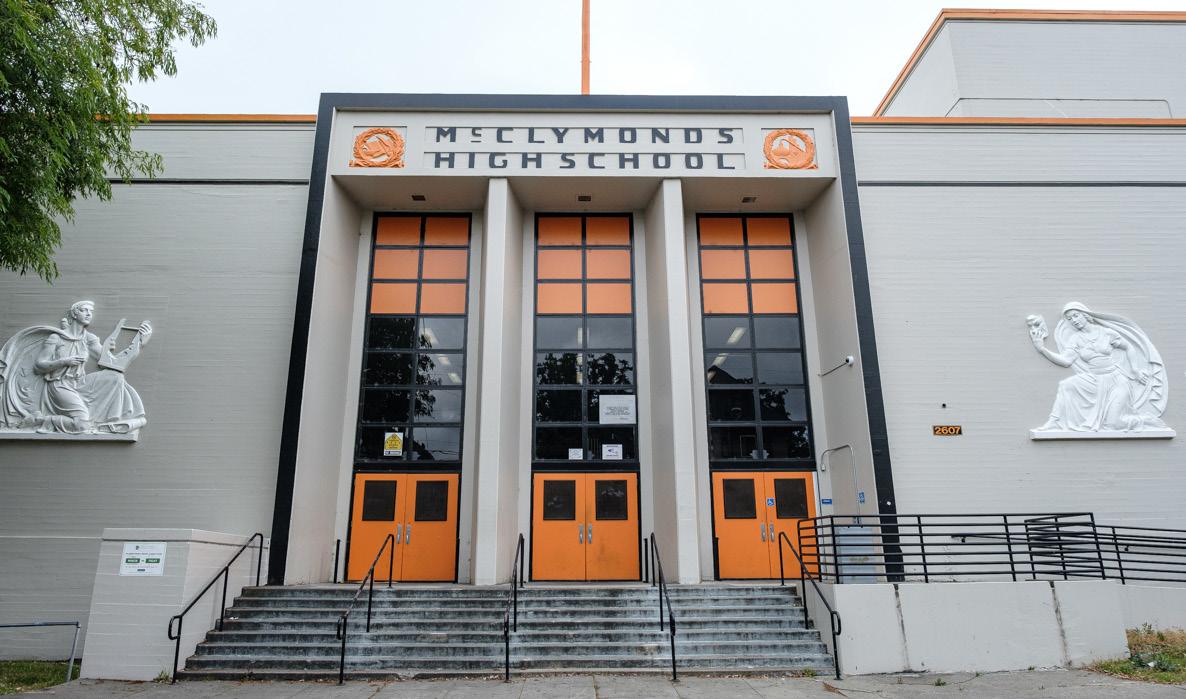
McClymonds High School and West Oakland are facing racial disparities and systemic neglect.
I’d like to see State Superintendent of Instruction Tony Thurmond and State Attorney General Rob Bonta come do an investigation of discrimination against African American students in the Oakland Unified School District.
We have had promises from school district officials about renovations and repairs at McClymonds for years. But nothing happens.
Other Oakland high schools have been upgraded – Fremont, Oakland Technical, Oakland High, Skyline and Castlemont – but McClymonds is still waiting.
Every other high school in Oakland has had some improvements, and some of them have had major renovations. It’s plain discrimination how they’re treating the kids at McClymonds.
(In 2023-24, 71.7% of McCly-
monds students were African American, 14% Latino and 2.3% white. By comparison, in OUSD overall, 20% were African American, 50.2% were Latino and 10.1% white, according to state data.)
One issue at McClymonds has to do with heat and hot water. The district came over in the middle of the night and removed one of our three boilers and took it to another school.
McClymonds is a big old school, one of the oldest in the city, and if one of the boilers went out, we knew we could still count on the other two.
Now, if one goes out, we will not be able to heat the school, and the classroom will be very cold.
Further, there is no hot water in the bathroom sinks, which affects all 17 bathrooms in the school. Officials say they don’t want warm water because students could get scalded, but it’s easy to permanently adjust the water temperature.
Another issue is the lack of a working scoreboard in the school’s
Councilmember Zac Unger, Mayor Lee Introduce Law to Strengthen Illegal Dumping Enforcement
New Measure Would Increase Fines, Penalties for Dumping; Crack Down on Transporting Waste in Vehicles without License Plates

Special to The Post
District 1 Councilmember Zac Unger, along with Mayor Barbara Lee, on Tuesday announced an ordinance to combat illegal dumping.
This ordinance will create greater penalties for dumping, including for vehicle owners who allow their vehicle to be used to
dump. The ordinance will also create a new law, making transporting waste in a vehicle without a license plate an offense.

Oakland’s Future: AASEG Hosts Castlemont Architecture Students at the Coliseum Complex
Coliseum
the
Special to the Post
In a powerful demonstration of its long-standing commitment to Oakland and the next generation of leaders, the African American Sports & Entertainment Group (AASEG) once again welcomed students and faculty from Castlemont High School’s architecture program to the Coliseum Complex on March 5 as part of its annual educational field trip program.
It’s fifth year, AASEG partners with students enrolled in Castlemont’s Sustainable Urban Design Academy (SUDA) to provide realworld learning experiences that connect Oakland’s youth with the city’s most important civic spaces. In the annual visit, students explore
imagining how it could evolve to serve future generations. This year’s visit marks the beginning of a semester-long project for SUDA students titled “Reimagining the Coliseum.” Throughout the term, students will develop innovative design concepts that envision how the Coliseum property could be transformed in the future to better serve Oakland’s residents, families, and businesses. Their creative work will culminate in a 3D Design Showcase on May 27, where students will present their architectural models and concepts to family members, teachers, and community support-
Noel
By Post Staff
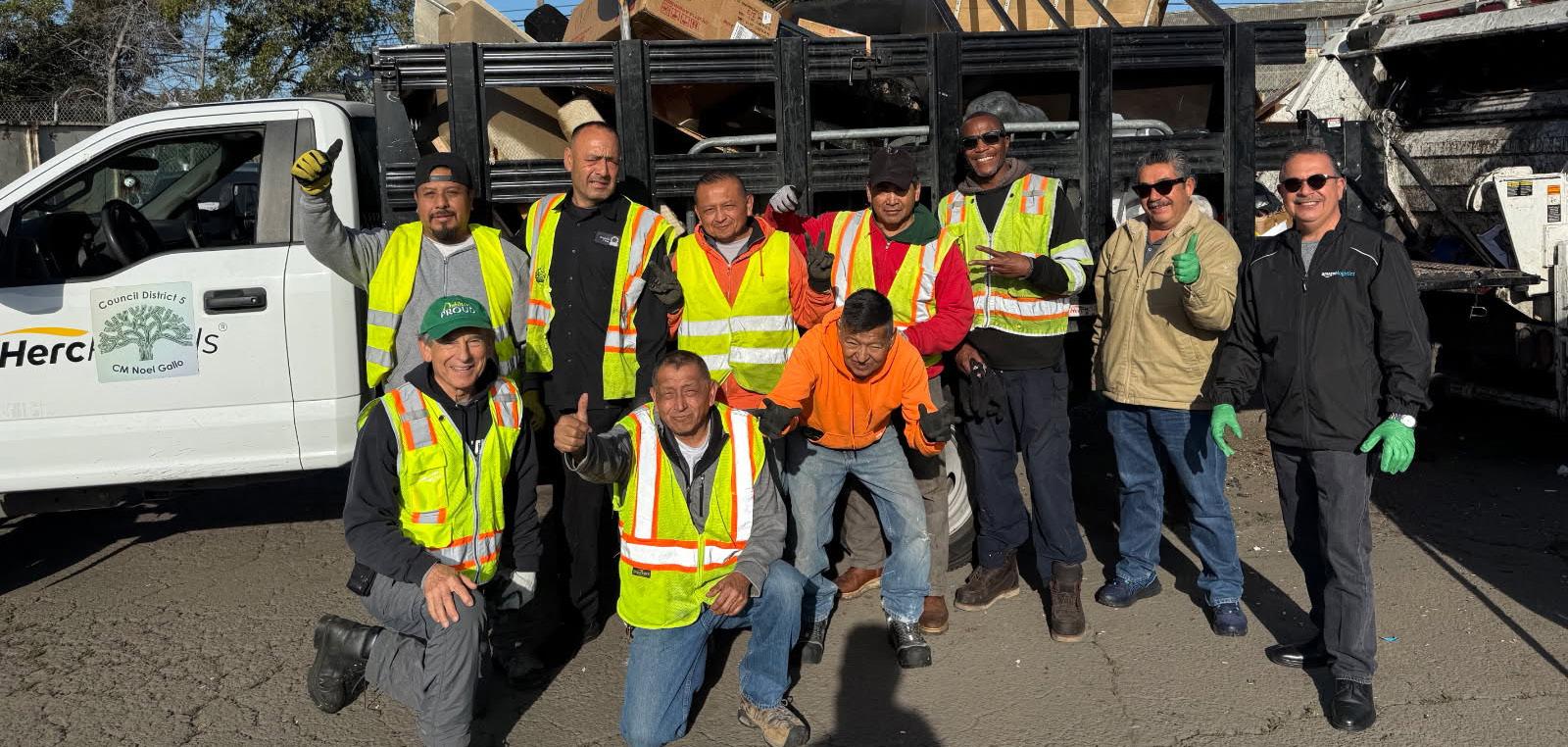
Oakland District 5 Council-
member Noel Gallo has been leading and organizing community cleanups for many years – actively working not only to reduce trash on the streets, but also advocating to improve systems to stop people from dumping in Oakland. This work has included
collaboration with community groups, neighbors, churches and more, including Faith in Action East Bay, Block by Block Organizing Network and more. Councilmember Gallo’s organized cleanups have also provided opportunities for people to get involved in bettering their neighborhoods, as well as for those working off citations.
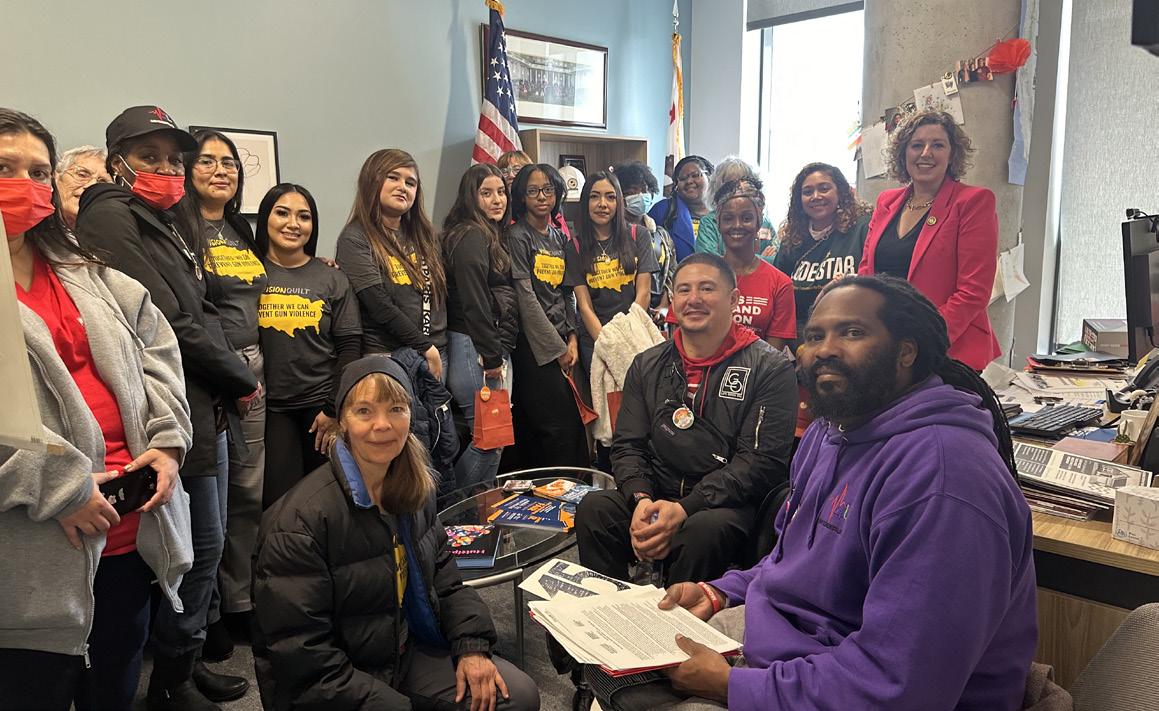
fectively use the measure to prevent shootings and suicides.
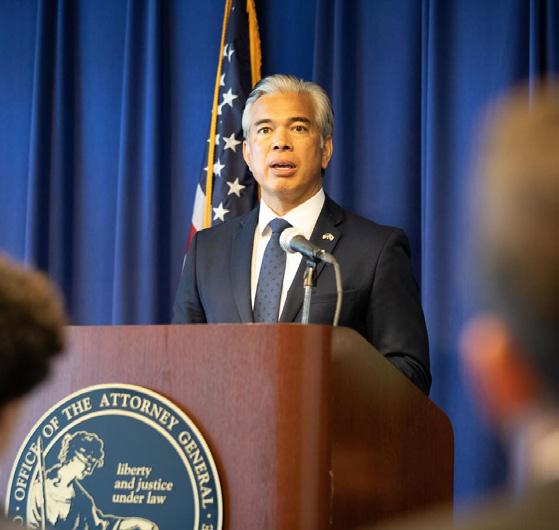
The GVRO law, often referred to as the “red flag” law, allows law enforcement officers, family members and other eligible individuals to petition a court to temporarily remove firearms from people deemed to pose a significant danger to themselves or others. Since California enacted the policy in 2016, similar laws have been adopted in 20 other states.
“I was proud to be an original cosponsor of the bill that established California’s Gun Violence Restraining Order law,” said Bonta.
“I am incredibly proud to introduce this ordinance to strengthen illegal dumping enforcement,” said Unger. “This ordinance is the culmination of months of work by By Oakland Post Staff
“That legislation was introduced within one week of a mass shooting that devastated the UC Santa Barbara community, committed by a young man who was eligible to purchase firearms despite significant warning signs of dangerousness. The GVRO
Ten years ago, students at Lighthouse Community Charter School asked their teachers a heartbreaking question: ‘Why are we losing our classmates to gun violence, and what can we do about it?’ That question launched a movement that teaches youth how to move beyond fear and grief and imagine communities rooted in care and equity.
Special to the Post
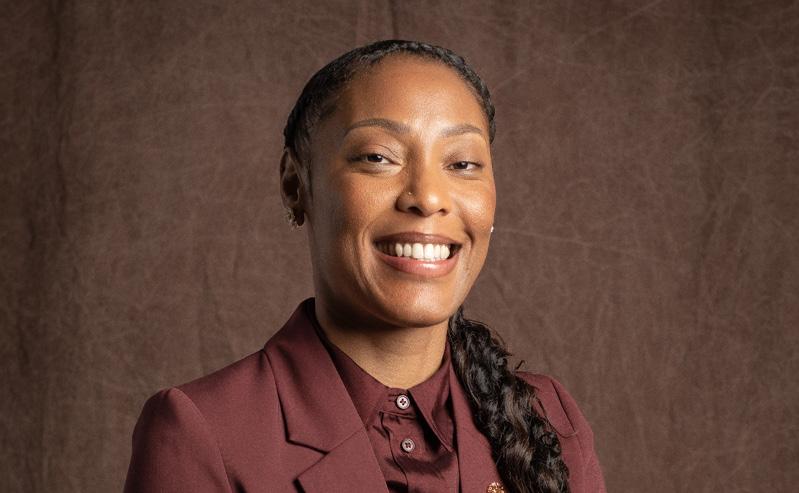
Oakland City Councilmember-at-Large Rowena Brown has weighed in on the 2024 Disparity
On March 25 and 26, a cadre of 150 eighth-grade students from Lighthouse and Lodestar Com-
Study that exposes deeply embedded, institutionalized bias that negatively impacts the awarding of contracts, paid for with public funds, to African American- and women-owned businesses in Oakland.
“Since taking office in January 2025, I have been clear that my priority is an Oakland that works for everyone,” Councilmember Brown said in a statement sent Thursday to

By Bo Tefu California Black Media
California’s public health programs could lose billions of dollars due to recent federal budget cuts, state health officials told lawmakers during a joint committee hearing on March 10.
The hearing, held at the State Capitol, focused on the impacts of reductions to programs such as Medi-Cal, the Affordable Care Act and Covered California. Officials said regulatory changes and funding rollbacks could reduce the quality and availability of health coverage for many Californians.
“The rollback of federal policies risks reversing hard-won progress,” said Assemblymember Mia Bonta (D-Oakland).
“For many Californians, accessibility and affordability were already in question,” Bonta continued. “More than half of
Californians are worried about out-of-pocket expenses, longterm care and monthly premiums, concerns that now surpass anxiety about housing, groceries, transportation and utilities.”
Assemblymember Cecilia Aguiar-Curry (D-Winters) expressed frustration over the potential impact on vulnerable populations.
“When I see some of the people who come into our offices, our elderly, our disabled, primary care doctors, we’re all very, very concerned,” she said. “This is not affordable. It’s not taking care of our most vulnerable. I’m just very frustrated.”
Dawn Joyce presented research showing that MediCal alone faces $30 billion in annual cuts. California’s Health and Human Services Agency estimates that federal reductions could result in 2 million residents losing Medi-Cal coverage,
costing the state between $2.3 billion and $5.1 billion each year. In fiscal year 2024-25, the federal government paid for 62% of MediCal’s budget, with 22% from the California general fund and 16% from other state and local sources.
“There’s just a broader effort currently to dismantle, remove federal funding that we’ve relied on, and it will lead to vast coverage losses,” Joyce testified.
Sen. Lola SmallwoodCuevas (D-Los Angeles) also highlighted the human impact of the cuts on social media, writing on Facebook: “Most Medi-Cal recipients already work. More than 1 million Black Californians rely on Medi-Cal and could lose coverage under these harmful federal cuts. Working families should not pay the price when too many communities have already suffered lost lives, lost health, and years of disinvestment.”

By Carla Thomas
Before an audience of 1 billion viewers, Ryan Coogler’s “Sinners” emerged as the defining narrative of the 98th Academy Awards. The Oakland-born filmmaker’s bold and soulful drama entered the night with 16 nominations, the most in Oscar history, and walked away with four major wins, affirming both its artistic might and cultural weight.
“Sinners” earned four trophies including Best Actor awarded to Michael B. Jordan, Best Original Screenplay presented to Ryan Coogler, Best Cinematography awarded to Autumn Durald Arkapaw, and Best Original Score presented to Ludwig Göransson. Together, these honors reflected the film’s range, its emotional storytelling, visual depth, and rhythm-steeped soundscape that pulsed with history and heart.
Although another film
eventually claimed Best Picture, “Sinners” was the night’s emotional center, a reminder of how deeply Black artistry
speech, Michael B. Jordan reflected on the legacy that made his moment possible.
“I stand here because of the people that came before me,” he said, calling out Black Oscar winners Sidney Poitier, Denzel Washington, Halle Berry, Jamie Foxx, Forest Whitaker, and Will Smith as “giants” whose shoulders he stands upon.
“Thank you for betting on me,” he humbly added.
When Ryan Coogler accepted the Oscar for Best Original Screenplay, his gratitude returned to the place where his vision first took shape. “I’m from Oakland and Richmond, California,” he said.
With emotion, he saluted his wife and producing partner, Zinzi Coogler, and their

continues to shape the soul of American cinema.
During his acceptance
children. “I love y’all more than anything.”








Autumn Durald Arkapaw’s win for Best Cinematography added another page to Oscar history. Her lens work placed “Sinners” in bluesy shadows and golden hues, transforming each frame into a southern past time.
And when the show recreated the movie’s iconic speakeasy sequence live onstage, it became a full-circle celebration of culture and craft when blues singer Sammie “Preacher Boy” Moore (Miles Caton) performed.
The scene featured some of the original actors and paid tribute to blues and its musical descendants – jazz, soul, and hip-hop – underscoring the music’s connection to resilience and reinvention.
Ballet icon Misty Copeland danced dressed in the “Firebird” costume designed by the late Geoffrey Holder and preserved in the Dance Theatre of Harlem archives, an homage to the Black artistic lineage running through “Sinners.”
That lineage carried through the film’s score, a collaboration between Görans-
son and Oakland native Raphael Saadiq, whose deep roots in R&B and funk gave “Sinners” its groove and spirit. Their music fused gospel undertones, creating a theatrical landscape that felt both timeless and contemporary.
Although he was nominated for Best Supporting Actor for his role as Delta Slim in “Sinners,” Oakland’s Delroy Lindo was in the house.
Best Picture went to Paul Thomas Anderson’s “One Battle After Another” that featured Teyana Taylor as a war photographer.
Taylor’s excitement was contagious as she playfully gripped her filmmaker in a headlock while heading to the stage with her film’s team in a long, black, flowing gown.
While “Sinners” only took home four of the 16 nominations, the film was clearly a winner worldwide breaking records and again putting Oakland on the map as a place where talent rises.

By Bo Tefu California Black Media
A new report on college completion in California highlights persistent racial disparities in higher education outcomes, finding that only 50% of Black freshmen earn a bachelor’s degree within six years, significantly lower than graduation rates for Asian and White students.
According to the report compiled by the Public Policy Institute of California (PPIC), overall, the state has made progress in improving college completion. Just over half of first-time freshmen — 51% — now graduate within four years, a notable increase from 39% a decade ago. Still, outcomes vary widely depending on the type of institution students attend and their socioeconomic background.
Graduation rates are highest within the University of California (UC) system, where 73% of first-year students graduate in four years and 86% finish within six years. At the California State University (CSU) system, however, completion rates remain lower: 36% of students graduate within four years and 62% within six years, according to the PPIC.
Private nonprofit universities report relatively strong outcomes, with 59% graduating in four years and 74% in six years. By contrast, most students who enroll at forprofit colleges — 76% — do not
complete a degree within six years, underscoring concerns about affordability, academic preparation and institutional support.
Racial disparities remain pronounced across systems. While 83% of Asian students and 74% of White students graduate within six years, completion rates fall to 62% for Latino students and 50% for Black students. Women also outperform men, graduating at a rate of 72% compared to 68%. Students from low-income backgrounds face additional challenges: those receiving Pell Grants graduate at significantly lower rates — 62% compared to 76% among their peers.
The report also highlights the critical role of California’s community colleges as a pathway to four-year degrees. Although more than 60% of community college students say they intend to transfer, only 14% complete a bachelor’s degree at UC or CSU within eight years.
Researchers emphasize that improving graduation and transfer rates will be essential to meeting California’s goal of achieving 70% postsecondary attainment by 2030. Expanding direct admissions programs, strengthening transfer pathways and increasing access to four-year institutions are among the reforms experts say could help close completion gaps and improve economic mobility for students across the state.

By Edward Henderson California Black Media
A new report released by Black Women Organized for Political Action through its Training Institute for Leadership Enrichment (BWOPA-TILE) and Hispanas
Organized for Political Equality (HOPE) is shedding new light on the barriers Black women and Latinas face in California’s health care workforce — and the steps advocates say are needed to close those gaps.
The report, Pathways and Priorities in California’s Healthcare Workforce: Insights from Black Women and Latinas, draws on the experiences of more than 800 young women across California and comes as the state confronts a growing shortage of health care professionals.
According to findings, Black women and Latinas remain significantly underrepresented in health care professions despite representing a large share of California’s population. Latinos make up about 40% of the state’s residents but hold only 10%–16% of key
health care roles. Black Californians represent about 5.3% of the population but occupy just 3%–3.9% of physician positions and as little as 2%–4% of midwifery roles.
At the same time, the need for health care workers is expected to increase dramatically.
“This research makes clear that Black women and Latinas see health care careers as meaningful pathways to serve their communities and achieve economic mobility — yet the systems designed to support them are not keeping pace,” said LaNiece Jones, State Executive Director of BWOPATILE.
The study, conducted by the research firm EVITARUS, included a statewide survey of Black women and Latinas ages 18 to 29 as well as online focus groups. The research is the third installment in a multi-year initiative examining healthcare access and workforce equity.
While respondents overwhelmingly said health care ca-
Continued on page 9


Lee,
By Bo Tefu
California Black Media
By Antonio Ray Harvey, California Black Media
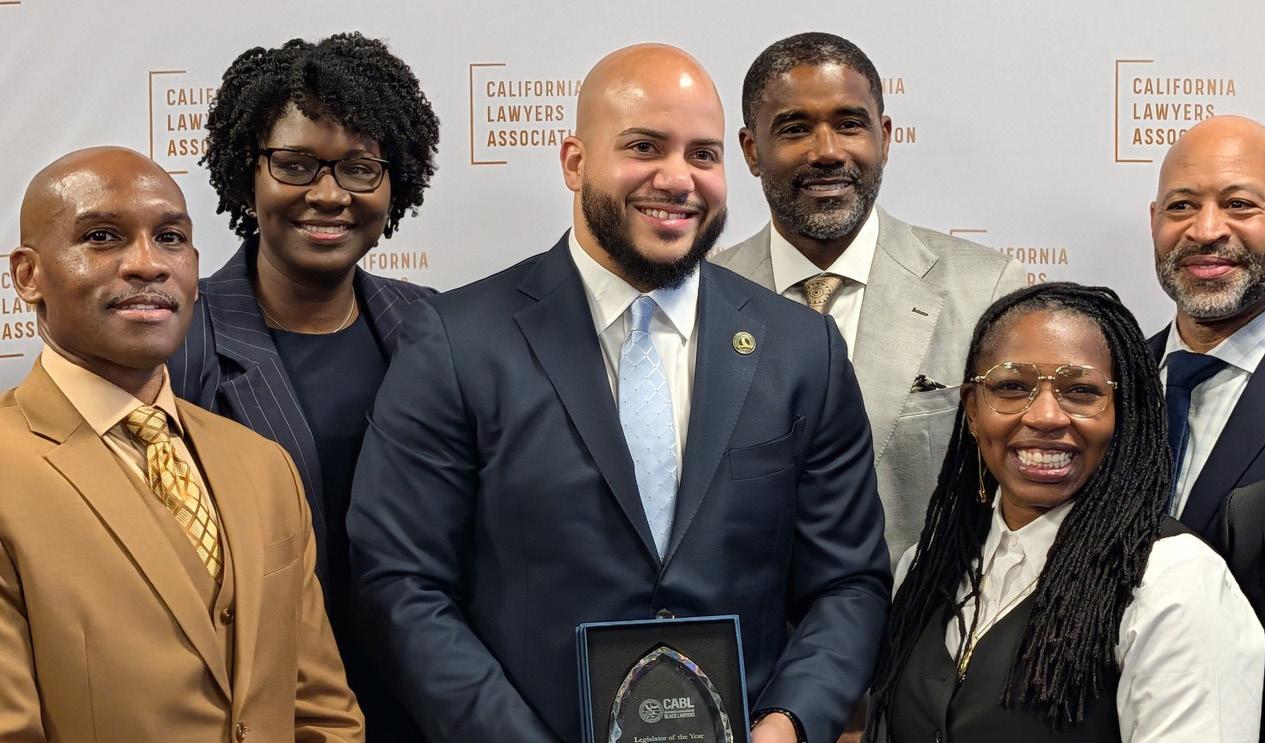
The California Association of Black Lawyers (CABL) held its annual Legislative Days at the State Capitol to engage in direct advocacy with state policymakers and elevate issues that specifically impact Black communities in California.
The two-day event, held March 9 and 10, was organized in collaboration with the National Coalition of 100 Black Women, Inc., (NCBW) and the California Lawyers Association (CLA).
CABL President Tamara Michael said the gathering was more impactful than she had imagined.
“My heart is so full of how these days went,” said Michael, a Bay Area attorney and corporate counsel for Penguin Solutions Inc. “One of the things that we continue to do is find ways to collaborate and connect with our leg-


islature. We know that when we all come together in a meaningful way, we’re able to bring about change.”
CABL represents more than 6,000 members, including African American attorneys, judges, law professors, and law students throughout the state. The organization focuses on advocating for legal issues, increasing the number of Black judges, and promoting equality within the legal profession
According to organizers, the Legislative Days event serves as a platform for attorneys, judges, law students, and community leaders to solidify their collective voice and influence the state’s legal and legislative landscape.
The members of CABL were able to discuss specific bills prioritized by the California Legislative Black Caucus (CLBC), such





or






needed.

California is expanding mental health and substance use disorder treatment statewide with a new $1.18 billion funding round, Gov. Gavin Newsom announced March 12.
The investment supports 66 new projects across 130 behavioral health facilities, including rural and tribal communities, and creates additional residential and crisis treatment centers.
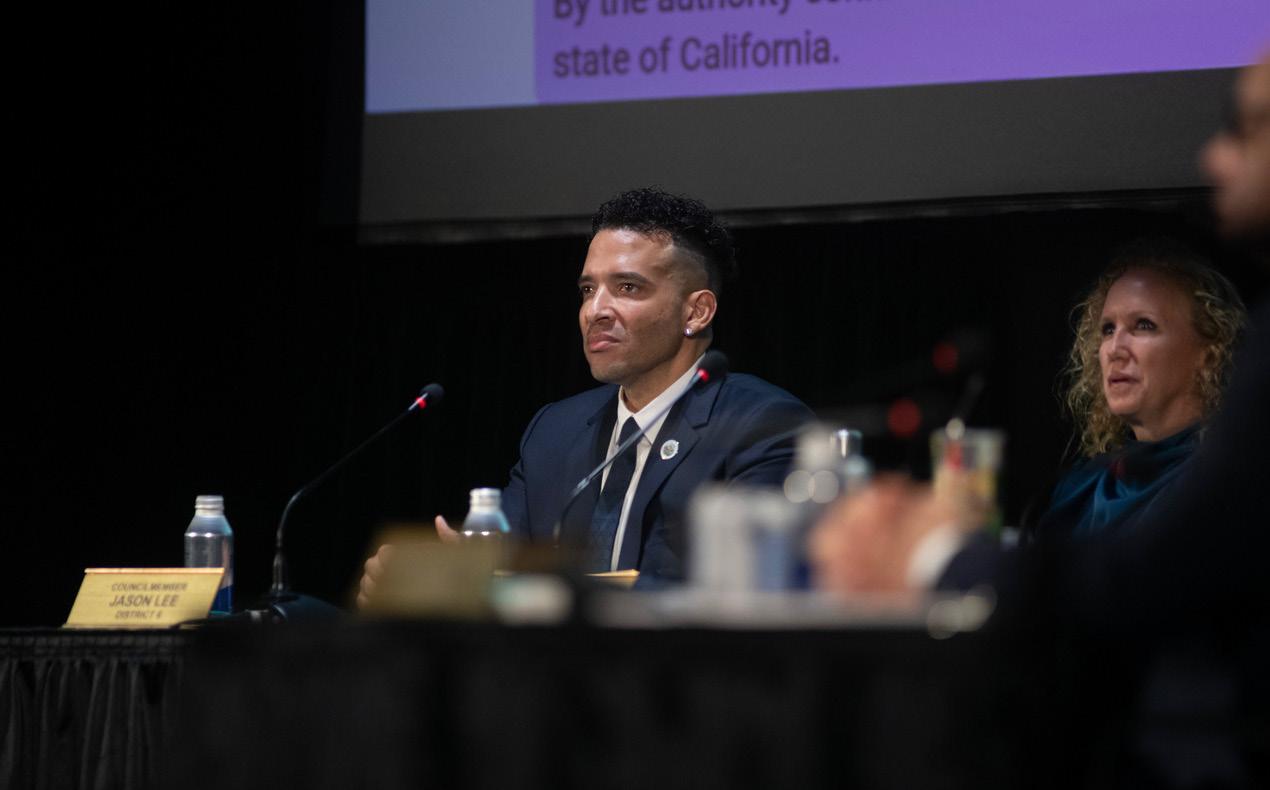
“It’s a big win,” said Stockton Vice Mayor Jason Lee, whose Hollywood Cares Foundation was conditionally awarded a $12.4 million grant that it plans to use to build a mental health center and respite center.
Thank you, Governor Gavin Newsom,” continued Lee. “Thank you to everyone who worked really hard to make sure that Stockton kids, Stockton residents, Stockton parents and everybody has a place for these kids to get care services — but also to be able to get that light in them that I got in me years ago to be able to transform their lives.”
According to the Governor’s office, the funding, part of the Bond Behavioral Health Continuum Infrastructure Program (Bond BHCIP) under Proposi-
tion 1, brings statewide behavioral health investments to more than $4 billion. The program has already delivered 6,919 residential treatment beds and 27,561 outpatient slots, exceeding its statewide goals in just two years. In total, Proposition 1 now supports 177 projects across 333 facilities.
“Proposition 1 is doing exactly what we promised it would do: transforming California’s behavioral health system,” Newsom said. “In just two years, we didn’t just meet our goal of creating 6,800 treatment beds; we exceeded it. That means we’re finally closing the gap that’s left too many communities without the care they need. With this final round of awards, we’re not slowing down. We’re building a behavioral health system that actually meets the scale of the crisis — one that delivers treatment, support, and real stability for people who’ve been left behind for far too long.”
The program aims to help Californians suffering from mental illness and addiction, including those experiencing homelessness. It builds on the state’s first statewide drop in unsheltered homelessness in 15 years, which saw a 9% decline, according to New-

By Bo Tefu California Black Media
Health officials say a respiratory virus spreading in parts of the United States is not new and most people should not panic, even as cases increase in California and other states.
Human metapneumovirus, known as HMPV, is circulating this season with rising cases reported in California and New Jersey. The virus has no vaccine and no specific antiviral treatment, but experts say most infections are mild and resolve on their own.
Data from the U.S. Centers for Disease Control and Prevention shows HMPV has been increasing since November 2025. The virus accounted for more than 5% of positive respiratory virus tests during the week of Feb. 14 through Feb. 21, according to the agency’s respiratory surveillance dashboard.
The uptick is part of a broader seasonal pattern of respiratory illnesses that includes Respiratory Syncytial Virus, COVID-19 and seasonal flu.
Wastewater monitoring data also shows elevated levels of the virus in Northern California, including in Sacramento, San Fran-
“HMPV causes symptoms very similar to RSV,” said Dean Blumberg, chief of pediatric infectious diseases at UC Davis Health.
“This includes upper respiratory symptoms that sometimes progress to pneumonia or bronchiolitis and wheezing.”
HMPV was first identified in 2001 and belongs to the same viral family as RSV. The virus spreads through respiratory droplets from coughing or sneezing, close personal contact, and touching contaminated surfaces before touching the mouth, nose, or eyes.
Common symptoms include cough, fever, nasal congestion and sore throat. Most cases last four to five days, though some patients can develop bronchitis or pneumonia.
Young children, older adults, and people with weakened immune systems face the highest risk of serious illness.
Health experts say prevention measures are similar to those used for other respiratory viruses. People should wash their hands frequently, cover coughs and sneezes and stay home when sick to











...
Continued from page 7
reers are meaningful and stable opportunities, they also described significant barriers that make entering or advancing in the field difficult.
Nearly all participants cited the rising cost of living (98%) and housing affordability (95%) as major obstacles. Financial strain also affects education and career planning: four in ten respondents said reductions in financial aid or job losses had negatively impacted their ability to pursue healthcare careers.
During an online webinar held March 11 to share the report’s findings, health care professionals and advocates said the results of the survey reflect the real-life experiences of many women of color.
Myeshia Jefferson, a health equity navigator, pointed to the significant investments California has already made in maternal
Black Lawyers Stand Behind Black Caucus ...
Continued from page 7
as Assembly Bill (AB) 673, authored by Assemblymember Corey Jackson (D-Moreno Valley).
That legislation, which has the backing of CABL, establishes the Unaccompanied Youth Support Grant Program, a pilot program designed to support homeless youth who are not in foster care.
If passed, AB 673 would provide competitive five-year grants to local educational agencies (LEAs), including school districts and charter schools—to support 16 and 17-year-old “unaccompanied homeless youth.”
After the conclusion of the two-day event, CABL and NCBW hosted a reception at CLA’s office near the State Capitol, where members announced its support and a brief overview of AB 2014, authored by Assemblymember Sade Elhawary (D-South Los Angeles), also a member of CLBC.
The bill aims to prevent genderbased stereotypes from unfairly influencing criminal proceedings.
“When it comes to legislation
health programs but said more of those funds should be directed toward building career pathways.
“There’s funding available. The question is how we ensure it reaches the areas that resonate with communities and creates real opportunities for Black women, Latinas, and other women of color to enter the health care field,” Jefferson stated.
Several policy recommendations were also outlined to strengthen the health care workforce pipeline. Respondents identified expanding financial aid and loan forgiveness programs as the top priority, followed by increasing affordable transfer pathways into health care degree programs and improving workplace conditions.
“When we address the social and economic barriers they face — from scholarships to educational support — we create real opportunities for individuals to pursue the health care careers they intend” said Josephine Appiah of BWOPA-TILE during the webinar.
that we’re doing around criminal justice reform, one of our core pillars in our office is looking at what we can to ensure that we are more thoughtful around restorative justice,” Elhawary said to CABL members. “I am so grateful that (CABL) is able to support (AB 2014).”
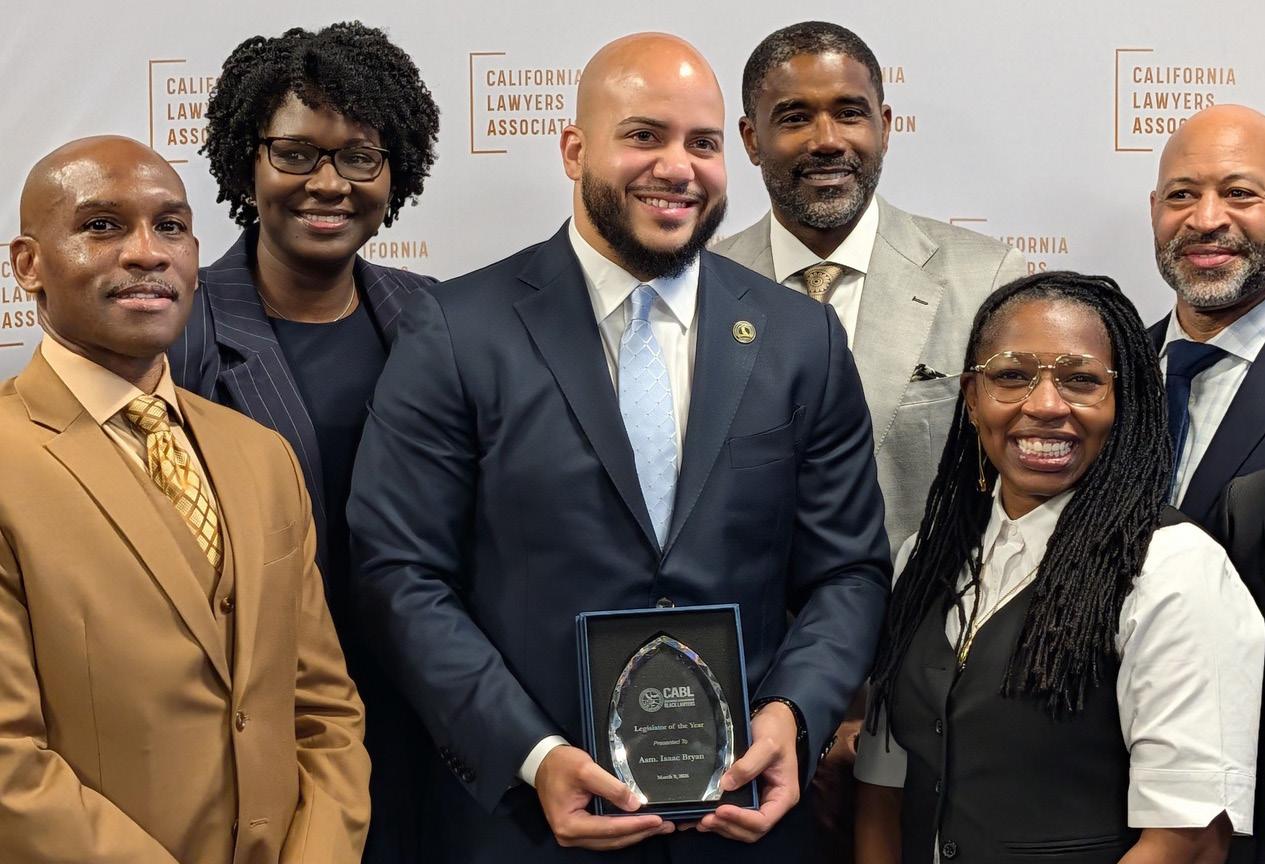
CABL was also a key supporter of AB 7, introduced by Assemblymember Isaac Bryan (D-Ladera Heights). AB 7 was legislation designed to allow California colleges and universities to give admissions preference to applicants who are descendants of enslaved people.
AB 7 passed the State Legislature in September 2025, but the bill was vetoed a month later by Gov. Gavin Newsom, who stated the bill was “unnecessary” because California’s public and private colleges and universities “already have the authority to determine whether to provide such admissions preferences.”
During the reception, CABL presented Bryan with the Legislator of the Year Award.
Niagara Movement Foundation Honors Bay Area Trailblazers, Celebrates Oakland Heritage at 4th Annual Legends Awards Dinner
By Carla Thomas
The Niagara Movement Foundation (NMF) celebrated its fourth annual Legends Awards and Fundraiser Dinner on Saturday, March 14, at Scott’s Seafood Restaurant in Oakland’s Jack London Square. The evening brought together community leaders, advocates, and supporters dedicated to empowering youth and strengthening civic engagement across the Bay Area.
Hosted by Dr. George Woods and Dr. Glenda Newell-Harris, former Oakland Mayor Elihu Harris provided a warm welcome, and Rev. Jeremy McCants opened with prayer. The National Black Anthem, “Lift Ev’ry Voice and Sing,” was led by Althea Battle. The event highlighted the foundation’s ongoing mission to uplift disadvantaged youth through mentoring, internships, and leadership development. Several NMF interns, currently gaining professional experience through the organization, assisted with event production.
Although unable to attend due to health challenges, NMF cofounder Virtual Murrell was recognized by Woods and NewellHarris for his pivotal role in planning the celebration.
“Virtual’s vision and leadership continue to guide this movement,” Newell-Harris said.
The 2026 honorees reflected the foundation’s deep commitment to justice, education, and community impact. Those recognized included Post News Group publishers Paul and Gay Cobb, civil rights attorney John Burris, Dr. Michael Lenoir, the Honor-
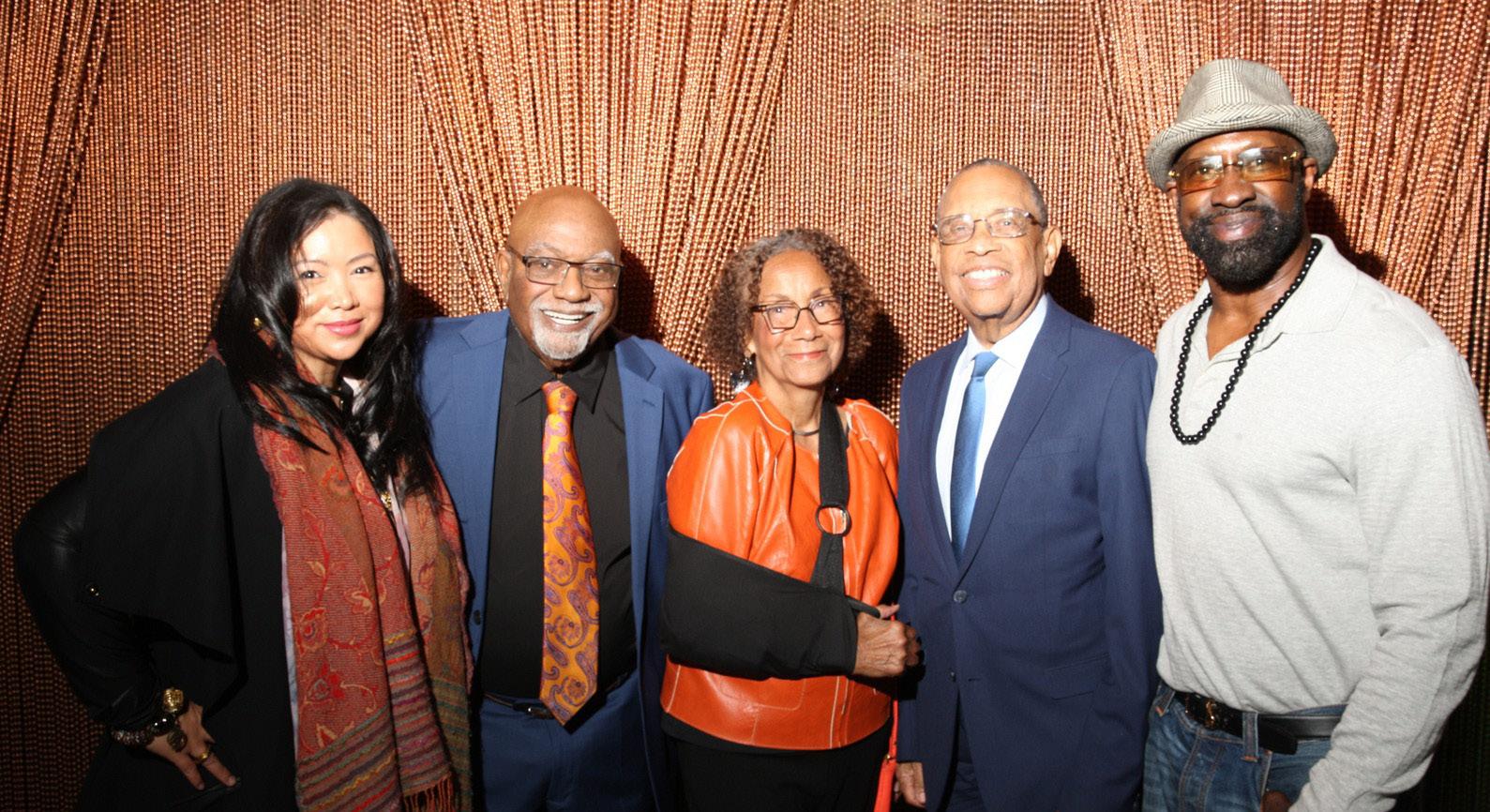
able Leo Bazile, entrepreneurs
Art and Frazier Scott, former Assemblymember Joe Coto, and Dr. Noha Aboelata.
Aboelata, co-founder and CEO of Roots Community Health Center, received the Community Icon Award. She dedicated the honor to her late co-founder, nurse Ophelia Long, whose compassion inspired Roots’ mission. “We are intentionally located in Deep East Oakland where disparities are shameful,” Aboelata said. “Our work is about eliminating those disparities and ensuring every community has the right to health and dignity.”
Lenoir was honored with the Dr. William M. Watts Award, commemorating the legacy of the pioneering physician who established Oakland’s first African American hospital in 1926. “It’s a privilege to serve my community,” Lenoir said, reflecting on his decades of medical and civic leadership.
The Irene and Sidney Dearing Entrepreneur Award was presented to Art and Frazier Scott, longtime business owners who once employed more than 800 workers across Oakland. The Dearings,
historical figures in their own right, owned the Creole Café on Seventh Street and were the first Black family to own property in Piedmont before racial discrimination forced them out.
“Many of you in this room received your first job working for my company,” Art Scott proudly shared. Former Assemblymember Joe Coto received the Honorable Lionel J. Wilson Award, named after Oakland’s first Black mayor and Alameda County judge. Coto, who broke barriers as the first Latino member of the Oakland City Council and served as superintendent of the Oakland Unified School District, said his lifelong mission has been to advocate for young people. “I always fought to make sure our students had the best resources possible,” he said.
Saluting journalism and civil rights, Paul and Gay Cobb, co-publishers of the Post News Group, were honored with the Lillian and Ed Daily Award, named after the couple who published The California Voice from 1924 to 1971. Paul Cobb previously served as the paper’s managing editor before acquiring the Post
in 2004. The Cobbs announced plans for a late-2026 celebration marking the paper’s enduring community legacy.
Attorney John L. Burris received the Honorable Clinton W. White Award in tribute to the late Court of Appeal justice who mentored generations of African American lawyers. Renowned for his groundbreaking civil rights litigation and police accountability work, Burris continues to advocate nationally. He is currently promoting a documentary about his life, “John Burris: The Godfather of Police Litigation.”
The Honorable Leo Bazile, cofounder of the Niagara Movement Democratic Club and a respected attorney, received the Monroe Trotter Award. Named for the civil rights activist who co-founded the original Niagara Movement with W. E. B. Du Bois, the award symbolizes the bridge between past and present equity movements.
Bazile, the first African American elected to Oakland’s District 7 City Council and current member of the Alameda County Reparations Committee, reflected on Oakland’s enduring spirit. “This city has always been a place where people fought for equality and community,” he said.
In her closing remarks, Newell-Harris reminded attendees of Oakland’s remarkable heritage: “Oakland is rich in history, and there are so many extraordinary people in this room tonight. We gather to honor them—and to keep that legacy alive for generations to come.”
By Emil Amok Guillermo
Does Donald Trump realize that one of his favorite words — “obliteration” — rhymes with “collaboration”?
Right now, he needs a lot less of the first, and a lot more of the second.

He might have learned something if he’d watched the Oscars. Yes, the Oscars are still a distraction. But here’s what stuck with me: “Sinners” was the real winner. And it delivered a Filipino American first worth saying out loud.
Say her name: Autumn Durald Arkapaw.
I’ll confess. I missed the live broadcast. I was doing my own monologue show in San Francisco. (Yes, art imitates life imitates hustle.)
But catching up afterward, one thing was clear: if you’re Filipino American, the night belonged to Arkapaw.
Too often, the highlights rush past names like hers. They linger on stars, not the people who shape what we see.
Before her, no Filipino. No Filipino American. Not even a woman had won an Oscar in cinematography—the category that literally makes movies visible.
Actors perform. Writers imagine. Sound engineers polish.
But without the eye—the camera—there is no movie.
Whatever magic director Ryan Coogler conjured in “Sinners,” it was Autumn Durald Arkapaw who captured it, framed it, made it breathe.
That’s not just representation.
That’s authorship.
That’s Black-Filipino collaboration.
Because Arkapaw’s story is America in one name.
Born Autumn Durald, she grew up in the Bay Area. Filipino mother. Black Creole father. Then Hollywood. Then marriage to Australian cinematographer Adam Arkapaw.
Her name is a global passport.
Her work is a masterclass in what diversity actually looks like when it’s not a buzzword.
Ten years after #OscarsSoWhite, after all the DEI backlash and fatigue, after people started say-

ing diversity had peaked or even died— Here comes “Sinners.”
And suddenly, diversity isn’t a talking point.
It’s the story.
Not just faces on screen. The whole ecosystem.
Even the genre plays along.
Call it vampire. Call it zombie. Call it metaphor.
But the horror isn’t just supernatural—it’s historical.
Racism. Violence. Memory.
The genre gives distance for those who need it. Entertainment for those who want it. But underneath, it’s all there. Fear opens the door.
Truth walks in.
That’s what made “Sinners” powerful.
Coogler wins for original screenplay.
Michael B. Jordan takes acting honors for playing twins.
Arkapaw wins for cinematography.
California Rolls Out $1.18 Billion for Behavioral Health ... Continued from page 7
Ludwig Göransson for score.
A full collaboration.
A full vision.
And yet—it didn’t win Best Picture.
That went to “One Battle After Another,” the night’s big numerical winner with six Oscars. Fine.
Numbers aren’t everything. Because for me, “Sinners” hit deeper.
Even beyond Arkapaw.
Coogler’s wife, Zinzi Evans— Oakland-born, Filipino and African American—co-produced the film. She didn’t get an Oscar with the Best Picture loss.
But Coogler made sure she was seen.
“Zinzi, you’re the best mom and wife in the world,” he said. “Every day I spend with you is better than the one that came before it.”
That wasn’t Hollywood.
That was real.
That’s collaboration.
Moral of the story: You can’t “obliterate” your way out of a problem that only collaboration can solve.
About the Author
Emil Guillermo is an awardwinning journalist, columnist, former host of NPR’s “All Things Considered,” and a comic stage monologist.
See his micro-talk show, “Emil Amok’s Takeout” on YouTube.com.
capacity, create crisis treatment centers and provide comprehensive support for those struggling with behavioral health challenges. The investment is expected to benefit millions of Californians who previously faced barriers to care, particularly in underserved areas.
East Oakland Students Present Solutions to Gun Violence ...
Continued from page 1
celebrates a decade of youth-led solutions.
“I am hopeful that the next generation of Oakland youth will be the changemakers our city needs to create lasting social change,” says Dr. Latora Baldridge, head of Lodestar School. “This generation is inspiring, vibrant, passionate, and incredibly smart. They give me hope that tomorrow can be better than today.”
According to the Eventbrite listing, visitors can expect:
Student-Created Art – Artwork reflecting personal experiences, hopes, and solutions for a safer future.
Math & Data Projects – Analysis of gun violence trends, statistics, and policy impacts.
• Humanities & Storytelling Pieces — Animated student reflections, spoken word, and narratives about gun violence prevention.
• Community Engagement – Connect with students, educators, and local organizations working toward positive change.
• Live Discussions & Guided Tours — Learn firsthand from students about their creative process and research.
This exhibition is more than just an art show—it’s a call to action led by the next generation. Come experience their powerful voices and join the conversation on how we can create safer communities together.
Visioning Beyond Violence empowers communities to find their own solutions to gun violence by fostering visionary thinking through the power of art, education,
Gun Violence Law at 10 ...
Continued from page 1
was championed by law enforcement, violence prevention experts, and especially by grieving parents fighting to create this safety intervention that could have kept their children safe and free from violence. As we mark 10 years since the GVRO first took effect, we are publishing data showing how far we have come, and we are publishing recommendations, model policies, and comprehensive training resources to ensure more jurisdictions have the information and support they need to effectively utilize this process to protect public safety.”
Gov. Gavin Newsom also highlighted the state’s broader approach to gun safety.
“We have a fundamental responsibility to keep our communities safe — and with California’s nationleading gun safety laws — we are doing just that,” said Newsom. “Gun violence restraining orders are part of our charge, ensuring that when there are warning signs, families and law enforcement can save lives and prevent tragedy before it ever happens.”
The GVRO law emerged from tragedy. In 2014, a young man who had posted disturbing online videos and alarmed friends and family was still legally able to purchase
Inspiring Oakland’s Future ...
Continued from page 1
ers. The project not only encourages design and engineering skills, but also empowers students to think boldly about how thoughtful development can strengthen communities.
A Day of Learning, Inspiration, and Opportunity AASEG welcomed the students and teachers with lunch and organized an immersive tour of the Coliseum Complex, giving students rare, behind-the-scenes access to both the Arena and the Stadium. With guidance from Coliseum staff, students explored the scale, infrastructure, and possibilities of one of Oakland’s most recognizable landmarks.
For many students, the experience transformed what they have studied in the classroom into a tangible vision — standing inside the very space they are now tasked with redesigning.
A Special Moment on the Field
Adding to the excitement of the day, the Oakland Roots Soccer
and systemic change efforts. They believe that by centering the voices of those most impacted, they can build a culture of nonviolence and safety for all. Learn more at www. visioningbeyondviolence.org.
Lighthouse Community Public Schools (LCPS) is a family of schools in East Oakland committed to serving the whole child. Through a rigorous, inquiry-based model, LCPS prepares students to be lifelong changemakers who realize their unique vision, rooted in identity, knowledge, and skills, to create equity in their own lives and communities: https://lighthousecharter. org/
Lighthouse schools and nonprofit Visioning Beyond Violence utilize a multidisciplinary approach to safety in a rigorous three-month curriculum, with students acting as researchers and artists, investigating root causes in humanities, analyzing safety data in math, and synthesizing their findings into visual narratives that challenge the status quo.
“My hope for people coming to see our exhibit is that they will feel that we can make a change in the world,” said Onajee, a student. “I felt empowered because it expressed how I am feeling about hope, and how hope is dying. If I had a friend who was asked to make these visionary artworks, I would say, put how you are feeling. All your feelings. And express it, so it can move others, and make them want to change the world.”
The “Addressing Gun Violence” Student Art Exhibition is free and open to the public for two days, Wednesday, March 25 from 1-5 p.m. and Thursday, March 26 from 4-7 p.m. at 433 Hegenberger Road, Suite 206, Oakland, CA.
firearms because he had no criminal record or qualifying mental health history. Weeks later, he carried out a deadly attack near the University of California, Santa Barbara, killing six people and injuring 14 others. Victims included Veronika, a 19-year-old freshman; Katie, an art history major nearing graduation; and Christopher, a student who had spent his final day volunteering at a beach cleanup. Advocacy from grieving families helped spur passage of the GVRO law.
To strengthen implementation, the California Department of Justice’s Office of Gun Violence Prevention released four new resources: a model policy for law enforcement agencies, an information bulletin outlining updated legal requirements tied to recent legislation, a 10-year progress report analyzing GVRO trends and challenges, and a comprehensive implementation guide.
The progress report documents a significant rise in GVRO use since 2021 and recommends that agencies designate GVRO coordinators and streamline legal support to help secure longer-term orders, which can last up to five years.
State officials say the new materials are intended to ensure that officers, attorneys and community stakeholders can navigate the GVRO process more consistently and proactively.
Club joined the event and invited students onto the field ahead of their March 14 home opener. Students had the chance to kick soccer balls, take photos, and experience the stadium from the perspective of professional athletes. The moment was both inspiring and memorable—connecting sports, community, and the future of Oakland’s youth. Investing in Oakland’s Next Generation For AASEG, this annual event is about much more than a field trip. It represents a commitment to investing in Oakland’s young people and ensuring that they have a voice in shaping the city’s future.
By engaging students in handson learning experiences and encouraging them to envision new possibilities for the Coliseum site, AASEG continues to demonstrate that community revitalization and youth empowerment go hand in hand.
As these students begin designing their vision for the future of the Coliseum, one message is clear: the next chapter of Oakland’s story will be written by the very young minds being inspired today.
Law to Strengthen Illegal Dumping Enforcement ...
Continued from page 1
our team, the mayor’s office, and city staff.
“I get calls all the time about illegal dumping and what are we doing to solve the problem. This legislation takes tangible action to mitigate and dissuade illegal dumping across Oakland,” Unger said.
“This legislation sends a clear message that Oakland will not tolerate those who dump trash on our streets or profit off harming our neighborhoods,” said Lee. “By strengthening enforcement, increasing penalties, and addressing the root causes of dumping, we are taking a comprehensive approach to keep Oakland clean and protect the communities most impacted by this issue.”
The legislation reflects best practices identified through statewide, county, and Bay Area regional illegal dumping task forces and builds on years of research and collaboration with local governments, environmental agencies, and enforcement professionals. The ordinance focuses on strengthening administrative enforcement so the City can issue citations more quickly and hold violators accountable more effectively.
Ordinance Details:
Changes to Dumping Fines
• Currently, fines are: First offense is $750, second is $1,000 and third is $1,500.
• This legislation would increase fines to $1,500, $2,500, and $5,000 respectively.
· Currently, after three years the fine tiers reset. This legislation would eliminate that reset.
License Plate Requirements
• This legislation makes it a violation for anyone owning a car, or otherwise in possession of a
car, to allow or use it for illegal dumping and for any person transporting waste without a license plate.
Streamlining enforcement
The ordinance also strengthens accountability for vehicle owners and operators when a vehicle is used in illegal dumping and streamlines the City’s administrative citation process to make enforcement faster and more effective. Violators will also have the option to perform community service in lieu of paying a financial penalty.
Education
• Oakland continues to promote education and education of legal dumping measures, including free annual bulky waste pickup and drop-off services available to Oakland residents through Waste Management. These services are intended to help residents dispose of large items legally and prevent illegal dumping before it occurs.
Addressing Root Causes and Equity
• Illegal dumping disproportionately impacts historically disinvested neighborhoods and communities of color in Oakland. To ensure enforcement strategies are equitable and effective, the ordinance directs the City Administrator to measure enforcement outcomes and penalties in priority areas identified by the City’s Geographic Equity Toolkit.
• The City Administrator is also directed to initiate an illegal dumping problem-solving process that is driven by root cause analysis of the chronic presence of trash in priority areas of the City as defined by the Geographic Equity Toolkit to develop parallel comprehensive strategies that address complex challenges.
Equity on Paper Vs. Equity in Practice ...
Continued from page 1
vest in their own city. It’s about displaced residents, families, and business owners who were pushed out by rising costs, who deserve a real pathway back into the local economy.
It’s about ensuring that when the City spends hundreds of millions of dollars on infrastructure, housing, and development, those dollars circulate within Oakland, creating jobs, supporting retail businesses, and strengthening neighborhoods.
When local contractors are included, they hire local workers. Those workers support local businesses. Those businesses stabilize communities. That is how cities build generational wealth, not just for a few, but for everyone.
From Study to Strategy: The Questions That Matter
The disparity study and the action agenda that followed laid out a series of direct, necessary questions for City leadership. These are not abstract ideas, they are practical, measurable steps that determine whether reform is real or just rhetoric.
As outlined, the focus is clear: enforcement, transparency, funding, and results must replace vague commitments.
Here are five core questions that will define success:
1. Will the City enforce prompt payment consistently and with consequences?
Too many subcontractors are forced to wait months to be paid, putting small businesses at risk. If the City is serious, enforcement must include training staff on how to respond, monitoring, and penalties for noncompliance.
2. Will real set-asides be established for local firms?
service providers, architects, and engineers all play a role in the local economy. A truly equitable system ensures that every sector has access to opportunity, not just a select few.
A Collaborative Push for Accountability
This is not about pointing fingers. It is about partnership – with purpose.
As Cathy Adams of the Oakland African American Chamber of Commerce has consistently emphasized, economic equity requires intentional investment and accountability. It requires policies that don’t just look good on paper but produce results in our communities.
Len Turner of the Construction Resource Center has long championed the importance of capacitybuilding – ensuring that small contractors are not only included but equipped to succeed. Without that investment, participation will always fall short of potential.
And from Mario Wagner, president of NAMC NorCal, “I’ll say this plainly: “We are ready to partner. We are ready to bring solutions. But we are also expecting results.
“We need to restore trust. Oakland has talent. It has businesses. It has a workforce. What it needs now is a system that works for its people.”
Derek Barnes, CEO of the East Bay Rental Housing Association, noted that equitable economic opportunity is directly connected to housing stability and the longterm health of Oakland’s neighborhoods. “When local businesses and workers benefit from public investment, it strengthens the entire housing ecosystem.”
ty Chief of Facilities. Since Tim left us, it’s been a mess.
...
Continued from page 1
stadium. The other high schools have new scoreboards. Though McClymonds has a football team that has been up for state championship for three or four years running, it has had an old scoreboard that was always breaking.
We met last week with Interim Superintendent Denise Saddler, and she was very positive. She said that she is installing a scoreboard. I’m looking forward to seeing it.
Since 2018, the district has promised at least three times that renovations would begin but nothing has happened. At present, hallways at the entrance of the school are blocked off, but nobody at the school knows why.
An encouraging development has been the hiring of a new principal. He is really concerned about the kids in the school. Also, enrollment has grown by almost 300 students this year. And if we can add band/ music classes next year, the school will grow even more.
Students coming out of West Oakland Middle want to continue with their music. We just have to get band in the curriculum.
The last time McClymonds had major renovations and could trust what the district was saying was when Tim White was OUSD Depu-
Councilmember Rowena Brown
Continued from page 1
the Oakland Post.
“The recently released City of Oakland Disparity Study is not just a report; it is a reflection of a system that has systematically sidelined our local talent. While I stand on the shoulders of leaders who have fought for contracting equity for decades, these results confirm a painful reality we’ve long felt: Oakland is suffering from a crisis of inequity.
“The numbers speak for themselves. Between 2016 and 2021, nearly 65% of our city’s contract dollars left Oakland entirely. Even more troubling, a mere 59 businesses—a tiny fraction of our econo-
(Tim White, who was very popular, served from 2001 to 2015. He left for Berkeley Unified and returned to OUSD in 2018. He died in 2019 at the age of 63).
Dealing with the problem of lead in the water, which has been a continuing issue in many of the district’s aging schools, Tim put in exterior copper pipes. Before that, the coach had to bring water from his mother’s house across the street so student athletes could have drinking water.
The pipes inside the building still haven’t been changed. Drinking faucets have filters, but they are no labels indicating when filters should be replaced.
We also need a middle school in West Oakland. We have had schools closed and turned into charters, but now only half of a middle school for our students because the other half is being used for Ralph Bunche, which is a continuation school for older students and should not be located on the same campus with middle school students.
Ben “Coach” Tapscott was a teacher and coach at McClymonds for many years and after retiring has dedicated his time as an advocate for the school and for maintaining educational opportunities in West Oakland.
my—monopolized 50% of all contract dollars. The study explicitly shows that Black-owned and women-owned businesses have lost the most ground due to these disparate outcomes.
“We cannot talk about Oakland Ingenuity while we allow 40% of our contracts to bypass oversight through ‘discretionary’ agreements or allow the overuse of L/ SLBE waivers to shut out minority contractors. I am committed to working with my colleagues, city leadership, and the Oakland African American Chamber of Commerce (OAACC) to implement a real action plan.
“Oakland’s diversity is our greatest strength, but it must be reflected in our checkbook. It is time to move beyond good intentions and start delivering measurable
Without dedicated opportunities, local businesses will continue competing at a disadvantage. The City must define clear percentages of contracting dollars reserved for VSLBE and SLBE firms and stick to them.
3. Will waiver reform finally close the loopholes?
Waivers have too often undermined the intent of Oakland’s local business programs. The question is whether the City will limit or eliminate discretionary waivers and create a transparent approval process.
4. Will cooperative purchasing stop bypassing local businesses?
“Piggyback” contracts from other agencies may be convenient, but they cannot come at the expense of Oakland firms.
A ‘local-first’ policy must require proof that local businesses were given a fair opportunity first.
5. Will the City invest real funding into capacity-building?
If we want local businesses to compete, we must invest in them. That means funding for technical assistance, insurance support, mentorship, and a centralized business hub to help firms grow and succeed.
Beyond Compliance: Building a Pipeline
Fixing contracting is only part of the solution.
We must also build a pipeline of opportunity that connects Oakland residents, especially youth, to real careers. That means aligning workforce development programs such as the Cypress Mandela Training Center (CMTC) with actual project pipelines, getting young people involved early, and showing them that construction, engineering, architecture, and professional services are not just jobs, they are careers.
The SLBE program should not just be a compliance checkbox. It should be a launchpad – one that brings in the next generation of contractors, designers, and builders.
And this goes beyond construction.
Retail businesses, professional
Barnes added, “Improving transparency and enforcement in the City’s procurement system can help ensure public spending produces broader economic benefits for Oakland residents and reduces economic leakage. Efforts to strengthen procurement, contracting, and vendor payment processes also align with Mayor Barbara Lee’s 10-Point Plan for strengthening Oakland’s economy.”
The Path Forward
The good news is that momentum is building.
City leaders have shown a willingness to engage. Conversations are happening. Initial steps are being discussed. That matters.
But now comes the hard part – execution. The City must establish:
● Clear timelines for implementation
● Defined accountability – who is responsible for results
● Public reporting on progress
● Measurable targets for increasing local participation
Because, at the end of the day, success is not defined by meetings or memos. It is defined by outcomes.
How many contracts are going to local businesses?
How many jobs are going to Oakland residents?
How many displaced families and entrepreneurs are being brought back into the fold?
A Call to Build Together
We are not asking for special treatment. We are asking for a fair system, one that reflects Oakland’s values and invests in its people.
We want to work with City Councilmembers, department staff, and leadership — not in opposition, but in partnership, to build a stronger, more inclusive economy.
This is our moment to get it right.
If we can answer these questions with action, real enforcement, real investment, and real accountability, Oakland can become a national model for equitable contracting and community-driven economic growth.
If we don’t, we risk repeating the same cycle we’ve been stuck in for decades.
The choice is in front of us.
Let’s build something better –together.