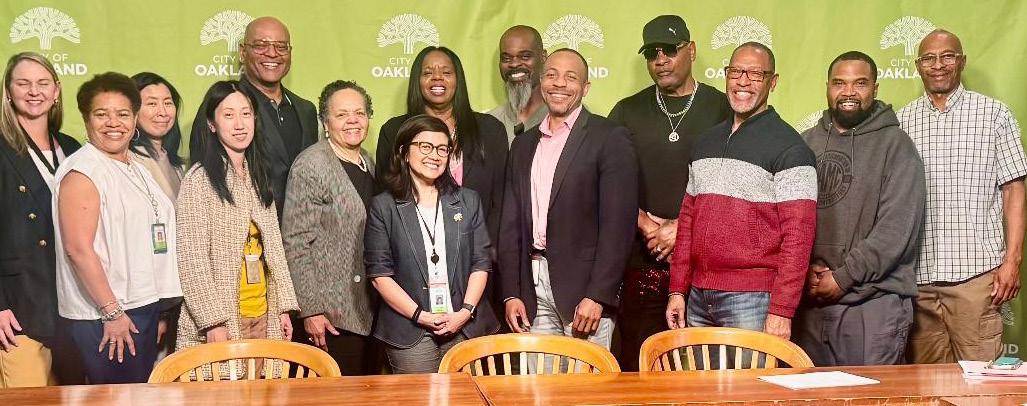
A coalition of Oakland business and community organizations met for more than two hours at City Hall this week with City Administrator Jestin Johnson and senior city officials to begin addressing the findings a 2024 Oakland Disparity Study recently approved by the Oakland City Council.
The study found that a large share of Oakland’s contracting dollars went to predominately whiteowned, large firms located outside the city while many qualified local businesses, especially those that are African American- and women-owned, have remained underutilized.
Oakland awarded about half a billion dollars in public contracts
during the five years covered by the 2024 Disparity Study.
The Oakland City Council voted 7–1, with Councilmember Noel Gallo absent, to accept the study conducted by Mason Tilman Associates and formally acknowledge the disparities identified in the study.
Said Dr. Eleanor Ramsey of Mason Tillman Associates, “Most minority and women businesses did not receive their fair share of city funded contracts. Over 50% of the city’s prime contract dollars were awarded to white-owned, male businesses that controlled most subcontracting awards. And nearly 65% of the city’s prime contracts were awarded to non-Oakland businesses.”
Underscoring the importance of the Disparity Study, Oakland Mayor Barbara Lee told the Oakland Post, “These findings are deeply concerning. My administration is moving forward with a forensic audit and comprehensive reforms to ensure economic diversity, uplift Black and Brown businesses, and make certain that Oakland’s procurement practices truly reflect our city’s values of equity and inclusion.”
Among those who participated in the meeting with city officials were leaders from the Oakland African American Chamber of Commerce (OAACC), National Association of Minority Contractors Northern California Chapter (NAMC NorCal), the Construc-
By Post Staff
Averting the threat of a strike, the Oakland teachers’ union and the Oakland Unified School District reached a tentative two-year agreement on Feb. 27, granting most educators an 11% raise.
Celebrating the agreement, Kampala Taiz-Rancifer, president of the Oakland Education Association
By Post Staff
The town hall held by the National Probate Reform Coalition (NPRC) March 5 began like each that has been convened since January – a judicial and legislative “roll call.” The roll call names legislators and judicial officers and administrators responsible for either oversight or financial funding of probate court systems. Those called were attorneys general, presiding judges, state senators and assemblymembers, county supervisors, state bar associations and officials from the Judicial Council.
(OEA), said in a statement, “This contract reflects a newfound commitment by the OUSD superintendent and school board to prioritize resources toward classrooms.”
OUSD Interim Superintendent Dr. Denise Saddler was also pleased with the settlement.
“By reaching a tentative agreement, we are protecting continuity
Also present were Alameda County Supervisor Nate Miley, the only official consistently supportive of probate reform and first-time guest George Cardona, chief trial counsel for Alameda County Superior Court.
At last Thursday’s town hall, officials heard four stories representative of the criminality most have experienced in the probate system.
NPRC member Luanne Fleming and one of the authors of the book
“The Probate Trap,” coined it this way: “When you go to the attorney general, governor, mayor’s office, district attorney, FBI investigators,
of instruction, maintaining essential student supports, and minimizing uncertainty for families,” she said.
“Even as the district continues to navigate significant financial challenges, this agreement reflects our shared commitment to stability, respect for educators, and strong outcomes for students.”
if you get past the gate keeper, and speak with someone in authority, he, she, or they will listen politely
Oakland rolled out a hero’s welcome for Olympic gold medalist Alysa Liu, whose inspiring return to the city drew thousands to Frank Ogawa Plaza for a jubilant celebration of athletic triumph and community pride. Before the rally, Liu appeared at a press conference alongside Mayor Barbara Lee and her coaches, Phillip DiGuglielmo and Massimo Scali, where nearly 100 members of the media gathered to ask questions. “We are so proud of Alysa Liu,” said Mayor Lee. “It’s wonderful to honor her and her accomplishments.”
In her remarks, Lee said:
“Today, we celebrated one of our greatest — Alysa Liu, an Olympic Gold Medal Champion and a hometown hero who trained right here at
the Oakland Ice Center, studied at Oakland School of the Arts, and didn’t come from somewhere else to represent Oakland, because she grew up here. Every time she stepped onto the ice, she carried the spirit of Oakland with her, and somewhere in the crowd today there was a young person watching, thinking maybe that could be me — because dreams don’t start somewhere else, they start in neighborhoods, they start in families, they start in cities that believe in their young people, cities like Oakland.” Lee presented Liu the Key to the City of Oakland, crafted by the artists at the Crucible, and an official proclamation honoring her extraordinary achievement from Assemblymember Mia Bonta, Assemblymember Buffy Wicks, and Senator
Jesse Arreguín.
The honors represent “the pride of our entire community,” Lee said, “because there is something even more powerful than a key and something even more meaningful than a proclamation, and that is the love of your hometown, and in Oakland, when one of us rises, we all rise”
After taking a two-year break from competition during the 2024–2025 season, Liu reunited with her Bay Area-based coaching team and went on to make history at the 2026 Winter Olympics in Milan, earning her first Olympic gold medal.
When asked about the significance of being both female and Asian American in the world of figure skating, Liu said simply, “RepContinued on page 8
By Carla Thomas
In the high-energy world of sports and entertainment, few voices are as instantly recognizable in the Bay Area as that of James C. Earl-Rockefeller III, known to fans and colleagues alike as “That Announcer Guy.”
From high school championships to college arenas, Rockefeller’s vintage game show presence and charismatic delivery have become a staple for Bay Area athletics and beyond.
and seem concerned.
“Your hopes will rise because you think you’ve found someone in power with a sympathetic ear. They’ll tell you they’ll look into it, thank you most sincerely for bringing it to their attention, shake your hand, and usher you out of their office, or, in the case of a certain attorney general they’ll tell you
Based in Oakland, Rockefeller is the public address announcer for the Stanford Cardinal, Laney College, and the Oakland Athletic League, where his mix of energy, precision, and flair lifts every game-day atmosphere. His talent behind the mic has made him a local fixture, connecting athletes, fans, and communities through his signature voice.
Beyond the stadium, Rockefeller, known professionally as “Rockenthehouse,” or “Rocke” is also a seasoned media producer
their role is to defend judges, or it’s under the jurisdiction of the civil court system, not theirs, and they can’t help you, or they may explain these things move at a snail’s pace, and you might get lucky in a year or two, if at all.”
Then, nothing happens, Fleming said.
The next step, she said, is to file complaints with the Office of Attorney Regulations Council. “Almost without exception, no matter how outrageous the attorney’s behavior, no wrongdoing will be found, and it’s business as usual. It seems the fox is watching the hen house.
and entrepreneur. As the founder and executive producer of VJTV The Visual Radio Network, he created a platform that merges music, sports, and entertainment into vibrant storytelling. VJTV covers red carpets and awards shows, locally and nationally.
Rockefeller’s journey included an unexpected twist: before his announcing career, he was a stand-up comedian and television production specialist.
“I appeared on the first season
Continued on page 8
Then you go to legislators, or town hall meetings. They listen, looking very sympathetic and if you pester long and hard enough, float a bill to address some of the abuses taking place in the court system.
After seeking input, the legislator will ask for help with the language of the bill, Fleming continued. “Although they may truly want to help, it’ll go nowhere, get stalled in committee, where it will die, sabotaged by the legal lobby, or undergo a rewrite watering it down, to ensure it has no enforcement provisions, or changing its meaning to
Attendees of a meeting Monday at Oakland City Hall between business leaders and city administrators included (first row, left to right) Felicia Verdin, Jasmine Chan, Darlene Flynn, Emylene Aspilla, Jestin Johnson, Len Turner and Mario Wagner; (second row, left to right) Laurel Moeslein, Juliete Huang, Derek Barnes, Cathy D. Adams, Chadwick Spell, Lavell Lawson and Ahku Mitchell. Courtesy photo by Post News Group.
OEA President Kampala Taiz-Rancifer and Interim OUSD Superintendent Dr. Denise Saddler. File photos.
Pictured left to right: Edward Roe, Peter Gamez, Mayor Barbara Lee, Alysa Liu, Zaileen Janmohamed, Cathy Adams, Jasmin Odion, Juan Camero, and Marité Xavier. Courtesy photo.
The Game Tape Sports Network (GTSN) team includes managing partners James C. Earl-Rockefeller III, director of programming (left); Jamie G. Jones, director of operations (center) and Brenden L. Anderson, sports and media director (right). Photo courtesy of GTSN.
Luanne Fleming and Robin Austin hosts a weekly podcast
Probate Trap” and are coming out with a book with the same name next month. Courtesy image.
With California Anti-Hate Program Set to End, Report Warns Black Californians Remain Most Targeted Group
By Edward Henderson California Black Media
A meeting of the California Civic Media Program Advisory Board was briefly disrupted last month when an unknown participant hijacked the Zoom chat and repeatedly posted the racial slur “I HATE N**GERS!” before moderators removed the messages. The incident underscored a troubling reality highlighted in a new statewide report: anti-Black hate remains persistent in California.
Days later, the California Commission on the State of Hate released its 2024–2025 Annual Report on Feb. 24, warning that hate activity remains elevated statewide and that Black Californians continue to face disproportionate harm.
The findings come as California prepares to close its Stop the Hate program on June 30, 2026, after investing $250 million in public awareness, prevention and grassroots anti-hate work.
Assemblymember Dr. Corey Jackson (D-Moreno Valley)
says combating hate across the state requires cross-community alliances.
“One of the critical things about hate is that in many cases, when hate arises against one group, that community is often left on its own to organize and defend itself. They’re left trying to fend off the attacks and educate others about their own humanity,” said Jackson, who spoke at a Feb. 24 informational hearing titled “State of Hate in California: Progress on Addressing Hate in California.”
Lawmakers organized that event just one day after the report’s release.
“We know that the best protection against hate — the best way to fight it — is solidarity,” Jackson continued.
For nearly five years, California’s Stop the Hate program has funded community organizations across the state to prevent and respond to hate incidents and crimes. They have also supported the state’s nonemergency 2-1-1 network for the
past 3 years to coordinate care through California vs Hate, a multilingual hotline and online reporting system designed to support victims of bias and discrimination.
“California vs Hate has been a lifeline for Californians targeted by bias and discrimination,” said Maribel Marín, Executive Director of 211LA. “The program was originally funded with limited-term dollars and is not currently slated for renewal.”
Marín said the need for the service remains urgent. Data from the UCLA Center for Health Policy Research show nearly 3.1 million Californians experienced a hate act last year, and many reported unmet support needs — meaning they wanted help but didn’t know where to turn.
Through California vs Hate, 2-1-1 operators provide a safe, confidential place for people to report incidents and connect them with services such as legal aid, counseling and financial assistance. In 2024, the program
Continued on page 7
By Emil Guillermo Robert Marzan. Fifty-four. Sacramento.
Dwell on his name.
The Department of War may have killed off any sense of DEI—diversity, equity, inclusion—but the dead have a way of bringing it back.
Defense Secretary Pete Hegseth says media coverage of the war dead is just an attempt to “make the president look bad.”
No, Mr. Unqualified Secretary.
The war dead is the news.
When the number of Americans killed rose from four to six, and Marzan’s name appeared on the list, the war suddenly felt personal.
The name made me stop.
A Spanish surname. Would people assume Mexican? Latino?
I’m Guillermo — Spanish by colonization, American by birth, 100% Filipino. Asian
American.
Would anyone even wonder if that were an American name?
Or would they debate it and conclude, no way that person is illegal.
Of course not.
Marzan died for his country.
Our country.
Marzan was Filipino American. Asian American.
One of us. All of us.
Born in Sacramento, Marzan was part of a generation of American-born children of Philippine immigrants making their mark in the U.S. His parents moved from South Sacramento to the suburbs of Elk Grove.
The American Dream.
Marzan enlisted in the Army in his twenties and stayed. He built a career as a Chief Warrant Officer Three specializing in IT. Even after active duty, he continued to serve as a reservist.
He was killed when Iran retaliated with a strike on a U.S.
command center in Kuwait. Died in service.
But I still wonder: if ICE encountered Marzan today —a brown man walking down the street — would they stop him?
Detain him?
That’s the America we’re living in now.
And yet, as we approach two weeks of war, most Americans don’t seem to want to think about it.
No rallies around the flag.
No massive peace marches.
War is happening on the other side of the world.
It’s Trump’s war.
Not a people’s war.
But make no mistake: it is a war.
Last weekend, the day the bombing began, I was in Fresno at the Rogue Festival performing my comic one-man show.
War followed me onto the stage.
Earlier that day, I thought of Country Joe McDonald, the East Bay rocker who wrote one of the most famous protest songs of the Vietnam era.
You remember the “Fish Cheer.”
Give me an F.
Give me a U.
Give me a C…
You know the rest.
It was the lead-in to “I Feel
Like I’m Fixin’ to Die Rag,” the song that asked the most honest question ever posed about war:
“What are we fighting for?”
By coincidence, Country Joe died in Berkeley the same weekend. So, I honored him.
17 Small Businesses Receive $2 Million in State Funding; Applications Open for More Grants Assemblymember Corey Jackson: ACA 7
osition 209,” Jackson told California Black Media after the Assembly vote. “Instead, it proposes a constitutional amendment to narrow its scope and create specific exceptions for targeted state programs.”
Under the proposal, the governor could authorize waivers allowing public agencies to use state funds for culturally specific programs aimed at improving life expectancy, educational attainment and economic opportunity in communities experiencing documented disparities.
which banned affirmative action in California. CBM photo by Antonio Ray Harvey.
By Antonio Ray Harvey California Black Media
Assembly Constitutional Amendment 7 (ACA 7), authored by Assemblymember Corey Jackson (D-Moreno Valley), passed the State Assembly last month with a 54-14 vote, meeting the two-thirds threshold required for constitutional amendments.
The proposal seeks to clarify how Proposition 209 is applied in California by allowing the state to fund certain research-based programs designed to address disparities in health outcomes, education and poverty among specific communities.
Jackson said the measure does not repeal Proposition 209 but instead clarifies how the law should be interpreted.
“ACA 7 does not remove Prop-
Jackson said the amendment clarifies how Proposition 209 applies within public education by limiting the prohibition to higher education admissions and enrollment, while allowing state-funded programs designed to address disparities in areas such as health outcomes, educational attainment and poverty.
“What ACA 7 really does is clarify Prop. 209, because too often local governments and others apply it to everything,” Jackson said. “Whenever we see disparities affecting the African American community, certain members of the API community and others, people often say, ‘we can’t do that because of Prop. 209.’”
Proposition 209, approved by California voters in 1996, amended the state constitution to prohibit the state from discriminating against or granting preferential treatment based on race, sex, color, ethnicity or national origin in public employment, public education or public contracting.
During the Assembly floor debate, some Republican lawmakers argued that ACA 7 could weaken the protections established by Proposition 209.
Assemblymember David Tangipa (R-Clovis) urged colleagues to oppose the measure, saying voters had previously rejected changes to the law.
“I rise in strong opposition to this,” Tangipa said during the debate. “Let us remember and recognize what ACA 7 really is.”
Jackson pushed back on that characterization, saying the amendment focuses on clarifying the law’s scope rather than repealing it.
“I think this body knows my record about how I feel about racism, hate and discrimination,” Jackson said before the floor vote. “But one thing I don’t tolerate is lies. We should stop lying and understand that Prop. 209 is preventing people from living longer lives, healthier lives and with more dignity and humanity.”
After the Assembly vote, Jackson told California Black Media he believes the proposal has a path forward in the Senate.
“It barely got out, baby, but a win is a win,” Jackson said. “On the Senate side, I am confident that I’ll be able to get the votes as well.”
ACA 7 now moves to the California Senate, where it will begin the committee review process. If the measure receives a two-thirds vote in the Senate, the constitutional amendment will appear on the November 2026 statewide ballot.
By Bo Tefu California Black Media
On March 5, Gov. Gavin Newsom announced more than $2 million in state funding for small businesses developing new technologies, while encouraging entrepre-
neurs to apply for additional grants through a statewide innovation program.
The funding, awarded through the California Office of the Small Business Advocate (CalOSBA)Innovation Grant Awards, supports startups working in sectors such as health technology, clean energy, artificial intelligence and advanced manufacturing. Officials said the program is designed to help earlystage companies grow and bring new products to market.
“California continues to be a global leader in innovation and entrepreneurship,” said Newsom.
“Today’s investments reflect the state’s commitment to help all, boosting local economies through new small businesses in our communities across the state.” More than 70% of the companies receiving grants are pre-revenue startups, meaning they are still developing products before entering the marketplace. Several award-
Entrepreneurs across California received grants ranging from $25,000 to $100,000 to help expand operations, develop technologies and move innovations closer to commercialization. Newsom’s office said the investments aim to strengthen local economies and maintain California’s reputation as a global hub for innovation.
1111 Broadway, Suite 800, Oakland, CA 94607 (510) 208-7400 • www.alamedactc.org
Request for Proposals (RFP) for Electronic Toll System Manager And Program Support Services (RFP No. R26-0010)
The Alameda County Transportation Commission (Alameda CTC) is seeking proposals for a contract to commence services in October, 2026, or as indicated in the RFP and/or appropriate addenda.
Key Dates: • Optional Pre-Proposal Meeting at the Alameda CTC offices is scheduled for Thursday, March 19, 2026, at 3:00 p.m. Pacific Time (PT)
• Proposal due date: April 10, 2026, BEFORE 3:00:00 p.m. PT
The contract will be funded in whole by Express Lane Toll Revenue and as such, will not be subject to a Disadvantaged Business Enterprise Program or the Alameda CTC Local Business Contract Equity Program. However, Alameda CTC strongly encourages each proposer to consider the use of disadvantaged, local and/or small business enterprises in its proposal..
All RFP documents are available Procurement Portal at https://alamedactc.bonfirehub.com. All questions regarding this RFP must be submitted via the Procurement Portal, no later than 1:00:00 p.m. PT on March 25, 2026.
Submittals must be made in accordance with the instructions in the RFP. Any contract awarded must be in compliance with the local, state, and/or federal requirements
Attendees visit the California Black Media “Stop the Hate” booth during the Taste of Soul festival in Los Angeles, Oct. 19, 2024. (CBM staff photo)
Asm. Corey Jackson stands in the Assembly chamber as his legislation, ACA 17, passes with a 54–14 vote. The bill, which has now advanced to the Senate, aims to clarify and create exceptions to Proposition 209 (1996),
Public Notices, Classifieds & Business
Financial Wellness and Mental Health: Managing Money Stress in College
Sponsored by J.P. Morgan
Wealth Management
As a college student, managing financial responsibilities can be stressful.
If you’ve found yourself staying up late thinking about your finances or just feeling anxious overall about your financial future, you’re not alone. In one survey, 78% of college students who reported financial stress had negative impacts on their mental health, and 59% considered dropping out. While finances can impact overall stress, taking steps to manage your finances can support your mental, emotional and physical well-being.
When it comes to money, the sources of stress may look different for each student, but identifying the underlying causes and setting goals accordingly may help you feel more confident about your financial future.
Consider these strategies to help improve your financial wellness and reduce stress.
1. Understand what causes
By Tanu Henry and Edward Henderson
California Black Media
As California’s 2026 gubernatorial contest takes shape, candidates are offering competing visions to address the state’s most persistent challenges.
Tom Steyer, a billionaire investor and activist, says his campaign is focused on affordability and structural imbalances in the state’s economy.
In a recent interview with California Black Media, Steyer discussed how his policies would shape his approach to governing.
How would you address the affordability crisis?
Californians cannot afford to live in California. They can’t afford the rent. Electricity prices are about twice the national average. If we lower the cost of housing and utilities, we start to relieve the pressure.
How do you respond to concerns about campaign finance reform, considering you are a wealthy candidate?
I have an unfair advantage but, ultimately, it’s about the message. If you don’t have a message, it doesn’t matter how much money you spend. Corporate PAC money should be banned.
You support expanding free education from preschool through community college. How would you ensure that this policy is sus-
financial stress
While everyone’s financial situation is unique, several common sources of stress have the potential to strain your financial health. These include financial and economic uncertainty, existing debts, unexpected expenses, and mental or physical health changes. Financial stress may differ from situation to situation, but understanding the factors contributing to yours may help you begin to craft a plan for your unique circumstances.
2. Determine your financial priorities
Start by reflecting on your financial priorities. For students this often includes paying for school or paying off student loans, studying abroad, saving for spring break, building an emergency fund, paying down credit card debt or buying a car. Name the milestones that are most important to you, and plan accordingly.
3. Create a plan and stick to it
While setting actionable goals starts you on the journey to better financial health, it’s essential
Photo courtesy JPMorgan Chase.
to craft a plan to follow through.
Identifying and committing to a savings plan may give you a greater sense of control over your finances, which may help reduce
your stress. Creating and sticking to a budget allows you to better track where your money is going so you may spend less and save more.
tainable?
I’m very specific about raising $15 to $20 billion a year by closing corporate tax loopholes like the corporate real estate loophole and the “water’s edge” loophole that lets companies shift profits overseas. If we bring that revenue back to the state, we can invest in education that builds opportunity over the long term.
You’ve singled out utility giants as part of the state’s affordability problem. What actions would you support to hold them accountable and reduce energy costs?
They charge Californians roughly twice the national average for electricity. The only way to lower
NOTICE AND DIGEST
those prices is to take on the monopoly and break the system that allows them to keep charging so much.
What policies would your administration pursue to close the racial wealth gap and expand economic opportunities for Black Californians?
I started a nonprofit community bank out of Oakland to undo the structural redlining that has gone on in California for decades, really for a century.
That bank makes low-income housing loans, used-car loans, business loans and nonprofit loans because, in order for people to build wealth, they need access to capital, and that access has been denied
AN ORDINANCE, AS RECOMMENDED BY THE PLANNING COMMISSION:
(1) AMENDING TITLE 17 OF THE OAKLAND MUNICIPAL CODE (THE PLANNING CODE)
TO (A) AMEND CHAPTER 17.96 S-14 HOUSING SITES COMBINING ZONE TO UPDATE THE DEFINITION OF DEVELOPMENT PROJECT AND TO INCLUDE A CONDITIONAL USE PROCEDURE FOR NON-HOUSING DEVELOPMENTS; AND (B) UPDATE “WORK/ LIVE” AND “LIVE/WORK” RESIDENTIAL TO NON-RESIDENTIAL UNIT AREA, AS REFERENCED THROUGHOUT TITLE 17, TO CORRESPOND WITH REVISION TO THE CALIFORNIA BUILDING CODE AND OAKLAND BUILDING CODE REGULATIONS; AND (2) MAKING APPROPRIATE CALIFORNIA ENVIRONMENTAL QUALITY ACT FINDINGS.
This Ordinance serves to amend Oakland Municipal Code Chapter 17.96 to add a conditional use permit procedure and no net loss/surplus sites findings for non-residential projects located in the Housing Sites Combining Zone, and to add new uniform standards consistent with the Oakland Building Code for residential and nonresidential floor area in work/live and live/work units. The Council also found that the above actions are exempt from the California Environmental Quality Act
Notice of Publication
This Ordinance was introduced at the City Council meeting, Tuesday evening, March 3, 2026 and passed to print 7 Ayes; 1 Absent: Jenkins. Final adoption has been scheduled for the Special City Council meeting Tuesday evening March 16, 2026, 3:30 P.M., at One Frank H. Ogawa Plaza, Council Chamber, 3rd floor, Oakland, California, and via Teleconference.
Three full copies are available for use and examination by the public in the Office of the City Clerk at One Frank H. Ogawa Plaza, 1st floor, Oakland, California.
ASHA REED, City Clerk
Publication Date: Friday, March 13, 2026. (One Time)
structurally to Black and Brown communities.
There’s also been all this DEI criticism. People say you can’t hire with race or ethnicity in mind. Yet, at our bank, we hire the best people, and it has resulted in a diverse workforce.
You have linked systemic racism to criminal justice reform efforts. How would you address racial bias, reduce mass incarceration, and improve rehabilitation outcomes?
California is coming out of a period where the incarceration system was incredibly racial and racist, and we’ve worked hard to push reforms that address that. We absolutely want safe streets and police officers who protect our communities, but we also believe strongly in treatment and rehabilitation instead of incarceration for many nonviolent offenders. The goal should be to help people reenter society successfully.
What sets you apart as the candidate best positioned to lead Californians across diverse communities?
I’m the only person in this race who represents working people and who is willing to go get the money we need by taking on powerful corporate interests. The only question I ask is what’s good for working Californians, not what’s good for me.
4. Pay down debt
Many students have some form of debt and want to make progress toward reducing their debt obligations. One option is the debt avalanche method, which focuses on paying off your debt with the highest interest rate first, then moving on to the debt with the next-highest interest rate. Another is the debt snowball method, which builds momentum by paying off your smallest debt balance, and then working your way up to the largest amounts.
5. Build your financial resilience
Some financial stress may be inevitable, but building financial resilience may allow you to overcome obstacles more easily. The more you learn about managing your money, for instance, the more prepared you’ll feel if the unexpected happens. Growing your emergency savings also may increase resilience since you’ll be more financially prepared to cover unexpected expenses or pay your living expenses.
6. Seek help and support
By Bo Tefu California Black Media
On March 2, Gov. Gavin Newsom announced $291 million in new funding to help local communities expand housing and behavioral health services for people experiencing homelessness, while introducing new accountability measures tied to the state’s mental health treatment program.
State officials said the funding will support supportive housing, treatment services and homelessness prevention efforts as California works to move more people off the streets and into care. The announcement comes as the state reports a 9% drop in unsheltered homelessness, the first statewide decline in more than 15 years.
The funding is part of California’s implementation of the Community Assistance, Recovery, and Empowerment Act, known as the CARE Act, which allows courts to connect people living with untreated schizophrenia and other psychotic disorders with treatment plans, housing and social services.
“Care and accountability go hand in hand — full stop,” said Newsom in a statement. “Through CARE Court, we have seen inspirational stories of recovery and resilience, but many counties continue to lag behind their peers.”
Under the CARE Court system, family members, first responders or mental health professionals can
NOTICE AND DIGEST
Many colleges have resources to help students experiencing financial stress, like financial literacy courses or funds that provide some assistance for students in need. Talk to your admissions counselor or advisor about your concerns, and they can direct you to sources of support. Your school’s counseling center can also be a great resource for mental health assistance if you’re struggling with financial stress.
The bottom line Financial stress can affect college students’ health and wellbeing, but it doesn’t have to derail your dreams. Setting smart financial goals and developing simple plans to achieve them may help ease your stress. Revisit and adjust your plan as needed to ensure it continues to work for you, and seek additional support on campus as needed to help keep you on track.
petition a civil court to help individuals access treatment and housing services. The program began in several counties in 2023 and was expanded statewide by the end of 2024.
According to state officials, more than 3,800 CARE petitions have been filed, and more than 4,000 people have been connected with services through diversions that helped them access care without going through the court process.
As part of the announcement, Newsom recognized several counties as “CARE Champions” for strong implementation of the program, including Alameda County, Marin County and San Mateo County.
The governor also identified counties receiving additional support to improve implementation, including Los Angeles County, Orange County and San Francisco County.
The $291 million package includes $131.8 million through the state’s Homekey+ initiative to create 443 housing units for people experiencing homelessness and behavioral health challenges. Another $159 million will go to local governments through the state’s Homeless Housing, Assistance and Prevention program.
AN ORDINANCE, AS RECOMMENDED BY THE PLANNING COMMISSION:
(1) AMENDING TITLE 17 OF THE OAKLAND MUNICIPAL CODE (THE PLANNING CODE) TO ADD CHAPTER 17.86 S-8 ABUNDANT AND AFFORDABLE HOMES NEAR TRANSIT (SENATE BILL 79) COMBINING ZONE REGULATIONS IDENTIFYING SITES ELIGIBLE AND INELIGIBLE OR EXCLUDED FROM THE SENATE BILL 79 PROPERTY DEVELOPMENT STANDARDS;
(2) MAKING RELATED OAKLAND ZONING MAP AMENDMENTS TO DESIGATE PARCELS WITHIN THE S-8 COMBINGING ZONE AND TO IDENTIFY WHETHER SUCH DESIGNATED PARCELS ARE ELIGIBLE FOR OR EXCLUDED FROM THE SENATE BILL 79 PROPERTY DEVELOPMENT STANDARDS;
(3) MAKING APPROPRIATE CALIFORNIA ENVIRONMENTAL QUALITY ACT FINDINGS. This Ordinance serves to locally implement the Abundant and Affordable Homes Near Transit Act (SB 79) by adding a new S-8 combining zone to the Oakland Planning Code. The combining zone serves to identify areas of the City that constitute transit-oriented development zones as defined under the state law, identify sites eligible for upzoning under the law, and designate sites as excluded pursuant to one or more of the exclusion provisions provided in the law under Government Code Section 65912.161(b). The Ordinance also enacts zoning maps consistent with the combining zone. The Ordinance is statutory exempt from the California Environmental Quality Act.
Notice of Publication
This Ordinance was introduced at the City Council meeting, Tuesday evening, March 3, 2026, and passed to print 6 Ayes; 1 Abstained: Fife; 1 Absent: Gallo. Final adoption has been scheduled for the Special City Council meeting Tuesday evening March 16, 2026, 3:30 P.M., at One Frank H. Ogawa Plaza, Council Chamber, 3rd floor, Oakland, California, and via Teleconference. Three full copies are available for use and examination by the public in the Office of the City Clerk at One Frank H. Ogawa Plaza, 1st floor, Oakland, California.
ASHA REED, City Clerk
Publication Date: Friday, March 13, 2026. (One Time)
Tom Steyer.
Women & Wealth:
Tips for Navigating Your Lifelong Financial Journey
Sponsored by J.P. Morgan Wealth Management
We are in the midst of a seismic shift in wealth. This phenomenon, often referred to as the “Great Wealth Transfer,” describes the unprecedented movement of assets from the Baby Boomer generation to their heirs – an estimated $105 trillion by 2048. And women are poised to inherit most of this.
J.P. Morgan Wealth Management’s 2025 Investor Study found that women are not only set to receive significant wealth – they’re actively working to build it on their own. Ninety-three percent of women surveyed who are expecting an inheritance aren’t relying on it to reach their goals.
Here are a few tips for women to consider in their wealth-building journey:
Create a financial roadmap
A detailed, well thought out plan is important. J.P. Morgan’s study found that 90% of those surveyed with a plan feel confi-
Black Californians Remain Most Targeted Group ...
Continued from page 2
received nearly 1,200 reports, with about two-thirds of callers requesting ongoing support.
The report includes updated trend analysis, implementation progress and 23 interim policy recommendations aimed at strengthening California’s antihate infrastructure. While it does not include a new statewide prevalence survey this year, commissioners reaffirm that the
dent about reaching their financial goals, compared to 49% without one.
Your plan should reflect your unique goals, priorities and circumstances. Consider your investment horizon and risk tolerance, and remember to revisit your plan regularly as life evolves. Are you saving up for goals like buying a house, sending your kids off to college or retiring early? Where do you want to be in the next five, ten or twenty years?
Everyone’s financial situation is unique, so it’s important to think about these questions and build a plan that is unique to your life.
Women tend to live longer than men on average. Many take career breaks or care for family members, which can influence longterm planning. It’s important to adjust your strategy with these factors in mind.
Where to start with investing
Don’t let misconceptions hold you back. Starting to invest doesn’t require a large sum, and beginning early can be beneficial.
most recent representative data show about 14% of Black adults in California experienced at least one act of hate within a one-year period.
Brian Levin, chair of the California Commission on the State of Hate, says hate has risen dramatically over the last decade, but California is leading the nation in responding to the surge.
“Our state has built up local support networks, we’re investing in increased safety for nonprofits, and we’re bringing together experts from all walks of life to help us put a stop to hate,” Levin said.
The earlier you start, the more time your money has to potentially grow over the years. Understand your overall financial situation, set clear goals and develop a long-term plan.
It’s important to also make sure you’re covered for unexpected expenses that come up before you start to invest. Build up a cash emergency fund, typically enough to cover three to six months of expenses, and pay down any highinterest debt.
the War is Real ...
Continued from page 2
I sang a bit of the song during my shows.
And the audiences spelled out the cheer with enthusiasm.
Because the song still works.
The question still stands.
What are we fighting for?
About the Author
Emil Amok Guillermo is an award-winning journalist, commentator, and comic monologist.
See his latest one man show:
“Emil Amok: Anchorman
Taking charge of your finances
The good news is that women are taking charge of their finances. J.P. Morgan’s research found that 75% of women respondents make financial decisions with their partner or take the lead themselves. For those who have a spouse or partner, it’s important for each person in the relationship to play an active role in the process.
Building wealth can be empowering for many women. The
— The News Made Me Do It”
Potrero Stage, 1695 18th
St., San Francisco
March 14 – 4pm
March 15 – 7pm
March 16 – 7pm
March 19 – 7pm
Live or livestreamed.
Free, with suggested donation. http://playgroundsf.vbotickets.com/event/comedy_festival_emil_amok_anchorman_the_news_made_me_ do_it/179167
same survey found that 73% of women respondents said money gives them “security,” while 64% of Gen Z and Millennial women associated it with “freedom.”
The power of having a team
Some people find it helpful to work with a financial advisor, so you don’t have to tackle things alone. An advisor can help you craft a plan tailored to your needs and keep you on track throughout your lifelong financial journey. If you expect to receive an inheritance, you should also consult with estate planning and tax professionals.
No matter where you are on your wealth-building path, education is key. It’s so important to be an informed investor, and there are plenty of resources out there to help. You can find a library of free educational resources at chase.com/theknow.
As the landscape of wealth continues to evolve, women have a unique opportunity to shape their financial futures and those of generations to come. By stay-
17 Small Businesses
Receive $2 Million in State Funding ...
Continued from page 2
ees have already secured patents or filed patent applications, highlighting the program’s focus on emerging technologies and research-driven innovation.
“Everyone knows that California is ground zero for innovative entrepreneurship,” said Elmy Bermejo, director of CalOSBA. “But our office is working to diversify the state’s innovation economy by recognizing early-stage businesses and founders from all backgrounds struggling to break through barriers to capital.”
ing informed and planning ahead, women have the tools to help them confidently navigate the Great Wealth Transfer and set themselves up for financial freedom. The views, opinions, estimates and strategies expressed herein constitutes the author’s judgment based on current market conditions and are subject to change without notice, and may differ from those expressed by other areas of J.P. Morgan. This information in no way constitutes J.P. Morgan Research and should not be treated as such. You should carefully consider your needs and objectives before making any decisions. For additional guidance on how this information should be applied to your situation, you should consult your advisor. JPMorgan Chase & Co., its affiliates, and employees do not provide tax, legal or accounting advice. You should consult your own tax, legal and accounting advisors before engaging in any financial transaction.
The grants are part of the state’s Accelerate California initiative, which connects startups with mentorship, technical assistance and access to funding through regional innovation hubs.
Since 2023, the program has supported more than 29,000 startups and small businesses and helped create more than 3,200 jobs statewide, according to state officials. Applications for future grants remain open to California entrepreneurs developing new technologies, products or services. Officials said interested business owners can connect with one of the program’s regional hubs to access mentorship, technical support and potential funding opportunities.
Photo courtesy JPMorgan Chase.
Alysa Liu Welcomed Back to ‘The Town’ ... James C. Rockefeller III
Continued from page 1
of BET’s Comic View,” he said. “It was through stand-up comedy that I learned how to connect with the audience.”
In February 2026, Rockefeller took another step forward by launching a new studio space in Oakland for Game Tape Sports Network, a growing platform dedicated to covering amateur and semi-pro, and pro sports. The network provides athletes, schools, and organizations new avenues for exposure, and Rockefeller’s leadership has already positioned it as a major force in local sports media.
Through VJTV, Game Tape Sports (GTSN), and his work in arenas, Rockefeller continues to blend performance, production, and passion into a unique career.
Rockefeller says he gained a lot of experience at Soul Beat TV and was mentored by the late Charles “Chuck” Johnson.
“Chuck was a visionary, and I learned a lot about the business from him,” said Rockefeller.
Johnson founded Soul Beat TV in 1978 in Oakland. It was the first Black-owned, 24-hour cable television network, known for breaking out West Coast hip-hop artists and providing local community activities. It featured local artists
like Too Short and Tupac before Johnson’s passing in 2003.
Like Johnson, Rockefeller has his sights on making an impact in the industry and especially the community. “I just want to make an impact and provide opportunities,” he said with his two managing partners, Operations Director Jaime G. Jones, and Sports and Media Director Brenden L. Anderson.
For Anderson, an educator and athlete with extensive coaching experience, “everyone is an athlete depending on “what you love the most.”
He says he’s glad sports is often a gateway for disciplined students to have access to opportunities they might not otherwise experience. He is excited to share the many facets of not only the sports world, but also health, wellness, and entertainment.
“We want to show the 360 degrees of what it means to be an athlete and a human being.”
Anderson says he’s looking forward to partnering with organizations and companies that uplift athletes and the community. GTSN recently partnered with the Positive Coaching Alliance.
For more information visit: gametapesportsnetwork.com
Oakland Race and Equity Director
Darlene Flynn Emphasizes City’s Commitment to Equity-Focused Contracting Reforms
By Ken Epstein
Darlene Flynn, director of the city’s Department of Race and Equity, is among the City of Oakland’s leadership who will work with business and community leaders to implement “equity-focused contracting reforms.”
Their efforts will be based on the findings of the 2024 Disparity Study that exposed systemic, long-term inequalities in how the city spends millions and millions of dollars to hire outside contractors.
The Department of Race and Equity (DRE), carries a huge responsibility, to “embed fairness and justice into everything the city does,” said Flynn, who spoke this week with the Oakland Post.
With a total of only three staff members, DRE is headed by Flynn, who was hired as the department’s first director in 2016. The passage of the city ordinance creating the department was led by former District 6 Councilmember Desley Brooks.
Flynn came to Oakland from Seattle, where she oversaw the city’s groundbreaking race and equity department for 10 years.
“We are very early in the conversation,” she said, emphasizing that she will be working in collaboration with other city leaders and members of the community to determine strategies and priorities.
“I am hopeful. I think that as soon as possible there should be some action on the part of the city” to show its commitment to follow through on reforms.
“This has been so long coming,” she said. “There have been disparity reports for over 20 years, there hasn’t been progress really at this point. I understand the community’s frustration, and I believe we can pull together to work on this and get some forward momentum as quickly as possible.”
“People need to understand that things can’t wait; they need to change now, but they’re not all going to change overnight. It’s very institutionalized and very built in, but some things need to start changing now.
“People should be able to feel changes in their dealings with the city. I think that’s going to help
Disparity Study Reveals Bias in Awarding City Contracts ...
Continued from page 1
tion Resource Center (CRC), and the East Bay Rental Housing Association (EBRHA).
Besides the city administrator, officials at the meeting included Darlene Flynn, director of the Department of Race and Equity; and Emylene Aspilla, director of the Department of Workplace and Employment Standards.
Johnson committed to working with District 3 Councilmem-
ber Carroll Fife to help establish a joint working group composed of city leadership and representatives from the local business community.
live here,” said OAACC President Cathy Adams. “Public dollars should help grow local businesses, create living-wage jobs, and strengthen the economic stability of the communities that generate those dollars.”
“Equitable economic opportunity is directly connected to housing stability and the long-term health of Oakland’s neighborhoods,” said Derek Barnes, CEO of EBRHA, which has members who are also builders, contractors, maintenance, suppliers, and professional service providers.
“When contracts go to local businesses, those companies hire local workers, create career pathways, and generate the income that allows families to afford housing and build long-term stability in
Continued from page 1
resentation matters.” She added that she felt “lucky to grow up and still live in Oakland,” a city whose diversity continues to shape her sense of self.
Fresh off her Olympic win, Liu was invited to Paris Fashion Week, where she explored her passion for style. “I’m into clothes and the fashions were incredible,” she said. “I met so many great, down-to-earth people.”
Liu also reflected on the personal growth she experienced during her break from skating. “Stepping back from age 16 to 19 helped me as a person and made me who I am,” she said, acknowledging the value of rest, self-discovery, and resilience.
ond you try, you’re gaining something.”
Bay Area musicians G-Eazy aka G-Eze and P-Lo aka Pilo, along with comedian W. Kamau Bell, offered their congratulations. “Oakland is the greatest city in the world and we keep developing greatness,” said Bell. “Shout out to Alysa Liu.”
“Oakland keeps developing greatness,” Bell said. “You’re inspiring generations.”
us take the next steps and the next steps,” she said.
Flynn emphasized it will require intensive work to change deeply embedded practices that have roots going back generations, which primarily have excluded African American- and women-owned businesses from receiving contracting opportunities with the city.
The city has adopted good equity-based policies, but they are often ignored, according to the findings of the disparity study.
She said to change the city’s institutions, its practices and culture, will require the efforts of both the community and city staff. “I think it should be both a top-down and bottom-up process,” said Flynn.
Changing the waiver process, which allows departments to skip open competitive bidding, is something that may be an important priority, she said. There may be times when a waiver is the right thing to do, but there need to be “guardrails,” said Flynn.
She said she’d like to assemble data on all the waivers that have been issued in the last two years or the last five years, to make it possible to see who is issuing them and why they are issued and what needs to change.
Flynn’s approach to equity work requires data. “Anecdotal evidence, the narratives, have their value, but we also need quantitative data because then we can see patterns.”
“We can answer the questions: ‘What’s happening?’ ‘What’s driving this?’ ‘What’s the root cause of that?’”
Taking a systems approach leads to understanding that the current system is working in a way that it was designed to work, she said, “but it’s not working in a way that the City of Oakland has a commitment to work, which is equitably.”
“Any rock you pick up and look under, you are probably going to find inequity,” she continued.
“Not just in the city, in society. It’s baked in. It’s there. The difference between Oakland and many other places is that other places may not want to look under the rock. But it’s Oakland’s commitment to look under the rock.”
Many employees may have good intentions or just not have thought about the implications of their department’s practices, she said.
“Most people walk into an institution, and they adopt the norms of the institution. When you are brand new, you’ve got to fit in. You’ve got to do what people tell you to do, and then it becomes your way of doing business. Eventually, it becomes your norm as well. “
She said she tells people, “You didn’t invent this problem. It was here when you were born. And so, the question is: how can we step up together to make it different?”
The working group will review the City’s draft reform strategies and develop prioritized recommendations for the City Council along with an implementation roadmap expected within 60 days.
“With … millions of dollars in public contracts issued each year, Oakland’s procurement system has the potential to be one of the city’s most powerful tools for expanding economic opportunity,” said NAMC NorCal President Mario Wagner.
“Publicly acknowledging the problem is the first step – the real work is building a system that reflects Oakland’s values,” said Wagner. “When local businesses win public contracts, they hire local workers, train apprentices, and create real economic pathways. Our local workforce must have a fair shot at participating in the projects reshaping their own neighborhoods.”
The coalition and city department leadership will work closely to ensure that the City’s implementation plan directly addresses the findings of the disparity study and creates real opportunities for residents and for small, minority- and women-owned businesses that have for decades have been excluded from city contracting.
City leadership and coalition members agreed to begin addressing several immediate reforms — often described as “low-hanging fruit” — that could quickly improve transparency and accountability within Oakland’s procurement system.
Among the priorities discussed: Review and potentially eliminate contracting waivers, or establish a clear waiver monitoring process;
Strengthen prompt payment requirements to pay subcontractors on time and make provisions enforceable within city contracts;
Ensure that when a subcontractor is listed on a prime contractor’s bid, the subcontractor is really used and receives the contract value identified in the submitted proposal; Create transparency in contract reporting, forecasts, and procurement pipelines
“Oakland’s public contracting system has to work for the businesses and workers who actually
their communities.”
Participants described the meeting as a constructive first step toward addressing the issues identified in the disparity study.
Len Turner, co-founder of Construction Resource Center, said, “Moving forward, we will convene on a bi-weekly basis to continue advancing this work, ensuring we take immediate and sustained action to address the disparities identified in the study and drive meaningful progress without delay.”
“Oakland has the talent, the businesses, and the workforce to build a thriving local economy,” Adams said. “Now the challenge is making sure the city’s systems actually support that goal.”
Supporting the work of implementing reforms, the Chinatown Chamber of Commerce said:
“Women- and minority-owned businesses help make Oakland’s economy vibrant and special, yet disparities in access to public contracting opportunities hold many back.
“The Oakland Chinatown Chamber of Commerce is committed to partnering with city leadership to ensure that women and entrepreneurs of color have meaningful access to compete for city contracts. Expanding these opportunities will strengthen local economic development, support job creation, help the city better serve diverse communities, and increase competition for bids – ultimately delivering better value for taxpayers.”
Post Publisher Paul Cobb, who attended the meeting, said, “This initiative, which has the brave leadership of Councilmember Carroll Fife, can help provide a positive agenda to reverse the capital leakage of Oakland’s dollars that was unaddressed by Mayor Libby Schaaf’s administration. We must adopt policies that are fair for Oakland. Let’s stop subsidizing the suburbs.”
Additional meetings between the coalition and city leadership are expected to refine and prioritize recommendations to present to the City Council.
Attempts to Reform Probate Procedure ...
Continued from page 1
suit their agenda. If it should pass it’ll make no difference, because many laws, even those already on the books, aren’t taken seriously and enforced in the courts.”
Reaching consensus, the coalition agreed to develop a strategy that gets the attention of the vari-
ous parties involved, to hit where it hurts. “We’re looking at filing abuse complaints against judges, attorneys and guardians’ insurance bond, and down the road, recall,” said Tanya Dennis, lead facilitator of the coalition, “That’s the only language they will understand.”
At the rally, crowds filled Frank Ogawa Plaza under sunny skies and cheering fans as hometown celebrities and community leaders took the stage. Oakland native Sway Calloway served as M.C., introducing guest speakers.
Via video, accolades included Golden State Warriors Coach Steve Kerr, NBA star Stephen Curry, and Olympic champion Brian Boitano.
Entertainment was equally electric. Singer Kehlani performed, while the U.S. Shaolin Kung Fu Lion Dancers and Turf Inc. dancers energized the plaza.
Student speaker Lina Nguyen from Skyline High School thanked Liu for inspiring young Oaklanders. “As a child of immigrants, her success makes possibilities real,” she said, quoting Liu’s own words: “What is there to lose? Every sec-
Jess Smith, president of the Golden State Valkyries, presented Liu with a custom “Town” jersey, while fellow Olympian Kristi Yamaguchi welcomed her “gold medal sister” back to the Bay. “The world got to experience her joy on the ice,” Yamaguchi said. “She has made our country proud.”
Andre Ward, undefeated gold medal boxing champion, praised Liu’s courage to take a break and return even stronger. “For what she did, and how she did it ,with Bay Area swag, she’s awesome,” he said.
Nelda Kerr, the director of Community Engagement for the Oakland Roots and Soul Sports Club presented Liu with a custom jersey and said, “You have deep roots and you did it your way.”
Last week, a new mural honoring Liu at 43rd and Telegraph Avenue in Oakland’s Temescal neighborhood is now a permanent symbol of local pride.
The media relations office of Oakland Mayor Barbara lee contributed to this report.
Oakland Teachers Union and School District Reach an Agreement ...
Continued from page 1
Under the terms of the contract, most educators will receive an 11% raise, while senior teachers’ salaries will increase by 13% over two years. There also will be specific raises for special education teachers, nurses, and social workers.
In addition, the contract addresses high turnover, safety issues and elementary preparation time.
Before the deal is finalized, it must be approved by the union’s membership, the school board, and be reviewed by Alysse Castro, Alameda County Superintendent of Schools.
In a statement on Facebook, the OEA (teachers union) said educators have scored a win for:
• Safe, stable, racially just schools;
• Improvements to special education;
• Wage increases to attract and retain quality educators; and
• Commitments to community schools and thriving Black schools.
“We have been sounding the alarm bells for years about the turnover and vacancies caused by years of divestment in our students,” the union statement says. “We have been demanding that the district prioritize solutions to the hundreds of vacancies left year after year when our educators leave.
“The agreement we’ve come to
… shows a shift in the district’s priorities. But we know the work is not over when our school board has just voted on 400 preliminary layoffs. We need to celebrate this win and be ready to hit the ground running to fight to preserve these crucial positions.”
Said Boardmember Valarie Bachelor, “Our teams came to an agreement that I believe will support our students and ensure our talented educators stay in Oakland. There is more work we all have to do, but this agreement gets us one step closer to achieving our mission.”
In a statement on social media, Boardmember Rachel Latta wrote, “Many thanks to Dr. Saddler, district leadership, and my colleagues for working together to prioritize a fair contract without a strike.”
“My eldest kid, just like many others in OUSD, lived through three strikes,” she continued. “When I ran for school board, I vowed to not have a strike on my watch. And now at the beginning of my second year on the board, I understand how much was needed from all parties to achieve a contract that prioritizes stability.”
OEA’s previous contract expired in July 2025. Bargaining began last March, and the union recently announced its members had voted overwhelmingly to authorize a strike.
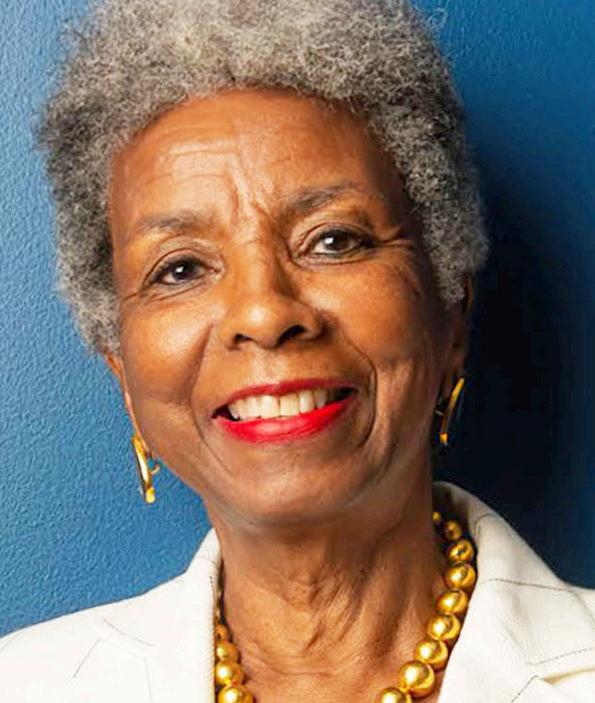
Darlene Flynn. File photo.
Caroll Fife. File photo.
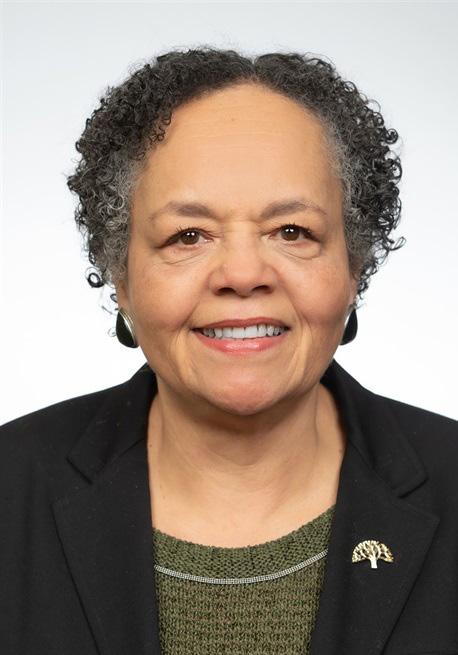
Dr. Eleanor Ramsey. File photo.
Post photographer Jonathan “Fitness” Jones (center) celebrated with Olympic champion Alysa Liu (left) and Oakland lyricist J Walt, both of whom are graduates of the Oakland School for the Arts. Walt told Liu: “You have Positive Soul called Love.”