




By Post Staff
ages 8 - 17 from more than 10 different schools.

to The Post
The National Probate Reform Coalition (NPRC) has joined Toll and Roll and a growing coalition of advocacy organizations, victims, whistleblowers, and citizen groups in support of a nationally
broadcast People’s Grand Jury proceeding scheduled for July 1 and July 7.
Organizers describe the event as a public forum designed to examine allegations of government abuse, judicial misconduct, legis-
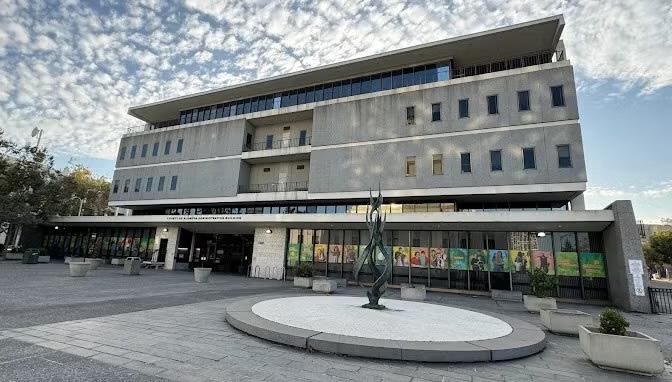
After nearly three years of research, public engagement and policy development, the Alameda County Reparations Commission (ACRC) is preparing to present its Draft Action Plan to the Alameda County Board of Supervisors on June 30.
The presentation marks a significant milestone in one of the na

tion’s most extensive local reparations efforts. Community advocates are mobilizing residents across the county to attend the meeting and support the commission’s recommendations.
The Board of Supervisors is scheduled to consider the commission’s action items during its June 30 meeting at 1:30 p.m. in Room 512 of
The Prescott Circus, Oakland’s longest-running youth circus, is returning this summer with its free shows. Join the Prescott Circus’ young stars as they share their joys and talents through stilt-dancing, tumbling, juggling, and more.
At the heart of this one-hour show, which demonstrates teamwork, pride, and joy, are Oakland Unified School District students
Now in its 41st year, the Prescott Circus Theatre is a nationally recognized performing arts education program for Oakland youth. The circus offers safe environments that challenge Oakland youth, through circus arts training, to develop the skills and confidence to thrive on stage, in school, and in

By Sean Vaughn Scott Special to The Post
For more than 60 years, the Black Repertory Group (BRG) has changed lives through the arts.
Founded in 1964 by educators and visionaries Birel L. Vaughn and Nora Vaughn, BRG has become one of America’s oldest continuously operating Black theater institutions. For generations, it

has preserved culture, developed talent, and provided opportunities for young people to discover their voices and their potential.
The results speak for themselves.
Legendary performers such as Whoopi Goldberg and Danny Glover worked with and were inspired by BRG’s founders. More recently, Grammy award-winning

50 Years Later, ‘Wake Up Everybody!’ Still Resonates During Black Music Month
By Hazel Trice Edney Special to The Post
“Wake up, everybody, No more sleepin’ in bed
No more backward thinkin’. Time for thinkin’ ahead
The world has changed so very much from what it used to be.
By Antonio Ray Harvey California Black Media
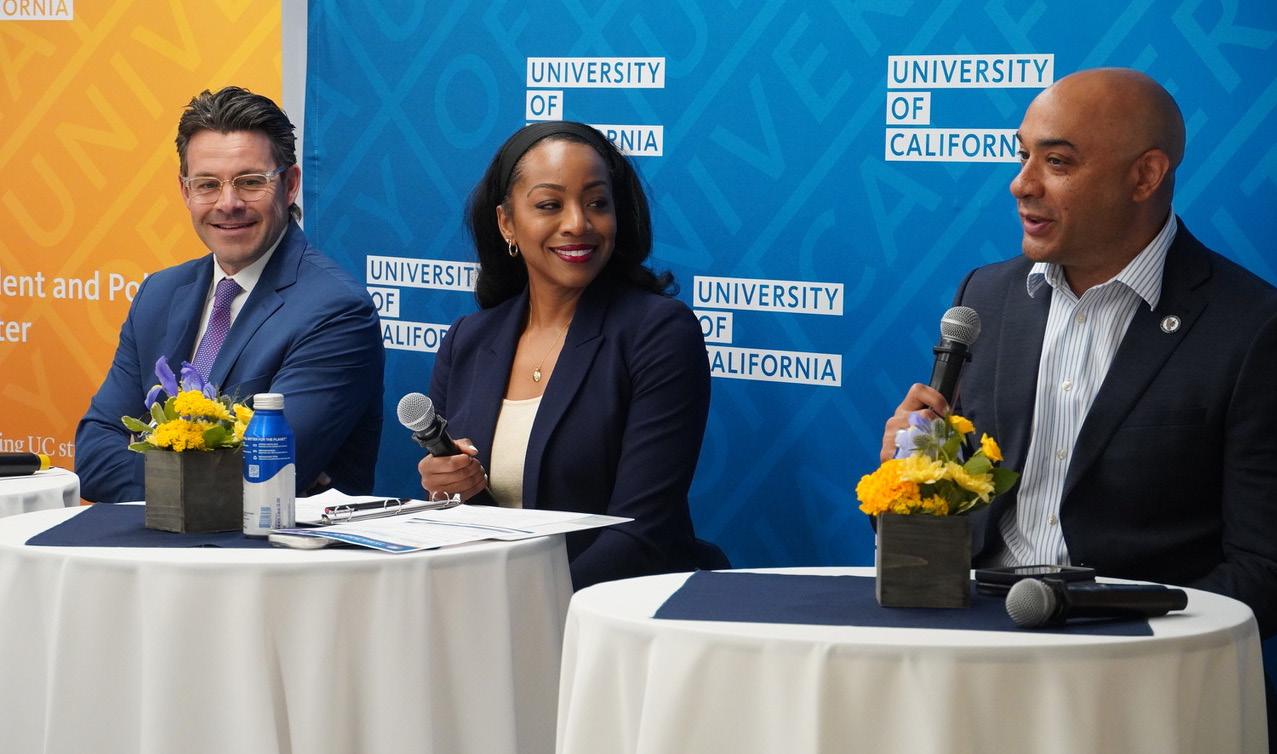
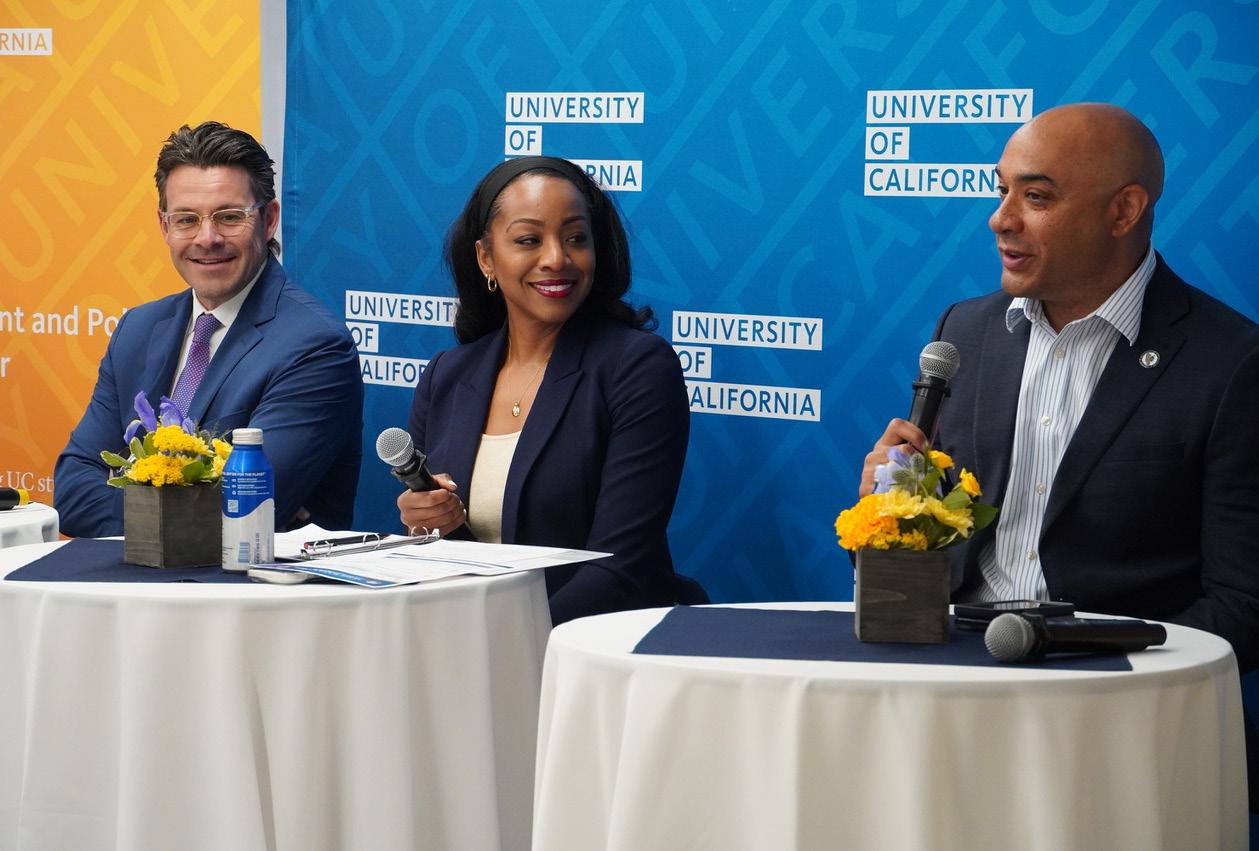
A week before the California Legislature was required to pass a balanced budget on June 15, and send it to Gov. Gavin Newsom, State Controller Malia M. Cohen urged lawmakers to exercise fiscal discipline to guard against ups and downs in state revenue and the risk of future budget shortfalls.
Speaking at the UC Student and Policy Center’s California Economic Forum in Sacramento on June 9, Cohen pointed to the state's 2024-25 Annual Comprehensive Financial Report (ACFR) as an essential tool for understanding California's true fiscal condition.
The ACFR is the state's official audited financial statement, providing a comprehensive snapshot of California's finances based on actual revenues,
expenditures, assets and liabilities.
Cohen noted that this year's report marked the first time since 2019 that California received an unmodified auditor's opinion and completed the report before the release of the governor's May Revision budget proposal.
“Revenues are high, higher than expected. Expenditures are also higher than expected, but we are in a structural deficit,” Cohen said. “We do need to make some changes; otherwise, the (California) government we all know and love will no longer be able to sustain.”
According to the ACFR, California reported $595.5 billion in revenue and $582.5 billion in expenditures during the 2024-25 fiscal year, resulting in a statewide surplus of approximately $13 billion.
Cohen said the report serves as a
critical accountability tool during budget negotiations because it relies on audited financial data rather than projections.
The controller also addressed California's economic outlook in the wake of the latest UCLA Anderson Forecast, the quarterly economic outlook produced by economists at the UCLA Anderson School of Management. The forecast provides analysis of economic trends affecting California and the nation, including employment, inflation and economic growth.
Cohen highlighted concerns about the state's dependence on high-income taxpayers, the sustainability of stronger-thanexpected tax revenues and the risk that short-term financial fluctuations could worsen longterm budget challenges.

OpiniOn: California Must Reinvest in the Next Generation of School Leaders Now
By Dr. Debra Duardo Special to California Black Media Partners
Julian Rojas didn’t grow up imagining himself as a school principal. He grew up imagining his students.
Now in his 13th year in education, Rojas is actively applying for assistant principal positions.
What changed? A new program removed the barriers that stood between talented educators and school leadership and gave him the tools to lead differently.
That program is the Diverse Education Leaders Pipeline Ini-
tiative (DELPI), and California must act now to save it.
Our state is facing a leadership shortage that mirrors the well-documented teacher shortage. Principals and school leaders shape everything, from how teachers are supported to how families are welcomed through the door. Yet the pathway to becoming one is long, costly, and often inaccessible, with credentialing programs running tens of thousands of dollars at a moment when student debt nationally exceeds $1.7 trillion. For many educators of color, those barriers are often insurmountable.
DELPI was created to solve this. The program provides up to $30,000 per candidate so educators can earn their administrative credentials at no cost. It pairs that financial support with culturally responsive training, anti-bias coursework and hands-on fieldwork designed to develop leaders who reflect and understand the communities they serve.
When he entered LACOE’s program, he was already a veteran educator, someone who had served as an interim assistant principal. He knew he wanted to move into administration. “I want to ex-
There is so much hatred, war, and poverty.
“The world won’t get no better
If we just let it be. Naw, naw, naw, naw, naw, naw, naw.
The world won’t get no better. We gotta change it, yeah- just you and me.”
The words of the song, “Wake Up Everybody,” debuted by Harold Melvin & The Blue Notes in 1975, still resonate today as those words are just as relevant more than a half century later.
In a rare, nearly somber mo-
ment, the group’s celebrated lead singer, Teddy Pendergrass, introduced the song on Soul Train, the weekly dance and live performance TV show that aired roughly between 1971 and 2006. Pendergrass told the attentive live audience and thousands watching by television, that “Wake Up Everybody,” the title tune of their most recent album, was intended to inspire people to take action with a goal to change America for the better.
“I’m sure that you will all agree that there are things that need to be done in this country today,” he said. “So, what I’d like for you to do is listen very carefully to see what you can do to lend a hand.”
The song’s appeal worked.
“I played that song over and over and over again because it was
a constant warning to keep ourselves prepared for the society that we were living in,” says A. Peter Bailey, then a 37-year-old former aide to Malcolm X.
When “Wake Up Everybody” hit the airwaves, Bailey was working as an associate editor of Ebony Magazine. “It was a call to be aware of what we were dealing with in the country that we lived in, the world we lived in, the neighborhood we lived in, the cities that we lived in,” Bailey said in an interview with the Trice Edney News Wire.
He concluded that during Black Music Month 2026, such songs should be recalled and celebrated as a key to changes for the good across America; especially because such songs successfully encouraged people to deal with









‘Clearer’ Picture of State’s Financial Health ...
Continued from page 2
She also cautioned lawmakers against relying too heavily on internal borrowing to manage deficits, urging them to limit borrowing and preserve reserve funds.
“ACFR is important to the fiscal health and wellness of the state of California,” Cohen said.
“Think about how it impacts our bond rating. Think about the bond rating as your personal credit score.”
Cohen added, “For us to be creditworthy, for people to loan us money, borrow money to balance out our debts, we need (ACFR) to be out on time and to be clean.”
The third annual California Economic Forum, organized by the UC Student and Policy Center in partnership with POLITICO,
Continued from page 2
the issues that might otherwise denigrate the promises of America, including the promise that “All men are created equal,”as stated in the Declaration of Independence.
“The rhythms and blues expressed our joys, our sorrows and our fears,” Bailey recalls. “It was those songs and the singing of those songs by our people that attracted us to the campaigns for justice.”
brought together economists and policymakers to discuss California's economic trajectory and the fiscal challenges facing the state.
Cohen participated in a panel discussion alongside California Department of Finance Director Joe Stephenshaw and Legislative Analyst Gabriel Petek of the nonpartisan Legislative Analyst's Office (LAO), the Legislature's independent, fiscal and policy advisor.
Stephenshaw, Newsom's chief fiscal policy adviser, said Cohen made completion of the ACFR a priority shortly after taking office.
“The controller made this a priority when she took over. She met with me and expressed that task,” Stephenshaw said. “I have to commend her for the work that was done over the last couple of years to have a timely reporting of our financial statement.”
Reinvest in the Next Generation of School Leaders ...
Continued from page 2
pand my impact and support students at a systems level,” he said. “The structures at a school site and family partnerships directly influence student outcomes. I want to build on that work.”
Rojas is not alone. Across California, approximately 300 educators are currently earning their administrative credentials through DELPI — and nearly every available slot has been filled.
hind this work is stark. Today, roughly 70 percent of administrators in Los Angeles County are White, while our student population is among the most diverse in the nation. Research consistently shows that students benefit when they see themselves reflected in their leaders.
OpiniOn: The UC Davis Scale —When ‘Race-Neutral’ Becomes Code for Illegal Race-Based Affirmative Action

Long before the term “woke” became associated with campaigns for justice, Pendergrass led the song that reverberated across America and still holds deep meaning.
The ‘wake up’ call exhorts teachers to ‘teach a new way,’ doctors to heal elders, and builders to ‘build a new land… we can do it if we all lend a hand.”
The song concludes: “The world won’t get no better if we just let it be. Naw, naw, naw, naw, naw, naw, naw. The world won’t get no better. We gotta change it, yeah – just you and me.”
Hazel Trice Edney wrote this story as part of a four-part series powered by AARP in commemoration of Black Music Month, June 2026.
With his life inspired by that song and others, Bailey, now 88, went on to establish and teach a Black Press class at Virginia Commonwealth University. Also, he has since written three books, including a memoir, “Witnessing Brother Malcolm X, the Master Teacher,” in which he expounded upon successful principles of social justice, some of which are reflected in “Wake Up Everybody.”
At LACOE, we are proud to serve as the fiscal lead for one of just 10 DELPI grants statewide, partnering with the Diversity in Leadership Institute, UMass Global, and a consortium of school districts including Compton, Lynwood, Wiseburn, Centinela Valley, and Culver City. Our first cohort of 11 candidates completed the program in December 2025. Our second cohort of 15 is currently underway. A third cohort of 18 is set to begin in January 2027.
The diversity imperative be-
In
Continued from page 4
you’re Black, and you’ll have a Southern segregated school education. But you can be or do anything you want, provided you’re educated.”
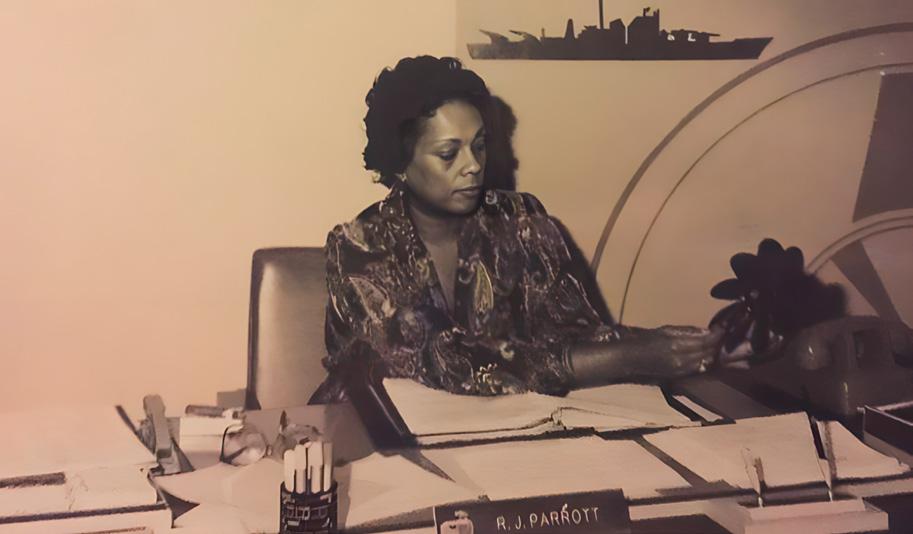
Montague earned a business degree from Arkansas AM&N (now the University of Arkansas at Pine Bluff). She wanted to study engineering, but Arkansas colleges weren’t awarding such degrees to Black women in the fifties.
Despite these obstacles, Montague would later become an engineer, the first female program
But here is the urgent reality: DELPI is funded on a onetime basis and expires on June 30, 2027. The state budget must be passed by June 15 and signed by the Governor by June 30 of this year. If DELPI is not included in this budget cycle, the program ends and the momentum we have built, the cohorts we are recruiting, the leaders like Julian Rojas who are ready to step forward, will have nowhere to go.
If we fail to invest in our leadership pipeline today, our schools will face greater instability, our teachers will lack the support they need and our students will be led by administrators who don’t reflect or understand them.
About the Author
Dr. Debra Duardo, Los Angeles County Superintendent of
manager of ships, and creator of the first computer-generated rough draft of a U.S. naval ship. Other drafted ship designs had taken two years or more to develop; Montague’s took less than 19 hours. She was also an advocate for education and a mentor.
“I’ve had to be scrappy to get what I want,” Montague had said. “After all, no one hands you anything. Especially if you’re Black. Especially if you’re female. You have to fight for it.”
Read more about Montague’s life and accomplishments in “Overnight Code: The Life of Raye Montague, the Woman Who Revolutionized Naval Engineering” by Paige Bowers and David
dards or engineering racial outcomes through the back door. When institutions choose shortcuts instead, everyone ultimately loses: the students, the profession, and the patients it serves. Nowhere is this clearer than at the UC Davis School of Medicine.
UC Davis has handed the Department of Justice a near-perfect exhibit of exactly how this misguided approach plays out in practice. School leaders created the “Davis Scale,” a scoring system that gives extra consideration to applicants from lower-income families, those whose parents had less education, and those who grew up in underserved areas. On paper, it sounds perfectly raceneutral.
By Craig J. DeLuz California Black Media
On June 10, the U.S. Department of Justice announced the findings of a six-month investigation into the UC Davis School of Medicine admissions practices.
The probe focused on whether the university’s “Davis Scale” violated the U.S. Supreme Court’s 2023 ruling in Students for Fair Admissions v. Harvard, which barred colleges and universities from considering race in admissions decisions.
Following that decision, many institutions turned to race-neutral factors such as income, neighborhood conditions, parental education, and access to opportunity as ways to broaden student diversity. The central question in the UC Davis case is whether those factors were used as lawful measures of disadvantage or as a proxy for race.
True diversity must be built by better equipping underrepresented students to compete on equal footing—not by lowering stan-
In practice, Associate Dean Mark Henderson explained the real point with refreshing candor: it was “class-based affirmative action,” and “class struggles have a huge overlap with race — that’s how we skirted the issue.”
One almost has to admire his honesty. Most prefer to whisper such things in private emails. Here, the architect publicly described their workaround, promoted it to other medical schools, and celebrated the results. Internal documents and simulations showed they tested the scale specifically to increase Black and Hispanic enrollment. They tracked racial percentages like sports scores and proudly announced that “underrepresented in medicine” students had tripled, reaching levels that neatly matched California’s demographics.
When the very people who designed the tool openly admit it was built to produce the racial outcomes the Supreme Court had just forbidden, their defense loses much of its force. Intent matters.

Juneteenth 2026: California-Born Astronaut Victor Glover Honored at State Capitol After Historic Artemis II Mission
By Antonio Ray Harvey California Black Media
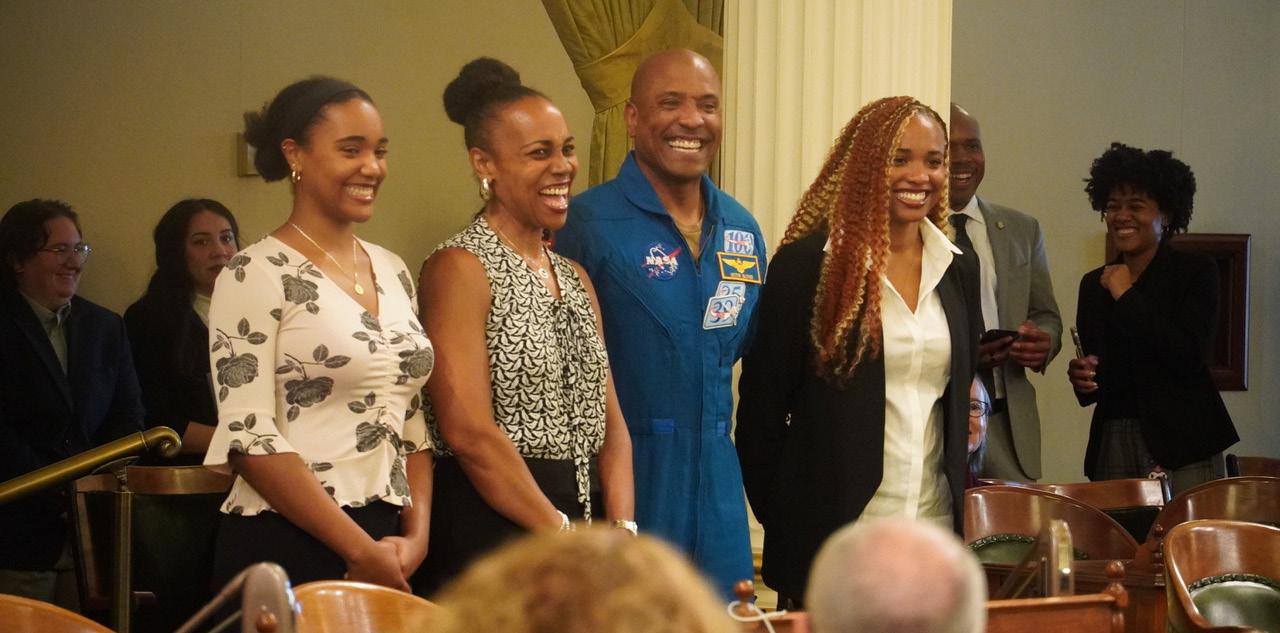
The California State Senate and Assembly welcomed U.S. Navy Capt. Victor Glover Jr., a National Aeronautics and Space Administration (NASA) astronaut, to the State Capitol on June 18, honoring his achievements in space exploration and his role in the historic Artemis II mission.
In a tribute presented in partnership with the California Legislative Black Caucus (CLBC), lawmakers gathered in both chambers to recognize Glover’s accomplishments, including his service as the pilot of the Artemis II mission, which completed a crewed flyby of the Moon in April.
A guest on the floors of both houses of the California Legislature, Glover spoke about the importance of inspiring the next generation.
Glover was also recognized during the reading of Assembly Concurrent Resolution 214 (ACR 214), the legislative measure commemorating Juneteenth in 2026.
Lawmakers from both sides of the aisle joined in celebrating Glover’s achievements.
“Seeing them approve ACR 214 was amazing, overwhelming, and inspiring,” Glover told California Black Media (CBM).
“To see them all come together like that about something they
agree on, and are excited about, instead of things solely about me personally, shows what we are capable of as people,” Glover said.
“I hope that this is a small piece of this theme as we look forward to thinking about ways we can continue to serve and lead the nation and the state by working together.”
Glover added, “Let’s focus on what brings us together rather than what tears us apart.”
Accompanied by NASA colleagues and members of his family, including his wife, Dionna Glover, and daughters Maya and Joia.
“Capt. Victor J. Glover Jr., a native of Pomona, Calif., has a story that reflects the very best of our state and our nation,” said Sen. Akilah Weber Pierson (D-San Diego), chair of the CLBC. “His journey from California to the stars is a testament to perseverance, service, leadership, and excellence.”
Born on April 30, 1976, Glover graduated from Ontario High School in Ontario, California. He earned a Bachelor of Science degree in general engineering from California Polytechnic State University in 1999 and received his Navy “Wings of Gold” in 2001. He also holds three master’s degrees.
“In 2013, while serving as a leg-
‘Nothing to Hide’: Newsom and Wife Say They Are Not Worried About
By Bo Tefu California Black Media
Newsom said he and his wife, First Partner Jennifer Siebel Newsom, have “nothing to hide” as they face what he described as a new federal investigation, accusing President Donald Trump of using government agencies to target political opponents and those closest to him.
Speaking in a video address, Newsom said federal agents have recently contacted family members, friends and former employees while seeking records connected to him and his associates. He argued the effort is politically motivated and tied to his outspoken criticism of Trump.
“In recent days, federal agents have knocked on the doors of family, friends and former employees, not because they found a crime, but because they’re simply trying to find one,” Newsom said.
The remarks mark a sharp escalation in the feud between the Democratic governor and the Republican president. Newsom contends that federal authorities are pursuing people in his orbit despite a lack of evidence of wrongdoing, while Trump and his allies have rejected accusations that investigations are politically driven.

Newsom said investigators could review any records they wished because “we have nothing to hide.” He added, “Donald Trump picked the wrong target.”
The governor reserved some of his strongest criticism for what he described as efforts to involve his wife in the probe. Calling her a dedicated public servant, Newsom said she had “done nothing wrong other than having the temerity to advocate for what she believes in.”

In an emotional moment, Newsom addressed his wife directly.

“I love you, and I’m sorry he’s doing this,” he said. “You have not earned a single one of the indignities that he’s trying to inflict on you and our children.”
Newsom also accused Trump of profiting from the presidency and using the Justice Department to pursue political rivals. He claimed the administration has targeted a growing list of critics and said he was prepared to join them.
“One by one, anyone who has challenged Donald Trump has ended up on his hit list,” Newsom said.

The governor concluded by vowing to continue speaking out against the president and rejecting any effort to silence him.
“Come after me,” said Newsom. “I’m not going anywhere, and the country is watching.”

Black Freedom Fund Awards $4.6 Million to
islative fellow in the United States Senate, Capt. Glover was selected by NASA as a member of its astronaut corps,” Weber Pierson said. “He completed astronaut training and quickly became one of the agency’s most respected leaders.”
Before joining NASA, Glover served as a test pilot, flying aircraft such as the McDonnell Douglas F/A-18 Hornet, an allweather, twin-engine, multirole combat aircraft.
The Artemis II mission was the first crewed flight of NASA’s Space Launch System (SLS) rocket and Orion spacecraft. It carried four astronauts around the Moon before splashing down safely in the Pacific Ocean on April 10, 2026.
Assemblymember Michelle Rodriguez (D-Ontario) described Glover as an “extraordinary American,” a “proud son of Pomona.”
Many of the lawmakers attending were accompanied by their children and young people from their communities, giving them an opportunity to meet Glover in person.
“Here’s the thing, the little Black and Brown kids look at me and see someone with a face that looks like theirs. That’s super important. That speaks to my heart,” Glover told CBM.
By Bo Tefu
California Black Media
Black Freedom Fund (BFF) has awarded $4.6 million to 119 organizations across California, expanding support for nonprofits working on housing justice, immigration advocacy, economic equity and other community-driven initiatives.
The funding, announced as part of the organization’s 2026 grantmaking cycle, will help community groups address immediate challenges while building longterm power in Black communities, according to BFF. The grants support organizations focused on keeping residents housed, protecting immigrant communities,
... Continued from page 7
As Chief Justice John Roberts wrote in the Students for Fair Admissions decision, “what cannot be done directly cannot be done indirectly.”
The law looks at reality, not the clever label. When administrators publicly confess they crafted the Davis Scale as a workaround — “that’s how we skirted the is-


increasing wages, expanding access to health care and improving educational outcomes.
The investment comes as philanthropic support for racial justice initiatives continues to decline nationwide. BFF said many community-based organizations are facing growing financial uncertainty despite increasing demand for services and advocacy efforts.
This year’s grantmaking round is the largest in the organization’s history and reflects a strategy to broaden support across California while strengthening community-led organizations. The cohort includes 119 grantees statewide, with 24% receiving funding from
sue” — they hand their critics the strongest evidence possible.
The deeper problem is not just legal evasion; it is the quiet harm done to the very students these policies claim to uplift. Medical school is demanding. When students are admitted with noticeably weaker academic preparation — lower GPAs and MCAT scores on average—they often find themselves mismatched against classmates who arrived far better equipped. The predictable result is more academic struggle.

BFF for the first time. The foundation also reported a 59% increase in funding for organizations in historically under-resourced regions, including Northern California, the Central Coast, the Inland Empire and the San Joaquin Valley.
In addition, funding for organizations focused on immigration justice increased by 140%, while support for housing and homelessness advocacy groups rose by 89% compared with previous grantmaking cycles.
“We believe it is more important than ever to invest in the organizations and leaders building lasting power in communities across California,” said Marc Philpart, president and CEO of BFF. “This work is about helping build the conditions for Black communities to thrive; not only today, but for generations to come.”
Fund leaders said the grants are intended to strengthen organizations rooted in the communities they serve and provide the resources needed to address both immediate concerns and longterm systemic challenges. Areas of focus include civic engagement, worker rights, health equity, criminal legal reform, housing stability and movement-building efforts.
Since its launch in 2020, BFF has awarded more than $52 million to over 250 organizations throughout California. The organization said its latest investments are designed to help communities navigate current challenges while creating lasting opportunities for economic mobility, civic participation and community leadership across the state.
Real, lasting diversity comes from preparing underrepresented students to compete successfully at the highest levels—not from lowering standards to manufacture the desired mix.
About the Author Craig J. DeLuz who has over 30 years of experience in public policy and advocacy, hosts a daily news and commentary show called “The RUNDOWN”; and can be followed on X at @CraigDeLuz.




















By Antoinette Porter
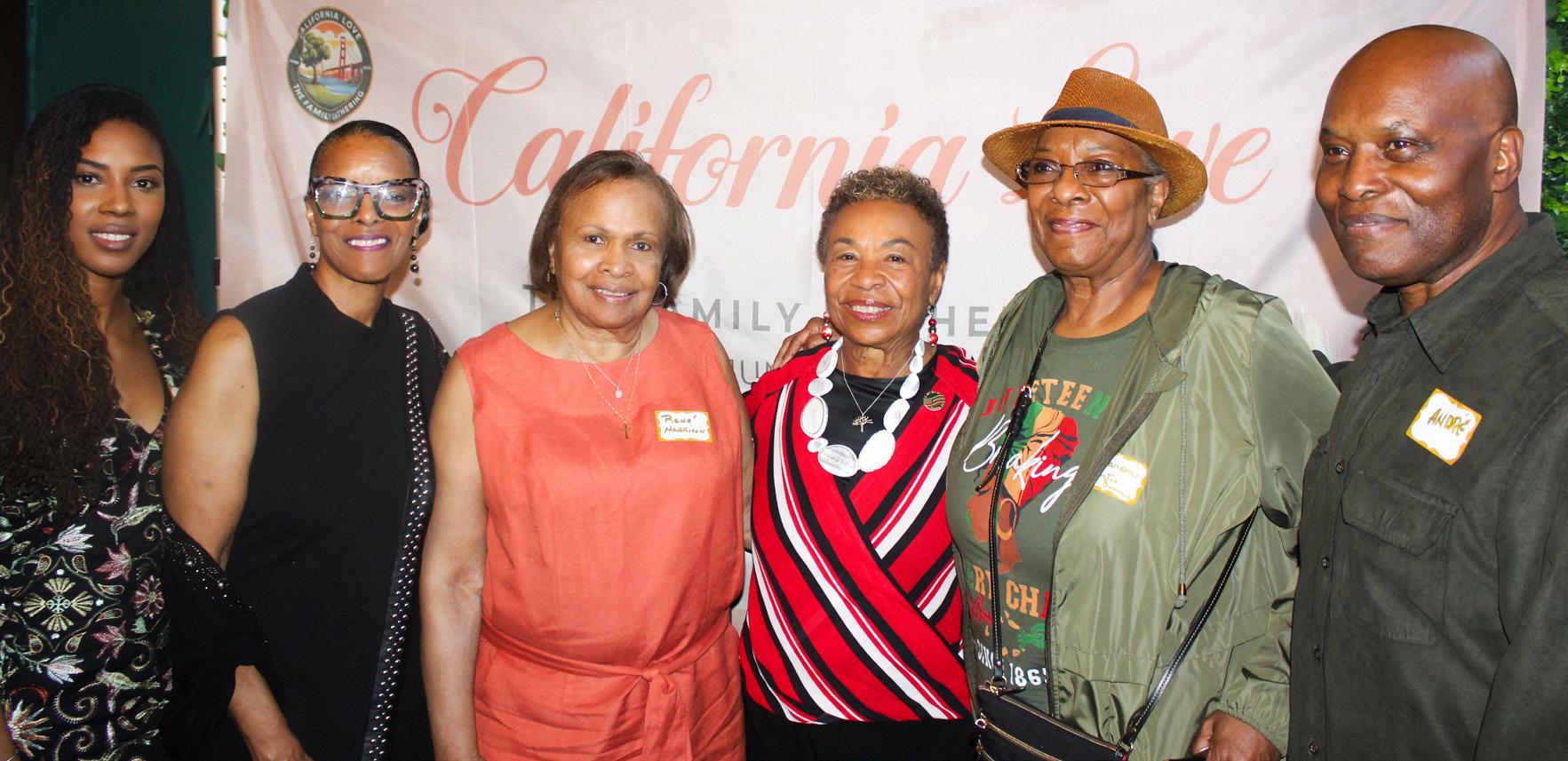
Oakland’s rich cultural heart-
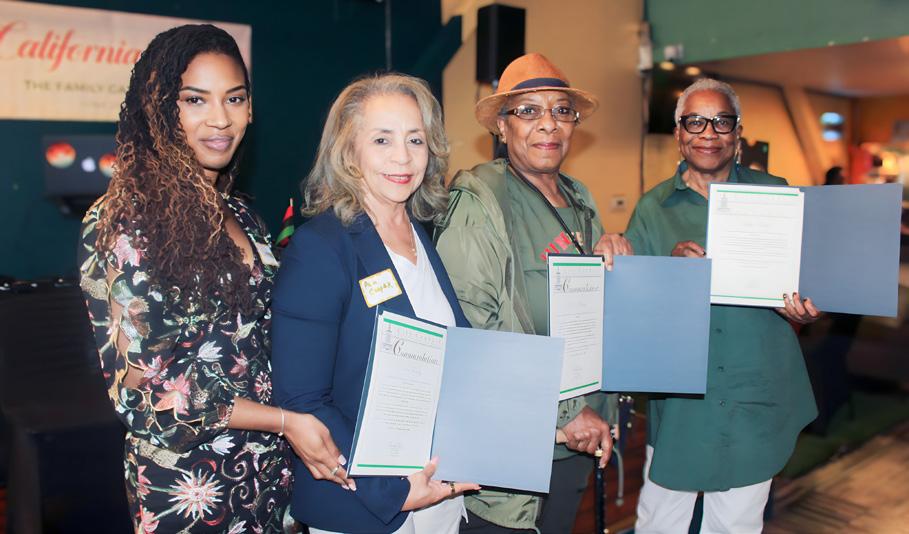
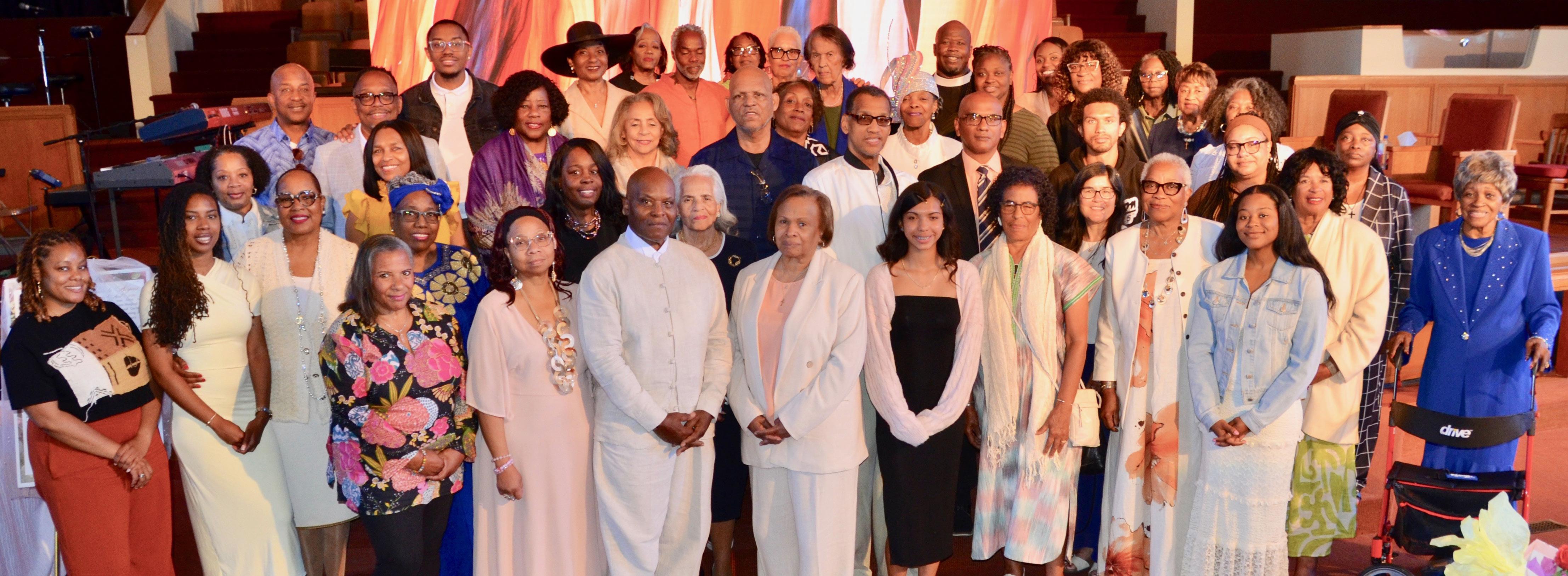
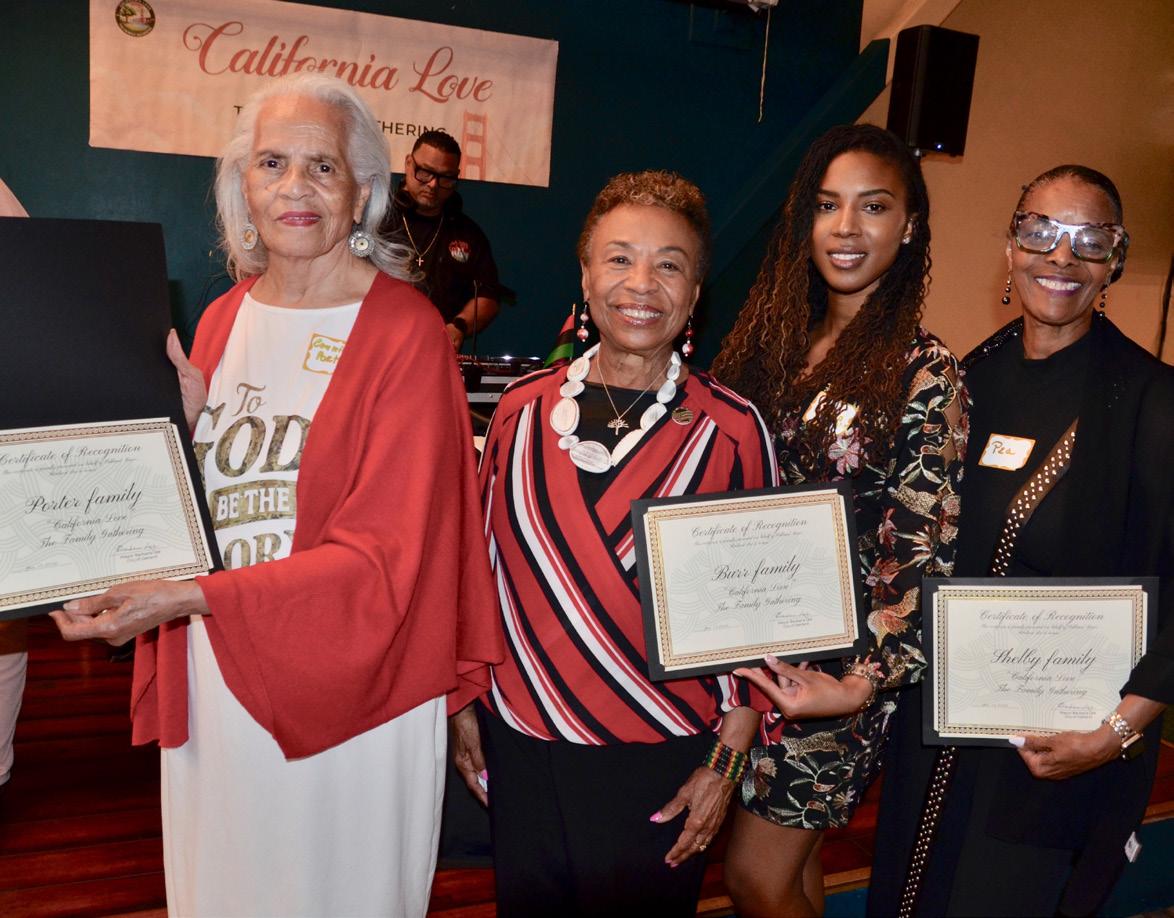
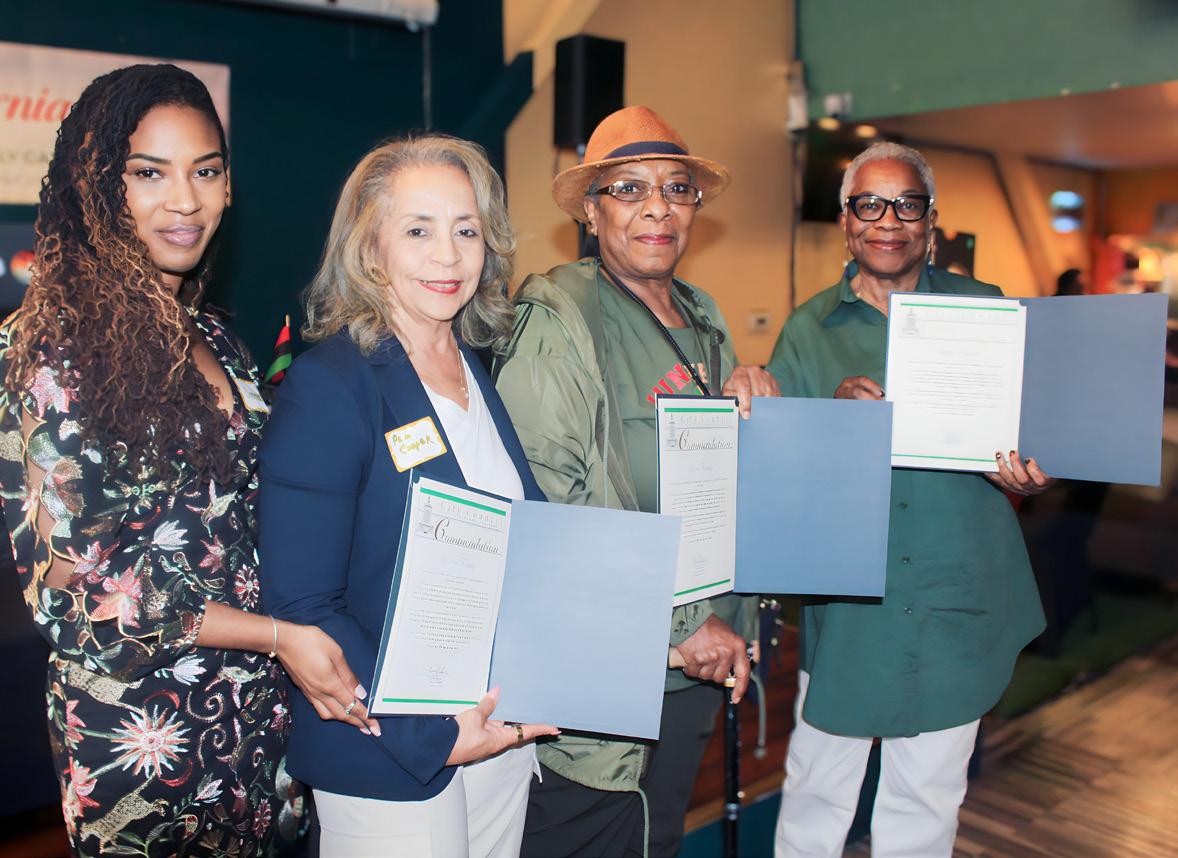
beat was on full display this Juneteenth weekend as the Burr, Shelby, and Porter families gathered for California Love: The Family Gathering — a multigenerational celebration honoring nearly a century of Bay Area lineage. The reunion, rooted in the families’ deep Oakland history dating back to the 1940s, became a highlight of the city’s Juneteenth season, blending heritage, homecoming, and civic recognition.
The weekend opened with an elegant Welcome Dinner at the historic Everett & Jones Restaurant in Jack London Square, where the families were greeted with warmth
and distinction by Mayor Barbara Lee, who extended the City of Oakland’s heartfelt welcome. Her remarks underscored the importance of Black family legacy in shaping Oakland’s identity, resilience, and cultural leadership.
Adding to the evening’s significance, Oakland City Council President Kevin Jenkins was represented by a member of his office, who presented an official commendation honoring the Burr, Shelby, and Porter families. The recognition celebrated their enduring contributions to the city’s social, cultural, and historical landscape — a moment met with pride, gratitude, and emotion from family members spanning multiple generations.

...
Continued from page 1
artist Kehlani attended the Black Repertory Group Summer Day Camp for several years.
Long before international recognition, Kehlani performed on the BRG stage. During a summer day camp production of “Princess and da Frog,” she portrayed Ray, the lovable firefly whose light guided others through the darkness. Her journey is proof that today’s camper may become tomorrow’s artist, entrepreneur, educator, or leader.
Located at 3201 Adeline St. in Berkeley, BRG continues that mission through its Youth Summer Day Camp of the Arts.
BRG is currently accepting applications and maintains an open enrollment program. Students may enroll throughout the summer as space permits and immediately become part of the BRG family.
We are also proud to be a multicultural opportunity program, welcoming children and families from all backgrounds, cultures, and communities. Through theater, music, dance, public speaking, visual arts, technical theater, and leadership development, students gain confidence, discipline, creativity, and lifelong skills.
As our programs grow, so does our need for volunteers.
We are seeking community
Prescott Circus Theatre Presents ...
Continued from page 1
life.
This is accomplished through no-cost school and community programs for more than 300 Oakland youth each year. Performing company members from Prescott, where the program began, perform and make appearances at as many as 40 Bay Area events each year.
The summer program is funded in part by Oakland Fund for Children and Youth, California Arts Council, Port of Oakland, and the West Davis & Bergard Foundation.
members to assist with youth mentoring, registration, costumes, set construction, painting, props, ushering, photography, social media, marketing, technical theater, and fundraising activities. Whether you volunteer for a few hours or throughout the season, your support directly impacts the lives of young people.
BRG also partners with churches, civic organizations, alumni associations, fraternities, sororities, and community groups through theater party fundraisers, group sales, and buy-out performances. These partnerships have helped organizations raise funds while supporting arts and cultural programming.
The theater also serves as the home of the Berkeley NAACP Chapter, which meets every second Saturday of the month from 1 to 3 p.m.
For more than six decades, the Black Repertory Group has remained committed to one belief: every child deserves an opportunity to shine.
The next great artist may already be among us.
The next Kehlani may already be walking through our doors.
We invite you to volunteer, enroll, participate, and become part of the legacy.
For more information please go to www.blackrepertorygroup. com, call (510) 652-2120, or email info@blackrepertorygroup.com
Performances will be held Tuesday, July 14, 11 a.m. and 1:30 p.m. (ASL interpreted) and Wednesday, July 15, 11 a.m., at the Malonga Casquelourd Center for the Arts, 1428 Alice St., Oakland. For free reservations go to https://PrescottCircusSummerShows.eventbrite.com For group reservations for camps, childcare centers, senior centers, go to www.prescottcircus.
org A community show will be held Saturday, July 18, 2 p.m. to 3 p.m., at DeFremery Park, 1651 Adeline St., Oakland.

Celebrating the East Oakland COGIC Rededication are (from left to right) Supt. James Manning, Supt. LaRonn Gray, Pastor L.J. Jennings, first lady Melissa Clifton, Pastor Mark A. Clifton Sr., Pastor Aaron Macklin, Bishop Nathaniel Bullock, Dr. Billy Dixon, Pastor Tyrone Duckett, Pastor Willie Haynes, Rev. Dr. Jeffrey M. Parker, Pastor Wade Harper, Pastor Norris Sheppard, Supt Danny Stevens, Supt. David Houston and Pastor Matthew Levy. Photo by Carla Thomas.
By Carla Thomas
East Oakland’s Church of God in Christ (EOCOGIC) celebrated a spirit-filled re-dedication service marked by reverence, music, and community unity as clergy and congregants gathered to honor the church’s continued mission and legacy on Sunday, June 7.
Pastor Wade Harper served as master of ceremony, with opening prayer led by aspiring missionary Bridget Clifton-Foster, setting a reflective tone for the gathering.
Elder-in-training Arnold C. Armstrong followed with a reading of the Holy Scriptures, grounding the congregation in the Word.
Missionary Otena Brown delivered the greeting and call to worship, praise was led by Pastor Matthew Levy, interim jurisdictional minister of music. Choir selections included “We Worship You,” “Can’t Stop Praising His Name,” and “Come On and Testify.”
Clifton-Foster presented “The Occasion,” offering insight into the significance of the re-dedication and the church’s continued growth.
She explained how the church had endured a flood ruining the main sanctuary, leaving congregants to meet in the social hall.
The newly renovated space included comfortably cushioned chairs, replacing the traditional church pews.
Superintendent James Manning II led the offering, followed by brief clergy representations that reflected the broader faith community’s support. Local pastors gave EOCOGIC’s leaders Pastor Mark
Costco Exclusive Negotiation Agreement ...
Continued from page 1
munity benefits while supporting Oakland’s long-term economic development goals.
According to the City staff analysis, the proposed project represents a significant economic development opportunity for Oakland. If ultimately approved, the project is expected to generate approximately $3 million annually in General Fund revenue, create an estimated 400 high-quality jobs with competitive wages and benefits, expand access to affordable groceries and household goods, and strengthen Oakland’s retail tax base.
“This Exclusive Negotiation Agreement gives Oakland the opportunity to explore a transformative economic development project that could create hundreds of quality jobs, generate millions in revenue for city services, and bring new investment to the former Army Base,” said Lee. “There have been multiple community meetings organized under Councilmember Fife’s leadership, and this ENA will allow that engagement to continue as the City evaluates the proposal and works to ensure any future project delivers meaningful benefits for Oakland residents.”
At Tuesday’s Community and Economic Development Commit-
NPRC Joins
National Grand Jury Proceedings ...
Continued from page 1
lative failures, and the erosion of constitutional protections affecting millions of Americans.
The proceedings will feature testimony from victims, families, advocates, and organizations from across the country who contend they have experienced harm through government actions, institutional neglect, and failures of oversight.
tee meeting, Lee’s Deputy Chief of Staff, Preston Kilgore, spoke in support of the ENA, highlighting its potential to generate new revenue for city services, create quality jobs for Oakland residents, and expand access to affordable goods and services.
The mayor’s office also recognized Fife’s leadership in organizing multiple community meetings that have given residents a meaningful voice in shaping the conversation around the project. The mayor’s office further thanked staff from the City Administrator’s Office, Economic & Workforce Development Department, Planning & Building Department, Finance Department, and City Attorney’s Office for their work advancing the proposal.
The proposed ENA does not constitute approval of a Costco project. Rather, it establishes a structured negotiation process during which the parties would negotiate project terms, including a community benefits package consistent with prior Oakland Army Base development projects. Any future development proposal would require additional review and approvals by the City.
About the Former Oakland Army Base
The office of Preston Kilgore, deputy chief of staff for Oakland Mayor Barbara Lee is the source of this story.
ticipants are expected to discuss concerns regarding constitutional governance, individual liberties, property rights, and the protection of vulnerable populations, including seniors and persons with disabilities.
Alameda County Reparations Plan ...
Continued from page 1
the Alameda County Administration Building, located at 1221 Oak St. in Oakland.
Established to examine the historical and ongoing impacts of slavery, segregation, discriminatory housing and lending practices, and other forms of systemic racism, the Alameda County Reparations Commission has spent nearly three years conducting community listening sessions, gathering public testimony and developing policy recommendations.
The commission’s Draft Action Plan outlines several priorities for consideration by county leaders.
The first priority calls on the Board of Supervisors to receive and accept the Reparations Commission Draft Action Plan.
A second priority focuses on “Bridging the Gap and Preventing Delays” through what the commission describes as an “Architecture of Accountability.” Recommendations include establishing a permanent committee, creating a Phase II Commission, and forming a Community Advisory Council.
The Draft Action Plan also calls for “Creating Equity Alignment” throughout county government. Proposed measures include equity assessments for county depart-
Local Civil Rights Attorney, Activist Walter Riley ...
Continued from page 1
“Boots” Riley, a rap artist, political activist, and successful filmmaker, whose latest film, “I Love Boosters,” is now in theaters and capturing national attention.
ments and agencies as well as equity reviews for county boards, commissions and committees.
A fourth priority seeks to operationalize reparations within Alameda County government.
In advance of the June 30 hearing, community partners have launched the #ShowUp630 campaign to raise public awareness about the commission’s work and encourage strong community participation at the meeting.
The campaign includes a community partner toolkit, social media content, campaign graphics and a petition letter addressed to all five Alameda County supervisors.
Organizers are encouraging county residents to sign the petition urging the Board of Supervisors to adopt the Final Action Plan, attend the June 30 meeting, share campaign materials through their networks, and use the hashtag #ShowUp630 while tagging @ acreparationscommission on social media.
According to the commission, its work is aimed at developing recommendations that repair harm, build community prosperity and advance equitable outcomes for future generations.
More information about the commission’s work is available at reparations.alamedacountyca.gov.
of people who had enslaved people, and they were symbols to me of a world that did not see me as a human being, that has not treated my ancestors as humans, has treated us as chattel to be sold, to be owned, to be property,” Riley said
Clifton, Sr. and his wife, First Lady Melissa Clifton.
Keynote speaker Bishop Nathaniel Bullock, prelate of California Northwest Ecclesiastical Jurisdiction (CNEJ) reminisced on 51 years of friendship with Clifton prior to preaching “This Church Was Built to Last.”
Bullock cited biblical scriptures from Matthew 16, Hebrews 13, Isiah 54, and John 10.
“This church (EOCOGIC) will last because God’s reflection surrounds it,” said Bullock.
The event also celebrated Clifton’s elevation to the role of administrative assistant to Bishop Bullock.
CNEJ’s Supervisor of Women, Mother Ada Stevens, said, “God is good and will bless us if we continue to do the will of the Lord.”
The service continued with prayers of dedication and elevation, symbolizing a renewed commitment to faith and service. Melissa J. Clifton extended words of gratitude to the committee and all who contributed to the occasion. “We are so grateful for all the love and support,” she said.
A proclamation from the office of Mayor Barbara Lee, thanked the Cliftons and the EOCOGIC congregation for their community impact and legacy.
Superintendent Mark Anthony Clifton, Sr. closed the service with final remarks naming the church musical director Pastor Matthew Levy as his new special assistant.
According to organizers, the People’s Grand Jury will focus on concerns involving probate courts, guardianships, conservatorships, child welfare systems, property rights, civil liberties, and what participants view as a growing disconnect between government institutions and the constitutional rights of the people they are sworn to serve.
NPRC is participating because many of the issues being examined mirror the concerns raised by advocates, victims, and families who have participated in its monthly town halls. For years, families have reported cases involving exploitation of elders, questionable guardianships, estate depletion, denial of due process, and a lack of meaningful oversight within probate court systems.
“This proceeding gives victims and advocates an opportunity to place their experiences on the public record,” said Tanya Dennis, lead facilitator of NPRC. “For too long, families have struggled to have their voices heard regarding elder abuse, probate exploitation, and government inaction. This forum allows those stories to be shared before a national audience.”
Organizers state that testimony will explore historical and political developments that they believe have contributed to the expansion of corporate influence over public institutions and governmental decision-making. Par-
In keeping with principles of transparency and fairness, invitations have been extended to legislators, members of the judiciary, law enforcement representatives, and other public officials who may wish to respond to concerns raised during the proceedings or defend actions taken by their respective institutions.
One of the primary outcomes sought by organizers is public consideration and support for the People’s Remedy and Restoration Act, a proposed legislative framework that advocates believe would strengthen oversight, increase accountability, provide remedies for victims of governmental abuse, and restore constitutional protections.
The proceedings are expected to be broadcast nationally, providing citizens throughout the United States an opportunity to observe testimony, review evidence presented, and participate in an ongoing conversation regarding government accountability and the protection of individual rights.
Advocates hope the hearings will encourage meaningful dialogue, legislative reform, and renewed public engagement in the democratic process.
Individuals, organizations, public officials, and members of the media interested in attending or obtaining access information may contact the organizers at tollandroll2025@gmail.com.
As Americans continue to debate the future of constitutional governance, judicial accountability, and the protection of vulnerable citizens, the July proceedings are expected to serve as a significant forum for public testimony and civic engagement. For more information go to https://tollandroll.com
Born in North Carolina, Riley has lived in San Francisco, Chicago, and Detroit, but his longtime home is Oakland, California.
Over the years, he was a leader in the South against Jim Crow, participated as a student in the historic 1968 San Francisco State University strike that created Black Studies and Ethnic Studies in the U.S. and scored victories in the fight for open college admissions.
In an interview on KPFA’s “Upfront” with host Brian Edwards-Tiekert on June 18, he discussed some of his formative experiences, born in 1944 to a family of sharecroppers who worked on a tobacco farm near Durham, North Carolina.
“I came from a farming family, the ninth child of 11 children,” Riley said. “My mom and dad got married as teenagers, and they were together for their entire lives. Growing up in this large family, we had to deal with various aspects of what it meant to live in an economically depressed area with parents who had come through what they called “Hoover times” (the Great Depression) in the South.
“They were proud of every one of their children when they took some stand, to develop and show some sense of dignity,” he said.
In his neighborhood, slavery was not a distant memory. There are many people “who knew firsthand what it was to have family members that had lived as enslaved people and lived in communities where enslaved people had lived.
“(Under tenant farming), the landowner negotiated for the entire family: the farmer, the wife, the children – everybody was involved on the farm. Kids were often engaged. We had to shovel, hoe tobacco to keep the weeds from taking over, to make sure that tobacco worms didn’t eat up the tobacco. If a child was old enough to plow, they would walk behind a horse or mule and plow a field, working from sunup to sundown,” he said.
The houses did not have indoor bathrooms, running water or electricity. “A lot of the names in the Black community were the same names as these slave owners. We could see the names of folks on the streets, street names
“When we were counted by our government, we were counted only for the purposes of allowing white people, white men, to have a vote.” By 1950, when he was 6 years old, his family moved to another house, leaving tenant farming. His father took a job in construction.
“My parents wanted the younger kids to have education,” he continued. “The older kids had to work on the farms. By the time I came along, I was the second child born in a hospital. “My parents looked forward to younger kids to have more sense of independence from the economic and social depravities that they saw around them.”
Watching television, he became aware of the suffering under Jim Crow, including the lynching in Mississippi of Emmett Till in 1955 and Mack Parker in 1959. When he was 13, he joined a picket line in town in front of a variety store chain that did not hire Black people and became active in the Civil Rights Movement. By time he was in high school, he had become a leader in the local chapter of the NAACP and met Malcolm X and later Medgar Evers, leaders who were both assassinated.
Married and with a child, he moved with his family in the early 1960s to San Francisco, attending San Francisco State University while working full time.
He participated in the San Francisco State University strike, the longest student strike in U.S. history, where students and their supporters prevailed in the face of mass arrests and daily violent police attacks.
While many people remember the strike for its historic victory — the creation of the first Black Studies and Ethnic Studies programs in the country. “But open admissions was the thing,” he said. “Open admissions had to do with people being able to go to school for free. People should be able to go to school just because they come here and say, ‘I want to go to school. I want an education’ (because) we live in a rich country.”
Studying Marxism, including dialectical materialism, he gradually began to understand the structure of the system that needs to be changed, he said. “It requires a lot of study, and it still does.”