

Obama Presidential Center Opens
By Brandon Patterson
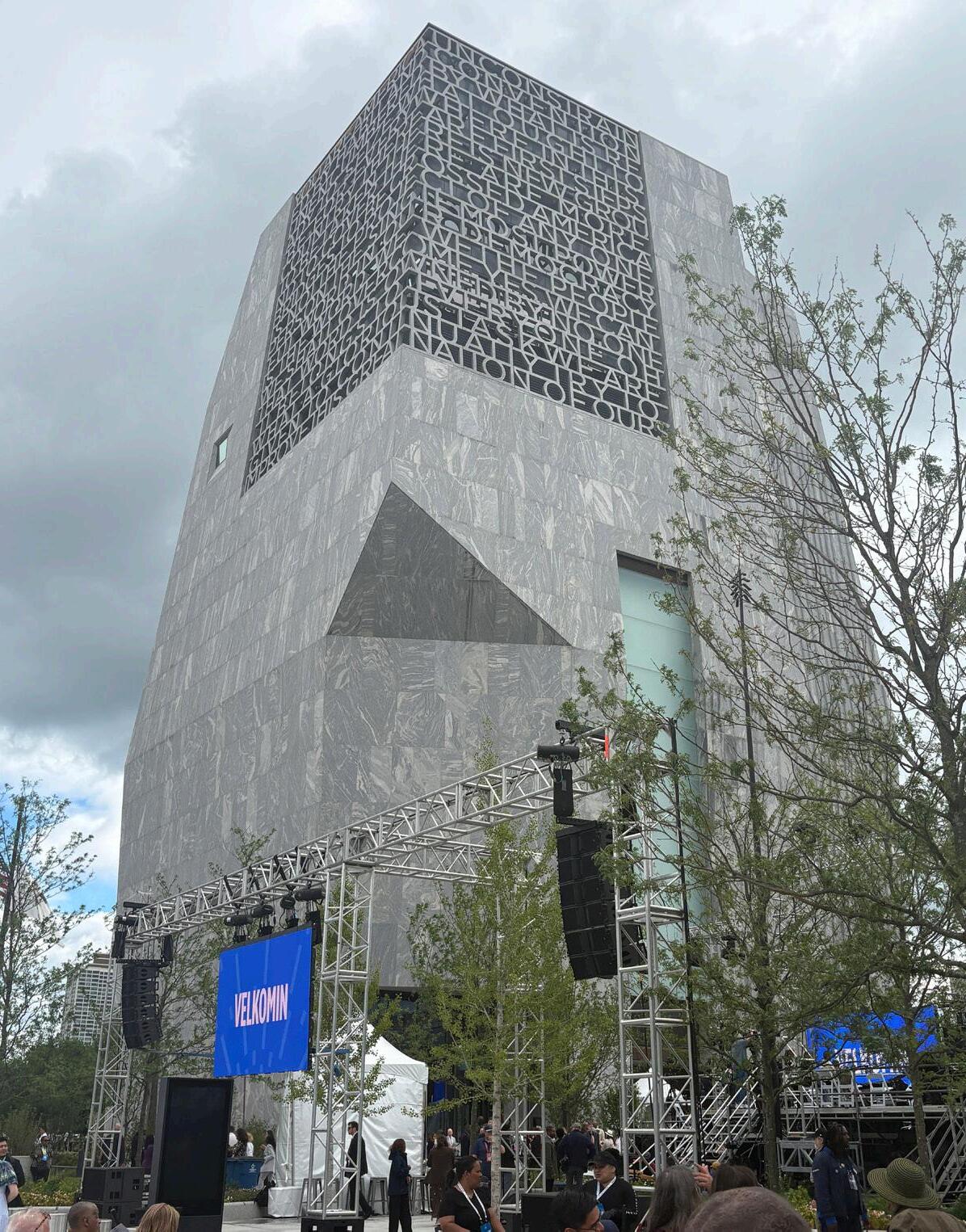
The Obama Presidential Center’s grand opening in Chicago on June 18, was a star-studded celebration marking the dedication of the 19acre campus on the city’s South Side. Former President Barack Obama and Michelle Obama were joined by former Presidents Bill Clinton, George W. Bush, and Joe Biden, as well as former Vice President Kamala Harris, Oprah Winfrey, Tom
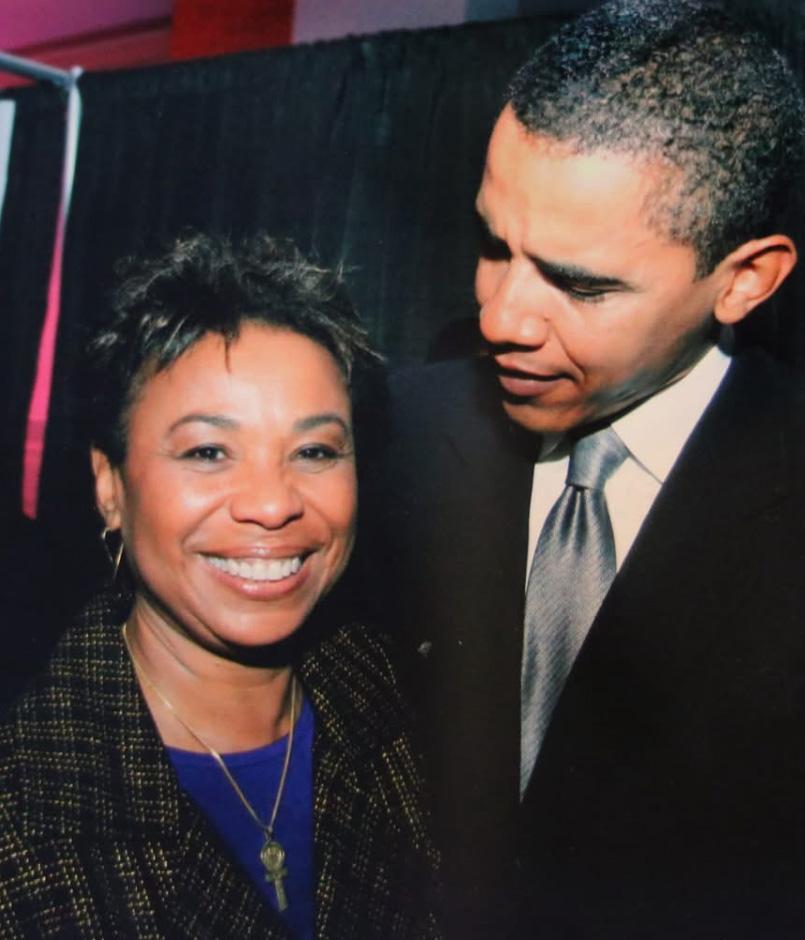
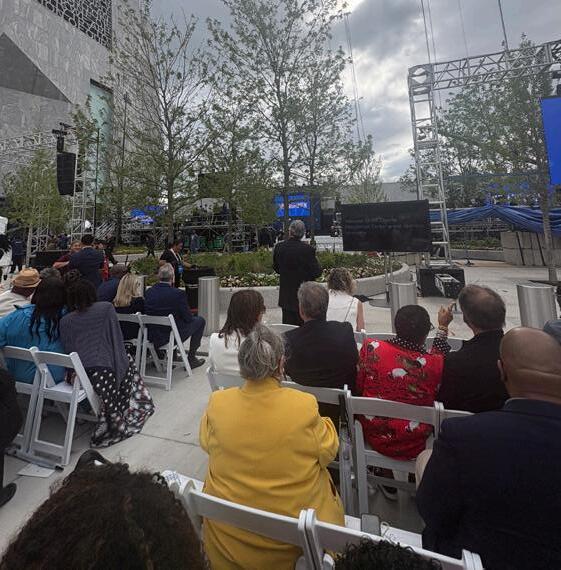
Hanks, Tyler Perry, Gayle King, and the Obama daughters, Malia and Sasha. Musical performances featured Stevie Wonder, Bruce Springsteen, Christina Aguilera, John Legend, Jennifer Hudson, Common, Eddie Vedder, The Roots, and others. The event celebrated democracy, civic engagement, and the Obama legacy before the center’s public opening on Juneteenth. These photos were shared with the Post by Chiaka Patterson, a Chicago native and child-


By Post Staff
After being stalled for many years, the massive $97 million renovation of McClymonds High School is finally breaking ground under the leadership of the district’s new superintendent, Dr. Denise Saddler, and backed by the unrelenting efforts of the school’s parents, students, school board members, community, and alumni.
hood friend of Michelle Obama’s who was invited to the ceremony by the former first lady.
Brandon Patterson is theformer press staff for Barbara Lee. He is now the PostNewsGroup’s Chicago Correspondent.
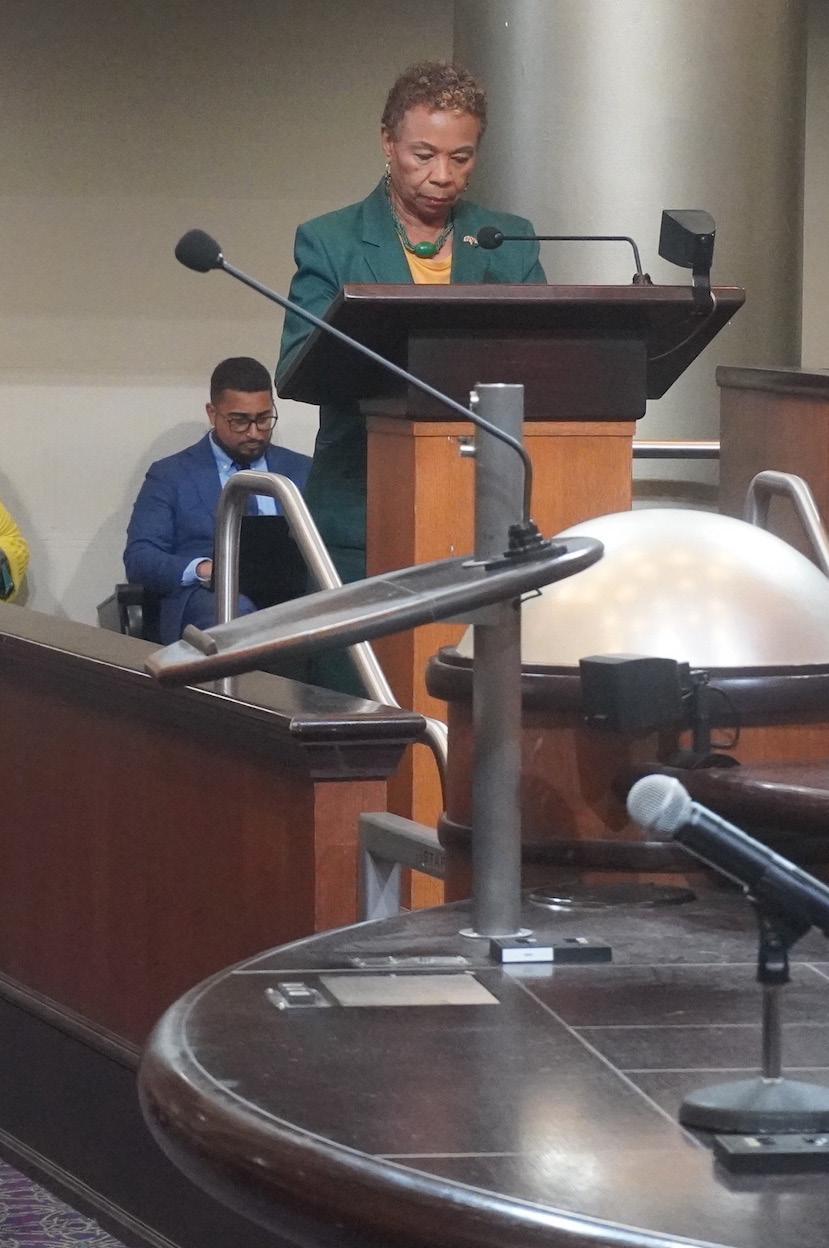
The Oakland Unified School District (OUSD) held the groundbreaking ceremony on June 12 to kick off the three-year modernization project for McClymonds, a historic center of African American culture and educational op -
portunity in Oakland, located at 2607 Myrtle St. in West Oakland.
The overhaul will include seismic and environmental upgrades, a new turf field, and modernized campus facilities.
The comprehensive transformation is financed by Measure Y, a $735 million general obligation bond approved by Oakland voters to renovate and upgrade aging school sites.
This renovation is considered a milestone for the West Oakland campus, which has operated in the same building since 1938 and has been in dire need of structural and plumbing safety remediation for years.
Speaking at the event, Supt.
Denise Saddler said:
“We gather on sacred ground that has shaped generations of Oakland leaders, scholars, artists, activists, entrepreneurs, educators like Mr. Herman Brown – one of our top math teachers. I also want to say it’s the historic home of the mighty Warriors (athletic teams). It’s a historic home of so many people.”
“This was, for Black people, our high school,” she continued “For more than a century, McClymonds has stood as a beacon of excellence in West Oakland and beyond. It’s not simply a school building; it’s a symbol of resilience, pride, community, and
By Tanya Dennis
The National Probate Reform Coalition, a loose-knit national coalition of advocates, victims and families dedicated to protecting elder rights, especially within the
probate court system, was formed by the Post Newspaper Group (PNG) after reporting mistreatment of elders and the plunder of their estates for more than a decade.
By Post Staff
Local lawmakers Congresswoman Lateefah Simon and State Assemblymember Mia Bonta are proposing separate bills that could slow down or block a long-delayed
West Oakland coal terminal that recently received a $75 million infusion from Pres. Donald Trump as part of his drive to ramp up coal production in the U.S.
‘Our
By Post Staff
Mayor Barbara Lee cast a tiebreaking vote this week at the Oakland City Council meeting, which means her Charter reform initiative will be on the November ballot.
The City Council had split 4-4

ambassadors.
By Dr. Maritony Jones Special to The Post
With the purpose of creating safer, stronger, and more inclusive communities, and in partnership with the Oakland Private Industry Council and other community organizations, the Oakland Chinatown Improvement Council (OCIC) hosted the ‘Stop the Hate Symposium’ on June 13 at the Oakland Asian Cultural Center.
ty over silence.
More than a meeting and panel discussion, the annual symposium serves as a powerful example of what can happen when neighbors, community leaders, and organizations choose conversation over division, and uni-
The free event featured keynote speakers, breakout sessions, cultural programming, creating a space where people from many backgrounds sat together with a shared purpose.
The turnout itself reflected the urgency and importance of
By Antonio Ray Harvey California Black Media
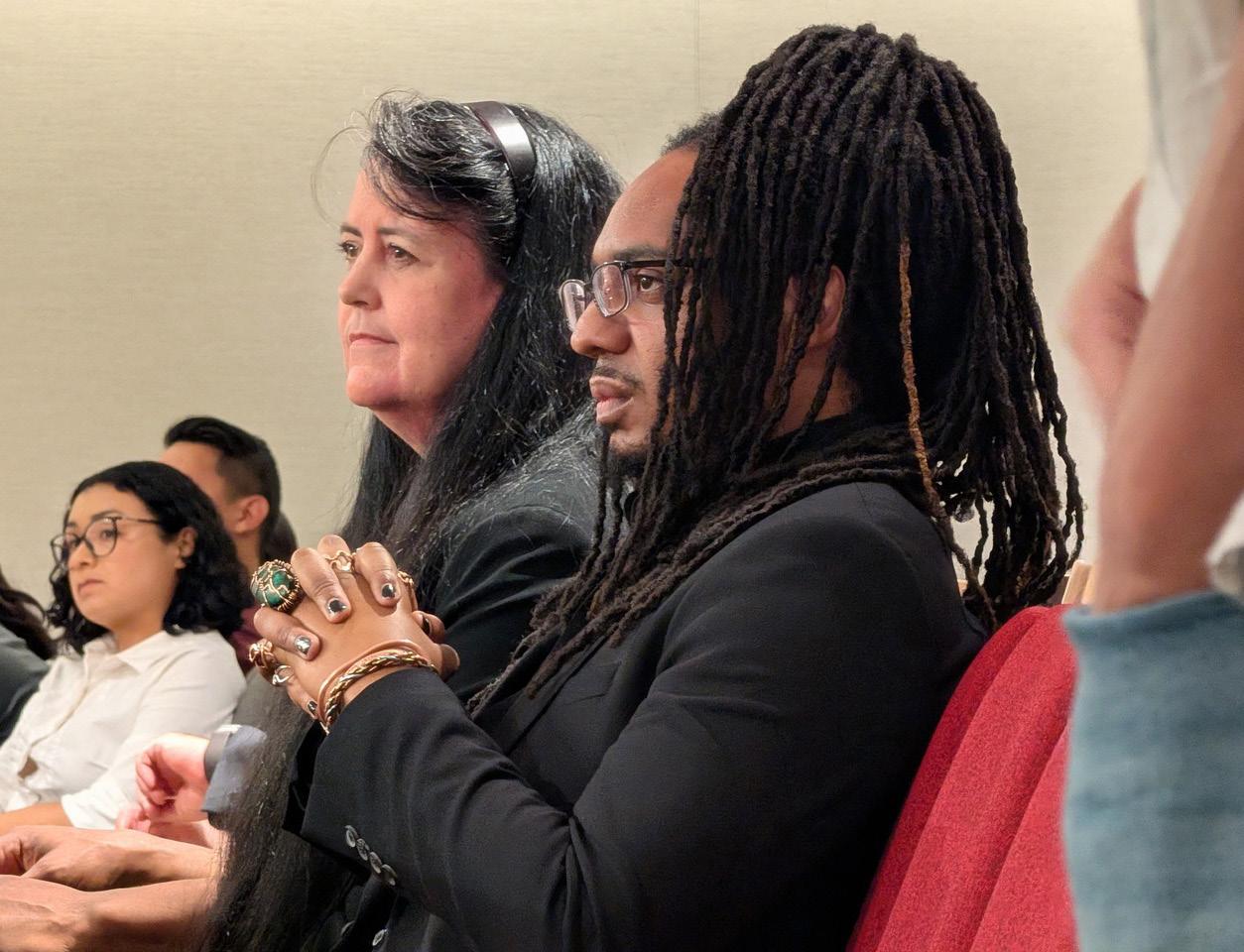
Matthew Parham, a professional voice actor, was among dozens of artists and creators from across California who traveled to Sacramento to witness the Senate Privacy, Technology and Consumer Protection Committee vote in favor of legislation that would require developers of generative artificial intelligence (GenAI) models to disclose the copyrighted materials used to train their systems.
Authored by Assemblymember Rebecca Bauer-Kahan (D-Orinda), Assembly Bill (AB) 412, the AI Copyright Transparency Act, passed the Senate committee with a 6-2 vote on June 8 at the Capitol Annex
Swing Space. The measure now moves to the Senate Judiciary Committee for consideration.
Parham told California Black Media (CBM) that he serves as director of operations for the National Association of Voice Actors (NAVA), a coalition of performers who use their voices to portray characters, provide narration or create sound effects.
“Voice actors are in a unique situation. No one in America owns their right to their voice. You can legally steal someone’s voice,” Parham told CBM. “This bill is essential. There is no legal protection for your voice right now.”
Parham elaborated on the challenges voice actors face in protecting their work.
“For example, I voice video
games. I can’t copyright it because I’m not the developer, but my biometric data is contained within that video game," Parham added.
Artists and creators from Los Angeles, San Diego, Oakland, San Francisco, Sacramento and other communities attended the committee hearing.
AB 412 is co-sponsored by the Screen Actors Guild-American Federation of Television and Radio Artists (SAG-AFTRA), which represents approximately 160,000 media professionals worldwide.
Bauer-Kahan, SAG-AFTRA and the Transparency Coalition argue that the bill does not alter federal copyright law. Instead, AB 412, supporters argue, establishes state-level transparency requirements.

$3 Million in Refunds: Defrauded Homeowners in COVID Mortgage
By Bo Tefu
California Black Media
More than 1,800 consumers will receive nearly $3 million in refunds after state and federal regulators secured restitution in a mortgage assistance scam that targeted struggling homeowners during the COVID-19 pandemic.

By Emil Amok Guillermo
I was in Washington, D.C., last week speaking to anti-gun advocates.
I didn’t argue about whether people have a right to own guns.
Have your gun.
My question was whether the rest of us have rights to live free from gun violence.
I told them about my cousin Stephen Guillermo.
And I realized his story isn’t just an Asian American story.
It’s an American story.
It’s about what happens when fear becomes more powerful than reason.
In 2014, Stephen made a mistake.
Not a crime.
A mistake.
He walked into the wrong apartment in his San Francisco building.
Wrong door. Wrong floor.
Inside was a retired security guard who decided Stephen was an intruder and shot him to death.
Stephen wasn’t armed.
There was no evidence he threatened anyone.
No evidence of a violent break-in.
Assembly
But because the shooting happened inside a home, authorities wrapped the case in the legal comfort blanket known as the Castle Doctrine.
Case closed.
The story always starts with the shooter. I think that’s backward.
What if we asked whether the fear was reasonable before we accepted the killing as justified?
Black Americans have been asking versions of that question for generations.
What happens when someone sees danger where none exists?
What happens when suspicion becomes evidence?
What happens when assumptions become fatal?
The names change, but the pattern is familiar.
A teenager carrying candy and iced tea.
A young man jogging through a neighborhood.
A child with a toy gun.
A woman asleep in her own apartment.
A man reaching for his wallet.
That history is why Stephen’s story resonates beyond my family.
No, Stephen wasn’t Black.
Honors Dr.
And his death did not come out of the same long history of anti-Black violence.
But the mechanism feels painfully familiar.
Someone looked at another human being and saw danger first.
Humanity second. Or not at all.
That’s why I paid attention to the case of Markus Kaarma in Montana.
Kaarma suspected teenagers had been snooping around his neighborhood.
So, he left his garage door open.
Set up motion detectors.
Armed himself with a shotgun.
Then waited.
When a 17-year-old German exchange student Diren Dede entered the garage, Kaarma fired four times.
Diren died.
Kaarma claimed the Castle Doctrine.
But a jury rejected it.
So did the judge.
“You didn’t protect your residence,” the judge said. “You went hunting.”
William ‘Bill’ Burke as Family Returns to Capitol Where His Legacy Began
The California Department of Financial Protection and Innovation (DFPI) and the Federal Trade Commission (FTC) announced the refunds on June 8, saying the payments stem from a multiyear enforcement action against companies that falsely promised to reduce mortgage payments and prevent foreclosures. About half of the affected consumers are in California, officials said.
the companies and their operators from the telemarketing and debt relief industries and ordered them to pay restitution.
Regulators said the scheme operated under multiple business names, including Golden Home Services and Home Matters USA, and used telemarketing operations to target homeowners facing financial hardship. Victims were told they were participating in legitimate mortgage relief programs, but a federal court later found the operators engaged in deceptive practices and collected millions of dollars without delivering promised relief. A 2024 court ruling banned
“This case shows what’s possible when state and federal partners work together with purpose to crack down on fraud, hold bad actors accountable, and deliver justice for victims,” said Gov. Gavin Newsom.
DFPI Commissioner KC Mohseni said the refunds are part of ongoing efforts to protect consumers from financial scams targeting homeowners in distress.
“We are pleased to be able to
California State
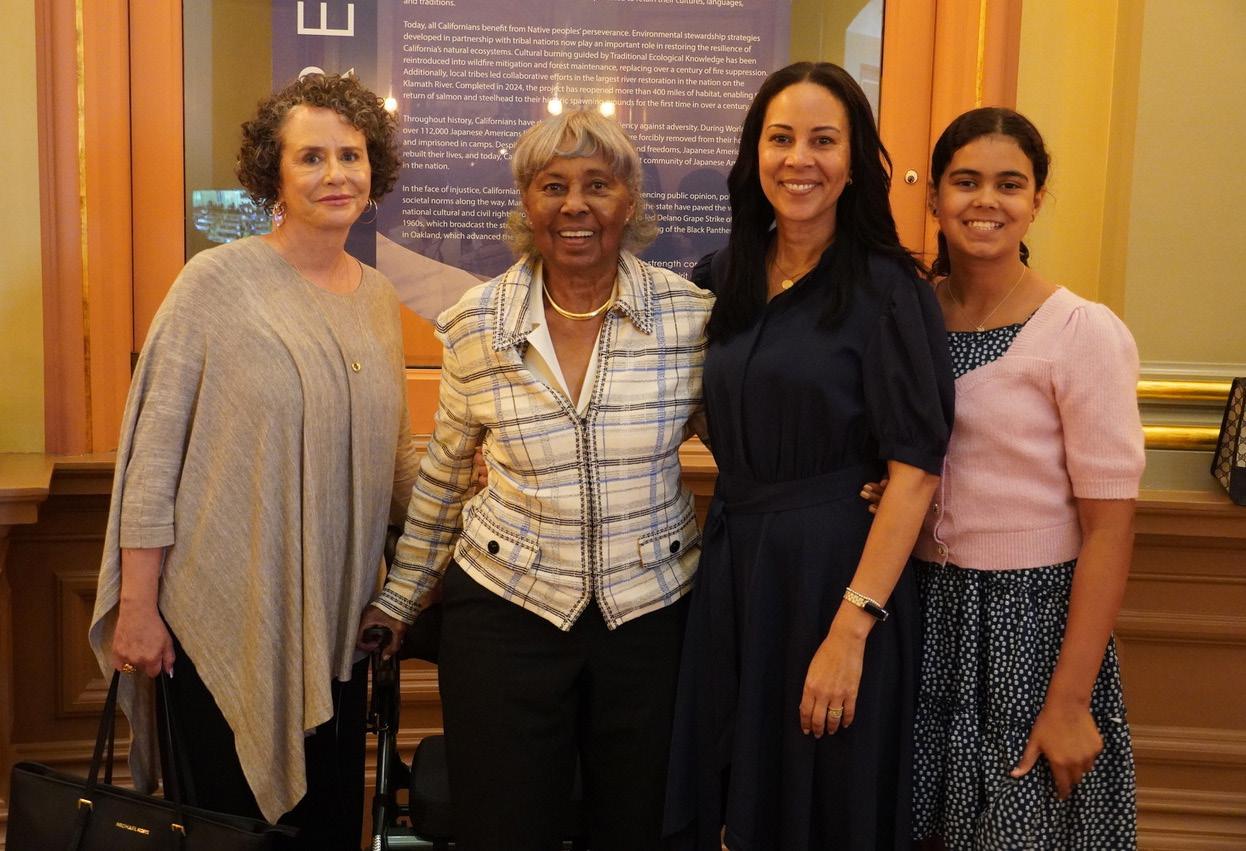
from left to right are daughter Christine Burke Adams, Yvonne
and former Assemblymember
By Antonio Ray Harvey California Black Media
The first Black woman elected to the California Legislature, Yvonne Brathwaite Burke, her daughters, former Assemblymember Autumn Burke Adams and Christine Burke Adams, and her granddaughter, visited the California State Capitol on June 8 to attend an Assembly floor session honoring the life and legacy of Dr. William “Bill” Burke.
and
The Assembly adjourned in memory of Dr. Burke, Brathwaite Burke’s husband of 54 years and a prominent civic leader who began his public service career at the Capitol. Dr. Burke, founder of the Los Angeles Marathon, died May 29 at the age of 87.
“Thank you to the members of the California State Assembly for adjourning in memory of my dad,” Autumn Burke posted on LinkedIn.
“His first job in the Capitol was
working for Speaker Jesse Unruh. It was there that
Oaks), in paying tribute to Dr. Burke. Assemblymember Mike







Continued from page 2
give refunds to people who have been scammed out of their hardearned money,” said Mohseni. “We will continually pursue all avenues to prevent scammers from preying on and profiting off Californians.”
The FTC said refund checks are being mailed to affected consumers. Recipients are advised to cash
checks within 90 days, as indicated on each payment.
Officials warned consumers that the FTC will never require payment or personal financial information in order to issue a refund.
Consumers with questions about their payments can contact refund administrator JND Legal Administration at 1-833-674-0067 or visit the FTC’s refund information page for assistance.
Continued from page 2
Gipson (D-Carson), Isaac Bryan (D-Ladera Heights) and Tina McKinnor (D-Inglewood) delivered remarks celebrating his life and contributions.
“Dr. Burke was a giant, not only for his accomplishments, but because of his generosity in sharing his knowledge, wisdom, and encouraging others,” McKinnor said, fighting back tears. “I am deeply grateful for learning from him. To Yvonne, Autumn, Christine, Isabella and the entire family, please know that California mourns with you. We pray that God grant you peace, comfort, and strength during
Continued from page 4
speed,” Weber said, explaining that California must count millions of ballots while protecting voters’ rights and ensuring election integrity. California’s election laws are built around a simple idea: maximizing participation while making sure every eligible voter has an opportunity to be heard.
That matters because every audit, recount, court challenge and review conducted over recent election cycles has reached the same conclusion: widespread voter fraud is extraordinarily rare.
these difficult times.”
In Los Angeles, Dr. Burke was widely recognized as a pioneering entrepreneur, civic leader and advocate for environmental justice. He is perhaps best known as the founder of the Los Angeles Marathon, which became one of the nation’s premier road races and a symbol of the city’s resilience and unity.
He was also chair of the South Coast Air Quality Management District Governing Board.
The Capitol holds deep personal and historical significance for the Burke family. Yvonne Brathwaite Burke served as an assemblymember from 1967 to 1973, a member of Congress and Los Angeles County supervisor, while Autumn Burke represented the 62nd Assembly District from 2014 to 2022, continuing the family’s tradition
lots without evidence, that history does not feel distant. It feels current.
The question is why some politicians embrace mail voting and extended counting periods when the results favor them but question those same processes when the outcome changes.

U.S. Rep. Sydney Kamlager-Dove (D-CA-37). Courtesy of Rep. Kamlager-Dove’s Facebook page.
By Bo Tefu California Black Media
U.S. Rep. Sydney KamlagerDove (D-CA-37) introduced legislation June 11 that would restore Juneteenth and Martin Luther King Jr. Day as fee-free admission days at national parks and other federal recreational lands.
and public service on federal lands. Supporters say the change would prevent future administrations from altering the list without congressional approval and restore the program’s original focus on community engagement and stewardship.
“It’s ridiculous that Donald Trump thinks that he deserves more recognition than MLK Jr. or the millions of enslaved Black Americans who realized they had independence on Juneteenth,” said Kamlager-Dove. “Not only do these fee-free days recognize important days in American history, they are also used to promote public service within our public lands.”
Under the legislation, fee-free admission days would include Martin Luther King Jr. Day, the first day of National Park Week, Juneteenth, Great American Outdoors Day, National Public Lands Day and Veterans Day.
Greater El Bethel Missionary Baptist Church (Richmond, CA) is prayerfully seeking a pastor to lead our congregation in preaching, teaching, and discipleship. Please visit the church website at geb. church, view the attached qualifications, and follow the instructions to apply.
For Black Californians, attacks on the legitimacy of lawful ballots strike a familiar chord. Black Americans spent generations fighting poll taxes, literacy tests, intimidation and violence for the right to vote and have those votes counted. When elected officials question legal bal-
For Black Americans, that debate carries particular weight. Generations fought for the right to cast a ballot and have it counted. The legitimacy of a vote does not change because the counting continues after Election Day or because the final result differs from the early returns. If there is evidence of wrongdoing, it should be presented. If not, the public should have confidence in a process that counted every legal vote. In California, that is exactly what happened.
About the Author
Joe W. Bowers Jr. is a contributing editor to California Black Media and a graduate of Stanford University.
Kamlager-Dove’s district covers parts of Los Angeles County, including Culver City, Ladera Heights, View Park-Windsor Hills, Leimert Park, Baldwin Hills, Crenshaw and West Adams.
The measure, known as the Encouraging Public Service in Our National Parks and Public Lands Act, comes after the Trump administration removed the two holidays from its list of fee-free days and replaced them with President Donald Trump’s birthday and other dates centered on patriotic themes.
The bill would amend federal law to permanently designate Juneteenth and MLK Day as free admission days while preserving other long-standing fee-free dates intended to encourage volunteerism
Sen. Catherine Cortez Masto (D-Nev.) introduced companion legislation in the Senate. She said free admission days have helped build partnerships between visitors and park staff while encouraging volunteer projects and conservation efforts across public lands.
“Free entry days in our National Parks have promoted cooperation between park rangers and visitors for decades,” Cortez Masto said. “We need to make sure that these days continue to reflect our commitment to working together and being good stewards of our public lands through volunteering and service.”
The legislation has garnered support from more than a dozen House Democrats and several Senate Democrats.

By Bo Tefu California Black Media
California State Controller
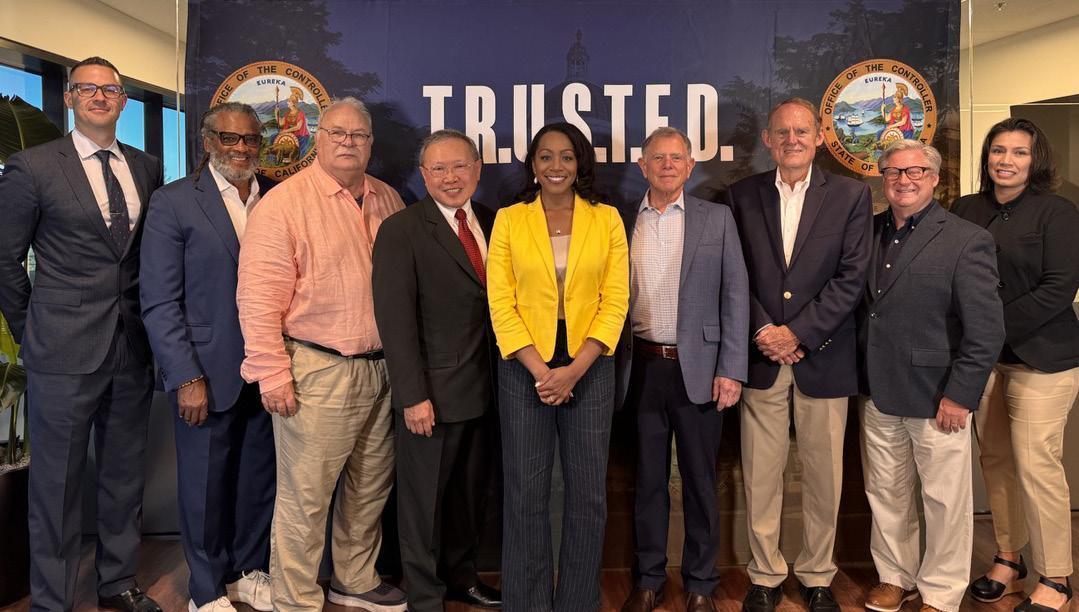
Malia M. Cohen announced the formation of a new Council of Economic Advisors that will provide independent economic analysis and policy recommendations to help guide decisions affecting the state’s fiscal health and economic future.
The council, chaired by Dr. Jerry Nickelsburg, faculty director emeritus and senior economist at the UCLA Anderson Forecast, brings together six economists and policy experts from across California. Members will advise the controller on global, national, state and local economic trends and their impact on California’s finances.
The move comes as the Controller’s Office seeks to expand its use of data-driven analysis following the release of Califor-
nia’s audited financial statements ahead of key state budget discussions. The advisory panel will assess economic conditions across California’s regions and industries and recommend policy solutions related to affordability, tax policy, healthcare, education, workforce development, small business growth and equitable economic development.
“While we continue to reimagine financial transparency in order to give Californians a clearer understanding of the state’s financial condition, we need to call upon expert talent that has its fingers on the pulse of what is driving global, national, statewide and regional markets,” Cohen said.
According to the Controller’s Office, the council will combine economic expertise with real-time fiscal information, including state cash receipts and expenditure data, to help identify challenges and opportunities affecting California’s
economy. Officials said the group will serve as a resource for developing policies that support longterm fiscal stability and economic opportunity.
Nickelsburg said council members are honored to provide economic insights and recommendations that could have a meaningful impact on California residents and the state’s financial resources.
In addition to Nickelsburg, the council includes economists from California State University, Fullerton; the Bay Area Council Economic Institute; Global Economic Advisors; Claremont McKenna College; the Inland Empire Economic Partnership; and the State Controller’s Office.
As California’s chief fiscal officer, Cohen oversees the state’s financial resources, manages state cash flow, issues financial reports and conducts audits of agencies that spend state funds.
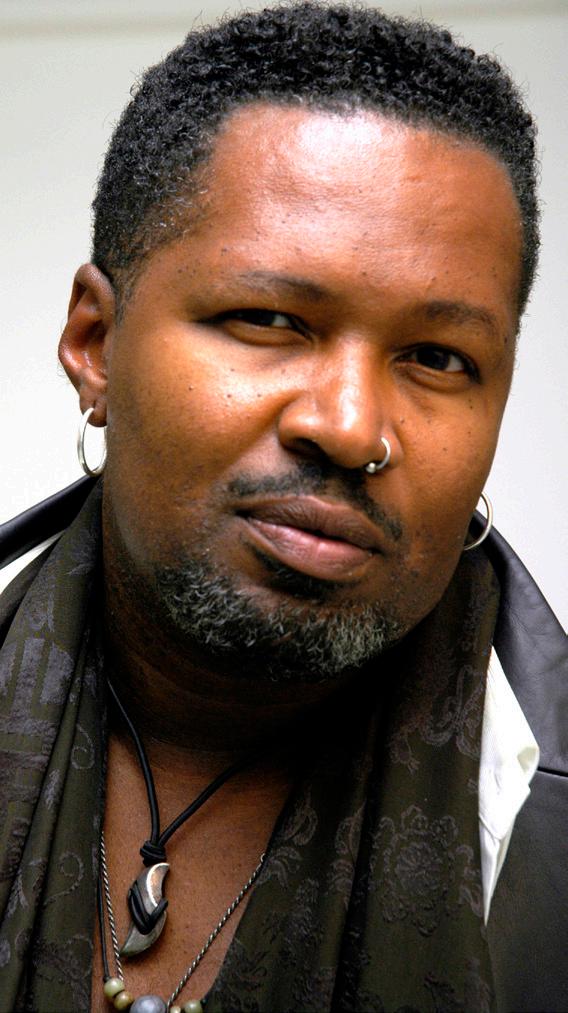
Long and Dolores Lipinski-Long.
He danced with several companies including Joel Hall Dance Company, Ruth Page Ballet Chicago, Lyric Opera, Chicago City Ballet, American Festival Ballet, and touring productions of “Music Man” and “A Chorus Line.”
In 1989, Savage moved to Oakland, where he started teaching seven days a week, amassing a devoted following that was attracted to his no-nonsense, impassioned, and effective old-school teaching style.

the globe.
Savage lived his life as tribute to the teachers who had shared their wisdom on art and life with him.
With a palpably genuine enthusi-
Continued on page 9
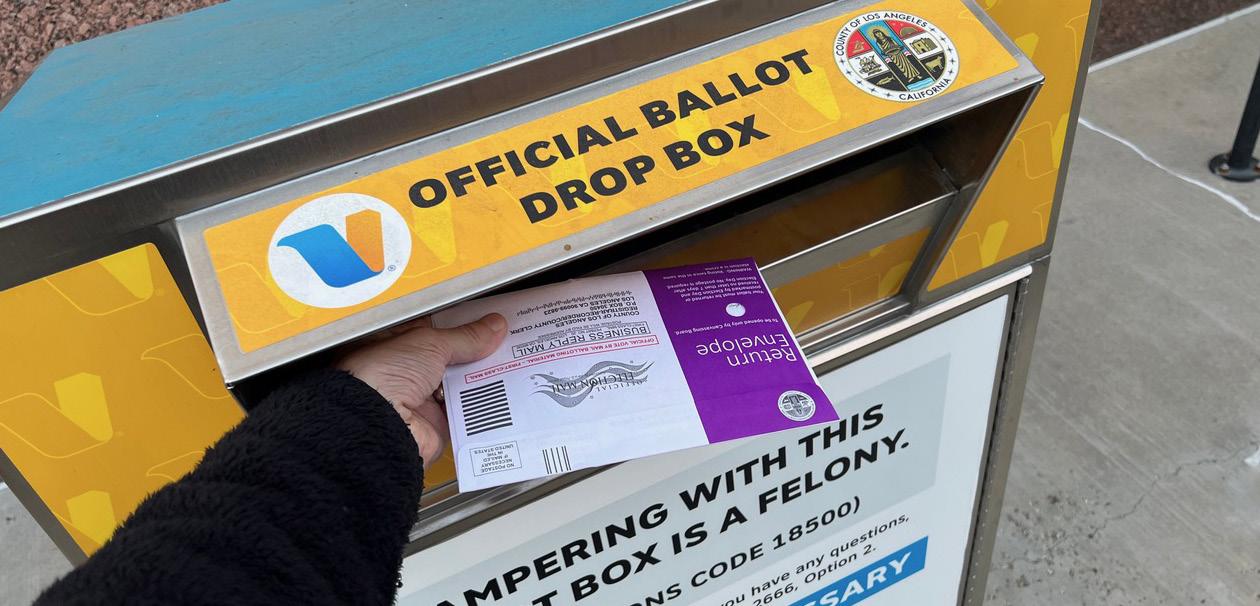
Why Does California Take So Long to Count Votes? Election Officials Say Accuracy Comes First
By Solomon O. Smith California Black Media
As California continues counting ballots weeks after the primary election, some political leaders are raising questions about election integrity. But election officials say the lengthy process reflects safeguards designed to ensure every eligible vote is counted accurately — not evidence of fraud.
California’s vote-counting process has come under renewed scrutiny after some Republican leaders questioned why election results take weeks to finalize. Election officials insist the timeline reflects safeguards meant to protect voters and ensure every eligible ballot is counted.
The criticism intensified following comments from President Donald Trump, who repeated the debunked claim that the 2020 presidential election was stolen and alleged, without evidence, that California was engaging in election fraud.
“They’re dropping fast because it’s a rigged election,” Trump said about California Republican votes. “They’re crooked. You’re crooked.”
Vice President J.D. Vance also raised concerns about the Los Angeles mayoral race, calling it “shady” during an interview with Jesse Watters.
Michael Sanchez, communications director for the Los Angeles County Registrar-Recorder/

Reginald Ray-Savage – dancer, choreographer, and beloved teacher, mentor, and inspiration to many – passed away on May 17. The Oakland School for the Arts dance instructor was 67.
Born Reginald Ray, Jr. in St. Louis, Missouri, on Sept. 5, 1958, he formally adopted the name ‘Savage,’ to honor the great Archie Savage, his mentor at Katherine Dunham’s Performing Arts Training Center where his dance training journey began in East St. Louis, Illinois.
He soon started dancing professionally with Katherine Dunham Dance Company, making dance a way of life. His grit, tenacity, and notorious work ethic brought him scholarships to train at multiple prestigious dance institutions, including The Ailey School (NYC) and Ruth Page School of Dance (Chicago), under the direction of acclaimed ballet instructor Larry
County Clerk’s Office, disputed those claims, saying California’s timeline reflects safeguards designed to ensure accurate and secure elections.
California law allows ballots postmarked by Election Day to be counted if they arrive within the state’s designated acceptance period. Election officials say that process, combined with extensive verification requirements, contributes to the time needed to finalize results.
“I would challenge the premise that the count is slow,” Sanchez wrote in an email to California Black Media (CBM). “Ballot counting itself is very fast. In fact, Los Angeles County processed and counted more ballots more quickly in this election than in any election.”
Sanchez said California’s election process includes “multiple layers of oversight, public observation, reconciliation, and auditing.”
Counting ballots involves more than feeding them through a machine. Election workers verify signatures, review ballots with voter errors and contact voters whose ballots require correction through a process known as ballot curing.
According to the California Secretary of State’s Office, every ballot undergoes signature verification before it is counted. Ballots with signature discrepancies or other issues are flagged for further review by election workers.

Ballot curing allows voters to correct certain mistakes and verify their ballots so that otherwise valid votes are not rejected because of technical errors.
For many Black voters, whose communities have historically fought for equal access to the ballot box, confidence that every vote is counted remains critical. Civil rights advocates have long argued that safeguards such as signature verification and ballot curing help ensure voters are not disenfranchised because of technical mistakes.
Under California law, election results must be certified within 30 days of Election Day. This year’s certification deadline is July 10. California Secretary of State Shirley Weber has repeatedly defended the state’s election procedures against allegations of fraud and delays.
Speaking on DIA Live Studio hosted by Sen. Akilah Weber Pierson (D-San Diego), Weber said repeated allegations of fraud risk undermining public trust in elections.
“We had one congressman say the longer they count the more we lose,” said Weber. “That means you were losing anyway because you didn’t get enough votes. So, they literally wanted us to stop voting at a certain date even if all those votes hadn’t been counted.”

In 1992, at the insistence of his committed core of students, he founded Savage Jazz Dance Company (SJDC). Over a span of 30 years, Savage produced more than 100 original works, and tour SJDC nationally and internationally, performing at Casa del Jazz in Rome to a packed house and rave reviews— the first dance company to receive such an invitation.

Savage built SJDC into one of the Bay Area’s most respected dance companies, creating a signature style known for its combination of disciplined training, blended with rich artistic musical expression, and raw energy.

In 2003, Savage joined the Oakland School for the Arts as chair of the School of Dance. Over the next two decades, he created, built, and maintained a strong dance program, recognized and respected by other dance institutions for forging well-trained and resilient dancers and human beings.
The depth of Savage’s tough love and care, and the skill of his teaching and mentoring are reflected in the careers of his students who have gone on to dance with the San Francisco Ballet, Martha Graham Dance Company, Mark Morris Dance Group, Janet Jackson, Ariana Grande, and companies across






















By Regina Wilson and Brandon Brooks
Juneteenth is more than a com-
memoration of delayed freedom. It is a warning about what happens when people are denied timely access to truth, power, and the information they need to act.
Freedom delayed is freedom denied. In 2026, that lesson still applies. When our communities are the last to know how decisions are made in Sacramento, Washington, or City Hall, we remain locked out of full citizenship in the way that matters most: access to information with context.
That is why the Legislature’s proposed 2026–27 California State Budget is so alarming. As released, it excludes funding for the Propel Initiative and the California Local News Fellowship,
Oakland Dance Legend Reginald Ray-Savage, 67 ...
Continued from page 8
asm and desire to bring out the best in people, and pass the torch to the next generation, he poured into his students, as his teachers and mentors had into him. His infectious energy, love of life, and generosity of spirit inspired countless souls, both inside and outside the dance studio.
Mark Kitaoka, a photographer hired by Savage in 2016, posted a living eulogy on the dance instructor.
“When I see the self-pride he builds in his students I am constantly impressed that people like Savage still exist in our ‘meme’ society,” Kitaoka wrote. “The kids he mentors are fiercely loyal to one
two programs that have helped local and ethnic media at a time when journalism is under extraordinary strain. This is not just a budget cut. It is a direct threat to the information infrastructure that Black communities and other historically underserved Californians rely on to understand policy, access resources, and participate fully in civic life.
This is where the Black Press plays its unique role. Los Angeles is home to the largest collective of Black owned media that have long served Black Los Angeles as civic institutions that understand the history and political realities of Black communities in Southern California. In Sacramento, The Sacramento Observer helps readers understand how decisions at the state capitol affect
another and I’m certain his methods teach each of those kids to put aside social status, race and gender and is replaced by solid loyalty for other souls.
“What Savage contributes to our world cannot be completely summed up in a few meager paragraphs but can be seen in the countless lives of those he has touched. Because of him, our world, and the world of the future is both a richer and better place.”
Reginald Ray-Savage will forever be missed, remembered, and lovingly quoted. He is survived by his beloved wife, Alison Hurley, his sister, Sonia, and his brothers, Pierre, and Andre. May his inextinguishable spirit and impact live on in all the lives he touched.
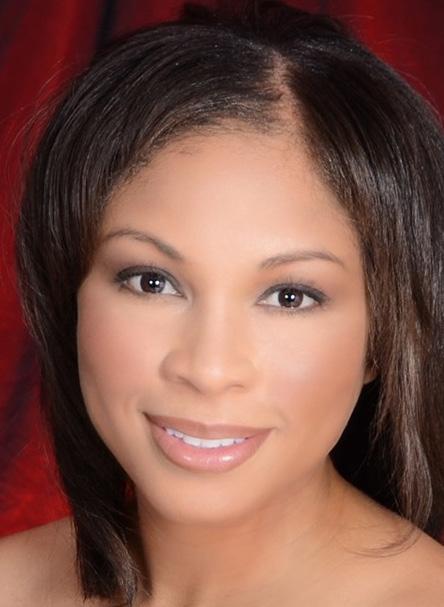
Black families and businesses. In San Diego, the San Diego Voice & Viewpoint anchors community understanding where local choices on housing, policing, and education carry immediate consequences.
That is why Propel matters.
By Bo Tefu California Black Media
Disability advocates, caregivers, families and state lawmakers gathered at the California State Capitol on Monday to oppose Gov. Gavin Newsom’s proposed $367.7 million reduction to the state’s In-Home Supportive Services (IHSS) program, warning the cuts could jeopardize care for thousands of seniors and people with disabilities.
The rally, led by Assemblymember Jeff Gonzalez (R-Indio), focused on provisions included in the governor’s May budget revision that would reduce spending on IHSS, a program that helps eli-
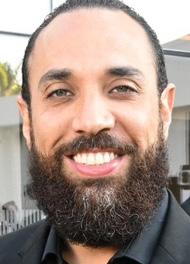
Through Propel, California invested in ethnic and community media outlets that collectively serve more than 20 million hardto-reach Californians not as charity, but as strategy. The California Local News Fellowship is equally important.
gible Californians remain in their homes and communities rather than move into institutional care settings.
Advocates said the proposed reductions would shift significant costs to counties, eliminate safeguards for some recipients and reduce access to critical services that allow people with disabilities and older adults to live independently. Speakers urged lawmakers to reject the cuts as budget negotiations continue in Sacramento.
“The governor’s proposal would shift nearly $370 million in costs onto counties, creating uncertainty for those who rely on approved care hours,” Gonza-
As the nation’s largest publicly funded journalism initiative, it develops the next generation of reporters who cover their communities with depth, cultural competence, and accountability. They are solutions.
Let us be honest about what is at risk. When Black media is weakened, our communities lose more than publications. We lose translators of public policy, watchdogs who ask hard questions, and institutions that sound the alarm when government’s moral compass drifts from justice. We cannot fight the injustices we cannot see.
On Juneteenth, California should not repeat the pattern of delay. The final budget has not yet been enacted, and lawmakers should restore the full $15 mil-
lez said during the rally. He added that the proposal would also eliminate protections that help recipients maintain services during Medi-Cal transitions, reinstate restrictive asset limits and eliminate the backup provider system used by many families when caregivers are unavailable.
Additional savings are expected to come from ending temporary IHSS coverage for some recipients who lose Medi-Cal eligibility, restoring a $2,000 Medi-Cal asset limit for individuals and eliminating the IHSS Backup Provider System.
Several speakers argued that the changes would disproportionately affect vulnerable Califor-
lion for the Propel Initiative and the California Local News Fellowship before June 30. This is a practical investment in civic participation and public accountability. It is also a moral one.
So, this Juneteenth, the message to legislative leaders must be direct: Don’t Juneteenth our community by defunding these programs. Restore this funding, include it in the final budget, and stand with the Black Press, ethnic and independent community media, and the communities that deserve to see clearly what government is doing in their name.
About the Authors
Regina Wilson is the Executive Director of California Black Media.
Brandon Brooks is the of Director of the CBM Propel Project.
nians who depend on consistent in-home care. Elizabeth, a disability advocate who addressed the crowd, described herself as “a proud immigrant’s daughter and proud to be part of California’s diverse disability community.”
Gonzalez pledged to continue fighting the proposal and called on state leaders to protect services that support independent living.
“I will continue standing with this community and fighting to protect these critical services,” he said.
According to the governor’s office, proposed reductions are part of broader efforts to address California’s budget challenges.
Continued from page 1
In response, PNG Publisher Paul Cobb set in motion a series of monthly town halls to address the problem, but also workable solutions, designating it a “year of action.”
At six months, the coalition has attracted families, advocates and experts across the nation whose strategies have proven effective in their respective states and who are moving forward collectively with the mission of engaging judicial, legislative and enforcement agencies to assure elders are not exploited or abused.
“The issue of elder abuse is multi-layered,” says NPRC planning committee member Venus Gist. “Elders are our most vulnerable population, next to children, and they are easily exploited by strangers, their own family members, and the judicial system designed to protect them.”
Since January, NPRC has, via monthly virtual meetings held on the first Thursday of each month, clearly defined the issues and formulated workable solutions that can be implemented nationwide.
“There are amazing laws on the books that protect elders and their assets,” said NPRC member Zakiya Jendayi, “The problem is they are ignored, and that lack of oversight has led to systemic abuse in the Probate Court system, not just in Alameda County, but nationwide.
“The scary part is the collusion and wall of silence NPRC has encountered when reaching out to the Judicial Council, legislators, and the State Bar for assistance.
It’s so obvious that one hand is washing the other, that they’re protecting each other, that it’s difficult to initiate any type of meaningful reform much less dialogue.”
Despite the cited obstacles, NPRC has made some promising inroads towards their mission. NPRC has identified that nationwide the Attorneys General must be engaged and encouraged to implement oversight, protection and enforcement of the law; members find support from each other as they advocate for redress via “letters of compassion” sent to judges, nursing facilities and law enforcement agencies and members are instructed on their rights, how to take constructive action to protect those rights through access to resources that allow them to intelligently represent themselves in court.
Stacy Drake, a Texas member says, “I’ve been looking for help for over 10 years with my situation and I finally found it within the NPRC coalition. God answered my prayers.”
Broadening their reach within Alameda County, NPRC has invited Oakland Mayor Barbara Lee to assist them in outreach, education, and resolution.
“We hope to host an elder abuse/ elder protection symposium annually if not twice a year to let our elders know that Alameda County and the City of Oakland is a safe place, a place where in their golden years they have no worries regarding exploitation and abuse,” said. Cobb. “Society is defined by how the care for its children and elders.”
Continued from page 1 on the proposal to allow voters to decide whether to restructure the City Charter, which functions as the city’s Constitution.
Voting in favor of putting the measure to the voters were councilmembers Kevin Jenkins, Charlene Wang, Carroll Fife, and Rowena Brown. Opposing the proposal were Zac Unger, Janani Ramachandran, Noel Gallo, and Ken Houston.
The reform proposal was developed by a working group, which included the Alameda County League of Women voters and SPUR (San Francisco Bay Area Planning and Urban Research Association), and was established by Lee last August to examine best practices to overhaul the city’s government structure.
Oakland at present has a hybrid model, in which neither the mayor nor the council has much power and the lines of responsibility are often murky, according to many observers.
Though Lee has said she generally tries to avoid stepping in to break ties, this Tuesday she cast a ‘yes’ vote.
“This measure is not about me — and it’s not about any of us in this chamber,” Lee said. “It’s about whether the people of Oakland get to decide the future of their own government.”
The current system, she said, “makes it impossible for residents to know who’s responsible when things go wrong.”
“I exercised my authority to break a tie vote and place this Charter reform measure on the November ballot – because I trust Oakland residents to decide what type of government they want,” Mayor Lee said.
She emphasized that the reform proposal was developed through in an extensive, transparent and democratic manner.
“More than 750 Oaklanders participated in this process,” she said. “On every issue residents
Continued from page 1
the topic. The room was packed with community members eager not only to listen, but also to participate. Throughout the event, speakers shared data, personal experiences, research, and practical solutions designed to address hate, violence, social inequity, and community safety.
The keynote panel featured respected leaders and advocates including Ray Bobbitt, founder of the African American Sports & Entertainment Group (AASEG); Ryan Takemiya from RAMA; Caheri Gutierrez from the Unity Council; honorary guest speaker Oakland City Councilmember at-Large Rowena Brown and City Councilmember Charlene Wang; representatives for Oakland Mayor Barbara Lee and U.S. Rep. Lateefah Simon, with Gia Vang of NBC serving as moderator.
The symposium also offered multiple breakout sessions that addressed issues affecting communities across Oakland and Alameda County:
Session 1, 2, 3: Building Safer and More Inclusive Communities, led by Pastor Raymond Lankfort, CEO of Oakland Private Industry Council (OPIC), Jessica Kang, research manager for Stop AAPI Hate, Kara Guerra of The Unity Council and Gabriela delaRiva of the Spanish Speaking Citizens Foundation
change begins within communities, through honest dialogue and a willingness to work together.
One of the strongest themes to emerge from the day was the need to create more conversations and stronger partnerships—not just during times of crisis, but consistently and intentionally. Relationships between organizations, neighborhoods, and community leaders are often working behind the scenes but are not always highlighted or celebrated.
Bobbitt spoke powerfully about this issue, noting that partnerships and relationships often go unrecognized despite being essential to community progress. He pointed to examples such as the partnership between OPIC and OCHIC, emphasizing that these collaborations deserve more visibility, investment, and expansion.
Perhaps his most memorable message was one that resonated deeply throughout the room.
Bobbitt explained that when a grandparent is attacked or harmed, the impact extends beyond race or ethnicity because today’s families and communities are increasingly multicultural and interconnected.
Continued from page 1
facilities our community, our students, our teachers deserve.”
care about — from illegal dumping to public safety to housing — our current system ensures the buck stops nowhere. That needs to change.”
“I championed placing this on the ballot in November as the best way of reforming the status quo and increasing accountability,” she continued.
“At its core, this is about letting the people of Oakland decide whether they want more accountability and a clearer system of governance,” she said. “Oakland voters deserve the opportunity to choose what type of government they prefer — our existing hybrid system or a strong mayor with clear checks and balances. I trust the voters to make that decision. That is democracy at work.”
The mayor’s working group proposed a system of strong mayor governance, which would allow the mayor to veto legislation and individual items of the city budget and give more control over the day-to-day of city administration.
However, the proposal would also increase the council’s powers. Councilmembers would gain a legislative and budget analysis office that would allow them to write policy independently of the mayor or his/her staff. It would also make councilmembers’ positions fulltime and create a process for setting their salaries.
Unger explained his opposition to the initiative. “If councilmembers lose primacy on budgeting, lose primacy on legislation, lose even more juice on constituent services, then what is a councilmember even for, than to act as a punching bag to absorb bad vibes?” he said. “I’m pretty good at taking a punch, but I don’t know why anybody would want that job.”
Members of the public who spoke out at the council meeting were mostly in favor of the mayor’s proposal. Polling has indicated that most city voters support a strong-mayor system.
Session 4: Talk Story: Collective Healing and Relationship Repair, presented by Ryan Takemiya, executive director of RAMA
Session 5: Sexual Violence Prevention, presented by Tunisia Owens, interim deputy director of Realized Potential • Session 6: Violent Attacks on Teens, presented by MaryAnn Alvarado, program manager of Youth Alive
Every session contributed to an important truth: meaningful
“We are not going to see our grandparents as just Latino, Asian, Caucasian, or African American,” he shared in essence. “We are going to see them simply as our grandparents.”
Those words reflected the heart of the symposium. Hate may target one group, but pain and loss are felt by everyone. Likewise, healing and progress are shared responsibilities.
For more information about the Stop The Hate Program visit the website: https://www. oaklandchinatownchamber.org/ stop-the-hate (or) https://oaklandpic.org possibility.”
The superintendent said the legacy of McClymonds includes legendary alumni such as NBA player-coach Bill Russell, whose excellence transformed the game of basketball and whose courage helped transform the nation.
The school’s legacy also includes MLB players Frank ‘Judge’ Robinson and Curt Flood, basketball player Paul Silas and civic leaders including Lionel Wilson, a Superior Court judge and Oakland’s first African American mayor.
She emphasized that the groundbreaking was not only about honoring the past, but also about investing in the future.
“(It) represents Oakland’s commitment to the young people of West Oakland. It sends a powerful message that our students deserve facilities that match their brilliance, their talent and their dreams. “
The extensive project will involve the full modernization of the campus, including essential upgrades to building systems such as plumbing replacement (with lead abatement), seismic improvements, and modernization of heating, electrical, ventilation, and air conditioning systems. Indoor spaces will be updated with new flooring, wall treatments, and upgrades to classrooms, labs, shops, and sports locker rooms.
The cafeteria also will be reconfigured, and outdoor areas will feature a new grandstand, track and field upgrades, accessible field bathrooms and concessions, and updates to the plaza, garden, and outdoor gathering areas.
Mayor Barbara Lee, who attended the event, thanked Oakland voters for passing the Measure Y bond that is paying for the school’s renovation.
“It’s a good day – It’s a good news day,” she said. “The voters who (approved) Measure Y care about our young people. Today, we have the opportunity on this historic day to say, well done. Thank you to the voters for the
School Board member VanCedric Williams, whose district includes McClymonds, said that OUSD passed repeated school bond measures for decades, promising to renovate the school, but it did not happen.
“I just want to thank all the community (who) put pressure on the district to do right, to hold school board members accountable, and to really say, ‘We’re not going to take anything less than a renovation.’”
“When I first met Dr. Saddler, she said, ‘I have a commitment to McClymonds – I’m going to make it happen.’ And she has done something in one year that has not been done in 20 years. So, I have the belief that we’re going to get it done.”
Rising senior LaTanya Nolen, praised the school for the opportunities she has received and for the dedication of its staff.
“Every student here is treated like they matter and given opportunities to grow and build onto themselves,” she said. “We’ve gotten to do things like sports, field trips, college and career excursions, networking, and more. Our futures are taken seriously, and the people around us are always pushing us so that we are prepared for it.”
Parent Brejea Colthirst said, “Thank you to everyone who had a part in this, who helped make this possible. Together, we are building something special.”
Brian McGhee, popular McClymonds staff member and alumni, pledged to build on the strength of McClymonds’ traditions. “Mack is back. We’re going to up the enrollment with this new school. We’re going to continue to know every student’s name who comes through this school. My job as a community manager is going to continue to provide resources for our families and our students, and continue to communicate with our parents, which is huge.”

Continued from page 1
Bonta introduced a bill in the California Assembly on Monday to require a full environmental impact report before any local agency may approve a new or expanded coal terminal with a capacity exceeding 5 million short tons per year.
Bonta said the law would require Oakland terminal developers to conduct a new environmental impact report because their
existing review was completed more than a decade ago and does not cover the type of coal now planned for use.
“The beautiful people of West Oakland, Alameda, and Emeryville have fought for clean air, for their children’s health, and for their right to breathe for generations. Donald Trump used a Cold War emergency law to try to override all of that. He will not succeed,” Bonta said in a press release.
Simon’s amendment in the U.S. House of Representatives, which will be considered next week with the Energy and Water Development and Related Agencies Appropriations Act (H.R. 9022), would block funding for coal projects at the federal level.
Under her amendment, no funds in the appropriations bill could be used for Trump’s coal initiatives. The amendment specifically blocks spending money for the Oakland coal terminal.
“I was sent to Congress to work for and represent the people of the East Bay. They have been clear in the last week and for years prior — no coal in Oakland,” Simon said in a statement.
“I will leave no stone unturned in Congress possible to stop this terminal … Our families and our bodies should not have to bear the burden of the Trump administration’s cruel and backwards decisions.”