



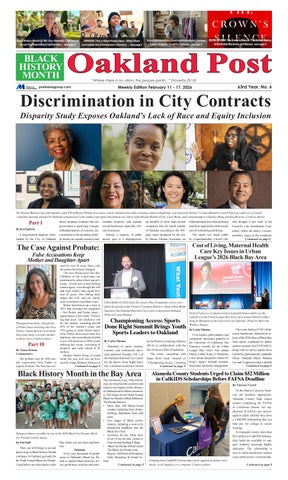

By Ken Epstein
A long-awaited disparity study funded by the City of Oakland
By Tanya Dennis Commentary
The probate case for 100-yearold conservatee Vera Parker is typical of those The Post has cov-

shows dramatic evidence that city government is practicing a deeply embedded pattern of systemic discrimination in the spending of public money on outside contracts that
excludes minority- and womanowned businesses, especially African Americans.
Instead, a majority of public money goes to a disproportion-
ate handful of white male-owned companies that are based outside of Oakland, according to the 369page report produced for the city by Mason Tillman Associates, an
Oakland-based firm that performs statistical, legal and economic analyses of contracting and hiring.
The report was made public by Councilmember Carroll Fife,
who brought it this week to the Council’s Life Enrichment Committee, which she chairs. Councilmembers, angry at the conditions
ered for over 10 years. Here, only the names have been changed.
The case thread goes like this. Children of the conservatee are positioned to inherit their parent’s estate. Greed sets in and siblings cannot agree, even though the will and trust clearly state equal division of assets. One sibling challenges the will, and the family seeks resolution in probate court.
Parker had drawn up a trust in 2013 that awarded her daughters – Teri Parker and Nedra Jones –equal shares in her estate. Thwarting that trust, Teri drafted a will for her mother, awarding herself 85% of her mother’s estate and 15% going to sister Nedra Jones. After Parker discovered what Teri had done, she immediately drafted a new will and trust in 2018 evenly splitting her estate, consisting of property and cash valued at $3 million.
Despite Parker being of sound mind, her new will was not honored by Judge Barbara Johnson in
on page 8

By Carla Thomas
By Carla Thomas

By Post Staff
There are still things to see and places to go as Black History Month continues. In Oakland, get ready for the Ninth Annual Black Joy Parade. Listed below are other places in the
Bay where you can learn and have fun.
Oakland
Every year thousands of people come to Oakland’s Black Joy Parade to support Black business, artists, performers, activists and more.
The community’s joy, vibes and energy are what fuel the economy and makes a real impact on the vibrancy of Oakland and its Black community. The theme for the Ninth Annual Black Joy Parade is Black Boldness. The Parade features • More than 200 Black-owned vendors including food, drinks, clothing, handmade items and more.
Two stages of Black performances, including a soon to be announced headliner and the Black Joy Choir
• Activities for the whole family at Lil Joy for kids, Games n’ Grooves and Healing Village.
• Black Joy Parade official merch
The Black Joy Parade route Begins: 14th Street & Broadway Ends: Broadway & Grand Avenue
By Vanessa Vizard

By Bo Tefu California Black Media
Gov. Gavin Newsom and First
Partner marked Black History Month with a video message honoring the contributions of Black Californians, as the annual observance reaches its 100th anniversary.
In the video, shared on the governor’s official social media account, the Newsoms reflected on the role Black Americans have played in shaping California and the nation, while highlighting prominent Black Californians whose work has influenced culture, politics, and social change.
“This year, as we celebrate the 100th anniversary of Black History Month, we honor the remarkable impact that Black Americans have had on our country and on the world,” said Siebel Newsom.
Newsom emphasized the long history of Black leadership and activism in the state, saying Black Californians “for more than 175 years have changed the world, broadened minds, and pushed progress forward.” He added that Black History Month offers a moment to reflect on both past struggles and accomplishments.
“This month, we take the opportunity to remember the
lessons we’ve learned, all the accomplishments that have been achieved, and whose shoulders we stand on,” said Newsom.
Siebel Newsom highlighted several influential Black figures connected to California and beyond, including poet and author Maya Angelou, science fiction writer Octavia Butler, Black Panther Party co-founder Huey Newton, political activist and scholar Angela Davis, and Lieutenant Colonel Allen Allensworth, the founder of Allensworth, California, one of the state’s first Black towns.
“These are just a few of the many Black leaders and visionaries who define excellence, who are the definition of changemakers,” said Siebel Newsom.
The message was released as California state agencies, schools, and community organizations observe Black History Month through educational programs, cultural events, and public discussions focused on Black history, identity, and civic engagement.
Siebel Newsom closed the message by wishing residents well, saying, “Happy Black History Month, California.”

By Bo Tefu
California Black Media
Gov. Gavin Newsom and a number of other California elected officials joined a wave of national backlash after President Donald Trump shared – and later deleted –a video widely condemned as racist for depicting former President Barack Obama and former First Lady Michelle Obama as apes.
On Feb. 6, Newsom’s office blasted the President on social media.
“Disgusting behavior by the President. Every single Republican must denounce this. Now.” the social media post read.
Sen. Alex Padilla (D-Calif.) expressed outrage about the video.
“Vile. Disgusting. Abhorrent. Racist. And during Black History Month,” Padilla said in a statement. “Truly no words to fully describe how despicable and low the video posted by the President is.
America deserves better.
Assembly Speaker Robert Rivas (D-Hollister) called for the President to be removed from office.
“Donald Trump is a racist, a stain on our White House and should be removed from office,” Rivas posted on Facebook. “Silence is complicity, and every Republican must speak out and reject his latest racist act.
Senate Pro Tem Monique Limón called on her colleagues to “denounce this behavior.”
“I will not share the disgusting video depicting our former president and first lady, but I will however call on all, including our Republican colleagues, to vehemently denounce this behavior,” said Limón in a statement.
“The video shared is not just a meme video – the symbolism carries with its centuries of racist pain that seeks to dehumanize our Black community,” she contin-

By Emil Amok Guillermo
Being an independent journalist used to mean you worked without a boss.
Now, it can mean you’re treated like the enemy.
Across the country these days, journalists have to think about being arrested, detained, or threatened for doing the basics of their job: watching power and recording it. Filming, photographing, asking questions, and publishing what people in charge would rather you didn’t see.
This isn’t theoretical. It’s happening now. In Minnesota, the independent journalists arrested for doing their jobs were Black.
Georgia Fort, a Black independent journalist, was arrested after livestreaming a protest at a church connected to Immigration and Customs Enforcement (ICE) activity. She wasn’t organizing the protest. She was documenting what federal agents were doing.
Around the same time, Don Lemon – also Black and working independently – was arrested in connection with coverage of that
same church protest. Prosecutors say he crossed a line. Lemon says he was doing his job.
You can argue the details later.
That’s not where the damage happens.
It happens when the state puts journalists in handcuffs for covering the state. When cameras are seized. When charges are floated. When everyone else watching – especially other Black journalists and community witnesses – decides maybe it’s smarter not to film next time. Minnesota didn’t arrive here out of nowhere. Black Minnesotans have for decades been stopped, searched, arrested, and subjected to force at wildly disproportionate rates. Those disparities are documented, persistent, and structural.
So, when Black journalists are arrested for documenting state power in Minnesota, its familiar. The same systems that over-police Black neighborhoods now reach for cameras and notebooks. The message is consistent: some people are allowed to watch; others are




Adult Day Program
Dedicated staff needed to work with individuals with developmental disabilities in communitybased settings, or environments. Qualifications: High school or equivalent. Driver’s license. Dependable and efficient. Background check. Physical exam and TB test. Training available. Decent wages. Please call (510) 690-9570.
ENGEO, Inc. has Staff Engineer openings in Oakland, CA. Wage Offer: $134,763/yr. Prfrm engnring duties in plning, desgnng, & field geotchncl engnring obsrvtion wrk. Telcmmtng permssble up to 20% of week. To apply, email resume and cover letter to resumes@engeo. com and reference job title. EOE. Principals only.


Special to the Post
Born in Texas, Corey Evans spent much of his childhood making frequent visits to Oakland to see his Aunt Erma, Uncle Pete, and cousin Curtis. He attended summer school in Alameda and answered phones at his cousin Curtis’s salon in Jack London Square. After enduring childhood criticism and navigating the complexities of growing up gay, Evans built a successful 20-year career as a freelance production stylist, working on projects for Conde Nast, The New York Times, New York Magazine, Architectural Digest, IBM, and the Library of Congress between New York and San Francisco. But when life fell apart— career losses compounded by his father’s death—Evans found salvation in an unexpected place: a sailboat. Learning to sail reignited a spark in his life, offering both solace and purpose during his darkest hours. It was during the pandemic lockdown, while experiencing mild comments about being a Black man with a sailboat and reading devastating health statistics about Black communities, that Evans began searching for cultural reference and identity. “I was compelled to search for cultural relevance out here in these nautical streets,” Evans reflects.
This search became the origin story for “Black at Berth,” a documentary film that challenges the persistent myth that Black people “don’t do water” by celebrating a rich maritime heritage that has been systematically obscured.
Evans started questioning the origins of this cultural disconnect. Why was his presence on the water considered unusual? Where did these assumptions come from? The answer lay buried in history. Evans discovered that the belief that Black people
“don’t do water” stems from systemic exclusion—from the 1822 Negro Seamen Act that imprisoned free Black sailors in Southern ports, to decades of segregation that banned access to public beaches and pools. But his research also revealed something transformative: Black people’s connection to water runs centuries deep, encompassing extraordinary stories of maritime mastery, freedom, and resilience.
“Black at Berth” excavates this buried truth, weaving together historical research with contemporary stories from Black sailors. Evans’s research uncovered remarkable figures who used their maritime experiences to shape English-language literature itself. In the 18th and 19th centuries, Black sailors published some of the earliest au-
tobiographies in North America: Briton Hammon’s 1760 account of shipwreck and survival; Olaudah Equiano’s influential 1789 narrative detailing his Arctic voyages and work for abolition; Jeffrey Brace’s memoir as a Revolutionary War sailor; Moses Grandy, who used his skills as a sailor and canal worker to purchase his freedom; and Peter Wheeler’s escaped slave memoir documenting life as a “sailor on the deep.” The documentary also explores Absalom Boston, who built wealth through whaling and used it to uplift his community, and William “Bill” Pinkney, the first Black man to solo-circumnavigate the world via Cape Horn. Evans profiles presentday mariners like Captain Lotten Yeaney of the Kru Yacht Club and Charles Kithcart, a veteran
and America’s Cup team member, demonstrating that Black maritime excellence is not relegated to history—it thrives today.
For Evans, this project is deeply personal. His own transformation from nearly drowning to becoming a sailor mirrors a broader narrative of reclamation. “Black at Berth” celebrates wind sailing—the ancient practice of navigating by wind and current— as both an art form and a path to freedom, one that has always belonged to the African diaspora. Through his artist’s eye and his own story, Evans joins a narrative lineage that spans from the world’s first fishing tools 90,000 years ago in Africa to today’s vibrant sailing communities. This film isn’t just about correcting the record; it’s about connecting people to their heritage, opening doors to maritime opportunities, and transforming trauma into triumph—one voyage at a time.
ORDINANCE AMENDING OAKLAND MUNICIPAL CODE 9.08.260
(PROHIBITION OF PROSITUTION AND PROSTITUTION RELATED OFFENSES) TO CONFORM TO STATE LAW (1) BY REPEALING THE OFFENSE OF LOITERING FOR THE PURPOSE OF ENGAGINING IN PROSTITUTION; (2) ADDING LOITERING FOR THE PURPOSE OF PURCHASING COMMERCIAL SEX AS AN OFFENSE; (3) ALLOWING FOR THE ADMINISTRATIVE ASSESSMENT OF FINES AGAINST SEXPURCHASERS, SEX-TRAFFICKERS, AND PROPERTIES USED FOR PROSTITUTION; AND (4) CREATING A HUMAN TRAFFICKING SURVIVOR SUPPORT FUND
This Ordinance would amend Oakland Municipal Code § 9.08.260, prohibiting prostitution and prostitution related offenses to conform to the current California Penal Code. The Ordinance would remove the offense of loitering for the purposes of prostitution and add the offense of loitering for the purposes of purchasing commercial sex. The Ordinance would allow for the administrative assessment of fines against sex purchasers, sex-traffickers, and properties used for prostitution. The Ordinance would also create a Human Trafficking Survivor Support Fund.
Notice of Publication
This Ordinance was introduced at the City Council meeting, Tuesday evening, February 3, 2026, and passed to print 6 Ayes; 2 Excused: Gallo, Jenkins Final adoption has been scheduled for the City Council meeting Tuesday evening February 17, 2026, 3:30 P.M., at One Frank H. Ogawa Plaza, Council Chamber, 3rd floor, Oakland, California, and via Teleconference.
Three full copies are available for use and examination by the public in the Office of the City Clerk at One Frank H. Ogawa Plaza, 1st floor, Oakland, California.
ASHA REED, City Clerk
Sponsored by JPMorganChase
Business optimism is returning for small and midsize business leaders at the start of 2026, fueling confidence and growth plans.
The 2026 Business Leaders Outlook survey, released in January by JPMorganChase reveals a turnaround from last June, when economic headwinds and uncertainty about shifting policies and tariffs caused some leaders to put their business plans on hold.
Midsize companies, who often find themselves more exposed to geopolitical shifts and policy changes, experienced a significant dip in business and economic confidence in June of 2025. As they have become more comfortable with the complexities of today’s environment, we are seeing optimism rebounding in the middle market nationwide — an encouraging sign for growth, hiring, and innovation. Small businesses, meanwhile, maintained steady optimism throughout 2025, but they aren’t shielded from domestic concerns. Many cited inflation and wage pressures as the top challenges for 2026 and are taking steps to ensure their businesses are prepared for what’s ahead.
“Business leaders across the Pacific region continue to demonstrate a unique blend of resilience and forward-thinking, even in the face of ongoing economic uncertainty,” said Brennon Crist, managing director and head of the Pacific Segment, Commercial Banking, J.P. Morgan. “Their commit-

ment to innovation and growth is evident in the way they adapt to challenges and seize new opportunities. It’s this spirit that keeps our region at the forefront of business leadership and progress. We look forward to helping our clients navigate all that’s ahead in 2026.”
Overall, both small and midsize business leaders are feeling more confident to pursue growth opportunities, embrace emerging technologies and, in some cases, forge new strategic partnerships. That bodes well for entrepreneurs in California. Here are a few other key findings from the Business Leaders Outlook about trends expected to drive activity this year:
1. Inflation remains the top concern for small business owners. Following the 2024 U.S. presidential election, many anticipated a favorable business environment. By June 2025, however, that feeling shifted amid concerns
about political dynamics, tariffs, evolving regulations and global economic headwinds. Going into 2026, 37% of respondents cited inflation as their top concern. Rising taxes came in second at 27% and the impact of tariffs was third at 22%. Other concerns included managing cash flow, hiring and labor costs.
2. For middle market leaders, uncertainty remains an issue. Almost half (49%) of all midsize business leaders surveyed cited “economic uncertainty” as their top concern – even with an improved outlook from a few months ago. Revenue and sales growth was second at 33%, while tariffs and labor both were third at 31%.
3. And tariffs are impacting businesses costs. Sixty-one percent of midsize business leaders said tariffs have had a negative impact on the cost of doing business.
4. Despite challenges, leaders are bullish on their own enterprises. Though the overall outlook is mixed, 74% of small business owners and 71% of middle market companies are optimistic about their company’s prospects for 2026.
5. Adaption is the theme. For small business owners surveyed across the U.S., responding to continuing pressures is important in 2026. Building cash reserves (47%), renegotiating supplier terms (36%) and ramping up investments in marketing and technology are among the top priorities.
6. Big plans are on the horizon. A majority midsized company leaders expect revenue growth this year, and nearly 3 out of 5 (58%) plan to introduce new products or services in the coming year, while 53% look to expand into new domestic and/or international markets. Forty-nine percentsay they’re pursuing strategic partnerships or investments. The bottom line Rebounding optimism among U.S. business leaders at the start of the year is setting the stage for an active 2026. With business leaders looking to implement ambitious growth plans that position themselves for the future, momentum in California could be beneficial for leaders looking to launch, grow or scale their business this year.

‘And During Black History Month’ ...
Continued from page 2
ued. “Please speak out and condemn this behavior. We cannot allow this dialogue to continue.”
Assemblymember Isaac Bryan (D-Ladera Heights) posted on his Facebook page on Feb. 6.
“If this is your President and you support this … we really just can’t be friends right now,” said Bryan.
On Feb. 7, Assemblymember Tina McKinnor (D-Inglewood), responded to Trump on her Facebook page.
“Don’t be jealous because we are not in the Epstein files,” McKinnor wrote alongside a picture of Michelle and Barack Obama.
The controversy began after Trump posted the video on his Truth Social platform on Feb. 5.
The clip promoted false claims about the 2020 election before briefly showing the Obamas’ faces superimposed on primates’ bodies, a trope widely understood
Osbourn Dorsey ...
Continued from page 4
at controlling door movement. This may sound simple, but small improvements like this can make a big difference in daily life, especially in busy homes, schools, and public buildings.
Dorsey’s invention was important not only because of what it did, but also because of who he was. During the 19th century, African American inventors were rarely given credit for their ideas. Many faced discrimination that made it difficult to receive patents or financial support.
Today, modern doorknobs have changed in style and materials, but they still rely on the same basic principles found in Dorsey’s design. Every time someone
as racist.
Trump said he did not watch the full video before it was posted and declined to apologize.
“I didn’t see the whole thing,” Trump told reporters, adding that he only viewed the portion about election fraud. Asked whether he would apologize, Trump said, “No, I didn’t make a mistake.”
He also said he condemned the imagery but maintained he had not personally seen the offensive portion before it was posted.
The White House initially defended the post as part of an internet meme before later saying it had been removed and may have been posted in error.
“This is from an internet meme video depicting President Trump as the King of the Jungle and Democrats as characters from the Lion King,” White House press secretary Karoline Leavitt said in a statement.
She also dismissed criticism as “fake outrage” and urged media outlets to focus on other issues.
opens a door using a knob, they are benefiting from the work of inventors like Dorsey — even if they don’t realize it.
Dorsey’s story reminds us that inventors are often problemsolvers who notice small issues and work to fix them. His invention teaches an important lesson: innovation does not always mean creating something flashy or complex. Sometimes, improving an everyday object can have a lasting impact on millions of people.
Information about his death is not known. However, the facts are the facts, and he did improve the doorknob and made it a more effective instrument for our homes.
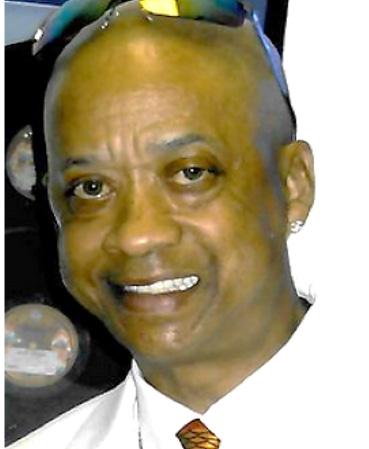
Special to The Post Joseph (Tony) Saddler, Jr., the only son of the late Joseph Saddler, Sr. and Wilma Logue SaddlerScruggs, was born on June 4, 1946, in Chattanooga, Tennessee. He passed away on Jan. 29 in Sacramento, California, at the age of 79.
A graduate of Chattanooga’s Howard High School, class of 1964, he earned a bachelor’s degree from Morehouse College, where both his academic discipline and athletic excellence distinguished him from his peers.
From an early age, sports were a defining force in his life. Basketball proved pivotal in shaping his life, opening doors to higher education and lifelong opportunities. He often spoke of the game’s role as a vehicle for character development, believing that discipline, teamwork, and earned success shaped core principles to live by.
At Morehouse College, he excelled both on the court and in the classroom, maintaining a 3.6 GPA while competing at the highest level. His collegiate honors included All-City recognition as a sophomore, All-Conference selections in his junior and senior years, and an impressive 27-point scoring average during his final season. He was the team captain for three
years from 1965 to 1968 under Morehouse’s Hall of Fame Coach, Arthur McAfee. He scored over 1,300 points and grabbed 700 rebounds, which has only been accomplished four times at Morehouse in the last 60 years.
Two weeks after graduation, he was drafted into the Armed Forces. Concerned about his assignment, he was reassured that “the only thing he would have in his hand would be a basketball.” While playing for the Sandia Army Base Boomers in Albuquerque, he was named Most Valuable Player for the AA title and led the team to its second straight Fourth Army Basketball Championship, solidifying his reputation as an elite competitor.
Leaving the Army, Eural McKelvy recruited Tony for the Harlem Globetrotter Organization/Harlem Clowns. He was described as a powerhouse with his fine outside shooting and rebounds. Playing with the Harlem Clowns took him around the world. At one time, he sent his twin sister a postcard from the Philippines to let her know he was on television with Miss Universe. Tony played with the Harlem Clowns for more than 10 years, entertaining fans and representing excellence on a global stage.
After retiring from professional basketball, he settled in Oakland, California, where his passion for basketball continued through mentorship and service. He coached at Edna Brewer Middle School, leading the team to a city championship; served as a counselor for Feather River Basketball Summer Camps for more than a decade; participated in youth clinics throughout the Bay Area; and officiated numerous amateur and professional summer leagues, including the Charles Schwab Invest-



ment League. He earned the title of ‘Mosswood Legend,’ referring to local players whose performances left a mark on Oakland’s basketball, whether or not they made the NBA.
Beyond athletics, he was cherished for his gregarious spirit, infectious charm, and unforgettable presence. A natural conversationalist, he never met a stranger and left lasting impressions wherever he went.
He was employed by the Rentokil/Terminix network for nearly 20 years before his illness and was known for his dependability and a warm rapport with customers.
“Known for his signature swag and impeccable dress, he carried this kind of magnetic presence that opened doors for him as a DJ and made him a natural force in nightlife and social scenes in the Bay Area. His life was one of passion, purpose, and connection – on the
Continued from page 2
watched.
Attorney General Pam Bondi has begun invoking a new law that prevents “obstructing worship” – ostensibly designed to protect religious services – to criminalize journalists and protesters documenting government action at churches. In Minnesota, that law is being used not to protect worshippers from disruption, but to obstruct scrutiny. Every arrest takes a chunk out of the First Amendment – the freedom Americans love to praise in theory and restrict in practice. The Constitution doesn’t say “freedom of the press, but only if you’re credentialed.” It doesn’t say “freedom of speech, unless the footage embarrasses authorities.” It doesn’t say “you can record, but only from angles we approve.”
court and beyond –and his legacy lives on in the countless lives he touched.
He is preceded in death by his parents, Joseph and Wilma Saddler. His surviving loved ones, who are deeply saddened and will cherish his loving memory, are his twin sister, affectionately, Dr. Twin – Janice Hoffman Willis (John), Wilmington, Delaware; Muriel Saddler-Rivera, Bronx, New York; Eva Spence-Johnson; Chattanooga, Tennessee, and a host of nieces, nephews, cousins, and friends. The family extends special thanks to Matanah Buoh, Terrance Morris, Sacramento, and Zee Dunn of Oakland for their devotion to Tony during his illness. His cremated remains will be buried on Friday, Sept. 11 at the National Cemetery and a memorial will be held on Sunday, Sept. 13, at the Warren Chapel AME Church in Chattanooga, Tennessee.
It definitely doesn’t single out journalists of color.
Yet that is exactly how press freedom is being redefined.
Independent journalists are uniquely exposed. No corporate badge. No editor calling City Hall. No legal department smoothing things over. Just a phone, a camera, and the nerve to hit record. That nerve is now being punished. The goal isn’t conviction. The goal is pain. Drain time. Drain money. Drain courage. Watch quietly – or don’t watch at all. That’s how narratives are controlled.
When independent journalists are silenced, the stories that disappear aren’t abstract. They’re real stories about immigration raids. Police conduct. Courtrooms. Housing sweeps. Protests. Churches. Events that shape the lives of people without lobbyists, lawyers, or publicists.
Visionary choreographer Kyle Abraham’s daring company arrives in Berkeley with kinetic, intimate works danced to live music composed by Max Roach, Nina Simone, and Shelley Washington.
Feb 21–22
ZELLERBACH HALL, BERKELEY

Under the exciting new leadership of Artistic Director Alicia Graf Mack, the legendary Alvin Ailey American Dance Theater returns to Berkeley with four dynamic programs uniting iconic masterpieces like Revelations, works by Ailey dancers past and present, and bold new creations from the next generation of choreographers, including Maija García, Fredrick Earl Mosley, and Matthew Neenan.
Apr 7–12
ZELLERBACH HALL, BERKELEY A.I.M

Continued from page 1
revealed, unanimously approved the informational report, which is scheduled to go to an upcoming council meeting for discussion and action.
The current study covers five years, 2016-2021, roughly overlapping the two tenures of Libby Schaaf, who served as mayor from January 2015 to January 2023.
The amount of dollars at stake in these contracts was significant in the four areas that were studied, a total of $486.7 million including $214.6 million on construction, $28.6 million on architecture, and engineering, $78.9 million on professional services, and $164.6 million on goods and services.
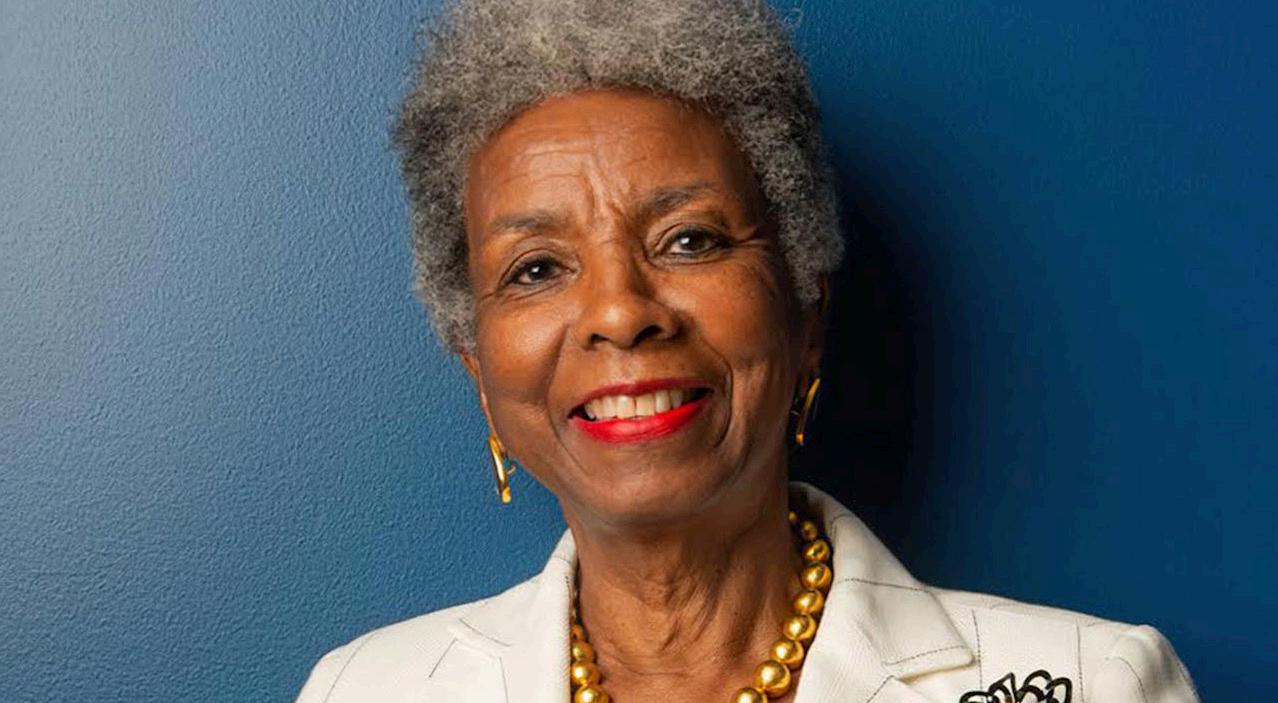
While the city’s policies are good, “the practices are not consistent with policy,” said Dr. Eleanor Ramsey, founder and CEO of Mason Tillman Associates.
There have been four disparity studies during the last 20 years, all showing a pattern of discrimination against women and minorities, especially African Americans, she said. “You have good procurement policy but poor enforcement.”
“Most minority- and womenowned businesses did not receive their fair share of city-funded contracts,” she continued. “Over 50% of the city’s prime contract dollars were awarded to white-owned male businesses that controlled most subcontracting awards. And nearly 65% of the city’s prime contracts were awarded to non-Oakland businesses.”
As a result, she said, “there is a direct loss of revenue to Oakland businesses and to business tax in the city… There is also an indirect loss of sales and property taxes (and) increased commercial office vacancies and empty retail space.”
Much of the discrimination occurs in the methods used by individual city departments when issuing outside contracts. Many departments have found “creative” ways to circumvent policies, including issuing “emergency” contracts for emergencies that do not exist and providing waivers to requirements to contract with women- and minority-owned businesses, Ramsey said.
Many of the smaller contracts – 59% of total contracts issued –never go to the City Council for approval.
Some people argue that the contracts go to a few big companies because small businesses either do not exist or cannot do the work. But the reality is that a majority of city contracts are small, under $100,000, and there are many Black-, womanand minority-owned companies available in Oakland, said Ramsey.
“Until we address the disparities that we are seeing, not just in this report but with our own eyes, we will be consistently challenged to create safety, to create equity, and to create the city that we all deserve,” said Fife.
A special issue highlighted in the disparity report was the way city departments handled spending of federal money issued in grants through a state agency, Caltrans. Under federal guidelines, 17.06%.
of the dollars should go to Disadvantaged Business Enterprises (DBEs).
“The fact is that only 2.16% of all the dollars awarded on contracts (went to) DBEs,” Ramsey said.
Speaking at the committee meeting, City Councilmember Ken Houston said, “It’s not fair, it’s not right. If we had implemented (city policies) 24 years ago, we wouldn’t be sitting here (now) waiving (policies).”
“What about us? We want vacations. We want to have savings for our children. We’re dying out here,” he said.
Councilmember Charlene Wang said that she noticed when reading the report that “two types of business owners that are consistently experiencing the most appalling discrimination” are African Americans and minority females.
“It’s gotten worse” over the past 20 years, she said. “It’s notable that businesses have survived despite the fact that they have not been able to do business with their own city.”
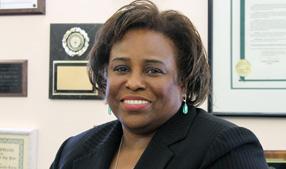
Also speaking at the meeting, Brenda Harbin-Forte, a retired Alameda County Superior Court judge, and chair of the Legal Redress Committee for the Oakland NAACP, said, “I am so glad this disparity study finally was made public. These findings … are not just troubling, they are appalling, that we have let these things go on in our city.”
“We need action, we need activity,” she said. “We need for the City Council and others to recognize that you must immediately do something to rectify the situation that has been allowed to go on. The report says that the city was an active or inactive or unintentional or whatever participant in what has been going on in the city. We need fairness.”
Cathy Adams, president of the Oakland African American Chamber of Commerce, said, “The report in my opinion was very clear. It gave directions, and I feel that we should accept the consultant Dr. Ramsey’s recommendations.
“We understand what the disparities are; it’s going to be upon the city, our councilmembers, and our department heads to just get in alignment,” she said.
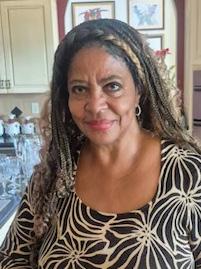
Said West Oakland activist Carol Wyatt, “For a diverse city to produce these results is a disgrace. The study shows that roughly 83% of the city contracting dollars went to non-minority white male-owned firms under so-called race neutral policies
These conditions are not “a reflection of a lack of qualified local firms,” she continued. “Oakland does not have a workforce shortage; it has a training, local hire, and capacity-building problem.”
“That failure must be examined and corrected,” she said. “The length of time the study sat without action, only further heightens the need for accountability.”
CalKIDS Scholarships ...
Continued from page 1
tion letters, or a minimum GPA.
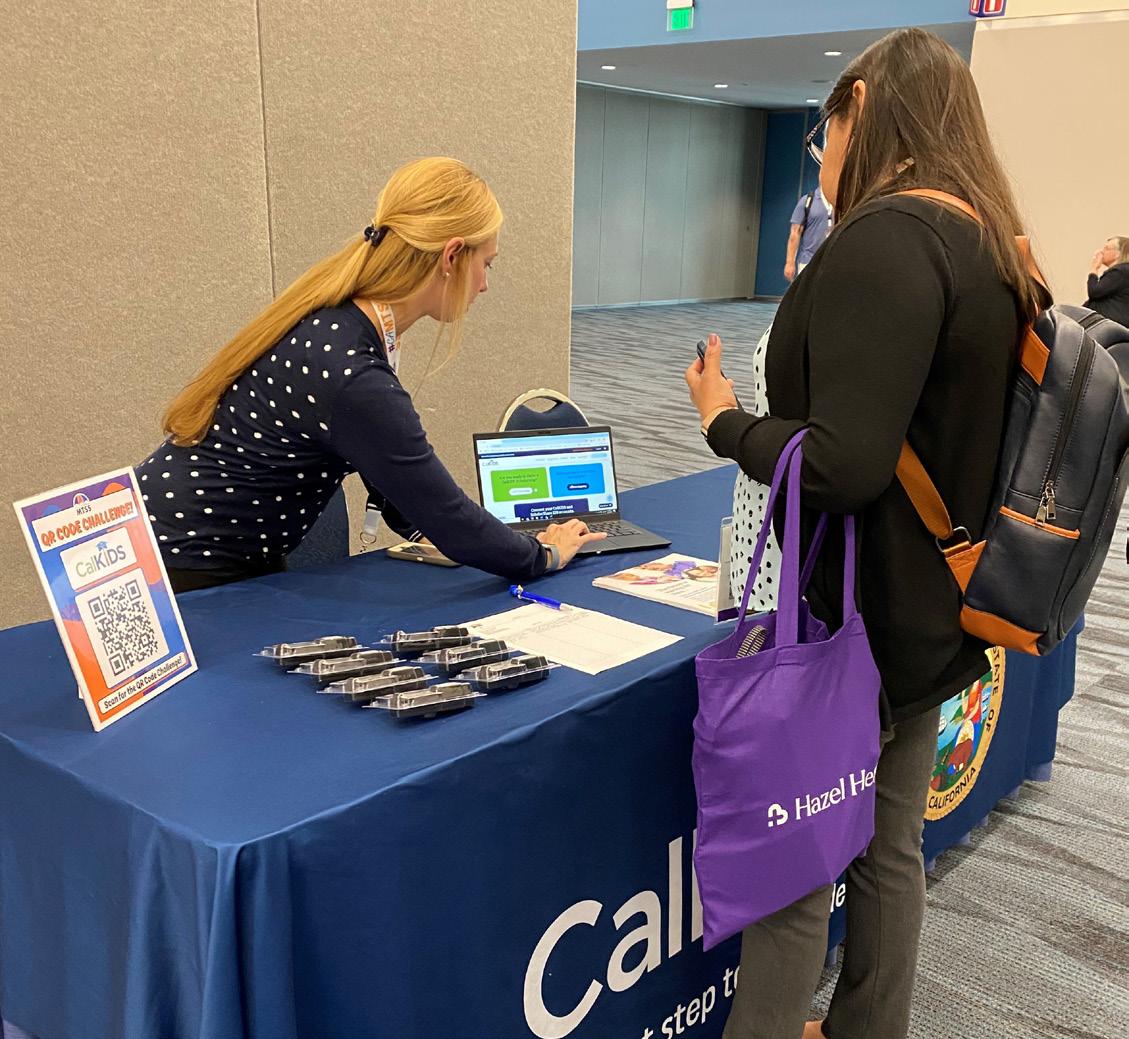
CalKIDS is the nation’s largest child development account program, providing scholarships of up to $1,500 for eligible California public school students.
Funded by the State of California and administered by the ScholarShare Investment Board, chaired by State Treasurer Fiona Ma, CPA, CalKIDS helps reduce financial barriers as students plan for college or career training.
“CalKIDS was created to support students at moments when
financial decisions can feel overwhelming,” said State Treasurer Fiona Ma, CPA. “Having scholarship support already in place can empower students and families to make confident financial choices as they plan for college or career training.”
Statewide, more than 60% of public school students in grades 2–12 are eligible to claim a CalKIDS Scholarship worth up to $1,500. Some college-age students may also have a CalKIDS Scholarship available. The schol-
Continued from page 1
2018 and the previous 85/15 division of asset was allowed to stand, including a conduct order against Jones citing Jones had used undue influence to get her mother to write the new will.
This injustice prevailed, even after the judge ruled that 101-yearold Parker was of sound mind and should participate in the mediation, as attorneys and court stood to benefit more from the estate if dissention and disagreement continued between two sisters.
To continue the dissention, Jones alleges Teri Parker’s attorney filed a restraining order against Nedra, fraudulently signing Vera Parker’s name to it, citing Jones had used undue influence on her mother to get her to write her 50/50 asset-splitting will. Jones was also charged her with interfering in court-appointed attorney Matthew Kagin’s duties; and breaking into her mother’s home.
Both Jones and watch commanders for Marina Del Rey Sheriff’s Department Sergeants Salvatore Picarella and Jake Lafayette dispute the braking-andentering claim. Picarella says, “Officers are trained to uphold the law, state and federal, and our local policies may be more stringent. We never condone unlawful activity by our officers when conducting ‘wellness checks’ for our elderly or any vulnerable citizen.”
Contrary to these allegations, the original restraining order was filed against Lisa MacCarley’s
client Teri Parker for spending $200,000 of her mother’s money to pay off her condo, and Jones had not broken into her mother’s home, she’d gone with deputies for a wellness check.
Jones was not aware restraining order names had been switched from her sister’s name to hers until she was in court. Despite protests that paperwork was altered, Judge James Blancarte ignored Judge Johnson’s visitation orders for the sisters, upheld the order filed by MacCarley, and Jones has not seen her mother for three years.
To Jones, the only parties that win in probate court are court officials.
“A group of referees, judges, and attorneys are acting horribly to take people’s generational wealth, and it is sad,” said Jones, alleging that because the court system lacks resources, so they take money from us to get paid.
“Accountability and transparency must be restored and required of real estate brokers, attorneys, trustees, judges, and trustees entrusted with the power to oversee and manage estates, wills, and trusts,” Jones said. “Corrupt courts exist due to lack of oversight, and prosecution due to lack of will by the Commission on Judicial Performance and the State Bar Association to act against wrongdoers.”
Sports Done Right Summit ...
Continued from page 1
every child, no matter their background or zip code, can enjoy the full benefits of youth sports.
“In the past, decisions about youth sports have happened without input from the young people, families, and communities most impacted,” said Robert Marcus, PCA’s chief strategy and community impact officer. “Shifting access requires shifting power toward community-driven solutions and shared leadership,” he added with PCA CEO Jason Sacks, who emphasized the organization’s commitment to equity and local collaboration.
The daylong summit featured training sessions, panel discussions, and workshops designed to exchange best practices and expand opportunities in youth sports. Participants ranged from local youth coaches and nonprofit leaders to national funders and sports executives.
The theme, “Who Holds the Whistle?” encouraged attendees to examine how decision-making and accountability shape access at every level of play. A morning session, “The Rise of Flag Football and What It Teaches About Expanding Access,” featured Justin Prettyman of the 49ers Foundation, Chris Millman of AMB Sports and Entertainment, and Diana Flores, NFL ambassador and captain-quarterback of Mexico’s world champion women’s flag football team. Their discussion highlighted how new and inclusive sports models can welcome more young people – especially girls –into athletics.
At a panel on equity in sports, Derek Jernstedt of the Quest and HEDCO Foundations, Kim Thompson of the Cowell Foundation, and Kevin Martinez, vice president of Corporate Citizenship
arship can be used for qualified higher education expenses, including tuition and fees, books and supplies, and computer equipment.
Claiming a CalKIDS Scholarship is simple and can be completed online. Students or families only need the student’s Statewide Student Identifier (SSID), which can be found by contacting the student’s school or by visiting CaliforniaColleges.edu. Once they have the SSID, students can visit CalKIDS.org to check eligibility and claim their scholarship account.
Urban League’s 2026 Black Bay Area Report ...
Continued from page 1
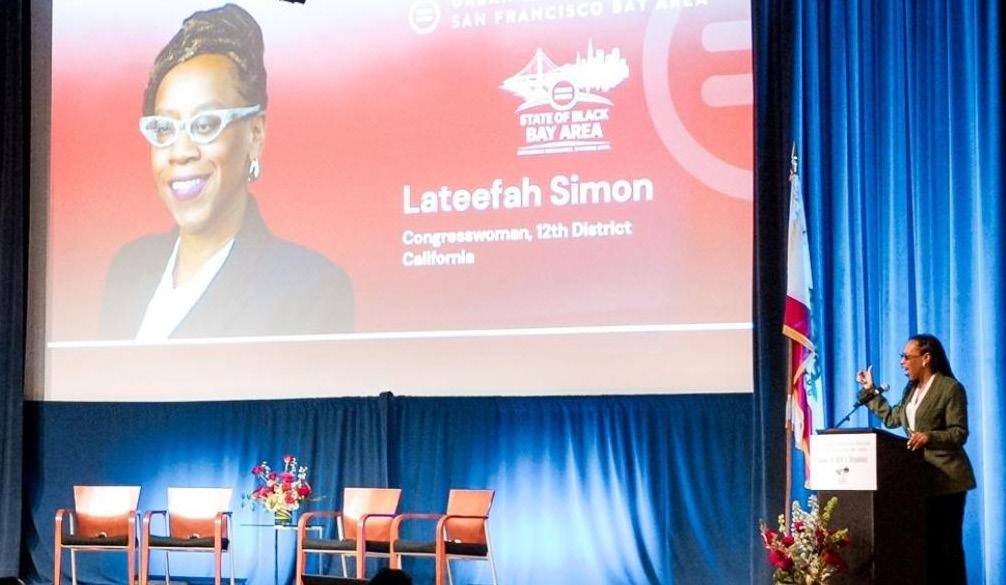
Simon also addressed the audience. The centerpiece of the event was the “State of Black Bay Area,” presented by Dr. Shakari Beyerly, which summarized findings from a survey of more than 400 Black residents across nine counties. Conducted in January 2026, the study explored how economic pressures, shifting job landscapes, and the impact of artificial intelligence are shaping community well-being.
According to the report, 59% of participants said they struggled with the region’s rising cost of living, while 46% felt directly affected by the rollback of diversity, equity, and inclusion programs. About 40% said the rise of AI technology had changed how they viewed their work or educational futures, though many were uncertain whether those changes would help or harm them.
The results also highlighted concerning trends in health and maternal care. More than half of Black women surveyed (57%) said persistent racial disparities and adverse health statistics had influenced their decisions about whether to have children.
Despite these challenges, Byerly said the data showed high levels of agency and optimism.
Following the report, two expert panels examined communitybased solutions. The first, “Healthy Futures: Empowering the Black Community Through Wellness,” included speakers from Genentech, Gilead Sciences, UCSF, and Olusan Platforms, who discussed how innovation in biotechnology and
culturally responsive care could improve long-term health outcomes. The second panel, “Closing the Opportunity Gap: Career Pathways in STEM & AI,” featured representatives from Salesforce, Airbnb, Human AI, Peralta Community College District, and community development organizations.
Participants addressed barriers to entry in technology and science fields, as well as strategies to expand access through education and certification programs. Survey results underscored both the challenges and hopes expressed in those discussions: 78% of respondents said barriers persist for Black Americans in the tech industry, while 79% viewed certificationbased training as a strong pathway to stable careers.
The breakfast concluded with a California gubernatorial forum, moderated by Marcus Washington and Velena Jones of NBC Bay Area. Participants included Xavier Becerra, Ian Calderon, Katie Porter, Tom Steyer, Tony Thurmond, Antonio Villaraigosa, and Betty Yee. Candidates responded to policy priorities identified in the EVITARUS survey, including affordable housing, homelessness, and inflation. Each pledged to address inequities highlighted in the Urban League’s findings if elected governor.
As one of 90 affiliates of the National Urban League, the Bay Area branch has worked for decades to advance economic self-reliance, educational access, and civil rights for Black residents.
at ESPN, explored how philanthropy and community partnerships can address the structural barriers that limit participation.
Another session looked ahead to the 2026 World Cup and its potential to inspire youth engagement in host cities across the U.S. Panelists included Dr. Matthew Atencio of Cal State East Bay’s Center for Sports and Social Justice, Lindsay Barenz of Oakland Roots and Soul, and Nora Dooley of Soccer Forward.
Renata Simiral of the LA84 Foundation and Play Equity Fund and Shawn Granberry of Hip Hop TV and the Bay Area Host Committee (BAHC) were also in attendance, shedding light on the importance of sports equity.
The summit also spotlighted grassroots leaders working to build opportunity in their own neighborhoods. Jeff Harper-Harris, founder of Coaches for Racial Equality and a longtime coach in Southeast San Diego, shared how sports have been a lifeline for young people facing homelessness, foster care, or involvement in the juvenile system. “Sports kept me from destruction,” he said. “It’s a tool to fight what we’re going through and stay focused.”
Harper-Harris partnered with PCA’s Michael Martin four years ago to channel more resources into underserved communities. That commitment has since inspired others, including Armon Harvey of the Harvey Family Fund, who now leads PCA’s sports equity initiatives in San Diego County after being mentored by Harper-Harris.
“The power of the Positive Coaching Alliance spreads the more we come together and serve our youth,” said Martin.
Sofia Reynoso Sandoval, a student from University of California, Berkeley shared, “Having a CalKIDS account has been an immense help when it comes to paying for my books and school supplies.”
To expand access and awareness, schools across California are required to share CalKIDS information with students who submit the FAFSA or CADAA. Through a partnership with the California Student Aid Commission (CSAC), students who also apply for state financial aid can now view their CalKIDS eligibil-
Continued from page 1
Sun., Feb. 22, 12:30-7 p.m.
Last Days for Exhibit at OMCA
There only a couple of weeks left to see “Black Spaces: Reclaim & Remain” at the Oakland Museum of California.” The highly acclaimed exhibit navigates the braided histories of displacement, resistance, and resilience within Black American communities in Oakland and the East Bay. Drawing inspiration from the legacies of West Oakland and Russell City (Hayward), “Black Spaces” pulls from both OMCA’s permanent collection and loans from local repositories to trace the rise of these communities and their subsequent displacement. In response to this history, the exhibition presents three unique perspectives from an artist, Adrian Burrell; an architect, June Grant with blinkLAB architecture; and an archive, the Archive of Urban Futures and Moms 4 Housing.
Oakland Museum of California
1000 Oak St. Oakland, CA
Closes March 1
Wed.-Sun., 11 a.m. to 5 p.m. San Francisco
Bayview Black History Month & Lunar New Year Celebration
The 16th Annual Bayview Black History Month and Lunar New Year Celebration brings together community members to honor the rich traditions, history, and contributions of African American and Asian American Pacific Islander communities in Bayview.
The event features cultural performances such as lion dancing, African dance, and tai chi, along with food, games for all ages, raffle prizes, and a toy giveaway for children. With blessings and remarks from local leaders and community partners, the celebration creates
ity through CSAC’s WebGrants 4 Students portal.
“We are grateful to CalKIDS for this partnership. Together, we can help make college affordable for many more Californians.”
said Dr. Daisy Gonzales, executive director of the California Student Aid Commission. “Utilizing the power of data sharing across state agencies, we can close information siloes…We are the partner that can connect students and families with CalKIDS, and CalKIDS is the missing link when we seek to promote educational equity in our state.”
space for reflection, joy, and solidarity across cultures.
Bayview Hunter’s Point YMCA 1601 Lane St.
Feb. 21, 11 a.m.-2:30 p.m
Exploratorium Exalts Black Heroes in STEM
Visit the Exploratorium this month and look for profiles throughout that honor historic and contemporary Black scientists, innovators, activists and artists, each profiled with a specific exhibit.
Among others learns about entrepreneur Madame C.J. Walker, a self-made millionaire in the cosmetics industry; surgeon Charles Dre, the “father of the blood bank;” astronaut Mae Jemison, actor, singer, and fashion icon Billy Porter and more.
Exploratorium Pier 15 (Embarcadero at Green Street)
San Francisco, CA Through Feb. 28
Tues.-Sat. 10 a.m.-5 p.m.
Thurs: 6 p.m. -10 p.m. Sun: Noon-5 p.m. Closed Mondays
Berkeley
The Rise of Black Studies in Berkeley
The Berkeley Unified School District will host a showing of the documentary “Epicenter: The Struggle for Black Studies in the Bay Area.” Berkeley High alumnus Doug Harris presents the film focused on the Black Studies movement and one educator in particular, Robert McKnight. (registration required on Eventbrite)
Berkeley Unified School District
2020 Bonar St. Berkeley CA
Tues. Feb. 17, 5:30pm
Compiled by Post Staff from online sources.
With support from state agencies, community partners, and schools, more students are checking eligibility and claiming their accounts. Statewide, more than $50 million in CalKIDS Scholarship funds have already been used at colleges and universities, demonstrating how the program can make a real difference in students’ educational journeys.
For eligibility details and to claim a CalKIDS Scholarship Account, visit CalKIDS.org.
Vanessa Vizard of Vizard Marketing & PR prepared this story for publication.