By Post Staff
By Kiana Gums Special to The Post
Oakland offered a powerful reminder of what democracy looks like when it is rooted in community, clarity, and committed leadership. The League of Women Voters (LWVO) of Oakland hosted its spring fundraiser, ‘The Time Is Now: Protecting Democracy, Rallying the Town,’ bringing together civic leaders, community partners, and residents on April 7 that under-
scored both urgency and possibility.
Leading that effort was LWVO President Ernestine Nettles, who currently serves as an analyst in the City Administrator’s Office. Under Nettles’ leadership, the event came together in less than three weeks, ultimately raising nearly $40,000 in sponsorships and donations, along with an additional $15,000 in in-kind support.
Action on Racial Disparities in City Contracting as Councilmember Fife Pledges Change
Special to the Post
OAKLAND, CA — April 22, 2026 — Following Tuesday’s Oakland City Council Life Enrichment Committee meeting, the Oakland African American Chamber of Commerce (OAACC), alongside the Disparity Business Coalition — including the National Association of Minority Contractors Northern California, Construction Resource Center, and East Bay Rental Housing Association — is calling for immediate administrative action to address longstanding racial disparities in City contracting, as early signs of movement emerge from City leadership.
Bay Area Business Group League of Women Voters of Oakland Hosts ‘The Time is Now,’ Raises $40,000
At the meeting, Director Emylene Aspilla presented a summary of the coalition’s working document, outlining a clear roadmap focused on implementation, accountability, and measurable progress. The presentation reflects a shift from years of studies toward actionable reform.
In addition, Deputy City Administrator Sofia Navarro reported updates from the City Administrator’s Office, indicating that direction from City Administrator Jestin Johnson is already underway. According to the update, waivers have been stopped, and
departments are reviewing next steps and potential structural changes to align contracting practices with equity goals.
The urgency of the issue was evident as 18 speakers filled the chambers, representing Oakland’s business and construction community and calling for fairness, enforcement, and equal access to opportunity.
During public comment, Cathy Adams delivered a direct message to Council: after decades of studies confirming inequities, the time for discussion has passed.
“For twenty years, this City has conducted disparity studies that all say the same thing — there are clear racial disparities in contracting. The question is no longer whether disparity exists. The question is whether this Council will act with urgency.”
The coalition emphasized that several corrective actions can be implemented within 30 days without new funding, including establishing oversight mechanisms, reforming the waiver process, enforcing prompt payment, and increasing transparency and reporting.
“Certification is not equity. A certified firm that never wins a
The Office of the Oakland City Auditor this week released a report designed to identify potential sources of illegal dumping in Oakland, evaluate the City’s use of resources to promote effective clean ups and enforcement, identify workload and process improvements for clean ups, cite violators, and prevent recurrent dumping.
The report, titled “Performance
Audit of Illegal Dumping: Improvements to the Accessibility of Legal Waste Disposal and the City’s Enforcement and Remediation Policies and Operations Could Help Alleviate Oakland’s Illegal Dumping Problem,” was produced in response to widespread community concern about illegal dumping, examining the City’s illegal dumping activities between 2019 through 2025, but
‘waivers’
By Ken Epstein
The City of Oakland’s leadership and community stakeholders working group reported this week at the city’s Life Enrichment Committee meeting on the progress being made to implement reforms based on the findings of the recently released 2024 Disparity Study. Formed recently by the City Council, the working group is operating on a 90-day timeline to propose and implement solutions to the institutionalized discrimination that has kept Black- and women-owned businesses from
By Post Staff
Former Oakland Mayor Libby
Schaaf has been hired as CEO and president of the Bay Area Council, a business group that represents hundreds of businesses including major Silicon Valley technology corporations and the ports of Oakland and San Francisco, as well as the San Francisco Giants, Golden State Warriors and San Francisco 49ers.
Schaaf, who served as Oakland’s mayor 2015 to 2023, begins her new job on May 4.
“Libby Schaaf is an exceptional leader with a deep understanding of the Bay Area’s opportunities and challenges,” said Kristina Lawson, chair of the Bay Area Council’s board of directors in a media release.
Schaaf said her work will focus on the Bay Area’s “greatest needs — from restoring housing affordability and strengthening our economy to improving public safety and expanding opportunity.”
While mayor, she helped lead
By Kate Eaneman Special to The Post
Some friendships begin so early and run so deep that the person becomes part of how you see the world. For Vahideh Shaker, that person was Maryam Sedghi.
The two met as children and grew up side-by-side in school for 12 years: the kind of formative, irreplaceable friendship that leaves
its fingerprints on everything that comes after.
“Maryam was a kind soul, and everyone appreciated her kindness and friendship.”
After high school, Maryam married and raised her family. Once her two daughters were grown and she had already welcomed a grandson into her life, Maryam did something remarkable. She went back to school and earned her architecture
degree from one of the most prestigious universities in Tehran, Iran.
Shaker
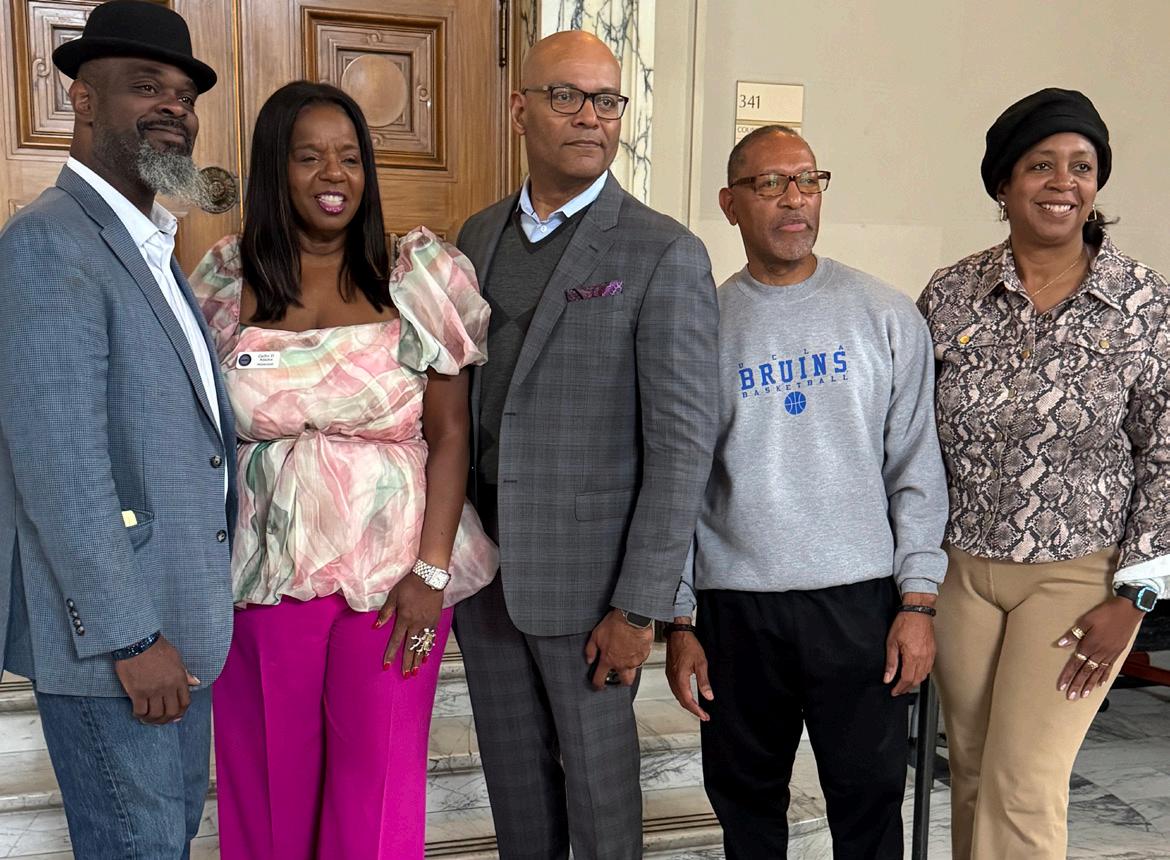
Members of the community coalition
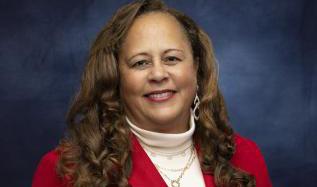
Libby Schaaf. File photo.
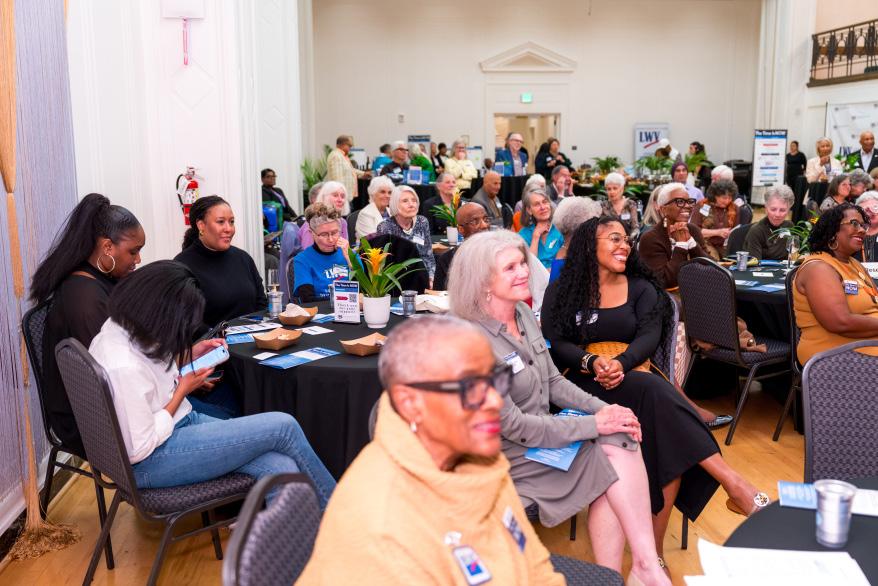
Ces Butner of the Cestra Butner Family Foundation and League of Women Voters – Oakland President Ernestine Nettles. Photo by Darryl Kelly Images.
Photo courtesy of WCRC to support fundraising in support of clients. Photo graphics by Dr. Maritony Jones.
Robert Carruthers: Revealing the Mysteries of Space ... see page 4
Vote in 2026: Bill
By Bo Tefu California Black Media
A California Assembly committee has advanced a bill that would ban law enforcement officers from being near polling places, with violations carrying penalties of up to $1,000 in fines and a maximum five-year prison sentence.
The proposal would make it a felony for anyone in a law enforcement uniform or displaying agency insignia to be within the immediate vicinity of a polling location unless
could appear near polling sites. She argued that such a presence could discourage participation, particularly among immigrant communities.
The legislation comes amid ongoing national debates over election security and immigration enforcement. While federal law already prohibits certain forms of election interference, Democratic lawmakers said additional safeguards are needed.
“The idea that this president would not send ICE agents to intimidate legitimate voters at polling places is laughable,” said
‘A Lot of Money to Be Made’: Ahead of 2028 LA Olympic Games, Black Caucus Encourages BlackOwned Businesses to Lock In Contracts
By Antonio Ray Harvey California Black Media
Assemblymember Tina McKinnor (D-Inglewood) wants business owners in her community and across the state to know that LA28 is committed to directing procurement spending in the Greater Los Angeles region toward small businesses for the 2028 Olympic Games.
The Assembly Select Committee on the 2028 Olympic and Paralympic Games and the Assembly Committee on Arts, En-
lative Black Caucus (CLBC), told California Black Media (CBM).
“There are a lot of (financial) opportunities. There is a lot of money to be made.”
McKinnor, chair of the Assembly Select Committee on the 2028 Olympic and Paralympic Games, aims to ensure Black and minority-owned small businesses in Inglewood and surrounding areas fully understand the opportunities ahead of the Summer 2028 Games.
The LA28 Olympic Games
By Joe Kocurek
California Black Media
iStock.
Seville Christian’s decades-long relationship with PRC includes as a client, fellow and beloved employee. Photo courtesy of PRC.
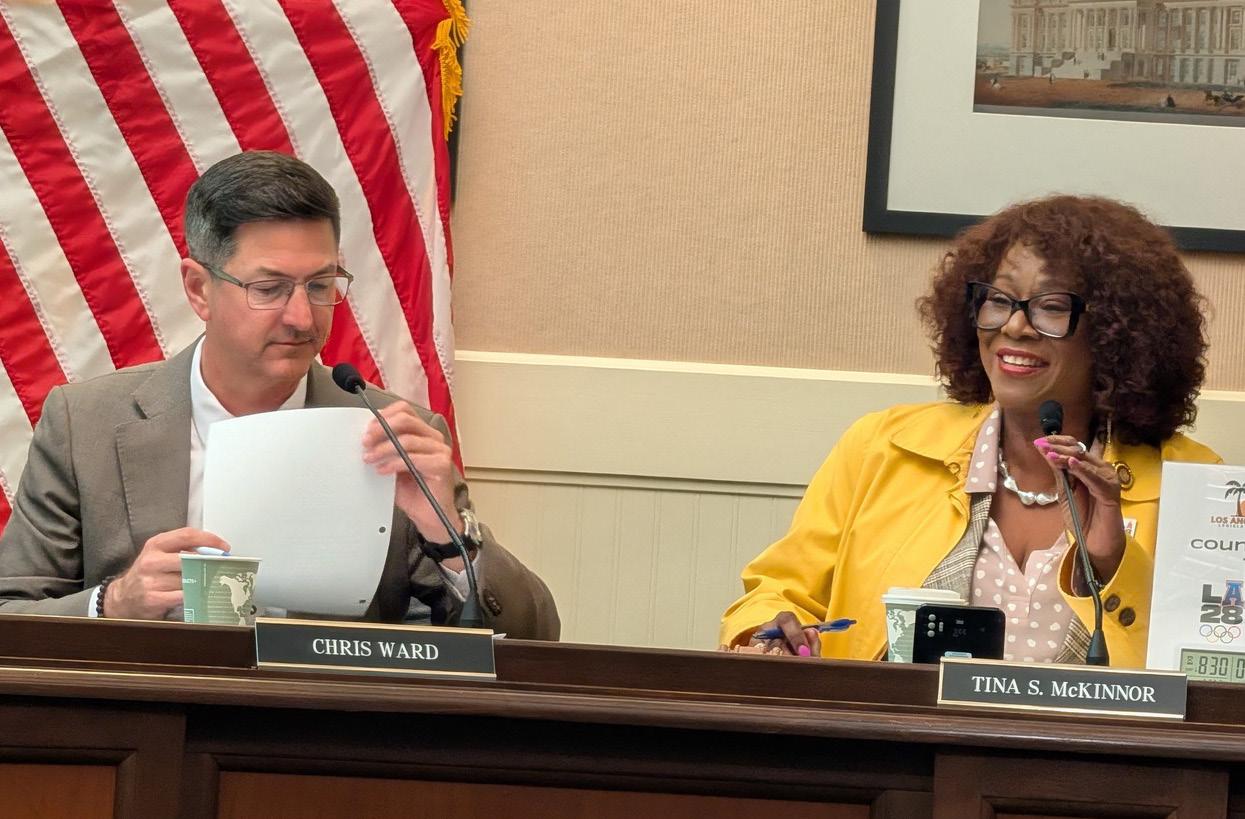
Asm. Tina McKinnor (D-Inglewood), right, and Chris Ward (D-San Diego), left, led a hearing of the Assembly Select Committee on the 2028 Olympic and Paralympic Games at the California State Capitol on Monday, April 6, 2026. McKinnor and Ward are co-chairs of the committee. CBM photo by Antonio Ray Harvey.
Longfellow Corner
California Senate Unveils ‘Foundation for the Future’ Budget Plan to Address Deficit; Protect Core Programs
By Bo Tefu California Black Media
California State Senate leaders on April 18 released a new budget framework for the 2026–27 fiscal year aimed at stabilizing the state’s finances while maintaining funding for essential services, including health care, housing and education.
The proposal, dubbed the “Foundation for the Future” plan, focuses on three priorities: building reserves, preserving key programs and reducing the state’s long-term structural deficit. Lawmakers say the approach is designed to address ongoing budget shortfalls without placing additional strain on working families.
“At the center of the Foundation for the Future budget plan are the people feeling the greatest financial strain: working families and the middle class,” said Senate President pro Tempore Monique Limón. “California families are doing everything right, yet many are still struggling to keep up.”
The plan calls for increasing the state’s Rainy Day Fund and maintaining investments in programs such as housing assistance, childcare expansion and Medi-Cal. It also introduces a “Fair Share Contribution,” which would require the largest corporations that do not provide employ-
Your Vote in 2026 ... Continued from page 2
James Gallagher (R-Yuba City) questioned whether the state could enforce such penalties against federal agents.
Legal experts say the proposal could face constitutional challenges if it becomes law, as it tests the limits of state authority over federal enforcement actions.
In addition to polling place restrictions, the bill would also prohibit immigration agents from conducting enforcement operations near childcare centers.
ee health coverage to help offset public health care costs.
According to the Senate, about 42% of Medi-Cal enrollees are full-time workers whose employers do not provide coverage, shifting billions in costs to taxpayers. The proposed contribution could generate between $5 billion and $8 billion annually.
Sen. John Laird (D-Santa Cruz), chair of the Senate Budget and Fiscal Review Committee, said the plan reflects a balanced approach.
“We’re setting aside more in reserves and holding the line on new ongoing spending, while continuing to fund the programs people rely on,” Laird said.
Sen. Laura Richardson (D-Inglewood), who chairs a key budget subcommittee, emphasized the extensive review process behind the proposal.
“For the last several months, members have circumspectly reviewed the Governor’s budget… while simultaneously working to identify areas where different approaches could produce greater results and financial saving solutions,” Richardson said, noting that input from frontline public workers helped shape the plan.
The Senate’s proposal now enters negotiations with the Assembly and Gov. Gavin Newsom ahead of the June budget deadline.
San Francisco’s PRC Is Providing Work Opportunities
... Continued from page 2
client to valued employee, and eventually to policy fellow.
“Today, I’ve been with PRC for 27 years, going on 28,” she said.
Helping people access employment and build sustainable careers has been a cornerstone of PRC’s mission since its inception nearly four decades ago. In its most recent annual impact report, PRC served 443 clients through workforce development services, including career counseling, educational programs, handson training, and job search assistance. The average wage earned by PRC clients is $26.48
at the start.
“Our emergency financial assistance program helped more than 1,200 people this year pay rent, cover medical bills, and keep the lights on,” Henneman said. “And over 1,400 people reached out for legal advocacy, resulting in more than $2.5 million in retroactive benefits unlocked.”
per hour — approximately 38% above San Francisco’s minimum wage.
To advance this work, organizations like PRC have benefited from funding through California’s Stop the Hate Program, which provides direct support to community-based organizations leading anti-hate initiatives.
Beyond direct services, PRC is deeply committed to community empowerment and policy change. Programs such as the Black Leadership Council support community leaders in advocating for systemic reform, while the Black Trans Initiative focuses on addressing the unique challenges faced by Black transgender individuals.
people experiencing hate and are an example of the resources people can get connected with through the state’s CA vs Hate hotline.
PRC is now also producing a film project that centers the lived experiences of Black trans clients, including individuals like Christian.
“Our film highlights the health journeys and lived experiences of some of PRC’s Black trans clients,” Henneman said. “Our goal is to give voice, visibility, and agency to the participants — and to bring their stories, both harrowing and inspirational, to policymakers and the broader public.”
The film, expected to be released later this year, is directed by Yule Caise, with assistant director Zarina Codes, a Black transgender San Francisco resident.
Today, Christian continues her relationship with PRC as an ambassador, reflecting on a
journey that began with a single job opportunity and grew into a lifelong commitment to service.
“Sometimes I’ll be riding the bus or standing in a grocery store, and someone will come up to me from a women’s shelter,” she said. “They’ll say, ‘Oh, Miss Seville, I just want to thank you. You really helped me with what I was dealing with.’”
She paused, smiling.
“And in those moments,” Christian said, “I think to myself, “Well!.”
A single word that sums up pride in a journey to find the best in herself.
Get Support After Hate California vs Hate is a non-emergency, multilingual hotline and online portal offering confidential support for hate crimes and incidents. Victims and witnesses can get help anonymously by calling 833-8-NO-HATE (833-8664283), Monday to Friday, 9 a.m.–6 p.m. PT, or online at any time. Anonymous. Confidential. No Police. No ICE. This story was produced in partnership with CA vs Hate. Join them for the first-ever CA Civil Rights Summit on May 11, 2026. More information at www. cavshate.org/summit.
The bill now heads to additional legislative committees for consideration. Its outcome could shape how California balances voter protections with legal and political challenges ahead of the 2026 election cycle.
Supporters say the stakes are high, arguing that ensuring voters can cast ballots without fear is critical to maintaining confidence in the state’s elections.
The measure is part of a broader push by Democratic lawmakers to limit federal immigration enforcement activities in California. Other proposals moving through the Legislature seek to restrict operations on state property and limit state support for private detention facilities.
Christian’s path was not without challenges. During some rocky years, she experienced periods of housing instability and struggled with addiction. Through PRC, she enrolled in a life-skills program that emphasized using her own lived experience as a means of helping others. The program helped set her on a path toward completing an associate’s degree and ultimately launching a career in case management.
“Today, whether someone is new to the city or has lived here their whole life, I know how to help them navigate to where they need to be,” Christian said.
Each year, PRC serves more than 5,000 clients through a wide range of programs. These include housing navigation, legal advocacy to ensure access to health and public benefits, supportive housing, job and lifeskills training, and residential treatment programs.
While PRC was founded to serve people living with HIV, its mission has expanded over the decades to meet the needs of people with disabilities, individuals experiencing homelessness, and those facing mental health and substance use challenges.
According to PRC’s Chief of Public Policy and Public Affairs, Tasha Henneman, some of the organization’s earliest programs remain as vital today as they were
NOTICE: Seeking next of kin for Daniel Williams Jr., deceased, regarding copyright and music related personal business matters. Please contact Pastor Derrick Mann at 510 938 0144 or IAmPastorDerrick@gmail. com.
A recent study from the Williams Institute highlighted findings that 71% of transgender homicide victims in the U.S. between 2010 and 2021 were Black and that nearly a third of the transgender homicides during that period were confirmed or suspected hate crimes.
PRC’s direct and indirect services can be a lifeline for
to support San Franciscans experiencing housing instability, unemployment, and behavioral health challenges. Photo courtesy of PRC.
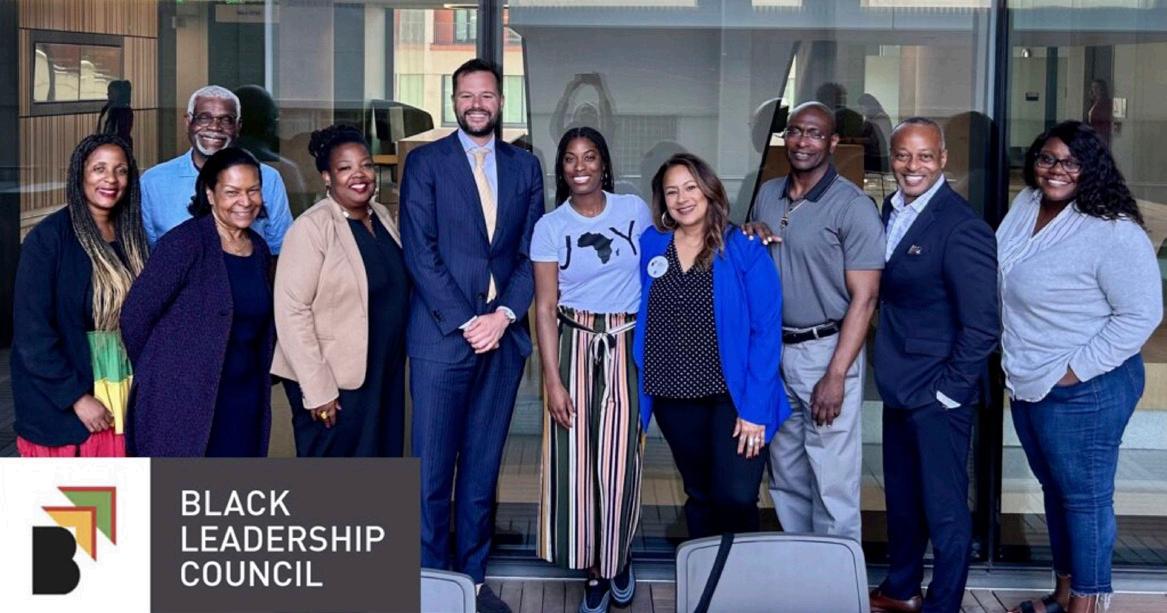
Black Leadership Council (BLC) Advocacy Day in Sacramento. BLC works to advance meaningful change through policy engagement to unlock the full potential of Black and low-income communities. Photo courtesy of PRC.
Members of PRC’s Black Leadership Council meet with a lawmaker in Sacramento. Photo courtesy of PRC.
Sen. Laura Richardson (D-Inglewood). File photo.
PRC welcomed guests to their annual Open House in April, an evening dedicated to connection, reflection, and learning more about the programs and people working every day
Nation’s First Cannabis Equity Certification Mark ...
Continued from page 1
said Oakland Mayor Barbara Lee. “During my time in Congress, I co-chaired the Cannabis Caucus and introduced the first bill calling for the establishment of cannabis equity programs to repair the harm done to Black and Brown communities.
“Today, the Oakland Legendary label puts power back where it belongs, helping consumers make informed choices and ensuring those most impacted are leading and thriving in today’s economy. Oakland is proud to lead the way!”
“The City of Oakland is committed to promoting the economic success of local equity businesses,” said Ashleigh Kanat, director of Oakland’s Economic & Workforce Development Department. “The Oakland Legendary mark lets consumers know they are supporting a certified Oakland equity business and getting the real Oakland experience: premium, authentic, and locally produced with a story they won’t find anywhere else. This distinction will elevate the presence of equity cannabis products in the marketplace.”
“The Oakland Legendary mark is a gold standard for quality,” says Dale Sky Jones, executive chancellor of Oaksterdam University.
“These are the operators who defined the culture and perfected the craft long before there was a legal market. When you buy Oakland Legendary, you aren’t just supporting a local business; you are getting access to the most authentic, high-caliber cannabis in the world. These brands are the true trendsetters, and once you try them, you’ll understand why Oakland remains the global epicenter of cannabis excellence.”
“Root’d believes it’s very important to highlight brands from operators who were disproportionately affected by the War on Drugs and educate the consumer on the importance of supporting equity brands that have shaped the cannabis culture and community. These legacy equity brands are the rooting ecosystem of our culture; the bigger and stronger the roots, the healthier the culture is,” says Rickey McCullough of Root’d in the 510, who has a long legacy in
the cannabis industry and has been featured on the front page of the New York Times for being one of the first equity dispensaries in the nation. “It is important for us to point consumers to amazing products and also support purchasing with a purpose.”
Consumers can easily identify Oakland’s legendary verified equity operators by the Oakland Legendary certification mark on packaging, advertising, and on the windows of verified equity retailers. In a nod to the community’s resilience, the official placement of the mark is slightly tilted, with the word “Legendary” ascending, symbolizing the upward trajectory and persistent growth of Oakland’s equity operators.
The Oakland Legendary awareness campaign includes the exclusive use of a certification mark on packaging and marketing materials and “I Hella [Heart] Oakland Legendary Cannabis” swag. High-visibility billboards along Interstate 880 are in place to build awareness of the program. The public awareness campaign is supported by the National Equity Trade Network.
For a list of Oakland Cannabis Equity businesses please visit: www.legendary.green.
About Oakland’s Cannabis Equity Program
The cannabis equity program is a project of Oakland’s Economic and Workforce Development Department. Learn more about the Cannabis Equity program here: https://www.oaklandca.gov/Business/Business-Taxes-LicensesPermits/Cannabis-Permit/Cannabis-Equity-Program
About Oaksterdam University
Oaksterdam University is the global leader in cannabis education, offering the highest-quality training to entrepreneurs, regulators, academics, and individuals interested in a career in the cannabis industry. Since its inception, Oaksterdam has provided the training and advocacy necessary to build the industry’s most influential leaders, regulators, and “legendary” operators.
Oakland’s Fight Against Illegal Dumping ...
Continued from page 1
also included financial data from as early as 2013.
The report details how multiple City departments have roles in the City’s efforts to fight illegal dumping in Oakland, including Public Works, the City Administrator’s Office, the Police Department, Code Enforcement, and the Finance Department.
The City’s Public Works Department plays the most prominent role in the City’s response to illegal dumping within the public rightof-way. Public Works is responsible for cleaning up illegal dumping and managing the City’s contract with the private hauler that serves Oakland residents and business operators with waste disposal.
Since 2013-14, spending on clean ups has increased considerably, nearing $12 million in fiscal year 2024-25. Public Works also has an Environmental Enforcement Unit (EEU), which cites illegal dumping offenders and provides outreach. Spending for that unit has also increased.
The report reviewed the City’s methods for prevention, deterrence, and clean up, concluding that legal waste removal should be more accessible and affordable.
The audit team found that much of the illegal dumping in Oakland is residential in origin, and the City’s contracted residential waste hauling is more expensive than it is for residents of other cities.
Residential customers have access to bulky pickups, but this service – especially among multifamily residents – appears to be underutilized. The audit also found that dumpsters allotted to councilmembers and the Mayor through the City’s hauling contract, have been underutilized, representing a loss of allotted legal waste disposal and contracted benefits to the City.
Racial Disparities in City Contracting ...
Continued from page 1
contract is not successful — it is a failure.”
In parallel with the Council meeting, the coalition formally submitted a California Public Records Act (CPRA) request seeking over two decades of contracting data, waiver records, compliance documentation, and disparity study materials to establish a full factual record of the City’s contracting practices.
The 2024 disparity study cited in the request found severe underutilization of minority-owned firms, including African American businesses receiving less than 1% of professional services contract dollars despite significant availability in the vendor pool.
Councilmember Carroll Fife reaffirmed her commitment during the meeting, making clear that she is dedicated to seeing this effort through and ensuring that meaningful change is delivered.
While the City’s indication that waivers have been paused is viewed as a meaningful first step, coalition leaders emphasized that implementation and enforcement will determine whether real change occurs.
The coalition also made clear that while the City Administrator has indicated waivers have been stopped, the community is still awaiting a direct response on long-standing waivers — including those extending 10 and 25 years — that remain in effect. Coalition leaders are calling for those waivers to be fully reviewed and rolled back as part of any meaningful reform effort.
“This is about real businesses being locked out of opportunity. When firms are shut out of contracts, it affects jobs, families, and the broader Oakland economy. Equity in contracting is essential. This situation may or can contribute to potential unsafe conditions.”
Mario Wagner, President of NAMC NorCal, emphasized that both execution and investment must move together:
“Now is the time to get to work — not just on implementing these reforms, but on funding them at a level that actually makes a difference. We’ve laid out a clear path forward. The City needs to move with urgency to stand up these programs, invest in capacity, and ensure the resources are there to support real participation. Execution and funding have to move together — otherwise, we’re right back where we started.”
The working document referenced in the presentation — developed in collaboration with coalition partners — outlines immediate reforms, including stricter waiver controls, enforcement of prompt payment, increased transparency, and stronger oversight mechanisms.
The Disparity Business Coalition is urging the City Council to:
● Implement administrative reforms within 30 days
● Enforce existing compliance requirements
● Increase transparency in contracting and reporting
● Address long-standing waiver practices
Libby Schaaf to Lead Bay Area Business Group ...
Continued from page 1
the unsuccessful effort to build a baseball stadium and real estate complex for the Oakland Athletics at the Howard Terminal at the Port of Oakland. The project was opposed by many community groups and businesses based at the Port.
She also led campaigns to unseat members of the City Council she opposed, including Desley Brooks, Carroll Fife and Rebecca Kaplan.
Schaaf faced allegations that
she violated campaign-finance laws through her influence on political committees that she improperly controlled several political action committees to attack opponents, received donations above legal limits, and hid the names of donors.
In a 2024 settlement with the City of Oakland Public Ethics Commission, she admitted to breaking Oakland’s municipal code and agreed to pay a $21,000 fine.
Swim A Mile | Move A Mile ...
Continued from page 1
families facing cancer. It will be her second time.
Shaker swam for the first time in October 2014, after a flyer posted at the El Cerrito pool caught her eye, and the event has stayed with her in the years since. This time, she will swim solo, and she will carry Maryam with her in every stroke.
In a few weeks, she will push off the wall and swim her mile. For
Maryam. For the daughters Maryam raised and the grandson she adored.
“May her memory and kindness give hope to those she left behind.” The Swim A Mile | Move A Mile for Women with Cancer is happening May 9-10 at Northeastern University in Oakland (formerly Mills College).
To learn more or register, visit wcrc.org/swim.
Progress to Eliminate Discrimination ...
Continued from page 1
having a fair shot at contracts with the City.
Topping the list of priorities has been the immediate elimination of “waivers,” which have long been used by city departments to evade legal equity requirements.
In a prepared statement read at Tuesday’s committee meeting, City Administrator Jestin Johnson reported on the results so far of the city’s collaboration with a community coalition that is working to implement the recommendations of the 2024 Disparity Study.
“One area that the stakeholder focus group meetings spent considerable time on is eliminating waivers,” Johnson stated.
are clear racial disparities in contracting.
“Under the law and under basic fairness, once disparity is documented, the city has a duty to act,” Adams said. “The question today is not about more study. It is about whether this Council will act with urgency.”
The audit identified opportunities for the City to strengthen enforcement of illegal dumping through legislative changes and improved regional collaboration.
In addition, the report noted that the City imposes special assessments on residential properties not subscribing to waste services, but it could impose special assessments on both residential and commercial properties.
Furthermore, fines for illegal dumping violations are lower in Oakland than they are in other local jurisdictions. The audit report notes that progress in these areas was made during the course of the audit, but those efforts have not been finalized.
Lastly, the audit found that the actual clean ups of illegal dumping are effective, but environmental enforcement could be improved through finalized strategies, clear goals, procedures and performance management, regular review of enforcement and prevention strategies, consistent staffing and workload improvements, streamlined processes and interdepartmental coordination, and improved user access and updates via the City’s online service request portal.
Notably, the audit found that the lack of policies and procedures and overarching strategy led to inconsistent service delivery within the Environmental Enforcement Unit with patrols focused on a 20-block stretch of the city for several months
This audit made 17 recommendations to address the findings. The City Auditor’s Office will follow up and report on the status of the recommendations.
“The City already has the evidence. What’s been missing is execution,” said Len Turner. “We’re not asking for more studies — we’re demanding enforcement, accountability, and measurable results starting now.”
Adams reinforced the urgency of immediate action:
“There are actions the City can take within 30 days that require no new funding — only leadership. Our community has waited long enough. We expect to see movement immediately.”
From the business and housing perspective, Derek Barnes highlighted the broader impact:
● Ensure alignment with federal DBE obligations
The coalition also emphasized that the City must include meaningful funding in the upcoming fiscal budget cycle and establish stronger methods and mechanisms to keep the public consistently informed on progress and outcomes.
As the City begins to take initial steps, the coalition’s focus now turns to tracking progress, securing funding commitments, and holding departments accountable to ensure reforms result in real, measurable outcomes.
“We are ready for results,” Adams concluded.
League of Women Voters of Oakland ...
Continued from page 1
The funds will go directly toward expanding multilingual Easy Voter Guides, supporting internships for young leaders, and hosting candidate forums—efforts that ensure Oakland voters have the tools and information they need to stay engaged and informed.
The evening was skillfully guided by MC Elnora Webb, helping to create a space that felt both welcoming and purposeful.
Keynote speaker Leah Rothstein, co-author of “Just Action,” delivered a message that resonated deeply with the audience, calling attention to the structural challenges facing communities and the responsibility of individuals and institutions to be part of the solution. The program also featured a moving performance by Delilah Young, whose words reflected the urgency and vision of a new generation of civic voices.
A highlight of the evening was the presentation of the Making Democracy Work Award to the Oakland Public Library, recognizing its longstanding role as a trusted and accessible hub for information, learning, and community connection.
The event drew strong support from across Oakland’s civic and
philanthropic landscape, including partners such as the Cestra Butner Family Foundation and the San Francisco Foundation, alongside local businesses, and dedicated League members. Their collective contributions reflected a shared commitment to sustaining one of Oakland’s most trusted nonpartisan organizations.
For many in attendance, the evening was not just about fundraising—it was about reaffirming a shared responsibility. As Nettles has demonstrated throughout her career, democracy is not something to be observed from a distance. It is something that must be actively supported, protected, and practiced.
With the success of ‘The Time Is Now,’ the League of Women Voters of Oakland continues to build on that mission, ensuring that all Oakland residents have access to the resources and opportunities needed to make their voices heard. In a moment when civic engagement matters more than ever, the message from Oakland was clear: the work continues, and the time is now.
(The next election is on June 6. To register to vote, go to: https:// acvote.alamedacountyca.gov/voting/register-to-vote
“I have given preliminary direction to our directors to halt these waivers, and I continue to receive feedback for future consideration,” he continued. “While we recognize that some items require City Council approval, we will bring them back to the Life Enrichment Committee for your consideration.”
“It should be noted that you all may be in receipt of several proposals from a subset of stakeholders that requested a significant financial commitment from the city,” Jestin continued.
“These requests will require consideration by the Council during the budget process.”
Among city staff contributing to the working group are Johnson, Workplace and Employment Standards Director Emylene Aspilla, Race and Equity Director Darlene Flynn, and City Councilmember Carroll Fife, who has played a major role in initiating the process.
The community coalition involved in the working group includes representatives from the Oakland African American Chamber of Commerce (OAACC), the Construction Resource Center (CRC), the National Association of Minority Contractors (NAMC NorCal), Cypress Mandela Training Center (CMTC) and the East Bay Rental Housing Association (EBRHA).
Based on commitments made by city officials, members of the community coalition are hopeful about the potential for meaningful change, but after years of city inaction, they remain wary that opportunities for progress could be lost in the bureaucracy or dissipated by high sounding words unconnected to meaningful and urgent action.
“We have talked long enough, and we need action,” said Cathy Adams, president and CEO of the OAACC. “For 20 years, the city has completed disparity studies that all say the same thing: there
“Not everything requires new funding,” she said. “Not everything requires long timelines. Some of the most important steps can happen within 30 days. Within 30 days, you can establish oversight. Within 30 days, you can fix the waiver process. Within 30 days, you can enforce prompt payment. You can require transparency and reporting. You can ensure federal compliance. These are administrative actions; they do not require delay.”
Said EBRHA’s Derek Barnes: “When local businesses don’t get housing jobs and city contracts, the lost income potential doesn’t circulate back into the community,” he said.
“This is economic leakage in Oakland; dollars don’t circulate enough times for us to stabilize our communities,” he said. “This has to change immediately because it shows up as deferred maintenance and blight, and families who can’t rent or buy homes. And communities that can’t build wealth [because] contracting equity and housing stability are the same economic ecosystem.
“By the coalition’s estimate, African Americans have been locked out of about $1.5 billion in city contracts and economic opportunity over the last 25 plus years,” he said.
Stanley Cooper of Cooper Construction and Engineering told councilmembers, “We want all the waivers that are current now to be dismantled immediately and no new waivers to be presented to the City Council.”
“For example, you have a 25year waiver on sewer work,” he said. “That does not help local companies grow. We want that dismantled, and that’s one of the things that can happen right away.”
Concluding the committee meeting, Fife said, “Thank you to everyone who is participating in the process. I’m very sensitive to the concerns of the community and the feeling that things (may) not move forward.
“I’m not going to let that happen on my watch, and I know my colleagues feel the same way. So, we will continue this. Thank you Councilmember (Ken) Houston, thank you to all my colleagues.”
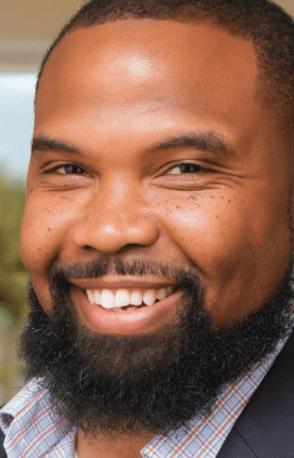
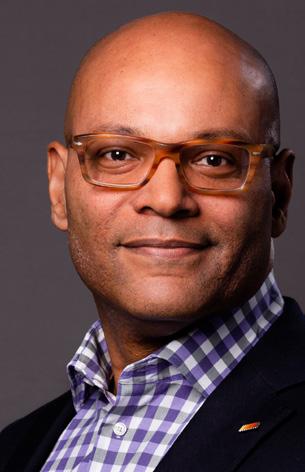
From left: Mario Wagner, National Association of Minority Contractors, NorCal; Cathy Adams, president, Oakland African American Chamber of Commerce; Derek Barnes, CEO of the East Bay Rental Housing Association; Len Turner of the Construction Resource Center. Courtesy photos.