Rooster Fighting: A Complex Legacy of Tradition, Sport, and Controversy
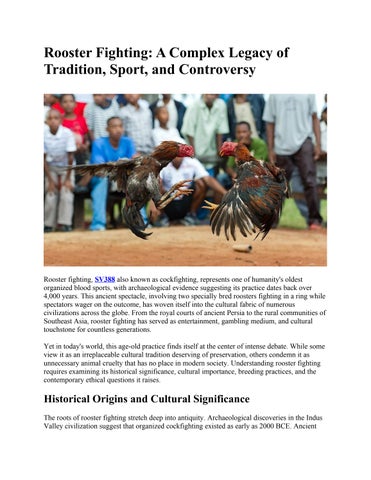
Rooster fighting, SV388 also known as cockfighting, represents one of humanity's oldest organized blood sports, with archaeological evidence suggesting its practice dates back over 4,000 years. This ancient spectacle, involving two specially bred roosters fighting in a ring while spectators wager on the outcome, has woven itself into the cultural fabric of numerous civilizations across the globe. From the royal courts of ancient Persia to the rural communities of Southeast Asia, rooster fighting has served as entertainment, gambling medium, and cultural touchstone for countless generations. Yet in today's world, this age-old practice finds itself at the center of intense debate. While some view it as an irreplaceable cultural tradition deserving of preservation, others condemn it as unnecessary animal cruelty that has no place in modern society. Understanding rooster fighting requires examining its historical significance, cultural importance, breeding practices, and the contemporary ethical questions it raises.
Historical Origins and Cultural Significance The roots of rooster fighting stretch deep into antiquity. Archaeological discoveries in the Indus Valley civilization suggest that organized cockfighting existed as early as 2000 BCE. Ancient