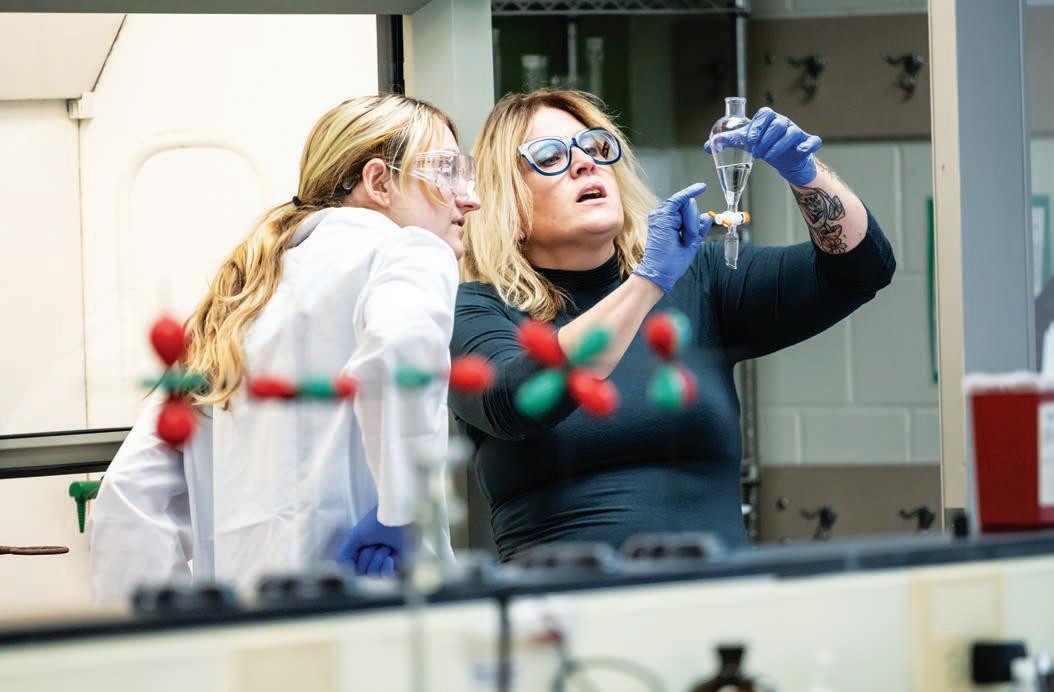






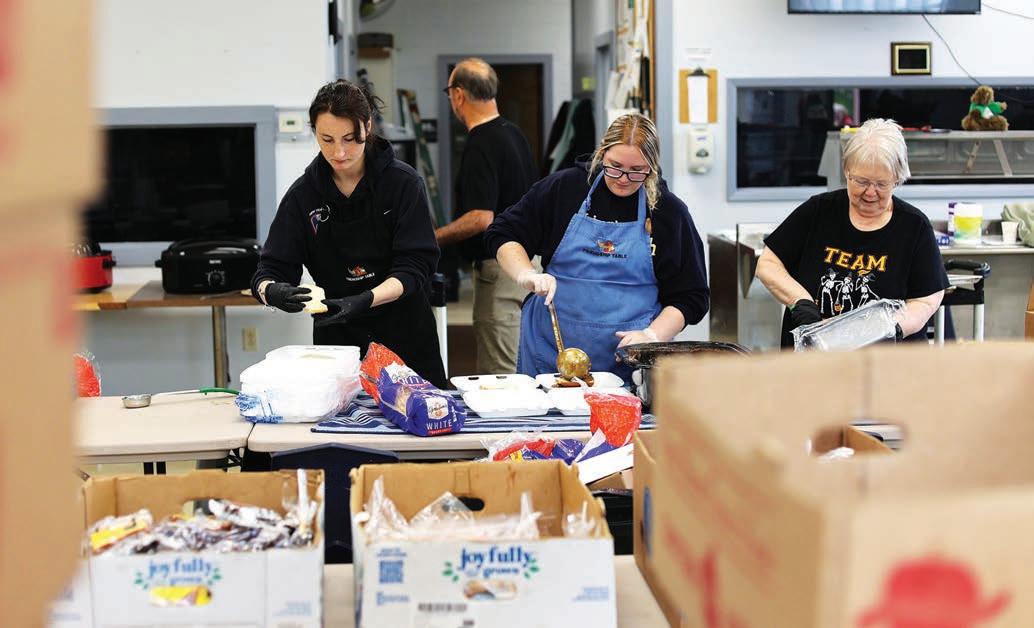
For more than 60 years, kindness has been at the heart of everything Pitt-Bradford does and everyone it touches.
features
8 Piper Takes Flight Panther mascot’s new name evokes campus aviation heritage.
10 Building a New Home Junior Andrii Varlamov can’t go home again – so he’s building one here.
12 Hearts of Gold
When someone asks what sets Pitt-Bradford apart, the answer is “caring.” Here’s how Pitt-Bradford kindness has touched the lives of the community.
16 College is Hard
And confusing. Sometimes you just need someone to help.
20 To Serve and
Bradford City Police Chief Mike Ward ’01 is mentoring Pitt-Bradford criminal justice students.
Cover by Lexi Najdusak, a senior business management major from Hubbard, Ohio.
departments
2 First Shot
Bradford City Fire Chief Brett Butler ‘13 has built a career around serving others. Now he’s guiding Pitt-Bradford students toward that same path by introducing them to the emergency medicine field.
A business management major uses her talents to help local kitties find homes and her fellow students de-stress; Admissions Office duo retires with more than 60 years of service to Pitt-Bradford; and senior D.J. Slovick is the first school wrestler to finish his career with 100-plus wins.
Photos from Alumni and Family Weekend fun; a new alumnus finds a grad program through a guest lecturer; and baseball coaches who are also Panther alumni meet up in Ohio.
Kindness has always been at the heart of Pitt-Bradford: it is part of who we are. I have been fortunate to experience that spirit time and again over more than three decades as a student, staff member, and now as president.
As a student, I also worked full time to pay my tuition. Often I would leave class and head right to my 3 to 10 p.m. shift at work. I would then do homework or study, get a couple of hours of sleep and start all over again. And even with that income, it was often hard to make ends meet.
I was, therefore, incredibly fortunate to be one of the first recipients of the Tullah Hanley scholarship. The award allowed me to cut back on work and focus on school while also greatly relieving the overall stress I was feeling at the time.
I will always be grateful not only for the support, but for the opportunity to personally thank Tullah Hanley. Like so many of our donors, she felt it was important to give back and support students who needed the help the most. Each year, when I see the Hanley Scholarship awarded, I am reminded how life-changing that kind of generosity can be.
I was also fortunate to experience what many know as “the Evans effect” (for more, see page 14). Dr. K. James Evans, retired vice president and dean of student affairs, was dedicated to supporting students and ensuring they had everything they needed to succeed. His open-door policy and regular check-ins made me feel like I had someone in my corner. I also had the benefit of Jim’s mentorship and kindness through a sizable part of my professional career at Pitt-Bradford, which was a major benefit in so many ways.
Tullah and Jim represent the best of Pitt-Bradford. They set a standard of kindness, mentorship, and care that continues to define our campus. It is a standard I strive to uphold each day, and one that I know lives on through our faculty, staff, alumni, and supporters.
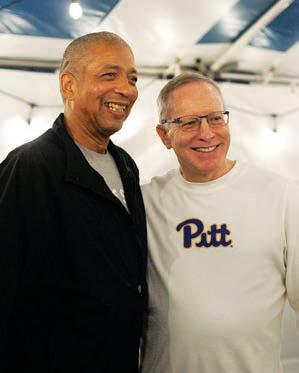
Richard T. Esch ’83, president

SENIOR
EDITOR
Kimberly Marcott Weinberg
Laurie Dufford
Judy Hopkins ’71-’73
ART DIRECTOR
John Sizing www.jspublicationdesign.com
PHOTOGRAPHERS
Bhreana Breese, Delanie DiFonzo, Alan Hancock ’07, ’19, Denny Henry, Glenn Melvin ’04, Aimee Obidzinski, W. Forres Stewart, Andrew Truman ’24, Kimberly Weinberg, Brandon Whittemore, Ralph Wilson, Andy Zeng ’23-’25
PRINTER
Progressive Direct Marketing
Published by the Office of Communications and Marketing University of Pittsburgh at Bradford © 2026 www.upb.pitt.edu
NONDISCRIMINATION POLICY STATEMENT
The University of Pittsburgh, as an educational institution and as an employer, values equality of opportunity, human dignity, and racial/ethnic and cultural diversity. Accordingly, as fully explained in Policy 07-01-03, the University prohibits and will not engage in discrimination or harassment on the basis of race, color, religion, national origin, ancestry, sex, age, marital status, familial status, sexual orientation, gender identity and expression, genetic information, disability, or status as a veteran. The University also prohibits and will not engage in retaliation against any person who makes a claim of discrimination or harassment or who provides information in such an investigation. Further, the University will continue to take affirmative steps to support and advance these values consistent with the University’s mission. This policy applies to admissions, employment, access to and treatment in University programs and activities. This is a commitment made by the University and is in accordance with federal, state and/or local laws and regulations.
For information on University equal opportunity and affirmative action programs, please contact: University of Pittsburgh, Office of Affirmative Action, Diversity and Inclusion, Carol W. Mohamed, Director (and Title IX, 504 and ADA Coordinator), 412 Bellefield Hall, Pittsburgh, Pa., 15260 (412) 648-7860. In compliance with the Family Education Rights and Privacy Act of 1974, the University guarantees that students have the right to inspect all personally identifiable records maintained by the institution and may challenge the content and accuracy of those records through appropriate institutional procedures. It is further guaranteed by the University that student records containing personally identifiable information will not be released except as permitted by the Family Education Rights and Privacy Act.
Personnel for Nondiscrimination statement Christy Ruffner, chief of staff and faculty/staff Title IX liaison, (814)362-3121 clclark@pitt.edu.
For student-related concerns: Kara Kennedy Director of student care and conduct (814)362-5057 kjk3@pitt.edu
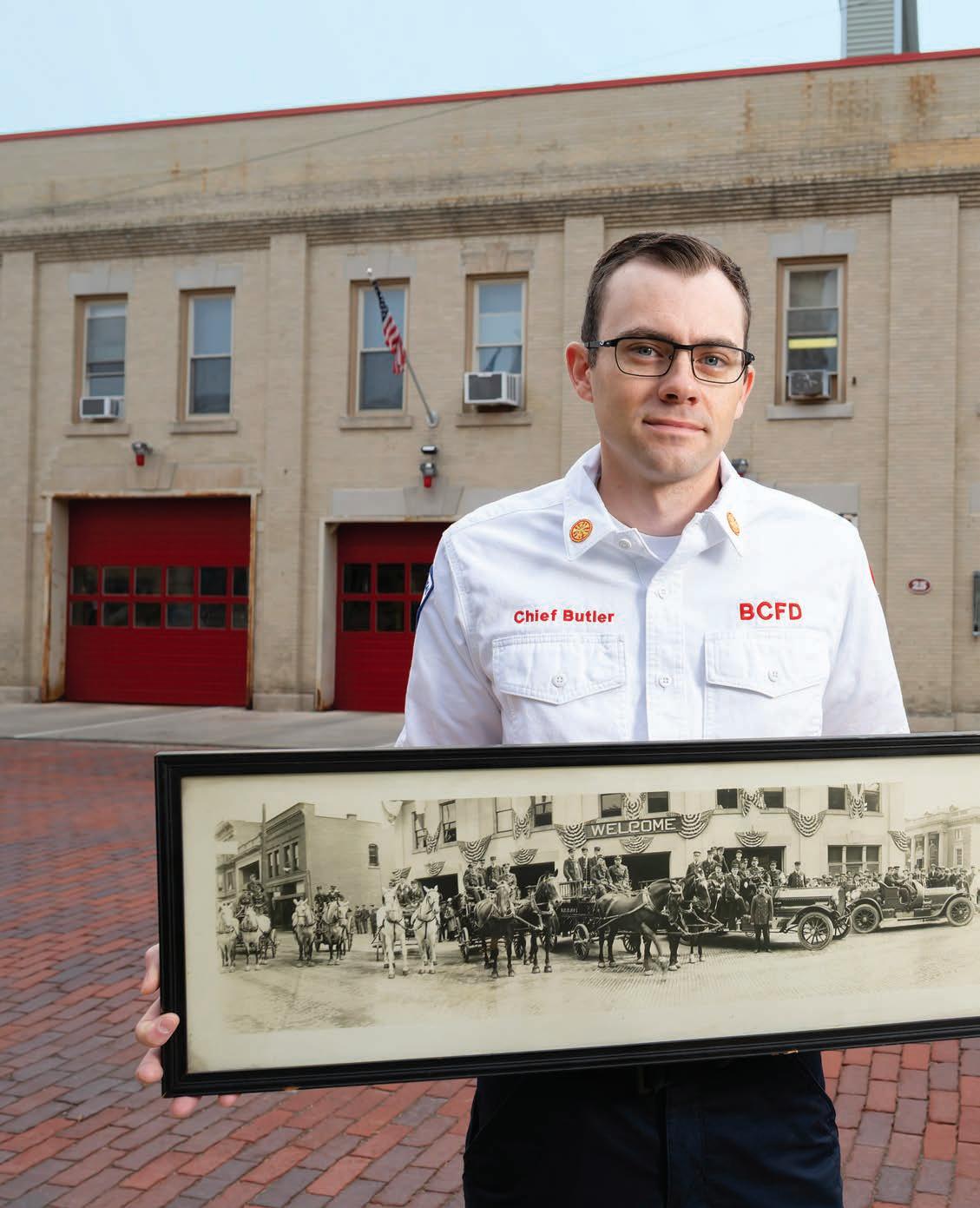
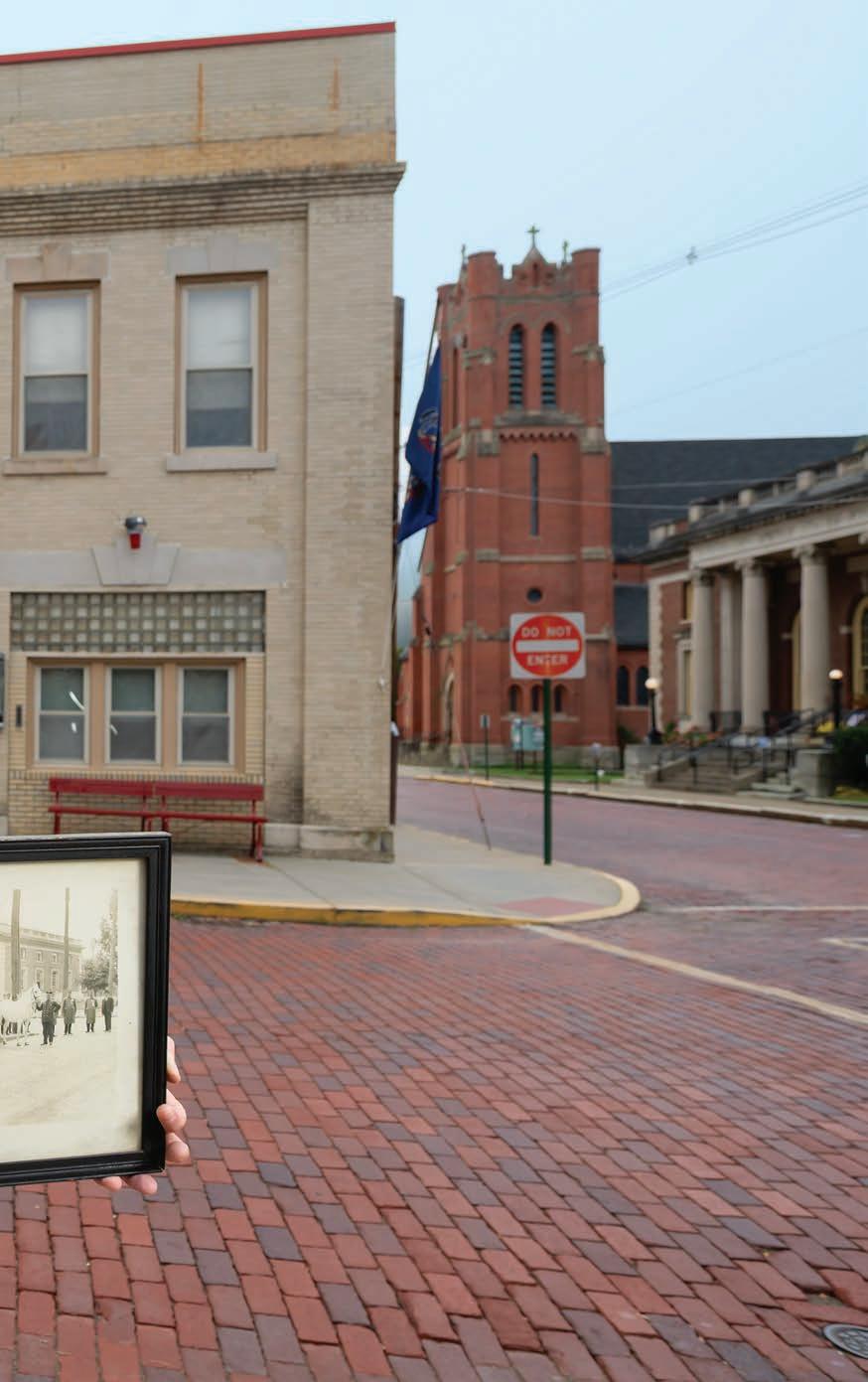
Bradford City Fire Chief Brett Butler ’13 stands in front of the same fire station in Bradford where his great-grandfather worked around the time of the photo he’s holding – 1915. Now, as the youngest fire chief in the history of the Bradford City Fire Department, he’s mentoring a new generation of emergency medical workers, which are more needed than ever as rural Pennsylvania faces a health-care desert. Butler and others hope a new emergency medicine program at Pitt-Bradford will provide the region with new workers. “It’s difficult right now to get people into the fire and EMS field,” he told Pitt magazine. “If Pitt-Bradford can become a hub for EMS training and a pipeline to the region, it would help fill the gap.”
Read the Pitt magazine story about emergency medicine at Pitt-Bradford


When D.J. Slovick stepped onto the mat for the final time at the NCAA Regional Qualifying Tournament in February, he did so as the most accomplished wrestler in Pitt-Bradford history. It was a fitting end to a career defined by milestones no Panther had ever reached before.
The 174-pound-weight-class senior from Burgettstown, Pa., closed out his collegiate journey with 109 career wins — a program record that stands alone. Along the way, Slovick became the first Panther ever to
surpass 100 career victories. Among his collegiate wins are more than 50 by fall, reflecting a relentless, aggressive style that opponents rarely found an answer for.
His senior season was his most decorated yet. Slovick posted a 25-7 overall record, going a remarkable 16-1 in dual matches with 11 pins. The AMCC recognized his dominance by naming him Co-Wrestler of the Year — the first Panther to earn the honor since the conference began sponsoring men’s wrestling in 2022-23. He was
Slovick posted a 25-7 overall record, going a remarkable 16-1 in dual matches with 11 pins.
also a four-time All-Conference selection, bookending his career with First Team honors as both a freshman and a senior.
At the AMCC Championship Tournament, Slovick claimed his second conference title, winning at 174 pounds to add to his freshman championship at 165. His leadership helped propel the team to nine dual match victories, a new program record.
Slovick is expected to graduate in April with a degree in mechanical engineering technology.
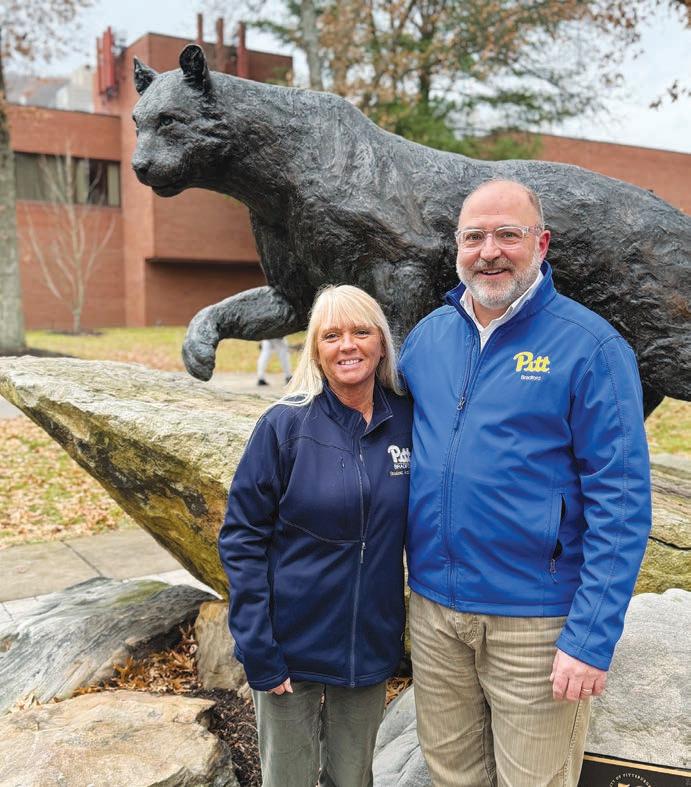
Two of Pitt-Bradford’s longest-serving staff members retired from the Office of Admissions in January.
Bob Dilks Jr. ’89, assistant vice president of enrollment management, retired with 36 years of service to the university, most of which were in admissions.
Jill Race, data entry specialist, retired after 27 years at the university, the last five of which were in admissions.
Dilks began his career in admissions right after graduating from PittBradford in 1989 and was hired in the fall initially as a traveling admissions counselor. He said, “They gave me the keys to a silver Ford Taurus and said, ‘We’ll see you at Christmas.’”
Throughout his tenure at PittBradford, Dilks served in a variety of roles, such as establishing the university’s first formal alumni

relations program, a stint in fundraising helping to establish several endowed scholarships and managing an on-site education program at the Federal Correctional Institution – McKean.
He served as director of adult continuing education, working throughout
six counties in Pennsylvania in conjunction with the region’s community education councils, and as director of transfer and nontraditional student recruitment before being named to his current role 10 years ago.
“I really enjoyed having the opportunity to work in different areas and specializations, but my real passion has always been in admissions,” he said.
Race also had an analog start to her career, which began in the university’s bookstore, The Panther Shop, where she started as a cashier and later became the textbook buyer.
“When I started, the line for selling books and buying them back was out the door,” she said. In time, students began buying and renting textbooks from online sources. When the university chose to have an outside vendor run the bookstore beginning five years ago, Race moved to admissions.
New alumni engagement coordinator
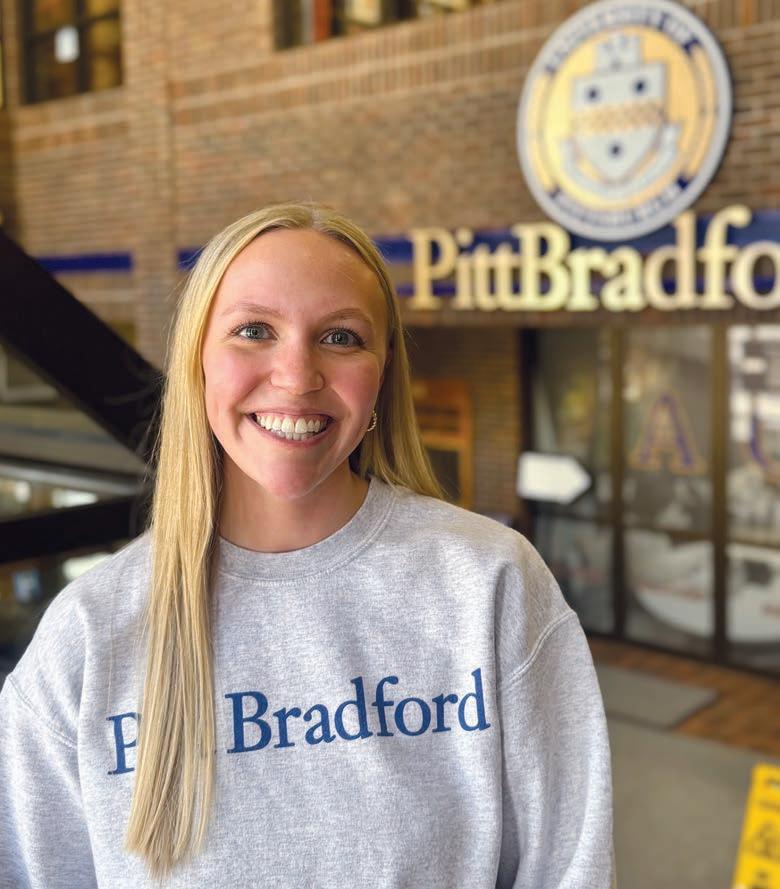
Kelsey Brown ’24 is the new alumni engagement coordinator.
She came to Pitt-Bradford from Hallstead, in Susquehanna County, Pa., and majored in communications while also taking part in the Hospitality Club and being a student ambassador.
She was also a student worker in the academic success center, where staff members not only mentored her, but made it clear they were another
resource for a student away from home.
“They were willing to step out of their official job title and become someone any student could go to,” she said. That experience makes her excited to work on increasing alumni mentorship programs for students and recent graduates.
To get involved in mentorship or other alumni activities, reach her at klb259@pitt.edu.
In spring 2024, sport and recreation management and hospitality management majors in Dr. Jodi Burns’ capstone class discovered All Kids Bike, a national program designed to teach balance-based riding to young children through PE class.
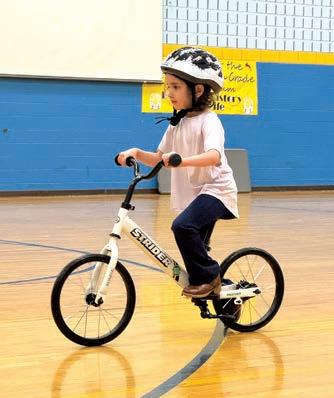
They loved the idea so much, they decided to make bringing it to McKean County their capstone project. The students researched the program’s benefits, made their pitch to local donors and raised $8,500 — enough to outfit Otto-Eldred Elementary School in Duke Center, Pa., with a full fleet of Striders, small pedal-free bikes that let kids build balance at their own pace.
Two local businesses answered the fundraising call: Fred L. Burns Inc. of Shippenville and B&T Building Services Inc. of Bradford.
Last spring, Burns and Amanda Davis, assistant professor of health and physical education, were able to present the bikes. This spring, helmeted kindergartners and first graders are step-step-gliding their way across the gym floor, mastering balance and bike safety.
Turns out, no training wheels — or parental sprinting — needed.
Pitt-Bradford is launching a new four-year major in pre-K–12 special education this fall to help address Pennsylvania’s critical shortage of certified special education teachers.
The new major — Pitt-Bradford’s ninth in education — was developed in response to growing student interest and increased demand in school districts across the Commonwealth.
“Pennsylvania is really suffering from a lack of teachers, especially special education teachers,” said Dr. Jonathan Chitiyo, director of the education program. “That shortage is even more pronounced in rural areas, where it can be difficult to recruit teachers unless
Jthey are from the region.”
Chitiyo noted that special education is evolving nationally as more districts adopt co-teaching models in which special education professionals work closely with general education teachers. This shift has increased the need for certified special education teachers at a time when shortages are already acute.
Students in the new major will begin with foundational education coursework such as Child Development, Family and Community Relationships, and instructional design before moving into eight specialized courses created for the
unior business management major Kristen Ellenberger has turned her lifelong passion for animals into a growing movement on campus and in the community. Drawing on her marketing skills, she is raising awareness for shelter animals and promoting adoption through the club she founded on campus, Panthers4Paws.
Ellenberger grew up in Ridgway, Pa., where she volunteered at local animal shelters. Those early experiences shaped her understanding of how much a little attention and compassion can change an animal’s life. “So, I thought when I got to campus, I could spread that passion and help students see how easy it is to get involved with these animal shelters and how much it impacts the animals,” she said.
major. The upper-level courses will focus on behavior management, differentiating instruction for diverse learners and supporting students with common disabilities such as dyslexia, dyscalculia, and dysgraphia. An entire course will teach students about autism spectrum disorders, which Chitiyo said is the fastest-growing category of diagnoses.
Graduates of the program will be prepared to teach students with exceptional learning needs in PreK–12 settings or pursue careers supporting people with disabilities in nonprofit organizations, workplaces and higher education.
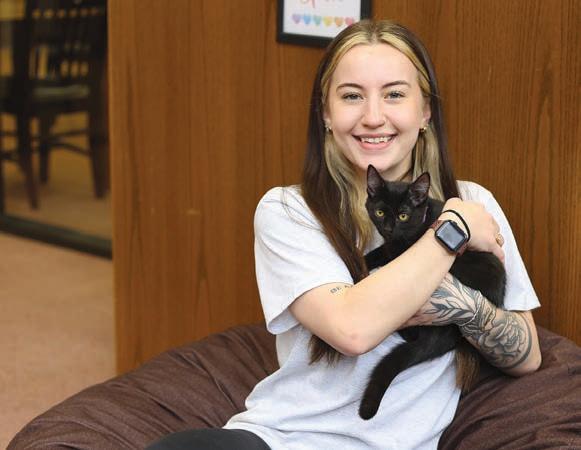
Her idea quickly resonated with other students. Panthers4Paws has become one of the most popular clubs on campus, now with 161 members actively participating in events and volunteer efforts.
Ellenberger’s long-term vision extends beyond campus. She hopes to open a permanent Kitty Café in Bradford, a space where community members can relax, meet adoptable cats and learn about local shelters.
“We did a little pop-up with (a teen club in Bradford), and we had 76 people from the community come, and they loved it. We adopted out three cats,” she said. “It was
the community’s first actual taste of what our Kitty Cafés are like.”
Her motivation throughout her experience comes from wanting to give shelter animals exposure. “So many animals are just sitting in shelters and waiting to be adopted, waiting to get some type of love and affection from people,” she said. “So, it really motivated me to get them out of there and into these Kitty Cafés so they can interact with people and potentially get adopted.” –Lexi Najdusak ’26

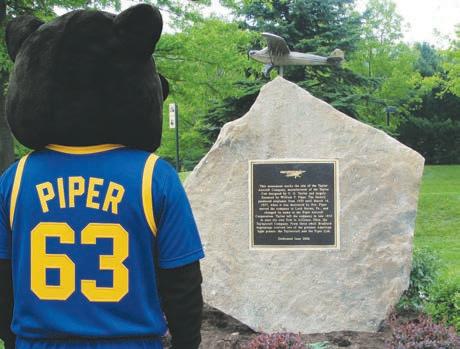

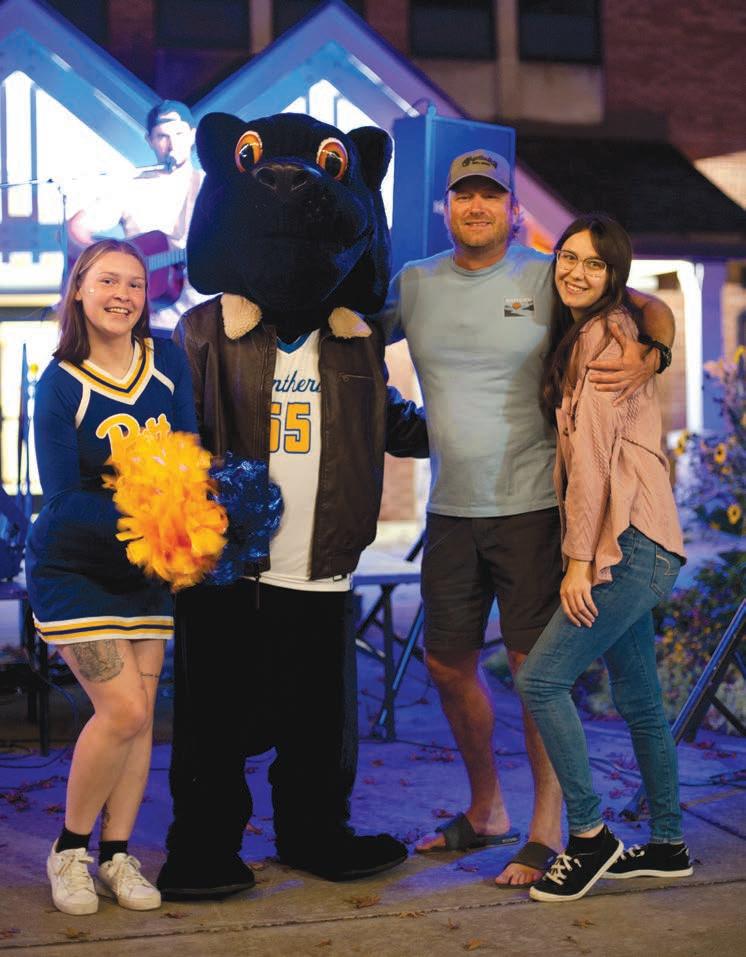

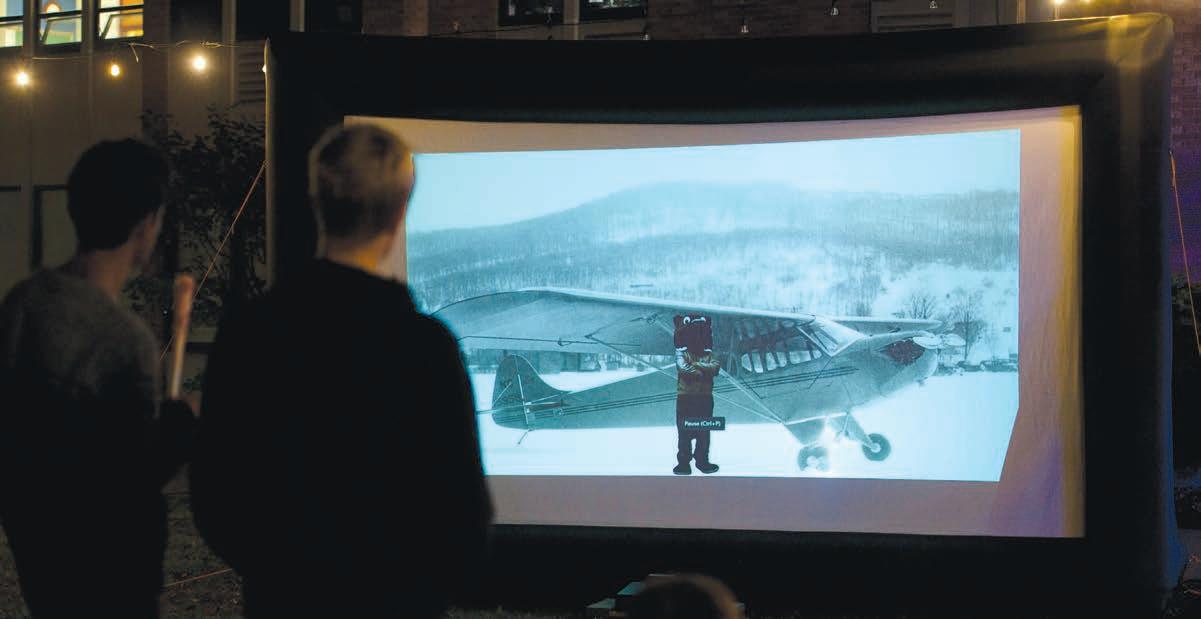

Meet Piper, Pitt-Bradford’s newly named mascot — and the history that made the name a perfect fi t
Ask three Pitt-Bradford alumni for the name of the campus mascot, and you might get three different answers:
1. Percy.
2. Patrick.
3. I don’t think the Panther has a name. We just call it Panther. Or, The Panther?
It was this last answer that inspired the Office of Philanthropic and Alumni Engagement to act. In late 2023, the University of Pittsburgh was preparing for the annual Day of Giving the following February, which included a photo shoot of mascots from all five campuses — Pittsburgh, Johnstown, Greensburg, Titusville and Bradford. What, Pittsburgh staff members asked, is the name of your panther? After all, Pittsburgh has ROC, Johnstown has PJ the Mountain Cat, Greensburg has Bruiser the Bobcat, and Titusville has Pounce. Uh, Panther? It felt a little like telling the vet that our cat was named “Kitty.”
Mascot Day in June, and voting took place over two weeks last summer. The winner was announced during Light Up the Quad festivities at Alumni and Family Weekend in September: Piper, who appeared that night in a new bomber jacket as an homage to the WWII pilots who trained in Piper Cubs.
The name proved so popular that several people were taking credit for suggesting it — because several had. It seemed like a natural fit.
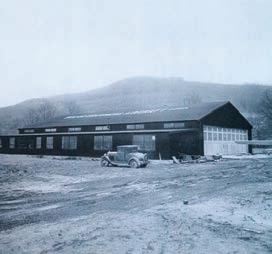
Beyond a happy alliteration, Piper honors the campus’s ties to aviation history. Today’s Pitt-Bradford sits on what was once the Harri Emery Airport. On the corner where Blaisdell Hall stands today, the Taylor Aircraft Co. — owned by Bradford oilman William Piper — manufactured the iconic light plane “The Cub” during the Depression.


We’re not letting that happen again, thought staff in the Pitt-Bradford Alumni Office. We have to name this panther once and for all. Attempts had been made in the past by student government — in Percy’s case, fewer than 10 people had voted. And no one could quite remember what happened to Patrick, or if the panther had ever really been named that — not even Dr. K. James “Remembersthe-name-of-every-person-he-ever-met” Evans.
This time, it would be a larger contest with nominations and online voting from students, alumni, faculty, staff and community members. The alumni office spent last spring gathering suggested names, and a top-secret committee met to determine the finalists — Blaze; Blizzard; Brad, short for Bradford; Jett; Kinzua, from the Seneca word meaning “plenty of fish”; and Piper, a high-flying salute to the iconic Piper Cub planes built right where Blaisdell Hall stands today.
The field of names was announced on National
After a fire destroyed the factory in 1937, Piper moved his company to Lock Haven, renaming it Piper Aircraft Corp. The Cubs developed on that land went on to serve in World War II as reconnaissance and observation planes, transport vehicles, and pilot training aircraft.
In 2006, Pitt-Bradford dedicated a monument to the little plane’s place in aviation history at Blaisdell Hall.
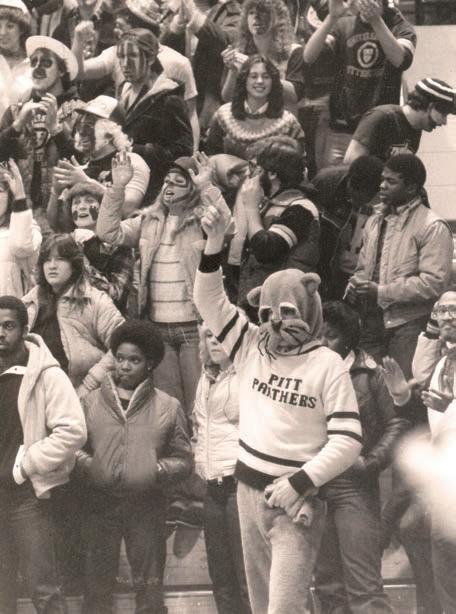
Although it hasn’t always had a name, Pitt-Bradford’s mascot has always been a panther. When the Bradford campus was founded in 1963, it adopted the mascot from Pittsburgh, whose athletic teams had been called the Panthers since 1909 — chosen because students and alumni selected the native predator of Western Pennsylvania. In Appalachia, Eastern cougars were called panthers, and besides, Pitt Panthers had a nice ring to it.
In the 1980s, Pitt-Bradford had a homemade golden panther costume like Pittsburgh’s, but when the current professional costume was purchased, the panther went from gold to black — more widely associated with the word “panther,” which refers to black jaguars not native to Pennsylvania.
by KIMBERLY WEINBERG
Andrii Varlamov is a long way from any home he has known, but it’s going to be OK by KIMBERLY WEINBERG
Andrii Varlamov can’t go home. At least not right now.
But for the junior computer information systems and technology major, Bradford is becoming more and more his new home.
In 2022 when Varlamov was 16, his family fled his home in Kyiv, Ukraine, when Russia invaded the country. Thanks to a tip from a relative with government connections, the family had practiced packing up and leaving the city quickly to drive to his grandparents’
home in the country.
His family, which owned four small businesses that included making cottage cheese pastries in a home kitchen, gave away their store of product to others fleeing the conflict.
“I was definitely worried,” Varlamov said.
“But I won’t say I was scared. I was just like – whoa – it’s how it’s gonna be now.”
From his grandparents’ home, Andrii, his mother, stepfather, sister and a dog headed west, away from Russian forces, spending a few months in a ski resort town before deciding to move to Thailand, a place they had been to on vacation and felt comfortable in.
All the while, Varlamov attended his last year of Ukrainian school remotely with his classmates who had now scattered to places as far as Australia and Los Angeles. He kept his grades
up, taking difficult courses like calculus, and continued to meet virtually with his private English language tutor.
One of his friends set his sights on attending college in the United States and persuaded Varlamov to explore this route also. He traveled to take the SATs, then applied to roughly 20 American colleges via the Common App.
He was accepted by the University of Pittsburgh, which had a good reputation and looked like it was in a good city. When he was admitted to the Bradford campus, it did not look that far on a map. He got a good scholarship.
When he at last made his way to Bradford, it reminded him a bit of his grandparents’ home in the country. “Am I coming back to the same spot I had started from?” he wondered.
Classes were going well, but money started getting tight. His stepfather’s manufacturing and recycling businesses were lost to the war, and his family’s investments collapsed. By last July, he was not sure what was going to happen, but he returned to Bradford for his junior year.
“I’m on my own,” he said. “Either I figure out something or the game is over.”
Varlamov was able to find a way forward.
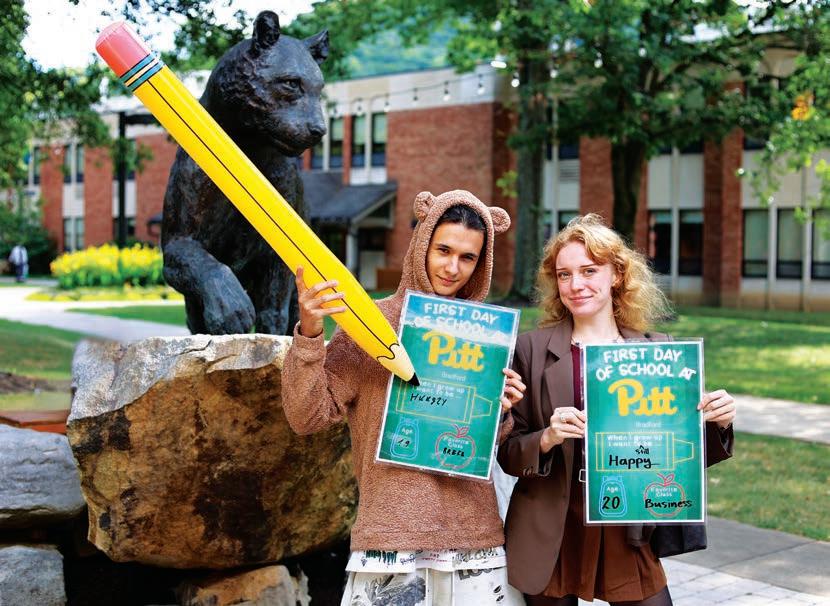
Financial support came from several sources, including an international student award, donor scholarships and a GoFundMe page. In addition, the DeFrees Family Memorial Fund in nearby Warren, Pa., connected him with the Warren Area Refugee Resettlement Network (WARRN), which provided not only financial help but also a sense of community by connecting him with Ukrainian families in the region.
Linda Kemick of Bradford is a member of WARRN who volunteers with the group to honor her grandmother, who helped resettle immigrants in the area after World War II.
She took Varlamov and his girlfriend, Nastasia Mikhailova, a sophomore business management major whom he knew from Thailand, to Warren for a Friendsgiving dinner with Ukrainian families.
“It was just nice to see someone from my country,” he said. “It was nice chatting with them.”
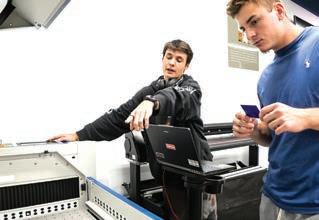
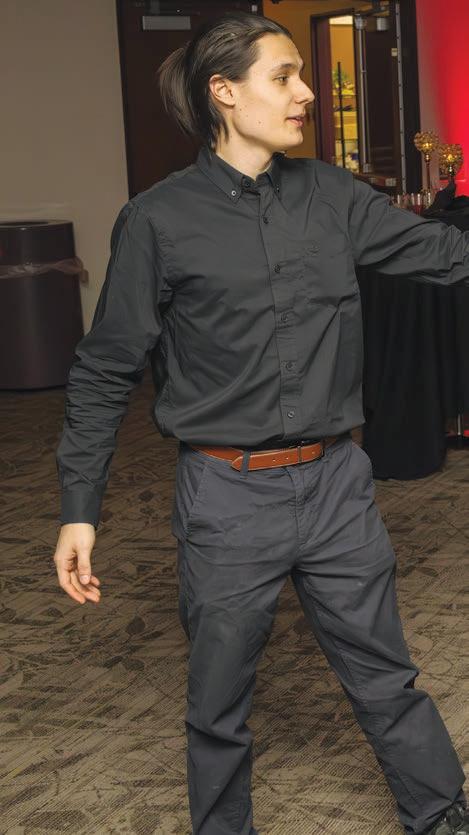
Varlamov has been touched by the outpouring of help for him. “It is so much kindness, and I want to give it back by doing what I can on campus,” he said. He is active in student government, works in the university’s makerspace and is an officer in several clubs.
“I like this community,” he says of Bradford. “I want to stay here, and I want to do what I can to help it grow.”
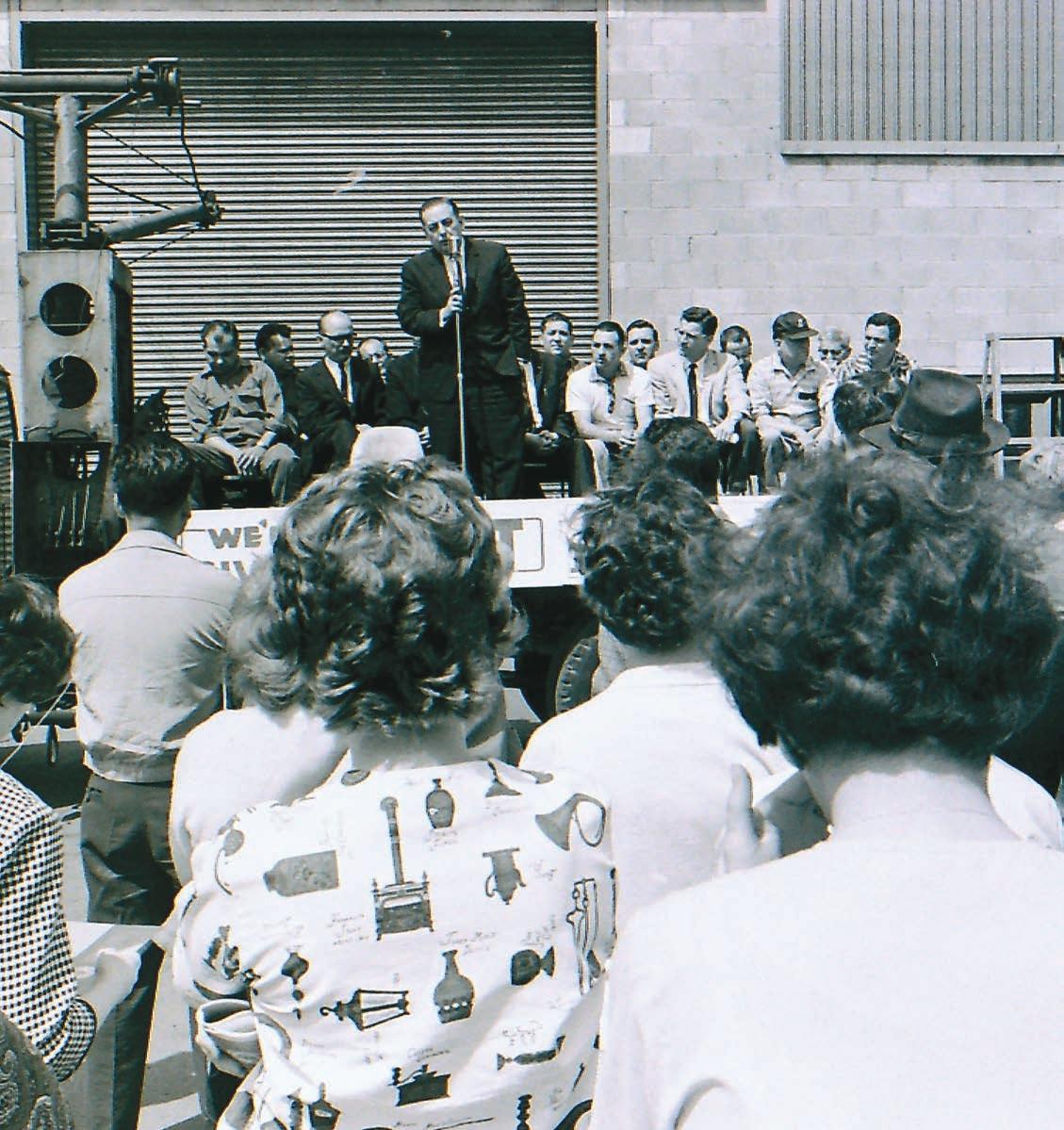
The founding kindness of Pitt-Bradford was the resources poured into the campus by everyday Bradfordians, who pledged amounts from their paycheck to bring the University of Pittsburgh to Bradford. Here, Pitt-Bradford’s founding president, Dr. Donald Swarts, at microphone, speaks at Bovaird and Seyfang, which produced oil field engines and drilling equipment, to encourage workers to give to the fund drive.

Help will always be given at Pitt-Bradford to those who ask for it
by KIMBERLY WEINBERG
In the early 1960s, residents of Bradford undertook a kindness project that reverberates today – they decided that their young people needed a chance to go to college and get the kind of education that would lift them and their future families into the middle class.
These community leaders could have started a scholarship fund to pay for their children’s education elsewhere, but instead they convinced the University of Pittsburgh to build a campus in Bradford, and they raised hundreds of thousands of dollars – much of it from ordinary Bradfordians giving $5 and $10 out of their paychecks – to make it possible.
Providing this gift of education is the original kindness of Pitt-Bradford, and it’s been in our campus DNA ever since.
Dr. Donald Swarts, the university’s first president, took chances on people. He hired professors who had never taught, like oil-field chemists Drs. Rudy and June Pfister, whose dining room table became a hub not only for tutoring, but also for students to connect with each other. And Dr. Gerry Madden, a tiny, foul-mouthed, disabled veterinarian who would pull over in her black convertible to yell at students she saw goofing off because she knew how hard their families worked to pay for their tuition.
Swarts traveled to New York City and interviewed students who had been turned down everywhere else. He took chances on them and admitted them to Pitt-Bradford.
“Pitt-Bradford opened admissions to a marginal freshman in 1964 and managed the learning process so that two years later that student was qualified to attend the Univer-
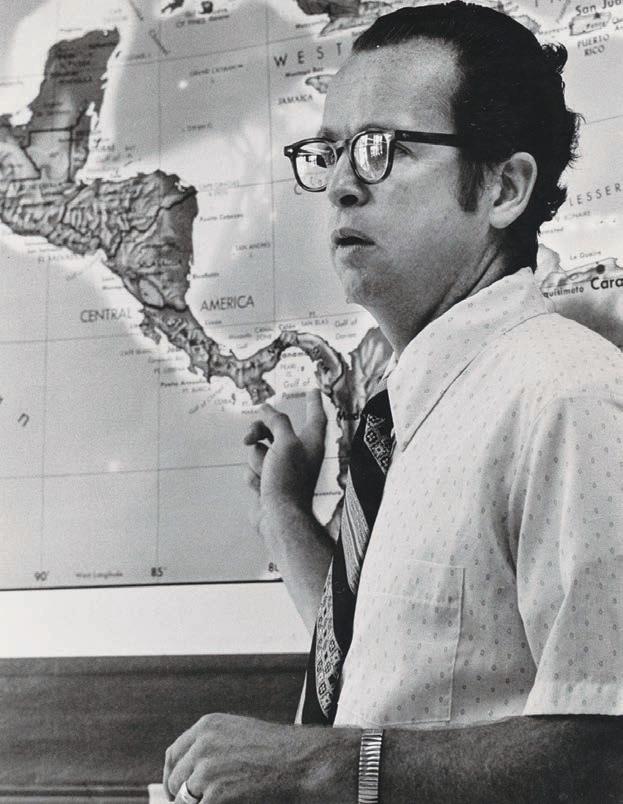
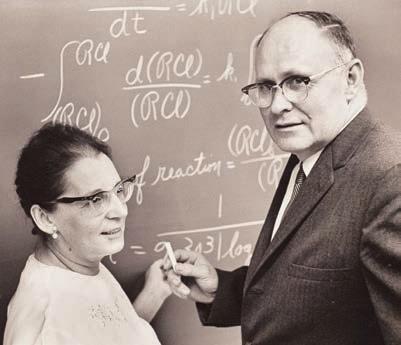
Drs. June and Rudy Pfister were known to alumni of the 1960s as “Ma and Pa” for their always-open home on Jackson Avenue, where there were often students studying and being tutored around the family’s dining room table.
faculty and staff members to follow a version of the golden rule – to treat students and each other the way they would want their families to be treated.
Evans did that for Valerie Donohue Detweiler ’09 when her grandfather died. “I was really struggling with it and needed to travel six hours home to be with family for a few days,” she said. “Dean Evans stepped in and told me not to worry about a thing. He emailed my professors on my behalf and had me excused for the time I needed so that I could go home. He also checked in on me when I returned to campus.”
sity of Pittsburgh,” said Frank Rizzo ’64-’66 referring to himself.
Swarts took a chance on a hometown kid with a shiny new Ph.D. in biology to become the director of admissions. Three years later, that young man became the youngest college president in the United States at age 29 – Dr. Richard McDowell, the university’s second president. In turn, McDowell took a chance on Dr. K. James Evans to become dean of students. Evans’ master’s degree in counseling was in constant use for 42 years, as was the box of tissues in his office, where students often went for help and comfort. Even the students called in for a scolding left feeling encouraged.
With the hire of Evans, kindness became a hallmark of the Pitt-Bradford student experience. He established a culture that encouraged
In another case, Evans consoled the family of a colleague. Dr. Raymond Weitekamp taught American history from the fall of 1972 until the end of the fall semester in 1978, when he was unable to go on teaching because he had colon cancer. He died the following January, when his daughter, Margaret, was 7, and son, Raymond, was 5.
“He taught until he couldn’t stand,” Dr. Margaret Weitekamp said of her father. After his death, Evans stepped in to give her mother a night or afternoon off.
“He would arrange to bring my brother and me to Pitt-Bradford basketball games, and we would sit with him in the student section, which made us feel very cool and special,” Margaret Weitekamp said.
Evans remembers it as well, and that there was always a special meal at McDonald’s with his young friends. “Those kinds of personal kindnesses really made a difference,” Margaret Weitekamp said. “He was always interested in who we were as kids. That was a very Jim Evans kind of moment.”
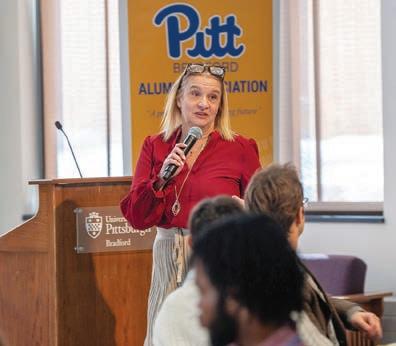
While many think of faculty-student relationships, there has always been a group of staff members at Pitt-Bradford with an eye out for students who need help. Longtime facilities worker Jeff Armstrong loved to take city kids hunting and fishing (and when he died unexpectedly in 2015, then-Arts Director Patty Colosimo and President Livingston Alexander arranged his memorial service in the KOA Arena on behalf of his stricken widow, Harriet.). Staff develop tight bonds with their student workers and provide a steady touch of home for them.
“During my freshman year, when I was trying very hard not to be homesick, there was a sweet little lady who worked in the Pitt Stop (Luella ‘Lu’ Julian). That woman helped me survive those first months just by being the kind maternal soul she was,” wrote Tammarrah Miles Love ’01. “She was never not smiling. She remembered my name and the coffee I liked. I would go in there with one of the first friends I made. Lu had a way of listening to us talk about classes, professors, our boyfriends and families like she was a peer but could seamlessly shift gears to offer advice or comfort in a way that was maternal. Every conversation with her was easy, healing and joyful.”
Pitt-Bradford faculty take the success of their students seriously. This means they inspire, nurture and, yes, push their students to reach their potential.
There was Dr. Vince Kohler, who would personally show up in a residence hall to knock
on the door of an oversleeping student, and Dr. Michael Stuckart, who would correct students’ grammar so that people would not judge students negatively by the way they spoke.
For Maya Bingaman ’19, a professor gave her a literal lift. “When I was in an intro to public relations class, Peta Leitermann-Long drove me four-plus hours to visit Syracuse University’s Newhouse School, and she showed me around the city and treated me to lunch,” she wrote. “I applied … and was accepted to Newhouse (for graduate school), and now my career is focused on PR.”
For Kristina Luzzi ’92, kindness was a welltimed pep-talk. “Ihad dropped out of Slippery Rock (University) and was in that in-between space — trying to find myself, trying to figure out what was next,” she said. “I talked myself into taking just one class at Pitt-Bradford, thinking it might help me get back into the game. John Broderick was my professor, and one afternoon he sat me down in his office and talked to me – not at me. He told me my life was
He established a culture that encouraged faculty and sta members to follow a version of the golden rule – to treat students and each other the way they would want their families to be treated.
wide open. That I had a choice. That I could use my voice, trust my talents and finish what I had started. That conversation changed everything.
“Because of that moment, I registered as a full-time student, finished my degree and earned my B.A. in public relations. Without his encouragement that day, I truly don’t know if I would have followed through or found my voice in the way I eventually did. That afternoon was a turning point in my life, at a moment when I needed those words more than I knew. I’m forever grateful for my time at Pitt-Bradford, and especially for a professor who saw something in me before I fully saw it myself.”
Thanks to all who shared stories with us. We’d love to hear more. Share yours by emailing us at Portraits@pitt.edu. Use the subject line “Kindness.”

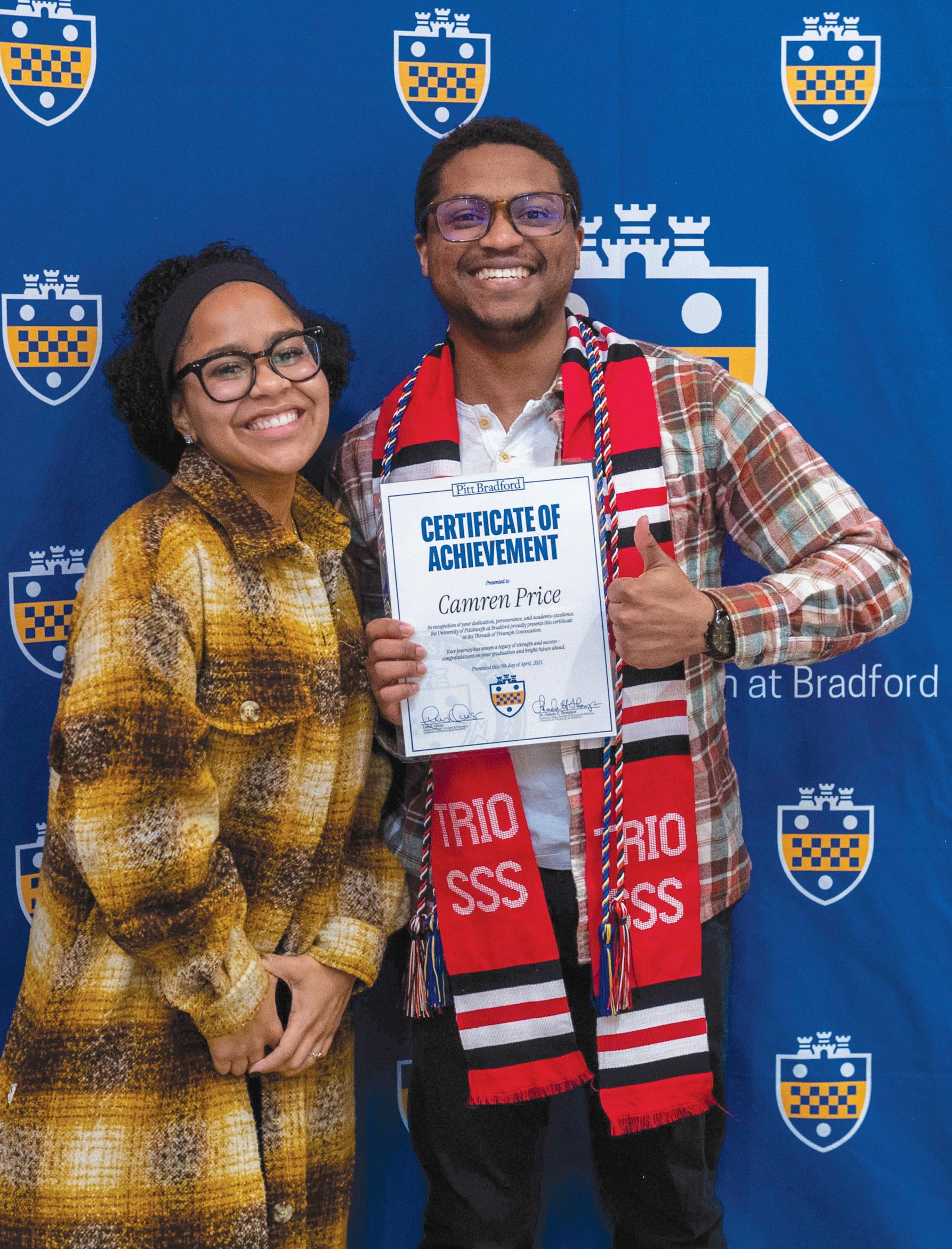
Camren Price ’25 celebrates getting his TRIO SSS stole last spring with Rosangelis Aybar, a sociology major from East Stroudsburg, Pa. The stoles are bestowed during a new spring event on campus, the Threads of Triumph celebration.

TRIO makes it a little easier. by WILL DUBE
For Dr. Pamela Thompson, commencement is the best day of the year. The assistant dean of academic success and advising at Pitt-Bradford loves seeing students walking across the stage to receive their diplomas as well as watching their proud families in the stands celebrating their accomplishments. It is a culmination of a journey that Thompson has dedicated her professional life to enhancing for all students regardless of their backgrounds.
“College can be tough for everybody, but for folks who come from reduced economic circumstances, have varying learning abilities or are the first in their families to go to college, it can seem insurmountable,” Thompson said. “Academic success programs can make all the difference in helping the students who need it the most in achieving their dreams.”
Pitt-Bradford’s holistic programming in academic success is designed to provide training in the hard skills such as test taking, math and writing that students need to succeed in their courses. In addition, it supports development of soft skills that enhance the path to graduation, such as better time management, selecting the right friend group and how to best use downtime to recharge.
The Academic Success Center is where these programs live. The center is home to tutoring, advising, a writing center, a math center and TRIO Student Support Services. It also creates a warm and friendly community of peers, staff and faculty who support each




and environmental
other and make students’ college experience more well-rounded and less stressful.
“Our goal is to help students enjoy all aspects of college life, academically and socially,” Thompson said. “We have a strong and dedicated team that is highly invested in our students’ success. And when they graduate and move on to the next phase of their lives, we all celebrate!”
TRIO SSS supports students who are most at-risk for not finishing college. The U.S. Department of Education initiative is part of a suite of eight programs that help low-income individuals, firstgeneration college students, and individuals with disabilities earn bachelor’s and graduate degrees. Pitt-Bradford received its first TRIO SSS grant in 2005 and today supports 160 TRIO students per academic year.

they need to make informed decisions about how to continue with their educational journey.
Eligible students can join the program as freshmen and receive services through graduation. Each participant is paired with a TRIO adviser who provides additional academic guidance in partnership with the university’s academic and faculty advisers. TRIO advisers also help students navigate all aspects of the college journey —
The average GPA for TRIO students at Pitt-Bradford is 3.05; 89% of participants are in good academic standing; and 55 students made Dean’s list for fall semester.
from selecting majors and minors to obtaining internships and supporting career exploration, job searching and graduate school assessment.
Additionally, peer mentors provide further help to students in adapting to college life, helping individuals make friends and recommending community activities and groups to join. TRIO also offers financial literacy education, financial aid planning and leadership training that can further ensure students have all the resources
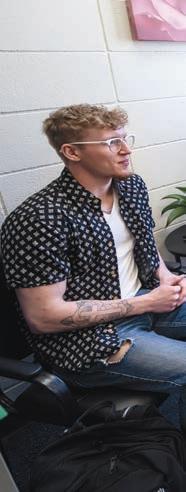
“As a first-generation college student, the transition to a university environment was a little overwhelming,” said Kelsey Brown ’24. “I felt like I was handling it on my own, but after realizing I could join TRIO and get that added help, everything got easier. My adviser provided amazing emotional support, was always available to answer my questions and made me feel like I had someone in my corner who was there to help me achieve my goals.”
Brown also took advantage of the program’s leadership training and career planning classes, which helped prepare her for her current role as an alumni engagement coordinator with PittBradford’s Office of Philanthropic and Alumni Engagement. In that position, she continues to pay it forward by managing events such as Backpack to Briefcase, a networking event for students with alumni working in various fields.
“I was so proud that at the most recent Backpack-to-Briefcase, 11 of the 21 participants were TRIO students,” she said.
TRIO’s personalized approach and structured programming also played a major role in the educational and career journey of Scott Pattison ’19. A native of Bradford, Pattison visited the TRIO booth at student orientation and discovered he was
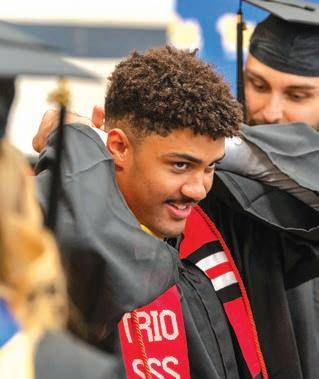
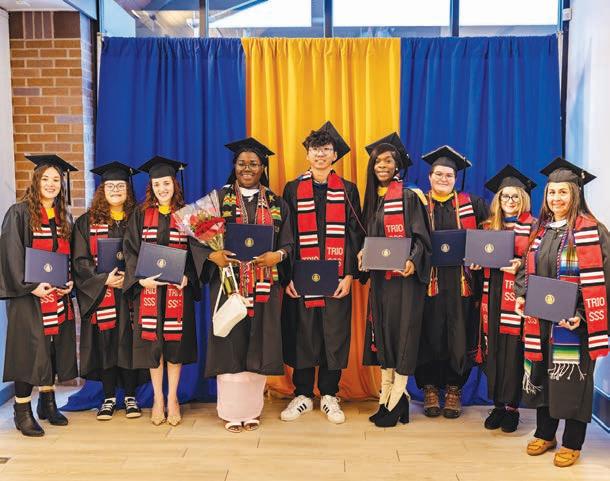
Cedric Arline ’25 (left) adjusts his TRIO SSS stole and regalia while getting ready for Commencement exercises last spring.
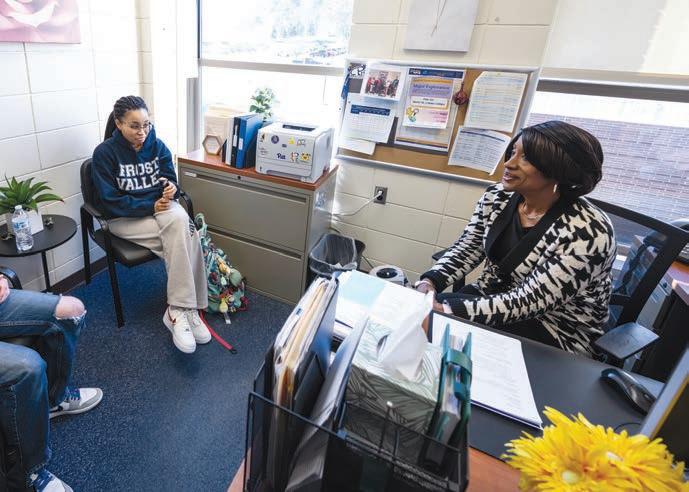
eligible to take part. Having the support of an academic adviser and a TRIO adviser who worked together to support his needs played a major role in his academic success. His TRIO adviser also helped him pick a new major, investigate internships and ensure he made deadlines for various applications.
“He encouraged me to look at an internship in finance to help ensure that was the career path I wanted,” Pattison said. “I ended up getting a position at RBC Wealth Management in Pittsburgh, which led to my first job after I graduated.”
Pattison later returned to Bradford, where he currently works at Zippo Manufacturing Co. Having been promoted twice, he now serves as a licensing specialist.
“I would not be where I am today without the support and encouragement of the TRIO program,” he said.
The gratitude felt by graduates is echoed by TRIO staff, who dedicate many hours to providing
direct support and a personal touch that can make the ultimate difference.
“I was a first-generation student myself and did not realize TRIO services were an option,” said Erik Austin ’12, who served as a TRIO adviser at PittBradford from 2015-20. “As an adviser, I spent a lot of time sharing information about TRIO to make sure those who could benefit from the program didn’t miss out on the opportunity for support.”
In his current role as director of the TRIO Scholars Program at Westminster (Pa.) College and as past-president of the Pennsylvania Association of TRIO Programs, Austin continues to serve as an advocate and promoter for TRIO and academic success programs in general.
“I want every student to take advantage of these initiatives because they work,” he said.
Austin’s enthusiasm was echoed by Warren Shaw ’97, Pitt-Bradford’s current TRIO director during the recent celebration of the 40th anniversary of National TRIO Day. In front of an audience of current TRIO students, alumni, staff and University leadership, he applauded TRIO participants for taking the most important first step, asking for help.
“National TRIO Day celebrates this program and its impact but, more importantly, it allows us to honor all of you who reached out, asked for help and then did the hard work necessary to achieve your goals. For all of us who support you that is the ultimate reward,” Shaw said.
Thompson, who took part in the Upward Bound TRIO program at Springhill College in Mobile, Ala., before enrolling as an undergraduate student at Alabama A&M University, also noted that the numbers back up the qualitative examples of success.
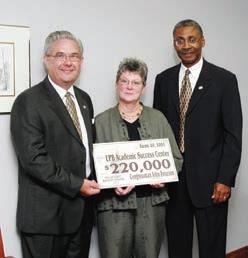
Dr. Gillian Boyce, center, founding director of TRIO SSS at Pitt-Bradford, celebrates the program’s initial grant with U.S. Rep John Peterson and Dr. Livingston Alexander, president, in 2005.
“The average GPA for TRIO students at Pitt-Bradford is 3.05; 89% of participants are in good academic standing; and 55 students made dean’s list for fall semester,” she said.
Moving forward, Thompson and university leaders are investigating opportunities to enhance outcomes for the academic success initiatives that are already in place and further expand services so all students across campus can receive the help they need to succeed.
“Our ultimate goal is to create a strong and permanent support structure that can ensure that no student is ever left behind,” she said.
by WILL DUBE
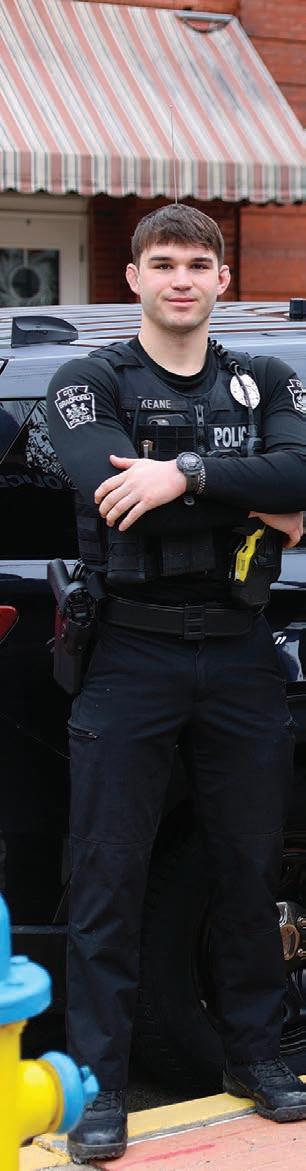
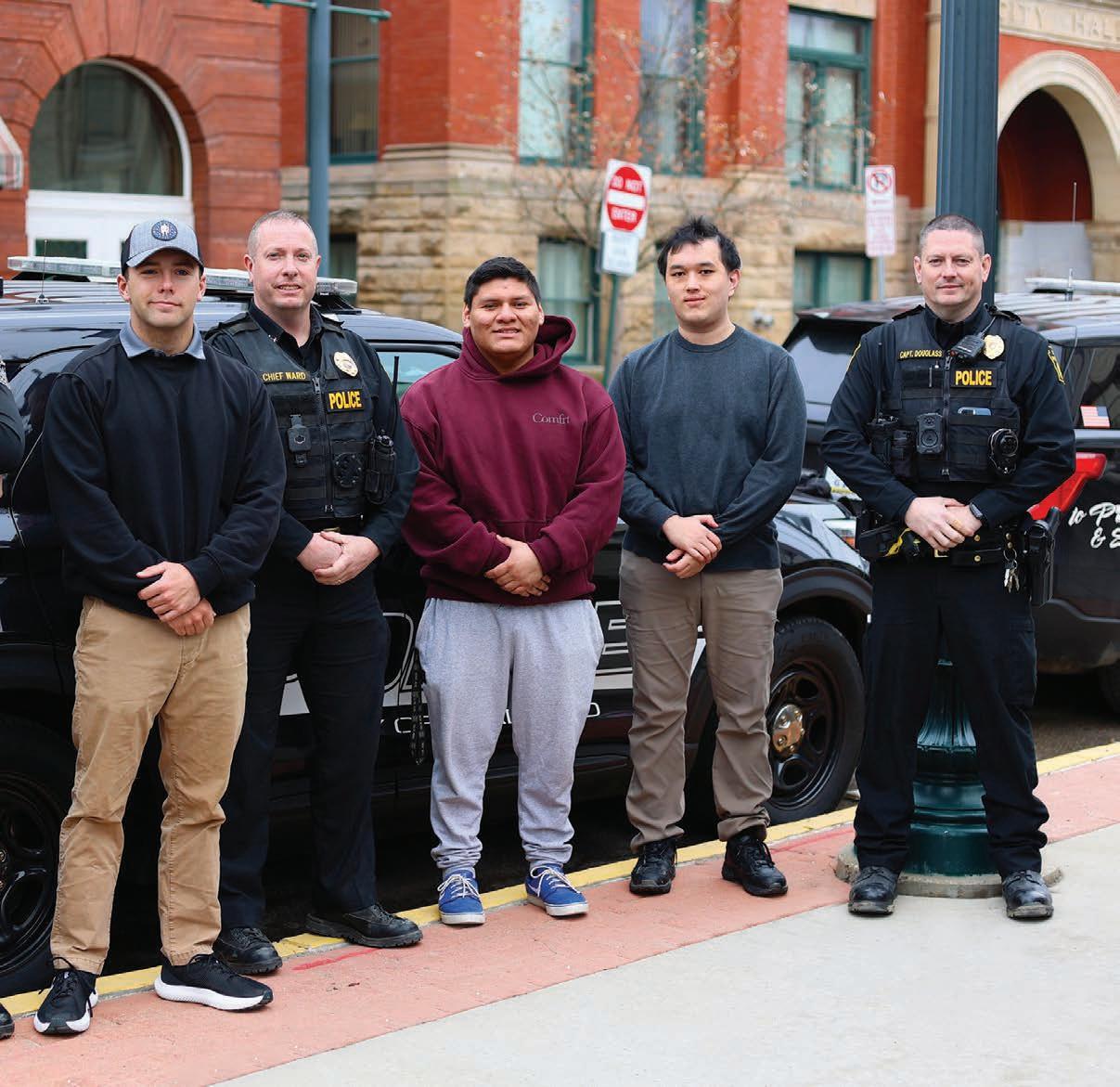
Bradford City Police Chief Michael Ward ’01 is dedicated to enhancing public safety and ensuring all community members receive excellent service. He also seeks to encourage and support the next generation of law enforcement professionals to make certain there is a strong talent pipeline to meet the often complex needs of the city and region.
A key effort Ward has undertaken to meet both goals has been a long-running intern partnership he conceived and continues to manage with Pitt-Bradford’s criminal justice program.
“While I was attending Pitt-Bradford, I had the opportunity to do an internship with the Foster Township Police Department,” Ward said. “It allowed me to get a great sense of what it was like to be a police officer and gain mentorship from folks already working in the field.”
Ward joined the Bradford Police in 2002 and began taking on criminal justice interns himself to give others the same opportunity he had. As he moved up the ranks, he had the opportunity to formalize the program, with the support of Dr. Tony Gaskew, professor of criminal justice and longtime director of the program who is now associate dean of academic affairs at Pitt-Bradford.
Today, the department hosts three interns per semester who are paired with individual officers and work up to 20 hours per week. Students participate in ride-alongs,
learn the inner workings of police procedure, and can investigate what areas they may want to focus on once they begin their careers.
Ward also uses the program as a recruiting tool to ensure the department has the best access to top talent. Currently, four former interns serve on the 20-person force. Past participants have also gone on to roles with other law enforcement agencies, including the Pennsylvania State Police.
“We have been able to create a symbiotic relationship with the department that enhances the education we can provide, makes our students
more career-ready and gives them a distinct advantage as they enter the work force,” said Dr. Obinna Ezeihuoma, assistant professor of criminal justice and current director of the program.
Max Bizzak, a senior criminal justice major from Kane, Pa., has been interning with the department during the current academic year and echoes the value the opportunity has provided.
“My father and grandfather were both in law enforcement, so this was always something I wanted to do, but this internship has really allowed me to see behind the curtain and
experience what policing is really like,” Bizzak said.
“For me, it confirmed that this is what I want to do and furthered my drive to serve others.”
Bizzak is currently applying for admission into the Pennsylvania State Police Academy and has received significant support
from Ward and other members of the department as he has gone through what is a six-month process. He graduates in May and hopes to begin the academy in June.
“Chief Ward and the entire team have really helped me prepare for this next step, and I feel like I am
ready to enter the Academy and succeed,” he added.
Ezeihuoma notes that the criminal justice program is currently looking to develop partnerships with additional law enforcement agencies that will provide internship placements for students while also offering officers a chance to return
to school to continue their education.
“Our work with the Bradford Police Department is really serving as a model as we look to expand community engagement that can support the needs of our students and law enforcement agencies across the state,” Ezeihuoma said.
Three Pitt-Bradford criminal justice students are currently interning with the Bradford Police Department.
Edward DePaula ’63-’66 and his wife celebrated their 50th wedding anniversary in November. They live in Staten Island, N.Y.
Judy Hopkins ’71-’73 had a poem titled “Stargazer” published in Constellations, A Journal of Poetry and Fiction.
Dr. Pete Ross ’70-’73 is a volunteer in the Lancaster (Pa.) Cleft Palate Clinic through Penn Medicine. He retired in 2021 from his pediatric dentistry practice that he began in 1995. Ross has also been president of the Pennsylvania Academy of Pediatric Dentistry since 2015 and served 38 years as a commissioned officer in the U.S. Army Dental Corps. He teaches, too, as an adjunct clinical professor of pediatric dentistry with Temple University and Pitt.
Katherine Freeman ’78-’80 retired from CVS Health Specialty Pharmacy after more than 25 years. She lives in Avonmore, Pa., with her youngest son and his family.
“My other two boys live close by,” she writes. “I have seven grandkids; the oldest graduated this past year. Only wish my late husband, Mark ’78-’79, was here to enjoy our grandkids.” Mark died in 2014.
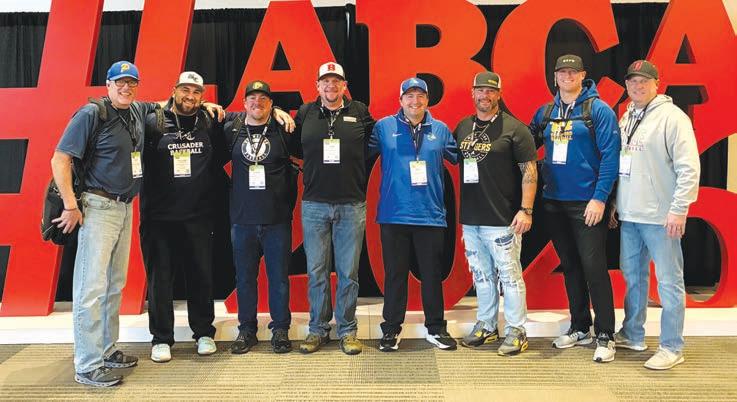
Athletic Director Bret Butler, left, met up with the branches of his coaching tree at the American Baseball Coaches Association’s annual convention in January in Columbus, Ohio. From left are Bill Emerick ’15, director of education at Adelphoi Education Inc. and assistant baseball coach at Bishop Canevin High School in Pittsburgh; Shane Marucci ’16, teacher and coach at Frewsburg (N.Y.) Central School District; Chad Yohe ’08, environmental health and safety manager at Dresser Utility Solutions and assistant coach at Bradford Area High School; Matt Hogue ’19, weights and measures inspector for Westmoreland County, Pa., and assistant coach at Westmoreland County Community College; Joe Trietley ’01-’07, director of player development for New York Stingers Baseball in Chaffee, N.Y.; Zach Foster ’12, head baseball coach at Pitt-Bradford; and Eric Haynoski ’04, owner of BV Mobile Shredding and head baseball coach at BAHS.
Gregory Switzer ’89 was promoted to vice president of wealth management with TIAA, where he has worked for 29 years. He also welcomed his first grandchild, Emma Louise, on his birthday in May 2025. He lives in Zion Crossroads, Va.
Joseph Yaros ’90 retired from his job as vice president of County National Bank in Bradford, where he was a commercial lender. Yaros served for 30 years at CNB.
Dr. Anthony Will ’94, a family medicine specialist with Honor Health in Phoenix
was spotted in a Wellness Wednesday segment on KPNX Channel 12 talking about why men avoid seeking health care.
Steven Stone ’98, CEO of ArchKey Solutions in St. Louis, has been elected as a vice president at large for the National Electrical Contractors Association for 2026. He has been with ArchKey since 2018 in a variety of roles, including senior vice president of sales, marketing and strategy and president before becoming CEO. He and his wife, Danna, have two children in college and enjoy running, biking, hiking
and spending time on their farm.
Kimberly Mann ’99 has a new job as principal partner engineer with Laurel, an artificial intelligence time platform for professional service firms. Previously, she was senior software architect with STIGroup, a cybersecurity firm.
Kimberly Kaschalk ’02 recently completed her qualification as a complex incident public information officer. Kaschalk has served as a wildland firefighter, fire effects monitor and public
information officer for the past 10 years. Most recently, she worked on the Madre Fire in San Diego County as well as the Dragon Bravo Fire that burned the Grand Canyon Lodge at the Grand Canyon in Arizona in July. She lives in Clearfield, Pa.
Sarah Abernathy ’04 has a new job as committee coordinator for the University of Pittsburgh School of Medicine.
B.J. Folk ’05 is combining his occupation with his volunteer work to conserve land in Schuylkill County, where he is the director of property for Girl Scouts in the Heart of Pennsylvania and a member of the Schuylkill County Conservancy Board. Through the Girl Scouts, he also works with the Manada Conservancy in Dauphin County to conserve 762 acres of woodland that are the scouts’ Camp Small Valley. Additionally, he is the current president of Friends of Schuylkill Parks and Recreation to support county parks and develop a master plan for improvements.
In December, Nicole Amrhein ’08 was sworn in as municipal court judge in Vandalia, Ohio, near Dayton, where she won the seat in a fall general election. Previously, she had been serving as assistant Ohio attorney general and as a prosecuting attorney in Montgomery County.
Brady Colyer ’08 has a new job as a client success manager for TownSq, an app for managing condominiums. He lives in Hatfield, Pa.
Mark Austin ’09 recently accepted a new position as vice president of sales and business development for North and South America with KD Pharma Group. KD Pharma is a global manufacturer for supplements and pharmaceuticals with facilities in the Americas, Asia and Australia. He lives in Lake Worth, Fla.
Staysha Keenan ’09 and her husband welcomed a baby boy in May 2025. The family lives in Irondequoit, N.Y.
Chris Leonard ’10 has a new position as a project manager with Pharmacy Data Management Inc. He lives in the Pittsburgh area.
Sarah Lorya ’10 was honored by U.S. Rep. Nydia Velasquez (N.Y.) during this year’s North Brooklyn Black History Month Event sponsored by New York Assemblywoman Martiza Davila. She was one of eight individuals honored at the event, which was founded a century ago by Dr. Carter G. Woodson. Lorya was honored for her work as Chief of Staff for St. Nicks Alliance, a North Brooklyn nonprofit transforming the lives of low- and moderateincome people through employment, education,
housing and health care.
Michael Marcella ’09, ’11 is now the senior global application expert for electric driveline and thermal fluids at Fuchs Lubricants Co., where he works with automotive original equipment manufacturers to develop fluids for hybrid electric, battery electric and fuel cell electric vehicles. He lives in LaMesa, Calif.
Major League Soccer club D.C. United recognized Hannah Penman ’11, executive director of Soccer for the Future, a nonprofit organization that provides soccer and physical activity programs to kids
If you have an update for Portraits magazine, visit www.upbalumni.org and click on “How to update your info” or email us at Portraits@pitt.edu
experiencing cancer or other chronic illnesses. D.C. United honored her with one of its Raise a Toast Awards given each year to 11 outstanding individuals making a meaningful impact in the Washington, D.C., area.
Jennifer Northrup ’12 has a new job as member
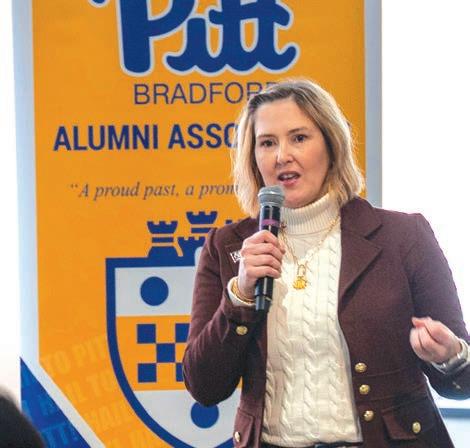
Heidi Scrivo ’95 was sworn in as the new president of the Pitt-Bradford Alumni Association during Alumni and Family Weekend in September. She was back on campus in February to moderate the annual Backpack to Briefcase event, at which alumni return to share their wisdom from the world of work with today’s students. Off campus, she’s the chief executive officer of the Bradford Area Chamber of Commerce.
engagement services coordinator for the Western New York Library Resources Council. She lives in Lake View, N.Y.
Ashley Wilczynski ’12 is the assistant director of
academic affairs at Mercyhurst University. She lives in Erie, Pa.
Lindsey Johnston ’13 is the new manager of the Dickinson Center’s Psychiatric Rehabilitation
Program in Coudersport, Pa.
Cory Delaney ’14 has a new job as head athletic trainer for the Binghamton (N.Y.) Black Bears of the Federal Prospects Hockey League, a single A minor league.
Save the date! Alumni and Family Weekend 2026 will be Sept. 25-27.
1
Zander Koppenhaver ’25 and Madison Hartman ’25 attended the PBAA Awards Dinner to cheer on Dr. William Clark as he received the PBAA Teaching Award they nominated him for. Hartman presented Clark with the award. (PHOTO BY BHREANA BREESE)
2
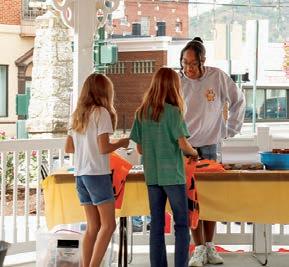
Ashyah Baylis, a senior exercise science major from Lancaster, Pa., helps girls select goodies during Pumpkin Fest, the annual harvest-themed festival held downtown during Alumni and Family Weekend each year. Pitt-Bradford students provide games, face painting and other fun for children. (PHOTO BY DELANIE DIFONZO)
3
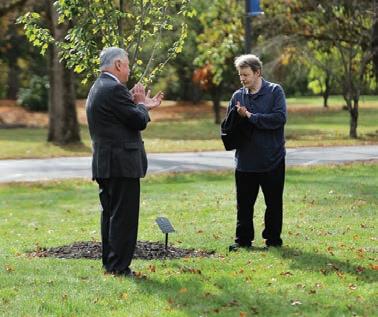
Ken Hansen, right, unveils a plaque dedicating a new tree on campus in memory of his late wife, Christina Graham Hansen, director of student activities from 2002 until 2019, who died in 2024. At left is Dr. K. James Evans, retired vice president and dean of student affairs. (PHOTO BY ANDY ZENG ’23-’25)
4
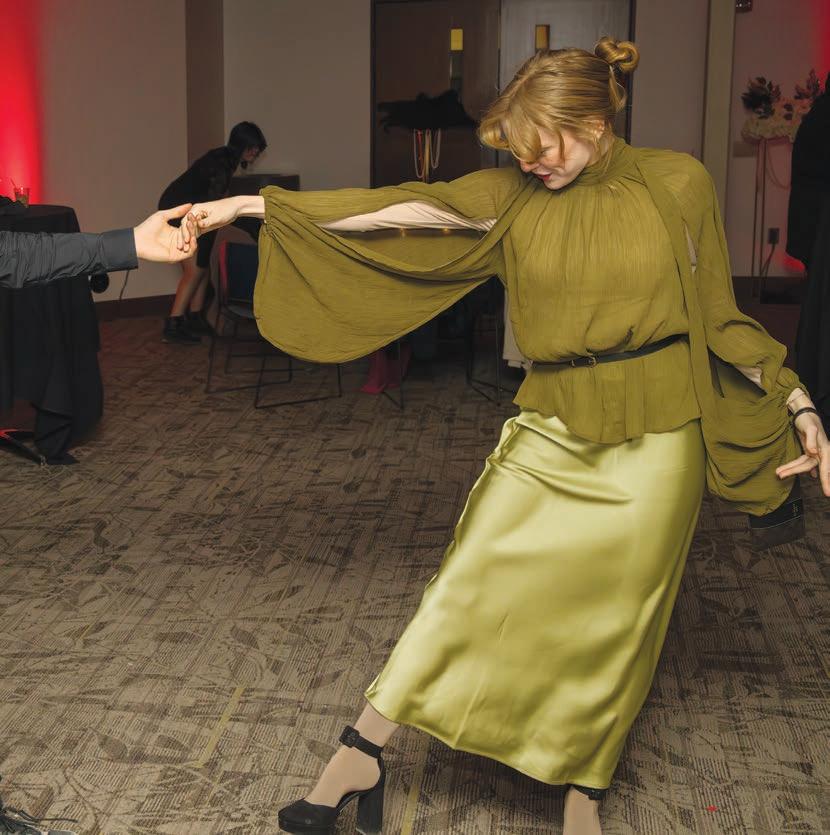
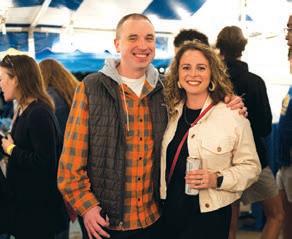
Michael Moran ’15 and Ardona Bunjaku ’15 enjoy catching up during Light up the Quad, a relaxed outdoor evening in a transformed Bromeley Family Quadrangle with live music, games, party food and drinks. (PHOTO BY ALAN HANCOCK ’07, ’19)
5
Angie Potter ’23 and Curt Cummins get groovy during Light up the Quad in a sunshine yellow VW minibus owned by Kathryn Long Kloss, administrative assistant in health and counseling services, and her husband, Steve Kloss ’95. (PHOTO BY ALAN HANCOCK ’07, ’19)
6
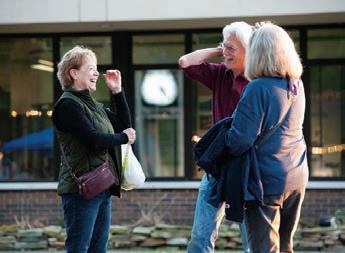
Cheryl Carfagna-Tracey ’74-’75, left, visits with Dr. Larry “Rock ’n’ Roll” Schardt ’72-’74 in the twilight before Light up the Quad festivities begin during Friday night at Alumni and Family Weekend. (PHOTO BY ALAN HANCOCK ’07, ’19)
He lives in Johnson City, N.Y.
Corey Hites ’14 was appointed to the Fairport Harbor (Ohio) Exempted Village School Board of Education. He is a financial intelligence unit anti-money

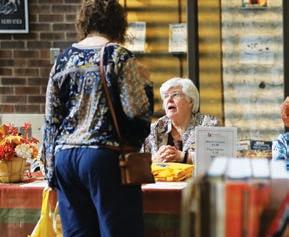
7 Betsy Matz, center, retired associate professor of business management, waits on customers at the annual Friends of Hanley Library book sale, a popular stop before heading out to alumni games and Pumpkin Fest downtown. (PHOTO BY ANDY ZENG ’23-’25)

laundering risk investigator for Atlantic Union Bank and lives in Fairport Harbor.
Ethan Tkacik ’17 has a new job as a network engineer officer at CNB Bank. He lives in Clearfield, Pa.
Anthony Zimbardi ’17 was promoted to business analyst/production scheduler at Allegheny Surface Technology in Bradford.
Dakota “Cody” Dacosta ’20 has a new job as senior platform engineer working with Kubernetes clusters at Planned Systems International. He lives in Washington, D.C.
Victoria Smith ’20 and her husband, Michael, welcomed a baby boy in January 2025. She lives in Bradford.
Taylor Tarahteeff ’20 is the new director of the Marilyn Horne Museum and Exhibit Center at Pitt-Bradford. The museum is in downtown Bradford.
Prionna Battle ’21 began a new position as a behavioral health clinician at the Children’s Hospital of Philadelphia.
Maggie Jones ’22 has a new job as a coastal resources scientist with the State of Louisiana Department of Energy and Conservation. She lives in Denham Springs, La.
Patricia Lucas ’22 has a new
job as the assistant director of nursing at Sena Kean Manor in Smethport, Pa., where she also teaches the certified nursing assistant class and is the staff educator.
Chelsea Nero ’22 is a case manager at the Dickinson Center in Ridgway, Pa., connecting people to services they need. She is also a member of Leadership Elk and Cameron and lives in Johnsonburg, Pa.
Michael Miller ’22 earned his Master of Science in chemistry at Ohio University and now works as a chemist for Alcosan.
Alexandra Peters ’22 wed Victor Elias ’22 in August. The couple now live in Vermont, where Victor is a state trooper.
Jada Luther ’23 is a school counselor with the Bradford Area School District.
Tyler Stewart ’23 is a sales executive with the staffing company PeopleShare. He lives in Verona, Pa.
Owen FitzSimmons ’24 is an accounting specialist at ADMAR Construction Equipment and Supplies. He lives in the Rochester, N.Y., area.
Kihara Gotshall ’24 teaches first grade at Tuscarora Elementary School in Addison, N.Y.
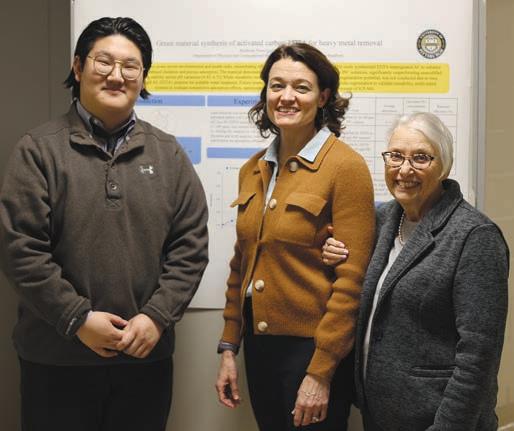
Soohwan “Jack” Yoon ’25, left, started a Master of Science program at Villanova University studying chemistry with a focus on inorganic and analytical chemistry. He learned about the master’s program from Dr. Aimee Eggler, center, associate professor of biochemistry at Villanova, who visited campus last spring with her mom, Dr. Betsey Eggler ’66-’67, and gave the keynote address at Pitt-Bradford’s chemistry colloquium. Yoon said, “Meeting Dr. (Aimee) Eggler was the catalyst for my move to Villanova. It’s crazy how everything has worked out!”
Gretchen Henneman ’24 is teaching third grade at Smethport (Pa.) Elementary School.
Chyann Rose ’24 is teaching pre-kindergarten at Jefferson DeFrees Family Center in Warren, Pa.
Emily Dinger ’25 teaches kindergarten at George G. Blaisdell Elementary School in Bradford.
Alyssa Marfink ’25 is a second-grade teacher at St. Joseph Catholic School in Warren, Pa.
Tyrone Bowen-Collateta ’26 is the interim women’s
head lacrosse coach at Pitt-Bradford, guiding the team through its inaugural NCAA season.
Cassidy Elton ’26 has been accepted into the Ph.D. chemistry program at Drexel University in Philadelphia with a stipend and a fellowship.
Madelyn Ristau ’26 is a special education teacher at Beaty-Warren Middle School in Warren, Pa., where she lives with her husband, Matthew Ristau ’22, an accounting manager with Superior Tire and Rubber Corp.
Katrina Brandt ’03 died in July. She was a paralegal for Northwestern Legal Services and a member and past president of the Eagles Club in Bradford.
Ronald B. Buchheit ’99 died in February in Buffalo, N.Y. Buchheit earned a secondary education degree at Pitt-Bradford and worked at Beacon Light Behavioral Health Systems. He was an avid fly fisherman and instructor in the Kinzua Fly Fishing School held each spring on campus. He was a dedicated chess player and teacher in the Bradford Chess School.
Beverly Dittman ’83 died in July in Emporium, Pa. She was a dedicated nurse and loved to go camping and snowmobiling and spend time with her family and cherished pets.
Karen Dougherty ’80 died in November in Allegany, N.Y. In addition to earning her degree in business administration, she was employed by Zippo Manufacturing Co. and Hollenbeck-Cahill Funeral Homes Inc. She retired from Sundahl Insurance Co.
Matthew Ekas ’99 died in October. He enjoyed the outdoors and walking his dog, Charlie. After graduating from Pitt-Bradford, he worked for Adelphia Cable and later Time Warner Cable as a technical support specialist.
Nancy Fire ’69-’75 died in November at her home in Bradford. After earning her bachelor’s degree from Clarion University, she was a teacher
at West Branch and School Street elementary schools, both in Bradford.
Kevin R. Gallagher ’81 died in June. He earned a petroleum technology degree from Pitt-Bradford, drove a bread route for Pepperidge Farm and was a well tender for Minard Run Oil Co.
Daniel F. Glassmire V ’69-’71 died at his home in Coudersport, Pa. After completing a bachelor’s degree in chemistry and mathematics at the Pittsburgh campus and teaching chemistry at Oswayo Valley High School, he attended and graduated from John Marshall Law School in Chicago. After a brief tenure with the Illinois Attorney General’s office, he returned home in 1978 to practice law, which he did until his death in November. Throughout his career, he was committed to defending individuals and second chances.
Patricia “Tish” Spehar Grennan ’64-’65 died in November in Rochester, N.Y. A Bradford native, she was a nurse who worked at Bradford Hospital and was a ceramic artist, hobby bowler, exceptional cook and devoted to her family.
Ronald Housler ’71-’73 died in October. He earned a Bachelor of Science degree in animal industry from The Pennsylvania State University and worked as director at Kane (Pa.) Community Hospital and later at The Lutheran Home at Kane. He enjoyed farming, fishing, gardening, watching sports and growing delicious sweet corn.
Susan Hughes ’01 died in January in Olean, N.Y. She was an administrator at the Bradford Manor nursing home and employed as a stenographer at the McKean County (Pa.) Courthouse. She was a former treasurer at the Church of the Nazarene and secretary for First United Methodist Church in Bradford.
John L. Oberg, technical director in the Bromeley Family Theater since 2023, died in August. His expertise, reliability and dedication ensured that countless productions ran smoothly, and his presence behind the scenes was a source of comfort and confidence for all who collaborated with him.
Thomas O’Brien ’64-’68 died in September in Derrick City, Pa. He served two years in the U.S. Air Force and built a successful deck and landscaping business. He and his wife, Margie, had five children.
Thomas Patton ’88 died last summer at his home in Walkerton, Ind., where he enjoyed living on Fish Lake with his wife, Mary. He was a territory manager for Philip-Morris USA and was active in his church. He enjoyed sports in many forms -- cheering on the Pitt Panthers, attending NASCAR races, fishing, hunting, golfing and watching his grandchildren play.
Steven A. Rich ’72-’74 died in January in Kane, Pa., where he graduated from high school and belonged to the Kane Elks Lodge, Knights of Columbus and Wilcox Sportsman’s Club.
Timothy C. Scott ’78-’80 died in July in Wellsville, N.Y. A native of Coudersport, Pa., he was a meatcutter at various local grocers and served as a member of the Ulysses Borough Authority for more than 30 years. He coached youth baseball, was an avid sportsman and loved golf.
Barrie Sera ’04 died in September in Bradford. He worked at Dresser Manufacturing in Bradford for 20 years before becoming an insurance agent for Prudential Life. He was a partner in Legends Restaurant in Bradford and partnered with his son to build custom lawn furniture at Quality Wood Designs. He began working at Top Line Process Equipment Co. in Lewis Run, Pa., as a cost estimator and retired after 20 years. In 2021, he co-founded Sera Enterprises LLC, launching The Good Place food trailer and later opening Fox’s Pizza Den in Bradford.
Michael “Bubba” Sherburne ’83 died in June following a short illness. He was a bartender for many years, followed by 25 years in hotel management, retiring from the Wingate Hotel in Ellicottville in 2020. Later he worked as a hospitality aide at the Pines of Olean (N.Y.), where he enjoyed bringing cookies, smiles, and hugs to residents.
Patricia Shinaberger ’84 died in September in Bradford. She earned her
Bachelor of Science in administrative science while working at PennDOT, where she rose to manager of highway maintenance for McKean and Elk counties. She retired in 2007 after 36 years of service. She enjoyed outdoor exercise, travel and being active in the community. She was a member of the American Association of University Women and Zonta and a past president of the Allegheny Outdoor Club. She was the founder of the No Rules Book Club and led the One Book Bradford project. She contributed to Baily’s Beads.
R. Dauer Stackpole ’65-’67 died in October in Brookville, Pa. At PittBradford, he was remembered for a unique mode of transportation –a 1951 black Cadillac hearse that could cram a dozen students inside for a run to Limestone, N.Y., where the drinking age was 18. After
Pitt-Bradford, he went on to graduate from the Pittsburgh campus in 1968 and was quickly drafted. He served in Vietnam and Cambodia as an infantry staff sergeant with the 1st Air Cavalry and earned several awards, including the Bronze Star and Air Medal. Following his tour in Vietnam, he earned a Master of Business Administration at Bucknell University. He worked in the marketing department of his family’s business, Stackpole Carbon Co., for a decade before moving to Charleston, S.C., where he became a serial entrepreneur. He also served on the board of the Stackpole-Hall Foundation for more than 50 years.
Charles Talbot ’85 died in July after a short illness. He served in the U.S. Navy from 1968-1972. After earning his bachelor’s degree, he worked for the Cattaraugus County Department of Social Services and Child Protective Services. In his retirement, he volunteered and spent time with his family.
Donald Warner ’90 died in October in Bradford. He served in the U.S. Army from 1954 until 1960, serving in Germany. He was a member of American Legion Post 138 in Smethport, Pa., and Asbury United Methodist Church, where he married Mary Lou Campbell in 1965.
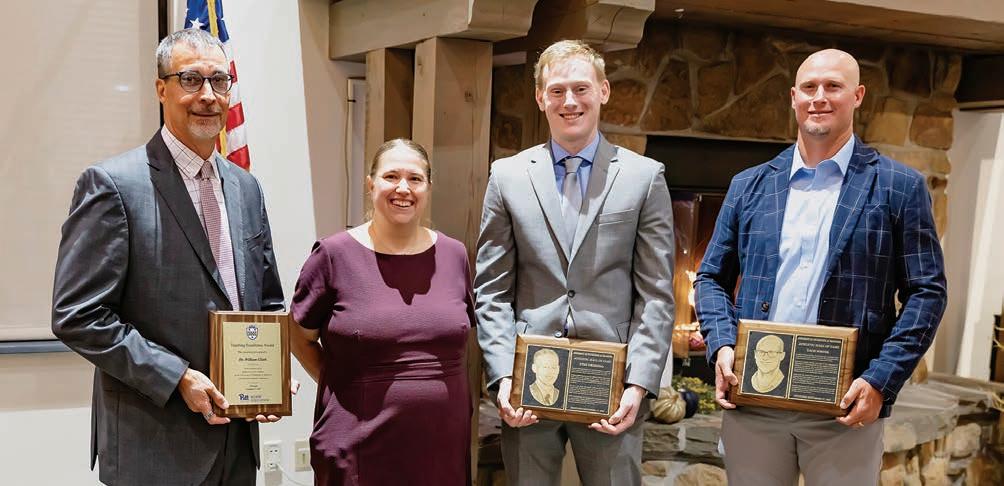
Pitt-Bradford honored four individuals at the Pitt-Bradford Alumni Association Awards Dinner during Alumni and Family Weekend in September.
Dr. William Clark, assistant professor of education, received the PBAA Teaching Excellence Award, and Jenny Crytzer ’08 received the Denny Lowery Distinguished Volunteer Award. Both were recognized alongside Athletic Hall of Fame inductees Zach Foster ’12 and Evan Greening ’17.
Clark was nominated by three students, including Madison Hartman ’25, who presented the award and said Clark “has helped beyond the classroom to prepare me for teaching and grad school.” A native of Emporium, Pa., Clark began his career teaching mathematics before
moving into school administration, eventually serving as superintendent for Warren County, Pa., Manheim Central, Pa., and Milton (Pa.) Area school districts. He holds a doctorate in education from Penn State and serves as coordinator of secondary education at Pitt-Bradford.
Crytzer has been a fixture in alumni engagement since her student days as a member of the Blue and Gold Society. She has volunteered at Backpack to Briefcase, Alumni and Family Weekend, Commencement and the Graduate Celebration and has served on the PBAA board. Christine Tyler ’16, executive director of philanthropic and alumni engagement, praised Crytzer for making the trip from Pittsburgh year after year. “Even though she is busy with her
own young family and full-time work, she and her husband, Jamez ’03-’06, always make time to be here,” Tyler said.
Foster, a Bradford native, pitched for the Panthers from 2006 to 2008 and became the program’s first MLB draft pick when the Pittsburgh Pirates selected him in 2008. After five seasons in the Pirates organization, he returned to Pitt-Bradford, earned his degree and became the Panthers’ head baseball coach in 2015.
Greening, of Fredericksburg, Va., totaled 1,060 points and 670 rebounds over two seasons with the Panthers and was recognized at the 2017 NCAA Final Four for his community service. He now coaches high school basketball in Virginia at the state’s highest classification.





Office of Philanthropic and Alumni Engagement
300 Campus Drive Bradford, PA 16701
ADDRESS SERVICE REQUESTED