
Discussion Series
Join us for a Script Club with the Portland Public Library. Check out your copy of the script and join us two weeks before opening of each Mainstage Production. Scripts are available at the reference desk at the Main Branch of the Portland Public Library. This year discussions will be held in the Rines Room at 1:30pm two weeks before a show opens. Feel free to come and chat about the plays with Associate Artistic Manager, Todd Brian Backus; his Directing and Dramaturgy Apprentices, and special guests. Visit portlandlibrary.com/programs-events/ for more information.
The Artistic Perspective, hosted by Artistic Director Anita Stewart, is an opportunity for audience members to delve deeper into the themes of the show through conversation with special guests. A different scholar, visiting artist, playwright, or other expert will join the discussion each time. The Artistic Perspective discussions are held after the first Sunday matinee performance.
Curtain Call discussions offer a rare opportunity for audience members to talk about the production with the performers. Through this forum, the audience and cast explore topics that range from the process of rehearsing and producing the text to character development to issues raised by the work Curtain Call discussions are held after the second Sunday matinee performance.
All discussions are free and open to the public. Show attendance is not required. To subscribe to a discussion series performance, please call th e Box Office at 207.774.0465.
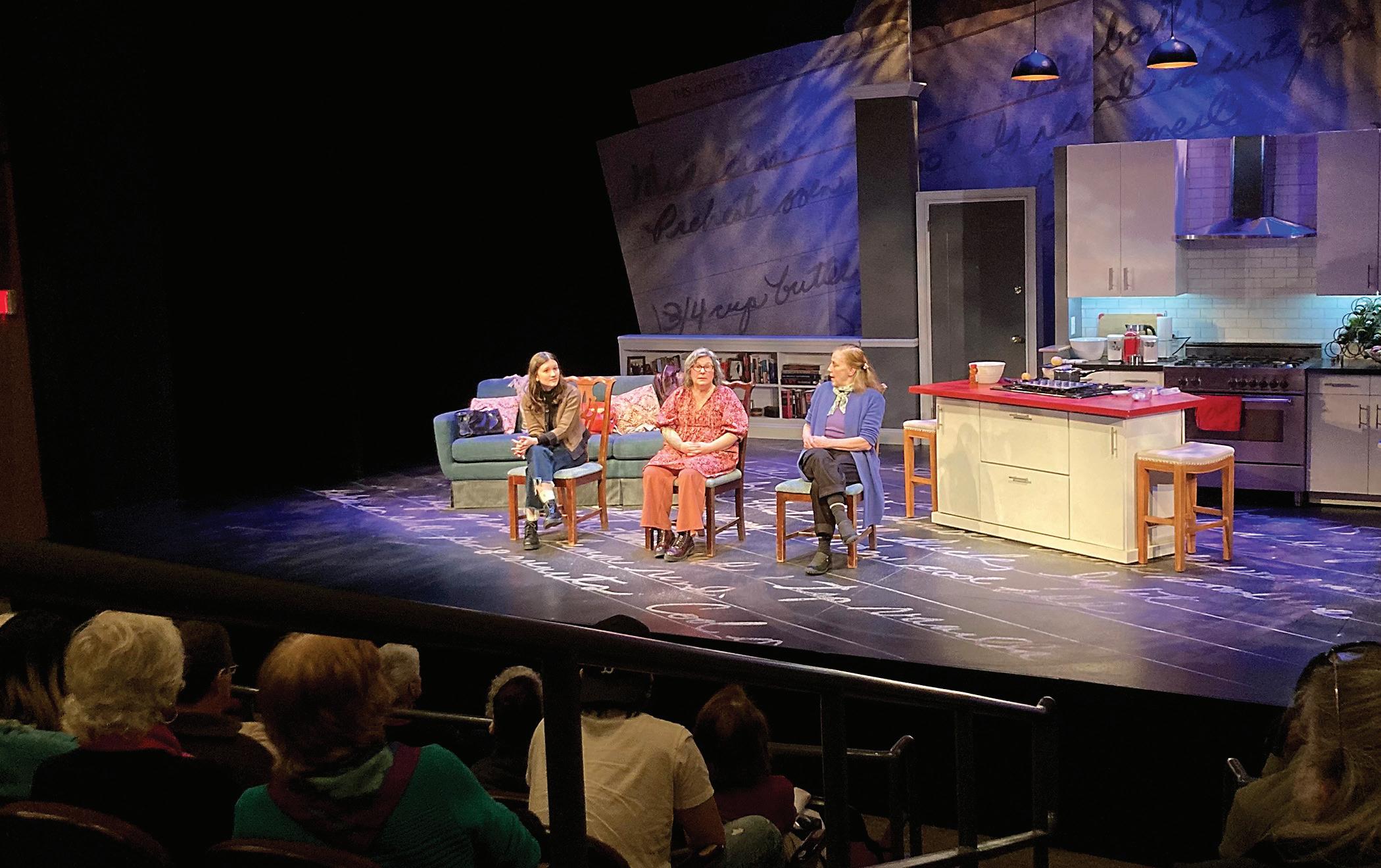
Dramaturg Kimmarie mccrann, Playwright Bess welDen, anD artistic Director anita stewart, in a talKBacK after Madeleines By Bess welDen at PortlanD stage comPany in 2025.
Ken Ludwig's Lend Me A Tenor
PlayNotes Season 52 Editorial Staff
Editor in Chief Todd Brian Backus
Contributors
Skyler Brianna, Zoë Cheever, Max Lerin, Eli Mowry, Jack Allen Murphy, and Kaushik Raghavan
Copy Editor
Adam Thibodeau
Cover Illustration
Aressa Goodrich
Portland Stage Company Educational Programs, like PlayNotes, are generously supported through the annual donations of hundreds of individuals and businesses, as well as special funding from:

The Simmons Foundation



Susie Konkel
Harold & Betty Cottle Family Fund
Letter from the Editors
Dear PlayNotes Readers,
Welcome to our fourth issue of PlayNotes for the 2025-2026 Season!
In this issue, we explore the world of Ken Ludwig's Lend Me a Tenor. This side-splitting farce is set in 1934 as Henry Saunders, the general manager of the Cleveland Grand Opera Company, welcomes world renowned tenor Tito Merelli for his American debut in the opera Pagliacci. A true comedy of errors ensues and Max, Saunders' assistant, is forced to go on for Tito as Pagliacci. Join us for Ludwig’s hit comedy, Lend me a Tenor !
Want to peel back the curtain on the world of opera? Start at "Opera for the Uninitiated" (p. 16) and then make your way over to "All About Opera" (p. 20). We have also included Focus Questions (p. 9) and some Activities (p. 13). Interested in the director’s take on how this production came to be? Check out "An Interview with Kevin R. Free" (p. 10). You might be shocked to learn that this version of Lend Me a Tenor is not the original version. To learn more about the older version and the reason it was changed, take a look at "The Legacy of Otello and Lend Me a Tenor " (p. 22).
When compiling each issue of PlayNotes, we strive to provide articles and interviews that give you insight into what the process has been like behind the scenes (Portland Stage’s Lend Me a Tenor), contain pertinent information about the play’s setting and major themes (The World of Lend Me a Tenor), and provide deeper dives into specific subjects that compelled our literary department (Digging Deeper).
We hope you enjoy this issue and we look forward to seeing you at the theater!
Sincerely yours,
The Portland Stage Literary Department
Todd Brian Backus
Skyler Brianna
Max Lerin
Kaushik Raghavan
About the Play
By Max Lerin London’s West End at the Gielgud Theatre.
Ken Ludwig’s Lend Me a Tenor is a classic farce set in 1934 as Henry Saunders, the General Manager of the Cleveland Grand Opera Company, is ready to welcome worldfamous singer Tito Merelli for his starring role in Pagliacci. When an unforeseen series of events renders Tito unavailable to perform his role, Saunders’ assistant Max must step in as Pagliacci, unbeknownst to the rest of the characters in the play. A true comedy of errors, Lend Me a Tenor is widely hailed as a comedic masterpiece. The play was a sensation both on Broadway and the West End, winning 3 Tony Awards and 4 Drama Desk Awards for its 1989 Broadway production.
Lend Me a Tenor, originally entitled Opera Buffa, premiered on the West End at the Globe Theatre in 1986, where it ran for ten months. Three years and sixteen previews later, a production, directed by Jerry Zaks, opened on Broadway in 1989 at the Royale Theatre. In 2010, the play was revived for a limited run on Broadway directed by Stanley Tucci. Later that same year, a musical adaptation of the play, with book and lyrics by Peter Sham and music by Brad Carroll, opened at the Theatre Royal Plymouth. A year later, it transferred to
Though in its current edition the play centers around Leoncavallo’s Italian opera Pagliacci, this was not the case for its initial productions and the majority of the play’s lifespan. Originally, the opera in the play was Verdi’s Otello, in which blackface was often utilized to transform both Tito Merelli and Max into the character of Otello. The musical was the first production of the story to replace Otello with Pagliacci. Years later, in 2019, Ken Ludwig adapted the play to replace Otello with Pagliacci as well. To learn more about this revision, the original version, and additional historical context, check out "The Legacy of Otello and Lend Me a Tenor " on page 22.
Ken Ludwig wrote a standalone sequel to Lend Me a Tenor entitled A Comedy of Tenors, which premiered as a co-production at the Cleveland Play House and the McCarter Theatre in Princeton, New Jersey, in 2015. In 2022, Ludwig also adapted a gender-swapped version of Lend Me a Tenor, entitled Lend Me a Soprano, which premiered at The Alley Theatre in Houston, Texas, and will be playing at Good Theatre in February.
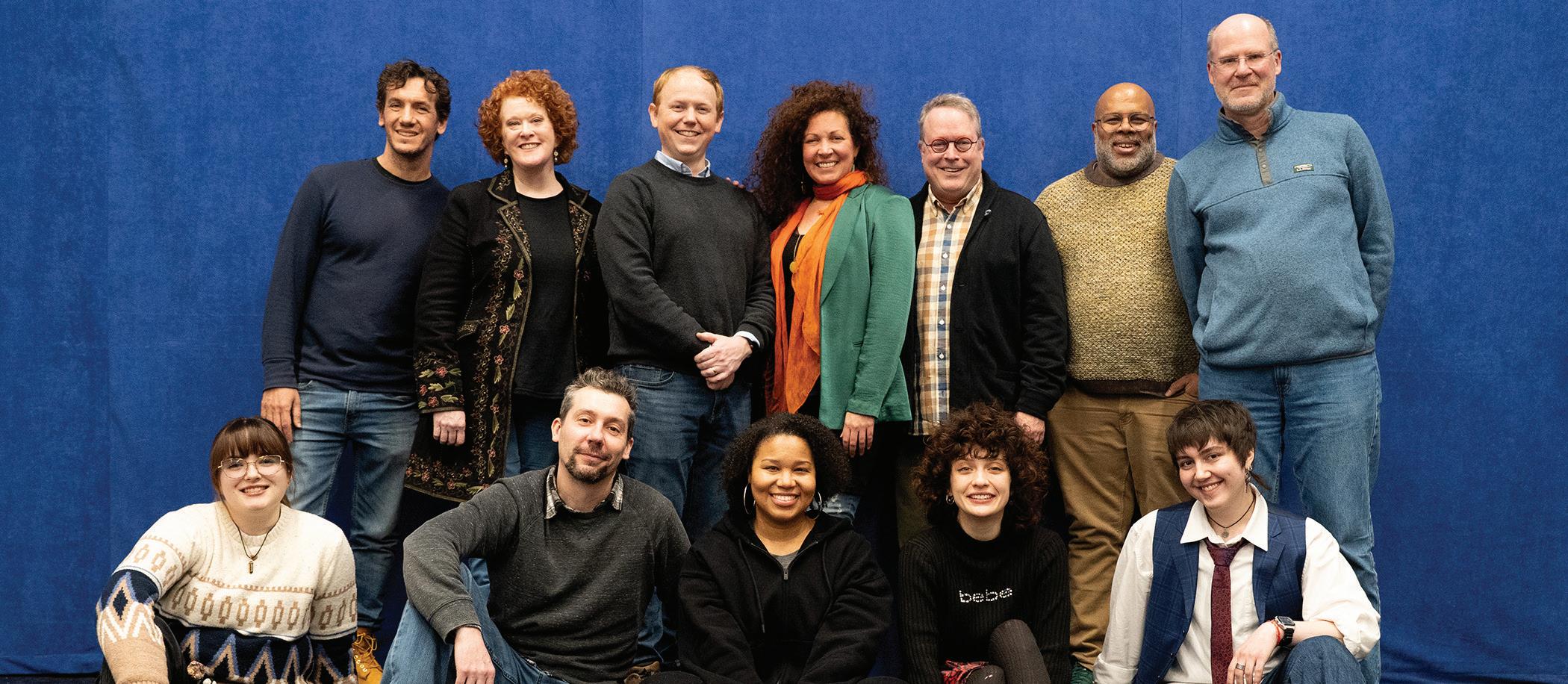
[BacK row] scott ahearn*, liz mccartney*, PatricK harvey*, isis Phoenix, tom forD*, Kevin r. free***, myles c. hatch* [front row] siDney PhilliPs, BraD laBree, latrisha t staPles*, michela micalizio & max lerin
Photo By aressa gooDrich (* - memBer aea) (*** - memBer sDc).
About Ken Ludwig
By Kaushik Raghavan
Ken Ludwig was born in York, Pennsylvania, to a doctor and a former Broadway chorus girl. Ludwig was raised in the world of theater and said that by the age of 10, all he wanted to do was be in theater. He continues to say that, like all high schoolers, he satisfied that itch by acting in school plays, but by the end of his time in high school, he realized what he wanted to do was write. Ludwig attended Haverford College, where he majored in music theory and composition. After graduating, he attended Harvard University to study law, but he also took music classes with the legendary composer Leonard Bernstein. After his first year at Harvard, Ludwig went to Trinity College at Cambridge University in England. He studied English literature his first year there before switching back to law and receiving a Bachelor of Laws. Once he finished this degree, he returned to Harvard and earned a Juris Doctor. After graduating, he married his girlfriend, Adrienne George. The two are still married and have two kids.
As a holder of law degrees from two of the most prestigious universities in the world, Ken Ludwig worked at the law firm Steptoe & Johnson as an entertainment lawyer. Ludwig “represented numerous clients who [were] are nationally and internationally recognized in the field of arts and entertainment…Among his clients were best-selling authors, publishers, the estate of one of America’s most prominent artists…and several theaters.” He is also experienced in international law, which he originally received his JD from Harvard. Ludwig began writing plays while he worked at the law firm, a practice he continued until 1987 when playwriting became his primary profession. Ken Ludwig’s first produced work was Postmortem. It premiered at the American Stage Festival in 1983 and then at the Cleveland Playhouse in 1985. His next play, released in 1985, would be a hit: Lend Me a Tenor. The play would be given a West End production produced by Andrew Lloyd Webber in the next year and would make it to Broadway in 1989. The West End production ran for 10 months and earned Ludwig an
Olivier nomination for Best New Comedy. The 1989 Broadway run, however, was much more successful, with seven Tony nominations, six Drama Desk nominations, and 476 performances. Lend Me a Tenor was revived in 2010 and received another three Tony nominations. In 2015, Ludwig wrote a sequel to his hit play Lend Me a Tenor called A Comedy of Tenors.
His next Broadway and West End project would be the 1992 musical Crazy for You. It won Best Musical at the Tony Awards and earned Ludwig a nomination for Best Book of a Musical. The show received two revivals on the West End in 2011 and 2023. It also received a one-night-only performance in 2017 at the Lincoln Center. Alongside his son, Jack, Ludwig wrote an adaptation of A Christmas Carol entitled Tiny Tim’s Christmas Carol where Tiny Tim has to hatch a plan to bring Bob Cratchit back home for Christmas Day. In 2022, Ludwig’s first opera, Tenor Overboard, opened at the Glimmerglass Opera House in Cooperstown, New York. Following Tenor Overboard, he published a gender-bent version of Lend Me a Tenor titled Lend Me a Soprano. This new play changes the show that is being performed and has some minor plot changes but is overall the same.
“Ken Ludwig is to contemporary domestic stage comedy what Arthur Miller was to the dramatic theater of his time,” says the Contra Costa Times. His work has been produced in over 30 countries and in over 20 languages.

Ken luDwig.
About the Cast and Characters
By Max Lerin
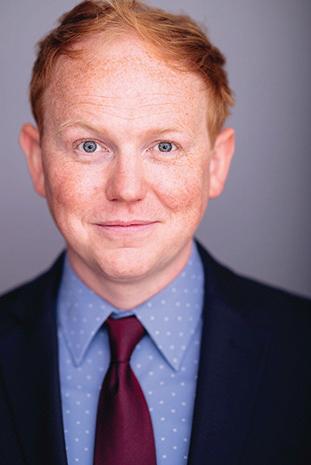
Name: Patrick Harvey (AEA)
Character: Max
Max: Assistant to Saunders and aspiring Opera singer.

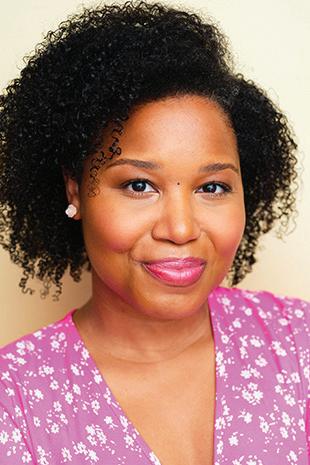
Name: Latrisha T. Staples (AEA)
Character: Maggie
Maggie: Max's girlfriend, obsessed with Tito Merelli.

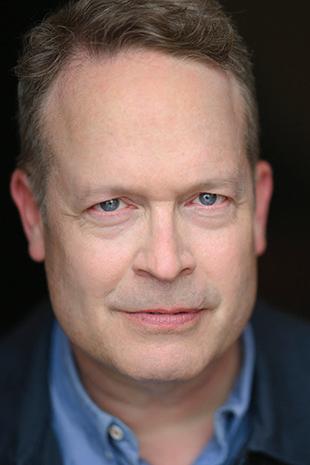
Name: Tom Ford (AEA)
Character: Saunders
Saunders: Maggie's father, Manager of the Cleveland Grand Opera Company.
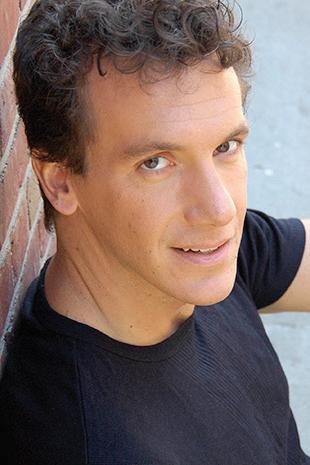
Name: Scott Ahearn (AEA)
Character: Tito Merelli
Tito Merelli: A world famous tenor, known also to his fans as Il Stupendo.
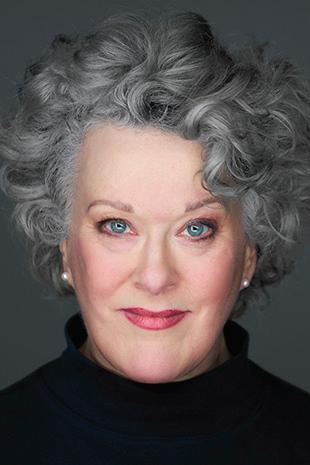
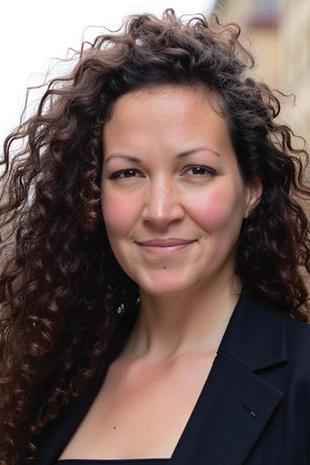
Name: Michaela Micalizio
Character: Maria
Maria: Tito’s wife.
Name: Brad LaBree
Character: Bellhop
Bellhop: A bellhop, obsessed with Tito Merelli.
Name: Isis Phoenix
Character: Diana
Diana: A soprano who thinks Tito Merelli can give her a leg up.
Name: Liz McCartney (AEA)
Character: Julia
Julia: Chairman of the Opera Guild for the Cleveland Grand Opera Company.
Focus Questions
By Zoë Cheever, Eli Mowry, and Jacklyn Eleanor Murphy
1. The playwright, Ken Ludwig, wrote in the play’s introduction “The crux of the play is that Max is a shy soul who admires Tito, and then he gets the chance of a lifetime to emulate his hero.” The director, Kevin R. Free, described the experiences of the characters as getting one chance to talk to your favorite celebrity, or even your hero. What questions would you have for your hero? What would you do to get their attention?
2. After reading “The Legacy of Otello and Lend Me a Tenor ” (pg. 22) by Max Lerin, what goes into editing a show? Are there other popular works of art (plays, movies, books, etc.) that you think should be revisited?
3. Lend Me a Tenor is an example of a farce, a type of comedy emphasizing physicality and ridiculous events. After reading Skyler Brianna’s “Stock Characters in Comedy” article (pg. 24), what role does comedy play in society? Why would comedies, especially improbable farces, be relevant to our current lives?
4. This play takes place over a short period of time and involves characters making big and dramatic choices. What elements of the plot force these characters into these dramatic situations? Why do you think such high stakes are necessary for the comedy to work?
5. Now that you’ve seen the show, what would you want to change? Remember: this script is already an edit of the original, having changed the opera and thus the titular “tenor.” What if Tito was performing a different show, like Romeo and Juliet or Our Town? Or what if it was set in a different place, like London or Bangor? What if it was fully a musical? What discoveries come up? What doesn’t work as well?
6. The circumstances of Lend Me a Tenor are based around the opera Pagliacci. What do you know about operas? Referring back to “All About Opera” by Skyler Brianna and "Opera from the Uninitiated" by Kaushik Raghavan, why might Pagliacci be the show Ludwig chose to center Lend Me a Tenor on?
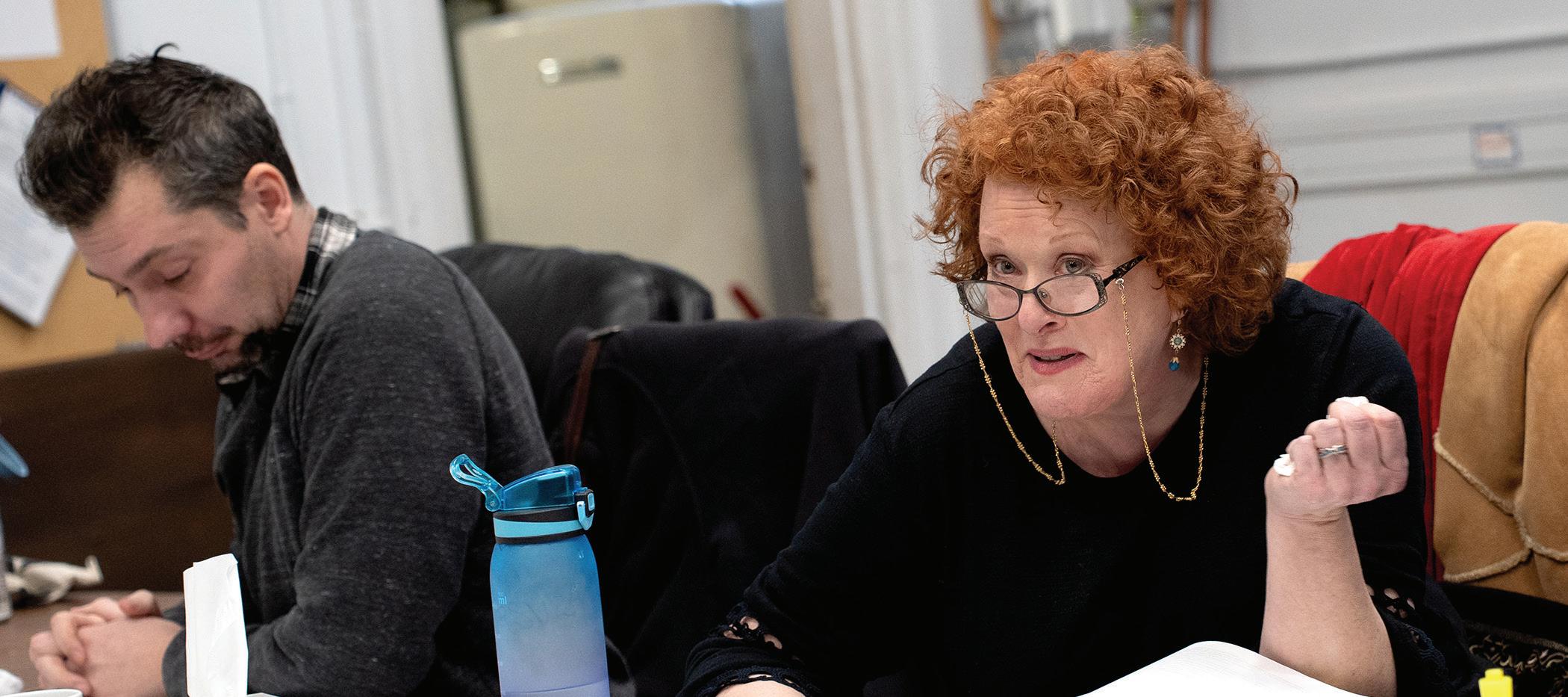
BraD laBree & liz mccartney* Photo By aressa gooDrich (* - memBer aea)
An Interview with the Director Kevin R. Free
By Max Lerin
Directing and Dramaturgy Apprentice Max Lerin interviewed director Kevin R. Free about his process and experience directing Lend Me A Tenor.
Max Lerin (ML) : What are you most excited about working on this production?
Kevin R. Free (KF): I always get excited about working on classic comedies because I want to study the jokes in the script to make them work, and then I want to see what kinds of new jokes I can bring to the text!
ML : What do you believe is the role of the director?
KF: Cast the show well, and then get out of the way (unless the actors need guidance)!
ML : What is your favorite production you’ve directed and what made it special?
KF: This feels like a trick question; but The Play That Goes Wrong [2024] came along at a tough time in my life and working on it with the supportive team at Portland Stage made the whole experience magical.
ML : What are some of the unique demands of directing a farce / this play?
KF: Staying objective in the face of all the fun in the rehearsal room. Not all jokes in rehearsal will be funny to an audience, and I have to pay attention to every question that comes in my head.
ML : Lend Me a Tenor relies so heavily on physical comedy and visual gags, what is the key to making these moments work so well?
KF: PRECISION.
ML : What is the most important thing you try to bring into the rehearsal room?
KF: It’s called a “PLAY.” I try to create a room where playing is encouraged, but boundaries are respected.
ML : What originally made you want to direct?
KF: Other people! Colleagues and I noticed that I thrived in leadership, so I tried my hand at being in charge, and I really loved it!
ML : What’s the most valuable lesson you’ve learned in your experience directing?
KF: Care more about people’s humanity than the production. It inspires people to care more about the production, even when they cope with difficult circumstances outside of rehearsal.
ML : Anything else you’d like audiences to know about this production?
KF: HAVE FUN!
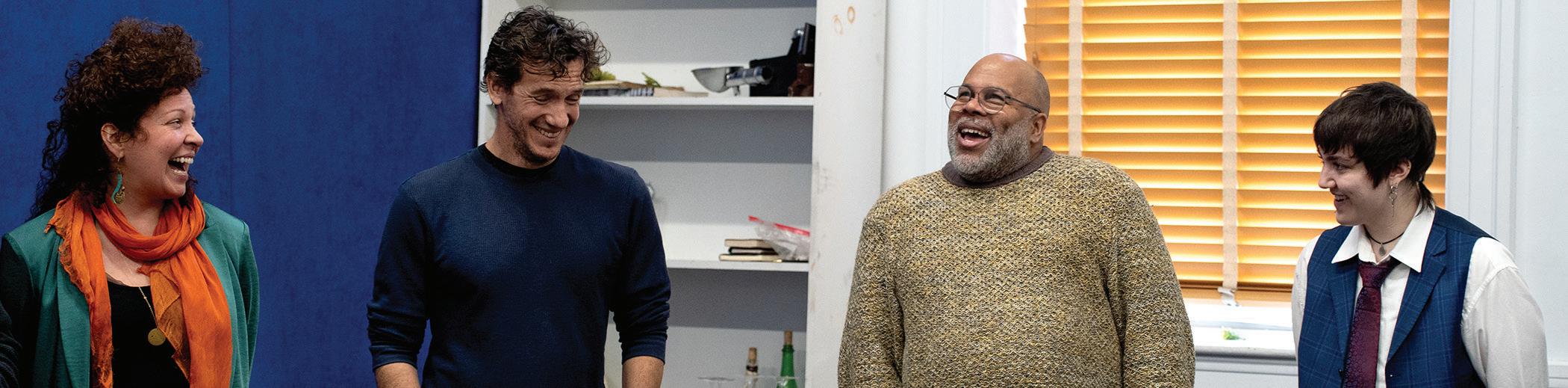
from left to right: isis Phoenix, scott ahearn*, Kevin r free***, max lerin. Photo By aressa gooDrich (* - memBer aea) (*** - memBer sDc)
Activities
By Zoë Cheever, Eli Mowry, and Jacklyn Eleanor Murphy
1. Skyler Brianna’s article “Stock Characters in Comedy” (pg.24) analyzes Lend Me a Tenor as a farce—a dramatized form of comedy—and how certain character traits are pulled straight from Commedia dell’Arte. Based off the article, choose a Commedia character (i.e. Columbina, Arlechino, etc.) and do some additional research. What are some traits of this character? Are there modern interpretations of Commedia dell’Arte that we can see in our world? Traditionally, these archetypes would have been performed wearing masks, to help differ them from each other. Design yours! What ways can you show characteristics visually? Be sure to make these masks durable, as you’ll be using them later!
2. Set in 1934, Lend Me a Tenor grapples with schisms in social status. Though there is never a clear acknowledgment, with roles such as the bellhop, the bumbling intern, and especially the illustrious opera singer, this is a world where not all are seen as equal. With your class, take a deck of cards and secretly give one card to each member of the group. Only you should look at your card! Aces are considered low here, and are treated as low status. The king, then, is the highest status one can have. You will know your role, but no one else will. Mingle about the room, seeing if you can discern others’ social status based on how they interact with you. At the end, try to line up in order from lowest to highest without telling anyone what your card was. For an extra challenge, have it so everyone except for you can see your role.
3. Lend Me a Tenor is a farce, a genre of play that focuses on comedic physicality and improbable situations. Think of one of your favorite plays or movies that doesn’t fall into this genre, and rewrite a scene from it as a comedy. What specific things might you change to make it a farce? Are there certain moments that you can see becoming more exaggerated or dramatic?
4. Now that you’ve seen comedic roles in action, it’s time to try it! In pairs, choose a location to set your scene. You can choose to either act out an improvised scene or write one with your partner. If you made masks based on archetypes, use them to add a dramatic flair to this scene! If you’re looking for a jumping-off point, here’s a few places your scene could start:
• Grocery store
• Singing lesson
• Opera house
• Mount Everest
• Doctor’s waiting room
• Classroom
Once you’ve done that, reflect as a class. What went well? What could you have done differently? Then, switch and either act or write (whichever you didn’t do the first time).
Glossary
By Max Lerin
Vocab Terms
Aida: An Italian opera by Giuseppe Verdi (1871). For more information on this and other operas mentioned in the script, consult "Opera for the Uninitiated" on page 16.
Carmen: A French opera by Georges Bizet (1875).
Chianti: A famous Italian red wine from Tuscany.
Chrysler Building : A 1,046 ft tall Art Deco steel skyscraper in New York City.
Cognoscenti: People who are considered to be especially well informed about a particular subject.
Covent Garden: A shopping and entertainment hub in London's West End, home to fashion stores, craft stalls at the Apple Market, and the Royal Opera House.
Crud: A contemptible, worthless, or repulsive person, or something generally disgusting, dirty, or nonsensical.
Die Fledermaus: An operetta composed by Johann Strauss II to a German libretto by Karl Haffner and Richard Genée (1874).
Dogsbody: An informal British term for a person who does menial, boring, or unpleasant jobs that others avoid, essentially a lackey or drudge.
Don José: The tragic tenor protagonist in Georges Bizet's opera, Carmen.
Extrasensory Perception (ESP): Refers to claimed abilities to gain information beyond the five normal senses (sight, hearing, touch, taste, smell), like mind-reading (telepathy) or knowing future events (precognition), often called the “sixth sense.”
Erroneous: Incorrect or mistaken.
Factotum: An employee who does all kinds of work.
Gopher: An assistant or errand-runner who fetches things, does odd jobs, and handles miscellaneous tasks for others, derived from the phrase “go for.”
Harangue: Lecture (someone) at length in an aggressive and critical manner.
La Boheme: An opera composed by Giacomo Puccini between 1893 and 1895 to an Italian libretto by Luigi Illica and Giuseppe Giacosa, based on a collection of short stories entitled Scènes de la vie de bohème by Henri Murger.
Lauritz Melchior: A Danish-American opera singer popular in the 1920s-1940s.

the chrysler BuilDing in new yorK city.
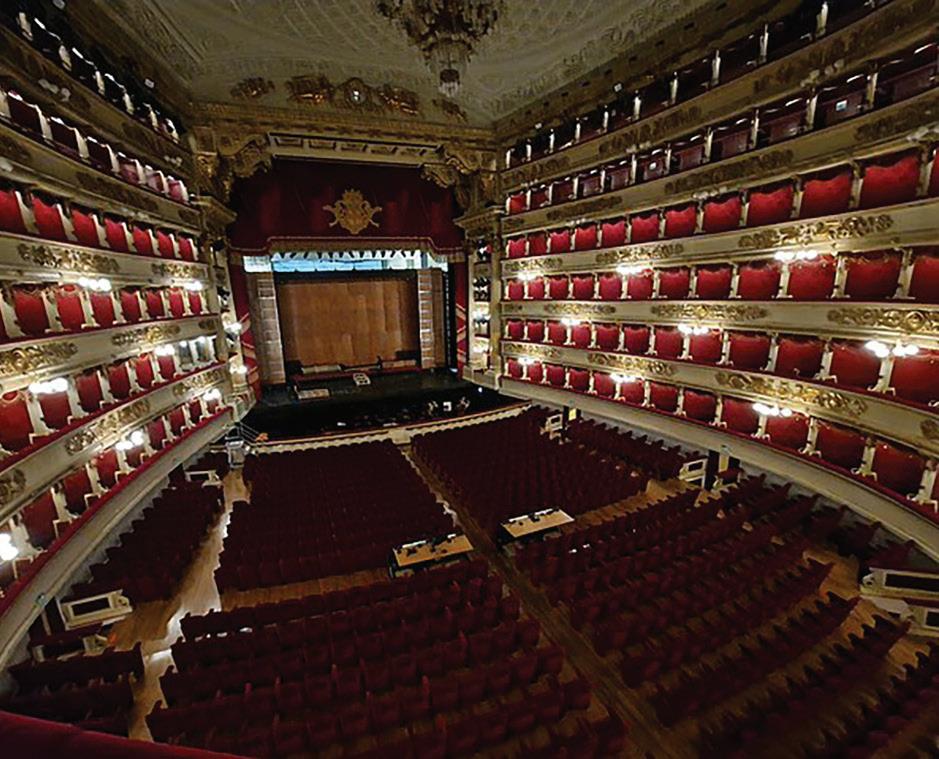
La Scala: A historic opera house in Milan, Italy, regarded as being one of the leading opera and ballet theatres globally.
Loincloth: A simple garment, often a strip of cloth or bark-cloth, wrapped around the hips to cover the loins (genitals and buttocks), historically worn in many cultures, especially in hot climates, by both men and women.
Mumm: GH Mumm & Cie is a Champagne house founded in 1827 and based in Reims, France.
Mussolini: An Italian politician and journalist who was the dictator of Italy during the Fascist period, which lasted from the March on Rome in 1922 until his overthrow in 1943.
Nightcap: A drink, traditionally a small alcoholic beverage like whiskey, brandy, or liqueur, enjoyed just before bed to relax and wind down the evening.
Pagliacci: An Italian opera by Ruggero Leoncavallo (1892).
Phenobarbital: A long-acting barbiturate medication primarily used as an anticonvulsant to prevent and control various types of seizures. It may also be used to treat anxiety or cause drowsiness, including before a procedure. It works by calming overactive nerves in your body.
Rodolpho: The passionate, poor poet and protagonist in Giacomo Puccini's beloved opera La Bohème.
Salome: A 1905 opera by Richard Strauss–its libretto is Hedwig Lachmann's German translation of the 1891 French play Salomé by Oscar Wilde, edited by the composer.
Soprano: The highest human singing voice, typically female, characterized by a range from about middle C (C4) to high C (C6) or above, often carrying the melody in choral music.
Tempo: The speed or pace of a musical piece, indicating how fast or slow the beats should move.
The Merry Widow : A 1905 operetta by the Austro-Hungarian composer Franz Lehár based on an 1861 comedy play, L'attaché d'ambassade (The Embassy Attaché) by Henri Meilhac.
Tenor: The highest natural adult male singing voice, a voice type typically carrying melodies, and also instruments or musical lines with a comparable range, situated between alto and bass, often defined by a bright, resonant tone and a range generally from C3 to C5, though it varies.
Twit: A British slang term for a silly, foolish, or stupid person, used informally as a mild insult or teasing term.
Understudy : A performer who learns a role in a production to be a substitute for the principal actor, stepping in if the main performer is ill or unavailable.
Verdi’s Requiem: A musical set in a Catholic funeral mass (Requiem) written for four soloists, a double choir and an orchestra by Giuseppe Verdi (1874).
Vienna Staatsoper: The Vienna State Opera, a historic opera house and opera company based in Vienna, Austria.
the theater la scala in milan, italy
Italian Glossary
Arriverderci: Goodbye.
Bellezza: Beauty, loveliness.
Benvenuto: Welcome.
Carissimo: Very dear, most beloved.
Ciao: Used as a greeting at meeting or parting.
Grazie: Thank you.
“Mia signora, mi dispiace.
Il Stupendo: Tito’s nickname, meaning “The Stupendous,” “The Wonderful,” or “The Marvelous.”
Immediamente: Immediately.
Mia vongole: My clam.
Perfetto: Perfect.
Presto: Quickly, fast, soon, or early.
Italian Passages
My dear lady, I’m sorry. Non volevo disturbarla. I did not intend to bother you. Se l'ho offesa, chiedo scusa”
If I have offended you, I certainly beg your forgiveness.
“Non e niente, l'assicuro”
I assure you, it’s of no importance.
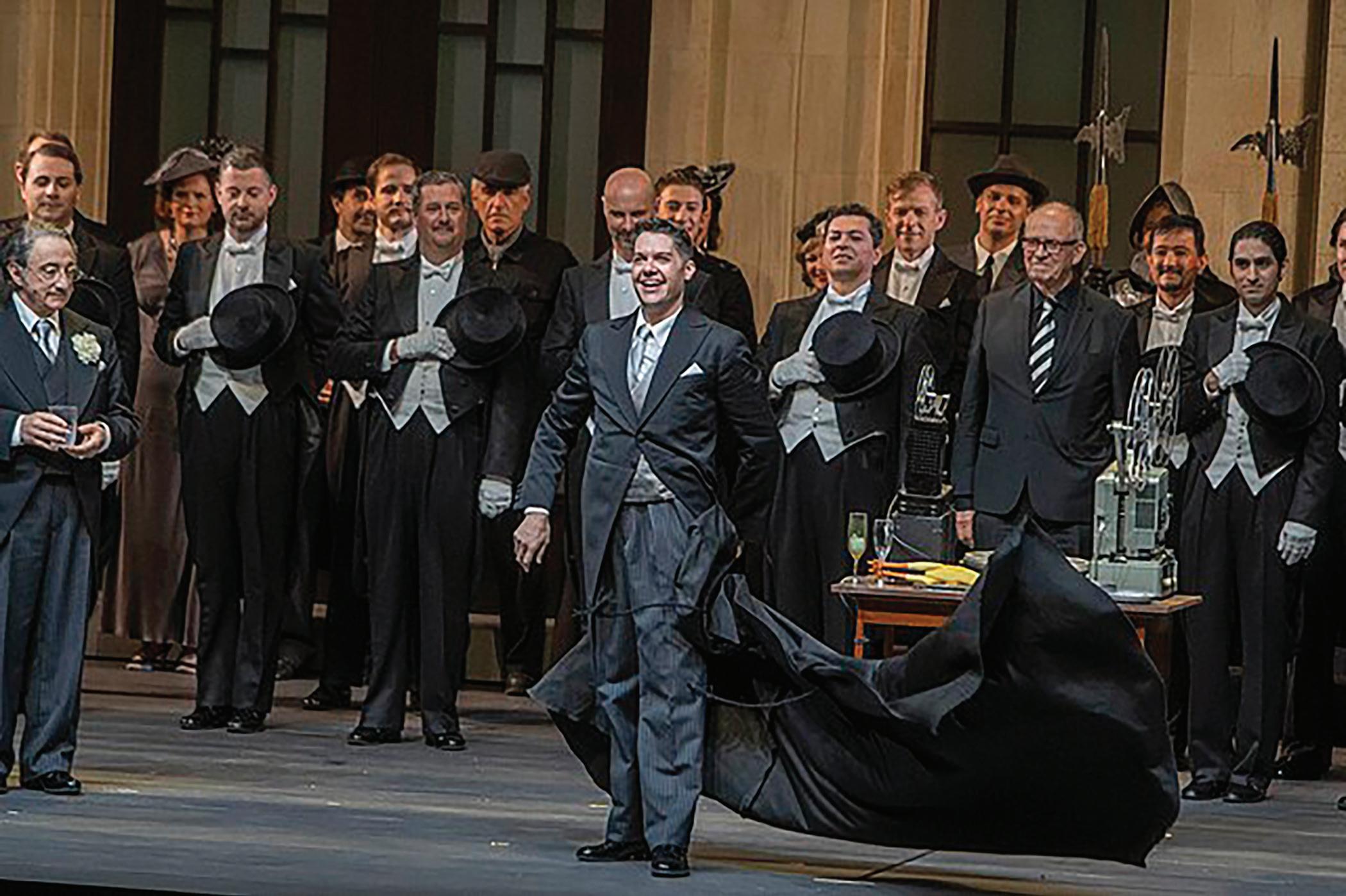
eDgarDo rocha as count almaviva in a salzBurg festival ProDuction of The BarBer of seville.
Italian English
“Vesti la giubba e la faccia infarina.
"Put on your jacket and powder your face. La gente paga, e rider vuole qua. The people pay, and they want to laugh. E se Arlecchin t'invola Colombina, And if Harlequin steals Colombina away, ridi, Pagliaccio, e ognun applaudira!” laugh, Pagliacci, and everyone will applaud!"
“Dio, che nell’alma infondere
"Oh god, who wished to instill Amor volesti e speme, love and hope in our souls, Desio accendere, accender nel cor Thou must kindle within our hearts Tu sei di liberta. a desire for liberty. Giuriamo insiem di vivere We swear to live E di morire insieme. and die together, In terra, in ciel, On Earth, in Heaven, Conguingere ci puo, Thy goodness Ci puo la tua bonta. can unite us.
Ah! Dio che nell’alma, etc…”
“Largo al factotum
Oh god, who wished, etc…"
"Make way for the servant della citta, largo! of the city, make way! La ran la, la ran la, La ran la, la ran la, La ran la, la!” La ran la, la!"
“Presto a bottega,
"Off to the shop soon, che l’alba e gia, presto-” it is already dawn, soon-"
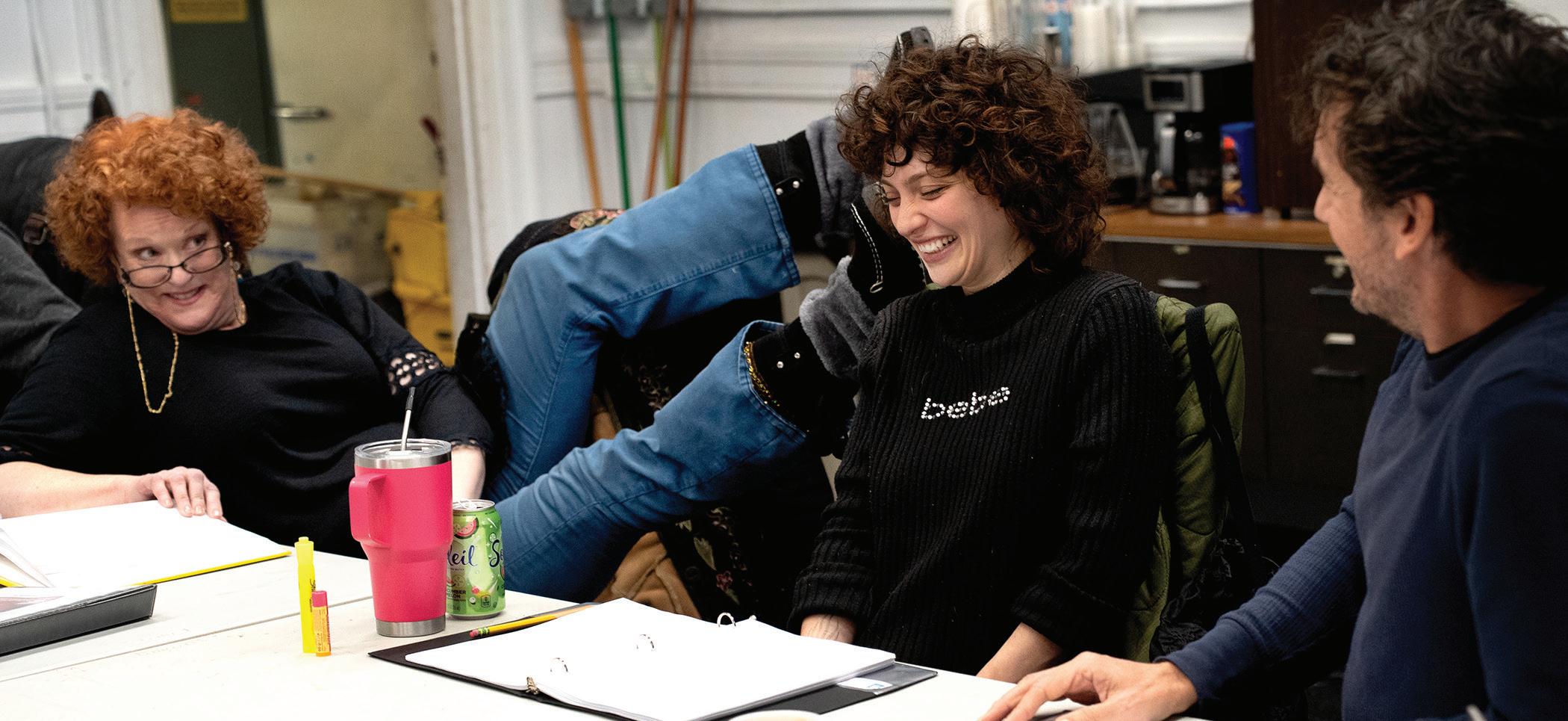
from left to right: liz mccartney*, michaela micalizio, scott ahearn*. Photo By aressa gooDrich (* - memBer aea).
Opera for the Uninitiated
By Kaushik Raghavan
We know that the world of opera can be daunting from an outsider's perspective, so we put together summaries for the shows mentioned in Lend Me a Tenor so you can be in the know. If you’re interested in learning more about any specific opera, check in with your local librarian, or listen to some discussions and recordings on YouTube or any music streaming service.
Aida: This Italian opera was written by Giuseppe Verdi with the libretto by Antonio Ghislanzoni in 1871. Aida is about Radamès, a general in the Egyptian army, and Aida, the princess of Egypt's main rival, Ethiopia. Aida and Radamès are in love. Aida is enslaved in Pharaonic Egypt, but the Egyptians don’t know that Aida is the princess. Radamès is selected to lead the Egyptian army as they defend themselves against the Ethiopians, who are only attacking to free Aida. Their attack is defeated, and the Egyptians capture many Ethiopians, including Aida’s father, the King of Ethiopia. After helping Aida and her father escape, Radamès is convicted of treason and set to be executed by being buried alive. Aida hides in the hole that Radamès is to be buried in to share his fate. Both lovers die. The most famous song from this opera is the Triumphal March, which is considered one of three major inspirations for the Philippine national anthem and is used in graduation ceremonies in Latin America. Aida was converted into a Broadway musical by Elton John and Tim Rice in 2000, running for 1,800 performances.
The Barber of Seville: This Italian opera was written by Gioachino Rossini with libretto by Cesare Sterbini in 1816. This opera is connected to The Marriage of Figaro (Mozart) as both are derived from the same source material, Pierre Beaumarchais’ trilogy of plays about Figaro. The opera starts with Count Almaviva singing to the beautiful maiden Rosina’s window. The rich Count, who is disguised as a poor student, hopes to have Rosina fall in love with him for who he is instead of his money. However, Rosina’s
ward, Bartolo, has a plan to marry her to secure her sizable dowry, which discourages Almaviva. While brooding, Almaviva meets with Figaro, a former servant of his and enlists him to help him win Rosina’s hand. After many shenanigans from all parties involved, Bartolo becomes frustrated and brings a notary to marry himself and Rosina. Almaviva and Figaro, upon hearing this, sneak into her room to steal her away, only to make their way in and then find their ladder missing, making escape impossible. Bartolo and the notary enter Rosina’s room and after some considerable bribery, the notary marries Almaviva and Rosina and everyone lives happily ever after. The most famous song from this opera is “Largo al Factotum.” This song, featured in Lend Me a Tenor, is also famous for being in several cartoons and Mrs. Doubtfire.
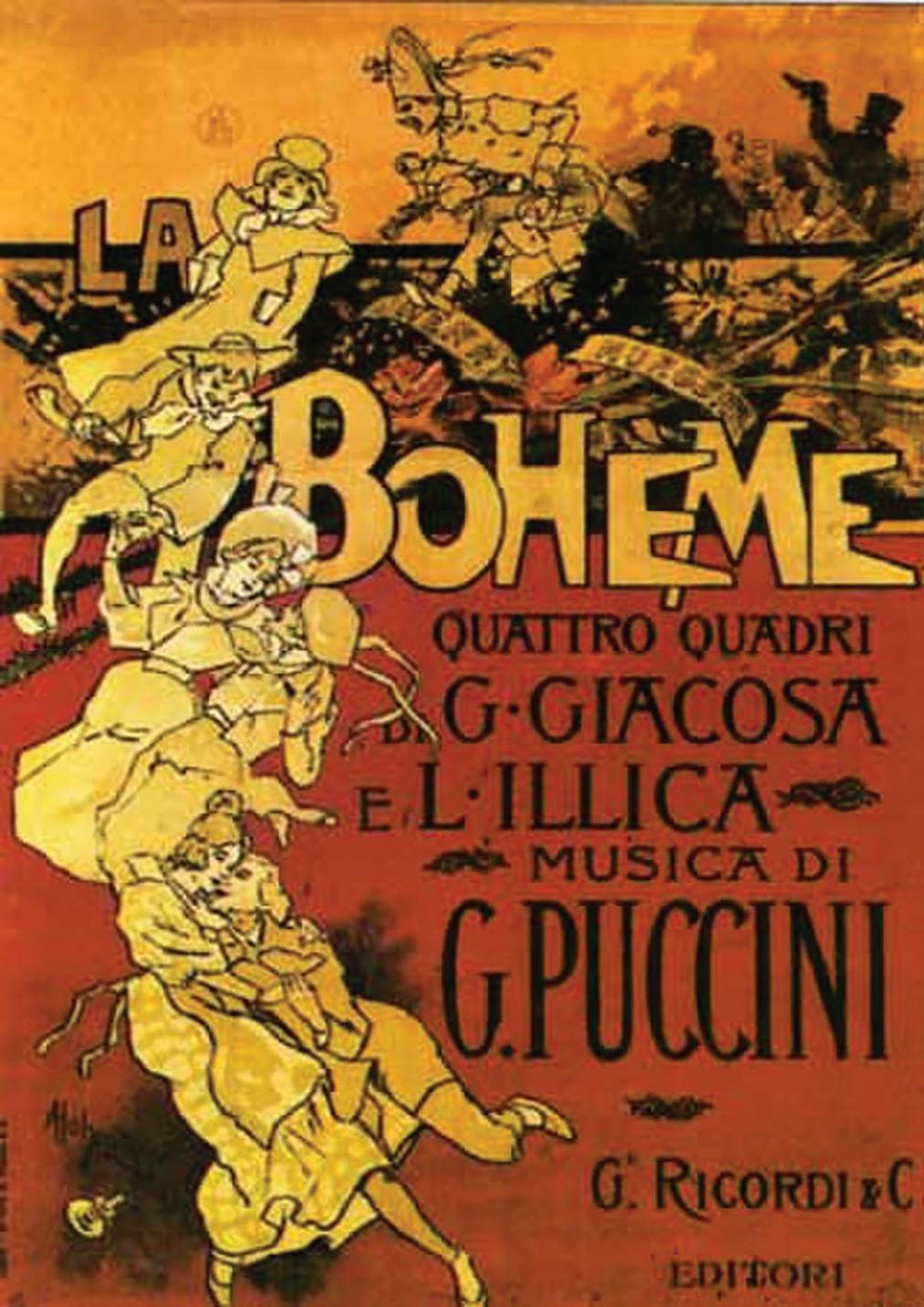
Poster for a 1896 ProDuction of Puccini's la BohèMe.
La Bohème: This Italian opera was written by Giacomo Puccini with libretto by Luigi Illica and Giuseppe Giacosa between 1893 and 1895. It was based on the 1851 novel Scènes de la vie de bohème by Henri Murger. Marcello and Rodolfo are both poor artists living in 1830s Bohemian Paris. Rodolfo meets Mimi, his neighbor, and they fall in love. Mimi, Marcello, Rodolfo and some of their friends go to dinner where they meet Musetta, Marcello’s former girlfriend. They all eat and drink. We flashforward several months and Mimi and Rodolfo have broken up due to Mimi’s tuberculosis. Rodolfo confesses to Marcello that he still loves Mimi and only left her in the hope that she would seek out a rich partner who could pay for her treatment. Mimi does this, but even though she is receiving treatment, she is on her deathbed. Mimi seeks out Rodolfo and proclaims her love for him and dies. Rodolfo, who had left the room at the time, runs back in and repeatedly cries out her name and begs her to come back while holding her body. Mimi does not. The most famous song from this opera is “Quando m’en vo’,” or “Musetta’s Waltz.” This bittersweet, evocative song is used in the musical Rent.
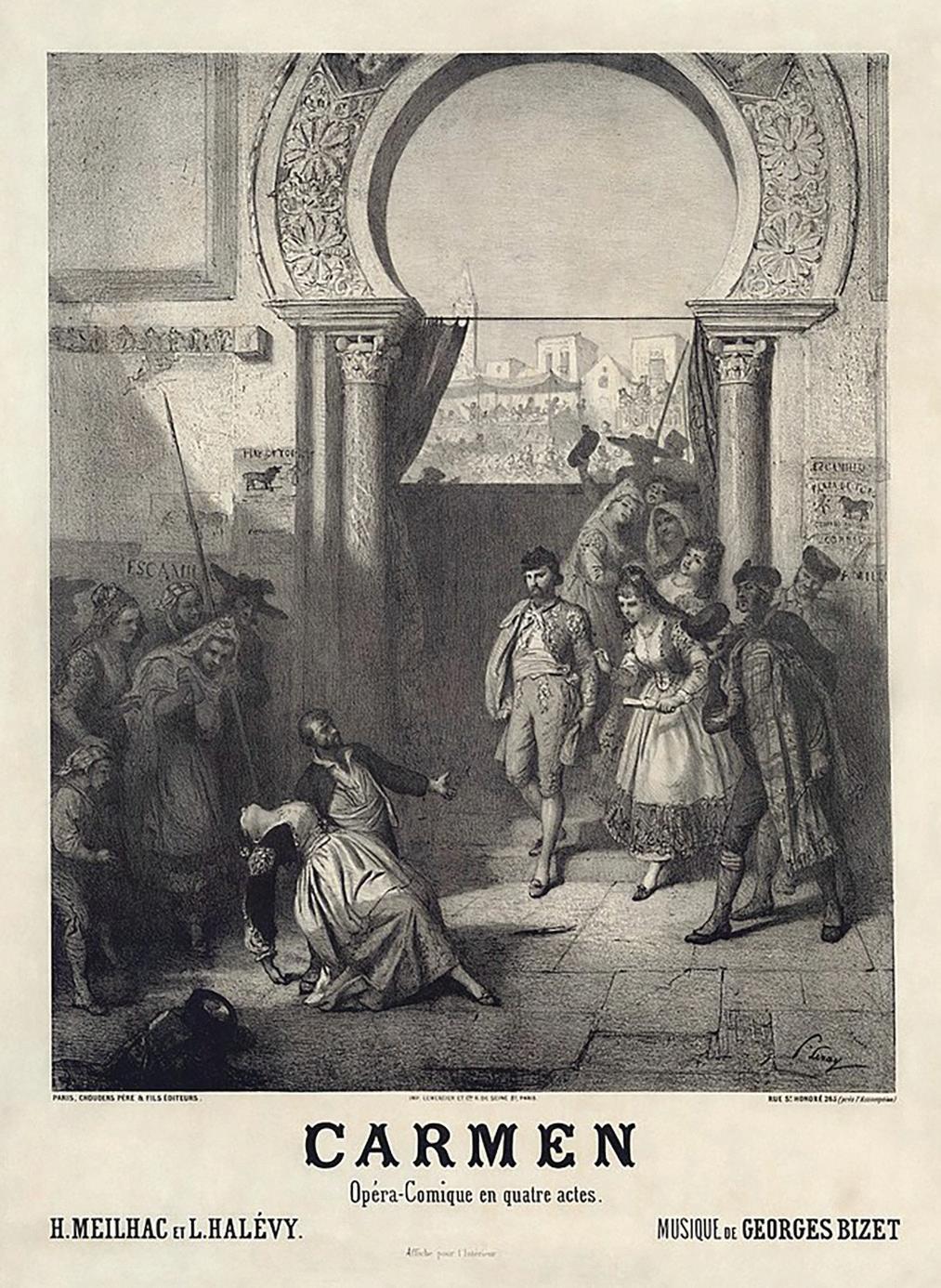
Carmen: This French opera was written by Georges Bizet with libretto by Henri Meilhac and Ludovic Halévy in 1875. The opera opens with Carmen, a young woman, giving a flower to Don José, a military officer, who is unimpressed. Carmen then gets in a fight with another woman and is to be arrested. She manages to seduce Don José enough that he doesn’t tie her hands, and she escapes while Don José is arrested for dereliction of duty. After serving his prison sentence, Don José finds Carmen and the two begin a love affair, with Don José leaving his post. After a while, Carmen starts to lose interest in Don José, and after he goes to visit his dying mother, she leaves him for a bullfighter. Don José, upon returning, begs her to come back to him but she refuses. In his ensuing rage, he kills her and confesses his crime. The most famous songs in this opera are the “Habanera,” which is used in numerous pieces of media, and “Toreador,” which was famously used as Freddy Fazbear’s theme in the Five Nights at Freddy’s franchise.
Die Fledermaus: This German opera was written by Johann Strauss II with libretto by Karl Haffner and Richard Genée in 1852. We open in the home of Gabriel von Eisenstein, who has been sentenced to eight days in jail for insulting a judge. His friend/enemy, Dr. Falke, invites him to a ball before he turns himself in. Falke is still upset about a prank that Eisenstein played on him several years ago, one where Eisenstein left a drunk Falke on a bench in his Halloween costume—a bat, leading to his nickname of “the bat.” Falke, without Eisenstein’s knowledge, also invited Eisenstein’s wife, Rosalinde, to the ball. At the ball, Eisenstein flirts with a costumed Rosalinde, and she runs off with his pocket watch. At the end of the party, Eisenstein goes to turn himself into jail and finds Rosalinde there with his watch. He admits to attempting to cheat on her, and they all forgive each other, claiming it was all because of the champagne they drank. The most famous song is the "Overture", which was used in the classic Tom and Jerry episode “Tom and Jerry in the Hollywood Bowl” where the two characters fight each other to conduct the piece.
Poster for the Premiere of CarMen in 1875.
The Merry Widow : This German opera was written by Franz Lehár with libretto by Viktor Léon and Leo Stein in 1905. The opera is set in a small poor region of the Balkans called Pontevedro. Hanna, who has just inherited 20 million francs from her late husband, is visiting for a festival in town. The Baron of the area hopes that Hanna will get married to a man who is from Pontevedro, therefore keeping the money there. The Baron enlists the help of Danilo, who loves Hanna and is loved by her, too. Danilo refuses to marry her for her money, but promises to make sure no nonPontevedrin man can approach her. After the plan to keep her money in Pontevedro nearly fails several times, Hanna says that if she were wed, she would lose all her money. Upon hearing this, Danilo proposes marriage, and Hanna remarks that she did lose all her money as it is now her to be husband’s. All ends in happiness. The most famous song from this opera is the “Vilja Song,” which was used in several cartoons during the 1960s.
Otello: This Italian opera was written by Giuseppe Verdi with libretto by Arrigo Boito. The opera is based on Shakespeare’s play Othello. Otello, who is a Black man, returns to Cyprus after a successful naval battle with the Turks. Iago, his conniving ensign, wants revenge on Otello for not promoting him. Iago gaslights Otello into believing that his wife, Desdemona, is cheating on him with the man that received the promotion that Iago wanted. As Iago’s lies persist, Otello begins to get more and more angry. This continues until Otello is visited by an ambassador from Venice, where Otello is finally convinced that his wife is being unfaithful. Later that night, he sneaks into her room and wakes her, telling her she must die. She once again protests her innocence and Otello in his anger strangles her. Otello then learns that Iago had been lying to him this entire time and that Desdemona was in fact true to him. He then kills himself, throwing himself on her body. The most famous song from this opera is “Ave Maria.” This famous piece of music has been used in many movies and is almost universally known.
Pagliacci: This Italian opera was written by Ruggero Leoncavallo in 1893. The show opens with a traveling theater troupe—Nedda, Canio,
Tonio, Beppe—coming into town and telling the townspeople the play that they will be performing: The Troubles of Pagliaccio. Nedda, fully in costume, speaks to the townspeople. When it is time for her to get off the wagon she is using, Tonio attempts to help her down, but he is pushed away by Nedda’s husband Canio, who is also fully in costume, and he helps her down. After this, Canio and Beppe leave to go to a tavern to get some drinks, leaving Tonio with Nedda. The villagers tease Canio that Tonio and Nedda are planning on having an affair. Canio says that while he plays the foolish husband Pagliacci in the play, he will not tolerate anyone making advances on Nedda. While Canio and Beppe are at the tavern, Tonio returns and confesses his love for her, but she laughs at him. Her real lover, Silvio, comes and asks her to elope after the performance, and she agrees. Tonio, who had been listening the whole time, leaves to tell Canio. As Silvio runs away, Nedda calls out to him that “I will always be yours.” Canio threatens Nedda to tell him the name of her lover, but she does not reveal Silvio’s name. Tonio then says that her lover will reveal himself at the play that night.
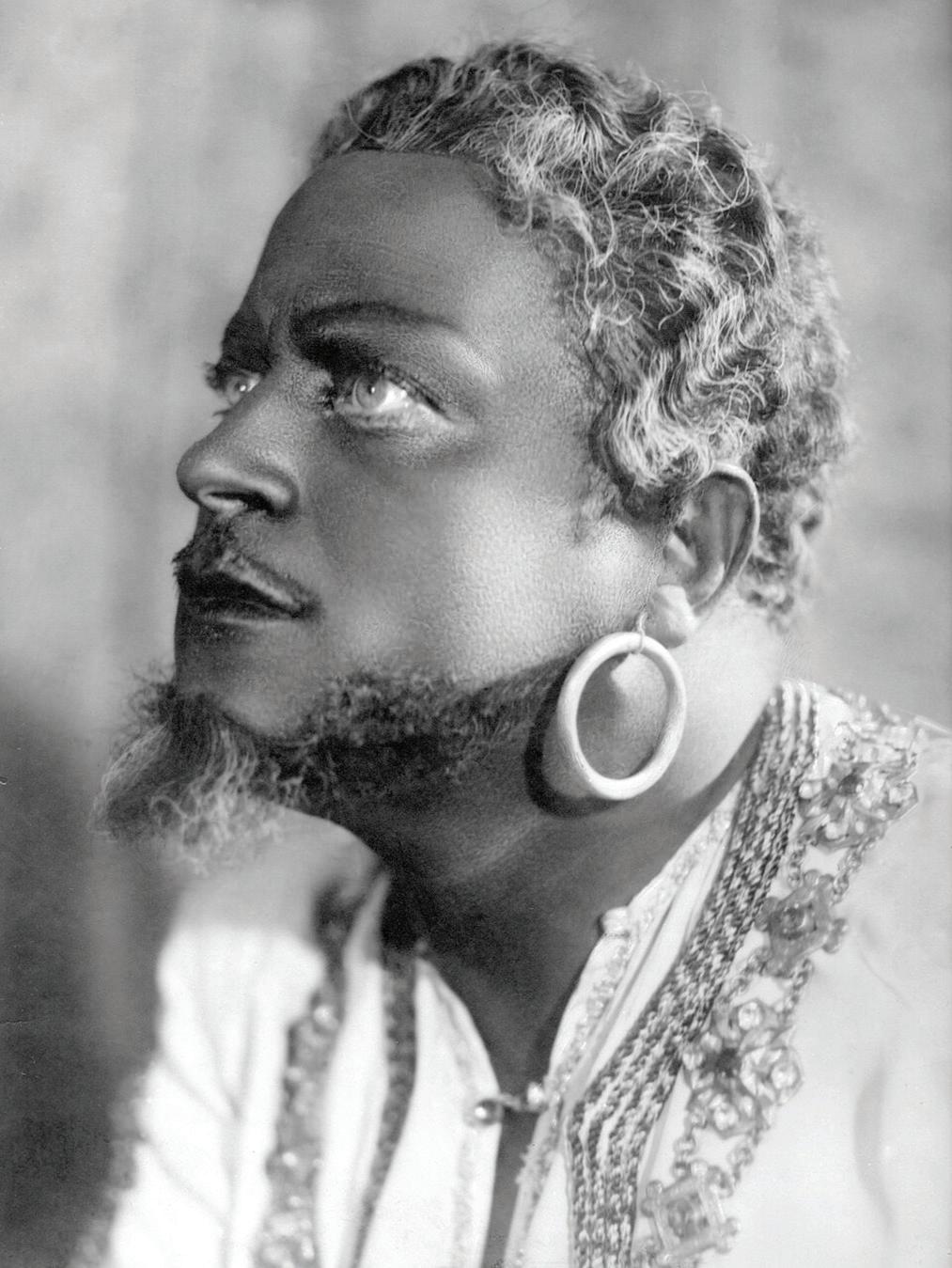
russian tenor arnolD azriKan in BlacKface as otello in the sverDlovsK state acaDemic oPera anD Ballet theater in 1950.
At the start of the second act, we are now at the time of the play. Nedda, playing Colombina, collects the money of the crowd and whispers a warning to Silvio. Pagliacci, played by Canio, has gone away until the morning. Colombina waits anxiously for her lover Arlecchino, played by Beppe. Arlecchino arrives and the two dine. While dining, Arlecchino gives Colombina a sleeping potion so that she may use it on Pagliacci to allow her to elope. Arlecchino runs out the window as Colombina calls out to him that “I will always be yours.” Canio hears this line and loses control, demanding to know her lover’s name. Nedda, trying to continue the play, calls him by his stage name, but he screams that he is not Pagliacci. The audience, not knowing this is not part of the play, applaud Canio’s great “acting.” Canio demands that Nedda tell him the name of her lover and Nedda refuses, becoming clear the two are not acting. Silvio, seeing Canio’s rage, starts to make his way to the stage, but before he can get there, Canio takes a knife and stabs Nedda. As she is dying, she cries out to Silvio, revealing him as her lover. Canio, overtaken with rage, stabs and kills Silvio, too. He then utters the final line of the play, “The comedy is finished.”
Verdi’s Requiem: While not technically an opera, this piece of choral music is routinely performed by opera companies. This 1874 masterpiece was written by Giuseppe Verdi
after the deaths of Gioachino Rossini (who wrote The Barber of Seville) and Alessandro Manzoni. As a requiem, this piece was created to be performed at Catholic funerals. This work is best known for its Dies irae sequence, which has been described as “what hell actually is” (in comparison to Mozart’s version of the requiem).
Salome: This German opera was written by Richard Strauss with the libretto drawing from Hedwig Lachmann’s translation of Oscar Wilde’s Salome. We open with Salome, the princess of Judea, who hears the words of a prophet named Jochanaan, who is in jail. She is filled with a desire for him and asks to touch him and kiss him. After rejecting her, he is taken back to jail. Her stepfather, Herod, is smitten with her and requests her to dance for him; in return, he will gift her anything her heart desires. She does so, dancing the famous Dance of the Seven Veils and removing her clothes. For her gift, she requests the head of Jochanaan brought to her. Her stepfather tries to convince her to take anything else, but she refuses. After his head is brought to her, she professes her love for it and is promptly executed by Herod. The most famous song from this opera is the Dance of the Seven Veils, which has been used in burlesque shows since the opera was first produced.
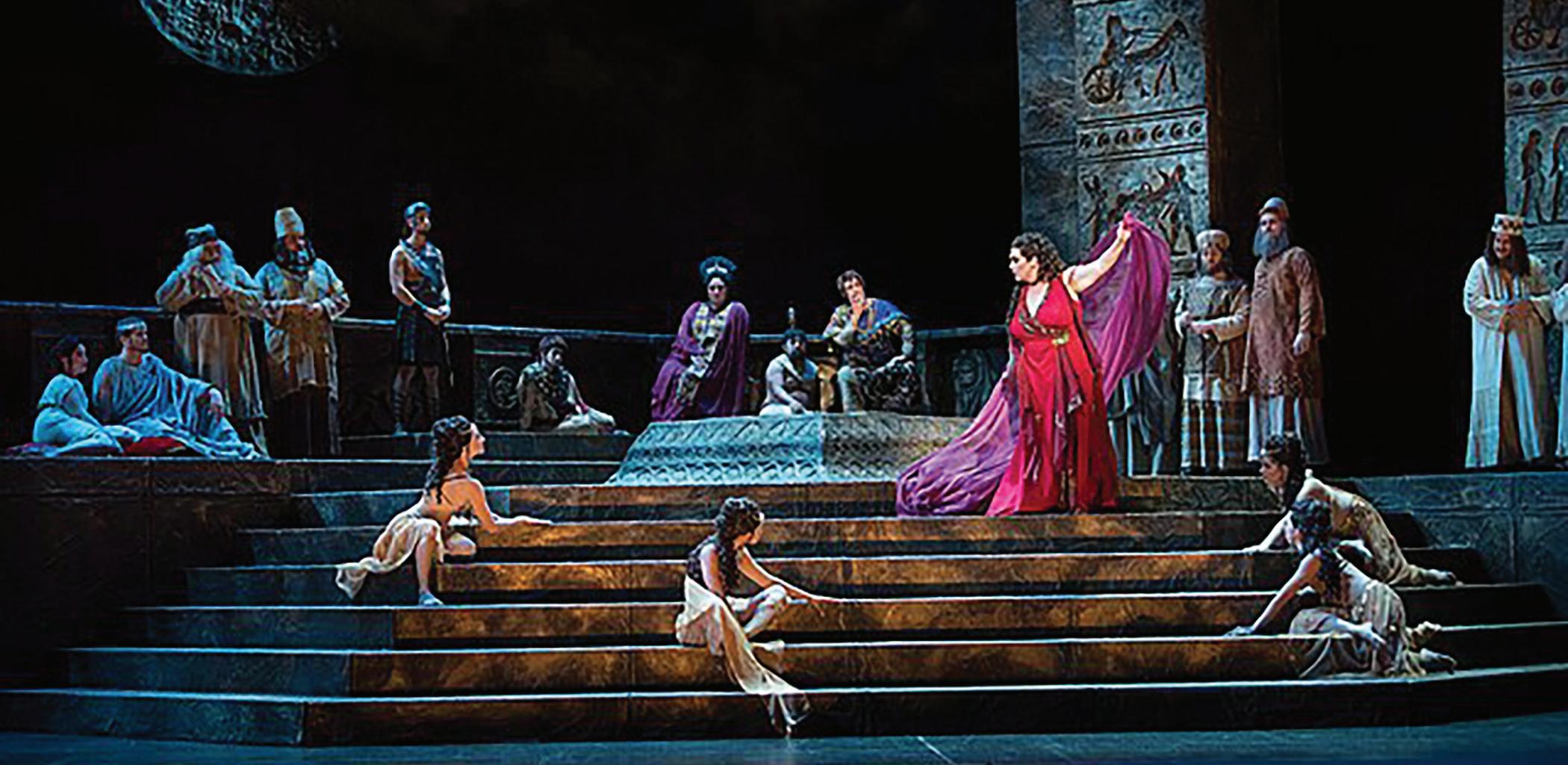
a Photo from the 2018 floriDa granD oPera’s ProDuction of saloMe shown is the Dance of the seven veils
All About Opera
By Skyler Brianna
Lend Me a Tenor primarily follows the farcical mishaps of opera star Tito Merelli, manager of the opera company Henry Saunders, and the manager’s assistant, Max. Throughout the script, we see indications of this being a very fancy event and of Tito receiving special treatment. One is reminded of how opera’s representation in media lends itself to an air of opulence and grandeur. While this is not entirely inaccurate (and certainly the case for the characters in this play), it can leave those who are unfamiliar with the art form out of the loop. One might interpret opera as a stuffy, antiquated practice reserved for the uppercrust—which can be intimidating. Despite its roots in aristocracy, opera has, in actuality, always been an art form founded on innovation and pushing artistic boundaries. And notably, it has grown into something intended for all audiences—not just the one percent.
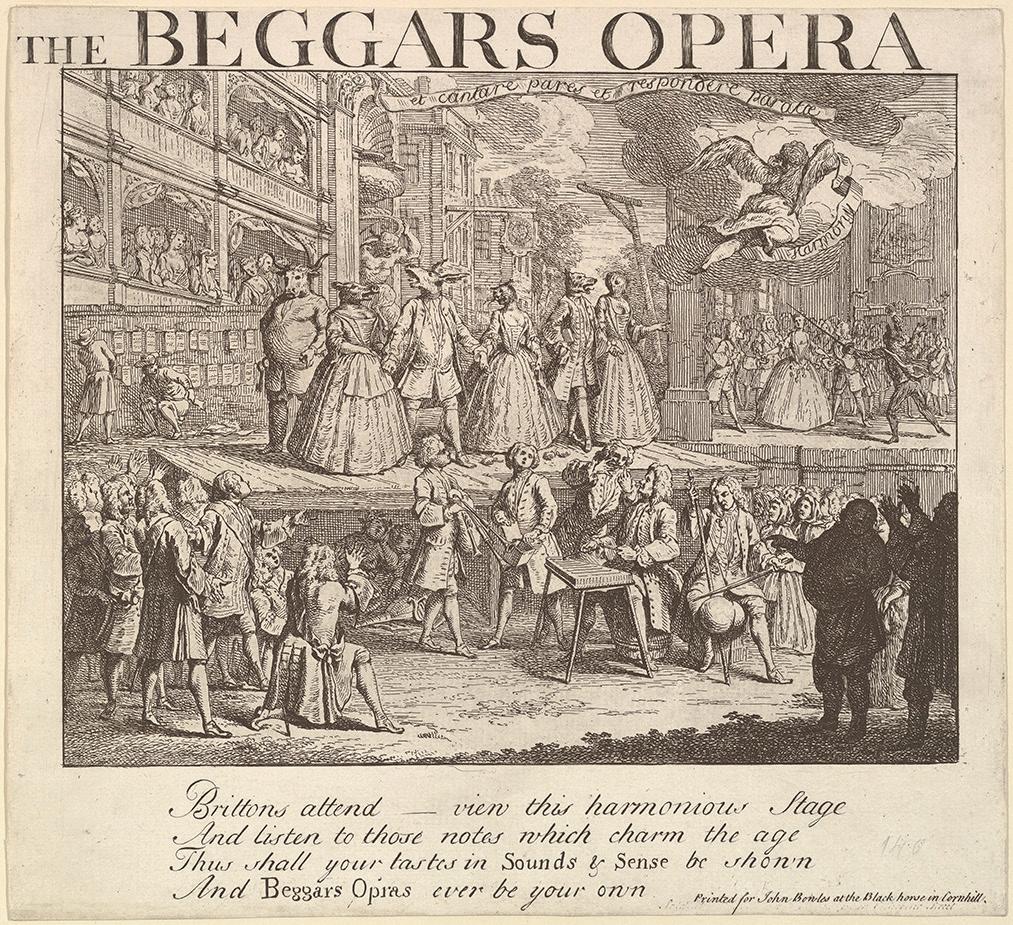
Let’s start with what actually defines opera. Opera as we know it today in the western tradition began in the late 16th century as a form of Italian court entertainment. It was formed as an imitation of ancient Greek theatrical practice. It was highly influenced by a collection of international musical storytelling styles that predate Western opera, including Naqqāli (from modern-day Iran), Chinese opera, Sanskrit classical drama, Griots (from modern-day Mali, West Africa), and the Japanese performance styles Noh and Kabuki.
As its influences indicate, opera was formed as just that: musical storytelling. The crux of what is known as “operatic tradition” is using the human vocal range to convey great emotional depths. Western opera was made with the intention of incorporating as many art forms into the experience as possible. Its foundation is comprised of music and drama (the theatrical performance of the story itself), but the arts of the staging, costume design, the painting of the set, and even the architecture of the opera house were all integral components of the finished product. In this way, opera was created to be a collaborative art form—both a visual and auditory art. Furthermore, it was
continually being informed by changing tastes in each of these fields, whilst also outwardly influencing other art around it and societal preferences. In this way, opera and society at large had a symbiotic relationship of mutual exchange. The inclusion of all these art forms did not distract from its core mission, however. Composers continued to push the bounds of musical expression with the intention of not just entertaining, but also conveying profound human experiences that the audience could relate to. One way this was achieved was by writing music meant for several registers of the human singing voice. It was thought that this was the most effective way to express emotion and character through vocal performance. Lend Me a Tenor is set in 1930s America. This period was no exception to the rule of experimentation in opera—in fact, the turn of the 20th century saw a boom in opera innovation, and America was at the forefront. Composers were reevaluating opera: investigating a return to form of classic opera methods in some respects, whilst trying entirely new approaches in others. As the Kennedy Center puts it, “For these innovative composers, the days of pleasing melody and comfortable harmony were long gone. They
the Beggar's oPera, Print, Design formerly attriButeD to william hogarth, anonymous met (1728).
needed newer, more explosive ways to breathe life into their operas, which were largely musical meditations on joy and pain; beauty and suffering; violence and compassion; mass cruelty and mass courage…basically all the many bewildering contradictions that characterized the entire era.” A number of methods were utilized to achieve this goal. They included getting rid of standard musical keys, using the voice in different ways, defying dangerous authority figures in the plot, playing with the scale of the performance (such as reducing the number of performers), an increased focus on technology in both plot and production, and a rise in the blend of opera with the upcoming genre of musical theater.
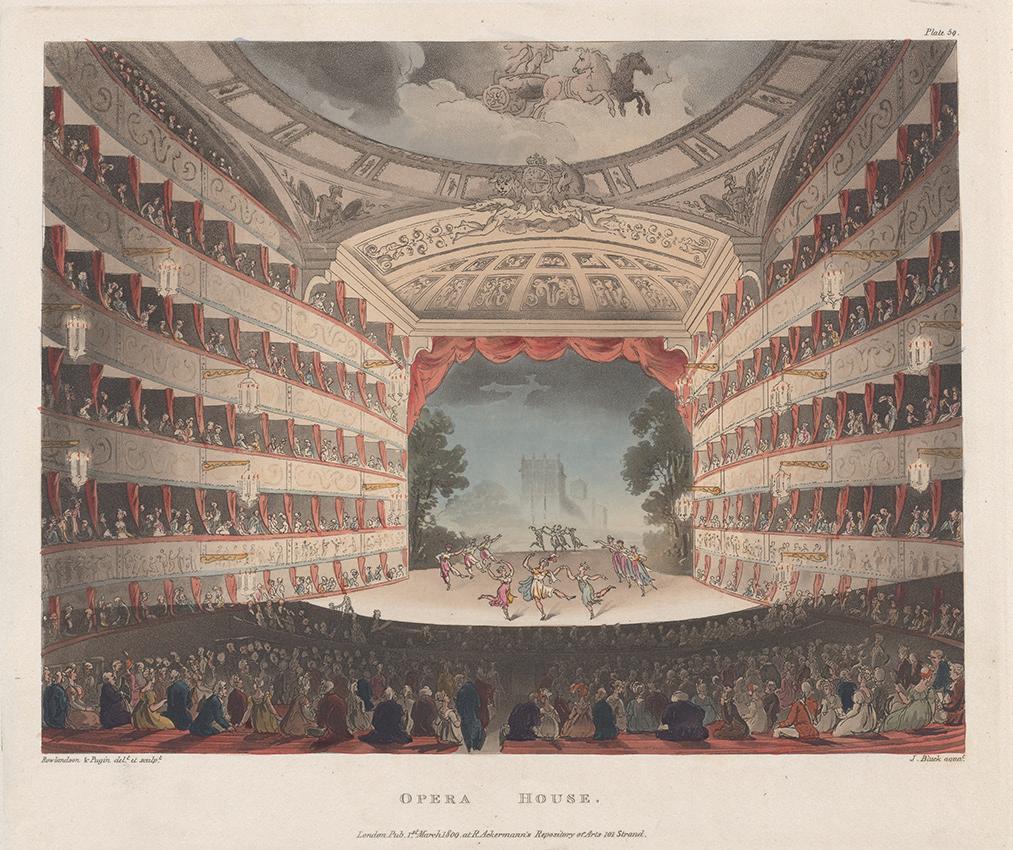
Alongside innovation of the content came accessibility of the form. Since it is an art form founded on universal human expression, it only makes sense that it be available to all humans. In the early days of opera, “the audiences for court performances were part of the spectacle, since the convention of darkening the theater did not yet exist. [They were] magnificently garbed and seated in orderly ranks,” according to the Metropolitan Opera. This is one of the ways that the association between opera and the upper
class was initially maintained. Now, there are a plethora of methods employed in most opera houses to support the public’s understanding and engagement with the piece. Many opera houses offer lectures before the performance to help you understand the story, historical context, and composition of the show you’re about to see. It is also common practice that English subtitles be available on screens in live time with the performance—whether the piece is in another language or not (though they very commonly are).
Operatic tradition is carried on today, as composers and librettists continue to innovate and experiment with new works. Opera is continuing to evolve in content and style alongside the audiences coming to see it. A notable example of a new opera made to reflect the times is the 2019 work Blue by Tazewell Thompson and Jeanine Tesori. Written in the wake of the nationwide demand for increased awareness and action surrounding racial injustice and recorded during a pandemic year, Blue speaks to the experiences of being Black in America today.
Interestingly, Lend Me a Tenor has also changed with the times, integrating an important alteration to the script in 2019, to better align with social awareness and the sensibilities of the audience. For more on this, see "The Legacy of Otello and Lend Me a Tenor" on page 22.
oPera house, DesigneD anD etcheD By thomas rowlanDson met (1809).
The Legacy of Otello and Lend Me A Tenor
By Max Lerin
Lend Me a Tenor, originally entitled Opera Buffa, was first produced at a summer theater, American Stage Festival in Milford, NH, in 1985. It was directed by English director David Gilmore and produced by Andrew Lloyd Webber. The play opened on London’s West End at the Globe Theatre in 1986, where it ran for ten months. This production was nominated for an Olivier Award for Comedy of the Year, but ultimately lost to When We Are Married by J.B. Priestley.
A production of Lend Me a Tenor opened on Broadway in 1989 at the Royale Theatre and closed after 476 performances. This production won two Tony Awards: Philip Bosco won Best Actor for his portrayal of Saunders and Jerry Zaks won for Best Direction. The production was also nominated for five other Tonys. Additionally, this production was nominated for six Drama Desk Awards and won four of them— Bosco and Zaks won their same respective awards as at the Tonys, Tovah Feldshuh won Outstanding Featured Actress for her portrayal of Maria, and William Ivey Long won the award for Outstanding Costume Design.
For most of Lend Me a Tenor ’s history, the opera in the story was Otello, rather than Pagliacci. In a majority of productions, blackface was utilized to transform both Tito and Max into Otello, to aid in convincing audiences that they might be confused for one another. While it's true that the fictional Cleveland Grand Opera Company of the 1930s might have deployed blackface for Otello, it is also true that the practice of blackface was understood as racist and offensive in the 1980s when Ken Ludwig wrote Lend Me a Tenor. Even though Otello and blackface are no longer a part of Lend Me a Tenor, it is important to understand their history.
Otello the opera is an adaptation of Shakespeare’s Othello, where white actors playing Othello in blackface was the default for hundreds of years. The first major
Black actor to portray Othello was named Ira Aldridge, a very popular actor in the 19th century. Facing racial discrimination in America as an aspiring actor, Aldridge left for England in 1824 where he made his debut at London’s Royal Coburg Theatre. In England, he was met with critical acclaim for his performances and became widely celebrated across Europe. In 1833, Aldridge took over the role of Othello at Covent Garden as the first Black actor to play Othello on a major British stage. Despite his success and renown, Aldridge’s portrayal of Othello was met with heated controversy. Many audiences thoroughly enjoyed his performance, but London critics delivered scathing and racist reviews, unable to accept a Black actor, especially one playing opposite a white Desdemona. His run as Othello only lasted two days.
Though blackface as a general practice dates back to medieval times, blackface minstrelsy originated in America around the 1820s or 1830s. Minstrel shows were a blend of popular music, dance, and comedy, largely performed by white men wearing burnt-cork facial makeup (a mixture of burned, crushed champagne corks and water or petroleum jelly) and speaking and singing in mock Black dialects. It was the first distinctively American form of publicly staged commercial entertainment. These performances harmfully mischaracterized Black people as lazy, ignorant, superstitious, hypersexual, and prone to thievery and cowardice. Thomas Dartmouth Rice, known as the “Father of Minstrelsy,” developed the first popularly known blackface character, “Jim Crow,” in 1830; his name eventually became a kind of shorthand for the laws, customs, and etiquette that segregated and demeaned African Americans primarily from the 1870s to the 1960s. By 1845, the popularity of the minstrel show had spawned an entertainment subindustry, manufacturing songs and sheet music, makeup, and costumes, as well as a ready set of stereotypes upon which to
build new performances. Minstrel shows, not always acknowledged as such, were the most successful of all American entertainment formulas from the early 1840s until at least 40 years later, being then widely dispersed through a variety of show business forms.
Despite the fact that its origins seem to be a long time ago, echoes of blackface minstrelsy still pervade modern-day American culture. There are plentiful examples of actual blackface, particularly in comedic settings, that continue to occur to this day, though they have been increasingly met with opposition. One example is Jimmy Kimmel impersonating Oprah and Karl Malone in the late 1990s and early 2000s, which he apologized for publicly in 2020. Another example is when Ted Danson did blackface to portray Whoopi Goldberg at a Friars Club roast for Goldberg in 1993, which he did not publicly comment on until 2009, when he referred to it as a “graceless moment in [his] life.” For context, it was one year later in 2010 when Lend Me a Tenor was revived for a limited run on Broadway at the Music Box Theatre directed by Stanley Tucci, still in its original version with Otello as the opera and actors in blackface. Though this production did not win any awards, it was nominated for three Tony Awards, three Drama Desk Awards, and four Outer Critics Circle Awards.
Later that same year, a musical adaptation of the play, with book and lyrics by Peter Sham and music by Brad Carroll, opened at the Theatre Royal Plymouth directed by Ian Talbot and choreographed by Randy Skinner. A year later, it transferred to London’s West End at the Gielgud Theatre. There are several notable changes from the play, turning it into a full-on musical comedy. Changes include major plot revisions between Tito Merelli and Saunders, eliminating Frank the bellhop, adding the role of Bernie the stage manager, expanding the role of Julia into a musical trio of Saunders' three ex-wives, and upping the mistaken identity farce from two to the magic number of three. Perhaps the most important change the musical made to the play is the substitution of the opera within the musical, from Otello to Pagliacci ; it was the first production of the story to do so.
Though the musical adaptation replaced Otello with Pagliacci in its original 2011 production, Ken Ludwig did not revise the
Lend Me a Tenor script until eight years later. Even in 2019, the revision, which had been a long time coming, was met with some controversy and pushback. The Merc Playhouse, a community theater located in Washington State, happened to be scheduled to produce the play when they, along with dozens of other theaters across the country, received a letter from the licensing company Samuel French informing them of the revision to the script and their obligation to adhere to it. A local news source interviewed the director of the production, Kelly Donoghue, who commented in response to the revision: “I’m disappointed, thoroughly disgusted.” Though Donoghue planned to opt for using facial hair to transform the actors rather than blackface, he remained adamant that “there is zero racism in the play” and expressed how he was “beyond words about [his] anger toward the whole thing.”
Although the revision may have discouraged certain theaters like The Merc from doing the show, it allowed others to seriously consider staging it again, since the offensive material had been removed. Portland Stage did stage a production of the play in 2004 in its original form. Before it was revised, Portland Stage had briefly considered reviving the play in 2018, but quickly decided against it in light of the blackface. It is only because of the revision of Otello to Pagliacci that Portland Stage has decided to produce the widely renowned play today.
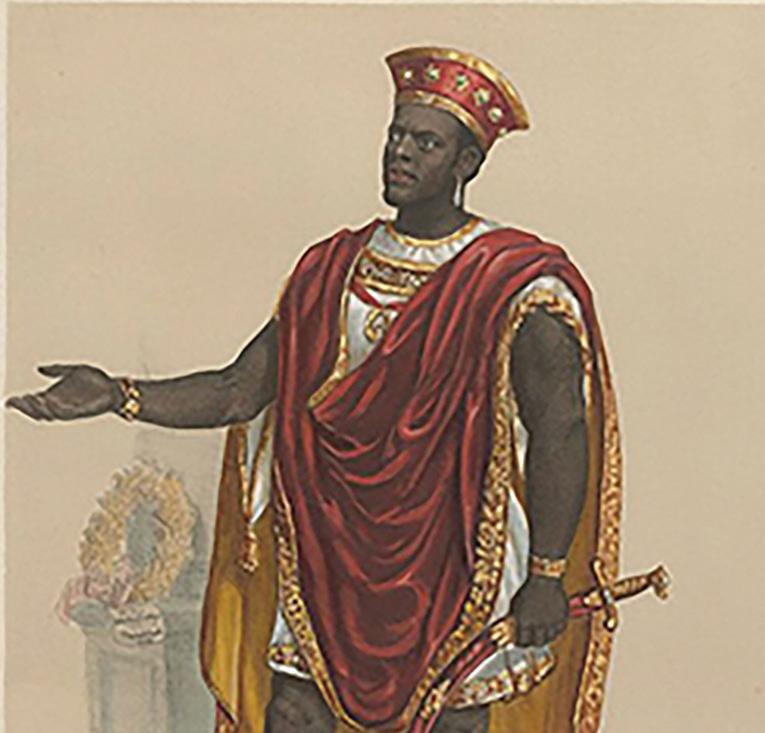
ira alDriDge as otello.
Stock Characters in Comedy
By Skyler Brianna
Lend Me a Tenor is a classic example of a farce—a kind of comedy that relies heavily on fast-paced action, physical comedy, switch-ups and misunderstandings (sometimes via word play), and absurdity. In farces, you will often find exaggerated, improbable, or ridiculous situations featuring broadly stylized characters and performances. Historically, it has sometimes been used as a vehicle for satire or parody. A cornerstone for most farces is the use of stock characters. Stock characters are a generalized type of character that appear in all sorts of media, though they are particularly common in comedy. They are described as being more specific than an archetype (the “base” form from which other things like it are copied), but more flexible and dimensional than a stereotype (which are often harmful and highly skewed in their representation). Some examples of stock characters that you might have encountered include the absent-minded professor, the hopeless romantic, or the wise mentor. There is room for different ways that these characters can be interpreted, and they have the potential to be represented as more fully developed characters if desired, but they still adhere to the root definition that we are all familiar with.
This familiarity is a key component of why stock characters play such a frequent, crucial role in comedy. Comedy is all about establishing and subverting expectations. As Jessica Davis says in their article “Traditional Comic Conflicts in Farce and Roles for Women,” “In terms of humor theory, farce’s dependence on immediate recognition of stereotypes exemplifies how incongruity underlies much humor. Such stock characters allow both for prediction and for surprise overturning of expectations. Indeed, surprise is as important as predictability in any farce plot and together these two elements create incongruity.” If we use stock characters that the audience feels as though they already understand, then we can immediately get into the jokes, without the need for much character exposition. Furthermore, when the audience feels as though they already know how a character will act and react, then there is ample opportunity to invert this, taking the audience by surprise and forming a funny situation. Part of what gives these characters such a strong sense of predictability is how long they’ve been around. Several of the most common stock characters are based on archetypes that have been reproduced and passed down for several centuries.
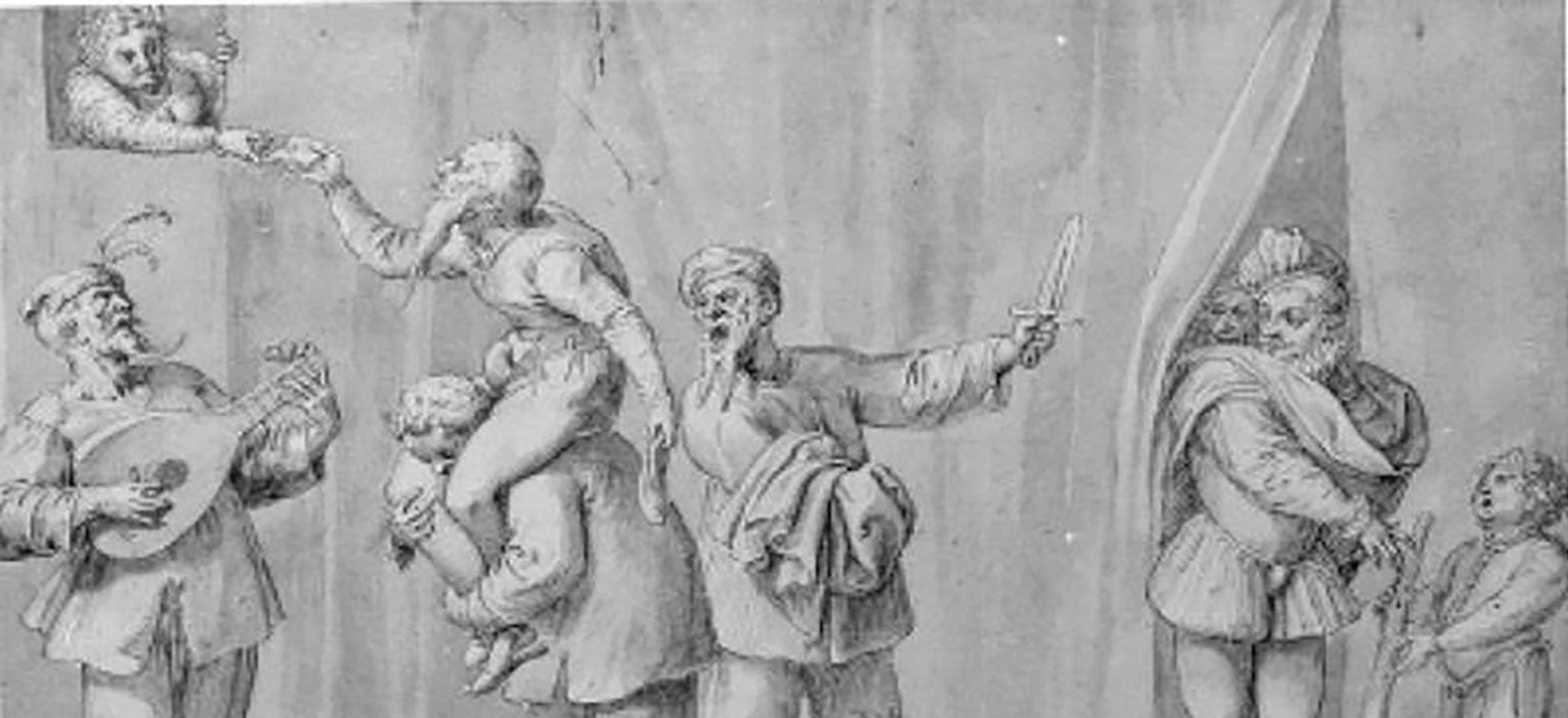
a Physical comeDy scene from commeDia Dell’arte, Between 1559 anD 1618.
It began in ancient Greece, when playwrights started to make stories starring characters that were reminiscent of people that one might see in everyday life, giving them a sense of familiarity and therefore predictability. This influence trickled down to ancient Rome, where characters of this nature were expanded upon and codified into a set of stock characters. This carried over to France, by way of culture and communication and trade, and found its way into French comedy. French comedy at this time was known for quick wit and wordplay, fast-paced dialogue, slapstick and visual gags, mistaken identities, satire and parody, and a reversal of expectations. It is not hard to extrapolate how this would quickly give birth to farce in the mid-15th century. Shortly thereafter, influences from this early farce would be seen in Italy, in a developing art form known as Commedia dell’arte. Commedia most notably shared the use of physical comedy, improvisation, and archetypical stock characters with farce and French comedy.
Stock characters have significant implications not only for the plot and function of a comedy, but also for the social context in which the comedy was written. Another part of the functionality of a character’s predictability is its relatability to the audience. As Justin Cash noted in an article on farce, “French farces often feature exaggerated versions of contemporary social types and character archetypes. Through these characters, the plays comment on the follies and vices prevalent in society. The use of such archetypical characters also facilitates a broader and more universal appeal, allowing audiences across time to relate to the humour and themes.” But this presents an interesting opportunity for deeper inquiry. Through what lens are such “follies and vices” being determined?
Often when dealing with archetypes, there can be a delicate balance between stock character and stereotype. Stereotypes can give way to harmful, biased narratives and associations. When someone wants to portray a certain narrative (such as one that disparages another person or group), they can present their critiques as a folly or vice to garner wider
disapproval or disdain for this other party. It is not unheard of that humor be used as a vehicle for these purposes. There is also fascinating research being done into how humor has been used to maintain and reinforce social hierarchies and gender norms. The arts are a powerful platform for social influence, and despite its commonly “light” nature, comedy is no exception, and stock characters are a pivotal component of this. After all, how we choose to depict “common, everyday” people says a lot—both about ourselves and how we perceive those around us.
As you watch Lend Me a Tenor, it is worth considering which characters feel familiar to archetypes that you’ve seen before—how they are similar or different to other examples you’ve encountered and, more importantly, how these archetypes serve the narrative of the humor.
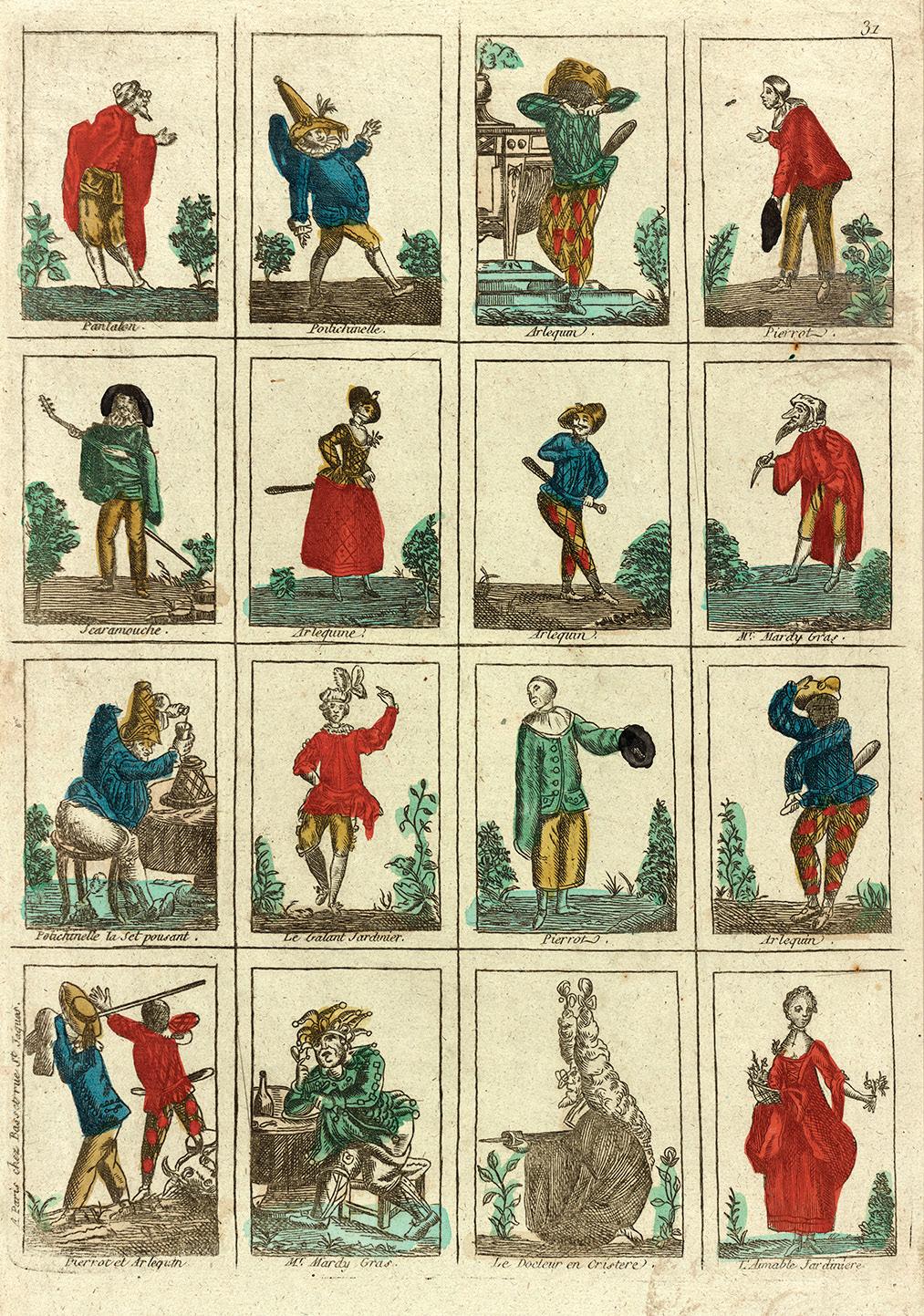
commeDia Dell'arte archetyPes nyPl. (1700)
Further Reading
by The Editors
This section is dedicated to offering an easy way for our readers to connect to the issues we discuss in PlayNotes.
Watch:
Watch the 1982 film adaptation of Pagliacci for free online. Available on YouTube.
Webpages that contain trailers and clips of Tazewell Thompson’s Blue:
• tazewellthompson.com/blue
• eno.org/operas/blue/
Read:
Interactive webpage about understanding the history, essence, and evolution of Opera: kennedy-center.org/understanding-opera/
Blackface Minstrelsy: The First All-American Show by John Springhall (2008)
Blackface: The Birth of an American Stereotype by the National Museum of African American History and Culture, Smithsonian Institute
Listen:
The Met: In Focus podcast
Various ways to listen to and about opera from The Met:
• metopera.org/season/radio/
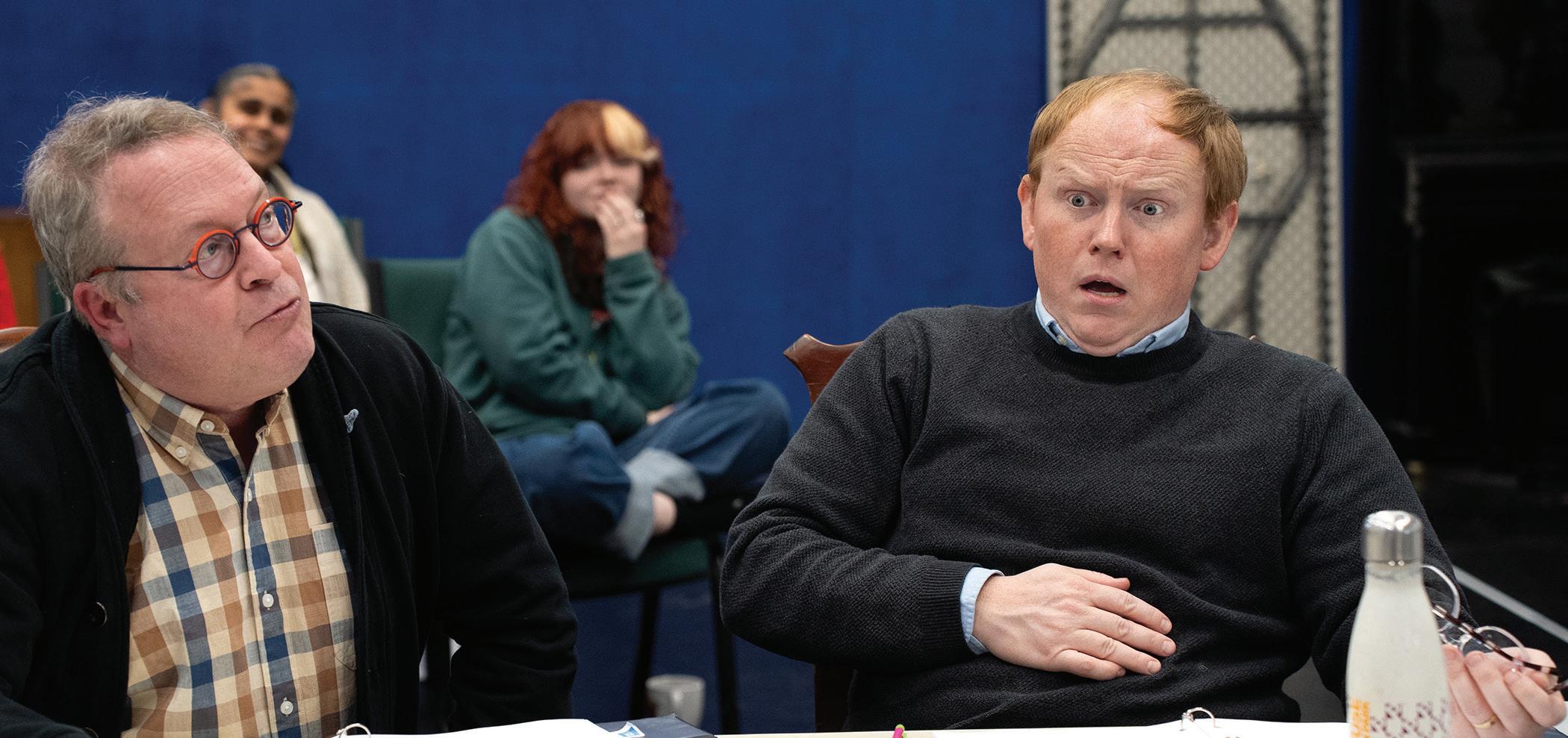
from left to right: tom forD*, susan thomas, BriDget Beecham, PatricK harvey*.
Photo By aressa gooDrich (* - memBer aea).
Portland Stage Company Education Programs
Student Matinee Series
The Portland Stage Student Matinee Program provides students with discounted tickets for student matinees. Following the performance, students participate in a conversation with the cast and crew, which helps them gain awareness of the creative process and encourages them to think critically about the themes and messages of the play.
Play Me a Story
Experience the fun and magic of theater on Saturday mornings with Play Me a Story! Ages 4 –10 enjoy a performance of children’s stories followed by an interactive acting workshop with Portland Stage’s Education Artists for $15. Sign up for the month and save or pick individual days that work for you. Build literacy, encourage creativity and spark dramatic dreams!
Shakespeare Teen Company
In April and May of 2026, students will come together as an ensemble to create a fully-staged Shakespeare production of Romeo and Juliet in Portland Stage’s studio theater. Participants in grades 7-12 take on a variety of roles including acting, costume design, marketing, and more!
Vacation and Summer Camps
Dive into theater for five exciting days while on your school breaks! Our theater camps immerse participants in all aspects of theater, culminating in an open studio performance for friends and family at the end of the week! Camps are taught by professional actors, directors, and artisans. Students are invited to think imaginatively, critically, and creatively in an environment of inclusivity and safe play.
PLAY Program
An interactive dramatic reading and acting workshop tour for elementary school students in grades pre-k through 5. Professional education artists perform children’s literature and poetry and then involve students directly in classroom workshops based on the stories. Artists actively engage students in in small group workshop using their bodies, voices, and imaginations to build understanding of the text while bringing the stories and characters to life. PLAY helps develop literacy and reading fluency, character recall, understanding of themes, social emotional skills, physical storytelling, and vocal characterization. The program also comes with a comprehensive Resource Guide filled with information and activities based on the books and poems.
Directors Lab
Professional actors perform a 50-minute adaptation of a Shakespeare play, followed by a talkback. In 2026 we will be touring A Midsummer Night's Dream to middle and high schools. After the performance, students engage directly with the text in an interactive workshop with the actors and creative team. In these workshops, students practice effective communication, creative collaboration, rhetoric, and critical analysis. The program also comes with a comprehensive Resource Guide filled with information and resources about the play we are focusing on. Directors Lab puts Shakespeare’s language into the hands and mouths of the students, empowering them to be the artists, directors, and ensemble with the power to interpret the text and produce meaning.

Portland Stage Company
Anita Stewart Artistic Director
Martin Lodish Managing Director
Artistic & Production Staff
Todd Brian Backus Associate Artistic Director & Literary Manager
Peter Funk Associate Technical Director
Ted Gallant Technical Director
Myles C. Hatch Stage Manager
Carrigan O'Brian Danish Company Manager & Co-Apprentice Coordinator
Elliot Nye Props Coordinator
Mary Lana Rice Production Manager, Lighting Supervisor, & Resident Lighting Designer
Seth Asa Sengel Asst. Production Manager, Sound Supervisor, & Resident Sound Designer
Susan Thomas Costume Shop Manager
Administrative Staff
Paul Ainsworth Business Manager
Rayne Barrett Development Associate
Mairi Chanel Audience Services Associate
Covey Crolius Development Director
Erin Elizabeth Marketing Strategist
Cassie Endicott Assistant Box Office Manager
Allison Fry Grants Coordinator
Aressa Goodrich Marketing & Graphic Design Associate
Katie Hodgdon House & Concessions Manager
Savannah Irish Marketing Project Manager
Jayson Murray Audience Services Associate
Stacey Salotto-Cristobol Education Assistant
Eva Tebbutt Audience Services Associate
Don Smith Audience Services Manager
Julianne Shea Education Administrator, Apprentice Coordinator
Adam Thibodeau House Manager
Michael Dix Thomas Education Director
Apprentice Company
Bridget Beecham Props Apprentice
Skyler Brianna Directing & Dramaturgy Apprentice
Zoë Cheever Electrics Apprentice
Hannah Cline Costumes Apprentice
Rori Haft Stage Management Apprentice
Lauren Kensley Costumes Apprentice
Max Lerin Directing & Dramaturgy Apprentice
sam lucas Company Management Apprentice
Eli Mowry Education Apprentice
Jack Allen Murphy Education Apprentice
Sidney Phillips Stage Management Apprentice
Kaushik Raghavan Directing & Dramaturgy Apprentice