AT makes junction more dangerous with removal of one way system without consulting local residents.
This morning I woke up to find Auckland Transport taking out the one-way system on Crummer Road and Scanlan Street.
We residents were not consulted by AT about the removal of this one way system nor were we notified that it would be removed.
On 6 July we were notified that AT would be installing cycle lane road markings in Grey Lynn. The Notice had a map of the work area but the map was so small it was impossible to see anything on it let alone work out what was going to happen. There was no consultation with residents that these works were to take place nor about what the consequences of the work would be to our neighbourhood.
I wrote to AT, at the email on its Notice, on the 7 July asking for a large map, for details of the work and what it would mean for residents. I complained about the lack of information in the Notice which completely failed to communicate any real information to residents about the project. I also complained about the lack of consultation on this project. With hindsight it would appear the original Notice was at best a box ticking exercise by AT.
I also asked if residents would get a credit on their parking permit because parking would be restricted. My inquiry was sidelined to Parking who informed me that I could park elsewhere within the zone.
I have received no other response to my complaint and nobody addressed the issues outlined as requiring a response from their Notice nor have they provided another map and explanation of the works.
The removal of our one way system appears to be happening under the guise of the cycle lane road markings when they are surely two separate issues.
I understand the one way system was installed many years ago because three boys were killed at this intersection. It was installed as a public health and safety measure. The intersection is not safe and this part of the road is unsafe. From time to time we have domestic animals killed and residents regularly feel unsafe with drivers driving fast.
AT has not done any traffic survey on this intersection. The fact of the lack of consultation would suggest that the AT person who signed off this project did not know the reason for the one way system – which was in place before the creation of AT – was a health and safety issue.
Seeing what AT was in fact doing this morning, I called the number in the Notice which states: “If you have any queries or concerns about this project, please contact AT: Phone 09 355 3553." I called the number to be told I had contacted AT’s customer service agent and they had no way of putting me through to AT. So, actually, you CANNOT contact AT. The only thing they could do was to record my complaint which they have done. It may take 10 days to deal with by which time the works will be completed!
Wendy Gray, Resident of Crummer Road
JOHN
WATSON:
LETTER TO THE EDITOR
In recent weeks, there has been disturbing and escalating coverage of the ‘toxic culture’ that exists within Auckland Council, even managing to recently embroil the popular Ponsonby News. In one earlier instance Councillor Christine Fletcher, a former Member of Parliament and Mayor of Auckland City, said she’d been called a "f-----g b—h" and a “f-----g fat b---h” by another elected representative.
By any measure this amounts to appalling behaviour –repeated foul-mouthed abuse of a female councillor. If it had occurred in any other workplace, the perpetrator would have been facing serious disciplinary proceedings, if not dismissed already. Instead, the individual responsible remains both protected and enabled within the council hierarchy and there have been no consequences. That sends a chilling signal for the balance of this term, in effect that some people can literally do or say whatever they like. Other female councillors who’ve also complained about bullying have been told to ‘toughen up’ or, more crudely, to ‘grow some’, by so-called colleagues.
If it were limited to this repugnant behaviour, that would be bad enough but it actually goes beyond this. Last month I wrote to the CEO detailing a ‘chairs’ meeting at Auckland Council in June where some of the chairs of council committees signalled their intention to target councillors who had voted against the record rates increase and ‘to make an example of them’. In effect to potentially remove services and projects from the areas those councillors opposing the rates increase represent.
Since Auckland Council’s inception, members have been free to vote however their conscience dictates, without fear of retribution and secure in the knowledge council planning and funding processes are treated with objectivity and fairness.
What was being openly advocated at this meeting, however, amounted to little more than a political predetermination to target individual councillors and their communities. If effected, such conduct would impact significant numbers of Aucklanders who, for whatever else they might think, still assume their council’s decision-making is not motivated by personal or geographic malice.
The very notion that specific communities could be selectively punished is both unethical and abhorrent. In these circumstances, subsequent calls for an independent Crown observer has merit. For one thing is very clear, no change will come from the current leadership or from those who seek to minimise or ignore such poor treatment of colleagues and members of the public.
Let’s just call this out for what it is – bullying, misogynistic behaviour and a gross abuse of office that should not be tolerated by any elected member or by the Auckland public they are meant to serve.
John Watson, Auckland Councillor
LETTERS CONTINUED ON PAGE 7
Opinions expressed in Ponsonby News are not always the opinion of Alchemy Media Limited & Ponsonby News.
In her column this month, Sarah Trotman asks an important question. Is our infrastructure ready for intensification?
Her concern follows the large sinkhole that recently opened in St Marys Bay. She continues that it is more than a local curiosity. It is a serious warning.
As Auckland continues to debate Plan Change 120 (PC120) and the future shape of our city, the image of another road collapsing beneath our feet, in another of our oldest suburbs, is a powerful reminder that infrastructure is not an optional extra. It is the foundation upon which any successful intensification is built.
The sinkhole in Hackett Street is a hole in the road. Adequate infrastructure should not become a hole in our planning.
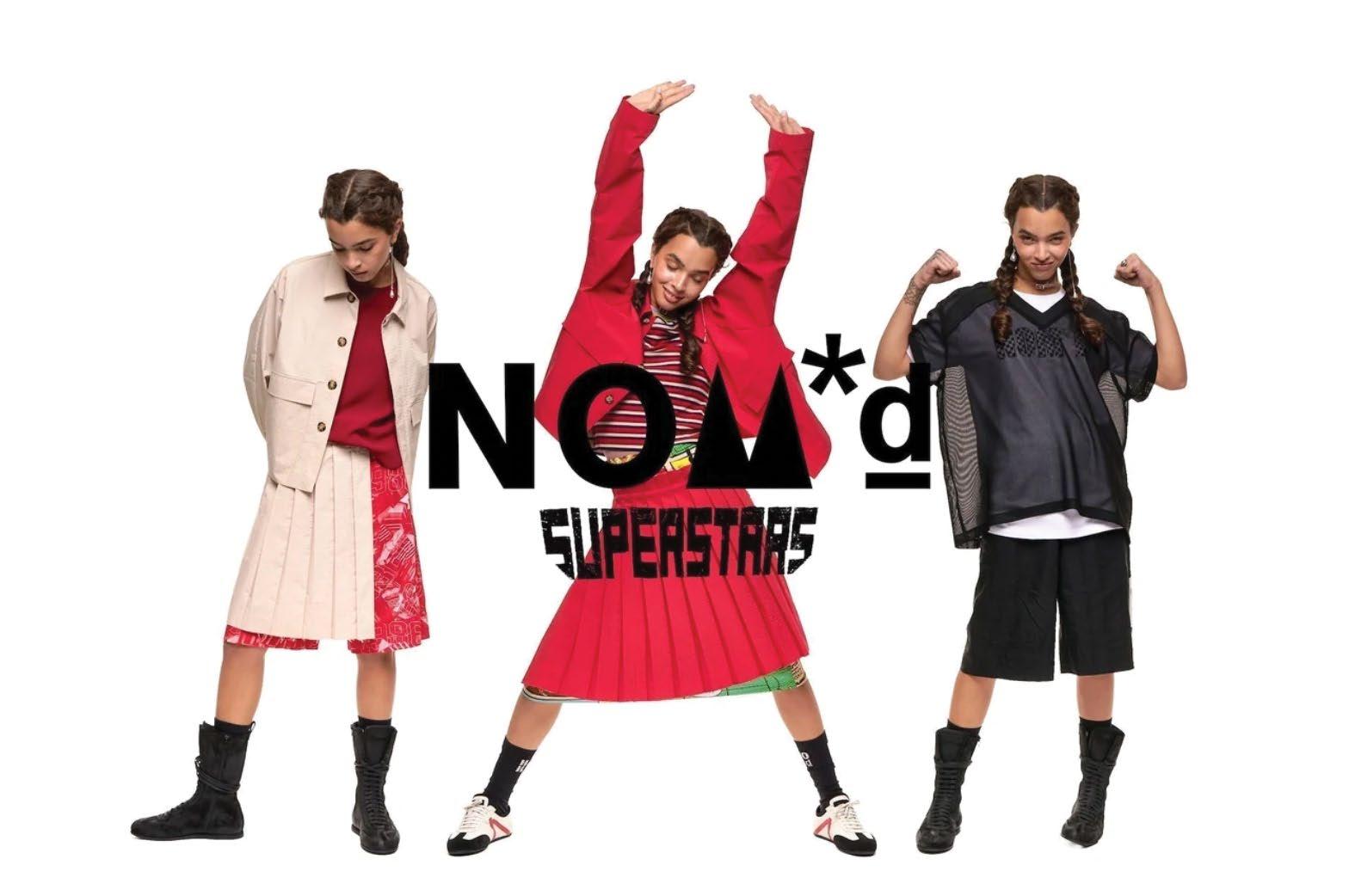
Our cover story this month is NZ Fashion Week welcoming Daily Bread as partner for 2026.
New Zealand Fashion Week (NZFW) has recently announced an exciting collaboration with Auckland’s acclaimed bakery and hospitality brand Daily Bread, bringing an elevated, chef-led food experience to the event when it returns to Shed 10 from 17-22 August 2026.
The collaboration reflects a shared philosophy between two proudly owner-operated New Zealand businesses built on craftsmanship, creativity and an unwavering commitment to quality. Just as New Zealand's leading designers transform premium materials into garments with purpose and longevity, Daily Bread approaches food with the same respect for provenance, local producers and meticulous execution.
HELP WITH ESTATE CLEARANCES
We can manage the whole process or any part of it - you choose. We will ensure that special personal belongings are kept safe for the family, unwanted items sold and reports provided to the family, lawyer and executor every step of the way.
Elderly Assist’s years of experience and proven processes take the stress out of this difficult time.
Here’s what Jeanette had to say on the No Cowboys website 6 March, 2019:
"I used Elderly Assist to clear and clean my deceased mother’s house which had not been well maintained for the last few years. From the first phone call to the end result it was stress free and professional. Everything was handled with care and we were kept informed every step of the way.” Rating: 100%
Visit www.nocowboys.co.nz/businesses/elderly-assistlimited#ratings for more authenticated testimonials from dozens of Elderly Assist’s happy customers.
For more info and a brochure, contact founder/owner Janice Willis on 0800 839 874 or visit www.elderlyassist.co.nz
The partnership reinforces NZFW's commitment to championing New Zealand excellence across every aspect of the event, from the runway to the dining experience, showcasing the creativity, craftsmanship and collaborative spirit that define modern Aotearoa.
New Zealand Fashion Week takes place at Shed 10, Auckland, from 17-22 August 2026.
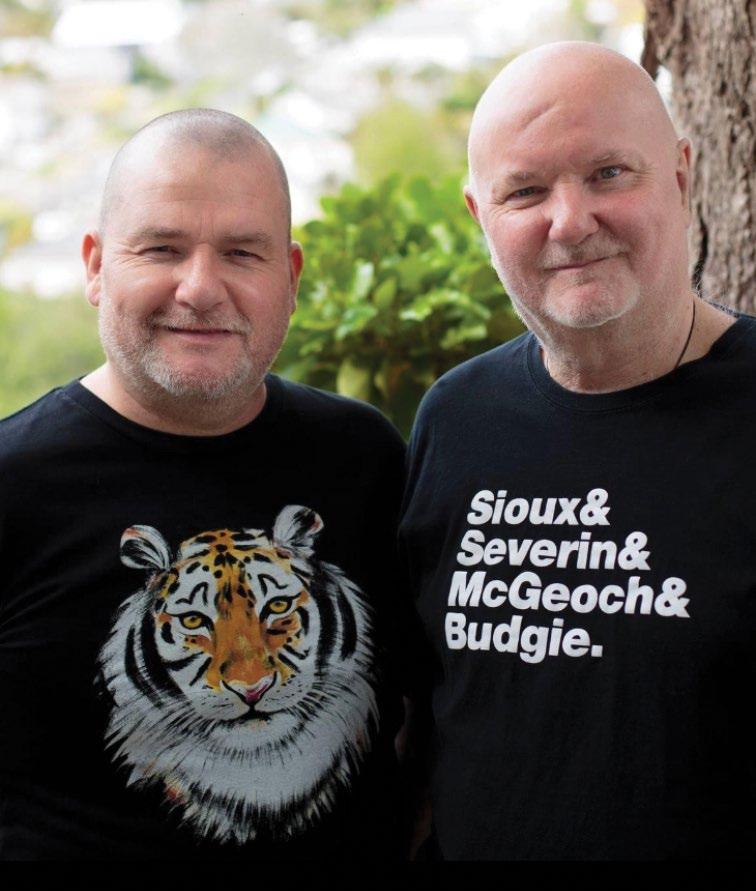
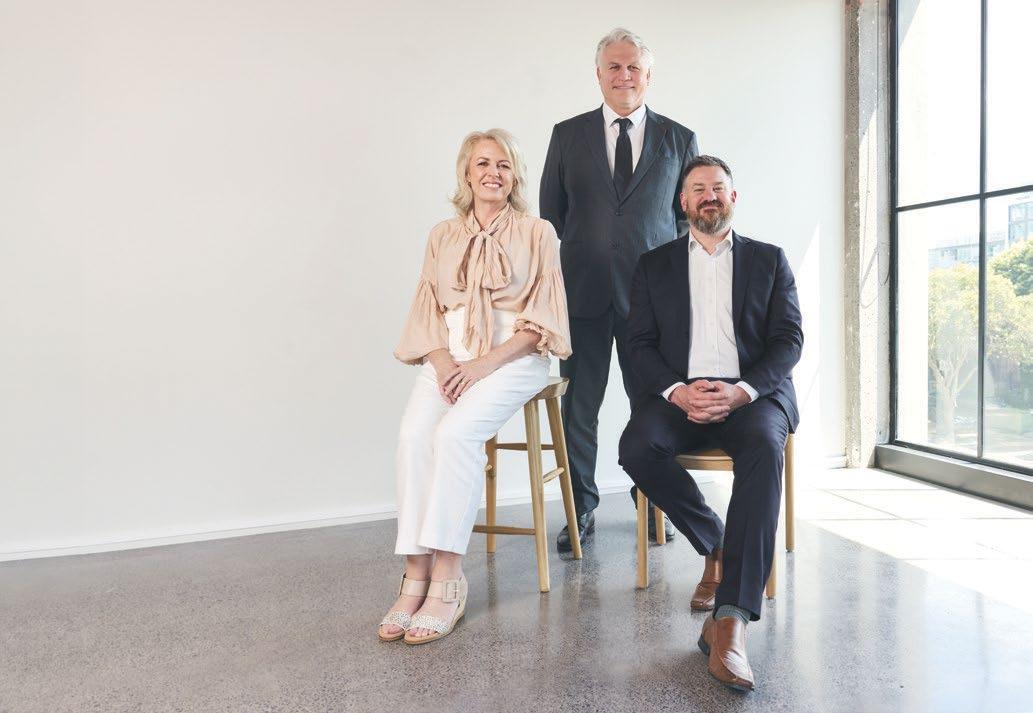
(JAY PLATT & MARTIN LEACH) PN
We are an owner-operator business specialising in estate clearance and helping elderly people transition into retirement care.
What we do:
• Pack up the house and prepare property for sale.
• Assist with the sale of furniture and belongings. Elderly Assist does not take a commission on the sale of goods.
• Assist with gifting to friends and family and making donations to charity.
• Ensure that special personal belongings are kept safe for family.
• Provide a full inventory of individual items of property and what has been done with them.
• Liaise with and provide reports to the Lawyer, Power of Attorney, Estate Executor and/or family at every stage.
Photography: Connor Crawford
Jay Platt & Martin Leach
Cover Photography: Evie MacKay
PONSONBY NEWS is published monthly, excluding January by: ALCHEMY MEDIA LIMITED, P.O. BOX 47-282 Ponsonby, Auckland 1144, www.ponsonbynews.co.nz
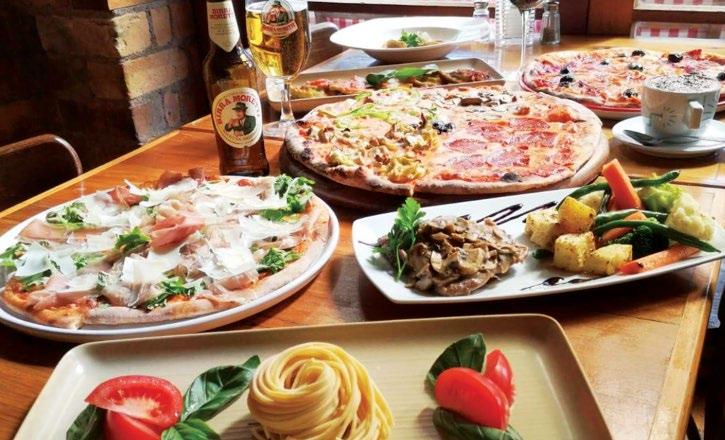
- Gusto Italiano -
GUSTO MEANING ‘TASTE AND ENJOYMENT’
When you dine with us, the focus is on freshly prepared classic dishes, featuring an excellent range of pasta, seafood, meats and our pizza classics.
We also offer our pasta dishes to takeaway, phone for details or check our website for the menu.
263 PONSONBY RD, THREE LAMPS, 09 361 1556 www.gustoitaliano.co.nz
Editor/Publisher: MARTIN LEACH M: 021 771 147 martinleach@xtra.co.nz or martin@ponsonbynews.co.nz
Deputy Editor: JAY PLATT M: 021 771 146 jayplatt@xtra.co.nz or jay@ponsonbynews.co.nz
Designer: ARNA MARTIN M: 021 354 984 arna@cocodesign.co.nz
The entire content of this publication is protected by copyright. All rights reserved. No part of this publication may be reproduced, stored in a retrieval system, or transmitted in any form or by any means - electronic, mechanical, photocopying, recording or otherwisewithout the prior permission, in writing, of the copyright owner. Colour transparencies and manuscripts submitted are sent at the owner’s risk; neither the publisher nor its agents accept any responsibility for loss or damage. Although every effort has been made to ensure the accuracy of the information contained in this publication, the publisher can accept no liability for any inaccuracies that may occur.
LETTER TO THE EDITOR: TO PARAPHRASE DIANA ROSS AND THE SUPREMES – WHERE DO OUR RATES GO?
In the Waitematā Local Board area there are approximately 45,882 private dwellings and 33,756 businesses.
Waitematā ratepayers have also ‘enjoyed' some of the highest rating valuation increases as a result of council algorithms (or pure guess work).
Of course, for the last three years our valuations have been declining by greater than the average New Zealand household.
These declines in the Waitematā Local Board area have been 9% on average for each of the last three years – or 27% overall in decreased valuations, that are yet to be reflected in any council valuation.
This is due to the three year ‘lag' in valuation corrections, and it doesn’t suit council to have declining values reflected in their rates charges, as this would suggest that lower rates are now justified.
Instead, some less astute councillors and the Mayor, at the behest of the 'Administration Class' have just imposed yet enough 7.9% rates increase upon Auckland ratepayers.
This figure was, at the time, three times the rate of inflation, YET AGAIN!
Inevitably, the highest rates increases will fall into areas such as Waitematā Local Ward. The 'havens of the rich'.
The rates collected in the Waitematā Local Ward are enormous – even at an average of, say, $5000 then the rates take would be $398,190,000! (Three hundred and ninetyeight MILLION dollars and that is conservative!)
In the recent Annual Plan councillors have allocated $41,300,000 in operational costs for Waitematā and $14.300,00 in capital expenditure.
Where does the rest of the money go I wonder?
Council salaries currently run at a 25% margin over the national private sector average in case anyone is asking.
Yet, the one item that local residents really DO value and wish to see open again is the Leys Institute Library.
The library is not scheduled to reopen until 2028, having been closed since December 2019. What the…heck!
Nine (9) YEARS for council to strengthen a single building. That’s council inefficiency exposed.
Yet the enormous rates generated in Waitematā are not being spent in Waitematā. ($398,000,000 collected vs $55,600,000 spent – or just 14% of income returned to Waitematā.
Instead, we see out Local Board wasting money on unnecessary traffic islands, new bus lanes, no right turn restrictions (such as into Federal Street from Wellesley Street), cycling amenities for the 1% who actually ride a bike to work, all mandated by the soon to be defunct Auckland Transport ‘boffins'.
These ‘improvements’, as AT insists on calling them, are on top of the removal of public rubbish bins, increased but unnecessary parking restrictions (revenue generators only) on Ponsonby Road and surrounds, to name just a few.
Then council insults us all by insisting that permitting high-rise apartment buildings in Wallace Street and Lawrence Street makes sense.
It makes NO SENSE at all within a heritage area (as they surely are) and is purely a drive to cram even more ratepayers into the same sized sections in the name of generating even higher rates returns for a profligate council and their administration staff.
Wayne Brown argues that Wellington should be returning GST generated in Auckland back to Auckland.
How about we apply precisely the same equation and logic and ask council and our local ward to actually spend our money in our ward or return some of it.
We do NOT want council to ‘just get on with it', as Richard Hills would have us do.
Quite the opposite; these projects will have significant impact on our quality of life and our properties (generally each household's greatest asset) and NO, Richard, we do NOT want you to ‘just get on with it'.
We demand consultation, due consideration, ethical research and restraint before you and your administrators destroy our neighbourhoods with your ideological clap trap.
Roger Hawkins, Herne Bay
IT’S A TEAM EFFORT... WE COULDN’T DO IT WITHOUT OUR
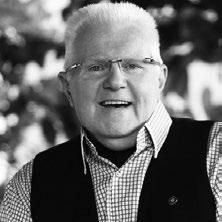
CANDACE KINSER
I'm a proud Aucklander with a deep passion for the people, places and energy that make Auckland Central such a remarkable place. That's why I'm standing as the National Candidate for Auckland Central.
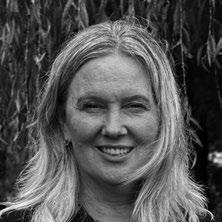
CHLÖE SWARBRICK
Chlöe Swarbrick is the MP for and the biggest fan of Auckland Central - she is Co-Leader of the Green Party of Aotearoa NZ.
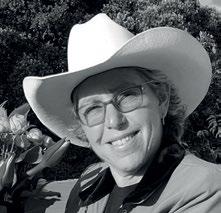
DAVID HARTNELL - MNZM
For the last 53 years I’ve been a freelance entertainment journalist and author. I’ve lived in the Grey Lynn area for over three decades; I have met and interviewed some amazing people.
DESLEY SIMPSON
I am a dedicated and approachable Deputy Mayor of Auckland, with a handson approach and genuine commitment to improving local communities and solving issues in Auckland.
GAEL BALDOCK
We each follow our moral compass shaped by training. Mine is sculpting, architecture, sociology, anthropology and betterment of our shared world by community advocacy… and saving trees.
HELENE RAVLICH
A freelance writer and copywriter for almost 20 years, I have written for publications all over the world and couldn’t imagine myself in any other job.
HELEN WHITE
Helen is the Member of Parliament for Mt Albert and has a long-standing commitment to social justice, community well-being and ethical leadership. She is also keen on yoga.
KEN RING
My yearly NZ Weather Almanacs began in 1999. During the tragic 2011 Christchurch earthquakes, my work created international interest. I currently live in Ponsonby.
CONTRIBUTORS
LISA PRAGER
A life long advocate for community issues, I am passionate about protecting and enhancing our natural environment and built heritage.
MELISSA LEE
I have been a National List MP based in Mt Albert for the past 16 years. I am dedicated to listening and understanding the needs of our community, working hard to deliver outcomes and drive positive change.
MIKE LEE
I am the councillor for Waitematā & Gulf. A former seafarer, former chair of the ARC, conservationist, PT advocate, and author. I have represented the Ponsonby area since 1992.
PHIL PARKER
Journalist and published author, I have had a career involving both wine writing and hosting boutique wine tours in the Auckland region.
PUNEET DHALL
I am an Aucklander of Indian origin, Punjabi and Sikh. I have a keen interest in food, wine and politics.
ROSS THORBY - QSM
I have had a wanderlust for travel ever since I was old enough to own a passport. Since I discovered cruising, I have become unstoppable.
SARITA SOLVIG BLANKENBURG
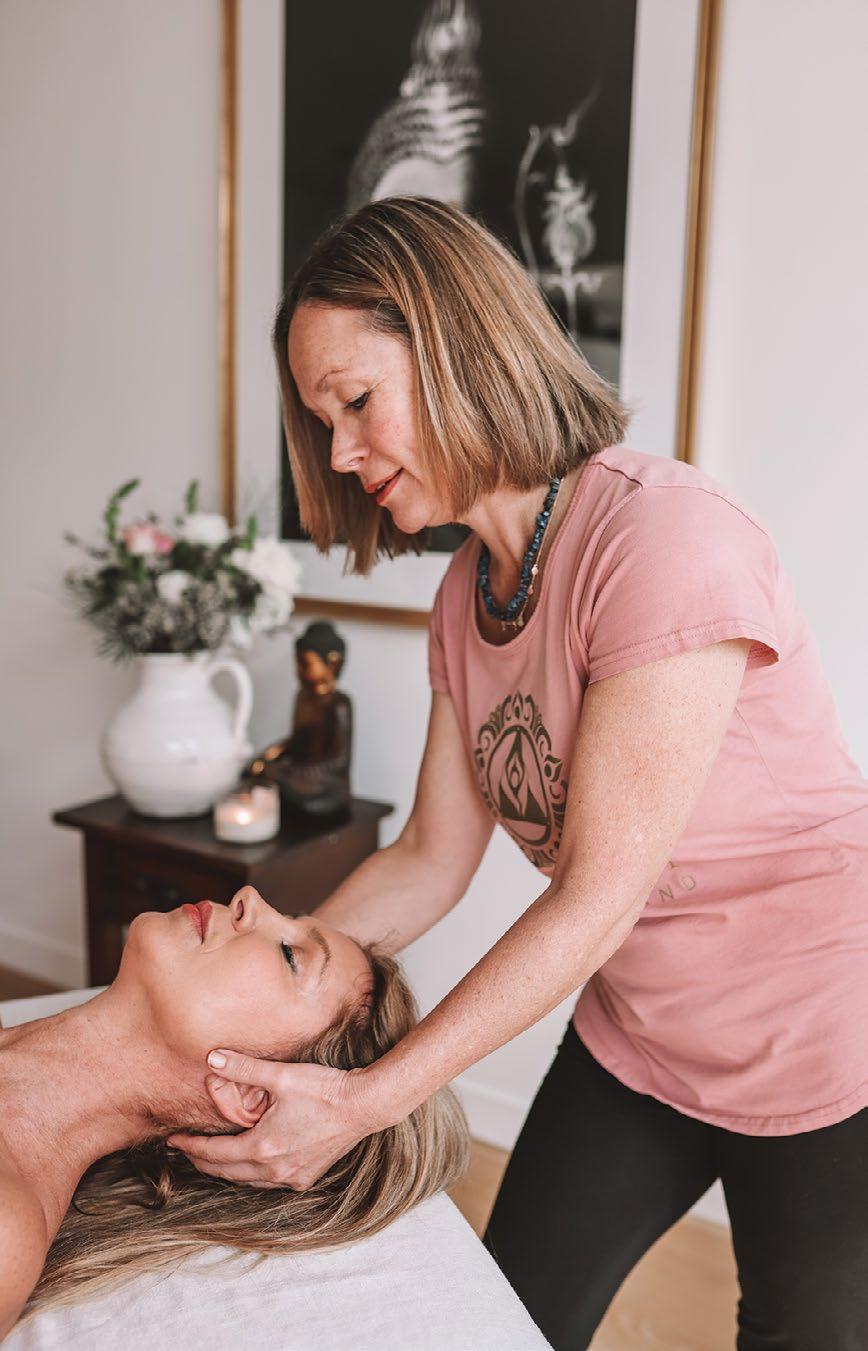
I am a passionate Ayurveda practitioner based in Ponsonby for the last 15 years. Inspiring others to live a healthy and fulfilled life is my higher purpose.
SARAH TROTMAN, ONZM
She has been rated the most effective Governor on the Waitematā Local Board. However, we rate her as the most effective community advocate, who led the C&R team from her sole voice on the Board to the majority at the last election, until...
AOTEAROA FOOD RESCUE ALLIANCE
Welcomes Food Waste Amendment Bill to strengthen food rescue and reduce food waste.
The Aotearoa Food Rescue Alliance (AFRA) welcomes the Waste Minimisation (Food Waste) Amendment Bill, introduced by the Green Party to Parliament today.
The Bill requires large supermarkets to take reasonable steps to minimise food waste and to partner with food rescue organisations to donate edible surplus food wherever practicable.
Food rescue ensures quality surplus food that can no longer be sold is redirected to communities instead of landfill. AFRA represents around 35 food rescue organisations across Aotearoa, which collectively rescued 12 million kilograms of surplus food over the past year (1 July 2025 to 30 June 2026), and delivered the equivalent of 31.8 million meals into the community over the same time period.
AFRA’s Executive Director Alice Cameron says food rescue is an essential part of New Zealand’s food infrastructure, connecting quality surplus food with communities through trusted local organisations.
"Food rescue is a proven model that has been making a significant contribution to reducing food waste in Aotearoa for nearly two decades. Since New Zealand’s first formal food rescue organisation Kaibosh was established 18 years ago, the sector has built strong partnerships with supermarkets, growers, manufacturers and other food businesses right
across the motu. Every day, these partnerships ensure good food reaches people instead of landfill, reducing emissions, preventing waste and delivering nutritious food where it’s needed most. This Bill creates an opportunity to build on what is already working."
Cameron says international experience provides valuable lessons for New Zealand.
"Good legislation doesn’t just require more food be donated. It provides the resources, protections and practical support needed for more food to be rescued and distributed to those who need it, well. That means investing in food rescue capacity, maintaining standards and trusted existing relationships and designing an approach that reflects New Zealand’s unique geography and existing food rescue network."
AFRA says any future legislation should prioritise preventing food waste, build on the strong partnerships already in place between supermarkets and food rescue organisations, and ensure the food rescue sector is appropriately resourced to safely manage any increase in donated food.
"We look forward to working constructively with government, supermarkets and the wider food sector to help shape practical, evidence-informed solutions that reduce food waste and strengthen New Zealand’s food system."
DAVID HARTNELL: ONE MINUTE INTERVIEW WITH MADELINE BEASLEY
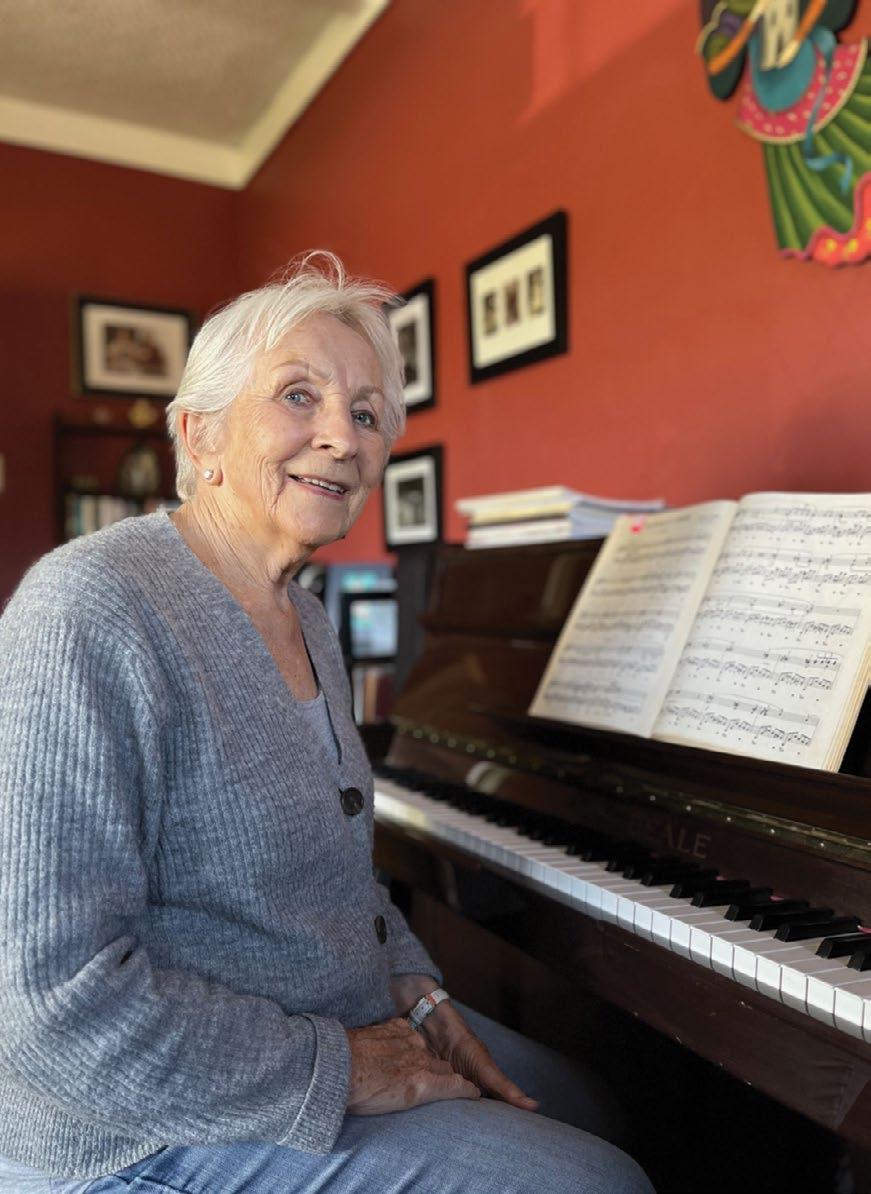
Madeline Beasley has been teaching the piano for 25 years. Madeline still has one of her original students coming for lessons, brushing up on their style of playing.
Do you come from a musical background?
Yes, my father had his own dance band when I was a child and he taught the saxophone and the clarinet. He also played the piano and piano accordion, as did my mother (when no one was around). We spent many a winter’s evening around the piano singing songs. That’s when my love of music started I suppose.
What are the age groups you teach?
I prefer my pupils to be at least seven years old when they start to learn. I did have someone who was in his late seventies.
Do you play any other instruments?
I also play the guitar and sing in folk clubs. Last year, at the age of 79, I started to learn the banjo. Lots of fun, though my partner did ask me the other day if I actually liked the sound of the banjo. Obviously he’s not so keen!
How did you survive the pandemic?
I missed playing and listening to live music. As soon as it was allowed, I got together a small group of like-minded folkies to come round and share some music. And we have carried on meeting up every weekend ever since.
Something few people know about you?
I used to be a graphic designer for TVNZ and do courtroom drawings for the news among other things.
What’s your dream holiday internationally?
My daughter said she would take me to New York for my 80th birthday, but now I have no desire to travel. Bad for the planet anyway. And I have far too much to do in Auckland. Though maybe a quick trip to Fiji would be nice.
See yourself in 10 years where?
I hope I will still be enjoying good health, playing music and teaching the piano.
Give your teenage self some advice. Love yourself more and appreciate who you are.
How has piano music changed over the years?
There is a lot more variety in piano music now. Albums of certain pop idols like Taylor Swift inspire young piano students. Also the inclusion of jazz pieces in piano exams.
What was your childhood like?
I was lucky to have a happy childhood in the south of England. I used to spend hours outside with my friends playing down by the creek and riding around on our bikes. My parents were very kind and loving and my two older brothers weren’t too bad when they weren’t tormenting me. My mother did hit me once to bring me to my senses. I became hysterical after flying over the handlebars of my pushbike and hurting my writing arm days before my GCE exams. I ended up sitting on a high stool to take them because I couldn’t bend my arm.
Which TV series do you like?
Well, I don’t have a television but my daughter told me about
a great series called 'The Piano 'which I recently watched on TV+ on my phone. Four young people were selected out of hundreds that came and played the piano at various train stations around Britain. They were judged by Lang Lang and Mika and then coached by them to perform at the Royal Festival Hall in London. It was so inspiring. They were all so different and talented.
What motivates you?
I get really motivated by watching other people play the guitar and sing. The wonderful thing about music is you never stop learning and improving.
Which item of clothing can’t you live without?
I couldn’t do without my skinny jeans. Thank goodness clothes are now made with elastane and polyester in cotton. So much more comfortable with a bit of give!
What would be your favourite hero of fiction?
He isn’t really a hero, I guess, but I love the character of Senior Detective George Cross in Tim Sullivan’s books. George is autistic and goes about solving murders in his own methodical way, frustrating his co-workers who think they know better but never do. He rides his bike everywhere and relaxes by playing the church organ in the evening when nobody is around. He never says thank you or good bye or accepts an invitation to shake hands, preferring not to be touched. There is a series of five books featuring him called 'The Cyclist', 'The Patient', 'The Politician', 'The Monk' and 'The Teacher’. All really enjoyable and worth reading.
(DAVID HARTNELL, MNZM) PN
IS YOUR CROSS-LEASE TITLE
HIDING
A PROBLEM?
Defective flats plans, more commonly known as defective cross-lease titles, are surprisingly common and often go unnoticed until a property is being sold, refinanced or investigated by a solicitor.
At the heart of the issue is the flats plan: the legal survey diagram that records the footprint of your home and identifies important areas such as your exclusive-use spaces (for example, your backyard or garden) and common property (such as shared driveways and accessways).
When the property on the ground no longer matches what appears on the flats plan, the title may be considered defective. While this can sound technical, the consequences can be very real, potentially affecting property value, saleability, financing and future development plans.
The Most Common Causes of a Defective Flats Plan
Over time, homeowners naturally make improvements to their properties. The problem arises when those changes are never reflected on the legal flats plan. Common examples include:
· Conservatories and Sunrooms
Adding an enclosed conservatory or sunroom changes the building's footprint and may create a discrepancy with the registered plan.
· Extensions and Additional Rooms
Whether it's an extra bedroom, a larger living area or even a second storey, alterations to the structure often require the flats plan to be updated.
Carport Conversions
Converting an open carport into an enclosed garage changes the external dimensions of the building and can result in a defective title.
Attached Garages and Sheds
Constructing a garage, workshop or utility shed that is attached to the dwelling may also affect the accuracy of the flats plan.
Encroachments onto Common Areas
Decks, fences, retaining walls and other structures that extend into shared or common property can create legal issues if they are not properly documented.
The Council Consent Myth
One of the most common misconceptions among homeowners is that obtaining a Building Consent or Code Compliance Certificate automatically updates their property's legal title. Unfortunately, it doesn't.
Council approvals relate to the safety and compliance of the building work itself. Updating a cross-lease title requires a completely separate process involving surveyors, legal documentation and the registration of a new flats plan with Land Information New Zealand (LINZ).
As a result, many property owners only discover a defective flats plan years later, often when they're preparing to sell.
The Good News? It Can Be Fixed
If you suspect your cross-lease title may be defective or you've already been advised that your flats plan needs updating, Good Title can help.
Our team provides a seamless end-to-end service, managing every stage of the process, including surveying, legal documentation, council liaison and project management. We take the complexity out of correcting defective cross-lease titles, helping you achieve certainty and peace of mind.
Think your flats plan may need updating? Contact Good Title today for a no-obligation quote.
T: 0800 953 273, www.goodtitle.co.nz
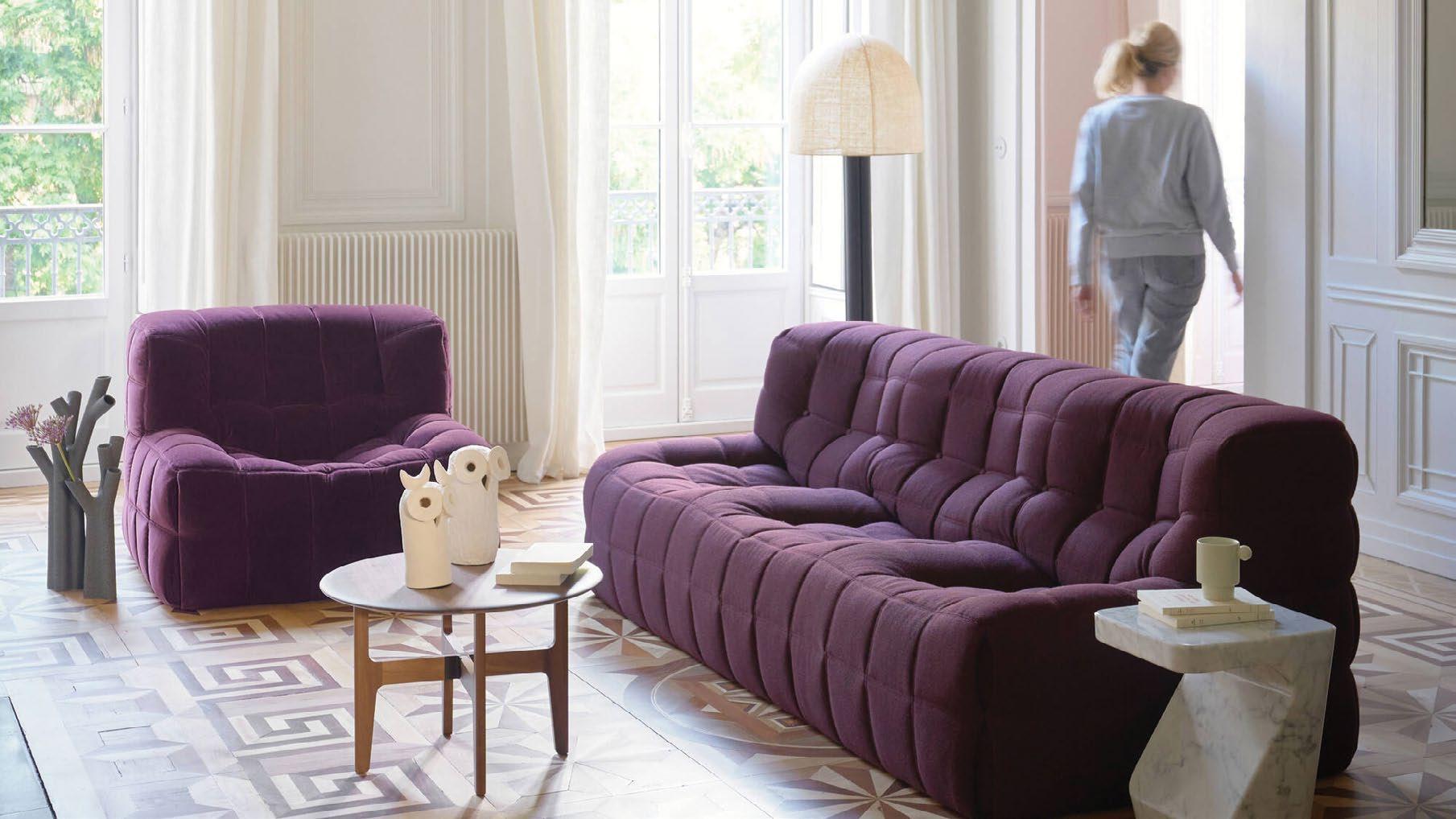
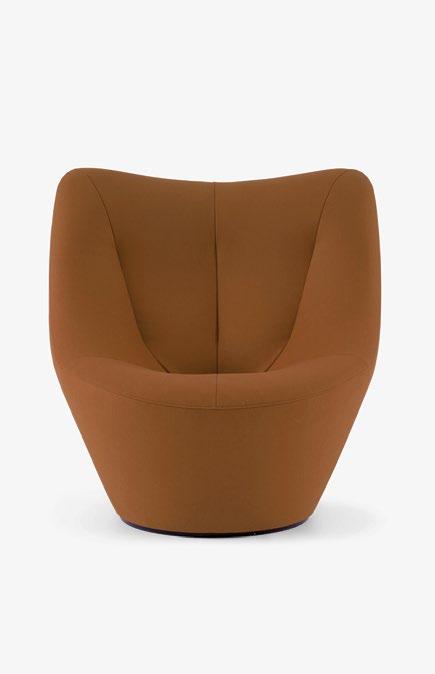
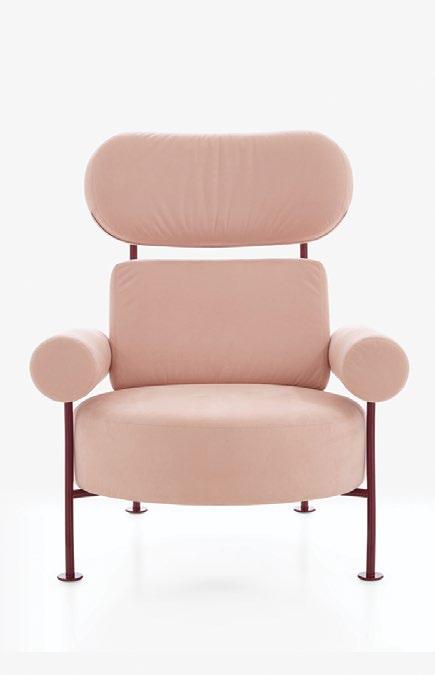
LIGNE ROSET AUCKLAND
This month, save up to 25% off the entire Ligne Roset collection upholstered in Alcantara (excludes Togo)*
Alcantara is the benchmark high-end microfibre fabric brand. Produced in Italy, the fabric is easy to clean and extremely hardwearing, with a luxurious suede-like texture and more than 70 colour options to choose from.
Shop online at www.ligne.nz/assouline
*Offer ends 31 August 2026. 25% discount is off the RRP of in stock items paid for in full and delivery taken within 2 weeks, or 20% off forward orders secured with a 50% deposit. Strictly Alcantara fabric only. This offer is not available in conjunction with any other discount or clearance pricing. Alcantara fabric is not available on all designs, see www.ligne.nz for more information. Togo is excluded from this offer.
ONE WRONG THING CAN MESS IT ALL UP
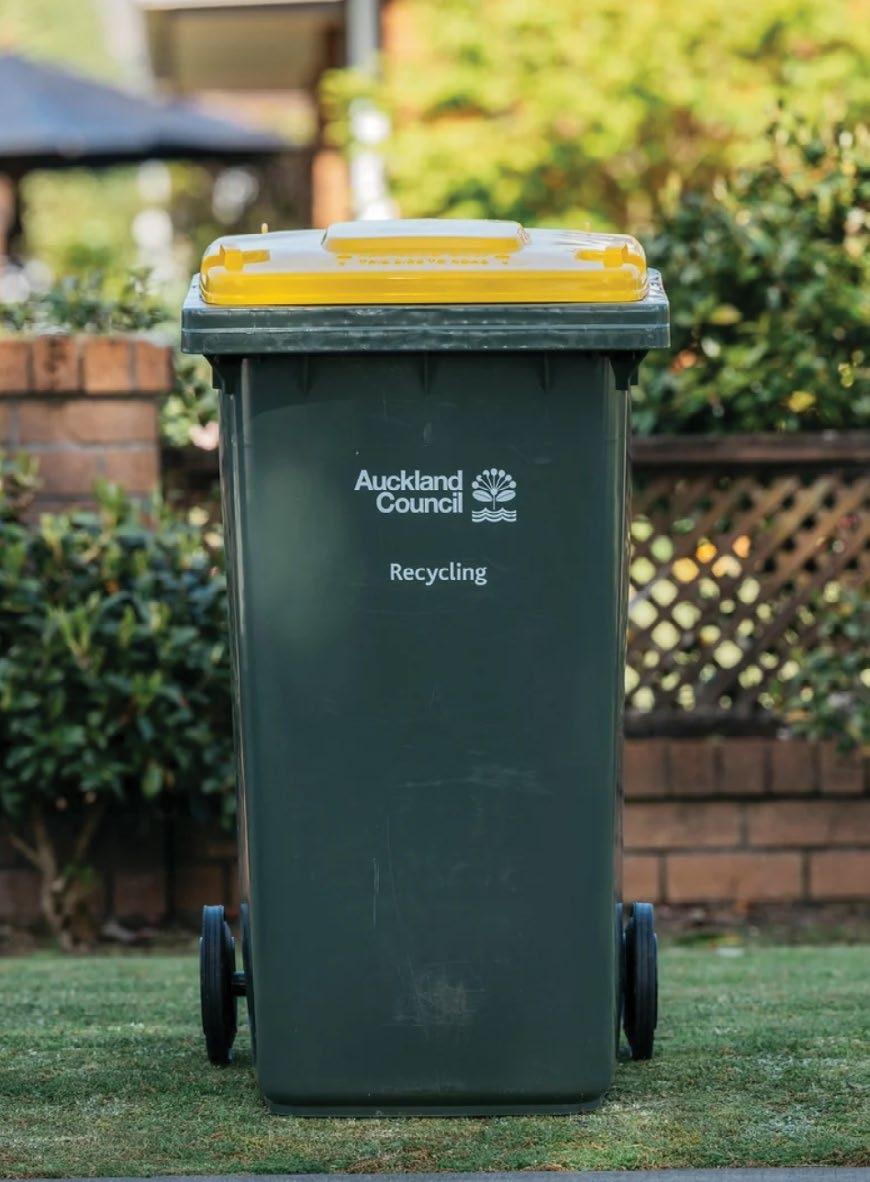
Aucklanders urged to keep contaminants out of recycling. Rotten food, nappies and sour milk among recycling's biggest contaminants.
One wrong thing can contaminate an entire load of recycling. Recycling contamination is on the increase and costing ratepayers $3.5m a year
Food scraps belong in the food scraps bin or compost – not in recycling
Aucklanders are being reminded that putting the wrong item in their recycling bin – even an unwashed milk container –can have consequences far beyond a single household, contaminating recyclable materials and reducing what can be successfully recovered and recycled.
Recycling contamination costs ratepayers $3.5 million a year and results in around 37,000 tonnes of waste being sent to landfill from the recycling facility. To help curb this issue, Auckland Council has launched a Let's Sort It Out recycling campaign, encouraging Aucklanders to put the right items in the right bin and avoid contamination that can affect an entire recycling load.
Councillor Richard Hills, Chair of the Policy, Planning and Development Committee, says Aucklanders can make a big difference by making sure the right items go into the right bin.
"More than 30 per cent of the material going into Auckland's recycling bins is now ending up in landfill due to it being contaminated or unrecyclable in the first place. That's a missed opportunity for our environment and our Zero Waste vision for Tāmaki Makaurau and also adds significant cost to all residents.
“Small changes make a big difference. It is up to all of us to think about what we’re putting in our recycling. We owe it to the environment and the next generation to continue to do better,” says Councillor Hills.
Auckland Council General Manager Waste Solutions Justine Haves says some of the biggest challenges for recycling come from items that should never have been placed in the bin in the first place.
“Food contamination can quickly spread through a recycling load, contaminating paper, cardboard and containers that might otherwise have been recycled. Something as seemingly simple as leftover food can affect much more than a single item.
“The message behind our campaign is that one wrong thing can mess it all up. By putting the right items in the right bin, Aucklanders can help protect the quality of recycling and ensure more materials are turned into new products. Simply put, let's sort it out.”
Among the most common contaminants found in Auckland's recycling stream are rotten food, nappies, unwashed milk bottles, garden waste and textiles.
Food waste is particularly problematic because it can leak or spread across other materials during collection and sorting. Rotten fruit and vegetables, food scraps and leftover liquids can contaminate otherwise recyclable paper, cardboard and containers.
Food scraps should stay out of recycling bins. Instead, Aucklanders can use their food scraps bin or compost suitable scraps at home. Households that need more room for food scraps can request a second food scraps bin free of charge.
Nappies and unwashed milk bottles are also common contaminants. While nappies present obvious hygiene concerns, spoiled milk left in containers can leak onto paper, cardboard and other recyclables, turning what should have been good recycling into waste.
Garden waste and textiles are another common source of contamination. Although many people assume these items are harmless, they cannot be processed through the kerbside recycling system and can interfere with sorting operations.
Occasionally, recycling loads contain even more unusual items, including livestock remains, highlighting the importance of using recycling bins only for accepted materials.
To help keep recycling clean and effective, Aucklanders are encouraged to:
Empty and rinse containers before recycling
Put food scraps in their food scraps bin
Place recycling loose in the bin, not in bags
Keep nappies, textiles, garden waste and rubbish out of recycling bins
Check recycling guidelines if unsure about an item
For more information on what can and cannot be recycled: aucklandcouncil.govt.nz/recycling
RELATIONSHIPS –
IS THAT PROPERTY YOURS OR MINE?
Many people think that once a couple is married, in a civil union or in a qualifying de facto relationship, everything either person owns automatically becomes 'relationship property'.
That assumption is understandable but not always correct.
Under the Property (Relationships) Act 1976 (the “Act”) when a qualifying relationship ends (upon separation or death), relationship property is usually divided equally. However, the Act also recognises a separate category known as “separate property”. Separate property is generally property that belongs to one partner and is not relationship property.
What can be separate property?
Subject to certain exceptions, separate property includes things one person owned before the relationship began. For example, if one partner already owned a classic car, a boat, shares or money in a bank account before the relationship, those assets may remain theirs alone.
However, this can change depending on the circumstances. If the property was acquired in contemplation of the relationship, or intended for the common use or benefit of both partners, it may be treated differently.
For example, if one person bought a house shortly before the relationship started because they intended the couple to live in it together, that house may not be treated the same as an investment property they bought many years earlier with no connection to the relationship.
Gifts and inheritances are another area where assumptions often arise. A gift from a parent, an inheritance from a grandparent, or property received as a beneficiary of a trust will often be separate property. In one case, bonus bonds gifted by a person’s parents remained separate property because they had not been mixed with relationship funds. In another, a diamond ring received in lieu of an engagement ring was treated as a gift and therefore separate property.
Mixing separate property with relationship property
A key question is whether separate property has been mixed with relationship property.
For example, if inherited money is kept in a separate bank account and is not used for relationship purposes, it is more likely to stay separate.
However, if that inheritance is paid into a joint bank account, used to renovate the family home, or mixed with the couple’s savings, it may become much harder to say it is still separate property.
Similarly, if a property is gifted to one partner but the couple later move into it and use it as their family home, it may become relationship property.
What if separate property increases in value?
The increase in value of separate property can also cause issues. If an asset goes up in value simply because of the market, that increase may remain separate.
However, if the increase in value happened because relationship money was used, or because the other partner contributed in some way, then some or all of that increase may be treated differently. For example, one partner may own a rental property before the relationship begins. If relationship money is later used to pay the mortgage or improve the property, it may become more complicated to work out what is separate and what is relationship property.
Property bought after separation
Property bought after separation may also be separate property, especially if it is bought using money that is not relationship property.
For example, in one case, shares bought from an employer after separation were treated as separate property because they were paid for using non-relationship funds.
Why this matters
What a couple intends, or assumes, does not always match the legal position.
For that reason, it is important to deal with these issues early and put proper documents in place where needed. This can help avoid unexpected outcomes later.
The team at Steindle Williams can assist with any questions.
Megan Williams, Director E: megan.williams@swlegal.co.nz
YOUNG NEW ZEALANDERS ARE BEING CALLED ON TO SHARE THEIR VOICES FOR A KINDER WORLD
The 2026 Think Kind Student Competition has officially launched and we would love your help in spreading the word of this great cause, benefiting children, schools and the community.
Background: The NZ Vegetarian Society (NZVS) has opened entries for its annual Think Kind Student Competition in which students across Aotearoa, year 0 to 13, (including homeschooled) submit any form of creative work which expresses the importance of kindness towards animals and our planet.
The grand prize of $1000 towards the winner’s school is graciously donated by the fine people at Kiwiherb, Additionally, each entrant receives a certificate and a voucher from Hell Pizza, and the top 10 finalists and runners up receive a prize pack, containing products from all of our amazing sponsors (listed below).
The Think Kind Student Competition is open to all creative formats – there are no limits on what students can make or how they choose to express themselves. Through their projects, we hope to inspire young people to reflect on how our food choices affect animals and the world around us, and to explore how reducing meat consumption or embracing a plant-based die can protect the environment, improve human health and make a real difference to the lives of animals. The competition is also an opportunity to reach young vegetarians and vegans across Aotearoa, reminding them that they are not alone and that they are part of a warm, growing community.
Entries open 1 May and close mid-August, with judging taking place in August and September. Ten finalists and a selection of runners-up are then chosen, with the finalists' projects going to a public vote on our website from 1 October, World Vegetarian Day. Voting runs throughout October, World Vegetarian Month, and the grand winner is announced on 1 November, World Vegan Day.
NZVS President, Julia Clements, says: "Young Kiwis never fail to surprise me. The creativity and passion they bring to this competition is truly something special. Every year we're blown away by the fresh, imaginative ways students explore
kindness to animals, sustainability and our relationship with the world around us. This competition proves that big ideas can come from any age group. We can't wait to see what they come up with in 2026 and we're counting on the community to get behind them when voting opens later this year!"
Past entries have included artwork depicting ways we can be kind to animals, poems, short stories, home-made films and many more! The 2025 grand prize winner was year 11 student Lori Boghossian from Palmerston North Girls' High School, with a one-minute paper stop-motion animation that took over 20 hours of work to sketch (267 drawings), trace, shade and record.
Think Kind Competition guidelines: vegetarian.org.nz/think-kind/competition-guidelines Past winners: vegetarian.org.nz/think-kind/past-winners
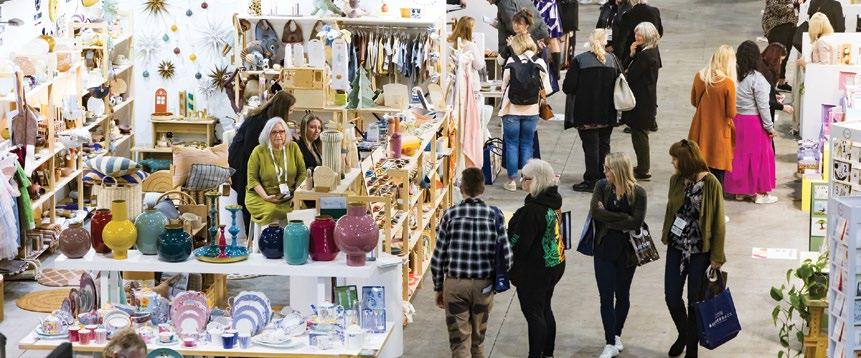
THE SPRING GIFT & HOMEWARE FAIR RETURNS TO AUCKLAND
For retailers dealing with rising fuel costs and tightening margins, The Spring Gift & Homeware Fair solves a real problem: sourcing stock from multiple suppliers under one roof.
No driving all over the country, saving your business time and money. The trade only, Spring Gift & Homeware Fair runs 30 August - 1 September at the Auckland Showgrounds.
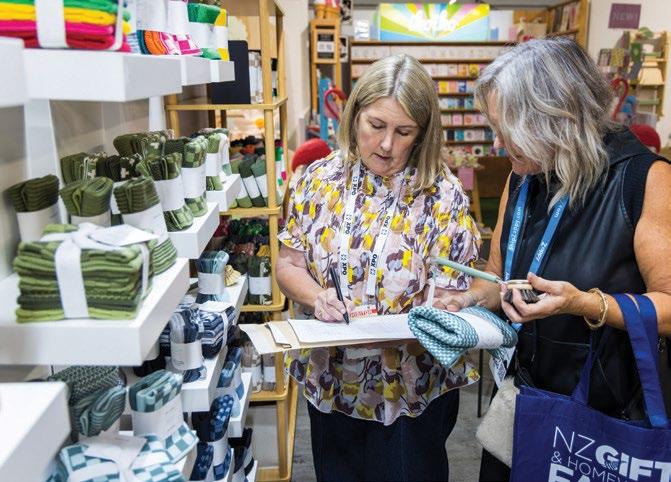
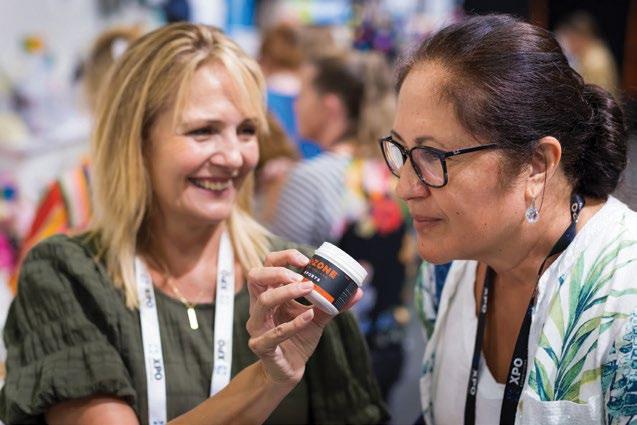
For over 30 years, the Fairs have been essential for retailers. Supply chain costs keep climbing and sourcing efficiently is harder than ever. Ordering online is risky – products arrive and don't match the photos, quality surprises and colours look different in store. At the Fair, retailers see what they're buying. They touch the fabric, check the finish, hold the product in their hands. That matters when they're betting their margin on stock choices.
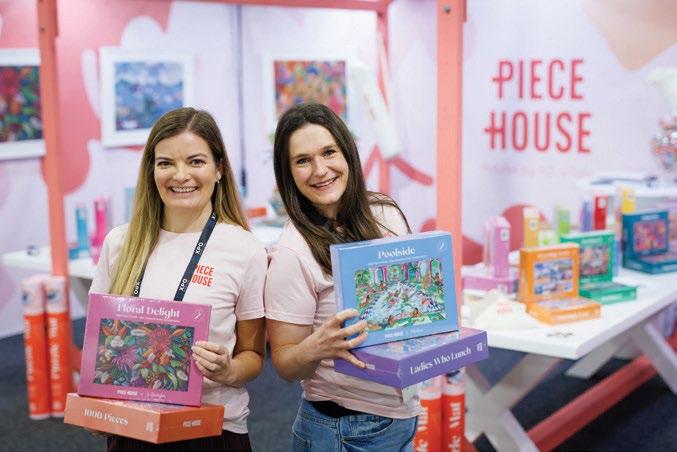
With over 300 exhibiting wholesalers under one roof, retailers skip the costly individual supplier visits. They find something for every retail store in a single visit, whether stocking for spring/summer or getting ahead of the Christmas season. They also build relationships with wholesalers and suppliers face to face. Those connections often lead to better terms and ongoing support.
"It sets me up for the year to see trends and connecting with wholesalers that sometimes I miss seeing early in the year. It is
a must for me as a small business. I think you would be crazy not to go!" – Retailer, Spoilt
This year brings back familiar names like Rembrandt and Bookreps NZ alongside Ecovask's sustainable products, BO & KO Aotearoa's locally designed range, Design By Leonard's high-end offerings and for the first time, designer women's wear from Obi. TalkShop seminars run throughout the Fair covering visual merchandising, retail design, social media for small retailers and business mentoring – practical tools for growing a retail business.
The Fair is also partnering with Woven Earth this year, a grassroots charity helping families affected by family violence. Visitors able to bring items to donate can check Woven Earth's needs list on site.
Entry is free for retailers and trade buyers. The Fair has worked for over 30 years because it offers what online ordering can't: certainty, relationship and time to make smart decisions.
Register for your free visitor entry at giftfairs.co.nz
CENTRAL INTERCEPTOR FULLY LIVE
Delivering a cleaner future for Auckland.
New Zealand’s largest wastewater project now fully operational, unlocking major environmental benefits for generations to come.
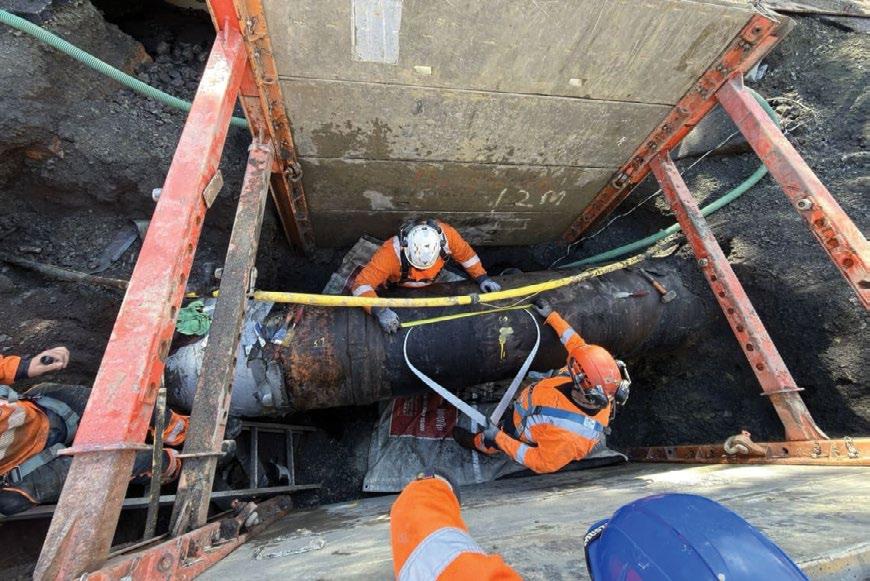
Auckland is set to reap the environmental benefits of Watercare’s Central Interceptor wastewater tunnel, which is now fully operational.
The $1.66 billion project – New Zealand’s largest-ever wastewater infrastructure investment – will dramatically reduce wet weather overflows, improve the health of Auckland’s waterways and harbours, and support growth across the region for decades to come.
The Central Interceptor has already delivered significant environmental benefits. The southern half of the tunnel went live in early 2025, preventing an estimated 741,000 cubic metres of wastewater and stormwater from overflowing into the environment by 1 July this year. That’s the equivalent of almost 300 Olympic-sized swimming pools.
“The Central Interceptor provides the backbone for future projects that will further improve environmental performance, increase network resilience and support Auckland’s growth,” says Watercare chief executive Jamie Sinclair.
The first of these projects, the Herne Bay Collector, is under way – a wastewater tunnel that will connect to the Central Interceptor when completed and contribute to further reducing wet weather overflows.
Sinclair says the completion of the 16.2 kilometre Central Interceptor tunnel is a transformative moment for Auckland.
“The Central Interceptor is a game changer for our city that will deliver lasting environmental, community and growth benefits for Aucklanders.
“This project is at the heart of our commitment to improving water quality across the region. Bringing together world-class engineering, long-term planning and strong partnerships, it delivers benefits for Aucklanders now while enabling a new generation of projects that will further reduce wastewater overflows and make a real difference to the health of the Waitematā Harbour and other waterways into the future.”
Running from Point Erin in Herne Bay to the Māngere Wastewater Treatment Plant, the 4.5-metre-diameter tunnel sits between 15 and 110 metres below ground and passes beneath the Manukau Harbour. Together with its link sewers in Mt Roskill, Blockhouse Bay and Mt Albert, it captures and transfers wastewater and stormwater flows that would otherwise contribute to wet-weather overflows.
With the northern section now in service, the full tunnel is operational and positioned to deliver even greater environmental improvements across the city.
Mayor Wayne Brown, who is also an engineer, says the completion of the project is a significant achievement that will benefit Aucklanders by reducing wet-weather overflows and helping to improve the health of our harbours and local streams.
“This is Auckland’s largest wastewater infrastructure project, taking seven years to complete using a tunnel boring machine to build the gravity driven tunnel across the isthmus between Māngere in the south and the central city,” says Mayor Brown.
“Aucklanders want cleaner waterways and to be able to enjoy the likes of Browny’s pool, local beaches and marine environment.
“Delivering these outcomes while creating a smarter, more resilient network is exactly what we are committed to providing for the future of Auckland. This project shows what's possible when we invest in the right infrastructure at the right time.”
The project's successful delivery also reflects the power of collaboration between Watercare, delivery partner the Ghella Abergeldie Joint Venture, mana whenua, Auckland Council and local communities.
Construction began on the project in 2019. Despite challenges including the Covid-19 pandemic, major weather events and unprecedented inflationary pressures, the team delivered the project on schedule and close to its original budget.
“Mega projects of this scale rarely stay so close to programme and budget, particularly given the challenges faced throughout delivery,” says Sinclair.
“Working together has enabled one of New Zealand's most complex infrastructure projects to be delivered safely, efficiently and with a strong focus on environmental and community outcomes. We’re incredibly proud of what has been achieved.”
An event will be held today celebrating the Central Interceptor being fully operational and a karakia whakamutunga, or final blessing, will be held tomorrow morning to complete the project.
Central Interceptor facts and figures
· The Central Interceptor wastewater tunnel is 4.5 metres in diameter and 16.2km long, running from the Māngere Wastewater Treatment Plant to Point Erin in Herne Bay.
· It had 17 construction sites across Auckland.
· There are 19 shafts in total.
Since construction began in 2019, more than 4300 people have worked on the project.
The tunnel has the capacity to hold 299,000 cubic metres of wastewater and stormwater.
The giant tunnel boring machine, Hiwa-i-te-Rangi, which created the main tunnel, was named by school students after the youngest star in the Matariki cluster, which symbolises growth and prosperity. She was 190 metres long and weighed 740 tonnes.
Hiwa-i-te-Rangi was electric, as were the locomotives used in the tunnel to remove the spoil, to replace diesel and reduce fuel use.
SARAH TROTMAN, ONZM:
IS OUR INFRASTRUCTURE READY FOR INTENSIFICATION?
The large sinkhole that recently opened on Hackett Street in St Marys Bay is more than a local curiosity. It is a serious warning.
As Auckland continues to debate Plan Change 120 (PC120) and the future shape of our city, the image of another road collapsing beneath our feet, in another of our oldest suburbs, is a powerful reminder that infrastructure is not an optional extra. It is the foundation upon which any successful intensification is built.
The St Marys Bay sinkhole joins a growing list of failures across our unique character suburbs. Ageing wastewater pipes, overloaded stormwater systems and deteriorating underground infrastructure have become increasingly visible. These failures are no longer theoretical risks discussed in engineering reports. They are appearing in our streets, the ones council wants to intensify with 6-15 storey apartments.
New developments are rightly required to demonstrate adequate wastewater, stormwater and drinking water capacity. Those requirements exist because infrastructure matters. Yet residents in our first suburbs rightly questioned whether the existing network is genuinely capable of accommodating the scale of intensification proposed under PC120. That concern is not simply emotional or political. It is increasingly a legal one.
Legal commentary by Wynyard Wood asks the important question: "Does Inadequate Infrastructure Make PC120 Vulnerable to Legal Challenge?" Their conclusion is straightforward: councils cannot responsibly plan for substantially more residents without properly considering whether the infrastructure required to support that growth exists. They argue that infrastructure capacity is a "legally relevant factor" and that failing to properly assess it may expose planning decisions to judicial review and other legal challenges.
That legal analysis raises an issue that deserves serious attention. Planning cannot simply be about building heights and zoning maps. Pipes, drains, water supply, transport and public services are equally fundamental.
The recent reduction in character protections adds another dimension to the concerns of most Waitematā Local Board area PC120 submitters. It’s proposed that protected character homes reduce from 21,000 to 15,400. For many residents, this represents more than the loss of important character protections. It reflects a planning process that appears increasingly willing to trade neighbourhood character for housing capacity without first providing confidence that the underlying infrastructure can cope. This concern has united residents across Auckland's historic suburbs.
Residents’ Associations from St Marys Bay, Freemans Bay, Herne Bay, Parnell and elsewhere have collectively devoted thousands of volunteer hours and significant sums in expert planning, engineering and legal advice preparing submissions on PC120. Much of that effort has not been about opposing housing itself. Rather, it has questioned if Auckland’s older suburbs have adequate infrastructure that can sustain relentless intensification. The experience of St Marys Bay illustrates why these concerns persist.
Following earlier storm events and infrastructure failures, residents have repeatedly highlighted deficiencies in drainage
and stormwater systems. More recently the Parnell and now St Marys Bay sinkholes reinforce public concern that parts of our underground network may well be approaching the limits of their service life.
St Marys Bay resident John Hill recently described the latest collapse as evidence that these issues have been visible for some time rather than appearing without warning. His comments reflect the frustration many local residents feel –that infrastructure problems are often managed only after visible failures occur rather than through proactive renewal.
Good planning requires sequencing.
Cities throughout the world intensify successfully when infrastructure investment leads growth, not when it struggles to catch up afterwards. Reliable drinking water, resilient wastewater systems and effective stormwater networks are the essential enablers of sustainable housing.
Infrastructure may not generate the same headlines as apartment buildings or zoning changes, but when it fails the consequences are serious.
Auckland deserves an approach that balances growth with resilience. It deserves planning that is evidence-based, transparent and capable of earning public confidence. Most importantly, it deserves a council that sees community engagement as more than a statutory obligation.
The people who have invested countless volunteer hours preparing submissions, commissioning expert reports and participating in hearings are not obstacles to progress. They are citizens seeking to improve the city they call home.
As PC120 continues through its process, Auckland Council has an opportunity to rebuild trust as well as infrastructure.
That begins by listening to communities in a more authentic way, not simply hearing submissions, but genuinely engaging with the concerns they raise. When residents repeatedly point to ageing pipes, overloaded drainage systems and visible infrastructure failures, those warnings deserve more than acknowledgement.
The sinkhole in Hackett Street is a hole in the road. Adequate infrastructure should not become a hole in our planning.
To contact Sarah Trotman, in her capacity as a C&R Member, email her at sarahtrotman@outlook.com
To contact her, in her capacity as an Elected Member of Auckland Council’s Waitematā Local Board, email her at sarah.trotman@aucklandcouncil.govt.nz or you can give her a call on M: 021 487 583. (SARAH TROTMAN, ONZM)
photo: Watercare
TE RIMUTAHI UPDATE
AUGUST 2026 MĀNAWATIA A MATARIKI
Mānawatia a Matariki is the Māori phrase for 'Happy Matariki'.
The word mānawatia means to honor, welcome or celebrate, while Matariki is the Māori name for the Pleiades star cluster, whose rise in midwinter marks the start of the Māori New Year (Te Mātahi o te Tau).
This signals a time to remember those who have passed, celebrate the present and plan for the future. It’s a time to spend with whānau and friends, to enjoy kai (food), waiata (song), tākaro (games) and haka.
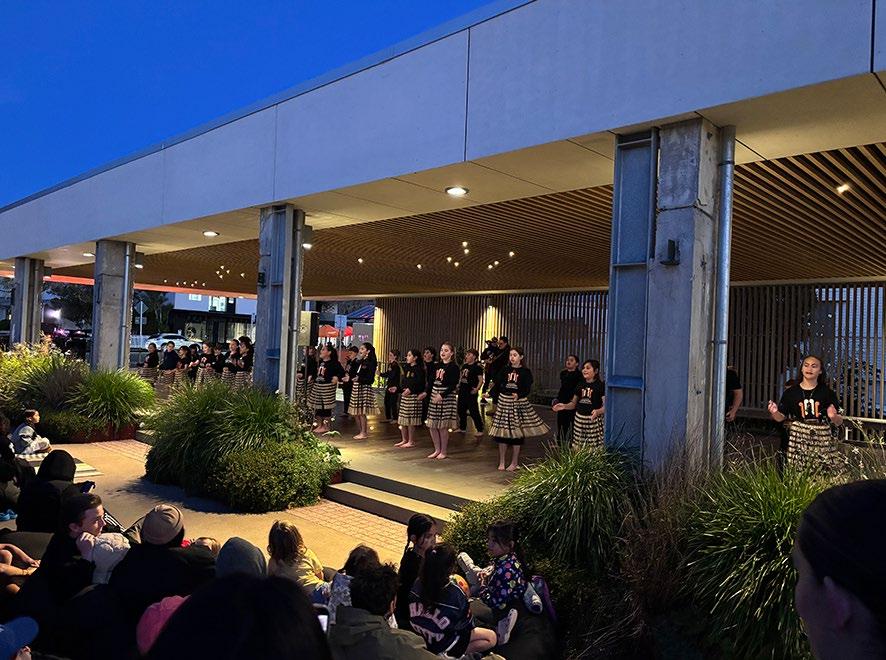
A huge mihi to the brilliant Te Uru Karaka Newton Central School and the rangatahi of the Te Aka Pūkāea kapa haka and their kaiako, Erina Henare-Aperahama, for their kapa haka and waiata performance to celebrate Matariki at Te Rimutahi in July. Ka rawe!
It was a joy to experience their captivating performance and Te Rimutahi was bathed in the magic they created.
Te Aka Pūkāea is the Māori immersion pathway at Te Uru Karaka Newton Central School. The children in Te Aka Pūkāea gain a wider bi-lingual understanding of the world through te reo Māori and tikanga Māori.
The resurgence of Matariki now extends to community celebrations throughout New Zealand, providing a deeper understanding of Māori culture, history and traditions. Through learning about Matariki, we all appreciate and develop a stronger sense of identity and belonging, as we did at the 2 - 4 July celebrations at Te Rimutahi.
Mānawatia a Matariki is not only a time of reflection and celebration but also a reminder of the interconnectedness between ourselves and the natural world. The celebration of Matariki often includes activities focused on environmental awareness and sustainability. Planting native trees, cleaning up rivers and learning about traditional Māori practices of land and resource stewardship. Matariki fosters this sense of responsibility towards the environment.
Ngā mihi to Te Uru Karaka Newton Central School students and to @boopsiemaran & the PBA @iloveponsonby for their support for the celebration of Matariki, the rising of the Pleiades star cluster at Te Rimutahi this year.
And, if you would like to experience more, diarise the Te Uru Karaka Newton Central School production, 'Let Love Guide Us, Mā te Aroha Tātou e Ārahi' on 24 September.
Tickets are available at Humanitix: events.humanitix.com/ te-uru-karaka-newton-central-school-production
This year the production’s theme is aroha and it was created from scratch by the children and staff. Ka rawe! (JENNIFER WARD) PN
For more information or to contact the Community-Led Design Group, see our website 254ponsonbyrd.org.nz Instagram te_rimutahi_ Facebook Te Rimutahi or 254 Ponsonby Road
Te Aka Pūkāea students from Te Uru Karaka Newton Central School performing at Te Rimutahi for Matariki 2026.
Photography: Jennifer Ward
NEWS FROM KELMARNA COMMUNITY FARM
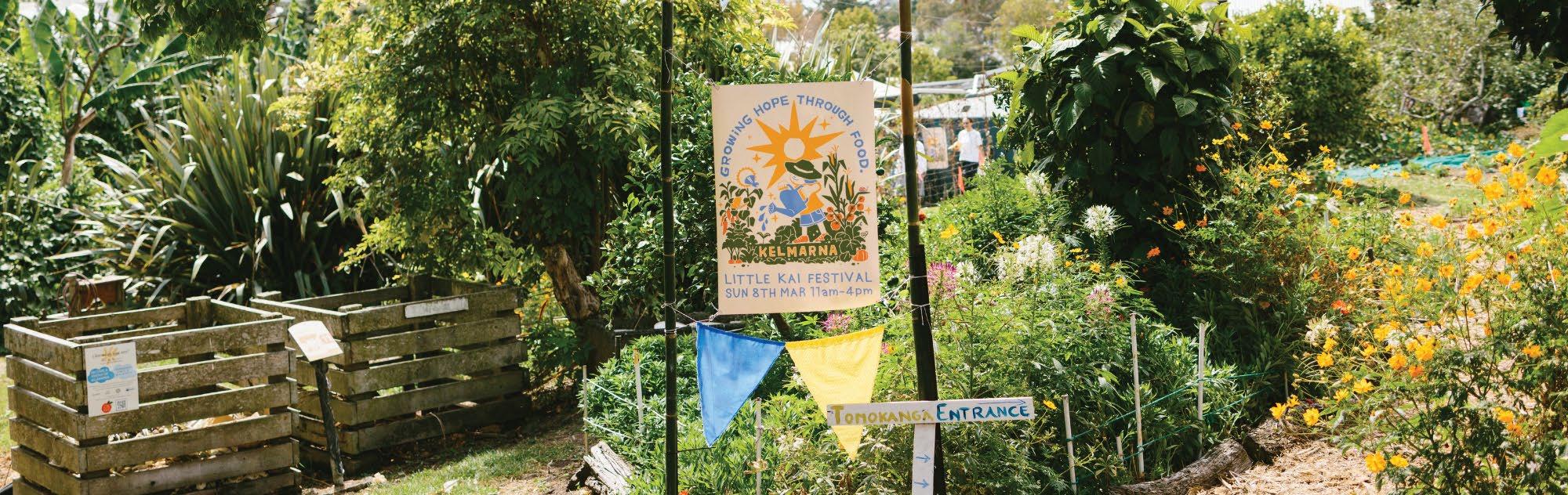
Recently, we wrote our Annual Impact Report. It gave us a wonderful opportunity to bring together all the strands that make up Kelmarna Community Farm as we gathered our stories and impact from all activities over the past year, plus made plans for the coming ones.
The farm itself has never been more productive. Says General Manager, Sarah McFadden: "We grew and sold more organic kai than ever before! Our workshops were fuller, our events brought over 2000 people through the gates and we found many new connections with schools, community organisations and businesses who are discovering Kelmarna for the first time."
In terms of food production and distribution a few stats pop out:
· 143 fruit trees in production
· 1.040m2 of market gardens in production
1266 CSA veggie boxes supplied 12,000 eggs sold to the community
· $150k+ of fresh organic produce grown and sold
Beyond our own kai, we've been empowering local community members to grow food in their own spaces. We've supplied 3000+ seedlings to home gardeners and other community gardens and last year had 45 graduates from our Farmhands training programme. School education was up by more than 20% with 452 students coming on site to participate in our Education Programme.
In supporting the health and wellbeing of the Tāmaki Makaurau community we achieved nearly 11,000 garden volunteer hours with 90% of volunteers saying they felt more connected with nature. Twenty people participated in our therapeutic gardening programme with 10 of these going on to grow their own produce at home. In total, 2500+ hours were spent gardening for therapy.
A key component of our kaupapa as kaitiaki of the whenua and surrounding ecosystem is to regenerate the land and support biodiversity. To this end we:
use and promote organic practices that support biodiversity
have an active pest management programme in action across the farm
support four beehives managed by a volunteer beekeeper
· have 25 different native plant species and 300 individual plants
have used 20,600 litres of Soil Factory compost on site to support more food production
Another key goal of Kelmarna is to honour Te Tiriti o Waitangi. This year we have continued our steady journey of deepening cultural awareness and practice, recognising our responsibilities as Tangata Tiriti. We have also grown our knowledge and use of te reo Māori and some of you will have noticed the use of both English kupu and te reo in our external communications, such as our weekly farm shop updates.
Sarah: "Perhaps our most significant milestone this year: we secured a 20-year lease on this whenua from the Waitematā Local Board. For the first time, we can plan with real confidence – considering new and improved facilities, and beginning the community consultation to shape Kelmarna's long-term vision together."
We believe in freedom of speech and we love hearing from our readers - please send letters to the editor email info@ponsonbynews.co.nz PN DEADLINE - usually 20th of the monthwww.ponsonbynews.co.nz
DEPUTY MAYOR OF AUCKLAND
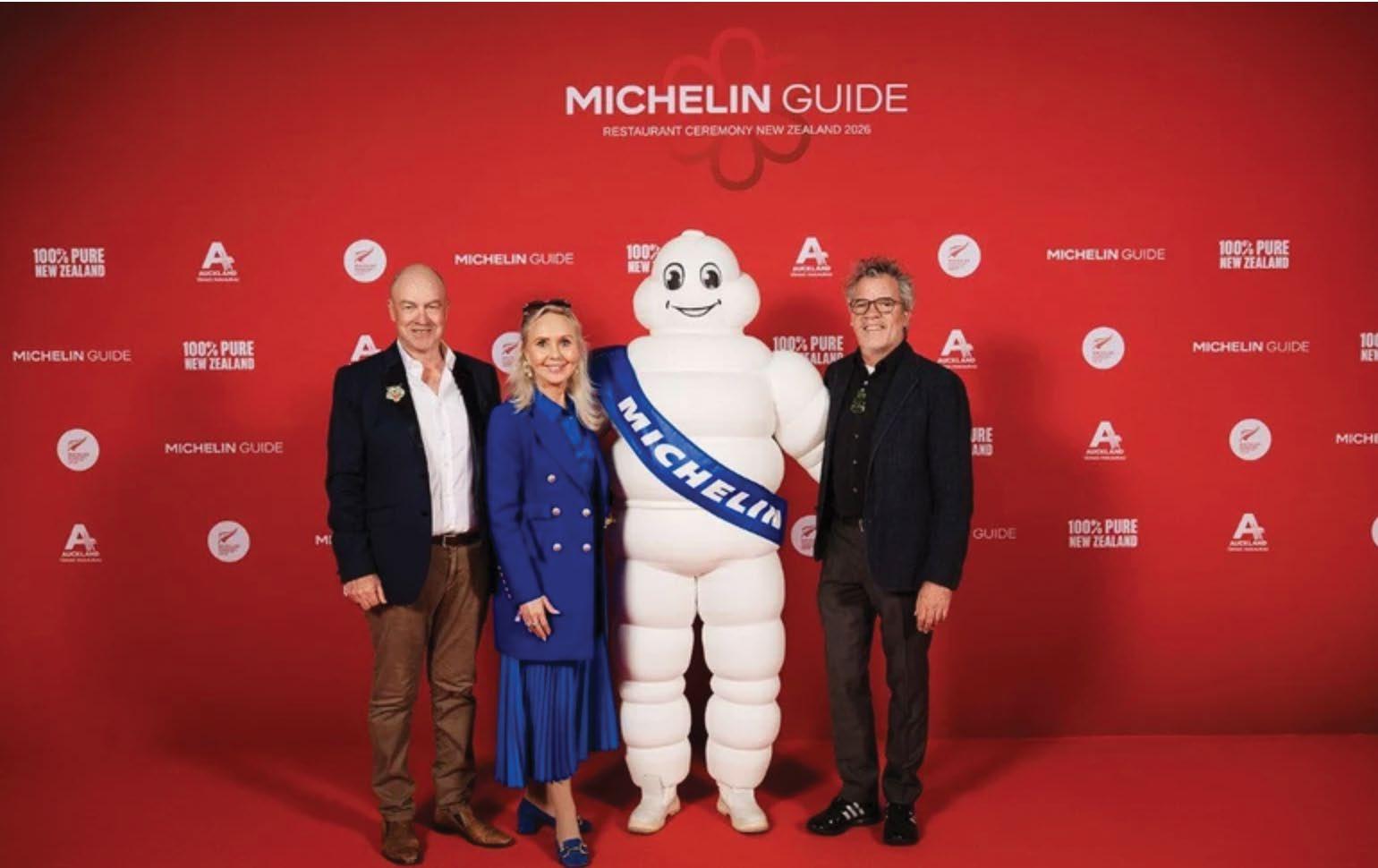
Ponsonby helps put Auckland on the Michelin Map.
What a fantastic moment for Auckland and for New Zealand’s hospitality industry.
The arrival of the Michelin Guide in Aotearoa is a huge vote of confidence in our dining scene and recognition of something Aucklanders have known for a long time – we are home to some of the best food experiences in the world.
It’s also a celebration of the people who make our hospitality sector so special. From talented chefs and hardworking kitchen teams to front-of-house staff, growers, producers, suppliers and restaurant owners – thank you. You have helped create a food culture that is vibrant, diverse and uniquely Auckland.
That is one of the things I love most about our dining scene. It tells the story of who we are. Our chefs champion incredible local ingredients, draw inspiration from many places including Māori and Pacific traditions and constantly push the boundaries of creativity. The result is a culinary identity that is distinctly ours and increasingly admired around the world.
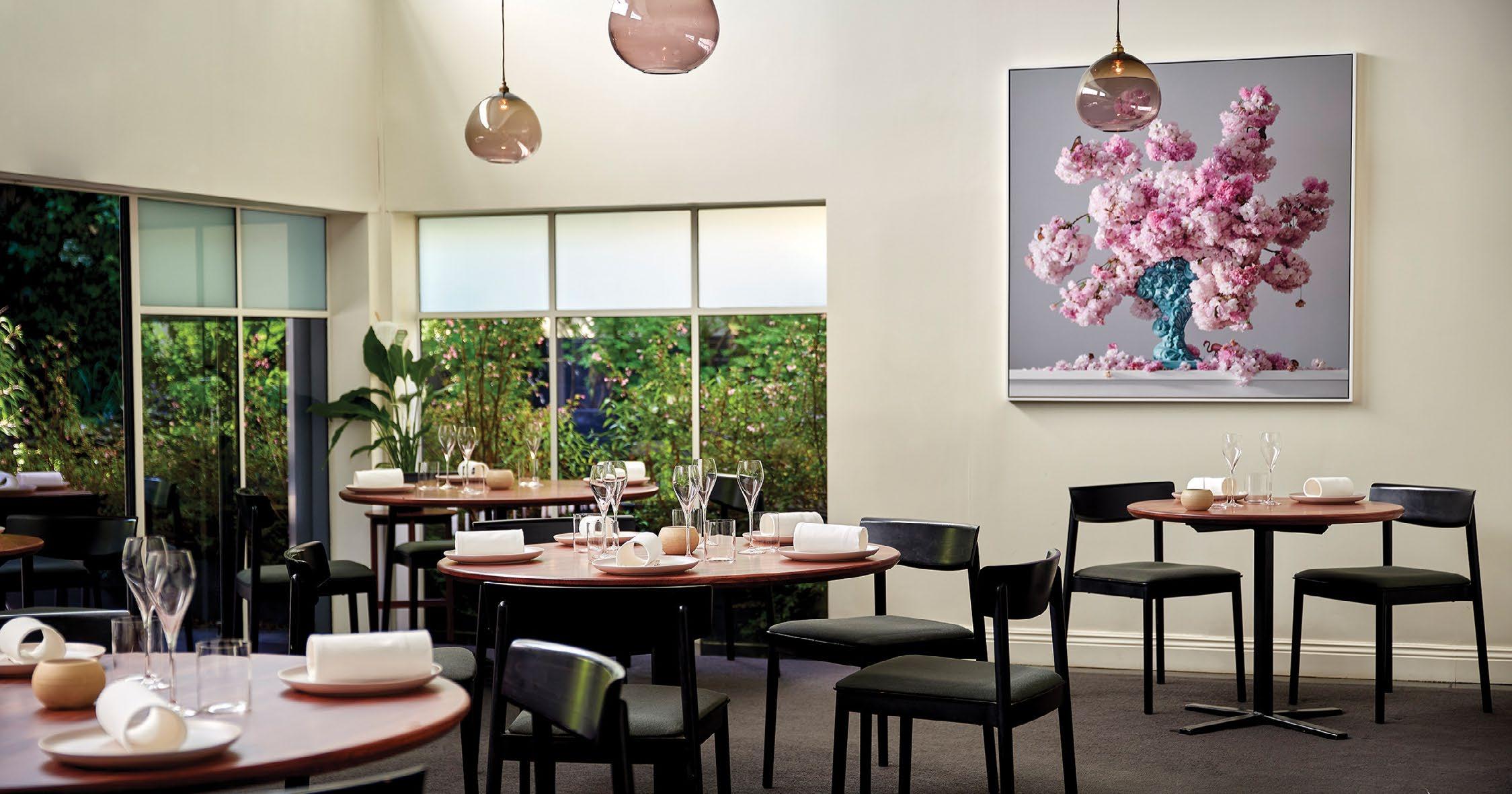
Ponsonby has once again proven why it’s such a magnet for food lovers, with its very own Paris Butter receiving one Michelin star. Paris Butter is one of five restaurants in Auckland – and one of only 15 in the country – to receive a Michelin star. Other one-star recipients in Auckland include Ahi (CBD), Tala (Parnell), Mudbrick and Tantalus Estate (Waiheke).
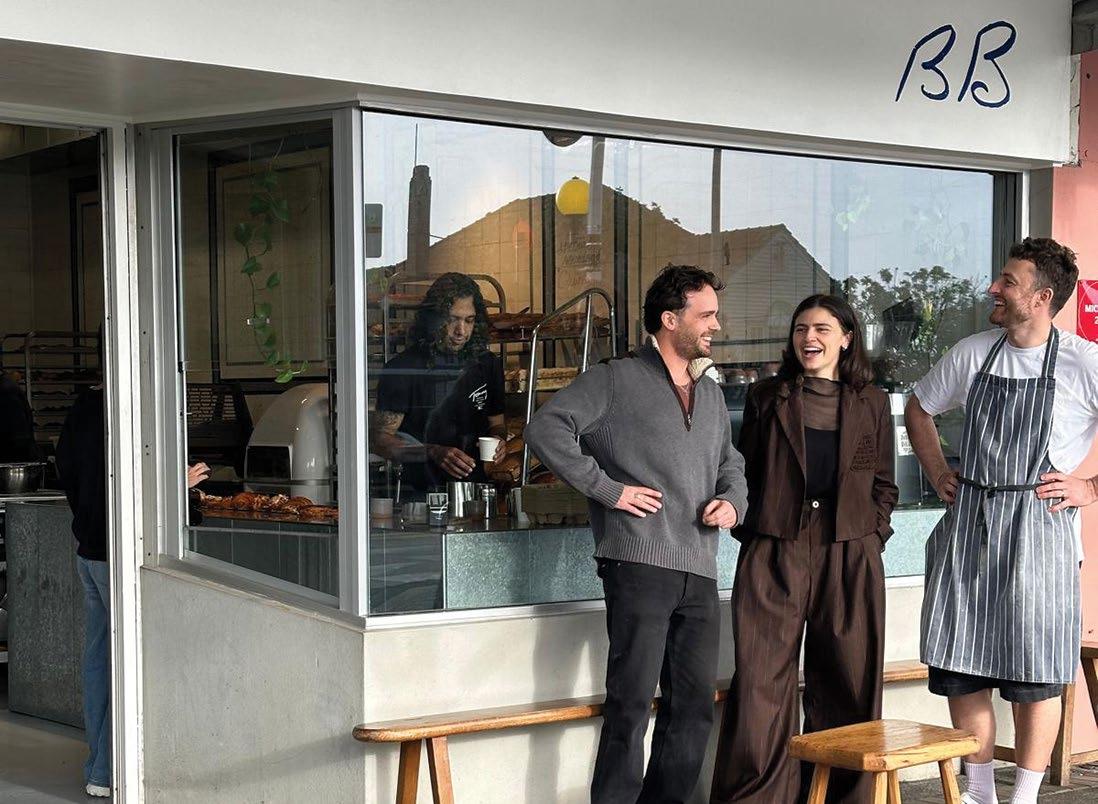
Now, I know most people may think that you need to take out three mortgages to be able to enjoy a Michelin dining experience. But there are options! As well as our one-star recipients, there are 13 restaurants across Auckland that received a Michelin Bib Gourmand. The Bib Gourmand recognises those restaurants that offer exceptionally highquality food at great value. These include Apéro Food & Wine, Atelier, Bianca, Bistro Saine, Boda, Cazador, Gemmayze St, Goat, Milenta, Osteria Uno, Parro, Pasta & Cuore and Tempero. Congratulations to you all, and to
all those restaurants highlighted in the first New Zealand Michelin Guide.
It’s also important to acknowledge that this success has not come without challenges. In recent years, Auckland’s hospitality sector has faced significant economic pressures, and we’ve sadly seen some much-loved restaurants close their doors. Those businesses helped shape the city’s food culture, and their contribution remains part of the story that has brought us to this moment. The resilience and determination shown by hospitality operators across Auckland make this recognition all the more meaningful.
Of course, Michelin’s arrival is about much more than great food. Around the world, culinary tourism is a major drawcard, with travellers increasingly choosing destinations based on their dining reputation. This recognition will help attract more visitors to Auckland, supporting not only restaurants but hotels, retailers, transport operators, arts organisations and local attractions.
It gives us another opportunity to showcase everything that makes Auckland special – our culture, our creativity, our stunning natural environment and our warm Kiwi hospitality.
I’ve often said I want Auckland to be the best arts and culture city in the Southern Hemisphere. After this announcement, we might just be able to add 'food capital' to that ambition as well. And, honestly, that leaves us with a pretty wonderful ‘problem’ to have – deciding whether to book the restaurant or the show first!
For a full list of restaurants included in the New Zealand Michelin Guide: guide.michelin.com/en/restaurants
DESLEY SIMPSON, Deputy Mayor of Auckland www.desleysimpson.co.nz
CHLÖE SWARBRICK:
CO-LEADER OF THE GREEN PARTY AND MP FOR AUCKLAND CENTRAL
What if we decided to invest in ourselves?
Our communities, our country, our jobs, our infrastructure, our places, our events and our economy? What if our money circulated locally to grow the things we love and care about, instead of disappearing offshore to build up the bank balances of corporations and shareholders that’ll never care about the closure our local venues or loss of 200 talented New Zealanders every single day?
This is the thinking which first drove me into politics last time the National Party was in government, but it’s been on hyper speed over the past two and a half years as we’ve watched the new National-led Government take a wrecking ball to almost everything and anything we care about. The health system, the public conservation estate, resourcing for firefighters, public transport funding, fisheries – you name it, they’ve put a price tag on it and shown they know the cost of everything and value of nothing.
The beauty of doorknocking is meeting people where they’re at. We’ve been doing it for months in the lead up to this election, reminding the good people of Auckland Central that if you’re not enrolled to vote by 25 October, this Government has changed the law and will now prevent you from voting. It’s a pretty cheap trick, but it makes strategic sense (for the interests of maintaining hollow power) when I reflect on what our huge, dedicated team of volunteers and I have heard from our community: people are sick and tired of the cuts and complaining and they want a vision all New Zealanders can unify behind and move forward with.
That unity can only come from all of us agreeing to some basic non-negotiables that we’re all willing to work for not only for ourselves, not only for the people we know and love, but also the people we don’t know and even those we don’t like. Our great-grandparents agreed to support each other’s right to affordable power, free, high-quality education and healthcare, jobs aplenty and well-maintained public national parks and they invested in making those things a reality. We can do it too.
When the world feels chaotic and you don’t know where to start, the easiest place is with what’s right in front of you, in your own backyard.
That’s why, after two and half years of working on and diving into the big-time solutions we need across the economy writ-large to solve the interconnected climate, inequality, infrastructure, productivity, biodiversity and cost-of-living crises, we’re going hyper-local.
As you walk around Ponsonby, the Bays and our city this month, you may notice posters calling out to Support Your Local. It’s a campaign we’re running to not only remind you of the power of everything from the little purchases to your big election vote, but to practically try and generate feedback on the barriers our small businesses, sole traders, makers, bakers and creatives are facing in trying to do what they do best. More than that, it’s about zeroing in on the solutions and then working to get everyone behind the common-sense little things that will make a big difference. On our streets and in our workplaces and worksites and coffee shops and bars, we’ll find the tangible solutions that’ll permeate across the entire country.
As is par for the course, I’m working with many of our local businesses and business Associations (thanks for all your mahi, Ponsonby Business Association!) to connect, reflect and be held accountable, but if you have any ideas at all, I invite you to please share them at www.greens.org.nz/yourlocal
You’re also invited to our public meeting on the issue, with representation across the trades and construction through textiles and fashion through to venues and hospitality, on Wednesday 5 August at 6.30pm, Ellen Melville Hall (RSVP via the same ‘Your Local’ Green’s link noted above).
We’re all well versed in the amorphous problems. I’m looking forward to an election campaign where our community and country can get on the same page about the solutions, and move forward together, for the betterment of all of us.
(CHLÖE SWARBRICK) PN
chloe.swarbrick@parliament.govt.nz
by Chlöe Swarbrick, Green MP for Auckland Central. 1 Cross Street, Auckland.
HELEN WHITE, MP FOR MT ALBERT: WHEN GROWTH BECOMES PROGRESS
Few would argue that Auckland does not need more affordable housing.
As our population grows and affordability remains under pressure, urban intensification is both necessary and inevitable. The question is not whether we build more homes, but how we create neighbourhoods where people genuinely want to live. How we turn growth into progress.
Too often, the conversation stops at housing numbers. Success is measured by dwellings consented, apartments completed or population accommodated. These measures matter but thriving communities are not created by buildings alone. They are sustained by the infrastructure that enables people to connect, participate and build a shared sense of place.
Sir Peter Gluckman’s Reimagining Tāmaki Makaurau
Auckland makes a similar point. Auckland’s future success depends on creating complete communities where housing is integrated with education, employment, culture, innovation, public spaces and social infrastructure. The challenge is not simply accommodating growth but ensuring that growth creates places that are socially connected, economically productive and resilient over generations.
The importance of the long-term physical and emotional scaffolding provided by social infrastructure is often overlooked because it is harder to measure than housing supply. Parks, sports clubs, libraries, community halls, arts spaces and informal gathering places rarely feature prominently in discussions about housing targets. Yet these are the places where children develop confidence, older residents maintain connection, newcomers build friendships and volunteers strengthen local life. They improve wellbeing, reduce isolation and create the relationships that allow communities to build resilience and adapt, particularly through periods of significant change.
Without these foundations, intensification risks producing denser suburbs that are less connected, less resilient and ultimately less liveable.
The future of the Pt Chevalier Bowling Club illustrates this challenge. For generations, it has been far more than a sporting venue. It has provided a place where people of different ages meet, where community groups gather and where recreation, volunteering and social connection reinforce the fabric of local life.
When institutions like this disappear, they are rarely replaced. Land values increase, opportunities narrow and communities can spend decades trying to re-create what was once taken for granted. The financial pressures influencing the Anglican Trust’s decisions are understandable. Organisations managing significant assets have legitimate responsibilities.
However, when short-term financial considerations become the dominant measure of value, communities risk losing assets the long-term social contribution of which significantly exceeds their market price.
This issue matters because Auckland is approaching one of the most significant urban transformation opportunities in its history.
The Carrington redevelopment represents a once-in-ageneration opportunity to accommodate thousands of new
residents while reshaping an entire part of the city. It should undoubtedly contribute to housing supply. But the more important question is about what kind of community we are trying to create.
The world’s most successful urban regeneration projects offer useful lessons. Barcelona’s 22@ district transformed former industrial land into a mixed-use innovation precinct where housing, employment, universities, public spaces and enterprise developed together. Kendall Square in Cambridge, Massachusetts, became one of the world’s leading knowledge precincts not simply because of its research institutions, but because innovation, business, public spaces and community life reinforce one another.
Auckland is not Barcelona and Mt Albert is not Cambridge. The comparisons are not about replication. The lesson is that successful urban transformation requires deliberate planning that brings together the elements people need to thrive, homes, jobs, education, creativity, recreation and connection.
Mt Albert is uniquely positioned to demonstrate what this approach could look like in New Zealand. It has strong transport connections, including access to the city centre and airport, established communities with deep local knowledge, and educational institutions already experiencing significant demand for their offerings. These existing strengths provide the foundation for Carrington to expand from a housing development to a connected innovation precinct and complete community.
If this redevelopment succeeds, success should not be measured solely by the number of affordable homes delivered. We should also ask if, as a result, more people are participating in community organisations. If local businesses are thriving. If public spaces are active and welcoming. Whether or not residents know their neighbours. If education and employment opportunities are improving. And, ultimately, if quality of life is increasing alongside population growth.
These are practical indicators of whether urban development is creating communities capable of sustaining themselves over generations. More homes are essential, but homes alone do not create belonging. Affordable housing and community are mutually dependent and Auckland’s challenge is to demonstrate that density and liveability can exist together, that growth can strengthen communities rather than diminish them. Then we can call it progress. (HELEN WHITE) PN
Auckland Central has everything required to become New Zealand’s and Australasia’s most exciting place to build a business.
We have two major world-class universities, a deep pool of talented graduates, established technology and creative sectors, and communities that are open to new ideas and welcoming of new people. What we need is an environment that deeply encourages ambitious people to stay, invest and grow.
Successful cities are built upon confidence as a foundation. Confidence encourages people to start businesses, employ talented graduates, invest in new ideas and take their products into the world.
That is why it is great to see business confidence and consumer confidence rebounding inspite of the war in Iran, and why I am proud to be standing for a National Party that backs businesses. It is with these conditions that Auckland can continue to build.
National’s plan to ‘grow the economy’ is about backing business to create new jobs, which in turn creates new customers in surrounding cafés, retailers and professional services, while bringing new people and fresh energy into our neighbourhoods.
When these businesses are exporters, their success reaches far beyond the electorate, attracting investment from offshore and increasing wages here at home.
That is why you have seen National sign recent new trade deals with India and the Gulf states and why we’re replacing the RMA to reduce the red tape and let businesses grow.
I have seen how this works from the inside. I led a New Zealand technology company from Auckland into global markets, creating highly skilled jobs while building products used by customers around the world. As the CEO of NZTech, I also worked with entrepreneurs, investors, exporters and government to grow our technology sector, launch TechWeek and connect New Zealand businesses internationally.
That experience taught me that successful companies rarely emerge in isolation. They grow where talent, investment,
research and commercial experience can find one another. Auckland Central has those ingredients within a remarkably small area, but we need to become much better at connecting them and encouraging them to flourish.
National understands that businesses need stable economic and tax settings, sensible regulation, skilled workers and confidence that effort and investment will be rewarded.
My ambition is to make Auckland Central the place where graduates find their first great opportunity, entrepreneurs find backing and support for their next idea, and where international investors look to first to find businesses worth supporting.
This is the Auckland Central I want us to build together. It should be a place where commercial ambition and civic life strengthen one another, creating prosperity that can be seen and experienced throughout our neighbourhoods.
On 7 November, a strong party vote for National is the most direct way to support a stable National-led Government with the mandate and parliamentary strength to deliver. It supports a government that rewards ambition, encourages investment and creates more opportunities for people to build their futures here.
Auckland Central deserves an MP on the government benches, not in opposition. An electorate MP inside government has a direct line to ministers, a seat where the decisions are made, and the standing to deliver real results on the issues that matter for Auckland Central. Safer streets, a revitalised city centre, backing for businesses and jobs our community depends on.
A strong party vote for National, alongside your electorate vote for Candace Kinser, gives Auckland Central a voice at the table with the power to turn local priorities into action. PN
CANDACE KINSER
National Party Candidate for Auckland Central. candace.kinser@national.org.nz www.national.org.nz/team/candacekinser
U3A PONSONBY JULY
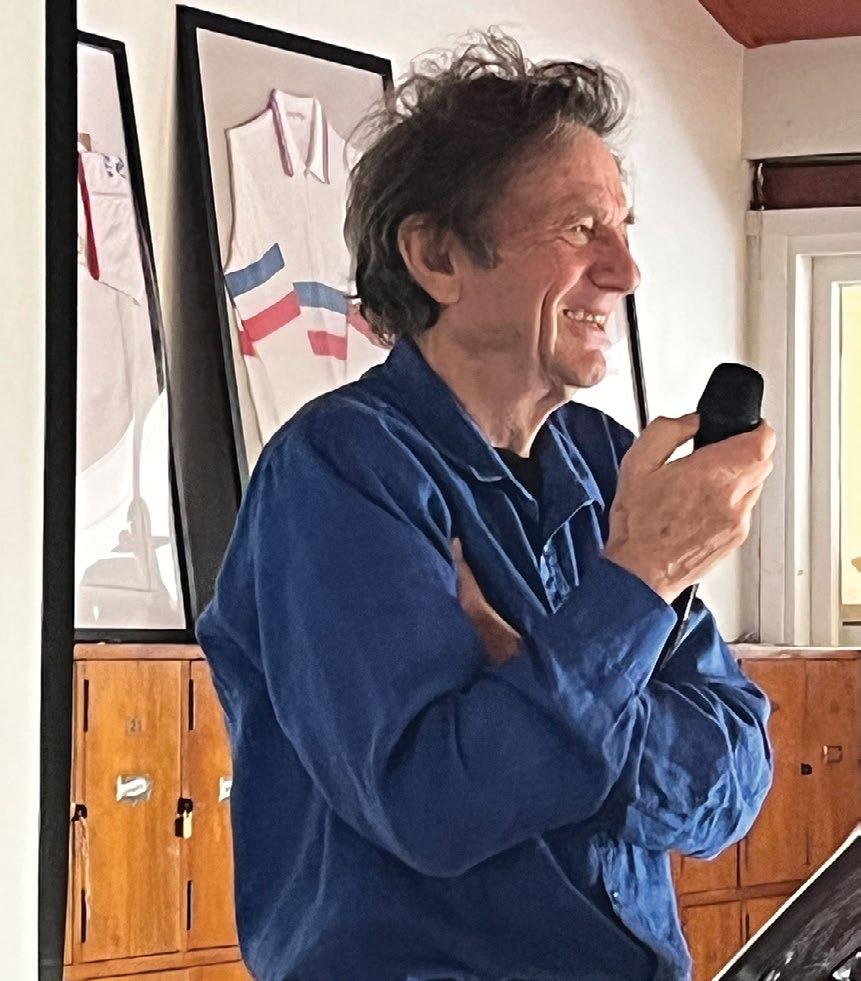
The Ponsonby U3A July meeting was entertained by an interesting and practical presentation from well-known Auckland architect Malcolm Walker.
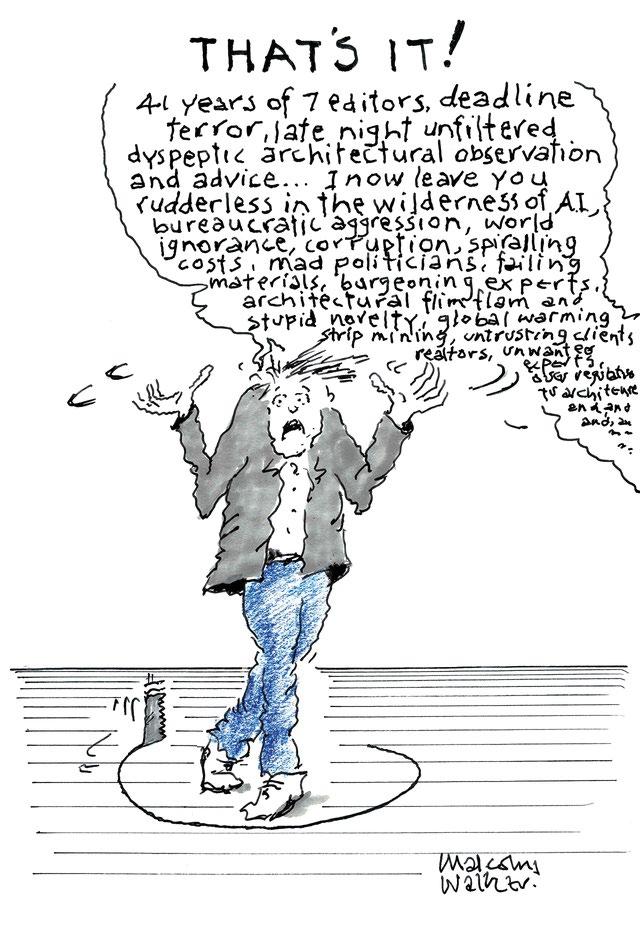
Malcolm was known to several U3A members because of his remedial work on older villas and bungalows and being the recipient of the 2015 Auckland Architecture Award (Sod the Villa – Reynolds McLintock House) by the New Zealand Institute of Architecture. Malcolm is also a talented cartoonist. He considers cartoons and architecture to have much in common. In both cases it is essential to peel away the superfluous and get back to the bare bones and ensure the essence of any cartoon or architectural design answers the right questions.
Malcom’s presentation covered his long and distinguished career in Auckland. During his early days, studying at the University of Auckland, a strong interest in drawing developed into a passion for both architecture and cartooning. As a cartoonist, his skills led to cartoons in numerous magazines and newspapers including the Dominion Post. The recently closed 'Architecture Now' journal, the mouthpiece of the New Zealand Architectural Society, frequently included his cartoons.
In his presentation, Malcolm stressed the absolute need for thorough planning and the incorporation of welcoming spaces where the resident can feel a sense of contentment and security. Malcolm spoke of his concerns about the current proliferation of strip housing and multi-story apartments which he found to frequently be cold and uninviting; too many narrow corridors; too many small rooms which were often compromised by two doors opening within the relatively small areas. He has always seen strength in generous welcoming front doors. In many modern houses there is no such generosity.
Malcolm stressed the importance of detailed planning prior to any development; scale models being a great way to judge the space while the location of the sun throughout the day significantly influences the layout and setting/
angle that the dwelling presents to the sun. Utilising scale models can significantly assist in optimising any design. Malcolm also expressed his concern and frustration at the increasingly bureaucratic attitudes taken by Auckland Council staff whose demands are increasingly more difficult to meet. He shared with the audience several examples of such frustrations.
At the end of the presentation, Malcolm generously fielded several questions from the one hundred-plus U3A audience. He shared his limited appreciation of the current plethora of architect-related TV programmes which frequently highlight the gloss and glamour of both the setting and/or the owners but lack a real appreciation of the architectural issues themselves.
Unfortunately, hiccups in the audio/video presentation to U3A did not enable the audience to enjoy examples of Malcolm’s cartooning skills.
Malcolm’s generosity to share and interact with U3A members his views on Auckland City’s current architectural issues was warmly applauded.
NEXT MEETING: Friday, 14 August
SPEAKER: Professor Simon Thrush – The Hauraki Gulf
VENUE: Herne Bay Petanque Club, Salisbury Reserve, Salisbury Street, Herne Bay
Cartoon – Malcolm Walker “That’s it” | Architecture Now
NEWS FROM THE LEYS LITTLE LIBRARY
Kia ora,
August is a big month for Auckland Libraries. August is dedicated to We Read Auckland/ Ka Pānui Tātou i Tāmaki Makaurau, a celebration of reading. Throughout public libraries across the city there will be talks by a dazzling array of authors including Barbara Dreaver, Witi Ihimaera Smiler, Nalini Singh, Elizabeth Easter and Toby Morris. There are also writing workshops, a writing contest for rangatahi and an expanded Bestie Collection. So, it is worth having a look at the libraries’ website for information on this busy month.
Waitematā Libraries (that’s Leys, Parnell and Grey Lynn) are very excited about our We Read Auckland author talk. Charlotte Grimshaw will be discussing her new book, Black Monk, with fellow writer Dr Paula Morris (Ngāti Wai, Ngāti Manuhiri). Black Monk is the story of Alice Liddell who deals with her brother’s addiction, which triggers painful memories of her Auckland childhood.
The book has been described as, "part psychological thriller and part family saga, examining themes of shame, addiction, truth and the stories we tell to survive." Paula Morris has written this, about Charlotte Grimshaw, "She has few peers as a fiction writer and essayist, and as a reviewer and public intellectual.” You can also buy books (courtesy of the
Women’s Bookshop) and there will be time for book signing and chats with both writers.
This incredible event takes place on: Saturday 15 August, 2pm-3:30pm Venue: Grey Lynn Hall
In addition to the We Read Auckland events, there will be 24 new Bestie Books added to the collection. The new Besties will all be by authors from Tāmaki Makaurau. What is a Bestie? Popular books that have a two-week loan period, with no renewals or holds, all to ensure a faster turn around and easier access. Some Besties will also be available on our digital platforms Libby and OverDrive.
That’s it – we look forward to seeing you either at Leys or at the Grey Lynn Hall for Charlotte Grimshaw’s talk.
LEYS INSTITUTE LITTLE LIBRARY, 14 Jervois Road, T: 09 377 0209, www.aucklandlibraries.govt.nz leysinstitutelibraryponsonby@aklc.govt.nz
MIKE LEE:
MY LAST-DITCH ATTEMPT TO PAUSE PLAN CHANGE 120
For too many Aucklanders, Plan Change 120 has become another chapter in an increasingly time consuming, confusing battle to defend the peaceful enjoyment of their homes and properties.
PC120 and its earlier version, PC78, has already taken five years and costed $14 million. The process will drag on until late October 2027. But by then, Auckland will be dealing with an entirely new planning system.
The current Government describes its new legislation as "the greatest change to resource management law since the Resource Management Act 1991". That matters because Auckland’s Unitary Plan, including PC120, sits entirely within the RMA framework. Once the replacement legislation is enacted, the parent Unitary Plan is due to be reviewed and aligned with it.
So why push ahead with a process that will need to be substantially revisited almost as soon as it is finished? At the recent council planning committee, I proposed an amendment to pause PC120 until Parliament finalises its new legislation and Auckland knows what planning framework it will be operating under. After a long debate the amendment was lost, 15 votes to 7.
A numerical analysis of the 10,557 public submissions on PC120, revealed 6840 (64.8%) opposing, 3048 wanting major amendments, and only 614 (5.8%) in support. Council is once again out of touch with public opinion.
In this ward, St Marys Bay, Freemans Bay and Parnell are targeted for 15-storey apartment towers. These historic streets of wooden, mainly kauri, lovingly maintained villas and cottages, have long been protected as Special Character Areas (SCA). Under PC120, across inner Auckland 4735 special character homes are to be ‘upzoned’ for intensification, 1005 in this ward. Approximately 80 per cent of the St Marys Bay SCA – arguably the oldest surviving residential part of Auckland – is targeted for destruction.
The original stated reason for further intensification was the order from central government to provide for two million extra potential dwellings. On the census average of three persons per dwelling, this would mean six million extra people –despite already inadequate infrastructure. Due to intense public pressure the Government reduced that; first to 1.6 million, then 1.4 million. Despite this, the council is still pushing ahead with provision for 1.5 to 1.7 million extra dwellings. This on top of the extra 235,000 still available under the existing Unitary Plan.
While there is much talk about intensification along the rail corridors, this week we learned a proposed apartment complex over the new CRL Wai Horotiu train station has failed to attract even one buyer. Furthermore PC120 has made no provision to intensify around the NorthWest Busway stations. Is public transport the real driver here?
A clue is the proposed ‘walkable catchments’ to be imposed on this ward, despite well-argued opposition from former Environment Court Judge Laurie Newhook. The internationally accepted standard for rapid transit is an 800-metre walking
distance over level terrain. For this ward the planners have extended the distance by 50% to 1.2km in some of the city’s steepest suburbs, as justification for intensification. Clearly, the objective is to open up Auckland’s northern slopes with its commercially valuable harbour views to high-rise development. It seems the key driving force is pressure from the influential property sector.
That will not be a minor adjustment. It will permanently wreck Auckland’s most distinctive historic areas. The piecemeal destruction of these unique townscapes set in human-scale garden suburbs will mean a special part of Auckland will be lost forever and replaced by pepper-potted, 15-storey luxury apartment towers.
The evidence for this is reinforced by a 10km circle, a sort of bullseye, planners have drawn around the inner city and harbour. This is a radical departure from the effects-based philosophy underpinning the RMA. As I told the meeting, "You don’t need a Bachelor of Urban Planning degree to draw a circle around a commercially desirable area – a real estate company sales manager could do that."
One thing is clear – PC120 is not about making houses more affordable. That’s done by building houses and providing low interest loans to help people into them – especially first home buyers. Not by deregulating the planning rules to suit vested interests.
Pausing Plan Change 120 would preserve the work completed while allowing it to inform Auckland’s next planning framework. Given the reforms coming from Wellington, and the damaging consequences for communities like St Marys Bay, the prudent course is to pause, take stock and get it right. (MIKE LEE) PN
www.mikelee.co.nz
photography: Jonathan Killick
KEN RING:
WEATHER BY THE MOON AUCKLAND WEATHER DIARY, AUGUST 2026
August may be the wettest month of 2026, with well above average rain, below normal sun although average temperatures.
The first week may be changeable, and the second week the wettest and cloudiest with lowest pressures. The third week may have least rain and highest pressures, and the fourth week may see clear nights. Unfortunately, there is no rainfree weekend, but 22nd/23rd may see only light showers. The barometer may average around 1006mbs.
For fishermen, the fourth largest king-tide of the year is on or near the 14th. The best fishing bite times in the east may be around dusk times of 12th-14th and 29th-31st. Bite chances are also good around lunchtimes of 5th-7th and 19th-21st.
For gardeners, pruning is best 1st-8th, and 27th-30th (waning moon descending), whilst planting is best on 14th-22nd (waxing moon ascending).
For preserving and longer shelf-life, prevent waterlogging by harvesting crops or flowers on the neap tides of the 7th and 22nd.
Allow 24-hour error for all forecasting. (KEN RING) PN
For future weather for any date, and the 2026 NZ Weather Almanacs, see www.predictweather.com
Opinions expressed in Ponsonby News are not always the opinion of Alchemy Media Limited & Ponsonby News.
USING AI FOR YOUR TAX RETURN
A Helpful Assistant or Risky Shortcut?
We know people turn to AI tools for all sorts of things including when they're getting ready for tax time, and that's not a bad thing in itself. When used well, it can genuinely save time. Used carelessly, it can land you in trouble with Inland Revenue. The difference comes down to understanding what these tools are actually good at and where they fall over.
Where AI genuinely helps:
When used as an aid for the unglamorous groundwork; pulling together bank statements, sorting expenses into categories, spotting patterns in your spending you'd otherwise miss. If it means your accountant spends less time chasing receipts and more time on the work that requires judgement, that's a win for everyone.
It's also a reasonable starting point if you want a plain-English explanation of how something like deductibility generally works or how income is typically treated. Think of it as a way to walk into a meeting better informed, not as a replacement for the meeting or your thinking.
Where it gets risky:
Be concerned the moment AI starts making decisions rather than organising information. New Zealand's tax rules are specific, and a lot of AI tools are trained predominantly on overseas, US and UK content. The context of your situation is important. We have seen situations where an AI-generated summary can confidently apply an overseas GST/VAT/Sales Tax treatment that simply doesn't exist here. It wasn't a wild guess, it was stated as fact with the kind of confidence that makes you trust it when you shouldn't.
That's the core problem with AI tools: they don't know what they don't know, and they'll never tell you that. A trust structure, a relationship property matter, an overseas income question —these depend on the specific facts that apply to you and the intent behind a transaction, and that's a judgement call, not a pattern match.
Always protect your privacy and credentials
Important to note: don't ever put your IRD number, bank details, or passwords into a public chatbot. Once this information is typed in, you've lost control of where it goes. If you're using AI features inside proper tax or accounting
software, that's a different and much safer proposition, but the free, general-purpose tools were never built with your financial privacy or personal confidentiality in mind.
Accuracy vs guesswork
If you're missing information for your tax return, AI is not the tool to fill the gap. Guessing a figure because it looks plausible is exactly how penalties and interest charges start.
Know where to draw the line
None of this is an argument against using AI tools; they are useful for the right things. It's an argument for knowing the line between what speeds up the admin and what requires someone using their judgement who's actually accountable for getting it right. AI can help you arrive better prepared, but it can't take responsibility for the answer. Ultimately, that’s your responsibility.
If in doubt, treat the output as a first draft of your thinking, not a final position and bring it to your advisor before you act on it.
Disclaimer – While all care has been taken, Johnston Associates Chartered Accountants Ltd and its staff accept no liability for the content of this article; always see your professional advisor before taking any action that you are unsure about.
BREAST CANCER CURE ANNOUNCED AS CHARITY PARTNER AT NZ FASHION WEEK
Breast Cancer Cure (BCC) is proud to announce its role as Charity Partner of New Zealand Fashion Week Presented by Giltrap Group 2026.
A one-off runway event at Shed 10, Auckland Waterfront on Friday 21 August at 1pm will bring together some of Aotearoa’s most iconic fashion designers for a powerful celebration of creativity, community and purpose, all in support of life-changing breast cancer research in New Zealand.
The runway will showcase collections from an exceptional line-up of Aotearoa designers including Augustine, Bendon, COOP, Cooper, Curate & Trelise Cooper, Federation, Kathryn Wilson, Knuefermann, Moochi, NOM*d, Repertoire, RUBY, Storm, Superette, TUESDAY LABEL, Untouched World and Zambesi.
Breast Cancer Cure CEO Sonja de Mari says the partnership with New Zealand Fashion Week represents an important platform to unite fashion and philanthropy on a national stage. “Fashion Week is an iconic moment in New Zealand’s creative calendar, and we are honoured to be named Charity Partner in 2026,” says de Mari. “This show brings together some of our country’s most celebrated designers in support of a cause that touches so many lives. Every ticket helps fund research that is changing the future of breast cancer in Aotearoa.”
New Zealand Fashion Week continues to champion local design talent and industry innovation, with organisers welcoming the return of purpose-led storytelling to the runway, creating a powerful stage where fashion, creativity and a meaningful cause intersect. The exclusive Breast Cancer Cure show will feature a curated line-up of designers presenting their latest collections in a single, high-impact runway experience. Every ticket will support New Zealandbased researchers working towards improved prevention, earlier detection, more precise treatment and better outcomes for all affected by breast cancer.
With limited capacity, the event is expected to sell quickly as supporters, patrons and fashion lovers secure their place at one of the most anticipated shows of the week.
Event details:
New Zealand Fashion Week Presented by Giltrap Group 2026 Fashion for a Cure – Runway, Shed 10, Auckland Waterfront Friday 21 August 2026, 1pm, One Runway. One Cause.
Iconic New Zealand Designers at the Intersection of Fashion and Purpose. Breast Cancer Cure encourages guests to secure tickets early, with proceeds directly supporting vital breast cancer research in Aotearoa.
NZ FASHION WEEK WELCOMES DAILY BREAD AS PARTNER FOR 2026
A celebration of craft, provenance and the very best of Aotearoa.
New Zealand Fashion Week (NZFW) has recently announced an exciting collaboration with Auckland’s acclaimed bakery and hospitality brand Daily Bread, bringing an elevated, chef-led food experience to the event when it returns to Shed 10 from 17–22 August 2026.
The collaboration reflects a shared philosophy between two proudly owner-operated New Zealand businesses built on craftsmanship, creativity and an unwavering commitment to quality. Just as New Zealand's leading designers transform premium materials into garments with purpose and longevity, Daily Bread approaches food with the same respect for provenance, local producers and meticulous execution.
Together, NZFW and Daily Bread will celebrate the makers, growers, artisans and creatives who continue to shape contemporary Aotearoa culture. "We're thrilled to welcome Daily Bread to New Zealand Fashion Week," says Liam Taylor. NZFW Executive Director. "The most authentic partnerships are built on shared values, and this is exactly that. Fashion and food are both expressions of creativity, craftsmanship and storytelling. Daily Bread's commitment to local producers, exceptional quality and genuine hospitality mirrors the values we champion through New Zealand fashion. Together we're creating an experience that feels unmistakably Aotearoa, celebrating the incredible talent and expertise that exists right here at home."
Leading the culinary direction is renowned New Zealand chef Tom Hishon, co-founder of Daily Bread and formerly of Kingi and Orphans Kitchen. Known for championing seasonal ingredients, local suppliers and refined yet approachable dining, Hishon will oversee the hospitality experience across the week. "We're excited to bring Daily Bread and an elevated food experience to New Zealand Fashion Week this year,” says Hishon. "I believe there are many common principles and threads we share together with our local designers, creativity, craft and utilising the natural resources around us to create a narrative that is unique to this part of the world.
"Guests can expect two distinct Daily Bread experiences throughout the week: A dedicated Daily Bread Pop-Up Café will welcome visitors into the precinct with exclusive pastries created especially for NZFW alongside signature Daily Bread favourites, Coffee Supreme coffee, All Good plant milks, Liquid Lightning juices and a selection of special eventonly offerings."
Beyond the café, the wider food and beverage programme will be curated by Hishon and the Daily Bread team, delivering a hospitality experience that extends far beyond what guests would traditionally expect from a fashion event. Across the week, guests can expect a menu of thoughtfully curated dishes, from Daily Bread Hot Spelt Pretzels with whipped goat’s cheese & hot honey, to Fiordland Wapiti croquettes and artisan charcuterie plates. In the VIP Lounge, the offering steps up to include separate day and evening menus, including an afternoon ‘high tea’, a daily Te Matuku oyster hour, post-show desserts and plenty of Champagne to boot.
The hospitality programme brings together some of New Zealand's leading culinary and events talent, including celebrated NZ chef Tom Hishon, event manager Lauren Grima, whose experience includes both Melbourne Fashion Festival and Australian Fashion Week, hospitality creative Al Keating, beverage direction from Dave Horan and Good Spirits with a dedicated cocktail activation, Daily Bread Brand & Marketing Manager Tessa Wilson, and many familiar faces from the Daily Bread team led by Robbie and Donnie.
The partnership reinforces NZFW's commitment to championing New Zealand excellence across every aspect of the event, from the runway to the dining experience, showcasing the creativity, craftsmanship and collaborative spirit that define modern Aotearoa.
New Zealand Fashion Week takes place at Shed 10, Auckland, from 17–22 August 2026.
photography:
Evie MacKay
PHIL PARKER: ALBARIÑO – THE HOT NEW WHITE WINE
This month, something new.
Albariño (pronounced Al-Ba-Reenyo), is a Spanish grape variety with crisp, citric and fruit flavours. The main home of the albariño grape is the lush and rainy Rías Baixas region in Galicia, located in northwest Spain. In Portugal, the albariño grape is known as alvarinho. It is primarily grown in the far northwest, which is renowned for its white wines.
You may have noticed albariño popping up on restaurant wine lists or the bottle shop over the last five years. From Kumeu to Waiheke Island, to Gisborne and Hawkes Bay, to Marlborough, wineries are quietly producing our own NZ version of this European grape staple.
It is a quite subtle yet fascinating alternative to the regular white go-to wine options of sauvignon blanc, pinot gris and chardonnay. Like the early days of our last groovy white, pinot gris, winemakers are exploring different styles, from bone dry to lush and fruity and finding their feet.
Flavour profile varies, but can include citrus acidity, saline minerality, pineapple, peach, nectarine, apple juice, hay, herbs and baking spices.
Babich Marlborough Single Vinyard Albariño 2024 (organic, vegan) - $25
Stone fruit, flinty minerality and crisp lemon citrus. Bone dry and light bodied, yet at a deceptive 14% ABV. A hint of tangy yeast and hint of herbal thyme.
Available: Pt Chev Organic Wines, winebox.co.nz
Gemtree Small Batch McLaren Vale (Aus) Albariño 2024 - $48
Light to medium bodied and fruity. Pineapple, apple juice and peach, with hints of honey and soft lime acidity, with a tad of star anise.
Medium bodied. The most approachable of the three IMHO. Pineapple and guava, tangy yeast, apple juice, clover honey, lemon citrus, orange zest and a lengthy rich palate.
Available: Pt Chev Organic Wines, winebox.co.nz
www.insidertouring.co.nz (PHIL PARKER) PN
www.finewinetours.co.nz, phil.parker@xtra.co.nz
host, Phil Parker, wine writer
Boutique tours to Waiheke Island & Kumeu · Bespoke Fun Wine quizzes by arrangement
FACES AT GREY LYNN FARMERS MARKET
Ban Aldin brings her artisan olive oil to Grey Lynn Farmers Market fortnightly.
Where did you grow up?
Baghdad, in Iraq. I loved living in a big city but some of my fondest memories are from our holidays in the north, experiencing village life and the abundance of fruit and nut trees and generous food and a strong sense of family and community.
Is that where you picked up a desire to grow your own food?
Yes – and growing up in a war-torn country taught us to be resourceful. We re-used, recycled and grew vegetables and fruit trees to adapt to challenges.
What about study?
My parents always encouraged us to get a good education and urged me to go to university abroad to develop a strong cv. I studied civil and structural engineering at Cardiff University before returning home to work in construction as an engineer for eight years during the Gulf War.
How did that lead you to New Zealand?
When New Zealand encouraged engineers and doctors to move here in the mid 90s, I took advantage of the opportunity to live somewhere peaceful. My English husband, a fellow engineer, arrived at the same time – that’s how we met. Now we have two daughters born in New Zealand, our Auckland home and a Northland olive grove.
Tell us about your olive grove.
Our grove is in the Kaipara. We were looking to plant a grove from scratch and were delighted to find land with 30-yearold trees that had not been sprayed, plus plenty of space to plant more.
Was spray-free important to you?
Absolutely – our vision and practice is to follow natural, organic principles but we have not gone through the expense of formal certification. The old trees also hadn’t been pruned in recent years, so we are gradually trimming them back to a more manageable height.
Harvesting is an intense time for olive growers – how does that work at your grove?
Luckily, we have lots of eager friends and volunteers who look forward to helping with the annual harvest. There is a lot of chatter and laughter and, of course, we put on a spread to feed our volunteers.
I understand that there is a strong community of growers. We love that supportive community. Everyone loves to share news and research. I got to know Leon Narbey, who was a long-time vendor at Grey Lynn, and I particularly remember him telling us about his visit to Italian olive groves and experiencing their harvests.
And you press your olives with another previous Grey Lynn vendor?
Yes – our oil is pressed locally in Wellsford by Greg Scopas from Salumeria Fontana. He sometimes sold his oil at the market when Leon wasn’t able to.
You preserve some of your olives, not just pressing them all for oil.
That’s part of my heritage. My parents always preserved olives and I have always followed that approach. I eat them at home, give them to my friends and I bring jars of olives to the market.
Tell us about your experience at Grey Lynn.
I’m enjoying being part of the community, getting to know other stallholders and regular market customers. I like the way vendors often bring their children to the market and my daughter likes to help me at the market too.
Do you have any hobbies?
Cooking – especially Middle Eastern food. And I love to travel when we can. I’m hoping to visit some Canadian friends later in the year if global dynamics don’t derail my plans. While I’m gone, my daughter will bring our oil to the market. PN
Born from the rugged beauty of Aotea Great Barrier Island, The Aotea Company is built on a simple idea: creating premium, nature-led products that carry the island’s spirit into everyday life. Founded by Bayard Sinnema, the business blends sustainability, provenance and community into brands that celebrate connection, flavour and the joy of summer.
Leading the portfolio is Barrier Buzz, a naturally bold range of non-alcoholic beverages made with real ingredients and authentic Aotea mānuka honey. Available in Cola, Lemonade and Ginger Beer, each bottle delivers clean, honest refreshment with genuine character — perfect for beach days, boat trips, backyard BBQs or long evenings shared with friends. It’s soda, but with a sense of place.
Complementing this is Stumpy & Chop, a premium selection of sustainably sourced mānuka and kānuka wood splits and chunks designed for BBQ cooks and outdoor fire enthusiasts. With rich aromas and distinctive smoke profiles, Stumpy & Chop elevates everything from low-and-slow brisket to a simple weekend grill. It’s about the ritual of lighting the fire, slowing down and bringing people together around good food and natural flavour.
Together, Barrier Buzz and Stumpy & Chop embody The Aotea Company’s belief in better by nature — products that respect the land, honour local sourcing, and create memorable shared experiences.
Available now and perfectly timed for the warmer months, The Aotea Company invites you to bring a true taste of Aotea into your summer — whether it’s a chilled bottle in hand or the glow of a well-stoked BBQ at dusk.
theaoteacompany.co.nz
BARRIER BUZZ
A range of naturally sweetened sodas with Aotea mānuka honey. @drinkbarrierbuzz
STUMPY & CHOP
Premium mānuka and kānuka splits and chunks for superior BBQ smoking.
Delivered to your door from Grey Lynn in time for summer.
www.theaoteacompany.co.nz
DINNER : Tuesday to Sunday from 5:30pm
LUNCH : Saturday from 12 noon
Tuesday : Test Kitchen - $80pp
Wednesday/Thursday : BYO & Duck Dinner for two - $95 + $25 corkage
Photography: Babiche Martens
Friday : Steak Frites w Unlimited Truffle Fries - $49.50pp
Sunday : Prix Fixe Menu - $75pp
OPEN 7 DAYS!
MICHELIN Guide Sommelier Award
NEW tasting menus and À la carte available $75 Prix Fixe menu on Sunday & Monday
Champagne Lunch bookings are now open - $120pp
4-Course lunch with a glass of champagne on arrival
Highlighting the skills, knowledge, and passion of talented sommeliers in the industry, this year’s Sommelier Award is bestowed to Matthew Aitchison , General Manager and Sommelier of The French Café , a MICHELIN Selected restaurant. Matthew leads the service team with a calm, relaxed and approachable style, underpinned by strong organisation and deep wine knowledge. His passion for hospitality is reflected in carefully curated wine experiences and precise food pairings that elevate the meal. He has built one of the city’s most impressive wine lists: broad in scope, thoughtfully composed and especially strong by the glass.
Winter Resilience: Ayurvedic Wisdom for Keeping Your Family Healthy.
Winter in Auckland often brings cold, rainy and damp weather. According to Ayurveda, this is the Kapha season, when the qualities of heaviness, coldness and moisture naturally increase in both nature and our bodies. As Kapha accumulates, many people notice recurring colds, coughs, the flu, congestion, sluggish digestion and low energy. It is also the time of year when viruses and gastro bugs can easily sweep through families, placing extra strain on both the digestive and immune systems.
The good news is that Ayurveda offers simple yet powerful daily practices to strengthen your resilience and help keep you and your loved ones healthy throughout winter.
One of the most effective places to start is with your diet. During the Kapha season, choose warm, freshly cooked meals that are easy to digest. Reduce heavy foods such as excess dairy, rich desserts and alcohol, as these can further increase Kapha. Instead, embrace warming spices that stimulate digestion and help clear excess mucus. Ginger, turmeric, chilli and cayenne pepper kindle your digestive fire, improve circulation and support your body's natural defences.
If your digestion feels sluggish, don't force yourself to eat simply because it is meal time. Avoid grazing between meals, enjoy your largest meal at lunchtime when digestion is naturally strongest, and keep dinner light and easy to digest.
Ayurveda also places great importance on the morning routine, known as Dinacharya, to reduce the build-up of Ama, metabolic waste products or toxins that contribute to disease when digestion is impaired. Begin your day with tongue scraping to remove overnight toxins, followed by oil pulling to support oral health. A warm self-massage using a dosha-specific oil helps improve circulation and calm the nervous system.
Herbal medicine also plays an important role in supporting immunity during winter. One of Ayurveda's most celebrated ingredients is Amalaki, also known as the Indian gooseberry or Amla. Naturally rich in vitamin C and powerful antioxidants, Amalaki supports healthy immunity, digestion, elimination and overall vitality.
Two classical Ayurvedic formulations containing this remarkable fruit are Chyawanprash, a traditional herbal jam enjoyed by the whole family to build strength and immunity, and Triphala, a renowned blend of Amalaki, Bibhitaki and Haritaki that gently supports digestion, detoxification and healthy bowel function.
For those looking for a deeper seasonal reset, Ayurveda recommends Panchakarma, its traditional cleansing and
rejuvenation programme. One of our regular clients recently shared after completing her second Panchakarma:
"Feeling on top of the world! I cannot believe the results again. I feel lighter both physically and mentally; my gut microbiome has improved beyond my expectations, as have my skin and sleep. I will definitely make this a yearly routine as I feel so much healthier.” Nene Dale, Matakana
To help you stay well this winter, Ayurveda New Zealand is offering 15% off our Chyawanprash, Triphala, Brahmi Brain Boost, Ayurvedic Abhyanga Massage, Shirodhara and Infrared Sauna. Simply use the code WINTER15 and give yourself and your family the gift of vibrant health this winter.
(SARITA SOLVIG BLANKENBURG) PN
For bookings and further information visit www.ayurvedanz.co.nz
WHILST RIFLING THROUGH DAME JOAN SUTHERLAND'S WIGS AND UNDERGARMENTS
In a replay of an old Dickensian novel I had once read many years ago, it had seemed like the best of times and the worst of times – what could be worse while wrapped in the luxury of a 5-star cruiser?
We had traversed the ditch between the Bay of Islands and Sydney, with the seas alternating one minute to the next between a washing machine on high cycle, to a flat azure calm that Mother reminded me I had so often promised her on previous crossings and which, much to her chagrin, had not eventuated until now – albeit briefly.
Some nights we had endured the ship’s best china moving ever so surreptitiously across the starched white linen and where our wine glasses had to be held firmly by their stems lest they be tipped onto our laps, to other nights where the equilibrium of the ship had returned to a stable and steady movement and where even Mother could negotiate the companion ways without appearing drunk.
In addition and with great excitement, I can also report that at least the pool had been refilled and a day out from our first port in Australia we were able to luxuriate under a sunny sky on the outside decks drinking obligatory and, I might add, complimentary margaritas, whilst being waited on hand and foot by the best that the Regent Line could provide.
Cruising life had at last returned to normal.
'Cupcake Thursday' had come and gone, upholding its American origins, the ship had offered such gastronomic delights in their cupcake menu as 'rocky road', 'peanut brittle' and 'pumpkin pie'.
All a little too patriotic for Mother and I – we had avoided the American flag-draped offerings and reached for the English Breakfast tea and scones with clotted cream, peering over our china cups at the American Passengers ooohing and aaahing over the nod to their homeland.
The acrobatic troupe had returned to the stage in a final effort of completing their act and had performed to a standing ovation after an hour of pikes, twists and cartwheels on ropes. Our Entertainment Director, Ray, finishing off the show by crooning in a Tom Jonesesque rendition of 'Do You Think I’m Sexy', to all of the older crowd sitting in the front row, proving that old troupers don’t die, they just go out of tune.
Finally, the Sandstone Heads at the entrance to Sydney Harbou, had reared up before us, announcing the transit up the harbour in a predawn light and where slowly the vista of the Pacific's second best city was to be spread before us.
Mother had organised a back room tour of the Opera House, which promised hidden glimpses of the action behind the stage. Unfortunately, its promising headlines and great look in the brochure became more a front of house than rifling through Dame Joan Sutherland's wigs and undergarments, as you would expect a behind the scenes tour to provide. Thus no viewing of sets (copyright infringement apparently) or kitchens or set design studios (also out of bounds due to security), but a very well told story of the building's inception and more recent refurbishment.
The 2000 individual concrete and steel ribs holding the roof up, the 17-metre piles plunging into the strata below the harbour, the NASA designed tiles and finally the trials and tribulations of the Danish Architect, Jorn Utzon, in the way he was treated by the Australian Government – his employers –until he finally quit the project in a pique and never returned to Australia.
The building has since been given World Heritage Status and considered to be one of the finest examples of modern architecture but he stood to his word and never returned to the country that reveres him and receive the accolades he deserves.
Then it was back to the ship, with the dulcet tones of Ray welcoming everyone onboard. That man is everywhere. One minute he is organising tour groups, the next standing at the hull door with a welcoming glass of Champagne in one hand and a cooling hand towel in the other, asking everyone if they had a good day. Fortunately, there was to be no more singing.
The setting sun sat behind fluffy clouds, lighting them in a golden glow as we backed out into the harbour and sailed off into the said sunset. Trails of jazz and laughter following in our wake with the pop of a Champagne cork from somewhere in the bowels of the ship. Mother and I retired to the comforting interior of the restaurant for our penultimate night on board, hopefully in a protected shelter of the Australian coastline.
(ROSS THORBY) PN
SIX-THIRTY SESSION:
SHEKU & ELGAR
Didn’t make it to Prince Harry and Meghan Markle’s wedding? See their superstar cellist, Sheku Kanneh-Mason, in action with Auckland Philharmonia instead.
Making his New Zealand debut this August, the young star has already sold out one Auckland performance. This makes his Six-thirty Session concert: Sheku & Elgar the only opportunity to see one of the most in-demand classical artists. His highlights include winning BBC’s Young Musician of the Year through to being an Artist-in-Residence at the New York Philharmonic.
Kanneh-Mason will perform Elgar’s beautiful Cello Concerto, the last major work Elgar composed and written the year after World War I ended. Then hear Sibelius’ heroic Fifth Symphony, with its iconic swan theme.
Perfectly timed so you can enjoy an incredible performance by Auckland’s orchestra and still make a dinner reservation at 8pm, this makes the ideal post-work catch-up with friends. As the must see concert of the year, you don’t want to miss Sheku.
Six-thirty Session: Sheku & Elgar 6.30pm, 12 August Auckland Town Hall
aucklandphil.nz
Sheku Kanneh-Mason
photography: Chris O’Donovan
photography: Ollie
Ali
AN INVESTMENT IN AUCKLAND'S FUTURE:
WHY MASSIVE THEATRE COMPANY MATTERS
Just a few minutes from the cafés and boutiques of Ponsonby, Auckland’s future is being shaped by the stories and voices of its creative young people.
From its home in Grey Lynn, Massive Theatre Company continues a 35-year legacy of creating bold, original theatre while nurturing multiple generations who have gone on to become actors, directors, teachers, community leaders and confident citizens. Thousands of rangatahi from across the country have found their voice through Massive – not simply as performers, but as people.
Today, the company's Grey Lynn base is a place where people at all stages of their careers gather to tell stories, challenge themselves creatively and discover the confidence that comes from being truly seen and heard.
Now, that work is under threat.
Creative New Zealand's (CNZ) recent investment announcement included a significant reduction in funding for Massive Theatre Company, with its annual CNZ investment falling by almost 60 percent. For an organisation that has consistently delivered outstanding artistic work and deep community impact, the decision is a sobering reminder of the increasingly fragile environment facing the arts in Aotearoa.
The effects reach far beyond the stage.
Massive has never been solely about producing theatre. At its heart, it is a place where all people are seen, heard and challenged to discover their potential. Through free workshops, year-long training programmes, schools partnerships and professional productions, the company creates opportunities that many simply would not otherwise have.
For many rangatahi, particularly those from communities under-represented in the arts, Massive is the first place where they are encouraged to tell their own stories and where those stories are valued. In a world where young people are navigating unprecedented social pressures, isolation and uncertainty, that sense of belonging can be life changing.
The skills developed through theatre extend well beyond performance. Collaboration, resilience, communication, empathy and creative thinking are qualities every community needs, regardless of whether a young person ultimately pursues a career in the arts.
Some of New Zealand's most recognised performers began their journey with Massive. Many more have taken what they learned into countless other professions. The company's true success is measured not only by the productions it creates, but by the confidence and capability it instils in the young people who pass through its doors.
For those who call Ponsonby, Grey Lynn, Herne Bay and the surrounding neighbourhoods home, Massive is more than another arts organisation. It is part of the cultural fabric that makes central Auckland such a vibrant place to live.
These suburbs have long valued creativity. They are home to galleries, independent businesses, architects, designers, writers, musicians and entrepreneurs who understand that thriving communities are built on more than economic success alone. Culture gives a neighbourhood its character. It creates places where people want to live, work and raise families.
The arts also generate economic value, attract visitors, support local businesses and strengthen Auckland's international reputation. But their greatest contribution is often less visible. They foster empathy. They encourage dialogue. They help communities understand themselves and each other.
That is why organisations like Massive deserve to be viewed not simply as recipients of funding, but as long-term investments in Auckland's and Aotearoa’s future.
Public funding has always formed only one part of the picture. Around the world, many of the most successful arts organisations thrive because communities choose to invest alongside government. Philanthropy has shaped some of the world's great cultural institutions, ensuring they remain accessible while continuing to innovate and inspire.
Auckland has a proud tradition of generosity. Many of the city's schools, hospitals, galleries and community organisations have flourished because individuals and families recognised the importance of giving back. The arts deserve to be part of that conversation.
Supporting organisations like Massive is not simply about preserving theatre. It is about ensuring that talented young New Zealanders continue to have somewhere to discover who they are, develop their potential and contribute to the cultural life of this city.
The recent funding decision presents challenges, but it also presents an opportunity for the wider community to recognise what is at stake.
For 35 years, Massive Theatre Company has invested in New Zealand's young people. As it looks towards its next chapter, perhaps this is the moment for New Zealand to invest in Massive.
Because when young people are given the opportunity to tell their stories, our communities become richer for hearing them.
Read more about Massive Theatre Company at www.massivecompany.co.nz
Massive Theatre Company’s HOME MADE performers
Photography: Andi Crown
ST MATTHEWS CHAMBER
ORCHESTRA LIVE
Soloist: Jonah Levy
Conductor: Michael Joel – Beethoven 5 Sunday 16 August 2.30pm
Jonah Levy is a trumpet player from San Francisco, California. He has made a name in the trumpet world as a teacher, recording artist, soloist and orchestral player. As an orchestral musician, he has most recently played with the San Diego Symphony, the Auckland Philharmonia Orchestra, the Tucson Symphony Orchestra and the Orquesta Filarmonica de Jalisco. Jonah currently plays with the Auckland Philharmonia as their tenured Sub-Principal Trumpet for the 2026 season.
Over the past decade, Levy has been heard as a member of the Grammy nominated ensemble Wild Up, as well as a host of other top international orchestras and bands.
Levy is equally at home in the worlds of studio recording, contemporary music, jazz, klezmerand experimental art and was lauded by the New Yorker’s Alex Ross as an “assassin of the ordinary” for his appearance as a rooftop soloist in the industry’s ‘Hopscotch opera’ production in 2015.
David Kay is a versatile conductor and horn player based in Auckland.
David has been with the Auckland Philharmonia since 2008, but from 2009 made his conducting debut and embarked on a new chapter involving conducting. The podium work includes a range of events, performances with various community programmes and workshops, and his passion for music with young people has enhanced his reputation as a sought-after leader of workshops and master classes in New Zealand.
St Matthew’s Chamber Orchestra is an accomplished orchestra performing a wide repertoire of music specifically providing performance opportunities for New Zealand musicians, composers and conductors.
Tickets: Event Finder or Door sales. EFTPOS or Cash.
Adults $35 Concessions $30 Children under 12 free. Student Rush on the day $15
ST MATTHEW-IN-THE-CITY, corner Wellesley and Hobson Streets. www.smco.org.nz
Symphony No 70 in D Hummel Trumpet Concerto in E Mozart Die Zauberflöte Overture K 620 Beethoven Symphony No 5 Op 67 in C minor
Gilbert & George were interviewed by Evan Woodruffe for our August 2022 Issue
Check our Ponsonby News website, and social media pages for the latest information to find out about local businesses and issues. Scan the QR code and sign up via our website to get a reminder when the new issue is published online.
THE NATURAL FUNERAL COMPANY
Two years on, The Natural Funeral Company continues to quietly build a reputation for meaningful farewells.
Based in Eden Terrace, the company offers natural, bespoke and traditional funeral services, with an approach centred around helping families honour life in a way that feels genuine to them. Whether families are wanting something simple and intimate or a larger, more personalised farewell, the team works alongside them to create services that feel authentic, meaningful and reflective of the individual.
With more than four decades in the funeral profession, John brings calm guidance and trusted industry knowledge to families during difficult times, while Tanya helps create the warm and approachable environment the company has become known for.
The business has also recently welcomed funeral director Kelsey McSkimming to the team. Kelsey began working in the funeral industry nearly 14 years ago and has worked across a range of roles before graduating with a Diploma in Funeral Directing in 2019. Joining the business part time, she brings a modern perspective to the profession.
Much of The Natural Funeral Company’s growth in recent years has come through word of mouth and personal recommendation, with the team continuing to provide a more personal and relaxed experience for families.
Aquarius (the Water Carrier)
21 January - 19 February
Time for change is upon you and whether it’s the right time or not you have to go with it. Once it’s done and its over and you realise that this was the best move to make, you will wonder what all the fuss was about in the first place.
Pisces (the Fishes)
20 February - 20 March
You can share your burden if you let go of the reins a little and this is something you have to do in all aspects of your life. You have to trust other people with responsibility and then you can start to enjoy the fruits of your labour a little bit more.
Aries (the Ram)
21 March - 20 April
You always see the best in people and want to believe that most have your best intentions at heart, but be careful as there is always someone out there who is willing to take advantage of you.
Taurus (the Bull)
21 April - 21 May
You are ready to let your hair down but you have been denying yourself the pleasure for too long. Put aside the obligations that you always face for only a moment in the grand scheme of things and enjoy the pleasure of friends and family.
Gemini (the Twins)
22 May - 21 June
You seem to have a different outlook on life at last and eventually you’re seeing the bigger picture. If you’re overwhelmed at any time, be smart and don’t be afraid to ask for help.
Leo (the Lion)
23 July - 21 August
You have had a newfound burst of energy lately and it’s contagious. Not only are you feeling invigorated but also you have found a passion for something that at one time you thought was lost forever.
Virgo (the Virgin)
22 August - 23 September
Keep your advice to yourself this month as a well-intentioned remark could seriously backfire. If anyone asks for your advice on anything, feign ignorance and let them sort out their own problems.
Cancer (the Crab)
22 June - 22 July
If you go around supporting others like you do you may find it a problem when you need support. Learning to sit back and let someone else do what you do is hard to watch but sometimes you have to let others do the hard work.
Scorpio (the Scorpion)
24 October - 22 November
If you are worried about your financial affairs now is the time to get them sorted, you might think your ok because you have a bit of cash in the bank but that doesn’t mean your well off. Get help in if you need it.
Sagittarius (the Archer)
23 November - 22 December
You feel like you can now enjoy the fruits of your labour after working so hard recently, but this doesn’t mean that you can sit back and do nothing. You need to find a balance between what you want to do and the work you have to do.
Libra (the Scales)
24 September - 23 October
If you’re in a relationship or partnership you’ll find your other half being super attentive and willing to work hard this month. Don’t question what’s going on. If they want to go into overdrive let them, you deserve the rest.
Capricorn (the Goat)
23 December - 20 January
You seem to be approaching life head on at the moment and you never have enough hours in the day or night to do what you want to do. Be careful though as burning the candle at both ends will ultimately have an impact if not on you then those closest to you.
We
• Completely clear the
including garages & assist with the sale of possessions (No commission taken).
• Provide detailed inventories.
•
ARE YOU A SENIOR LEADER IN YOUR ORGANISATION, OR ASPIRING TO BE ONE?
Management magazine strives to inspire New Zealand leaders with insights and critical future-based thinking that helps you define who you are as a leader, how you want to lead and learn how others want to be led.
If you want to hone your leadership skills and tap into your aspirations, join our nationwide readers who turn to our digital publications for ideas and global perspectives that may change the way you think and the way you lead.
Visit www.management.co.nz to discover more, or scan the QR code to subscribe to our digital issue for free.
ARE YOU A PONSONBY BUSINESS OWNER?
Grow your business with expert insights from NZBusiness magazine. Join the many local entrepreneurs who turn to our digital publication for inspiration, advice, and success strategies. Don’t miss out!
Visit www.nzbusiness.co.nz or scan the QR code to subscribe for free today!