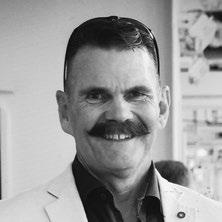
In your April issue, self-described community advocate Gael Baldock reports on “self-described ‘urbanist’” Alain Bertaud’s talk. I think his credentials speak for themselves. Her takeaway of what his message was differs from mine. However, that’s understandable. But I must challenge her description of the 15-Minute City concept as 'restricting movement to 15 minutes' vehicle travel from your home and punishing with fines those who exceed this distance.'
That is nonsense promoted by yet another conspiracy theory. Many of us reading this live in the Ponsonby area and surroundings. I think it is nice to be near shops, cafes and so on with many transport options including walking, cycling, scootering, bussing or indeed driving your car. I’d rather have those options than just one: living in a suburb with no commercial or community facilities nearby and my only option to get anywhere being a car. However, others may have a lovely little spot where they live and don’t mind the commute to shops or work. Auckland has plenty of options there and will continue to have them.
Auckland’s shift towards more density of apartments, especially near public transport, won’t suit everyone but it will offer a greater variety of options for housing. This is quite the opposite of Baldock’s assertion that “Kiwis don’t like being controlled where we can go within our city.” But then I’m a lecturer in a school of architecture and planning as well as doing quite a bit of urban design commentary in the media, so I would say that wouldn’t I? I’m probably part of the conspiracy…
Bill McKay
WHY BOTHER RECYCLING?
On Wednesday 22 April at 3.31pm, I witnessed a Venetia contractor emptying the public bins, both the recycle and the standard bin contents went into the same bag before going into their truck.
This is the second time I have witnessed this happening.
Then, later that evening, while at a gallery opening in the Grey Lynn Village, I spoke with another Venetia contractor emptying a public bin outside the takeaway. I asked if recycle was separated. He said, “it all goes to the same place.”
Venetia’s contract includes looking after our parks.
A local group of volunteers look after the Japanese Garden at Western Springs Lakeside Park because Venetia can’t keep the water clean, even though they have about a dozen subcontractors supposedly maintaining it. Surely a local park ranger would be a cheaper and better solution? They could also educate visitor against feeding bread to the birds.
Venetia’s contract is up for renewal in October. Should Auckland Council continue using this Australian contractor, or should they support a local having this work?
Gael Baldock, community advocate
A FEW LOCAL UPDATES
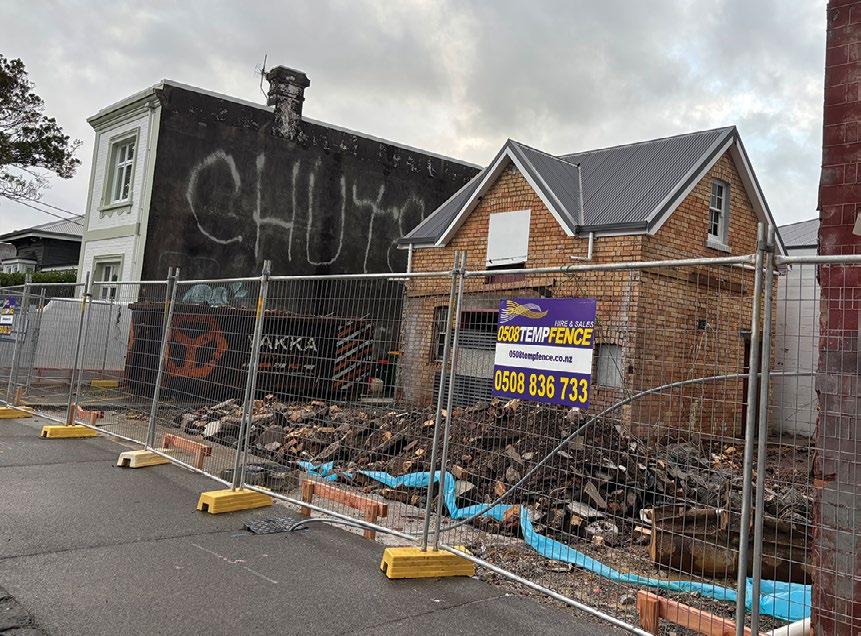
The Admore Road building with the mural has been demolished.
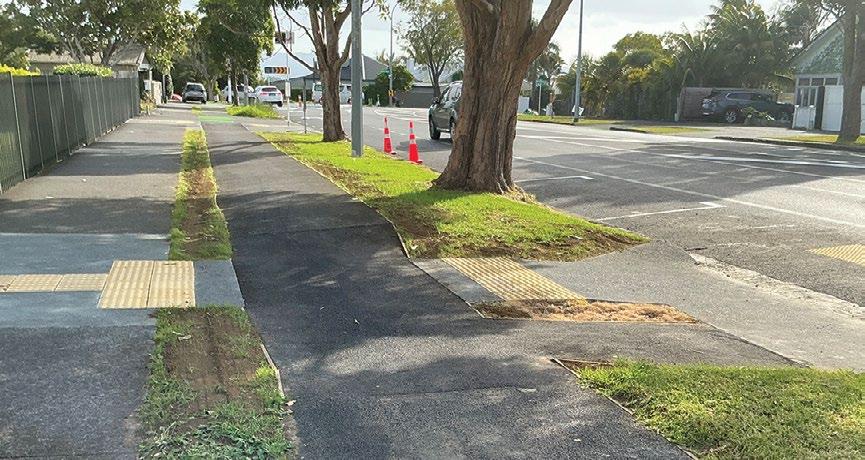
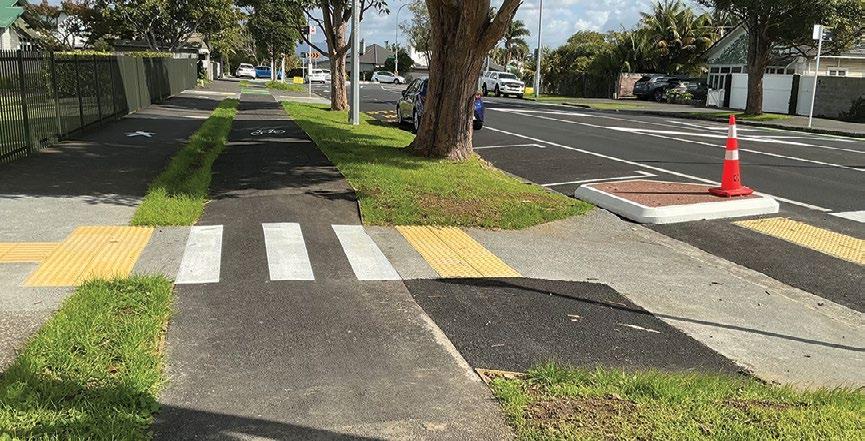
The silly strip of grass at the zebra crossing outside the Mormon Church hall on Surrey Crescent has been tar sealed over. Sensible decision all on their own, a complaint from community or did they read the Ponsonby News?
Works at the top of the Bullock Track have been altered with off street parking for the resident and widening of the road at the left turn from Surrey Crescent. This makes the Waitematā Local Board backing of the Auckland Transport proposal for lights or a roundabout at this intersection unnecessary and impractical when these works have just been completed, as well as a waste of money for ratepayers. There are two sets of traffic counters on the Bullock Track.
LETTERS CONTINUED ON PAGE 7
Opinions expressed in Ponsonby News are not always the opinion of Alchemy Media Limited & Ponsonby News.
Gael Baldock, community advocate
The team here at Ponsonby News loves watching house and garden programmes on our screens.
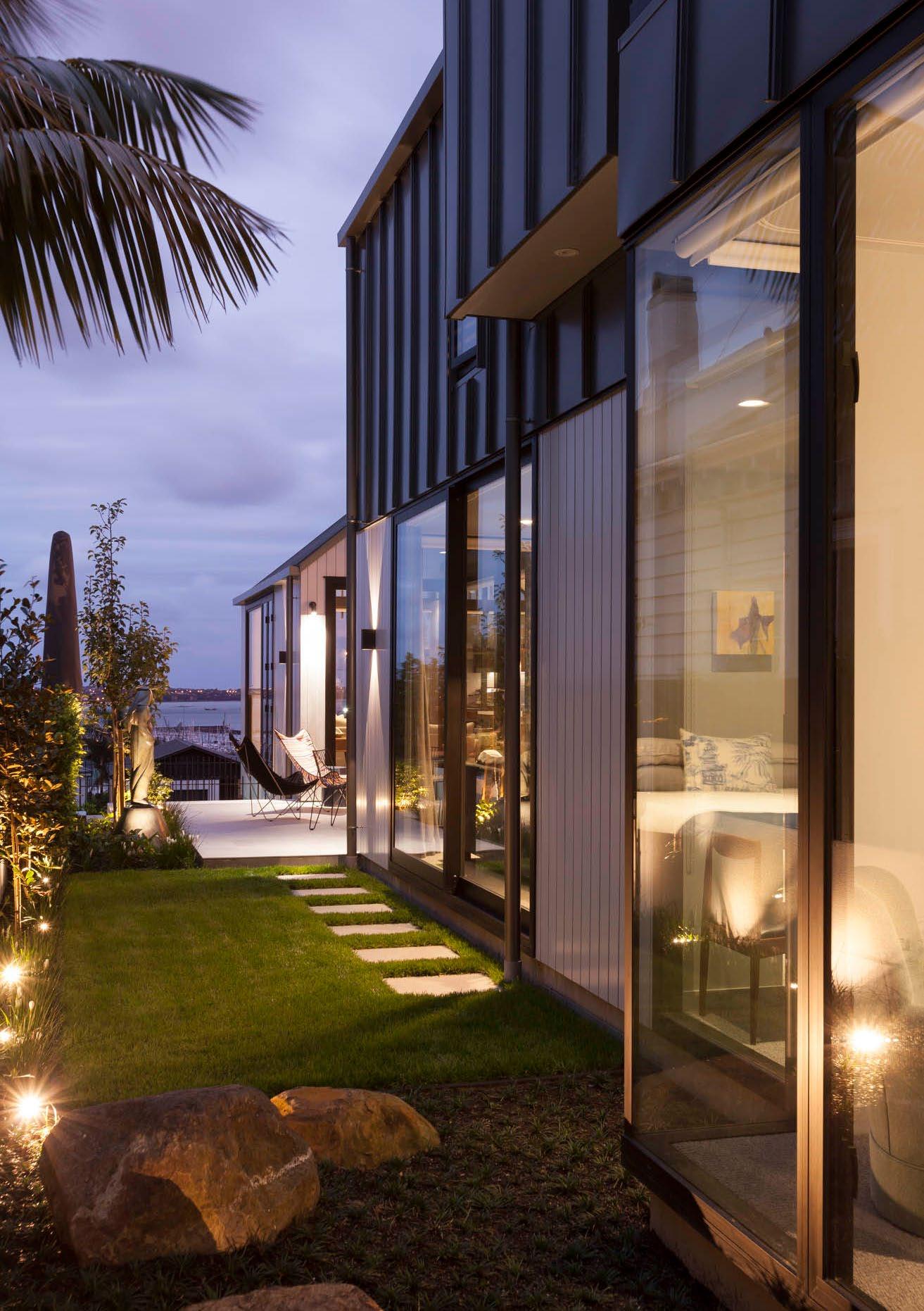
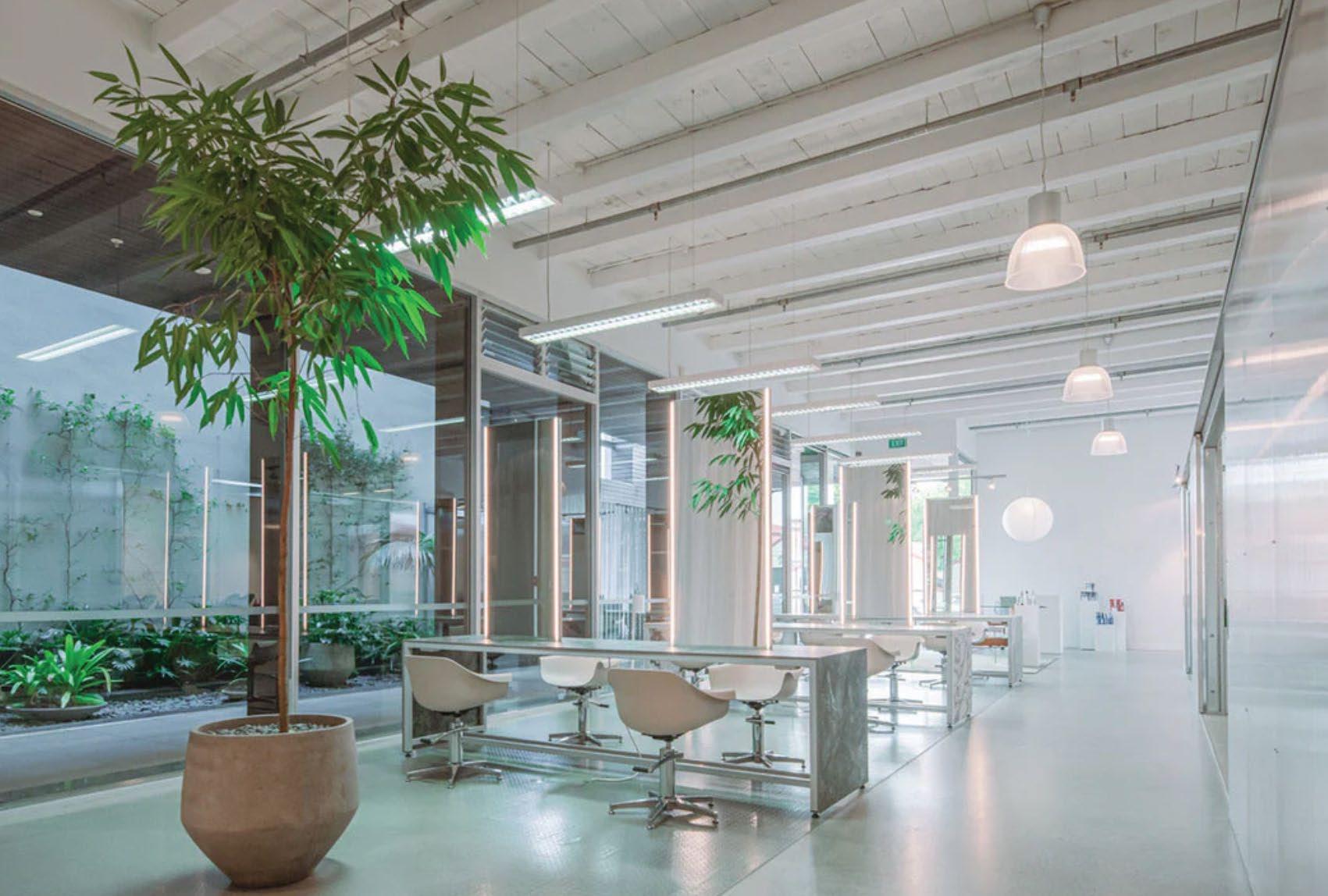
This month, we feature Robin O’Donnell Architects, a boutique architectural practice that specialises in bespoke residential alterations, additions and new builds.
This award-winning practice was founed 27 years ago and has an established reputation in its architectural niche, having won a number of prestigious NZIA Architectural Awards over the years. The principal – Robin O’Donnell – is also a greater Ponsonby local who has lived in both Grey Lynn and Herne Bay for over 35 years. Let his team help you achieve the home that you have always dreamt of - P12
We also talk to Home Ease Solutions, a new business led by Kim, who brings a wealth of life experience and a practical, hands-on approach to preparing houses for sale. They are a one-stop shop for a sale-ready home - P14
Five years ago, Clinic 1 opened their doors on College Hill with a small team, a carefully selected range of advanced treatments and a clear vision to create a space where resultsdriven aesthetics meet genuine care - P16
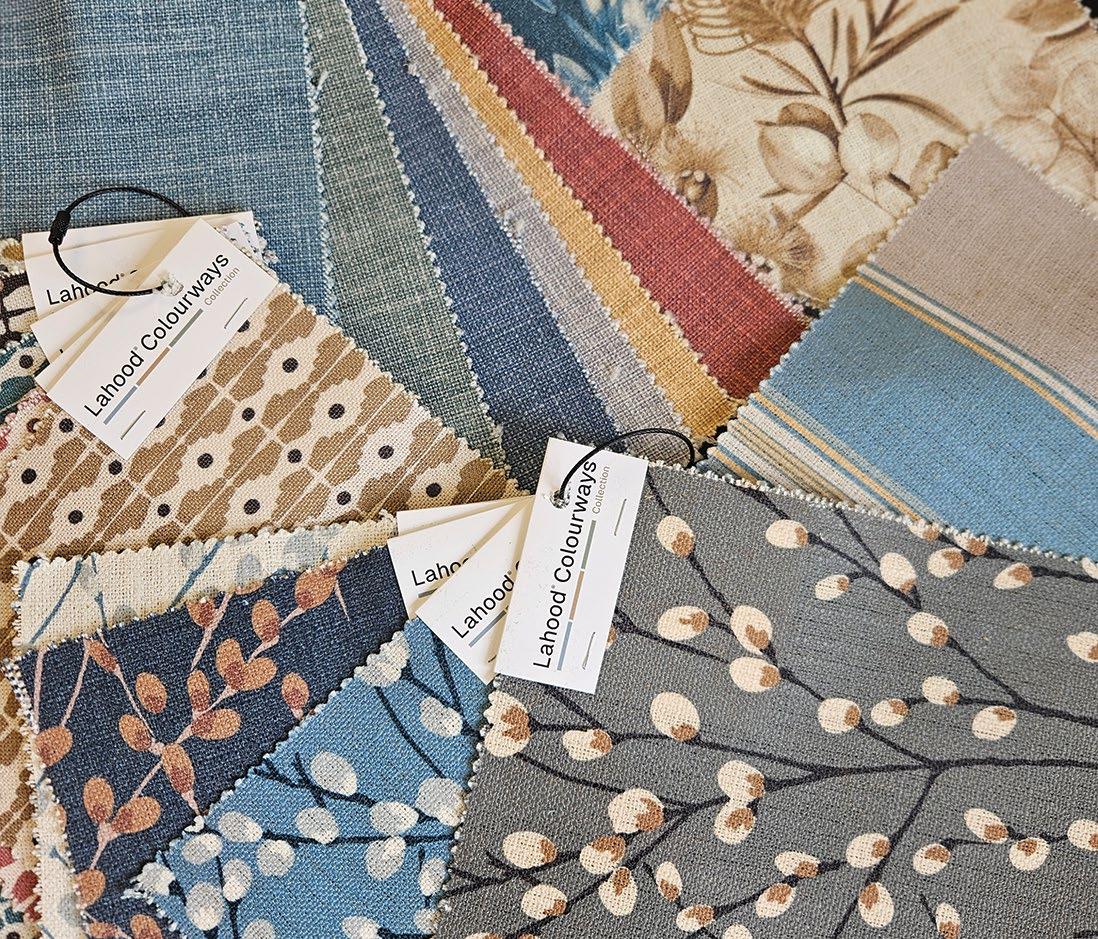
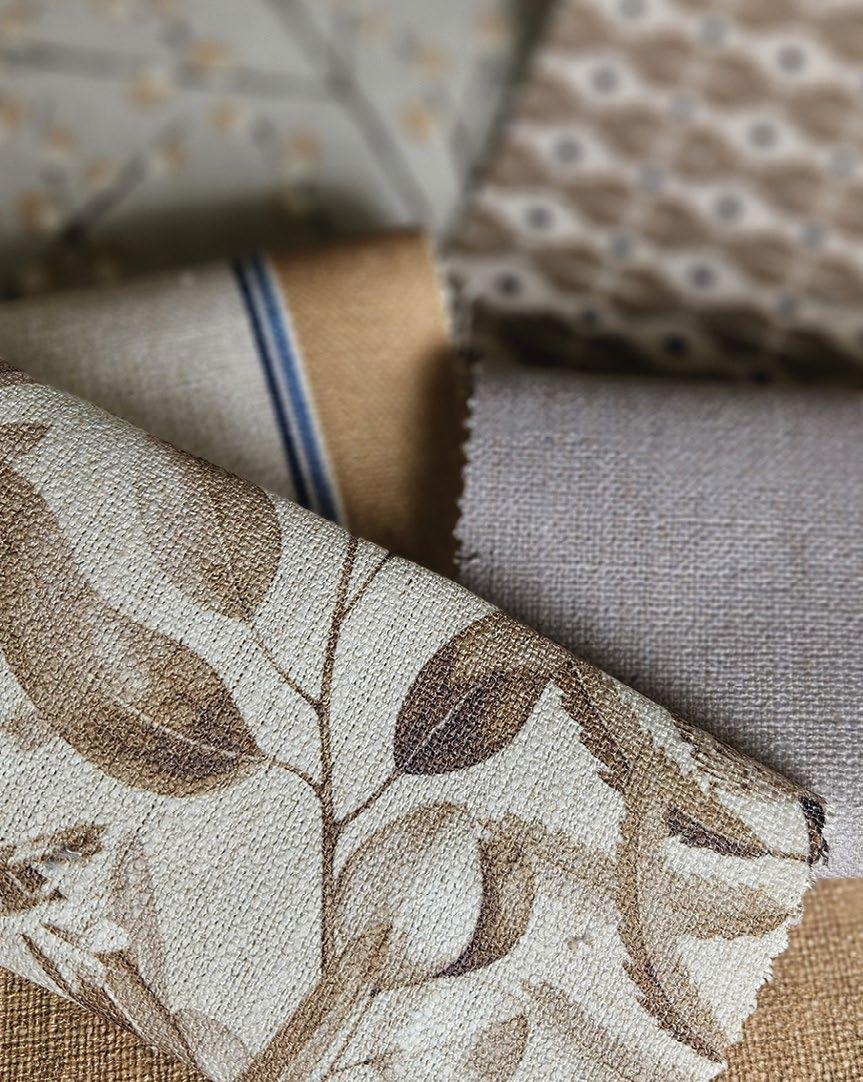
Last month, we attended the launch of ‘CONFIDENTLY COLOURFUL’, the Lahood Colourways Collection. If you need a freshen up, they are offering 25% off all curtain making on all Colourways fabrics throughout May 2026 - P18
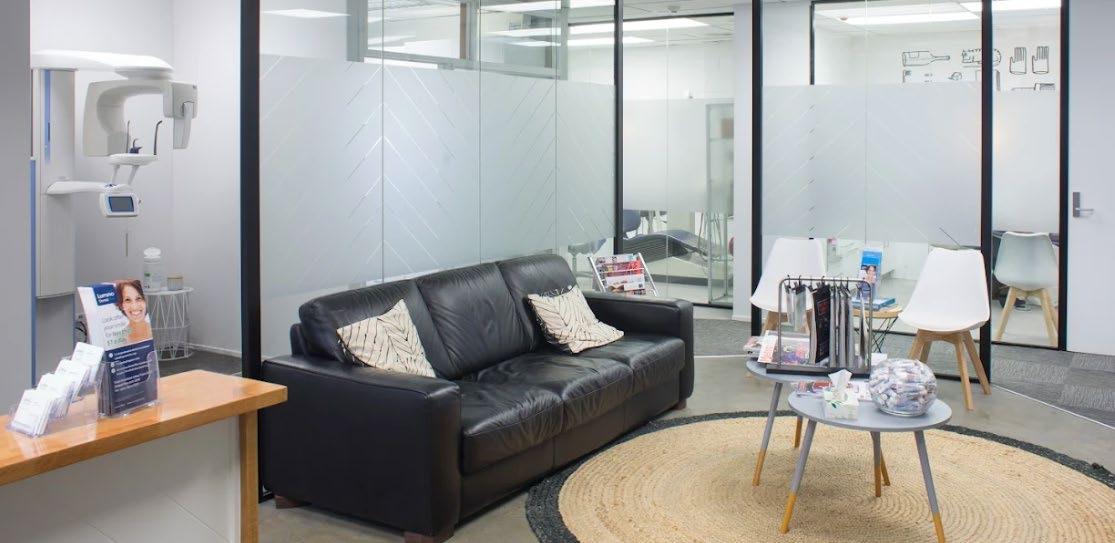
This month we also catch up with Lumino Ponsonby, who have a simple philosophy: great dentistry starts with great people - P20
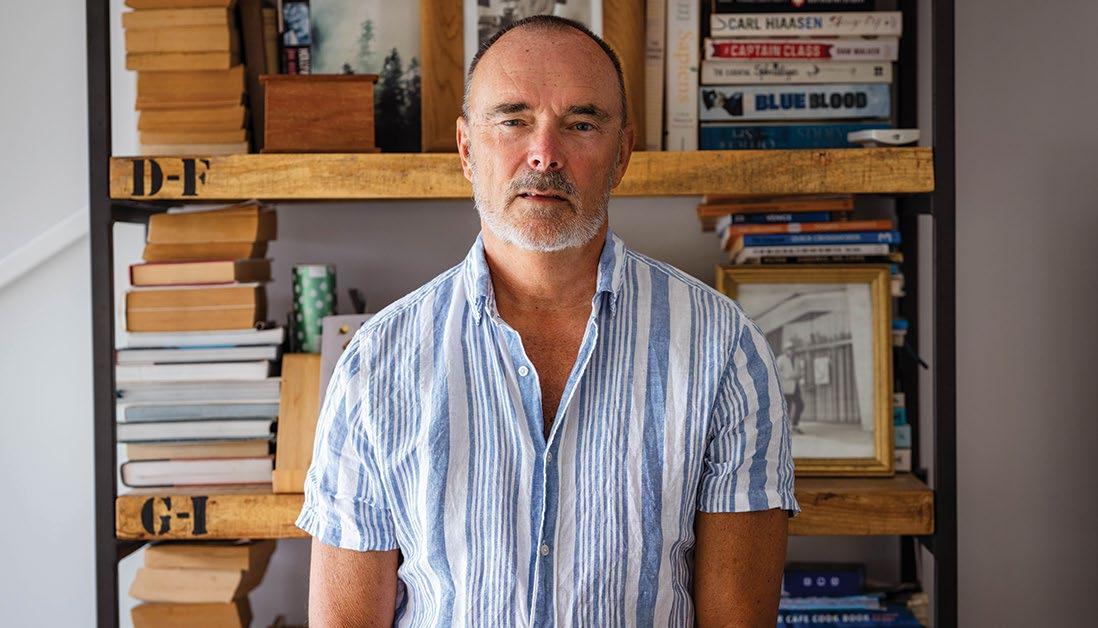
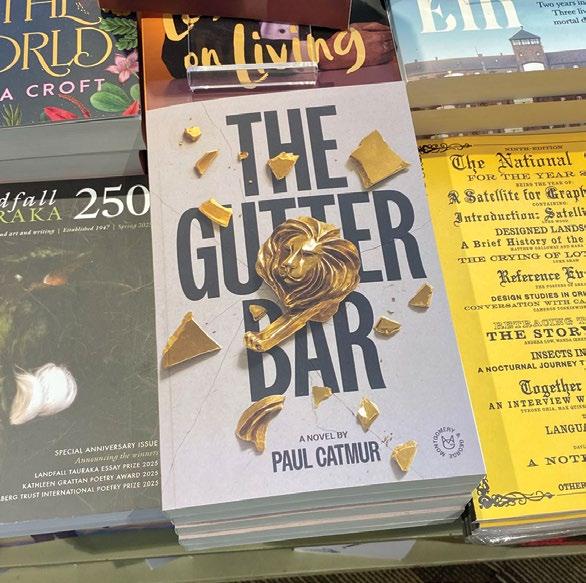
The ‘Gutter Bar’ is an extremely funny, satirical novel set around the advertising industry in London and the annual global shindig in Cannes. Paul Catmur, who has lived in the Ponsonby area since arriving from the UK in 2000, recently published his first book - P24
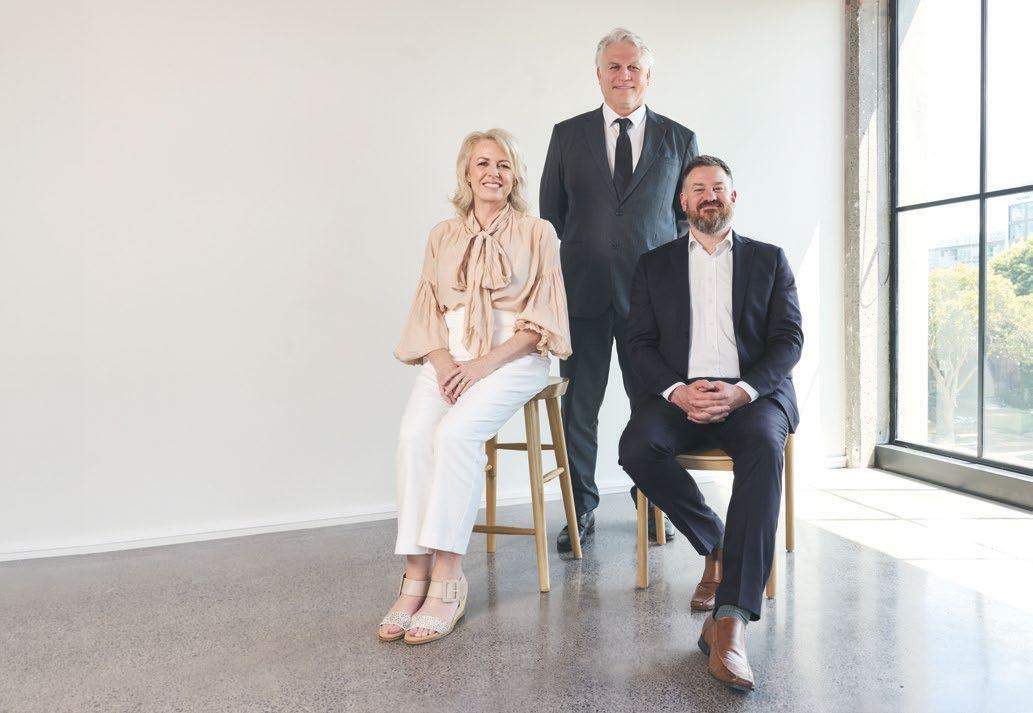
Jay Platt & Martin Leach
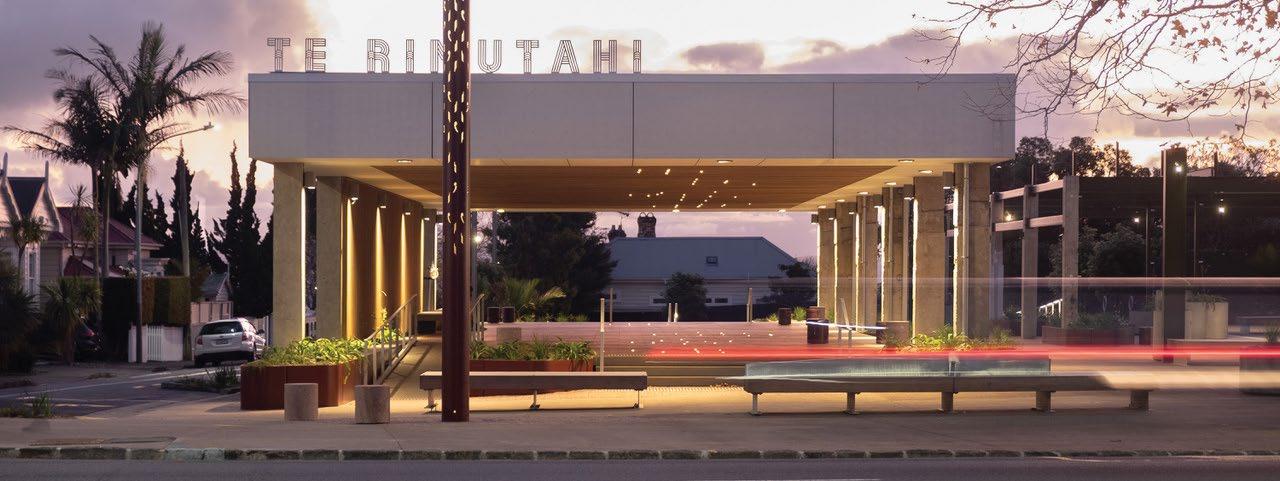
Te Rimutahi is one year old this month, having officially opened on 17 May, 2025. Already, Te Rimutahi is a community hub and a welcome destination in the heart of Ponsonby - P38
Ponsonby Kindergarten recently celebrated (26 February) its 100-year birthday with a community afternoon tea - P50
SCAMS ARE GETTING SMARTER. AI tools can now clone a person’s face, voice and writing style in seconds, making it nearly impossible to tell real from fake. But the face is often just packaging. The engine is usually the message itself: the script, the call to action, the pressure and the promise - P54
(JAY PLATT & MARTIN LEACH) PN
Photography: Connor Crawford
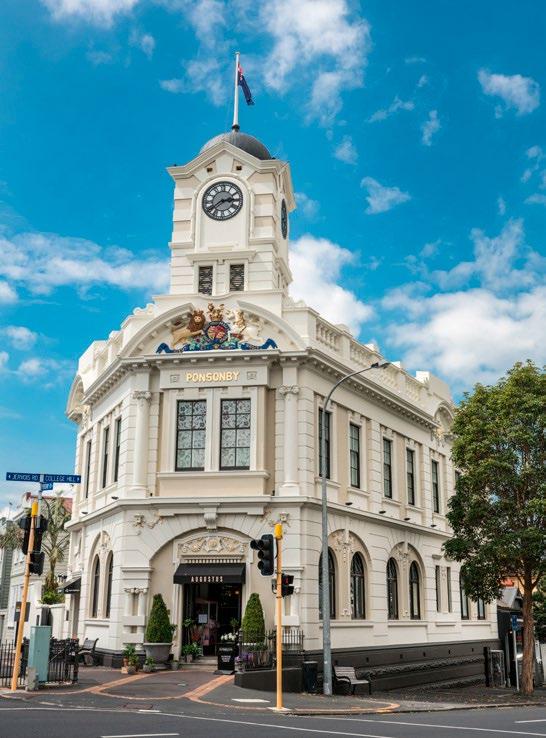
Cover
Editor/Publisher: MARTIN LEACH M: 021 771 147 martinleach@xtra.co.nz or martin@ponsonbynews.co.nz
Deputy Editor: JAY PLATT M: 021 771 146 jayplatt@xtra.co.nz or jay@ponsonbynews.co.nz
Designer: ARNA MARTIN M: 021 354 984 arna@cocodesign.co.nz
The entire content of this publication is protected by copyright. All rights reserved. No part of this publication may be reproduced, stored in a retrieval system, or transmitted in any form or by any means - electronic, mechanical, photocopying, recording or otherwisewithout the prior permission, in writing, of the copyright owner. Colour transparencies and manuscripts submitted are sent at the owner’s risk; neither the publisher nor its agents accept any responsibility for loss or damage. Although every effort has been made to ensure the accuracy of the information contained in this publication, the publisher can accept no liability for any inaccuracies that may occur.
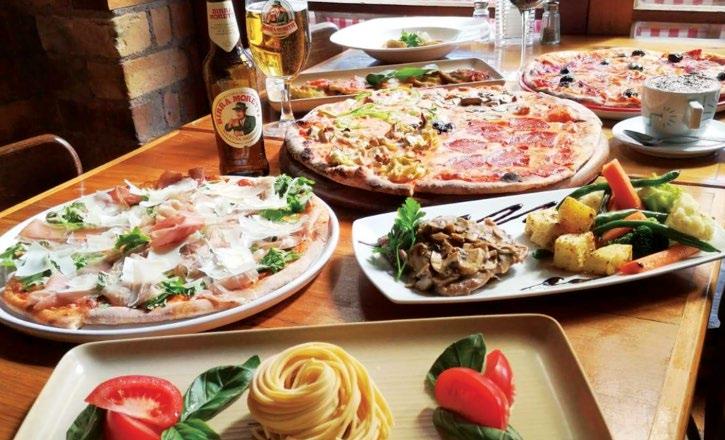
- Gusto Italiano -
GUSTO MEANING ‘TASTE AND ENJOYMENT’
When you dine with us, the focus is on freshly prepared classic dishes, featuring an excellent range of pasta, seafood, meats and our pizza classics.
We also offer our pasta dishes to takeaway, phone for details or check our website for the menu.
CONTINUED FROM PAGE 4
BULLOCK TRACK – SURREY CRESCENT AND OLD MILL ROAD
Good afternoon Alex
I understand that Waitematā Local Board is considering addition changes (not "improvements" as AT calls them) to the intersection at the top of the Bullock Track.
No further work is needed or wanted by local residents and it's time to stop wasting our money on 'make work' projects that are being concocted by bureaucrats looking to secure their highly paid salaries now that they have been exposed as being excess to requirements by the council executive and the councillors.
Nothing is needed to ‘improve' this intersection, Alex. Indeed, I was surprised at how well the intersection was working when the road management control markings were PAINTED ON – only to see a total waste of our money being expended by placing completely unnecessary mini traffic islands that achieve nothing and no benefit whatsoever that the painted markings had not already achieved.
It's time to stop your bureaucrats from wasting even more of our money.
Please confirm that this idiot idea of traffic lights at the top of the Bullock Track has been cancelled and consigned to the 'not ever needed basket' in your office.
Roger Hawkins, Herne Bay
BULLOCK TRACK AND SURREY CRESCENT
We have lived at the corner of Bullock Track and Surrey Crescent for 27 years. I was surprised to learn – via a Facebook post rather than any formal communication –that Auckland Transport (AT) is considering changes to this intersection.
As an immediate neighbour, I would expect early consultation. To date, I have seen none. Yet in a conversation with AT
design engineer David Boulton, the project was repeatedly described not as an investigation, but as a concrete plan to ‘signalise' the intersection.
While AT has publicly suggested it is exploring options (including doing nothing, installing a traffic island, or other alternatives), the repeated framing of the project as a plan to install traffic lights suggests a predetermined outcome. When I raised the possibility of a roundabout, I was told this had effectively already been ruled out. While AT claims to be exploring options, it appears a decision has already been made. If consultation is to be meaningful, it must occur before decisions are made – not after.
Traffic lights here would solve little and create new problems. In nearly three decades, I am not aware of any pedestrian injury or fatal crash at this site. Minor vehicle incidents do occur, as they do anywhere, but at low speeds and so far with limited consequence. Pedestrians already cross safely using the narrow roadway and central refuge.
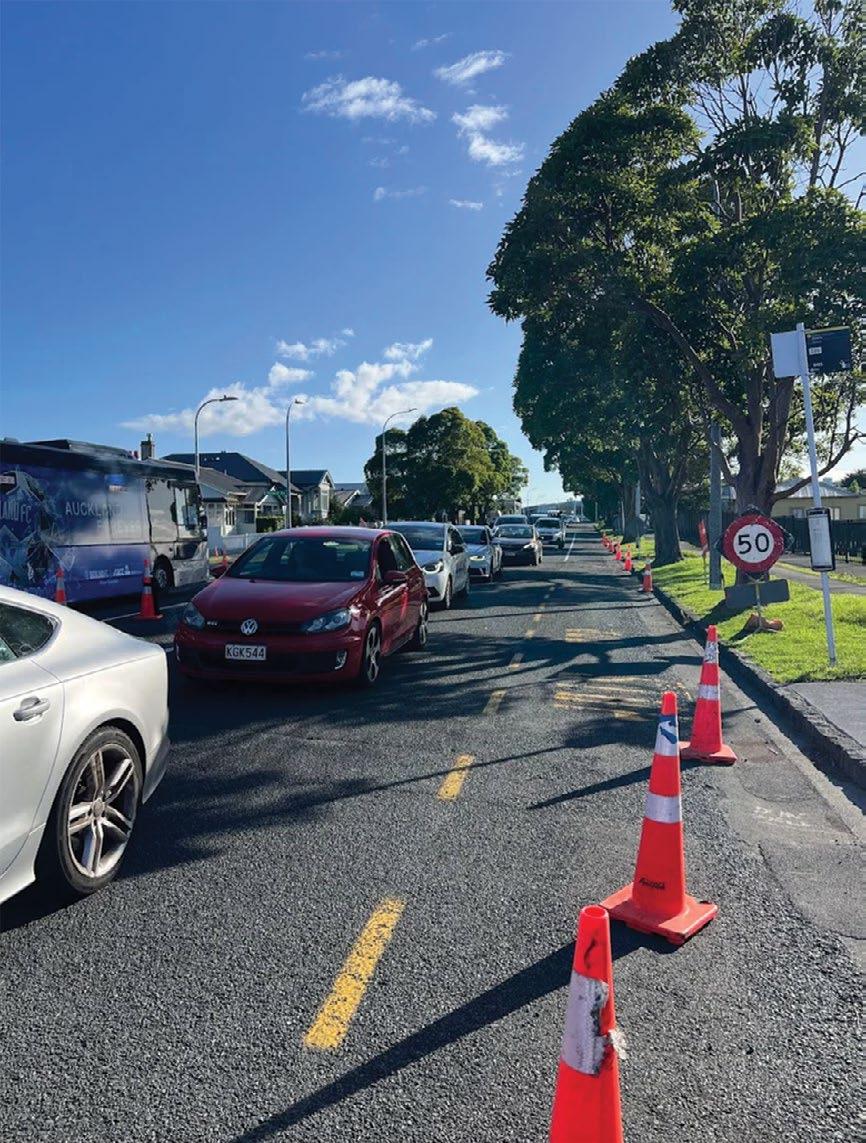
What lights would do, however, is create new congestion. We know this because AT has already run the experiment. Temporary signals installed during recent cycleway works produced queues stretching hundreds of metres in both directions.
The attached photos, taken around 8:30am in late January, show congestion backed up to Francis Street and along Surrey Crescent toward Gilbert Avenue – during school holidays. Permanent lights would make this a daily reality. It is not difficult to imagine how much worse this would become during peak school traffic. A free-flowing route would be turned into permanent gridlock.
Meanwhile, a real problem, the bottleneck at the bottom of The Bullock Track and Great North Road, remains unaddressed.
Mark McNeill, Grey Lynn
IT’S A TEAM EFFORT... WE COULDN’T
DO IT
WITHOUT OUR CONTRIBUTORS
CHLÖE SWARBRICK
Chlöe Swarbrick is the MP for and the biggest fan of Auckland Central - she is Co-Leader of the Green Party of Aotearoa NZ.
CONNOR CRAWFORD
I am a working artist and photographer with a colourful and rhythmic perspective. I enjoy shooting the front covers of Ponsonby News.
DAVID HARTNELL - MNZM
For the last 53 years I’ve been a freelance entertainment journalist and author. I’ve lived in the Grey Lynn area for over three decades; I have met and interviewed some amazing people.
DESLEY SIMPSON
I am a dedicated and approachable Deputy Mayor of Auckland, with a handson approach and genuine commitment to improving local communities and solving issues in Auckland.
GAEL BALDOCK
We each follow our moral compass shaped by training. Mine is sculpting, architecture, sociology, anthropology and betterment of our shared world by community advocacy… and saving trees.
HELENE RAVLICH
A freelance writer and copywriter for almost 20 years, I have written for publications all over the world and couldn’t imagine myself in any other job.
HELEN WHITE
Helen is the Member of Parliament for Mt Albert and has a long-standing commitment to social justice, community well-being and ethical leadership. She is also keen on yoga.
KEN RING
My yearly NZ Weather Almanacs began in 1999. During the tragic 2011 Christchurch earthquakes, my work created international interest. I currently live in Ponsonby.
LISA PRAGER
A life long advocate for community issues, I am passionate about protecting and enhancing our natural environment and built heritage.
MELISSA LEE
I have been a National List MP based in Mt Albert for the past 16 years. I am dedicated to listening and understanding the needs of our community, working hard to deliver outcomes and drive positive change.
MIKE LEE
I am the councillor for Waitematā & Gulf. A former seafarer, former chair of the ARC, conservationist, PT advocate, and author. I have represented the Ponsonby area since 1992.
PHIL PARKER
Journalist and published author, I have had a career involving both wine writing and hosting boutique wine tours in the Auckland region.
PUNEET DHALL
I am an Aucklander of Indian origin, Punjabi and Sikh. I have a keen interest in food, wine and politics.
ROSS THORBY - QSM
I have had a wanderlust for travel ever since I was old enough to own a passport. Since I discovered cruising, I have become unstoppable.
SARITA SOLVIG BLANKENBURG
I am a passionate Ayurveda practitioner based in Ponsonby for the last 15 years. Inspiring others to live a healthy and fulfilled life is my higher purpose.
SARAH TROTMAN, ONZM
She has been rated the most effective Governor on the Waitematā Local Board. However, we rate her as the most effective community advocate, who led the C&R team from her sole voice on the Board to the majority at the last election, until...
'SAFETY IMPROVEMENTS' FOR GREAT NORTH ROAD (GNR)
Despite AT asking for input on their outrageous 'safety improvements' for Great North Road (GNR), and getting feedback questioning why they would even think about closing off Grosvenor Street to traffic crossing GNR from Bond Street, I notice now that AT and their 'make work' staff have closed that valuable and heavily used access / egress from Bond Street into Grosvenor Street.
What a simply dumb decision!
Any resident of the north side of GNR all the way through Ponsonby to Westmere, Herne Bay and St Marys Bay has benefitted by using that specific route for over 150 years, and in particular since the Bond Street bridge linking Kingsland, Eden Park, etc, was constructed.
Once again, without any attention to the actual desires of the commuter or local residents, AT staff in their blinkered determination to slow and disrupt commuters and local traffic have done the opposite of what the public asked for.
Let's hope that as soon as AT is disbanded, and their 'safety' designers are put out to pasture, instances of stupidity such as this decision to close off access to one of the few local roads that ONLY local residents from the immediate surrounds use on a daily basis.
When they are gone, can we please have our intersection back again for the benefit of all the local residents who use this valuable, safe and easy to use intersection?
How many accidents and DSI incidents have there been at that location... zero.
But still we must bow to the allegedly superior knowledge of the 'safety Gestapo' who always think they know best.
In reality, they don't know best and don't live in the neighbourhoods they are intent on ruining, even as their ship sinks!
The day AT is disbanded cannot come fast enough. Let's just hope that these same staff are not just re-employed by council because there is 'no one else' who can possibly do their jobs. A trained chimp would easily have avoided such a dumb, churlish and unnecessary decision.
If you are not adding value, you are adding cost, as the old maxim goes.
AT has added significant cost to all Aucklanders and ZERO value. Enough!
Roger Hawkins, Herne Bay
Opinions expressed in Ponsonby News are not always the opinion of Alchemy Media Limited & Ponsonby News.
DAVID HARTNELL: ONE MINUTE INTERVIEW WITH LOGAN GRANGER
Logan Granger is a partner with Johnston Associates, an accounting practice which has been based in Ponsonby over many decades.
Logan enjoys working with SMEs and their teams navigate their strategies by providing support, advice and the services they need to succeed or get through when times are tough. Logan was always interested in statistics and numbers to some degree. He spent five years before completing his commerce degree working as a gardener and landscaper.
How did you survive the pandemic?
I got stuck into finding ways to get information to clients and associates to help them find business support. I wrote a regular client blog and update, connected with some great people and learnt a lot.
Being at home in the first lockdown, the daily walks made me appreciate the harbour when it was empty of ships and the sea life was more active and visible.
What was your childhood like?
Interesting, I suppose. Some of it was farm based and some city. I was able to do a lot of hunting, fishing, and sailing before I turned 16. I learnt to build things in an engineering workshop, so it was fairly dynamic, with some serious unstructured chaos.
Complete the sentence: I will die happy if?
The world is a slightly more considerate and a less aggressive and violent place.
If you could star in a movie with any living or dead actor who would it be?
David Bowie – like his music, have read a book or two on him and seen some of the documentaries. He was interesting and multi-talented.
What is your favourite TV series?
Breaking Bad – I was introduced to it and watched it with good friends and family and there was a good discourse that went with it, so it was more than just the programme. It still goes on well after we stopped watching it.
What would be your dream holiday?
A place to spend time with my partner doing things they enjoy and somewhere with an easy wave to surf that’s not too complex and crowded.
The most Kiwi thing about you?
Barefoot (too often evidently).
How do you see yourself in 10 years?
Hopefully, still alive, being with people I have a strong bond with, doing the things that bring me and others the most joy.
What job would you do other than your own?
Gardening, it’s a rewarding and considered occupation, takes skill, knowledge and perseverance. It’s also generally peaceful.
The last thing you bought that you regretted?
A coffee machine (I gave up coffee).
How would you like to be remembered?
Fondly by a few people that matter.
Which item do you wish would come back into fashion?
Afghan Hounds – cool if someone else owns them, always look good in a photo.
Something you disapprove of?
People who don’t compost, recycle or reduce their rubbish.
Your biggest disappointments?
My first dog refusing to live forever.
What really motivates you?
Solving problems or embarking on challenges.
What’s inspired you recently?
Beehives and understanding how they work – fascinating. Thanks to Tom Potter for showing me.
Give your teenaged self some advice?
Work harder on the things you have a passion for and enjoy them.
How do you chill out away from everything? Walking with my partner or a garden project.
Which item of clothing can't you live without? Birkenstocks.
Your favourite place to holiday in New Zealand? Karekare.
What is your most treasured possession?
A ring my dad passed on to me, which took me a while to treasure.
Are you insecure about anything? Quite often the future until I become rational about it again.
Tell us something very few people know about you? I can sew and mend a little if I’m desperate.
Your greatest fear?
Losing my memory, ability to read and process things.
Who is your favourite hero of fiction?
Will Hunting in Good Will Hunting because its all about the adversity and obstacles he needs to deal with and process.
Imagine, if you will, that you’re the owner of a dairy, a takeaway, a bottle store or a laundromat, relying on your customers being able to stop and park outside your door for a few minutes to make a purchase or drop off their washing, then your parking is taken away so your customers go elsewhere, for example to the dairy along the road that has 4 car parks.
Or that your business is a car sales yard that relies on car carrying trucks to bring in your vehicles to sell but the yard up the road has a loading zone outside their premises, you used to have one but now you have a bus stop.
Like all shopping villages along arterial roads, these businesses rely on through traffic bringing passing trade.
The economic climate is not in your favour, for survival and then your rates are being spent to destroy your business further, all for a barely used cycleway.
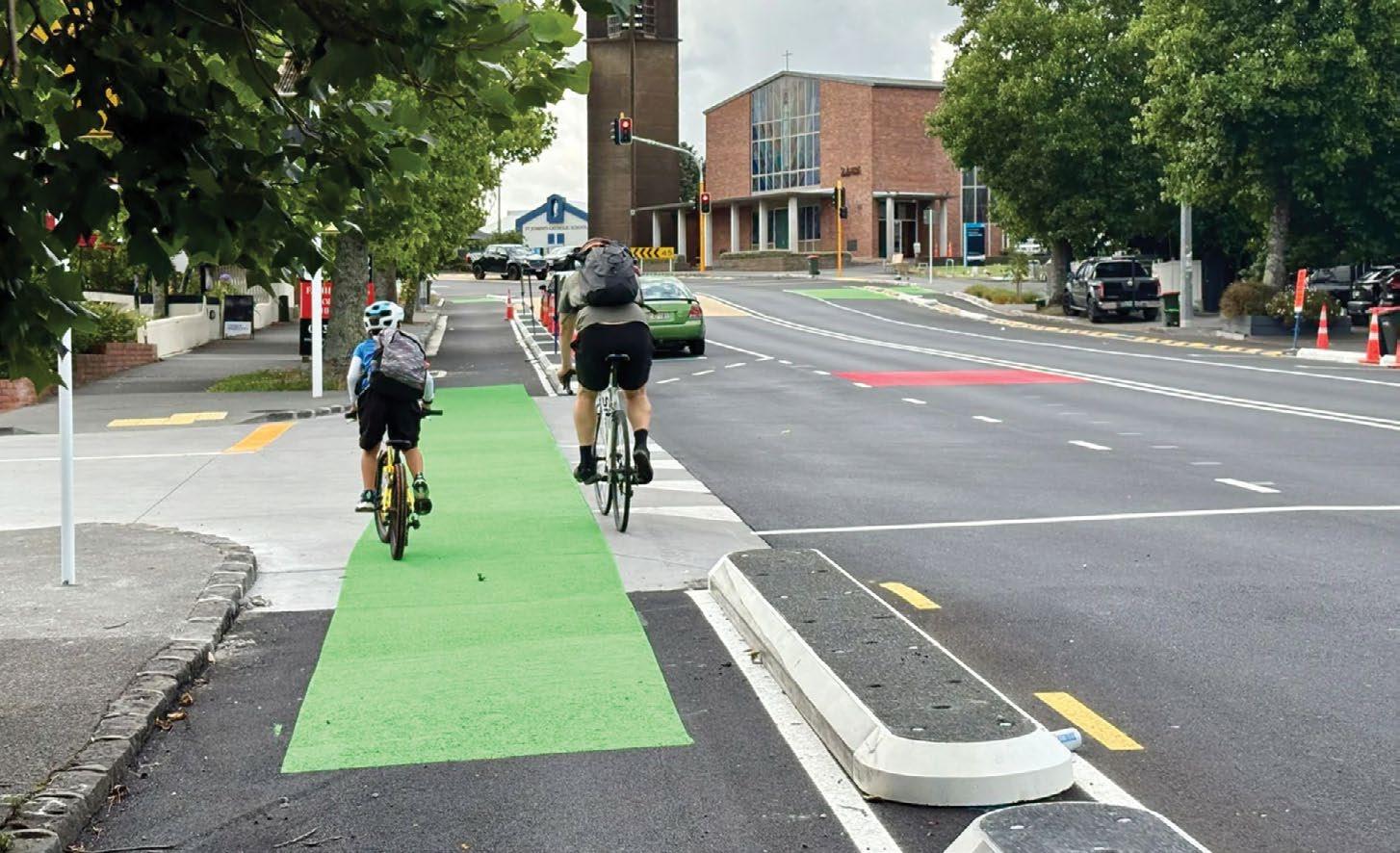
How can the designers of the Great North Road cycleway and so called ‘improvements’ for Auckland Transport be so inept and the Grey Lynn Residents Association. be so heartless by supporting this attack on people’s livelihoods?
Initially the residents association were totally opposed to this design and got a $10,000 grant from the Waitematā Local Board to come up with their own design. They had not done their due diligence so their design of trees in the centre of the road was possible because underground were stormwater pipes, services that couldn’t stand the weight of major trees, once they had matured from seedlings in 30 years. So the GLRA during their presentation at an AT Board meeting,when they discovered their error, then became huge fans of the design they had publicly trashed.
The existing trees, on the sides of the road, had also somehow become in ‘sight lines’ that they hadn’t been in for the rest of their lives and also had to be cut down, adding to the devastation of Auckland’s supposed ‘Urban Ngahere Plan’ to make the city more green.
GNR is a main arterial road that also has traffic that needs the two lanes it once had to keep the traffic moving.
The design includes Tim-Tams, and black and yellow ‘monarch caterpillar’ humps to enter driveways and light industrial business, as well as ‘speed tables’ to side streets that slow traffic leaving the traffic stream.
At the corner of Coleridge Street the contractors raised the footpath, including the part on private property making access non compliant for mobility impaired access. They promised to remedy but haven’t done so yet.
The design stops short of the Grey Lynn Village, presumably to avoid consulting the business, but that hasn’t stopped the threats of carpark removal.
The worst intersection is with Bond Street connecting Grey Lynn to Kingsland with another arterial road and the bridge over the motorway. Left turning traffic off GNR has only two spaces, because ironically designers have left car parks here, in the one place they are not needed as Bunnings has a huge off street customer car park.
Traffic turning left from Bond Street to GNR turn straight into the rear of a bus stopped in the ‘inline bus stop’ outside the martial arts venue, where next to the bus shelter, a series of three seats have been positioned looking at the vacant lot where Ockham were going to build a high-end apartment block. Across the road is another seat with it’s back to the street, also awaiting for building works in the vacant lot. Then on steep Grosvenor Street another three seats look at the furniture shop. While they do provide platforms for rough sleepers, they have not been discovered by them yet.
The highlight (or should I say ‘lowlight’ of this bad design) is the blocking of traffic taking the dogleg from Bond Street into one-way Grosvenor Street where locals make their way to Williamson Avenue. By supporting this design choice shows how the residents association do not represent locals.
To add insult to injury, the light phasing from Bond Street to New North Road only allows two vehicles to turn right into Kingsland. This is another method AT uses to cause congestion in their aim of charging a congestion tax.
Simon Wilson’s Herald article 21.03.23 “Time to stop this obsession with cycleways” featured a photograph of Mayor Wayne Brown riding his bike on the very wide footpath, where he suggested the cycleway could have been located, therefore saving Auckland ratepayers approximately $28,000,000 for the ‘Great North Road Improvements Project’. The only improved was upgrading the $3.3 million essential stormwater.
The whole design is a ‘dog’s breakfast’. It did achieve transferring our rates to contractors.
GAEL BALDOCK, community advocate. GaelB@xtra.co.nz
GETTING THE BEST FROM YOUR ARCHITECT
Robin O’Donnell Architects can help you achieve the home that you have always dreamt of.
Robin O’Donnell Architects is a boutique architectural practice that specialises in bespoke residential alterations, additions and new builds. The practice was founded in 1999 and has an established reputation in its architectural niche, having won a number of prestigious NZIA Architectural Awards over the years. The principal – Robin O’Donnell – is also a greater Ponsonby local who has lived in both Grey Lynn and Herne Bay for over 35 years. So, he knows the neighbourhood and the design challenges and opportunities that inner city properties present.
Many people wonder why you might use an architect to assist in the realisation of your project. The answer to that question is that architects have specialized university training (five years) and consequently an approach to design and construction that ensures that they can – on your behalf –maximize the greatest potential out of your particular design challenges. Where others see problems, architects generally see opportunity and bring this thinking to the table.
Currently, the practice is noticing that there is some reticence in engaging with the design and construction market. While there may be valid reasons for not proceeding with a construction project, there are also many good reasons for doing so if you are able to make that happen. Chief amongst these reasons is that, as in most things, it is unlikely that a construction project will ever be cheaper than it is today (hard though that sometimes may be able to believe), and by moving ahead now you can start enjoying life in your dream home sooner rather than later.
Many people who are contemplating a construction project do not realise how important it is for that project to be well organised – not just in terms of efficiency on site, but also in terms of the process that is followed long before you are calling for tenders. Architects are trained to follow processes – just like your lawyer or accountant – to ensure that insofar as they are able, you are provided with the information you need to methodically and safely move through the design and construction process. Because there are many alternative routes and large amounts of design and documentation
work, that process can be customised to meet your needs, whether that is in the form of a concept masterplan that you will implement over a series of stages, or a small addition and alteration that you want to have ready for a special occasion.
Robin O’Donnell Architects has completed new builds and renovations all over Auckland and beyond – they are currently involved in a new build on Great Barrier Island. They have also completed award-winning work in the greater Ponsonby area, with a new St Marys Bay house of theirs recently winning an NZIA Award for Architecture, showing that new builds can be completely compatible with the heritage values that the inner city supports.
While the practice has been around for nearly 30 years, and is boutique in nature, Robin is ably assisted by dedicated staff who, through the years and their lived experience, are able to answer the many design challenges that any home needs to be able to address. Robin is now contemplating down-sizing from a large family home, while some of his staff are in the thick of raising young families of their own.
A great home, in a great neighbourhood is the principal design challenge that needs to be answered for any client. But in greater Ponsonby, and its surrounding heritage areas, locals tend to move in and stay (why wouldn’t you?), so their homes need to be able to effortlessly accommodate, or adapt to, the different life stages of those who occupy them. Robin O’Donnell Architects can help you achieve the home that you have always dreamt of – not only beautiful to look at and live in, but able to serve your living needs over the long term.
If you are interested in a no-obligation chat to review the design opportunities that your existing or new home presents, feel free to ring Robin on either T: 09 523 4907 or M: 021 616 830.
Or visit our website at rod-architects.co.nz or our Instagram page @rodarchitects
We look forward to hearing from you.
Photographer: Barry Tobin
HOME EASE SOLUTIONS:
YOUR ONE-STOP SHOP FOR A SALE-READY HOME
Home Ease Solutions is led by Kim, who brings a wealth of life experience and a practical, hands-on approach to preparing homes for sale.
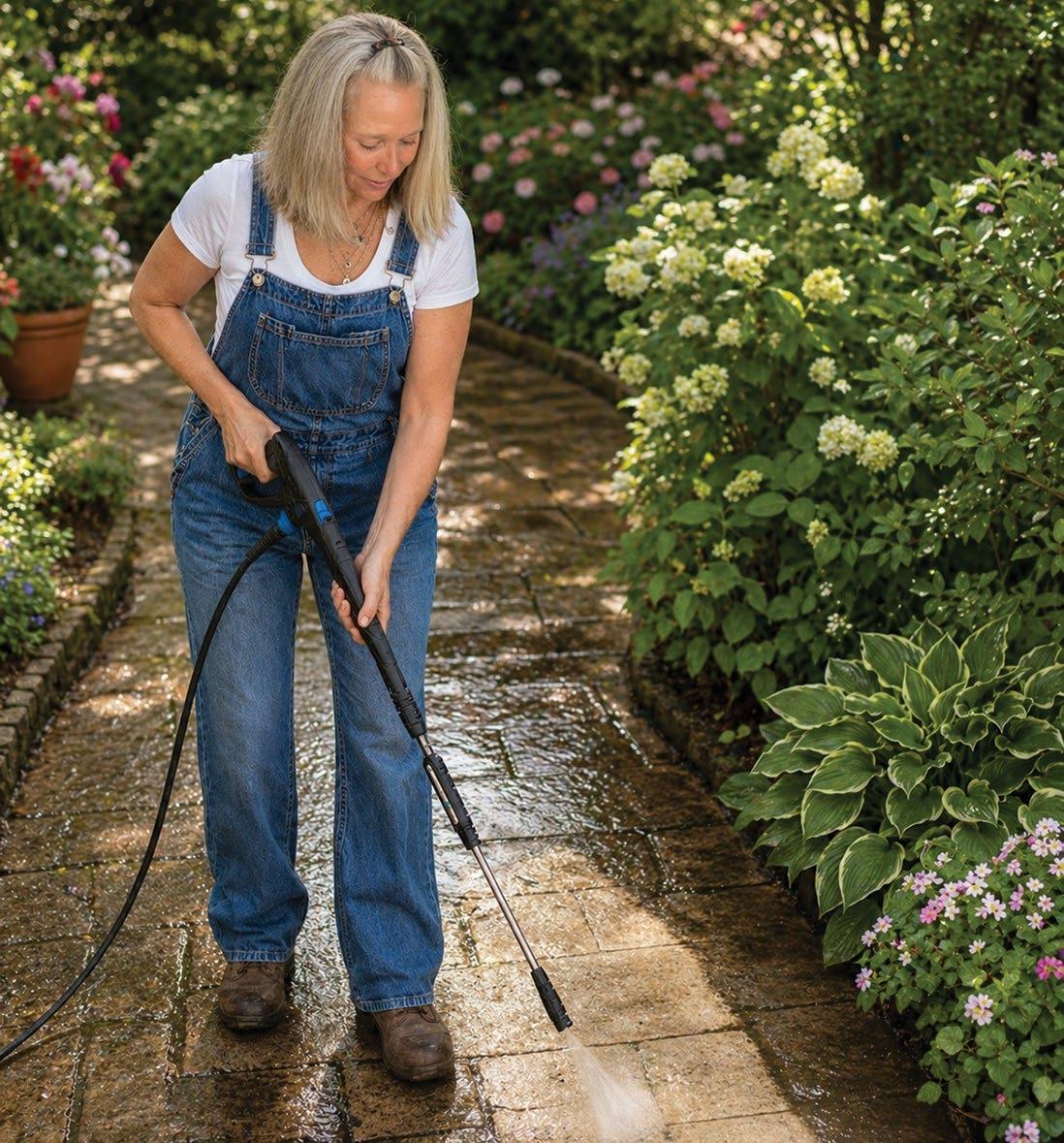
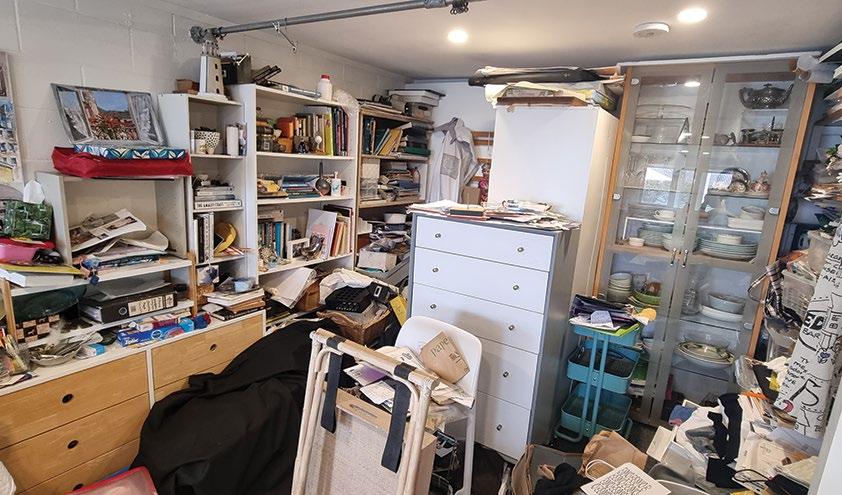
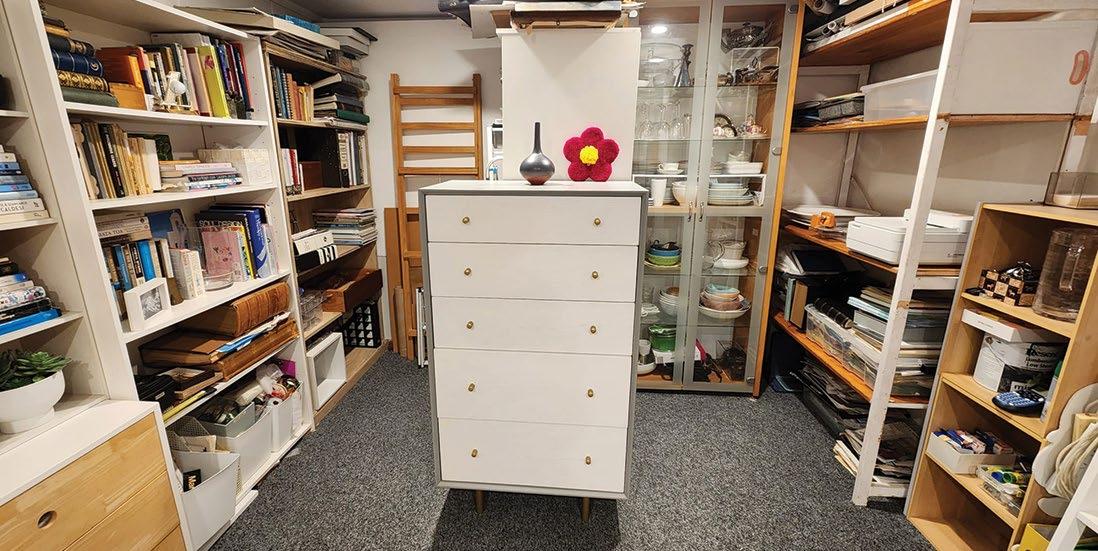
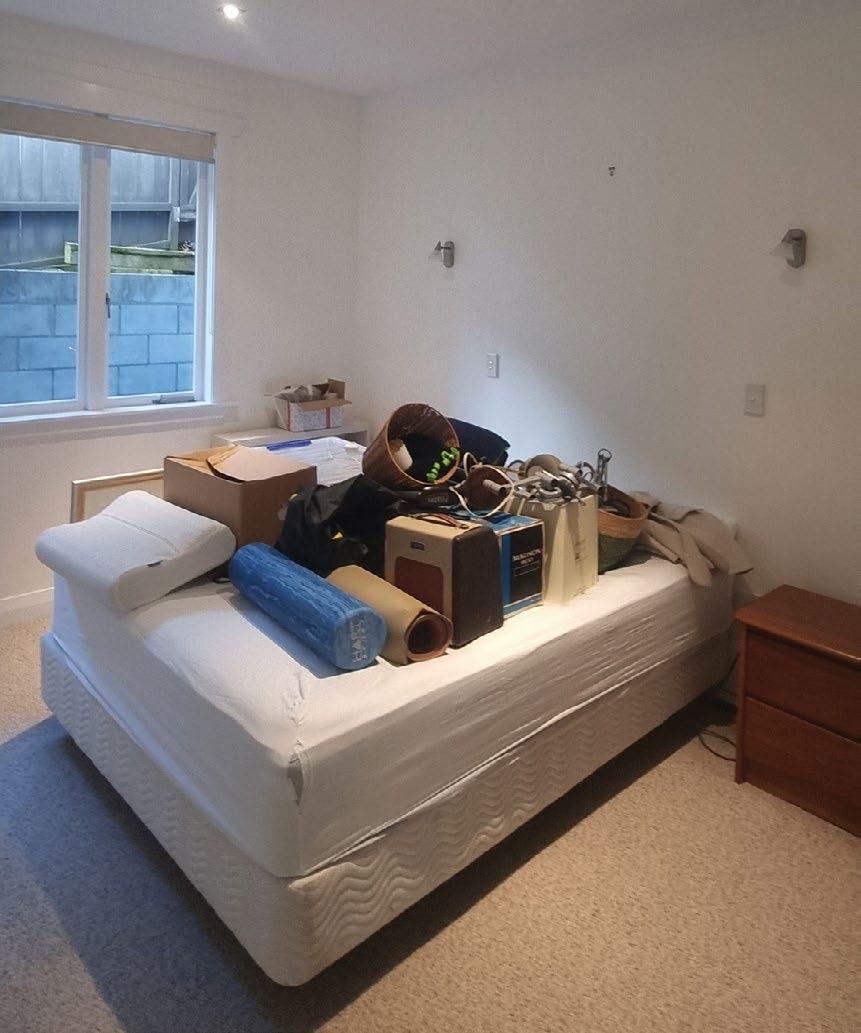
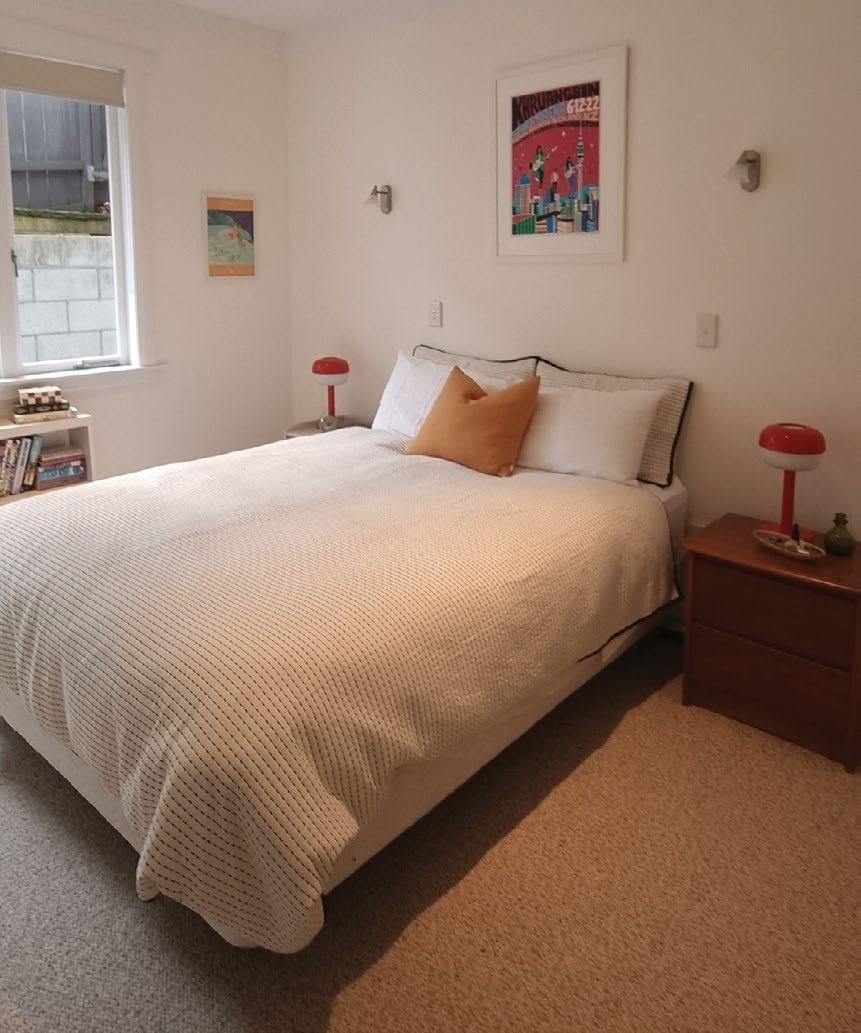
Getting a home market-ready can feel overwhelming. There’s often a long list – cleaning, decluttering, painting, gardening, water blasting and styling – and knowing where to start can be the hardest part. Kim offers a complete, hands-on service, stepping in to take care of whatever is needed, whether it’s a single job or a full transformation over a few days.
After many years working as a set dresser in the film and television industry, Kim developed a trained eye for detail, composition and creating spaces that feel both authentic and inviting. She combines this with real-world experience running her own cleaning and home maintenance business, giving her a unique balance of creative vision and practical skill.
Rather than bringing in large quantities of furniture, Kim works with what’s already in the home – editing, rearranging and refining each space to enhance flow, light and overall appeal.
When needed, she adds thoughtful finishing touches such as soft furnishings and simple accents to elevate the atmosphere without overwhelming the home’s natural character.
What sets Kim apart is her flexibility. She can tackle everything from small but impactful jobs – like water blasting pathways or refreshing a tired wall with paint – to larger, multi-day preparations that get a property truly sale ready.
Her approach allows homeowners to remain comfortably in their space while it’s being prepared, ensuring it still feels like home throughout the process.
With a calm, intuitive style and a focus on practical results, Kim helps bring out the very best in every home ready for its next chapter.
www.homeeasesolutions.co.nz
FIVE YEARS OF CLINIC 1
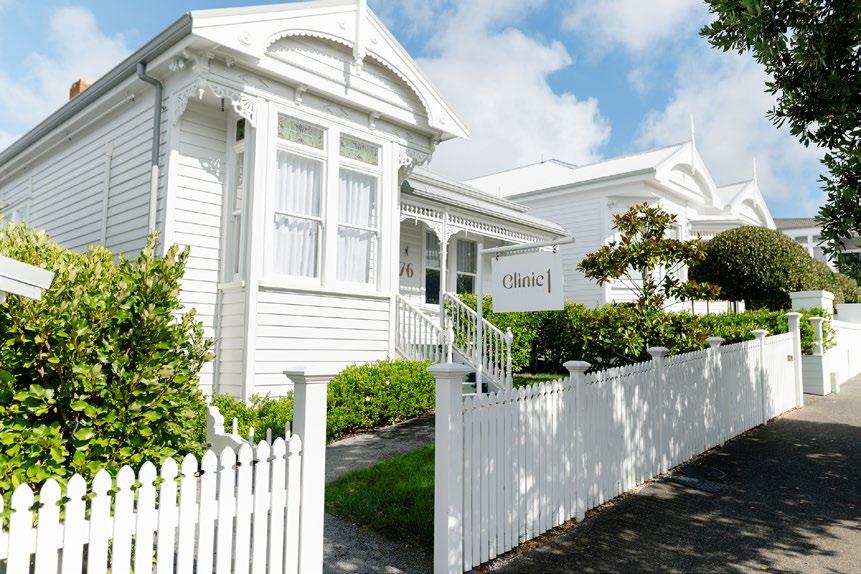
Five years ago, we opened the doors of Clinic 1 on College Hill with a small team, a carefully selected range of advanced treatments and a clear vision to create a space where resultsdriven aesthetics meet genuine care.
Since then, so much has evolved, and yet the essence of what we do has remained unchanged.
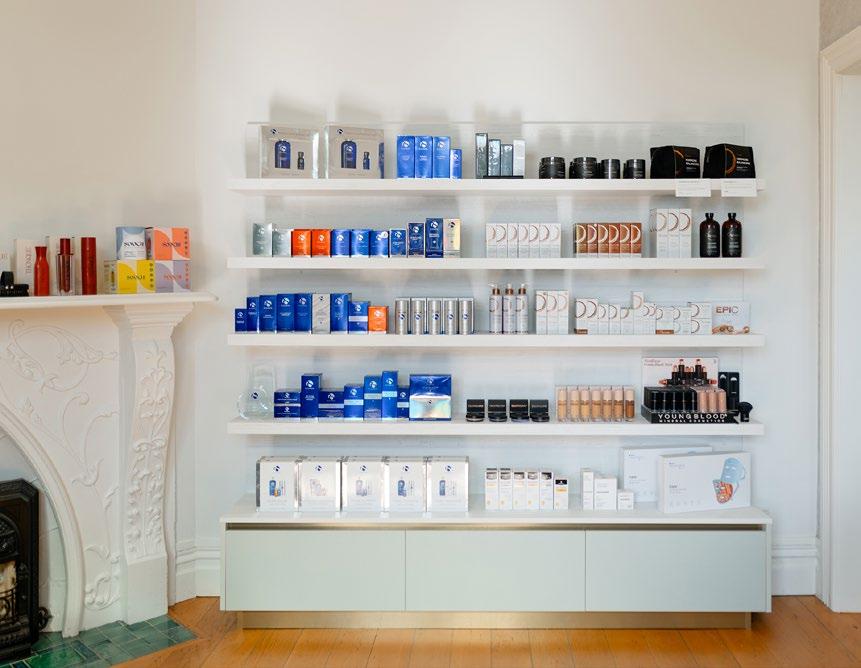
What began as a boutique clinic has grown into a destination. Our team has expanded with some of the most experienced injectors and skin specialists in the country, and our technology has developed into one of the most comprehensive collections of advanced lasers and energy-based devices in New Zealand. Today, we welcome clients not just from Auckland, but from across the country – many travelling to experience what Clinic 1 has become known for.
There is a constant sense of movement within the clinic. New technologies, ongoing education, refined techniques – we are always evolving. Not for the sake of change, but in pursuit of better outcomes, safer treatments and a more considered approach to aesthetic medicine.
Our philosophy has never been about trends or quick fixes. Instead, we focus on long-term results, combining skin, structure and overall balance to create outcomes that feel natural, confident and uniquely individual.
Two years ago, we expanded to Christchurch, a natural next step as our community continued to grow. It allowed us to bring the same level of expertise, technology and care to the South Island, while staying true to the values we built in Auckland.
As we approach five years, we are incredibly proud of what we’ve created, but even more excited about what lies ahead. With a growing focus on wellness, alongside advanced aesthetic treatments, Clinic 1 continues to evolve into a space where looking good and feeling good go hand in hand.
To our clients, partners and our community – thank you for being part of our journey.
You look so good. Thank you – I go to Clinic 1.
CLINIC 1, 76 College Hill, M: 021 241 0312, www.clinic1.co.nz
CONFIDENTLY COLOURFUL
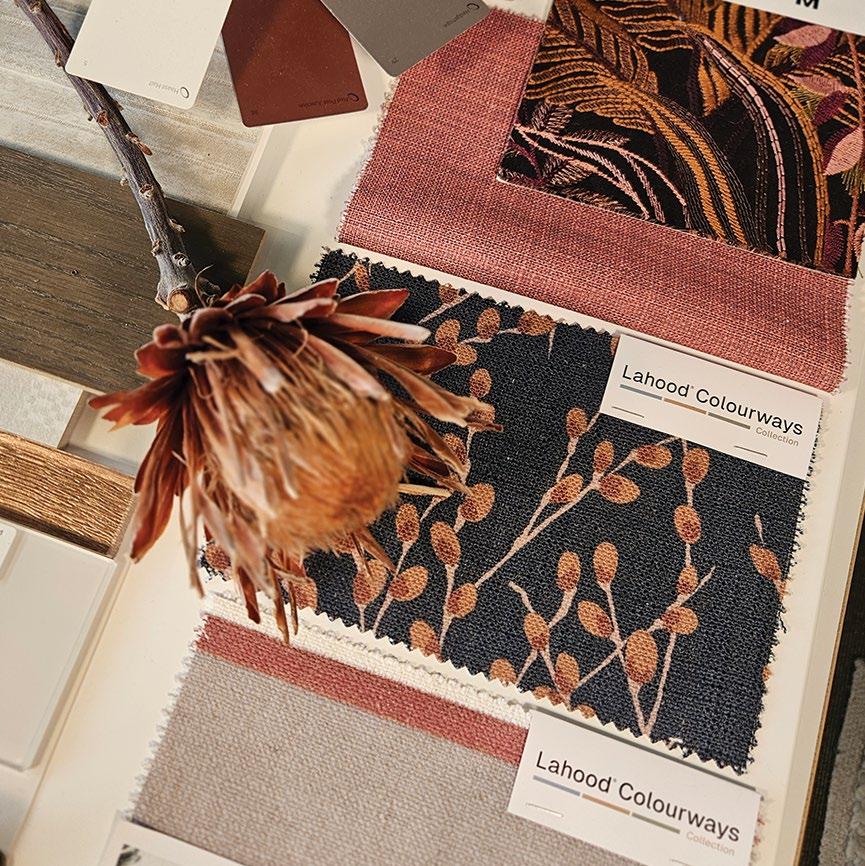
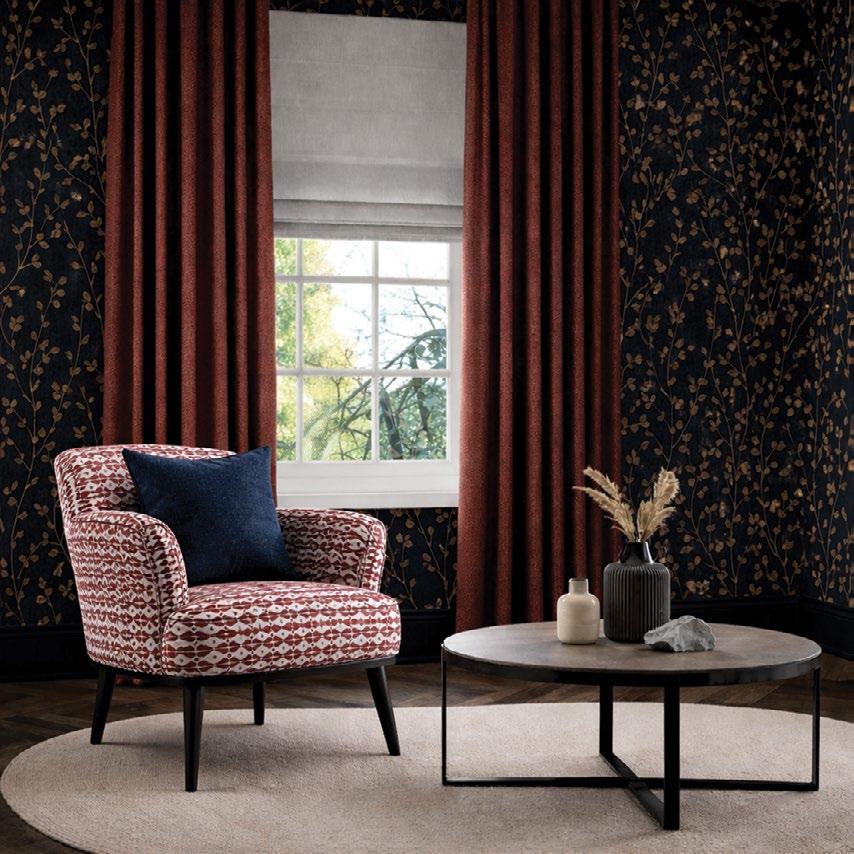
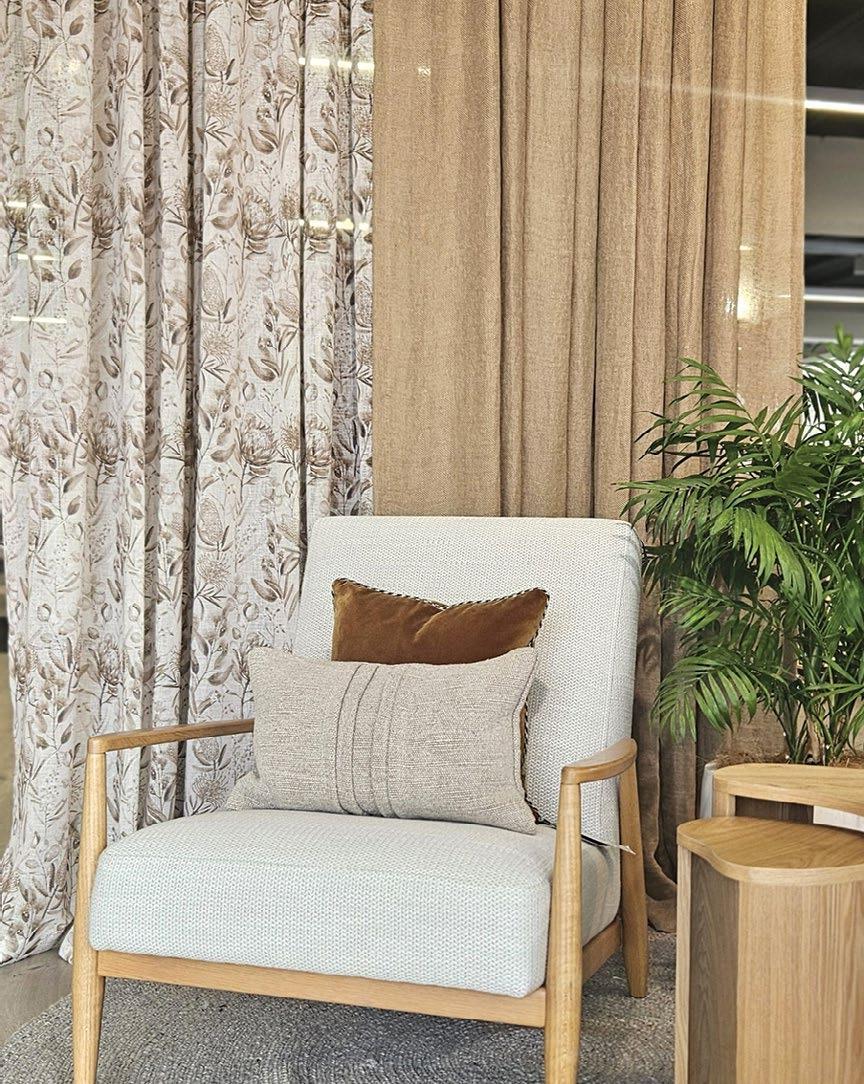
Introducing the Lahood Colourways Collection.
If you love colour but feel a little nervous about using it in your home, you are not alone. Choosing fabrics and wallpapers that work beautifully together can feel a little overwhelming. That is exactly the challenge Tricia Dunlop, interior designer at Lahood® Window Furnishings, set out to solve with the newly launched Lahood Colourways Collection.
Recently launched at an exclusive April event at Lahood’s spacious Mt Eden showroom, the Colourways Collection is a thoughtfully curated range of prints, stripes, botanicals and plains for fabrics and wallpapers spanning a rich spectrum of colour. The key to its appeal? Every single design and
colourway has been hand picked by Tricia to mix and match effortlessly together whilst also complementing the softer neutrals in Lahood’s wider range. The result is a collection that eliminates uncertainty and replaces it with confidence. No guesswork, just interiors that feel harmonious, layered and thoughtfully put together.
CELEBRATED DESIGNERS
At the centre of the collection is Tricia’s expert eye for colour and composition. She has drawn on the work of two celebrated Australian creatives to create a range that feels both timeless and fresh.
Florence Broadhurst, one of the most iconic names in textile design, is known for her bold and expressive patterns. Her Innocence Mini design within Colourways offers a softer, nature-inspired feel, available in a range of tones from deep Midnight to calming Eucalyptus. It brings a sense of understated elegance to any space.
Sibella Court introduces a more relaxed, layered aesthetic. Her Walker stripe is a versatile classic, available in six colourways that pair easily with other designs. Bittersweet adds a relaxed warmth with its sun kissed tones, while Franklin and Espadrille bring an easy, lived in charm that adds personality without overwhelming a space.
Completing the collection is the Hot Off the Press range from Materialised, the Sydney-based wholesaler. Their inhouse designs include Odette, inspired by the hand-crafted charm of Provencal markets, and Sunland, a striking botanical available in both navy and sepia. Each fabric is printed to order by Materialised, using a sophisticated dye sublimation transfer method, ensuring maximum colour depth and fastnesses. A choice of hardwearing polyester and polyester/ linen base cloths is used from 300cm wide width sheers through to 140cm drapery and upholstery fabrics.
INTRODUCTORY OFFER
The Easy Way to Use Colour
What makes the Colourways Collection genuinely different is the thinking behind the curation. Tricia has done the hard work, selecting designs that share a considered palette so you can confidently mix a stripe, a floral and a plain, knowing they will work beautifully together. It is the same approach an interior designer would take, now made simple and accessible. The collection is available for custom curtains, upholstery, wallpaper and blinds.
To celebrate the launch, Lahood is offering 25% off curtain making on all Colourways fabrics throughout May 2026.
Visit Lahood’s showroom at 104 Mount Eden Road to explore the Colourways Collection in person, call 0800 LAHOOD, or book a complimentary in-home consultation at lahood.co.nz
LUMINO PONSONBY IT’S ALL ABOUT PEOPLE
At the heart of Lumino Ponsonby is a simple philosophy: great dentistry starts with great people.
For more than a decade, this central Auckland practice has built a reputation for combining modern care with a genuinely welcoming, down-to-earth approach, something patients notice from the moment they walk through the door.
This month, we’re shining a light on the dentists behind those smiles, the clinicians who bring experience, empathy, and personality to every appointment.
Dr Sunny Kim is the lead dentist at Lumino Ponsonby, and the practice runs on three principles: reliability, clear communication, and genuine care for every family member who walks through their doors. Whether he’s seeing your child for their first dental checkup or helping you achieve your best smile, you can always be confident you're in good hands.
He has over a decade of experience since graduating from Otago, and he is a strong believer that your overall health is reflected in your mouth. His long term patients know that he always says that half his job is to treat your dental problems, but the other half is to help prevent any future problems. His goal is to get to know his patients and build long term trusting relationships. He dosen't just look at your teeth, he likes to find out about you as a whole person, including your lifestyle, habits and nutrition before making a tailored treatment plan that will work for you.
Dr Kelly Dempster is known for her calm, reassuring manner, particularly with nervous patients. After graduating from the University of Otago, she gained experience across both rural communities and busy city practices, giving her a well-rounded approach to patient care. Kelly has a special interest in crown and implant restorations, as well as minor oral surgery, and is committed to ongoing learning to ensure each patient receives a treatment plan tailored specifically to them. Patients often comment on how comfortable she makes them feel – no small feat in a dental chair.
Dr Sweta Sharma brings a global perspective to the team, with training and experience spanning India and New Zealand. She is passionate about delivering high-quality dentistry in a relaxed, virtually pain-free environment. With particular interests in aesthetic dentistry, root canal treatments, and oral surgery, Sweta combines technical precision with
a gentle touch. Her focus is always on helping patients feel informed and confident in their treatment choices, while achieving results that look as good as they feel.
Dr Mish Harper recently returned to New Zealand after more than a decade practising in Australia, bringing with her a strong focus on minimally invasive dentistry. She is passionate about prevention and patient education, helping people maintain their oral health and avoid more complex procedures down the track. With a special interest in aesthetic treatments, Mish offers everything from simple restorations to veneers and crowns, always with a gentle, thoughtful approach that puts patients first.
Together, these four dentists represent the diversity and strength of the Lumino Ponsonby team. While each brings their own expertise and personality, they share a common goal: to provide personalised, high-quality care in a space that feels relaxed, modern, and supportive.
Behind the scenes, they’re supported by a wider team of skilled oral health therapists, hygienists, and friendly support team of professionals who play an equally important role in maintaining patients’ long-term oral health. From routine check-ups and hygiene appointments to advanced restorative and cosmetic treatments, including fillings, crowns, root canal treatment, implants, whitening and veneers, the practice offers a full range of services designed to meet the needs of every patient.
What truly sets Lumino Ponsonby apart isn’t just the technology or the treatments, it’s the people. By taking the time to listen, explain, and connect, this team has created a practice where patients feel genuinely cared for.
The team looks forward to meeting you at their modern clinic with the latest technology to provide you with the best level of care.
Next month, we’ll introduce you to the rest of the team, the oral health therapists and hygienists who help keep those smiles healthy every day.
www.lumino.co.nz
SUNNY
KELLY
MISH
REEM
SHANIA
BRONWYN
SWETA
THE HARLEM GLOBETROTTERS 100 YEAR TOUR COMES TO NEW ZEALAND THIS JULY
This year marks the 100th anniversary of world-famous athletes and entertainers Harlem Globetrotters. Kiwi fans are invited to be part of history as the Globetrotters bring back their signature style of full-court entertainment this July.
“Celebrating 100 years of the Harlem Globetrotters is a huge moment for our organization, and we’re thrilled to be returning to New Zealand as part of this milestone year,” said Keith Dawkins, President Harlem Globetrotters & Herschend Entertainment Studios. "Our large, loyal, global fan base has been key to our success throughout the years, and we are committed to continuously evolve our product to deepen our relationship with our fans in the region.”
Famous for their high-energy entertainment, the Harlem Globetrotters have captivated audiences worldwide with extraordinary athleticism, jaw-dropping trick shots and crowd-pleasing comedy. This anniversary tour promises their legendary ball handling, the iconic four-point shot and unforgettable fan interaction; with the Globetrotters pulling out every top trick.
Throughout the New Zealand leg of the tour, the Globetrotters will be touring across Christchurch (14 July), Wellington (16 July), Auckland (18 July) and Hamilton (19 July). Fans can expect an unforgettable showcase of skill, humour and showmanship from each game as the Globetrotters take the court. Demand has already built and tickets are selling fast.
To ensure you don’t miss out on what is set to be an iconic and entertainment filled event, book your tickets now before they’re gone. Don’t miss your chance to witness 100 years of the Harlem Globetrotters. Tickets can be purchased from:
Ticketmaster for Auckland.
XYZZY IS RETURNING TO TE WHATU STARDOME EVERY FRIDAY IN MAY
For NZ Music Month!
Created by leading contemporary artist Jess Johnson and director Simon Ward, XYZZY (pronunced 'zizzy') is an immersive art-based planetarium screening like no other.
Developed through a decade of creative work, Johnson’s handdrawn compositions are transformed by Ward into an animated web of flesh mandalas, self-replicating architecture, undulating worms, hallucinogenic patterns and messianic alien deities. The dynamic visual atmosphere is charged with 90s-inspired electronic synthesiser tracks from musicians Andrew Clarke, Luke Rowell, Stef Animal and Lachlan Anderson.
PLUS: the final session on Friday 29 May has a Q+A after the show with director and animator Simon Ward, one half of the creative duo behind the film.
This show features strobing effects – some visitors may experience mild motion sickness. Te Whatu Stardome is Auckland’s very own planetarium. It offers fully immersive indoor planetarium shows, telescope viewing, music events and vibrant hands-on exhibits. It’s open day and night, whatever the weather. Come and reconnect with the cosmos!
Screening Fridays in May Book now at stardome.org.nz
THE ‘GUTTER BAR’
Paul Catmur, who has lived in the Ponsonby area since arriving from the UK in 2000, recently published his first book.
The ‘Gutter Bar’ is an extremely funny, satirical novel set around the advertising industry in London and the annual global shindig in Cannes. Paul worked for many years at DDB New Zealand and then co-founded his own agency Barnes, Catmur & Friends.
What inspired you to write the Gutter Bar?
The Gutter Bar is a kind of love/hate letter to advertising. It’s an industry where if you do well you can find yourself around the world in some amazing places, but which also has a more cynical and manipulative side to it. Even so, it’s tremendous fun. Or at least it was.
The book starts off in London where I worked in the nineties. Everyone at the time told me that I should have been there in the eighties but believe me the nineties were pretty good too.
The story then moves down to the South of France when Ben Putney, the main protagonist, is invited to be the Jury President of the Cannes Advertising Festival. He gets embroiled in the politics, backstabbing and dirty tricks around the event which can make and break careers.
Did you enjoy your time in advertising?
I spent a large part of my life in the industry and overall it has been kind to me. After a sluggish start I ended up meeting some wonderful people and had some great times in various exotic destinations around the world. After spending most of the last 30 years dealing with constant deadlines, problem solving and budget juggling I’m quite relieved to currently be taking things a bit easier.
How true to life is the book?
Although it’s a novel, it is based on truth. The dubious behaviour of the jurors all happened, though some people will be relieved to know that names have been changed. The characters are often amalgams of industry figures I met over the years. As well as 20-odd years in New Zealand, I spent 10 years working in London advertising and have judged at many award shows, including twice at the Cannes Festival.
The story is centered around an app which claims to solve malaria by imitating the noise that bats make to scare off mosquitoes. While this may sound far-fetched it’s certainly not the most outlandish advertising claim I have heard.
What’s been the feedback from people in advertising?
It has gone down incredibly well and I’m pleased to note that the key feedback is how readable it is. A number of people have confirmed the accuracy of the behaviour and a number have squirmed, which I think is understandable. While making some valid points I wanted to poke fun at the discrepancies rather than lecture. Some people have read it in a single sitting which I guess makes it hard to put down. Either that or they’re lawyers skim reading to make sure their clients are not mentioned.
Is it just for people in advertising?
Not at all. Non-advertising readers have fed back how universal the stories and attitudes from the book are. It seems that most industries have similar characters and tales to tell.
Is there a New Zealand connection?
There is a lone Kiwi character, but for a stronger New Zealand flavour you’ll have to wait for the sequel.
So, there’s a sequel in the pipeline? I’m not sure yet. I’m often asked, but as anyone who’s written a book knows it can be a tough process. I have a couple of other projects to dive into first.
We are giving away three signed copies to the first three people who can tell us where the Cannes Advertising Festival was originally held before it moved to the South of France. Email martin@ponsonbynews.co.nz with your postal address.
NEIGHBOUR CONSENT AND CROSS-
LEASES: A COURT OF APPEAL UPDATE
Many homes in Auckland’s suburbs sit on cross-lease titles, which often takes homeowners by surprise when renovation plans run into neighbour consent issues.
A recent Court of Appeal decision has clarified how those consent rules work.
What is a cross-lease?
Under a cross-lease, each owner has two interests:
• a leasehold title to their flat (only the building and not the land or airspace above); and
• a proportionate undivided share of the underlying land with the other owners, as tenants in common. This is referred to as the common property.
Portions of the common property are usually allocated for the use of a particular owner as “exclusive use” or “exclusive occupation” areas, such as gardens, driveways or courtyards.
Because ownership of the common property is shared, before any structural alterations or additions are made to it, most cross-leases require prior written consent of owners. Carrying out work without consent can expose an owner to being ordered to halt construction work, restore the building and land to its original condition and/or pay compensation.
The Court of Appeal’s decision
In Liow v Martelli (2026), neighbours on a cross-lease could not agree on proposed alterations, including:
• increasing the size of a 114.5m2 house by 54m2, which closes the boundary gap with the cross-lease neighbour from 6m to 1.4m.
• adding an in-ground swimming pool of 27.2m2 1m from the boundary.
• adding new decking of 28.8m2 to connect the house to the swimming pool.
The arbitrator applied the long-standing rule that consent is reasonably refused if the impact on a cross-lease neighbour is more than “trifling.”
The Court of Appeal has now confirmed that that approach was wrong, noting that cross-leases usually run for around 999 years, during which buildings will inevitably need renovation or rebuilding, and planning and building rules will change.
It is not realistic or sensible to treat cross-leases as requiring properties in their original form to be preserved forever.
Instead, the correct approach is now a two-stage, fact-specific inquiry:
• First, identify the concerns of the cross-lease owners.
• Second, consider the interests of all the lessees and the cross-lease context, including:
• impacts on privacy, light, air, views and appearance;
• effects on property value or future development potential;
• whether similar alterations are common in the neighbourhood;
• the planning rules;
• the counterfactual;
• whether minor design changes could reduce impacts on owners; and
• whether the proposed alterations cut across entitlements under the cross-lease.
As the Court of Appeal observed, cross-lease ownership inevitably involves a degree of “give and take, live and let live.”
The takeaway
Renovating a cross-lease home requires early planning, open communication with neighbours and a clear understanding of shared ownership rights.
If you’re thinking about altering a cross-lease property or working through a neighbour consent issue, the team at Steindle Williams Legal is happy to help you work through the options.
CO-LEADER OF THE GREEN PARTY AND MP FOR AUCKLAND CENTRAL
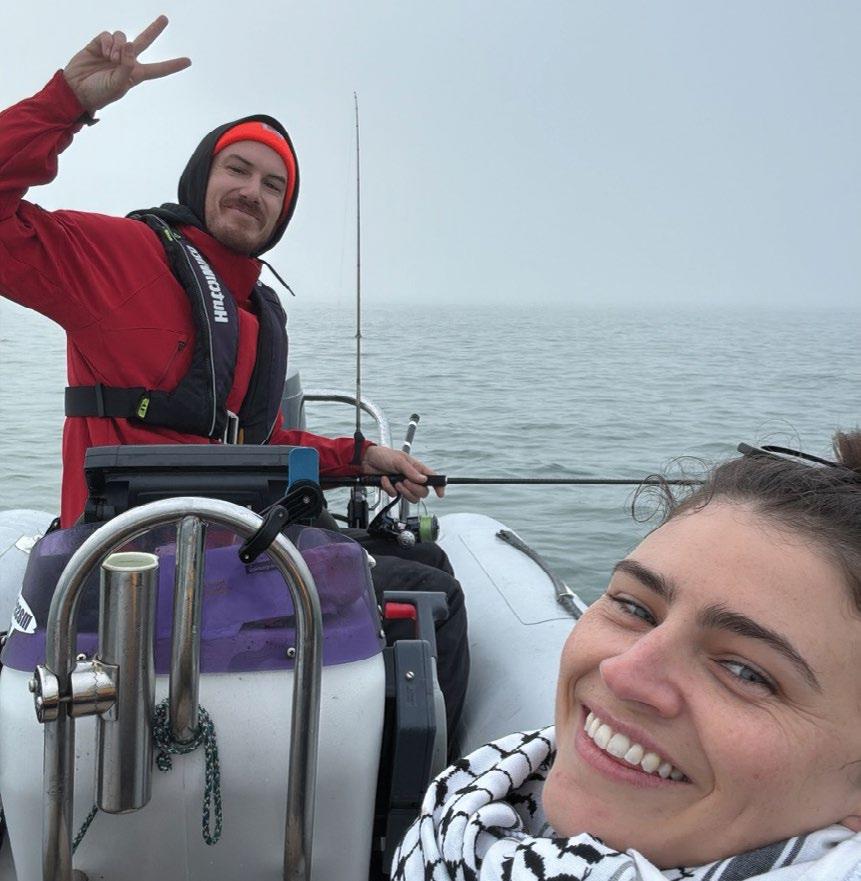
In our big blue backyard in Auckland Central, I go out fishing with my mate Cam whenever I can.
Unfortunately, given my work, that isn't very often, but it’s one of the biggest joys in my life to be actively part of the nature we’re trying to protect.
In this country, we pride ourselves on how you can catch dinner for your family and your friends from the oceans or from the land. It is one of the most incredible things about having the Hauraki Gulf on the doorstep of our nation’s largest city.
But the Government’s Fisheries Amendment Bill is working to undermine that very birthright of New Zealanders. When Luxon’s Government dropped this bill seemingly out of nowhere in March, the backlash was swift and immediate. So much so that we ended up with the minister committing to backing down on some of the most egregious examples of private profiteering and plunder – namely, the specific allowance for commercial fishers to have minimum fish-size requirements removed while they remained in place for recreational fishers.
Despite this public backdown, because the Government wanted to ram the legislation through, it went through First Reading with these clauses still in place and the mere promise that they’d remove them at Select Committee. Government members also promised to listen to submitters at Select Committee.
Why should we believe that? The bill contains provisions that were opposed by 90% of submitters in its initial consultation process.
There’s a reason recreational fishers, iwi, hapu, conservationists and communities across the country have united in calls to kill the bill. It’s just the latest attempt from this Government to shred our environment to make a quick buck for industry.
This isn’t inevitable – we can fight it and we can win. Just look at April’s success in pushing back against the Government’s plans to mine a UNESCO World Heritage site at the bottom of the South Island, which Minister Jones credited the Greens for nixing.
But we don’t just want to defend the status quo. We can and should go further. When it comes to restoring our oceans, we’re working to end bottom trawling and protect at least 30% of
them. Wellington’s Council and projects like Zealandia have shown that with effort, planning and resourcing we can bring back not only native trees, but birdsong. Our neighbourhoods can and should be thriving with life, joy and nature.
So why does it seem easier to imagine paradise paved over by a parking lot than the restoration of nature in urban environments? Because there’s been a whole lot of effort throughout most of our entire lifetimes priming us to believe that extraction, exploitation and exhaustion is the only way things can be.
That’s why this election year, it’s critical to remember what’s in our nature. New Zealanders have proudly stood up for the things that matter and for who we are and we’ve made history, time and again, making the previously impossible, possible.
I’m looking forward to continue talking to as many of you as I can, to get on the same page about moving forward as a city and country. Please don’t ever hesitate to reach out via chloe.swarbrick@parliament.govt.nz if I can be of service, or you have an idea, or catch me at one of our many events across the electorate in the next few months.
Aotearoa’s boldest food competition is back, wilder and more daring than ever.
This May, the Monteith’s Wild Food Challenge returns after last year’s hugely successful revival, bringing together more than 60 restaurants, pubs and eateries nationwide to create daring dishes featuring the country’s most adventurous ingredients, perfectly paired with Monteith’s brews.
From city favourites to small‐town heroes, venues across the country have spent months experimenting with wild, foraged and unconventional ingredients to craft one‐off creations that surprise diners and celebrate Kiwi creativity. The result is a nationwide showcase of culinary imagination, stretching from Riverton to Paihia
2026’s entries are already shaping up to be more inventive than ever. Diners can expect dishes like Tale of Two Tails – a pie featuring pulled wallaby and rabbit, paired with Monteith’s Original by Storyteller Eatery and Bar. Or there’s Aparima Restaurant and Bar’s Foveaux Strait Blackfoot Pāua Arancini: golden, crisp risotto spheres filled with wild-caught blackfoot pāua, perfectly matched with Monteith’s Ginger Beer. Whether it comes from the sea, the forest or somewhere completely unexpected, every plate promises a memorable flavour adventure.
Public voting will again shape the competition, with Kiwis across the country casting votes to determine a shortlist of five dishes before the expert judging panel chooses the ultimate winner.
The 2026 Monteith’s Wild Food Challenge judging panel brings together three leading voices in wild ingredients and New Zealand cuisine. Marine biologist and spear fisherman Sam Wild returns to offer deep knowledge of Aotearoa’s seafood, as does Emily Lucas founder of West Coast Pie Co., adding in her award‐winning expertise in wild game. A new face also joins the group, renowned broadcaster and comedian Jeremy Wells. No stranger to a perfect beer and food pairing, he brings his passion for modern New Zealand cooking, local produce and his unmistakable wit to the table this year.
DB Breweries Marketing Director, Fraser Shrimpton, says the Challenge has grown to become an important calendar moment for Kiwi hospitality.
“The Monteith’s Wild Food Challenge is all about encouraging Kiwis to step out of their comfort zones, try something new and
support their local hospitality scene. It has become something that both venues, chefs and their customers look forward to every year.
"Last year’s success, reception and quality of dishes following the 11-year hiatus showed just how hungry Kiwis are for wild, inventive food that challenges the status quo. That same appetite is carrying through to 2026, with strong interest from diners eager to get out, try something unexpected and support the venues taking part,” he says.
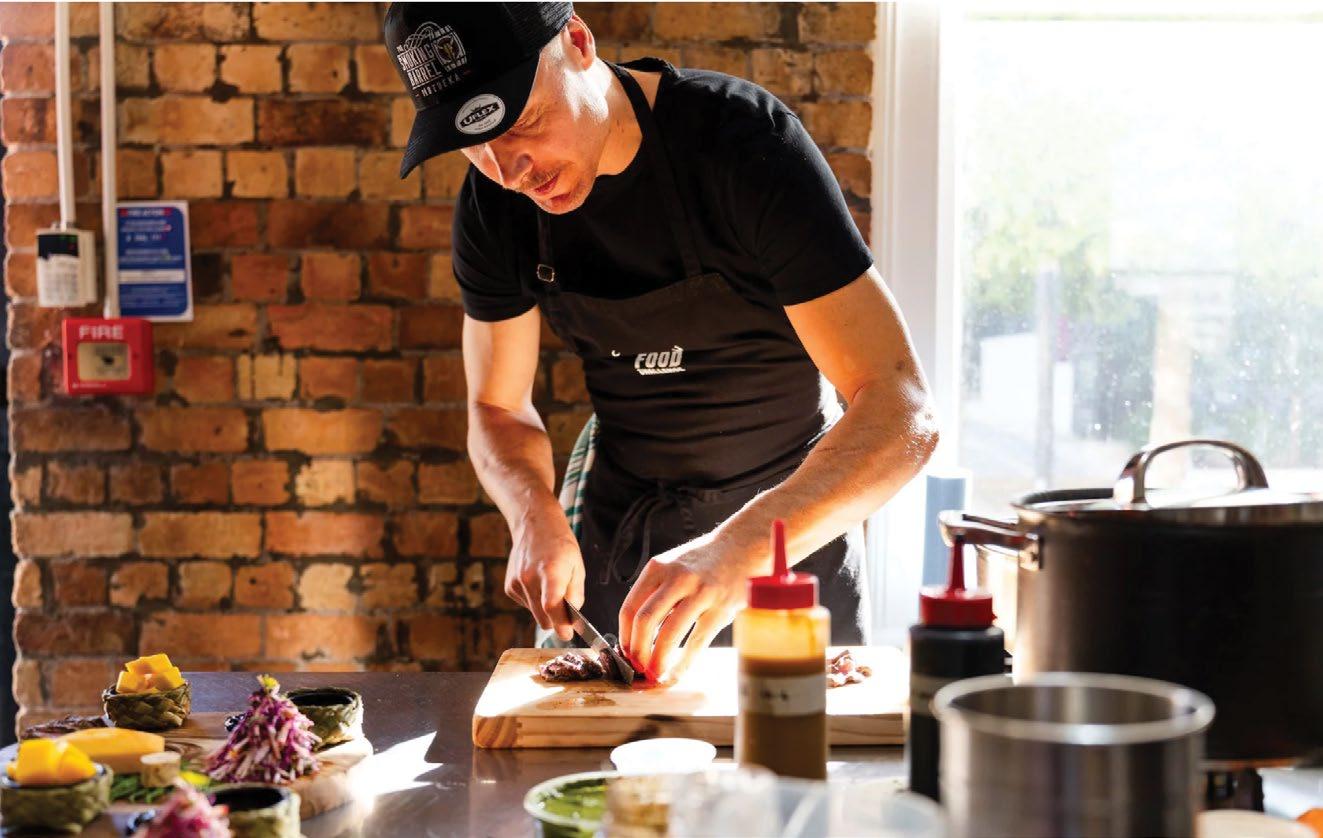
Last year’s winner, The Smoking Barrel from Motueka with its exceptional dish, the ‘Wild Pitmasters Smoked Platter’, matched with Monteith’s Phoenix IPA saw the impact of the win firsthand.
“Winning the Monteith's Wild Food Challenge in 2025 was huge for us. Not only is it something we are incredibly proud of, but it also helped put The Smoking Barrel on the map in a new way. We have an amazing community that continues to support us, but we have also seen a raft of new faces coming through our door – many of them curious to try our dishes.
"It’s been incredible for our team and for Motueka, and you can bet we’ll be entering the Challenge again this year, cooking up something wild to defend the crown,” says Josiah Smits, Head Chef.
New judge Jeremy Wells is eager to see what chefs and venues bring to the table this year.
“Being a part of the Monteith's Wild Food Challenge as a judge for the first time this year is very exciting. I’ve always loved tasting my way through New Zealand’s best and most inventive food, and this competition is the ultimate playground for that. I can’t wait to see what the chefs come up with,” he says.
For those ready to experience something new, head to wildfoodchallenge.monteiths.co.nz to find the venues taking part. New Zealand’s wildest food adventure starts again this May.
wildfoodchallenge.monteiths.co.nz
Pictured above: Josiah Smits
PILLAR NZ RAISES NATIONAL SECURITY CONCERNS OVER CHINESE-MADE SMART VEHICLES
PILLAR NZ is raising concerns about the rapid rise of Chinese-made electronic and smart vehicles in New Zealand, warning they may pose significant risks to national security, privacy and democratic integrity.
Recent developments across like-minded liberal democracies signal growing concern. Partners in the United Kingdom and Canada have raised alarms about the potential surveillance risks associated with Chinese-made electric vehicles, highlighting an issue that both New Zealanders and Parliament should take seriously.
The Australian Strategic Policy Institute has also been warning of these risks since 2024, noting that “Chinese electric vehicles are a rolling security threat.”
In late 2025, the United Kingdom Ministry of Defence echoed similar concerns, pointing to the surveillance capabilities of these vehicles. Often described as 'computers on wheels’, modern electric vehicles are equipped with extensive data collection and connectivity features.
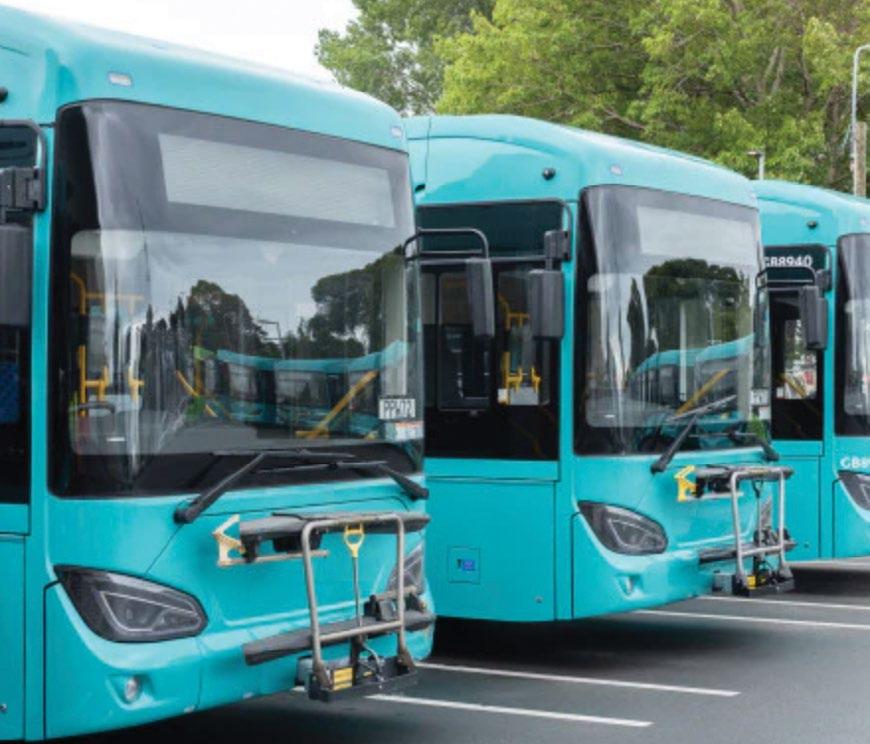
PILLAR NZ is also highlighting concerns around remote control capabilities, including vehicle immobilisation features, sometimes referred to as 'kill switches’. If misused, these functions could disrupt transport systems or leave drivers without control. Similar concerns have previously been raised in relation to New Zealand’s public transport bus fleet and the Cook Strait Interislander ferry.
“In today’s security environment, these are no longer just cars. They are data platforms with the capacity to collect, store and transmit sensitive personal and geolocation information,” said Nathan Seiuli, Executive Director of PILLAR NZ.
“If left unaddressed, this technology presents a real risk to New Zealand’s national security, data sovereignty and the privacy of everyday New Zealanders.”
PILLAR NZ is calling for a formal Government inquiry into the national security implications of Chinese-made smart vehicles and will be writing to relevant ministers.
“New Zealand must ensure that the technology we adopt does not become a point of vulnerability,” Seiuli said.
“We are urging the Government to take this issue seriously, review the risks and strengthen data protection safeguards for the sake of our national security, our democracy and our freedom.”
www.nzpillar.com
DEPUTY MAYOR:
DESLEY SIMPSON
The Auckland stadium deal that sees everyone smiling.
15 April 2026 marked a significant moment for Auckland – a moment where months of hard work, negotiation and collaboration came together to set our city on a better path. The Foundation Agreement signed between Auckland Council, the Crown, Eden Park, Auckland Cricket and Auckland Rugby is more than a document. It’s a commitment to Aucklanders that we can do better with the assets we already have and that we will.
For too long our stadium network has been held back by legacy arrangements that simply don’t reflect the needs of a modern, growing, globally connected city. Eden Park has carried the weight of being our national stadium while also trying to accommodate the needs of domestic cricket and rugby. The result has been inefficiency, frustration and missed opportunities.
This agreement changes that. It reinforces Eden Park’s role as New Zealand’s national stadium while creating a clear pathway for cricket and rugby to secure permanent, fit-for-purpose homes. Domestic cricket will move to Colin Maiden Park, supported by matched funding from Auckland Council and the Crown. Big international cricket matches stay exactly where they belong – at Eden Park. Rugby, too, is progressing plans for a long-term base that reflects the scale and professionalism of the sport today.
What this means for Aucklanders is simple – more. More concerts. More culture. More major events. More opportunities for our city to shine on the world stage. And, importantly, better value for ratepayers through a stadium network that works together rather than competing with itself.
I’m particularly proud of what this means for Colin Maiden Park. Years ago, it was proposed for terraced housing –something I fought hard to prevent. Today, it’s a thriving sporting hub, home to tennis, netball, hockey and more. Now, it will also become the home of domestic cricket. This is exactly what good stewardship looks like – protecting community assets and ensuring they serve Aucklanders for generations, an outcome made possible with the support and leadership of the Ōrākei Local Board.
What stands out most about this agreement is the spirit in which it was reached. Negotiations of this scale are rarely easy and they certainly aren’t often unanimous. Yet every partner came to the table with a genuine commitment to Auckland’s future. We worked through the challenges respectfully, constructively and with a shared understanding that the status quo was no longer good enough.
This agreement is not the final step, but it is a decisive one. It sets the foundation for a smarter, more integrated stadium network – one that reflects the ambition of our city. PN
DESLEY
SIMPSON, Deputy Mayor of Auckland www.desleysimpson.co.nz
WAYNE
BROWN:
MAYOR OF AUCKLAND
Fuel crisis a wake-up call for smarter transport choice.
Petrol prices are soaring off the back of the conflict in Iran, and I know Aucklanders are feeling it. Filling the tank has become expensive and that flows through to everything else.
But here’s the reality – a crisis like this is also a moment to reflect and change behaviour.
Those who can use public transport, now’s the time to use it. Auckland has some great options. When you choose to catch a bus or a train, you’re not just saving money and freeing up the roads, you’re also making a better choice for the environment.
The $50 fare cap is great value and it provides people with certainty about how much they’ll spend each week to get around.
There has been talk about allowing trucks into bus lanes because of the high price of diesel.
But bus lanes exist for one reason: to make the bus quicker than the car. As soon as you open them up to trucks, you jam the lane and destroy the incentive for people to use public transport. We won’t allow a simplistic solution to create a bigger problem.
The frequency in Auckland’s public transport network is already good but now we need to ramp up occupancy.
That means more people actually using the services we’ve already invested in. It also means stopping the dumb stuff like government policies that effectively subsidise people to stay in their cars, instead encouraging the simple step of getting on a bus or train.
Truckies can make better use of how they use our roads.
We have 24 hours in a day, but we mostly only use our roads for six of them. Instead of clogging up the network during the day, we should be moving more freight at night when the roads are empty. It’s better, cheaper and faster.
Logistics is a partnership. If truckies pass on the real cost of daytime congestion, warehouses will open at night.
We’re already seeing it. Drivers who can only make two trips during the day can make four at night. That’s a productivity win and a fuel-saving win.
This fuel crisis is also putting real pressure on the books. It has added a lot of costs to a public transport system.
Twenty-seven per cent of buses are now electric and that number will rise, but ferries do use a lot of diesel and they are heavily subsidised.
This fuel spike won’t last forever. But the habits we build now might.
So, don’t waste the opportunity. If you can take public transport, do it. If you run a business, think about when and how you’re using the roads.
Auckland works best when we use what we’ve got and, right now, we need to use it smarter.
(WAYNE BROWN) PN
mayorofaucklandmedia@aucklandcouncil.govt.nz
AI HELPS AUCKLANDERS REPORT PROBLEMS TO COUNCIL
Auckland Council has launched a new web-based AI assistant for reporting graffiti, illegal dumping, roaming dogs, missed bin collections and party/people noise.
‘Ask Auckland Council’ represents smart, responsible and pioneering use of AI by a major local body in Aotearoa New Zealand to address a known source of frustration for Aucklanders – reporting problems, starting with some of the most common.
Auckland Mayor Wayne Brown says it’s important for the council to stay up to speed with using digital tools.
“It’s about using technology to make life easier for people and meet demand for simple, convenient ways to engage with council. AI assistants get better the more information they receive, so Aucklanders can help us make it better for them just by using it,” says Mayor Brown.
'Ask Auckland Council' is far more sophisticated than a simple chatbot. As a conversational AI assistant, it can understand everyday language, understand people and place names in te reo Māori, ask follow-up questions, check it’s got the facts right and quickly analyse an uploaded photo of the problem.
The tool, which went live on 13 April, can be accessed on a smartphone, computer, tablet or any device via a web browser. More problem categories will be added over the coming months, and the AI assistant will also tell users how to report other problems.
Meanwhile, the council is working on speeding up internal processes so that reported problems can get fixed faster.
Auckland Deputy Mayor Desley Simpson says the launch marks the culmination of work she initiated with the Mayor.
“Seeing the idea now brought to life, and working so well for real users, is incredibly pleasing.
“We built this virtual assistant with Aucklanders, for Aucklanders. People told us the old reporting tools were frustrating and confusing. We listened and worked hard to deliver an AI solution that’s more intuitive, easier and quicker to use and safe and secure.
“It’s also simple to access through the website, and you can save it as a web app so it’s right there on your phone whenever you need it. We encourage Aucklanders to add it to their home screen and make it part of their everyday toolkit.”
An initial launch to 1000 people in February showed the AI assistant is almost twice as easy to use as existing channels. Eighty per cent of users found the new tool easy to use compared to 42 per cent using existing reporting methods.
'Ask Auckland Council' supports and complements the work of council staff and streamlines problem reporting.
Group Shared Services, which provides back-office services to the Auckland Council Group, worked closely with the council to develop the tool.
'Ask Auckland Council' complies with privacy, legal and security standards. It has built-in checks and balances to ensure accuracy and guardrails to prevent inappropriate comments and behaviour and spot false information.
Deputy Mayor Simpson says the AI tool is a prime example of how the council is working with Group Shared Services to harness new technology to better serve Aucklanders.
“Depending on how Aucklanders like using this technology, it could eventually serve as an AI-powered ‘single front door’ to Auckland Council for services and information – the ‘one stop shop’ that people have been asking for,” she says.
A link to the tool is located on the Report a problem page on the Auckland Council website. Aucklanders can still use existing channels to report a problem.
Read this and other stories on OurAuckland: ourauckland.aucklandcouncil.govt.nz/media-centre/
HELEN WHITE, MP FOR MT ALBERT: HOW WE’RE BUILDING AN ECONOMY THAT FAILS PEOPLE
I came to politics through employment law because I saw, up close, how important a stable, fairly paid job is to workers’ dignity, options and protection. I know that not just professionally, but personally.
The income I earned protected me during one of the most difficult periods of my life, the breakdown of my marriage. It was a painful destabilising and emotionally exhausting time, but it wasn't financially catastrophic. It was, ultimately, what economic security looks like in practice. Every New Zealander deserves that same buffer, not as a stroke of luck, but as a baseline.
I've been in politics for a while now, and as far as I understand it, the role of government should be to design prosperity in a way that guarantees that baseline through the creation of a sustainably resilient economy. Yet, many contemporary policy settings are pushing things in the opposite direction, embedding instability into labour markets and social systems in ways that risk entrenching a permanent underclass, rather than preventing one.
Increasingly, economists and sociologists point to the rise of the precariat, a class of workers in insecure, low paid and unpredictable employment, as evidence of this shift. When large parts of the workforce live without stability or certainly, it affects more than just individual households.It destabilises communities, weakens social cohesion and leaves entire economies more vulnerable to shocks. Resilience isn't simply about GDP growth, good numbers and balanced books. It's about whether a lost job, increased grocery prices or a family crisis becomes a temporary setback or something more enduring.
The current Government is reinforcing exactly that kind of insecurity. A heavily market-driven housing system, shaped in part by tax settings, such as the absence of a comprehensive capital gains tax, and the reintroduction of interest deductibility for landlords, continues to favour asset owners. Labour market flexibility has also meant the normalisation of short-term contracts, casualisation and gig-style work, leaving many without predictable hours or income.
Welfare settings remain relatively punitive and tightly means tested, often failing to keep pace with the real cost of living, while abatement thresholds can discourage people from taking on additional work. At the same time, persistent underinvestment in public services and infrastructure places more cost and risk onto individuals.
Together, these choices don't just respond to economic conditions, they help shape them, sustaining the very precarity that leaves so many households exposed to shocks.
That fragility becomes painfully apparent when the cost of essentials rises.Inflation is often discussed in aggregate terms, but the lived reality is far more specific. It's the price of milk, petrol, rent and electricity that determines whether families can cope. It's when the subsidy for transport to vital community care is cut by 15%. For higher income households, these increases and cuts are frustrating, for many others they can be destabilising or catastrophic. When wages do not keep pace with the cost of living, resilience quickly erodes.
We are already seeing the consequences. Community organisations are unable to cope with rising demand and food banks are under increasing pressure. Economic strain does not stay neatly within household budgets. It shows up as stress, as instability and, all too often, as family violence. These outcomes are the human cost of decisions that prioritise short-term relief for some, over long-term resilience for all.
International thinkers like Mariana Mazzucato, alongside institutions such as the International Monetary Fund, have emphasised the importance of inclusive growth to building resilience, ensuring that economic gains are broadly shared and that public investment supports both productivity and well being. Countries that wear the
shocks best are those where workers are secure, wages keep pace with the living costs and public services provide a genuine safety net.
For New Zealand, this means rethinking what we value. A resilient economy is one in which caregivers, teachers, tradespeople and service workers are paid fairly for their contribution. It’s one where losing a job does not immediately threaten a family stability, and where life's inevitable challenges, like the end of a relationship, do not result in financial ruin.
We're not short of options when looking at solutions, we're short of resolve. Initiatives such as raising pay in undervalued sectors, backing secure, predictable work and reshaping the tax system so it actually bends toward those under pressure, are well within reach. So, too, is rebuilding public services into something people can rely on when life goes wrong.
I came of age having been taught that success flows naturally to those who work hardest and that wealth at the top will eventually ‘trickle down'. We now know that nothing's ever ‘trickled down’ and that without deliberate policy, it never will. Instead, we see current economic settings expanding the number of workers in insecure, low paid and unpredictable work. If we don't choose to rewrite the rules and stop the growth of this precariat, we will continue supporting a system that seriously disadvantages a sizeable number of us very specifically and, in the end, all of us. (HELEN WHITE) PN
As we head into the winter months our thoughts can turn to the pursuit of coziness. And on a cold, wet day there can be nothing nicer than staying indoors and reading a good book with a nice warm drink on hand.
But as a little library with limited space, we can’t always guarantee that that good book will be here waiting for you on one of our shelves. In which case, requesting books is always the preferred method of getting a great read. Requesting books is relatively straightforward. But picking up your requests from our Holds Shelf can be another matter So, for this month, we are focusing on tech tips to help you with the process of picking up your requests.
Hard to believe but it has been two years since Auckland Libraries adopted a new system that changed the way we manage our collections and the ebb and flow of library books around Auckland. And part of that change was the way books are positioned on the Holds Shelf. Now, when you receive an email to alert you of your requested book’s arrival, you will also receive a shelf number that tells you where your book is placed.
However, if you have several books that have arrived at different times, it can be annoying having to hunt down individual emails. In such situations the Auckland Libraries
app can be super helpful. This is because all your pickups and their corresponding shelf numbers appear in one section.
Of course, the app has lots of other handy features, such as a reading tracker and an ability to manage linked accounts. You can also scan your library barcode to create a digital copy which is great if you forget to bring your physical card to the library.
The other great innovation that has happened very recently is an update to our self-check unit. Now, when your request arrives, you can log into your account at the self-check out and see the request and its corresponding hold shelf number. This can be useful if you can’t access the Auckland Libraries app.
We hope you find these tips useful and, if in doubt, we are always here to help.
LEYS INSTITUTE LITTLE LIBRARY, 14 Jervois Road, T: 09 377 0209, www.aucklandlibraries.govt.nz leysinstitutelibraryponsonby@aklc.govt.nz
MIKE LEE:
THE WESTERN SPRINGS DEBATE
Council refuses Speedway a fair go – next stop High Court.
Last month, Western Springs was back on the agenda of the Governing Body.
It will be recalled that in October 2024, CCO ‘Tatataki –Auckland Unlimited’ managers, after more than 10 years of trying, backed by Mayor Wayne Brown and a majority of councillors, evicted Speedway from Western Springs – its home for nearly 100 years – to Waikaraka Park.
At that meeting neither Speedway supporters nor officials of Ponsonby Rugby were allowed to be heard. A clear breach of s.78 of the Local Government Act. Furthermore, council officers refused to reveal what they had in mind to replace Speedway and Ponsonby Rugby, talking only of a "higher and better" purpose.
But not long after it became clear the council favoured transferring control and effectively ownership of Western Springs to US billionaire Bill Foley, along with fellow owners of Auckland Football Club, local ‘rich listers’ Anna Mowbray and Ali Williams. In response in April 2025, lawyers representing the Western Springs Speedway Association filed judicial review proceedings against council‘s decision. In May 2025, six months after the eviction decision, council belatedly decided to undertake some public consultation.
For consultation the council heavily pushed its preferred option – the billionaire soccer proposal branded as ‘Western Springs Arena’. There was a second option. Eccles Entertainment allied with Ponsonby Rugby branded ‘Western Springs Bowl’, plus a third, ‘other’ option. At the May meeting an amendment by councillors to include Speedway as an option was defeated, as was an amendment by myself to pause consultation until the outcome of Speedway’s legal proceedings.
After that meeting, council officers split the third option into 3a & 3b, in effect creating four options. This, I suspect, to reduce the chances of an insurgent ‘write in’ by Speedway supporters coming out on top, which it arguably did anyway. What is beyond argument is that the council’s heavily hyped preferred billionaire ‘Arena’ came in last with only 21%.
Fast forward to March 2026. ‘Tataki Auckland Unlimited’ has now fallen back on the ‘Western Springs Bowl’ which received only 30% support. But this is significantly different than the original proposal with, for instance, a $2.5m stage to be built across the track (which would physically block any return of Speedway) and Ponsonby Rugby only getting a five-year extension of its 30-year tenancy.
At the recent March meeting in which the council sought to lock this in, Cr John Gillon proposed an amendment to include public consultation for a Speedway option.
Here is a transcript of what I had to say in the ensuing debate:
“There was dismay last week when a survey indicated that public confidence in Government is only 49%.
“Here, in Auckland, we have our own measures. the ‘Quality of Life Survey’ and the ‘Citizens Insight Monitor’. The latest figures show public trust in Auckland local government at 27%; confidence that Auckland Council makes decisions in the best interests of Auckland 29%; and belief that the public has influence over council’s decisions 34%.
“Those figures are damning given that we consider ourselves a democratic organisation. Interestingly, they align closely with the 29.4% of registered Auckland voters who bothered to cast a vote at the last council elections.
“This speedway affair and its predetermined outcome has not helped the reputation of Auckland Council, nor has it improved Aucklanders’ confidence or trust in the council. The obligation on us is to try to address that. It’s a question of what is right, what is honourable, what is democratic.
“We should bear in mind the Court of Appeal’s criticism of Wellington City Council’s decision making and its 'unlawful funnelling of choices'. That goes directly to s.77 of the Act.
“Before taking office we swear a solemn oath to uphold our obligations under the Local Government Act. The sections on Decision Making are mandatory obligations and should be taken seriously.
“Holding a public consultation six months after evicting Speedway is a travesty, What would we think of a country that called an election, having six months earlier permanently exiled its most popular candidate. Would we consider that country truly democratic? Or what would we call it?
“So, my plea to my colleagues here today, including to you Mr Mayor, is to support this amendment. Giving Speedway and the people of Auckland a fair go is very difficult to argue against in terms of honesty, justice, fairness and democracy.”
Sadly, the amendment was lost. The case will now be decided by the High Court. (MIKE LEE) PN www.mikelee.co.nz
Pictured: Speedway supporters crowd the Town Hall. But their pleas were rejected by the Mayor and the majority of councillors.
Photography: Jason Jones.
KEN RING: WEATHER BY THE MOON AUCKLAND WEATHER DIARY, MAY 2026
This month may deliver average rain, sun, and pressures, with slightly higher temperatures.
May’s first week may be warm and sunny with passing showers, the second week is wetter, then the third week is the wettest with lowest pressures. The last week may be the sunniest with highest pressure. The barometer is expected to be around 1015mbs The best days for weekend activities are 28th/29th.
For fishermen, the kingtide is on the 18th. The best fishing bite times in the east may be around dusk times of 1st–3rd , 16th-18th, and 30th-31st. Bite chances are also good around lunchtimes of 9th-11th and 22nd-24th.
For gardeners, planting is best on 1st and 19th-30th (waxing moon ascending); whilst pruning is best 7th-16th, (waning moon descending). For preserving and longer shelf-life, harvest crops or flowers around the neap tides of the 10th and 26th.
Allow 24-hour error for all forecasting. (KEN RING) PN
For future weather for any date, and the 2026 NZ Weather Almanacs, see www.predictweather.com
Opinions expressed in Ponsonby News are not always the opinion of Alchemy Media Limited & Ponsonby News.
PONSONBY NEWS ONLINE...
In case you missed the news you will be aware that we are now going fully online. I love print and have been in the magazine business since 1990, I will miss those days. Thank you to all the locals who supported our Give a Little campaign. Sadly, we didn’t quite reach our target. It’s been a tough old year and going fully online will bring us more readers, which in turn gives our loyal advertisers more bang for their buck. You can also comment on the newsfeed stories. And remember we love letters to the editor. (MARTIN LEACH)
HUNDREDS CALL FOR EMERGENCY BIKE NETWORKS TO PROVIDE RELIEF FROM SUSTAINED HIGH FUEL PRICES
A coalition of hundreds of residents, businesses and community organisations, led by Cycling Action Network (CAN) and Bike Auckland, has issued an urgent plea to Prime Minister Christopher Luxon and senior ministers.
Their message: Aotearoa must immediately deploy widespread safe cycling infrastructure to protect New Zealanders from the global energy crisis.
The open letter, addressed to the Prime Minister, Finance Minister Nicola Willis and Transport Minister Christopher Bishop, warns that the New Zealand Government must support road controlling authorities to make changes to enable travel without the use of a car.
A Fleet Already at the Ready Cycling Action Network spokesperson Patrick Morgan says the solution to transport resilience is already sitting in two million Kiwi garages.
"Aotearoa is fortunate to have a fleet of over two million practical, fossil-fuel-free vehicles, bicycles and scooters, already distributed across the country," says Morgan. "Ready to keep people moving and save households money, helping to lower the financial burden of fuel for where travel by car is still unavoidable. But to unlock this potential, the Government must make the streets safe enough for people to actually use them. It is the only fiscally responsible way to protect Kiwi wallets."
Six Urgent Actions to Secure NZ’s Transport Future
The coalition is calling for a comprehensive quick-response strategy to ensure the safety and comfort of all people travelling by active transport. The six core demands are:
• Deploy Pop-up Bike Lanes: Enable and fund 'tactical urbanism' to quickly create protected routes by repurposing the leftmost traffic or parking lanes on multi-lane roads in built-up areas.
• Reinstate Active Travel Funding: Return funding from the National Land Transport Fund (NLTF) and other sources to levels that allow for rapid network expansion.
• Accelerate Shovel-Ready Projects: Reactivate high-quality, high-value-for-money walking and cycling projects that are already designed and awaiting funding.
• Reduce Speed Limits: Implement 30km/h zones on residential streets and around schools, and lower maximum rural speeds to 80km/h to reduce fuel consumption and improve safety.
• Hit Pause on RONS: Halt the ‘Roads of National Significance’ programme. Expanding the road network is unaffordable and locks in car dependency during a crisis; this funding should be redirected toward fossil-fuel independence.
• Make Public Transport Free: Transition to free fares to significantly increase patronage, a move that is more costeffective than the current targeted $50 per week rebate.
Demanding Choice, Not Dependency
Karen Hormann, Co-Chair of Bike Auckland, says the Government must empower local authorities to act before the crisis worsens.
"The Government needs to take the shackles off roadcontrolling authorities like Auckland Transport and councils nationwide," says Hormann. "New Zealanders want transport choice. The Government has no mandate to pass on fuel crisis costs to Kiwis while simultaneously blocking infrastructure that would provide a cheaper way to get around. We need safe, separated and attractive conditions for active travel now."
Redirecting Investment
The letter highlights that active transport infrastructure is consistently a high value-for-money spend compared to massive highway projects.
"Spending billions on new roads that increase our dependency on imported oil is foolhardy in the current climate," adds Morgan. "We are encouraged by signs that the Government may review the cost-benefit of some RONS projects. That investment must be used more effectively to resolve our dependence on overseas fossil fuels and keep Aotearoa moving."
PICTURED: Cyclists on Great North Road
PHOTOGRAPHY: Jolisa Gracewood
TE RIMUTAHI UPDATE - MAY 2026
Te Rimutahi is one year old this month, having officially opened on 17 May, 2025. Already, Te Rimutahi is a community hub and a welcome destination in the heart of Ponsonby.
People from all walks of life, of all ages and for all reasons, enjoy the space and beauty she provides.
A year on, it’s timely to look back and reflect on how we got here and what lessons we’ve learnt along the way.
Te Rimutahi is the result of a volunteer ‘Community-Led Design’ (CLD) initiative, enabled by the Waitematā Local Board back in April 2015. The formation of the CLD group was a result of the Board’s 2014 consultation with the wider local and business communities, which resulted in 77% of submitters choosing the whole-site, open space option for the available land. Given the high level of community interest and the tight budget constraints, the Waitematā Local Board resolved to initiate a CLD process to develop a design and budget for the site. With no funding being available, there was no other way to move the project forward.
So we got to
work!
The Te Rimutahi CLD process took many, many years to achieve and included residents, local businesses and visitors. We spent countless weekends handing out information, engaging with people and asking for feedback. Genuine, real world, face-to-face engagement. And it worked. People were interested, they paid attention, engaged, came along to our events and exhibitions and made significant and meaningful contributions. All of which shaped a better result. By understanding the needs of the entire community, and involving them every step of the way, through consultation after consultation, the team developed a mandate that was bespoke, accurate and place-centered. BRAVO!
Over the years, our volunteer Community-Led-Design Group has learnt a few critical lessons that we think are worth sharing for anyone who might like to use a similar model for other community development projects.
1. Allow time for true engagement. Once is not enough, nor is twice. We canvassed the community and kept them updated with our feedback along the way. We called this “breathing in and breathing out,” and just like with actual breathing, it’s essential to maintain!
2. Be comfortable with people holding alternate points of view and endeavour to work with them. We had such groups during the project; include their views in the process, but accept that you can’t please all of the people, all of the time.
3. Stay principled. Don’t be tempted to take shortcuts or push an outcome that consultation doesn’t support. Test your conclusions and provide all data to council decisionmakers so they can trust what you say.
4. And, most importantly, assemble a team of people who share your vision. This will enable tagging in and tagging out, whilst still keeping the project moving forward. When someone is tired or swamped with the stuff life throws at us all, a team keeps the course and maintains the determination needed to succeed.
There are too many people for us to thank individually, but we would like to acknowledge:
• Mana whenua, for their significant contribution to the realisation and enrichment of this project, including the gifting of the name Te Rimutahi.
• The many iterations of the Waitematā Local Board.
• The Auckland Council councillors who voted unanimously to retain the whole site for the new civic space, which is now Te Rimutahi.
And last but not least, we want to acknowledge everyone who interacted and engaged with the CLD process. Be it through making a submission, attending an exhibition and/ or event, discussing the project with us, or simply staying upto-date via the website, our Facebook pages, or through our Ponsonby News articles – THANK YOU. We couldn’t have done it without you.
And just look at what we have achieved! (JENNIFER WARD) PN
In loving memory; Gerry Hill, past Chair of the Western Bays Community Group. Our CLD group members, Andy Smith and Bryan Bates. We are saddened they didn’t get to see Te Rimutahi completed, but we are forever grateful for their considerable support and commitment along the way. Arohanui.
For more information or to contact the Friends of Te Rimutahi (formerly the CLDG), see our website 254ponsonbyrd.org.nz Instagram te_rimutahi_ Facebook Te Rimutahi or 254 Ponsonby Road.
Te Rimutahi Awards to date; Designers Institute of New Zealand (DINZ) BEST Awards ‘GOLD’ (2025)
NZILA Award of Excellence in Unbuilt Visionary (2019)
World Architecture News (WAN) Future Projects: Civic Award Winner (2018)
World Architecture Festival (WAF) Civic Future Project Award Finalist (2018)
photography:
Sam Gould
JOHNSTON
ASSOCIATES:
SHOULD YOU REGISTER FOR GST ON YOUR AIRBNB OR HOLIDAY RENTAL?
If you rent out your home, bach, or a room on platforms like Airbnb or Bookabach, you can potentially be required to register for GST.
Becoming registered for GST has a number of implications that are often misunderstood and can cause real problems now or in the future.
Here’s what everyday property owners need to know.
The $60,000 Rule – When GST Registration is Required In New Zealand, GST generally applies when you are running a “taxable activity” and your income exceeds $60,000 over a 12-month period.
Short-stay accommodation, such as renting out a holiday home or a spare room for less than four weeks, is treated as a taxable supply.
If you earn more than $60,000 from this activity, you must register for GST. If you earn less, registration is optional but that’s where things get tricky.
What Counts as a Taxable Activity?
Even if you only rent your property occasionally, you may still be considered to be running a taxable activity if your hosting is continuous or regular.
Inland Revenue looks at factors like:
• How often the property is rented
• Whether it is actively advertised
• Whether you intend to make ongoing income
Even future bookings or preparation steps can count toward being “in business.”
Why Some People Choose to Register for GST
In some cases, people have a clear plan and intend to maximise their income from renting out their property. It is clear from the start that they will earn more than $60k a year, and may voluntarily choose to register for GST. In some cases, you may be able to claim GST on the purchase price of the property.
Pictured: Logan Granger
As rents increase and property values have remained stagnant over the last few years, we have definitely seen an increase in the number of properties that are in the GST net.
Flat Credit Scheme
From 1 April 2024, online marketplaces must collect GST at the standard 15% rate on sales of short-stay and visitor accommodation. You are required to tell your online marketplace your name, IRD number and GST registration status and if it changes.
The marketplace will pass on 8.5% to you if you are not registered for GST. This flat-rate credit is for you to keep.
If you are registered for GST, your online marketplace will collect and pay GST on all short-stays rented through their platform.
The Hidden Cost: Mixed Use and Adjustments
If your property is used both privately and for guests (which is common), you cannot claim 100% of expenses.
Instead, you must:
• Apportion costs between private and taxable use
• Recalculate this each year
• Make “change-of-use” adjustments if your usage changes
This can result in you needing to pay more GST and Income tax as a result of not being able to deduct all your expenses.
The Biggest Trap: GST on Sale
This is where many property owners get caught out.
If you are GST-registered and sell the property to a third party, you will need to pay back GST on the sale price.
But more importantly if you stop offering short-stay accommodation or cancel your GST registration, you may still need to:
• Pay GST on the market value of the property
• Account for GST on assets used in the activity
This can apply even if you do not actually sell the property, cancelling your GST registration is treated as a deemed sale and IRD expects you to return GST on the market value of the property.
So – Should You Register?
For many small-scale hosts earning under $60,000, voluntary GST registration is often not worthwhile.
While you may get an upfront refund, this is often outweighed by:
• Ongoing compliance costs
• Annual adjustment requirements
• A potentially large GST liability on sale or exit
However, registration may make sense where:
• The property is used predominantly for short-stay accommodation
• Significant GST can be claimed upfront
• There is a clear long-term commercial strategy
As always in the tax world, the devil is in the detail and everyone’s situation can be different. Please reach out if you need any help navigating these rules, we are more than happy to help. PN
Disclaimer – While all care has been taken, Johnston Associates Chartered Accountants Ltd and its staff accept no liability for the content of this article; always see your professional advisor before taking any action that you are unsure about.
WINTER WHITES
This month, two family wineries. Westbrook in Waimauku-Kumeu region west Auckland and Pegasus Bay from Waipara, north Canterbury.
Westbrook Waimauku Single Vineyard Chardonnay 2019
- $34.50
Crisp, clean and young for its age. Grown on the estate on clay/mineral soils and made by renowned NZ wine judge and winemaker James Rowan. Flinty and slightly reductive with lime citrus and a hint of herbal basil. Lengthy tangy finish.
Pegasus Bay North Canterbury ‘Minuetto’ Semillon Sauvignon 2023 - $40
A 70/30 blend of semillon and sauvignon blanc. Oily, grassy and full bodied. Medium to dry. The semillon was aged in oak to add more texture, and the wine aged for an extra 18 months before release. Fresh pineapple, mango and grapefruit.
Food Match: Aperitif with cheese board or with Vietnamese cuisine.
· Boutique tours to Waiheke Island & Kumeu · Bespoke Fun Wine quizzes by arrangement
JUNA: A PRODUCT THAT WORKS AND FEELS AS GOOD AS IT TASTES
In New Zealand’s evolving wellness space, JUNA has arrived with a perspective shaped less by trends and more by real life, and it is already beginning to resonate with women looking for something that feels both effective and easy to maintain.
Founded by entrepreneur Olivia Lloyd, JUNA was born from personal experience. Living with endometriosis, Lloyd had long understood the role nutrition and supplementation could play in supporting how she felt day to day. But as a mother of five balancing work and family life, maintaining those routines proved difficult. Like many women, she found herself buying supplements with the best intentions, only for them to sit unused in the cupboard. Powders, pills and gummies often became just another thing to remember in already busy days.
That gap between intention and consistency became the starting point for JUNA and provoked the question: what if support could be something you actually looked forward to?
With a background in branding and marketing, including building and later selling a successful home fragrance business, Lloyd brought a strong consumer lens to the idea, despite having no formal experience in food or beverage. Early development began at home, experimenting with ingredients and formulations in her own kitchen before partnering with food scientists to refine the product into something both effective and commercially viable.
The process proved more complex than expected. Alongside formulation came the realities of navigating New Zealand’s food standards framework, which shapes how products like JUNA can communicate their benefits. Self-funded from the outset, the journey required persistence and a clear sense of purpose. For Lloyd, the goal remained unchanged: to create something women would love, look forward to and use consistently.
JUNA is designed to make nutritional support feel simple, intuitive and genuinely enjoyable. Rather than focusing on a single function, the formulation takes a more comprehensive approach, combining vitamins and minerals that contribute to normal energy metabolism (B2, B6, vitamin C, magnesium), psychological function (vitamin B6, vitamin C, magnesium) and the regulation of hormonal activity (vitamin B6).
Equally important is how it feels to drink. Lightly sparkling, crisp and refreshing, JUNA is designed to be something you’ll actually want to reach for.
The name itself reflects that intention. Inspired by Juno, the Roman goddess associated with femininity and womanhood, JUNA evokes both strength and softness, a quiet confidence rather than something overt.
Now just three months into market, following almost two years of development, JUNA is building a loyal following among women who want to feel better in their bodies without overcomplicating their routines. For many, it represents a simple shift, replacing something less considered with something more supportive.
For Lloyd, that is ultimately the point. Not to ask more of women, but to meet them where they are, and to offer a product that works with their lives and feels as good as it tastes.
www.drinkjuna.com
FACES AT GREY LYNN FARMERS MARKET
You can find Devina Ramlu wowing customers with her tasty Nae Nae pickles at Grey Lynn Farmers Market on Sunday mornings.
Where did you grow up?
In a small town in Fiji.
Did you start your working life there?
Yes, I started in a bank as a stenographer for their international department, before I was lucky enough to land a job as an air hostess for Air Pacific on the Honolulu route. I only worked in first class – we had different uniforms to the rest of the crew. It was such a change for me staying in top hotels after local life.
What brought you to New Zealand?
A holiday where I met my husband. There was a lot of commuting before I moved to New Zealand to set up a family with him. We had two children.
Did that change your work life?
Definitely! I had a variety of roles in airlines here before helping my husband set up a side business that didn’t work out very well, and neither did the marriage. There were some tough times.
And Kelmarna helped you to build a new life?
I am so grateful to my daughter and her friend for pushing me into volunteering at Kelmarna Gardens even though I had never been a gardener. I started with odd jobs like harvesting and weeding.
And that led to cooking?
Yes – when I started cooking lunches for the volunteers, I felt a strong sense of belonging, and others loved what I made. I now cook lunches for corporate groups too. And I started experimenting and bringing pickles and chutneys that I had made at home – everyone was so positive about my work.
How did that turn into a business idea?
Again, my daughter and her friend encouraged me to turn my pickles and chutneys into a business. They pushed me to sign up for the Kitchen Project where I did a course learning all the things that a food entrepreneur needs to know when they are starting out.
What is the Kitchen Project?
It’s an Auckland Council initiative, run by the marvellous Connie Clarkson. They are responsible for many new food businesses finding their feet in Auckland. I was delighted to find many other Kitchen Project graduates selling at Grey Lynn Farmers Market.
How did you find out about Grey Lynn Farmers Market? It really is all about who you know. Phillipa, from Kelmarna, knows Grey Lynn Farmers Market well and put a good word in for me.
What has the market been like for you?
The stallholders have been so welcoming and supportive. I feel like I have three families now – my daughter and her six-year old, the Kelmarna crew and the stallholders at Grey Lynn. It’s lovely to be part of the community initiatives.
What do you sell at the market?
A range of seasonal pickles. My tamarind chutney has been a winner. I sold out at the annual Kelmarna seedling sale a few weeks ago. Grated apple kuchla and eggplant chutney are also very popular. I love watching people’s faces when they try my samples and are excited to take some home. I also love how people come back each week for more and tell me how they used it. One customer puts the tamarind chutney on roast lamb.
How did you come up with the name 'Nae Nae’s pickles'?
As my grandson proudly told everyone at the seedling sale, it was his idea. Nae Nae is what he calls me and I wanted to show the family bond and the love I put into my cooking.
What do you do when you aren’t at the market or volunteering at Kelmarna?
I love spending time with my grandson playing games and having sleepovers. And I’m keen on crafts as well – sewing and making beaded jewellery. PN
THE SURREY HOTEL – CONFERENCES, ACCOMMODATION AND SUNDAY CARVERY
Located in the heart of Grey Lynn, The Surrey Hotel is a versatile destination for both business and leisure.
With a range of flexible conference rooms available, it’s the ideal setting for meetings, workshops and private events. Whether you’re hosting a corporate function or a smaller gathering, the team can tailor each space to suit your needs, ensuring a seamless and professional experience.
For those travelling or accommodating out-of-town guests, The Surrey also offers comfortable, on-site accommodation. Combining convenience with a relaxed, character-filled setting, it’s an easy choice for both short stays and extended visits. Alongside this, the hotel’s welcoming bar and restaurant provide the perfect place to unwind, meet colleagues or enjoy a casual meal.
Adding to its offering, The Surrey Hotel has introduced a new Sunday Carvery lunch, running every week from 12 noon to 2pm. It’s the perfect way to bring people together over a hearty, traditional meal. Expect perfectly roasted meats, all the classic trimmings and a warm, inviting atmosphere that makes it easy to settle in and enjoy your afternoon. It’s good food, good company done properly.
To celebrate the special women in our lives, The Surrey Hotel will also be hosting a special Mother’s Day Carvery on Sunday, 10 May. It’s a great opportunity to treat Mum to a delicious meal and a well-deserved break, with all mums receiving a complimentary glass of prosecco on the day. Bookings are essential for this special carvery.
Conveniently located at 465 Great North Road, The Surrey Hotel continues to be a go-to spot for locals and visitors alike.
Visit thesurreyhotel.co.nz to find out more.
THE AOTEA COMPANY: ISLAND SPIRIT, SUMMER READY
Born from the rugged beauty of Aotea Great Barrier Island, The Aotea Company is built on a simple idea: creating premium, nature-led products that carry the island’s spirit into everyday life. Founded by Bayard Sinnema, the business blends sustainability, provenance and community into brands that celebrate connection, flavour and the joy of summer.
Leading the portfolio is Barrier Buzz, a naturally bold range of non-alcoholic beverages made with real ingredients and authentic Aotea mānuka honey. Available in Cola, Lemonade and Ginger Beer, each bottle delivers clean, honest refreshment with genuine character — perfect for beach days, boat trips, backyard BBQs or long evenings shared with friends. It’s soda, but with a sense of place.
Complementing this is Stumpy & Chop, a premium selection of sustainably sourced mānuka and kānuka wood splits and chunks designed for BBQ cooks and outdoor fire enthusiasts. With rich aromas and distinctive smoke profiles, Stumpy & Chop elevates everything from low-and-slow brisket to a simple weekend grill. It’s about the ritual of lighting the fire, slowing down and bringing people together around good food and natural flavour.
Together, Barrier Buzz and Stumpy & Chop embody The Aotea Company’s belief in better by nature — products that respect the land, honour local sourcing, and create memorable shared experiences.
Available now and perfectly timed for the warmer months, The Aotea Company invites you to bring a true taste of Aotea into your summer — whether it’s a chilled bottle in hand or the glow of a well-stoked BBQ at dusk.
theaoteacompany.co.nz
BARRIER BUZZ
A range of naturally sweetened sodas with Aotea mānuka honey. @drinkbarrierbuzz
STUMPY & CHOP
Premium mānuka and kānuka splits and chunks for superior BBQ smoking.
www.theaoteacompany.co.nz
DINNER : Tuesday to Sunday from 5:30pm LUNCH : Saturday from 12 noon
Tuesday : Test Kitchen - $80pp
Wednesday/Thursday : BYO & Duck Dinner for two - $95 + $25 corkage
Friday : Steak Frites w Unlimited Truffle Fries - $49.50pp Sunday : Prix Fixe Menu - $75pp
Photography: Babiche Martens
Photography: Babiche Martens
PANCHAKARMA – AYURVEDA’S AUTUMN RESET
As the warmth of summer fades and we transition into the cooler, damper months, autumn offers the ideal opportunity to reset the body and mind.
In Ayurveda, this seasonal shift is a powerful time to cleanse and strengthen the system in preparation for winter, when immunity is often challenged by cold weather and increased exposure to illness.
Ayurveda recommends undertaking a Panchakarma cleanse at the junction of seasons, particularly in spring and autumn. This ancient practice is a deeply restorative process designed to remove accumulated toxins, rebalance the body, and restore vitality.
The word Panchakarma comes from Sanskrit, where ‘pancha' means five and ‘karma' means actions. It refers to five therapeutic processes that work together to eliminate toxins from the body and reset its natural healing mechanisms. While traditionally performed in specialised clinics in India, Panchakarma has been adapted into a structured, supported programme suitable for modern lifestyles.
At our Ayurveda New Zealand clinic in Grey Lynn, we offer Panchakarma in an authentic and personalised way, similar to what you would experience in India. Following advanced training at the Athreya Panchakarma Hospital in Bangalore, we have integrated traditional methods with tailored support to guide clients safely through the process.
The programme typically runs over 17 to 21 days and is divided into five key phases.
The first phase, Purva Karma, focuses on preparation. Clients establish a daily routine including tongue scraping, oil pulling, self massage with warm herbal oils, gentle yoga and an Ayurvedic meal plan. This phase supports digestion and begins loosening toxins in the body.
The second phase, Snehapana, involves the intake of medicated ghee early in the morning. Specific formulations are selected based on individual needs. For example, Tikta Ghritta supports liver detoxification, Brahmi Ghritta nourishes the nervous system, and Ashoka Ghritta is often used for women’s health concerns. Close guidance ensures the process is safe and effective.
The third phase includes therapeutic treatments at the clinic such as Abhyanga massage, Shirodhara for deep relaxation, Nasya for sinus health, and Garshana for weight loss to promote detoxification through the skin.
The fourth phase, Pradhana Karma, is the main elimination stage. This may include a gentle purgation process to release toxins from the digestive system and tissues.
The final phase, Rasayana, focuses on rejuvenation. The body is nourished with restorative herbs, a strengthening diet and calming practices to rebuild energy and vitality.
The benefits of Panchakarma are both immediate and long lasting. Clients often report improved digestion, better sleep, increased energy, mental clarity and emotional balance. Many also experience natural and sustainable weight loss as the body releases stored toxins.
Beyond physical results, Panchakarma offers a profound sense of reset. It allows the body to return to its natural state of balance and resilience, supporting long term wellbeing.
To support you through this seasonal transition, we are offering a special autumn promotion. Enjoy 10% off Ayurvedic consultations, treatments, Sattva Botanical products and Panchakarma programmes. Simply use the code ‘Autumn10%’ when booking or shopping online at ayurvedanz.co.nz
With a trio of creative directors at its helm and an innate desire to foster collaboration and community at every level, salon-meets-creative space Drake on Drake offers an elevated hair experience in the heart of the Victoria Park precinct.
Headed by co-founders and industry disruptors, Gene Cooksley, Jennifer Good and Gene Edwards (AKA Ed), the salon is the result of a long and shared history that has seen the trio hone their vision for a creative space that acknowledges the past, while looking firmly to the future.
“Our approach is completely unique, and I think we are going to set the industry on fire,” says highly respected industry educator and editorial stylist Ed, who has worked behind the scenes at global fashion weeks and on set with some of Aotearoa’s most respected photographers and editors. “We want our salon to be inspiring to more than just the people who work here, a space where people can feel supported, be creative and elevate themselves to the highest level of their art.”
Co-founder Gene agrees, adding, “Our intention is to offer a beautiful space where clients can feel immediately at ease, while also creating community and fostering creativity at every level. We all have our strengths and want to keep moving and educating, and welcome others in the industry to use our city fringe, multi-use space as their own."
“We really are in a position to create a platform where we can re-shape the future of hairdressing in Aotearoa New Zealand,” says Jennifer, the sole New Zealand talent flown to Australia to compete in the Redken 2026 Gloss Boss Awards last month, where she took home a win in the highly competitive competition. Her work is famous for its polished finishes, seamless blends and glossing that reads as both technical and instinctive, and her passion for creating beautiful colour unmatched.
Part creative space and part salon, Drake on Drake has hosted shoots, classes, launch events and served as a base for visiting artists to service their New Zealand-based clients since opening its doors, and invites collaborators from all areas of the industry to stop by and see what can be achieved when people work together for the good of the whole.
“Drake means community, it means collaboration and it means inspiration,” says Ed, “and this is just the beginning.”
www.drakeondrakest.nz
Photography: Andrew Coffey
PONSONBY KINDERGARTEN CENTENNIAL A CLASS ACT
Ponsonby Kindergarten recently celebrated (26 February) its 100 year birthday with a community afternoon tea.
Special guests included Leader of the Green Party and Central Auckland MP Chlöe Swarbrick, Chairperson of Waitamata Local Board Alexandra Bonham, former government Minister and Ponsonby resident Hon Judith Tizard, tamariki, whānau, former teachers and pupils, and Auckland Kindergarten Association Board Director and Auckland Councillor John Gillon, CEO Pauline Winter, AKA Life Members Sue Coleman and Robin Houlker and AKA support staff.
Ponsonby Kindergarten opened on 1 February 1926 at All Saints Church Hall. It was the sixth kindergarten to be opened by the Auckland Kindergarten Association, and was established with £150 donated by other kindergartens. It moved to 22 Ponsonby Terrace at the end of 1937. The kindergarten has some of the original wooden chairs that are still used every day.
The celebration was about remembering the past and looking forward to the next 100 years. Special guests spoke about the history of our kindergarten and its importance to the community.
Life Member Robin Houlker said: “We stand for a garden of learning for every child, Te Māra Mātauranga. Kindergarten – the garden of the child. And that implies imagination, curiosity, creativity, engaging children at play!” She talked about the need to retain fully qualified teachers as the best way to maintain quality early learning and that every suburb in Auckland has had a community kindergarten.
“This milestone represents many generations of children and their families. There is a wonderful continuity of qualifed teachers, which is also a fantastic ‘herstory’ of women entering the profession and ensuring women were recognized for their skills. It also represents 100 years of stability in the neighbourhoods – where some providers have come and gone, we have been consistently present for children, parents and whānau.”
Mrs Houlker talked about some of the battles over the years to keep Ponsonby Kindergarten open, including requests to government and the council for help. Its earlier sites included
“a hall, a room in the school, a Nissen hut, the basement of the Council Hall, and at times it was hardly fit for purpose,” she said. In the 1970s, the floors had to be replaced because they’d been sanded so many times that it was not possible to sand them again, and the building had to be rewired due to the condition of the electrical system. Luckily major renovations have taken place since then.
She launched a new Donate to Kindergarten initiative at the Ponsonby Kindergarten celebration:
“It’s a campaign for the AKA to alert the community that we are not-for-profit, underfunded and we humbly ask for your help so we can still be here when the kindergarten turns 200. Long ago we identified that another pillar the AKA stands on is access for all children – not just for those who can afford it. This is equity in action. And our kindergartens need help to make sure this happens.”
A family member made the 100-years celebration cake decorated in AKA colours. It was cut by Rosemary Martin, a former teacher, Head Teacher for 22 years, along with Max and Rafi who helped make it.
The community shared many stories and photos of the past. The tamariki loved the story about Polly Perkins, a galah. Miss Winstone, a student teacher in the 1930s, told the story: "At Ponsonby Kindergarten we had a pink and grey parrot called Polly Perkins. It was Miss Court's family parrot and lived at the kindergarten. If she wanted to pull a fast one on us or to trick us, she would screech and pull at the latch of the door and get out and she'd fly up to the tram terminal on Ponsonby Road and fly up onto the top of the trams and there she'd be! She caused the trams to be delayed."
Ngā Tamariki Puāwai o Tāmaki | Auckland Kindergarten Association (AKA) was established in 1908 and has 108 kindergartens and four centres across Auckland.
AKA is a not-for-profit charitable organisation. aka.org.nz/donate
THE CRASH – SALLY WENLEY’S MEMOIR
Ponsonby local Sally Wenley, who has wheeled the footpaths and enjoyed wining and dining in the suburb for more than 30 years, has released her memoir The Crash (Massey University Press) and it went straight to the top of sales for non-fiction books sold in New Zealand.
In 1987, Wenley was a driven, fun-loving and at times naughty sports prefect at her Hawke’s Bay school with everything to live for. When a bus rolled down a bank on a school trip, five people were killed and she became a paraplegic, her sporting dreams in tatters.
Now an award-winning radio reporter, in her engaging, uplifting and at times hilarious memoir, Wenley looks back at the angry, defiant, risk-taking younger self who used alcohol and arrogance to mask physical pain and trauma. And, for the first time in 40 years, she also looks squarely at the accident.
After graduating with a Bachelor of Arts from Massey University followed by a diploma in Broadcast Journalism from the NZ Broadcasting School in Christchurch, Wenley moved to Auckland in 1993 to start her journalism career as an intern at TVNZ. She tells tales about the culture in the TV newsroom and hijinks on Ponsonby Road, including adults-only adventures in bars and restaurants along the strip.
“Gosh, I was naughty and had so much fun in my 20s and 30s when Ponsonby Road was just humming," she says."Sadly, most of the bars I spent time in are no longer there, and there are now many windows with For Lease signs on them. Several friends came out about their sexuality during that time and it was a big deal as they came from conservative families."
Wenley remembers the original Pride parades – then called Hero parades – as being sensational, with some exhibitors’ outfits leaving not much to the imagination. “They were held later at night, and I was so excited for my friends who were taking part in the parade in scantily clad leather outfits, G strings with nothing on top and surrounded by plenty of tinsel and music.”
Wenley says her memoir was about three to four years in the making and was written after she had major surgery after falling out of her wheelchair while watching a Pride parade. “I was turning around and my whole chair tipped sideways, so I landed on my hip/pelvis area. I was unaware of my poor bone density until, after nearly 40 years
with a spinal injury, my pelvis fractured. Now I have nuts and bolts holding it together. The medical team was wonderful and explained what was happening and talked about everything"
Wenley says that led to her to want to know more about her original spinal and head injury from the bus crash. She retrieved her medical records and the coroner’s report into the crash. "Back then I was unconscious for two weeks and have no memory of the crash. I became conscious in intensive care in Christchurch, where I had been flown from Hawke’s Bay. I then spent six months in the Burwood spinal unit in Christchurch before returning home. By the time I got home, I felt people weren’t talking about what had happened and there was a stiff-upper-lip mantra about the whole thing.
“Writing this memoir has been an educational and emotional journey,” she says. “I hope it is read by counsellors and medical professionals so they can realise how positively life changing, and literally life saving, the work they do above and beyond what they learn during their training is for someone like me. A lot of these clever people doing long and stressful hours may get little thanks. I believe I am an example that shows their dedication is worth it. I would like school board members and principals to read it too, and then check that their policies for dealing with a potential trauma are up to date. I also hope they never need to put those policies into practice.
Sally Wenley’s book 'The Crash: A memoir' is in all good bookshops. It is also available as an ebook and can be bought online from Massey University Press.
RING MAKING WORKSHOPS
AT ANVIL STUDIOS
Get creative this season with our jewellery making classes!
We are offering exciting Ring Making Workshops and an Introduction to Jewellery course on Saturdays, plus a beginners five-week evening class kicking off in just a couple of weeks. These workshops make a wonderful and thoughtful Mother’s Day surprise. Spaces are limited, so book your spot now.
We are a Local Business running classes from our Pt Chevalier studio since 2014.
Online shopping scams jumped 271% in the last quarter of 2025. This is a shocking number, but not a typo. New figures from Gen, a global cybersecurity company, also show so called 'scam-yourself' attacks rose 82%. These are ones where you unknowingly complete the final step yourself by clicking a link, scanning a QR code, approving a device pairing, or entering a verification code. Scams like this blend into your everyday digital routines, the social feeds you scroll just before you reached this article, or the messaging apps Kiwis use in their daily lives.
FACES YOU CAN NO LONGER TRUST
AI tools can now clone a person’s face, voice and writing style in seconds, making it nearly impossible to tell real from fake. But the face is often just packaging. The engine is usually the message itself: the script, the call to action, the pressure and the promise.
More troubling still, scammers are increasingly manufacturing credibility without impersonating anyone at all. They use AIgenerated synthetic presenters, fake on-screen hosts with no real person behind them, no-one for victims to complain to. They are endlessly reusable across any topic or language. If a video is pushing you toward paying money, entering a login, downloading, or verifying urgently, it’s a sign. Treat the presenter as part of the packaging, not proof.
The emotional trap
Empathetic scams thrive on feelings first and logic second. When a message sparks fear, urgency, guilt or even excitement, name the emotion you are feeling. That awareness breaks the illusion of intimacy that AI-powered scammers create.
HOW TO PROTECT YOURSELF
Follow the action, not the face: If a video is urging, secrecy or immediate payment, pause. That pressure is often the engine driving the scam.
Verify the platform: Search for the claim from independent sources, not links in the description or comments.
Verify the human, not just the message: If a call asks for money, hang up and dial the number on the back of your card.
Be suspicious of anything that sounds too smooth: Scam scripts often sound confident, generic, and strangely frictionless, as if risk does not exist.
Avoid installs prompted by videos: "Install this to verify" and "download this viewer" are common routes into malware and credential theft.
Consider an extra layer of protection: Tools like Norton 360 Premium work quietly in the background, blocking scam sites, flagging suspicious downloads, and keeping your devices covered around the clock.
The real skill is not spotting what looks fake. It is recognising how scams behave. Follow the pressure. Question the promise. Verify outside the moment.
Ponsonby News has 3 copies of Norton 360 Premium to give away to 3 lucky readers. Please email: martin@ponsonbynews.co.nz with your name and postal address and be in to win. First come - First served.
IT'S A MYSTERY BUT WILL IT BE SOLVED WHEN WE ARRIVE TOMORROW?
Bright and early on a forbidding morning on 31 March, the Seven Seas Navigator made its way up the Waitematā to dock at Queens Wharf.
Laid down in Leningrad as the 'Akedemilk Nikolay Pilyugin' in early 1988, she was originally destined to become a 'Satellite Tracking Vessel' for the USSR (read spy ship).
The dissolution of the Soviet Union in 1991 put paid to that and her construction was halted until 1999 when she was purchased by the now rebranded 'Regent Seven Seas’. She was finished and fitted out in Italy as a 6-star floating palace for a company that is billed as 'The World's Most Luxurious Line'.
Being the smallest in a fleet of six and with a capacity of 490 passengers and 340 crew, at 28,500 tonnes she is definitely a different type of ship to my beloved Cunard ‘Queens’ and an opportunity to compare the two lines and at the same time have a 10 day ‘bonding' holiday with my newly widowed mother.
Now you probably don’t remember, but Mother has accompanied me on a number of other cruises and to say my parents were not sea going is no slight exaggeration. My father would get sea sick at the sight of a glass of water and Mother had only crossed the Tasman by ship because she was assured by her wayward offspring that it would be as calm as a millpond.
None of those subsequent crossings had been anything other than what could be described as 'a washing machine’ but, once again, I assured her that because the previous trips were rough: “what were the odds of it happening again?” Besides, the trip would give us an opportunity to return Dad's ashes to our spiritual home in the Bay of Islands should the weather permit us to anchor there.
At the hull door on embarking, we were offered a glass of the ship's finest Champagne, maybe to distract us from the first thing that caught our eye on exploring the ship which was an already emptied swimming pool suggesting preparation for some rough weather. Not a great start for uneasy minds and so it wasn’t hard to suggest another glass of Champagne before Mother could turn on her heels and high-tail it back off down the gangplank.
It didn’t take us long to explore the Navigator. Four dining rooms – including one completely serviced with Versace china – a number of bars and lounges with grand pianos and jazz bands and a spa that would have made Ponsonby Road jealous.
Unlike other lines, Regent has nothing as common as an ‘Inside’ room. All accommodations on board are suites with most of them coming with their very own butler. The emphasis is on quiet service, relaxation and luxury.
But I keep asking myself, “What to do with a butler?”
So, before we departed Auckland, Mother and I visited the Compass Rose (the Versace restaurant). While I was smoozing
the concierge (they don't have anything as common as a waiter on board) the MD slipped up to me and reminded me that this restaurant has a dress code.
"But this is Versace," I objected, smoothing down my genuine but, I admit, garish red, gold and black classic shirt from Donatello's 2019 collection… I knew I should have brought the receipt with me. Anyway, the point is not my extravagant taste in casual ship wear, but that night at dinner we were seated next to not one, but two people dressed in raincoats.
So much for refined luxury.
At dinner we were introduced to the Cruise Director. He has been at sea for 53 years and is at least 77 in the shade. Ray is a bit of a star on the Regent line and in coming days we were to find out the reasons why.
Still awaiting departure and in anticipation of the threatened coming seas, Mother and I returned to our suite after dinner and there was Ray on TV warning us of the coming maelstrom and pontificating about our stop in the Bay of Islands tomorrow and that we must not miss seeing NZs version of the ‘sea manatees'. These are bottom grazing sea cows that I last saw in Florida but, apparently and according to Ray, they are particular to this part of NZ and are a must to view. “They are everywhere,” he claimed. I called Mother to the TV, declaring in the 45 years we lived there, we have NEVER heard of or sighted these creatures.
It's a mystery but will it be solved when we arrive tomorrow? To be continued. (ROSS THORBY) PN
Compass Rose Versace restaurant
JOHN TOOMER SHEDS LIGHT ON THE QUIET ARCHITECTURE OF AOTEAROA
In Light, Legacy and Landscape, John Toomer turns his attention to the quiet architecture of Aotearoa – those often overlooked buildings that lie just outside our everyday notice, yet remain deeply embedded in the cultural and emotional fabric of New Zealand.
Sheds, railway stations, grain stores, corner dairies, school houses, modest homes – these are not just structures, but carriers of memory, labour and identity.
Toomer’s work is driven by light. Not as something incidental, but as an active force, shaping mood, guiding the eye and imbuing each scene with a subtle emotional charge. Across the exhibition, light falls gently across rooftops, edges along weatherboards and settles over the land, elevating the ordinary.
Through Toomer’s technical and considered hand, a roadside building becomes a marker of human presence; a rural home, a site of endurance; a lone dwelling in an open landscape, a symbol of isolation and resilience. Tracing a line through places such as Middlemarch, Kaitangata, Ashburton, Sutton, Maniototo and Herbert, these works form a constellation of quiet monuments across Aotearoa.
Light, Legacy and Landscape presents a compelling body of work in which structures hold traces of those who built them, inhabited them and passed by them. In these works, memory, presence and meaning quietly endure.
Black Door Gallery Presents: Light, Legacy and Landscape
A solo show by John Toomer 14-30 May
John Toomer
Join us for an opening night Thursday 14 May from 5:30pm–7:30pm
Black Door Gallery | 251 Parnell Road, Parnell, Auckland blackdoorgallery.co.nz
John Toomer – Derelict Railway Shed - Te Waewae, Southland, Oil on Canvas, 950mm x 550mm
John Toomer – Evening at Gimmerburn, Oil on Canvas, Framed, 950 x 550mm, 2026
John Toomer – Evening at Middlemarch Station, Oil on Canvas, Framed, 400 x 400 mm, 2026
ST MATTHEW'S CHAMBER ORCHESTRA LIVE
Featuring: Soloist Helene, Conductor Michael Joel and the Young Bohemians Sunday,18 May 2.30pm
Violinist of the piano trio Korimako and Co-Artistic Director of the Wellington String Academy, Helene Pohl was born in Ithaca, New York to German parents and spent her childhood on both sides of the Atlantic.
She began learning violin at age four with the Suzuki Method, also had lessons in piano, guitar and clarinet and played baritone saxophone in her high school jazz band. She studied at the Cologne Hochschule, the Eastman School of Music and Indiana University, where her teacher was the legendary Josef Gingold. From 1988-93 she was first violinist of the San Francisco-based Fidelio Quartet.
She then spent 30 years as first violinist of the New Zealand String Quartet. She has played many concertos around New Zealand, including the world premiere of Louise Webster’s concerto In Hollowed Bone I Hear the Seas Roar which was written for her. From 2001- 2025 she was Co-Artistic Director of the Adam Chamber Music Festival.
With the NZSQ, she founded and taught at 31 Adam Chamber Music Summer Schools. Her violin students from three decades of teaching at Victoria University are members of the NZSO, Orchestra Wellington and the Christchurch Symphony, play chamber music, teach, conduct, compose and add value to New Zealand’s cultural life in myriad ways. Equally committed to nurturing younger students, Helene is Patron of Arohanui Strings+, teaches at youth music camps and workshops and founded the Queen’s Birthday Chamber Music Weekend (now the Chamber Music Mega Weekend) in 2014.
Michael Joel is the Musical Director and Conductor of St Matthew's Chamber Orchestra. New Zealand-born Joel studied at Otago University and with conductors Heinz Walberg, Miguel Harth- Bedoya and Jac van Steen at the Dartington International Summer School. Equally at home with the orchestral, choral and operatic repertoire, Michael has conducted extensively throughout New Zealand and the UK including on the music staff of the Royal Opera House, Covent Garden.
St Matthew’s Chamber Orchestra is an accomplished orchestra performing a wide repertoire of music specifically providing performance opportunities for New Zealand musicians, composers and conductors.
Tickets: EventFinda or Door sales. EFTPOS or Cash.
Adults: $35; Concessions $30; Children under 12 free; Student Rush on the day $15
ST MATTHEW-IN-THE-CITY, 132 Hobson Street, T: 09 379 0625 www.smco.org.nz
Helene Pohl
Gilbert & George were interviewed by Evan Woodruffe for our August 2022 Issue
Check our Ponsonby News website, and social media pages for the latest information to find out about local businesses and issues. Scan the QR code and sign up via our website to get a reminder when the new issue is published online.
Aquarius (the Water Carrier)
21 January - 19 February
You really don’t need to worry too much this month about in what direction you’re heading. Friends and colleagues will be there to help and supply support when needed. A conversation you’ll have will put you back on the right path.
Pisces (the Fishes)
20 February - 20 March
Let your imagination run riot this month. You deserve it. You have a chance to make a change in your life and, if you can, you should grab the opportunity with both hands. You have one life so make the most of it.
Aries (the Ram)
21 March - 20 April
A conversation you’ll have could alter the trajectory you’ve been on. Everything is going right for you at the moment and it would be a shame to let careless talk ruin the good things in your life. Be open minded as this will get you through the rough.
Taurus (the Bull)
21 April - 21 May
You’re about to reach a turning point in your life that is quickly becoming impossible to ignore. You don’t want a quick fix but you need to balance what’s working in your life and what’s not.
Leo (the Lion)
23 July - 21 August
Life is a bit clearer now that you’ve cut the dead wood out of your life. You don’t need to right every wrong thing that’s happened to you. If you feel you need to, then start at the beginning and be methodical in your approach.
Gemini (the Twins)
22 May - 21 June
Listening to a conversation that’s not yours can be harmful – if you’re not listening carefully, of course. You don’t want to take anything away that isn’t fact. If you want to know what’s being said then be bold and ask what’s going on.
Cancer (the Crab)
22 June - 22 July
You continue to share your life with other people but you're still not happy with the results. You know that you talk to make yourself feel better but don’t over share, you’ll get nothing back.
Scorpio (the Scorpion)
24 October - 22 November
You have a presence about you that determines how people perceive you and you’re about to reach a turning point that has implications for your future. Whatever happens now will guide you on the right path.
Virgo (the Virgin)
22 August - 23 September
You have a lot to think about but, when you do, things will begin to click into place this month. Express yourself clearly and there won’t be any confusion. You can use the knowledge you’ve gained and turn it into a good idea that you can use in the future.
Libra (the Scales)
24 September - 23 October
You’ve been uncertain about what your future holds but things are about to become a little bit clearer. You might have to make a bit of an effort but it will be worth it in the long run.
Sagittarius (the Archer)
23 November - 22 December
If you step back from what you’re currently doing, you’ll have a moment of clarity that will take the veil away and reveal the whole picture. Whatever you’ve been pushing away will reveal itself in all its glory and you’ll have to react.
Capricorn (the Goat)
23 December - 20 January
If you need to reach out then do it. It’s the right time and everyone that’s important will respond in the right way. Don’t be offended though if you get the odd lecture directed your way.
We specialise in
& house clearances and can:
• Completely clear the property, including garages & assist with the sale of possessions (No commission taken).
• Provide detailed inventories.
• Ship within NZ and overseas.
ARE YOU A PONSONBY BUSINESS OWNER?
Grow your business with expert insights from NZBusiness magazine. Join the many local entrepreneurs who turn to our digital publication for inspiration, advice, and success strategies. Don’t miss out!
Visit www.nzbusiness.co.nz or scan the QR code to subscribe for free today!
ARE YOU A SENIOR LEADER IN YOUR ORGANISATION, OR ASPIRING TO BE ONE?
Management magazine strives to inspire New Zealand leaders with insights and critical future-based thinking that helps you define who you are as a leader, how you want to lead and learn how others want to be led.
If you want to hone your leadership skills and tap into your aspirations, join our nationwide readers who turn to our digital publications for ideas and global perspectives that may change the way you think and the way you lead.
Visit www.management.co.nz to discover more, or scan the QR code to subscribe to our digital issue for free.