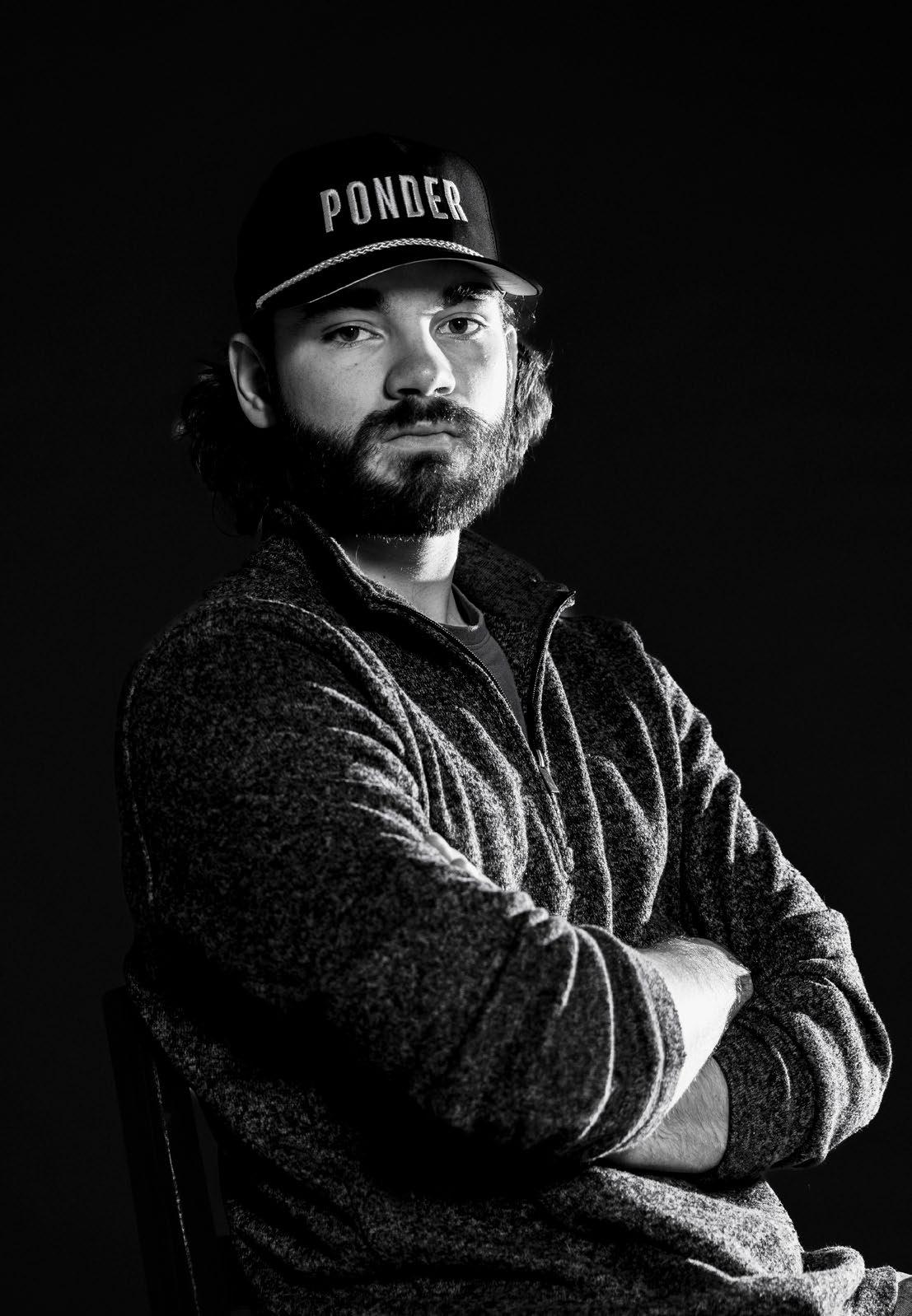
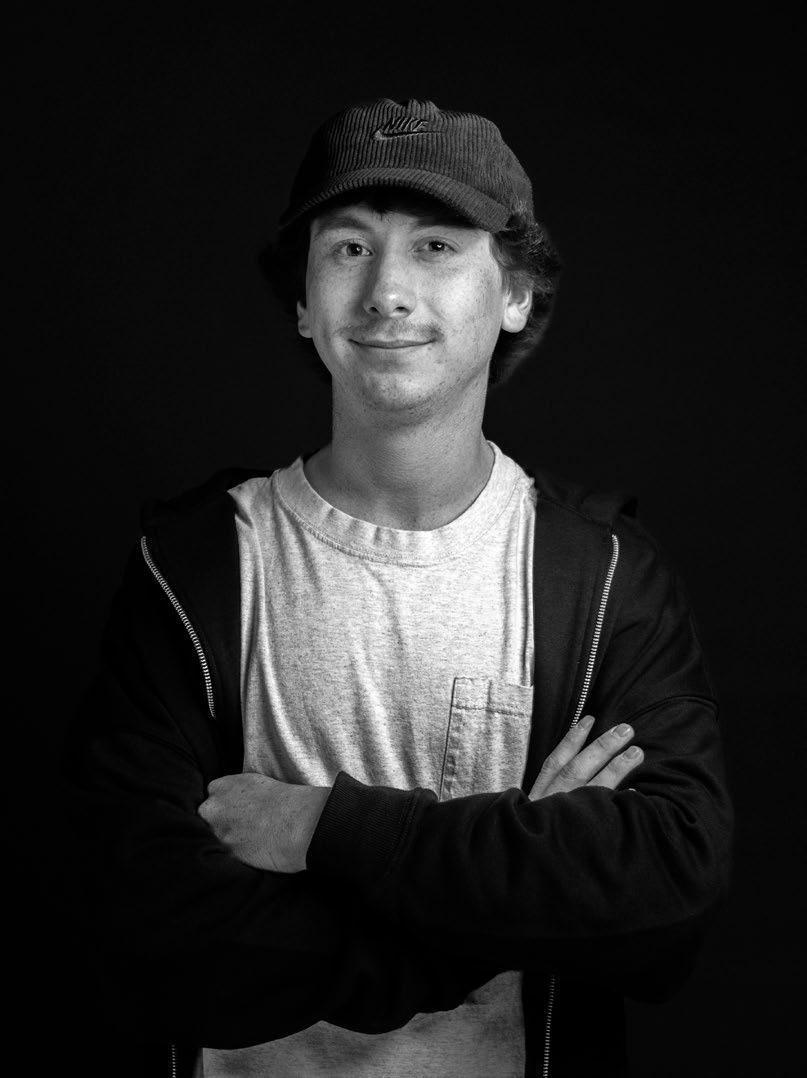
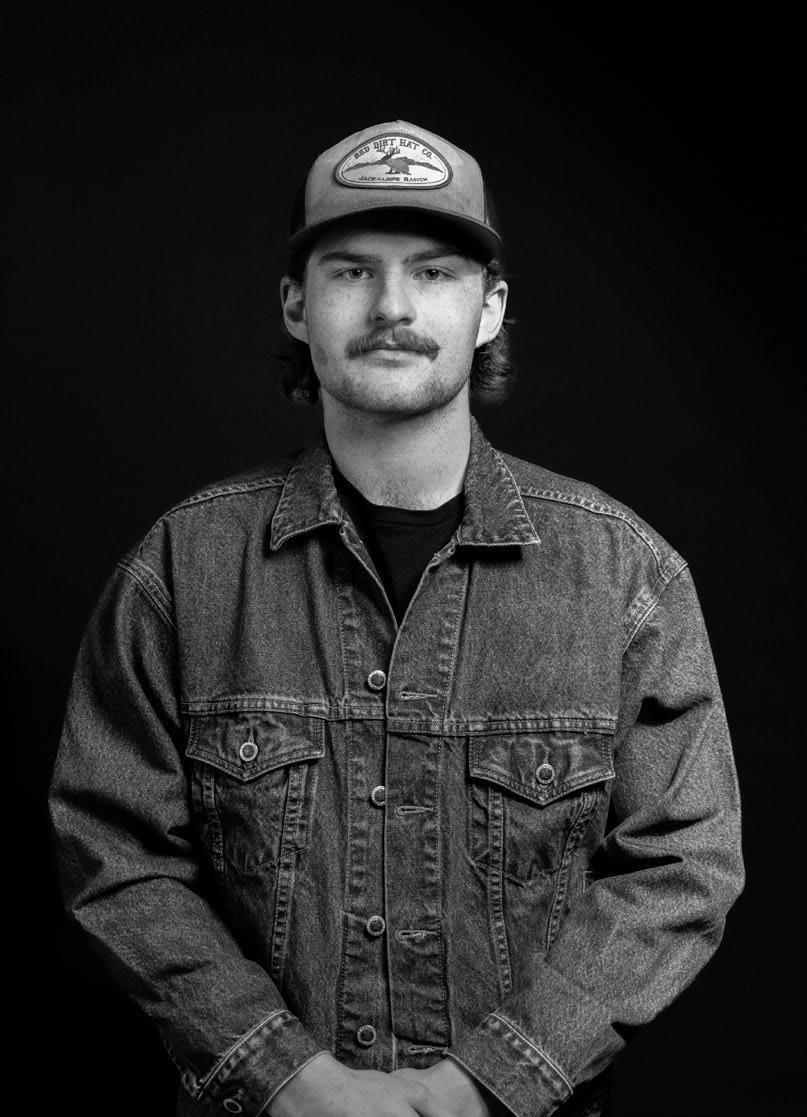
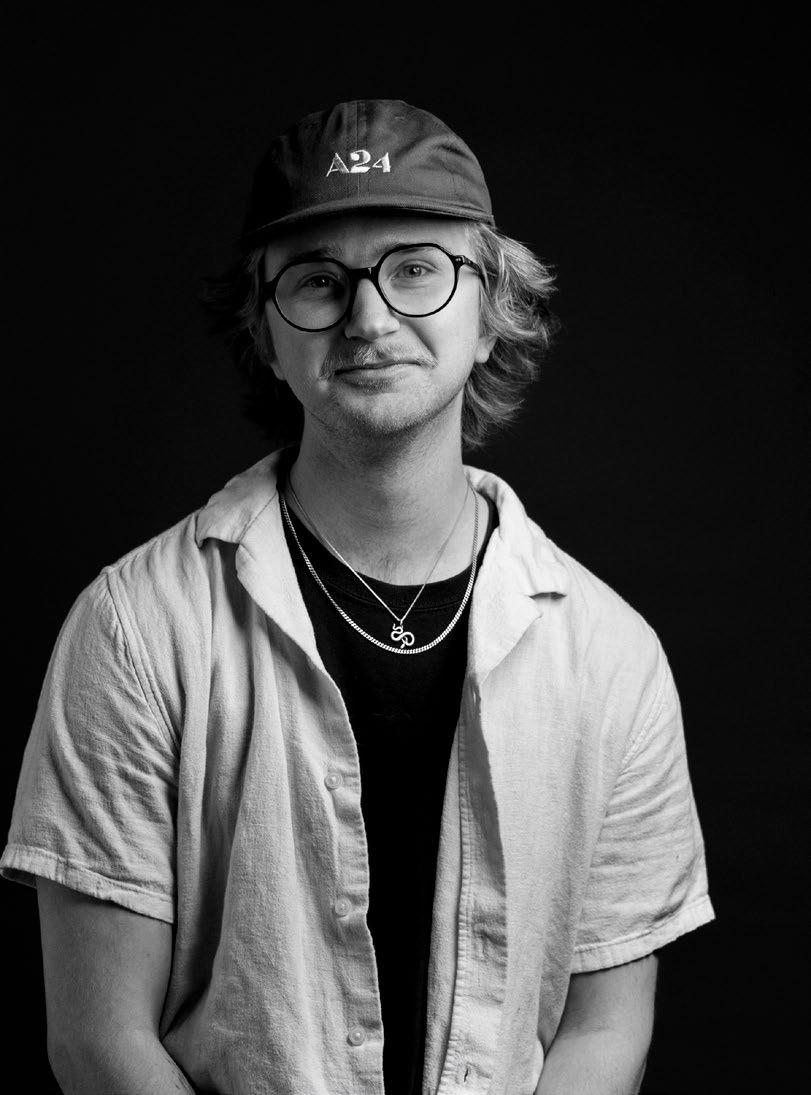
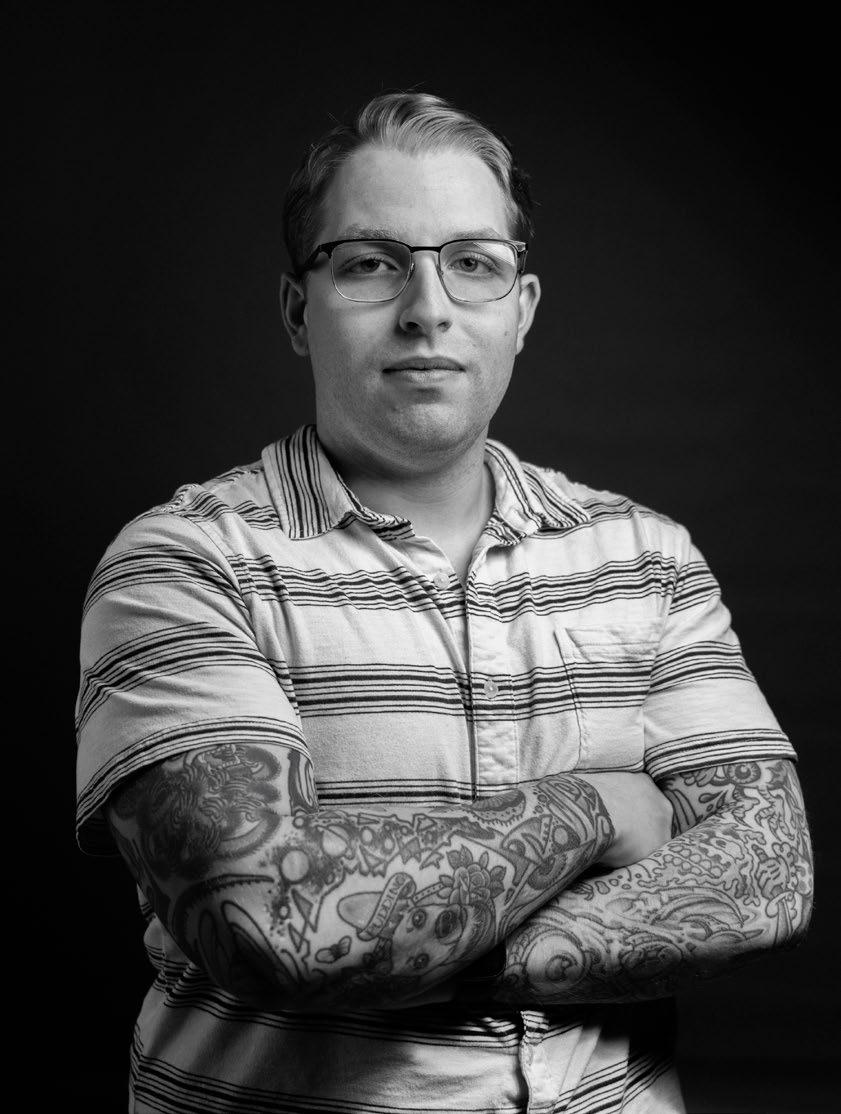
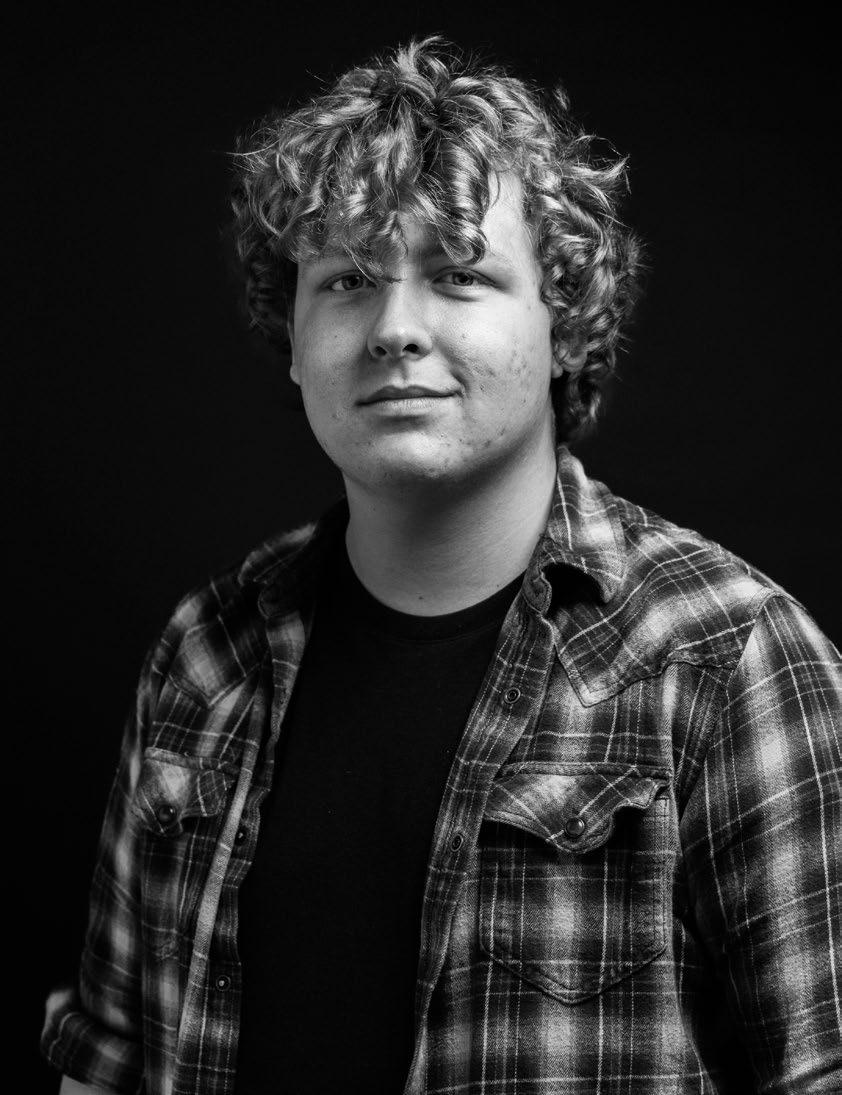
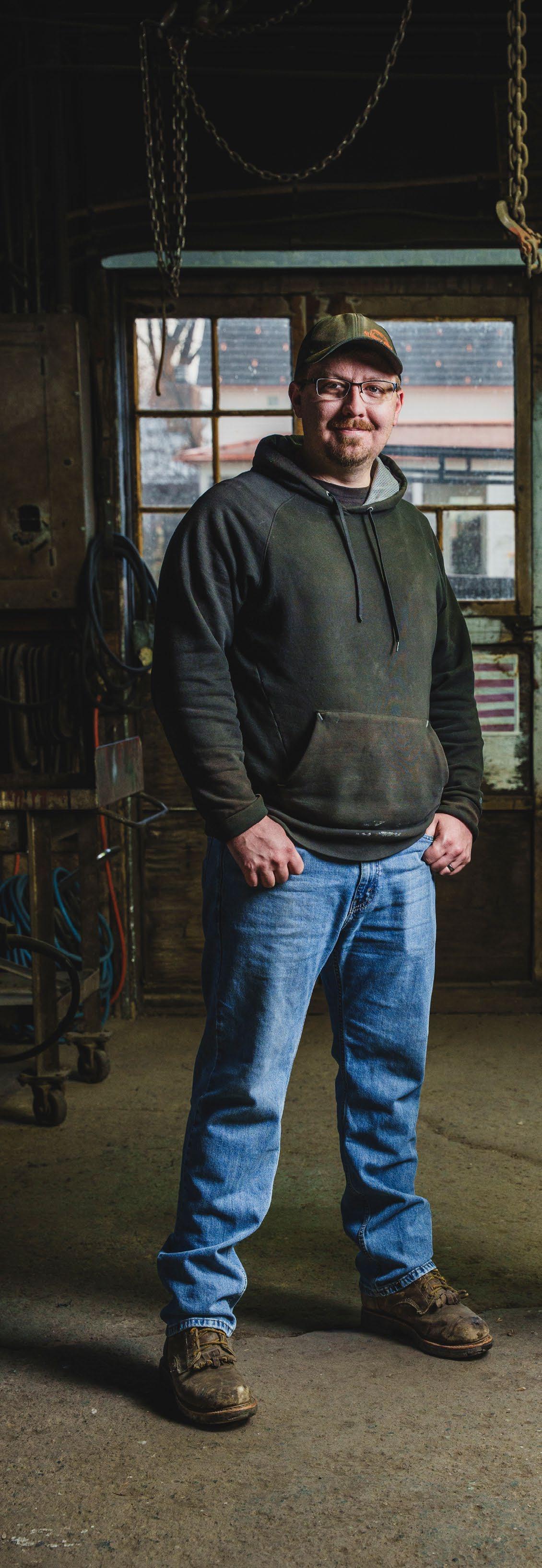
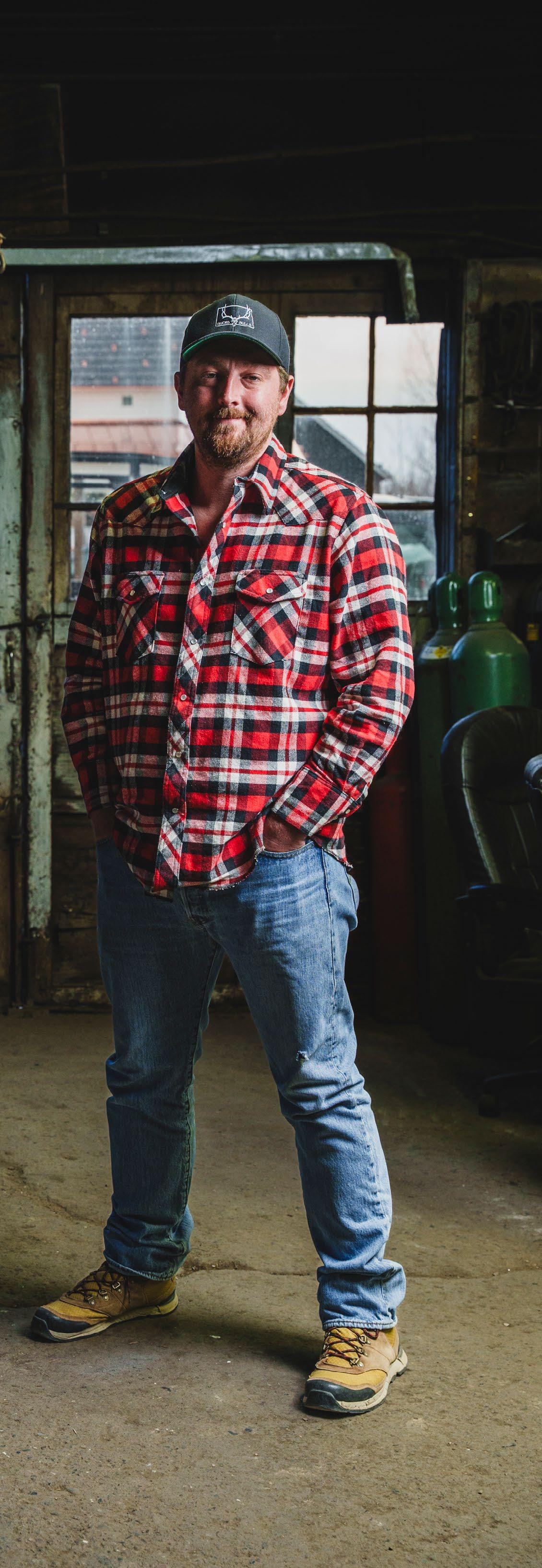
Nathan Feller
First and foremost, I would like to congratulate our Ponder staff and advisers on another successful semester and the release of Ponder Issue 5. The countless hours spent on this production only pile on to already packed schedules, but the fact that we’ve kept this up and maintained our standards for five issues now is something to be extremely proud of. Thank you all for the incredible things you do to keep this magazine going.
The work we do reminds us every day of the importance of the unsung heroes and their dedication to the pursuit of their passions. In a world that’s seemingly only concerned with what’s on the surface, it’s important to take a moment to dig a little deeper and explore the stories of those around us. You never know what you might uncover.
This issue you’ll explore one of the oldest burger joints in the state of South Dakota and the community that’s determined to keep its traditions of simplicity alive no matter how complicated the world around them becomes. You’ll meet Narayan, the head chef of Everest Cuisine in Rapid City, South Dakota, whose journey into the culinary world began on the peaks of the Himalayas. Luke and Cole Thronson, brothers who taught themselves to weave artistic beauty into deadly Damascus steel blades in Manhattan, Montana. You’ll learn about the battle in Rapid City to preserve Art Alley – a safe space for graffiti artists to showcase their incredible talents. The Butler family, whose farrier school in Crawford, Nebraska continues to produce quality professionals, reviving a declining industry. April Gregory and Carlos Martinez, who have dedicated their lives to conservation, preservation and education at the D.C. Booth Historic National Fish Hatchery in Spearfish, South Dakota. The Black Hills Playhouse, which, despite its remote location and a dying theater industry, continues to fill seats and provide young professionals a foundation from which to begin their careers. And, finally, you’ll meet Dr. Aura Sunada Newlin and explore the Heart Mountain WWII Japanese Interpretive Center – a museum near Heart Mountain, Wyoming that stands as a reminder of the atrocities governments can be capable of when they go unchecked, and a common ground for cultural and generational education and healing.
These stories truly show what’s beneath the surface – what drives these individuals to pursue their passions and do the incredible things they do. And I cannot express how much of an honor it is to be able to work with Ponder to share these stories.
Although we’re only halfway through 2026, Ponder continues to excel at the regional and national levels. For the second year in a row, Ponder claimed the College Media Association David L. Adams Apple Award for Best Magazine in the Nation with Issue 4. Ponder also received numerous Gold ADDY Awards, including a Best of Show for Issue 3 at the 2026 AAF Black Hills Gala.
As we start to wind down for the summer, I truly hope the stories we share in Ponder are not only entertaining, but eye-opening. Incredible stories can be found anywhere – you just have to break the surface.
So, take your time. Ponder a little, or a lot.
— Nathan Feller
PHOTOGRAPHY BY ALLIE SCHEFERS & NOAH WESTERGAARD
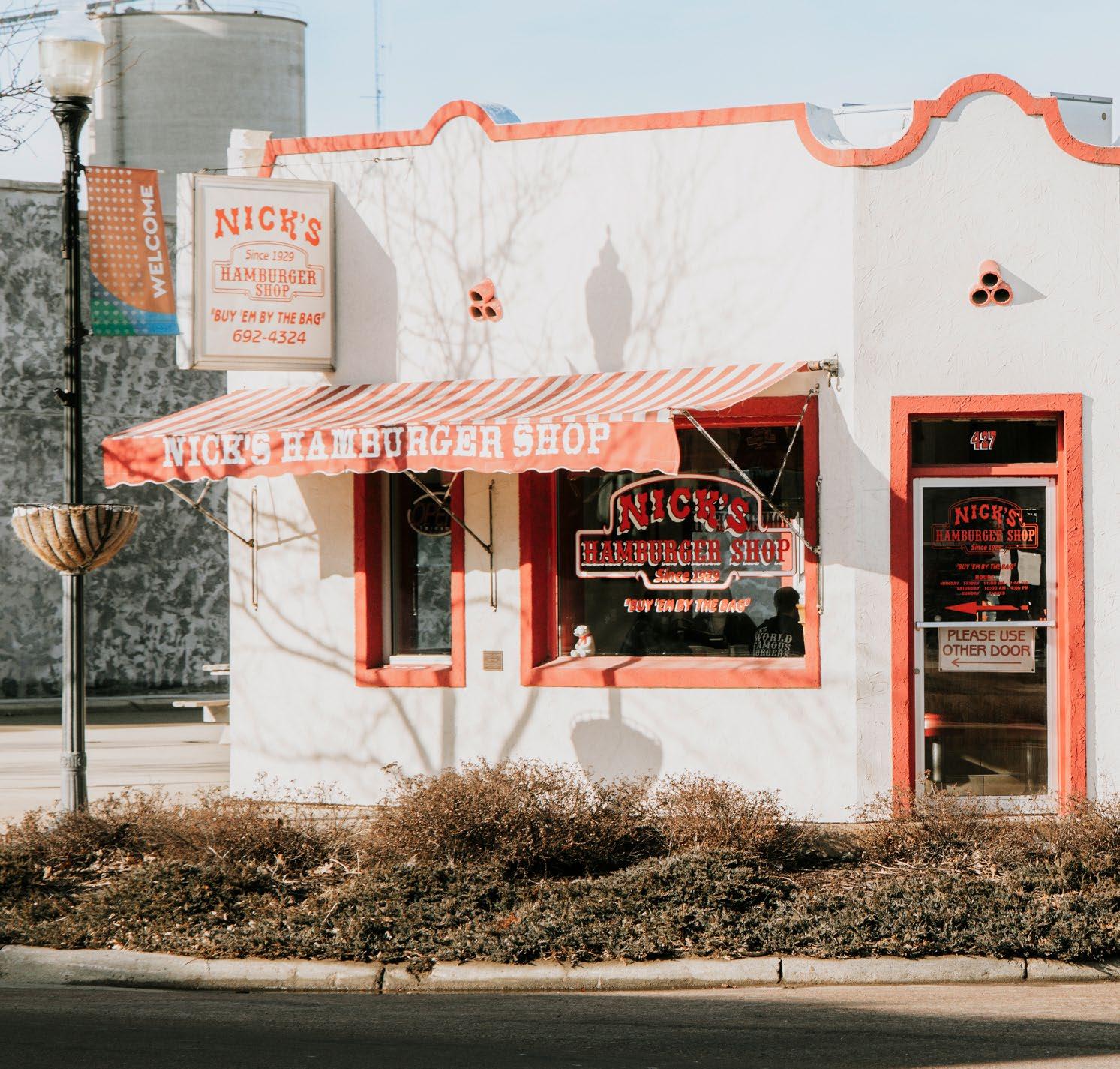
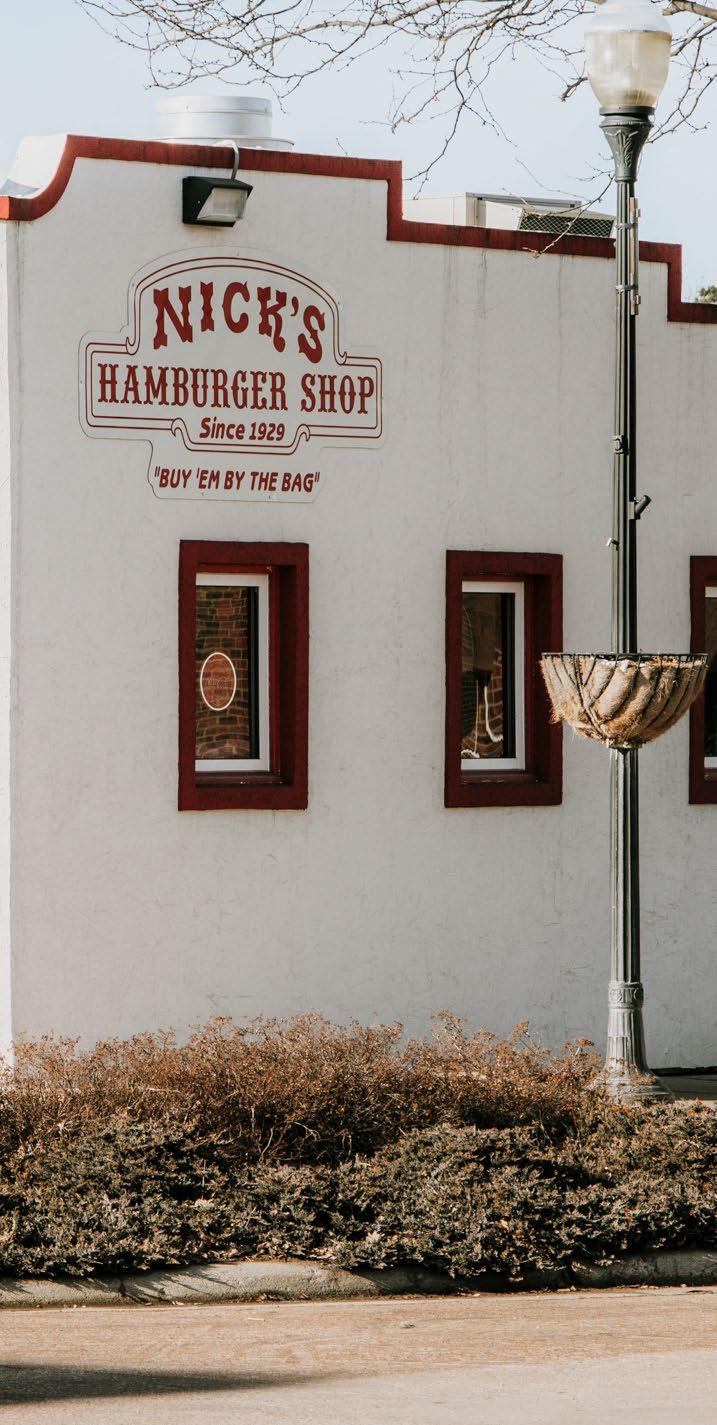
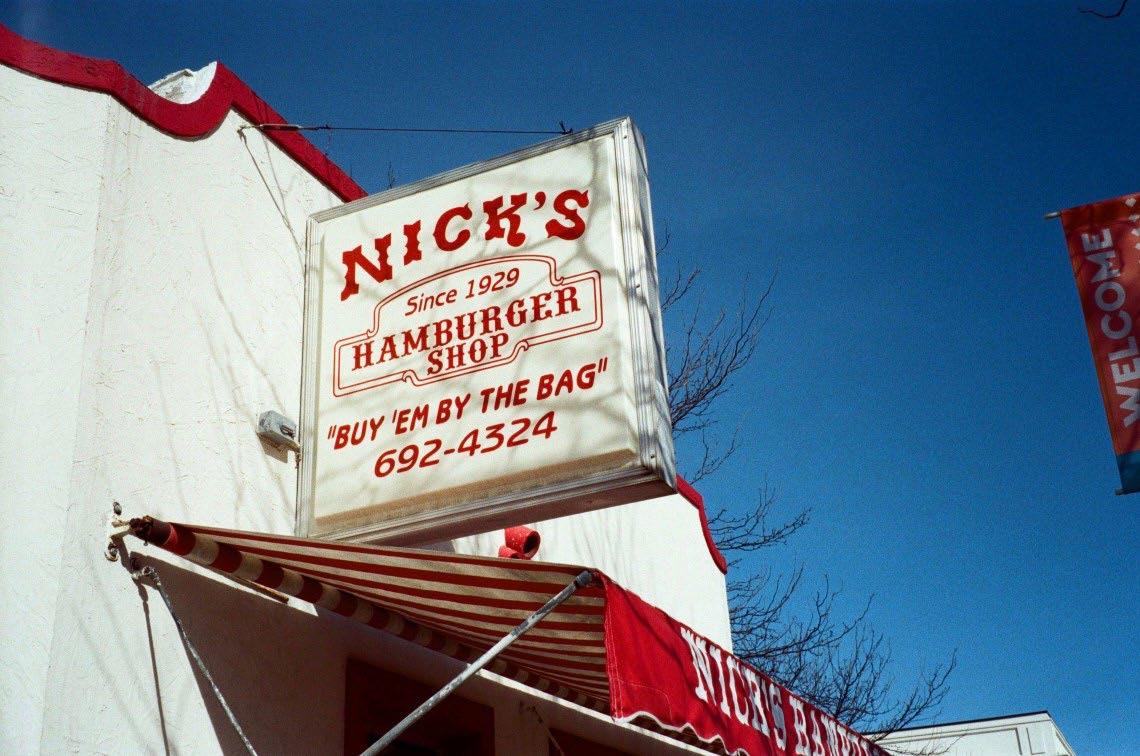
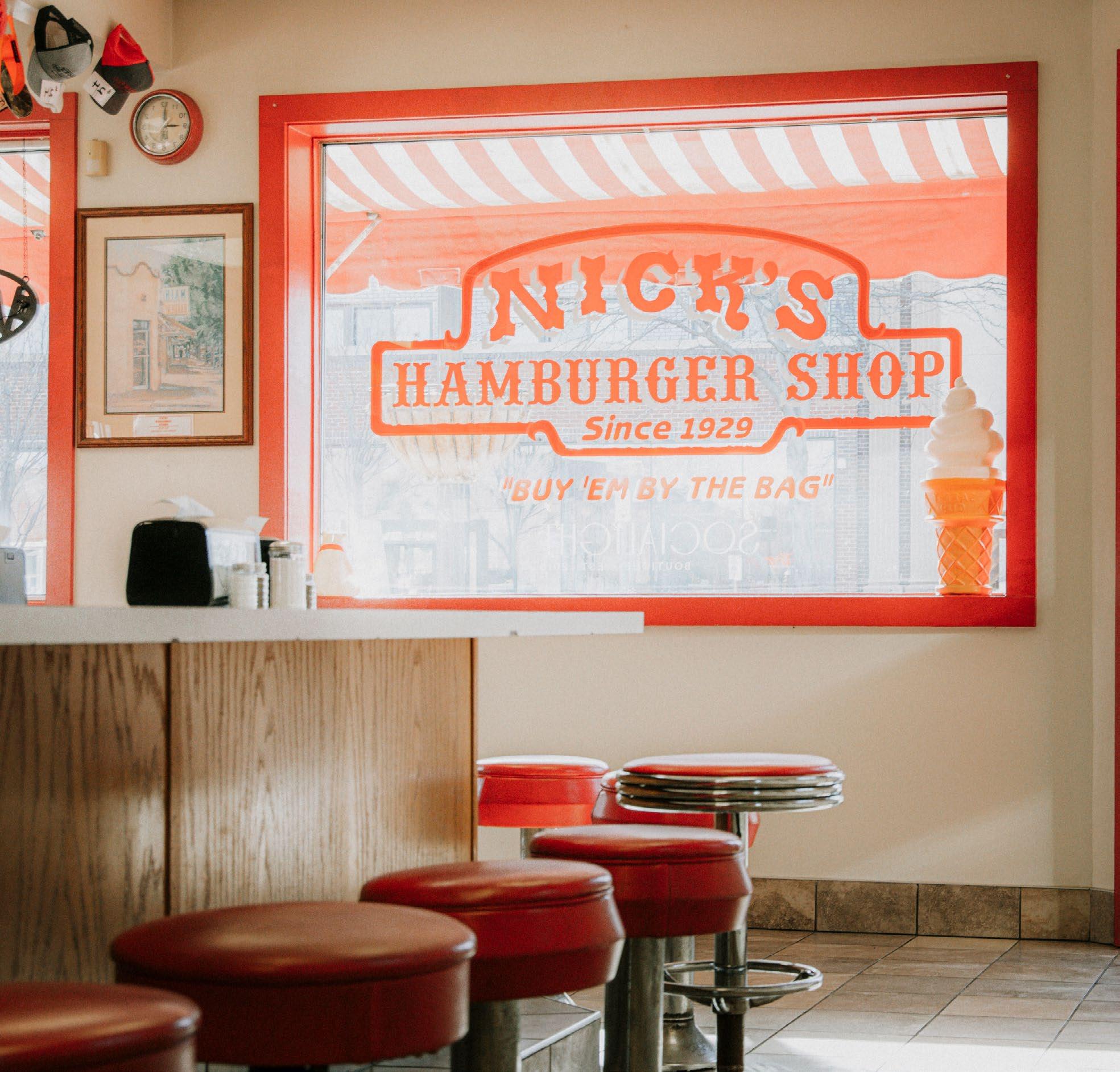
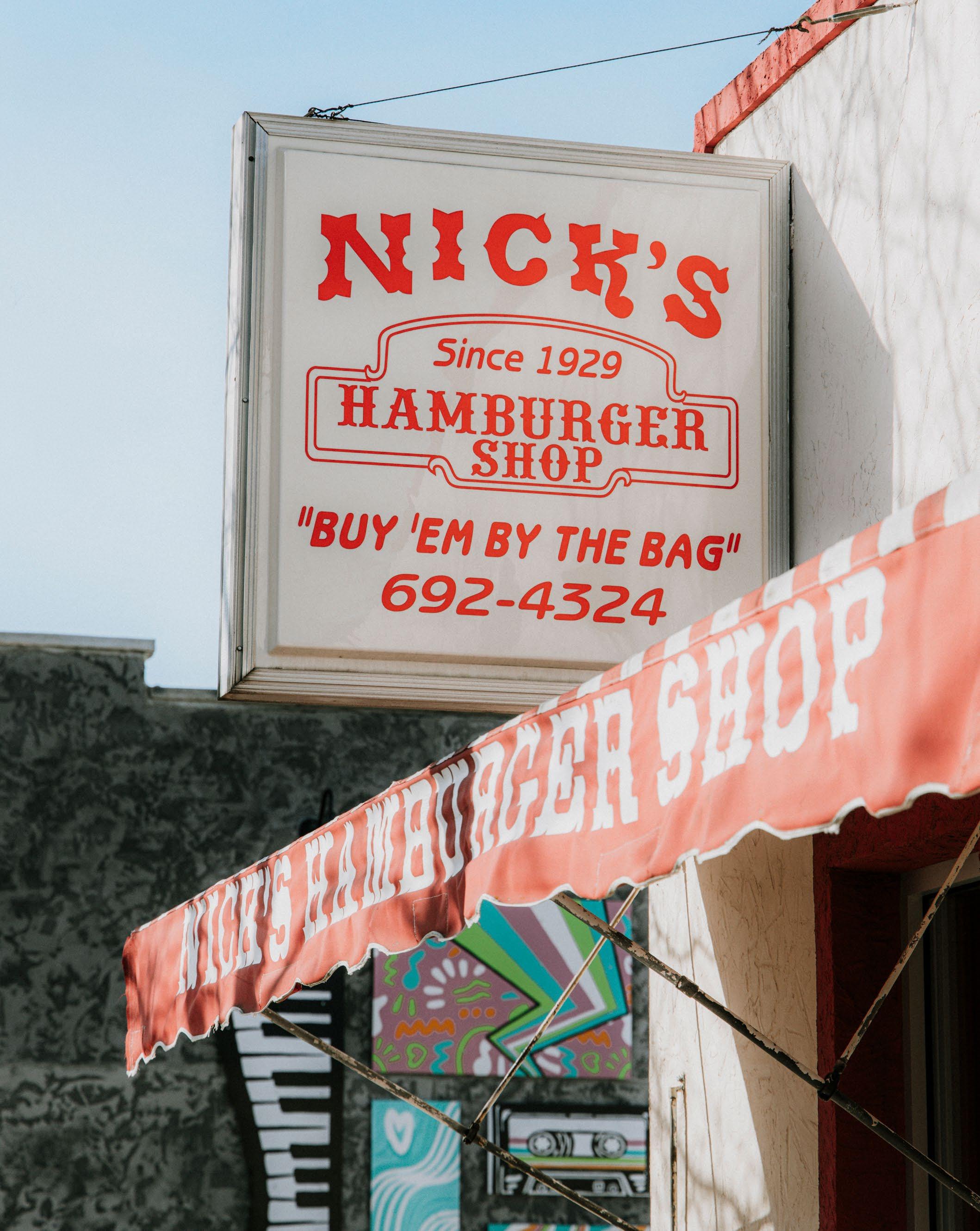
In 1929, Gladys and Harold Nikalson moved from Spencer, Iowa, to Brookings, South Dakota, where they began to make what would, arguably, become the most famous burgers in South Dakota. At a starting price of five cents per burger and with the “Dirty Thirties” ahead of them, the Nikalsons needed to create an icon to survive.
The Nikalsons opened Nick’s Hamburger Shop Nov. 2, 1929, located on 5th Street in downtown Brookings. A year and a half later, they moved to the corner of 5th Street and Main Avenue, where they shared the building with a barbershop, leaving only 14 counter seats for the growing restaurant.
Though the seating was limited and the Great Depression and WWII took a toll on the country, Nick’s came out the other side on top.
After Harold Jr. came back from WWII, he took over the helm in 1947 and pioneered a new era at Nick’s. On Oct. 18 of the same year, Nick’s had the busiest day in the shop’s standing history, selling 4,450 burgers.
This marks the true beginning of Nick’s becoming a Brookings community staple with a large cult following. A backbone of the community, people have congregated at the restaurant for South Dakota State University games and other town events. The shop has even hosted several weddings.
Nick’s also hosts some odd traditions, including a burger-eating challenge, in which the record holder, Karen Meyer, ate 37 burgers in one sitting, and a high school student who comes in frequently, always wearing a suit, and always ordering a piece of pie.
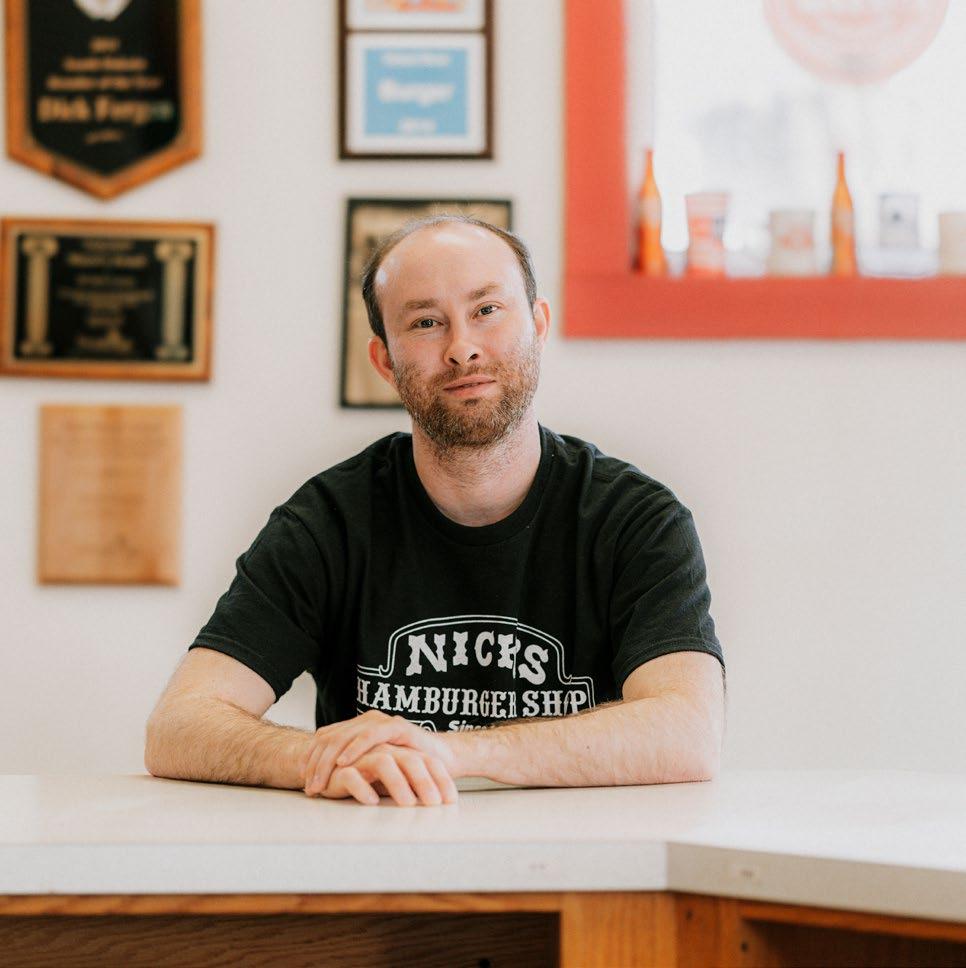
“We have one guy. He’s just got himself on hospice because he says, ‘I’m ready to go,’ but he’s ninety-four, and he’s been eating here since he was two,” said Justin Price, current owner and operator of Nick’s Hamburger Shop. “So he’s literally been here the entire time. [His son] tried to get him to eat a Nick Burger, and he’s like, ‘I love those. And I just had it last week, but I’m starving myself so I can die, leave me alone.’ And that’s one of the things that’s like, [Nick’s] is almost a religion.”
This “religious” following has expanded outside of Brookings, and even beyond South Dakota over its nearly century of operation, enthralling tourists from all over the world, who have marked their countries of origin with pins on a map displayed in the dining room. These pins are gathered in places as far away as Jordan, Brazil and Japan.
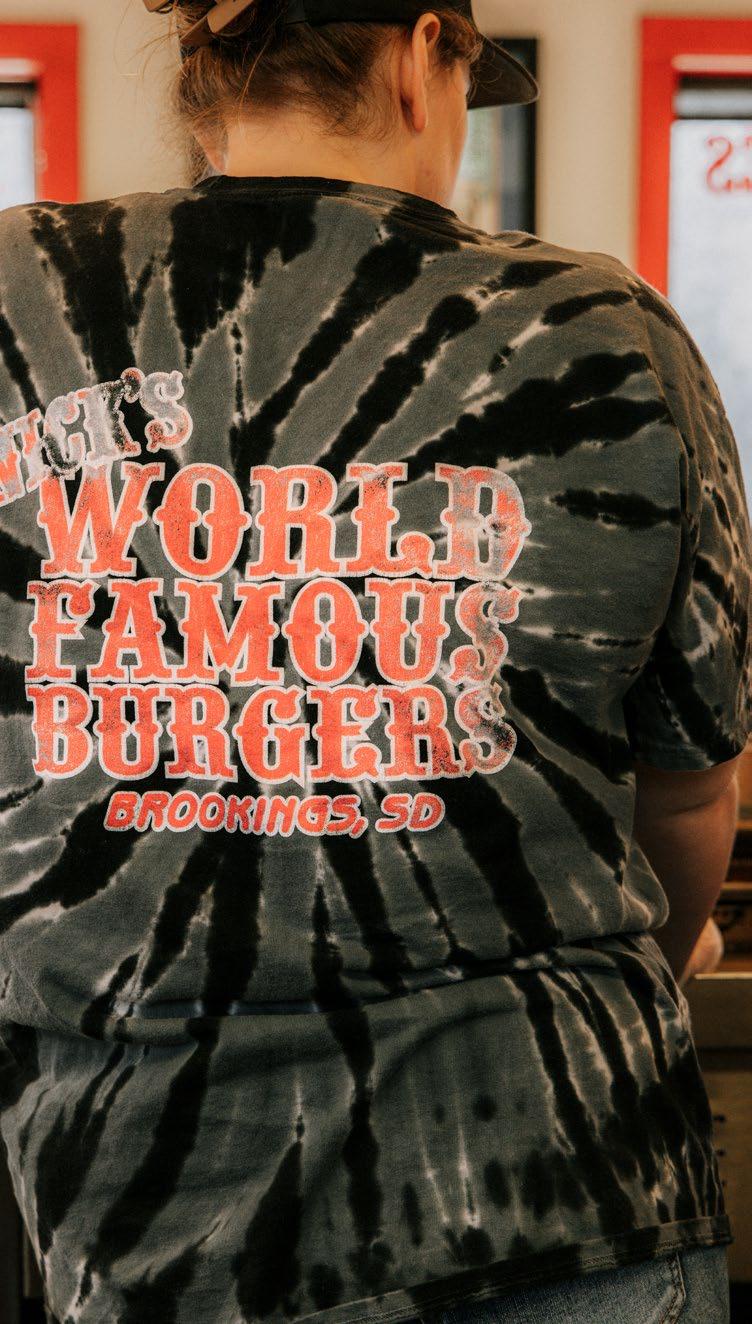
“We have people all over who send us postcards and stuff when they wear their Nick’s shirts,” Price said. “Someone told me that on one of the Turks and Caicos Islands, someone has a Nick’s shirt up in the rafters, and it’s been signed by people who have been to Nick’s.”
The restaurant has also experienced coverage from news sources such as The Washington Post, South Dakota Public Broadcasting and multiple other large companies.
In 1975, Duane Larson, a Brookings local, took over the shop when Harold Jr. decided it was time to retire, and his bold personality found a place defending the traditions of Nick’s.
“Back when I first started eating here, Duane was the owner,”
Price said. “And, you know, Duane was Duane.”
Larson was known for his strong opinions about the quality of the products he was selling in Nick’s, so much so that he was featured in The New York Times for pouring out soda on the sidewalk in protest of Coca-Cola’s 1985 attempt at “New Coke.”
“Do things go better with the new Coke? Not to Duane Larson, who owns Nick’s Hamburger Shop in Brookings, S.D.,” said James Barron, in his article, “FANS OF OLD COKE SAY THE NEW IS NOT IT.” “‘I don’t think it’s very compatible with food,’ [Larson] said… Nick’s has sold Coca-Cola ever since it opened in 1929, but last week Mr. Larson switched to Pepsi. ‘We let people sample the new Coke,’ he said. ‘Everyone preferred the old Coke.’’’ Larson isn’t the only owner who made large steps towards improvement, advocacy and growth for the local staple.
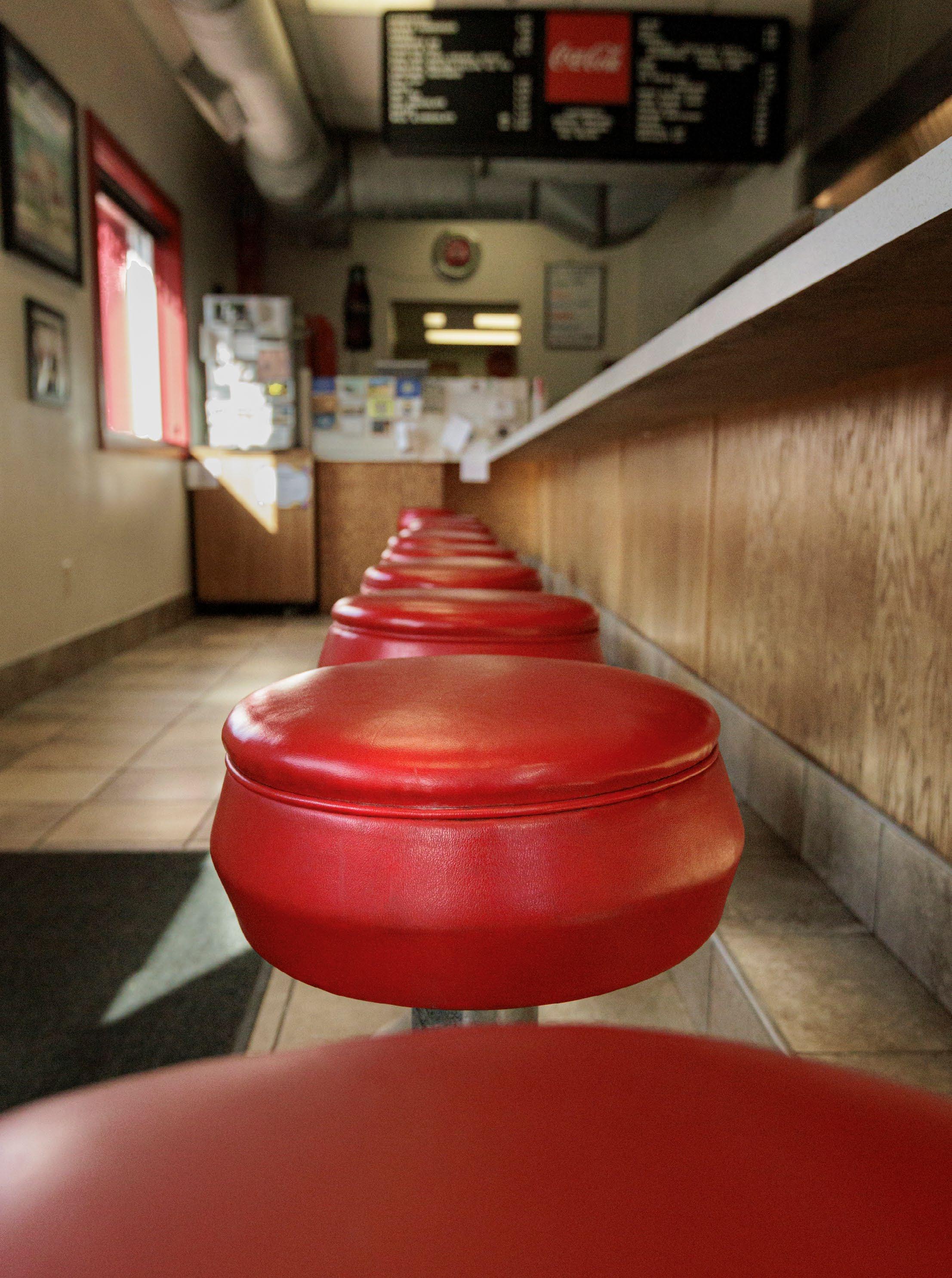
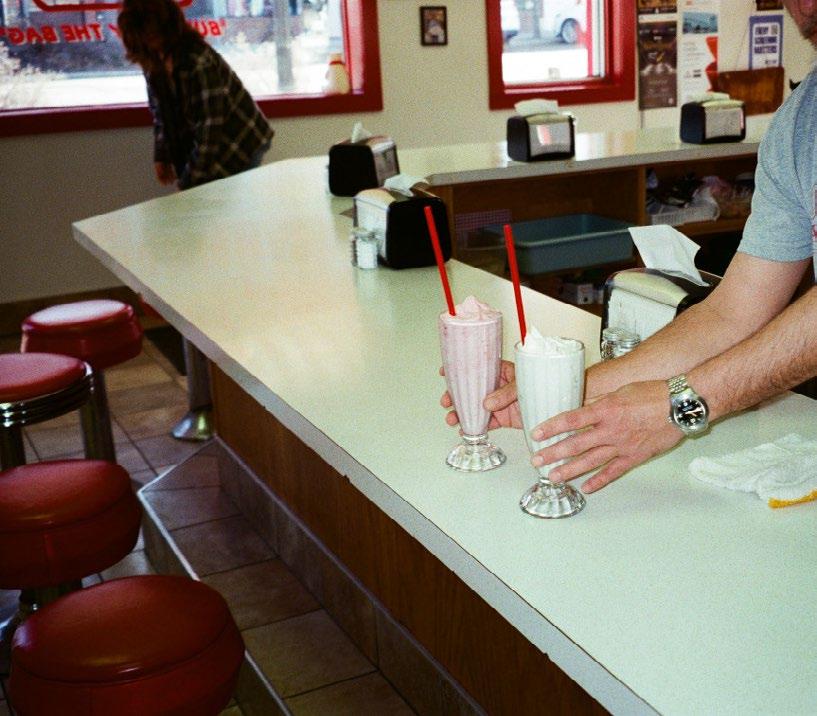
On Aug. 1, 2004, Dick Fergen, owner of Fergen’s Clothing and Shoes, bought Nick’s Hamburger Shop and the barbershop next door to expand the seating up to a total of 28 counter seats that now surround the entirety of the grill stations, giving customers a full view of how their food is made.
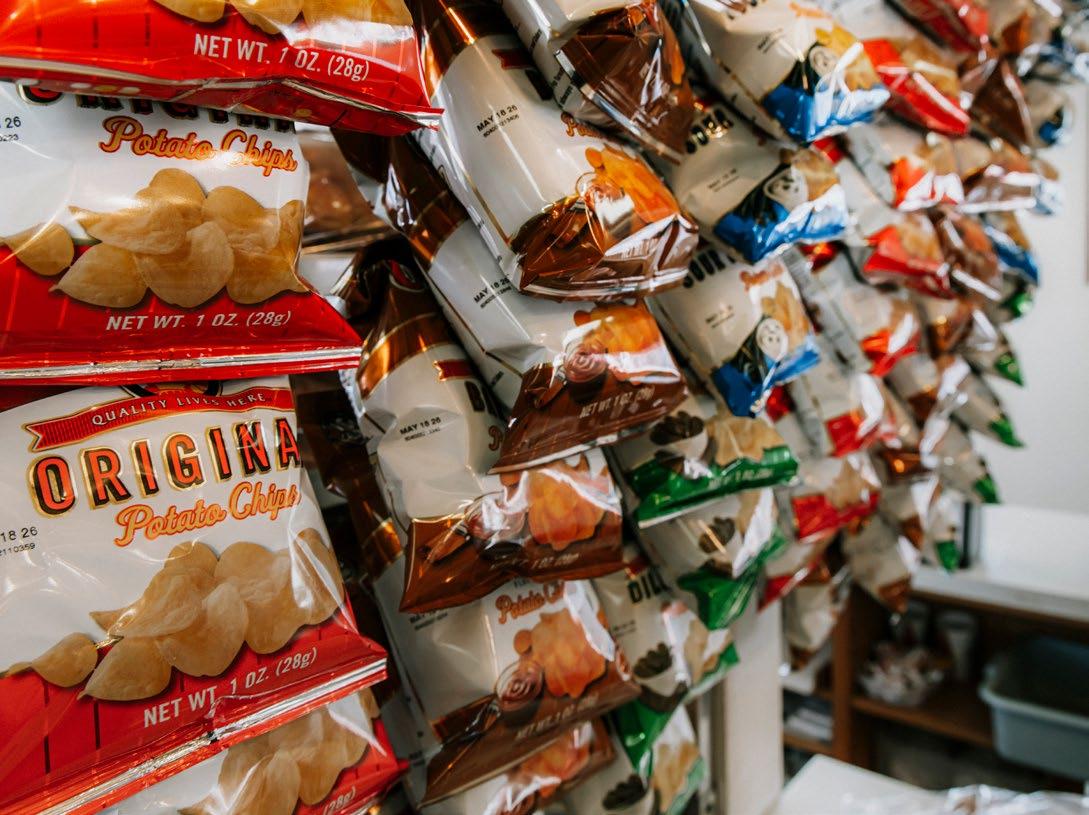
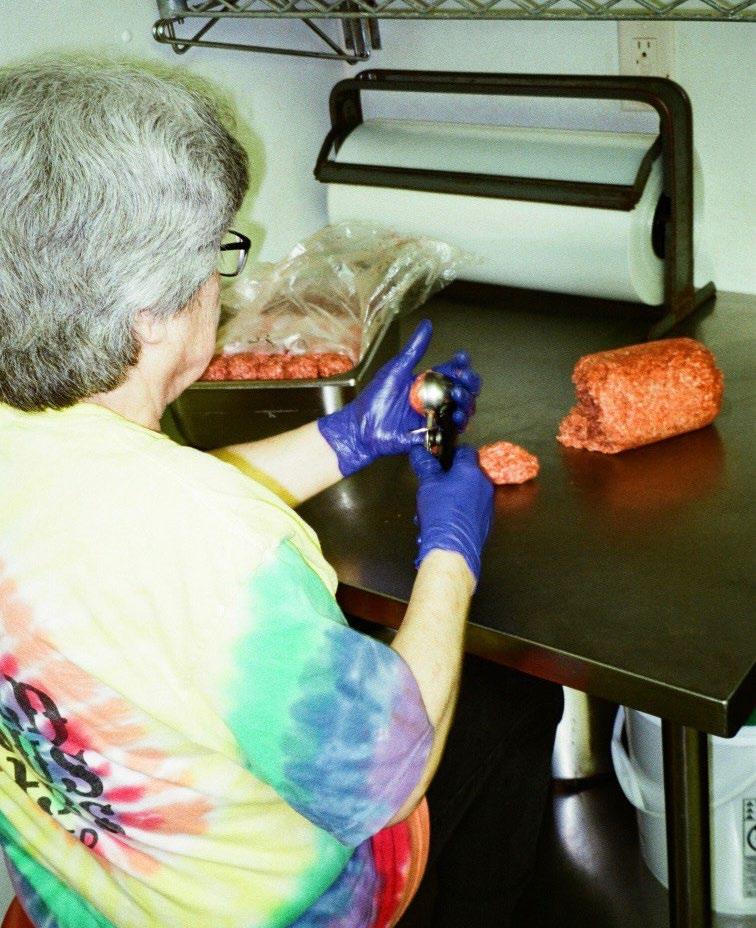
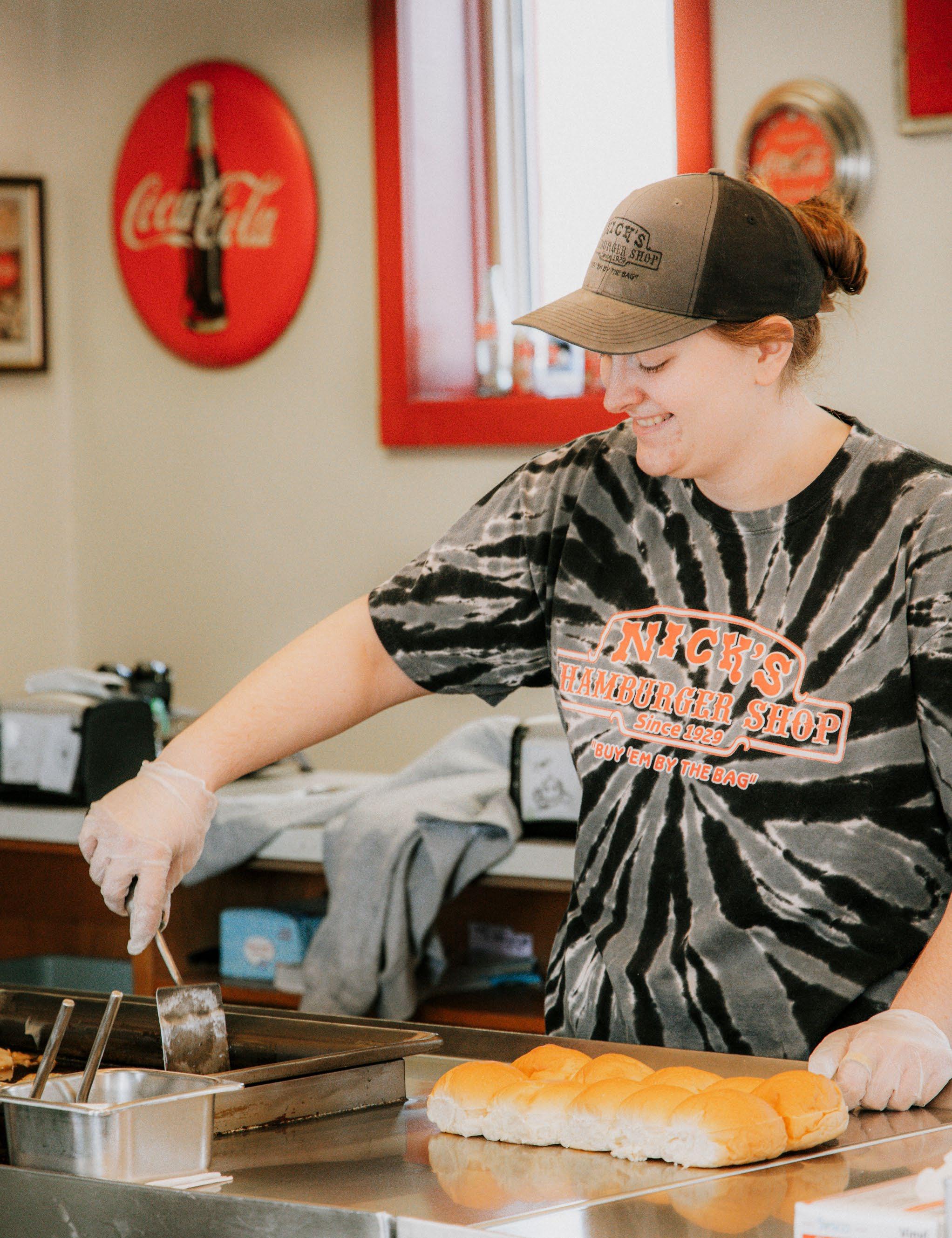
Specifically, the expansion of the counter allowed customers to observe Nick’s method of tank frying their burgers in rendered animal fat, a technique used since opening day. Another thing that remained consistent since the beginning is the owners’ insistence on high-quality, consistent ingredients, including the same brand of chips, Old Dutch, fresh buns from the Brookings Bakery, made with no preservatives and even their secret relish recipe has remained the same over the decades.
“I can’t even tell you how long we’ve been using [Old Dutch chips] because whenever I was a kid, those are the exact same size,” Price said. “They actually say that you can’t get these size bags, they’re only made for Nick’s. I don’t know if that’s entirely true… but that’s what the salesman always says to make me feel guilty because I think he wants me to use bigger ones.”
Price recognizes the importance of Nick’s in the community. He harbors his own sense of childhood nostalgia for the shop and has grown up in its community.
“Nick’s was kind of always the place where my grandma would [say], ‘Hey, you want to go to Nick’s?’ Absolutely, every time,” Price said. “[I] never would have imagined that I would be in here as the owner, being as that I was a little kid eating in here probably when I was like five years old.”
Price took over Nick’s July 31, 2025. His main goal as the new owner is preservation.
“There’s a perception, after every owner has taken over, that there’s some change,” Price said. “And that’s the hardest part with Nick’s… We get our buns made every day from [the] local bakery… we use the same ground beef… we make our own oil… we make our own relish… we haven’t changed anything. We don’t plan on making any changes. And it’s worked for ninety-six years exactly this way. At the end of the day, people come here for the burger. They like the experience, and they like what they get.”
Many patrons of Nick’s are protective of the traditional processes, and they are not afraid to speak out about their love for the restaurant and its preservation. They can even be stern with newcomers about the insistence of adding fries to the menu, or how many tourists and young customers get cheese on their burgers.
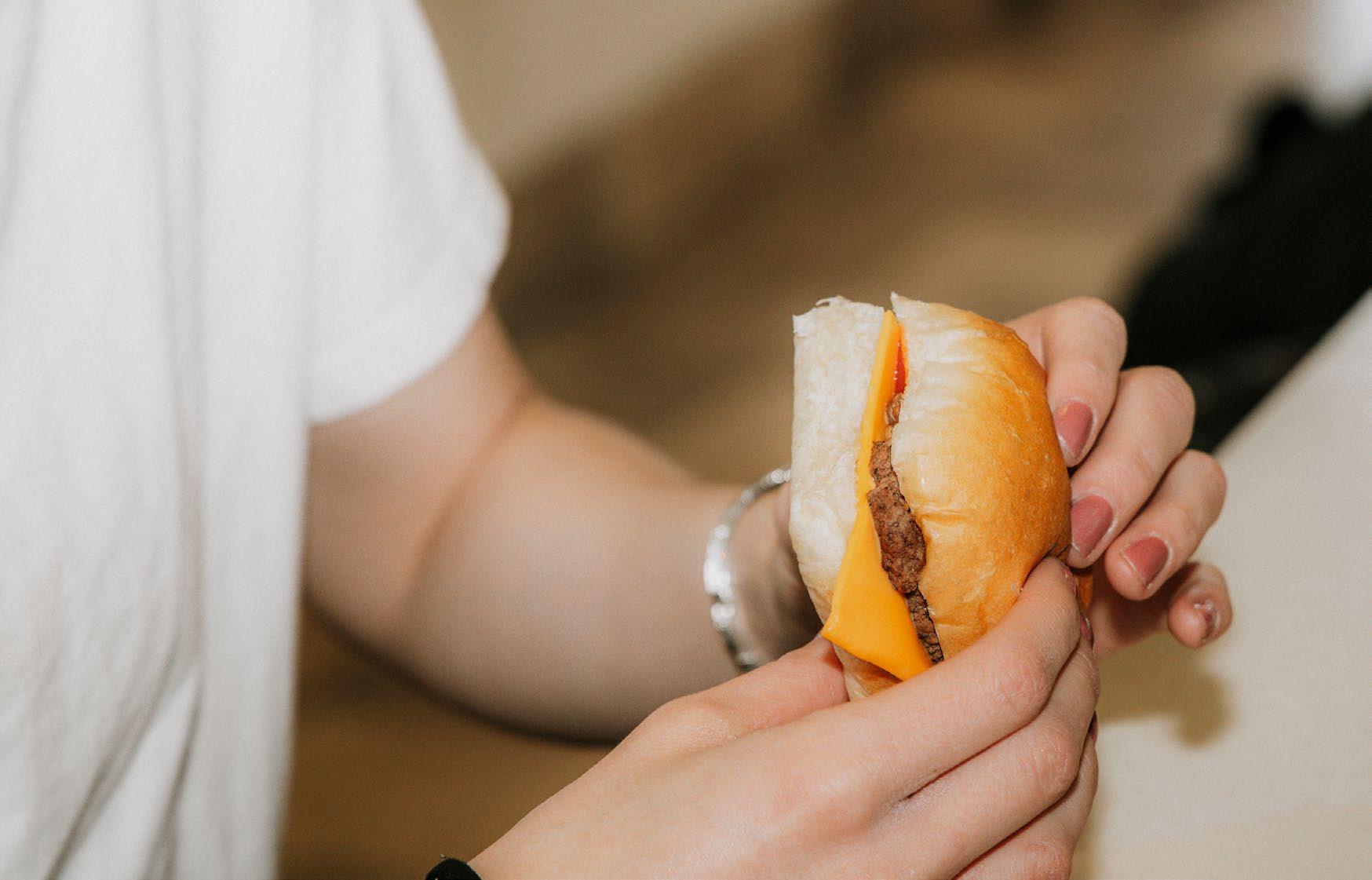
“You know, cheese didn’t come until [1974], and so you get the older people that say, ‘No, they shouldn’t have cheese,’” Price said. “Nowadays in America, you look at a cheeseburger, you’re like, ‘Yeah, that’s what everyone wants,’ but here the old people are offended when you put cheese on it. Then new people always bring up the fries thing, and it’s never going to happen.”
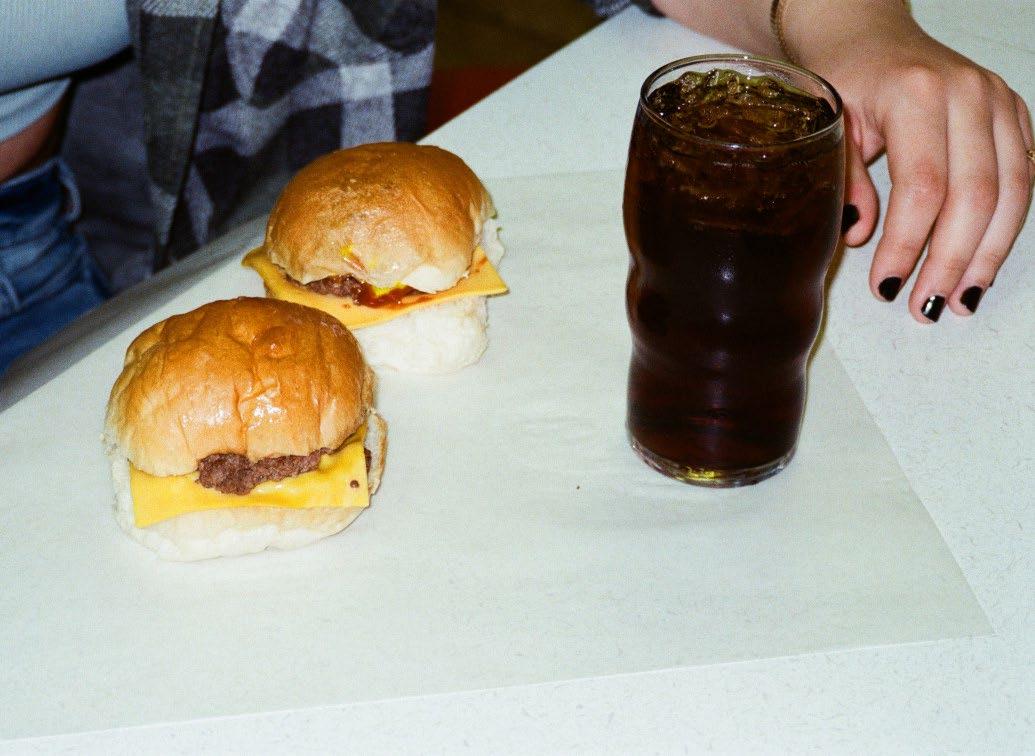
Now, to add cheese to a Nick Burger, it’s an extra 69 cents, on top of the time-inflated $2.98 single patty burger. But when cheese was first introduced to the shop, it was only an extra 5-10 cents to their 35-cent burger in 1974.
It’s not only the customers that are particular about changes to their processes, though. Price likes to engage with customers, and sees it almost as a duty to be able to sit with his patrons and regale the story of Nick’s.
“Bridget, my manager, gets to be the head cook, mainly,” Price said. “She likes that role because she doesn’t want to go and explain the story of Nick’s five hundred times a day. A lot of customers come in here, and that’s what they want to hear… And so that’s what we give them… [the story] seems simple on the surface, but there’s a lot to it.”
Nick’s story extends into their aesthetics as a company as well, and for as long as they have been around, they have prioritized recognizability and character.
“Simplicity works,” Price said. “We live in a time now where it’s so hard to be simple. It’s overdone. We know [Nickburgers are] not that aesthetically pleasing. It’s really hard to take a picture of it, very hard. Everyone knows what that is. But if you’re a new person, and you see that, you’re like, ‘I don’t want that, that’s not what I’m looking for.’ And then they try it, and they’re hooked.”
Nick’s 100th anniversary is coming up in 2029, and this only proves what Price believes. In an age where most things are overcomplicated, overstylized and marketable to an extreme, maybe Nick’s has survived because it hosts exactly what some of the population needs right now. Simple food, simple places and simple kindness.
Story by Alec ButterfielD Photography by Caleb Minor & Taylor SanFilippo
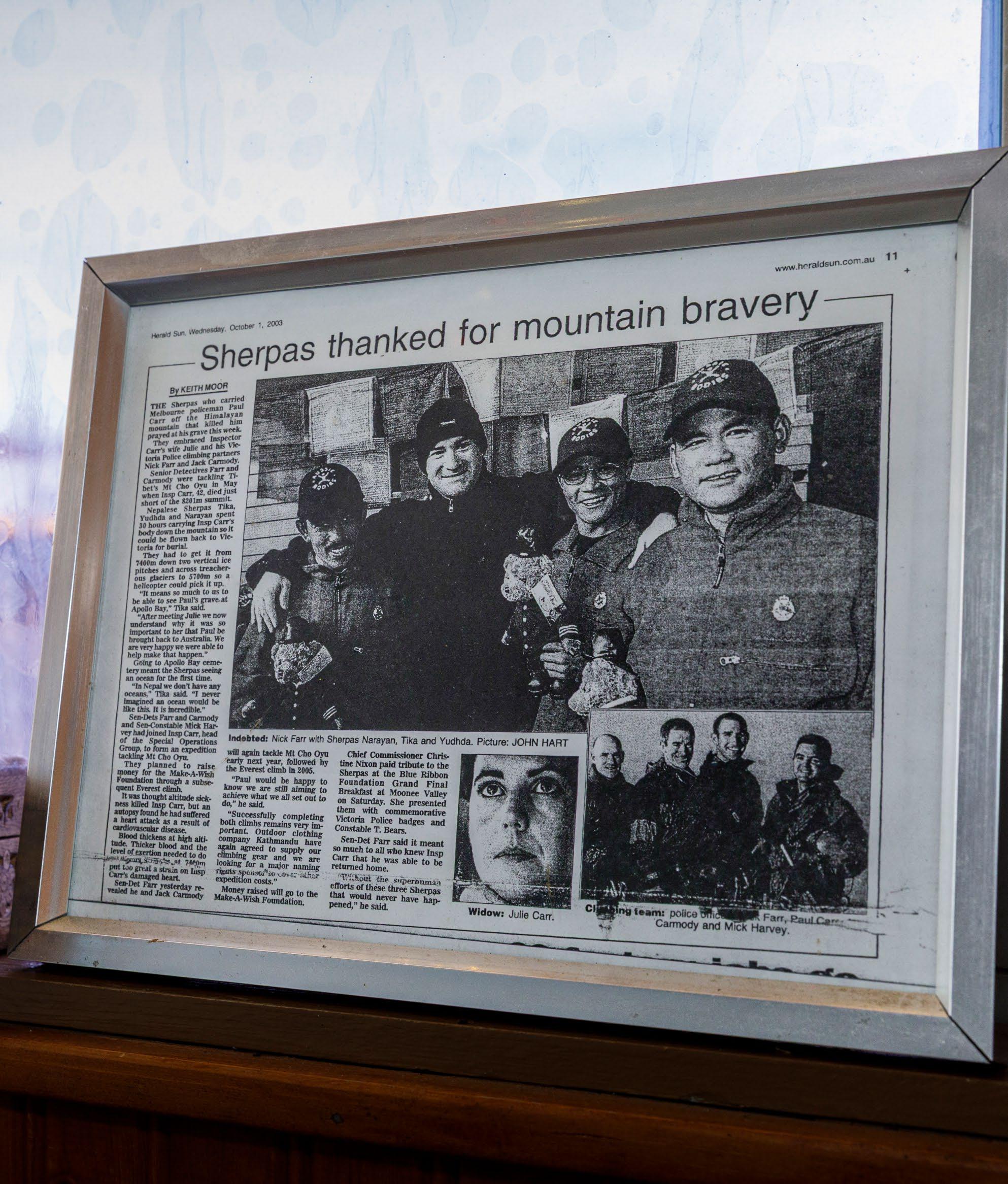
Twenty-three years ago, 7,400 meters above sea level, Narayan GC climbed the jagged face of Mount Cho Oyu, the sixth-highest mountain in the world, on the border of Nepal and China. A blizzard had battered the final camp – only 800 meters from the summit – for three days. Winds hit 80 mph. Temperatures dropped to minus 50 degrees.
Two police officers from Melbourne were trapped there. One of them – Inspector Carr – was deteriorating quickly. His partner left to find their guide.
Minutes later, Carr was dead.
“I had to go get him,” Narayan said. “It took us and our party forty-two hours to bring his body down.”
Narayan respected Carr, an experienced mountaineer training to summit Everest and raising money for Make-A-Wish. Over multiple expeditions, Carr had become something more than a client.
“A father figure,” Narayan said.
The Himalayas raised Narayan. They shaped his work ethic, his worldview and his understanding of people. Those lessons now live 7,500 miles away, in a small restaurant in Rapid City, South Dakota: Everest Cuisine.
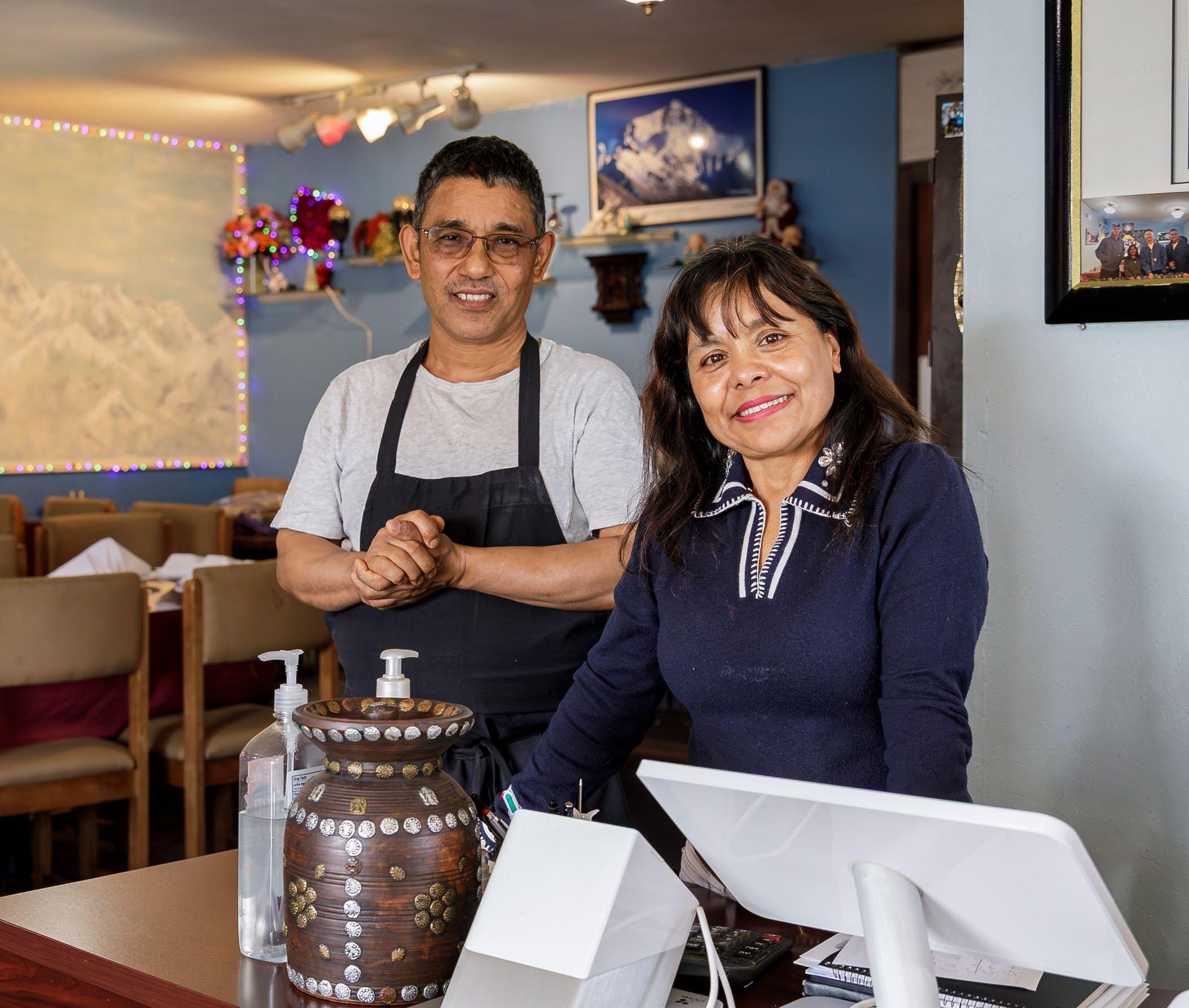
“Everest is the earliest Indian restaurant in Rapid City,” said Sapana Chettri, the restaurant's manager since 2016. “At that time, there was no other Indian restaurant in Rapid City. People didn’t know what Indian food was.”
Chettri was born in Darjeeling, a city in north-eastern India, and immigrated to the United States in 2016. Before that, she studied mass communication, worked in print media, launched a sociopolitical magazine and ran a small publishing house in Siliguri.
Siliguri is also in north-eastern India, in the state of Bengal, at the foothills of the Himalayas. The city is a renowned gateway to the northeast, acting as a hub for tea, timber and tourism.
Chettri had stints as a manager at a computer institute and led an NGO that taught adult women literacy and life skills. While also serving as “Bal Vikas Guru” for the Sathya Sai organization, a teacher guiding children’s character and development. She spent her days writing and directing educational dramas for children, teaching values that academics don’t normally cover.
“I didn’t earn much there, but I loved the work,” Chettri said. “Since coming here, I'm truly happy doing this business.”
Everest was founded in 2010 by Dr. Ramesh Marahatta and Dr. Pushpa Poudel. Marahatta and Poudel are from Nepal and immigrated to South Dakota with student visas to attend college. The doctors had a business mindset, but lacked the culinary background and skillset to round out the business. The first year of development was focused on just that, research and development. Finding the correct vendors and crafting a first-of-its-kind menu proved difficult without a chef.
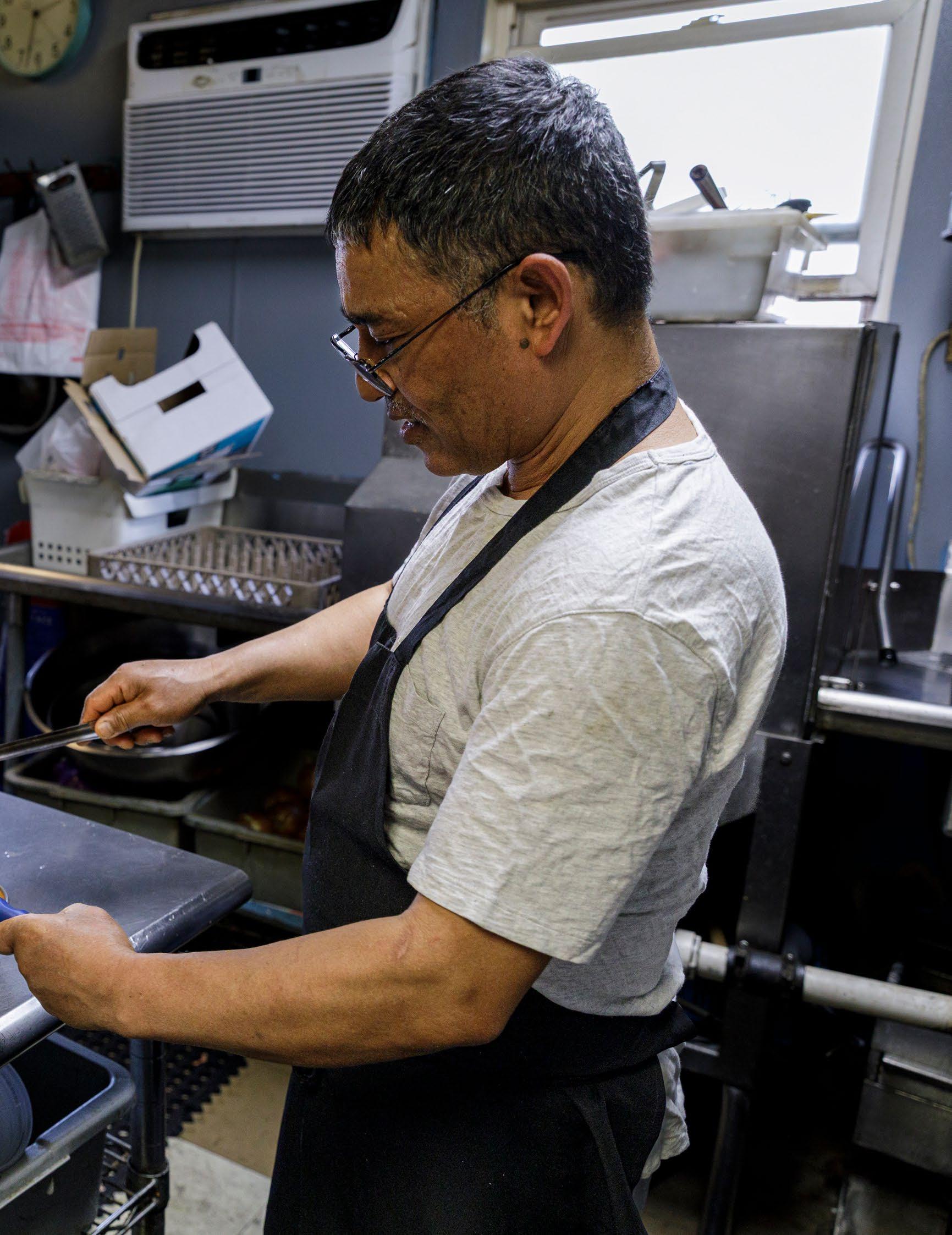
“So that’s why our chef, Narayan, was invited to settle in South Dakota,” Chettri said. “Now he is part-owner and founder of this restaurant.”
Narayan is from the Dolakha district in northeast Nepal, sandwiched between Mount Everest and Kathmandu. Dolakha is considered a relatively poor district with a high reliance on subsistence farming and a majority of households experiencing poverty. Being from a small village in the Himalayan regions of Nepal makes it difficult to find work. Narayan was no exception and made the journey to Kathmandu in 1990.
“I didn’t have a language, didn’t have any English. I didn’t have an education,” Narayan said. “I started as a porter, carrying around fifty kilograms the whole day for climbers.”
Carrying over 100 pounds day in and day out, up the tallest mountains in the world, is hard on the body. But Narayan was good at it and happy to have found purpose.
“After that, they saw, this guy is good, this guy is sincere, this guy is honest and humble,” Chettri said. “They promoted him to a cook and introduced him to the cook team.”
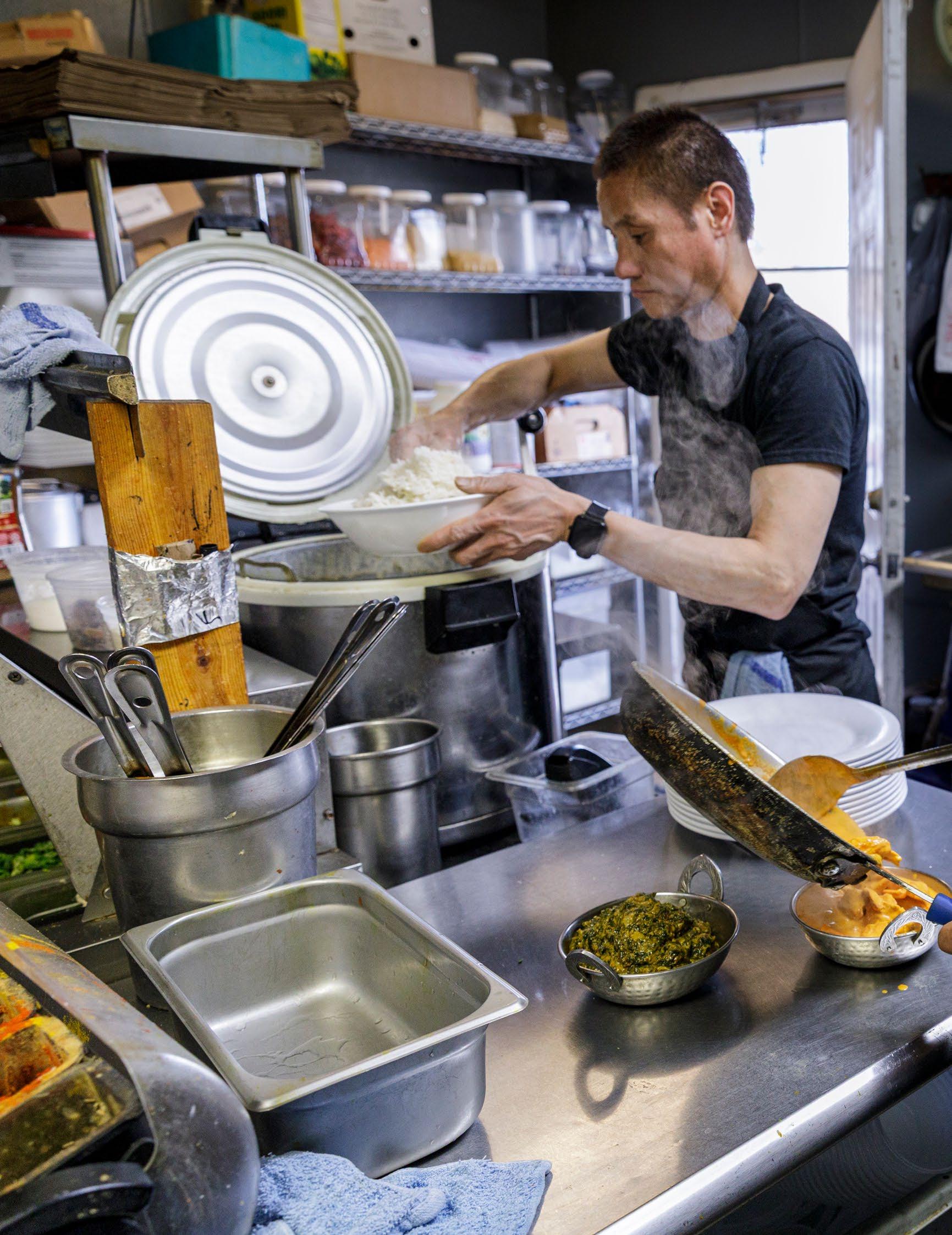
Beginning a culinary journey on the rock faces of the Himalayas is not a traditional way of learning Nepalese cuisine. His kitchen wasn’t a restaurant. It was a tent pinned into ice at high altitude, where climbers from around the world gathered between ascents.
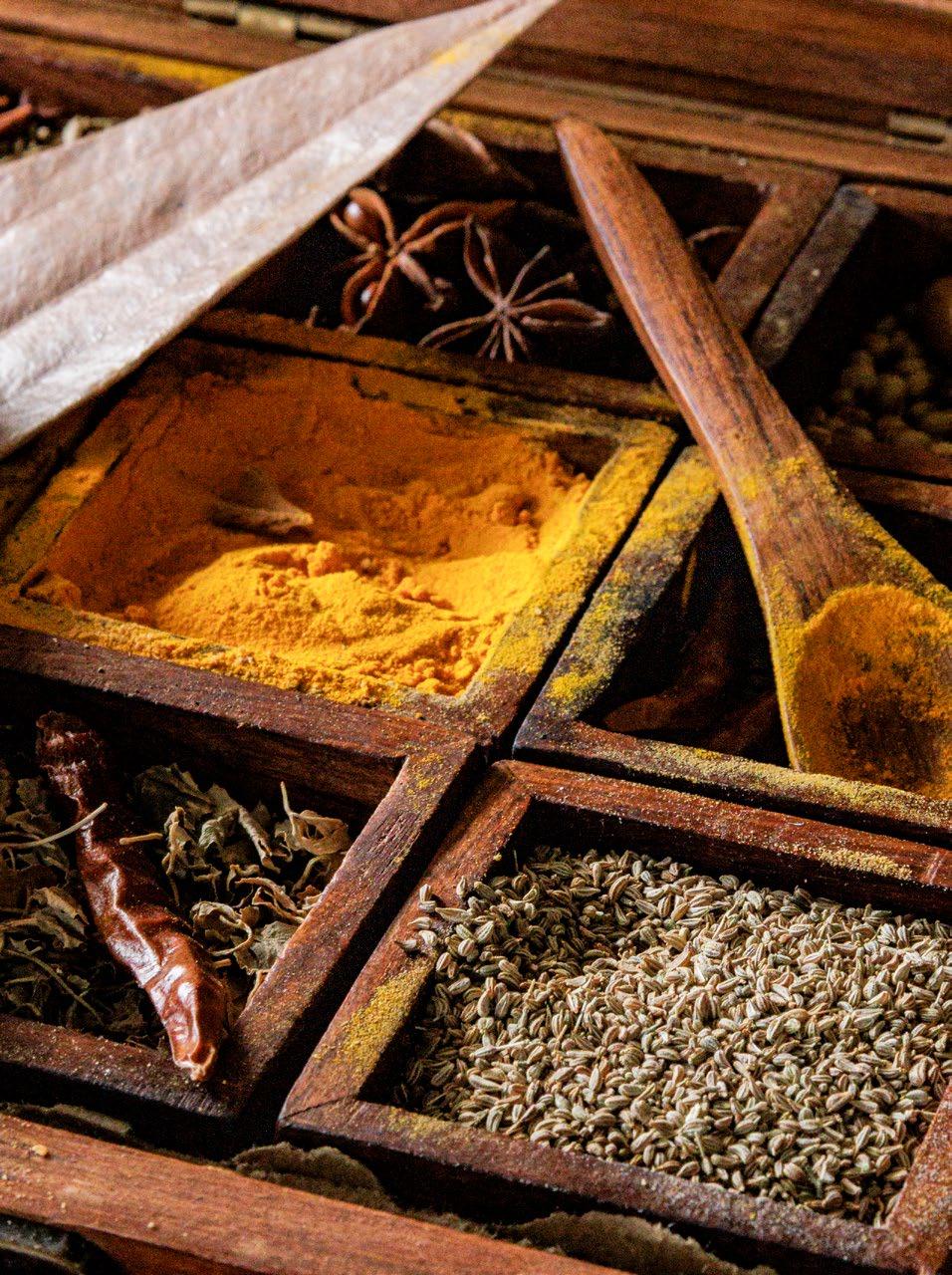
He learned to cook for them first, “white people food” –Western breakfast, cakes, comfort food for tourists unused to Nepalese flavors. His tent was treated like a luxurious hotel, and the food adhered to that. Then, gradually, he expanded into Indian and Nepalese cuisine.
“Basically, in India and Nepal, men don’t cook. Only the ladies cook,” Chettri said. “So if a man likes to cook, you have to go to school.”
Culinary school wasn’t possible for Narayan, though. Instead, he learned from his teacher and through experience.
“I worked with Korean people, American people, Japanese people,” Narayan said. “Czech, Spanish, Yugoslavian. In my tent, I ask them to take a seat.”
Inside that tent, the mountainous landscape shifted from the brutal cold and wind of one of the most inhospitable places on earth – it was warm, loud and alive. People from different countries, religions and languages sat shoulder to shoulder, sharing food and stories. Borders blurred on the edge of two countries.
What mattered wasn't where you were from, but how fast you
ate, how hard you laughed and how long you stayed. Everyone was happy and glued together by the comfort of food.
That feeling of warmth in a harsh place, and connection across difference became the foundation of Everest Cuisine.
“South Dakota is a different part of the United States,” Chettri said. “It's not California, it's not L.A. or New York. They see a lot of people, a mix of diversity, but this area is kind of a white ocean.”
After Everest was established, customers flocked to get a taste, along with a never-ending stream of working hands from India or Nepal.
“Indian, South Asian people don't like to come here,” Chettri said. “We hire lots of people like that, but they only stay for six months. We try to hire local kids, but American people in general just don’t like to work.”
The emigrants who started at Everest and discovered a love for the Black Hills moved on to bigger things. Many previous chefs, managers and dishwashers started their own Indian-Nepalese restaurants in and around Rapid City.
“It’s not like business was slow or they didn’t like working here. Rapid City is growing fast,” Chettri said. “We serve from the heart; it’s totally a mom-and-pop kitchen. We’re not going to lose our small penny. I like healthy competition.”
Everest, among the now numerous other Nepalese restaurants in
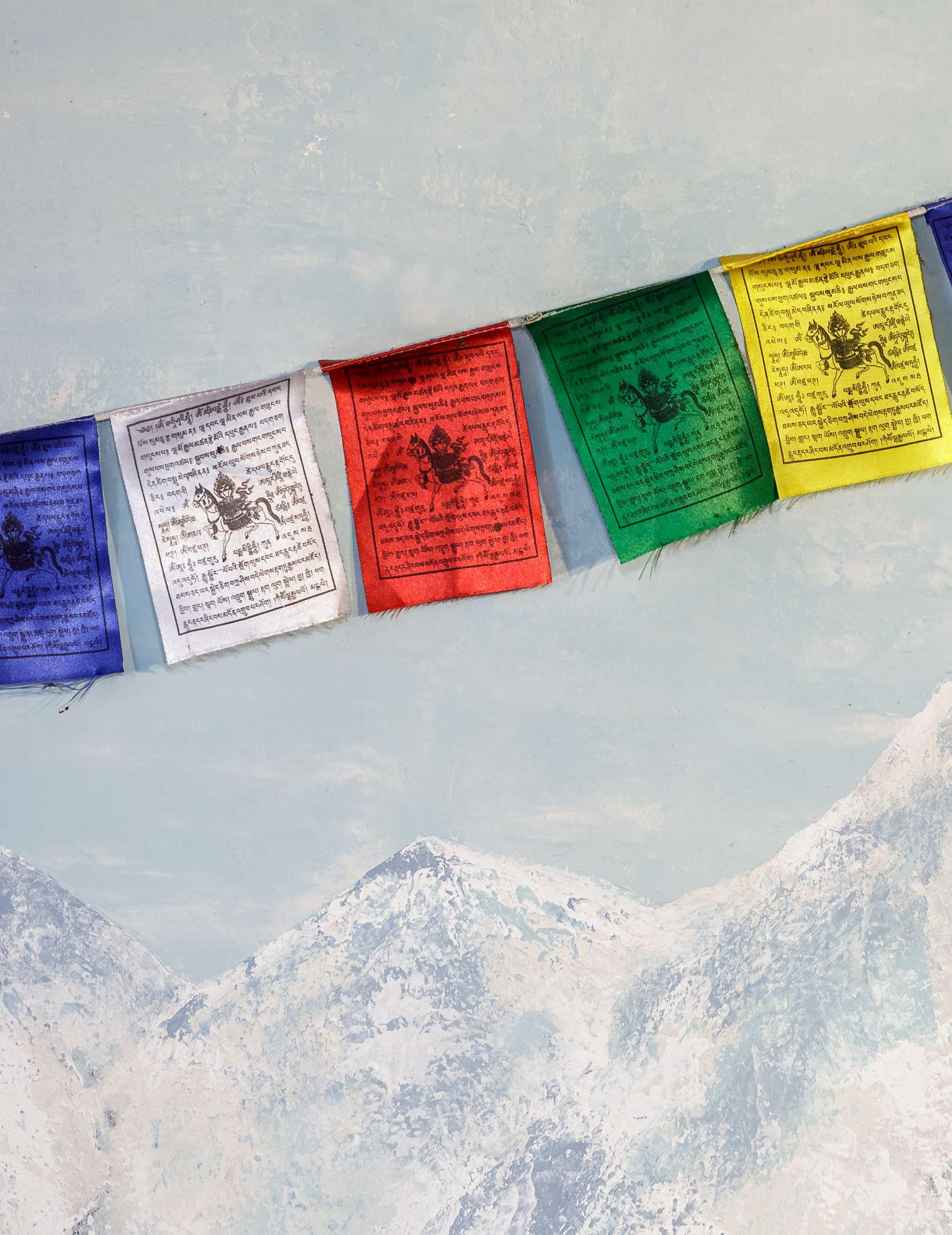
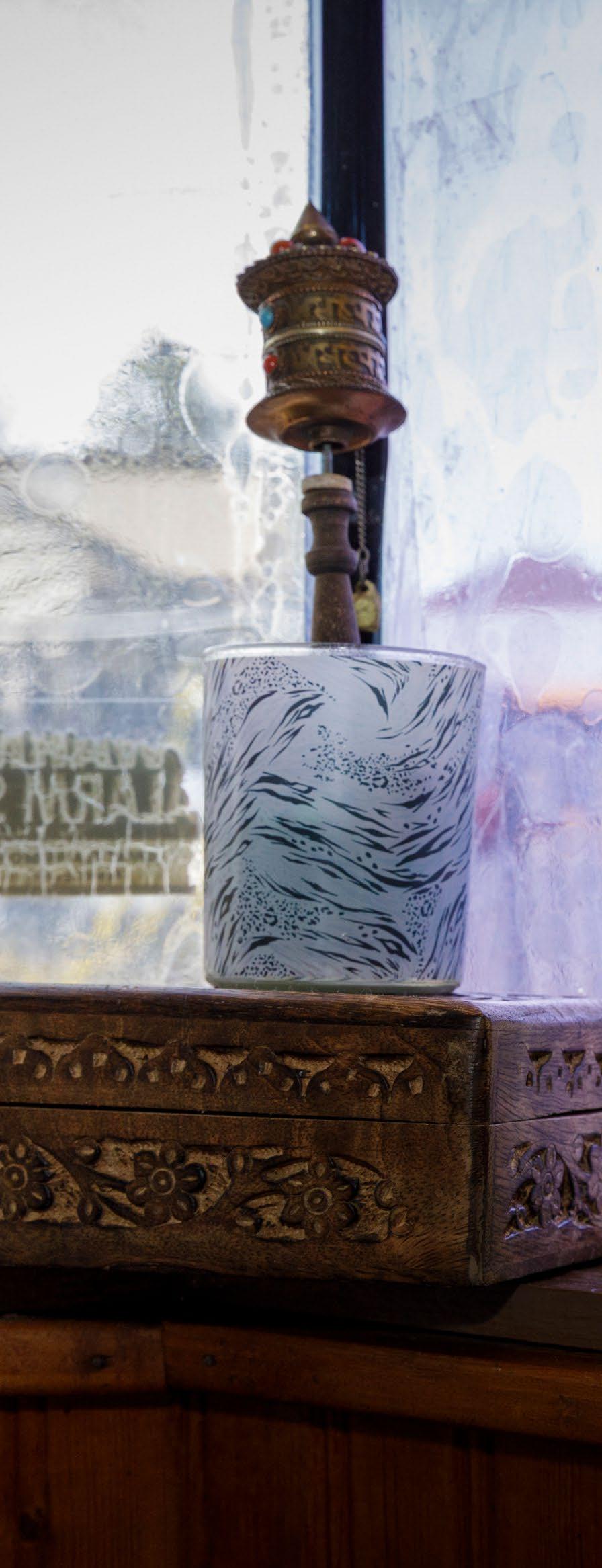
Rapid City, has never lost its charm. The walls shift between shades of blue, morphing into murals that provide a canvas for a scrapbook of photos, newspaper articles and relics from Nepal and India. The area is small, intimate and tucked away next to a cafe serving the same food Narayan first learned how to cook. Across the street are Taco Bell and McDonald’s, the epitome of American consumerism and the exact opposite of what Everest Cuisine stands for. It feels less like a business and more like a memory.
“As a business owner, we like to expand to one, two, three or four more businesses,” Chettri said. “But, we don’t want a luxurious life. I’m not going to lay down and have someone feed me grapes because I'm okay with struggling and struggling.”
Those struggles are only compounded in contemporary America, where supply chain disruptions, tariffs and immigration crackdowns have tightened the margins for small businesses. Month after month, the cost of spices and food climbs higher, while an unrelenting demand for kitchen help slowly slips beyond reach. Everest remains, though, a place that still offers a shift of scenery and taste.
“The food cost is up almost fifty percent, it’s a lot," Narayan said. “It’s hard to keep up.”
But the strain is not new; it has simply taken a different form. Long before rising costs and staffing shortages in Rapid City, Narayan faced a different kind of pressure altogether.
“In 2002, seven Russian climbers came to Nepal to summit some peaks,” Narayan said. “Mount Everest, then Makalu and Kalu. They summited Makalu, 8000 meters up, and came back down to the basecamp. A helicopter was waiting for them at the basecamp."
The helicopter picked up all the Russians and had room for some Nepalese locals. Narayan's friend made it on the helicopter, Narayan did not, and began his journey back to Kathmandu on foot. The trek back to civilization was long and demanding, and upon return, he looked for his friend.
“The helicopter was missing,” Narayan said. “The Russians, the Nepalese, all died. Their bodies were never found.”
A few months after Carr passed away on Mount Cho Oyu, Narayan retrieved his body. Family members of Carr invited Narayan and the other sherpas to visit his hometown in Australia.
“The police department treated us very good,” Narayan said. “Like drinks, food, girls, everything. They asked if we needed anything else. We told them no, we are good. We see everything now, no more demand.”
The people of Melbourne extended the same respect Narayan gave to everyone he assisted up the faces of the Himalayas, the same he gave to every person who wandered into his tent for a warm meal and good company. The respect he encountered there is what he and Chettri try to recreate every day in Rapid City.
“The prime minister, chief commissioner, everybody was at our welcoming dinner,” Narayan said. “That trip to Australia was remarkable, and it was the first time I've seen the ocean.”
In a small dining room, far from the Himalayas, they built something familiar. Warmth in a harsh place, connection across differences and a place where anyone can sit.
The mountains of western Montana are sweeping monoliths of beauty and danger, testaments of nature’s grace and ire.
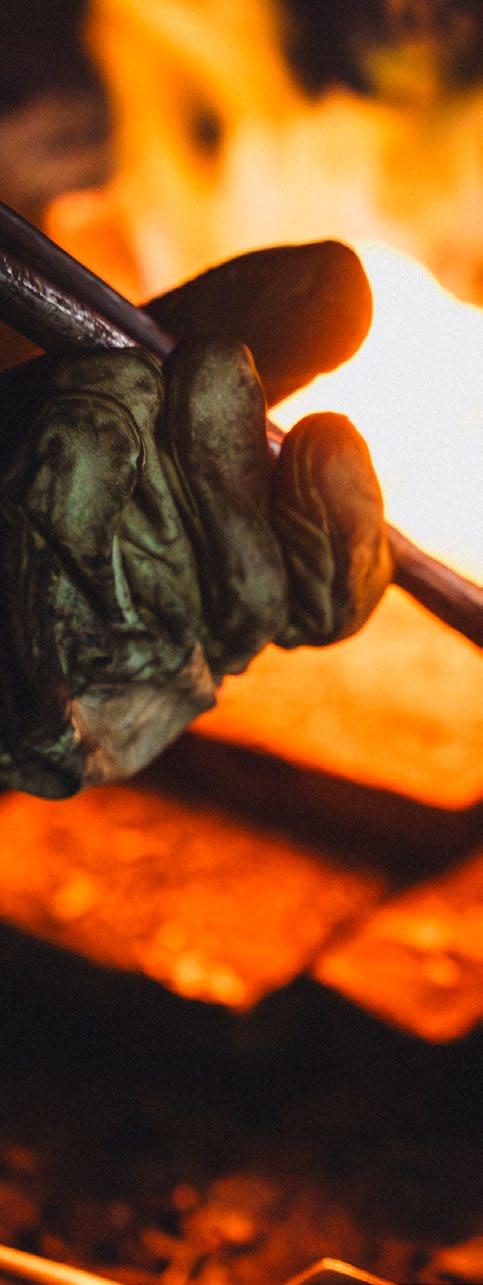
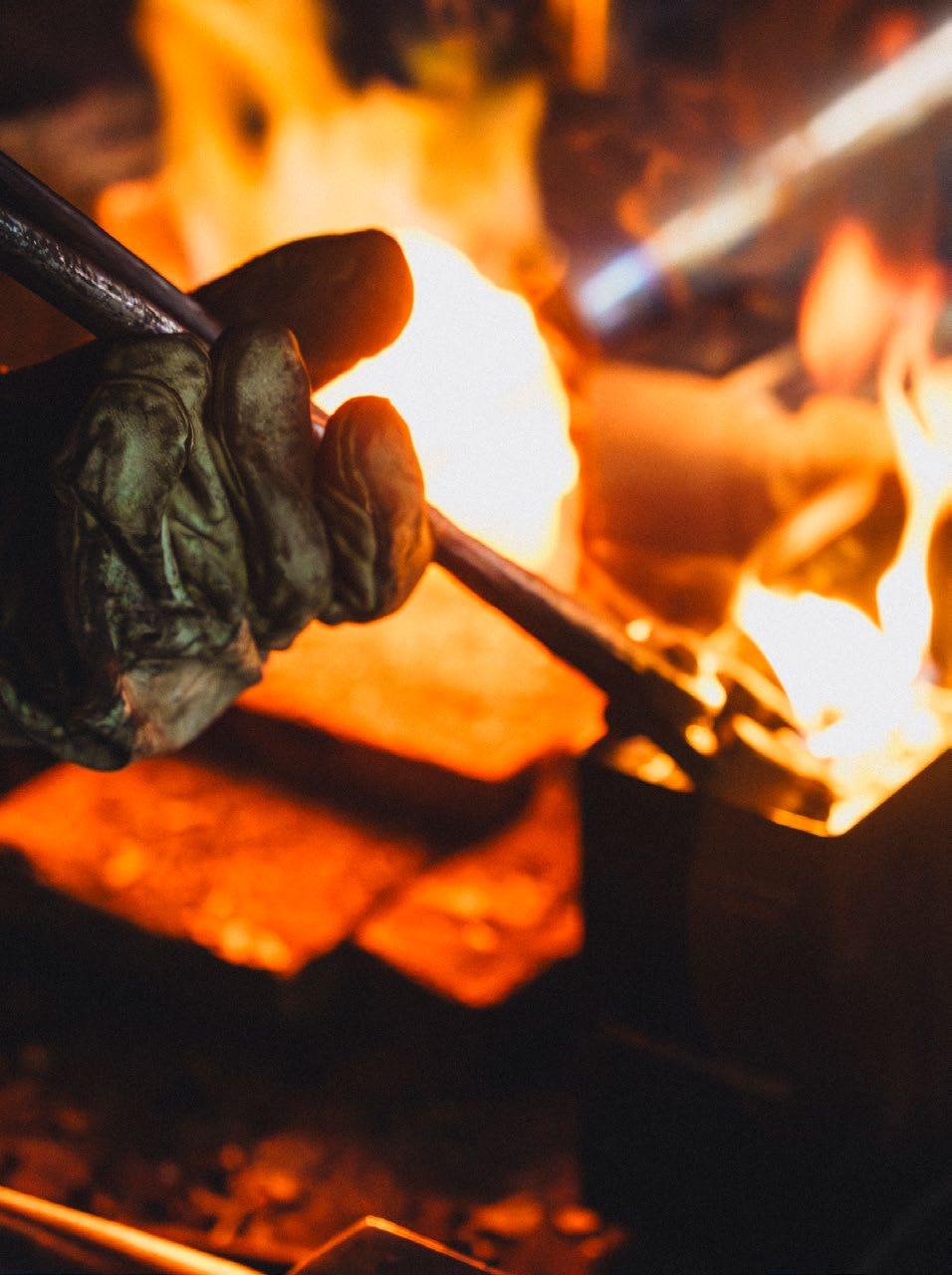
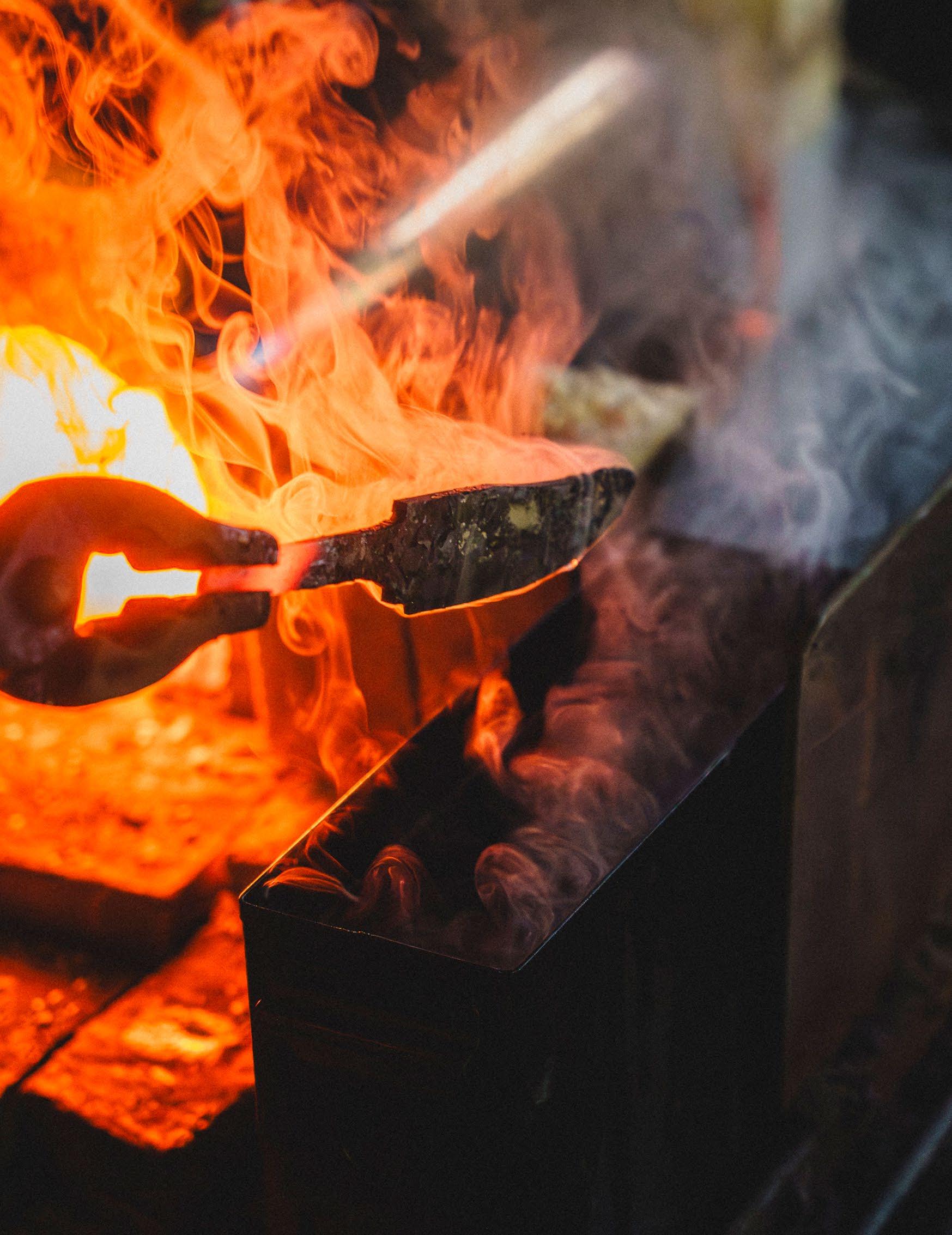
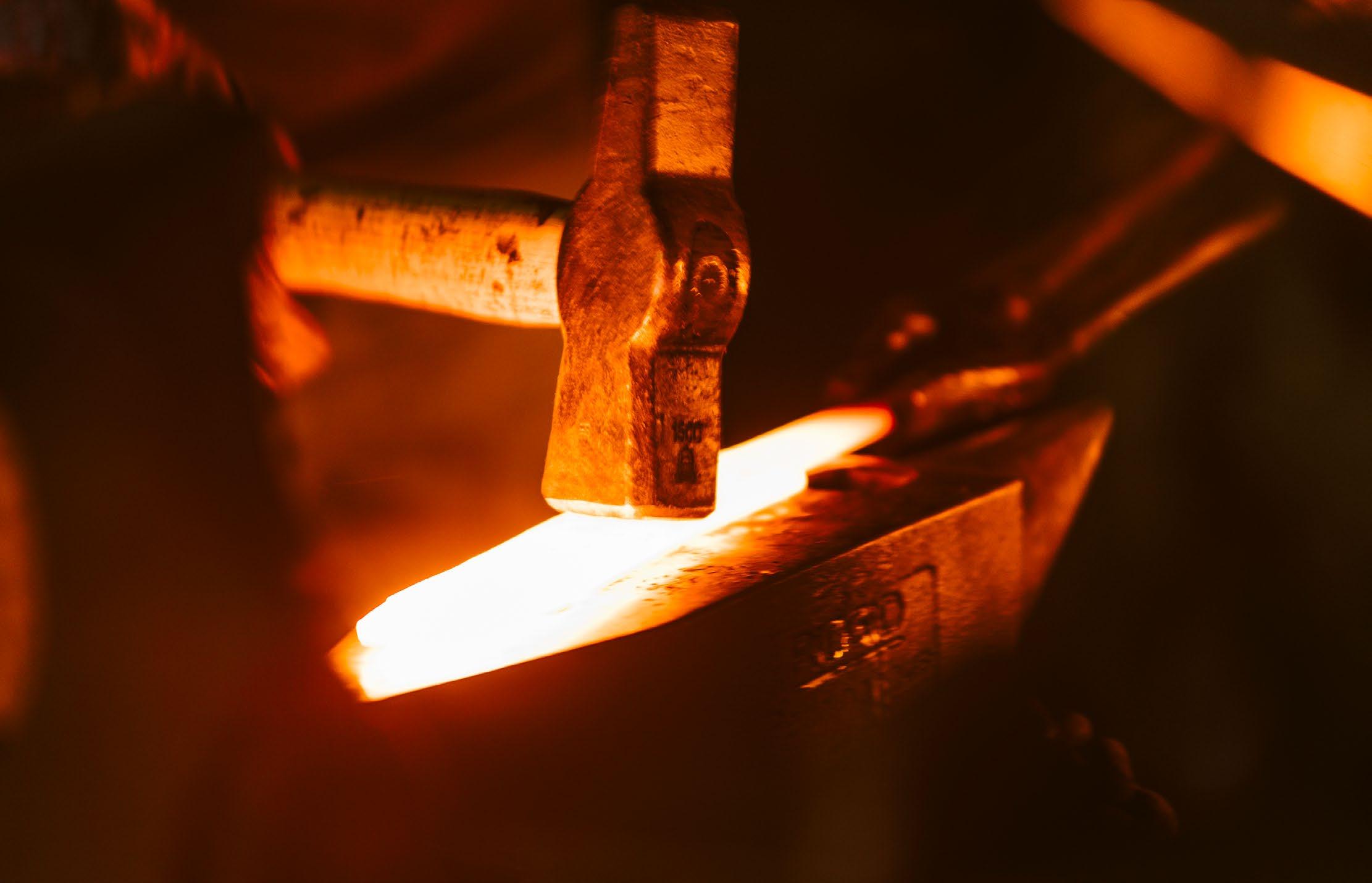
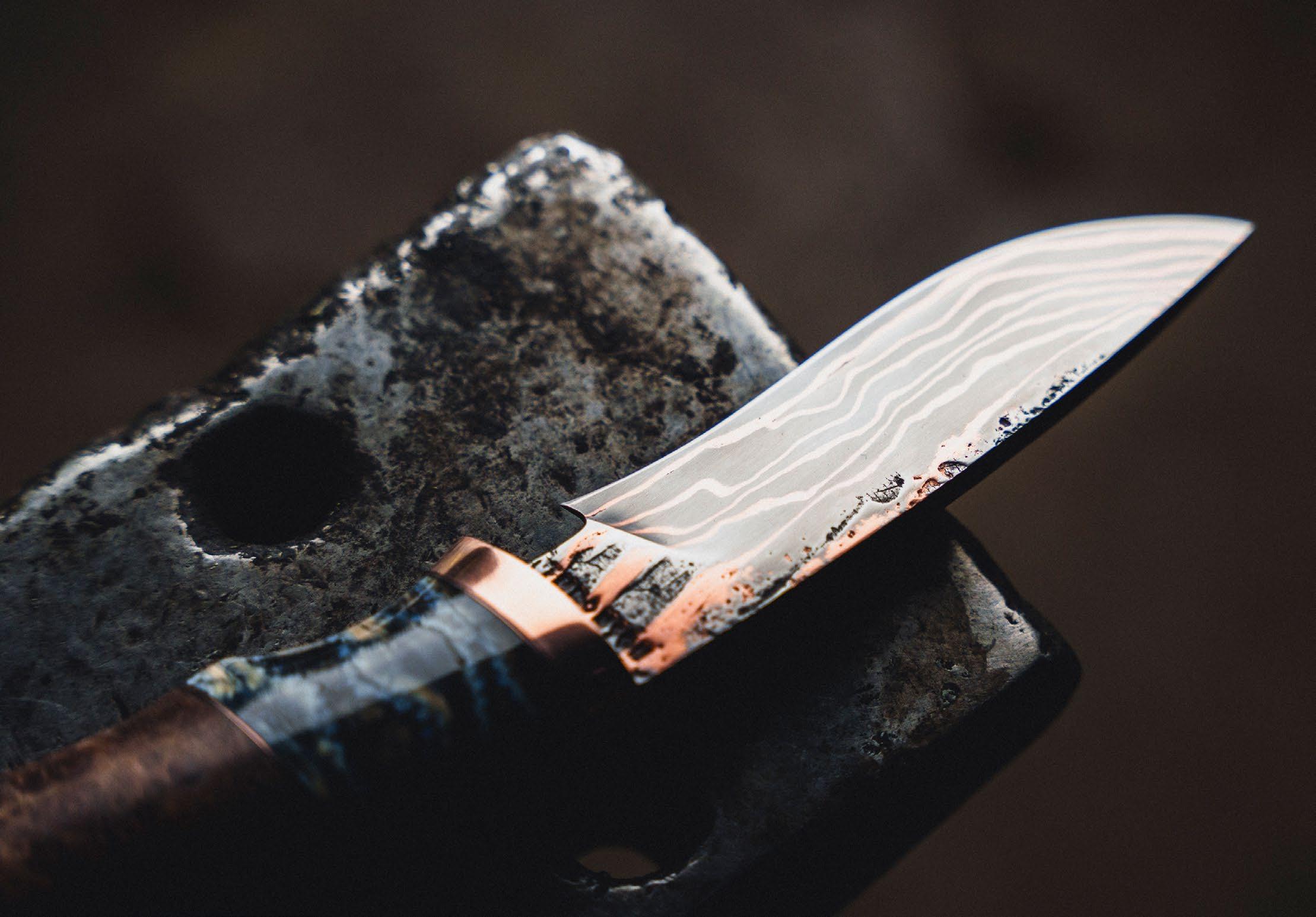
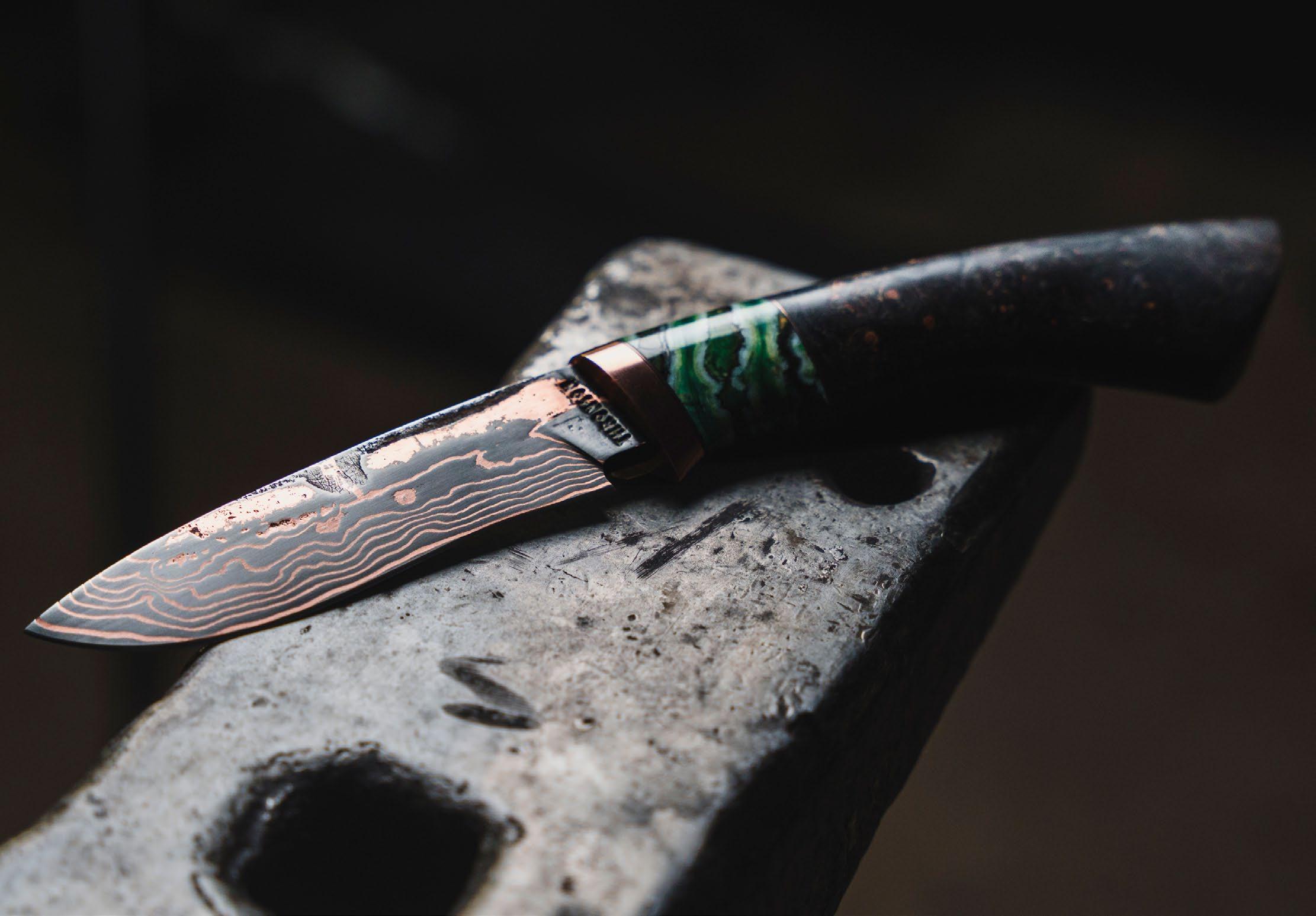
Buried within this granite boneyard is the quiet town of Manhattan, home of the Thronson Forge. This is a place of creation. Inside, sparks dance through the air and fade into the concrete floor. Billets of layered steel are heated until they glow orange, then rhythmically hammered into shape. This forge produces knives, artful blades that could shine on a collector’s mantle or accompany a hunter as they venture deep into the Rockies.
Thronson Forge is owned and operated by brothers Luke and Cole Thronson, men molded by the harsh climates of their Midwest origins and the peaks of their mountain west home. They, in turn, smelt and hammer the ore of their upbringing into tools of deadly resilience.
The knives themselves evoke imagery of thunderstorms, wildfires and floods. Of past lives, future triumphs and the unending hunt for elegance and perfection, these knives seem to know. Luke and Cole pour their diligence and love into each and every Damascus blade they craft, and from these spirits comes a product of the highest quality.
Take, for example, a Cu-Mai Hunter currently for sale on the Thronson Forge website. Over 400 tight folds of steel betray the sheer amount of work put into this blade – their currents pull the eye to a keen edge. A band of copper winds down the cheek, diving into an elaborate handle. Beneath a guard of polished copper, jade green mammoth molar adorns the glossy purple maple burl the brothers chose for this grip. This triadic color scheme lends itself as proof of dedication, the final flourish on top of an already gorgeous blade.
“When I'm making a high-end knife, I'm trying to make it a work of art,” Cole said. “I would say a lot of the people who buy a $1,000 knife aren't going out and skinning an elk with it, at least I wouldn't. So we’re trying to make something that you can put on your shelf and talk about, and hand it down to your kids. [But] if you need to use it, it's one-hundred percent functional.”
A finished Thronson knife looks effortless in its beauty – a polished blade, intricate Damascus patterns and a carefully sculpted handle. But the process behind each knife can take anywhere from 12 to 20 hours of work, and so low a number was hard won.
Long before the Thronson Forge existed, the brothers were kids playing outside. They grew up on an old farm in North Dakota with a large family – nine siblings total. Spending time outdoors was simply a part of life – their days were filled with hunting, fishing, building forts and exploring the woods around them.
“When we were kids, we would make wooden knives,” Cole said. “We did a lot of hunting in North Dakota, that’s about all there is to do. That’s probably when I first got into functional knives.”
As the kids got older, their father made sure they each had their own Buck knife. The early experiences of carving sticks into blades and then using their real knives for hunting and fishing planted the seeds for something much bigger.
Eventually, the family moved west to Montana – a dramatic change. The prairies and flats of North Dakota gave way to the Rockies, meandering rivers became rushing mountain streams and the winters remained brutally cold. The brothers continued their outdoor lifestyle, hiking every weekend, hunting and fishing as they’d always done. Yet the new landscape began to leave its mark.
“There’s something to it,” Luke said. “It’s kind of a western thing.”
Even today, Thronson-branded blades reflect the environment surrounding their creation. Many are shaped to evoke imagery of the animals in the area.
“When I'm making a Bowie knife or a fighter or even a lot of our hunting knives, I kind of try to make it look like a predator, like a wolf,” Cole said. “I prefer when they have a drop point like that… I think that makes it look mean. It looks like some kind of predator bird or something.”
From birds of prey to the unending mountain ridgelines in all directions, the world around the brothers heavily influenced the forms of the knives they make today.
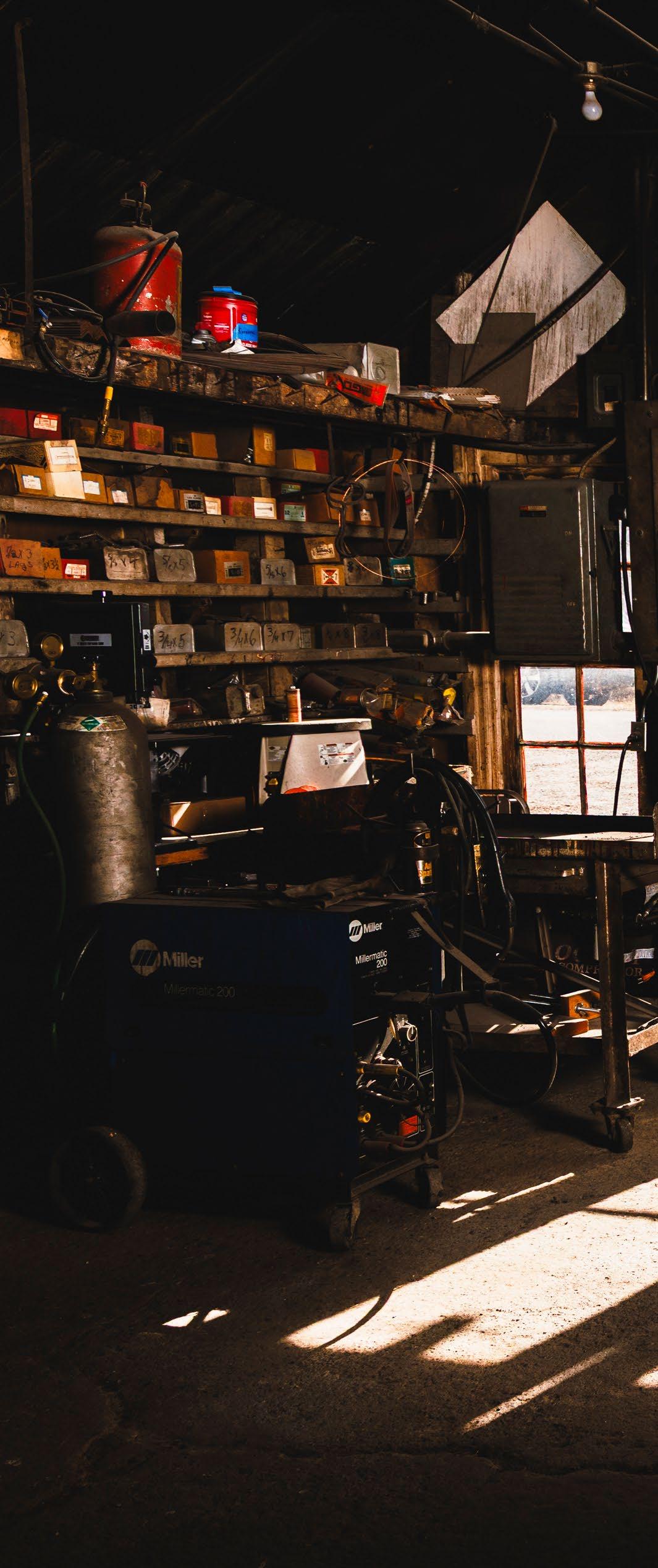
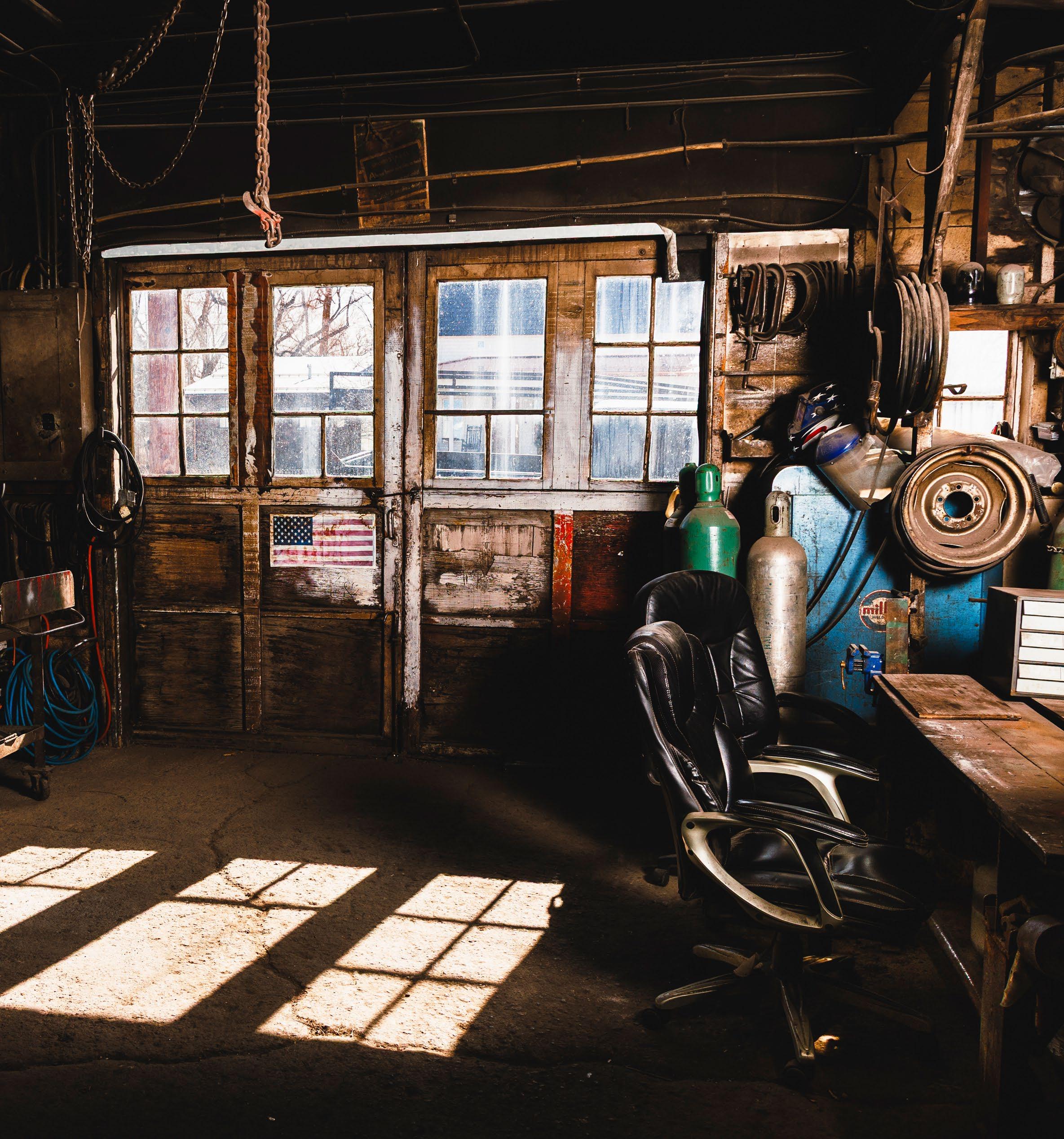
The town of Manhattan, Montana, is rich with history. So too is the very building in which the forge resides. On this site, workers shod the horses that built the town of Hamilton, which was established in 1865, using some of the same tools that are there today. The town was renamed twice before 1911, when the name Manhattan was chosen, and the town was incorporated. Around 1920, the future home of the Thronson Forge operated as a mechanic shop and parts manufacturer for an International Harvester dealership next door.
The years are evident when looking at the building itself. The very floor is a timeline of cement pads stitched together as the place was renovated and expanded over the decades. The wooden walls are weathered, but strong. Some pieces of equipment remain from the early 20th century. And in 2018, the Thronsons bought the building from a neighbor, and Luke and Cole took to their craft.
“We watched ‘Forged in Fire’ quite a bit,” Luke said. “[Knifemaking] was just something that we wanted to try.”
At the start, neither brother had formal training in bladesmithing. Instead, they took a more modern approach to learn their craft.
“We watched YouTube videos and read books,” Cole said. “There are some good books on it. Everything was trial and error in the beginning.”
Early attempts didn’t always go well. The traditional coal forge that the brothers started with made temperature control difficult. Getting the temperature right is critical when making a Damascus knife. Too cold, and the layers of steel won’t fuse together. Too hot, and the blade will melt.
“I would say probably the first five Damascus blades I made were completely melted,” Cole said. “It was pretty discouraging.”
The brothers eventually switched to a propane forge, which allows for better temperature control.
“Those will get, like, as hot as they'll go,” Cole said. “The ones we have are perfect for forge welding, and I haven't melted anything since I got one.”
Those early failures were part of the process. Over time, the brothers became masters of manipulating steel into the artfully raveled Damascus blades that now define their work.
“[We] try to do a good job with it,” Luke said. “But it’s definitely been a learning curve.”
The brothers start their process by forging billets – thin blocks of layered steel. Many of these billets get sold as they are, but those that don’t will earn a sharp edge and the Thronson name stamped along their side. In one day, enough billets can be forged to make knives for up to five weeks.
The shape of a knife is then traced onto those billets, and then cut out using grinders. When the rough shape of a knife emerges, these ‘blanks’ are heat-treated in a specialized oven that reaches exact temperatures. Once the blades are heated, they’re quenched – rapidly cooled to harden the steel.
“Once they're quenched, it takes like four hours to temper them,” Cole said. “So one of us has to be here until later, making sure they get tempered. Then the next day, we would have two batches going, each one step ahead of the other. So if I'm doing this, Luke is getting another billet ready.”
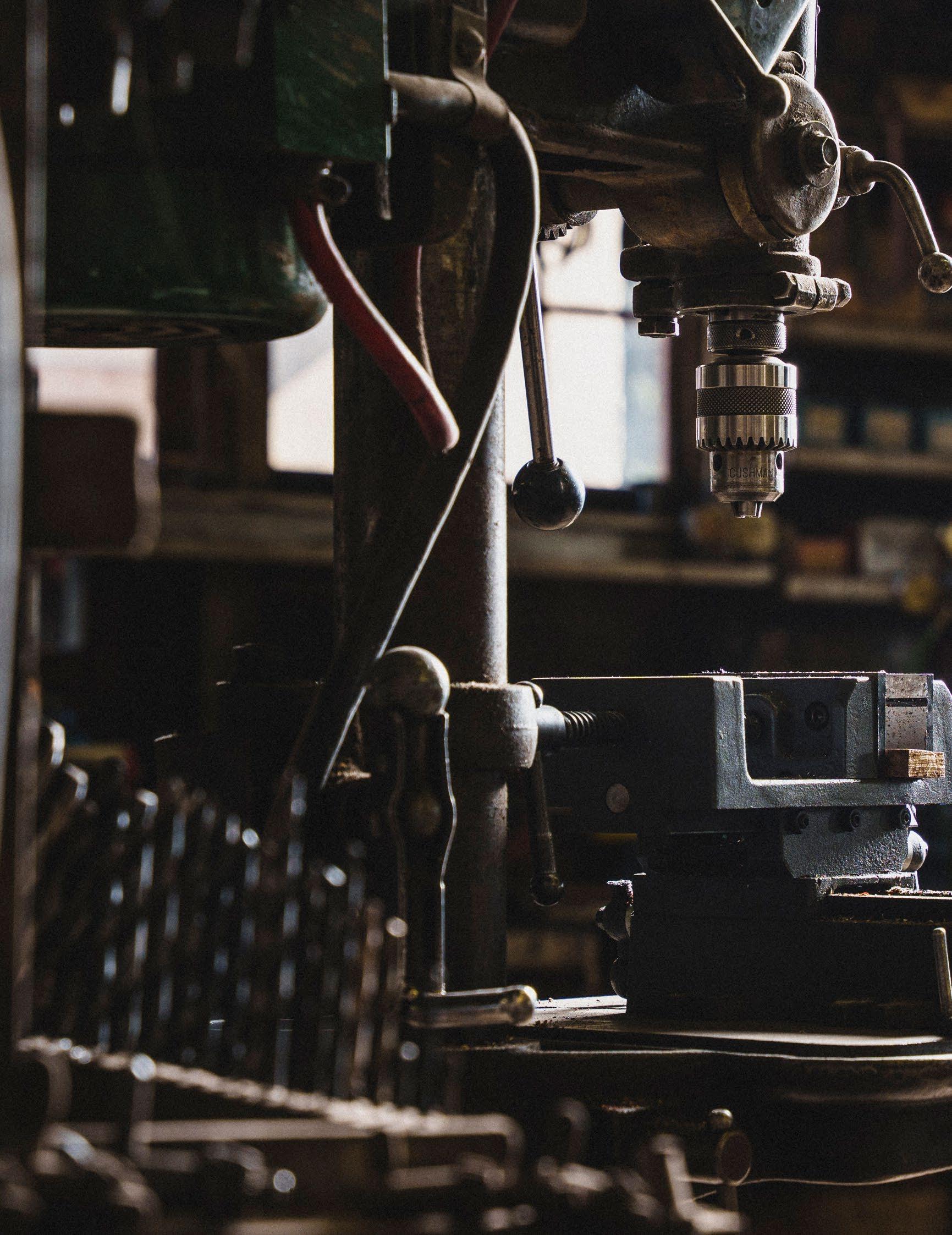
After tempering, the true artistry begins. The blades need to be squared up, then beveled. Grinding these bevels, angling the surface of the knife to form the cutting edge, is one of the most difficult steps. Most knife makers rely on jigs to control grinding slants and achieve an absolutely perfect angle. The Thronsons deliberately chose a harder, more personal path.
“When we first started, we kind of just decided we're going to either get good at freehand grinding or not make knives,” Cole said. “[The process] goes way quicker if you can just go up and grind it freehand.”
But freehand grinding can come at a cost. Early on, mistakes were frequent and could be devastating.
“I would say we messed up about fifty percent of our knives doing this the first year,” Cole said. “It’s really easy to mess up.”
A slip of the hand, one uneven pass across the grinder or a slight break in attention could ruin hours of work. The steel might get ground too thin, edges warped, balance and symmetry lost. For a craft that is so demanding of precision, errors like these are unforgiving.
But over time, repetition became muscle memory.
“Once you get good at it, though, it’s fast,” Cole said. “You just walk up and grind it, and you’re done.”
This philosophy has come to define the Thronson approach. Learn the hard way, accept the failures and come out the other side with something that is entirely your own.
After the bevels are ground, the blade undergoes one of its most transformative stages – acid etching. Prior to this step, the steel looks almost plain, with a smooth, unremarkable surface. But after a couple of seconds submerged in ferric chloride, hidden patterns emerge in an almost choreographed way, and the surface becomes alive with motion.
This is where that signature Damascus look comes from. The ferric acid eats away at the carbon-rich layers while leaving the nickel untouched. The resulting patterns seem to capture imagery of the wind in the treetops, or the paths of snowflakes as they careen down from the heavens.
“[Some] people actually fake this,” Cole said. “They print it on their blades. But if you etch it deeply, it’s really easy to tell it’s not fake.”
Once etched, the blades need to be neutralized to stop the chemical reaction, using ammonia or baking soda. After neutralization, construction of the handle and finishing can begin.
This is where craft and artistry converge in the most visible way. The Thronsons use a wide and rare range of materials, from stabilized burl woods to fossilized elements that are millions of years old, like mammoth molar and brain coral.
“I really like how much character the burl wood has,” Cole said. “And the mammoth molar adds another layer… it makes it more of a showpiece.”
Each and every handle is carefully composed and limited to a maximum of three colors to avoid overwhelming the eye. The resulting balance of contrast and harmony shows a certain care for their work and certain expectations for themselves to stand out and accomplish more.
Despite their clear, respective eyes for design, the brothers are humble and quick to credit others for refining this aspect of their craft.
“[Adding copper to the knives] was Cole’s idea, or something he wanted to try,” Luke said. “We read about or see what others are able to do, and see if [we] can make something similar, and do a good job on it.”
“My wife does a lot of the critiquing on my color choices,” Cole said. “She’s pretty good at finding what colors go well together.”
His wife, Shayla, is a creator in her own right – an artisan of jewelry. Her influence can be seen in the thoughtful combinations of color and materials that demarcate the forge’s most striking pieces.
Handles are shaped, sanded and polished by hand, which draws out the depth of the materials. Every small detail complements the form; each piece adds to the whole.
“I think my favorite part is finishing up the handle,” Luke said. “When you get to the handle, it’s usually pretty much done. You can see what it’s going to look like.”
From there, the knife is paired with a sheath, which is yet another
“handmade component. Initially, these sheaths were made by the brother’s mother, who taught them leatherworking, but now the responsibility falls primarily to Luke.
Each sheath is cut, dyed, stitched and finished by hand, without the use of sewing machines.
“It’s pretty rough, actually,” Cole said. “I refuse to do them, [but] Luke seems to enjoy it.”
Luke has embraced the process, completing each sheath with the same attention to detail as went into the blade it holds. These pieces together form a complete object, one that’s functional, durable and beautifully unique.
No knife the brothers make will ever be the same as another. The very nature of the craft makes it so that every piece is unique. And the brothers are not afraid of attempting as many styles as they can – their website shows off Bowie knives, traditional Hunters, Cu-Mai Hunters, Fighters and Japanese-influenced Kiridashi and Tanto.
“We're trying our best to make them as beautiful and functional as possible, and one of a kind,” Cole said. “[If] someone wants to order one that we've already made, we’ll make a replica, but I'm not going to try to make it exact ever. So they are one of a kind.”
As the forge evolved, so too did the brothers’ understanding of what it means to run a business. Their initial approach followed their perfectionist instincts. But time is the hidden cost of any artisanal craft, and spending weeks on any single piece made it difficult to maintain their momentum.
“You can’t spend a week on one knife that only costs $600,” Cole said. “You just have to go with it at some point.”
Learning to balance efficiency and quality became an important lesson in the brother’s journey. Early on, their focus needed to be on production and getting their knives out there. But the brother’s high standards were with them the entire way, and the Thronson brand stands today as a statement of excellence and continued mastery of knifemaking.
“If [Luke] sees something that isn’t up to his expectations, he’ll tell me,” Cole said. “He’ll say, ‘I’m not putting my name on that.’”
The brothers hold each other accountable, and the forge has become more than just a place of labor. It’s a continuation of those days spent building forts in North Dakota – a collaborative, familial space where each person contributes in their own way.
Other members of the Thronson family occasionally stop by to help with the forging, and the building becomes a gathering place.
“It’s kind of a fun thing to all be able to make knives together,” Cole said.
Family played a critical role in the early days of the business. Relatives bought knives, providing financial support while the brothers were still establishing themselves.
“Starting a knife business is half learning how to make knives and half learning how to sell them,” Cole said. “And selling them might be harder than making them, I’d say. So having a huge family of customers didn’t hurt. We probably couldn’t have done it without them.”
As their skill improved, so did the scale of their work. The brothers built their website and started shipping knives to their customers. And from taking a month to complete a single knife, the brothers now make dozens each year.
“As we’ve been going, we’ve been getting better, faster at it,” Luke said. “The newer ones have been the nicest.”
2025 saw over 75 knives come out of the Thronson Forge, and the brothers are aiming for at least 100 in 2026. Their goal is to continue increasing production while maintaining the quality that defines their blades. Achieving that balance is no small order, but the market is there.
“It’s kind of surprising to me that people keep buying,” Cole said. “There’s a demand for these higher-end… collector’s knives.”
This desire is the result of a broader cultural shift in that there is a renewed appreciation for the handmade in an age dominated by mass production and planned obsolescence.
A Thronson knife represents more than a tool. It is a connection to tradition, craftsmanship and to the hands that shaped it. The name stamped into the steel is a guarantee that each blade met the brother’s exacting standards. This connection is part of why letting go of certain pieces can be difficult.
When a knife turns out particularly well, and everything aligns in material and form, it can be hard to part with.
“Sometimes when you make one really special, it’s actually kind of hard to sell,” Cole said. “[But we know] you’re not just buying a knife, you’re supporting us being able to do what we love.”
Each knife is irreplaceable in a sense. Even if a similar design is attempted, the variation inherent in the material ensures that no two blades will ever be identical. This commitment to uniqueness in their craft reinforces the idea that each knife is not just a product – each knife is a singular creation. And from this, recognition has begun to crop up.
At a knife show in the summer of 2025, a large Bowie knife made with layered Damascus and copper bearing the Thronson name won the award for Best Bowie.
“We took a lot of time to make it nice,” Cole said. “[Winning] was pretty satisfying.”
That Bowie stands as a milestone, a testament to how far Luke and Cole had come from their early days carving wooden blades. And yet they remain humble, ever grounded in their appreciation for everything around them.
“It’s cool to be able to make these,” Luke said. “It’s been cool to work together and to get a system together. It’s nice to be able to work with somebody I get along with.”
The Thronsons have made over 500 knives since they began their journey in 2018. With every knife they make, the brothers learn a little more. Their perspective is rooted in continuous improvement rather than nostalgia – each blade they make is a step forward, without a final destination in mind.
The future of the Thronson Forge is still being envisions growing the business and attending major knife shows, where the competition is fierce, but the opportunity for recognition is limitless.
“There’s a few different ones,” Cole said. “Huge exhibits where you can go and try to sell your knives.”
For his brother, the focus remains more immediate.
“[We’ll keep] trying to make something people want,” Luke said.
The brothers walk the line between ambition and humility, an ever-increasing path defined by vision and execution. They are artists of the undefinable, capturing far more than just the form of a knife with each piece they make. More than that, they are
hard-working, persevering human beings doing what they love.
“Some of them are more like art,” Luke said. “But these styles, they’re all functional. Just the fact that everything's being done by hand, you can see it as it goes. It’s a lot easier to keep track of recognizing errors that you may not catch if you were doing it a different way or something.”
In the end, what makes a Thronson knife special cannot be reduced to a single element or a few simple words.
It is not just the materials, though mammoth molar and handcrafted Damascus steel certainly stand out in a crowd. It is not just the processes or the endless hours spent carefully refining each piece to its full potential. It is not just the environment, rich in its history and natural beauty, nor is it just what lies at the heart of the business – the bonds of kith and kin.
It is the combination of all of these things– family, trials and tribulations, dedication, artistry and the feeling of belonging, of being home. It is the journey of learning, setting ever-higher goals and realizing a dream.
It is the young boys carving wooden knives in the forest, the men reading books and watching forging videos late into the night, the brothers standing side by side at a grinder, learning through mistakes.
It is the decision to do things the hard way, to craft by hand, to strive for excellence. It is the quiet pride in a finished blade, and the reluctance to let it go.
It is the understanding that what they are making will outlast them.
A Thronson knife is not just an object. It is a story forged in steel, retold with every cut made, every use, every generation that holds it and sees the care that went into its making.
And there, in the shadow of the Montana mountains, where fire and steel collide and hammers fall in the warm glow of the forge, the story continues to unfold.
Photography by Mario Rodriguez & Charlotte Schmidt
Story by Hayden Hill
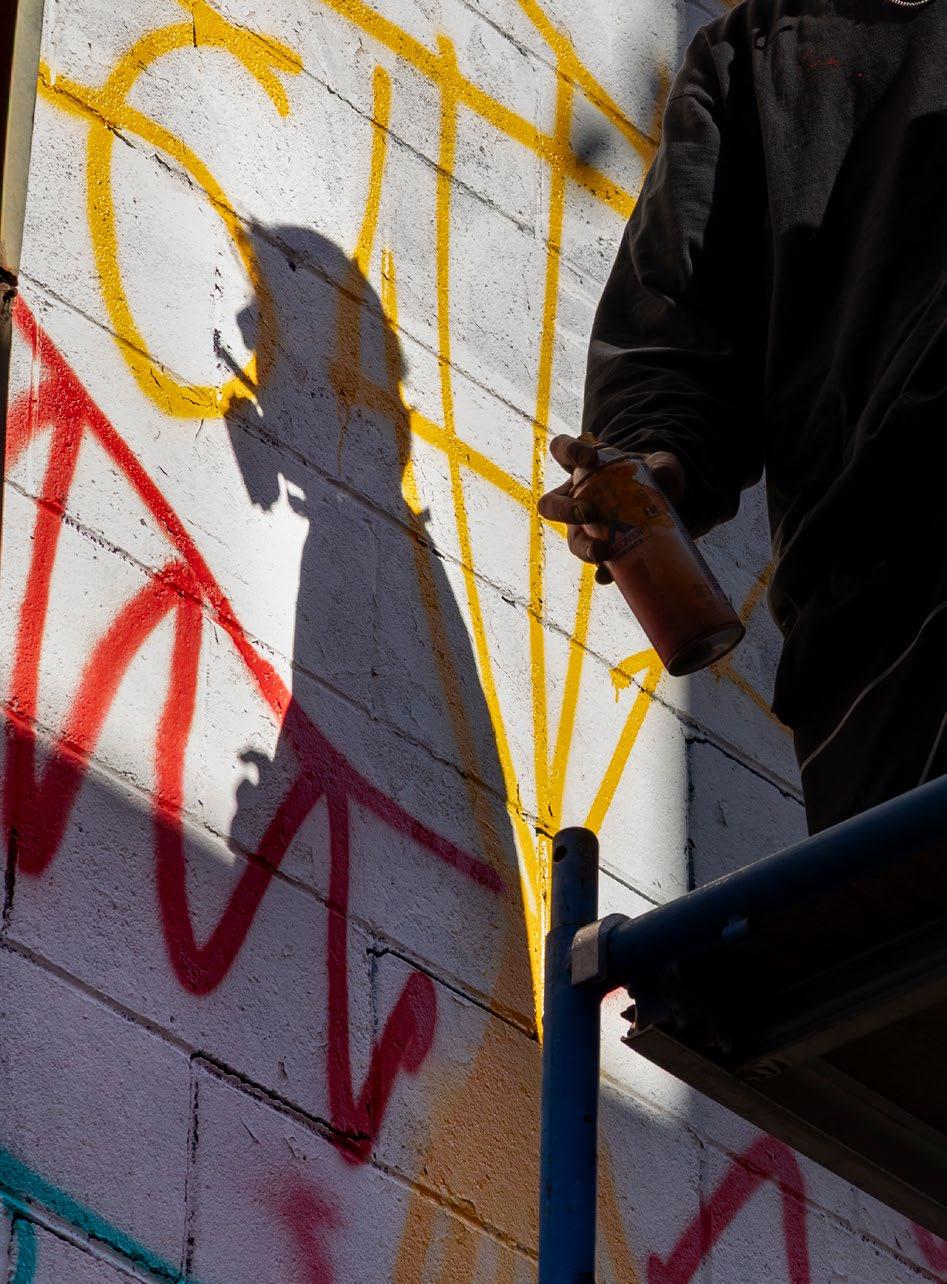
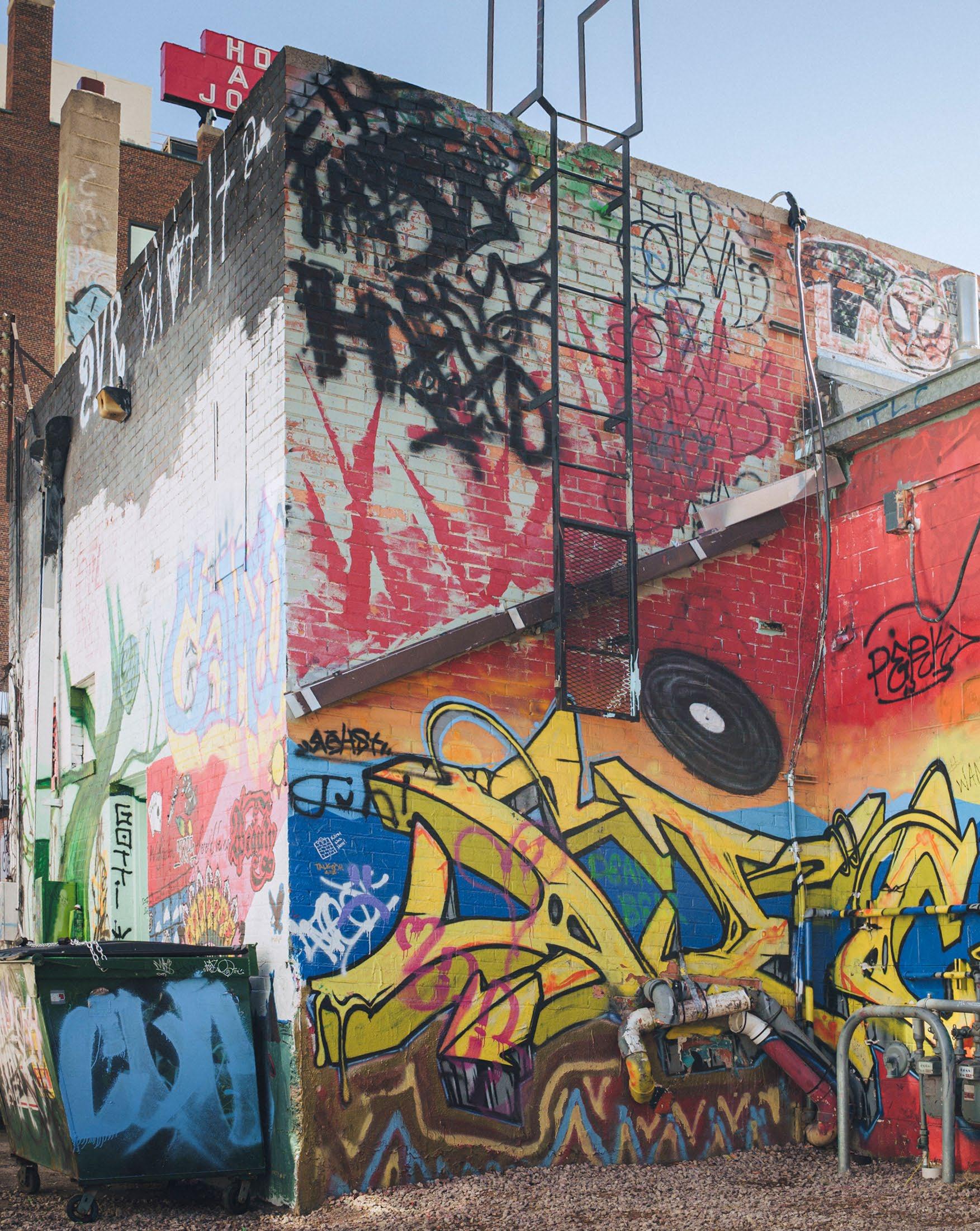
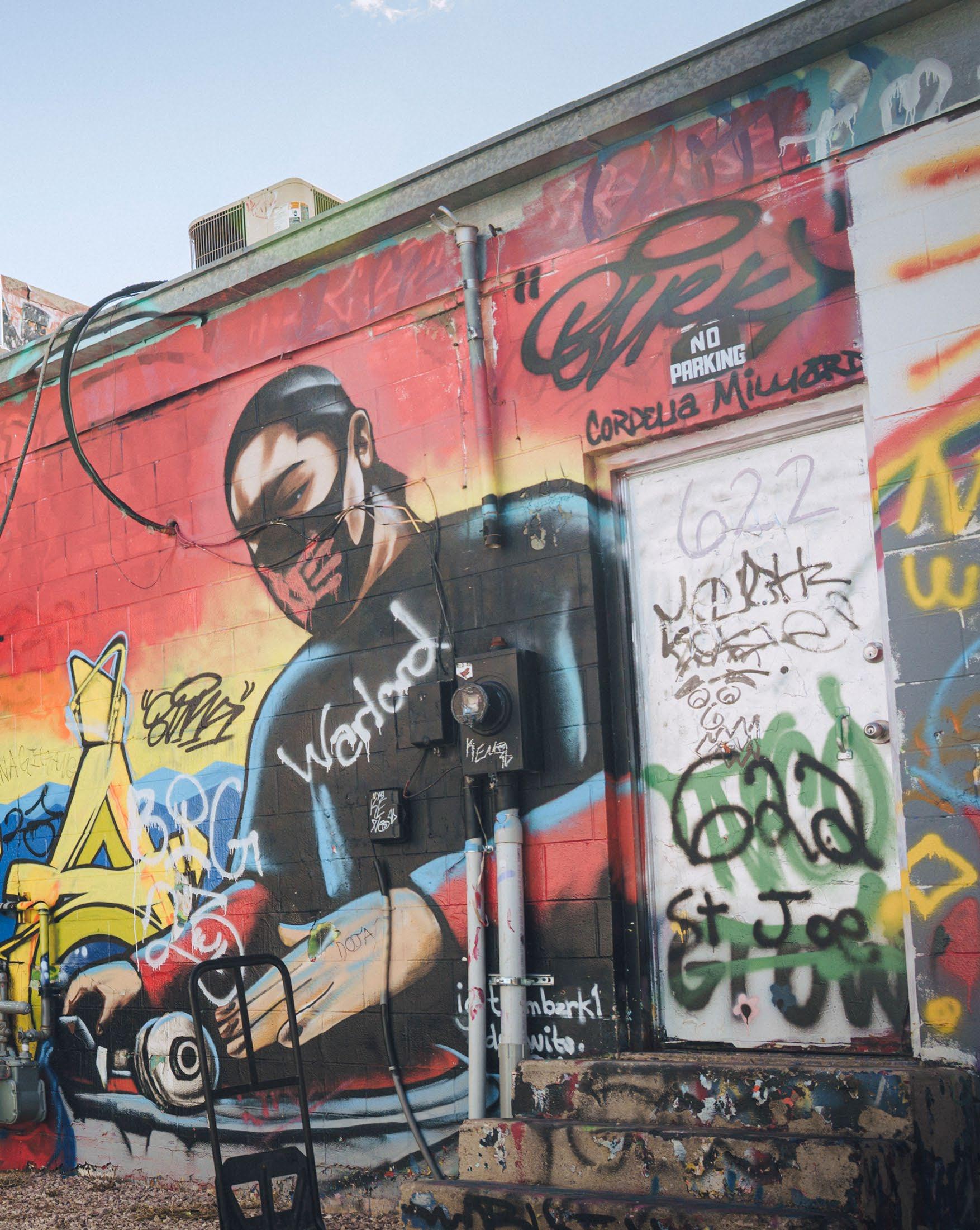
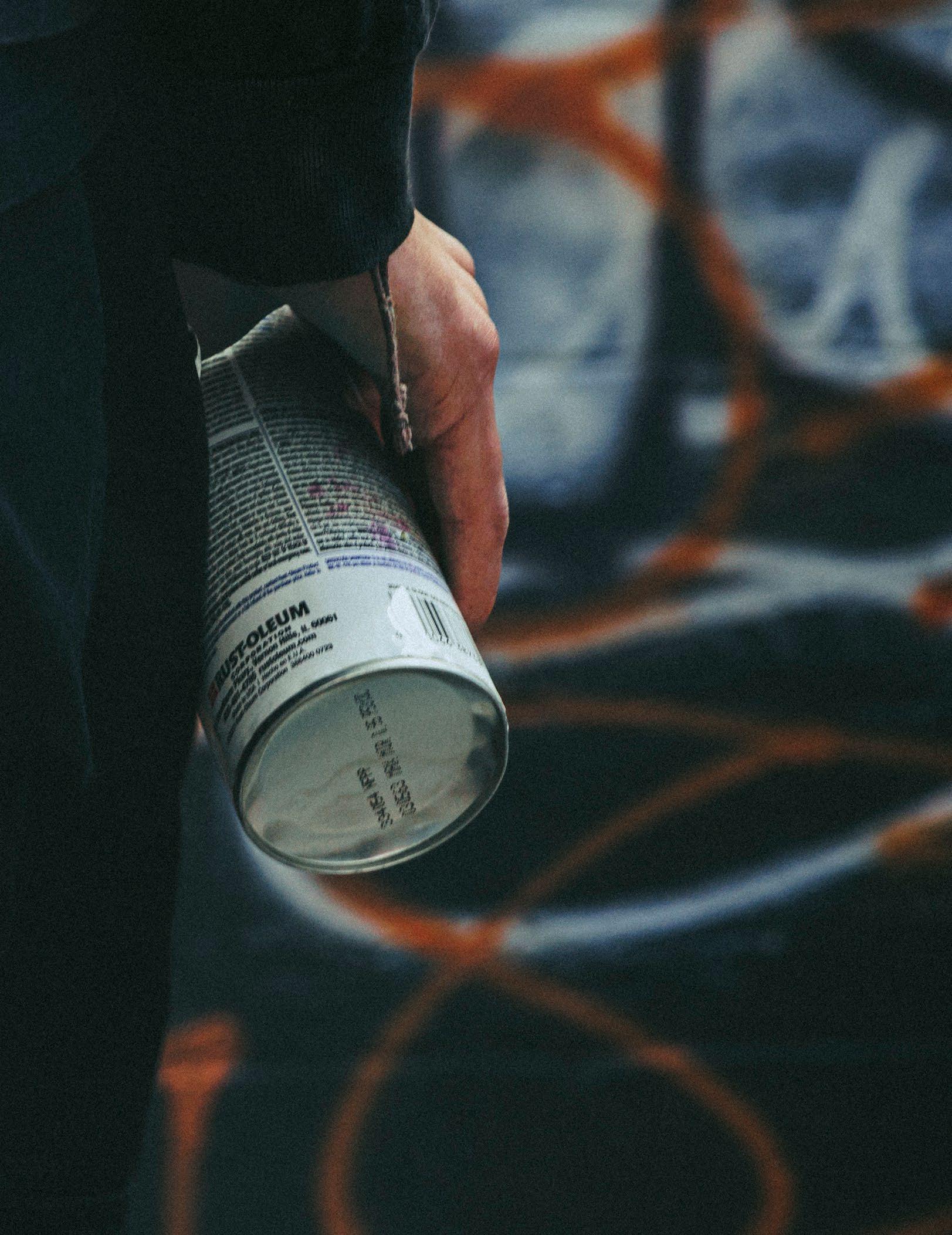
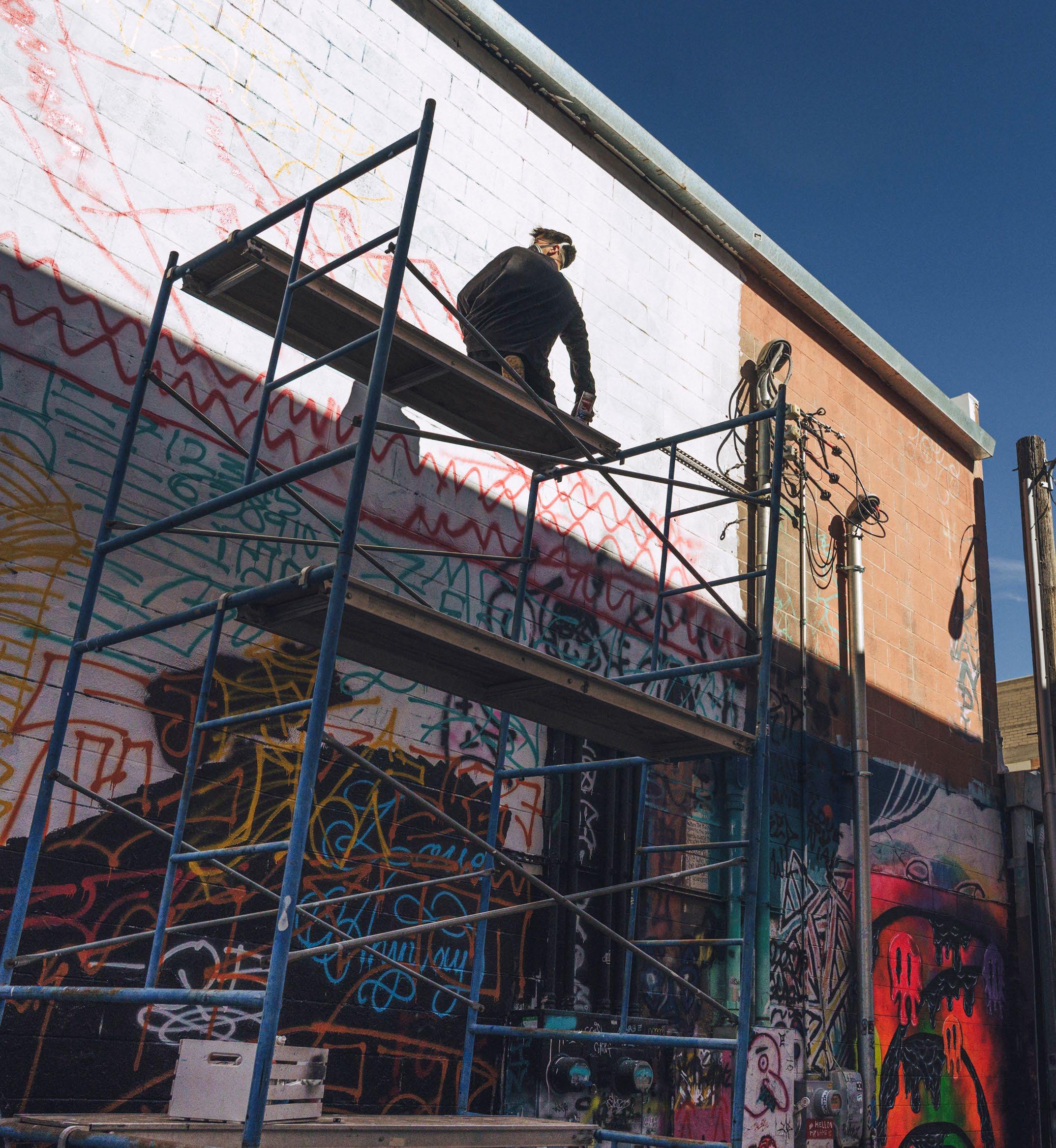
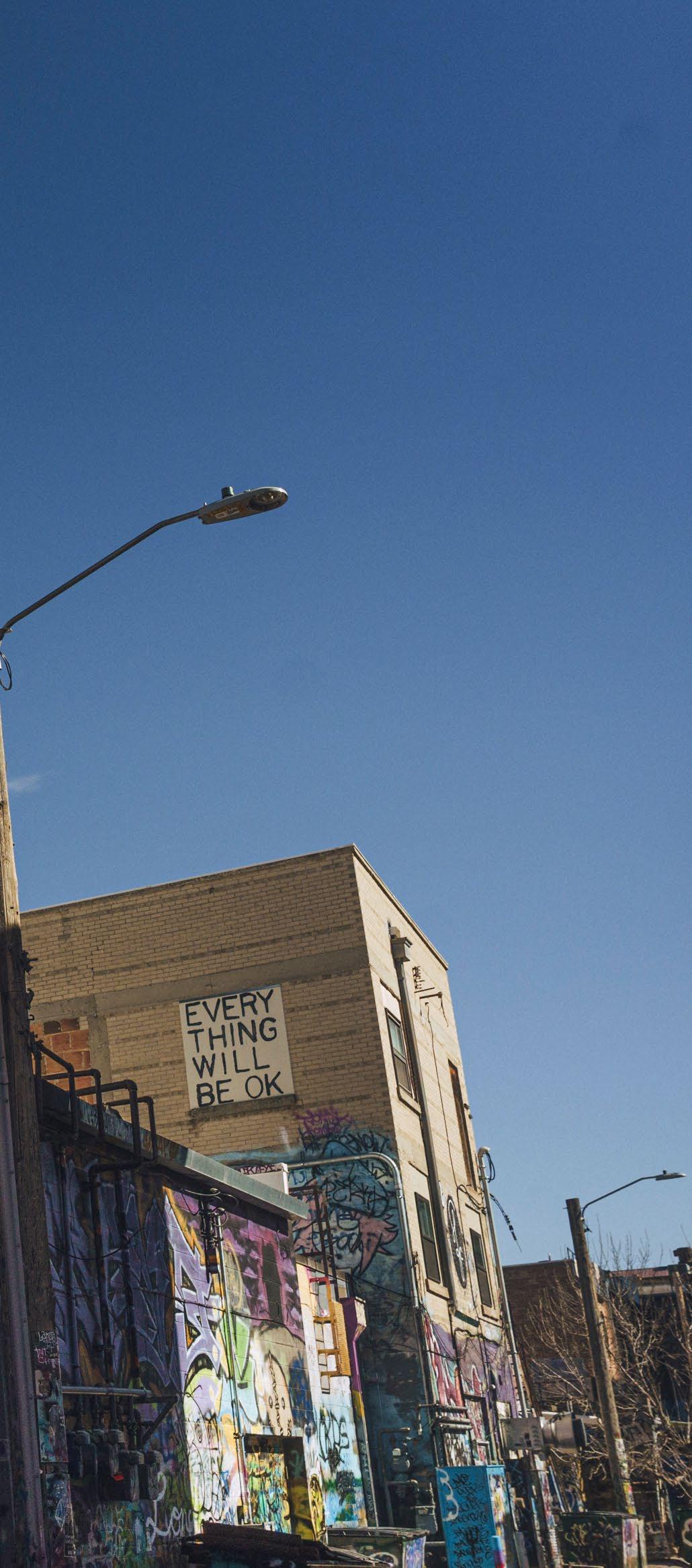
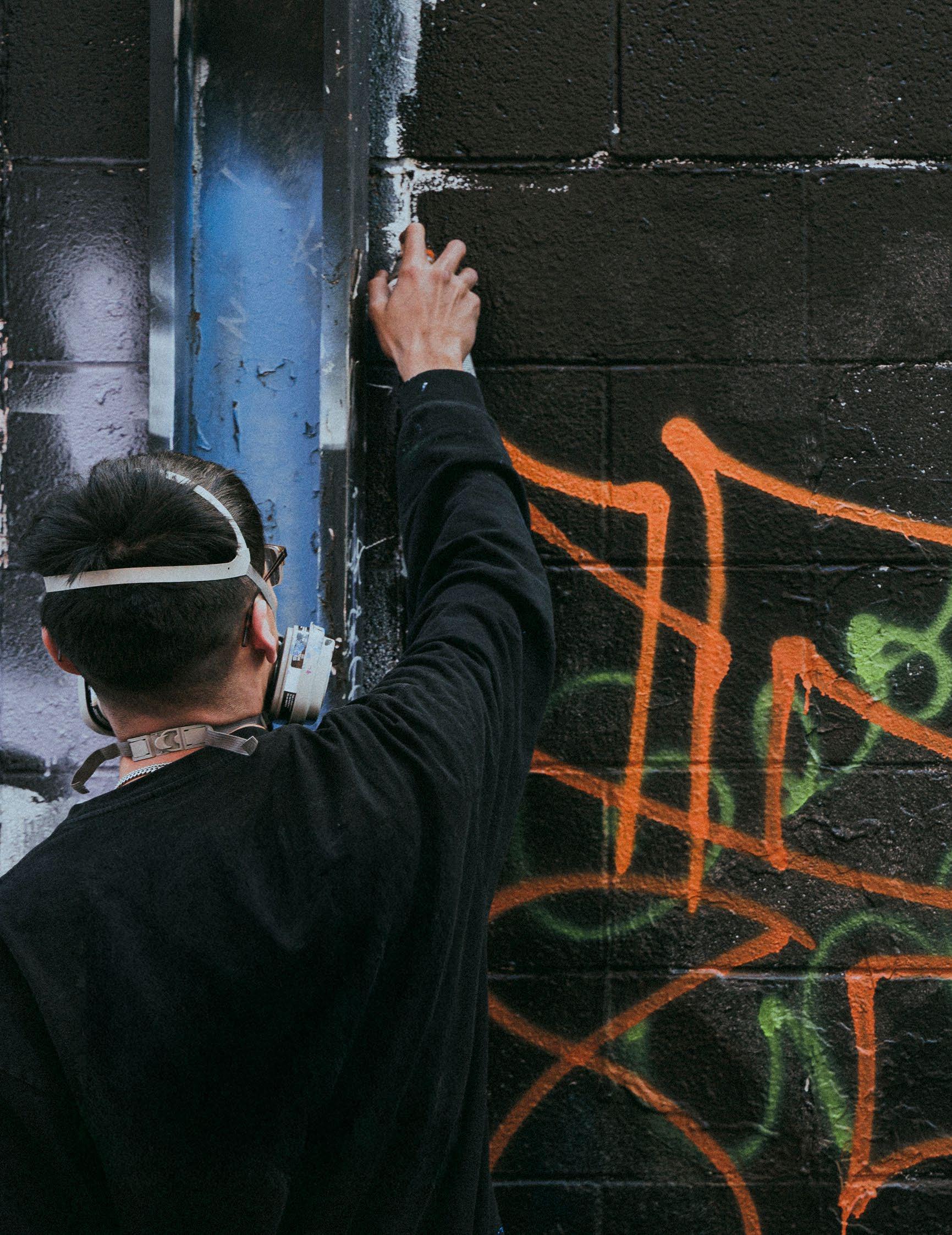
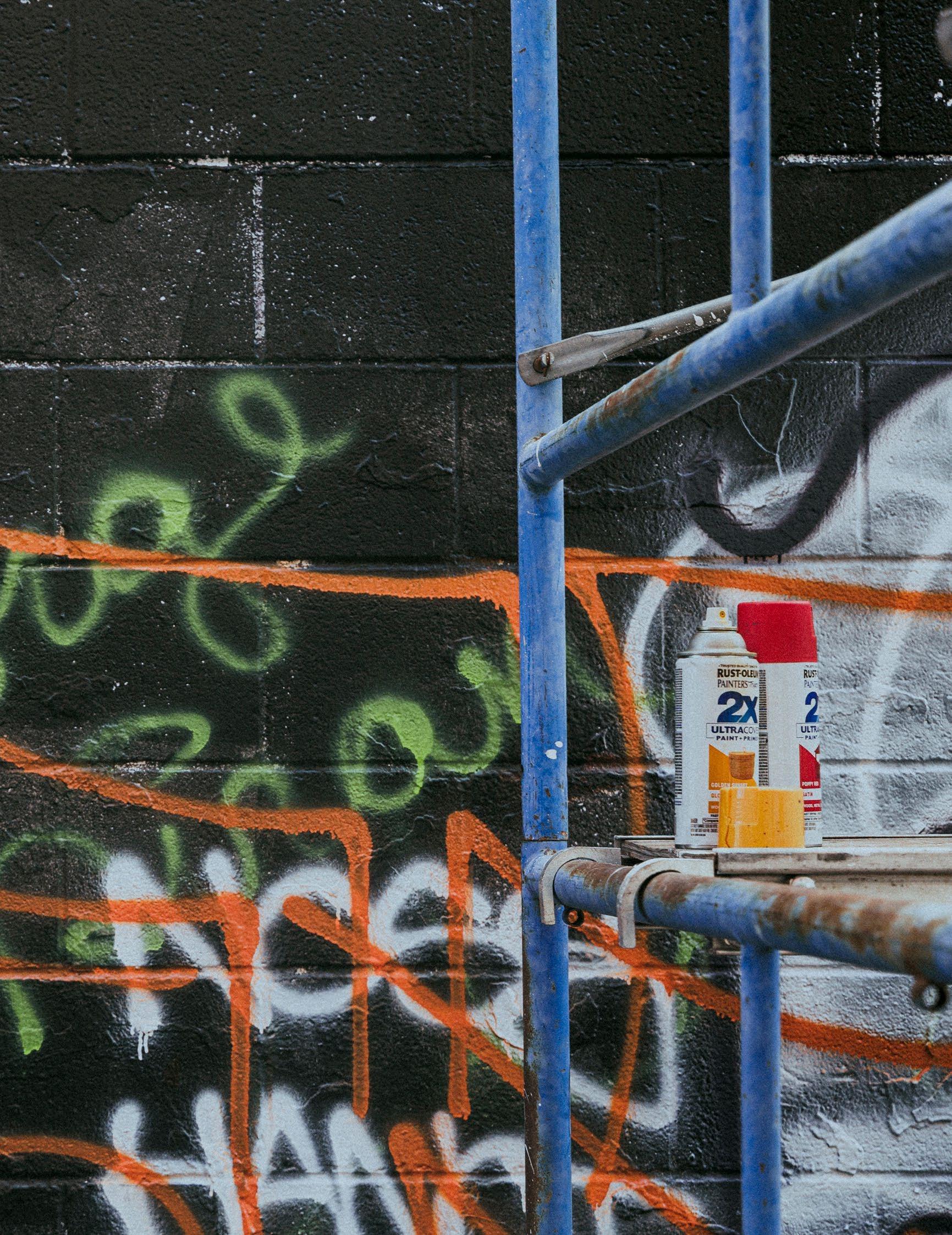
A staple for artists, locals and tourists alike, Art Alley has been in Rapid City, South Dakota since the early 2000s. Art, in any of its forms, is a way for individuals and groups to express themselves and convey what words can’t. Graffiti, in particular, is a way for artists to express themselves in a very public manner, with the understanding that the target audience is anyone and everyone who happens to walk by.
Beginning in the late 20th century, graffiti emerged as an art form distinct from any other. It is intertwined with countercultural movements, something that’s hard to come by in Rapid City. Because of its public nature, graffiti is often used as a form of protest. It’s a chance for an artist to share their heart with anyone who sees their work.
Artists can express their views on current issues, social topics or anything they’re passionate about through their artwork. Or they can simply paint something because it’s pretty. Or weird. Or wonderful. Or all of those things and more.
“Well, I think artists in general tend to be more emotionally focused, like they’re empaths,” said Tyler Read, lifelong artist, rebel and – along with his late friend Todd Rigione – co-founder of Art Alley. “A lot of times they’re people who look beyond the day-to-day routines, and… try and really find the essence of life.”
Art Alley is public art by community members, for community members. But it didn’t start out that way.
It started when Todd Rigione, a local artist, got an apartment above the alley. Rigione would sit on the steps in the alley and play his guitar, often accompanied by Judy, his wife. Rigione wasn’t the only artist in this pairing because Judy was the one who started it all; she put up the very first painting in what is now Art Alley.
“These posts used to have big metal plates on them, and she’d come down here with acrylic paints and paint little pictures on those and as the story goes, one day, the police came through and said, ‘Hey, ladies, what are you doing?’” Read said. “And she came up with a quick answer and said, ‘Oh, there was some gang graffiti here, so we’re just covering up.”
Read, a Seattle native but long-time resident of Rapid City, was there before Art Alley grew into what it is today. In its infancy, the space didn’t have any standards or rules – not that artists, especially graffiti artists, are particularly keen on rules anyway – but this was something new.
People didn’t know how to feel about it or what to do with the space. Read has seen the alley undergo countless changes and contributed his personal blood, sweat, tears and countless cans of paint into the project.
“I’ve painted here at every hour of the day and night,” Read said. “There were times it was a little bit sketchy, but overall, I felt really at peace here…through this space, I created an arts career. It was amazing what this place did for me. I got to travel the world and meet all of my idols in this culture because of this place. So yeah, it’s very special to me.”
The appeal of Art Alley, that bright, magnetic quality, is evident to many who walk through it. It’s eye-catching and fun for people of all ages and backgrounds.
“If you’re just looking for something to do... I think it’s a nice place for families to come down and take pictures, make memories,” said Gabe Quick Bear, another local artist. “For me, I know a whole lot can come from this, a whole lot more than people even know. I’ve been here for a while. I’ve seen firsthand the happiness it brings people.”
The beauty of street art is how public it can be. It can be
one guy, alone at the rail yard, or it can be a collaborative project that becomes the centerpiece of the neighborhood – something that those who walk by can’t help but notice. And when an artist has a captive audience like that, it’s best not to squander it.
“All my life, everything I put out into the world, I need it to blow everyone away,” Quick Bear said. “Every little inch of the surface needs to either be symbolic or it needs to resonate with my audience, whoever that is. Every single final product, every little thing you’re going to look at will mean something.”
This care and dedication to the artwork itself is evident in the overarching art project that is Art Alley. The people of Rapid City, especially the ones outside of the majority demographics, such as liberal-leaning graffiti enthusiasts, can be a stubborn bunch. The alley isn’t exclusive, it’s art for all. But some other people, decidedly not artists, very much wanted it to be exclusionary, if not eradicated entirely.
After the alley began to garner attention around town, those in positions of power began to grasp for control. Business owners and residents bordering the alley took issue with the art. Sometimes it was specific, sometimes all art was unwelcome.
“This guy here really hated Art Alley… he said, ‘If you want to paint on my wall, you come ask, show me a drawing and then I’m probably gonna say no, but I know what real art is,’” Read said.
The art community in Rapid City is proportional to the size of the city: small. It was always going to be an uphill battle. A common thread all graffiti and street artists face is the pushback or flat-out rejection from mainstream culture. This had long been a point of contention in the years leading into 2016, a big year in Art Alley’s history because this was when the permit system was implemented. Before the permit system, artists put up the art where they wanted to and how they wanted to, regardless of any consequences.
“That’s when this guy started going to city council saying, ‘it’s dangerous,’” Read said. “‘They need more lighting. The city needs to take control of it.’ So I started a counter campaign, ‘Save Art Alley,’ and that gained a lot of traction. Just posting pictures and sharing stories, the good things... I kind of helped facilitate programming in the alley.”
City officials, business owners with spots along the alley and other influential locals banded together in an effort to eradicate the living art piece. But the likes of Rigione and Read were far from willing to let that happen. They were told over and over again – it’s unsightly and people want it gone.
“But then it came up again, and multiple business owners came together to try and put a splash on it,” Read said. “At that point the [Rapid City] Arts Council met and
we said, ‘How can we preserve this thing that we have? The community loves it. Tourists love it. What can we do to keep it?’ They said it needs a permit system, or it goes away.”
Art Alley is far from perfect. It’s an alley. It’s a little smelly. It’s a little dirty. It’s a little ratty. But those aspects fade away quickly when juxtaposed with the vibrant colors and beautiful stories that hundreds of artists have contributed to Art Alley over the past 20 years.
“This is what I’m tasked with: I can either just wash my hands of it and let it go away and lose the opportunities that I had in this space for my children, or we can put in the permit system and use the resources that the community can rally together to build it up and uplift it,” Read said.
When presented with the choice between regulated art or no art at all, the answer becomes obvious. Even though it’s not as simple as showing up and painting to your heart’s content, there’s only one relatively painless procedure to follow before an artist can satisfy their creative cravings. An artist would obtain a permit from the Rapid City Arts Council, operating out of the Dahl Fine Arts Center, just a few blocks from the alley, tell them what they plan to do and be on their way.
“[Getting a permit] takes like five minutes,” Quick Bear said. “You tell them your name, phone number, where you want to paint, what you want to paint and how long it’ll take. [The Rapid City Arts Council is] more than happy to have people come down here and express themselves. It’s great for drawing people in during tourism [season].”
Aside from bringing joy to the masses, Art Alley can also bring peace, healing and purpose to the artists who work there. The street art community in Rapid City knows this and takes steps to uplift those in difficult situations by giving them a creative outlet, which, for some, can be life-saving medicine.
Read has taken a step back from street art in recent years. He’s still very much an artist, but is currently employed with the Rapid City Police Department as a community interventionist, working to serve and contribute to the betterment of the local area.
That passion for engagement is one he has always possessed, and it surfaced many times throughout his artistic career. The Rapid City Arts Council, where Read used to work, has a community outreach program, where young artists from disadvantaged backgrounds get to create and display their work in the Art Alley.
“So how that worked was, as the lead art instructor, I would go into [the juvenile services center] and work with kids over a period of time to develop the concept of the mural,” Read said. “They would create the mural and the visuals, and then it would be sent to the Dahl, and they work with the juvenile diversion program kids out here to paint the murals or paint them on [a] canvas.”
Art, in its myriad of forms, including street art, is utilized as a form of escapism, a physical place to put negative emotions and create something beautiful as a by-product. Because graffiti is intertwined with street culture, many artists are inspired by street-level issues, like poverty and racial inequality, and often have firsthand experiences with such hardships. Making art about one’s personal experiences is commonplace across disciplines, but the nature of graffiti – happening on the streets, with legal permission, questionable at best – shapes the kinds of stories often being told.
“Through our JUMP program, that was made by students in the juvenile diversion program, those pieces were very thoughtful, by those students who weren’t having a good time in their lives right now,” said Maggie Lepa-Wince, Marketing Director of the Rapid City Arts Council. “And so I think pieces of art are reflective of the time and the moment and the struggles of our culture.”
The future is never certain, especially in an ever-changing place like Art Alley, but if history is any indication, Art Alley is set to continue dazzling people for years to come. All the people it impacts, tourists, locals and artists all have their own lives to live and pictures to paint, but Art Alley will continue to color them. Regardless of whether that part takes up one summer afternoon or a whole lifetime, the art and experience will be with them always.
Story & Photography
By Julia Wilson
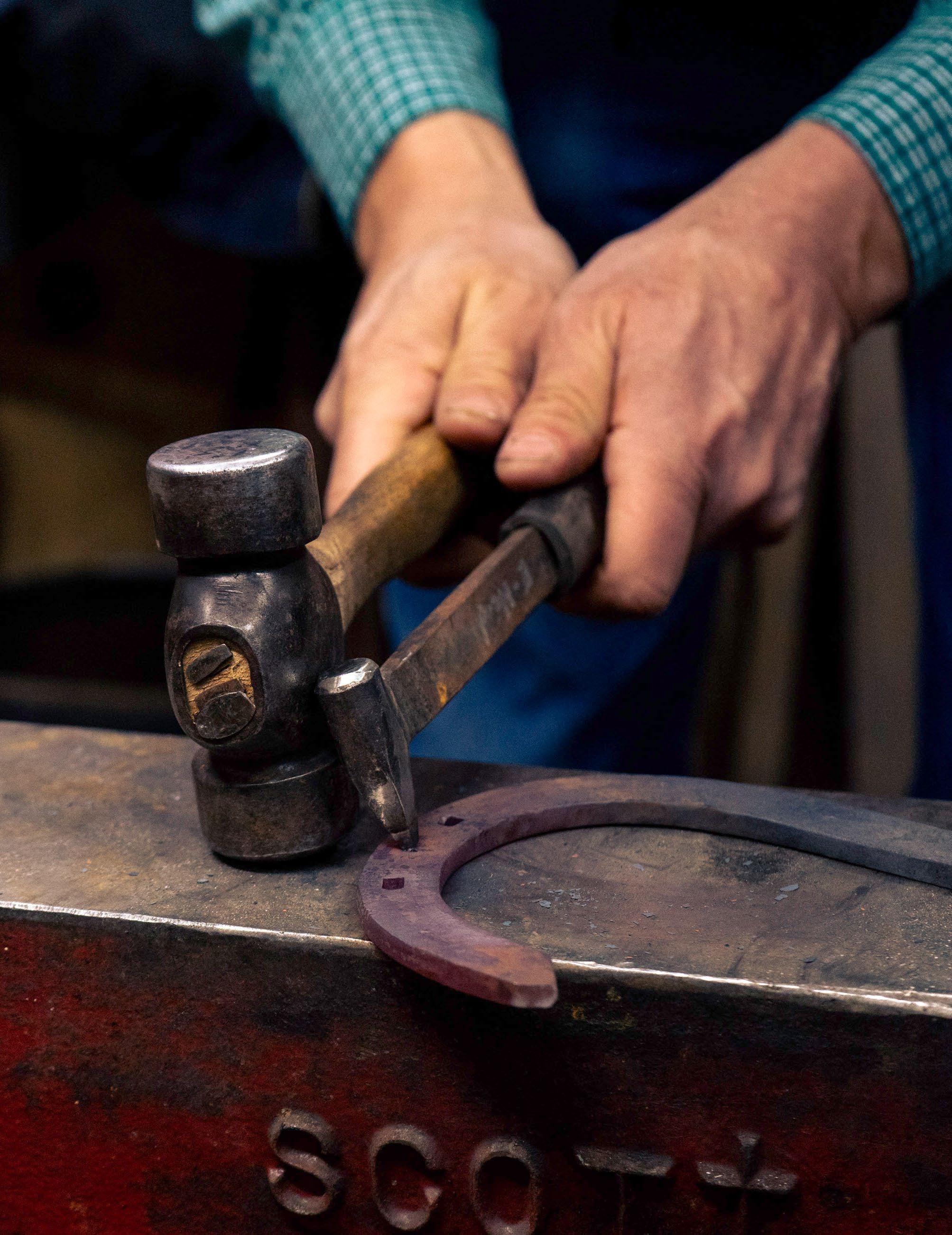
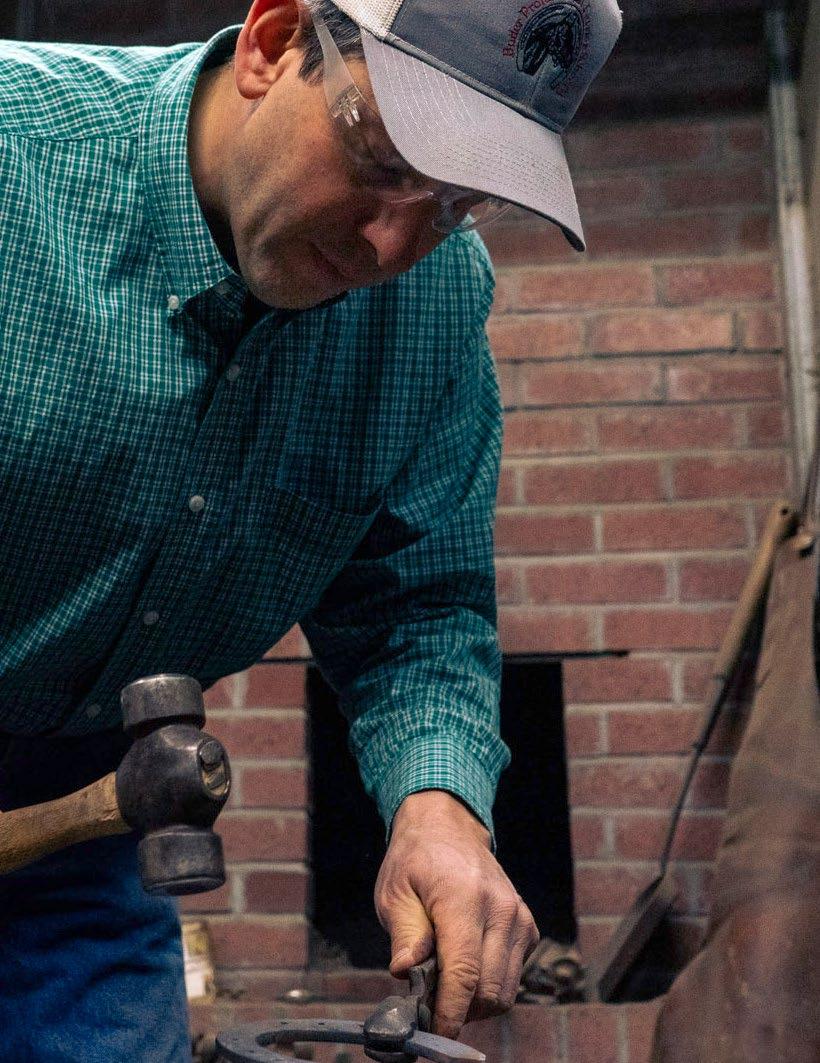
A dirt road snakes its way through the rolling hills of Nebraska, passing by pastures of cattle and small ranch houses. Nestled in the middle of the hills is Butler Professional Farrier School. People travel from all over the world to learn the practice of farriery from Dr. Doug Butler and his two sons, Jacob and Peter. The Butlers created the school to share their knowledge of farriery with anyone who wants to learn. Many might mistake farriery for simply the creation and fitting of horseshoes, but that is not the case.
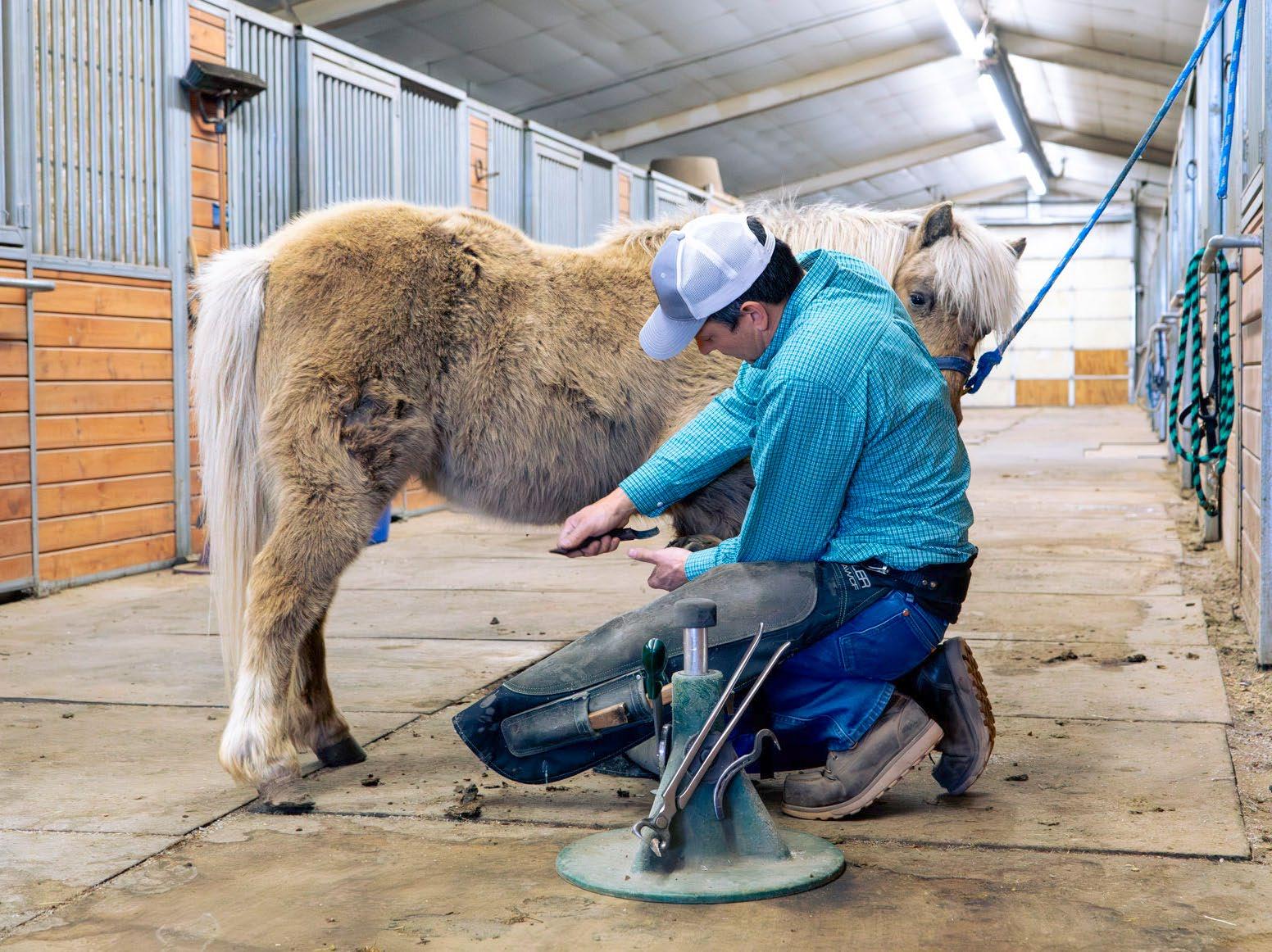
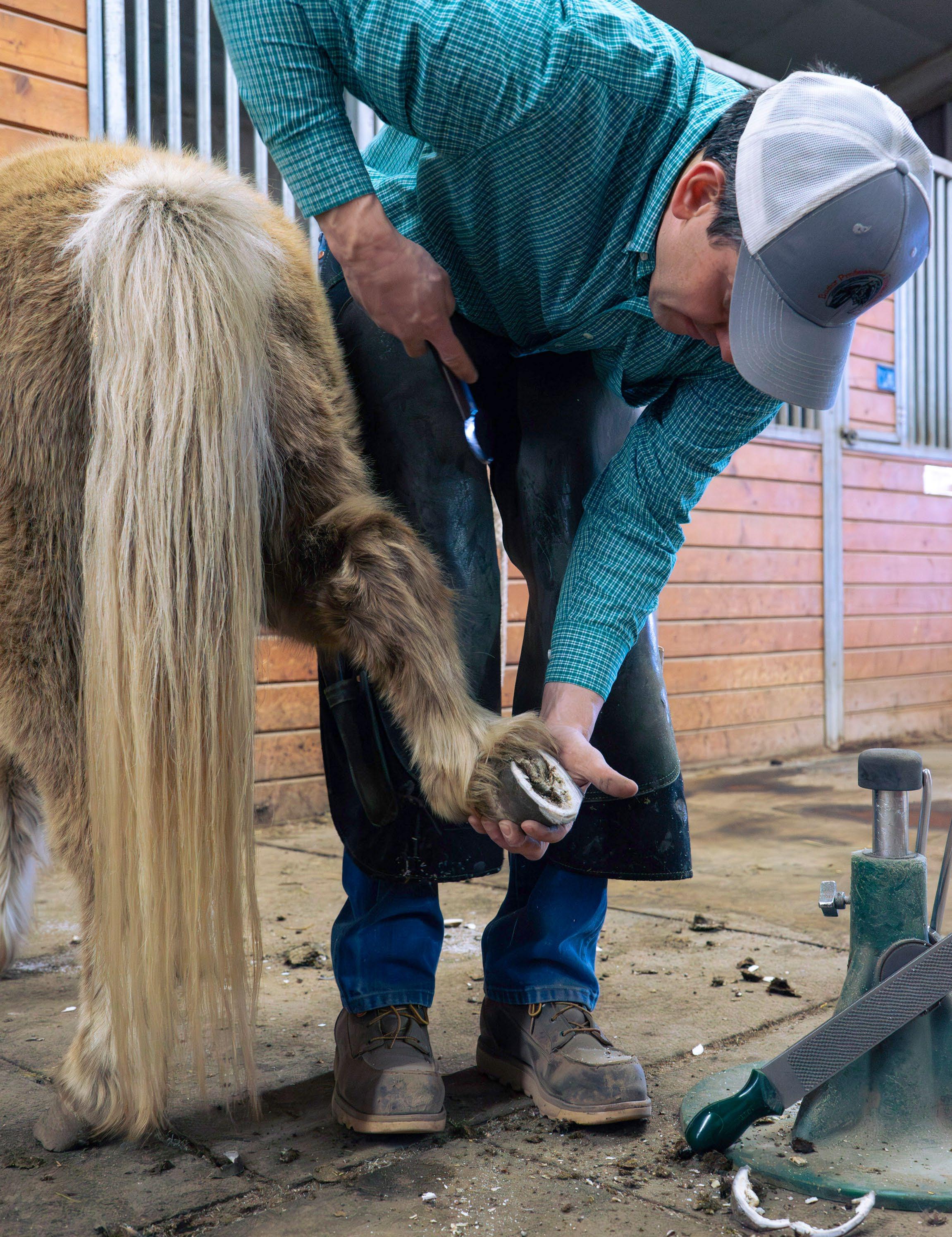
“What farriers do is maintain the horses’ hooves,” Jacob said. “They need to be trimmed, especially in the case when a horse does not wear them down at the same rate they grow them. Then sometimes we have to put horseshoes on for protection, traction, support or therapeutic correction.”
Farriery is a practice that dates back thousands of years. Farriery was a more customary practice for farmers whose horses were an integral part of day-to-day operations. However, as technology advanced, equipment such as tractors and mechanical plows became more common, and the demand for skilled farriers declined.
As Doug started his career, the number of people in the industry was dropping, because of this there was not a lot of information about farriery. This inspired Doug to take matters into his own hands.
After becoming a professional farrier in 1963, Doug became an educator on the road – traveling across the nation and even outside the United States to teach at various workshops. Doug taught at many different colleges and universities before finally partnering with his sons in 2006 to create a school of their own in Crawford, Nebraska.
“I was teaching [farriering] in a community college down in New Mexico for four years,” Jacob said. “Then we decided we wanted to do something together, so we started looking for a piece of property – a place where we could have a school, and we settled on here.”
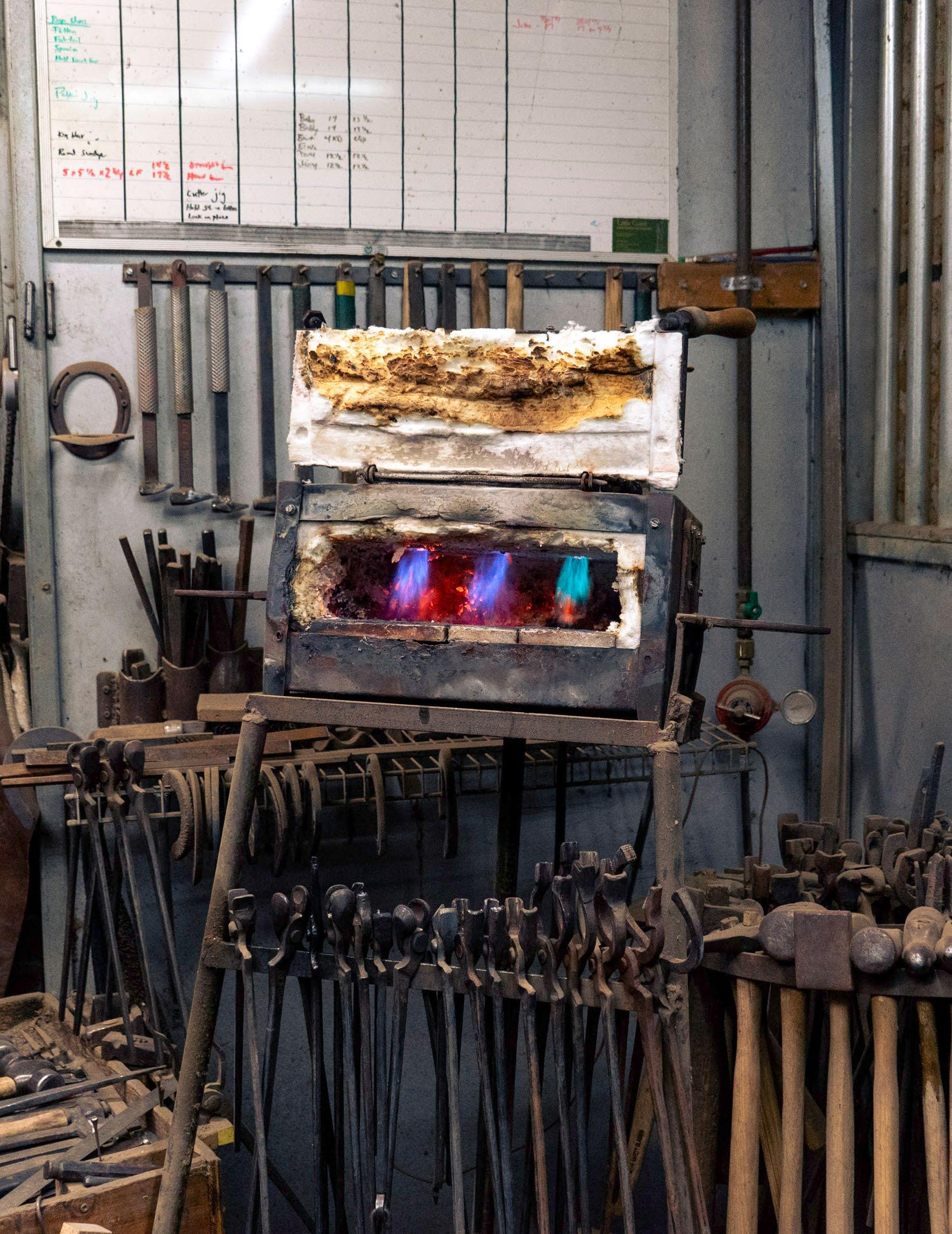
In Dawes County, Nebraska, a building that was once used to train cutting horses is now a classroom for future farriers. Within
this industry, the space required to work with horses and learn blacksmithing can be difficult to find. Finding an area with a community that will support and directly contribute to the learning process is invaluable. The surrounding farmers and ranchers welcome students to come practice their craft on their personal horses.
“It was good for the community and good for the students being able to have a place where they would be allowed to work on horses,” Jacob said. “A lot of the individuals here in the area are very supportive of that. I think that’s a real bonus.”
Hands-on learning is a crucial part of the curriculum starting on day one. One of the best ways to learn and grow as a farrier is to see and work with many different horses. The surrounding community allows students to work on their horses, helping them grow in their studies more efficiently.
“We go to a couple different vet clinics, [like] the Alliance Animal Clinic. They are very supportive,” Jacob said. “Then if we have a problem or if a horse needs to be sedated, they are able to do that for us.”
These types of learning situations not only help the students grow their skills, but can also lead to moments of realization that they are on the right path – much like former student Mari Mayo.
“It was our first big vet clinic day, and we got a ton of horses,” Mayo said. “We were all dripping with sweat. It was so hot. We’re just dying. We were all very new to it, but at the end of the day, I walked up to Jacob and said it was the best day in the office I have ever had.”
Farriery is not a relatively easy career. It can be a dangerous profession, working under an animal that can weigh anywhere from 900 to 1200 pounds.
“You have to be just a little bit crazy in order to work with hot steel and sometimes wild horses,” said Garrett Parke, a former student at the Butler Professional Farrier School.
This trade can be grueling and requires meticulous detailoriented work as well as the strength to handle the horses. For many, this challenging component is what drew them into the
line of work in the first place.
“I like the aspect of working with my hands, my dad always jokes that it’s all those things your mom tells you not to do – like playing with fire, sharp tools and horses,” Jacob said. “But I like all those things in regard to being around the animals and tools. I like learning a trade. It takes time, and sometimes that can be deceptive, but you are always working on trying to improve.”
Many people who find themselves interested in becoming a farrier have previous experience with horses, often growing up around them from a young age. Coming into class already comfortable around horses can make the transition into the work much easier. Working with any animal can be unpredictable, but working with an animal that is much larger and stronger than humans can quickly lead to injuries to both the people and the animal without proper training. Being aware of a horse’s demeanour keeps everyone involved safe.
“I’ve had horses my entire life. My grandpa got me into it before I could even walk. I’ve always loved it,” Mayo said. “In high school, I had people tell me there was no money in horses. I decided to get my degree and work in agriculture in a variety of ways – mostly commodity and marketing. It never really suited me. I wanted to be outside, and I wanted to be around horses.”
Not every student who joins Butler’s school has experience with horses, though. Some students come in with little to no experience.
“I was originally a teacher. I taught math when I was in Boise, but I wanted to do something different,” Parke said. “There was a
gentleman who lived down the road from me in Idaho who taught blacksmithing courses. So, I just did it as a hobby, just something fun to do. He was a farrier for a long time and suggested it to me.”
Though Mayo and Parke’s reasons for getting into farriery are different, the reason they both chose Butler Farrier School is the same: its reputation for being one of the best.
Together, Doug, Jacob and Peter have written multiple books about the trade of farriery. A couple of these books, such as “The Essential Principles of Horseshoeing,” are used in classrooms across the country.
Once Parke started to consider becoming a farrier, he was quickly recommended to the Butlers.
“I’ve heard the name – anyone in the industry knows the Butlers,” Parke said. “Dr. Butler is just one of a kind when it comes to farriery in the United States.”
Mayo and Parke found success within the program. Both now run their own farriery business. Mayo in Piedmont, South Dakota, and Parke in Omaha, Nebraska. Students come from all around the world to learn from the Butlers.
“My dad [Doug] has been doing this for a long time. He has a great reputation, and as a result of that, people choose to go through our schooling,” Jacob said.
Within the farriery industry, there are different certifications one can earn through the American Farrier Association. Everyone who wants to earn a certificate must go through the association. There are different levels of certification, the first being Certified Journeyman Farrier (CJF). The highest is the Fellow of the Worship Company of
Farriers (FWCF). Each level requires a different task that must be performed with specific stipulations to receive that certification. To receive the CJF, the participant must make four horseshoes and shoe a horse in two hours. Then they must also complete a written test.
“My dad was the first in the United States to go to England and take the test for Fellow of the Worshipful Company of Farriers,” Jacob said. “They started in 1356, most of them are over in the United Kingdom.”
To prepare for these different certifications, farriers compete in horseshoeing competitions to practice their craft in high-pressure situations. This will better prepare them when the time comes for them to take the certification test. They also help build up the farriery community.
“Competitions really help you learn and grow when you have other people looking at your work,” Parke said. “Farriery can be an isolating profession. If you’re just working by yourself, you don’t really see [many others]. Farriers are kind of rare. So, being able to have other people look at your work is super valuable.”
The Butler Farrier School was started on a strong foundation set by Dr. Butler himself. His reputation may be the thing to turn heads towards the school, but the teaching methods and high expectations set by Dr. Butler, Jacob and Peter lead students to become successful. Anyone can thrive with the right community around them, and Butler Professional Farrier School has that support. The farriering industry has been on the rise, and through schools like the Butlers’, this steady climb is sure to continue.
Story by Reyna Shirley-Brown
Photography by Sierra Hopp
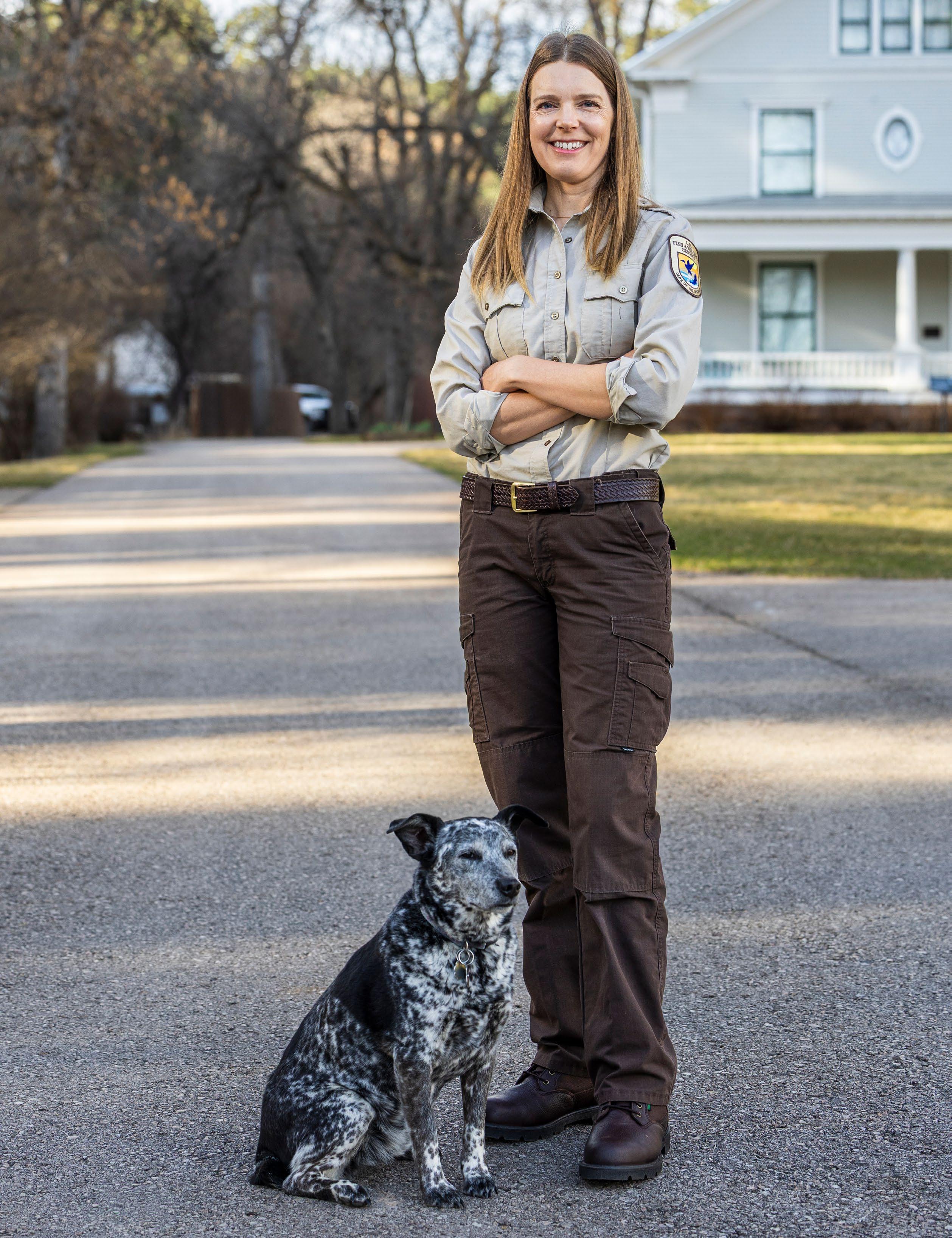
“I believe in the mission of the agency, the mission of the National Fish Hatchery system. And I believe in this facility,” said April Gregory, the curator for the Fisheries & Aquatic Conservation Archive. “I see how much joy it brings people of all ages and all backgrounds.”
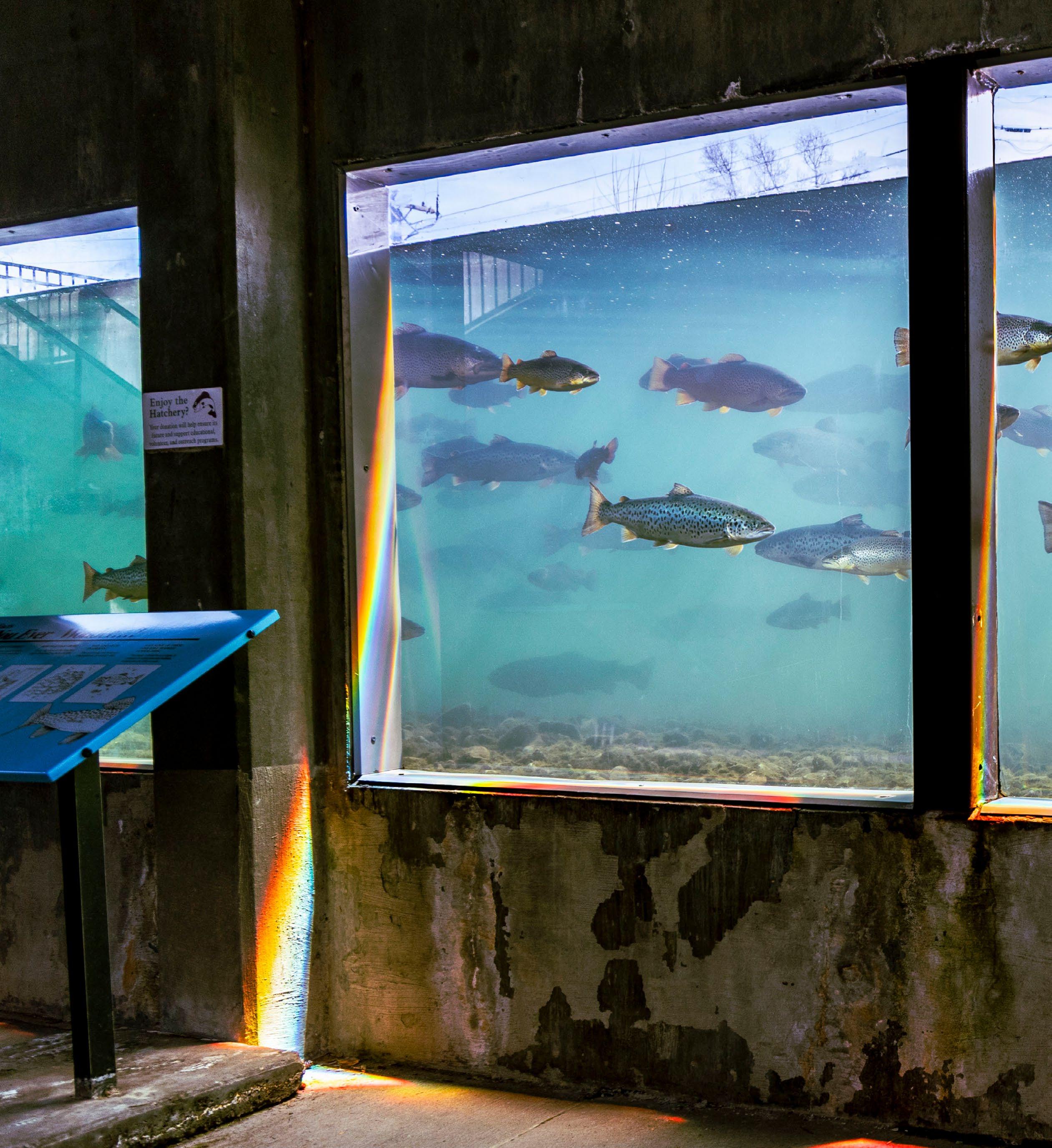
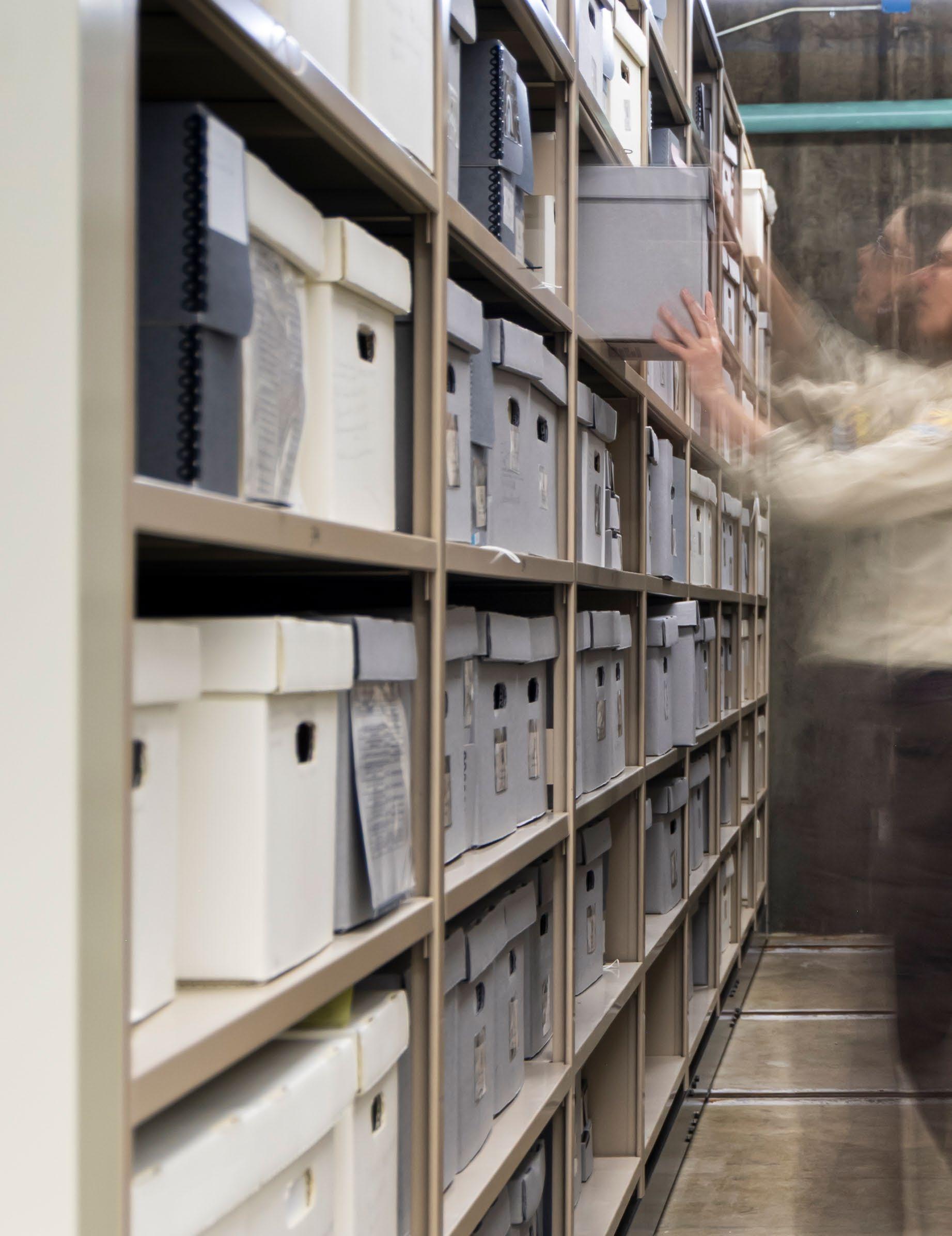
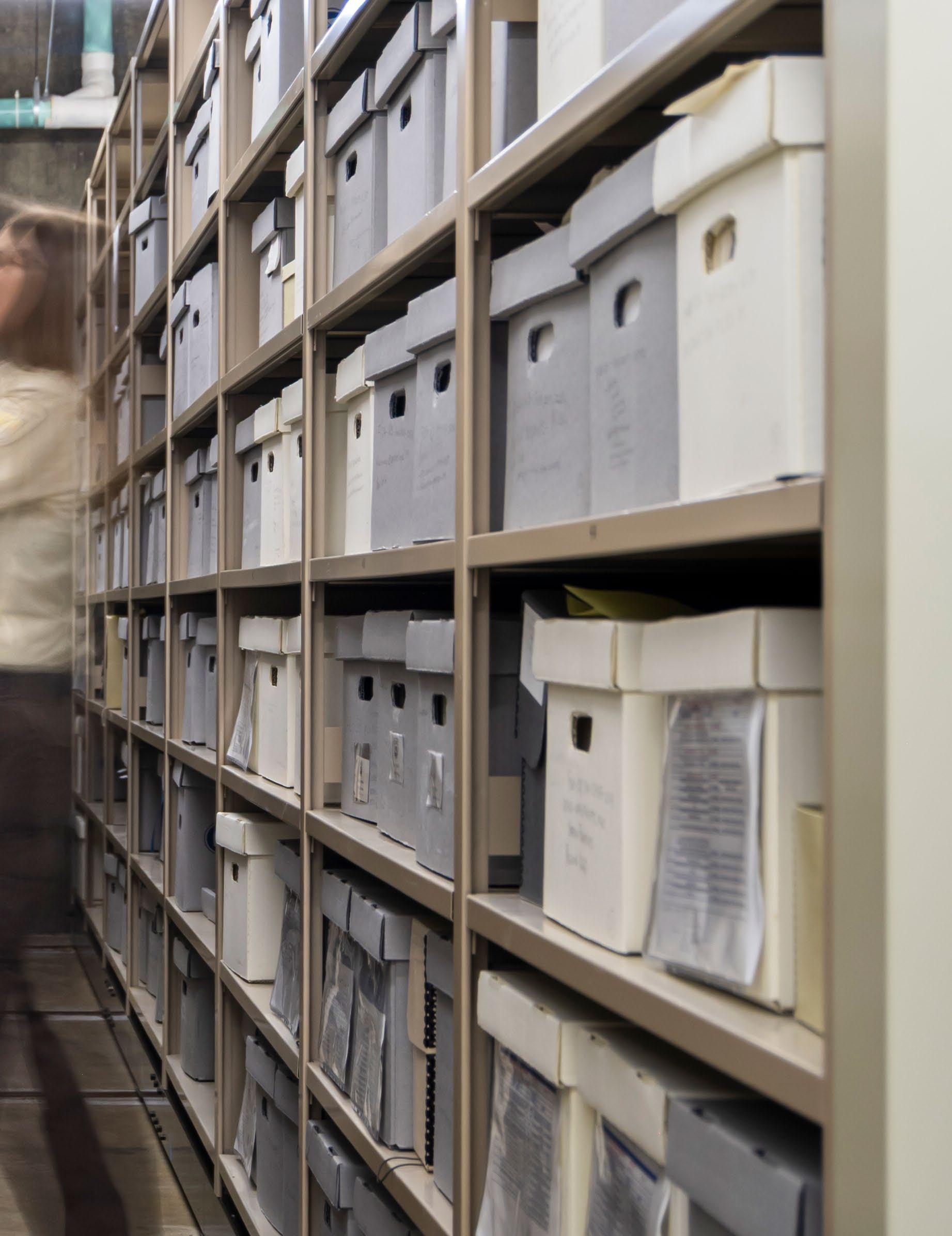
For 130 years, at the end of Canyon Street, the D.C. Booth Historic National Fish Hatchery and Archives has made it its mission to promote, preserve and enhance conservation. Collaborating with the community, while integrating education, has made the fish hatchery a staple in Spearfish, South Dakota.
“With 190,000 visitors and 14,000 volunteer hours, so many people love and care about this place, and if we didn’t, there’s a problem,” said Carlos Martinez, Director of the D.C Booth Historic National Fish Hatchery and National Fish and Aquatic Conservation Archives. “Yeah, we really need to do what we can to accommodate the American Public.”
A destination that attracts thousands of visitors every summer and locals throughout all seasons, this place has been doing much more than raising young fish.
Martinez has been working for the last 17 years in Spearfish. He is a fisheries biologist, working within eight states called the Mountain Prairie Region.
“I feel incredibly lucky to have the career that I do, and to work at a facility like the D.C. Booth,” Martinez said. “It’s a phenomenal facility,” Martinez said. “We have a very meaningful mission; it’s hard not to have pride in who we are and what we do.”
Martinez grew up in Leadville, Colorado, where he spent his summers at the local fish hatchery doing volunteer work. When he arrived at the University of Wyoming, he quickly realized engineering was not for him.
“Truthfully, when I started college, I went into engineering, and over time, I just started realizing. I grew up fishing, camping and hunting– spending time outdoors… [I] just had an epiphany,” Martinez said. “It kind of surprised me that it didn’t dawn on me earlier that I should be doing something in the natural resource world because of my upbringing and my passions.”
Since 1896, nestled in Ames Canyon, the D.C. Booth has been doing much more than displaying fish. There is a lesser-known history of the importance of the hatchery.
“The National Fish Hatchery System, which we are a part of, started in 1872,” said Gregory. “Our nation’s first fish hatchery was in California for salmon. The agency and Congress quickly realized that there was a very large economic impact with hatcheries, so they continued building them.”
As an expert in her field, Gregory grew up on a cattle ranch in Montana and has always been highly active outdoors.
“I ended up studying photojournalism and art history with an emphasis on museum studies,” Gregory said. “I stumbled across a listing for this collection, and I have always admired the work of the US Fish and Wildlife Service – so I was very intrigued by the collection and moved here and have been fortunate to work in the collection ever since.”
The D.C. Booth sets itself apart as not only a fish hatchery, but as an ongoing archival site. There is an ongoing collection of artifacts from
across the United States being curated in the town of Spearfish.
“We are producing and stocking fish, but we are also preserving our cultural resources,” Martinez said. “And then we have the archive, which is constantly growing and used for research, so we have many multi-faceted programs.”
The D.C. Booth Historic National Fish Hatchery is public land, but differs heavily from the typical national forest or park. The small, immersive setting allows them to connect with the public in a way that is memorable and inviting.
“Our agency has over six hundred national wildlife refuges and approximately seventy national fish hatcheries, so we’re oftentimes not thought about or realized that we are part of the public lands,” Martinez said.
The hatchery struggles, commonly amongst other federally owned institutions, with funding and staffing shortages. This affects not only the jobs that are happening there, but the upkeep and care of the hatchery.
“That’s just the nature of being a federal facility,” Martinez said. “We get our funding from Congress, and sometimes that means our priorities are changing,” Martinez said. “Just being creative, being able to continue to operate with those funding and staging shortages.”
While receiving donations from The Booth Society– a nonprofit that helps support the hatchery– different hurdles arise over the years, down to the littlest things.
“There’s just not enough time in the day,” Gregory said. “There’s a lot going on at this facility, everything from snow removal to updating policy and everything imaginable in between. Everybody helps with everything, regardless of our job titles and our skill sets.”
The D.C. Booth uniquely requires visitation, as it is a historical site, yet still runs as a modern-day fish hatchery. Both Martinez and Gregory take pride in this and the special work they do on the grounds.
“I’m fortunate to work within the agency, in cultural resources, as a curator because it’s a really rare position,” Gregory said. “I’m very thankful to be in the position because it’s something I’m really passionate about.”
Come May, the D.C. Booth Historic National Fish Hatchery and Archives are set to open a new exhibit that features artifacts from different eras throughout hatchery history. This extension to the hatchery grounds adds yet another reason for visitation.
“In the 1970’s, this facility started collecting fisheries artifacts from around the nation,” Gregory said. “A lot of people don’t realize that this is not only an active fish hatchery that does a lot of outreach, but it houses the fisheries collection for the US Fish and Wildlife Service.”
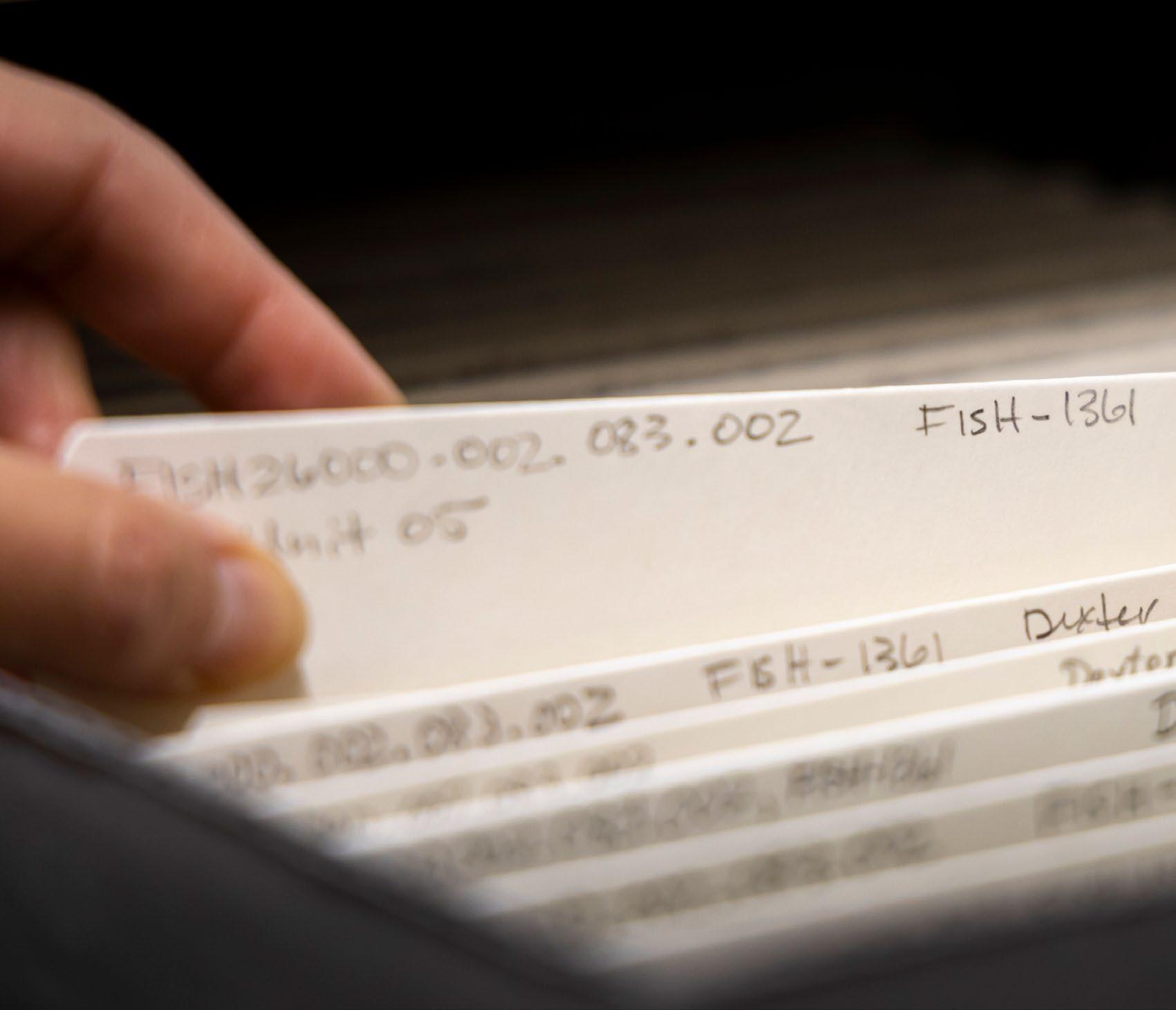
The archive collection holds artifacts from all 50 states from the last 150 years, ranging from antique equipment to artifacts highlighting technological advancements. It is constantly growing, as Gregory is curating from around 70 national fish hatcheries nationwide. Her passion is evident, as this project has been in the works continuously since 2019.
“They are always cleaning out attics and closets and sending me things that they find of historical value,” Gregory said. “That’s pretty special that this is all here in the town of Spearfish.”
The National Fish Hatchery Museum is on track to open in May of 2026, in time for the summer tourism and warm weather.
“It’s a full exhibit, redesigned, everything from the flooring to the lighting,” Gregory said. “All brand-new exhibits, new graphics, photographs,” Gregory said. “We took over two hundred thirty items off of display and are rotating in new objects that have never been on display. It’s exciting.”
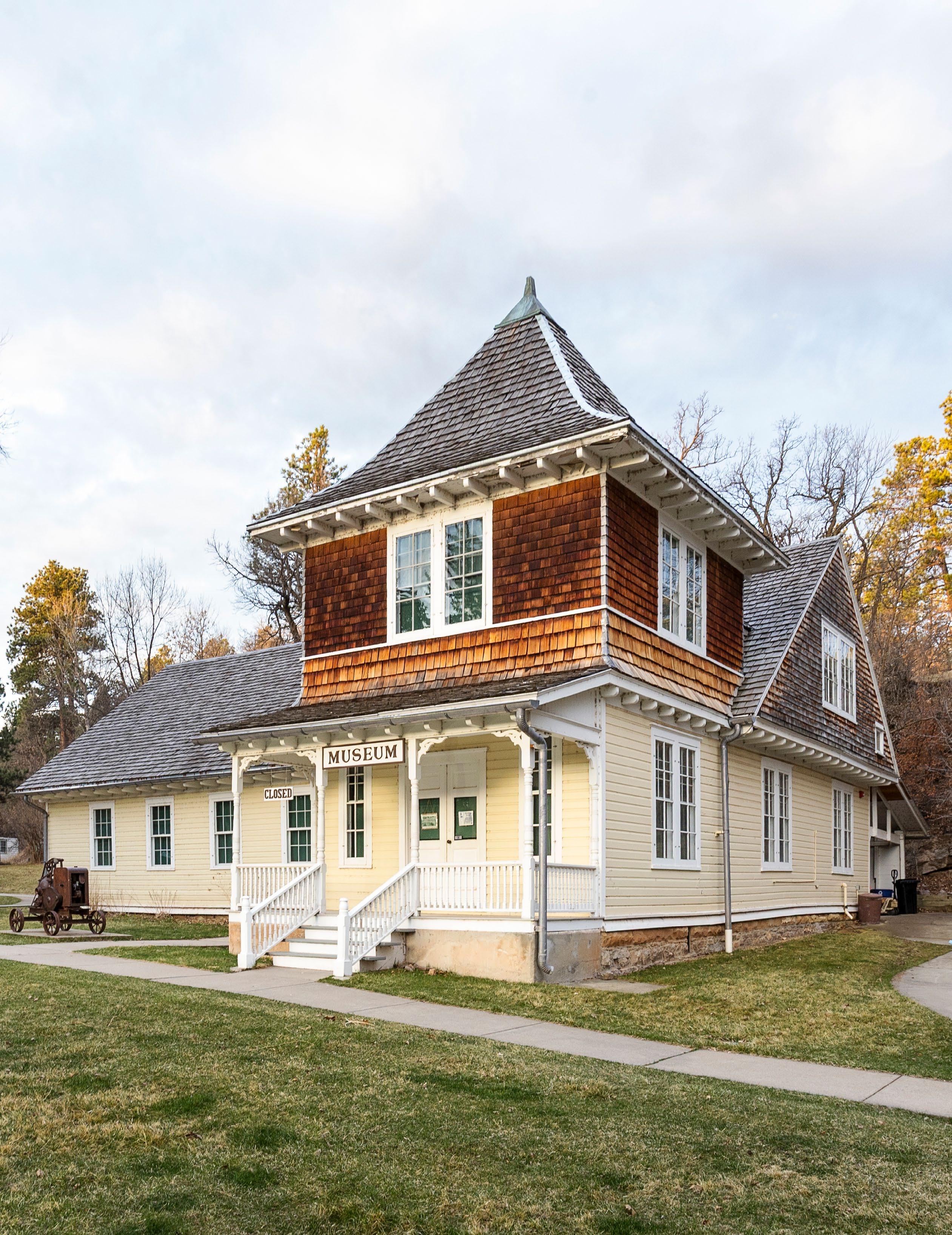
Set to take place in the original 1899 hatchery building on the grounds, the museum will include multiple rooms of information and displays, visitor interaction features and a multitude of artifacts from the archive collection.
“Saving our history and learning from our history is something I believe in, and there’s an incredible amount of information held here in the collection,” Gregory said.
For the community, the museum will be free to visit, offering information about the D.C. Booth Historical National Fish Hatchery and the hatchery system altogether, including archived items from across the nation. The museum will be a walk-through experience of various aspects of general hatchery information, as well as the specific history of the D.C. Booth.
“The part that I’m especially excited about is that one space, one exhibit, will be changed out every year,” Gregory said. “There will be an area that is different for our locals.”
This space will help show what does not fit in the museum or highlight different voices of the community to bring in involvement.
“I suspect visitation levels will go up as well,” Martinez said. “It will be something that I think people will want to come and see.”
As the opening date approaches, the public will have the opportunity to step into history during their visit to the D.C. Booth Historical National Fish Hatchery and Archives.
“I see people enjoying their time at the fish hatchery, whether they fish or not,” Gregory said. “I think that’s really unique, that a fish hatchery can offer different experiences to so many people of different backgrounds. That is so important.”
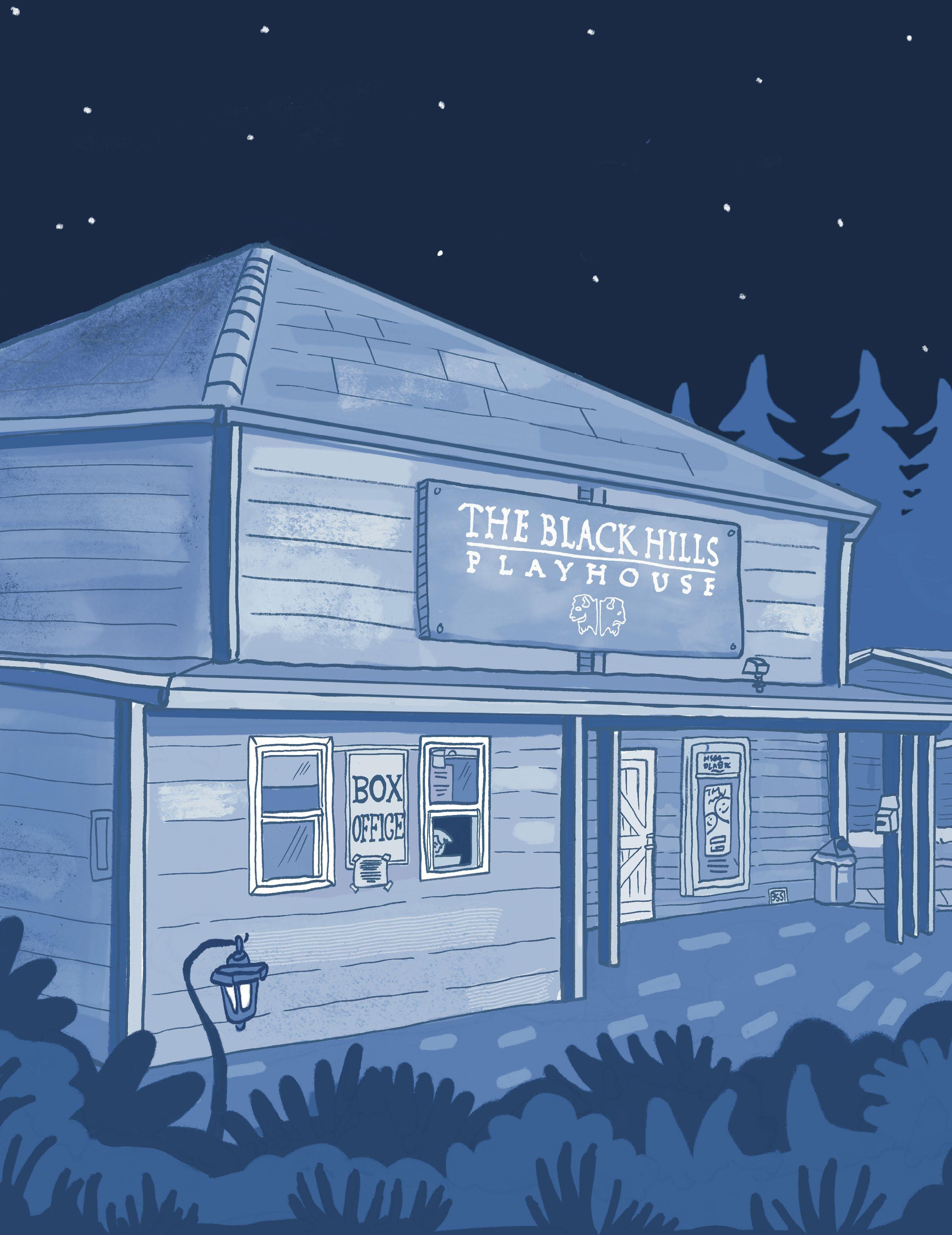
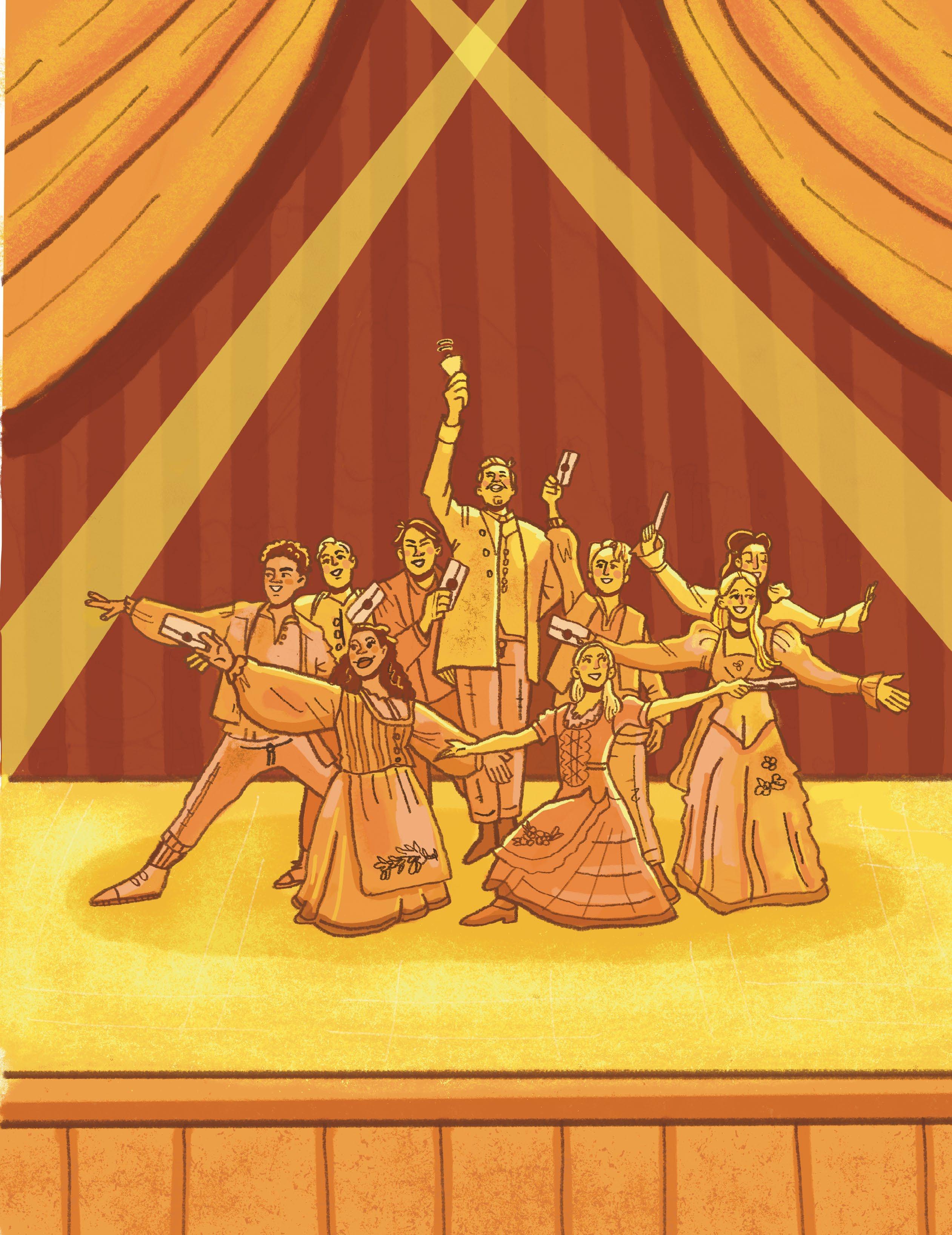
Hiding in a tiny mountain range in the center of the nation lives a little theater that could: The Black Hills Playhouse. Opened in 1946, the Black Hills Playhouse has told stories and changed lives ever since.
As part of a statewide mission to bring the joy of theater to people of all ages, abilities and backgrounds, Theatre 605, the playhouse’s parent company, has programs in education, professional theater, touring productions and more. The crown jewel of Theatre 605 is, of course, the Black Hills Playhouse. Here, professional actors, directors, choreographers, technicians, costume stitchers, propmasters and more come from across the nation to be a part of something truly spectacular.
The Playhouse is located in Custer State Park, one of the largest state parks in the U.S. Thousands of people come through every year to experience the wonderful atmosphere the area has to offer. It’s far removed from any major metropolitan areas, and not extremely near any minor ones either. There simply aren’t that many people around, and that contributes to the theater’s peculiar blend of backwoods charm and performance-based appeals.
Sequestered away as it is, the Black Hills Playhouse is in a unique position that allows its patrons, but especially its company, to take full advantage of the location and let everything else fade away. The campus is littered with rustic accents, visible in the decades old facilities, the aged wooden beams and rickety old staircases that are a far cry from modern safety standards, but overflowing with charm and history.
The Playhouse is a summer stock theater company, meaning it only puts on productions when the days are at their longest and the sun shines its brightest. Summer stock is a particular brand of regional theater that has deep roots in rural America. Traditional summer stock theater reuses its costumes, sets and cast over a series of shows that, of course, happen in the summer. They used whatever they had in stock, and they did it in the summertime, hence the name.
Early summer stock theater performances happened in barns and community centers, without much pomp or circumstance. Some folks had the desire to make a show happen, so they made a show happen. Modern summer stock theater, however, can, and often does,
have excellent production quality and acting – especially if you happen to see a show in Custer.
There are countless options for aspiring actors to choose from when it comes to regional theater, but people keep returning to the Black Hills. Why? Two reasons: caliber and location.
“The quality of the work, it’s exceptionally good work… our audiences [keep coming back],” said Jeff Kingsbury, development director at Theatre 605, who has worked for the company since 2012. “They love what they’re seeing, and they’re really excited about the Playhouse.”
The Black Hills Playhouse is in a remote location, but that hasn’t deterred theater professionals thus far. Each spring, thousands of hopefuls audition, either in person or online, looking to secure a spot with this esteemed production company. The hopefuls may have heard good things about Theatre 605 and wanted to be a part of their flagship branch. For some, the location is an incentive.
“There are other summer stocks in other beautiful places, none quite as beautiful as the Black Hills,” said Jason Reuter, an actor who has worked at the Black Hills Playhouse for decades. “There’s a fire road that leads up from the dormitories to a place that we call Cellphone Ridge because you get really crystal clear service there. It’s also on top of the reservoir for the campus and for center lake… you can see the whole valley, and it’s quiet and peaceful.”
Top-notch theater usually calls to mind urban areas like New York City or Chicago, locations quite dissimilar to the serene nature that surrounds the Black Hills Playhouse. But this specific combination is part of what makes the Playhouse so special.
The Black Hills Playhouse campus consists of the theater itself, the epicenter and the surrounding facilities that allow people to visit, work and live there, including dormitories, a dining hall, a costume and props shop and a snack bar.
This small alcove in the forest becomes the theater company’s entire world for months at a time. Actors and anyone who works with the theater must forgo some of the luxuries of the modern world and embrace the rules of this one.
“We took a road trip out here to the hills, I was with two alums who were like, ‘We have to go out and show you the Playhouse,” Reuter said. “So we went out and walked around the campus when it was empty and nobody was there. Next summer, I came out, and I’ve been coming back ever since… To be able to be that deep in nature without humanity around is a rare thing anywhere these days, but to be able to do theater in the middle of that is incredible.”
A place like this is only really possible if it has a lengthy history to give it its character and charm. In 1946, Dr. Warren M. Lee, almost always colloquially referred to as “Doc Lee,” decided students from the University of South Dakota, where he taught, as well as theater-curious locals, should have access to quality performing arts, and he had to be the one to make it happen. He had to be a writer, director and actor as well as a repairman, accountant and project manager. After a tumultuous first few years, the playhouse began to find its rhythm, inviting theater students as well as professionals from across the state, the Midwest and eventually the whole nation to audition and be a part of the Black Hills Playhouse’s ever-growing cast of colorful characters.
Live productions are a complex craft, but as magical as they may seem on stage, it isn’t magic that makes everything come together so neatly. Rather, it’s the hard work of countless individuals who put in enormous amounts of time and effort to ensure the highest production quality is possible.
“A lot of people think that, you know, the summer’s over, we must have a big break,” Kingsbury said. “We do not have breaks… we just go and go and go all the time… I take a vacation the day after we close for two weeks, and go home and visit my mom, and then I come back and I hit the ground running. I’m right at it.”
Beginning as early as two years before curtain call, the creative team at Theatre 605 gets to work.
Those early days start with the basics: coming up with an overarching concept that ties together the numerous threads of varying shapes, sizes and colors present across all things Theatre 605. This season’s theme is celebrating the nation’s semiquincentennial, with all productions relating to major moments throughout American history. There are many different themes utilized throughout the years, and they’re usually broad enough that productions at all levels can adhere to the theme, at least a little bit.
“So, and each year, we look, ‘Well, what’s going on? What could our theme for the season [be]?’ and we were certainly thinking about the semisesquicentennial, for a while,” Kingsbury said. “First of all, we had to look up what that was, right...? And we have to kind of fudge things into that, but we do try to stick with our theme across all of our programs.”
Much like themes, there’s a revolving door of actors, students and professionals at the playhouse each summer, but they all fit under one overarching category: care for theater and the Black Hills Playhouse. Throughout the different seasons and across the long history of the Black Hills Playhouse, the backstage family has remained consistent. Not because it’s the same people every year, it mostly isn’t, but the collective people, the theater company, always forms into something just brilliant enough to put on wonderful shows every year.
This summer, 19 states are represented in the company for the historic 80th season at the Black Hills Playhouse. There are usually about 65 participants the company per season, a number of which are college students, mostly attending the University of South Dakota. Seasonal gigs like the Black Hills Playhouse are often a vital stepping stone in a young theater professional’s career. They get the opportunity to focus on nothing except the craft for the whole time they’re in the hills.
“The guest artists that we have in, that direct and choreograph and do design work, especially for the college kids, these are great opportunities to work with working professionals,” Kingsbury said. “But even for the seasoned professionals who come back, they’re making new networking opportunities in the business. You’ve heard it said, ‘It’s not what you know, it’s who you know’ and that is one hundred percent true.”
Not only is working at the playhouse ripe with opportunity for anyone involved, but it can also be incredibly joyous. Why work, then play when you could work and play at the same time? The joy of theater is something that very well could be lost as the space grows more reputable. The pay is very competitive and the company is very well regarded among summer stock theaters, especially in the Midwest. But for Kingsbury
and Reuter, that cheer is far from absent.
“[To] have this little pocket of liberal weirdos in the middle of red South Dakota is so much fun and they come from everywhere,” Reuter said. “To get all of those people together with these different viewpoints, these different experiences, and you’re all coming together with one goal, and it’s to do the best show you can. It’s just fantastic… it’s so much goddamn fun.”
All different people from various locations all unite for one reason: to put on a show. It’s what the audience wants, and it’s what creatives want to give them. It is a transactional relationship; money exchanges hands, but it’s also mutually beneficial. It feeds the souls of everyone involved. It’s a healing and jovial occasion for everyone, from audience members to actors, techies to administration and everyone in between. The creatives get to do what they love, hone their craft and have fun while doing it. The viewer gets to forget the troubles of the outside world for a short time and step into a fabricated, fanciful one instead.
“I love getting on that stage,” Reuter said. “Like last year for [‘Murder on the Orient Express,’] I’m getting goosebumps talking about it…at the end of the show, after I just delivered four pages of monologue, [at] that moment when the curtain opened, just after they’ve been on this roller coaster, and they thought the show was over, and to know that we were all in that moment together, and I was the one who got to let them down and send them home”
The Black Hills Playhouse has been telling stories and changing lives for 80 years, and they have no plans to stop anytime soon. Theatre 605 is about bringing theater to South Dakota, and at the Playhouse it’s about bringing the highest production quality for miles around to its audiences.
This little place, in the middle of nowhere, has managed to create its own legacy of excellence. It has managed to stand the tests of time and distance, continues to capture the attention of audiences and professionals alike and most impressively, keep recreating that magic every summer. The Black Hills Playhouse stand the tests of time and distance, continues to capture the attention of audiences and professionals alike and most impressively, keep recreating that magic every summer.
Rokuzaemon Matsumura and Takeko, his wife, immigrated from Japan to the United States in the early 20th century after he, like thousands of other Japanese men, was recruited to continue railroad expansion across the Western United States.
Matsumura worked as a railroader in Wyoming for around 30 years before finally retiring, ready to begin a new chapter for his family. He invested the couple’s retirement savings into a small storefront in East Hollywood, California, and named it The Wyoming Market.
For a short time, the Matsumura family flourished – serving, primarily, the Japanese American and African American communities of East Hollywood with the hospitality and friendliness of rural Wyomingites.
But on Dec. 6, 1941, “a day that will live in infamy,” naval forces of the Empire of Japan attacked Pearl Harbor. With thousands dead and a nation in shock, Japanese Americans like the Matsumura family found themselves subject to a fresh wave of propaganda –transforming them into spies, traitors and dangers to the republic.
On Feb. 19, 1942, President Franklin D. Roosevelt signed Executive Order 9066, which authorized U.S. military commanders to “prescribe military areas in such places and of such extent… from which any or all persons may be excluded.”
“There was a point soon after Pearl Harbor was bombed, where the U.S. government was actually encouraging Japanese Americans to relocate themselves – kind of like the narratives we’ve been hearing for the last couple of decades about self-deportation if you’re from Latin America,” said Dr. Aura Sunada Newlin, the executive director of the Heart Mountain Wyoming Foundation
However, due to widespread lack of participation and outright refusal to comply with the recommendation to vacate their homes, the government quickly abandoned the idea.
Official military announcements spread across the West Coast like an infection. Those who refused to vacate the area of their own volition were now being forced to stay put until the government decided where they would place them. Of course, not everyone felt compelled to obey this new order.
“My grandmother herself was not actually incarcerated, but all of her siblings and her parents were,” Newlin said. “She left the West Coast after she was allowed to, but before she was forced to. She ended up coming through Wyoming to stay with relatives and see family on her way to North Dakota, where she was supposed to go to school.”
In 1942, over 10,000 Japanese Americans were forced out of their West Coast homes and placed in the Heart Mountain Japanese Internment Site, where many would spend four years of their lives – imprisoned there solely based on their Japanese ancestry.
“I believe I had seven family members [who were incarcerated] – my great-grandparents and their kids,” Newlin said.
For escapees like Susan Sunada, née Matsumura and those who did not reside on the West Coast, the war years were not much easier. Jobs were difficult to find, and wartime hysteria and racism spread to nearly every corner of the U.S.
“When [my grandmother] showed up at school to enroll in college, they looked at her face and said they weren’t accepting new students,” Newlin said.
In under half a year, over 120,000 people of Japanese ancestry, about two-thirds of whom were U.S. citizens, were stripped of their constitutional rights, relieved of many of their possessions and removed from their homes. Many of the remaining Japanese Americans who did not live on the West Coast – approximately 7,000 – found themselves fired without reason or removed from their schools.
However, many of these removal orders were executed before the government actually had a place to send the newly incarcerated population – many of the camps across the nation were still under construction, and the ones that were complete were incapable of holding that many people.
“Before the camps were done, the Japanese were put into small facilities, like where they had small county fairs, or where they had small horse tracks,” said Johnny Tim Yellowtail, the historic site caretaker and a tour guide at the Heart Mountain WWII Interpretive Center. “A lot of the Japanese Americans were living in horse stalls before the camps were done. They had to remove all the manure first [before] they could move in.”
By November 1942, nearly every person of Japanese ancestry from the West Coast was shipped off to one of ten internment camps scattered throughout the more inland areas of the country.
“Ironically, my family was sent back to Wyoming to be incarcerated here at Heart Mountain,” Newlin said. “They had lost their freedom. They had everything taken away from them – all of their property, everything they built their lives for.”
Conditions at the Heart Mountain concentration camp – or relocation site, as the government defined them at the time – were far from ideal. Construction was rushed and poorly planned, leading to shoddy workmanship.
“The first group that arrived here in Heart Mountain was on August 12 of 1942,” Yellowtail said. “Within a week, somebody [had] already passed away. There were one hundred and eightytwo deaths here. The Japanese Americans were not ready for that winter when they arrived here… a lot of them did not have winter clothes.”
Many of the incarcerees noted the winter of 1942-1943 as one of the coldest winters they’d ever endured, according to Yellowtail.
With ill-prepared wardrobes, inadequate shelter and bodies accustomed to the balmy conditions of the West Coast, the Japanese American incarcerees were forced into a battle for survival against the desolate, unforgiving Wyoming climate.
The government essentially hired anyone who could swing a hammer to aid in the scramble to create a small city within the span of a few months. Speed, not quality, was of utmost importance.
“They built the barracks really fast,” Yellowtail said. “The people who were building the barracks even started having competitions. They wanted to know who could build the fastest barrack. The fastest barrack that was built was in fifty-eight minutes.”
In just two and a half months, the camp was complete. 468 barracks, a 150-bed hospital, schools, workshops, warehouses and over 10,000 incarcerees – the Heart Mountain camp had just become the third largest city in Wyoming at the time.
The blueprints for these barracks were simple. Each structure was 120 feet long and 20 feet wide. There was no insulation, and little to no effort went into preparing these buildings for the dry, windy Wyoming conditions.
Crews used what materials they could get their hands on as the government pushed for large shipments of timber from wherever they could. A lot of which was green timber that had been freshly cut and not yet cured – leading to openings in the walls, roofs and floors that only grew larger as the wood dried out.
“When the first storms came, the snow came through the cracks and gaps between the wood through the windows and floors,”
Yellowtail said. “There were a lot of knotholes [in the floorboards], so the Japanese had to cut tin and cover them. They said so much snow came into the barracks, they had to shovel snow out all the time.”
In addition to the inescapable elements, day-to-day life in the barracks was cramped and uncomfortable. Up to six family units lived in a single barrack – one room for each unit. Thin walls separated the families, but privacy was essentially nonexistent.
“Japanese teenagers said that it was awful being in here,” Yellowtail said. “They always had to change in front of their parents; they had to build little privacy rooms out of their sheets or blankets. Also, the walls were thin, and there was no ceiling, so the sound traveled through the top. You pretty much heard everything your neighbor did.”
Sickness and disease were also large issues within the barracks. Overcrowded washrooms made it difficult to maintain proper hygiene, and the close quarters made the spread of illnesses a near guarantee. Many incarcerees also experienced respiratory issues from the dry landscape and frequent wind and dust storms during the warmer months.
Despite the hardships and emotions incarcerees faced, many of the Japanese Americans felt they needed to prove to their government and their country that they truly belonged in the U.S.
"Resentments that came up were about how the United States was treating them,” Newlin said. “But the response to that, for most of them, was to double down on their Americanism instead of defecting and becoming more allied with Japan. They expressed
their anger through resistance, protest and asserting their American constitutional rights."
In a seemingly collaborative effort, the U.S. government and the Japanese American incarcerees both worked to remove as much ancestral culture as possible. Assimilation was key. If a Japanese American could walk like a white American, talk like a white American and act like a white American, then they could be trusted and accepted like a white American.
“Most Japanese Americans felt the need to really wear their American identity on their sleeves,” said Carter Reed, J.D., the community projects specialist at Heart Mountain. “A large part of the community that ended up in camps like these went out of their way to emphasize American norms.”
The majority of the incarcerated Japanese Americans were natural-born U.S. citizens, or “Nisei,” many of whom had never even been to Japan. Inside the camp, the incarcerated worked hard to show just how American they were.
In 1943, a group of teenagers in the camp formed the Heart Mountain Eagles, an 11-man football team comprised entirely of Japanese American high school students.
The squad quickly became a point of pride for the Heart Mountain incarcerees – an evident symbol of their equality to the predominantly white locals – as they emerged as a dominant force on the gridiron, defeating teams across the Bighorn Basin, despite battling scheduling issues, hostile crowds and typically being outweighed by 20-40 pounds per player on average.
Through two seasons, the Eagles lost only one game. However, in 1944, members of the Eagles, along with many other families inside the camp, were faced with one of the most important decisions they would have to make during their time incarcerated at Heart Mountain.
As if a final test of their American patriotism after nearly three years of persecution, the U.S. government reinstated the Selective Service Act for all Nisei, including those interned in the 10 camps, after suspending it in 1942.
"There were rifts between those who went to serve in the military and those who refused, both of which are patriotic and very American choices,” Newlin said. “It's very American to resist when you see something that is clearly not constitutional. It's also very American to show your patriotism by serving in the military.”
Over 800 men from the Heart Mountain camp served the U.S. in WWII. Joe Hayashi and James K. Okubo both received the Medal of Honor for their actions in the war. Hayashi and Okubo are also among the 15 Heart Mountain incarcerees who never returned from service.
The Heart Mountain camp is still remembered today for the incarcerees who chose to serve. But it is also remembered for those who chose to fight for their freedom on their home soil.
“One of the things that we are actually really proud of at Heart Mountain is [that this camp] had the largest and most organized movement of draft resisters,” Newlin said.
In 1943, a group of Heart Mountain incarcerees founded the Heart Mountain Fair Play Committee to protest the government's decision to begin drafting Nisei from the concentration camps. 85 resisters were convicted of Selective Service Act violations as they refused to show up for physicals or inductions – many of whom, like the Matsumura and Sunada families, were members of families who had lived in the U.S. for nearly half a century.
“My Japanese relatives immigrated straight from Japan to Wyoming in the early twentieth century,” Newlin said. “They were railroaders, coal miners, laundry workers and they were part of a relatively small community of Japanese immigrants who were in Wyoming at that time.”
George Sunada, Newlin’s grandfather, was a Wyoming native, born and raised in Green River. As a young man, Sunada entered the railroad industry and began building a life of his own. Wyoming was Sunada’s home – it was where he grew up, built a career, met his wife and where his children and grandchildren were born.
But, like so many others of Japanese ancestry in the area, Sunada’s livelihood was destroyed seemingly overnight. He was fired from the railroad company he had given most of his life to and shunned from the only community he knew simply because of where his father was born.
“Last week, you had all the Japanese employees on your railroad laid off,” wrote Sunada in a letter to the Union Pacific Railroad Company. “You laid them off one and all because he was a Japanese, or of Japanese ancestry. Not because of his conduct or actions. Is this true Americanism? It certainly is not – not to the way that I’ve
been brought up in our great country, where all the nationalities and races unite to make this country so great.”
For many who lost their career and purpose, the war recruitment provided an opportunity to reiterate their allegiance to a country that turned its back on them. Their volunteer enlistment also served as a reminder to their white neighbors of their contributions to the U.S. cause.
“[Sunada] ended up volunteering to serve in the military as soon as they allowed Japanese Americans to serve, so he spent the latter half of the war fighting for the United States in France and Italy.” Newlin said.
After some time in the Wyoming National Guard, Sunada enlisted in the 442nd Regimental Combat Team – a segregated combat unit for Nisei and the most decorated combat unit in U.S. military history.
But while Sunada was fighting overseas for a country that dehumanized him and stripped away his rights, his new in-laws remained interned at Heart Mountain –fighting for their humanity.
“The narrative that had been the predominant one for the past several decades was about how resilient the community was,” Newlin said. “They set up schools, had their cultural activities, set up dances and made friends. There were good times that were had here, but that’s only part of the story.”
Beneath the triumphant spin the government now puts on stories about the communal strength and resilience of the Japanese American people entrapped in the concentration camps lies a dark cultural struggle and a deep betrayal.
“When I see some of those examples of how fun camp was and how people made positive lives for themselves here, I see that as a survival mechanism – they had to do something,” Newlin said.
The damage wrought by the government on the Japanese American community and its culture is still evident today. And the mass betrayal of thousands of American citizens will forever exist.
“I think that for us, us as Japanese Americans, that level of assimilation – discarding Japanese language and discarding Japanese culture was accelerated by mass incarceration,” Newlin said. “We were literally put in prison for having anything to do with our cultural heritage.”
Many incarcerees simply didn’t have the time to fight for their culture. After nearly four years of incarceration, the world had moved on without them – they needed to worry about their futures as soon as they were allowed to rejoin society.
“Parents were really concerned about making sure their kids would have as normal a life as possible, so they did what they could,” Newlin said.
On Nov. 10, 1945, over a month after Japan’s official surrender to the U.S., the Heart Mountain incarcerees were officially free.
They were given $25 and a one-way train ticket. It was clear they were still unwelcome in the country they called home.
“[After the war] they were discouraged from staying here, and they were discouraged from going back to California, so the vast majority resettled further east after the war,” Newlin said. “My relatives went to Minneapolis, a lot of people went to Chicago [or] Cleveland. Eventually, a lot of families made their way back to the West Coast.”
The war hysteria and racism towards the Japanese American people were slow to fade – the nation would not soon forget events like the bombing of Pearl Harbor and the devastating loss of white American lives – not as soon as they forgot the bravery and sacrifice of the discriminated minorities who fought alongside them.
In response, many Japanese Americans only worked harder to prove their belonging.
“Their approach was to become as successful [as possible] to leave that dark [period] behind,” Newlin said. “The Japanese Americans’ response after their incarceration was to not talk about it. Japanese culture is very much oriented around shame, and this was a very shameful episode for a lot of families.”
The resilience and work ethic of the incarcerated Heart Mountain community produced many successful individuals – names like Alan Simpson, Bill Hosokawa, Norman Mineta, S. Neil Fujita and many more will forever be ingrained in U.S. history.
“The post-war success of [the] incarcerees in particular is a more complicated story than has been told by history books,” Newlin said. “I think as a community, just in the last ten years or so, we’ve gotten better at telling a more complete story, but the post-war success is best understood in terms of the myth of the model minority.”
In 1966, William Peterson, an American sociologist and demographer, wrote an article for the New York Times Magazine titled “Success Story, Japanese American Style.” The article covered the idea that, despite the constant adversity Japanese Americans faced since their initial arrival in the U.S., they remained resilient and focused on becoming as successful in the U.S. as they could be – a superior minority.
“By any criterion of good citizenship that we choose, the Japanese Americans are better than any other group in our society, including native-born whites,” Peterson wrote. “They have established this remarkable record, moreover, by their own almost totally unaided effort. Every attempt to hamper their progress resulted only in enhancing their determination to succeed.”
Although the article, in general, praises the Japanese American community for their statistical successes, the ideas expressed are actually responsible for a large cultural issue that the Heart Mountain museum has been fighting to correct.
“U.S. society held up Japanese Americans as an example of how minority populations should behave,” Newlin said. “What’s toxic about that is it compared Japanese Americans to other [minorities] in America instead of recognizing the value of ethnic diversity in our country and the beautiful things that different cultures bring to us.”
The rapid transition in status from public enemies to becoming the “model minority” – comparable to white Americans – only placed more pressure on the Japanese American population to pursue perfection.
“Part of what makes the myth of the model minority a myth is that we now have this stereotype of Japanese Americans all being very successful, but that glosses over the fact that a lot of people never recovered after camp,” Newlin said. “They had very difficult lives because they were sent back into a world where nobody wanted them.”
For many, four years of incarceration, coupled with heavy prejudice, made it nearly impossible to recover financially or socially. Prior to their incarceration, many Japanese Americans were left with no other choice but to sell their homes and property – for business owners and farmers, that meant selling their only source of income.
“People talk about the ten years after camp being the hardest,” Newlin said. “There was still a lot of racism, and people struggled to get jobs. People struggled with being targeted and not wanted, and a lot of folks never did recover from that."
Despite desperately needing it, many former incarcerees never asked for help. At the time, silence was the preferred
option – what happened to them during the war was to be ignored and forgotten.
“There was a whole generation of suppressed feelings and silence after what happened to these people,” Reed said. “People were ashamed by what had happened to them, even though they were innocent. There was a lot of this [generational] suppression of their culture so they can continue to fit in and be good American citizens, so something like that doesn't happen again."
The trauma the Japanese Americans faced for decades metastasized in silence, unchecked and ignored by a community keen on forgetting the past by focusing on the future.
“For Japanese Americans, we’re now starting to learn more about the dynamics of multi-generational trauma and the effects of our relatives bottling up their emotions,” Newlin said. “That’s part of what motivates me as a Japanese American who has experienced great privilege in life. I feel like it’s my responsibility to commit myself to working on cross-racial healing.”
Since becoming the executive director of the Heart Mountain Foundation in May of 2022, Newlin and her team have worked tirelessly to expand and improve the interpretive center to better tell the story of what happened there.
“What makes Heart Mountain different is the element of control,” Reed said. “It’s not the only one of the ten camps to become a museum, but, as far as I know, we’re the only camp that has a museum that’s run by a private foundation. The people that this happened to are controlling the narrative here at Heart Mountain, and that matters very much to us.”
All of the information within the center was decided upon and approved by the members of the Heart Mountain Wyoming Foundation board of directors, which is comprised of family members and descendants of former incarcerees, as well as scholars and other professionals.
The center also works with the Japanese Outreach Initiative (JOI) and hosts reunions, cultural workshops and other events to promote the importance of the culture and the importance of communication.
"We're bringing that [cultural education] back,” Reed said. “Not only are we telling these stories of American citizens who were trying to assert their American rights when they were violated, but we're also telling the story of American citizens who had to hide part of their ancestral culture and identity. And now, years later, they are reintroducing it to the community that they once lived in."
In that way, the Heart Mountain WWII Japanese American Internment Site stands not only as a historic reminder of past injustices carried out by the U.S. government against its own citizens, but also provokes comparisons to the present through the reexamination of historical facts that continue to haunt the country.
“I think the most important thing to remember is that this was part of a pattern in U.S. history,” Reed said. “We will probably always be dealing with governments that overstep their authority and abuse the rights of their citizens – there’s very little we can do about that, but we can ensure that we remember things like Heart Mountain and the Native American reservations and that we do a good job of challenging our officials to not make those mistakes.”
Our
Landmark Realty & Development Co.
Monument Health
Jason Alley / Jackalope
Riddle’s Jewelry
Steven Titus & Associates, P.C.
Dave & Wendy Westergaard
Brian & Alicia Butterfield
Mead Lumber
Summit Wealth Group
“Working
in a rural community provides deeper impact. You want to take care of your patients the best that you can because they’re your neighbors”
3 million acres of rangeland and pasture. Over 6,000 cattle operations. Stock shows, rodeos, county fairs. This is ag country. Build your legacy in the Black Hills.
To learn more about loving where you work, scan this QR code, visit monument.health/careers or call 605-755-JOBS.
Jennifer, RN Clinical Quality Coordinator Sturgis Hospital