
Host
a Hustings Cymru: Understanding the Senedd
#YouthHustings

Understanding the Senedd
Overview:
This lesson / workshop enables learners to understand what the Senedd is, the powers it holds, and how Members of the Senedd are elected.
Learning Objectives:
● Learners will understand what the Senedd is.
● Learners will understand the role and powers of the Senedd.
● Learners will understand how Members of the Senedd are elected.
Suitable for:
● Progression step 5 learns
● 16+ learners
Extension:
Resources:
● Slide Deck
● There are two activities that go into the voting system that the Senedd uses in more detail.
● There are various questions that can be used to extend the session, as well as links to external sites to research further.
Understanding the Senedd
Introduction - 10 minutes
● What do politicians do?
● Different levels of government
Plenary - 15 minutes
● What do you know about the Senedd
● Welsh Government and the Senedd
● Changes to the Senedd
● How you are represented in the Senedd?
● Constituencies
Activity - 5 minutes
● Quick think.
Plenary - 5 minutes
● How the Senedd Members are elected
● Different voting systems


Understanding the Senedd
Extension Activity - 10 minutes
● First Past The Post Vs Closed Proportional List
Extension Activity - 15 minutes
● How the Closed Proportional List system works
Plenary - 5 minutes
● Debate in the Siambr
● Case study: Wellbeing of Future Generations Act Activity - 5 to 10 minutes
● Discussion - What issues do you think the Senedd should be debating? Why?
UNDERSTANDING THE SENEDD

What
is the Senedd?
WHAT DO POLITICIANS DO?


In pairs, write down all the things that politicians are in charge of or responsible for.
What things do their decisions affect?



WHAT DO THEY DO?



DIFFERENT LEVELS OF GOVERNMENT
Local government Makes decisions on issues that impact the immediate area that you live in.
Welsh government and the Senedd Makes decisions for Wales, on issues where decision-making power has been shared by the UK Parliament.

UK government Makes decisions on issues that affect people across the UK.


Looking at your list of things that politicians do, which level of government do you think is responsible for what?
LEVELS OF GOVERNMENT - WHAT DO THEY DO?
Local government
● Refuse collection and recycling
● Libraries
● Social care and child services
● Parks and youth services.
Welsh government and the Senedd
● Education
● Health / NHS
● Environment
● Welsh culture and language
● Housing
● Transport.
Do any of these surprise you?
UK government
● Defence
● Foreign policy
● Immigration
● Police, courts, prisons.
LEVELS OF GOVERNMENT
Local government


Welsh government and Senedd
UK government
WHAT DO YOU KNOW ABOUT THE SENEDD?

Watch this short video about the
Senedd - what it is and its history.

WELSH GOVERNMENT AND THE SENEDD
What’s the difference between the Senedd and the Welsh Government?
Parliament: A national legislative body. The UK parliament is made up of the House of Commons and the House of Lords.

The Senedd is the Welsh Parliament, an elected group of representatives who make sure that decisions are made for the Welsh people, by the Welsh people.
In 1997 the Welsh people voted in a referendum and said YES to power being shared out from the UK Parliament to Wales. This sharing of power is called devolution.
Members of the Senedd can make laws, debate and discuss issues that affect our everyday lives, and keep a check on the Welsh Government.
Devolution: The sharing out of power from central government to regional or local governments.



WELSH GOVERNMENT AND THE SENEDD
The Welsh Government is formed from the political party or parties that have the most seats in the Senedd. It makes major decisions that affect the whole of Wales.
It is led by the First Minister who is helped by a team of other ministers who lead different areas, such as health or education.

Government: A decision making body which has power to make changes to laws and control public spending.
Labour are currently the largest party and so form the Government.
The First Minister is Eluned Morgan, Leader of the Welsh Labour Party.


CHANGES TO THE SENEDD
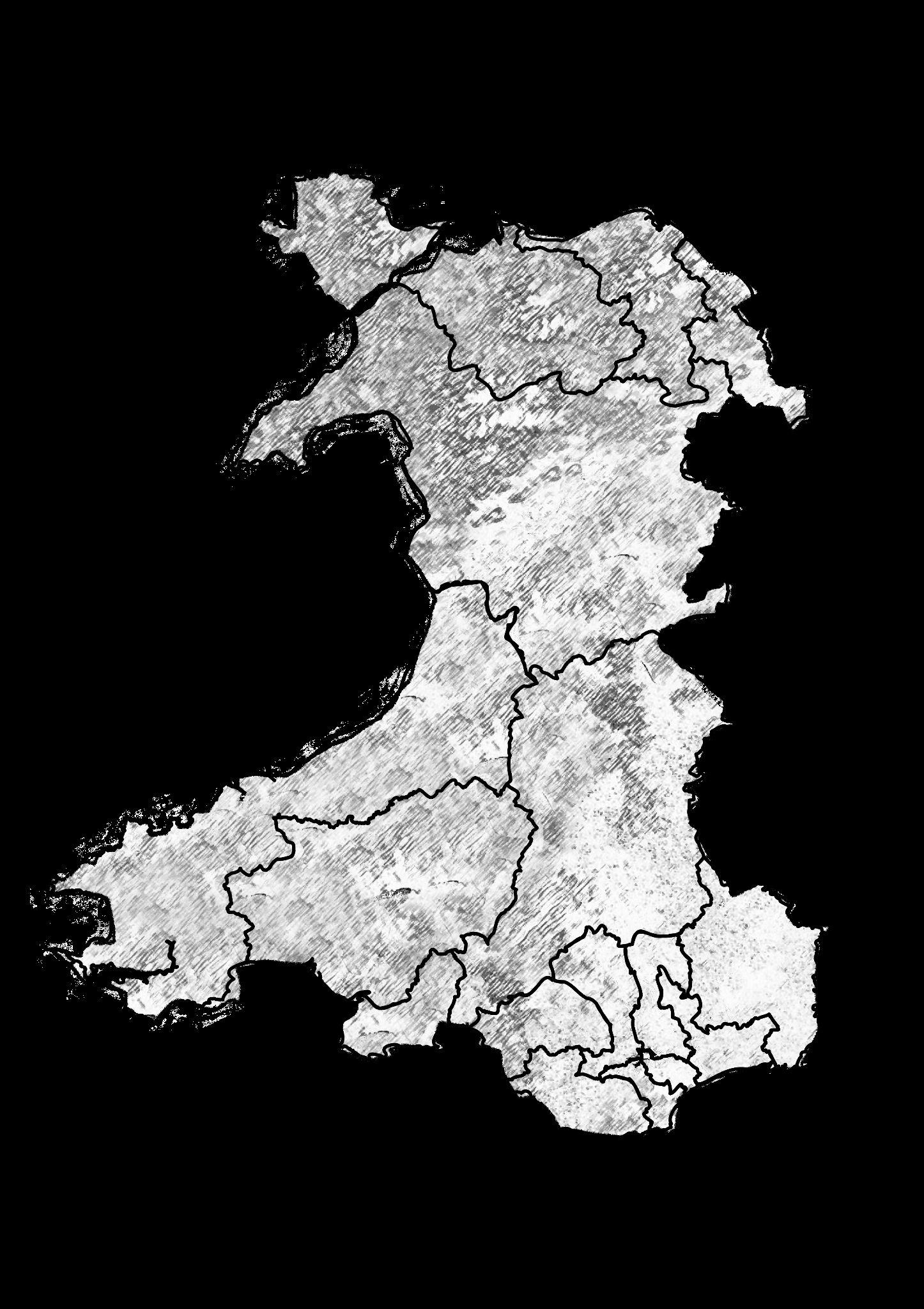
The Senedd is changing.
A new law, The Senedd Cymru (Members and Elections) Act 2024, increases the number of Senedd Members and changes the way they are elected.
Due to this law, the 2026 Senedd Election will use a new voting system to elect Senedd Members, called the ‘Closed Proportional List System’.
Also, from the 2026 Senedd Election onwards, the number of Senedd Members will also increase from 60 to 96.
goingToday,weare toexplainSeneddhowthenew systemandvoting willwork.



2026
96 members instead of 60

HOW ARE YOU REPRESENTED IN THE SENEDD?
When you vote in an election for the Senedd, you are electing a Member of the Senedd (MS).

Each Member of Senedd will represent a constituency - an area of Wales. Wales is divided into 16 constituencies.


Each constituency has 6 MSs - so everybody has 6 representatives in the Senedd.

Elections for the Senedd take place every 4 years.
Do you know who your Senedd Members are?
You can find out who represents you in the Senedd at senedd.wales
QUICK THINK
Fold a piece of paper in half and then half again. Write down four things you have learnt this lesson about levels of power.
HOW SENEDD MEMBERS ARE ELECTED
The way you vote in an election is called a ‘voting system’.
There are different voting systems used for different types of elections in Wales.
The voting system used for the Senedd Elections is called the ‘Closed Proportional List’ system.
Watch this video to find out more about this system.

DIFFERENT VOTING SYSTEMS
You may have noticed that the way we elect Members of the Senedd is different from how we elect MPs - Members of the UK Parliament.
MPs are elected using a voting system called ‘First Past the Post’ (FPTP). In this system, each constituency is represented by 1 MP only.
You also vote for a specific candidate, rather than a party (though most candidates are members of a party).
The winner is simply the candidate who receives the most votes.


EXTENSION: CLOSED PROPORTIONAL LIST VS FIRST PAST THE POST
Different voting systems have different advantages. Here are some pros and cons of the Closed Proportional List.
Pros Cons Usually leads to a broader range of political parties being represented and more of people’s views.
Encourages parties to find consensus on issues as parties usually don’t get enough votes to form a government by themselves - they have to form ‘coalitions’.
The number of MSs a party ends up better reflects the number of votes they received compared to First Past The Post.
For those used to other voting systems, it can be confusing.
Some argue that the system could give a platform to extremist views.
When parties have to work together those coalitions can be fragile, and can fall apart when disagreements arise.
EXTENSION: CLOSED PROPORTIONAL LIST VS FIRST PAST THE POST
Pros and cons of First Past the Post
Pros Cons It allows voters to choose between candidates, rather than just between parties.
Often leads to ‘strong’ governments, with just one party being in power - they can then put into action the policies they promised without compromising.
FPTP favours bigger parties - it means they are often over represented compared to smaller parties.
Can lead to candidates or parties winning with a relatively low share of the vote. For example, in the 2024 General Election the Labour Party won 63% of seats with 33.7% of the vote.
Seen as easier to understand compared to other systems. First Past the Post more likely to create ‘safe seats’ –where one party or candidate dominates and often win. This can lead to that party or candidate becoming complacent.
DISCUSSION EXTENSION

Which system do you prefer?

What do you think works best? Why?

Once you have finished your discussion, take a vote to see which system your group or class prefers.

UNDERSTANDING
EXTENSION: HOW CLOSED PROPORTIONAL LIST SYSTEM WORKS
To show you how the Closed Proportional List System works, we’re going to run a vote in your class / group. Instead of political parties, you’re going to vote on biscuits…
Imagine you have to choose six packets of biscuits to buy for your group or class.
You’re going to run a Closed Proportional List system vote to choose them.

UNDERSTANDING
EXTENSION: HOW CLOSED PROPORTIONAL LIST SYSTEM WORKS
Decide on six different types of biscuit. These will be the ‘candidates’ in your vote. Each person gets one vote on what biscuit to get a pack of.
Now vote!
Biscuit
No. of votes
UNDERSTANDING
EXTENSION: HOW CLOSED PROPORTIONAL LIST SYSTEM WORKS

For Senedd Elections, the winning candidates are decided using something called the D’Hondt formula.
We are going to use this formula to work out the six packets of biscuits your group / class have chosen.
UNDERSTANDING
EXTENSION: HOW CLOSED PROPORTIONAL LIST SYSTEM WORKS
In Senedd elections, the D’Hondt formula divides each party's votes by the number of seats they have already won, plus one.
After winning a seat, a party’s votes are then divided by two; after winning two seats, their votes are divided by three, and so on.

Vote counts take place in rounds, with the party with the highest total in each round winning the seat.


UNDERSTANDING
EXTENSION: HOW CLOSED PROPORTIONAL LIST SYSTEM WORKS
To help you understand how the system works, here’s an example. Here are the results of an election:

EXTENSION: HOW CLOSED PROPORTIONAL LIST SYSTEM WORKS
Round 1
As the party with the most votes, Cat Party would take the first seat. The first candidate on their list would be elected.
Cat Party’s votes would then be divided by two for the next round.
Cat Party: 600/(1+1 seat ) = 300
UNDERSTANDING
EXTENSION: HOW CLOSED PROPORTIONAL LIST SYSTEM WORKS
Round 2
In round 2, Dog Party now has the highest number of votes, so they win a seat. So the first candidate on their list will be elected.
Dog Party’s votes would then be divided by two for the next round.
Party B: 570/(1+1 seat ) = 285
UNDERSTANDING
EXTENSION: HOW CLOSED PROPORTIONAL LIST SYSTEM WORKS
Round 3
In round 3, the independent now has the highest number of votes, so they win a seat. As they are not part of party they are not on a list, so we don’t have to divide their votes going forward.
UNDERSTANDING
EXTENSION: HOW CLOSED PROPORTIONAL LIST SYSTEM WORKS
Round 4
In round 4, Cat Party has the highest total of votes again and wins a second seat. The second person on this party’s list would now be elected.
UNDERSTANDING
EXTENSION: HOW CLOSED PROPORTIONAL LIST SYSTEM WORKS
Cat Party’s original vote total (600) is now divided by three (1+2 seats they have already won).
Cat Party: 600/(1+2 seats) = 200
Who wins the seat?
This continues until all the seats are filled.

In this example: Cat Party won 3 seats Dog Party won 2 seats An independent won a seat
UNDERSTANDING
EXTENSION: HOW CLOSED PROPORTIONAL LIST SYSTEM WORKS
Here are the results. You can see that the seats the parties won broadly are proportional to the

UNDERSTANDING
EXTENSION: HOW CLOSED PROPORTIONAL LIST SYSTEM WORKS
Now use the table below to work out what packs of biscuits your group / class would choose.
UNDERSTANDING
DEBATE IN THE SENEDD: THE SIAMBR
The Siambr is the chamber in the Senedd. It is where issues and laws are debated by Members of the Senedd at sessions called Plenary.

The chair of meetings sits at the front, facing all Members.
The Cabinet sits in the first row of seats facing the Chair.
Cabinet: The Cabinet is most senior ministers in the Government who are chosen by the First Minister to lead on specific policy areas.

Did you know? You can watch Plenary meetings on demand at Senedd TV. or live through public viewing gallery.
The First Minister sits in the centre of the Cabinet row.
All other Members sit behind and around them, in their political party groups.
CASE STUDY: WELLBEING OF FUTURE GENERATIONS ACT
In 2015 the Senedd introduced the Wellbeing of Future Generations Act. Wales is the only place in the world with legislation to protect future generations.
44 public bodies in Wales, including the government, schools and the NHS, must think about future generations and work towards 7 wellbeing goals in all that they do.
Do you think this is a good idea for Wales?

DISCUSSION
What issues do you think the Senedd should be debating? Why?







Click on the key words for further information on each of them.
First Past The Post: The voting system used for the UK Parliament. The party with the most votes within a constituency wins the seat.
Closed Proportional List: The voting system used for Senedd elections. You vote for a political party and its attached list of candidates or an independent candidate. Candidates are elected, in order, from party lists. Independent candidates will be elected where they win enough votes.
Constituency: A specific area of a country that is represented by elected politician/s. The people who live within a constituency are known as its constituents. During elections, people in a constituency vote for a candidate to be their representative.
Parliament: A national legislative body. The Senedd is the Welsh Parliament.
Devolution: The sharing out of power from central government to regional or local governments.
Government: A decision making body which has power to make changes to laws and control public spending.