EXPLORING ELECTIONS
SLIDES 2 to 5 - TEACHER GUIDANCE
SLIDES 6 to 53- SESSION SLIDES

SLIDES 2 to 5 - TEACHER GUIDANCE
SLIDES 6 to 53- SESSION SLIDES
Overview:
This workshop enables learners to understand the value and purpose of participating in elections by voting. It supports learners to develop their voices and feel enthusiastic about voting. It also provides clear guidance on how to register to vote.
Towards the end of the workshop, learners will be given the opportunity to register to vote, and to apply for a Voter Authority Certificate if needed.

Learning Objectives:
● Learners will understand how to register to vote and how to vote in elections
● Learners will evaluate what priorities and values motivate them
● Learners will articulate and discuss their ideas, priorities and values with others
Suitable for:
● KS5 students
Extension:
● Slide Decks
● Worksheets
● There are two extension activities, as well as several discussion questions that can be used to extend the session.
Introduction
● Introduction to Exploring Elections 5 minutes
Activity
● Making a Decision 15 - 25 minutes
Plenary
● How can I have an impact? 10 minutes
● Optional extension - The Paper Bin Game 10 to 15 minutes
Registering to vote
● Introducing voting 5 minutes
● Completing registration and survey 10 - 15 minutes
● Optional extension - Recap and review 5 to 10 minutes
Extension
● Throughout the slide deck, there are optional discussion questions. These can be discussed if there is time in the session.


Define your terms: 5 minutes
Collectively as a class define all of the terms described on the sheet to ensure that all students understand the meaning and scope of each policy area.
Rank your priorities: 5 minutes
Ask students to rank the different areas from most important, to least important. Students can cut out the areas in the sheet and rank them on the desk or you can use the Making a Decision worksheet or pen and paper and make a list.
Compromise with others: 10 minutes
Ask students to get into pairs and compare stacks. Ask them to come up with a compromise stack that they both agree with, making arguments to persuade each other to change positions.
Compromise again: 10 minutes
Ask students to find another pair and compare and compromise again. Repeat this step getting into larger groups for as long as you wish.
Extension:
Questions for students
● Did you change your mind when debating the order of the priorities with others?
● What priority not listed would you add?
Prepare for activity: 5 minutes
Put young people into one line facing the front of the room.Place a blank piece of paper on each of the students desks. Ask them to crumple the paper. Explain that the room is a microcosm of the country and all of them represent every person who is eligible to register to vote.
Assign young people different demographics for whom registering to vote is harder for (Black, Asian and Minority Ethnic young people, migrant and refugee residents, renters etc) to move further away from the bin. Go on to explain that today is Election day and for them to vote the students need to throw their paper into the bin from their seats within the classroom hierarchy of rows.
Instruct them to throw their papers. It is likely that some will get their papers in the bin, but many will not. Many students may be frustrated by the task, recognising the injustice their location within the classroom gives some students an unfair advantage.
Ask them to reflect upon what happened. Ask them to take note of who complained the loudest about the injustice relative to their position in the room. Encourage young people to consider:
● Which groups of people are more likely to have an advantage? Which groups are more likely to have a disadvantage? Where do these barriers come from? Is it fair?
● What could they do to make the game fairer? What would these changes look like in the real world?
● Ask students why the ones at the front didn’t help the ones at the back? How can we help disadvantaged groups in the real world?

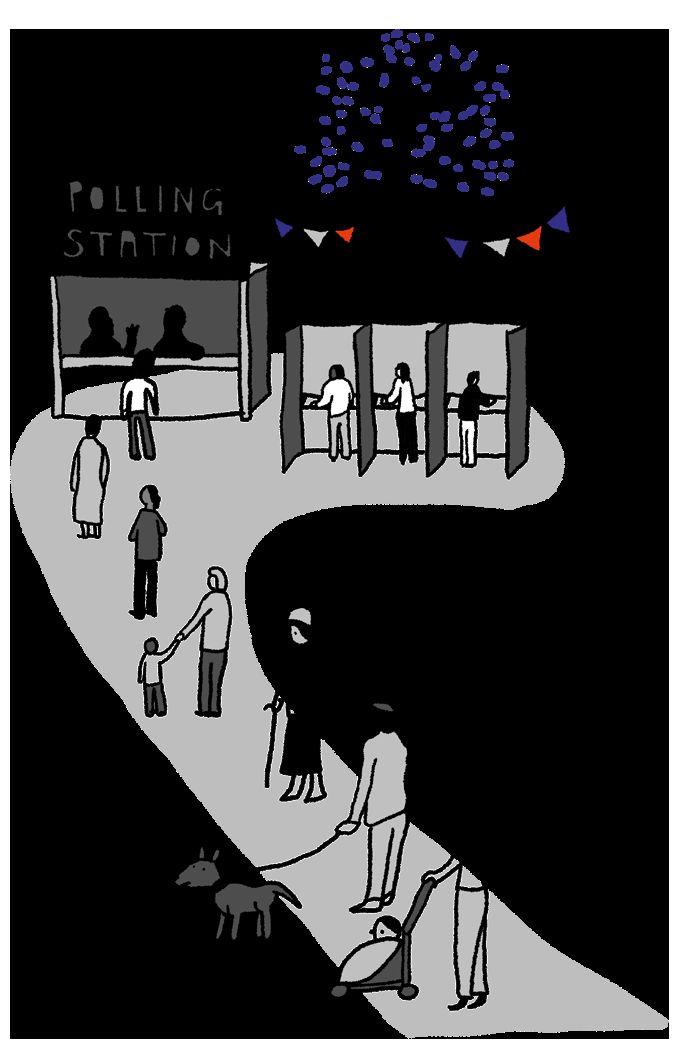
● The point and purpose of voting in elections
● How to have your voice heard in decisions that affect you
● How to register to vote and how to vote in elections
What is the first word that comes to your mind when you are thinking about politics?




Here are some recent headlines about issues that affect young people. What do you think?
● ‘Labour to scrutinise school smartphone bans as pressure grows over impact on teenagers’
(The Guardian, 21st March 2025)
● ‘Tuition fees in England and Wales rise to £9,535’
(BBC News, 1st August 2025)
● ‘Sixteen and 17-year-olds will be able to vote in next general election’
(Sky News, 17th July 2025)
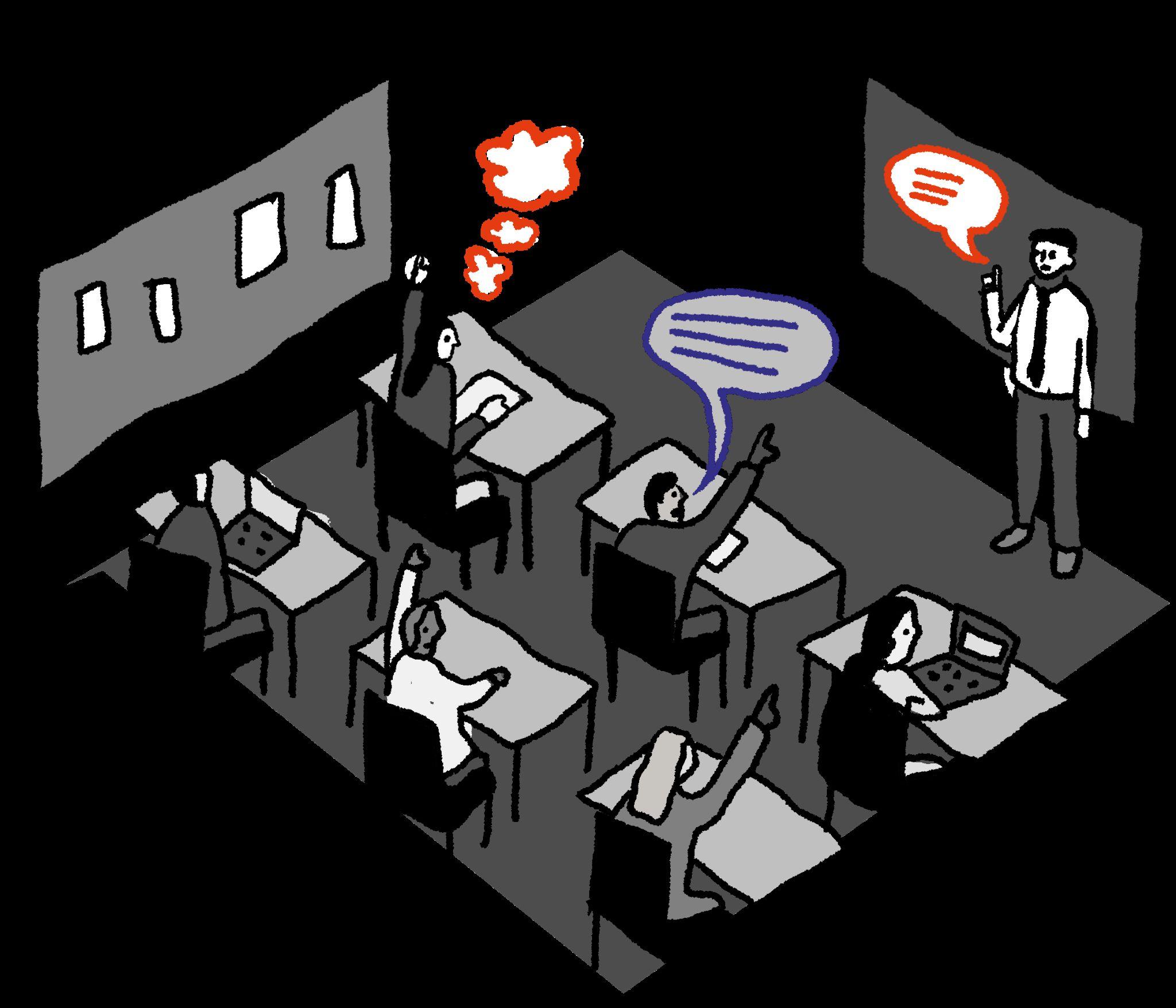

Politics has already played a large role in your lives.
Here are some recent headlines about issues that may affect you in the future.
What do you think?
● ‘Self-driving cars set for UK roads as government prepares new rules’
(MSN, 21st July 2025)
● ‘Artificial Intelligence will completely change our lives’
(The Guardian, 12th May 2023)
● ‘How climate change worsens heatwaves, droughts, wildfires and floods’.
(BBC, 19th September 2023)

As you leave college, a range of new and familiar issues will impact on you as you move onto your next steps.
This means it is important that your voice is heard when decisions are made about topics like these.

How can you get those making the decisions to listen to you?


Some more headlines:
‘UK rent rises forecast to outpace wage growth for three years’ (The Guardian, 8th April 2024)
‘How much have the National Minimum Wage and National Living Wage gone up?’ (BBC, 1st April 2025)
As you leave college, a range of new and familiar issues will impact on you as you move onto your next steps.
This means it is important that your voice is heard when decisions are made about topics like these.
How can you get those making the decisions to listen to you?

Have you seen anything else in the news that affects your life?



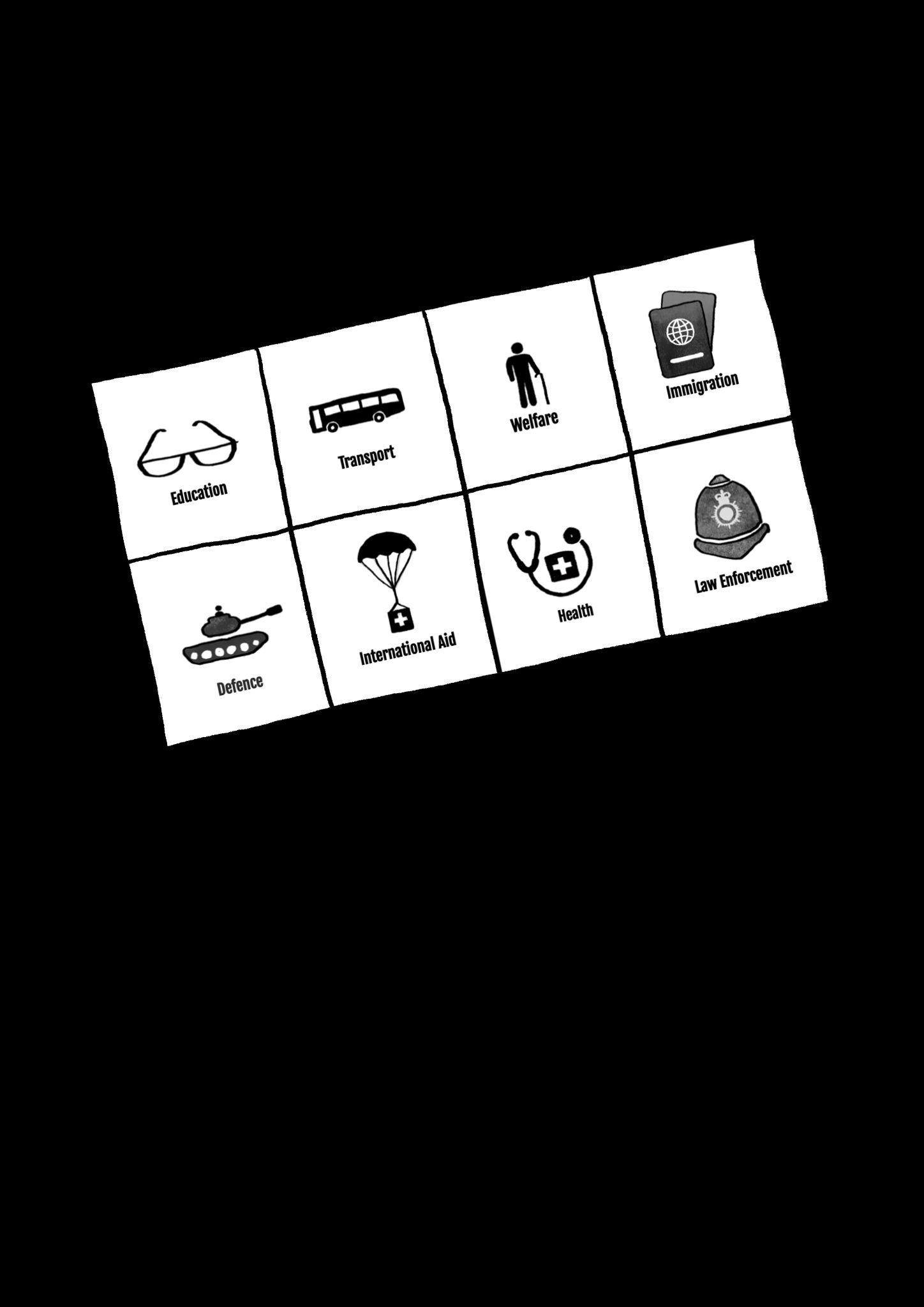
Have a look through the terms on the sheet.
As a group, try to collectively define and give an example of each of these terms.
Individually, using your worksheet, rank the different areas from most important, to least important.












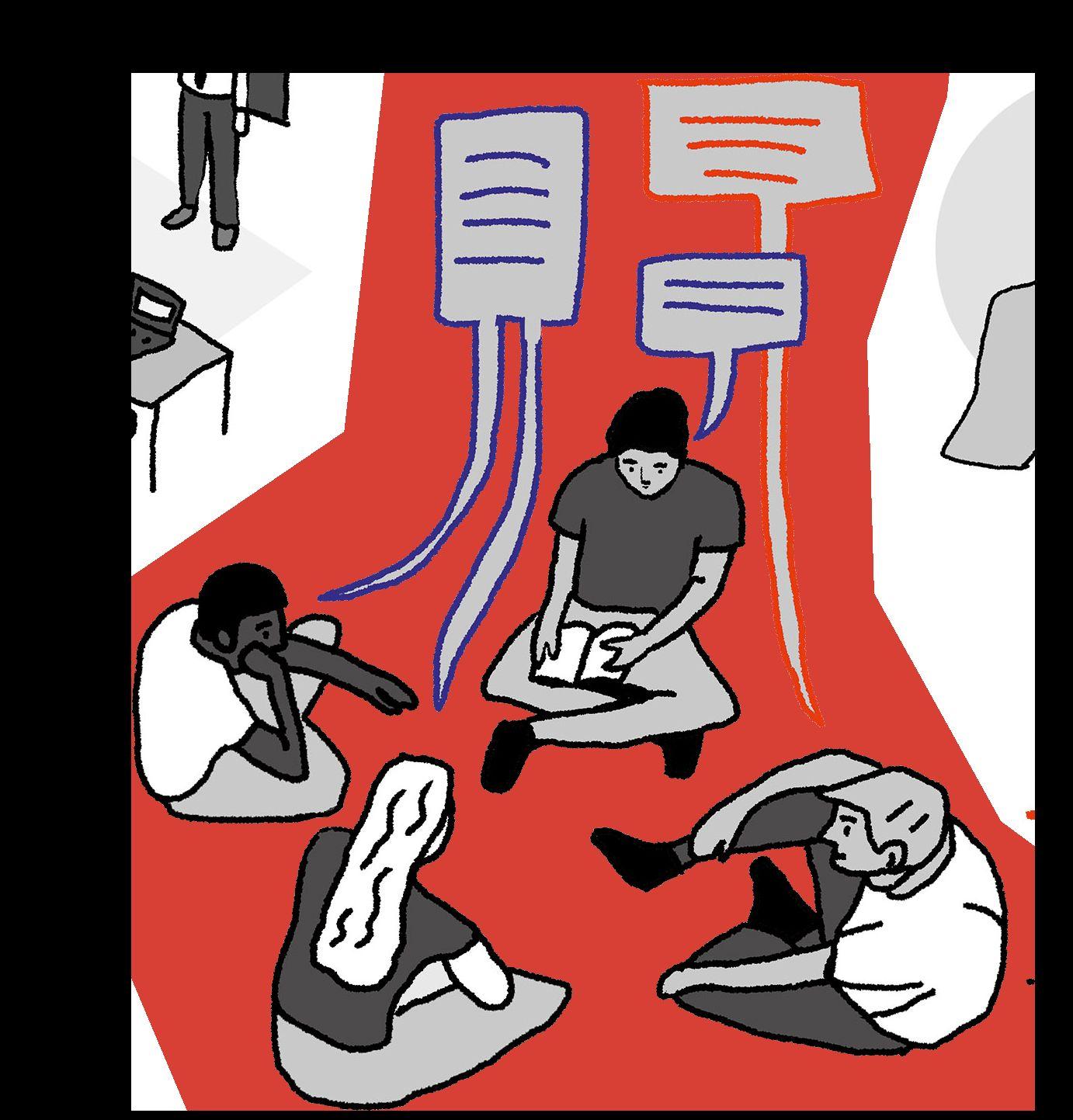
Compare your rankings with a partner.
Are there differences? Discuss these.
Agree on a list of priorities with your partner based on compromise.
When you have come to a compromise…
With your partner, find another pair on your table and compare rankings. Compromise again by coming up with a new ranking both pairs agree with.

You can use your voice in lots of different ways to campaign on issues that matter to you.
For example, you can write to politicians or sign a petition about an issue you feel strongly about. A powerful way to get politicians to listen to your views and opinions is by voting in elections.




Politics is about you and your voice. All votes count.
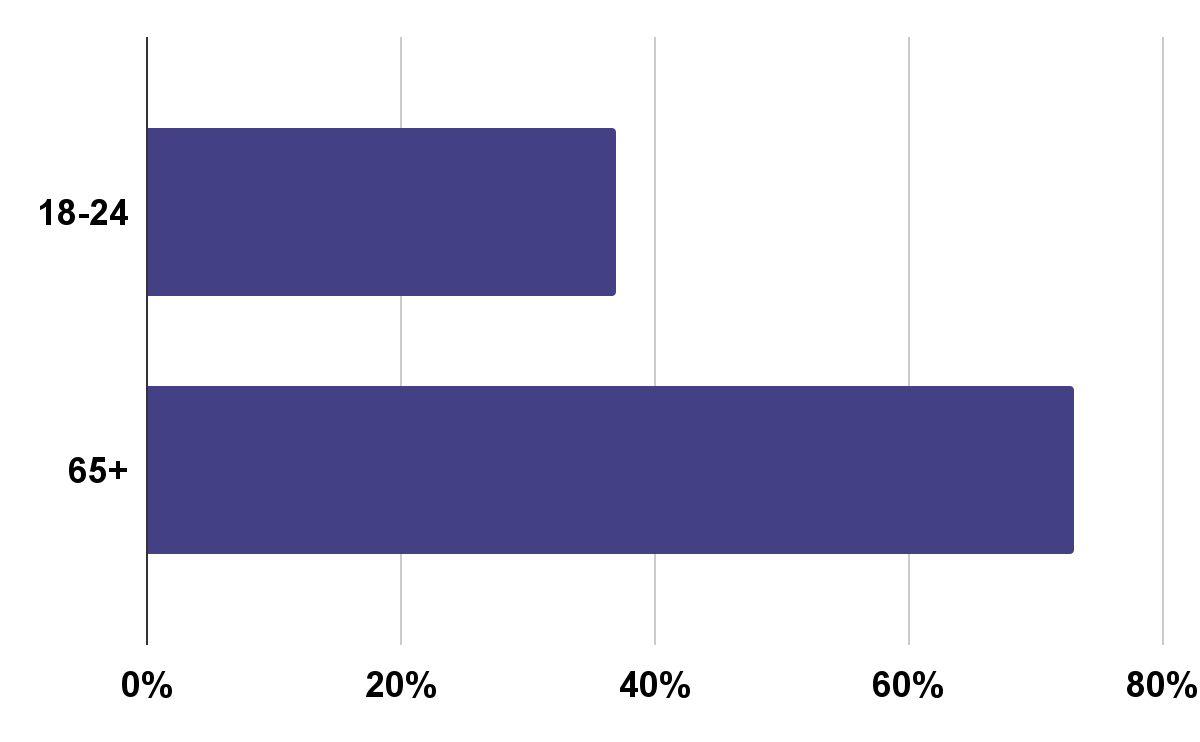
In the 2024 general election, around 37% of those aged 18 - 24 voted.
In the same election, around 73% of those aged 65 and over voted.
If young people like you do not vote, your voice may not be heard when important decisions are made about issues that affect you.

How old do you need to be to vote in a UK election?
If you live in England, you need to be 18 years old to vote. You can register to vote from 16 years old - more on that later!
If you are a British citizen, an Irish citizen or a qualifying Commonwealth citizen, and over 18, you can vote in any election that takes place in your area.
If you’re an EU citizen with retained rights or a qualifying EU citizen you can vote in the Elected Mayor, Local Council and Police Commissioner elections only.

Not a British citizen? Click here to see if you are eligible to vote in UK elections.



If you’re not eligible to vote you can still participate by directly contacting the politicians who represent the area you live in. Check out writetothem.com to see who represents your area.
When you register to vote you join the ELECTORAL REGISTER. This also gives you some other advantages:

Once you are 18 you can take part in jury duty - people are only invited to be part of a jury if they are registered to vote. It means you have more of a saydecisions about resources for your area are sometimes made based on who is registered to vote, not who lives there. Registering to vote improves your credit score - this can make it easier to get a loan, mortgage or mobile phone contract.


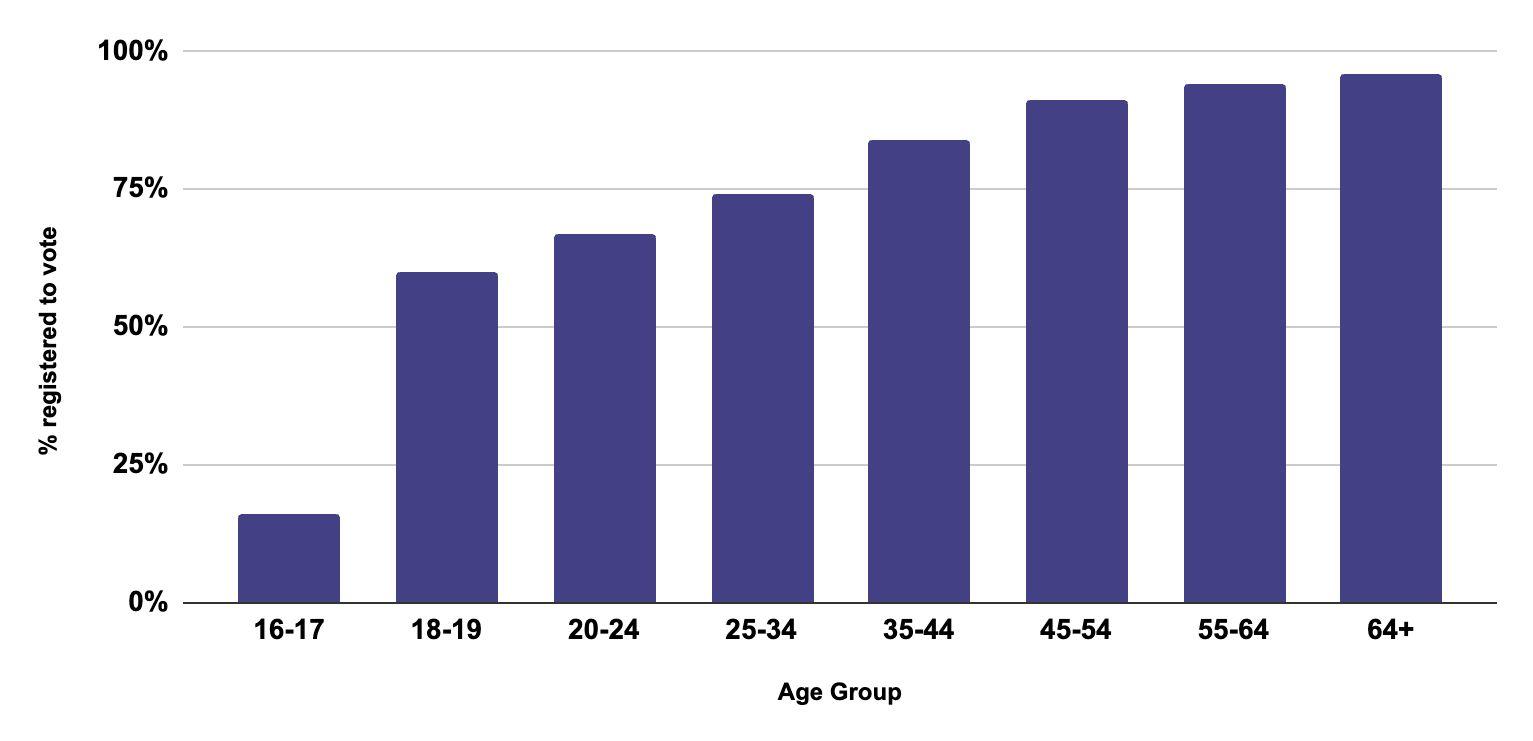
Young people are much less likely to be registered to vote than older people - why do you think this is?

Percentage of voters by age group



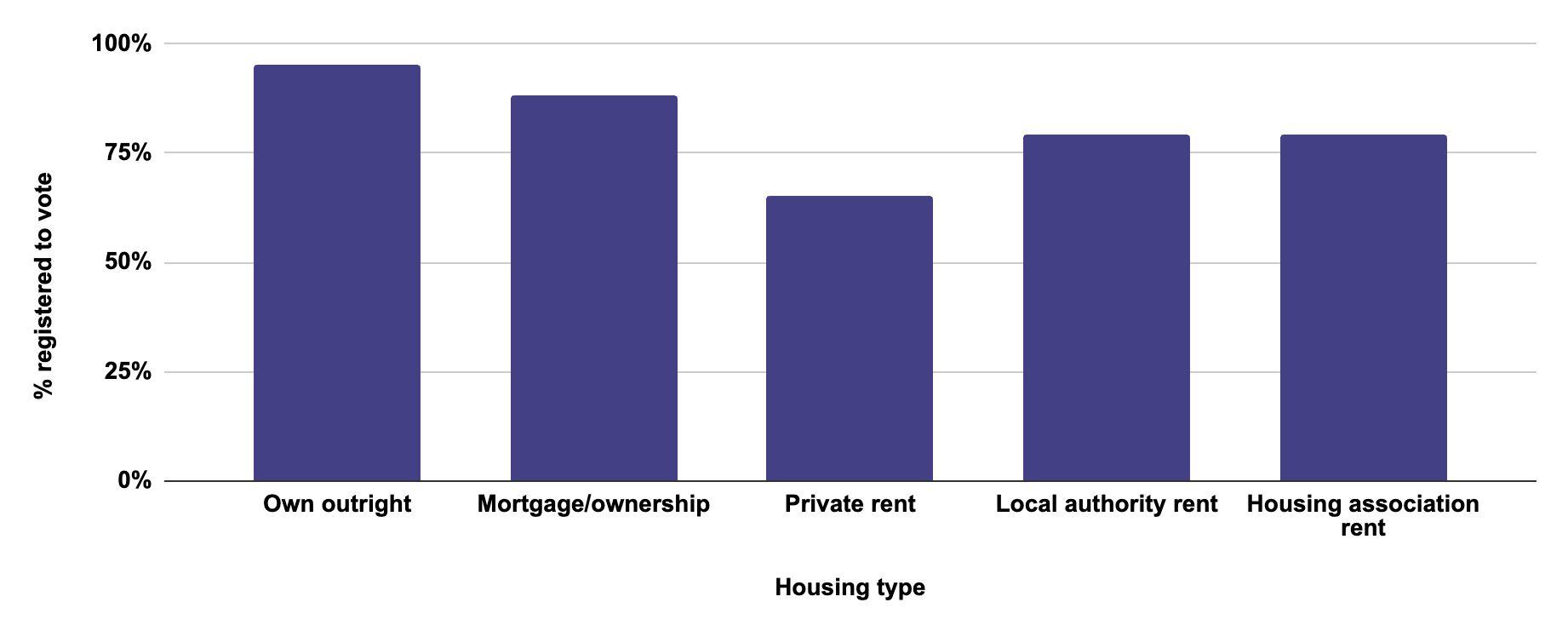
Young people are more likely to be private renters and move more frequently, whereas older people tend to own their own home.

Young people are not interested in politics and don’t think it will change anything.

Older generations are more likely to think they have a duty to vote rather than a choice, because of the way that they were brought up.

Young adults move house more frequently (for example for university or for jobs) so might forget to re-register when they move jobs.

The older you get, the more awareness you have as to why politics matters so you are more likely to take interest in the decisions.
To vote, you need to check your eligibility and register
https://www.gov.uk/register-to-vote
It only takes 5 minutes - you just need to fill in where you live, your date of birth, name, nationality and National Insurance number. You can register from 16 in England and Northern Ireland, and from 14 in Scotland and Wales.
Where do I find my National Insurance number - this should have been posted or emailed to you once you turned 16. If you have a job, it will be on your payslip. If you don’t have it don’t worry, you can register without it!


Go here to register to vote. It takes 5 minutes!



Go here to register to vote. It takes 5 minutes!

Think about some of the reasons why young people aged 16 - 18 may not register to vote.
What might encourage someone to change their mind and choose to register to vote?

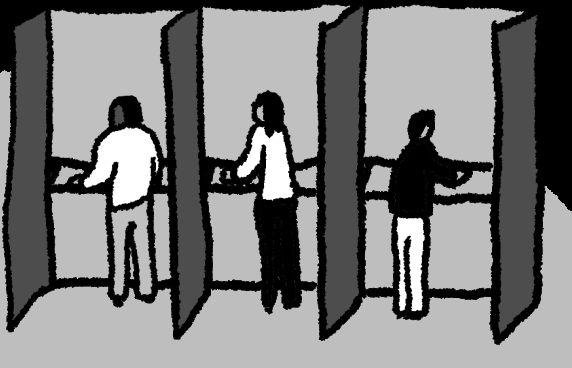

To vote in person, you will need an accepted form of photo ID. This includes:
● UK driving licence (including provisional).
● A passport.
● A PASS proof of age card.
● Biometric immigration document.
● National Identity card issued by EEA state.
Not sure if you have the right ID?
You can see a full list of ID’s here.

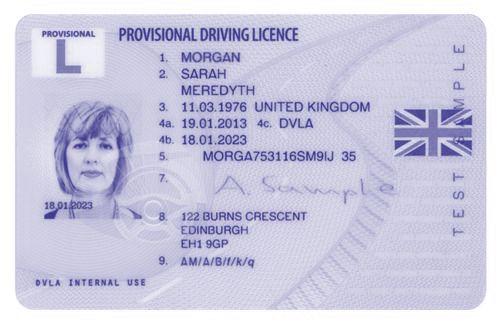
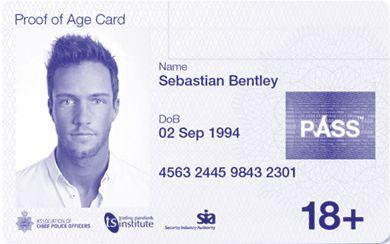
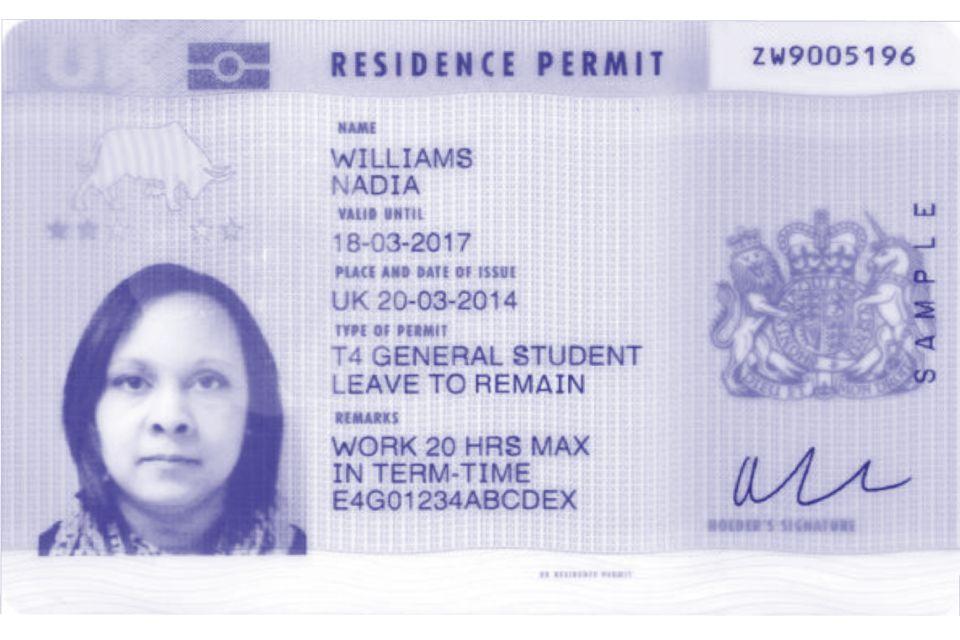
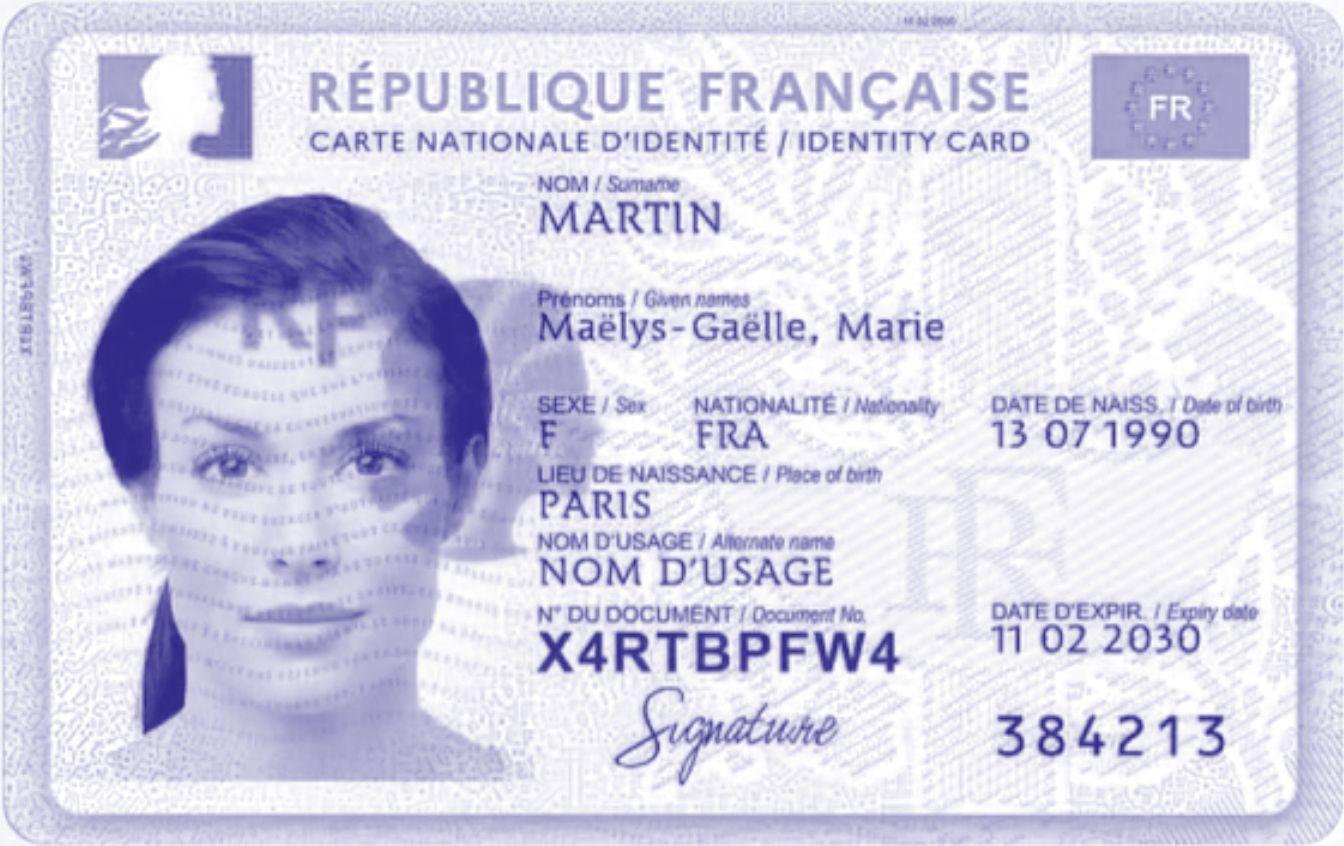
If you don’t have an accepted form of photo ID, you can apply for a free voter ID document, known as a Voter Authority Certificate.
You need to register to vote before applying for a Voter Authority Certificate.

You can apply for a Voter Authority Certificate here.
You will need your National Insurance number and a recent photo of yourself.
What if I can’t find my National Insurance number?
You can still apply. You can prove your identity through other documents, such as a birth certificate or bank statement.
When an election is taking place, you can find out more about candidates and parties standing in your area by visitinghttps://whocanivotefor.co.uk/
You can also get in touch with your local council about your local area by visiting - https://www.fixmystreet.com/
You can directly contact your local representatives athttps://www.writetothem.com/



You can check out Democracy Classroom - a shared hub of resources, training opportunities and events, designed to help teacher, youth workers and young people better understand democracy.
https://www.democracyclassroom.com/
The Democracy Classroom Partnership is made up of a range of organisations that span the youth, education and democracy sectors.


Why is it important for young people to register to vote in elections?
This bin represents your ability to vote.

All you have to do is throw your paper in the bin. You must stay in your seat.
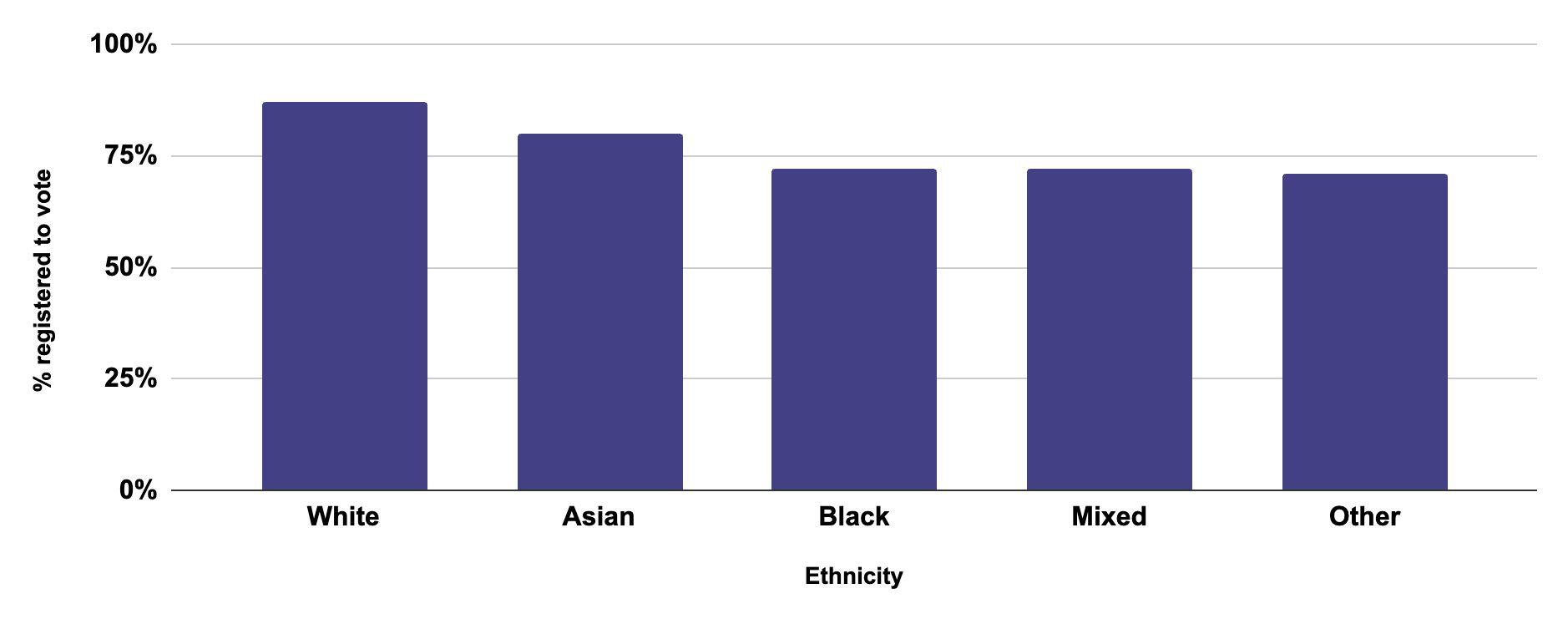
Percentage of registered voters by nationality (data for Great Britain)
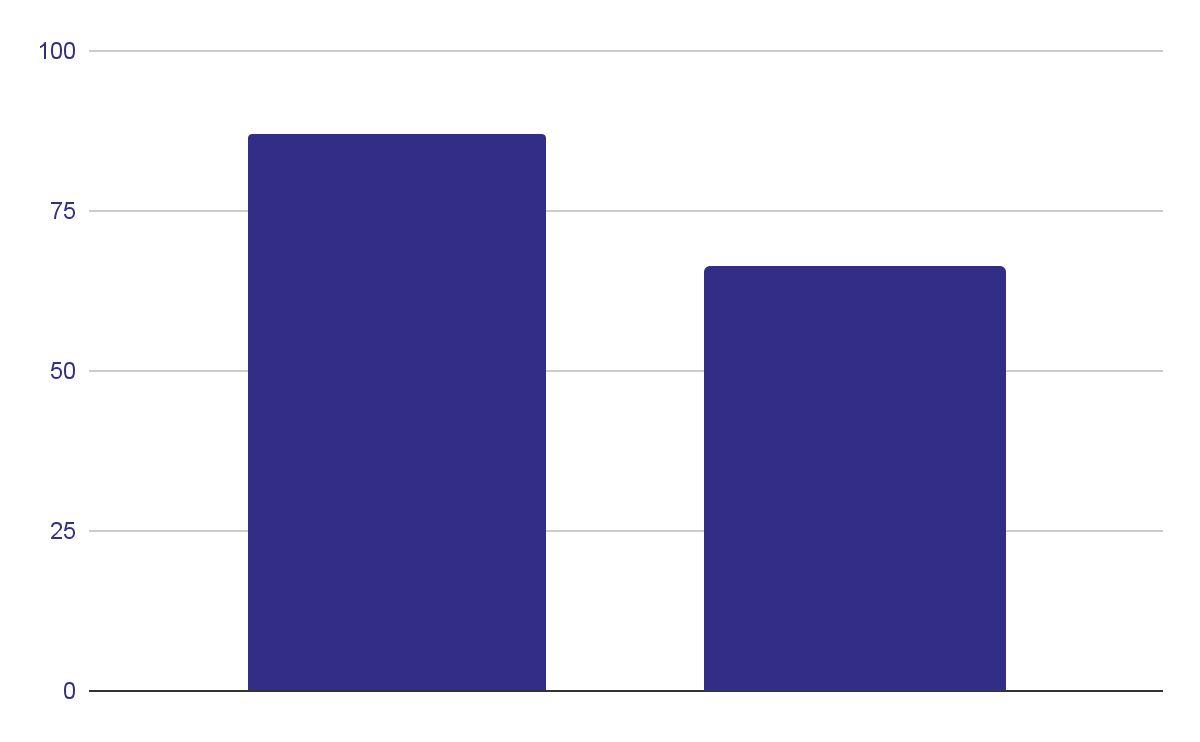
UK and Republic of Ireland
Commonwealth and EU
In the real world, what can we do to make this fairer?
How might we overcome some of the barriers some people face to voting?
Give three possible reasons why J might not have registered to vote.
J is 17. She is completing a technical qualification at her local college. She has recently been involved in campaigns to raise awareness about the experiences of marginalised groups in schools.
J is not registered to vote in the 2024 elections.
Give three possible reasons why L might not have registered to vote.

Lis 21.They have recently returned from university, where they lived and studied away from home. Lrents their home and lives with two flatmates. Lfeels politics is not relevant to them.
Lis not registered to vote in the 2024 elections.
Give three possible reasons why P is registered to vote.

Pis 52. Pworks a full-time job and also volunteers at a local food bank. Powns her home. She does not follow politics closely, but always participates in elections by voting.
Pis registered to vote in the 2024 elections.

Voter Registration Deadline
Pre-election period begins 25 days before election 11:59pm, 12 working days before election
5pm, 11 working days before election 5pm, 6 working days before election Deadline to apply for Voter Authority
Certificate
Polls open 7am to 10pm
5pm, 6 working days before election
Postal Vote Deadline (to apply)
Proxy Vote Deadline (to apply)
Election Day
Antigua and Barbuda Cameroon Ghana Lesotho Namibia Saint Kitts and Nevis Solomon Islands Tonga
Australia Canada Grenada Malawi Nauru Saint Lucia South Africa Trinidad and Tobago
Bangladesh Cyprus* Guyana Malaysia New Zealand Saint Vincent and the Grenadines Sri Lanka Tuvalu
Barbados Dominica India Maldives Nigeria Samoa Tanzania Uganda
Belize Eswatini Jamaica Malta* Pakistan Seychelles The Bahamas United Kingdom
Botswana Fiji Kenya Mauritius Papua New Guinea Sierra Leone The Gambia Vanuatu
Brunei Gabon Kiribati Mozambique Rwanda Singapore Togo Zambia Zimbabwe
*Although also EU member states, citizens of Cyprus and Malta are eligible to be registered to vote in respect of all elections held in the UK.
Denmark
Luxembourg
Poland
Anyone who is a citizen of these countries has the right to vote in local and regional elections in England, regardless of their ‘leave to remain’ status.
Austria Belgium Bulgaria Croatia
Cyprus* Czech Republic Estonia Finland
France Germany Greece Hungary
Ireland* Italy Latvia Lithuania
Malta Netherlands Romania Slovakia
Slovenia Sweden
Anyone from these countries who has been legally resident in the UK since before the UK left the EU on 31/12/2020 can vote in local and regional elections in England.
*Although EU member states, citizens of the Republic of Ireland, Cyprus and Malta are eligible to vote in all elections held in the UK.