
At The Table


About The Politics Project
The Politics Project empowers young people to find and use their voice through high-quality, non-partisan democratic education. We work with youth practitioners, teachers and politicians to create opportunities for young people to engage meaningfully with politics and decision-making.

Our programmes include hands-on workshops, training sessions and events designed to build confidence, spark curiosity and develop practical skills. At the heart of our work is the belief that powerful conversations, rooted in trust and understanding, can inspire young people to connect their lives to political change and wider democracy to make a lasting impact in their communities.
About the GLA Civic and Democratic Participation Programme
The Greater London Authority (GLA) Civic and Democratic Participation Programme is a non-party political, year-round programme of projects and campaigns. Through the programme, the GLA supports all Londoners – but especially under-registered and under-represented Londoners –to access their civic and democratic rights. It is delivered in collaboration and coordination with statutory bodies and a broad civil society coalition. This toolkit was developed by The Politics Project and was funded by the GLA Democratic Participation Grant.
About the toolkit: At The Table

At The Table is a toolkit designed to spark conversations about politics and democracy in informal youth settings, with young people who may feel disconnected or disengaged from how they can use their voice to be heard on issues that matter to them.
It includes facilitation advice and easy-to-use short games that make discussion accessible and engaging.
The activities are designed to be fun while allowing space for meaningful discussions. They support youth practitioners and young people to explore their right to participate in civic and democratic life, and support participants to develop confidence in expressing their views.



Context
Compared to other age groups, fewer young people are taking part in elections. This shows that many feel disconnected from politics and democracy. In the 2024 general election, 37 per cent of eligible 18–25-year-olds voted. That’s 10 per cent less than in 2019. This drop is at least partly down to many young people feeling that politics isn’t speaking to them or making space for their voices.
Research from the Electoral Commission’s Young Voices on Democracy report illustrates that 63 per cent of young people aged 11 to 25, based in London, show an interest in politics’. However, according to a 2024 REACH report by Kings College London, 23 per cent of young people surveyed have never discussed politics with friends, and around 60 per cent have little to no interest in societal issues and politics.
The GLA’s 2021-2022 Survey of Londoners found that 70 per cent of 16-24-year-old Londoners are registered to vote, compared with 96 per cent of Londoners aged 65 and over.
These figures echo what The Politics Project has heard directly from young people and youth organisations through interviews, workshops, and ongoing conversations. Building on this work, we’ve identified three key barriers that young people face when engaging with politics and democracy:

Key outcomes
• Many young people struggle to see how politics and democracy relates to their lives or why it matters to them.
• Some young people don’t believe they can make change happen.
• Many young people have mistrust or skepticism towards our democratic system and institutions.
To tackle these three barriers directly, we have identified three key outcomes for games in this toolkit:
1. Connecting young people’s experiences to politics and democratic processes.
2. Helping young people to recognise their power and agency.
3. Building trust between young people, elected politicians and democratic institutions.






For each outcome we have also identified a number of specific objectives for the toolkit’s games. You can see the full list of outcomes and objectives below.
Who is the toolkit for?
This toolkit is designed for engaging young people aged 14+ in informal settings, to connect with politics, democracy and how they can get their voices heard. The games are designed to be delivered by youth practitioners, or young people. This toolkit is particularly suitable for youth practitioners and young people who want to start discussions about democracy, lived experiences and local communities; or help young people build confidence and a stronger sense of power and agency.
Why are these games good for youth spaces?

As well as discussing politics and democracy, the games in this toolkit are fun and easy to understand, and can be delivered with minimal setup using resources you would normally find in youth spaces. Most games can be delivered in around half an hour. Where possible, we make the games sensory, using food, creativity or movement to make them feel more relevant, and help young people connect with what matters to them and how they can get their voices heard. The games are also designed to be accessible. Where needed, seated or alternative versions have been outlined to ensure groups with reduced mobility can take part fully.
How was the toolkit developed?
The toolkit was co-designed and co-produced with the GLA Civic and Democratic Participation team, youth practitioners and young people across London. Thank you to the youth practitioners that The Politics Project team interviewed, the youth groups we observed, and the young people who played these games and shaped the resources with their insight.
In our co-production sessions, we engaged with over 170 young people and 20 organisations from a variety of diverse backgrounds – from sessions with migrant communities and special educational needs and disabilities organisations to boat clubs and boxing clubs.
The toolkit’s outcomes and objectives:
Discuss how political decisions influence
Explore relatable examples to show how politics and democracy is woven into the spaces young people inhabit and the

2. Helping young people to recognise their power and agency
Help participants articulate what matters to them.
2.2 Support young people to identify changes they’d like to see.
2.3 Discuss where young people can have influence.
2.4 Identify times when young people have used their own power and agency.
3. Building trust between young people, elected politicians and democratic institutions

3.1 Discuss stereotypes and assumptions that form our opinions of elected politicians and democratic political institutions.
3.2 Discuss who has power and how it’s used.
3.3 Explore examples of where politics has had an impact on young people.

See Appendix pg 50 for the full list of activities
When talking about politics and democracy, words can mean different things to different people. Some terms may carry personal or cultural associations, while others might be used differently depending on the setting. Taking time at the start of each session to clarify what key terms mean – and agreeing on shared definitions – can help ensure everyone is on the same page, and feels confident joining the conversation.
For example, in this toolkit, politics means how decisions are made, who has power, who represents people, and how to influence the systems that shape our lives. That includes voting, understanding laws and institutions, and having a say in the future – but also bigger ideas, like what matters to us and how change happens.
When we say democracy, we mean a system of government where people have a say in how things are run – usually through voting and choosing representatives. The word democracy comes from the Greek words “demos”, meaning people, and “kratos”, meaning power. So, democracy can be thought of as “power of the people”. Democratic participation is using your voice to engage with this system. Democracy is connected to politics, but it’s also about more than that – it’s about making sure people’s rights are protected, holding those in power to account, and working to make things fairer. Democracy doesn’t just run on its own – it needs people to take part, speak up, and help improve it.
To explore the term politics and democracy with a group, try the activity: What do politics and democracy mean? (pg 23)
The language used is impartial, which means that it does not support any particular political party or viewpoint. The aim is to help young people explore their own beliefs and develop their voice, not to influence them in any specific direction.

Below is a glossary of some of the key terms we use and what we mean by them.
Glossary
Agency
Civic engagement
Civil society
Democracy
Democratic institutions
Democratic participation
Democratic processes
A person’s ability to act, make choices, and bring about change, if they want to – whether big or small.
Getting involved in your community or in public life – this could mean getting involved by volunteering, signing or starting a petition, joining a peaceful protest, volunteering and helping out in the community, or speaking up about what matters to you.
The organisations, groups, and individuals (outside of government) who help shape and support their communities – like charities, youth groups, campaigners, and community organisers.
A system of government where people have a say in how things are run – usually through voting and choosing representatives.
The formal systems that help run our democracy – such as Parliament, local councils and courts.
Taking part in how decisions are made – such as registering to vote and voting; putting yourself forward as a candidate in elections; or taking part in discussions to help make decisions in your local area or region, or across the country.
The practical ways democracy works – such as elections, debates, making laws, and holding leaders accountable.
Elections
When people vote to choose who represents them –locally, regionally, nationally or internationally.
Non-partisan
Policy
Politics
Power
Representative
Not supporting or promoting any political party. Being non-partisan means making space for all views and helping people explore their own opinions freely.
Plans or rules that guide how organisations, governments, or people make decisions and take action. In a democracy, people can have a say in policies about things like housing, education, health, the environment, and more.
How decisions are made about many aspects of our lives: who has power, how they use it, and how to influence decisions. It’s not just about politicians or parties; it’s also about the issues people care about, the people who represent us, and the systems that shape our local area, region, country and the world.
The ability to make decisions, influence others, or shape how things work. Power can exist in individuals, governments, communities, institutions, or everyday relationships.
Someone (such as a Member of Parliament or councillor) who is elected or chosen to speak or act on behalf of others.


Using the toolkit
This toolkit contains:
• Facilitation advice on having conversations with young people about politics and democracy
• Three icebreakers
• Nine games and activities.
The games in the toolkit
Outcome 1: Connecting young people’s experiences to politics and democratic processes.
Outcome 2: Helping young people to recognise their power and agency
Outcome 3: Building trust between young people, elected politicians and democratic institutions.
Game: Pg. Summary: Objectives:
What do politics and democracy mean? 23
An exploration of the word “politics”, using images as prompts, asking participants to say what they see to explore six areas that politics covers.

3.1 Discuss stereotypes and assumptions that form our opinions of elected politicians and democratic institutions.
A picture for 27
In this activity, participants pose for an imaginary group photo, exploring how they might pose for different people, including celebrities and politicians.
3.1 Discuss stereotypes and assumptions that form our opinions of elected politicians and democratic institutions. Walk this way 25
Walking around the room, participants explore how they might feel in different familiar or unfamiliar settings, by walking or posing as if they were in those situations.
3.1 Discuss stereotypes and assumptions that form our opinions of elected politicians and democratic institutions.

This activity supports participants to identify a time where they have made a difference or stood up for something they believe in. Participants then explore this in pairs by interviewing each other as if they were on a talk show, considering how many people their actions may have positively impacted.
This is a movement-based activity where participants are asked to respond to newspaper headlines about current issues. Participants are asked to consider whether they care about that issue and how much it affects them; and discuss their responses as a group.
2.4 Identify times when young people have used their own power and agency.
2.1 Help participants articulate what matters to them.
3.3 Explore examples of where politics has had an impact on young people. The biscuit game
This game explores the challenges of group decision-making and compromise. Participants are given the choice of three packets of biscuits – the only catch is that they must unanimously decide which packet to open before any biscuits can be eaten.
2.3 Discuss where young people can have influence. Creating a politician
This game helps participants to creatively explore leadership and the key characteristics that they associate with elected politicians.
This activity asks participants to reflect, in pairs, on how they would prioritise eight key areas of government. They then move into bigger groups to explore where compromises need to be made, to prioritise eight key areas with larger numbers of people.
3.1 Discuss stereotypes and assumptions that form our opinions of elected politicians and democratic institutions.
3.2 Discuss who has power and how it’s used.
1.1 Discuss how political decisions influence young people’s daily lives.
Explore relatable examples to show how politics is woven into the spaces young people inhabit and the issues they care about.
46
This activity supports participants to reflect on the changes they would like to see in their local community, and who is responsible for making those changes. Participants draw a map of their local area, reflecting on the spaces that make up their community and make them feel safe. They are then asked to reflect on what they would like to change, and how they might go about making positive changes in their local area.
1.1 Discuss how political decisions influence young people’s daily lives.
2.1 Help participants articulate what matters to them.
2.2 Support young people to identify changes they’d like to see.
Delivery tips & game pairings
This section offers practical advice on running activities with different group sizes and choosing the right games to start with. It includes tips on adapting games for larger groups; suggestions for engaging openers; and tried-and-tested session pairings for engaging young people in conversations about what matters to them.
For larger groups:


• Walk this way & A picture for are both games that work well with large groups of around 30 –so long as you have a space big enough for everyone to pose in or walk around safely.
• What matters to me is a game previously played with over 100 people. As long as you have a space big enough, this game can be played with a very large group – although you will likely not get a chance to hear everyone’s views. For a larger group, it might be easier to only use one parameter – e.g. I care about this, I don’t care about this – for each statement.
If you’re not sure where to start:
Often, the best place to start is simply with the game or activity that feels most exciting to you. Begin with a quick icebreaker to get everyone talking or moving, then dive into the topic that feels most relevant or engaging for your group:
• What do politics and democracy mean? is a great starting point for exploring a question many young people ask. It helps open up conversation and can reveal the issues that matter most to the group you’re working with.
• The biscuit game is a light and engaging way to start discussing decision making and power. It’s centred around something familiar – biscuits –which helps break the ice and ease the group into working together. The game introduces key ideas about group decision-making, compromise, and how individual voices can shape collective outcomes, making it a useful entry point for deeper discussions

Recommended sessions:
Moments of change (pg 29)
Mapping our community (pg 46)


The biscuit game (pg 37)
What do politics and democracy mean? (pg 23)
What matters to me (pg 33)

Creating a politician (pg 40)


What do politics and democracy mean (pg 23)
Both of these activities are rooted in the lived experience of participants, and focus on helping them recognise their power and capacity to influence decisions that impact their lives and their communities.
The games paired together create transformative moments of reflection and action.
Making a decision (pg 43)
The biscuit game uses food and debate to model democratic processes. Paired with What do politics and democracy mean?, which explicitly helps to define key terminology, this pathway is perfect for an introductory session into politics and democracy! These games encourage participants to articulate what values they have and what they want from politics and democracy.
By starting with What matters to me, participants discuss their opinions on current affairs and reflect on how it affects them.
Creating a politician shifts the conversation into who has the power to represent those ideas, and the different leadership values that we might look for in elected politicians.
Both games seek to define and discuss big ‘P’ politics, diving into democratic systems and processes. This session is recommended as a comprehensive guide to how politics and democracy impacts daily life.
Facilitation advice
Talking about politics and democracy with young people can sometimes feel challenging. Some might be disengaged, others might be sceptical, and a few may feel like their opinions don’t matter. With the right approach, these conversations can be meaningful, insightful and enjoyable. The key is to create a space where young people feel heard, respected, and confident enough to express themselves.
Be open
Create a space where honesty is welcomed and there’s no pressure to have all the answers. Remind young people there are no right or wrong opinions, and that it’s OK not to know everything.
Politics isn’t just parties
Young people often do care about policy issues and being heard – you can help them connect what they care about to wider political ideas. Specific topics – such as the climate, education and housing – all spark different conversations.
News can spark an opportunity
When a young person brings up something from the news, use it. Explore it together, look for trusted sources, try to get a mix of perspectives and ask open questions.

Stay neutral, stay empowering
Being non-partisan means creating space for young people to explore their own views without being influenced by yours. If you’re asked about your political stance, you can reiterate the importance of all voices being heard in a democracy, and use it as an opportunity to encourage their own thinking instead.

Connecting lives to politics and democracy
The words politics and democracy might seem boring at first – but they’re deeply connected to the things people care about. Whether it’s something in your local community or a cause that hits close to home, there’s always a spark that can make it feel real. Help young people discover the issues that matter to them, and show them how politics and democracy shape the world around them and their everyday lives.
Let conversations flow
The toolkit is a guide, not a script. If discussions naturally head in a different direction, allow young people to guide the conversation and follow their interests.
It’s helpful to keep an eye out for any misinformation and disinformation, and gently steer things back on track when needed – this could include asking for where the information came from, and finding an alternative source to verify any information being shared.
You don’t have to know everything
Whether you’re a young person or a practitioner, it’s okay to admit you don’t have all the answers. Curiosity, honesty, and shared willingness to explore together go a long way.
Set the ground rules together
If your group doesn’t have a code of conduct yet, this is the time to create one. Make sure everyone knows the goal is constructive, respectful, and inclusive conversation.
Create a comfortable vibe
Keep things informal. Chatting over snacks or starting with a quick check-in can ease people in. Youth spaces are already good at this – lean into the aspects that make your group feel at ease.
Handling difficult opinions
If a young person shares something controversial, stay calm. Ask where the view came from, invite curiosity, and explore other perspectives together. If you need to, take more time to establish the facts and explore a topic in detail.
If difficult or harmful views come up during discussions, make sure everyone feels safe to continue. Remind participants that, while open conversation is welcome, freedom of speech does not include the right to spread hate or discrimination – and that there are laws in place to protect against this.

Conversations with young people about politics and democracy don’t happen often enough. The fact that you’re making space for them is incredibly valuable and important. Keep it relaxed, keep it relevant, and trust that even the smallest discussions can have a lasting impact.
Icebreakers...

Starting with an icebreaker can be a useful way to get a group focused and ready to take part. You’re welcome to use any icebreakers you already find effective, but here are three options that connect directly to the three outcomes of this toolkit. Each one offers a simple way to introduce ideas to plant seeds for wider discussion without going too deep.
1. Seat swap
Outcomes:
1. Connecting young people’s experiences to politics and democratic processes.
Materials needed:
Chairs to sit on
Duration: 5 minutes

Sit participants in a circle of chairs.
Ask one participant to stand up, and remove their chair – leaving a circle with one fewer chairs than the number of participants.
The participant who is standing up, stands in the middle of the circle and reads out a statement - if anyone in the circle has done the thing in the statement, they must stand up and swap seats with someone else. At the same time the participant who read the statement must try and sit on an empty chair.
Whoever is left standing, reads the next statement.





Example statements, feel free to add your own. Swap if you’ve:
• Used public transport this week.
• Recently spent time in a local park.
• Noticed a change in the cost of food.
• Ever been to a free museum.
• Got caught in traffic on your way somewhere.
• Seen something shocking in the news.
• Ever seen a protest taking place in the street.
• Ever had a bad internet connection.
• Recycled or been told to save energy.
• Ever signed or seen a petition.
• Seen a building site or new flats going up in your area.
Alternative version – seated/no movement needed
• Keep everyone sitting in a circle (no chairs are removed).
• Instead of physically swapping chairs, participants who relate to the statement simply raise their hand or hold up a coloured card (you could also
have them say ‘me!’ if you want it a bit louder and more interactive).
• The person in the middle (or leading the round) watches who responds, then picks one of those participants to be the next person to read a statement.
2. Leaders and followers
An icebreaker about power and agency.
Outcomes:
2. Helping young people to recognise their power and agency.
Materials needed:
A room the group can safely move around
Duration:
5 minutes, 10 minutes with follow up questions
Instructions


Get participants into pairs. In pairs, decide who is the leader, and who is the follower
To play the game:
The follower is going to close their eyes.
The leader is going to pick a unique sound (e.g. boing, ding, click, etc.) and ensure their partner is aware of the sound they’ve chosen.
Explain: the follower is always going to walk very slowly towards the leader’s unique sound.
Without touching their partner, the leader must guide their follower slowly around the room, only using their unique sound. They must ensure that their partner does not bump into anything or any other people whilst playing the game.
Extra guidance
Questions to end with:
When you were the follower, what made you trust or not trust your leader?
When you were the leader, how did it feel knowing someone was relying on you? What responsibility did you feel?
Alternative version – seated / no movement needed
• Participants work in pairs.
• One person is the leader, the other is the follower.
• Give each pair a simple maze printed or drawn on paper.
• The follower closes their eyes and places their finger at the start of the maze.
• The leader chooses a unique sound (e.g. ‘beep’, ‘click’, ‘whoosh’) – they tell their
3. One word
Outcomes:
partner what sound they’re using.
• The leader uses only their chosen sound to guide the follower through the maze – no words or touching allowed.
• The follower moves their finger slowly, listening for the sound to know which way to turn.
• The goal is to reach the end of the maze without going off track.
3. Building trust between young people, elected politicians and democratic institutions.
Materials needed:
N/A
Duration: 5 minutes
Explain that you will say a prompt, and participants must give a one word response that explains how they feel towards that prompt.
Emphasise that there are no right or wrong answers – just honest reactions.
To get started, choose one of the prompts below to spark the conversation.


Potential words to use:
• Democracy
• Politics
• Power
• Change
• Community
• Leaders
• Protest
• The Prime Minister
• Elections
• Justice
• Young people
Games
What do politics & democracy mean?
Outcomes:
3. Building trust between young people, elected politicians and democratic institutions.
Objectives:
3.1 Discuss stereotypes and assumptions that form our opinions of elected politicians and democratic institutions.
Summary:
An exploration of the words “politics” and “democracy”, using images as prompts, asking participants to say what they see to explore the areas that politics covers.
Materials needed:
A way of displaying images to your group –either on screens or printed paper. The images can be found here.


Facilitation tips
• The aim of this exercise is to explain politics and democracy whilst making the participants do most of the talking. Encourage participants to be creative with their responses, and then summarise with the area of politics the picture is representing.
• Definition: democracy –a system of government where people have a say in how things are run, usually through voting and choosing representatives.
• Definition: politics – how decisions are made about many aspects of our lives; who has power; how they use it; and how we can influence decisions. It’s not just about politicians or parties – it’s also about the issues people care about, the people who represent us, and the systems that shape our city/ town, region, country and the world.

Activity steps
Step 1: Introducing the concept and activity (3 minutes)
Ask participants:
• What comes to mind when you think of politics?

• What comes to mind when you think of ‘democracy’?

Tell participants that we’ll be looking through six scenes that cover six areas of politics and democracy.
For each image, we’ll discuss what might be happening.
Step 2: Exploring the images (12 minutes)
Discuss each image.
The terms ‘politics’ and ‘democracy’ encompass a wide range of ideas and activities. We’ll explore the areas that ‘politics’ and ‘democracy’ cover and understand how it influences different aspects of our lives.
For a clear definition of the terms, see page 9 for our glossary.
Encourage authenticity: Emphasise that there are no right or wrong answers; we’re interested in what you think is happening in these images.
You can find the images here. Or scan this QR code on your phone:
Step 3: Summarising six areas of politics (5 minutes)
Explain: These six areas cover ‘politics’ and ‘democracy’.
Ask: Are there any areas that were new to you?


The six areas of ‘politics’ are:
• Power & leadership – who is in charge and how decisions are made.
• Ideologies & beliefs – different views on how society and governments should function.
• Laws & policies – the rules that shape society.
• Elections & representation – how leaders are chosen and people’s voices are heard.
• Civil society – how communities are supported and heard.
• International relations – How countries interact and influence each other.
Walk this way
Outcomes:
3. Building trust between young people, elected politicians and democratic institutions.
Objectives:
3.1 Discuss stereotypes and assumptions that form our opinions of elected politicians and democratic institutions.
Summary:
Walking around the room, participants explore how they might feel in different familiar or unfamiliar settings, by walking or posing as if they were in those situations.
For an alternative version of this game that does not require movement, see A picture for, which asks participants to pose for figures to explore their feelings towards people with power. (pg 27)
Materials needed:
Space to move around in
Duration: 10-15 minutes

Facilitation tips
This game is a great relaxed entry point for exploring a group’s feelings towards their community.
• Take your time when giving prompts, giving participants a chance to walk around for a while in between each scenario.
• Point out interesting responses, whether serious or comical.
Activity steps
Step 1: Walking based on prompts (5-10 minutes)
Tell participants to walk around the space at their normal pace.
Use prompts, to get participants to imagine walking in different places – ask them to walk as if they are in these places.
Vary the prompts, from places of familiarity to formal places, including political spaces and environments.
Focus the prompts on how participants are feeling.
Prompt ideas:
• Imagine walking into your favourite place to hang out –how do you feel there?
• Imagine you’re walking into your school or workplace for the first time – how do you feel?

• Imagine walking into the House of Commons* filled with elected officials discussing your community –how do you react?
Step 2: Reflecting (3-5 minutes)
• Now pretend you’re stepping into a local peaceful protest or rally – what’s your posture? Are you confident, hesitant or curious? What is the protest about?
• You’re visiting a park where you always meet your friends – how does that feel?
Discuss how the group changed their walk and posture, focusing on how participants felt.
Reflect on any interesting trends.
• Picture yourself standing on a stage in front of your community, sharing your ideas – what’s your stance, and how do you feel?
• Step into a community space where everyone is listening to your suggestions for change. What energy are you bringing?
Discussion questions:
• What emotions or thoughts come to mind when walking?
• How did you feel walking in your favourite place to hang out versus the House of Commons?
• Where did you feel the most comfortable? / Where did you feel the least comfortable?
• Did you discover anything about your feelings towards spaces through how you were walking?
* The House of Commons is the elected part of the UK’s Parliament. Members of Parliament (MPs), including the Prime Minister, meet here to discuss and make decisions on laws and policies that affect the UK.
A picture for
Outcomes:
3. Building trust between young people, elected politicians and democratic institutions.
Objectives:
3.1 Discuss stereotypes and assumptions that form our opinions of elected politicians and democratic institutions.
Summary:
In this activity, participants pose for an imaginary group photo, exploring how they might pose for different people, including celebrities and politicians.
Materials needed:
None

Facilitation tips
• Practice your poses – how can you show that you’re happy, uncomfortable, confused, intrigued?
• If you think your group will struggle to come up with names of politicians on the spot, have a few up your sleeve that you think they will know, e.g. Keir Starmer, Rishi Sunak. Donald Trump.
• This game works best when participants also suggest prompts and ‘take a picture’ of the group, so try and establish this early on in the game, thinking of celebrities or other wellknown figures.
• Point out interesting responses, whether serious or comical.
Activity steps
Step 1: Introducing the activity (2 minutes)
Gather participants together.
Tell participants that they will express their feelings towards various figures by posing as if they’re taking a photo for that person or group.
As the facilitator, mime taking that photo, or encourage other participants to mime taking the photo of the group.
Step 2: Posing for prompts (5-10 minutes)
Get participants to pose for the first imaginary photo, starting with familiar figures.
Take imaginary photos after each prompt.
Introduce political or authority figures.
Encourage participants to make their own prompts, and to take a ‘photo’ of the group.

Encourage authenticity: Emphasise that there are no right or wrong poses; they should reflect their true feelings in their expressions.


Prompt suggestions for familiar figures:
• Pose for your best friend.
• Pose for your favourite teacher.
Prompt suggestions for political or authority figures:
• Pose for your favourite celebrity (e.g. Taylor Swift or other similar popular figures).
• Pose for the Prime Minister.
• Pose for other politicians.
• Who is a public figure you admire? How would you pose for them?
• Pose for a member of the House of Lords. Imagine they’re wearing their red robes and a fancy hat.
• Pose as if you were to meet with a climate activist (e.g. Greta Thunberg).
Step 3: Reflecting on poses (3-5 minutes)
Discuss how the group posed, focusing on how participants felt.
Reflect on any interesting trends.




Discussion questions:
• What emotions or thoughts come to mind when posing?
• What was the difference between posing for your best friend versus an elected politician?
• Which poses prompted more positive reactions?
• Which pose prompted your most negative reaction?
• Did you discover anything about your feelings through any of the poses?
Moments of change
Outcomes:
2. Helping young people to recognise their power and agency.
Objectives:
2.4 Identify times when young people have used their own power and agency.
Summary:
This activity supports participants to identify a time where they have made a difference or stood up for something they believe in. Participants then explore this in pairs by interviewing each other as if they were on a talk show, considering how many people their actions may have positively impacted.
Materials needed:
Paper and pens (one per person)
Duration: 30 minutes
Group size: Groups of 2, scalable to any size.

Facilitation tips
• Be prepared for young people to share personal experiences during this exercise. If a more serious or sensitive story emerges, consider pausing the session to listen and provide space for reflection. Use your judgement to ensure the group feels
supported, and if needed, signpost young people to appropriate support services.
• Ensure that the environment is supportive and respectful for each person to feel comfortable sharing their experiences.

Activity steps
Step 1: Introducing the activity (5 minutes)
Ask participants to reflect quietly on a time they made a positive difference – it can be big or small.
They might have:
• Helped someone.
• Stood up for something they thought was important.
• Took an action that made a positive difference – this could be at school, or in your community or local area.
Once they’ve thought of an example, tell participants to keep it in their heads or jot it down.
Step 2: Storytelling and interviewing (15 minutes)
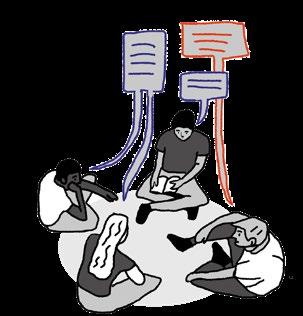
Explain the roleplay: in pairs, each person will take turns as Interviewer (asking guided questions) and Storyteller (sharing a personal story about standing up for something or creating change).
Ask participants to pair up, stand, and spread out around the room.
Round 1: The interviewer asks the storyteller about their story for 2-4 minutes, explaining a time when they made a change or stood up for something.
Switch roles, after 2-4 minutes.
Round 2: Repeat the process.
To support participants, there is a list of potential examples included at the end of the workshop plan. If needed, read out any you think will resonate with your group.

Extra guidance on the roles:
• Interviewers: Encourage interviewers to hold an imaginary microphone in their hands, and act as if they’re interviewing someone on television as part of a talk show.
• Storytellers: Encourage participants to respond as if they are being interviewed on a talk show.
Encourage and prompt the interviewers to ask open-ended questions that encourage deeper reflections from the storyteller.
Questions for the interviewer:
• Could you describe the situation you found yourself in?
• What motivated you to take action?
• How did you feel before, during, and after the situation?
• What was the outcome of your actions?
• Who else benefited from your actions?
Step 3: Reflecting as a whole group (10 minutes)
Bring the group together ask participants to share how they felt sharing their story.
Ask participants:
• What’s one change you’d like to see in your life? How could you start to make that change?
Encourage participants to discuss how many people their actions positively benefited, even in a small way.
Questions to help guide the conversation:
• How do small actions lead to bigger changes?
• Are there any changes you’d like to see in the wider world? What could the first step toward that change look like?
Ask participants to share:
• One thing they could do to make a positive difference in the future.
Potential next steps:
Investigate the stories of certain change makers - where did their actions start?

Examples list:
Helped someone:
• Listened to a friend who needed to talk about their feelings.
• Tidied up a shared space or park.
• Helped a friend or sibling learn a new skill.
• Assisted an elderly neighbour or family member.
• Comforted someone who was feeling sad or stressed.
Stood up for what they believed in:
• Stood up for a friend who was being treated unfairly.
• Shared their opinion during a class discussion.
• Asked for something they felt was needed in school – such as more diverse books in the library, or better student facilities.
• Signed a petition or supported a cause they believed in, such as climate change action.
• Chose to say no to something they felt was wrong.
Took an action that created change:
• Organised a small event, such as a fundraiser or bake sale, to support a cause.
• Helped someone resolve a conflict by mediating or calming things down.
• Wrote a letter to a teacher or local elected representative suggesting an improvement.
• Participated in a peaceful protest or awareness campaign to show support for a cause.
What matters to me
Outcomes:
2. Helping young people to recognise their power and agency.
3. Building trust between young people, elected politicians and democratic institutions.
Objectives:
2.1 Help participants articulate what matters to them.
3.3 Explore examples of where politics has had an impact on young people.
Summary:
This is a movement based activity where participants are asked to respond to newspaper headlines about current issues. Participants are asked to consider whether they care about that issue, how much it affects them, and discuss their responses as a group.
Materials needed:
A space to move around in.
Optional:
Wall signs to print or for reference can be found here. Newspaper headlines can also be found here.
Duration: 25 minutes*
Group size: 5+
Newspaper headline
*This time is calculated using only 4 prompts

Facilitation tips
• If this game brings up topics that require deeper discussion, don’t hesitate to pause or adapt the session. Use the facilitation guide in this toolkit for support (pg 16), and if young people express views that need further exploration or challenge, allow space for a broader discussion –even if that means stepping away from the game.
• This game is a great way to explore current and topical issues. Feel free to bring in your own news headlines to spark discussion and make it more relevant to your group.
Wall sign
Activity steps
Step 1: Introducing the activity (3 minutes)
Introduce the four parameters of the room:
Ask participants to imagine that the room is a graph:
• One axis represents how much they care.
• Another axis is how much it affects them.
Every time a newspaper headline is read out, participants will place themselves somewhere in the room, based on how much they care about the issue, and how much it affects them.
Here’s a visual representation of the axes:
This affects me
I really care about this
This does not affect me
I really don’t care about this
You may have to remind participants of the four parameters a few times – it is recommended to print off or create wall signs beforehand.
Wall signs to print or for reference can be found here.
Encourage authenticity: Emphasise that there are no right or wrong approaches; they should reflect their true feelings in their expressions, and will have the opportunity to share why they chose their position if they would like to.
Grounding: start by establishing that everyone in the room is coming from different experiences, there’s no right or wrong answers or approaches, and that there should be no judgement on opinions stated.
Step 2: Testing the concept (2 minutes)
To help participants understand the four parameters, read out one of the test prompts.
Give participants a moment to move to their corresponding place in the room, based on how much the issue matters to them and how much they care about it.
Once participants have moved, ask selected participants to share why they’re standing where they’re stood.
Test prompts: Imagine…
• The government has announced that odd socks are now banned. If you wear odd socks, you could be arrested.
• The government has declared that yawning in public is now illegal. Anyone caught yawning outside their home could face a fine.
Remember, the prompts should be formatted as a statement rather than a question.
The prompts can come from news stories or statements that you know will entice an opinion for example.

Step 3: Discussing the headlines (Around 3 minutes per headline. Longer with more discussion).
Read out headlines you wish to focus on in your group.
These can be current headlines, or issues that your group would be interested in.
For each headline, discuss participants reasons for standing where they’ve stood.
Step 4: Reflecting (5 minutes)
Discuss how participants felt the activity went.

Our suggested prompts can be found at the end of this game or here.
Potential questions:
• Did you all agree?
• Were there any interesting differences of opinion?
• Did you change your mind at all on any of the topics we discussed today?
• Which issues did we have the strongest opinions on as a group?
• What actions can we take on matters that we really care about?
Newspaper headlines:
Young people:
• Tuition fees are rising for undergraduate students at universities in England for the first time in eight years. Students from the UK will pay £9,535 per year in 2025-26 (BBC).
• The national minimum wage rate from April 2025 is £7.55 for under 18s, £10.00 for 18-20s and £12.21 for 21+. (gov.uk)
» During discussion, mention that the London
Living Wage is £13.85 (accurate as of June 2025), you can ask your employer for this.
• ‘Labour could introduce votes for 16-year-olds from next year’ (The Times)
• ‘Sadiq Khan has announced £2million for holiday clubs[…] to divert thousands of young people away from violence over the summer holidays.’ (The Standard)
UK politics: Climate change:
• ‘Black people were seven times more likely than white people to be stopped by police on suspicion of carrying weapons’ (IRR).
• ‘In the year ending June 2024, net migration was 728,000, far above pre-Brexit levels of around 250,000’ (Migration Observatory)
• ‘2024 was the deadliest year on record for Channel crossings, with at least 69 deaths reported.’ (Refugee Council)
• ‘A record number of people who have taken part in protests will be in prison in the UK’ (Guardian)
• ‘More than 10 million pensioners are not getting the 2024 winter fuel payment, after the government changed the rules.’ (BBC)
• Over one million crimes involving violence against women and girls were recorded during 2022/3 - this accounts for 20 per cent of all police recorded crime. (National Police Chief’s Council)
• They also recorded that violence against women and girls had increased by 37 per cent between 2018 and 2023
• ‘Rough sleeping in London hits record high amid predictions of worse to come’ (Guardian)
• UK may have to leave human rights treaty, says Conservative Party Leader (BBC)
• Electric-powered ‘Boris bikes’ hit London streets (The Standard)
• ‘2024 becomes first year to pass 1.5C global warming threshold’ (Sky News)
• ‘[The] World’s glaciers [are] melting faster than ever recorded’ (BBC News)
• ‘With temperatures rising around the globe and the oceans unusually warm, scientists are warning that the world has entered a dangerous new era of chaotic floods, storms and fires made worse by human-caused climate change.’ (New York Times)

Geopolitics:
• ‘Trump threatens Nato, Hamas, Greenland, Panama, and Canada in press conference’ (The i Paper)
• ‘Britain [approves] dozens of arms deals with Israel amid Gaza war’ (Declassified)
• [The Prime Minister] has announced drastic cuts to Britain’s international aid budget to help pay for a major increase in defence spending (Guardian)
The biscuit game
Outcomes:
2. Helping young people to recognise their power and agency.
Objectives:
2.3 Discuss where young people can have influence.
Summary:
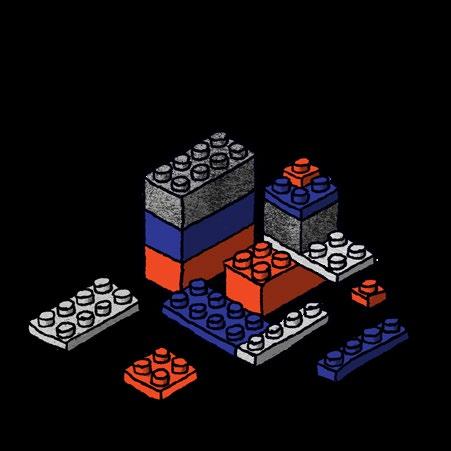
This game explores the challenges of group decision making and compromise. Participants are given the choice of three packets of biscuits – the only catch is that they must unanimously decide which packet to open before any biscuits can be eaten.
Materials needed:
Primary option:
• Three packs of biscuits (or an alternative treat).
• A table or space where all participants can see the packs of biscuits.
If biscuits aren’t available:
• Packs of sweets or small snacks (cheap and easy to distribute).
• Prizes (e.g., stickers, pencils etc.) if snacks are not available, or a choice of three different activities.
Duration: 20 minutes
Group size: 7+ (but make sure you have enough biscuits!)
Facilitation tips
Advice on biscuit selection
• This game works best when the three packs of biscuits (or similar treat) are reasonably equally weighted, and therefore a genuine choice for the group. This could mean:
» three equally appealing packs of biscuits
» three equally bland packs of biscuits
• You may wish to vary the size/weight of certain packs. Ensure each pack of biscuits has at least enough for one biscuit per person for the group.
Ensure at least one pack fits the dietary requirements of your participants.
Fun additions to the game…
• Ask the group if everyone has been included – insisting that facilitators must be included in the decision.
• Be extra vigilant about the decision being unanimous – asking everyone to put their hand up in agreement that you will open the selected pack of biscuits.
Activity steps
Step 1: Introduce the activity (3 minutes)
Introduce the dilemma: the group is going to have the chance to open and enjoy some biscuits (or any alternative incentive), but there’s a catch: the group must unanimously decide which packet to open before any biscuits can be opened. Introduce the biscuits (or alternative prizes).
Emphasise that the decision must be a group decision.
Emphasise that if the group can’t agree, they won’t get any biscuits.
Clearly display the three packets of biscuits.
Give participants a moment to silently consider which biscuits they would prefer.
Set a timer for 10 minutes, and set the group off to make their decision.
Once time has run out, either celebrate their success and open the selected biscuits, or…
If no decision is made, discuss what made the decision challenging, and what could’ve been done differently.
Optional: highlight some factors that may influence their decision (such as how many biscuits are in each packet, which is the heaviest, and obviously which is the tastiest.
If certain participants are dominating the discussion, you may wish to gently point this out and ask if all opinions are being considered.
If the group struggles to make a decision, prompt with questions like:
• Why is it important that everyone agrees?
• How can we compromise?
If no decision is made, after reflection, you can re-run Step 2 to eventually get some biscuits.
Step 2: Group decision making (12 minutes)
Step 3: Reflection and learning (5 minutes)
Reflect on the activity with the group.
Consider how decision making and compromise becomes more difficult with larger groups.
Step 4: Optional extension
Reflection questions:
• Did it feel easy to come to a decision?
• How did you feel when you couldn’t agree? Did anyone feel left out?
• Did you use any strategies to try and persuade others to agree with you? How was the
Imagine you’re an elected politician making an important decision for the whole of the UK (almost 70million people). What steps could you take to help you make the right decision?
decision influenced?
• Did any of you have to compromise at all?
• How do you think you would have approached this decision if there had been 100 people deciding?

Creating a politician
Outcomes:
3. Building trust between young people, elected politicians and democratic institutions.
Objectives:
3.1 Discuss stereotypes and assumptions that form our opinions of leaders, elected politicians and democratic institutions.
3.2 Discuss who has power and how it’s used.
Summary:
This game helps participants to creatively explore leadership and the key characteristics that they associate with political representatives.
Materials needed:
• Large sheets of paper or smaller sheets (one per group).
• Markers, pens, or coloured pencils.
Duration: 35 minutes
Group size: 4+, divided into groups of 2-4

Facilitation tips
• Encourage creativity and fun - the characters can be realistic or exaggerated. There is no right way of drawing your politician.
• For a version of this game that looks at wider civil society, try changing ‘politician’ to ‘leaders’ and discuss values that are needed in community leadership. This discussion can be helpful in approaching democratic leadership through universal transferable skills. To do this, throughout the game, wherever the word politician is underlined, replace it with the word leader.
• If harmful stereotypes about politicians come up, use the second half of this exercise to explore and question them. Encourage participants to think critically about the diversity of elected politicians and their roles, and that many politicians are working to support local communities. It may help to discuss examples of politicians making a positive impact, including those working on local issues relevant to your group.
Activity steps
Step 1: Exploring stereotypes (5 minutes)
Ask the group ‘what is a stereotype?’
What comes to mind when you think of a typical politician? (e.g. wears a suit, makes speeches, talks about change)

Stereotypes happen when you assume that everyone from a certain group is the same, e.g. all boys like football. They can stop us from seeing people as individuals with their own characteristics, likes, and dislikes.
Encourage honesty and allow participants to share both positive and negative perceptions. Write some of
Step 2: Drawing a typical politician (10 minutes)
Get participants into groups of 2-4 people.
Give the groups 10 minutes to draw their typical politician.
If you have time ask groups to introduce their politicians to the rest of the participants.

• 3 minutes to draw their clothes, hair and general appearance
• 1 minute to give their character a name
• 1 minute to say what job their politician did before they became a politician
• 1 minute to write down the character’s motivation for being a politician
Step 3: Drawing your ideal politician (10 minutes)
Ask groups to turn over their piece of paper. Give the groups 10 minutes to draw their ideal politician.
You can use the same prompts as above for this section.
Step 4: Reflection (10 minutes)
As a whole group, ask each smaller group to share one key difference between their first and second drawing.
Discuss whether politicians like their ideal politicians exist, and how to spotlight politicians who do good in their communities.
Optional extension
Step 5: Voting on ideal candidates
Discussion questions:
• Do you think we hear more about politicians like your typical politician, or your ideal politician? Why do you think that is?
• Do you think that politicians like your ideal politician exist in real life?
• How do you think we can
give more of a spotlight to existing politicians who are working hard for their communities?
• What do you think that we can do to encourage more people like your ideal politician to become politicians?
Give each group 5 minutes to prepare a short pitch of their ideal politicians as a candidate for your local area.
Vote on which candidate would be best to represent your group or local community.
Making a decision
Outcomes:
1. Connecting young people’s experiences to democratic processes.
Objectives:
1.1 Discuss how political decisions influence young people’s daily lives.
1.2 Explore relatable examples to show how politics is woven into the spaces young people inhabit and the issues they care about.
Summary:
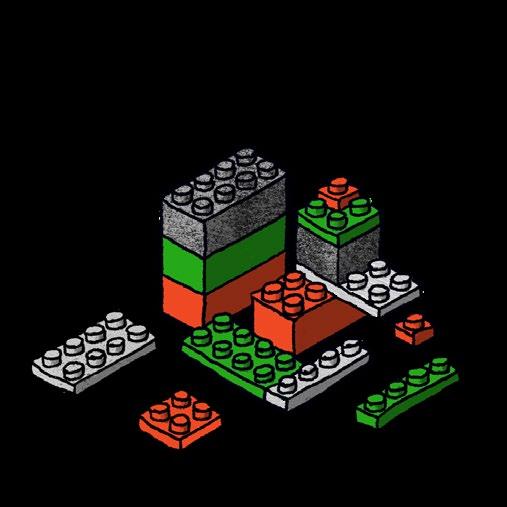
This activity asks participants to reflect, in pairs, on how they would prioritise eight key areas of government. They then move into bigger groups to explore how compromises must be made, to prioritise these areas with larger numbers of people.
Materials needed:
Eight small pieces of paper for each pair of participants, with the eight areas below written on them. These are the participants ‘cards’ for the game.
Facilitation tips
• A healthy amount of disagreement is good in this game – encourage participants to stand their ground as it will create more interesting discussion.
• Encourage participants to think from other people’s perspective –for example, how would someone in a rural community feel about transport links compared to inner city?
• Where you can, make links between the eight areas of government and young people’s lives.
Activity steps
Step 1: Definitions (5 minutes)
As a group, collectively define and give an example of each of these terms.
• Education
• Transport
• Welfare
• Immigration
• Defence
• International aid
• Health Law enforcement
If needed, definitions for all these terms can be found at the end of this game.



Step 2: Pair ranking (5 minutes)
Get participants into pairs, with each pair having a set of eight cards, with the eight areas written on them.
In pairs, give everyone a few minutes to rank their cards from least important to most important.
Step 3: Join another pair (10 minutes)
Each pair joins another pair and compares their rankings. What was similar? Are there any differences?
Instruct the new groups of four to work together to create a new ranking. The rankings should be based on agreement from all participants.
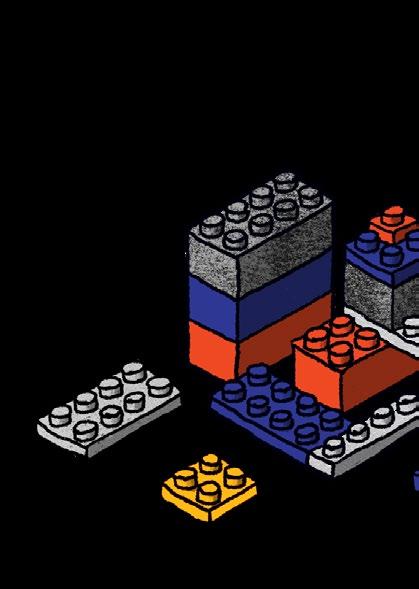
Encourage participants to persuade each other to change positions, and encourage debate. Ask participants to consider what they refuse to compromise on and where they can negotiate.
Step 4: Join another group (5 minutes)
Repeat the previous step with a larger group. Compare rankings. Compromise again by coming up with a new ranking everyone can agree to.
Step 5: Closing reflections (5 minutes)
Ask the group if it became harder to compromise as the group became larger.
Discuss how political decisions in these eight areas affect their day-to-day lives.


Definitions and examples
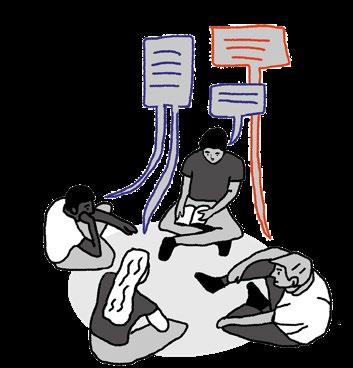
Recognise that the game is democracy in action. Similar discussions take place in real life in order to prioritise different areas of government.
Acknowledge that large-scale decisionmaking is hard, and often involves compromises we might not want to make.
Education – places where people learn, including schools, pupil referral units, colleges and universities.
Transport – things that help people move from place to place, including:
• public transport (buses, trains, tubes, and trams) and how much they cost.
• roads, pavements, cycle lanes, and parking spaces.
Welfare – where the government directly supports and helps people, such as benefits and pensions.
Immigration – people moving from one country to another to live there. Immigration controls are used to decide who can move to a country, and how long they are allowed to live there.
Defence – protecting and defending the nation’s interests and borders, including the armed forces.
International aid – assisting another country, such as financial aid given as part of a treaty, or after a natural disaster. Other examples of international aid include providing vaccinations, and military support.
Health – institutions and programmes that support the physical, mental and social wellbeing of citizens, including the NHS.
Law enforcement – organisations created to enforce and promote the law, including police, courts and prisons.
Mapping our community
Outcomes:
1. Connecting young people’s experiences to democratic processes.
2. Helping young people to recognise their power and agency.
Objectives:
1.1 Discuss how political decisions influence young people’s daily lives.
2.1 Help participants articulate what matters to them.
2.2 Support young people to identify changes they’d like to see.
Summary:
This activity encourages participants to reflect on their local community, identify areas they’d like to change, and consider who is responsible for making those changes. They draw a map of their area, noting safe spaces, and explore ways to create positive change.
Materials needed:
• Large sheets of paper (A3 or flipchart size)
• Coloured markers or pens (multiple colours for different reflections)
• Sticky notes (optional, for adding ideas to maps)
Facilitation tips
• Encourage openness: Make it clear that there are no ‘wrong answers’ in this workshop. Everyone’s experience of their community is valid.
• Support sensitively: If participants raise difficult topics (e.g. discrimination, unsafe spaces), acknowledge their experiences and ensure the discussion stays constructive.
• Adapt for time: In this game, it’s easy to get carried away drawing - if you need to complete the game within an hour, it’s wise to use a timer for each section.
Activity Steps
Step 1: One word to describe your community (5 minutes)
Ask participants to think of one word that describes how they feel about their local community and share it with the group.
Step 2: Mapping our community (15 minutes)
Ask participants to draw a simple map of their community, with their home in the middle. The map should help a stranger understand the places they go in their day-today life.
Focus on places you notice and are aware of. This could include schools, parks, youth clubs, shops, or transportation, local landmarks.
As a group, ask participants to feedback what their map shows, highlighting one area where they feel safest.


Encourage creativity but reassure participants that there’s no wrong way to draw their map. It does not need to be geographically accurate.
Additional prompts if needed:
• Where do you spend your time?
• Are there parks, shops, or public spaces you visit often?
• Do you have friends or family members nearby that you see regularly?
• Think about your journey to school or college. What streets do you walk down, and what landmarks do you pass? Try to include the places that make up your routine and the spots that are important to you!
Step 3: Reflecting on belonging and barriers (15 minutes)
Ask the group, are there areas you’re less likely to go? Are there areas you would avoid? Why?
Encourage the group to add some of these places to their map.
Discuss safety in your local area as a group.
Discussion questions:
• What makes a place welcoming or unwelcoming?
• Do you think everyone feels the same way about your map and the community?
Ask the group for ideas of what they would like to change in their community.
Discuss these changes and what improvements they would like to see.
Discussion questions:
• How would these changes make the space feel different? What impact would it have on the people who use it?
• Encourage participants to think about specific, tangible improvements (e.g., better lighting, safer spaces, more youth activities) and how these changes would enhance the space.
Ask the group who has the power to make this change?
How can we influence these different groups to start the process of making this change?
Encourage each participant to commit to one small action they can take this week, to make their community more welcoming, or to have their voice heard on issues in their community.

Encourage participants to think about who could influence or make the change happen: local councillors or MPs, schools, community groups, or even themselves as changemakers.
It could be contacting someone such as a councillor or MP; researching how to campaign; or making an area nicer to be in by, for example, picking up litter.
Step 4: Exploring change (15 minutes)
Step 5: Taking action (10 minutes)
Appendix: Where to find more information and resources
Democracy Classroom GLA Democracy Hub
Democracy classroom is a shared hub of resources, training opportunities and events, designed to help teachers, youth workers and young people better understand democracy.
https://www.democracyclassroom.com/
The Democracy Classroom Partnership is made up of a range of organisations that span the youth, education and democracy sectors, from small non-profits to national organisations.
To find out more about how you can have your voice heard, go to the GLA Democracy Hub:
https://registertovote.london/
There you can find a range of community and education resources.
There are also digital and print resources in London’s most widely spoken community languages. There you can find resources for D/ deaf and disabled Londoners, plus useful links for LGBTQIA+ Londoners.
Acknowledgements

This toolkit has been created with input from, and as part of, the GLA Civic and Democratic Participation programme. It is funded by the GLA Democratic Participation grants programme.
This toolkit has been co-created and co-produced with the knowledge and practice from the following organisations:
• Boys and Girls Club Wales, Advocacy Academy, Commence Games, Young Manchester, Caxton Youth, Skate Cabal, Reclaim.
Thank you also to the following organisations and their young people for piloting and testing the toolkit:
• Croydon Youth Assembly, Highbury Roundhouse Community Centre, Ham Youth Centre, Carneys Community, Hammersmith and Fulham Mencap, Indoamerican Refugee and Migrant Organisation (IRMO), Spotlight, Coin Street Centre Trust, Coram and Caxton Youth.

2. Helping young people to recognise their power and agency experiences to democratic processes.
Explore relatable examples to show how politics is woven into the spaces young people inhabit and the issues they care about.
2.1 Help participants articulate what matters to them.
2.2 Support young people to identify changes they’d like to see
2.3 Discuss where young people can have influence
2.4 Identify times when young people have used their own power and agency.

3. Building trust between young people, elected politicians and democratic
3.1 Discuss stereotypes and assumptions that form our opinions of elected politicians and democratic institutions.
3.2 Discuss who has power and how it’s used.
3.3 Explore examples of where politics has had an impact on young people.
