Danger in allowing direct entry to police management
ThE 13-hOuR
lockdown of the southern centre of Adelaide in the hunt for violent, gun-toting criminal Rodney Clavell early this month tested the whole community. Businesses could not open, employees could not access their workplaces, and traffic had to detour around the cordoned-off hotspot in k ing William St. in the company of clavell – inside the upper level of the building he refused to exit from – were four women whose safety was totally unclear. even Police Association staff, who remained available to members, could not access the association building at the western end of carrington St.
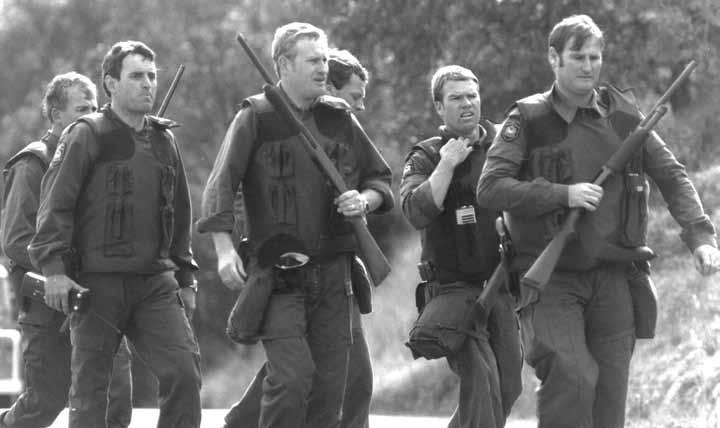
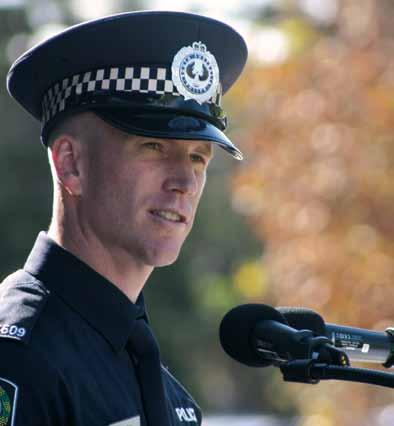
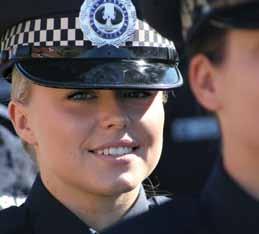
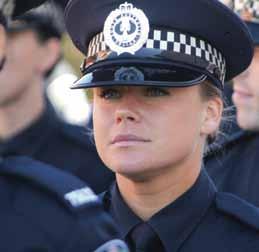
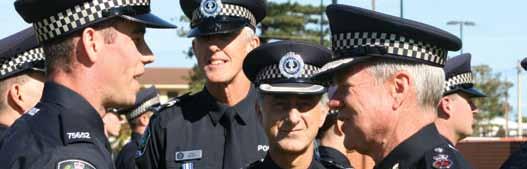
But those whom this dramatic incident tested the most were, of course, the police. And there they were, expertly containing the scene and managing the entire response to the siege. from commissioner gary Burns down to the front-line uniformed patrol staff on roadblocks, every officer played a critical part – in the interests of every city worker, visitor and resident.
The on-scene police managers came with their decades of experience; the STAR g roup contributed their invaluable specialist skills; and the street-wise patrols supported the whole operation.
clavell, a former prison guard and, later, prison inmate, had eluded capture for 17 days before the morning siege. And the absurd suggestion – which arose once or twice in the media – that the police effort to locate him had been below par, was shameful.
Officers analysed every piece of information, explored every lead, and worked around the clock through all those days in their quest to find him. Their input in that endeavour was as laudable as that which they contributed to the handling of the siege.
i f ever a society needed an example of its compelling need for a highly professional, expertly trained police force, this June 5 incident was it.
Ultimately, c lavell chose not to surrender and his death was regrettable. nonetheless, the display of police expertise was a cogent argument for
substantial government investment in police forces throughout the nation.
That investment creates the executive leaders we saw managing the clavell manhunt and bringing about the eventual release of the four women. none of these leaders gained his or her skills overnight but rather through years of participation in a range of police fields.
Of concern, then, is the poorly supported argument for programmes which would allow direct entry to the police occupation at commissioned rank. This stems from the belief, in some quarters, that police forces should broaden their talent pools.
But broaden the talent pools to include whom? People from completely unrelated fields with absolutely zero experience in or knowledge of policing? Perhaps aspirants who have never even interacted with a police officer, on any level?
Among all that the advocates of direct-entry programmes fail to grasp is the critical connection which links police service, experience and culture with community.
But the biggest flaw in the direct-entry argument is that it overlooks the rich pool of talent within the existing police workforce. it was from this talent pool that our outstanding leaders in the clavell siege came.
Some social and other commentators take the view that the rare individual bad apple in policing is a damning representation of police culture. That bad apple is nothing of the kind.
And the idea that direct entry would improve police culture by delivering fresh perspectives on sectoral and organizational structures and problemsolving is ludicrous.
cQ University lecturer c eleste l awson rightly indicated in Academics wrong about police culture ( Police Journal, December 2012) that the dominant cultural characteristic in policing is loyalty.
“Police officers trust other officers with their lives,” she wrote. And, on the question of accountability, l awson opined: “Most police welcome accountability. i t gives them the opportunity to show how good they are and how well they have achieved their function.”
The 17-day hunt for clavell came with extreme risk. All police officers involved in it had to trust each other with their lives. And the executive leaders, who were compelled to make the critical decisions during those days, had the experience and expertise to warrant that trust.
One manager i spoke to after the siege told me that it had been a long, hard day, but it had highlighted “many champion cops” who “slogged their guts out”. And indeed they did.
But the biggest flaw in the direct-entry argument is that it overlooks the rich pool of talent within the existing police workforce.
i have seen, and several times lamented, the state of U k policing, particularly in Beware the spread of second- and third-tier policing ( Police Journal, December 2013) and Privatizationofpoliceservices ( Police Journal, february 2014).
The Police Association remains wholly opposed to the implementation of community support officers, volunteers and privatized police services. We argue for continual government investment in the police profession and its people, through either enterprise bargaining or budgetary measures.
The undeniable return on investment was on show for all to see when the hunt for Rodney clavell came to its dramatic end on June 5.
Because of its outstanding practitioners, South Australian policing is world class.
ONE TO E xiT ThE TALENT POOL
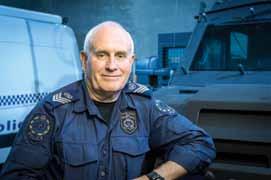
One of those outstanding practitioners is long-serving STAR Ops senior sergeant Martin Hawkins, who retires in August. i was particularly pleased to catch up with him when he visited the Police Association recently to tell his story ( The lead centurion, page 16).
His commitment to such a demanding, specialized field for so long, 34 years, is a great credit to him. Still today he responds with his colleagues to highrisk jobs of the clavell type – and he keeps himself in the excellent physical shape necessary to do so.
He might have a tough exterior but he is also a bloke with the common touch and a deep sense
of right and wrong. The Police Association congratulates Martin on his career and wishes him and wife Sue the best possible retirement.
He is one of many to whom the association pays tribute for long and distinguished service to the community. And like other police stories, which would go untold if not contributed to the Police Journal, his was an honour to present.
AND A NEW CONTRiBuTOR
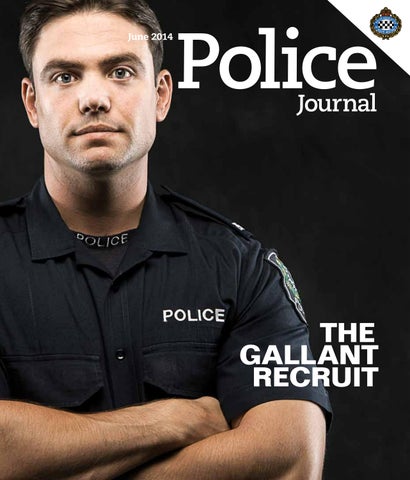
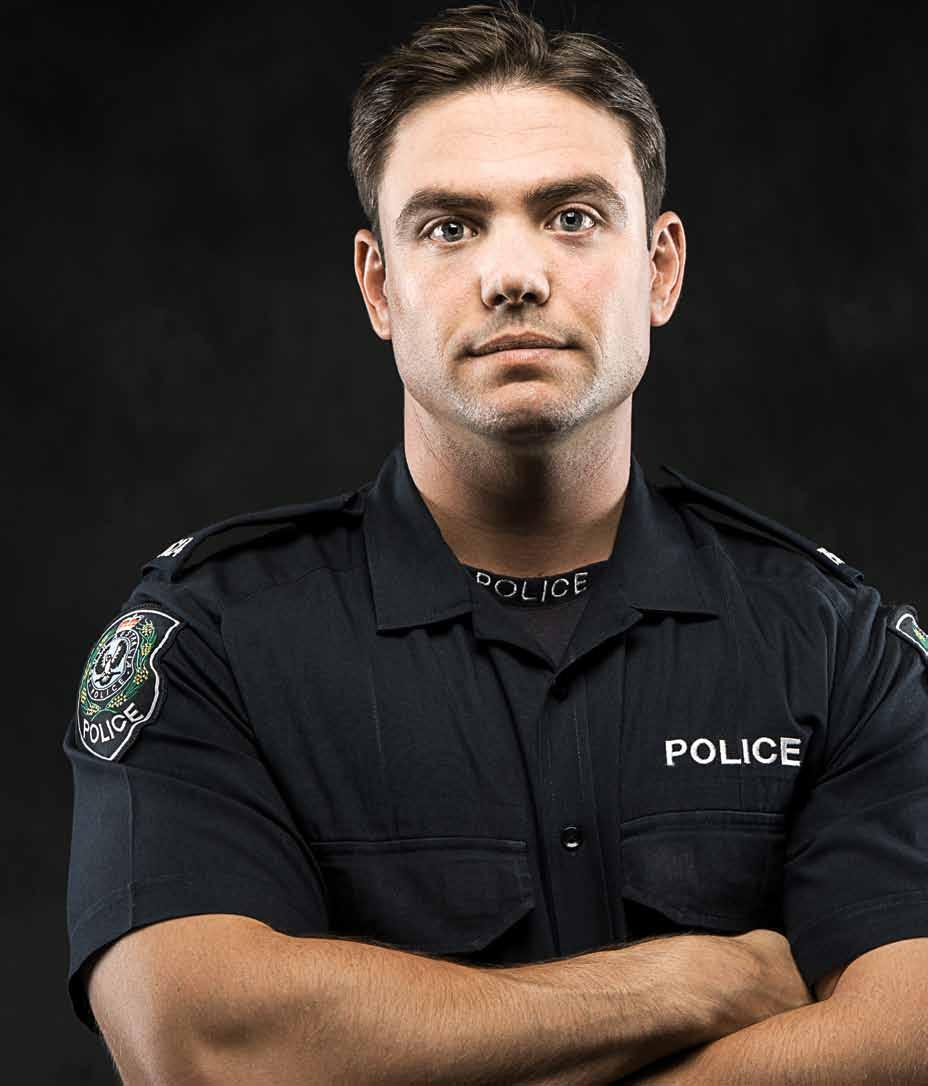
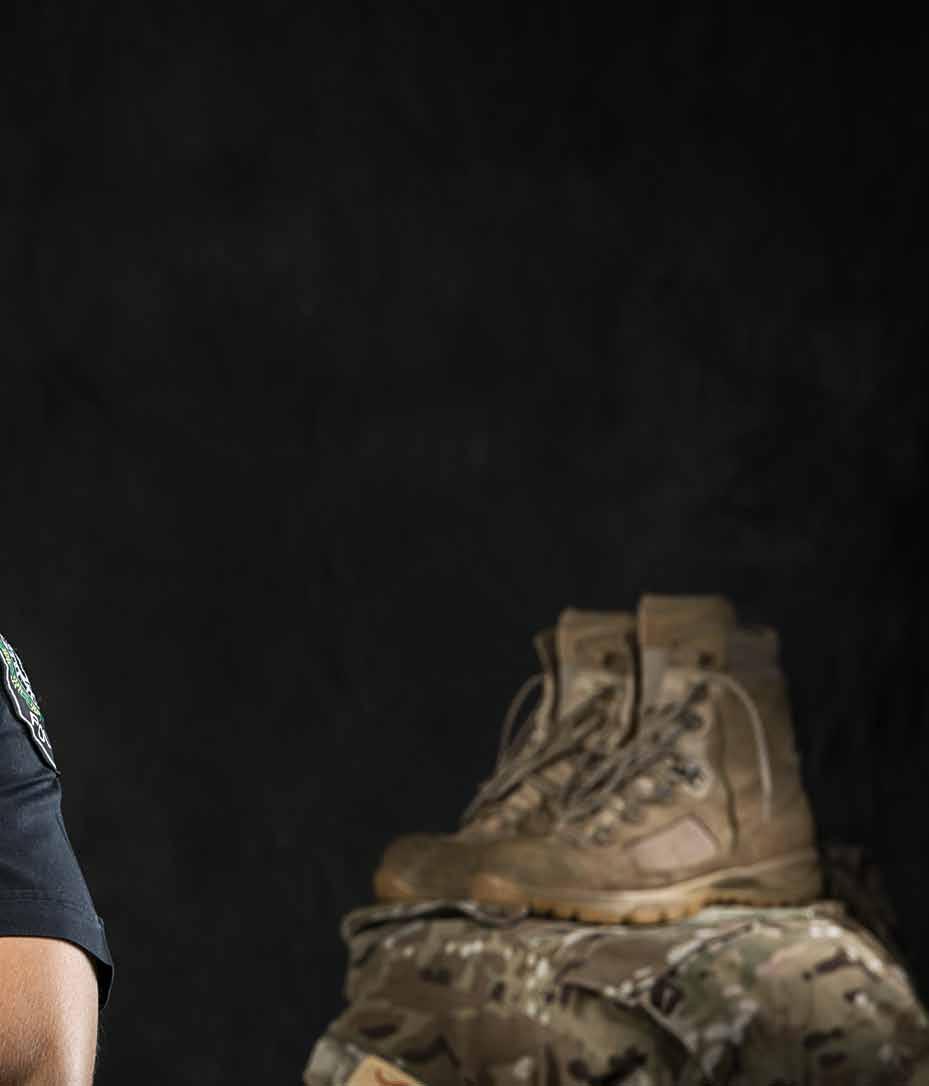
As Martin prepares to leave policing behind, a young man begins his police career. Scott Tampalini is the subject of our cover story, The gallant recruit (page 10).
He, too, has an outstanding record of service – as a soldier in the war on terror in Afghanistan. i recommend his story.
And, as i say to all recruits, the police occupation is steeped in a rich history of self-sacrifice, perseverance and triumph over adversity, as shown in the clavell case.
The gallanT recruiT
Out of the bombs and gunfire of dusty Afghanistan, he emerged a decorated soldier. now, Scott Tampalini is about to find out how close soldiering is to police work.
By Brett Williams
ONE of his mates had just taken a bullet to
the head in a still-raging firefight with Taliban insurgents near Kakarak. Scott Tampalini knew it had happened because another Aussie soldier had just yelled: “casualty! Hoppy’s been hit!” The victim on that March day in 2009 was corporal Matthew “Hoppy” Hopkins, 21.
The deadly hit on him made Tampalini “pretty angry”. The then lance corporal, 23, ramped up his rate of fire on the various positions from which the 20-odd insurgents were firing. Ultimately, he would empty five full magazines and launch 10 40mm grenades.
“So, just the night before, we were talking about how much cots and prams cost, and the next day he’s killed.”
But the objective now was to evacuate Hoppy, who had indeed died of his wound only a few minutes after he sustained it. Of the 10 outnumbered Aussies, all still under fire, Tampalini and another Digger carried their mate’s body out on a cloth stretcher to a landing zone. There, as sporadic fire from the insurgents continued, a US Black Hawk helicopter landed. The Aussies got Hoppy’s body on board and the chopper flew it out to safety. Then, as Tampalini and his mates went about withdrawing to Patrol Base Buman in the Baluchi Valley, the insurgents pursued and engaged them again. But the Australians, who just kept “bounding back”, made it to their patrol base without suffering any more casualties.
Says Tampalini: “Only two weeks earlier he (Hoppy) had had a son and got married while he was on leave. So, just the night before, we were talking about how much cots and prams cost, and the next day he’s killed.
“i often think of him. not many days go by that i don’t. i spoke to his mum and his partner, Victoria, in Darwin. They wanted to know what actually happened, (the) full details.”
Tampalini, who received a commendation for gallantry, found the conversation tough to undertake, particularly when those details upset the grieving women. “But it’s got to be done,” he says solemnly.
i n 2011, Tampalini himself took a bullet, in his left shoulder, and multiple pieces of shrapnel in his chest. local armed insurgents had had a clear view of the 25-year-old sniper as he held an exposed overwatch position.
He never did like working “overt OPs” but soldiers occupied them to provide “a presence”. n ow, close to an urban area and with 50 metres’ elevation, he could see a “suspicious local national” continually peering up at him and his two mates.
Tampalini, then a corporal on his third deployment in Afghanistan, had come to know an insurgent when he saw one. And the way this one kept coming into, and disappearing out of, view got all three soldiers fixated on him.
Then, suddenly, from about 150 metres to the left came gunfire from up to three insurgents. “We were really pinned down because (in our position) we were in quite a little hole,” Tampalini remembers.
“i returned fire, at doorways, windows, corners, just to stop the wave of fire we were getting, and it
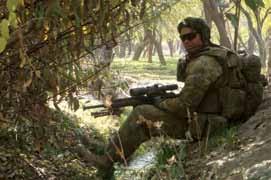
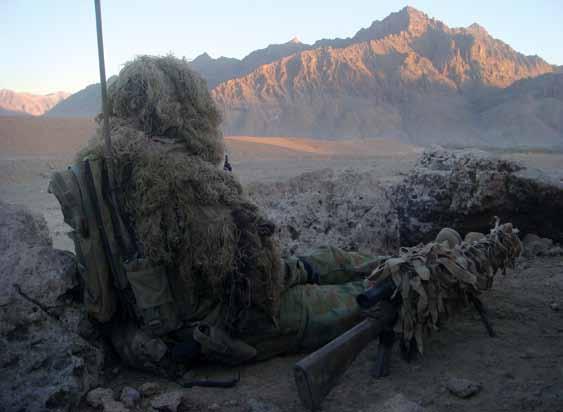
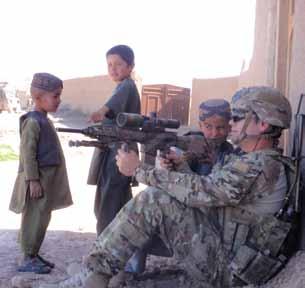
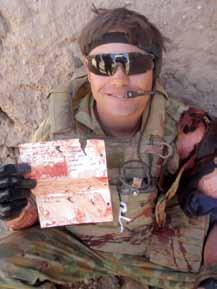
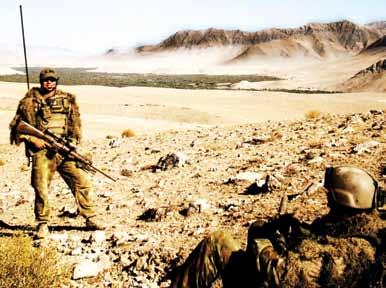
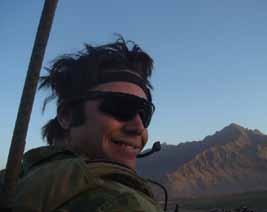
Left: in an overwatch position in the Baluchi Valley in 2010. Right: With local children in Tarin kowt during his deployment with Advisory Task force 1 in 2013; With his bullet wound exposed, Tampalini holds a blood-stained casualty card as he awaits the Black Hawk helicopter near the landing zone; near Patrol Base Mashal soon after an engagement in 2010.
died down for a second. you don’t actually know where they are, but they’re generally keeping their heads down, so you’ve got the time to reassess.
“But, then, another burst of fire comes through and one of the rounds goes through the bag in front of me, an ammunition tin, and hit me in the shoulder.”
The impact knocked Tampalini clean over onto his back, and hundreds of bits of ammunition and tin had penetrated his chest. One or more even nicked one of his arteries. And, although severely winded, he screamed: “i’m hit! i’m hit!” as his chest instantly swelled.
Then, one of his mates returned fire in 20-round bursts from a light machine gun. “So,” Tampalini says, “i’m going deaf next to this thing going off and i’m on the radio, saying: ‘We’ve got a casualty here! it’s me! gunshot!’
“Then i felt real warm down my side and (saw that) my hand was covered in blood.”
Before his injury had become obvious, Tampalini thought his body armour had absorbed the hit. But, now, he could feel that something was wrong with his arm, as one of his mates applied a tourniquet to it.
The firefight kept raging but, about five minutes later, Tampalini and his mates got to withdraw, as other Diggers charged in and took up their position. They completed the mission as their injured mate boarded a US Black Hawk chopper, which flew him back to his base.
And, back there, US n avy surgeons twice performed surgery on him to remove shrapnel from his chest. f or days afterward, he had to remain hooked up to a suction device which continued to draw out fragments of the shattered ammo tin.
Of course, Tampalini got to make some calls home to let family know what had happened to him. A conversation with his then-future wife, Angela, started off pretty routinely. He asked how she was and what had been happening at home.
But, then, she asked how things were going with him. With deliberate calmness, he said: “Um, i’m all right, but i got shot today.”
“ you what?!” she responded. “ you what?!” Tampalini assured her that he was fine but she insisted that he come home.
His mother, in a subsequent phone call, expressed the same view. But Tampalini told both women that, if he suffered no infection to his wound, he would serve out the remainder of his tour.
“i probably could have (gone home),” he says, “but we’d already had a member of the team shot and go home. His wound was far more serious than mine, and i still had two lads out there who were quite junior so i thought it best i go back and help them out.”
After two weeks recovering – or “mooching around”, as he describes it – in Tarin kowt, his wound had indeed remained free of infection. So Tampalini headed back to his outpost and, after another week, was out on patrols again.
“But even then,” he says, “i could barely lift anything with my arm as i hadn’t used it for a couple of weeks. it was very weak; and it was probably not a fantastic idea going back out.”
And the bullet wound followed another injury Tampalini had copped a week earlier, when an Afghan army dog bit his hand. He had to endure rabies shots which, compared with the gunshot, were far more excruciating.
N
OW a probationary constable kicking off a police career, Tampalini was just a 21-year-old private when he first went to war in Afghanistan in 2006. it was the first time he had ever left Australia.
“Walking off the back of a Hercules after we landed on a dirt runway,” he says, “i was thinking: ‘Where are we?!’ it was a completely different world. And, at that time of the year, it was very dry. There wasn’t much greenery around, and i thought: ‘How do these people survive?’
“it was a huge culture shock. Being in north-west Queensland for most of my life, i had never met anyone from a Middle eastern background – ever.”
The first enemy attack Tampalini ever saw was by insurgents with tracer rounds and rockets on an Afghan police checkpoint at night.
His role on that first deployment was that of an infantry rifleman/section scout with the 5/7th Battalion, and he was away for just under six months.
Out on patrols, he had to position himself forward of his section of 10 soldiers and ensure its route ahead was free of ie Ds (improvised explosive devices) and other threats. Much of the section’s movement took place around the Tarin kowt bowl.
Most of the patrols the section undertook were to protect engineers installing wells and tanks. So the Aussies were a deterrent to any insurgent who intended, as Tampalini puts it, “to have a crack”.
The Afghan locals, who Tampalini found “quite sheltered, private people”, posed one particular threat. “They’re predominantly Pashtun,” he says, “and the Taliban is Pashtun, so there’s a lot of tribal ties and they report on your movements. you’d never trust them.”
Tampalini undertook his second tour as part of Mentoring and Reconstruction Task force 1. That was in 2008-09 – when he stretchered away the body of Matthew Hopkins – and it was nine months long.
With the 7th Battalion, Royal Australian Regiment, he served as an infantry section second-in-command and crew commander of a protected mobility vehicle, or Bushmaster. He also mentored Afghan national Army soldiers.
Some of the skills he applied to that role came from a n ATO mentoring course he had undertaken in g ermany, where he mentored french f oreign legion soldiers.
in 2010-11, as part of Mentoring Task force 2, Tampalini took on his third deployment, this time as a sniper team leader with the 5th Battalion, RAR. He and his team had to provide support for operations on the ground, such as the containment and search of buildings.
That meant keeping watch on a building overnight, before others moved in to search it the next morning. if the snipers saw any suspicious activity ahead of the search they reported it and, when possible, targeted any insurgents.
“it’s hard,” he says of engaging insurgents. “ you don’t have time to think about it. you’re caught up
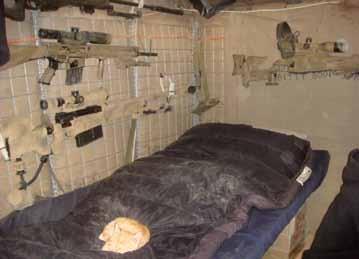
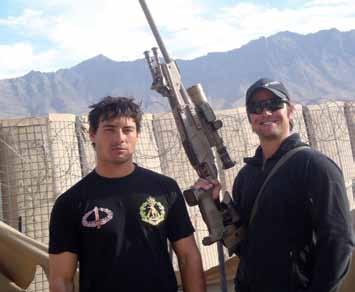
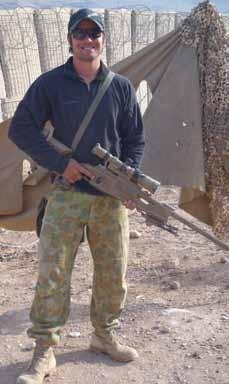
Left to right: Tampalini’s room on Mentoring Task force 2 in 2010-11 – Hesco walls and foam on ration boxes for a bed, along with adopted cat Zulu; With mate Shaun kober outside their rooms in 2010 (MT f2); Tampalini outside his room on deployment in 2010 (MT f2); On an overwatch task in the Baluchi Valley in 2010 (MT f2).
in the moment and there are plenty more targets, plenty more people trying to kill you.
“They were cunning, good fighters, and a determined enemy. i respect my enemy, but it’s either them or me, or my mates. Obviously, you’re going to choose them. it’s that simple. i don’t think about it any further – not one bit.”
Perhaps the greater hardship for Tampalini and his mates lay in their conditions.
Some of the crude accommodation, for 10, was at one stage a seven-metres-long wooden hut with small bunk beds and no privacy. Anyone who wanted that had to hang sheets up around his bed.
At another stage, Tampalini and his comrades slept again on bunk beds but in old concrete structures. And, for months, their food consisted of rations until supplies of fresh food came in each fortnight by air.
At the outpost he returned to after he was shot, Tampalini and others lived within walls of collapsible mesh and heavy-duty fabric known as Hesco bastion. e ven their beds were expandable Hesco baskets, and just a metre wide.
c ontact with home amounted to only around 20 minutes per week by phone. Skype was rarely an option because of poor internet coverage. Still, despite all he had seen and endured, and after marrying Angela, Tampalini opted to go back to Afghanistan on a fourth tour of duty in late 2012. His deployment was with Advisory Task force 1. He would be away for eight more months, this time as a sniper team leader with 7th Battalion, RAR. But far fewer opportunities came to engage Taliban insurgents so, to the great relief of his wife and parents, he returned unscathed in 2013.
wife Angela
“… if you don’t live in a fantasy world where you think nothing’s going to happen, it’s all right. you enjoy doing it. it’s your job.”
With
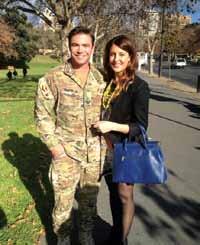
on k ing William St near the Torrens Parade ground before a welcomehome parade.
ThATlack of action was disappointing to Tampalini, as was the absence of more deployments on the horizon. He enjoyed plying his craft as a soldier and had never wanted to work in a nonoperational field.
nor did he want to put Angela and his parents, who all worried about him, through any more emotional strain. So, two months after his return to Australia, he resigned from the AD f to make a fresh start as an SA police officer.
He graduated with c ourse 5/2013 on April 30 and wound up assigned to Holden Hill patrols. His mother, a former Victoria Police sex-crimes detective, was his only family connection to policing. She left the job after she became pregnant with him in 1984.
Born in Hobart the following year, Tampalini was just five when he moved with his parents to Queensland. His father, a psychiatric nurse, had scored work there.
Tampalini undertook all his schooling in charters Towers, at Richmond Hill State School and Blackheath & Thornburgh college. And it was as a schoolboy that he decided to join the Australian Army. He just could not see himself “driving a desk” as a first job.
So, with his schooling complete, he applied in Townsville to join the AD f and, then, returned to Tasmania to take up a fill-in job as a cabinet-maker.
“i was pretty young and naïve,” he concedes, “and, to be honest, i had no idea of what i was getting myself into. it (seemed) a good idea and i just ran with it.”
Processing his application took 10 months but, finally, Tampalini enlisted in Hobart in July, 2003. He then headed off to Wagga Wagga for six weeks’ recruit training.
Over the next three years, he undertook other training as well as a few moves, first to Sydney and, later, to Darwin with the 5/7th Battalion.
And, after news emerged that his first Afghanistan deployment was a strong possibility – 12 months before it came to fruition – theatre-specific training became part of his routine.
“i was pretty excited,” he says. “We were all excited. for the majority of us it was our first deployment. it was a reconstruction task force, so the idea was to provide security to the engineers who build wells and water tanks.
“People say: ‘Oh that must be scary. you mustn’t want to go.’ But we want to go. you’ve got a sort of football team mentality: you train, and train, and train and you finally get an opportunity to play first grade.
“you don’t want to sit back on the bench and peel bloody oranges. And you don’t want to let your mates down who you’ve been training with.”
not even the prospect of death or serious injury ever dented the Tampalini enthusiasm for soldiering in a war zone.
“ you do get desensitized in training,” he says, “and blokes who have been over before come back and tell you stories, so you prepare yourself. i’d always prepared myself (for the fact) that something might happen.
“And, if you’re a realist about it, if you don’t live in a fantasy world where you think nothing’s going to happen, it’s all right. you enjoy doing it. it’s your job.”
BuT
his job now is policing, and Tampalini has, in just weeks, come to love its diversity. Specific factors drew him to the occupation: his mother’s police background, military mates who became cops before him, and the similarities he saw between police work and soldiering.
“The high risk work (in policing) is just as dangerous,” he says. “instead of insurgents, it’s crooks. And you’re all in it together. you all want to come home safe. There’s not much difference (in that regard).”
Most offenders who try to take Tampalini on physically will likely fail. So, too, will those who challenge him on the issue of Australian involvement in Afghanistan.
To critics, with no first-hand knowledge of the conflict, he simply will not speak. Some of them have given him good reason to take that position. There was the placard-carrying group he once saw as he drove out of enoggera Army Barracks in Brisbane.
Their signs, directed at the soldiers, read “baby-killers”.
Says Tampalini: “i thought: ‘ you don’t have any idea what’s going on over there.’ i ’ve seen a mate try to resuscitate a baby who’d drowned –an Afghan baby.”
To those with genuine interest in the war on terror he will happily give his time; and he values any display of public support for Australian military people.
“it’s fantastic,” he says. “On Anzac Day just gone, i wasn’t in a march but i was on the sidelines. And to watch others march and see people clapping as they go by was great. you feel proud.” PJ
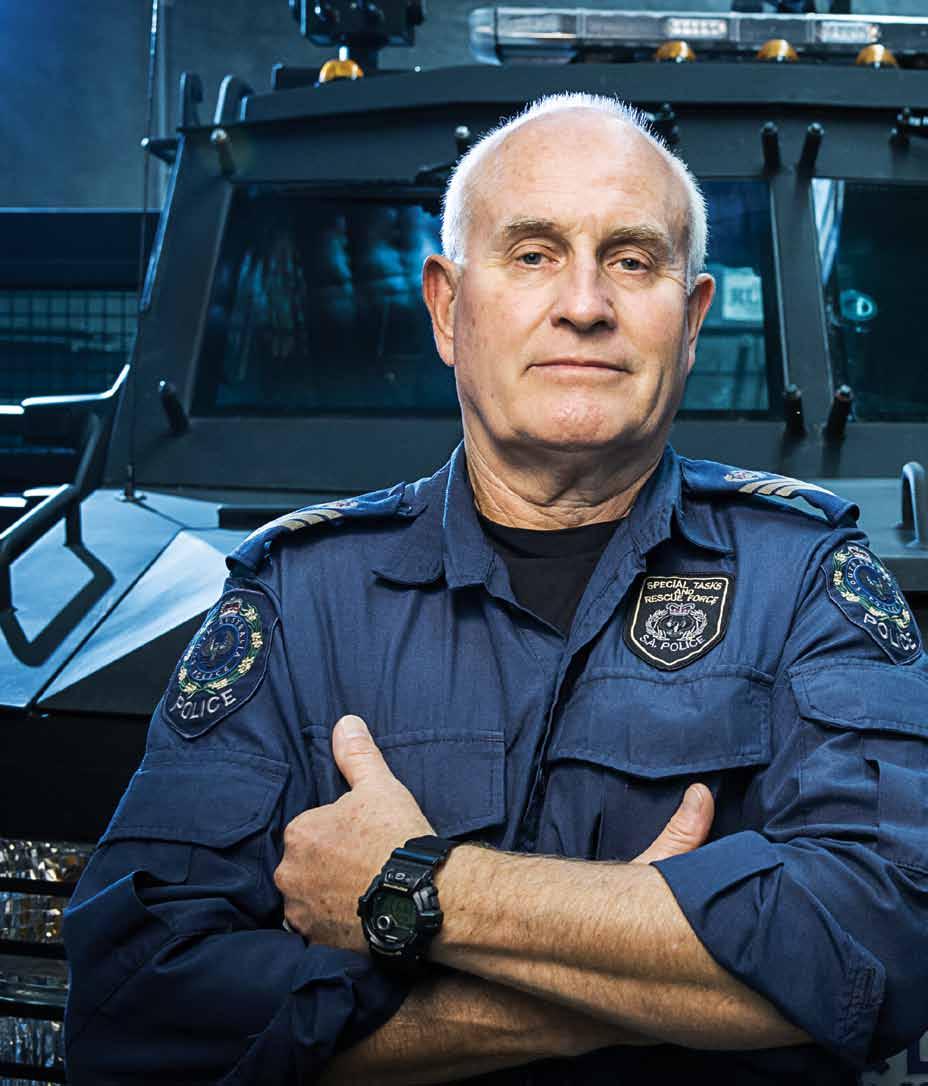
The lead cenTurion
He once had to ask:
“Who are these blokes?” as he watched a bunch of the first-ever STARies deal with a pub brawl. Today, he is the longestserving tactical copper in Australia – and the godfather of STAR Ops.
By Brett Williams
h i S charged exchange with now-jailed gunman Tony Grosser was brief but unforgettable. long-serving STAR group member Martin “Hawk” Hawkins kept his cool when the shooter asked: “How’s your mate going?”
g rosser was talking about Hawkins’ fellow STARie, Derrick McManus, whom he had shot 14 times during the 42-hour nuriootpa siege the previous day. And, for just a moment, Hawkins thought the question might have come as a first sign of remorse.
“He’s got some serious injuries but he might survive,” he told grosser, who responded: “Well that’s f--king bad luck.”
for such a hateful remark, designed to provoke, the average bloke might well have decked the smug, unrepentant criminal on the spot. Hawkins was certainly capable of that but instead practised self-control.
“i had thought he (grosser) was contrite when, in fact, he didn’t give a damn about Derrick,” he recalls.
g rosser uttered his despicable “bad luck” comment 20 years ago at the Modbury Hospital. Hawkins and a colleague, along with some c orrectional Services officers, had escorted him there from yatala l abour Prison for treatment to minor injuries.
Of his hundreds of encounters with hard-core offenders over 34 years with STAR group, Hawkins still remembers the g rosser one vividly. The day before it played out, he was at the siege in which the shockingly injured McManus had almost died.
And Hawkins knew something about close calls in police work. He was lucky not to have lost his own life 20-odd years earlier. Then a young Para Hills patrol officer on night shift, he and his partner responded to a report of a prowler outside a Smithfield home.
“even when i’m off duty and go to somebody’s house, i’ll always stand to the side of the door.”
its elderly wheelchair-bound resident had become the victim of local hoods, who had regularly taunted and harassed him. He had often had to call police for help.
Hawkins and his partner approached the man’s front door and positioned themselves on either side of it, in line with their police training. They knocked and announced themselves as police officers but the hard-of-hearing resident seemed only to have heard the knock.
And then, without warning, came a bomb-like blast which blew the whole bottom half of the door out, right between Hawkins and his partner. The elderly man had fired a shotgun in response to the knock, fearing it was his tormentors.
“it was a bit of a shock,” Hawkins says. “it shook us both up and was probably my closest call. it was quite a drastic measure to take and almost resulted in injury or death to two police officers.
“But, at the end of it, we were very understanding. The elderly resident was scared out of his wits. He was in his 70s or 80s, was wheelchair-bound and had had enough of the local idiots.
“We went back and saw him a week or two later, had a cup of tea with him and it was fine. i could understand where he was coming from.
“But, even to this day, i still stand to the side of the door. even when i ’m off duty and go to somebody’s house, i’ll always stand to the side of the door.”
Another close call for Hawkins came in the mid-1980s, when his STAR g roup experience amounted to only a few years. He and his colleagues responded to reports of gunfire in connection with a domestic disturbance at a Seaton home.
Soon after they arrived and began to don flak jackets and helmets at a nearby command post, local patrols saw a woman emerge from the house. Just as she stepped onto the gravel-covered driveway outside, two shots rang out!
They came from inside the house, through a window,
and both hit the woman in the chest before she fell to the ground. Then-STAR group sergeant John lawrie assigned Hawkins and now retired STARie Brenton Slape the task of retrieving her.
What remained unknown was whether she had survived the gunshots or was lying there dead in the driveway. With cover from fellow STARies on cordons, and a smokebomb, Hawkins and Slape jumped over a fence and into the driveway from the next-door neighbour’s property.
Says Hawkins: “The smoke was so thick that i ran straight into the wall of the house. But i subsequently got my bearings, and Brenton and i grabbed the lady under the arms (to drag her out).”
But as the pair undertook the daring rescue, more shots rang out from inside the house. Unclear then was whether the man later found to be the shooter was firing at Hawkins and Slape. e ven if he was, the determined STARies carried on with their mission.
“As quick as we could, we hightailed it out of the driveway and down the road to the paramedics,” Hawkins remembers. “But she (the rescued woman) was deceased.”
And, still, the job was not over. Hawkins and Slape kitted themselves up to go into the house as part of an arrest team. As they prepared themselves, they heard more gunfire. Then, after a period of silence, they moved in – Hawkins first.
“And sure enough,” he says, “he (the shooter) had taken his own life with a shotgun blast to the head, and that was the end of the job.”
BuTthousands more high-risk jobs were still to come, and Hawkins would relish the challenge inherent in all of them. n ever would he lose his passion for the section he first discovered by chance as a young Holden Hill patrol officer in 1979.
Then 25, he responded with other front-liners to a brawl at the Buckingham Arms Hotel, gilberton. Back then, it was one of a few volatile suburban pubs in which unruly behaviour often got out of control.
After Hawkins turned up in a cage car to help deal with troublemakers, he noticed several strongly built, trench coat-clad police officers. He had no idea who they were but marvelled at the no-nonsense way each one went about handling the disorderly.
“They weren’t taking a backward step in anything,” he says. “And i’m thinking: ‘Who are these blokes?’ That was until somebody said: ‘That’s the STAR force.’
“We locked up about 15 people for fighting, disorderly and all sorts of offences; and that was my first look at STARies. i thought: ‘i want to be party to this. That (kind of work) appeals to me.’ ” Hawkins had known so little about the STAR force because it had formed only a year earlier. So, almost immediately after the Buckingham Arms
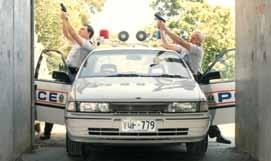
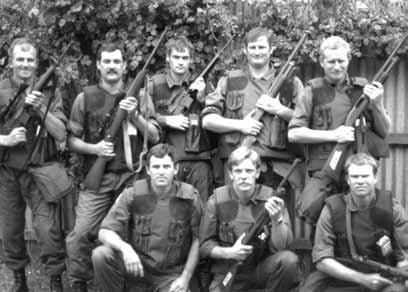
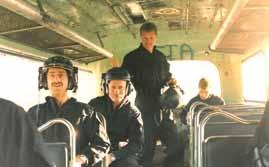
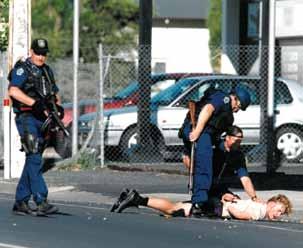
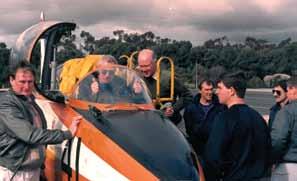
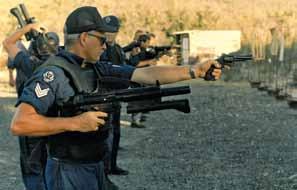
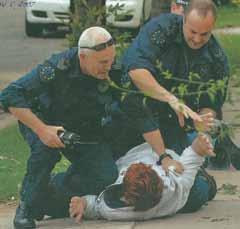
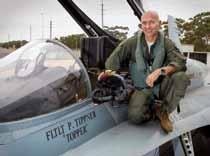
Clockwise from top left: Hawkins in training with colleague les Pearce in the early 1990s; Hawkins (third from left) with graham growden, John l awrie, Brenton Slape, gary Burns and Mark Bailetti after a siege at n airne in 1982; Hawkins in cockpit and, from left, Mark Bailetti, geoffrey “Buck” Rogers, Steve Schwerdt, Steve Thalborne, Silvio Amoroso and Trevor Black; During firearms training at echunga in 1989; On a training exercise at echunga in the mid-1990s; Arresting a gunman after a siege at n aracoorte in 1996 – Hawkins (left) with Peter foot and Tony fioravanti (kneeling); During training on an SASR course in Perth in 1987 (second from left) with Silvio Amoroso, Trevor Black and Howden Jennings; Hawkins (back row, far right) with STAR group colleagues in 1982.
job, he enquired about the section and how to go about joining it.
One source of advice was then future commissioner gary Burns, who had already joined STAR force after working, as Hawkins did, out of Holden Hill patrols.
Burns recommended the section to his soonto-be colleague, who scored a position on – and passed – a gruelling, days-long pre-entry course in 1980. in november that year, just six years after he had graduated from fort largs, 26-year-old Hawkins finally became a STARie.
Says Burns: “it was quite clear that, when Marty got there (to STARies), he’d found his paradise. it’s quite regimented; it’s disciplined; how orders are delivered is very clear and concise, and all that just fits in with Marty’s personality.”
Today, Hawkins is the longest-serving tactical police officer in Australia. And, at the age of 59, he continues to live up to every demand STAR group makes of its members, including the one for extreme fitness.
“i still do a lot of PT in the gym,” he says. “it’s ingrained into my system. if i get through a day or two not doing any physical training, i feel like a caged lion. i ’ve got to go and do something.
“We’re all subject to c BT (competency-based training) ratings, not just with the weapons but also the PT. We do a run, a swim, an obstacle course at netley police complex, and we do the chin-ups.”
Hawkins acknowledges how rare it is for a cop of his age to be working in a tactical outfit like STAR Operations. But he speaks of his years of specialist training and insists that he remains “on top of my game”.
Says g ary Burns: “At times, people stay in positions way too long and, as a result, they lose the edge. Marty’s never lost the edge. if you were going to put this (his STAR journey) into Roman times, he would now be the lead centurion.”
former fellow STARie kym Zander was one of the imposing figures Hawkins saw at that Buckingham Arms job 35 years ago. He admires him (Hawkins) and his lasting enthusiasm.
“He’s a person who found a job that he loved and that love (of job) has driven him,” Zander says. “it’s given him his longevity. i ’m proud of where he is and what he does and i’m proud to call him a mate.
“i f we went into some premises and were at ultra-high risk, Marty was at your shoulder. you had confidence in him: he was a competent operator.”
Still, despite his ongoing value to the section, Hawkins has announced his retirement and will leave in August.
“As you get older, you do question yourself,” he says. “There’s no doubt about it. But, if you weren’t doing the right thing, you’d get your arse kicked pretty quickly.”
And it is while no one has cause to give Hawkins that kicking that he wants to walk away from STAR group and into retirement. He accepts that, if he were to remain a STARie into his early 60s, he might find it tough to stay on top of his game.
Memories of the dramatic – the sieges, hostage rescues, pursuits, high-risk arrests and V i P protection – will remain strong in his memory. So, too, will the times when offenders left STARies no choice but to fire on them, in self-defence.
Says Hawkins: “i ’ve been there when people have been shot by one of my members and, look, it’s far from an ideal situation. it’s a last resort.
“They (the STARies concerned) go through a very rigorous investigation process. But you’ve got police officers who haven’t done anything wrong. They’ve followed process, they’ve made a judgement call and, 9.9 times out of 10, that’s the right judgement call.”
“i’ve always had that protective attitude towards people, particularly the ones who can’t defend themselves.”
hAWK
i NS has, in part, remained committed to the demanding work of STAR Ops because of his upbringing. His “pretty strict” father, Arthur, held particularly strong views about the importance of earning a living.
“Dad used to say quite regularly that being unemployed and receiving benefits wasn’t going to happen in the Hawkins family, and it never has,” he says. “i ’ve got four children and my brothers have kids and every single one of those children is employed.”
Hawkins and his parents and two younger brothers immigrated to Australia as Ten Pound Poms in 1964. To the then nine-year-old, who knew nothing about his destination, the six-week voyage via the Suez canal was an adventure.
Along with hundreds of other english migrants, the family’s first Adelaide accommodation was the Pennington migrant hostel, but only for a week. in that short time, Hawkins’ parents had found, and moved their family into, a house at elizabeth Vale.
And, within no time, Hawkins senior started work at Holden’s then-thriving elizabeth plant, where he had scored a job as a fitter and turner. His son used to watch him ride off to his job on a bicycle at 6:30am and ride back home at 4pm.
“And he’d still do jobs around the place,” Hawkins says of his father. “He even had a part-time job delivering locals’ groceries on weekends and, sometimes, my brothers and i would go with him.”
Hawkins’ mother, Sheila, was another great example to her sons. for years she stuck at a job as a receptionist for a local doctor, until she and Arthur later ventured into their own businesses.
To their eldest son, who never excelled in the classroom, sport was a far better proposition than schoolwork. Hawkins attended e lizabeth High School, as did many other British migrants, but only completed year 11.
Hawkins at the STAR Ops offices at netley police complex
By then, of course, the influence of his hardworking parents had rubbed off on him, so he was never going to be idle. He applied for two jobs: one with a bank and one as a copper with SAPOl. And, on the same day, he received acceptance letters from both employers.
After some indecision about which career to choose, Hawkins ripped up the bank’s letter and opted for policing. His innate sense of right and wrong had made law enforcement stand out to him.
“in school,” he says, “i’d stick up for people who were getting picked on or targeted. i’ve always had that protective attitude towards people, particularly the ones who can’t defend themselves.
“And i knew fort largs was quite disciplined but that didn’t faze me. My mother dropped me off in the morning, kissed me goodbye and i walked through those gates of fort largs.
“i did think: ‘What have i got myself into here?’ but there was a lot of other young fellows lined up and i just joined in, and it was good.”
So, at the age of 17, Hawkins kicked off his academy training in 1972, graduated in 1974, and wound up assigned to Para Hills patrol base. And, in his first week of shifts on the front line, he and his partner rushed to an 801 (police in trouble) at an elizabeth pizza restaurant.
if Hawkins had never appreciated the dangers of police work he would now. He found one officer
knocked unconscious and the other on his hands and knees bleeding. Two offenders, whom he describes as “idiots”, had gone about kung-fu kicking everyone in sight.
Hawkins and his partner charged straight in and arrested the violent pair, and some others. Then, back at elizabeth police station, he discovered that the two main offenders were brothers he knew at high school – and their father was his chemistry teacher.
Others he had known at school would come to his notice, too. And, to Hawkins, that was affirmation that he had made the right career choice, which he has stuck with for more than 42 years.
He has risen to senior-sergeant rank, taken part in big security tasks such as cHOgM (Perth 2011) and relished almost every minute of his time with STAR Ops. And, except for a divorce from his first wife in 1987, his private life has proved just as fulfilling.
Hawkins remarried in 1989 and he and wife, Sue, have just celebrated their 25th anniversary. The couple has two sons, Joshua and Matthew, and Hawkins has two children, Stacie and Jarrad, from his first marriage.
N OW
he faces a challenge he might just find tougher than any he confronted as a cop: the transition from highly active STARie to retiree. He admits that it daunts him, particularly after living a regimented working life for so many years.
“ i ’ve got to get my head wrapped around it (retirement),” he says. “ i think it’s only that unknown aspect of it that concerns me.
“i certainly won’t be inactive. i ’ve acquired a few bits and pieces (of equipment) because i want to continue my PT at home. i ’ll maintain my fitness right through my latter years.”
Also in retirement, Hawkins plans to work. He has already lined up a job taking sightseers on 4WD tours of Arkaroola Wilderness Sanctuary. Work as a casual cOMcAR driver is another job he will consider.
Of course, he plans to enjoy plenty of leisure time, too, caravanning around Australia and taking some trips abroad.
Before then, however, Hawkins has some unmistakable advice for those who seek STAR careers. “ you have to really want to do it,” he says. “it’s not easy to get in and it’s going to test you mentally and physically.
“ you need to look at it and think in terms of five to 10 years’ service. it’s unusual for someone like me who’s done 33 years (as a STARie), but i ’d like to think SAPO l got value for money out of Martin Hawkins.” PJ
Clockwise from top left: Hawkins helps make an arrest after a high-speed chase in 2007; Training at Bindoon army base, Western Australia in 2011; On search-and-rescue training at Morialta in 1982; With sons Joshua, Jarrad and Matthew.
Coveted award for the safety-minded
By Nick Damiani
ThE next winner of the annual Police Association Step- up safety award will emerge soon, with several members earning nominations for the trophy from their colleagues.
The Step-Up campaign, first launched in 2011, encourages members to report
potential workplace hazards which could negatively impact on occupational health and safety.
Two recent issues close to the hearts of members include the inadequate performance of the McA and cAD systems, and the configuration of certain police-station interview rooms.
MCA/CAD, iT iSSuES
When the SAPOL mobile computer application and computer aided data systems were not functioning as they should have, SC1C Stuart Mee and sergeants Peter Clifton and Scott McCudden decided to act last October.
The issues with the systems arose when patrol officers, conducting risk assessments and investigations, were unable to view appropriate and, at times, critical job information.
in a number of instances, the underperforming technology forced members to contact c ommunications to request the missing information, which should have appeared on the McA or cAD systems.
After investigating the issue, SAPO l iS&T identified a coding error and ultimately reprogrammed the application.
i S&T implemented the revised application in late January 2014, much to the relief of all affected patrol officers.
According to i S&T, “there has since been no further reports of information missing from cAD connect, no helpdesk calls and no indications that there are any issues with the application”.
STuRT POLiCE STATiON iNTERViEW ROOMS
Sturt police station’s audio and video interview rooms were on the mind of Sgt Michael Quinton – and for good reason.
The Sturt c rime Prevention sergeant, who has been nominated for this year’s award by Sgt Russell Stone (South coast lSA), held concerns about the standard configuration of the rooms.
The police interviewer was seated furthest from the door, while the suspect seemingly had pole position near the room’s only exit door.
if a suspect were to become aggressive and require restraint, back-up police officers could not gain easy access to the room.
it was also far too easy for the suspect to block access to the room.
As a result of Sgt Quinton’s report, interview rooms at Sturt have been reconfigured to enable members to be seated adjacent to the exit doors, with all supporting equipment behind them.
The Quinton report also resulted in other lSA managers taking note of the configuration of their interview rooms, and identifying similar safety issues in the best interests of members.
nominate for the awar D
By submitting a SiMS hazard report you could be honoured with the Police Association safety award. This award is bestowed on officers who have stepped up and brought about outcomes which have improved safety in their workplaces. nominations and any other supporting documentation, such as SiMS hazard reports or photos, must be entered before nominations close on Friday September 30, 2014
TO A SAFER WORKPLACE
A panel of judges assesses all entries, according to set judging criteria.
To submit a nomination, go to the Police Association website (PASAweb) at https://secure.pasa.asn. au/pasa/step_up/the_pasa_safety_award.jsp
Sgt Michael Quinton
Sgt Scott McCudden
Police associaTion backs young seaforD sTrikers
A GROuP
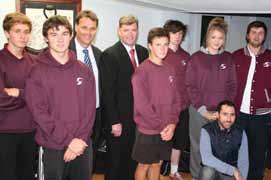
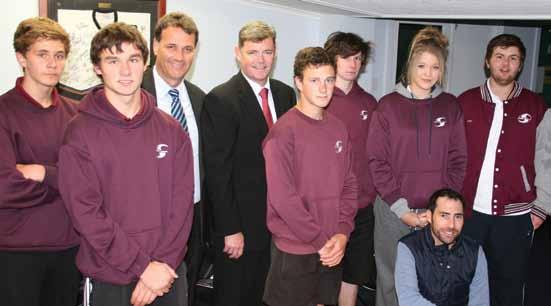
of disadvantaged and at-risk high school students is set to benefit from Police Association funding for sports equipment. e ach of the 15 teenagers received an ice hockey starter kit during an informal ceremony at the Thebarton ice Arena early last month.
Their school, Seaford Secondary c ollege, is the newest participant in the South Australian i ce Sports federation’s i ce factor Program.
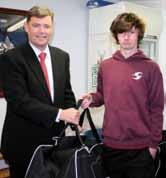
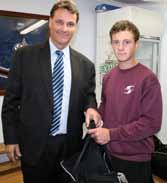
Police Association president Mark carroll and Austbrokers countrywide representative gary Decru were on hand to present the kits to the grateful students and budding ice hockey champions.
The association funding came as part of the union’s long-standing support for charities such as novita, the neil Sachse foundation and the Women’s and children’s Hospital through PASA k ids.
Mr carroll explained that it had not come from association members’ subscriptions but out of sponsorship money paid to the union by Austrbrokers countrywide.
“The great thing about the ice factor Program is that it’s helped – and continues to help – vulnerable kids continue to engage in their schools,” Mr carroll said.
“And i think we’ve all seen examples of kids learning so much from participating in sport, such as self-respect, discipline, commitment and the importance of teamwork.”
“ i t’s tangible,” he said. “ you can actually see where the charity money goes. And this is something that we can follow. We’ll be able to see a few months down the track how it’s all transpired and whether it’s actually made an impact.
“i think sport does teach them about teamwork, and it’s a great way for them to interact with kids of all ages, as well as coaches and other parents. it’s a great learning environment.”
established in 2005, the ice factor Program –based at the ice Arena at Thebarton – sets out to use ice hockey as a means of cultivating long-term life skills in at-risk youth.
According to organizers, the teenagers get a “second chance to receive an education and often a first chance to be part of a team sport”.
Participating schools require the students to form teams to compete against one another. The Seaford Secondary college team is known as the Seaford Strikers.
Schools also use the programme to enable their students to achieve a SA ce unit in community studies.
Austbrokers c ountrywide is the provider of the Police Association's $300,000 group life insurance for members
Mr Decru, who travelled from interstate to attend the presentation of the starter kits, said he had always regarded the programme as “a great idea”.
Mr c arroll said the extent to which the programme prevented disadvantaged teenagers from resorting to crime had to be “a positive for police”. PJ
Far left: Mark carroll and gary Decru with students and organizers at the presentation and, left: Mr carroll and Mr Decru present starter kits to students
letters to the eDitor
Can be sent by:
Regular mail Police Journal, PO Box 6032, Halifax St, Adelaide SA 5000
Email editor@pasa.asn.au Fax (08) 8212 2002
internal dispatch Police Journal 168
Back from Boston
i have returned to Australia after going to the USA to take on the Boston Marathon (Bound for Boston, Police Journal, December 2013). On my first night in Boston i walked from my apartment to the finish line. it was a surreal experience to stand where the first bomb went off and three people had died.
The next morning i went out in almost zero degrees for my first run along the charles River. All the kenyans were there running together and i thought: “Wow! This is it! i’m running with the best runners in the world!”
i lost count of the amount of people who heard my accent and stopped and thanked me for coming to run for them.
My best encounter was with carlos Arredondo, who featured in the famous image wearing his cowboy hat and saving the life of a man in a wheelchair. i walked up to him just to shake his hand and we spoke for 10 minutes.
i was the only non-US police officer to attend the one-year commemoration of the death of Officer Sean collier. i walked into a room filled with police officers grieving for their fallen comrade. They welcomed me like i was one of them.
Member’s book a groundbreaker
i have written a textbook entitled criminal investigations in South Australia and its release is pending. it’s the first time a textbook on investigations has been written for any police jurisdiction in Australia. it will be a valuable tool for any police officer who wants to learn more about the legal and practical issues involved with criminal investigations in this state.
The book explains complex legal rules and procedures in a practical, concise manner. it is also packed with case studies to illustrate these topics and show how investigations should – or shouldn’t – be done.
The chapters spell out the comprehensive nature of the book: offenders, victims, witnesses, crime scenes, exhibits, note-taking, drafting statements,
The chief of the MiT police made a speech. if it didn’t bring tears to your eyes you weren’t human.
On April 21, Marathon Monday, i eventually got to the start line, ready and calm. i left in the first wave of runners and the first half i ran well.
By about the 25km mark, something started to happen and i just knew this wasn’t going to be the day i had planned. i was in big trouble and made an on-the-run decision.
i eased off and had fun. i high-fived kids, revved up the crowds, yelled to other competitors to encourage them and just had fun.
The crowd of more than 1,000,000 people was amazing and when word came through that an American had won the Boston Marathon the atmosphere went up tenfold.
i crossed the finish line in two hours, 59 minutes, 34 seconds, which was still okay for a bad day on the world’s hardest course. i can proudly say i am a Boston Marathoner who ran in the most important running race in history.
i also located my father’s grave in california and spent less than 10 minutes there. i had absolutely nothing to say and just walked away. There’s no reason for me to ever go back.
Thanks to everyone for your support over the years. Jon Fuller christies Beach
interviewing offenders, identification parades, forensic procedures, entry, search and seizure procedures, arrests, criminal liability, brief preparation, disclosure and immunity, trial process, and testifying.
former Major crime Oc Detective Superintendent Paul Schramm (ret) wrote the foreword for the book, which he described as “groundbreaking”.
Retired senior sergeant and former O c of the SAPO l detective training programme Mick lyons called the book “fantastic”.
A number of investigators and prosecutors from across SAPO l and its branches have contributed to the final product. Also, a number of civilians, with experience in law or victim services, have been valuable contributors.
The book comes at a time when the criminal law has never been more complex. SAPO l has recently
spoken of the high stress level among prosecutors.
The most recent c ommissioner’s Blog lamented the complexity of trespass laws for police entering private property.
i hope this book brings some clarity to the minefield of criminal investigations and helps police officers gain confidence in discharging their critically important public duties. investigators know how important it is to be on top of their game. So i hope this book is a step in the right direction toward giving us an edge over criminals.
Members can contact me by e-mail (manewbury@ adam.com.au) or phone (0431 560 566) to pre-order ($70 incl gST).
Michael Newbury
Detective Brevet Sergeant
Major crime investigation Branch
BOUND FOR BOSTON Journal
Does SAPOL manage fatigue in the workplace appropriately?
Detective Brevet Sgt Phil Maynard
Sexual crime investigation
n o. i am passionate about fitness and firmly believe it’s a major factor in the reduction of fatigue and stress.
STAR group members, for example, sometimes become fatigued in the performance of their duties. However, their high levels of fitness assist in the management of this fatigue.
They are able to train in work hours as a part of their duties.
elite athletes cope with decision-making under duress because of their high levels of fitness.
i’m not advocating for all members to be able to train on duty. However, SAPOl could easily provide adequate training facilities or provide subsidized gym membership.
Only recently SAPO l members (outside the academy) were granted the right to utilize their gym facilities. And this right is still not afforded to members who don’t work in Angas St.
Senior Const Tony Devlin
eastern Adelaide
lSA
no. And i also think SAPOl lacks consideration for the effects of fatigue on members’ health.
i’ve worked in east Adelaide on the old five-week roster, and i ’ve also seen the transition to the new seven-week roster.
With the number of quick-change shifts, and the constant changes to our starting times in the sevenweek roster, my impression is that the roster was implemented with operational requirements and flexibility as the chief factors in mind.
i believe it was implemented with scant regard to its impact on members.
Brevet Sgt Dave Evans
Robe Police
Station
Overall, SAPOl does manage fatigue.
When it comes to small stations, with very limited resources and considerable distances between neighbouring stations, managing fatigue can be a challenge to the organization in meeting its obligations under the Work Health and Safety Act 2012
i know of many instances around the state, where, due to extended sickness or vacancy, clause 14 stations have operated below full strength.
As i understand it, this is due to the organization’s policies in respect of managing short- to mediumterm absences.
This usually means members shoulder the increased workload and on-call responsibilities, sometimes resulting in members feeling overburdened, stressed, sick and anxious.
Gilberts Accounting
Requests for police attendance in clause 14 stations outside of duty hours need to be carefully vetted to ensure the recall criteria for emergencies are met.
From top: Detective Brevet Sgt Phil Maynard, Senior const Tony Devlin and Brevet Sgt Dave e vans.
inDusTrial
Nick Damiani
Uniforms causing allergic reactions
FEW police officers would ever have expected their uniforms to leave them suffering allergic reactions. But that seems to be precisely the outcome for some unfortunate wearers of the SAPOl kit of the last two years.
The popular dark blue uniform – of which SAPO l began an incremental rollout in October 2012 –has created much concern since last f ebruary, when members first informed the Police Association of their allergic reactions to it.
Allergies have struck at least eight members as a direct result of the uniform.
Media outlets latched onto to the issue and contacted the association after news of these members’ predicament broke.
The affected members’ allergies often manifested themselves as skin rashes, particularly in the hip and abdominal areas. i n each case,
in each case, medical experts established that the symptoms resulted from skin contact with the uniforms.
medical experts established that the symptoms resulted from skin contact with the uniforms.
And even repeated washing of the garments was no antidote.
The association immediately commissioned the c S i RO to conduct tests on the uniforms to determine what harmful materials, if any, they contained.
Of particular concern to the association was the possible presence of formaldehyde resins, materials that many textile factories use to produce wrinkle-free clothing.
The c S i RO tested for this compound, as well as other heavy metals and detergent residues. But their tests did not find dangerous levels of these materials.
The association has now recommissioned the cSiRO to conduct further testing on the garments, this time for the presence of azo dyes. not all azo dyes are problematic but many are known to pose health risks after prolonged direct contact.
SAPO l issued a statement last month outlining the steps it was taking to tackle the issue of allergic reactions to the uniform.
“(We are) seeking an independent scientific analysis of the fabric in the uniforms,” the statement read.
“further assessments are being conducted by an immunologist, and SAPO l is seeking an independent scientific analysis of the fabric in the uniforms.
“The company contracted to provide the uniforms is also examining the issue and has undertaken to provide SAPOl with additional information in relation to the specific materials used.
“SAPO l will fully investigate this situation and work with employees to ensure an appropriate resolution.”
SAPOl maintains that the “international standard” of clothing manufacturing was a key requirement when it put out the tender for the uniforms.
Police Association president Mark carroll said the union had discussed the issue with SAPO l to arrange alternatives for members who were suffering allergic reactions.
“SAPO l has provided affected members with one or more of several options,” he said.
“Depending on the members’ work requirements, these can include the option to wear plain clothes,
to wear the old light blue uniform, or for SAPO l to issue the member with an entirely new uniform from a different batch.
“We know that, in at least one member’s case, SAPO l issuing a new uniform from an alternative batch has alleviated the problem.”
Mr c arroll urged members who experience allergic reactions to the uniform to advise SAPOl and the association.
“We can then work toward a solution specific to each individual member,” he said.
All updates on further cSiRO tests will be published on the Police Association website (PASAweb).
BEARDS AND TATTOOS
Media interest in SAPO l policies on beards and tattoos has followed reports of the suspension of two bearded Victorian police officers for breaching general orders on dress standards.
The officers were originally part of a 16-strong group of Victorian police who lost a battle at the Victorian civil and Administration Tribunal to keep their beards.
They have since taken their case to the Victorian Supreme court.
Police Association president Mark carroll said SA members were permitted to have beards. He added, however, that those who chose to sport facial hair had to do so within the parameters of the SAPOl general order on dress standards.
“And the commissioner has the power, legislatively, to set those standards,” he said.
Mr carroll also recently responded to questions about the hot topic of SAPOl’s tattoo policy.
“What we’ve seen recently with tattoos is an enforcement of a policy that always existed,” he explained.
“As a result, we’ve seen several members advised by their managers to cover up their tattoos.”
“Some members have applied for exemptions and had them granted, only to have them rescinded down the track.”
According to the current general order, if SAPOl deems tattoos to be “excessive or offensive”, the member will be required to cover them.
Mr carroll, however, noted that there had been confusion and inconsistency around some recent decisions of the SAPOl tattoo review panel.
“Some members have applied for exemptions and had them granted, only to have them rescinded down the track,” he said.
it appears that SAPOl has now recognized that flaws exist in its review process. in a letter to the association last April, its industrial relations branch highlighted that it was undertaking a comprehensive review of the current tattoo and body art policy, with a view to writing a new draft policy.
Mr carroll said the association would monitor the development of any new policy.
The club’s key players
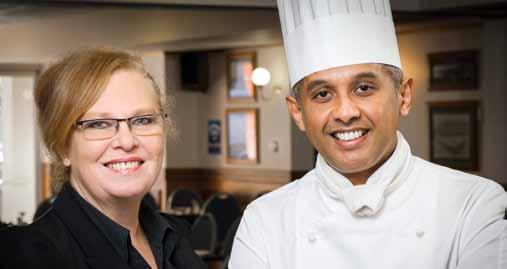
the MANAger
Police Club manager Bronwyn Hunter has worked in the hospitality industry for many years and has experience in everything from fivestar venues to clubs and pubs.
In her time, she has worked alongside both local and international chefs in large- and-small scale operations.
Now, Bronwyn’s sole focus is on ensuring that all who visit the club are well looked after and super keen to return – and keep returning. She has heaps of drive and loves to provide personal service. She also loves the part she now plays in the wider police family.
the Che F
Club chef Leon Wijesinghe undertook his training in the Maldives and started his career in Sri Lanka as a fine-dining chef at Le Meridian Hotel Colombo.
Later, in moves that broadened his experience, he worked as chef on luxury cruise ships, as well as top international hotels such as the Dubai Hilton and the Hyatt Regency in Adelaide.
Then, in 2011, Leon went to work at the Strathmore Hotel on North Terrace but, in April 2012, joined the Police Club as its head chef.
He excels with every dish he prepares – be it meals for formal occasions such as the Police Association industry forum luncheons, graduates’ dinners and degustation events, or budget-priced wholesome buffet meals and bar snacks.
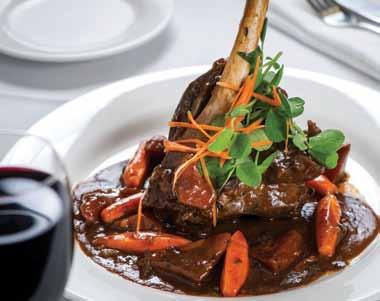
But his succulent steaks and slow-cooked lamb shanks are dishes for which Leon has become very well known.
Open Monday to Friday for lunch and Friday nights
LeON’s reCiPe – CONFit LAMB sh ANK (slow-cooked lamb shanks)
Ingredients
4 lamb shanks
1 tablespoon rosemary (fresh)
1 sprig thyme
1 tablespoon chopped garlic
2 tablespoons chopped onion
1 tablespoon tomato paste
2 tablespoons flour
2 stalks celery – roughly cut
Timing
2 carrots roughly cut
6 tablespoons olive oil
2 bay leaves
600ml beef stock or jus
350ml red wine
50g butter – monter au buerre
(to enrich the sauce by tossing while adding small pieces)
Preparation: 20 minutes; cooking time: two-and-a-half hours; ready in two hours, 50mins
Directions
1. Preheat the oven to 205 degrees.
2. Toss the lamb shanks in flour to coat then over a medium heat seal the shanks with olive oil until golden brown on all sides. Then remove and set aside.
3. Add the carrot, onion, celery, garlic and some pepper to a frying pan and cook until golden brown by stirring constantly.
4. Season with the bay leaf, thyme, rosemary, then add red wine and reduce by half. Now add the beef stock or gravy mix/jus and increase heat to high, and bring to a simmer.
5. Place the lamb shanks on a baking dish, pour the sauce over the shanks and cover with foil and place into the preheated oven. Bake gently until the meat is tender and falls off the bone, 2 hours 30mins.
6. Remove the bay leaf and herb stems before serving with vegetables and sauce.
This is best served with the sauce juices poured over mash, sweet potatoes or a soft couscous.
Available for private functions, conferences, boardroom lunches, cocktail parties, training facilities and more
Competitive food and beverage packages – use your Police Club membership card and save even more.
Dr Rod Pearce
Best to acclimatize to humid conditions
Time on an island paradise can be a delight on one hand but physically taxing on the other
ThEnorthern tropical regions of Australia are tempting places for holidays, particularly during the cold winters we endure in the southern half of the country. Heading off to places like the Daintree Rainforest or kakadu national Park must appeal to police as much as it does anyone else.
But these destinations are renowned for their humidity, which weather forecasters report on just about every day. Humidity refers to the amount of water vapour in the air, and it creates that muggy, sauna-like atmosphere known so well in the tropics.
Most people would have heard the terms relative humidity and absolute humidity. The latter is the amount of water vapour divided by the amount of dry air in a certain volume of air at a particular temperature.
Relative humidity is the ratio of the current absolute humidity to the highest possible absolute humidity, which depends on the current air temperature.
Humidity has the capacity to block a key mechanism for heat loss – sweating. When humidity is high, sweat will not evaporate into the air. So, hot humid days leave a normal person with limited ways of getting cool.
in normal conditions, heat gain and heat loss counteract one another. This comes about by the brain functioning as a thermostat, guiding the body through heat production or heat dissipation and thereby maintaining its temperature at a constant range.
no single number represents a normal or healthy temperature for all people under all circumstances. c ore temperature, which varies between about 36.12 degrees and 37.5 degrees, is more about the temperature the cells around the body need to function properly and efficiently.
Thermosensors in the skin, muscles, and spinal cord send information regarding the core body temperature to the brain. from there, signals go back to the body for the appropriate response.
Physiological responses to heat include an increase in the blood flow to the skin – which is the major heat-dissipating organ – dilatation of the peripheral venous system, and stimulation of the sweat glands to produce more sweat.
The skin, as the body’s major heat-dissipating organ, can transfer heat to the environment through, among other things, evaporation and radiation.
Radiation – the transfer of heat in the form of electromagnetic waves between the body and its surroundings – is the most important mechanism of heat transfer at rest in temperate climates. it accounts for 65 per cent of heat dissipation and can be modulated by clothing.
Humidity has the capacity to block a key mechanism for heat loss – sweating. When humidity is high, sweat will not evaporate into the air. So, hot humid days leave a normal person with limited ways of getting cool.
The efficacy of evaporation as a mechanism of heat loss depends on the condition of the skin and sweat glands, the function of the lung, ambient temperature, humidity and air movement. it also depends on whether a person is acclimatized to high temperatures. for example, evaporation does not occur when the ambient humidity exceeds 75 per cent and is less effective in individuals who are not acclimatized. non-acclimatized individuals can only produce one litre of sweat per hour; acclimatized individuals can produce two to three litres per hour (three times more heat loss through evaporation).
Acclimatization to hot environments usually occurs over seven to 10 days. it enables individuals to reduce the threshold at which sweating begins, and increase sweat production and the capacity of the sweat glands to reabsorb sweat sodium.
But, at high ambient temperatures, evaporation is the most effective mechanism of heat loss.
f actors that interfere with heat dissipation include dehydration, heart disease, and abnormal skin. Additionally, high ambient temperatures, high ambient humidity, and many drugs can interfere with heat dissipation, resulting in a major heat illness.
Brain dysfunction might similarly alter temperature regulation and therefore bring about an unchecked rise in temperature and heat illness.
Mortality is highest among the elderly population, people with pre-existing disease and those who cannot change their environment (the young, disabled, bed-bound or socially isolated).
Some sports professionals use an environmental heat-stress index, such as wet bulb globe temperature (WB gT), to evaluate the risk of heat on the individual.
it looks at factors including temperature, humidity, and radiant heat. The Bureau of Meteorology issues this advice and the “apparent temperature” for selected South Australian locations.
moToring
Jim Barnett
Attuned to youth
Not only “modern” and “trendy” but also an engine that fits on an A4 piece of paper
The new f ord e coSport complements the mid-sized kuga and larger Territory SUV models.
DESiGN
Designed in Brazil, ecoSport is a compact urban SUV with a bigger interior than one might expect, and the capacity to seat four adults in comfort. its modern dash comes with a trendy central facia and gauge layout. The only drawback is the extensive use of hard textured plastics.
Plenty of storage areas feature, including a large tray under the passenger seat, and some models come with a cooler in the glove box. The centre console bin misses out on a padded armrest.
Split/fold rear seats (which recline on some models) can be dropped or tumbled forward to provide up to 705 litres of cargo space. The spare wheel sits vertically on the tailgate – which opens from the right hand or road side – saving interior space. ecoSport has a youthful, chunky appearance with a bold grille, tall roofline and 200mm of ground clearance.
VALuE FOR MONE y
Pricing on the three spec levels (Ambiente, Trend and Titanium) ranges from $20,790 (Ambiente 1.5 manual) to $27,790 (Titanium 1.5 auto). The ecoBoost 1.0-litre manual is available in Trend and Titanium for $22,290 and $25,790 respectively.
Standard items across the range include:
• Air conditioning.
• Trip computer.
• Headlamp levelling.
• Microsoft-powered S ync in-car connectivity with voice control for phones and iPods/MP3 players.
• Bluetooth connectivity.
• USB/Aux inputs.
• Two 12-volt sockets.
• cargo blind.
Titanium comes with extras such as leather trim, auto climate control, smart-key entry with push-button start, and auto headlamps.
Odyssey’s giant leap
And, as well as its great advances, it costs less than it did five years ago
… the ride quality is good and it actually handles quite well.
The fifth-generation Honda Odyssey is a giant leap forward in people-movers.
DESiGN
With its low stance, bold chrome grille, tailgate lip spoiler and trendy 17-inch alloys, it actually looks sporty. inside its airy, sizable cabin are flexible seating and cargo arrangements. The VTi can seat eight in three rows. The second features a 40/20/40 split/fold configuration. Upmarket VTi- l ( luxury) can seat seven. its second row consists of two luxurious captains’ chairs. These slide forward, backward and sideways and have two armrests, a retractable footrest and recline function.
The third-row seat in each model has a 40/20/40 split/fold design capable of seating three. When not in use, it neatly tumbles backward into a well in the floor leaving a large, flat cargo bay.
Sliding doors service the second-row. On VTi- l, both sliding doors are power-operated from either the remote, a button on the dashboard, or by activating the door handle. On VTi, the left sliding door is power-operated while the other is manually-operated.
The lack of a centre console and a flat floor makes it possible to walk from front to rear. Storage areas
SAFET y
ecoSport features:
• Seven airbags (including driver’s knee).
• Traction and stability control systems.
• Antilock brakes.
• Blind-spot monitoring.
• Perimeter alarm.
• Hill-launch assist on auto models. Titanium is the only model with rear parking sensors and none has a reversing camera.
STATS
ecoSport makes first use in Australia of the awardwinning ford ecoBoost 1.0-litre turbocharged threecylinder petrol engine. Reportedly able to fit on an A4 sheet of paper, and with 25 per cent fewer parts, it produces an impressive 92kW of power and 170 nm of torque. it is only available with a five-speed manual transmission and uses 5.7 litres/100km with cO2 emissions of 131g/km.
The alternative is a larger, more conventional 1.5-litre petrol engine, which produces less power (82kW) and torque (140 nm). Available with either five-speed manual or six-speed automatic transmissions, this engine uses 6.5 litres/100km and produces 154g/km (cO2).
abound with 10 drink-holders, large door bins and a central tray extending from the dashboard. All outboard positions come with air conditioning vents and reading lamps.
VALuE FOR MONE y
Odyssey has never been better value for money. in 2009, it was priced between $43,990 and $49,990. five years on, with more power and better equipment levels, prices have tumbled to $38,990 (VTi) and $47,620 (VTi- l).
Standard on both models are:
• Multi-information display.
• Trip computer.
• front and rear climate-control air conditioning.
• Auto headlamps.
• Touch-screen audio system with MP3, HDM i , USB inputs and Bluetooth connectivity. (Audio streaming and satellite navigation are available via Honda apps using a smart phone connected to the HDMi input.)
• cruise control.
• l eather-wrapped steering wheel with tilt/ telescopic adjustment.
• Auto engine-off when idling.
• Hill Start assist.
VTi- l also comes with:
• Automated parking system.
• electric sunroof.
• leD headlights with active cornering lights.
• leather seat trim.
• Heated front seats.
• Roll-up sunshades for sliding doors.
• Smart entry.
• Push-button start.
• Power-operated front seats.
SAFET y
ON ThE ROAD
The 1.5-litre Titanium is a pleasant vehicle. The engine is generally smooth and quiet but some harshness and noise is evident at higher revs.
The six-speed auto provides good shift qualities but can be indecisive at lower speeds. Suspension is firm but the ride is always comfortable. The bonus is greater agility in corners.
VERDiCT
The trendy looks, flexibility and sizeable interior of ecoSport make it appealing to the youth market. And, if you don’t mind manual transmission, the ecoBoost engine might be the pick given its extra power and better economy
STATS
Odyssey is powered by a new 2.4-litre DOHc four-cylinder petrol engine driving the front wheels through a new cVT automatic transmission with paddle-shift manual mode.
Maximum power of 129kW is achieved at 6,200rpm. Honda claims combined fuel economy of between 7.6 and 7.8 litres/100km and cO2 emissions of 178 – 83g/km.
ON ThE ROAD
Odyssey measures up on the safety front with the usual traction, stability and antilock braking systems. Both models have six airbags with curtain airbags extending to all seat rows. A tyre deflation warning system, daytime running lights and emergency stop signal also feature.
VTi- l also has blind-spot warning and a multi-view camera system with various modes. This includes a top-down view which shows a clear 360-degree view around the car.
Pleasant to drive, Odyssey delivers smooth, quiet operation and has comfortable seating and good visibility. The engine and transmission work harmoniously to produce effortless power for any situation and engine noise is only evident at high revs. Suspension is firm but the ride quality is good and it actually handles quite well.
VERDiCT
i f you need a people-mover, Odyssey should be on your shopping list. i ts strengths are its looks, flexible seating arrangements and value for money.
Planning retirement for your
After spending a considerable amount of time in the police force you will be looking forward to a well-earned retirement. However, with rising health care costs and longer life expectancies, spending time planning for retirement is more important than ever before.
Below
financial Checklist
Seek guidance from a financial advisor/bank.
how much do you really need to live comfortably?
are you making the most of your super?
Does your investment strategy match your plans?
have you considered transitioning to retirement?
Tips to paying off your mortgage quicker?
The entitlements available for you to access?
review the products and services that your financial institution currently offers you. Does the product and services currently offered to you meet your goals?
Tax tips to help you get the most out of your financial situation?
Your general insurance requirements. are you getting the best deal?
Health Checklist
Seek guidance and have regular health checks with your GP and other health professionals.
Blood pressure, cholesterol, glucose levels, skin cancer checks and healthy weight assessments (as recommended by your gP).
Dental check-ups (usually every 6 to 12 months, or as recommended by your dentist).
Hearing tests performed by an audiologist (check when you have symptoms).
Mammograms for women (regular self-exams, with mammograms usually every 2 years for women 50-65 years).
Bone density scan (as advised by your gP).
Prostate check by your GP.
Prostate problems are common in men over 40 years and increase with age. getting up to urinate more than twice a night or having difficulty with the strength of your urine stream should be checked by your doctor (frequency of checks as recommended by your gP, with considerations to family history).
General eye health check-ups and glaucoma tests (every 2 years or as recommended by your optometrist).
Colon checks, faecal occult blood test (every 2 years or as recommended by your gP).
Ensure you have quality health insurance, for more freedom and control. no excesses or restrictions.
Oval rebuild dead right for the economy
Costa Anastasiou Chief Executive Officer, Police Credit Union
it was a huge investment but the new centre of SA footy has brought great opportunities
ThE
rejuvenated Adelaide Oval no doubt represents a lot of work for police on footy and cricket game days. Sell-out crowds of hyped-up crows and Power fans have continued to converge on the ground every weekend. That’s when they get to scream support for their teams and generally revel in the now electric environment.
Highly visible front-line cops have to keep their watchful eyes over not only those enthused supporters but also the heavy city traffic they create. And other police have to undertake the critical planning that goes into every event staged at the acclaimed ground.
i’m sure the Rolling Stones concert i was looking forward to would have proved an equally tough gig for the police assigned to it.
i am yet to get to a footy match, so i haven’t seen for myself just how burdensome the job of policing is on game days. Then again, i regard all the tasks police carry out as demanding.
But i suspect that most sports-loving cops take as much delight in the oval and its facilities as the rest of us do. Having gone to the ground several times for business functions, i can certainly attest to the brilliance of its colosseumlike structure.
The oval has everything going for it: the modern architecture blends with the old world charm of the city; there’s the closeness to Adelaide’s c BD; and there’s that lasting buzz that enlivens so many of us.
it’s extraordinary to think of how much more we might gain from moving the home of SA footy by just 14km (West lakes to Adelaide).
And the pay-off for the $610 million investment is an abundance of community and business opportunity in areas such as retail and hospitality. That’s the pulling power of such a spectacular city venue and the popular, high-profile sports it stages.
Adelaide Oval has the potential to draw the repeat tourist dollar from all over Australia and even overseas. And that’s a critical factor because, for too long, many cashed-up visitors have perceived Adelaide as too sedate and a little uninspiring.
Adelaide does not have to replicate the innovations of other capitals, but it does need to come up with a development that resonates with the tourist.
The big issue now, for the government and business community, is the creation of a bustling, integrated and functional river precinct – with a wow factor. The many benefits of clever waterside development are clear in cities such as Brisbane and Melbourne.
it adds to an already good place to live but, now, our attention needs to turn to the transformation of the state into a great place to live and visit.
And that demands visionary strategic investment in hard infrastructure that keeps industries headquartered here, and attracts new business. This hard infrastructure must be aligned so as to exploit South Australia’s current industry strengths, including efficient, competitive transport networks. n ew, high-value industries associated with energy should also become a priority that includes open, balanced dialogue on nuclear power. On its own, nuclear power could drive state economic prosperity and sustainability well into the future.
it’s extraordinary to think of how much more we might gain from moving the home of SA footy by just 14km (West lakes to Adelaide). Of course, the move has undoubtedly renewed the passion of the fans.
And, as one of them, i’ll eventually get to watch the Power triumph over yet another opponent on the hallowed AO turf.
from the point of view of the SA economy, the decision to move footy from West lakes to Adelaide was dead right.
it is an exciting starting point for the rejuvenation of the broader city precinct, a way to truly set up Adelaide as the gateway to South Australia.
Adelaide does not have to replicate the innovations of other capitals, but it does need to come up with a development that resonates with the tourist. it has to compel that tourist, and his or her family, to visit and stay.
The river precinct didn’t need to be redeveloped to function. it worked and, as such, the new “soft” infrastructure represents a “nice-to-have” investment.
Free Legal Service for Police Association Members, Their Families & Retired Members.
Leading Adelaide law firm, Tindall Gask Bentley is the preferred legal service provider of the Police Association, offering 30 minutes of free initial advice and a 10% fee discount
To arrange a preliminary in-person or phone appointment contact PASA on (08) 8212 3055.
Have you or a family member been injured in a car accident?
Tindall Gask Bentley acts in more motor vehicle accident claims that any other law firm in SA. Gary Allison & Richard Yates can provide free preliminary legal advice on your entitlements to compensation. They can also help with Workers Compensation, public liability & medical negligence claims.
Family Law
Matrimonial, De Facto & Same Sex Relationships
• Children’s Issues
• Child Support matters
• Property Settlements
• “Pre Nuptial” style Agreements
Appointments with Wendy Barry (Accredited Family Law Specialist) & Dina Paspaliaris.
Commercial Law
• General business advice
• Real estate & property advice
• Business transactions
• Commercial disputes & dispute resolution
Appointments with Giles Kahl & Michael Arras.
Wills & Estates
• Wills & Testamentary Trusts
• Enduring Powers of Attorney
• Enduring Guardians
• Advice to executors of deceased estates
• Obtaining Grants of Probate
• Estate disputes
Appointments with Michael Arras & Rosemary Caruso.
Can I prevent a family member from challenging my will?
Tom Mead Consultant, Tindall Gask Bentley Lawyers
Because some of them, family members of a deceased person, are entitled to claim
PEOPLE
preparing wills are often concerned about possible challenges to the estates by disgruntled children or other family members.
The starting point when coming to make your will is that the law recognizes that a testator (person making a will) has complete freedom to leave his or her assets to whomever he or she chooses.
i n South Australia, the main “fetter” on this complete freedom is found in the inheritance(family Provision) Act 1972
This act provides that certain family members of the deceased person (defined in section 6 of the act) are entitled to claim the benefit of the act when, by reason of the provisions made in the deceased’s will, they are left without adequate provision for their proper maintenance, education or advancement in life. if such an application is made, the court has a discretion to order such provision as it thinks fit to be made out of the estate of the deceased person for the maintenance, education or advancement of the person so entitled.
The public policy underlying this act is that a wealthy testator should not be permitted to make a bequest of his or her entire estate to, for example,
the Home for Abandoned cats, thereby leaving his widow and children destitute.
i n that example, the court would have no hesitation in making an order to effectively thwart the deceased’s intentions as contained in his or her will to ensure that the deceased’s widow and children are properly provided for.
The outcome of many other cases is not as easy to predict. life is rarely that simple.
Many cases require a very delicate balancing act on the part of the judge to, on one hand, strive to uphold, where possible, the deceased’s intentions, while on the other hand, ensure that family members are properly provided for out of the deceased’s estate.
The judge has these responsibilities while taking into account what can sometimes be very complex situations involving complicated living arrangements. Perhaps as well as the deceased being survived by a widow, he may also be survived by one or even two ex-spouses or partners, as well as children from a number of different relationships.
i t is usually the case that each potential claimant will be in quite different financial positions, and have varying “moral” claims upon the estate of the deceased.
Another important consideration for an executor faced with a claim under this act is that, under section 9(8), the court may make such order as to the costs of any proceedings under the act as the court considers just.
it is not unusual for the court to order that the legal costs of all parties be paid out of the estate. i f the case has run all the way to a trial in the Supreme c ourt, such costs can be considerable. There is a very real risk that a significant proportion of the estate will be eaten up by legal costs. f or this reason it is strongly recommended that anybody facing such a claim, or considering making such a claim, obtain legal advice at an early stage. By talking it over with a lawyer who practices in this field of the law, and obtaining some advice, it might well be that thousands of dollars in legal fees could be saved.
The Devil in the Marshalsea
Author Antonia Hodgson
Publisher Hachette Australia
RRP $29.99
The Devil in the Marshalsea is a gripping historical murder mystery that says a lot about society, debt, crime and punishment.
“i had spent three years at Oxford studying to join the clergy: three years of dawn prayers, daily seminars in classics, divinity and logic, before rushing back to church for evening prayers and, finally, to bed.
“… i was tested – and failed magnificently.”
i t’s 1727. Tom Hawkins is damned if he’s going to follow in his father’s footsteps. His preference is for wine, women and cards.
But he won’t pull family strings to get himself out of debt – not even when faced with the appalling horrors of london’s notorious debtors’ prison: The Marshalsea gaol.
Offered the opportunity to free himself by solving a murder, Hawkins finds his principles tested to the limit.
The Skin Collector
Author Jeffery Deaver
Publisher Hachette Australia
RRP $32.99
l incoln Rhyme teams up with his crack crime-solving partners in the long awaited follow-up to The Bone collector
A new type of serial killer is stalking the streets of new york. They call this butcher The Skin c ollector: a tattooist with a chamber of torture hidden deep underground.
But instead of using ink to create each masterpiece, the artist uses a lethal poison which will render targets dead before they can even entertain the prospect of escape.
Drafted in to investigate, ny PD detective l incoln Rhyme and his associate Amelia Sachs have little to go on but a series of cryptic messages left etched into the skin of the deceased.
As they struggle to discover the meaning behind the designs, they are led down a treacherous and twisting path where nothing is as it seems.
The Wolf in Winter
Author John connolly
Publisher Hachette Australia
RRP $29.99
The community of Prosperous, Maine, has always thrived when others have suffered. its inhabitants are wealthy; its children’s future is secure. it guards its own.
At the heart of Prosperous lie the ruins of an ancient church, transported stone by stone from england centuries earlier by the founders of the town. But the death of a homeless man and the disappearance of his daughter draw the haunted, lethal private investigator charlie Parker to Prosperous.
Parker is driven by compassion, rage and the desire for revenge.
i n him, the town and its protectors sense a threat; and in the comfortable, sheltered inhabitants of the small town, Parker will encounter his most vicious opponents yet.
He has been marked to die so that Prosperous may survive – Prosperous, and the secret beneath its ruins.
Night Heron
Author Adam Brookes
Publisher Hachette Australia
RRP $29.99
A lone man, Peanut, escapes a labour camp in the dead of night, fleeing across the winter desert of north-west china.
Two decades earlier, he was a spy for the British. now Peanut must disappear on Beijing’s surveillanceblanketed streets.
Desperate and ruthless, he reaches out to his one-time M i 6 paymasters via crusading journalist Philip Mangan, offering military secrets in return for extraction.
But the secrets prove more valuable than Peanut or Mangan could ever have known… and not only to the British.
Take control of your retirement strategy
Help for the Haunted
Author John Searles
Publisher Hachette Australia
RRP $29.99
This is not the first late-night call they have received, since her mother and father have an uncommon occupation: helping “haunted souls” find peace.
And yet something in Sylvie senses that this call is different from the others, especially when they are lured to the old church on the outskirts of town.
Once there, her parents disappear, one after the other, behind the church’s red door, leaving Sylvie alone in the car. not long after, she drifts off to sleep, only to wake to the sound of gunfire.
As the story weaves back and forth through the years leading up to that night and the months following, the ever-inquisitive Sylvie searches for answers and uncovers secrets that have haunted her family for years.
The young heroine is determined to discover the truth about what happened that winter night.
A Nasty Piece of Work
Author Robert littell
Publisher Duckworth
RRP $29.99
former homicide detective and ci A agent lemuel g unn left behind the Afghanistan battlefield for a trailer in new Mexico to forge a new career as a private investigator.
Out of nowhere comes Ornella n eppi, a woman making a mess of her uncle’s bail bonds business. She asks gunn to track down the source of her troubles, a man named emilio gava, who has jumped bail after being arrested for buying cocaine.
But no photos of gava seem to exist. As gunn begins his search for a man it seems that someone is protecting, hitting dead end after dead end, he starts to suspect that gava might not exist at all.
As gunn’s game of cat and mouse unfolds – every step leading him closer to the truth – he draws ever closer to an unseen enemy’s line of fire.
w in a booK! for your chance to win one of these books, send your name, location, phone number and despatch code, along with the book of your choice to competitions@pj.asn.au
Seminar and dinner invitation at the Police Club
Seminar 1: Tuesday 20 May 2014
Seminar 2: Tuesday 8 July 2014
Seminar 3: Tuesday 21 October 2014
6.00pm — 7.00 pm
The Police Club, Fenwick Function Centre 27 Carrington Street, Adelaide
Members and their par tners welcome
A meal/drink voucher to the value of $25 per person will be provided
Retirement should be about enjoying life’s pleasures Don’t leave it to chance.
Come along to our pre-retirement seminar, especially designed for Police, and find out how you could maximise your benefits , minimise your tax and make the most of your retirement savings
Ever yone’s needs are different but a B ridges financial planner can developa strategy that specifically works for you , by organising your finances effec tively
You have worked hard . Make sure you have the retirement you deser ve.
Call Police Credit Union by at least two weeks prior to the seminar date to reser ve your seat on
or email fp@policecu .com .au
Wolf Creek 2
SRP $39.95 1 disc
Running time 100 mins
The laugh. The smirk. The truck. The way with a knife. Mick Taylor (John Jarratt) is back… stalking Wolf creek and haunting your nightmares.
in 2005, filmmaker greg Mc lean created a benchmark of modern horror, unflinching in its brutality and psychological impact. now nearly a decade on, Mick Taylor has matured into a beast more sadistic and cunning than ever before.
He’s returned for the thrill of the hunt and the joy of the kill. Switching from gutting boars to backpackers, Mick is on a rampage to wipe tourists off the map, one prey at a time.
A British traveller (Ryan corr) has just landed in the wrong place at the wrong time… and the chase is on. Stare into the face of pure evil and journey back to Wolf creek.
3 Days to Kill
SRP $39.95 1 disc
Running time 112 mins
in this heart-pounding action thriller written by luc Besson, kevin costner ( Jack Ryan: Shadow Recruit) is a dangerous international spy determined to give up his high-stakes life so he can finally build a closer relationship with his estranged wife and daughter, whom he’s previously kept at arm’s length to ensure they stay out of danger.
But, first, he must complete one last mission – even if it means juggling the two toughest assignments yet: hunting down the world’s most ruthless terrorist and looking after his teenage daughter for the first time in 10 years, while his wife is out of town.
Mandela: Long Walk To Freedom
SRP $39.95 1 disc
Running time 135 mins
He stands today as one of the greatest leaders of our time: a towering figure of courage who transformed his country and the world with his unwavering fight against racial oppression.
Mandela: long Walk to freedom tells the extraordinary life story of South African freedom-fighter nelson Mandela (golden globe Award winner idris elba – luther, The Wire).
i t chronicles the epic journey from his early life, coming of age, education and 27 years in prison before becoming the first democratically elected president of South Africa and working to rebuild the country’s once segregated society.
Based on the incredible true story that inspired the world, this poignant film also stars BA f TA Award nominee naomie Harris (Skyfall).
Out of the Furnace
SRP $39.95 1 disc
Running time 111 mins
Russell Baze (christian Bale – American Hustle) has a rough life: he works a dead-end blue-collar job at the local steel mill by day, and cares for his terminally ill father by night.
When Baze’s brother Rodney (casey Affleck – Ain’t Them Bodies Saints) returns home from serving time in iraq, he gets lured into one of the most ruthless crime rings in the n ortheast and mysteriously disappears.
The police fail to crack the case so, with nothing left to lose, Baze takes matters into his own hands, putting his life on the line to seek justice for his brother.
w in a DVD! for your chance to win one of these DVDs, send your name, location, phone number and despatch code, along with your choice of DVD, to competitions@pj.asn.au
Nebraska
SRP $39.95 1 disc
Running time 110 mins
f rom Academy Award winner Alexander Payne, the director of Sideways and The Descendants, comes the film that critics are calling an American masterpiece.
When a booze-addled father (Bruce Dern – DjangoUnchained) and his estranged adult son (Will forte –30 Rock) embark on a journey to claim a million-dollar prize, what begins as a fool’s errand becomes a search for the road to redemption.
This celebrated drama also stars June Squibb (About Schmidt) in her acclaimed, acid-tongued performance. nominated for six Academy Awards and five g olden g lobes, discover why nebraska is the film RollingStone called “damn near perfect”.
The Rover
Season commences June 12
The Rover, David Michod’s highly anticipated follow-up to Animal kingdom, is set in a world 10 years following the collapse of society. The rule of the law has disintegrated and life is cheap.
The film follows hardened loner eric (guy Pearce) as he travels the desolate towns and roads of the outback.
When a gang of thieves steals his car they leave behind a wounded Rey (Robert Pattinson) in their wake.
forcing Rey to help track the gang, e ric will go to any lengths to take back the one thing that still matters to him.
Michod also wrote the film based on a story he conceived with Joel edgerton.
The Two Faces of January
Season commences June 19
An alluring, mysterious couple draws an unsuspecting young man into a labyrinth of deception and desire in Oscar-nominated writer Hossein Amini's adaptation of Patricia Highsmith’s suspenseful romantic thriller.
A brilliant con artist, c hester Mac f arland (Viggo Mortensen), accidently kills a private detective who has tracked him down from the US to Athens.
He flees from the international police with his wife (kirsten Dunst) and a young American (Oscar isaac) across the greek islands through to istanbul.
Their flight will involve a web of manipulation and betrayal that binds them together – in a way that only death could part them.
w in a moV ie pass! for your chance to win an in-season pass to one of these films, courtesy of Palace Nova Eastend Cinemas, send your name, location, phone number and despatch code, along with your choice of film, to competitions@pj.asn.au
Guardians of the Galaxy
Season commences August 7
An action-packed, epic space adventure, in which brash adventurer Peter Quill (chris Pratt) finds himself the object of an unrelenting bounty hunt after stealing a mysterious orb coveted by Ronan ( l ee Pace), a powerful villain with ambitions that threaten the entire universe.
To evade the ever-persistent Ronan, Quill is forced into an uneasy truce with a quartet of disparate misfits – Rocket (Bradley c ooper, voice), a gun-toting raccoon, groot (Vin Diesel, voice), a tree-like humanoid, the deadly and enigmatic gamora (Zoe Saldana) and the revenge-driven Drax the Destroyer (Dave Bautista).
But when Quill discovers the true power of the orb and the menace it poses to the cosmos, he must do his best to rally his ragtag rivals for a last, desperate stand – with the galaxy's fate in the balance.
*
*
*
Morambro Creek Wines
Padthaway, SA www.morambrocreek.com.au
The Bryson family vineyard is located in the picturesque Padthaway Valley in South Australia. The Brysons are passionate about their region and the wine they produce, Morambro Creek, Jip Jip Rocks and Mt Monster are names derived from iconic landmarks within the area. Their wines have been awarded numerous gold medals, five-star ratings and praise from wine writers worldwide.
Morambro Creek
2010 Cabernet Sauvignon
RRP $31.95 www.morambrocreek.com.au
Morambro creek’s reserve wine is a classic cool-climate Padthaway cabernet Sauvignon – wine renowned for its flavour, elegance, complexity and cellaring potential.
This stunning wine has been awarded Top 100/Blue g old - 2013 Sydney i nternational Wine competition, a gold medal in the 2012 n Z international Wine Show and 4.5 stars in Winestate magazine (July 2014).
At the 2013 Sydney i nternational Wine c ompetition, wine judge Xenia i rwin MW described the wine as: “A restrained dark cassis and black spice nose. Well integrated oak. Rich firm and fine. good concentration. Taut, fine tannins. Very good balance and length. Restrained and elegant, showing excellent balance with the food.”
Jip Jip Rocks
2012 Shiraz Cabernet
RRP $19.95 www.jipjiprocks.com.au
The Jip Jip Rocks 2012 Shiraz cabernet is a classic Australian red blend of 55 per cent Shiraz and 45 per cent cabernet Sauvignon and over-delivers for its $19.95 price point. This wine is regularly recommended in Winestate magazine’s Top 40 Best Buy section and, in October 2013, was rated four stars by the magazine and outscored several iconic Australian wines.
Winestate describes it as: “Brooding, preserved fruit bouquet and intense, complex, dark fruit flavours; hints of leather, lovely silky tannins and excellent spicy oak length.”
Mt Monster 2012 Shiraz
Limestone Coast, SA
RRP $15.95 www.mtmonster.com.au
The Mt Monster 2012 Shiraz is generous with bright ripe dark berry, oak-spice aromas with notes of earth and liquorice. The flavours are full and round with concentrated blackberry, blackcurrant and plum, topped off with chocolate, toasty oak and smooth tannins. A wine with good balance and structure, a trophy-winner for Best Value Red Wine at the prestigious 2014 Sydney i nternational Wine competition.
At 2014 Sydney i nternational Wine competition, wine judge Rob geddes MW described it as: “complex sage, blackberry and star anise aromas. e xcellent controlled sweet fruit and ripe tannins. Soft, elegant length and dimension, with a complex layered finish of blackberry, raspberry and black pepper.”
Thi R d A nnu AL
i CE A SSOC i AT i O n S AFET y A WAR d
Nominations for the coveted Police Association Safety Award open on August 18 and close on September 30
You’re eligible for this great accolade if you’ve contributed to workplace safety by submitting a SIMS hazard report
Nominate yourself or another member who has taken the initiative on safety
The award follows the establishment of the Police Association’s step up to a safer Workplace campaign (2011)
Log onto to PASAweb (pasa.asn.au) for nomination forms and more information
The Last Shift
MARK ALTMANN
PAuL NOBLE (1)
STEVE R AWLiNG (2)
STEVE SPEAKE (3)
JASON WATKiNS
MAL WiLLiAMS (4)
SNR CONST MAL WiLLiAMS
Sturt LSA
47 years’ service
Last day: 21.03.14
Comments…
“ i thank (the Police Association) team for all its good work over the last 47 years of my career.
“i wish all the friends i have made over the years the best for the future. To everyone at the Sturt lSA, thanks for your companionship and help. it was much appreciated and you will be greatly missed.”
SNR CONST 1C PAuL NOBLE
Community Relations Section
39 years’ service
Last day: 22.05.14
Comments…
“i thank the association for the support i have received on a number of occasions over the years.
“i ’ve been on long-service leave since April last year and have been living in c airns, far n orth Queensland. The chance to live in this beautiful part of Australia has been a wonderful experience.
“i ’ve met and worked with some wonderful people since i commenced on January 16, 1975. The people i ’ve worked with have been the reason i ’ve had such a great time.
“Policing is a tough job. However, i know SAPOl is in safe hands with the many dedicated young police officers i ’ve been fortunate to have had dealings with in recent years.”
Snr Const 1C Steve Speake
Police Call Centre
39 years’ service
Last day: 04.04.14
Comments…
“i have made many lifelong friends and memories on the way. i have taken a position as a national training manager for a driver-training provider consulting, writing and delivering driver-training packages.
“i love the bush so this position also affords me the opportunity for remote travel and training in the bush.
“i thank the Police Association for all its excellent work and ongoing commitment to better pay and working conditions.”
CONSTABLE JASON WATKiNS
Mount Gambier police station
Six years’ service
Last day: 23.05.14
Comments…
“ i am returning to the U k after relocating here in 2007. i thank all the members i have worked alongside during my career here. i have some very fond memories and made some really good friends along the way.”
CONSTABLE MARK ALTMANN
Sturt LSA
34 years’ service
Last day: 11.07.14
Comments…
“i thank the Police Association for its help over the years, especially when i was injured.
“After 34 years, with the last 30 years at Darlington/Sturt, i wish all the past and present staff well and thanks for their friendship.”
CONSTABLE STEVE RAWLiNG
South Coast LSA
27 years’ service
Last day: 01.08.14
Comments…
“i thank the Police Association team for all its good work during my years spent with SAPOl.”
Steve with motorcycle at Thebarton police barracks
1. Peter curwen, Jason Ralph and Wayne erikson
2. Tom Shephard and elle Hollitt
3. from left: k ristina Adanichkin, lenka lambert, carly formosa, Rebecca Ridge, lucy Pargeter, k ierny Barwick, Monika k lus and Madison Weaver in front
4. from left: Scott Tampalini, Aidan coulthard, Jason Ralph, lucy Pargeter, k ierny Barwick, James gowling, Andrew Soltes, Tyson Bowden, lenka lambert, Steven Parker, craig Roberts and Madison Weaver
5. Ashtyn Preece and glenn Dawson
6. nick Jong and Monika k lus
7. carly formosa and k ierny Barwick
8. graduates and their guests listen to a speech
9. Angela and Scott Tampalini
10 Madison Weaver and gareth clark
11. Sarah Harrison and Matt Weaver
12. Victoria McDonnell and lucy Pargeter
All members of the course
Graduation: Course 5/2013
Wednesday, April 30, 2014
Peter Curwen delivers a speech on behalf of the course
3. commissioner gary Burns speaks with graduate Tom Shephard as Sgt Paul Heaft and chief Supt Silvio Amoroso look on
4. lucy Pargeter
5. graduates march off after the parade
6.
7. k ristina Adanichkin with her sister Deanna
8. lenka lambert congratulates a coursemate
9. The toss of the caps on dismissal
1. Monika k lus 2. kym Hill
Beck Ridge, Monika k lus and lenka lambert
Fenwick Function Centre
Saturday, May 24
8.
9.
1. Sophie and Jake cook 2. Meg and Todd Johnstone 3. emily Brown and Mike Davies 4. Jessica Boxall and Adam Theodoroulakes 5. Jake cook and Todd Johnstone 6. katie Banks, Sav kerley and naomi Tillet
7. Mark evans, elizabeth grace and Thomas evans
Alex and Asha Walsh
karina Van De Wiel and James Duncan
10. Jacob nuttman and Bek Wight
Graduation: Course 6/2013
Graduates march toward the parade ground
Graduates
parade ground 1. Alex Walsh
Adam Vonow
naomi Tillet
katie Banks
Savannah kerley delivers a speech on behalf of the course
6. graduates on the parade ground 7. Savannah kerley
glen Hausler
The toss of the caps on dismissal
Playback
STORy On the front line iSSuE february, 2009 POSiTiON front cover
She was one of three front-line cops who explained what it was really like to work the streets in a patrol car. narelle Bache (then Janeway) told the Police Journal of a fatal high-speed chase, a 14-year-old learning-impaired victim of domestic violence, and facing constant aggression.
“i’ll let you name it,” she said, “i’ve been called it – a pig, a dog, a whore and worse. i’ve been spat on; i’ve been bitten, but i take it all with a grain of salt. i really don’t care. But every shift you probably get something like that.”
narelle baChe
Senior Constable 1C
Elizabeth Enquiries
Of these attacks on narelle, Brett Williams wrote: “no one’s bite has ever broken her skin, and no spitting offender’s saliva has ever lobbed in her mouth, eyes or an open wound. And … she has kept her injuries to a minimum: dislocated fingers, bruising and soreness.”
“After the story came out, i got quite a positive reaction. i had sergeants ask me to talk to new members on their teams about chases and things that they need to think about during a chase. i had a lot of people ask me if i’d engage in a chase again or if i was against them. i said i still believed there was place for them.
“i agreed to do the story so that new people reading the journal would get an understanding of front-line work and what to expect as a police officer. And i wanted people outside the job to get that understanding as well. it’s hard to explain to families and friends what we do, so it was good for them to read about our work.
“Just before the story came out, i went to Major Crash in January 2009. it was my career goal even before i joined SAPOl and i thoroughly enjoyed the work there. it can be really rewarding. But, for a change, and for family reasons, i left and joined elizabeth enquiries in March this year – and i’m loving it.
“Also in March, i got married. My husband and i were neighbours and that was how we met. He’s an electrician and we’ve been together since 2006. i never thought i would get married but we had a ball. We couldn’t have asked for a better day. We’re hoping to go on a honeymoon to fiji on our first anniversary.
“A major worry came up last year when my dad had a stroke. Heath (my husband) and i were on holiday, trekking through the Simpson Desert, when we got the call. We drove from Marla to Mount gambier Hospital where he had to stay for almost a week as he suffered seizures. He was exceptionally lucky to come out with next to no disabilities.
“As far as my future in policing goes, i’m really happy at Elizabeth at the moment so, job-wise, i’m not sure exactly where i’ll be going or what i’ll be doing. My long-term private goal is to retire with Heath, buy a Winnebago and travel Australia. it’s a serious goal for us and we’re managing our money in the interim to be able to do it.”
Members Buying Guide
It’s another exclusive money-saver the Police Association delivers its members… the Members Buying Guide.
Log onto PAsAweb to find it… then go right ahead and save on a range of every-day goods and services.
There are groceries, wine, gourmet foods, clothes, giftware, cars, restaurants, dry cleaning, photography, paint, accountancy services…
Use your exclusive PASA discount card and save 5% on Romeos Foodland and IGA stores in South Australia.
g et 15% off the recommended retail price at any three House & Garden outlets in South Australia.
e njoy membership to Campbells Wholesale – cheaper than retail prices, buy in bulk and save even more.
Spend $30 or more in store and receive a twin pack of Kabanos for free. 20% off Quicksilver’s online store – including Roxy, DC shoes, Quicksilver men’s, women’s & youth. 25% off giftware, including liquor, gourmet oils and vinegars.
All police – from the newest recruits to the most seasoned officers – know they’re part of the police family, the most important support mechanism they could ever have.
Police Health, Police Credit union and the Police association are its cornerstone.
These three long-standing service-providers jointly run the healthy, Wealthy & Wise initiative to bring special benefits to all police and their families.
hh&W delivered the outstanding presentation by uS behavioural sciences and management consultant Dr Kevin Gilmartin at the Adelaide Convention Centre in March (see Police Journal, april 2014, page 18). Dr gilmartin returns to adelaide in november.
and already renowned for its success is the Graduates’ Dinner, which the healthy, Wealthy & Wise initiative has funded and staged since 2012 (see Police Scene, pages 46-47, 50-51).
This is your expert service-providers – Police health, Police credit union and the Police association – bringing you more benefits than ever.
POL i C e A ss OC i Ati ON OF s O uth A ustr AL i A