
Stopping COVID at the border
“… they’ll argue with you about the fact that they’re essential travellers when they just don’t fit into the category.”
Police Association Members’ Buying Guide Facebook Group
The Police Association has created a new Facebook group to advise you more effectively and efficiently of savings and special offers for you and your family. This is a closed group for members only.

By joining the group, you will be the first to know about seasonal and exclusive specials, specifically designed to save you money.



EDITOR
Police Association members continue to perform one of the most critical roles in the fight against the spread of COVID-19 They have now occupied border checkpoints for several months and kept control of traveller movement into our state from Victoria and New South Wales.
Not all members on checkpoints are locally based. Many contributors to the border-control effort are from city and suburban posts. To play their part, they leave their homes and families and remain away for several days at a time.
Police Association president Mark Carroll toured the south-east and Riverland last month to speak with all the members he could on checkpoints I went with him, and I got to speak to them as well We found out just how they’ve handled the task – and in some extreme conditions
Another curse of the coronavirus is that it has robbed the newest Police Association members of the joy of graduation dinners and parades The dux of each of the last four graduating courses speaks of that disappointment but also the thrill of receiving the academic award
Dr Rod Pearce looks at the who, where, when and how of research into a COVID-19 vaccine and heaps praise on Australia’s role.
Police Association president Mark Carroll again brings perspective to a police incident. This time it’s the Kilburn arrest, which had some commentators instantly portraying police as wrongdoers.
Brett Williams
brettwilliams@pj asn au
Publisher: Police Association of South Australia Level 2, 27 Carrington St, Adelaide SA 5000 T (08) 8212 3055 F (08) 8212 2002 www.pasa.asn.au Editor: Brett Williams (08) 8212 3055 Design: Sam Kleidon 0417 839 300 Advertising: Police Association of South Australia (08) 8212 3055 Printing: Finsbury Green (08) 8234 8000
The Police Journal is published by the Police Association of South Australia, 27 Carrington St, Adelaide, SA 5000, (ABN 73 802 822 770). Contents of the Police Journal are subject to copyright. Reproduction in whole or in part without written permission of the Police Association of South Australia is prohibited. Opinions expressed are not necessarily those of the editor. The Police Association accepts no responsibility for statements made by advertisers. Editorial contributions should be sent to the editor (brettwilliams@pj.asn.au).
August 2020
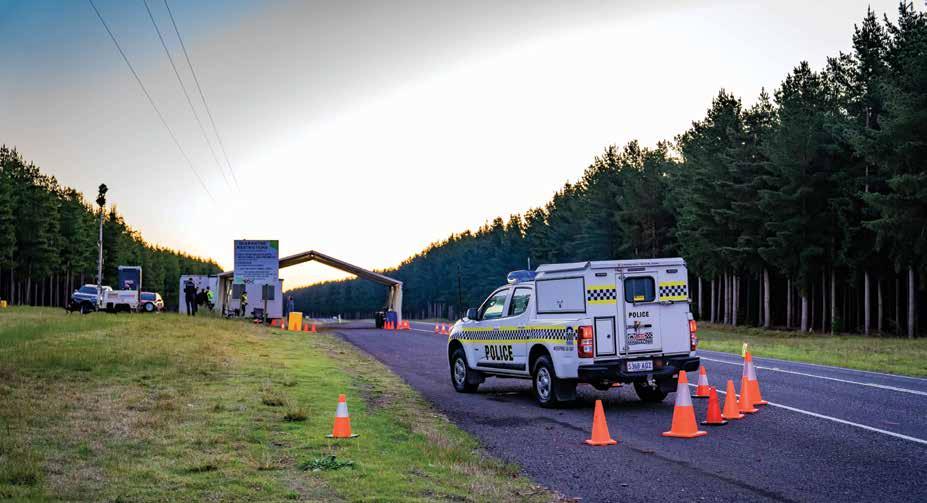
12 Stopping COVID at the border
Police guarding our borders never expected every traveller to be understanding, and conditions to be perfect – and they were right.
22 No parades but Wissell award still in play
No graduation dinners or parades for the last few recruit courses but COVID-19 could not deny the brightest graduates their academic awards.
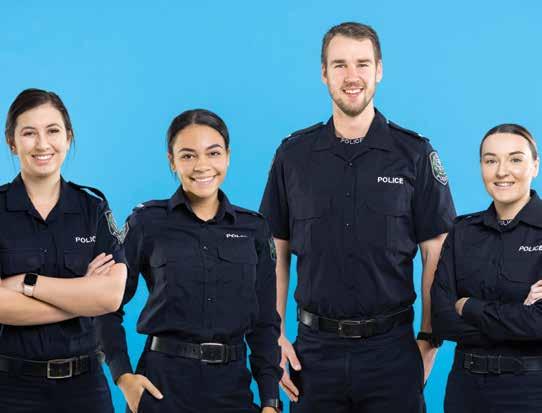
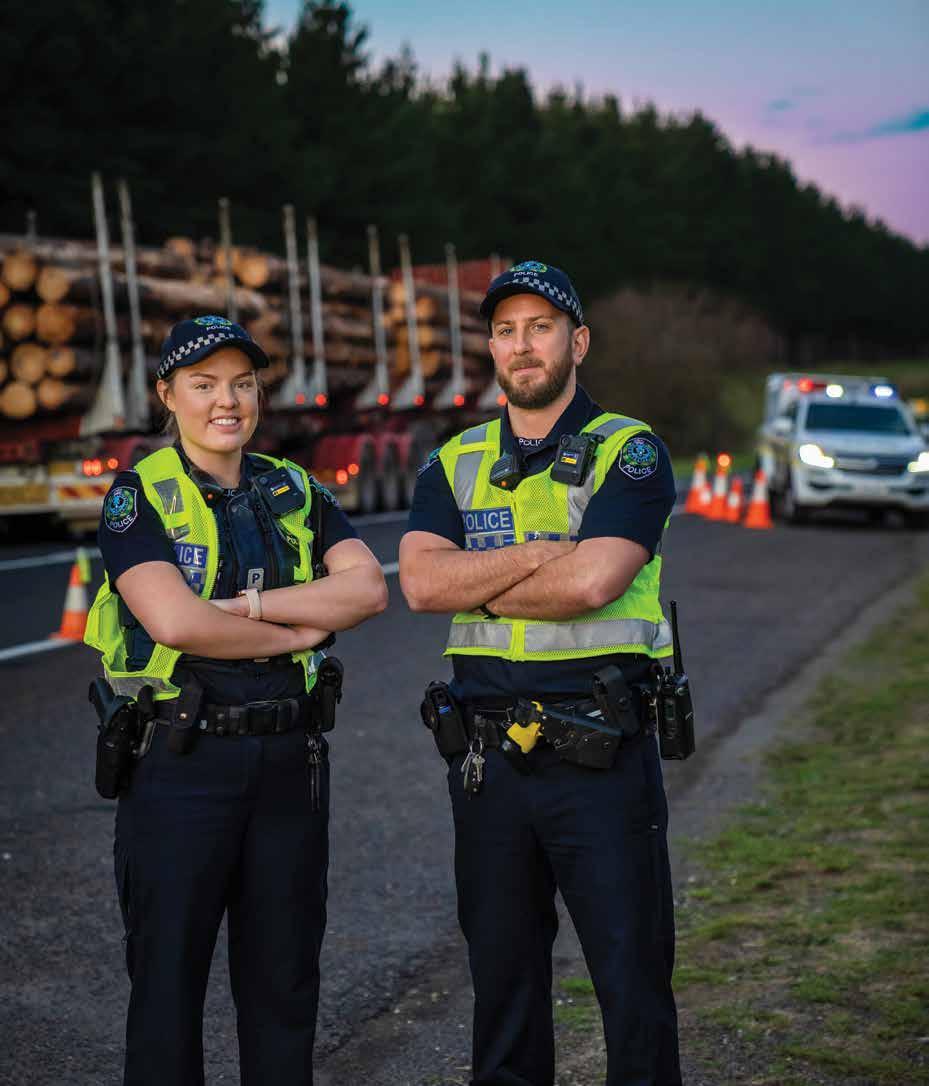
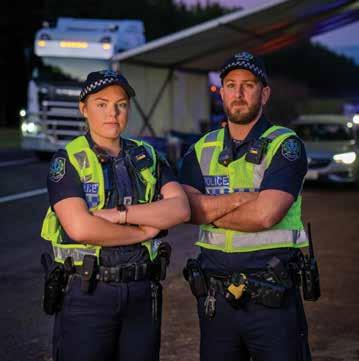
COVER: Probationary Constable Emma Berry and Constable Nathan Fisher on checkpoint duty in Mount Gambier. Photography by Astyn Reid.
Andrew Heffernan Member Liaison Officer
Nadia Goslino Grievance Officer
Steven Whetton Assistant Secretary
Michael
Allan Cannon Vice-President
Mark Carroll President
Treasurer Bernadette Zimmermann Secretary
Trevor Milne Deputy President

Brett Williams
Editor
MEDIA AND COMMUNICATIONS
Nicholas Damiani
Sarah Stephens
Anne Hehner Jan Welsby
Tegan Clifford Assistant Finance Officer
Wendy Kellett Finance Officer
Shelley Furbow Reception
Caitlin Brown Executive Assistant
POLICE
Bronwyn Hunter Manager

COMMITTEE

Daryl Mundy





REPRESENTATIVES
Superannuation
Police Dependants Fund
Leave Bank
Housing
Bernadette Zimmermann
Bernadette Zimmermann
Andrew Heffernan
Andrew Heffernan
Commissioner’s Office Health Safety & Welfare Advisory Committee
Legacy
Sexual Orientation, Gender Identity & Intersex members
Steven Whetton
Julian Snowden
Nadia Goslino and Andrew Heffernan
Samantha Strange
Julian Snowden
Chris Walkley
Mick Casey Brett Gibbons
POLICE A S S OCIATION OFSOUTH AUSTRALIA
Police Association of South Australia
DELEGATES & WORKPLACE REPRESENTATIVES
Metro North Branch
Gawler David Savage
Golden Grove Darren Quirk
Northern Prosecution Tim Pfeiffer
Northern Traffic Michael Tuohy
Port Adelaide Paula Hammond
Salisbury Tanya Leonard
Country North Branch
Ceduna Chris Lovell
Coober Pedy Glenn Batty
Kadina Gavin Moore
Nuriootpa John Tonkin
Peterborough Nathan Paskett
Port Augusta
Port Lincoln
Port Pirie
Peter Hore
Mark Heading
Gavin Mildrum
Whyalla Les Johnston
Crime Command Branch
Adelaide Alex Grimaldi
DOCIB
Jason Tank
Elizabeth Mark Shaw
Forensic Services
Adam Gates
Fraud Sam Agostino
Intelligence Support Kevin Hunt
Major Crime Alex McLean
Port Adelaide Scott Mitchell
South Coast Sasha Leitch
Metro South Branch
Adelaide James Cochrane
Hindley Street Dick Hern
Netley Paul Clark
Metro South Branch continued
Norwood Rebecca Phillis
South Coast Andrew Bradley
South Coast
Phillip Jeffery
Southern Prosecution Sallie McArdell
Southern Traffic Heath Suskin
Sturt David Handberg
Country South Branch
Adelaide Hills Joe McDonald
Berri
Millicent
Mount Gambier
John Gardner
Nicholas Patterson
Stephanie Rickard
Murray Bridge Stephen Angove
Naracoorte
Renmark
Grant Baker
James Bentley
Operations Support Branch
Dog Ops
Academy
Academy
ACB
Band
Comcen
Comcen
STAR
Bryan Whitehorn (chair)
Paul Manns
Darren Curtis
Tania Sheldon
Andrew Ey
Brenton Kirk
Allan Dalgleish
Andrew Suter
State Tac/ Op Mandrake Mark Buckingham
Traffic David Kuchenmeister
Officers Branch Les Buckley
Women’s Branch
Kayt Howe (chair) (no delegates)
ATSI Branch Brendan White (chair) (no delegates)
Police Credit Union has been proudly offering better financial products and services to Police Officers for over 50 years. We value this relationship and our Platinum package is how we thank you for protecting our community.
Platinum is FREE and could save you thousands. It’s exclusive to you and includes: SAVE $240 per year with a $20 monthly fee rebate Unlimited free direct debits and branch withdrawals3 Earn 0.10% above our standard term deposit rates4
$0 annual or monthly fees on ALL LOANS Your own personal Relationship Manager
0.25% discount off ALL car loan and personal loan interest rates1 Priority loan approval – same day approval for car and home loans2 0.10% discount off ALL home loan interest rates1

$0 package fee on ALL LOANS
To find out more, call one of our key Relationship Managers, Glenn Lewis, on 0421 243 741, email platinum@policecu.com.au, find us online at policecu.com.au/platinum or visit a branch.


Pre-judging cops the real offence
An interaction takes place between a cop and a member of the public Some observers rush to judgement They find fault with, and attribute blame to, the cop But to pre-judge is often to misjudge Four decades in policing has made that clear to me.
To the ignorant or inexperienced, however, it is unclear. And others have different motives.
Whatever the reason, it was no surprise to see and hear some commentators rush to judgement after police officers arrested a man at Kilburn in June
An investigation into the incident concluded in late July and cleared the officers of any wrongdoing
The arrest dominated local news services and social media for days after it occurred. Many commentators seemed intent on reporting the arrest as if the officers were unquestionably at fault.
Some unscrupulous opportunists also went about conflating it with entirely unrelated events occurring in the United States at the time
There were even accusations, based on zero evidence, that the officers had engaged in “racial profiling” in respect of the alleged offender It was a cheap, self-serving narrative that had nothing to do with the incident or the officers’ actions. Confirmation of this emerged from the Anti-Corruption Section investigation (of which the Office for Public Integrity had oversight)
… if the media saw assaults on police officers as newsworthy, they would be reporting an average of more than two a day. That’s an extraordinary 800 per year.
President Mark Carroll
It determined that the officers had not committed any criminal offences in their interaction with the man
In fact, the investigation found that they acted “reasonably and in good faith in the circumstances ”
When my opportunity came to front the media, there was little if any focus on the arrested man’s alleged crime of property damage, or that he heavily resisted arrest, placing the officers concerned at substantial physical risk
Those charges will be explored in court in October
I highlighted the perils of prejudging the incident based on the incomplete video that was circulating on news websites and social media
I suggested that the officers’ bodyworn video would likely show the arrest in its full context.
I also publicly outlined the obvious and unquestionable need for police to protect themselves when arresting violent suspects Those situations sometimes require the use of force, but that force depends entirely on the force with which suspects resist or attack police officers in the first place
Resisting arrest is a crime, and it is dangerous to all concerned Police officers are frequently injured in resist-arrest incidents
In fact, if the media saw assaults on police officers as newsworthy, they would be reporting an average of more than two a day. That’s an extraordinary 800 per year.
But that’s policing in the real world
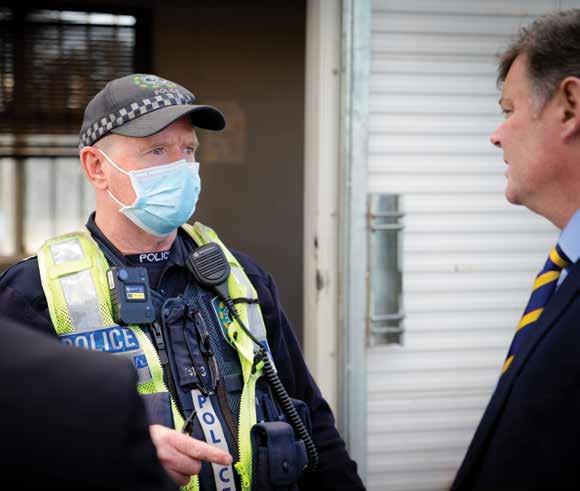
COVID-19 border checkpoints
Police officers have been guarding the South Australia-Victoria borders for the last five months in a battle to keep COVID-19 out of our state
I travelled the state during July to visit these members and see first-hand the scale of this monumental task .
It is a once-in-a-generation operation and it is being carried out in icy cold conditions by cops and army personnel in numerous locations It is also a Herculean logistical effort, one which deserves massive praise
What shone through during my visits was just how committed our members are to ensuring the success of the operation
They are receiving great support from the Australian Defence Force, too
Police Journal editor Brett Williams has written a revealing feature story on these members and the operation. It begins on page 12 .
What shone through during my visits was just how committed our members are to ensuring the success of the operation.
New police minister
The Police Association has congratulated former speaker of the House of Assembly Vincent Tarzia on his appointment to the office of police minister
The association always has been, and continues to be, an apolitical organization . We have worked successfully for decades with police ministers of all political stripes. We also built a key relationship with now former police minister Corey Wingard
I have already met with Mr Tarzia and it was clear that we are on the way to replicating that relationship
Above: Police Association president Mark Carroll speaks with Senior Constable Tim Peecock at Checkpoint Hynam.
He will face some challenges presiding over the police portfolio, as police ministers always do
We look forward to working with Minister Tarzia
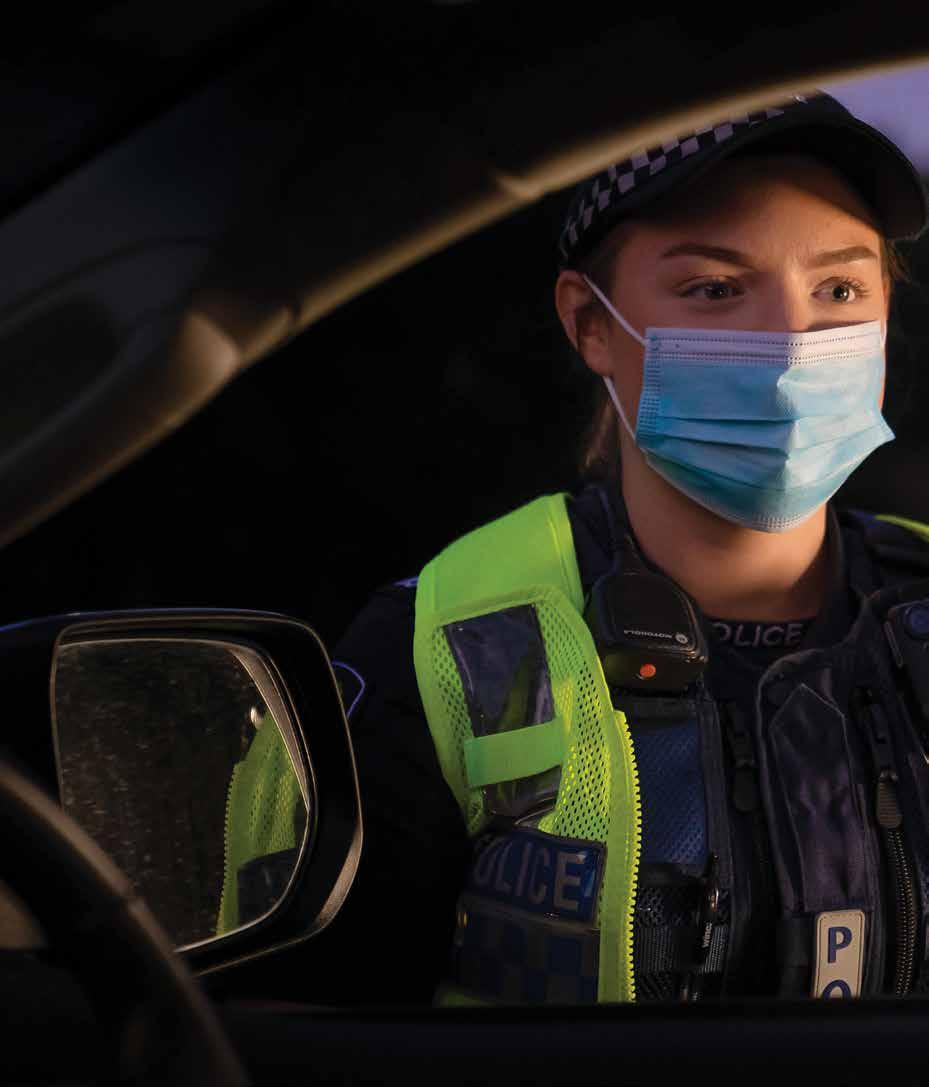
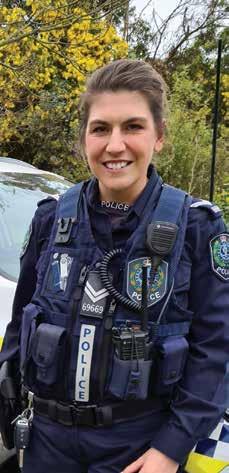
Probationary Constable Emma Berry on night shift at Checkpoint Glenburnie.
Stopping COVID at the border
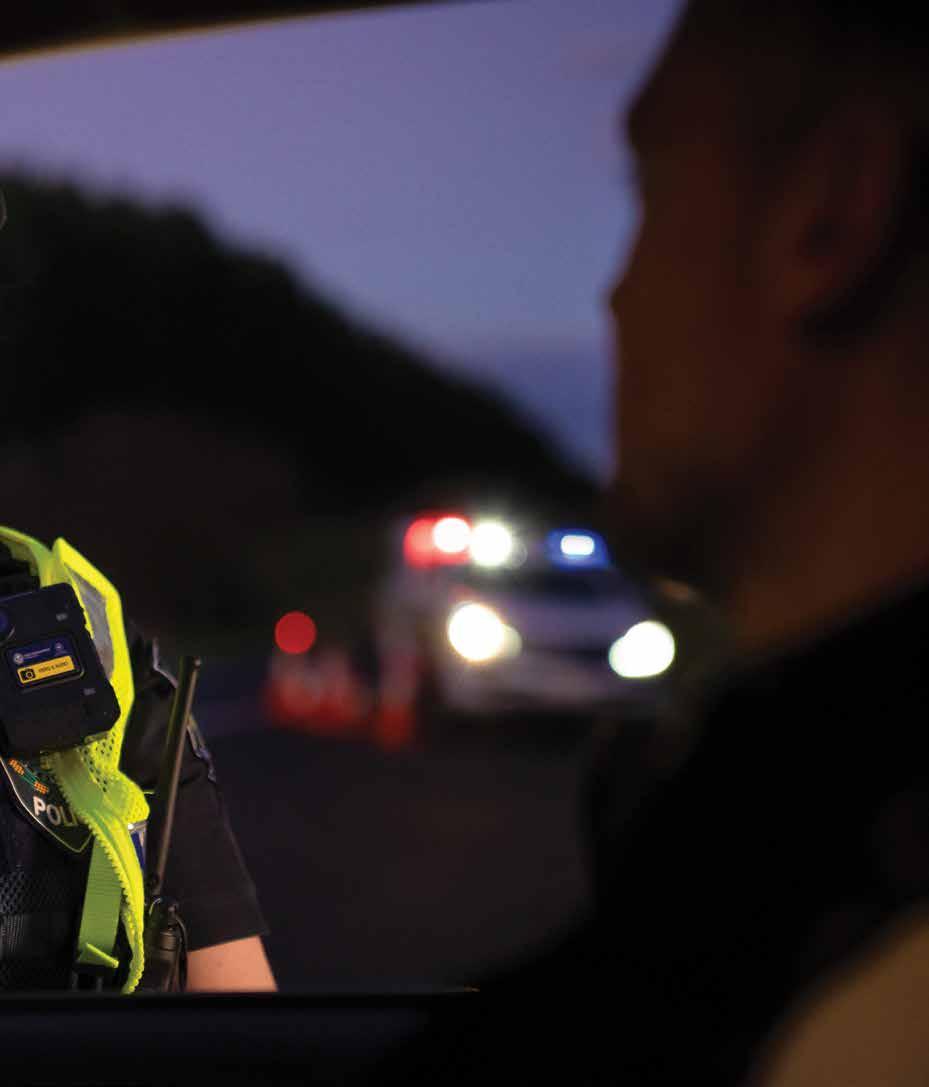
By Brett Williams

The battle to keep COVID-19 out of South Australia has kept police guarding our borders for the past five months. They have suffered long absences from their families, weather extremes, bodily injuries and, of course, the risk of contracting the virus.
“You can’t just grab some security guards and put a ramp across the road. It doesn't work like that.”
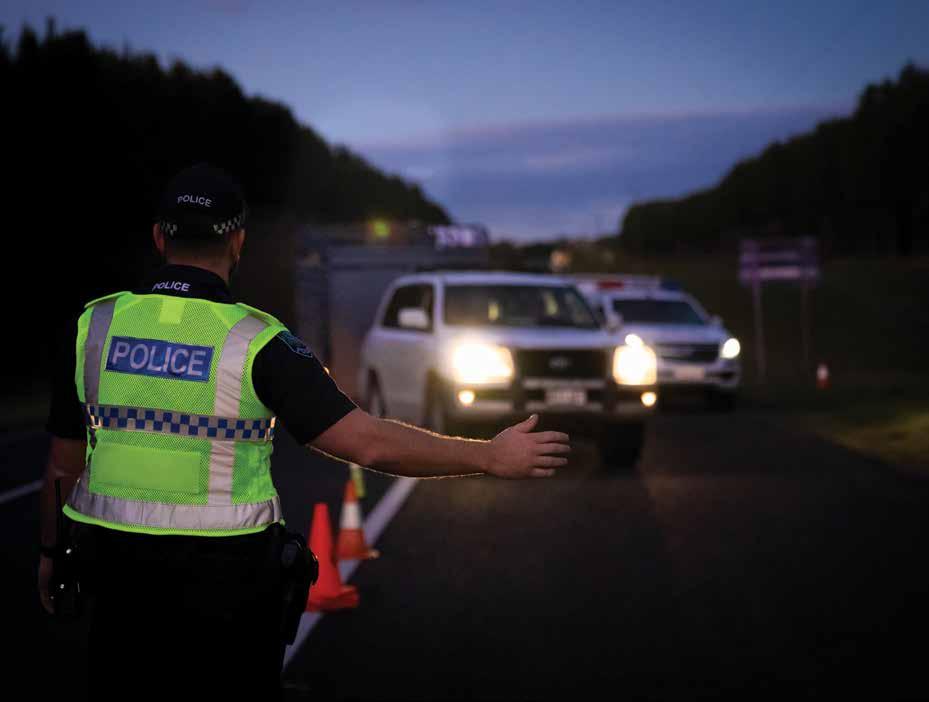
SENIOR CONSTABLE SEANAGH
O’LOUGHLIN ended up in Mount Gambier Hospital for five hours with a serious dog bite to her hand It was an unlikely encounter and injury for a cop working a border checkpoint in the deep south-east of South Australia last month
But an elderly man seeking entry to SA, through the Nelson checkpoint, had not been able to wind down his driver’s window So O’Loughlin had to speak with him through a rear window.
And in the back seat of the car was the man’s dog. It attacked and left Southern District-based O’Loughlin with a “crunched nerve” and numbness
“It was just one of those weird things,” she says. “The dog sort of came out and lunged at me and bit my fingers ”
Nonetheless, her wounds healed, and she got back to work in both static and roving capacities Roving, as she was in Penola last month, she encountered three Melbourne men who had entered South Australia by an unmonitored backroad
It was before the hard-border closure of July 29, but restrictions were still in place. The men denied knowledge of their obligations and told O’Loughlin how they thought the absence of cops on the backroad meant they could enter the state.
“I gave each of them a fine,” she says. “$1,062 each ”
Now, after five months of border-control work, necessitated by COVID-19, cops have similar experiences to speak of and perceptions to share
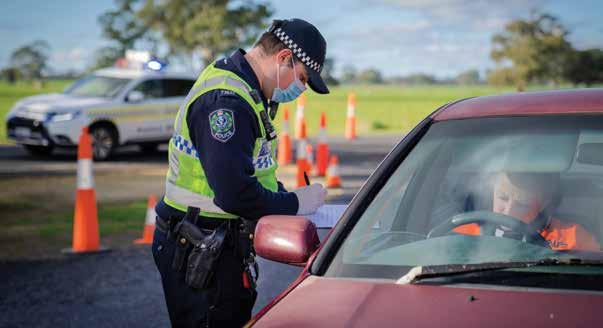
Limestone Coast Crime Prevention senior constable Steph Rickard has worked on checkpoints since their late-March implementation
Handling drivers’ licences, passports, and other documents has become one of her dreads The mother-of-two has known that with the exchange of plastic and paper comes the risk of transmitting COVID-19.
“And you have to hold (each item) in order to see it,” she says. “Then you’ve just got to be very careful about sanitizing straight afterwards and making sure you’re not touching your face ”
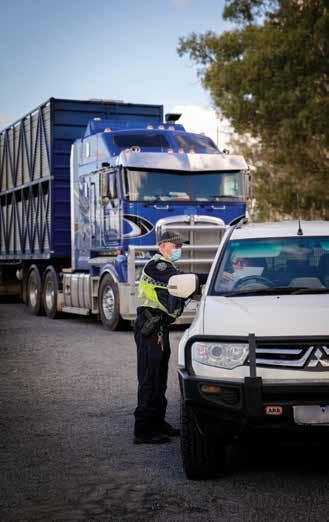
Not lost on Road Policing Section senior constable Tim Peecock are the risks of hours-long exposure to the elements, including sometimes minus temperatures
Rolling fog, icy winds, and rain that belts across the landscape horizontally have been common in the south-east during the current winter. The minimum temperature on one recent Mount Gambier morning fell to minus 0.9 degrees. Peecock is certain he and his colleagues would have frozen at night had a generous farmer not dropped off firewood to their Hynam checkpoint
“The local population around Naracoorte has been fantastic,” he says Holden Hill sergeant Daniel Guzej spent his first day on a checkpoint with ADF personnel at Kybybolite last month
He already had the experience of civil unrest and community uncertainty. It came from his time on the front line of protests at Roxby Downs and in Brisbane during the G20 summit in 2014
“I’ve got all my bush camping gear, so I’m cooking everything out here for myself.”
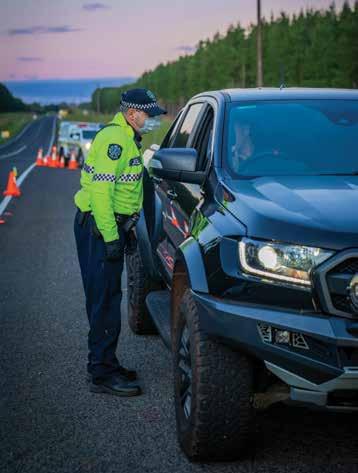
Facing page: Constable Nathan Fisher directs traffic into Checkpoint Glenburnie; top left: Senior Constable Tim Peecock speaks with a traveller at Checkpoint Hynam and, above, with Police Association president Mark Carroll; top right: Senior Constable Michael Krawczyk checks a traveller’s details at Checkpoint Hynam.
But guarding a state border with camo-clad soldiers – during a pandemic – struck him as a “different chapter” altogether in policing
“I probably wouldn’t have envisaged it,” he says “It’s (a case of) using us for a service that sort of applies and sort of doesn’t. But who else is going to do it?
“You can’t just grab some security guards and put a ramp across the road. It doesn't work like that. ”
Lameroo brevet sergeant Rhys Sinclair had never thought it possible that he would spend months working Riverland border crossings, backed up by the military He accepts that “it has to be done” and that “we (police) need to do it”
Murray Mallee LSA sergeant John Gardner has seen some travellers who, without crossing borders, have transacted business at checkpoints.
That practice could have worked for one traveller who, with some form of diplomatic status, sought to enter SA to sell a car But he was not an essential traveller, so police had to refuse him entry after he had driven 1,000-odd kilometres
“He was obviously upset but I don’t know that he was angry or aggressive toward police,” Gardner says “He was just simply (seeking entry) to sell a car, and there are other ways you can do that
“We’ve had people actually do transactions here (at checkpoints) and that was offered to him: to get the person who’s buying the car to come here That didn’t work out for him ”
“Often they won’t be able to give you an address and they’ll decide, of their own volition, to head back across the border.”
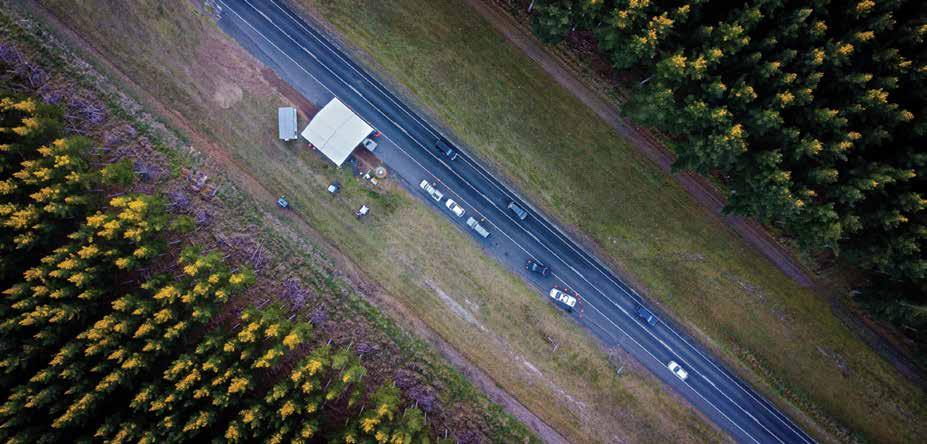
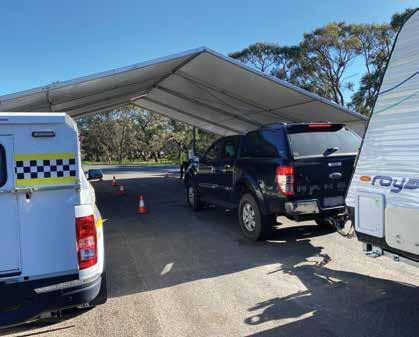
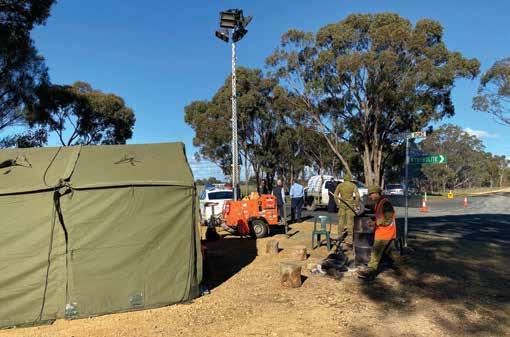
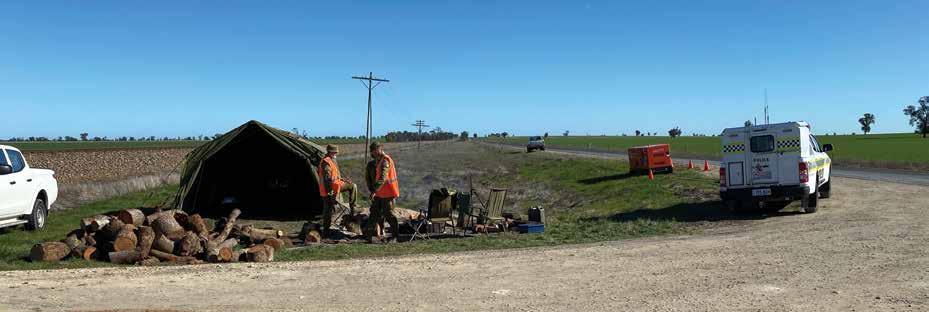
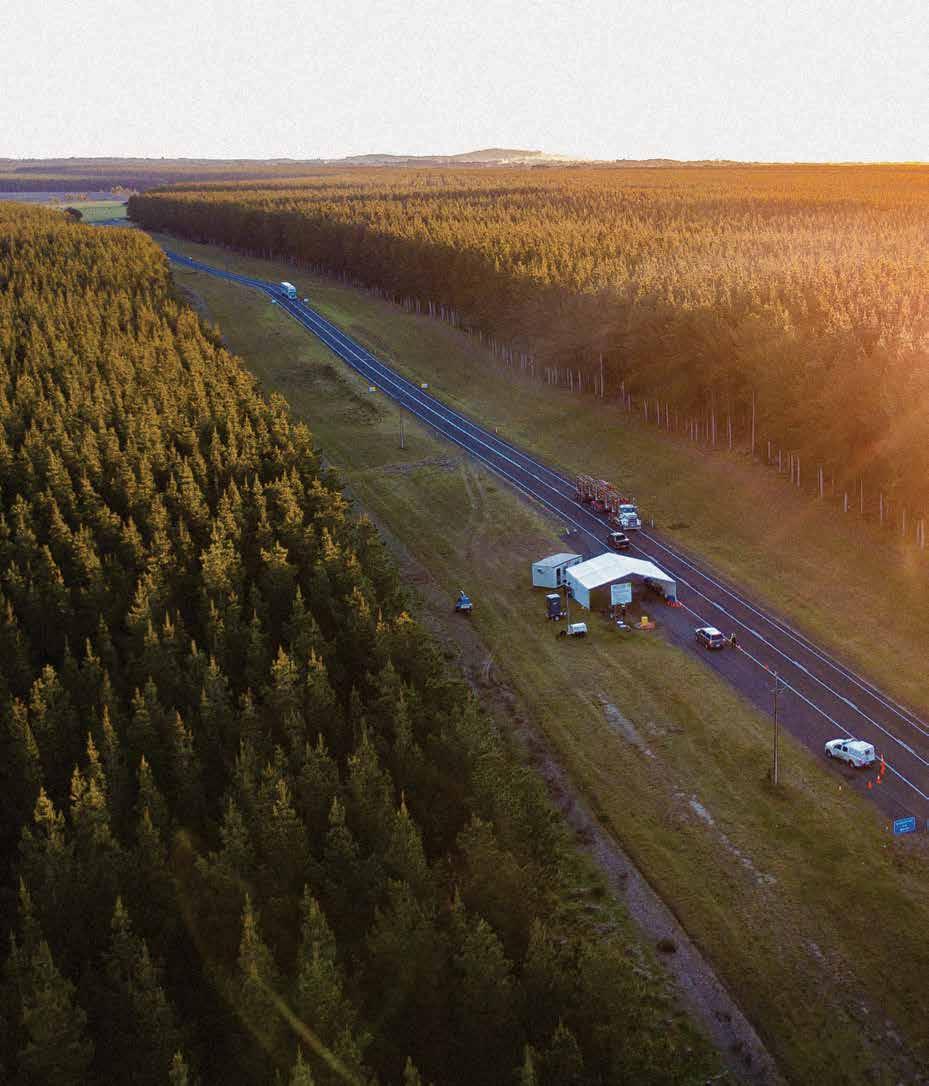
Facing page: Left: ADF personnel at Checkpoint Wolseley to assist police; centre: an aerial view of Checkpoint Glenburnie; below left: a vehicle entering Checkpoint Pine Hill; below right: Checkpoint Kybybolite.
The first border-control edict came on March 24 It sounded a bit like a military action a government would order to protect its country from a powerful aggressor
Cops were to head out to, and occupy, state border crossings to stop an invisible, life-threatening invader. It was a war against COVID-19. And, as in any war, the task was to come without glamour, romance, or anything like the comforts of home At some sites, cops initially went without fridges and microwave ovens for food storage and cooking during 12-hour shifts
Says Tim Peecock: “I’ve got all my bush camping gear, so I’m cooking everything out here for myself It means I don’t have to go and buy pre-cooked food or live (solely) on microwave food. ”
Shelter at a typical site last month, on a major SA highway or a lonely backroad, consisted of an ATCO hut and/or a marquee A table might be – and was at one site – fashioned out of a wooden pallet and log stumps
Among other modest amenities were chairs, lighting, portaloos, and logs for campfires which burned through the night
Says John Gardner: “We certainly haven’t had a problem here (in Renmark) because we’ve been doing it (checkpoints) for so long. But, originally, we didn’t have anything much
“The first ATCO hut we had was on Wentworth-Renmark Road at Renmark North to cover New South Wales traffic And it was just an ATCO hut that had an MRT, chairs, a portaloo and a generator It’s just that setting things up initially can be difficult ”
For human support, police have had those members of the Australian Defence Force positioned with them at most sites Rhys Sinclair speaks of them as “good company” and providers of “great assistance”.
Of course, at the outset of the border-control effort, no one knew how travellers would respond to police checking their bona fides at checkpoints
There was always scope for aggressive reactions by those who perceived control of their movement as government overreach The hope was that the majority would show understanding and support But Rickard has copped veiled accusations of hypocrisy. On those occasions, travellers have challenged her about stepping right up to drivers’ windows while, at the same time, police appeal for physical distancing
“In a lot of cases, we’re not so much turning them back as giving them a choice. We’re saying: ‘Well, you can come into the state, but you’ve got to self-isolate.’ ”
Above left: Senior Constable Steph Rickard; above right: Brevet Sergeant Simon Hurling speaks with a traveller at Checkpoint Glenburnie.
“That just comes down to practicality,” she explains “You can’t hear what somebody’s saying inside a car, in the (highway) traffic, unless you’re prepared to get closer than 1 . 5 metres.
“And they’ll argue with you about the fact that they’re essential travellers when they just don’t fit into the category
“I did have a carload of girls who had come from Melbourne because they wanted to do some tourism in Mount Gambier
“In a lot of cases, we’re not so much turning them back as giving them a choice We’re saying: ‘Well, you can come into the state, but you’ve got to self-isolate. ’
“Often they won’t be able to give you an address and they’ll decide, of their own volition, to head back across the border ”
In one case, a colleague of Rickard had to engage for more than an hour with an argumentative former resident of Mount Gambier He had come from Melbourne and, without essential traveller status, insisted the police should permit him entry to SA
“That was quite stressful for my colleague,” Rickard says “Eventually (the traveller) stated that he would head back across the border. But we did have to get patrol to follow him because we didn’t believe he was going to comply. ”
From her experience, Rickard breaks down the traveller reactions into three categories
“I’d say 90 per cent of people who come through are great,” she says “Then you’ve got probably nine per cent who are a bit cross that you’re holding them up
“And then you’ve got about one per cent who want to have an argument with you. (They argue) about where you are, where the site is, and how you should be doing things. ”
Daniel Guzej recently listened politely to a local who, for 20-odd
“… you’ve got about one per cent who want to have an argument with you. (They argue) about where you are, where the site is, and how you should be doing things.”
minutes, explained why he thought the border-control action was excessive
“He had made his point after one minute, but I listened to him for 19 more and he left happily,” Guzej recalls Renmark senior constable first class Steve Alexander has worked Riverland checkpoints since March He has found around 80 per cent of travellers “compliant and understanding”.
“But,” he says, “you get that 20 per cent that will be apprehensive and sometimes not so nice. ”
Mount Gambier constable Nathan Fisher has served at checkpoints for five months Since March, he has encountered only a few travellers with bad attitudes
“But I don’t think their problem’s with us (police),” he says “I think their problem is with the process or with something else beyond their control ”
Of course, in their front-line role on checkpoints, police have themselves faced the risk of contracting COVID-19. Processing thousands of bordercrossing travellers has made that outcome a genuine possibility
Still, cops have gone – and continue to go – about checkpoint duties with their characteristic stoicism.
“I don’t think it’s been such a big problem but it’s a risk you take,” SPSB Investigation Section constable Brett Sellar says “I think it’s always going to be in the back of your mind ”
John Gardner recalls that, at the outset of the border closures, cops were not wearing “full protective gear”
“Now,” he says, “the direction is we’ve got to have safety glasses, a mask and gloves every time we’re having interaction with people. So, I don’t think there really is an issue. ”
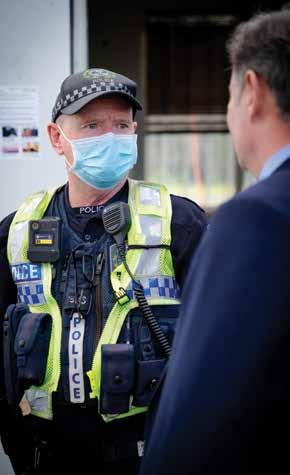
If there is an issue, it is maskwearing, according to Steph Rickard, who does think about the risk of infection
“I’m often adjusting my mask because it slips down or slips up,” she says “So I find myself touching my face a lot more and, therefore, having to sanitize and change my gloves a lot more often ”
Of the cops who have volunteered to serve on checkpoints many have had to leave their families at short notice, work 12-hour shifts, and reside in country hotels.
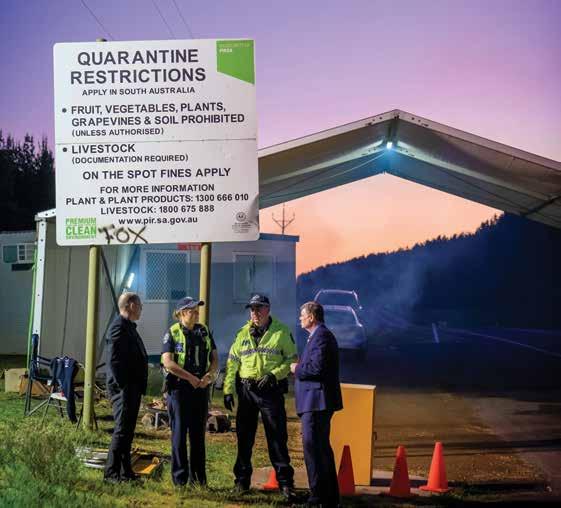
Above: Probationary Constable Emma Berry and Brevet Sergeant Simon Hurling speak with Police Association president Mark Carroll (right) and assistant secretary Steve Whetton at Checkpoint Glenburnie.
Sturt-based senior constable first class David Williams responded to a Friday afternoon e-mail request for volunteers To contribute to the checkpoint effort in the south-east, he gave up annual leave he was to begin the following Monday
Another example is Daniel Guzej, who has “a couple of needy children”, one of them an autistic 16-year-old, back home in suburban Adelaide.
And Guzej is willing to volunteer again if border-control organizers struggle for numbers.
“(But) if I do put my hand up again,” he says, “I’ll have to scrutinize those shifts to make sure (my family) have got support for when I’m away ”
Even for a local, like Steph Rickard, volunteering can come at a cost She and her husband, Brevet Sergeant Randal Rickard, have both offered themselves up for “quite a few” 12-hour shifts in the coming months
“So there’s going to be a lot of time when we’re not going to be home together to parent,” she says. “I think we’re shortly going to have quite the (personal) impact ”
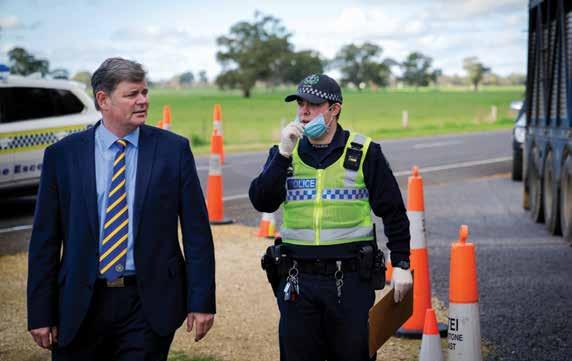
Police Association president Mark Carroll toured the network of checkpoints in the south-east and the Riverland over four days in mid-July He emerged with glowing assessments of the “selfless attitudes” with which he had seen association members working.
“For the way they’ve responded to this once-in-a-generation health crisis, our members deserve so much credit,” he insists
“To, in some cases, leave your home and family and pit yourself against COVID-19, on our most critical front lines, shows extraordinary character
“I took it as a privilege to speak with every association member at the checkpoints and police stations I visited.
“Their overwhelming attitude was that of accepting the situation, and simply getting on with the job of protecting their state Every South Australian owes them abundant gratitude ”
And gratitude has come in various forms Nathan Fisher and Probationary Constable Emma Berry were working the Glenburnie checkpoint last month when a generous local dropped off doughnuts.
“For the most part, the locals are really good,” Fisher says. “And kids have drawn us pictures which we’ve got hung up at the station ”
“That meant a lot. It makes you feel like what you’re doing is a bit more worthwhile.”
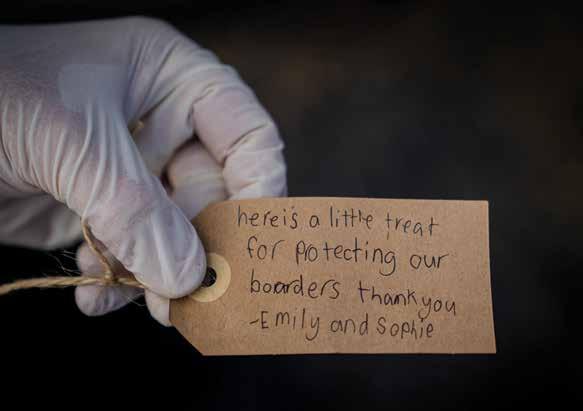
Top left: Police Association president Mark Carroll at Checkpoint Hynam with Senior Constable Michael Krawczyk; top right: Emma Berry and Nathan Fisher at Checkpoint Glenburnie; above: a handwritten note, which children had attached to a treat for members at Checkpoint Hynam.
Rickard, too, speaks of people who “bring us coffee”, and senses that “we are actually valued and appreciated”
“We had a foster child come through and she’d had police present when she was taken away from her natural parents,” Rickard recalls. “She would have been around 12, 13.
“I said hello to her, and the next time she came through I said hello again She then started to use her
own pocket money to buy us some buns and coffees
“That meant a lot It makes you feel like what you’re doing is a bit more worthwhile ”
Ultimately, Rickard sees bordercontrol work as necessary and suspects the “overwhelming majority” of her participating colleagues agree.
“Everybody’s just doing the best they can,” she says, “until we can get through to a better time of life, when we don’t have to man borders ”
THE RIVERLAND, July 22
Senior Constable 1C Steve Alexander CHECKPOINT YAMBA
“Thirty-three years ago, I didn’t think I’d be doing this, but it’s what needs to be done. That’s fine. It’s my role. ”
Sergeant John Gardner CHECKPOINT YAMBA
“We’ve got roving patrols One that covers Renmark backroads, so that you can’t sneak over the border, and one that does Pinnaroo ”
Constable Brett Sellar CHECKPOINT BORDER FENCE ROAD
“I don’t think it’s been such a big problem (the risk of contracting the virus) but it’s a risk you take. I think it’s always going to be in the back of your mind. ”
Senior Constable Damien Kschammer CHECKPOINT WENTWORTHRENMARK ROAD
“(The risk of contracting the virus) is always in the back of your mind but, obviously, we’re in the PPE And just being safe while you’re (working a checkpoint) is the way to go ”
Cops on checkpoints
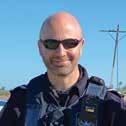
THE SOUTH-EAST, July 14

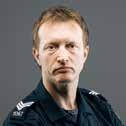
Senior Constable David Martin
CHECKPOINT PINE HILL
“So far, everyone has been okay Only a few people have been turned around and they’ve accepted it. Everyone else has been really good. ”
Senior Constable Seanagh O’Loughlin CHECKPOINT WOLSELEY
“The army guys have been great because at some of the points, like this one, there’s only going to be one of us and two army (personnel) And you wouldn't want to be stuck out here on your own at night, so it’s great to have them ”
Senior Constable 1C David Williams CHECKPOINT WOLESELEY
“I volunteered for two stints and I just finished one. I could’ve just sat back and gone on annual leave, but I just decided to volunteer. The boss was happy to approve my annual leave to be delayed ”
Senior Constable Luke Bisignano CHECKPOINT FRANCES
“Now, being in the job for 12 years, this is the first time I’ve been pulled away from my section to do anything So, it’s a bit out of the blue I definitely didn’t think I’d be doing this 12 months ago ”
Sergeant Daniel Guzej CHECKPOINT KYBYBOLITE
“I just started, so I’m the most recent arrival It’s all day shifts (that I’m working), all week, 7am till 7pm, plus a little bit before and a bit after, so probably about 13 hours every day They’re reasonably long days ”
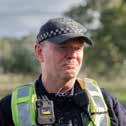
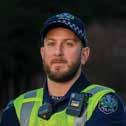
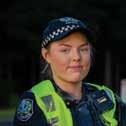
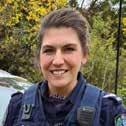
Senior Constable Tim Peecock CHECKPOINT HYNAM
“I’ve come up at the moment because my kids are old enough that I don’t have issues with school holidays. A lot of my colleagues have got kids home from school and this week was really difficult for them. So I said I’d go away and do the week . ”
Constable Nathan Fisher CHECKPOINT GLENBURNIE
“We’re pretty visible and we’re all pretty conscious of where people (drivers) are on the road On night shift, it’s bucketed down quite a few times, and that’s when it gets a bit trickier The rain takes away a bit of that visibility ”
Probationary Constable Emma Berry CHECKPOINT GLENBURNIE
“It’s a bit concerning because, when we do have Victorians coming in as cross-border community members, we’re not sure of where they’re going or what they’re doing ”
Senior Constable Steph Rickard CHECKPOINT GLENBURNIE
“When you’re dealing with people who are pleasant and supportive, it certainly makes your shift easy But, when you have to get into an argument with someone who’s being really unpleasant, it certainly makes the rest of the shift harder.” PJ
Aerial view of Checkpoint Glenburnie.

NO PARADES BUT WISSELL AWARD STILL IN PLAY
By Brett Williams
COVID-19 HAS SPOILT THE PARTY FOR JUST ABOUT EVERYONE, including members of the four most recent recruit courses to graduate from the police academy With restrictions on gatherings in place, courses 39 through to 42 missed out on the two formal celebrations of their achievement
So, none of the fun and glamour of their graduation dinner at Fenwick Function Centre And no throng of proud families and friends assembled at the police academy to cheer and applaud them during their graduation ceremony.
Other than the dinner, of course, there is often no other chance for course members to come together socially as a whole. And missing out on a graduation parade means missing out on it for good
Not lost to the dux of each course, however, was the Walter Wissell Award for Academic Achievement Its last four winners were probationary constables Ellie Lauritsen (Course 39), Michael Klocke (Course 40), Kara Newton (Course 41) and Sharna Maynard (Course 42)
None of them spoke of a photographic memory or achieving the top-of-the-class finish with ease They insisted that they had worked long and hard for the result; and all took pleasure in the recognition the award afforded them for their efforts.
“I was stoked,” Michael Klocke says. “I didn’t think I was going to get it. There were so many extremely intelligent and hard-working people in our course
“Some people in our course would be able to study the night before and ace the exam (the next day).”
Above: Probationary constables Ellie Lauritsen, Sharna Maynard, Michael Klocke and Kara Newton.
“Some people in our course would be able to study the night before and ace the exam (the next day). I, on the other hand, would study almost every night, for an hour or two or more
“I’d sometimes come in early and study for an hour in the morning as well I’m just glad it’s done ”
Ellie Lauritsen, 28, used to stay back after work to study and, in the process, avoided peak-hour traffic on her hourlong drive home
Sharna Maynard, too, had to dedicate much of her spare time to “studying and memorizing legislation”.
Although delighted to have won their awards, as COVID-19 caused its chaos, each graduate was nonetheless disappointed to miss out on the full graduation celebrations
Kara Newton, 28, remembers how she and her coursemates were “all excited to celebrate” their May graduation with family and friends
“But,” she says, “at the end of the day, we got what we came for: we graduated, and that moment was good enough for me. I had a dinner at home with my husband and some friends on graduation day. ”
When Maynard, 20, graduated in mid-June, restrictions had eased such that she and others were able to gather and celebrate at the home of one of their coursemates
Lauritsen, who grew up in Port Pirie, had worked in the retail industry and completed a Bachelor of Science (biology) degree at Flinders University before joining SAPOL But she had wanted to work “in the community and with people”.
“And policing offered numerous career paths,” she says, “and work would be something different for me each day. My family and partner were all very supportive of my decision (to join) ”
Klocke, a former Tatachilla Lutheran College boy, had worked as a kombucha brewer immediately before he began his police career And before his brewing days, he had been a paintball referee and a fruit picker
He decided on a police career after he was unable to realize an earlier plan to join the Royal Australian Air Force.
“The appeal (of policing) for me,” he says, “was the variety of work, the job security, and the financial incentive helped
“My dad was in the job for 10 years but has since retired. He’s also a big reason I applied for the job. My family and fiancée have always been extremely encouraging and supportive ”
Klocke, 25, bought a block of land on which he and his fiancée built “a beautiful home” before he joined SAPOL He rates it as his greatest life achievement so far
Newton had worked as a SAPOL call centre operator and an ASO at Millicent police station before she switched to a police career. Her other employment experience was as a grain sampler on Yorke Peninsula, a retail worker at Target, and a kiosk kitchen hand in Wallaroo.
She had held an interest in policing ever since she was a student at Kadina Memorial School The appeal was “never being in the same place for work” and the requirement to “think on your feet”
“My husband was a paramedic (and) now doctor, and his father is a police officer,” she explains “So he is very familiar with emergency-service work and he was comfortable with me joining (SAPOL). ”
Newton, who excelled in hurdling and weightlifting during her school days, has visited around 20 countries and rates travel as her greatest achievement
Maynard, a former Kildare College girl and Flinders University student, joined both her father and brother in policing Her previous jobs were a casual role with Dan Murphy’s and a corporate food and beverage attendant at Adelaide Oval
After a year at university, where she studied nursing, Maynard deferred her degree to “give policing a go”. She had always held an interest in crime prevention and detection.
“I’m open to a range of sections in SAPOL and will take opportunities that become available to me,” she says “But I’ve always been interested in the investigation aspect of serious crimes and incidents
“My family was happy for me, that I was pursuing something I actually wanted to do and was passionate about I’ve already attended a range of jobs since graduating, many of them memorable ”
The four award winners – who graduated in April, May and June – are now working out of Netley (Lauritsen and Newton), Christies Beach (Klocke) and Golden Grove (Maynard)
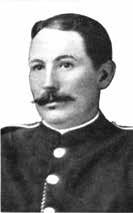
The Walter Wissell Award for Academic Achievement
Walter Wissell came to prominence as one of Australia’s earliest and most capable police union leaders
He won election to the office of secretary of the Police Association in 1917, as the union was undertaking its first major pay dispute with the government. Through his formidable advocacy for police in that dispute, Wissell came to the notice of then-commissioner Thomas Edwards
In a move which Edwards knew would weaken the association, at least temporarily, he transferred Wissell, and another association committee member, to Wallaroo in 1918 Wissell resigned as secretary after just 13 months in the role and took up his post with his wife and four children at Wallaroo.
On duty as a foot constable in Kadina in 1919, Wissell suffered a stab wound during the arrest of a drunk
His injury led to pneumonia and heart failure and he died on June 24, 1919 He was 37, and the 18th SA police officer to die in the line of duty
The Police Association counts Wissell among the greats of its history and, as a fitting tribute, applied his name to its academic award.
The dux of each graduating course receives the Walter Wissell Award for Academic Achievement at his or her graduation ceremony at the police academy PJ
L Letters Letters to the editor can be sent by:
Regular mail Police Journal, PO Box 6032, Halifax St, Adelaide SA 5000
Email editor@pasa asn au Fax (08) 8212 2002
Internal dispatch Police Journal 168
Club roast an absolute winner
As a retiree and avid reader of the Police Journal, I believe your article, How the kitchen survived COVID (June 2020) was a timely reminder of what people and, indeed, business enterprise can do in times of adversity and crisis
I was concerned about the future of our club when the restrictions imposed to combat the COVID situation impacted on the broader hospitality industry, particularly restaurants, cafés and function centres.

As one who availed myself of the plan created to ensure survival of the club, I congratulate all involved in the decision and planning process to meet the situation head on
The pre-prepared family roasts were an absolute winner and were, as indicated in the piece, good quality food and great value
They were so good they have become a Friday night ritual with my family, so much so that I have grandchildren checking with me: “What’s the roast this week, Pa?”
Not only are the roasts excellent in terms of quality and quantity but the service delivery is also first class
As those with grandchildren will know, the gravy has to be “on the side” and the club staff are happy to oblige with those seemingly simple requests that do require some extra planning and time.
With one member of the family being vegetarian, the purchase of a vegetable curry completes the meal for all.
As the article indicates, the club is unique in the nation as the last surviving police club and it would be a sad day if COVID had impacted the way it has on other business ventures that did not have the foresight and tenacity to meet the challenge Again, well done all
Notwithstanding the fact that I have been retired just on 10 years, I still enjoy receiving and reading the journal as it keeps me abreast of issues impacting on our serving members and my congratulations on the award-winning production it is
As I have often said, you can take the boy out of policing, but you can’t take policing out of the boy I can only guess that is a product of almost 49 years’ service
Sincerely
Peter “Spoggie” Graham Chief Inspector (ret)
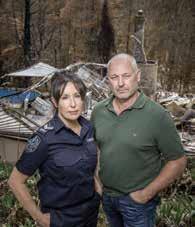
Fire story “very relevant”
I do get a lot out of the Police Journal
The April issue in particular was very relevant, and I re-read it last night.
I know Tony and Amanda Smith as both were at Holden Hill when I was the planning officer there. Kym Webb and I are in the SA Police Pistol Club and I have known him for many years
Reading (What the bushfires stole from cops) about the impact of the Cudlee Creek fire on their families did bring back many memories
Just over five years ago, during the Sampson Flat bushfire, a workmate at Holden Hill had his house destroyed by that fire
As a result of the same fire, we lost several sheds, trailers and a 4WD but our house was saved. Several other SAPOL members had properties threatened and damaged by that fire, including (Police Association committee member) Michael Kent
The coverage of the impact of the Cudlee Creek fire on members was a really good read
I am soon contacting both Tony and Kym for a chat and coffee as I know from experience that help and hugs tend to drop off after about six months Research indicates that the mental trauma lasts for an average of five years
Thank you for a great publication.
Regards
John McMahon Sergeant (ret)
History’s truth
I felt compelled to write to say congratulations to Police Association president Mark Carroll on his excellent article Getting protests in perspective (Police Journal, June 2020).
As a retired police officer and police historian, I have in recent times been increasingly concerned at false allegations of violence and non-accountability being levelled at police officers in Australia, particularly South Australian police officers
This has been in respect of Aboriginal deaths in police custody and allegations of violence by police, which go largely unchallenged by the media and other interest groups
South Australian Police Historical Society president Bill Prior recently raised concerns about certain groups and academics raising the issue of so-called frontier wars, which imply that police, in the early days of settlement in Australia, were involved in a “war” with Aboriginal people. This is factually incorrect.
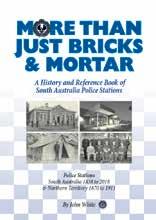
During my research for the book More Than Just Bricks & Mortar – which included the history of the Elliston/Waterloo Bay police station
– I became aware of an allegation that two South Australian police troopers, with 160 pastoralists, forced a group of up to 260 Aborigines over a cliff at Waterloo Bay
In the book I repudiated the claim which wrongly questioned the integrity of our early police officers My repudiation, in the form of a footnote, reads in part:
“In 1848 a pastoralist was murdered by several Aborigines. Sixty years later a story emerged
Change of Address
that a group of 160 pastoralists, led by a police trooper rounded up 260 Aborigines in revenge for the murder and forced them over a cliff at Waterloo Bay Based on factual evidence, there never was a massacre. There was an incident on Thomas Horne’s property at Waterloo Bay in April, 1849 which is believed to be the base for the unbridled fantasy of the ‘Waterloo Bay Massacre’. ”
I was aware at the time of my book research that there was a push for the erection of a memorial at Elliston in respect of the so-called Waterloo Bay massacre
It appears that a memorial has since been erected David Penberthy wrote of it in a recent newspaper article (The Advertiser, June 26, 2020)
He wrote in part: “…Waterloo Bay, near Elliston (is) where some 260 indigenous people are alleged to have been marched to their deaths off a cliff by white settlers in 1849 ”
This allegation was thoroughly researched by noted historian JD Somerville who, in a 1936 newspaper article, concluded that this was a “fantastic myth”.
There was indeed a clash at Waterloo Bay but there were only three settlers involved and about 16 or 18 indigenous people. There was no massacre.
Sadly, this is just one example of the increasing false allegations being peddled by interest groups against our police officers and which go unchallenged by the media
Fortunately, we have people of strength such as Mark Carroll In his roles as president of the Police Association of SA and the Police Federation of Australia, he provides balanced, well-presented commentary in defence of our serving and retired police officers in a medium such as the Police Journal I again congratulate him
Yours sincerely
John White Retired SA police officer
The Police Association of South Australia needs your change- of-address details.
If you have moved, in either the recent or distant past, please let the association know your new address. Its office does not receive notification of changed addresses by any other means.
The association will need your new address, full name, ID number, telephone numbers (home, work and/or mobile). Members can e-mail these details to the association on pasa@pasa.asn.au or send them by letter through dispatch (168).
Bernadette Zimmermann Secretary Police Association

Don’t trust the casual, friendly approach
Aconversation which takes place at the first point of contact with either an ICAC or IIS investigator might appear open and friendly. But members should not, and must not, take comfort in that scenario, particularly if it relates to an ICAC investigation Treating it as insignificant could have career-ending consequences
Be aware of the unctuous investigator who seeks to ingratiate himself or herself with feigned friendliness It is just a tactic by which you should not be fooled
The aim is to gain your confidence and encourage you to make off-therecord comments with over-friendly prompts like: “I’m just interested in your thoughts. ”
No member should ever take this casual, friendly approach as genuine Take it as anything but that, given the agency concerned
Whatever the tactic, these are serious matters to which strict legislative controls apply regarding members’ obligations once an agency initiates contact
Where ICAC matters are concerned, members can only speak to either the Police Association president or secretary about legal assistance. Members are prohibited from speaking with any other association staff or industrial officers about matters of this kind
Do
not, because of actual or perceived bullying, or for any other reason, fail to contact the association once you find an ICAC representative or IIS investigator on your doorstep.
They are also forbidden from discussing, with their supervisor or anyone else in the workplace, the contact ICAC has made with them. It is a natural response and a long-standing custom for members to inform their supervisors of their absences from the workplace Indeed, it is required of them for many obvious reasons – particularly safety
However, a member might need to:
• Advise a supervisor of his or her absence from work for an ICAC interview, statement or hearing
• Explain his or her overtime request after off-duty contact from an ICAC or IIS representative.
In such cases, members must first seek permission from the investigator or agency concerned. These matters are “secret”, insofar as disclosing any information about contact from ICAC, but they are also subject to overtime payments
Police Association members should not be bullied out of claiming their monetary entitlements after an ICAC or IIS representative contacts them during off-duty hours, at home or on their private mobile phones
A member could be summoned to a “hearing” before the ICAC for interrogation in respect of a matter arising out of his or her employment as a police officer When that happens, be it day or night, it is crucial that he or she contacts Police Association president Mark Carroll (0417 876 732) or me (0418 851 261) to start the process of securing legal advice
It is a very serious matter to be summoned to an ICAC hearing
Do not, because of actual or perceived bullying, or for any other reason, fail to contact the association once you find an ICAC representative or IIS investigator on your doorstep.
And do not fail to check thoroughly the paperwork an ICAC investigator
hands you, especially if it relates to a warrant to search property you own
Members should take the time to read through the directions on the warrant and the authority under which it has been issued. If there are any discrepancies or unclear information, you should ask the investigator for clarification And, again, notify the association immediately
Members should also contemporaneously record all their interaction with ICAC or IIS investigators However, members should inform the investigator of this recording to ensure it does not breach the law.
It is common for the ICAC to afford a member very little time between service of a summons and his or her appearance before a hearing This is particularly daunting for members
The Notice of Hearing requires the person named in the summons to attend the hearing even if he or she has been given no information about the nature of the investigation
Members in this situation step into a full interrogation without any time to prepare. Clearly, members caught in this scenario are deprived of the opportunity to access any notes or records they might have to assist the investigation.
This is both a difficult and unfair position in which to be placed –but it is the law under the Independent Commissioner Against Corruption Act 2012.
Still, it is foolhardy to go into this environment without first seeking advice and assistance from the Police Association
Continued page 39
Steve Whetton Assistant Secretary Police Association

COVID grievances outlined to select committee
The World Health Organization declared COVID-19 a pandemic on March 11, 2020 The declaration led to an overseas travel ban (under the Biosecurity Act 2015 ) on Australians on March 24, 2020.
Stage two of the SAPOL district policing model began on March 26, 2020, at the height of government restrictions.
The SA public was likely unaware that the outbreak of COVID-19 coincided with the period in which SAPOL was undertaking a significant organizational restructure
That initiative created additional stress for Police Association members and their families, who had to adjust to new rosters, work placements, locations, and standard operating procedures.
The association represented – and continues to represent – members with grievances associated with the SAPOL restructure
The Australian Senate established the Select Committee on COVID-19 in early April to examine the response of the Australian government to the COVID-19 pandemic
The Police Federation of Australia prepared a submission for that committee
Points of discussion included issues of occupational health and safety, such as access to personal protection equipment, assaults on police (spitting, coughing), custody, and general policing duties
Points of discussion included issues of occupational health and safety, such as access to personal protection equipment, assaults on police (spitting, coughing), custody, and general policing duties.
The association provided an outline of matters it had addressed through negotiation with SAPOL, including:
• Short notice in the changing of shifts/rosters and workplaces to meet emergency management needs in border control, the Police Operations Centre and general duties.
• The government-enforced 14-day self-isolation for travellers returning from overseas (Members who had returned and were still on annual leave during isolation were, for this purpose, directed to use their annual leave entitlements )
• Confusion over well-intentioned advice employees took from medical professionals and SA Health to self-isolate contrary to SAPOL expectations.
• Time and resource management implications insofar as SAPOL approving work-from-home applications for members defined as “vulnerable persons” or caring for persons defined as vulnerable
• Insistence that personal protection equipment was not required (nor was it provided) for checking persons subject to self-isolation while conducting Adelaide Airport passenger or COVID-19 isolation checks . (Members were working alongside Australian federal police and SA Health officers who were wearing PPE )
• Border travel protection, facilities, and financial restitution
• Isolation periods for members attending the APY lands.
• The SAPOL direction of March 27: that all employee leave be cancelled and deferred (from April 9 until June 30, 2020) (The directive was issued in order for SAPOL to fulfil its obligations under the Emergency Management Act , based on a prediction of the number of staff generally likely to be absent from the workplace, and the additional absence owing to quarantine measures related to COVID-19 ) The cancellation led to:
Issues with the leave cancellation process such that members who were paid leave loading were subject to a recoup.
− Annual leave being carried over into the next financial year
− Childcare issues and welfare grievances in respect of taking or not taking annual leave during the pandemic
− Individual member grievances when annual leave requests carried over from the previous financial year were not approved for the current year. (The issue was compounded when members’ annual leave was voluntarily cancelled to assist in the emergency management of bushfires Members had been directed to submit administrative documents for permission to carry the leave into the next financial year )
The association recognizes the assistance provided by SAPOL in dealing with many member grievances in a timely and efficient manner.
Continued page 40
Dr Rod Pearce
How soon a COVID vaccine?
COVID-19 has led to the world’s biggest search for a vaccine Three main vaccines seem to stand out in the research, and the World Health Organization website publishes all the known vaccine developments around the world.
Clinical development is a threephase process . During phase one, small groups of people receive the trial vaccine
In phase two, the clinical study is expanded, and vaccine is given to people who have characteristics (such as age and physical health) similar to those for whom the new vaccine is intended
In phase three, the vaccine is given to thousands of people and tested for efficacy and safety.
All the vaccines can show a response with an increase in antibodies. But we don’t know whether these will actually stop the real COVID-19 infection.
There are currently 26 vaccines which have reached the stage at which they can be tested on humans (clinical evaluation) and six of these are moving into phase-three testing. International politics and the significance of developing a successful vaccine makes picking a “winner” very difficult
When a big pharmaceutical company which already makes vaccine is involved – and the research is undertaken in countries with long histories of successful vaccine manufacturing –its brand is often picked as “a likely frontrunner”
In the UK: AstraZeneca, with the University of Oxford, is working with a vaccine now being tested on thousands of people. They have chosen to take the coronavirus in a form that cannot grow, inject it into the muscles and look at the response with antibodies and the immune system
In the US: Pfizer is using the inside of the virus (RNA) to give two injections a month apart and monitoring the response Now, in trials big enough to look for thousands of volunteers, the researchers are going to places like Brazil, where COVID-19 is very active.
Group Life Insurance Beneficiary Nomination Forms
In Australia: we have two vaccines in development in clinical trials Both artificially make a protein which looks like the virus (protein subunit) and seems to be working at creating antibodies. One is under development with the help of CSL/Seqirus and the University of Queensland The vaccine will be given in two injections and is moving out of phase one into phase two trials
Out of Flinders University, the biotechnology firm Vaxine is conducting a randomized trial at the Royal Adelaide Hospital It involves 40 healthy volunteers aged from 18 to 65 Thirty participants received two doses of the vaccine three weeks apart, and 10 were given a placebo. Australia has so far had so little coronavirus and is doing such amazing things with vaccine development
In the end, however, these trials have not yet produced a vaccine that we can use for millions of people And our trials are coming up with the same issues as those being developed elsewhere
All the vaccines can show a response with an increase in antibodies But we don’t know whether these will actually stop the real COVID-19 infection.
Owing to a Supreme Court decision, the Police Association no longer uses the GLI beneficiary forms Existing forms held at the association have been destroyed
Now, in the case of the death of a member, the GLI benefit (currently $300,000) will be paid to his or her estate
Accordingly, the association’s strong advice is that you ensure that your estate is well-administered This is best achieved by having a valid will.
Tindall Gask Bentley Lawyers provides a free legal advice service to Police Association members and their families, and retired members To make an appointment to receive free preliminary legal advice covering all areas of law, particularly families and wills, members should contact the Police Association (08 8212 3055).
If the antibodies are stopping the virus, we call them “neutralizing antibodies” At present, we test people and they have antibodies to coronavirus, but it might be just antibodies to the common cold and therefore no help in fighting the real disease.
Then, if these vaccines do produce neutralizing antibodies, they might only last for three months That might mean we have to have an injection twice a year
The next thing we need to know in larger trials is whether the vaccine will stop 90 per cent or only 30 per cent of infections
Also, the body has a short-term immune system with antibodies but a longer immune memory with lymphocytes (T cells). We are hoping that this vaccine will produce short- and long-term protection.
Other vaccines have helped us understand different successes With the measles vaccine, the effectiveness is more than 90 per cent and, with two injections two months or more apart, there is lifelong protection
Despite chicken pox (zoster) vaccines, received as a child or adult, 15 per cent of people will get further infections (recurrent chicken pox or later-in-life shingles). Newer and better vaccines are needed.
The present vaccines look very good. Their development stage is into the serious, and early, phase-three stage. But we don’t know about their effectiveness, long-term benefit, or safety.





Influenza vaccines can sometimes only be 40 per cent effective and, because the virus changes every year, we need yearly vaccines HIV and malaria vaccines have not been successful despite years of research and significant international demand
The present vaccines look very good Their development stage is into the serious, and early, phasethree stage But we don’t know about their effectiveness, long-term benefit, or safety.
Get your super sorted today!
Super SA is presenting a Sort-Grow-Know seminar, especially for Triple S Police members. These seminars are a super “one stop shop” set out in 3 easy steps. Learn about your super fund, investment options, how to contribute, tax advantages of super and insurance options.
Registrations are essential for all attendees. COVID-safe practices will be in place. Light refreshments provided.
Tuesday 13th October 2020
Police Association, 27 Carrington Street Adelaide
Session times: 10.30am – 11.30am 12.30pm – 1.30pm 2.30pm – 3.30pm
Register today www.trybooking.com/BIPLV
Once this is established, we will need to make enough to use all over the world. This might still be 12 to 18 months away and, with their development, comes questions of ethics: who should have the vaccine first: America, China or Brazil and Indonesia?
Should we give it to the vulnerable elderly or save it for our children to spare them lifelong complications of the COVID-19 infection?
At least we can be proud that Australia is undertaking this worldleading work .
Motoring
Jim Barnett

Model Mitsubishi ASX small SUV.
Pricing $24,990 to $35,990 (drive away July 2020 pricing).
Drivetrain 2 .0-litre (110kW) four with five-speed manual (ES only) or CVT; 2 4-litre (123kW) four-cylinder with CVT (GSR and Exceed)
Fuel Regular unleaded (91RON); tank capacity 63-litres; economy 7 6 – 7 9 litres/100km
Safety Seven airbags, forward collision with AEB (blind-spot, lane-keep and rear-cross traffic alert optional on ES, standard on others)
Multimedia Eight-inch smartphone link display audio with Apple CarPlay and Android Auto, Bluetooth connectivity and DAB+ radio (TomTom sat nav and premium audio on Exceed)
Inside is leather trim, a smart dash and gauge layout combined with a new eight-inch colour touchscreen featuring TomTom sat nav, DAB+ radio, Apple CarPlay and Android Auto It’s hooked to an impressive Rockford Fosgate audio system with nine speakers, including a big subwoofer housed in the cargo bay.
Single-zone climate control and heated front seats also feature along with a couple of USB chargers in the dash and a 12-volt socket in the console bin
All models feature seven airbags and forward-collision warning with autonomous braking Lane-departure warning and assistance, blind-spot monitoring, auto high beam and rear cross-traffic alert are standard on all but ES, on which they are a $2,500 option.
DRIVING
Exceed’s push-button entry and start obviate the need to fumble for keys The driver’s seat offers sufficient electric adjustment to suit most drivers
Mitsubishi ASX
DESIGN AND FUNCTION
Mitsubishi has freshened up its ASX small SUV for 2020 with updated equipment, additional safety, a bold new front and new MR and GSR variants
Five trim levels start with entry ES ($24,990 drive away) featuring a 2 0-litre petrol engine with manual or optional ($1,750) CVT transmissions All other variants feature the CVT coupled to either the 2 .0-litre or new 2 .4-litre motor (depending on model).
Prices top out at $35,990 (drive away) for Exceed, which scores
the more powerful 2 4-litre fourcylinder petrol engine, as does the new sporty GSR
The new front end on Exceed was clearly penned from Triton’s more aggressive front LED indicators and fog lights feature in a bold housing below LED headlights
Exceed has a modern profile set off by roof rails, a fixed panoramic sunroof and 18-inch alloys. A wide tailgate provides access to the compact cargo bay (393 and 1,193 litres) which houses an emergency spare wheel
Sharp looks, good performer
Front seats are firm but comfortable enough while the rear 60/40 seat offers reasonable space and comfort, but ASX is not the class leader here. Producing 123kW, the 2 .4-litre engine offers 12 per cent more power than the 2 .0-litre. It’s tied to a decent CVT auto with manual mode
Overall performance is good, the bigger four capable of brisk acceleration when pushed Engine noise is well suppressed and really only noticeable at high revs On the highway, the car feels nimble and delivers agile cornering and decent ride comfort
ASX has some serious competition but it looks sharp, performs well and has a decent seven-year warranty.
Honda Civic
DESIGN AND FUNCTION
The humble Honda Civic first appeared almost 50 years ago Now, RS, the sports variant of the fivemodel Civic hatch line-up, is a far cry from that original
Although considered a small car, Civic RS comes close to medium-car territory with its bold exterior and interior space.
It has a low, wide stance with an aggressive black grille and lower air intake and nicely sculptured bonnet Trendy 18-inch alloys with wide low-profile Michelin tyres, a shark-fin antenna, boot lip and roof spoilers, and dual central exhaust outlets also feature
Honda has done a great job with the RS interior Sporty perforated black leather seats feature red stitching and heaters on front seats. Its 60/40 rear seat offers sufficient space for adults and flexibility to increase to the 340-litre luggage space.
The modern dash is well laid out with gauges which feature a large tacho and digital speed readout The central seven-inch touchscreen is very clear and provides features like Apple CarPlay, Android Auto, multi-angle reverse camera and DAB+ radio hooked to a 10-speaker 452-watt audio system.
Honda has added its Honda Sensing suite of driver assistance and safety technologies It includes adaptive cruise control, emergency braking, lane-departure monitoring with steering assistance and auto high beam on its LED headlights
DRIVING
RS features a peppy 1 5-litre turbocharged four-cylinder petrol engine driving the front wheels though a CVT with seven-step manual mode.
rewarding drive
AThe free-revving engine has more than ample power but, at times, can feel a little restrained by the CVT Selecting Sport mode and using the paddle shifters enables better control over the CVT and boosts performance RS comes with push-button entry and start and a comfortable, poweradjustable driver’s seat. Its small leather-bound steering wheel feels good and visibility – including a unique camera view down the left side when indicating left – is excellent McPherson strut front and multilink rear suspension systems provide excellent handling without compromising ride quality Braking is good and the low-profile Michelins ensure plenty of grip but come at the expense of increased tyre noise on coarse bitumen
RS hatch is rewarding to drive, looks the part, especially in new Phoenix Orange paint, and is available in sedan guise.

Model Honda Civic RS hatch.
Price $33,540 plus ORC is also available in sedan guise.
Drivetrain 1. 5-litre four-cylinder turbo petrol producing 127kW and 220Nm with paddle-shifter equipped CVT automatic
Fuel 6 1 litres per 100km (combined test) 91 RON regular unleaded Safety Five-star ANCAP, six airbags, collision warning with auto emergency braking, lane departure with steering assistance and adaptive cruise control .
Service/ 12-month or 10,000km fixed warranty servicing and five-year unlimited kilometre warranty.


Banking
Paul Modra, Executive Manager –Member Value and Distribution, Police Credit Union
The value of comparison rates
Of all the factors to consider when you are choosing a loan, one key one that will influence your decision is the interest rate
Understanding interest rates and other fees associated with loans is important but often difficult . This makes it tricky to determine whether your chosen loan meets your needs.
To help you make these decisions, the government has legislated that, in addition to displaying the advertised interest rate for a loan product, financial institutions must also display a comparison rate
The formula used to calculate the comparison rate is regulated by the Consumer Credit Code and all financial institutions must use the same method to calculate this rate.
So, what is a comparison rate and how is it helpful when you are deciding on a loan product?
Comparison rates are helpful
The comparison rate is helpful as it gives you, the consumer, a clearer indication of the actual costs of the loan This helps you to compare more easily loan products from different financial institutions
If you are comparing loans across several financial institutions, you should be looking at the comparison rates of the loans rather than the interest rates
Inclusions
The comparison rate reflects the actual annual interest rate, together with the loan amount, the term of the loan and the required repayments. It also includes many of the fees and charges associated with taking out the loan . This might include things such as establishment or setup fees, annual or ongoing fees, valuation and mortgage documentation fees and settlement fees
As well as factoring in fees and charges, a comparison rate might also be calculated using any discounted introductory rate (often called a honeymoon rate) or, in the case of a loan with a fixed rate period, it will include the revert or “roll out” rate of the loan after the fixed period expires.
Exclusions
The comparison rate does not include items such as government charges (stamp duty or fees) which might apply for optional events throughout the loan, such as redraw, loan variation fees or late payment fees
Keep a lookout
Generally, the closer the comparison rate is to the advertised rate, the less fees and charges there are associated with the loan


If you are comparing loans across several financial institutions, you should be looking at the comparison rates of the loans rather than the interest rates.
A home loan with a very low advertised rate might initially look appealing, but closer inspection of the comparison rate might reveal some additional costs that might not benefit you in the long run
Information
If you are unsure about the costs associated with a loan, always make sure to ask For more information on our loans or assistance with applying for a loan, contact our Platinum relationship manager, Glenn Lewis, on 0421 243 741 .
Police Credit Union Ltd ABN 30 087 651 205 AFSL/Australian Credit Licence 238991. Terms, conditions, fees, charges and lending criteria apply. Full details upon request.
Free Legal Service for Police Association Members, Their Families & Retired Members.
Leading Adelaide law firm, Tindall Gask Bentley is the preferred legal service provider of the Police Association, offering 30 minutes of free initial advice and a 10% fee discount.

To arrange a preliminary in-person or phone appointment contact PASA on (08) 8212 3055
INJURY COMPENSATION
• Motor accident injury compensation
• Workers compensation
FAMILY
& DIVORCE
• Public liability
• Superannuation claims (TPD)
Matrimonial, De Facto & Same Sex Relationships
• Children’s Issues
• Child Support matters
• Property Settlements
• “Pre Nuptial” style Agreements


BUSINESS & PROPERTY
• General business advice
• Real estate & property advice
• Business transactions
• Commercial disputes & dispute resolution


WILLS & ESTATES
• Wills & Testamentary Trusts
• Enduring Powers of Attorney
• Advance Care Directive
• Advice to executors of deceased estates
• Obtaining Grants of Probate
• Estate disputes


Rosemary Caruso Michael Arras
Reynella
Whyalla
Darwin (NT)
Gary Allison Amber Sprague
Wendy Barry Dina Paspaliaris
John Caruso Giles Kahl
Legal Luke Officer, Partner
Tindall Gask Bentley Lawyers
Subject of a complaint? Advice essential
Policing is unique And not just by reason of its inherent rigours, dangers, and difficulties, which police officers face from the day they swear their oath to the job. Powers, hierarchy, accountability, scrutiny, obligations – there is no other job quite like policing. What should not be lost in all of this are members’ rights as human beings, as police officers, and as human beings who happen to be police officers
Law enforcement is arguably the most scrutinized occupation, and rightly so Police are, after all, charged with special powers that enable them to do their job, be it executing a warrant, performing a search, effecting an arrest, engaging in the use of force in a high-risk situation, or simply speaking with a suspect in the commission of an offence.
The use of a power, however, often attracts complaint, internal review as a matter of course, scrutiny by SAPOL Ethical and Professional Standards Branch, external scrutiny by the ICAC and, sometimes, the court of public opinion in a social mediasaturated society
It is likely most police officers will have to deal with a complaint at some point during their careers and the processes that follow – sometimes with good reason and, at other times, as a need simply to manage vexatious complaints
On the face of it, that might all seem reasonable. Police invariably give statements and affidavits as a matter of course. But, when you are potentially the subject of complaint, when a power is purporting to be exercised on you, and when you are the subject of a direction, it pays to pause and reflect.
Often that process starts with contact from an investigator with Ethical and Professional Standards Branch directing you to attend an interview in answer to a complaint, either Code of Conduct, criminal, or both.
Other times you might be asked or directed to provide a statement. There might also be the direction to provide your version in affidavit form
On the face of it, that might all seem reasonable Police invariably give statements and affidavits as a matter of course But, when you are potentially the subject of complaint, when a power is purporting to be exercised on you, and when you are the subject of a direction, it pays to pause and reflect
What is the obligation and what are my rights? The two often go hand in hand – obligations and rights.
It’s not uncommon to read a High Court decision in which this very topic is decided It’s an area which, in recent times, has been in a bit of a state of flux And, just when you think the law is starting to settle, it reverts to that uncertain state again
A recent decision by our Full Court of the Supreme Court rips back into focus the often challenged and questioned rights of police officers who are themselves the subjects of complaints or investigations.
The Police Complaints and Discipline Act provides the power to direct a police officer to answer questions, furnish
information or produce a document This is the power requiring the information under compulsion and a failure to comply might result in a breach of discipline. It is often referred to in courts as the “inducement” or “coercion” rendering it involuntary If it is involuntary, it follows that it should not be used against you in a criminal prosecution if that were to ensue
But the recent Supreme Court case shone the light well and truly on such statements, more precisely, affidavits The two are slightly different in a fundamental respect While both purport to provide a version of events, a statement often reflects just that – a version of events. It might even be a signed version of events.
However, affidavits are a version of events that the person deposing to either affirms or swears on oath The significance of that should not be underestimated It is a criminal offence to lie under oath Once someone departs from their evidence under oath, serious questions and doubts can be raised as to their truthfulness
Therefore, the question the Supreme Court decided in this case, although it was not the ultimate issue on appeal, was when it is lawful to compel a person to an oath. The short answer: it is not, unless there is an express power conferred in legislation
For example, a person summonsed to give evidence in court is obligated to give his or her evidence by oath or affirmation The Police Complaints and Discipline Act does not confer an express power that the information “furnished” must be sworn
Mackenzie’s Mission
Rachael Casella Allen & Unwin, $29 99
Like many other couples starting a family, Rachael and Jonathan Casella had no idea they were both carriers for a genetic disease. In fact, one in 20 children are born with a genetic condition or birth defect.
The Casellas’ daughter, Mackenzie, was one of those babies, and Mackenzie’s Mission is Rachael’s moving account of the family’s story
Rachael and Jonathan are now champions for a world-leading $20 million reproductive genetic carrier screening study, in which 10,000 Australian couples will be tested for more than 700 genetic conditions
In Mackenzie’s Mission , Rachael and Jonathan recount, with heartbreaking honesty, the joy of their daughter’s short life, the pain of losing a child, and their hopeful ongoing journey through IVF Important topics include:
• Mackenzie’s legacy: using grief and loss as a driving force for positive change.
• Being present and mindful, even during moments of great pain
• How to support others who are grieving or trying to conceive

Win a book!
For your chance to win one of the books featured in this issue, send your name, location, phone number and despatch code, along with the book of your choice to giveaways@pj.asn.au
Cry Baby
Mark Billingham Hachette Australia, $32 99
It’s 1996. Detective Sergeant Tom Thorne is a haunted man. Haunted by the moment he ignored his instinct about a suspect, by the horrific crime that followed and by the memories that come day and night, in sunshine and shadow
So, when seven-year-old Kieron Coyne goes missing while playing in the woods with his best friend, Thorne vows he will not make the same mistake again Cannot
The solitary witness . The strange neighbour. The friendly teacher All are in Thorne’s sights
This case will be the making of him – or the breaking
The prequel to the acclaimed Sleepyhead, Cry Baby is the shocking first case for one of British crime fiction’s most iconic detectives.


Dear Child
Romy Hausmann Hachette Australia, $32 99
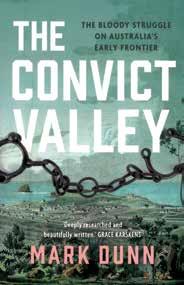
The Convict Valley
Mark Dunn Allen & Unwin, $32 99
The Hunter Valley was the second British penal settlement in Australia It became the template for penal stations in other states Yet, the dark underside of the early years in the Hunter is not widely known, or not openly acknowledged
Mark Dunn, public historian and former chair of the Professional Historians Association of NSW & ACT, is descended from convicts who settled in the Hunter. He has spent two decades investigating the history of the region, uncovering the brutal side of the British settlement and a long-forgotten massacre
While there were some instances of alliances in the early years, in the later scramble for land in the 1820s, tensions rose and bloodshed ensued.
The Convict Valley uncovers the rich colonial past behind the prosperous vineyards of today’s Hunter Valley, and the toil of the convicts who laid its foundations
A windowless shack in the woods. Lena’s life and that of her two children follow the rules set by their captor, the father Meals, bathroom visits and study time are strictly scheduled and meticulously observed
The father protects his family from the dangers lurking in the outside world and makes sure that his children will always have a mother to look after them
One day Lena manages to flee –but the nightmare continues It seems as if her tormentor wants to get back what belongs to him
And, then, there is the question as to whether she really is the woman called “Lena”, who disappeared without a trace 14 years ago
The police and Lena’s family are all desperately trying to piece together a puzzle which doesn’t quite seem to fit.
Industrial
From page 26
A Knock at the Door
TW
Ellis
Hachette
Australia, $29 99
A Knock at the Door is the first ever stand-alone psychological thriller by bestselling author Tom Wood, writing as TW Ellis
They ask for your husband. They just want to talk. They’re lying
“Your husband isn’t who he says he is,” say the people at your door “Come with us ”
“Don’t trust them,” says a voice on the phone. “Run. ”
Who would you believe?
In this terrifying thriller, one woman goes on the run and is forced to question everything she held dear
The Edible Garden Cookbook & Growing Guide
Paul West Plum, $39 99
Paul West shows how easy it is to grow and cook some of your own food, no matter how much space you have.
He shares practical gardening advice, with guides on building a no-dig garden, composting and keeping chooks, and an A-Z guide of the veggies that are easiest to grow
There are also more than 50 of West’s favourite family recipes – simple, produce-driven dishes that are bursting with freshness and flavour.
And then there are ideas for fun food activities to do with your community, be it hosting a pickle party or passata day, brewing beer with some mates or whipping up a batch of homemade sausages
The Edible Garden Cookbook & Growing Guide celebrates real food and vibrant community.

Action on 25km/h speed limit yet to eventuate
Yet another vehicle accident has happened owing to the 25km/h emergency vehicle speed limit (section 83, Road Traffic Act 1961 ) This time it was on the South Eastern Freeway at Nairne where, in a 110km/h zone, police had stopped a vehicle on June 23, 2020
The officers activated their emergency equipment, including the roof-top display, which warned motorists that the 25km/h zone was then in place
Vehicles slowed in compliance with police direction. But a four-wheel-drive vehicle passing the police car in the 25km/h zone was struck from behind by another vehicle.
The clear indication was of noncompliance with the emergency speed zone
The offending vehicle, owing to the damage it sustained, was apparently beyond repair
Worse still were injuries to the driver and two of his passengers, all of whom required ambulance transportation to hospital. The police officers escaped injury only narrowly.
I have spoken with new police minister Vincent Tarzia this month about the lack of government action in response to this major risk to officer safety
From page 27
No specific criminal offence was created under the Emergency Management Act 2004 to cover offenders who transmit, or threaten or attempt to transmit, COVID-19 to police officers.
At Pasadena on March 25, 2020, police apprehended an offender for traffic matters and driving to evade police
Although restrained, he spat a significant amount of phlegm into the face of a female police officer, causing irritation to her left eye
The offender was not subject to testing for communicable diseases in line with section 20B of the Criminal Law (Forensic Procedures) Act 2007, as the offence did not meet SA Health guidelines for blood-borne virus exposure.
On April 4, 2020, the state Opposition introduced legislation (currently on adjournment) for new penalties to protect front-line workers from COVID-19-related assaults or threats
The Criminal Law Consolidation (COVID-19) (Assault of Certain Workers) Amendment Bill 2020 ensures a person who knowingly has COVID-19, or suggests he or she has the virus, and is convicted of assaulting a front-line worker would face up to 10 years’ jail.
L
Legal
From page 35
There’s also an adjunct consideration aside from whether or not a power is being exercised lawfully It is the question of voluntariness as opposed to coercion (or the inducement).
In other words, an answer to the question: when is something an obligation and when is something optional?
The short answer is that that’s a caseby-case assessment, but it is probably best you assume information you provide is voluntary unless the “request” is expressed in precise terms that it is under direction Once it is voluntary, it may be used against you in criminal proceedings.
This is not a one-size-fits all situation and is to be distinguished from the ordinary duty to assist in a prosecution as a police witness.
The point is, every case must be assessed on its own merits and, if you are, or might become, the subject of a complaint, it is critical that you seek advice when confronted with such situations before you act
Got something to say?
Got a comment about a story you’ve read? Do you have strong views on a police issue?
Is there someone you want to acknowledge? Know of an upcoming social or sports event? Whatever the subject, put it in a letter to the editor. Regular mail Police Journal, PO Box 6032, Halifax St, Adelaide SA 5000 Email editor@pasa.asn.au Fax (08) 8212 2002 Internal dispatch Police Journal 168
Pinot Noir Évidence 2016 Organic Wine
13 6% alc Age for five to seven years


An intense ruby colour with a fine nose of black cherry, amarena and liquorice, enhanced by a delicate hint of wood
The mouthfeel is a pure, lively attack, aromas of ripened red fruits and spices (liquorice, cinnamon, vanilla). The tannins are still present, with a final taste of a beautiful length over a nice spices flavour.
This wine partners with a range of dishes, especially in summer, from light hot starters, barbecue, red and game meats, charcuterie, light hard cheeses and gratin of soft red fruits as unusual matches
Riesling Évidence 2015 Organic Wine

13% alc Age for five to seven years
A nose of pink grapefruit and lime combined by floral notes (white flowers). Dry and racy, with a slight mineral edge, a characteristic from Bergheim soils
In the mouth, the palate is vibrant and intense but elegant, without any heaviness Its acidity structure is firm but nicely integrated It is a true gastronomic Riesling
Besides most dishes from Alsace, it pairs perfectly with all fish, shellfish, and raw fish dishes as well as goat cheese.
Riesling Bio Grand Cru
Altenberg De Bergheim 2012
14% alc Age for 10 to 15 years
A strong gold-yellow colour with an expressive and deep nose of citrus aromas, fresh and complex Elegant hints of minerality.
In the mouth a great structure, nice balance, surprising fatness, and wonderful dry, long finish Very elegant Riesling with a very good ageing potential
This is a wine for gastronomic meals or festive events, wonderful with fish in sauce dishes, seafood, some pork/ veal meat cooked with vegetables.
This wine is produced from 100 per cent Riesling grapes from the classified Grand Cru site of the Altenberg of Bergheim vineyard owned by Gustave Lorentz
The Altenberg has been renowned for its fine wines since the end of 13th century
Please remember to adhere to social distancing rules between dining groups. Hand sanitizer is available for use by all patrons.
Frozen take-away meals
Curry meals with rice:
Butter Chicken
Chef’s Vegetable Curry
Curried Sausages
Spaghetti Bolognese with parmesan cheese
Cheese Macaroni with tomato base
$8 each or 6x for $30
Creamy Garlic Mashed Potatoes $5
Lamb lasagne with parmesan cheese single serve $10 family serve (feeds four) $35
WEEKLY HOUSE COOKED FAMILY ROASTS AVAILABLE EVERY
WEEKEND
(usually $ 40, order by Wed afternoon at 2pm and collect Fri or Sat, feeds four)

Dine-in Menu
Monday – Friday 11am – 2pm Friday dinner 5:30pm – 8:30pm 27 Carrington Street, Adelaide (08) 8212 2924
Chicken Salad with baby spinach, pumpkin, $18 toasted pinenuts, roast capsicums, feta and balsamic glaze
wrap
wrap
wrap $11.90
Fisherman's basket with crumbed fish, $15 crumbed calamari, crumbed prawns, balsamic tartare and lemon
Fish & Chips battered, crumbed or grilled $18 served with balsamic tartare
Schnitzel with chips and your choice of sauce (Traditional gravy, dianne, pepper or mushroom)
Chicken $18 Beef $15 Add parmigiana topping $3
Chef’s famous beer battered chips served with gravy or garlic aioli Small $3 Large $7

L The Last Shift
Mark Ager
Donna Beck
Jeffrey Beer
Greg Forrest
Rob Harding
Lisa King
Ian Norris
Tony Scott
Nils Uellendahl
Phil Vincent

Senior Constable
First Class Jeffrey Beer
Police Escort Section
26 years’ service Last Day: 15 07 20
Comments…
“I thank the Police Association for its assistance over many years
“I retire from SAPOL and the association with no regrets and many good memories and stories yet to be told.
“Special thanks to all those I worked with as a Motorcycle Section member and Escort Section member ”
Detective Senior Sergeant 1C
Phil Vincent
Internal Investigation Section
43 years’ service Last Day: 16 07 20
Comments…
“The pay and conditions have certainly improved from when I first joined SAPOL in 1977.
“Thanks to everyone I have worked with over the years for the great memories and making it a pleasure to come to work I wish all members the best for their future ”
Inspector Greg Forrest
Prosecution Services Branch
45 years’ service Last Day: 17 07 20
Comments…
“I thank the association for its continual efforts and the service it has provided during my years in SAPOL .
“I wish the association all the very best for the future ”

Detective Sergeant Tony Scott
Mount Gambier CIB
43 years’ service Last Day: 16 07 20
Comments…
“I thank the past and present executive committee and delegates for the hard work that has gone in to secure the current pay and conditions we currently enjoy.
“I also acknowledge the past and present members with whom I have had the privilege to work over the past 43 years.
“I can’t believe that it was 1977 when I walked, with others, through the gates of Fort Largs During that time, I have had the opportunity to work in both metro and country postings and with many fine people to whom I say thank you
“I wish all members the very best for the future in these challenging times ”
Senior Constable 1C Lisa King
Christies Beach Cells
34 years’ service Last Day: 19.07. 20
Comments…
“Thanks particularly to Mark Carroll Goodbye to the members of Course 16/135, first of 1986 I will remember you all always
“To the many wonderful people I have worked with over the years: you rock Christies Beach: I will miss nearly all of you
“Leaving, during this current, anti-police climate, has made what should be a happy event an emotional one. I have known many literal heroes in the job and feel devastated on their behalf
“I know of no other occupation that is blamed for the actions of any individual in the whole world throughout the whole of history
“Thanks for their support to Foz, SS1C Brett Girardi and to SS1C Brent Wilson for the most awesome exit interview ever Forever blue ”

Senior Sergeant 1C Mark Ager
Workforce Capability
40 years’ service Last Day: 20 07 20
Comments…
“I have very much appreciated the Police Association representatives at the academy: Barbara Parfitt, Frank Toner, Allan Cannon. The association has ensured good security and working conditions while other workers did it hard during recessions
“My thanks for the support provided to trainees in difficulty You ensured processes were fair and correct which was very good
“When I was an operational police officer, I saw very good police officers on my team at Para Hills in action I saw the difference they made in protecting the community from crime.
“In my training role, I tried to prepare trainees to have the competence, discipline and confidence to carry out our vocation.
“I thank my many colleagues, serving and retired, for their dedication and comradeship so that I could be proud to be one of them I will miss the students, cadets, community constables, unsworn, and probationary constables
“I hope they will forgive me for my lame stories and the odd blasting, or rather encouragement, on the parade ground
“I do not intend to ‘just fade away’ I intend to enjoy my retirement, contribute in some small way, and catch up regularly with comrades.
“I am very proud that my son is carrying on the family effort in policing ”

Sergeant Rob Harding
Eastern District Transit Policing
44 years’ service Last Day: 24.07. 20
Comments…
“The highlight of my 44 years with SAPOL was the opportunity to work in the APY Lands, where I served with a group of hard-working and dedicated officers, and where I experienced true community policing
“Now, having spent a significant part of my career stationed within Transit, I have finally reached the light at the end of the tunnel
“The world into which I step will be significantly influenced by COVID-19, with plans having to be changed and put on hold.
“I thank you (President Mark Carroll) and your predecessors for the support you have given me and other members over the years and wish everyone well for the future ”

Senior Sergeant Nils Uellendahl
Traffic Camera Section
43 years’ service Last Day: 29 07 20
Comments…
“I thank the association for all its efforts in improving the service and wage conditions of members
“Forty-three years’ service seems like a long time but on reflection it has gone quickly.
“I wish all serving members luck in their future endeavours ”
Sergeant Donna Beck
Diversity and Inclusion Branch
20 years’ service Last Day: 29 07 20
Comments…
“I retire from a career that has provided me with so many opportunities, and people who have made significant and positive impact on my life. There are so many of them, and I have and will take time to thank them personally.
“I hope that, during this challenging time of COVID-19 and never-ending criticism from armchair policing experts, those that remain remember to be kind and respectful to each other
“As both my daughters have followed me into policing (SAPOL and NTPOL) the protection and guidance offered by all the police unions of Australia are even more important
“I sincerely thank the Police Association of South Australia for the support it has offered me throughout my career.
“My future involves me undertaking study in nursing and, if the international boarders open again, dragging the travel-reluctant husband off to explore the world ”
Senior Sergeant Ian Norris
Heavy Vehicle Enforcement Section
42 years’ service Last Day: 19 08 20
Comments…
“Thank you to the Police Association for looking after the interests of members and securing the best possible pay and working conditions.
“The last 42 years have passed by so quickly, which is perhaps a reflection of working with so many great people
“I am immensely proud of the men and women working at HVES for the work they do and the reputation they have built
“For a small group, they are punching well above their weight with work volume and complexity and are perceived as leaders by other enforcement agencies
“It has been an honour Thank you ”
30 years on
CONSTABLE
TANIA DUNLEVEY
(Special Events Project Team)
I can’t remember if I had expectations 30 years ago. I knew a lot about the police force before I joined as my father was a chief superintendent and resigned when I was 16 When I did join, I’d been married to a police officer for several years Listening to others describe a police career and actually being a police officer are very different things
After graduation I was on patrols based at Christies Beach, where I set up a community policing section. I then moved to Family Violence Investigation Section and remained there for 17 years I made some amazing friends In 2016, after 26 years at Christies, I went full-time into the role of event co-ordinator, after about 18 years’ part-time work It was a great decision.
I was able to help a lot of survivors of domestic violence. You’re really an unqualified counsellor, so you invest many hours that are not able to be quantified into statistics When I moved on, I had to explain to certain clients that they’d be well looked after by my colleagues And I didn’t realize how much my role as a DV investigator had affected me.
She regrets nothing about taking on a police career but, more than once, it has turned her life completely upside down.
My husband, a senior constable, broke both his legs in an accident on night shift in 1998. At hospital, doctors told me they didn’t know if he’d survive Our family unit changed forever Time passed and we parted ways I remarried, another police officer, and he too had a work accident What are the odds that your whole family’s life would be turned upside down a second time?
Graduating as dux of my course made me proud. I’d worked hard for it, albeit 30 years ago I never really worried about rank, but I’d now like to complete my studies and be a supervisor With my personal and professional knowledge and experience, I could assist new members in a job that might not be perfect, but I wouldn’t have wanted to work anywhere else.
Nothing surprises me in life. I’m very cynical and untrusting of people I’ve been super overprotective of my children, 12, 15 and 24 (twins) In DV I worked alongside child-abuse investigators I went to disturbing taskings and it certainly affected the freedom my children had, especially the twins Police experiences certainly shape the way you perceive the world.
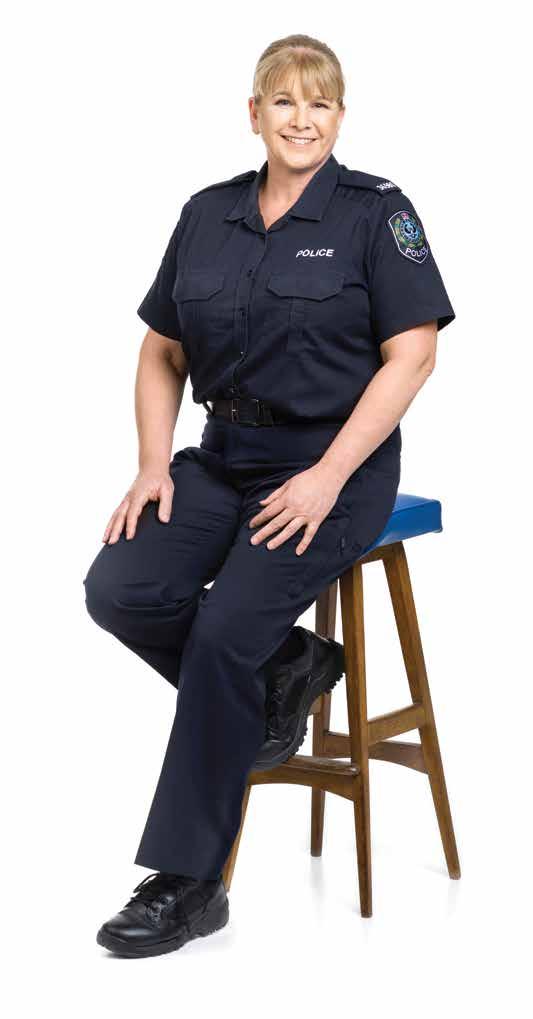
“Listening to others describe a police career and actually being a police officer are very different things.”

Scott Williams CEO Police Health & Emergency Services Health
The path to here
Police and emergency services personnel have always rallied together in the hardest of circumstances. Pandemics, bushfires, floods, accidents… Sometimes we share wins. All too often we share in grief. Regardless the call, it gets answered.
So when our colleagues working in fire, medical and rescue began crying out for access to health cover that understood the mental and physical health implications of the job, Police Health took action.
With the advantage of a blank canvas, we copied the best of Police Health – the values, the team, the unique cover and service – to create Emergency Services Health.
Along with a commitment to quality service and cover, both Police Health and Emergency Services Health share a focus on continually shaping and enhancing the benefits we offer based on member feedback and needs. And so it’s thanks to our members that we are what we are.
One of the ways we listen to our members is through surveys and research, and so we recently invited our members to take part in IPSOS’s in-depth Healthcare and Insurance Australia Report.
Out of the 29 health funds who took part (big and little players alike), the remarkable feedback from our members placed Police Health first in the key areas of:
• Very Trustworthy.
• Rebates on Services.
• Net Promoter Score.
Emergency Services Health placed first in:
• Makes private health easy to understand.
• Customer service.
• Helpful advice.
• Value for money.
• Strongly recommend rating.
These results are testament to the strong support of our members.
A longpetitioned extension to Police Health’s eligibility criteria has also been made possible through amalgamation which, now, for the first time, allows, for example, the parents and siblings of police officers to join.
We identified that, across the two funds, Police Health performed better in some areas and Emergency Services Health performed better in others.
All our members should have access to the best of both worlds so, driven by our vision to be a “world class fund of the future”, we sought and received approval from APRA to amalgamate into one fund.
Through amalgamation, we’re in a position to deliver the absolute bestof-breed health cover in the most efficient way to all those who protect our community on the front line, and importantly, to all their families too, while retaining our not-for-profit status and the distinct identities of both Police Health and Emergency Services Health.
A long-petitioned extension to Police Health’s eligibility criteria has also been made possible through amalgamation which, now, for the first time, allows, for example, the parents and siblings of police officers to join.
State-based joining restrictions on retired police and their families have also been lifted, making our cover more accessible than ever to the police community across the country.
Looking longer term, the operational efficiencies gained from amalgamating will help us further increase member value and keep downward pressure on member premiums. While increased growth possibility and buying power will help strengthen us further into the future.
Our success, however, will continue to boil down to our members. Keeping our firstresponder community engaged and happy with the cover we offer is not only our key to success, it’s the reason our staff are proud to work for you every day.
You deserve the best when it comes to your health – that’s why we’re here.
References: IPSOS Healthcare and Insurance Report Australia 2019