




Police Credit Union can offer our Platinum Advantage members FREE property research reports. Property reports will give you detailed suburb information to assist you to negotiate the best price. You will receive recent sales details, median house prices and a profile of the suburb you want to live in. Call 1300 131 844 to speak to a personal banker.


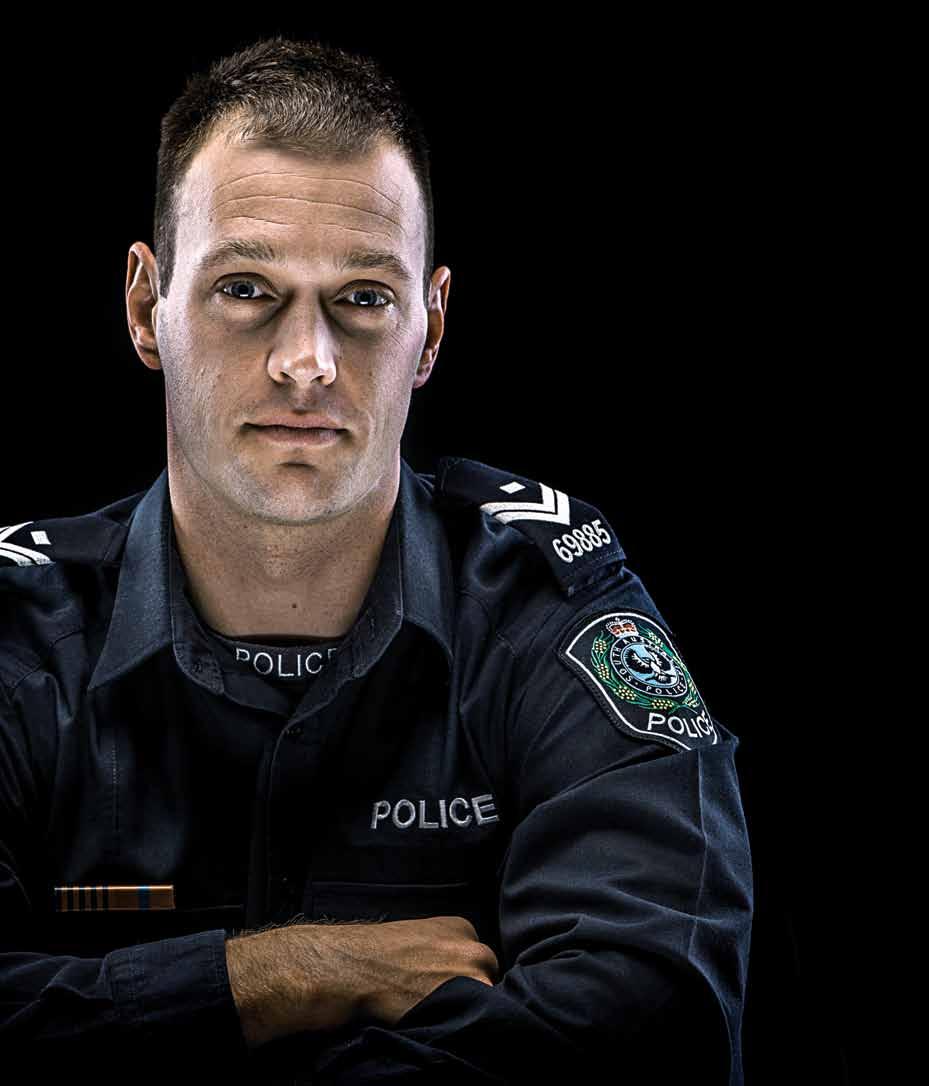
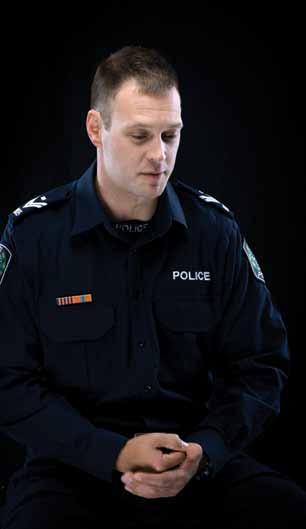
10 The miracle survival it was as life-threatening as any situation gets in policing but, with some quick thinking and rare luck, m atthew h ill came out alive.
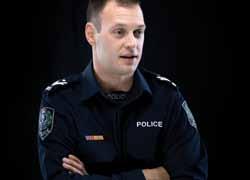

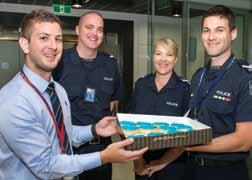
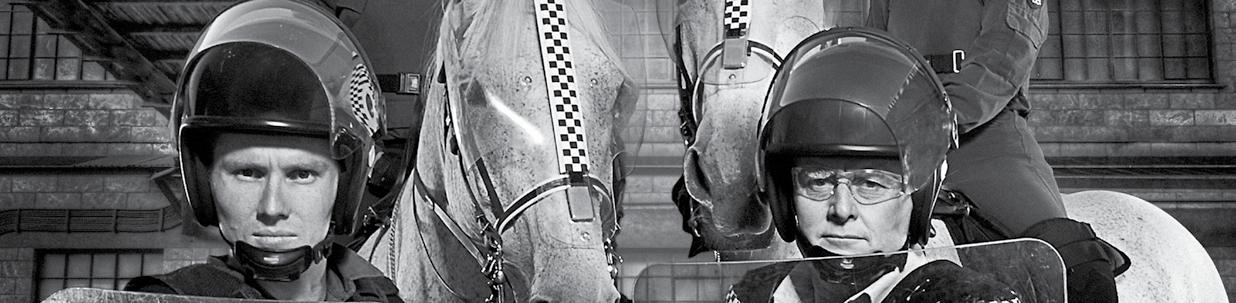
far from stuffed shirts, these Police federation of australia board members have done it hard on the front line and know how to represent cops.
COVER: senior constable first class m atthew hill. Photography by steve mccawley

Brett Williams editor (08) 8212 3055

Dr Rod Pearce health Writer
Publisher: Police a ssociation of south australia (08) 8212 3055
Advertising: Police a ssociation of south australia (08) 8212 3055

Jim Barnett motoring reviewer
Design: sam k leidon 0417 839 300
Printing: finsbury green (08) 8234 8000
The Police Journal is published by the Police a ssociation of south australia, 27 carrington st, adelaide, sa 5000, (a B n 73 802 822 770). contents of the Police Journal are subject to copyright. reproduction in whole or in part without written permission of the Police a ssociation of south australia is prohibited. o pinions expressed are not necessarily those of the editor. The Police a ssociation accepts no responsibility for statements made by advertisers. editorial contributions should be sent to the editor ( brettwilliams@pj.asn.au).

Committee
a llan cannon vice-PresiDen T
Level 2, 27 Carrington St, Adelaide SA 5000 P: (08) 8212 3055 (all hours) F: (08) 8212 2002
Membership enquiries: (08) 8112 7988

Trevor milne DePu T y PresiDen T
mark carroll
PresiDen T 0417 876 732
METRO NORTh BRANCh
elizabeth glenn Pink henley Beach matthew k luzek
holden hill nigel savage gawler David savage golden grove simon nappa Parks sonia giacomelli
Port adelaide k im Williams
salisbury Taryn Trevelion
northern Prosecution Tim Pfeiffer
COuNTRy NORTh BRANCh
Port Lincoln .................... Lloyd Parker (chair)
ceduna a nthony Taylor
Daryl mundy Julian snowden
Tom scheffler secre Tary 0417 817 075
coober Pedy................... Jeff Page
kadina .............................. r ic schild
nuriootpa michael casey
Peterborough nathan Paskett
Port augusta Peter hore
Port Pirie gavin mildrum
Whyalla michael Ball
CRiME COMMAND BRANCh
Elizabeth Kym Wilson (chair)
major crime campbell hill
adelaide Dac Thomas
DociB ............................ Dwayne illies
forensic services ........... adam gates
fraud Jamie Dolan
samantha strange chris Walkley
mitch manning
holden hill ....................... narelle smith
intelligence support ...... kevin hunt
Port adelaide matthew Thomson
south coast Jason Tank
sturt Brad scott
METRO SOuTh BRANCh
Sturt ................................ Michael Quinton (chair)
adelaide melissa eason
adelaide Daniel Wray
netley mark Williams
south coast Peter clifton
south coast ................... russell stone
southern Traffic .............. Peter Tellam
southern Prosecution a ndrew heffernan


COuNTRy SOuTh BRANCh
iNDuSTRiAL
organizer
Bernadette Zimmermann
grievance officer
matthew karger
FiNANCE
Wendy kellett
Mount Gambier ............. Andy McClean (chair)
adelaide hills Joe mcDonald
Berri John gardner
millicent nick Patterson
murray Bridge kym cocks
naracoorte grant Baker
renmark Dan schatto
OPERATiONS SuPPORT BRANCh
Dog Ops ......................... Bryan Whitehorn (chair)
Police academy .............. francis Toner
Police Band ..................... neil conaghty
comcen Brenton k irk
firearms leonie Turner
ExECuTiVE SECRETARiES
a nne hehner, Jan Welsby, sarah stephens
hr David Wardrop
hr kerry rouse
mounted ops melanie Whittemore
sTar ops Wayne spencer
Traffic David kuchenmeister
Transit michael Tomney
WOMENS BRANCh (no delegates)
ATSi BRANCh
Shane Bloomfield (chair) (no delegates)
OFFiCERS BRANCh
POLiCE JOuRNAL
editor
Brett Williams
MEDiA AND COMMuNiCATiONS
nicholas Damiani
RECEPTiON
shelley furbow
Alex Zimmermann rePreSeNtatiVeS
cohsWac ........................ Bernadette Zimmermann
h ousing Bernadette Zimmermann
leave Bank Bernadette Zimmermann
legacy ................................. a llan cannon
Police Dependants fund Tom scheffler
superannuation Bernadette Zimmermann
Tom scheffler
Mark Carroll

ThEcurrent SAPOL organizational reviews are budgetcutting measures masquerading as service-delivery gains.
a nd the recent release of the sa Pol consultation response papers does nothing to address this problem.
The current reviews, which encompass c rime s cene investigation units, crime v isitation cars and local s ervice area Traffic enforcement sections, lack academic rigour and are a front for budgetary-saving measures.
The response papers ignore many academic and practical findings the Police a ssociation and its membership base have brought to sa Pol’s attention.
The traffic review paper released last year provoked a particularly strong response from members.
after its release, i wrote to commissioner gary Burns and highlighted that the data sets relied upon to justify change were incomplete and some of the key disadvantages and benefits of all the options were asserted without validation.
The Police a ssociation commissioned the a ustralian Workplace i nnovation and s ocial r esearch c entre from the u niversity of a delaide to thoroughly assess sa P ol’s traffic review proposals and provide academic feedback. (see the Police Journal, february 2015, and the full paper on Pasaweb.)
The research centre’s paper asserted that there was insufficient evidence for sa P ol to conclude that the r oad Policing section model – the original “preferred” model and the one on which sa Pol has eventually settled – was preferable. it called for more detailed academic data, which never came from sa Pol
a uthors s imon m olloy and John s poehr, from the research centre, wrote that significant aspects of sa Pol’s preferred option had not been finalized, making it impossible to determine which of the options is likely to be the most efficient and cost-effective.
saPol released its consultation response papers last month. To the nearly 7,000-word research-centre review, it responded with a single lacklustre paragraph, which concluded:
saPoldoesnotsupportsomeoftheconclusions drawn in the report, their alternative approach to the interpretation and use of data and other information. however, there are points raised by the authors that support saPol’s finding and the need for change.
sa Pol’s dismissal of most of the report’s findings is both disappointing and worrying.
a nd sa Pol has indicated that it will implement a change to custom and practice for span of control which, for the traffic restructure, will stipulate that one sergeant is to be in charge of 17 ordinaryranked officers.
The legislative authority and responsibility for the control and management of sa Pol rests with the commissioner. But the industrial ramifications of any structural model – be it a centralized or decentralized model – is the legitimate concern of the Police a ssociation.
reductions in promotional positions and increases in the span of control to alarming levels are issues the association will challenge through industrial processes.
m any members are equally concerned with the csi and cvc review paper.
sa Pol canvassed three restructure options in the original paper, preferring option three as the most likely to go ahead.
like the traffic review, sa Pol already appeared to have a predetermined outcome in mind even before the consultation period started.
o ption three seeks to realign control of crimescene members to the forensic s ervices Branch, a move which would, in turn, reduce the number of full-time equivalent positions.
it would also create a central evidence desk from which sa P ol would create a crime-scene response relief pool.
in its csi and cvc review consultation paper, sa Pol conceded the evidence-desk concept had been the subject of much discussion.
“The policy and operating procedures will be further developed in consultation with staff,” the paper indicated.
“suffice to say that rotations will be of sufficient time to allow for members to settle into the workplace, learn the role requirements (and enable) them to be fully productive in the position.”
But the association’s consultation with members showed that they believe otherwise.
i n a letter to the commissioner in f ebruary, i highlighted member concerns with the csi and cvc restructure:
members reported that:
• insufficient information has been provided to fully assess the merits of the proposal.
• The paper contains several fundamental misunderstandings of the work undertaken by members in csi and cvc
• Proposed efficiency gains from the option are challenged, and members argue the new model will lead to increased workloads that will impact on the quality of crime-scene investigations.
sa P ol paid little more than lip service to these concerns in its csi and cvc consultation response paper.
“P asa provided feedback summarising individual member comment and concerns,” the paper reported.
“Pasa highlighted a number of points relative to possible increased workload, lack of detail around rosters and new work rules (as referred to in the concept paper).
“The concept paper provided was to give a broad understanding of the proposed structure, the remainder of detail, such as rosters and deployment rules, will be finalised during implementation with ongoing consultation with affected members.”
The prime objective of these so-called organizational reviews is abundantly clear. it is cost-cutting.
This response provides a damning insight into the lack of professional detail in sa Pol’s organizational review plans.
What sa P ol cavalierly refers to as “the remainder of detail” is actually a number of significant considerations that should be finalized before any review gets even close to taking place.
a nd the current round of restructure won’t end with crime scene and traffic. in local service areas, other sections
such as the ciB and field intelligence can expect similar treatment.
yet, the association, its members and the general public still don’t know what sa Pol’s grand organizational vision is.
h ow many lsa s will there be? h ow many front-line first responders will there be? how many promotional positions will be cut? What roles are being considered for civilianization or outsourcing? What will the service-delivery impacts be? a nd which areas will suffer?
We all deserve answers to these questions.
The prime objective of these so-called organizational reviews is abundantly clear. it is cost-cutting.
at a legislative c ouncil budget and finance committee meeting in early march, outgoing commissioner gary Burns even appeared to concede this.
When asked by the chair of the committee if sa P ol would meet the government-imposed $81 million a year in annual savings by 2017-18, commissioner Burns’ response was telling.
“ i t’s hard to speak for the new commissioner, but i would say the budget, in any government agency going forward, would be a challenge,” he said.
“i think in a broad sense (a reduction in employment numbers) will always sit there.
“(With) 77 per cent of the budget (tied up in salaries and people), you can only work in that other 23 per cent for so long…
“i think there will have to be a look at workforce numbers in that period of time.”
These are serious matters affecting all members and the community. i t is incumbent upon commissioner designate g rant stevens and the police minister to elaborate on c ommissioner Burns’ statements – especially those regarding workforce numbers.
saPol – and government – should also come clean on what these organizational reviews are really about.
Police, and the community they serve, are entitled and indeed have a right to know.
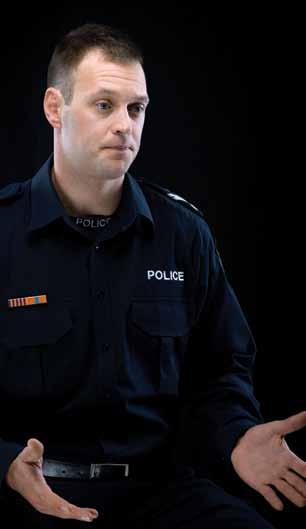
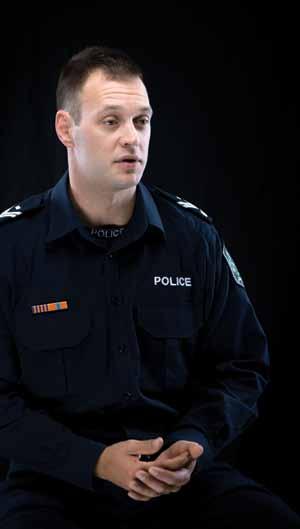

By Brett Williams
Drenched in petrol and caught in a struggle with a man who wanted to set him on fire, Matthew Hill was never so vulnerable. And only the inexplicable failure of a common implement saved him.
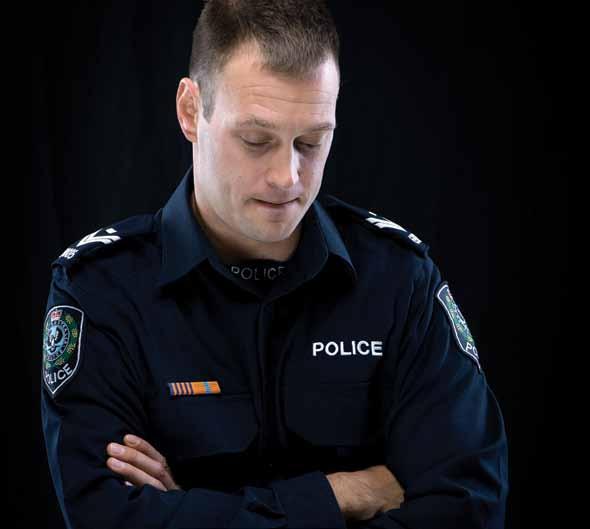
hiSenraged, bucket-carrying attacker was striding down the driveway toward him – and two other Netley-based cops. senior constable first class m atthew h ill suspected that, in the bucket, k ieran cregan had put something foul, like his own urine or faeces.
hill had worked in front-line policing long enough to know that some unhinged criminals stooped to practices that low. But all he could tell right now was that the substance was a dark liquid, which showed through the light-coloured bucket.
it never crossed his mind that cregan was coming at him with petrol – and the intent to douse him and his colleagues in it. a nd just then, all three were standing together next to a police cage car on the camden Park street outside the cregan home.
Thinking quickly and with a cool head, h ill moved a slight distance away from his colleagues, Jarryd simister and Debra corfield. That was so the three of them would not become one target for whatever cregan might try to inflict on them.
and cregan kept coming, right out to the footpath, where he stopped about two metres away from,
and facing, the officers. Then, without the slightest pause, he raised the bucket and drew it backward.
h ill knew that c regan would, with his next movement – in a fraction of a second – thrust the bucket forward so as to hurl its contents out at the cops. so he launched himself at cregan and, just as he did, that forward thrust of the bucket came.
a nd the momentum did indeed hurl the petrol out – all over hill.
“a s soon as he threw the liquid, i recognised the smell of petrol,” hill says. “it covered me on the left-hand side of my shirt, pants and body.
“i wear body armour so most things i don’t feel, but i knew that it was liquid, i knew it was wet, and i could smell it. The top half of me was coated in it.”
s o, after bringing c regan down with a tackle, the petrol-soaked h ill ended up on the concrete driveway on top of him. cregan had landed on his back and immediately started to raise his right arm up toward hill’s chest.
“a s his arm came up, i could see something in his hand,” hill remembers. “a s soon as it got to about eight or 10 inches from my chest i could see it was a cigarette lighter!
“a nd i knew that, if he struck that lighter, i was done. Because of where the petrol was on my body, if it (the lighter) had ignited i just would have been inhaling fire.”
But setting hill on fire was precisely what cregan was trying to do, and he was not about to stop. h e kept inching the lighter upward until he was actually pressing it into hill’s chest.
Then, without compunction, c regan struck it with his thumb – three times. But, in what most have since called a miracle, the lighter, which was in working order, did not spark a flame. m ercifully, that left hill breathing air rather than the fire he feared he might end up inhaling.
still, he realized he had to act decisively to stop cregan from striking the lighter a fourth time. h is situation was desperate enough to warrant a couple of distracting punches to cregan’s face, and he promptly delivered them.
and, as a distraction, they worked. hill was able to move immediately to grab the hand with which cregan was still “absolutely hanging on” to the lighter. But getting it out of his grasp became a case of prising each one of his fingers off of it.
hill eventually got hold of the lighter and, while still struggling with cregan, threw it some distance away. a lthough now disarmed, cregan continued to try to break free of h ill and s imister, who had jumped in to help his vulnerable colleague.
“h e (c regan) had even managed to turn over onto his stomach and pull his arms in underneath his body,” hill says. “But we were eventually able to get his arms free and apply handcuffs to him.”
so, finally, the frightening threat of major injury or even death by fire had passed. a nd only now did hill start to feel his heart thump and adrenaline race through his body.
of course, this was not the way he would have expected a simple case of failing to pay a couple of taxi fares to end. But that was exactly the call to which hill, working solo, and simister had responded on that april night in 2013.
c regan and his daughter, s ian, had each caught a cab home from a hotel. They had been out celebrating his birthday but ended up in an argument and so left separately. Both arrived back at their camden Park home around the same time but did not pay either cabby.
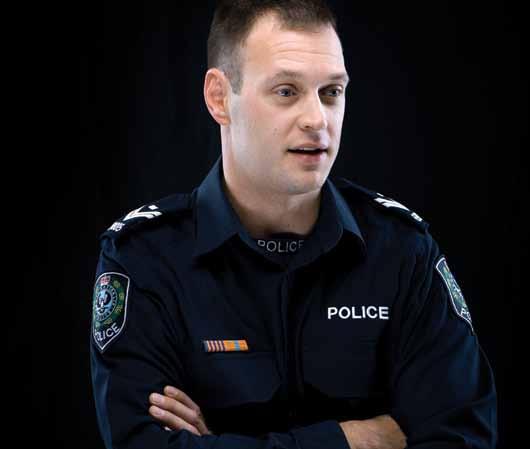
“she kicked off straight away, throwing her arms and legs … and screaming at the top of her lungs.”
That led to a call to police and, once on the scene, hill and simister found that father and daughter owed the two cabbies a total of $45. hill went to the front door of the house and could hear cregan yelling about the gathering of taxis and police outside.
a nd, through a front window, hill could see sian lying in a bed. he called out to her with a request to come to the front door but she ignored him.
e ventually, an aggressive, alcohol-affected cregan appeared at the side of the house, insisting that he had paid his taxi fare. after hill assured him that neither cabby had received his payment, cregan went back inside and soon reappeared with his drunken daughter.
she was yelling at her father so it took several minutes before hill was able to explain to sian what he was investigating. a nd, after he told her that he required her to state her name, she refused.
“s he couldn’t really follow a conversation or string a proper sentence together,” h ill says. “she was just verbally combative.”
left with no choice, h ill took hold of s ian by her elbow and arrested her, just as she turned and started to walk away from him. a nd that sparked a “quite violent” response from her in the driveway.
“she kicked off straight away,” hill says, “throwing her arms and legs and trying to kick out, and screaming at the top of her lungs.
“i just put her to the ground and held her there, and i think Jarryd came over and helped me to cuff her.”
cregan, angered by the arrest of his daughter, started to pace up and down with his fists clenched as he breathed heavily and glared at h ill. But h ill kept him talking about the taxi fares and ultimately persuaded him to pay them.
after that, however, c regan turned his attention back to his daughter’s predicament. he again started pacing up and down with his fists clenched, glared at simister, and warned hill that he would hunt him down.
cregan then walked away and into his house, only to re-emerge and continue ranting about the arrest of his daughter. But even she insisted that he go back inside because he was “making it worse”. so, again, cregan retreated indoors.
h ill and his colleagues then spoke about moving sian out of the driveway and over to the footpath. a nd, as they talked, hill could hear movement behind a fence at the end of the driveway.
“i activated my torch to see what the noises were,” he says. “i could see the top of cregan’s head but i couldn’t see what he was doing because of the fence.”
curious but unconcerned at that point, hill went ahead and helped sian to her feet and led her out of the driveway. Just as they got to the footpath, corfield arrived in the police cage car and went about searching sian.
When the search was done, and the officers were about to place sian in the cage car, cregan emerged with his bucket of petrol – and evil intent.
h i LL concedes that the attack left him emotionally scarred. h e suffered sleeplessness, nightmares and flashbacks but never wanted to talk about what happened. Times did come, however, when he broke down – in private.
“you have to,” he says. “if you keep trying to bottle it up you just go insane, and i tried to do that for a long time.
“you don’t want to take it home to your family. They worry enough about what happens in your (work) without taking that sort of thing home. so it makes it hard.
“ you want to go home and be normal and, for the most part, i was until i tried to sleep. i would have recurring dreams about the incident and that’s when you have no control. There’s nothing you can do.”
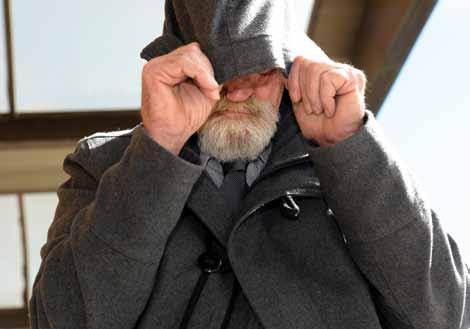
equally disturbing to hill was the flow-on effect of those dreams on his partner, s amantha. “We weren’t together at the time this (incident) happened,” he explains, “but she’s fully aware of it.
“i’ve woken up mid-dream thinking that she’s him (cregan) and i ’ve been ready to punch on again. you wake up and realize your partner’s putting up with that, and it’s not right. Thankfully, that doesn’t happen anymore.
“But she’s a very strong person. h er approach is: ‘if you need to talk about it and you need to vent, come and talk to me.’
“getting it off my chest gets rid of the immediate stress and you feel calm. But it doesn’t fix things in the longer term.”
h is flashbacks occur far less now, too. But, in the months after c regan attacked him, tasks which came with the smell of petrol took him straight back to the incident. i t happened whenever he refuelled his car, mowed lawns, or used a chainsaw. e ven at work, months after the attack, its impact on hill was obvious. o n one shift, he set out to respond to a report of a man threatening to harm himself.
“That was probably the point when i realized this had had more of an effect on me than i was perhaps willing to admit.”
a n update he got on the way there was that the man
had doused himself in a flammable liquid, which he proposed to ignite.
“i just pulled off the top of s pringbank r oad and every hair on my body stood on end,” he says. “i froze, and i thought: ‘ i don’t want to go there. i don’t want to be involved in this job.’ ”
But h ill did attend and even talked, as other responders did, to the man who threatened to set himself on fire.
“That was probably the point when i realized this (cregan attack) had had more of an effect on me than i was perhaps willing to admit,” he says.
u ntil last o ctober, when c regan fronted the District c ourt to answer for his actions, h ill had not seen him since the attack. “it just brought back the night (of the attack),” he says.
“i don’t know that i’ve ever harboured a personal resentment of him. To my mind, it happened as a result of work. i t wasn’t a personal thing. h e’s answered to the court for his actions and the court’s made its decision.”
o n a charge of aggravated endangering life, Judge geraldine Davison sentenced cregan to 30 months’ jail with a non-parole period of 16 months. hill, for his actions, received a certificate of merit last month.
a nd no time ever came when he thought about leaving the front line for some other field of police work. “i couldn’t do it,” he says. “i’ve been a patrol copper for my entire career, nearly 11 years. i wouldn’t want to do anything else.” PJ
With a new president, vice-presidents and treasurer, But who are the men who sit at the Pfa board table

the influential Police federation of australia has begun a new era. in canberra and make decisions that affect every australian police officer?

By Brett Williams
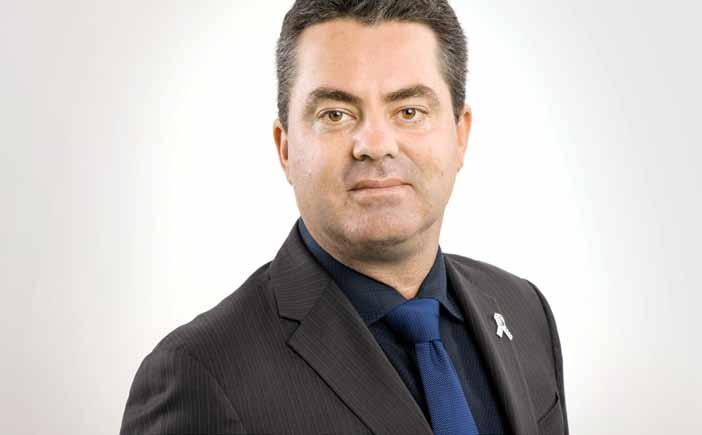
iT was never money or status that led Scott Weber to take on the presidency of the Police Association of NSW. n or was it the lure of a high-profile position which thrusts its occupants into the limelight.
The way Weber saw it, he could he have done “heaps of easier things” to get those so-called rewards – had he even wanted them.
The reality was that he had lived and breathed the union cause since he was a fresh-faced constable of just 20. Back then, he saw cops treated unjustly in the workplace and a superior who refused even to consider the views of the rank and file.
That gave him all the motivation he needed to become the union branch official at a shfield police station. a nd the fair treatment and welfare of, and support for, cops remained his motivation to lead the nation’s biggest police union.
not even some who cautioned him about taking on such significant roles with the union were able to dissuade him. “it happened many a time in regard to my career prospects,” he recalls.
“They said: ‘What are you doing? you’ll never go any further than sergeant. This (union involvement) is hurting you. you need to have an endgame.’
“ m y comment to that was: ‘ m y endgame is actually getting the best for the membership.’
“When the Police association speaks, people listen because they know it’s evidence-based.”
“( a nd) i ’ve often said, even to some very highranking people: ‘This is not about the next progression or job for me. it’s about doing the right thing, and this (my participation in the union) is the right thing.’ ”
Weber even copped the taunts of “commie”, “red” and “rabble-rouser” during a heated pay campaign in 2000. But none of that fazed him. “i’ve been called a labor Party stooge,” he says, “and i’m currently called a liberal Party stooge.”
But clear evidence that Weber is no puppet of either the major or minor parties lies in his rejection of their overtures. a ll have sought to draw him into running for them.
“it hasn’t been hard to knock it back,” he says, “because i ’m a police officer through and through.
“i ’d love more police officers to be involved in politics. We’re actually totally built for politics. We’re very good communicators, very good under pressure and we can deal with long hours.
“But my role is with the Police a ssociation and my police career, and i hope it will be well into the future.”
Weber, who speaks of his members with great regard, sees it as his job to make sure cops get home safe at the end of their shifts. “i’ve got to get them the resources and the training to do that,” he says. a nd, to Weber, that means helping to steer the new south Wales Police force in “the right direction”, but not just to make sure it delivers officer safety.
“Police need to be able to put food on the table, pay their mortgages and have an adequate quality of life,” he says. “i think as an association we’ve done that (brought those things about) really well, but we need to be constantly vigilant about it.”
o f course, not every good industrial outcome results from calm, rational negotiation. Police union adversaries, such as government and police management, are quite capable of intransigence.
That is why Weber insists that a police union president has to be a fighter who, in the industrial arena, can not only throw but also take a punch. “and you don’t have to throw many,” he says, “but, when you do, you have to make sure they land.
“ you’ve got to be willing to take the ongoing criticism, the attacks from the police hierarchy, politicians and even members. everyone has a point of view and it’s very difficult to keep 16,500 people (members) on the same line.
But it’s good for people to question you.”
While Weber might never have seemed destined to lead a trade union, he was always likely to join a police force.
r ight from the age of five, when he toured the Tweed h eads police station with his kindergarten, he wanted to be a copper. The station sergeant had allowed him into a cell, where he sat and thought: “i want to help people.”
“i know that sounds really corny and idealistic,” he says, “but i think the sole purpose of joining the police is to actually try to make a difference. it’s the only job i ever wanted to do.”
Born and raised in Tweed h eads, Weber attended k ingscliff h igh school and later worked at the coolangatta mcDonald’s, one of the busiest restaurants in the chain, nationwide.
he had by then survived his toughest childhood challenge, which was the divorce of his parents when he was eight. his next challenge, after working as a barman, waiter and poker-machine attendant at the Twin Towns services club, would be a police career.
Weber joined the nsW Police force as a 20-yearold in 1994. a nd, like all cops, he had to confront threats to his life and other emotion-charged situations which seared themselves into his memory.
o ne was the death of a baby whose mother had drowned her in a lake and then taken her body back home to marrickville. Weber, one of the first to respond, tried desperately to resuscitate the infant who vomited several times, as can occur after death.
unknown to Weber was that too much time had passed for resuscitation to work. h e ended up with the child’s vomit in his mouth and momentarily overcome with emotion. in distress, he asked an ambulance officer to explain to him what he had done wrong.
The ambo – who had turned up on the scene after Weber – told him that he had not failed, that the baby had been dead for some time. still, after the incident, Weber needed time to recover and so flew home to Tweed heads to be with his family for a few days.
h e consulted a counsellor and, in the end, was able to emerge from the trauma.
years earlier, Weber and his partner at the time had had to confront a knife-wielding mentally ill man in a park. They had called on him to drop his weapon but he started moving directly toward them.
Weber, armed with a long baton, kept the man’s attention on him while his partner, armed with a handgun, moved to one side.
o nly after Weber had called on the man several more times to drop the knife did he eventually comply.
l ater, back at a shfield police station, the man admitted that, had Weber drawn his gun, he (the man) intended to charge at him to commit suicide-by-cop.
a round the time this incident played out, Weber the union branch official won an election to attend his first Police a ssociation conference as a delegate. a nd, at that 2000 symposium in Wollongong, he won election to the association executive.
“By then,” he says, “i was quite active, probably over-passionate. now i’m a lot more tempered.”
i n 2004, Weber rose to the office of vicepresident and in 2010, at the age of just 37, won election to the presidency.
a mong his credentials, apart from his time in front-line policing, is the Police a ssociation c ertified e xecutive programme he undertook in canada. Weber also took part in the annual “Big 50” Police union leaders seminar run by the harvard law school labor and Worklife Program.
Today, he leads his union by simple but effective strategies. “i like keeping my powder dry,” he says, “and i don’t think we need to flex our muscles for the sake of it.
“ you don’t parade your tactical capabilities every day down the main street of s ydney or a delaide just to show that you have them. We need to keep our strength in reserve.
“The last thing you want to be is in constant battle. it’s not only draining on the membership but it starts to lose its power.
“When the Police a ssociation speaks, people listen because they know it’s evidencebased. We’re quite tempered in the use of our strengths, but no one should underestimate that as weakness.”

hEknew he was “going out on a limb” when he declared publicly that now former premier campbell newman had lied to him. But Queensland Police u nion president ian leavers considered it his duty to call the controversial ln P leader to account – in the interests of QPu members.
“campbell n ewman looked me in the eye and he lied to me,” the forthright l eavers told a B c r adio host steve a ustin in Brisbane last January. “if you’re going to lie to a police officer, you’ll lie to anyone.”
later that day, leavers repeated his declaration with equal conviction in a press conference. and news like that, amid the flurry of a pre-election campaign, was always going to – and did – flash around the country in no time. The coverage led some observers to label leavers a union thug and others to tell him he should never have made such a provocative statement.
But the union president of almost six years saw it differently.
“i knew it could be risky but there was a bigger picture and (making the comment) had to be done,” he insists. “ you’ve got to call all politicians to account, hold them to their word, and that’s what i was doing.
“if someone gives you a commitment, that’s their commitment, and i expect them to keep it. if he couldn’t live up to the commitment, the thing to do was contact me and say: ‘We can’t do it because of this reason.’ Just be honest and upfront with me. Don’t lie to me.”
f unding of $20 million, which the n ewman government had promised but not delivered for its safe night out precincts, was what led to the leavers comment.
n ewman’s successor as premier, a nnastacia Palaszczuk, had drawn some strong public comment from leavers, too, about nine months earlier.
i n the Queensland parliament, she had branded police as intimidators for filming people – including members of the public and ( l abor) opposition members – at a gold coast community cabinet meeting.
The practice, undertaken for many years, was a routine security measure designed to protect both the public and parliamentarians.
leavers called Palaszczuk’s remarks a “disgrace”. “i demand (that) a nnastacia Palaszczuk withdraw
her baseless criticisms of police immediately and apologize for making such ridiculous allegations against police…” he told the media.
But leavers holds no grudges and appreciates the value of rational negotiation. “ you’ve got to be apolitical,” he insists, “and you must work with all sides of politics to achieve the best outcomes.”
Pre-election commitments he sought from the alP – and secured – include no loss of conditions or allowances for police and no privatization of any police functions.
a s a public figure, and as Queensland’s highestprofile defender of police, leavers cops his share of ill-considered criticism, even in the form of hate mail.
m ost of it comes after he publicly backs his members against armchair critics who rush to judgement on police involved in incidents such as shootings and high-speed chases. “ you’re a disgrace!” and “ you should resign!” are some of the remarks he cops for the stand he takes.
“i get hate mail all the time,” he says. “i ’ve had death threats, too, but it doesn’t bother me.”
n or do the far more sinister threats bother him, the ones that come from within political circles. one came during a dinner he shared with a political figure, who warned him to “back off” in respect of pressure he was applying to the government.
The threat was that, if he continued to “go hard” on certain issues he was pushing, “they” would go after him. But the face-to-face encounter never ruffled leavers.
“i said: ‘look, you do what you’ve got to do, but i ’m not going to change my position,’ ” he recalls. “a nd that’s the way it was. i was disappointed because there was no need for it.”
There was also the acting inspector who threatened to arrest leavers if he placed a bumper sticker on a police car during a campaign for increased staffing. The two exchanged words, leavers did not yield, and the arrest never took place.
of course, the flip side of all the antagonism is immense support for leavers, even from the public. o ne recent example was an elderly a sian man who stopped him on a Brisbane street to shake his hand and say: “you do a great job. keep going.”
“a nd,” l eavers says, “when i ran an alcoholfuelled violence campaign for the reduction in trading hours, i got e-mails from ordinary mums and dads saying: ‘Thank you. We support you for caring for our children.’ ”
“you’re in a political role whether you like it or not … you’re watched in whatever you do…”
l eavers insists that a union president must “live and breathe” his or her role. h e remains on call 24-7, is rarely off the phone, and seems endlessly ensconced in his work. if union members need his support in places as distant as far north Queensland, his practice is to get the next available plane straight there out of Brisbane.
a nd he accepts the intense media and other scrutiny which comes with life as the face of one of Queensland’s most influential unions. “it does change the way you live your life,” he says.
“you’re in a political role whether you like it or not, and it’s the same for politicians: you’re watched in whatever you do, and that’s just the way it is.”
and leavers picked up an extra responsibility after the Police federation of australia federal council elected him one of two vice-presidents last november.
so, as a divorcee and father to an 11-year-old son, he has to stand up to the personal impact which comes with a life spent in high-level unionism. a nd it was a life in which he never once expected to be involved.
h is sole career goal, ever since he was a fiveyear-old, was to be not a union official but simply a police officer. That ambition came about after he had emigrated from england as a four-year-old with his parents in 1973.
raised in suburban inala as the second of four children, he attended st laurence’s college, south Brisbane and embraced a range of sports, including athletics and roller skating. indeed, sport gave him “a thirst to win” and ended up a major influence in his life.
after leaving school, he scored work in the prison system in which he remained for two years. Then, finally, at the age of 20, leavers joined Queensland Police; and, as a copper, he confronted every human horror, from fatal car crashes to child abuse.
o ne investigation he has never forgotten is that of a man who shook his baby stepson so violently that the boy ultimately lost all brain function. hospital staff called police and leavers responded. he found out that the shaking had left the boy in a vegetative state from which he would never emerge.
“The child was never going to live, and this fellow (the stepfather) was unrepentant,” leavers recalls.
“h e claimed he gave him only a little shake to wake him up because he was concerned about him, but the medical evidence was overwhelming.
“The young boy lived in a vegetative state for two-and-a-half years after the incident and then died. a nd it took more than four years, but we ended up getting a plea for manslaughter.”
a mong the issues that first motivated leavers to get involved with the QP u in the 1990s were the denial of overtime payments and shortfalls in police numbers. ipswich police station, where he was himself based, was down by up to 35 staff.
so leavers became the delegate for the union’s i pswich branch and later rose to the offices of executive member in 2005 and vice-president in 2008. Then, after the resignation of his now predecessor, he won office as QPu president in July 2009.
he wanted to make a difference and was never concerned about the labels his critics might apply to him.
“People assume (based on your union role) that you’re extremely left wing and unreasonable,” he laments, “and that’s not the case.
“in Queensland i’ve been accused of being very pro ln P and that i was actually running for a safe ln P seat, which wasn’t the case either.”
l eavers, who came from an “extremely conservative” family, admits that apparatchiks from both sides of politics have approached him about running for political office. But, as committed as he is to representing police, he has rejected every approach.
“i have no ambition for politics in any way, shape or form,” he insists. “The more i ’ve dealt with politicians, the less appealing politics is to me. i’d never want to be involved in it.”
a ssociation v ictoria president John l aird has wound up on some of the bloodiest and most unforgettable crime scenes in australian history. o ne of them, the 1986 r ussell st bombing right outside v ictoria Police headquarters, was where 21-year-old police officer angela Taylor suffered fatal wounds.
laird was mobile from a nearby suburban court when the bomb, planted inside a stolen commodore, exploded around 1pm. it took him only minutes to get to the scene and, when he did, it struck him as “still mayhem”.
There were the 22 injured innocent victims; police converging on the site; and the blackened, smoking wreck of the stolen commodore. it was now not recognizable to l aird as a car, as it continued to emit small explosions.
“in that immediate aftermath we helped with some people who’d been injured,” laird remembers. “it was something you’re not going to forget. you don’t expect to see that (a bombing) in that place.
“The concern was for a secondary attack. The ira had had a habit of setting off one bomb and then they’d set off another one. a nd there had been some further threats made so there was a bit of apprehension.”
l aird manned the intersection of russell and v ictoria streets, just north of police headquarters, and saw the disaster unfold over the next four hours.
a nd the next year, he ended up on the scene of the Queen st massacre in melbourne’s 18-storey australia Post building. a 22-year-old gunman, frank v itkovic, shot eight people dead and caused serious injuries to five others before plunging to his own death on the street.
s tanding directly below the 11th-floor window he jumped from was laird who, moments earlier, had arrived on the scene to the sound of gunfire. v itkovic landed and died right near him on the footpath.
With uniformed police officers around the perimeter of the building, l aird went inside with other detectives to investigate. a mong the dead, he found a man who v itkovic had shot multiple times but failed to kill.
laird helped the embattled survivor out of the building to safety but then went straight back inside to investigate further.
“i t’s the forgotten massacre,” l aird says. “e veryone talked about h oddle s t, which was just four months beforehand (in august, 1987). i always assumed that was his ( v itkovic’s) inspiration.”
i n the h oddle st massacre, former army cadet Julian k night, 19, had shot seven people dead and injured 19 others with a shotgun and two rifles in clifton hill.
a s l aird progressed through his police career, he continued to confront high-risk jobs, particularly in his time as an a rmed robbery squad detective. in those days, he and his colleagues undertook many early-morning raids to find and arrest armed offenders.
“sometimes we did five a week,” he says. “We might have two lined up and do the first at 4 in the morning but not do any good. We’d then clean up and be at another joint by 5 o’clock.”
Deeply painful for l aird, and every other v ictorian police officer, were the 1998 murders of s ergeant gary silk and s enior c onstable rodney m iller. The two had teamed up to work on an undercover operation ( hamada) to catch two serial armed robbers of restaurants.
These criminals, Bandali Debs and Jason roberts, shot silk and miller in a moorabbin street after the officers had spotted them during a stakeout. l aird knew both slain cops, whose deaths he got word of in an early-morning phone call.
“it was terrible,” he says, “just tragic that they lost their lives. it was traumatic for everybody who knew them.
“i still see rod’s widow, carmel, once a year at the ceremony (that pays tribute to rod and gary). We always go to that. now i go to represent the Police association. it’s usually some event that sparks the memory for me, but i ’m past dwelling on it.”
life as a front-line copper was no doubt good preparation for the roles l aird came to take on in police unionism. his early service was as a delegate and an independent member of a Police a ssociation sub-committee which considered legal funding. in 2005, he won a position on the association executive and later served as junior vice-president and senior vice-president. he won election to the office of president in october last year.
The stress and poor treatment he saw some cops suffer in the workplace were what drove laird to take on such active union roles in the first place.
“ you start realizing how badly some people are suffering and that they need a bit of help,” he says. “even now, we get people come in (to the association) just about every day and they’re broken. a nd they probably wouldn’t have been if they hadn’t been police.”
fortunate for his members, particularly the ones in pain, is that l aird understands the value of empathy and the folly of spin.
“ you’ve got to be able to understand their points of view,” he says. “our members do diverse roles, so they have different ways of looking at things.

“even now, we get people come in (to the association) just about every day and they’re broken.”
“When you’re talking to members, you must avoid management terms and talk to them plainly and honestly. Weasel words should be avoided at all costs because most members would associate those words with insincere people.
“you have to engage the people (members) you’re speaking to and let them know you’re human.”
i ndeed, those of his colleagues l aird has admired most over time are the ones he has seen practise great people skills.
But he also understands that, along with his or her power to engage, a president needs tenacity and strength of character.
“The (police union) presidents are like that,” he says, “they’re strong-willed people. it’s really that determination to do something and see it through. i think you need that whenever you challenge and change things.”
o f course, it was not only his police background that shaped l aird but also his childhood, little of which he spent in one place.
The work his father undertook as a banker involved frequent transfers around country v ictoria.
for l aird, that meant turning up to a lot of new schools, only to become a target for bullies who took pleasure in picking on newcomers. “you need to look after yourself a little more,” he says. “a nd i had to start over and over again in relationships.”
laird survived not only the aggression of bullies but also a burning Jamieson shack when he was 18. one of a few mates he was camping with dragged the unconscious l aird out to safety after the shack’s roof caught fire. if not for that mate, he would certainly have died.
a t the age of 19, after working in a pub and as a driver, as well as unloading trucks, he joined v ictoria Police in 1980. and, until then, the prospect of a police career had never once crossed his mind.
“a cousin talked me into it,” he says. “he was a copper and i think he might have been influenced to persuade me. i was told it (policing) wouldn’t be a bad thing to do.”
laird would go on to work in uniform and, later, as detective in the inner-city areas of m elbourne, where he wound up on those horrific crime scenes.
Today, the 54-year-old husband and father-of-three insists that, for him, the role of president has no downsides. h e enjoys “all aspects” of it, and even appreciates the odd lesson the job has taught him.
“if i had a strongly held view i used to think i couldn’t be moved on it,” he says. “But now i’m happy to listen to other points of view. i’ve got a better appreciation of other views and of listening to them throughout entire issues.”
a lthough, one issue on which he remains immovable is that of a switch to politics. no one has asked him the question yet but, if anyone does, his unmistakable answer is: “i couldn’t be less interested.”
ANaustralian federal Police superintendent once called him a communist who, along with the thencommissioner, mick Palmer, was setting out to destroy the afP. and another police manager, of even higher rank, wrote and submitted a confidential report criticizing him. for australian federal Police a ssociation president Jon hunt- sharman, the irrational attacks on him back in the mid-1990s were part and parcel of life as a police union leader. But the superintendent’s outburst did leave him “dumbfounded”.
The background of the bitterness toward h untsharman was a major reform programme the afP was undertaking with union support. s ome, such as the acerbic superintendent and his report-writing colleague, strongly opposed it – the 1995 change agreement. s ays h unt- s harman: “i remember saying (to the superintendent): ‘ l ook, this will work. i t’s about empowering the police to get on and do the job. it’s best practice in other organizations overseas and in australia.’ But he wasn’t interested.” of course, that interaction was early in the 17-year hunt- sharman presidency and was not to be the last to play out with bitterness. more followed during a round of enterprise bargaining which, according to h untshaman, lacked good faith on the part of the afP. he and senior police management wound up in some intense, behind-closed-doors exchanges before the two parties agreed on an eB to put to the vote. a nd, in the end, it got the endorsement of the afPa membership. a lthough the interaction got heated back then, h unt- s harman claims that the killer instinct did not, and never has, formed part of his personality.
“i think the people who last long as presidents and secretaries are the ones who genuinely consult, genuinely negotiate and, then, genuinely make a decision,” he says.
“They’re the leaders we have now in the Police federation (of australia). right across the board, every president has those characteristics. That’s why this is a very exciting time for the Police federation.” for just about every one of a ustralia’s current police union presidents, an industrial relations career seemed unlikely when he was a boy, and even a young copper. But that was not quite the case for hunt- sharman.
a career aptitude test he undertook at high school proved extraordinarily prophetic. it indicated that his skills were best suited to industrial relations and lobbying.
“The funny thing was that at my age – and i was probably in year 10 – i didn’t know what industrial relations and lobbying were,” he says. “so i walked out of there thinking: ‘oh, well. Whatever.’ and that was it.
“i always wanted to be a police officer and, right then, i still wanted to be a police officer. i wasn’t interested in these other things (industrial relations and lobbying).”
Born into an extremely conservative family, h untsharman grew up in gosford, 75km north of sydney. his father, a former royal marine, managed sawmills and his mother had worked for the n aval intelligence Division of the British admiralty during WWii
The royal navy drew on her knowledge of timber and conversion of a ustralian measurements to imperial for repairs to damaged ships.

“…the people who last long as presidents and secretaries are the ones who genuinely consult…”
Both h unt- s harman parents believed in the worth of charity and belonged to various community organizations. They raised their three children to do the same: hunt- sharman served for some time as a boy scout and, later, in the army reserve. e ven much later, that upbringing proved an influence in his ultimate career choice. seeking a job which would allow him to serve others, hunt-sharman joined the afP as a 24-year-old in 1983, after he had earned a degree in social science (police studies). he would end up based in sydney and undertake investigations into major frauds and drug and organized crime. “a nd i loved doing it,” he says. “That was my focus, but i was always interested in investigating political and public-sector corruption.”
But then came the establishment of the ns W i ndependent c ommission a gainst c orruption in 1989. hunt- sharman went to work with its inaugural investigations team and stayed with it for three-anda-half years.
in 1995, after he had returned to his investigational work with the afP, mick Palmer asked him to join a four-person working party in connection with the reform programme. hunt-sharman took on the role as one of two representatives of the afP on its change o versight Team.
But in 1997, during his service to the team, he won the vice-presidency of the a Pfa and so changed
sides to become one of two representing the union.
The 1995 change agreement progressed; and, later in 1997, after his now predecessor retired, huntsharman won election to the office of afPa president. he had survived front-line police work but was extremely lucky to have lived through a vicious attack off duty in sydney in the early 1990s. a s he and two colleagues were leaving a restaurant, the woman who had served them asked if they were police officers.
she explained that a “scary” armed man living in accommodation above the restaurant had paid her not to say anything about him to anyone. huntsharman encouraged her to call the state police to investigate, and he and his companions left.
The woman locked the restaurant door behind them as they walked away. But then came loud screams which prompted the three cops to charge straight back to the restaurant.
They found the woman under physical attack and broke through the locked door to rescue her from the man she had described as scary. h e fled back upstairs and into his room as the cops chased after him, only to find he had locked his door.
hunt- sharman managed to break into the room, where the man charged at him with a long, silver knife. “it looked like a bayonet and he went for my chest,” hunt- sharman recalls. “i put my hand up and he actually sliced it with the knife.
“Then we fought, and this guy fought like a thrashing machine. it was frightening. he was leaving me for dead.
“he kept on trying to throw me into a corner but, in the end, i’m on the ground and he’s on top of me, and he’s got the knife at my neck. so i’m lying there trying to stop this knife going into my throat.” eventually, the other cops forced their way into the room where one of them drew a handgun and held it to the attacker’s head.
says hunt- sharman: “he was calling for the guy to ‘drop the knife or i ’ll shoot’ and (when he got no response) he went to pull the trigger. a s the hammer went back, the guy dropped the knife.”
follow-up enquiries revealed that the attacker was a south african mercenary playing bodyguard to corrupt former Philippines president ferdinand m arcos, who was planning to smuggle gold from his country to australia.
The reason the mercenary had tried to force h unt- sharman into the corner of the room during the struggle also became clear. h e had hooked his metal-framed bed up to the electricity supply.
“he was trying to electrocute me,” hunt- sharman says. “There was no doubt he was going to kill anyone who tried to interfere with what he was here for in australia.”
Today, when he reflects on his earliest involvement with the afPa , he sees police struggling to respond to poor treatment in the workplace. he wanted to help and so became the delegate for the union’s nsW branch.
a nd even now, after 17 years as president, his affection for working coppers has not waned.
“i t goes back to my mother,” he says. “s he was very much of the view that you need to be successful, achieve, and to do things that help others. i think that led to all three children (my siblings and me) being workaholics.”
l ike his counterparts around the nation, h unts harman has had to respond to attempts from within political circles to poach him. five years ago he knocked back the chance to take on a role as a senior advisor.
What he most wants police around the nation to understand is that their unions, including the Police federation of australia, exist only to help them. “it’s as simple as that,” he insists.
“i know how much the presidents of the police unions love protecting and caring for their members, and i do the same. you create this extended family and, if one of them gets hurt, you help them. That’s the kind of environment it is.”
iTwas the end of the line for george Tilbury –and he knew it. he had retreated as far as he could from an enraged domestic-violence offender who had chased him down with a carving knife. Desperate, and on his hands and knees, he had crawled to the spot where he now lay on the ground. But he had one last option, and that was to shoot.
s o Tilbury rolled over, drew his revolver and pointed it at his attacker, who was still charging toward him with the knife. The 27-year-old front-line copper saw his life flash before him and decided that “it was him or me”.
g rasping the revolver tightly in his hand, he started a gentle squeeze on its trigger and could see its cylinder begin to rotate. a nd that left the 30-something man who would be his killer less than a split second to surrender.
“a nd then,” Tilbury remembers, “all of a sudden, he stopped, shouted ‘don’t shoot me’ and dropped the knife. h e must have seen the look (of deadly seriousness) in my eyes.
“it shakes you up a bit. it makes you confront your mortality. i can sit back now and talk about it from the comfort of this office (in adelaide), but i could quite easily not be alive today.”
The dramatic 2000 incident played out in northam, around 100km north-east of Perth. Tilbury and his partner arrived on the scene to find the offending husband choking his wife on their front lawn. a nd almost as tragic was the sight of the couple’s two young children watching on in the background.
The man fled into his house, grabbed the carving knife and turned on Tilbury, who had chased after him. and Tilbury was too close to the man to have the time or space to draw his revolver, baton or oc spray.
That was when he wisely started his retreat. he charged back toward the front screen door and crashed straight through it, ending up outside –first on his hands and knees and then face down on the ground.
Then came that “him-or-me” decision, with which he ultimately saved his own life.
h ad Tilbury not survived, he would have left behind his wife, Deb, and two young children. a nd Western a ustralian police officers would never have seen him rise to the presidency of their union in 2012.
at the age of 39, he was the youngest candidate ever elected to the position.
Tilbury had joined the W a Police u nion as a 17-year-old cadet in 1991, on the same day he started his career with Western australia Police. a nd, just two years after his 1992 graduation, he had become active in his local union branch.
h e wanted to “right wrongs” and simply help out his workmates; and much of his passion for that stemmed from his “tough upbringing”. The Tilbury family of seven had lived in public housing and, at times, struggled financially.
“i t was difficult to get by,” Tilbury says, “so i really appreciate where i ’ve come from and what i ’ve achieved. a nd, if i can help someone else, even in a small way, then i’m prepared to do that.”
h ad he not taken on a police career, Tilbury would still likely have ended up helping people – only as a doctor. somewhat interested in medicine, he had done well at school and got encouragement from his family to pursue the profession.
he kept an open mind about his future but decided, while still only a teenager, that law enforcement suited him best, despite its inherent risks.
a nd, as a police officer, he encountered not only threats to his life but also great human tragedies, particularly as a sergeant with the Police rail unit. it was his post for five years to 2005 and, in that time, he handled around 100 cases of suicide on the rail network.
he still remembers the “horrific” sights he saw after troubled souls had thrown themselves under passing trains. each desperate act left someone’s body parts strewn along the railway lines for hundreds of metres.
as concerned then as he is now for his colleagues, Tilbury always took note of the impact on them.
“for young people newly in the job as probationers it was really confronting,” he recalls. “ you could tell from their reactions that it was challenging for them.”
a round the end of his time with the Police r ail u nit, Tilbury moved up in the union, from branch official to board director. a nd he rejected advice some gave him against his participation.
The view was that it would work against him when it came to promotional opportunities in his police career.
“But i was driven,” he says. “i wanted to make a difference and be in a position where i could do that. s o, for me, that advice was insignificant. The naysayers weren’t going to have an influence on me.

“The naysayers weren’t going to have an influence on me.”
“When i was part of the rank and file, i could see a lot of things that needed to be changed to make a significant difference. But there were always roadblocks and you couldn’t get beyond them.
“That was very difficult, but now that i ’m in this (presidential) position i ’m making key decisions that affect the lives of every one of those rank-andfile police officers.”
a nd, to the role of president, Tilbury brought his straightforward, “no-bullshit” style. “i’m very frank and forthright,” he says. “having an open, honest relationship makes a huge difference because, then, there are no surprises.”
Tilbury, 42, is clearly a straight shooter and concedes that he draws on the “mongrel” in him when necessary. But, to all his interaction, be it with government, parliamentarians or police management, he takes an entirely measured approach.
“There’s no point banging the desk and demanding everything all the time,” he says, “because people will dismiss you. if you’re on your high horse every five minutes, yelling that you want this and want that, people tune out.”
c learly, intimidation is not a practice Tilbury ever employs, but others have tried it on him – and wasted their efforts. each attempt has served only as a source of amusement for him.
The one aspect of his role that took some effort to adapt to was that of communication – with the media. Tilbury remembers that, initially, it was “a bit of a culture shock”.
h e had rarely confronted media scrums and, when he had, it was as a copper relating facts about police incidents.
“But then,” he says, “it was a transition to where i was representing over 6,000 police officers in Western australia. a nd, when i spoke, it was with the authority of the organization. i was speaking on behalf of my members.
“s o it’s important that you say the right thing, stay on message and don’t become controversial, unless there’s a particular issue where you need to
push the boundaries. That’s to make sure that you get your message out there; and you can influence change.”
now, of course, Tilbury has a media profile which makes him recognizable to much of the Wa public. he had to adjust to that, as did his family, and it “took a lot of time”.
“People say to you: ‘ i know you from somewhere’ or ‘i ’ve seen you somewhere before’, and i ’ve learnt to live with that,” he says.
leading his own union and occupying a seat at the Police federation of australia board table, Tilbury gets little, if any, downtime. a lways on call, he accepts that the job is a 24-7 proposition.
n o longer available to him is the time he used to get for the team sports in which he was once very active. a nd he never takes long stretches of leave. “With this job,” he says, “you’re fully committed to it and never really off duty.”
a nd his performance as a union leader has sparked some within political circles to seek his interest in entering politics. But Tilbury wants to stay right where he is and continue serving as president.
“i ’m very happy doing what i ’m doing to get the best for my members,” he says. “i’m here for the long haul.”

a ssociation of Tasmania president Pat a llen remembers the 1996 Port a rthur massacre as “just an insane day”. That is because he was right there – in the firing line – trying with others to contain mass killer martin Bryant in seascape cottage.
f or cover, a llen had positioned himself in a cold, muddy ditch directly outside the bed-andbreakfast property. he lay there with leeches stuck to him, bullets flying over his head, and no knowledge of the 35 dead.
a moment before, he had driven right past s eascape c ottage to drop off his partner, Perry caulfield, around the corner at the fox & hounds inn. That was, and remains, a stately old guesthouse where wounded victims – who Bryant had shot earlier – were now evidence of his meaningless rampage.
With caulfield at the inn, a llen had reversed back around the corner where another colleague, gary Whittle, was already in the ditch. a s a llen moved in to back him up around 2pm, “all hell broke loose”.
“shots started whizzing over and past and through our position,” he remembers. “h e (Bryant) was shooting from seascape.”
Bryant had by then murdered 35 people and injured 23 at the Broad a rrow café and gift shop, the Port a rthur toll booth, a service station and s eascape c ottage. h e had fired on them with a semi-automatic rifle.
a llen and Whittle would remain in the ditch under sporadic fire from Bryant for around eight hours. “There were a lot of bullets coming in our direction,” a llen says. “you could see them skip the ground.” at one point, a llen raised his head up out of the ditch in an attempt to identify Bryant for police charged with control of the incident. a s soon as he peered over at seascape, a shot rang out followed by the ping of a bullet hitting the wheel strut of Whittle’s police car.
says a llen: “The bullet had come in line with my head, so there was no more looking over the ditch
after that. i kept a pretty low profile, but our job there was to contain him and that’s all we could do.”
no relief came for a llen and Whittle until around 10 o’clock that night. Two special operations group officers had, by then, managed to crawl their way into the ditch and direct the pair out to a staging area.
a llen and Whittle got there, after carefully crawling their way out, and headed for the forward command post in the Tasmanian Devil conservation Park in Taranna.
There, a llen got instructions to take a police car and, with colleagues, man a roadblock just 200 metres from the ditch in which he had lain. a nd there he stayed for another six-odd hours.
When the siege came to an end with Bryant setting seascape on fire, a llen headed straight there with three other cops. h e took up a sentry post at the entrance to seascape and got his first look at the killer.
“he was in custody because he’d come out of the house,” a llen recalls. “i could hear him wailing but wasn’t sure if that was from the few burns he got. a mbos treated him and took him to hospital.”
a llen never made it home until 3pm that next day, still covered in leeches, blood and stinking mud. “and it was a frightening sight for my poor family,” he says.
The courage he had drawn on under fire had resided in him since his childhood, when he stood up to bullies on bus rides home from school. conspicuous in his private-school uniform among public-school students, he suffered not only taunts but also physical attacks.
But a llen had neither wealth nor privilege behind him. h e and his family lived in public housing in what he describes as a “rough area” in the eastern suburbs of hobart.
his devoutly roman catholic mother and korean war-veteran father worked two jobs each to support him and his younger brother.
Their efforts earned the money to pay for the private education, which a llen found brutal. h e has never forgotten the beatings he took from so-called educators with leather straps, canes and even hinged desk tops.
on one occasion, an actual punch left him with a bleeding nose which required cauterizing.
a lthough he eventually changed to another c atholic school, which he regarded well, a llen left without finishing his secondary education. h e went to work for e van e vans (which sold camping equipment), coles, and ice-cream maker Peters, and then drove trucks.
a llen, whose parents had paid for him to learn the drums when he was 12, also made some money playing with bands around hobart. music was then his main interest in life.
But he was fascinated with cops and had been since he was nine. Back then, a police officer had shown him the cells in the local police station and taken the time to speak with him. a llen found the interaction a “very positive experience”.
so, as a 20-year-old in 1980, he joined Tasmania Police after taking on night courses to finish his schooling. “i wanted to make a difference in people’s lives,” he says of his decision to venture into police work. “it’s the classic answer, but it’s not a lie.”
allen served on the front line in hobart, glenorchy, hamilton, Queenstown, Burnie Traffic, hobart Traffic, marine and rescue, and Bicheno.
as a secondee, he worked as a crash investigator and with the ci B ( v ictim crime) and afP (airport police).
for the Police a ssociation, a llen has served as a delegate, branch secretary and branch chairman, as well as treasurer, deputy vice-president and president since January 2013.
h is formal union service stretches back to 1987 and his membership to 1980, when he joined Tasmania Police.
a mong the issues which first inspired him to become active was the plight of two of his colleagues. a n offender had accused them of assaulting him.
“They were suspended, went to court and were cleared and, then, were finally reinstated,” he says. “i just thought the treatment they got was so wrong.
“i’m doing what i’m doing now basically because i want to make things better for coppers. i love the membership. it’s why i’m there (in the presidency): to try to make a difference.”
“unionism is a hard game because one wrong step and you could set everything back.”
a llen is certainly prepared to play the brawler in the industrial arena but he much prefers to score wins for his members through rational dialogue and negotiation.
“When the membership has said: ‘ n o, that’s enough,’ you’re going to go out and represent them with some fire in your belly,” he says. “But you don’t have to be brawling.
“There are times to stand up and, in the early 1990s, i moved a motion to march on Parliament h ouse, and we did. But i don’t want to see those days again.”
a mong the lessons unionism has taught a llen is to be patient, balanced and prepared to listen to all points of view. a nd one source of his feedback comes from two police officers close to him: his son, chris, and his (chris’s) partner, Tami.
“unionism is a hard game,” he says, “because one wrong step and you could set everything back. a nd the membership is a tough crowd but, if they think you’re having a genuine go on their behalf, they’ll back you to the hilt.
“so you’ve got to be really focussed and willing to do the hard yards and long hours. you’ve got to really get in there and passionately put forward your members’ views.
“That’s how we got mandatory sentencing for assaults on police. it was never going to happen in Tassie, but we got it through the legislative council.”
l ike nearly all of his fellow presidents, a llen has had to respond to approaches from within political circles. in his case, a minder sought not to poach him but rather ascertain his interest in politics after unionism.
a llen has no interest in a move into politics – now or in the future – and indicated that to his enquirer. even at the ballot box in general elections, he votes in his members’ interests rather than his own. and representing every australian cop’s interests at the Police federation of australia board table fills him with pride.
“i’m sitting at that table with some geniuses,” he says. “i’m so glad we (Tasmania) are part of the Pfa
“a nd i’m so glad i’m part of a group of people who really give a hoot about what’s going on in policing.”
LiKE all young front-line cops, mark carroll had to confront
some excruciating tasks. o ne was the death of a 17-year-old boy who had overdosed on drugs in a north adelaide shopping centre toilet.
c arroll attended the scene and later, at a delaide police station, spoke with the boy’s parents.
“That was really hard,” he says. “They were devastated, of course, and broke down. The death of that boy was just the saddest thing.
“in his wallet he had the details of his drug-dealer. That meant our drug squad was able to follow up and arrest and charge that person with causing the boy’s death. a nd that person was jailed – and rightfully so.”
Breaking families’ hearts with death messages and leading the bereaved through body identifications in the morgue were always the jobs carroll disliked most.
o thers came with much more risk but often finished with big wins for carroll and his colleagues. There were the sydney drug-dealers he and his v ice and gaming Task force partner encountered in a city service station.
The offenders took off in their car after the two plain-clothed officers had approached them and identified themselves.
“Thanks to the help of patrols and the ci B, they ended up cornered in a m ile end street and found with drugs and cash,” carroll says. “it was a good result.”
in another incident, carroll and his patrol partner arrested a young reveller whom they had initially intended to move on from some nightclub bouncers he was abusing. But he turned on the officers in the early hours of that morning and ended up in the city Watch house.

l ater that evening, c arroll tuned in to the T v news only to see the young man allege that he had taken a police beating. a rightly outraged c arroll called on the Police a ssociation for support. a nd the association delivered by getting the T v station to run a follow-up story which, after the offender had pleaded guilty in court, exposed his lies.
carroll, 48, now holds australia’s highest police union office, but he might well have ended up in the finance sector. a s a m arion h igh s chool boy, he had had a passion for accountancy and hoped to go on to study it at university.
But he fell just short of the required entry score for the course. That left him looking for a job, which he scored with one of the big four banks. a nd he stuck with banking for more than a year before he realized, at the age of 18, it was not for him.
it might then have seemed certain that he would opt for the police occupation, given that two generations of his family had donned the blue uniform before him. indeed, his father, John, was still serving and his sister, Bernadette, had joined sa Police just a few years earlier.
Despite that strong family connection with policing, however, carroll himself never felt any great desire to be a copper. still, in 1985, he applied to join sa Pol , although not with the enthusiasm of most others.
“i just thought: ‘Well, everyone else in the family’s done it, so i might as well give it a go,’ ” he says. “a nd i was only going to apply once. i thought if i got in, all well and good. if i didn’t, i was going to look around to see what else was available.”

“…i started a bit of a campaign to get members to ask themselves what the patrol officer was worth.”
c arroll never had to look elsewhere: sa P ol accepted his application. a nd, after a 12-month recruit course, he was revelling in the strong camaraderie long synonymous with police work.
But it was in his days as a young street cop when carroll began to agitate for change in the police workplace. h e had become “angry” about the working conditions of patrol officers.
a nd the scope those officers lacked to secure promotion in their field was another issue that frustrated him. “s o i started a bit of a campaign to get members to ask themselves what the patrol officer was worth,” he says.
“and we lobbied the committee of management of the day to try, through the industrial processes, to get better entitlements and conditions for patrol officers. That’s what started me in police industrial relations.” guiding him in those early days was his sergeant and Police association committee member, the nowlate Dave neale.
“h e channelled some of my negativity into a positive,” c arroll recalls. “Dave could look at somebody who was young and a bit vocal and direct
him or her to look at a disappointment as a way of creating change. i give him great credit.”
c arroll became the association delegate representing Bank st police station in 1991 and, in 1992, at the age of just 26, won election to the committee of management. Then, in 1994, came an opportunity to run for the office of secretary –and carroll took it.
a lthough he was only 27, he finished runner-up to now-retired secretary Peter Parfitt. still, some older heads suggested to him that it was “perhaps a little bit too early” to run for such high office.
With that advice in mind, carroll did not stand in the next few elections. h e instead went about learning the union business from the inside by winning a full-time job as Police association organizer in 1997.
o ver the next 11 years, he would help members resolve workplace issues, become assistant secretary, and earn a Bachelor of a rts degree (labour studies). he would also complete the Police union e xecutive leadership Program at michigan state university in the us
and during the time he undertook those work and study commitments, carroll and his then-wife had three children to raise. “it was tough-going,” he says, “but it certainly gave me a broad perspective on the world, and i was really happy to have that.”
a s he served the Police a ssociation, c arroll drew on the experience and absorbed the wisdom of then-president Peter a lexander. globally renowned for his expertise in the police labour movement, a lexander became “an incredible influence” on his future successor.
indeed, carroll continues to revere a lexander, to whom he feels he owes much of his ability.
a lso a positive influence on c arroll and his three siblings were his parents and working-class upbringing. “Dad was a police officer,” he says, “but he also did second and thirds jobs to bring the money in.
“There was us four kids and, in those days, policing didn’t pay that well. so dad worked long and hard. h e was a strict man, and we certainly knew when he was on night shift or studying for his police exams.”
c arroll won office as Police a ssociation president when a lexander retired in 2008. a nd in Darwin last n ovember, at the Police f ederation of a ustralia federal council meeting, his peers unanimously elected him to the Pfa presidency, after four years as vice-president.
Today, not much distracts him from his work, or even thoughts of his work, either at the office or in his downtime.
a nd his approach to unionism is simply to be strong of character and totally upfront. of himself and his employees, he demands unconditional loyalty to the membership and the union itself.
“The job of president is robust and challenging but it’s one that i love,” he says. “What i enjoy most is getting good outcomes, especially in terms of pay and conditions, and legislation. i really like defending our members, too.
“The job has taught me not to go into situations with a closed mind, to be open to others’ views, and to try to understand and empathize.”
a lthough most consider cops a tough crowd to work for, carroll speaks of them as totally trustworthy and having “loyalty in spades”.
“They’re a fair crowd,” he insists. “They know wheat from chaff and will always back you if you’re giving your all for them. a nd, as a collective, they’re not unreasonable in their expectations.”
The Police federation of a ustralia is a federally registered trade union which represents almost 60,000 sworn police officers throughout the nation.
e very a ustralian police officer who belongs to his or her state, territory or federal police union is, by virtue of that membership, a member of the Pfa australia’s eight police union presidents make up the executive board of the Pfa but remain the heads of their respective unions. among the board members is a president, two vice-presidents and a treasurer. The australian electoral commission oversees elections to board positions annually.
a lso part of the Pfa is a federal council made up of state, territory and federal police union board members, including the presidents.
a team of appointed staff led by a chief executive officer, mark Burgess, runs the Pfa’s canberra office and implements policy at the direction of the board.
a ustralian police had never enjoyed national representation before the Pfa came into existence in 1997.
Before then, local police unions had fought a long battle for the right to establish a federally registered trade union for police.
Doing their best to thwart the move were the governments of Wa , v ictoria and Queensland, several police commissioners, and the industrial division of the afP.
s ays P fa president m ark c arroll: “They argued against us having the right to register, the right to be an organization. People should ask themselves: ‘Why would they do that?’ Would it be about power and control? Would it be about fear?’ it probably would.”
But the governments, commissioners and afP were never going to win in any case. By 1995, the issue had wound up in the high court of australia, which ruled that the Pfa did indeed have the right to federal registration.
of course, the governments and their co-objectors launched other appeals, which delayed a final outcome for two more years.
former Pfa president Peter a lexander speaks of the message the ruling delivered. “The federal registration issue was enormous,” he says, “in terms of identifying that the police occupation had gone national.”
To mark carroll, the great asset of the Pfa of today is its undeniable reach.
“The truth of the matter is that it can speak for nearly 60,000 police,” he says. “nobody else in this country can do that. a nd there are many things that we seek to achieve.”
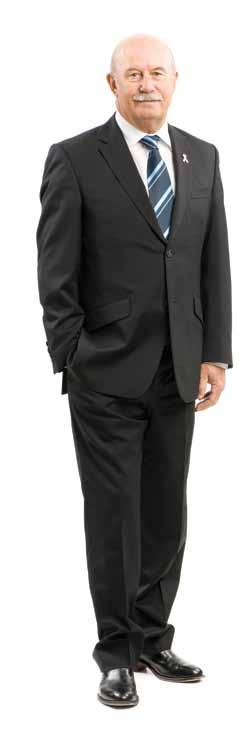
m ark Burgess (left) was himself a police union president before taking on the role of P fa chief executive officer in December 2000. h e had led the Police a ssociation of nsW from 1998, after serving as a branch secretary ( n ewcastle), an executive committee member and deputy president.
a former underground coalminer, Burgess joined the ns W Police f orce as a 30-year-old in 1988 and first served on the front line in newcastle.
likely the most serious incident he ever responded to was the 1989 n ewcastle earthquake, which measured 5.6 on the r ichter scale. it left 13 people dead, more than 160 injured, and a damage bill around $4 billion.
“i was actually on the first floor of the police station at the time and the whole building just shook,” Burgess recalls. “and it continued to shake.”
Burgess charged down to the basement, clambered into a police car and, fearing the building might collapse, rocketed out to the street. h e and a sergeant then drove over to the newcastle Workers club, in which nine of the dead had lost their lives.
“The club had collapsed,” he says. “in fact, the whole front had just fallen out of the building and it was like a doll’s house inside.
“We were pretty much first on the scene, and we understood full well there would be people in there, dead.”
Burgess remained on the ground managing cordons and controlling traffic almost from the moment the quake occurred, at 10:27am, until 3 o’clock the next morning.
Three years later, at the urging of a friend and colleague, he reluctantly took on the (n ewcastle) branch secretary role, to which members had elected him. This marked the beginning of his now 23-year involvement in police industrial relations.
The first major issue he confronted came in 1993. Disquiet had emerged among union members about the police force implementing a “crazy” rotational transfer policy.
With his limited experience as both a copper and a union official, Burgess found himself pitted against some seasoned adversaries.
“There i was in 1993, only four years into the job, having confrontations with senior police and commissioners,” he remembers.
“o ver the period of a year or so, i had a number of fingers poked in my chest, people trying to put me back in my box. We made a few enemies along the way, but i thought: ‘Well, i’m your elected official.’ ” from those beginnings, Burgess developed into a highly competent industrial advocate, rising to the
“… i had a number of fingers poked in my chest, people trying to put me back in my box.”
presidency of the Police a ssociation of nsW. But, in 2000, his fellow presidents asked him to take on the full-time role of Pfa chief executive officer.
h is initial answer was a blunt no but the presidents continued to see him as best qualified for the job. he by then held degrees in justice studies and public policy and administration.
i n the end, he agreed to take the job and moved to canberra in 2003, when he oversaw the purchase of the Pfa’s two-storey griffith building.
h e describes police unionism as a tough business, in which advocates have to have a near encyclopaedic understanding of the issues they take up for their members.
“Because,” he says, “in politics, people have advisors, they have whole departments behind them to do all the research.
“you can’t go into any kind of advocacy without being fully across your brief and prepared to think and argue on your feet. if you can’t do that, you’ll get chewed up and spat out every time.
“so you have to have some political nous. you need to understand how you’re going to get your argument across to the various parties, ministers, committees and backbenchers.
“ you’ve got to build your case, lobby as many people as you can, get both sides locked in and, then, try to get it across the line at election times.”
o f course, support for the work Burgess undertakes comes from the Pfa board members, whom he describes as particularly strong and cohesive.
“We don’t have factional in-fighting,” he says. “We’re cops, and we’re there (in canberra) representing cops.”
a nd what Burgess most wants police to understand is that the Pfa is simply an extension of their state, territory and federal unions.
“The Pfa is as well as, not instead of, local unions,” he says. “it was always established to add value to what the state, territory and federal police unions do for their members.
“so our job is to take on national issues that you can’t necessarily pursue state by state and deal with them from a national perspective.” PJ
n orthern Territory Police a ssociation president v ince kelly does not feature in this story as he was set to retire at the time the Police Journal undertook it. m r kelly served as P fa president for seven years to 2014 after succeeding Peter a lexander. his service to the n TPa began as a branch official in k atherine in 1991 and continued through to his presidency (2001-2015).
Bronwynne r ichardson, a 17-year-old, was abducted, raped and murdered near a lbury, n ew s outh Wales shortly after 7pm on f riday, october 12, 1973.
on monday evening, october 9, 1989, the hinch T v programme was televised nationwide and included a feature segment relating to the r ichardson murder. a bout lunchtime on Tuesday, october 10, 1989, two anonymous telephone calls were made to murray Bridge police station in south australia.
During these calls, the male caller supplied significant information concerning the 1973 murder of Bronwynne richardson in nsW to (then) constable Paul friend.
The second such call was traced to a public telephone booth in k intore avenue, murray Bridge. a pparently, at the time of the two calls, local m urray Bridge police were tasked with patrolling local phone booths, with a view to locating the anonymous caller.
o
n July 30, 2014, sa Police m ajor c rime detectives, assisted by m urray Bridge police and nsW unsolved homicide Team detectives attended the address of a murray Bridge man.
a 61-year-old man was arrested and charged by warrant with the 1973 murder of ms r ichardson. The man was extradited to ns W where he was formally charged.
This person has been released on nsW supreme c ourt conditional bail pending the outcome of court proceedings.
nsW uh T detectives are seeking to speak with any current or former sa Police members who might have knowledge of this matter.
Steven Morgan
Detective sergeant
unsolved homicide Team
homicide squad
nsW Police force
P: (02) 8835 8778 m: 0438 454 212
e-mail: morg1ste@police.nsw.gov.au
letters to the eDitor
Can be sent by:
Regular mail Police Journal, Po Box 6032, halifax st, adelaide sa 5000
Email editor@pasa.asn.au
Fax (08) 8212 2002
internal dispatch
Police Journal 168
mounted operations members had a reunion lunch at the Police club last month and had a great time. The atmosphere was good and the meals were perfect. so i offer a big thanks to Bronwyn and her staff for making it such a lovely afternoon. i now can’t wait to do another one.
Well done to Bron and the club and thanks again. k ind regards
Steve Talbot
i am a retired police officer with some items of memorabilia to give away. o ne is a 1960s police great coat. it is an old heavy-duty, keep-you-warm black one and is still in good condition.
The second item is a blue 1970s police tunic with the silver buttons and the old-style police badges and senior constable first grade insignia of rank. This is also in very good condition.
l ast, i have copies of the australian Police Journal from 1997 to 2010, including the 50th anniversary issue. some of the stories in these old issues even relate to modern-day police practices.
a nyone interested in these items can call me and i’ll be happy to arrange for them to be viewed or indeed handed over.
yours sincerely
Alan Dennett 0439 835 429


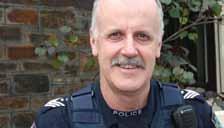
salisbury Police station
i ’ve worked part-time for the last nine years for family reasons. While i ’ve had no problems accessing part-time employment, i ’ve found my career opportunities to be limited to particular areas such as the front office or family v iolence investigation section.
When i ’ve made enquiries about other career opportunities i ’ve been told quite clearly that parttime employment is not an option.
i ’m aware of other colleagues who’ve had some difficulty accessing part-time employment and others who’ve had great difficulty accessing work-from-home arrangements.
i think it depends on the local management’s attitude towards flexible working arrangements. it’s not fair that two people seeking the same arrangements in different areas of sa P ol can experience different outcomes solely because of the local management’s position on flexible working arrangements.
sa P ol needs to ensure that its policies are administered fairly and equitably across the organization.
Leanne Trimboli
major fraud investigation
sa P ol is not progressive when it comes to flexible working arrangements.
i n 2010, i was kicked out of h olden h ill ci B because of my part-time request in relation to care responsibilities. With the assistance of the equal o pportunity c ommission, my complaint was resolved in my favour. i was reinstated as a detective.
i regularly hear stories of potential discrimination from members requesting approval for flexible working arrangements, because managers are inflexible and ignorant about the equal opportunity act
sa P ol hides behind the catchphrase “organizational needs”. h owever, it was not proven how my request for part-time would have adversely affected sa Pol
There is also inequality when it comes to approving flexible working arrangements. This contradicts sa Pol’s general order.
a n overhaul of flexible working arrangements is needed to reflect a modern organization. This needs to be led and endorsed by the commissioner.
Barossa lsa
Two part-time members sharing a single on-road position and working the greater portion of a single line on the patrol roster is complex, but we’ve been able to arrange it successfully for nine general-duties members at nuriootpa over the past 10 years.
at times we’ve successfully had four members (20 per cent of our gDs) sharing two lines of the patrol roster.
on another occasion, when two gD members had a child together, we were able to allow one to work part-time (sharing with a third member) and also allow one or the other partner to start earlier or later than the rest of their team.
With limited numbers of g D members and no permanent “office” positions it would be extremely difficult to allow a gD member to work any part-time roster which did not include a large percentage of the full-time roster.

iNDuStriaL
Nick Damiani
ThE current system for dealing with complaints against police is rife with duplication, unnecessary complexity, confusion and delay, according to i ndependent c ommissioner a gainst c orruption Bruce lander Qc
While the Police a ssociation agrees with his assessment and accepts the need for change, it is uncomfortable with the icac investigating member misconduct matters which involve neither corruption nor maladministration.
a ssociation president mark carroll emphasized this point when he attended a parliamentary committee on the issue last october.
“We want to ensure run-of-the-mill complaints against police are not necessarily considered by the icac to be some form of corruption,” he told journalists covering the committee’s deliberations.
mr carroll reinforced this point in an association letter to the icac last month.
“While these matters ought to be investigated we perceive it to be the job of the south australia Police to conduct such investigations …” he wrote.
“… the icac should not be seized with direct responsibility in this area.”
The association also contends that the o ffice of Police ombudsman is all but redundant.
“a ny complaint made to the Police ombudsman, if followed through, is investigated by police,” mr carroll told the Police Journal
“furthermore, whether to act on a recommendation made by the Police ombudsman remains a matter for the discretion of the police commissioner.
“With the introduction of the o ffice of Public integrity one is left with an unconvincing argument as to why the office of Police ombudsman needs to be retained.”
“While these matters ought to be investigated we perceive it to be the job of the south australia Police to conduct such investigations …”
how, then, should a successful sa model look and what aspects of the current system should be retained?
The existing scheme of discipline is enshrined in the
Police act and Police (complaints and Disciplinary Proceedings) act
While other jurisdictions’ disciplinary systems have become administrative in nature, the s outh a ustralian system has avoided these pitfalls, according to mr carroll.
h e told the Police Journal that south australia is unique in this regard.
“sa has avoided the oft-heard complaint from other jurisdictions – which employ an administrative approach – of a lack of procedural fairness, transparency and justice,” he said.
“When a member is facing significant penalties including potential termination, suspension, demotion and other long-term financial penalties, the assurance of a fair evidentiary hearing before a properly specialized, independent magistrate, is a system which the association insists upon.
“We find nothing wrong with an evidence-based adversarial model when dealing with an accused member’s rights and entitlements – and we believe sa Pol shares that view.
“To do less is to demean the sworn office, discourage police officers and erode the high-quality individuals who are attracted to policing.”
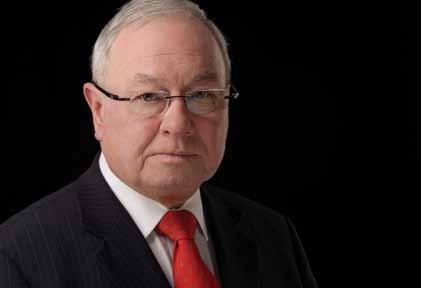
independent commissioner against corruption
Bruce l ander Qc
h owever, the association concedes that the current model could benefit from improvements.
i n a recent submission to the icac, the association suggested that:
“if the same does not occur here, it would be a denial of the fundamental rights implicit in our members’ contracts of employment, and provide a barrier to effective functioning of the icac.”
• Police complaints be made directly to the Office of Public i ntegrity. The o P i would then determine whether the matter pertains to corruption or maladministration, as distinct from an ordinary matter of misconduct. matters possessing the characteristics of corruption or maladministration would be referred to the icac
• All other misconduct matters be referred to SAPOL for investigation through existing branches and sections.
• At any time during an investigation, SAPOL may refer a matter to the iCAC – and vice versa.
• For disciplinary and misconduct matters, the current system of prosecution and the Police Disciplinary Tribunal should be retained.
mr carroll told the Police Journal that serious consideration must be given to funding legal representation for police officers who are summonsed to the icac, particularly if the matter arises in the course of duty.
“a ssociation funds should not be eroded to fund the legal representation of members summonsed for examination,” he said.
“ o ther state governments in australia provide this funding.
“if the same does not occur here, it would be a denial of the fundamental rights implicit in our members’ contracts of employment, and provide a barrier to effective functioning of the icac.”
a fter providing sa P ol with extensive member and academic feedback about its traffic review paper ( industrial, Police Journal, february 2015), the Police a ssociation has put the crime scene investigation and crime v isitation cars consultation paper to the test. in a letter to c ommissioner gary Burns about the December 2014 paper, the association outlined member concerns. They were that:
• insufficient information has been provided to fully assess the merits of the proposal.
• The paper contains several fundamental misunderstandings of the work undertaken by csi and cvc members.
• Proposed efficiency gains from the (preferred) option are challenged, and members argue the new model will lead to increased workloads which will impact on the quality of crime-scene investigations.
Police a ssociation members can access the full letter to commissioner gary Burns on PASAweb at www.pasa.asn.au

HeaLtH
Dr Rod Pearce
Because much of the food our Paleolithic ancestors ate no longer exists
of the Paleo diet
claim that modern humans are maladapted to eating grains, legumes, dairy food and, particularly, high-calorie processed food. The diet is based on the premise that modern humans’ inability to metabolize these comparatively new foods properly has led to modern-day problems, including obesity, heart disease, and diabetes.
f ollowers of the diet claim that it enables adherents to enjoy a longer, healthier, more active life.
s o what is a Paleo diet? e ssentially, it is fruit, green vegetables, eggs, poultry, meat and seafood – but no dairy, grains, legumes or processed oils.
We can argue about the benefits of the diet, but what did we really eat thousands of years ago? Well, there were many different varieties of the Paleolithic diet. n o diet can really be said to represent our ancestors.
a n entirely sensible aspect of the Paleo diet is its focus on fibre from vegetables and fruit. But proponents advise against eating any whole grains. This raises another inconsistency in the logic of the diet, as we believe that some Paleo ancestors ate whole grains and lentils.
any modern reconstruction of the diet is more likely to be based on fashion rather than science.
vegetables are a different story. many of the ones we eat today have undergone profound changes at the hands of human farmers. a nd, while legumes predate the dawn of man, modern green beans are a human invention.
The benefits of legumes probably outweigh their anti-nutrient content (substances which bind up minerals and prevent the body from fully absorbing them). c ooking eliminates most anti-nutrient effects, and some anti-nutrients (like lectins) might even be good for us.
most research, however, suggests that eating whole grains improves human health.
The inuit of the arctic have a diet which is 99 per cent meat. The san people who live in the kalahari Desert eat around 12 per cent meat.
m uch of the food which existed thousands of years ago does not exist today. so we cannot eat what our Paleolithic ancestors ate anyway.
Then there is the issue of changes in humans. Paleo advocates say our bodies could not possibly have evolved fast enough to accommodate our new foods.
But we know that, over thousands of years, blue eyes have evolved, as have at least three different ways of living in the high altitudes of Tibet, e thiopia and the a ndes. a nd some Japanese can now digest seaweed.
a s for grains, Paleo proponents say that they can lead to inflammation and related health problems. This can be true for people (1 per cent of the modern population) with celiac disease and those with non-celiac gluten sensitivity.
m ost research, however, suggests that eating whole grains improves human health. at the very least, whole grains appear to be neutral when it comes to inflammation.
The bottom line on grains and legumes is that completely eliminating these important foods from the human diet is probably a bad idea.
Paleo advocates advise against processed foods with added salt, sugars and flavourings, and all of us agree with that.
The precise diet consumed by Paleolithic man would be difficult to replicate today. a ny modern reconstruction of the diet is more likely to be based on fashion rather than science.
The recommendations of scientific bodies, including the a ustralian Dietary g uidelines, are based on strong evidence from more than 55,000 studies. The Paleo diet has undergone little study over the long term.
most of us could eat more fruit and vegetables and less extra foods, but this does not mean we have to adopt the Paleo diet.
PALEO DiET SuMMARiZED
• h igh protein intake: current western diets include 15 per cent proteins and Paleo suggests it should be closer to 25 per cent.
• lower cho: if consuming carbohydrates, suggested it should be low gi foods.
• high fibre: suggested not in whole grains but rather non-starchy vegetables and fruit.
• moderate to high fat intake: especially mono and polyunsaturated fats with balanced omega-3 and -6 fats.
• higher potassium and low salt (sodium).
• m ore alkaline than acid: suggesting acid producers are meat, fish, grains, legumes, cheese and salt. fruits and vegetables are said to be alkaline-yielding foods.
• high intake of vitamins, minerals, antioxidants and plant phytochemicals.

Jim Barnett
ThE
And some of its other features resemble those of an aeroplane cockpit
n X is a new compact suv from lexus. one of four hybrid and four turbo petrol models is the mid-spec 300h (hybrid) f sport.
The design is edgy inside and out. a ngular lines give the body a pronounced look and a bold aggressive grille and front and rear le D light assemblies resemble the famous n ike swoosh. inside, the theme is sporty and comfortable with two-tone leather seating and a modern dash layout that features more switches and knobs than do many small aircraft.
a lthough classed as a compact suv, n X delivers more passenger and cargo space than expected with ample legroom for rear passengers. cargo space ranges from 475 litres to 1,520 litres with a valet kit and emergency-style spare wheel under the floor. innovative features include:
• Power-operated front seats with heating and cooling.
• a n electric park brake with auto on-off function.
• a touch-sensitive remote controller for entertainment and sat-nav functions.
• a wireless induction charger which, in the console, tops up phones and mobile devices. The series-parallel hybrid powertrain features a 2.5-litre atkinson-cycle petrol engine and two electric motors.
Drive is to all four wheels through a six-step continuously variable automatic transmission with paddle shifters. The driver can select four drive modes ( eco, normal, sport and sports+).

n X 300h f sport costs $66,000 and features:
• satellite navigation.
• Power tailgate.
• rain-sensing wipers.
• smart entry and start.
• Ten-speaker audio with dual usB inputs, digital radio (Da B+) and Bluetooth.
• electric steering-column adjustment.
• a daptive variable suspension (with sports calibration).
a n optional sun roof and 14-speaker m ark levinson audio system adds $4,000. The cheapest of the eight n X models is the 200t (turbo) 2WD, which sells for $52,500.
four cameras provide a unique bird’s-eye view of the car’s surroundings and have the ability to do a 360-degree sweep while stationary or at low speeds. other features include:
• eight airbags (including driver and front passenger knee airbags).
• reversing camera.
• Blind-spot monitoring.
• front and rear parking sensors.
• Tyre pressure monitor.
• Daytime running lamps.
• stability and traction control systems.
• a nti-skid brakes.
• hill-start-assist.
• isofix child restraint anchorage points.
a n optional safety pack which includes a pre-collision safety system, all-speed active cruise control, lane departure warning, head-up display and auto high beam adds a further $3,500 to the sunroof/audio upgrade.
Total system output from its combination of the petrol and electric motors is 147kW. l exus claims fuel economy of 5.7 litres/100km and co2 emissions to be a low 133g/km.
n X 300h offers effortless acceleration and long highway legs and is capable of quick, safe overtaking. it is agile in corners and its suspension is on the firm side but never uncomfortable.
low engine, wind and road noise and comfortable seating add to its list of desirables.
its optional radar-based cruise-control system (with the ability to brake) makes highway driving a breeze.
n X is a vibrant newcomer which offers plenty in the luxury compact suv category.
it started out humbly enough but now looks every bit the athlete
TO the k ia sportage in 2015 come minor upgrades and the addition of a new si Premium variant.
from humble beginnings, sportage has evolved into a modern, athletic-looking compact suv a revised grille, new alloy wheels and leD tail lights further enhance its exterior. on the inside, sportage features softer materials and a new instrument panel. The airy cabin offers good visibility and firm but comfortable seating for four adults or a family of five. The rear seat is a 60/40 split-fold design with cargo space varying between 564 litres and 1,353 litres. all models feature a cargo blind and a full-size spare wheel under the cargo floor with ample storage around it. i nsulating the subframe from the bodyshell, a new mounting bracket for the transmission and a soundproof front windscreen provide less vibration and a quieter environment.
The 2WD s portage variants (s i and s i Premium) all feature a new 2.0-litre g D i petrol engine with manual or automatic transmissions.

sl i and Platinum aWD models come with either the petrol engine or a more powerful 2.0-litre diesel engine. aWD models feature a six-speed automatic transmission. Pricing varies between $25,990 (s i 2WD manual) and $41,390 (Platinum aWD diesel auto).
standard features on entry si include:
• eight-way driver’s seat.
• heated mirrors.
• rain-sensing wipers.
• cruise control.
• Trip computer.
• Two 12-volt sockets.
• m P3, c D, am / fm audio with au X/ us B input, iPod connectivity and Bluetooth.
• manual air conditioning.
• adjustable headlamps with cornering lamps.
• Burglar alarm.
Top-spec Platinum features extras such as:
• leather trim.
• sat-nav.
• full panoramic sunroof.
• heated front and rear seats.
• high-power audio with subwoofer.
SAFET y
a ll sportage models feature:
• a Bs
• Traction and stability control systems.
• Downhill brake control.
• hill-start control.
• emergency stop signal.
• rear parking sensors.
• six airbags.
• auto door-locking and unlocking.
• f ive child-restraint anchor points, including two isofi X positions.
a reversing camera features on all but the entry si model. more advanced systems, such as blind-spot monitoring, are not yet available.
The new 2.0-litre gDi engine produces 122kW of power and uses between 8.2 (manual 2WD) and 8.6 (auto aWD) litres/100km.
The diesel produces 135kW of power with an impressive 392nm of torque and uses 7.2 litres/100km.
Towing capacity is 1,600kg (braked) with a maximum ball weight of 200kg.
Platinum diesel is smooth, quiet and impressive to drive. its acceleration is brisk, it cruises effortlessly and delivers confident cornering. its lockable aWD system adds to its limited all-terrain ability.
VERDiCT
sportage is well worth considering, especially given its class-leading seven-year warranty.


Paul Modra Executive Manager – Member Value and Distribution, Police Credit Union
Naturally it’s best to get in before prices rise but how much can you borrow?
ThE s outh a ustralian property market is looking to soar within the coming months, owing to low interest rates and a steady housing sector.
The reserve Bank of australia’s record low rate drop to 2.25 per cent in early february was a good indicator of a possible housing boom to come for the state.
affordability for the first home buyer and the investor has never been this good.
compared to some of the other major capital cities, adelaide’s housing market is still relatively “cheap”.
i n the last quarter of 2014, the median house price for s ydney was $881,971 compared to adelaide which was $425,000.
l eading provider of financial and property information c ore l ogic predicts that, this year, investors will turn their attention away from bigger cities and try for more high-yielding markets such as adelaide.
With the aftermath of low interest rates looking to take full effect in the coming months, now is a suitable time to take advantage of the market.
h ousing costs in adelaide are still much lower and are in earlier stages of value growth compared to neighbouring capital cities.
at the beginning of m arch 2015, the auction clearance rate for properties in south australia rose a considerable 15 per cent from prior weeks to a steady rate of 69 per cent.
With clearance rates steady, there is plenty of housing stock to choose from and less competition.
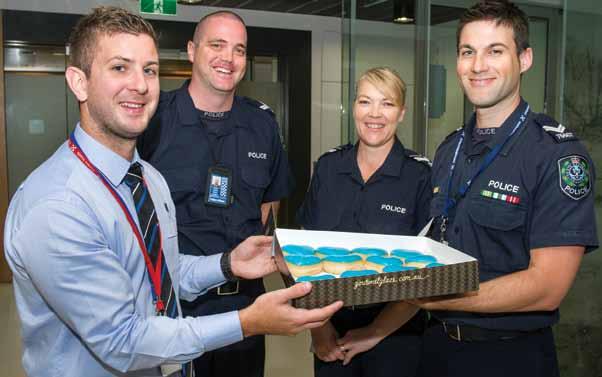
h owever, with a trend of clearance rates rising, now is the ideal time to start looking for that house or unit to buy.
i n January 2015, a delaide also recorded the second lowest rental vacancy rate in the country with 1.6 per cent.
continued page 45
Police c redit u nion spent st valentine’s Day showing some of its most valued Platinum advantage members just how much it cares.
a group of personal bankers headed out to various police stations around adelaide and hand-delivered custom-made, blue heart-shaped doughnuts for all the officers.
Personal Banker nathan fisher was among the group handing out the doughnuts and said it was a great way to interact with both members and nonmembers.
“During the doughnut giveaway i got to catch up with many of our Platinum members, which was great,” he said. “for any non-members it was a great way to break the ice or ‘icing’ if you like!”


Free Legal Service for Police Association Members, Their Families & Retired Members.
Leading Adelaide law firm, Tindall Gask Bentley is the preferred legal service provider of the Police Association, offering 30 minutes of free initial advice and a 10% fee discount
To arrange a preliminary in-person or phone appointment contact PASA on (08) 8212 3055.


Have you or a family member been injured in a car accident?
Tindall Gask Bentley acts in more motor vehicle accident claims that any other law firm in SA. Gary Allison & Richard Yates can provide free preliminary legal advice on your entitlements to compensation. They can also help with Workers Compensation, public liability & medical negligence claims.
Matrimonial, De Facto & Same Sex Relationships
• Children’s Issues
• Child Support matters
• Property Settlements
• “Pre Nuptial” style Agreements
Appointments with Wendy Barry (Accredited Family Law Specialist) & Dina Paspaliaris.
• General business advice
• Real estate & property advice
• Business transactions
• Commercial disputes & dispute resolution
Appointments with Giles Kahl & Michael Arras.
• Wills & Testamentary Trusts
• Enduring Powers of Attorney
• Enduring Guardians
• Advice to executors of deceased estates
• Obtaining Grants of Probate
• Estate disputes
Appointments with Michael Arras & Rosemary Caruso.


Rachael Shaw Senior Associate, Tindall Gask Bentley Lawyers
Police commonly attend these inquests, where the coroner can find fault with and criticize individuals
officers are often compelled to give evidence at coronial inquests. a n inquest is held to investigate the causes and circumstances of certain deaths. r elevantly for police officers, these include deaths in custody.
a death in custody is not limited to a death that arises in police cells. for example, if a police officer is in pursuit (whether on foot or in a vehicle) of a person who subsequently dies, this will be considered a death in custody.
similarly, if a police officer is forced to use his or her firearm in relation to an offender who subsequently dies, this will be considered a death in custody. a n inquest must be held in relation to a death in custody.
i n relation to other deaths, the coroner may choose not to hold an inquest if satisfied that the evidence obtained is conclusive as to the cause or circumstances of the death.
however, if the coroner believes that the cause or circumstances of death are a matter of substantial public importance, he may decide to hold an inquest.
The coroner also has authority to hold an inquest into the cause or circumstances of an accident or fire that causes personal injury or damage to property.
of a death, the coroner is also able to make recommendations aimed at preventing similar issues arising again.
Police officers are represented at a coronial inquest by a lawyer. usually, that lawyer is provided by the c rown s olicitor’s o ffice, unless it assesses that there is a conflict of interest in it representing the police officer and sa Pol or other government employees or departments.
clearly, it is crucial to speak to the Police association before giving evidence at a coronial inquest. The Police association can put you onto a lawyer to ensure that your rights are protected.
The proceedings are more inquisitorial than adversarial and the rules of evidence do not apply. That is not to say that a coronial inquest is congenial.
Disputes often arise as a consequence of different versions of events provided by witnesses. Those called to give evidence are subjected to cross-examination and their evidence and credibility is tested.
The proceedings are more inquisitorial than adversarial and the rules of evidence do not apply. That is not to say that a coronial inquest is congenial.
The jurisdiction of the c oroners c ourt is not limited to “cause or circumstances” of the death. i n reality, the coroner enquires into all matters surrounding the death of a deceased person.
This is because, in addition to the delivery of a finding as to the cause or circumstances
ultimately, the evidence (which is heard in public) is assessed by the coroner on the balance of probabilities. The coroner can make findings that are critical of individuals. h owever, the coroner cannot make findings that an individual is criminally or civilly liable.
Police officers who are summonsed to give evidence at a coronial inquest must answer questions truthfully. however, the coroners act provides that a person is not required to answer a question if the answer to the question would tend to incriminate the person.
s uch answers are deemed to be involuntary and thus are unlikely to be inadmissible in any subsequent criminal proceeding. in addition, a person is not required to answer a question about advice he or she has received from a lawyer (legal professional privilege). c learly, it is crucial to speak to the Police a ssociation before giving evidence at a coronial inquest. The Police a ssociation can put you onto a lawyer to ensure that your rights are protected. giving evidence at a coronial inquest can be a daunting experience for a police officer. no police officer wants to be involved in a death in custody. r egrettably, deaths in custody do occur and thus coronial inquests are required. if you receive a summons to appear at a coronial inquest, you should speak to the Police association immediately.
Tindall gask Bentley l awyers provides free initial advice through a legal advisory service to Police a ssociation members and their families, and retired members. To make an appointment, members should contact the association (8212 3055).
Author chris ewan
Publisher faber & faber RRP $39.99
When c laire c ooper was eight, her mother mysteriously vanished during hop-tu-naa, the manx halloween. at 14, c laire is still struggling to come to terms with the disappearance when she’s befriended by a group of five teenagers who mark every hop-tu-naa by performing dares. But claire’s arrival begins to alter the group’s dynamic until one year a prank goes terribly wrong, changing all their futures and tearing the friends apart. six years later, one of the friends is killed on hop-tu-naa in an apparent accident. But c laire, now a police officer, has her doubts. i s a single footprint found near the body a deliberate taunt?
a s another h op-tu-naa dawns, bringing with it another death and another footprint, c laire becomes convinced that somebody is seeking vengeance.
Author susan mitchell
Publisher hachette australia
RRP $32.99
g ough Whitlam had no small talk and m argaret had the gift of easy conversation. he was often ill-at-ease in company and preferred his books. s he was warm, inclusive and jollied him along.
h e had a vicious tongue and a quick temper. she always tried to see the best in people. he knew everything about the ideology, history and heroes of the labour movement. she trusted her instincts.
They saw each other as equals and never hesitated to express their different viewpoints. h e might have passed the laws that changed a nation, but she made it possible.
Theirs is a story of love, respect, struggle, success, failure, disappointment and resilience. neither gough Whitlam nor m argaret Dovey would have developed into what each became without the influence of the other.

Author hazel flynn
Publisher crows nest
RRP $29.99
celebrating covert rescues and survival missions from the ancient world to the present day, hazel flynn presents a vast selection of riveting tales in a single volume – including many stories remaining unknown, until now.
When confronted by the all-butimpossible, the human psyche can produce astonishing acts of heroism, self-sacrifice, endurance and sheer grit that would be unbelievable if they weren’t all true.
Whether the product of the extreme pressures of warfare, acts of faith or compassion, or examples of utter tenacity and determination against all odds, this is humanity at its most extraordinary.
Divided into seven chronological sections, history’s mostDaring moments provides revealing insights and explains the significance of amazing stories from the s iege of Troy to the c apture of Bin laden.
Author saul Wordsworth
Publisher hodder & stoughton RRP $29.99
i n 1994, a lan stoob is clearing his desk in advance of early retirement. he is 57 and has enjoyed a moderately successful career with the Bedfordshire constabulary.
But when s imon Wiesenthal, the world’s leading nazi hunter, invites him to v ienna and implores him to hunt nazis in the luton area, stoob cannot resist the challenge.
later, in 2012, a lan is down on his luck. after the failed pursuit of a nazi in Whipsnade Zoo, he is taunted by interpol and his position as Britain’s premier nazi hunter is under threat.
s ubsequent to a tipoff from a mystery informant, stoob is drawn into a n azi plot that implicates the coalition government and prime minister, and stretches all the way to the united states president. stoob is forced to go undercover – but will someone discover his true identity?

Author David nicholls
Publisher hodder & stoughton
RRP $29.99
“i was looking forward to us growing old together. me and you, growing old and dying together.”
“Douglas, who in their right mind would look forward to that?”
Douglas Peterson understands his wife’s need to “rediscover herself” now that their son is leaving home.
h e just thought they’d be doing their rediscovering together.
so, when connie announces that she will be leaving too, he resolves to make their last family holiday into the trip of a lifetime, one that will draw the three of them closer, and win the respect of his son. one that will make c onnie fall in love with him all over again.
The hotels are booked, the tickets bought, the itinerary planned and printed.
What could possibly go wrong?
Author a nne de courcy
Publisher Weidenfeld & nicolson
RRP $29.99
m argot a squith was perhaps the most daring and unconventional prime minister’s wife in British history. k nown for her wit, style and habit of speaking her mind, she transformed 10 Downing street into a glittering social and intellectual salon. yet her last four years at n umber 10 were a period of intense emotional and political turmoil in her private and public life.
a gainst the background of a government beset with troubles, the prime minister fell desperately in love with his daughter’s best friend, venetia stanley. To complicate matters, so did his private secretary.
i n this extraordinary time in the prime minister’s residence, socializing took precedence over politics, love letters were written in the cabinet room and gossip and state secrets were exchanged over the bridge table.
Win a booK! for your chance to win one of these books, send your name, location, phone number and despatch code, along with the book of your choice to giveaways@pj.asn.au
Please note that the e-mail address to send your entries to for books, DVDs and movie tickets has changed to giveaways@pj.asn.au
The low vacancy rate demonstrates a high demand in s outh a ustralia for renting and thus a good time to purchase investment properties which can then be rented out.
a ll these indicators point to a potentially large change to the housing market in the coming year. With the aftermath of low interest rates looking to take full effect in the coming months, now is a suitable time to take advantage of the market.
getting in before prices start to rise is the way to get ahead. h owever, before potential buyers start searching for houses, it is best for them to know how much they can borrow. This is where Police credit union is able to help.
Police credit u nion has introduced two new home-loan products, the Better fixed home loan and the Better s pecial variable h ome l oan, in anticipation of peak property purchases owing to low interest rates.
Both products were introduced and tailored to suit the needs of specific members and non-members, giving them the flexibility to choose which home-loan option is better for them.
Police credit union is looking forward to a great year ahead and hopes to help many eager home buyers and investors find their dream properties.
afsl /australian credit licence 238991. Terms, conditions, fees, charges and lending criteria apply. full details available on application.
RRP $29.95 2 discs
it is 1953, and sidney chambers (James norton) is vicar of grantchester, a village just outside cambridge.
chambers leads a quiet life, or at least he did, right up until the moment that murder came his way.
Pushed into the dangerous world of lies, betrayal and murder, c hambers quickly finds that his insight into the human condition, and the natural trust that he engenders in people, means that he excels in his new position as detective.
Joining him as he journeys into this dark world is the affable but world-weary Detective i nspector g eordie k eating ( robson green).



RRP $39.95 3 discs
The first series covered the murder of 11-year-old Danny l atimer, as Di a lec h ardy – still haunted by the collapse of a previous murder case he worked on – was put in charge of the case, much to the chagrin of local officer Ds ellie miller.
Their investigation brought many townspeople under suspicion, including Danny’s father, m ark. But, after many twists and turns, the revelation of the killer’s identify had far-reaching consequences, not least for the two detectives.
This second season commences in the aftermath of the investigation. m onths have passed and h ardy has returned to Broadchurch for the killer’s court hearing.
if you thought you had learnt all the town’s secrets in series 1, you were mistaken. Broadchurch is a town where no one is innocent and everybody has a secret.
RRP $39.95 1 disc
v incent (Bill m urray) is no saint –he’s a hard-drinking, foul-mouthed, cranky degenerate with no money, no friends, no tolerance and mounting gambling debts. a nd he is about to meet his match…
s ingle mother m aggie ( m elissa m c c arthy) has just moved in next door with her 12-year old son, oliver. forced to work long hours, she has no choice but to leave o liver in the care of their new neighbour, v incent.
a n odd friendship soon blossoms between the improbable pair. Together with Daka, a pregnant, wisecracking russian “lady of the night” ( naomi Watts), v incent simply brings oliver along on his daily routine – the race track, a strip club, and the local dive bar.
o liver begins to see in v incent a misunderstood man with a heart of gold.
RRP $29.95 1 disc
stop laughing… this is serious is a three-part documentary series charting a course through the story of australian comedy, featuring more than 60 interviews with the men and women who make us laugh. Through a blend of social history, extensive archive material and intimate interviews with some of the country’s most loved comedians, we travel via stand-up, radio, television, theatre and film from indigenous comedy to new viral media jokers of today, revealing how humour, laughter and comedy are integral to our national identity.
n arrated by e ric Bana, each episode moves seamlessly through time, weaving contemporary comedy with early comedic performance, featuring insight and anecdotes from what Barry h umphries calls “the cheering-up business”.
Win a DVD! for your chance to win one of these Dv Ds, send your name, location, phone number and despatch code, along with your choice of Dv D, to giveaways@pj.asn.au



RRP $39.95 3 discs
in series 11 of new Tricks, Dan griffin, steve macandrew and gerry standing are back investigating cold cases under the watchful eye of their boss Dci sasha miller.
This series the team is challenged with some of the toughest cases yet, from the death of a young a&e doctor to an international interpreter with a passion for chess.
There’s an occult mystery that leads the team to the underground r iver fleet and, after the murder of a pub landlord, gerry and steve end up in an english vineyard.
Throw in some roman re-enactment, some black-market steroids, the death of one of griffin’s friends and a difficult reunion between steve and his father and you have another compelling 10 episodes of new Tricks.
Season commences a pril 16
i n The gunman, s ean Penn stars as former special-ops agent James Terrier, who is suddenly targeted by some of the world’s best hit men. Terrier, who suffers from PTsD, must dig into his top-secret past to figure out who wants him dead, and why.
Betrayed by the organization he works for, he ends up on the run from l ondon to Barcelona and across europe trying to clear his name.
This new action thriller from Pierre m orel, the director of Taken, is an adaptation of Jean-Patrick manchette’s The Prone gunman
i t stars Javier Bardem (skyfall), i dris e lba ( mandela: long Walk to freedom), r ay Winstone ( The Departed) and mark r ylance ( Blitz).
Season commences a pril 23
Tony s tark tries to jumpstart a dormant peacekeeping programme but things go awry. The e arth’s mightiest heroes – including iron man, captain a merica, Thor, The incredible hulk, Black Widow and hawkeye – are put to the ultimate test as the fate of the planet hangs in the balance.
a s the villainous u ltron emerges, it is up to the avengers to stop him from enacting his terrible plans and, soon, uneasy alliances and unexpected action pave the way for a global adventure.
avengers stars robert Downey Jr, chris hemsworth, mark ruffalo, idris elba, samuel l Jackson, James spader, scarlett Johansson and Don cheadle.
Season commences may 14
an apocalyptic story set in the furthest reaches of our planet, in a stark desert landscape where humanity is broken, and almost everyone is crazed fighting for the necessities of life.
Within this world exists two on-therun rebels who might just be able to restore order. There’s m ax – a man of action and a man of few words – who seeks peace of mind following the loss of his wife and child in the aftermath of the chaos.
a nd furiosa, a woman of action and a woman who believes her path to survival might be achieved if she can make it across the desert back to her childhood homeland.
george m iller directs mad max: fury road which stars Tom h ardy and charlize Theron.
Win a moV ie pass! for your chance to win an in-season pass to one of these films, courtesy of Palace Nova Eastend Cinemas, send your name, location, phone number and despatch code, along with your choice of film, to giveaways@pj.asn.au









Coonawarra, SA www.patrickofcoonawarra.com
Winemaker luke Tocaciu
RRP $29
Patrick of c oonawarra has earned a reputation for producing world-class r iesling, securing several trophies and numerous gold medals in recent years.
This r iesling is made with minimal winemaker intervention to preserve the natural flavours of the vineyard and capture them in the bottle.
The aroma is fragrant and intense, showing lime and floral notes. The palate is vibrant with well-balanced fruit sweetness, citrus freshness and a “crunchy” acid finish.
made to drink now, but cellaring will be rewarded, developing toasty notes and complex flavours over the next 20 years.
i t is aromatic, fragrant lime blossom, crisp and approachable and of a pale straw colour with a slight green hue.
• Winestate five stars and Top of class ( Winestate magazine)
Winemaker luke Tocaciu
RRP $29


This new-release shiraz is grown in the family vineyard within the Wrattonbully wine region, giving it a complex mix of intense blackberry fruits and a touch of fruitcake spice. it was matured in 100 per cent new a merican and french oak, giving rise to the intense mocha and hints of liquorice.
This is complemented with the rich mulberry fruit and soft, youthful palate with great length. This wine has great longevity and will reward cellaring for five to 10 years. it is the perfect match to any lamb dish or hearty winter stew. its style is rich, dark and spicy and it is of a deep purple colour with a red hue.
• recommended by Winestate magazine
Winemakers Patrick and luke Tocaciu
RRP $45.95
The grapes for this wine are sourced from the winemakers’ 40-year-old vineyard surrounding the family home in the heart of coonawarra.
The wine displays rich cassis and mulberry aromas combining with spice and cedar notes. The palate is concentrated with dark chocolate, black currant and mulberry flavours with harmonized french oak, adding hints of spice.
The structure is fantastic with fine, elegant tannins leading to the long, balanced finish. maturation is two years in new french and a merican, tightly grained, medium-toast oak barriques. These techniques ensure this wine is complex and will age gracefully. its style is rich, elegant and full-bodied with a deep brick-red colour.
• James halliday points: 95 ( Wine showcase magazine)















WAyNE BiRCh (1)
RuSS BuRR (2)
FELiCiT y BROWN
STEVE DAWSON
JOhN L ANGES
PAuL LiNDNER (3)
MARTiN PEARSON (4)
iAN WEBB (5)
SENiOR CONSTABLE 1C
iAN “SPiDER” WEBB
information & Communications
Training unit
51 years’ service
Last Day: 16.01.15
Comments…
“i ’m the last member of c ourse 6 to retire. The first member retired more than 18 years ago.
“ i sincerely thank both present and past members of the Police association of south australia for their continuing commitment to improving pay and working conditions for all sworn sa Pol members. keep up the fantastic work.
“ m y journey all began on the morning of friday, september 27, 1963. my first posting was region g patrols in a delaide. i spent nearly 13 years as a motor traffic constable at no. 4 (Traffic) Division.
“m y other lengthy postings have been the old c ity Watch h ouse and r ecords r esponse/o ffender history unit.
“i have worked with many sworn and unsworn sa P ol members and made many friends. i sincerely wish the wonderful people i have met during my time in sa Pol all the very best for the future. i will miss them all.”
BREVET SGT WAyNE BiRCh
Explosives Coordination Section
28 years’ service
Last Day: 25.11.14
Comments…
“ i thank and acknowledge the expertise of past and serving police bomb technicians particularly c has Theakstone. e xplosives c oordination s ection is well respected among other police jurisdictions as being innovative and setting the standard in the police bomb technician field.
“i thank Phil, Bret, scotty and n ick from the Police a rmoury for their friendship and help over many years.
“i make special mention of the guys from sTar ops. i have many fond memories of jobs we have done together. Those guys are a thoroughly professional group and i sincerely thank them for their comradeship and friendship.”
SERGEANT RuSS BuRR
Communications
43 years’ service
Last Day: 05.02.15
Comments…
“To those past and present officials who have worked tirelessly at the Police a ssociation, i thank you for your efforts.
“i also thank those who i have had contact with over the years. i have had the opportunity to learn and develop and there would not be one of these contacts that has not contributed and had an impact, making me the person i am today.
“i also thank my wife and family for the support they gave me in their own way.
“i am looking forward to indulging in some of my old hobbies that seem to have slipped away: spending time with my family and some camping and travelling throughout australia.”




SENiOR CONSTABLE MARTiN PEARSON
Western Adelaide LSA
14 years’ service
Last Day: 10.02.15
Comments…
“i thank the Police association staff for their assistance to me and all other members over the years.
“ i also thank all police members i came across over the last (nearly) 14 years. The camaraderie, teamwork and experiences have been wonderful.
“i have been fortunate to have made many long-lasting friendships through policing.”
SENiOR CONSTABLE STEVE DAWSON
East Adelaide Traffic
37 years’ service
Last Day: 26.02.15
Comments…
“i have had some great times and met some wonderful people and have many fond memories of both.
“i wish the members of the Traffic sections all the best with yet another proposed restructure.
“i thank the association for its efforts on behalf of members with respect to pay, conditions and support.”
BREVET SERGEANT FELiCiT y BROWN
State Committal and Disclosure unit
14 years’ service
Last Day: 18.02.15
Comments…
“i thank the Police a ssociation for all its efforts and wish all members the best.”
SENiOR CONSTABLE 1C PAuL LiNDNER
intelligence Analysis
44 years’ service
Last Day: 02.03.15
Comments…
“The mirror tells me that i am “old” but, other than a couple of skull fractures, concussion, and a couple of brain tumours (cause unknown), i have come through relatively unscathed.
“ i have loved the wide diversity of life experience and situations that policing has provided.
“i have been blessed with many great mentors, friends and enjoyed many laughs along the journey.
“i thank the Police a ssociation for its efforts in achieving the pay and conditions that we enjoy.”
CONSTABLE JOhN LANGES
Elizabeth Traffic
35 years’ service
Last Day: 15.02.15
Comments…
“i thank the Police a ssociation very much for the help it has provided. i also thank a number of members still with sa P ol They know who they are.”
malColm raCZ Sergeant Regional Executive
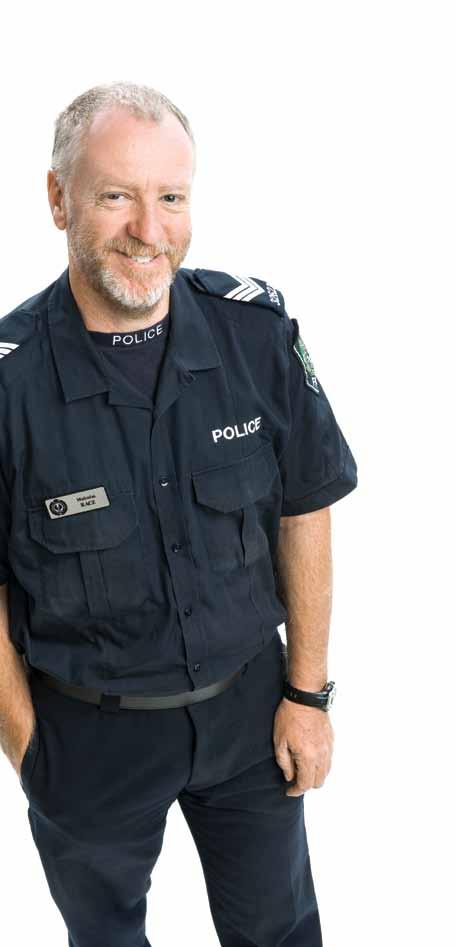
STORy suburban shootout
iSSuE June 2003 POSiTiON front cover
he was one of two patrol officers at whom serial bank robber harry nylander fired two shots in a Brompton cul-de-sac in 2000. his partner, matt De sira, returned fire from around eight metres away before he (racz) dashed for cover behind their patrol car.
racz told the Police Journal of the moment before the shooting started. “i hopped out of the (police) car, shut the door and he (nylander) was at the back corner of his car with this firearm pointed at me. That’s the first thing i saw – and it immediately discharged.” of the after-effect on him, Brett Williams wrote: “racz never ventured into his local bank without first checking the building and surrounding area. as he shopped, he would wonder: ‘is this guy here in the shopping mall at the moment?’ ”
“There was definitely a positive response to the journal story. it was all very supportive. a few wanted me to run through the story but i wasn’t real keen on talking about the whole incident. i just wanted to move on from it. i ’m not averse to talking about it but, sometimes, talking about it is difficult. it’s emotional for me.
“in 2006, there was a TV show called Police Files: unlocked. it ran the story of the shooting, rehashing it all again. i was working with Port adelaide Tactical unit and we all sat down and watched it, and afterwards i got a few questions. a nd, when i told someone about it just recently, i was again surprised how strongly it attacked my emotions.
“i told the Police Journal the story because i was no orphan in terms of incidents like the shooting. i figured it would happen again one day to someone else and, whoever that was, i didn’t want them to feel alone. i had a lot of support from my family but, sometimes, only other police officers will understand. That’s the main reason i did the story.
“i still kept thinking about the shooting after the story because it’s something you can’t escape from. There’s always memory prompters, like driving up Port road and past the Westpac bank where we spoke to nylander before the shooting. it took me 13 years to go into that bank. That was a hurdle that i thought it was time to jump over.
“Nylander still doesn’t come into my thoughts a lot but i can still picture his face. h e’s dead now, anyway. i said at the time of the story that he became a non-entity to me. That’s how i had to regard him because you can’t let something like that take you over. so i positioned him out of my mind, and he’s pretty much still there.
“My advice to coppers who go through something like a shooting? e veryone has an individual approach as to how they need to recover. some need to talk about it; some need to think about it; some need to rationalize it. f or me, it’s about saying: ‘i know where you’ve been, i understand it, and i ’ll help you in whatever way i can.’ ”
To read the story Suburban shootout, go to PASAweb at pasa.asn.au


Complimentary internet marketing for sale or rental valued at $795.

Another exclusive money-saver the Police Association delivers its members. Save on homewares, groceries, wine, clothes, cars, restaurants, dry cleaning, photography, paint, accountancy services and more. Log onto PASAweb to find it.

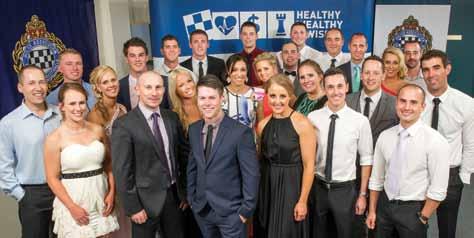

Police Health, Police Credit Union and the Police Association are the cornerstone of the police family. These three long-standing service-providers jointly run the Healthy, Wealthy & Wise initiative to bring special benefits to all police and their families.
HW&W delivered two outstanding presentations by US behavioural sciences and management consultant Dr Kevin Gilmartin last year.
A joint initiative of


And the Graduates’ Dinner, funded and staged by the HW&W initiative since 2012, is another success story. Together, your expert service-providers are bringing you more benefits than ever.