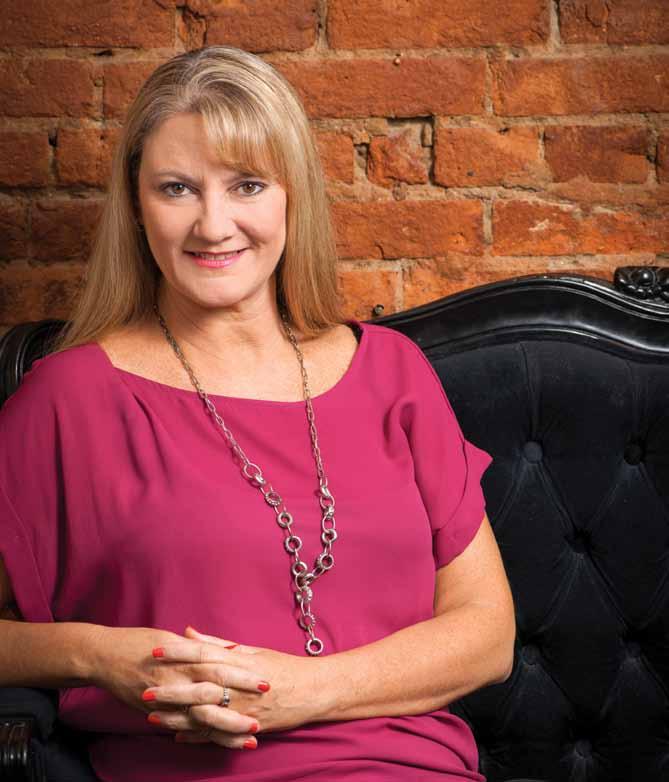
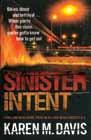
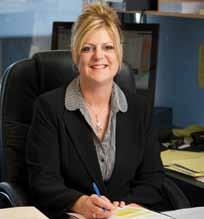
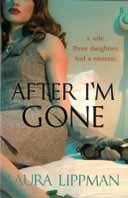
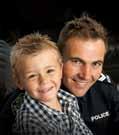
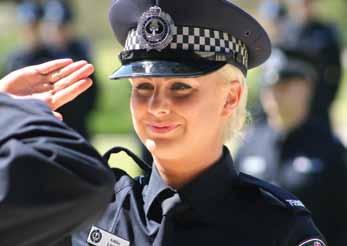
All the death she had confronted as a young copper came back to overwhelm her, but former NSW detective Karen Davis found a literary release.
reGuLars
Cops’ need for emotional survival skills
Police who attended the March presentation by renowned US behavioural scientist Dr Kevin Gilmartin are still talking about his brilliantly delivered message.
20 Why Kate loves cops
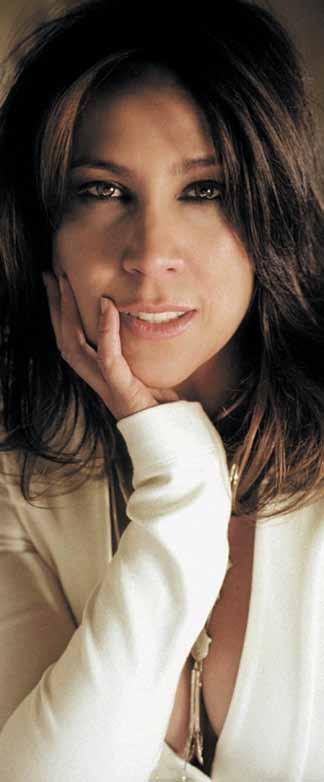
Award-winning performer Kate Ceberano tells Brett Williams about certain situations in which police have made her feel “very, very confident”.
Brett Williams editor (08) 8212 3055
Dr Rod Pearce Health Writer
Publisher: Police Association of South Australia (08) 8212 3055
Advertising: Police Association of South Australia (08) 8212 3055
Jim Barnett Motoring Reviewer
Design: Sam Kleidon 0417 839 300
Printing: finsbury Green (08) 8234 8000
t he Police Journal is published by the Police Association of South Australia, 27 Carrington St, Adelaide, SA 5000, (ABN 73 802 822 770). Contents of the Police Journal are subject to copyright. Reproduction in whole or in part without written permission of the Police Association of South Australia is prohibited. opinions expressed are not necessarily those of the editor. t he Police Association accepts no responsibility for statements made by advertisers. editorial contributions should be sent to the editor ( brettwilliams@pj.asn.au).
COVER: former NSW detective Karen Davis
Photography by Steve McCawley
AUSTRALIA
Police Association of South Australia
committee
PR eSiDeN t 0417 876 732
SeCR etARy 0417 817 075
deLeGates
METRO NORTh BRANCh
elizabeth Glenn Pink
Henley Beach Matthew Kluzek
Holden Hill ....................... Nigel Savage
Gawler David Savage
Golden Grove Simon Nappa
Parks Sonia Giacomelli
Salisbury taryn trevelion
Northern Prosecution .... t im Pfeiffer
COuNTRy NORTh BRANCh
Port Lincoln .................... Lloyd Parker (chair)
Ceduna Anthony taylor
Coober Pedy................... Jeff Page
Kadina Ric Schild
Nuriootpa Michael Casey
Peterborough Andrew Dredge
Port Augusta Peter Hore
Port Pirie Gavin Mildrum
Whyalla Wayne Davison
CRiME COMMAND BRANCh
Elizabeth......................... Kym Wilson (chair)
Major Crime Campbell Hill
Adelaide Dac t homas
forensic Services Adam Gates
fraud Rhett Vormelker
Holden Hill ....................... Narelle Smith
intelligence Support....... Kevin Hunt
Port Adelaide Robert Beattie
South Coast Jason tank
Sturt Brad Scott
METRO SOuTh BRANCh
Sturt ................................. Michael Quinton (chair)
Protection from liability for police to be proclaimed
ThE
Police Association last year lobbied for legislation to provide police officers protection from criminal or civil liability for an act or omission in the discharge, or purported discharge, of their duties if the act or omission was performed honestly.
to provide for such protection, f amily f irst M lC
Robert Brokenshire filed an amendment to the Statutes Amendment (Police) Bill 2013 to amend the current section 65 of the Police Act
t he law Society of South Australia firmly opposed the amendment, arguing that police should not be above the law and must remain accountable for their behaviour.
t he society insisted that the concept of immunity from criminal liability was misconceived for any person, no matter what their position in society. Providing immunity from prosecution in this manner would, the society opined, do irreparable damage to the integrity of the police force as a whole and the state’s system of justice.
… they should not allow the fear of a potential criminal charge or civil suit to constitute a factor in the decision to act or not to act.
to ensure that members of parliament understood the counter-argument to the assertions the l aw Society put forward, the association sought barristerial advice.
Some of the key points which formed part of that advice were that:
• it is important to recognize the crucial role that police officers play in the service of each one of us, thereby ensuring both public safety and the perception of public safety.
• it is assumed that a police officer will pursue that critical role fearlessly, to the point of prioritizing the physical safety
and well-being of members of the public and the pursuit of the enforcement of the law ahead of his or her own safety. t he South Australian community expects nothing less.
• for that reason, the parliament provided police officers with several types of powers, duties and functions and identified the circumstances in which those powers and duties are entitled to be employed so as to enable police to perform the various tasks to be undertaken on behalf of the community.
• Second, South Australians expect individual police officers to make decisions in the performance of their duties in an instant, under pressure, in situations of unpredictability and without the benefit necessarily of a precedent or back-up. Sometimes it is a decision that protects property, prevents the commission of an offence, results in the apprehension of a dangerous criminal or saves a life.
• t hird, South Australians are well aware that police officers are one of their own – they are only human and, from time to time, make errors of judgement or find themselves subject to criticism and complaint by those in respect of whom their powers and duties are exercised.
• t herefore, a necessary balance needs to be struck, on the one hand to ensure that police officers remain confident that in making decisions honestly in the performance of often times stressful and dangerous duties, they will not find themselves hamstrung by the fear and real possibility of criminal or civil liability. t hat is, in making a decision, for example, whether to pull over the vehicle of a vexatious litigant or injuring someone in attempting to save a life, they should not allow the fear of a potential criminal charge or civil suit to constitute a factor in the decision to act or not to act.
t he amendment sought by the association was akin to the already proclaimed section 127 of the fire and emergencyServicesAct2005. And no difficulties, as alluded to by the law Society, have resulted in the enactment of that section.
t his section specifically recognized that, in limited and identifiable circumstances (in which an emergency-services officer is acting honestly in the performance of his or her duties), there is a need to protect the officer from criminal and civil liability.
Precisely the same considerations apply to police officers who are expected on a daily basis, at risk to their own safety and well-being, to defend public safety and property.
t he association was able to present that advice to members of parliament; and, on the strength of the points it contained, the amendment won passage through parliament.
t his victory will prove a great benefit to police officers who carry the expectation of the public to prioritize others’ physical safety and welfare ahead of their own.
t his amendment enjoyed the support of SAPol , and we now eagerly await its proclamation.
NEW POLiCE MiNiSTER
in the assignment of portfolios in the returned labor Government last month, House of Assembly member tony Piccolo became the new police minister. He has also taken over the portfolios of correctional services, emergency services and road safety.
He is a member of the executive council and his experience in parliament goes back to 2006, when he was first elected as the member for light.
While the Police Association remains firmly apolitical, we look forward to a positive working relationship with Mr Piccolo. to that end, Secretary tom Scheffler and i met with him just a week after his appointment.
Continuing in the role of shadow police minister is House of Assembly member Dan van Holst Pellekaan, with whom the Police Association has maintained a working relationship for some time.
t he association remains open to discussion with MPs at all times and wishes both Mr Piccolo and Mr van Holst Pellekaan well in their respective roles.
ENTERTAiNER’S PERSPECTiVE
t he Police Association was delighted that popular performer Kate Ceberano made time to speak to the Police Journal i n the story Why Kate loves cops (page 20), she expresses her refreshingly enlightened perspective on police and the role they play in society.
i n an age when some are quick to complain about rather than understand that role, it is quite some comfort to read of such deep regard and appreciation for police. And she showed her understanding of the need for them to stay firmly connected to their families.
t his was precisely one of the points Dr Kevin Gilmartin made in his Convention Centre presentation – to invest in family life and friends.
i recommend the Ceberano story, particularly for the way it shows the willingness of a high-profile entertainer just to think about police.
From stressed cop to author
Gripped by post-traumatic stress disorder after 20 years in policing, her future could not have looked any bleaker. But Karen Davis found writing a saviour – and her next career.
By Brett Williams
DEATh
came in abundance, and in all of its forms.
There were the suicides and fatal car crashes; there was SiDS, misadventure and countless others. Unworldly, teenaged New South Wales police officer Karen Davis had to confront them all.
in fact, she saw and dealt with so much death that she came to know all the morgue attendants by their first names. And they knew her so well that they jokingly called her the “Dead’n Queen”.
She was just 19 when she responded to her first suicide. it was a 15-year-old girl who had injected bourbon into one of her veins. An intense hatred of her doctor father had apparently driven her to commit the tragic act in his surgery.
After he turned up on the death scene, of which police had taken control, his emotions overwhelmed him. Davis copped his kicks and punches as he tried to break into what was then a crime scene to see his daughter.
“He came in and went berserk because we were trying to keep him out of the crime scene,” she says. “He kind of looked over my shoulder, saw her, freaked out and started screaming.
“t he guys were trying to hold him back and i just happened to be there when he started kicking.
“it was a sad one, and it always sticks in my head. it (the surgery) was right opposite Royal Prince Alfred Hospital and it’s still there. i always look at it when i go past, and i always think: ‘ yeah, that’s where she killed herself.’
“And i still occasionally think of her because she was only 15, and i was 19, only four years older. God, if she was alive today the girl would be around 42.”
“i wouldn’t cry in front of other people because i didn’t want to be seen as not tough.”
But the deaths, particularly suicides, kept coming, at a rate Davis – then based at Newtown police station – remembers as “horrific”. She was only 20 when she attended the home of a couple whose 18-month-old baby had died of suffocation.
A clearly unthinking morgue attendant turned up to collect the child’s body, which he tried to stuff into a small, old school-type case. Davis and a colleague looked on in horror as he went about contorting the body to make it fit and, then, shamelessly broke some of its bones.
t he horrified Davis lashed out at him, as she exclaimed: “What are you doing! that’s disgusting!” She had heard the bones cracking and demanded that he abandon the case and wrap and remove the body in a blanket.
Her protest sparked an argument with the attendant but she refused to relent and eventually got her way. “Now,” she says, “as a mum, i just think: ‘o h, my God!’ it was disturbing not just to see the accidental death of a baby, but also the way that it was handled.”
one of the most excruciating deaths Davis saw was that of a woman who set herself on fire in the backyard of her tempe home, just south of Sydney. She (Davis) and some colleagues charged down the side of the house to the yard and found the woman there, naked.
“She was just standing there like a cardboard cut-out, and smoke was just coming off of her body,” Davis remembers. “She had actually tied rope around
her middle, lit the end of it, and watched the flames come towards her.
“Her skin was hanging off, she was pretty black all over, and all her hair was singed off. She had no hair whatsoever.”
t he smell of burnt flesh made Davis “feel like throwing up”. Still, she was able to talk to the woman, whom she comforted until paramedics arrived. As they came to load the stricken 30-year-old into their ambulance, Davis asked them if she (the woman) would be okay.
t he senior of the two paramedics said: “No, she’s got 97 per cent burns to her body. She’ll be dead in a couple of hours. We’ll just make her comfortable.”
And that paramedic was right. t hree hours later, Davis and a colleague were at the morgue identifying the woman.
e ven more death confronted her when, as a 21-year-old probationer, she responded to a fatal car crash on the Princes Highway, tempe. it was late 1988 and three men – a taxi driver and two 18-yearolds – lay dead in two mangled cars after a head-on collision at 2am.
When Davis looked into the wreck in which the two teenagers had died, she thought she saw only one corpse. Not until she noticed a third foot sticking out of all the twisted metal did she realize the car contained two bodies.
it was the first fatal crash she had responded to, and it came with a delayed impact. “i went back to the station, locked myself in the toilet and cried,” she says.
“i wouldn’t cry in front of other people because i didn’t want to be seen as not tough. it was one of the times i just let my emotions out and, then, got over it and kept going.”
Now, on reflection, Davis sees that, as a young, middle-class Catholic girl from the Sydney suburb of Bexley, she was an intensely naïve police recruit.
ThEthought of joining the New South Wales Police force had first struck her as a 16-year-old schoolgirl. And, later, as she undertook year 12, her then boyfriend joined the police. Davis went to his graduation parade.
“t hat was just so incredibly impressive,” she says. “i was just blown away, and i said: ‘ t hat’s really what i want to do.’ i would have been 18.”
But, later, her boyfriend urged Davis not to join. He had wound up stationed at Redfern and feeling the strain of the job after just six months. tensions between police and the Aboriginal community were high, and some officers had copped bashings.
None of that dissuaded Davis, however. in fact, the more she heard about it the more she wanted to join. it all sounded exciting to her; and the last thing she wanted was to “sit in an office all day” stuck in a “boring job”.
But, until she could join the police in 1987, she would have to work at exactly that type of job to support herself. t he one non-office job the then-statuesque Davis scored was as a catwalk model. in any case, none of these fill-in jobs ever fazed her. earlier in her teens, she had worked as a supermarket checkout girl and as a tennis coach. She had excelled as a player and for several years partnered then future world doubles champion todd Woodbridge.
life as a cop became a reality for Davis in January 1987, when she began a 12-week recruit training course at the NSW Police Academy in Goulburn. But, after just three days, the enthusiasm with which she had joined up evaporated.
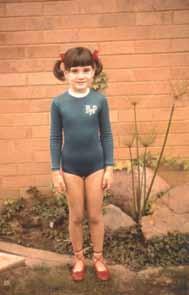
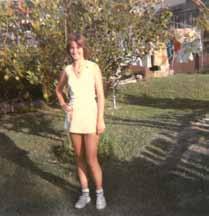
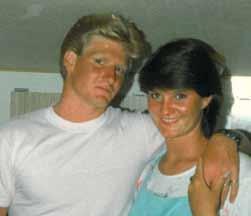
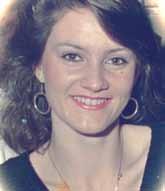
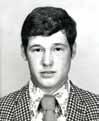
Above, from far left: Davis as a 10-month-old; As a six-year-old in the backyard of her family home in Bexley before a physical culture competition; As a 15-year-old in her backyard before a tennis match; Davis as a 16-year-old with her then boyfriend; Left: As an 18-year-old just after leaving school
She rang her parents to say that she was coming home. “t hey’re not very nice down here,” she told them. “ t hey yell at you, and they made me do pushups on my knuckles on the hot concrete.”
Her father, John Gumbley, warned her that if she did set out for home he would change the locks. “you haven’t waited this long to get in, after meeting all the requirements, just to give up,” he insisted. “you’re not giving up.”
Davis saw sense in his edict and said: “ yeah, you’re right. i ’m not giving up.” And she did indeed persevere, graduate, and start her police life working on the front line out of busy Newtown police station.
on her first day there, a senior constable warned
her that, among other things, she might end up thrown across the odd pub bar during brawls. t he area did have some rough hotels in which assaults on cops were common.
But the bright-eyed, 19-year-old Davis was elated to be at her first post and just bursting to get into the action. Although no one ever hurled her across a pub bar she did a few times end up the target of chair-throwers.
And amid all the deaths she encountered was an attack that could easily have cost her life. in 1989, she responded to a report of a stabbing in a street close to the police station. After she got there, she found a man on the ground with a knife sticking out of his abdomen.
His sons, whom the police knew well, were on the scene drinking, screaming and generally “freaking out”. Davis, then 22, knew not to pull the knife out and wisely applied pressure to the man’s wound.
“i kept thinking: ‘ you’re not going to shoot me with my gun.’ ”
And her partner tried to calm the sons but, suddenly, one of them smashed a bottle on the footpath and seized Davis in a headlock! He held the broken bottle to her throat and repeatedly screamed: “i’m going to kill you!”
Says Davis: “i couldn’t understand it because i was actually trying to help his dad, and he just ‘lost it.’ ”
With her bare throat exposed to her attacker, Davis was completely vulnerable, even after her partner screamed “signal one” into a handset.
Until back-up patrols arrived two minutes later, the son kept Davis immobilized in the headlock and continued screaming: “i’m going to kill you!” in that time, Davis kept her hand firmly on her holstered revolver. “Because,” she says, “a cop from Newtown had been shot with his own gun recently, and i kept thinking: ‘ you’re not going to shoot me with my gun.’
“As soon as he saw the other cops he let me go and threw me onto the ground, just pushed me away. one of the guys grabbed me and moved me away and they (my colleagues) all came in and arrested him.”
Back at the station, Davis had nothing more than a cup of tea before she was off again, this time to hospital to deal with a death. But she at least reflected on how close she had come to her own demise – by murder.
“i remember being scared at the time,” she says, “but it’s afterwards that you realize how scary it was, and you think: ‘oh, my God, that could have been a lot worse.’ i was very lucky.”
And luck had befallen Davis not long before the attack, when she and her partner were escorting three juvenile offenders into Sydney by air. o ne of the wings of the light plane she was on caught fire before smoke started flowing through the cockpit.
t he pilot screamed Mayday and Davis soon saw fire trucks scrambling into position on the Sydney Airport tarmac. She then grabbed hold of a yoke (steering wheel) after the pilot asked her to help him steady the aeroplane as he went about an emergency landing.
“We pretty much landed without any problem but got dragged out by firies,” she recalls. “We got told to run away from it (the plane) in case it went up. t he pilot got down and kissed the ground, and i thought: ‘oh, my God that was scary.’ But it was just one of those things.”
By 1992, Davis had joined the State licensing i nvestigation Command, where her job was to investigate liquor-licence applicants and breaches of the liquor Act t hat took her away from street patrols and into pubs and clubs, in which she saw plenty of drug-dealing.
And, from her observations, she got the idea to venture into undercover work. “i thought: ‘Well, i can actually do more and buy drugs in here (pubs and clubs) once i ’m accredited,’ ” she explains.
“i also thought that, in the future, i might go sideways into the undercover section.”
But, before she undertook the course, at least one colleague warned her against undercover work. He insisted that, if she took it on, she would end up without a life or relationships, even with her family and friends.
Davis knew he was right: some of her female friends were in relationships with undercover operatives and rarely saw them. t hey (the women) knew the frustration of brief interstate phone calls, which went: “i ’m in Perth. i can’t talk. i ’ll be back in a week.”
Undeterred, however, Davis went ahead with the course under trainer Michael Drury, the former Drug Squad detective often described as Australia’s most famous undercover cop.
A gunman, thought to be Christopher Dale flannery, aka Mr Rent-a-kill, shot Drury through the window of his Chatswood home in 1984. Disgraced and now former NSW detective Roger Rogerson stood accused of involvement in the hit, depicted in the t V drama Blue Murder
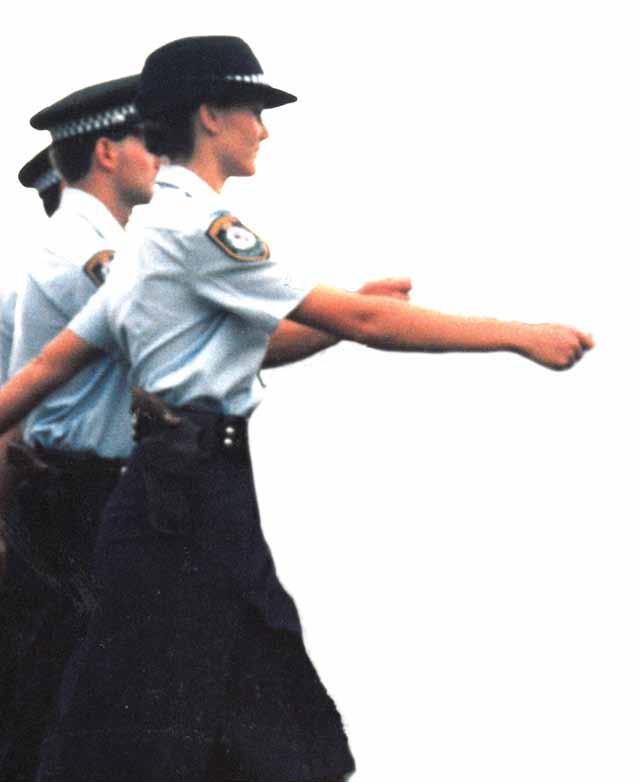
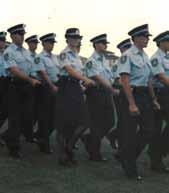
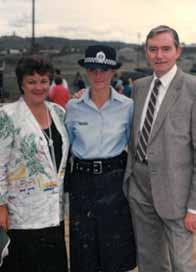
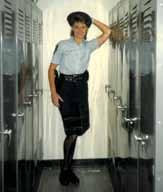
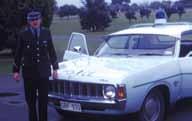
From far left: Davis marching with her course on graduation day in 1987; With her parents, lynne and John Gumbley, on graduation day; in the locker room at Newton police station in 1989;
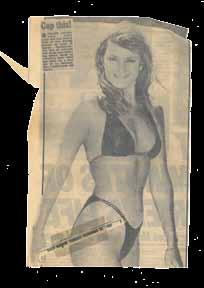
Right: Davis as she appeared in the Daily Mirror in 1989
“ t he weird thing was that, when i was doing the course,” Davis says, “my partner was o wen Rogerson, Roger’s younger brother.”
l ater, as a trained undercover cop, Davis would play roles similar to the ones Queensland detectives performed to ensnare killer Brett Cowan in the Daniel Morcombe case.
A successful role she played in 2005 was that of a gangster’s wife who was involved with a younger man. Her critical portrayal came after the stabbing murder of a 17-year-old boy in a suburban Sydney street. His sister was a copper and the case high-profile.
t he plan was for another female undercover officer to pose as an employee of the gangster and ingratiate herself with the suspect. She was to tell him that Davis was her boss’s wife, whom she hated and on whom she wanted something for extortion purposes.
o ne day soon after the operation began, the suspect set out to impress the beautiful but fake employee of the fake gangster. He went with her to Cronulla Beach, where he admitted that he killed the boy.
His confession, which ended up on tape, was a major win for police, who had lacked any other incriminating evidence.
“ you have to be confident,” Davis says of undercover work. “you’ve got to be able to talk and you have to be able to act pretty normal, otherwise you’re going to look suss.”
But Davis rarely, if ever, raised suspicion in the minds of the suspects she deceived. in fact, one bikie-linked woman she bought ecstasy from in an oxford St nightclub insisted that she could “always
“you would go into the toilet and girls were lining up ‘coke’ on a table and snorting it.”
pick a cop”. “t hat’s why i trust you,” she told Davis. “you don’t look like a cop.”
Davis continued to buy drugs from and therefore build evidence against the woman, who operated out of Port Macquarie. f acing jail time after her eventual arrest for drug-dealing, the stunned criminal could not believe that Davis was a copper.
o f course, by then, she was also a divorced mother of two young daughters. Her marriage to her first husband, whom she wed in 1995, had ended in 2002.
But, after another drug-buy in 2005, Davis was finished with undercover work. t he job played out in a ritzy Double Bay nightclub owned by high-profile stockbroker Rene Rivkin. Davis saw so much open drug-taking that she later described it as “ridiculous”.
“you would go into the toilet and girls were lining up ‘coke’ on a table and snorting it,” she recalls. “And they were doing it in little booths at the back of the place.”
She approached a dealer who supplied her with a gram of speed for $200. He was a 30-something businessman with no criminal record but his drug deal with Davis ended up in court.
“When we went to trial,” she says, “he looked at me and he just said ‘ you’re dead’, and slid his hand across his throat.” But Davis had worked her last undercover job anyway, and the dealer never got to her.
WhAT
did get to her, also in 2005, after 18 years in policing, was post-traumatic stress disorder.
Unrecognized signs of it had emerged in her overreactions to colds and other simple ailments her children suffered. in needless panic, she often rushed them to hospital fearing they would die.
But the first time the condition totally overwhelmed her was at work, as she videotaped the execution of a search warrant. “My hands started to shake, my heart starting pounding and i felt dizzy and sick,” she recalls. “i thought i was going to collapse.”
She got through the frightening episode but, after work, on a train headed for town where she was to meet friends for some drinks, panic struck her again. She tried to distract herself from it by fixing her gaze on the railway tracks.
“But the tracks looked like they were coming up to hit me in the face,” she says, “and i was just so dizzy that i could hardly see. i just thought: ‘i’m having a heart attack!’ ”
Davis stumbled out of the train at Central Station and managed to make it to the pub and find her police friends. She pleaded with them to take her to RPA Hospital, but one copper recognized that she was having not a heart attack but rather a panic attack.
“i was scared out of my brain,” she remembers, “but he kind of talked me down and gave me a glass of water and, finally, it started to subside. then, sitting at the table, i just burst out crying, and cried and cried.
“t hey got me out of there and i went home and cried for about three hours. t he next day i was just sore, everything hurt. i thought: ‘ t hat (episode) was pretty bad. What the hell was that?’
“it all became about death. i was worried about everyone dying.”
“i hoped it wouldn’t happen again and just tried to forget about it. But, of course, it did happen again, a couple of days later, and then it just kept happening.”
When the attacks struck her at work, an embarrassed Davis always tried to hide them. t hinking it her duty to maintain the image of a strong police officer, she used to run off to the ladies’ room. in there, she would cry, splash water on her face, and try to calm herself.
With some makeup reapplied to her face, she used to emerge from the ladies’ room and act as if nothing had happened. But, one day, her concerned sergeant spotted her after she had regained her composure and asked if she was okay. Davis “went to pieces”.
And she lived in constant fear of dying during the night, leaving her children to find her body in the morning. “i was a single mum for about three or four years and that worried me,” she says. “it all became about death. i was worried about everyone dying.” through all this misery, Davis had no idea that she was suffering from P tSD. As she openly admits now, she was “totally naïve” and “in denial”, even after friends hinted at P tSD as the condition afflicting her.
“i said: ‘Nah, it’ll be right, i ’ll take a few weeks off and get my head together,’ ” she says. “But this went on for a couple of years.”
And during that time, Davis went to hospital about five times, once from work, in the belief that she was suffering heart attacks. Scans and other tests, however, always showed her to be in excellent physical shape.
But symptoms of the P tSD continued to strike hard, intermittently, so her time at work became punctuated with lengthy absences. t hen came a day in 2006 when she felt well enough to go to work and sit for her sergeant’s exam.
“i was probably a bit stressed about it but i did it and passed,” she says. “then i just sat at my desk and the heart started thumping and i started freaking out.
“i was burning up and thought i was going to
spontaneously combust. And the more you worry about it the worse it gets.”
Davis was suffering a massive panic attack and just wanted to leave. She rejected the offer of a lift home and instead drove herself to a medical centre. on the way, she called her mother, to whom she kept saying: “Don’t let them do an autopsy on me. i don’t want to be cut open.”
Her mother met her at the medical centre and she (Davis) wound up on oxygen, waiting for an ambulance. By the time it arrived her condition had eased, so there was no trip to hospital. But she did end up with a referral to a psychologist.
When she saw him, he “straight away” diagnosed her with chronic P tSD. its cause, he suggested, was all the death Davis had seen and dealt with early in her career.
“But that was years ago,” she told the psychologist, who said: “ t hat’s what post-traumatic stress is –it can be from years before.”
And Davis had for a long time dreamed about death and suffered nightmares in which she wound up trapped in a room with dead bodies. So, now, she could see, and finally admitted, that she had a serious mental condition.
“i think by that stage i was so scared and so stuffed up that i just wanted to get better,” she remembers. “i thought: ‘Somebody help me, please! i don’t care what you do. i just need some help because i ’m losing it.’
“i went to a police psychiatrist who made a bit more sense of what i was feeling, and that was the beginning of the road to recovery.”
But that recovery meant no more police work so, after the drama that followed her sergeant’s exam, Davis never went back to the job. “i struggled with that because i wanted to go back to work,” she says.
“But the psychiatrist said if i went back i was never going to get better. it was a really hard decision (to leave) because i still loved the job but, by that stage, it wasn’t doing me any favours.”
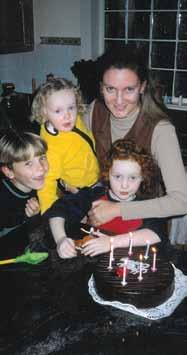
With her daughters, liah (front) and tara (centre) and their cousin, leigh
AS
Davis began her recovery, her mother suggested – and not for the first time – that she try writing about her police life. lynne Gumbley, an accomplished author, had many times said to her daughter: “you’ve got a book (you can write) later on.”
Davis had always claimed not to have the time, patience or inclination to write. But, now, she did have time, as her mother reminded her.
“Write about the cot death, the triple-fatal accident and just get it all off your chest,” Gumbley told her daughter. And the same suggestion came from the psychiatrist treating Davis, who eventually thought: “What’ve i got to lose?”
So she got to work, writing about the deaths and other experiences she had gone through as a copper and, ultimately, came up with a manuscript. Her mother thought it showed potential, and her mother’s agent encouraged Davis to keep working on it.
She did exactly that, before the document went to, but failed to win the interest of, a small-time publisher. So Gumbley’s agent suggested that Davis turn her work into fiction.
Gumbley, then half-way through her 13th book, had become seriously ill with cancer. Knowing her time was limited and that she might not finish Christie’s Choice, she urged her daughter to finish it for her.
Her death, which came a few months later and left Davis deeply saddened, did leave the book unfinished. With encouragement from her father, Davis wrote the rest of Christie’s Choice but it drew no publisher interest and ultimately failed.
t hat failure led Gumbley’s agent to suggest that Davis stick to the subject she knew best: crime. So the budding ex-cop writer got to work on Sinister intent, a crime fiction based on her experiences in policing. it was brutally hard work: a first draft and a rewrite, each of which took 18 months, and constant critical input from agents and editors. A 12-page report from one editor left Davis in tears for a whole day, and reflecting on how hard it was to write to publishers’ expectations.
with literary agent
an
But her hard work paid off in 2012, when publisher Simon & Schuster offered her a two-book deal –which she took.
Released in August 2013, Sinister intent features protagonist lexie Rogers. t his former uniformed cop has joined Bondi Junction detectives’ office after suffering an assault almost identical to the brokenbottle attack on Davis.
“i’ve made her a fictional character,” Davis says, “but she’s a lot like me in some ways. She’s got a bit of P tSD; and some of the stories (in the book) are mine.
“l exie is what i was when i was younger, in terms of personality and what she wants, which is to prove herself. She wants to show that she can be a good investigator; she wants the respect of her colleagues.
“She’s not going to let some traumatic event stop her from doing what she wants to do. She’s driven. She’s out to investigate a murder and just wants to do everything right.”
As part of her deal with Simon & Schuster, Davis had to have her second book written even before the release of Sinister intent. Due for release in August, Deadly obsession involves the same characters and a murder made to look like a suicide.
lexie sets out to solve it, along with a number of other seemingly similar murders.
“i found Deadly obsession a lot easier to write,” she says. “i was scared when i handed it in and, when
they said they were really happy with it, i went: ‘ t hank God!’
“i didn’t know what i was doing with the first one (book). i was learning as i was going along, from the advice i was getting and the people editing. Now i’m worried about the third one, because you think: ‘Can i do it again?’ ”
But writing is now a full-time job for Davis, who works from home. t here, with her daughters, her second husband – a NSW police officer whom she married in 2007 – and his two teenaged daughters, her life is full.
She still suffers from P t SD and sees a psychiatrist once a month “just to stay on top of it”. Davis calls herself a work in progress. But as she works on that third book, she continues to find great comfort in writing.
“i still feel connected to police,” she says. “ t hat definitely helps me because i miss the people, but i don’t know that i miss police work.” PJ
Davis,
Selwa Anthony (right), receives
award from actress Mary Coustas at the 2012 Sassy Awards
COPS’ NEED FOR EMOTiONAL SuRViVAL SKiLLS
NOT one normal person was among the cops who formed part of the 700-strong audience in the Convention Centre’s E hall one weeknight last month. t hat was how psychologist Dr Kevin Glimartin (above) saw it, anyway.
o f course, in his opening remarks, the former US cop and marine identified himself as not among the abnormal group.
“i ’m normal,” Dr Gilmartin said. “i ’m not in law enforcement anymore. i ’m retired. i ’m in recovery.”
t he audience of association members and their families listened intently as Dr Gilmartin revealed how police officers do not have the luxury of seeing the world the way “normal” people do.
“i make my decisions the way normal people do – based on probability,” he said.
“ t hat’s private-sector thinking. When you’re
right 90 per cent of the time in the private sector, you’re a genius.
“When you’re right 90 per cent of the time in law enforcement, there’s still a 10 per cent chance that the flag is going to be lowered at half-mast at a funeral.”
Dr Gilmartin explained that policing is based on distrust. “People only call the police when things aren’t working right,” he said.
“Cops are experts on every aspect of human behaviour – at its maddest, baddest and saddest – except normal behaviour.
“Normal behaviour gets cops killed. Most cops knock on a door and step to the side. t hat’s not normal thinking. it’s cynical, pessimistic thinking, thinking the worst is going to happen.
“ t hat’s how (good) cops think. And that’s how we want them to think. But i want them to (also) appreciate the consequences of (thinking like) that.”
By Nick Damiani
And the consequences, if police suicide rates are accurate, are huge. in both the US and Australia, many more police commit suicide than are killed on the job. in fact, police deaths in the line of duty have rapidly declined in recent decades.
Dr Gilmartin believes there could be a relationship between increased officer safety and decreased officer physical and mental health.
“When you teach somebody street survival skills, you must teach them emotional survival skills,” Dr Gilmartin insisted.
“Cops are in a constant state of hyper-vigilance the entire duration of their shift. t his produces a neurophysiological change. As opposed to a firefighter, who only has episodic hyper-vigilance.
“for every time the brain moves into an elevated level of hyper-vigilance – which it must do – when you remove the person from that work context there is an
equal and opposite effect. ( therefore), when you get home, you’re tired, detached, isolated, apathetic... t hese are the after-effects of hyper-vigilance.”
if it sounds like depression, that’s because it is.
“Depression is not a psychological state,” Dr Gilmartin explained. “Depression is a biological state of neurotransmitter imbalances.
“Get off duty, go home, get depressed.
“this is why cops talk about work a lot when they’re not at work – it has tremendous rehabilitative effects.”
According to Dr Gilmartin, it’s not what happens to police at work that damages most of them psychologically, it’s what doesn’t happen to them after work.
And part of the problem is over-investing in things they have no control over.
Dr Gilmartin explained that this over-investment often manifests itself as complaints against management. He used the example of a cop making an all-consuming crusade against a hat policy.
“if you make a hat policy the centre of your life, the person in charge of the hat policy now controls the centre of your life,” he said.
“Do not let other people be in control of your life – you be in control of your life. let someone else control the hat policy.”
Dr Gilmartin urged the audience of cops to break the destructive cycle which makes it “painful to engage” with loved ones when they return home from work.
“Do not wait until you get off work to decide what you’re going to do after work,” he advised.
“if you’re in a relationship with someone, make time for that person. Do not think it’s going to happen spontaneously.”
Dr Gilmartin’s other tips included:
• Keeping an active and aggressive pre-planned, written calendar: “Do not think: ‘ if i only felt better i ’d go fishing.’ t hink: ‘ i ’d feel better if i went fishing.’ ”
• Physical fitness: “ twenty to 30 minutes four to five times a week will bring your parasympathetic brain back into normal range.”
• Getting a head-to-toe physical once a year: “type 2 diabetes is the police officer’s disease.”
• Getting seven to eight hours of sleep: “ t he majority of cops only sleep four to six hours a night, yet sleep deprivation in police is a better predictor of cancer development than smoking.”
• Make a commitment to be in the best physical shape of your life one year from today.
“the points he made were very real, people understood what he was saying. they could relate to it.”
emotional Survival for law enforcement: A Guide for officers and their families, by Dr Gilmartin, is available to order via his website (emotionalsurvival.com).
P OL i CE PTSD S u FFERER ENDORSES GiLMARTiN AND ASSOCiATiON
former New South Wales detective Karen Davis, who suffers from post-traumatic stress disorder, gave the Gilmartin presentation a ringing endorsement.
t he one-time undercover officer, whose condition forced her to retire from the NSW Police force in 2007, said Dr Gilmartin’s popularity was evident among the audience.
“He had the crowd eating out of the palm of his hand,” she said.
“ t he points he made were very real, people understood what he was saying. they could relate to it.”
Ms Davis made particular mention of the comedown effects of hyper-vigilance, and noted that she had seen it not only in herself but also in a former colleague who was a homicide detective.
“My colleague still can’t get her head around how she can’t make an every-day decision,” she explained. “At work, your alertness is up high and then you go home and you have to go back to normal.”
And Ms Davis believes family members would have benefitted from Dr Gilmartin’s advice.
“ t hey’d normally just see their dad come home cranky or tired, disengaged and just think: ‘My father is a cranky old man who doesn’t want anything to do with me.’ So it’s probably making them have a bit more of an insight into it as well.
“He touched on the warning signs of someone who is going downhill and that’s very good to be aware of.”
Ms Davis also paid tribute to the Police Association, noting that, along with the Police Association of NSW, it is leading the way in educating police to look after their emotional well-being.
“ t he association is actively trying to help police and prevent further problems,” she said.
“And to have the attendance (outside work time) that you had there was incredible. i think it says a lot about your association.”
F AM i Ly MEMBERS BENEF i T FROM PRESENTATiON , TOO
t he Police Association encouraged its members to bring their families to Dr Gilmartin’s presentation.
PhD psychology student Rachel Andrew –daughter of Port Adelaide detective sergeant Jim Andrew – said the presentation helped her understand more about the comedown effects of hyper-vigilance.
“Dr Gilmartin normalized officers’ tendency to over-invest in their profession and the emotionally unhelpful thoughts and behaviours that can be observed in police officers,” she said.
Currently in her final year of clinical training, Ms Andrew was pleased to see Dr Gilmartin inform the audience about the physiological processes that occur when officers are continuously engaging in hyper-vigilance.
“ t hey are in heightened states of awareness, and this can impact on physical and psychological health, relationships and biology,” she said.
“(Dr Gilmartin) gave clear and simple steps (including clear rationale for the use of these strategies) that officers could implement to help improve current emotional functioning, and to prevent negative impacts on their well-being.
“i envisage that these strategies will be helpful for me to implement if i work with this population in the future as a psychologist.”
Continued page 24
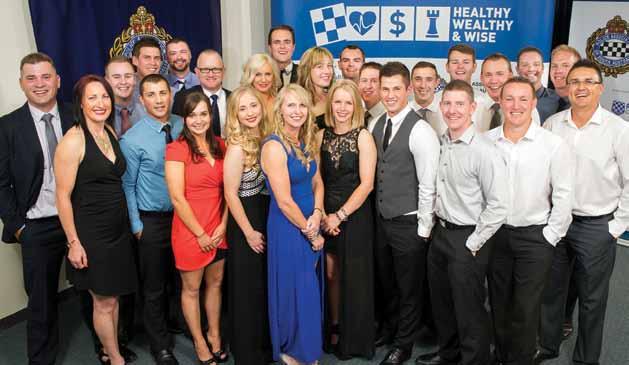
Police Health, the Police Credit Union and the Police Association brought the Gilmartin presentation to Adelaide as part of their Healthy, Wealthy & Wise initiative. See the back cover of this
issue.
Why Kate
iT is not a rousing pipes-and-drums number that comes to her musical mind at the mention of police. loved Aussie performer Kate Ceberano thinks of Regatta de Blanc, her favourite album by British reggae rock band t he Police. t hat was the 1979 lP with such classic hits as Message in a Bottle and Walking on the Moon
t hey might not shed any light on the realities of the police occupation, but Ceberano needs no help to understand and appreciate the sacrifices cops make for society.
“i love police (officers),” she says. “i think they’re people who get selected for that kind of job because they’re generally quite intelligent and can take orders.
“And they’re able to work really hard and work in and out of regular hours. i think it’s an amazing job they do.
“ i t’s just unfortunate that society has to be disciplined, and it’s the criminals that make living hard for others, for good, decent people.
“(So) i don’t look upon (police) as a necessary evil. t he way i look upon them is that we’re privileged to have them.
“ i t’s a noble career, and it’s one that takes great courage and deserves a lot of support from the community.”
Where others might whinge about the momentary inconvenience of police operations, such as random breath-testing, Ceberano, 47, has absolutely no problem with them. in fact, she delights in the presence of booze buses on the street and supports random drug-testing.
Any time she herself has to stop for a breath or drug test, she takes the time to acknowledge the cops and willingly chats to them. “i really appreciate them being there,” she says, “and i tell them they’re doing great work.
“People don’t seem to understand that, if you’re under the influence of anything, you’re putting everyone at risk. there are too many stories these days of people being collected by someone who was out
By Brett Williams
loves cops
of it or was inebriated, and it’s just not good enough.”
o f course, to the delight of her many fans, Ceberano has performed – and continues to perform – all around the country. But the over-exuberance with which some have responded to the multiaward-winning singer on stage has frightened her.
At those times, the presence of police has made her feel both comforted and “very, very confident” in various venues. “People who are just that little bit too enthusiastic don’t realize that it’s actually frightening you,” she explains.
“At that point, when you have police who can represent seniority in a place and put some measure of discipline in the area, you go: ‘God, thank you so much.’ it’s powerful. it’s a great thing.”
As a much younger performer, Ceberano never thought that she was in danger but now concedes that she was naïve to think that way.
“Because,” she says, “there’s danger present everywhere. i t’s not a question of not having faith in people; it’s just that, when people are influenced by other things, they don’t behave like themselves anymore.”
Ceberano will head to Adelaide in June to take on the directorship of the Adelaide Cabaret festival for her third and final time. She rates her stints in the role as the highlight of her career, and even stresses that, on that point, she is “unequivocal”.
Her pleasure comes from what she describes as the “healthy festival environment” of Adelaide, as well as the city’s audiences, which she regards
as well educated in the arts. Ultimately, she insists that the Cab festival could only happen in Adelaide.
“ t he audience is sincerely interested in what the arts have to offer them, and culture,” she says. “it feeds them. i ’ve never seen it actually quite like this unless it was somewhere in the United States, like Washington.
“you (Adelaideans) are very discerning, and very honest, too. When you love something, you love it, and when you hate it, that’s it!”
it was never going to be difficult for Ceberano to relate to Adelaide audiences, not as a woman living and loving her own life as a performing artist. She has worked as a singer and songwriter for more than 30 years and boasts a string of gold and platinum albums.
Ceberano has also taken on acting roles, hosted t V shows on each commercial network and the ABC, and appeared on Who do you think you are? (SBS).
Pursuing one artistic goal or another and “occasionally pulling it off” makes her “sublimely happy”. But, for Ceberano, those feelings of accomplishment – such as the one she got after winning Dancingwiththestars in 2007 – fade quickly.
“ t hen,” she says, “you need to set up another game to overcome. So that’s one part i adore about it (my life as a performer).”
But the glamorous-looking show-biz life she leads and relishes comes with a tough, unpleasant part, too.
“Believe it or not,” she says, “for being so busy and so accessible, it can be very lonely. e ven when you’re on stage, the band is always the band and you’re always separate.
“…when you have police who can… put some measure of discipline in the area, you go: ‘God, thank you so much.’ ”
at night and you’re not surrounded by your family, and there’s nothing lonelier than that.
“i very rarely complain about anything, but that part is like a hole that’s never full. you’ve got to constantly come home, take stock of what you have and the people you love and invest more and more time and energy in that. t he police would know about that.”
Her personal life is an issue Ceberano reveals much about in her recently released book, i’m talking: My life, My Words, My Music in it, she writes of her disastrous first sexual encounter, leaving home as a 15-year-old to venture into the music scene, and her marriage to director lee Rogers.
“i didn’t just write it to be controversial,” she says. “i wrote it to explain that there’s a price you pay for finding yourself in those environments.
“But there’s also lessons learnt. f or instance, i think there’s a big problem with teenage alcoholism. i saw the effects of that; and several of my friends are dead today because of it.
“And, on the sexual reference, well, parents often don’t know where their teenagers are; and, at 14, we think we’re so mature, but we’re not.”
o f course, Ceberano is herself a mother, to 10-year-old Gypsy. And if, in some years from now, she (Gypsy) were to announce that she intended to become a police officer, her mother would approve.
“it would be amazing,” she says. “She’d be saying it because she’d feel it was something she wanted to be good at. i don’t think anyone goes into becoming a police officer in some glib way.
“ t hey see that they have in themselves the courage to do it and put themselves at mortal risk every day. i just don’t know whether i would have the courage to do what most police have to do.” PJ
“When you’re touring for instance, you go home late t he Adelaide Cabaret festival runs from June 6 – 21. Go to adelaidefestivalcentre.com.au for details.
Highest regard for association partnership
t he Police Association of South Australia has well and truly proven itself as a community partner of Novita Children’s Services. it has demonstrated generous commitment to the not-for-profit organization through both the association lottery and Melbourne Cup luncheons over recent years.
Novita is the not-for-profit organization that provides child development, rehabilitation and disability services to more than 2,000 children and young people throughout South Australia, as well as support for their families and carers.
through its broader work with families and communities, Novita’s services have a direct impact on thousands of South Australians.
A strong bond exists between Novita and the Police Association, bolstered by the organizations’ shared purpose of helping others. this theme is reflected in their partnership, which has grown from strength to strength over the years. Many association members have acted in support of Novita for some time, including raising funds through Novita’s annual Walk With Me event, a community walk that celebrates ability and social inclusion.
in 2011, Novita and the association’s relationship was formalized into a true partnership, when the association chose Novita as the beneficiary of its inaugural lottery, raising a fantastic $50,000 for Novita. this thoughtful gesture was acknowledged by Novita at its Supporters’ Cocktail Party at the end of that year, when the association received Novita’s Community Partner Award. in 2012, once again at Novita’s annual cocktail party,
letters to the eDitor Can be sent by:
Regular mail Police Journal, Po Box 6032, Halifax St, Adelaide SA 5000
Email editor@pasa.asn.au
Fax (08) 8212 2002
internal dispatch Police Journal 168
the association was cemented as one of Novita’s key supporters, this time receiving the Rising Star Award following the association’s first Melbourne Cup luncheon for Novita.
to date, the association has raised $130,000 for Novita through its annual lottery, and more than $7,000 through the Melbourne Cup luncheons, a phenomenal result for which Novita is deeply appreciative.
Novita values the time and commitment of the association and its staff in helping raise funds, and looks forward to continuing to work closely together in the years to come, as like-minded organizations with a focus on supporting the community.
t he association exemplifies the role of a Novita community partner, and its tangible support helps Novita to develop kids’ potential every day.
Details about the 2014 Police Association lottery and Melbourne Cup luncheon, supporting Novita, will be posted at www.novita.org.au/events later this year.
Glenn Rappensberg Chief e xecutive
Novita Children’s Services
Grateful to association member
Detective Chief inspector Brian Smith is about to retire after 43 years in SAPol. He has spent some 16 years of his police life working in the Port Adelaide area, initially in uniform, then as a young detective and, finally, returning as oC of Port Adelaide CiB.
t hroughout his police life he has served the community in a variety of places, coached junior
Police Club excellence
i am a member of the Blackwood Beefsteak & Burgundy Club and each member takes a turn in organizing a dinner and wine-tasting.
When it became my turn i did not hesitate to contact the Police Club and i was not disappointed. Club manager Bronwyn Hunter was fantastic in providing an excellent menu and assisting in planning. t he dinner took place in february and the room setting was perfect. Bronwyn and her team ensured that my guests were well looked after and they received appropriate acknowledgement from the gathering. i had many comments on the food being excellent and particularly complimentary remarks about the wine being served. Unfortunately the chef had left before we could acknowledge his efforts so please pass on our gratitude.
i am still receiving e-mails from the members complimenting the dinner and i look forward to returning to the club when it is my turn again.
Sincerely
Peter Crouch inspector Comcen
football and cricket, held positions on local sporting committees and was the president of SAPol legacy for nearly 10 years.
t hrough his involvement with Delfin i sland NHW, Brian has stimulated more interest at our meetings and attendance has gone up. His relaxed approach at our meetings enabled residents to discuss their issues at their level.
Continued page 37
Detective Sgt Jim Andrew
Western Adelaide CiB
i t was very useful and insightful and it was pleasing to hear from someone who had experience as a police officer and in clinical psychology.
Speaking to my wife (a police officer for 20 years) after the presentation, my specific thought was: we must have “down time” for ourselves, our families and loved ones, and not let the job take over our lives.
Dr Gilmartin highlighted that we tend to view ourselves as police officers 24/7, that we cannot “switch off” when off duty, and (our job requires us to be) hyper-vigilant on duty.
t his presentation is so important that a version of it should be given to all SAPol officers and possibly included in a training environment.
it would have been helpful 20 years ago and possibly left me a few kilos lighter. t he points about sleep deprivation, lack of exercise and weight gain were totally accurate in respect to the average “veteran” copper.
Inspector Matthew Nairn
Western Adelaide lSA
i found it relevant for today’s police officers no matter what position they hold or occupy.
He provided a humorous and realistic talk that delved into the psyche of most police officers and gave them an understanding of how policing can affect their day-to-day lives.
t he positives that came from his talk were for police officers to understand why they behave as they do; how to recognize the negative changes in their lives affecting them and their families; and finally, it provided simple solutions to “survive” the job and ultimately live longer.
i found most interesting his description and analysis of “hyper-vigilance” when researched in the US and how, to a limited degree, this can be translated to the Australian police environment.
o verall, it was an enlightening presentation and, from the audience reaction, one that clearly struck a chord with the attending police officers and their families.
Sergeant Joanne Mareolas
transit Services Branch
f irst, i thank the Police Association, Police Health and the Police Credit Union for their Healthy, Wealthy & Wise programme and the opportunity to see Dr Gilmartin’s presentation.
i wasn’t sure what to expect from the presentation and went in with an open mind.
i’m glad i went! As Dr Gilmartin spoke, i found a lot of what he said made sense and hit home.
He was profound and accurate in his description of what really happens to police in their careers, providing an uncanny insight into the stress that many of us deal with both at work and home as police officers.
At one stage i looked around the room and saw many of the attendees nodding their heads at what was being said.
i was astonished with the high percentage of deaths by virtue of police suicide compared to police deaths on duty, and that percentage correlates to our forces in Australia.
From top: Detective Sgt Jim Andrew, inspector Matthew Nairn and Sergeant Joanne Mareolas.
Nick Damiani
Ready to negotiate next enterprise agreement
ThE upcoming round of enterprise bargaining was the main topic of discussion at another key meeting of Police Association delegates last month.
Held in fenwick function Centre, the meeting coincided with the release of the association document enterprise Bargaining: Round 7 issues paper (available to download at www.pasa.asn.au).
i ssues which association president Mark Carroll, secretary tom Scheffler, industrial staff, the committee of management and delegates addressed were:
ENTERPRiSE BARGAiNiNG
t he last enterprise agreement – ratified in May 2011 – nominally expires on May 18, 2014. Association president and meeting chairman Mark Carroll outlined to delegates the intended negotiating procedures for the upcoming round of enterprise bargaining.
He highlighted that there exists a guaranteed pay rise in the first pay period on or after July 1, 2014, as per clause 8.2 of the current agreement.
“Many people assume that the conditions in the last e A will automatically roll over, but that’s not necessarily the case.”
COPS’ NEED FOR EMOTiONAL SuRViVAL SKiLLS
from page 19
But he also highlighted the challenge of retaining the conditions contained in the current e A.
“ t hat’s a commonly misunderstood part of enterprise bargaining,” Mr Carroll said. “Many people assume that the conditions in the last e A will automatically roll over, but that’s not necessarily the case. it’s important we strive to retain all the conditions in the 2011 agreement.”
Mr Carroll reminded delegates of the method used to calculate police officers’ earnings in the current e A.
“the formula is based on the mid-point of national police earnings,” he said.
ensuring salaries do not fall below this mid-point retains top billing on the association’s agenda, according to Mr Carroll.
“We wrote to both state political parties prior to the March election,” he said.
POLiCiNG iN ThE DOCTOR ’S BLOOD
Dr Kevin Gilmartin calls himself a behavioural scientist but, at a glance, his list of professional achievements tells you he’s much more than that.
A former Arizona police officer of 20 years, he holds a doctoral degree in clinical psychology. He consults with US and Canadian law-enforcement agencies, holds faculty police positions in two US universities, and is a former vice-president of the Society of Police and Criminal Psychology and a faculty member of the fBi law enforcement e xecutive Development institute.
He’s also a veteran of the US Marine Corps.
Dr Gilmartin insists that policing is in his blood.
“t here are 13 cops in my extended family,” he says. “if you watch a football game at my home, you’ll think you’re at a union meeting.”
Dr Gilmartin and his wife have two daughters and one grandchild. And, by extraordinary coincidence, there is an Adelaide connection.
“My daughter’s significant other is a surgeon and he worked in Adelaide before they met,” he explains.
“He liked it so much he stayed here for several more years. He thought very highly of Adelaide. i know it’s the only city in Australia that wasn’t founded by convicts.”
During his university days, Dr Gilmartin began to realize he could combine psychology with police work.
“o ne of my mentors was the commander of the police behavioural sciences unit and was also
“We are pleased to report that the l abor government has committed to beginning e B negotiations at the national mid-point.”
All progress updates on the 2014 e B process will be available on PASAweb under the enterprise bargaining banner.
STATE ELECTiON iSSuES
Delegates were reminded that the A lP remained committed to employing an extra 50 police officers in 2013-14 and a further 134 between 2014-15 and 2017-18.
Mr Carroll also spoke of two important election issues: police superannuation and the possible privatization of police services.
“ t he A lP has stated that it would be prepared to discuss the erosion of the superannuation guarantee, but the enterprise bargaining process is not the appropriate forum for that,” he said.
“We will seek legal advice to potentially litigate that issue.
“ t he good news is the government has indicated that it does not support privatization of police services.”
Mr Carroll said the government would need to allocate funding to update SAPol it systems and existing legacy applications. “ t his is an ongoing issue,” he said.
“in response, l abor has stated that it will give
teaching (on) the side,” he remembers. “So he sort of made me aware that you could meld the two together, that you could be in psychology and the police force.
“So that was probably what facilitated me getting into what i’m doing now.”
Dr Gilmartin says this model of “operational psychologists” – cops who double as psychologists – is the one that police officers best respond to.
“t here’s a lot of people trying to help cops and there’s tons of psychologists who are good, decent people, but i don’t think they understand what the cop goes through,” he says.
“ t here is a disconnect… t hey are kind of like missionaries who want to come in and get you all to think like a psychologist. Cops don’t think like psychologists, they think like cops.
priority to ensuring a sufficiently funded plan to replace all legacy systems is in place by the end of the term.”
P OL i CE CELLS AND CORRECT i ONAL SERViCES PRiSONERS
Mr Carroll discussed with delegates the ongoing problem of using police cells in Adelaide, Holden Hill and Sturt to house correctional services prisoners.
Police cells are not designed for long-term incarceration.
Mr Carroll welcomed further feedback from members, highlighting that the issue requires a long-term solution.
“Delegates should continue to provide us with examples of how this situation impacts on service delivery,” Mr Carroll said. “Members should submit a hazard incident report statement where appropriate.”
Mr Carroll also encouraged members to e-mail staffing@pasa.asn.au with examples of a lack of human resources in their workplaces.
iNTERNAL iNVESTiGATiONS AND MEMBERS’ RiGhTS
t he association will continue to provide training to assist delegates who support members at internal investigations Section interviews.
Mr Carroll warned that it was a wrong move for members to attend an iiS interview without an association support person.
“An association representative should attend with the member and the member should record the iiS interview,” he said.
“We’ve had recent examples of iiS investigators who refuse to supply a copy of an interview to a member who was interviewed as a ‘witness’.
“ t hese problems can always be overcome by members making their own recording – and it is their right to do so.”
A SSOC i AT i ON GOVERNANCE –ADMiNiSTRATiON AuDiT 2014
t he association has engaged an independent auditor to undertake an administration audit.
t he audit will incorporate governance, financial risk management and ensure that the association is at the cutting edge of reporting processes.
Mr Carroll said it was important that the association continued to lead the way on governance issues.
t he new administration audit report will be tabled at the delegates conference in october.
A PPO i NTMENT OF NEW GR i EVANCE OFFiCER
Delegates were informed of the appointment of new grievance officer James McComb, who joins the association with extensive experience in industrial relations.
“i’m not telling the cop anything he or she doesn’t know, but i’m giving cops a framework to understand why he or she knows it.”
Dr Gilmartin says Australian police unions operate differently from those in the United States.
“in the US, (historically) the unions will do everything to prevent this training from taking place,” he says.
“it almost seems like in Canada and in Australia the associations are doing more to assist their members than the police service is.
“in the US, the incorporation of stress training is always a management-driven concept. Here it’s the associations that are bringing me in.
“i f i ’m a member of (the Police Association), i could pick up the telephone and i can give the union president (a call).
“i bet here in Adelaide (members) are calling (association president) Mark Carroll.
“the association is palpable for them. they know it’s not just an administrator function. it has heart and soul. i wish our associations in the States were more like they are here.”
And, as for the Australian people, Dr Gilmartin says they are “much more relaxed” than Americans.
“i ’ve never been treated as well,” he says. “And the Aussies are like comedians. i ’ll say: ‘let’s take a 10-minute break’ and, in Canada, after nine minutes, the audience are all sitting prim and proper.
“(After) 10 minutes, those Aussies are off on holidays!” PJ
Dr Rod Pearce
Obesity too great a risk
Linked to a range of cancers, excess body weight is a scourge to millions of Australians
FAT,
fatter, really fat, obese and morbidly obese. t hese now emotional words have come from the medical profession and epidemiologists trying to explain the link between increased weight and heart disease and early deaths from related diseases, such as diabetes.
So is obesity causing deaths or is it just associated with them? Weight increase usually occurs through increased fat deposits. Some people claim they are big-boned and that, therefore, their extra weight is about their bones or body shape. to correct that, a measurement was invented to take height and weight into account. Body mass index divides a person’s weight by the square of the person’s height.
BM i above 32kg/m2 has been associated with a doubled mortality rate among women over a 16-year period.
obesity is associated with increased risks of cancers of the oesophagus, breast, endometrium (lining of the uterus), colon and rectum, kidney, pancreas, thyroid and gallbladder.
t here is also a risk of early death from strokes and heart attacks, so doctors normally suggest that weight be reduced.
t he human body is very efficient in the use of calories. if you increase your intake of calories the body uses up more energy. if you eat less, the body
conserves energy, sometimes so efficiently that people are surprised that they cannot lose weight easily. Surgery is used increasingly for weight reduction and has proved helpful, probably because the intervention tricks the body into accepting a lower body weight. Generally, our bodies are thought to have evolved to maximize the use of food when we eat (feast) and conserve energy when less food is available (famine).
Regular availability of food all year round has seemingly tricked our bodies, so there is a trend in Australia for the average weight to increase. No longer do our bodies need to adjust to the famine-and-feast scenario.
t he answer to our personal weight issues is to maintain a weight and exercise programme which does not risk early death. e xercise protects against some of the effects of increased weight. Smoking makes the risk of increased weight worse. infections such as influenza kill obese people more than they do people of normal weight.
t hree out of five Australian adults are overweight or obese, based on BM i. t hat suggests more than 12 million people could reduce their chances of having a heart attack by losing weight or exercising.
only smoking and high blood pressure surpass obesity as contributors to the burden of disease in Australia.
three out of five Australian adults are overweight or obese, based on BMi. that suggests more than 12 million people could reduce their chances of having a heart attack by losing weight or exercising.
t he total amount of food your body needs depends on your age, sex, body size, level of physical activity and whether you are pregnant or breastfeeding. the body converts protein, fat and carbohydrate into energy. f at is the most concentrated source of energy.
An excess energy intake, even a small amount over a long period, causes weight gain. Children and adolescents need enough nutritious food to grow and develop normally. older people need to keep physically active and eat nutritious food to help maintain muscle strength and a healthy weight.
Studies show that shift work and other sleep disturbances, such as jetlag, can disrupt the body clock and increase the risk of obesity and diabetes. But, until now, researchers have not really been certain as to how these changes affect the body’s metabolism.
t he reversal of their circadian clocks (sleeping during the day and waking at night) also puts disrupted sleepers at higher risk of diabetes. t he poorer the sleep they get has an effect on their insulin levels.
Studies suggest it takes about three weeks for the circadian rhythm and insulin levels to return to normal, but the weight gain could remain.
All of these factors seem to conspire against the working copper and the rest of us as we age.
Starting life as a fit person and, then, doing shift work, having less time to exercise, and normal ageing, aggravate the tendency to gain weight.
t hose whose weight goes up might well look to t V and internet adverts for rapid weight loss. Conventional wisdom says increased exercise and less fat and calories over a lifetime will make a difference. e xperience shows this is very difficult and usually fails.
t here is benefit in losing weight, even if the loss is quick. t hat benefit only remains, however, if the weight stays off.
Continued page 42
motoriNG
Jim Barnett
A not-so-pricey Mercedes
And it still comes with the Benz luxury, power and craftsmanship
yOu might always have thought that buying a Merc was too expensive an exercise. Now, with a manufacturer’s list price of $49,900 for the new Mercedes Benz C l A 200, you might think differently.
DESiGN
Cl A 200 is a compact, coupe-style, four-door sedan with racy lines and a bold grille, which features a big three-pointed star. A boot-lip spoiler, dual exhausts, leD daytime running lights and 18-inch, five-spoke alloys shod with low-profile tyres add to its appeal.
Mercedes claims it is the world’s most aerodynamic production vehicle.
it seats four adults in comfortable, sportsstyle seats. t he front two feature plenty of side bolstering.
five large, round air vents feature prominently in the uncluttered, sporty dashboard. Ambient lighting in door handles, headrests and foot wells are a nice touch.
An electrically operated park brake and stalk-controlled gear-selector free up space in the centre console.
VALuE FOR MONE y
i n light of its pedigree and specs, C l A 200 is keenly priced. Standard equipment includes:
• Colour display (14.7cm) with Becker MAP Pilot navigation.
• Single CD/DVD player with MP3, WMA and ACC compatibility, Bluetooth connectivity and audio streaming.
• Media interface with iPod/iPhone integrations, AUX- iN and USB inputs.
• Reversing camera.
• front- and rear-parking sensors.
• leather (man-made) seat trim.
• Dual-zone climate control with rear ventilation.
• trip computer.
• Auto headlamps.
• Rain-sensing wipers.
• Cruise control with speed-limiter.
Around town, it is smooth, quiet and almost limousine-like but quite different on the open road.
SAFET y
Naturally, the Cl A 200 comes with extensive safety systems:
• Nine airbags (including rear, side and a driver’s knee airbag).
• Stability, traction and antilock-brake systems.
• Hill-start-assist.
• Auto-locking doors with emergency unlocking.
• Crash-responsive emergency lighting. Blind-spot monitoring provides visual warning of vehicles approaching from either side. Audible and visual warnings activate when a collision is imminent or driver inattention is detected.
STATS
A 1.6-litre direct-injection turbo-charged petrol engine powers C l A 200. it produces 115kW of power and 250Nm of torque. Although it requires 95 RoN fuel, combined economy is a frugal 5.7 litres/100km with low Co2 emissions of 133g/km.
Drive is to the front wheels through a smooth seven-speed automatic transmission with manual mode operated by paddle shifters. t he spirited yet smooth four-cylinder engine might be relatively small in capacity but can accelerate the car from 0-100km/h in just 8.6 seconds.
ON ThE ROAD
Around town, it is smooth, quiet and almost limousine-like but quite different on the open road. Plant the foot and the engine will freely spin to redline and deliver acceleration akin to a V6.
t he silky smooth seven-speed automatic provides quick shifts and makes the most of available engine power.
Braking and handling are superb: the car delivers a firm but compliant ride. on coarse bitumen, its Goodyear e agle run-flat tyres emit some road noise but that is common with tyres of this type.
VERDiCT
C l A 200 is a definite winner for the luxury brand. its luxury and power will satisfy most and the price might just bring about a new breed of Mercedes owners.
A surprise package
Not only an exhilarating drive but also smart-looking and well-equipped
WiTh the second-generation Cerato Koup, Kia has introduced its first turbo-charged petrol engine.
DESiGN
Koup turbo has a low, coupe-style body. Prominent are its long, sloping windscreen, smart front end with leD daytime running lights, and charcoal-coloured 18-inch alloys with low-profile tyres.
Koup can seat four adults in relative comfort but tall passengers will find rear headroom tight. t he front seats are comfy and wide-opening doors provide easy access to the rear seat.
t he smart dash layout features large backlit gauges. A leather-bound steering wheel has reach and rake adjustments and buttons for audio, cruise control, trip computer and phone functions.
o ther features are storage, which includes two lidded console bins, and two 12-volt sockets.
Split-fold rear seats and storage bins around the fullsize spare wheel enhance Koup’s shallow boot space.
VALuE FOR MONE y
Kia claims Koup turbo is the most powerful car available under $30,000. it is priced from $27,990 (six-speed manual), a $4,000 premium over its naturally aspirated sibling. A slick six-speed auto with paddle shifters adds $2,200.
Standard items include:
• Reversing camera.
• front- and rear-parking sensors.
• Auto headlights.
• Smart keyless entry.
• Push-button start.
• Manual air conditioning.
• Cruise control.
• Power windows.
• Alarm system.
• Alloy pedals.
• Cooled glove box.
A $2,200 optional touring Pack adds leather trim, dual-zone climate control and larger central screen with satellite navigation and DVD player.
SAFET
y
t he now common six airbags, traction and stability control systems and antilock brakes all feature. Koup turbo also comes with Hill-start assist, emergency-stop signalling and bigger brakes. Kia claims improved crashworthiness owing to the use of high-tensile steel and a stronger chassis.
STATS
A 1.6-litre, direct-injection, four-cylinder, twinscroll, turbocharged petrol engine produces 150kW of power and 265Nm of torque. t he auto is the quickest with 0–100km/h achieved in just 7.4 seconds. economy is 7.4 litres/100km (manual) and 8.0 litres/100km (auto).
ON ThE ROAD
Koup turbo is a surprise package. Acceleration is brisk but smooth all the way to redline. t he engine emits a nice note when pushed; and the six-speed automatic offers quick changes in auto and manual modes.
the suspension delivers a good balance between compliant ride and agile cornering; and drivers have a choice of three levels of power-steering assistance.
VERDiCT
it is not the sharpest fast four on the market, but Koup turbo is smart-looking, well-equipped and an exhilarating drive at a great price.
Car-leasing not all it seems
Kara Reek Marketing Manager, Police Credit Union
And
the strong advice from Police Credit union is that a car loan proves “markedly cheaper”
CONS u
MER misunderstanding abounds when it comes to the so-called benefits of leasing cars, despite saturation marketing in specific media. t hat is the warning from Police Credit Union C eo Costa Anastasiou, who points to such disadvantages as delays in acquiring cars and exit costs.
He also highlights the risk some lease-holders face of reducing their future borrowing capacity for important acquisitions such as property.
Mr Anastasiou felt compelled to speak out recently, after several Police Credit Union members had come to find their leases problematic on a range of fronts. l ease companies’ claims of tax advantages through salary sacrifice were among many he described as “not necessarily accurate” or beneficial to police officers on a salary of around $80,000.
“ i t really does depend on your personal circumstances,” he said. “ i n other words, it’s dependent on how much income you earn and your marginal tax rate. it’s also about other factors, such as the number of kilometres you travel and whether you really want a new car.
“A finance lease offers perceived simplicity, but the biggest pitfall is that you don’t actually own the car, not on day one and not when the lease expires.”
“if your personal circumstances change, … and you need to exit from the car lease arrangement, you are actually up for prescribed penalties. And they are significant penalties.”
“And, apart from that, the repayments you make don’t actually go toward paying the whole principal off the car. At the end of the lease term, you’ll have to make a significant final lump-sum payment to acquire the car.
“i would urge those of our members on ‘average’ police salaries to scrutinize their figures. t hey should undertake a comparison before going down the path of a salary-sacrifice car-lease arrangement. it might not be in their best interests.
“Some tax benefits might exist for police officers on higher salaries but they, too, should consider and compare the best alternative for their circumstances. t hey should also consult a financial planner, accountant or taxation professional to assist and advise them in making the decision.”
Mr Anastasiou insisted that a Police Credit Union car loan proved markedly cheaper than a novated lease through a car-leasing management
company. He pointed to the example of a Police Credit Union borrower emerging more than $13,000 better off as a result of opting for a $35,000 Police Credit Union car loan over a comparable five-year term.
Among other advantages available to the borrower is the capacity to negotiate a lower price with a dealer and, ultimately, own the car. Also advantageous is the choice the borrower can make of his or her own mechanic and insurer.
o f all the warnings Mr Anastasiou gave about car-leasing, his strongest related to the potential need, or preference, of lessees to undertake mid-term exits from their car leases.
“if your personal circumstances change, which is often the case, and you need to exit from the car lease arrangement, you are actually up for prescribed penalties,” he said. “And they are significant penalties.
“Unless you’re absolutely sure your circumstances won’t change, you shouldn’t lease. At the very least, before you sign up, ask the leasing company to provide you with exact costs and penalties associated with breaking the car lease mid-term.
“With a personal loan at Police Credit Union, there are no penalties for paying out a loan early –ever. if you pay out a loan in, say, two years, you incur no penalties whatsoever. you just pay the balance of the loan and the car’s then discharged, in terms of the loan, and it’s yours entirely.”
An important point many potential lessees seemed to overlook was that, in locking up a portion of their pre-tax income they diminished their future capacity to borrow money while locked into a car-lease arrangement.
Any lender might well deny finance to a loan-seeker with a heavy commitment to a novated lease. Such a denial might leave a police officer unable to invest in
Advantages a PCu car loan offers CAR- LEASiNG COMPANy PCu
you can negotiate a lower price with the dealer
t he car is yours at all times
t he car is yours after five years
Choose your own mechanic
Use your preferred insurer
you can make early or extra repayments without penalty
property, shares or any other important investments.
Mr Anastasiou said he understood the seeming appeal of novated leases but urged police officers to talk to Police Credit Union’s private bankers before taking this decision.
“ t hey are best equipped to answer our police members’ questions, particularly on this topic,” he insisted.
“Private bankers can take them through the journey of analysing their personal circumstances and needs and finding the right solution for them –for the long term.
“We can help them calculate a budget of their motor vehicle costs, then set them up with a portion of their pay to be automatically directed into an account.
“essentially, we put an agreed amount into a ‘motor vehicle expenses account’, allocate a Visa card for this account and then this separate Visa card can be used for all of their motor vehicle expenses.”
Mr Anastasiou also highlighted the speed of the process associated with a Police Credit Union car loan, particularly in comparison with the time required to arrange a lease.
“With Police Credit Union, you could apply for the loan today and drive out with your new car tonight.”
Part of the Police Association team
She had occupied some of the most important roles in police unionism when she took on the job of Police Association organizer last year. Now, former patrol sergeant Bernie Zimmermann uses her vast experience to work with and advocate for association members. to them, she gives her full focus, care and determination.
Free Legal Service for Police Association Members, Their Families & Retired Members.
Leading Adelaide law firm, Tindall Gask Bentley is the preferred legal service provider of the Police Association, offering 30 minutes of free initial advice and a 10% fee discount
To arrange a preliminary in-person or phone appointment contact PASA on (08) 8212 3055.
Have you or a family member been injured in a car accident?
Tindall Gask Bentley acts in more motor vehicle accident claims that any other law firm in SA. Gary Allison & Richard Yates can provide free preliminary legal advice on your entitlements to compensation. They can also help with Workers Compensation, public liability & medical negligence claims.
Family Law
Matrimonial, De Facto & Same Sex Relationships
• Children’s Issues
• Child Support matters
• Property Settlements
• “Pre Nuptial” style Agreements
Appointments with Wendy Barry (Accredited Family Law Specialist) & Dina Paspaliaris.
Commercial Law
• General business advice
• Real estate & property advice
• Business transactions
• Commercial disputes & dispute resolution
Appointments with Giles Kahl & Michael Arras.
Wills & Estates
• Wills & Testamentary Trusts
• Enduring Powers of Attorney
• Enduring Guardians
• Advice to executors of deceased estates
• Obtaining Grants of Probate
• Estate disputes
Appointments with Michael Arras & Rosemary Caruso.
Agreement clinched on divorce property settlement – what now?
Parties might well reach an agreement but only in two ways can it be made “final”
ThE breakdown of a marriage or de facto relationship is difficult but can be made easier when the parties are able to negotiate a division of their assets and liabilities by agreement, without the involvement of the courts.
But what stops one party from “coming back for more” at a later date? How can parties formalize the agreement reached between them for property settlement to protect themselves from the other party being successful in a claim for property settlement at a later date?
it is such a good thing that we see so many new clients who have reached agreement with their former husband, wife or de facto partner with respect to how they divide the assets of their relationships.
t he court process can be long and drawn out; and, in many cases, people see the advantages in negotiating an outcome which is acceptable to them both rather than having a court decide “who should keep what”. Parties are able to “own” the property settlement and have a sense that they have both been involved in the ultimate decision.
We are asked by many clients whether it is sufficient for them to write down the agreement they have reached and have it witnessed by a justice of the peace. t he simple answer is no.
While such a document could be useful as a record of the intention of the parties, it would not prevent either of them from making an application to the family law Courts for a property settlement at a later date.
When they make that application, the court could consider the agreement the parties have written themselves. However, it may still order that one party pay a lump sum to the other, the transfer of
real estate interests, or superannuation splitting orders.
t he court could also make other orders it deems necessary in order to achieve a “just and equitable” division of the property assets and liabilities between the parties, taking into account all of the relevant factors as set out under the family law Act
… a party to a marriage can make an application for property settlement at any time after separation, up until 12 months after a divorce order is made.
consent orders in the approved form providing the court with necessary information required in order to consider the parties’ application and determine whether the orders they are asking to be made are “just and equitable”.
Unless final orders have been made, or a binding financial agreement which meets the requirements of the act has been properly executed and exchanged between the parties and their lawyers, a party to a marriage can make an application for property settlement at any time after separation, up until 12 months after a divorce order is made.
in many cases, parties see no urgency to apply for a divorce order (a divorce order does not divide property between parties but only orders that the parties are no longer married).
i n the case of de facto partners, either party can make an application for property settlement at any time up until the expiration of two years after separation. e ven when these periods have expired, the court may grant an extension of time if the party applying for property settlement is able to satisfy the court that the extension of time should be granted.
When an agreement is reached between husband and wife or de facto parties, the agreement can only be made “final” in two ways:
• Consent orders sealed by the court.
• A binding financial agreement.
to have consent orders sealed by the court, the parties must prepare an application for
t he court registrar will then read through the application and the orders and, if approved, the registrar will date, sign and seal the orders and return them to the parties/their lawyers.
if the court is not satisfied with the way the orders are drafted, they will be returned to the parties to make the changes the court requires. for this reason, and others, it is recommended that parties do not try to draft the consent minutes of order themselves but seek the advice of a lawyer who, with suitable experience in family law, can help to ensure the orders are correctly drafted and that the application provides the information required by the court in order for the orders to be made.
t he lawyer should be instructed by only one of the parties and cannot act for both parties. t he other party can obtain his or her own independent legal advice or elect to be self-represented. t here is no requirement for both parties to obtain legal representation for an application for consent orders. Another reason legal advice should be obtained is because the order should sever financial ties and the expectation that the parties will be financially responsible for each other post separation and post the making of the order.
Continued page 42
Trouble in Mind
Author Jeffery Deaver
Publisher Hachette Australia
RRP $32.99
Master of suspense Jeffery Deaver grips with every page, setting out a devilishly clever path where nothing is as it seems. if you think you know the ending, think again…
Tension… An aging actor attempts to revive his career by entering a celebrity poker game for a reality t V show. Can he outwit his devious opponents, or is his fate doomed from the outset?
Conspiracy… A successful crimewriter dies under seemingly natural circumstances but, for one cop, doubts are lingering. t here’s certainly motive for murder – or is there nothing more to the case than meets the eye?
Murder… lincoln Rhyme is announced dead, shot by one of his suspects in cold blood. i s this the end of the line for the master criminalist, or just another twist in the tale?
Someone Else’s Skin
Author Sarah Hilary
Publisher Hachette Australia RRP $29.99
An unflinching exploration of domestic abuse and the secrets we keep – both from others and ourselves – in order to survive.
Detective inspector Marnie Rome: dependable, fierce, brilliant at her job. e veryone knows how she fought to come back from the murder of her parents, but she has secrets she won’t share with anyone.
But everyone does, certainly those in the women’s shelter Rome and Detective Sgt Noah Jake visit on that fateful day. t he day when they arrive to interview a resident, only to find one of the women’s husbands, who shouldn’t have been there, lying stabbed on the floor.
As Rome and Jake investigate the crime, the violence starts to escalate. e veryone is keeping secrets, some for survival and some, they suspect, to disguise who they really are under their skin.
Who Killed Scott Guy?
Author Mike White
Publisher Allen & Unwin RRP $29.99
Scott Guy was a good man, a great dad, a salt-of-the-earth farmer who was gunned down at his front gate for no conceivable reason.
His death intrigued, partly because it was so inexplicable, but also because there were no obvious suspects.
When NZ police finally arrested someone, public fascination soared – because the person they claimed killed Scott Guy was his brotherin-law, colleague and former mate, ewen Macdonald.
Despite enormous media coverage, most of the public still know very little about the case. to understand what really happened, you need to set aside what you think you know.
Who Killed Scott Guy? takes you inside the investigation, into the courtroom and tells the real story behind Macdonald’s defence, led by Greg King. By the end, you’ll know everything the jury knew – and much more.
After I’m Gone
Author laura lippman
Publisher Allen & Unwin RRP $27.99
When felix Brewer meets Bernadette “Bambi” Gottschalk at a Valentine’s Dance in 1959, he charms her with wild promises. t hanks to his lucrative – if not all legal – businesses, she and their three little girls live in luxury.
But on July 4, 1976, Bambi’s comfortable world implodes when f elix, newly convicted and facing prison, mysteriously vanishes.
t hough Bambi has no idea where her husband might be, she suspects one woman does: his mistress, Julie. When Julie disappears 10 years to the day that f elix disappeared, everyone assumes she’s left to join her old lover – until her remains are found.
Now, 26 years after Julie went missing, Roberto “Sandy” Sanchez, a retired Baltimore detective working cold cases for some extra cash, is investigating Julie’s murder. What he discovers is a tangled web of bitterness and greed stretching over three decades.
The Train Rider
Author tony Cavanaugh
Publisher Hachette Australia
RRP $29.99
Someone was taking girls. it was the train rider. At first he’d keep them a week then give them back. Victoria’s top homicide investigator, Darian Richards, warned that that wouldn’t last. it didn’t.
from then on, their bodies were never found. Girls kept disappearing. All they had in common was the fact they’d last been seen on a train.
t he ever-rising list of the vanished broke Richards, forced him to walk away. Now, retired, watching the Noosa River flow by, the nightmares had finally stopped. Richards was never going back.
t hen three girls go missing from Queensland trains. Richards knows the killer is playing him. He has a choice to make. But when the decision means a girl will die, there is no choice. He has to stop this man once and for all.
Missing You
Author Harlan Coben
Publisher Hachette Australia RRP $32.99
i t’s a profile like all the others on the online dating site. But as N y PD detective Kat Donovan focuses on the accompanying picture, she feels her whole world explode, as emotions she’s ignored for decades come crashing down on her.
Staring back at her is her ex-fiancé, Jeff, the man who shattered her heart 18 years ago, never to be seen or heard from again.
Kat feels a spark, wondering if this might be the moment when past tragedies recede and a new world opens up to her.
But when she reaches out to the man in the profile, her re-awakened hope quickly darkens into suspicion and then terror as an unspeakable conspiracy comes to light.
With lives on the line, Kat must venture deeper than ever before into the darkness.
Win a booK! for your chance to win one of these books, send your name, location, phone number and despatch code, along with the book of your choice to competitions@pj.asn.au
Letters
from page 22
We pass on our deepest appreciation for his help and wish him well in retirement. He and wife t ina have given outstanding support. Hopefully Brian will still be involved in NHW.
Stuart Ghent
Delfin island NHW co-ordinator
Looking for help
i am hoping to recruit volunteers for a bit of community service now and then but particularly for a project in September, on behalf of the Prostate Cancer foundation of Australia.
Prostate cancer is the most common internal cancer diagnosed in Australia. More men die of prostate cancer than women die of breast cancer. in 2010 alone, almost 22,000 Australian men were diagnosed with prostate cancer. tragically, more than 3,300 men lost their lives to the disease – almost double the annual road toll. o ne man dies every three hours.
We have a range of fundraisers through the year and very few helpers. Many in our support groups are older and many are quite frail, so standing around for a few hours at a barbeque, or coin-rattling session at the football can be quite taxing.
We also need volunteer drivers and we pay for petrol at 75 cents a kilometre.
i am asking for help from Police Association members. if they can assist or want to know more about what we do i ’d ask that they contact me on 8231 6339 or at karyn.foster@pcfa.com.au.
yours sincerely
Karyn Foster
State Manager
Awareness and fundraising PCfA-SA/N t
Fleming – The Man Who Would Be Bond
RRP $29.99 1 disc
Running time 180 mins
l ondon, 1939: i an f leming is an irresponsible playboy living in the shadow of his dead war-hero father, his successful author brother and his domineering mother.
When World War ii breaks out, fleming suddenly finds himself with a chance to prove his worth – with a job in Naval intelligence.
At first, he is inclined to treat his new job as a big adventure but, as the shocking consequences and challenges of war become increasingly clear to him, he begins to learn where his real talents lie.
Packed with lust, romance, humour, jeopardy and explosive action – and set in Britain, france, Germany and Jamaica – this is the fascinating story of the man whose own life and adventures were the inspiration for one of the most iconic spies in modern literature – James Bond.
Fruitvale Station
RRP $39.99 1 disc
Running time 82 mins
fruitvale Station follows the true story of oscar Grant (Michael B. Jordan), a 22-year-old Bay Area resident who wakes up on the morning of December 31, 2008 and feels something in the air.
He takes it as a sign to get a head start on his resolutions: to be a better son to his mother (octavia Spencer), a better partner to his girlfriend Sophina (Melonie Diaz) and a better father to beautiful four-year-old daughter tatiana (Ariana Neal).
o scar starts out well but, as the day goes on, he realizes that change is not going to come easily.
tragedy strikes, however, when BAR t officers shoot him in cold blood at the fruitvale subway stop on New year’s Day. o scar’s tragic death shakes the entire nation to its very core.
Rake Series 3
RRP $49.99 3 discs
Running time 448 mins
t he bar has been lowered... again. Criminal barrister Cleaver Greene is back, as reckless, brilliant, self-destructive, funny and bloodyminded as ever – and that’s just his private life.
in series three, Cleaver languishes in prison, facing the consequences of his crimes and misbehaviours, while he awaits the outcome of his appeal.
When the conviction is quashed at last, he discovers his world has grown even more chaotic in his absence.
t he proliferation of royal commissions, inquiries and corruption trials requires so many barristers, even Cleaver can find work.
o ver the series, he finds himself inadvertently at the heart of a billion-dollar moral, political and criminal dilemma.
Jack Irish: Dead Point
SRP $19.95 1 disc
Running time 100 mins
Jack i rish is a part-time lawyer, mug punter and finder of people who would rather remain lost.
When a high-profile judge, Justice loder (Barry Humphries), commissions him to locate a mysterious red book, Jack is thrown into a world of sexy club owners, dodgy drug-dealers, bisexual blackmailers and unhinged killers.
Anyone who touches the red book turns up dead. Jack should follow his instinct and back away very slowly and very quietly. i f only the judge wasn’t family.
Win a DVD! for your chance to win one of these DVDs, send your name, location, phone number and despatch code, along with your choice of DVD, to competitions@pj.asn.au
ciNema
American Hustle
RRP $39.99 1 disc
Running time 138 mins
Set in one of the most extraordinary scandals of the 1970s, American Hustle tells the story of brilliant con man irving Rosenfeld (Christian Bale).
Along with his equally cunning and seductive partner, Sydney Prosser (Amy Adams), he is forced to work for a wild fB i agent, Richie DiMaso (Bradley Cooper).
DiMaso pushes them into a world of Jersey powerbrokers and mafia. it is as dangerous as it is enchanting.
Jeremy Renner is Carmine Polito, the passionate, volatile, New Jersey political operator caught between the con artists and feds.
Rosenfeld’s unpredictable wife Rosalyn (Jennifer lawrence) could be the one to pull the thread that brings the entire world crashing down.
American Hustle defies genre to tell a story of love, reinvention, and survival.
Healing
Season commences May 8
After 18 years in prison, Viktor Khadem has almost given up on life. for his final 12 months, he is sentenced to Won Wron, a low-security prison 200km outside Melbourne.
t here, Senior o fficer Matt Perry has established a unique rehabilitation programme. He makes broken men responsible for rehabilitating injured raptors – beautiful, fearsome proud eagles, falcons and owls.
Perry takes on Khadem as his number one test case, introducing him to yasmine, the majestic wedgetailed eagle with a two-metre wingspan. i f these two can tame each other, anything is possible.
inspired by true events, Healing is a powerful story of redemption, the discovery of hope and the healing of the spirit – in the most unlikely place, for the most unique men, through the most unusual catalyst.
The Zero Theorem
Season commences May 15
An eccentric and reclusive computer genius plagued with existential angst works on a mysterious project aimed at discovering the purpose of existence – or the lack thereof – once and for all.
However, it is only once he experiences the power of love and desire that he is able to understand his very reason for being.
Directed by terry Gilliam, the cast of the Zero theorem includes Christoph Waltz, Melanie t hierry, David t hewlis and lucas Hedges.
X-men: Days of Future Past
Season commences May 22
t he ultimate X-Men ensemble fights a war for the survival of the species across two time periods in X-men:Days of future Past
t he beloved characters from the original X-Men film trilogy send Wolverine to the past in a desperate effort to join forces with their younger selves from X-Men: first Class, change history and prevent an event that results in doom for both humans and mutants.
Directed by Bryan Singer, the cast of X-men:Daysof future Past includes Hugh Jackman, Michael fassbender, James McAvoy, Patrick Stewart, ian McKellen and Jennifer lawrence.
Win a moV ie pass! for your chance to win an in-season pass to one of these films, courtesy of Palace Nova Eastend Cinemas, send your name, location, phone number and despatch code, along with your choice of film, to competitions@pj.asn.au
Zoe Harrold and Matt Blundell
Brygon Reserve
Margaret River, WA
www.brygonreservewines.com.au
The Bruce wines are produced by the highly awarded Brygon Reserve Wines from Margaret River, Western Australia.
This five-star-rated winery has won over 400 awards and accolades and is known for producing great-value, high-quality wines.
The Bruce Shiraz 2011
t he Bruce Shiraz 2011 is deep, dark red with a purple hue and lifted notes of liquorice, coffee beans and chocolate.
t he palate is rich and luscious with berry fruits and a touch of spice, full-bodied with an oak background.
it’s a perfect food match with brisket, stews and venison, or rich roast duck in a plum sauce.
t his cracker Shiraz was awarded 92 points from Ray Jordon in the West Australian Wine Guide, and had great success at the New Zealand international Wine Show and Qantas Wine Show winning a silver medal at both.
The Bruce Cabernet Merlot 2012
Brygon Reserve is from Australia’s premium wine-growing Margaret River and is renowned for producing incredible reds.
t his Brygon Reserve t he Bruce Cabernet Merlot 2012 is no exception and offers fantastic value. it is recommended by Winestate magazine and won a three-star rating.
i t has a fragrant nose of blackberry and velvety chocolate. t he palate is rich, with concentrated flavours of berry fruits and cocoa with well integrated oak.
it is a full bodied wine with fine tannins and a vibrant fruit finish. Great served with grilled, roasted or braised beef, duck, lamb and wild game.
The Bruce Sauvignon Blanc 2012
t his fabulous Brygon Reserve t he Bruce Sauvignon Blanc was voted among the top 40 Best Wines in Australia and rated three stars by Winestate magazine.
Margaret River is known for churning out some of the country’s best Sauvignon Blanc and t he Bruce is certainly one of them. t he winery itself has won hundreds of awards and accolades and been awarded with a red five-star rating from James Halliday.
Brygon Reserve Sauvignon Blanc 2012 is pale straw green. it has aromas of passionfruit with an underlying citrus blossom.
its flavours are of citrus, lychees and pineapple. it is a clean and crisp, fruit-driven wine perfect for any occasion.
try this refreshing drop with crab, oysters and scallops and white meat.
from page 29
o ur metabolism is so complicated that there appears to be no easy way to lose weight. t he success of weight reduction surgery is a surprise but the abundance of high-energy foods – which seem to increase our risk of weight gain – is frustrating.
t here is no easy fix or magic tablet. Don’t fall for the magic herb being flogged by people who do not have to prove their claims. talk to a doctor about safe and effective weight loss for your health and well-being. Sometimes more exercise might decrease your health risks as much as losing weight.
to achieve and maintain a healthy weight, be physically active and choose amounts of nutritious food and drink to meet your energy needs. enjoy a wide variety of nutritious food, especially from the five main food groups (vegetable, fruit, grain, lean meat and dairy) and limit your saturated fat, salt, added sugar and alcohol.
from page 35
t he law with respect to binding financial agreements is detailed, and there is a reason for this. t he court has the ability to overturn a binding financial agreement or declare that it is not binding when requirements have not been met.
t he binding financial agreement is drawn by a lawyer representing one party, and both parties must receive advice with respect to the agreement and have a lawyer sign a statement confirming that he or she has given that advice and that the requirements of the act have been met.
in particular circumstances as set out under the act, even when the binding financial agreement has been properly prepared, there are opportunities for a party to apply to the court for the binding financial agreement to be overturned.
f or instance, when one party has failed to disclose financial interests held by him or her, when there has been undue influence or coercion leading to the parties signing the binding financial agreement, or where there has been a significant change in circumstances since the signing of the
Police
agreement, which means the agreement is no longer “just and equitable”.
While in some circumstances a binding financial agreement is the preferred option for parties, in most cases it is recommended that the application for consent orders and minutes of order are prepared as they provide parties with a strong sense of comfort as the court has approved those orders at the time they are made.
once orders have been made or a binding financial agreement properly executed by the parties and their lawyers, the individuals can move ahead with financial independence and the confidence that “what’s mine is mine, and what’s theirs is theirs”.
t indall Gask Bentley lawyers provides free initial advice through a legal advisory service to Police Association members and their families, and retired members. to make an appointment, members should contact the association (8212 3055 ).
nominations for the coveted Police Association Safety Award open on august 18 and close on September 30
You’re eligible for this great accolade if you’ve contributed to workplace safety by submitting a SIMS hazard report
Nominate yourself or another member who has taken the initiative on safety
The award follows the establishment of the Police Association’s step up to a safer Workplace campaign (2011)
Log onto to PASAweb (pasa.asn.au) for nomination forms and more information
The Last Shift
GREG BuRNS (1)
MiCK hASTiNGS (2)
ChRiS KuMMEROW (3)
hARRy MCCALLuM (4)
L ANCE PERRyMAN (5)
BOB PREuSS (6)
CORiE TuK
MAL WiLLiAMS (7)
BARRy WOOLVEN (8)
SERGEANT BARRy WOOLVEN
youth Programs Coordination unit
44 years’ service
Last day: 24.01.14
Comments…
“fundamentally, policing is the same now as it was (44 years ago): reduce crime and the fear of crime. t he differences now are increased accountability, continuous change and a greater level of professionalism.
“i leave knowing that SAPol and the Police Association are in good hands.
“thanks to past and current members of the association for improving our conditions and remuneration.
“i leave behind a fantastic group of sworn and unsworn members and volunteers whom i will greatly miss.”
Snr Const 1C Bob Preuss
Elizabeth Crime Management unit
42 years’ service
Last day: 31.01.14
Comments…
“t hanks to the Police Association for its work in gaining the very best conditions it can for the members.
“t hanks to all members of Course 39: great times and many friendships formed.
“i worked in patrols, up bush, West Coast, country, traffic, BA Squad, Crime Scene, fingerprint Bureau and others.
“it was an interesting journey; and thanks to all the people i have had the privilege and pleasure to work with.
“t hanks to my wife and family for putting up with the 16 years at elizabeth Crime Scene.
“ t hanks to the elizabeth, Salisbury and Gawler patrols for watching over me in the middle of the night at scenes.”
Right: Preuss as a recruit in 1972; Far right: with police car in the parklands in 1974; Below: with a drug crop in the Mallee in 1991; Below right: as a member of elizabeth Crime Scene in 2005
SNR SGT GREG BuRNS
Ceduna Police Station
34 years’ service
Last day: 04.03.14
Comments…
“After 34 years, just about to the day, i have decided to roll up my swag and have been offered a position in the Northern territory Police as a sergeant in Alice Springs.
“My love affair with the Australian outback continues, albeit in another state.
“ t hanks to all i have worked with over the years, and i look forward to keeping in touch with many of you into the future.”
SERGEANT MiCK hASTiNGS
Transit Services Branch
37 years’ service
Last day: 02.02.14
Comments…
“i sincerely thank all those who made the journey not only a great life experience but also a lot of fun. i have some fantastic memories which will no doubt stay with me forever.
“t hanks to Commissioner Gary Burns for taking the time to informally and personally acknowledge my service to the organization.
“ t hanks also to the Police Association for its support and assistance over the last 37-plus years.”
SNR SGT ChRiS KuMMEROW
Professional Conduct Section
12 years’ service
Last day: 14.02.14
Comments…
“i had the privilege of working metro and country patrols and, then, finally, into my niche in Prosecution. i loved mixing it up with lawyers in court so much that i decided to become one, so i am off to work in the hustle and bustle of private practice.
SERGEANT LANCE PERRyMAN
Band of the South Australia Police
34 years’ service
Last day: 05.03.14
Comments…
“ i thank all past and present members of the band for their friendship and support during my career.
“i thank the Police Association for its ongoing commitment to improving the pay and working conditions for all SAPol members.”
SNR CONST MAL WiLLiAMS
Sturt LSA
47 years’ service
Last day: 21.03.14
Comments…
“i thank (the Police Association) team for all its good work over the last 47 years of my career.
“ i wish all the friends i have made over the years the best for the future. to everyone at the Sturt lSA, thanks for your companionship and help. it was much appreciated and you will be greatly missed.”
SERGEANT CORiE TuK
human Resource Management Branch
41 years’ service
Last day: 31.03.14
Comments…
“i thank the Police Association for its personal assistance and support over the years.
“i thank all those past and present members i have met and worked with during my 41 years of service. it’s amazing how quickly the years have gone by.”
SERGEANT hARRy MCCALLuM
Emergency and Major Events
46 years’ service
Last day: 03.02.14
Comments…
“i thank everyone who has accompanied me on my journey, particularly those who have afforded me a laugh along the way.
“My thanks to the Police Association for its excellent work.”
“Many thanks to all the people i have worked with in Port Adelaide and Parks patrols, Ceduna and yalata, elizabeth, Prosecution Services Branch and, finally, e thical and Professional Standards Branch.” for the full version of the last Shift, go to PASAweb at www.pasa.asn.au
Course 4/2013 Graduates’ Dinner
Fenwick Function Centre
Friday, March 21
“Charlie’s Angels” – Ashleigh Watts, Amy Williams and Ashley Light
Graduation: Course 4/2013
Ashley Light
1 Deputy Commissioner Grant Stevens inspects the course
2 Ashleigh Watts delivers a speech on behalf of the course
3 Members of the flag party
4 Graduates line up for photos after the parade
5 Adam Portolesi
6 Police Association president Mark Carroll congratulates Peter Hunt, winner of the Police Association academic award
7 Ashlee ewins
8 Coursemates embrace in congratulations
9 Graduates march off of the parade ground
Playback
STORy the Star Survivor iSSuE August, 2008 POSiTiON front cover
he was the rugged STAR Group officer who faced the threat of death, not from a gunman or other criminal but rather testicular cancer. Brett told the Police Journal about the pain of his growing tumour, his energysapping chemo treatment and his life-saving operation.
“the chemotherapy would knock you for six,” he said. “then you’d go home for two weeks for the recovery and, in the first week, you’d slowly get better. But you’d know that, after that second week, you were going back into hospital, so it was like a rollercoaster ride.”
brett Girar Di Senior Sergeant 1C Sturt Operations
of his intensely aggressive tumour, Brett Williams wrote: “it had begun to sprout ‘tentacles’, which were snaking their way toward his heart. one even seemed destined to strangle his aorta (the body’s largest artery), around which it had started to attach itself. Had it continued, it might have constricted his aorta enough to kill him.”
“After the story came out, i got a lot of e-mails from people within SAPOL. Some had had the same illness as me and they explained how they got through it, with positive attitudes, support from family and friends and the police culture and camaraderie. i even had an e-mail from a Queensland detective who had a tumour and said he found my story inspiring.
“The whole aim of telling my story was to bring awareness of men’s health to the police community. Blokes particularly can be tough on the outside and show a bit of bravado. But, if there’s anything wrong or there’s a health concern, they shouldn’t be ashamed to go and do something about it.
“My health’s been good in the six years since the story. i’ve kept my fitness up and i’ve continued to have medical check-ups. for the first couple of years it involved Ct scans and, later, just blood tests. i still get a little bit of pain in the stomach but i live a healthy life, still go for runs and do some basic exercises like bike-riding.
“i left STAR Group in 2012 after i applied for the Sturt Operations senior sergeant spot and was successful. i was just shy of 11 operational years at StARies and it was sad to leave because it was a big part of my police career. i miss the camaraderie, my mates and the jobs but i got to a point where i needed something new.
“One of the major things to happen since the story was my wife, Jacinta, giving birth to our second daughter, Ellysia Mae, in 2010. She was the result of iVf. We were very lucky. little elly Mae we call her, and she turns four in June.”
“As for the future, i’m keen on doing some country policing. it appeals to me because i’m a country lad, from tumby Bay, and i’d like my girls to experience the country lifestyle. Apart from work, we’ve got some big holidays planned – one to America with the kids and another to france.”
Members Buying Guide
It’s another exclusive money-saver the Police Association delivers its members… the Members Buying Guide.
log onto Pasaweb to find it… then go right ahead and save on a range of every-day goods and services. there are groceries, wine, gourmet foods, clothes, giftware, cars, restaurants, dry cleaning, photography, paint, accountancy services…
Use your exclusive PASA discount card and save 5% on Romeos Foodland and IGA stores in South Australia.
Get 15% off the recommended retail price at any three House & Garden outlets in South Australia.
e njoy membership to Campbells Wholesale – cheaper than retail prices, buy in bulk and save even more.
All police – from the newest recruits to the most seasoned officers – know they’re part of the police family, the most important support mechanism they could ever have.
Police Health, Police Credit Union and the Police Association are its cornerstone.
These three long-standing serviceproviders jointly run the Healthy, Wealthy & Wise initiative to bring special benefits to all police and their families.
The very last one was the outstanding presentation by US behavioural sciences and management consultant Dr Kevin Gilmartin at the Adelaide Convention Centre last month (see page 18).
And already renowned for its success is the Graduates’ Dinner, which the Healthy, Wealthy & Wise initiative has funded and staged since 2012 (see Police Scene, pages 46-47).
This is your expert service-providers –Police Health, Police Credit Union and the Police Association –bringing you more benefits than ever.
PO li C e ass OC iaT i ON OF s O u T h aus T ralia