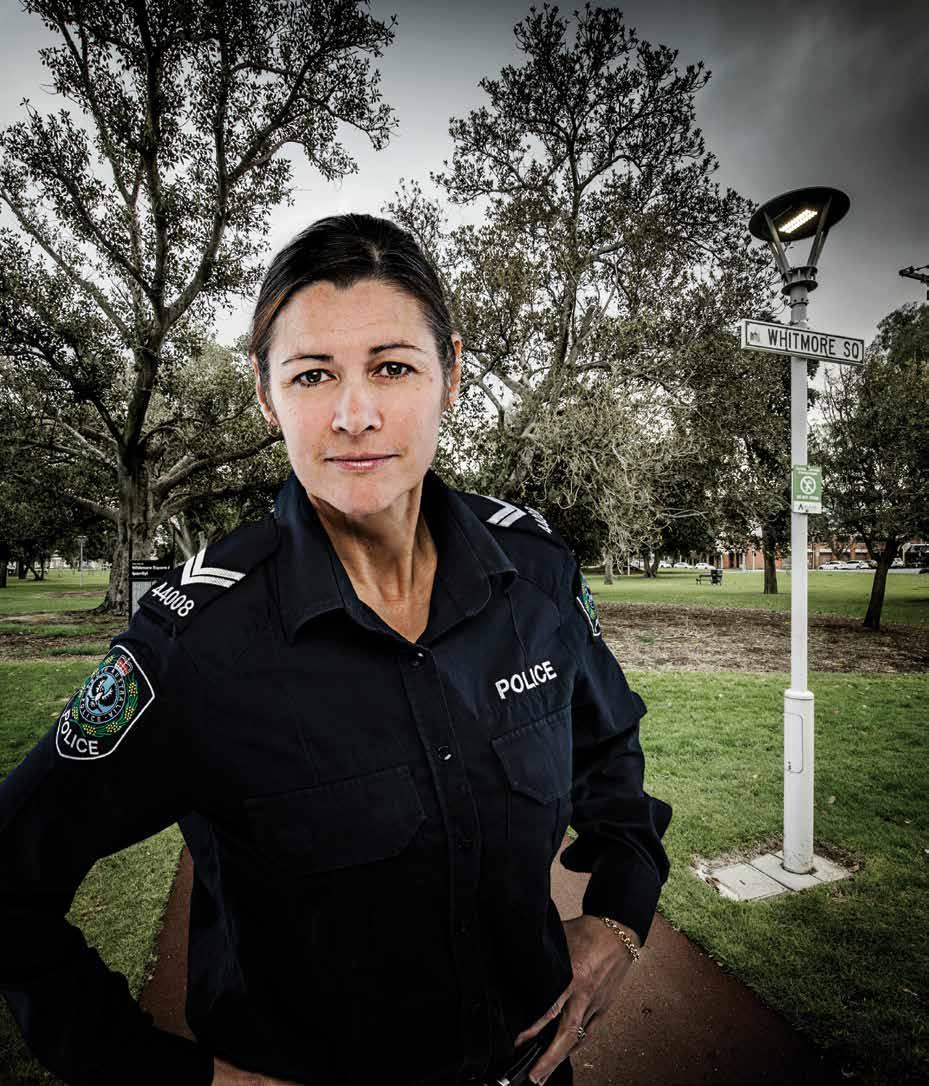
INJURED AND ABANDONED






The Police Association is taking aim at new returnto-work legislation, which leaves injured cops with nowhere near appropriate employer support.
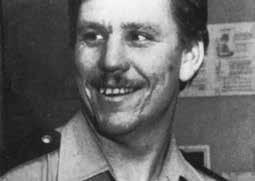
Cops on his old patch continue to make sure no one ever forgets who David Barr was – and that he paid the ultimate price.
And, now, Australia’s leading police magazine boasts a tally of six international awards in two years.

Brett Williams Editor (08) 8212 3055

Dr Rod Pearce Health Writer
Publisher: Police Association of South Australia (08) 8212 3055
Advertising: Police Association of South Australia (08) 8212 3055

Jim Barnett Motoring Reviewer
Design: Sam Kleidon 0417 839 300
Printing: Finsbury Green (08) 8234 8000
The Police Journal is published by the Police Association of South Australia, 27 Carrington St, Adelaide, SA 5000, (ABN 73 802 822 770). Contents of the Police Journal are subject to copyright. Reproduction in whole or in part without written permission of the Police Association of South Australia is prohibited. Opinions expressed are not necessarily those of the editor. The Police Association accepts no responsibility for statements made by advertisers. Editorial contributions should be sent to the editor ( brettwilliams@pj.asn.au).
Level 2, 27 Carrington St, Adelaide SA 5000 P: (08) 8212 3055 (all hours) F: (08) 8212 2002
Membership enquiries: (08) 8112 7988
Allan Cannon VICE-PRESIDENT

METRO
Trevor Milne DEPUTY PRESIDENT
Mark Carroll PRESIDENT 0417 876 732
Port Adelaide Kim Williams (chair)
Elizabeth Glenn Pink
Henley Beach Matthew Kluzek
Holden Hill Nigel Savage
Gawler David Savage
Golden Grove Simon Nappa
Parks Kylie Stasic
Salisbury Mardi Ludgate
Northern Prosecution Tim Pfeiffer
Port Lincoln .................... Lloyd Parker (chair)
Ceduna ........................... Anthony Taylor
Julian Snowden
Tom Scheffler SECRETARY 0417 817 075
Coober Pedy Jeff Page
Kadina Ric Schild
Nuriootpa ........................ Michael Casey
Peterborough .................. Nathan Paskett
Port Augusta Peter Hore
Port Pirie Gavin Mildrum
Whyalla Michael Ball
Fraud ............................... Jamie Dolan (chair)
Major Crime Campbell Hill
Adelaide Dac Thomas
DOCIB Dwayne Illies
Elizabeth ......................... Ben Horley
Forensic Services ........... Adam Gates
Holden Hill Narelle Smith
Intelligence Support Kevin Hunt
South Coast Jason Tank
Sturt Brad Scott
Sturt Michael Quinton (chair)
Adelaide .......................... Melissa Eason
Adelaide Daniel Wray
Norwood Ralph Rogerson
South Coast Peter Clifton
South Coast Russell Stone
Southern Traffic Peter Tellam
Southern Prosecution .... Andrew Heffernan


INDUSTRIAL
Assistant
Secretary
Bernadette Zimmermann
Grievance Officer
Matthew Karger
Grievance Officer
Nadia Goslino
FINANCE
Wendy Kellett
Mount Gambier ............. Andy McClean (chair)
Adelaide Hills Joe McDonald
Berri John Gardner
Millicent Nick Patterson
Murray Bridge Kym Cocks
Naracoorte Grant Baker
Renmark Dan Schatto
OPERATIONS SUPPORT BRANCH
Dog Ops ......................... Bryan Whitehorn (chair)
Police Academy .............. Francis Toner
Police Band ..................... Neil Conaghty
ACB Trevor Rea
Comcen Brenton Kirk
EXECUTIVE SECRETARIES
Anne Hehner, Jan Welsby, Sarah Stephens
Firearms Leonie Turner
HR Peter Stephen
HR Kayt Howe
Mounted Ops Melanie Whittemore
STAR Ops
Traffic ..............................
Wayne Spencer
David Kuchenmeister
Transit Michael Tomney
WOMENS BRANCH (no delegates)
ATSI BRANCH
Shane Bloomfield (chair) (no delegates)
OFFICERS BRANCH
Alex Zimmermann
POLICE
JOURNAL
Editor
Brett Williams
MEDIA AND COMMUNICATIONS
Nicholas Damiani
RECEPTION
Shelley Furbow
COHSWAC ........................ Bernadette Zimmermann
Housing Bernadette Zimmermann
Leave Bank Bernadette Zimmermann
Legacy ................................. Allan Cannon
Police Dependants Fund Tom Scheffler
Superannuation Bernadette Zimmermann
Tom Scheffler
PRESIDENT
Mark Carroll

must resist outsourcing police duties to private enterprise. Many overseas examples highlight the inherent danger in the concept. I covered this and other crucial topics, such as superannuation and police professionalization, in an address – as Police Federation of Australia president – to the National Policing Summit in Melbourne early this month.
The almost surreptitious manoeuvrings of the private security industry into police roles is a huge concern for us all.
This has unquestionably taken place abroad, with troubling consequences.
The British experience of outsourcing police functions is telling.
The UK government implemented austerity measures in 2010 and, since then, it has pushed – as have some Australian state governments – the concept of “contestability” in respect of some traditional police functions.
When the Australian Security Industry Association Limited (ASIAL) visited the UK in 2012, the Construction and Property Services Industry Skills Council prepared a report which suggested that 15 to 20 per cent of police functions could be carried out by private security firms.
From that UK visit, the private security industry emerged with a very clear grasp of the strategies it would implement in order to find its way into Australian police roles.
And the Security Industry Association went on to commission a leading Griffith University academic, and a former NSW deputy police commissioner, to prepare further discussion papers, which it used to lobby Australian state, territory and federal governments.
The UK National Audit Office highlighted several concerns with the outsourcing process in a 2013 report, such as:
• Was there sufficient competition in contracted-out public services?
• Did the various government departments have the capacity to manage such contracts?
• Larger private companies generally dominated the process and often acquired the smaller businesses leading to more consolidation in the market place and, therefore, a less competitive market.
• Not all of the processes involving these companies were transparent, as was expected of public services. Many were large organizations which had sprawling structures, involving a vast number of subsidiaries.
• The major focus of these large organizations was maintaining shareholder value, not necessarily meeting the standard expected of public services.
At the 2012 London Olympics, security firm G4S failed to meet its contract obligation to supply even 6,000 of the 10,000 required security guards. British troops had to make up the shortfall.
Then there were the UK serious fraud investigations into G4S and Serco.
The result was that Serco repaid £68.5 million and G4S £109 million for overcharging the UK Ministry of Justice.
These examples illustrate perfectly what happens when governments outsource critical public responsibilities to private bodies – all for socalled cost-saving.
The PFA and the Police Association holds a rocksolid view on the privatization of police functions.
Policing is not a profit-making public service – it must remain a universal service for the entire Australian community.
It must not be simply a service for those who can afford to pay for safety and security.
Australia’s ageing population, as identified in the government’s 2015 Intergenerational Report, is set to impact on the nation’s future workforce – particularly in respect of retirement policies.
The new superannuation preservation age arrangements kicked in last month. They stipulate that those born after July 1, 1960 must work to age 56 to win full access to their superannuation savings.
For those born after July 1, 1961, the age is 57, and so on, up to July 1, 1964, with those born after that date having to work to age 60.
It is now apparent to police in all jurisdictions that they might have to toil for longer than they had intended, in a job recognized as one of society’s most arduous.
The previous federal government increased the pension age to 67 – and debate continues about raising that age to 70.
Imagine the impact on police if that came to fruition. Imagine the sight of police officers, in their late 60s, on the streets, in the middle of the night, trying to contain ice addicts or brawling nightclub drunks wielding broken glasses.
Imagine them under attack on a violent protest line in a main city street, or trying to charge into a burning house to rescue an occupant.
These are the scenarios which police in their late 60s would still have to confront.
The PFA made a submission to a federal Treasury review of superannuation preservation arrangements in 2005.
Through a subsequent report, the review highlighted that the preservation age should be treated as a community-wide standard, and that issues specific to the police force should be dealt with through occupationspecific policies.
The PFA – along with Australia’s police commissioners – roundly refuted that finding.
We have highlighted the exemption mechanism which exists under the Superannuation Industry (Supervision) Act, and which requires neither legislative nor even regulatory amendment.
It enables the government to exempt police from the new preservation age requirements.
The very existence of the exemption power under the act makes it clear that parliament – when passing the law in 1992-93 – understood that a one-size-fits-all approach might well prove inappropriate in the future.
It must not be simply a service for those who can afford to pay for safety and security.
The police recruits of today join a vastly different organization from the one their predecessors joined 15, 20 or even 30 years ago. But even back in 1997, the then-Australasian Police Ministers’ Council determined that policing should:
• Develop, review and endorse education and development standards.
• Evaluate and approve professional development programmes.
• Provide advice on relevant professional practice.
• Promote and develop proposals for a police professional registration scheme.
Today’s recruits rightly expect the dignity of professional status, and that is why the PFA has long supported the move toward police professionalization – including registration. The Australia and New Zealand Standard Classification of Occupations provided by the Australian Bureau of Statistics, and Statistics New Zealand, indicates that police officer and police detective are rated at skill level two. Teachers, nurses and other health professionals are rated at skill level one.
Continued page 37
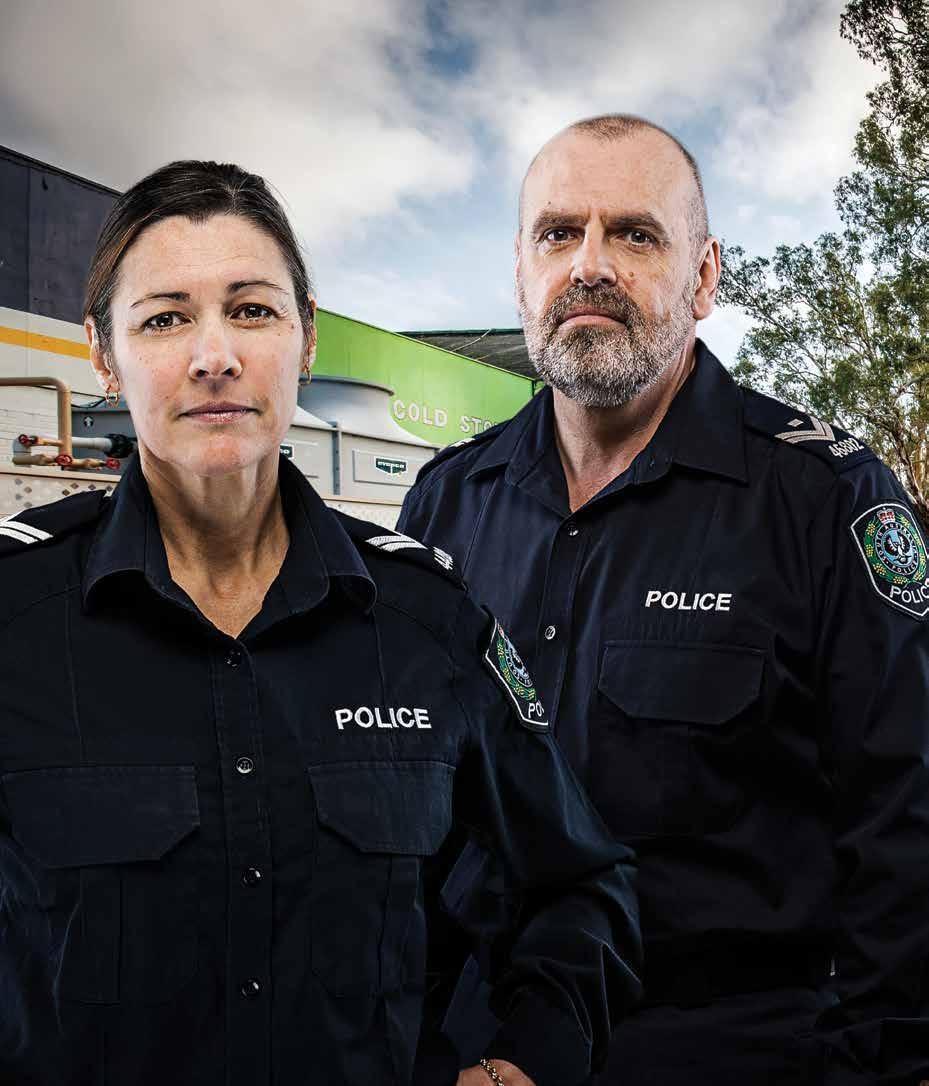

By Brett Williams
New return-to-work legislation is set to leave seriously injured cops fending for themselves after only short periods of support. So the Police Association and Family First MLC Robert Brokenshire intend to fight to re-establish compensation justice for police.
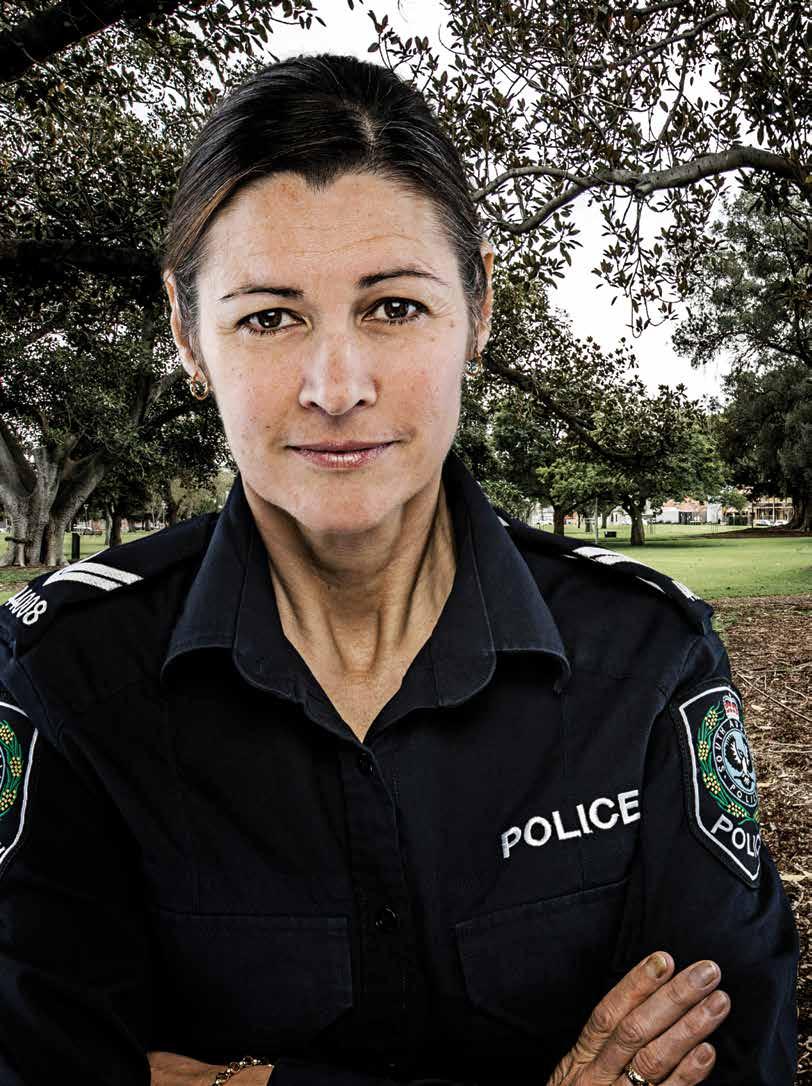
“For us, it’s going to hit really hard financially when I lose all my benefits. I think it’s really unfair.”
For a police officer left permanently stricken with painful oral herpes after a spitting incident, Alison Coad stays surprisingly bright and engaging. N ever does she whinge about what happened to her in troublesome Whitmore Square back in 2003. She had always understood, and accepted, the risks that came with front-line city police work.
And the ultimate reality of law enforcement had never escaped her either. She knew that, despite the best training and high-tech defensive equipment, she could still suffer serious injuries, contract diseases, or even die in the line of duty.
So Coad has never had a beef with anyone about the fact that an offender spat directly into her mouth, infecting her with an incurable virus.
The 49-year-old wife and mother rationalizes her misfortune as an occupational hazard.
What does infuriate her, however, is the injustice she and other police see in new returnto-work legislation, which took effect last month. It came with strict cut-off dates for top-up pay and the coverage of medical and like expenses for suffering workers, just like Coad.
A two-year cap now applies to income maintenance and a three-year cap to medical expenses.
And only a determination that an injured copper has a 30 per cent “whole-person impairment” will get him or her coverage of income and medical expenses beyond those cut-offs.
The new Return to Work Act – which contains all the unpleasant detail – defines a person so impaired as a “seriously injured worker”.
This unpopular legislation, implemented by the Weatherill government, threatens to leave Coad to foot hefty medication and treatment bills for the rest of her life. And her plight is set to begin in 2018, after the government effectively abandons her.
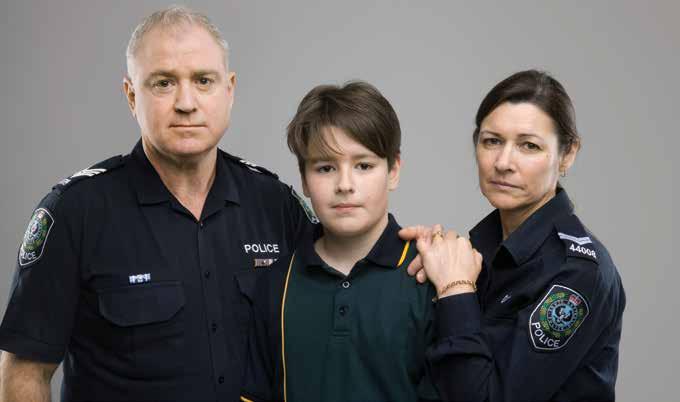
So, in fewer than three years from now, the costs of managing the disease she copped serving the community will be all her problem. And that will devastate not only Coad but also her police officer husband, Anthony, and 11-year-old son, Mitch.
“For us,” she says, “it’s going to hit really hard financially when I lose all my benefits. I think it’s really unfair. I performed my duties, and I feel like SAPOL needs to step in and fight (for injured police).
“The new laws make me very angry, and not just for me but for any police officers who are put in
that risk situation. If you catch something, it’s like (the government is saying): ‘Well, we’re not going to compensate you anymore.’ ”
Coad even took the time to write a long letter to Premier Jay Weatherill about her predicament. A response came not from him but rather his public sector minister, Susan Close.
“She just wrote me back a standard letter,” Coad explains. “I’m angry that they (politicians) don’t see it: you can’t just categorize everybody in one return-to-work situation.
“We’re exposed to what people aren’t generally exposed to. The every-day person doesn’t face exposure to someone who’s going to threaten their life or give them diseases.
“Someone who’s going to have a long-term injury or ongoing medical expenses for the remainder of their career needs to be looked at in a different light.”
Rank-and-file police hold some strong views about the parliamentarians who passed the return-to-work legislation. They reckon each one should have stepped down onto the street, moved among cops, and got a grasp of the consequences of incidents like the one Coad confronted.
It happened on a hot January afternoon in 2003. Coad and her partner were cruising by Whitmore Square when they spotted a frowzy, knife-wielding man in a heated argument with a 20-something woman.
The diligent cops called the incident in as a 104 (potentially violent disturbance) and drove onto the grassy square to deal with it. At the same time, back-up patrols headed for the scene to support their two colleagues.
In their ensuing encounter with the feuding couple, Coad and her partner faced real aggression from the man and had to subdue him with OC spray. That sparked the woman into a rage against the police officers, who then had to spray and cuff her as well.
But even cuffed and sitting upright on the ground, with her eyes watering and nose running, she continued to rant and swear at Coad. Still, Coad knelt down next to the woman and set about spraying her face with water to give her relief from the effects of the OC spray.
The woman offered no thanks. Instead, she suddenly and noisily hoicked up a “full-on ball of sputum” from deep in her throat, leaned forward, and spat it directly at Coad!
“It went in my mouth, all over my face, and down the inside of my shirt,” she recalls. “I immediately began to gag at the sputum that landed in my mouth.
“I just thought: ‘Oh, God, you’re kidding me,’ and I was just spitting it out while another (back-up) officer restrained her (the woman). But I didn’t have any water on me, other than what I’d used to spray her face, so I couldn’t wash my mouth out.
“It was just awful. It was the revolting feeling of having her saliva in my mouth. I just thought: ‘I’ve got to get this stuff out of my mouth and off my skin.’ ”
As Coad reacted to the vile assault, the woman yelled: “Sucked in, you f--king bitch! I’ve got AIDS and hep C and herpes, and you’ll get them too.”
The man the officers had found her arguing with in the square added: “Yeah, she does (have those diseases).”
Coad, desperate to cleanse herself of the woman’s infectious, glue-like sputum, retreated to her patrol car. From in there, she grabbed an antiseptic skin cleanser which she used to wash her hands, neck and chest.
Then, one of the back-up patrols drove her to nearby Calvary Wakefield Hospital, where she finally got to wash out her mouth and eyes with saline solution. Coad, who suffered – and continues to suffer – with a faulty heart valve, also underwent HIV and hepatitis C blood tests.
Amid concerns about the vulnerability of her heart valve to infection from bacteria in the sputum, doctors released Coad with a course of antibiotics.
“The bacteria can get into the valve,” she says, “because the valve doesn’t close properly, so you get back-flow of blood.”
Later enquiries into the background of the woman who spat at Coad revealed that she was indeed hep C positive and possibly carrying the HIV virus. Her herpes condition was already evident from obvious cold sores on her face.
Coad, then 37 and engaged to her now husband, would have to undergo a follow-up blood test three months later. For her and Anthony – whom she was to marry the next month – that window period came with the imposition of practising safe sex.
“Because of my age, we wanted to start a family straight away,” she says, “so that sort of thing was on my mind.”
When the follow-up blood test came in March
2003, it showed Coad to be clear of any diseases. Then, just a month later, she discovered she was pregnant.
But, in August, during her second trimester, Coad found that the roof of her mouth had broken out in what she thought were simply ulcers. She put the outbreak down to fatigue and, on medical advice, took to remedies such as mouth paint and salt-water mouth washes.
After she gave birth to Mitch, the outbreaks continued to occur – around six times a year –and each time took about two weeks to heal. And no diagnosis of the “ulcers” came until 2007, when Coad visited her dental hygienist who examined them.
The hygienist, certain of what the condition was, told her patient and good friend: “You’ve got herpes in your mouth!”
“And I just went: ‘Wow, that’s what that is!’ ” Coad remembers. “She asked me if I’d had this very often, and I said: ‘Yeah, I have, and I think I know where I got it from.’ That’s when she said: ‘Go and get a swab done.’ ”
After a subsequent test, Coad received confirmation that she indeed had herpes simplex virus type one (HSV-1), commonly known as oral herpes.
“I was pretty annoyed,” she says, “and I then had to go to an infectious diseases specialist to find out the implications of it all. I had to know what (medication) I could take and about how careful I had to be (not to infect others).”
Coad now had to accept that, for the rest of her life, she would suffer painful, recurrent outbreaks of lesions across her hard palate. And, whenever she did, it would mean the herpes was active and that she was highly contagious.
So she would have to guard against infecting others, particularly her husband and son. But she had always done that anyway, even in the four years before she knew that herpes was the cause of her lesions.
“I was always really careful not to spread it to Mitch as a baby,” she says, “and I’m really glad that I had that outlook. If I hadn’t, I could have already given it to both him and Anthony at some stage.”
The outbreaks began – and continue to begin – with intense ear ache, nerve pain, skin soreness, headache and fever.
“My ear and gums feel like they’re going to explode,” Coad says. “Then the blisters start to come out on my hard palate.
“Eating feels like you’re pouring acid over them with every mouthful. And it hurts to talk because your tongue runs over the blisters all the time, so I’m living in pain.”
The outbreaks strike every six to eight weeks and, each time, take up to three weeks to heal and become inactive again. But when the herpes is active, and Coad is therefore contagious, it has a 24-7 impact on her whole family.
To catch the virus, Anthony and Mitch would have to have contact with their wife and mother’s saliva. But Coad knows how inadvertently that can happen around the home and has to be endlessly cautious.
“I make sure that I don’t share cutlery or glasses with them,” she says. “Basically, I can’t share anything. If we used the same spoon, drank out the same cup, or if I got spittle on them when I’m contagious, I could infect them.”
On one occasion, Coad used a spoon to tastetest some vegetables she was cooking for Mitch, and later used the same spoon to distribute the food into containers.
“I thought: ‘Oh my God! What are you doing!?’ ” she recalls. “I just wasn’t thinking. And I was active at the time, so I had to tip everything out and start from scratch.”


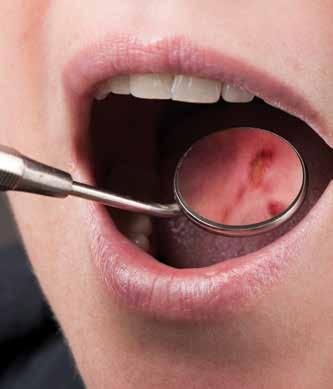
“My ear and gums feel like they’re going to explode.
Then the blisters start to come out on my hard palate.”
The virus even impacts on the level of intimacy Coad can share with Anthony and Mitch. She can embrace but not kiss either of them when the herpes is active.
Says Coad: “Mitch will say: ‘Mum, can I give you a kiss today or have you got herpes?’ He’s quite aware of it and he knows that I get sick and miserable from it.”
Coad never even got to enjoy the entirety of a US holiday back in 2012. Three days into the trip, the virus became active and left her dealing with the usual painful symptoms.
“I’ve had days where I’ve really had enough,” she says. “There’s been plenty of them. I look at Ant (Anthony) and say: ‘I wish I could just walk away,’ but I love my job. If I didn’t, I would have gone rather than be exposed (doing my job) all the time.”
Lawyer Amber Sprague, who represents Coad and other injured police officers, rejects the government line – that the return-to-work legislation
is sound. She insists that all cops should be “very concerned” about it.
“There are a lot of police officers who are in receipt of topup pay,” she explains. “That top-up pay is going to stop in two years.”
Sprague describes the circumstances the embattled Coad faces as “difficult”.
“She, for the most part, has the ability to go to work and do her job,” she says. “But, once every six weeks or so, she has a flare up of her condition. That means she’s incapacitated for work for three to five days and she has the time off.
“The main problem for her is that, in two years, all of that top-up pay entitlement is going to stop because of the cut-off.
“That will mean that, whenever she then has a flare-up, the likelihood is that she’ll need to take her own sick leave. And because she’s only working part-time (0.84) she doesn’t accumulate as much sick leave as everyone else.
“And she’s on medications which are costly. She’s going to have to end up paying out for that. So she’s going to be significantly penalized.”
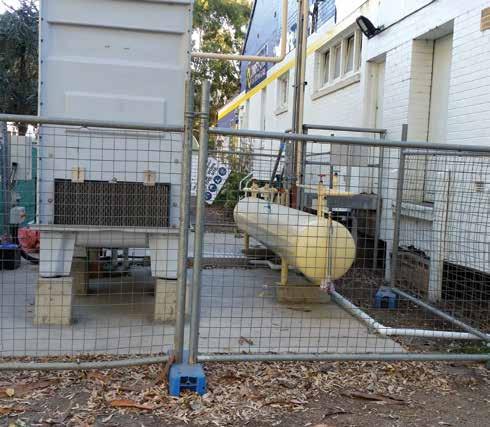
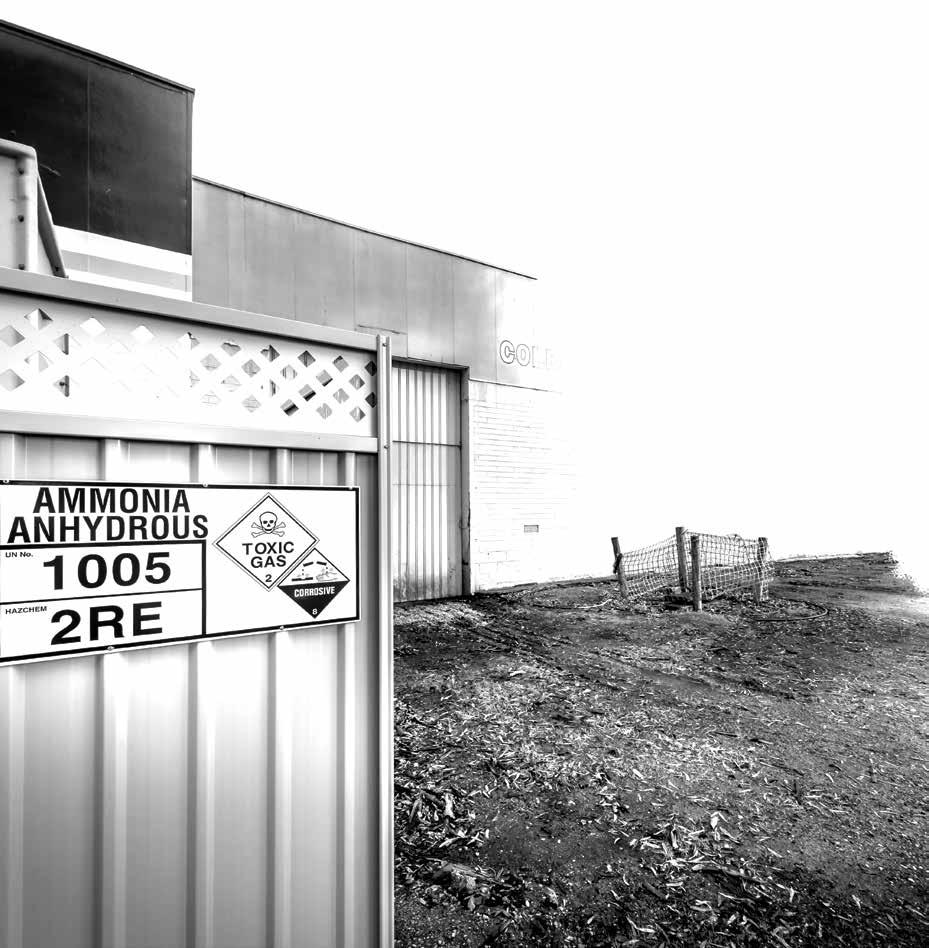
Left: The tank suspected of leaking the anhydrous ammonia
“And bang! It just hit me like a wall. It was like hot shards of glass down my throat …”
Injured Gumeracha senior constable Brian Edwards, 49, faces the same injustice that confronts Alison Coad. Last February, he responded to a report of a gas leak at a local cold-storage facility just minutes from Gumeracha police station.
Edwards arrived on the scene around 7pm to find CFS firefighters already there. Then, in a hurried exchange with the CFS captain, he learned that a newly installed tank was likely leaking toxic anhydrous ammonia.
Edwards and the CFS crew quickly agreed to head off in opposite directions for 500 metres along South Para Road, Kersbrook and set up an exclusion zone. But just then came a deafening, explosion-like sound from the front of the facility, followed by a hissing noise.
“You don’t often see firies panic,” Edwards says, “but he (the captain) just said: ‘Get out of here!’ We didn’t have time to think. They (the CFS crew) scooted off and I got into the police car and started going down the road.”
But Edwards only got about 50 metres down that road when he saw a car approaching the scene of the gas leak. He swung his police car
around and across the road to block the path of the oncoming vehicle, which had its windows down and a young family inside.
Edwards was desperate to stop these two vulnerable parents and their children from driving straight into the potentially deadly gas leak. And he succeeded: the car stopped and the father stepped out.
“Mate, get back in your car, get your family, and just go!” Edwards exclaimed. He had no time to explain the emergency other than to bellow a hurriedly spoken warning that the tank was leaking toxic ammonia.
“I was fairly to the point,” he remembers, “and he just ran back to his car and drove away, and that was good.”
Edwards, who had likely saved that family from serious injury, if not death, turned to step back toward and into the police car, just a few paces away. But, doing his duty, directing the family out of danger, had for too long kept him too close to the escaping ammonia.
A cloud of it had crept up on him like an invisible stalker. “And bang!” he recalls. “It just hit me like a wall. It was like hot shards of glass down my throat after I’d taken about one or two steps to get to the car door.
“I gasped, but the problem with ammonia is that it shortens your breath so you gasp even more, and then, of course, you’re taking more of it in. You’re not getting any oxygen; you’re just getting the ammonia.
“So when I gasped the second time I kind of doubled over and was just exhausted.”
As Edwards came ever closer to organ damage and loss of vision, a passing firefighter stopped in his car. He wound down his window, itself a dangerous act in the circumstances, and yelled: “Get the hell out of here! Where you are is just no good!”
“And that,” Edwards says, “was at the same time a little voice in my head said: ‘Get going! Get out!’ ” Edwards eventually managed to clamber back into the police car and take off at high speed. But, through the driver’s door he had left open for only a minute, the ammonia had seeped into and filled the car.
“So I gasped in the car as well,” he remembers. “But I wound down the windows and just gunned it down to the cordon point and that got most of it (the ammonia) out.
“I tried to get on air (radio) but could barely talk. When I got to my cordon point I blocked the road and just got out to try to get some air into me. But I was just constantly coughing.”
Within a few minutes, however, Edwards (right) felt as if he had fully recovered. But ambos, who had turned up at the cordon point, assured him the ammonia was “dangerous stuff” and that he should go to hospital.
Edwards thought that was unnecessary, but the ambos’ advice was entirely sound. Exposure to high levels of anhydrous ammonia can swell the throat, burn the lungs and eyes, and even cause death.
Edwards, a father-of-three, wisely agreed to go to Modbury Hospital, where its staff brought the full reality of his condition home to him. “One male nurse said: ‘In the next four hours your lungs could close over and you could die,’ ” Edwards recalls.
But he spent those four hours on oxygen and survived, despite burns to his nose and throat. And only his contact lenses had spared him eye damage in the form of permanent vision loss.
It was impossible for doctors to determine the extent of lung and other damage Edwards had suffered. Late that Saturday night, they discharged him with instructions to monitor himself; and he left “feeling pretty good”.
But the next day he felt unwell again and had to take the day off work. Then, by the Wednesday, he had started to suffer chest pain, nausea and vomiting, and wisely decided to visit his doctor on the Thursday.
The doctor suggested that the symptoms would pass, and Edwards went back to work on light duties. By the next week, however, he had come to feel even more unwell and went back to his doctor.
She considered him in such peril that she arranged for a respiratory specialist to see him immediately at the Royal Adelaide Hospital. Edwards concedes now that he should have gone by ambulance, as his doctor suggested, but he instead went by car with his wife.
Walking across the road after parking on North Terrace, he found he could not keep up with her, and she had to “lead me” into the hospital.
“I had chest pains and just felt giddy and totally disoriented,” he says. “I said to my wife: ‘You book me in, I’m going to sit down.’ But I didn’t make it to the chair. I just collapsed in the casualty area.”
Doctors, who hovered over him for the next eight hours, found that his trachea had closed over owing to infection from ammonia burns. He came good in the hospital that day but remained under observation and underwent CT scans and other tests.
Edwards left the hospital around 7 o’clock that night but returned a day or two later to see a thoracic specialist and undergo lung-function tests.
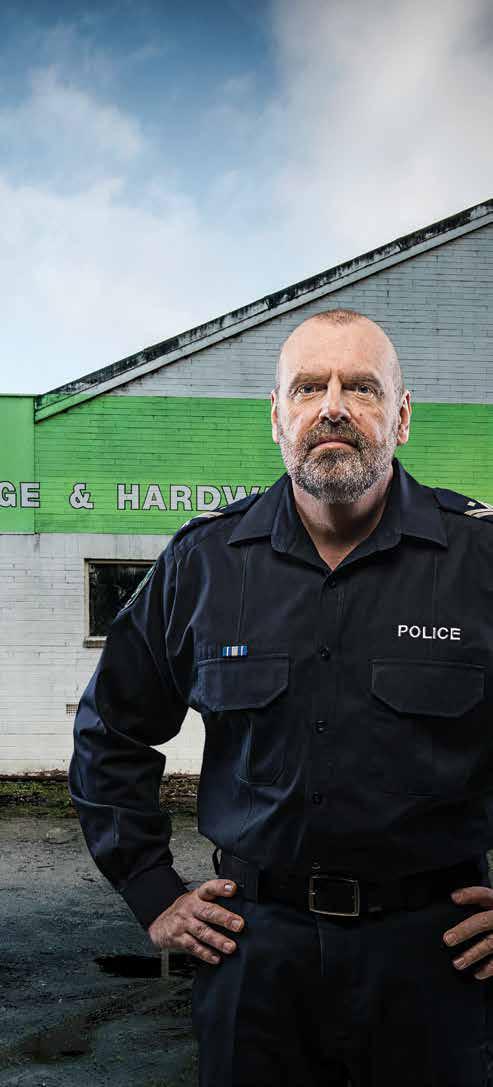
“I had chest pains and just felt giddy and totally disoriented. I just collapsed in the casualty area.”
“The kids are 10, nine and eight, and they’re the ones affected most.”
“Having sore lungs and trying to breathe through these tubes was pretty bad,” he remembers. “If you think of the worst, most physically demanding experience you’ve had, that (test) was about it.”
The tests showed Edwards’ lung function to be not too bad in the circumstances, but the specialist intended to keep a close watch on his new patient. And he explained to Edwards that his body would take at least six months to recover.
The ailing father-of-two ended up off work for the next three-and-a-half months and had to revisit the specialist twice per week. He also had to undergo exploratory surgeries, which revealed burns to his bronchial tree (air passages inside the lungs).
“I slept in an arm chair for four or five weeks just so I could stay upright to drain my lungs,” he says. “I went to lie down but in the mornings it was just too much to get going. It was half an hour of throwing up phlegm.”
Still, to get back to work, Edwards got on the treadmill and pushed himself far harder than his doctors had recommended.
“I was going against doctor’s orders to get back in three-and-a-half months,” he says. “For my own mental health, I wanted to get going. I didn’t want to be a victim.”
The true extent of the damage to his lungs remains unknown, and no clearer picture will emerge without many more tests. But, ultimately, Edwards faces the prospect of permanent lung scarring and the rest of his life with chronic asthma-like symptoms.
Of deep concern to Edwards now is the way in which the return-to-work legislation – which he calls “disgusting” – will penalize him and his family.
Says Amber Sprague: “He’s probably only covered for future medical expenses for 12 months. But what if he needs a lung transplant in 10 years’ time?
“It might be that something (like that) bobs up, and the doctors say: ‘Actually, that’s related to this incident back when you were gassed and almost died.’
“We’re probably going to have an almost neverending list of possible surgeries he might need to try to get pre-approved.”
The way to pre-approval – for future surgery an injured police officer might need after his or her likely cut-off date – is by application to SAPOL.
The employer can then consider pre-approving the costs of future medical treatment for the officer’s work-related injury.
SAPOL could, of course, refuse to approve an application but such a decision is reviewable in the South Australian Employment Tribunal.
“The nature of his (Edwards’) injuries is just so unknown,” Sprague says. “We’ve got to wait and see the extent of whatever damage has been caused to him.
“He might have entitlements to compensation; he might not have entitlements, depending on what can be assessed within the guidelines.”
So the return-to-work legislation has left Edwards with “strong concern” about how he will meet his future medical expenses. He thinks of the money he could have to pay out on an oxygen tank and medication, were he to end up with a lung disease such as emphysema.
But the expenses issue has already come with a heartbreaking impact on his family.
“My 10-year-old more so,” he says, “because kids listen in to conversations, and we (my wife and I) were talking about the money perhaps going down. He just said to me one day: ‘Dad, are we going to be poor?’
“The kids are 10, nine and eight, and they’re the ones affected most. It was coming up to footy season (when I was injured) and I usually train with them. They’re good little footy players, but I just couldn’t do much with them, so that was hard on them.”
Like his colleague, Alison Coad, Edwards had always accepted that he could get seriously injured in front-line police work.
“But,” he says, “you just want to know that someone’s in the background, saying: ‘Hey, Brian, we know you put your body on the line that time. If you need anything (we’ll help you).’ ”

Another case, now in the Police Association spotlight, is that of horrifically injured senior constable Brett Gibbons (above). And it is set to draw more public, police, and victims-of-crime outrage than has any other compensation injustice against cops.
In 2011, Gibbons and his then-patrol partner, Travis Emms, were the first to respond to the Hectorville triple murder (Shotgun slaughter – the survivors, Police Journal, August 2012).
The crime scene was a blood-spattered house on Montacute Road, where the two cops pulled up in their patrol car around 2:30am. But neither knew that still lurking inside was armed killer Donato Corbo, a paranoid schizophrenic.
Still, both determined officers crept cautiously into the house to investigate, before Corbo suddenly appeared with a shotgun! He aimed the weapon at Gibbons and fired on him from pointblank range!
The blast left Gibbons with the right side of his face ripped open, his jaw broken and his teeth and facial tissue exposed.
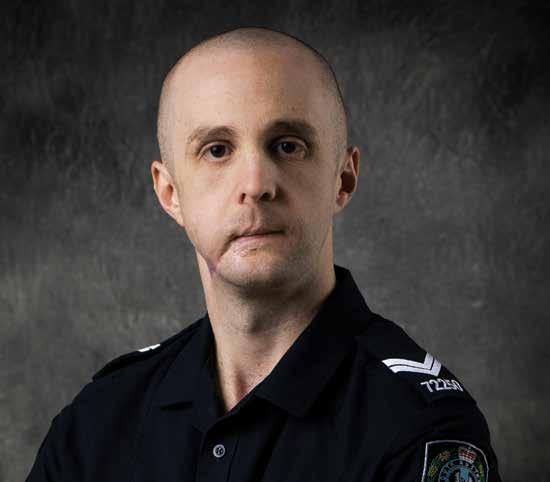
Later, at the Royal Adelaide Hospital, he underwent surgery, during which surgeons removed several pieces of shrapnel from his face. Apart from his broken jaw, lacerated face and a cut arm, he had sustained a serious gash to his leg.
The surgeons pinned his jaw bone and stitched his face back together and Gibbons spent the next week in an induced coma in the ICU. In that time, he suffered muscle atrophy and lost 16kg.
He ended up in hospital for a month and had to undertake physiotherapy to be able to walk again.
In the past three years, Gibbons has had to undergo four more operations. Two involved further repairs to his jaw and teeth, three of which he has lost. One of the other two operations –aimed at addressing his scar tissue – left him laid up for five months.
The surgery involved a process known as skin expansion and, to carry it out, surgeons implanted a balloon in his neck. As they gradually expanded it over the following three months, it grew extra skin for use in grafting over the scar.
And still more surgery is to come. Gibbons will undergo bleaching to fade the scar further, and surgeons will also perform restorative work on his mouth.
“It’s going to impact on my whole life if this legislation is allowed to stay without police exemptions.”
But, under the new return-to-work legislation, he might yet have to pay for that surgery himself – and any other future medical bills related to his work injuries.
Extraordinarily, Gibbons might not meet the 30 per cent whole-person impairment threshold, despite the extensive damage to his body.
Says Amber Sprague: “He’s probably on the border line of whether or not he’s actually going to reach (the status of) a seriously injured worker.”
And not knowing where he stands has left Gibbons intensely frustrated.
Under the Return to Work Act, accredited doctors will carry out permanent impairment assessments of injured workers. But an assessment can only take place after a worker has reached maximum medical improvement.
“That’s generally around 12 months post injury for your standard injury,” Sprague says. “But, of course, Brett’s injuries aren’t standard, and he continues to have treatment and to need further surgeries.
“When his injuries have stabilized, which is likely to be a number of years down the track, we’ll be able to start to pursue his entitlements to compensation.
“There’s a risk that his medical treatment is only going to be paid for for the next 12 months. And then he needs to apply within that timeframe for the remainder of his medical surgeries to be covered.”
Gibbons finds it “really worrying” that he might yet have to carry not only the physical but also the financial burden of his work injuries. He knows that he would never have the means to manage costs which, over time, could well mount up into a six-figure sum.
“It’s going to impact on my whole life if this legislation is allowed to stay without police exemptions,” Gibbons says.
“It certainly is a slap in the face to think that the specialized role police play hasn’t been considered in this legislation.
“We’ve always taken the risks knowing fully that the government and Opposition would support us if the worse came to the worst. We knew that if we were called upon to give something of ourselves we would be looked after but, now, that’s not the case.”
To Police Association president Mark Carroll, it is critical that the union fight for legislative amendments. And he understands that the place to initiate that fight is in the political arena.
“We live in a great democracy,” he says. “And the association, along with Family First MLC Robert Brokenshire, is engaging in the democratic process in order to bring about those amendments.
“We’re determined to achieve them for, and in the interests of, our members.
“I know our members and their families support our objective, and I have no doubt the public would back a fair deal for injured cops as well.”
Of course, the Police Association detailed its concerns about the Return to Work Act to the government well before it became law. In a letter last September, Mark Carroll explained chapter and verse how the then proposed legislation would penalize police.
He also indicated that that penalty could lead police to respond to critical incidents with hesitation. “This would come about,” he wrote, “from the fear of suffering an injury without sufficient compensation for placing oneself in harm’s way.”
The government’s view was that, if parliament passed the bill, police would be “better supported to recover from their workplace injuries”.
And, according to a newspaper article (Scheme hangs cops out to dry, The Advertiser, November 5, 2014), the government said the Police Association “did not have any reason to be concerned”.
“That’s not our considered view,” Carroll says. “In fact, the legislation delivers an inferior outcome to what our members previously had to protect them. And we want no more or less than what was taken away.”
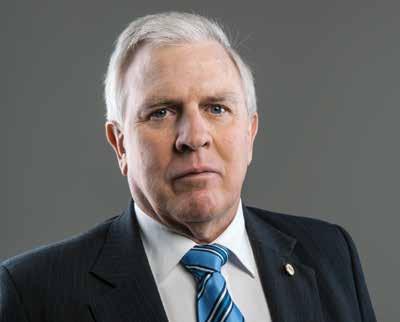
Robert Brokenshire, on the other hand, thought the association was dead right to oppose the bill.
In parliament, before the Statutory Authorities Review Committee, he remarked: “… good on them (at the association) for having the guts to stand up for their (members)…”
He sees that action as a case of the association delivering on the duty of care it owes all its members – injured or not.
“Both the government and the members of parliament equally have a duty of care to those men and women,” he told the Police Journal. “And, at the moment, that duty of care is clearly failing (in respect of) the basic rights and expectations of police.”
A long-time genuine supporter of and former minister for police, Brokenshire knows the specific details of many cases of injured cops who now face extreme disadvantage. He insists that Alison Coad should, at the very least, receive “lifelong support”.
“You can imagine the civil case that would have occurred had that offender (who spat at Alison) actually caused that problem to a civilian,” he says.
“… one size (in terms of the return-to-work legislation) will not fit all.”
“It could have cost the state hundreds of thousands of dollars.”
The case of Brian Edwards, who inhaled deadly ammonia, makes the veteran MP “hang my head in shame as a legislator”.
“He (Edwards) has had to see draconian, detrimental and unfair legislation go through the parliament that is now disadvantaging not only him but also his family,” Brokenshire laments.
Clearly angered by the effects of that “unfair legislation” on police, Brokenshire now plans to i ntroduce a private member’s bill to parliament.
It will seek amendments to the Police Act in September so as to make “proper compensation” available to police who suffer injuries on duty.
“I’ve discussed this with the Police Association and I’m in the process now of looking at 12 confidentially detailed cases,” he says.
“What it says to me is that one size (in terms of the return-to-work legislation) will not fit all.
“So I’m appealing to the parliament to realize we’ve made a m istake, and to amend legislation in the Police Act so that we can give these police officers proper entitlements.” PJ
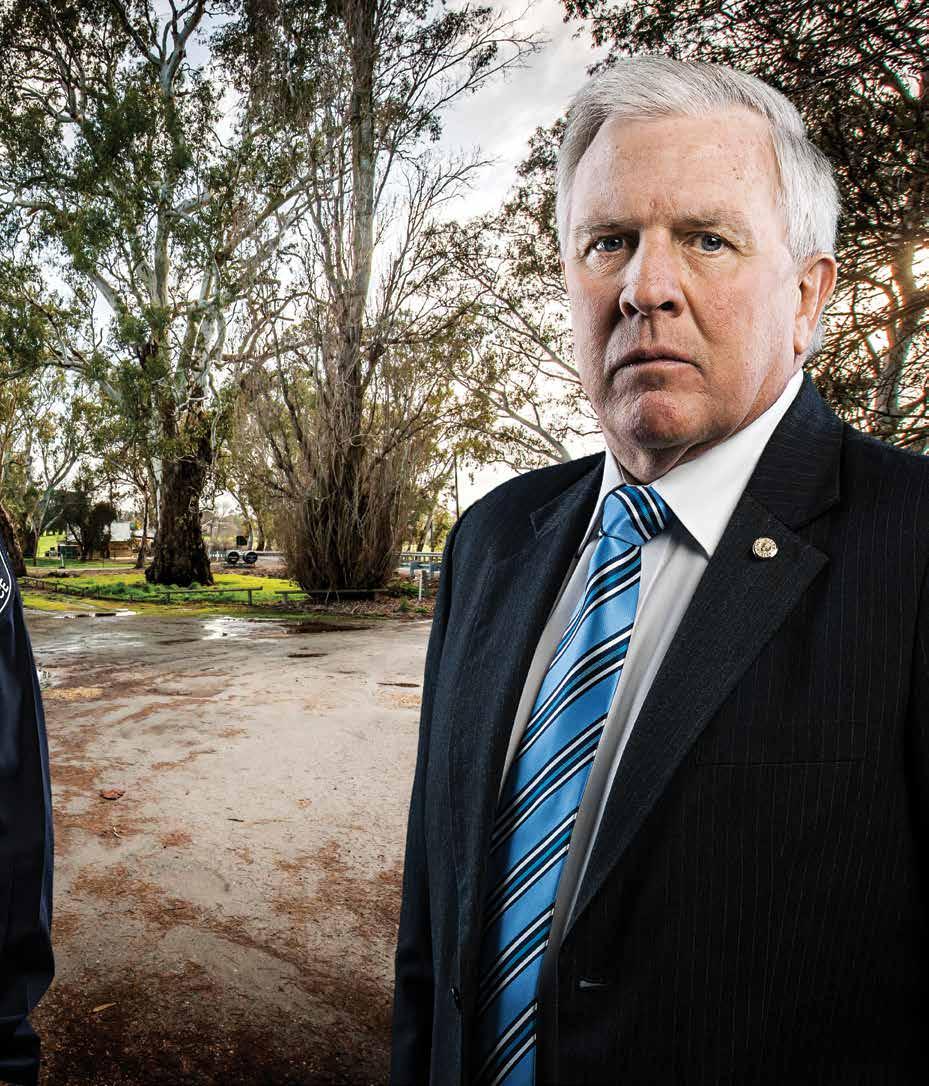
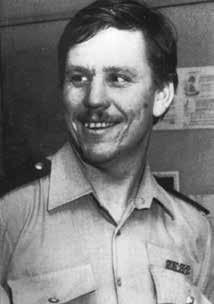
Constable David Barr (right) died at the hands of a murderer who plunged a knife into his heart 25 years ago. The respected Para Hills patrol officer left behind his now late wife, Gwenda, and two daughters, Nicola and Sarah, then aged eight and six.
Had he survived or evaded the attack, he would now be 56 and likely thinking about retirement and seeing more of his grandchildren. He might now have had big plans to travel, to move house, or to play mentor to that next generation of his family.
But the brutal act of killer Lindsay Allan Fry robbed him of those opportunities – and any others life was yet to afford him.
Barr had given 15 years’ service to policing and drawn great regard from his peers. To them, he was a bloke who deserved good fortune.
Salisbury senior sergeant first class Rob Schaedel, 47, was a cadet not yet out of his teens when he first met Barr on an out phase from the police academy.
He still speaks of him as a “really solid police officer” and “genuine person” who loved his job and thoroughly understood his community. And Schaedel has never forgotten the shock that swept through the police community the day Barr paid the ultimate price.
“I think we, myself (included), were all quite stunned,” he says. “It was well before social media and I remember word being circulated.
“Whether we heard it first over the SAPOL radio or commercial radio, we were all aware that someone, a police officer, had been killed down here (at Salisbury).
“Then, slowly, word got out as to who it was as it passed from phone call to phone call throughout the organization.
“I was pretty young in the job then, and it was a big reality check as to what could happen.”
The attack on Barr happened just after 9am at the Salisbury Interchange on July 26, 1990. He and his patrol partner, Jamie Lewcock, had responded to a report that a man had threatened a woman and stolen her bus ticket.
At the scene, the two officers identified the offender, Fry, and tried to arrest him. It was then that the knife-wielding Fry stabbed Barr in the chest.
Barr fell to the ground where he lay groaning and rapidly losing blood, as his life began to ebb away.
Paramedics soon arrived and had to cut his uniform from his body to treat him before they rushed him to the Lyell McEwin Hospital.
By Brett Williams
As doctors tried desperately to save him, a fearful Gwenda waited in a victim room for news of her husband of nine years. Police had gone to the Barr family home, broken the news of the stabbing to her, and then brought her to the hospital.
Eventually, into that room, came a hospital co-ordinator to tell her that her husband had died. The knifing had caused him massive blood loss.
“I was shocked, stunned and numb,” Gwenda told the Police Journal in 1998. “I couldn’t believe it. I didn’t want to believe it, either. It was terrifying.”
Grieving family and workmates of Barr farewelled him with a police funeral and saw his name added to the list of the fallen.
In recent years, Schaedel has overseen a range of actions to ensure that officers new to Salisbury learn of the Barr sacrifice and that others never forget it. And that mission took on extra meaning last month as officers observed the 25th anniversary of Barr’s murder.
“We mention it on the parades, either on the day or leading up to it,” Schaedel says, “and we circulate an e-mail reminding everyone of the date. And, over the last few years, we’ve attended the academy to put some flowers on the wall of remembrance, on Dave’s plaque.
“We made a real effort to do that this year because it was the 25th anniversary of his death. Six of us went down to the academy (on Friday, July 24) and put some flowers down there, and I addressed the parades.”
Ultimately, Schaedel points to the Barr murder as a classic example of the extreme risk at which police willingly put their lives to protect others.
“Dave thought that his personal safety was second to the public’s safety,” he says.
“He stepped up to the plate, put himself in harm’s way and paid a dear price for it. But he had the courage to do it, and that’s what police work’s all about.” PJ


















By Nick Damiani
THEPolice Journal and its editor each won top honours in separate editorial categories of the 2015 Tabbie Awards in the United States last month.
Against strong competition for Best Single Issue, the journal scored gold for its February 2014 issue, which featured the cover story Victim.
And journal editor Brett Williams won gold for Best Focus/Profile Article for The Lead Centurion, which appeared in the June 2014 issue.
News of the prestigious awards came out of Ohio from Trade, Association and Business Publications International (TABPI) around 11pm SA time on July 29.
Another Police Journal story, It was torture, received an honourable mention in the Best Feature Article category. The article, by Brett Williams, ran as the December 2014 cover story.
TABPI judges delivered glowing critiques of the Police Journal entries to which they awarded gold.
“For a small magazine with a small circulation, Police Journal excels,” one judge remarked in respect of the Best Single Issue award.
“The layout from cover to cover is clean and professional. The features are laid out beautifully, and they weave incredibly varying stories that are relevant to the industry.
“Overall, Police Journal is a well-written, standout publication.”
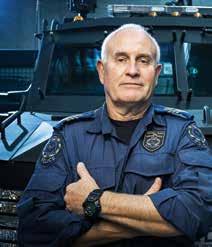

A shorter but equally powerful judging assessment summed up The Lead Centurion: “Grabs the reader, tightly plotted.”
Brett Williams, who was first to receive news of the journal’s international success, spoke of both his surprise and delight.
“It’d be a mistake to just expect to win awards so I never have that expectation,” he said. “But I am 100 per cent confident in our professionalism as a publisher and the quality of our product.
“And that quality comes partly from the expertise of the association team – graphic designer Sam Kleidon and photographer Steve McCawley.
“The other essential part of the journal’s success is our members. I think even they underestimate how extraordinary their stories are, and the impact they have on readers.
“I’m grateful for their trust in us; and, really, the awards are recognition of them and their work, and the lives they live as cops.”
TABPI received more than 400 entries from the US, Canada, the UK, Australia, New Zealand, Singapore, the United Arab Emirates and South Africa.
Police Association president Mark Carroll spoke of his delight when he heard of the journal’s gold awards just hours after the announcement in the US.
“I’ve said before that, as an organization, we were always determined to make the Police Journal the best magazine of its type in Australia,” he said.
“That was the task the association committee of management set some time ago; and what has been achieved is way beyond expectation.
“And Brett, who does a great job, is so dedicated to writing our members’ stories. I’m pleased that dedication has won recognition both here and overseas.
“Ultimately, great credit belongs to all association staff involved in publishing the journal.”
The two gold awards follow silver and bronze the journal won in last year’s Tabbies, and gold and silver it won in the International Creative Media Awards in Germany.
That brings the journal’s tally of international awards to six (three gold, two silver and one bronze) in two years. PJ
(08) 8212 2002 Internal dispatch Police Journal 168
Allan Henderson and I wish to invite anyone and everyone involved with Course 38, which graduated on September 17, 1974, to an informal reunion at the Police Club, Carrington St, Adelaide.
It will be held at 5pm on Friday September 18, 2015, and all friends and partners of course members are welcome.
We have not been able to contact everyone who mentored, graduated with or spent some time in the course.
Therefore, we would ask that Police Association members and
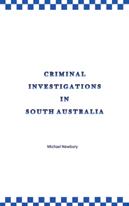
I had the great privilege of hosting a book launch last year in the Police Association’s Fenwick Function Centre for my newly released textbook Criminal Investigations in South Australia
I had no idea at the time whether the textbook would be a success or not. To my relief, I quickly found a significant audience among detectives, patrol officers, prosecutors, cadets and detective trainees who were hungry for a textbook just like this – one that clearly sets down the law and methodology of investigations in this state, and illustrates it with case studies.
I’ve been overwhelmed by the support the police community has given this project – not simply because officers
other Police Journal readers pass the word around to anyone they are still in contact with.
An evening meal will be available in the club for those who wish to partake. Formal numbers of attendees are not required, but it would be appreciated if you could let Allan or me know if you can make it.
Regards
Andy Marks 0428 836 200 Allan Henderson 0414 604 138
were prepared to buy the book, but also because so many enthusiastically recommended it to colleagues.
It’s been fantastic to see it reach all corners of the state, from Mount Gambier to Oodnadatta, as well as a range of services, from detectives to prosecutors, patrol officers, cadets and academy staff.
It’s also found in several libraries including the Police Academy Library, Flinders University Library, the State Library and the National Library of Australia.
I specially thank all those officers who have bought it, recommended it to others, and provided feedback.
As a result of its success, the first print run has now sold out. Given the continuing support it has received, and the fact that orders are still coming in, I have now commenced working on a second edition.
My aim is to release it later this year, fully updated and revised, with the addition of even more case studies as well as new practice questions. I’m still open to suggestions, so now is the time to make them.
Police Journal readers interested in pre-ordering the second edition, or providing ideas and feedback, can e-mail me at bookorders@adam.com.au. The second edition will be priced at $50, with a 10 per cent discount for pre-orders.
I thank all those officers who, from across SAPOL, have had an input to the content of this textbook. They are acknowledged in the book, which represents a collaborative effort by a number of investigators to pass on their knowledge to the next generation.
Mike Newbury
Major Crime Investigation Branch
Is it inappropriate for a supervisor to be responsible for as many as 19 subordinates?
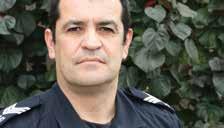
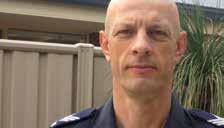

Eastern Adelaide Traffic
Supervisors today handle greater workloads, are more accountable, and there is much more oversight than in years gone by.
To effectively manage volume vetting, ongoing IPM procedures, various audit processes and HR issues, supervisors can often undertake largely an administrative role, with a lessened capacity for front-line supervision.
What is considered a manageable span of control will obviously vary between individual workplaces and supervisors.
Some areas might not encounter the same generated work volume as others, but the fundamentals of supervision, training and people management remain the same.
It might be possible to be responsible for 19 subordinates but, in some cases, it might also come at the expense of accountability and effectiveness in addressing corporate risk.
I support a smaller span-of-control model where supervisors have greater potential for managing their workloads and staff to efficient and effective service standards.
Elizabeth Police Station
The patrol supervisor function has evolved over the past number of years with greater responsibilities and accountabilities which make managing a patrol team difficult.
At Elizabeth, the hardest thing is getting out of the office due to vetting and other admin duties.
Having 19 people will increase the overall workload on supervisors, especially in areas in which they aren’t used to having these types of numbers on their teams.
More people plus more paperwork being submitted equals more vetting, more IPMs, more HR issues, and so on.
Managing 19 people will add to the workload and give me even less time on the road doing my actual job, supervising, which is unfair to my troops who rely on me at times to attend their taskings and provide advice.
Sturt CIB
Supervising 19 CIB members would effectively change a CIB supervisor’s role from an operational sergeant to a purely administrative role.
A supervisor would not be able to effectively monitor and oversee investigations and workloads to an acceptable standard.
Supervisors are, among many other things, required to report fortnightly on team investigations. This can be challenging with high workloads, reduced numbers and a high level of accountability.
Significant issues would arise if subordinate numbers were to double. These would include an inability to be able to effectively manage and oversee investigations, increased workloads for supervisors, and an inability to effectively manage operational requirements and train junior members.
It could also result in the allocation of tasks to team members when they should be conducted by a supervisor.
However, doubling supervisors’ workloads would make them less effective in their operational policing.

Nick Damiani
THEPolice Association has lodged a notification of dispute with the Industrial Relations Commission over SAPOL’s controversial organizational reviews.
A dispute conference, scheduled for August 20, will seek to address SAPOL’s inability to provide suitable information to association members about the reviews – detail which would enable them to understand how the restructure affects their roles.
The proposed consolidation of officers in certain locations might contravene certain aspects of the Workplace Health and Safety Act
This is owing to the increased number of staff intended for allocation to the Parks and Sturt police stations.
Police Association president Mark Carroll told the Police Journal that SAPOL is seeking to slash supervisory support from a total of 24 supervising traffic sergeants/senior sergeants to eight.
“This reduction – of more than 66 per cent –does not, as SAPOL management claims, provide ‘greater supervisory support to front-line traffic members,’ ” Mr Carroll said.
“The span-of-control arrangements are the association’s major concern."
The association has also asked SAPOL for evidence that the plans for movement of its (association) members complies with the relevant sections of the act.
SAPOL is yet to provide this detail.
Another element of the dispute is SAPOL’s proposed classification of the senior sergeant first class position.
The IRC assisted with the original development of this position, but SAPOL has failed to show whether its new proposals are consistent with that process.
As to the Crime Scene Investigation segment of the review, SAPOL has highlighted that “work rule/policy changes and other technology or efficiency initiatives” will address the association’s workload concerns.
With two CSI positions essentially morphing into one, the association has repeatedly requested the detail of the “work rules” and other alleged SAPOL measures.
No detail has been provided.
“Members remain very concerned that there are unfair, inappropriate and unsustainable workload increases involved in the employer’s CSI proposals,” Mr Carroll said.
“SAPOL’s examples are so vague they border on meaningless.”
Irrespective of these frustrations, the association has taken a proactive approach in enterprise bargaining negotiations.
“Despite the SAPOL organizational review stymying negotiations, we’ve remained highly active,” Mr Carroll said.
“Members remain very concerned that there are unfair, inappropriate and unsustainable workload increases involved in the employer’s CSI proposals.”
“Meetings we’ve had with SAPOL and the government have focussed on salary increases, retention of existing conditions, allowances, extended-hours rosters and superannuation.
“But, at this point, there is still no government EB offer to consider.”
The association also sought a clear written assurance from SAPOL that it would honour its obligation to maintain the status quo on working conditions while the dispute remained in progress.
In a letter to the association in mid-July, SAPOL highlighted that it acknowledged “the extent of the status quo and will honour the obligations”.
However, a different, undated, letter from SAPOL directly contradicted this promise by indicating that the “project team will recommence the implementation process on 3 August 2015”.
“This constitutes an obvious breach of the status quo clause of industrial disputes and is something else we’ll be taking to the conference,” Mr Carroll said.
The association will also use the hearing to seek answers to long-standing questions its members have posed to SAPOL about the reviews.
Such questions include:
• How many LSAs will there be?
• How many front-line first responders will there be?
• How many promotional positions will be cut?
• What roles will SAPOL consider for civilianization or outsourcing?
• What will the service-delivery impacts be?
• Which areas will suffer?
• Will workloads increase?
• Will workplace health and safety be compromised?
• Will the review breach the enterprise agreement?
The association will seek conciliation or mediation from this process. However, if outcomes fail to result, arbitration will be necessary.
This falls under chapter 5, part 3, division 3 of the Fair Work Act 1994 as well as clause 7 of the South Australia Police Enterprise Agreement 2011
Independent Commissioner Against Corruption
Bruce Lander has recommended the retention of the Police Disciplinary Tribunal in his review paper for the management of complaints against police.
The paper, handed down last month, features a total of 29 recommendations, including the abolition of the police ombudsman.
It follows a gilt-edged Police Association submission to the ICAC last April.
The association has campaigned vigorously for the retention of the PDT, after the SA government announced plans to abolish it last year. The ICAC highlighted that “there is some force in PASA’s submission on the topic”.
The ICAC also agreed with the association view that managerial intervention in less serious cases of police misconduct was more appropriate.
Other key points from the paper were:
“... the preferred view is to continue to have police involved in investigating police … subject, of course, to appropriate and rigorous safeguards …”
“… the PDT, as it is presently constructed, operates effectively,” Mr Lander wrote.
“There does not seem to be a significant delay created by the processes adopted by the PDT.
“The delay appears to be in the steps leading to the laying of charges in the PDT.
“Initially I was attracted to bringing police disciplinary matters within the (South Australian Civil and Administrative Tribunal).
“However, the submissions I have received and my observations of the system in operation have not suggested to me that such a move is presently necessary.”
Mr Lander also supported the association view that police should retain the powers to investigate other police.
“... the preferred view,” he wrote, “is to continue to have police involved in investigating police … subject, of course, to appropriate and rigorous safeguards in the form of a strong and independent oversight agency capable of overseeing, directing and intervening in police conduct matters.”
Mr Lander contended that a totally independent investigation model “would require extensive resource allocations far beyond those contemplated under the existing integrity regime”.
• SAPOL should have the primary responsibility for the assessment of complaints and reports about police.
• The Police Ombudsman should be abolished and new police complaints legislation should invest the role of overseeing the management of complaints and reports about police in the Office for Public Integrity.
• The total involvement of the ICAC in all matters, no matter how minor, is not practicable; however, the power to audit and direct the manner in which police deal with less serious complaints is a suitable option.
• The new Police Complaints Act should retain the investigative powers and confidentiality requirements that exist in the present scheme.
• The day-to-day auditing of SAPOL’s management of complaints should rest with the OPI.
The Police Association has made a submission to the Inquiry into Mental Health in the Workplace: Preventing Suicide.
The SA Parliamentary Committee on Occupational Safety, Rehabilitation and Compensation is conducting the inquiry.
Association president Mark Carroll said he would address the inquiry if necessary.
“SAPOL has strengthened its programmes designed to improve psychological well-being and reduce the prospect of injury,” he said.
“We need to maintain these programmes as well as initiate other suicide-specific measures.
“It’s essential that we safeguard the mental health of police officers placed at risk during the course of their duties.”
The Police Association will urge SAPOL to avoid further delays in the roll-out of body-worn video cameras, after June’s state government announcement of funding for the devices.
SAPOL will complete the roll-out by 2019 –nearly 10 years after the association first lobbied for the technology.
Association president Mark Carroll welcomed the announcement, but said it had taken too long for front-line police to be fitted with the devices.
“Many other jurisdictions around the world have had these devices for years,” he said.
“I urge SAPOL to finalize this roll-out sooner rather than later.
“The devices will allow police to take compelling footage at incident scenes which could prove crucial in court cases.
“We know one of the causes of the delay is the question of storage, and we still haven’t seen any information from SAPOL on that.”
Mr Carroll said that many front-line police were already wearing the devices at their own financial expense.
Go to PASAweb to see the full ICAC Review of Legislative Schemes paper and the full submission to the Inquiry into Mental Health in the Workplace: Preventing Suicide.


Dr Deborah Rea
Some of the last foods we would think of as sugary are in fact sugar-laden
is the root of all evil, headlines tell us. It might sound like a bunch of health diatribe but, where teeth are concerned, it’s right on the money. Sugar is pretty much evil for teeth.
Now, I’m not saying don’t eat sugar at all. But there are a few things you should know – and change – for the good of those pearly whites.
If you eat lots of sugar frequently, you’re at risk of getting decay no matter how well you brush and/or floss.
I couldn’t count how many patients I see with exemplary brushing and flossing habits, but they still get tooth decay from high-sugar diets. And, contrary to popular belief, we don’t want to keep filling your teeth.
We think of the main offenders as lollies, chocolate and soft drinks, but what about flavoured milk and iced coffee? Their sugar content is about the same as a soft drink: about 12 teaspoons per 600ml.
Breakfast cereals, like Froot Loops, Coco Pops and Milo Cereal, are high on the list of offenders too. But muesli and some other adult cereals are sometimes no better. They’re often toasted and drenched in sugar or honey and are chock-a-block full of that lovely dried fruit.
But dried fruit is itself really sugary and sticky, and most dentists would consider it pretty much equivalent to eating a sticky lolly.
The rule of thumb is: if it’s sticky and sweet it’s a lolly, no matter how healthy it purports to be or looks.
With most foods, you just have to turn the packet around and check how much the total sugars are per 100g. … and anything 10 per cent and below will pass.
Iced tea is about six teaspoons per 500ml and energy drinks 10 teaspoons per 473ml can.
Orange juice is healthful, right? No, it contains eight teaspoons of sugar per 500ml. And sports drinks are pretty much the same, with sugar making up almost a third of their content.
So these drinks are a big problem. They wash over all those lovely teeth and some people sip them over a long period or, in some cases, all day.
Sugary bakery items – such as cakes, doughnuts and tarts – are not much better. They are all high in sugar; and that stuff sticks to your teeth.
The problem is that sugar is often hidden in supposedly healthy foods. Yogurt is a good example: some are almost a quarter sugar while others, around the 10 per cent mark, are okay.
With most foods, you just have to turn the packet around and check how much the total sugars are per 100g. That will give you the sugar percentage; and anything 10 per cent and below will pass.
All sugar is pretty much the same. Cane sugar (table sugar), corn syrup, honey, maple syrup… As far as teeth are concerned they’re all problematic.
Food or drink which is acidic and sugary is worse because you have the double whammy of both acid and sugar damage.
Sweet, sticky foods are a big problem because they really stick right on, and in the grooves of, your teeth – and between your teeth. And that food stays there for quite a while, even sometimes after gold-star brushing.
When it comes to your teeth, you need to change the way you consume sugar. In dentistry and teeth, frequency of exposure matters.
Imagine you had a family block of chocolate and ate some of it each night until you finished it at the end of the week. That would be much worse for your teeth than eating the whole block in one sitting.
You’re better off having a “treat day”, on which you eat what you please, and limiting your sugar intake during the week.
And it’s better to eat or drink the sugary stuff early so as to allow the maximum amount of time for it to work its way off your teeth during the day. Eating or drinking the sugary stuff with a meal can work it off your teeth, too, and dilute its effect.
Chewing sugar-free gum after you eat or drink sugary treats is great. It not only stimulates your saliva flow – which helps wash away the sugar and neutralize the plaque acids – but also helps work the sugar off your teeth.
I really urge you not to but, if you must consume sugary drinks, always drink them with a straw to bring about less contact with your teeth. And finish the drink in one sitting. Don’t keep sipping it over a long period. If you can’t finish it, throw the rest out.
Visit your dentist every six months. He or she is trained to recognize the early signs of damage, which are tricky to notice and often missed by the untrained observer.
X-rays are often part of the diagnostic process because we often can’t see between your teeth. I’ve lost count of the number of times I couldn’t see decay, or the early signs of it, until I took an X-ray. So trust your dentist when he or she says you need one, because you really do.

Jim Barnett
An impressive performer with heaps of space evident beyond first glance
longest-serving Sonata nameplate is back after a five-year hiatus.
Seventh-generation Sonata (more recently known as i45) is a medium-sized four-door sedan wrapped in a smart, coupe-styled body.
Its profile is long and low with classy chrome treatments, a shark-fin antenna, and a new grille with daytime LED running lights.
Inside, Sonata is far bigger than its external dimensions suggest. Front seats are comfortable and offer plenty of adjustment. The spacious rear seat offers more legroom than many.
Sonata’s dash layout looks sophisticated and features a central 4.3-inch touch-screen audio system with reverse camera on entry model Active. Elite and Premium each feature an eight-inch unit with satellite navigation, audio, video and reverse camera functions.
The enormous boot space can accommodate longer items by dropping one or both the 60/40 rear seats. Under the floor is a full-sized spare wheel.
Hyundai claims new Sonata benefits from the use of high-strength steel and a stiffer body while extensive testing in Australia has provided improved suspension.
Entry Active, which features a naturally aspirated 2.4-litre petrol engine and six-speed auto, is priced from $29,990. Standard equipment includes:
• Manual air conditioning with rear vents.
• Automatic headlights.

• Aux/USB audio with digital iPod compatibility.
• Bluetooth phone and audio streaming.
• Trip computer.
• Tilt and telescopic steering.
• Steering wheel controls for cruise, audio and phone controls.
Elite ($36,990) and Premium ($41,990) models each feature a far more powerful 2.0-litre turbocharged petrol engine coupled with a six-speed automatic transmission. Both feature:
• Leather trim.
• Power driver’s seat.
• Dual-zone climate control.
• Smart entry/push-button start.
• Automatic boot lid functions.
Sonata scores a five-star (ANCAP) safety rating with the now expected six airbags, traction and stability control and ABS. In addition there’s a hill-start assist function and automatic flashing brake lights during emergency braking.
Sonata misses out on more advanced safety systems such as blind-spot monitoring, lanedeparture warning or collision avoidance.
Active’s naturally aspirated four produces 138kW of power and has combined fuel economy of 8.3 litres/100km. The 2.0-litre petrol turbo (Elite and Premium) produces 180kW and uses 9.2 litres/100km.
Sonata Elite is a very impressive car to drive. It is roomy, comfortable, smooth and quiet.
During normal acceleration and cruising the engine and transmission go about their business totally unnoticed. Sink the foot and this punchy turbo-four will freely spin to 6,500rpm and produce quick acceleration. It is only at higher revs that engine noise is noticeable.
A short stint on a potholed dirt road shows the value of Australian suspension input. Sonata has no trouble soaking up the bumps and remains composed and confident.
Sonata is a smart-looking mid-sized sedan with a big-car interior and great road manners. The turbo four is a standout in this class but some others do offer additional safety features.
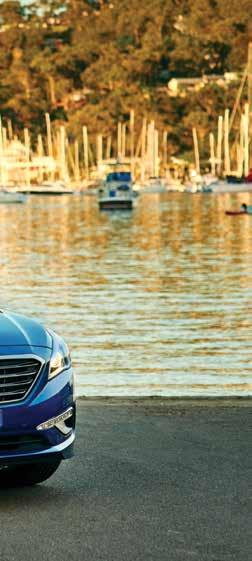
With any good convertible, roof down is best – regardless of the weather
is once again offering wind-in-your-hair motoring with its European-sourced Cascada convertible.
Slick-looking with a soft top, Cascada features a push-button, electrically operated roof. It neatly folds, at up to 50km/h, into a compartment forward of the boot lid in 17 seconds.
Inside are comfortable sports-style leather-trimmed seats which accommodate up to four adults, although rear space is tight for tall passengers.
Its European heritage brings heated front seats, heated mirrors and a heated leather-bound steering wheel, which features cruise and audio functions.
One nice feature is the seatbelt presenter that extends front seatbelts forward for easy reach at start-up.
The pleasant dash layout features a seven-inch colour screen with audio, sat nav and reverse-camera functions.
There are plenty of storage areas around the cabin, and boot space is quite generous given the roof stores in the upper section. Dropping the split-fold rear seats accommodates longer items; and there’s an emergencystyle spare wheel under the floor.
At $41,990 the single well-equipped Cascada variant offers good value in this limited market.

Standard features include:
• Seven-inch colour infotainment system with DAB digital radio, sat nav, Pandora and Stitcher radio.
• Bluetooth phone and audio streaming.
• USB and aux inputs.
• Perforated leather trim.
• Cruise control with speed limiter.
• Trip computer.
• Dual-zone climate control.
Although not ANCAP safety-tested, Cascada has all the essential safety equipment including:
• Anti-lock brakes.
• Stability control.
• Front and front-seat side airbags.
• Rain-sensing wipers.
• Auto headlights.
• Reversing camera.
• Front and rear parking sensors.
• Hill-start assist.
Cascada weighs just over 1,700kgs or around the same as an SS Commodore. Its 1.6-litre turbocharged four-cylinder petrol engine is linked to a six-speed automatic transmission with manual mode.
The engine, which runs best on premium fuel, produces 125kW of power. Holden claims combined fuel economy of 7.5 litres/100km.
Overall the ride is pleasant and, for a soft top, there’s minimal wind noise.
Cascada can, at times, feel a little sluggish, particularly at low revs but the relatively smallcapacity engine does a credible job given the car’s weight.
Pushed on the open road, particularly when manually shifting the gears, Cascada performs much better. With the roof stowed away, even in winter, the driving experience can be very rewarding. Overall the ride is pleasant and, for a soft top, there’s minimal wind noise. Cornering is best described as compliant, bordering on agile.
Cascada is a reasonably priced and versatile convertible that feels at its best with the roof down. Paddle shifters for the transmission would have been a useful inclusion.
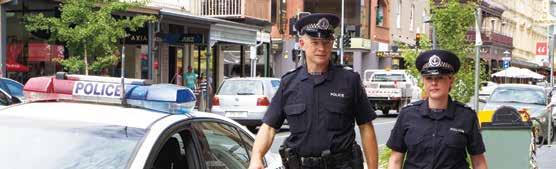
This course is designed to assist in the pre-application process of pursuing a career in policing.
The Certificate III in Police studies is a TAFE SA course developed in collaboration with SAPOL. The course provides an introduction to policing skills and knowledge of law and justice while at the same time developing attributes sought by SAPOL including leadership, teamwork, decisiveness and managing stress. This course is designed to improve an applicant’s prospects of recruitment by SAPOL.
The nine unit course is available full or part time: • in a semester based attendance option, or online • in a blend of attendance and online.
*These courses are funded through the Government of South Australia’s WorkReady initiative. Eligibility criteria apply, incidental fees may apply. For more information visit tafesa.edu.au
Advanced Diploma of Policing* (10261NAT)
The Advanced Diploma is recognised in the South Australia Police Promotions and Qualifications Framework for promotion to Sergeant and Senior Sergeant.
The Advanced Diploma of Policing comprises six core and two elective units and builds on the Diploma of Public Safety (Policing) competencies to develop advanced practitioner skills. The core and elective units are available by attendance or blended delivery mode. Credit is granted in the Advanced Diploma for completion of the Constable Development Program. Credit towards degree level studies, e.g. Bachelor of Management (Policing), is granted by the University of South Australia. Graduates of the Advanced Diploma of Policing are also eligible for entry to the University of Adelaide Bachelor of Laws.

South Australia Police (SAPOL) Recruitment Tests conducted by TAFE SA.
Each fortnight TAFE SA facilitates four of the recruitment selection tests for SAPOL in literacy and numeracy.
Duration: 3.5 hours
Location: TAFE SA Adelaide City Campus
Cost : $148.50 for all four tests
For more information and bookings contact TAFE SA: 08 8207 8464 | sapol.online@tafesa.edu.au tafesa.edu.au/legal-studies
For SAPOL recruitment information visit acheivemore.com.au
For all enquiries contact Justice and Policing Studies 08 8207 8322 justice.policing@tafesa.edu.au tafesa.edu.au/policing


Paul Modra Executive Manager – Member Value and Distribution, Police Credit Union
So why is it a great time to consider buying an investment property in South Australia?
activity has boomed in Australia in recent years, especially in high-demand states such as New South Wales and Victoria.
The total value of outstanding home loans written by financial institutions has reached a record high $1.39 trillion. Of those loans, more than $480 billion is from residential investment lending, which now equates to 35 per cent of all home loans.
This high property demand, together with record low interest rates, has led to a dramatic increase in housing prices. In Sydney, the median house price is sitting well over $900,000, compared to Adelaide which sits at around $425,000.
While the historic low interest rates contributed to some positive effects for both the property investment and lending sectors, many banks are now experiencing heightened scrutiny on investment lending practices.
Over the last six months, the Australian Prudential Regulation Authority (APRA) has increased its surveillance and monitoring of risky loan lending from banks, especially to investors.
25 per cent growth to ensure sustainable growth in the investment loan sector.
The big four banks have now started to make significant changes to limit lending growth to investors. Many big banks are now no longer offering any additional discounts on their investment loans –besides what is already advertised – and have also started to cap their loan to value ratio (LVR) on investment lending to 80 per cent, down from the previous 95 per cent.
This new cap means investors will have to provide even bigger deposits to secure loans on any investment property purchases. The aim of this is to minimize property speculation and also to make investment loans less attractive.
This new cap means investors will have to provide even bigger deposits to secure loans on any investment property
purchases.
This trend is likely to be implemented by most other bigger banks if investment loans continue to accelerate at an unachievable speed.
Many experts view these tighter restraints as a positive move for the borrowing and property market. Ideally, it will revert investment loans back to their fundamental status of being riskier than owner-occupier home loans.
Since Adelaide’s median house price currently sits at less than half of Sydney’s, Adelaide is one of the most affordable cities for investors at the moment.
advice, affordable investment loan products and services.
With the current low rates and a steady housing market, especially in South Australia, now is a great time to consider buying an investment property. Since Adelaide’s median house price currently sits at less than half of Sydney’s, Adelaide is one of the most affordable cities for investors at the moment.
With a wide range of home and investment loans available to suit the needs of different individuals and families, Police Credit Union caters for all needs.
Police Credit Union’s personal bankers are always open to discussing all aspects of investment lending and provide free access to the latest property data reports.
Police Credit Union is looking forward to helping investors get the best possible loan this new financial year, especially with its promise of Better Banking for all members.
APRA is the prudential regulator of all financial institutions across the country.
With such a resurgence in investment lending, APRA has taken co-ordinated action to tighten the number of investment loans given.
APRA has set a growth limit for banks of 10 per cent per year for all residential investment loans, in the hope of slowing their speed from the current
However, all hope is not lost for property investors.
Police Credit Union has always had its members’ financial needs as its priority; and, unlike the bigger banks, our loan products and lending practices remain unchanged.
Police Credit Union is able to assist investors to secure their property dreams by offering expert


Leading Adelaide law firm, Tindall Gask Bentley is the preferred legal service provider of the Police Association, offering 30 minutes of free initial advice and a 10% fee discount
To arrange a preliminary in-person or phone appointment contact PASA on (08) 8212 3055.


Have you or a family member been injured in a car accident?
Tindall Gask Bentley acts in more motor vehicle accident claims that any other law firm in SA. Gary Allison & Richard Yates can provide free preliminary legal advice on your entitlements to compensation. They can also help with Workers Compensation, public liability & medical negligence claims.
Matrimonial, De Facto & Same Sex Relationships
• Children’s Issues
• Child Support matters
• Property Settlements
• “Pre Nuptial” style Agreements
Appointments with Wendy Barry (Accredited Family Law Specialist) & Dina Paspaliaris.
• General business advice
• Real estate & property advice
• Business transactions
• Commercial disputes & dispute resolution
Appointments with Giles Kahl & Michael Arras.
• Wills & Testamentary Trusts
• Enduring Powers of Attorney
• Enduring Guardians
• Advice to executors of deceased estates
• Obtaining Grants of Probate
• Estate disputes
Appointments with Michael Arras & Rosemary Caruso.


Jane Miller Partner, Tindall Gask Bentley Lawyers
TINDALL Gask Bentley Lawyers has produced the TGB Pathways to a Family Law Resolution “infographic”, a visual aid for clients and people facing a family law problem. It clearly identifies that there is an end in sight, and the three main pathways to get there.
1. The TGB Pathways to a Family Law Resolution allows clients to commence the resolution of the matter with DIY negotiations, in the comfort that they have a sound legal advisor in the background to coach them towards a fair and amicable settlement.
2. Where such negotiations fail or aren’t appropriate, the lawyer can lead those negotiations to an out-of-court settlement.
3. As an avenue of last resort, the dispute might proceed through court. However, there are many opportunities for negotiations to continue in the court system and indeed the vast majority of matters settle without proceeding to trial.
While the infographic sets out the road ahead, getting good legal advice as early as possible is fundamental in the pursuit of a fair outcome. It is critical to get this advice even if the relationship split is amicable.
At your first appointment with a TGB lawyer you will receive clear advice about which of the pathways would best suit your circumstances, as well as the details about how to get started on your journey towards a resolution to your problem. Tindall Gask Bentley is a leading Australian family law firm, with the largest team in South Australia and leading lawyers in Western Australia and the Northern Territory.
Author Saul Black
Publisher Hachette Australia
RRP $29.99
When the two strangers turn up at Rowena Cooper’s isolated Colorado farmhouse, she knows instantly that it’s the end of everything.
For the two haunted and driven men, on the other hand, it’s just another stop on a long, bloody journey. And they still have many miles to go, and victims to sacrifice.
For San Francisco homicide detective Valerie Hart, their trail of corpses – women abducted, tortured and left with a seemingly random series of objects inside them – has brought her from obsession to the edge of physical and psychological destruction.
And she’s losing hope of making a breakthrough before that happens.
But the slaughter at the Cooper farmhouse didn’t quite go according to plan. There was a survivor, Rowena’s 10-year-old daughter Nell, who now holds the key to the killings.
Author David Lagercrantz (translated from Swedish by George Goulding)
Publisher Hachette Australia RRP $29.99
Leonard Corell, a detective sergeant in the sleepy town of Wilmslow, is disillusioned with his lot. Trapped between professional stagnation and personal repression, he can’t even work up the courage to ask out Julie, the pretty assistant at the tailor’s.
Tasked with investigating the suicide of a local recluse, Alan Turing, Corell is torn between admiration for the dead man’s genius and disgust for his sexuality.
In the face of opposition from his superiors, Corell continues to investigate the open-and-shut case, stumbling across forbidden knowledge about the marvels of Bletchley Park, and the horrors of its hero’s downfall.
As Corell examines his own prejudice, he is rocked by two startling developments. His Aunt Vicky is exposed as a lesbian, and his increasingly hostile bosses demand that he investigate rumours of homosexual activity in Wilmslow.
Author C Critchley & Dr H McGrath
Publisher Pan Macmillan Australia RRP $32.99
Peter Caruso bludgeoned his wife to death after almost 50 years of happy marriage.
John Myles Sharp killed his pregnant wife and their young daughter with a spear gun.
Katherine Knight stabbed and skinned her partner, whose carcass she intended to cook and serve to his children.
In Why Did They Do It?, journalist Cheryl Critchley and psychologist Professor Helen McGrath dissect the crimes, evidence, testimony, confessions, and overwhelming diagnostic evidence to analyse the minds and motivations behind crimes that shocked the nation.
The circumstances of each crime are outlined and the murderer’s behaviour analysed to explain how a specific type of personality disorder, combined with other factors, led to the murder.
The authors summarize the lessons to be learned and the early warning signs to be observed.
Author Jeffery Deaver
Publisher Hachette Australia RRP $29.99
As an investigator with the California Bureau of Investigation, Kathryn Dance is used to putting criminals behind bars. But when she’s suspended after a dangerous gang member she interviews – and deems innocent – is proven guilty and escapes in a violent shoot-out, she begins to question her judgement.
Stripped of her badge and forced to act as a consultant, Dance must focus on another pressing case: a terrifying stampede of panicked music fans at a concert venue which left half a dozen people dead.
Her investigations suggest that the stampede was deliberately instigated by assailant Anthony Marsh – a hired criminal renowned for using people’s herd mentality as a weapon.
Dance must use her skills to help Chief Detective Michael O’Neil find Marsh before he makes his next deadly strike.
PRESIDENT
Mark Carroll
Author J M Peace
Publisher Pan Macmillan Australia
RRP $29.99
The hunt is on. A gruesome game. A madman is kidnapping women to hunt them for sport. A frantic search.
Detective Janine Postlewaite leads the investigation into the disappearance of Samantha Willis, determined not to let another innocent die on her watch.
A shocking twist. The killer’s newest prey isn’t like the others. Sammi is a cop. And she refuses to be his victim. A run for your life.
A Time to Run is set in the Queensland bush featuring a cop-turned-victim and a Wolf Creekstyle killer.
JM Peace is a serving police officer on the Sunshine Coast and over the past 15 years she has worked throughout south-east Queensland in a variety of roles. She writes with chilling authenticity and a strong Australian voice.
Author Justine Ford
Publisher Pan Macmillan Australia RRP $32.99
Australia’s most baffling homicides and mysterious missing-persons cases are inimitably explored in this stunning true-crime book which invites the reader to play armchair detective.
Featuring 18 famous cases, Unsolved Australia unearths a host of jaw-dropping new evidence via in-depth interviews with police, families and criminals.
Along the way you’ll meet the Unsolved Squad – the humble heroes and dedicated experts involved in collecting and connecting clues.
Unsolved Australia is a chilling, thrilling and inspiring book full of drama, emotion and hope.
WIN A BOOK! For your chance to win one of these books, send your name, location, phone number and despatch code, along with the book of your choice to giveaways@pj.asn.au
From page 9
The idea that police fail to rate as highly on the “skill level” or “professionalization scale” as teachers, nurses and other health professionals is absurd.
Registration is a means of protecting the police profession. It ensures that only police officers who have satisfied all the requirements for registration are empowered to exercise police functions.
It also assures the community of the delivery of quality police services by highly trained and appropriately qualified police officers.
Anyone who failed to meet the registration requirements could neither call himself or herself a police officer nor be employed or sworn in as a police officer.
And neither could any government allow such a person to exercise police powers.
Some commissioners tell us they oppose the concept of professional registration because they fear losing the capacity to hire and fire their own staff.
But the PFA position on professional registration is that commissioners would continue to act as the employer of any police professional.
They would have the right to hire and fire – and discipline – in line with the industrial regimes of their jurisdictions.
Commissioners would also continue to have the right to set standards for their own jurisdictions, but not below the minimum standards established by a registration board.
Professional registration brings undeniable advantages, and a database of members and their skill sets would be a significant workforce planning tool.

RRP $29.95 1 disc
The 11th Top Gear special is a glorious celebration of the V8 engine. Or at least it was supposed to be.
In it, Jeremy Clarkson, Richard Hammond and James May take a trio of V8-powered sports cars for an epic and arduous 1,600-mile road trip through the spectacular landscapes of Patagonia.
Along the way they encounter swamps, deserts, forests, beaches and snowy mountain passes as the threesome and their often malfunctioning machines press on toward the southernmost city in the world and an impending game of car football.
Unfortunately, that’s not quite how things turn out.

RRP $30.95 1 disc
Among other adventures, the trio attempts to reinvent the ambulance, investigate the strange world of classic car ownership, take part in a nail-biting race across St Petersburg and set off on an epic road trip through the wilds of Australia.
Also in this series, Clarkson and May look at the highs and lows of one of France’s biggest carmakers, Hammond pays a dramatic tribute to the dying days of the Land Rover Defender and Jeremy makes up his mind about the BMW i8 hybrid on a trip to buy some fish and chips.
Meanwhile, out on the test track, there’s a scorching line-up of fast cars, including the Lamborghini Huracan, the Mercedes AMG GT, the Jaguar F-type R, the Chevrolet Corvette Stingray and the Porsche Cayman GTS.
RRP $20.95 1 disc
The Model T, the 2CV, The Fiat Cinquecento – history says these are the iconic Peoples’ Cars, but James May begs to differ and, in this three-part series, he tells the story of the cars he believes are the true cars of the people.
As always, his choices will surprise and provoke car lovers everywhere.
His journey takes him across mainland Europe to Russia and Japan and, in typical Top Gear style, there’ll be thrilling road tests, capers and challenges galore as James explores the astonishing true stories of triumph and abject failure that lie behind some of the world’s most popular vehicles.
RRP $9.95 1 disc
TheKillingSeason is Sarah Ferguson’s gripping three-part examination of the forces that shaped Labor during the Rudd-Gillard leadership years. It is a documentary series like no other. Visually striking, scripted like the best political dramas, it is an enthralling account of one of the most turbulent periods of Australian political history.
For the first time, Kevin Rudd gives his own full account of the period and relives in vivid detail the events of losing the prime ministership, a retelling he found painful.
Julia Gillard is forthright with her recollections and analysis and doesn’t spare her colleagues.
A comprehensive cast of the main players, including many of those still in parliament, speaks frankly, providing a dramatic portrait of a party at war with itself.
WIN A DVD! For your chance to win one of these DVDs, send your name, location, phone number and despatch code, along with your choice of DVD, to giveaways@pj.asn.au

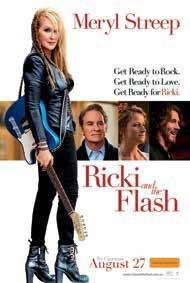


RRP $40.95 3 discs
In 1787, Britain banished its unwanted citizens, orphans, petty thieves, prostitutes and highwaymen to Sydney in Australia.
It was so hot, barren and hostile that very few people had ever set foot there. Yet these rejects, overseen by a small number of British officers and marines, were expected to establish a colony.
Somehow, in spite of famine, drought, escapes, hangings and floggings, the colony thrived.
This new drama shows how a group of misfit characters established a new society, following their friendships and love stories, their struggles and successes.
Season commences August 27 www.rickiandtheflash.com.au
Three-time Academy Award winner Meryl Streep takes on a whole new gig – a hard-rocking singer/guitarist –for Oscar-winning director Jonathan Demme and Academy Award-winning screenwriter Diablo Cody in the uplifting comedy Ricki and the Flash
In a film loaded with music and live performance, Streep stars as Ricki, a guitar heroine who gave up everything for her dream of rock-and-roll stardom, but is now returning home to make things right with her family.
Streep stars opposite her real-life daughter Mamie Gummer, who plays her fictional daughter. Rick Springfield takes on the role of a Flash member in love with Ricki; Kevin Kline portrays Ricki’s ex-husband; and Audra McDonald plays Kline’s new wife.
Season commences September 10 www.PixelsMovie.com.au
In Pixels, when intergalactic aliens misinterpret video feeds of classic arcade games as a declaration of war against them, they attack the Earth, using the games as models for their various assaults.
President Will Cooper (Kevin James) has to call on his childhood best friend, 1980s video game champion Sam Brenner (Adam Sandler), now a home theatre installer, to lead a team of oldschool “arcaders” (Peter Dinklage and Josh Gad) to defeat the aliens and save the planet.
Joining them is Lieutenant Colonel Violet Van Patten (Michelle Monaghan), a specialist supplying the arcaders with unique weapons to fight the aliens.
WIN A MOVIE PASS! For your chance to win an in-season double pass to one of these films, courtesy of Sony Pictures, send your name, location, phone number and despatch code, along with your choice of film, to giveaways@pj.asn.au
Season commences October 15 www.thewalkmovie.com
Directed by Robert Zemeckis, The Walk is a true story based on Philippe Petit’s book To Reach the Clouds, starring Joseph Gordon-Levitt as the young dreamer who dared the impossible: an illegal wire walk between the World Trade Center towers.
Twelve people have walked on the moon, but only one man has ever, or will ever, walk in the immense void between the World Trade Center towers.
Aided by an unlikely band of international recruits, Petit and his gang overcome long odds, betrayals, dissension and countless close calls to conceive and execute their mad plan.
Robert Zemeckis, (Forrest Gump, Cast Away, Back to the Future, Flight) uses cutting-edge technology in the service of an emotional, characterdriven story.
With innovative photorealistic techniques and IMAX 3D wizardry, The Walk is a true big-screen cinema.

* Invitations to two Winestate magazine tastings each year (valued at $100)
* 12-month subscription to Winestate magazine (valued at $60)
* Minimum of three tasting events at the Police Club each year
* Free glass of house wine with every meal purchased at the Police Club
* Entry to annual wine raffle and discounts on quality wine
To join visit
Penola, SA koonara.com

The Big Guns is a tribute to Trevor Reschke, who was in the Australian national team for clay target shooting and the state team more than 20 times.
The three-acre vineyard from which it comes produces tiny, intense berries, growing only one tonne per acre.
The Big Guns is aged for 24 months in the finest French oak barrels and, from these, the best barrels are selected.
This year, only three made the cut, creating only 100 cases and only 880 released to the public.
Brooding liquorice and spice over blackberry concentrate, nice hints of black pepper (showing the cool year) and dark chocolate poured over star anise, cloves, and mulberries.
The Big Guns will age well until 2030.

Vanilla and fresh tobacco over spicy cherry notes. Aged in the finest French oak barrels for 18 months, Cape Banks is a wine which has seamless oak integration and longevity.
According to J Gladstone, the biological effective degree days (BEDD) – where you add all the temperatures of the growing season together – of the top sub-region of Burgundy is 1242.
Mount Gambier’s BEDD is 1245, which makes it the closest to the most famous Pinot Noir region.
The name Angels Peak is a tongue-in-cheek reference to the lack of peaks in the very flat Coonawarra.
Decanting this wine for an hour will allow you to see the true depth of flavour, but also show you that this wine is almost unique at its price, in that it will get better for 20 years.
No residual sugar, below organic levels of sulphur, and organically grown. The dense fruit and the soft tannins with allow this wine to age well until 2033.











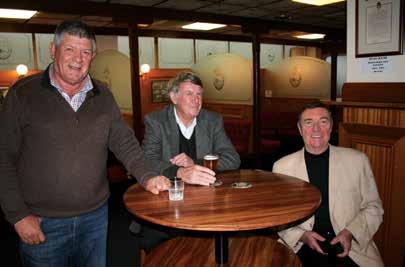

Police Club, Friday, August 14, 2015

Tusk!FM with their tribute to Fleetwood Mac & Matt as Elvis with All The King's Men
FRIDAY OCTOBER 16, 7pm – 11.30pm
Tickets $55.00 for dinner and both shows
A silent charity auction will also be held
Tusk!FM pays homage to the history of Fleetwood Mac from the very early days through to the phenomenon they became. tuskfm.webs.com or find us on Facebook
Matt as Elvis and live band All The King’s Men bring to life the King in concert – the voice, the look, the mannerisms as well as the authentic sounds. mattaselvis.com








INCLUDES
High



Perri Cutten voucher $500
Intimo Lingerie voucher Jo Villani painting
Ophelia Cottage handbag & scarf






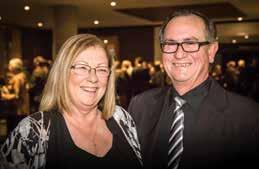


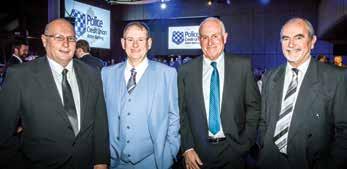


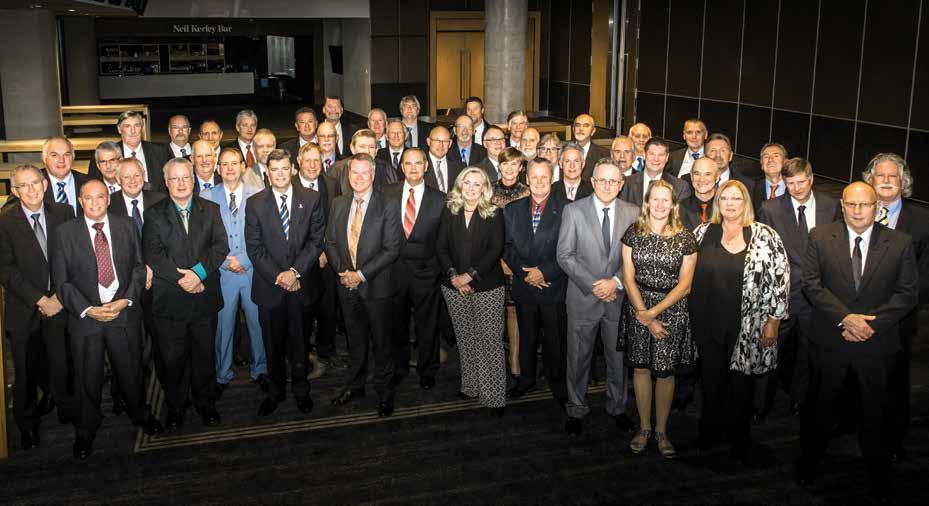
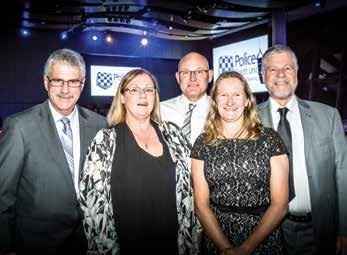
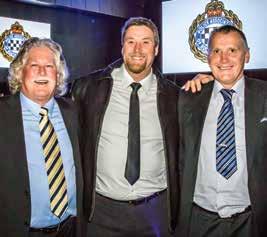
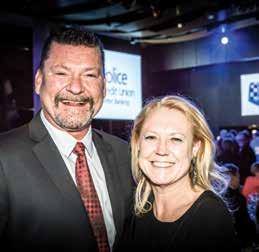
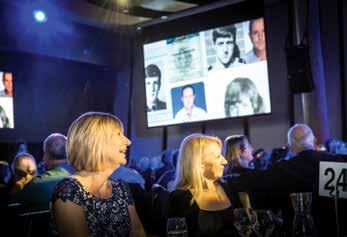
1. Mark Carroll and Danny Smalbil
2. Marilyn and Ian Cooke
3. Barry Graham, Tony Vowles, Stephen Andrews, Andy Howland and Terry McCormack
4. Treasurer Tom Koutsantonis
5. Kym Serasini, Bruce Creed and Michelle and Barry Weir
6. Gordon Smith, Wayne Birch, Martin Hawkins and Ian Webb
7. Police Association of NSW president Scott Weber, Mark Carroll and Police Credit Union CEO Costa Anastasiou
8. Mark and Katrina Altmann
9. Paul Lindner, Marilyn Cooke, Graham Kalisch, Coral Johnston and John Kaminskas
10. Justin Fenton and Stacey Beare
11. Geoff Malpas, Tony Baker and Graham Fox
12. Guests watch a slideshow featuring the retirees
Fenwick Function Centre Friday, July 31, 2015
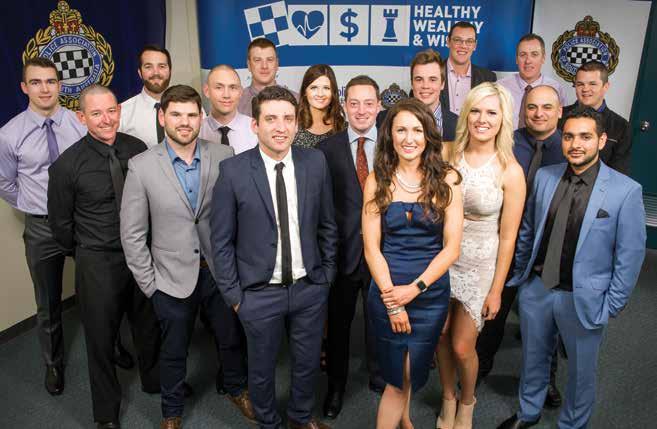




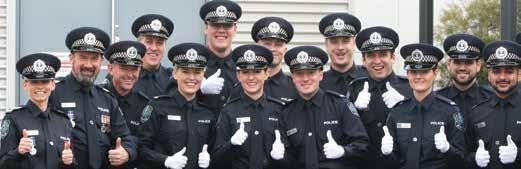
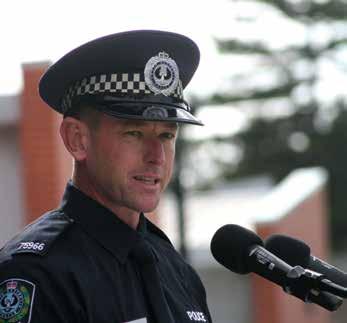
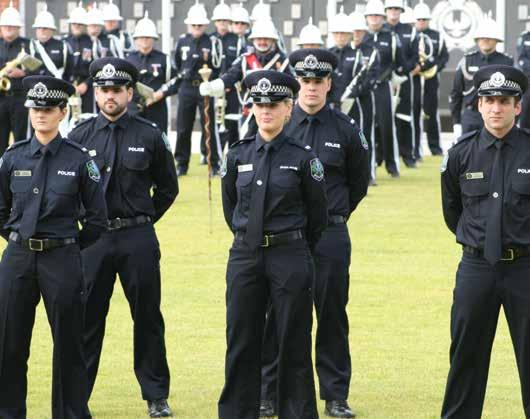
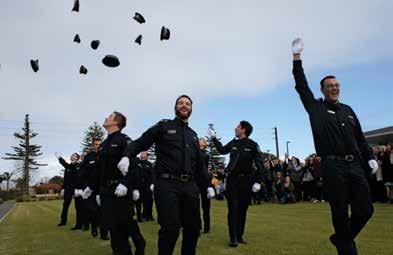
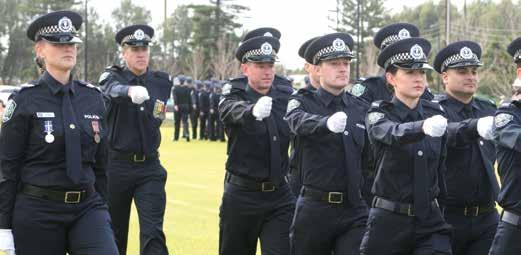
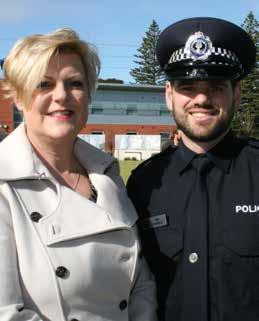
1. Graduates gather before the parade
2. Commissioner Grant Stevens inspects the course
3. Alexandra Rabig
4. Graduates line up on the parade ground
5. Colin Jones delivers a speech on behalf of the graduates
6. The toss of the caps after dismissal
7. James McSherry
8. Graduates march off the parade ground
9. Jessica
10. Police Association assistant secretary Bernadette Zimmermann with Academic Award winner William Russell


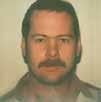


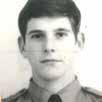
JAMIE ALEXANDER
MARTYN BOND (1)
GARY BURNS (2)
CHRISTOPHER CARSS (3)
KENT McFARLANE (4)
LEN MILLER (5)
ROBERT NOACK (6)
JOHN PARSONS (7)
MICHAEL POLACEK (8)
TREVOR SCHWANZ (9)
DAVID VENNER (10)
DERRY “EDDIE” WARR (11)
CRAIG WILLIAMS (12)
Murray Bridge
37 years’ service
Last Day: 10.04.15
Comments…
“Over the past 37-and-a-bit years, I witnessed the changing of five police commissioners and three uniforms.
“I observed workforce organizational reviews that created centralization, then de-centralization and then centralization again.
“I noted numerous internal inquiries that came and went without apparently enjoying the success of the reviews. I cannot help but wonder about the current review.
“Throughout all of this creative inertia, the fundamentals of the job did not change.
“Those at the coalface were, and are still, required to put their safety on the line to catch the crooks and keep the community safe.
“I did this during my career, such as it was, with the knowledge that the Police Association had my back covered and my interests at heart. I thank you all for that.”
Hills Fleurieu Criminal Justice
38 years’ service
Last Day: 17.05.15
Comments…
“I have enjoyed a colourful, exciting and educational time with many good people over the last 38 years.
“I wish all members the best for the future.”
CONSTABLE JAMIE ALEXANDER
Communications Branch
5 years’ service
Last Day: 25.06.15
Comments…
“I am moving state and changing careers in order to pursue new challenges but I thank you all for your efforts on behalf of all our friends and colleagues.”
Detective Brevet Sgt
Derry “Eddie” Warr
Sturt CIB
40 years’ service
Last Day: 17.07.15
Comments…
“I have had the privilege of working in the metro area, Crime Service, the Australian Crime Commission, Far North, Limestone Coast and Detective Training.
“I have enjoyed the company of great people over my career.
“Thanks to the Police Association which has assisted me over the journey. And special thanks to my family who have put up with me not being around for birthdays, Christmas and other family events.”
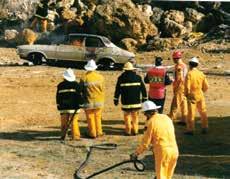

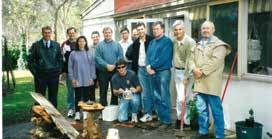



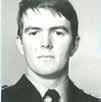
SERGEANT MARTYN BOND
South Coast LSA
40 years’ service
Last Day: 03.08.15
Comments…
“I’ve had a ball during my time in SAPOL and will always cherish the memories and friendships of the many people, sworn and unworn, who I’ve had the pleasure and privilege of working with, particularly those from Christies Beach and Mt Barker.
“To those remaining I wish you all the very best for the future.
“I also sincerely thank all the past and present committee, delegates and staff members of the association for their continuing efforts to improve the members’ lot.”
INSPECTOR KENT McFARLANE
Communications Centre
39 years’ service
Last Day: 01.05.15
Comments…
“I thank members of the association executive for their tireless work in achieving so much for members over the years. I also thank all those people I have worked with for their support and my memories of both hard and good times.
“It has recently been a rough ride but I retire with fond memories and no regrets.”
SERGEANT LEN MILLER
Police Academy
43 years’ service
Last Day: 16.07.15
Comments…
“The future of SAPOL is determined by the calibre of people who come into this organization. They deserve the best training that can be provided.
“As a trainer, my goal was always to complement front-line policing. I had the pleasure to work alongside some remarkable people whom I will always remember fondly. Members to whose training I have contributed made my career choice very satisfying and enjoyable.
“I thank the Police Association for its tireless work in providing exceptional services and conditions to all members. Its efforts in achieving enterprise agreements and ongoing negotiations with governments in difficult economic times are greatly appreciated.”

Police headquarters
46 years’ service
Last Day: 20.07.15
Comments…
“I express my appreciation for the friendship, humour, advice and support of all those police officers and unsworn staff of SAPOL who I have worked with in a range of different positions and postings.
“You have all been instrumental in me not only being able to successfully achieve my various career choices but making my time in the job a thoroughly enriching experience.
“My thanks also to the Police Association for its role and contribution to policing in South Australia over my entire period of service.
“I extend my wishes to all currently serving employees of SAPOL and my sincere thanks for your contribution to policing, now and into the future.”
SERGEANT ROBERT NOACK
Fingerprint Bureau
42 years’ service
Last Day: 10.07.15
Comments…
“It is often not until you have been in the job for a few years that you appreciate the benefits the Police Association has gained for us.
“The old pension scheme is one of those things I can now truly benefit from – has to beat waiting until 67 for a much smaller age pension.
“I have enjoyed my days at work, especially within the Forensic Services Branch and particularly at the Fingerprint Bureau where I have worked with a great bunch of people.”
DETECTIVE SGT MICHAEL POLACEK
Sturt CIB
41 years’ service
Last Day: 10.07.15
Comments…
“I have been a member of the Police Association and enjoyed its benefits for 41-plus years. I am now retiring to look at and enjoy life at a different pace.
“Thank you for your diligent efforts in maintaining, and bettering in some cases, our high standards and conditions.
“All my postings have been exciting, enjoyable and memorable. Thanks to all other members of SAPOL for those moments.”
Elizabeth Crime Scene
23 years’ service
Last Day: 27.05.15
Comments…
“The association has my utmost respect as an organization that has worked extremely hard to improve our working conditions and pay rates during my time with SAPOL. I sincerely thank the association for achieving significant outcomes in those areas.
“I have had the privilege of working with some brilliant people, who consistently achieved great outcomes in a demanding environment. I thank them for the support, guidance and friendship and all of the great times we had over so many years.
“I owe a good deal to my fellow metro Crime Scene sergeants and the staff who, in Forensic Services Branch T&D, made my transition to Crime Scene quite a bit smoother than it might have been.
“I thank the people at Elizabeth Crime Scene for the considerable effort they made and the results they achieved.
“I also say thanks a million to my family, who supported me all the way. I couldn’t have done it without them.”
Right: Schwanz at the back of Elizabeth police station; far right: with a fire truck outside Elizabeth police station; below: at Davoren Park with a new CSI van in 2013
SENIOR CONST 1C JOHN PARSONS
Mount Barker Police Station
42 years’ service
Last Day: 22.07.15
Comments…
“I thank the Police Association for all the good work it has done on behalf of members, and I wish all association members the very best for the future.”
CONSTABLE CHRISTOPHER CARSS
South Coast LSA
33 years’ service
Last Day: 31.07.15
Comments…
“I thank the association for all its good work and achievements in my 33 years of service and for its support when I had my work injury.
“To all my friends and colleagues at South Coast LSA, I thank you for your friendship, laughter and help over the years. You were the reason coming to work was so enjoyable.”
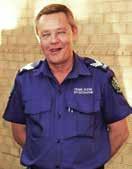
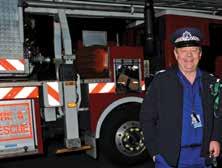
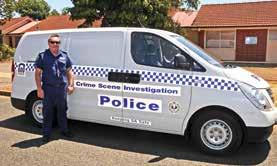

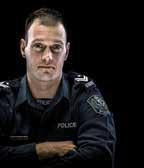


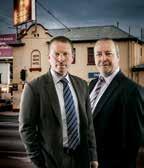
Winner of six international awards in the last two years
Gold for Best Single Issue (Tabbie Awards, USA, 2015)
Gold for Best Focus/Profile Article (Tabbie Awards, USA, 2015)
Gold for Front page (International Creative Media Awards, Germany, 2014)
Silver for Best Single Issue (Tabbie Awards, USA, 2014)
Silver for Cover and Cover Story (International Creative Media Awards, Germany, 2014)
Bronze for Opening Page or Spread (International Creative Media Awards, Germany, 2014)
MATHEW STOCK Senior Constable First Class Elizabeth CIB

STORY Bodies on the line ISSUE June 2009 POSITION Front cover
He had suffered horrific injuries after a suspected house-breaker on a suspended sentence walloped him in the face with a heavy glass bottle. From surgery the morning after the attack, he emerged with 50-odd stitches in his face and neck, and another 10 in his shoulder.
“On the way to hospital in the ambulance, all I could think about was (my partner) Keturah,” he told the Police Journal. “I just remember her coming in and the look on her face, and she just started crying straight away.”
Of his extraordinary resilience, Brett Williams wrote: “When he got back to work, two months after the attack, Stock worked on light duties in the (Port Lincoln) station. But, after a couple of weeks, he was back on the front line.”
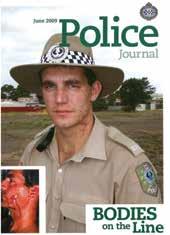
“I got a lot of support after the story came out. People called and e-mailed me to ask how I was going. An instructor on a course I’d done at the academy sent me a long e-mail to say how great it was that I’d made it back to work. He hadn’t known until later, when he read the story, how I got my injury.
“I was reluctant to do the story at first because, when the attack first happened, I struggled a bit with the thought that it was my fault. I thought I got injured because of a lack of police ability or skill or experience. But people at Port Lincoln, especially Luke Abell, the acting sergeant at the time, assured me that wasn’t the case.
“I’d like to think that, by telling my story, I got the message across about going back to work too early after an injury. I said at the time that I thought I went back a bit too early and it was harder than I thought. And nobody should be afraid to ask for help. The support of your family and colleagues is very important.
“I don’t think about the attack much now, but people still come up to me and say: ‘I remember you from the front cover of the Police Journal.’ Police who weren’t in the job at the time hear that, and say: ‘What’s this about?’ So then I tell the story, but that’s about the only time I think about it.
“Keturah and I got married in Botanic Park shortly after the story in 2009. Then we moved back to Adelaide in mid-2010 and had our second child, a daughter, in 2012. So she’s now three and our young fella is six. We wanted to be closer to our families, and I wanted to advance my career at a metro CIB.
“The guy who attacked me died of cancer a couple of years ago while he was on parole. I got an official letter from the parole board about it. I thought if I was happy about it I’d then feel bad for feeling that way. It’s not really me as a person to feel good about a death. I guess I was just indifferent.”
To read the story Bodies on the line, go to PASAweb at pasa.asn.au


Complimentary internet marketing for sale or rental valued at $795.
Membership to Campbells Wholesale – cheaper than retail prices, buy in bulk and save even more. Spend $30 or more in store and receive a twin pack of Kabanos for free. Save up to 25% on a first-year membership. 40% off
and

Another exclusive money-saver the Police Association delivers its members.
Save on homewares, groceries, wine, clothes, cars, restaurants, dry cleaning, photography, paint, accountancy services and more. Log onto PASAweb to find it.