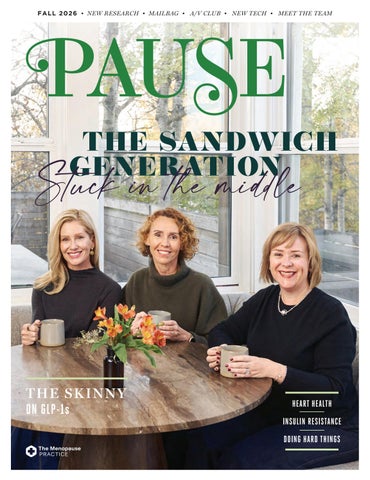
FALL 2026 • NEW RESEARCH • MAILBAG • A/V CLUB • NEW TECH • MEET THE TEAM
THE SANDWICH GENERATION
T H E SKIN N Y ON GLP-1s
HEART HEALTH INSULIN RESISTANCE DOING HARD THINGS
WHO CAN STOP AT JUST ONE PIECE OF CHOCOLATE?! NEW EXCLUSIVE LIMITED EDITION
1 7 5 m c de r m o t ave . · 204. 943.1068 · w ww.u n l u g g ag e.c om
Savour Style & Serenity in
Central Vietnam Indulge your senses on a 10-day culture and wellness tour of Central Vietnam. Your adventure begins in the ancient riverside merchant city of Hoi An, with custom tailoring and shoemaking opportunities and guided tours of both the Ancient Town and a local farm. The tour will offer cooking classes, relaxing beach days, and architectural tours, bookended by 5-star resort stays. Your final destination is a peaceful resort nestled in the lush Hue Valley for spa and wellness treatments. For more information, contact Julie Millar: julie@continentaltravel.ca
CONTINENTALTRAVEL.CA | 204.953.2828
FALL 2026 •
FALL 2026
45
COVER STORY
From peri to post and everything in between
MELINA RECOMMENDS!
NEW RESEARCH
• MAILBAG •
A/V CLUB • NEW TECH •
MEET THE TEAM
TH E SA ND CH GE NE RATIOWI N
THE SKIN NY ON GLP-1s
HEART HEALTH INSULIN RESISTANCE DOING HARD THINGS
IN EVERY ISSUE 8
A MESSAGE FROM MELINA
10 MAILBAG
Hormone therapy, breast cancer, and pregnancy
12 A/V CLUB
Read, listen, watch
14 IN THE KNOW
New research on healthy aging
18 NEW TECH
Progress in pain management
14 28
FEATURES 22 GLP-1S
Reshaping the mind–body connection
28 THE SANDWICH GENERATION PHOTO: IAN MCCAUSLAND, ISTOCKPHOTO
Stuck in the middle with you
THE GUIDE
32 TAKING BACK CONTROL
Insulin resistance syndrome
38 START ME UP!
46 MY LITTLE SWEATER
49 MELINA RECOMMENDS
50 AT THE HEART OF IT
Power breakfasts Cozy fall faves
Prepping your girl for rejuvenation
Menopause and heart health
22
PAUSE About us
@THEMENOPAUSEPRACTICE PUBLISHER AND EDITOR
The Menopause Practice, launched in 2025 by Annabelle Reimer, Melina Elliott, and Erica Henderson, has quickly become a community leader in personalized, evidence-based women's health care. We harness cutting-edge research and technology to treat the whole person through every stage of hormone health.
Lisa Muirhead lisa@poisepublications.com ART DIRECTOR
Leigh McKenzie leigh@hingedesign.ca PRODUCTION DESIGNER
Olivia Guay COPY EDITORS
Our focus on hormone health is supported by our clinical lead, Nurse Practitioner Annabelle Reimer, her team of NPs, Supriya, Anna, Jill, and Crystal; nutrition services by our registered dietician, Angela; mental health support by Carolyn; and bone density and body composition analysis by Erica.
Pantone 1795 C CMYK 9/99/95/1 Pantone Black C CMYK 0/0/0/100
4/c Logo
Our goal is to build a community where women have our full attention to express their concerns, receive the testing they need for proper diagnosis, and work with us on a plan that fits their lifestyle and values. Pause magazine is a collective effort by our team to get evidence-4/c Logo w/ subhead based information out to our community. We weed through the contradictions and new research and distill it to make it accessible to everyone.
Andrée-Anne Boisvert, Tom Penner EDITORIAL BOARD
Melina Elliott, Erica Henderson, Annabelle Reimer PUBLISHED FOR THE MENOPAUSE PRACTICE
by Poise Publications Inc.
PoisePublications.com FOR ADVERTISING AND DIGITAL ISSUES,
Pause is published twice a year—in spring and fall. Each issue, we deliver 15,000 print magazines into the community and encourageBlack Logo w/ subhead our readers to pass their copy along to someone else who could use it once they are done reading. The magazine is also available online in a digital format on our website and on the website of our publisher, Poise Publications.
SCAN THIS QR CODE:
K/O Logo w/ subhead We encourage your feedback! Please contact us anytime—and if you have a moment, fill out our survey on page 54 for a chance to win $100 gift card for our services.
FALL 2026 • NEW RESEARCH • MAILBAG • A/V CLUB • NEW TECH • MEET THE TEAM
THE SANDWICH GENERATION
Co-owners Erica Henderson, Marketing Strategist; Annabelle Reimer, Clinical Lead and Nurse Practitioner; and Melina Elliott, Director of Operations Cover photo at Pineridge Hollow by Ian McCausland Photography talk@ian.ca
T H E SKI NNY ON GLP-1s
HEART HEALTH INSULIN RESISTANCE DOING HARD THINGS
6
FALL 2026
PAUSE
The Menopause Practice offers personalized, compassionate, evidence-based care that empowers women to thrive through every stage of hormonal health. We want to empower every woman to take control of their health and thrive in midlife and beyond.
@THEMENOPAUSEPRACTICE HELLO@THEMENOPAUSEPRACTICE.CA THEMENOPAUSEPRACTICE.CA 204.416.6545 1086 ST MARY’S RD., WINNIPEG, MB © 2026 THE MENOPAUSE PRACTICE
Style for every day— and every getaway. Travel, work, and play in one day? A versatile minicapsule wardrobe from Must Have Pockets creates effortless transitions with style and confidence.
Travel
Work
Play
MustHavePockets.ca | Unit F – 1510 St Mary’s Road | @musthavepocketswpg
PAUSE Welcome
A MESSAGE FROM MELINA
I
cannot believe it is already time for our second issue, and what an issue it is! We are really tackling some big topics in this one—vaginal rejuvenation, GLP-1s, women’s heart health—as well as some fantastic breakfast recipes, media recommendations, and more! Two of the topics that we cover in this issue— insulin resistance and the “Sandwich Generation”— really hit home for me, and I am so happy that we can give them their due. Insulin resistance is something that I have had for probably the entirety of my adult life, but no health care provider ever mentioned it. So, I went on struggling for years until I read an article on metabolic syndrome that described insulin resistance. I started doing my own research and advocating for myself—only then did I start to see improvements. Being smack-dab in the middle of my Sandwich Generation era, Carolyn’s article was so helpful. With my two amazing daughters at home, both going to university, add on my work pressures and extended family responsibilities, some days can feel like a lot. By the time I get home and we have all had supper, all I want to do is sit on the sofa and watch reruns of Virgin River (for its minimal drama)! But I can’t even seem to do that, because as soon as I think, “Okay, I am done. I am going to sit down,” I remember that I haven’t been for my walk yet and start questioning if I ate enough protein today! I am so grateful and proud that we have created something that can help women feel less alone and stop wondering, “Am I the only one?” I hope you enjoy reading this issue as much as we did creating it.
MELINA ELLIOTT
@THEMENOPAUSEPRACTICE
8
FALL 2026
PAUSE
PHOTO: IAN MCCAUSLAND
Co-founder & Director of Operations, The Menopause Practice & Body Measure Inc.
your body changes, your bodyyour changes, so should bra. so should your bra.
Expert Bra Fitting, Cup-sized Swimwear, Quality Undergarments 1765 Kenaston Blvd 160 Provencher Blvd
PAUSE Mailbag
THIS MONTH, NURSE PRACTITIONERS SUPRIYA NISHTALA AND CRYSTAL STEELE ANSWER YOUR MAILBAG QUESTIONS.
When should I start asking questions and seeking treatment for menopause? Women can experience perimenopause symptoms as early as 35, even if they are still having regular menstrual cycles. You don’t need to wait until menopause (defined as one year after your last period) to start hormone therapy. If you are noticing symptoms like sleep disruptions (difficulty falling asleep or staying asleep), hot flashes, heavier periods, or heightened anxiety, seek an assessment. If you are experiencing hormone fluctuations, getting you started on hormone therapy can mitigate symptoms now and prevent the symptoms from getting worse. Women should not suffer in silence. While perimenopause and menopause are natural transitions, scientific research gives us the tools to reduce stressful symptoms and prevent the long-term effects of menopause. —Supriya Nishtala, NP
Can I still become pregnant when my periods are irregular during perimenopause? I get this question a lot from my clients. The answer is “yes”: even if you are in perimenopause, your period has become irregular, and you are on Menopause Hormone Therapy, you can still ovulate and become pregnant. Even though there is some overlap in the types of hormones in Menopause Hormone Therapy and hormonal contraceptives, they are not the same thing. This is good news if you want to get pregnant but are experiencing perimenopause symptoms. You don’t have to choose between treating your symptoms and getting pregnant. However, if you do not want to become pregnant, you should discuss contraceptive options that work alongside hormone therapy. —Crystal Steele, NP
Come and talk to us about options—because you are going to need to laugh, dance, and exercise your way through this midlife rollercoaster more than you ever have.
DO YOU HAVE QUESTIONS FOR OUR NURSE PRACTITIONERS? REACH OUT TODAY: @THEMENOPAUSEPRACTICE | EMAIL: HELLO@THEMENOPAUSEPRACTICE.CA | ONLINE: THEMENOPAUSEPRACTICE.CA 10
FALL 2026
PAUSE
PHOTO: IAN MCCAUSLAND, ISTOCKPHOTO
Is Menopause Hormone Therapy safe for someone with a family history of breast cancer? A family history of breast cancer doesn’t automatically rule out menopausal hormone therapy, and it’s completely understandable to wonder about it. The right answer depends on your personal risk, which is shaped by how many relatives were affected, how old they were when diagnosed, and whether a genetic variant such as BRCA1 or BRCA2 has been identified. Therefore, an individual discussion with your provider is needed to determine if Menopause Hormone Therapy is best for you. It’s also worth knowing that not all hormone therapy is the same. Low-dose vaginal estrogen, used for symptoms like vaginal dryness, painful intercourse, and recurrent urinary tract infections, is considered safe for women with or without history of breast cancer. If you have these symptoms, ask your provider about it! —Supriya Nishtala, NP
Andrea, Mullineux and Leeu, South Africa
Shop local, globally at your neighbourhood wine store Jones & Company Wine Merchants.
Shop online:
Supporting women-owned businesses locally and around the world.
Tina Jones, Owner, & Mike Muirhead, Vice President
Esther, Bodegas Pinuaga, Spain
Donatella and team, Donatella Cinelli Colombini , Italy
Christie, Blue Mountain Vineyard, Canada
1616 St Mary’s Rd @joneswinemerchants JonesWines.com wine@joneswines.com
PAUSE AV Club
WANT TO FEEL SEEN? FOLLOW SOME OF OUR FAVOURITE CREATORS!
@dailybonebuilder
@femalephysiosarah
@themenopausepractice
All of trainer Kaitlyn Zuloga’s short Instagram workouts are designed to build strength, bone density, and balance at home using body weight and occasionally a dumbbell—all critical to maintaining our bone density and lean muscle into our midlife. You can use them for home workouts or to give you ideas to augment your gym workout.
Sarah Percy has a doctorate in physiotherapy and is passionate about pelvic physio. Her Instagram is full of facts, advice, and practical exercises for women experiencing bladder leaks, prolapse, or pelvic pain. She is also developing an app called Pelvic HQ (@pelvicHQ) that will house a 32-week plan for progressive pelvic floor training to support women’s pelvic floor journey from pre-birth to menopause.
The Menopause Practice team brings you all of the science-based research you have been clamouring for on Instagram and Facebook. Based on conversations with our clients and questions from our social media community, we dispel menopause myths, describe symptoms and treatments, provide tips for healthy living, and educate about the services we offer to help you burst into midlife with confidence.
12
FALL 2026
PAUSE
LISTEN
PODCAST
Ready for the playlist of your month? Our KNOW YOUR POWER playlist will remind you that you are a perfectly flawed warrior badass, pull you up by your bootstraps, maybe make you cry a bit, give you a hug, and have you ready to face another day. Featuring Andra Day, Olivia Rodriguez, Alicia Keys, Ciara Blue, Christina Aguilera, Florence + the Machine, Lizzo, and more!
Dr Louise Newson is a British GP who founded the not-for-profit Newson Clinic that promotes evidence-based medical care for women in the UK through education and awareness for both women and health care professionals. Her eponymous podcast (The Dr Louise Newson Podcast) finds her interviewing a diverse range of guests on all things women’s health and lifelong hormone care.
ISTOCKPHOTO
FOLLOW
WATCH:
@urzilacarlson
Urzila Carlson
READ You Are Not Broken by Dr. Kelly Casperson
PHOTO: ISTOCKPHOTO, SCRIBEMEDIA, URZLIA CARLSON
Dr. Kelly has emerged as a major voice in advocating for evidencebased women’s health care in her specialty field as a urologist and pelvic specialist. She is most well-known for her frank and funny discussions of women’s sex lives on her “You Are Not Broken” podcast (imagine Sex with Sue but a little livelier and with a wry sense of humour) and on Instagram (@kellycaspersonmd). Her message: No more suffering in silence! You can have great sex! In her book, Dr. Kelly educates in an easy and straight forward voice about sexual science, psychology, physiology, and effects of the culture we live in on our sex lives in midlife. She covers everything from our unique sexual physiology to a waning libido (and how to bring it back). Her chapter on “Maybe It’s Menopause” covers how the hormone chaos that starts in perimenopause and ends in menopause can affect everything from our desire to our physical ability to have joyful and satisfying sex lives.
If you have seen the viral “Menopause Cop” video that has been circulating this year (or last year? Who knows. Social media time is a flat circle), then you have had your introduction to Urzila Carlson. The South Africa-born New Zealand comedian is gaining traction on many fronts right now, with stand-up specials, an Aussie sketch comedy show, and a new Canadian tour
(called “Fatty on a Yacht”) scheduled for winter 2027. So far, she doesn’t have any Winnipeg dates, but it would be a perfect reason for a girls’ getaway to Vancouver, Calgary, Toronto, Montreal, or Halifax! If you need a hearty laugh and are not queasy about some salty language, YouTube has many of the sketches from her Australian sketch comedy show “Urzila” as well as two of her comedy specials—“It’s Personal” (2016) and “Just No” (2025).
Join our community! Sign up for The Menopause Practice’s twice-monthly newsletter by scanning this QR code:
THEMENOPAUSEPRACTICE.CA
THEMENOPAUSEPRACTICE.CA 13
PAUSE In the Know Act 2: Think your ovaries just roll down the shades and retire after menopause? So did science researchers—until recently! A study in New Scientist suggests that instead of packing it in, ovaries—like us—transform and evolve, finding new purpose in their post-menopausal life. The research is quite young, but the presence of genes linked to inflammation and elevated levels of immune cells (T-cells and macrophages) point to the need for further study to determine exactly what these transformations mean for women’s health.
Skin deep: A recent review published in
Dermatology and Therapy examined the literature around the effects of top-selling nutraceuticals collagen, curcumin (found in turmeric), and glutathione (an antioxidant) on the skin of aging women with declining estrogen levels. While more studies are needed to round out the research and establish dosage standards, they found that all of these had “meaningful dermal benefits, especially in aging women.”
in Drugs and Aging journal tells us that symptoms of ADHD can get worse, that medication that has worked for years may become less effective, and the effects of Menopause Hormone Therapy on ADHD symptoms have been largely unstudied (big surprise). It is critical that your doctor works with your menopause specialist to figure out the right mix of therapies to minimize the symptoms of both menopause and ADHD.
File under “It’s about time”:
Stop the burn: Did you know that
Canada is launching its first national investigator-led study on women’s experiences of menopause and the menopausal transition. The Researching Information, Support, and Equity During the Menopause Transition in Canada (CanRISE) study, to be published in 2027, “will generate a valuable Canadian research dataset to support future research, knowledge mobilization, education, and policy development, strengthening understanding of this stage of life and informing improvements in care and support for years to come.” Let’s hope they “Can-RISE” to the occasion and elevate a diverse cross-section of women’s voices, amirite girls?
Attention please! How exactly do ADHD and menopause interact? The medical field is still learning! A study 14
FALL 2026
PAUSE
chronic urinary tract infections (UTIs), if left untreated, can cause serious outcomes like sepsis or hospital visits, and even be fatal? A recent study published in Urology journal found that women (ages 20-99) with recurring UTIs who were prescribed vaginal estrogen within 2 months of the second UTI had a lower risk of serious adverse outcomes across age groups.
Time to remodel! Did you know that
your gut microbiome composition, diversity, and function go through a “remodelling” process during menopause? According to Current Obstetrics and Gynecology Reports, these changes can contribute to hormonerelated symptoms, including psychological, cognitive, vasomotor (hot flashes), and urogenital symptoms. The good news? You can modify your gut biome with lifestyle changes, which can support transition care options.
POLYCYSTIC OVARY SYNDROME (PCOS) IS NOW OFFICIALLY CALLED PMOS — POLYENDOCRINE METABOLIC OVARIAN SYNDROME.
The condition once known as PCOS has a new name. Why? Because the condition is about far more than ovarian cysts. (In fact, many women diagnosed with PCOS do not actually have ovarian cysts.) The new name better reflects the complex hormonal and metabolic nature of the condition, which can affect insulin resistance, weight and metabolism, skin and hair changes, fertility and cycles, cardiovascular health, mental health, and inflammation. Experts hope the name PMOS will improve awareness, diagnosis, research, and understanding of this incredibly common condition affecting 1 in 8 women worldwide. This change is a major step forward in women’s health.
ISTOCKPHOTO
NEW RESEARCH IN MENOPAUSE AND HEALTHY AGING…
Dancing with myself: A joint study between Kinsey Institute and Womanizer (maker of some of our favourite vibrators) of 88 women ages 40–75 studied the effects of masturbation on menopause symptoms. When they compared weeks of abstinence to weeks where they masturbated 3–4 times, 92% of women reported a decrease in the frequency of experiencing at least one symptom. For example, 42% reported being less anxious and having fewer mood swings, 50% reported being less tired than usual, 25% experienced less difficulty getting to sleep and concentrating, as well as feeling less irritable. Other symptoms that improved were night sweats, depression, hot flashes, and headaches.
Protecting our Team’s Capacity so they Can Protect You Co-owner Shawn Graydon brings that same care to serving clients and the wider industry. Currently President of the Insurance Brokers Association of Manitoba, he invests his energy in relationships and strengthening the profession clients depend on.
People Who Build Each Other Up Creating capacity starts with choosing the right people. Character, aptitude and culture fit matter because someone’s impact reaches far beyond their own desk. We look for people who care, want to learn, ask for help and offer it generously. We also think carefully about how people Behind every business is a person who has taken risks, made sacrifices and carries the responsibility of looking after others. When they call their insurance broker, they want someone who understands what matters to them and will be there when they
AD
At Rempel Insurance Brokers, that human connection is at the heart of what we do. We ask our team to protect people, their livelihoods and everything they have worked hard to build. To do
We are only as good as our team. Taking care of them is part of
Knowing a colleague will help solve a problem or step in
Clients benefit from that shared commitment.
High Expectations with High Support to Match Approximately 80% of Rempel’s business is commercial
also provide the full range of personal insurance, including homeowners coverage, caring for the families and everyday
how we take care of our clients. That belief shapes our culture of capacity: helping people have the knowledge, confidence, energy and support to show up well
lives behind those businesses. Our clients’ needs often involve urgency and complexity. We have high expectations of our response, supported by clear
for others.
A Perspective Shaped by People
direction, ongoing training, accessible resources and
C O and co-owner anice Graydon brings a uni.ue perspective to that commitment. er background in commerce helps her business
pressures,
while
her
background
in
naturopathic medicine gave her a close look at the people
leaders who listen. When someone needs help, we want to understand what would make a difference to support that team member both personally and in taking care of the client. Feeling protected means knowing those conversations are welcome.
carrying them. practice,
essential.
insurance, serving professionals and business owners. We
that well, our people need to feel protected themselves.
In
teams. Building teams that get energy from collaborating is
when needed makes a demanding day more manageable.
need help.
understand
work together across the brokerage and within smaller
she
saw
patients
whose
biggest
obstacle
to
addressing chronic stress was the toxic workplace they returned to every day. They were trying to feel better while spending much of their lives feeling unsupported or overwhelmed. Those experiences stayed with her. Today, anice works with Rempel’s leadership team to intentionally create a different experience for their own people.
Creating an environment where their team
has the capacity, support and resources to thrive shapes both the experience of working at Rempel and the care they provide
Care also shows up in everyday choices: sit-stand desks and walking pads in permanent or flex spaces, healthy kitchen options for a busy week and knowing support is available. We want our people to have energy for their work and their lives outside it8to en'oy one another and feel proud of what we are building together. Because insurance is human to human. The person helping you protect what matters can only do so when they feel supported themselves.
to those who count on them.
Special advertising section
We are a
fully independent insurance broker in southern
Manitoba, serving Canadians from B.C. to Ontario.
(204) 746-2320 I rempelinsurance.com 207 Main St. S., Morris, Manitoba R0G 1K0
Tara Torchia and Shannon Esau (photos by Ian McCausland)
The quiet brick storefront of Liberty Athletic + Medical Supplies on a bustling block of Tache in St. Boniface belies the incredible amount of activity that you will find when you cross the threshold. In addition to the medical and athletic supplies that you would expect—from walkers to custom orthotics to first aid and bracing—attentive and qualified staff with backgrounds in Kinesiology, Athletic Therapy, and Physiotherapy are on hand to guide you through the many services on offer.
Special advertising section
COMPRESSION CARE In addition to general athletic and medical supplies, Liberty carries the largest selection of medical-grade compression garments (including socks, pantyhose, and custom pieces) in the city. Compression garments can support everyday issues like leg swelling and circulation if you work on your feet all day (e.g., health care workers, retail, teachers), travel frequently, have varicose veins, or need support for sport performance or athletic recovery. They can also support clients who require compression for post-surgery recovery to help manage edema and prevent blood clots.
Shannon Esau, associate at Liberty Athletic + Medical Suppliers, is a University of Manitoba Medical Rehabilitation Physiotherapy graduate with 15+ years of experience in the field. Her career started at Grace Hospital, and she has spent the latter part of her career at the Breast Health Centre Lymphedema Clinic as a Certified Lymphedema Therapist (CLT). Shannon brings her experience and passion to Liberty to help women seeking lymphedema
264 Tache Ave | LibertyMed.ca | 204.272.9641
management, compression garment fitting, and breast prosthesis and mastectomy bra fittings. Shannon is interested in all things compression and has become one of three Manitoba clinicians to assess and fit for lipedema. Lipedema has finally received the recognition many have been long awaiting, and Shannon is helping to grow awareness, education, and support for women with lipedema. “I am grateful to have the opportunity to share my knowledge and experience to support women with compression, lymphedema therapy, and lipedema compression management,” says Shannon. She is Liberty’s leader in fitting custom compression garments—including compression sleeves, gloves and bras for lymphedema management, custom garments for those with lipedema and lymphedema, and post-operative chest and trunk compression and recovery garments.
SLEEP THERAPY As we have gained experience working with our customers, we have grown with their needs. Many of our customers also struggle with sleep apnea. In addition to the 25%–30% of men with sleep apnea, up to 15% of women can also be affected, though symptoms may be less obvious. Women’s symptoms often include fatigue, insomnia, morning headaches, mood changes, or nighttime wakefulness, rather than loud snoring alone. Because these symptoms may be mistaken for stress, hormonal changes, or mental health conditions, sleep apnea is frequently underdiagnosed in women. As a result, we developed our sleep therapy services under the name Liberty Sleep. We offer sleep apnea education, home sleep study testing, CPAP setup, mask fitting, and long-term therapy support.
THE UNEXPECTED GIFT BY LIBERTY Cancer can change your life’s direction. It is a new path that can be fraught with uncertainty, anxiety, and sometimes a brand-new perspective about who you are in relation to your body. This path is deeply personal, but The Unexpected Gift by Liberty is a safe space to find support and advice along the way. The Unexpected Gift by Liberty is a toolbox of sorts: you probably won’t need everything we offer, but we can help you navigate, make educated decisions about your care options, and prepare the best you can for the possibilities. Here, you will find support, knowledge, and tools for recovery. Tara Torchia founded The Unexpected Gift after her breast cancer journey and brought it to Liberty in December 2025. She started the store to support the cancer community because, in her words, when you start your cancer journey, “You don’t know what you don’t know.” In addition to being a kind and caring resource for women just embarking on their cancer experience, Tara is our breast health and wig specialist. Alongside our Liberty staff, Tara is a certified breast form, mastectomy bra, and wig fitter with a decade of trusted relationships across Winnipeg’s breast health and cancer care community. She can guide you through our chemo- and radiation-safe cosmetics and skin care and can help you find a custom fit for wigs and hair toppers, breast prostheses and shapers, and swimwear and mastectomy bras. The Unexpected Gift is a safe space where you can ask questions about what might lie ahead. You can talk to people with lived experience within the cancer community about what you might need to find yourself within the cancer process—from diagnosis to treatment to recovery and life after cancer. Liberty focuses on guided personal care during private, unhurried appointments, proper measurement and fitting, insurance support, and clear guidance on how to use our products. Liberty is locally owned, locally staffed, and accountable to the Winnipeg community we serve. Book a fitting for a breast prosthesis, wig fitting, or custom compression garments on our website or give us a call.
@libertyathleticmedical
by Liberty
EMSCULPT ® NEO BY BTL
NEW TECH FOR PAIN RELIEF
I
n 2024, a review in Climacteric ( journal of the International Menopause Society) introduced the term “musculoskeletal syndrome of menopause” for a cluster of symptoms driven
by falling estrogen: joint pain, inflammation, loss of lean muscle mass, loss of bone density, progression of osteoarthritis, and connective-tissue changes, including tendinopathy and frozen shoulder. For many women, these arrive before the symptoms they expect in
70% 25% 40%
f women will o experience musculoskeletal syndrome of menopause of women will experience severe symptoms f women will o have no structural findings to explain the pain
This last statistic is significant — in roughly four of 10 cases, nothing appears structurally wrong in imaging. This means that the pain is often functional and muscular in origin and can therefore potentially be addressed by restoring muscle strength and joint mechanics.
menopause and get attributed to age or wear and tear rather than to hormonal change.
IF YOU HAVE QUESTIONS ABOUT
EMSCULPT NEO, CONTACT THE MENOPAUSE PRACTICE TO BOOK A FREE 10-MINUTE CONSULTATION:
@THEMENOPAUSEPRACTICE
18
FALL 2026
PAUSE
BTL AESTHETICS
204.416.6545.
PAUSE Tech FACT: ESTROGEN WITHDRAWAL ACCELERATES MUSCLE LOSS Across the menopausal transition, lean body mass falls roughly 0.5% per year while fat mass rises about 1.7% per year. In pre-menopausal women, lean mass is around 2.5% lower in perimenopause and 5.7% lower post-menopause. Post-menopausal women are close to three times more likely to develop sarcopenia (muscle loss). FACT: WEAKNESS AND PAIN REINFORCE EACH OTHER Muscle supports and stabilizes your joints. As strength and control decline, load shifts onto joints and connective tissue, discomfort rises, activity falls, and the loss accelerates. Resistance training is the first-line answer — but it is genuinely hard to begin when movement already hurts. That gap is where new technology can help.
WHAT IS EMSCULPT NEO®? EMSCULPT NEO® is a non-invasive device delivering simultaneous, synchronized HIFEM® (High-Intensity Focused Electromagnetic) energy and radiofrequency heating through an applicator placed on the skin. The HIFEM® field triggers thousands of supramaximal muscle contractions— deeper and more complete than a person can produce voluntarily. The patient stays fully clothed, lying or seated, for about 30 minutes. No needles, no incisions, no anesthetic, no recovery time. Initially, EMSCULPT NEO treatments focused on body contouring — clients were reporting an average 25% increase in muscle mass and up to 30% fat reduction in the treated areas. However, in October 2024, EMSCULPT NEO® received FDA clearance for stimulating neuromuscular tissue in the arms and legs for rehabilitation and functional wellness (i.e., strength, mobility, comfort, and the preservation of muscle). It is cleared for: ✓
Re-educating muscles
✓
Relaxing muscle spasms
✓
Preventing and decelerating muscle atrophy due to disuse
✓
Increasing local blood circulation
✓
Maintaining or increasing range of motion
✓
Preventing post-surgical calf venous thrombosis
FUNCTION AND LONGEVITY
Maintaining muscle is closely tied to lifelong independence: sarcopenia is associated with falls, fractures, reduced mobility, and loss of autonomy—and the menopausal transition is where women's muscle loss measurably accelerates. EMSCULPT NEO does not replace critical lifestyle decisions for living a healthy post-menopausal life—resistance training, a protein-rich diet, bone health, and, where indicated, Menopause Hormone Therapy—but it can support the systems that keep you lifting, moving, and working through a decade when many women quietly stop doing all three.
WOMEN AND CHRONIC PAIN
The Canadian Pain Task Force found chronic pain is more common among women than men at every age, with women aged 65 and older consistently reporting the highest prevalence of any group in the country. Pain severe enough to prevent daily activities was associated with a 13% reduction in employment and $22.5 billion in lost production in 2019 alone. This is not just about pain mitigation; it is an independence and income issue for women. How can EMSCULPT NEO help relieve chronic or acute pain? Muscle activation and relaxation: Muscle weakness, tightness or imbalances can be linked to chronic pain. EMSCULPT NEO’s non-invasive HIFEM® technology triggers deep, involuntary muscle contractions to relax tension and support better muscle function. Improved circulation: Enhanced circulation reduces inflammation, promotes healing, and supports overall tissue health.
THEMENOPAUSEPRACTICE.CA 19
Planning starts with a focus on the bigger picture. At Lawton Partners, we guide our clients with insight and experience. We believe it’s important to be leaders in our community as well as in business.
You belong in the company of leaders.
lawtonpartners.ca 20
FALL 2026
PAUSE
ANNIVERSARY SINCE 1 974
@reallygreatsite
BUSINESS GROWS
AT THE SPEED OF RELATIONSHIPS
CONVERSATIONS
FIND US
THAT JUST HIT DIFFERENT
On-line
The Winnipeg Women’s Community brings together thoughtful, driven women through events, memberships, and curated experiences designed to foster connection, perspective, and momentum. Whether you’re here to connect, learn, or expand your business, there’s a place for you inside this community.
www.winnipegwomenscommunity.com www.winnipegwomenscommunity.com/the-alliance On Instagram
@winnipegwomenscommunity @the.alliance.wpg
PAUSE Mind
GLP-1s
RESHAPING THE MIND–BODY CONNECTION By Annabelle Reimer, Nurse Practitioner
OUR BODIES, OUR CULTURE
22
FALL 2026
PAUSE
ISTOCKPHOTO
G
LP-1s (often known by common brand names like Ozempic or Wegovy) and their drastic effects on weight loss first bubbled into the public consciousness as we rubbed our eyes and emerged from COVID hibernation. It started with whispers and arched eyebrows as some very highprofile women burst back onto our social media as the embodiment of the stereotypical “aspirational after” photos. Many of our cultural touchpoints of “relatable” women—those who publicly struggled with or publicly accepted that they did not conform to celebrity size zero, like Mindy Kaling, Amy Schumer, and eventually, Oprah—emerged from COVID hibernation completely physically transformed. They were, of course, subjected to a tidal wave of contradictory judgements, from betraying the body-positivity movement to admiration for “overcoming” a perceived flaw (rooted in all of the deep cultural feelings we attach to the size and shape of our bodies). Cultural conversations around GLP-1s have evolved as we have seen more research and as they have become more generally accessible (though not without barriers). The early harsh judgements that GLP-1s are an “easy way out” (implying that people must suffer for better health) and the complicated feelings we have around “thin” bodies, self-control, and the social surveillance of women’s bodies are slowly transforming into a conversation about metabolism, the brain’s reward systems, insulin resistance, and our changing menopausal bodies.
THE SCIENCE OF GLP-1S: THE MIND–BODY CONNECTION The elimination of “food noise”—the constant, intrusive, and obsessive thoughts about eating—is one of the most profound psychological effects of GLP-1 medications. Rather than a simple matter of willpower, this mental quiet is achieved through complex biological mechanisms that target the brain's reward centres and homeostatic systems.
THE MENOPAUSE CONNECTION Post-menopause, our bodies’ estrogen production drops precipitously. The changes that ensue mean that GLP-1s can have a positive effect. For example, menopause increases metabolic dysfunction for women. A reduction in estradiol increases risk for insulin resistance, decreases muscle mass, and affects recovery post-work out.
THE TREATMENT REWIRES YOUR BRAIN’S REWARD SYSTEM.
Food noise is heavily driven by the mesolimbic dopamine pathway, which regulates reward, pleasure, and addiction. In a dysregulated metabolic system, unhealthy (but delicious) high-fat, high-sugar foods trigger massive dopamine surges, creating an addictive loop of craving and anticipation. GLP-1s dampen the dopamine surge typically triggered by the sight, smell, or thought of unhealthy foods, effectively lowering the perceived reward and halting the addictive craving cycle. The GLP-1 that your body naturally produces (and its protective effects on food noise) lasts only 1–2 minutes; synthetic GLP-1s are modified to last 5–7 days, providing continuous, stable saturation of brain receptors and consistently turning down the volume on food noise. IT RESETS YOUR METABOLIC THERMOSTAT (THE HYPOTHALAMUS).
Metabolic dysfunction can cause leptin resistance and alter hunger hormone (ghrelin) signals, causing the hypothalamus to constantly broadcast a false emergency signal that the body is starving. GLP-1s stimulate proopiomelanocortin neurons, which promote satiety, while inhibiting neuropeptide Y and agouti-related peptide neurons, which stimulate appetite. This shifts the brain from a state of chronic starvation signalling to a state of persistent metabolic safety. IT SLOWS DOWN HOW QUICKLY YOUR STOMACH EMPTIES INTO THE SMALL INTESTINE.
ISTOCKPHOTO
Because food remains in the stomach longer, the physical stretch receptors in the stomach wall stay activated, which signals to your brain (via the vagus nerve) that you are full and do not need to seek out food.
Annabelle Reimer is dedicated to shepherding women through the transitions intrinsic to midlife care. As the first Menopause Society-certified Nurse Practitioner in Manitoba (and a partner in The Menopause Practice), Annabelle is uniquely qualified to give us the rundown on what to expect when you’re transitioning.
CARDIOVASCULAR RISKS INCREASE VISCERAL FAT (AROUND ORGANS) INCREASES EXCESS BODY WEIGHT SHIFTS TO THE ABDOMEN
LOW ESTROGEN
POST MENOPAUSE
INCREASE IN BODY WEIGHT
DECREASING MUSCLE MASS
LOWER METABOLIC RATE
HORMONAL FLUCTUATIONS CAUSE JUNK FOOD CRAVINGS
GLP-1s reduce food cravings and inflammation/insulin resistance. When used correctly (consuming enough protein, nutrient support, and exercise are critical to maintaining your health), they can help women reduce the weight gained through this transition, which ultimately decreases cardiovascular risk for many.
WHAT I AM HEARING FROM MY CLIENTS WHO HAVE CHOSEN TO TRY GLP-1S: • They are noting a general reduction in swelling and inflammation. • Food noise—always feeling hungry, constantly battling cravings for unhealthy food—is a major barrier to weight loss. GLP-1s are silencing these voices, and my clients feel they have the mental space to choose foods for their nutrient benefit rather than battling a hyperfocus on feeling hungry and dissatisfied. • With a weight shift, clients are reporting a reduction in knee and foot pain, which is a relief for everyday life and motivating for other forms for activity that women need to stay healthy and strong during menopause—strength training, exercise, sleep.
One main barrier to accessing GLP-1s is the cost. Many insurance companies deny coverage for weight loss medications. Some that do cover it cap the coverage. For example, one insurance company provides a “lifetime” benefit of $2000—with the cost of one brand averaging $350+per month, this coverage is far from adequate. As with any medication that is treating a dysfunction (in this case, metabolic), most people will need to stay on it for life to stay regulated. For example, if you take medication for a hypoactive thyroid, you can’t just stop once it’s under control. The medication is the thing keeping it regulated. Another challenge for GLP-1 users is the drastic change in how they look and how they feel. Though there are many positives, there are also psychological adjustments that might need support. For example, while the quieting of “food noise” will provide relief from the constant distraction, it can also strip away a primary coping mechanism. For many individuals, eating, drinking, or impulsive behaviours function as a reliable, readily available (and in many cases, socially encouraged) system for emotional regulation. Food and substances are highly effective at numbing uncomfortable emotions, anxiety, and past trauma. When that system is suddenly deactivated by a drug, it triggers a distinct and often intense psychological adjustment process. This can result in a range of reactions, which can be more or less intense, depending on the complex workings of our emotional lives.
THE VOID: Patients frequently describe an unsettling sense of emptiness or boredom. The hours previously spent planning, acquiring, consuming, or recovering from a coping behaviour are suddenly vacant, leaving a literal void in the daily routine. THE RETURN OF RAW EMOTION: Without the familiar shield of food-based rituals, raw anxiety, unresolved grief, or depressive symptoms can flood back into the patient's awareness. This is why some individuals experience an unexpected uptick in anxiety or mood volatility during the first few months of successful GLP-1 therapy. IDENTITY LOSS: Food can feel like a reliable companion that never judged and was always available. It is also the epicentre of many social and family rituals. Patients frequently undergo a legitimate grieving process. They are mourning the loss of a lifestyle, a comforting ritual, a way to connect to their loved ones, and a reliable source of identity. Identity can also be challenged by your connection to your body. If your weight loss is rapid, it can be difficult for your mind to catch up. Suddenly, you may feel hyper-visible and scrutinized. Well-meaning compliments can feel like thinlyveiled criticism of who you have always been—or even as though your “new” socially acceptable size is now making other people around you more comfortable, as if that were your problem, not theirs, to work on. The sudden onslaught of feedback can also tempt you to keep pushing to lose weight beyond what is healthy. These feelings of social scrutiny and body dysmorphia can be unsettling and even dangerous to your physical and emotional well-being. Having a good emotional support system (be it a good friend or counsellor) is critical to working through those thoughts and feelings.
ISTOCKPHOTO
BARRIERS AND CHALLENGES
THE ADDICTION CONNECTION
ISTOCKPHOTO
Wider use of GLP-1s in connection to addictions looks promising, though research is in its early stages. Because GLP-1s interrupt the craving–reward cycle linked to the mesolimbic dopamine system, the medical community noted that many GLP-1 patients told them that their desire to drink alcohol or smoke simply evaporated after starting the medication. Subsequent research has found that GLP-1 receptor agonists disrupt the craving–reward addiction loop in three main ways: by blunting the dopamine high, decoupling the trigger from the craving, and targeting the communication between the prefrontal cortex (responsible for impulse control) and the deeper, primitive reward centres.
Clinical trials have shown positive results for reductions in the number of heavy drinking days and overall alcohol consumption in people with alcohol use disorder, a reduction in craving for those with opioid addictions, and potential use in curbing behavioural addictions like gambling and shopping. While the scientific momentum is incredibly strong, researchers are working through several critical nuances. Most data linking GLP-1s to reduced addiction has been studied in patients who also have obesity or type 2 diabetes. Current trials are focusing on how effective these drugs are for individuals with a normal body mass index (BMI) to ensure that the medication can treat addiction without causing unsafe, unintended weight loss.
February 11, 2027 Fundraiser in support of the Canadian Museum for Human Rights Tickets on sale now at humanrights.ca
Presented by:
A Woman’s Body Changes Every
7 Years
At Pocca Poca Spa, an ancient map of women’s health carries a message: care for yourself before your body has to ask.
In Eastern wellness philosophy, written more than 2,000 years ago, a woman’s life moves in seven-year cycles.
28 35 42 49 56 your body at its fullest
recovery starts to slow
it begins to show outside
Where are you now?
Special advertising section
From 35, fatigue starts to linger, and by 42, it shows. You see dullness, spots, and the first grey hairs. At 49 comes menopause, where hormones shift, sleep breaks, anxiety rises. It’s not an ending, but a turning point that asks for care.
the biggest shift of all
each stage leans on the last
She knew it was too late for her. My mother kept going no matter what. She cared for everyone else and never put herself first. Her hands and feet were always cold.
The cycle can’t be stopped, but today is the youngest day of the rest of your life.
So many women are just like her, waiting until they are sick to finally take care of themselves. Health cannot wait. I never want my own children to lose their mom so young. Pocca Poca Spa was born from grief, and from the lesson she left me.
Why we started Pocca Poca Spa in Winnipeg
My own turning point
My mother was diagnosed with terminal cancer at only 54. Our family tried everything that might give her strength, or more time.
Nine years after my husband and I opened our doors, I entered perimenopause myself. I recognized the signs my mother had ignored, like bloating, poor circulation, missing a balance.
Around then, Ganban-yoku was spreading across Japan, so I took her to try it. She was only strong enough to stay ten minutes. Afterwards, she said, “I wish I had done this before I got sick.”
Many women shrug, “It’s just menopause. What can you do?” When I gave my body real support, I felt like myself again. This stage is not the worst time. It is the last great opportunity to prepare for a long, healthy life.
What Helps You can’t stop the cycle. You can prepare for it.
Warmth.
Blood.
Rest.
Heat the lower back and belly, not just the shoulders. Eastern medicine reads cold feet as a sign your circulation needs help.
Warm food over raw, iron over caffeine. In Eastern medicine, Blood is built in the gut.
Eastern medicine says Blood is restored between 11 pm and 3 am. Sleeping before eleven does more than an hour after.
Gentle heat for a changing body
You are welcome exactly as you are, and many guests come alone. With Japanese hospitality and the warm stones beneath you, you can finally put down what you have been carrying.
Pocca Poca Spa’s signature service is Ganban-yoku, Japanese hot stone bathing. You change into a soft kimonostyle outfit and lie down on beds of gently warmed natural gemstone. Unlike a sauna or steam room, it is never aggressive. It is mild enough for many guests to fall asleep, yet it reaches deep into organs, muscles and bones. So many women live part hot, part cold. A flushed face, icy hands and feet. Gentle, even heat warms the skin, so blood vessels widen and more blood flows near the surface, and helps the body settle into rest. In Eastern medicine, warmth gives the liver, kidneys and intestines a chance to work in harmony again. Go at your own pace. Lie on the stone, cool off in the lounge, then go again.
This spa is the rest I wish I could have given her. Come lie on the warm stone bed with massage, and begin before your body has to ask. Founder / Mieko Miyashita
Learn more at
pause.poccapocaspa.com 204.488.1314 Unit 3 – 840 Waverley St, Winnipeg Japanese Thermal Wellness and Shiatsu Massage
Scan to learn more
THE SANDWICH GENERATION
...DOES THIS COME WITH MUSTARD?
By Carolyn Nykiforuk, MSW
We are the filling in an intergenerational sandwich—and it’s feeling claustrophobic in here!
28
FALL 2026
PAUSE
G
rowing up, you probably didn’t anticipate that in 2026, your role would include caring for a generation of “children” well into their 20s who are still in school, working but unable to afford their own place, or struggling with day-to-day living. Our parents are living longer with more complex needs, and the work of that caregiving is spread over fewer (or no) siblings. Many of us are at the peak of our careers, and we are doing it all while navigating immense changes in our own bodies as we move through peri/menopause.
ISTOCKPHOTO
Even if you haven’t heard the term “Sandwich Generation,” I can guarantee you or someone close to you is feeling its effects: managing your life, relationships, and career while trying to help your children launch and care for aging relatives.
NURTURE THE FILLING THAT LAYER OF PROTECTIVE BUTTER: BOUNDARIES
You are not crazy; you are tired. The demands are real. The reserves are low and impacted by this physiologically transformative season of life. Navigating the needs of young adults and aging parents can consume significant resources— mental, physical, and financial. If you are still doing your adult child’s laundry or driving them to and from school, I invite you to reconsider. If your aging parents have decreed you are the only one who can take them shopping or clip their toenails while they insist on living in their two-story home on an acreage, review your options. People-pleasing has been a mainstay for our generation, amplified if you are a first-born daughter or someone who learned your worth is grounded in your empathy and focus on others. Ultimately, the people we love are rarely illintentioned, but they are conditioned by how we treat them and allow them to treat us. If we condition dependence, it is unfair to expect independence. If we condition complete availability, it is unfair to expect others to appreciate that we, too, need a break. The filling of any sandwich is the star. I encourage you to centre yourself in your life the same way you centre the filling in a good sandwich. This may take practice, given the decades of your own conditioning to centre the “bread” generations. I assure you it is protecting your own longevity.
Here are three things you can practice to start centring the filling (that’s you): Stop doing for your adult children what they can do for themselves. The learning comes from the struggle. If we prevent the struggle, we impede the learning. Stop enabling your aging parents to live in situations that are only sustainable because of your efforts. Access supports and resources. If your parents are unwilling to accept those supports, consider if you are willing to die in order for them to live, because it is costing you dearly. And sadly, letting things fall apart is sometimes the only path to change. Make time for you. To walk, to be still, to fuel your body with foods you love. Pay attention to signals your body is sending that something may be off. Make the appointment with your health care provider even if you are scared. Lean on the people in your life who are also navigating this sandwiched season. You are not alone. And we are all learning how to navigate the current gifts and challenges.
Carloyn Nykiforuk, Master of Social Work Carolyn has extensive experience working with anxiety, depression, women’s health, advanced illness, caregiver burnout, grief, and sleep concerns. Her goal is to create a calm, supportive environment where women can better understand themselves, build emotional resilience, and feel empowered to thrive through perimenopause, menopause, and beyond.
THEMENOPAUSEPRACTICE.CA 29
RESOURCES
Asking for help is difficult, so here is the first step: finding helpful resources. The Winnipeg Regional Health Authority’s Geriatric Mental Health Team offers resources for parents who might be experiencing mental illness onset over the age of 65. For a consultation, call 204-982-0140. Their Support Services to Seniors page offers health care support, social opportunities, community meal programs, and tenant resource programs. (wrha.ca/support-services-to-seniors) The Alzheimer Society of Manitoba offers programs like First Link, Minds in Motion, and the Dementia Helpline to support parents with dementia and their caregivers. 1-800-378-6699 in Manitoba, 204-943-6622 in Winnipeg, or email support@alzheimer.mb.ca Need help setting boundaries? Taking care of your own mental health will help. Make an appointment with a counsellor to help you make a plan. Carolyn offers counselling services through The Menopause Practice, in person or by virtual appointment. Call 204-416-6545 to book an appointment.
DO YOU OR SOMEONE YOU ARE CARING FOR NEED IMMEDIATE HELP? MANITOBA HAS WELL-ESTABLISHED CRISIS HOTLINE SERVICES, INCLUDING: SUICIDE CRISIS HELPLINE: dial 988 (it’s toll-free and open 24/7)
KIDS HELP PHONE: 1-800-668-6868 or Text CONNECT to 686868
30
FALL 2026
PAUSE
ISTOCKPHOTO
KLINIC CRISIS LINE: 204-786-8686 | 1-888-322-3019 | TTY 204-784-4097
This holiday season, celebrate with friends, family or co-workers at Winnipeg’s premier restaurants and event centres—or have WOW! Catering provide everything you need for your get-together!
So, will it be our place—or yours?
Masonic
Memorial Centre
PAUSE Body
TAKING BACK CONTROL: INSULIN RESISTANCE SYNDROME Chances are you have heard the term “insulin resistance” but don’t know exactly what it is. What you need to know is that the chances that it will affect your body and your health greatly increase after menopause. It is very important to understand, though, because it is associated with a higher risk of developing
32
FALL 2026
PAUSE
multiple chronic diseases, including fatty liver disease, type 2 diabetes, cardiovascular disease, many types of cancers, and neurological conditions such as Alzheimer’s disease. In fact, it affects so many systems that it may be the most important health concern of modern times.
ISTOCKPHOTO
By Angela Martens, Registered Dietitian
WHAT IS INSULIN RESISTANCE SYNDROME?
I
nsulin resistance was first identified in the 1980s by Stanford endocrinologist Dr. Gerald Reaven, who initially coined it “Syndrome X.” Since then, it has gone by many monikers, including insulin resistance syndrome (IRS), metabolic syndrome, and impaired insulin sensitivity. “Insulin resistance” is a vague, nonspecific term that is best understood through the tissues where it typically occurs—in your muscle, adipose (fat), and liver. More recently, we have discovered that it can also occur in the brain. To understand insulin resistance, we must first understand the various roles of insulin, the master regulator of our metabolism. When we eat, the beta cells in our pancreas are called on to produce insulin (a hormone). Once secreted by the pancreas, insulin enters the portal vein and travels to the liver. A healthy liver removes 50%–70% of the insulin, and the remainder shows up in the bloodstream.
Insulin is a signalling hormone in the body. Its three primary functions are to:
ACTIVATE SIGNALLING PATHWAYS in muscle cells to promote the uptake of glucose from the blood. This happens when we are sedentary but increases during muscle activity or exercise. The body needs to keep blood glucose levels in check because chronically high levels can eventually start to damage our blood vessels and organs.
ISTOCKPHOTO
STOP THE RELEASE OF FAT from our adipose cells into the blood (i.e., prevent fat breakdown, which is also called lipolysis). When insulin is working correctly, it signals that the body has plenty of energy from food and tells the fat cells to hold onto their stored fat. If insulin fails to block this fat release, it can lead to high levels of free fatty acids in the blood. High levels of free fatty acids in the blood further impair insulin signalling and can cause IRS in the liver and muscle. INHIBIT THE RELEASE OF GLUCOSE from liver cells by blocking liver glycogen breakdown (also known as glycogenolysis). This is important to stop the liver from releasing extra glucose into the blood when glucose levels are already high. This is one mechanism of action of Metformin, a common diabetes medication.
DID YOU KNOW: 90% of the glucose in the blood after a meal is taken up by our muscles, which is why muscle is often referred to as a “glucose sink.” This also explains why muscle loss can contribute to or worsen insulin resistance—important to remember in your menopausal years when low estrogen levels can cause muscle loss. A high-protein diet and resistance training can help preserve and build those muscles.
THEMENOPAUSEPRACTICE.CA PAUSE SPRING 2026 33
A person with three or more of the following criteria has IRS: Large waist circumference: > 102 cm in men; > 88 cm in women High blood pressure: > 130/85 mm Hg or on medication Low HDL cholesterol: <1.0 mmol/L in men; <1.3 mmol/L in women High triglycerides: >1.7 mmol/L or on medication High blood glucose: > 5.6 mmol/L or on medication
A fatty liver can also contribute to hyperinsulinemia. Fatty liver cells cannot effectively bind and remove insulin from the portal vein during the first pass from the pancreas, so a greater proportion of insulin ends up in the bloodstream. These same cells struggle to bind, internalize, and degrade insulin coming back to the liver from the systemic circulation. This means that your liver will struggle to remove insulin from the bloodstream after eating.
DID YOU KNOW? A 2020 CANADIAN LONGITUDINAL STUDY, WHICH INCLUDED 10,035 POSTMENOPAUSAL WOMEN, SHOWED THAT ONE-THIRD OF THESE WOMEN MET THE CRITERIA FOR IRS.
HOW IS INSULIN RESISTANCE DIAGNOSED?
WHY ARE POST-MENOPAUSAL WOMEN AT HIGHER RISK OF DEVELOPING IRS?
This is tricky. Insulin resistance does not typically have obvious symptoms, but there are five criteria that are measured to get an IRS diagnosis—waist circumference, blood pressure, HDL (so-called “good” cholesterol), triglycerides, and blood glucose. Additional markers can identify the problem even earlier, including a high fasting insulin level (measured by a blood test), high visceral adipose tissue (measured by a DEXA scan), or high levels of fat in the muscle (measured by an MRI). Not all physicians will look for these earlier markers.
Angela Martens, Registered Dietician Angela is passionate about empowering her clients to optimize their nutritional health while helping them gain a basic understanding of what their body is actually doing with the food they eat. In her 35 years of practice, she has seen the science of nutrition evolve, which drives her to continually integrate new evidence into her practice.
34
FALL 2026
PAUSE
IRS can result from rare genetic conditions and certain medications such as corticosteroids, HIV treatments, and some psychiatric medications. IRS is acquired—not inherited—and is usually driven by hyperinsulinemia and excessive fat accumulation in our cells. The menopause transition puts women at higher risk of developing IRS due to several factors: FAILING ESTROGEN LEVELS lead to more fat being deposited into the abdominal cavity (an increase in visceral fat). HIGHER CORTISOL LEVELS due to disrupted sleep and/or stress. A LOSS OF MUSCLE MASS, which often starts in midlife (the “glucose sink” gets smaller).
ISTOCKPHOTO
When insulin resistance develops in the cells of any of these tissues (muscle, adipose, or liver), the signalling pathways become impaired, and the cells stop “listening” to insulin’s instructions. If these tissue cells accumulate excessive amounts of fat, they stop responding effectively to insulin signalling. Excessive fat in muscle cells (called myosteatosis) will reduce the muscles’ ability to take up glucose from the blood, your pancreas will secrete more insulin, and insulin levels will increase in the blood (called hyperinsulinemia), further disrupting insulin signals.
HOW CAN YOU PREVENT IRS IN PERIMENOPAUSE AND MENOPAUSE? The great news is that there are choices you can make right now to improve your insulin resistance.
Diet: Limit foods and beverages that are high in sugar and ultra-processed; avoid excessive alcohol intake. These diet choices can increase fat accumulation, particularly visceral fat in your organs and fat within your muscles. Reducing total carbohydrate intake can help, as carbohydrates raise blood glucose and insulin levels more than dietary protein and fats. Eating less frequently throughout the day can also help lower insulin output from your pancreas. Fewer “fuel surges” lead to less insulin production.
SYMPTOM SPOTLIGHT:
Physical Activity: Engage in regular physical activity and make sure to include weight-bearing exercise several times per week. More muscle mass leads to better blood glucose management, and active muscles tend to store less fat. Healthy Sleep & Lower Stress: Prioritize good sleep and find ways to manage stress to help lower cortisol production (high cortisol can worsen insulin resistance). Medications & Natural Health Products: Speak to your doctor or nurse practitioner about potential pharmacological agents or supplements that may be helpful in conjunction with the above lifestyle modifications.
MENO BELLY
Where did this belly come from? Many women discover a brand new pooch forming at their beltline in perimenopause—even though they are maintaining the same healthy diet and exercise regime that has always worked for them. And that can be incredibly frustrating! But this is not a lifestyle issue—it’s an estrogen issue. One of estrogen’s jobs throughout our reproductive lives is to direct subcutaneous fat (the fat under your skin that you can pinch) to your hips and thighs (this is relative, based on your natural body shape). During perimenopause, your estrogen levels can fluctuate wildly. When estrogen levels are lower, more testosterone is available, which directs fat to the belly. Fat that heads to your belly is often stored as visceral fat (as opposed to subcutaneous fat). You can’t pinch this kind! Visceral fat wraps around your organs to protect them—in small amounts it is healthy! However, when you store too much visceral fat, it not only contributes to a wider midsection, it can also contribute to chronic low-level inflammation associated with heart disease and high blood pressure, dementia, cancer, type 2 diabetes, arthritis, and other conditions.
WHAT CAN I DO ABOUT IT?
ISTOCKPHOTO
1. Insulin resistance is a trigger for belly weight gain. Follow the same advice as you would for reducing that belly fat: •
STOP SNACKING & GRAZING: Eat three high protein/low carb meals per day comprising of whole foods (as opposed to processed foods).
•
MOVE YOUR BODY: Engage in resistance training 2–3 times per week to reduce overall body fat (spot training doesn’t work), build lean muscle mass, and burn calories efficiently.
•
PRIORITIZE SLEEP: Inadequate sleep increases cor-
tisol production and sweet cravings. Why do you crave sweets? A body with healthy sleep patterns produces leptin—a hormone that actually controls appetite; sleep deprivation makes your body release ghrelin, a hormone that makes you crave junk food! 2. Consult your menopause caregiver about Menopause Hormone Therapy to stabilize those estrogen levels in your body for better sleep and to reduce joint pain and fatigue to support physical activity. 3. Monitor your visceral fat. A Dexa scan, often used to measure bone density as we age, can also measure visceral fat. The more you understand your body composition, the easier it is to set and achieve healthy lifestyle goals. It is important to highlight here that severe calorie restriction is not an effective way to reduce belly fat. In fact, it can spike your cortisol levels, slow down your metabolism, and break down your lean muscle mass—the opposite of what your body needs!
If I Knew Then What I Know Now
Financial Advice to my Younger Self with Rica Guenther, CIM® Rica Guenther is a Senior Wealth Advisor and Insurance Advisor at Wellington-Altus Private Wealth, where she helps clients simplify the complexity of managing and transitioning their wealth. Rica guides individuals and families through life’s pivotal moments—retirement, business exits, loss, divorce, generational wealth transfers, and any major lifestyle shifts. Because wealth is more than numbers—it’s a tool to live the life you want.
Special advertising section
A
fter nearly three decades of working with affluent families, business owners, and successful professionals, I have witnessed firsthand the opportunities, complexities, and responsibilities that often accompany wealth. While my role as a wealth advisor is multifaceted, at its heart, it is about helping clients make their money work smarter. My purpose is to help answer an important question: What is all of this for? When financial decisions are aligned with what matters most, people can simplify their financial lives, make confident choices, and enjoy greater peace of mind. One observation continues to stand out. Regardless of net worth, family dynamics, or the complexity of a financial situation, the most successful outcomes tend to belong to those who take action. Thoughtful planning, even when started later than intended, can have a
profound impact on financial security, family well-being, and the legacy you hope to leave behind. The truth is, it’s rarely too late to make meaningful progress. Throughout my career, I’ve come to appreciate a handful of foundational principles that consistently help people build stronger financial futures, protect what matters most, and navigate life with greater confidence. They are not complicated, but they are remarkably powerful. When applied consistently, these lessons can improve decision-making, create resilience through life’s transitions, and increase the likelihood of achieving both financial success and personal fulfillment. In many ways, they represent the advice I would offer my younger self, and the guidance I hope will help others make the most of the opportunities ahead.
1
Financial literacy isn’t something most of us are taught.
Don’t waste time feeling behind or beating yourself up. It’s not your fault. Start asking questions, stay curious, and commit to learning.
2
Saving and investing are not the same thing.
Saving protects money you need soon. Investing is what helps build wealth over time. Both matter, but they serve different purposes.
3
Make compound growth your best friend.
You don’t need to know everything before you begin. Start early, stay consistent, and let time do the heavy lifting.
4
Stop comparing your life to everyone else’s.
The grass isn’t always greener. The only financial goals that truly matter are the ones that support the life you want to live.
5
Wealth isn’t built by skipping the occasional latte.
It’s built by having a plan and sticking to it. Consistency matters far more than perfection.
6
Write down your goals.
Whether they’re financial, personal, or professional, putting them on paper makes them more real and increases the likelihood you’ll follow through.
Rica Guenther, CIM Senior Wealth and Insurance Advisor at Wellington-Altus Private Wealth
7
Build your team carefully.
A great financial advisor, accountant, and lawyer can save you time, stress, and costly mistakes. Choose wisely. The right advice is an investment, not an expense.
8
Keep it simple.
Know how much you spend, understand what’s important to you, and be clear on the lifestyle you want to create. Complexity isn’t a requirement for financial success.
9
Have a will and powers of attorney.
No excuses. These documents aren’t just for retirees. They’re one of the greatest gifts you can leave the people you care about.
10
Don’t wait until you feel ready.
If you’re unsure where to start, ask. The best financial decisions often begin with a single conversation.
11
Protect your future self.
Insurance isn’t exciting, but protecting your income, health, and family can be just as important as growing your investments.
12
Health and wealth are deeply connected.
The strongest financial plan in the world means little if you’re too unwell to enjoy it. Invest in both. Healthy wealth isn’t just about growing your net worth. It’s about creating a life with enough energy, time, purpose, and financial confidence to enjoy the years ahead on your own terms.
204.925.2076 rica.guenther@wellington-altus.ca rica-guenther-wealth ricaguenther.wealth
START ME UP! Start your day with these protein-packed, low-carb breakfast ideas!
38
FALL 2026
PAUSE
PHOTOS: IAN MCCAUSLAND
PAUSE Recipes
PROTEIN-PACKED PANCAKES Makes 10–12 pancakes 4 large eggs 1 cup cottage cheese 1 tbsp ground psyllium husk powder ½ cup quinoa flour Mixed fresh berries 1 pinch salt 2 tbsp butter 1 tbsp vegetable oil Whisk together eggs, cottage cheese, psyllium husk, and salt in a medium-sized bowl. Let the batter sit for 15 minutes to thicken up. After 15 minutes, add up to ½ cup quinoa flour to thicken the batter so that you can pour it out, but it’s not too runny (Note: Quinoa flour adds protein without the carbs; you can use whole wheat flour as a substitute if that’s what you have on hand). Heat the butter and vegetable oil in a non-stick frying pan or electric grill over mediumhigh heat. (When you are cooking in batches, the butter can brown after the first round of pancakes—the oil will prevent the butter from burning.) When the pan is hot, use a 1/4 measuring cup to pour batter into the frying pan. Cook pancakes for about 3–4 minutes or until the tops just start to set. Flip and fry for another minute or two. To serve: stack your pancakes and top with mixed berries.
PHOTOS: IAN MCCAUSLAND
The pancakes can be stored in the fridge for up to 2 days and are freezable. Nutrition (per ½ recipe): 422 calories; 31 g protein; 7 g fibre; 17 g carbs
Pictured right: Sugar-free peanut butter granola, recipe on page 43
THEMENOPAUSEPRACTICE.CA 39
TURKEY TACO OMELETTE Serves 2 500 g ground turkey 4 tsp taco seasoning* 4 large eggs, beaten 1 tbsp olive oil 1 lime, juiced 1 avocado 11/4 cups cheddar cheese, shredded 10 grape tomatoes, sliced 2 green onions, sliced 1/4 cup green bell pepper, diced 1/4 cup red bell pepper, diced 1 avocado, pitted and sliced 1⁄ cup fresh cilantro, chopped 3 1 fresh jalapeño, sliced (optional) Optional: Salsa and plain Greek yogurt to serve *Pre-made taco seasoning works, but if you want to make the taco seasoning at home, mix 1/4 tsp each of onion powder, smoked paprika, sweet paprika, chili powder, and ground black pepper with 1/2 tsp each of ground cumin, garlic powder, dried oregano, and salt. Heat a non-stick skillet to medium-high. First, sauté the peppers until just soft, then remove from the skillet. Mix together the turkey and taco seasoning and cook thoroughly in the skillet. Remove the cooked meat from the skillet and stir in lime juice. Lower the heat on the skillet to medium and add olive oil. When the oil is hot, add the eggs and fry them in a circle. Swirl the pan so that the runny eggs in the middle move to the edges.
Nutrition (per half omelette): 320 calories; 26 g protein; 2 g fibre; 22 g fat; 8 g carbs
40
FALL 2026
PAUSE
PHOTOS: IAN MCCAUSLAND
When the egg is almost all cooked through, add the meat, tomatoes, peppers, green onions, cilantro, and jalapeños (if using) to half of the omelette. Top with cheese and close the other half of the egg over the filling. If you want more cheese, add to the top and cover the pan for a couple of minutes to melt it. Serve with salsa and plain Greek yogurt.
CROQUE MADAME Serves 4 8 Protein-Packed Pancakes (see page 39) 4 eggs 4 slices Gruyère cheese* 12 slices Black Forest ham ¼ cup fresh chives, chopped Salt & pepper *Gruyère is traditional on the Croque Madame, but you can use cheddar, Swiss, or whatever you have on hand. Fry 4 eggs sunny-side up or over easy. Start with a pancake base, then layer Black Forest ham, chives, cheese, another pancake, and top with one fried egg. Season to your liking with salt and pepper and serve.
PHOTOS: IAN MCCAUSLAND
Nutrition (per sandwich): 496 calories; 43 g protein; 10 g fibre; 10 g carbs
THEMENOPAUSEPRACTICE.CA 41
42
FALL 2026
PAUSE
PHOTOS: IAN MCCAUSLAND
SUGAR-FREE PEANUT BUTTER GRANOLA 11/2 cups raw almonds 11/4 cups pecans ½ cup pumpkin seeds 1 cup shredded coconut 1⁄ cup monk fruit sweetener 3 1⁄ cup protein powder* 3 1 tsp pure vanilla extract 1⁄ cup peanut butter 3 ¼ cup butter ¼ cup water
PROTEIN BREAKFAST COOKIES Makes 9 cookies 1 cup shelled raw pumpkin seeds 3/4 cup flaked coconut 1/2 cup almond butter 2 tbsp butter 1⁄ cup monk fruit sweetener 3 2 large eggs 1 tsp vanilla extract 1 tsp baking powder ½ tsp ground cardamom or cinnamon 1/4 tsp salt 1/2 cup unflavoured whey protein powder 1/4 cup collagen protein powder 1/4 cup mini sugar-free chocolate chips
*If you have vanilla-flavoured protein powder, you can eliminate the vanilla extract.
Preheat the oven to 325°F. Line a large cookie sheet with a silicone mat or parchment paper. In a food processor, combine pumpkin seeds and coconut until they resemble coarse crumbs. In a large bowl, beat together almond butter and butter, monk fruit sweetener, eggs, vanilla, baking powder, cardamom (or cinnamon), and salt by hand or using a hand mixer. Once smooth, add pumpkin seed mixture, protein and collagen powders, and mix well. Fold in chocolate chips. Wet your hands with water and then form the dough into 9 uniform balls. Place on the cookie sheet and then mash down with a fork or your fist until they are about 1 inch thick. Bake 12–15 minutes, until the edges are light brown. Remove and let the cookies cool on the pan or on wire cooling racks. Once cool, cookies can be stored in an airtight container on the counter for up to 5 days. They last up to 10 days in the fridge and can be frozen for up to 3 months.
Preheat oven to 300°F and line a large cookie sheet with parchment paper. In a food processor, pulse almonds, pecans, shredded coconut, and pumpkin seeds until they form a coarse meal, leaving some larger pieces. In a separate bowl, combine the nut mixture with the monk fruit sweetener and protein powder. Melt the butter and peanut butter together in the microwave. Stir in vanilla and pour over the nut mixture. Stir until the peanut butter mixture is well distributed. Slowly stir in the water. Dump the mixture onto the parchment-covered cookie sheet and press down to spread it out evenly. Bake for 15 minutes, then remove it from the oven, stir it, and press it down again (this ensures it is toasted through). Bake for 15 more minutes, then remove from the oven and let it cool on the sheet. Break it up into clumps the size you enjoy. Nutrition (per 1/3-cup serving): 302 calories; 10.7 g protein; 2.8 g fibre; 7.9 g carbs; 26.5 g fat
Nutrition per cookie: 283 calories; 16.6 g protein; 5 g fibre; 8.7 g carbs; 23.7 g fat
DID YOU TRY ONE OF THESE RECIPES? SHARE A PIC OR TAG US ON SOCIALS:
ISTOCKPHOTO
@THEMENOPAUSEPRACTICE
Make a protein-packed granola parfait with yogurt and fresh fruit!
THEMENOPAUSEPRACTICE.CA 43
LIPEDEMA: KNOWLEDGE IS POWER
Persistent leg pain, swelling, or heaviness that diet and exercise can’t fix? It could be lipedema. Lipedema is a chronic condition that causes abnormal fat to build up symmetrically in the legs, arms, and lower trunk. Many people live with pain, swelling, heaviness, easy bruising, and small nodules under the skin that can feel like grains of rice, pearls, or even walnuts.
THE GOOD NEWS: THERE IS HELP.
While there is no cure, the right care plan can make a real difference to comfort, mobility, and quality of life. Options include:
You’re not alone. Lipedema affects almost exclusively people assigned female at birth, and some estimates suggest it may affect up to 11% of women worldwide. It often runs in families and commonly appears or intensifies during hormonal transitions like puberty, pregnancy, and menopause. Because it’s frequently mistaken for general weight gain or other conditions, many women go years without a diagnosis.
Compression garments to ease swelling and support the tissue Manual lymphatic drainage, a gentle massage technique that encourages fluid movement Anti-inflammatory strategies, through lifestyle changes and medication Low-impact exercise that keeps you moving without strain Mental health support for the emotional weight of living with a chronic condition Lipedema reduction surgery for those who may be candidates (due to shortage of experienced providers in Canada, many patients seek qualified surgeons internationally)
Call us at 204-416-6545 to book a consultation.
@THEMENOPAUSEPRACTICE
For information and support, visit Lipedema Canada: LipedemaCanada.org | @lipedema–canada
PHOTOS: IAN MCCAUSLAND, ISTOCK
TAKE THE FIRST STEP. If these symptoms sound familiar, talk to a provider who understands lipedema. An accurate diagnosis is the starting point for relief. At the Menopause Practice, Nurse Practitioner Supriya Nishtala is a Certified Lipedema Practitioner who can diagnose lipedema and start you on a care program.
Leigh McKenzie is a Canadian landscape artist blending realism with abstraction in bold, expressive ways. Inspired by the rugged beauty of the Canadian Shield and expansive prairie skies, her work transforms familiar places into vivid, emotion-filled scenes. A relative of Group of Seven artist Lionel LeMoine FitzGerald, McKenzie continues a legacy of exploring colour, form, and the landscapes that stay with us.
O R I G I N A L S | CO MMI SSI O N S | PRINTS L E I G HM C KE NZ I E ART.CO M | 2 0 4 .9 97.8 857
PAUSE Sex
MY LITTLE SWEATER ISTOCKPHOTO
By Melina Elliott
46
FALL 2026
PAUSE
S
ometimes in life we are asked to do hard things. Hard things that we really don’t want to do, but the situation requires it, our job requires it, or the people around us require it. Well, that is exactly what happened to me several months ago. In my life, entrepreneurship very often requires me to do hard things—more so than in any other aspect of my life. And this one is right up there at the top of my list. As the co-founder of The Menopause Practice and Body Measure Inc., one of my responsibilities within both companies is to organize training when we get new equipment. Typically, this is not one of those tasks that I would throw under the “hard things” heading, but this time was different. We had just brought on a new technology called EMFEMME 360® for vaginal rejuvenation, and our Nurse Practitioners needed training. What is vaginal rejuvenation you ask? Well, let’s get into it.
THE TECHNOLOGY
EMFEMME 360® is a non-invasive radiofrequency treatment designed to support women’s intimate health and wellness—specifically, your vagina. Using controlled 360° radiofrequency energy, the treatment gently heats vaginal tissue to increase circulation and stimulate the natural regeneration of collagen and elastin. The goal? Healthier, stronger, more resilient tissue and improved comfort during sex. EMFEMME 360® can be used internally (in the vagina) and externally (on the vulva) and may help address common concerns such as vaginal laxity, tissue thinning, discomfort during sex, genitourinary symptoms associated with menopause, and urinary incontinence. So now that you know what it is, you are starting to understand the challenge of training my staff on this particular piece of equipment. Indeed, the task of organizing the hands-on training for our Nurse Practitioners on EMFEMME became one of those hard things that was going to push me outside of my comfort zone. This training is absolutely necessary, and so I needed to find one lovely woman who had a healthy vagina and who wouldn’t mind making it available to us on a Friday afternoon. Ordinarily, I am very blessed to have many women in my life who are happy to come into the office and try out new technologies and procedures. Whenever the occasion arises, I send out a few text messages or emails, and the replies roll in. Melina Elliott thinks that everyone should be having good sex—either solo or with a partner! Midlife has its ups and downs, and at least some of them should be in the sack. Melina offers insights and recommendations to bring intimacy back into your life.
TRAINING DAY
Over the years of owning The Menopause Practice and Body Measure, I have gotten very used to my amazing circle of women saying, “Sure! Sounds like fun, I would love to try it!” This experience may have led to a bit of overconfidence in my ability to find a training subject for this particular treatment. I had a busy few weeks leading up to the scheduled training, and I kept procrastinating on finding the healthy vagina available on a Friday afternoon. Well, the day was fast approaching when, all of a sudden, I realized I had not yet located the necessary vagina; panic started to rise in my chest! I calmed myself with a reminder that I have never had an issue finding someone before—surely, all would be fine. I emailed and called all the lovely women I am blessed with … and I am sure you know where this is headed. Curiously, none of them were available! Not even one! What was I going to do?? I went around the office and politely (very politely, because HR, oh my goodness!) asked if anyone was willing to participate in the training as a test subject. Everyone said no, including my business partners! Two days away from the scheduled training, with a trainer flying in from Toronto, I still had no healthy vagina! So, there I was, the morning of the training, facing truly the most unexpected hard thing of my career: my vagina was the only option left. She was healthy, and I was available. (A word of warning: if you are not terribly comfortable with TMI [too much information], please turn the page to another article, because you may not like this next section. We have some amazing recipes later in the magazine—maybe skip ahead to that! Dad, if you are reading this, please do us both a favour and skip the rest of this article.)
THEMENOPAUSEPRACTICE.CA 47
MY LITTLE SWEATER
A little preparation is needed for a radio frequency treatment: you must be well hydrated, you cannot be bleeding due to menstruation (or any other reason), and you cannot have hair in the area to be treated. I was two for three. We live in a cold climate, and I like to keep a little sweater on my lady bits. I don’t like a cool breeze down there! So, operation “remove the sweater” commenced. Now, it had been a very long time since I had gone without my little sweater. It wasn’t the most elegant of events; there were some swear words and maybe a tear or two. When it was all done, I was a little surprised at how things looked. I am 49 years old, and I have birthed two babies vaginally—my vagina and vulva have seen some things! Let’s just say that she didn’t look like I remembered her! Don’t get me wrong—she was still magnificent—but just a little older. That whole process was a little sad and a little surprising, but I straightened up and dropped my trousers to face the really hard thing: letting my team see me go full monty! But I did it. We were all very professional, and as it turned out, it was not that difficult after all! Removing my little sweater
URINARY INCONTINENCE
Hormone changes during perimenopause and post-menopause can weaken the muscle strength in your pelvic muscles. You can experience different types of urinary incontinence as you age: leaking can be caused by physical pressure (when you sneeze, cough, laugh, jump, lift, or work out) or you might feel a sudden, intense urge to urinate followed by a bit (or a lot) escaping before you make it to the toilet. Why is this happening? A major factor in post-menopausal women is low estrogen, which can impact the structure of your urethra, bladder, and vagina: • Tissues can thin, dry out, and lose elasticity (known as genitourinary syndrome of menopause [GSM]), weakening support for your urethra. • Estrogen-related loss of muscle tone can also affect your pelvic floor muscles, which support and control your bladder and urethra.
48
FALL 2026
PAUSE
• Estrogen deficiency can affect nerve pathways and receptors, which can affect bladder sensitivity and the frequency of urges. •
Our bladder’s capacity can even shrink!
In addition to these hormonal factors, our body’s history can contribute: vaginal childbirth and recovery, prior surgeries (like a hysterectomy), how we carry excess weight, medications, and lifestyle can play a part. What can I do? After a pelvic examination and a conversation with your health care provider about diagnostics, if your urinary incontinence is linked to your hormones, there are several treatment options, including: •
Vaginal estrogen
•
Pelvic floor exercises and physiotherapy
• Non-surgical, high-intensity focused electromagnetic technologies such as EMFEMME 360 and EMSELLA, available at The Menopause Practice.
ISTOCKPHOTO
SYMPTOM SPOTLIGHT:
was actually the worst part. When it was all done, things were looking and feeling pretty great down there! I guess the moral of the story is that we can do hard things—and sometimes they can turn out to be a great thing! Women visit us for vaginal rejuvenation treatment for so many reasons, and all of them are valid: maybe you want to reduce pain during sex, need help with urinary incontinence, improve your quality of life, or just want to give her a little makeover. I can tell you truly and honestly from my heart: don’t be afraid! If I did it, you can too (just leave your little sweater at home, please).
MELINA RECOMMENDS SUPER SUPPLEMENT:
Magnesium is a workhorse that supports almost every bodily system. Magnesium deficiency in menopausal women can affect nervous system regulation, mood, bone and cardiovascular health, muscle function, and energy levels. Magnesium citrate is easily absorbed and can support the above in addition to alleviating hot flashes, combating insomnia, supporting regular bowel movements, and relieving muscle cramps and restless legs.
WANDER/ LUST:
Going on a romantic getaway? Überlube has the perfect travel-size in a stylish and discreet little travel bottle (is it perfume? Is it breath spray? Surprise, it’s lube!). Perfect for hotel room shenanigans, and available at The Menopause Practice.
FALL INTO STYLE:
THE WEIGHT: Hyperwear weighted vests can improve your cardio, strengthen your core, stimulate bone density, and build muscle—and actually fit your curves! Available at The Menopause Practice.
A FLORENTINE TRAGEDY: This historical fiction tale starts at the end—the death of the main character, Lucrezia, an “tameable” 15-year-old from the famed 16th-century Medici family, after a year of marriage. Lush scenes of youth in the Italian countryside are interspersed with the increasing tension in her marriage to the mercurial Alfonso at court in Florence.
I love this cozy corduroy bomber jacket from Must Have Pockets (a wonderful St Vital women’s clothing store—and it’s all in the name!)—a perfect pairing with jeans or can be dressed up for a power lunch. If you love a set, they also carry matching trousers.
PAUSE Heart Health
AT THE HEART OF IT: MENOPAUSE AND CARDIOVASCULAR HEALTH By Jill Lebtag, Nurse Practitioner
IF I COULD GIVE JUST ONE PIECE OF ADVICE TO WOMEN GOING THROUGH THEIR MENOPAUSE TRANSITION, IT WOULD BE THIS: GET YOUR HEART CHECKED. NOW.
50
FALL 2026
PAUSE
HEART SMARTS Let’s begin with some disheartening facts (pun intended). Heart disease is the number one killer of women worldwide, causing more deaths each year than all forms of cancer combined. Some stats: •
Every 80 seconds, a woman dies from heart disease.
•
42% of women die within one year of a heart attack (versus 24% of men). Historically, women are under screened and under-diagnosed, and care is markedly delayed in comparison to their male counterparts.
•
Perhaps most concerning: only 8% of women identify cardiovascular disease as the greatest threat to their health.
So why the sudden increase in heart disease around the time of menopause? We think it has a lot to do with estrogen. When it comes to your cardiovascular system, estrogen offers many benefits. It helps maintain the flexibility and elasticity of blood vessels, raises “good cholesterol” (HDL), lowers “bad cholesterol” (LDL), promotes insulin sensitivity, and promotes fat storage under the skin (subcutaneous fat) rather than fat around the organs (visceral fat) (see more about this in Angela’s article on page 32). As estrogen drops, unwelcome changes start to occur. Fat storage shifts from the breasts, buttocks, hips, and thighs and redistributes around the abdomen. Cholesterol levels undergo the highest spike in a woman’s life one year prior to—and up to one year after—her final period. Blood vessels become less flexible and “stiffer,” leading to high blood pressure. Additionally, women’s partners begin to breathe louder and chew more obnoxiously, which further spikes blood pressure. (Okay, that last one was a joke. Sort of.) You get the picture: hormonal shifts can lead to worsening cardiac outcomes. Jill Lebtag has practiced as a Nurse Practitioner since 2014. She is passionate about providing holistic and personalized care that honours each woman's unique journey. She believes in creating a safe, supportive space where women can feel understood and empowered to take an active role in their health and well-being.
PHOTO: IAN MCCAUSLAND
When you talk about menopause, people immediately think of hot flashes, sleep disturbances, and mood swings. However, many of the most serious side effects are undetectable on the surface—and one is an increased risk of heart disease. Regardless of your age, the menopause transition will accelerate modifiable risks for heart disease. It is a critical window of opportunity to screen and identify changes that can support your longevity and quality of life.
But there is hope! The good news is that menopause transition increases modifiable risk factors for heart disease. That means that you can change course for better heart health. Knowing your risk is the first important step. This involves understanding not only your bloodwork, but also your medical history. •
•
•
K nowing your family history matters. I’m not talking about twice-removed Great Uncle Dan. I mean firstdegree relatives such as your mom, dad, and siblings. Learn your family’s heart histories and the ages they were diagnosed, then share that info with your care provider. T he age of menopause (12 consecutive months of no menstrual cycles or surgical removal of the ovaries) can affect cardiovascular risk. Menopause before age 40, especially surgical removal of both ovaries before menopause, is associated with increased cardiovascular risk of up to 36–55%! Before 45, it is a 12% risk. O ther factors that can increase your cardiovascular risk include—but are not limited to—a history of gestational hypertension and/or gestational diabetes, pre-term delivery, and diagnoses of any of the following: polyendrocrine metabolic ovarian syndrome (PMOS), endometriosis, diabetes, or kidney disease.
LIFESTYLES OF THE HYPERTENSIVE While hormones and medication have their role in the treatment of cardiovascular disease, it is important to recognize the benefits of lifestyle interventions and how they consistently factor into reducing cardiovascular risks. •
Limit or eliminate alcohol. 3 drinks per day or binge drinking are consistently associated with worse cardiovascular outcomes.
•
Eat a Mediterranean diet. This diet focuses on healthy fats, lowers chronic inflammation, and improves blood pressure and cholesterol levels. Additionally, limiting carbohydrates and focusing on protein maintains muscle stores. Ideal protein intake is around 1.2–1.6 grams of protein per kilogram of body weight.
•
Move your body in any way you can. The ideal? 150 minutes of moderate cardiovascular activity per week and two sessions of heavy weight training. If you can’t commit to this, anything is better than nothing. A 15-minute walk laps every single person on the couch.
•
Limit smoking, or better yet, quit completely. And this doesn’t just refer to cigarettes. Marijuana, nicotine vaping, cigars, and nicotine pouches all increase cardiovascular risks.
GET TESTED I consider the following tests the “bare minimum” when it comes to assessing cardiovascular risk: •
A cholesterol panel, including HDL cholesterol, LDL cholesterol, triglycerides, and non-HDL cholesterol. Risk can be further stratified by adding in Lipoprotein A and Apolipoprotein B. ApoB determines how “sticky” your cholesterol is, while lipoprotein A can determine if any genetic predispositions to cardiac disease were “gifted” to you by mom or dad.
•
Insulin, fasting glucose, and A1C. Each of these tests offers insight into how your body is using insulin and sugar. Abnormal levels can contribute to more inflammation, narrowing of blood vessels, and increasing clotting factors.
•
lood pressure. And I mean a proper blood pressure B testing. This involves sitting in a chair, with your legs uncrossed and feet flat on the floor. It should be performed after 15 minutes of rest. Walking into Superstore, jamming your arm into the contraption, and calling it a day does not cut it. Sometimes, women can have what is known as “white-coat hypertension” or blood pressure that is only elevated in the office. In this case, home blood pressure readings may be recommended.
•
eight and fat distribution. Looking at indicators W that assess for visceral fat distribution such as weightto-hip-ratio measurements or obtaining a Dexa scan to specifically assess visceral fat stores are better indications of cardiovascular disease than the scale or BMI measurements alone.
A MAGIC PILL? It is common to believe that if a loss of estrogen causes the problem, then estrogen is the solution. And it would be great—if it were only that easy. Unfortunately, Menopause Hormone Therapy may only provide cardiovascular benefits IF it starts within 10 years of your final period. In fact, if estrogen supplementation starts too late, it can actually increase the risk of heart disease and dementia. And for some women, estrogen simply is not an option due to other health issues, such as breast cancer. If estrogen is not for you, there are other options to mitigate risk, including cholesterol medications, anti-diabetic therapy, weight management medications, or blood pressure medications. Understanding your individual cardiac risk is the most important thing you can do for your health during the menopause transition. A tailored plan that fits your unique risks, treatment preferences, and desired outcomes is the ideal path forward. The more information you have about your body, the greater your chance of identifying unfavourable trends early and planning timely interventions before disease develops. With that, I’ll leave you with a toast (maybe with a nice non-alcoholic wine or beer): “Here's to the health of your heart. May it beat strong and true, with joy in every rhythm and wellness seeing you through! THEMENOPAUSEPRACTICE.CA 51
HEART DISEASE
Cardiovascular symptoms in women can manifest differently than in men—their symptoms can be subtler, but no less dangerous. •
AIN: One of the main symptoms of heart attack in men is chest P pain or heaviness and pain in the left arm, but women will often experience more of a feeling of tightness or a dull ache in their chest. They are more likely to experience pain in the neck, jaw, or back.
•
ATIGUE & DIZZINESS: One of the most common symptoms of F a heart attack in women is overwhelming fatigue and shortness of breath that can last for weeks after the cardiac incident. Women can also experience, dizziness, fainting, and lightheadedness.
•
GASTROINTESTINAL SYMPTOMS can include nausea, vomiting, indigestion, or stomach pain that can mimic acid reflux or the flu.
Because heart disease research excluded women until the 1990s, traditional diagnostics have deeply favoured men’s care over women’s. Women are more likely to experience “microvascular” disease that involves smaller blood vessels and is not necessarily caused by blockages in their arteries (which is common in men). Traditional stress tests and angiograms that detect these blockages can miss signs of microvascular events in women. Make sure that your health care provider is offering you diagnostics, medication dosages, and rehabilitation options that are commensurate with your medical history and calibrated for woman-based care.
ISTOCKPHOTO
SYMPTOM SPOTLIGHT:
Strong Bones, Stronger You How Body Measure Inc. Is Changing the Way We Approach Bone Health As we age, bone health becomes increasingly important— but too often, we don’t realize there’s a problem until it’s too late. At Body Measure Inc., we believe in prevention, early detection, and empowering our clients with the knowledge they need to build a stronger future—literally. Located in the heart of Winnipeg, Body Measure offers advanced bone density testing using Dual-energy X-ray Absorptiometry (DEXA), the gold standard for measuring bone mineral density. Unlike traditional X-rays, a DEXA scan provides a precise, painless, and non-invasive assessment of your bone health. It detects even the earliest signs of bone loss, allowing you to take action before a fracture occurs. The statistics are sobering: one in three women will develop osteoporosis after the age of 50, and of these women, half will break a bone—sometimes with lifealtering consequences. Even more concerning, women can lose 10–20% of their bone density in the first five to seven years after menopause due to the sharp decline in estrogen. That’s why we emphasize early screening and prevention, especially for women in midlife.
Special advertising section
At Body Measure, we help clients track their bone density over time and identify modifiable risk factors like nutrition, exercise, and hormone changes. But we don’t just diagnose—we support. Our team includes Registered Dietitians and Nurse Practitioners who work with you to develop a personalized, evidence-based plan to maintain or improve your bone health. From recommending the right supplements to designing weight-bearing exercise routines, our approach is both holistic and practical.
HEALTHY BONE
OSTEOPOROSIS
Whether you’re looking to prevent osteoporosis, recover from a diagnosis, or simply stay proactive about aging well, Body Measure is here to help. Visit bodymeasure.ca or call 204-691-1887 to book your scan and take the first step toward a stronger you. Body Measure Inc. is Winnipeg’s only private DEXA clinic, offering expert-led services in bone health, body composition, and metabolic health.
SURVEY Pause was created by women for women—and we want to hear from our community. Do you have 5 minutes to give us some feedback and help us make Pause magazine Manitoba’s go-to resource for evidence-based information on perimenopause and menopause? To enter our giveaway for a $100 gift card for The Menopause Practice’s services or products, simply:
1. Scan the QR code and take the 9-question survey 2. Follow us on social media @themenopausepractice
AD
2027 THRIVE 2027 is a one-day conference featuring: A full day of inspiring and informative speakers presenting on diverse women-centred topics, from mental health to healthy aging, strong bodies, wealth management, and resilience A Women’s Marketplace filled with displays, merchandise, and deals from local women-owned businesses
PHOTO: ENAS STUDIOS
The launch of the spring issue of Pause magazine
EARLY-BIRD TICKETS ARE 20% OFF UNTIL DECEMBER 31!
DATE: Saturday, May 15, 9 am to 4 pm. LOCATION: Buffalo Crossing at FortWhyte Alive TICKETS: $230 | Early-bird tickets on sale till 12/31/26
BUILT ON TRUST.
DESIGNED FOR LIFE. W W W. I R W I N H O M E S . C A | @ I R W I N H O M E S LT D