Assistant Professor of Teaching, University of British Columbia
Jamie Bails
Stream Habitat & Forestry Biologist
Katie Hogan
Principal Consultant
Cascara Tree Consulting, LLC
Sylvain Martel
Superintendent, Urban Forestry , City of New Westminster
Brandon Namm
Principal Consultant
Laurelin Tree Consulting, LLC
James Pasley
Permit Comliance Arborist, City
Tacoma
Lalieth White
Arborist & Landscape Horticulturist, University of British Columbia
Emma Stammer
Executive
FROM THE EDITOR
This edition brings together the voices and work of people who help shape the direction of arboriculture in the Pacific Northwest. This addition includes profiles from two new board members, Malcolm Anderson and Noel Rodriguez, who have steped into their roles as coTree Climbing Committee Liaisons. Their combined experience and enthusiasm for advancing climbing safety and education will be a welcome addition to the committee’s ongoing efforts.
You’ll also find a board update from President Alison Herrell, along with timely technical guidance on diagnosing sooty bark disease and the Mediterranean oak borer—two issues that continue to demand attention from working arborists across our region. As always, this newsletter aims to bring you practical information, emerging research, and updates that support your work in the field and in your communities.
We are excited that our next edition will include printed copies distributed at the Annual Training Conference in Boise this fall! We are currently seeking cover photo submissions for that issue. If you have images that capture the spirit of arboriculture in the PNW, please send them to editor@pnwisa.org by August 7.
By Jennifer Mongolo, Streamscape Environmental
AVOIDING NESTING CONFLICTS: PRACTICAL GUIDANCE FOR CONDUCTING TREE WORK IN THE PACIFIC NORTHWEST
Spring and summer are busy seasons for both arborists and birds. Across the Pacific Northwest, nesting birds frequently occupy trees scheduled for pruning, removal, or maintenance. Conducting nesting bird surveys prior to tree work helps avoid regulatory issues, minimize delays, and support wildlife conservation. Understanding when surveys are needed and what to expect can help keep projects moving smoothly.
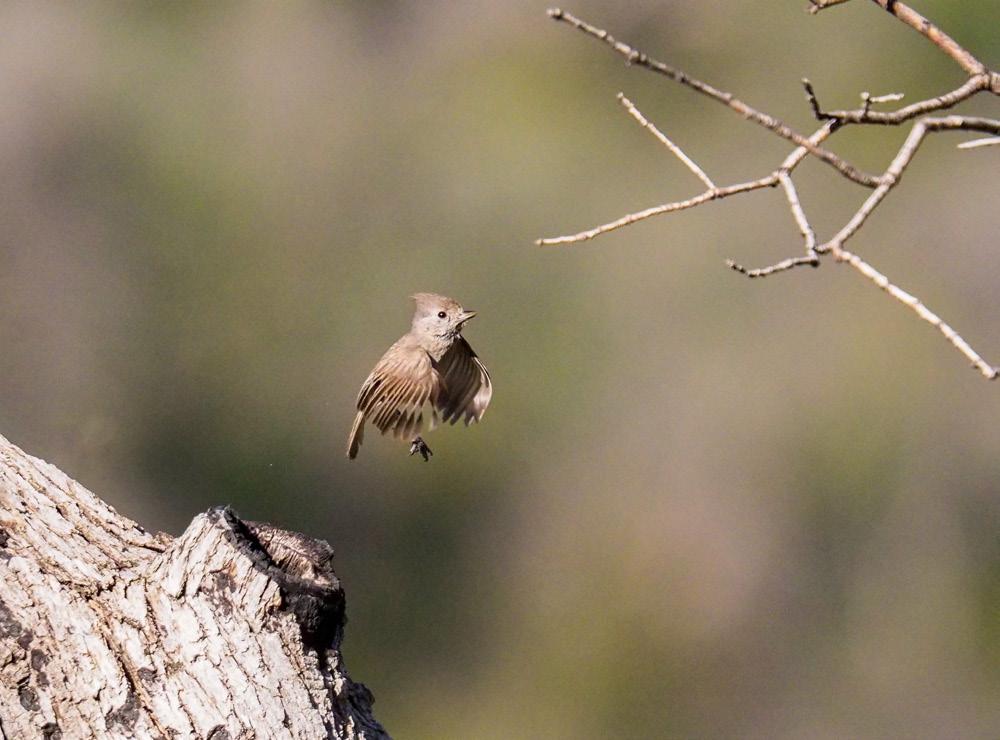
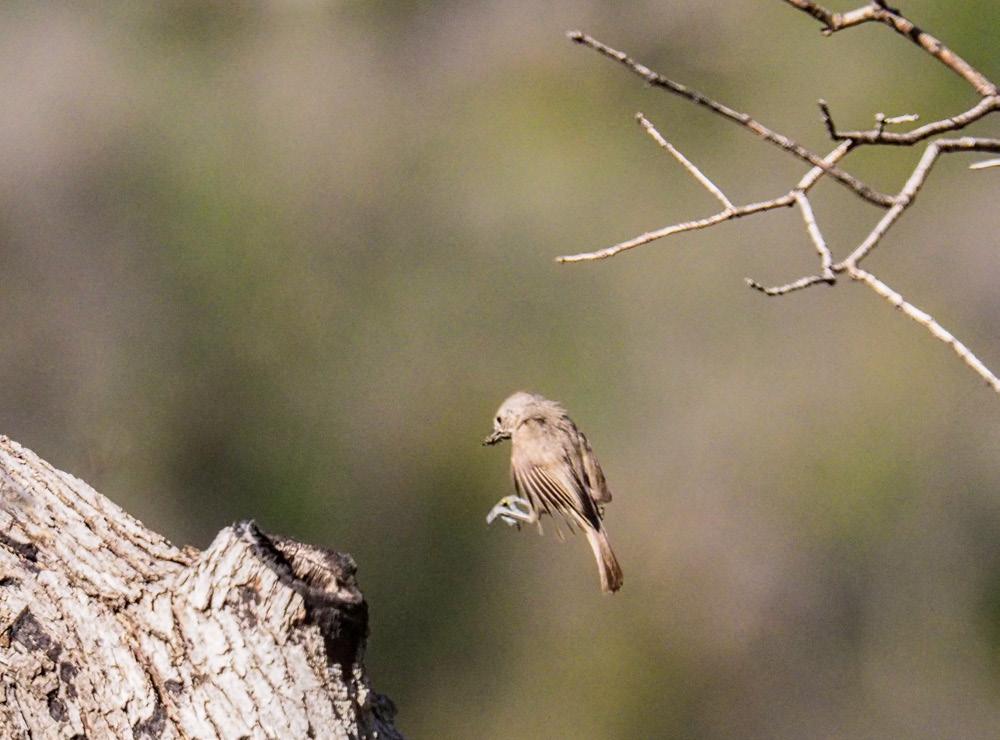
1 (panel). A titmouse leaving and returning to a nest cavity with an insect prey item. Titmice are secondary cavity nesters that depend on existing cavities in live trees, dead trees, or dead limbs. The Oak Titmouse— uncommon in most of the Pacific Northwest—is associated with Oregon white oak woodlands of southwestern Oregon, including the Rogue Valley (Photo by Sal Contreras).
WHY NESTING SURVEYS MATTER
Let’s face it—no one feels good about harming birds or disturbing active nests, and no one wants to stop tree work mid-cut after inadvertently discovering one. Most native birds and their nests are protected under the federal Migratory Bird Treaty Act (16 U.S.C. §§ 703–712), which makes take of migratory birds, active nests, eggs, or nestlings unlawful. In this context, “take” includes actions that disturb active nests to the point of failure or abandonment, or that directly destroy nests occupied by eggs or nestlings.
State and local regulations may also apply. Oregon, Washington, and California protect active nests under state wildlife laws, and some jurisdictions, such as Portland, impose additional seasonal restrictions or survey requirements.
A qualified biologist can interpret regulations, conduct surveys, and recommend avoidance measures. Identifying nests in advance allows arborists to adjust work plans and provides them with documentation of due diligence.
Photo
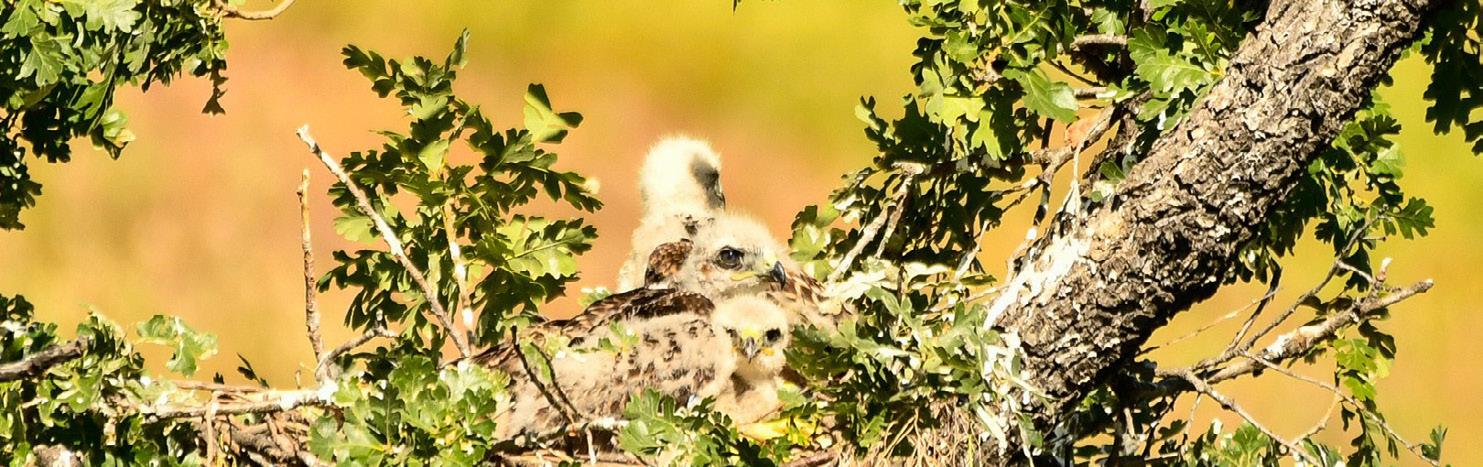
Photo 2. Three Red-tailed Hawk chicks in a nest built in an oak. Large raptors often select mature trees with strong branching structure to support their substantial stick nests (Photo by Sal Contreras).
WHEN SURVEYS ARE TYPICALLY NEEDED
In the Pacific Northwest, the primary nesting season generally runs from March through August, with peak activity in late spring and early summer. However, some species nest earlier or later, and timing may shift with weather conditions. For instance, some owl species, such as Great Horned Owls and Barred Owls, nest in late winter through early spring. Because of this variability, arborists should consider nesting potential anytime tree work is scheduled. Anytime you suspect nesting is occurring, consult a qualified biologist. Most environmental consulting firms offer nesting surveys or can refer you to a qualified professional with experience conducting nesting bird surveys and advising on appropriate avoidance measures.
During peak season, we typically recommend surveys within 1–5 days prior to work, as birds can establish nests quickly. Surveys conducted shortly before mobilization help identify active nests and keep projects on schedule.
WHAT HAPPENS IF A NEST IS FOUND
If we identify an active nest during a survey, we recommend avoidance measures before work begins. This often involves establishing a temporary buffer and sequencing work in other areas until nesting is complete. In many cases, projects proceed with minor adjustments rather than full delays. When work is time-sensitive, a qualified biologist may provide on-site monitoring to allow limited work to proceed while ensuring nesting birds are not disturbed.
You may also discover nests during tree work, particularly in tall or dense trees where visibility is limited from the ground. If this occurs, work should stop in the immediate vicinity, and you should have a qualified biologist evaluate the nest. Work can often continue elsewhere, with activity near the nest resuming once young birds have fledged.
CASE STUDY: COOLIDGE MCCLAIN PARK
A recent collaboration with Laurelin Tree Consulting at Coolidge McClain Park in Silverton, Oregon, demonstrates how early coordination and phased nesting surveys can keep tree work moving during peak nesting season. The project included 35 tree removals and pruning of 42 additional trees within a community park. Work began in early April and continued for about a month during the primary nesting season, requiring a strategy that would allow the tree work to proceed while protecting nesting birds and maintaining compliance.
Prior to work, the biologist met on site with the consulting arborist and tree care contractor to understand how crews planned to move through the park. The site was then divided into discrete zones so the biologist could conduct more focused and thorough surveys in each work area. This approach also provided flexibility if active nests were discovered—when nesting activity limited work in a scheduled zone, the biologist could survey an alternate zone where work could proceed without impacting nesting birds, allowing crews to remain productive while active nests were monitored and protected.
Close communication was central to implementing this phased approach. As crews advanced through the park, nest surveys were conducted within one to five days of work beginning in each zone, allowing the team to adapt to changing field conditions and shift work as needed. This collaborative process minimized delays, supported compliance, and protected nesting birds while allowing the project to remain on schedule.
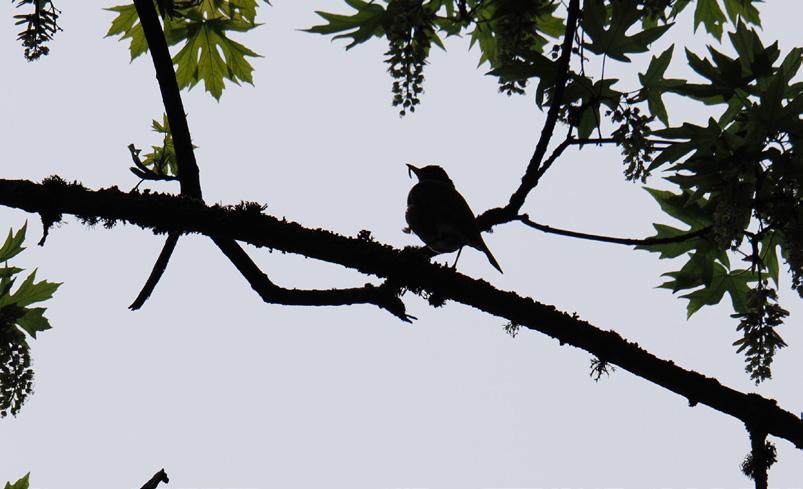
3 (panel).
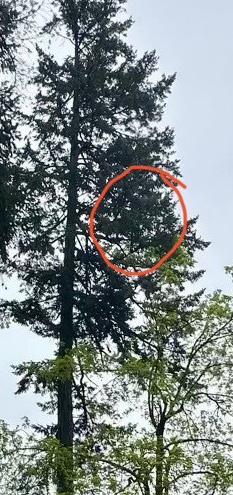
Repeated observations of an American Robin carrying food to Tree 237 confirmed the presence of an active nest, even though the nest itself was hidden by foliage. The overview photo shows the location of the nest tree (circled). Because the tree was not scheduled for work, a temporary buffer was established and crews were able to continue working elsewhere in the park (Photos by Sal Contreras).
Photo
COLLABORATIVE GOVERNANCE FOR
RESILIENT URBAN FORESTS IN THE PACIFIC NORTHWEST: BUILDING CROSS-SECTOR PARTNERSHIPS THROUGH SOCIAL NETWORK ANALYSIS
By Quadri Olatunbosun Taiwo UCF Social Network Analyst Oregon Department of Forestry
The most effective urban forestry programs in the Pacific Northwest are not simply those with more funding or staff; they have smarter connections. When government institutions, nongovernmental organizations (NGOs), landowners, and tribal governments recognize their complementary strengths and deliberately link their resources, they achieve capacity magnification, a result no single partner could accomplish alone. Social network analysis (SNA) is a practical tool that reveals who is already talking to whom, who is missing from the conversation, and where a single bridge can unlock shared funding, faster emergency response, and lasting community trust. For example, in 2026, when the Oregon Department of Forestry’s Urban and Community Forestry (UCF) program launches its inaugural statewide SNA exercise, it transforms vague ideas about partnerships into a measurable, visual map. That map shows exactly where gaps, bridges, and power imbalances exist, allowing the program to stop guessing and start connecting the right organizations to solve real problems such as funding disparities, stewardship challenges, and a lack of technical capacity.
Because SNA makes hidden relationships visible, it benefits a wide range of people. Whether you are a municipal forester, a nonprofit director, a city council member, a tribal natural resources manager, or a community organizer, this approach offers
clear advantages. Municipal foresters can better anticipate community concerns before proposing budgets. NGO directors save limited fundraising time by identifying which government partners already share their goals. Residents and landowners gain a genuine voice against eco-gentrification, as their local knowledge becomes part of formal decision-making rather than an afterthought. Tribal governments and state agencies gain procedural cover because collaborative decisions tend to be more durable and widely accepted. In short, SNA answers the question “What is in it for me?” by showing each partner exactly how they fit into a larger, more resilient system.
KEY UCF AGENTS OF CHANGE FOR COLLABORATIVE GOVERNANCE
To understand why SNA is so valuable, one must first recognize what each sector alone cannot do. Government institutions remain essential; they set rules, allocate budgets, and hold legal authority. However, government alone is often too slow and mistrusted. NGOs can move fast but lack enforcement power and sustainable funding. No single sector has all three assets: authority, agility, and local knowledge. This is where the public becomes critical. Residents know local conditions best, yet they are rarely invited early enough into decision making. SNA bridges this gap by formally including local knowledge
alongside institutional authority and NGO agility.
Including the public, however, is not always straightforward. Research shows resistance to tree plantings in communities where other critical resources are prioritized (Riedman et al., 2022; Tavner & Prager, 2025). This resistance stems from concerns about maintenance costs, utility damage, and the risk of eco-gentrification, where green investments raise property values and inadvertently displace lower-income residents. Genuine community engagement, including showing residents a network map of who is involved, can raise awareness of ecosystem services such as stormwater mitigation, reduced energy costs, and carbon sequestration. By making participation visible, SNA helps transform resistance into collaboration.
NGOs also play an indispensable role, particularly where government action stops or has yet to begin. These organizations step in by supplementing or bypassing governmental institutions. Their strength lies in diversity and creative networking. NGOs perform four influential functions: advocating for environmental justice, collecting information, conducting operational tasks such as planting and pruning, and shaping policy agendas.
However, their involvement can be constrained by dependence on state or philanthropic funding. Notable urban forestry NGOs in the Pacific Northwest include Friends of Trees, Tacoma Tree Foundation, Tree Canada, The Nature Conservancy, and American Forests. SNA helps NGOs identify which government and community partners already share their goals, thereby maximizing limited resources.
The quality of relationships among these agents of change ultimately determines success. Strong ties make UCF partners more likely to influence one another, but they can also create homogeneity, limiting innovation. Weak ties provide access to novel ideas and diverse resources, making networks more adaptable to funding uncertainty or political disinterest. However, weak ties are more fragile and easily broken without trust and mutual understanding. SNA improves complex decision-making by revealing exactly where strong ties have become insular and where weak ties need reinforcement.
For the Pacific Northwest, where urban forests face mounting pressures from pests, development, and climate change, SNA is not an academic exercise. It is a practical roadmap for turning fragmented relationships into a resilient, inclusive, and effective governance system. By strategically bringing together federal and state agencies, municipalities, communitybased organizations, and tribal governments, SNA enables networks to enrich the resources and options available, ensuring that no single sector’s weakness becomes the whole system’s failure.
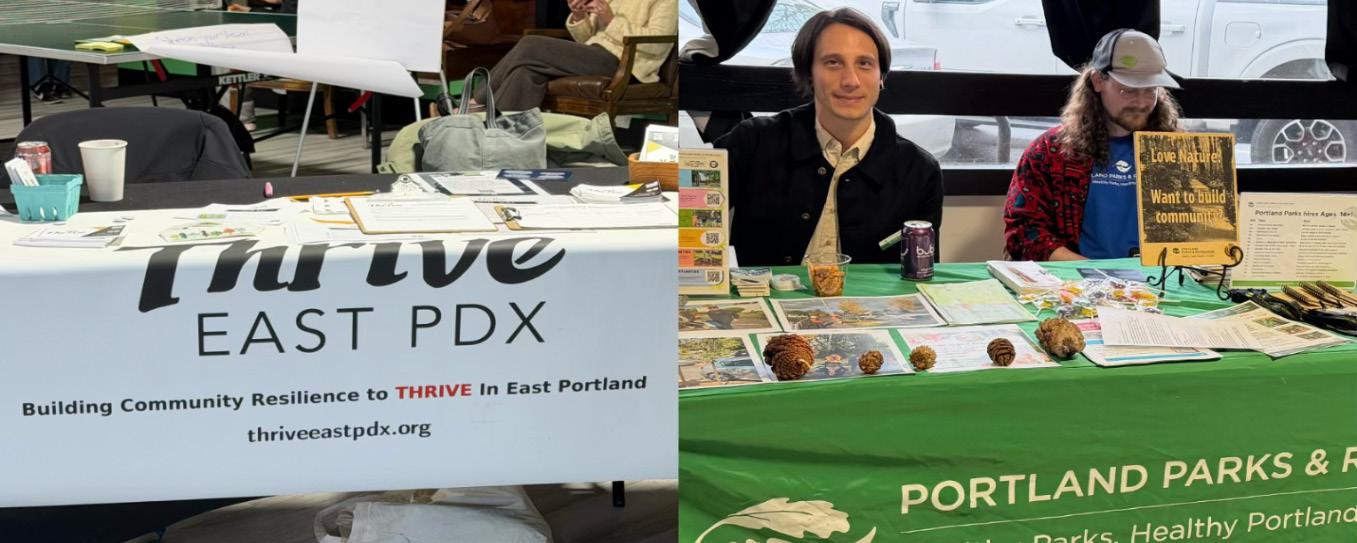
A case study in multi-sector collaboration: the Green Jobs Open House, held March 5, 2026, in SE Portland, OR. Co-convened by +350PDX, Thrive East PDX, other NGOs, and Portland Parks & Recreation, this event models the cross-sector synergy essential for building the resilient social networks that underpin urban forest stewardship.
WHEN BARK TURNS BLACK
Rarely does a tree disease make the local news, but sooty bark disease (SBD) did, and for good reason123. SBD has emerged on urban maples across the Pacific Northwest, triggered by heat and drought events linked to climate change. What caught people’s attention was the dramatic dieback, trees looking burnt, and the sight of arborist crews in protective gear.
WHAT IS SOOTY BARK DISEASE?
SBD is caused by the fungus Cryptostroma corticale, which lives asymptomatically within maple trees but can become destructive under the right conditions. Discovered in 1889 on sugar maple firewood in London, Ontario, it remained an obscure fungus for more than 50 years before emerging in another London, this time in the UK. There, it caused a new disease of sycamore maple, particularly following hot, dry summers. It has since spread across Europe and, in North America, emerged in the Seattle area in 2018 and BC in 20224. The characteristic sign is blackened blisters beneath the bark (stroma, a compact fungal layer) that release dark airborne spores capable of infecting new trees.
THE DECLINE SPIRAL: WHY STRESSED TREES GET SBD
Crytostroma corticale does not kill trees on its own. Tree death follows the “decline disease spiral”, where predisposing factors (urban stress, suboptimal conditions), inciting factors (heat, drought) and contributing factors (the fungus) interact5. Understanding this spiral explains why the fungus can persist silently for years before becoming lethal when activated by stress.
IDENTIFYING SBD
SBD can kill a tree within two years of symptom onset. Early symptoms include wilting, thinning, and branch dieback, often accompanied by epicormic
1 Infected maple felled in Victoria as climate change helps tree fungus | Victoria News
2 Fungus, drought killing non-native maples - Victoria Times Colonist
3 Newly discovered fungus spores spurred by heat and drought are killing Seattle street trees | The Seattle Times
4 Tanney JBT et al. (2024) https://doi.org/10.1080/07060661. 2024.236932
5 Manion PD (1991) Tree Disease Concepts, 2nd ed. Englewood Cliffs, New Jersey: Prentice-Hall. 402 pp.
shoots and basal sprouts. The most distinct feature appears on the bark: vertical cracks develop along branches and the main stem, revealing a white to dark brown stroma that releases black powdery spores, or “soot”. Internally, the wood shows yellow to dark greenish-brown staining, sometimes confused with verticillium wilt.
Other fungi, such as the brittle cinder fungus (Kretzschmaria deusta) and Biscogniauxia species, can produce similar features. A useful distinction is whether the stroma is confined to the bark surface and absent beneath peeled bark; if so, SBD is unlikely. Small, regular, pimple-like bumps on the stroma surface can help rule out SBD. When diagnosis is uncertain, laboratory or field PCR tests can provide confirmation6 .
WHICH TREE SPECIES SHOULD WE KEEP OUR EYES ON?
SBD primarily affects non-native ornamental maples in western North America, especially sycamore and Norway maple, but has also been reported on silver, red, paperbark, and Japanese maple. More concerning are recent confirmations on bigleaf and vine maple, two native species.
OCCUPATIONAL HEALTH RISKS
SBD refers to the tree disease, whereas maple bark disease describes a rare human illness (hypersensitivity pneumonitis) caused by inhalation of C. corticale spores78. One cm2 of stroma releases 30–150 million spores, increasing inhalation risk when handling infected material. Risk is primarily occupational, with only a handful of documented cases worldwide, and negligible for the public or workers following proper safety protocols⁸.
MANAGEMENT AND RECOMMENDATIONS
Management is constrained by timing: early
6 PCR Test for Field Detection of Sooty Bark Disease
7 Sooty bark disease in BC: A cause of a rare form of hypersensitivity pneumonitis | British Columbia Medical Journal
symptoms are nonspecific, and by the time bark symptoms appear, infection is typically systemic. Management therefore focuses on limiting spread and safe removal. Removing infected trees can reduce disease pressure and address safety concerns, though decisions should weigh tree value against risk. Operations should be avoided during dry, windy periods, and appropriate
protective equipment and worker rotation are recommended9. Infected wood should be buried or incinerated rather than chipped.
Because the disease is triggered by heat and drought stress, watering during prolonged droughts may reduce stress and keep
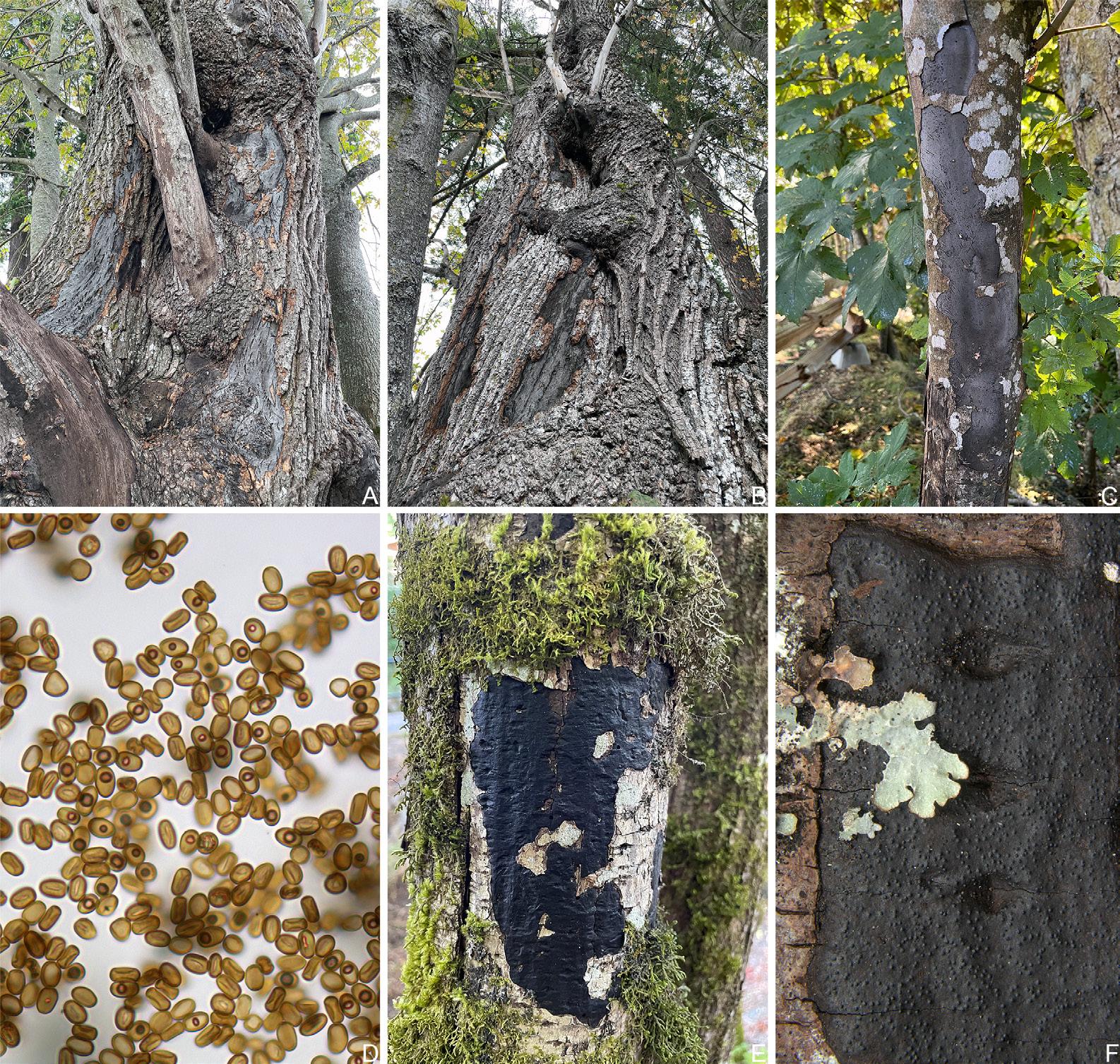
Figure 1. A–D. Cryptostroma corticale. A, B. Extensive grey to black stromata along the stem of a large dying bigleaf maple. C. Stromata and cracked bark on a dead sycamore maple. D. Microscopic view of spores (conidia) from stromata on an infected bigleaf maple. E, F. Stromata of Biscogniauxia sp. nov., superficially resembling those of C. corticale but distinguished by minute, pimple-like surface projections visible in F.
infected trees healthy. Mulching, avoiding soil compaction and root disturbance, and minimizing damage or pruning during drought are also recommended. Urban forestry planning should discourage planting susceptible species while increasing droughttolerant species and promoting species and genetic diversity.
LOOKING AHEAD: BIGLEAF MAPLE AND THE FUTURE
Exotic urban maples will continue to decline from SBD. Bigleaf maple, however, stands in the shadows, with impacts in natural forests unknown. To date, disease observations on this host have been confined to urban and peri-urban settings. Vigilance is no longer optional. Tree workers, land managers, and forest communities must remain engaged, sharing what they observe10. The disease has already demanded our attention–and may demand more.
10 To report SBD sightings: SBDinquiries-requetesMSE@nrcan-rncan. gc.ca
Feau and Joey B. Tanney Pacific Forestry Centre, Canadian Forest Service, Natural Resources Canada, Victoria, BC
Nicolas
Empowering Young People THROUGH URBAN FORESTRY IN SW IDAHO
photo: Lisa O’Flaherty
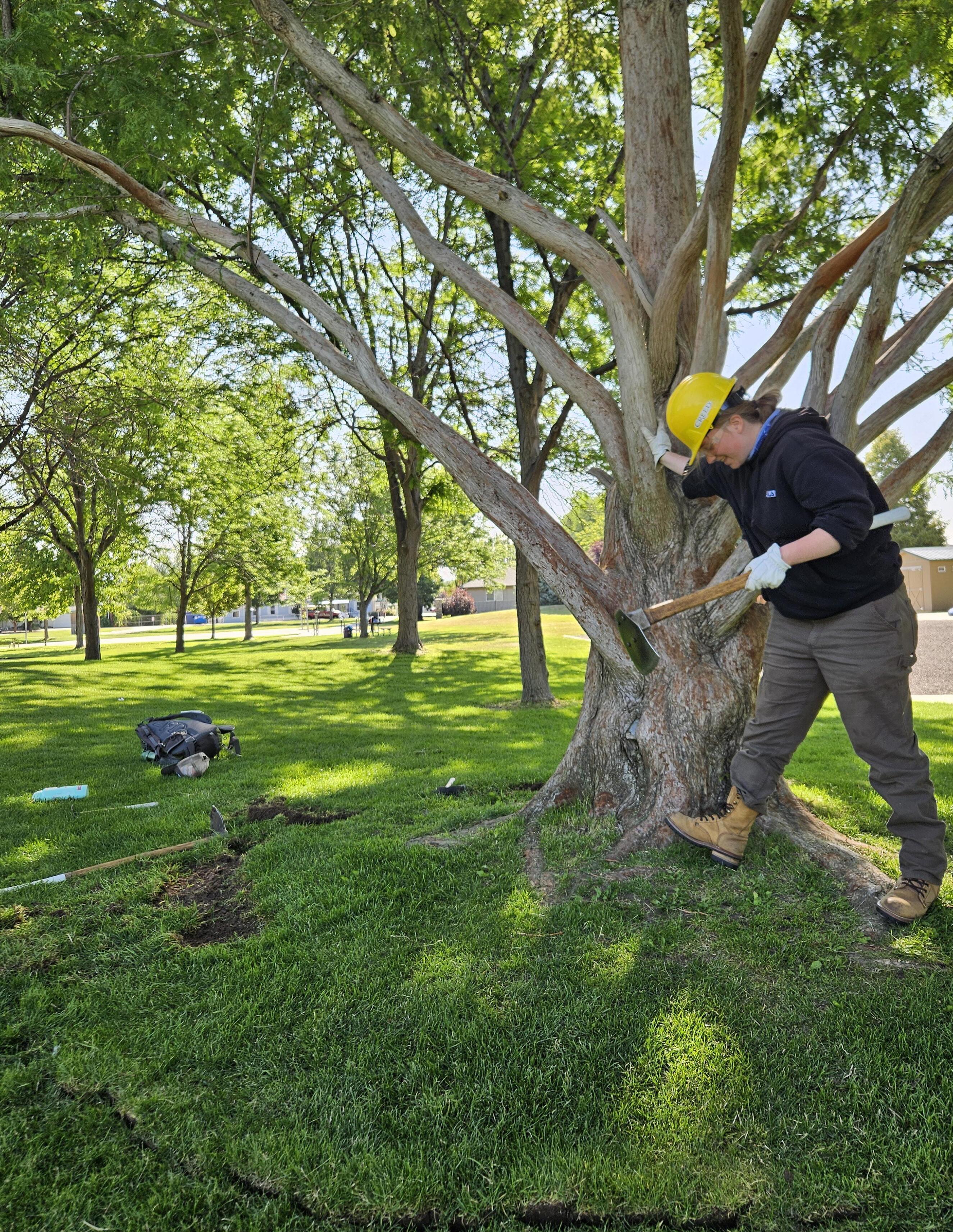
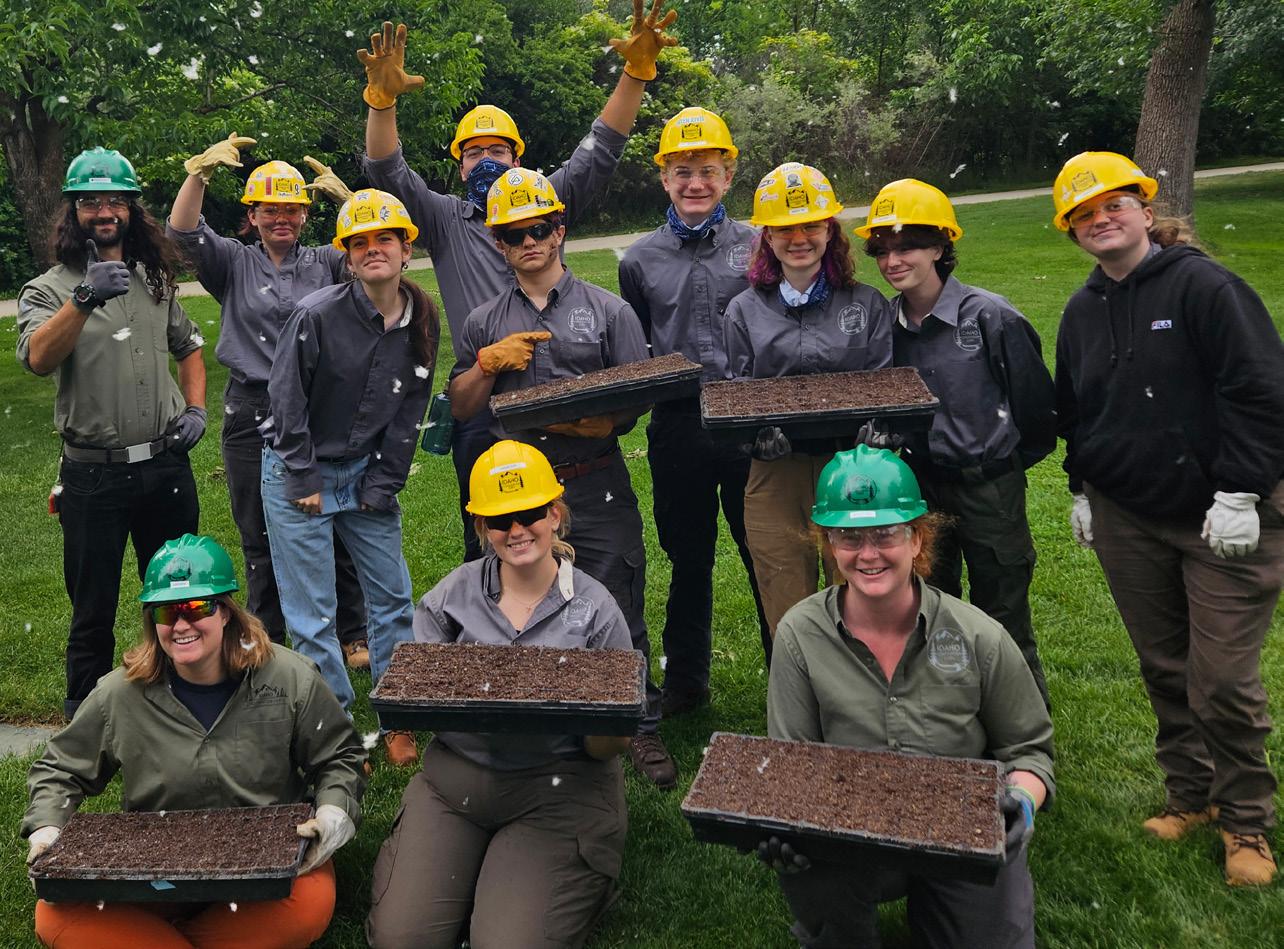
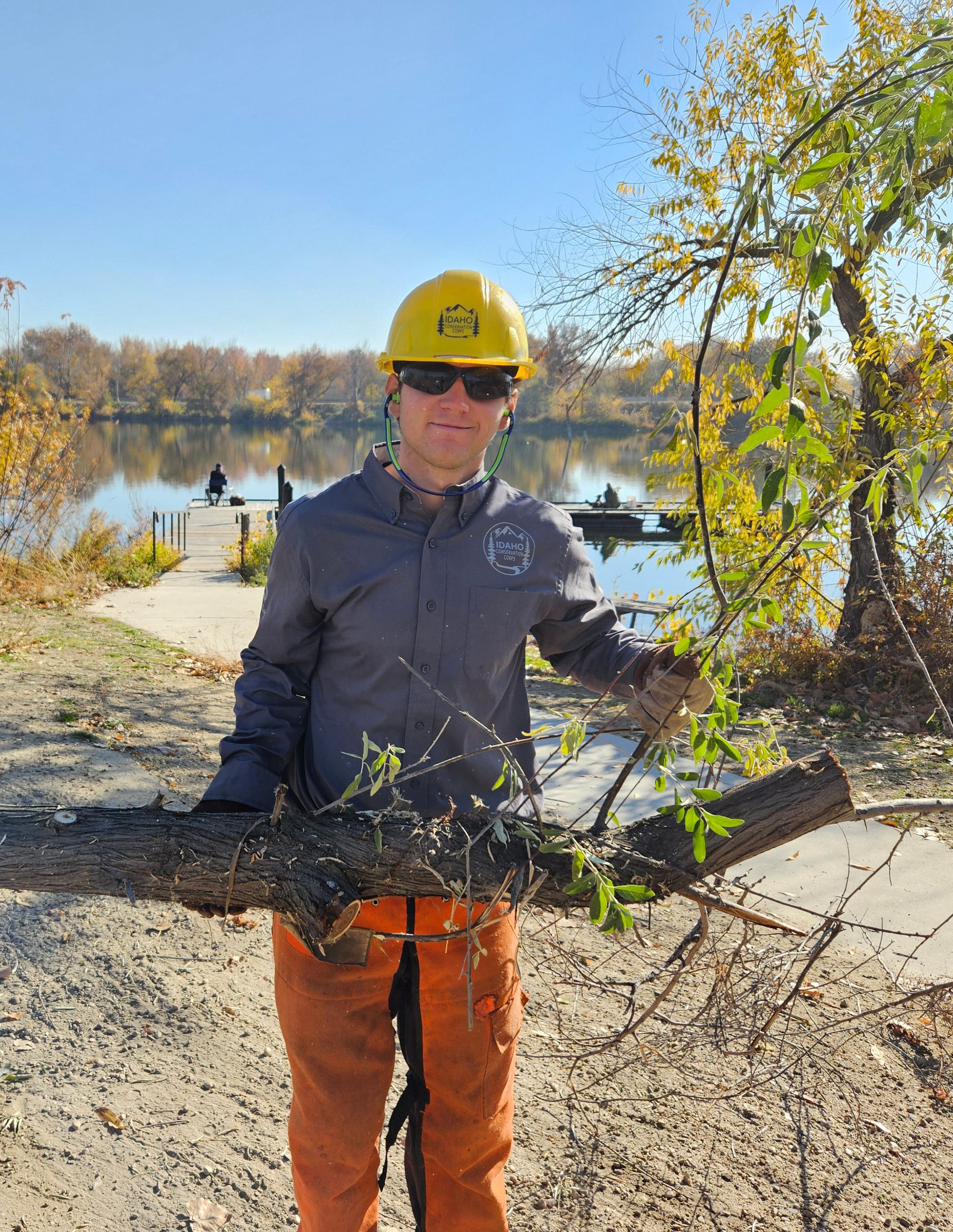
Idaho Conservation Corps (ICC), part of the larger nonprofit Northwest Youth Corps (NYC), is in its third year of running Urban & Community Forestry crews in Boise and the surrounding Treasure Valley of Idaho. Funding for this project is provided by the U.S. Department of Agriculture, Forest Service, through a $12 million grant to enhance our urban forests and expand green workforce opportunities.
NYC/ICC runs 12-week programs for Young Adults aged 19-26 and 5-week programs for Youth aged 15-18 in the communities of Boise, ID; Eugene, OR; and Tacoma, WA. Crews complete a variety of much-needed urban forestry projects for local municipalities and non-profits that they do not have the time or resources to complete—such as tree planting, structural tree pruning of young trees, weeding and mulching tree wells, removing invasive weeds, reducing hazardous fuels, and updating tree inventories to better inform urban forestry management decisions.
Crew members can use this opportunity as a steppingstone towards starting a career in an outdoor field such as natural resource management, outdoor recreation, forestry, or working for other environmental nonprofits. Others, who may not be interested in working in the green jobs sector, can use this work experience as a chance to gain easily transferable job skills, travel to new places, meet new people, and spend weeks making a real difference in their community.
Since the first crews launched in February of 2024, ICC has accomplished quite a lot in the Boise area, in conjunction with our network of fantastic local partners:
• 496 trees planted
• 4,741 other plantings (willow stakes or native shrubs)
• 603 trees pruned
• 1,728 trees weeded and/or mulched
• 4,371 trees surveyed
• Over 75 acres of invasive plants removed
• 15,663.5 cubic yards of fuels removed
This has been a true example of the power of partnership towards a common goal—taking care of our urban forest, while teaching and inspiring the next generation. It’s a mission that we all can get behind—idealistic youngster or experienced
old-timer; government employee, private tree-care professional or non-profit worker.
To close, here are the words of a couple folks who have been impacted by this program:
“I’ve had a great season with my work crew. We got a lot done and I learned lots of new skills from tree identification and proper pruning to general vehicle inspection and tool maintenance. I have developed a strong interest in arboriculture, and I am currently planning to study for the ISA Arborist certification, while I gain the experience necessary to take the exam.” – Alex L., Fall 2024 Young Adult Crew Member
“It has been great working with all the leads and the crew members. I’ve enjoyed helping the crews learn new things, experience fun/unfamiliar equipment and explore this wideopen profession. We really appreciate all the help they provided and made a noticeable difference on the health and appearance of our parks and pathways.” –Adam Mancini, Nampa City Forester
tree at a Nampa city park.
by Lisa O’Flaherty
Youth crews posing with cottonwood seedlings collected and planted on behalf of local nonprofit Boise River Enhancement Network.
Opposite Page: Crew Leader Allison bucking up a
photo: Lisa O’Flaherty
By Jim Barborinas Urban Forest Nursery, Inc urbanforestnursery.com
It was around 1972 at Southern Illinois University, during an outdoor dendrology quiz, that I correctly identified Osage orange, Maclura pomifera—though only after stumbling over one of its softballsized fruits lying on the ground.
I became far more familiar with this tree during summer field work in central Illinois, clearing hedgerows in a large park. Chainsaws would nearly burn up trying to cut through one of the hardest, densest woods in the United States unless the chain was continually sharpened. Cutting and clearing limbs was frustratingly slow because of the long thorns on every branch, and unlike many other trees, there was no way of snapping the limbs by hand. Every branch had to be cut to make way. I learned they were called hedgerow trees for a reason.
That remarkable wood density made Osage orange one of the most highly valued trees for Native Americans and early pioneers—first for weapons and tools, later for fence posts and railroad ties. Cut posts could endure 30 years or more in contact with the ground without preservatives. Burn it in a wood stove, and you might even melt the grates—it burns that hot.
As an arborist, I respected and admired this tree for years, while admitting there was no way it could ever be considered a good city tree—with its long, lethal thorns and fruit as big and solid as cannonballs.
Then, years later, I read about a seedless, thornless Osage orange cultivar called ‘Whiteshield.’ Wow—what a find.
Over time, two more seedless, thornless selections of the Osage orange appeared: ‘Wichita’ and ‘Park.’ Although the differences among them appear subtle, ‘Whiteshield’ is reportedly the most thornless but may still produce occasional thorns, while ‘Wichita’ may grow slightly
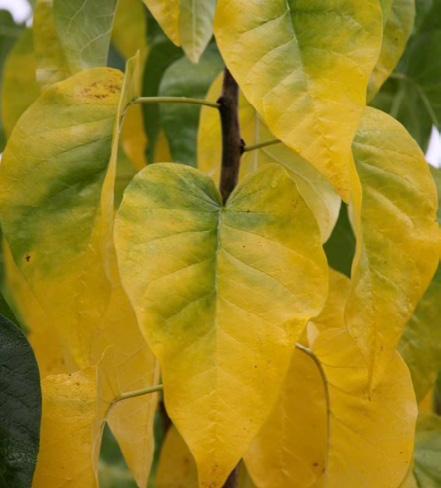
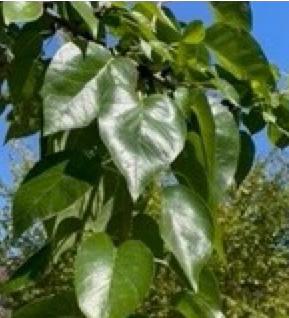
taller, perhaps reaching 40 feet. The leaves of Osage orange are simple, glossy, and range from lime to dark green. They are arranged alternately, though they may cluster on lateral spur shoots. When broken, the petiole produces milky sap. Leaf margins are smooth, sometimes gently wavy, and in fall the foliage turns a clean, attractive yellow. Add these cultivars to your preferred street tree list.
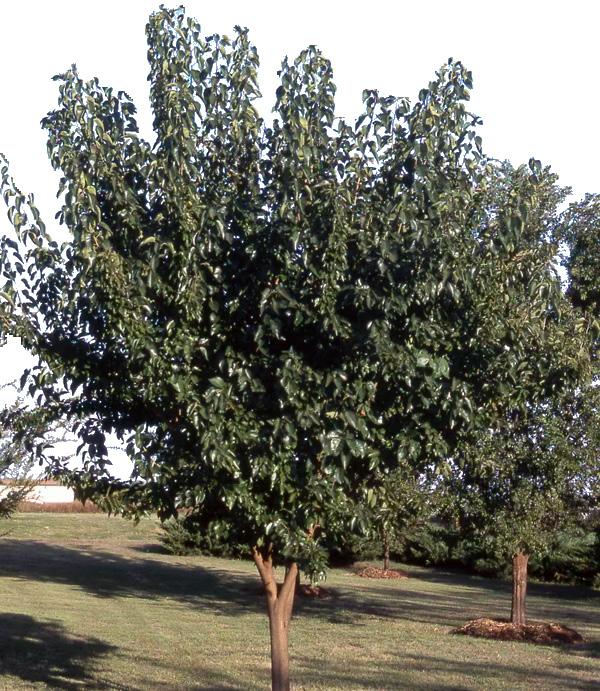
These thornless cultivars are not likely to maintain a dominant central leader with age, but they do develop a lovely rounded or vase shaped canopy, 30 feet tall and wide. Positioned in full sun, this tree should serve reliably for years withstanding disturbances from vehicles, weather and people
and tolerate drought easily. If a dependable urban tree is needed, consider this workhouse that is tough as nails, resilient in storms, and in my experience, free of serious insect or disease concerns. Osage orange appears to transplant readily and grow well in most well-drained soils. It may never be considered flashy, but it delivers the dependable benefits we expect from an urban tree with very few headaches.
As mentioned, the wood is exceptionally hard, which makes its limbs well suited for urban settings—not easily broken by traffic, weather, or people. Pruning may challenge both your shears and your hands, so keep your equipment sharp. I always appreciate your thoughts on this—or any other street tree worth considering.
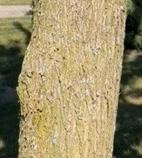
OSAGE ORANGE
FALL COLOR LEAF
BARK
photos: jim barborinas
Updates
FROM THE PNW-ISA BOARD
by Alison Herrell, President
The PNW-ISA Board recently embarked on its annual strategic retreat February 2628, 2026. A highlight of the retreat was a half-day Diversity, Equity, Inclusion, and Belonging (DEIB) workshop facilitated by Derron Coles of DRC Learning Solutions. Prior to the board meeting, the PNW-ISA DEI committee identified this as a goal in their last strategic plan and helped make the connection to Derron. This session challenged board members to deepen their understanding of how inclusion and equity can be woven into all aspects of PNW-ISA’s work— from governance and programming to member engagement and education. The conversation emphasized the importance of intentional action and accountability, leaving the board energized and committed to making meaningful progress.
The PNW-ISA Board expressed excitement and optimism about the direction of PNW-ISA heading into the new year. With a shared sense of purpose, they reaffirmed their dedication to the organization’s mission: advancing the practice and appreciation of arboriculture through education, research, and community.
As part of this ongoing commitment to growth, PNW-ISA Board is pleased to welcome Malcom Anderson and Noel Rodriguez as the new Tree Climbing Competition Co-Liaisons. We are also welcoming Jeff Prevost as the Treasurer and
Meaggan Reid as the Secretary. All four bring passion, experience, and enthusiasm for supporting arboricultural professionals.
Another exciting development is the revamping of the PNW-ISA website. The new site will feature improved navigation, updated visuals, and more accessible resources for members. The goal is to enhance communication, streamline access to educational opportunities, and reflect the vibrant, inclusive spirit of the organization. The target launch for the redesigned website is the Annual Training Conference in Boise, ID, scheduled for September 27–30, 2026.
The board also approved the rebranding of the ‘Strategic Advisory Group on Education (SAGE) Committee’, which will now be referred to as the ‘Education Committee’. This change reflects an effort to simplify the group’s purpose and broaden participation from members across the region. The Education Committee will continue to support professional development through training programs, workshops, and collaborative partnerships that promote excellence in arboriculture.
As PNW-ISA continues to evolve, the board deeply values member input and engagement. Members are encouraged to help shape the future of the organization by joining a committee, emailing the board with ideas or feedback, or submitting an article to TREES Magazine. The strength of PNW-ISA lies in its diverse and active community—professionals, educators, and enthusiasts all contributing their voices to the growth of arboriculture in the Pacific Northwest.
Board profile
CO-TREE CLIMBING
COMMITTEE LIAISON NOEL RODRIGUEZ
I am a professional tree climber and arborist living and working in Auburn, Washington. Since 2004 I have dedicated my life to working with trees in some of the most challenging and demanding environments. Over the years, I have specialized in pruning, habitat creation, and hazardous tree removals, building a career that blends technical precision, physical endurance, and deep respect for nature. What began as a passion for tree climbing has evolved into a lifelong commitment to arboriculture.
As the founder of Gaea Tree Service, I’ve had the opportunity to lead and manage complex projects involving high-risk trees. Running my own company has taught me not only the technical side of arboriculture but also leadership, communication, and the importance of building trust with clients and team members. Every project we undertake reflects our commitment to professionalism, safety, and respect for trees.
Throughout my journey, I have worked on a wide range of projects that require not only skill but also sound judgment and safety awareness. Hazardous tree removals, in particular, have become one of my specialties.
Over the years, I have earned recognition within the arboriculture community as a skilled and dedicated tree worker. Being part of this industry means constantly learning and evolving, and I actively seek opportunities to improve my techniques and stay updated with best practices. I am an active member of the International Society of Arboriculture (ISA), which allows me to stay connected with a global network of professionals who share the same passion for trees and safety.
What drives me every day is the balance between challenge and purpose. Tree climbing is physically demanding and requires focus, discipline, and knowledge to use the gear needed for the right project.
In addition to my professional work, I’ve been competing in tree climbing championships, including the International Tree Climbing Competition (ITCC) and North American Tree Climbing Competition (NATCC). I’ve received multiple regional titles climbing in the PNW. These experiences have challenged me to grow, push my limits, and connect with other climbers from around the world.
Looking ahead, I remain committed to growing both personally and professionally. I want to continue refining my skills, sharing knowledge with others in the industry, and contributing to safer practices. My goal for being part of the board is to inspire others to appreciate the value of trees and the people who care for them. I feel very excited to play a key role in supporting the arborist community and advocating for tree climbers to have a voice in the development of the industry. Also to contribute to safer practices from our businesses.
As a tree climbing instructor, I focus on mentoring new generations of arborists. I value the collaboration with climbers from different countries, focusing on advanced climbing techniques that strengthen the profession and help it grow globally. For me, being a Tree Climber is more than a profession; I love what I do for living!
by Noel Rodriguez
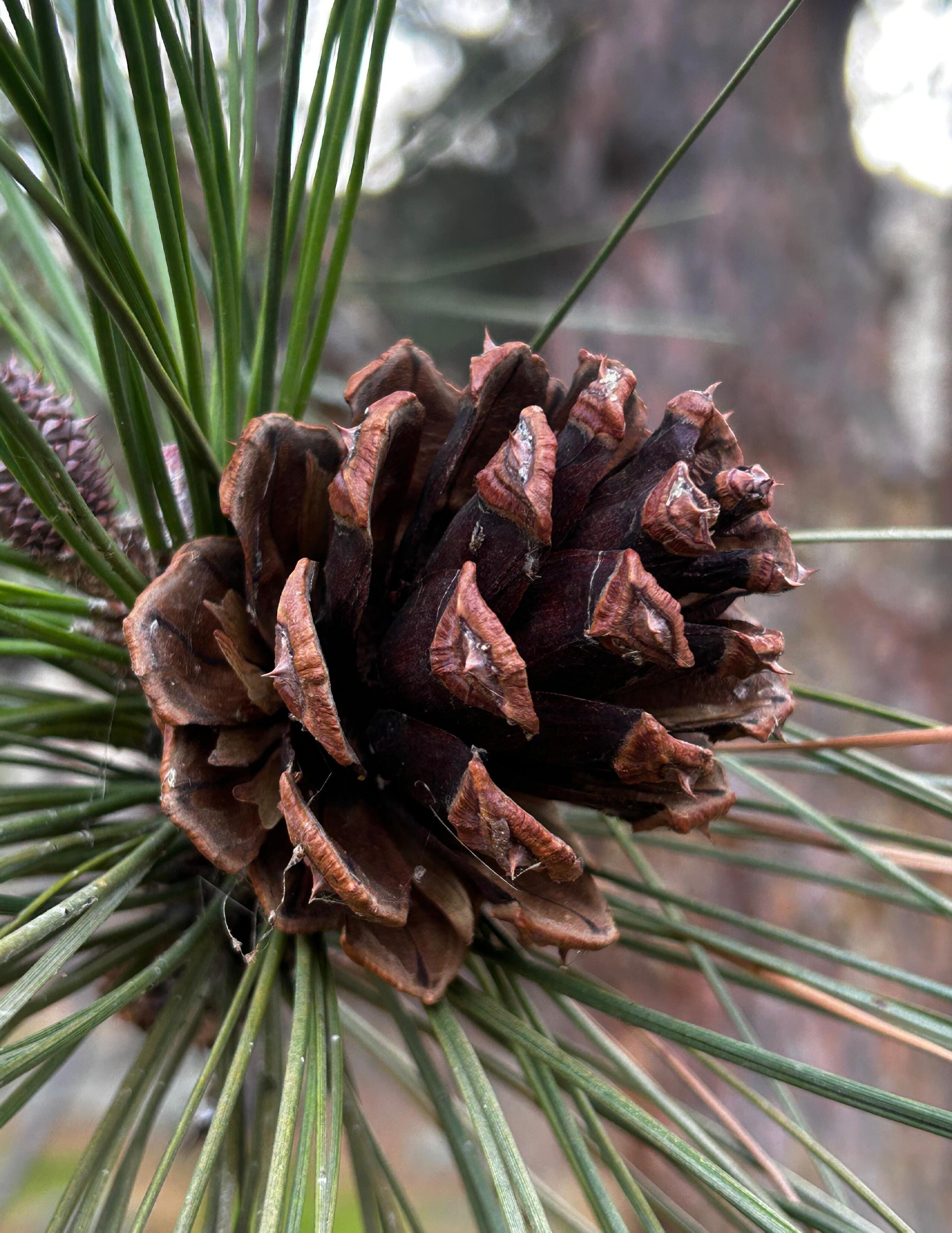
Pinus ponderosa, Ponerosa Pine cone
Board profile
CO-TREE CLIMBING COMMITTEE LIAISON MALCOLM ANDERSON
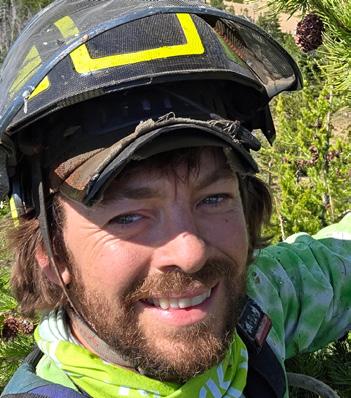
I grew up west of Corvallis, in the Coast Range of Oregon, in an off-grid cabin surrounded by forest. My dad was a contractor and my mom was a high school science teacher, and as such, a love of nature and working on things was baked in from an early age. My sister and I were given a lot of freedom growing up and spent it exploring and playing outdoors, climbing trees, and building forts. Even when we moved to Portland, we sought out wild undeveloped places. School forced me inside and sparked other interests, but I was lucky enough to have some really good science teachers in high school that kept me grounded with botany, applied physics, and ecology classes (all of which shaped my path).
From there, I went to college at Oregon State University with an interest in science, but without much of a plan. I found my way into botany and ended up getting a Botany and Plant Pathology degree. Towards the end of college, I moved back into my childhood home in the woods to look after it when my parents moved to eastern Oregon. Now I am fully settled there with my wife and our dog. After moving back to the woods, I rediscovered the joy of climbing trees on the weekends, free-climbing large limby trees with friends for the thrill and the view. After a few tense moments we started reading more and accumulating a rag-tag set of homemade and hand-me-down equipment to climb bigger and more difficult trees a little more safely.
Eventually I met an arborist while playing ultimate frisbee and began helping him on U.S. Forest Service stewardship contracts. I did my first paid tree work doing red tree vole surveys and then topping trees for habitat tree creation. I also got to help with cone collection for reforestation, which I still do most years. All the while, I was climbing old growth on the weekends with a friend who had gotten an arborist job in town. To get more steady work, I transitioned into residential tree work in Corvallis and quit my part-time habitat surveying job to do tree work full time. I started my own company, Peak Tree Care, in 2014 and became an ISA Certified Arborist in 2015.
by Malcolm Anderson
We have established ourselves in Corvallis over the past 12 years doing mostly residential tree work, but also increasingly working for the City of Corvallis and Oregon State University. I served for many years as a member of the Urban Forestry Parks Advisory Committee in Corvallis and eventually became president.
I didn’t start competing in climbing competitions until 2019 (at the age of 33) and got hooked right before competitions had to be paused for two years. Competitions and the community there got me much more involved in the PNW-ISA chapter and motivated me to continue to learn about trees and rapidly evolving climbing techniques, and I began to take advantage of everything the ISA has to offer. I got to compete at the International Tree Climbing Championship in 2024 and am working hard to earn my way back. I became an ISA Board Certified Master Arborist in 2025 after 10 years as an ISA Certified Arborist. This year I am serving as the CoTree Climbing Committee Liaison to the PNW-ISA Board and am hoping to give my first talk at an ISA conference.
The Tree Climbing Committee (TCC) Liaison is a board position created in 2021 that attends the board meetings as well as the TCC meetings and acts as a go-between, representing the interests of climbing arborists to both groups. If you have input you want the board to hear, or comments and suggestions for how to improve the climbing competitions, feel free to get in touch with me; I would love to talk to you. I am also happy to answer any questions I can about my experience competing. Even as a fairly experienced climber, I was intimidated by the rules, and my perception of what the competitions would be like, but I found a very welcoming culture with lots of opportunities to learn for all levels of climbers, and regretted not getting involved earlier than I did. If you have ever considered it, registration for all this year’s competitions is now open and I’d be glad to help you get involved. Don’t hesitate to reach out to me at tccliaison@pnwisa.org.!
Accurate Diagnosis: A Crucial Component of Tree Care
As arborists, you are often asked to diagnose the causes of poor tree health. Your process begins with field diagnosis: evaluating the landscape, considering the site history (including previous sample diagnoses, recent construction and other activities, chemical applications, etc.), identifying the symptoms of concern, and tentatively diagnosing the causal agent(s). In many cases, diagnosis in the field is sufficient—constant waterlogging in the root zone leads to root decay and decline; dieback of several large limbs is related to root damage from recent paving; a cut or clogged irrigation line results in the failure of a new transplant.
In other cases, you may need a laboratory diagnosis for accurate identification of the problem. Trees can only exhibit so many symptoms, meaning that there are
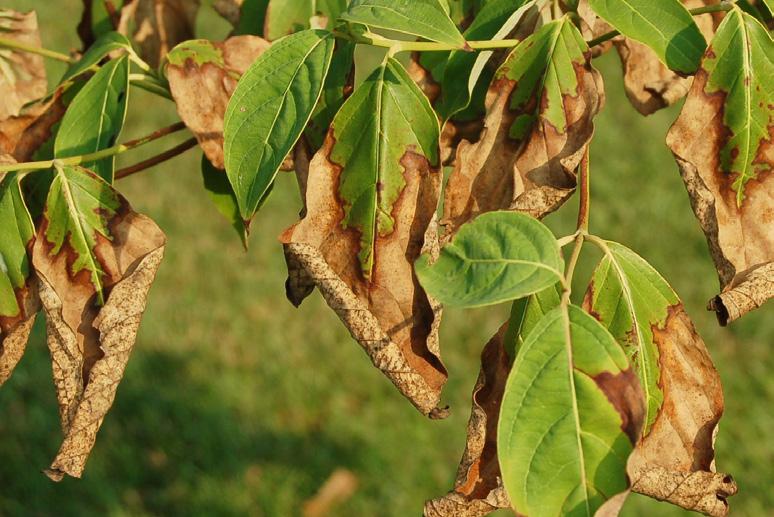
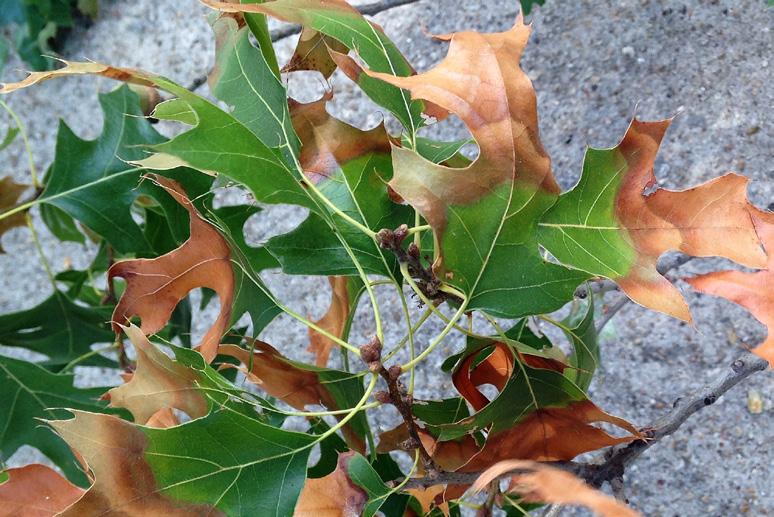
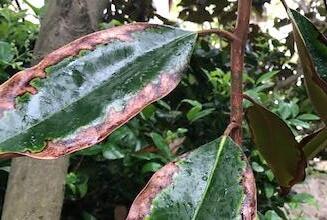
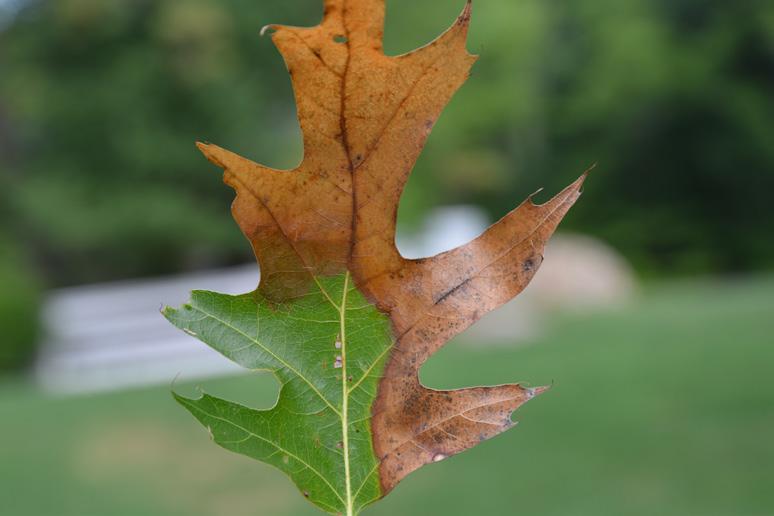
many lookalikes that are best identified by trained lab staff. One example is the symptom of marginal leaf scorch. Multiple agents can cause this symptom, some of which include drought (Fig.1), salt and boron toxicity (Fig. 2), bacterial leaf scorch disease (Xylella fastidiosa; Fig. 3), and the fungal disease oak wilt (Bretziella fagacearum; Fig. 4). Lab staff consider the tree species, geographic location, symptoms, recent weather conditions, and other factors, along with looking for pests and pathogens, nutrient imbalances, and other agents to determine the cause of the leaf scorch.
Your success as an arborist depends on correctly identifying the trees’ problems. I like to hearken back to the adage commonly used in the practice of medicine: “Prescription without
Figure 1. Drought stress symptoms on dogwood
Figure 3. Bacterial leaf scorch (Xylella fastidiosa) symptoms on oak
Figure 2. Boron toxicity symptoms on magnolia
Figure 4. Oak wilt (Bretziella fagacearum) symptoms on oak
*All photos courtesy of Bartlett Tree Experts
diagnosis is malpractice.” A proper diagnosis means excellent service for your customers—they’ll receive the appropriate recommendations the first time and will request your services again when your management plan is successful. This implementation of integrated pest management (IPM), specifically in terms of product selection, dosage, and application method, also helps arborists act as better stewards of the environment. Proper identification of pests and pathogens allows you to select the most targeted product and to apply it only as needed for control.
State universities and governments generally have diagnostic labs that process samples for homeowners, commercial entities, and others. Most university diagnostic labs are a part of the university extension service, outreach to the public for animal agriculture, forestry, plant production, aquaculture, and more. Arborists can submit samples directly to the plant diagnostic laboratory of your choice. Extension offices, extension agents, and master gardeners may also accept and diagnose samples brought to their locations in-person. Full-service labs are generally equipped to provide microscopic examination for pests and pathogens, culturing of fungi and bacteria, serological testing (similar to at-home COVID testing), and DNA extraction/ polymerase chain reaction (PCR) testing/ DNA sequencing. Diagnostic labs may also provide information on where to submit samples for soil/foliar nutrient analysis, water analysis, and herbicide or other chemical testing.
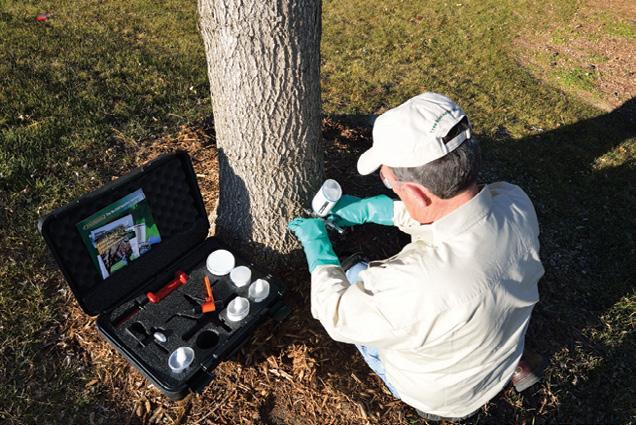
A laboratory diagnosis is only as good as the submitted sample, so be sure to take pictures of the landscape, the plant in question, and the symptoms, provide all pertinent information on the past and present site conditions (things like recent paving, de-icing salt and herbicide use, if it is a new transplant, etc.), and collect a generous amount of symptomatic material. Keeping a “doctor’s bag” of sampling tools like loppers, hand pruners, a saw, a small knife, markers, a trowel or shovel, a Dutch auger, and bags (trash bags, Ziplocs, and paper bags for
mushrooms and conks) in your vehicle will be helpful when it’s time to collect samples.
Remember to include as much symptomatic material as possible. Your cuttings should include the transition zone between live and dead tissue where agents that cause dieback are generally active. Alternatively, a soil nutrient or root health issue can cause general discoloration rather than clear foliage or branch symptoms. In that case, collect a soil sample for nutrient analysis along with several handfuls of fine roots (keep moist by adding a scoop of soil to the bag) for disease testing. Be sure to send or drop off samples promptly and keep the samples refrigerated if you cannot send them out right away. Each diagnostic lab’s website will have sampling instructions, submission forms, and packing/shipping information for your reference.
Once your sample has been evaluated at the lab, you’ll receive a report with management recommendations. Diagnostic lab reports will ultimately compliment your field diagnostics, contribute to your knowledge of the problems in your area, and allow you to provide outstanding tree care to your clients.
by Meg McConnell Senior Diagnostician, Bartlett Tree Research Laboratory
by Christine Buhl, Entomologist, Oregon Department of Forestry
MEDITERRANEAN IN OREGON
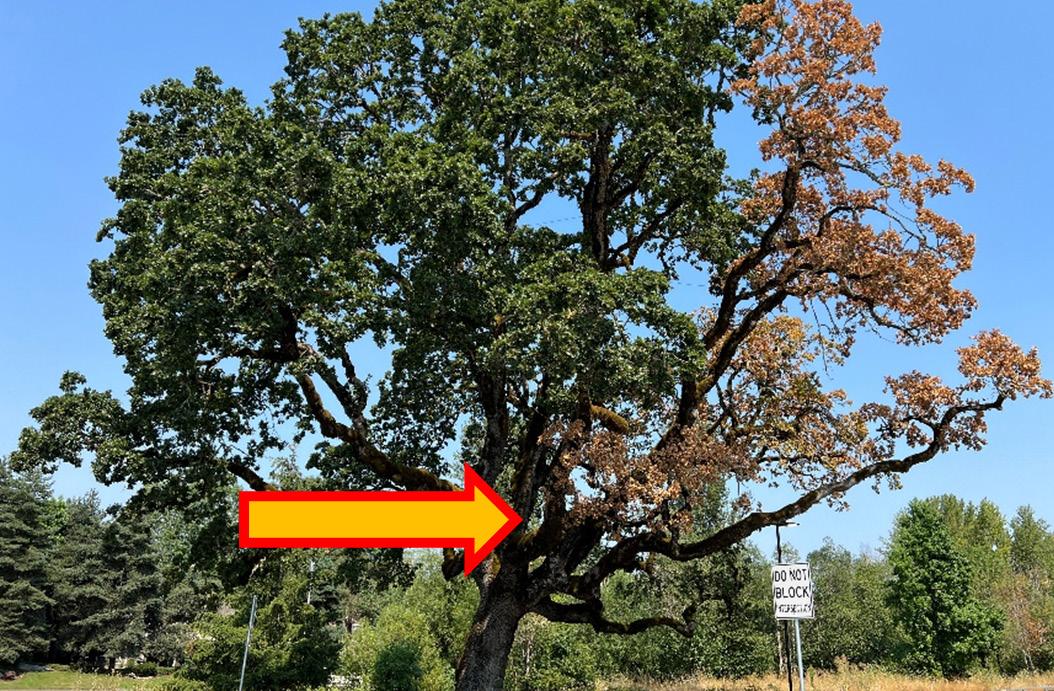
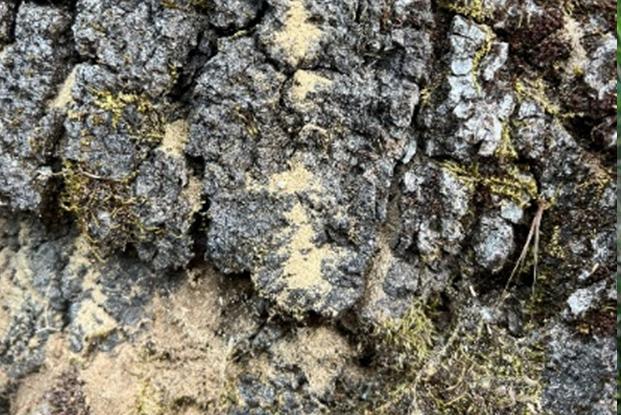
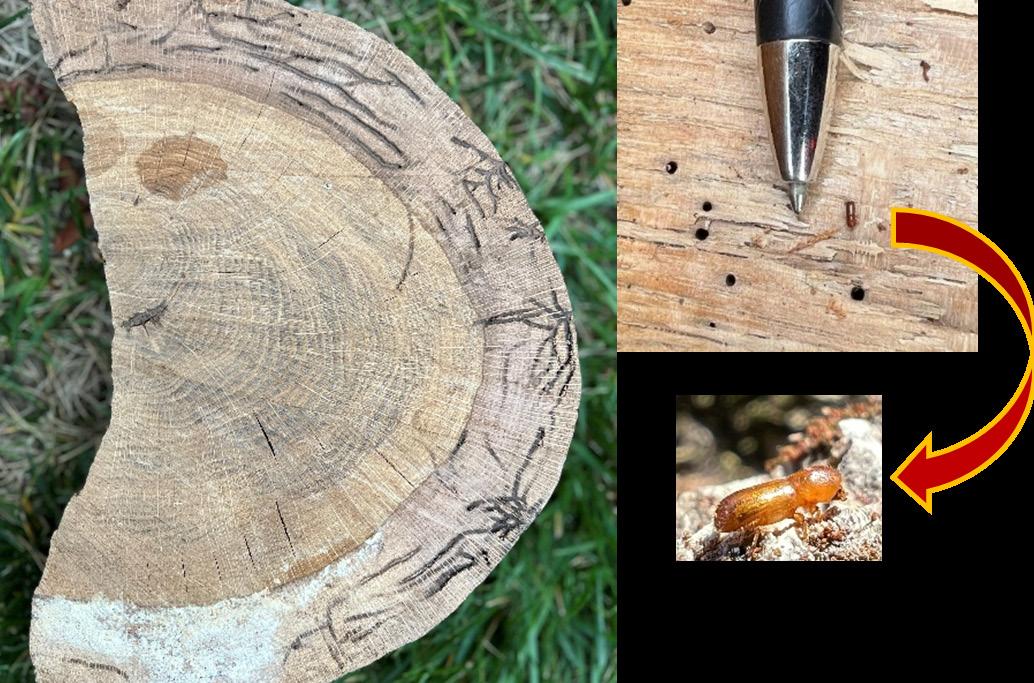
Mediterranean oak borer (Xyleborus monographus) is an invasive woodboring beetle recently detected killing oaks in Oregon. Mediterranean oak borer, or MOB, is a type of ambrosia beetle that vectors fungi that clogs vascular tissues and causes a wilting disease in trees. Ambrosia beetles are classified as woodboring beetles but unlike others in this group they do not feed on wood, instead they chew brood galleries in wood which they populate with fungi carried on their bodies. These fungi are what they are actually feeding on. There are many species of native and non-native ambrosia beetles in our trees, including in oaks, that do not injure or kill trees. However, the specific fungi vectored by MOB are pathogenic and have been observed killing oaks within 1-3 years. The key signs and symptoms to diagnose a potential infestation include dieback of an entire branch in an otherwise live crown, and fine, pale boring dust (frass) in the bark crevices often visible at the base of the tree. From there, branched, black-stained galleries may be visible in sapwood, and diagnosis may be confirmed by microscope-aided identification of an adult beetle which is half the size of a grain of rice.
MOB was first detected in California in 2017. Although as with most invasive species, it was likely present much earlier, but it takes time for damage to become significant enough to become noticeable and the cause identified. In Oregon, MOB was first detected in traps set along major shipping pathways specifically aimed at early detection of potential invasives. A single individual was caught in Multnomah County in 2018, and subsequent trapping did not detect additional individuals until 2021 in Marion County. In 2022, the first infested trees were found in both Clackamas and Multnomah counties. Currently, MOB
has been detected in traps and/or trees in Clackamas, Marion, Multnomah, Polk, Washington, and Yamhill counties. There are presently under 50 known infested trees, mostly occurring in Clackamas County, specifically in Wilsonville.
Invasive insects such as this one may arrive via international imports of untreated wood products such as pallets, shipping crates, and products such as wine barrels or unassembled staves. The international plant trade is another pathway for the importation of invasives species. Inter and intrastate transport is often facilitated through transport of wood products including untreated firewood. Although there are many regulations in place to prevent the introduction of invasive species, some are not stringent enough or are not followed and detection at ports is an almost impossible task for the small staff that must inspect tons of materials daily.
In its native range, which spans from Europe through northern Africa and the Middle East, this insect infests many species of broadleaved trees. However, in their native habitat those tree species have coevolved with the insect and developed defenses so that typically only the weaker or dying trees are attacked by this insect. In Oregon, MOB has been detected in Oregon white oak (Quercus garryana) and in California mostly valley (Q. lobata) and blue (Q. douglasii) oak. This pest is novel for our native tree species which are therefore less equipped to tolerate or resist the fungi introduced by MOB. Oregon white oak is a vital component of our declining oak savannas and one of our most drought-tolerant native species. The range of this species has been reduced due to encroachment by conifers or urbanization. Infrastructure such as roads and buildings are often too close to mature oaks and interrupt or increase
MEDITERRANEAN OAK BORER
compaction over their extensive root systems. Despite being drought-tolerant, the intensity, duration, and frequency of droughts in the Pacific Northwest can stress these trees further and reduce vigor and resilience against pests. Oregon white oak is a long-lived tree that tolerates moderate levels of fungal decay in heartwood, attack from foliage and twig pests, storm damage, etc. However, the added layers of drought stress and disease vectored by MOB are threatening the presence of this species in our landscape.
Currently, we have few management options for this insect and no options for treatment. It is advised to chip or burn infested trees onsite although this is difficult and expensive and is not a treatment. Destroying infested trees may reduce immediate MOB populations, but it is not known if it reduces pest pressure on adjacent trees. Insecticide and fungicide applications have been shown to work against other related ambrosia species and some of their associated fungi but have not been tested for MOB and its associated fungal species (which are still being determined). It should also be noted that should these treatments prove effective at killing the pest and fungi, they may not translocate effectively throughout a mature oak, especially to the upper canopy where MOB often attacks first. We have observed many instances of oaks trees treated with emamectin benzoate (insecticide) and propiconazole (fungicide) preventatively or at early stages of infestation, suffer further attacks or die. More testing on potential chemical solutions is forthcoming.
Removal of an infested branch has also not proven effective at preventing attack or halting tree mortality. By the time a branch is visibly dead, the insect has often already traveled to the trunk of the tree. Further, if the reason a tree was
continued on page 21
Continued
MEDITERRANEAN OAK BORER IN OREGON
initially susceptible to attack has not been resolved, then it will continue to attract nearby MOB populations. The majority of the oaks that have been attacked by MOB have had some underlying stress, most often due to imposing infrastructure. Underlying extensive root disease or drought stress may also be a precursor to attack, and more research is underway to determine if there is a correlation with increased MOB susceptibility.
Currently we do not know of methods to save infested trees, but landowners have time to make decisions on destroying the tree if they are within a known infested county. Observationally we have seen slow movement from tree to tree, and in many cases, we have observed that oaks adjacent to an infested tree are not attacked sometimes several years after a detection. However, as populations build and more oaks become stressed by drought and infrastructure, we may see this pest spread further and faster and kill more oaks or spread to other species. Preventative actions to mitigate tree stress are strongly encouraged as the best management practice that we have for MOB at present. These include:
• Avoiding overwatering or shallow watering can encourage fungal root disease. Some more drought-stressed trees may benefit from supplement irrigation to improve vigor and resilience although it is hard to know if a tree is actually drought stressed and if there is underlying root disease.
• Avoiding compaction from equipment, buildings, pipes, roads, etc. within the span of the roots, which may stretch to at least double the width of the dropline of the tree crown.
• Preventative removal of large unsupported lateral branches that are straining against gravity or may break during storms. Large-scale branch removal is not advised, instead consider pruning branches that would be candidates for tethering. Even with tethering can fail and cracks develop. Cracks or large wounds from branches tear from the trunk are entry points for fungi and attract repeated attacks from carpenterworm. These can weaken the structural integrity of the tree and possibly decrease resilience to MOB – versus a preventative cleaner cut that a tree can seal more quickly.
• Avoiding further distribution of this insect across the state by reporting evidence of tiny, black-stained holes in imported wood products such as wine barrels or avoiding movement of untreated firewood more than 10 miles from the source.
A taskforce of Oregon and California agencies is working to learn more about this insect and how to manage it. More about this insect, and links to information such as where to report suspected infestations, distribution, management guidance, and other oak pests that may be confused with MOB can be found here and we update this material as we learn more: https://tinyurl.com/ MOB-oregon.
Photo from article Empowering Young People through Uran Forestry in SW Idaho
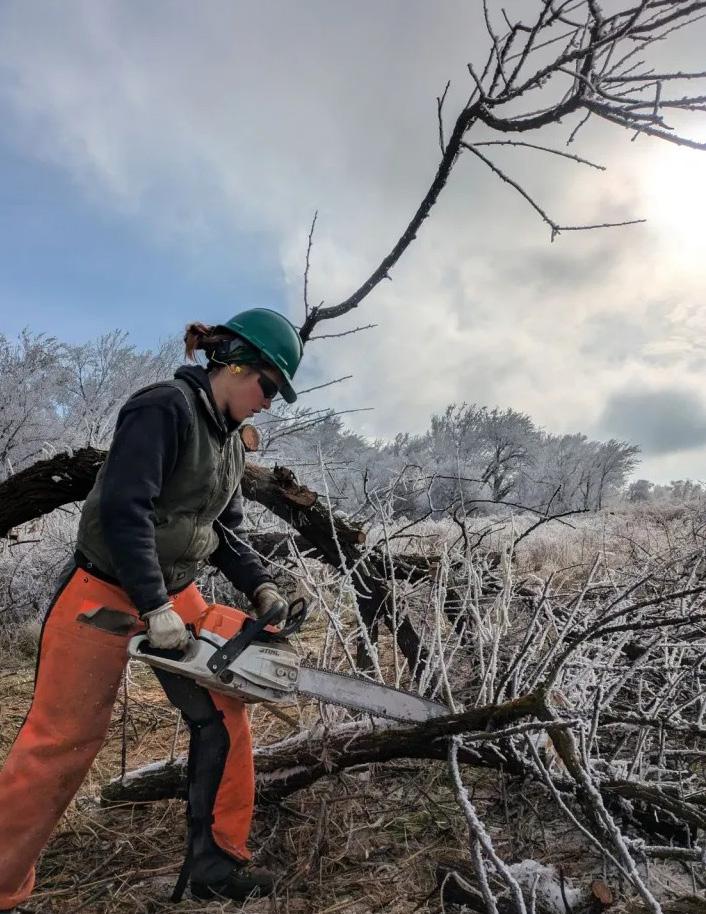
Right:Young Adult member Joe swamping invasive Russian Olive to be chipped at the City of Caldwell’s Rotary Pond Park.
photo: Lisa O’Flaherty
Canadian Tree Fund
WHY RESEARCH STILL MATTERS AND HOW YOUR SUPPORT MAKES IT POSSIBLE
Greetings to all our fellow tree advocates in the PNW Chapter. It’s hard to believe we’re already into the reflection period of the year, looking back at what we accomplished in 2025 and beginning to anticipate what’s ahead in 2026.
2025 marked another successful growth ring for the Canadian TREE Fund (CTF), as we celebrated our 30th anniversary of raising funds to support tree research and education, following our Million Dollar Milestone achievement in 2024. Some of the key highlights include:
• Over $12,000 in funding awarded to Canadian education and research grants, plus $10,000 reserved for an upcoming International Grant.
• Continued support for students through various bursaries and scholarship. This year’s recipients included Alandra Tiderman and Avery Dolderman for the Harold Van Dyke Bursary, Andrew Webb for the Jerry Micsinzski Bursary, Gloria Lakor for the Wenda Li Bursary, and Ben Joy for the Randy Lidkea Scholarship.
• Active participation by riders Warren Hosleton and James Urbanowsky, in the 33rd Tour des Trees, where our very own Joanna Nakeff received the prestigious Ken Ottman Award for outstanding support services.
• Public outreach initiatives, including our presence at the Green Industry Show & Conference in Alberta, the OCAA Symposium in Alliston, and a Bicycle Tree Tour in Cobourg Ontario as part of the Treetrust.ca Elder Tree Celebration on July 26.
• For more detail on this and past years please visit our website http://www. canadiantreefund.org
WHY MORE TREE RESEARCH IS ESSENTIAL
A few weeks ago, I came across a compelling study published in the American Journal of Preventive Medicine (February 2013) by Dr. Geoffrey Donovan. The research examined the human-health impacts of tree loss caused by the emerald ash borer between 1990 and 2007 across 15 U.S. states. The findings were startling, showing that communities that experienced increased tree mortality saw 6,113 additional deaths from lower respiratory illnesses and 15,080 additional deaths from cardiovascular-related causes.
This study adds to a growing body of evidence showing that natural environments, of which trees make up a significant component, are integral to public health and quality of life.
It raises an important question: How many lives could be improved or even saved if we had effective solutions to invasive pests and diseases? This is exactly why ongoing research isn’t just important; it’s essential. Public appreciation for the role of trees in healthy communities has never been higher.
Thanks to your support, the Canadian TREE Fund continues to fund research that directly addresses these urgent challenges. Here are two good examples.
by John Wilson
CTF-FUNDED RESEARCH PROJECTS
1. Genetic Diversity and Disease Tolerance in the American Elm Gene Bank
Lead researcher: Dr. Aron Fazekas, University of Guelph Arboretum
Approved: December 2025
Building on the long-standing Elm Recovery Project, this study explores deeper, more nuanced questions about Dutch Elm Disease tolerance. The goal is to translate findings into breeding and restoration strategies that re-establish resilient elms across Ontario. By balancing genetic diversity with local adaptation, this work will help future elm populations thrive for generations.
2. Investigating the Temporal Variation of Oak Wilt DNA Spread Researcher: Cailyn Carscadden
In collaboration with: Ontario Ministry of Natural Resources and Forestry
Approved: December 2024
This project strengthens our ability to interpret environmental DNA (eDNA) monitoring for oak wilt by:
• Identifying the most effective times of year for detection
• Establishing expected DNA levels in areas with and without known infections
• Improving understanding of late-season beetle transmission
These insights are critical to protecting Ontario’s oak trees by clarifying when the risk of infection is highest.
GRATITUDE AND MISSION
Recognizing donors from all ISA Chapters across Canada who make these projects possible is more than a tradition—it’s essential to the future of our industry and the health of our urban forests. Your generosity empowers the Canadian TREE Fund— the only registered charity dedicated to consistently funding Canadian arboricultural research.
Check out our complete list of 2025 donors and our new Donor Recognition Program https://canadiantreefund.org/donors/
If your name does not yet appear on this list, we invite you to consider joining our community of supporters. Contributing to the Canadian TREE Fund is one of the most meaningful ways to give back to our industry—helping advance research, strengthen stewardship, and build a healthier, more sustainable future for our urban forests. Every gift, large or small, makes a lasting impact.
Canadian Tree Fund
photo: emma stammer
TREE CLIMBING COMPETITIONS 2026
CONGRATULATIONS TO: 2026 SOUTHERN OREGON WINNERS
Women
1. Kate Miller, 2. Emily Hay, 3. Kameron Christenson
Mens
1. Charles Lystrup, 2. Noel Rodriguez, 3. Malcome Anderson
2026
WILLAMETTE REGIONAL WINNERS
Women
1. Aneesa Winn, 2. Kameron Christenson
Mens
1. Noel Rodriguez, 2. Charles Lystrup, 3. Malcome Anderson
Upcoming Comps
British Columbia July 11-12, 2026
Winners TBD Puget Sound, WA
August 15, 2026 at Les Gove Park, Auburn, WA
Chapter Championship September 26-27, 2026 at Julia Davis Park, Boise, ID
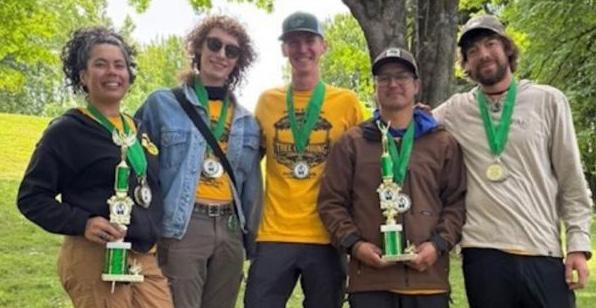
2026 Willamette Regional Winners, L to R: Aneesa Winn, Kameron Christenson, Charles Lystrup, Noel Rodriguez, Malcome Anderson
Boise
Auburn
PNW -ISA EVENTS
BRITISH COLUMBIA
Wednesday, September 9, 2026
PNW-ISA Tree Risk Assessment Qualification Workshop 3.0 - Waitlist Only
Location: Victoria, British Columbia
Monday, September 14, 2026
PNW-ISA Tree Risk Assessment Qualification -
Waitlist Only
Location: Surrey, British Columbia
Thursday, October 15, 2026
Common Fungi Affecting PNWTrees & Coastal BC
Trees & The Importance to Tree Risk Assessment
Location: Surrey, British Columbia
Friday, October 16, 2026
Common Fungi Affecting PNWTrees & Coastal BC
Trees & The Importance to Tree Risk Assessment
Location: Surrey, British Columbia
Friday, October 23, 2026
Managing Trees & Vegetation on Puget Sound Shorelines
Location: Olympia, Washington
Wednesday, October 28, 2026
PNW-ISA Tree Risk Assessment Qualification Workshop Version 3 - Waitlist Only
Location: Surrey, BC
Tuesday, November 3, 2026
PNW-ISA Tree Risk Assessment Qualification Workshop Version 3 - Waitlist Only
Location: Victoria, BC
WASHINGTON
Friday, August 14, 2026
2026 Puget Sound Regional Tree Climbing Competition
Location: Auburn, Washington
Monday, August 17, 2026
PNW-ISA Tree Risk Assessment Qualification
Workshop 3.0 - Waitlist Only
Location: Seattle, Washington
Wednesday, November 4, 2026
PNW-ISA Tree Risk Assessment Qualification
Workshop 3.0 - Waitlist Only
Location: Seattle, Washington
IDAHO
Saturday, September 26, 2026
2026 Tree Climbing Championship
Location: Boise, Idaho
PNW-ISA Annual Training ConferenceLes Bois! Les Bois!
Location: Boise, Idaho
OREGON
Monday, July 20, 2026
PNW-ISA Tree Risk Assessment Qualification Workshop 3.0 - Waitlist Only
Location: Oregon City, Oregon
Wednesday, October 21, 2026
PNW-ISA Tree Risk Assessment Qualification Workshop 3.0
Location: Oregon City, Oregon
Thursday, November 5, 2026
Tree and Plant Appraisal Qualification (TPAQ)
Location: Oregon City, Oregon
Wednesday, November 18, 2026
PNW-ISA Tree Risk Assessment Qualification Workshop Version 3
Location: Redmond, Oregon
Wednesday, December 2, 2026
PNW-ISA Tree Risk Assessment Qualification Workshop Version 3
Location: Oregon City, Oregon
Friday, December 11, 2026
Report Writing & Trees and the Law-Oregon Workshop
Location: Oregon City, Oregon
ONLINE
Tuesday, July 21, 2026
ARBOR CHAT: Healthy Soils Support Healthy Trees – The Amazing Soils Genomics