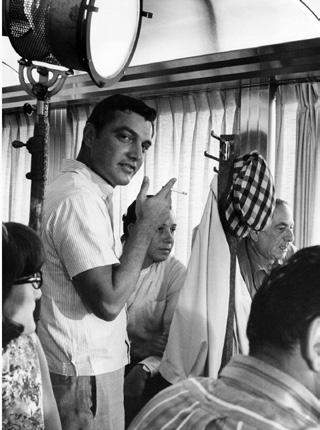
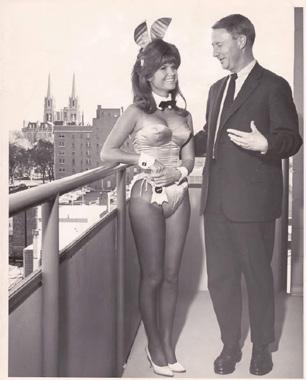
hen my dad joined the Air Force, his dreams of becoming a pilot were immediately dismissed when it was discovered that he was red-green colorblind. By all good fortune, he instead became a journalist. After his retirement from the service, he went on to build his advertising and public relations career at the height of the Mad Men era. His client list included Vail, the Broadmoor and the Playboy Club, set against a backdrop of martini lunches served by women with cottontails and bunny ears. Right after college I went to work for his ad and PR agency, which in turn set my career in motion. I still own it today.
My father-in-law, Sidney Meyers, was also a Mad Man, but on steroids. Born and raised in the Bronx, Sid attended Cooper Union and joined the historic Doyle Dane Bernbach ad agency. As art director, his brilliant ad concepts earned him a rank among the industry’s best. Perhaps his most famous work was the “Daisy” ad for the reelection campaign for President Johnson in 1964. Every four years, news outlets unearth it for its enduring poignancy and relevance. His stories from “the business” are entertaining, to say the least.
I think about both men a lot. Their lives have impacted my career, my perspective, my world view and certainly my sense of humor. I hold dear and am grateful to have a slice of their legacy.
For me, this issue of PNW Bainbridge Magazine is deeply informed by legacy. The purposeful succession of Island Family Eye Care’s doctors— Kirscher, Brase and Hollyer—isn’t just touching, it’s a lovely reminder to be a blackbelt partner, someone who reaches ahead into time, who paves a road for those who come next; Dan Rosenberg, who not only works like a dog on his dreams of comedy, but makes it a point to foster and mentor other dreamers too; and Islander Denise Stoughton, who has made it her mission to preserve Ellen Barnes’ and Bob Green’s story of creating Frog Rock. Many of our advertising partners are steeped in legacy as well. Architects and
certain there are more I don’t even know about.
It makes me thankful we chose “yesterday, today, tomorrow” as the magazine’s tagline. With any luck, perhaps we’ll leave a legacy of our own.
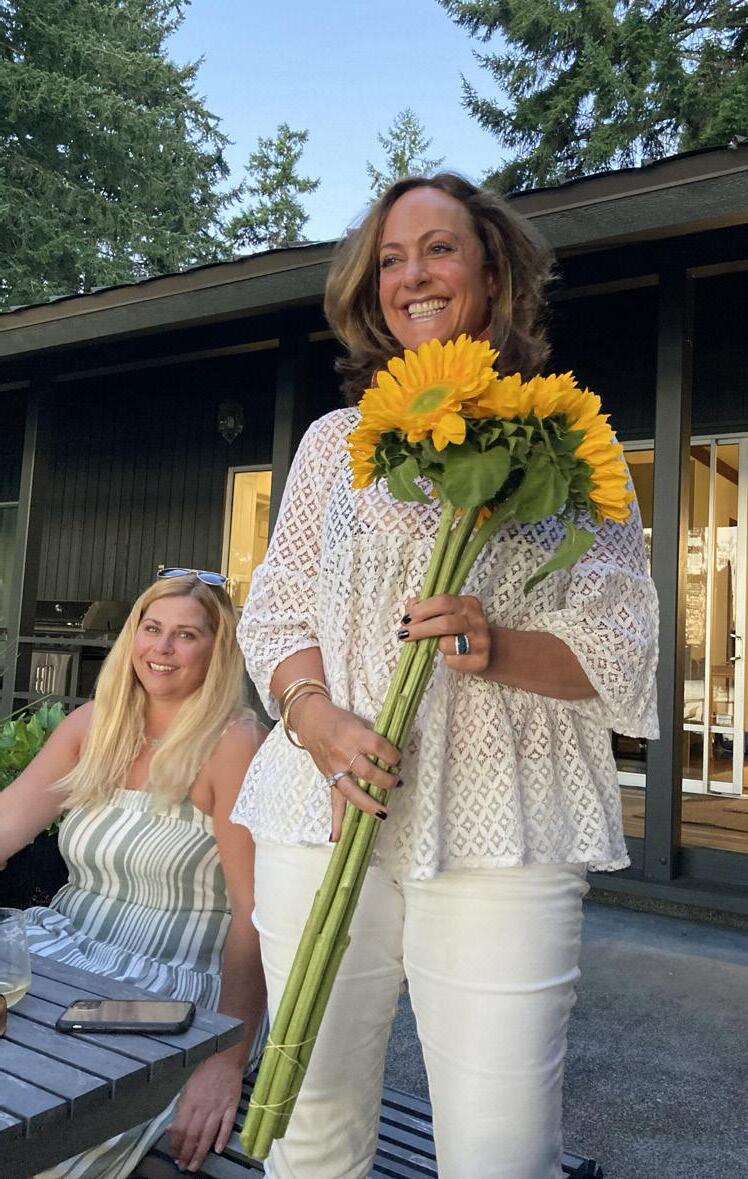
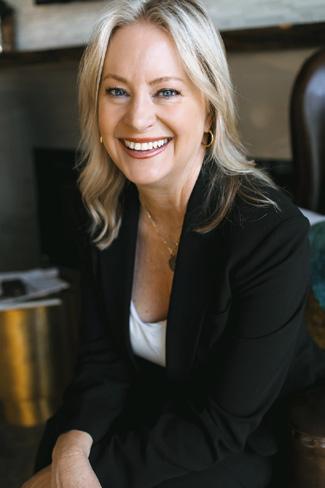
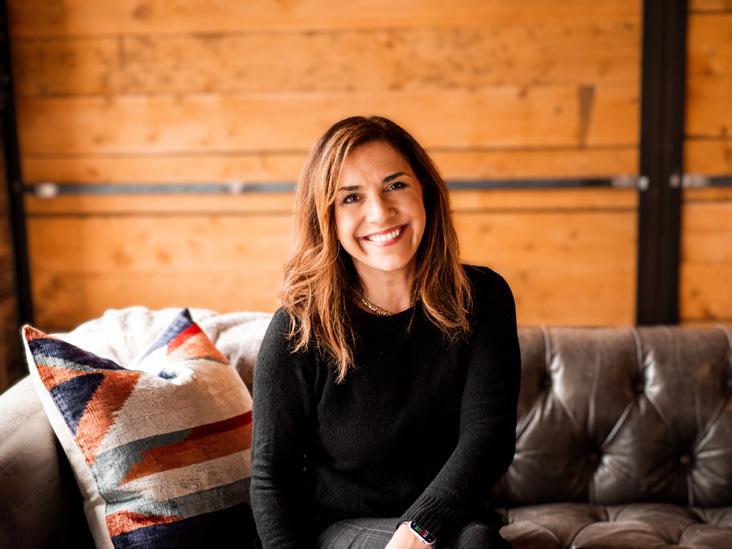
Allison Schuchman Editor in Chief
OWNER & EDITOR IN CHIEF Allison Schuchman
D IRECTOR OF SALES & COMMUNITY RELATIONS
Stephanie Reese
CONTRIBUTING EDITORS
Connie Bye
George Soltes
CREATIVE DIRECTOR
Gisela Swift
PRODUCTION MANAGER
Mark Swift
WRITERS
Audrey Nelson, Christy Carley, Jeff Fraga, Kerrie Houston Reightley, Luciano Marano, Bajda Welty, Anne Willhoit, Sophia Soltes
PHOTOGRAPHERS
Annie Graebner, Dinah Satterwhite, Thyra McKelvie
CONTACT
(206) 486-4097 • pnwbainbridge@gmail.com Instagram @pnwbainbridge Facebook at PNW Bainbridge
high notes
Letters From Stephanie Reese
Soul Sisters
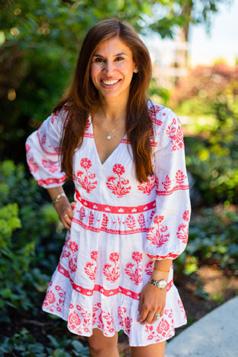
The rich history of our island’s Asian communities is one of the many gifts the Asian Arts and Heritage Festival has given me. Now in our third year, we have found our rhythm—rooted in community connection, honoring the island’s unique history and creating space for new traditions and representation. But beyond culture and celebration, the festival has given me something even more enduring: relationships.
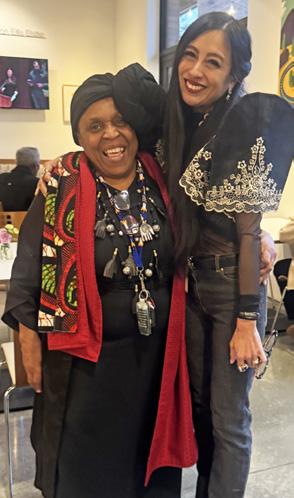
This growing web of connection is what led Akuyea Vargas, a dear friend, longtime islander and beloved community leader, to recognize a kindred spirit in me.
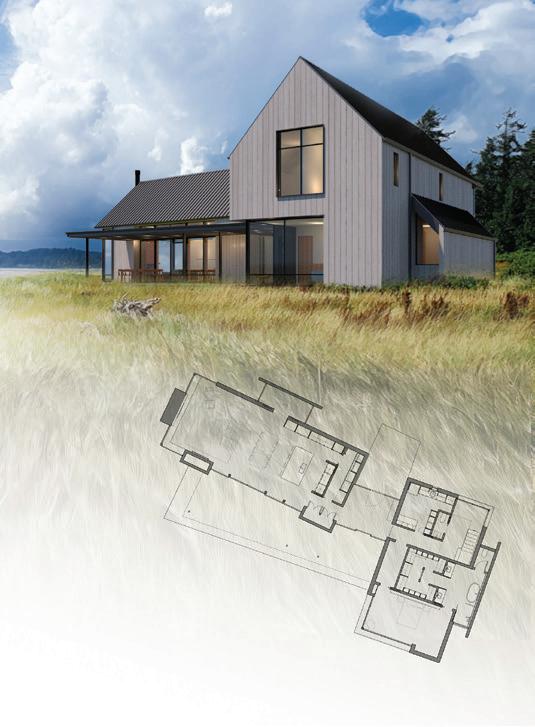
Ready-to-build, Architect designed homes
perfectlittlehouse.com | 206.780.1016
Years ago, I dreamed of bringing a gospel concert to Bainbridge. Through Akuyea, I learned that this dream had lived here before. For 15 years, Sing Out!—the founding celebration of Martin Luther King Jr. Day—brought people together
through gospel music. Led by pastor Pat Wright, founder of Seattle’s Total Experience Gospel Choir, the event was built through collaboration between the Filipino and African American communities and centered at the historic Filipino Community Hall. There was food, storytelling, laughter and, of course, music—connection in its purest form. All ages, backgrounds and voices were welcome. Hundreds took part and, at the end, they performed for the greater island community. Sing Out! became an inspiring part of the fabric of our Island’s traditions.
When Wright passed, Sing Out! faded without leadership. But legacies should not disappear; they should be carried forward. This year, Akuyea and I excitedly announced at this year’s MLK celebration that Sing Out! will return in 2027, honoring Wright and a 15-year legacy of unity.
Our legacies are not just festivals or events. They are the friendships we build, the tables we gather around and the moments we create to connect—and to Sing Out!
Photo:
CONTENTS spring 2026
departments
Editor’s Letter 4
High Notes 5
Contributors 9
Epilogue 9
Calendar 62
secrets
Laughter, the Best Medicine 11
Island pro trains other would-be stand-up comics
Tour de Bainbridge 14
Rental bikes offer easy way to navigate the island
sHORTS
Celebrate 18
Asian Arts and Heritage Festival highlights Bainbridge’s cultural tapestry
Stargazing 20
The Battle Point astronomy group shares the magic of the heavens
Glow Up 24
Spring’s vibrant colors can inspire us to be our best
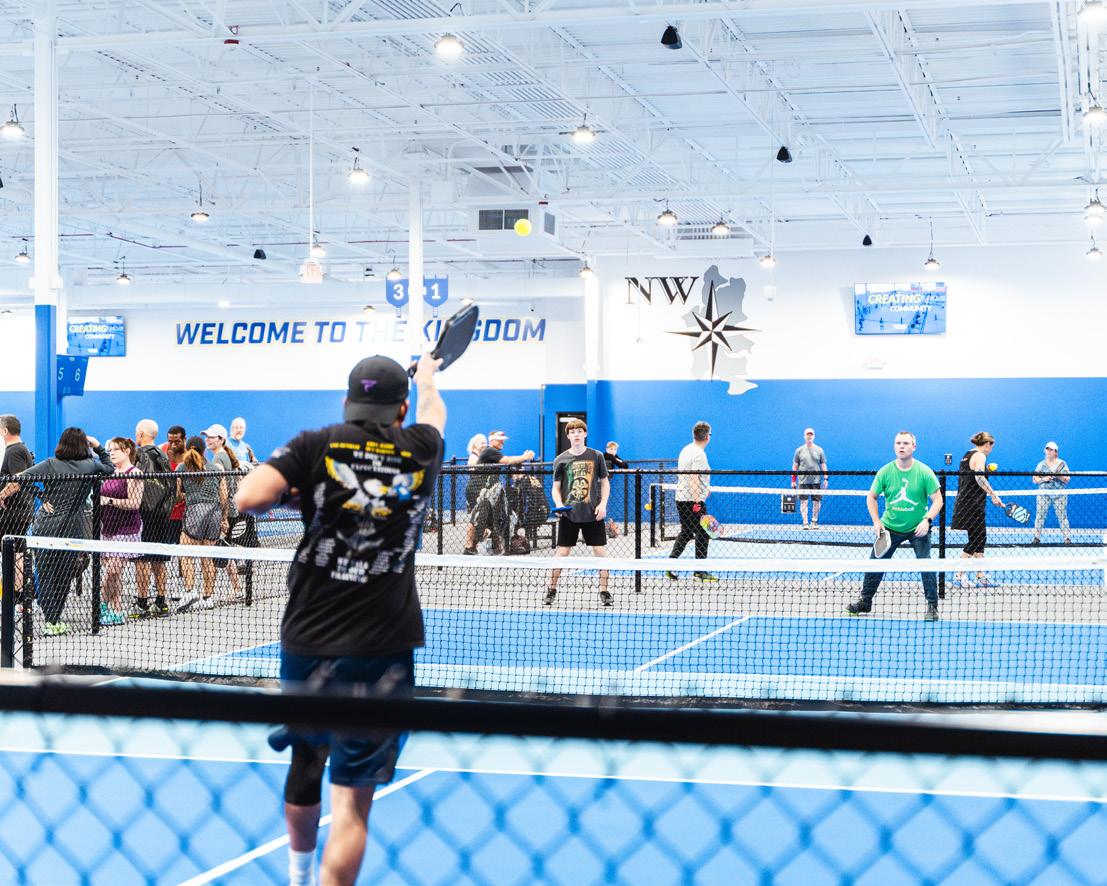
Right on Cue 26
Todd Shirley spreads the joy of pool
Keeping the Focus 28
Optometrists build an island legacy
Movie Magic 30
Lynwood Theatre marks 90 years of showcasing cinema
RECIPE
Recipe 52
Ready, Set, Pasta Night
AND ANOTHER THING
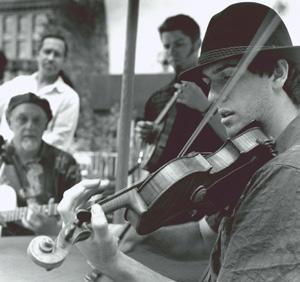
Now & Then 16
Keep on rockin’
Magic Moments 56
Getting buzzed
In Focus 64
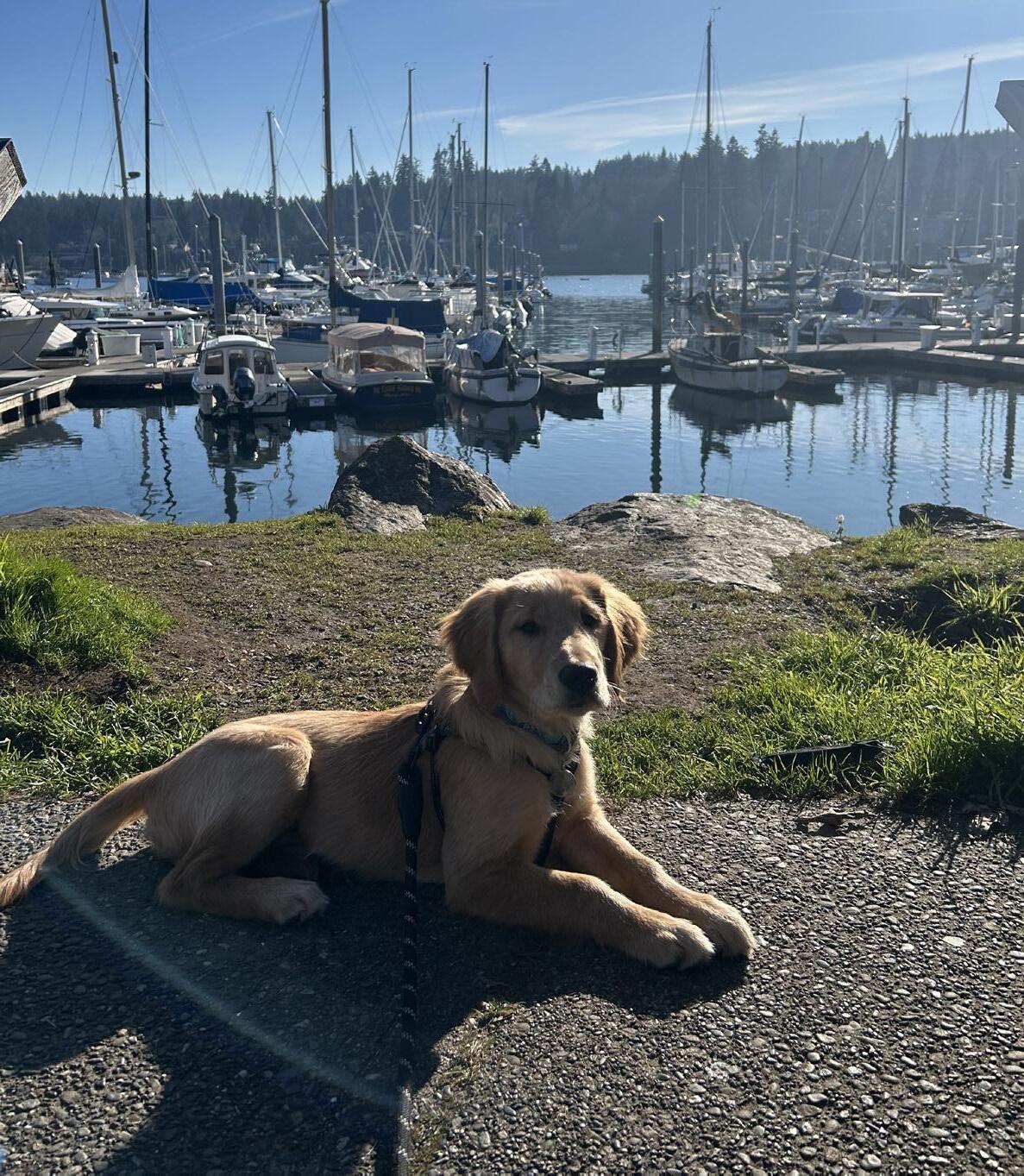
Very well heeled
Sweetwater Tavern
ABOUT THE COVER
Thyra McKelvie captured this impossibly handsome tree frog atop a pink dahlia at her friend Mindy Tobolo’s house on the island. “As winter thaws, frogs begin singing, blooms start budding, and bees start buzzing,’ she said. “Spring is near. Listen for the sounds of the season and discover beautiful surprises waiting in your garden.”
| EPILOGUE |
Since our Spotlight feature on state Representative (and perennial pavement pounder)
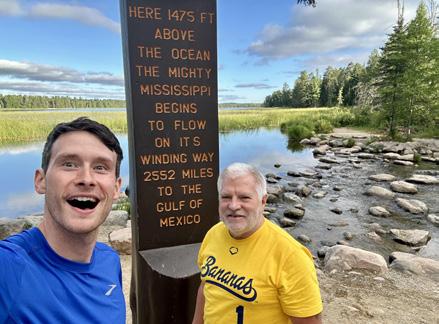
Greg Nance last fall (page 50), he’s been on the move, completing another epic run to bring attention to youth mental health.
“Running 2,000 miles down the Mississippi River was the adventure of a lifetime—and far harder than I expected,” said Nance. Ankle tendinitis hit just 200 miles in, leaving him limping, but Nance said that kind messages from friends and strangers helped him find his stride and keep truckin’ south.
“Along the way, I had the chance to connect with people up and down the river and hear how communities in every town and state are showing up to support youth mental health,” he said.
After the run, Nance brought the expedition to life in “DOWNRIVER,” a short film built from footage captured along the way. “My hope is to share the film with Kitsap schools, nonprofits and community organizations interested in a conversation about youth mental health.” Nance credits his crew chief, Roc Powell, for helping him cover all 2,000 miles. “Without him, I would have crashed out north of Minneapolis.”
In more embarrassing news, we made the same mistake three different ways (again, again, and yet again, all in one issue!) misspelling our dearly cherished writer Christy Carley’s last name in a myriad of creative and flatly dumb-headed ways. Worse yet, it’s not the first time we’ve mangled it. We’re not certain how we’re so bedeviled with this one spelling, but we promise (and we pray) that going forward, we’ll get it right. As contributing editor George Soltes said, “Christy does such a great job, we should consider spelling her name right.” Kidding aside, we’re sincerely sorry, Christy. We do love you.
Annie Graebner
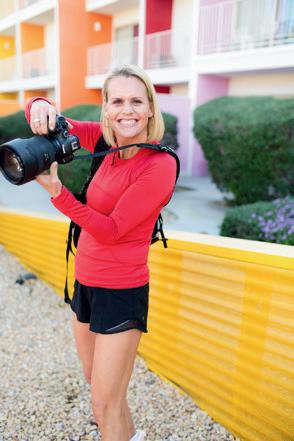
Annie Graebner is a professional photographer specializing in family, senior, and brand photography. Her photography journey began while studying and developing film in Siena, Italy, and she has spent the past 19 years capturing people and stories throughout Bainbridge and the greater Seattle area. She lives on Bainbridge with her husband and three kids. With a long career as a CPA, Annie has also expanded into education, helping creatives better understand the business side of their work.
Audrey Nelson
Audrey Nelson is a writer, bookseller, and audio journalist. Her work has been featured on Vox Media’s Today, Explained podcast and on Seattle’s KNKX FM. When not telling stories about interesting people doing interesting things, Audrey enjoys playing contact sports, collecting dangly earrings, and ranting about the subversive qualities of romance novels.
Anne Willhoit
Anne Willhoit is a teacher, food writer, photographer, and parent. She likes to collect and play with recipes and is always grateful for the seasonal bounty that our area provides. When not kneading bread or teaching children, she enjoys reading fiction, listening to human-powered radio, and making pancakes on the beach. More of her content is available at annewillhoit.com
“ARIA” Flip Ring Named for the Italian word for “changeable,” ARIA is a feat of imagination. This reversible design featuresa 5.2 ct Paraiba blue Chalcedony on one side and a 5.75 ct green Chrysoprase on the other. Set in 14k white gold with 5.6 cts of VS diamonds, it is fully customizable with your choice of gems and metals. You don’t
Design
Laughter is the Best Medicine
Bainbridge Comic Wants to Spread the Joy
Among us mere mortals on Bainbridge Island lives Dan Rosenberg, a nationally renowned standup comedian/writer/producer, and now star of the 7-time award-winning sitcom, “It’s A Lot,” about a used car salesman, played by Rosenberg, and starring Rick Springfield as his rock star dad.
BY KERRIE HOUSTON REIGHTLEY
PHOTO BY PAUL HOLIDAY
Rosenberg’s other successes are many. They include Amazon Prime’s “Dan Rosenberg: Overexposed,” a YouTube comedy special, “Finger Quotes,” and the best-selling “The Book on Hosting: How Not to Suck as an Emcee.” Over his career, spanning 30-plus years, he’s performed at major comedy clubs and prestigious comedy festivals across the U.S. and Canada.
secrets
But 50-something Rosenberg feels as though he’s only just begun.
“My recent wins are just fuel for the fire,” he said. “I’m currently working on a one-man show. At the same time, my agent is working hard to get the sitcom pilot sold. The momentum is definitely there.”
And on the local stage, Rosenberg is working to make the art of stand-up comedy accessible to the rest of us through Side Quest Stage, where he hosts “Standup Comedy Dojo” once a month.
Why call it a dojo, you ask? “Because it’s a place for practice and repetition,” he said. “We bring together up to 10 comedians, ranging from beginners to seasoned vets, for a two-hour workshop. Immediately afterwards, we put on a show to test that fresh material in front of a live audience. My goal is to build a local community of writers and
performers who support one another and grow together.”
Rosenberg’s inspiration for Comedy Dojo was participating in several online writers rooms, where comedians meet monthly to workshop new bits. “It always strikes me how helping others ‘punch up’ their material gets my own creative juices flowing,” he said. “It actually makes writing my own sets
Rosenberg is surprised by how many people have a “hidden itch” to do standup. “It has been exciting to see the community take root and grow,” he said. “If you’ve ever had a fear of public speaking and want a safe, fun way to try standup, we are your home. Thankfully, I’ve never had tomatoes thrown at me.”
Rosenberg’s advice for those interested in becoming a comedian or actor?
secrets
TOUR DE BAINBRIDGE ISLAND
ON A RENTAL BIKE
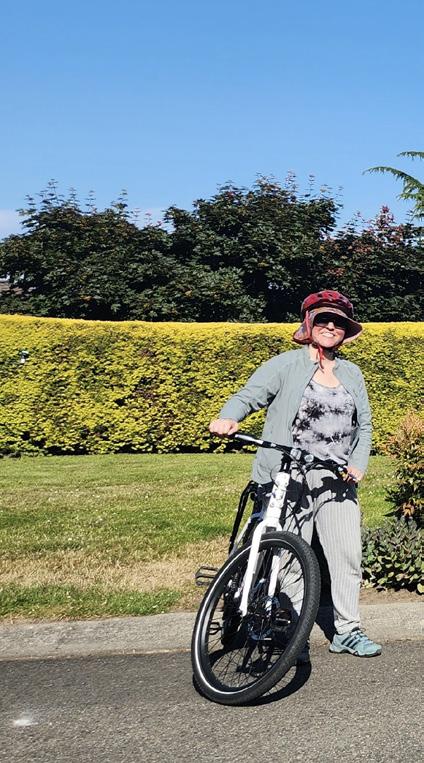
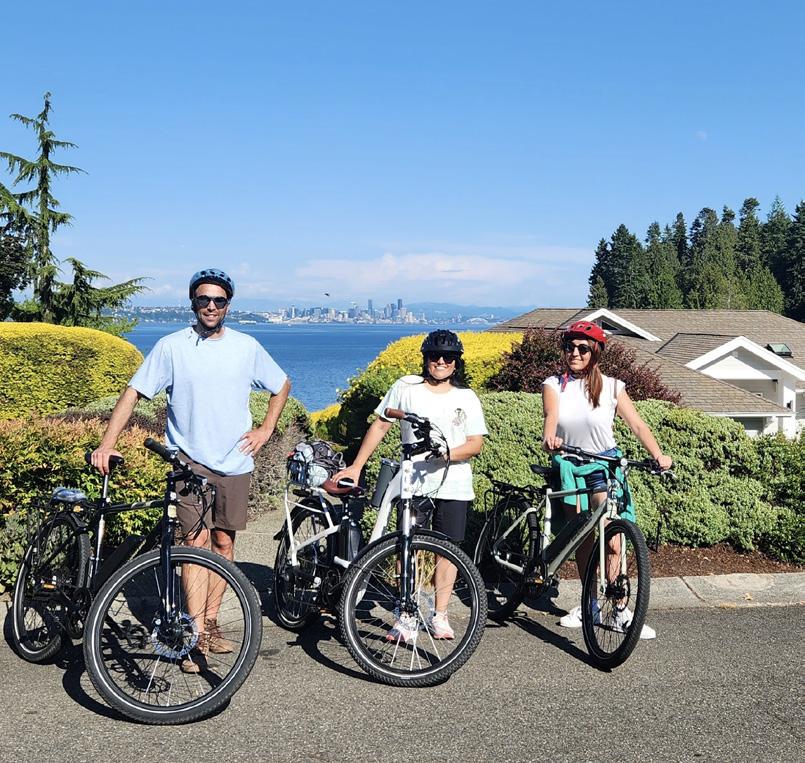
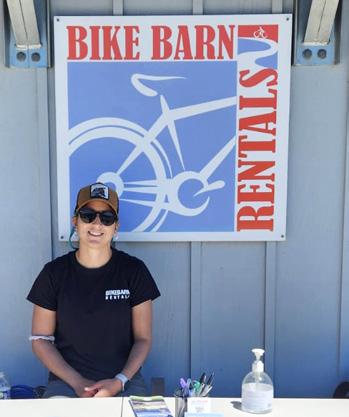
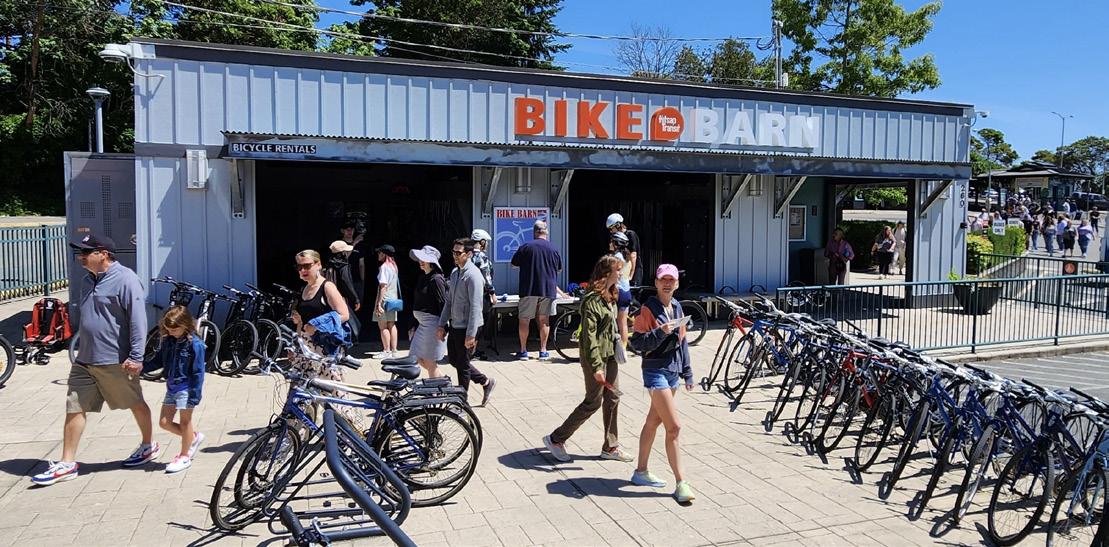
Whether you’re a Bainbridge Island visitor or resident, looking to train intensely for the famed Chilly Hilly bike tour (a 33-mile loop around the island, with 2,700 feet of elevation change) or just planning a short ride to Manitou Beach for a leisurely family picnic, Bainbridge Bike Barn Rentals has you covered.
Bainbridge Bike Barn Rentals, located in the Kitsap Transit Bike Barn just outside the ferry terminal, has been independently owned and operated by Karis Hanson since 2022.
Hybrid bikes (a versatile cross between a road bike and a mountain bike) are available for $30 for two hours or $42 for three-to-eight hours. For those desiring a power assist, her fleet also includes RadCity and RadMission E-bikes, which cost $65 for two hours or $95 for three-to-eight hours. And kids bikes are $25 for two hours or $35 for three-to-eight hours. Weehoo Trailers, Trail-a-bikes and child seats are also available. Helmets and locks are provided, as well as customized itineraries based on the skill and interest levels of her clients.
PHOTOS COURTESY BAINBRIDGE BIKE BARN RENTALS BY KERRIE HOUSTON REIGHTLEY
For Hanson, a 2009 Bainbridge High School graduate, it has been a long journey home. After graduating with a degree in physics from Scripps College, she pivoted to teaching English at the Universidad de Concepcíon in Chile from 2016 to 2022.
“I was dreaming of an opportunity to return to Bainbridge—but not full time,” she said. That dream came true in 2022, when Jeff Groman, former owner of Classic Cycle, retired from his bike and rental business, and sold the latter
to Hanson. She now returns yearly, from May through the end of September, to manage the business.
“We’re not only for tourists,” Hanson said. “For residents looking for a meaningful experience for their visiting friends or family, you can rent bikes and be their personal tour guide. We believe that cycling is the best way to connect with the world and the community around us.”
More info at bikebarnrentals.com
now and then ROCK STAR
Overdue Recognition for an Island Landmark
BY GEORGE SOLTES
Iconic landmarks often have their roots in momentous events. The Gateway Arch in St. Louis commemorated the westward expansion of the United States. The Space Needle heralded a futuristic age of high-tech wonders. And Bainbridge’s Frog Rock rectified a taunt from a rival high school.
PHOTOS COURTESY BAINBRIDGE FROG ROCK
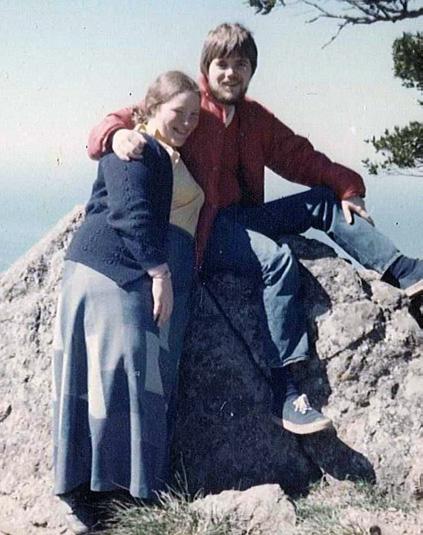
On June 7, 1971, at around 3:30 a.m., high school sweethearts and recent BHS graduates Ellen Barnes and Bob Green decided that they could no longer tolerate having “NK Lives” scrawled on a neighborhood rock. The graffiti had been inscribed in purple on a pair of stacked granite boulders at the junction of Phelps Road and North Madison Avenue by students from neighboring North Kitsap High School.
Armed with a quickly assembled assortment of paint, the couple went to work. By the time the sun came up, the formation formerly known as Split Rock had been transformed into a green frog with red, curlicue lips. Frog Rock was born.
Frog Rock has since gained a ladybug companion and has been touched up and accessorized in numerous ways, including being sensibly masked during the COVID pandemic. Having endured for more than five decades, it has become a symbol of the island’s unique personality.
This year, the humble frog will finally get its due, with the City of Bainbridge Island officially declaring the first week
of May as Frog Rock Week. Islander Denise Stoughton, who spearheaded the effort, has created a website dedicated to all things frog and will debut her documentary “The Story of Frog Rock” as part of Frog Rock Festival on May 3. For those wanting to take home a piece of the action, Bay Hay & Feed has launched a Frog Rock hoodie and Island Life Artisan Gifts will carry a variety of amphibious merch.
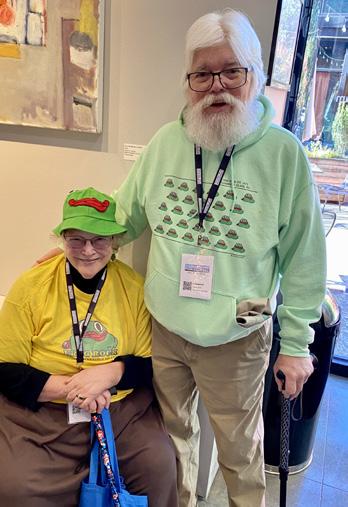
Meanwhile, what about Ellen and Bob, the teens who inadvertently started the whole thing? They, too, have endured and, after 47 years of marriage, look forward to being right in the middle of all the froggy festivities.
Learn more at bainbridgefrogrock.com
If your family is navigating autism or ADHD and you want to discuss schooling, executive functioning skills, behavioral, or social skills, let's talk. ADHD and autism present uniquely in each child, so there is no standard set of interventions or ways to navigate schooling through developmental ages and stages; individualized education planning and family-centered goals are necessary.
Whether you have questions about how to facilitate playdates and build social skills, how to improve grades and executive functioning, or what accommodations are necessary at the college level, I can help.
v
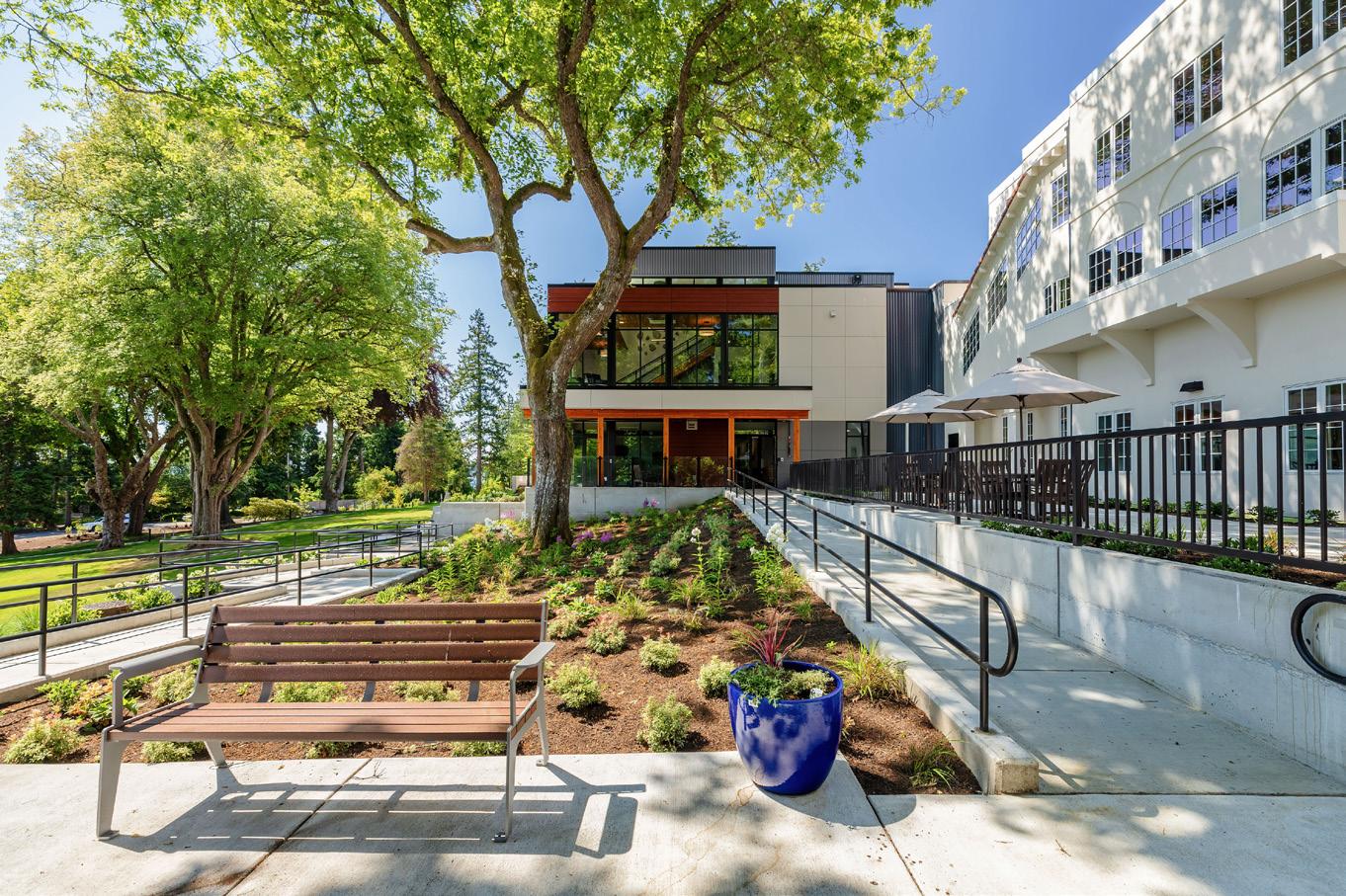
Here’s to ditching home maintenence for a carefree Winslow Manor apartment that’s walkable to downtown Winslow’s shops, restaurants and activities. Come and go as you wish. Don’t feel like cooking—no problem!
No matter where you are on your journey, we have you covered. And as always, your furry friends are welcome, too.
Sharing Stories. Honoring History.
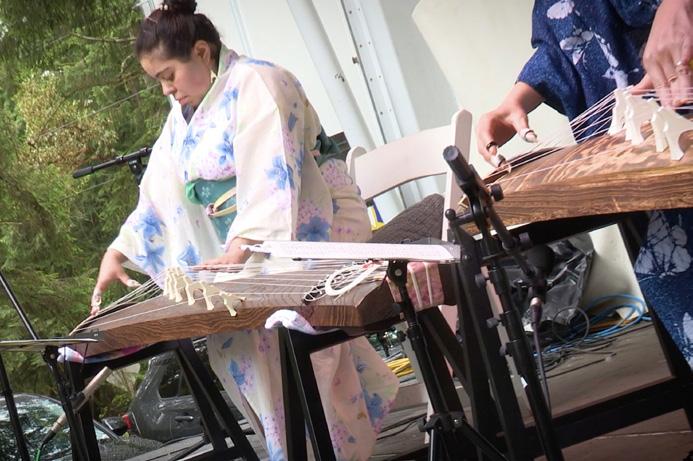
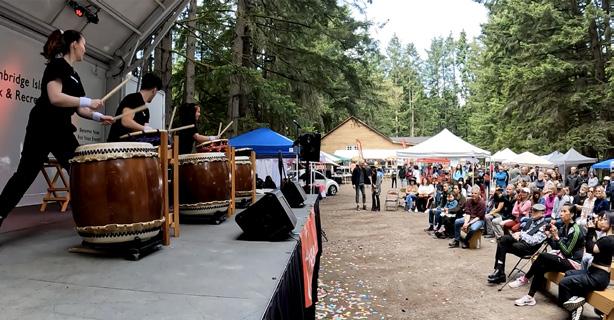
Asian Arts and Heritage Festival Enters its Third Year with Global Reach
Stephanie Reese has toured the world as a performer. She’s sung in Türkiye, Thailand and New York’s Carnegie Hall, and performed in musical theater productions in Germany and London. But to date, she says her most meaningful performance was at Bainbridge Island Museum of Art last spring.
BY CHRISTY CARLEY
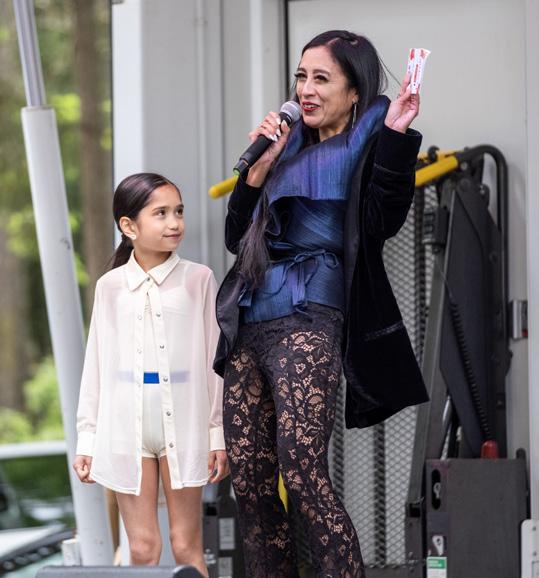
“This specific night might possibly be one of the most important things that I’ve ever been a part of in my life—as a performer, as an artist, as a friend,” said Reese that night, while introducing “The Asian Monologues”, a show that she created for the Asian Arts and Heritage Festival, which she founded a year earlier.
“The Monologues,” first produced in 2025, weave together the stories of different community members: from Island Treasure awardee Gina Corpuz, who spoke of her experience growing up Indipina on the island, to Mayor Clarence Moriwaki, who told a story of racist bullying from his school days. Others shared stories of war, concentration camps and illness. Some of immigration, marriage and adoption. Reese wove the monologues together with her own parents’ love story, which spanned years (and the Pacific Ocean).
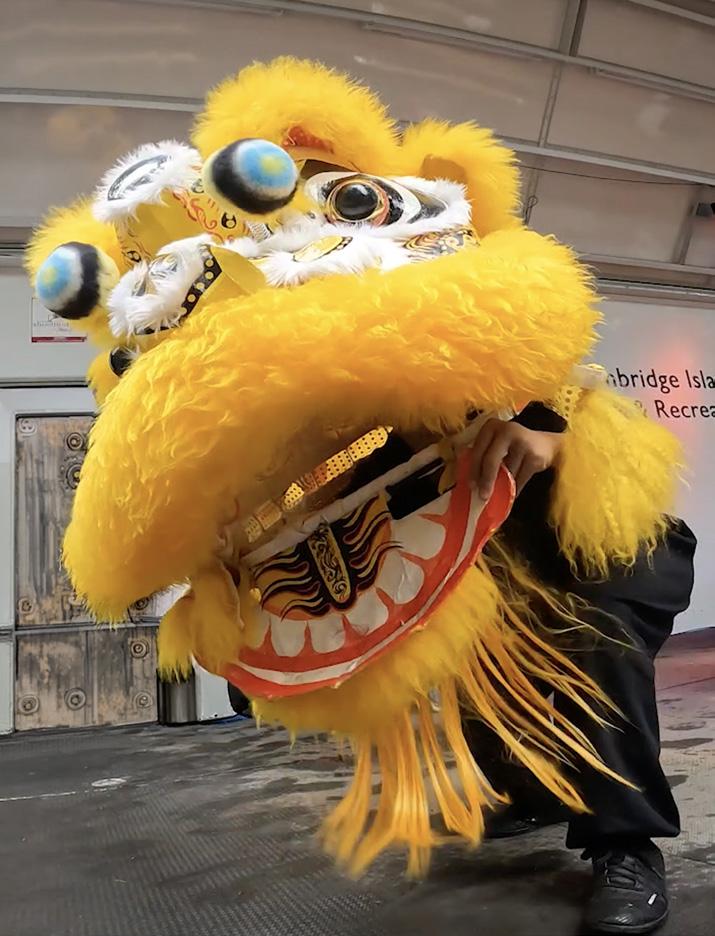
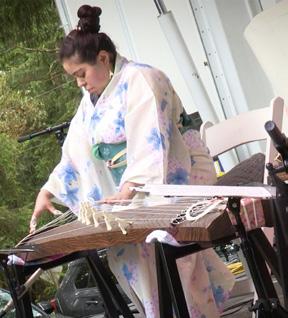
Now in its third year, the Asian Arts and Heritage Festival (AAHF) has grown tremendously. This year’s festival—which runs through May, coinciding with Asian American and Pacific Islander month—will include a second performance of “The Asian Monologues,” a vibrant finale at Waterfront Park, and myriad other events celebrating a diversity of Asian histories and cultures.
PHOTOS BY JAYDEN HWANG AND RON STEWART
When Reese dreamed up the idea for AAHF, she was looking for a way to bring stories and cultures together. She had heard of the Mochi and Strawberry festivals but felt that a broader celebration might feel more open to the community at large and would give a platform to islanders whose heritage is less commonly represented locally.
“I just met a woman from Pakistan who is going to be involved in doing a Pakistani Heritage Night,” Reese said. “She’s one of a tiny handful of people (from Pakistan) on the island.”
The idea of a festival encompassing numerous Asian and Pacific Islander cultures is also relevant to Reese’s own story: her mother is Chinese and Filipina, her father is Japanese and Caucasian. Reese grew up in Seattle. The intersection of various histories and nationalities is woven into the fabric of the Asian American experience.
The first edition of AAHF, in 2024, featured four events plus a finale. By the second year, there were 18 events, including a movie screening, cultural performances, and cooking and art classes.
“It was almost an impossible feat,” Reese said. “People just kept adding to the calendar. Which was really exciting because it helped me understand that if we’re like that in just year two, it was something that the community really wanted but just didn’t have yet.”
She hopes that hosting portions of this year’s festival at Waterfront Park will bring visibility to the events and said she’d particularly love to have more youth involvement in the festival. Reese said that the festival is about “participating, not observing.”
“You don’t have to be Asian to want to help celebrate culture,” she said. “I want us to be doing it together. Eating together, gathering together, learning a dance together.”
Reese’s work on the festival will reach beyond Bainbridge. Last October, Reese was honored as one of the 25 Most Influential Filipina Women in the World by the Filipina Women’s Network. The working award will support Reese’s expansion of “The Asian Monologues” into a traveling show. After this year’s performance of the “Monologues” on Bainbridge, the show will travel to Seattle, San Francisco and Los Angeles. Reese says she also has commitments from theaters in New York, Washington, D.C., and London. While a
few stories will remain the same, each performance will incorporate stories from the city where the show takes place.
The significance of the “Monologues”—and the festival as a whole—at this particular political moment is not lost on Reese.
“In the time that we were doing (the first performance of) “The Asian Monologues,” there was a lot of painful distrust in the government … Even people who are citizens had a lot of fear, just based on how (they) look,” Reese said.
Specifically, she noted, stories of the Japanese American Concentration Camps “gave people pause. … to think, ‘we could be taken away, that could happen again.’”
“Stories are so important, and especially now, in this time we are living in, when culture is being muted across the country, when programs are being muted,” Reese said while introducing the monologues last year at BIMA.
“We are going to protest any muting with joy, celebration, education and honoring our history”
SOMETHING NEW UNDER THE SUN
Stargazing on Bainbridge Keeps Getting Better
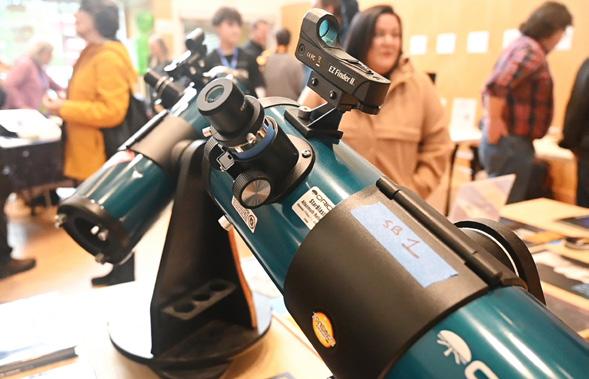
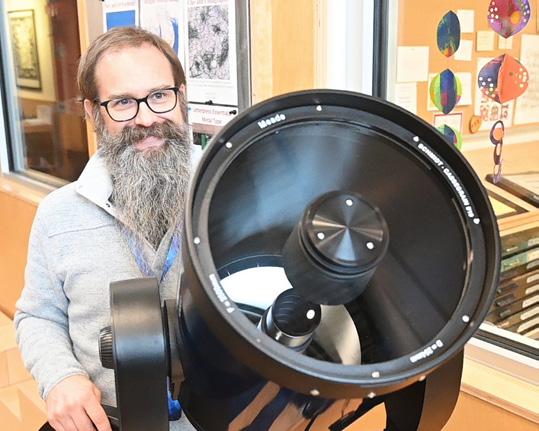
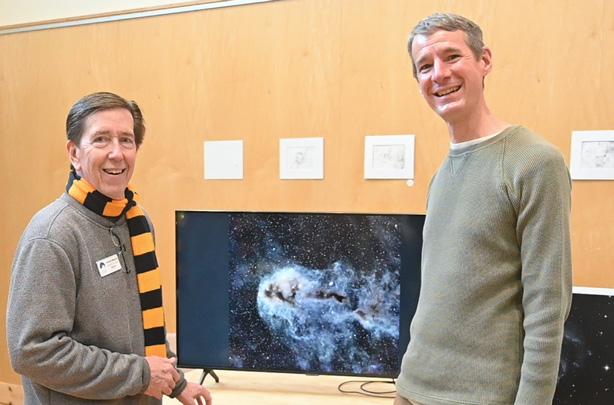
Battle Point Astronomical Association’s chief astronomer is, by trade, a veterinarian. Now retired, Chuck Wraith said that what attracted him to veterinary medicine isn’t so different from what attracted him to astronomy: you get to do a bit of everything.
BY CHRISTY CARLEY
SATTERWHITE
Wraith said that at the time he was working as a vet, “It was kind of like the Wild West…You did surgery, you did anesthesia, you did radiology.”
And astronomy?
“It’s physics. It’s optics. It’s engineering. You name it.”
BPAA’s tagline is “igniting passion for science through the
PHOTOS BY DINAH
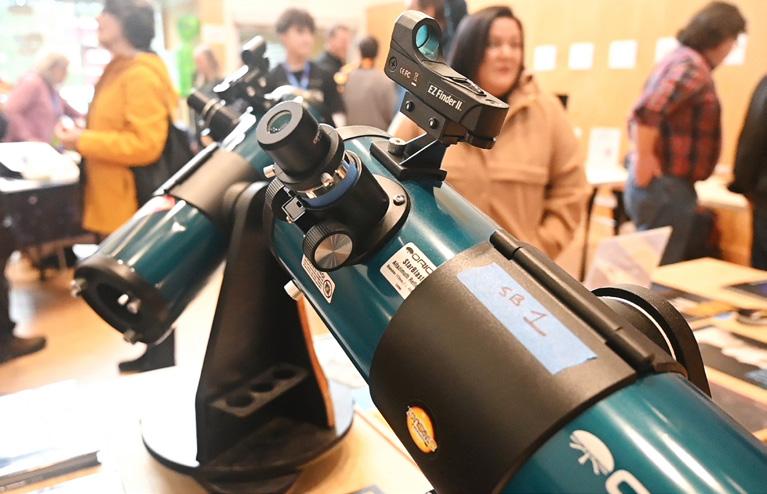
lens of astronomy.” While all of its board members love learning about space, they also see astronomy as a jumping off point to promote curiosity about a number of scientific fields: from 3D printing parts for telescope mounts to using a spectrometer to look for elements in the sky. And they haven’t forgotten about the arts, either.
Deborah J. Milton, BPAA’s artist in residence, wandered over to the Battle Point Observatory one day while walking in the park. Noticing the walls of the entryway were “drab,” she offered to paint a mural, explaining that she had also painted murals in a hospital before. The result was a wall and doorway bursting with color and wonder.
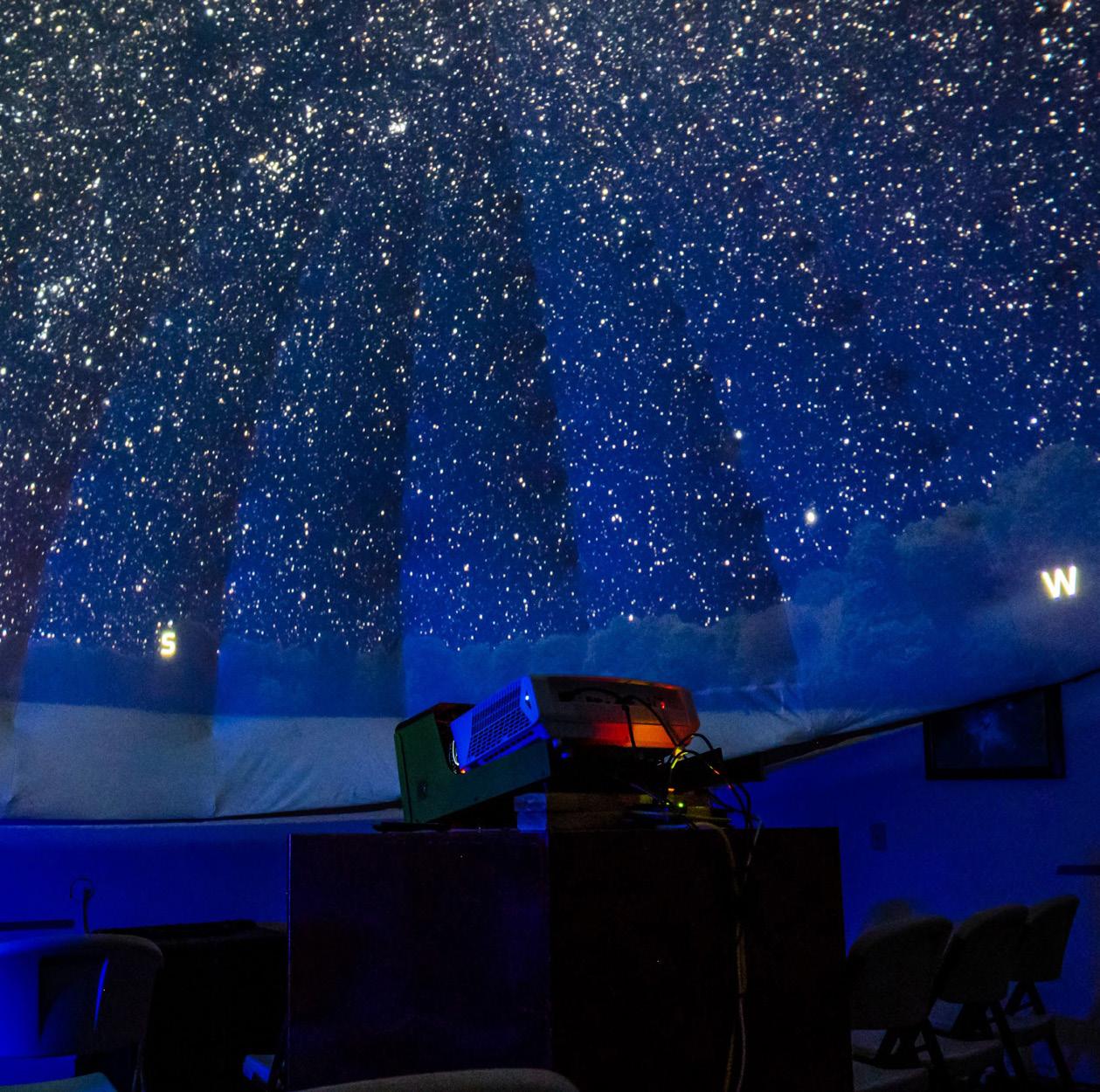
Now, Milton hosts paint nights inspired by planetarium shows—attendees paint the Milky Way, nebula or the moon.
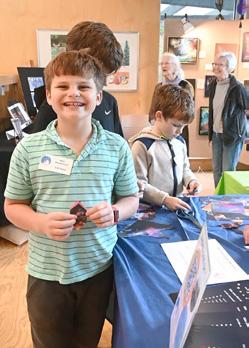
Paint nights are just one example of how BPAA has amped up its programming in the past year. In May 2025, the organization hired Eleanor Uyyek, a master’s student in aerospace engineering, as its programming coordinator. Uyyek has worked with schools around Kitsap County to organize field trips to the observatory and has helped host walk-in planetarium shows on Saturdays that are open to the public.
After inaugurating a new telescope and completing renovations last summer, the Battle Point Astronomical Association has been working to expand its offerings
Wraith is also working on starting an astrophotography group so people can learn more and share their knowledge about the science—and art—behind the capture of cosmic images. Several members of the association have done astrophotography projects before— with exposures that span several days and require programming one’s equipment to track the object being photographed as the earth rotates. Efforts to combine art and science are one way to bring different minds together. And in astronomy, bringing different minds together is essential. NASA even harnessed the ancient art of origami to make sections of the James Webb telescope foldable in order to fit it into the rocket from which it was launched into space.
Telescope volunteer Miles Starkenburg
Chief astronomer Chuck Wraith discussing astrophotography with Nathan Oestreich
Howard works remotely as a research scientist for Vera C. Rubin Observatory in Chile, operating and testing software. Their interest in astronomy was sparked—like that of many members of BPAA—by witnessing an exciting space-related event. In their case, it was watching the Hale-Bopp comet in the ‘90s from their parents’ backyard. Howard started an astro-physics degree right out of high school but ended up changing course. It wasn’t until 2015, when several scientists affiliated with the Rubin Observatory came to give talks in Bremerton, Howard’s hometown, that they decided to go back to school and pursue
The Client Experience
Trusted Realtor
Kristi has been our trusted realtor for the past three years, and we couldn’t be more grateful for her expertise and dedication.
In a Class By Herself
Kristi's hard work at finding what we were truly looking for and not just coming up with accommodations was inspiring.
An Incredible Realtor
Kristi has deep roots in the community and has built relationships with so many individuals and companies in the area who can assist you.
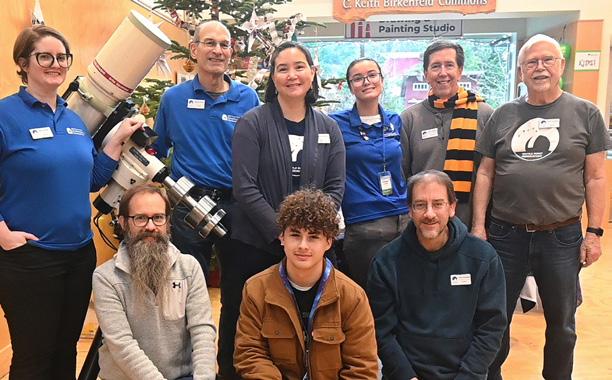
BPAA team members, (front row from L-R) Miles Starkenburg, Matias Starkenburg, Greg Swanson; (back row, L-R) Erin Howard, Frank Petrie, Diana Oestreich, Eleanor Uyyek, Chuck Wraith, Peter Moseley
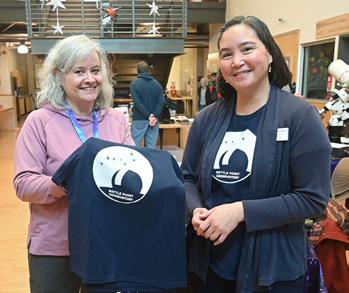
BPAA volunteer Terri Swanson with administrative coordinator Diana Oestreich
stephaniereese com
@citizen sister
GLOW UP THIS SPRING!
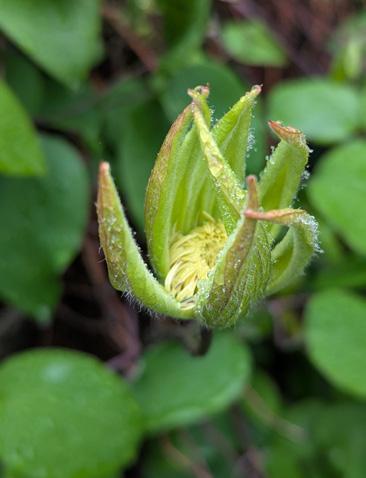
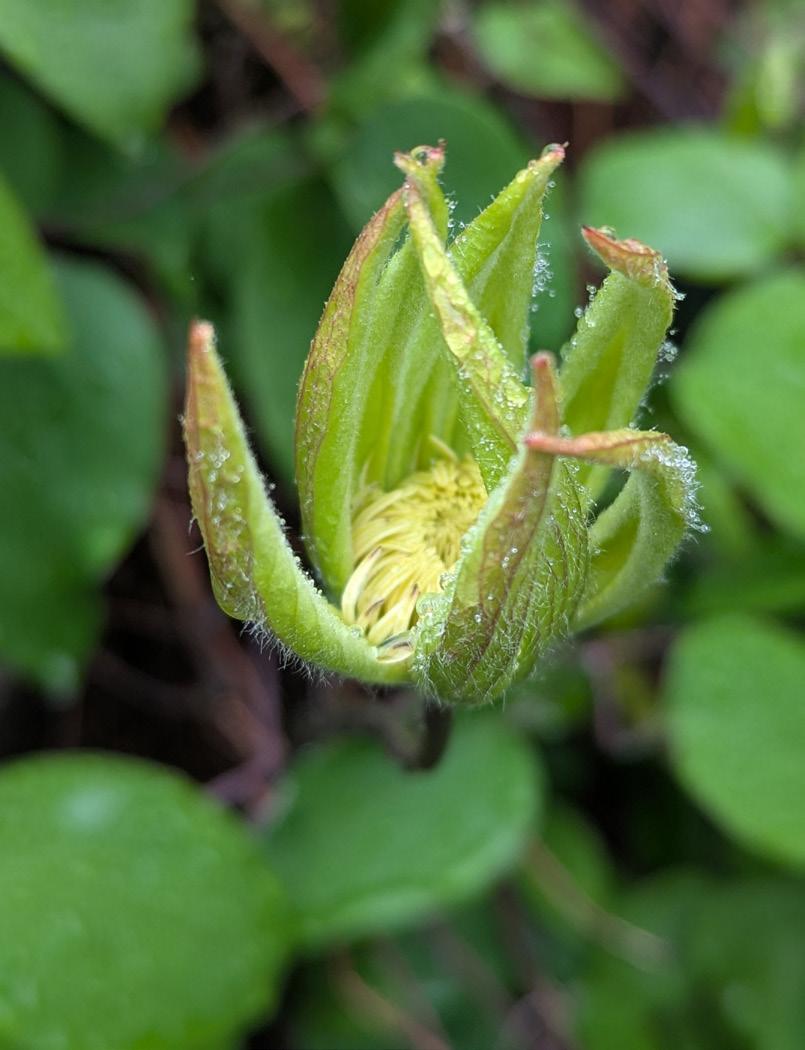
Rise and shine! Winter is over! Spring is awakening all around us. Seeds crack open. We stretch, yawn and blink our eyes as the light increases. The cold stillness of winter is thawing, sprouts are emerging, worms are working the soil again. If winter is the season of regeneration, spring is the season of rebirth and beginning anew. Spring starts as a tiny stirring with huge potential. All the energy we cultivated and packed up during winter is ready to burst forth. Our bodies and minds sense the change, probing into the environment, learning how to be reborn.
Possibility and potential bloom with the first bulbs. Unrelenting buds and shoots show off the color of the season. Green, all shades!
In February, the next lunar year began, bringing the Year of the Horse. This fast, powerful, wildly passionate beast is full of action and will bring in its wake a current of bold ambition. These characteristics parallel the energy of spring in Chinese Medicine tradition. The element of fire highlights the quickly changeable, chaotic, volatile and socially focused thread that will ride with the horse. This will be a great year for bold moves, ambitious ventures, proactive mindfulness and balancing activity with rest.
With so much energy swirling, we must be adaptable and dance with it. Roll with the changes and obstacles that suddenly appear, roll like water down a leaf during a spring rain squall. Adaptation means learning to fit into your environment and each spring provides a new chance.
Don’t just GROW this spring, GLOW! by tuning up your adaptation skills and taking care of your mind and body! Clean out by eating lots of green foods. Brighten up by being immersed in budding bushes and trees in the woods.
STORY AND PHOTOS BY BAJDA WELTY
INDEPENDENT LIVING | ASSISTED LIVING | MEMORY CARE
Thank you to our residents, families, and referral partners for your continued trust and support. We’re incredibly proud to be recognized not only for our services, but for the experience we provide—warm hospitality, strong clinical support, and a team that truly shows up for residents and one another every single day.
Call to schedule your tour today!
RIGHT ON CUE
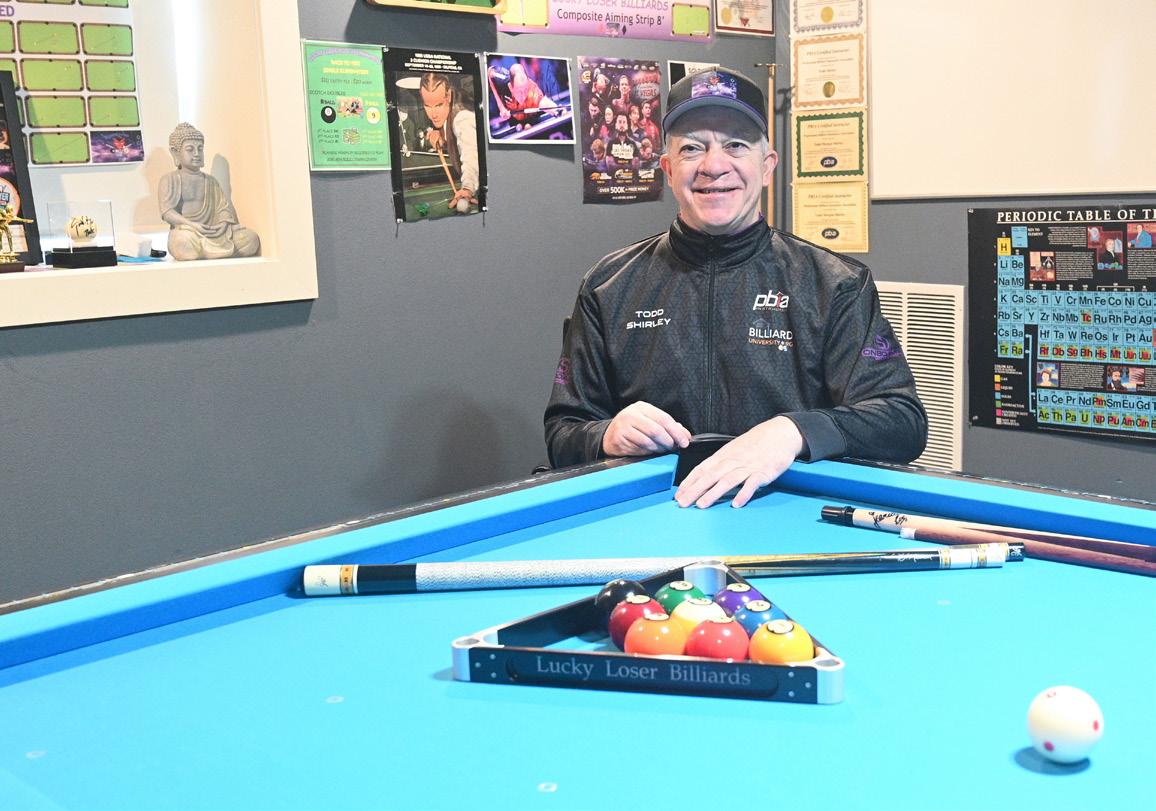
Todd Shirley is on a Mission to Spread the Gospel of Pool
Late into middle age, around the time of the first COVID lockdowns, islander Todd Shirley received a communication from on high: “The message from God, or the universe, you might say, was it’s time for something new.” Shirley felt certain of the direction he should take. “God,” he said, “called me back to pool.”
BY GEORGE SOLTES
BY DINAH SATTERWHITE
It could be said that Shirley was born to play pool. Growing up in San Jose, California, as the child of two avid bowlers, he was brought along from infancy to the Saratoga Lanes Bowling Alley, where his diapers were sometimes changed on the game room pool table. As a teen, he began working as a porter at the bowling alley, where one of the perks was free pool. He quickly became obsessed. “I played it every day after work, all night,” Shirley said. “Sometimes I’d just walk home, get a few hours’ sleep, then go back to work cleaning lanes and bathrooms.”
Along with pool, Shirley found trouble, falling in with “kids doing stupid things.” Fortunately, a mentor came into his life and tipped the balance in favor of excellence over mayhem. Professional pool player Bill Brown, impressed by Shirley’s play, agreed to teach him as long as he gave the game everything he had. By his late teens and early 20s, Shirley was competing in and winning major California tournaments.
The focus he found in pool imbued other areas of his life. He earned a degree in chemistry, got married and had a daughter. He built a career as a chemist and, when his company relocated to Poulsbo in 2001, Shirley came along, ultimately settling with his young family on Bainbridge Island in 2008.
The Great Recession arrived on the island around the same time as Shirley, creating challenges for his livelihood as a chemist. He found work outside the lab in
PHOTO
marketing and sales, air quality monitoring and industrial health and safety and, throughout the years, remained passionate about pool. When the pandemic struck, isolating him along with everybody else, he received his nudge from the Almighty and decided to devote himself full time to the game.
For Shirley, pool is about much more than putting balls in pockets. In our modern, screen-obsessed culture, he sees it as an antidote to “sitting on a device in an echo chamber.”
“People have an innate desire to get out and physically do something and physically meet people,” he said. “Relationships with tangible things and real people are how you can explore and grow.”
Shirley is the founder of Lucky Loser Billiards. The name is based on the Japanese phrase “kōun na makeinu,” which refers to someone who overcomes
adversity with the help of good fortune. It’s a nod to his Japanese wife, Kazumi, and to the time he spent playing pool in Japan. Daughter Reina designed the logo, which features a grinning red devil above crossed pool cues.
Shirley has certification as a billiards instructor from multiple professional organizations and has used his more than 50 years of pool experience to build his own comprehensive curriculum. He welcomes people of all skill levels and meets them where they are, offering lessons at their homes, at various commercial billiards halls or at his home pool room on Bainbridge Island. He also encourages his students to embrace the “social fabric of pool” by introducing them to local amateur leagues. Shirley estimates that he has instructed more than 200 students to date.
While Shirley views pool as a respite from pervasive technology, he isn’t shy
about making use of high-tech teaching tools. He has designed state-of-the-art aiming systems, embraced live streaming and utilization of artificial intelligence for pool analysis and is involved with Illuminated Cueing Arts, a training platform that projects instruction directly onto pool tables.
In the end, though, it comes down to people, connections and Shirley’s belief that anyone’s life can be made better by placing a cue stick in their hands.
“What we’ve done with pool today, is allowed the accessibility to be so wide that whatever your interest, whatever your shape, whatever your diverse set of individual features and interests, we have openings for you,” he said.
“Come join us. You’re gonna have fun,” he added. “We’re gonna make pool an exciting journey for you.”
Learn more at LuckyLoserBilliards.com
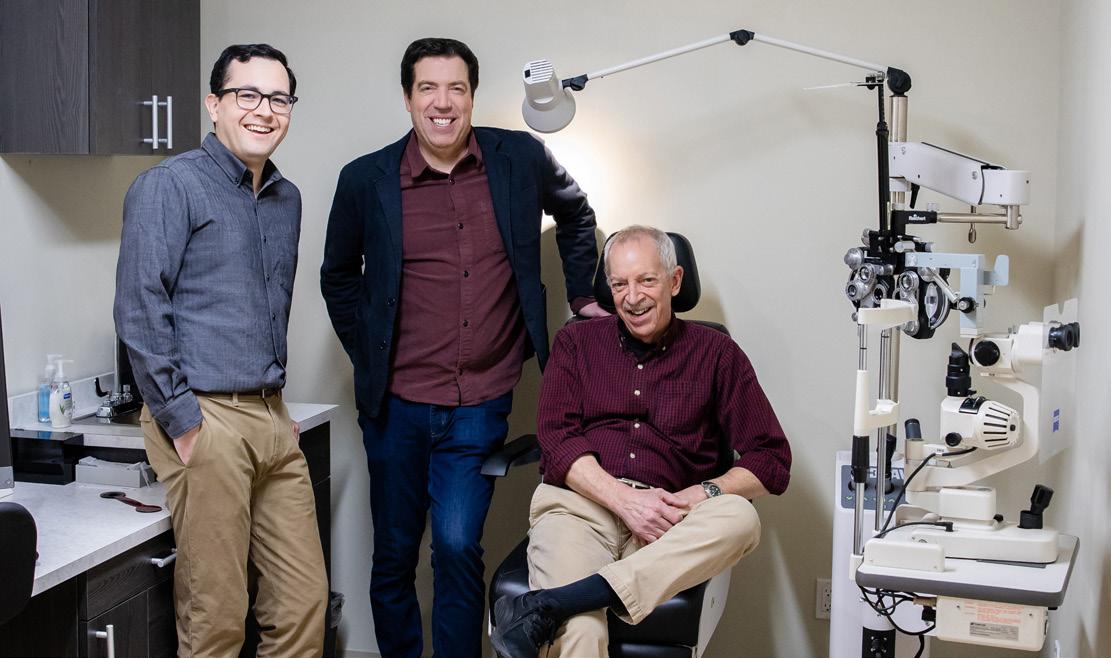
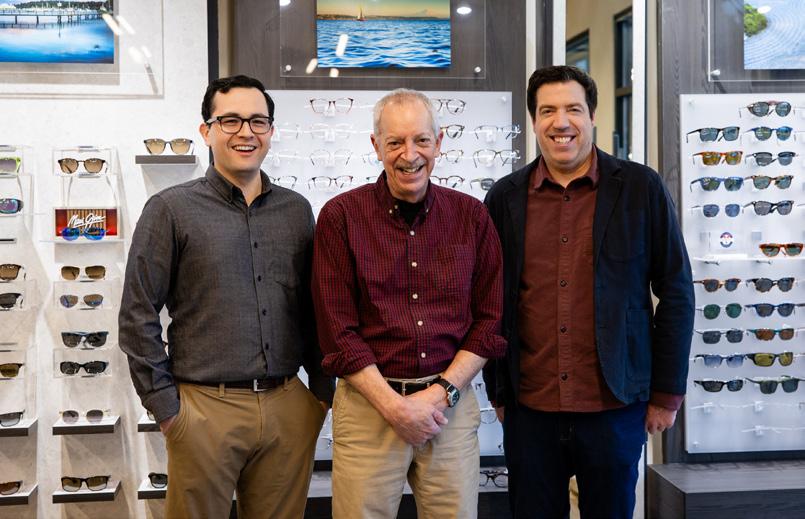
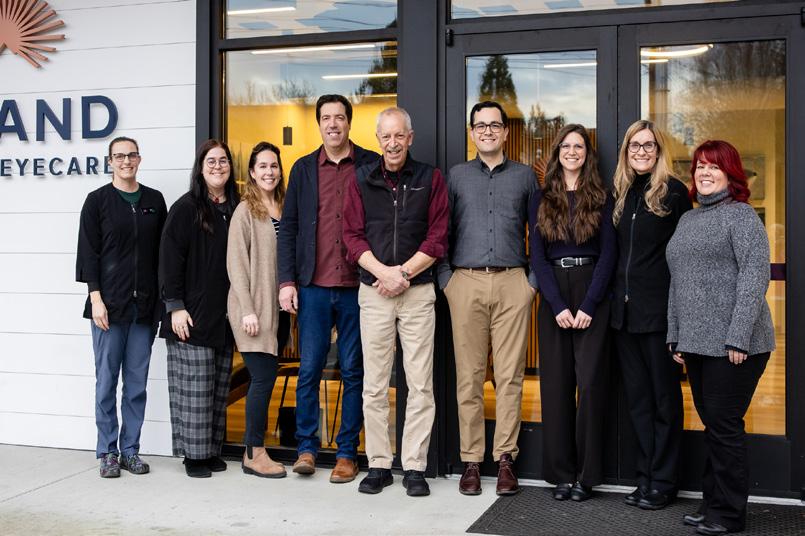
Keeping the FOCUS
Island Family Eyecare: Building a Legacy Through Mentorship
In the 35 years since it opened, Island Family Eyecare has transformed the visual health of countless island residents by putting personal connections at the heart of its work, said Dr. David Kirscher, the practice’s founder. He put the clinic’s commitment to maintaining strong community relationships simply: “The mission has always been to take the best possible care, as well as to offer the best products for every patient who walks into the clinic.”
BY SOPHIA SOLTES
GRAEBNER
Kirscher has maintained this drive from the start, working six days a week during his first decade in business to grow the practice. “I started as an employee of The Visual Connection
toward the end of 1988,” he said. “I bought the Winslow Green location and became sole practitioner on April 1, 1991, changing the name to Island Family Eyecare.”
Kirscher didn’t remain a sole practitioner for long, though. As the clinic grew, it also became committed to a different form of connection: mentorship.
“I met Scott when he was a junior at Bainbridge High School,” Kirscher recalled of Dr. Scott Brase, who has worked at Island Family Eyecare since the early 2000s, after being mentored by Kirscher and other staff members. “He came in a lot during summers in high school and undergrad, and I guess he liked what he saw. I hired him as an associate after graduation.”
PHOTOS BY ANNIE
Brase was the first to train and return to Island Family Eyecare after receiving Kirscher’s guidance, but he wasn’t the last. Years later, their combined efforts brought another doctor into the practice.
“Scott and I met Gavin (Hollyer) when he was 9 years old,” said Kirscher. “He was a patient at Island Family Eyecare.” Dr. Hollyer, Island Family Eyecare’s newest optometrist, recently returned to the clinic as a colleague, shaped by the same connection and community-centered guidance.
Hollyer has been at Island Family Eyecare for almost two years but said, “it feels like it has gone quickly.” When, like Brase, he began to observe at Island Family Eyecare in high school, Hollyer hoped to learn more about possible career paths.
“My family had been patients there for a while,” he said, “so I reached out and they were more than happy to have me come in and do some job shadowing.”
After earning his undergraduate degree from the University of Victoria in British Columbia, his doctorate at Western University of Health Sciences in Los Angeles, and completing his clinical rotations at various locations around the country, Hollyer felt a pull to return to Bainbridge.
“I had been thinking about coming back since I started grad school in Los Angeles,” said Hollyer.
The idea of an “island family” drives Hollyer’s work at Island Family Eyecare, just as it shaped Kirscher and Brase’s philosophy. “All of us are local,” Hollyer said, “so we really focus on maintaining
that local connection through getting to know everyone’s family while also providing quality care.”
Reflecting on his experience, Hollyer credits the doctors who guided him. “Both Dr. Kirscher and Dr. Brase are really great educators, and they’ve always been incredibly supportive of my interest,” he said. “I think that the local mentorship aspect has always been important to the practice.”
With the new support in place, Kirscher is preparing for retirement: “This has been a good ride, but 40 years is enough.”
However, Hollyer is confident that his predecessor’s legacy will live on. “There’s lots of history here,” he said. “A virtue of living and practicing here is that you have the privilege of seeing families, seeing people return to the island, and eventually seeing their children. It’s one of the most fulfilling parts of the job.”
Although Hollyer is new to the practice, he also hopes to pass the torch one day. “I’ve actually already had a student reach out to me. We always do our best to accommodate people who are eager to learn, and encourage young folks to reach out to the office with any questions that they may have.”
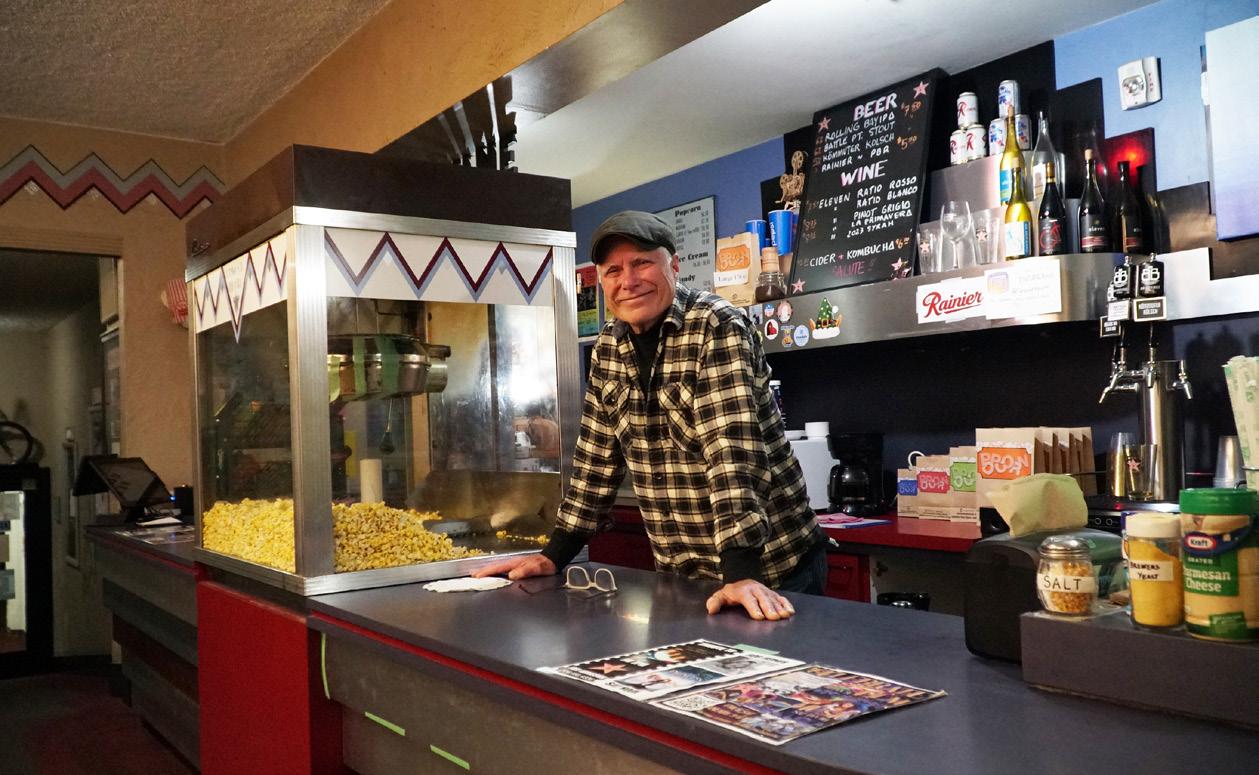
Ninety Years of MOVIE MAGIC
Historic Island Cinema
Marks a Major Milestone
Bainbridge Island’s oldest silver screen has officially entered its golden years.
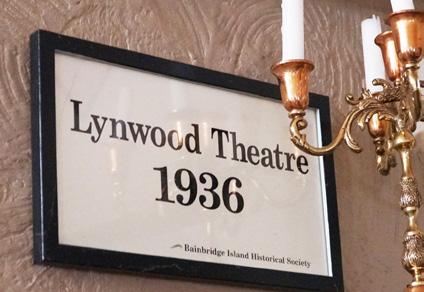
The historic Lynwood Theatre—reportedly the second oldest continually operated business on the island (only behind Bainbridge Gardens)—opened its doors 90 years ago this July.
However, it technically wasn’t Bainbridge Island’s first theater.
“The first actual theater to show movies here was part of the Port Blakely Mill,” said Lynwood Theatre’s general manager, longtime islander Kevin Lynch. “But they only showed silent films; it’s all they had the tech for. So, when this one opened in July of 1936, it was officially the first talkie theater and we’ve been doing it ever since.”
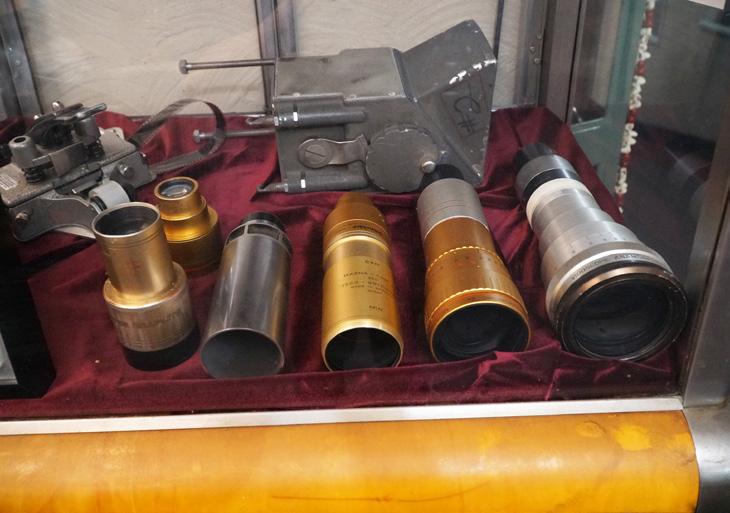
Lynch expects the actual age of the cinema to go unrecognized by most guests and patrons, although architectural flourishes of a bygone style and historical cinematic artifacts on display in the lobby are undeniably part its appeal—for those who still show up.
It’s no secret that box office business is not what it was even just a few years ago, on both a national and local scale, and Bainbridge Island’s oldest theater has some new competition.
“One of the key things that we’re facing right now, among a plethora of other challenges, is that of oversaturation,” Lynch said. “By that I mean you’ve got options today like never before. You can sit at home and stream a movie, you can come down here, you can go the Pavilion, you can listen to live music in any number of venues, you can get involved with sports and
STORY AND PHOTOS BY LUCIANO MARANO
educational activities, with various social activities, there is plenty to do. When I first got to the island in 1976 there were limited opportunities, there were only a couple of things you could do—and this was one of them.”
The ubiquity and popularity of various streaming services, as well as the massive improvement of home entertainment technology, have taken their expected toll on business. But so have internal problems, according to Lynch.
“We’re not getting a lot of help from Hollywood,” he said, lamenting the industry’s current obsessive focus on making enormous, expensive spectacle-driven films instead of modest, more adult-oriented dramas, thrillers and comedies. “It’s tough going.”
Island entrepreneur Jeff Brein, of Faraway Productions, has been an owner of the Lynwood Theatre (as well
as Bainbridge Cinemas in the Pavilion and several other indie theaters in Washington State) since partnering with Sam Granato in the late 1990s. Granato, who passed away in 2024, was the City of Bainbridge Island’s first mayor.
“Sam had been involved with Lynwood for roughly 10 years before that,” Brein said. “It’s always been owned by people who live on Bainbridge Island.”
And, in recent memory, at least, it’s never been much of a money maker.
“Sam and I, since we became partners in 1997, have never taken a single penny out of that theater in the way of bonus or salary or gifts or loans or anything,” Brein said. “We have plowed everything back into the operating of that business and we have expended personal funds to do so in an effort to keep it and preserve it.”
A task which, even as the theater marks a historic milestone, has become more difficult than ever.
“We are in a situation now where the industry changes are necessitating that we become creative, not only with our programming but with our business structure and the way that we operate,” Brein said.
To that end, Brein has begun the process by which the theater might soon become an officially recognized nonprofit, thus making it eligible for a variety of grants and support funds that
would facilitate part of his planned-for improvements and renovations.
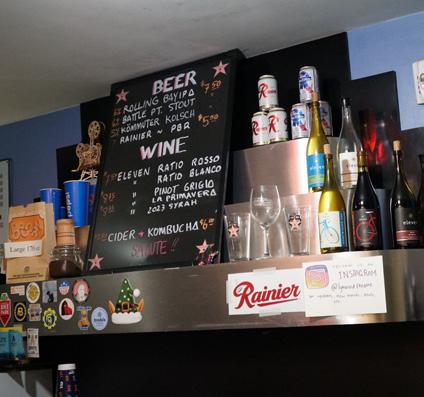
Meanwhile, Lynch has done a great deal to diversify the entertainment offerings and expand food and beverage options. For instance, the menu now features beer, wine and cider. In addition, live music, standup comedy, free specialty screenings, plays, readings and private events are all now regulars on the cinema’s calendar.
And, of course, there are plenty of new movies, too.
The latest of the “talkies,” which the Lynwood Theatre first brought to Bainbridge, are still the primary attraction.
“I think there will always be a place for the true cinema aesthetic,” Lynch said. “It’s just too rich, has too much of a history and too much potential, because everyone wants to have that Spielberg, Lucas, Scorsese, Villeneuve, del Toro-type of moment. Where you have a packed audience and the end credits roll and there is one nanosecond, that one beat of silence, before the applause. That’s a very, very powerful thing.”
“There is nothing that is more enjoyable than having that experience with a group in real time in a movie theater,” he said. “There’s just nothing like it.”
Let the SUN SHINE IN
The Complicated Work of Bringing the Power of Solar to Bainbridge
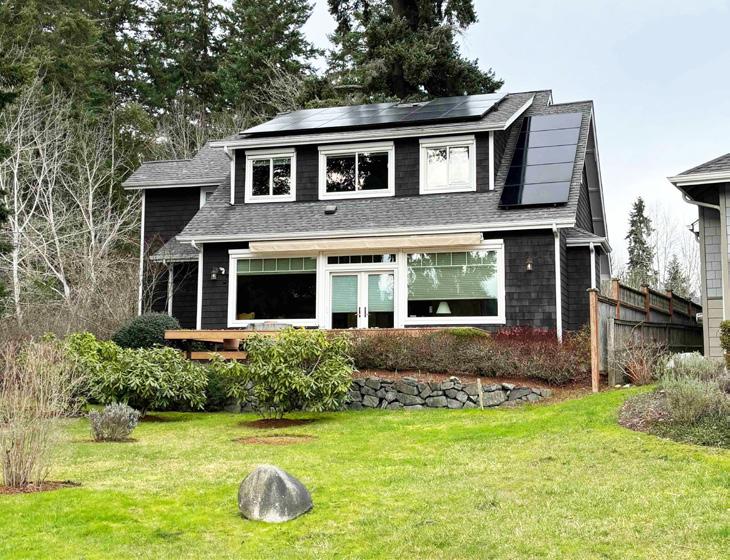
Carbon-free energy by 2040. That’s the ambitious, island-wide goal currently outlined in Bainbridge’s 2020 Climate Action Plan (CAP).
Meaning it is going to take a lot of solar panels, said Laura Rÿser, the city’s climate and sustainability manager.
Between 2014 and 2018, about 53 percent of Bainbridge’s emissions came from residential and commercial electricity use—more than twice the state average of 20 percent. That number, paired with the Washington Legislature’s directive to achieve statewide carbon-free energy by 2045, spurred the city government’s focus on solar.
BY AUDREY NELSON
Rÿser noted that solar became attractive, especially for energy-conscious islanders, because “it really hits the reducing carbon emissions, but also helping people be resilient in their homes.” Solar is also a cost-effective energy source. In the spring of 2025, Housing Resources Bainbridge received a large state grant to install rooftop solar at its affordable Ericksen Community development. For HRB Executive Director Phedra Elliott, the installation was a no-brainer.
“We come to all our properties, new or already built, with the view of, ‘How can we sustain this physical structure for as long as humanly possible?’” Elliott said. “We want to make sure they’re durable and sustainable and energy efficient and all the things that will keep operating costs down for us and the tenants or homeowners who are having to pay bills.”
By the time city government adopted the CAP and its solar-related targets, Bainbridge was already punching above its weight with regard to climate action. In 2016, the island explicitly incorporated climate change in the Bainbridge Island Comprehensive Plan. In 2017, the Climate Change Advisory Committee got off the ground, working to provide recommendations for what would eventually become the CAP. And when the CAP was adopted in 2021, several high-profile buildings across
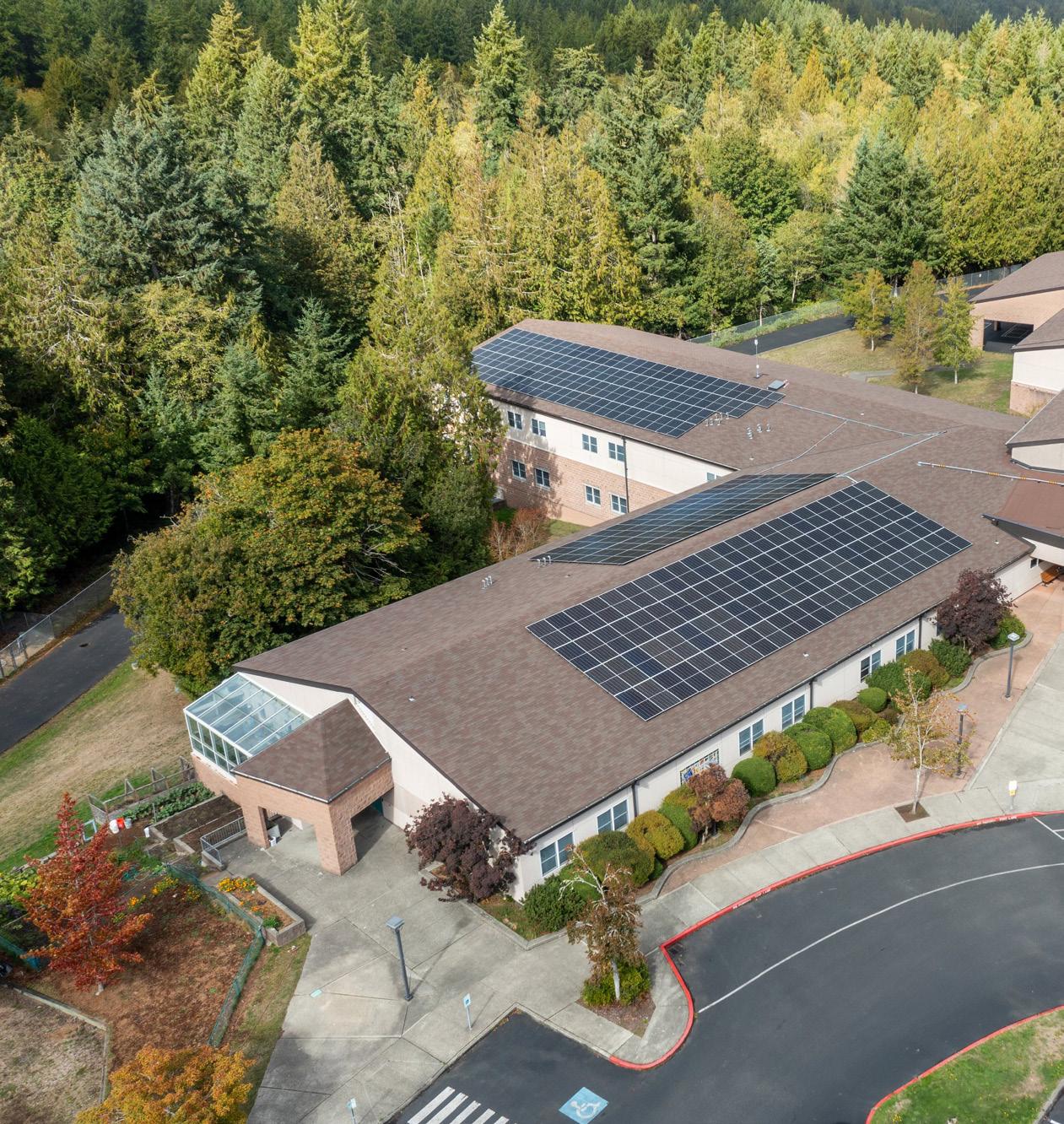
Bainbridge had already installed solar panels, including Sakai Intermediate School and City Hall.
“It’s very unique for a small municipality to have a climate action plan specifically and put money behind it and fund it,” said Rÿser, who previously did climate mitigation work for Pierce County. “There’s a story there about the culture of the island and the importance…of supporting environmental work.”
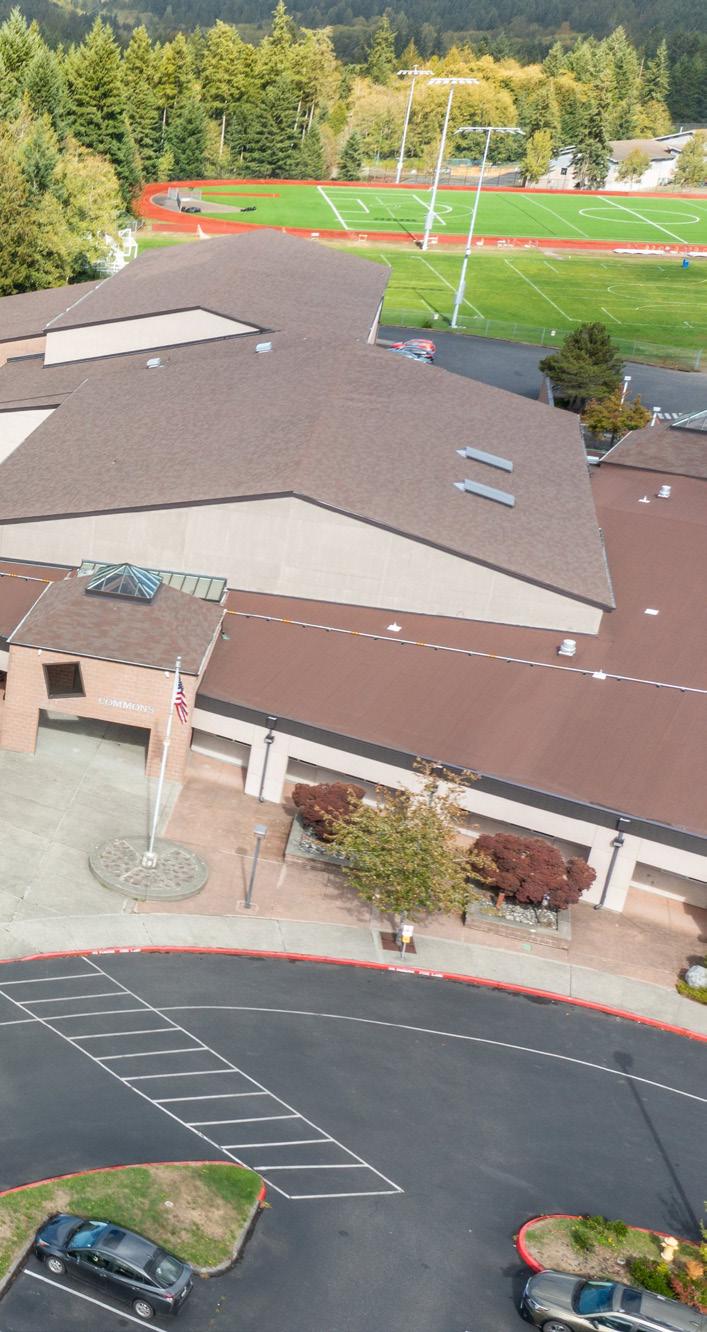
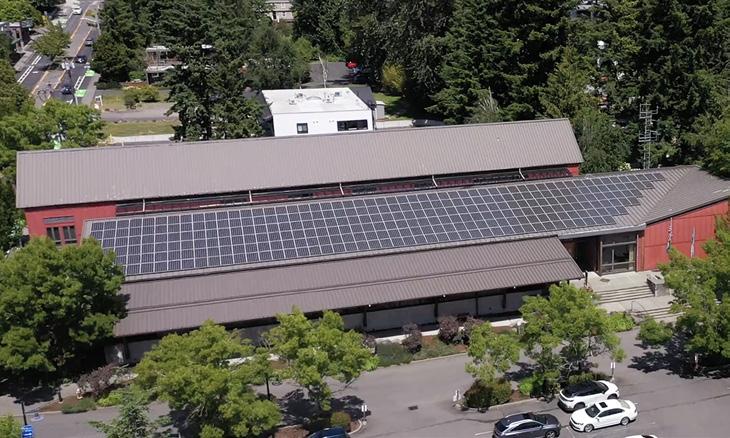
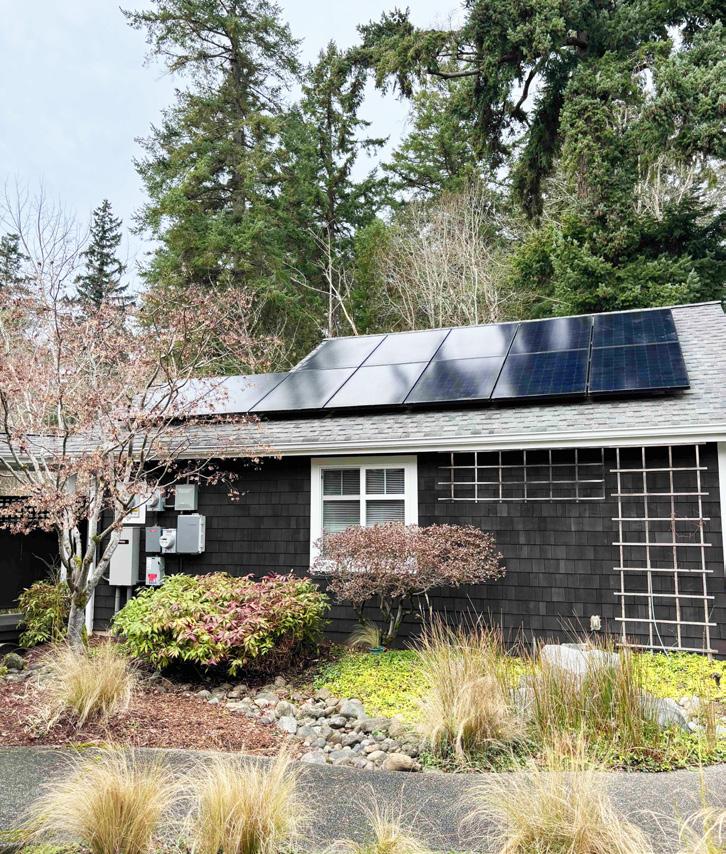
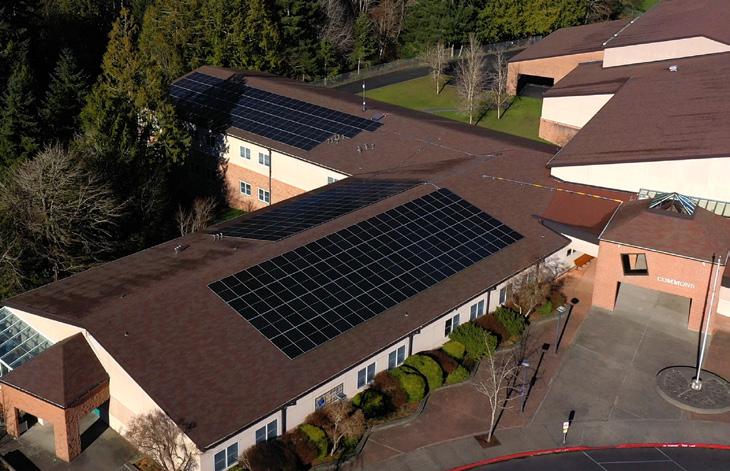
The CAP’s passage provided support and a road map for city government officials and their partners to build on existing solar momentum. Today, those efforts have visibly paid off. New solar panels are cropping up all over the island. As of 2024, 5 percent of private Bainbridge residences had solar. Kitsap Regional Library is installing an array, as are Bethany Lutheran Church and the new Helpline House building. And Woodward Middle School recently won a bid to install panels as a carbon offset for the Ted Spearman Justice Center.
The network of people involved in this solar boom is wide and complex. There is Rÿser, of course, and the city’s Climate Adaptation and Mitigation Office; there are individual homeowners and state legislators; there are emergency preparedness organizations, sustainability groups, solar grant-writing nonprofits and energy providers.
And that’s not an exhaustive list. Rÿser describes much of her job as working across these myriad groups, coordinating their shared goals and limitations. “If I could work 24/7, I would, because there’s enough work to do,” she said.
To fully understand the dynamics of solar transition, and the complicated network of actors that Rÿser oversees, it’s helpful to start with a single case study. St. Barnabas, an Episcopal church just west of downtown Winslow, has long been concerned with combating climate change. The parish’s Stewards of Creation committee focuses on carbon footprint reduction and environmental justice. Accordingly, about two years ago, Stewards of Creation member George
Solar City Hall
Robertson decided to look into putting solar panels on St. Barnabas’ roof.
“I went to the finance committee at the church and said, ‘We really want to do this,’” Robertson said. “‘Is there any way we can afford to do it ourselves?’ And they looked at it and said, ‘It’s a great project, we’d like to see it done, but there’s no way we have money to do that. So, if you can find the money, we’ll do it.’”
Cost is a common barrier to installing solar—particularly for smaller residential projects that might require loans. When it comes to solar, “there’s not a lot of options for financing, for lending,” Rÿser noted. “You can’t compare and try and get a better rate when you don’t have options.”
Even for larger, nonresidential projects, potential federal funding has been a no-go since 2024. Luckily, state solar
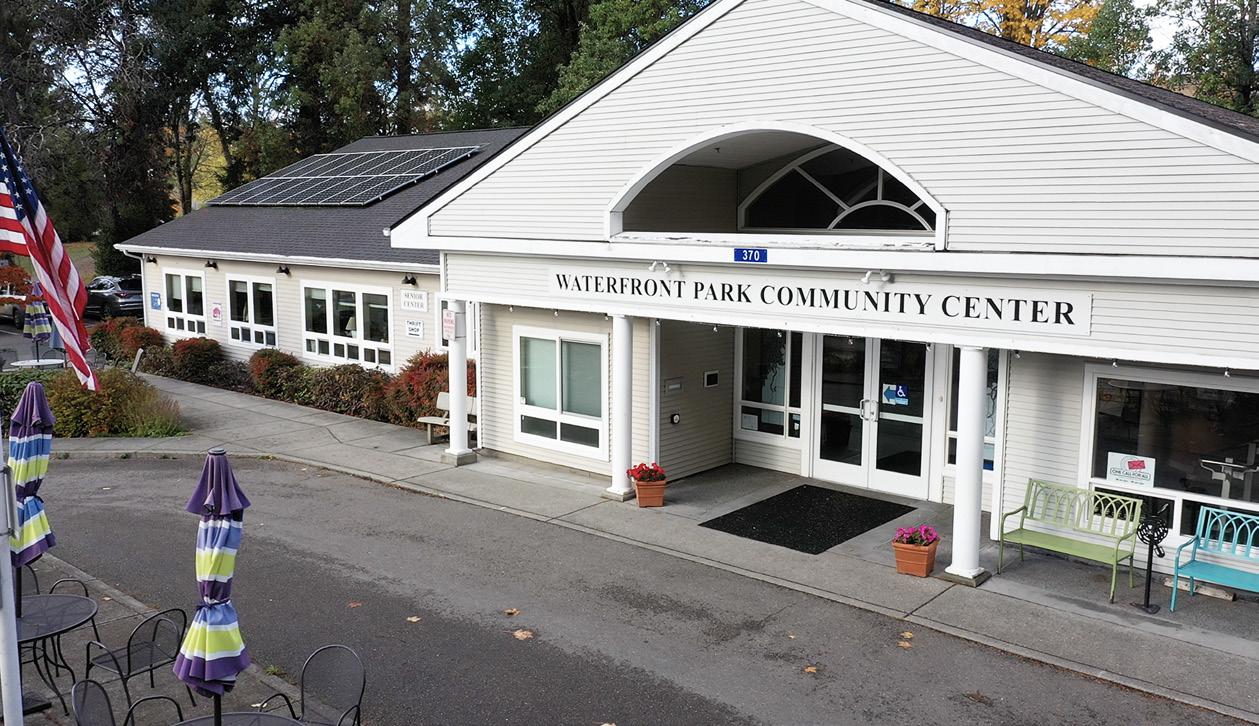
Solar Community Center
money is still plentiful. Robertson quickly contacted Olympia Community Solar, an organization that provides grant support services to nonprofits installing solar. The group helped Robertson apply for four different grants. In the summer of 2025, Washington’s Department of Commerce awarded St. Barnabas a $161,896 Clean Energy Community Grant. (Both Housing Resources Bainbridge and Bethany Lutheran Church benefited from the same grant program earlier that year.)
With the help of the grant, St. Barnabas will install 127 solar panels on the sanctuary, office and parish hall buildings.
“Some of these panels, when you walk up to the entrance of the church, are going to be visible,” Robertson said. “Everybody who comes to our church will know these are people that care about trying to do something about the climate crisis.”
Over their 30-year expected lifespan, the panels will provide about 83 percent of the church’s electricity needs. In addition to reducing its carbon footprint, St. Barnabas members will save about $280,000 in electricity costs over the same 30-year span.
St. Barnabas is one of Bainbridge Prepares’ Disaster Hubs, as well as a city-designated warming center. The new panels guarantee a resilient energy source for the church in these potentially lifesaving roles, and contribute to St. Barnabas’ spiritual goal “of caring for creation more effectively,” Robertson said.
Port Townsend’s Power Trip Energy was scheduled to install the panels in late February and/or early March 2026. Robertson estimated that the array will be finished and activated in time for a ribbon-cutting ceremony in April. A week later, Olympia Community Solar will hold a workshop at St. Barnabas—to discuss the church’s installation and educate community members interested in residential solar. Olympia Community Solar is staying busy. It will also partner with Laura Rÿser and the city of Bainbridge as part of the 2026 Solarize campaign. By operating across different municipalities, Solarize decreases the cost of installing residential solar; Rÿser described it as a “matchmaking program.” “You just connect interested people with contractors who can do an assessment of their home, and then they can run with it however they want,” she said. Since educating homeowners and promoting solar subsidy programs are two of Rÿser’s—and the CAP’s—main goals, Solarize is a natural fit.
This year, Rÿser will also be spearheading a revision of the CAP: soliciting community feedback, measuring impact, and making sure the plan’s concrete goals are achievable. Specific dates and numbers may change. But Bainbridge’s general push for clean energy will not.
“Everybody, in my opinion, needs to be connecting and syncing and aligning our actions and strategies, because we all have a very similar goal,” Rÿser said.
That goal, of course: more solar, less greenhouse gas.
Woodward Solar Panels
ADAM FOLEY
photogr a ph photography
Scan to schedule your photography session!
THE JOB
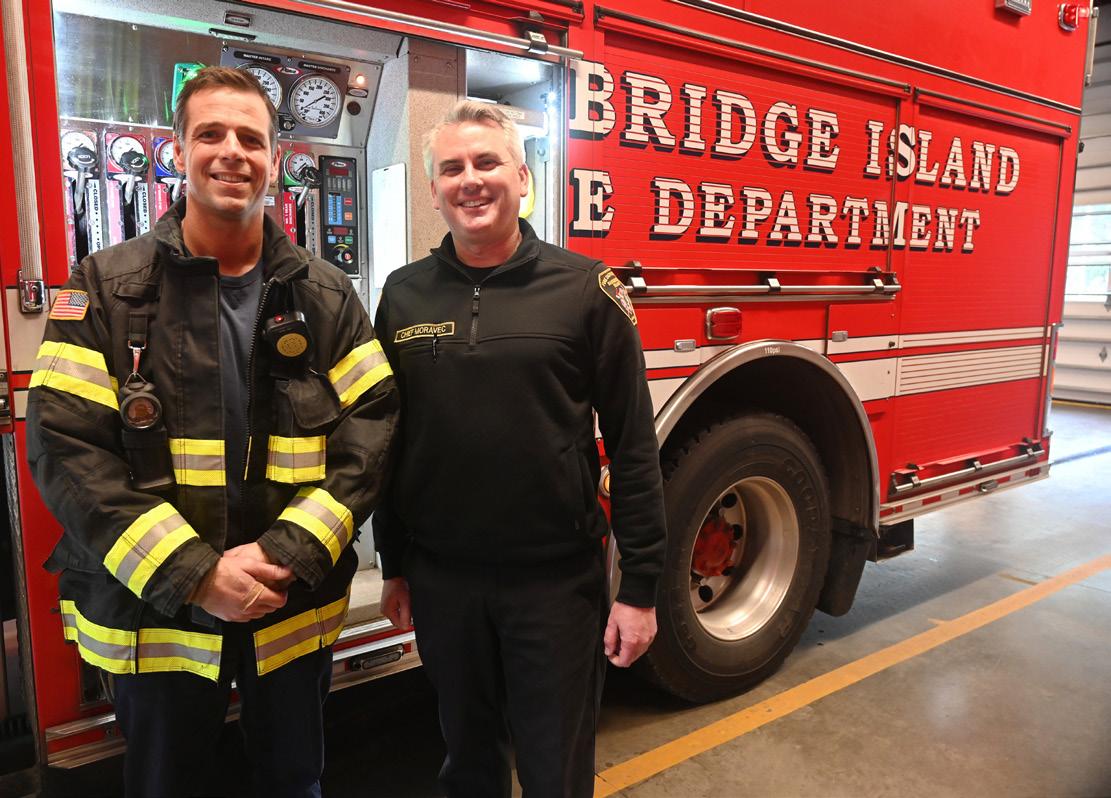
A MORNING AT BIFD’S STATION 21
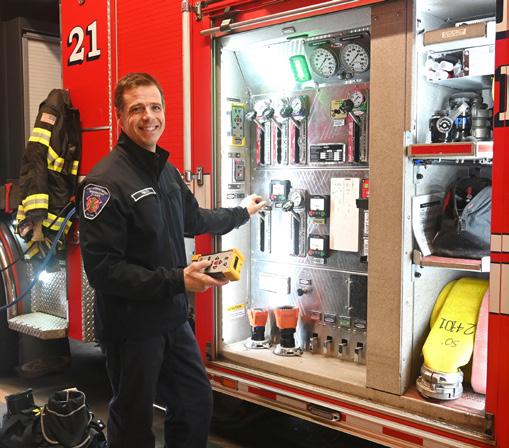
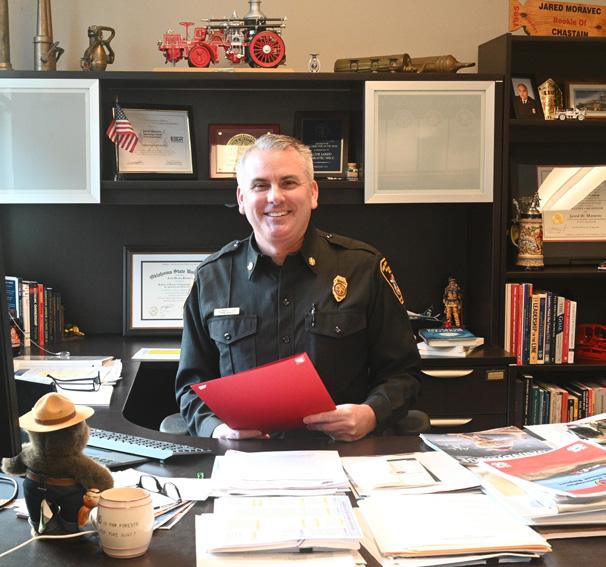
Lieutenant Dag Liljequist swung down from a fire engine, landing boots-first in the wide bay of Bainbridge Island Fire Department’s Station 21. It was around 11 a.m. on a Friday, and Liljequist and the rest of his on-duty crew had just returned to the Madison Avenue station after a false alarm on the island’s south end.
BY AUDREY NELSON
PHOTOS BY DINAH SATTERWHITE
As Liljequist climbed out of his heavy jacket, pants and boots, firefighter/EMT Sean Tully examined the back of a nearby ambulance. Typically, Tully does his “rig check” at the beginning of his 48-hour shift—“making sure that everything’s kind of back in order, ready to go,” he explained—but a medical call earlier in the morning had disrupted his routine. After finishing his check, he headed inside the station, calling back to Liljequist, “I’m gonna go write that report.”
“Thanks, Sean,” Liljequist replied.
In many ways, firefighting seems like a glamorous profession. When a call comes in, Bainbridge firefighters rush to respond, aiming to suit up and leave the station in less than 90 seconds. These men and women are highly trained and cool under pressure, deploying from three different stations and providing support for house fire and emergency services calls, as well as rescue swimming operations and interstate wildfire responses. In 2024, they responded to a record-high 3,913 calls for service across the island.
But in order for BIFD firefighters to perform well during the heart-pounding, life-saving parts of their jobs, they must spend most of their shifts putting in unglamorous work: writing reports, running gear checks, doing drills and working out.
“And then after they train, they’ll train a little bit more.”
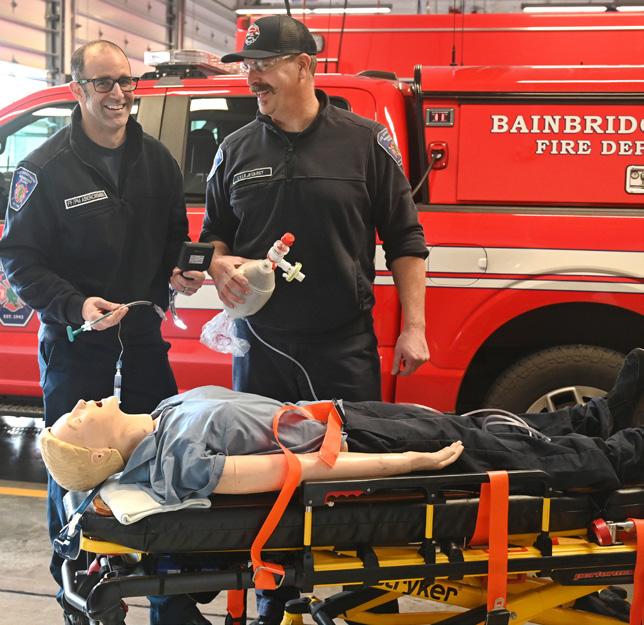
Moravec’s crews sometimes run through real-world simulations at the Phelps Road fire station’s concrete training tower or pull hose on Winslow Way late at night. Everyone participates in such dramatic, hands-on drills. But because of the department’s tiered response system, more banal, day-to-day responsibilities can differ between firefighter/EMTs and firefighter/paramedics. Tully and his fellow EMTs are classified as Basic Life Support (BLS) and dispatched on all calls. Meanwhile, paramedics like Korey Abercrombie respond only to more serious Advanced Life Support (ALS) calls, such as cardiac arrests.
“My days are spent waiting for them to call me,” Abercrombie joked. On this Friday, while waiting, he was deftly intubating a mannequin with various video laryngoscopes. The laryngoscopes’ small cameras give him a better view of the throat and airway than their manual predecessors. When not on calls, he often reviews such medical equipment to determine what should be stocked on BIFD ambulances.
Down the hall from Abercrombie and his mannequin, firefighter/ EMT Ronnie Saez sat in Station 21’s kitchen—one of the best places to observe the strange mix of mundanity and intensity that characterizes a firefighter’s life. Throughout the day, on-duty crew members in their navy-blue uniforms grab coffee and rummage through the fridge. Each night, Morevac assigns a crew member to cook dinner; the whole crew splits the cost. Occasionally, someone runs out for ice cream.
“Sometimes everyone gets a call the second we sit down,” Saez said of station dinners. “But we try.”
Saez is a “probationary firefighter,” which means she’s been a full firefighter with BIFD for less than a year. She worked a variety of corporate jobs before a friend recommended wildland firefighting. Her first deployment changed her life.
“I was like, ‘I love this work,’” she said. “This is way more in line with who I am as a person, my athletic background, things like that.”
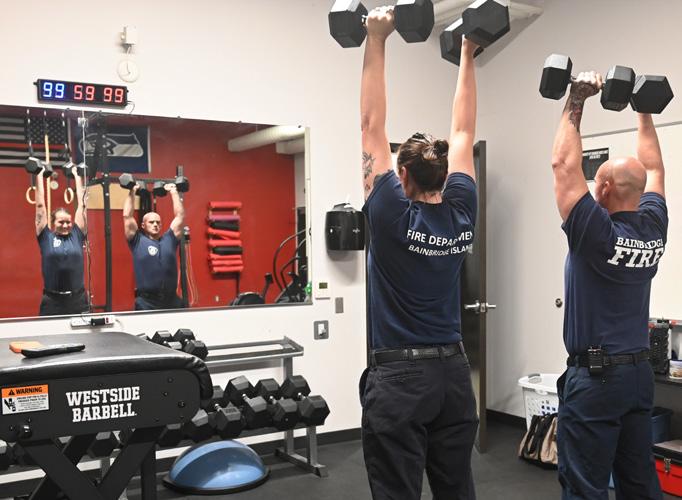
Plenty of former athletes are drawn to firefighting, which is intensely physical work. In fact, Moravec described his crews as “essentially paid professional athletes.” A key aspect of day-to-day station life is maintaining the ability to carry hoses or ladders while wearing 75 pounds of gear and breathing a finite bottle of air. To keep up their strength, Saez and her crewmates spend time in the gyms attached to each station or play Ultimate frisbee, pickleball or other sports.
A surprise to some laypeople is that firefighting requires not just physical strength, but mental.
“Our men and women are responding to scenarios that are people’s worst days,” Moravec said. “They’re being put into very high-stress scenarios that require very quick decision making…
It takes a special kind of person that not only wants to do that but is able to manage that themselves.”
But even the most emotionally intelligent firefighters still have to take care of themselves if they want to be at their best during stressful calls. On-duty crew take midday naps and longer rests in the station’s bunk rooms, eat well and tend to their mental health needs with yoga and grounding practices.
Dag Liljequist, who sees a therapist every four weeks for what he calls “preventative maintenance,” said the fire service hasn’t always recognized mental health as a priority. He welcomes both the small changes—like gentler station lights that aim to reduce the “startle syndrome” of nighttime calls—and the big ones.
“On the whole, the fire service is talking about [mental health] much more openly,” he said. “You go to conferences; there’s discussion about it. It’s not all just fighting fire and doing cool stuff. It’s taking care of each other.”
Liljequist and Saez are both Bainbridge natives—Bainbridge
High School graduates whose family and friends still live on the island. They often know the people who call on them for help, which adds a unique dimension to the mental load of firefighting.
Still, Liljequist said, as hard as it is to see loved ones on the job, “the comfort that a lot of these individuals feel when they recognize someone from the department coming to help them—it outweighs that burden of being a responder in your hometown.”
More broadly, there’s no doubt that being a firefighter is well worth the physical, emotional and administrative tasks that fill Liljequist’s and his crewmates’ days. All these tasks add up to something powerful: the ability to save lives and serve the community.
“You’re a kid growing up here, and you don’t realize how lucky you are to live where you do,” Saez said. “And then you realize that there’s just so much support that you’ve had in this community, and so many people have held you up. And it’s just super nice to be able to give back to those folks.”
FROM VACATION TO FOREVER
A Family of Four Finds its Way
By Alli Schuchman
Photos by Nick Felkey, Courtesy Cynthia Carpenter
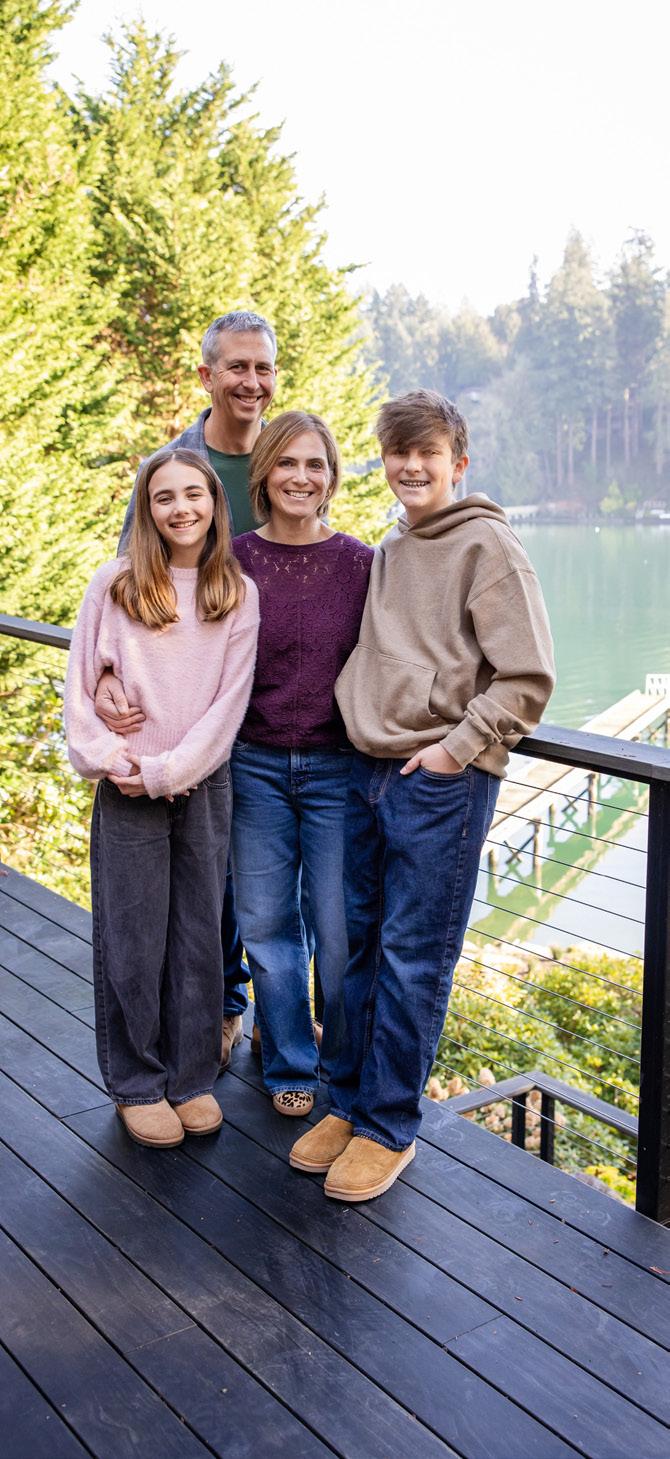
Family Portraits by Annie Graebner
deep dive
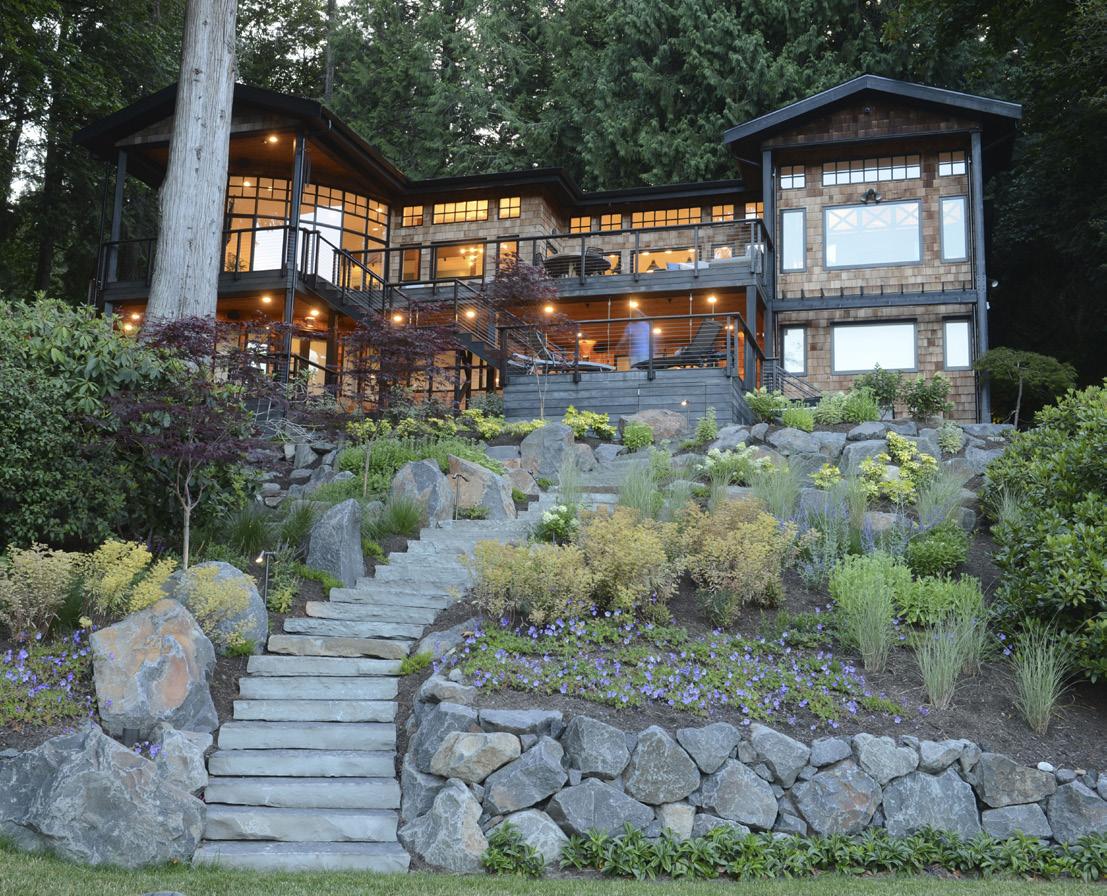
Michael and Christy Boyd’s life—and home—is very much by design. But it started south of here. “I walked into the fitness center, and there she was,” said Michael, recalling the day he met Christy while the two were working at Apple in Northern California.
Six months later, they began dating and eventually moved into a friend’s house in Los Gatos. And five years after that, they got married and bought a house up in the hills where they stayed for the next 11 years, while building their careers and welcoming their two children.
The Boyds’ lives didn’t start to tilt northward until their kids turned 4 and 6. Christy said that their vacations had changed from sitting on a beach while the kids played in the sand, to being able to hike, picnic and explore together. During the summer of 2018, the Boyds drove up to the Pacific Northwest and landed on Vashon. “We just had the best time,” she said. “And we thought, ‘Oh my gosh, this place is incredible. Everything is beautiful.’”
The following year they returned to the area: Lake Sutherland, Whidbey, around the Olympic Peninsula and the Hood Canal. As Christy recalled, they were staying at Alderbrook when Michael launched into his favorite travel game: “I think we could live here.”
They started scrolling through real estate listings on their phones, at first purely for fun. “Like, what would it cost to live here?” said Christy. “What would our lives be like?”
When they began to look more seriously, they were still thinking more about a vacation house. But one thing was nonnegotiable: proximity to SeaTac. Michael was still working for Apple and traveling, and whatever they bought had to be reasonably accessible. They toured cabins on Hood Canal. They looked in Gig Harbor. But the search kept bringing them back to Bainbridge.
The island wasn’t a complete unknown to Michael. Years earlier, when visiting a friend in Seattle, he’d hopped a ferry, biked the island and tucked the place away in the back of his mind. It reminded him of Long Island, where he’d grown up: water, trees, village-sized, a little removed from the city but still connected. Over time, Bainbridge reappeared in casual conversations with Christy, layered onto her own fond memories of visiting family in Oregon.
After deciding on the island, the next step was finding a home. As luck would have it, their house wasn’t even on the market when they first walked through it—virtually. Their Bainbridge agent gave them a video tour a few days before the listing went live and they learned that it had something
rare: four bedrooms on the water. They watched the walkthrough, seeing the site, the water and the bones of the structure. Then they made a bold move: an offer before anyone else had a chance to bid. A couple days later the house was theirs.
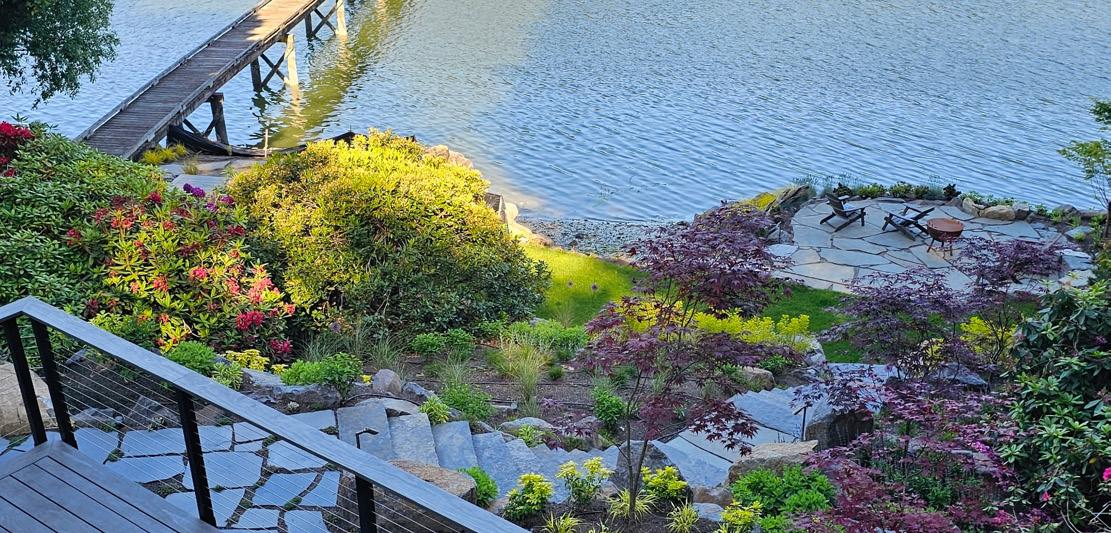
The following week, the Boyds were in Spokane for vacation when they changed their plans, driving across the state and seeing the house in person for the first time as its future owners. The setting was everything they’d hoped for: wooded, quiet, opening onto the water with a dock below. The house itself? Amazing, they agreed—but mostly for its potential.
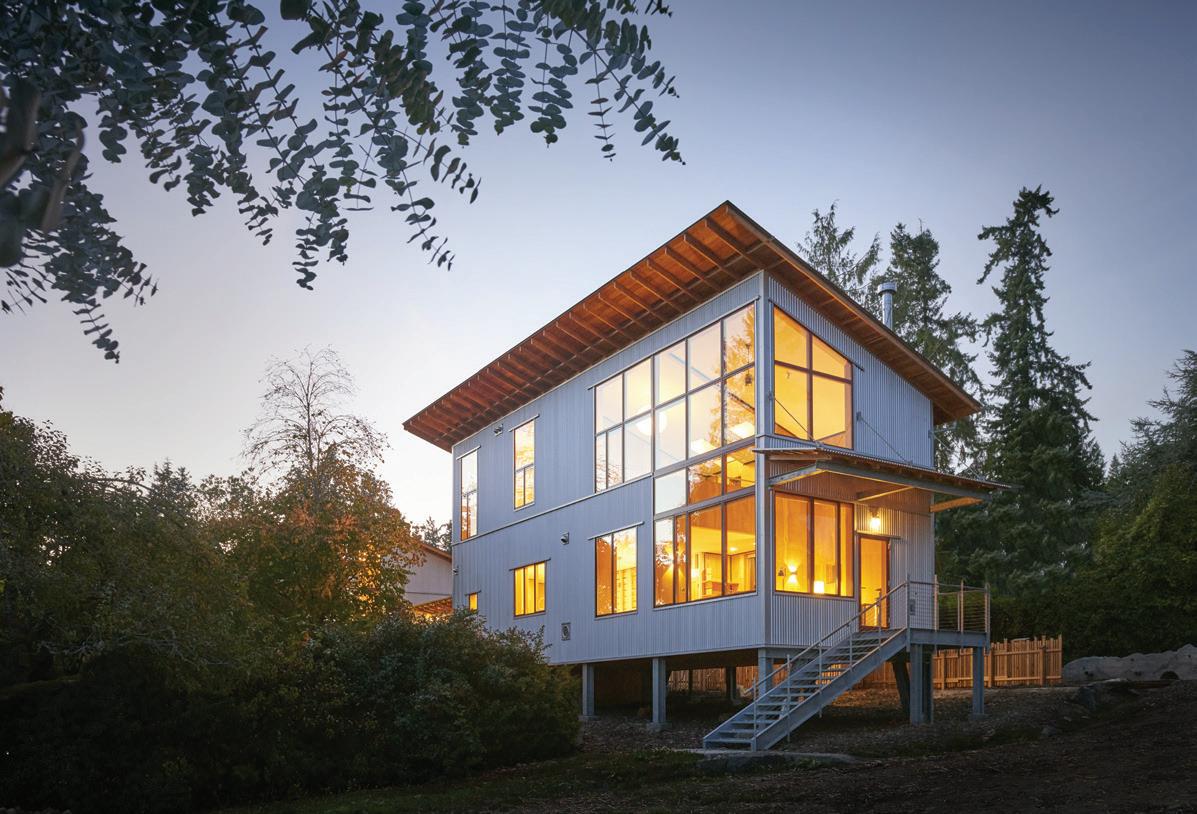
“It was very disjointed,” Michael said. The structure had been built in 1978, then fully remodeled around 1999 after a fire. He said that one of the more curious rooms in the house was the primary’s bathroom, an elevated, blue-and-white-tiled space that looked like it had been airlifted from Greece. And throughout, the floor plan made little sense. There was a huge powder room upstairs with nothing but a toilet; a main living room that didn’t properly take advantage of the view; a warren of small, dark and awkward rooms and hallways. The supposed front entry didn’t function as an entry at all and driving down the driveway lead straight into a wall.
Michael and Christy started conservatively, thinking they’d make just a few changes: redo the dated kitchen and the “dramatic” primary bath, maybe tidy up the downstairs. But then they started spending more time on the island. Michael began working remotely during the pandemic, commuting back and forth between California and Bainbridge. Each time he arrived, whether alone or with the family, they all had the same feeling stepping off the ferry: that this house felt like home.
That emotional shift changed everything for the Boyds. The house was no longer a vacation property; it was going to be their full-time residence. And if this was going to be home, they decided, they wanted to do it right. The remodel turned into a full renovation.
Enter Fairbank Construction Company, the Bainbridge-based design–build firm they’d first learned about from another of
its projects in their neighborhood. They also connected with the owner of Archiments 98110, architect and interior designer Cynthia Carpenter, who joined the team, her role expanding in the way she loves most: taking a project from architecture all the way through furnishings and finishes.
Her first site visit confirmed what the couple had already felt. “How am I going to make sense of this house?” she remembered thinking as she walked through it. The entry didn’t exist in any intelligible way. Circulation was awkward. Some rooms were oversized and underused; others were dark and cramped, with windows placed high on the walls so you couldn’t see the woods or the water. The renovation’s first step became an exercise in clarity.
Bit by bit—starting from the interior architecture (for which permitting during the pandemic was relaxed), all through its design and finally to the exterior—Carpenter guided and integrated the process, which took about a year and a half. “The projects I like the best were the ones that I worked on through to the very end,” she said. “And this was perfect.”
Inside, some of the most transformative changes were rethinking the home’s flow. The staircase was relocated so that it no longer dumped awkwardly into the middle of circulation. A confusing series of small rooms near the garage was consolidated into a practical mudroom and generous pantry—solving the everyday problem of coming in with groceries and landing directly in the dining room.
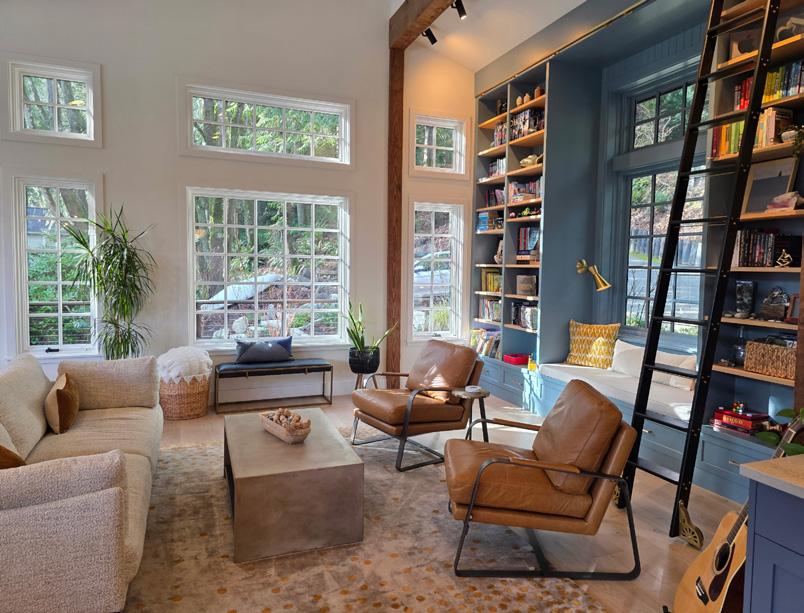
On the north side of the main level there is now a library with a loft, which looks out to the water. “I really wanted a loft because as a kid, I liked having a place to crawl up to,” said Michael. The space began as a Lego-and-AmericanGirl-Doll hideout; now it’s where tweens and teens retreat to read or disappear with friends.
There’s also an ensuite guest room which is fully accessible, with a roll-in shower, wider doors and grab bars. “I use it as my exercise room when we don’t have guests, but if company is coming, then we reconfigure it,” said Christy. “We also designed this with the thought that this could be a parent’s suite.”
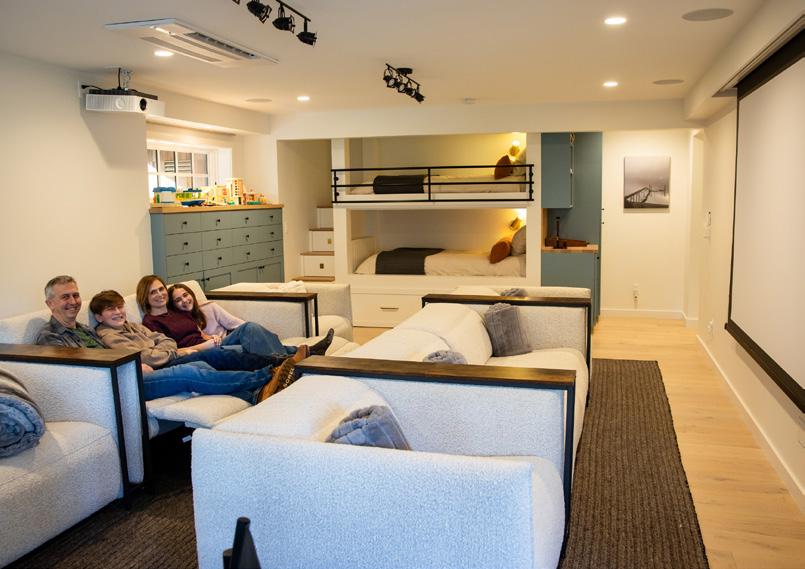
Downstairs, what had been a maze of mismatched spaces became a coherent sequence of a media room and bedrooms. Each of the kids has their own room looking onto the covered patio along with their own bathrooms. Christy was determined that no space would feel wasted, so nearly every nook now hides storage, a built-in or a tucked-away function.
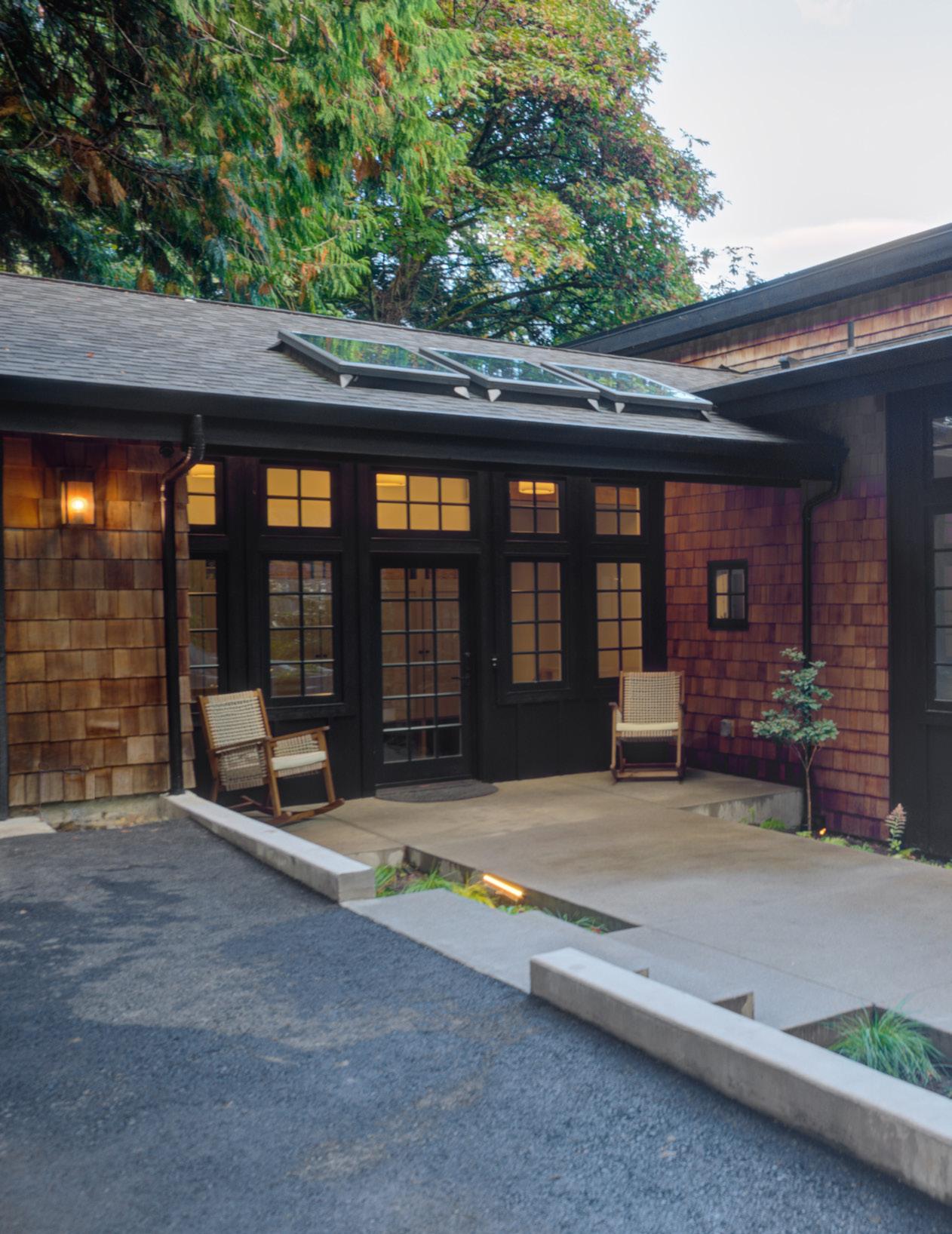
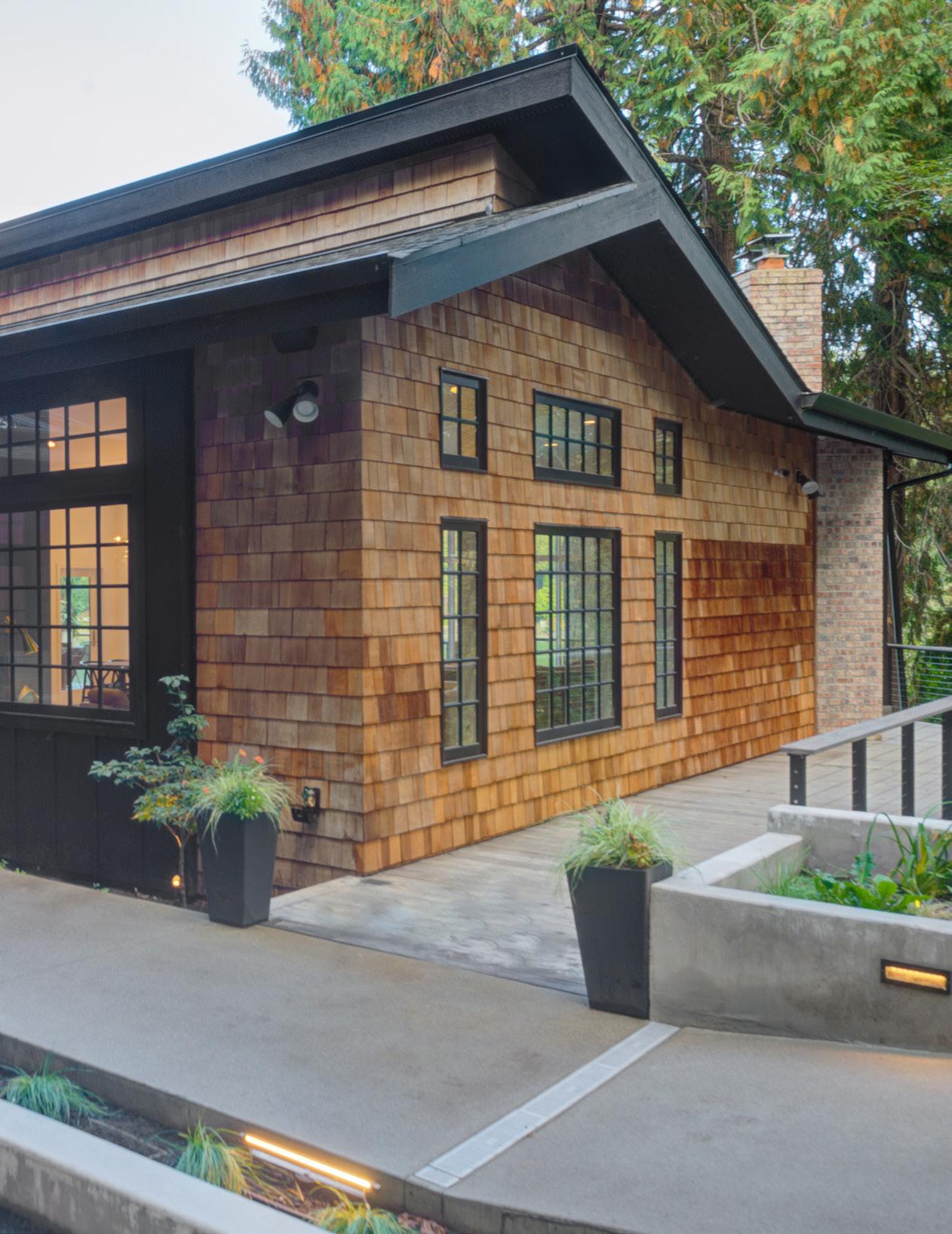
Outside, Carpenter and landscape architect Derek Reeves reimagined the approach, creating a real front entry and connecting the front and back of the home. Where there had been an ugly and dangerously decaying red deck and a dead-end façade, there is now a welcoming sequence: sloped paths that allow step-free access from the driveway, a covered entry and a deck that wraps the house and unifies it.
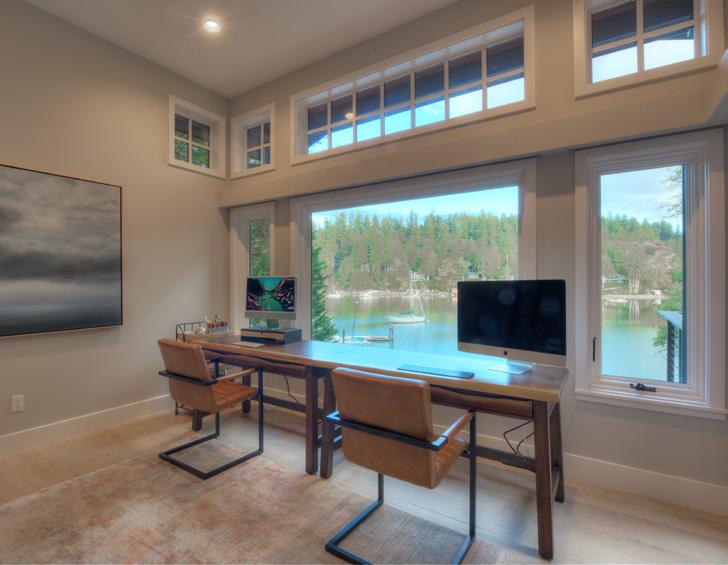
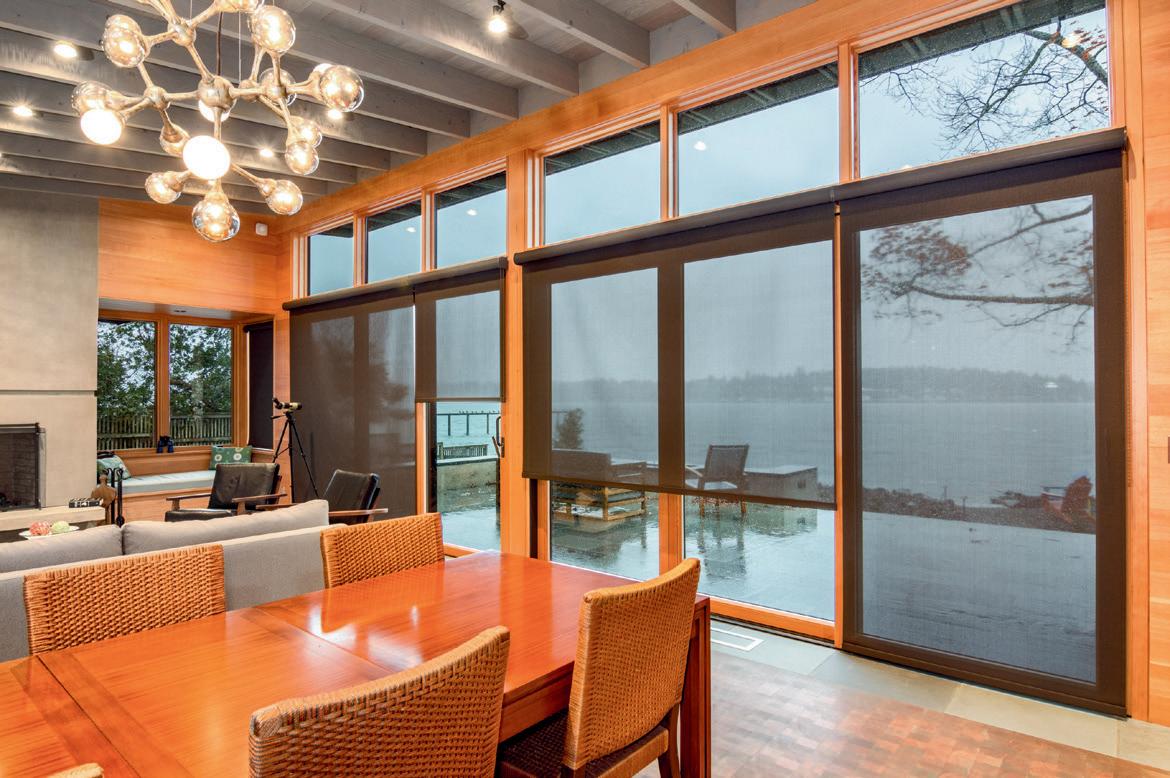
The added light throughout was essential. In the original structure, some of the most important walls—particularly to the south—were nearly solid, missing both light and views. Carpenter and the team opened those up with more and better-placed windows and skylights, orienting the main living spaces toward the water and the trees.
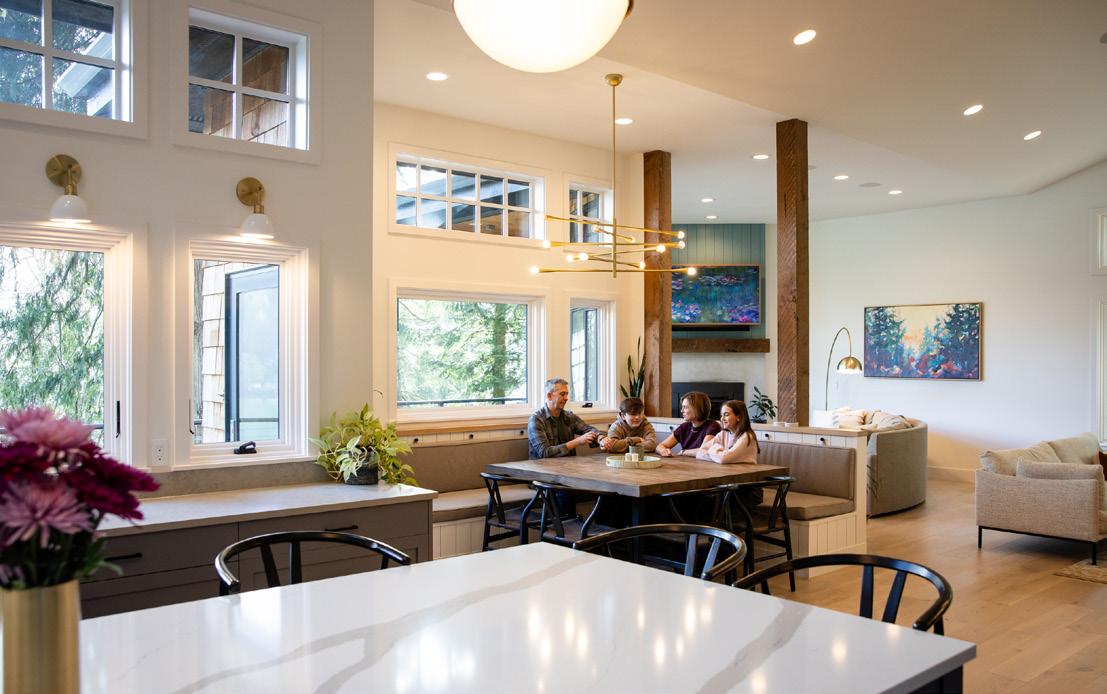
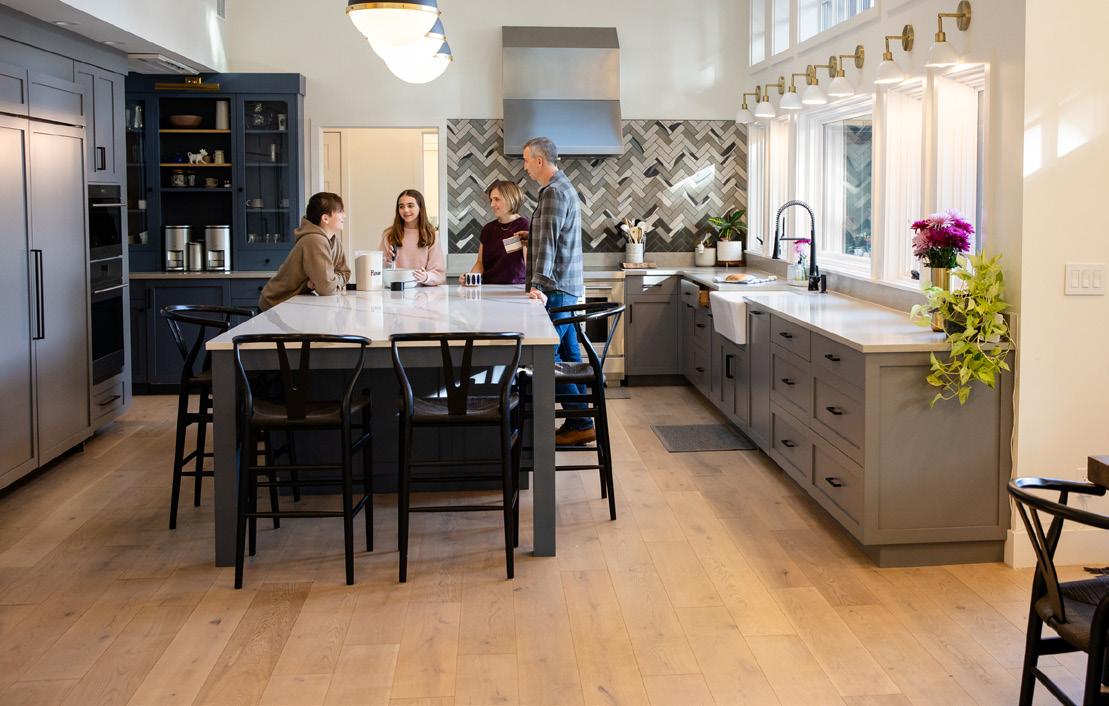
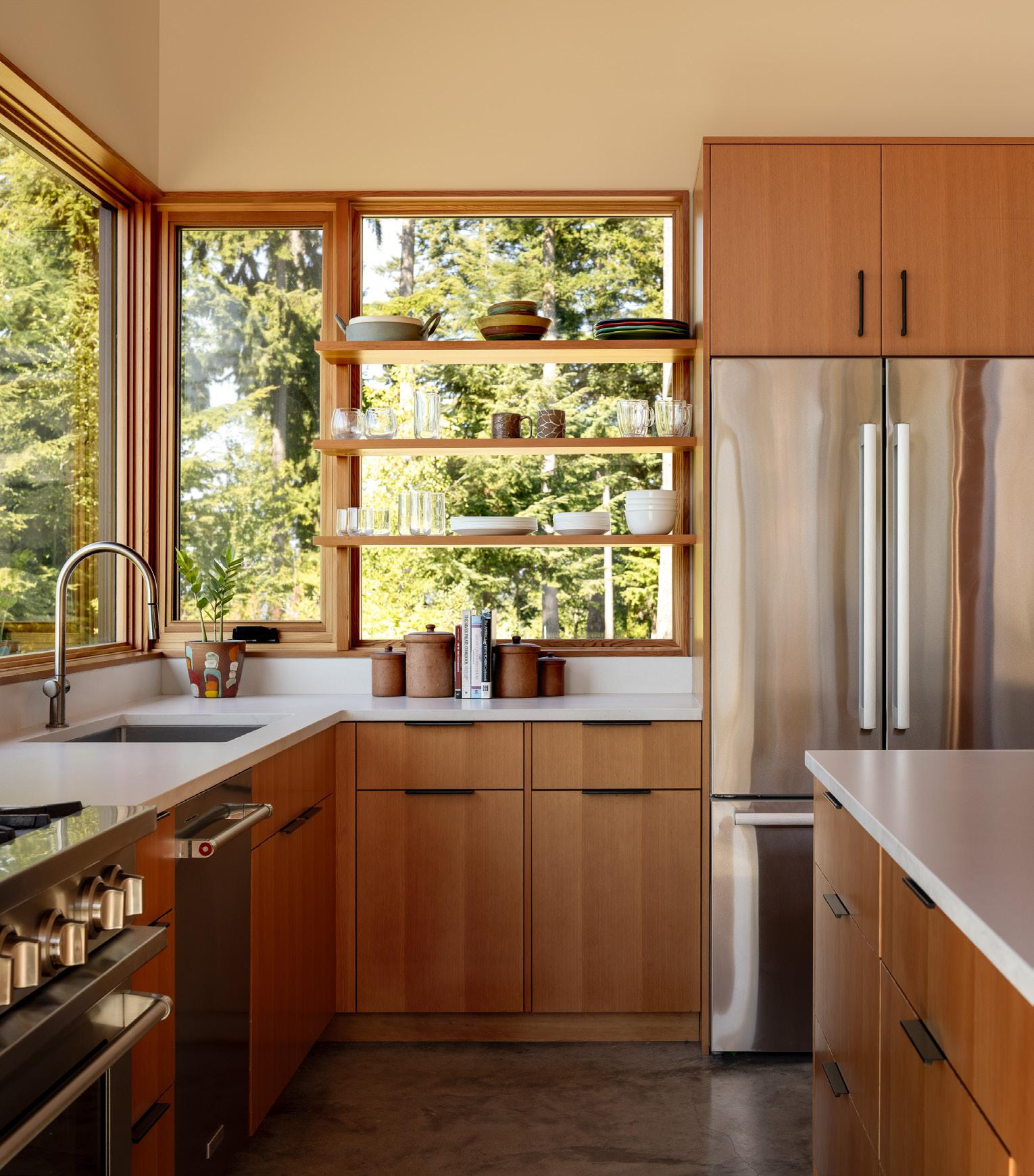
The kitchen, where the family spends most of their waking hours, is the heart of the house. Christy joked that she isn’t sure whether they cook because they love it or because, living in the hills above town in California, takeout was never really an option. Either way, decades of nightly meals—plus years of rental kitchens that didn’t work—gave them strong opinions about how a kitchen should function. Plus, they love to entertain.
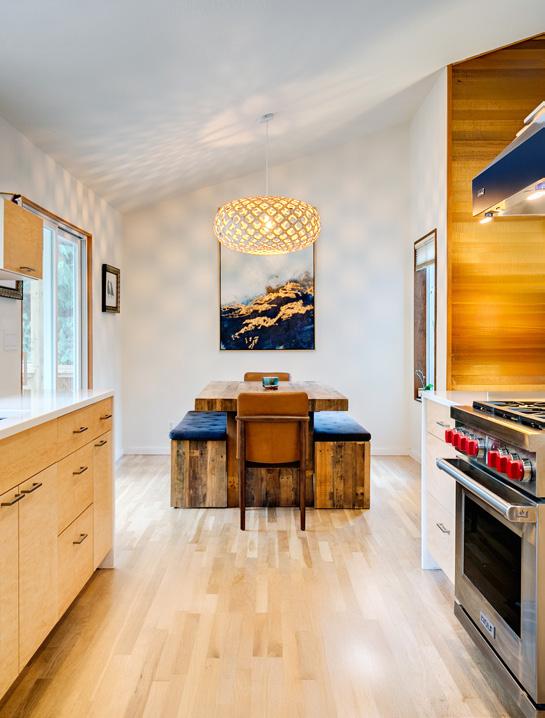
The Boyds invested heavily in planning: banks of drawers instead of uppers, to make storage accessible to kids and shorter adults; zones for homework, cooking, and hosting; deep consideration of where every pan and plate would live. A large island in cool-toned quartz anchors the room, paired with a built-in dining nook that feels causal and welcoming rather than formal.
Features include custom gray-blue cabinetry, a built-in commercial refrigerator and wine fridge, double ovens, a huge
island with seating at the end and a window above the kitchen sink that looks east to the water. Just off the kitchen is a galley-style walk-through pantry with a combination of cabinetry and open shelving, complete with a rolling ladder to reach the high spots.
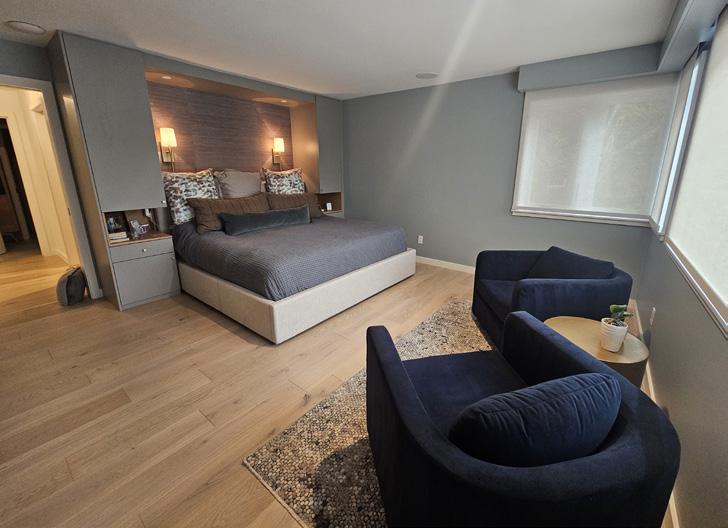
Throughout the house, the palette—soft grays, watery blues, natural woods—reflects the landscape just outside the windows without slipping into “lake house kitsch,” as Christy put it. The aim was a restful, organic feel that doesn’t scream any particular style or era. “I always worry about spaces feeling dated,” Michael said.
Key Partners
Sculpted Sites Landscape Design
Green Thumb Solutions
Kimco Plumbing
Bird Electric
Economy Hearth & Home
Sabelhaus West
Unique Stone & Tile
Port Madison Wood Floors
Renaissance Woodworks
Liberty Bay Cabinetry
Pacific Northwest Timbers
Eagle Harbor Window Coverings
Nancy’s Custom Sewing
Ty’s Custom Stereo & Design
Their goal was a house that, 20 years from now, wouldn’t make a future owner ask, “What were they thinking?”
To that end, Carpenter steered away from trends toward enduring materials and shapes, occasionally punctuated by playful moments they all simply loved: a small bath wrapped in whimsical frog wallpaper, richly patterned tile and custom built-ins that show off the craftsmanship of Fairbank’s carpenters. Those touches feel personal rather than fashionable, a distinction that holds up over time.
One of the quiet successes of the renovation is how flexibly the spaces serve a family in motion. The kids’ loft above the library and the lower-level media/ bunk room—with adult-scaled built-in bunks—with plenty of space to house nieces, nephews or an entire pack of visiting cousins.
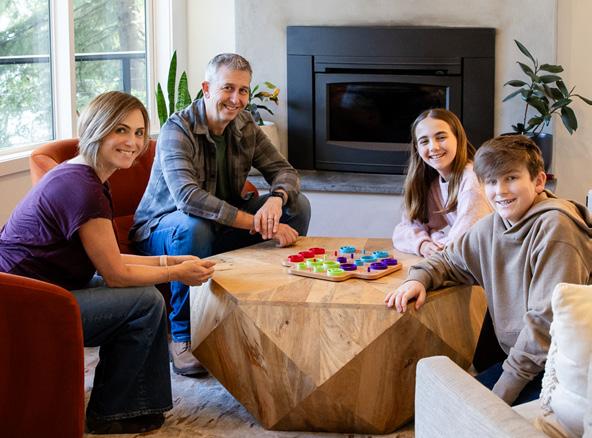
Community and hospitality were also at the core of the Boyd’s planning. Soon after moving in, they hosted a neighborhood gathering, something their next-door neighbor—there for 35 years—said had never happened before. Since then, there have been a progressive holiday dinner, a boat parade party on the water, countless movie nights in the media room and regular clusters of kids on the covered lower deck, swinging from aerial silks or hanging out under the waterproofed structure above.
“We wanted to be the gathering house,” Christy said.
For Michael, now retired from Apple, days are divided between managing their California Airbnb, tending the gardens
Reeves envisioned and that he has nurtured and exploring the island by bike. For Christy, life includes volunteering at Helpline House, seasonal coaching of middle school cross country and the ongoing work of helping two kids grow up rooted in one place.
They talk candidly about being in a liminal phase—“retired, but not retired,” as Christy put it—still tethered by school schedules and teenage rhythms. But that’s exactly what they moved here for: to be fully present for these years, in a house that works smartly for them and welcomes others. “Moving here was to be present in our children’s lives,” said Michael.
There are still projects ahead, of course: more landscape to develop on the far side of the house, a dock that could see more use, the inevitable small adjustments any home demands over time. But the big work—the transformation from a dark, disjointed structure into a bright, coherent home—is complete.
On a recent dark winter afternoon, Michael and Christy’s home was toasty warm and smelled of a wood-burning fireplace. Misty clouds hung low over the water and the surrounding Douglas firs are beaded with rain. From within, light spilled across the deck overlooking Manzanita Bay. Their two kids were just getting home from school.
The house feels exactly as the Boyds hoped it would when they took that first leap from a video walkthrough: a place that simply feels like home.
MAKEAHEAD PASTA NIGHT
Talking with a group of friends on a tired Friday night while enjoying a burger and fries at Cafe Hitchcock, one confessed to not having cooked a “real meal” in ages. “Unless you count pasta,” she said. Since when do we not consider pasta a real meal? It definitely counts! There are, however, a few tricks you can have up your sleeve to make pasta night a little more substantial. I’m a big fan of the “cook once and freeze it for the future method.”
Pro tip: Keep some boxes of T&C pasta on hand —it’s good stuff!— and you’ll be ready for whatever comes your way.
STORY AND PHOTOS BY ANNE WILLHOIT
Make-Ahead Meatballs
Having a big bag of meatballs in the freezer makes me feel like I’m ready to take on whatever surprises that a busy week dishes out. This is my tried-andtrue recipe, but feel free to make it your own if there are flavors you prefer, such as red pepper flakes or different meat choices.
makes 36, 2-inch meatballs
1 pound ground beef
1 pound ground pork
2 cloves garlic, peeled and chopped finely
1/2 cup parmesan, grated
1 large onion, chopped finely
1 cup breadcrumbs
2 eggs
6 Tbsp. red wine or milk
4 Tbsp. tomato paste
1 tsp. salt
1/4 tsp. pepper
1/2 cup fresh parsley or basil, optional
All-purpose flour, olive oil to finish
Mix everything well in a large bowl. Lay out three plates, two empties and one scattered with about 1 cup of flour. Roll 2-inch balls in your hands and then roll each in the flour. Place the coated balls on the second plate. Heat a large skillet over medium-low and when it’s hot, add a slick of olive oil to coat the bottom of the pan. Place about half of the meatballs in the hot oil and let cook without touching for about 2 minutes to build up a crust. Pan fry for a total of 10 to 15 minutes, moving each meatball around carefully with a spoon. Remove meatballs to cool, scrape out any overbrowned bits, add more oil, and fry up the second batch.
Add the cooked meatballs to your favorite heated sauce and serve. Or, to freeze, lay out on a lined baking sheet in the freezer for an hour or two, then move to a freezer bag.
Sauce Packs
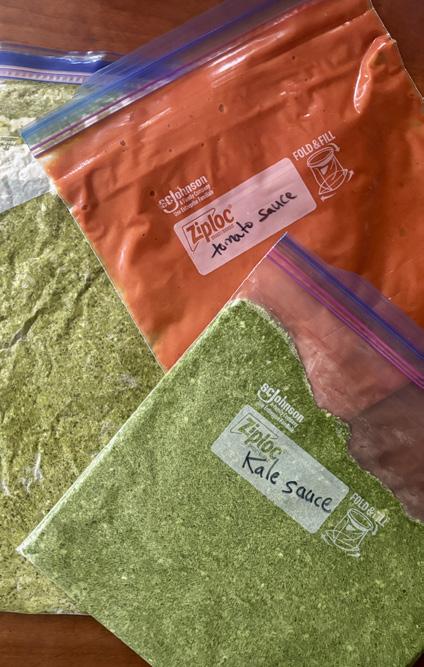
Our family loves having ready-to-go sauces in freezer bags. The great thing about this technique is that eaters can break off whatever portion size they want. Kids need to eat early before batting practice? Break off a small piece for one. Got to feed the whole crew? Break off a larger piece. And, because you spread it thinly in the bag, it heats quickly in the same pot in which you made the pasta.
Here’s how: Make a batch of your favorite sauce. (See some suggestions below.) Cool it completely. Spread thinly in a freezer bag. Label clearly. Lay flat in the freezer until it’s hardened. When you’re ready to eat, boil the pasta as instructed, drain and leave in the strainer. Pop the amount of sauce that you want in the same pot and heat on low for just a minute, until it’s hot. Put the pasta back in the pot and combine. Done! You can use this trick with any sauce—homemade or storebought. If you’re going to freeze homemade pesto, a great way to preserve some seasonal abundance, just add a little lemon juice to your blend to keep it from browning. Here are a few of my other favorites.
Tomato Sauce
This is my take on the classic Marcella Hazan three ingredient sauce. You will be amazed by the delicious sum that is greater than its parts. Open one 2-ounce can of tomatoes, whole or crushed, and add to a medium pot. Add n a half-teaspoon salt, 4 tablespoons butter and a peeled, halved onion. Simmer on low, covered, for 45 minutes. Blend smooth.
Kale Sauce
I just know this vibrant green sauce is about to become a staple in your house. Created by Portland chef, Josh McFadden, it’s another easy one to make and is a real green veggie boost. Take one bunch of kale (about 8-10 stems), rinse and remove the leaves from the stems. Before adding the pasta to the boiling water, submerge the kale leaves and 2 cloves of peeled garlic in the boiling water for five minutes. Since you’ll use the boiling water for the pasta, remove the leaves and garlic from the water with a slotted spoon straight into the blender. (It’s OK if the leaves are wet. That will help your sauce become smooth.) Add 2 tablespoons butter, 2 tablespoons olive oil and 1 teaspoon salt. Blend and add a little more water as needed until you have a smooth, velvety sauce. Add 3/4 cup grated parmesan cheese.
spotlight Jared Moravec
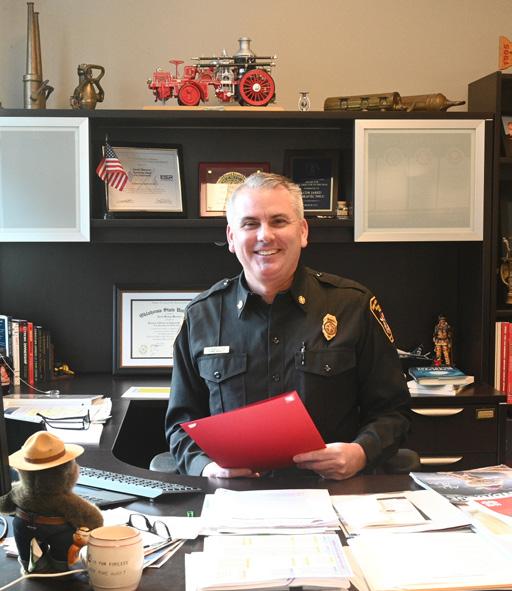
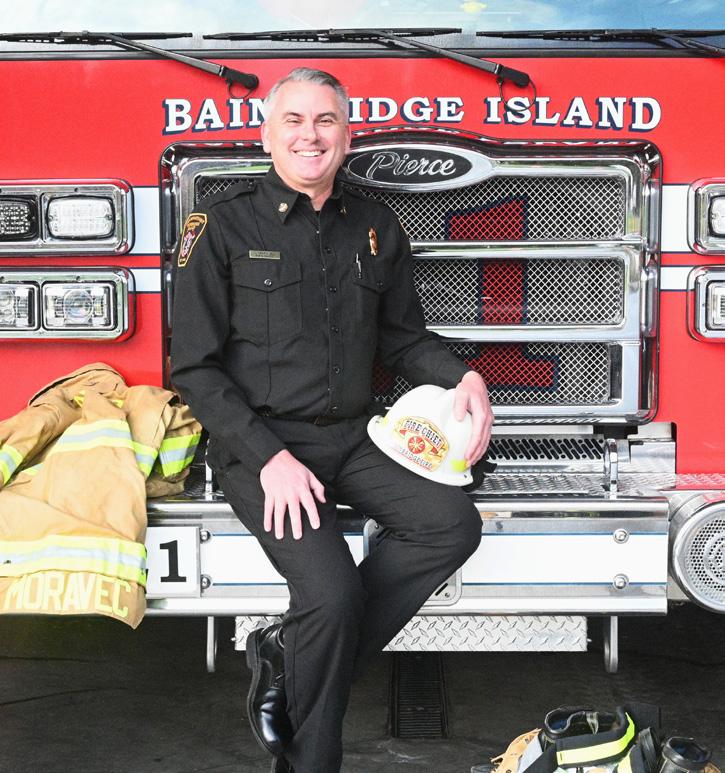
Jared Moravec, 49, joined the Bainbridge Island Fire Department in 2006 and became chief in 2023. During a time of change for the fire service—most calls are for emergency medical help now—he maintains the commitment to community service that guided his career choice as a high school student in Omaha, Nebraska. Despite his title, Moravec still might show up at your door in an emergency. He and his wife, Heather, have lived for nearly 20 years on Bainbridge, where they reared their son, Tyler.
Why does this profession appeal to you?
When I was 10, my dad passed away unexpectedly. In the days, months and years thereafter, a lot of individuals helped me and my family. Being able to pay that gift forward was something I could do through a career in fire service.
Do you still respond to calls?
When we have larger incidents, I can act as senior adviser to battalion chiefs. Sometimes we get really busy, and additional help might be coming from off island, and I respond to help fill the gap until those other resources arrive. The third scenario is if I’m close to where the call comes in.
How many of your crew are paid versus volunteers?
We have 52 paid, uniformed responders and five volunteer responders.
BY CONNIE BYE
With the predominance of calls for emergency medical response, has training changed?
No, because our baseline training that we must complete as firefighters, EMTs, paramedics, are set through regulation. The State Department of Health sets continuing education requirements for EMTS and paramedics. There are a lot of services we’re expected to fulfill and there’s a volume of training—whether on the firefighting side, medical or rescue— there’re just lots of things our responders have to be prepared for.
Your department has worked with Bloedel on firefighting measures.
This was the first agency in Kitsap County to develop a fire action plan, back in 2010, and since then, we’ve updated it. The potential for wildfire on the island exists and we’re well-prepared if that happens. We’ve been building partnerships and relationships with other agencies that have a mutual interest; one of those is Bloedel. The use of fire as a natural-resource-management tool is something Bloedel is interested in, and we work with
PHOTOS BY DINAH SATTERWHITE
them to gain experience for our folks. We’ve also been working with the Bainbridge Island parks district and the Bainbridge Island Land Trust to pursue expanded opportunities to address wildfire mitigation.
Why are Bainbridge stations numbered 21, 22 and 23 instead of 1, 2 and 3?
We’re called Bainbridge Island Fire Department, but we are a fire protection district, which means we’re not part of the city, but rather the Kitsap County Fire Protection District Number 2, so that’s where we get 21, 22 and 23. So instead of Engine 1, we have Engine 21. All of the apparatus that respond across Kitsap County have unique identifiers.
Does your staff enjoy the holiday music truck visits to neighborhoods?
We post a sign-up sheet each November and the sign-ups go quickly. It’s a great way to get out and celebrate the holiday season, get to all parts of the
island and engage with the community.
Your department sells merchandise. The best-seller is a Bay Hay and Feed-style T-shirt. Why do this?
The proceeds go to the Bainbridge Island Volunteer Firefighters Association. And we think it’s a great way to share the fire department with the community, to let people show a little pride in their fire department. Also, the proceeds get passed on to the department through donations from the volunteer association to be used for equipment, training and station improvements.
NEW
Be Ready for a Bee Invasion— It’s a Good Thing
Thanks to islander, bee master and nationally recognized pollinator educator Thyra McKelvie, more than 45,000 native Blue Orchard mason bees will be released across Bainbridge Island this spring, helping pollinate fruit trees, gardens and early blooms. McKelvie said to keep an eye out for mason bee sites in local parks and orchards. Or, if you want to host your own little buzzers, she can help you set up a personal seasonal bee habitat.
McKelvie will be hosting educational events around the island in coming months, including school programs at Woodward, Odyssey, Blakely, and Ordway and at BARN on Sunday, March 22 at 1 p.m.
BY AllI SCHUCHMAN
BY THYRA MCKELVIE
Learn more and get involved at bainbridgemasonbees.com
PHOTO
SPRING
March 6–June 14, 2026
George & David Lewis: Deeply Rooted
Crafting Futures: Emerging Artists Invitational
Aimee Lee: Tethered
Handwork: Celebrating American Craft 2026 is a national initiative led by Craft in America to honor the country’s rich history of craft during the United States’ Semiquincentennial. Over 250 organizations across the country are participating with exhibitions, programs, and more–including BIMA!
As a part of this historic initiative, BIMA is weaving together all of its 2026 exhibitions under one theme— ”Connected By Craft .”
BIMA celebrates the influence of craft in our region and the power it has to build connections. From artists’ books to finely crafted furniture, explore a year of dynamic exhibitions and programs showcasing the depth and variety of the handmade. Honor the makers, materials, and histories that connect our region to the rich tapestry of American craft and explore the diverse world of handwork past, present, and future.
SUMMER
July 3–September 20, 2026
Carletta Carrington Wilson: Object Lessons
Indigenous Craft Cloth, Paper, Stitches
FALL–WINTER
October 2, 2026–January 31, 2027
Pratt Fine Arts Center @ 50 Heikki Seppä: Master Metalsmith
Booking: Artists’ Books by Black Artists
550 Winslow Way East • Bainbridge Island FREE ADMISSION THANKS TO MEMBERS & DONORS
For more information on exhibitions and related programming, visit BIARTMUSEUM.ORG or scan the QR code with your phone’s camera.
BY JEFF FRAGA
Casa Rojas
For 25 years, their casa Has been your casa.
Consider the humble tortilla chip. Armando Rojas has been doing just that since his popular Casa Rojas opened its doors, giving as much attention to the chips as he does to more elaborate dishes, such as Mariscada, a riff on seafood in a red sauce.
“I moved to Bainbridge Island in 1992 and opened Casa Rojas with a commitment to traditional Mexican cooking rooted in family history,” said Armando. The restaurant specializes in Mexico City–style cuisine, drawing from recipes developed by his parents during their years working at restaurants in the capital.
Those dishes remain the foundation of the menu today and include house-made rice, chile rellenos, chicken chipotle, spinach enchiladas and lamb shank (borrego). Everything is prepared
from scratch, from those tortilla chips to salsas, with an emphasis on high-quality ingredients and careful preparation.
After Armando’s parents retired and moved back to Mexico, he learned every aspect of the business himself, continuing to operate Casa Rojas according to the standards they established. Over the years, loyal customers have stayed with him, helping the restaurant grow along with the island itself.
Beyond the food, Casa Rojas has maintained strong ties to the community.
Armando coached local youth soccer teams, winning multiple championships, and 25 years on, Casa Rojas remains both a neighborhood gathering place and a testament to tradition, consistency, and connection.
“I have always aimed to create a family-friendly space where customers feel welcome,” he said.
Casa Rojas, 403 Madison Ave. N. 206-855-7999, casarojascantina.com
PHOTOS BY DINAH SATTERWHITE
feast on this
Nirvana
Can you find heaven in the Pavillon?
Santosh Kumar, owner of Nirvana, an Indian and Nepalese restaurant in the Pavilion, said COVID ended up being positive for him. “It made me think out of the box,” he explained, adding that it helped him become wiser as a business owner by planning carefully around staffing, resources and long-term sustainability. Nirvana took over the space formerly occupied by Spice Route— and immediately rebranded it. “When the management changes, the menu changes,” he said. “I didn’t want customers walking in expecting one thing and getting surprised.” The transition was complicated by pandemic restrictions, and Komar estimated it took nearly two years for customers to fully recognize the restaurant as a new concept.
The menu combines familiar Indian dishes with a focused selection of Nepalese cuisine, something Komar discovered resonated deeply with the Bainbridge community, many of whom said they have been to Nepal through volunteer work or travel.
Popular Nepalese specialties, such as goat curry, momo, and vegetable stir-fries, are served alongside popular Indian dishes that include chicken tikka masala, biryani, and butter chicken.
Community involvement is central to Nirvana’s mission. Kumar credited local support for the restaurant’s success, “Whatever I have achieved so far is because of the community, and I believe in giving back.” That includes annual appreciation meals for teachers, police and firefighters; holiday gift certificates for regular customers, and donations to local arts and service organizations.
For Kumar, Nirvana is not just a restaurant, but a place where food, culture and community intersect.
Nirvana, 403 Madison Ave. N., 206-780-3545 nirvanabainbridge.com
At Bloedel Reserve, spring is more than a season, it’s a feeling.
Explore 140 acres as blooms return, birdsong fills the air, and nature gently stirs awake.
Stroll slowly. Breathe deeply. Begin again.
Sweetwater Tavern
A place for islanders to call home.
When Pete Osborne moved from the Bay Area to Bainbridge Island in 2016, he fell for it in a single day. Around the same time, Callie Tinney relocated from Nashville. Years later, their paths crossed and, with a shared love of food and community, they brought Sweetwater Tavern to downtown Winslow.
Sweetwater Tavern is, first and foremost, a place for locals to relax, unwind and celebrate. Daily happy hour specials anchor value-driven offerings for locals to enjoy anytime.
“Think of it as a spot to celebrate birthdays or just grab a beer,” said Osborne. And at its heart are fresh, local oysters—raw, fried, baked, even wood-grilled. A daily oyster happy hour ensures
Bainbridge residents can count on them any night. “You shouldn’t have to wait until Friday for oysters on the island,” Tinney said.
The menu stretches beyond seafood, with tavern staples such as burgers, pork chops, steaks, fish sandwiches, big salads, and fries, all anchored by a wood-fired grill. Families will find a kids menu written with help from the owners’ children. And desserts shine: Tinney, a lifelong baker, plans to make them a centerpiece, from fruit tarts to her already-famous peanut butter pie in a chocolate crust.
The former Marche space has been completely reimagined— walls were removed to create an open, light-filled room with nearly double the seating, plus outdoor tables. “We’re not trying to be a destination restaurant,” Osborne says. “We want to be the island’s tavern.”
For Osborne and Tinney, the goal is simple: fresh oysters, cold beer and a place islanders can call their own.
Spring
1. The Highest Tide at BPA
Jim Lynch’s PNW-based best-selling novel follows the story of 13-year-old Miles O’Malley as he becomes a local celebrity after discovering a giant squid on the tide flats near his home. Adapted for the stage by Jane Jones, this humorous and poetic coming-ofage story is suitable for ages 10 and up.
March 6 - 22, showtimes vary March 15 showing will include a post-show Q+A with Jim Lynch bainbridgeperformingarts.org
2. Handwork at BIMA
2026 is the United States’s semiquincentennial, and BIMA is celebrating through a national partnership that explores the past, present and future of American handicrafts. Spring exhibits include work from local garden designers and furniture makers, and books made from the first ever Korean paper-making studio in the U.S.
March 6 - June 7 biartmuseum.org
3. Pi in the Sky Bingo Night with Arms Around Bainbridge
If you’re looking for a way to celebrate Pi(e) look no further. This year’s Arms Around Bainbridge bingo night at Grace Church will involve dinner, pie, games, prizes and an opportunity to learn more about AAB–the nearly 20-yearold organization supporting islanders navigating a major illness. Tickets available online. March 14 at 5 p.m. armsaroundbainbridge.org
4. Ranger and the Re-arrangers at Treehouse Cafe
Bainbridge Island’s very own hot club-jazz band has the power to transport you to a lively bar in 1930s Paris. Inspired by the music of Django Reinhardt, the band also plays swing standards and some original tunes.
March 21, 7 – 9:30 p.m. treehousebainbridge.com
5. Maggie Smith at Eagle Harbor Books
Known for her viral 2016 poem “Good Bones,” Maggie Smith’s work wonders what it means to move through a messy—and often dark—world. “A Suit or a Suitcase,” her most recent poetry collection, centers on the relationship between mind and body. Smith will be in conversation with Bainbridge Poet Laureate Erin Malone.
March 31, 6:30 p.m. eagleharborbooks.com
6. Paint Night at the Planetarium
The Battle Point Observatory hosts a variety of events designed to, per their tagline, “ignite passion for
science through the lens of astronomy.” But they haven’t forgotten about the arts. The observatory’s artist in residence, Deborah Milton, hosts paint nights inspired by a planetarium show, encouraging artists to experiment intuitively and playfully with acrylics.
April 25, 5 p.m.
$50 fee including supplies; pre-registration on website bpastro.org
7. Staxx Brothers with My Wildest Dream at Treehouse Cafe
A staple of the Seattle funk scene for more than 20 years, the Staxx Brothers are back at the Treehouse this spring, along with frontman Davin Michael Stedman’s other project, My Wildest Dream. The latter showcases music Stedman has written and recorded with artists around the world. Be ready to dance.
April 18, 7 – 10 p.m. treehousebainbridge.com
8. ReFashion Show at BIMA
BI’s annual celebration of recycled fashion (and now home goods, too) will celebrate its 10th anniversary this year. The fashion show features categories, such as “Birthday Party” and “Rotary Remix.” Come at 5:30 for the social hour and stay for the runway.
April 26, 5:30 - 7:30 p.m. refashionbainbridge.org
9. Spring Carnival at Battle Point Bainbridge Island Park and Recreation
District’s inaugural Spring Carnival will celebrate the changing of the seasons with whimsical, family-friendly festivities. On the docket is live music, carnival games, food trucks and a circus performance (plus a circus workshop).
May 2, 10 a.m. – 2 p.m. biparks.org
10. Asian Arts and Heritage Festival
Now in its third year, Bainbridge Island’s Asian Arts and Heritage Festival has grown to include a diverse catalog of events, all taking place during Asian American and Pacific Islander month. Hear stories about island strawberry pickers, witness the second showing of the Asian Monologues and celebrate with a finale on May 31 at Waterfront Park. Month of May - specific events TBA bainbridgecurrents.com
PHOTO BY JAYDEN HWANG
in focus
Pretty GOLDEN
Islanders Karen and Lincoln Smith snapped this deliciously adorable photo of their pup, Scout, in the Marina District during an unseasonably sunshiny day in January.
“My husband and I were taking a stroll on one of those beautiful days,” said Karen, founder and physician assistant at Bainbridge Aesthetics. “We had lunch at Hitchcock and then decided to soak in some extra sunshine along the waterfront trail. Days like this are one of the many reasons we love living on Bainbridge Island.”
BY ALLI SCHUCHMAN
PHOTO BY KAREN SMITH
m a u r e e n . d a n i e l s @ r s i r . c o m
w w w . m o d a n i e l s h o m e s . c o m
B r o k e r | R E A L T O R ® | R E N E ® |
T r u s t | K n o w l e d g e | S e r v i c e
“We needed more than the average realtor to pre s ent our property in a way that would appeal to the right buyer. We feel that we couldn’t have made a better choice”