






































100% polypropylene heat-fused brush fiber eliminates fallout and areas for contaminants to collect. Built to tackle a wide range of cleaning tasks.

Heavy Sweep Frayed brush fiber excellent for sweeping fine material from smooth surfaces, vinyl, marble, and terrazzo floors. Light Sweep


sweeping coarse material from
and










6 From the Editor AI is practically inescapable at the moment. Could it lead to a clash with F&B production?
28 New Product Solutions
April’s New Product Solutions highlight: Blenders and Mixers
Water Treatment
Food Safety and Inspection
Facility Maintenance and Monitoring
Slicing Equipment
40 Packaging Technology Beef producer keeps supply on track with traceability tech.
44 Seeing Is Believing: Vision Systems Done Right
Part two of “The Smart Line Playbook” looks at how machine vision is reducing waste, improving QA, and creating real-time insights.







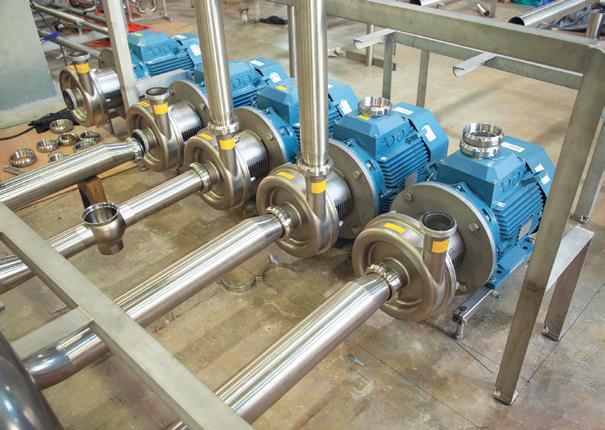
Designing for Freshness: Inside Harvest Station Foods Purpose-built for flexibility, Harvest Station Foods’ production facility integrates bakery lines, high-care prepared foods production, and centralized distribution while raising the bar for fresh food in convenience retail.
8 Tech Today: Smarter Pumps, Safer Food Advances in hygienic pump designs are helping food and beverage processors improve sanitation, reduce downtime, and lower total cost of ownership while protecting product quality and supporting increasingly demanding production environments.
16 Lean Principles in the Machine Learning
While AI grabs headlines, machine learning, modeling, and data standardization e orts are rooting out waste. Data in batch processing, lab databases, and production pose standardization challenges, and the ability to sync information across departments and identify waste.
34 Tubular Cable Conveying System Drives 70% Increase By integrating tubular cable conveyors, high-capacity surge storage, and plant-wide controls, an almond processor boosted output without compromising quality.
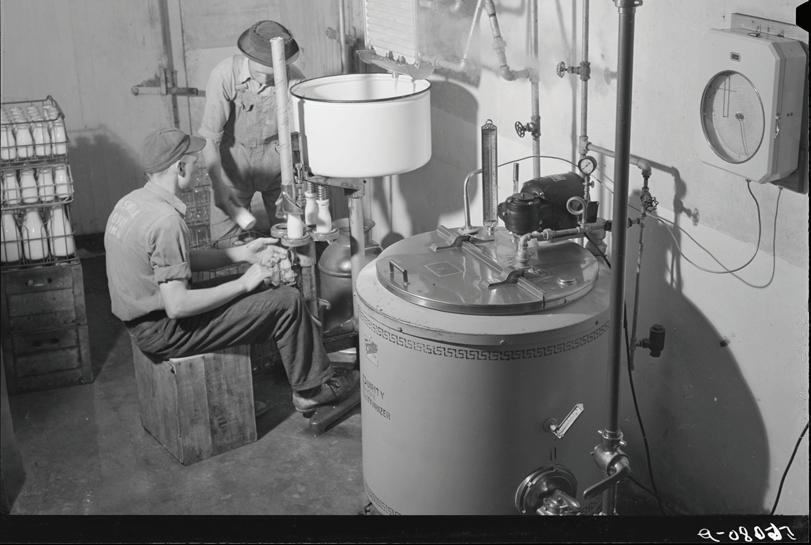
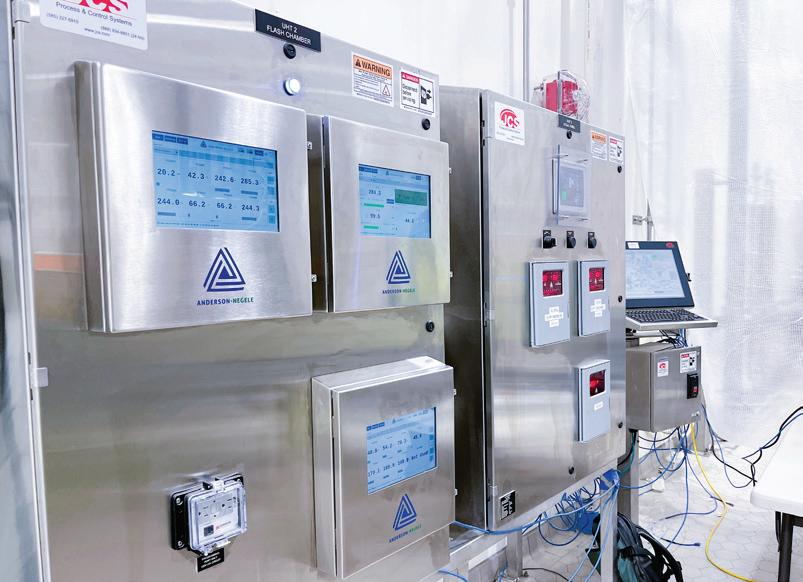
Instrumentation tailored to every pasteurization method. BUILT FOR HTST, UHT & VAT
HYGIENIC BY DESIGN
3-A and EHEDG compliant sensors for CIP/SIP processes.
Digital or chart recording to meet PMO requirements. AUDIT-READY RECORDS

EDITOR-IN-CHIEF DERRICK TEAL dteal@pmmimediagroup.com
ASSOCIATE EDITOR CASEY FLANAGAN cflanagan@pmmimediagroup.com
DIRECTOR OF CONTENT KIM OVERSTREET
CONTRIBUTING EDITORS GRANT GERKE, BRYAN GRIFFEN, MAURA KELLER
ART DIRECTOR KATHY TRAVIS
CREATIVE DIRECTOR DAVID BACHO
VICE PRESIDENT, SALES REGGIE LAWRENCE rlawrence@pmmimediagroup.com
PUBLISHER PATRICK YOUNG pyoung@pmmimediagroup.com • 610/251-2579
DIRECTOR, CLIENT SUCCESS & DEVELOPMENT COURTNEY NICHOLS cnichols@pmmimediagroup.com
ACCOUNT EXECUTIVE BRIAN J. GRONOWSKI bgronowski@pmmimediagroup.com • 440/564-5920
SENIOR MANAGER, PRINT OPERATIONS LARA KRIEGER lkrieger@pmmimediagroup.com
FINANCIAL SERVICES MANAGER JANET FABIANO jfabiano@pmmimediagroup.com
PMMI MEDIA GROUP
PRESIDENT DAVID NEWCORN
VICE PRESIDENT, DIGITAL ELIZABETH KACHORIS
SENIOR DIRECTOR, DIGITAL MEDIA JEN KREPELKA
DIRECTOR OF MARKETING AMBER MILLER
DIRECTOR, AD TECH AND SEARCH JOAN JACINTO
FOUNDING PARTNER AND EXECUTIVE VICE PRESIDENT, INDUSTRY OUTREACH, PMMI JOSEPH ANGEL
PMMI Media Group
500 W. Madison, Suite 1000, Chicago, IL 60661 Web: www.pmmimediagroup.com
PMMI, The Association for Packaging and Processing Technologies 12930 Worldgate Drive, Suite 200, Herndon, VA 20170 Phone: 571/612-3200 • Fax: 703/243-8556 • Web: www.pmmi.org
CONNECT WITH US @ProFoodWorld www.linkedin.com/ showcase/profoodworld

@ ProFoodWorld
DERRICK TEAL | EDITOR-IN-CHIEF
AI is practically inescapable at the moment. Could data center development lead to a clash with F&B production?

There’s a lot of confusion around AI. I’ve spoken to several people who still have a hard time trying to define what AI is. Part of the problem is that AI has become a term used to describe a great many things. It might be sensors, it might be machine learning, or it might just be marketing speak. Beyond all the confusion regarding what is and isn’t AI, there’s potentially a bigger problem with AI that is going to impact the food and beverage industry.
The data centers behind AI require a lot of water and electricity to operate, and we all know that food and beverage production uses a lot of water and electricity, too. This point was brought up at the latest Top to Top Summit, an exclusive three-day networking event of toplevel executives in processing and packaging designed to spur discussion of current issues and future trend. They were worried that utilities could become the next manufacturing bottleneck.
Attendees were concerned that their plants would be in direct competition with data centers. I’ve covered a lot of projects where infrastructure was already a challenge to negotiate with municipalities without any added pressure from data centers. As the use of AI grows, and therefore the creation of data centers to power them, the likelihood of these two coming head-to-head with one another becomes more likely.
It was the first I had heard of this, but it makes complete sense. We’re already seeing municipalities place moratoriums on the creation of new data centers due to the strain of water and electricity consumption. ProFood World is going to keep an eye on this and we’ll have something more in depth later on. In the meantime, is this something that’s on your radar? Is it concerning to you? Let us know. We’re always happy to hear from you.
dteal@pmmimediagroup.com
EDITORIAL ADVISORY BOARD
CHRISTINE BENSE
CHIEF SUPPLY CHAIN OFFICER Turkey Hill
GREG FLICKINGER COO IMMEC
JOHN HILKER OPERATIONS PROFESSIONAL
VINCE NASTI
SENIOR VP, OPERATIONS Frozen Assets Cold Storage
TRAVIS POWELL
ENGINEERING TEAM LEADER Schreiber Foods
JIM PRUNESTI
SVP, ENGINEERING Conagra Brands
SCOTT SPENCER CEO
Quality Harvest Foods
TONY VANDENOEVER
PRINCIPAL CONSULTANT Waterfall Ventures
DIANE WOLF
INDEPENDENT FOOD AND BEVERAGE CONSULTANT
BROOKE WYNN
SENIOR DIRECTOR, SUSTAINABILITY Smithfield Foods
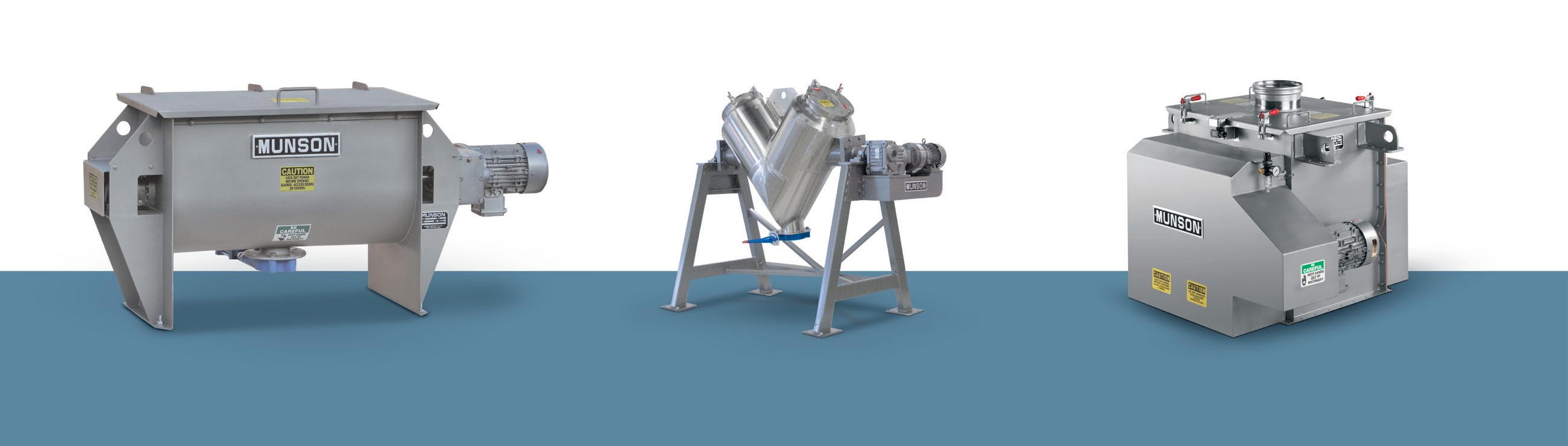
RIBBON/PADDLE/PLOW BLENDERS HANDLE POWDERS TO PASTES
Agitators forced through stationary materials impart shear needed to reduce agglomerates and blend pastes and slurries. Basic industrial units to state-of-the-art sanitary designs with heating/cooling jackets, liquid spray additions, and high-speed choppers/intensifiers. Capacities from 1 to 1,150 cu ft (.03 to 32 m3).
SANITIZE ULTRA-FAST, THOROUGHLY
Smooth internal surfaces free of baffles, shafts and bearings allow unobstructed material flow, plus complete discharge through a gate valve for rapid cleaning or sanitizing of the easy-access interior. Uniform blends are typically achieved in as little as 15 minutes with equal efficiency at fill volumes from 100% to 25% of capacity. Ideal for dry and granular materials.
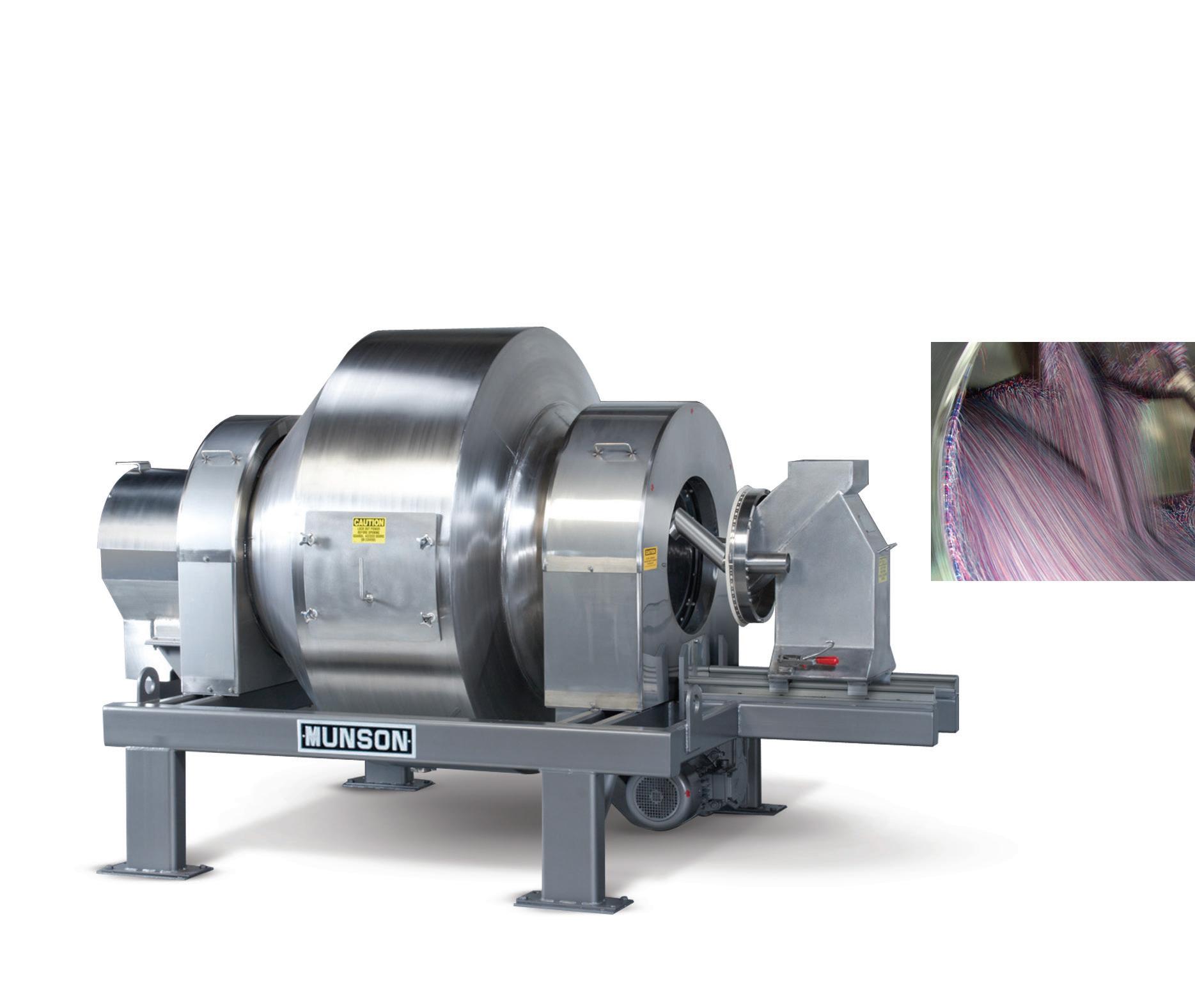
n 100% Uniform blending and/or liquid additions in one to 2–1/2 minutes
n Total discharge with no segregation
n Ultra-gentle tumbling action (versus blades forced through batch)
n Ultra-low energy usage
n Equal efficiency from 100% to 15% of capacity
n No internal shaft or seals contacting material unlike other rotary mixers
FLUIDIZED BED MIXERS BLEND ULTRA-FAST, GENTLY
MUNSON® Fluidized Bed Mixers feature two shafts with paddles that counter-rotate at high speeds to fluidize material, achieving homogeneous blends in 10 seconds to 2 minutes. Low shear forces minimize friction with little or no degradation and insignificant heat generation. Drop-bottom gates provide rapid discharge. Capacities from 0.21 to 283 cu ft (6 L to 8 m3).
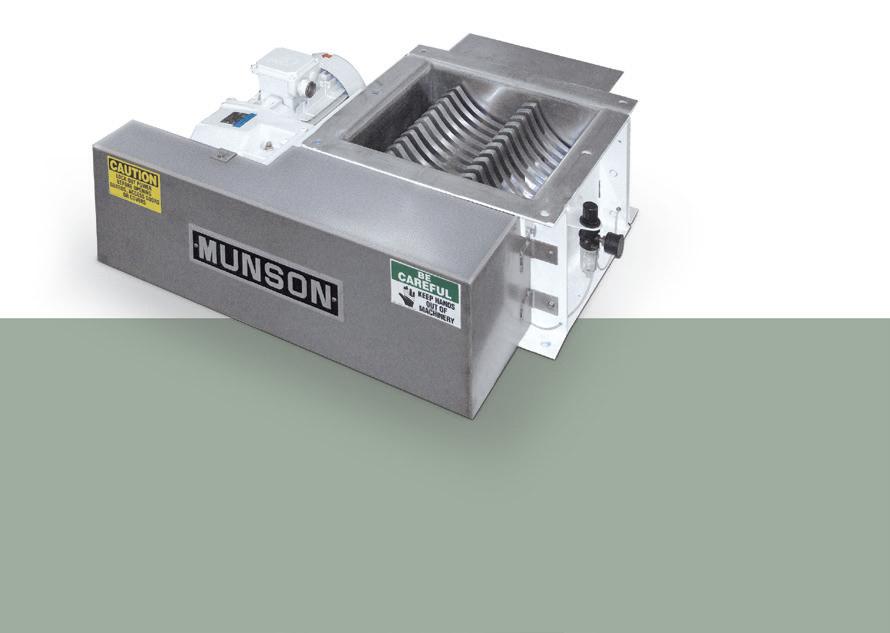
LUMP BREAKERS REDUCE AGGLOMERATES, FRIABLE MATERIALS
Remove lumps and agglomerates from bulk foods. Dual rotors with three-point, singlepiece breaking heads rotate with minimum clearance inside a curved, perforated bedscreen. On-size material exits through bedscreen apertures from 1/32 to 2–1/2 in. (0.8 to 63.5 mm) in diameter. Fits tight spaces between upstream and downstream process equipment.
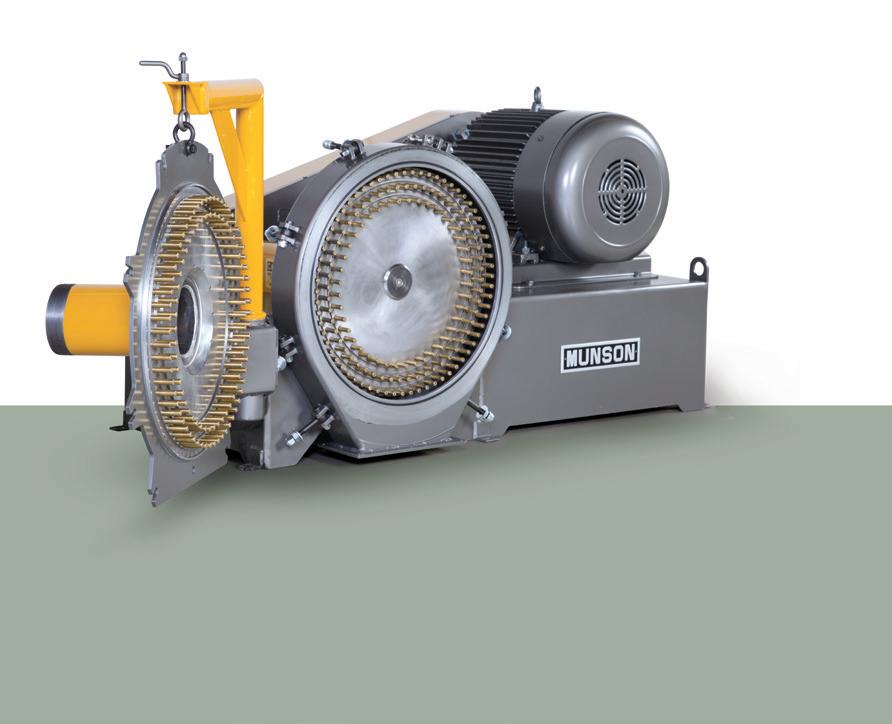
PIN MILLS REDUCE FRIABLE SOLIDS IN CONTROLLED SIZE RANGES
Coarse to fine grinding of friable powders, flakes and granules into controlled particle sizes at high rates per HP/kW. High-speed rotation of the inner disc creates centrifugal force that accelerates bulk material entering the central inlet of the opposing stationary disc through five intermeshing rows of pins. Desired tight particle size distribution obtained by controlling the rotor speed.
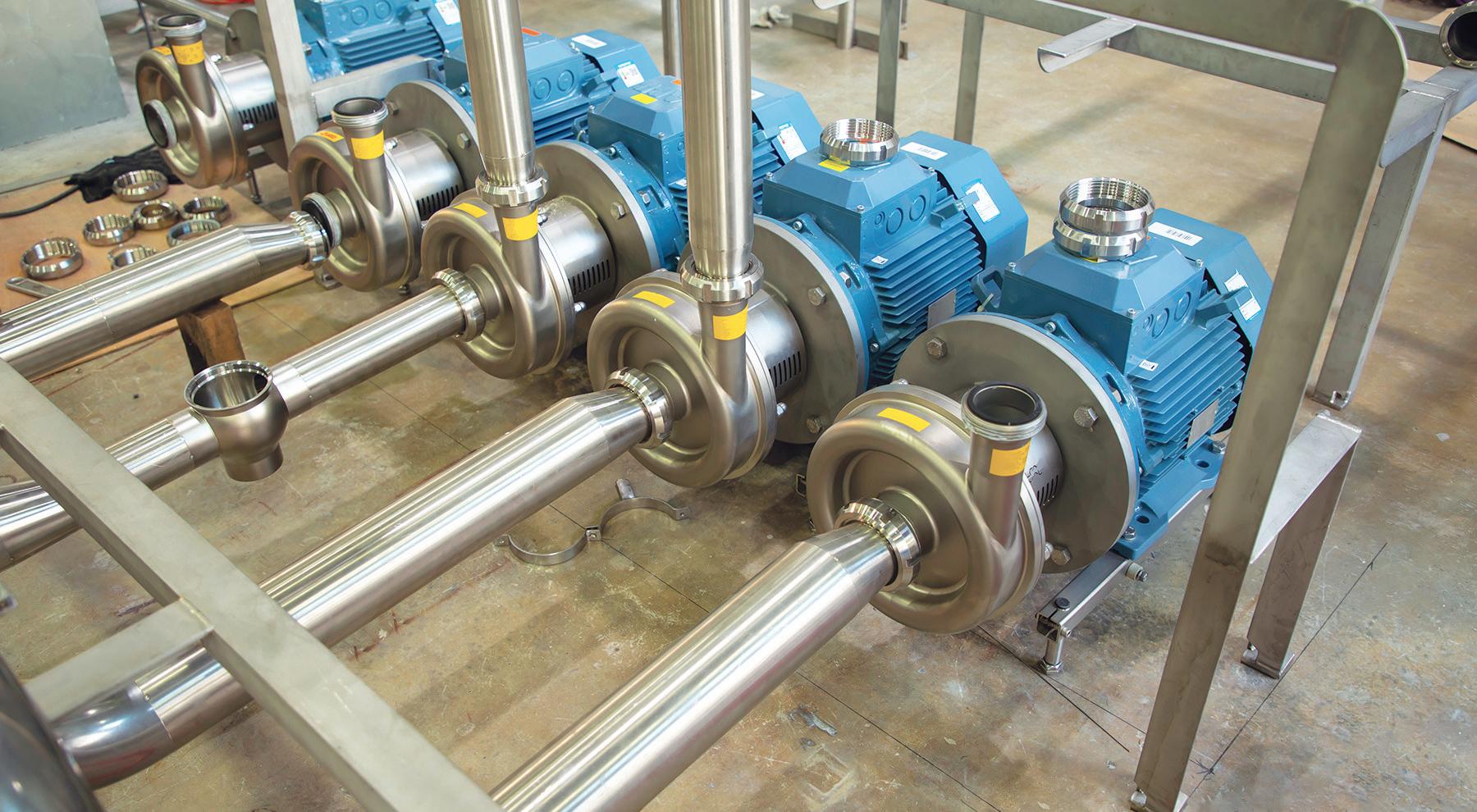

Advances in hygienic pump designs are helping food and beverage processors improve sanitation, reduce downtime, and lower total cost of ownership while protecting product quality and supporting increasingly demanding production environments.
PUMPS RARELY ATTRACT ATTENTION —until something fails. A worn seal, extended cleaning cycle, or improperly specified pump can disrupt production, compromise product quality, and increase maintenance costs. As food safety standards tighten and labor constraints persist, hygienic pumps are evolving to address operational realities across sanitation, maintenance, and lifecycle performance.
Today’s pumps are designed not only to move product e ciently but also to improve cleanability, reduce downtime, and protect product integrity. Advances in hygienic design, materials, and condition monitoring are helping processors reduce total cost of ownership while supporting increasingly complex production environments.
Designing for sanitation realities
One of the most significant changes in hygienic pump design over the past two decades reflects a better understanding of how pumps fail.
“The big evolution in hygienic pump design is driven by the actual causes of pump damage,” says Calle Danielsson, Sales Engineer at Unibloc Hygienic Technologies. “Most damage doesn’t occur during operation, but rather during cleaning and maintenance.”
Today’s pumps are designed not only to move product e ciently but also to improve cleanability, reduce downtime, and protect product integrity.
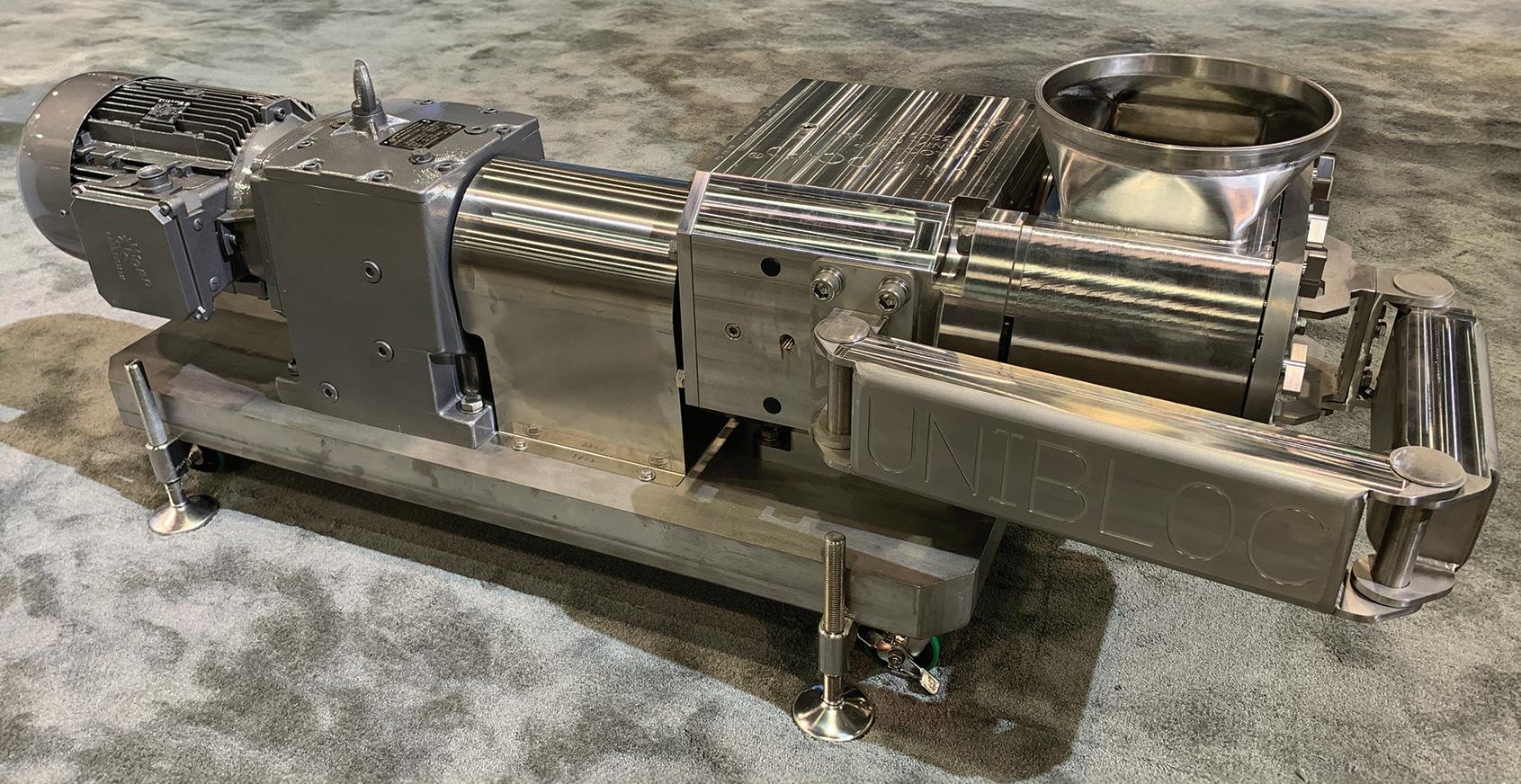
Unibloc’s UltraLobe Food First 700 series lobe pump carries a small footprint in relation to its productivity, which according to Unibloc, can do the work of two smaller pumps in just 20% of the space.
Sanitation crews often work within tight production windows and with limited staffing. Disassembly and reassembly under time pressure can lead to damaged components or improper assembly.
“Scratches, bent parts, mis-torqued rotor bolts, lost O-rings…crews are notoriously hard on pumps,” Danielsson says. “Older pumps weren’t designed with that reality in mind.”
To address these challenges, manufacturers have redesigned pumps for easier access and faster servicing. Tool-free disassembly, bolt-free rotors, and front-loaded seals reduce maintenance complexity and minimize the risk of assembly errors.
These improvements significantly reduce labor requirements. “Crews can clean a lobe pump in minutes rather than hours,” Danielsson says. He cites air-operated double-diaphragm pump designs that “can be disassembled by removing a single large nut, cutting maintenance from two hours to just 15 minutes.”
Hygienic engineering has also improved cleanability and compliance. Scott Dillner, Director of Marketing at Fristam Pumps, says sanitary design standards continue to drive innovation.
“Today’s pumps are built with improved drainability, smoother surface finishes, and reduced internal crevices to meet increasingly stringent standards such as 3-A Sanitary Standards and EHEDG,” Dillner says. “Processors now expect documentation, traceability, and validation-ready equipment as a baseline requirement.”
These features reduce product hold-up, improve
cleanability, and help processors meet regulatory and quality requirements.
As product formulations grow more complex, pumps must handle a wider range of viscosities, solids, and shear-sensitive ingredients. Applications now include delicate dairy products, sauces, protein beverages, and plant-based formulations, each with specific handling requirements.
Six hygienic pump types are commonly used in food processing: centrifugal, lobe, gear, twin screw, progressive cavity, and air-operated double-diaphragm pumps. Each offers distinct performance advantages depending on product characteristics and process requirements.
“Our particular focus is on hygienic applications in food, beverage, meat and poultry, bakery, dairy, as well as pharmaceutical applications,” Danielsson says. These industries require pumps “to be not just reliable, but also easy to clean and maintain.”
Versatility is also becoming increasingly important as processors seek to simplify system design. Twin screw pumps, for example, can perform both product transfer and clean-in-place (CIP) functions within a single unit.
“Modern pump technologies can often handle both product transfer and CIP within the same unit, reducing system complexity and capital investment while maintaining gentle product handling,” Dillner says.
This dual functionality reduces equipment count while improving system efficiency and cleanability.
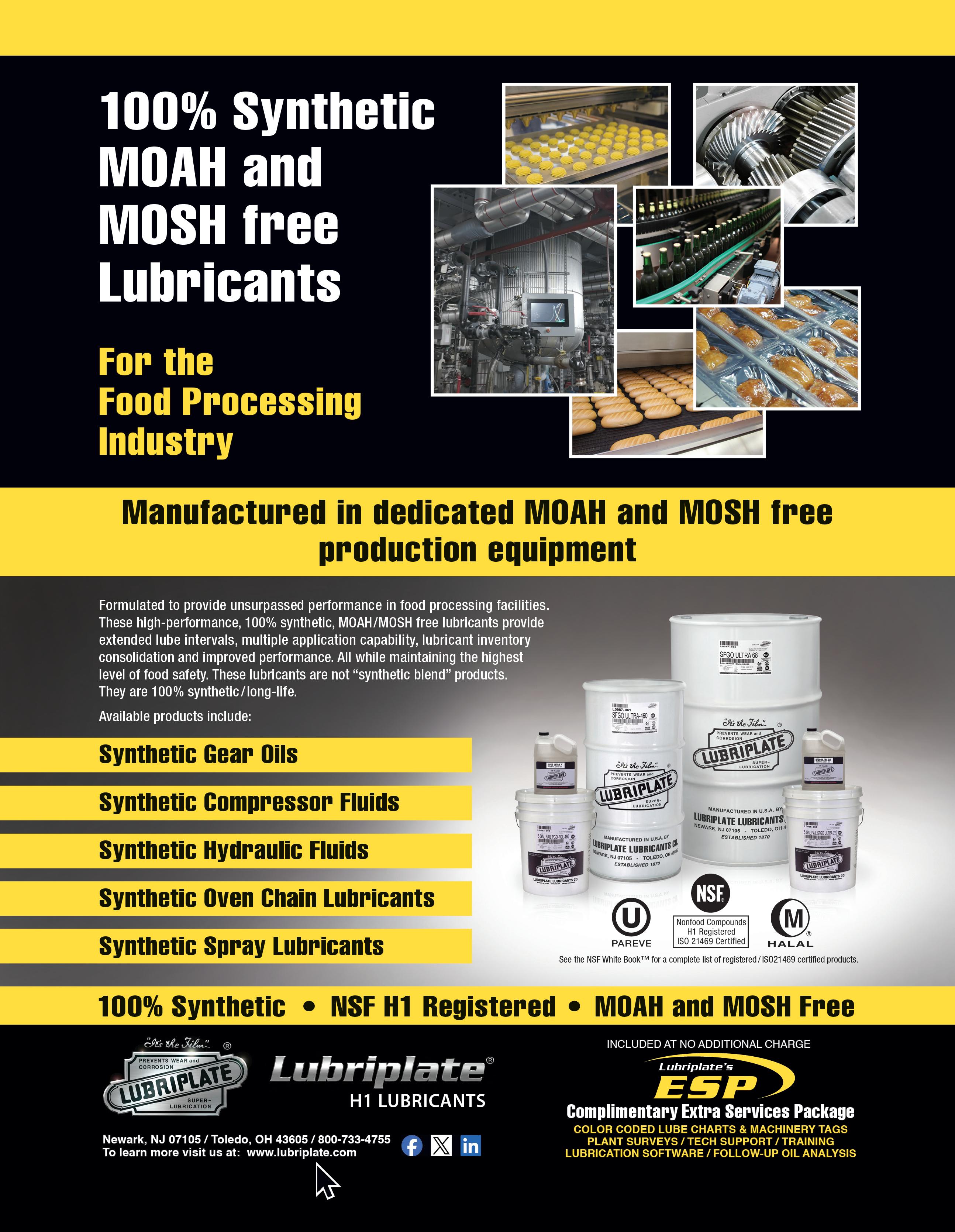
Fristam’s FKL Positive Displacement Pump offers a heavy-duty design for modern processing needs— including thicker shafts and balanced rotors for gentle pumping of shear sensitive products.
Processors are increasingly evaluating pumps based on total cost of ownership rather than initial purchase price. Maintenance requirements, downtime risk, and service life now play a larger role in purchasing decisions.
Older pump designs often required longer service times and were more susceptible to wear and assembly errors. Modern pumps address these issues through simplified maintenance and improved materials.
Ease of maintenance is especially important as plants face skilled labor shortages. “Managers we talk to are still struggling to find reliable labor,” Danielsson says. “They love pumps that can be disassembled without tools and can be cleaned in minutes rather than hours.”
Reliability improvements have also extended service intervals.
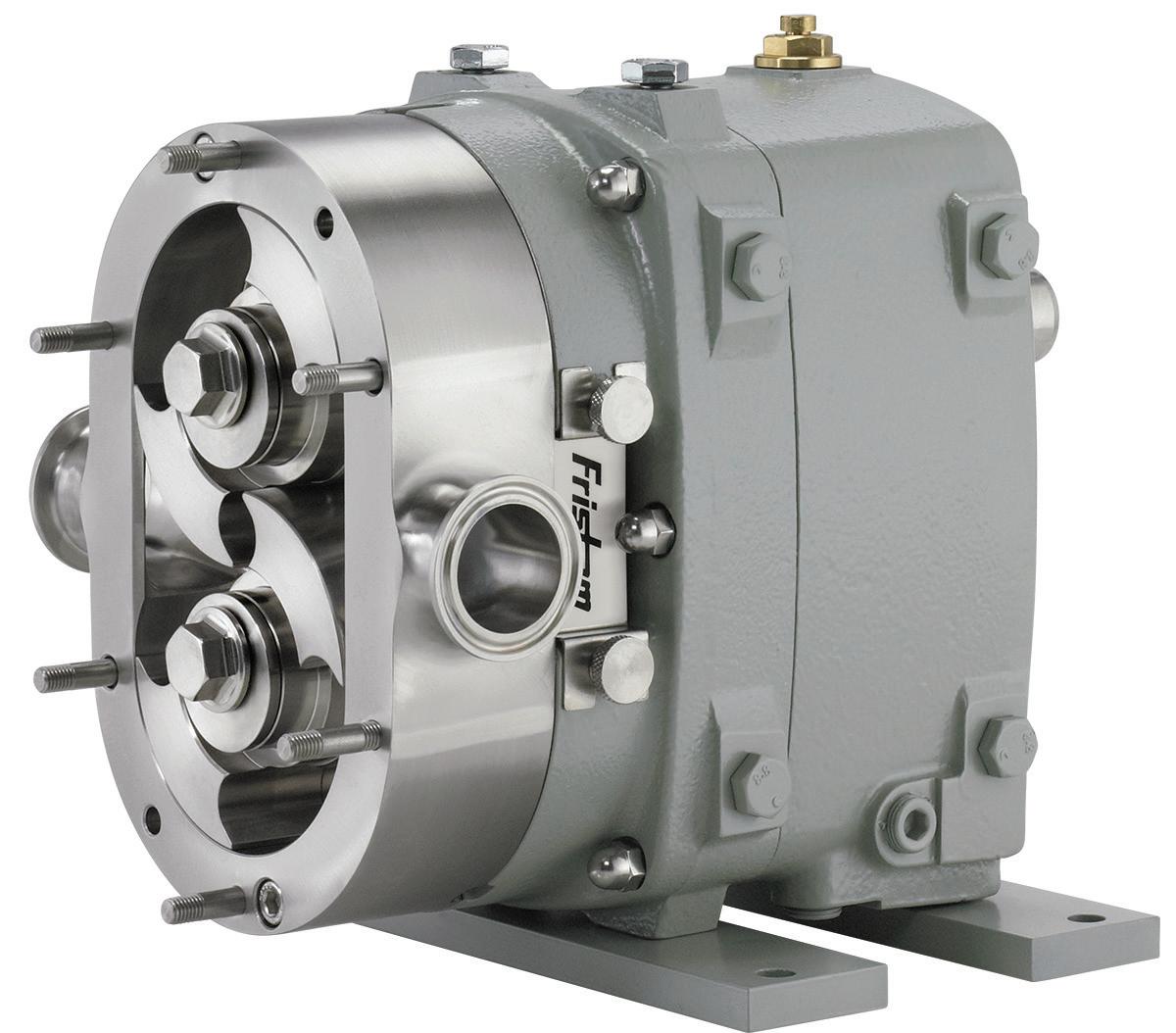
Fristam’s FDS Twin Screw Pump provides smooth product transfer and can be used to pump CIP, eliminating the need for additional pumps in the system.
“Advances in seal materials, shaft stability, and precision machining have extended maintenance intervals and reduced unplanned downtime—shifting the industry focus from initial purchase price to total cost of ownership,” Dillner says.
Dave Pelinsky, Inside Sales Manager at Finish Thompson, says processors ultimately prioritize value and performance.
“When it comes to pumps, that will include the most reliable, efficient, and highest quality option available,” Pelinsky says.
Despite advances in pump design, improper pump selection remains a common source of operational issues. Selecting pumps based solely on flow requirements or purchase price can lead to premature wear, product damage, and maintenance problems.
“The most common mistake engineers make when selecting a pump is selecting a small pump and running it near or at its maximum capacity,” Danielsson says. “Pumps run best in the middle of their RPM range. When in doubt, size the pump larger and run it slower.”
Operating pumps at maximum capacity accelerates wear and shortens service life. Matching pump technology to product characteristics is equally important.
“A centrifugal pump, for example, is fine for thin liquids, but pushing a viscous product through one will damage the product and eventually the pump,” Danielsson says. “We’ve seen processors put in tomato chunks that wind up as tomato soup, an unintended outcome.”
Pelinsky emphasizes the importance of understanding fluid properties before selecting a pump.
“What is being pumped? Fluid or chemical and concentration,” Pelinsky says. “If possible, include an SDS that notes fluid properties like specific gravity, viscosity, solids, etc.”
Other key considerations include flow rate, discharge pressure, power source, and system layout.
“Where are you pumping from and where are you pumping to?” Pelinsky says. “This will help define the installation, whether it has a flooded suction or requires a suction lift.”
Of course, selecting pumps based solely
FLEX-TURN® CONVEYORS
The hygienic way to convey around corners
LADDER-FLEX® CONVEYORS
The hygienic way to spread, converge, diverge
STRAIGHT CONVEYORS
Designed for your application
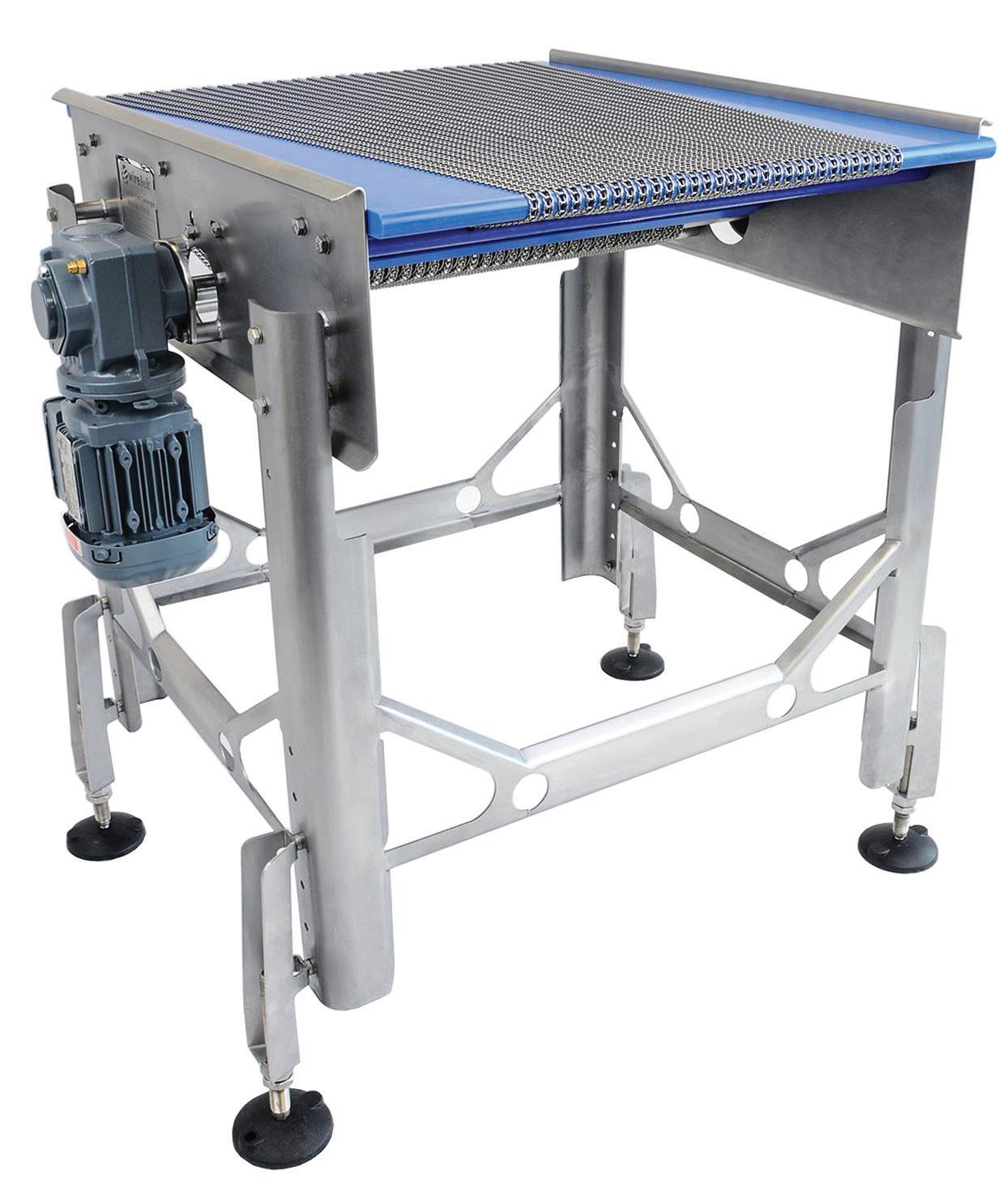
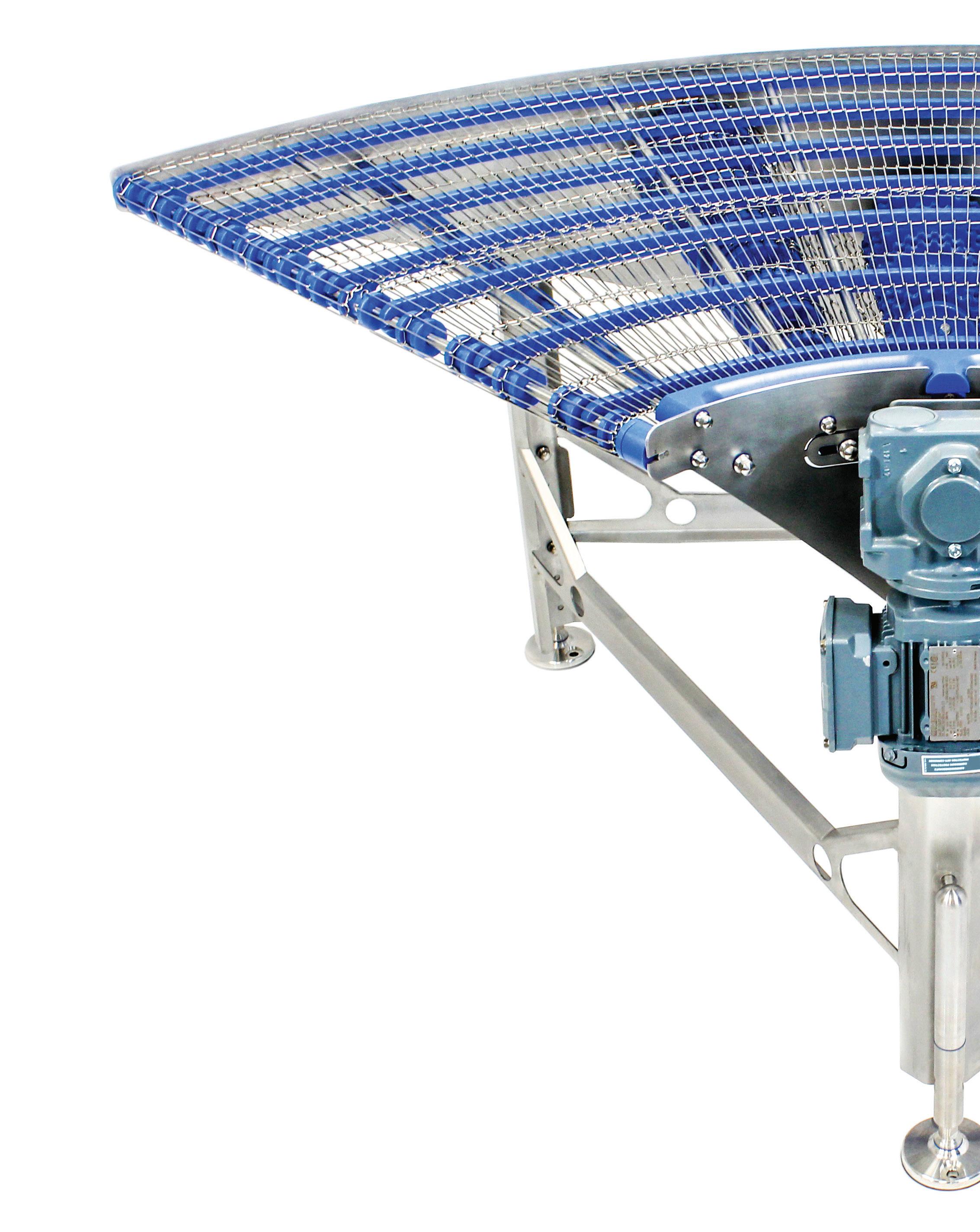
• Simplified wash-through construction
• pen section leg frames
• lean-in-place
• asy to sanitize, clean and maintain
• High density blue plastic components
• o place for bacteria and allergens to hide
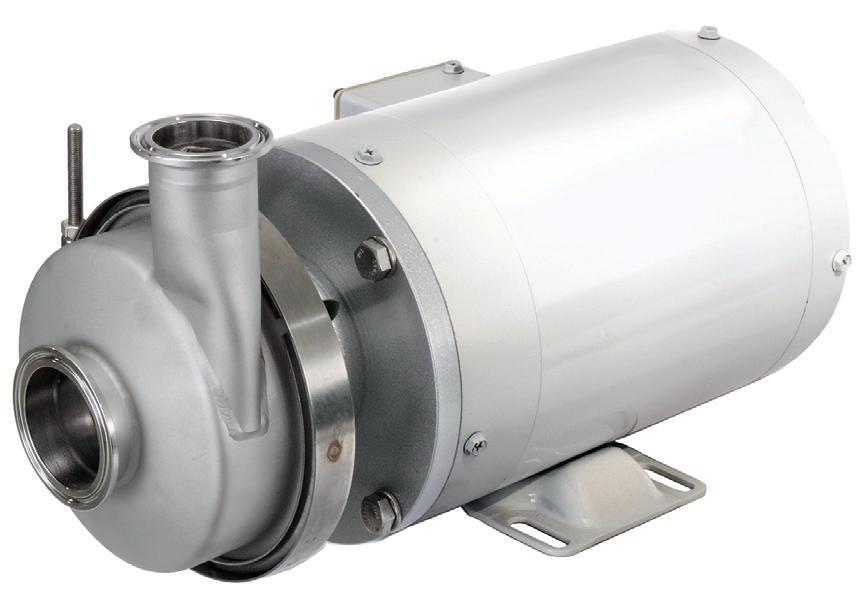
The FDA-compliant Finish Thompson AC5 centrifugal pump features a close coupled design, with standard, recessed, or high head impellers available. It mounts to both NEMA and IEC motor frames.
on initial cost can result in higher long-term expenses.
“A lower-cost pump may meet the basic flow requirement, but if it leads to premature seal failures, excessive maintenance time, or product damage, the long-term cost quickly outweighs the initial savings,” Dillner says.
Incorrect specifications can create ongoing operational costs. “We’ve seen customers spend more than $200,000 per year on seal replacements alone because the wrong type of seal was specified,” Danielsson says.
Pelinsky adds that generalized assumptions often lead to performance issues.
“If there’s one overarching point to emphasize, it’s that pumps should never be viewed as commodity components. In sanitary processing, they directly impact product quality, uptime, cleaning efficiency, and overall operating cost.”
—Scott Dillner, Director of Marketing, Fristam Pumps
“The most common mistake made by a customer is taking the one-size-fits-all approach,” he says. “Depending on the pump design, there could be too much flow, too little head, or incompatible materials.” Taking a lifecycle approach to pump selection helps prevent costly corrections later.
Food safety requirements continue to drive improvements in hygienic pump design.
Solid stainless steel construction, for example, improves durability and hygiene. “Each rotor and pump housing is milled from a single billet of stainless steel, avoiding seams or weld transitions where bacteria could hide,” Danielsson says.
Simplified designs also reduce foreign material risk. “Eliminating small parts reduces the risk of foreign material entering a process stream,” he adds.
Hygienic design improvements also improve cleaning efficiency and reduce resource consumption. “As water, energy, and chemical usage come under greater scrutiny, pumps that support faster, more efficient CIP cycles will become increasingly
valuable,” Dillner says.
These capabilities help processors meet sanitation requirements while improving operational efficiency.
Digital integration is becoming an important factor in pump design, supporting predictive maintenance and improved reliability.
“We’re seeing greater interest in intelligent pump integration,” Dillner says.
“Future designs will increasingly support condition monitoring, improved diagnostics, and better integration into plant automation systems.”
Monitoring vibration, temperature, and seal condition allows maintenance teams to identify potential issues early and schedule repairs proactively.
Predictive maintenance reduces unexpected failures and improves uptime.
As Dillner explains, the pumps of the future won’t necessarily look radically different, but they will be smarter, more efficient, and even more aligned with the operational realities of modern sanitary processing.
And as production demands increase and formulations grow more complex, pumps play a critical role in maintaining product quality, sanitation, and operational efficiency.
“If there’s one overarching point to emphasize, it’s that pumps should never be viewed as commodity components,” Dillner says. “In sanitary processing, they directly impact product quality, uptime, cleaning efficiency, and overall operating cost.”
That’s why proper pump selection and maintenance require collaboration across engineering, quality, and operations teams. As such, Dillner is seeing more processors involve cross-functional teams earlier in the pump selection process.
“That collaboration leads to better long-term decisions,” he says, “because the pump affects everything from validation and documentation to maintenance labor and energy usage.”

While AI grabs headlines, machine learning, modeling, and data standardization efforts are rooting out waste. Data in batch processing, lab databases, and production pose standardization challenges, and the ability to sync information across departments and identify waste.
MACHINE LEARNING INITIATIVES are eliminating waste and preventing bottlenecks in food manufacturing. However, the 2023 “State of Lean Manufacturing” report revealed that only 10% to 15% of U.S. companies systematically use lean principles and reap its benefits. An essential component of lean practices and Six Sigma is attention to processes, people, and problem-solving, not necessarily to capital investments.
Today’s food and beverage producers continue to invest in automation, pursue standardized plant data to future-proof enterprises, and adopt AI-based strategies. With investments in place, machine learning (ML) technology in packaging, predictive
maintenance, and clean-in-place (CIP) are currently finding waste and providing quick resolutions.
“Lean in the machine learning era is not just about building models; it is about embedding insights into daily workflows,” says Markus Guerster, Founder and CEO, MontBlancAI . “AI must connect to production meetings, maintenance routines, and continuous improvement cycles. Without operational adoption, even technically strong models fail to generate sustained impact.”
The long-term challenge for food producers is to synchronize operational data across business units, such as batch-process information and time-series data in production.




“Most food and beverage producers have invested heavily in automation over the past 15 to 20 years, but data standardization was rarely part of the original charter,” says John Oskin, Senior VP at SmartSights.
Machine learning and AI gain traction
In 2024, Michael Warter, SVP and CIO at Ruiz Foods, announced the frozen food giant was working on a data standardization project for its research and develop-

David Ariens says IT and OT departments work in “different worlds” and if those two worlds don’t cooperate, no amount of technology will save your data strategy. s
The most important challenge is not technological—it’s organizational. IT and OT still operate in silos in many companies. They have different goals, different reporting lines, and they genuinely speak different languages about risk, time, and success. If those two worlds don’t cooperate, no amount of technology will save your data strategy.
Once you address the people dimension, you hit two data bottlenecks that must be solved in sequence. The first is the absence of reusable data infrastructure. Every data project starts with weeks of finding, extracting, aligning, and cleaning data from disconnected sources—historians, MES, CMMS, LIMS, ERP—none of which were designed to work together. We estimate that 60% to 80% of project time is consumed by this plumbing work. And the next project repeats it all from scratch.
The second bottleneck is context and governance. Even when you’ve connected the data sources, if every plant defines asset hierarchies differently and uses its own naming conventions, you haven’t built reusable infrastructure. You’ve built neater silos. Scaling requires agreed standards—ideally grounded in ISA-95—that make context portable across sites.
Whether you start with historian data, lab data, or MES data matters far less than whether you’re building infrastructure that compounds or building point solutions that dead-end.
—David Ariens, IT/OT Insider
ment business unit. “Data is in disparate systems, and integration is vital in getting the systems to work together and move away from spreadsheets,” said Warter during the 2024 IFT FIRST conference. “The first step provided regulatory, compliance, and track-and-trace benefits.”
According to Warter, the Ruiz Foods board didn’t understand all of the AI implications for the food producer. The connection between lean principles, reducing waste, and an AI future is now more apparent to upper management and boards.
“Lean and Six Sigma gave us the discipline to eliminate waste and control variability in physical processes,” says David Ariens, Founder at the IT/OT Insider. “What we’re doing now is applying that same discipline to data—eliminating waste in how we find, clean, and contextualize information, and building the infrastructure so that every new use case doesn’t start from zero.” The IT/OT Insider’s Academy delivers training and education to companies worldwide.
The recent wave of greenfield food plant construction is being built with a data-first approach in the U.S. In a recent ProFood World article on standardizing production data metrics, Bob Rice, VP of Engineering at Control Station, Inc. , noted that “twenty years ago, it was solely about getting the equipment up and running. Now, many big projects are coming in with (operations) standards where you have to reach a certain production level and start applying analytics well before the first project.”
However, a data-first approach doesn’t mean machine learning models for the entire plant. “Very few companies have adopted a full manufacturing ontology: a machine-readable model that explicitly defines how equipment relates to processes, how processes consume materials, how batches follow recipes, and so on,” adds Ariens.
According to Guerster, current challenges with data projects for ML include organizational alignment. “Many companies struggle with where to begin: historian data, MES data, lab data, or ERP integrations,” says Guerster. Signal naming, units, sampling frequencies, and contextual metadata (such as production state or batch context) are frequently inconsistent across lines or plants.
“IT and OT still operate in silos in many companies. They have different goals, different reporting lines, and they genuinely speak different languages about risk, time, and success,” says Ariens. “If those two worlds don’t cooperate, no amount of technology will save your data strategy.”
To be successful, companies need to start small and focus on wins. “Another challenge is defining a clear business case before starting a data initiative. Companies that succeed typically begin with a narrowly scoped use case tied directly to measurable

operational KPIs [key performance indicators],” says Guerster.
“With AI, starting small and growing from there seems like it has proven benefits across the board,” adds Oskin. “Picking a good place to start, such as a key asset, production line, or metric, and picking a couple of AI projects to do this week or this month.”
A recent webinar, “Optimizing Production with AI and Machine Learning,” with Marc Betrand at SmartSights, revealed how a customer reduced waste by using feature importance or prescriptive analytics in diagnosing a packaging line bottleneck. Feature importance identifies the most impactful features, leading to more e cient, interpretable, and high-performing models.
The objective for this customer was to identify the appropriate KPI, such as mean time between failures (MTBF) or a machine center value for a packaging line bottleneck. In this example, SmartSights’ ABLE technology conducted a root cause analysis of a bundler, a wrapping unit, and a tray packer, and identified the highest-impact machines based on potential root causes.
In parallel, a prescriptive analytics approach also modeled the packaging line. The essential KPI for this bottleneck was called the e ective rate, which multiplies availability by the average rate for the line to produce a units-per-minute metric. “Both of the algorithms were correct, but what was misleading was that the root cause is saying operators should be focusing on this tray packer. However, the focus should be on the bundler,” said Bertrand. The ML modeling enabled the packer to increase overspeed capacity and speed (rate) on both machines, resolving the machine center bottleneck.

In Veeva ’s “2026—The State of AI in Consumer Goods” report, the software provider surveyed 150 CPG senior quality and IT leaders and found that “predictive analytics carries the most interest, with just over half (52%) saying predictive analytics are the top priority for AI.” In addition, 9 in 10 respondents say their companies are actively using AI or are conducting trials, pilots or evaluations.
With predictive maintenance, “failure events are concrete and measurable, which simplifi es labeling,” according to Guerster. “From a business standpoint, maintenance ROI is easier to quantify: reduced downtime and spare parts savings,” he says. “In contrast, broader process optimization requires deeper integration with quality data, lab results, and production state modeling.”
“Production assets have a variety of sensors, including vibration, temperature, current, pressure and fl ow,” says Oskin. “Structured, high-frequency data is ideal for machine learning.” SmartSights o ers solutions that trigger maintenance work orders, issue alarms when SCADA anomalies are detected, and provides a holistic view of the full life cycle of a maintenance issue.
While successes in predictive maintenance are well documented, scaling across multiple plants remains a challenge. “The proof of concept that predicted bearing failures on one packaging line works brilliantly—until winter turns into summer and the ambient conditions change, or someone adjusts a setpoint, or the model just quietly degrades because nobody owns its ongoing maintenance,” says Ariens.
Ariens adds, “scaling predictive maintenance across an entire asset fleet demands exactly the same reusable data infrastructure and governed context models that every other data initiative needs.”
Standardizing data and ML pilots will pose challenges, but many industry analysts are pointing to AI-based tools for formulation as a promising area for early growth. Bottom line, corporate managers and boards are learning more about AI and the challenges in scaling across the enterprise.
“AI was this nebulous thing and is now a real thing. So, people are making that leap of faith that maybe they weren’t even doing two years ago,” says Oskin. “In food and beverage, specifi cally, companies have a lot of cost pressures.”












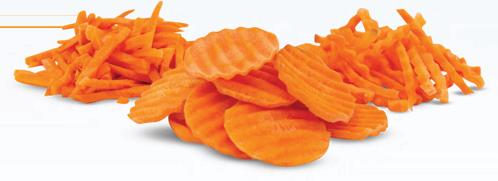








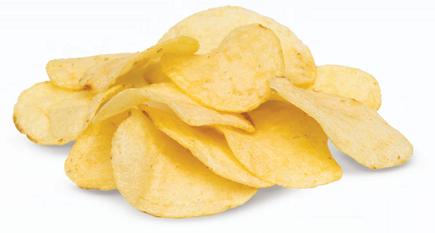
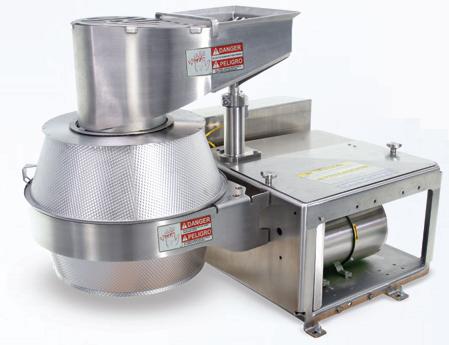
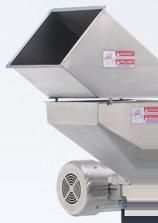





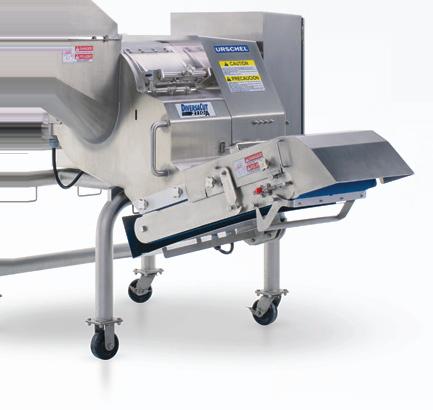
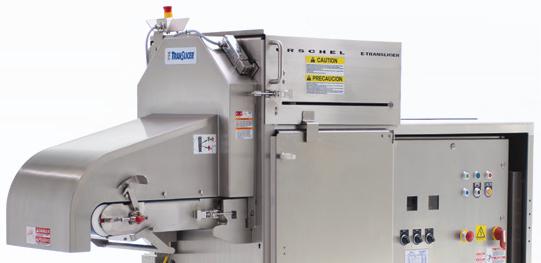
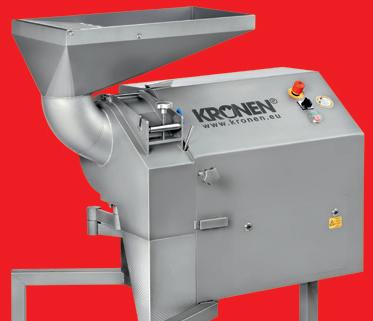
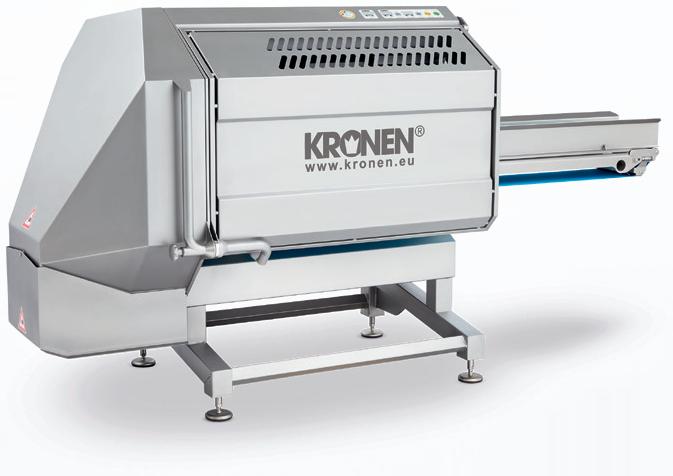
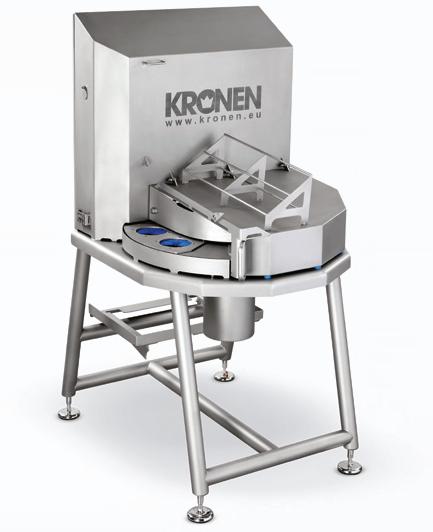
Rely on Urschel to provide even more food processing solutions by delivering Urschel and KRONEN.
Whether you are a batch or high-yield processor, look to Urschel for complete resources to improve your line.
Continuous, simple operation backed by the Urschel global network of sales and support.
Explore complete processing solutions at urschel.com. +










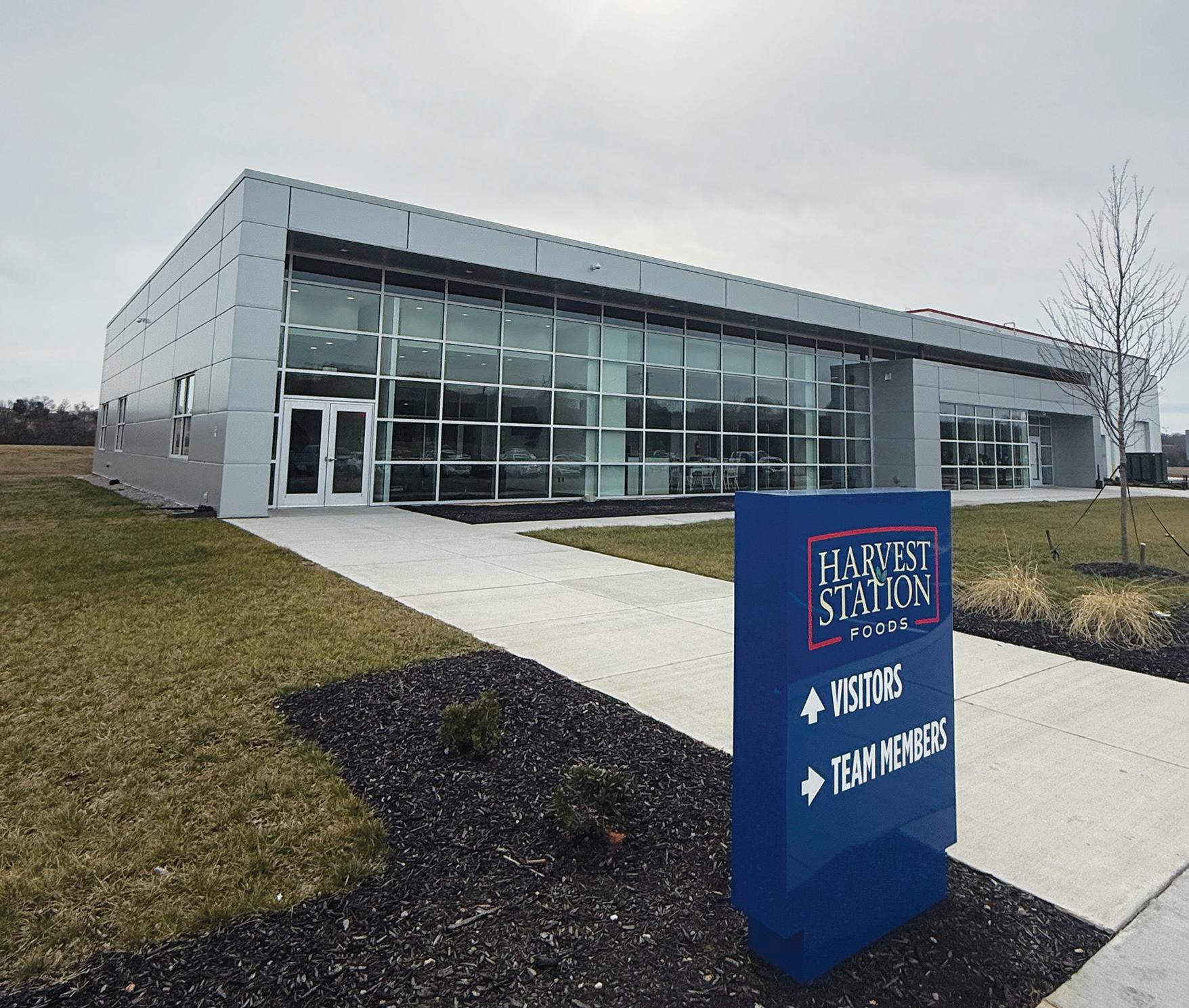




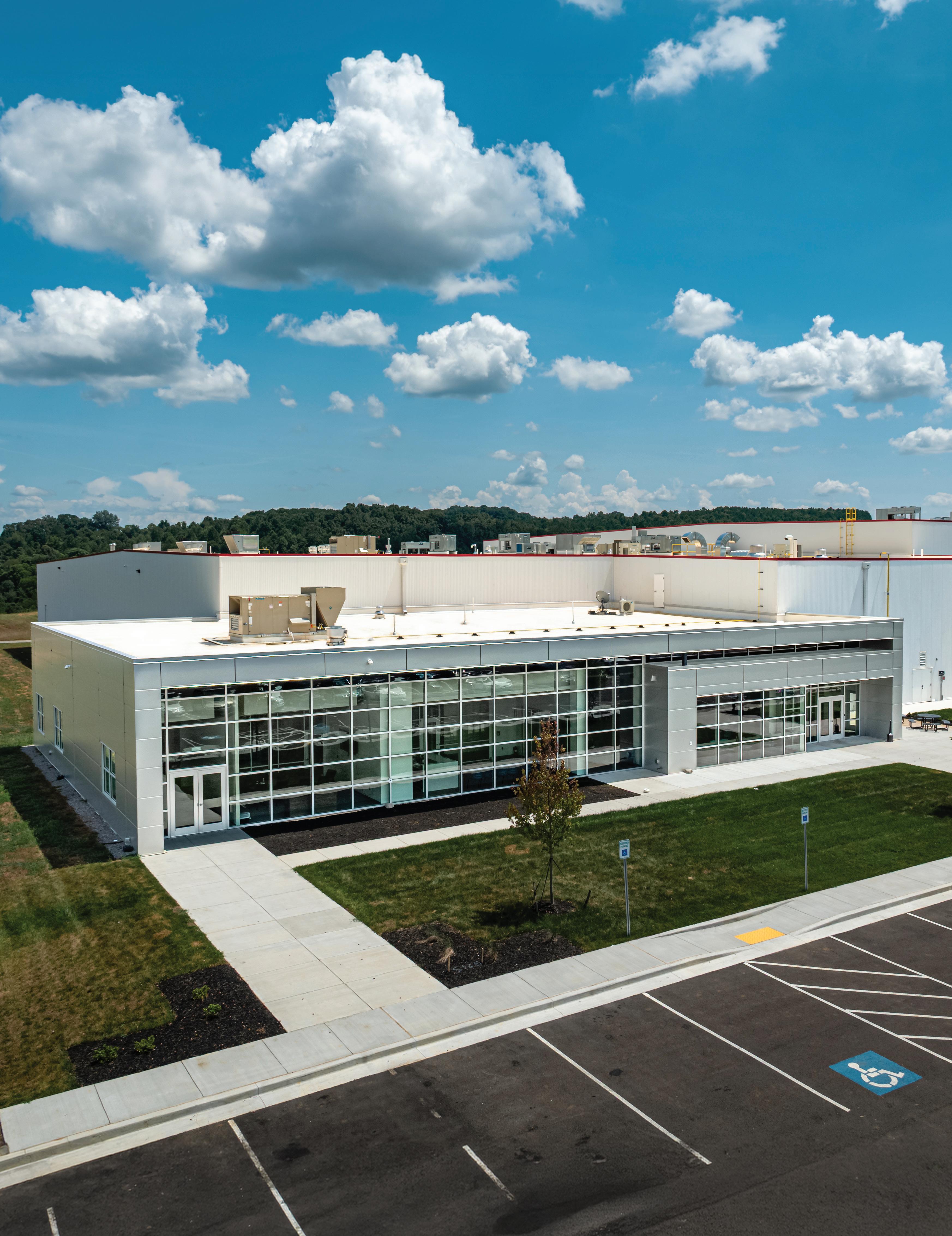
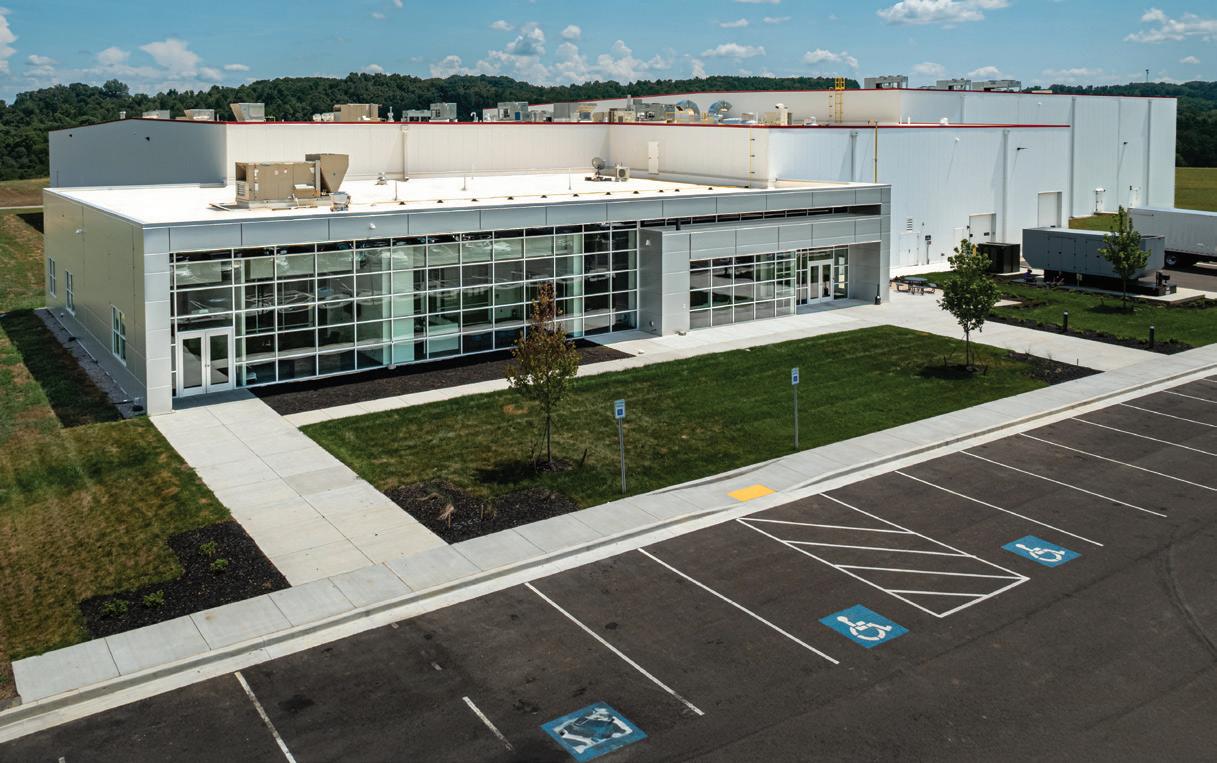
Harvest Station Foods’ production facility integrates bakery lines, high-care prepared foods production, and centralized distribution.
Purpose-built for flexibility, Harvest Station Foods’ production facility integrates bakery lines, high-care prepared foods production, and centralized distribution—helping Weigel’s streamline operations while raising the bar for fresh food in convenience retail.
HISTORICALLY, PEOPLE HAVE QUESTIONED the freshness of certain food products found in convenience stores (C-stores). But with the global convenience market projected to reach $1.46 billion by 2036 with a compound annual growth rate of 7.2% according to Future Market Insights, it’s vital for C-stores that their customers are confident in the products they’re buying. In Loudon, Tenn., positioned deliberately on 60 acres, Harvest Station Foods is creating a new chapter in vertical integration to deliver on freshness, all the while finding a way back to its roots.
While operating as its own entity, Harvest Station Foods is the venture of Weigel’s, which operates a chain of U.S. convenience stores primarily located in the South. That ownership structure is intentional— and strategic.
“We did make this a separate company, Harvest Station Foods, because we view Weigel’s as a customer for us,” says Beth Ho er, Weigel’s VP of Foodservice. She adds with a smile, “We did build a nice big facility. Weigel’s is helping us pay the bills right now. We appreciate that.”
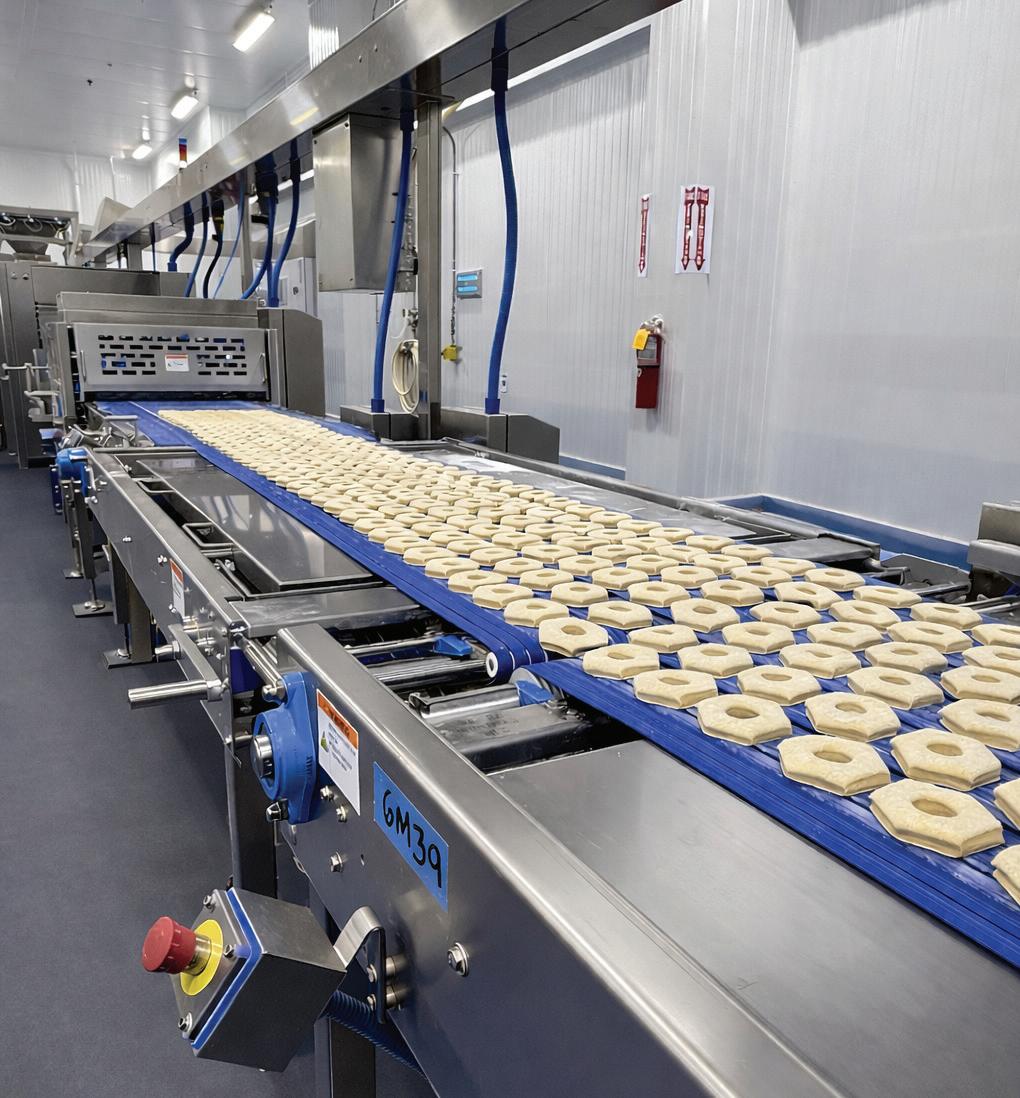
The move into centralized food production isn’t new territory for the company—it’s a return to its roots.
“Weigel’s actually got their start in farming and manufacturing, beginning as a dairy company,” Hoffer says of the company that’s been in business for 95 years. “We opened up one of the first dairies in East Tennessee. We still operate that dairy and have been in manufacturing longer than we’ve been in C-stores, actually.”
The pivot to retail came from necessity. “Mr. Weigel, having a farm that did milk home delivery, really put him in a bind because, all of a sudden, there was no one there to get milk. So, he opened up these tiny, little-bitty stores, and he called them Jug O’ Milk Stores,” Hoffer continues. “They were maybe 900 sq ft to start with, and you would just pull up and they would give you your milk out the
window. We had a drive-through before I think people even knew what drivethroughs were.”
Over time, the assortment expanded. “He went to the second ever NACS (National Association of Convenience Stores)… and found out that he could sell candy, and chips, and crackers, and all the other staples in this little store, like having a little convenience store. So, he did that, and then we evolved from there.”
Fourteen years ago, Weigel’s began testing its ability to manufacture more of its own food.
“About 14 years ago, we thought we wanted to have our own bakery,” says Hoffer. “We had no idea what we were doing, but we made it work, and we built a bakery—we actually have a really good following—and it became kind of a staple in the community. We’re known for milk, now we’re known as a bakery.”
But as store count grew, complexity grew with it.
“As we continue to grow those stores, we thought about food safety. How do we take away some of the noise out of the stores for our employees? Because food’s really hard, and you’re asking people to do a lot. And so how do we simplify some of those processes and get our employees back to taking care of our customers and doing the right thing there?” says Hoffer.
The answer was centralization.
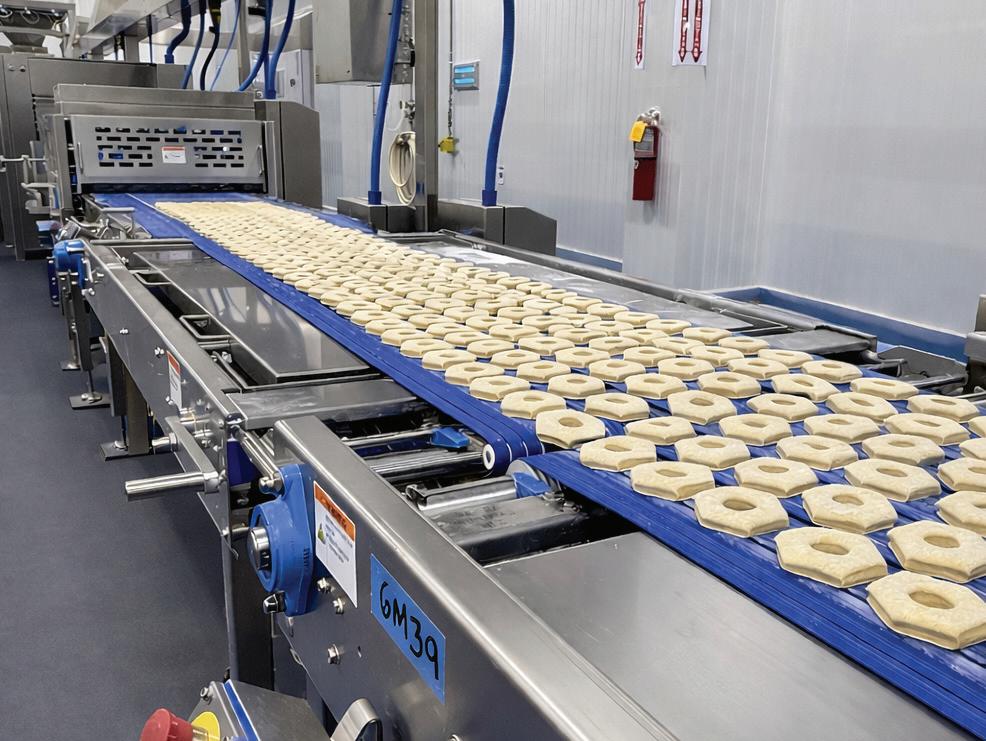
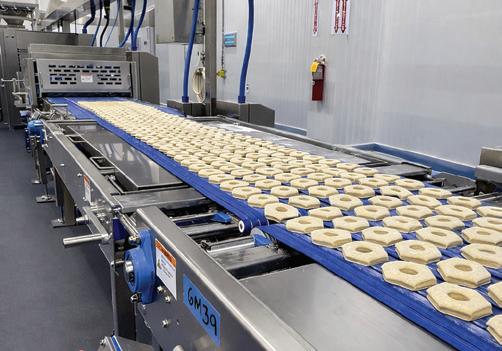
The 60-acre plot in Loudon was bought approximately four years ago, and its central location allowed for daily delivery to each of the C-stores. The bakery was then relocated from its leased space into the new plant to produce fritters, cinnamon rolls, muffins, and more. Two lines currently produce the baked goods: the original moved from the leased facility and a new line. There’s a notable difference in size and capability between the two lines, and Hoffer remembers the original line days clearly.
“I remember when we used to—I mean, I literally remember when we used to run thousands of donuts down that line,” she says. “Boy, this is so much better.”
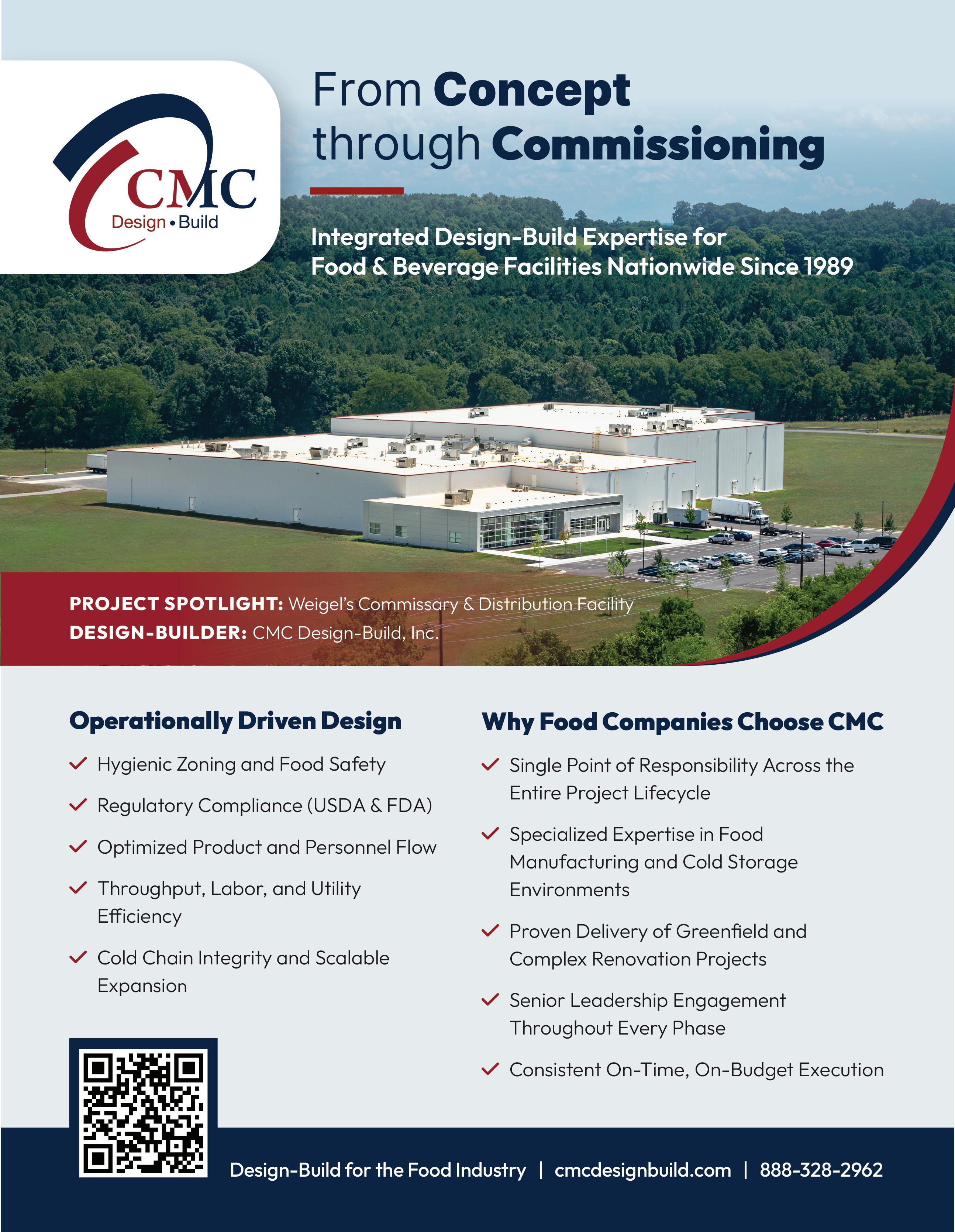
“It was a major shift from how Weigel’s had produced these products before,” says Nate Larose, Director of Project Development at CMC DesignBuild. “It wasn’t just new equipment—it was about

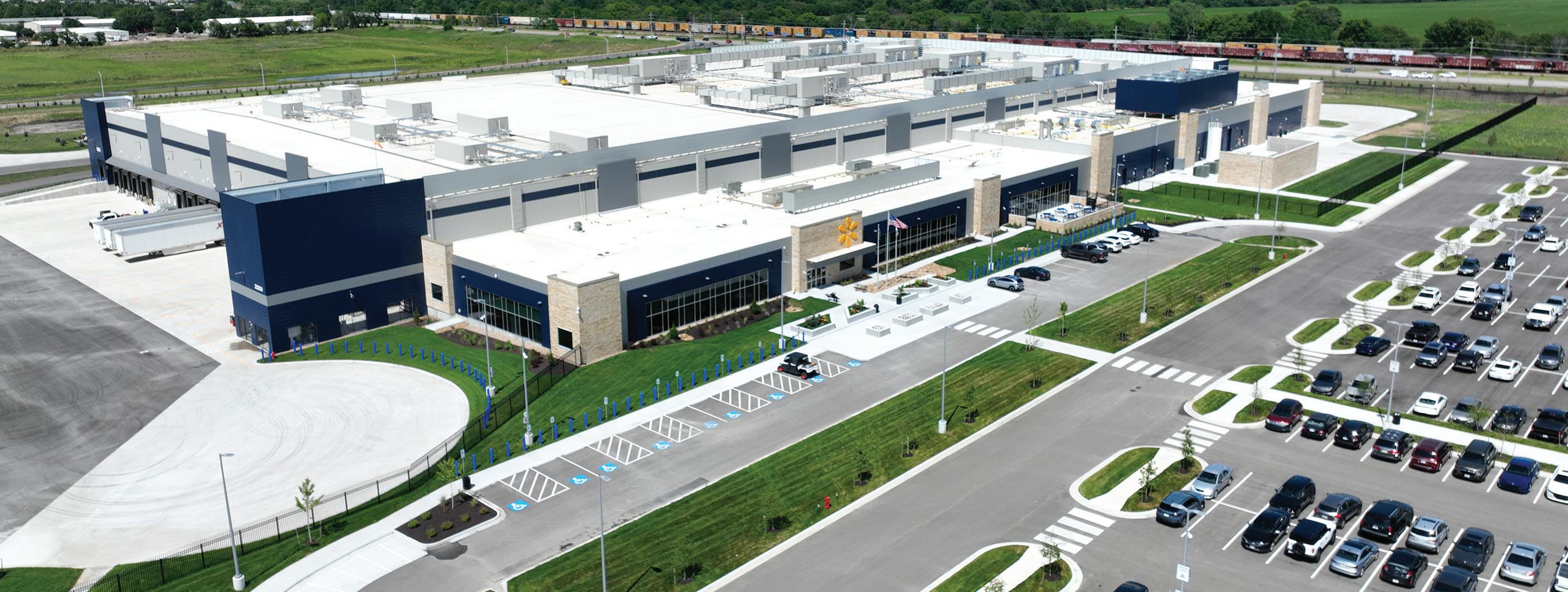
Walmart is taking direct control of its beef supply chain with the opening of its rst case-ready processing facility in Olathe, Kansas. The plant packages beef on site and ships nished caseready products directly to Walmart distribution centers across Missouri, Arkansas, Iowa, Nebraska, Colorado, Montana, Wyoming, North Dakota, Oklahoma, Minnesota, and Wisconsin. By reducing intermediaries, transportation touchpoints, and third-party processing dependencies, the retailer is improving cost control, throughput, and supply chain predictability.
The investment re ects a broader shift across the protein sector, where exibility, visibility, and vertical integration are becoming competitive differentiators. As processors and retailers contend with labor volatility, capacity constraints, and margin pressure, owning more of the value chain is emerging as a strategic lever to stabilize costs and improve ful llment performance. For Walmart, bringing case-ready beef processing in-house is designed to build resiliency while increasing transparency from slaughter to shelf.
“It’s important to build more resiliency and capacity in the industry,” a Walmart spokesperson said in an email statement to Investigate Midwest. “Opening a case-ready facility fully owned and operated by Walmart allows us greater control over the products entering our stores so we can continue to bring the highest quality offerings possible.”
Don Olsen, VP Design Operations, ESI Group, explains that more owners want direct control over the products they bring to market, particularly regarding quality and shifts in market demand. He says: “This Walmart facility provides the owner with the ability to adjust products to consumer demand quickly while maintaining better control over product quality from the initial cut through the packaged product.”
The facility supports Walmart’s commitment to a transparent, traceable supply chain, from locally sourced beef through packaging and distribution. By owning the beef cutting and packaging process, Walmart reduces reliance on third-party processors prone to capacity
De-palletizer speed is typically designed to run 20% faster than product input speed
US case-ready meat market could reach $20.3 billion by 2033 A TCO approach to design can generate up to 30% in cost savings
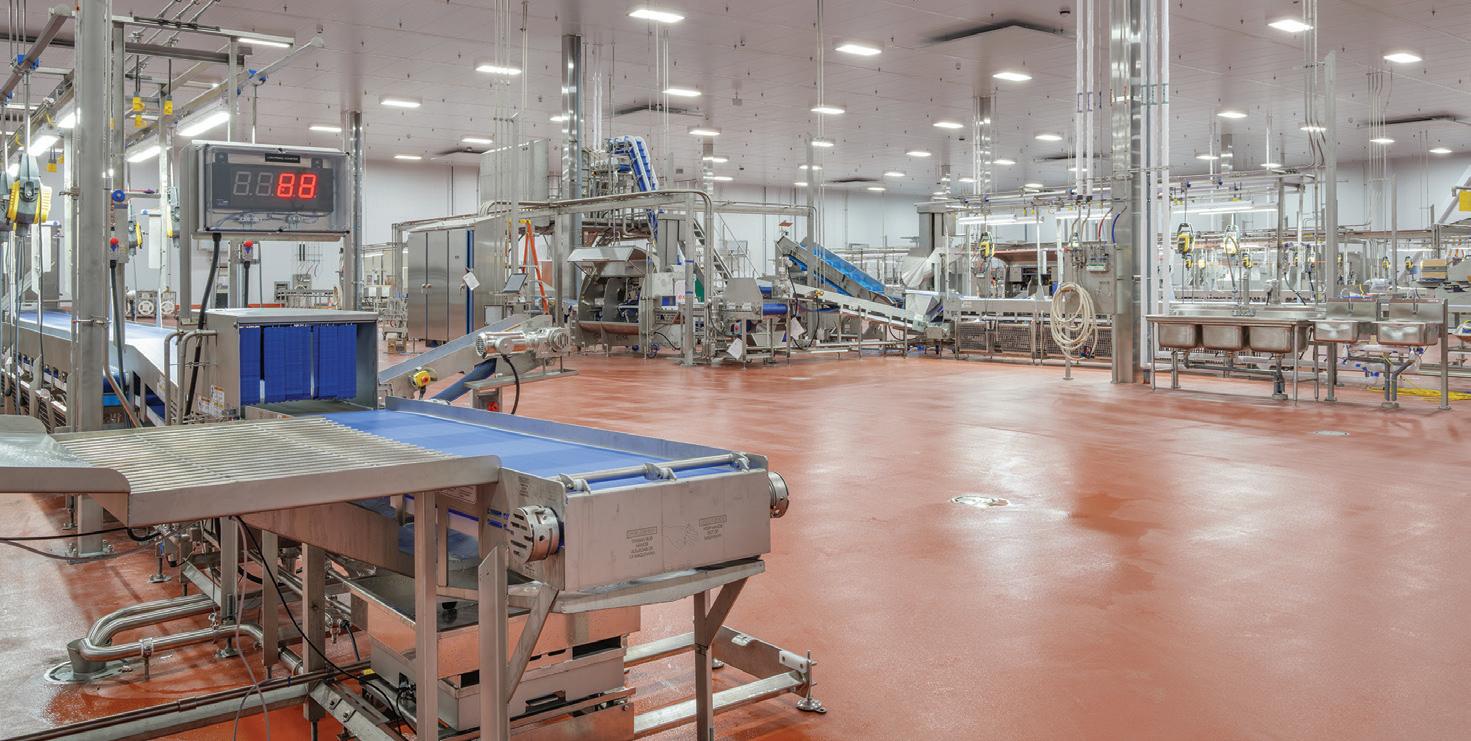
Walmart ensures a transparent, traceable supply chain with locally sourced beef. (Bob Greenspan Photography )
and pricing uctuations. Direct control over this step improves predictability, resiliency, and operating continuity in large-scale protein processing, says Olsen.
ESI, which specializes in designing food processing facilities, was involved in early planning and provided full architectural and engineering building design services. The ESI team ensured seamless integration between building systems and specialized meat processing equipment while guaranteeing the infrastructure would be capable of supporting future processing lines and expansion.
Working in partnership with the general contractor, McCownGordon Construction, the project team delivered a highly automated processing environment designed to minimize manual handling and improve line ef ciency. Automated de-palletizing and unboxing systems reduce labor hours while limiting product damage and ergonomic strain. Conveyance systems integrate directly with portioning and packaging lines to create continuous product ow and reduce bottlenecks. Vision-guided systems and precision water-jet cutting improve trim accuracy and yield, ensuring consistent fat removal while minimizing giveaway. By reducing variability and labor dependency, the facility achieves higher throughput with more predictable output. “This added ef ciency allows the owner to pass along cost savings to their customers,” says Olsen.
A total cost of ownership (TCO) approach guided the design and engineering process, considering energy ef ciency, maintenance, and lifecycle performance. Early engagement allowed the team to reduce risk and make key nancial and
Factoring in energy use, maintenance, scalability, and lifecycle performance provides the insight needed for disciplined, long-term decisions that protect margins and operational flexibility. — Don Olsen, ESI Group
See how Walmart scales smarter and faster—scan the QR code to take a closer look inside.
schedule decisions. Multiple refrigeration strategies were analyzed using comparison matrices, providing Walmart with clear, data-driven insight. Ultimately, a central ammonia refrigeration system was chosen for its ef ciency, scalability, and long-term reliability.
The facility supports future processing lines, increased capacity, and higher automation. Building systems and utilities were sized for evolving production demands, allowing Walmart to adapt without major disruptions or costly retro ts, ensuring operational resilience.
“A TCO approach allows the owner to evaluate decisions beyond initial capital cost,” says Olsen. “Factoring in energy use, maintenance, scalability, and lifecycle performance provides the insight needed for disciplined, long-term decisions that protect margins and operational exibility.”
Walmart’s case-ready processing facility re ects a strategic evolution in meat supply chain design. Delivered through a collaborative design-build approach, the project demonstrates how integrated food processing facility design can improve operational ef ciency, supply chain control, and long-term scalability.
“Good design comes from listening to the owner to understand what they need to make their business succeed and design accordingly,” says Olsen. “Great design comes collaboratively with the owner, process engineer, equipment suppliers, and contractors from the beginning to develop the best design taking into account not only the owner’s design needs but also understanding real-time cost implications, schedule implications, equipment options, etc. This in-depth collaboration keeps the design and construction process on track and limits changes that could affect budget and schedule.”
designing a facility and production flow that would maximize efficiency while aligning with modern food safety and sanitation practices.”
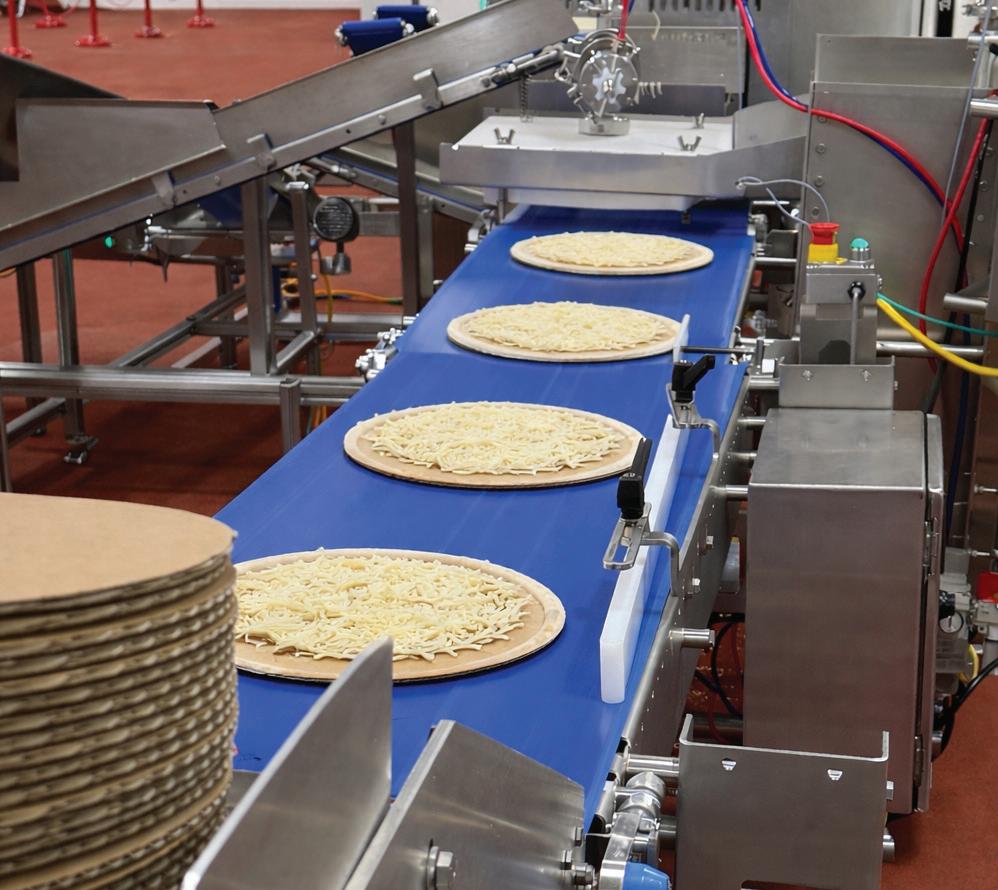
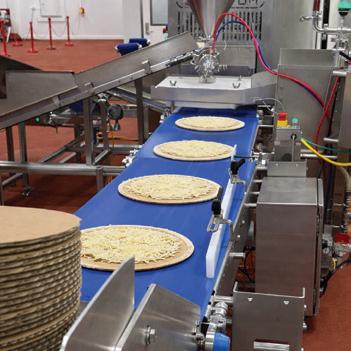
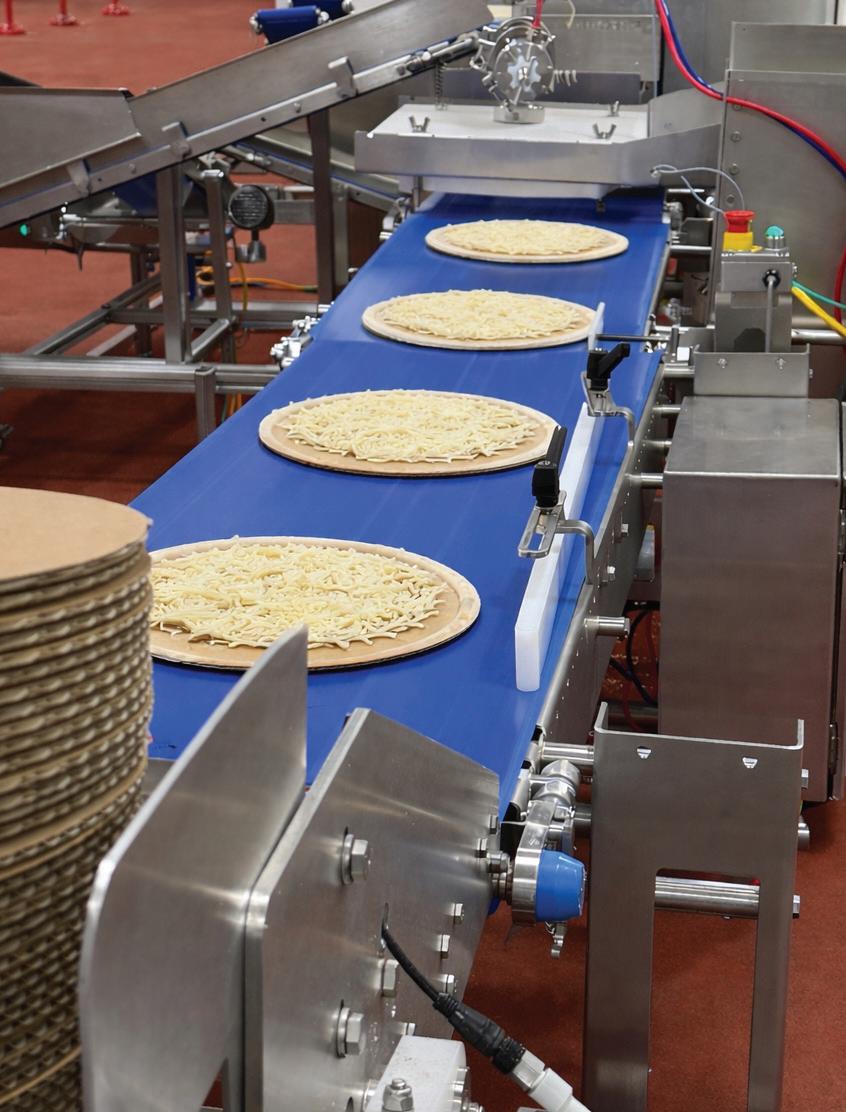
In addition to the bakery, Harvest Station Foods also produces RTE foods, such as sandwiches and frozen pizzas.
The variety of products produced at the facility required attention to detail with regard to regulatory requirements. So, the project team built it to exceed the minimums.
“One, it is an FDA, USDA facility,” Hoffer says. “With that said, we want to make sure that we have a fully locked down facility.”
The plant includes a dedicated High Care space that was designed to meet USDA standards. It’s here where pizzas, salads, sandwiches, and other prepared foods are made.
Even in areas not directly governed by USDA oversight, the design anticipates future flexibility. For example, rooms were designed to meet USDA standards even though they may only currently be getting utilized for FDA-approved products. Following those design standards affords Harvest Station Foods the option should needs change.
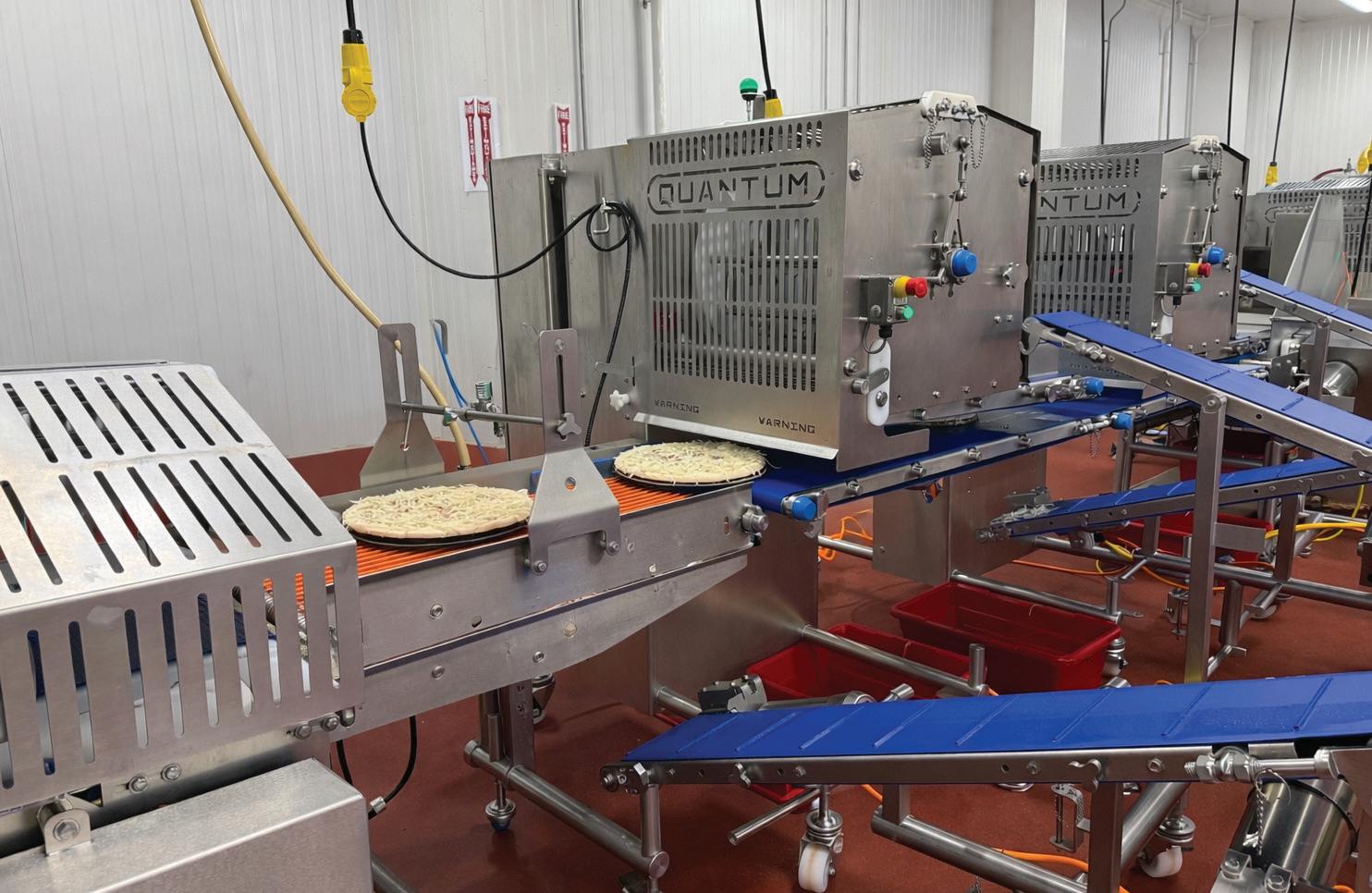
“What was unique about this project was that they wanted to do so many different things,” says Jeffrey Pratt, Project Executive with CMC Design-Build. “The distribution of food, as a commissary, to consolidate the number of deliveries to each store every day meant the facility had to be very flexible.”
A data analysis kicked off the project to ensure that there was a properly sized storage component that could meet the operational needs, which included the continued expansion of stores serviced by Harvest Station Foods.
“It’s about maximizing efficiency by balancing cube utilization with pick-face capacity,” says Larose.
Harvest Station Foods provides Weigel’s C-stores with bakery and RTE products, and it was built with the expectation it will provide goods for others, too.
On the bakery floor, layout decisions reflect deliberate thinking about movement and labor.
“We run Revent, Baxter ovens,” Hoffer notes. “We have two mix rooms. In one mix room, we mix muffin batter, cookie batter, and cake batter—just a different kind of mix. And because those items are either going to go down this fryer or into one of these ovens, we wanted a separate room so we didn’t have employees walk that extra 100 feet since it’s not very useful, right?”
Sequencing is precise on the donut line, she says. “Everything comes down the line. The first things that come down the line are products that are going to receive icing or they’re going to receive a filling on the donut side and then after that we turn on the glaze.”
Hoffer believes site visits matter. “I think a whole lot more today than probably 15 or 20 years ago, it’s really important for an end customer to come and do visits because there are things that have
happened over the last several years in manufacturing, especially in food manufacturing. Being that end user, we’ve gotten more proactive in going and doing site visits and making sure those HACCP plans are in place and everything is right for food safety.”
Having a client that knows the business and knows what’s needed can be helpful. In the case of Harvest Station Foods, much of the equipment for half of the building wasn’t really in doubt. “She spearheaded most everything for them, especially on the bakery side,” says CMC Design-Build Senior Project Manager Jake Seiden of Hoffer. “She knew exactly what they wanted, and then the other side was kind of a blank canvas because some things were known and some things weren’t. There were some modifications along the way to make it all fit.”
Efficiency at Harvest Station Foods extends beyond line design. It includes the workforce.
The challenges faced by F&B manufacturers to attract employees has meant taking a different tact when it comes to facility design. As Hoffer explains, “After having run the bakery for seven years, I was determined that we would have natural light.”
The resulting lobby, break area, and test kitchen are filled with natural light via glazing that makes up the majority of the façade facing the parking lot and main entrance off the road. The investment definitely wasn’t small, but the rationale was simple, according to Hoffer, “I think that if you take care of your
employees, they’ll take care of you.”
“CMC tries to design break areas with that in mind because people spend so much of their day working in refrigerated spaces with white walls,” says CMC’s Pratt. “When they step away for a break, it’s important they can get some natural light and a change of environment.”
“We visit a lot of facilities that were designed with little consideration for employee amenities,” adds Larose. “In those plants, it’s common to see employees leaving the building and sitting in their cars during breaks. Spaces like the one at Harvest Station Foods give employees a welcome break from spending the day inside a refrigerated box.”
The facility includes locker rooms and a separate employee entrance. It also includes a dedicated nursing space that connects to the production restrooms and locker rooms. Again, the idea was to be employee focused so people wanted to be there. “I think that people have a choice nowadays, more than ever, to choose where they work and who they work for,” says Hoffer. “It’s really important to treat people well.”
Harvest Station Foods was built to serve Weigel’s— but not only Weigel’s.
“We will continue to grow the business and be able to service C-store chains or grocery stores or restaurants or broadline distributors that are wanting to distribute to them,” says Hoffer.
The space is available, inside and out. Not only is there room for additional lines inside the facility, forethought was put into future expansion beyond the existing walls. Currently, much of the 60-acre site is open and ready for additions. Crews will be able to build those additions right next to the existing facility and tie into utility runs inside the interstitial space on the other side while production continues in the existing facility. Once construction is complete and lines are in place in the expansion, walls can be quickly removed to join the sections with minimal downtime.
Expansion will likely happen sooner rather than later with a new product offering already on Hoffer’s mind. “I’m going to do kolaches out here,” Hoffer says jokingly—or not—having enjoyed the Czech and Slovak pastry while on a trip to…Texas.
It’s a small comment, but it underscores a larger reality: Harvest Station Foods was designed with flexibility in mind—USDA-compliant build standards, segregated High-Care/low-risk zones, dual-mix rooms, daily distribution, and a structure that treats even its parent company as a customer.
For Harvest Station Foods and Weigel’s, manufacturing isn’t a side business. It’s a return to form.




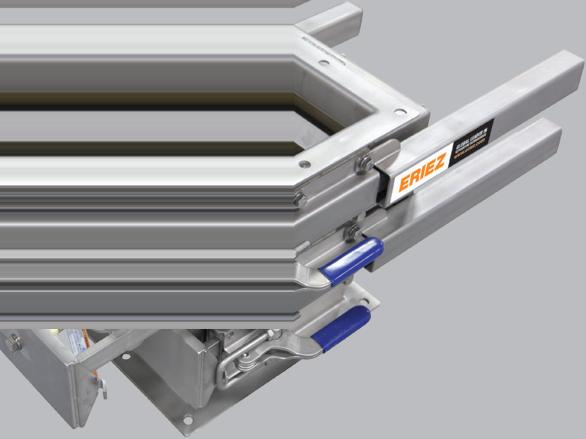
Sealstrip’s SealAcross for Trayed Products is an easy-open, resealable label system designed for flexible packages containing trayed, stacked, or aligned products, such as cookies and crackers. The solution creates a cross-direction opening that provides fullface access across multiple rows of product while maintaining tamper evidence, reliable reseal performance, and compatibility with high-speed flowwrapping operations. The design reduces material usage and cost while preserving package size, barrier properties, and consumer convenience.
Sealstrip Corporation | sealstrip.com


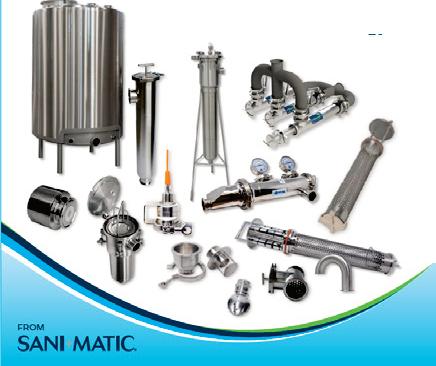
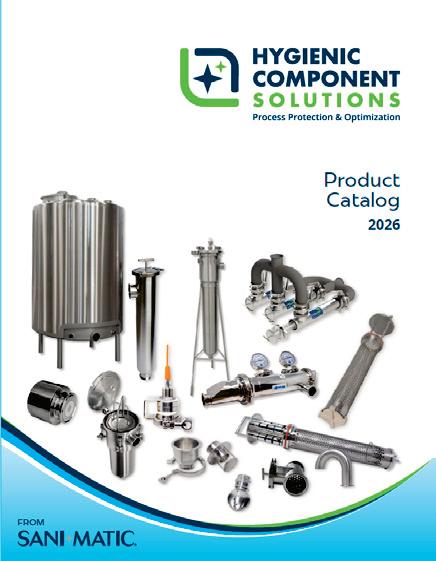
Explore the latest innovations in process line protection and optimization from Sani-Matic. Our new 2026 Product Catalog is now available for download!
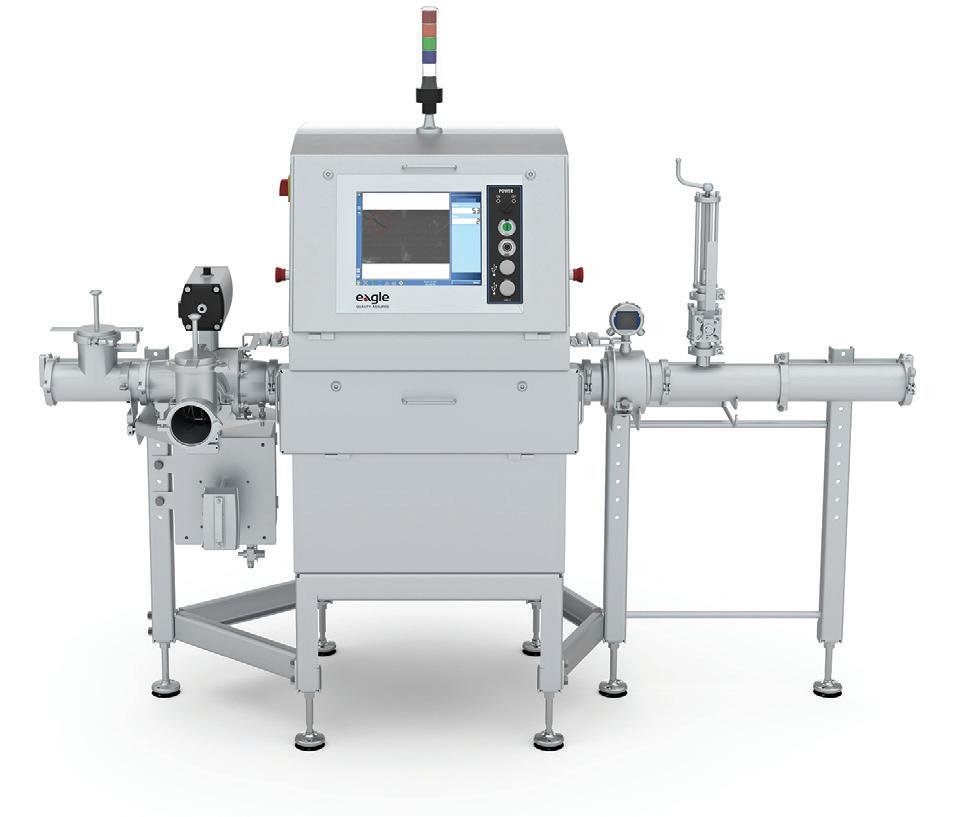
Eagle PI’s Pipeline X-ray inspection systems are designed for continuous, in-process inspection of pumped products, such as meat, poultry, proteins, and slurries, detecting foreign material before it reaches downstream processing steps. Using PXT Performance X-ray Technology and SimulTask PRO image analysis software, the systems deliver reliable detection at high throughputs, reduce the need for manual inspection, protect downstream equipment, and integrate with TraceServer for secure storage of inspection images and event data.
Eagle Product Inspection | eaglepi.com

INTERESTED? View our catalog at sanimatic.com
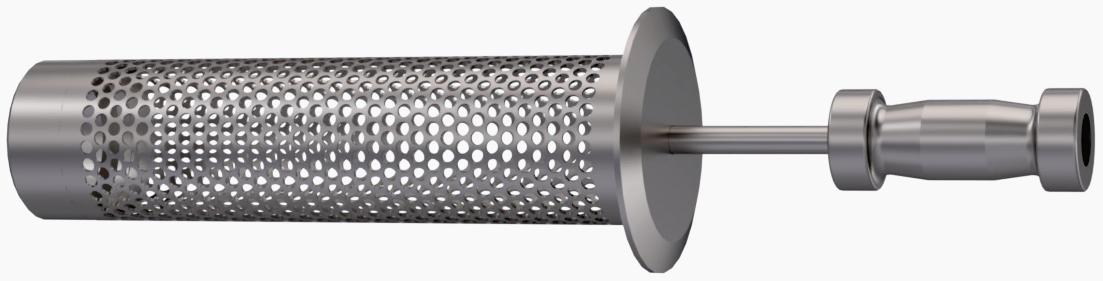


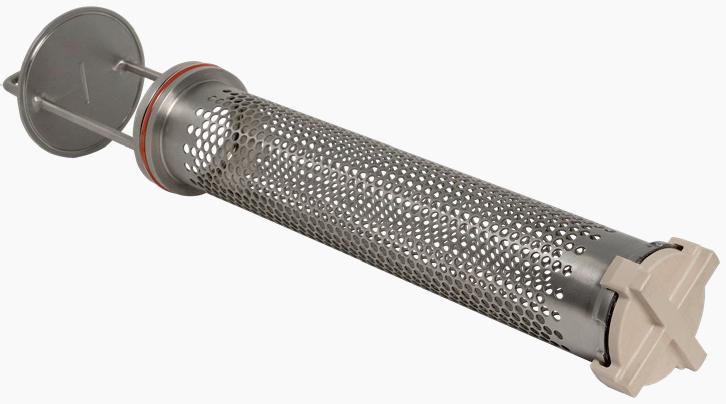
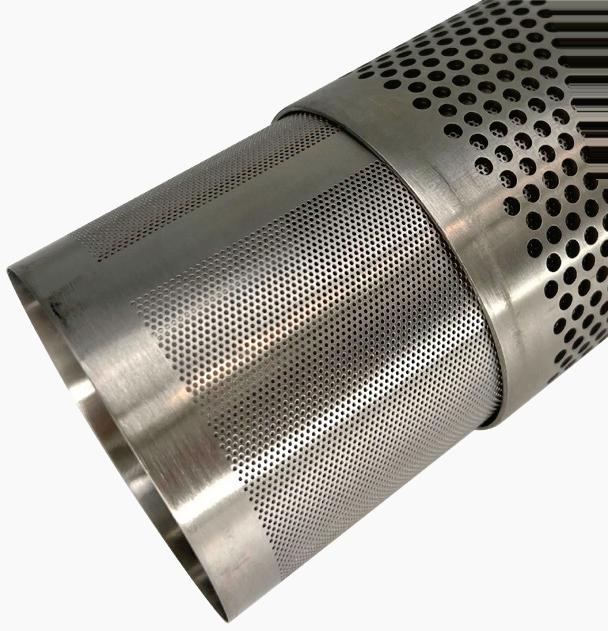
New MicroPerf™ Strainer Overlays & Underlays Authorized!
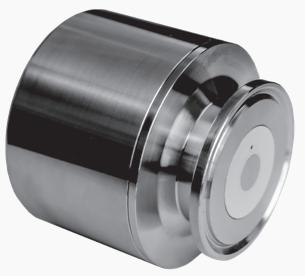

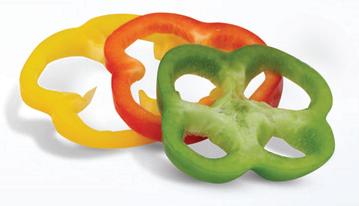
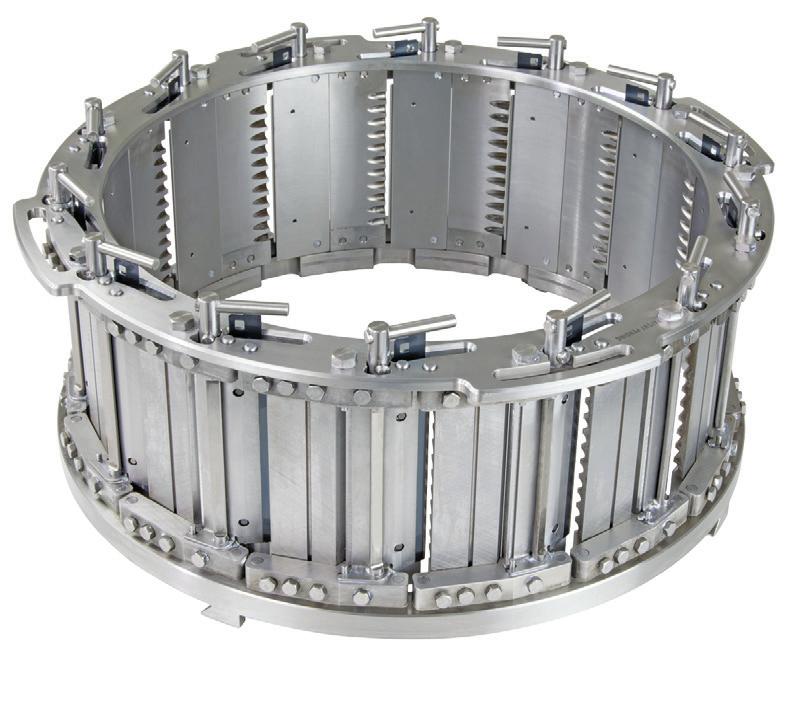
With 14 cutting stations, the Urschel SL-14 offers up to nearly twice the capacity of the standard 8-shoe slicing head. The flat slice cutting head features micro-adjustability plus quick-clamping technology to expedite knife changeovers with little to no tools required and without removing the head from the machine. The design incorporates carefully crafted spacing of cutting stations to maximize slice engagement. Its versatile slicing capabilities help processors optimize their potato chip line while lowering operational costs over time.
Urschel | urschel.com
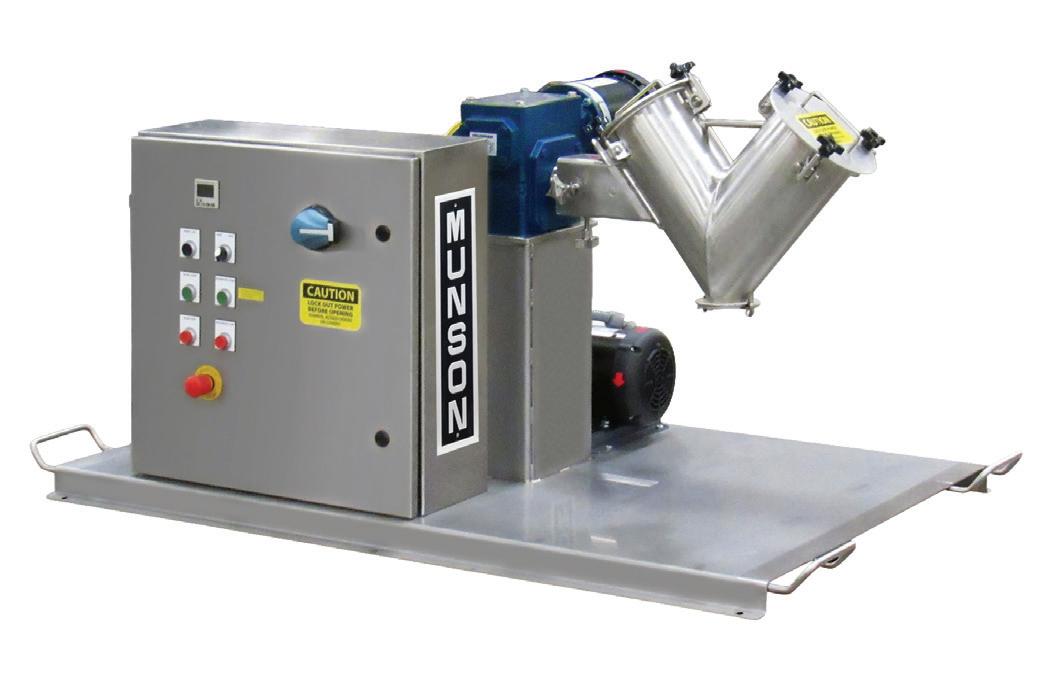

Munson’s Vee Cone Blender with Intensifier Bar is a cantilevered laboratory blender designed to optimize mixing parameters for bulk solids with or without liquid additions in lab and small-batch settings. Its interchangeable vessels, available in six sizes from 0.25 to 16 quarts, provide uniform blending in 5 to 15 minutes while minimizing product degradation. Constructed of #316 stainless steel and finished to USDA standards, the unit provides durable, sanitary performance suited to regulated processing environments.
Munson Machinery | munsonmachinery.com


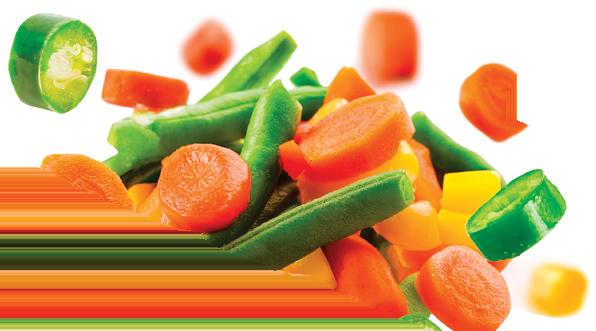





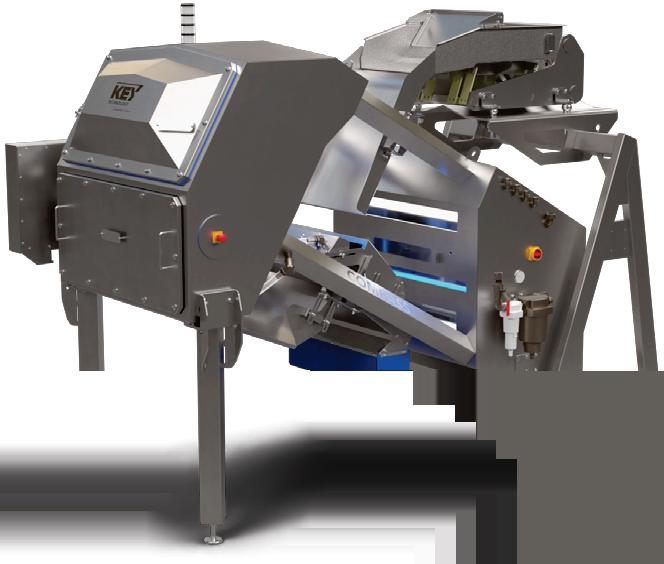
Key Technology’s optical sorters combine intelligent technology with intuitive operation, taking food sorting to the next level.
Our systems maximize product yield, cut maintenance costs, simplify sanitation, and deliver actionable performance data to optimize your production process.



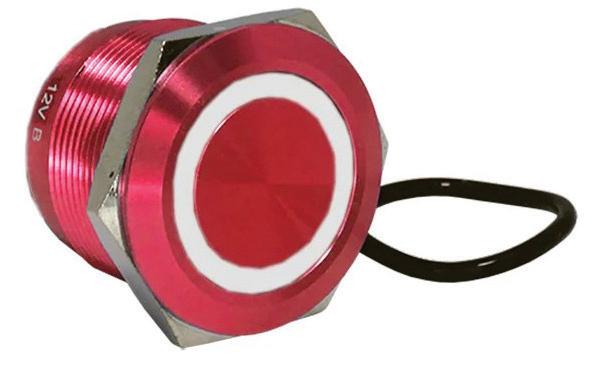
Wesgarde’s CIT Relay & Switch AH Series is a highly customizable, illuminated, anti-vandal pushbutton switch designed for demanding industrial control panels. The component offers standard 19mm integration, is available in momentary or latching configurations with multiple LED color options, and features IP67 sealing for water and dust resistance. It provides high electrical ratings (up to 20A) and up to 50,000 cycles of operational life, allowing for the specification of finishes, etching, and termination types for tailored reliability.
Wesgarde | wesgarde.com
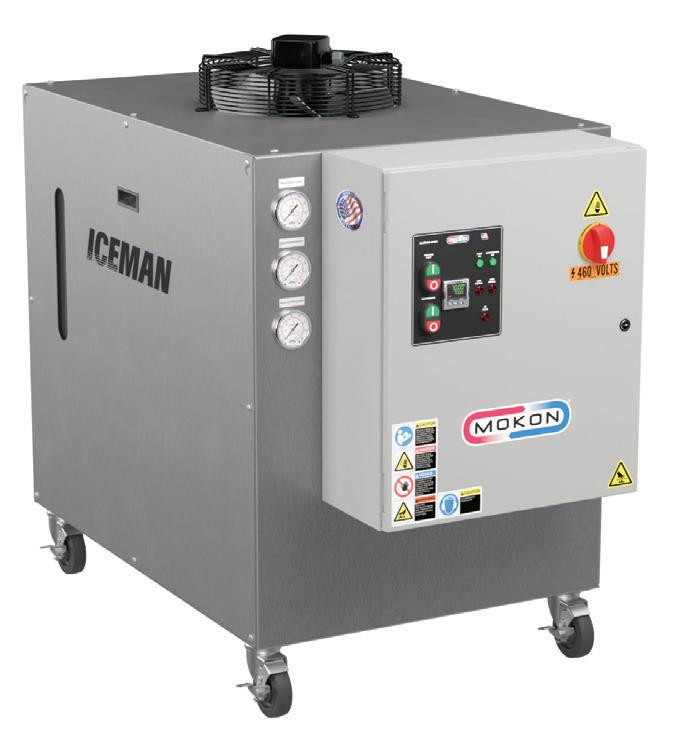
Mokon’s R-454B and R-513A refrigerants are part of a new line of portable chillers and full-range temperature control systems designed to reduce greenhouse gas impact through lower Global Warming Potential (GWP). With cooling capacities up to 60 tons, both refrigerants have low toxicity, do not contain ozone-depleting substances, and meet current U.S. regulatory requirements for refrigerants with a GWP below 700. They offer a lower environmental impact, feature an updated design, and provide accurate and reliable process temperature control. Mokon | mokon.com






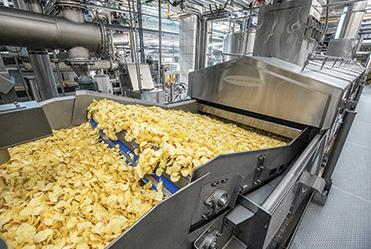
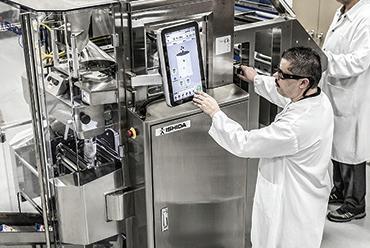

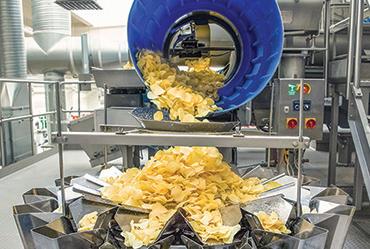
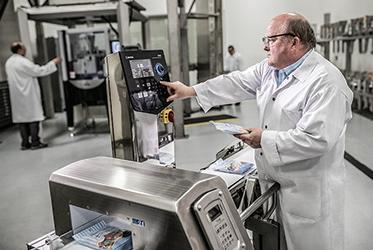



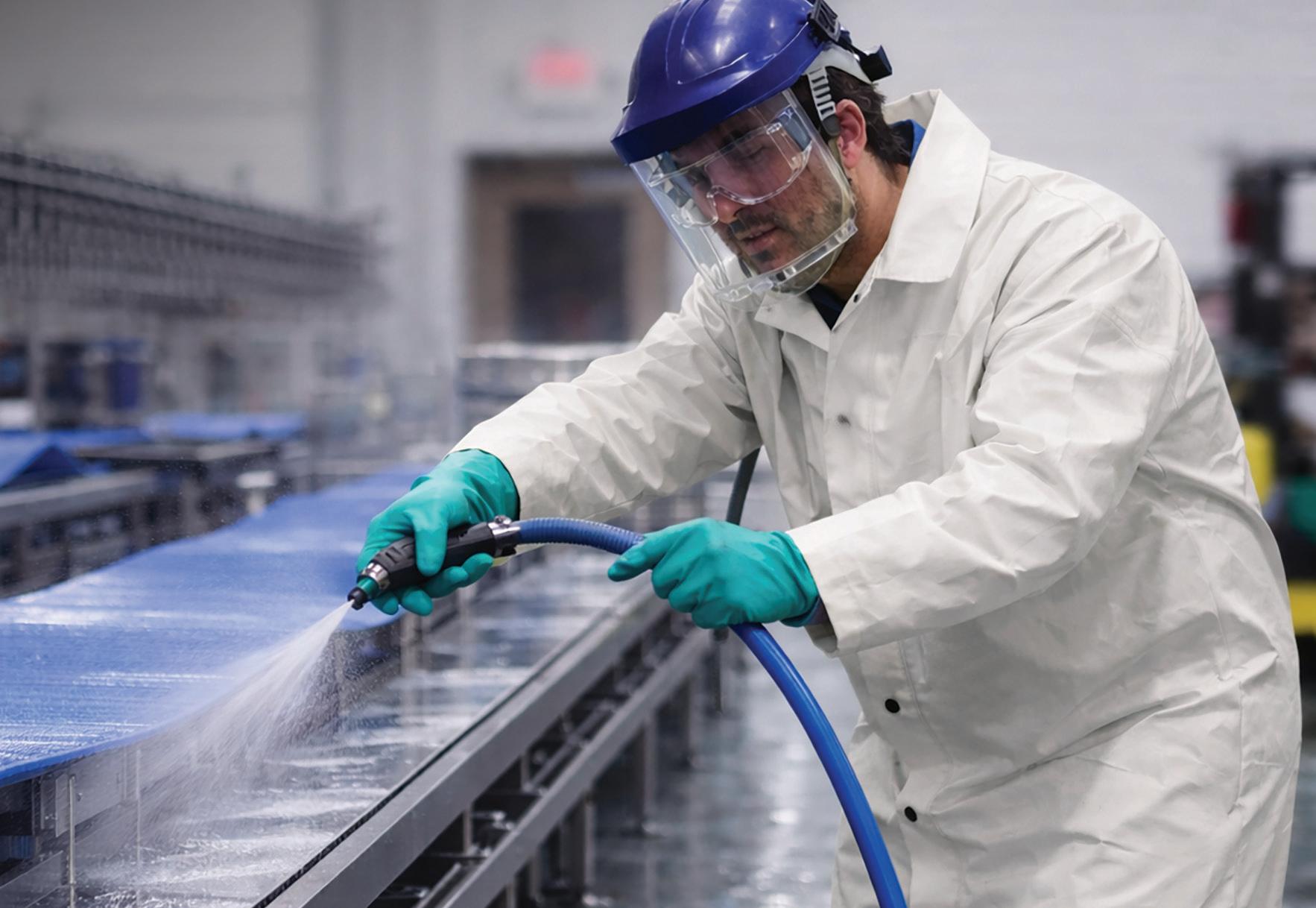
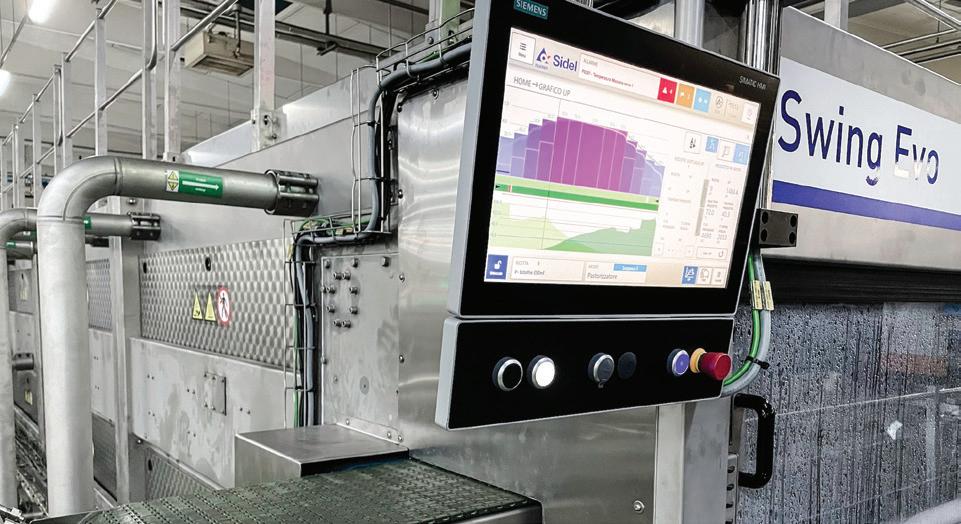
Sidel’s SWING Evo has a modular design and counterflow system that enables precise control of pasteurization, water, and energy use. Designed primarily for beer producers, the system integrates predictive control technology to maintain consistent product quality while offering flexibility across a range of SKUs. The design also reduces resource consumption, with reported decreases in water, electricity, and steam usage, while simplifying installation, operation, and maintenance.
Sidel | sidel.com
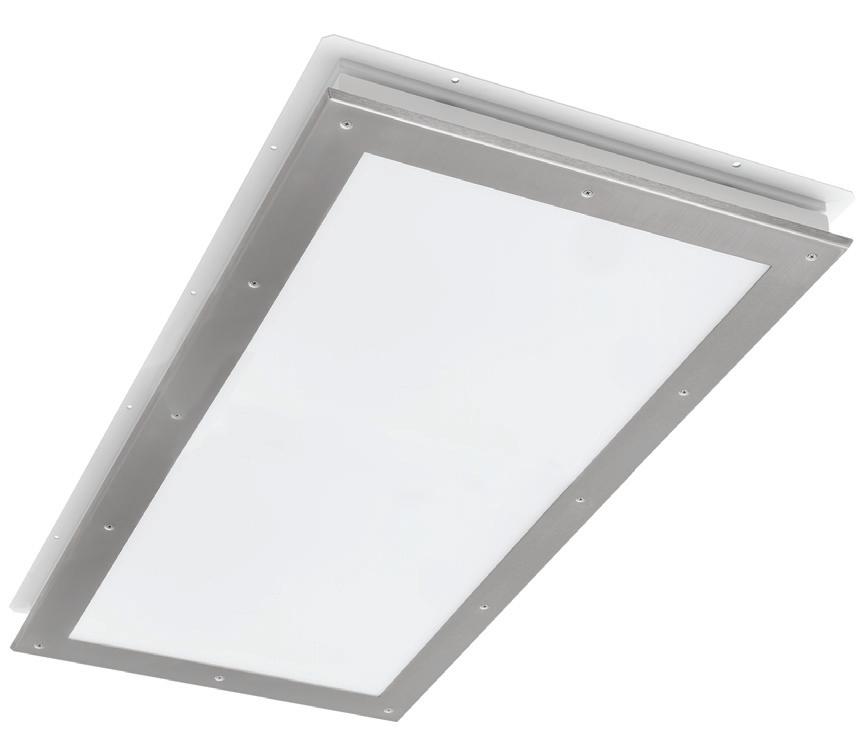
Kenall’s SimpleSeal CSSETO is designed for cleanrooms with walkable plenum spaces and modular ceilings. The fixture features a true flat, flush top surface and dual-side serviceability to enable safe maintenance without disrupting operations below, with an independently sealed optical chamber that delivers 90 CRI performance and IP66 protection. Offered in multiple ceiling configurations and sizes, the CSSETO is suited for environments that require high sanitation standards, moisture resistance, and consistent, glare-controlled illumination.
Kenall, a Legrand brand | kenall.com









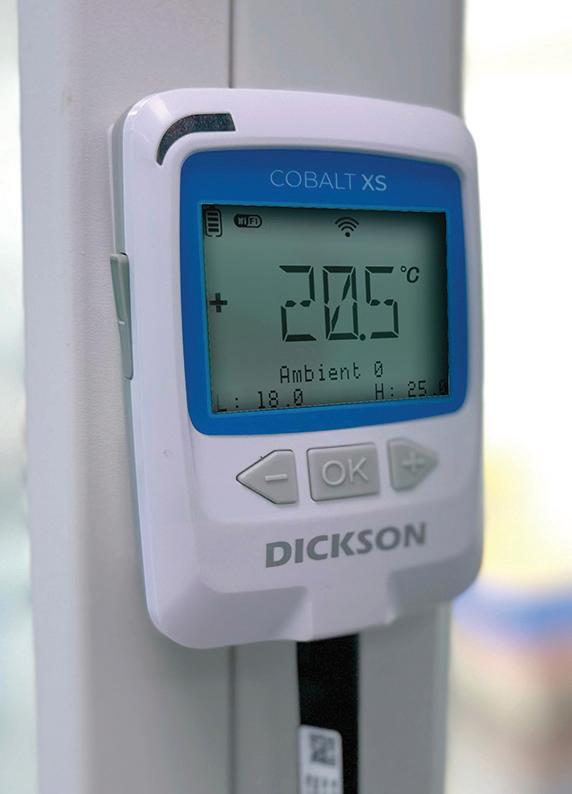

Dickson’s Cobalt XS Wi-Fi is a compact, GxPcompliant environmental monitoring data logger designed for regulated and temperaturesensitive environments. The battery-powered device connects via Wi-Fi without the need for a gateway, providing real-time alerts, local data storage, and integration with cloud-based monitoring platforms. Supporting Smart Sensor technology, it helps streamline calibration, maintain traceability, and ensure continuous, secure monitoring across facilities.
Dickson Company | dicksondata.com
The Miura Reverse Osmosis (RO) systems expand Miura America’s Complete Solutions and Lifecycle Partnerships portfolio to include high-purity water treatment for steam boiler applications. Designed for facilities with challenging source water conditions, the systems reduce dissolved minerals and contaminants to minimize scale buildup, improve heat transfer e ciency, and extend equipment life. They integrate with Miura boilers, water softeners, controls, and monitoring platforms to support reliable, e cient, and scalable boiler room operations.
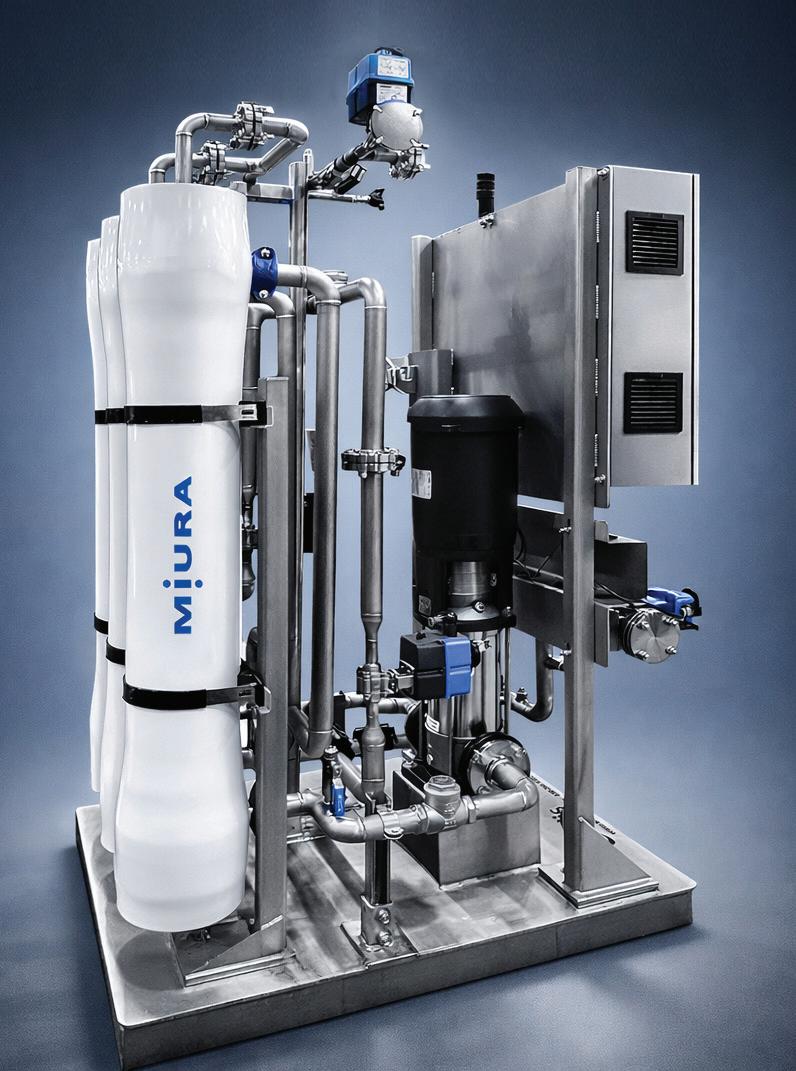
Miura America Co., Ltd. | miuraboiler.com
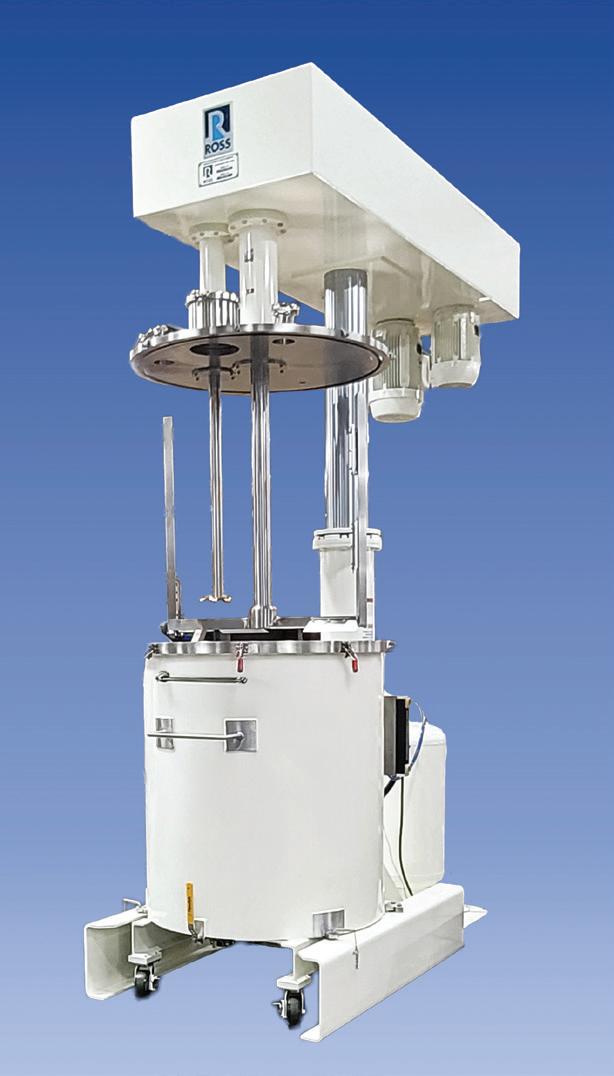
The ROSS CDA-200 is designed for the e cient processing of high-viscosity coatings, adhesives, and sealants, combining a twowing anchor agitator with a highspeed disperser for thorough mixing and dispersion. Its dual, independently driven agitators handle demanding formulations while minimizing air entrapment and maintaining uniform batch quality. With jacketed mix cans, vacuum capability, and the ability to handle batches up to 200 gallons, the system supports consistent, high-volume production of temperature-sensitive materials. Charles Ross & Son Company mixers.com


By integrating tubular cable conveyors, high-capacity surge storage, and plant-wide controls, an almond processor boosted output without compromising quality.
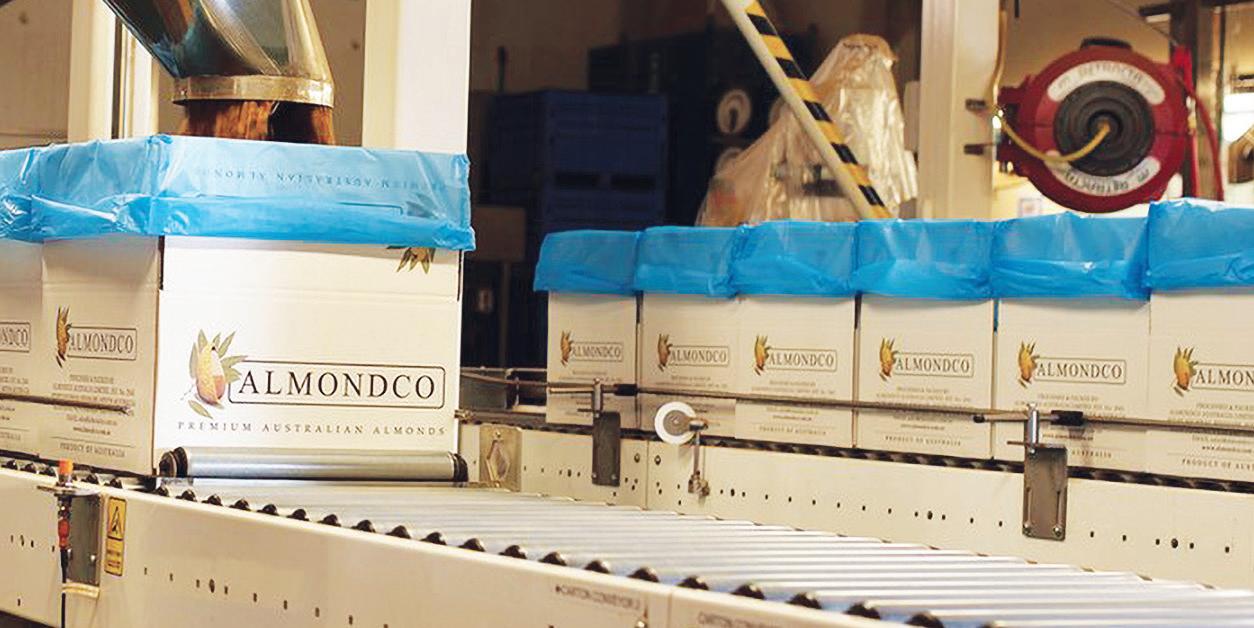
FOUNDED IN 1944, Almondco has built its reputation on delivering premium almonds to global markets. The grower-owned processor’s internal specifications exceed widely accepted industry standards, a differentiator that has made its “white box” product highly sought after by manufacturers of almond-based foods.
As demand continued to climb, Almondco recognized that incremental improvements would not be enough to support long-term growth. In late 2020, the company launched Project Optimise—a 10,000-square-meter (107,639-sq-ft) expansion adjacent to its existing Renmark, South Australia, facility. The project consolidated multiple processing operations under one roof, expanded crop storage capacity for grower members, and created a more streamlined product flow from intake through further processing.
A critical component of the expansion was the development of a high-capacity, low-damage conveying and storage solution capable of handling both raw and blanched almonds without compromising quality.
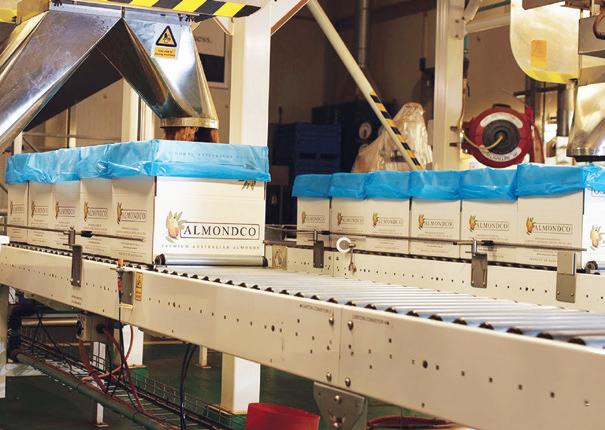
Almondco supplies sliced, whole, blanched, and hulled almonds to processors of almond products globally.
Almondco’s engineering team had previously partnered with Flexicon Australia on multiple material handling projects between 2008 and 2015. Given the scale and technical requirements of Project Optimise, that existing relationship became a strategic advantage.










“We were looking for a local supplier that can provide ongoing support,” says Craig Haskard, Group Engineering Project Manager at Almondco. “Flexicon immediately came to mind due to our existing relationship with them and the success of previous projects. It was a no-brainer to select Flexicon as a partner.”
Initially engaged to quote a bulk bag filling system similar to a previously installed unit, Flexicon quickly identified broader needs within the expansion. As planning discussions progressed, the scope evolved into a comprehensive bulk-handling solution that included tubular cable conveyors, high-capacity storage hoppers, and integrated controls.
Almond integrity is non-negotiable. Kernel breakage not only reduces yield but also diminishes product value for downstream food manufacturers. The conveying system therefore had to balance throughput, flexibility, and gentle handling.
Flexicon specified six FLEXI-DISC
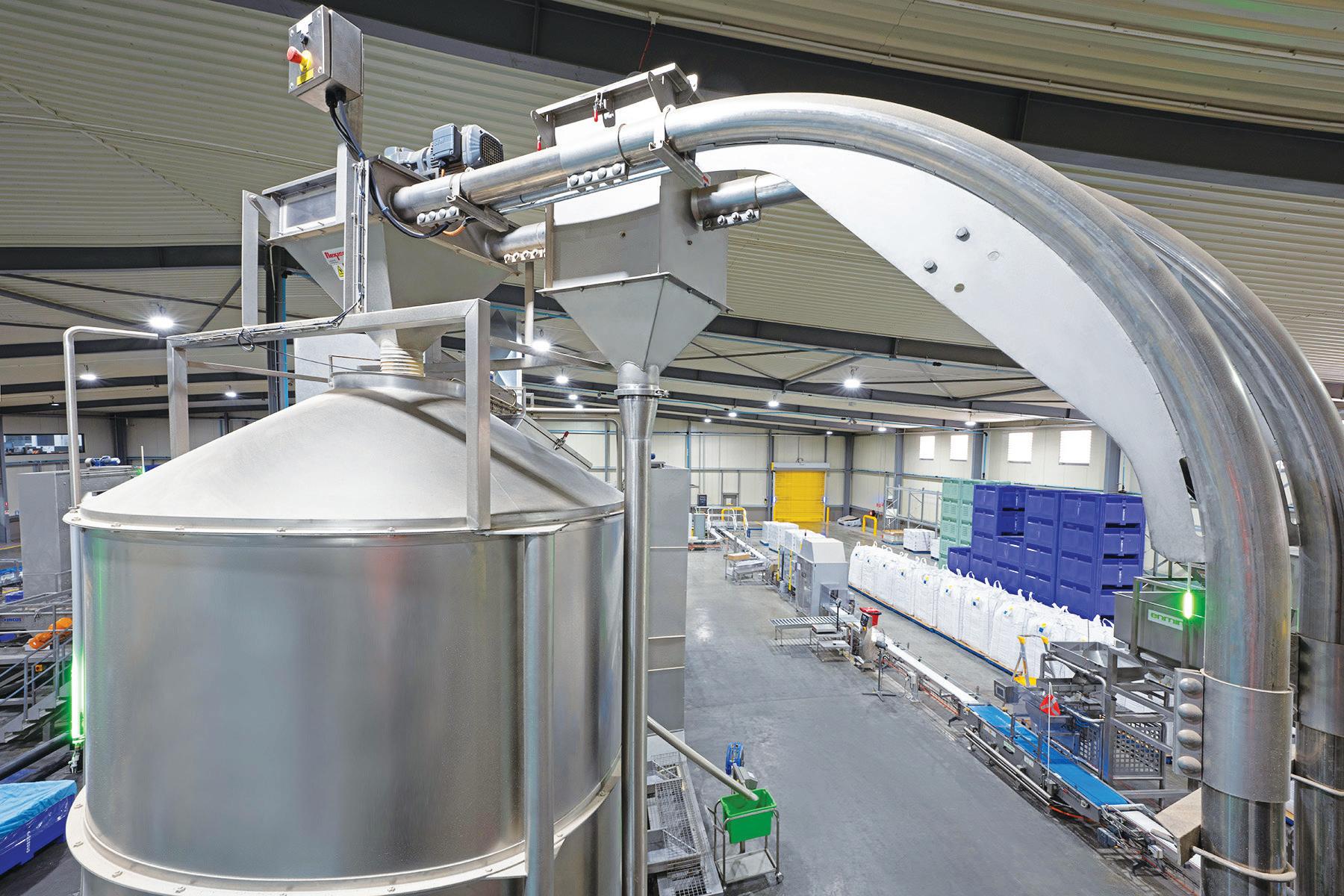
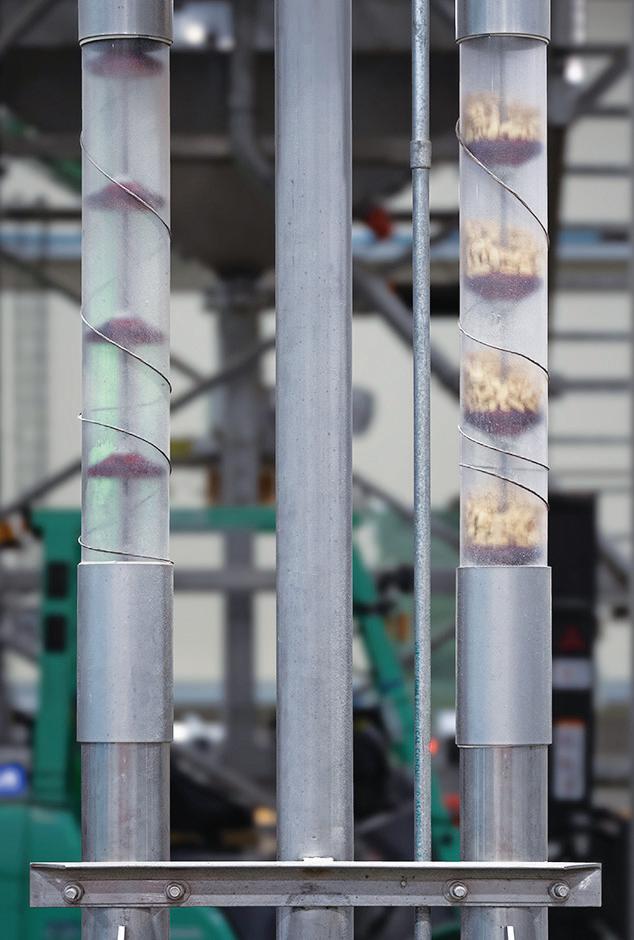
Tubular Cable Conveyors (TCC) configured to match Almondco’s unique plant layout and process flow. The conveyors move almonds through smooth stainless-steel tubing using low-friction polymer discs attached to a stainless-steel cable. A drive assembly at one end of each circuit propels the cable, while a tensioning assembly at the opposite end maintains system stability.
In the foreground, a FLEXI-DISC system feeds a storage silo, while in the background, filled bulk bags of whole blanched almonds are prepared for shipment to Almondco’s consumer product processors.
Unlike pneumatic systems, which can subject fragile products to higher velocities and impact points, the tubular cable design gently pulls product through enclosed tubing. This minimizes breakage, reduces dust generation, and maintains sanitation standards— key considerations in nut processing environments.
Each of the six conveyor runs was custom-engineered with specific horizontal and vertical distances, multiple directional changes, and defined infeed and discharge points. This allowed Almondco to route product efficiently between pasteurization, blanching, storage, and cutting operations without introducing excessive transfer points.
One of the core challenges addressed by Project Optimise was balancing upstream and downstream capacities. Almondco’s pasteurization and blanching operations can generate product at rates exceeding the capacity of subsequent processing equipment. Without adequate buffering, this mismatch could create bottlenecks or force upstream slowdowns.
To resolve this, Flexicon designed and fabricated two sanitary, custom-engineered storage hoppers, each with a 12,500-kg (27,550 lb) capacity. Constructed for food-grade operation, the hoppers serve as surge bins, enabling continuous upstream production while downstream processes operate at their optimal speeds.
To further protect product quality during transfer, Flexicon incorporated spiral “let-down” chutes beneath conveyor discharge points. Almonds descend in a controlled helical motion, reducing velocity and impact forces as they enter the storage hoppers. This feature mitigates kernel damage during vertical drops—a common failure point in conventional gravity-fed systems.
At the base of each hopper, a vibratory feeder

In-line valves allow three TCC systems to intersect and route almonds from a single source to multiple destinations, depending upon need. The valves open to discharge almonds into a predetermined destination or remain closed allow transport toward other processing functions.
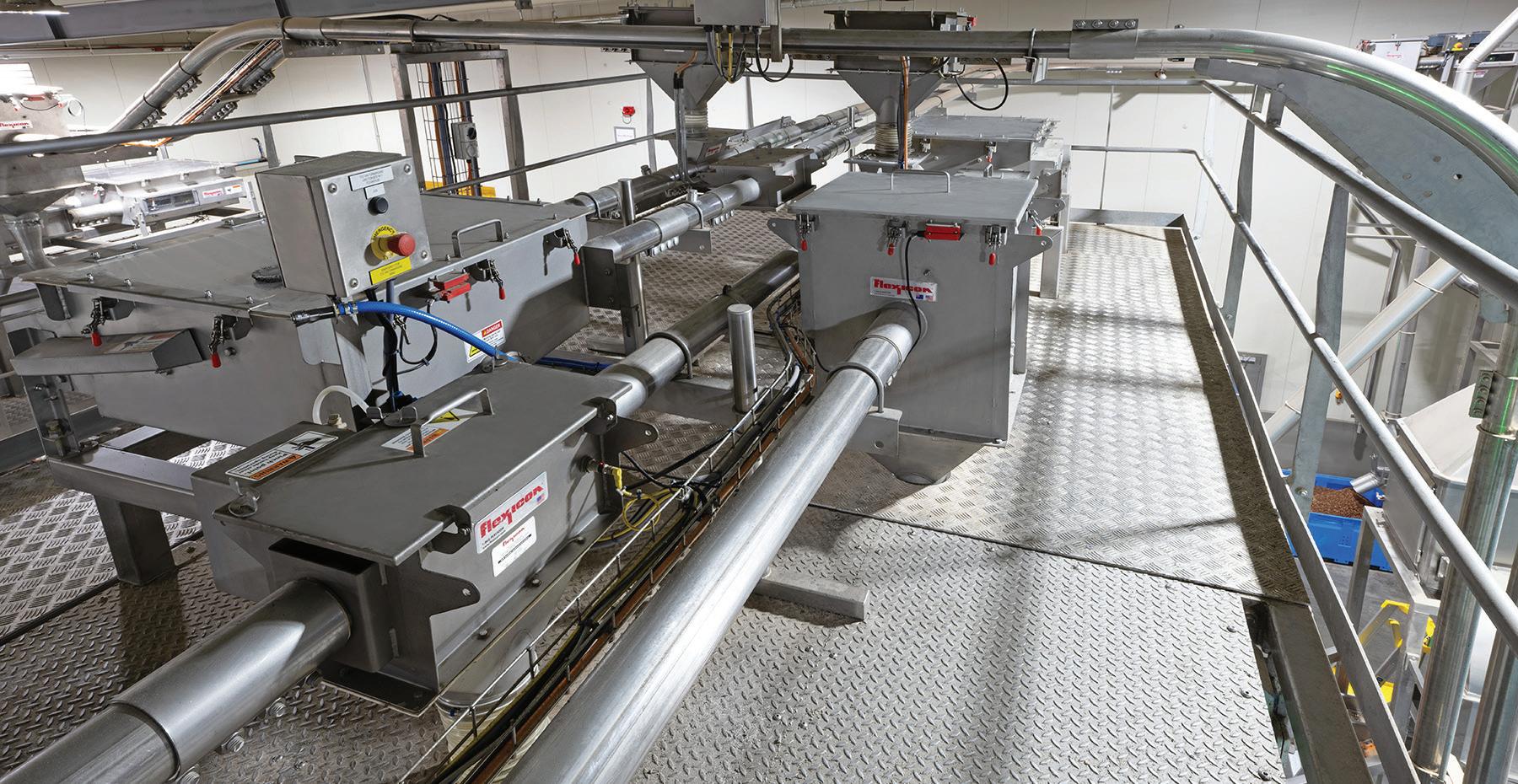
The FLEXI-DISC System gently conveys the fragile whole blanched almonds from the blancher towards downstream processing functions.
meters product into a downstream tubular cable conveyor, which gently transfers almonds to the cutter line. The result is a controlled, continuous feed that stabilizes line performance and reduces operator intervention.
All six conveyors and associated equipment were integrated into Almondco’s plant-wide control architecture. Flexicon worked closely with a local controls integrator to ensure communication between upstream and downstream assets. This synchronization allows the conveying system to respond dynamically to changes in process conditions—such as hopper levels or line slowdowns— improving overall equipment effectiveness (OEE) and reducing the risk of unplanned stoppages.
was a key consideration during a period marked by global supply chain disruptions.
Project Optimise was completed in seven months from initial engineering through commissioning. The expanded facility has been fully operational since 2021.
The results have been substantial: Almondco achieved nearly a 70% increase in processing throughput while maintaining its stringent quality standards. The integrated conveying and storage system enabled higher volumes without sacrificing kernel integrity or creating new bottlenecks.
“Flexicon’s design and drafting were spot on,” Haskard says. “All components—from the conveying runs to the frame footplates—were as drawn, enabling installation and commissioning to be completed without any issues or setbacks.”
The enclosed design of the tubular cable conveyors also supports food safety objectives by limiting environmental exposure and simplifying cleaning procedures. For processors managing allergen control and sanitation compliance, enclosed mechanical conveying offers both operational and regulatory advantages.
For processors operating in regional areas, access to spare parts and technical support can significantly impact uptime. An additional benefit of working with a domestic manufacturer was Flexicon Australia’s local inventory of replacement components. With critical spare parts stored within Australia, Almondco reduced the risk of extended downtime associated with international shipping delays. This
For food and beverage manufacturers handling fragile particulates—whether nuts, cereals, inclusions, or specialty ingredients—Almondco’s Project Optimise underscores the importance of aligning conveying technology with product characteristics and overall plant capacity.
By combining gentle mechanical conveying, surge storage, integrated controls, and local service support, Almondco created a scalable infrastructure capable of meeting current demand while positioning the company for future growth.
In an increasingly competitive global ingredient market, investments in material handling may not always be the most visible upgrades—but as Almondco’s experience demonstrates, they can be among the most transformative.

Utah-based Bar-W Beef has nearly eliminated billing errors and streamlined record keeping with supply chain traceability equipment from VistaTrac.
Even at smaller protein processing operations, proper traceability can be a massive undertaking.
Bar-W Beef, a farm-to-table beef producer based in Nephi, Utah, avoided traditional paper-based tracking as it began operations in September 2024, starting with a VistaTrac supply chain traceability system from day one.
“Traceability is one of the core pillars of our organization,” says Angie Reish, Assistant Plant Manager at Bar-W Beef. “VistaTrac allows us to confidently track not only our own beef but those of our custom processing customers.”
Bar-W chose VistaTrac due to the system’s module options for custom processing and the company’s familiarity with small processors. “VistaTrac is complex enough for all our needs but diverse enough to be an asset in a smaller facility,” Reish says.
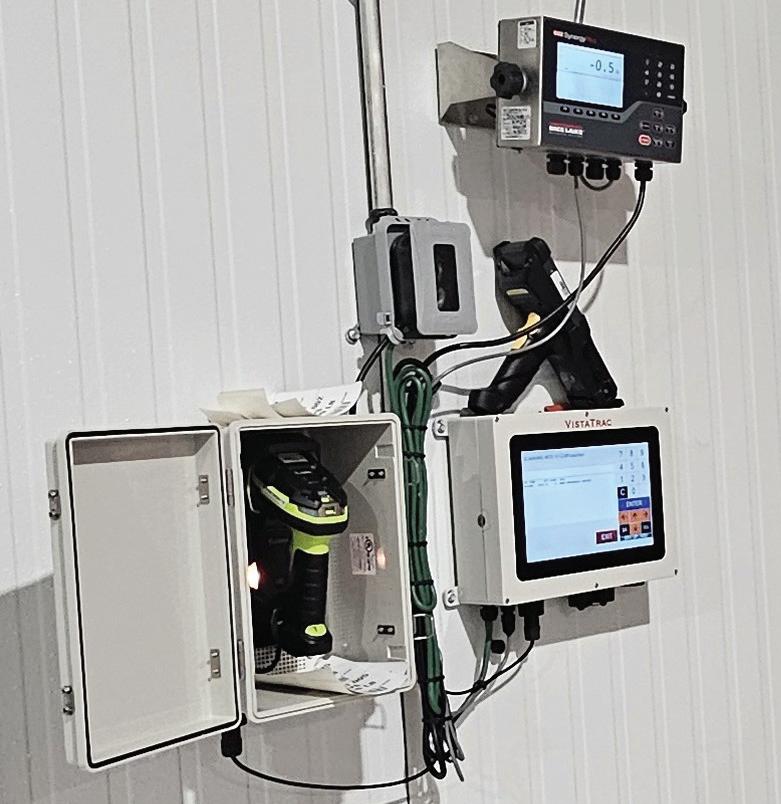
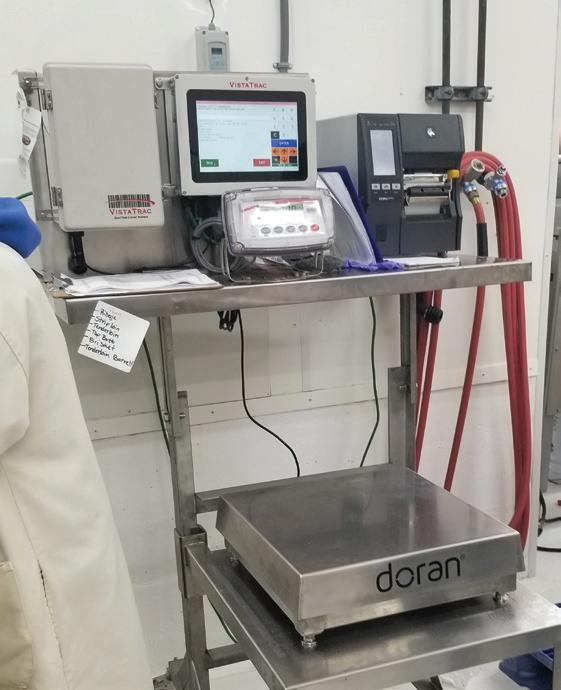
The VistaTrac system at Bar-W Beef tracks product through every stage of processing, helping the company to handle both wholesale slaughter and custom processing orders.
The TracBox computers, waterproof, touchscreen, and built with a plastic casing, are “a more affordable solution than the common stainless-steel computers you see in a production plant,” says Matt Schoneman, Vice President and Consultant at VistaTrac.
The system begins with a TracBox at live animal receiving, where an operator can record the vendor and number of animals dropped off.
Another TracBox is at the entrance to the kill floor, where an operator scans ear tags ahead of slaughter, tracking exactly which animals enter and when.
After slaughter, a TracBox is connected to a hot weight scale, automatically recording carcass weights before they head to the cooler. The computer also allows operators to digitally fill out the BSE checklist for each carcass, allowing for “fast record keeping in real time,” Reish says.
To ensure consistent compliance, the system only allows operators to print a carcass tag after the BSE checklist is complete, “so it eliminates the paperwork on the plant floor and makes sure they’re always meeting USDA requirements,” Schoneman explains.
After carcasses leave the cooler, they are moved to a cold weight scale also connected to a TracBox, automatically recording weights after some normal shrinkage from cooling. That computer also scans the carcass into the production batch, recording the lot numbers of each carcass to know exactly what enters the production floor and when.
The carcasses are cut and processed, and sent to a packing station, including packing carts equipped with TracBox computers to record weights and generate labels.
“At the end of the day, they know that the meat in that box came from one of those carcasses that was

At Dennis Group, design-build isn’t just a contract, it’s a commitment. It means we’re right there with you, every step of the way, from initial study to final handoff, in person. With a single point of contact and all necessary disciplines in-house, we can offer the coordination and flexibility needed to stay on track with your project as it evolves. And the engineer who designs it is the same one who brings it to life in the field, providing a sense of continuity, giving you a partner from concept to completion. That’s why we’ve been a leader in food and beverage design and construction for nearly four decades. You know your business, and we know food and beverage. Visit dennisgroup.com to learn more.

s
A TracBox system with enclosed scanner is used for weighing and labeling product.
scanned into the production room, so it’s full traceability,” Schoneman says
VistaTrac doesn’t just track inventory; it streamlines operations. It allows for real-time integration with QuickBooks or various ERP systems, to “bridge the gap between the plant floor and the office,” Schoneman explains.
The system is connected to Bar-W’s QuickBooks, so when a sales order is entered into the program, it automatically downloads into VistaTrac. From there, operators can print out pick slips and scan items into the order. Once everything is scanned, VistaTrac automatically sends ship weights back to the sales order and accounting system.
“We use QuickBooks online, and the connection with VistaTrac works well. Other than a few learning curves, the process has been great,” Reish says. “The pick slip process while filling orders eliminates billing errors and mistakes by nearly 100%.”
VistaTrac provides hands-on support throughout implementation, offering both remote and onsite training. The company also offers hardware installation and go-live consulting.
That support helped Bar-W ramp up use of the system quickly. The company was 100% live on the slaughter side in a matter of weeks after installation in 2024.
Even with the quick startup, Reish recognizes the system’s depth. “VistaTrac is a very robust system, and we still don’t use it to its full capabilities, but our staff has learned its operations and troubleshooting really well,” she says. “We hope as we continue to grow and mature as an organization, we can continue to optimize more features.”


CIP 2.0 is designed for food, dairy, and beverage plants. Our systems are designed to be scalable to meet your needs today and in the future. CIP 2.0 incorporates smart machine technology to enhance performance, flexibility, and reporting.
Based on the Rockwell Automation ® control platform, CIP 2.0 controls cycles using process parameters.



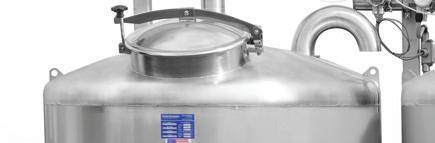


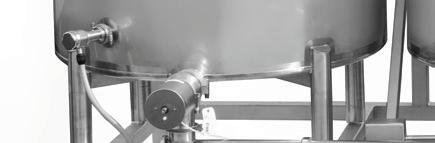
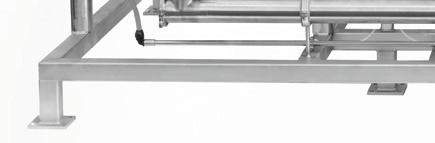
• Built-in predictive and preventative maintenance program with valve cycle count and pump runtime analysis.
• One to four tank configurations with single or dual supply.
• Process parameters deliver a more accurate and repeatable process than a time-based approach, and enables users to manage chemical, water, and other resource consumption.
• Allows authorized in-house users to make and track all changes.
• Automated record-keeping verification occurs after each cycle, designed to comply with regulatory standards CFR21 and S88.










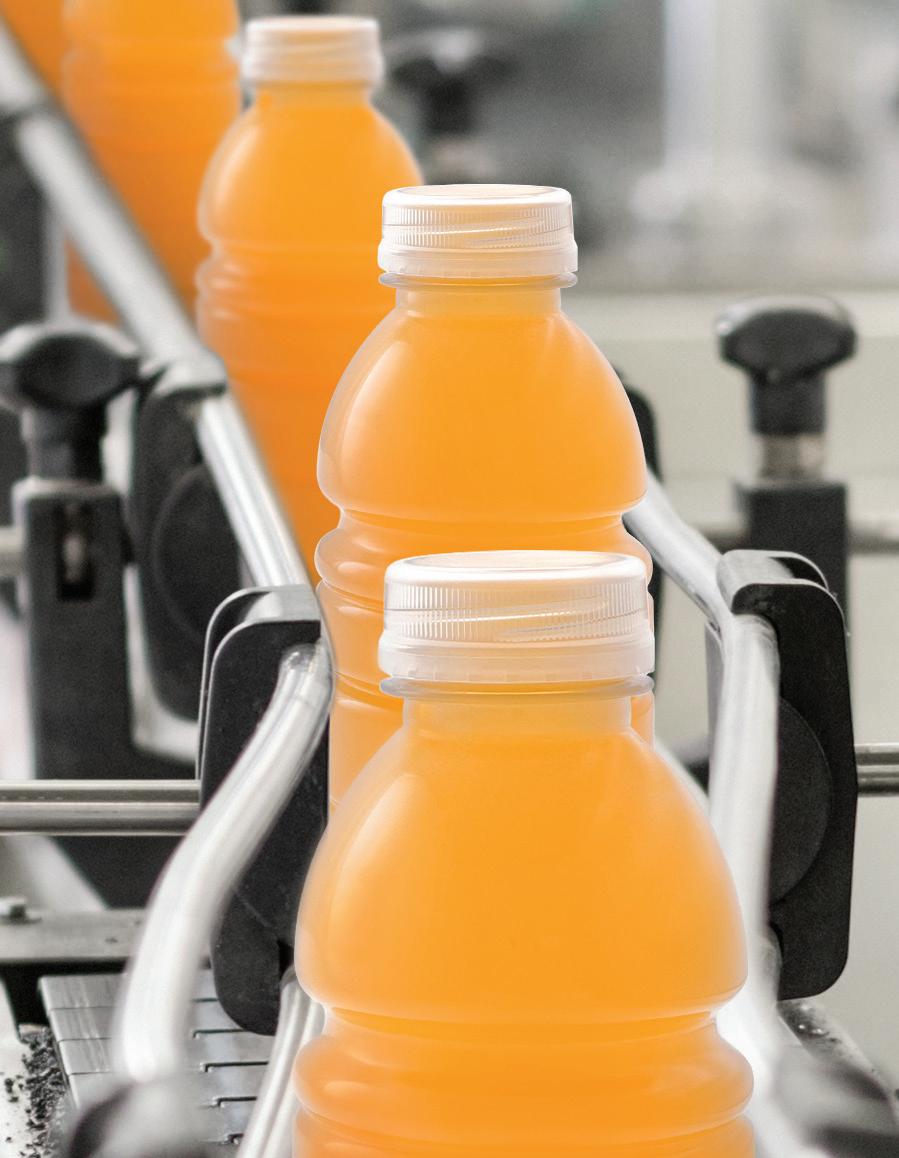

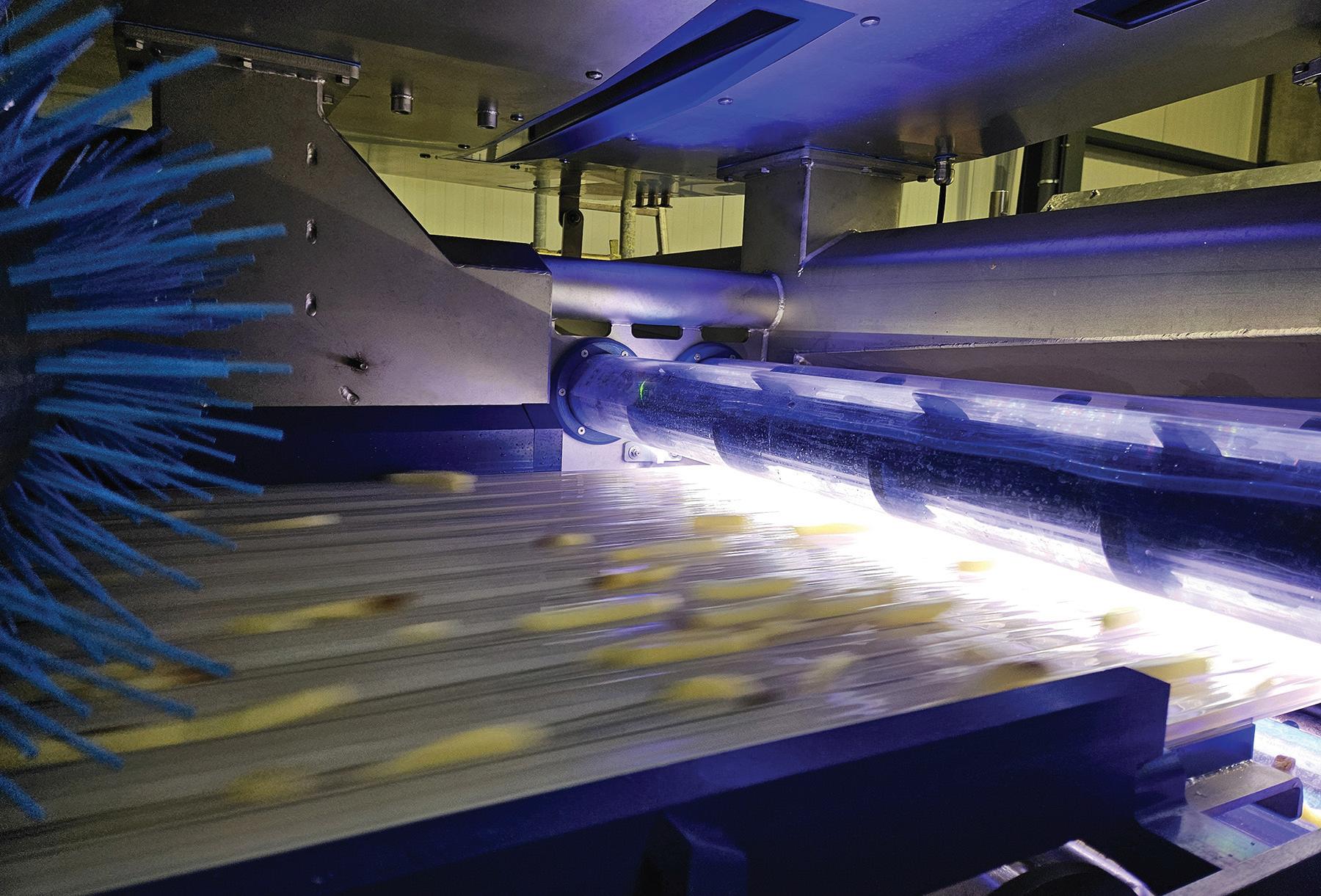
Part 2 of the digital transformation series looks at how machine vision is reducing waste, improving QA, and creating real-time insights.
several years ago that experienced an expensive but avoidable mistake. The cups were correct. The fill level was correct. The product quality was correct. But the lids were not: Chocolate ice cream had been filled into cups, and vanilla lids had been applied on top.
From a distance, everything appeared normal. Containers were sealed and coded properly. Production continued through the shift. But inside those cups was the wrong product for the labeled lid. An entire shift’s worth of production had to be scrapped by the time the error was discovered. The cost extended beyond ingredients: it included labor, lost capacity—and a difficult conversation about how such a mismatch could move through the process undetected.

Bryan Griffen is the President of Griffen Executive Solutions LLC. He was previously Senior Director of Industry Services for PMMI: The Association for Packaging and Processing Technologies, and he held a number of roles for Nestlé during his many years there.
Situations like this illustrate where machine vision can provide immediate and measurable value.
Vision systems aren’t about adding more screens to the control room, they’re about eliminating preventable risk. When implemented thoughtfully, they replace assumptions with confirmation and turn delayed discoveries into real-time validation.
Vision systems are often associated with packaging inspection or code verification. Those applications are important. However, on the processing side of the plant, the ROI can be even more direct.
In the ice cream facility mentioned earlier, a vision system was installed directly on the filling line following the mislabeled run. The objective was straightforward: Verify that the correct lid was applied to the correct container and confirm that the filled product visually matched the intended flavor.
The system checked multiple variables simultaneously. It verified lid graphics against the scheduled SKU and analyzed color and texture characteristics of the filled product to confirm consistency with the expected formulation. If a mismatch occurred, the unit was rejected immediately.
The value of the system wasn’t limited to preventing another full-shift scrap event. It changed how the line was operated. Setup errors were identified within seconds rather than hours. QA time spent on post-run verification decreased. Supervisors gained confidence that startup procedures were being validated in real time.

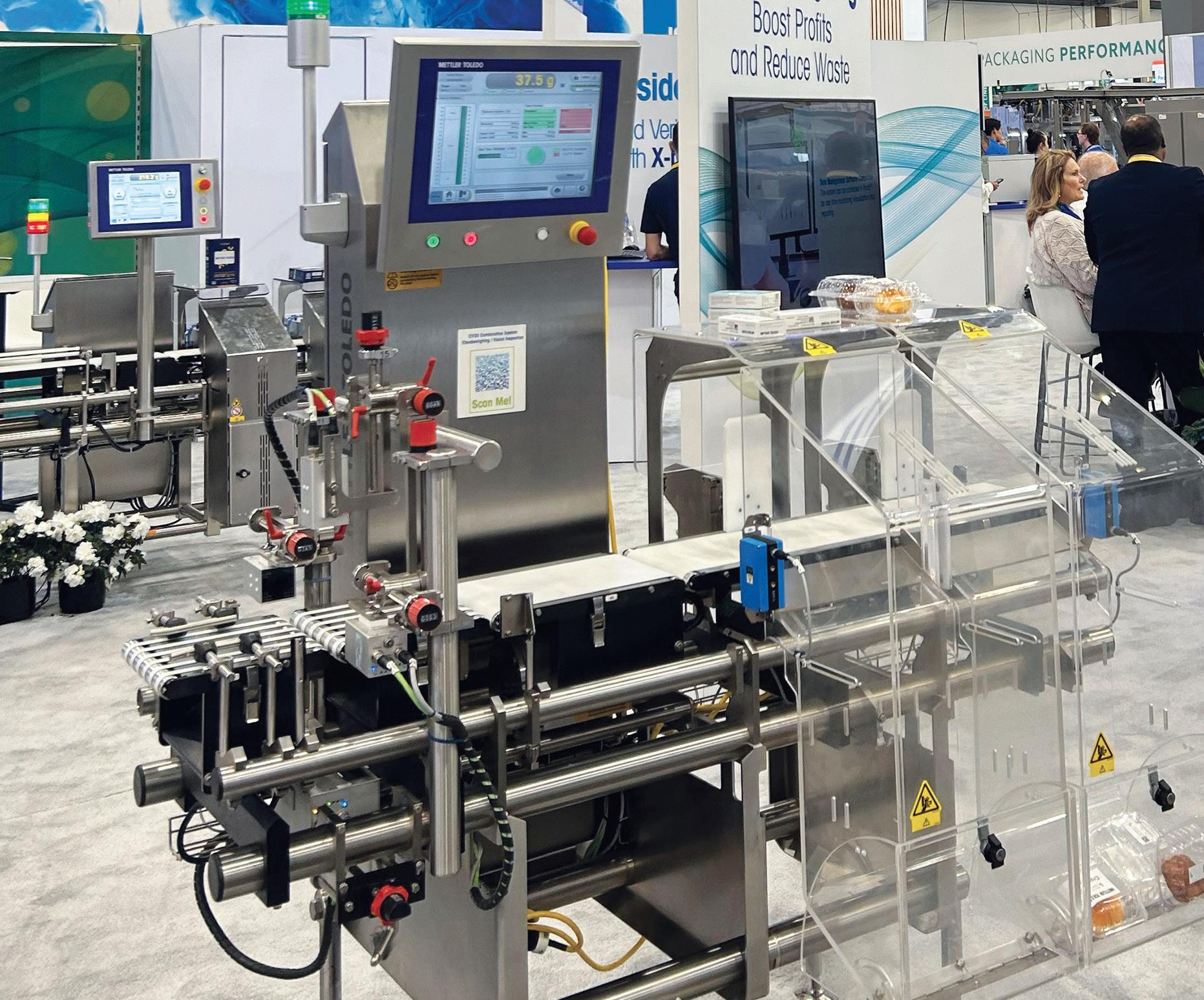
METTLER TOLEDO’s CV35 combination checkweigher and vision inspection system is part of the company’s mix-and-match portfolio that allows customers to pair a wide range of inspection technologies to meet specific application needs.
Preventing even a single repeat incident justified the investment. More importantly, the plant shifted from reactive discovery to proactive confirmation.
The shift from hoping errors do not occur to knowing when they do is where vision systems begin to create lasting value.
A second example comes from a confectionery facility where the top consumer complaint was broken bars. Each broken bar represented more than cosmetic damage. It translated into complaints, potential retailer friction, and diminished brand perception. Internally, it also created tension between processing and packaging teams because the source of the damage wasn’t always clear.
The solution was to install a vision system directly at the transition point between production and packaging. Rather than inspecting wrapped product downstream, the system evaluated the structural integrity of each bar immediately after formation and cooling. Bars that were cracked, chipped, or incomplete were rejected before entering the wrapper.
Rejected product wasn’t discarded, it was collected, ground, and reintroduced into the next batch where appropriate. This allowed the facility to recover material that would otherwise have been lost.
The impact was measurable. Consumer complaints related to breakage dropped significantly and scrap was reduced. More importantly, the system provided data. The plant began to see patterns, correlating breakage to upstream handling adjustments, cooling tunnel performance, and even seasonal temperature shifts.
As with any digital technology, machine vision can either solve a problem or create frustration.
In some facilities, vision systems are installed without a clearly defined business objective. Cameras may be mounted where space allows rather than where risk is highest. Lighting is treated as secondary. Tolerances are set too tightly, resulting in excessive false rejects that frustrate operators and erode trust.
In other cases, systems are owned exclusively by QA or engineering, with little involvement from the operators who interact with them every day. When that happens, vision can feel like a policing tool rather than a support mechanism.
Successful implementations tend to begin with a specific, measurable problem. Is eliminating lid mismatches the goal? Reducing broken product complaints? Verifying seal integrity? The criteria for pass and fail are clearly defined and validated under real production conditions.
Lighting, mounting, and environmental factors are engineered intentionally. False reject rates are tested and tuned before full release. Most importantly, operators are trained not only on how to respond to a reject, but on what the system is actually evaluating and why it matters. When operators understand the logic of a system, resistance tends to diminish.
One of the most valuable aspects of machine vision is its ability to compress feedback loops.
In traditional inspection models, defects are often discovered through sampling or downstream quality checks. By the time an issue is detected, a significant amount of product may already be affected. Vision systems shorten that gap.
In the ice cream example, mismatches were detected immediately at the point of application. In the confectionery case, fracture patterns could be monitored in real time. Operators were able to observe trends rather than isolated events.
This immediacy changes behavior. Instead of reacting at the end of a shift, teams can adjust during the shift. Instead of debating whether a problem is systemic or isolated, teams can review objective visual data.
For plants tracking overall equipment effectiveness, this has implications as well. The quality com-
ponent of OEE becomes actionable when defects are identified at the moment they occur. Rather than simply reporting a quality loss after the fact, teams can intervene before that loss compounds.
Vision systems do not replace quality systems. They strengthen them by reducing the time between cause and correction.
It’s important to emphasize that machine vision does not replace people, it complements them.
Human inspection, especially over long shifts, is inherently variable. Fatigue, distraction, and environmental conditions all influence what is seen and what is missed. Vision systems provide consistency because they apply the same criteria every time, regardless of shift or workload.
At the same time, they free skilled employees to focus on higher-value tasks. The most successful implementations treat vision as a collaborative tool. Operators are involved early. Thresholds are validated together. Adjustments are made transparently. When the system flags an issue, it is treated as information, not accusation.
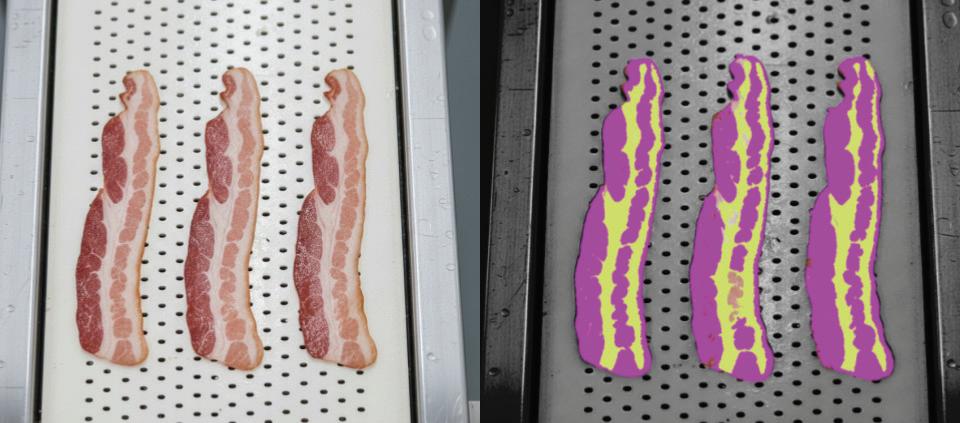
P&P Optica’s bacon grading solution automates strip-by-strip inspection and rejection of cooked and raw bacon using real-time measurement, cook-level assessment, and flexible software programs.
When thoughtfully implemented, vision systems deliver practical wins on the plant floor. They reduce waste, prevent mislabeling, lower complaint rates, and recover product that would otherwise be lost. They strengthen quality systems by providing immediate confirmation rather than delayed discovery.
More importantly, they change how teams operate. They replace uncertainty with visibility and transform inspection from a reactive safeguard into a proactive control.




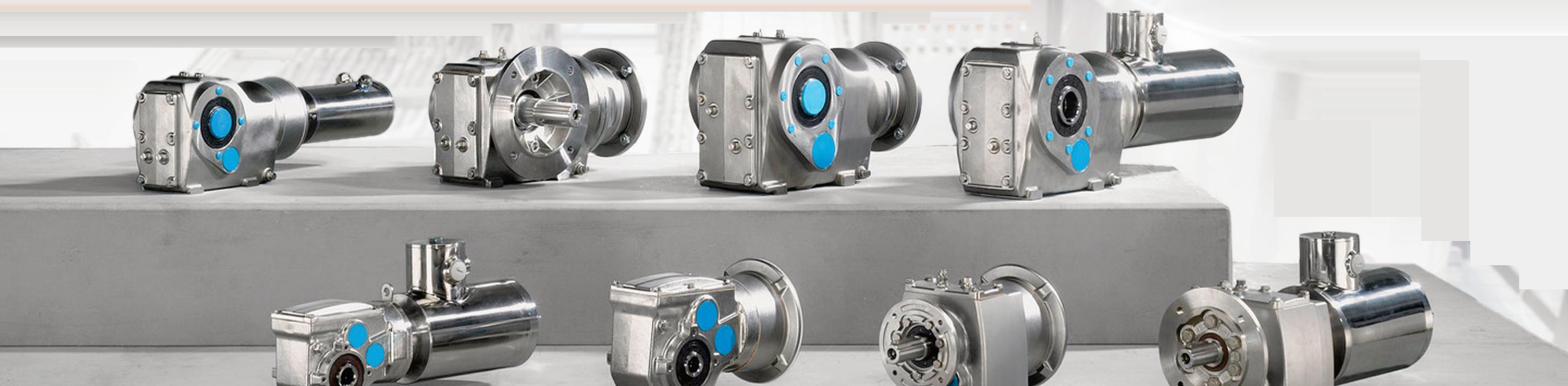

SEW-EURODRIVE’s stainless steel gear units and gearmotors are engineered for applications subject to frequent cleaning and harsh washdown conditions. Helical, helical-bevel, and SPIROPLAN® gearing provides flexibility for torque, speed, efficiency, and installation requirements. Compared to traditional worm gear solutions, these gearing technologies offer higher operating efficiency, reduced heat, extended lubricant life, and longer service intervals.
Units are available as integral stainless steel gearmotors or with stainless steel adapters for IEC, NEMA, and servo motors, providing flexibility for new designs and retrofit applications. Join us at: MODEX - Booth # B-16112 | Cheese Expo - Booth # 314