





Solve your toughest secondary packaging challenges with our automated solutions



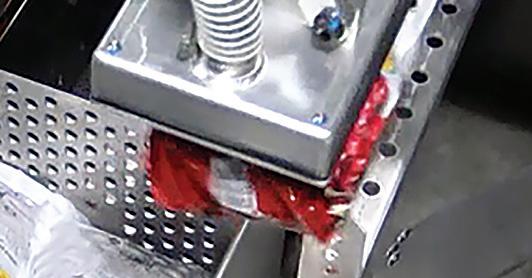


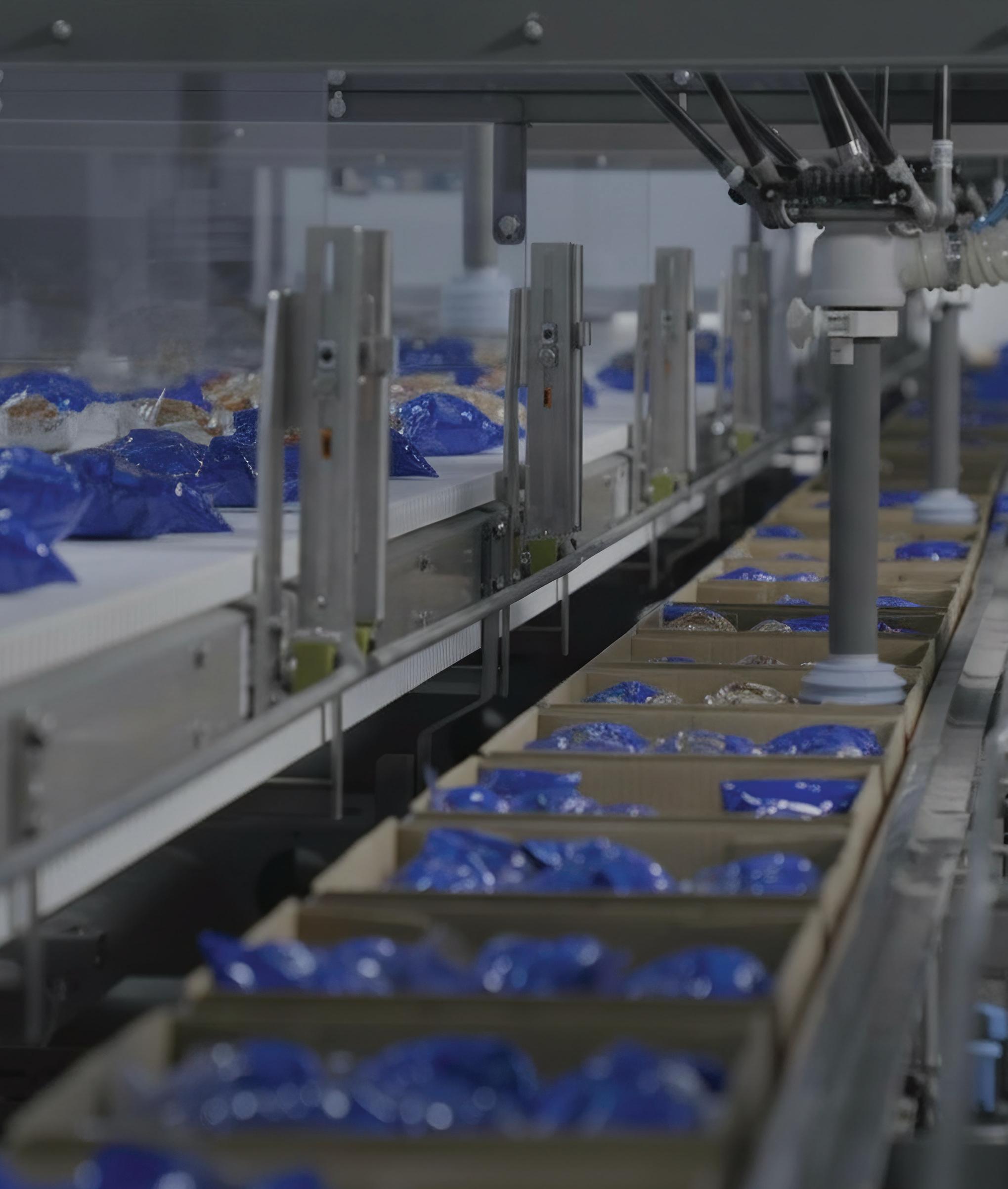


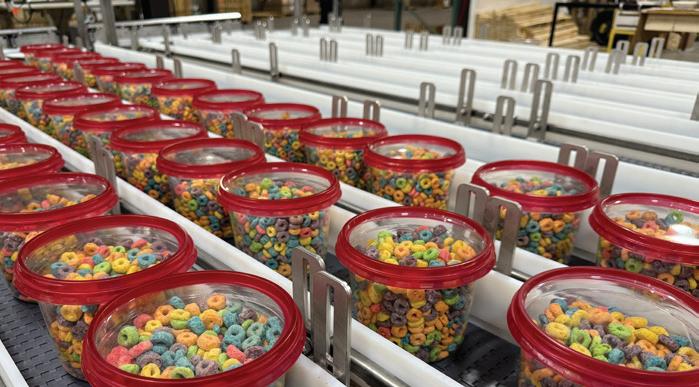
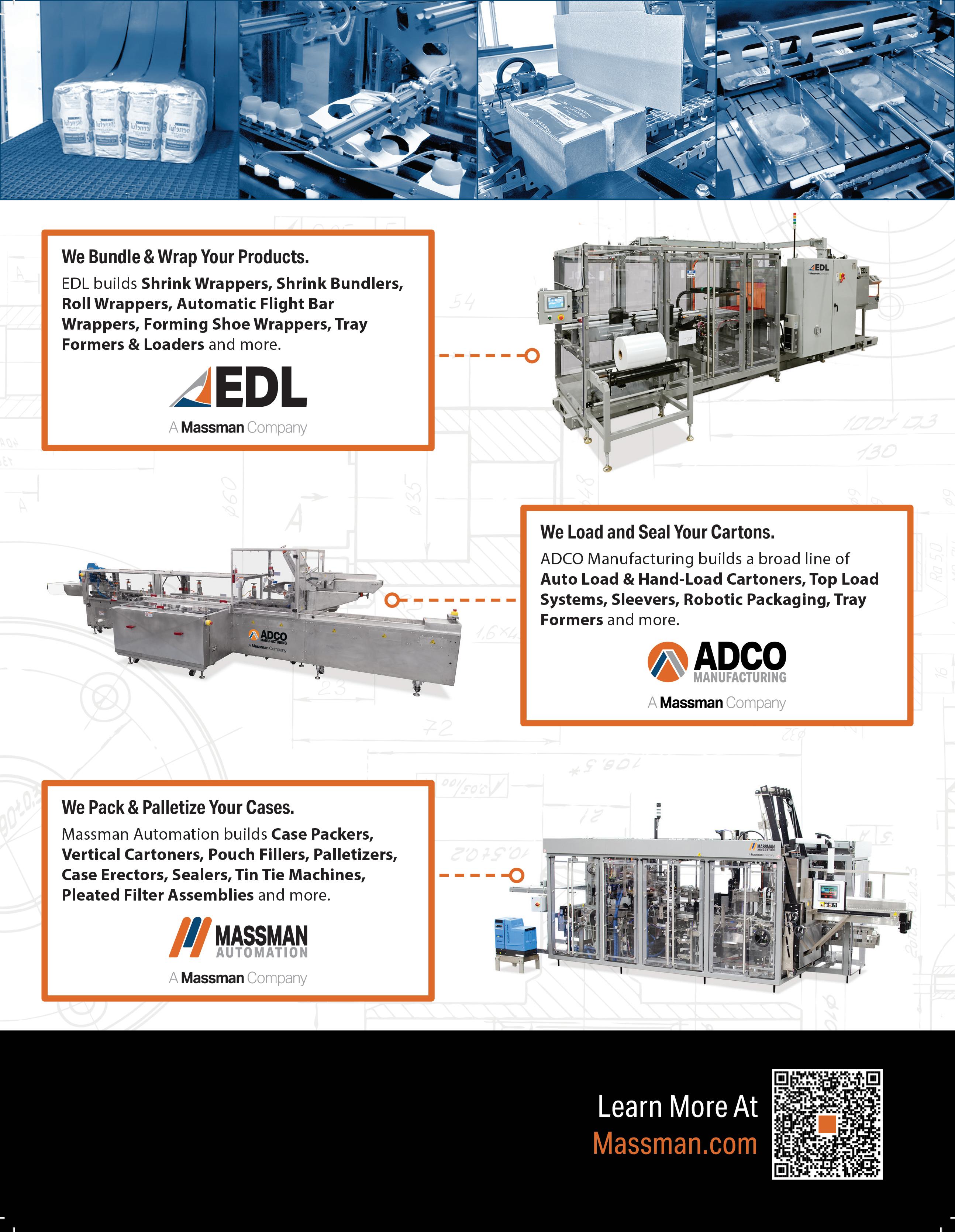
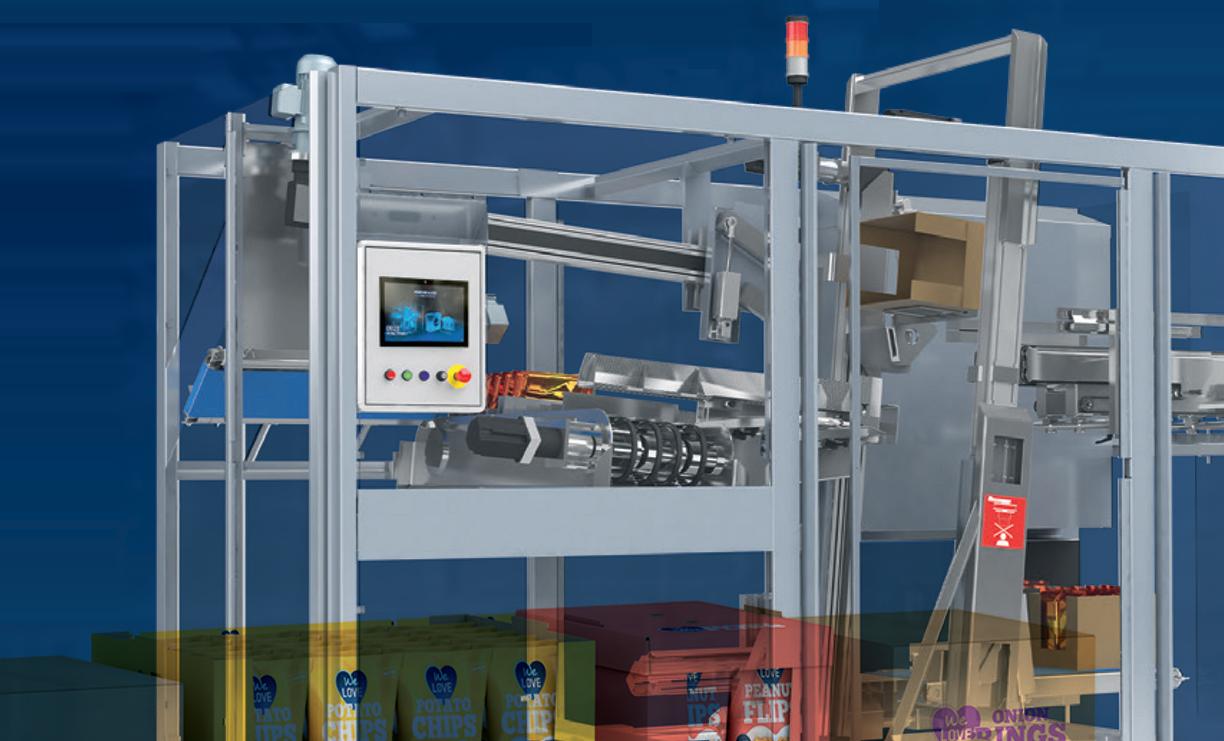
BPA loads your packaged and naked products into cases, cartons, trays, shelf-ready displays, master bags and various secondary containers including your hffs machines, wrapper chain in-feeds and indexing thermoform machines.
















24
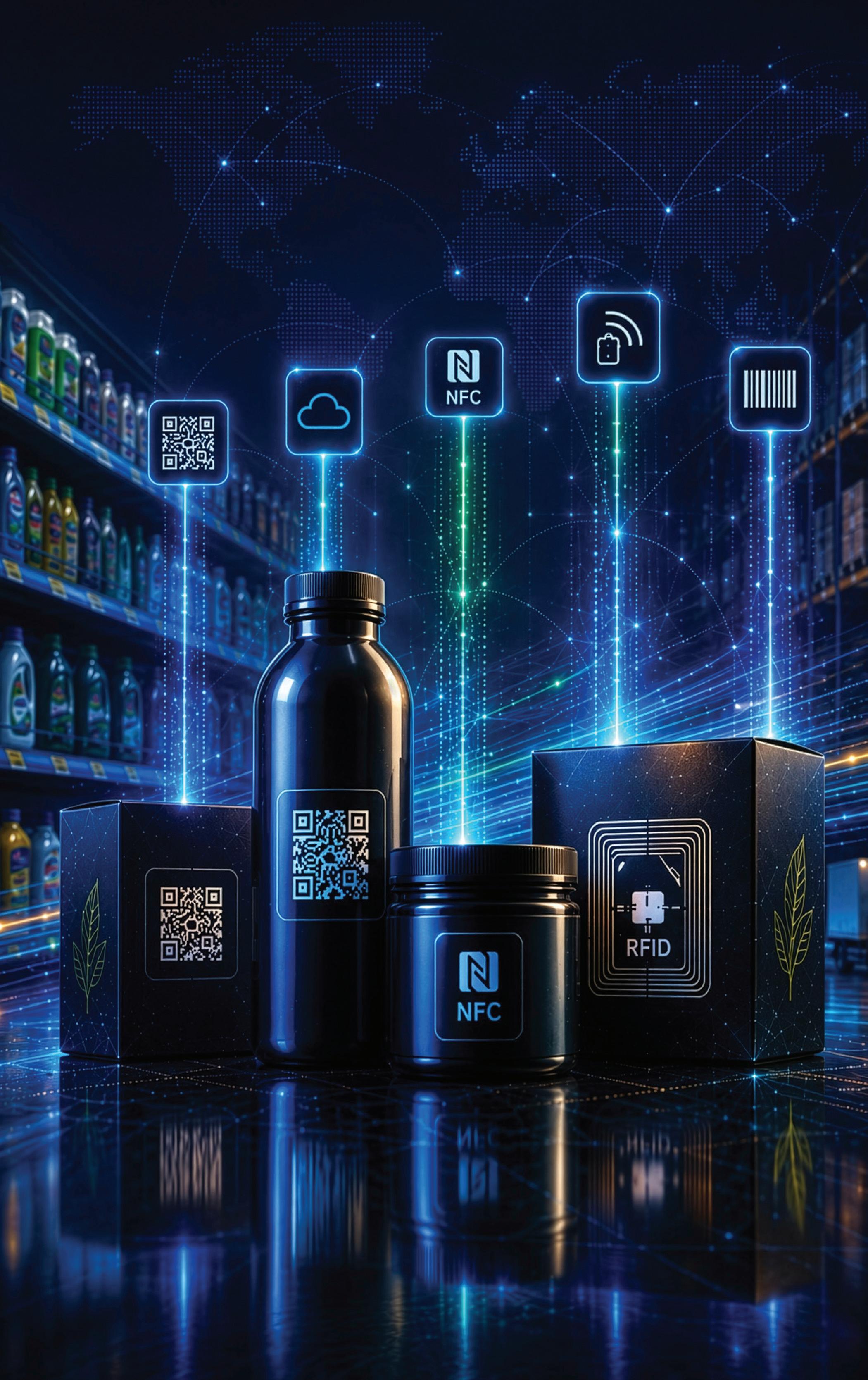
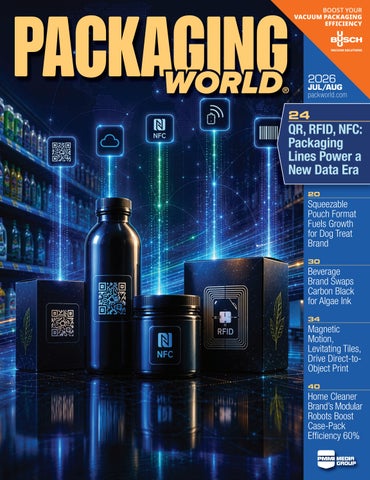
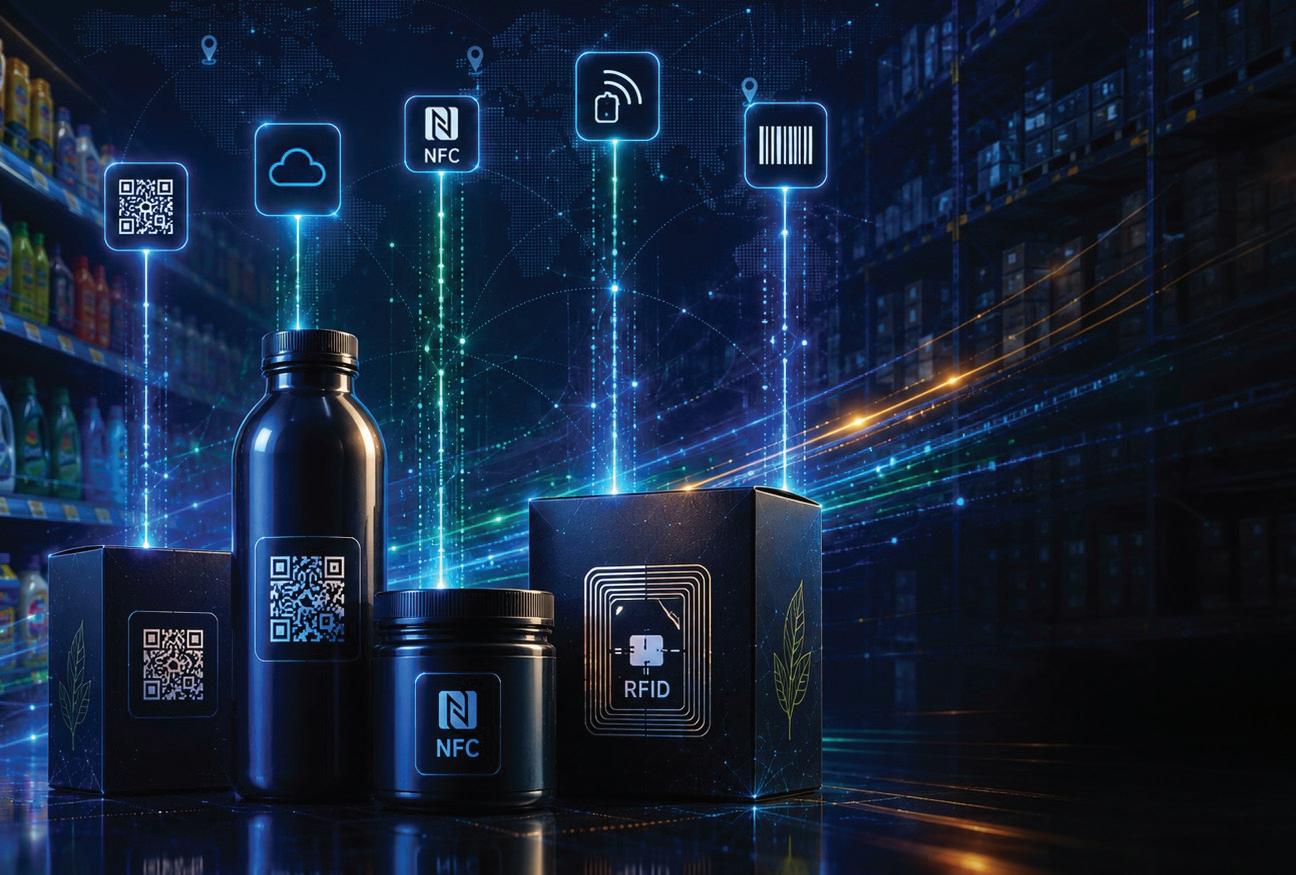
Packaging lines are becoming the backbone of connected packaging. QR codes, RFID tags, and serialized 2D barcodes now do far more than identify products— they drive compliance, inventory visibility, and authentication. As GS1 Sunrise 2027, Digital Product Passport rules, and FSMA 204 accelerate, packaging operations are managing product data at production speed.

24 COVER STORY
Packaging Lines
Become the Backbone of Connected Packaging
As connected packaging expands beyond consumer engagement into compliance, inventory visibility, and authentication, packaging operations are becoming a critical link between physical products and digital systems.
30 Hawaiian Water Brand Debuts Algae-based Ink for Labels
Waia-kea Hawaiian Volcanic Beverages collaborates with technology partners over ve years to formulate a carbon-negative algae-based ink designed for commercial UV exo label printing.
34 AUTOMATION
Direct-to-Object Printing Application a Practical Proving Ground for Planar
Norwalt Automation Group applied Beckhoff’s XPlanar magnetic planar transport technology to a direct-to-object printing platform designed to handle multiple package geometries through software-de ned motion rather than dedicated mechanical changeparts.
Modular Automation Transforms Case Packing at Cleaning Products CPG
Pine Glo replaces manual case packing with a modular robotic system, improving ef ciency, reducing labor, and enabling fast changeovers across a growing SKU mix.


Jan Brücklmeier Technical Application Group Packaging Technology Expert, Nestlé
Shawn French Director – Innovation & Packaging Engineering (Beverage), Danone North America
Patrick Keenan R&D Packaging Engineer, General Mills/Annie’s Organic Snacks
Tim Lehman Sr. Engineering Manager, Supply Chain, GOJO Industries, makers of Purell
Mike Marcinkowski Director of R&D Material Science, Packaging & Sustainability – Nature’s Vault/Fresh Loop
Shannon Moore Director Global R&D Packaging Sustainability, Kellanova
Andrew Seys Senior Director, Global Operational Excellence, Spectrum Brands David Smith, PhD
& Associates Brian Stepowany Packaging R&D, Senior Manager,
Matt Reynolds Chief Editor
Anne Marie Mohan Senior Editor
Sean Riley Senior News Director
Casey Flanagan Associate Editor
Tracey Labovitz Editorial Operations Coordinator
Kim Overstreet Director of Content
Pat Reynolds, Sterling Anthony, Eric F. Greenberg Contributing Editors
David Bacho Creative Director
David Newcorn President
Elizabeth Kachoris Vice President, Digital
Jen Krepelka Senior Director, Digital Media
Amber Miller Director of Marketing
Joan Jacinto Director, Ad Tech and Search
Angie Szerlong Director of Industry Strategy
Joseph Angel Founding Partner and Executive Vice President, Industry Outreach, PMMI
Reggie Lawrence Vice President, Sales rlawrence@pmmimediagroup.com
Lara Krieger Senior Manager, Print Operations lkrieger@pmmimediagroup.com
Janet Fabiano Financial Services Manager jfabiano@pmmimediagroup.com
Questions about your subscription or wish to renew? Contact circulation@pmmimediagroup.com.
PMMI Media Group
500 W. Madison, Suite 1000, Chicago, IL 60661 Web: www.pmmimediagroup.com
PMMI The Association for Packaging and Processing Technologies 12930 Worldgate Dr., Suite 200, Herndon, VA 20170 Phone: 571/612-3200 • Fax: 703/243-8556 • Web: www.pmmi.org

I didn’t expect EPR to be a major theme at GS1 Connect this June in Las Vegas. I’d planned for it at our Packaging Recycling Summit (PRS)—in fact we practically built the agenda around it. But GS1 Connect is a supply chain and data standards conference. And yet there it was: several sessions on EPR, all packed, all anchored by brand owners describing what it actually looks like to build a reporting infrastructure from scratch.
At PRS, where we expected EPR to cast a long shadow, Charlotte Ashcraft, senior manager of packaging and graphic development at Just Born Quality Confections (the company behind Peeps and Hot Tamales), offered one of the more honest practitioner accounts I’ve heard. Her early approach was to understand every nuance of every state’s EPR requirements. Attend every webinar. Absorb every regulation. But it didn’t work.
“When I really felt like I had a good grasp on what was happening, something else would change,” she said. When she stepped back and asked what all these states were really asking for, the answer was the same in every case: packaging data. Just Born had an intern audit the company’s entire packaging portfolio, going component by component, material by material, and weight by weight. That’s because the data was scattered across specs, supplier files, and documents that couldn’t even open in modern software. “It seems so monotonous,” Ashcraft said, “but it was the most important part of this process.”
The output was a spreadsheet. Not a platform, not a system, but a spreadsheet that multiplied packaging weight per case by state sales volume and generated a reportable number for each material type. What surprised her was how much it revealed: a complete map of Just Born’s plastic footprint, which SKUs drove the most exposure, and a road map for which redesigns needed to start now versus which could wait. She’s also using AI to parse new state legislation—feeding a bill’s full text to a prompt and asking targeted questions about what it requires of producers, when reporting begins, and how it differs from California or Colorado.
At GS1 Connect, LC Ede, director of sustainability reporting and tools at Sysco, described her company’s first year in similar terms. Sysco had started building its EPR data foundation earlier than most. But it was still a grind. “It was hard and messy,” Ede said. No standardized data, no consistent material naming, limited channels for sharing information with suppliers. The company ended up estimating from broad packaging archetypes rather than item-level data, a method that creates real risk as fees increase and audits become more likely.
What both experiences share is a common threshold realization: Stop trying to master every state’s regulations and start with data you trust. Ashcraft’s advice to CPGs still working through it: “Start before you understand everything.”
The infrastructure to support that is catching up. Reporting flows to the Circular Action Alliance (CAA), the nonprofit PRO collecting supply data across six states; CAA has built a Producer Portal with standardized templates and is working toward a harmonized May 31 annual deadline to reduce state-by-state friction. GS1 US published a free EPR data model last month, built on GTINs companies already use, standardizing packaging attributes for multi-state reporting in Excel and JSON. The Sustainable Packaging Data Council, hosted by Specright and backed by brands including Costco, Tyson Foods, and Central Garden & Pet, is publishing reporting templates state by state. The APR Design Assessment Tool, powered by Recyda, evaluates full-package recyclability against EPR compliance requirements. Both rePurpose Global and PCX offer managed compliance platforms built specifically for CPG brands. RegAsk tracks evolving state requirements. And RecycleMe, whose CEO for North America, Jason Bergquist, drew a packed room at PRS, provides the kind of hands-on strategic EPR consulting that’s useful if you want someone to translate what’s actually coming at you, and on what timeline. That’s just to name a few emerging and evolving tools at your disposal. Still, so far, brands are calling EPR hard and messy. The ones doing it now are ahead of the game and building the playbook everyone else will eventually use. PW







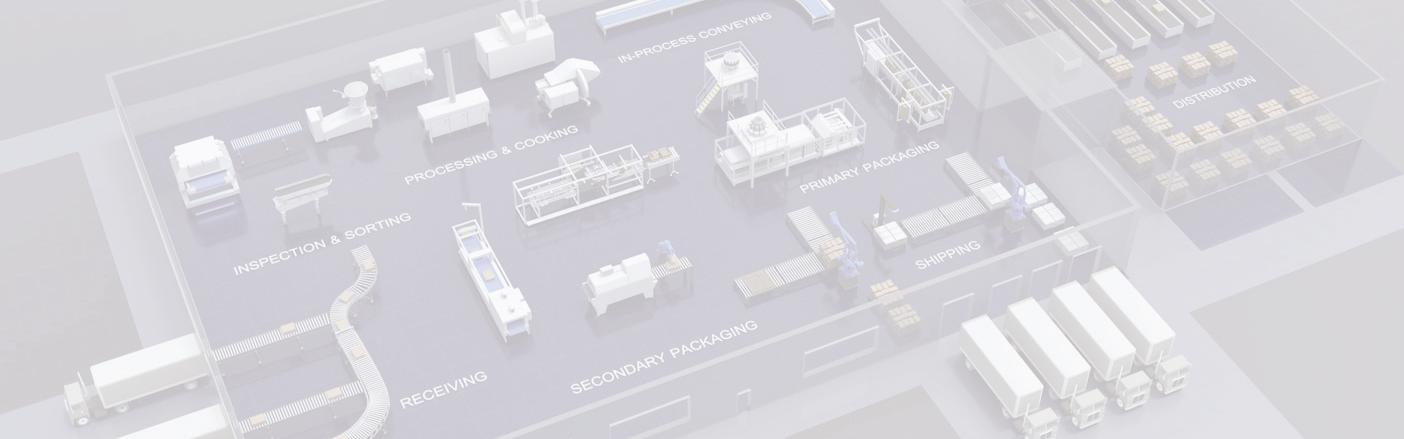

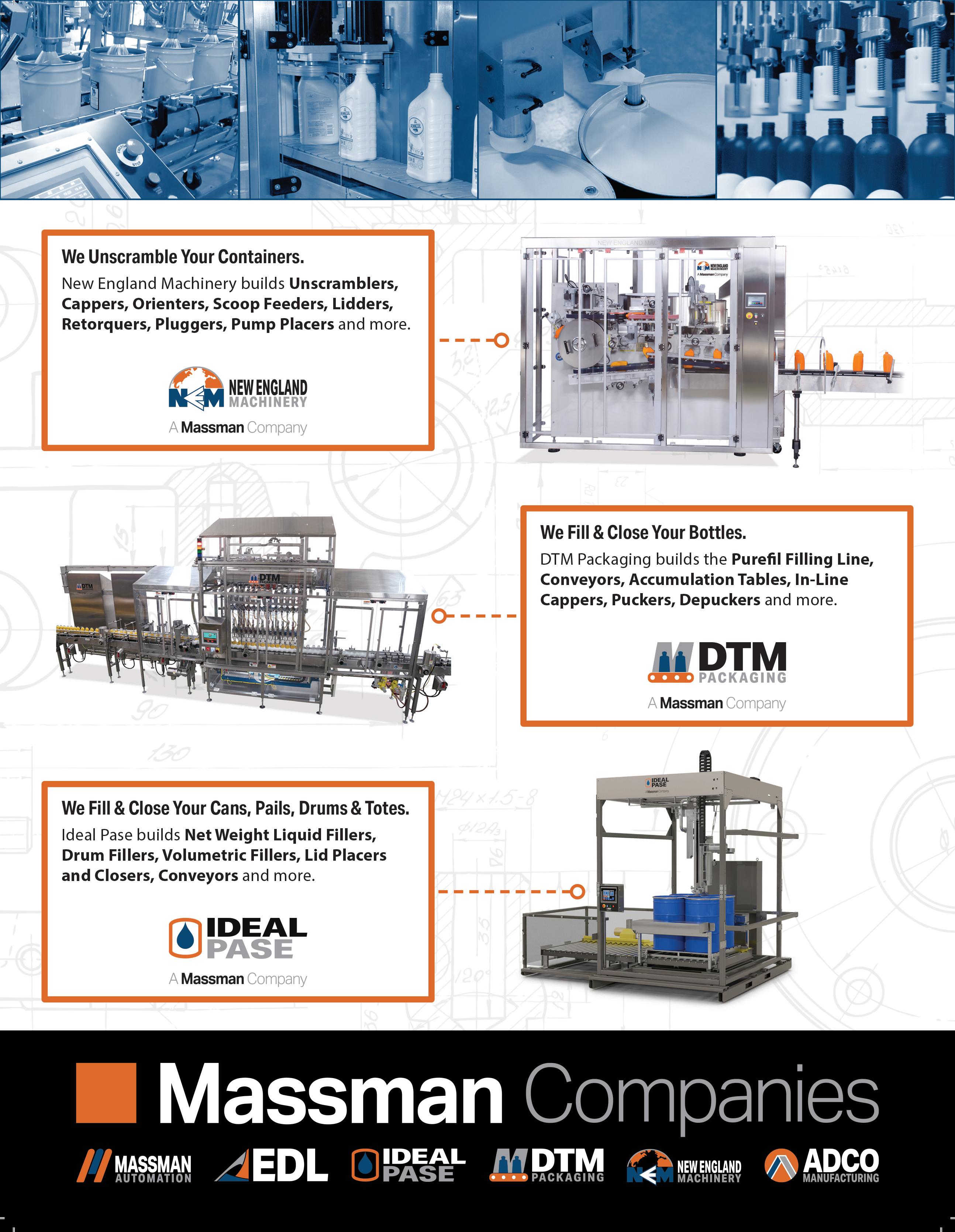
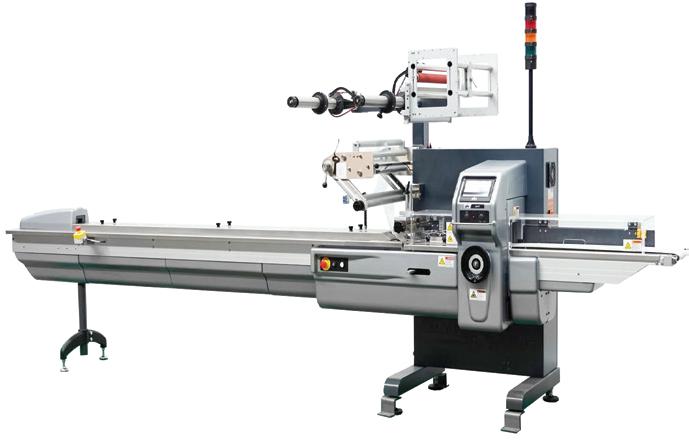
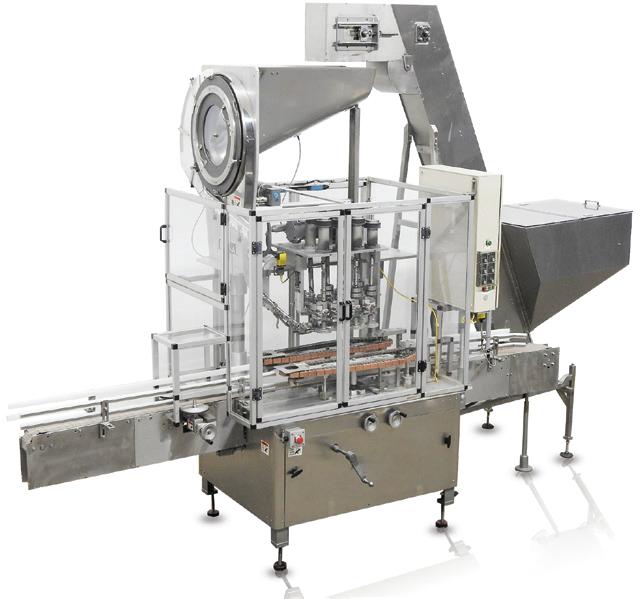
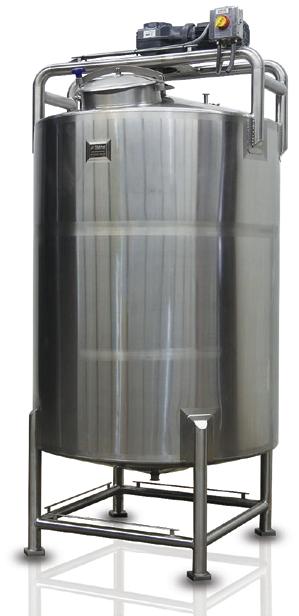
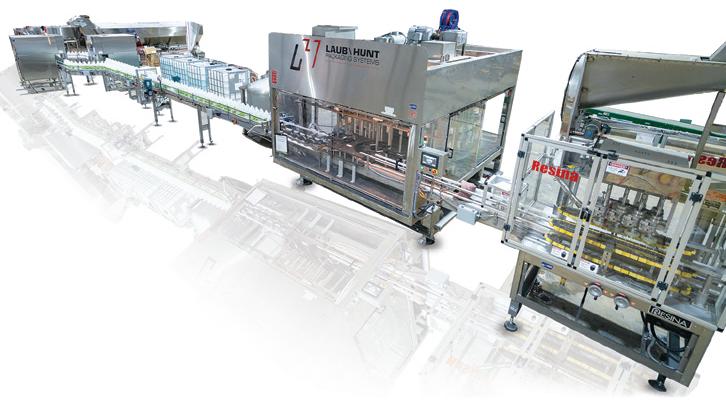
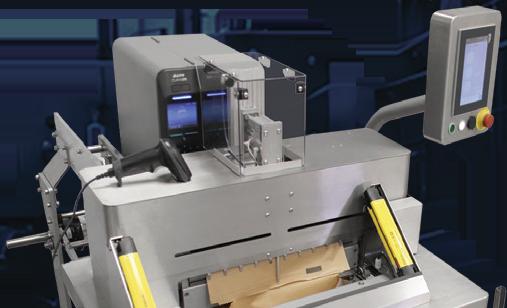
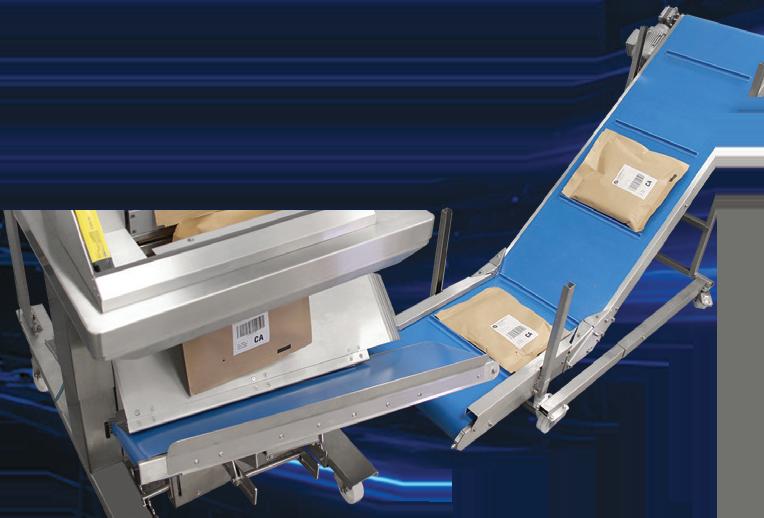
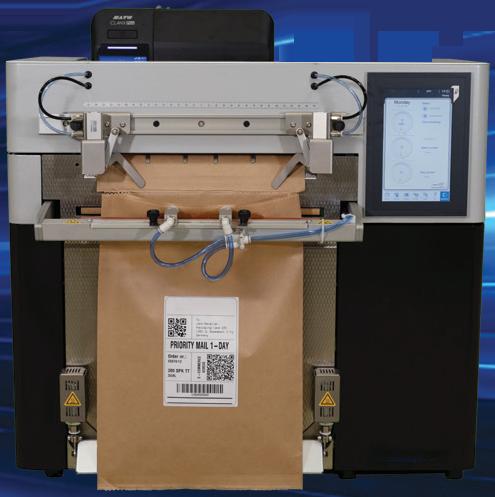
L delivers fully integrated solutions from fill to pallet designed, built, and supported in-house.

F m Industrial applications, our equipment por olio includes form fill & seal machines, bag ging systems, shrink bundlers, robotic palletizers, and more engineered to perform and built to last.


Your product. Our system. One seamless solution.





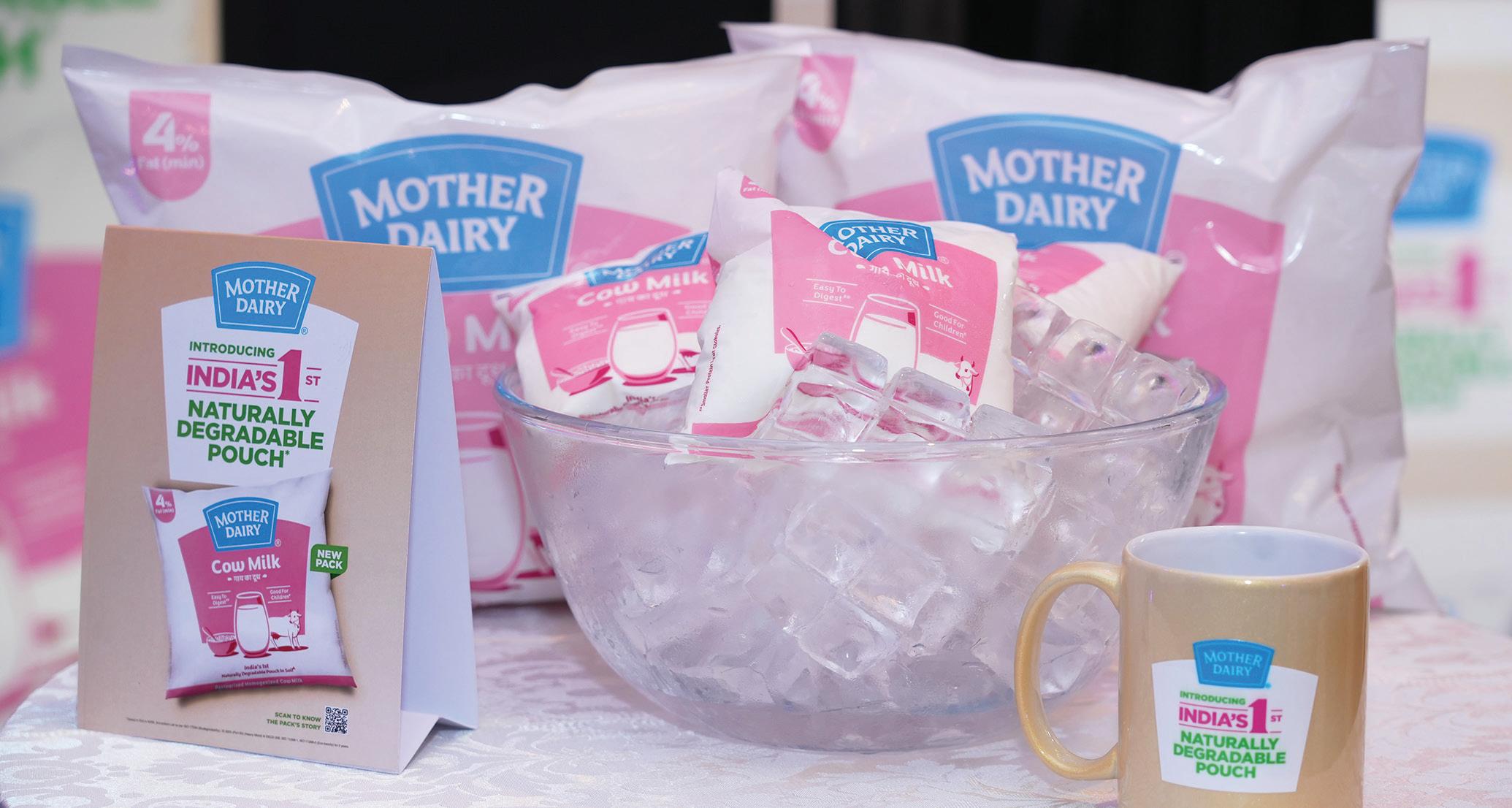
Mother Dairy, one of India’s largest dairy companies and a wholly owned subsidiary of the National Dairy Development Board (NDDB), has introduced what it describes as India’s first naturally degradable milk pouch in soil, rolling it out on June 5, World Environment Day, through its Cow Milk fresh liquid milk variant in Delhi National Capital Region (NCR). The new pouch also carries a refreshed pack design, marking a decade of the Cow Milk brand.
The packaging is built around a proprietary degradation technology that the company says took more than four years to develop. When the pouch ends up in soil, it converts into a bioavailable wax that microbes then consume and break down into natural elements. According to Mother Dairy, the pouch leaves behind no plastics or harmful residues. That claim has been tested independently: the packaging has been evaluated for biodegradability, eco-toxicity, and heavy metal content in an NABLaccredited lab under ISO 17556, OECD 208, ISO 11268-1, ISO 11268-2, and IS 3025 (Part 65) standards. For consumers, the transition requires no behavior change. The pouch stores, handles, and disposes the same way as existing packaging, with no effect on shelf life, taste, or quality. The company says it is also designed to remain stable under the storage and transportation conditions typical across India, including warm weather.
The pouch also continues to be recyclable; degradability is the distinguishing step forward. “While these milk pouches will continue to remain recyclable, the key differentiator lies in their ability to degrade into natural elements, thereby helping address the challenge of fugitive plastic and contributing towards a cleaner ecosystem,” says Jayatheertha Chary, managing director of Mother Dairy. “We are delighted to introduce this pioneering packaging innovation through our famed Cow Milk variant, which will also feature a refreshed pack design as it marks a decade of trust and goodness.”
The Cow Milk package is a pillow-style flexible pouch in white and pink, carrying the Mother Dairy brand mark in the company’s signature blue shield. The front panel calls out the product’s 4% fat (minimum) content alongside familiar consumer cues, and the updated pack now includes a “New Pack” callout alongside the sustainability claim prominently printed at the base.
The visual refresh introduces cleaner typography and brighter color tones. Central to the redesign is what Mother Dairy calls the “Note of Care,” a brand device drawn from its logo, featuring everyday messages, things like “drink your milk” or “get home safe,” meant to bring warmth to the shelf presence. The company plans to extend this design system across its broader milk portfolio over time.
Dr. Meenesh Shah, chairman of NDDB and Mother Dairy, framed the launch within the wider ambitions of India’s dairy sector. “The launch of India’s first naturally degradable milk pouch by Mother Dairy is yet another milestone reflecting the sector’s continued ability to lead and set new benchmarks, while remaining committed to a future-ready and sustainable ecosystem,” Shah says. “The newly introduced packaging is designed to naturally degrade in soil within a few years rather than centuries, and importantly, this transition is being undertaken without any impact on consumer milk prices.”
Mother Dairy says the Cow Milk launch is the first step in a broader sustainability initiative, with the Cow Milk variant serving as the starting point for what the company hopes will inform further packaging innovation across its dairy portfolio. —Anne Marie Mohan
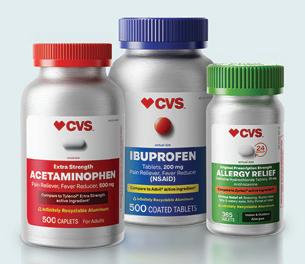
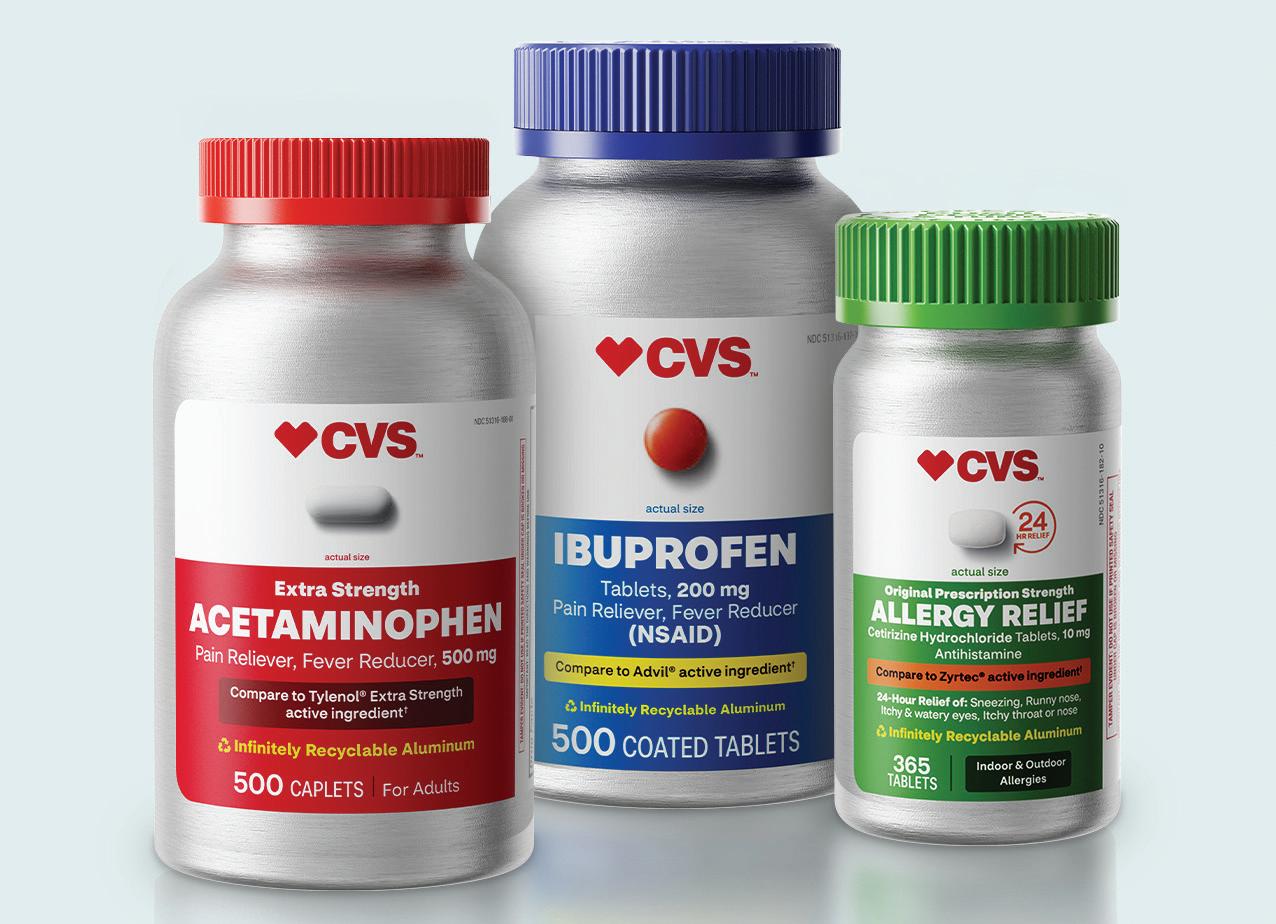
CVS Pharmacy is unveiling an aluminum bottle for store-branded OTC products nationwide, beginning with select value-sized CVS brand allergy and pain relief support products. The change provides consumers with a packaging option that reduces plastic use and replaces it with a highly recyclable material instead.
“The new aluminum bottles give customers looking to reduce their plastic use a recyclable aluminum option for some of their everyday wellness essentials. Aluminum is highly recyclable [according to The Aluminum Association], giving it a reliable end-of-life pathway. And like more traditional packaging options, aluminum provides a strong barrier to help maintain stability and shelf life,” says Mike Wier, VP of Store Brands at CVS.
More broadly, this update reflects an ongoing effort at CVS to rethink how everyday healthcare products are packaged to simplify the shopping experience for consumers. Last year, the company rolled out a new look for the CVS brand of OTC health and wellness products to make it easier for consumers to quickly find the items they need.
“The refresh is now 50% complete, with several categories, including cold, allergy, children’s remedies, and digestive health, already debuting new packaging and others, including feminine care and adult care, hitting shelves in the coming months,” says Wier. “The new aluminum bottles also have the new brand look.”
Compared to glass, aluminum is lightweight and shatter-resistant, making it safer and more efficient to transport, reports CVS. According to U.S. EPA data, aluminum bottles are also highly recyclable. In addition, CVS has found that aluminum is among the most common materials accepted by the majority of recycling programs.
For the retailer, this product launch fits into its larger sustainability goals. “As part of our Healthy 2030 strategy, we’re focused on improving the sustainability of the materials we use,” says Wier. “That includes our Store Brands packaging, where we strive to use less virgin plastic and increase recyclability across our portfolio. We aim to eliminate or use less plastic, replace plastic with alternative sustainable materials, and identify
new strategies to increase recyclability and safer end-of-use disposal of the materials we use where we can.”
According to CVS, aluminum is not just sustainable, it’s also wellreceived by consumers. “In our initial product testing, we’ve received positive feedback about the look and feel of the aluminum bottles,” says Wier. “Many customers have noted that the aluminum bottles stand out on shelves with their unique look. Additionally, many customers emphasized that the recyclable element of the product is appealing to them, as they’re trying to reduce their plastic use.”
Many healthcare products have traditionally relied on plastic packaging due to performance, regulatory, and cost considerations. But for many companies, making a material swap can net a big impact. According to Wier, the company’s Healthy 2030 focuses on driving measurable progress in reducing virgin plastic use and improving end-of-life outcomes for plastics, while balancing healthcare quality, safety, and consumer experience.
“Starting with value-sized products proved most effective, making it easier to bring a more consistent look across a set of products,” says Wier. “The larger aluminum bottles also make the packaging change more noticeable to our customers than it would be on a smaller, 100-count plastic bottle.”
Wier says that while the company’s initial focus is the performance of these first six items, if they resonate well with customers, then CVS may expand the aluminum bottle across more categories. —Elisabeth Cuneo


“We’re seeing a rapid convergence of automation and sustainability. AI-powered packaging systems are reducing material waste while improving efficiency. This isn’t just a ‘nice-to-have’ anymore—regulatory pressures and consumer demand for sustainable practices are making automation a necessity for survival in the modern packaging landscape.”
–Jeff Wettersten, vice president of packaging at Keypoint Intelligence, in the article “The Robots Aren’t Coming, They’re Already Here,” from Printweek
“Accessible packaging is often treated as a niche consideration, when in reality it improves usability for everyone. As populations age and consumer expectations evolve, brands that fail to design for accessibility risk creating friction at the very moment packaging should be reinforcing trust and loyalty.”
–Boma Krijgsman, brand and marketing manager at JDO Global, in an article from Packaging Insights, “Designing for Everyone: Why Accessible Packaging Is the Next Brand Differentiator”
“Beverages have shifted from disposable products to collectibles because people, especially Gen Z and Gen Alpha, don’t really separate anymore between ‘what I drink’ and ‘what I post, wear, or own. As a result, cans and bottles have become identity signals. Brands have figured out that they can create more value by focusing on what the packaging represents—status, belonging, social proof—rather than on just what’s inside it.”
–Hana Ben-Shabat, founder of Gen Z Planet, in an article from Forbes, “The Next Collectible Boom Is Hiding in the Beverage Aisle”
“Brands are discovering that compliance can’t be treated as a downstream packaging issue anymore. EPR laws, recyclability mandates, and source-reduction requirements are forcing packaging teams, sustainability teams, and procurement teams to work together much earlier in the design process. That’s a major operational shift for a lot of companies.”
–Kate Daly, managing partner at Closed Loop Partners’ Center for the Circular Economy, quoted in an article, “States Push Packaging EPR From Policy to Practice,” from Resource Recycling
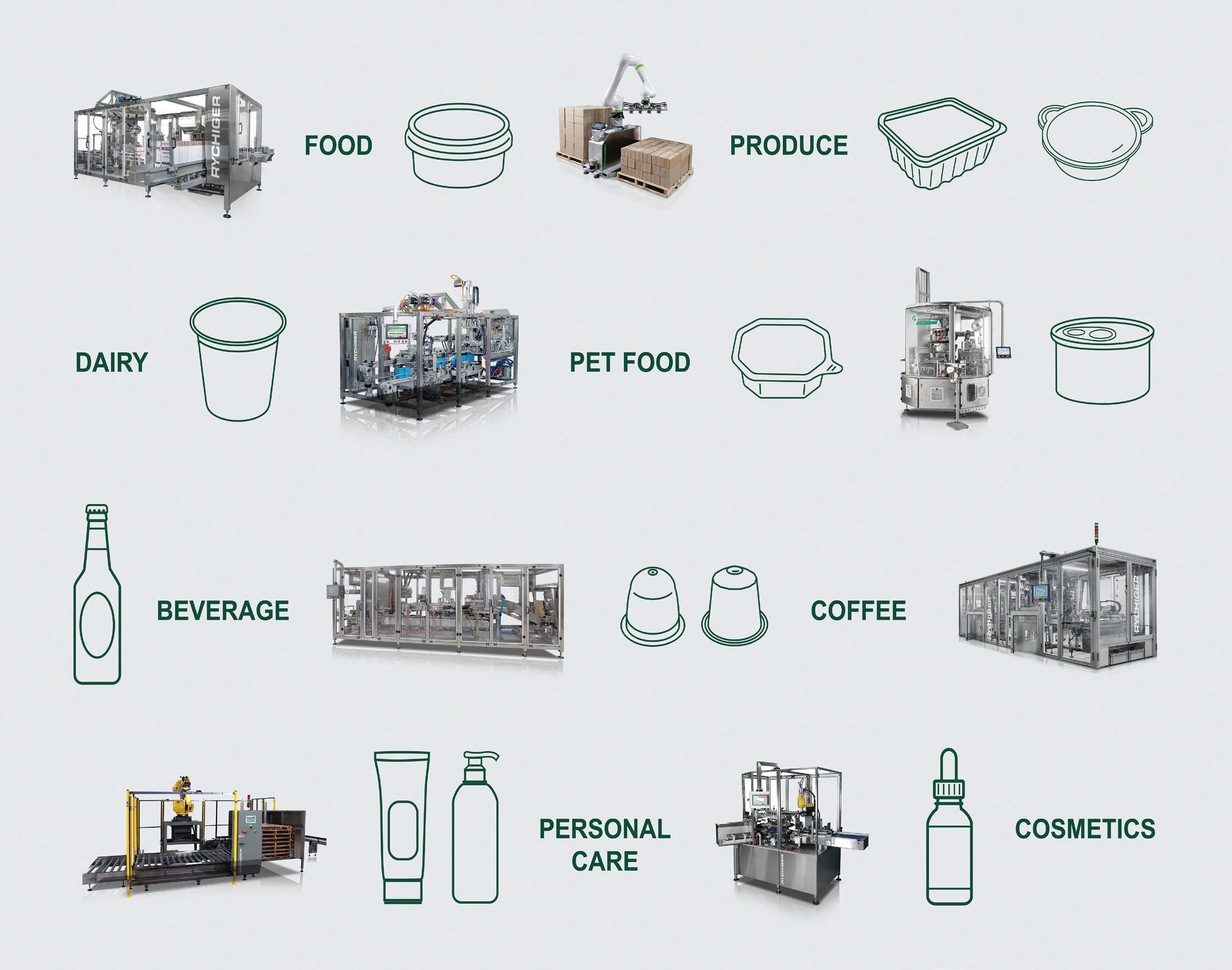
Your products, formats, and workflow are unique, and your automation should be too. RYCHIGER provides modular, customizable solutions that integrate effortlessly across your cartoning, case packing, tray packing, and palletizing operations. Our systems elevate speed, accuracy, and line intelligence so you can run with confidence, shift after shift.
Automation that fits your line, not the other way around.
www.rychiger.com/pack
Scan to learn how our solutions can streamline your end-of-line process


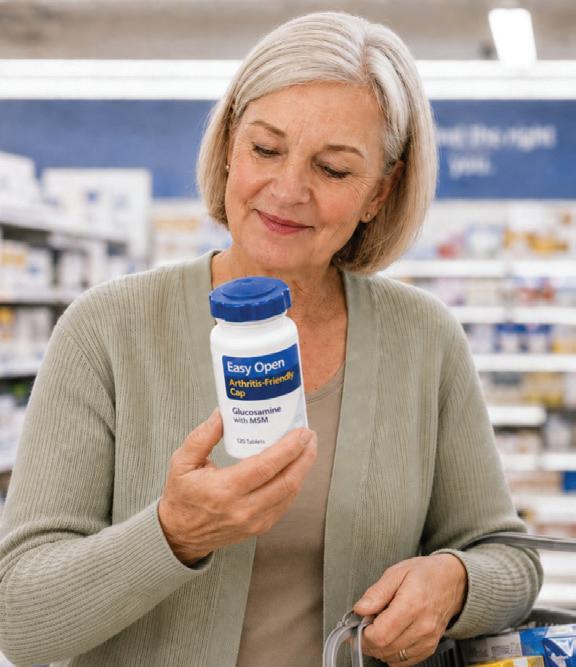
Deb Gokie, VP of consumer health and ease of use at the Arthritis Foundation, discusses the findings of the foundation’s recent report, its Ease of Use Design Guides, and why inclusive packaging design drives loyalty, repeat purchases, and products that are easier for every consumer to use.
Read more of this interview at pwgo.to/9117
It seems as though it’s only been the last five or six years that we’re hearing more and more about designing for inclusivity. Have you seen that trend as well?
We are seeing it more. We test products and packaging specifically for arthritis and chronic pain. Our thinking is that if you design for that particular audience, you make it easier to use for everyone in general. Consumers are incredibly smart, and for so long they’ve put up with things that are difficult to use, and now they’re starting to ask, “Why is this so hard?” That applies both to the consumer who has an accessibility issue, whether it’s arthritis, chronic pain, or lim ited limb functionality, and to the consumer who doesn’t necessarily struggle with any of those issues. If packaging is extremely difficult to open or use for the arthritis community, it’s also difficult for regular consumers.
Companies are also starting to recognize that there’s an aging population we need to address, because that population’s spending power is in the trillions. That’s a consumer audience companies will want to capture, both from a brand loyalty and a revenue perspective. And for the communities that really struggle—those with some kind of autoimmune or joint dexterity issue—it ties directly into not being able to open or use something. That frustration also spills over into a mental health issue, so we’ve started to see brands designing to go beyond that frustration and support the mental health part of it as well.
not just the arthritis community but all communities. Inclusive design gives engineers and designers the opportunity to think creatively about human factors, and it gives companies a chance to expand into new markets and build brand loyalty among a consumer base they haven’t connected with yet. So it really layers in to support business growth, while at the same time offering immediate impact for someone struggling to use a product. It’s meeting needs on both sides of the economic wheel, if you will.
The Arthritis Foundation’s ease-of-use certification program is not new, correct?
It’s not. It’s been around for 25 years, but in the last four years we’ve really become focused. We now have an engineer in-house who does all of our testing and can do the lab and human factors analysis in-house. That’s given us the opportunity to work with more companies and offer consultations at the early design and prototype stage, because we don’t want a product to get to market, come to us for testing, and fail. It’s too expensive to fix once it’s already out there.
We just had four companies in testing, and I got an email this morning that all four passed. That means four products going out to market that will make things easier not only for people living with arthritis, but for everyone.
Beyond wanting to make products easy for all consumers to use, there are also a lot of financially driven reasons to do it, some of which you uncovered in your ease-of-use study. What were some of the takeaways?
In our Ease of Use Study from November 2024, we learned that 86% of people living with arthritis and 76% of consumers in general said they would pay more for products if they were easier to use, and over 50% of both audiences said they would switch brands or pay a premium for easier-to-use products. We also found that more than 65% of both groups would repurchase a package if it were easier to use.
There are a lot of reasons companies should think about serving
Throughout this conversation, I’ve been thinking about my mother. She’s 92 and has arthritis in her hands. She lives alone, so if she felt confident that she could open products and do things on her own, that would make quite a difference for her.
That’s what’s so great about ease-of-use certified products: we’ve tested them, so we know they’re easier to use. When you lose that strength, it becomes depressing and frustrating, and that’s a mental health issue. But when you have something you can use, something you can say yes to, that becomes a win for the day. It might be as small as gripping a writing pen or putting on lipstick, or even a flip-top cap when you’re trying to open something. So there are opportunities to give just a little moment of yes in the day of someone who struggles— and even someone who doesn’t. —Anne Marie Mohan






By Sterling Anthony, CPP, Contributing Editor
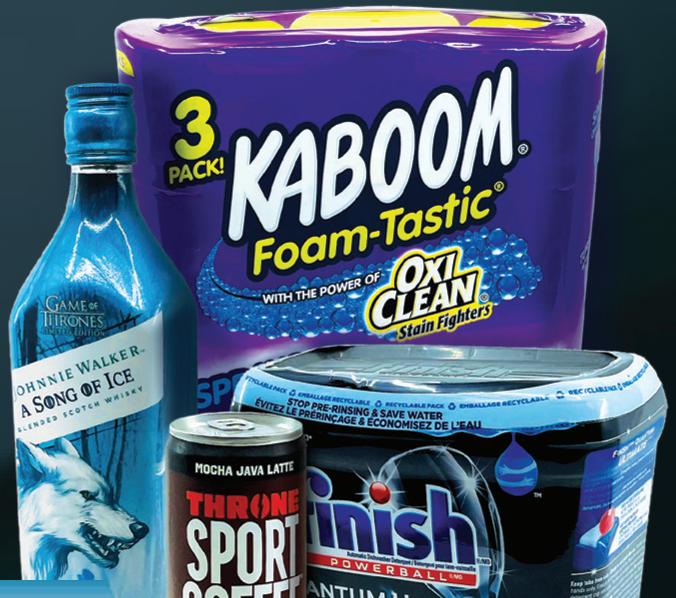
In his column from last month’s Packaging World, “Food Lawsuits Might Be Mostly Aiming for Stigma (pwgo.to/9113),” Eric Greenberg speculates that the true objective behind the lawsuits might be to influence the production and the consumption of food products, specifically those of the reputed ultra-processed variety. Despite whether one agrees regarding the objective, there should be no disagreement that a segment of the food industry is being negatively targeted.
“Ultra” means beyond what’s normal, ordinary, and expected. However, depending on what’s being described, it can mean beyond what’s necessary and proper. It’s the latter, expanded meaning that’s being applied to processed foods. Here’s proof of the negative connotation: there’s not a single brand owner that markets its products as being ultra-processed. “Hyper,” similarly, describes that which is considered as being excessive. Ultra-processed foods are characterized as hyper-palatable, suggesting that they are so satisfying as to be addictive. Again, as proof of the negative connotation, there’s not a single brand owner that markets its products as being hyper-palatable.
What are ultra-processed foods? Currently, there is no U.S. federal definition. When (not if) a definition comes, it likely will be modeled on the NOVA classification system. NOVA classifies foods (and beverages) into four groups, in increasing order, based on the extent and the purpose of the processing and not based on nutrient content. Group 4, which contains a long list of familiar meals, snacks, and beverages, is ultra-processed.
foods, in turn, are 70 to 75% of the food supply and represent 55% of calories consumed. Plastics dominate packaging for foods, in general, with 80 to 83% of flexibles and 40 to 45% of rigids. It follows that similar percentages apply to the ultra-processed category.
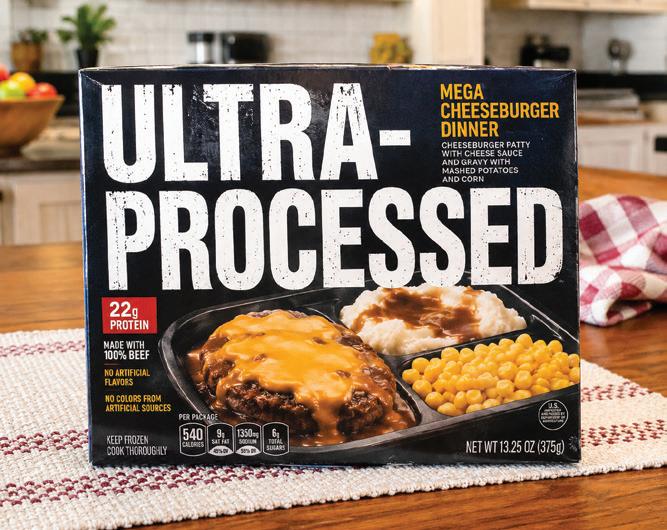
Since the mentioned products are under assault, then inescapably, so is packaging. Ultra-processed is a designation determined by product formulation and not by how the product is packaged. That truth notwithstanding, critics of ultra-processed foods can cite packaging as an enabler. Packaging is a technical necessity without which ultra-processed foods would not be available to retail consumers. Packaging also is a potent marketing tool, providing shelf impact, especially effective in impulse purchases. There’s nothing sinister about those roles, which also are performed for other groups of foods. What makes packaging a target in the ultra-processed foods debate are the associated statistics.
Various entities compile statistics about the packaging supplier industry. The work is done by market research firms, industry trade associations, and government agencies (e.g., U.S. Census Bureau and the Center for Disease Control). Their findings vary but fall within citable ranges. Food & beverage is the largest end-use market for primary packaging materials, comprising 60 to 70%. Ultra-processed
Plastics provide extended shelf life, widened distribution, costeffectiveness, and convenient proportioning, among its benefits. Even if those benefits are acknowledged by critics, their counterargument is that plastics are bad for the environment, being derived from a nonrenewable resource, questionably recyclable, and often single-use. Such criticisms have been leveled routinely against plastic packaging throughout the sustainability era. With food packaging, however, there’re the added criticisms of chemical migration and microplastic ingestion. The harshest critics consider ultra-processed foods and plastic packaging to be a toxic-twosome, linked to such maladies as obesity, hypertension, cardiovascular disease, and mood disorders. It would be convenient for the packaging supplier industry to dismiss the ultraprocessed foods debate as an offshoot of the sustainability challenges that it has faced for decades. Convenient yes, advisable no. Nor would it be advisable to believe that the debate will lessen after an outgoing administration takes with it its Make America Healthy Again (MAHA) initiative. Consider, for example, Robert Kennedy, Jr. (current Secretary of the U.S. Department of Health and Human Services) and Dr. David Kessler (former Commissioner of the U.S. Food & Drug Administration). The otherwise ideological adversaries are in a joint effort, publicly calling attention to what they deem to be threats imposed by ultra-processed foods.
And it’s not an unreasonable digression to mention that, by combining to represent 90% of the industry, petfood is “reigning” cats and dogs. Many, if not most pet-owners love their pets as bona fide members of the family. Is an associated ultra-processed foods debate on the horizon? A possible precursor is the growing segment of so-called fresh, to-be-refrigerated pet foods. The point being made herein is that the ultra-processed foods debate is poised to not only grow louder but also to diversify.
Public health-related debates and controversies have a habit of leading to litigation and regulation. An oft-time defendant in litigation and a subject of regulation, the packaging industry can’t afford to play spectator, as conditions play out that can affect its profitability and viability. Enough is known already about conditions to constitute a call to action.
Anticipation and strategizing are needed to get ahead of what’s coming. I’ll tackle those vital steps in my next installment. PW


























By Matt Reynolds, Chief Editor
Bark Bistro launched Buddy Butter, its all-natural peanut butter for dogs, in a 17-oz rigid PET jar. The product gained traction, but growth was measured.
“It took us four years to sell almost a million jars,” says founder Tamara Coleman. “And we sold over a million squeeze pouches in a little over a year.”
The formula did not change. The shift was in packaging format, expanding from the existing 17-oz rigid jar to add a 4-oz resealable spouted pouch format, complementing the existing pack format.
Coleman says the company spent nearly two years refining the pouch’s structure, shape, and material selection, including achieving a matte finish designed to improve hand feel and shelf presence. Packaging World inquired about pouch converters/printers and equipment suppliers involved in the project, but Bark Bistro declined to name them.
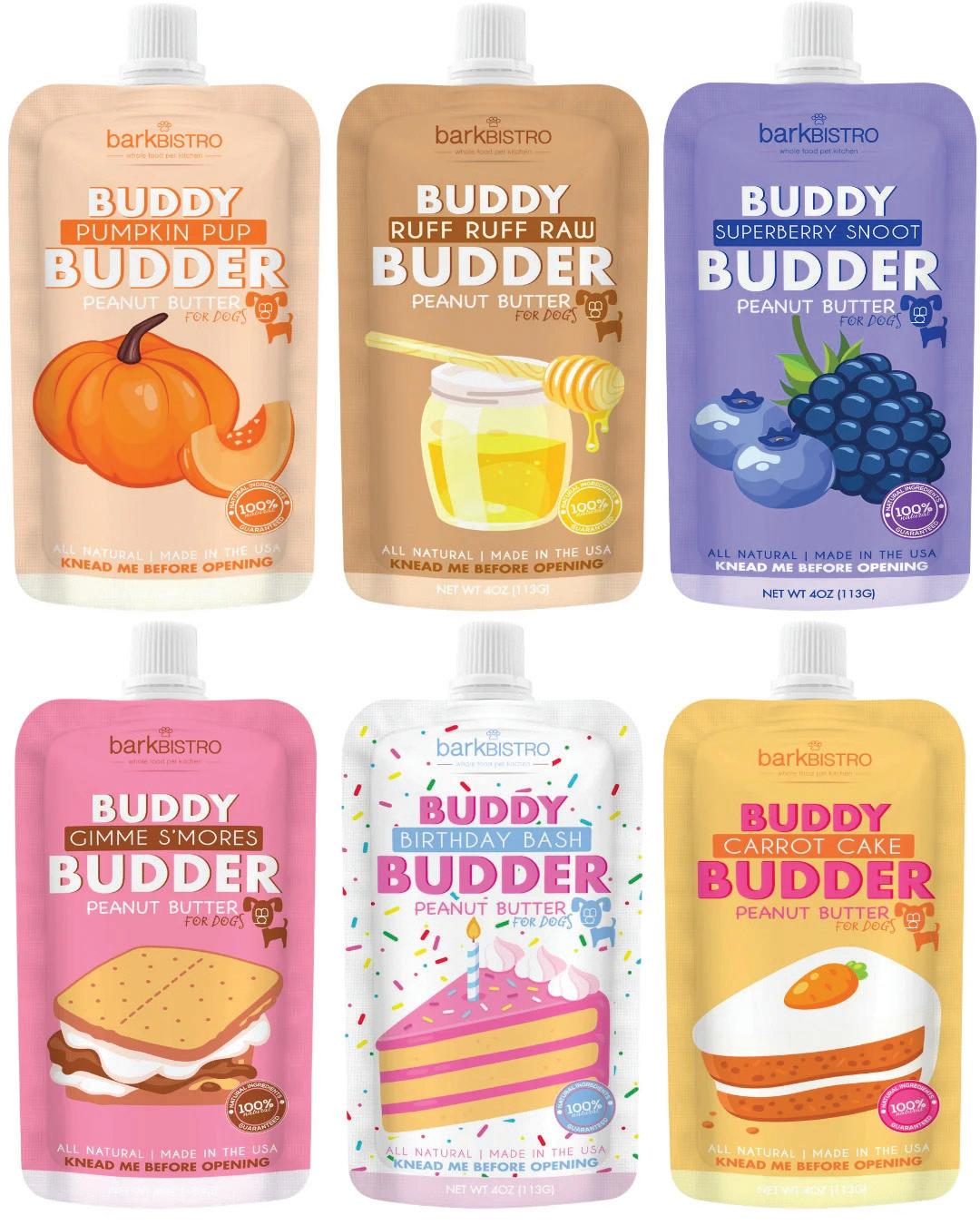
Buddy Butter contains no stabilizers, which means oil separation is inherent to the product. “All natural can be messy,” Coleman says. “Natural oil separation happens.”
In a jar, that meant stirring and typically limited use to at-home occasions. Customer feedback increasingly focused on convenience and portability. “Ultimately it was our customers,” Coleman says. “They were leaning in telling us they wanted a different format.”
The company initially explored a single-use tear pouch but determined that a non-resealable structure would not align with how the product is used. “That was never going to work,” she says. Buddy Butter is typically dispensed incrementally—for training, enrichment, or pill masking—rather than consumed at once. A single-serve format offered no opportunity for reclosure and increased the risk of mess if oil separation had not been fully kneaded before opening.
According to the company, the commercial pouch uses a threelayer laminated structure designed to balance print quality, barrier performance, toughness, and seal integrity.
The outer layer is PET, which serves as the print web. The graphics are reverse-printed, with individual SKUs typically running seven to nine colors. A middle nylon layer provides oxygen barrier properties while contributing puncture resistance and mechanical strength during squeezing and distribution, as nylon notably offers
flex crack resistance and repeated compression durability. The inner layer is polyethylene, selected for heat-seal performance and moisture protection.
The company chose pre-made spouted pouches rather than form/fill/ seal rollstock, simplifying conversion but requiring a dedicated fill-and-seal line. Filling and sealing take place at Bark Bistro’s 25,000-sq-ft manufacturing facility. The fitment consists of a polyethylene spout and screw cap closure.
The laminate structure provides a one-year shelf life. While the current format is a multi-layer construction and not widely recyclable in today’s recycling infrastructure, the company reports that it evaluated mono-material spouted pouch options during development and indicates that recyclable versions are technically feasible as barrier technologies evolve.
Moving to the pouch required the addition of a dedicated filling line separate from the jar operation. The company runs a pistonbased filling system configured for viscous, oil-separating products, with throughput averaging approximately 4,000 units per hour.
Oil separation and viscosity created early challenges, particularly around fill consistency and seal integrity. According to the company, these were addressed through continuous agitation of the product, tight temperature control, and measures to prevent oil contamination in the sealing area. Once optimized, the process became repeatable and scalable.
The smaller, resealable format changed how the product was used. “It’s a multifunctional treat,” Coleman says. “It’s a tool at the end of the day that is part of our customer’s daily routine.”
The pouch enabled use during training, walks, veterinary visits, and other on-the-go scenarios. It also influenced purchasing patterns.
“People are now new to brand. They’re not going to just buy one flavor, one jar. They’re buying multiple SKUs, multiple flavors right at once,” Coleman says.
The company reports that sales now skew approximately 60/40 toward the pouch format.
As Bark Bistro evaluates larger pouch sizes for mass and club retail, Coleman frames packaging as an ongoing area of focus. “We’re constantly innovating our format, our delivery method so that we can continue to give them different uses for the peanut butter,” she says.
In this case, a change in format addressed product behavior, improved convenience, and coincided with accelerated sales growth. PW



As connected packaging expands beyond consumer engagement into compliance, inventory visibility, and authentication, packaging operations are becoming a critical link between physical products and digital systems.
By Anne Marie Mohan, Senior Editor
Packaging once had a fairly straightforward role. It identified the product, protected the contents, displayed required information, and helped sell the brand on shelf.
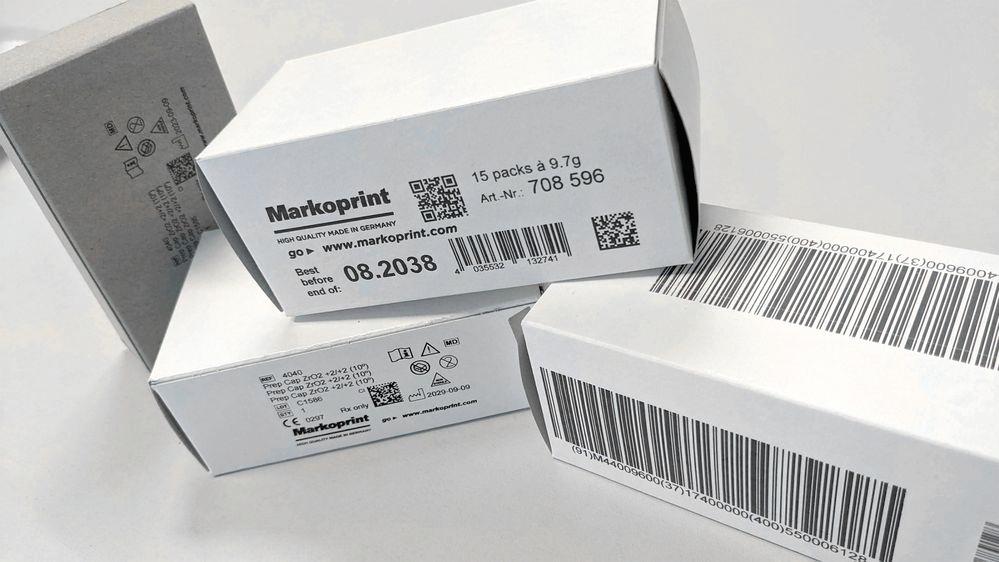
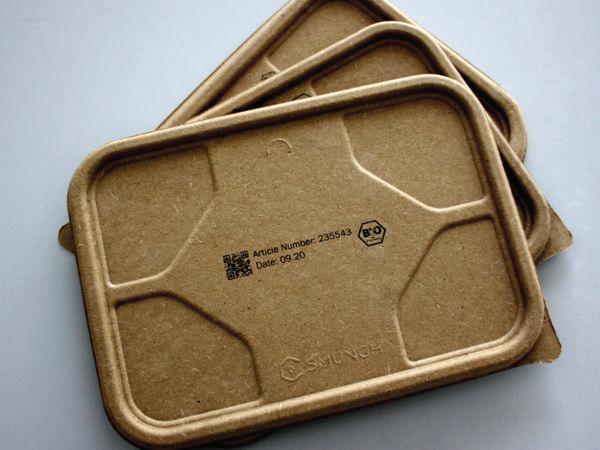
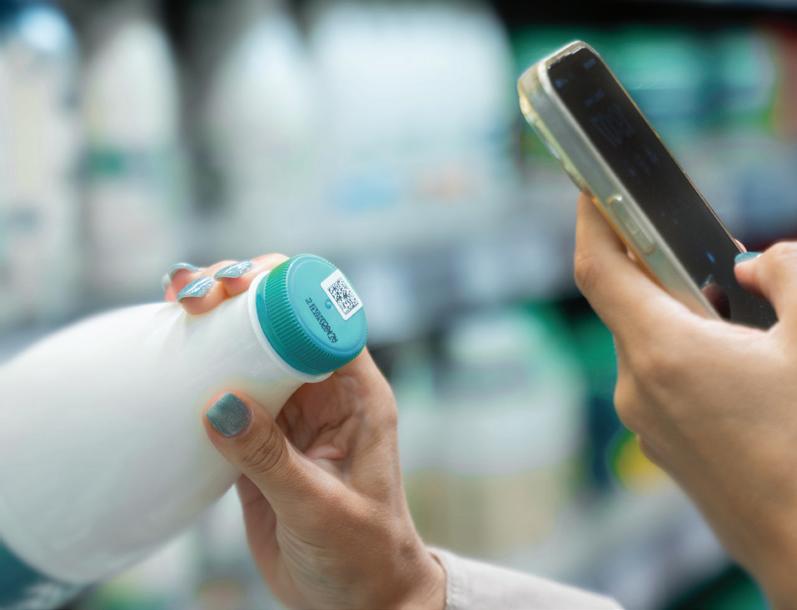
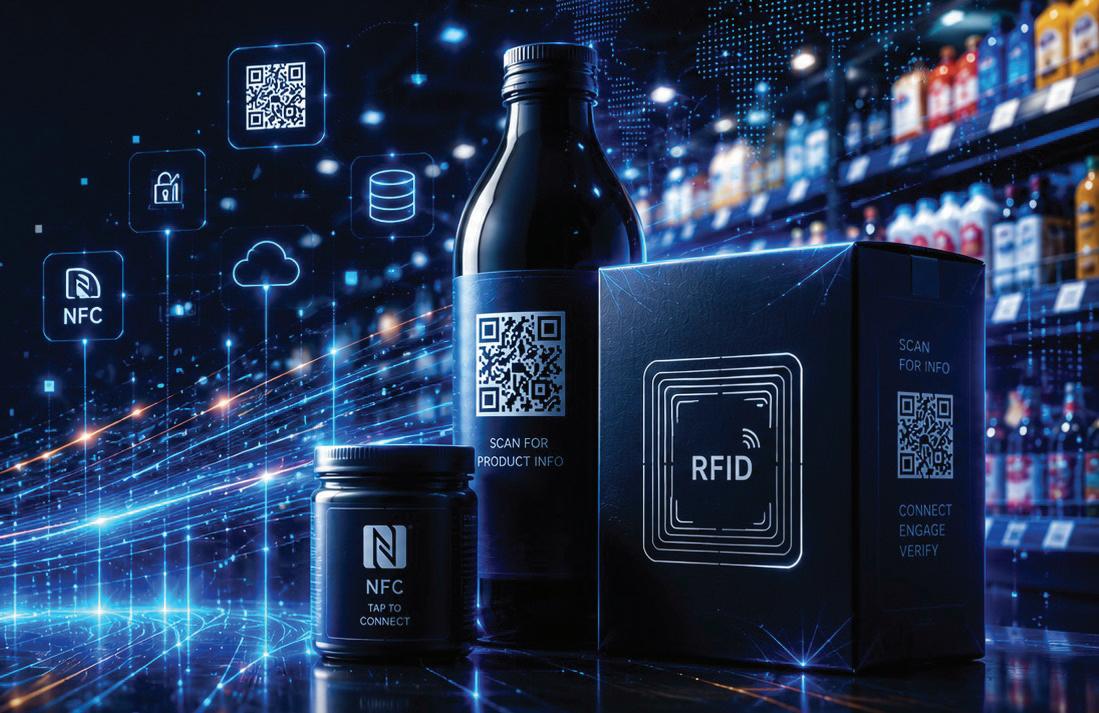
Today, it increasingly connects products to digital systems. A QR code can link consumers to recipes, loyalty programs, promotions, sustainability information, or authentication tools. RFID tags can improve inventory visibility and replenishment accuracy. Serialized 2D barcodes can support recalls, traceability, and anti-counterfeiting efforts while linking products to cloud-based information that can be updated long after the package is printed.
As Jenny Stanley, founder and managing director of Appetite Creative, explains, “The QR code, NFC tag, or digital marker on-pack is not a link to a website. It is a gateway to a digital instance of that specific product, right down to the SKU level.”
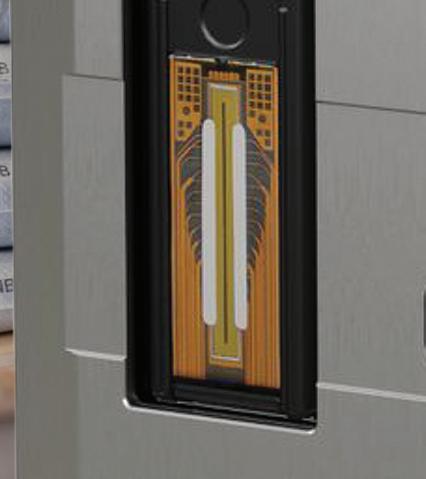
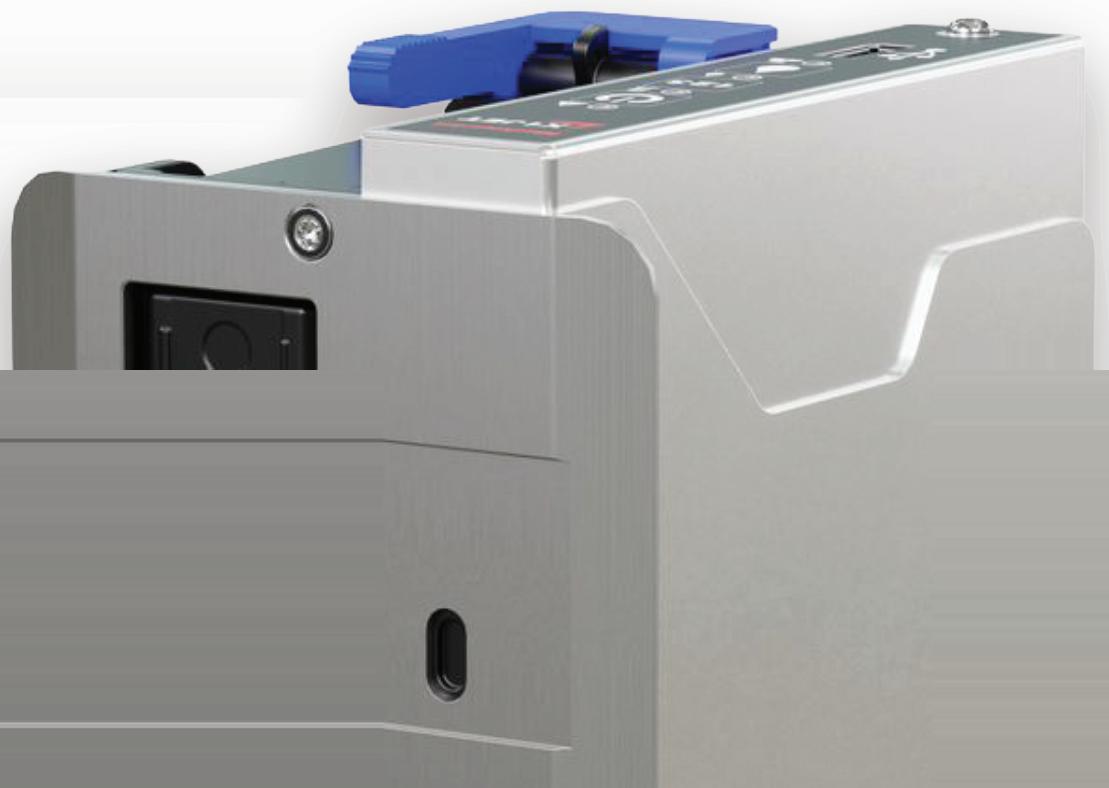
As more products carry serialized QR codes, RFID labels, and cloudconnected identities, packaging lines are being asked to manage much more than static printing and labeling. Coding and labeling systems that once applied static UPCs and expiration dates now must manage serialized identities, high-resolution 2D codes, RFID encoding, verification workflows, and cloud-connected data systems.
Several industry initiatives are accelerating those changes simultaneously. GS1 Sunrise 2027 is pushing retailers and brands toward data-rich 2D barcodes. Digital Product Passport (DPP) initiatives are expanding expectations around product-level transparency. FSMA 204 is increasing pressure for more detailed traceability systems. And, retailers continue expanding RFID requirements, while brands are looking for more direct ways to connect with consumers as traditional digital advertising tools become less effective.
Connected packaging initially gained traction through consumerfacing QR-code campaigns tied to promotions and digital engagement. Many companies now are treating connected packaging as core opera-
tional infrastructure. “Brands are starting to understand that connected packaging is not just a marketing channel,” Stanley explains. “It’s a data infrastructure for the entire product lifecycle.”
Appetite Creative’s 2026 Global Connected Packaging Survey found that 81.2% of respondents are actively using connected packaging technologies, while 45.2% cited regulatory compliance as a key driver.
Retailer initiatives are accelerating adoption as well. Walmart continues expanding RFID requirements into additional CPG categories, while Amazon’s Transparency program uses serialized 2D codes to support product authentication and anti-counterfeiting efforts.
A single package may now carry:
• A QR code for consumer engagement
• A serialized identifier for traceability
• An RFID label for inventory visibility
• Cloud-connected product information tied to DPP requirements
Much of the industry’s current attention centers on GS1 Sunrise 2027, which aims to transition retail from traditional UPC barcodes to data-rich 2D barcodes. The initiative does not require brands to replace UPCs by 2027. Instead, the goal is ensuring retail point-of-sale systems can read and process 2D barcodes.
Unlike UPCs, 2D barcodes can carry expiration dates, batch information, serial numbers, URLs, and other product-level data while still functioning at checkout. That creates opportunities for traceability, authentication, recalls, and consumer engagement. It also creates practical packaging challenges. During the transition period, many companies will need both a UPC and a 2D barcode on the same package. GS1 guidance recommends placing the codes within 50 mm of each other to reduce scanning errors.
At GS1 Connect in late 2025, Kenvue reported that it was already printing 2D barcodes on hundreds of SKUs (see pwgo.to/9110). According to Prakash Christopher, director of digital identification and trace-





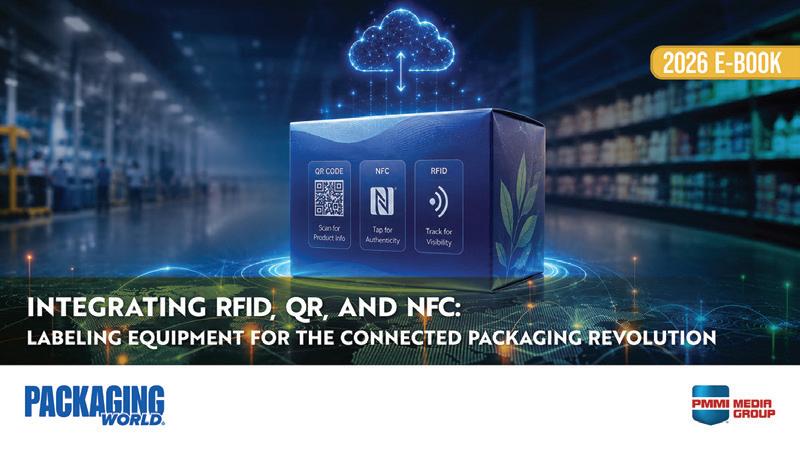
Scan the QR code to access this PW 2026 e-book that examines how companies are adapting packaging operations and coding and labeling systems to support connected packaging.



xed once the package is printed. Brands can update promotions, recipes, sustainability information, tutorials, and other digital content over time without redesigning or reprinting packaging.
Danone’s Alpro brand recently worked with Appetite on QR-enabled aseptic drink cartons and single-serve yogurt cups to launch a mobile gaming experience designed for children (see pwgo. to/9109). The experience linked consumers to a web app featuring game characters, educational content, and promotions tied to the company’s plant-based product line. Because the experience could be updated dynamically, the company could refresh promotions and messaging.
“The pack is the entry point,” Stanley says. “The rest of the marketing ecosystem should drive people toward it and build on what they discover there.”
But industry experts say engagement depends heavily on execution. “The value exchange is everything,” Stanley explains. “If you get that wrong, no amount of clever technology or polished UX will save you.”
Serialization, RFID encoding, and dynamic QR-code generation are creating new technical challenges for packaging operations. Maintaining print quality, verifying data integrity, and keeping information synchronized across multiple systems all become more dif cult once connected packaging moves to full production speed.
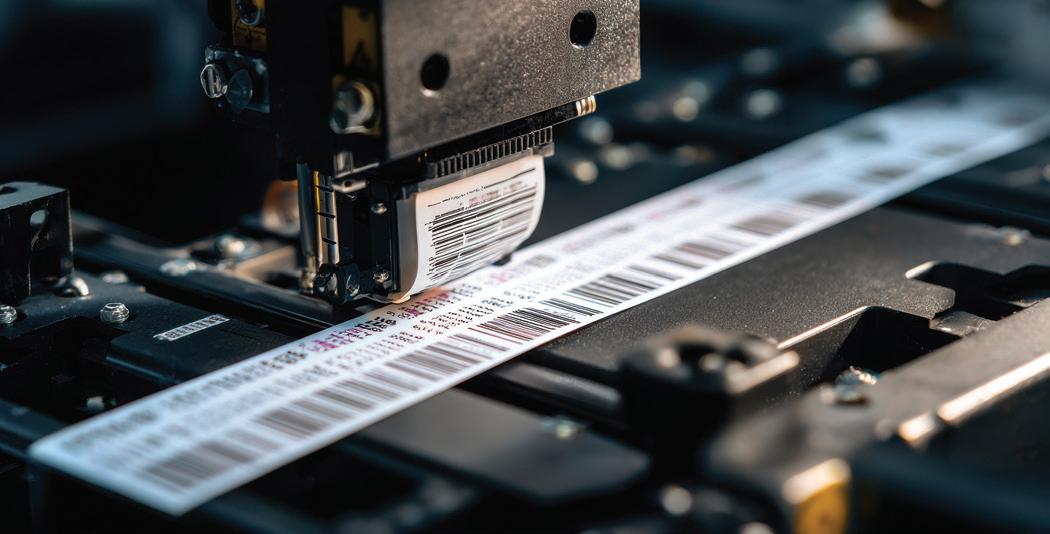
Coding and labeling systems are taking on a more data-intensive role as connected packaging requires accurate printing, veri cation, and synchronization at production speed.
Coca-Cola’s Vann says many brands want dynamic QR codes capable of carrying batch and lot information while remaining readable at full production throughput. “But it’s not there yet,” he says. “The technology isn’t ready, especially with printing.”
At production speed, even small failures can create larger downstream problems. A poorly printed QR code, an unreadable RFID tag, or mismatched serialized data can lead to inventory inaccuracies, traceability gaps, or failed consumer interactions. As a result, vision systems increasingly are being integrated directly into coding and labeling architectures to validate barcode readability, print quality, serialized data, and RFID encoding in real time.
Packaging operations now support far more than traditional coding and labeling. They increasingly help manage product identity, traceability, retailer compliance, and consumer-facing interactions as connected packaging becomes more deeply integrated into supply chains and retail environments. PW





















Waia-kea Hawaiian Volcanic Beverages collaborates with technology partners over five years to formulate a carbon-negative algae-based ink designed for commercial UV flexo label printing.
By Anne Marie Mohan, Senior Editor
Waia-kea Hawaiian Volcanic Beverages is extending its sustainable packaging strategy beyond the bottle and onto the label, becoming the first brand to commercialize beverage labels printed with UV flexographic ink made with a carbonnegative, algae-derived pigment.
The development was a natural fit. Innovation around environmentally friendly packaging has always been core to the company. “Our commitment to prioritizing sustainable packaging is in our origin story,” says Ryan Emmons, cofounder and CEO of Waia-kea Hawaiian Volcanic Beverages. “We built the brand on a triple bottom line model back in 2012, prioritizing circular packaging, sustainable sourcing, and a commitment to community.”
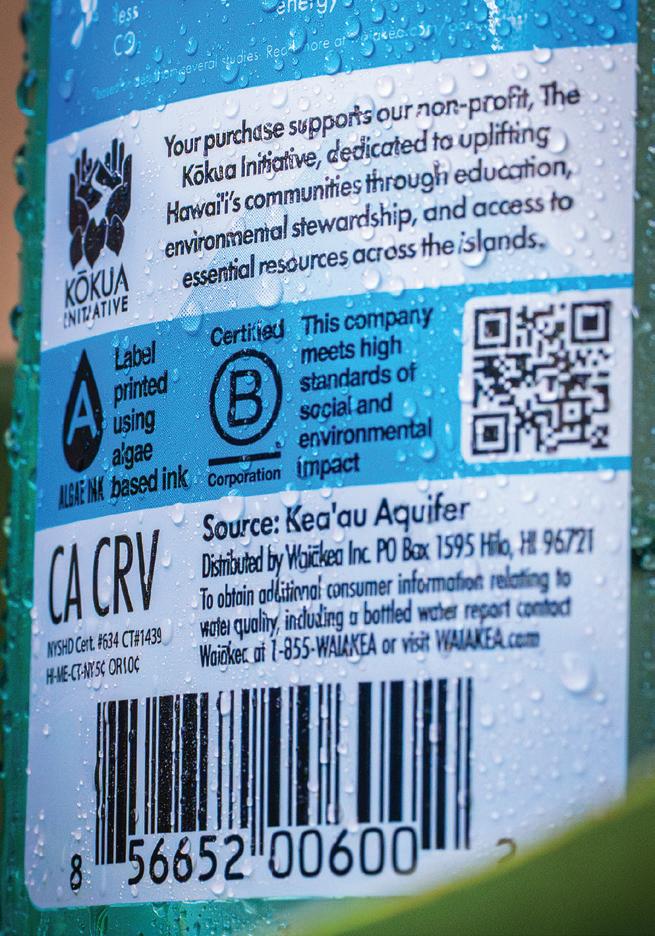
According to Emmons, Waia-kea was one of the first beverage brands in North America to commercialize bottles made from 100% post-consumer recycled PET and later expanded those efforts with its OceanPlast bottle, made from recycled ocean-bound plastic. The company has also invested in regenerative sourcing practices and “noempty-mile” logistics technologies, and founded the Ko-kua Initiative, a non-profit foundation focused on education, conservation, sustainability, and support for vulnerable communities in Hawaii.
Within its broader packaging efforts, Waia-kea has more recently turned its attention to smaller packaging components, including labels, inks, and pigments, as another way to reduce environmental impact at scale.
Waia-kea began exploring algae-based packaging in 2018, but not initially as an ink project. The company first looked at algae biopolymers as a possible replacement for rPET, traveling abroad to visit packaging facilities and speaking with scientists and environmental experts. On paper, Emmons says, the idea looked promising. But when Waia-kea assessed the full lifecycle, including infrastructure, scalability, and endof-life realities, the company concluded that replacing the bottle material would not reduce its overall footprint at scale.
“That realization brought us back to 100% rPET as still the most
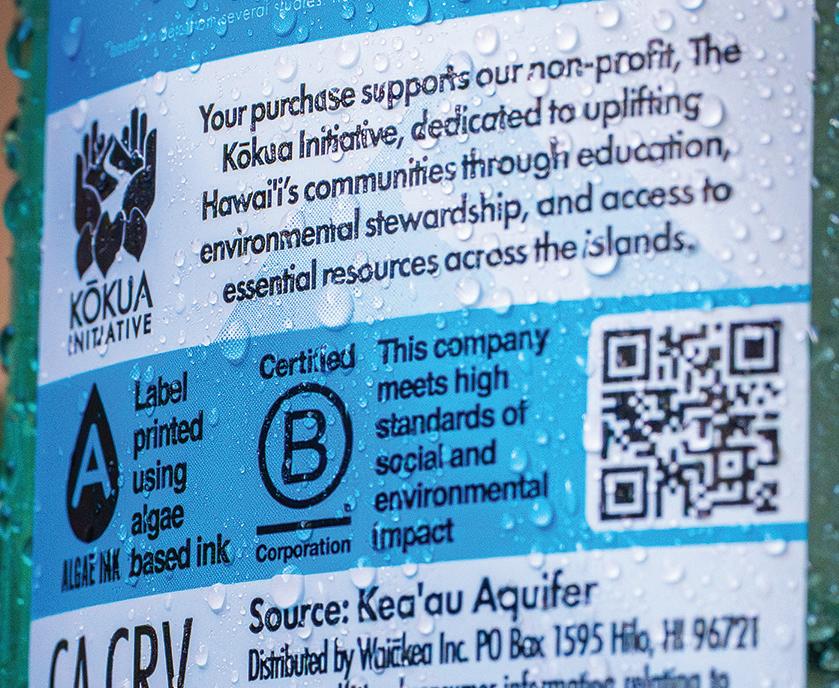
The back label on Waia-kea’s OceanPlast bottle uses algae-based black ink printed on a recyclable polypropylene label substrate. Previously used in apparel, packaging, and publication-printing applications, Living Ink Technologies’ Algae Black pigment is used for 75% of the text on the Waia-kea bottle labels.
responsible commercial use option for the bottle itself, based on existing recycling systems and data,” Emmons says. “That led us to explore options outside of the bottle itself and look at things like the labels and where we could improve materials there.”
That search eventually brought Waia-kea to Living Ink Technologies, a Colorado-based company that has spent years developing algaederived pigments and inks for applications ranging from apparel and packaging to publication printing. Earlier commercial applications included Nike shoe packaging (see pwgo.to/9115), Patagonia apparel tags, and Crocs Jibbitz charm cartons (see pwgo.to/9116) printed with algae-based pigments.
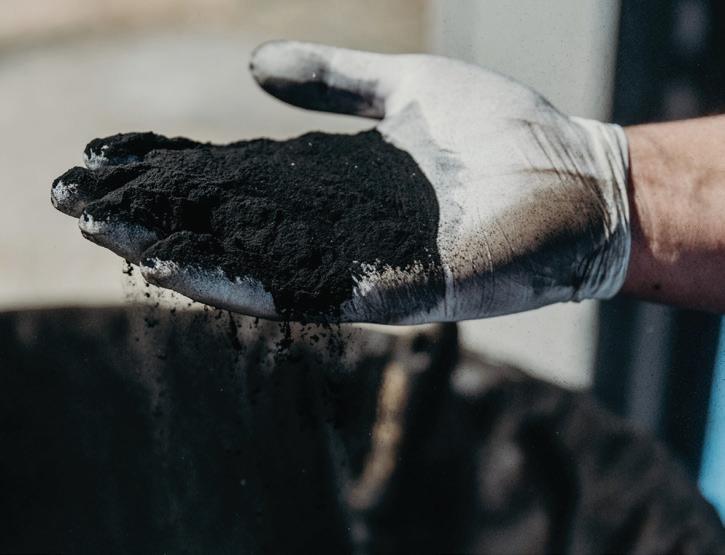
Living Ink’s Algae Black pigment replaces petroleum-derived carbon black with a bio-based alternative made from discarded algae biomass.
As Devon Murrie, director of partnerships at Living Ink explains, the biomass, a byproduct of large-scale algae cultivation for food and nutrition applications, is processed through pyrolysis in an oxygen-free environment to become a form of biochar. The material is then purified and refined into Algae Black pigment.
Murrie says the process is carbon negative because the algae sequesters atmospheric CO2 during its growth cycle, while the use of discarded biomass avoids greenhouse gas emissions that would occur if the mate-






rial were landfilled. By converting the organic matter into a stable pigment, the process effectively locks away carbon that would otherwise be released through decomposition.
“Unlike traditional carbon black produced by burning petroleum, our process turns the pigment itself into a tool for permanent carbon sequestration,” Murrie says.
The next challenge was turning that pigment into a commercial UV flexo ink that could meet the demands of CPG label production. That work brought Actega into the project. In 2024, Actega and Living Ink entered a joint development agreement, working with Waia-kea to advance the formulation and bring the ink to a level suitable for wider commercial use.
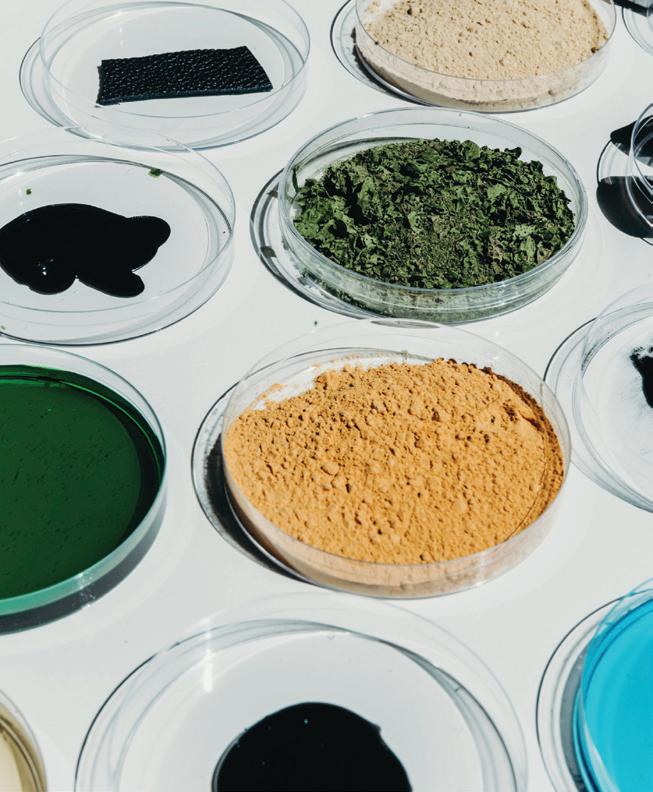
As Claudio Kristeller, head of global technology group inks at Actega, explains, UV flexo printing systems use ultraviolet light to cure inks instantly and can be used across a wide range of non-absorbent substrates, including films, foils, metallized films, and synthetic paper. The technical challenge was incorporating the algae-based pigment into a UV flexo ink system, where achieving proper pigment dispersion can be more difficult than in conventional formulations. Dark pigments also absorb UV light, competing with the photoinitiators needed to cure the ink, which required additional development work to ensure reliable curing performance on press.
Actega selected Living Ink’s Premium Algae Black dry powder for the formulation, based on the requirements of Waia-kea’s converter, NextGen Label Group. Kristeller says Actega’s existing ACTExact UV-curable platform gave the company a head start because the platform had already been used in a broad range of flexo applications.
Press trials with NextGen Label Group were central to commercial validation. The ink was evaluated for color strength, curing performance, rheology, adhesion, and chemical resistance. Living Ink says the pigment also had to meet packaging-specific performance requirements, including rub resistance and durability through moisture expo-





























Living Ink Technologies’ algae-derived pigments and ink components are produced from discarded algae biomass, which is processed and refined into carbon-negative Algae Black pigment for commercial printing applications.
sure, transport, and refrigeration.
Kristeller says the ink is compatible with conventional UV flexo systems and should not require equipment modifications, though Actega still recommends press trials before larger-scale adoption. “In principle no modifications are necessary,” he says, “but the presence of a novelty component makes it advisable to test the ink prior to using.”
Kristeller adds that the primary barrier to broader industry adoption will likely be scaling availability of the algae-based pigment itself, since the rest of the raw materials used in the formulation are already common in UV-curable ink systems.
Before working with Actega, Living Ink’s algae-based ink systems had largely been used in conventional printing applications. The partnership opened the door to wider use. “Actega’s expertise in UV-curing chemistry and large-scale manufacturing allowed us to enter the UV flexo market, a high-volume category we hadn’t previously penetrated,” Murrie says. “This made our technology accessible to major label converters without requiring them to change their existing equipment or workflows.”
Waia-kea is using the algae-based ink on its existing polypropylene labels. However, Emmons says the change was not as simple as swapping one ink for another, because the formulation and curing process required rigorous testing to ensure the final label could perform at scale.
“We chose to start with our black ink because it’s our most widely used color and, historically, one of the most carbon-intensive,” Emmons says. “It’s a high-impact entry point that allows us to drive measurable change












Electronic position indicators with fieldbus connection for comparison of target / actual value and intuitive operation
Compact actuators for fully automated changeover - ideal for frequent positioning and high quality requirements
Easy upgrade options due to mechanical compatibility of all SIKO positioning systems
IO-Link in the most compact position indicator
immediately while we map out the rest of the label’s evolution.”
Currently, 75% of the text on the back label of Waia-kea’s OceanPlast line uses Algae Black. Black is the only algae-based pigment currently available for this application, though Waia-kea says it plans to expand into additional colors in the future.
Performance was a non-negotiable requirement. Emmons says Waia-kea’s “no-compromise” rule meant the sustainable ink had to match the petroleum-based standard in durability and aesthetics. While the algae-based ink carries a slight premium, he says that premium is almost negligible when amortized across the full cost of the label.
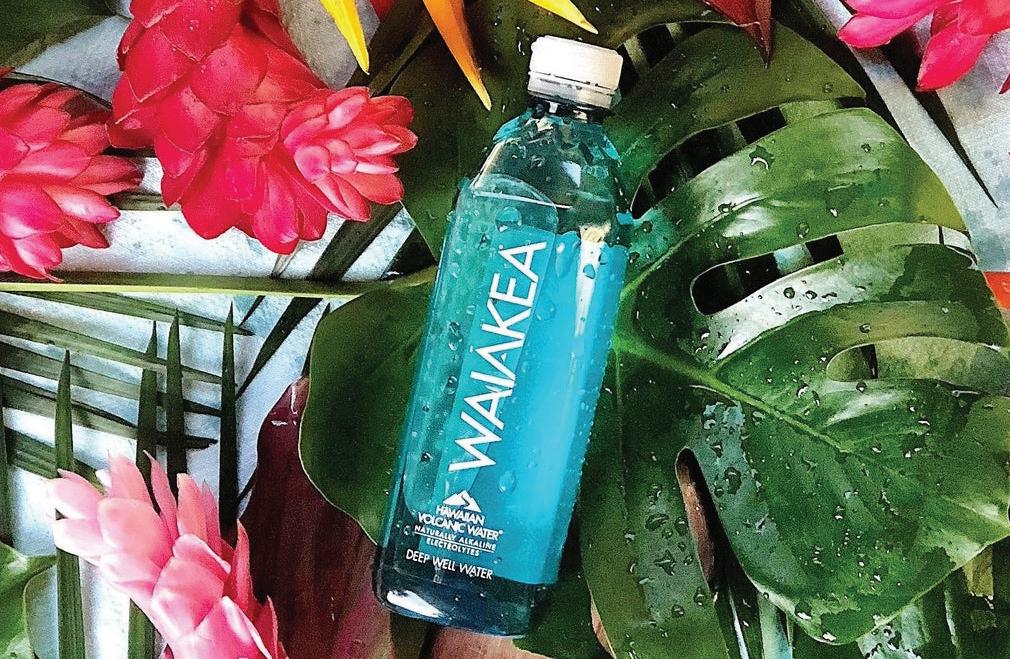
Waia-kea’s sustainable packaging initiatives include a 100% rPET bottle made from ocean-bound plastic and algae-based ink on its beverage labels.
The environmental case rests largely on replacing conventional carbon black, which is typically petroleum-derived. Actega says conventional black ink has a product carbon footprint of 4.27 CO2equivalent, while ACTExact UV Black Algae Ink reduces that value to 1.66 CO2e.
Living Ink’s lifecycle assessment for Algae Black pigment shows a net impact of -4.16 kg CO2e per kilogram of pigment. According to Waia-kea, if the global supply of black pigment were replaced with Living Ink’s Algae Black, it could prevent and remove an estimated 100-plus million metric tons of CO2e emissions annually, roughly equal to taking 25 million cars off the road.
That potential industry-wide impact is one reason Waia-kea is opening access to the technology through its partners. “The decision came down to impact over ownership,” he says. “While we invested years into developing and scaling this solution, keeping it proprietary would have limited its potential to create meaningful environmental change. By opening access through our partners, we’re prioritizing adoption across industries, not just within our own products.”
For now, labels are the starting point. “We’re actively working with our partners to understand what adjustments would be needed and how quickly we can expand beyond labels,” Emmons says. “Labels were the natural starting point given their scale and immediate impact across every unit, but we’re now exploring additional applications.” PW
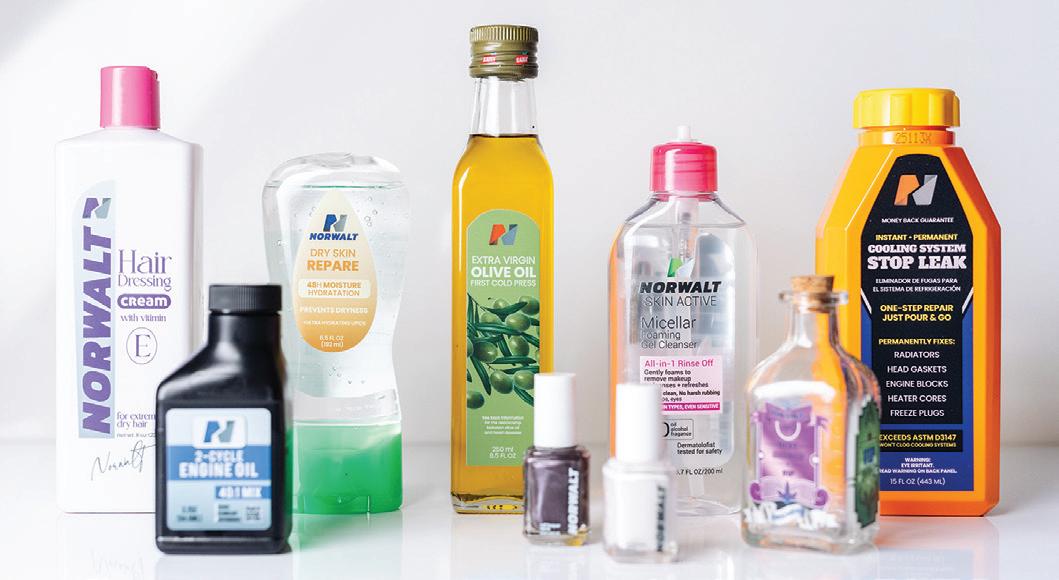
Norwalt Automation Group applied Beckhoff’s XPlanar magnetic planar transport technology to a direct-to-object printing platform designed to handle multiple package geometries through software-defined motion rather than dedicated mechanical changeparts.
By Matt Reynolds, Chief Editor
For CPGs and pharma companies managing track and trace, shorter production runs, SKU proliferation, regional packaging variations, and even emerging examples of mass customization, conventional labeling workflows can create operational friction. Large inventories of preprinted labels require storage space. Changeovers consume production time, and introducing limited-edition or test-market packaging can become costly.
To address those challenges, Norwalt Automation Group developed a direct-to-object printing platform designed to handle multiple package geometries with software-driven flexibility rather than dedicated mechanical changeparts. The machine, called the Tesseract, combines digital printing with Beckhoff’s XPlanar magnetic planar transport system and a PC-based controls architecture.
The resulting system allows packages to move independently beneath printheads while rotating, translating, and adjusting position dynamically during the print process.
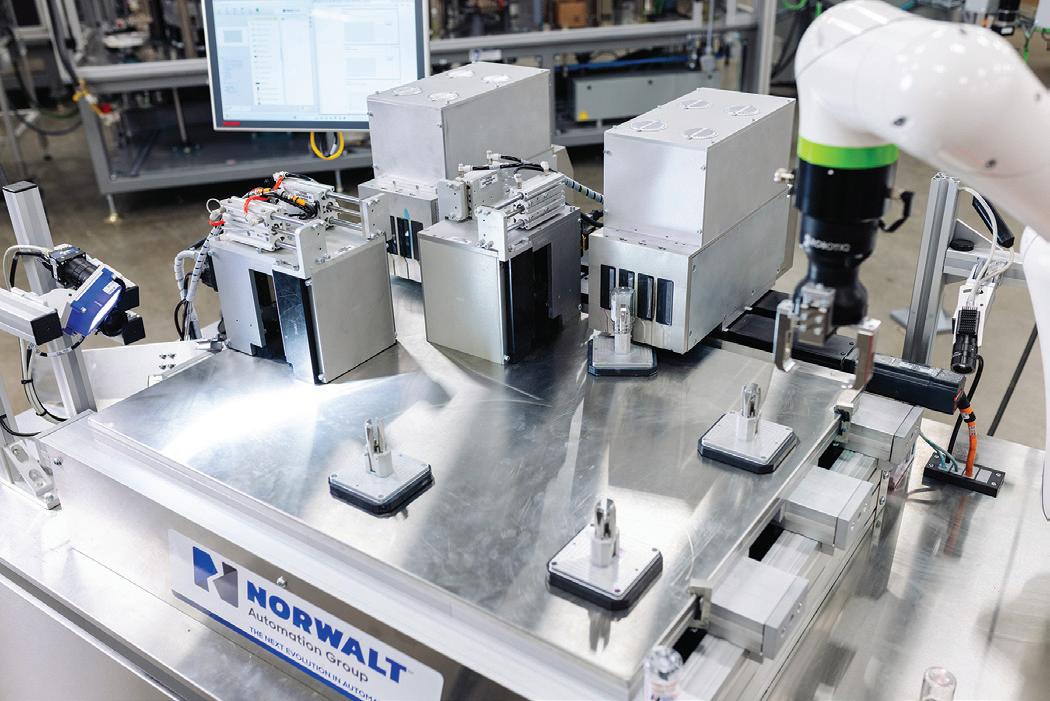
The Tesseract from Norwalt is an advanced direct-to-object printing machine based on XPlanar adaptive automation technology.
“We had a big push toward flexible machinery so customers could go about different business concepts like customization with print, or better demand forecasting,” says Kyle Seitel, Norwalt technical sales director.
The family-owned machine builder, headquartered in Randolph, N.J., serves industries including packaging, pharmaceuticals, food and beverage, and digital printing. According to the company, increasing demand for regionalized SKUs, seasonal packaging, and shorter product runs pushed Norwalt toward a more flexible direct-printing approach.
Traditional label-printing workflows often rely on large reels of preprinted labels, which can create storage requirements, inventory exposure, and material waste during changeovers or product updates.
“A lot of time, what happens in the CPG market is costs start shooting through the roof because you’re ordering large reels of labels, you have to hold them in an air-conditioned unit, and it takes up a lot of space that could be dedicated to other manufacturing,” says Seitel. “When you move to direct-to-object printing, you’re basically replacing label reels
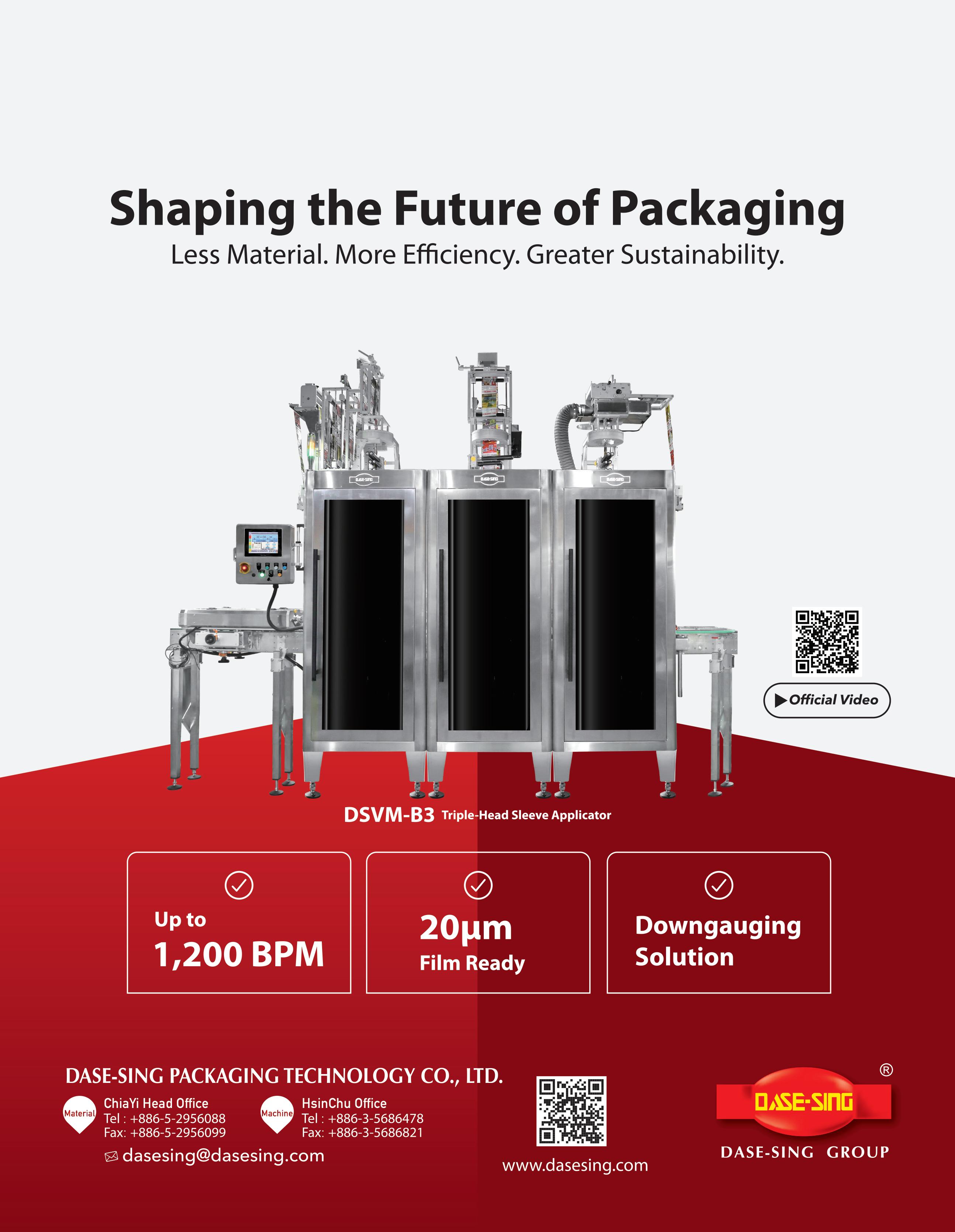
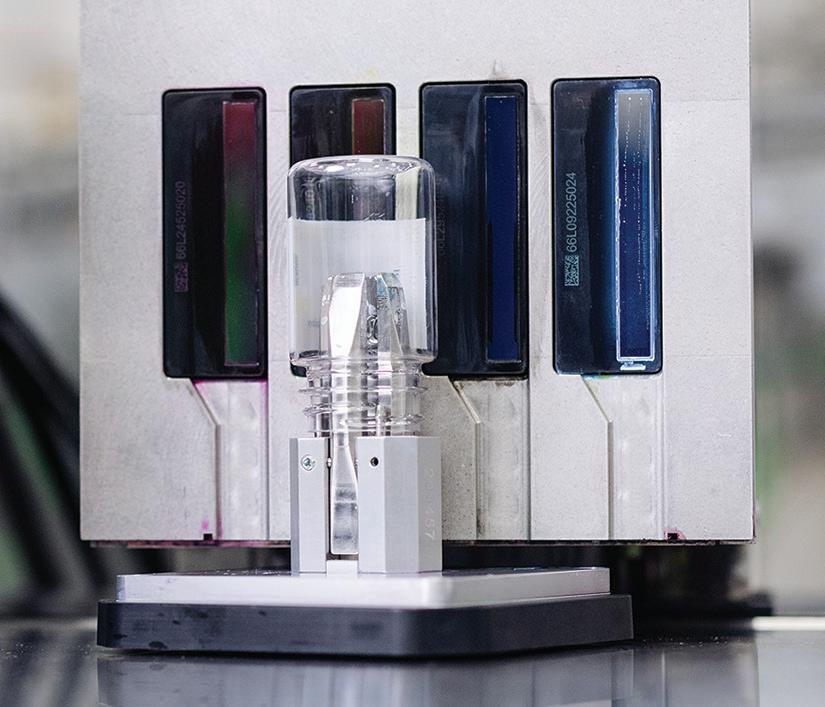
XPlanar movers can float and fly with 6 deg of freedom, so containers are moved optimally around the printheads for high-quality labeling.
with ink. A bottle of ink goes a long way and doesn’t need to be put in a special room. Lowering costs.”
Norwalt’s goal was to create a machine capable of printing directly onto a wide range of package geometries while minimizing mechanical changeover requirements. Conventional direct-to-object systems can struggle with irregular or tapered containers, often requiring dedicated fixturing or fixed-motion systems tailored to a specific package.
The Tesseract instead uses software-defined motion to reposition packages dynamically beneath the printheads.
At the center of the system is Beckhoff’s XPlanar technology, which uses magnetically levitating movers traveling across planar tiles. Each mover can independently transport and position a package while coordinating movement with the printing process.
The approach allows packages to rotate 360 deg, move in X and Y coor-

Visit pwgo.to/9114 or scan the QR to watch a video of Norwalt Automation Group’s direct-toobject printing platform.
dinates, and adjust Z-axis height as much as 5 mm during printing. According to Norwalt, that flexibility helps the machine accommodate a broader range of package shapes without extensive mechanical reconfiguration.
Norwalt says the original concept emerged after company engineers saw an XPlanar demonstration and began exploring whether planar transport could simplify direct-to-object printing for multiple container geometries.
“That’s the real beauty of XPlanar—as we run out of room, we can just keep adding tiles,” says Seitel.
The machine’s modular architecture also allows print stations and planar tiles to be expanded as throughput requirements increase.
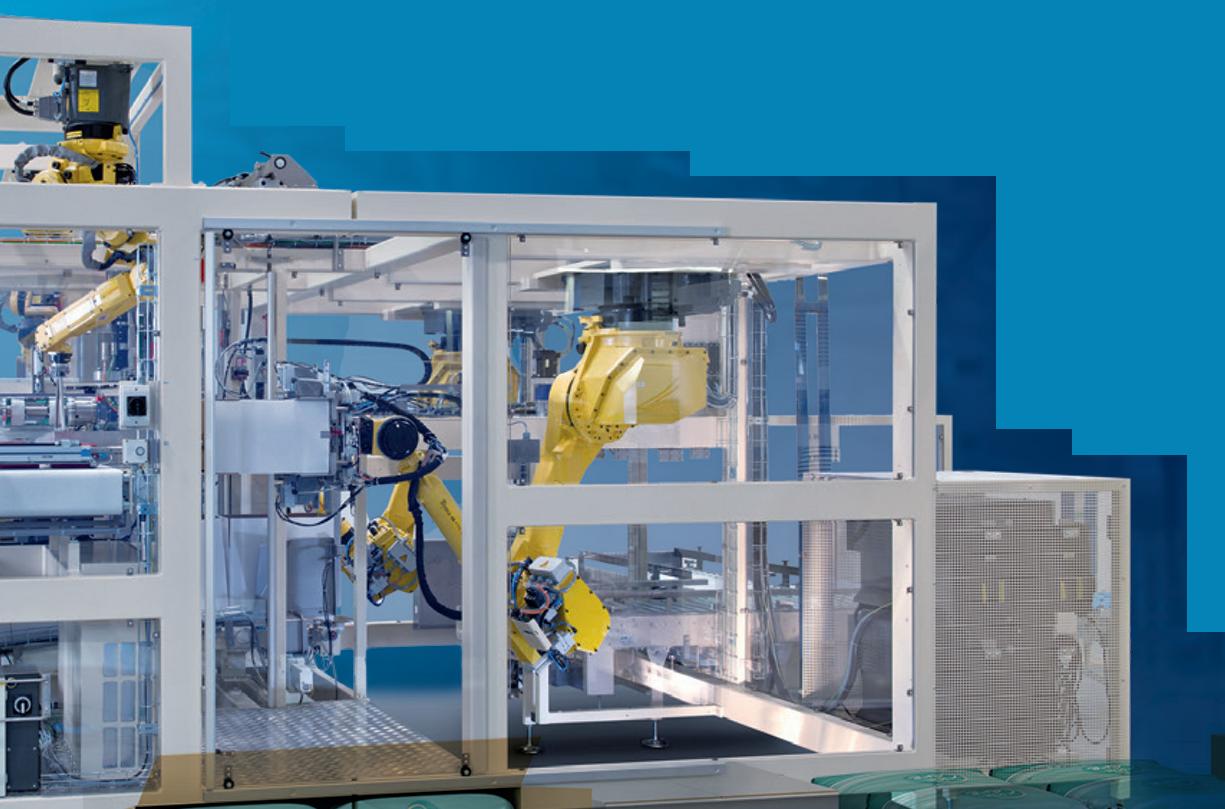
In the Tesseract system, containers are loaded onto XPlanar movers by a robotic handling system before being transported through the print area.
Rather than relying on fixed mechanical timing, package movement is controlled through software-defined motion profiles. Packages can rotate or reposition dynamically beneath the printheads while main-















taining synchronization with the print process.
“We don’t have to modify any of the Tesseract’s mechanical components. We can do everything on the fly with just the press of a button,” says Norwalt Controls Engineer Darshan Nayee.
Norwalt used Beckhoff TwinCAT automation software as the development environment for motion control, PLC functionality, HMI, and safety integration. TwinCAT runs on a Beckhoff CX2062 Embedded PC platform.
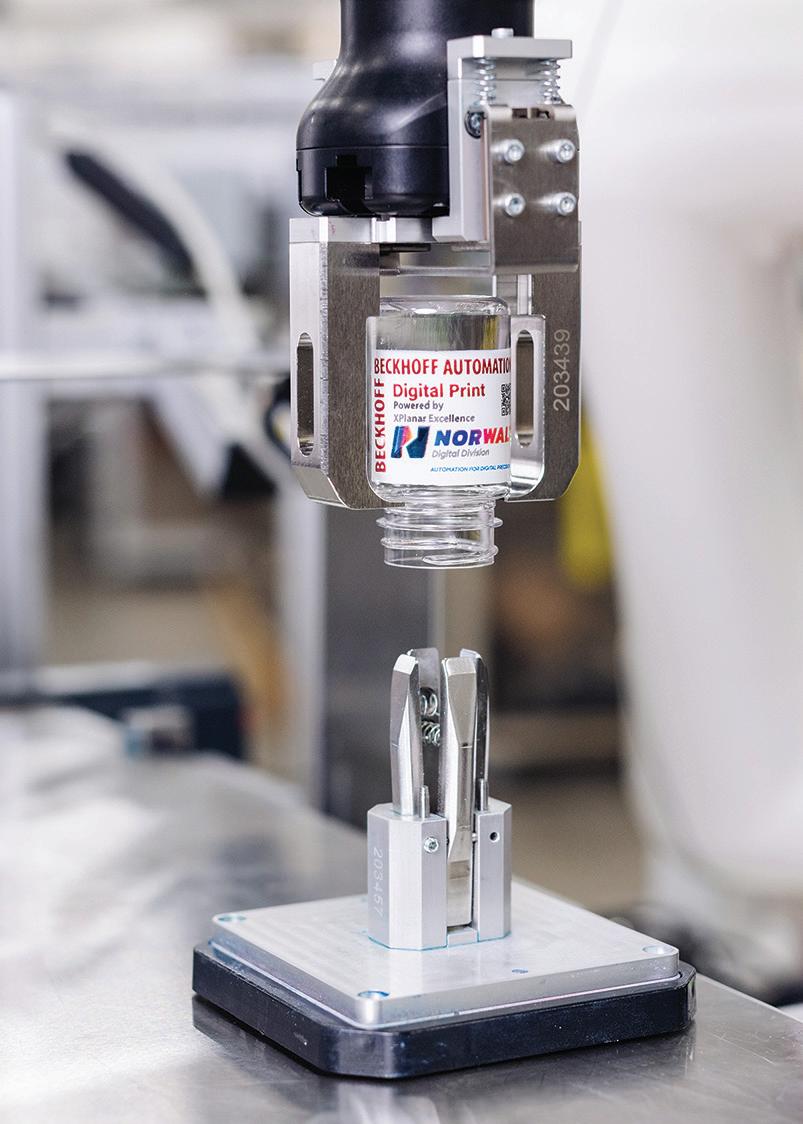
For additional motion control tasks, the machine uses ELM7212 servo terminals and AM8000 servomotors connected over EtherCAT.
According to Norwalt, EtherCAT communication helped maintain tight synchronization across distributed motion and I/O devices while also simplifying commissioning and diagnostics. Instead of manually configuring large numbers of networked devices individually, engineers can scan the EtherCAT network to identify connected components and troubleshoot wiring or communication issues more quickly.
A robot removes containers from the magnetically floating XPlanar movers when printing is complete.
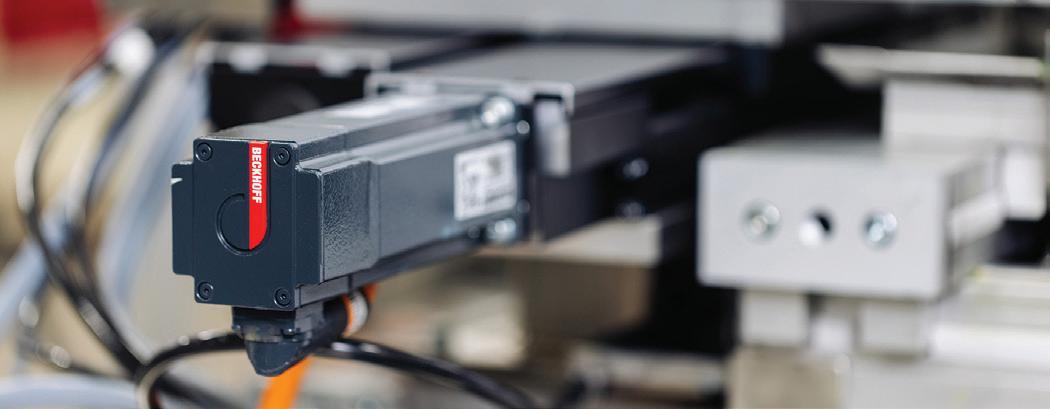
DIN rail mounted ELM7212 servo terminals and connected AM8000 series servomotors control printhead positioning to ensure smooth overlay of multiple ink colors.
Machine safety functions are integrated through TwinSAFE I/O terminals and Safety over EtherCAT (FSoE).
The operator interface uses TwinCAT HMI software displayed on Beckhoff CP22xx multi-touch Control Panels and CP3xxx Panel PCs. Norwalt also incorporated a PackML state machine into the HMI structure.
Norwalt says the project also pushed the company toward a more modular software-development strategy.
Using TwinCAT’s structured text and object-oriented programming capabilities, engineers developed reusable function blocks, motion profiles, properties, and methods that could be standardized across machines.
The text-based software environment also allowed the company to adopt conventional software version-control practices including branching, commits, and merges.
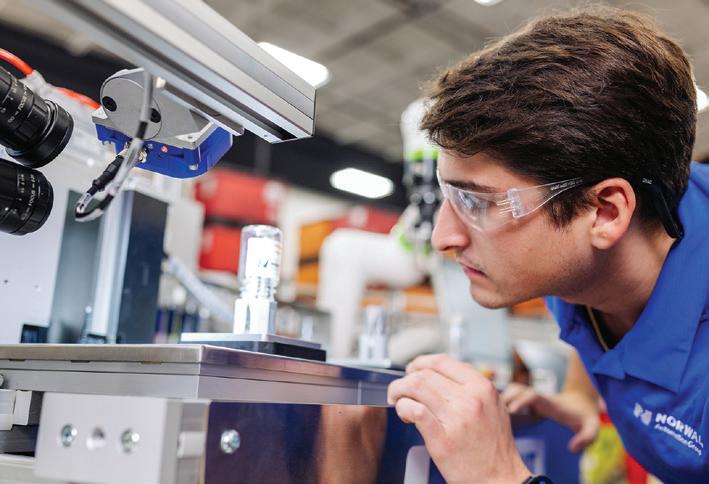
Precise control and tightly synchronized EtherCAT communications allowed multiple color passes with the registration accuracy required for high‑quality results.
Norwalt says that this adoption reduced programming and software-merge time while simplifying machine updates and field modifications.
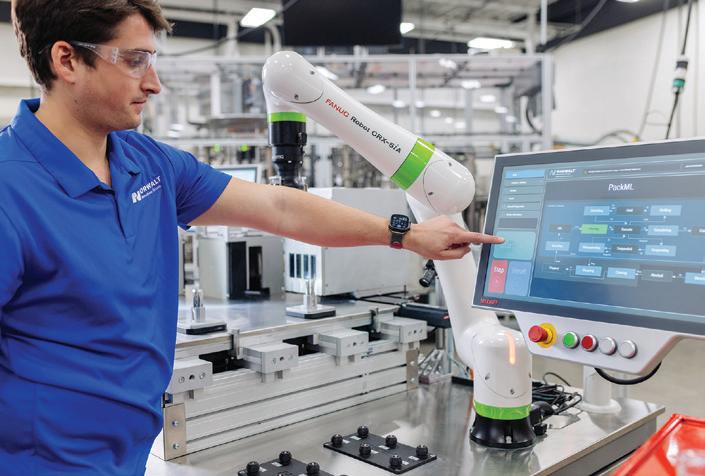
The company also worked closely with Beckhoff USA’s Special Projects Team during development and integration.
“I couldn’t have asked for better people to get me to a point where I can take projects and run them on my own,” says Michael Forte, controls engineer at Norwalt.
Norwalt says the Tesseract project delivered benefits in both machine flexibility and mechanical simplification.
By replacing portions of traditional mechanical transport systems with planar motion, the machine reduced the number of conventional moving components and mechanical changeparts required for different package formats.
“Mechanically, it reduces the cost of a machine by 30% to 40%, saving hundreds of thousands of dollars,” says Keith Harman, Norwalt’s
requirements, according to the company.
Fewer mechanical components also reduced maintenance requirements and simplified troubleshooting.
“And for any errors we do get, 95% of all fixes can be handled remotely because there’s no mechanical failure to correct,” says Harman.
Norwalt also says the synchronized motion architecture improved print registration accuracy during multiple color passes. The ability to dynamically adjust package height using XPlanar movers helped support print consistency across varying container geometries without mechanical repositioning.
Together, planar transport, synchronized motion control, and software-defined package handling allowed Norwalt to build a direct-toobject printing system capable of accommodating a wider range of package types than conventional fixed-motion systems.
For Norwalt, the project represented an effort to simplify changeovers





























Pine Glo replaces manual case packing with a modular robotic system, improving efficiency, reducing labor, and enabling fast changeovers across a growing SKU mix.
By Anne Marie Mohan, Senior Editor
Founded in 1979 when Robert Diehl began developing cleaning formulas in a family bathtub, Pine Glo Products now manufactures disinfectants and oor cleaners sold through retailers that include Walmart, Family Dollar, and Dollar General. The company ships more than 20 million bottles annually.
Over the years, as volumes increased, manual case packing became a constraint. To replace the labor-intensive process and support continued growth, Pine Glo Products installed three robotic case packers at its Zebulon, N.C., facility. The modular end-of-line system automatically erects, loads, and seals shipping cases while enabling instant changeovers across a number of SKUs. The result has been a signi cant reduction in manual labor and a signi cant increase in line ef ciency.
Hand-packing creates bottlenecks
Before automation, operators packed cases by hand across a mix of bottle sizes and spray formats. The process was labor intensive and increasingly dif cult to staff. In addition, labor shortages during the pandemic added urgency. “Staf ng was quite an issue, so we had to nd a way to ef ciently get our product out and
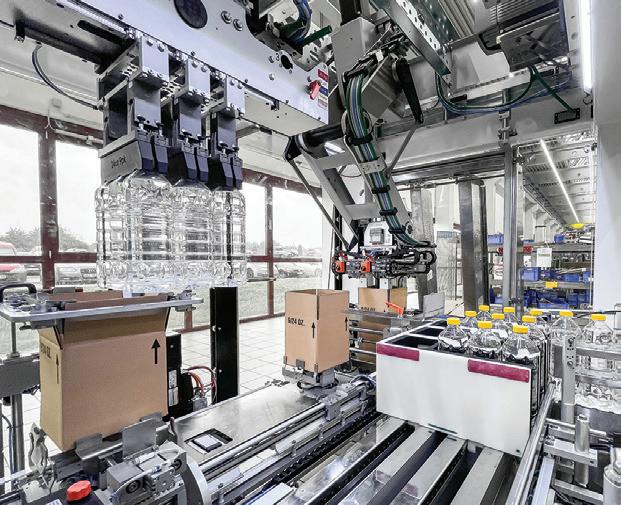
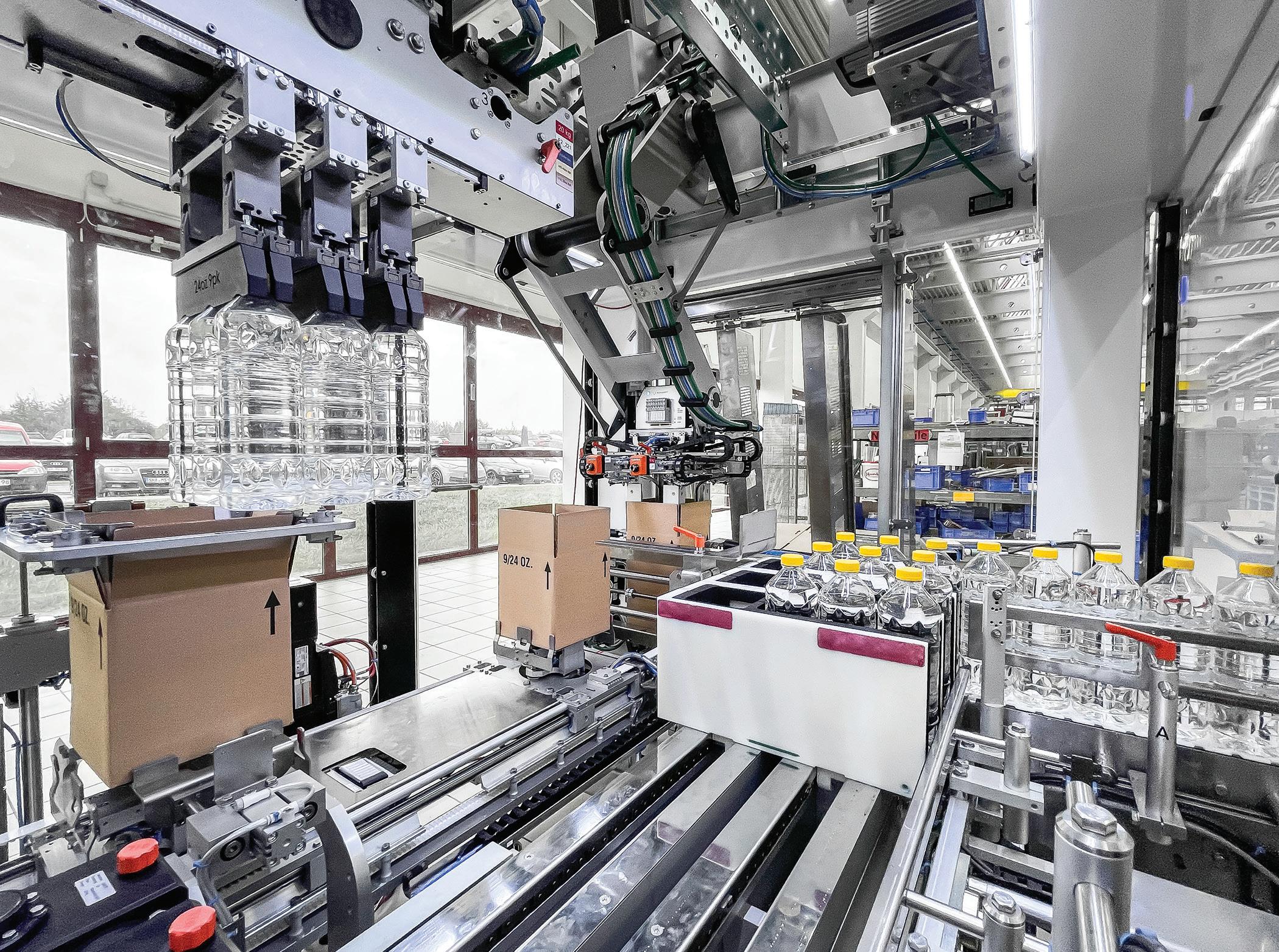
Pine Glo’s new robotic case-packing system erects, lls, and seals cases in one cell, replacing manual labor while enabling fast, exible changeovers across multiple product formats.
minimize the amount of labor to do so,” says Steven Williams, production and engineering manager.
Product variety further complicated operations. With more than 16 SKUs running on a single shift, the company needed fast, reliable changeovers. “We need real-world exibility to change at a moment’s notice when the orders come in,” Williams says.
Adds Pine Glo Products President Matthew Diehl, “We wanted to reduce manual labor, increase throughput, and improve overall job satisfaction.”


A compact, modular approach to case packing
Williams approached the project with extensive packaging experience and a structured evaluation process. “My background was 25 years of experience in the pharmaceutical packaging industry. I went to PACK Expo in Chicago and in Vegas and networked there,” he says.
After evaluating automation options, Pine Glo installed three preconfigured lightline Casepackers from Schubert. Each system is built as a compact, single-module unit, designed to integrate into existing lines with a relatively small footprint of 3.5 x 2.5 m. Robots are used in each part of the cell to erect, fill, and seal the cases.
To minimize disruption, Pine Glo installed the systems in phases, converting one line at a time while production continued. “We actually installed three different lines, six pieces of equipment in all at the end of the line without interrupting our production schedules at all, just doing one line at a time from Thanksgiving [2025] through the end of January [2026],” Williams says.
The lightline platform is available in multiple configurations, including formats for trays, trays with lids, wraparound cartons, and RSC cases. At Pine Glo, the systems are configured to handle bottled cleaning products, with pack patterns ranging from four to 12 bottles per case.
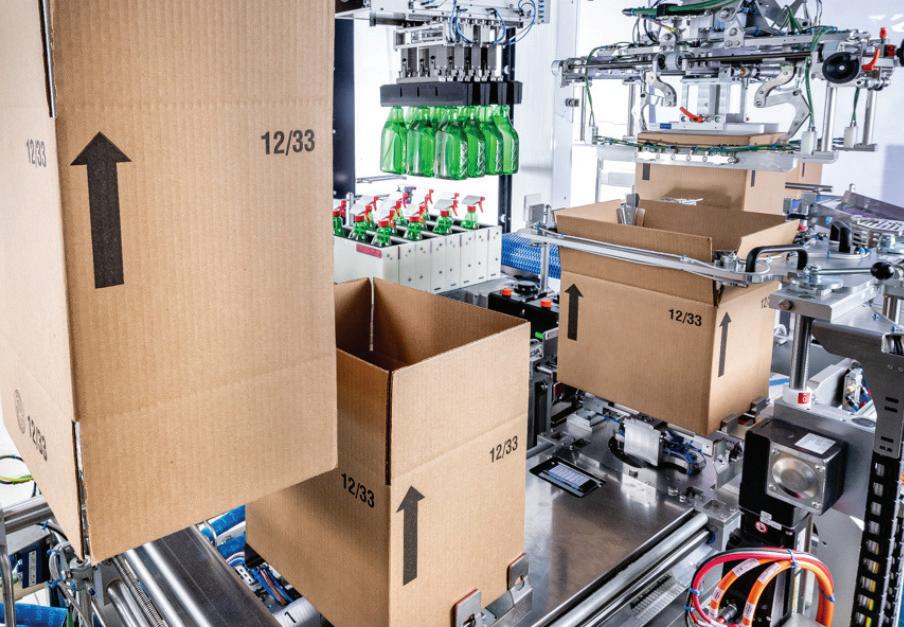
The system’s case erector forms RSC cartons from flat blanks and positions them for automated loading.
After bottles are filled, capped, and labeled, the case packers take over the end-of-line process. The machines erect corrugated cases, then use three Schubert F2 pick-and-place robots to load bottles into the case. These high-speed robots are designed for precise, repeatable handling, helping maintain product quality while supporting consistent throughput.
Once loaded, cases are sealed with hot-melt adhesive and conveyed downstream for palletizing. Depending on configuration, the system can achieve outputs of up to 25 cases/min.
The modular, robot-driven design allows the system to adapt to different products through software rather than mechanical changeparts. “We can do many SKUs with it with a touch of a button, so basically it’s an instantaneous changeover,” Williams explains. “There are no tools required.”
To fit the equipment into the existing layout, Schubert engineers customized the infeed with a 90-deg curve to accommodate the case
packer’s fixed magazine position and improve product flow. They also worked with Pine Glo and its suppliers to improve case stability after sealing.
According to Williams, the automated case-packing system delivered results beyond initial projections. “We saw a 60% increase in efficiency, compared to the 30% we originally expected, with a two-year payback on one shift,” he says.
He adds that automation also reshaped workforce roles, reducing contract labor and enabling more employees to move into permanent roles with enhanced job responsibilities.
For consumer packaged goods companies considering automation, Williams recommends evaluating multiple suppliers and focusing on long-term performance rather than up-front cost. “Make sure you get at least three bids on any piece of equipment you’re going to want to try. And don’t go with the lowest bidder because you’ll find there’s a happy medium in there. It’s like buying a new car. Everybody wants to get one with all the bells and whistles, but sometimes all the bells and whistles aren’t needed. Get what you absolutely need to run efficiently and keep everybody on the same page.”
He adds that another effective strategy is to standardize machinery across each line. “When I buy equipment like this, I try to buy all similar equipment. If they’re left to right, I’ll buy them the same on every line, whether or not I have to reconfigure the line. This keeps things consis-
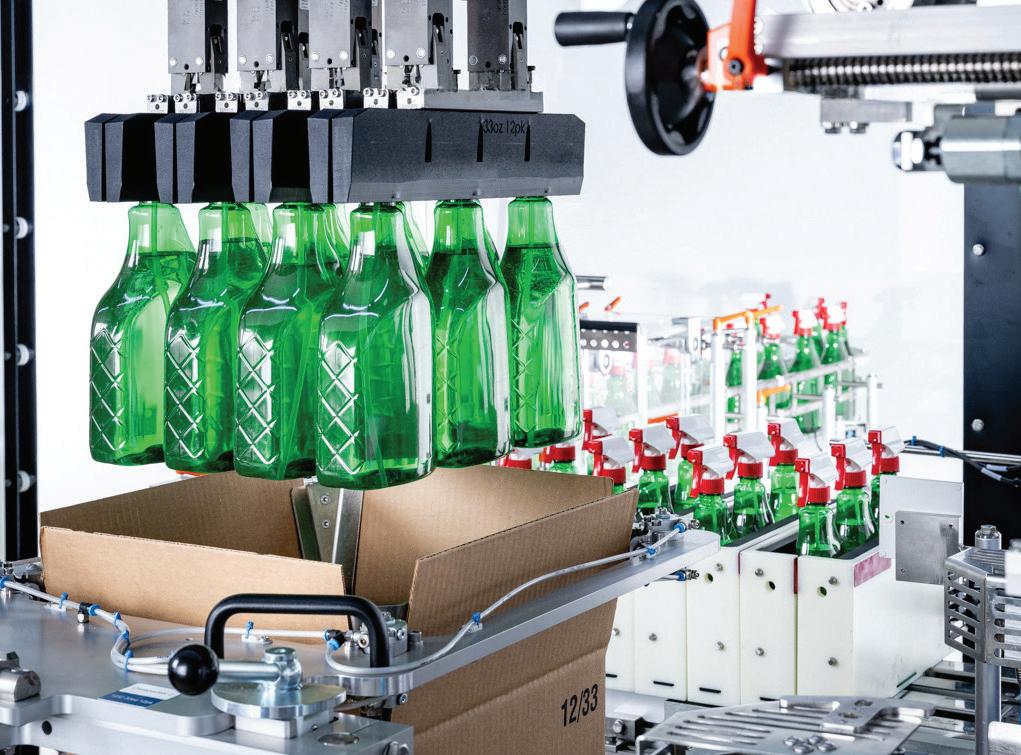
The robotic pick-and-place system loads bottles of cleaning product into erected cases, ensuring precise, consistent packing while supporting high-speed, automated operation.
tent for employees, with the same machine on each line set up in the exact same way.”
By implementing modular robotic case packing, Pine Glo has created an end-of-line system that supports continued growth while maintaining the flexibility required for a diverse product portfolio. PW
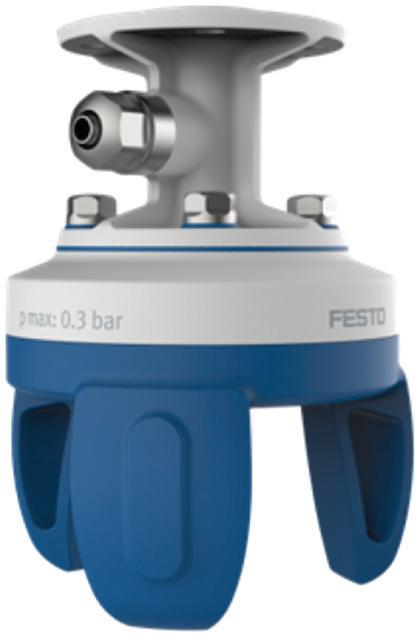
Made from food-grade, soft silicone-based material, the Festo HPSX is engineered to securely handle delicate and irregularly shaped products at high speeds with no tool changes and while meeting IP69K washdown and sanitary requirements.
Festo Corporation pwgo.to/9062
SIAPI’s SX2 is a scalable, high-ef ciency platform designed to increase throughput, reduce air and energy consumption, and support rPET and lightweight packaging production while offering rapid changeovers and simpli ed maintenance.
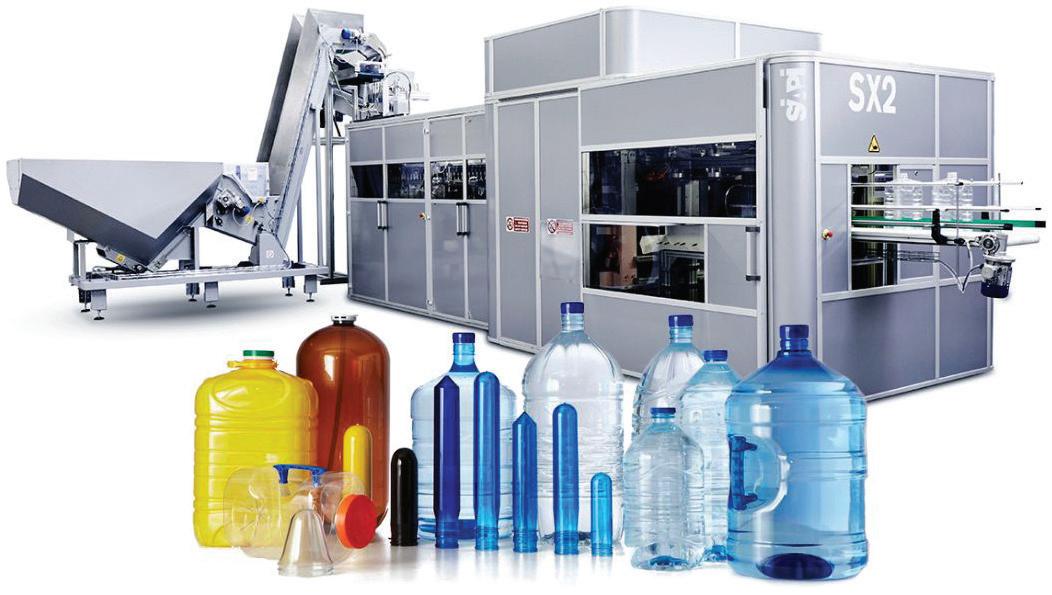
SIAPI, part of ATS Group pwgo.to/9090
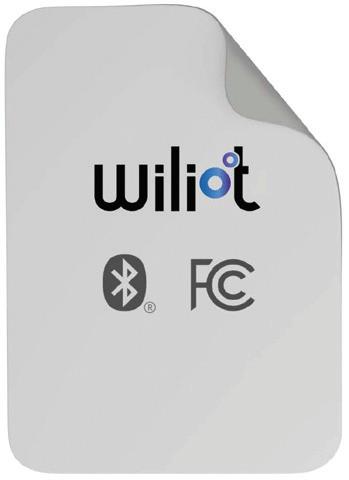
About the size of a stamp, Identiv’s ID-Pixels 3.0 harvests energy from BLE and UHF readers to transform physical items into connected IoT assets, enabling item-level tracking, location and temperature sensing, and cloud visibility. Identiv pwgo.to/9118
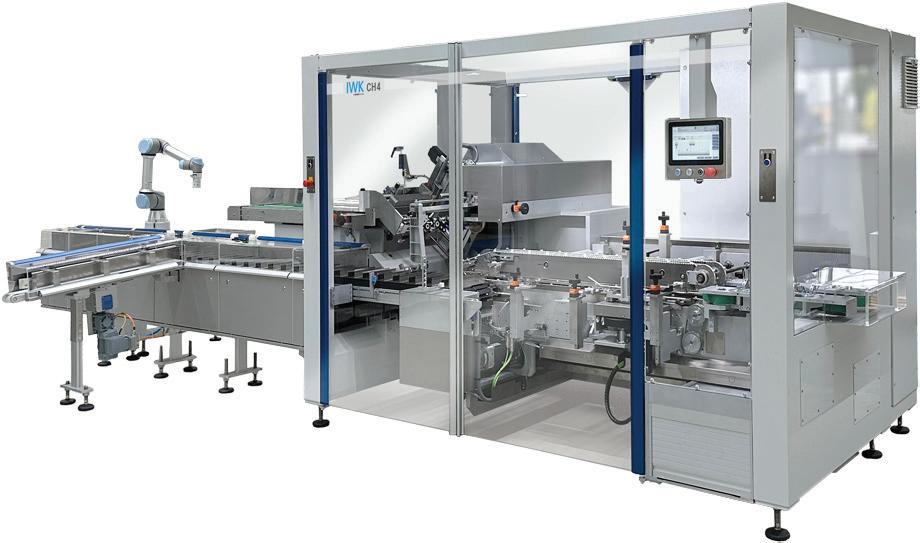
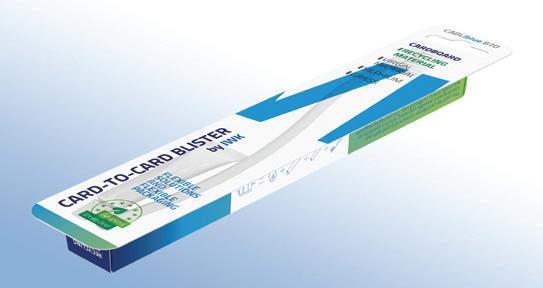
IWK’s latest-generation CH platform combines a modular design, high-speed performance, toolfree changeovers, and energy-saving servo-drive technology to deliver exible, ef cient secondary packaging across a range of applications.
IWK Verpackungstechnik GmbH pwgo.to/9088


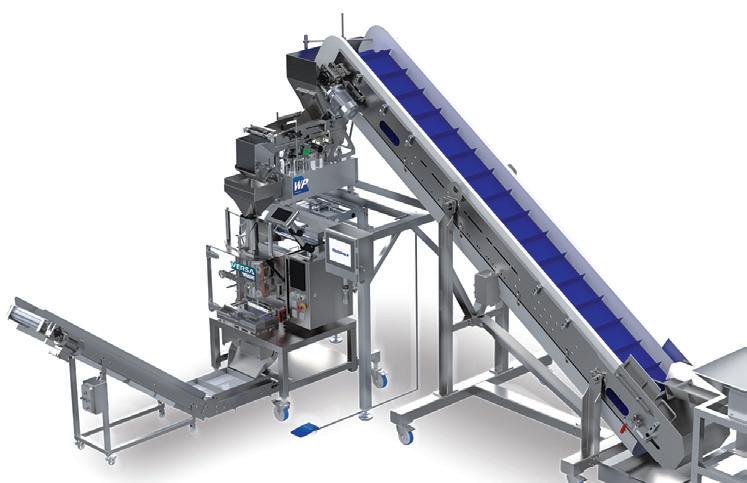
Featuring the PrimoLinear V5 Net Weigher and VersaPak Tabletop VFFS Bagger, WeighPack’s solution integrates weighing, bagging, and conveying to provide a space-saving automation platform for potato chip and snack food manufacturers.




WeighPack Systems weighing,

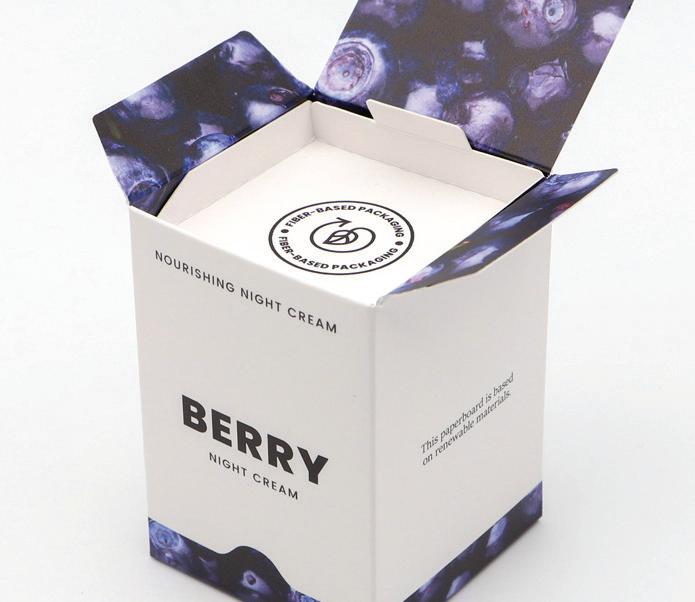
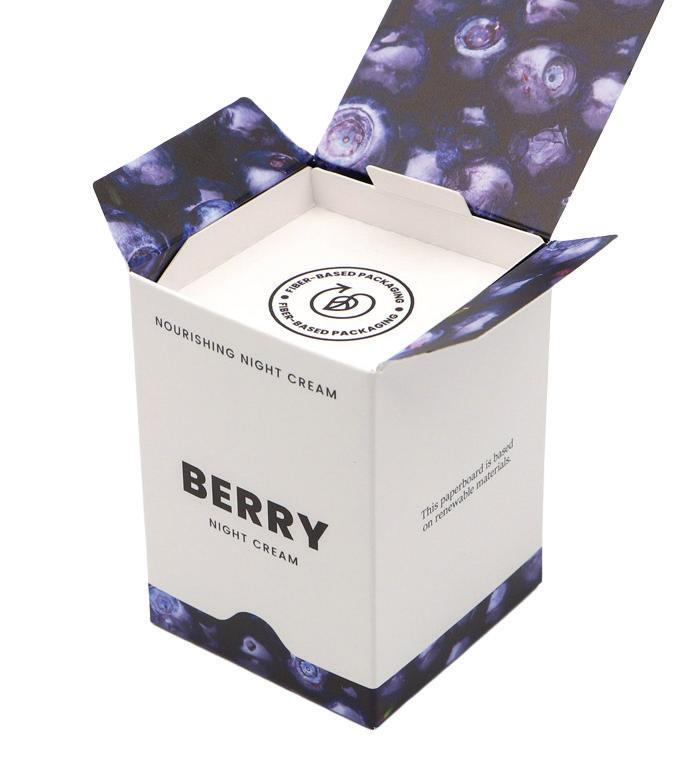
Stora Enso’s Performa Lumi delivers high whiteness, advanced printability, and lightweight strength to support high-impact packaging for beauty, personal care, and healthcare brands that prioritize shelf appeal and material ef ciency.
Stora Enso pwgo.to/9076

pwgo.to/9119

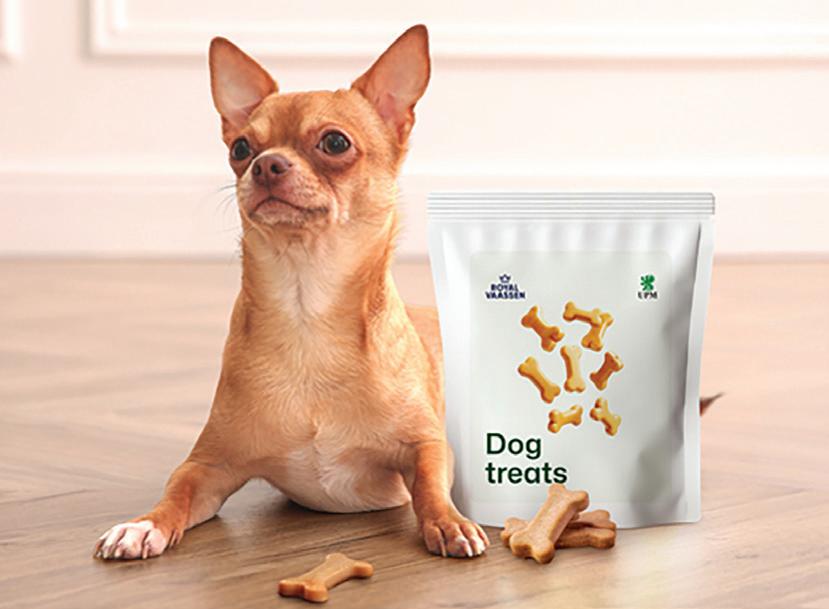
Barryrwrap from UPM and Royal Vaassen is a PFAS-free, ber-based packaging solution for pet food treats and snacks that offers ultra-high barrier performance and meets strict requirements for grease, aroma, moisture, and oxygen protection.
UPM Specialty Materials
Royal Vaassen pwgo.to/9100
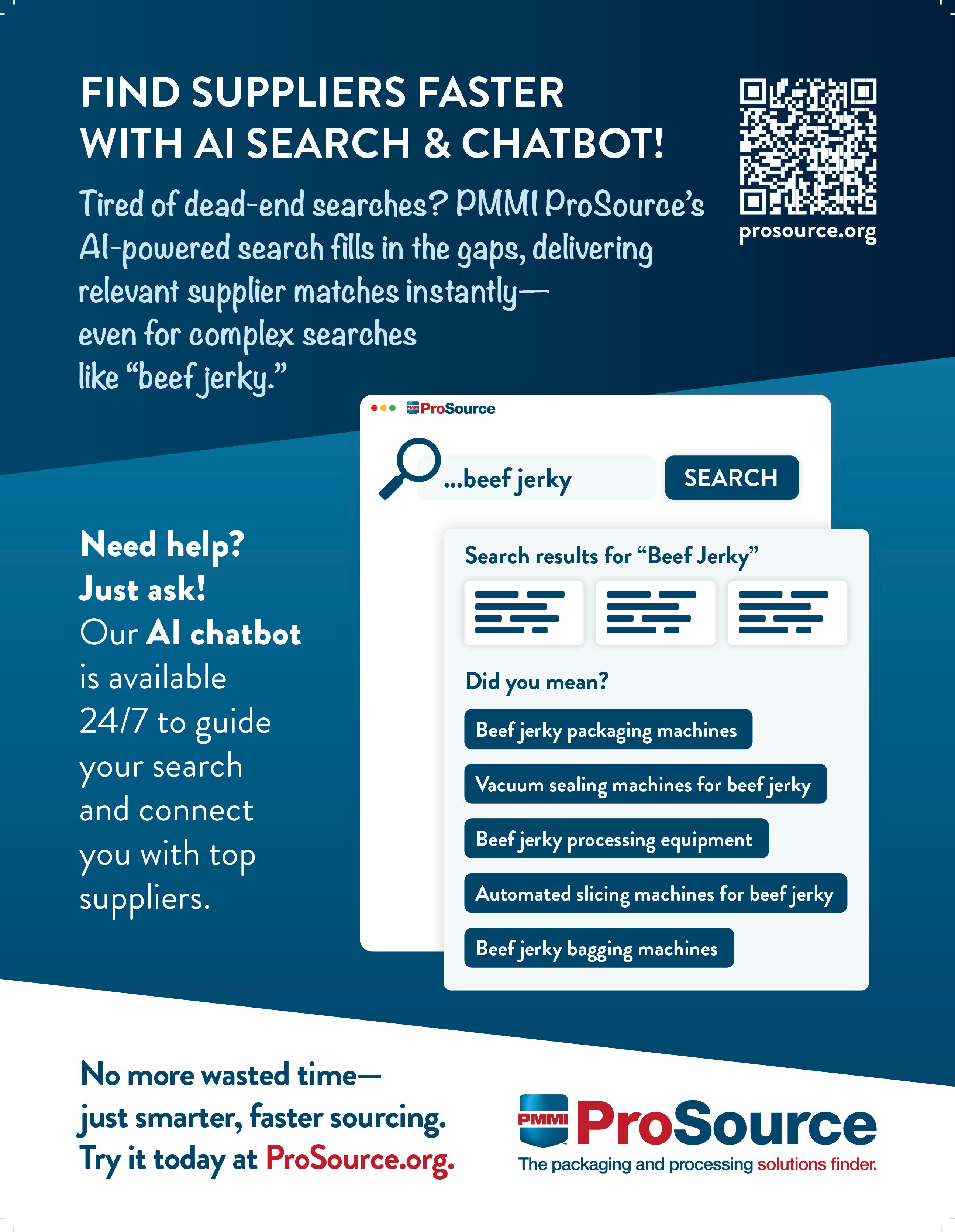
Continue your search for the right packaging solution. Visit prosource.org.
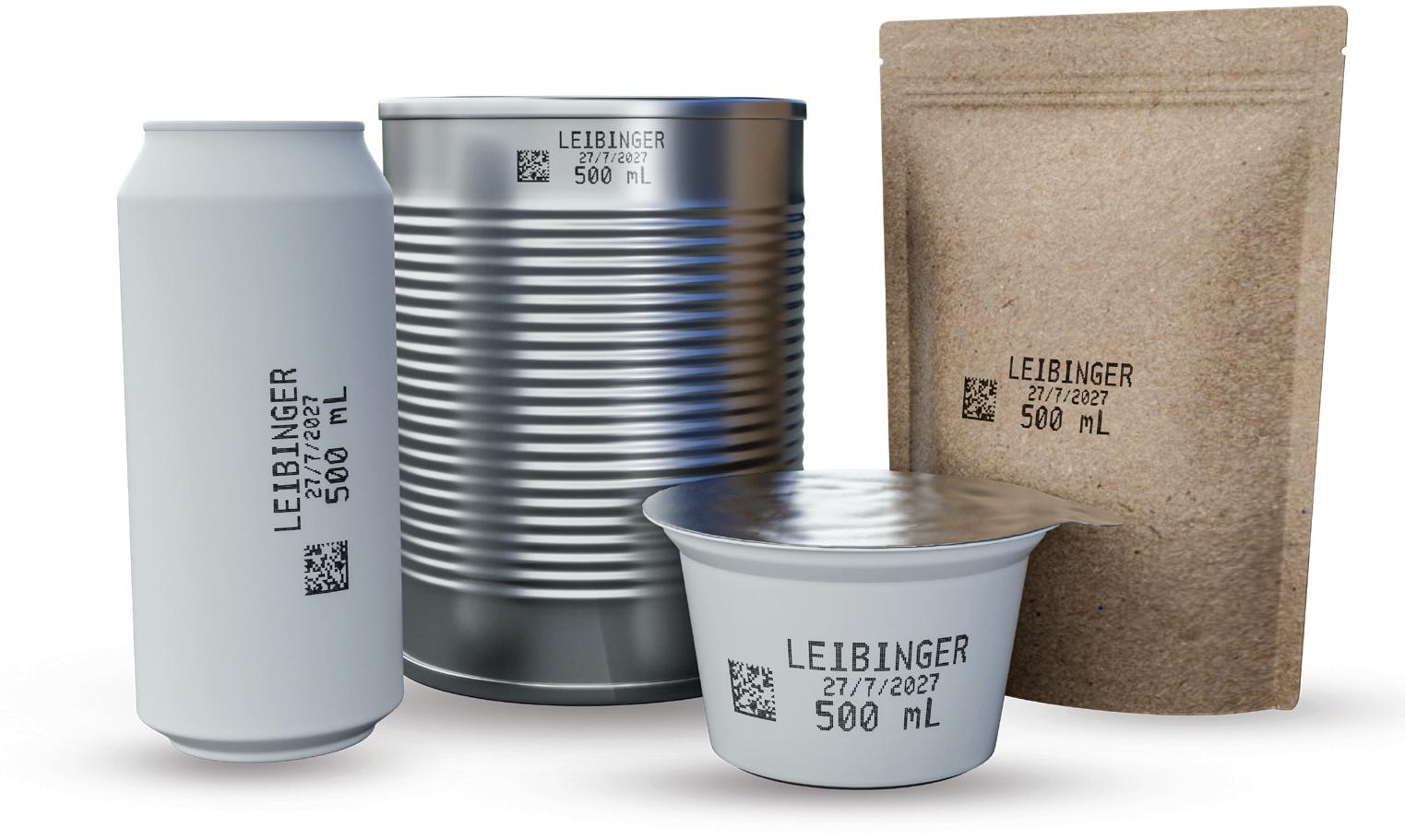
for everything you pack – today and tomorrow.
Whether you’re in food, beverage, cosmetics, pharmaceuticals, or industrial manufacturing, your production line can’t afford downtime.
LEIBINGER keeps production moving with maximum uptime, minimal maintenance, and consistently high print quality, even in demanding environments and at high production speeds.
Ready for the transition to 2D codes in a simple and efficient way, without compromising line performance.

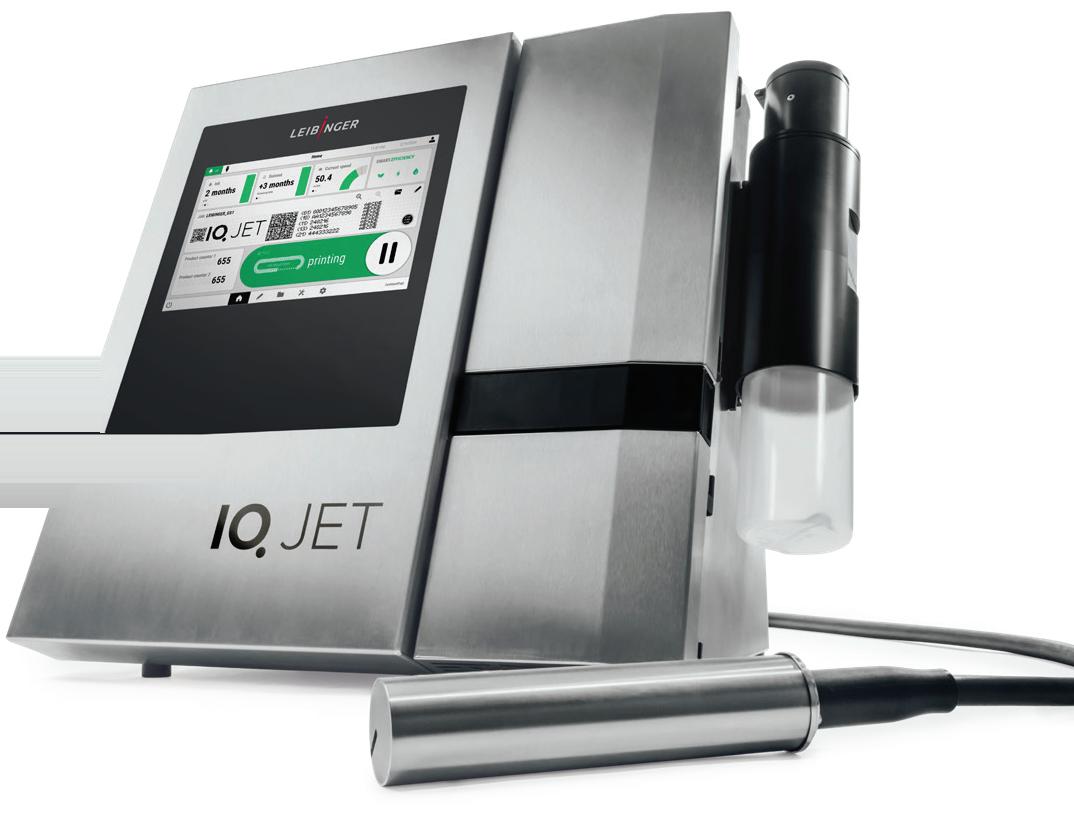
Your LEIBINGER benefits:
p Maximum uptime
p Plug & Print operation
p Ultra-low maintenance
p Consistently high-quality codes
p Efficient 2D transition
p Lower operating costs


SupplyOne acquires Massachusetts-based Compass Packaging Solutions
Windmoeller & Hoelscher completes an expansion of its North American headquarters in Rhode Island to improve spare-parts distribution and support for flexible packaging customers.
Campbell Wrapper Corporation acquires George Gordon Associates, Inc. (GGA Packaging).
Krones Inc. opens a 240,000-sq-ft Logistics Center in Franklin, Wis., capable of managing up to 50,000 SKUs representing millions of parts.
Valco Melton signs a definitive agreement to be acquired by Graco Inc.
TerraCycle Commercial, a division of TerraCycle, acquires Connecticutbased regulated waste recycler NLR Inc.
Boxon Group acquires Sweden-based Vestbo Emballage
Metsä Board and Heidelberg announce a strategic collaboration to enhance the end-to-end value chain of packaging production.
UPM acquires the Ray Technology intellectual property from Avantium to broaden its bio-based glycols IP portfolio.
Advanced Manufacturing Technology (AMT) celebrates 30 years of independent operation and innovation in packaging automation technologies.
Jane Chase, CPPL, who was inducted into the PMMI Packaging & Processing Hall of Fame in 2020, is retiring as executive director of the Institute of Packaging Professionals after more than three decades of service, leadership, and advocacy within IoPP and the packaging profession.
Andy Gartman is appointed chief operating officer of Pacteon Group.
Ossid, a ProMach product brand, appoints Ryan Stockton as associate sales representative, a newly created position covering the Mid-Atlantic region.
ProMach’s Flexible Packaging Group, which is composed of Bartelt Packaging, Matrix, and HMC Products, names Sam Kelly as regional sales manager for the Midwest.
The Glass Packaging Institute (GPI) appoints Brian Brandstatter, president and CEO of Ardagh Glass Packaging-North America, as board chair.
Longtime Eriez employee Dan Zimmerman is promoted to general manager of Eriez-USA.
Buskro appoints Frank de Jonge as sales and marketing lead for Europe and Francisco Soto as sales director for Latin America and the Caribbean.
Håkon Volldal is named chief executive officer of Elopak and is set to take over by January.
Loma Systems appoints Tomasz Strzemecki as its North America sales director.
The Foodservice Packaging Association appoints Ellen Daniels as its first chief executive officer.
Voith Paper announces president and CEO Andreas Endters is stepping down after 35 years with the company, and Tero Kokko will assume the positions.
Barry-Wehmiller’s Kyle Chapman is elected chairman of the board, succeeding his late father, Bob Chapman, who led the company for five decades.


By Mike Richmond, PTIS, LLC
The changes coming to packaging, and the role AI will play in them, will be signi cant. But to understand where we are headed, it helps to look back. When we started PTIS in 2001, it was hardly an ideal time to launch a packaging consultancy. Still, we were fortunate to have come out of packaging organizations that genuinely valued the discipline. That foundation led us early into foresight and consumer insight, two areas that shaped how we approached packaging innovation from the start.
In those early years, we also learned from some of the field’s true thought leaders, including Ted Labuza, Theron Downes, Jack Giacin, and Aaron Brody. Their influence helped shape a generation of packaging professionals. Over the past 25 years, the field has changed dramatically. It is almost hard to believe how much was accomplished before tools like AI assistants became part of the conversation. Even so, many of packaging’s most important advances came from disciplined observation, technical ingenuity, and a deep understanding of consumer needs.
Before AI, innovation was already accelerating through better technology, stronger design thinking, and sharper consumer insight. We saw the rise of the flexible retort pouch, aseptic packaging in both rigid and flexible formats, and the rapid expansion of PET. The 2-L PET bottle became iconic. Singleserve packaging and microwavable formats reshaped convenience. Susceptor technology helped fuel the microwave popcorn boom, while single-serve flavored milk created a more portable, consumer-friendly experience. In that era, convenience was king, and packaging was central to making products easier to use, more affordable, and more relevant to daily life.
Consumer insight also started driving more meaningful breakthroughs. One example was the plastic paint can. Traditional metal cans were messy, hard to open, and inconvenient to reseal. Research made clear that users wanted a format that was cleaner and easier to handle. The same pattern showed up in food: the zipper on shredded cheese may seem ordinary now, but it solved a real consumer problem by helping keep the product fresh without requiring a separate container. Not every new format succeeded, of course. Some fell short on performance, cost, or fit with consumer expectations. But the lesson was clear: when packaging innovation solves a real problem, it sticks.
We also saw major advances in food safety and shelf-life extension
through technologies such as microwave sterilization and highpressure processing (HPP). In confectionery, we were fortunate to work on the shift from five-stick gum packs to wallet-packs. That was small change on the surface, but one that consumers embraced because it felt cleaner, more modern, and more convenient. Those examples remind us that innovation is not always about dramatic reinvention. Often, it is about understanding behavior well enough to make the experience better.
Foresight became increasingly important in that work. At a 2005 Future of Packaging meeting in Chicago, we identified sustainability as a major force that would reshape the industry. At the time, many in the room were skeptical. Today, sustainability is central to packaging strategy, and that shift reinforced for us the value of scenario planning and long-range thinking. Packaging has always evolved at the intersection of technology, consumer behavior, and business reality. Foresight helps make sense of where those forces are heading next.
That brings us to AI. I do not see AI as replacing the fundamentals of packaging innovation. I see it as accelerating them. AI can help teams move faster in concept generation, material selection, performance modeling, and quality control. Companies are already using AI to evaluate new packaging structures virtually before physical prototyping, optimize material use without sacrificing performance, and improve inspection and line efficiency. Major food companies are also exploring AI to identify new high-barrier materials that could improve both product protection and sustainability. These are practical applications, not science fiction. Nestlé reports using AI with IBM to identify novel high-barrier packaging materials, while industry coverage from Esko shows AI gaining traction in virtual prototyping, automation, and packaging workflow improvement.
What matters most, however, is not the tool itself but the judgment behind it. The future of packaging will still depend on asking the right questions: What problem are we solving? What does the consumer need? What will scale operationally and commercially? AI can help us answer those questions faster and with more data than ever before. But the real opportunity is the same one we saw back in 2001: combining insight, technology, and foresight to create packaging that is more useful, more sustainable, and more responsive to a changing world. PW