It’s never too early to start thinking about what you would like to do after school or college, or to consider a career move! At Plymouth, we know that choosing a university and course is a big decision. While you may have an idea of a profession, career or industry that you’re aspiring towards, if you’re unsure of exactly what you want to do or are keen to find out more – this is where our handy subject guide comes in.
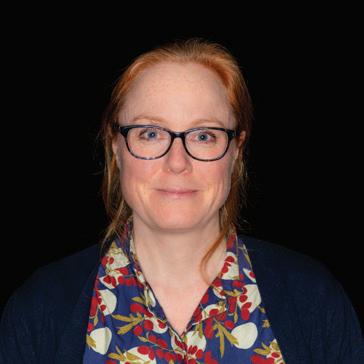
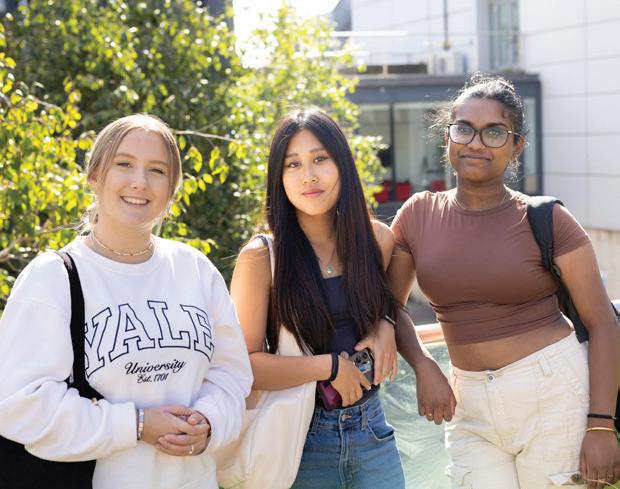
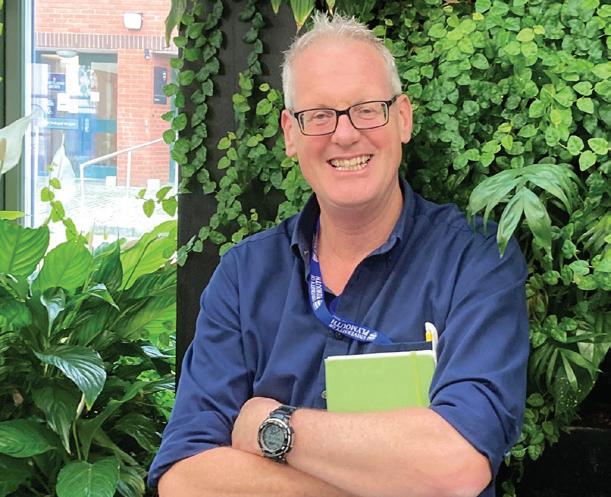
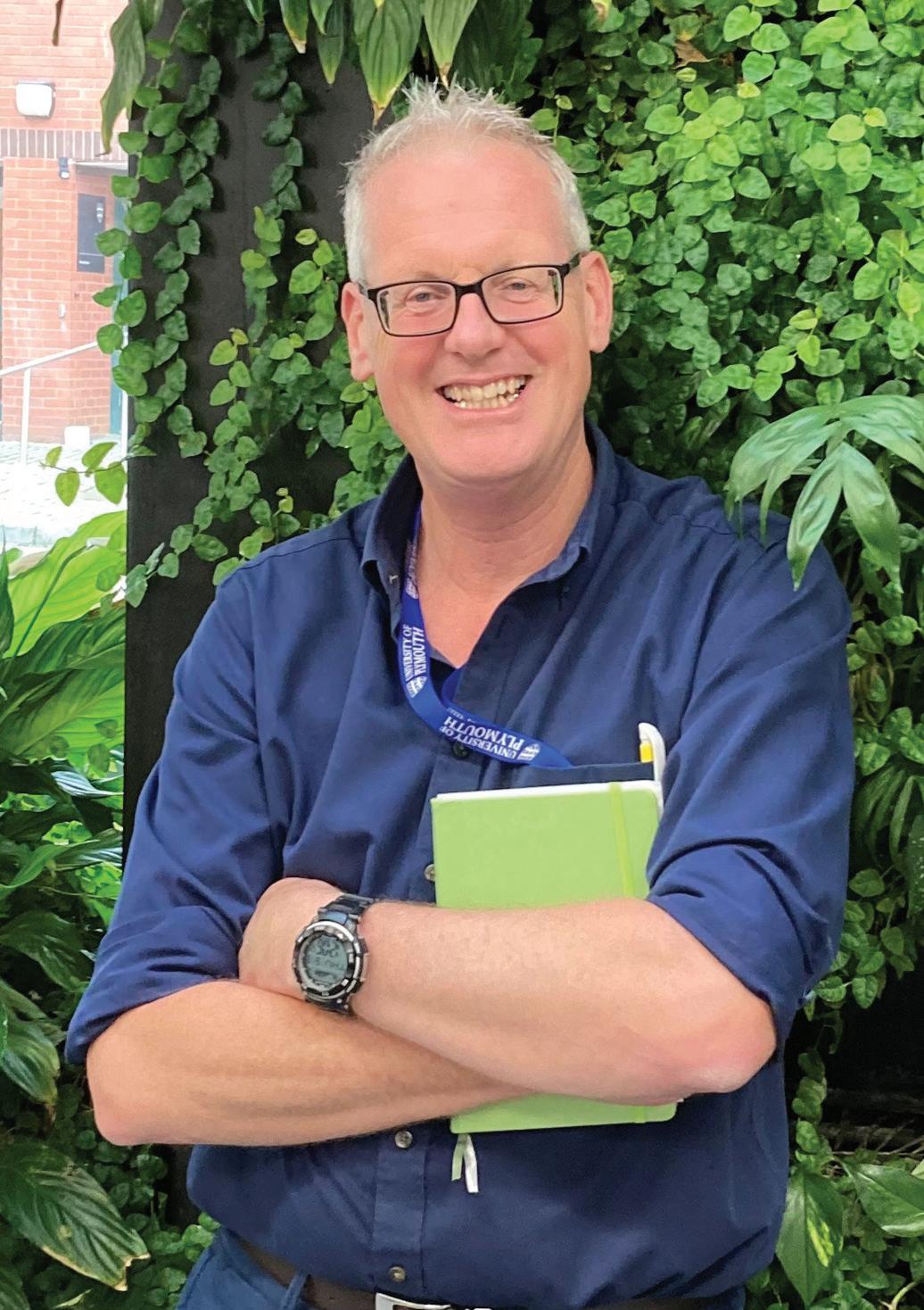
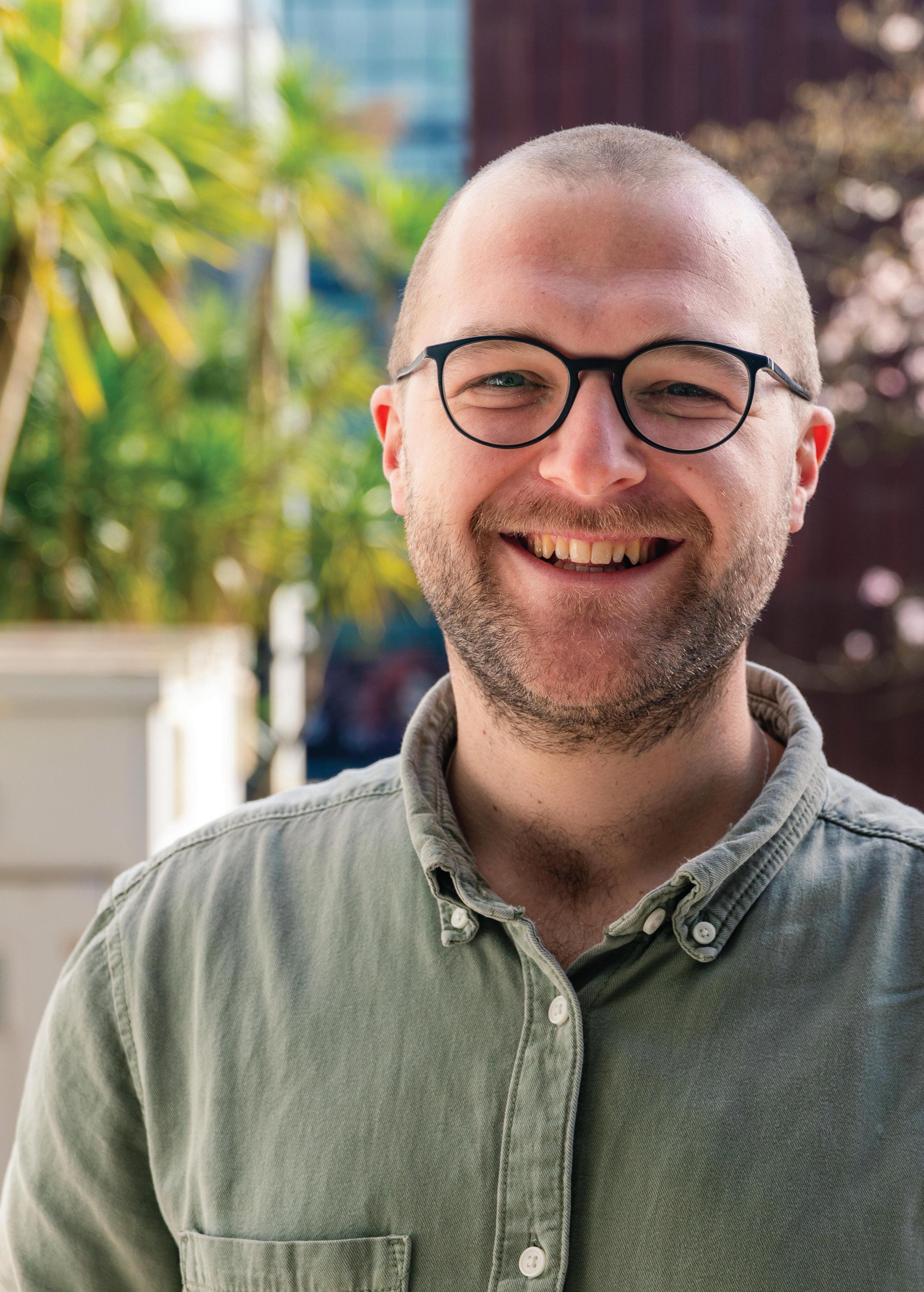
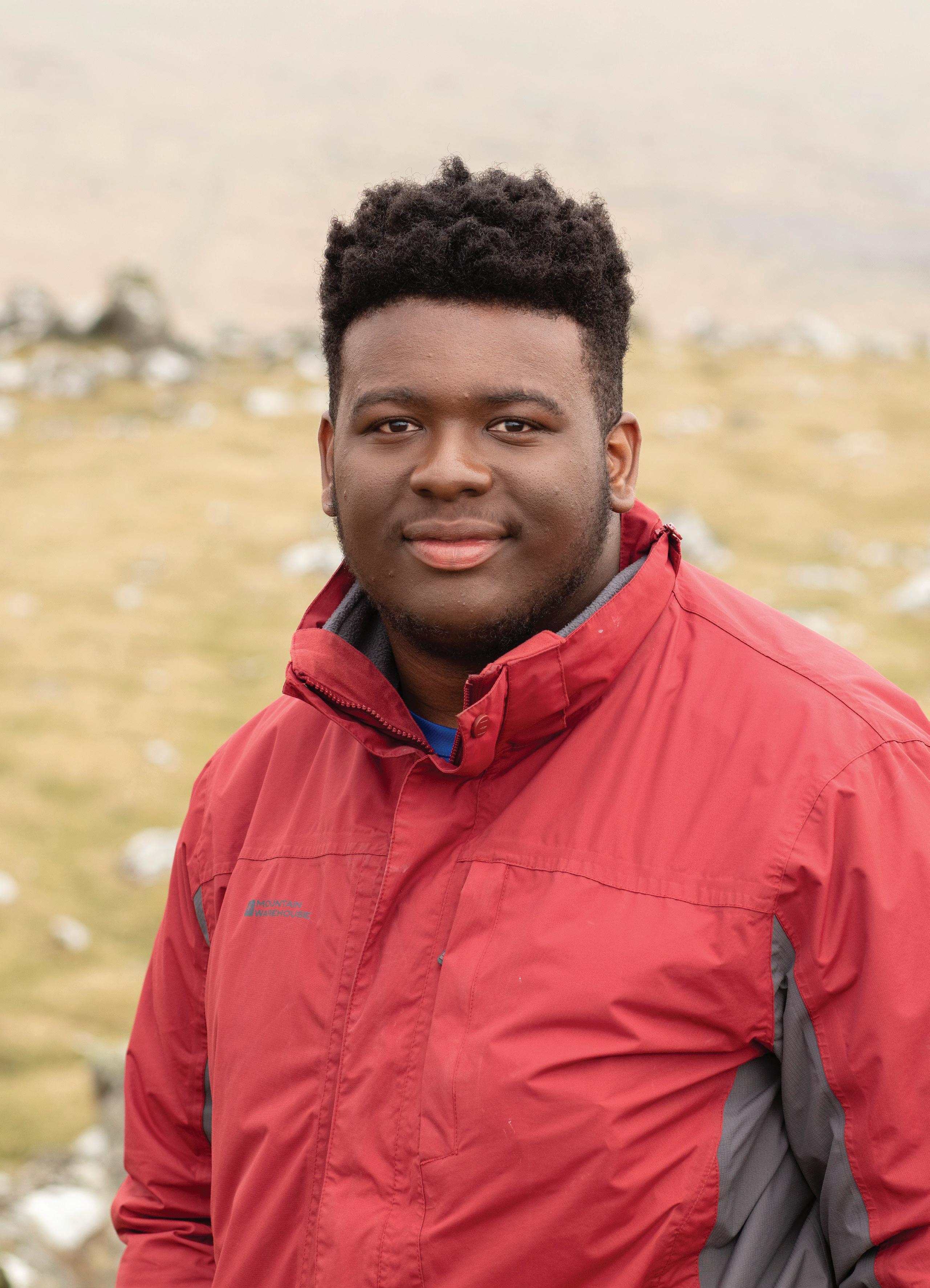
Meet some of this issue’s contributors:
EXPLORE YOUR FUTURE HOME
Visit us at an Open Day
When it comes to finding out if university feels right for you, nothing compares to an open day. Talk to current students and quiz lecturers about your course. You can register to attend here: plymouth.ac.uk/open-days
Inside...
FEATURES:
Pg 4. 10 reasons to study at Plymouth
Our top 10 for why new starters should consider studying Earth Sciences with us.
Pg 16. The power of placements
Find out how a placement can enhance your graduate prospects and what it’s done for our students.
Pg 22. Careers Service
See what support is available for our Earth Science students from our dedicated careers advisor, Jon.
Ellis Waghorn Geology student Ellis shares her placement experience.
Pg 18.
Will Green Physical Geography and Geology student Will shares his experience while studying with us.
Pg 12.
Professor Sarah Boulton Professor of Geohazards Sarah tells us all about her research.
Pg 20.
10 REASONS TO STUDY AT PLYMOUTH
We live in a time of unprecedented global challenges arising from climate change and unsustainable consumption patterns. The sustainable management of our natural resources is essential, and Earth scientists play a crucial role in tackling these challenges.
We’re assuming that if you’ve picked up this guide, you’ve already started considering your future. Perhaps asking yourself if studying Earth Sciences is something that you would like to do, and whether the University of Plymouth is the right place for you.
Well, let’s see if we can help you. Here are my top 10 reasons for studying Earth Sciences.
Dr Andy Parsons
Earth Sciences Admissions Tutor
1. INNOVATIVE COURSE DESIGN
Our Earth Science courses are designed around a central mission: empowering you to create a more sustainable future. We've moved beyond traditional exam-based assessment to embrace diverse evaluation methods that mirror real-world professional challenges.
2. FIELD TRIPS
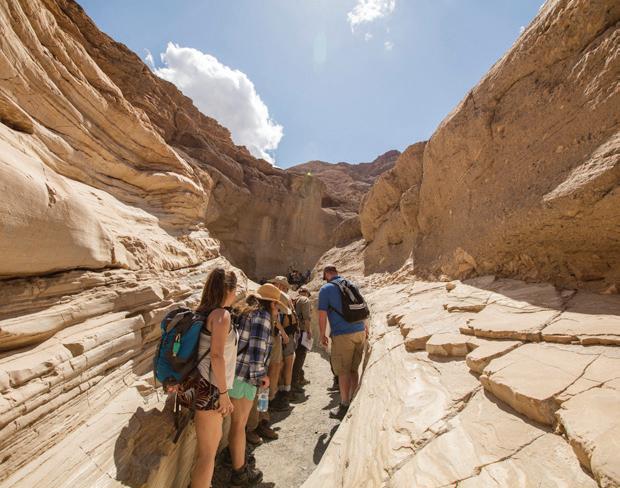
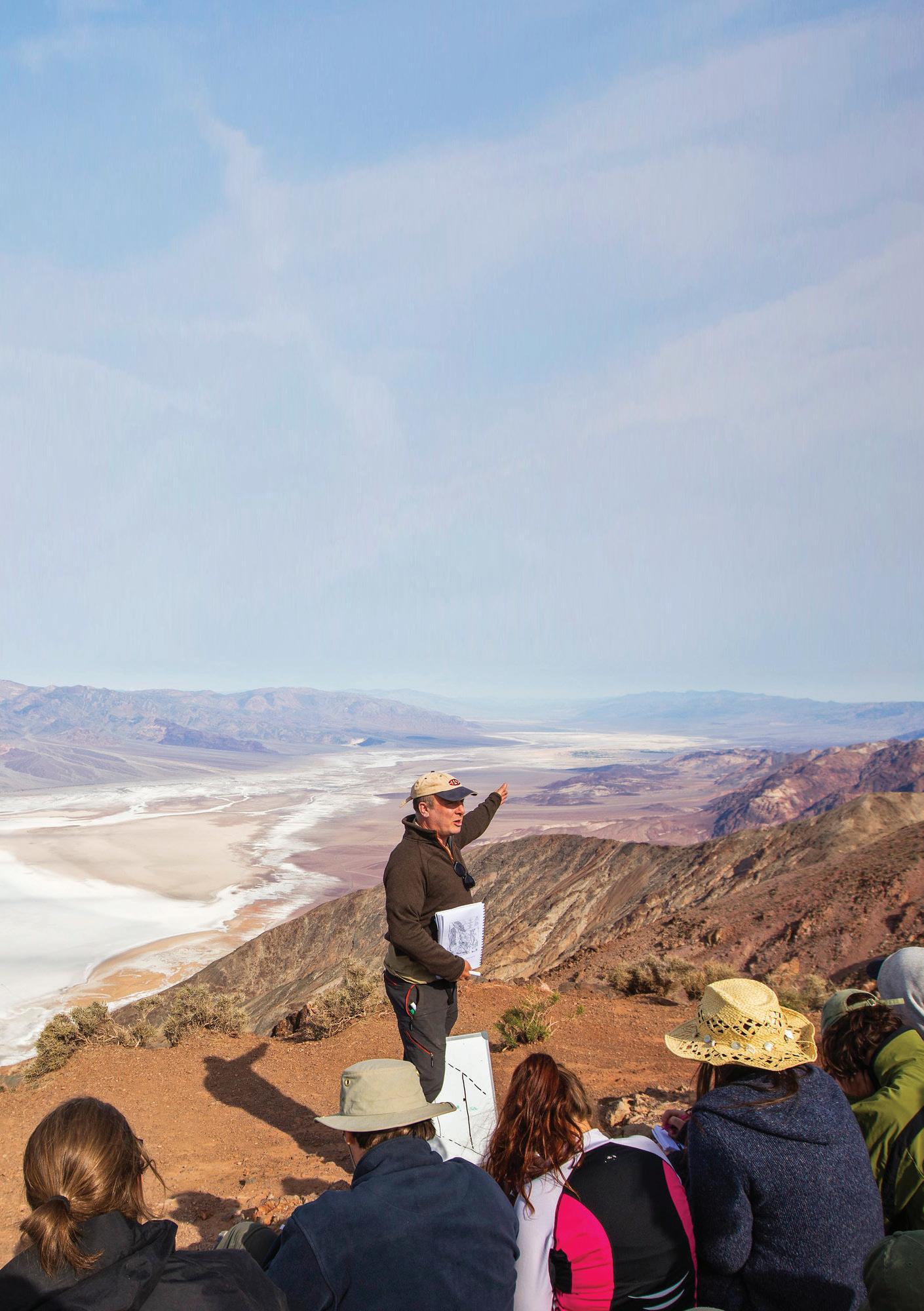
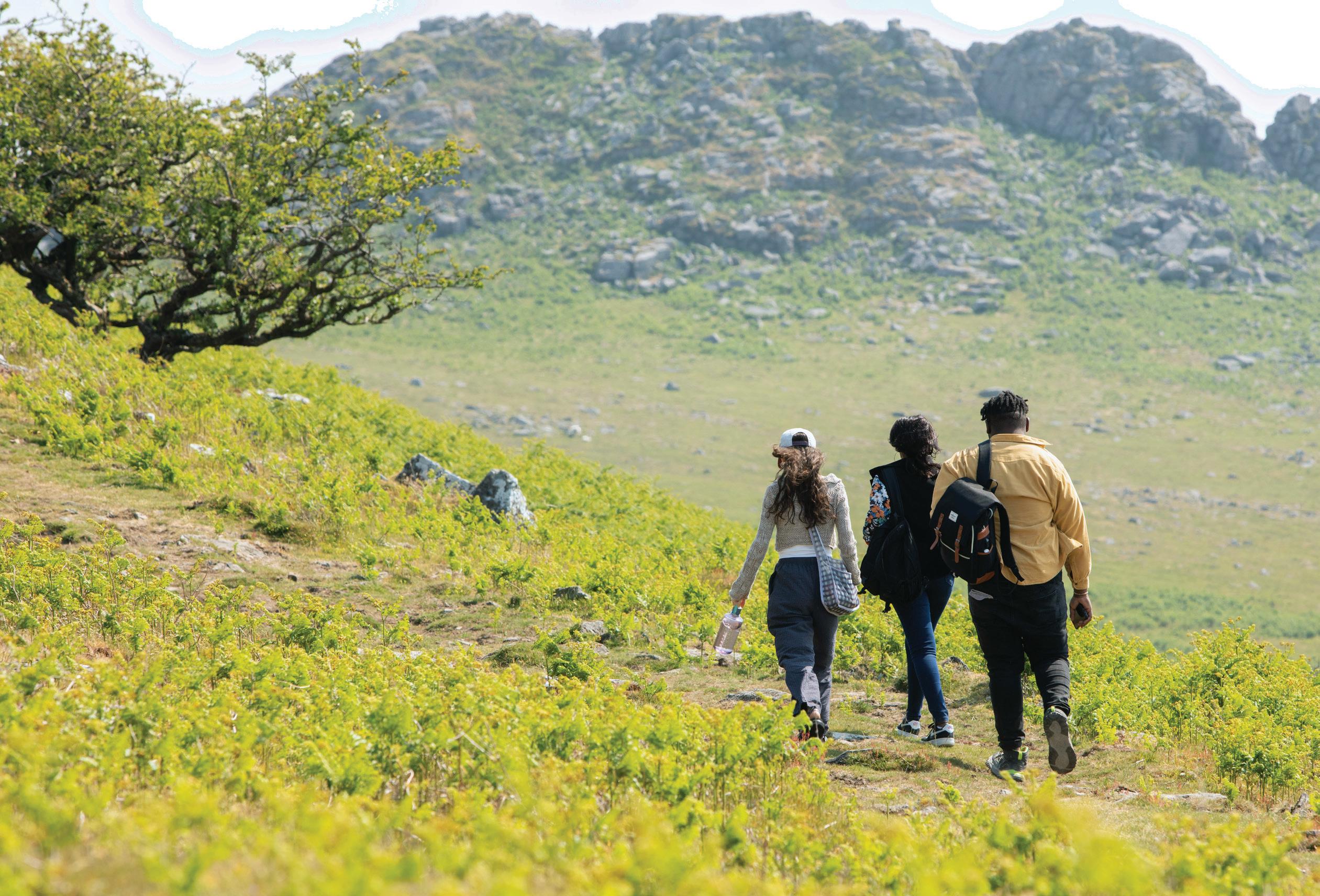
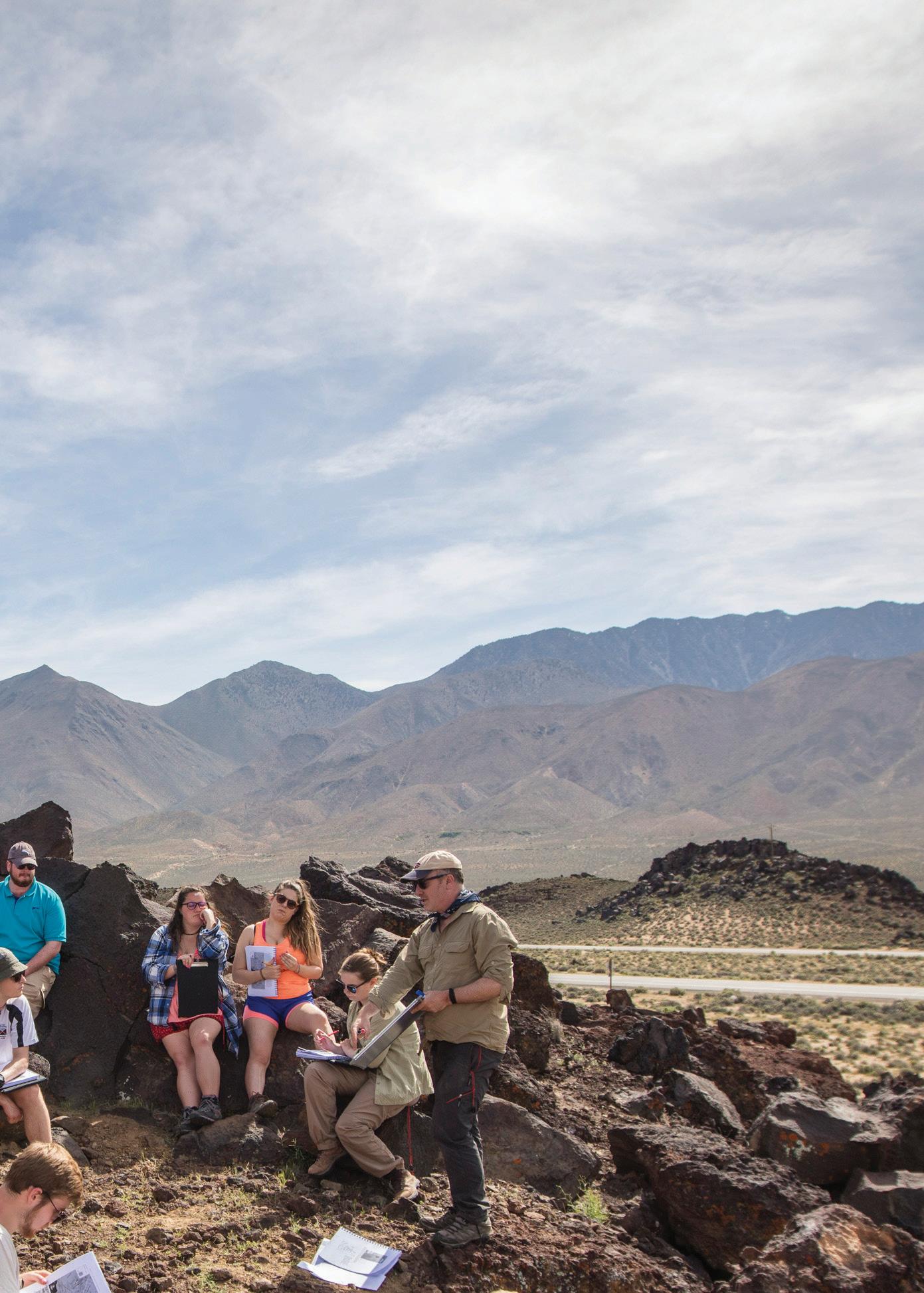
You'll develop essential field skills in the world-class geological setting of the South West, home to two geologybased World Heritage Sites and Dartmoor National Park. At the end of your first year, you'll study active volcanoes and recent earthquakes in Italy. By your third year, you could explore the spectacular geology of Death Valley in the USA or join an interdisciplinary student team tackling sustainable geoscience challenges in Namibia.
3. DEGREE FLEXIBILITY
We've designed our programmes around a shared core curriculum that gives you the flexibility to find your perfect path. You can switch between bachelor degrees at the end of your first year, or progress to our MGeol degree after your third year.
4. CUTTING EDGE FACILITIES
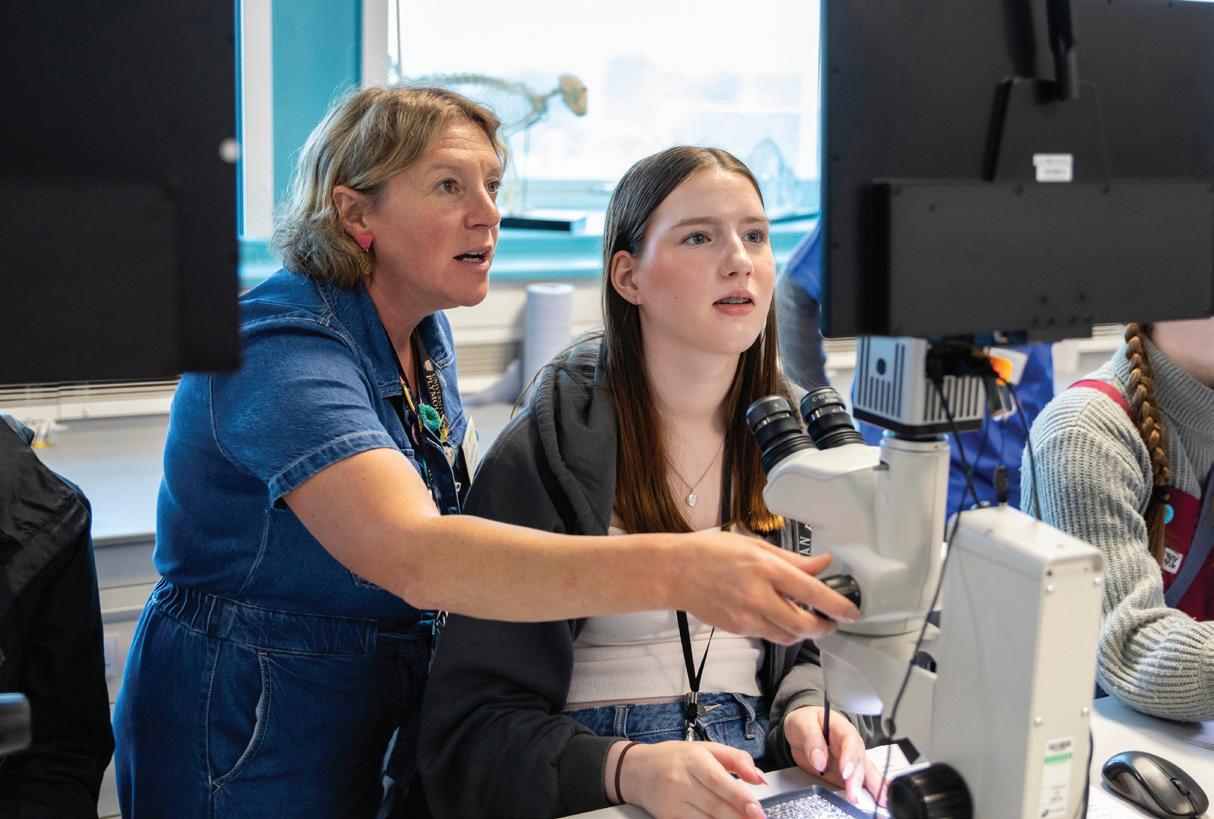
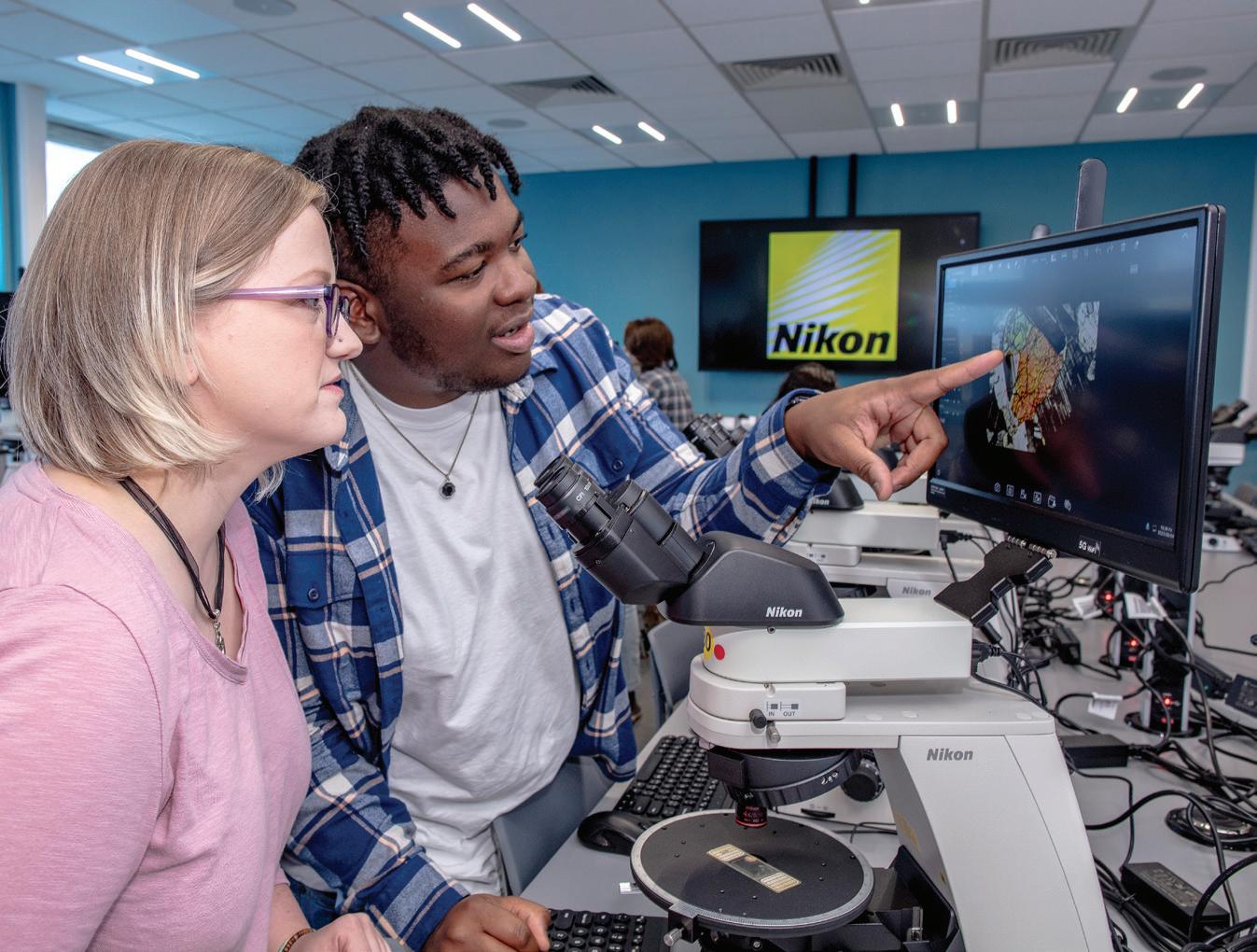
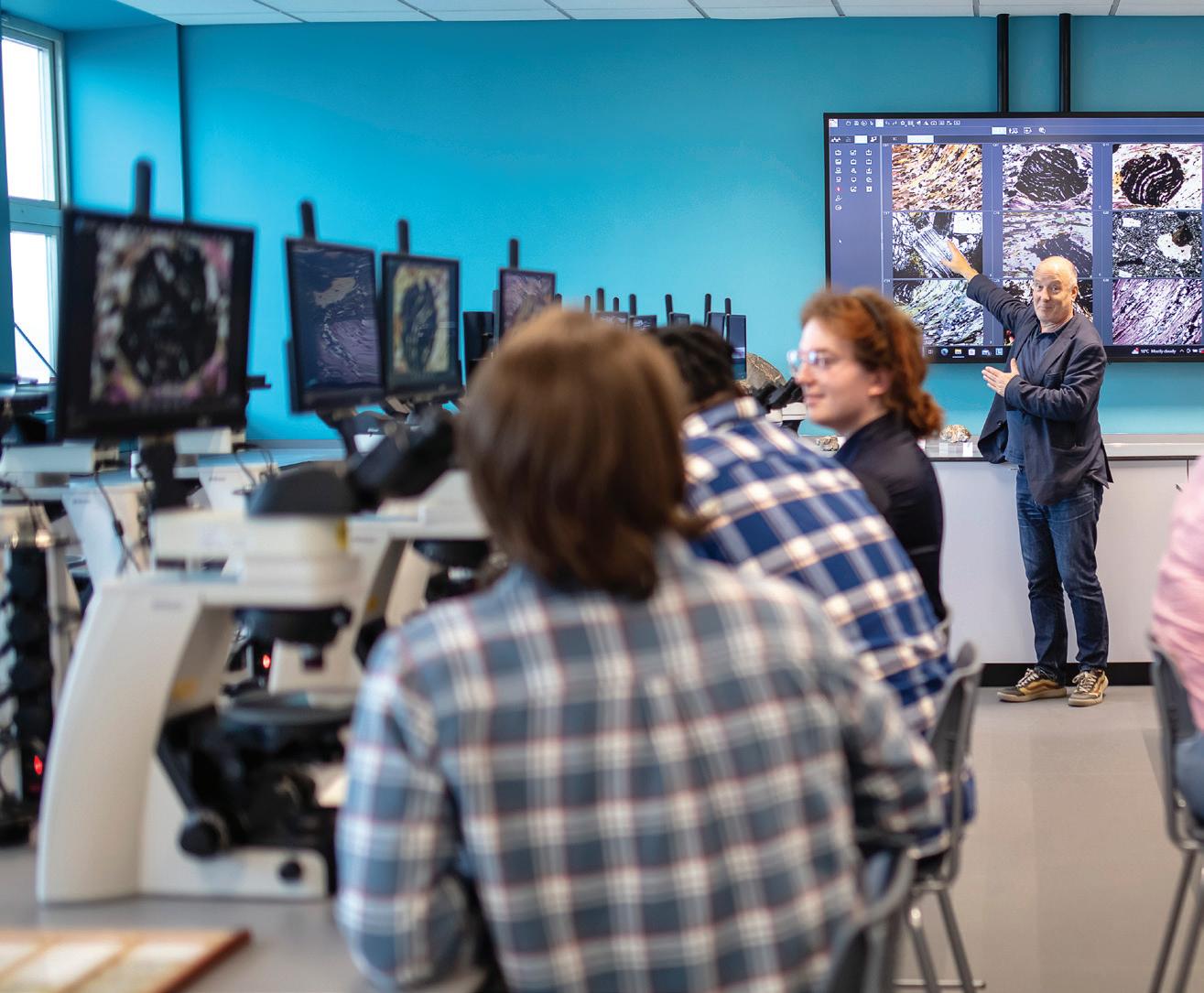
Master innovative microscopy techniques using one of Europe's most advanced microscopy teaching facilities, featuring brand new 5G-enabled petrological microscopes. Develop your GIS and 3D data interpretation skills through hands-on work using industry-standard software in our dedicated IT laboratories.
5. STUDY ABROAD
Transform your second year into a life-changing adventure by studying abroad – without adding extra time to your degree. Choose from our partner universities across North America and Europe, where you'll gain international perspective while staying on track for graduation.
7. FEEL AT HOME
6. CAREER SUPPORT
Our comprehensive career support begins from day one and extends beyond graduation. You'll benefit from industry mentoring, placement opportunities, and personalised guidance with CV writing and job applications. As hosts of the South West's largest geoenvironmental careers fair, we connect you directly with employers.
Plymouth offers the perfect blend of vibrant city living and natural beauty. Our campus sits in the heart of the city centre. Yet within minutes, you can escape to Dartmoor's wilderness or unwind on miles of stunning coastline and beaches. Our diverse range of student societies ensures there's something for everyone, including our thriving student-run Geological Society which organises social events, sporting activities, and field trips.
9. PROFESSIONAL ACCREDITATION
Our Earth Science degrees carry the accreditation of the Geological Society of London – the world's oldest and most respected national geological institution. Graduating from an accredited programme puts you on the direct pathway to achieving Chartered Geologist or Scientist (CGeol/CSci) status – a professional qualification that significantly enhances your career prospects.
8. BE TAUGHT BY FRIENDLY EXPERTS
Experience the advantage of learning from a passionate academic team whose cutting-edge research directly enriches their teaching. Our research-active staff bring the latest scientific discoveries straight into the classroom. We pride ourselves on creating a welcoming, first name-basis community where every student is valued as an individual.
10. FURTHER STUDY
Ready to advance your expertise? Plymouth offers seamless progression opportunities to enhance your qualifications with a Master's degree. You can either continue directly with our integrated geoscience master (MGeol) or take advantage of our exclusive tuition fee reduction for Plymouth graduates and choose from our specialised MSc/ResM programmes.
Research-focused programmes:
• ResM Geological Sciences
• ResM Physical Geography
• MSc/MRes Sustainable Environmental Management
Professional practice programmes:
• MSc Environmental and Engineering Geology
• MSc Environmental Consultancy
• MSc Environmental Chemistry
• MSc Planning
Cutting-edge specialisations:
• MSc Data Science and Environmental Intelligence
WHICH UNDERGRADUATE DEGREE is right for me?
Our Earth Sciences degrees share a common focus on the processes shaping our planet and their relevance to society. Across all programmes, you’ll gain essential Earth Science skills and knowledge from leading experts, supported by state-of-the-art facilities, advanced digital tools, and extensive UK and overseas fieldwork. Additional modules in geology, environmental science and physical geography provide more specialist content and skills for each of our courses. Whichever degree pathway you choose, our courses combine cutting-edge research with realworld applications to prepare you for a diverse range of careers addressing the most pressing Earth Science challenges.
BSc (Hons) GEOLOGY
Find out more about our BSc (Hons) Geology programme
Find out more about our BSc (Hons) Environmental Geoscience programme
Do you want to understand how processes that control earthquakes and volcanoes can also form geothermal systems and critical mineral deposits? Are you curious about how the fossil record can help us understand modern climate change? Or perhaps you want to explore how plate tectonics has led to the formation and destruction of supercontinents and oceans past and present. A degree in Geology equips you with industry-relevant skills and knowledge to unravel Earth’s geological record and the dynamic processes that shape our planet with an emphasis towards real-world challenges such as natural hazard mitigation, engineering, and the green energy transition.
BSc (Hons) ENVIRONMENTAL GEOSCIENCE
Do you want to understand how Earth’s natural systems interact with human activity to shape the environments we depend on? Are you interested in how past climate and ecological change can inform solutions to today’s global challenges? Are you passionate about the need to develop environmentally safe and sustainable solutions to natural resource problems? Environmental Geoscience combines the study of geological processes with environmental science. Explore how geoscientists tackle issues like sustainable resource use, environmental hazards, and the transition to a low-carbon future. Develop the geoscience skills and expertise to solve current environmental problems and drive sustainable solutions.
SOPHIE – BSc (Hons) Geology graduate
“I got to go on loads of field trips, which is one of the reasons I applied for the programme. We got to go to Sicily and see volcanoes erupting, we went to Somerset in the rain, but it was a great bonding trip, and I made such amazing friends. I really enjoyed the Volcanology aspect of the course and I kind of knew I would when I got here. The staff are a really great bunch of people, so supportive and just so much fun.”
Find out more about our BSc (Hons) Physical Geography and Geology programme
BSc (Hons) PHYSICAL GEOGRAPHY AND GEOLOGY
Do you want to understand how the Earth’s surface has been shaped by climatic change and active tectonics? Do you want to use the geological record of landslides or eruptions to improve our resilience to natural hazards? Do you want to know how catastrophic floods of the past can help us understand and manage modern river systems and drainage basins? By combining Physical Geography and Geology, this degree will enable you to understand the active systems and processes which shape Earth’s changing landscapes and their societal and environmental impacts. With a broad range of skills and expertise, this degree will prepare you for career opportunities across geological, environmental, and geographic sectors.
MGeol (Hons) GEOLOGY
Find out more about our MGeol (Hons) Geology programme
Find out more about our BSc (Hons) Geology with Foundation Year programme
The MGeol programme adds a fourth year of study to our BSc pathways. This fourth year allows you to deepen your expertise in the geoscience subjects that excite you most. You’ll combine taught masters-level modules with an independent research project tailored to your interests. From microfossils and palaeoclimate to volcanic hazards and natural resources, wherever your interests may lie, you will develop specialist skills in a research field selected by you, supported by our world-leading research staff and our cutting-edge analytical facilities.
BSc (Hons) GEOLOGY WITH FOUNDATION YEAR
If you are interested in Earth Sciences but don’t have the qualifications for direct entry on to our BSc programmes, this course is designed for you. Our foundation year will give you the scientific knowledge, skills, and confidence to succeed at BSc level. Completing our foundation year guarantees progression to one of our BSc programmes and maximises your potential for success in both future studies and your career. You also have the option to transfer to our masters-level MGeol (Hons) degree.
GEORGIE – BSc (Hons) Physical Geography and Geology graduate
“All the way through school, geography was my favourite subject and I always liked rocks, but did not like Human Geography. When I saw the Physical Geography and Geology course, it just ticked all the boxes for me. It was how close-knit the people on the course were – everyone on the course was like a little family. And the international field trip was so good. You can go out with your course mates and your housemates and everyone in the club; you have lots of chances to make friends and meet new people. And in my first year I lived in halls, which was really good for 9am teaching – you just roll out of bed and go to a lecture."
FACILITIES
During your time in Plymouth, we will provide you with the cutting-edge tools and facilities to make practical geology and geoscience exciting, hands-on, and packed full of realworld skills development.
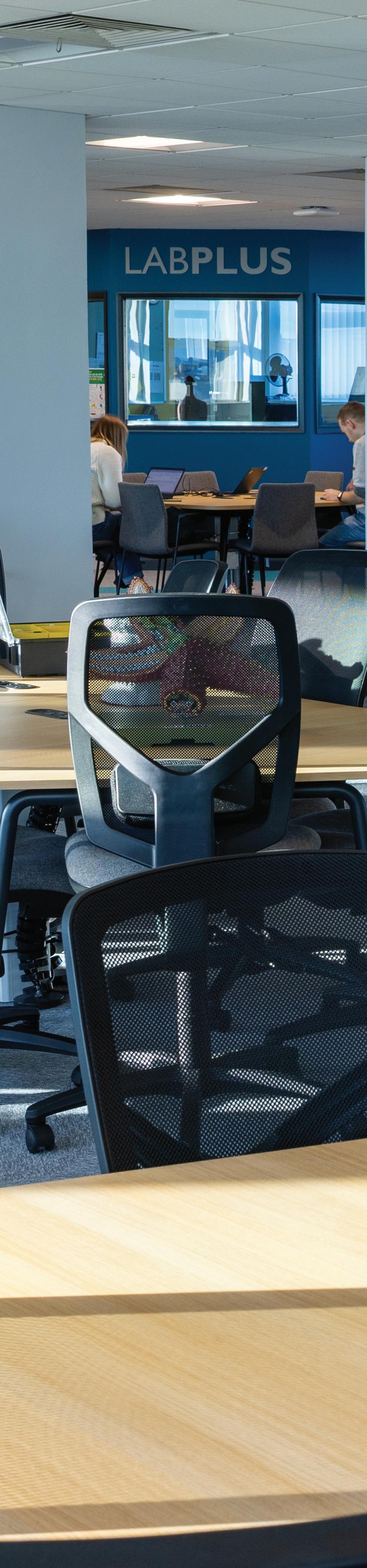
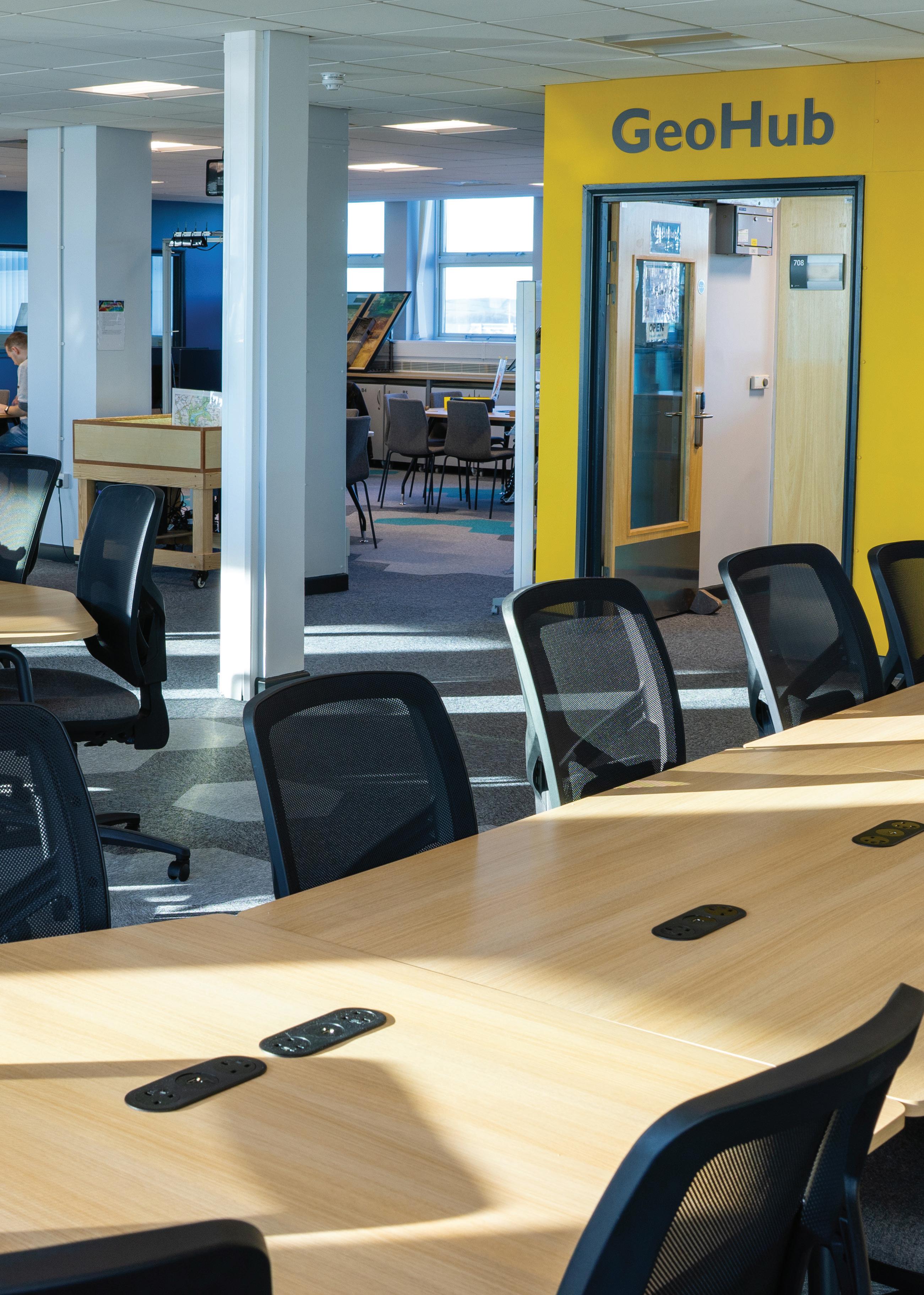
Throughout your studies, you’ll have unlimited access to LABplus, your dedicated student workspace.
LABPLUS IS AN INNOVATIVE SPACE FOR SELF-DIRECTED STUDY AND PRACTICAL LEARNING — IT’S WHERE YOU CHECK SAMPLES, TRY OUT METHODS FROM LABS, AND PREPARE FOR FIELDWORK OR ASSESSMENTS.
Work through our wide range of sample kits with guided exercises that build core laboratory skills. Use the large screens to practice presentations, run data visualisations, and follow step-by-step exercises on rock and fossil identification. Whether you’re looking for a quiet space for focused independent study, or need room to explore ideas through dynamic group assignments, LABplus provides you with a bespoke, creative environment to help maximise your learning, in whatever style suits you best.
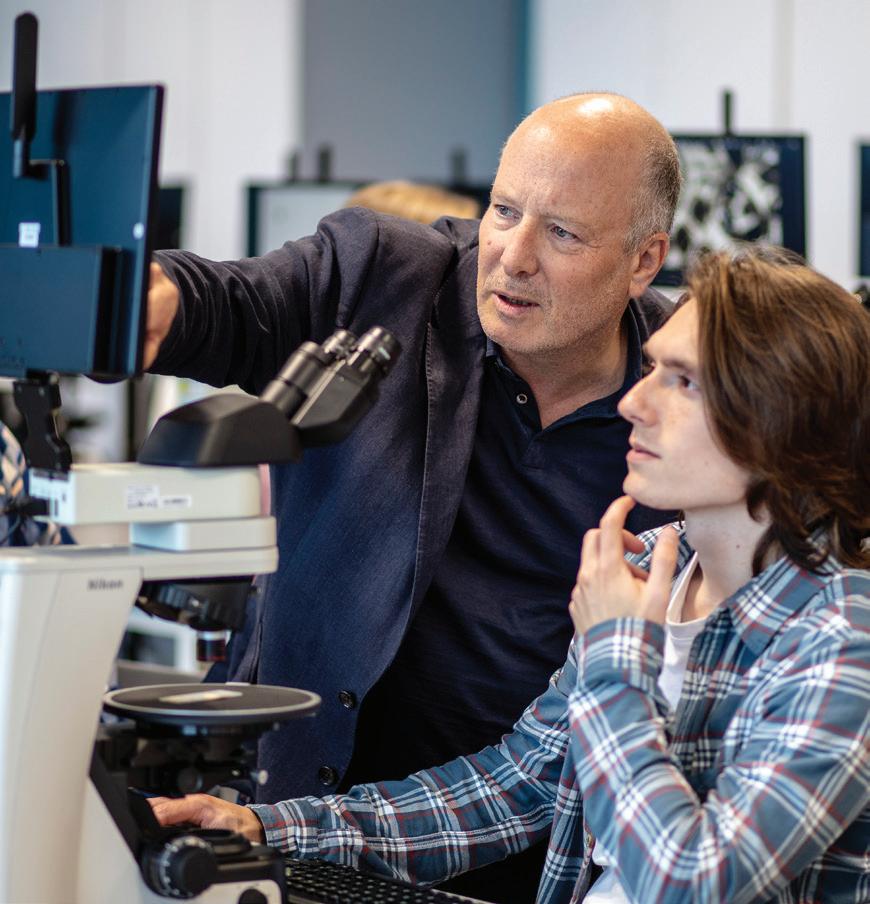
In our microscopy sessions you’ll use our 5G interactive microscope lab (the first of its kind in Europe) to identify minerals and microfossils, examine microstructures, and investigate fundamental geological processes — the integrated screens let you share views with friends and tutors so everyone can discuss what they’re seeing in real time. These sessions turn classroom theory into the visual skills you need for careers in a wide range of industry and research fields, from economic geology and plate tectonics, to palaeontology and climate change.
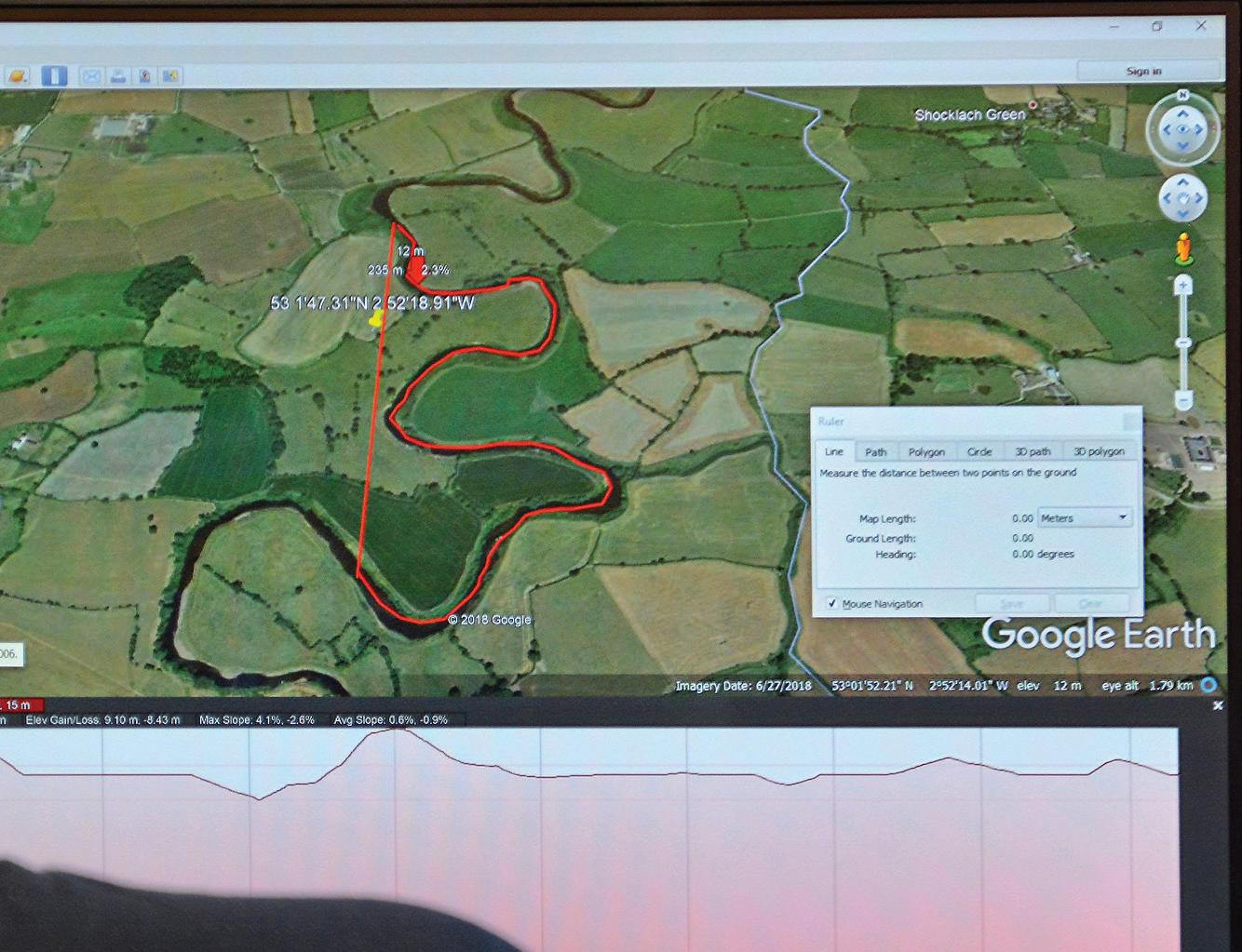
When your project needs spatial analysis, the GeoMapping and computing facilities support you all the way from field capture to finished maps and portfolios. You’ll collect GPS and drone data, import field observations, and build professional maps and spatial models using ArcGIS Pro, QGIS and specialist software on high-performance workstations. These tools let you turn raw field notes into publishable, industry-grade maps and spatial analyses.
In your final year, you’ll have the opportunity to use our world-leading research facilities as part of your dissertation project. You’ll learn the specialist practical skills for geoscience research from cuttingedge sample preparation techniques through to rigorous laboratory analyses and data collection. Work alongside our experts using our wide range of facilities. From geochemical analyses and electron microscopy to rock magnetism and advanced imaging systems, we will tailor your research experience towards the areas that inspire you most.
Whatever it is that you need most to succeed, we have it here at Plymouth. Everything is set up to give you a seamless workflow – sample in the field, prepare in the lab, image under the microscope, and analyse with professional software. By the time you graduate you’ll have a wide array of practical, industry-relevant skills and experiences, to bring you success wherever the next chapter of your life takes you.
SOME OF OUR FACILITIES INCLUDE:
5G INTERACTIVE MICROSCOPE LAB
GEOMAPPING AND COMPUTING FACILITIES
ARCGIS PRO, QGIS AND SPECIALIST SOFTWARE
HIGH-PERFORMANCE WORKSTATIONS
General features of LABplus include:
• portable TV screens for presentation practice
• bookable laptops (with specialised software)
• printing and photocopying facilities
• laboratory ‘wet work’ area
• general laboratory supplies.
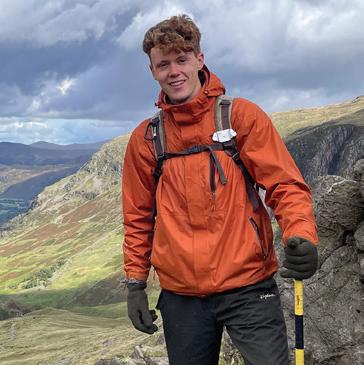
WILL GREEN
Final year BSc (Hons) Physical
Geography
and Geology student Will Green shares his experience studying with us.
The University of Plymouth offers a unique blend of a campus atmosphere while still being located within a city. Most university buildings are within a five-minute walk, making it convenient while still immersed in city life. Plymouth’s location is ideal for anyone studying Earth Sciences – Dartmoor is right on the doorstep, stunning coastal landscapes are just a short drive away, and Cornwall’s breathtaking beaches are easily accessible by train. These factors, combined with the course’s practical and engaging content, made Plymouth the obvious choice for me.
One of the standout aspects of my degree has been the high level of practical engagement. The course includes a mix of lectures, laboratory sessions, computer-based work and fieldwork, all structured to enhance the core aspects of an Earth Science degree. Lectures are often followed by practical sessions, allowing us to immediately apply what we’ve learned in a hands-on environment.
Fieldwork is a major component of the course. Being based in the South West of England means we have access to an incredible variety of geological sites.
From day trips, such as visiting structural geology locations in South Devon, to local residential trips in the South West and international trips to places such as Italy and America, the opportunities to learn outside the lecture halls are endless. Many of my course mates and I agree that the residential field trips are among the most enjoyable aspects of the course. These experiences not only deepen our understanding of geographical and geological processes but often lead to friendships that last way beyond the degree.
Beyond the academic curriculum, the university provides outstanding career support and extracurricular opportunities integrated into societies and sports clubs, one of which led me to climb Mt Kilimanjaro at the end of my first year. During my second year, I had the chance to participate in a month-long work experience programme studying submarine volcanism in Tenerife. This opportunity was advertised through the university, and the support I received throughout was exceptional.
This experience helped me secure my placement year, as a geophysicist with Gardline Limited, working on offshore survey vessels across the North Sea. The university’s careers team played a crucial role in making this happen, offering guidance, workshops, and career fairs focused on geoenvironmental employment. The skills and industry knowledge I gained during my placement have been invaluable, and I would highly
recommend taking a year in industry to any prospective student.
My placement year enhanced my passion for offshore geophysics, allowing me to travel the world and gain hands-on experience at sea. I will be returning to Gardline after graduation to begin my full-time career as an offshore geophysicist – something made possible through the university’s strong industry connections and support.
Reflecting on my time at Plymouth, I can confidently say that the university has provided me with an incredible education, invaluable experiences, and a clear career path.
The combination of engaging coursework, extensive fieldwork, and industry placements has set me up for success in the geoscience industry.
For anyone considering studying Earth Sciences, Plymouth is an outstanding choice. With its location, excellent academic support, and extensive career development resources, it’s a place where you can grow – both academically and professionally. My time here has been unforgettable, and I’m excited to take the next step in my journey, knowing that Plymouth has prepared me for whatever comes next.
"I can confidently say that the university has provided me with an incredible education, invaluable experiences, and a clear career path."
WHAT CAN FIELDWORK DO FOR YOU?
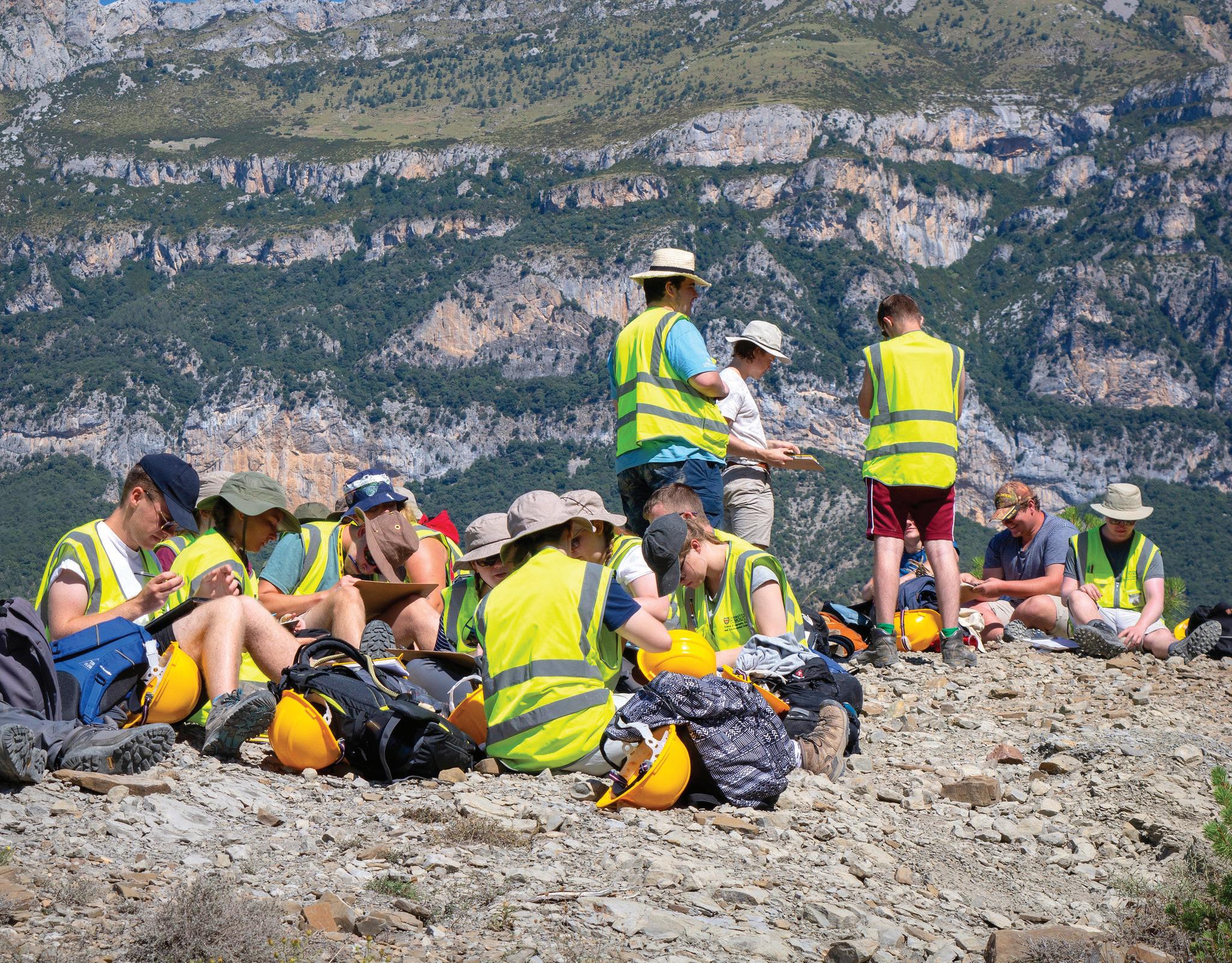
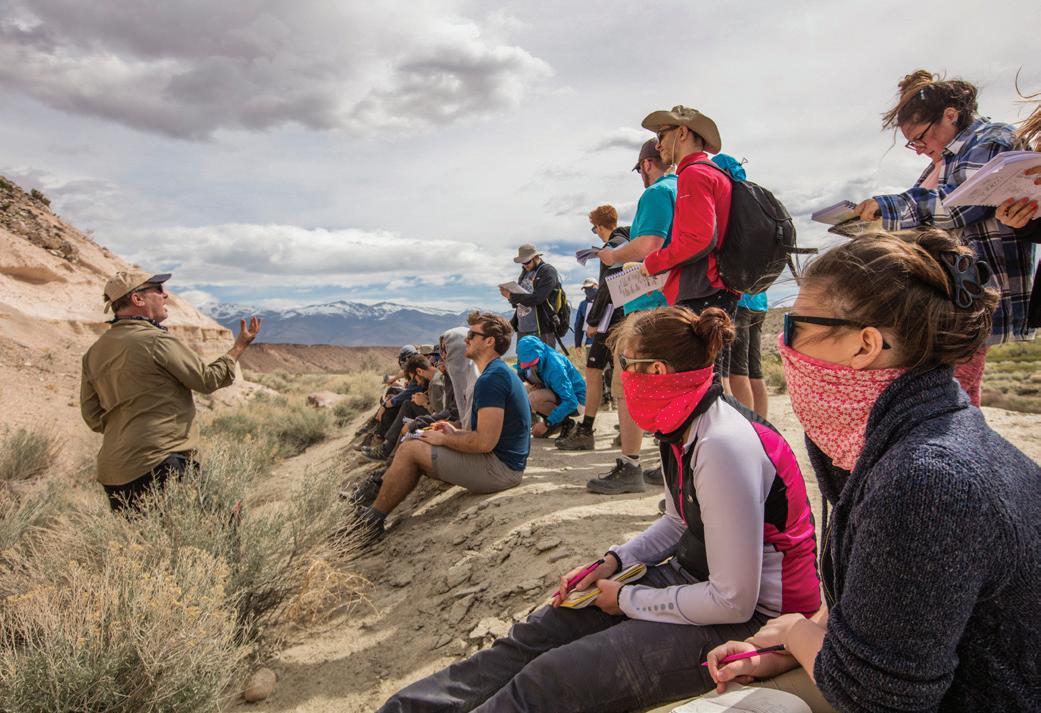
Fieldwork is a key aspect of the Earth Sciences and a great way to get to know your fellow students and university teachers.
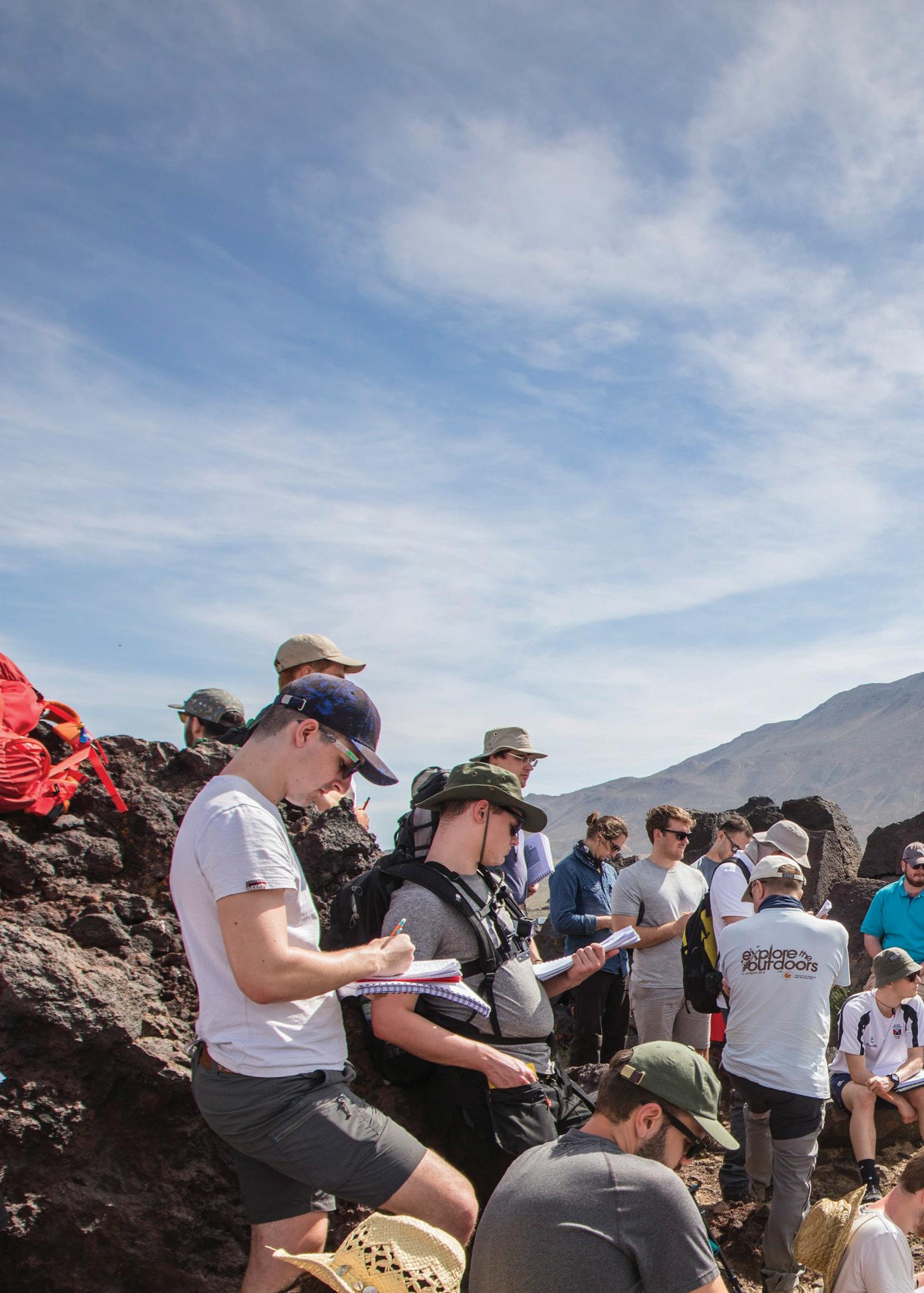
Fieldwork lies at the heart of Earth Sciences at Plymouth — it’s where classroom theory becomes practical skill.
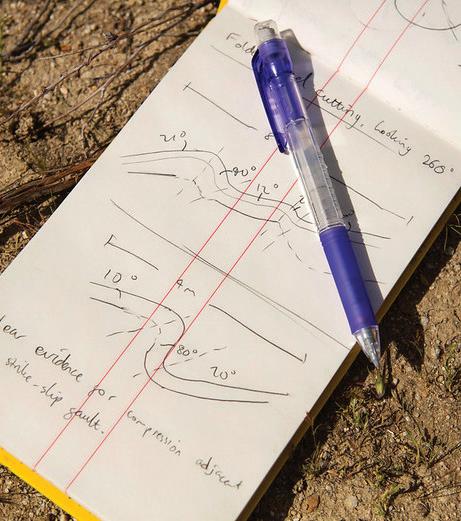
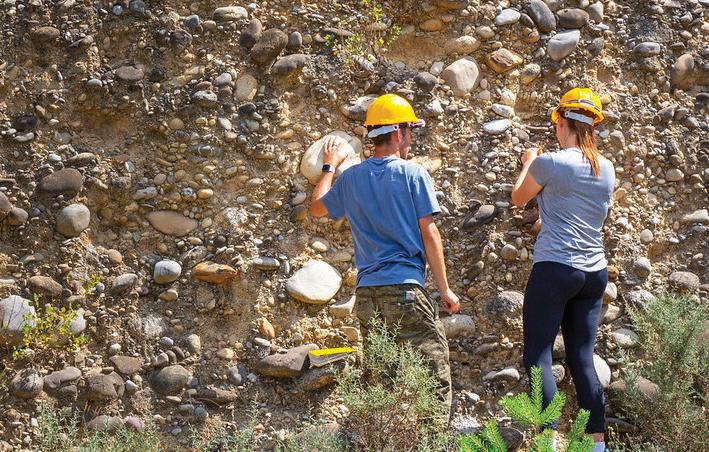
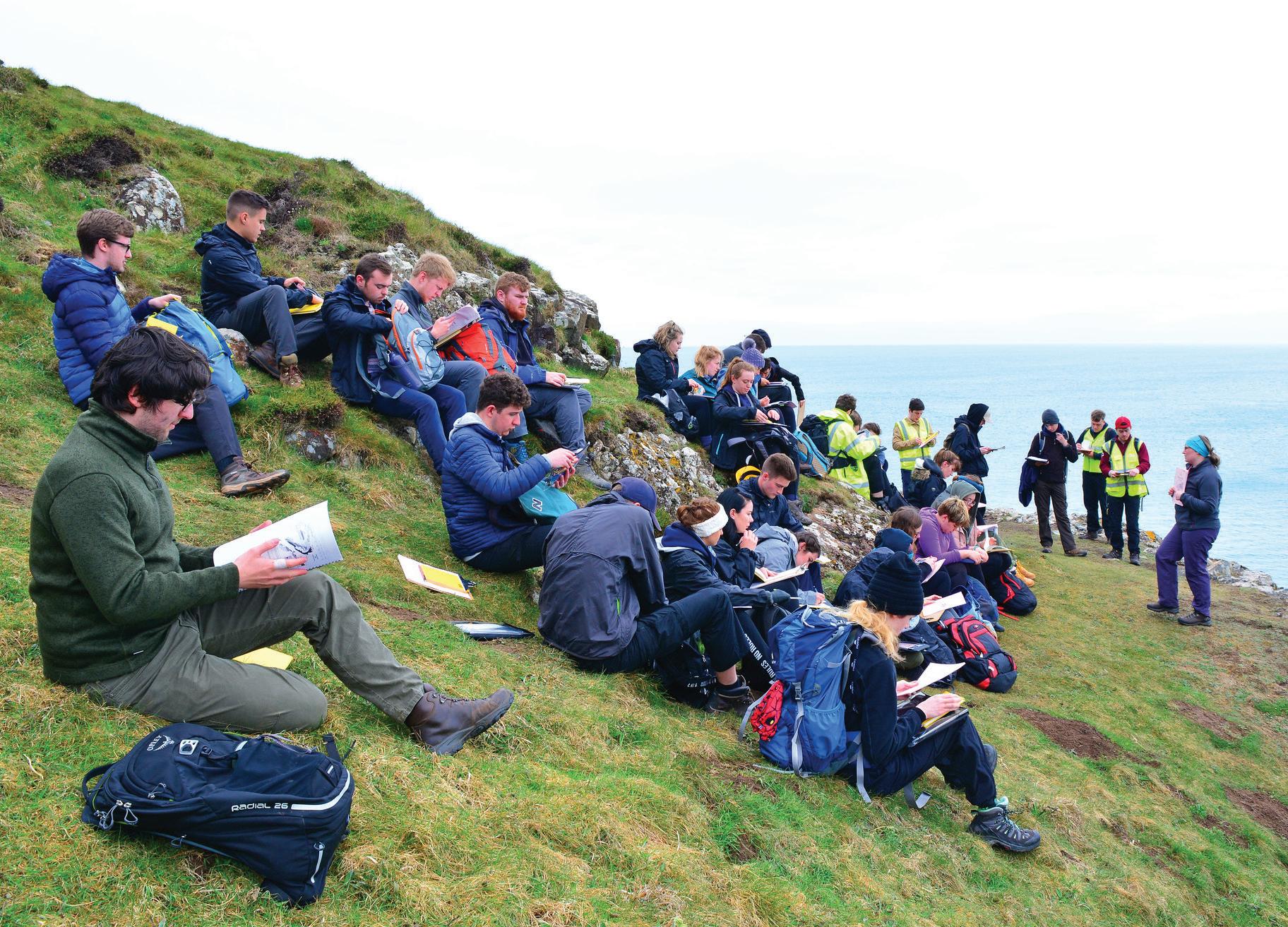
FROM LOCAL DAY TRIPS, TO LONGER RESIDENTIAL CAMPS IN SOUTHWEST BRITAIN AND OVERSEAS, our field programme gives you hands-on opportunities to observe, measure, and interpret real landscapes using best-practice research methods and industry tools.
All core residential field courses are funded by the University so you won’t pay extra for these essential learning experiences.
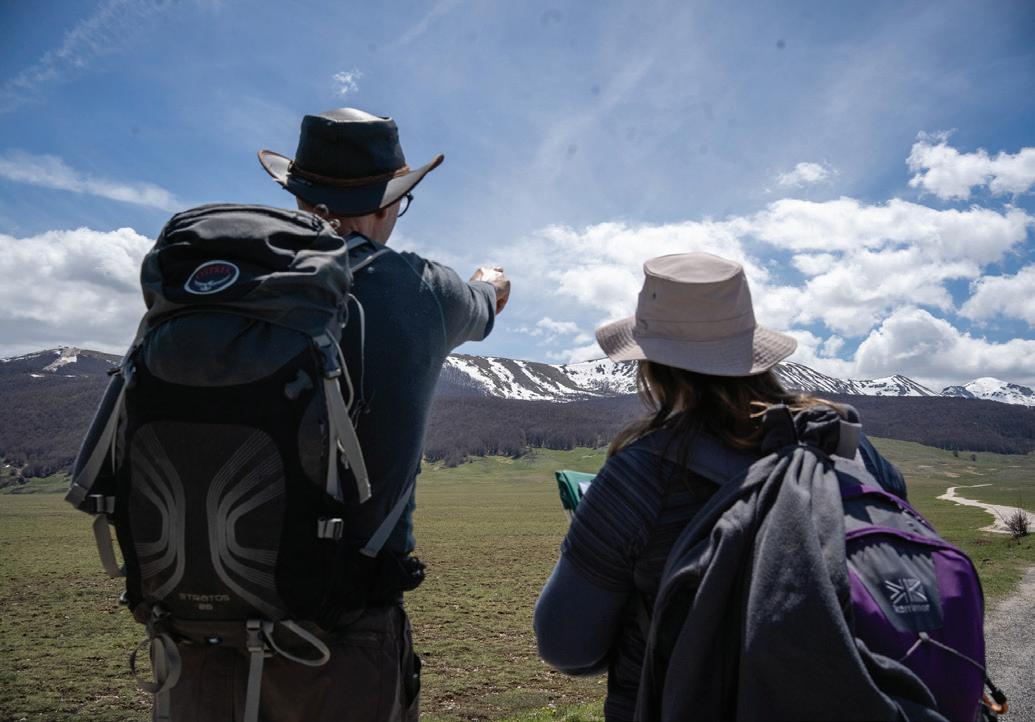
AT THE END OF YOUR FIRST YEAR YOU’LL TAKE OUR FLAGSHIP ITALY TRIP, studying active volcanism around Vesuvius and the tectonics of the Apennines. You’ll visit iconic sites — visiting Pompeii, logging pyroclastic sequences, practicing structural measurement on active fault scarps and learning how geological hazards affect local communities. The Italy trip is a formative, immersive experience that brings dynamic
Earth processes vividly to life. As a core component of our Earth Science degree programmes, you won’t pay a thing for it.
FOR YOUR FINAL YEAR OF STUDY WE OFFER A RANGE OF OPTIONAL OVERSEAS OPPORTUNITIES. On these trips you will draw upon your full three years of study to understand complex geological and environmental processes and problems in worldfamous locations.
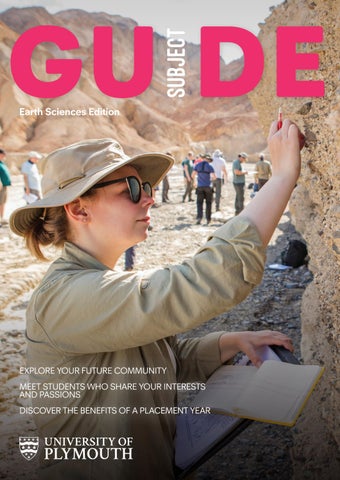
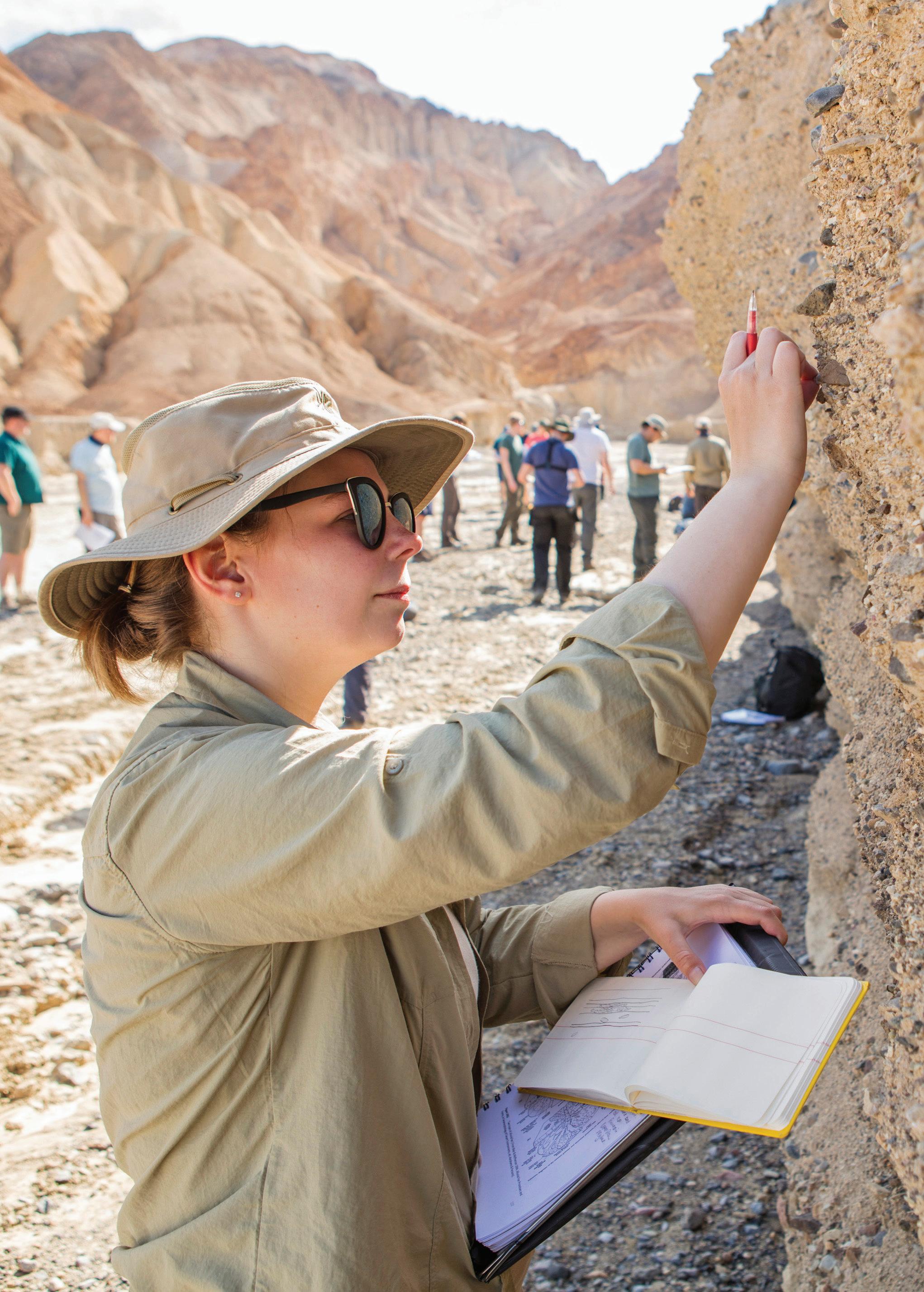
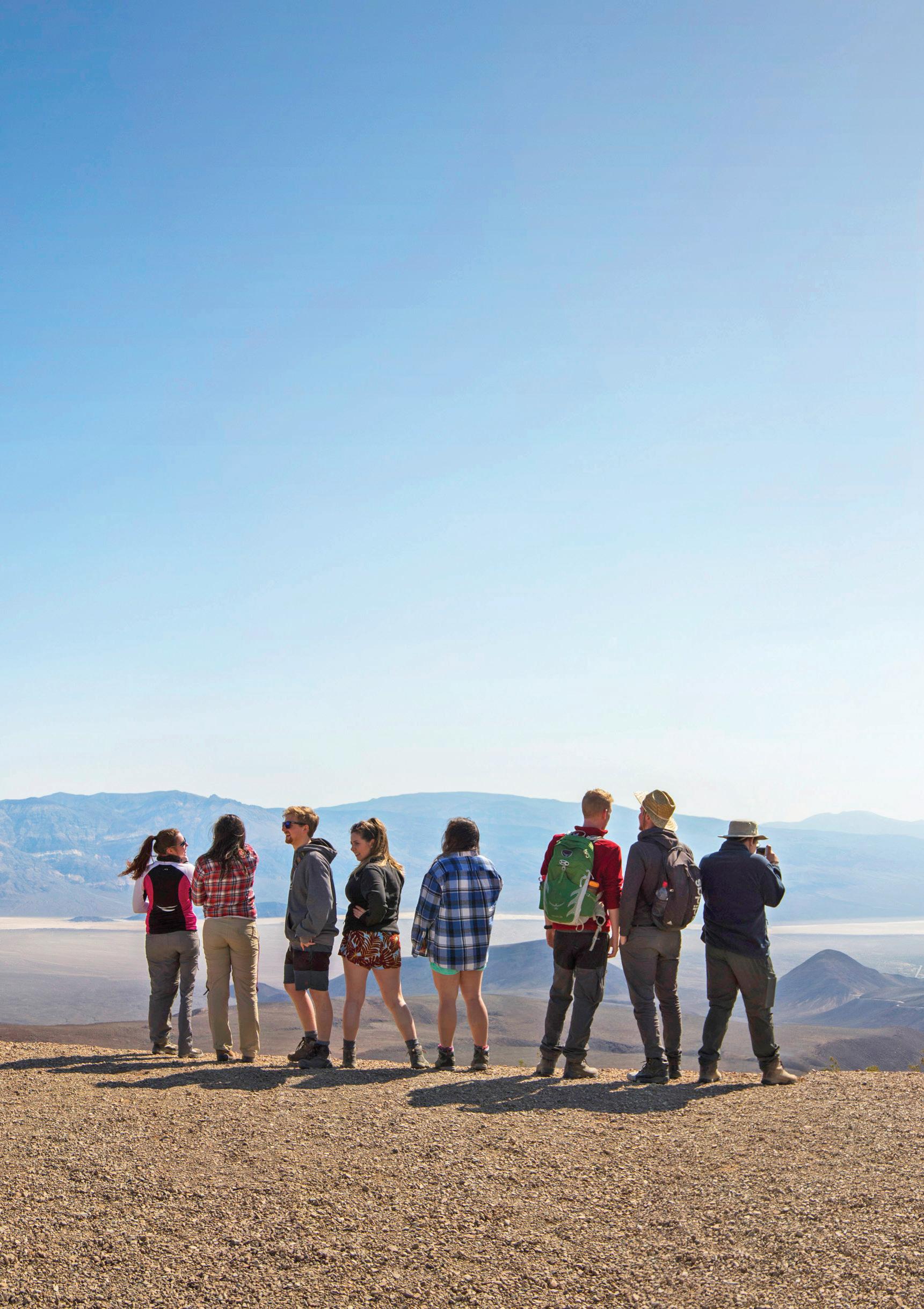
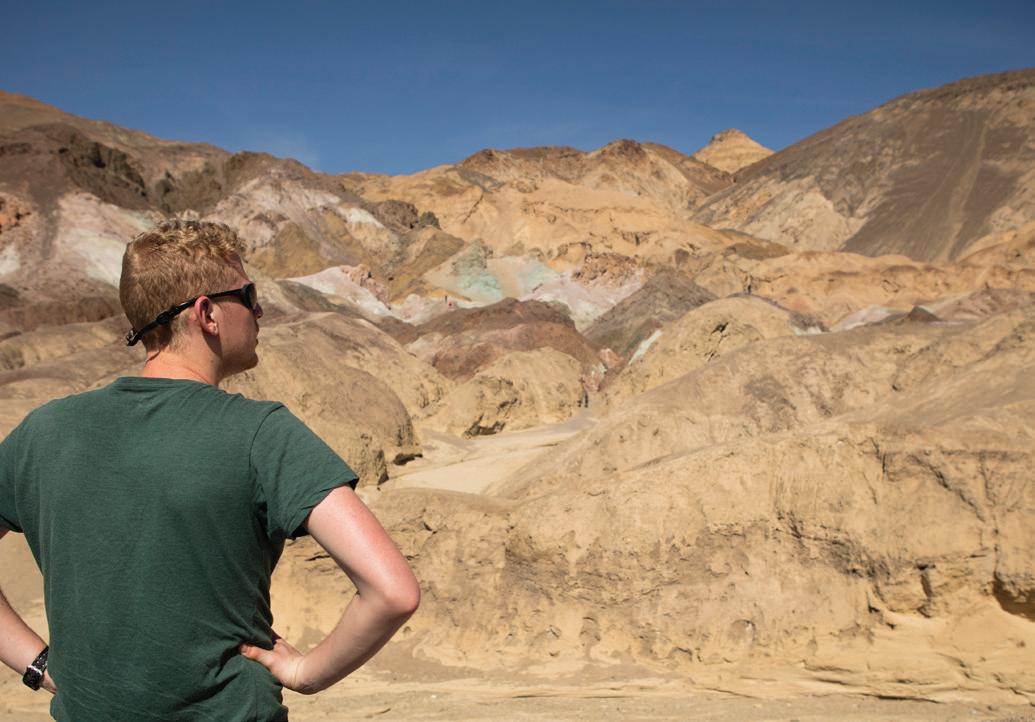
OUR DEATH VALLEY TRIP WILL TAKE YOU FROM THE PACIFIC COAST, THROUGH THE SIERRA MOUNTAINS, TO THE ARID LANDSCAPES OF DEATH VALLEY. Through this continental transect you will learn how past-topresent tectonic processes have shaped North America, making it a critical destination for understanding natural hazards and resources.
OUR NAMIBIA TRIP OFFERS A TRULY UNIQUE EXPERIENCE – run jointly across Earth Sciences, Physical Geography and Environmental Science streams within the School of Geography, Earth and Environmental Sciences, it pairs students with researchers and local partners at
the Gobabeb Research Institute to tackle arid-zone sustainability challenges linked to the UN Sustainable Development Goals. Students from each degree stream contribute their own expertise — geological mapping, geomorphology, environmental monitoring and socialscience perspectives — creating an exhilarating, cross-disciplinary research experience that employs real-world approaches used to tackle fundamental socio-environmental problems.
ACCESSIBILITY IS CENTRAL TO OUR FIELDWORK PROGRAMME: fieldwork is developed to be physically inclusive and financially considerate, with adjustments available for mobility needs and cost-minimising structures for optional trips*. Whatever options you choose — local, Italian, Namibian or American — Plymouth fieldwork builds the practical, real-world skills that employers seek: mapping, hazard assessment, field data collection, teamwork and independent research.
*Final-year overseas trips such as Namibia and Death Valley require a student financial contribution and are offered as optional alternatives — students may choose one or the other trip or neither if they opt to do a desk-based study.
The Power of PLACEME NTS
Placements can be incredibly beneficial for undergraduate students studying our Earth Sciences degrees. A placement provides valuable, hands-on experience outside of the classroom, and can provide a great networking opportunity.
Many of our students have gone on to either be offered graduate employment by their placement organisations, or have used a placement to help them decide their career routes. A placement gives you the perfect chance to refine your CV, put theory into practice and hone valuable skills that will be attractive to employers after you graduate.
WHAT COULD YOU DO ON YOUR PLACEMENT YEAR?
Placements provide invaluable insight into diverse Earth Sciences career paths. You might conduct ground investigations for infrastructure projects with engineering consultancies, gain mining sector experience through mineral exploration companies, or work as a geophysicist on marine surveys for offshore energy. It is the ultimate opportunity for you to get real-world professional experience in a sector you are interested in!
WHY SHOULD YOU UNDERTAKE A PLACEMENT?
Placements develop specialised skills and deliver authentic professional experience impossible to replicate in academic settings. Our structured placement programme operates within a formal framework agreed between the university,
your placement company, and you. You'll be supported by both academic and professional placement tutors who monitor your progress throughout. This rigorous framework ensures you gain genuine professional experience that provides a significant competitive advantage in future job applications.
EXAMPLES OF RECENT PLACEMENT ORGANISATIONS
• UK Hydrographic office
• Gardline
• Fugro
• Sibelco
• Imerys
• Geotechnical Engineering Ltd
• Bridgeway Ltd
• Redrock Ltd
• National Trust
CALLUM BSc
(Hons) Geology
Callum did a one-year industry placement as a geotechnical engineer and started his first graduate job only days after finishing his studies.
TELL US ABOUT YOUR PLACEMENT EXPERIENCE...
In my second year, I had a module focused on industry placements in which I talked to careers advisers and got an idea of how to find placement opportunities. That year I talked to a number of companies at the careers fair, sent them my CV afterwards and eventually was offered a paid placement by Geotechnical Engineering Ltd.
I talked to careers advisers and got an idea of how to find placement opportunities
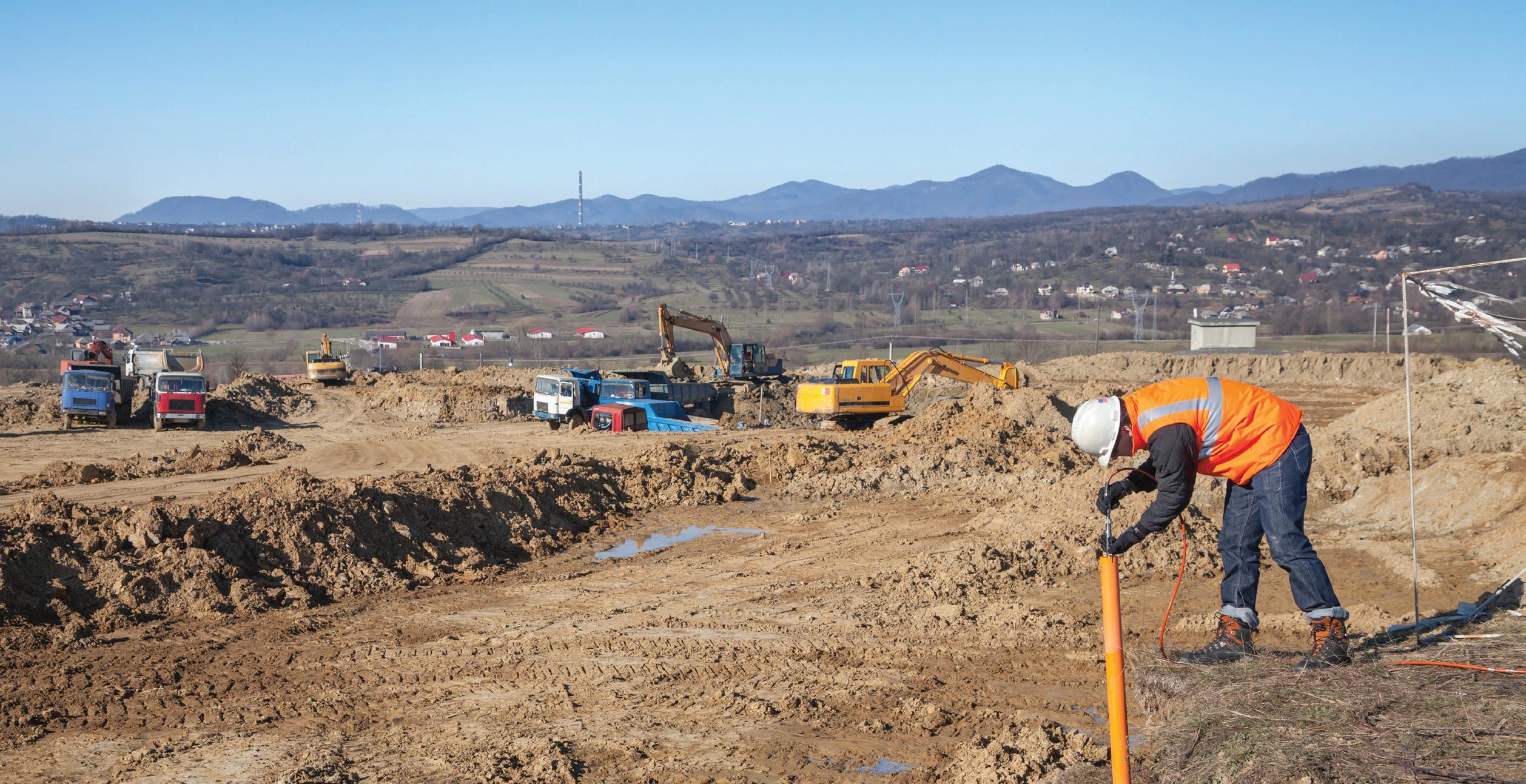
My job title was placement engineering geologist, but I was working as if I was a normal graduate engineer. It started with six weeks of basic technical training and getting all the H&S certificates. After this, I would do on-site ground investigations using different types of drilling techniques or do trial pitting with excavators – I was supervising the rigs with their crews, liaising with clients and the office, and did occasional site managements as well.
The opportunity for my first graduate job came out of a conversation I had at the careers fair in my final year of studies. Having done my placement the previous year, it really helped that I was able to talk with real job experience. A few days later, I was invited for a job interview. This job was not even advertised and I never had to apply for it! And I started with two other Plymouth graduates only a few days after finishing my course.
The opportunity for this job came out of a conversation I had at the careers fair in my final year of studies
It is important that you research the jobs and companies to know what a potential placement is about. It is also good to be flexible because you are unlikely to get exactly what you want. And don’t give up – if you don’t hear back, send a reminder email. Companies don't get back to you very quickly, particularly if they don't have placements
ELLIS BSc (Hons) Geology
Ellis tells us all about her year studying abroad and her following placement.
My interest in geology began in secondary school, sparked by my geography teacher’s passion for Earth Sciences. She let me read her dissertation, where my curiosity about the evolution of Earth started, particularly in tectonic hazards and the landscapes they shape. From that moment, I knew geology was the field I wanted to pursue.
Choosing a university in the right location was important for me, especially coming from the outskirts of London. Plymouth offers the perfect balance between city life and nature. During my time here, I have felt connected to the community while experiencing everything the South West has to offer. I applied for the BSc Geology course at Plymouth as it specialises in areas I’m passionate about, and focuses on teaching the latest developments in the industry. The programme offers a strong foundation in geological knowledge while equipping students with industry-specific skills. Plymouth offers extensive fieldwork, both international and local field trips, allowing handson learning right on our doorstep. The local geology in Plymouth is rich and accessible, making it an ideal environment for studying Earth Sciences.
Plymouth offers extensive fieldwork, both international and local field trips, allowing hands-on learning right on our doorstep
Most importantly, I feel that Plymouth is a university that truly offers opportunities. The Earth Sciences department is filled with staff dedicated to helping students pursue their aspirations. The university is all about promoting experiences that help you discover who you are and what you enjoy.
In my second year, I had the incredible opportunity to study abroad at Western Washington University, a standout experience of my degree. At 19, with a desire to see the world, an exchange was the perfect opportunity, and I couldn’t recommend it more! I was immersed in a new culture, living student life on a huge campus, and staying in a dorm room straight out of a movie. Academically, I thrived by exploring new geology and gaining field experience in a region that was vastly different from the UK.
During this year, I completed a Geology Field Camp module, which took me on a six-week journey along the West Coast of America. Over the course of the trip, I visited seven states and three national parks, all while mapping the geology of the region. I gained a deep understanding of the geological history of the Western US and had the chance to visit sites like the San Andreas Fault. The experience was unforgettable, filled with hiking, wild camping, and even the occasional encounter with a rattlesnake.
I feel that Plymouth is a university that truly offers opportunities
My year abroad was one of the best decisions I made, and I now have friends from all over the world. I’m extremely grateful to the University of Plymouth for making this experience possible, and for the guidance I received from my tutor Sarah Boulton and advisor Paul Cole, as well as Plymouth Global for providing accessible study abroad opportunities and grants for all students.
After my year abroad, I chose to undertake a placement before starting my final year. With the support of the Earth Sciences Careers Advisor, Martin Stokes, I applied for and was accepted onto the Geospatial Internship Programme at the UK Hydrographic Office, the world-leading centre for hydrography. On my placement year, I gained valuable geospatial experience and advanced my technical skills, especially in GIS software. A major part of my role involved producing situational awareness products using various data sources. Working in a data-driven environment improved my teamwork and communication skills, while also teaching me how to successfully meet deadlines and deliver high-quality work.
Working in industry allowed me to bridge the gap between the theoretical knowledge I had gained during the first years of my studies and the practical application of these skills. Contributing to impactful, real-world projects was incredibly rewarding, and I grew both professionally and personally. The experience made me more resilient and confident, which has prepared me well for my final year and a future graduate role.
As I returned to Plymouth for my final year, with the experience I had gained, I chose a dissertation project that involved fieldwork, mapping, and GIS. I thoroughly enjoyed conducting independent research in the English Lake District and applied all the skills I had developed throughout my degree to map a succession of ancient volcanics.
During my time at the University, the support from the faculty has been exceptional, with staff offering office hours and quick responses whenever I needed guidance. My supervisors, Uwe Balthasar and Paul Cole, were especially helpful, providing in-person feedback, which I truly appreciate.
The support from the faculty has been exceptional
Studying at Plymouth has been thoroughly enjoyable and has provided me with invaluable opportunities. With the support of the Earth Sciences department, I have discovered my love for travel and my passion for using my geology skills to make an impact. I’m excited to graduate and look forward to what lies ahead.
PROFESSOR SARAH BOULTON Professor
of Geohazards
International
expert
WHAT IS YOUR EXPERTISE AND WHAT IS YOUR RESEARCH ABOUT?
I'm an Earth scientist and I'm interested in the interaction between the Earth's surface processes and deep Earth processes. Primarily in terms of geohazards, so I look at earthquakes, landslides, and tsunamis. And I also look at long-term evolution of the Earth's surface, and how those processes and hazards shape the land surface that we live on.
I look at earthquakes, landslides, and tsunamis
WHAT DREW YOU TO STUDY EARTH SCIENCE?
I always like technology. I picked up rocks as a kid. I picked up fossils, and that really got me interested in the science of the Earth, I suppose. We did those family holidays to Cornwall and saw lots of fantastic geology, and so, when choosing my degree, I chose geology – it’s very vocational; there's a lot of jobs in it. So it's really that scientific application of a love of the Earth; wanting to understand the Earth that we live on.
We did those family holidays to Cornwall and saw lots of fantastic geology
in geohazards and tectonic geomorphology
HOW DOES YOUR RESEARCH INFORM YOUR TEACHING?
In terms of how that translates to teaching, I use a lot of GIS (Geographic Information Systems) and remote sensing (satellite data) in my work, so I lead the development and teaching of those subjects, and get the students using the latest technologies. I’m also really keen to bring my geohazards knowledge into the programmes.
WHAT WAS YOUR MOST MEMORABLE RESEARCH EXPERIENCE?
I've just got back from Turkey. This was a memorable one because we went to see the surface rupture of the 2023 Kahrama-Maraş earthquakes, and just seeing the impact on the surface of that earthquake was phenomenal. It actually broke the Earth's surface, and you can see eight metre offsets, it's really incredible. I think going to Japan a few years ago was also very memorable. Just a different culture and seeing the deposits from the Tōhoku tsunami was really memorable and very cool.
Seeing the deposits from the Tōhoku tsunami was really memorable and very cool
I am a passionate advocate for increasing diversity within STEM subjects and co-founded the successful and award winning (Geological Society RH Worth Award) Girls into Geoscience programme.
The Careers Service offers students one-to-one careers guidance at any point during their studies and even years after graduation.
CAREERS SUPPORT
Meet Jon Christie, Careers and Employability Consultant (STEM specialist) at the University of Plymouth.
Jon has been working in the university careers sector for over 20 years, including at Falmouth and Exeter universities. Before this he worked as a Careers Adviser in schools and colleges across Hampshire and the Isle of Wight.
HOW DO YOU SUPPORT THE CAREER PROSPECTS OF OUR STUDENTS?
One of the important parts of my job is to make students aware of the incredible breadth of opportunities that are open to them both during and after they graduate. This is facilitated through course-based lectures in all three years, one-to-one appointments in our Careers Hub and by inviting employers and alumni onto campus via careers fairs, employer panels and specific academic activities. This gives students first-hand knowledge of where they can go in the future and an insight into how to take full advantage of all the skills and experiences the university offers them.
WHAT CAREER SUPPORT SERVICES DOES THE UNIVERSITY OFFER?
The Careers Service offers students one-to-one careers guidance at any point during their studies and even years after graduation. We help with very general careers queries such as not knowing what to do after graduation, right the way through to
very specific support with job hunting, application writing, CVs, networking and interview skills.
We also organise on-campus careers fairs, run a paid work-placement programme using our extensive industry contacts and offer an industry-mentoring scheme. The latter matches students with a specific industry individual who will meet with them regularly to provide incredibly valuable insights into a specific sector. University of Plymouth alumni who now work for employers who are keen to spot future talent usually host the mentoring scheme.
Lastly, our myCareer internet platform hosts an extensive vacancy database of both graduate, placement and parttime opportunities. It allows students to sign up for events such as employer panels, enterprise competitions or mentoring. It also holds a range of highly specialised digital tools such as a CV builder, an interview simulator, online courses and video resources. Access to myCareer is available to our graduates at any time in the future.
HOW DO YOU JUDGE THE JOB PROSPECTS IN THE EARTH SCIENCES SECTOR?
Excellent – currently demand for graduates is extremely high in the Earth Sciences sector but also these skills are completely transferable across a very broad range of STEM employer sectors. Graduate salaries
are very competitive compared to other sectors and for many students doing work placements it is highly likely that you may well be offered a graduate role with the placement host after completing your final year. This is also reflected by the great willingness of employers seeking to recruit our students by engaging with our events and online vacancy platform.
WHAT CAREER TIPS DO YOU HAVE FOR NEW EARTH SCIENCE STUDENTS?
Make the most of your time at university by engaging with the Careers Service and take full advantage of all the support we have to offer, such as paid year-long work experience placements, industry mentoring and our hands-on assistance with writing job applications. In addition to this, make sure you take up the opportunity of learning new software packages such as ArcGIS, QGIS or RStudio. A good degree with highly developed skills, coupled with a period of relevant work experience will make you an extremely employable graduate. Get in touch!
+44 (0)1752 587456
GRADUATE STORIES
MATTHEW CLEAVE
BSc (Hons) GEOLOGY GRADUATE
Current PhD student Matt Cleave tells us all about his journey.
My journey to university was ‘bumpy’ – I unexpectedly failed my A-Levels. This not only affected my university ambitions but also deeply impacted my confidence. My experience with the University of Plymouth admissions team was really positive and thankfully, the University of Plymouth accept alternative high-education awards such as BTECs which allowed me onto the programme.
Once I started the course, my lack of self-confidence, and anxiety around my ability to complete the course, were very quickly relieved owing to the caring and supportive faculty who really nurtured me throughout. The faculty were instrumental in getting a dyslexia diagnosis at 19 (during my first year) and were subsequently exceptional in making course content accessible to my newfound learning needs. I enjoyed the different ways in which we were assessed – we didn’t have to sit two-hour exams every six months, instead we were assessed in a range of ways – essays, presentations, group work, field work. I believe it is
this support and care, and holistic assessment approach, that allowed me to thrive at university, and for the first time in my life be able to reach my full potential with a First-Class undergraduate degree.
Aside from the top-class faculty, the content of the course was interesting and diverse. Throughout, almost all subdisciplines of Geology were taught to us – structural geology, micro and macro palaeontology, remote sensing, sedimentology, volcanology, petrology and so many more – you’ll be sure to find your niche! This inter-disciplinary approach of teaching allowed me to consider a problem from a variety of different perspectives, which made me a critically analytical geologist and has been invaluable to me since graduating. I found lecture and practical content to be consistently thought-provoking and inspiring as the lecturers delivering the content are all actively researching the topic areas, which resulted in fascinating discussions around 21st Century earth science research.
A highlight of the course offered
A highlight of the course offered here at the University of Plymouth is the world-class fieldwork and field skills you will be taught.
here at the University of Plymouth is the world-class fieldwork and field skills you will be taught. Being based in the South West of England, Plymouth is conveniently located around a host of world class field sites, which we visited frequently. Over three years we did fieldwork all around Devon and Cornwall – Dartmoor, Bude, Lizard Point, Torbay – where fundamental geological skills were learnt from our very first week. I also found these fieldtrips, which were a mixture of day trips and residential trips, a great way to get to know your course mates and peers in a different setting.
Not only did we have an abundance of local fieldwork, but we also had a fully funded, five-day, international fieldtrip to the Spanish Pyrenees on a geological mapping camp, which is a fundamental skill required for any professional geologist. Being exposed to a completely different geological setting (and culture) really tested and strengthened my geological abilities. It was an incredibly fulfilling experience and a major highlight of my degree.
Throughout my studies I had access to state-of-the-art facilities such as 5G interactive microscopes, wellequipped research laboratories, and high-quality computer spaces, and the relevant licences to use industry standard software – ArcGIS Pro, S&P Kingdom and Digimap, to name a few. These resources gave me hands-on experience with the tools and technology used in industry, setting me apart when applying for jobs and research positions.
The course also integrates career progression and professional development. Events like the annual Geoenvironmental Careers Fair, organised by the School of Geography, Earth and Environmental Sciences (SOGEES), provided valuable networking opportunities with industry professionals, many of whom were University of Plymouth alumni.
Perhaps the most invaluable part of my experience at the University of Plymouth was the sense of belonging, purpose, and community. I built lifelong friendships and professional connections with people who share a deep passion for earth sciences. The faculty’s dedication to fostering an inclusive and supportive environment made all the difference in my academic journey. My time at the University of Plymouth transformed my confidence, skills, and career prospects. In fact, my experience was so positive that I chose to return to the University of Plymouth to pursue a PhD. I can confidently say that enrolling in this course was the best decision I ever made.
If you are considering studying Earth Science, I can’t recommend the University of Plymouth enough – you will be challenged, supported, and inspired to reach your full potential.
Perhaps the most invaluable part of my experience at the University of Plymouth was the sense of belonging, purpose, and community.
GRADUATE STORIES
CHRISTIAN CLARKE
BSc (Hons) GEOLOGY GRADUATE
International graduate Christian Clarke reflects on his time at Plymouth, and how his experience informs his career.
I first heard about the university when I attended a UK education fair in my home country Barbados. There I met Charlotte from UKESC – which is a service that provides support to Caribbean students looking to study in the UK. She gave me information on all of the universities they represent that had geology or earth science related courses, but from the beginning Plymouth stood out. Being a walkable city, right by the sea and finding out there were several other Barbadian students there were the major selling points for me.
Being a walkable city, right by the sea and finding out there were several other Barbadian students there were the major selling points for me
After receiving my offer from Plymouth I was more than happy to accept it and began looking forward to the next chapter, however the global shutdown caused by the Covid-19 pandemic had the potential to become a major obstacle for me. I decided that I was still going to go ahead with my course as planned and not defer despite the challenges and both the University and UKESC were very accommodating and instrumental in assisting my visa application process and move to a new country in the middle of the crazy situation that was happening.
Starting a degree in era of mask wearing and social distancing was difficult, but all of the teaching and support staff really went beyond the call of duty to make sure we were given a high standard of teaching. Virtual fieldtrips, virtual microscope sessions and lab sessions where possible really showed me how dedicated all the staff were, and it made for an interesting but exciting first year!
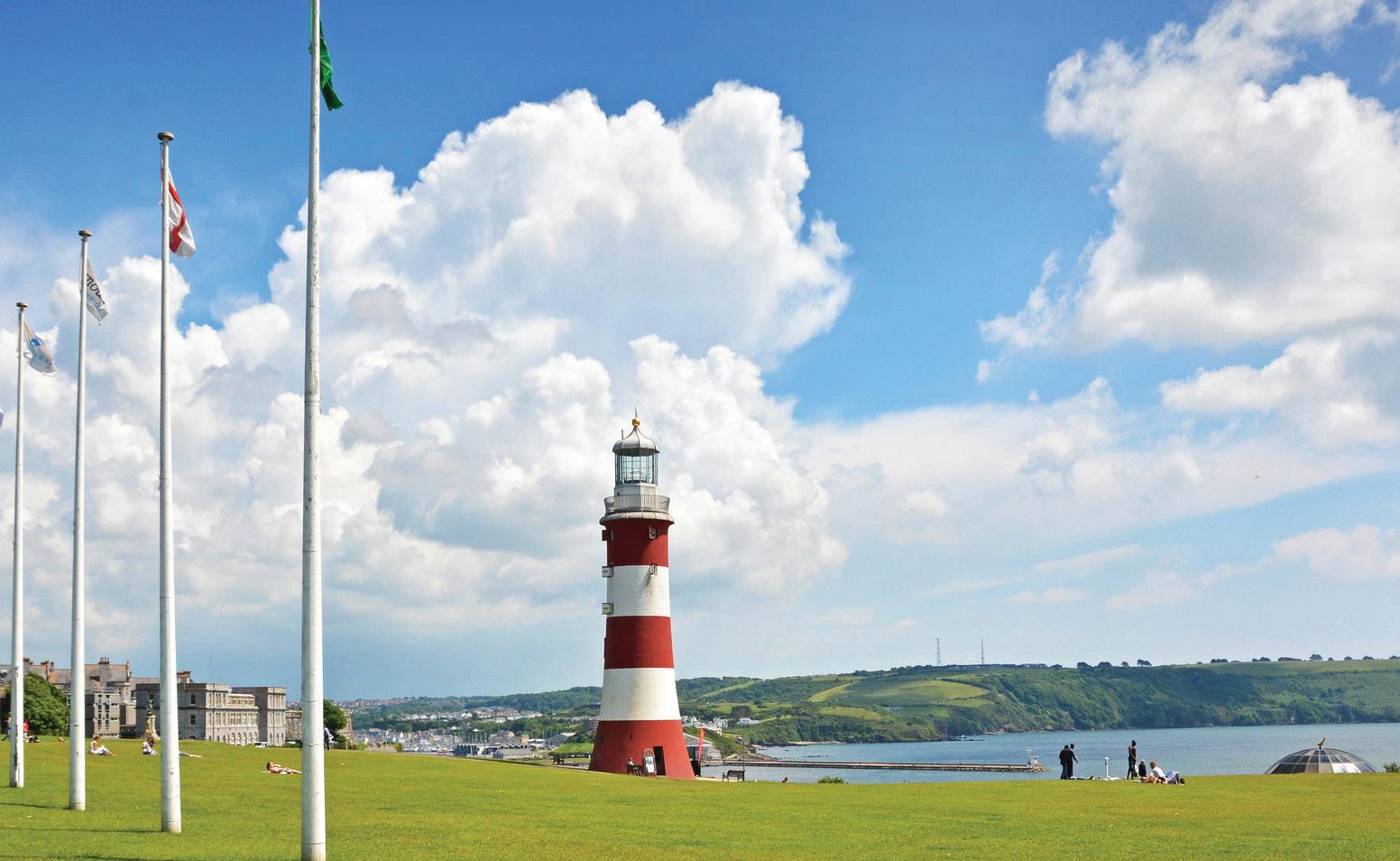
Moving out of the pandemic when we were able to get fully stuck in, my absolute favourite part of the course were the fieldtrips! Plymouth was perfect for day-trips having the Hoe, Dartmoor and Cornwall all within easy reach. Residential trips were even more fun going to North Devon, Cornwall, Spain and my favourite of all Death Valley, USA! This third-year fieldwork took me to some of the most stunning places I’ve ever seen,
and to this day I still look back on the experience as one of the best in my three years in Plymouth.
Throughout my time at Plymouth, I felt well supported whether it be through the PALS sessions, personal tutors, and being able to access a range of other academic and pastoral support through student services. The lecturers were never too busy to check in and made me feel like a person and not just a name on a list, which is an experience some of my friends at other universities have had.
My experiences at Plymouth have led me into my current career as an engineer within the piling industry. I was fascinated by the bridges, dams and tunnels I saw on our second-year trip to the Spanish Pyrenees, and the curiosity of how these were designed and built piqued my interest in geotechnical engineering. In my third year, I took a module on Engineering Geology which provided me with a lot of the base knowledge for what I do now.
Although the majority of my day-to-day job involves engineering, knowledge of geology is an important aspect of ground engineering. Understanding different soil and rock types and how they behave were skills I learned during the course that I now use every day. One of the greatest things about having done a geology degree is variety! Whether it be working out of different locations, travelling around to sites or various types of projects, there’s always something different going on!
Overall, I’ve had a great experience studying at the University of Plymouth and my many experiences have shaped my personal and professional life for the better! Every time I return to Plymouth it truly feels like a home away from home and a place that I’ll always be grateful for.
IT’S YOUR FUTURE MAKE IT COUNT
Over 95% of our graduates are in work or further study*