IF YOU HAVEN’T CONSIDERED UNIVERSITY - IT’S NOT TOO LATE
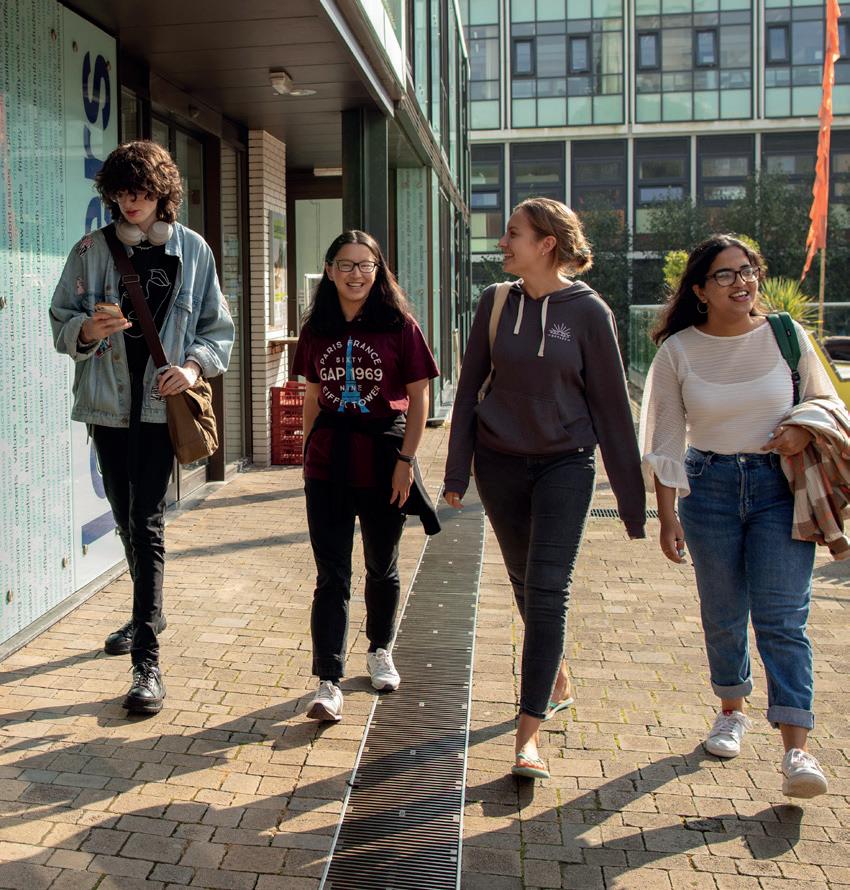
LIVING AT HOME WHILE YOU STUDY
IS A FOUNDATION YEAR FOR YOU?
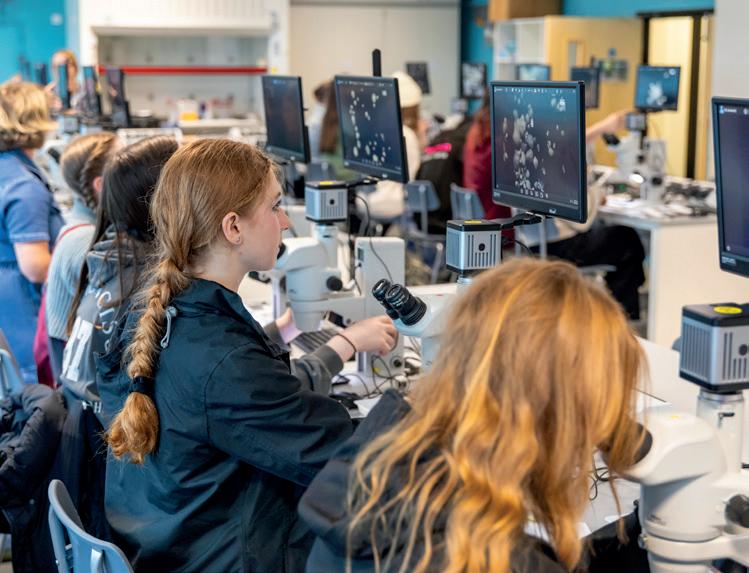
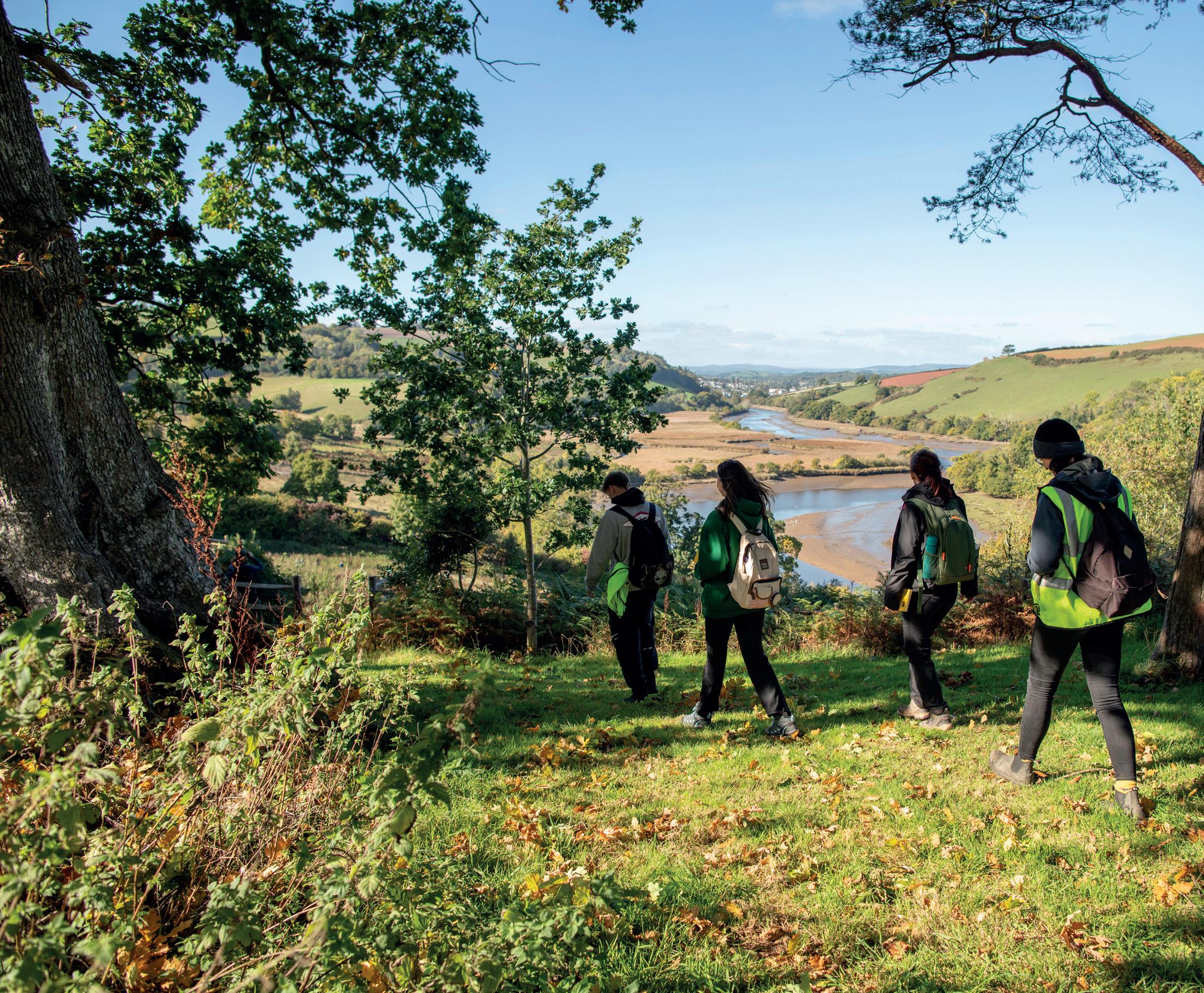
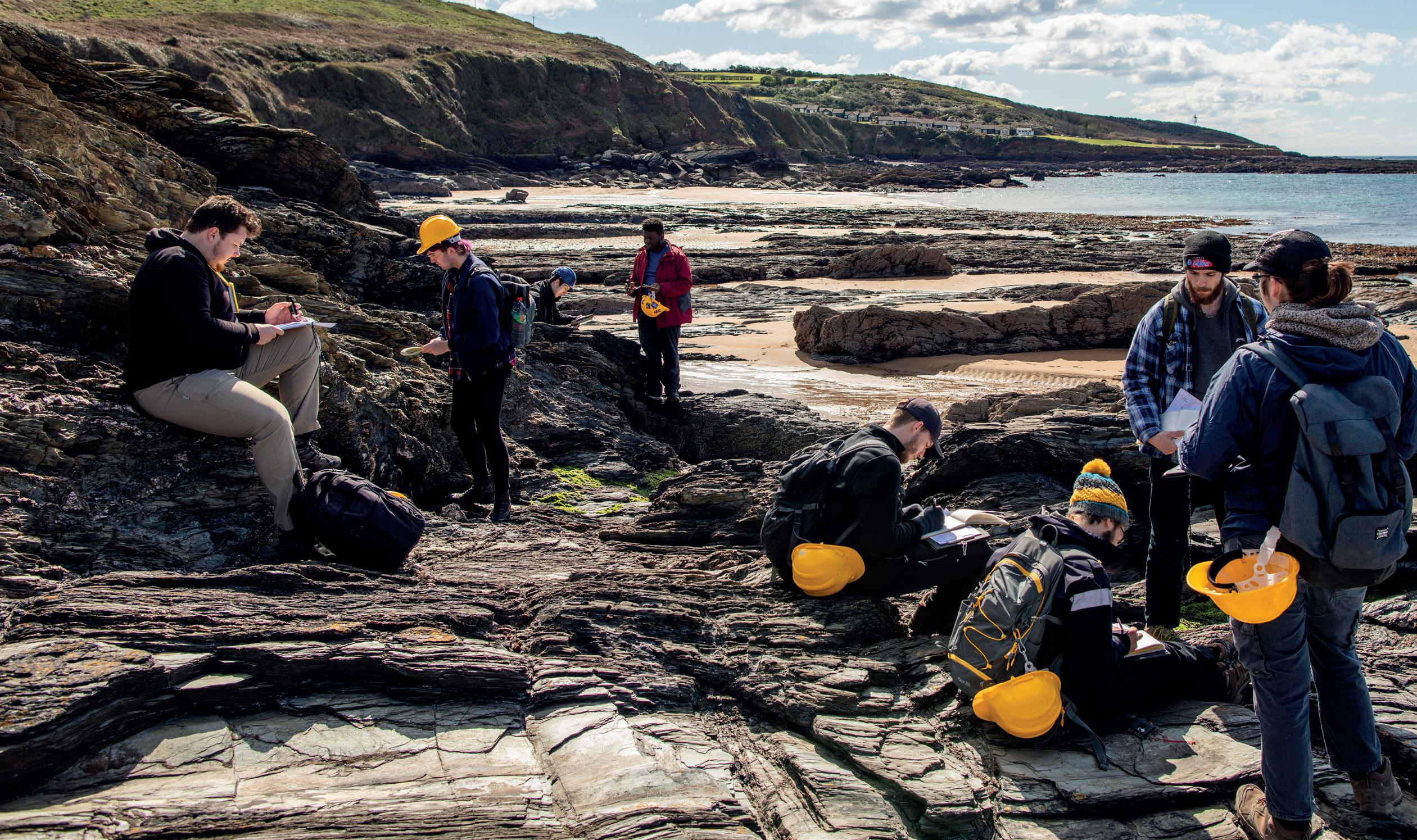
EXPERIENCES OUTSIDE OF THE CLASSROOM
Gold
Admissions
+44 (0)1752 585858
admissions@plymouth.ac.uk plymouth.ac.uk
University of Plymouth Drake Circus Plymouth Devon PL4 8AA United Kingdom
Follow us on social media @PlymUni
Starting university is about so much more than studying a subject you’re passionate about. It’s about discovering new opportunities, becoming part of a vibrant community, and creating friendships that can last a lifetime.
At Plymouth, many of our students live locally or come from the local area. In this issue, they share their experiences of university life, from finding their feet and building connections to making the most of everything that university has to offer. We hope their stories inspire you as you begin to imagine your own journey.
Meet some of this issue’s contributors:
HOT TOPIC
P.6 Living at home while you study
Make the most of university life
FEATURES
P.14 Is a foundation year for you?
Hear from our students
P.22 We Support Student Hub – looking after your wellbeing
P.24 Funding support
Fees and funding explained
P.34 Your Students’ Union
Josh Computer Science with Foundation student
Find out about Josh’s journey through Clearing and his experience in his foundation year. P12
Business School student
Hear from Shahana on why she chose to stay local for university and what led her to study Economics. P.18
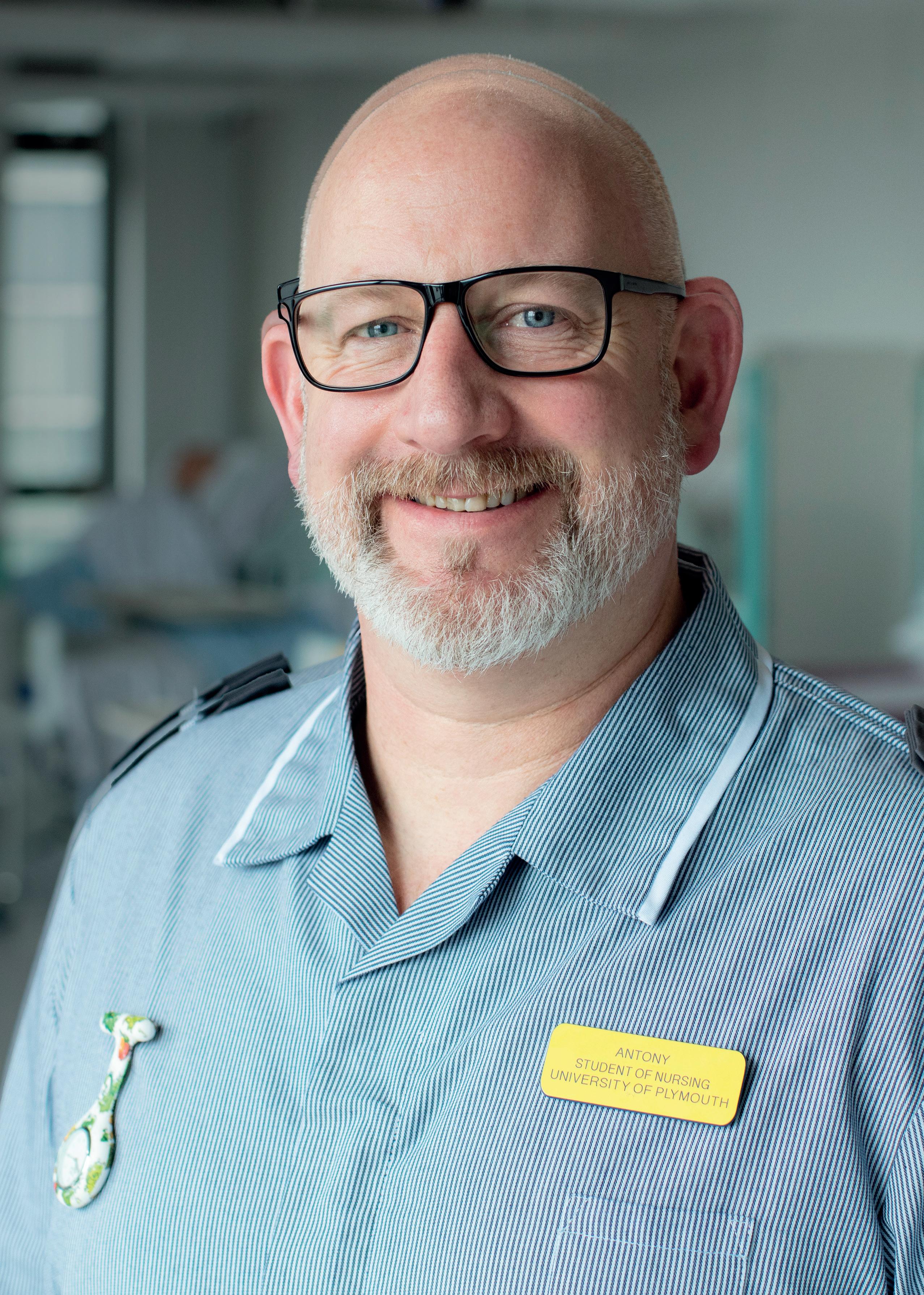
Nursing student
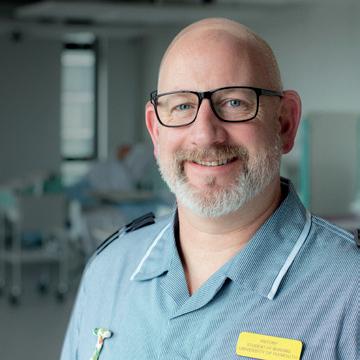
Antony shares how caring for those close to him gave him the drive to pursue a career in nursing. P26
DISCOVER MORE IN PERSON
When it comes to finding out if uni feels right for you, nothing compares to an Open Day. Talk to current students and quiz lecturers about your course. Scan the QR code for upcoming dates and to book your place Visit us at an Open Day
If you already have qualifications or are expecting your results in August, come along to our Information Day and find out about courses you can start this September August Information Day
Find your community and build lasting connections
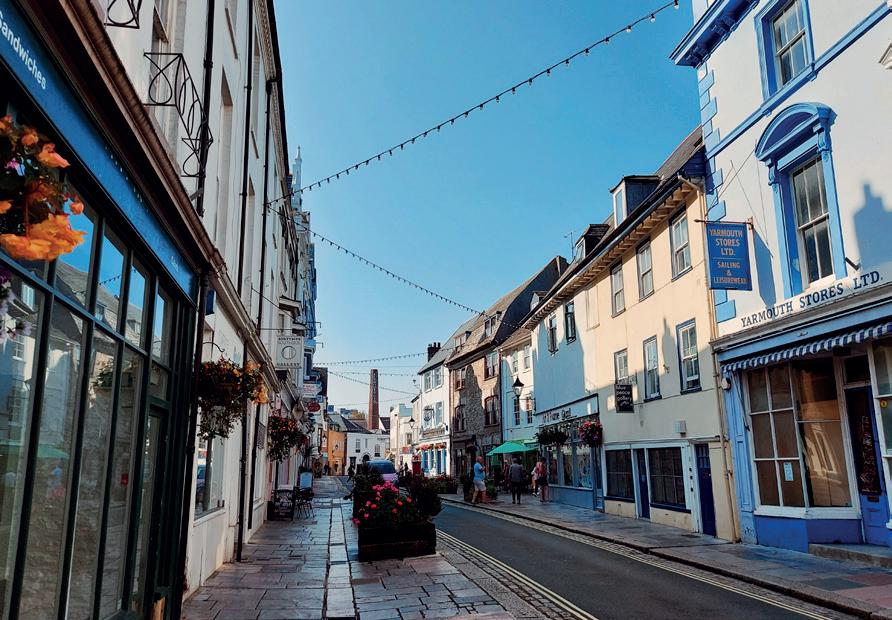
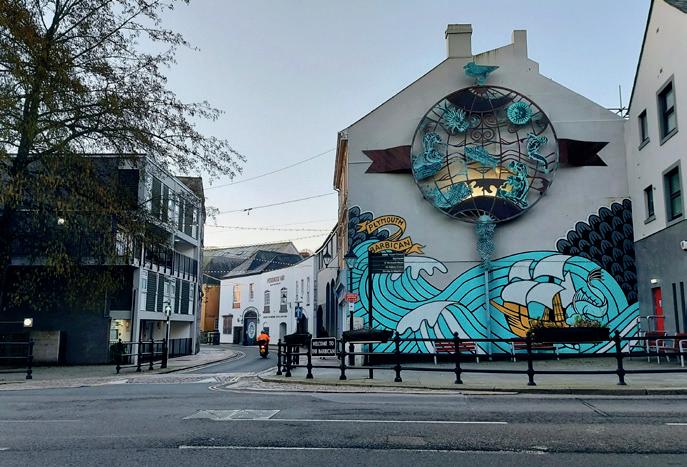
P.38 Explore a different side to Plymouth
Our students favourite places in the city
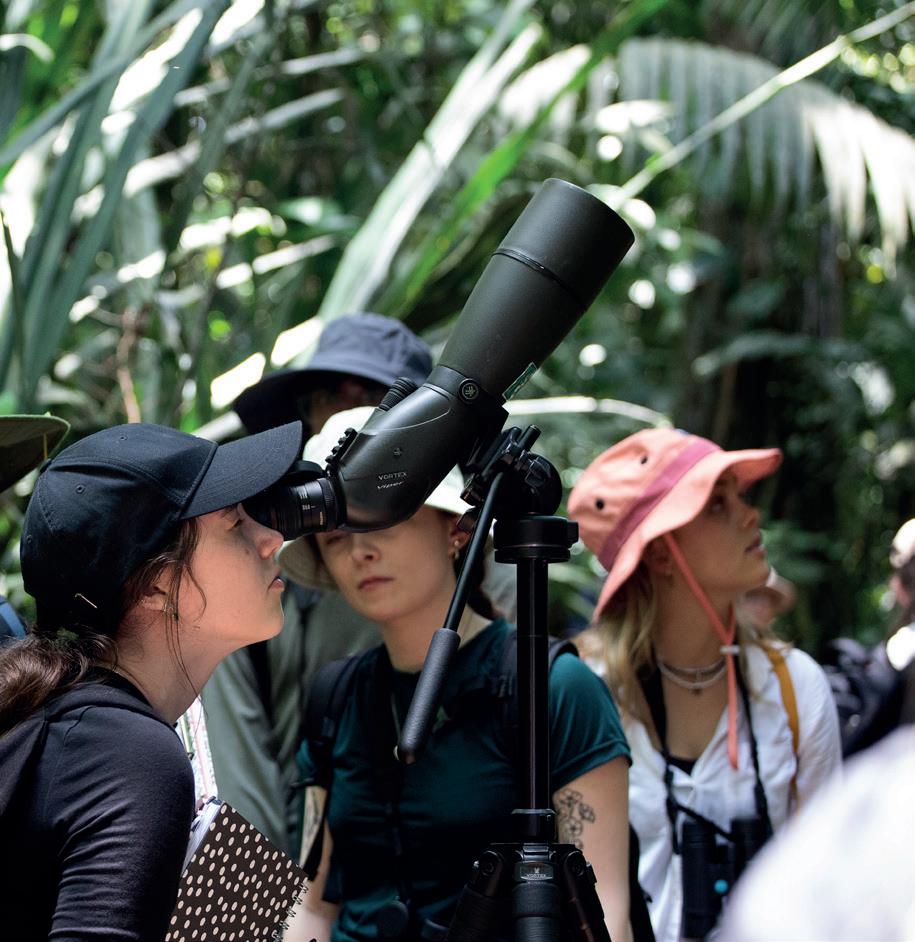
P.40 Experiences outside the classroom
Opportunities to explore your course in local environments or abroad
P.54 Advice from one parent to another
How to support your child as they prepare for uni
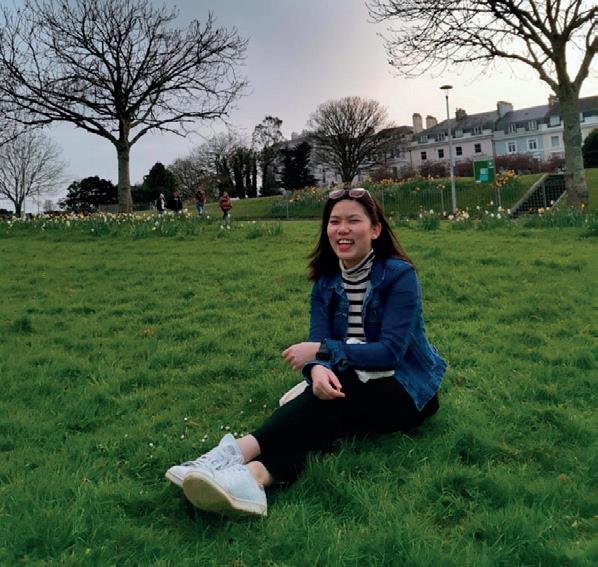
Shahana
Antony
A WORLD OF OPPORTUNITY
of our graduates are in work or further study*
*Graduate Outcomes Survey, 2025 Includes all UK-domiciled, full-time, first-degree graduates, who are either in employment or further study, 15 months after graduating.
University offers a huge variety of experiences – many of which you don’t find elsewhere. Use your degree to fast track a career you’re passionate about, gain life experiences, or be supported to explore the world through a placement.
GAINING LIFE EXPERIENCE
AMINA, MARKETING STUDENT
“University has been an experience that has expanded further than just a place of learning. It has been instrumental in helping me overcome the social anxiety that deeply affected me during my secondary school years. Engaging in events like cultural nights organised by the Students’ Union has given me the confidence to put myself out there in ways I never thought possible. These cultural events, featuring traditional dancing and shared cuisines, have provided a meaningful connection to my heritage. They’ve introduced me to others who share similar
backgrounds, creating a sense of belonging and community that I had never experienced before.
The opportunities for professional growth at the University have been truly exceptional. Through two distinct micro-internships, one as a content creator with House of Marbles, and another as a copywriter with Enterprise Solutions, I’ve gained invaluable exposure to diverse working environments. The support and guidance provided by the University’s Careers Service was instrumental in securing these opportunities, proving how vital their resources are in bridging the gap between education and real-world experience.”
DISCOVERING CAREER OPTIONS
ELEANOR, LAW GRADUATE
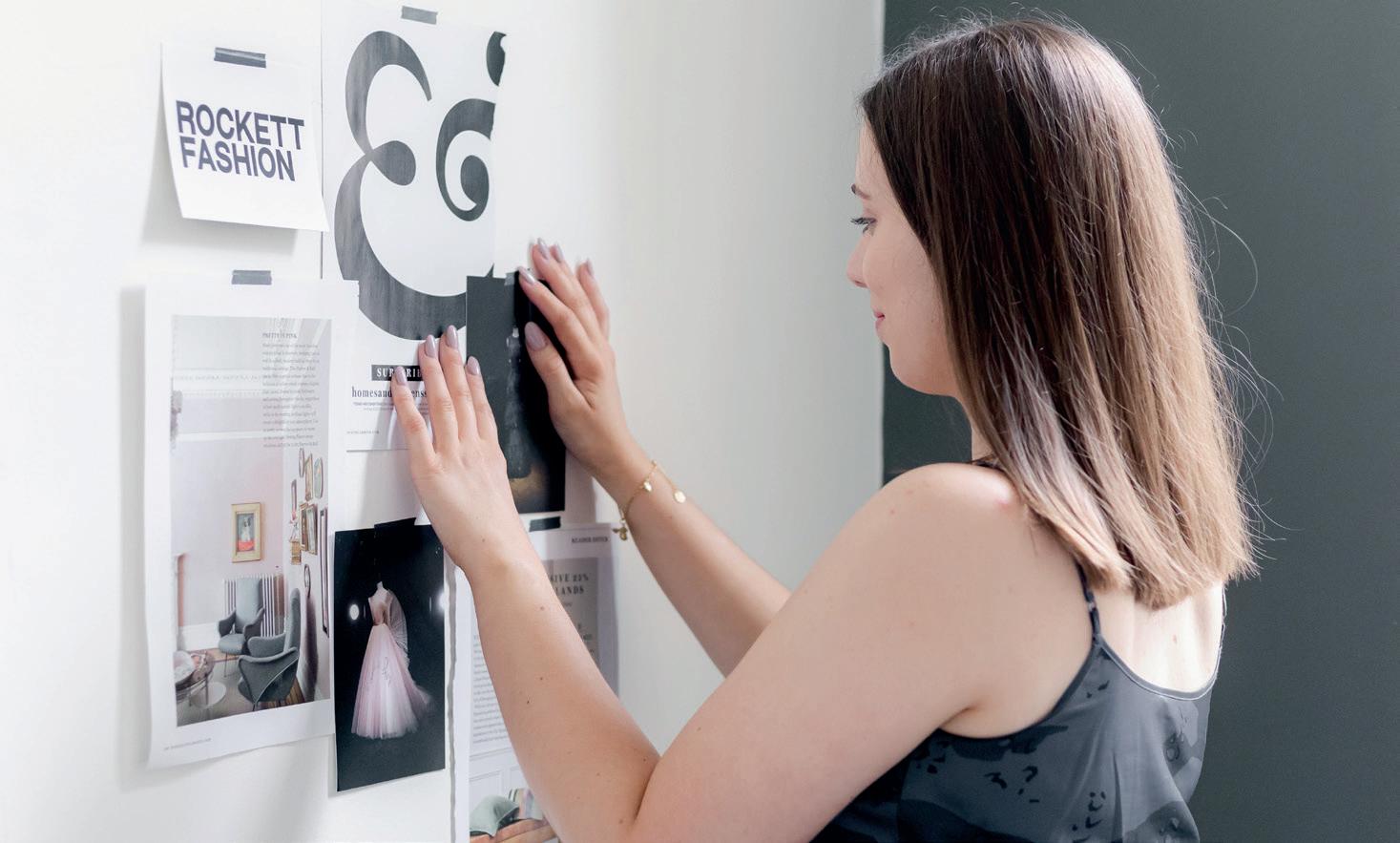
“After graduating with a Law degree from Plymouth, I started Rockett Fashion, a business consultancy company. I had so many opportunities at Plymouth which exposed me to various career options, and I was both VicePresident of the Law Society and Chair of the Fashion Society. I think my experiences are testament to the fact that a law degree can prepare you for so many different careers, and it is always highly regarded by employers.”
TOBIN, BUSINESS GRADUATE
“My proudest moment to date is helping McLaren’s F1 Esports team to the 2022 F1 Esports Pro Constructors’ Championship, where we won McLaren’s first constructors trophy since 1998! From networking to contract negotiations, my experience studying Business Management at Plymouth has become incredibly useful as so many skills are transferable.”
EXPLORING THE WORLD
KASIA, PSYCHOLOGY STUDENT
“Studying abroad is a unique adventure that is available to you at no other time of your life. The excitement of being immersed in a different culture, meeting new people and exploring different ways of thinking can have a huge impact on your life and career.
Studying in Canada allowed me to meet amazing people and go on memorable adventures all while having the safety net of both your home university and your host abroad. I am in love with the culture of kindness and openness. I am going to nurture those values and I have brought them home with me.”
WILLIAM, ENVIRONMENTAL SCIENCE STUDENT
“My time on placement was spent travelling all over the Apennines in Italy, monitoring the Marsican brown bear. The academic and placement staff at the uni were really helpful when it came to organising and applying for a placement. The chance to meet new, like-minded people was amazing. I feel the time I spent away has really helped me to mature, as well as now having first-hand experience in the ‘working world’ and in choosing my career.”
University life looks different for everyone. Many students study alongside family and work commitments, live close enough that they don’t need to pay to live in university accommodation or just prefer to keep their own space and stay in a familiar environment. Living at home can provide the flexibility to study around day-to-day commitments.
Commuting to university also allows you to study and engage with university life, whilst being able to go back to your own home each night and stay close to your friends and family. At Plymouth, you’ll be part of a community of commuter students (it’s estimated at approximately 40% of students) who travel to university from within Plymouth, or further afield from Devon, Cornwall and Somerset.’
HERE ARE SOME TIPS FOR STUDENTS WHO LIVE AT HOME
SOCIETIES: YOUR SECRET
WEAPON FOR FRIENDS & FUN
You might wonder how you will meet people if you are not living in student accommodation, but the reality is that there are now more students who commute to university in the UK than living in halls.
The best way to meet people, wherever you live, is to join a society (or three!), attend an event or volunteer. There are countless ways to build friendships and become part of the university community.
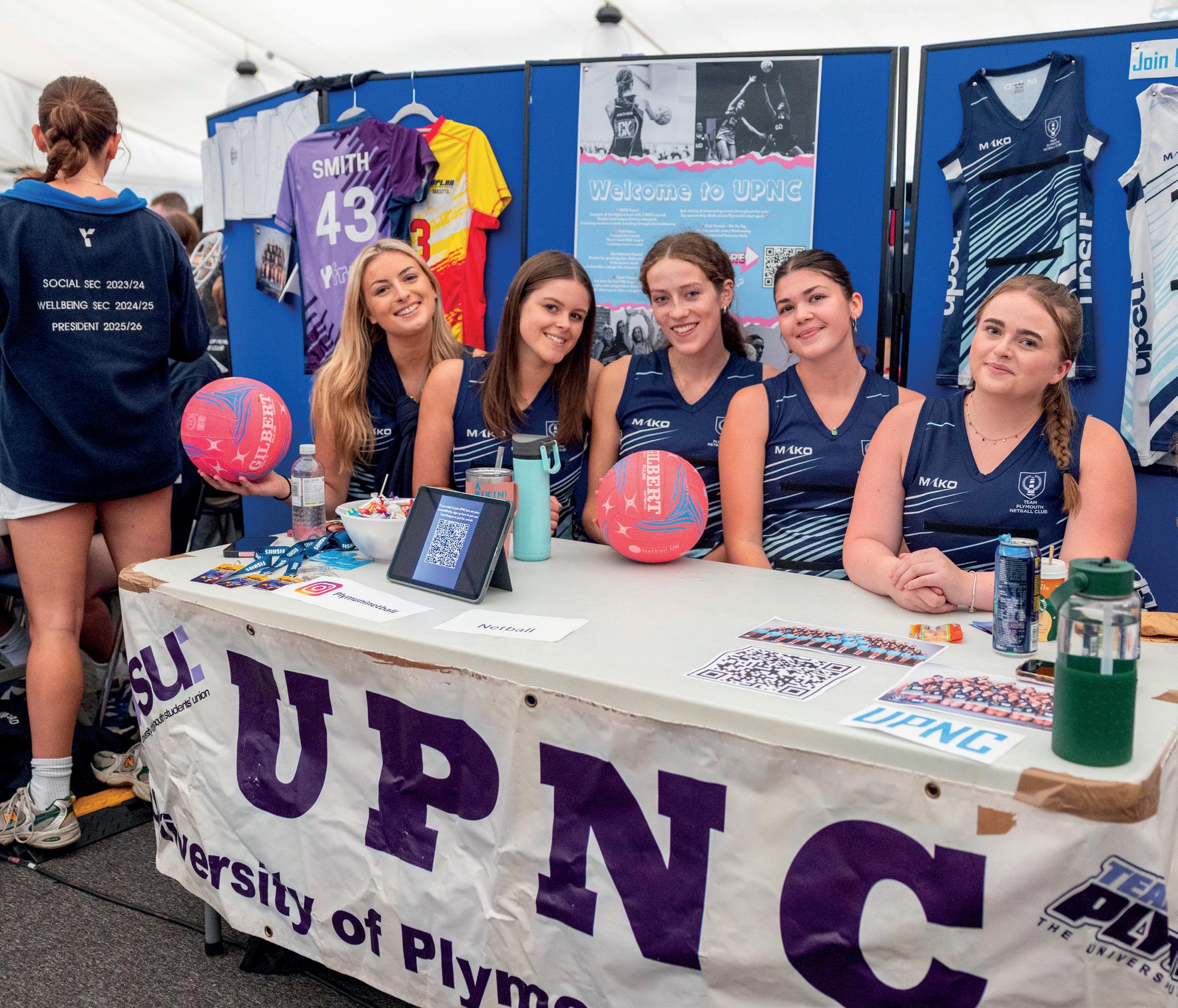
The University of Plymouth Students’ Union (UPSU) offers a huge range of clubs, societies and activities covering everything from sport and gaming to culture, politics, music and wellbeing. Whatever your interests, you’ll find people who share them.
Many events take place during the day, making them easy to fit around your timetable and travel plans.
“With the societies that I am part of, I have explained that I am not local so social meet-ups are arranged to begin sooner so that I can attend for the first hour before needing to leave to catch the last train home.”
Nicola, BSc (Hons) Sociology
GET YOUR TRAVEL PLAYLIST READY!
Travelling to and from campus can become one of the most valuable parts of your day.
Whether you’re listening to your favourite playlist, discovering a new podcast or simply enjoying some quiet time before lectures, your journey can give you space to relax, recharge and prepare for the day ahead. It is important to take time for yourself and look after your mental health.
“The train journey gives me a chance to sort of decompress and process the day, which is good. I like to do that before I get home.”
GET AHEAD WITH STUDY TIME ON THE MOVE
While you may feel travelling on buses or trains means you are missing out, it can be a fantastic time to work on your assignments or get some reading done for a lecture or seminar. Educational podcasts and recorded lectures can help you deepen your understanding of a subject while on the move. This can give you an advantage as you have dedicated time set aside.
“I use my travel time to plan for my lectures and assignments, make notes from my upcoming lecture slides, or do research.”
MAKE THE MOST OF YOUR TIME ON CAMPUS
If you have a break between lectures, think of it as an opportunity rather than downtime. Whether it’s catching up with friends, finding a new study spot, visiting the library or grabbing a coffee, those gaps can become some of the most enjoyable parts of your day.
The University of Plymouth offers a range of facilities to make life easier for students who travel to campus:
• Lockers to store your belongings and lighten the load.
• Laptop loans from the library if you’d rather not carry your own device every day.
• Free microwaves and boiling water across campus, making it easy to bring lunch from home.
• Affordable food options across cafes on campus, including discounted fruit and vegetables.
• Cycle storage and shower facilities if you walk, run or cycle to campus.
These small conveniences can help make campus feel like a home away from home.
SHARE YOUR LOCAL KNOWLEDGE
If you’re already familiar with Plymouth and the surrounding area, you have something valuable to offer. New students are always keen to hear where to find the best coffee, the nicest beach walk, the top lunch deals near campus or the perfect spot to watch the sunset over the water. Sharing your local knowledge is a great way to start conversations, help other new students find their way around and make new friends along the way.
LET SOMEONE KNOW
Most lecturers and tutors understand that some students travel to campus each day. If there are unexpected delays because of traffic, train disruptions or bus cancellations, keeping your tutors informed can help ensure you don’t miss important information and can access any support you need.
CREATE A MORNING ROUTINE THAT WORKS FOR YOU!
The best advice for students commuting to university would be to create a morning routine that suits your lifestyle! It doesn’t need to be complicated - it could be as simple as making time for breakfast, having your water bottle ready to go, preparing lunch for the day ahead, going for a walk or fitting in a quick workout before heading to campus. The important thing is finding something that works for you!
ENJOY THE BEST OF BOTH WORLDS
Living at home can offer flexibility, independence, financial savings and a strong support network, all while giving you access to the full university experience. Whether you’re joining societies, making friends on your course, studying in the library or attending campus events, there are countless opportunities to get involved and make your time at university memorable. University isn’t defined by where you live, it’s defined by the experiences you create, the people you meet and the opportunities you embrace. Living at home simply gives you another way to enjoy the journey.
TRAVELLING TO CAMPUS
Getting to campus couldn’t be easier. The University is located right in the heart of the city, just a short walk from the train station and with numerous bus stops surrounding campus.
If you’re planning to drive, the Park and Ride is a great affordable option. Regular buses stop right outside campus, or you can enjoy a scenic 10 – 15 minute walk through Central Park.
For more information on travelling to campus including car-sharing schemes and bike storage visit our Getting Here webpage.
FINDING A NEW DIRECTION
Josh, Computer
Science
with Foundation Student
Hi, my name’s Josh. I’m studying Computer Science with Foundation Year at the University and I joined through Clearing. Through college I studied music, obtaining two diplomas in Music Audio and Technology, but I actually had my mind set on going into the ambulance service as a paramedic. This all changed when the NHS went on strike and suddenly, I found myself without any training to attend and no idea what to do next.
This is where the idea of doing what I loved and going to university came into play. I never thought of myself as being smart enough for university, and I thought that I had missed the sign-up date, but after looking at the University’s website, I found out more about the Clearing process and decided to take my chances. I was successful, and it’s the best thing I have ever done.
With my start in audio technology, I decided a more computing-based subject would be best for me and I ended up deciding to study Computer Science with Foundation Year, so I could gain a better understanding of how software is made, rather than just using it.
When I applied via Clearing it happened so quickly, it was all over in about two weeks. After calling the University, I was then able to apply like any other student would and soon enough I had received a letter saying
I had got a place, which of course made me incredibly happy! From there, I received emails about accommodation (which was a breeze) and all the information on my course.
Throughout my first year here, I have been treated no differently to any other student at the University. The topic of how we got into uni doesn’t come up very often but when it does, and I explain I had to go through Clearing there is no judgement or bad comments at all, everyone here is in the same boat.
In the future I want to go into cyber security, and I want to work in the agricultural sector. With farmers using more and more technology year-on-year, I want to be able to help protect their online presence and data, so that the people who feed the country are not at risk of losing the money and the valuable crops they grow.
A TYPICAL DAY IN MY STUDENT LIFE
10:00–10:45 Get ready for the day 10:45–11:00 Make my way to my lecture/lab 11:00–13:00 Lecture 1 13:00–15:00 Lecture 2 15:00–16:00 Break 16:00–20:00 Go home to do coursework, tests or quizzes 20:00–22:00 Meet up with the Ski Society and hit the slopes 22:00–23:00 After ski drinks
STUDY COMPUTER SCIENCE WITH FOUNDATION YEAR
UCAS tariff: 32–48 points Duration: 3 years full time (+ optional placement)
MY TOP THREE TIPS FOR CLEARING:
STAY CALM. There is time, and the University will make time for you.
KEEP COMMUNICATING. Keep in touch with the University and follow up with your application if you need to.
MAKE SURE YOU KNOW WHAT YOU WANT TO DO. There is time to apply, but you may not have loads of time to change course.
IS A FOUNDATION YEAR FOR YOU?
A foundation year gives you an alternative way to access an undergraduate degree. It takes place at the beginning of a course and extends your studies by a year. You gain further knowledge of a subject before starting a full degree course. On completing the foundation year successfully, you progress automatically onto the undergraduate degree, which is usually three years.
A COURSE WITH A FOUNDATION YEAR IS FOR YOU IF…
• You would like to build your confidence to study at university level
• You want to gain the knowledge and skills needed to complete a full degree
• Your qualifications don’t meet entry requirements for a three-year degree
• You want to study a new subject that your previous qualifications or experience haven’t prepared you for
• You may have thought university wasn’t an available option for you
• You want to join a university course that is needed for the career you’d like.
“My advice for someone who’s trying to decide between a foundation year or an apprenticeship would be to consider where and what you want to be. A degree takes you to a higher level and that does pay dividends when it comes to getting jobs in the future.”
Alex, Marine Technology student
“Because I am a mature student, I decided to apply through Clearing for a course with a foundation year because I didn’t have the traditional qualifications to access a degree course. I knew going through Clearing would help me find a place at university.”
Jason, Dietetics student
“I chose to study a foundation year as it was the best route for me to take from both an educational and personal perspective. As someone who struggles with anxiety, opting for a foundation year gave me a chance to ease into the course and become comfortable in a new environment.”
Amy, Business student
“Starting with the foundation year was one of the best decisions I made as a mature student returning to education. The support from staff and the confidence I gained meant that when I entered the first year of the bachelor's degree, I felt prepared, motivated and genuinely excited for the challenges ahead.”
Aspa, Computer Science student
“The foundation year furthered my understanding of the key concepts that I needed to grasp in order to progress on to the Biological Sciences undergraduate degree.”
Edward, Biological Sciences student
“On results day, I applied to the University through Clearing. While the foundation year added an extra year, it proved invaluable. The supportive lecturers, the friendships I formed, and the taste of university-level mathematics solidified my interest in the subject.”
Luxi, Mathematics student
The foundation year gave me the confidence to adapt to university life, explore my interests, and find the right path – with plenty of support and a welcoming city that now feels like home.
Rachel, Biomedical Science student
YOUR DEGREE, YOUR CHOICE.
There are many factors to consider when finding the right course and university. Find out what was important to our students and get some tips along the way!
AIMEE ENGLISH AND CREATIVE WRITING STUDENT
Aimee has lived in Plymouth all her life and chose to stay. She shares her application story.
“I remember being in sixth form, sitting in that plastic chair, when the careers adviser asked me that dreaded question, “What do you want to do?”
I didn’t know, so I cycled through the classics. Actor? Scientist? Politician? Writer? All I knew was that I was passionate about reading and writing, so my adviser helped me find some courses that would best fit.
I’d recommend thinking about things like modules, facilities and the feeling you get when you visit. The same course at different universities will have different modules, so think about what you want to get out of your degree and how the modules apply.
When I visited Plymouth for an open day, I was pleased by how bright and welcoming the campus was, as well as how friendly the people were.
Don’t be afraid to ask questions; you’ll see lots of student ambassadors who’ll be happy to help.
Having lived in Plymouth all my life, I wanted to try somewhere new; however, after seeing how good the English and Creative Writing course was at the University, how exciting the modules sounded, and how friendly and welcoming the lecturers were, I changed my mind. In the end, it was perfect for me!”
AMELIE DIETETICS STUDENT
Amelie moved to Plymouth from Bristol. She came straight from A levels and explains how visiting a Plymouth open day was vital in making her choice.
“Because I wanted the opportunity to gain independence, meet new people and explore a new city, I felt like I didn’t want to stay too close to home for university. Plymouth was the perfect distance away. I could experience living away from home but still return easily if I wanted. I also
appreciate that living in Plymouth is cheaper than in some other cities which allows me more money to do fun things.
I chose dietetics because I wanted to help people and make a difference in their lives. I managed to get some shadowing experience with a dietitian who gave me insight into the profession. I definitely encourage seeking experience in your subject area to see if you like it in practice. The more you can find out about the degrees you are interested in, the more informed your decision will be.
It is always worth looking at whether additional funding for your course exists. I have received the NHS Learning Support Fund, which is available for various healthcare courses and does not need reimbursement.
I felt like attending open days was vital to choosing which uni I wanted to go to. Visiting the University in person allowed me to picture whether I could see myself living in Plymouth. I fell in love with the city and the University’s welcoming atmosphere. It struck a great balance between having both countryside and city elements, a feature which drew me to choose Plymouth as a home. I also loved that I could walk anywhere in a short space of time, which I wasn’t used to when walking around Bristol.”
ADAM MARKETING STUDENT
Coming from London, living in an affordable city like Plymouth was a real draw for Adam. He is making the most of being able to afford social events and enjoying life by the sea!
“I chose to come to Plymouth because the idea of being so close to the sea and having beach days was a massive draw. I was also enticed by the fact that Plymouth is a very compact city; it is possible to see and do a lot of stuff by walking, which is very different from my life before university. Another benefit of living in Plymouth is how much cheaper it is to live here than London. I was very excited for the social aspect of uni and didn’t want money to limit that.
I chose to do Marketing because I wanted to study a subject that would allow me to be creative, and I also have family members who are in the field and have found success and enjoyment from their work. After my degree, I would love to go into a career in advertising where I can work on marketing campaigns for brands I love.
My advice to others would be to choose a degree that you are passionate about, as this is so important to how well you’ll be able to engage with your course. When I first started at Plymouth, I enrolled on a different course until I realised it wasn’t right for me, so I know the importance of enjoying your degree! I would also suggest going to an open day, as you won’t truly know that you’ll enjoy living somewhere until you have visited and seen what the place has to offer. I came for an open day before applying and what really sold me was when I went for a walk to the Hoe.”
DO YOUR RESEARCH
Look into the detail of the course or courses that spark your interest.
• Does the course have modules you’re interested in?
• What are the facilities like? We’ve been heavily investing in our campus so make sure you check out where you’ll be studying. The best way to do this is at an open day, but you can also view them on our website.
• Are there any placement, field trips or experiences offered on the course to enhance your experience?
THINK BEYOND YOUR COURSE
There are many factors beyond just your course that are worth considering.
• What is the city like? Being by the sea, Plymouth is a unique location giving you the best of both worlds –stunning natural spaces and inner-city excitement.
• How far would you have to travel for lectures? Our city is fantastic for this, with very little need for public transport. Everything is in easy walking distance... even the sea!
• What support will you receive? From your own personal tutor, to peer-assisted learning and our Writing Cafe, our support teams will be with you from day one.
CHOOSE A SUBJECT YOU’RE PASSIONATE ABOUT
You will work much harder if you love the subject you’re studying.
• With a degree, you’ll have a step up into the career you want. Plymouth’s Careers Service offers an incredible variety of support and promises to provide that for as long you need, even beyond graduation.
• Find out about the career you could expect with your chosen course.
• Search for our ‘Rising Stars’ on our website to see how graduates have gone on to use their degree in their career.
FIND OUT MORE Plymouth Business School’s industry-led programmes will set you up for successful employment and a happy lifestyle. Our degrees, taught by experts in their field, aim to put businessready graduates on the path to a successful career.
FINDING THE RIGHT FORMULA TO PROFIT FROM PLYMOUTH
Shahana, Plymouth Business School student
I WAS READY TO BE INSPIRED BY MY COURSE
I live in Plymouth – this is my local university. I felt connected to the University even before I received my unconditional offer. Coming to the campus for maths masterclasses and work experience while still at school gave me an indication of what the teaching was like and where things were. In many ways, these were my first stepping stones towards becoming a student here.
I have always had a real passion for numbers and having an answer for everything – mathematics is the subject I have found the most fulfilling. Even though Plymouth was a strong option from the outset, I did look around at courses at other institutions. The most important aspect when looking at universities was the course content and the range of opportunities available.
I identified early that economics would build upon my love of mathematics and that it was important for me to find a course that would enable me to channel my interest in the humanities, having studied history and geography at A level.
After considering multiple options, Plymouth remained the best choice for me due to the quality of the BSc (Hons) Economics course content as well as the course’s flexible structure of optional modules, which will allow me to carve a personal pathway that will guide me towards graduation and beyond. I hadn’t decided my module specialisms
or even a particular future job role – I knew that as I progressed through the course, a spark would ignite and point me towards a more specialised career pathway. Whether a particular module, a placement experience (another big pull for me to come here) or advice from tutors, I was ready to be inspired by my course.
AN EQUATION FOR PERFECT PREPARATION
The summer before starting my course was a unique one for me. I had worked hard to achieve my A level grades and I was preparing for the future, filled with mixed emotions – I felt excited and scared in equal measure. In a few weeks’ time, I was going to university – the next big milestone in my life.
I allowed myself to get back into the things that I was restricted from doing during the intense exam season. Having some ‘me time’ has always been important, whether losing myself in the latest best-selling book or exploring new areas of the South West, going for runs and walks.
I prepared for university the best I could, relaxing and hanging out with my friends, seeking greater independence, from finding a job to beginning to learn to drive. A few months into my course at Plymouth I felt very settled.
GREATER THAN THE SUM OF ITS PARTS
Plymouth has a good balance of the things that I want in an area. With the sea on one side and the countryside on the
other, the surrounding location is one of the University’s greatest strengths.
Living locally meant I could stay at home for my first year, which helped me out financially. I figured in the second year, once I became closer with new friends, I would want to move out. At first though, the convenience really suited me.
Making friends with people on my course was probably the most important thing for me to start with. It was great to be able to meet new people and help them explore the city I have lived in for 18 years. Perhaps the best part about staying in the city I have grown up in is that I know the place inside out and having my friends and family with me along the journey.
Starting university is a daunting experience, but for me it was nowhere near as scary as it would have been if I had chosen to move across the country. I am grateful to have family around me while I am still learning who I am.
LOOKING TO THE FUTURE
When you are an economics student, the dream company is the biggest company. I want to work my way up towards those heights and I am sure the University will support me on my journey. This new beginning has been fun for me – you will not know what it is really like until you become a student. I have always known the city’s great, and my experience here is proving that the University is great too.
PREPARING FOR UNIVERSITY
You may not have considered university before, or thought that it was not for you, but it could be one of the most exciting times of your life where you get to spread your wings and seek new experiences.
LISTEN TO OUR STUDENT LIFE PODCAST
Listen to our Student Life with Plymouth podcast for advice and guidance about transitioning to university. Topics covered include mental health, careers, our Students’ Union and societies.
CHAT WITH CURRENT STUDENTS
Chat to our students through Unibuddy and ask them questions about their course, accommodation, funding, placement years and their future aspirations.
DISCOVER YOUR SUPPORT NETWORK
Learning at university is quite different to at school. The structure of your day will vary and you are expected to undertake more independent study. Remember, you will not only be surrounded by other students in the same boat as you, but we want you to succeed. The University has a range of support available to you during your time here and we encourage you to make the most of it.
EXPLORE STUDENT LIFE AT PLYMOUTH
Learn what it’s like to study here and how to get the most out of your time as a student. From articles on moving away from home to information on day trips, nightlife and campus culture.
SCAN HERE TO GET STARTED
WE SUPPORT
Student Hub
Heading off to uni is exciting, right? For some it’s a time to discover who you are and build your network and community, for others it’s an opportunity to start living independently. Our Student Hub is here to help you navigate through this exciting, and sometimes daunting, time with a friendly smile and some wellbeing and practical support.
DISABILITY INCLUSION SERVICES
Find advice and guidance on disability and long-term health conditions, including help with study requirements and the Disabled Students’ Allowance.
Our Student Hub team are here to offer support and guidance to all of our students, regardless of background, faith, beliefs, sexuality or gender, throughout their time at University.
PEER ASSISTED LEARNING SCHEME (PALS)
Take advantage of opportunities for enhanced learning in sessions led by students.
Providing information on all aspects of student funding, from loans to financial support.
STUDENT HUB
Find out more about the services and support we provide to our students and where to go if you need help or advice.
STUDENT WELLBEING SERVICES
Receive support with your wellbeing and mental health if needed. Being a student can be stressful at times and it’s totally normal to feel like you need a helping hand. Our Wellbeing Services can support your academic progress by guiding you to the most appropriate service for your needs. We can help with common concerns such as homesickness, anxiety, depression and relationships, and we can signpost you to other organisations, self-help information, workshops, drop-in appointments, specialist liaison with NHS services and counselling.
We work with you to develop skills for learning, promote critical and creative thinking, and enable you to achieve your potential.
The Writing Cafe
“As an international student, writing assignments can be challenging for me, so the Writing Cafe was such a great help! The welcoming space enabled me to speak to trained student writing mentors who helped me explore techniques and strategies to improve as a writer. The incredible mentors gave me much-needed guidance, and helped me improve my writing and build my confidence. Particularly helpful for international students – the service contributed to my wellbeing and helped me to feel a sense of belonging not just to the University but also to the community.”
Ethel, current student
Student Services
“When I started uni, at times I found myself feeling lonely and needing to talk to someone. Student Services was the best place for me to go. The staff working there are so friendly, and helped me with so many things. If you are unsure of anything, no matter what it is, Student Services will try their best to help!” Floss, current student
“Our friendly and knowledgeable Student Services Hub team is always available to listen, offer guidance, and point you in the right direction. Whether you need advice on wellbeing, financial support, disability services, visas, or simply aren’t sure where to turn, we’re here to help you figure things out.
You may never need our support, and that’s absolutely fine, but if you do, just know that we’re always ready and happy to help. Watching you grow, gain confidence and reach your goals is an absolute privilege— and when you cross the stage at graduation, surrounded by the people who matter most, we’ll be celebrating right along with you.”
Maria Rogers, Student Services Hub Manager
BEFORE YOU ARRIVE
As well as the amazing fun things to get involved in when you first arrive at university there will also be some ‘life admin’ to think about. Thankfully there’s plenty that you can do before you arrive to make your transition smoother and leave more time for the fun stuff.
• Get familiar with your daily commute. Time your morning journey, download any travel timetables or apps and investigate parking if relevant.
• Invest in a good lunchbox and plan some quick and easy meals you can bring to eat later (we have microwaves on campus you can use)
• Do a budget plan (income versus outgoings), so that you know how much to save or spend.
• Start researching if you want a part-time job when you’re here.
• Check out the UPSU website for events, clubs or societies you might like to join.
• We recommend declaring any disabilities you have on your UCAS application, so we can provide advice and guidance before you arrive.
• If you didn’t declare your disability on your UCAS application, don’t worry but do tell us as soon as you can, so that we can get the right provisions in place to support you throughout your studies.
• Apply for the Disabled Students Allowance.
Find
We know how important it is to consider your finances before you apply to uni. We want to do all we can to ensure you can live your best student life, whatever your financial situation may be.
TUITION FEE LOANS
All students from the UK and some from the EU are able to apply for a tuition fee loan through Student Finance England. You can check your eligibility by visiting https://www.gov.uk/student-finance.
LIVING COSTS
If you are studying full time, you can also apply for a cost of living loan, which is to help with your day-to-day spending such as food, accommodation and travel. The amount you get will depend on if you’re living at home or not and if you’re eligible for any benefits.
OTHER FUNDING
The University also offers scholarships, bursaries and support funds that may be available to support your university journey. These have differing eligibility requirements which are worth researching.
FINANCIAL SUPPORT AND ADVICE
There are lots of different ways we can support you. The University offers various bursaries and funds to support students who are experiencing financial hardship. You can also get advice from our friendly and experienced staff in the Student Financial Support team. The Students’ Union also offers advice on making the most of discounts available exclusively to students through rewards and loyalty cards.
JOBS AND WORK OPPORTUNITIES
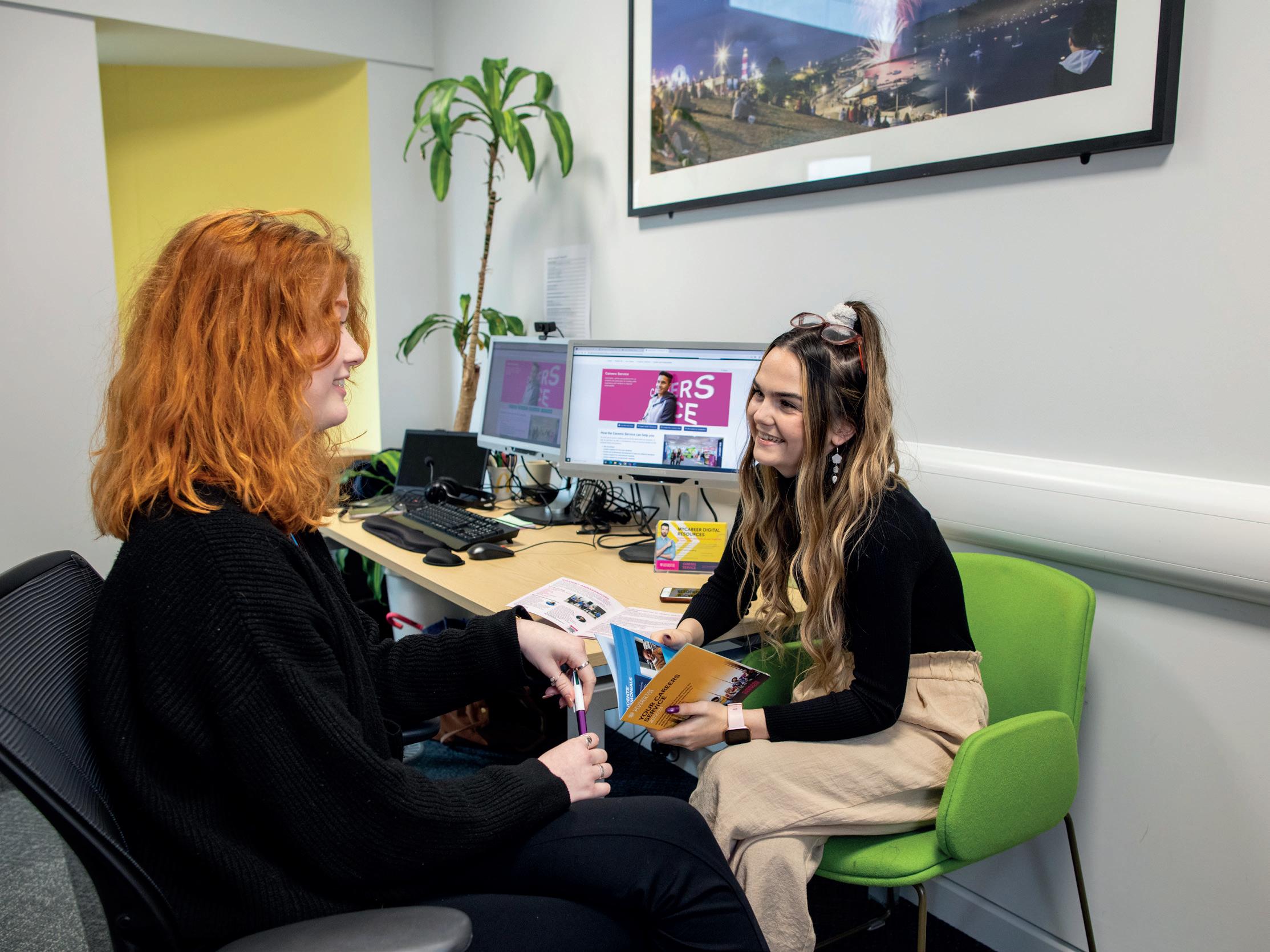
Our Careers Service offers job support during your time at uni, after graduation and beyond. The team can help you secure part-time work that fits around your studies. If you need advice on interview preparation, are looking for employment or need help with your CV, they can take you through the resources and guide you to the next step. You can also arrange a scheduled face-to-face or virtual appointment, and there is no limit on how many times you can see our careers advisers.
“There are so many places in and around Plymouth where you can pick up part-time work while you study. Working in the SU Shop has been a great experience, and I’d recommend the SU as it’s a great employer. Being able to choose my own shifts has been one of my favourite aspects of working here as it’s easy to fit in around classes and my personal life.”
Christian, Geology student
1. DON’T SPLASH OUT TOO MUCH ON ACADEMIC BOOKS in the first year – look out for second year students selling their old books.
2. USE A BUDGETING APP if you struggle to keep tabs on how much you’re spending.
3. A PART-TIME JOB can be a great experience if you can manage your time well while you’re studying.
4. TRY NOT TO EAT OUT TOO OFTEN but when you do, always try to use vouchers and discount codes.
5. DOWNLOAD THE UNIDAYS APP AND BUY A 16–25 RAILCARD as this will save you lots of money when travelling and shopping.
6. DON’T KNOCK SUPERMARKET BASICS until you’ve tried them. Rather than buying branded foods, go for own-brand alternatives.
7. HAVE A SEPARATE BANK ACCOUNT to your loan and rent so you can see what you are spending your money on and what is coming in and going out.
THE MOMENT ANTONY REALISED
Antony shares how caring for those close to him gave him the drive and focus to pursue a career in nursing.
WHAT INSPIRED YOU TO ENROL ON THIS COURSE AT PLYMOUTH?
My biggest inspiration is my desire to help those that need it most during times when they are at their lowest. Being involved in the nursing process for both my parents when they passed from cancer was perhaps my biggest insight into the dedication health professionals put into caring for others. Shortly after this, I worked with a family whose child passed from sepsis. Their story and dedication to helping reduce the incidences of sepsis together with my parents passing became the catalyst that drove me to give back in any way I could. An opportunity then arose for me to take a huge step out of my comfort zone and change my life’s pathway.
WHAT’S THE COURSE STRUCTURE IN NURSING LIKE?
The course is amazingly well structured. Currently 50% of it is academic and 50% is placement over the three or four years depending on whether you are doing BSc or
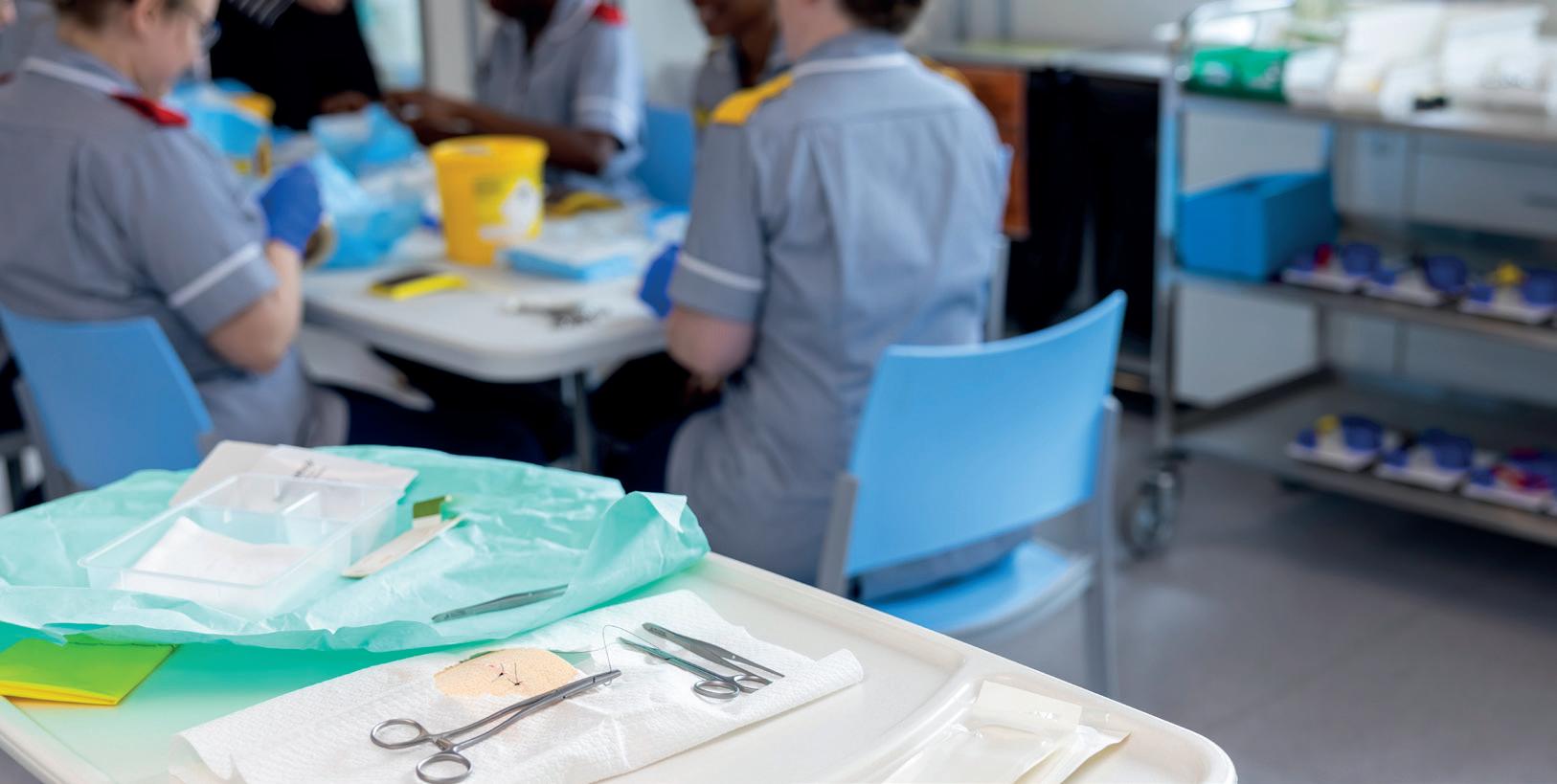
MNurs respectively. Within the academic part, we have our skills sessions which are great fun and perfect to practise the proficiencies necessary to go into placement while in a safe environment.
WHAT HAS BEEN YOUR MOST CHALLENGING MOMENT SO FAR?
One of the most challenging moments came during my last placement in the emergency department. I was working with a patient who had begun to decline from their illness. It became apparent that they didn’t have long to live and appeared to not understand or react to anything we were saying. Knowing this, I could only comfort the patient while we waited for their family to arrive. Some time passed and I was coming to the end of my shift. As hard as it was, I had to say goodbye and leave before the family arrived. This was a tough day. The lady passed shortly after I left but, thankfully, she got to see her family. I will never forget this moment and am honoured to have been able to offer what comfort I could.
WHAT WAS YOUR APPLICANT JOURNEY LIKE? WHEN DID YOU APPLY?
I grew up in South Africa and found schooling difficult. As such, I dropped out aged 16 with no qualifications. This meant I needed to gain GCSEs. So, in 2018, I embarked on a Nursing Access Course with Truro and Penwith College adding Maths and English GCSE. While extremely well structured, this placed immense pressure on me as I balanced family life with academia, but it was worth it. During this time, I made friendships with other applicants who remain an integral part of my life. As I went through the year, I began to find my flow and came out of college with GCSE and Access Course qualifications. The hardest part of the application was my personal statement. Trying to put so much of my passion into so few words was extremely difficult. With the amazing help from my college professors, my application was accepted, and it was off to interview.
The interview team helped relieve any pressure we were feeling and calmed the group ready for interview. Part of our interview was to watch a video on an episode of nursing care and report our findings. The portrayal was terrible, and I couldn’t help but comment on how bad the nurse treated the child and the parent. I didn’t realise the person acting the part was interviewing me. We all burst out laughing, despite my blushing.
HAVE YOU FOUND A COMMUNITY AT UNIVERSITY? IF SO, HOW AND WHERE?
Absolutely! The biggest community I have found is my cohort. Being male and a mature student, at first, I feared how I would be accepted by a predominantly female group. Now, I would not dream of being without the amazing nursing students I am working with and who have accepted me as part of the team. Whether it is lunch in Drake’s Kitchen or an impromptu night out, we have a lot of fun. We are also a
huge support network that in times of tears we can all talk and get through the problems together. The Nursing Society is an amazing team who love creating parties and helping other students relax and have some down time, creating an environment where students can meet others from their course. What has been your favourite memory of being in Plymouth so far? By far my best memory comes from my first year. As students we get to spend more time with our patients than trained staff do, and this allows us to build better therapeutic relationships. I worked extensively with a patient who was living with an eating disorder. Initially the patient had communicated that they didn’t get on with males, but circumstances had changed and I needed to sit with the patient for meal times. During these times we would chat about things that interested her and family matters and over time, conversations became easier. As with all students, feedback is a vital part of the process, and I knew
“An opportunity arose for me to take a huge step out of my comfort zone and change my life’s pathway”
the patient was going to be discharged so asked if she could fill in a form for me. The patient agreed and I left the form and envelope with her. I never read the feedback until I got home. When I opened the envelope, she had written very kind words in every box. I noticed some writing on the back and when I turned over, she had written me a letter thanking me for being so kind and changing her feelings towards males. Well, first, I cried as the letter was so lovely and then I thought how amazing it is that someone took the time to tell me I helped them. I felt overwhelmingly humbled and privileged to work in a role where I could unknowingly change someone’s perspective on things, helping them to recover from their illness.
WHERE DO YOU HOPE YOUR CAREER WILL TAKE YOU?
This is a really difficult question to answer. As strange as it may sound, the more placements you become involved
in as a nursing student, the more it opens your eyes to just how vast nursing is. From surgery to stoppingsmoking services, the world as a budding health professional has so much to offer. I started off thinking I wanted to work in a GP surgery as a children’s nurse. However, I had such a great time in hospital placements that I really love the wards or emergency medicine. The two have different things to offer and being within a pandemic, each area is at maximum output. I have another year and a half to go so we will see.
WHAT ADVICE WOULD YOU GIVE TO ANYONE INTERESTED IN STUDYING TO BE A NURSE?
My advice to anyone thinking of studying to be a nurse is, firstly, buy a great pair of shoes. Doing a nursing degree is hard, and when you’re in placement, the wrong shoes can make your shift harder and give you sore, smelly feet. When you’re on campus,
make sure you ask lots of questions. Talking to people in nursing is what it’s all about and seeking knowledge of your subject will stand you in good stead moving forward. Most importantly, be yourself and have fun. Yes, a Nursing degree is hard and yes, you must be serious at times but that doesn’t mean you can’t have fun.
STUDY NURSING AT PLYMOUTH
Find out more about our MNurs (Hons) Nursing (Adult Health and Child Health) degree.
OUT IN THE FIELD
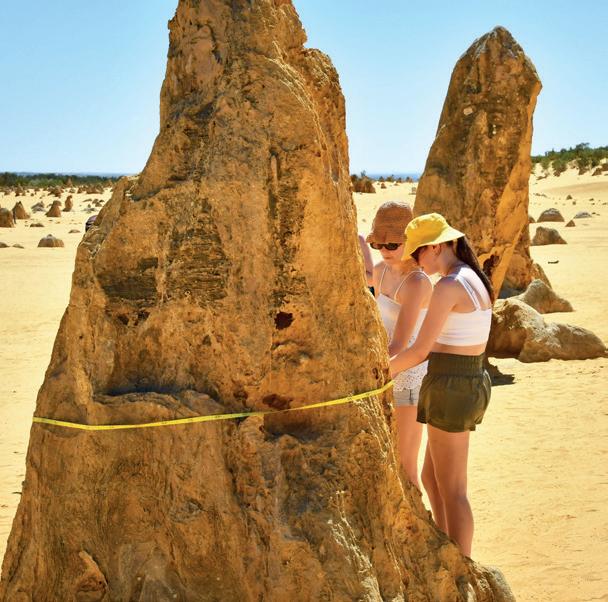
Our extensive international field trip on our geography degrees allows you to hone your geographical and transferable skills in exciting and challenging environments
“An unforgettable adventure. This trip challenged my skills and offered the opportunity to conduct original research in one of the world’s most complex drylands. It is a defining, hands-on experience that I encourage every student to seize.”
Lois Barnes, BSc Geography, took part in the fieldtrip to Namibia
All of our geography degrees offer local, regional and international fieldwork. In addition to short field visits within Devon and Cornwall, we run residential trips to European and other international destinations.
We believe you learn best from direct experience of the world’s natural and cultural environments. In your first year, you’ll undertake fieldwork in the region as well as within and around the city of Plymouth. These activities are designed to help you build skills and confidence, familiarising you with key human and physical geography themes. In the second year, our field programme is geared towards supporting your training in geographical research methods, enabling you to develop the skills base you’ll need to complete your dissertation and other research projects in the final year of your degree. You tailor the nature of your field-based training to the areas of geography in which you plan to specialise.
Our trips enable you to study very different cultures and environments in more distant parts of the world. The contrasting places we visit open up the possibility of small group studies in a huge range of human and physical geography topics. In any given year we usually offer a choice of trips to destinations where our staff have active research interests, contacts and sources of project work, so you are able to learn from local experts, including academics, field scientists, planners and policy makers. Students rate our field trips as one of the highlights of their degree – a unique educational and social experience.
STUDY OVERSEAS
Once enrolled at Plymouth all geography students are given the opportunity to apply to study abroad for either one semester or the whole of the second year. You will then return to Plymouth and complete the final year of your degree. If you wish, you could still also complete a work placement the year after returning from abroad.
We have extended global networks with leading geography departments across Europe, North America and Australia. Research shows that students who study abroad are more likely to achieve at a higher academic level, get a job and earn more when they graduate, are more international in their lives, and show greater personal development.
FROM HOMELESSNESS TO BELONGING CLEARING GAVE ME A CHANCE
Ash Parker didn’t get the A level grades she wanted, following a difficult path involving homelessness and mental health issues, and was unsure of what to do next.
But a strong sense of wanting to improve mental health support for others drove her towards psychology, and one call to the University of Plymouth’s Clearing centre was the chance she needed.
a strong sense of wanting to improve mental health support for others drove her towards psychology, and one call to the University of Plymouth’s Clearing centre was the chance she needed.
“I honestly thought uni was off the table for me. Typical academic exams were a challenge – I actually had a panic attack during one of my A levels – and every time I had a plan it didn’t quite go through. Now, after a lot of hard work and getting into university through Clearing, I know I’m in the right place, and am really well supported to achieve what I want to.”
“I honestly thought uni was off the table for me. Typical academic exams were a challenge – I actually had a panic attack during one of my A levels – and every time I had a plan it didn’t quite go through. Now, after a lot of hard work and getting into university through Clearing, I know I’m in the right place, and am really well supported to achieve what I want to.”
Before coming to Plymouth, Ash dealt with a series of setbacks - chronic illness, anxiety, family estrangement, and even a period of homelessness. Moving to her grandparents’ in Cornwall in 2020, she completed A levels in Law, Sociology and Psychology, and applied to a number of universities to do Psychology. But her grades weren’t what she wanted
Before coming to Plymouth, Ash dealt with a series of setbacks - chronic illness, anxiety, family estrangement, and even a period of homelessness. Moving to her grandparents’ in Cornwall in 2020, she completed A levels in Law, Sociology and Psychology, and applied to a number of universities to do Psychology. But her grades weren’t what she wanted
"I have anxiety and was living with chronic pain (later diagnosed as endometriosis) and found that whatever
plan I had just wasn’t something I was able to see through. It’s horrible when you don’t do as well as you’d like in your exams, but I knew Clearing could be a lifeline. I chose to call Plymouth as I’d experienced how friendly and supportive they were at an Open Day. I applied for the foundation year and the process was so simple, I called, spoke to a lecturer and was accepted. I also managed to get student accommodation without any stress.”.
"I have anxiety and was living with chronic pain (later diagnosed as endometriosis) and found that whatever plan I had just wasn’t something I was able to see through. It’s horrible when you don’t do as well as you’d like in your exams, but I knew Clearing could be a lifeline. I chose to call Plymouth I’d experienced how friendly and supportive they were at an Open Day. I applied for the foundation year and the process was so simple, I called,
"Now, after a lot of hard work and getting into university through Clearing, I know I’m in the right place, and am really well supported to achieve what I want to.”
spoke to a lecturer and was accepted. I also managed to get student accommodation without any stress.”.
Ash was accepted onto a foundation year, which acts as a bridge at the start
Ash was accepted onto a foundation year, which acts as a bridge at the start of a degree course, helping a student gain the knowledge and skills needed to complete their studies in their chosen subject.
"I was super nervous when I started but honestly, it’s been the best decision ever. As I declared on my application that I had a disability, I received a call early in my studies from the University’s disability team to see how I was doing and remind me of the practical, financial and pastoral support available to me. Chronic illness, disability or challenges at home don’t have to be taboo or set you back. I know there will be people out there thinking ‘what’s next?’ whether or not their exams went to plan, and it’s even more worrying when you know you need support for conditions or circumstances beyond your control. But Clearing is a great option to talk through what you need to, and be recognised for more than just the grades you’ve achieved. Clearing gave me a chance – and I want others to know they can do it too."
of a degree course, helping a student gain the knowledge and skills needed to complete their studies in their chosen subject.
"I was super nervous when I started but honestly, it’s been the best decision ever. As I declared on my application that I had a disability, I received a call early in my studies from the University’s disability team to see how I was doing and remind me of the practical, financial and pastoral support available to me. Chronic illness, disability or challenges at home don’t have to be taboo or set you back. I know there will be people out there thinking ‘what’s next?’ whether or not their exams went to plan, and it’s even more worrying when you know you need support for conditions or circumstances beyond your control. But Clearing is a great option to talk through what you need to, and be recognised for more than just the grades you’ve achieved. Clearing gave me a chance – and I want others to know they can do it too."
YOUR STUDENTS’ UNION
Starting university can feel overwhelming, especially if you had never previously considered university or are returning to education after a break. Finding your people — a group where you feel welcome, understood, and supported — can make all the difference. That’s where your Students’ Union (SU) comes in. We’re here to help you find your community and build lasting connections.
SPORTS CLUBS
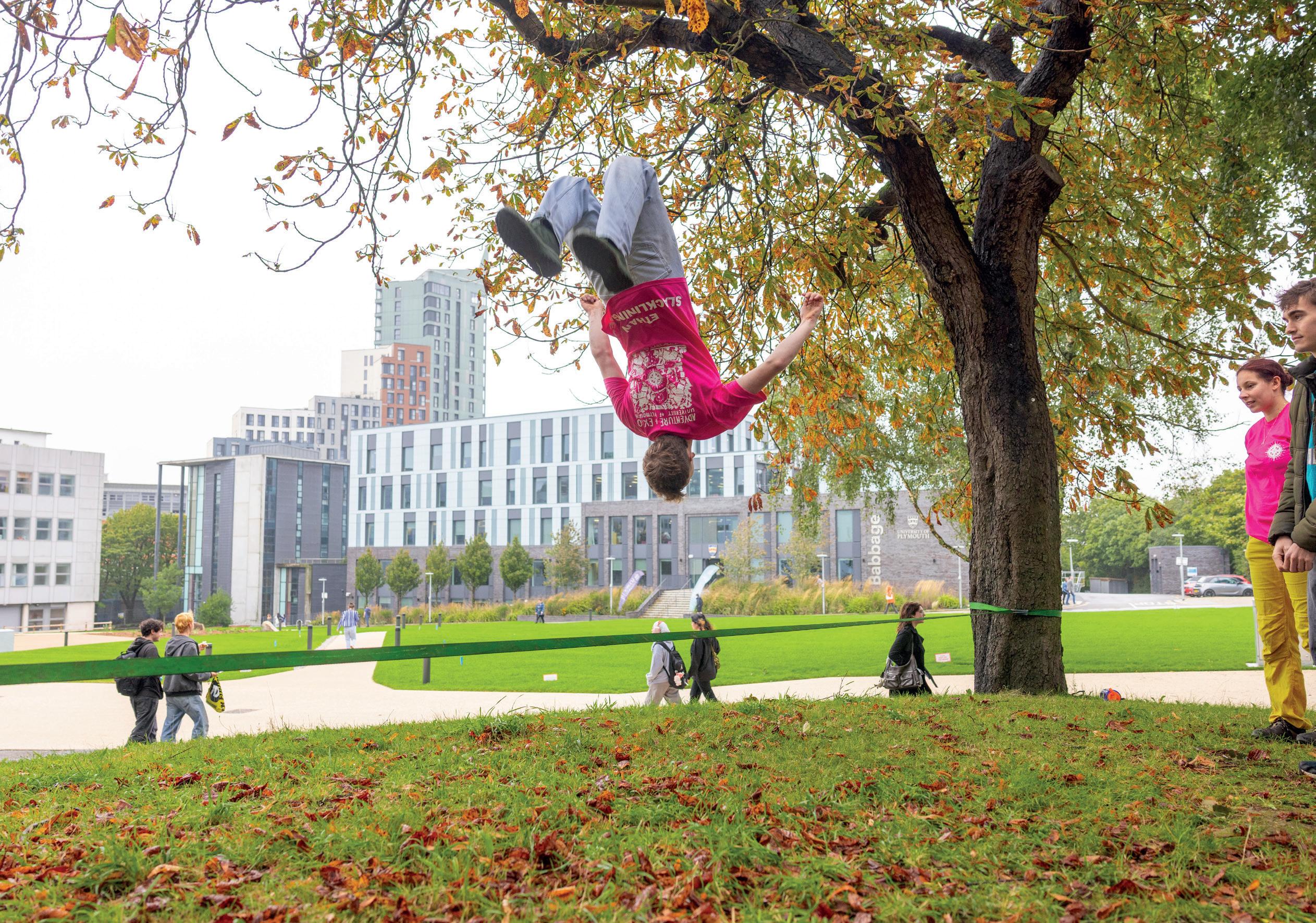
Whether you’re a seasoned athlete or a total beginner, sports clubs are a great way to get active, stay healthy, and bond with others over shared interests. Many clubs offer both social and competitive opportunities. With Plymouth’s stunning coastline just a short walk away, there are plenty of water-based sports to explore.
SOCIETIES
If you want to meet others studying the same subject, explore a hobby, or try something completely new, societies
offer a great way to connect and have fun. If you don’t see a group that matches your interests, we can help you set up your own.
NETWORKS
Networks provide a safe space for students to connect around shared experiences or identities. While there is a social aspect, networks focus on representation — offering underrepresented groups the chance to make their voices heard and shape positive change within the university.
Supported by SU staff, these student-led spaces are designed to empower and support.
VOLUNTEERING
Volunteering is another brilliant way to meet people and give back. Whether it’s working in a charity shop, helping out with wildlife conservation, or coaching a local team, we partner with local community organisations to offer flexible, meaningful opportunities that fit around your studies.
REPRESENTATION
If you’re passionate about creating change, you can become a student representative. These roles—some voluntary, some paid—are your chance to amplify student voices, influence decisions, and improve life at the University of Plymouth. We support over 600 student representatives at the University.
GIVE IT A GO
Want to try something new with zero pressure? The Give It A Go programme includes everything from yoga and basketball, to trips to the Eden Project or the Natural History Museum. It’s perfect if you want to get involved without a long-term commitment.
BUDDY SCHEME
Feeling nervous? The SU Buddy Scheme pairs you with a student who’s been there. You can meet up 1:1 or join a buddy group to access social events and chat with peers online. It’s a warm, informal way to ease into university life.
“I think the SU is really fundamental to the student experience. It’s having that separate group away from university that is an advocate for student wellbeing and student quality of life.”
Joseph, Accounting and Finance graduate FIND OUT MORE
“Being part of the SU has really helped shape my future. It’s taught me so many skills that are not only good for my CV and for future jobs, but they’re also really useful life skills.”
Abbie, Psychology graduate
“My whole University experience has been shaped by the people involved with the SU and the people of the SU itself. I genuinely couldn’t have navigated university without the SU.”
James, Law graduate
“When I leave this space, I will talk about my degree, but I will also talk about everything else. Be it, clubs, societies, representation, volunteering, it is a big deal.”
Samuel, Marine Technology graduate
“It is a very central community hub. They run a variety of different events, getting students to play music, […] celebrating different cultures, and to me that’s what university is, it is all of that community base and cultures coming together.”
Anthony, Medicine student
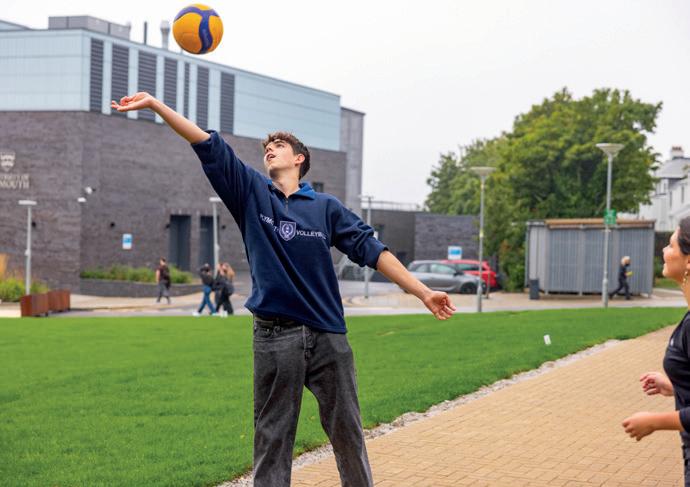
“The SU really helped me in making friends and they are really long-lasting friends. When I came here I knew I wanted to do a sport, but I didn’t have the English level to communicate. So I threw myself into volleyball and I found people that I was able to talk with and a way to make friends.”
Laura, Engineering student
DISCOVER MORE, CLOSER TO HOME
You may already know the local area, but studying at Plymouth gives you the chance to experience it in a whole new way. As part of our vibrant university community, you’ll discover new places, meet new people, and see your local surroundings from a fresh perspective.
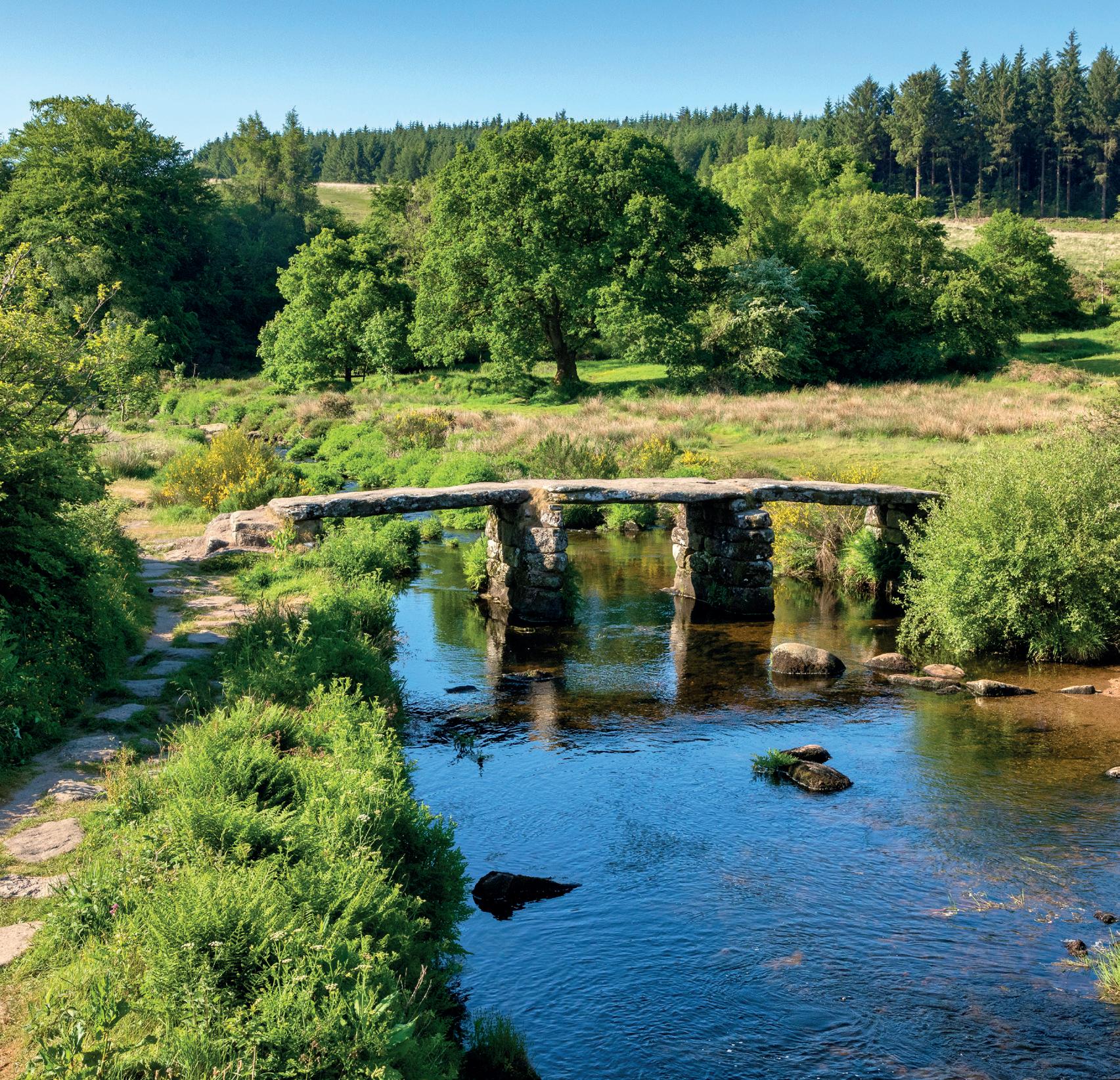
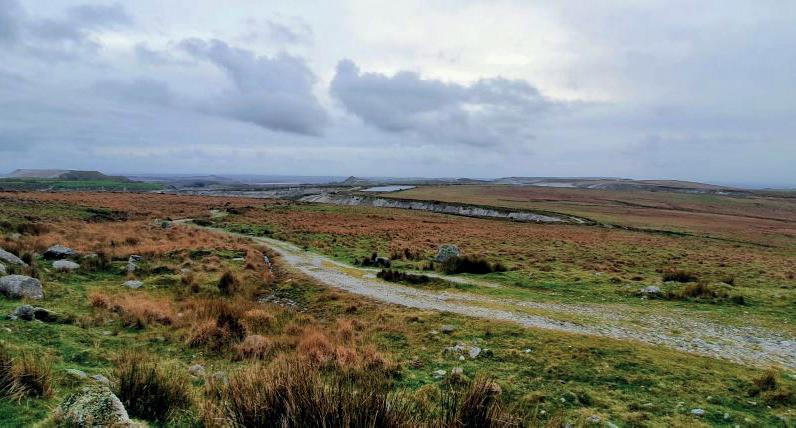
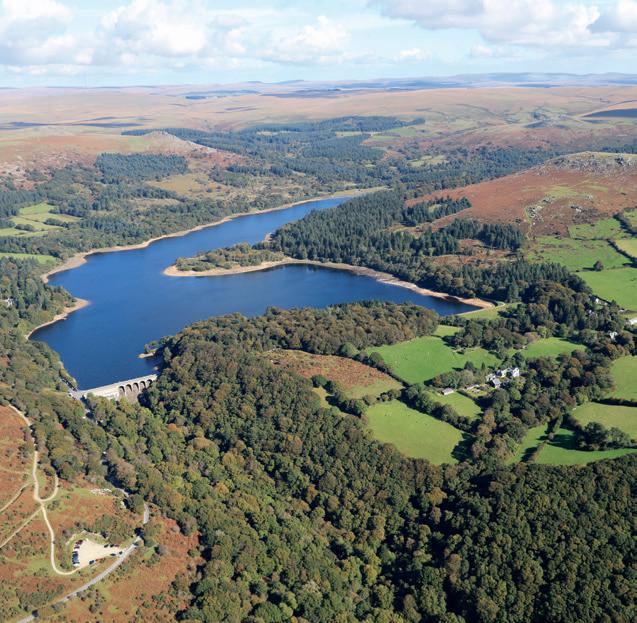
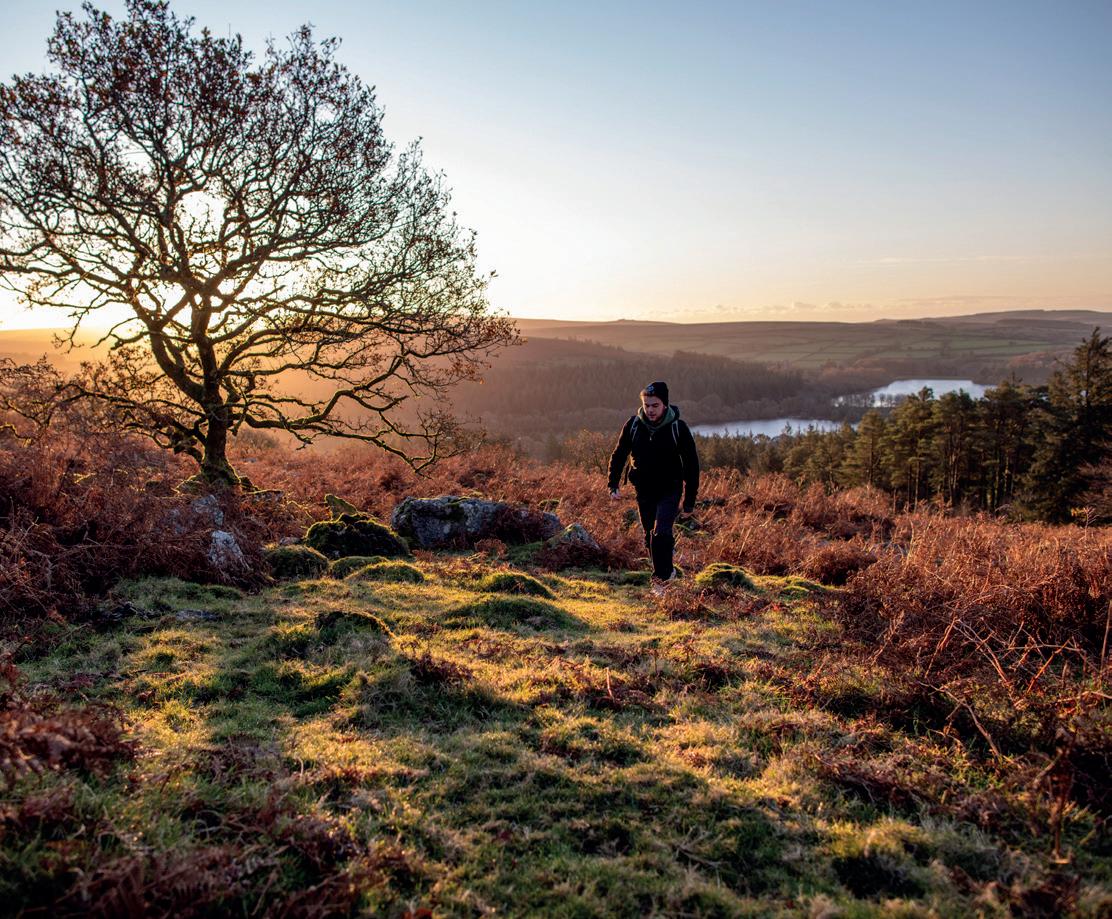
DARTMOOR – Even if Dartmoor is already a familiar favourite, there’s always another trail to discover, view to admire or adventure to enjoy. With more than 450 miles of walking, cycling and running routes, it’s the perfect place to recharge, challenge yourself or spend time with new friends, all within easy reach of Plymouth.
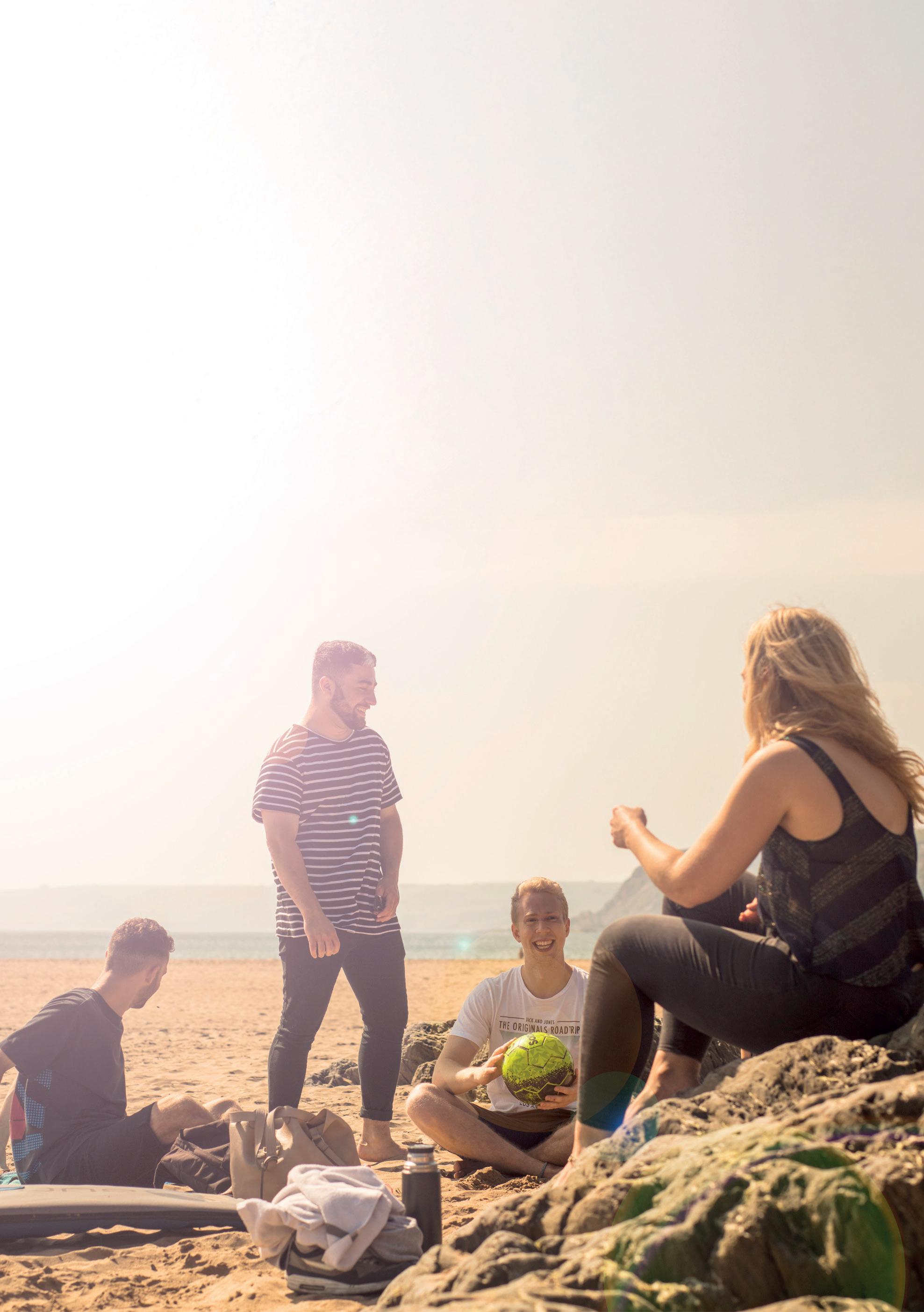
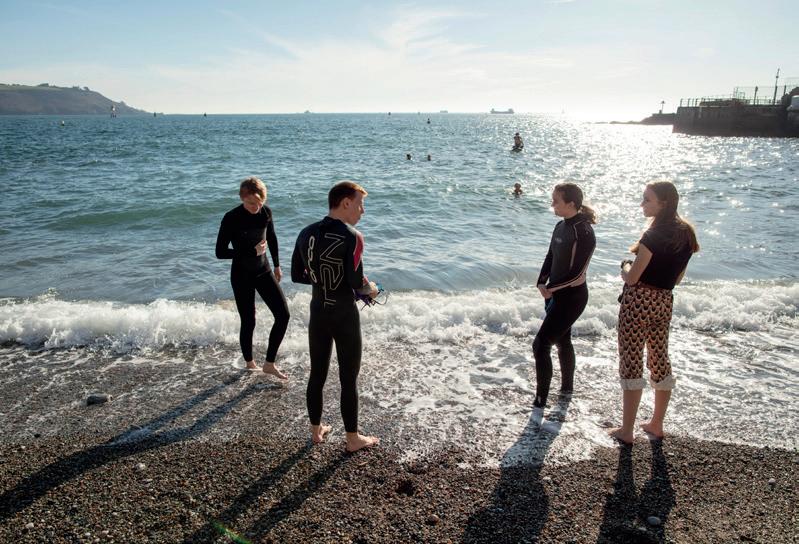
BEACHES – You may already know Devon and Cornwall’s spectacular coastline, but university life is the perfect excuse to enjoy it even more. Take a break from campus with a trip to Wembury Beach for rock pooling and a refreshing sea swim. Just over the river in Cornwall, Whitsand Bay offers miles of golden sand, ideal for long walks, beach days or watching the sunset. However you like to spend your time by the sea, some of the South West’s best beaches are just a short journey from campus.
CORNWALL – Whether it’s somewhere you’ve grown up visiting or a place you know well, Cornwall is always worth another trip. Easily reached by car, train or coach, it offers everything from sandy beaches and picturesque fishing villages to bustling seaside towns and beautiful countryside. Spend a day exploring the worldfamous Eden Project, head to adrenaline quarry to challenge your friends in the Aquapark inflatable course, or hop on the ferry from Plymouth to enjoy the historic house, gardens and parkland at Mount Edgcumbe. Whatever your interests, Cornwall is the perfect place to explore with your new university family.
Mount Edgcumbe
The Eden Project
EXPLORE A DIFFERENT SIDE TO PLYMOUTH
Hear from our students about their favourite places to spend their time in and around Plymouth.
“Rame Head was one of my favourite places to visit near Plymouth. I saw a number of sunrises and every time, it was so different. In the quiet mornings, finding yourself alone (or with your best friends), surrounded by deer and horses, listening to birds while the sun comes up over the ocean, there’s a true sense of magic.”
Louise, Marine Biology and Coastal Ecology graduate
“The Barbican is a new favourite place of mine, not only because of the amazing views, but also because it has history attached to it, which I loved discovering.”
Jessica, Politics and International Relations student
“There are many places to go swimming in the sea around Plymouth. You can pretty much enter the water anywhere you like, along the Hoe, the Barbican and surrounding beaches.”
Hannah, Marine Biology and Coastal Ecology student
“Plymouth is so beautiful, it’s very difficult to choose one favourite place, as most places I absolutely love! The top locations in Plymouth for me are the seafront, Sutton Harbour and Devil’s Point because being by the sea is actually the best thing ever! I love going to watch the sunrise by the sea as it’s just so tranquil and such a great start to the day!”
Christina, Biomedical Science student
“The great thing about studying in Plymouth is that you can see the sea pretty much all the time! One of my favourite things is to walk to the Barbican for fish and chips, which you can follow up with a hot chocolate sitting on the Hoe.”
Sumbel, Medicine student
“The Universitymanaged halls are all either on campus or a five-minute walk, which is so convenient. It’s so easy to get to university, to see your friends at their places or to get into the city centre too.”
Lily, Product and Furniture Design student
EXPERIENCES OUTSIDE OF THE CLASSROOM
Here at Plymouth, we have a huge variety of exciting opportunities to explore your course beyond the classroom – whether that’s in one of our stunning local environments or abroad.
“Travelling abroad gives you an enormous sense of independence. Since coming back, I have travelled by myself and I feel like I can conquer anything! You develop social skills, etiquette and awareness of other cultures that will help you adapt to new environments in the future. My confidence grew massively from doing new things such as navigating public transport to presenting in front of a class. My self-esteem has improved with my confidence, and I feel like a better person. I must also give appreciation to my university tutor at Plymouth who provided continued support while I was in Prague and frequently checked in on me.”
Bethany, Psychology student
“You’ll go beyond the classroom and learn how psychology can have a tangible effect on the wider world with our regular field trips that make use of our amazing location – both on Dartmoor and local beaches. You’ll explore how psychology can make a difference to our environment and communities.”
Dr Gustav Kuhn, Associate Professor in Psychology
“I’ve been on field trips to places such as Westward Ho! and Pompeii. They’ve been some of the most memorable experiences of my university experience. I’ve made amazing friends during field trips, learnt new skills and increased my understanding of the geology that we’ve studied."
Lauren, Geology student
“After a lecture discussing the theory behind how human activities impact the water content and quality of the River Plym catchment, we spent a day on Dartmoor to observe these impacts first hand. We examined the effects of farming, discussing their impact on the surrounding natural environment and the potential pollutants entering the river catchment. This experience helped me grasp the scale of human activities and deepen my understanding of river pollutants and their effects.”
Alyssia, Ocean Science and Marine Conservation student
“Field trips are a fantastic opportunity for students to socialise and interact with one another, and with us as lecturers, outside the university setting. It’s a great way to build cohesion within the group and get to know one another better.”
Dr Zoë Mildon, Associate Professor in Earth Sciences
“My university field course trip to South Africa was an unforgettable experience that deepened my passion for marine biology and strengthened my research skills. Beyond the coastline, the adventure continued with thrilling safari rides, where I had the oncein-a-lifetime experience of seeing white rhinos up close and even getting caught in an elephant traffic jam!”
Kathryn, Marine Biology and Coastal Ecology student
“Spending time in Kenya during my degree has massively supported my scientific skills and zoological knowledge, allowing me to apply these to real-world ecosystems and a diverse range of species across the reserves. Being immersed in such an animalrich environment enhanced my learning experience.”
Alfie, Zoology student
JASMINE’S STUDENT JOURNEY
JASMINE
LLB (HONS) LAW STUDENT AND EVENTS OFFICER FOR THE UNIVERSITY OF PLYMOUTH LAW SOCIETY (UPLS)
I chose Plymouth because I grew up here, and I absolutely love the city for its closeness to the ocean and nature.
CHOOSING PLYMOUTH
The city has everything that a student could need, including a good nightlife and everything is very close together, which is super convenient. I was particularly interested in Plymouth’s law course as I liked the look of the modules, the opportunities provided by the Law Society and the option to gain experience working in the Law Clinic, providing pro bono legal advice to my local community.
I did consider moving away for university, but the course at Plymouth was hard to turn down. Still living at home while studying has certainly given me a different experience to other university students but, from my point of view, it hasn’t had any negative affect on my experience at all. I would even say the contrary, the South West is a beautiful, welcoming place and I wouldn’t want to leave. I get to retain my home comforts while still experiencing the fun parts of being a student: partying, having lunch with friends, attending lecturers and bettering myself. If you are considering living at home for university, do, you will not be at a disadvantage in any way. I am very happy with my decision to study here!
UNIVERSITY LEARNING
I found the transition to university to be smooth. My lecturers were very helpful with this, as they thoroughly explained what was to be expected of us as students, including structuring essays and referencing. They are always available to answer questions and provide any support. I enjoy the way that learning is structured on my course, as modules are taught 75% via lecture and 25% via seminar. A lecture is a large group session where the substantive content of the module is taught. A seminar is a smaller group session where you apply what you have learned to problem scenarios, and they are very enjoyable and helpful for assignments and exams.
I learned to write an assignment by turning up to all of my lectures and listening carefully to my lecturers’ instructions – that really is the trick to mastering assignments! Each lecturer is slightly different and has slightly
different expectations, so I take note of this and tailor each of my assignments to the standard that they expect. I also take my time with my assignments and start the research early so that my writing is interesting, in-depth and not ‘left to the last minute’. This method and hard work have done me well so far, as well as help from my lecturers and peers whenever I need it.
MY CAREER ASPIRATIONS
During my first year, I knew that I wanted to become a lawyer, but I struggled to decide whether I wanted to be a barrister or a solicitor. However, after obtaining advice from the Careers
Service and participating in various work experience placements, I am now set on becoming a solicitor in a Plymouth firm. I plan to undertake the Legal Practice Course (LPC) full time upon completion of my degree and hope to begin a training contract in September 2025. I cannot praise the Careers Service enough, as they have given me unlimited advice on my career options, CV and applications. Through the Careers Service, I have also attended several skills development workshops and currently work with a personal mentor, who I met through their mentoring programme.
MY ACHIEVEMENTS SO FAR
I would say my biggest achievement so far would be being elected as a committee member for the University of Plymouth Law Society. Through this, I have really developed as a person and gained some amazing experience. A few other experiences have included being awarded the Gordon McLeish prize for outstanding performance and achieving the highest grade in one of my modules. I felt so proud of myself for winning this award, and it was also a real feeling of relief, that all the hard work I was putting in had paid off. Another amazing experience was when I won the Law Society’s ‘Client
Interviewing’ competition, which was judged by a local firm and secured me a week of work experience at the same top Plymouth firm.
THE FRESHERS’ EXPERIENCE
For me, Welcome Week was really fun. I chose the events that I wanted to attend via the Students’ Union website. These included a Zoo Party, a ‘House Party’ in a club and a neon party. Throughout Welcome Week, there are events to suit anyone’s interests, including both sober and events with alcohol. The University also puts on a Freshers’ Fair and a Societies Fair which are both so much fun and a good way
to meet new people (and get free food and Freshers goodies). I made friends with some girls I met in one of my first few lectures, we were put into a group together and we have been friends ever since! There are several ways to make friends on campus, including joining societies and attending events held by the SU.
FINDING MY PEOPLE THROUGH THE LAW SOCIETY
Becoming a member of the Law Society is a must for all aspiring lawyers, it provides all members with the opportunity to network with legal professionals, participate in legal competitions to build their skills and go on trips to build their legal knowledge. For example, in December, the UPLS held its annual Cheese and Wine Networking Evening at The Box when 150 professionals attended and passed their wisdom and advice to 120 Law Society members. Through this event, I obtained legal work experience and made some connections with potential future employers. I have also participated in several competitions, including mooting (which is like a mock court, legal argument competition), negotiations and client interviewing.
The Law Society also helps its members to make friends and have fun. Outside of their studies, it hosts regular socials and also has a football team and netball team.
Being a committee member for the UPLS has helped me to build my skills and grow my confidence. Through organising the society’s events, which has not been without its challenges, I have developed professionalism, negotiating skills, teamwork, organisation, time management, public speaking skills and so much more.
STUDY LAW AT PLYMOUTH
UCAS tariff: 112–128 points
Duration: 3 years full time (+ optional placement)
CREATIVITY WITHOUT RESTRICTION AT PLYMOUTH
From a childhood realisation that someone, somewhere, makes the games we play, to designing an entire game world of his own — BA (Hons) Game Arts and Design student Dan reflects on how studying at the University of Plymouth has fuelled his passion for game design.
Game Arts and Design student pursues creativity ‘without any restrictions’ at Plymouth
For Dan, the dream of designing video games began early. “I remember, when I was very young, realising that someone had to have made what I was playing,” he says. “From that point onward, I knew that I wanted to pursue a career in video game design.”
It’s a moment many game designers describe — the instant a game stops being simply something you play and becomes something someone built. For Dan, that realisation never faded, and when the time came to choose where to study, he was drawn to the University of Plymouth by its reputation as one of the best places in the country to study video
game art and design, with facilities to match.
The city itself sealed the decision. “Plymouth is a vibrant city that I fell in love with immediately after visiting for
“I knew that I wanted to pursue a career in video game design.”
the first time.”
FROM GREYBOX TO FULLY-FLEDGED GAME WORLD
Since starting the course, Dan has relished the chance to collaborate on a wide variety of team projects with, in his words, “some amazing, like-minded people.” Working in teams mirrors how games are made professionally, with
artists, designers and developers each bringing their own skills to a shared vision.
One project in particular stands out: a PlayStation One-style ‘Metroidvania’ — a subgenre of action-adventure games focused on exploration, progression, and acquiring abilities to access new areas. In the game, players take on the role of Quetzal, an axolotl who must navigate a complex, large-scale dungeon to reach the door to the underworld.
Dan led the entire level and environment design, supported by teammates who created a variety of assets for him to work with. Watching the project take shape has been one of the most rewarding parts of the experience.
“It’s interesting reflecting on how the project developed from a simple greybox test, alongside a design journal, to a fully-fledged environment that makes the most of all the gameplay mechanics,” he says.
The team built the game in Unreal Engine 5, modelled external assets in Maya, and created textures using Adobe Substance 3D Painter. Learning this professional toolkit is a core part of the course, as these are the same tools used across the industry — Unreal Engine 5
“The audience reaction to my project was incredibly positive and I am really proud of what I have made!”
in particular now powers some of the biggest titles in games, as well as film and other creative productions. The result spoke for itself. “The audience
reaction to my project was incredibly positive and I am really proud of what I have made!”
SUPPORTED TO FOLLOW A DREAM CAREER
Dan credits the course team with making the experience what it has been. “The support I have received from the lecturers of the course has been unmatched. They are incredibly friendly and are always willing to help with an issue.”
That support extends beyond the studio. Dan has also made use of the University’s Careers Service, which he describes as efficient and easy to access — valuable backing for his ambitions after graduation. His goal is to work as a level designer or environmental artist at a large-scale studio, helping to make big-budget games for a company like Valve or Naughty Dog.
“It’s what I am most passionate about doing in the industry,” he says.
His advice to anyone considering the same path is unequivocal: “If you’re at all interested in making video games,
I would highly recommend the BA (Hons) Game Arts and Design course. It covers everything you need to know about making games and allows you to pursue your creativity without any restrictions. The University of Plymouth is an incredible university with incredible people and facilities — and I cannot recommend it enough.”
GAME ARTS AND DESIGN AT PLYMOUTH
"If you love creating visually stunning games and immersive experiences, this course gives you the chance to focus on the artistic side of game development. You'll learn to design characters, environments and storylines using industry tools like Unreal Engine and Blender. Graduates go on to work at top companies like EA Games and Aardman Animation, and work on high profile projects like Alien: Romulus and Netflix's Three Body Problem."
Mr Joel Hodges Lecturer in Game Arts and Design
Welcome to your Careers Service
… AND WHY YOU MIGHT WANT TO KNOW ABOUT IT AS A FIRST YEAR STUDENT
SUPPORT
The Careers Service offers support during your time at uni, after graduation and beyond. The team can help you secure part-time work, work experience, graduate positions and more! If you need advice on interview preparation or looking for employment, or need help with your CV, the team can take you through the resources and guide you to the next step.
EVENTS
The Careers Service runs a wide range of employer-led careers events to help you to interact with employers, along with a programme of skills development workshops. These include career fairs, employer dropins, and insight panels for students wishing to explore placement, graduate and part-time work opportunities.
PART-TIME JOBS
If you want to find a part-time job that fits around your studies, the Careers Service can support you. They have strong links with local part-time employers and regularly advertise a wide range of vacancies from working in hotels and restaurants, to staffing a pop-up thrift store or working at a concert or event.
You can attend the annual part-time jobs fair where local employers and teams within the University come to recruit students for their part-time or casual vacancies.
A popular part-time job is being a student ambassador for the University. Through this, you could support attendees at open days, carry out campus tours, work in the Clearing call centre, or support arrivals and welcome weeks, along with much other varied work.
MENTORING
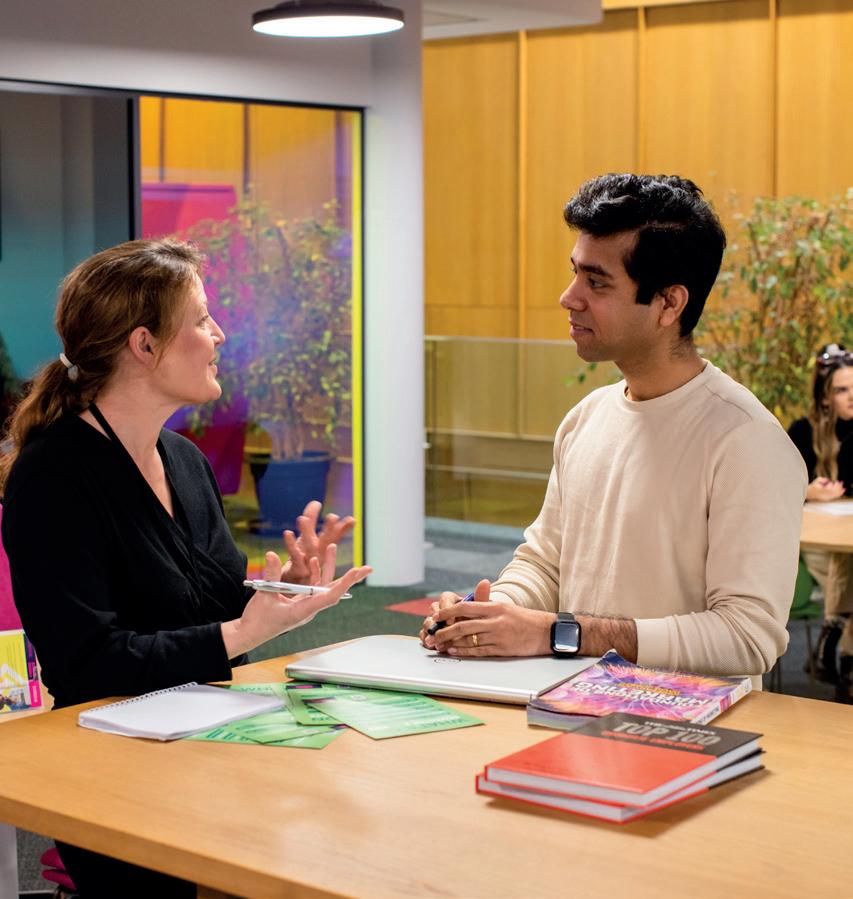
The University offers a career mentoring programme, whereby students are matched with industry professional mentors who give their time and knowledge to support students. Mentors can help students gain unique insights into their desired careers, learn about networking opportunities, increase their skills and undertake mock interviews, giving them a competitive advantage in the job market.
PLACEMENT AND WORK EXPERIENCE
Undertaking a placement in your course, or gaining other work experience while at university, will greatly improve
your chances of achieving the graduate role that you want.
There are a number of opportunities to gain work experience – through our emerging micro-internships programme – of up to two weeks within the work environment.
Careers education and activities are embedded as part of your course. Our careers consultants work in partnership with your lecturers to design and deliver tailored talks, workshops and competitions within your course.
“I became a student ambassador to earn some extra income, but I’ve gained so much more through different opportunities, developing my skills in communication, media and teamwork.”
Alfie, Zoology student
“I encourage every student to take advantage of the Careers Service. Whether it’s tailoring your CV, preparing for interviews, or learning how to apply for jobs, there’s something valuable for everyone. Seize this opportunity to develop the skills that will set you apart in your professional life.”
Samuel, Digital and Social Media Marketing student
CAMPUS LIFE
LAW CLINIC
A unique practical experience facility for law students.
PORTLAND SQUARE BUILDING
A learning space for many courses with laboratories, teaching and research facilities, and lecture theatres.
NANCY ASTOR BUILDING
Provides clinical skills areas for nursing students to train in replicas of NHS wards and emergency departments, with teaching rooms and the UPSU Sports Centre.
BABBAGE BUILDING
A £63 million state-of-the-art space to inspire the engineering and design pioneers of the future.
DAVY BUILDING
Predominantly a space for chemistry and related sciences, housing the first 5G interactive microscope labs in Europe.
FITZROY BUILDING
This £14.5 million building opened in early 2025 and is the new home for Plymouth Business School and a new location for The Cube, our acclaimed enterprise support service.
INTERCITY PLACE
A brand new space to train and develop the next generation of nurses, midwives and allied health professionals.
MARINE BUILDING
With some of the best research and testing facilities in the country, this world-class marine facility is a dedicated space for marine and engineering students as well as commercial clients.
ROLAND LEVINSKY BUILDING
Our flagship building has digital and immersive media labs, architecture studios, an art gallery, cinema and lecture theatres.
THE HOUSE
A state-of-the-art performing arts centre, offering world-class facilities as well as a diverse programme of contemporary performance open to the public.
ROLLE BUILDING
Alongside dedicated teaching space, facilities include music production, rehearsal and practice space for students.
SCOTT BUILDING
A hub for many of our arts-based courses, offering a wealth of facilities from printing and ceramics to photography and film production.
SMEATON BUILDING
Houses an array of cutting-edge computing, gaming and robotics labs equipped with the latest hardware, software and immersive technologies.
CHARLES SEALE-HAYNE LIBRARY
Supporting teaching, learning and research, the library provides access to approximately 350,000 books, 500,000 eBooks and 80,000 current journals.
UNIVERSITY OF PLYMOUTH STUDENTS’ UNION (UPSU)
Located in the heart of the campus with cafes, study areas, bars, a nightclub and shop. Visit UPSU for free independent advice on academic, accommodation, money, student finance and wellbeing support.
SALTASH ROAD
Clinical Skills Resource Centres – state-ofthe-art training hubs for nursing students.
NORTH CAMPUS
*Our moot court for law students is located in the Foulston Room, inside Plymouth’s cultural hub, The Box.
PILGRIM
RADNOR HALL
REYNOLDS BUILDING
MAIN HALL
DRAKE'S PLACE GARDENS
PORTLAND VILLAS
GILWELL
CAFES ON CAMPUS
ENJOY YOUR BREAK IN ONE OF OUR AWARD-WINNING CAMPUS CAFES.
BABBAGE BYTES CAFE
An extensive variety of sub rolls packed with premium ingredients, plus jacket potatoes, soup, hot pasties and breakfast baps, pastries and waffles
DRAKE’S KITCHEN
Favourite dishes from traditional English breakfasts to hot daily lunch specials
INTERCITY PLATES CAFE
A variety of hot and cold beverages, breakfast rolls, daily soup specials, handmade paninis, filled croissants and an assortment of cakes
We offer sustainable, locally-sourced fresh food and drink in all our cafes. Students can also find a number of food and drink outlets in the Students’ Union.
We pride ourselves on offering a variety of affordable delicious food and drink options, whether you fancy a hearty breakfast, a healthy salad or a pizza with the finest toppings. The choice is yours as we have a variety of themed food options in each cafe, and also celebrate national and international food related calendar days.
JOHN BULL CAFE (NORTH CAMPUS)
Cooked breakfasts and a 3-week rolling menu featuring internationallyinspired dishes
LIBRARY CAFE
A wide selection of hot and cold drinks, handmade paninis, pasties, sausage rolls, sandwiches, wraps and snacks
LOAFERS DELI
Handmade, artisan sandwiches crammed with scrumptious local produce
PORTLAND’S PIZZERIA
A wide variety of deliciously cookedto-order 10-inch pizzas with a large selection of premium toppings
RESERVOIR CAFE
Exclusively vegetarian and vegan food (a certified member of the Vegetarian Society)
RLB CAFE
A Pan-Asian inspired menu as well as breakfast, sandwich meal deals, cakes, and hot and cold drinks
THE CONTAINER
Food boxes and other food supplies: picnic boxes, sweet treats, bakes and breakfast croissants, English muffins, bagels, hot and cold drinks
FIND OUT MORE
Our cafes offer various deals as a great way to motivate you throughout the day. Whether you are studying with friends, holding a meeting or simply feel like eating something sweet – these deals are for you.
OUR SUSTAINABILITY
We are committed to providing a sustainable food culture at the University. We have held a three star rating from the Sustainable Restaurant Association for multiple years reflecting our commitment to sustainable sourcing, reducing disposable packaging, reducing meat intake and much more.
A FAIRTRADE UNIVERSITY
In 2024 the University of Plymouth achieved 2 out of 3 stars for our Fairtrade accreditation. We prioritise offering Fairtrade products wherever feasible and collaborate with local food suppliers to showcase the availability of seasonal, local and organic food options.
FAIRTRADE FOOD AND DRINK ON CAMPUS
• Fairtrade coffee, sugar, and bananas are standard offerings across campus.
• Enjoy hot drinks with Fairtrade syrups in caramel, vanilla, or hazelnut flavours at Portland’s Pizzeria and The Container cafe.
• Explore our diverse range of teas, including Fairtrade, Organic, Fair for Life, and Ethical Tea Partnership options. Whether you’re craving a fruity infusion or a classic English breakfast brew, we have something to delight every tea lover’s palate.
FIND OUT MORE
ADVICE FROM ONE PARENT TO ANOTHER
We know that it can be tricky to know how to support your child as they prepare for uni, but there are plenty of ways you can be there for them. We caught up with Mark, father of second year Law student Ed, to share his experience and impart some friendly advice from one supporter to another.
ED HAS LIVED IN PLYMOUTH ALL HIS LIFE. DID HE CHOOSE TO STUDY HERE BECAUSE IT WAS CLOSE TO HOME?
We looked at other universities, but we found Plymouth was smaller and had the University Law Clinic, which was unique. I had also read that about 60–70% of graduates stay in the same area as the university they attend, so we were quite keen for Ed not to go to the back of beyond, so I was thinking that a university in the South West would be good.
HOW DID YOU SUPPORT ED WHEN HE APPLIED THROUGH CLEARING?
We got to A level results day and Ed hadn’t made a decision about what to do next. I encouraged him to ring Plymouth’s Clearing Call Centre. He still wasn’t sure about going to
university; however, I encouraged him to call. I reminded him that even after speaking with the Call Centre, he could still make the choice not to go to university if he didn't feel ready and do a gap year if he wanted.
HOW DID YOU HELP ED GET READY TO MOVE INTO HALLS?
It was only once we’d got back from a summer holiday that Ed said he wanted the whole university experience, including living in halls. Due to the timing it was a bit of a rush, but we managed to secure really nice private halls near campus. The staff who worked there were so friendly and the location was so close to campus. The thing that really reassured me when we dropped Ed off was meeting one of his flatmates who was just as nervous as him – it
was lovely because they went off to explore their halls together. It’s just another great thing about going to university. It’s not just the degree, it’s everything else: making new friends, how to use the launderette, and how to cook for yourself!
WERE YOU IN CONTACT WITH ED QUITE A LOT IN THAT FIRST WEEK?
We were, but we wanted Ed to enjoy himself, and as long as he was happy, that was what mattered most.
DID YOU WORRY ABOUT ED MAKING FRIENDS?
Yeah, I think so. All you really want to know about your child is, ‘Are they happy? Have they got good friends?’ I think it’s safe for university students to go out and make friends in Plymouth. They have dedicated student nights and organised events, plus Plymouth is one of the safest cities in the UK. There’s a lot going on for students here; it feels safer and there’s a great night bus service.
WERE THERE PARTICULAR TIMES IN ED’S FIRST YEAR WHEN YOU FELT YOU NEEDED TO PROVIDE MORE SUPPORT?
Thankfully, not really. During the first month or so, Ed wasn’t raving about university, but it turned out he just needed time to settle in. When he attended a Law Society Cheese and Wine event on his own, I felt really proud. It was nice to know that he was doing these things without us feeling we needed to encourage him. There are so many opportunities that wouldn’t come up if you weren’t at university. I have offered support with things like his CV, but he’s done well to do things by himself, which is great.